Guest Review – The Power by Naomi Alderman

After reviewing some of 2019’s most intriguing reads with Pan’s Labyrinth, The Testaments and The Fowl Twins, my amazing editor/wife Alex (editor is the important part there) attempts to muscle in on my Throwback Thursday territory in her latest Guest Review by checking out The Power by Naomi Alderman.

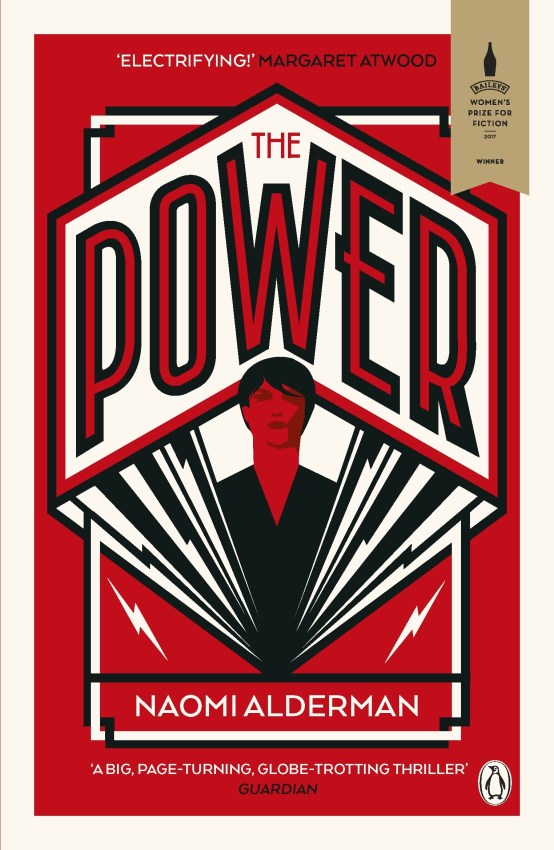
The Power Cover

Publisher: Penguin (Trade Paperback – 27 October 2016)

Series: Stand Alone/Book One

Length: 341 pages

Rating: 5 out of 5 stars

Amazon

I’m on a mission to conquer my habit of buying more books than I can read. I picked up The Power because I recognised Naomi Alderman’s name from one of my favourite apps, Zombies, Run!, for which she is the lead writer. Zombies, Run! is primarily an exercise app, but its best feature is its compelling and immersive narrative about a community of survivors of a zombie apocalypse. So when I stumbled upon a copy of one of Alderman’s books I was immediately keen to check it out. Unfortunately, my reading of it was interrupted and it has been sadly shelved for the last year and a half. When I resolved to tackle my collection of unread books this year, I knew The Power had to be first on the list.

The Power chronicles a world in which young women develop a biological power to create and manipulate electricity. There are four main threads in the story, following a small collection of key characters on their adventures during the first decade of the change. The first is Roxy Monke, the child of an English gangster, who uses her power with devastating effect to build and control a vast criminal empire. Tunde Edo is a young Nigerian man who discovers a passion for photojournalism when he happens to capture video of an early attack using the power. He travels the world documenting the great upheavals and rebellions that the power inspires. Margot Cleary is an American politician, and through her we see how the change affects government. Allie is a young American runaway with perhaps the greatest control over her power of any woman in the world, which she uses to establish herself as a respected and feared cult leader of women. There is also an extensive cast of excellent side characters, including Margot’s daughter Jocelyn, who struggles as a young woman without a fully developed power, and Tatiana Moskalev, the wife of the president of Moldova.

What I always enjoy most about speculative fiction with several narrators is the way that readers get to experience so much of the world that has been created. This is particularly true in The Power, since each of the characters (especially Tunde) is very well travelled, and as a result we get a glimpse of how the power affects societies all over the world, as well as how the world changes over the 10 years covered in the book. We see the initial scepticism of women spontaneously evolving the power to emit and control electricity. We see the fear set in as it becomes clear how dangerous the power can be, both when it is used as an attack against individuals and when women band together to challenge misogynistic and oppressive regimes and governments. We see how cults and societies develop as the status quo is forever changed and the new power imbalance between men and women becomes firmly established. The events that unfold in Moldova are particularly fascinating. All in all, there’s not a dull moment in the whole book, and though it is at times brutally violent it is always deeply compelling.

I really loved the way the narrative is framed as a dramatisation of historical events, in a fashion similar to that of The Handmaid’s Tale and The Testaments. The book begins and ends with correspondence between Neil, who appears to be a budding historian and author, and Naomi, who is surely his mentor or perhaps his publisher. Neil and Naomi speculate on the accuracy of the story, given that they are removed from these events by several hundred years and have only the archaeological record to guide them. I was also very pleased to find chapters interspersed with illustrations and interpretations of artefacts from the time of the change, such as idols, grave sites and internet forum threads. These elements in particular made the archaeologist in me very happy.

The Power is a fantastic exploration of a world suddenly and dramatically shaken to its core. I’m going to have to check out some more of Naomi Alderman’s work, and I’m only sorry I hadn’t read this one sooner.

Lost by James Patterson and James O. Born

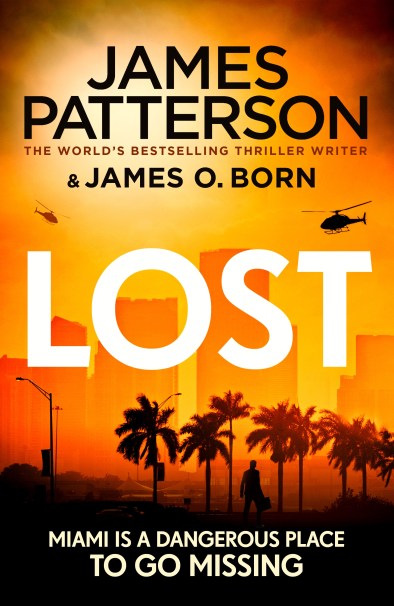
Lost Cover

Publisher: Century (Trade Paperback – 7 January 2020)

Series: Stand Alone/Book One

Length: 328 pages

My Rating: 4 out of 5 stars

Amazon     Book Depository

From the excellent crime fiction team of James Patterson and James O. Born comes Lost, an enjoyable and thrilling novel that sets a fun new protagonist against the scourge of international human trafficking.

Detective Tom Moon is a Miami man, born and bred, who loves to protect his city. Assigned to lead a new FBI joint task force that’s been set up in the city, his new job is to tackle international crime. However, their job gets very complicated when they receive a tip about a man coming in through Miami International Airport from Amsterdam. Upon arresting their suspect, they find that he was attempting to smuggle in several children from Europe and that he is part of a notorious human trafficking ring.

Working closely with Dutch Detective Marie Meijer, Moon and his team work to uncover the full extent of the trafficking ring in both Amsterdam and Miami. However, the traffickers are being led by a ruthless pair of Dutch siblings who are desperate to succeed and even willing to target the police hunting them. Worse, the traffickers are working with a powerful syndicate of Russian gangsters who have a strong foothold in both Europe and Miami. When Moon and his team receive news that a massive shipment of people is being smuggled into Miami, they know that this is the break they need to bring down the entire operation. But with money and family on the line, both the Russians and the traffickers are desperate to claim their cargo and will go to any lengths to secure it, even if that means killing Moon and everyone he cares about.

Lost is the latest novel from co-writers James Patterson and James O. Born. Patterson is an author who needs very little introduction, having contributed to well over 100 crime fiction novels since his debut in 1976, including his bestselling Alex Cross series. Patterson has a longstanding tradition of collaborating with other crime fiction authors to create some intriguing reads, including the Detective Harriet Blue series with Candice Fox, the Women’s Murder Club series with Andrew Gross and Maxine Paetro, the Michael Bennett series which he has mostly done with Michael Ledwidge, the NYPD Red series with Marshall Karp and the Private series co-written with several different authors. James O. Born has been writing since 2004, when he debuted with the intriguing-sounding Walking Money. Born has written several novels in his career so far and has been collaborating with Patterson since 2016. Patterson and Born have already written several together, including the Mitchum series (the third book of which, The River Murders, was released only a few days ago) and the latest two entries in the Michael Bennett series. The two writers are also releasing a third Michael Bennett novel, Blindside, in the next week, which actually sounds pretty interesting and I might have to try and check out.

Lost is a standalone novel that features a brand-new protagonist, Tom Moone. Lost is a fantastic piece of crime fiction with a massively enjoyable story that was a lot of fun to check out. This was an exceedingly accessible novel from this writing pair, which requires no prior knowledge of any of the books in Patterson’s extensive library of works. Patterson and Born have produced an entertaining and very fast-paced story that I was to power through in a very short period of time. The story is told in a series of extremely short chapters, which helps to move the plot along at a quick clip, which I really appreciated. The authors also cleverly utilise multiple character perspectives to create a richer and more compelling overall novel. Around half the novel is told from the first-person perspective of the book’s protagonist, Tom Moon, while the rest of the novel is told from the third-person perspective of several other characters. The most prominent of these characters are the smuggler team of Hanna and Albert Greete, who serve as some of the book’s main antagonists. This great use of perspective has some real advantages for the story, as it allows a deeper look at this new exciting protagonist whilst also providing the reader with an enticing view of the dark underbelly that is the world of human trafficking.

The authors’ decision to focus this book on human trafficking was an interesting choice and one which I felt really payed off for this book. This whole criminal enterprise is both fascinating and despicable, and results in a number of fantastic sequences throughout Lost. The two authors do an excellent job of covering all the angles surrounding the human trafficking and their inclusion of multiple character perspectives is really useful here. Not only do we get to see the viewpoints of the police who are trying to stop these crimes but we also get to see the perspective of the traffickers and some of the people they are smuggling. This allows the authors to show some of the tricks and techniques that human traffickers use to smuggle people into the United States, and we also get to see the eventual fates of several people who are successfully trafficked (it doesn’t go well for them). We also see what has driven several smuggled people into the arms of the traffickers; whether they are there by choice or whether they have been forced their against their will, their story is generally a bleak one, and I liked that the authors tried to examine the victims of this crime in some detail. The use of international human trafficking as the central crime also allows this novel to have more of a multinational fair to it, as police from two separate countries, in this case agents of a United States FBI taskforce and the Dutch police, work together to solve the crime. I liked the various scenes set in Amsterdam, and it was really interesting to see the author’s interpretation of the city and how it has been impacted by international crime. It was also fun to see the two main police characters in the book, Miami cop Moon and Amsterdam police officer Meijer, spend time learning more about the cultures of their international counterpart, as both characters get tours of the other’s respective cities. I personally really enjoyed this captivating aspect of the book, and it really helped make this cool crime fiction novel even more enjoyable.

Patterson has a fantastic habit of coming up with a number of memorable protagonists for his works. The bestselling author and his co-writers have created some truly compelling protagonists to help helm their books, many of whom are then utilised as the central character of long-running series. In Lost, Patterson and Born have come up with another interesting main character in the form of Detective Tom Moon, who was an excellent protagonist for this new novel. Moon is a pretty distinctive police officer, whose large physical appearance clashes with a number of character traits featured within this book, such as his calm, philosophical nature, his soft spot for children and his dedication to his family. Moon is a truly nice guy who has earned the trust of the Miami street community and even some criminals thanks to his status as a local, his well-known past as a poor college athlete and his sense of fair play. I really enjoyed the whole man-of-the-streets vibe that the authors came up with for Moon, and it was fun seeing several examples of local people helping him out with his enquires, even the criminals. While we mainly see Moon being nice and helpful, he is not always such a laid-back guy, especially when his family is being threatened. He can actually get quite vicious at times, especially in one club scene when his sister is around, and he really doesn’t get intimidated, choosing to go after several dangerous people, often in fairly tactless ways (there is one entertaining scene where he calls out a criminal in a very public way). All of this adds up to another distinctive and enjoyable protagonist, and I quite enjoyed the combination of charm, humour and street smarts that made up Detective Moon. That being said, I think that the book would have survived without the continued stream of philosophically meaningful quotes he was spouting, and it really wasn’t my favourite thing in Lost.

Overall, Lost by James Patterson and James O. Born is another great piece of crime fiction that is bound to keep a lot of readers entertained. These two authors have come up with another intriguing story, which dives deep into the world of international human trafficking to produce an excellent read. I very much enjoyed this new novel, and I would love to see more of Tom Moon in the future, especially if the authors come up with some other fascinating examples of international crime to investigate. Lost is worth checking out, especially if you are in the mood for a compelling, fast-paced crime fiction novel with a fantastic protagonist.

Amazon     Book Depository

Just Watch Me by Jeff Lindsay

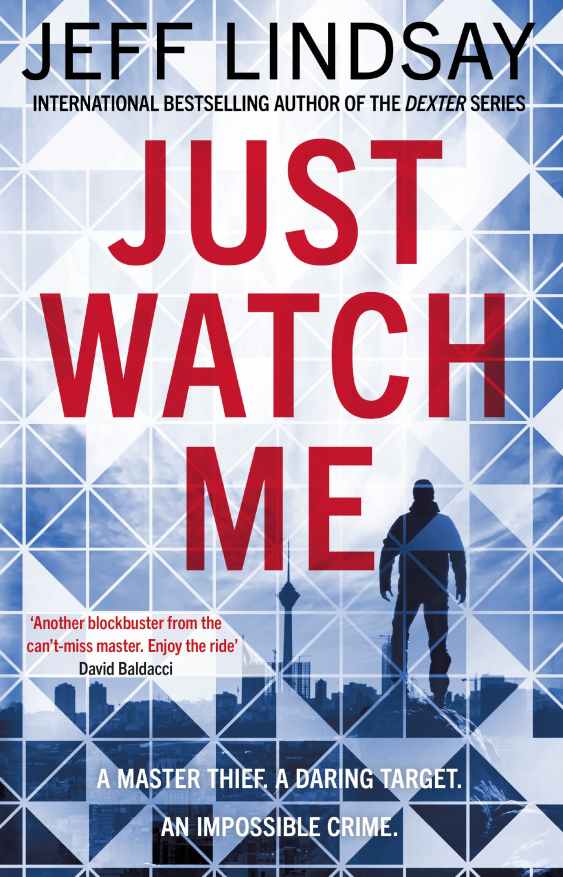
Just Watch Me Cover.jpg

Publisher: Orion (Trade Paperback – 10 December 2019)

Series: Riley Wolfe series – Book One

Length: 358 pages

My Rating: 4.5 out of 5 stars

Amazon     Book Depository

From one of the world’s most popular thriller authors, Jeff Lindsay, comes Just Watch Me, an electrifying heist novel that pits an intriguing new protagonist against impossible odds.

Prepare to meet Riley Wolfe, the world’s greatest thief. Wolfe is a master of disguise, an expert con artist and a true devotee of the ridiculous heist. There is nothing he can’t steal, and he lives to target the super-rich with his capers in order to make them suffer. However, Wolfe is starting to get bored. His last few heists have gone off without a hitch and he is looking for a challenge. But his new target might be truly impossible to steal, even for him.

Wolfe has his eyes on some of the most impressive treasures in the world, the Crown Jewels of Iran, and in particular the Daryayeh-E-Noor, a gigantic pink diamond that is valued beyond compare. With the jewels finally out of Iran and in New York for a tour, Wolfe knows that this is the time to steal them. They have been placed within the most secure gallery in the country, which utilises impenetrable security systems, state-of-the-art alarms and a small army of former special forces soldiers acting as guards. In addition, a regiment of the lethal Iranian Revolutionary Guard are also standing watch, ready to kill anyone who gets too close. With these security measures in place, the jewels appear to be beyond the reach of any potential thieves, no matter how careful or elaborate their plan may be, and anyone who tries is going to end up dead. However, Wolfe is no ordinary thief, and he has come up with a cunning scheme that no one else would have ever thought of. If all his planning succeeds, he will have an opportunity to make off with the jewels. But with all manner of complications in front of him and a determined FBI agent hunting down his past, can even the great Riley Wolfe succeed, or will his most daring heist be his last?

When I first saw that Jeff Lindsay was doing a heist novel, I knew that I was going to have to grab a copy of it. Lindsay is a bestselling thriller author who debuted in 1994 with the novel Tropical Depression. Lindsay is of course best known for his Dexter series, which was adapted into a highly popular television series. While I have not had the pleasure of reading any of Lindsay’s work prior to this book, I did really enjoy the first few seasons of the Dexter television show, so I was really interested in seeing the author’s take on a heist novel. I am really glad that I checked Just Watch Me out as Lindsay has produced a deeply compelling and exceedingly fun novel that not only contains a really cool heist story, but which also features another complex protagonist for the reader to sink their teeth into.

First of all, let’s talk heists. For Just Watch Me, Lindsay came up with a very interesting heist scenario which sees one man try to break into a massively secure gallery guarded by some of the most sophisticated technology in the world, as well as some of the deadliest killers. The story follows Wolfe as he attempts to find some way into the building that everyone agrees in impenetrable, and while he initially encounters major setbacks, he eventually comes up with an audacious plan to get in. This plan is very bold and complicated, and involves a lot of manipulation, disguises, seduction, confidence work, forgeries, doublecrosses and even a couple of well-placed murders. All of this comes together into one fun and exciting conclusion which sees everyone understand the full extent of the plan. Lindsay paces out all the parts of the heist extremely well, and I really enjoyed how the entire thing unfolded, especially as it was a cool, roundabout way to attempt to steal something from a gallery. The heist proves to be an exceptional centre to the whole narrative, and I really enjoyed seeing how this part of the book progressed.

I also liked the way that Lindsay utilised multiple viewpoints to tell this story. While several chapters are told from the protagonist’s point of view using the first-person perspective, a large amount of the book is actually told from the perspective of the book’s side characters. These side characters include a range of different people, such as Wolfe’s allies, the people he is trying to manipulate, the FBI agent hunting him and even several bystanders who are caught up in the whole heist. All of these different viewpoints help to show off the various angles of the heist, which I felt helped enhance this part of the story. It was also really cool to see how normal people, including police officers, guards, gallery employees and some of his marks, perceive the various disguises he comes up with or the confidence tricks that he is pulling. I loved seeing this outside perspective of Wolfe’s criminal techniques, and it was a great way to portray a large amount of the heist.

While the heist is a really amazing part of this book, one of the most compelling parts of Just Watch Me is actually its protagonist, Riley Wolfe. Lindsay obviously has a lot of experience writing complex and intriguing protagonists for his thrillers, and he has done an amazing job creating another one here in Wolfe. Wolfe is a master thief whose defining characteristic is an overwhelming compulsion to steal from the mega-rich, especially those who obtained their wealth by screwing over the little people in the world. Wolfe is absolutely obsessed with his crusade against the rich due to his experiences as a child, and this obsession forces him to complete his heists no matter the cost. The author spends quite a bit of time exploring Wolfe’s hatred for the rich, and it is quite fascinating to see his internal thoughts on why he is stealing from them. The reader also gets to see some of the events from the character’s childhood which form the basis for this obsession. Ironically enough, the reason we get to learn so much about Wolfe’s childhood is because one of the book’s antagonists, FBI Special Agent Frank Delgado, becomes so obsessed with learning more about him that he briefly leaves the FBI in an attempt to hunt him down (obsession is a key element of several of the book’s main characters). Delgado spends several scenes scouring the country trying to find out Wolfe’s history, which is slowly revealed throughout the course of the book. I really enjoyed that Lindsay included this dive into the character’s past, and I felt that it really complemented the main heist storyline and helped to create a fantastic overall narrative, especially as this investigation into his history, represents the biggest risk to Wolfe’s freedom.

Now, as Wolfe steals from the richest of the rich, it might be easy to assume that he’s a good guy or an anti-hero you can cheer on, but that is really not true. Not only does this protagonist come across as an excessively arrogant person who is high on himself, but he also does a ton of stuff that is totally morally wrong. For example, throughout the course of the book, Wolfe commits several murders, frames people for crimes they did not commit and totally ruins a number of people’s lives. While some of these people probably deserve to suffer at the hands of Wolfe, a bunch really did nothing wrong; they were either born into money, in his way, or merely collateral damage. In one case, he even spends time thinking about how much he respects one of his victims right before he arranges for her to be arrested for art fraud. What’s even worse is that, in many cases, Wolfe doesn’t even realise that he’s done something wrong. While he knows that he maybe should not have committed some of the murders, he totally fails to think of the emotional consequences some of his cons or manipulations will have on the people he is playing. He is even called out about some of his actions towards the end of the book by his only friend; however, he completely fails to see her point of view. Instead he merely thinks that she is overreacting and goes right back to plotting to get into her pants. Stuff like this makes Wolfe a very hard protagonist to like, and even the knowledge that his actions and viewpoint are the result of a messed-up childhood doesn’t really help. It does result in a much more compelling story though, and it was refreshing to follow a morally ambiguous protagonist. I will be interested to see if Lindsay will examine the impacts Wolfe’s actions had on some of the supporting characters in a later book, and I personally would love to see a story where one of his incidental victims attempts to hunt him down to get revenge for their ruined lives.

I have to say that I was also really impressed with all the discussions of art, paintings and other valuables that the author was able to fit into the story. Lindsay obviously did a large amount of research into the subject (his acknowledgements mention an art professor he consulted) and it was interesting to read the various discussions about art and art forgery. I have to admit that I have no real knowledge of or appreciation for art (except comic book art), but I really enjoyed all the discussions about art style and technique that were peppered throughout the novel. Overall, this was a pretty intriguing inclusion in the book, and I found it to be quite fascinating at times.

In conclusion, Just Watch Me is an amazing fast-paced heist thriller that is really worth checking out. Lindsay has come up with not only an awesome scenario that features a fun heist at the centre but also another complex and morally corrupted protagonist whose inner demons and powerful obsessions we get to explore. I really enjoyed this excellent new book from Lindsay, and I am definitely planning to grab any future novels that come out in this series.

Amazon     Book Depository

Throwback Thursday – Extinction Machine by Jonathan Maberry

Extinction Machine Cover.jpg

Publisher: Macmillan Audio (Audiobook – 26 May 2013)

Series: Joe Ledger Series – Book Five

Length: 14 hours and 53 minutes

My Rating: 4.75 out of 5 stars

Amazon     Book Depository

Reviewed as part of my Throwback Thursday series, where I republish old reviews, review books I have read before or review older books I have only just had a chance to read.

For my latest Throwback Thursday, I once again go back to one of my absolute favourite series as I check out Extinction Machine by Jonathan Maberry, the fifth book in the exciting Joe Ledger series.

Long-term readers of this blog will be familiar with my recent obsession with the Joe Ledger thriller novels. The Joe Ledger series is one of the main bodies of work from bestselling author Jonathan Maberry, which follows a secret military organisation that targets any organisations or individual who attempts to utilise the latest science and technology for their own dangerous ends. I absolutely fell in love with this series in late 2018, when I read the 10th book, Deep Silence, and I have been slowly reading my way through the earlier Joe Ledger books ever since. So far, each of the Joe Ledger books I have read has been absolutely amazing novels, and I have awarded all of them a full five stars. I also recently read the first book in Maberry’s sequel Rogue Team International series, Rage, which was released a couple of months ago and which I consider to be amongst one of the best books (and audiobooks) of 2019. I am actually reviewing Extinction Machine a little out of order, as I have already reviewed the sixth book in the series, Code Zero, despite reading Extinction Machine first.

For years, Joe Ledger and the Department of Military Sciences (DMS) have faced off against some of the most advanced and devious weapons human ingenuity and insanity is capable of creating. However, what happens when they are forced to go up against something that is literally out of their world? In Extinction Machine, a series of strange and seemingly unrelated events begin occurring around the world. America’s leading weapons manufacturers are being targeted by elaborate computer attacks that are impossible to trace. An advanced prototype stealth fighter is destroyed during its test flight by an impossibly fast craft, while sightings of UFOs are occurring all around the world. In the midst of all this chaos, the impossible happens: the President of the United States vanishes from the White House. The only evidence of his abductors is a crop circle on the White House lawn.

Despite being officially sidelined by the corrupt Vice-President, the DMS attempts to investigate after receiving a strange message from the missing President promising unprecedented destruction. Ledger and his team soon find themselves caught in the midst of massive conspiracy involving alien technology and the deepest secret of America’s military industrial complex. Can the DMS uncover the full conspiracy before it is too late, or will the world tremble at the hands of mysterious beings who want their technology back?

Extinction Machine proved to be yet another thrilling and enjoyable entry in the Joe Ledger series, and I really had a great time listening to it. Maberry has produced another fantastic and elaborate story which utilises a number of his trademark and classic storytelling elements to produce a first-rate read. The reader is once again treated to a fast-paced and captivating narrative which is enhanced by the author’s clever use of different perspectives, point-of-view characters and time periods, which not only focus on the protagonists hunt for answers but also showcases all the fascinating aspects of the villain’s complex master plan. Extinction Machine also continues to feature some outstanding action sequences and a number of amazing and relatable protagonists, including the series’ titular character, Joe Ledger, whose ultra-sarcastic narration and half-broken psyche make him one of the most fascinating and enjoyable action heroes out there. All of these familiar elements have made the previous Joe Ledger books some of my favourite thrillers out there, so I quite enjoyed the fact that Maberry once again utilised them for Extinction Machine, especially as they were once again used to great effect to produce an overall excellent story.

In addition to using all the awesome trademark storytelling elements of the Joe Ledger series, Maberry also makes Extinction Machine stand out from the existing novels in the series by including several new and exciting plot inclusions. At the centre of this is a fantastic overarching story about alien craft that have crash landed on Earth sparking a long-term hidden arms race. This is a deeply fascinating main plot point for the book, which explores a vast and complex conspiracy theory that turns out to be true, as not only have the crashed alien craft allowed the world’s leading arms manufacturers to advance their technology at an accelerated rate, but now the world’s various superpowers all have top-secret programs aimed at obtaining certain alien components and using them to construct a working alien craft, known as a T-Craft. Maberry does an amazing job of introducing the full history and breadth of this alien technology conspiracy at an excellent pace, and it was really intriguing to see him craft an action-packed story around it as Ledger and his team must try to counter not only the antagonist’s plans to utilise the alien technology for their own twisted purposes but also the unexpected consequence of all this secret work. I also think that this story was an excellent way to introduce the concept of aliens into the series as a whole, especially as it is used again in some of the later books. Having Ledger straight up face off against aliens in this book (and presumably win) would have been a bit too much, even for a series that has so far featured genetically modified Nazis and vampires. But by having the protagonists deal with self-interested humans who have spent generations researching mysterious alien technology, Maberry is able to introduce the concept at a much more controlled pace which works a heck of a lot better.

There are a number of other amazing elements introduced or utilised in this novel that were a real highlight for me. These include a several excellent action set-pieces, including a well-choreographed fight sequence out in the woods between Ledger and a lethal hit team and a large-scale assault on the enemy’s compound; some cool new characters, including a major love interest for Ledger; and the first time political attacks hampered the DMS (which later becomes a recurring theme). I also liked the idea of Ledger and his team essentially going up against the Men in Black (known here as the Fixers), who are the henchmen for the book’s antagonists. The Fixers have some devastating alien technology which really help amp up some of the action scenes, and they are also able to pull of a pretty major attack against the DMS with it. Finally, I had a real laugh at the way that one of the main antagonists, the apparently most lethal member of the Fixers, is taken down, especially as Maberry telegraphs how it’s going to happen by mentioning a certain movie scene. All of these new elements are fantastic additions to the story, and I felt that they worked extremely well with the author’s existing writing style for the Joe Ledger books to create another awesome read.

While I really enjoyed Extinction Machine, I have to admit that it is probably my least favourite Joe Ledger book that I have read so far. To be fair, part of this might be because it falls between two of my absolute favourite entries in the series, Assassin’s Code and Code Zero, and I might be unfavourably comparing Extinction Machine to them (especially as I read these three books back-to-back in quick succession). However, in my opinion Extinction Machine’s story went a bit too slowly in places and it lacked the truly compelling villains that the other books in the series feature (even if the antagonists in this book do manage to pull off the biggest attack against DMS yet) all of which slightly tanked my enjoyment of this book. That being said, this is still an amazing read, and even my least favourite book in this series still deserves 4.75 out of 5 stars.

The audiobook is my format of choice for enjoying the Joe Ledger series, and I ended up listening to Extinction Machine over a couple of weeks while I was away travelling. The Extinction Machine audiobook runs for a little under 15 hours and is narrated by the incredible Ray Porter, who has leant his amazing vocal talents to all of the other Joe Ledger audiobooks. I have spent a lot of time over the last year singing the praises of Porter for his work with the Joe Ledger series; in my opinion, he is one of the best audiobook narrators out there. Porter has the rare ability to fully encapsulate the characters that he is voicing, and his perfect take on the character of Joe Ledger is so very impressive. Needless to say, he does another standout job with Extinction Machine, and I highly recommend this format to anyone interested in checking this book out.

Overall, I felt that Extinction Machine was another excellent addition to the Joe Ledger series, and I had a real blast checking it out. There are a lot of cool elements to this book, and I really liked where Maberry took the story this time around. This is a must-read for fans of the Joe Ledger series, and I would also highly recommend it to anyone looking for a fun and exciting science fiction thriller.

Amazon     Book Depository

Legacy of Ash by Matthew Ward

Legacy of Ash Cover

Publisher: Orbit (Trade Paperback – 5 November 2019)

Series: Legacy trilogy – Book 1

Length: 768 pages

My Rating: 4.5 out of 5 stars

Amazon     Book Depository

From impressive new author Matthew Ward comes Legacy of Ash, a massive and entertaining new fantasy adventure that was amongst one of my favourite debut novels of 2019.

Legacy of Ash is set within the Tressian Republic, a powerful nation controlled by a council of nobles. The Tressian Republic is beset by many dangers, including the constant threat of invasion from the massive Hadari Empire on its border; open rebellion from the nation’s southernmost lands, the Southshires, which have been seeking independence for years; and the machinations of the dark magic-wielding criminal organisation known as the Crowmarket.

When the Hadari Empire invades the Southshires, the political ambitions and old grudges of the Tressian Council results in a muted military response. It falls to Viktor Akadra, the champion of the Tressian Republic, to lead a small force to the Southshires in order to make a stand against the invaders. However, Viktor is the last person the inhabitants of the Southshires want defending them, as years before he brutally put down their last rebellion, which resulted in the death of their beloved Duchess Katya Trelan.

In order to defeat the Hadari Empire, Viktor needs to work with the children of Katya Trelan, Josiri and Calenne, both of whom hate and fear him, and who both have different plans to ensure their future freedom. However, as fate, self-interest and the future of the Southshires forces them together, these three must find a common ground if they are to survive. But even if they manage to face the forces of the Hadari Empire, far darker threats are assailing the Tressian Republic from within and they will stop at nothing to achieve their terrible goals.

Ward is an interesting new author who is probably best known for his work with Games Workshop, where he served as a principal architect for the company on many of their properties, including Warhammer, Warhammer 40,000 and their The Lord of the Rings range. However, in recent years he has turned his hand to fantasy writing, creating several novellas and short stories, as well as releasing two ebooks, Shadow of the Raven and Light of the Radiant. Legacy of Ash is Ward’s first printed novel, and it is actually set in the same universe as his previous ebooks. It is also the first book in his planned Legacy trilogy, with the second book in the trilogy, Legacy of Steel, set for release later this year.

Legacy of Ash is an excellent new read which contains an exciting and elaborate story, set in a large and creative new world and featuring a substantial group of point-of-view characters. I have actually been looking forward to Legacy of Ash for a while, as it sounded like one of the more exciting new fantasy books that were set for release in 2019, and I am very glad I got a chance to read and review it. However, readers should probably be aware in advance that this book is nearly 800 pages in length, making it a pretty substantial read, and requiring a significant investment of time in finishing it off. This took me a couple of weeks to read in full, mainly because Legacy of Ash would actually come in at number 12 on my recent Longest Novels That I Have Ever Read list. That being said, Legacy of Ash is well worth the time, as this was an amazing and fascinating new fantasy adventure.

Ward has come up with a large and impressive story for his first book, and there is a lot going on within it. The story actually splits up into two separate locations within the Tressian Republic, with half of it set down in the Southshires and the other half set up in the capital of the Republic, Tressia (with small parts also set in a couple of locations in between or within the Hadari Empire). The parts of the book set down in the Southshires deal with the impending invasion of the Hadari, the repression of the Southshire inhabitants by the Tressian council and the attempts by Viktor to work with both of the Trelan siblings. At the same time, the parts of the book set up in Tressia contains a lot of political intrigue, criminal undertakings, dark magical plans and gambits for control of the nation. Both sets of storylines are a lot of fun, and it was really amazing to see all the various story elements occurring at the same time in the different locations. In addition, these two storylines are strongly related to each other, with events happening in one location impacting characters down in the other part of the Republic. All of these story elements and character arcs come together to form an extremely compelling overarching narrative and I quite enjoyed how Legacy of Ash contained such a wide range of different plot points.

Legacy of Ash is populated with a multiple point-of-view characters from whose eyes we see this whole massive story unfold. The use of all these characters allows for a much richer and expansive story, especially as you get to see every side of all various character’s plots and plans as everyone attempts to come out on top of the events unfolding around them. In addition, nearly all of the point-of-view characters have some incredibly captivating and enjoyable character arcs, many of which reach their full potential within this book. There are such an interesting range of different character based stories going on throughout Legacy of Ash, from the mysterious divine magic that starts to infect the honourable knight Roslava Orova, the machinations and manipulations of Ebigail Kiradin, the chaotic adventures of Crowmarket member Apara Rann and the fun friendship that forms between old opponents Kurkas and Halvor. However, the main elements of character development occur around the book’s three central characters, Viktor Akadra, Josiri Trelan and Calenne Trelan. Due to history, resentments and circumstances, these three characters start the book with fairly distant or hostile relationships to each other. However, these barriers are slowly broken down as the book progresses, and each of these main characters slowly works to come to terms with each other and their own individual issues, such as Viktor’s hidden dark magic, or the expectations or resentments that surround Trelan siblings thanks to their long-dead mother. Overall, this is some fairly impressive character work, and Ward did an excellent job creating a fantastic cast for this novel, each of whom add a whole lot to book’s story.

While I did enjoy how this novel progressed and all the interesting story points and character inclusions that were featured, I do feel it was a perhaps a little too long. In particular, I really think that Ward would have been better off not featuring the book’s final antagonist (a long-dead magical queen), who starts to appear around two thirds of the way through the book. Instead, the author could have perhaps only hinted at her return and shaved off most of the final 100 pages. Not only would this make Legacy of Ash a bit more of a manageable read, but it would have allowed the author to expand on this antagonist’s motivations and history a lot more in the subsequent book, rather than having her introduction be somewhat rushed, like it was in this book. Still, the inclusion of this final antagonist led to some rather intriguing and emotional moments, and it also sets up some potentially fantastic story arcs for one of the main characters in the next book in the series.

I also need to say how impressed with the massive and complex new fantasy landscape that Ward created for his debut series. Ward has come up with a number of unique and enjoyable elements for this fantasy world, which really add a lot to the story. The central location of the Tressian Republic was a lot of fun, as it is filled with all manner of perils, conflicting ideals, fermenting hatreds and a hidden death-worshipping criminal organisation, while also featuring a number of external or divine groups or threats at the same time. I felt that the author did a good job of introducing all of these unique elements throughout the book, and I was never too lost or confused by any of the inclusions.

I also really enjoyed the huge number of battle sequences that took place throughout this harsh fantasy landscape, especially those which were enhanced by the series’ unique fantasy inclusions. For example, one massive sequence featured two armies, one with magical constructs and the other with armoured rhinos, facing off against each other as strange and divine magics rain down chaos all around them. Other scenes include a number of different characters attempting to combat the eldritch-enhanced assassins of the mysterious Crowmarket, often resulting in some really impressive battles. I also liked how Ward utilised the multiple point-of-view characters during some of these longer conflicts, ensuring that the reader got to see both sides of the battle, as well as the various thoughts and fears of the characters involved. All of this ensured that the book was chocked full of intense and exciting fantasy action, which is always a plus in my book.

Legacy of Ash by Matthew Ward was an extremely well-written and addictive fantasy debut, which I am very glad I made the effort to read cover-to-cover. Full of some excellent characters, a multi-faceted story and an intriguing new fantasy landscape, the first book in the Legacy trilogy was a really great read, and I had a lot of fun getting through it. Ward has a lot of potential as a fantasy author, and I am quite excited to see where this series goes next.

Amazon     Book Depository

Guest Review: The Testaments by Margaret Atwood

In her latest guest review, the Unseen Library’s editor, Alex, checks out one of the biggest releases of the year, and also sets herself up to do some more reviews for the blog in the future.

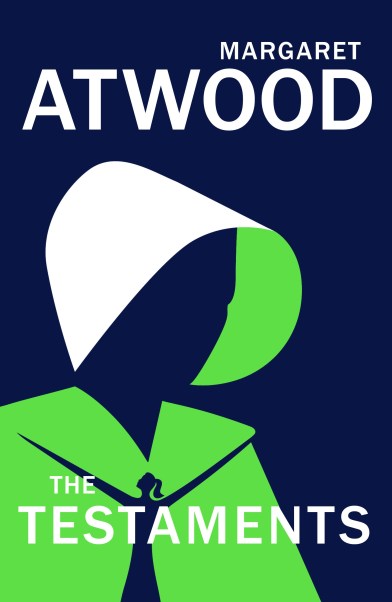
The Testaments Cover

Publisher: Chatto & Windus (Hardcover – 10 September 2019)

Series: The Handmaid’s Tale – Book 2

Length: 419 pages

My Rating: 5 out of 5 stars

Amazon

Unlike the Unseen Librarian himself, who seems to have no problem zipping through several books a week, I tend to buy books faster than I read them. I was very pleased, and not at all surprised, to find there’s a phrase for this in Japanese: tsundoku, meaning one who acquires books with every intention of reading them, but who never gets around to it. Well, it’s high time that I try to kick this habit and delve into my shelf of unread books, beginning with The Testaments by Margaret Atwood.

We received a copy of The Testaments way back in September 2019, before the honeymoon hiatus, but unfortunately the large, heavy hardback wouldn’t have fared well in my suitcase, so although I was keen to read it I was forced to leave it behind. Unfortunately several other distractions (including Eoin Colfer’s The Fowl Twins) meant it wasn’t until the post-Christmas calm that I took the time to finish it off, but I am so glad that I did, because this is a first-rate book that didn’t deserve to wait so long for my attention.

The Handmaid’s Tale reported the experiences of Offred, a Handmaid to a powerful Commander in the post-revolutionary United States, the totalitarian Republic of Gilead. The Testaments picks up the story several years later, and features accounts of three women and their own struggles for survival in Gilead. I won’t go into detail about the plot of the book (I’m sure reviewers with better time management skills have beaten me to it), only to say that it was incredibly engaging and suspenseful. Those who enjoyed The Handmaid’s Tale will love to see how the world has changed over the years.

I was absolutely thrilled by all of the world-building in The Testaments. The new regime of Gilead is fascinating, but in The Handmaid’s Tale details are limited to what Offred chooses to share in her narrative, which itself is limited by what Offred knows, given the sheltered and isolated life she is forced to live as a Handmaid. The Testaments, on the other hand, with its multiple narrators, presents a far broader view of life in Gilead. The first narrator is an Aunt, one of the powerful matrons who train the Handmaids and teach the children. In fact, she is none other than Aunt Lydia, the indomitable battleaxe responsible for the indoctrination of Offred who features so prominently in the original book. The second narrator is Agnes Jemima, the daughter of a powerful Commander. Her story is recorded after her liberation from Gilead and provides a fascinating insight into the experiences of a child growing up in the regime. The third narrator is Daisy, a child growing up in Canada. From her we get an outside view of Gilead—how the terrible society is viewed by its near neighbours and how the Mayday resistance seeks to help its people. The three tales are each engaging in their own right, but as they become more and more intertwined the story only gets better.

There are elements of the story that tie into the television adaptation of The Handmaid’s Tale, but literary purists who have not watched the show will enjoy The Testaments just the same. Since it is a sequel, however, I would say that it will be best enjoyed by those who have read The Handmaid’s Tale or seen at least the first season of the show. The Testaments is a book that was 35 years in the making, but it was well worth the wait.

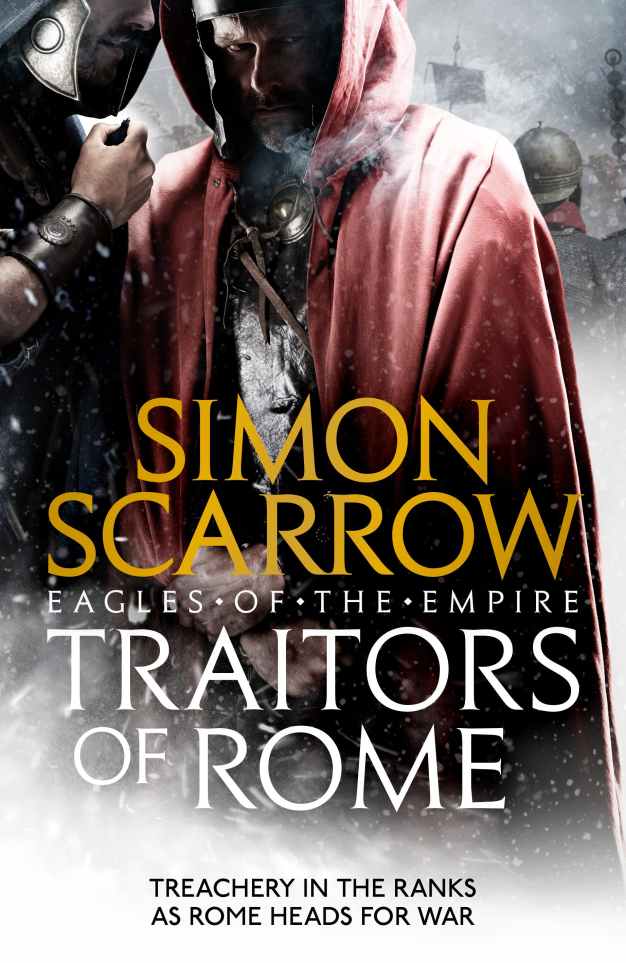
Traitors of Rome by Simon Scarrow

Traitors of Rome Cover

Publisher: Headline (Trade Paperback – 12 November 2019)

Series: Eagles of the Empire – Book 18

Length: 447 pages

My Rating: 4.5 out of 5 stars

Amazon

From one of my favourite historical fiction authors, Simon Scarrow, comes the 18th book in his long-running Eagles of the Empire series, Traitors of Rome, which once again sends his protagonists, Cato and Marco, into another dangerous scenario against Rome’s enemies. This is another of Scarrow’s books I have really been looking forward to, especially after enjoying the previous entry in the series, The Blood of Rome.

In AD 56, Rome and its great eastern rival, Parthia, are on the brink of war. Both the Roman Emperor Nero and Parthia’s king, Vologases, are in need of a great victory to fully secure their rule, and Rome’s territory has already begun to experience raids from a Parthian noble. Into this chaos Tribune Cato and Centurion Marco have been sent. Leading a cohort of Praetorian Guards, Cato and Marco have been assigned to serve under General Corbulo, who has gathered a force of over 20,000 Roman soldiers to fight against the Parthians. Unfortunately, most of the men under his command are badly trained and ill-prepared for battle, and Corbulo is desperate for more time to get them into shape.

To that end, he orders Cato to lead an embassy into Parthia to negotiate a peace treaty with Vologase. This embassy’s purpose is to delay the Parthian offensive long enough for Corbulo to finalise his preparations. Leading a small group of soldiers and accompanied by one of the general’s agents, Cato makes his way into Parthia, beset by raiders and pirates, with an uncertain reception from Vologase and his nobles awaiting him.

At the same time, the small kingdom of Thapsis on the border near Parthia has risen in revolt against Roman rule. Determined to swiftly end the revolt Corbulo leads a force to retake the kingdom with Marco at his side. However, what was initially believed to be an easy victory quickly turns into an arduous campaign as the Romans encounter heavy resistance. Worse, the harsh conditions and the even harsher discipline of Corbulo soon begin to wear on the soldier’s morale and loyalty. As Cato and Marco attempt to succeed in their missions, both officers are beset by unexpected setbacks and suspicious activities. It soon becomes apparent that a Parthian spy has infiltrated the Romans and is sabotaging their efforts and stoking a mutiny amongst the Roman ranks. Can Cato and Marco catch them before it is too late, or will this be their final mission?

This latest book from Scarrow is a fantastic and enjoyable read which features a cool new story with some unique and intriguing elements to it. I really like where Scarrow took the plot in Traitors of Rome, as he utilises two separate but equally enjoyable storylines by splitting up the two protagonists and sending them on separate missions. Both of the storylines are fairly different from each other, with Marco’s storyline being the more classic Roman military operation, while Cato’s storyline features a clandestine operation behind enemy lines with major political and espionage ramifications to it. This makes for a more complex narrative, but I found that the two different storylines worked very well together, and I really enjoyed seeing both of these plots progress. Scarrow does a good job of splitting the book between these two thrilling adventures and both of these storylines are a lot of fun.

I like some of the different elements that Scarrow featured in this fantastic, action-packed story. For example, the Cato plot had a really good team-up between Cato and the mysterious “clerk” Apollonius of Perga, a shrewd and ruthless agent of the general who lives to be mysterious and who Cato does not know if he can trust. Their relationship eventually evolves into grudging mutual respect, especially after they are forced to escape from Parthia in a great part of the book which sees them pursued by the army and other opportunists across the land. The Marco plot is also really intriguing, as it focuses on the difficult campaign to conquer Thapsis and the resultant hardships faced by the Romans when their supply lines are broken. This devolves into a messy situation where the men are fast losing their morale and General Corbulo’s harsh and unjust punishments to maintain military order and discipline start to push them in the direction of a mutiny. How this whole situation breaks down over the course of the campaign is rather fascinating, and of course Marco is caught in the middle of it. These two separate storylines come together in a great way towards the end of the book, and it looks like the series will be going in a new direction for the next book.

As always, Scarrow is a master of writing excellent historical action sequences, and after 18 books his depictions of Roman military combat have gotten pretty darn good. There are a few large-scale battle scenes throughout this book which show off Roman close-combat fighting, and the reader gets to see several other Roman battle strategies put into play. There are also several smaller-scale fights, especially in the Cato storyline, where Cato and his men face off against a more disparate array of opponents, from Parthian patrols to pirates. All of these action sequences are really well written and provide the reader with all their required excitement and thrills.

Overall, Traitors of Rome was another fantastic addition to Scarrow’s outstanding Eagles of the Empire series. Scarrow has produced another intense and exciting adventure story which goes in some cool new directions and once again puts his likeable protagonists in the middle of some major conflicts with their lives on the line. This is still one of my favourite historical fiction series of all time and is probably the best long-running Roman military sagas out there. It does feel like this series is starting to wrap up, especially as Marco gets married in this book and starts talking about retirement; however, this might be some sort of prelude to a great tragedy that keeps him in the army. Still, I am very much looking forward to the next book in the series, and I cannot wait to see where the story goes next.

Amazon

Throwback Thursday – Star Wars: Scoundrels by Timothy Zahn

Star Wars Scoundrels Cover

Publisher: Random House Audio (Audiobook – 1 January 2013)

Series: Star Wars Legends

Length: 13 hours and 57 minutes

My Rating: 4.5 out of 5 stars

Amazon

Reviewed as part of my Throwback Thursday series, where I republish old reviews, review books I have read before or review older books I have only just had a chance to read.

If you like the sound of a widely entertaining read that combines a clever heist-themed storyline with iconic Star Wars elements, then you need to check out Star Wars: Scoundrels by Timothy Zahn.

Scoundrels is set shortly after the events of A New Hope and follows Han and Chewie after they have temporarily left their friends in the Rebel Alliance to return to their old jobs as smugglers. The two are desperate to make some money in order to repay Han’s debt to Jabba the Hutt and have travelled to the planet of Wukkar to meet a contact. Instead of their contact, Han and Chewie are approached by a local businessman who wishes to recruit the pair to help him break into a local crime lord’s supposedly impenetrable vault to recover a vast fortune in stolen credits.

Lured in by the promise of a rich reward, Han sets about recruiting a team of highly skilled thieves, con artists and specialists, including their old friend Lando Calrissian, to help them pull off the heist. However, as they start to put together a master plan to enter the vault, they make a startling discovery: their target is a high-ranking member of the notorious Black Sun crime syndicate, who is currently hosting one of the organisation’s most powerful leaders. More importantly, in addition to the stolen credits, the vault now contains a collection of Black Sun’s blackmail files, which are a vital and closely guarded part of their operation.

Still determined to pull off the job, Han and his team need to work out a way to break into the unbreakable vault without painting a massive target on their backs. However, they are not the only group interested in the blackmail files, as an ambitious Imperial Intelligence agent is determined to capture them. Caught between two of the most powerful organisations in the entire galaxy, these scoundrels will need every trick up their sleeve to survive and raid the vaults. But when the stakes are this high, can any of them really be trusted?

Scoundrels is a fast-paced and well-written novel that does an outstanding job setting a compelling and entertaining heist story inside the Star Wars universe. This book was written by legendary Star Wars author Timothy Zahn, who I have mentioned several times before on my blog, especially for his recent Thrawn trilogy (Thrawn, Alliances and Treason). Scoundrels is a standalone novel that was released in 2013 and was the last Star Wars novel Zahn wrote before the Disney buyout of Lucasfilm. As a result, Scoundrels technically never happened in the current canon of the franchise and is instead part of the Star Wars Legends range.

At the heart of this novel is a complex and amazing heist storyline that sees the protagonists attempt to steal a vast fortune from a high-security vault. Scoundrels, or Solo’s Eleven, as I started to think of it, features a pretty classic heist set-up, with an impossible job offered and accepted, Solo building up a team of skilled criminals to help him pull off the job, recon, various complications, and then the attempt to break into the vault. I did find in some ways this part of the story was a bit typical and derivative of other examples of the heist genre, although I think a lot of the reason why I was having these thoughts is because I saw Rick and Morty’s excellent take-down of heist movies, One Crew over the Crewcoo’s Morty, immediately before I started reading this book (literally all I could think whenever a new crew member was recruited was “You son of a bitch, I’m in”).

However, this was still an incredibly entertaining novel and Zahn did create a storyline that was unique in a number of ways. In particular, Zahn makes excellent use of the technology (a combination of pre-introduced technology and stuff that Zahn made up himself) and the political turmoil in the Star Wars Legends universe to create a truly captivating piece of crime fiction. The story is loaded with all manner of twists, turns and doublecrosses, and I really enjoyed a number of the big reveals that were featured throughout the book (the character reveal at the very end of the book was pretty cool, for example). The entire plan for breaking into the vault and stealing its contents was also extremely clever and memorable, containing an excellent combination of subtly, manipulation, improvisation and number of massive explosive distractions. Also, the way they actually got out of the heavily armed compound was very cool, and definitely one of the best heist moves I’ve ever seen. All of this results in a first-rate heist thriller storyline which I deeply enjoyed and which has actually put me in the mood for more heist-centric books.

Another great part of Scoundrels is the fantastic group of characters that the story focuses on. Not only does the book showcase the classic partnership of Han and Chewie but we also get to see more of the suavest man in the galaxy, Lando Calrissian. Han is a great leader for the team, able to come up with a cool plan and improvise when they are faced with chaos, while Lando shines as the charismatic front man of the operation, able to charm or swindle everyone he comes in contact with. Quite a bit of time is spent exploring the turbulent relationship between Han and Lando at this point of their friendship, as several prior operations (some of which were featured in other novels and comics in the Star Wars Legends range) have fallen through, resulting in some bad blood between them. While both claim that they have forgiven the other for the sake of this operation, they both have a lot of doubts and are worried that the other is going to screw them over. This adds a whole bunch of extra drama to the story and ends in a rather entertaining and typical manner.

In addition to Han, Chewie and Lando, the rest of the heist crew is made up of some strong and distinctive characters who are a lot of fun. All of these characters bring a lot of team, and at no point did any of them feel unnecessary to the plot. Zahn also goes out of his way to establish each of these characters separate backstories and motivations, which adds a large amount of substance to their inclusion. As these different motivations mean that there is also a constant potential for betrayal and sabotage, which is another layer to the heist aspect of the book. There is also a great look at the Black Sun underboss and his main security chief as they attempt to understand the threat coming their way, while also trying to stay on the right side of the powerful Black Sun overlord, who is staying at the manor and playing mind games with them. There is a growing sense of desperation and irrationality from the two of them as the various manipulations push them closer to the edge, so much so that a deal with Darth Vader actually seems like a tempting offer. I also loved the inclusion of the Imperial Intelligence agent who attempts to utilise the planned heist for his own ends. His ambitious attempts to undermine Black Sun are interesting, and he brings a whole new edge to the overall story. All of these amazing characters add so many different things to the books plot and it was a lot of fun to see how their various character arcs progressed.

As I mentioned above, Scoundrels falls within the now non-canon Star Wars Legends expanded universe. While I have not read a lot of fiction from the Star Wars Legends range recently (with the exception of Death Troopers by Joe Schreiber), I have always been impressed with the wide range of different stories and plot lines that make it up, many of which are being utilised or referenced to in the current canon (the inclusion of Zahn’s character of Grand Admiral Thrawn in the Star Wars Rebels animated show is a prime example of this). However, there are some significant differences between the two canons, and some of these can be seen in Scoundrels.

One of the most noticeable differences between these two canons is the dominance of the Black Sun crime syndicate. While they only have a few minor appearances in the current canon (and they potentially would not have been included at all if they did not show up in a couple of episodes of The Clone Wars animated show, which remained canon after the buy-out), there were a major part of the original canon as one of the premier criminal organisations the protagonists would go up against. A lot of this comes out of the 1996 novel, Shadows of the Empire (which I actually read a long, long time ago), which showed the Black Sun leader, Prince Xizor, having nearly as much power and influence as the Emperor, and as a result, was a major rival for Darth Vader. Much of the book’s plot that involves the members of Black Sun or the Imperial Intelligence agent revolves around this rivalry, as the agent is hoping to damage Black Sun to gain favour with Vader. The protagonists, knowing this, also attempt to use this conflict to their advantage, and it becomes a major part of the book. The examination of the various criminal organisations available during this period is also pretty darn fascinating, and it serves as a wonderful, larger setting behind the main story.

In addition to this focus on the criminal underbelly that was featured in the old canon, Zahn made sure to fill his book with all manner of references to other books and comics in the Star Wars Legends canon, especially those that featured Han, Chewie and Lando. No specific knowledge of these events is needed to understand these references, as Zahn makes sure to explain the necessary parts, which mostly revolve around Han having terrible luck when it comes to prior jobs. Other examples of the history and unique storylines that existed in the old Star Wars canon are also pretty fascinating, but you do not need to be an expert on any of this to enjoy Scoundrels. Indeed, anyone who has seen the original trilogy will be fully able to appreciate the cool story contained within, although, as always, those Star Wars fans with a bit more background knowledge of the franchise will get a bit more enjoyment out of this book.

Like a great many of the Star Wars books I enjoy, I ended up listening to the audiobook format of Scoundrels. Narrated by Marc Thompson, it runs for just under 14 hours, which makes it slightly longer than most Star Wars audiobooks. Scoundrels contains all the fun features of a typical Star Wars audiobook format, with the narration permeated with all manner of iconic Star Wars music and sound effects. I love hearing the amazing Star Wars music as I have the story read to me, and in many places having the music played really enhances the emotion or the significance of a scene. Scoundrels also contains an impressive abundance of various sound effects which are utilised in nearly every scene. Having blaster fire sizzling past your ears in a fire fight or listening to the gentle susurration of the crowd in a big party sequence is just amazing, and it helps bring the story to life as you listen. I was also very impressed with the way that they showed how helmets and comm links could distort a character’s voice, and the use of sound effects for Chewbacca’s communications was a smart choice.

I also have to say how impressed I was with Marc Thompson’s narration of this book. Thompson is one of the premier narrators of the Star Wars audiobook, having lent his vocal talents to a number of novels in both the Star Wars Legends and Disney canons, including for the recently released Resistance Reborn. I have previously listened to Thompson’s narration for the first book in Zahn’s recent Thrawn trilogy, and I loved the work he did on that, especially when it came to the voice he produced for the trilogy’s titular character. He also does an extraordinary job with this format of Scoundrels, producing a huge number of unique and memorable voices for the various characters featured within it. His portrayals of Han and Lando were very accurate, especially Han’s voice, and that really helped me enjoy this novel so much more. Scoundrels was a first-rate audiobook, and I would strongly recommend this format to anyone who wishes to enjoy this book.

Star Wars: Scoundrels was an outstanding read, and I cannot praise the clever combination of a heist storyline with Star Wars elements enough. Zahn really is one of the best authors of Star Wars fiction out there, and I was never in any doubt that I would love this novel. He has a new book coming out in a few months, and I am very much looking forward to it. In the meantime, I will have to check out a few more of his earlier books, and I might also look up some other novels in the Star Wars Legends range.

Amazon

Rage by Jonathan Maberry

Rage Cover

Publisher: Macmillan Audio (Audiobook – 5 November 2019)

Series: Rogue Team International – Book One/Joe Ledger – Book 11

Length: 17 hours and 28 minutes

My Rating: 5 out of 5 stars

Amazon     Book Depository

Well damn, now this was an impressive book.   Prepare for all manner of action, excitement and chaos as bestselling author Jonathan Maberry presents an incredible and outstanding start to a new series that features his long-time protagonist, Joe Ledger, with Rage.

The Joe Ledger books were a series of 10 military thriller and science fiction hybrid novels that ran between 2009 and 2018, which focused on a group of military action heroes as they faced off against a number of advanced, mad science threats. Maberry actually concluded the Joe Ledger series last year, but the stories and adventures of the titular character have been continued in the new Rogue Team International series, of which Rage is the very first book (although it could be considered the 11th Joe Ledger book). This sequel series focuses on some new circumstances for the protagonists while still maintaining the heart and soul of the original books.

People who are familiar with my blog will know that I am a massive fan of the Joe Ledger books. Ever since I picked up the 10th and final novel, Deep Silence, last year, I have been really getting into this incredible thriller series and have already gone back and read the first six Joe Ledger books. Each of these books that I have reviewed so far has received a full five out of five stars from me, and it is easily one of my favourite series at the moment. As a result, I have been very keen to get a copy of the first instalment of this sequel series for a while now, and it has been very high on my list of books to read before the end of 2019. However, nothing was able to prepare me for how awesome this book was and for how much I was going to love it.

For years, Joe Ledger was the top field agent for the Department of Military Sciences (DMS), a top-secret United States military organisation tasked with protecting America from the most advanced and devastating weapons that mad science can produce. However, the political situation in America has become untenable, with the DMS no longer able to effectively do their job under the current administration. Seeing no future working for the US government, the head of the DMS, Mr Church, has disbanded the department, and has instead formed a new organisation, Rogue Team International. Independently funded and controlled by no government, Rogue Team International is able to deploy anywhere in the world against the worst sort of threats imaginable.

However, their first major mission has some very high stakes. A mysterious group of terrorists have unleashed a new bioweapon on a small, isolated island off the coast of North Korea. This weapon drives those infected by it into a murderous rage, causing them to attack and kill anyone they see in a brutal fashion. Worse, whoever is behind the attack has gone out of their way to frame the United States and South Korea for the crime, creating a dangerous situation which could see these countries dragged into a devastating war with North Korea and China.

Deployed to the island, Ledger and his team attempt to identify who is behind the attacks and what sort of weapon they have unleashed. It soon becomes clear that they are up against a deadly and powerful organisation, that is determined to cause as much chaos as possible. As a second attack is unleashed in South Korea, Ledger must find a way to stop his opponents before it is too late and the world is engulfed in war. However, their new foes are clever and ruthless and bear a powerful grudge against Ledger and Mr Church. Can Rogue Team International save the day, or will the cost be too high to pay?

Rage is an absolutely incredible and outstanding new novel from Maberry, who has done an incredible job introducing the first book in his Rogue Team International series. Rage contains an amazing story that had me firmly addicted right from the very start. The reader is once again presented with a massive and elaborate villainous plot, as two familiar antagonists and their cohorts unleash a devastating and scientifically unique attack for their own nefarious reasons. We then get to follow our protagonists as they investigate and attempt to counter the attacks and plots that they uncover. The entirety of the book is written in Maberry’s signature style, with the story told from a huge range of different points of view and time periods, resulting in a much richer and complex story that allows the reader to see the thoughts of the protagonists, antagonists and innocent bystanders as the various events of the book take place. There are a huge number of twists and turns as the story progresses, and even though we get some insight into the antagonist’s actions and motivations, the entirety of their elaborate plan is left a mystery for most of the book, allowing for some enthralling suspense to build up. All of this ends in an explosive conclusion which not only features a major fake-out but also a massively significant tragedy that is going to be a huge part of the series going forward. This was a truly epic story, and I cannot wait to see where the author takes his new series next.

Despite Rage being part of the new Rogue Team International series, Maberry continues to utilise a number of his distinctive writing elements that made his Joe Ledger novels such a delight to read. This includes the cool multiple viewpoints I mentioned above, as well as the fantastic use of great action sequences, enjoyable characters and the fascinating antagonists. However, there are some exciting changes in this book that I think existing Joe Ledger readers are going to enjoy. For example, the protagonist is part of a whole new organisation, they have a new base (a very over-the-top secret lair in Greece), a new team name and new call signs for all the protagonists (for example, Ledger has gone from Cowboy to Outlaw), all of which is an interesting change of pace for those familiar with the original series. There is also a lot more of a focus on international politics, with only a small amount of the story taking place in the United States. While I quite liked some of the new directions that Maberry was taking with this new series, many of the story elements in Rage have made it clear that the Rogue Team International books are going to be very strongly associated with the original Joe Ledger series. There are a huge number of call-backs to the previous books, including a lot of discussion about preceding cases and the utilisation of many characters, including some of the major antagonists, who have previously appeared. While you would assume that the employment of all these elements might make Rage hard to get into for readers unfamiliar with the other Joe Ledger novels, this is really not the case. Maberry continues his practice of filling his story with some detailed summaries of the various characters and books, so that readers can understand the significance of all the reference to the previous cases. This means that new readers can easily jump into Rage without any prior knowledge of the other Joe Ledger books, although I can guarantee that most people will be keen to go back and get the full account of what has happened before.

One of the most interesting aspects of the new international focused formula of this book was that it allowed Maberry to examine the current political situation around the Korean Peninsula. There is quite an interesting analysis of both countries throughout the course of the story, and the various issues surrounding them and their differences are actually covered in a series of short chapters, made to resemble a political chat show, with experts voicing their thoughts on both Koreas, and the influence of countries such as China and the United States. Rage’s story features a fascinating look at what the author thinks would happen if a flashpoint event occurred in the region, and who could potentially benefit. I was very intrigued by Maberry’s analysis of the situation, and I liked how he featured several characters from both North and South Korea in his story. The author’s portrayal of the North Korean characters was particularly captivating, as he showed them as mostly good people who were trapped by political circumstances, and who aren’t seeking a war against the rest of the world. All of this examination of the current political situation in Korea made for a fascinating part of the book’s plot, and I am curious to see what area of the world he will explore in the next Rogue Team International book.

One of Maberry’s main strengths as a writer is his ability to create some truly enjoyable and memorable characters to populate his stories with. Perhaps one of the best examples of this is the main protagonist of Rage and its prequel series, Joe Ledger. Ledger is an extremely complex and multilayered action protagonist, who serves as the book’s main character. Thanks to the fact that Ledger narrates all of the chapters told from his point of view (about two thirds of the book; the rest of the chapters are told in the third person), we get a real sense of his character. While he likes to project a cocky, confident and humorous persona to most people he meets, cracking all sorts of jokes to both other characters and the reader, deeper down his is a psychological mess. Due to some past trauma, Ledger has some major issues, and his career as a shooter for the DMS and Rogue Team International has not helped the situation. Ledger’s anger, despair and hopelessness are constantly bubbling towards the surface, adding a fascinating dimension to the character. I have always really liked how Maberry has gone out of his way to show an action protagonist who is actually impacted by the work they do and the lives they have taken, and it makes for a refreshing change of pace. Rage in particular contains some very dark moments for Ledger, and if the conclusion of the book is anything to go by, his character is going to undergo some massive emotional changes in the next few books.

I was also really glad that Maberry continued to utilise so many of the great side characters that have been previously introduced in the Joe Ledger series. Pretty much all of the key DMS characters have moved across into the new book, and I was really glad we could continue to enjoy the fun dynamic that they have established over the course of the previous series. The enigmatic Mr Church continues to remain one of the best spy-master characters I have ever read and is probably one of my favourite people in the Joe Ledger books. While there are no major revelations about his past in this novel (my theory is that he is either an alien or some form of angel), there are some hints to his seemingly superhuman toughness and some of the previous missions he has engaged in. Mr Church also shows off some amazing diplomatic chops in this novel, utilising a network of level-headed members of various countries’ governments to work around blustering and incompetent world leaders. Most of the rest of the supporting characters remain the same, although several of them get some fun moments in this book, such as Bug unexpectedly receiving some fan-girl attention and Doc Holiday’s eccentric personality overwhelming people unfamiliar with her. There are also some great new characters in this book, many of whom appear set to become long-term recurring characters. If I had to make one complaint, it would be that there wasn’t enough of Ghost, Ledger’s attack dog, but I am sure we will see more of him in the future.

In addition to the fantastic protagonists, Maberry has also come up with a couple of conniving and evil antagonists to act as a foil to Joe Ledger and Rogue Team International. The main villains of the book are actually prior antagonists from two of the books in the Joe Ledger series, who have been reutilised to great effect in this new novel. While an exciting original major villain might have worked out well for the first novel in a new series, I think that using some existing antagonists was an excellent choice that really helped create a captivating story. Not only does this help reinforce the connection between the new Rogue Team International series and the Joe Ledger books, but it also allowed for some interesting character and story development. Both of these main two antagonists have been defeated in the past by Joe Ledger and Mr Church, so they each have very deep, personal grudges against them. Their new plan for domination, which is actually very interesting and quite complex, is also filled with elements of revenge, which helps ratchet up the intrigue and adds a whole new element. I loved the various interludes which show how these two bad guys escaped from prison and started their new team-up, and it was really cool to see what happened to them after their respective defeats in the previous books. It was also very interesting to see two antagonists, who previously had nothing to do with each other, had appeared in different novels and had very different motivations for their actions, come together as a cohesive unit with the new goals in mind. This was definitely a great use of two antagonists, and the damage that they caused was very impressive and memorable.

It is impossible to talk about one of the Joe Ledger novels without discussing all the intense action you can expect within. Maberry is a master of writing an electrifying action sequence, and the first book in the Rogue Team International series is absolutely chock full of action, fights and brutal violence. There are so many varied and thrilling battle scenes throughout the book, as the protagonist finds himself fighting in all manner of different situations. Whether the protagonist is engaging in a mass shootout against heavily armed opponents with his team backing him up, fighting by himself against a group of assassins or engaging in knock-out, throwdown fist fight against one of the antagonists, Maberry crafts some excellent and detailed sequences, allowing the reader to appreciate everything that is going on. The standout elements of this book are the victims of the new rage-inducing bioweapon that is this book’s unique science fiction element. Victims under the control of Rage attack anything they see in a frenzy, resulting in some crazy and vicious scenes. This also allows for some unique sequences where the protagonists must find a way to neutralise the victims without killing them, in the hope that they can be cured, all the while trying to avoid getting killed by either the Rage victims or some of the soldiers behind the attacks. All of the action scenes in this book are really impressive to experience, and it is impossible not to get excited as you read through them. However, readers should be warned in advance that the action can get quite brutal in places, and there are numerous examples of gruesome mutilation or torture, which might not be appealing to some people.

One of the main things that I love about the Joe Ledger series are the incredible audiobook versions of the previous novels, all of which feature the outstanding narration of Ray Porter. As I have stated in several of my previous reviews, Porter has some unbelievable vocal talents, and the life he breathes into all the characters in the Joe Ledger audiobooks is just fantastic. In particular, he portrays the voice and personality of the series titular character and protagonist, Joe Ledger, extremely well and he does a remarkable job of conveying all of the characters emotions, charm and humour to the reader. I was so happy when I saw that Porter was going to narrate Rage, and I knew I would have to grab the audiobook format of this book when it came out. I was in no way disappointed with this audiobook, as Porter has once again done a fantastic job of bringing all the characters to life and telling Rage’s amazing story. Porter still has such a fantastic handle on the book’s main character, and his portrayal of the Joe Ledger’s emotions is just superb, especially during some major scenes in the book. With a running time of 17½ hours, Rage is a somewhat substantial read, and dedicated listeners should be able to get through it in a few days. I would strongly recommend the audiobook format of Rage to anyone who wants to read this book, and it still remains my favourite and preferred way to get my Joe Ledger fix.

In Rage, Jonathan Maberry has once again outdone himself producing a wildly entertaining and deeply compelling novel that I absolutely loved. In this first instalment of his new Rogue Team International series, Maberry has brought his fantastic characters from the Joe Ledger books into a whole new era, as the story goes in some great new directions, while maintaining the best parts of the original series. Featuring one hell of a story and a pretty memorable conclusion, Rage is Maberry at his best, and I have no choice but to award it a full five stars. Highly recommended for anyone wanting a high-octane read, Rage is an outstanding book guaranteed to pull you in and leave you an emotional wreck.

Amazon     Book Depository

The Ember Blade by Chris Wooding

the ember blade cover

Publisher: Orion (Audiobook – 20 September 2018)

Series: The Darkwater Legacy – Book 1

Length: 30 hours and 40 minutes

My rating: 5 out of 5 stars

Amazon

If you are looking for an elaborate and exciting fantasy epic to really sink your teeth into look no further than The Ember Blade, the impressive first book in Chris Wooding’s The Darkwater Legacy.

The Ember Blade is a massive fantasy book that was released in late 2018 by veteran author Chris Wooding. I somehow completely failed to realise that this book was coming out until I saw it on the shelves of my local bookshop, and while I thought that it had a lot of potential due to the cool sounding plot, I was unfortunately unable to fit it into my reading schedule last year. However, as it was one of the books I most regret not reading in 2018, I decided to listen to the audiobook format of The Ember Blade, narrated by Simon Bubb, a little while ago. I have to say that I was not disappointed; Wooding, who has previously written such books as the Braided Path, Malice and Tales of the Ketty Jay series, has created a bold and inventive new fantasy tale in this book. Featuring a great story, an amazing group of characters and set in a massive and creative fantasy world, this was an exceptional book that I am really glad I listened to it.

A generation ago, the once proud nation of Ossia was invaded by the brutal Krodan Empire, and not even Ossia’s legendary defenders, the Dawnwardens, could stop them. Now the Krodans rule Ossia with an iron fist, installing their own religion and way of life, and treating the Ossians like second-class citizens in their own land. Any acts of dissent are quickly crushed, and those few that fight for Ossian freedom are quickly being rounded up. The only Ossians who flourish are those who accept Krodan rule and attempt to assimilate into their way of life, like Aren, the son of a wealthy Ossian collaborator. Aren has spent his whole life being told that the Krodans saved his country and that their laws, religion and rule are fair and beneficial for everyone. However, he is about to learn the dark side of Krodan rule.

When his farther is suddenly arrested and executed as a traitor, Aren and his best friend Cade are taken to a forsaken Krodan labour camp where they are expected to work until they die. With his hopes and dreams for the future crushed, Aren decides that it is finally time to rebel and engineers an escape from the camp with Cade and another prisoner. Despite all their planning, their escape seems doomed to fail until a mysterious band of fighters intervene at the last minute. However, their salvation is a double-edged sword, as the leader of this group, Garric, is a vengeful figure from Aren’s father’s past, who bears a terrible grudge against his entire family.

Forced to travel with this band, Aren and Cade discover that they are amongst some of the last Ossian rebels in the entire country. As they flee, pursued by a tenacious member of Krodan’s secret police and his three terrifying minions, they are told of Garric’s ambitious plan to break into an impenetrable fortress and steal the Ember Blade, an ancient artefact of Ossian rule that could be used to rally the country to their cause. However, in order to even have a chance to steal the blade, they must overcome treachery, the indifference of a conquered people, and their own personal demons unless they wish to be overwhelmed by the evil forces arrayed against them.

Wooding has come up with a pretty spectacular plot for this book, and I really enjoyed the places that this compelling story went. While the beginning of the book is a little slow, mainly to establish the setting and the friendship between Aren and Cade, it does not take long for the plot to get really exciting, when the two main characters introduced at that point are thrown into a prison camp. The story continues at an excellent and captivating pace from then on in, as the characters get wrapped up with Garric and his band as they attempt to free Ossia from the Krodans. This whole story is pretty fantastic, as it blends together a bunch of different fantasy adventure storylines into one satisfying narrative. For example, throughout the course of the book, you have an exploration of life within a Krodan prison camp, a complex prison break, a pursuit throughout all of Ossia by the Krodans, an exploration of a long-abandoned and magically haunted palace, treachery and plotting throughout the towns and cities of Ossia, all finished off with an elaborate heist and prison break scenario within an impenetrable castle and the dramatic consequences that result from their actions. While you would imagine that having all of these plot aspects within one novel would be a bit too much, I think that Wooding did an excellent job balancing all these intricate storylines together into one outstanding overall narrative. Sufficient time is spent on all of the various parts of the book, which not only ensures that various plot points are well-constructed and impactful but also allows the various character dynamics and relationships to come into effect while also slotting in some world building. All of this leads to an incredible and truly addictive story which I absolutely loved and which also sets up a number of intriguing plot points for future books in this series.

While The Ember Blade’s story is pretty amazing, the real strength of this book is the fantastic group of characters. The author has come up with several outstanding and complex protagonists, each of whom has an elaborate backstory which the reader learns all about through the course of the story, as many of them are utilised as a point-of-view character for a several chapters. There were some truly fantastic and memorable characters throughout this story, and I really enjoyed their various motivations and the way that they interacted with each other. The further you get into the book, the more you find yourself getting wrapped up in each character’s unique personality and finding out what makes them tick, until you actually start to care for them. However, fair warning in advance, some of these characters that you grow to like will not survive until the end of the book, and Wooding goes on a little bit of a killing spree with some of his creations (although I think there is a good chance one or two might come back in a future book).

The Ember Blade features a number of great characters that I could talk about, but for the sake of brevity I might just focus on the most important characters, Aren and Cade. These two Ossian youths are great central protagonists for this story, and they form a pretty fun and emotional duo for most of the book. Aren and Cade are dragged into the events of this book because of their friendship, and the two of them try to stick together, as they end up being the only person each of them has. However, throughout the course of this book, their friendship is tested by a lack of hope, conflict over ideals, love and feelings of betrayal, which makes for some very emotional reading. Both characters are really interesting, and both bring a lot to the story. While Aren is the central protagonist of the series, Cade is the story’s heart and soul, telling all manner of bad jokes and regaling his companions with the old stories of the land. Aside from the periods of time when he is infected with hopelessness or bitterness, Cade mostly remains the same character throughout the course of the book and does not develop too much. Aren, on the other hand, goes through a great deal of character development throughout the book, as he starts to become more disillusioned with the Krodan regime. Due to his upbringing, Aren is slow to realise the evils of the Krodans, even when his father is murdered and he is thrown into a deathcamp. However, several confrontations with Cade, discussions with Garric and actually seeing all the evil that the Krodans perpetrate help convince him of the benefit of rebelling against them and being a hero. This is not a straight progression; instead, the author creates a much more deviated course to greatness for our hero, as he is forced to betray someone he respects, is betrayed in turn by his own countrymen, must overcome his own prejudices and learn to deal with his sense of entitlement and his resentments, all before he become a better person. All of this makes for some great reading, and these two make a fantastic pairing.

Quite a lot of time is also spent on the character of Garric, who probably shares top billing with Aren as the book’s main protagonist. Garric is a freedom fighter whose own country is no longer willing to fight. Obsessed with victory, no matter the cost, Garric has become a very angry and bitter man over the years, especially due to a past interaction with Aren’s father. Despite this past hurt, his code of honour requires him to rescue Aren, and subsequent events force him to spend time with the son of the man he hated the most in the world. We learn a great deal about Garric throughout the course of the book, and despite his outer veneer of hatred and anger, most of which is directed at Aren, he is shown to be a good man and a hero. However, his need for vengeance against the Krodans slowly consumes him throughout the course of the book, and he begins to risk everything, even the lives of the people who trust him, to achieve his goal. I really liked the character of Garric, mainly because he has such an outstanding and well-written character arc in this book, the course of which goes into some dark and destructive directions and was deeply compelling to witness.

There is no way I can review this book without mentioning my favourite character, Grub, since, according to himself, “Grub is the greatest”. Grub is a Skarl, a warrior whose people journey out from an icy wasteland to do mighty deeds in order to have them tattooed on their body. Joining in on Aren and Cade’s escape plan, Grub spends the majority of the book boasting about the deeds that earned him his tattoos and making himself sound like the greatest warrior of all time. Grub is mostly used as a comic relief, and his jokes, outlandish boasts, coarse behaviour, amusing nicknames for the other characters and habit of constantly talking about himself in the third person make him the funniest protagonists in the book. However, like most of Wooding’s characters, Grub’s life is a lot more complicated than you would expect. Grub is not what he appears to be and bears a secret shame that makes him an outcast from his own people. In order to return, Grub must redeem himself by performing the most heroic or cunning of deeds and remains with the protagonists because he believes that participating in their adventures are exactly what he needs, that and he plans to rob them of the Ember Blade. However, as the book progresses, Grub, who has never known friendship or acceptance, begins to bond with several of the protagonists, especially Aren, which could alter his eventual plans.

As you can see from the examples above, Wooding has done an excellent job inserting complex and appealing characters into his story. Favourites I haven’t yet mentioned include a powerful druid and her dog, who provide much of the book’s magical elements; a fearless female hunter with poor social skills, who is a love interest for both Aren and Cade; an intelligent Ossian woman whose ambitions are thwarted by the inherent sexism of the Krodans, and who gets some of the best revenge against a mansplaining ass by beating him in a strategy game; and more. The author even shows a couple of chapters from the point of view of The Ember Blade’s main antagonist, the Krodan secret police commander Klyssen, which humanises him a little and shows why he is so determined to hunt down our protagonists. All of these characters add a large amount to the story, and it was a real pleasure to follow their adventures and learn all about their lives.

In addition to the fantastic roster of characters that the excellent story followed, I have to say that I was also impressed with the bold new fantasy world that Wooding created. Not only is the primary setting of the nation of Ossia a complex and dangerous location that helps create a thrilling and enjoyable read, but the author spends a lot of time expanding out the entire world, furnishing the reader with some fascinating depictions of some of the other cultures and races that live in the world. Thanks to the fact that one of the point-of-view characters is a bit of a storyteller, we get a really good idea of the history of the world, much of which has some sort of bearing on the current story, or could potentially become an interesting part of a future book. In addition, due to the examination of several of the protagonists, we also get a good basis for some of the other nations that are mentioned throughout the story, all of which sound really fascinating. I particularly liked the sound of the Skarl, Grub’s race, and I would definitely love to read a story set in their frozen necropolises. Wooding also introduces some supernatural elements in this book, including some ancient god-like monsters who are likely to be the major opponents of any future books in the series, as well as a cursed, magical castle which our protagonists find themselves trapped in for a substantial part of the book. I also quite enjoyed the potion-based magical system of the druids that was utilised by one of the primary characters, and I will be intrigued to see more of what sort of magic the Krodans have.

While the rest of the world introduced in The Ember Blade has a lot of potential in future books, I did really like the main location of this book, the conquered nation of Ossia. Ossia has been under Krodan rule for around a generation at the point of this story, and the people are becoming more accustomed to their conquered status. This situation bears some very strong similarities to Nazi-occupied France, with the Krodans infecting the country with their rules and ideals over a conquered nation, and utilising collaborators and violent retaliations to rule with an iron fist. Not only are the Krodans depicted in quite a Teutonic way, but it is clear that they are participating in some form of ethnic cleansing, as the entire population of a gypsy facsimile race in their empire has been rounded up and taken to an unknown location. All of this really helps to up the stakes for the protagonists, as they must not only overcome all the Krodans they come across but also contend with being sold out by members of their own nation. This chance of betrayal from fellow Ossians is quite disheartening to many of the characters, and it makes them wonder at times why they are fighting to free these people, when it is quite obvious that many amongst them do not want to be free. In addition to all of this, I have to mention the dreadknights, the strange, dangerous and seemingly indestructible elite soldiers of the Krodan Empire, who have been unleashed to hunt down and kill the protagonists. These dreadknights are terrifying beings whose unrelenting pursuit of your favourite characters (and indeed they bear responsibility for the deaths of some of these characters) really adds a lot of tension to the story. There was something of the Ringwraiths from The Lord of the Rings in their manner and bearing, and there is a lot of mystery surrounding their origins. I am very curious to see if we learn more of these creatures in the rest of the series, and I have a vague feeling that Wooding is going to make them even more horrifying in the future.

As I mentioned above, I ended up listening to the audiobook version of The Ember Blade, which was narrated by Simon Bubb. Considering the physical copy of this book is around 800+ pages, it should come as no surprise that the audiobook format is going to be fairly substantial. It runs for 30 hours and 40 minutes, which actually makes it the eighth-longest audiobook I have ever listened to. As a result, it did take me a pretty long time to get through this book, but once I started getting really into the story, I went out of my way to try and finish it off as quickly as possible. I am actually really glad that I listened to the audiobook version of this book, as I felt that it really helped me absorb the enjoyable story and detailed setting. Bubb had a great, steady narration voice for this book, and his take on the story and the characters really helped to keep my attention glued to the book. As a result, I would strongly recommend the audiobook format of The Ember Blade to those people interested in checking this book out, as you will have a lot of fun listening to it.

The Ember Blade is a modern-day fantasy masterpiece from Chris Wooding, and I am extremely glad that I managed to get a chance to read it this year. Wooding has come up with a detailed and captivating plot which combines exceedingly well with the book’s excellent group of characters and intriguing new fantasy world to create a first-rate story. This was an outstanding read which does a fantastic job introducing The Darkwater Legacy, which, if Wooding continues to write this well, has potential to become a truly great fantasy series. A highly recommended read that gets a full five out of five stars from me, this is essential reading for all fans of the fantasy genre.

Amazon