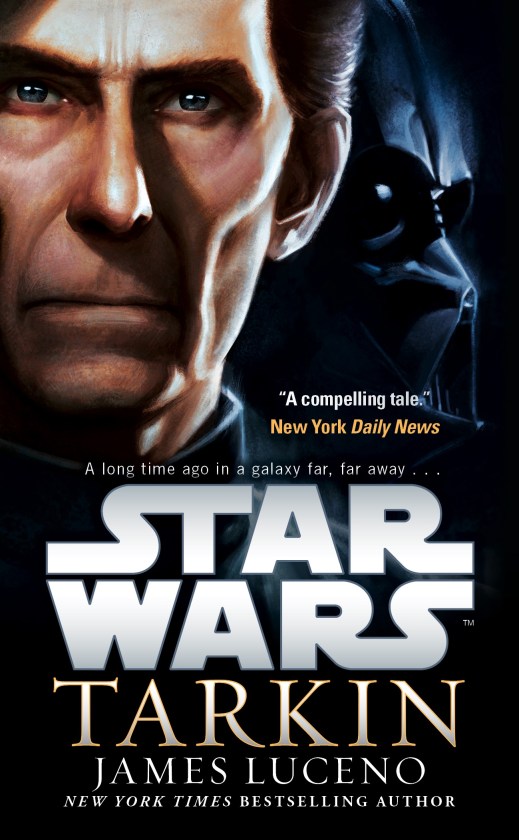
Throwback Thursday – Star Wars: Tarkin by James Luceno

Star Wars Tarkin Cover.jpg

Publisher: Penguin Random House Audio (Audiobook – 4 November 2019)

Series: Star Wars

Length: 9 hour and 32 minutes

My Rating: 4.5 out of 5 stars

Amazon     Book Depository

Reviewed as part of my Throwback Thursday series, where I republish old reviews, review books I have read before or review older books I have only just had a chance to read.

In this week’s Throwback Thursday I check out an amazing and compelling Star Wars tie-in novel that focuses on a fascinating character from the franchise, with Star Wars: Tarkin, written by veteran tie-in author James Luceno.

Since early 2014, Disney has done an excellent job installing a new and distinctive expanded universe for the Star Wars franchise. This new expanded universe, which supplanted the existing expanded universe (which is now known as Star Wars Legends), has featured some amazing books which I have been really getting into in the last couple of years. I have read a lot of Star Wars books in 2019 and not only have I tried to stay abreast of the latest releases (for example, the latest Star Wars novel, Resistance Reborn) but I have also been checking out some of the older novels in the franchise (such as Thrawn and Death Troopers).

Tarkin was released in late 2014 and was one of the first non-movie novelisations or young reader Star Wars novels that were released in this new canon. Tarkin was written by James Luceno, an author with a huge number of Star Wars tie-in novels from the Legends canon already under his belt, such as the intriguing-sounding Darth Plagueis. I had heard good things about this book, and I was curious to see how Luceno would alter the character of Grand Moff Tarkin.

To those familiar with the Galactic Empire, Grand Moff Wilhuff Tarkin is a legendary figure. A former admiral, adjutant general, planetary governor and war hero of the Clone Wars, Tarkin was one of the Emperor’s most dedicated and capable servants. Determined to enforce the Empire’s authority throughout the galaxy by any means necessary, Tarkin was renowned for his merciless nature and his ability to out-think any opponent on the battlefield or in the political arena. But where did this nature come from: his past as a solider or as a politician, or are there powerful lessons in Tarkin’s upbringing that constantly drive him forward?

Five years after the end of the Clone Wars, Governor Tarkin holds the rank of Imperial Moff and is tasked with overseeing one of the Empire’s most sensitive and covert projects, the construction of a massive mobile battle station which the Emperor believes will become the ultimate symbol of Imperial power in the galaxy. Determined to bring order to the post Clone War chaos, Tarkin finds his plans for the construction of the station stalled when a mysterious ship launches an innovative attack against one of his bases. In the aftermath of this attack, Tarkin is ordered to work with Darth Vader to determine who orchestrated this incursion and deal with them.

Travelling to an isolated planet, Tarkin and Vader begin their investigation into the rebellious activity plaguing that area of the Empire. But when their opponents manage to out-manoeuvre them, Tarkin must call upon all of his experiences, including as a young hunter on his home planet of Eriadu, to stop them. However, even the lessons of his past may not be enough, as his new foes are as smart and determined as Tarkin and Vader and are willing to do anything to achieve their revenge on the Empire.

Tarkin was a smart and exciting Star Wars tie-in novel that did a fantastic job exploring the life of one of the franchise’s most complex characters. I had a great time listening to this book, and it is one of the better Star Wars novels that I have enjoyed this year. I really liked the deep dive into the history and mind of Tarkin, especially as the author wraps a compelling and multi-layered narrative around the character’s story. As a result, the novel gets four and a half stars from me and was a really good read.

This story is an interesting combination of an adventure that occurred five years after the events of Revenge of the Sith (roughly 14 years before the events of A New Hope), and a series of tales from various points in Tarkin’s earlier life. Grand Moff Tarkin has always been a fascinating Star Wars character to me; despite his lack of force abilities, he appeared to wield nearly as much power as the Emperor and was even able to command Darth Vader. This book does a wonderful job of not only showing how he was able to obtain so much power within the Empire but also exploring all of the formulative events of this character’s life that made him into the man capable of achieving so much. I personally think that this was a great combination of character narratives which come together extremely well, and I think that Luceno did a fantastic job getting to the root of Tarkin’s psyche and personality.

Despite it being the shorter part of the book, I personally enjoyed the various chapters that explore various moments of Tarkin’s past the most. In particular, I thought that the author’s examination of his training as a hunter to be a truly fascinating basis for the character’s tactical ability. The various scenes depicting him hunting the large beasts of his home planet are pretty cool, and it was really interesting to see the way that he utilised lessons from hunting creatures in his later careers. For example, he is trained to instil fear into all the beasts he encounters in order to establish dominance above them and to show them the consequences of acting in way he dislikes. A later scene in the book shows him using this training to successfully end a pirate menace in a very harsh and final manner, and it also explains why he considered blowing up a planet to be a viable fear tactic against rebels. In addition to its impact on future Star Wars stories, Tarkin’s early training and hunting background are utilised to great effect throughout the entirety of Tarkin, and it was great to see how it impacts on Tarkin’s thought process and planning. I also really liked how the focus on the hunt comes full circle, as the author works in a fun confrontation back at the Tarkin hunting grounds with the main antagonist of the book that I absolutely loved and which was a fantastic conclusion to the whole story. This hunting aspect was an exceptional addition to this canon’s depiction of Tarkin, and I like how other authors have expanded on it in other pieces of Star Wars expanded fiction. For example, the third volume of Darth Vader: Dark Lord of the Sith features Tarkin using his hunting abilities against Vader in a contest of wills.

In addition to this new origin for Tarkin’s tactical ability and mental acuity, I also enjoyed the various flashbacks to his history before and during the events of the Clone War. Luceno comes up with some great storylines that show off, for example, when Tarkin first gained the attention of the Emperor, or his thoughts on the various events that occurred during the course of the prequel movies. It was fun getting his theories on the causes of the Clone Wars or the formation of the Empire, especially as he is pretty close to the mark every time. I also liked that Luceno worked a confrontation between Tarkin and Count Dooku into one of the flashbacks, which shows why Tarkin remained loyal to the Republic during the course of the Clone Wars. All of these examinations of the character’s past, especially in the context of several key events in Star Wars history, was really fascinating and proved to be a fantastic part of the book.

While I did enjoy the examination of the character’s past, the main story itself is also compelling, as it shows the events that led to Tarkin becoming the very first Grand Moff. These parts of the book are a lot of fun and feature a unique and personal hunt for the protagonist which ties in well with the journeys to his past. I also quite enjoyed the fun team-up between Tarkin and Darth Vader, who assists him to complete his mission. Tarkin and Vader form a very effective team in this book, and it was interesting to examine the relationship between them and the mutual respect that grew between them. It was also cool to find out that Tarkin was one of the few people in the whole Empire who guessed that Anakin Skywalker and Darth Vader were the same person (the only other Imperial character who apparently guessed that was Grand Admiral Thrawn). This section of the book also features some intriguing looks at the early stages of the Empire, and I personally liked the examination of Imperial politics, the intelligence agencies and the ruling style of the Emperor. I also really liked the idealistic opponents that Tarkin faced off against, mainly because their leader becomes more and more aggressive the longer the fight against the Empire goes, until he starts to lack the moral high ground in this conflict.

While I really enjoyed the team-up between Tarkin and Vader, I do wonder if the author perhaps featured Vader and the Emperor a little more than he should have. Do not get me wrong, I absolutely love Darth Vader as a character and I have deeply enjoyed a number of extended universe comics or books that have featured him (such as the Darth Vader and Dark Lord of the Sith comic series, or the Dark Visions limited series). However, I think that a book called Tarkin should have focused a lot more on the exploits of the titular character and shown how he dealt with the unique problems presented in the plot on his own. Instead, he received a fair bit of help from Vader and the Emperor, which kind of undermined the book’s message that he was an unsurpassed strategist and hunter. The author might have been better off only featuring a small amount of the Emperor in this novel, and perhaps introducing Vader in a later Tarkin novel, much like Timothy Zahn did with Thrawn: Alliances. Still, it was a fantastic book, and I am never going to seriously complain about too much Darth Vader.

Tarkin proved to be a really interesting book in the current Star Wars canon, and one that fans of the franchise are really going to enjoy. That being said, I would say that no real knowledge of the Star Wars extended universe is required to understand the plot of the book. While it does reflect on some of the events of The Clone Wars animated series, particularly the handful of episodes that a young Tarkin appeared in, there is no urgent need to go out and watch these episodes first, as they are more passing references. It is also important to note that this book was released back in 2014, two years before the release of Rogue One. As a result, it lacks the inclusion of Director Krennic as a rival for Tarkin, which is something most of the tie-in media released after 2016 features.

Like many of the Star Wars novels I have enjoyed in the past, I chose to listen to the audiobook format of Tarkin rather than read a physical copy. The Tarkin audiobook was narrated by Euan Morton and runs for roughly 9½ hours in length. I found myself absolutely breezing through the Tarkin audiobook, and I was able to listen to all of it in a few short days, as I become enthralled in the awesome story. Star Wars audiobooks are always a fun production to check out thanks to their use of the iconic music and sound effects from the movies. Tarkin also makes great use of a number of the classic scores from the movies to enhance the various scenes, most notably The Imperial March, which is used a number of times when members of the Empire are being particularly ruthless or authoritarian. I also really liked the use of the various Star Wars sound effects, such as the sound of blaster fire, spaceship engines and even the iconic sounds of Darth Vader breathing, all of which are used to help set the appropriate atmosphere for the scene. While some of the Star Wars audiobooks greatly overused these sound effects and music scores, I think that the Tarkin audiobook had the just the right amount of these elements. At no point did the music or sounds overwhelm the narration nor distract the reader from the plot; instead they did a wonderful job of helping the reader stay glued to the story.

In addition to the excellent use of Star Wars music and sound effects, Tarkin also featured a fantastic narrator in the form of Euan Morton. Morton does a commendable job of imitating the voice of the titular character and helps bring the stern, intelligent and ruthless character to life with his voice work. In addition, Morton was also able to do good imitations of several other notable Star Wars characters, including the Emperor and Darth Vader. I felt that Morton produced a good replication of their voices, and the listener is instantly able to figure out who is talking. I also liked some of the voices that Morton came up with for the various supporting characters that featured in the book, and I was impressed with the voices he attributed to some of the different alien species that were encountered. I particularly enjoyed his Mon Calamari voice, for example, and felt that he was able to add some distinguishing vocals to each of these different species. Based on this strong narration, as well as the great musical and sound inclusions, I would strongly recommend the audiobook version of this Star Wars book, and I know that I intend to check out more of this franchise’s audiobooks.

Tarkin was an outstanding piece of Star Wars tie-in fiction that I personally really enjoyed. Not only did it contain a compelling and exciting story in the early days of the Empire but it also did a wonderful job exploring the background of one of the franchises most fascinating characters. I had an amazing time learning more about Grand Moff Tarkin, and I am slightly disappointed that there have not been any more Tarkin-centric novels released since 2014. As a result, I would highly recommend this book to anyone interested in a good Star Wars tie-in novel, and I would also recommend the excellent audiobook format.

While the next Star Wars novel I read is going to be Force Collector, I am always considering what older Star Wars book to listen to in the future. I am currently weighing up between this canon’s Lords of the Sith (the Emperor and Darth Vader trapped on a planet being hunted by rebels) or the Star Wars Legends book Scoundrels (a heist novel written by Timothy Zahn). Both sound like a lot of fun, and I will probably end up listening to them both in the very near future.
Amazon     Book Depository

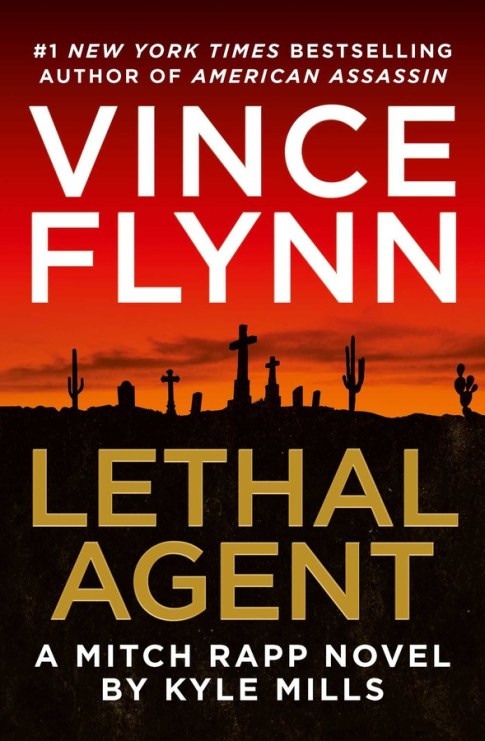
Lethal Agent by Kyle Mills (based on the series by Vince Flynn)

Lethal Agent Cover

Publisher: Simon & Schuster Audio (Audiobook – 24 September 2019)

Series: Mitch Rapp – Book 18

Length: 9 hours and 50 minutes

My Rating: 4.5 out of 5 stars

Amazon     Book Depository

Prepare to dive into a thriller rife with action, political intrigue and a killer plot with the latest book in the long-running Mitch Rapp series, Lethal Agent.

Lethal Agent is the 18th book in the Mitch Rapp series, which started back in 1999 with Transfer of Power. Initially written by Vince Flynn, since 2015 the series has been written by thriller author Kyle Mills following Flynn’s passing in 2013. I started reading the Mitch Rapp series last year, when I picked up a copy of the 17th book in the series, Red War, mainly because it had a really fascinating plot featuring a dying president of Russia going to war with the rest of the world. I ended up really enjoying Red War and I have gone out of my way to check out more military thrillers since then (this year’s Red Metal and Treason for example). In Lethal Agent, Mills takes the series back to its anti-terrorist thriller roots, as the series’ titular character, Mitch Rapp, goes up against a deadly terrorist while also having to navigate the toxic minefield that is modern American politics.

For years, legendary CIA operative Mitch Rapp has been responsible for the deaths of hundreds of America’s enemies, including numerous terrorists, fanatics, criminals and operatives of hostile foreign powers. Among those he believed he killed was the intelligent and dangerous leader of ISIS, Sayid Halabi. However, Halabi secretly managed to escape Rapp’s last attempt to kill him, and has been plotting in the shadows ever since, determined to find a way to strike back at Rapp and America.

Hiding out in Yemen, Halabi is able to capture a brilliant French microbiologist who has been working on a cure for a rare and deadly respiratory disease. Using the microbiologist to make anthrax, Halabi embarks on a campaign of terror, producing slick propaganda videos to create tension and panic within the United States. However, his real plan is to create a deadly bioweapon that will wipe out large swathes of the world’s population.

Rapp is determined to hunt Halabi down and end him once and for all, but he finds himself unable to act thanks to one enemy even he cannot defeat; politics. The upcoming battle for the presidency has become extremely ugly, and the leading candidate, Christine Barnett, is using Amercia’s fear of Halabi to make the current administration and the CIA look incompetent. She also has Rapp and his boss, Irene Kennedy, in her sights, and is determined to make them suffer for defying her. Hamstrung by the political atmosphere and no longer able to make an official move, Rapp is forced to go rogue and infiltrate a dangerous Mexican cartel who have been smuggling Halabi’s anthrax and operatives into the US. However, as Rapp moves closer to finding Halabi’s location and determining the nature of the bioweapon heading towards the states, he must deal with the fallout from Barnett’s political manoeuvring, which could end his life.

This latest book in the Mitch Rapp series is another fantastic and exhilarating read that I had a wonderful time listening to. Lethal Agent contains a thrilling, fast-paced story that goes in some fun directions, such as Rapp’s violent but effective infiltration of a Mexican drug cartel. The author does an excellent job of mixing this compelling story with fast-paced action and some clever and depressingly realistic political intrigue to create an enjoyable read that did a great job of keeping my attention until the very end. While there are some strong connections to a previous novel in this series, Lethal Agent can easily be read as a standalone novel, and I would strongly recommend it to anyone who is looking for an exciting read.

I have to say that I was impressed by Mills’s use of several point-of-view characters to tell the overall narrative of this story. While a large amount of the plot is told from the perspective of protagonist Mitch Rapp, a lot of it is also shown through the eyes of several other characters. Even though the viewpoints of Rapp, Rapp’s allies and some of the minor characters are quite fun or interesting, I personally loved the scenes shown from the perspective of the book’s various antagonists. This includes showcasing the twisted and self-serving political agenda of presidential hopeful Christine Barnett, whose attempts to take the Oval Office through fearmongering and attacks on the country’s intelligence agencies has some interesting impacts on the hunt for Rapp’s terrorist targets. I also enjoyed seeing a few scenes from the perspective of the Cartel boss Rapp is trying to get close to, and there are some great sequences where the usually confident gangster begins to realise how out of his depth he is with an operator like Rapp.

However, I thought that the chapters shown from the perspective of the book’s main antagonist, Sayid Halabi, were some of the best parts of the whole book. Halabi is an enemy of Rapp who was thought to have been killed in Enemy of the State, although the prologue of Lethal Agent shows how he managed to stay alive. Various chapters of this book are shown from Halabi’s point of view as he attempts to find a way to defeat Rapp and America, and they serve as a thrilling counterpart to the protagonist’s subsequent hunt for him. I thought it was fascinating to see the various ways that Halabi was plotting to attack America in these chapters, especially as at times he uses fear and propaganda to scare the country into immobility, rather than launch an actual attack. It was also a little disturbing to see this terrorist mastermind attempt to manipulate America’s political system by deliberately fuelling an incompetent politician’s fear mongering strategy. The use of this split perspective format really helped create a compelling novel, and Mills did a wonderful job coming up with some great antagonists for this book.

While all the espionage and spy thriller aspects of the book are extremely compelling and entertaining, the parts of the book that I found most intriguing were the various sections of political intrigue. Mills does an incredible job imitating the politics of modern-day America in his book and showing off how destructive and noxious the current political system is, especially for those people who want to become president. The focus on a politician being more concerned with their ambitions than the safety of the country, and who is willing to hamper or ignore the concerns of intelligence agencies for their own ends is something that many people can relate to at the moment. The inclusion of fearmongering as a politician’s central political tactic is also something that can be seen in the real world, and I felt that Mills had a really good depiction of it in this book, showcasing how effective it can be, and how it can impact people. While I am sure that readers from both sides of the political spectrum will be able to see politicians they despise in the character of Christine Barnett, I think that Mills was more taking aim at the rot that is infecting the entire political system rather than a particular individual. Palpable weariness seems to come out of the page whenever the book starts to talk about the modern politics in America, and a number of characters are obviously starting to become exhausted with the entire circus. The story also contains a lot of criticism towards the politics that is reducing the effectiveness of America’s intelligence community, and the story examines the potential damage that such politics could have on the country’s safety. All of this makes for an extremely intriguing inclusion into the book, which can be fascinating, aggravating and depressing all at the same time.

As you would expect from a Mitch Rapp thriller novel, Lethal Agent is chock full of enough violence and thrills to keep any action junkie sated. Rapp, a highly feared and skilled killer, tears through a ton of enemies in this book, mostly without receiving a single scratch in return. While the near-invincible action protagonist is a little played out, I did quite enjoy the various ways he showed off his skills and abilities in this book. The sequences where he systematically takes out the cartel forces are really entertaining, and I had a good laugh at a scene where he picks a lock on a cage with the fibula of one of his jailers. There is also a pretty awesome set-piece at the end of the book, which features a mass of vehicular carnage as Rapp tries to stop a terrorist attack. I did think that the sequence when he is forced to knock out coked-up facsimiles of Justin Bieber and Selena Gomez was a little weird. I understand showing two exceedingly influential but dysfunctional celebrities go insane in the same scene where the old-school Rapp reflects on the current state of America, but it was still a somewhat odd inclusion. Overall, though, if you are a fan of action-packed thrillers, then you are going to enjoy Lethal Agent.

While I enjoyed reading a physical version of Red War last year, I chose to listen to Lethal Agent on audiobook instead. This format of Lethal Agent runs for around nine hours and 50 minutes and is narrated by legendary audiobook narrator George Guidall. Despite the fact that Guidall has narrated over a thousand audiobooks in his career, this was actually the first piece of his work that I have experienced. Guidall has a fantastic voice which works very well for a high-stakes thriller novel. He also does a great job capturing the emotion of the various politicians, and there is some appropriate weariness in his voice when he describes the American political situation. If I had one criticism, it would be that most of the characters sounded very similar to each other, and it was a little hard to distinguish one person from the next. Still, I had a lot of fun listening to this book, and thanks to the intense story and short run-time, it only took me a few days to get through this book.

Lethal Agent is an excellent new addition to the Mitch Rapp series, and I loved some of the cool and intriguing directions that the author took the story. Kyle Mills has been doing a sensational job with the series since he took up the mantle of author, and I am really excited to see what sort of story he comes up with next. This is an excellent book and I would strongly recommend it to any fan of the thriller genre.

Amazon     Book Depository

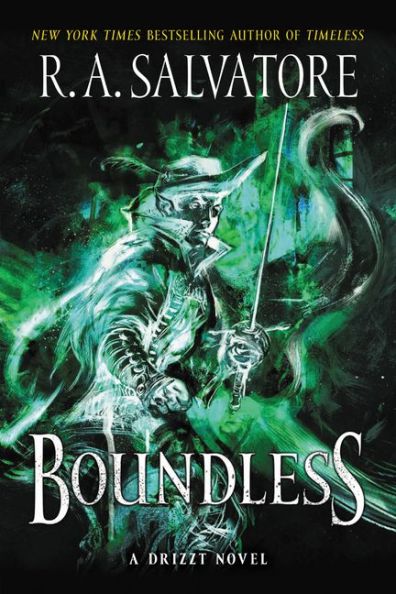
Boundless by R. A. Salvatore

Boundless Cover

Publisher: HarperAudio (Audiobook – 10 September 2019)

Series: Generations – Book 2

Length: 13 hours and 3 minutes

My Rating: 4.5 out of 5 stars

Amazon     Book Depository

From one of the world’s leading writers of fantasy fiction, R. A. Salvatore, comes an exciting and captivating new adventure that focuses on the author’s best-known protagonists, the Drow (dark elf) ranger Drizzt Do’Urden, his father Zaknafein, the rogue Jarlaxle and the Companions of the Hall.

Centuries ago, one Drow warrior was feared and respected above all others in the dark elf city of Menzoberranzan, the legendary weapon master Zaknafein. Even before the events that would eventually force him to sacrifice himself to save the life of his beloved son Drizzt Do’Urden, Zaknafein was never content with his life in Menzoberranzan. Sickened by the evil matriarchal system that rules the city in the name of the dark goddess Lolth, Zaknafein found himself trapped in the service of the ambitious Matron Malice Do’Urden. His only solace is his friendship with Jarlaxle, the charismatic leader of the mercenary band Bregan D’aerthe, with whom he forms a close bond. However, even this friendship is not immune to strife, as influential forces within Menzoberranzan attempt to turn the ranks of Bregan D’aerthe against Zaknafein.

Years later, Zaknafein has been mysteriously returned to life, finding himself in a strange new world, living within the dwarven kingdom of Gauntlgrym. Despite being reunited with his son, Drizzt, Zaknafein is once again lost; his inherent Drow distain for all non-dark elf life is making it hard for him to fit in with Drizzt’s dwarf, halfling and human friends and family. But as Zaknafein, with the help of Jarlaxle, attempts to find a new path, he is once again beset by dark and powerful opponents.

An ambitious family of human nobles from Waterdeep has combined forces with the ruler of Neverwinter, Lord Neverember, and a minor clan of dwarfs, in an attempt to topple Gauntlgrym’s king, Bruenor, and claim the elemental magical powers the great dwarven kingdom safeguards. While normally such foes would prove little threat to King Bruenor and his allies, these new enemies command a massive and ever-growing army of demons capable of overwhelming even Gauntlgrym’s substantial defences. In addition, their opponents are supported by a noble Drow House from Menzoberranzan whose matron, in a bid to become Lolth’s most favoured servant, is determined to be the Drow who finally captures Zaknafein and Drizzt. As father and son fight for their lives against their new enemies, they soon find themselves pursued by creatures far more sinister and destructive than anything they have seen before. Can the Companions of the Hall prevail, or will evil finally defeat the last bastion of light in the Forgotten Realms?

Boundless is another outstanding and incredibly enjoyable piece of fantasy fiction from one of my all-time favourite authors, the legendary R. A. Salvatore, who is easily one of the top fantasy authors of all time. This is actually the second novel from Salvatore this year, with the second book in his The Coven trilogy, Reckoning of Fallen Gods, having come out in January, and the final book in this trilogy, Song of the Risen God, is set for release in January 2020. In Boundless, Salvatore has once again returned to the iconic Forgotten Realms universe to produce another excellent story set around the character of Drizzt Do’Urden.

The dark elf ranger, Drizzt Do’Urden, is easily the most iconic and popular character that Salvatore has ever created. One of the few moral dark elf characters in all of the Forgotten Realms (the large-scale interconnected universe which has been the setting for a huge number of fantasy novels over the years), Drizzt has been one of Salvatore’s main recurring protagonist for over 30 years, ever since Salvatore’s debut novel, The Crystal Shard. I have long been a fan of Drizzt, mainly because of Salvatore’s amazing second trilogy of books, The Dark Elf trilogy, which told a captivating tale of a young Drizzt Do’Urden. Boundless is the 35th book to follow the adventures of Drizzt and his companions (if you include The Sellswords trilogy) and is the sequel to last year’s exciting fantasy adventure, Timeless. Boundless is also the second book in Salvatore’s current trilogy that focuses on Drizzt, known as the Generations trilogy, which is set to conclude next year in the final book, Relentless (a synopsis of which is already available online).

Boundless was an absolutely fantastic read which takes the reader on an epic thrill-ride through a demon invasion, the dark political underbelly of Menzoberranzan and into the heart and mind of one of Salvatore’s more complex and intriguing characters. Making exceptional use of two separate timelines, Salvatore tells a compelling and intricate story that combines a desperate battle for survival in the present with adventures in the past. Filled with action, adventure, amazing fantasy elements and an epic conclusion, this was a first-rate read that I greatly enjoyed.

This book was essentially impossible to put down from the moment I started listening to it, as Salvatore starts it off with an action packed prologue that sees a large force of halflings, dwarves and Drizzt face off against the horde of demons that were unleashed in Timeless. After this action-packed introduction, the book is then split into four parts, two of which follow the resulting battle for Gauntlgrym and the surrounding lands in the present (the present being Dalereckoning 1488), while the other two parts go back years before the events of the first book in The Dark Elf trilogy, Homeland, and tell a story of a younger Zaknafein and Jarlaxle in Menzoberranzan.

The parts set in the present offer a pretty exciting range of action and adventure as the story is split between several of the fun characters that Salvatore has introduced in all of his Forgotten Realms books. For example, throughout these parts you get to see the destructive siege of Gauntlgrym from the perspective of Bruenor, Zaknafein, Jarlaxle and the Bouldshoulder brothers (who originated in The Cleric Quintet, another one of Salvatore’s Forgotten Realms series). At the same time as Drizzt is being pursued throughout the land by a powerful magical construct, Wulfgar is caught up in an invasion of Luskan by a powerful fleet of monsters, and Regis teams up with Dahlia and Artemis Enteri to investigate their demonic opponents in Waterdeep. This was a fantastic blend of storylines in the present-day parts of the book, and I really enjoyed seeing the various adventures and perils assailing this great group of protagonists. All of the storylines in this part of the book were a lot of fun, and I really enjoyed the larger narrative that they were telling. These modern-day storylines end with a major cliff-hanger which is going to make me really want to check out the next book in this trilogy.

While the parts of the book set in Dalereckoning 1488 are pretty awesome, I have to admit that I much preferred the half of the book set back in the past. This part of the book was set over a period of several years and follows a younger Zaknafein and Jarlaxle as they navigate the highs and lows of their original friendship in the darkness of Menzoberranzan. I really liked this storyline, as it not only contained the politics, backstabbing and casual murder that makes all the stories set in Menzoberranzan so much fun, but it also explores Zaknafein’s psyche and starts to explain why he was a different Drow to the other members of his race when he was first introduced in The Dark Elf trilogy. It was also interesting to see the early days of Jarlaxle’s rise as a mercenary leader, and there is also a number of intriguing scenes that feature other Drow characters, such as Drizzt’s mother, Matron Malice, who have been dead for a while. As a result, these parts of the book serve as an excellent prequel to The Dark Elf trilogy, of which I am a massive fan. In addition, these chronologically earlier parts of the book serve to introduce some of the Drow antagonists who are threatening the characters in the present day, and it really interesting to see how the actions of Zaknafein and Jarlaxle hundreds of years in the past are impacting on the future.

I really loved this combination of the two separate timelines in the book and felt that it helped create a fantastic overall narrative. The earlier storyline of Drow house politics, friendships and small-scale grudges contrasts well with the intense war and near constant peril that makes up the 1488 storyline and helps to create a much more compelling book. I also really enjoyed how story elements, such as the exploration of Zaknafein and Jarlaxle’s friendship, or the examination of the cruel dynamics of Drow society, continued on from one part of the book to the next, and it was interesting to see how relationships and minds can change over time.

If there is one guarantee in life, it is that a Drizzt Do’Urden novel is going to feature some fancy swordplay and a ton of action. Boundless is no exception to this rule, as Salvatore has once again furnished his story with all manner of intense and detailed action and battle sequences, as his protagonists fight a variety of opponents. This makes for an exciting and really enjoyable read, as it always fun to see the various ways the Companions of the Hall engage in battle, especially since they have built up quite an impressive array of magical weapons and abilities after 35 books. In addition, Salvatore has come up with some unique and powerful opponents for this book, including two powerful magical constructs that are all but invincible and require extreme measures to combat. The parts of the book set in Menzoberranzan’s past also feature a wide array of dazzling duels and battles from Zaknafein, as he is forced to prove that he is the best weapons master in the city. The author shows off some truly impressive fight sequences in the parts of the book focusing on Zaknafein’s earlier life and Salvatore does a fantastic job providing the reader with a blow-by-blow account of what is happening. I also really liked how the author included several scenes that showed Zaknafein training for future battles in which he attempts to work out the best way to perform some elaborate or near-impossible combat move, which of course would then be utilised in a later fight. Needless to say, those looking for their next dose of fantasy action should look no further than Boundless, as Salvatore has once again provided one hell of a hit.

While I did read a physically copy of the previous book in the series, Timeless, for Boundless I ended up listening to the audiobook format instead. Boundless’s audiobook is narrated by Victor Bevine and runs for just over 13 hours, which only took me a few days to get through. I ended up having a great time listening to Boundless, especially as listening to a blow-by-blow of the amazing action sequences really helped bring these scenes to life for me. Bevine did a fantastic job of breathing life into the book’s various characters, and I really enjoyed the way that he captured the personalities of several of the characters with his performance. I also appreciated the way that he was able to emulate a number of very different characters and species throughout the course of the audiobook. Not only did he come up with sly and calculating voices for the various Drow characters, but he was also able to affect an impressive brogue for the various dwarven characters in the book. This is a fantastic range, and I quite enjoyed all of the voices that Bevine came up with. As a result, I would definitely recommend the audiobook version of Boundless to anyone who is interested, and I think that I will try to listen to next book in the trilogy.

Overall, Boundless is an outstanding and incredible new release from Salvatore, and I loved every second that I was reading it. Featuring a ton of action and some really cool plot elements, Salvatore tells a clever and intricate story that sets some high stakes for his beloved characters. Not only am I excited to see where the story goes in the next book, but I also have a very strong urge to go back and check out Salvatore’s The Dark Elf trilogy, where some of the fantastic characters explored in this book were first introduced. With this latest novel, Salvatore continues to show why he is one of the biggest names in fantasy fiction, and it is thanks to books like Boundless that I will continue to grab every new Salvatore release I can get.

Amazon     Book Depository

Star Wars: Resistance Reborn by Rebecca Roanhorse

Resistance Reborn Cover 2

Publisher: Century (Trade Paperback – 5 November 2019)

Series: Star Wars

Length: 298 pages

My Rating: 4.5 out of 5 stars

Amazon     Book Depository

The road to the final movie in the Skywalker Saga, Star Wars Episode IX: The Rise of Skywalker, begins here with this intriguing tie-in novel, Star Wars: Resistance Reborn, by recent fantasy phenomenon Rebecca Roanhorse. Resistance Reborn is a fantastic and action-packed book that attempts to bridge some of the gaps between The Last Jedi and the upcoming The Rise of Skywalker.

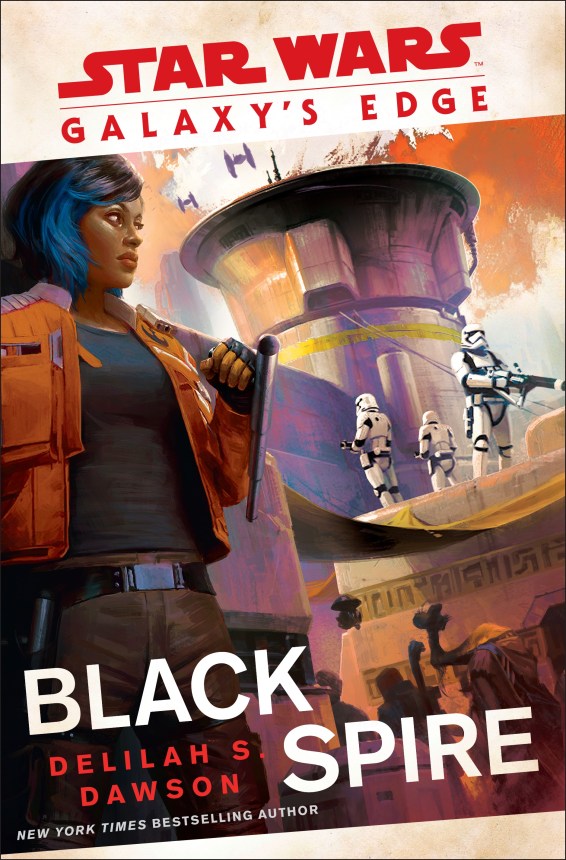
This latest book is a very interesting addition to the Star Wars tie-in media range, and it is one that all major Star Wars fans are going to be very keen to get their hands on. Resistance Reborn is the latest Star Wars tie-in novel and it is deeply connected with the upcoming ninth film in the main Star Wars storyline, The Rise of Skywalker, which is set for release in about a month. This book is one of several pieces of upcoming Star Wars tie-in fiction that attempt to fill in some gaps surrounding the plot of the upcoming film, other examples of which include the Force Collector young adult novel, the Star Wars: Allegiance comic book and even Black Spire, to a lesser degree. Resistance Reborn is probably the most exciting one on the list, as it is going to be the novel that is most closely connected with the events of the movies.

Following on shortly after the devastating events that occurred on the isolated planet of Crait at the end of The Last Jedi, the Resistance has been decimated by the tyrannical First Order. Seemingly abandoned by their friends and allies throughout the galaxy, only a few members of the Resistance have survived and are now in hiding. Those remaining Resistance members are as determined as ever to fight and are willing to risk it all the save the galaxy.

To that end, the leader of the Resistance, General Leia Organa, has sent her few remaining compatriots out into the galaxy in an attempt to find more volunteers, supplies, ships and, most importantly, leaders and strategists who can help guide the Resistance to victory. While her teams are able to find a few valuable recruits, including some old friends from the days of the Rebel Alliance, the situation is looking grim.

The First Order have started to establish their dominance throughout the entire galaxy, and few are willing to stand before them. Whatever allies or supporters the Resistance might have been able to count on have gone missing, apparently the victims of an oppressive roundup by the First Order. As Poe Dameron and the remains of his squadron attempt to recover a prisoner list that contains the details of the fate of these dissidents, it soon becomes apparent how far the reach of the First Order has grown. Can the Resistance survive, or will the shadow of the First Order overwhelm them all?

This was an outstanding read that not only tells a fantastic and enjoyable story that features several iconic characters, but it also does a great job of connecting The Last Jedi (which I have to admit was not my favourite Star Wars film) and The Rise of Skywalker. In addition to that, the author, Rebecca Roanhorse, who has gained a lot of positive attention in the last two years with her debut The Sixth World series, has also included quite a number of fun references to other works of Star Wars fiction, making this an entertaining read for fans of the franchise.

The first thing that I want to address about Resistance Reborn is how this book adds to the background of the upcoming Star Wars film. It shows the reader how the Resistance starts to rebuild itself before The Rise of Skywalker. The events of episodes VII and VIII saw the Resistance stripped of many of the resources and allies that they needed to fight the First Order. The Force Awakens featured the annihilation of the New Republic, the Resistance’s main supporters and one of the few galactic powers that could match the First Order, while The Last Jedi saw the destruction of most of the remaining Resistance forces, including pretty much all of their senior leadership. However, the recent trailer for The Rise of Skywalker shows quite a significant fleet of Resistance ships in a big climatic battle. A major question then arises: where did the Resistance get all of these people and ships after all their significant defeats? Resistance Reborn, which is set only a few days after the end of The Last Jedi, attempts to show how Leia and the Resistance were able to start gaining some initial recruits and materials. This is a rather intriguing storyline which shows how desperate the situation is for the Resistance and how powerful and widespread the First Order has become. I liked some of the explanations for why the Resistance was abandoned by their allies at the end of The Last Jedi, and Roanhorse comes up with a good explanation for how the protagonists found their initial batch of new recruits. The end of the book presents a rather interesting scenario for the entire Resistance, which does explain a few things that I noticed in the trailer for The Rise of Skywalker. Overall, based on what I can guess is going to occur in the upcoming film, I would say that this is an excellent bridge between the events of The Last Jedi and The Rise of Skywalker, although I am very curious to see how many aspects of this book do end up appearing in this new movie.

One of the cool things that I liked about Resistance Reborn was the cool way that Roanhorse split the story between an interesting mixture of characters. Rather than solely focusing on the central protagonists of the films, the author has instead included an intriguing choice of new point-of-view characters that fans of the extended Star Wars universe are likely to already be familiar with. That being said, there are a number of notable inclusions from some of the main characters in the book, and there are also a couple of new characters introduced in this book who get a few point-of-view sequences.

The main character of the book is Poe Dameron, who spearheads the Resistance’s attempts to gain new recruits. Poe was a good choice as the central character, as not only is he one of the central leaders of the Resistance and their main man of action but he is also still recovering emotionally from the events of The Last Jedi. The regrets he bears from his mutiny on the Raddus and the role he played in the devastation of the Resistance are still weighing heavily on his mind, and it results in some fantastic and emotional sequences from him and the people he interacts with. Roanhorse also spends a bit of time following General Leia as she recovers from all the traumatic events of the last two movies. In this book, Leia is showing quite a few hints of despair after all the losses she has recently experienced; however, it is heartening to witness her start to regain her drive and hope by watching the actions of the younger members of the Resistance.

It was very interesting to see that the rest of the main cast of the recent Star Wars films were not utilised as major characters in this book. You barely get to see anything of major characters like C-3PO and Chewbacca, and even Rey only gets a few minor scenes. Finn features a little bit towards the end of the book as he joins Poe on a mission. I really liked the interactions between Poe and Finn in this book, and I am curious to see whether this is a hint at some sort of romantic relationship occurring between them in the film (there are quite a few fan theories about that out there). Even if it doesn’t, I was very happy that this book actually contains a decisive end to that terrible romance that sprouted between Finn and Rose in the last film. Resistance Reborn did not feature any appearances from the major antagonists of the last two films; instead, the First Order as a whole were the book’s antagonists. While I would have liked to see some scenes of Kylo Ren or General Hux squabbling for dominance or expanding their influence, I did like the use of whole organisation as an opponent, and it was an effective way of showing off just how dangerous and malignant the First Order can be.

Quite a lot of time is also spent exploring some of the lesser-known members of the Resistance and some of their recent recruits. This includes members of Poe Dameron’s squadron of fighters, Black Squadron, who appeared in The Force Awakens; the protagonist of a previous trilogy of books, Norra Wexley; and the current version of Inferno Squadron from the Battlefront II video game, Shriv and Zay. These characters appear as fairly significant point-of-view characters throughout this book, and it was interesting to see the perspective of these lesser-known Star Wars characters as they fight as part of the Resistance. However, out of all the characters that appeared in this book, the one I was most happy to see was Wedge Antilles. Despite only being a minor character in the original trilogy of films, Wedge has long been a favourite of Star Wars fans due to his many appearances in a multitude of different extended universe formats, including books, comics, games and the Star Wars Rebels animated show, in both the previous canon and the current, Disney-operated canon. It was recently announced that Wedge would be appearing in The Rise of Skywalker, and this book reintroduces him in the current chronology of the films, showing him come out of retirement to once again fight the good fight. This was a really cool addition to the story, and I personally was so happy to see Wedge once again.

Probably one of the things that I liked the most about Resistance Reborn was the huge amount of Star Wars references that Roanhorse was able to fit in this book. Not only are there the obvious connections to the previous Star Wars movies but Roanhorse has made sure to tie the story into a number of other pieces of media from across the Star Wars expanded universe. Several of the characters that she has included in this book first appeared in other pieces of expanded universe fiction, such as the members of Inferno Squadron, who were the protagonists of Battlefront II. The characters of Norra and Snap Wexley were the protagonists of the Aftermath trilogy of Star Wars books, which ran between 2015 and 2017, while Snap and the rest of Black Squadron were also major characters in the Poe Dameron series of comic books. There are also a number of references to the 2016 novel Bloodline, and Resistance Reborn actually contains an interesting conclusion to one of the significant events from this prior book. Finally, there are a number of brief references to characters or events that occurred in a number of other books, comics or television shows, such as Wedge reminiscing about his recruitment to the Rebel Alliance during the third season of Star Wars Rebels, or a discussion of Ryloth’s history of oppression, which was shown in both the Rebels and The Clone Wars animated shows. Obviously, readers who are major fans of the Star Wars expanded universe are going to love all these fun inclusions, and I personally was really impressed with everything that Roanhorse was able to fit in. These inclusions did not overwhelm the overall plot of the book, so the story is very accessible to readers who are less familiar with the expanded Star Wars lore and who won’t get those references.

Resistance Reborn by Rebecca Roanhorse is an outstanding new entry in the Star Wars canon which I ended up enjoying quite a lot. Not only does this book offer some intriguing insights into the long-awaited The Rise of Skywalker, but it also features a ton of fantastic references and characters from across the Star Wars franchise, inclusions which are sure to please mega Star Wars fans like this reviewer. Required reading before The Rise of Skywalker comes out, this book comes highly recommended and was a lot of fun.

Amazon     Book Depository

The Night Fire by Michael Connelly

The Night Fire Cover

Publisher: Hachette Audio (Audiobook – 22 October 2019)

Series: Ballard and Bosch – Book 2

Length: 10 hours and 4 minutes

My Rating: 5 out of 5 stars

Amazon

One of the masters of modern crime fiction, Michael Connelly, returns with another book in his bestselling interconnected crime universe. In The Night Fire, Connelly once again brings together the outstanding team of Ballard and Bosch for another exceptional murder mystery.

Back when he was a rookie detective, Harry Bosch was mentored by one of the LAPD’s best homicide detectives, John Jack Thompson, who helped stoke his internal fires of justice to ensure that no case ever goes unsolved. Now, years later, Thompson is dead, and at his funeral, the now retired Bosch is given a gift from his widow: a murder book for an unsolved crime. The case revolved around the murder of a young man in a gang-controlled alley nearly 30 years before, and it appeared that Thompson secretly took the book when he retired from the force. What was Thompson’s connection to the case, why was this one murder so important to him and why did he keep the murder book a secret for so long?

Determined to get answers, but already committed to helping his lawyer half-brother Mickey Haller defend his client in a tricky murder case, Bosch takes the book to Detective Renée Ballard for help. Ballard, Hollywood Division’s resident detective on the night shift (known as the Late Show), and Bosch have recently formed an unofficial partnership in order to work on some of Bosch’s old, unsolved cases. Identifying several inconsistencies in the cold case, Ballard decides to start digging deeper, while also investigating a suspicious death by fire that occurred on her beat.

Together Bosch and Ballard are an effective investigative team, and it does not take them long to identify a potential killer. However, the more they dig, the more they begin to realise that Thompson might not have taken the murder book to solve the murder, but to ensure that nobody ever tried to investigate it. Can these two detectives get to the truth, and what happens when their various investigations put them in the line of fire of some very dangerous people?

The Night Fire is the latest book in Connelly’s shared crime universe, which features the various adventures and investigations of several of his iconic protagonists. This new novel is a fantastic piece of crime fiction that once again combines together two of Michael Connelly’s most intriguing characters, Bosch and Ballard, after their outstanding first team-up in 2018’s Dark Sacred Night. This is the 22nd book featuring Bosch, Connelly’s original and most utilised protagonist, while Ballard has so far appeared in two prior novels. This book also briefly sees the return of Mickey Haller, another one of Connelly’s protagonists, who has appeared in several legal thrillers within the universe such as The Lincoln Lawyer (which was adapted into a film of the same name).

Just like in Dark Sacred Night, the plot of the book is shown from both Bosch’s and Ballard’s perspectives, as each of them gets a number of separate point-of-view chapters (about half each) to tell their respective stories. While there is a lot of crossover between the two characters, especially when they are working together on their joint cold case, both of them do their own independent investigations and have several chapters where they deal with their various personal issues without the other character being present. However, they also both appear in a number of chapters together, allowing the reader to not only get an interior view of the character but to see each of them through the other’s eyes.

One of the main things that I love about the Michael Connelly books I have read are the multiple cases that the protagonists investigate simultaneously, many of which may or may not be connected in some way. In The Night Fire for example, the story features one cold case that brings Ballard and Bosch together at the start of the book and which they work together on, while both characters have separate cases to work on. Bosch becomes involved in the legal defence of one of Mickey Haller’s clients who is on trial for murder, and this then evolves into the hunt for the murderer of a judge. Ballard on the other hand does most of the investigative work on the cold case, mainly because she is the one with access to the LAPD’s resources. At the same time, she is also investigating several other crimes that come across her desk during her night shifts at Hollywood Division. These include a homeless man who was burnt alive in their tent, the apparent suicide of a young girl and the discovery of a truckload of illegal immigrants. While some of these cases do not go anywhere or are investigated by a different part of the LAPD, Ballard does find herself fully investigating several different cases and getting some rather interesting results. I really enjoyed this cool combination of varied cases and examples of police work, especially as it combines together a decades-old murder with several recent crimes. There are some really complex and compelling mysteries involved with these cases, and I found myself getting drawn into each of them, as they all featured some clever police work and an intriguing bunch of potential suspects. The cold case in particular was great, as the reader not only needed to figure out who the killer was but also why Bosch’s mentor was so concerned with the murder. While it was a little disappointing not to get some follow-through on a couple of Ballard’s cases, I thought that all of these mysteries come together into an excellent overall narrative that does an outstanding job keeping the reader’s attention. I also loved how two of the cases eventually come together in an unexpected way, resulting in an explosive conclusion, while the results of another murder investigation had a very emotional impact on one of the protagonists.

In addition to the great mysteries and fictional examples of police work, one of The Night Fire’s biggest strengths is its two protagonists, Ballard and Bosch. Both of these protagonists are excellent characters with strong backstories, and I really enjoyed how the two of them played off each other. In this novel, both Ballard and Bosch are outsiders to the LAPD. Ballard has been banished to the night shift for reporting a sexual assault by a superior officer, and now has serious trust issues when it comes to many of her male counterparts. Bosch on the other hand, after a long career with the police, is now retired, and thanks to some of his actions that forced him out the LAPD, many of the police no longer see him as one of them, a point reinforced when Bosch helps Mickey Haller free a murder suspect. This outsider viewpoint makes the team-up between both of them a lot more interesting, as both characters are still learning to trust the other, even after the success of their first case. I really liked how the relationship between the two of them grew throughout this book, and their different viewpoints and experiences turn them into an effective duo. Both characters go through some big moments in this book, including some medical issues with Bosch, Ballard standing up to her attacker and the various emotional impacts of the case, and it was great to see how they helped each other out. This is definitely a team-up I want to see again in the future, and I really hope that Connelly continues more of these adventures with Ballard and Bosch.

Just as I did with Michael Connelly’s previous book, Dark Sacred Night, I ended up listening to the audiobook version of The Night Fire. This audiobook runs for just over 10 hours, and features the vocal talents of Titus Welliver and Christine Lakin. I quite enjoyed the audiobook version of The Night Fire, as not only did it allow me to power through this book is short order (I think it only took me three days to finish it off) but its use of two separate narrators was done really well. Throughout the course of the book, Welliver is the voice of Bosch (which is a good fit as Welliver actually plays this character in the Bosch television show), while Lakin is the voice of Ballard, and they each narrate the chapters for their respective characters, including most of the dialogue. Welliver and Lakin are exceptional vocal talents, who did an outstanding job of bringing Bosch and Ballard to life. Both of these narrators really get to grips with the characters and are able to capture a lot of their various nuances in their performances.

Another great thing about this audiobook was the amazing way they utilised the two separate narrators. I really liked how the book was split between them, and it ensured that both sets of chapters had a great distinctive feel throughout the book, and the reader was never left in doubt who was narrating the chapter. The only exception to this is any dialogue the other point-of-view character has in that chapter, as that character’s narrator will then speak instead. This means for example, while Welliver is the primary narrator during Bosch’s chapters, whenever Ballard speaks during these chapters you get Lakin’s voice. While it was a tad disconcerting at times to suddenly hear the other narrator’s voice in the middle of a lot of dialogue in the primary vocal talent’s chapter, it did save the reader from getting confused by having to listen to two different versions of the protagonist’s voices. Overall, I would strongly recommend the audiobook version of The Night Fire to anyone interested in checking out this book, and I know that I will be utilising this format again in the future for Connelly’s next book.

In his latest crime fiction masterpiece, Michael Connelly once again knocks it out of the park with this fantastic new addition to his connected crime universe. The Night Fire is an exceptional murder mystery that makes excellent use of its two main protagonists to tell a rich and exciting narrative, filled with a number of intriguing investigations and cases. This is probably my favourite Michael Connelly book that I have read so far, and it gets a full five stars from me. A fantastic new entry from the king of crime fiction, this is a must read for all fans of the genre.

Amazon

Tiamat’s Wrath by James S. A. Corey

Tiamat's Wrath Cover

Publisher: Recorded Books (Audiobook – 26 May 2019)

Series: The Expanse – Book Eight

Length: 19 hours and 8 minutes

My Rating: 5 out of 5 stars

Amazon     Book Depository

With 2019 coming to an end, it is about time I got around to writing a review for one of the best science fiction books of the year, Tiamat’s Wrath by James S. A. Corey, the eighth book in the extremely popular The Expanse series. James S. A. Corey is the collaborative name of co-authors Daniel Abraham and Ty Franck, but for the purposes of this review it is simpler to treat Corey as an individual.

Tiamat’s Wrath is an outstanding piece of science fiction that I had an amazing time listening to earlier in the year. Despite being extremely keen for this book, I did not get around to reading it until a month or two after it came out, but when I did get a chance to listen to Tiamat’s Wrath, I absolutely loved it and it was one of my favourite books from earlier in the year. However, I completely failed to write a review immediately after finishing it, and it kind of got lost in the pile of books I needed to review as I read more and more stuff.

The Expanse books, which started in 2011 with Leviathan Wakes, are an extremely complex and outstandingly well-written science fiction series, which have also been turned into a very popular television show of the same name. It is important to note that while all the books in The Expanse are connected by the same universe, overarching plot and central characters, the story can be broken up into three separate trilogies of novels. After the success of the first eight books, the authors are starting to wrap up the series, with the upcoming ninth book (hopefully coming out sometime in 2020), being the last in the series. Not only is Tiamat’s Wrath the penultimate book in the series; it is also the second book in the last trilogy of the series, which started with 2017’s Persepolis Rising.

Tiamat’s Wrath is set a short time after the events of Persepolis Rising, when the Laconian Empire, under the command of High Consul Winston Duarte, successfully utilised advanced alien technology to take control of the entire gate network and destroy the navies of Earth and Mars. The Laconians now rule the entire galaxy, and the crew of the Rocinante (the central protagonists of The Expanse series), are wanted criminals as they fight a guerrilla war. This was another incredible addition to The Expanse series that not only contains a vast and captivating story in its own right but which sets up a fascinating scenario for the final book in the franchise.

Goodread’s Synopsis:

Thirteen hundred gates have opened to solar systems around the galaxy. But as humanity builds its interstellar empire in the alien ruins, the mysteries and threats grow deeper.

In the dead systems where gates lead to stranger things than alien planets, Elvi Okoye begins a desperate search to discover the nature of a genocide that happened before the first human beings existed, and to find weapons to fight a war against forces at the edge of the imaginable. But the price of that knowledge may be higher than she can pay.

At the heart of the empire, Teresa Duarte prepares to take on the burden of her father’s godlike ambition. The sociopathic scientist Paolo Cortázar and the Mephistophelian prisoner James Holden are only two of the dangers in a palace thick with intrigue, but Teresa has a mind of her own and secrets even her father the emperor doesn’t guess.

And throughout the wide human empire, the scattered crew of the Rocinante fights a brave rear-guard action against Duarte’s authoritarian regime. Memory of the old order falls away, and a future under Laconia’s eternal rule — and with it, a battle that humanity can only lose – seems more and more certain. Because against the terrors that lie between worlds, courage and ambition will not be enough…

For the plot of Tiamat’s Wrath, Corey tells the story from the perspective of several separate point-of-view characters, each of whom has a number of chapters throughout the book. This was a very interesting combination of character perspectives that helped explore various aspects of the galaxy following the rise to power of the Laconians. Three of the main point-of-view characters are former Rocinante crew members Naomi Nagata, Bobbie Draper and Alex Kamal, each of whom is involved in the war against the powerful Laconian Empire. Another point-of-view character is returning character Elvi Okoye, who, despite her loyalties to her friends upon the Rocinante, finds herself employed by High Consul Duarte as one of his primary scientists exploring the alien technology, and later finds herself drawn into the Laconian inner circle. The fifth main character is new protagonist Teresa Duarte, daughter of the High Consul, who provides insight into growing up in the Laconian Empire and the political intrigue of the capital. In addition to the five characters mentioned above, the book’s prologue, epilogue and interludes are narrated by former Rocinante captain James Holden, who is being held prisoner on Laconia and who is attempting to manipulate the system from within.

I really enjoyed the author’s use of these multiple viewpoints, especially as it allowed them to tell a complex and widespread story set across several different solar systems. Each of these various viewpoints provides the reader with different information and insight into the both the Laconian Empire and the unknown alien threat that has sprung up. While Elvi and Teresa’s story arcs are pretty fascinating and I quite enjoyed the combination of politics and alien science that filled their chapters, my favourite parts of the book are the chapters told from the perspectives of Naomi, Bobbie and Alex. This is mainly because these chapters focused on their fight against the Laconian Empire, and I really enjoyed the detailed and captivating accounts of a large-scale guerrilla conflict in a massive space location. Each of these three characters shows off a different aspect of this fight, including Naomi acting as the resistance’s master strategist while living in a supply crate, Bobbie’s work as a marine and drill sergeant on the frontline and Alex’s job piloting various combat craft into battle. Thanks to these three characters, you get an amazing idea of how this war is being fought, and the various issues involved with facing a seemingly invincible opponent. I also liked how all the various character arcs came together extremely well as the book progressed, creating a first-rate narrative that proved to be extremely addictive.

I am a man who loves his science fiction action, and I have to say that I had an absolute blast with the action sequences in this book. Corey has absolutely packed this book full of various battle sequences in space, as the protagonists go up against the various Laconian forces in both smaller skirmishes and one massive full-system assault. Not only are the battles pretty spectacular in their own right, but I love how realistic the author has tried to make them, with things like gravity, the lack of sound in space and communication delays across vast distances all taken into account. All this consideration really makes the combat in Tiamat’s Wrath stand out, and it added a lot to my overall enjoyment on this novel.

While this is an excellent piece of science fiction and an amazing read, due to its position as the eighth book in the series, and the middle book in the final trilogy, Tiamat’s Wrath is probably not the best book to start exploring The Expanse with. While Corey does a pretty good job of making this book accessible to new readers, I would strongly suggest that readers at least check out the previous book in the series, Persepolis Rising, first, as it will help readers understand more of the complex science fiction and story elements. There is no doubt in my mind that existing fans of The Expanse will love this fantastic book, especially as it takes the story in some interesting directions and sets up the series for a pretty epic conclusion. That being said, some of the developments that occur during the book are going to make dedicated The Expanse readers very sad, especially if they have grown attached to certain characters.

I ended up listening to the audiobook format of Tiamat’s Wrath, narrated by Jefferson Mays. This is a pretty substantial audiobook, running for just over 19 hours (indeed it would have just made the top 20 on my Longest Audiobook list), but I ended up getting through it rather quickly as I had a hard time turning it off. I found the audiobook to be a fantastic way to enjoy this book, and I think I absorbed a lot more of the detailed science fiction plot by listening to it. Mays has a great voice for narration, and I really enjoyed his take on the various characters in the book. All in all, listening to the audiobook version of Tiamat’s Wrath was a great experience, and I will probably end up doing the same for the final The Expanse book when it come out.

Tiamat’s Wrath is an exceptionally powerful novel that is easily one of the best books I have read so far this year. The Expanse’s authors have absolutely outdone themselves with this eighth book, which tells a complex and intriguing science fiction story. Featuring a first-rate story, a great group of core characters, some impressive action and the author’s typical attention to scientific detail, Tiamat’s Wrath comes highly recommended, and I am still kicking myself for taking so long to review this.

Amazon     Book Depository

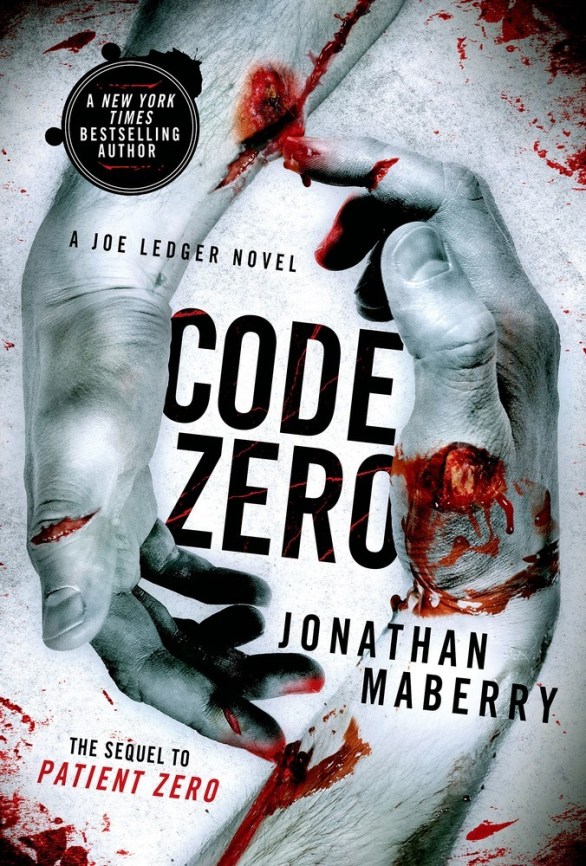
Throwback Thursday – Code Zero by Jonathan Maberry

Code Zero Cover.jpg

Publisher: Macmillan Audio (Audiobook – 25 March 2014)

Series: Joe Ledger series – Book Six

Length: 16 hours and 6 minutes

My Rating: 5 out of 5 stars

Amazon     Book Depository

Reviewed as part of my Throwback Thursday series, where I republish old reviews, review books I have read before or review older books I have only just had a chance to read.

The ghosts of the past come back to haunt Joe Ledger and the DMS big time in this sixth book in Jonathan Maberry’s high-octane science fiction/military thriller Joe Ledger series.

For years, the Department of Military Sciences (DMS) has saved the world from some of the most deadly and insane weapons that science can create: race-specific bioweapons, genetically enhanced super soldiers, powerful plagues capable of killing people in the most horrendous way and even a pathogen that is capable of bringing its victims back to life as zombies. Each of these has been stopped by DMS agents and the legendary Joe Ledger, but these horrors are about to resurface in the most devastating of ways.

The mysterious hacker and terrorist Mother Night has been causing the DMS trouble for months, but when she broadcasts a call for anarchy, no-one is prepared for what happens next. Across America, Mother Night’s followers unleash hundreds of random acts of violence, causing horrendous amounts of terror and destruction. As Joe Ledger and the DMS attempt to counter them, a subway car full of people in New York is infected with something disturbingly familiar, the Seif-al-Din zombie pathogen that bought Ledger to the DMS in the first place.

As Ledger and Echo Team are once again forced to contend with the zombie victims of the pathogen, they find themselves targeted from several devastating angles. As the threats become more and more personal, it soon becomes apparent that they are facing someone who knows the DMS intimately and who is willing to use the most lethal tools at their disposal to win. Can Ledger and the DMS survive, or will the world burn at the hands of Mother Night?

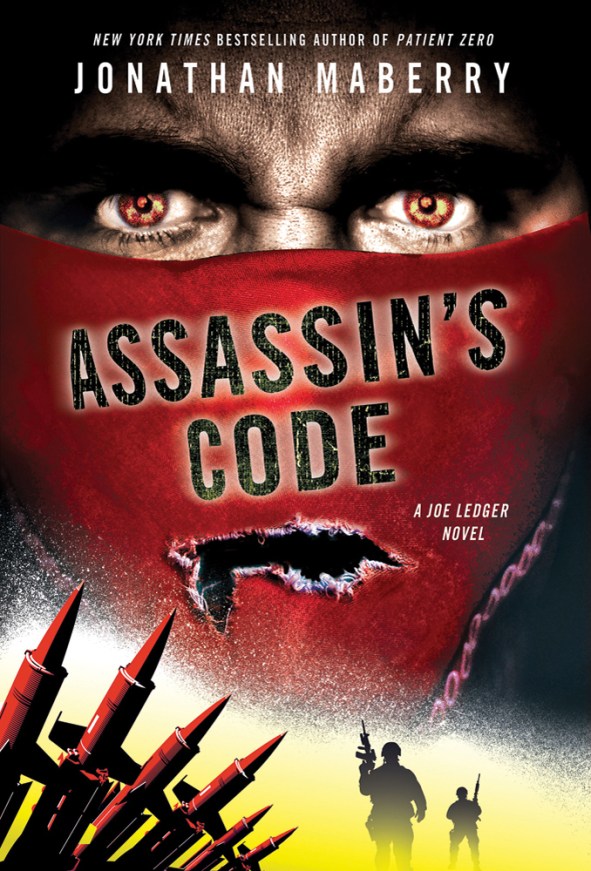
Jonathan Maberry’s Joe Ledger books are one of my favourite series at the moment, and I love each book’s excellent blend of compelling storytelling, complex characters, over-the-top villains, electrifying action and insane plot points, which come together into fantastic, first-rate narratives. Ever since I read and got hooked on the tenth book in this series, Deep Silence, about this time last year, I have been periodically reading and reviewing the earlier novels in sequence. So far, I have read the first six novels, Patient Zero, The Dragon Factory, The King of Plagues, Assassin’s Code, The Extinction Machine and this novel, Code Zero. I am actually reviewing this book a little out of order, as I recently powered through both The Extinction Machine and Code Zero while I was away on holidays. As Code Zero is fresher in my mind, I decided to review it first, and I will hopefully get a review for The Extinction Machine up soon as well (the plan is to get it done before the next Joe Ledger book, Rage, comes out in November, but we’ll see how we go).

Considering how much I absolutely loved the rest of the books in the series, it is going to come as no surprise to anyone that I also really enjoyed Code Zero. This sixth book was pretty spectacular, and it is easily one of my favourite books in the entire series, only just being beaten out by The Dragon Factory. In Code Zero, Maberry has made sure to utilise several of the excellent features from the previous Joe Ledger books that l really love and have commented on previously, such as a first-rate story filled with intense action, a smartassed and damaged protagonist, a great group of side characters (including one of the best dogs in all of fiction) and a clever utilisation of flashbacks and multiple perspectives. This book also features some other great story and character elements that really make it stand out from the rest of the series, and which help make it such an outstanding and epic read.

I have mentioned before that one of the best things about the Joe Ledger books is the awesome antagonists that Maberry creates for each of the novels. These have so far included genetically modified Nazis, world-event manipulating masterminds and even a group of vampires. However, the villain of Code Zero, Mother Night, is perhaps one of the most interesting and complex antagonists that Maberry has come up with. Mother Night is an outstanding character who not only has a close connection with the DMS, but whose elaborate master plan does a great deal of damage. I really liked how Maberry used a series of flashback filled interludes to explore the background of this character. These flashbacks show how Mother Night is connected to all the DMS characters and examine how her exposure to various characters and threats from the previous books slowly corrupted her, and why she was compelled to become a terrorist. Despite this being the first book that Mother Night has appeared in, Maberry did a sensational job tying the character into many of the key events from the first three novels, and showing how she was actually involved with some of the previous threats. All of these cool connections really help up the personal stakes for all of the protagonists, and it allows Mother Night to actually hit Joe Ledger and his team harder than anyone else has before, resulting in an extra dramatic and compelling story.

Maberry also uses Mother Night’s plot to examine some rather interesting elements of the modern world. For example, the anarchist movement is explored in some detail, as Mother Night uses anarchist elements in her call to arms, gathering up members of America’s disenfranchised youth to form an army. There is also a rather intriguing look at the role video games can play in violence or espionage. This is not done in an attempt to demonise video games; instead Maberry, through several of the videogame savvy characters, explores how important problem-solving is for gamers, and how the skills obtained there can have real-world applications in both the espionage and defence worlds. The subsequent study of game theory and the desire to win that some gamers feel is particularly fascinating, and it adds very some interesting layers to the story and Mother Night’s overall character.

In addition to this incredible antagonist, the other thing that I absolutely loved about Code Zero is the fact that Maberry decided to bring back some of the iconic threats and story elements from the previous books in the series. Not only did the author do an outstanding job of working these pre-existing story elements into Code Zero’s plot, but their reappearance was also an excellent homage to the earlier books and a real treat for fans of the series. I really enjoyed seeing Ledger have to go up against threats like the walkers and the berserkers again, especially as each of these threats have pretty strong emotional triggers for him due to devastating previous missions. It was also really interesting to see the new and various ways that the antagonist utilised these existing elements in her own plans, and there were some really fun combinations of the insane scientific elements, such as a couple of berserkers who have been infected with Generation 12 of the Seif-al-Din Pathogen, and it’s as awesome as you’d expect.

As this is a Joe Ledger book, Code Zero is of course filled to the brim with all the action and fire fights that you could ever need. Due to the presence of so many varied threats, including some of the monsters from the previous books, Code Zero probably has some of the most intriguing fight scenes in the entire series. This book is filled with a number of elaborate battle sequences in which the protagonists face off against a variety of different opponents at the same time. These opponents can include walkers, berserkers and gunmen disguised as zombies hiding amidst the walking dead, which is just so many layers of awesome. Maberry has an exceptional talent for writing fight sequences, and all this amazing action really helps to get the adrenaline pumping. I also have to commend all of the first-rate zombie scenes in the book, as the author crafts some truly horrifying scenes that showcase how terrifying and emotional damaging it would be to face off against these undead monsters.

As with all the previous books in the Joe Ledger series, I chose to listen to the audiobook format of Code Zero which was narrated by Ray Porter. Clocking in at just over 16 hours, I managed to get through this audiobook fairly quickly, mainly because I started listening to it while on an international flight. I think it is pretty clear at this point that I really enjoy listening to the audiobook versions of the Joe Ledger books, mainly due to the narration of the outstanding Ray Porter. I have sung Porter’s praises in all of my previous reviews, and I really cannot express what a good job he does bring the series titular protagonist to live with his voice work. Code Zero was no exception, and I would strongly recommend the audiobook format to anyone even vaguely interested in this book.

Code Zero by Jonathan Maberry is another spectacular book in the Joe Ledger series, and one that I absolutely loved. Maberry continues to utilise some of the amazing story elements that made his previous six books so darn enjoyable, and he ups the ante with another exceptional antagonist and the clever reuse of memorable story elements from previous books in the series. All of this results in another science fiction/thriller masterpiece that gets an easy five out five stars from me, and it is possibly one of the most enjoyable books I have read so far this year.

Amazon     Book Depository

The Queen’s Tiger by Peter Watt

The Queen's Tiger Cover

Publisher: Macmillan (Trade Paperback – 12 November 2019)

Series: The Colonial series – Book 2

Length: 360 pages

My Rating: 4.5 out of 5 stars

Amazon     Book Depository

One of Australia’s best historical fiction writers, Peter Watt, returns with another exciting historical adventure in The Queen’s Tiger, the outstanding sequel to his 2018 release, The Queen’s Colonial.

Following on from the events of The Queen’s Colonial, in 1857, former Australian settler Ian Steele is still living under the guise of Samuel Forbes, a rich English noble who Ian bears an uncanny resemblance to. Ian switched places with Samuel in order to help him meet the required military service he needs to receive a vast inheritance. Serving as a captain in Queen Victoria’s army, Ian has proven himself to be a natural soldier, fighting against the odds dozens of times over against the most vicious enemies of the crown. However, despite the formidable enemies he has faced on the battlefield, Ian has encountered greater dangers far closer to home, as Samuel’s father and his murderous brother Charles are determined that Samuel will never receive his inheritance.

As Ian and his men, including his old friends Sergeant Conan Curry and Corporal Owen Williams, return from fighting the Persian army in Iran, a dangerous threat to the empire is brewing in India. Indian troops under the employ of the British East India Company have begun to mutiny, and the country, caught up in a swell of anti-British nationalism, is beginning to violently rebel against British rule. Among those caught up in the chaos are Samuel’s sister Alice and her husband the surgeon Peter Campbell, whose honeymoon turns into a brutal fight for survival.

Redeployed to India, Ian is once again leading the charge in some of the campaign’s most deadly battles against a determined foe. However, the biggest threat to his survival is happening half a world away back in England, as the real Samuel Forbes returns to London for a personal meeting under the name Ian Steele. When Samuel is spotted and his true identity is suspected, he finds himself hunted throughout England by Charles’s agents, determined to prove that Ian is an imposter. Can Ian and Samuel continue their ruse amidst the tragedy, tribulations and conflicts they encounter, or will the evil forces arrayed against them finally bring them down?

This was another fantastic book from Peter Watt, who has a true knack for producing compelling historical adventures filled with action, intrigue and family drama. The Queen’s Tiger is the second book in Watt’s Colonial series, which follows its protagonists through some of the most dangerous conflicts that the British army found itself involved with during the 19th century. I have to admit that I have been quite keen to check this book out for a little while, and not just because it quotes one of my Canberra Weekly reviews on the cover. The first book in this series, The Queen’s Colonial was an excellent read, and it did a good job following up Watt’s long-running Frontier series of which I was a big fan (make sure to check out my Canberra Weekly reviews for the last two books in this series, While the Moon Burns and From the Stars Above).

The Queen’s Tiger continues the intriguing story from the first book, which saw a simple Australian blacksmith pretend to be an English gentleman in order to serve as an officer in the Queen’s army. This was a compelling start the series, and I am glad that Watt has continued to follow through the fun blend of military action, intrigue and character interactions that have been a signature writing trend of his for some time. The Queen’s Tiger contains a wide-ranging story that covers several characters across a number of continents. This allows the author to showcase a number of different and enjoyable storylines within one book, and as such we can have one section of a book that focuses on the military action and adventure being undertaken by several of the characters in India, and the next section than looks at the sinister plotting of the book’s antagonists, or the desperate attempts of the real Samuel to keep his identity secret in England. In addition to their ongoing adventures, the author also explores the various relationships and romances that the various characters have, painting a rich tapestry of these point-of-view characters’ lives. This is a wonderful combination of storylines, all of which comes together into an excellent and highly enjoyable read.

Just like he did with the Crimean War in The Queen’s Colonial, Watt does a fantastic job bringing an intriguing historical conflict to life in this book, with his focus and examination of the Indian Mutiny of 1857. The book actually follows the entire duration of the Indian Mutiny and showcases most of the key moments of the rebellion that turned into full-scale war for independence. As a result of the way that Watt positioned his characters from the first book, the reader gets to see two separate parts of the mutiny. Alice and Peter’s storyline, which also features the new major character of Scott Campbell, focuses on how the English people who were living in India when the mutiny started would have perceived what was going on, and the desperate battle that the English forces garrisoned in India faced against a mass rebellion of their Indian soldiers. Ian’s storyline, on the other hand, shows the battles that the English relief force faced as they tried to retake the country and rescue the English citizens trapped within. This was an extremely fascinating historical event, and I think that Watt’s portrayal of this conflict was extremely intriguing and compelling. Based on the comments in the historical notes section of this book, it looks like Watt is planning to take his characters through a number of England’s various 19th century military campaigns in the following books, and I look forward to seeing where they end up next.

Needless to say, a book that has such a strong focus on soldiers and the Indian Mutiny is going to be very heavy on the action, as the protagonists fight in several battles across Indian and Iran. There are a significant number of fast-paced sequences throughout this book, from the various battles and skirmishes that occur during the mutiny, to thrilling chase scenes in the backstreets of London. Watt’s grasp of 19th century military combat is quite impressive, and there is a very realistic feel to the huge number of fight sequences that occur throughout the book, as he focuses on the tactics and weaponry of the British infantry man. As a result, there is rarely a dull or quiet moment in this book, and action fans will really appreciate the cool fights occurring throughout the book.

Peter Watt has once again delivered an electrifying and enthralling piece of historical fiction with The Queen’s Tiger. Featuring some amazing depictions of a deadly part of history, as well as a bunch of great characters whose various adventures, deceptions and relationships are particularly intriguing, this is a fantastic piece of Australian fiction that is really worth checking out.

Amazon     Book Depository

Star Wars: Galaxy’s Edge – Black Spire by Delilah S. Dawson

Galaxy's Edge - Black Spire Cover

Publisher: Century (Trade Paperback – 3 September 2019)

Series: Star Wars

Length: 378 pages

My Rating: 4.25 out of 5 stars

Amazon     Book Depository

Man, it has been a good year for Star Wars tie-in fiction. So far in 2019 there have been a huge number of awesome books that cover some diverse periods of Star Wars history, from an intriguing look at a younger Qui-Gon Jinn and Obi-Wan Kenobi in Master & Apprentice by Claudia Gray to the electrifying third book in Timothy Zahn’s new Thrawn series, Treason. As the year draws to a close, the focus of the Star Wars extended universe starts to turn to the release of Star Wars: The Rise of Skywalker. As a result, the rest of the books coming out this year will set the scene of the Star Wars universe before the events of this upcoming film. This includes the focus of this review, Black Spire by Delilah S. Dawson.

Black Spire is an interesting addition to this later year complement of Star Wars novels, and it is one that I have been looking forward to for a while. Dawson previously contributed to the Star Wars extended universe with 2017’s Phasma, and Black Spire is also part of the Galaxy’s Edge mini-series, which is connected with the Disneyland theme park area of the same name. As such, there are some intriguing elements to the book that make it worth checking out.

Following the events of The Last Jedi, the Resistance has been decimated, and only a few survivors remain. However, those survivors are still as determined as ever to fight the tyranny of the First Order, and need to find new recruits, allies and resources to continue this war. To that end, General Leia Organa has tasked her best spy, Vi Moradi, to find an isolated planet and set up a base to serve as a much-needed bolt hole for other surviving members of the Resistance. Still recovering from the trauma of her last adventure, Vi decides that the best location for this base is on the isolated planet of Batuu, which serves as the final stop between the known galaxy and the mysterious and unexplored expanses of Wild Space.

Heading out for Batuu with a ship full of supplies, materials for a base and a rather snarky droid, Vi is joined by Archex, a former captain in the First Order turned ally who is now seeking redemption. However, their mission begins poorly when they are forced to crash land on the planet and scavengers steal all their supplies. With no help coming from the rest of the Resistance, Vi is forced to make other arrangements to secure her objectives. Finding work in the Black Spire Outpost, Vi will have to make deals with local gangsters and barter with various businesses if she is wants to build up her base of operations and attract new recruits.

However, most of Batuu’s populace want nothing to do with the Resistance and are content to live their lives on the outskirts of the current conflict. But when a force of First Order stormtroopers arrive on Batuu led by a fanatical officer determined to hunt down Vi, they begin to understand the true power and terror of the group beginning to dominate the galaxy. As Vi’s small group of Resistance recruits band together to fight back against the superior force arrayed against them, will they be able to save Batuu, or will another planet fall to the destructive tyranny of the First Order?

The first thing that needs to be addressed is that Black Spire is tied into the newest themed area at Disneyland in California, Galaxy’s Edge. I have to admit, when I first heard that this book was going to be strongly associated with a theme park attraction, the rather blatant commercialism was a little off-putting, so I can totally understand why some people may be reluctant to check it out. However, those readers who give it a chance will be in a for a treat, as Black Spire is an exciting and at times emotional book that proved to be quite enjoyable.

I really liked the storylines contained within this book, as the whole concept of two opposing factions trying to win over a town for their own ends was one that I found to be pretty cool. Watching Vi and her allies attempt to gain resources and followers in the Black Spire Outpost was very entertaining, especially as the author comes up with several compelling Resistance recruits to help Vi in their fight against the First Order. The backstories of each of these followers, who include a young farm boy from an isolated anti-tech society, a flamboyant smuggler and a small alien mechanic, are explored in some detail, and each of them gets their own captivating character arcs. The author also spends some time showing the perspective of Black Spire’s sadistic villain, which makes for a great alternate viewpoint and intriguing change of pace at times. In addition to the fun characters, there is also a ton of action and adventure, as the two opposing sides face off against each other, the locals of Batuu and dangers of the surrounding wilderness. Overall, this was a really fun read, and it is worth checking out.

As I mentioned above, Black Spire is set in the immediate aftermath of The Last Jedi and helps showcase the universe and the Resistance’s struggle between this movie and The Rise of Skywalker. This book is also a sequel to Dawson’s previous book, Phasma, as Vi was the Resistance spy who was narrating Phasma’s life story, while Archex is a reborn version of one of Phasma’s antagonists, Captain Cardinal. While readers do not need to have read Phasma to enjoy this book, those who have will appreciate the continuation of several of the stories and character arcs that were started in the first book. Archex’s character arc, for example, is particularly fascinating, as he is a former First Order commander who has been deprogrammed from the organisation’s brainwashing and propaganda. His perspectives on First Order tactics and methods are really cool and help showcase the First Order as a truly evil and ruthless group. The guilt and regret that Archex experiences, combined with Vi’s mental trauma and PTSD from the events of Phasma, make for a compelling emotional heart to the whole book, especially as the author explores the extent of their new working relationship.

I think it is also important to mention that this book has some cool connections to the Galaxy’s Edge theme park area. In a mostly unplanned coincidence, I was actually halfway through Black Spire while visiting Disneyland and the Galaxy’s Edge area just over a week ago. As a result, while I was walking around through Galaxy’s Edge and enjoying the cool atmosphere, I noticed that a number of the characters and locations featured in Black Spire were inspired by the shops within the park area. In addition, some of the performances from the Disneyland cast revolved around the First Order hunting a Resistance spy hiding in the Black Spire Outpost, which is a cool reference to the events of the book. Indeed, one of the performances I saw actually kind of spoiled an event that occurred at the end of this book, although it is a rather minor reveal. I personally found that reading this book around the same time as I visited the theme park not only helped enhance my experience of Galaxy’s Edge, but it also made me appreciate a number of the elements of Black Spire at the same time. As a result, I would strongly recommend this book to anyone who is visiting Galaxy’s Edge at Disneyland, and it is truly interesting to see how the setting of the book is brought to life.

Black Spire by Delilah S. Dawson is another excellent addition to the Star Wars expanded universe with some neat storylines and compelling characters. While its strong connections to the newest themed area of Disneyland may not be for everyone, I felt that there were a lot of cool features in this book that make it really worth checking out. I am excited to see what Star Wars stories Dawson tells in the future, as Black Spire turned out to be an incredibly enjoyable read.

Amazon     Book Depository

Throwback Thursday – Assassin’s Code by Jonathan Maberry

Assassin's Code Cover

Publisher: Macmillan Audio (Audiobook – 10 April 2012)

Series: Joe Ledger series – Book 4

Length: 15 hours and 35 minutes

My Rating: 5 out of 5 stars

Amazon     Book Depository

Reviewed as part of my Throwback Thursday series, where I republish old reviews, review books I have read before or review older books I have only just had a chance to read.

For this week’s Throwback Thursday, get ready for the fourth high-stakes, action-packed instalment of Jonathan Maberry’s excellent Joe Ledger series, Assassin’s Code, which sets the titular character up against a fantastic new set of antagonists.

Joe Ledger, top field agent for the elite Department of Military Sciences (DMS), is about to have a very unusual day. On assignment in Iran, Ledger and Echo Team have been tasked with rescuing American college kids held hostage by the Iranians. After successfully rescuing the hostages, Ledger is forced at gunpoint into a meeting with a high-ranking Iranian security officer. However, instead of being arrested, Ledger is given information about an impending terrorist attack that could shake the very foundations of the world.

An unknown player apparently has several nuclear weapons in play and is planning to unleash them against a number of targets around the world. As Ledger relays this information to his superiors, he is attacked by a mysterious assailant who is faster, stronger and more deadly than anything he has faced before. Barely escaping from his attacker, Ledger finds himself being pursued through the streets of Tehran by the Red Order, an ancient group of killers whose operatives appear to intimidate even Ledger’s boss, the legendary Mr Church.

As Ledger attempts to come to terms with what exactly is hunting him, he finds himself in the crosshairs of several other secret organisations, each of which has their own agendas. As Ledger gets closer to the truth, he discovers that events are being manipulated by an old enemy. An ancient conspiracy has been revealed and the fate of the world hangs in the balance. Can Ledger defeat the monsters unleashed against him or will a new world order arise?

Assassin’s Code in the fourth book in Maberry’s Joe Ledger series, which sees an elite special forces agency go up against the worst horrors that modern science and science fiction can unleash. I have already read and reviewed several books in this series so far, including the previous three novels, Patient Zero, The Dragon Factory and The King of Plagues, as well as the 10th and latest book in the series, Deep Silence. Each of these books has proven to be fantastic dark science fiction thrillers that I have had an amazing time reading, and all four of them have received a full five-star rating from me. Assassin’s Code is another incredible addition to the series, as Maberry has once again produced an intense and clever story, with some great antagonists, a complex protagonist and a heck of a lot of high-grade action.

In his fourth Joe Ledger book, Maberry has continued to utilise the same writing format that made all the other books in the series such an awesome read. While a large amount of the storyline follows Ledger and the other members of the DMS as they attempt to investigate and then counter the threats they are up against, a large amount of the book revolves around showcasing the history that led up to the book’s current events, as well as exploring the antagonists side of the story. There are several chapters that solely focus on the antagonists, showing what they are planning and the full range of their various motivations. I always love these explorations of the antagonists as I feel it creates a much more complete and interesting overall storyline, and these alternate points of view are often used to really ramp up the book’s tension and hint at events that are going to hit the protagonists.

While he continues to successfully utilises a number of these familiar writing styles, I felt that Maberry also made sure that Assassin’s Code stood out from the other books in the series. Not only does this fourth book have a lot more of a horror vibe to it than the previous two books in the series (somewhat reminiscent of the first novel, Patient Zero) but it is also told as a rush of events over a 24-hour period. Ledger is barely given an opportunity to rest as he is attacked again and again by a series of different opponents in the hostile territory of Tehran. The author has also woven together a number of interconnected conspiracies and features appearances from several individuals and organisations, each of whom has their unique agendas throughout the plot of the book, all of which need to picked through by the reader. All these various players and motivations make for a very full story, but I quite enjoyed seeing all the various revelations come to light. Assassin’s Code is also an intriguing central piece to the whole Joe Ledger series. Not only does it introduce several key characters who become major fixtures of the series but it also introduces a number of key events in the lives of characters who were introduced in the previous books. As a result, it is a must read for those people trying to get a grip on the series as a whole and is a fantastic overall read.

In my mind, one of the best things about the Joe Ledger books are the distinctive antagonists, each of whom come across as major threats not only to the protagonists, but to the entire world. So far in the series, Ledger has had to face zombies, genetically enhanced Nazis and a powerful cabal of terrorists (whose members included Osama Bin Laden) whose attacks are used to manipulate the world for profit. In Assassin’s Code, Maberry has done a fantastic job converting an old legend into a terrifying modern threat, as the major villains of this book, the mysterious Red Order and their infamous Red Knights, are essentially vampires. Maberry already has significant experience writing vampires into the modern world, thanks to his V-Wars book series (an adaption of which is coming out on Netflix in a couple of months), and he does a great job coming up with a new and somewhat plausible explanation for their existence (well, slightly more plausible than a supernatural origin), as well as a creative historical explanation for their organisation. These vampires are written as major threats for most of the book, and the fear and concern that they cause in a number of characters whose badass credentials have been firmly established in previous books is pretty impressive. The use of vampires in modern thriller was a real highlight of this book, and I really loved seeing them go up against a modern special forces unit. Maberry spends a lot of time exploring their history, as the book features a number of interludes that go back to the time of the Crusades, when they were first recruited for their mission. All of this exploration does a fantastic job of showing what true monsters these types of vampires are, which helps the reader really root for the reader. I also really liked some of the other groups featured in this book that were formed as a direct result of the existence of vampires, including a group of modern Inquisitors and the mysterious Arklight. If I had one complaint about these antagonists, it would be that they were taken down a bit too easily in the final act, and I would have preferred a more protracted or vicious fight.

In addition to the vampires, this book also features the reappearance of two key antagonists from the previous book in the series, The King of Plagues, who are major manipulators of events behind the scenes. These characters are the former King of Fear, Hugo Vox, and the mysterious priest Nicodemus, both of whom were major players in the previous book. I really liked how Maberry continued to explore both of these cool characters, and he did a fantastic job of tying their storylines into the unique events of this book. Their respective roles in the plot of this book is quite interesting, and I really enjoyed how both their storylines progressed or ended in this novel. The true reveal of who (or what) Nicodemus is has been left for a later book, and I am very curious to see what he turns out to be.

Maberry continues to do an outstanding job utilising his complex and multilayered protagonist, Joe Ledger. While on the surface, Ledger’s defining character traits are his abilities as a special forces operative and his relentless sense of humour, the character is actually extremely emotionally damaged. Thanks to the fact that Ledger is the only character whose chapters are shown from the first-person perspective (a nice distinctive touch for the central protagonist), the reader gets a much more in-depth look at his inner thoughts, and as a result you see how the events of his life, including the events of the previous three books, have impacted his psyche. It is quite refreshing to have a character who is actually emotionally affected by the events of his books, and you get the feeling that Ledger is only a short way away from truly snapping. However, in the meantime, the thick layer of humour he overlays these feelings with is great for a laugh, and it helps gives the chapters that the character is narrating a very unique and enjoyable feel. In addition to Ledger, I really liked some of the new protagonists introduced in Assassin’s Code and I look forward to exploring them more in the future. Special mention as always needs to go the awesome supporting characters of Mr Church and Ghost, Ledger’s attack dog. With his actions and woofs, Ghost honestly has more personality that some human characters in other books I have read, while Church continues to be the ultra-mysterious intelligence god who you cannot help but want to know more about. These two characters are one of the many reasons why I am excited to check out all the future books in the series.

It should come as no surprise to those who read the plot synopsis, but Assassin’s Code is filled with wall-to-wall action. Maberry has a well-established history of doing detailed research into various forms of combat, especially martial arts, which he has actually written several books on. Maberry is able to transfer all of this knowledge into his books, creating some truly amazing action sequences. There are a huge number of great and varied battle scenes throughout the course of the book, and readers are guaranteed a pulse pumping ride as a result. Also, if you have ever wondered how martial arts trained special forces soldiers would go against vampires, than this is the book for you.

Like all the other books in the Joe Ledger series, I chose to listen to the audiobook format of Assassin’s Code, narrated by Ray Porter. Coming in at around 15 hours and 35 minutes, this is a substantial audiobook; however, due to how much I enjoyed the epic story, I powered through it in a couple of days. I would strongly recommend that readers always check out the audiobook format of this series, thanks mainly to Porter’s narration. Porter, who has so far narrated all of the Joe Ledger books, has an uncanny ability to bring this central protagonist to life. His great narration fully encapsulates Ledger’s full range of emotions, from light-hearted banter, to soul-crushing despair to powerful bursts of rage, and it is really worth checking out. In addition, Porter does some really good voices for the other characters in the book, especially Mr Church, and he is probably one of my favourite audiobook narrators at the moment.

When I started reading Assassin’s Code, I knew I was going to love it, and it did not disappoint. Not only did Maberry up the ante with some incredible antagonists but he created another complex and utterly captivating story that had me hooked in an extremely short period of time. Assassin’s Code easily gets another five stars from me, and I whole-heartily recommend the audiobook format of this book. I am planning to try and read all the other Joe Ledger books in the next couple of months as I only just found out that the story is continuing in November of this year as part of a new spin-off series. Stay tuned to see what I think of the other books in this series (spoiler alert, I think I am going to love them).

Amazon     Book Depository