The Viennese Girl by Jenny Lecoat

The Viennese Girl Cover

Publisher: Allen & Unwin (Trade Paperback – 28 April 2020)

Series: Standalone

Length: 266 pages

My Rating: 4.5 out of 5 stars

Amazon     Book Depository

Love, war, endurance. Debuting author Jenny Lecoat presents an impressive and compelling historical drama with The Viennese Girl, a fantastic read based on a remarkable true story.

June 1940. The inhabitants of the Channel Island of Jersey can only watch as the German army invades and takes complete control of their island without any opposition. Abandoned by the British and forced to fend for themselves, the people of Jersey must get ready to endure a lengthy occupation that will last to the very end of the war.

For young Jewish girl Hedy Bercu this is a nightmare situation. Having already successfully fled from the Nazis when they invaded her home of Vienna, Hedy once again finds herself trapped and persecuted, only this time she has nowhere to escape to. Forced to do everything she can to survive, Hedy tries to hide her true identity and even accepts a job as a translator in the German headquarters. However, Hedy is not content to simply sit back and let the Nazis win without a fight, and she begins to engage in several small acts of resistance which bring her to the attention of a German lieutenant, Kurt Neumann.

Kurt finds himself instantly smitten by the mysterious Hedy, and he attempts to pursue a relationship with her, without knowing about her tragic past. But when Hedy’s attempts at sabotage are discovered, her Jewish heritage is revealed to all and she becomes the most sought-after fugitive on the island. Can Hedy rely on her friends and Kurt to survive, and how will she escape detection from the Nazis on their most isolated and heavily occupied territory?

The Viennese Girl is a great debut novel from television writer Jenny Lecoat, which turned about to be quite an intriguing historical drama that I am really glad that I checked out. A very important thing to know about this novel is that it is actually based on a true story of the Jersey occupation. The main characters contained within this story are all real people, and their tale has been mostly unknown until a recent publication by Dr Gilly Carr in the Journal of Holocaust and Genocide Studies.

Lecoat provides an exquisite novelisation of these historical events within The Viennese Girl and turns it powerful and captivating narrative of romance and resistance that follows two real-life star-crossed lovers, Hedy and Kurt, as they attempt to survive a terrible situation. The story is shown from the dual perspectives of Hedy and Kurt, whose different viewpoints show off various aspects of the German occupation of Jersey. This book makes great use of a combination of a dramatic and tension filled storyline, fantastic portrayals of real-life characters, a distinctive historical setting and a compelling romance to make for an amazing read.

The lives of and the relationship between the two main characters, Hedy and Kurt, forms an excellent centre to this book. Both are intriguing characters in their own right. For example, Hedy is a Jewish girl doing everything she can to survive after being trapped by the Nazis a second time. She is rightly bitter and terrified about the entire situation, but brave enough to fight back against the Germans with small acts of sabotage. Naturally, the parts of the book told from Hedy’s point of view are filled with all manner of tension as she is terrified of being taken away by the Nazis, a feeling that only intensifies as the book proceeds. There is also a prevailing sense of loneliness and despair brought on by her situation, the lack of people on Jersey who she can trust and the knowledge of what has happened to her Jewish friends and family back home. Kurt, on the other hand, is a reluctant member of the German army who has become disenfranchised with his more radical Nazi colleagues. He has some rather surprising views for a German officer, and a distinct dislike for many of the people he serves with, and there is a bit of sadness in him as he watches the war consume Jersey. This, and the instant attraction he feels for Hedy, compels him to help her without really knowing anything about her. Kurt then goes to some amazing lengths to help save Hedy in the future once he knows the full detail of her history and manages to outthink some determined opponents.

The author makes sure to spend time exploring both of these characters through the course of the occupation, as well as examining their history, feelings and intentions. Despite all the inherently problematic issues that would occur with such a romance, the two fall in love and start a dedicated relationship. Their romance is an essential part of the story, and I think that Lecoat did a wonderful job showing how such a romance could occur, as well as exploring all the drama that resulted. I liked how the romance managed to help make each of them better, and it healed certain holes in their hearts and minds. I really enjoyed this romance, and I ended up being pleasantly surprised after finishing this book to find that Kurt was a real person who really did fall in love with and help Hedy (due to the unlikely situation, I had assumed that he was either a fictional character or an embellished version of someone). The knowledge that this romance actually happened really enhanced Lecoat’s incredible story for me, and I am rather glad to have seen how it unfolded.

In addition to Hedy and Kurt, I also have to highlight the character of Dorothea Weber (née Le Brocq), who was also a real person featured heavily in Dr Carr’s article. Dorothea was the wife of Hedy’s best friend and fellow refugee Anton, who would eventually become Hedy’s close companion and saviour after she hides Hedy in her house for the later years of the occupation. Dorothea was a rather complex character who has a rather interesting act within this novel, especially when it comes to her relationship with Hedy. For the first half of the book, Hedy sees Dorothea as an interloper and distraction to her friendship with Anton and is a bit annoyed by the attention she gets, her apparent helplessness and obsessions with American films and actresses. However, as the war progresses and Anton is conscripted into the German army, their relationship grows, especially as both of them face their own form of persecution. While Hedy is oppressed for her Jewish heritage, Dorothea faces ostracism from her friends and family for marrying an Austrian, especially one who ends up in the German army, and is labelled a Jerrybag (a derogative term for Jersey girls who were sleeping with the enemy). While she comes across as extremely naïve at the start of the book, Dorothea really grows as a character throughout the book, and continually shows off her surprising inner strength by standing up to people and not hesitating to take Hedy in and hide her from the Germans, despite the obvious risks. I really enjoyed learning about Dorothea’s story, and she became a fantastic part of this book, and it was rather gratifying to learn how the real Dorothea has been deservedly honoured by both the Jewish community and Britain in recent years.

I also really enjoyed learning more about the German occupation of Jersey during the Second World War. This was honestly a topic that I knew very little about, but which proves to be a rather fascinating backdrop to this character driven story. Lecoat, a Jersey native, does a fantastic job showcasing all the details of this invasion, and follows the entirety of the occupation in her story, right up until the end of World War II (the occupiers were some of the last German forces to surrender). The author captures a number of key moments from the occupation in the story while also including several historical figures in her narrative. I also liked how she endeavoured to highlight what day to day life for the inhabitants of Jersey would have been like with the Germans there, and it was interesting to see her interpretations of the islander’s attitudes, how they dealt with the Germans and how desperate the situation got at times throughout the occupation. This proved to be a really interesting and distinctive element to the novel, and I quite enjoyed learning more about this part of World War II that is often overlooked in other historical fiction novels.

Overall, The Viennese Girl is a superb and memorable historical drama novel that is very much worth checking out. Lecoat hit it out of the park with her debut novel, and I was absolutely enthralled by her amazing narrative of courage, survival and love in the most unlikely of circumstances. This was a really impressive novel, and it’s story is going to stick with me for a very long time.

Amazon     Book Depository

Song of the Risen God by R. A. Salvatore

Song of the Risen God Cover

Publisher: Audible Studios (Audiobook – 28 January 2020)

Series: Coven trilogy – Book Three

Length: 17 hours and 3 minutes

My Rating: 5 out of 5 stars

Amazon     Book Depository

Legendary fantasy author R. A. Salvatore brings his Coven trilogy to an explosive and enthralling end with the third and final novel, Song of the Risen God.

The Coven trilogy is an exciting series that Salvatore has been writing over the last three years, which is set in the world of Corona, the setting of his previous series, The DemonWars Saga. This new trilogy follows the adventures of an interesting group of characters in the lands surrounding Loch Beag, including the imposing mountain, Fireach Speuer. The first two novels in this series, Child of a Mad God and Reckoning of Fallen Gods, have both been extremely good, and I have been enjoying reading some of Salvatore’s non-Forgotten Realms fantasy work. I am a massive fan of Salvatore’s writing and I have been looking forward to finishing this series off for some time now. Salvatore certainly did not disappoint with the final entry in this trilogy, as this final novel is potentially my favourite book in the entire series.

War has once again come to the world of Corona, as a new evil leads its forces on a mission of conquest and destruction. The wild lands surrounding Loch Beag and Fireach Speuer have never been peaceful, but now a massive army of invaders is marching across them, determined to conquer and kill all before them. These mysterious invaders are the Xoconai, a lost race of humanoids from the other side of Fireach Speaur. Now, with their reborn god leading the charge on his mighty dragon, the Xoconai are commanded to expand their empire to the opposing coast.

With no hope of defeating the vast host that has suddenly appeared above them, the few surviving inhabitants of the villages surrounding Loch Beag flee through the wilds to find sanctuary. Led by the powerful witch Aoelyn, the frontiersman Talmadge and the ranger Aydrian Wyndon, the villagers move towards the apparent safety of Honce-the-Bear, the most powerful human kingdom in Corona. There they hope to warn the people of Honce-the-Bear of the approaching danger and gather a force that can push back the Xoconai.

However, the dark ambition of the Xoconai god, Scathmizzane, knows no limit, and his magical powers are as vast as they are terrifying in their origin. Using these powers, Scathmizzane is able to accelerate the Xoconai invasion at a tremendous pace, striking right at the heart of Honce-the-Bear, and managing to overpower both their armies and the magic of the Abellican monks. As the Xoconai horde advances, it falls to Aoelyn, Aydrian and their companions to stop them by any means necessary. But can even the most powerful magic user on the continent and a fallen king be able to throw back the invading armies, or will Scathmizzane’s dark power fall across all the lands?

Song of the Risen God is a really impressive and captivating read that provides the reader with an entertaining adventure in one of Salvatore’s detailed and expansive fantasy universe. This final book in the Coven trilogy is a cool addition to the trilogy that not only acts as a satisfactory conclusion to this new series but which also ties it even more firmly into the wider world of Corona.

This book contains an epic and wide-ranging narrative that showcases the dramatic aftermath of the second novel in the series, Reckoning of the Fallen Gods, which saw a massive army and a dragon-riding god descend on the isolated setting of the first two novels. In this third novel, the protagonists are chased all the way to one of this world’s key settings, the kingdom of Honce-the-Bear, where they must fight to save the world from the invading horde. This turned out to be a rather interesting departure from the previous novels in the Coven trilogy, which were much smaller in their scope, tending to focus on a handful of closely related villages in a single location. I actually liked this change of pace, as it made for a much more impressive conclusion, and I quite enjoyed seeing the characters interact with the wider world. This turned out to be an extremely exciting and fast-paced novel that contained a lot of entertaining action and large-scale battle sequences, although the author does not skimp on the intriguing dialogue, creative world building or compelling character development. Salvatore utilises a host of point-of-view characters to tell this story from a variety of different angles, which leads to a rich and comprehensive overall narrative. I am also glad that the author continues to feature in-world texts at the beginning of each part of the novel, which provides some fascinating insights into some characters, and contains some clues about a big twist towards the end of Song of the Risen God. Overall, this was an extremely captivating story with a great blend of elements, and I had a fantastic time reading it.

One of the more distinctive parts of Song of the Risen God is how it connects with some of the previous books set in the world of Corona. Corona is a unique fantasy world created by Salvatore, which has previously served as the setting for 13 novels, including the previous two Coven books. The first seven of these books are all part of the same series, known as The DemonWars Saga, which established many elements of this world, including the kingdom of Honce-the-Bear, the Abellican order of monks and the world’s gem based magical system. The Coven series has always been set in Corona, but the first novel in this trilogy, Child of a Mad God, had very little to do with these prior books. More of a connection was established in Reckoning of Fallen Gods, especially with the appearance of Aydrian, who was a major figure in the later DemonWars books. However, in Song of the Risen God, Salvatore fully combines this trilogy with his prior series, by bringing the protagonists and antagonists of the previous Coven books into the main location of The DemonWars Saga and having them interact with these established characters and settings.

Immersing this series more fully into the wider fantasy world was an interesting choice from Salvatore, and it one of the major things that distinguishes Song of the Risen God from the previous books in the trilogy. This was not a sudden or random decision from Salvatore, as there have been hints that this was going to happen in the previous two books, especially once Aydrian was introduced as a major character. I rather enjoyed the way that Salvatore so dramatically expanded the setting and started using elements from The DemonWars Saga in this novel, as it made for a much more expansive and fascinating story. I never actually read any of the books in The DemonWars Saga (a regrettable gap in my Salvatore knowledge), and before reading Song of the Risen God, I had no real idea what happened in this series, aside from what was discussed in the second Coven novel. However, I found that you really didn’t need any pre-existing knowledge of these earlier books, as Salvatore spends a good amount of time explaining some of the major story events that occurred during these novels and how they impact the current plot. As a result, at no point while reading Song of the Risen God was I in anyway confused by what was going on, and I always had a good idea how the plot was tied into the wider universe. I really appreciated being able to enjoy the entirety of the plot without having to read The DemonWar Saga first (which admittedly sounds pretty awesome, and I might have to check them out at some point), and I think that Salvatore did a fantastic job recapping the events of this prior series in text. Fans of The DemonWars Saga will no doubt like the fact that Salvatore is once again exploring this world, and many will be interested in seeing how much the universe has changed in the intervening years, as well as the major developments that occur as part of Song of the Risen God.

As I mentioned above, Song of the Risen God is the third and final book in the Coven trilogy, which does mean that this book might be a bit harder to follow for those readers who try to jump into the series at the very end (although that would be true for any trilogy). Salvatore does do a good job of recapping and exploring some of the key events of the first two novels, so most readers should be able to follow it well enough. I think that Song of the Risen God proved to be a great conclusion to the entire trilogy, as all of the major storylines were wrapped up rather well. The ending of the book also suggests that Salvatore is planning an additional Corona based series in the future, and if so, it is likely to focus on some of the major characters from the Coven trilogy. I personally would be extremely interested in a follow up series to these books, especially after all the major events that occurred in this novel, and I look forward to seeing what Salvatore cooks up next.

One of the major highlights of Song of the Risen God was the incredible raft of characters. This book had a massive and diverse group of characters featured within it, including the protagonists of the previous two books, characters from The DemonWars Saga and original characters who appeared for the first time within this book. Salvatore did a fantastic job diving down into several of these protagonists, and there was some rather intriguing character development that occurred throughout Song of the Risen God, most of which has some interesting roots in some of Salvatore’s previous novels.

A good portion of the book focuses on Aoelyn, who has served as the main protagonist for the first two Coven novels. Aoelyn is a witch who has spent the previous books trying to escape the clutches of her vicious tribe, the Usgar. In this novel, Aoelyn finally has her freedom, and finds herself in a brand new world, although she still seems to be dealing with some of the same prejudices and problems that occurred amongst the Usgar. Aoelyn spends a good portion of this book continuing to come to terms with her magical powers, which both define her and frighten her, as she has seen how magic can corrupt individuals, and she also attempts to take responsibility for the Xoconai invasion, which she inadvertently caused by killing a demon in the first Coven novel. I felt that Salvatore covered her character arc rather well, and there were quite a few intriguing moments, including Aoelyn making new friends and finding closure with some of the antagonists from the first two novels. I also liked some of the interesting developments that occurred towards the end of the novel with Aoelyn, which not only impact her outlook on life, but which may have some major impacts on any future Corona novels that feature her.

In addition to Aoelyn, quite a few other characters have some fantastic moments within Song of the Risen God. Bahdlahn, the former Usgar slave and Aoelyn’s childhood friend, probably had the most dramatic character development of all within this novel, as he grew and grew with every new encounter and experience within the plot. You cannot help but get attached to Bahdlahn, especially as he goes from wide-eyed former slave who had barely seen anything of the world, all the way up to an elite knight and resistance fighter in Honce-the-Bear. Bahdlahn is another character who has some interesting developments towards the end of this novel, and it looks like Salvatore has some big plans for him in the future. The former Usgar witch Connebragh also has a rather fascinating, if shorter, storyline within this book, as she befriends two former inhabitants of the lakeside villages, despite the long hostility between her tribe and theirs, and helps them survive the Xoconai invasion. The frontier explorers Talmadge and Khotai are also well utilised towards the front of the book, and there are some great moments with them, especially as Khotai regains her mobility in a rather unique way, although both disappear for the last third of the book. Salvatore also invests time in showing the viewpoint of a couple of key Xoconai characters, which I think really adds a lot to the story. Rather than having the Xoconai solely being mindless followers of Scathmizzane, these character perspectives help show them as being rather similar to humans, and two characters in particular have some very interesting viewpoints that lead them to question the word of their god as they attempt to fight his holy war.

All of these character arcs are great, but my personal favourite has to be the one surrounding Aydrian Wyndon. Aydrian is a major character within The DemonWars Saga, as the son of the original protagonists, who eventually became the main antagonist of the series after being possessed by a demon. Freed from his corruption at the end of the series and banished from Honce-the-Bear, which he ruled for a brief time, Aydrian has taken up the role of a ranger, which led to him meeting and helping the protagonists of the Coven series in the previous novel. In this book, he finds the threat of the Xoconai so great that he is forced to return to Honce-the-Bear, despite his banishment, to warn his former people. This leads to several outstanding scenes where he revisits the hurt and despair that he previously caused as a despotic and murderous king, and it serves as a fantastic defining characteristic as he searches for redemption. Aydrian has an absolutely incredible storyline throughout this novel, and his inclusion really added a whole lot to the overall narrative.

In addition to the fantastic story and amazing characters, I also have to once again highlight some of the enjoyable fantasy elements that Salvatore includes in this novel. At the fore of this is the cool gem-based magic that is one of the defining features of the stories set in Corona. This gem magic is an excellent concept, and it proved to be particularly fascinating in this novel as Aoelyn, a self-taught magical gem user, encounters members of the Abellican Church, who also use this form of magic, although in an apparently lesser way. Salvatore makes full use of all this cool magic throughout Song of the Risen God, and there are some rather impressive and destructive examples of the universe’s various magics, which were a lot of fun to see. I really enjoyed some of the cool and unique fantasy elements contained within this book, and it was a rather exciting addition to the story.

I ended up listening to the audiobook format of Song of the Risen God rather than grabbing a physical copy. This audiobook runs for just over 17 hours and is narrated by Tim Gerald Reynolds, who has provided narration for several of Salvatore’s previous books, including the other Coven books. I really enjoyed the audiobook version, and it proved to be a fantastic way to absorb and experience the cool story and the intriguing settings and characters. This is a bit of a longer audiobook and it took me over a week to fully listen to it, although my audiobook listening schedule has been a bit messed up lately. I felt that Reynolds did a really good job narrating this audiobook, and his fantastic voice really helped me get sucked into this fun story. Reynolds had a great handle on all the characters featured within Song of the Risen God, and I liked all the voices that he came up with for them. I ended up having an amazing time listening to this audiobook, and this is a truly excellent format to enjoy this novel in.

Song of the Risen God is a very impressive and deeply enjoyable fantasy novel that comes highly recommended. R. A. Salvatore once again shows why he is one of my favourite authors as he produces a slick and captivating read which is not only fantastic in its own right but which concludes an epic trilogy and ties it into a wider fantasy universe. This proved to be an absolutely amazing read, and I think I have to award it a full five-star rating based on how much fun I had listening to it. Salvatore has done it once again, and I look forward to checking out his next book in a few months.

Amazon     Book Depository

To the Strongest by Robert Fabbri

To the Strongest Cover

Publisher: Corvus (Trade Paperback – 2 January 2020)

Series: Alexander’s Legacy – Book One

Length: 415 pages

My Rating: 4.5 out of 5 stars

Amazon     Book Depository

War and chaos are about to be unleashed following the death of history’s greatest conqueror in the new epic historical fiction novel from amazing author Robert Fabbri, To the Strongest, the first book in his new Alexander’s Legacy series.

This is a clever and compelling new novel from Robert Fabbri, who has successfully moved away from historical Rome to ancient Greece and Macedonia. I am a massive fan of Fabbri’s writing, and he is probably one of my favourite historical fiction authors at the moment due to his work on the incredibly entertaining Vespasian series. His last several novels have all been rather top notch (check out my reviews for the eighth and ninth book in the series, Rome’s Sacred Flame and Emperor of Rome, as well as the associated short story collection, Magnus and the Crossroads Brotherhood), and I have been really looking forward to reading To the Strongest for a while now. I actually read this book a few months ago, but I am only just getting around to writing a review for it now. This is not because I didn’t enjoy the book; on the contrary, I absolutely loved it, I just got a little distracted after reading this book and kept forgetting to come back to it (to be fair, it’s been a rather hectic year). Now that I have a little time, I thought I would go back and review this great book, contains a clever and intriguing story concept.

“I foresee great struggles at my funeral games.”

Babylon, 323 BC. After bringing together one of the largest and most expansive empires the world has ever seen, Alexander the Great lies dying at a young age, and no one is truly prepared for his passing. With no legitimate heir yet born, and no obvious frontrunner to succeed Alexander as ruler of the conquered lands that make up the Macedonian empire, his loyal followers assemble at his death bed and beg him to reveal who he will leave the empire to. Alexander’s answer is simple: “To the strongest.”

Now the entire empire is up for grabs, and it does not take long for the prediction laden within Alexander’s final words to come to pass. As the news of the king’s death travel throughout the land, many seek to take advantage, either to take control themselves, or to better their own personal situation. The empire soon dissolves into a ruthless battle for the throne, as the various parties scramble for power, with shifting alliances, devious betrayals and far-ranging schemes becoming the new norm.

But in the end, only one will emerge victorious. Will it be Perdikkas, the loyal bodyguard who Alexander seeming left this ring to (the Half-Chosen); Roxanna, Alexander’s wife who bears his unborn heir (the wildcat); Antipatros, the man left behind to govern Macedonia (the Regent); his most capable warriors Krateros (the General) or Antigonos (the One-Eyed); the devious Olympias (the Mother); the clever Ptolemy (the Bastard); or the sneaky Greek advisor Eumenes (the Sly). Which man or woman has the cunning or ruthlessness to outlast the others and survive? Let the struggles begin!

What a fun and fascinating piece of historical fiction. Fabbri has crafted together an epic and clever novel that tells the outrageous true story of the aftermath of Alexander the Great’s life. Told from the perspective of a number of major figures who fought or schemed throughout this period of history, Fabbri turns all these events into an outstanding and enjoyable story that proves extremely hard to put down at times. Containing a compelling writing style, several excellent battle sequences and numerous betrayals, manipulations and shifting loyalties, this is an impressive first entry in the Alexander’s Legacy series, which does an excellent job setting up all the initial conflicts that were caused in the initial aftermath of Alexander’s death while also leaving a lot of room for the series to advance into the future.

To the Strongest is a fantastic and entertaining novelisation of some rather intriguing events from ancient history that do not get a lot of coverage in modern fiction. I think the thing that I liked the most about this book is the fact that most of the crazy events that Fabbri features within it actually happened in one shape or form, or are recorded as such in the historical record. The period of history post-Alexander the Great is not one that I am massively familiar with, and so I did a bit of reading into it after I finished To the Strongest, mainly because I was rather curious to see how much of this actually happened. It turns out that nearly all of the craziest events that occurred, such as the brutal murder of several of Alexander’s wives, the theft of his corpse by one of the characters, and a particularly disastrous river crossing with a troupe of war elephants, really did occur, and required very little literary embellishment on Fabbri’s part to make this any more exciting and compelling. I really loved learning about all these cool moments from history, and I think that Fabbri did an amazing job converting these myriad events into a cohesive and enjoyable narrative. From what I understand, there are plenty more battles and betrayals to go, and I am rather looking forward to seeing the full scope of these events unfold in future books.

In order to tell his story, Fabbri utilises a number of different character perspectives from a large roster of unique historical figures. There are 11 point-of-view characters featured within this novel, each of whom narrate multiple chapters within the book. Fabbri has provided each of these characters with their own nickname and symbol, both of which help to distinguish the character and to highlight certain character elements or parts of their history. The use of these multiple character perspectives makes for quite an interesting novel, as it allows the reader to see a much wider viewpoint of the conflicts occurring around the entire empire, as well as the multiple sides involved in it. This mixture of character-specific chapters also allows the reader to get something different out of each chapter, as chapters that follow a warrior will feature more battle sequences, while other chapters are geared more towards political fights or intrigue. This mixture works really well, and it helps to produce a diverse novel with various compelling story elements to it. The chapters are not evenly distributed between the characters, with some getting multiple chapters throughout the course of the book, while others only get a few chapters here in there. Two characters in particular only appear in one half of the book each, with one getting killed off about halfway through, while another only appears a while after. Most of this is due to the fact that some characters were not as prominent in history until a later date, and I imagine that some of these characters will be utilised more significantly in later books.

I liked Fabbri’s take on all the characters contained within the novel, and he came up with a great group of historical people to centre this story on. I thought that he did a fantastic job portraying the sort of vicious and manipulative sort of people who would have tried to take advantage of the situation, and these are the sort the sort of characters that Fabbri excelled at creating in his previous Vespasian series. There are some truly enjoyable characters amongst the main 11 point-of-view historical figures, although I personally enjoyed the parts of the book that featured the Greek advisor Eumenes (the Sly). Eumenes is an exceedingly clever individual who is generally looked down upon within Alexander’s Macedonian empire due to his Greek heritage. Despite this, Eumenes is able to gain quite a bit of power and influence in the post-Alexander era by advising and working with some of the other characters, and is generally the most politically capable out of all of them. As a result, you see quite a bit of him, as not only does he has a large number of his own chapters but he also appears in a number of other characters’ point-of-view chapters, attempting to negotiate or advise these characters to a beneficial course of action. Watching him try and deal with all the other characters is pretty entertaining, especially as they are all rather dismissive of him at times, while he is clearly exasperated by their behaviours and desires, especially with one particular character who he sides with but who completely ignores some of his better suggestions.

Aside from the 11 point-of-view characters, Fabbri has also included a huge group of interesting side characters, most of whom were real-life historical figures. These side characters do a good job of bolstering the story set around the point-of-view characters, and it was intriguing to see how their arcs played out through the course of the story. Fair warning, there are a quite a few side characters utilised throughout the story, which can get a little confusing at times. Fabbri did however include a useful character list in the back of the novel which I did find myself occasionally referencing to keep track of who was who, and which proved to be rather helpful. Overall, I thought that this turned out to be a great group of diverse characters, and I am looking forward to seeing how the surviving members of the cast progress in future books.

I did have a slight criticism with how the book was set out, particularly relating to the spacing between paragraphs. Now, I would usually say that complaining about how a paragraph is formatted is rather nit-picky, but in this case, it was a bit of a legitimate problem. In the version of To the Strongest that I had, there were no breaks between any of the paragraphs, and usually this was not too much of a problem (even if it did make the pages a tad blocky). However, there was also a complete lack of spacing between two paragraphs that are parts of two separate scenes within the same chapter. This means that there are no obvious breaks between certain scenes within the novel, as the next paragraph could be the same scene or a whole new scene altogether, and this had a bit of an impact of how the story flowed throughout. For example, there are a number of places where you have some of the characters talking about one thing, and the next paragraph could either be a continuation of that same scene, or a completely new sequence set several days or weeks in the future. Several times throughout his book, I would get completely lost about what is happening when I started reading the next paragraph without realising that it had jumped to a whole new scene in the future. While it was fine, and I was able to get back into the flow of things once I realised what had happened, it did lead to several moments of confusion, which I think could have been avoided by placing a line break to indicate when a certain scene had ended. While this is a rather minor issue, it did keep recurring throughout the book, and I felt that it should have been avoided. Still, the epic story more than made up for it, and this formatting only had a minor impact on my overall enjoyment of To The Strongest.

To the Strongest by Robert Fabbri is an amazing and exciting historical fiction novel that I had a fantastic time reading. Fabbri has chosen an extremely intriguing historical period to explore within this novel, and his excellent portrayal of the chaos that followed the death of Alexander the Great makes for an outstanding story. I loved how the author used his vast array of historical characters to showcase all the potential battles and manipulation that occurred during this time, and it helped to create a fun and unique read. This is a first-rate read from Fabbri, and I cannot wait to read all the future books in this cool historical fiction series.

Amazon     Book Depository

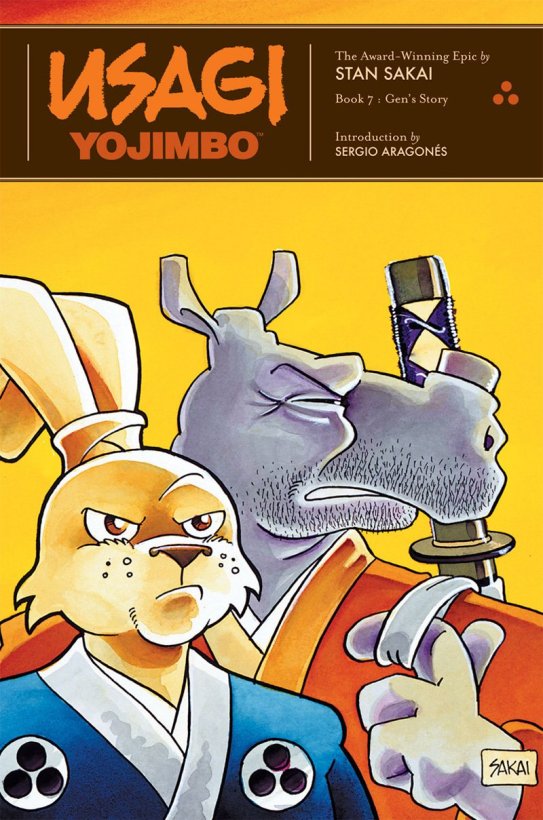
Throwback Thursday: Usagi Yojimbo: Volume 7: Gen’s Story by Stan Sakai

Usagi Yojimbo Gen's Story

Publisher: Fantagraphics Books (Paperback – 1996)

Series: Usagi Yojimbo – Book Seven

Length: 187 pages

My Rating: 5 out of 5 stars

Amazon     Book Depository

Reviewed as part of my Throwback Thursday series, where I republish old reviews, review books I have read before or review older books I have only just had a chance to read.

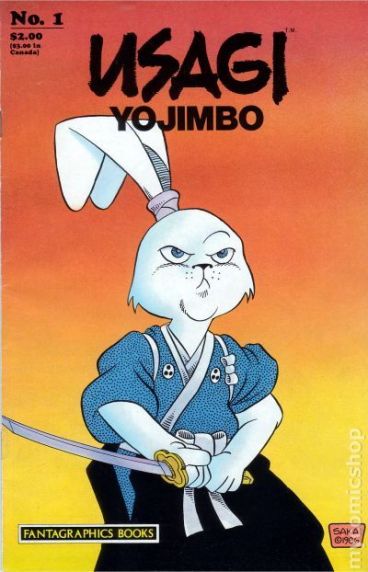
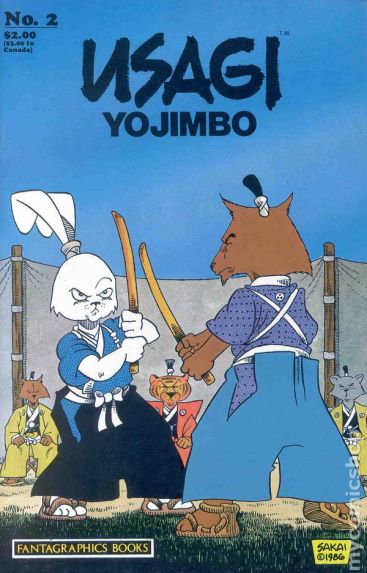
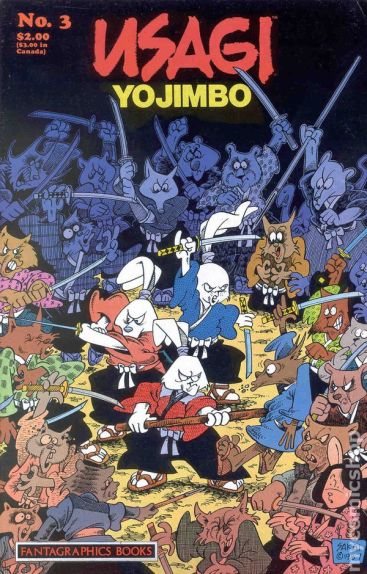
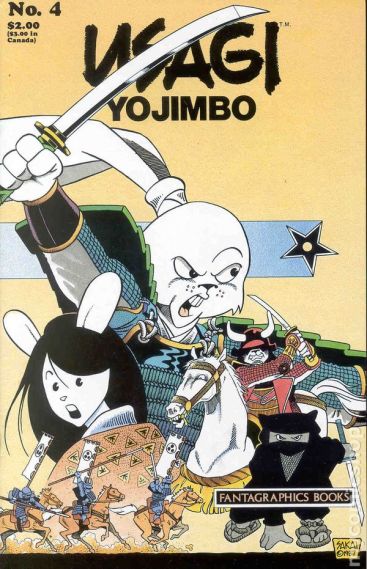
For this week’s Throwback Thursday, I once again dive into the wonderful world of Usagi Yojimbo and review the seventh volume of this incredible ongoing comic series, Gen’s Story. I have been really enjoying going back and reviewing the older volumes of this fantastic comic by legendary writer and artist Stan Sakai, and this seventh volume is another excellent addition to the series that I always have a terrific time reading.
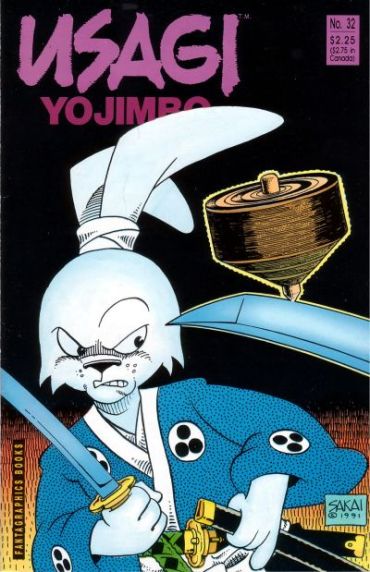
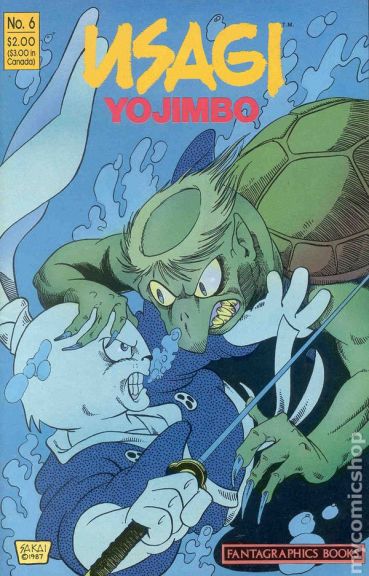
Usagi 32

Gen’s Story is an amazing example of a Usagi Yojimbo volume, which contains several short stories, each of which shows a unique tale set within the series’ clever version of feudal Japan populated with anthropomorphised animals. Each of the individual stories in this volume is rather good, and together they form a fantastic volume that not only introduces a recurring side-character but which also explores the backstory of another key character and serves as a perfect end note for one of the series’ best character arcs. This volume is made up of issues #32-38 of the Fantagraphics Books run on Usagi Yojimbo, as well as a story from Critters #38, which makes Gen’s Story a tad longer than a typical volume. All of these issues make for an awesome read, and Gen’s Story is another excellent addition to the Usagi Yojimbo series.

The first story contained within this volume is the fun and enjoyable tale, Kitsune. In this story Usagi encounters a talented street performer, Kitsune, who entertains the crowd with the tricks she can perform with her koma (spinning tops). However, Kitsune is much more than a simple entertainer; she is also an extremely skilled thief and pickpocket who manages to take Usagi’s purse without him realising it. This forces Usagi to stay late at an inn, washing dishes to pay for his meal, which results in him witnessing and intervening in an altercation between a notorious gambler and some local gangsters. Deciding to help the gambler under the mistaken belief that he is an innocent merchant, Usagi attempts to escort him out of town, where the two encounter Kitsune again just before the gangsters attack, leading to a fight in the streets.
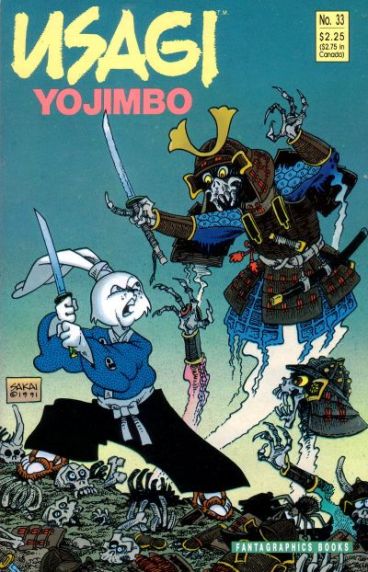
Usagi 33

Kitsune is an entertaining story that works well as a suitably light-hearted start to the entire volume (get a fun story in before the feels start). The whole of this story is really amusing from the very start, and it contains some great comedy elements, from Usagi getting taken advantage of by Kitsune and the way he doesn’t initially realise that the person he is helping out is the same gambler who previously led a mob against him in A Kite Story, which was part of the fifth volume, Lone Goat and Kid. This leads to a great scenario where the gambler is forced to rely on Usagi for protection, while silently hoping that he will not remember who he is or what he previously did. Of course, Usagi eventually figures out who he is, thanks to the gambler’s boasting, and this results in a great end to the whole farcical tale. This issue also serves as an excellent introduction to the character of Kitsune, who goes on to become a major recurring figure within the Usagi Yojimbo stories. Sakai does a fantastic job showing off Kitsune’s personality and skills as a thief throughout this story, and I also love all the cool drawings he does of Kitsune’s various tricks with the spinning tops. Kitsune’s entire arc throughout this story is great, and I love how Usagi was able to get even with her at the very end, which is a fun prequel to all their future encounters. The combination of an entertaining plot, a great character introduction and an enjoyable call-back to a previous story helps to make Kitsune an excellent first entry in this volume, and I had an amazing time reading it.

The second story in this volume is the short entry Gaki. Gaki is quick and amusing story that follows a young Usagi back when he was a student under the tutelage of his sword master Katsuichi. After one of Katsuichi’s typical lessons, which sees Usagi receive a smack to the head, Usagi attempts to retaliate, striking a blow that seemingly kills his master and causes his ghost to start haunting Usagi. Of course, it ends up being a whole big misdirection, but it results in a fun sequence in which young Usagi is chased by a vengeful spirit, which all leads to a humorous conclusion. The highlight of this quick tale has to be the amazing drawings of the vengeful spirit and the pure terror that appears on the face of the young Usagi, all of which are way out of proportion to Gaki’s rather innocent story. All of this makes for an entertaining second inclusion in Gen’s Story, and it, together with the first story, provides readers with a fun start to this volume.
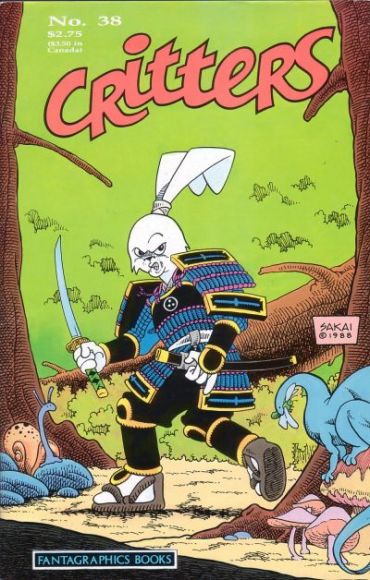
Critters 38

The third story is where we start getting to the heavier narratives of this volume, as the reader is treated to the supernatural tale, Broken Ritual. This story sees Usagi walking late at night through a small village filled with an unnatural amount of fear, especially after a loud and terrifying wail breaks the silence. Talking to the townsfolk, Usagi learns that the village, which is located close to the site of the battle of Adachi Plain, is haunted by one of Usagi’s old comrades, General Tadaoka, who died following the battle in the midst of an incomplete seppuku ritual. Now, due to the shame of having a dishonourable death at the hands of an unworthy and unnamed enemy, Tadaoka’s spectre appears in the spot where he died each full moon, letting out a wail of anguish. Upon hearing this tale, Usagi decided to try and help end the suffering of his former comrade and manages to help the spirt pass peacefully by successfully performing the seppuku ritual on the ghost.

Broken Ritual is an impressive and gripping story of honour and duty which is easily one of the best inclusions in this volume. This is one of those stories that really sticks in the reader’s mind, and the whole concept of samurai honour, even from beyond the grave, is a really fascinating central plot aspect. I loved the exploration of the seppuku ritual, and the supernatural elements of this story play into this really well, as it highlights just how important an honourable death is to a samurai like Tadaoka, so much so that he came back from the grave to ensure it was done properly. Sakai’s art is in top form for this volume, and his outstanding depiction of a wartime seppuku ritual is absolutely incredible. The intense facial expressions of Tadaoka during the seppuku scenes are particularly enthralling, and Sakai does a fantastic job of showing the pain and concentration that would have been on such a person’s face. All of this leads to a deeply captivating story, and it is amazing the sort of gripping tale Sakai can spin together in single issue.
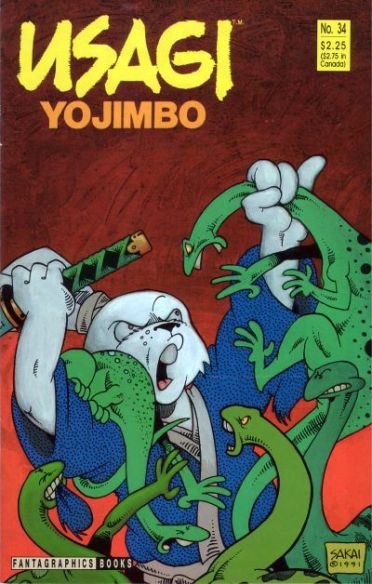
Usagi 34

The fourth story in this volume is the shorter story, The Tangled Skein, which is the story that was originally featured in Critters #38. This is a creepy, quick story that follows Usagi in the immediate aftermath of the battle of Adachi Plain. Fleeing from the victorious troops of Lord Hikiji, Usagi attempts to hide in a dark forest known as The Tangled Skein, which is rumoured to be filled with all manner of haunts. Naturally, Usagi runs into one of these haunts, a demon disguised as a helpful old lady, and he must try to escape her clutches with help from the most unlikely of sources. This was an awesome supernatural storyline that I quite enjoyed, especially as the story once again highlights some of the philosophies surrounding samurai honour and what duties a samurai has to his lord, and vice versa. Fast-paced, exciting and with a surprisingly poignant moral to its story, The Tangled Skein is great entry to the volume, and I am glad that Sakai included it.

The next story in this volume is simply call Gen, and it is the major storyline contained within Gen’s Story. Made up of three Usagi Yojimbo issues, this is an excellent story of revenge and obsession that also continues the theme of the last few stories by looking at samurai honour and obligation. This story also reveals the full backstory of the always amusing and enjoyable recurring side character Gen and shows how he came to be a bounty hunter. The story is broken into three separate parts by issue, with the first part called Lady Asano’s Story, the second part called Sins of the Father and the third and final part titled Lady Asano’s Revenge.
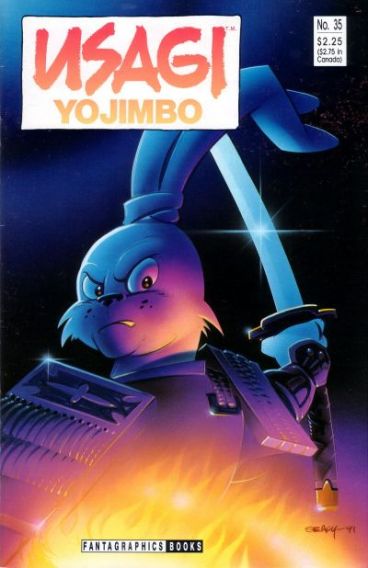
Usagi 35

Naturally, Gen revolves around the character Gen, who Usagi once again meets out in the wilds, and helps him claim his latest bounty. Recovering from this fight in a nearby town, Usagi shares a meal with a destitute noblewoman and her retainer. The noblewomen, Lady Asano, is on the hunt for her husband’s murderer, a former advisor who betrayed him for great reward, and her exhaustive 20-year long quest has left her poor and on her own. The story is interrupted by the arrival of Gen, who is revealed to be the son of the great General Murakami, the most revered retainer of the Asano clan, and whose family owes allegiance to Lady Asano. Gen, bitter at the years his hard and disciplined father spent dragging him and his mother around the countryside hunting the murderer, an event that led to the death of Gen’s mother and Gen becoming a bounty hunter, refuses to help Lady Asano. However, once Lady Asano and Usagi are captured by the murderous advisor, revealed to be the town’s magistrate, Gen attempts to help, leading to an emotional and violent confrontation.

This was another excellent story that had a number of fantastic elements to it. It was great to finally get Gen’s backstory revealed, as Gen promised to tell his story all the way back in the second volume, Samurai. This was actually a rather tragic backstory for Gen, and I really liked seeing it, especially as it fits in really well with Gen’s character, not only explaining why he is so eager to fight for money but also why he is so dismissive and distrustful of honourable samurai, who must remind him of his father. Sakai makes sure to wrap up Gen’s personal history rather well within this story, as Gen gets some closure with his father towards the end of the story in one of the few instances that we see a really serious and emotionally wrought Gen. I also liked how Sakai continued to explore the concept of samurai honour within this story, especially the obsession and hurt that it can cause. We got to see the negative impacts that having an extremely loyal and honourable samurai as a father had on Gen, and Sakai also focused on the obsession for revenge and redemption that existed within Lady Asano, which not only drove her into poverty but also gave her the strength to finally get her revenge. The sequence where the dying Lady Asano slowly advanced towards the target of her wrath was pretty intense, and she almost appeared demonic as she slowly moved to get her revenge. Other cool highlights of the story include the huge pitched battle that occurred between the protagonists and their opponents’ retainers in the magistrate’s compound, and the continued fun banter between Usagi and Gen, which adds some much needed humour into this heavier story. Overall, this is an impressive and addictive expanded story, that achieves a lot of fantastic character development and which serves as an excellent focus of this entire volume.
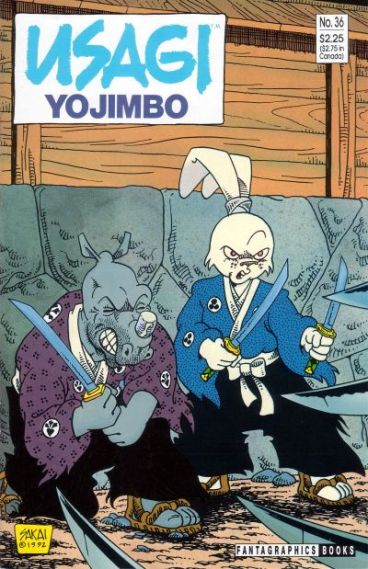
Usagi 36

The next story contained within this volume is another lighter story, The Return of Kitsune. In this story, Usagi, who is accompanied by Gen, once again encounters Kitsune, who is up to her usual tricks of street performances and pickpocketing. This time, however, she accidently steals a valuable letter meant for a corrupt local merchant, and she is subsequently hunted through the streets until she runs into Usagi and Gen. Usagi and Gen was work together to save Kitsune from the merchant, even if they cannot agree on what the best course of action is.

The Return of Kitsune is probably one of the funniest inclusions in this volume. The highlight of this entry has to be the first meeting between the two fun side characters, Kitsune and Gen. These two characters play off each other extremely well, and you cannot help but chuckle at the exasperated expression on Usagi’s face as the Gen and Kitsune begin to flirt with each other. I also enjoyed seeing the opposing philosophies of Usagi and Gen clash throughout this story, as Usagi wants to intervene to save lives, while Gen wants to stay out of the whole thing and claims that Usagi is too nosey. This whole argument proves to be a rather entertaining part of the story, and it results in some excellent scenes towards the end of the story, especially when Usagi takes Gen’s advice about minding his own business and fails to tell his friend that Kitsune stole his purse.
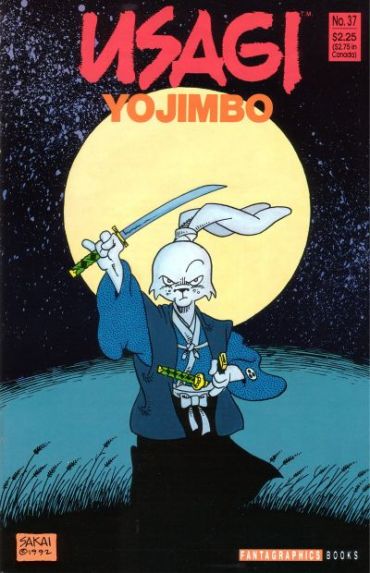
Usagi 37

The final entry in this volume is the outstanding narrative, The Last Ino Story, which serves as the last appearance of one of the best recurring characters to appear in the earlier volumes of this series. In The Last Ino Story, Usagi and Gen are taking one of Gen’s infamous shortcuts late at night and find themselves ambushed by bandits while traversing a narrow path along the side of a cliff. Managing to outsmart their attackers, Usagi and Gen seek shelter in a nearby abandoned hut, where they find themselves confronted by a young woman who is attempting to defend her wounded husband. Able to make their way inside, they find that the woman’s husband is none other than the Zato Ino, who has settled down and abandoned his violent ways after his last encounter with Usagi and Gen. Gravely wounded by the same bandits Usagi and Gen encountered, Ino appears close to death and the two samurai must work quickly if they are to save him and ensure he gets to live the life he rightly deserves.

The Last Ino Story is an outstanding and emotionally rich story which is an amazing way to finish this entire volume off. This last entry in this volume contains a great story in its own right, especially as it serves as a fantastic conclusion to one of the best character arcs in the series, that of Zato Ino. Ino was introduced all the way back in the first volume, The Ronin, as a blind outlaw who was trying to find a quiet place to settle down and rid himself of his life of violence, but whose efforts were constantly disrupted by his large bounty and the hunters chasing him. However, as the series progressed and Usagi kept meeting him, he grew as a character, from him gaining his first true friend in the third volume, The Wanderer’s Road, to him finally finding a home and family after the events of the fourth volume, The Dragon Bellow Conspiracy. This final appearance from him (and it is indeed the last time that you see him), serves as a perfect send off to him, as Usagi and Gen, the only two people who knew his past and gave him a chance, find out that he ended up having a the peaceful life he always wanted and has even more happiness on the way. As a result, this is a perfect story for those readers who got attached to the character of Ino through the first volumes of the series, and it was great to see his story come to a satisfying end.
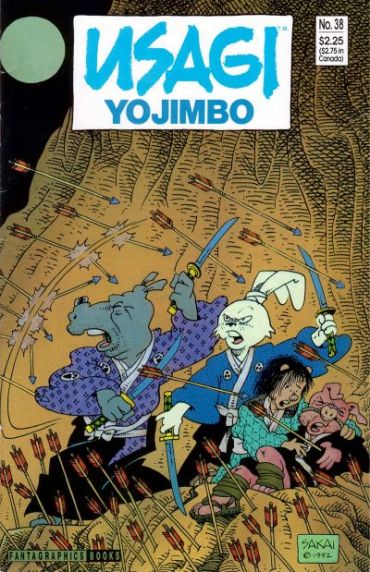
Usagi 38

I also liked Gen’s character arc throughout this story, especially once he finds out that Ino was the injured man in the barn. Gen and Ino have a complicated past, as Gen was initially trying to hunt Ino down for his bounty during their first encounter, and Ino ended up saving his life. In order to repay him, Gen dragged the injured Ino out of the castle before it exploded and told everyone, including Usagi, that Ino had died, in order to ensure that the blind pig would no longer be hunted and could settle down. In this story, Gen, upon seeing the man he saved once again dying, loses his cool and begins to take his rage out on an owl that has been stalking him throughout the course of the book, which he sees as an omen of death. Watching Gen constantly run out into the rain to chase away an owl is amusing on the surface, but it also reveals his deeper feelings that he usually keeps hidden: “The one decent thing I did was give him his peace, and you won’t take it away!” His determination to keep Ino alive because of this is a real change from his usual behaviour, and it helps underline that deep down Gen is a good character, even if he reverts to his usual gruff self the moment he knows Ino is fine. I also liked how the whole saga with the owl ended up, and it was a fun little turn around on the bird being an omen of death. Other highlights of this story include the cool battle sequence towards the front when Usagi and Gen manage to climb up the cliff and face the bandits trying to kill them. The five panels which show this fight are really cool, from the way that the grim faced Usagi and Gen are framed in the moonlight, the close-up of the bandits faces as they charge, the shot of Usagi’s bloody sword, and the way the fight is only alluded to by the sound effects that have been written in, makes for a great sequence that I really liked. All in all, The Last Ino Story is a first-rate inclusion, and it leaves the reader with a memorable and emotionally substantial ending to this volume.

The seventh Usagi Yojimbo volume, Gen’s Story, is another incredible addition to this awesome and deeply enjoyable series. Each of the entries within this excellent volume are outstanding reads, containing complex characters, fantastic narrative arcs and Sakai’s impressive artwork. Gen’s Story gets another five-star review from me, and Stan Sakai has once again shown why he is one of my favourite creative minds.

Amazon     Book Depository

Hitler’s Secret by Rory Clements

Hitler's Secret Cover

Publisher: Zaffre (Trade Paperback – 3 March 2020)

Series: Tom Wilde – Book Four

Length: 420 pages

My Rating: 4.5 out of 5 stars

Amazon     Book Depository

From the mind of bestselling author Rory Clements comes another captivating historical spy thriller in Hitler’s Secret, the fourth book in Clements’s excellent Tom Wilde series.

In 1941, Hitler’s Germany is at the height of its power, with England under constant bombardment, Europe under German control and the powerful Nazi army smashing aside all resistance in Soviet Russia. At this point in history, Hitler seems unbeatable, and desperate measures are needed if the Allies are to succeed.

In Cambridge, American expat and history professor Tom Wilde attempts to do his bit for the war effort and becomes an intelligence officer. While America is still officially staying out of the war, an upcoming fight with Germany is inevitable. Wilde finds himself enlisted into a top-secret mission that could change the entire course of the war.

Smuggled into Germany under a false identity, Wilde is tasked with recovering a package and delivering it safely back to England. This package is the key to undermining Hitler’s image and influence, as it reveals a terrible secret about the Führer, one that even Hitler himself was unaware of. Trapped deep behind enemy lines, Wilde must use every trick at his disposal to complete his objective and escape the deadly forces closing in on him. However, the more he learns about his mission, the more he is convinced that this is a secret that needs to stay buried, no matter the cost, and he soon must contend not only with the Nazis but with members of his own intelligence agency.

Wow, now that was a really good historical spy thriller. Clements is a fantastic author, and I have been a fan of his for a while now. Clements started writing back in 2009 with Martyr, the first book in his John Shakespeare series of Elizabethan thrillers. I read a couple of the books in this series, and quite enjoyed the fun stories that they contained, but I really started getting into Clements’s work with the Tom Wilde series. I was lucky enough to get a copy of the first book in this series, Corpus, back in 2017, and I absolutely loved the fantastic story that it contained. I ended up sticking with the story in the following years and I managed to read and review the next two books, Nucleus and Nemesis, both of which were rather good reads. I was very happy when I received my copy of Hitler’s Secret, as I thought that the plot sounded pretty cool. It did not disappoint, as Clements has come up with a fantastic and thrilling new read that might be my favourite Tom Wilde book since Corpus.

At the heart of this book lies a truly great thriller storyline, which sees the protagonist journey into Nazi Germany in order to retrieve a special package while also contending with the interests and machinations of several different groups and nations. This turned out to be a fantastic central story element, and I loved all the action, intrigue and danger that results from this mission. Wilde and his allies end up getting hunted throughout the breadth of German occupied territory by some vile and unrepentant villains, including an insane English expat who is having a fun time living in Nazi Germany (which pretty much tells you just how evil he is). Even when Wilde reaches relative safety, he must contend with being hunted by Nazi agents while also trying to avoid supposedly friendly operatives with whom he has a moral disagreement. I loved the constant hunting and running that resulted from this awesome story concept, and the characters engage in a pretty impressive game of cat and mouse. Clements makes good use of multiple character perspectives to show the various sides of this battle of spies, and it was great to see the hunters and the hunted attempt to outwit each other. It was also interesting to see the perspective of the various antagonists, especially as Clements used these scenes to show how evil they are, ensuring that the reader is determined that they fall. All of this led to an impressive and compelling thriller story that made this book extremely hard to put down.

I have to say that I liked Clements’s choice of MacGuffin for this book, which in this case was the titular secret of Hitler. I won’t go into too much detail about what this is, although the secret is revealed rather early in the story, but I did think that it proved to be a fantastic story element. Not only does Clement use this MacGuffin as an excellent centre to his story, but it was also rather interesting to see what secret the author envisions that could have potentially taken down Hitler. Clements made a unique choice regarding that, coming up with something that could have impacted Hitler’s most fanatical base of support. I thought it was quite a clever story element, and I liked how it allowed the author to come up with a couple of exciting conspiracies with multiple sides involved. I also appreciated the moral implications that the MacGuffin inspired, and it made for some great scenes where Wilde was left to choose between the war effort and what he thought was right.

I also really enjoyed Clements’s choice of setting for this book, as most of the story takes place within Nazi Germany in 1941. Clements has come up with some excellent historical settings for the Tom Wilde series in the past, and I have always liked his central setting of Cambridge in the pre-war period, as it serves as an amazing location for the series’s espionage elements. However, I think that Clements outdid himself by setting Hitler’s Secret in Nazi Germany. This proved to be an incredible and thrilling backdrop to the story, especially as Wilde is forced to navigate vast swathes of the country to get to freedom, contending with patrols, enemy agents who are actively hunting him and even a troop of Hitler Youths. Clements does an amazing job exploring what life would have been like in Germany during this period, showing off the fear and resentment of some of the citizens, the control and surveillance that the Nazis and the Gestapo had over everyone, the brainwashing of German children at school, how the country was locked down and the growing cracks as the invasion of the Soviet Union started to stall and America began entering the war. I also really liked that Clements dived into the complex relationships and rivalries amongst the Nazi high command, especially as part of that rivalry played into the overall story. I particularly appreciated the extensive look at the role of Martin Bormann, Hitler’s secretary, who achieved great power in the Nazi regime. Bormann is a little underutilised in historical fiction, so it was fascinating to see him used in this book, and he proved to be a despicable overarching villain for the story. Clements use of Nazi Germany as a setting for Hitler’s Secret was a brilliant move, and I felt that it helped take this story to the next level.

Hitler’s Secret by Rory Clements was an outstanding fourth entry in the author’s thrilling Tom Wilde series. I loved the complex and captivating story that Clements came up with for this book, and he managed to produce an impressive historical thriller. Hitler’s Secret is a highly recommended book, and I had a wonderful and electrifying time reading it.

Amazon     Book Depository

Throwback Thursday – Predator One by Jonathan Maberry

Predator One Cover

Publisher: Macmillan Audio (Audiobook – 7 April 2015)

Series: Joe Ledger series – Book Seven

Length: 16 hours and 55 minutes

My Rating: 5 out of 5 stars

Amazon     Book Depository

Reviewed as part of my Throwback Thursday series, where I republish old reviews, review books I have read before or review older books I have only just had a chance to read.

For this latest Throwback Thursday, I decided to I wanted something fast-paced and action-packed, so I went and checked out another book in Jonathan Maberry’s dark and thrilling Joe Ledger series with the seventh book, Predator One.

Those familiar with my blog will be aware of my recent love affair with the Joe Ledger series. I first encountered this series back in late 2018, and after massively enjoying the tenth book, Deep Silence, I have been slowly reading and reviewing my way through the entire series from start to finish. There are so many different things that I enjoy about these novels, including the outstanding action, gripping stories, fantastic characters and the crazy scenarios each book is set around. When combined, these elements help produce some truly incredible books, and I had an amazing time reading several Joe Ledger novels last year. I also read the first book in Maberry’s Rogue Team International series, Rage, which was one of my top books (and audiobooks) of 2019. I am hoping to finish off all the remaining books in the Joe Ledger series this year, and Predator One is the first one that I have so far checked out in 2020. I have to say that I was once again blown away with Maberry’s writing ability, as Predator One is another epic and remarkable read which gets a full five-star rating from me.

It is the opening day of the new baseball season, and Joe Ledger, point-agent for the high-tech counter terrorist organisation, the Department of Military Sciences (DMS), is enjoying a well-earned day off. Everything seems to be going well, the sun is shining, the beers are flowing, and a decorated military pilot is about to throw out the first ball. Then a model airplane flies out onto the field, a replica of the one flown by the war hero. Everyone assumes it’s a harmless prank, everyone except Ledger, who can only watch in horror as the toy plane explodes. Within seconds, a swarm of bomb-laden drones appears, devastating the crowd and leaving Ledger injured in the wreckage of the stadium.

As Ledger attempts to process what has happened, a series of coordinated attacks are taking place across America. While some of the attacks appear random, several are deliberately targeting the friends and family of key members of the DMS, attempting to distract the agency and take them off the board. It soon becomes clear that an old enemy has risen from the flames, determined to get revenge on those that they believe have wronged them in the past, including Ledger and everyone he loves. Worse, they have teamed up with a force of pure evil whose deepest wish is to torment and destroy the head of the DMS, the mysterious Mr Church.

Diving back into the action, Ledger and his team attempt to find and neutralise the source of this new threat. But at every turn, they find themselves outmatched, outmanoeuvred and severely outgunned, as the enemy has access to advanced technology that allows them to take control of America’s military vehicles, aircraft, ships and drones. As the attacks against America worsen, their opponents even gain control of Air Force One, with the President aboard, and start to fly it towards New York City. Can Ledger save the day one more time or have the DMS finally come up against an enemy even they can’t outsmart?

Wow, just wow. Predator One is another impressive and extremely captivating thriller novel that I had an outstanding time listening to. Maberry has come up with another incredible, action-packed story which utilises his trademark writing style to present a first-rate novel. Readers are treated to a multi-layered story, which cleverly features multiple character viewpoints, flashbacks and deep examinations of a several major characters’ pasts and motives. All of this allows Maberry to tell a complex and intriguing thriller story that never lets up on the excitement. The various storylines flow together perfectly thanks to the short chapters and constant dancing between different character perspectives, and all the storylines lead up to an epic and memorable conclusion. Maberry really knows how to ramp up the tension and the excitement throughout the book, and the final couple of hours are exceedingly thrilling, as several exhilarating scenarios come into effect at the same time. All of this results in a deeply exciting read, which I really loved and is another perfect Joe Ledger story.

Just like so many books in this series, amongst the best things about Predator One are the fantastic antagonists and their over-the-top plot against America, Joe Ledger and the DMS. For the main antagonist, Maberry goes back to some of the earlier books in the series, and brings back the Seven Kings organisation, which is being led by an old, established opponent of the DMS. While a new, complex villain for this book could have been fun, I really loved the author’s use of the historical antagonist, especially as they have been substantially transformed since the last book, and they are now aiming for a destructive end. This older antagonist is paired with the mysterious, evil character, Nicodemus, and together they form quite a partnership. Nicodemus is a character that has been hinted at and featured in the shadows of several previous books, so it was really cool to see him in a more substantial role. The key to Nicodemus is his extremely enigmatic persona and history, as no one quite knows who or, more importantly, what he is. He seems to have some sort of mystical abilities, and it is hinted in this book that he is some form of demon or devil, although it is never fully revealed. This mystery and mystique make for a quite an intriguing addition to the series, and the two main antagonists work together quite well as an evil, villainous pairing. On top of them, Maberry also throws in a good secondary antagonist who acts as a crooked assistant to the leader of the Seven Kings and who serves as a useful narrator, as well as the standard sexually depraved henchmen. Combined, these excellent antagonists make for a fun and exciting opposition for the main characters and they help produce some extremely interesting storylines.

I was also a major fan of the fantastic and complex master plan that Maberry envisioned for the antagonists of this book, which served as a fantastic basis of much of the story. Maberry crafted a sinister and exceedingly destructive campaign of terror and destruction that culminated in the takeover of Air Force One with the President and other key characters on board, sending it on a kamikaze mission. This proved to be a rather fun villainous storyline to follow, and I enjoyed seeing it unfold from both the protagonists’ and antagonists’ points of view, as these different perspectives led to some very intriguing scenes. I also liked the way that that the origins of the plot were explored in a series of interludes, allowing the reader to become familiar with the key players of the scheme, and get hints of the full extent of the planned destruction. It was also rather cool to see these antagonists land some real blows against the DMS. Maberry has never been shy about killing off key side characters (for example, he killed off the main secondary character and primary love interest in the second book, The Dragon Factory), and he ensures that some real damage is done to some DMS characters in Predator One. This helps add a real emotional edge to the story, and I liked the way that it upped the stakes, as well as the obvious emotional and psychological impacts that it had on some of the series’s well established, long-running protagonists.

Maberry makes sure to bring back the full and unique bevy of good-guy characters for this seventh book, most of whom have appeared in multiple books before. At the fore is the series’s titular protagonist, Joe Ledger, who is the sole first-person narrator in the book, with around a third of the story told from his point of view. Ledger is his usual witty and damaged self in this book, infecting his parts of the story with his wicked humour and sarcasm, while also unleashing his barely hidden rage and special brand of hyper-violence. Ledger goes to some dark places in Predator One, especially after his friends and allies are attacked, and the way he ends the villain is particularly gruesome and memorable. In addition to the usual examination of Ledger’s complex psyche, I really liked the way that a number of other side characters got some substantial sequences in this book. Joe Ledger series stand-out character Mr Church gets quite a lot to do in this book, and it was excellent to not only see him calmly lead his people in a severe crisis, but also react to some substantially personal attacks from the shadowy Nicodemus, who he has some obvious history with. The DMS’s psychiatrist, Rudy Sanchez, also gets quite a few scenes in this book, as he and his family come under substantial attack from the antagonists. It was really intriguing to see Rudy, whose usual role is to calm and centre the rest of the protagonists, come apart a bit in this novel, and it was quite stirring to see him pull himself together in a major way. I have to say that I also really enjoyed the inclusion of Toys as well, especially as Maberry has written a rather good redemption arc for him in this book. Thanks to the author’s use of multiple viewpoints, each of these characters, and more, get multiple moments to shine in this novel, and this helped create a full and captivating thriller tale, especially as the reader inevitably becomes invested in these characters’ survival.

I can’t go past a Joe Ledger novel without commenting on the exquisite and ultra-violent action sequences that are heavily featured throughout the book. Maberry is an expert at writing detailed and explosive action scenes, and Predator One is filled with a substantial amount of battles and fights, with all manner of armed and unarmed combat. These scenes are an absolute delight to behold, and it is always cool to see these well-crafted fights come to life. There are a number of large-scale battle sequences throughout this book, and Maberry did an amazing job switching between several fights that were happening simultaneously towards the end of the book, resulting in some extremely action-packed and exciting sections of Predator One. I really enjoy the way that the author breaks down the fight, and it is interesting to hear about the tactical reasons or destructive capabilities for certain moves or weaponry. All of this makes for a really cool book, although readers should be warned that there is a lot of extreme violence in this book that might not be for everyone, especially the graphic torture scenes.

Just like the previous Joe Ledger novels I have been lucky enough to enjoy, I chose to check out Predator One’s audiobook format, which was narrated by the exceedingly talented Ray Porter. Running at 16 hours and 55 minutes, this is one of the longer Joe Ledger audiobooks (not by much), but I found myself able to power through it in only a few days, and the audiobook format remains my favourite way to enjoy a Joe Ledger book. Porter’s outstanding narration is the highlight of this format, and I will never get tired of praising his vocal work in this format. The voices that Porter comes up with for these productions are pretty damn awesome, and he has perfected some amazing voices for the characters featured in this series. I once again have to highlight Porter’s take on Mr Church, as his version of the character has some real presences, authority and gravitas. I also liked some of the voices that he did for the villainous Nicodemus, especially as the script called for a change of accent and voice mid-sentence, something which Porter pulled off perfectly, and which made the character sound pretty sinister in this format. However, nothing can top the amazing work that Porter puts into the series’s titular protagonist, Joe Ledger, as the narrator is scarily in sync with this character, and expertly portrays all his emotion, personality and raw sarcasm. I cannot emphasise enough how impressive the Joe Ledger audiobooks are, and if you are keen to check them out, this is the format to do it in.

Predator One by Jonathan Maberry is an outstanding and captivating tale of revenge, destruction, action and war, as the author’s team of elite warriors go face to face with an army of pure evil. This was an intense and thrilling read, which I once again completely failed to put down multiple times. Filled with amazing characters, including some very well-crafted evil antagonists, a fun story, violent action sequences and some outrageous story elements, this book is relentlessly entertaining and it proved to be an impressive addition to the Joe Ledger series. Predator One comes highly recommended, especially in audiobook format, and I look forward to finishing off the final two books in the series later this year.

Amazon     Book Depository

Waiting on Wednesday – Deep Strike and Assault by Fire

Welcome to my weekly segment, Waiting on Wednesday, where I look at upcoming books that I am planning to order and review in the next few months and which I think I will really enjoy.  I run this segment in conjunction with the Can’t-Wait Wednesday meme that is currently running at Wishful Endings. Stay tuned to see reviews of these books when I get a copy of them. This week, I’m in a real thriller mood, so I thought I would look at two exciting upcoming military thrillers, which I am really looking forward to.

Until a couple of years ago, I had never really read any contemporary military thrillers. However, I’ve recently enjoyed some excellent military thrillers, including Red War by Kyle Mills, The Moscow Offensive and The Kremlin Strike by Dale Brown and Jonathan Maberry’s Joe Ledger novels, and it is now a subgenre that I find myself really drawn to. There are several incredible military thrillers coming out later this year, such as Eagle Station by Dale Brown, which I have already featured in a Waiting on Wednesday post, and I want to highlight another two upcoming military thrillers that I personally think are going to be absolutely exhilarating reads, and I cannot wait to get my hands on them.

Deep Strike Cover

The first of these books is Deep Strike by Rick Campbell, which is the sixth book in his Trident Deception series. I was lucky enough to receive a copy of the previous book in this series, Treason, last year, and I thoroughly enjoyed the fast-paced story, excellent action sequences and intriguing military scenarios. As a result, I am quite keen to get a copy of Deep Strike, which is currently set for release in mid-August 2020, and Campbell has cooked up another compelling-sounding scenario for his new thriller.

Goodreads Synopsis:

A shoulder-launched missile attack on a convoy of vehicles leaving the U.N. headquarters in New York kills several diplomats, including the American ambassador. Security footage reveals that the killer behind the attack is a disgraced former special forces operative, Mark Alperi. But before U.S. intelligence operatives can catch up with him, Alperi is already onto the next phase of his plan.

With funding from the nearly shattered ISIS, Alperi plans an attack on the U.S. that will be more devastating than 9/11. He bribes a desperate Russian submarine commander with access to an expensive experimental drug for his daughter who is suffering from a rare disease. In exchange, the Russian commander will take his submarine to the Atlantic Ocean and launch a salvo of missiles at various targets along the East Coast of the United States. The commander lies to his crew that it’s a secret mission, with dummy missiles, for a training exercise. At the same time, unbeknownst to the commander, Alperi has arranged for four of the missile warheads to be replaced with four surplus nuclear warheads and arms them.

When the Russian submarine sinks the U.S. sub that is tracking it, the U.S. military is alarmed. When Intelligence uncovers Alperi’s plot, though, it becomes a race against time–find the Russian sub and sink it before it can launch a devastating nuclear attack.

Thanks to this epic synopsis, I have to say that I am quite excited for Deep Strike, and I really like the sound of this fantastic new addition to the series. Campbell has come up with a deeply intriguing plot for his new book, and I cannot wait to see how this compelling plot unfolds. This book has so much potential, especially as it looks like it is predominantly going to be set aboard several submarines. The author is a former US Navy Commander and submariner, and as such has an impressive amount of knowledge when it comes to submarines and underwater combat. This knowledge shined through in Treason, and some of the most memorable scenes in this previous book were set aboard a submarine, including several elaborate underwater naval combat sequences. Treason honestly featured some of the best examples of submarine-on-submarine battles that I have ever read, and I cannot wait to see what Campbell has in store for Deep Strike. This upcoming book sounds like it is going to be a lot of fun, and I look forward to grabbing my copy in a few months.

Assault by Fire Cover

The other book that I wanted to feature in this article is Assault by Fire, written by Lt. Col. Hunter Ripley Rawlings IV, which will serve as the first book in Rawlings’s new Tyce Asher series and is his debut novel. Set for release in late September 2020, this book has one of the most interesting and exciting plot synopses I have recently read, and I am quite excited for it, especially after how much I enjoyed Rawlings’s previous work. While Assault by Fire is Rawlings’s first solo novel, he previously co-wrote a military thriller, Red Metal, with bestselling author Mark Greaney, which was released last year. I absolutely love Red Metal due to its epic and invigorating depiction of a conflict between the United States and Russia around the world. It was one of my favourite books (and audiobooks) of 2019, and I cannot wait to see what sort of story Rawlings follows through with.

Goodreads Synopsis:

ASSAULT BY SEA
U.S. Marine Tyce Asher knew his fighting days were over when he lost his leg in Iraq. He thought he’d never see action again–certainly not on American soil–until the Russians attacked us by sea . . .

ASSAULT BY LAND
With so many troops stationed in the Middle East, the U.S. government is counting on Tyce and other reserve fighters to step up and defend their country–when Russian boots hit the ground . . .

ASSAULT BY FIRE
This is much more than a surprise attack. It is a full-fledged invasion orchestrated by a military mastermind hellbent on destruction. As the Russians move inland, killing and maiming, Tyce has to enlist every patriot he can find–seasoned vets, armchair warriors, backwoods buckshooters, even mountain moonshiners–to unleash their 2nd Amendment rights . . . on America’s #1 enemy.

Ok, now is this book doesn’t turn out to be 100% pure fun and adrenaline pumping action, I do not know what will. Assault by Fire has an incredible-sounding plot, which, just like Red Metal, will see the United States go up against an invading force of Russians. However, unlike in Rawlings’s previous book, this invasion is taking place on American soil, rather than in Europe and Africa. I love a good invasion story, no matter the genre, but I cannot wait to see how Rawlings envisions the Russians successfully invading the United States. I am also really looking forward to seeing the advanced Russian army facing off against a rag-tag force of American irregular troops, and it should make for a rather compelling guerrilla warfare scenario.

Honestly, after how much I enjoyed Red Metal, I was going to grab anything new that Rawlings released, especially if it was another military fiction novel. While I was kind of hoping for a sequel to Red Metal, Assault by Fire sounds so very awesome and I cannot wait to see how this story unfolds. I am expecting a lot of amazing action sequences throughout this novel, especially as Rawlings’s military knowledge and experiences helped make the battles and combat in Red Metal seem even more realistic. I am also excited that this book is going to kick off a whole new series, and I cannot wait to see what epic battles and amazing military scenarios Rawlings has planned for the future Tyce Asher books.

The military thriller genre is looking very strong at the moment, especially with two fantastic sounding books like Deep Strike and Assault by Fire on the horizon. Based on both upcoming books’ captivating plot synopses, and my positive prior experiences with Campbell and Rawlings, I am extremely confident that both of these upcoming books are going to be first-rate reads. I think both of these novels have a heck of a lot of potential, and I cannot wait to read both of them later in the year.

Throwback Thursday: Usagi Yojimbo: Volume 4: The Dragon Bellow Conspiracy by Stan Sakai

Usagi Yojimbo The Dragon Bellow Conspiracy

Publisher: Fantagraphics Books (Paperback – September 1991)

Series: Usagi Yojimbo – Book Four

Length: 179 pages

My Rating: 5 out of 5 stars

Amazon     Book Depository

Reviewed as part of my Throwback Thursday series, where I republish old reviews, review books I have read before or review older books I have only just had a chance to read.

For this slightly belated Throwback Thursday, I continue my trend of the last couple of weeks by checking out another volume of Stan Sakai’s ground-breaking and utterly addictive Usagi Yojimbo series with the fourth volume, The Dragon Bellow Conspiracy. Reviewing all these Usagi Yojimbo books has proven to be a lot of fun, and I am really glad that I have been able to show off my love for this series (make sure to check out my reviews for volumes One, Two and Three). The Dragon Bellow Conspiracy is another excellent early volume in this long-running series, which features a fantastic full-volume-length story.

Usagi 13

A storm is brewing throughout feudal Japan, as war and revolution against the Shogun lie just beyond the horizon. In his fortress, the ambitious and dastardly Lord Tamakuro has been plotting. Despite appearing to be a loyal supporter of the powerful Lord Hikiji, Tamakuro has his own plans to take control of the country and rule as Shogun, utilising an army of ronin armed with teppo, black powder guns imported from the barbarian lands outside of Japan.

However, despite his best attempts at discretion, Lord Tamakuro’s actions have not gone unnoticed. His neighbour, Lord Noriyuki, has sent his trusted advisor and bodyguard, Tomoe, to investigate Tamakuro’s castle, where she discovers the hidden armaments he is planning to use in his upcoming revolution. At the same time, Lord Hikiji, suspicious of Tamakuro’s true loyalties, has sent the notorious Neko Ninja clan to infiltrate his castle. When both Tomoe and the Neko Ninja are discovered, Tamakuro makes ready for war against all his opponents.

Usagi 14

Into this vast conspiracy walks the wandering ronin Miyamoto Usagi. A friend to Lord Noriyuki and Tomoe, Usagi witnesses Tomoe being captured and rushes to Tamakuro’s castle to save her. Despite his best efforts, Usagi finds himself outmatched by the powerful forces Tamakuro has pulled together. His only chance at saving his friend and averting a civil war is to team up with the Neko Ninja, a group he his fought many times in the past. Can Usagi and his new allies succeed, or will Tamakuro’s greed engulf the entire country? And what role will blind swordspig Zato-Ino and the bounty hunter Gennosuke play in the final battle?

Usagi Yojimbo: Volume 4: The Dragon Bellow Conspiracy is an outstanding and highly enjoyable comic that I have a huge amount of love for. Containing issues #13-18 of the Fantagraphics Books run of the Usagi Yojimbo series, this fourth volume is broken down into seven separate chapters. It is a major early edition in the series, as it contains a massive and wide-reaching story. This is the first storyline that takes up an entire volume (several notable stories do this later, such as the two Grasscutter volumes and the 33rd volume, The Hidden), and it presents the reader with an epic tale of war, friendship, honour, loyalty and uneasy alliances, while featuring a number of the best Usagi Yojimbo characters.

Usagi 15

The entire story contained within this fourth volume is quite spectacular and comes with minimal build-up from the Usagi Yojimbo issues that preceded this volume. Sakai does an amazing job introducing the relevant plot and new key players surrounding this storyline, and then telling a complex and detailed narrative within the confines of this one volume. In addition to the main conspiracy storyline, the story follows several different character-based storylines, all of which come together for one big epic confrontation. I really enjoyed where Sakai took the plot of this volume, and I liked how the story was broken up into several distinctive chunks defined by the respective chapter (the chapter names, which refer to parts of a storm, identify the intensity and importance of each chapter). The entire story is rather self-contained, and I think that the author did a great job wrapping it up and giving it several satisfying conclusions.

Like many of the Usagi Yojimbo issues out there, the true heart of The Dragon Bellow Conspiracy’s story is the outstanding characters, many of whom have appeared in prior issues in the series. Usagi once again accidently finds himself in the midst of a vast conspiracy and must risk everything to save his friend and stop a war. If I am going to be honest, Usagi has one of the weaker arcs in this volume, with several of the side characters getting much more interesting storylines and more development. That being said, parts of Usagi’s story are fairly intriguing, such as when he manages to infiltrate Lord Tamakuro’s castle as a new retainer in order to rescue Tomoe, or his guilt-ridden dream sequence where his regret over his perceived failure manifests itself as a series of ghosts and monsters. Usagi also has the fun job of recruiting reluctant and unusual allies to his cause, such as the Neko Ninja or his old foe Zato-Ino. Indeed, his whole storyline is similar to classic Japanese films such as The Seven Samurai (the inspiration for The Magnificent Seven) or The Hidden Fortress (which served as an inspiration for the first Star Wars movie), as he recruits or forms alliances with various people in order to take down an evil opponent (in a castle, no less, for The Hidden Fortress fans). He also has some rather fantastic interactions with several different characters throughout the volume, and it results in some major developments in his relationships with them.

Usagi 16

While Usagi’s storyline is quite enjoyable, several returning supporting characters also have some substantial and impressive arcs throughout this book, and I really loved the way in which Sakai brings back a number of key characters from earlier issues in the series. The best character in this entire volume is the blind swordspig, Zato-Ino. Both of Ino’s previous storylines have been extremely impressive, so it was great to see him return again for another volume. Ino, who had already found some measure of peace thanks to his new companion, the tokage lizard Spot, finds some major redemption in The Dragon Bellow Conspiracy, and he easily has the most character development. An entire chapter of this volume is dedicated to the eventual fate of Ino, and it was fantastic to see him finally find what he has been desperately searching for, even if he has to lose his only friend along the way. The rhino bounty hunter, Gennosuke, once again proves himself to be a fun and endearing character throughout this volume. Initially involved in a rather humorous hunt for Ino’s bounty, he finds himself working with him to fight Lord Tamakuro’s forces, although he always intends to betray him. However, Ino’s heroic actions end up changing his mind, and he once again reveals his hidden good nature by secretly assisting Ino and selflessly helping him. This is also the volume where Gen loses his horn, with all future versions of him appearing with just a small stump on his nose. His cut-off horn is quite an iconic look for the character, and after seeing him without out for all these years in later volumes, his earlier horned appearance just looks odd.

Recurring female samurai, Tomoe, also has an extremely strong appearance in The Dragon Bellow Conspiracy, as she finds herself captured within Lord Tamakuro’s castle quite early in the volume and is forced to resist his abuses. Tomoe has some great dialogue with Usagi about how her mission and her loyalty to Lord Noriyuki are more important than her own life, and she has to talk Usagi into abandoning her for the greater good. She also has a rather fantastic sequence where she manages to remain hidden in the fortress, right after she rides through various parts of the interior on a horse. I also really liked Shingen, the Neko Ninja chief who Usagi teams up within this volume. Shingen previously appeared in the Volume 3 story, The Shogun’s Gift, where he formed a great rivalry with Usagi. While the two clash in this volume, they eventually reach a level of mutual respect and work together for the greater good. Shingen gains multiple dimensions as a character in this volume, and it was interesting to see his discussion with Usagi about honour, and how even ninja have a code of duty. His story comes to a fantastic close towards the end of the volume, but Sakai really made him one of the standout characters of the volume: “A ninja’s duty in life is death!”

Usagi 17

In addition to the excellent inclusion of several amazing returning characters, The Dragon Bellow Conspiracy also featured a couple of terrific new characters, who really helped bring this story together. The evil Lord Tamakuro was a really good villain for this volume, and Sakai did a fantastic job of showing of his greed, brutality and utter disregard for anything except his own power. Needless to say, he was a rather vile character who the reader cannot help but dislike, making his eventual comeuppance all the sweeter. The best new character in this volume has to be the leader of Tamakuro’s samurai army, Captain Torame. Torame is a loyal and capable warrior, who is forced to serve an evil lord who takes him for granted. He forms a bond with Usagi when the protagonist infiltrates the fortress under the guise of a mercenary ronin, and they have several discussions about bushido, loyalty and the ways in which a samurai must serve his lord. Usagi’s subsequent betrayal in order to rescue Tomoe enrages Torame, who takes it as a personal afront. This leads to a fantastic duel later in the volume, although not before Usagi and Torame have one final discussion, in which Usagi attempts to talk Torame into abandoning Tamakuro. Torame however refuses, as his strict adherence to the samurai code forbids him betraying his lord, even if it is clear he disagrees with Tamakuro’s plans:

“is samurai honour so important?”

“Yes”.

The result of the quick and brutal duel that follows visibly saddens Usagi, who was once again forced to fight a man he respected. This volume also sees the brief introduction of the Neko Ninja Chizu, a major recurring character in later volumes of the series, whose one scene in this book was rather fun.

The Dragon Bellow Conspiracy is an extremely action-packed volume that actually features some of the best action scenes in the entire Usagi Yojimbo series. I absolutely loved all the action sequences in this book, as Sakai did an incredible job illustrating them and bringing the fights to life. The main action set piece of this volume has to be the assault on Lord Tamakuro’s fortress by Usagi, Ino, Gen, Shingen and a force of Neko Ninja armed with explosives, as they attempt to rescue Tomoe and put an end to Tamakuro’s ambitions. This entire extended action sequence is exceedingly impressive, and it was really cool to see all the characters engage in a massive battle throughout a castle complex. I also have to say how incredibly awesome it was to see a force of ninja face off against an army of samurai, predominately armed with European muskets. This made for some incredible fight scenes, all of which I really and truly loved. I also have to highlight a couple of duel sequences that occurred earlier in the volume. The first of this was a great fight between Usagi and Shingen, as the two face off against each other in a quick fight to the death. This duel focuses on the extreme clash of styles between the two, as Usagi had to contend with all manner of traps and ambushes before he got anywhere near this foe. However, this duel pales in comparison to the awesome fight between Ino and Gen that occurred towards the middle of the volume. This two engage in an incredible and beautifully drawn fight that lasted several pages. This fight did a fantastic job showing of their respective skills with the sword, and this fight helps feed into Sakai’s love for classic Japanese films, as this duel was essentially Zatoichi vs Yojimbo. This volume featured some first-rate action, which is really worth checking out.

Usagi 18

In addition to the extremely well-drawn action sequences, Sakai has filled this volume with some truly incredibly examples of his artistic style. This volume features so many impressive and iconic Japanese buildings, landscapes, traditional outfits and other aspects of the country, that the reader can’t help but feel they have been transported back to feudal Japan. I particularly loved the way he included a number of stormy backgrounds throughout this volume. The continued artistic rendering of rain, clouds, mud, wind and storms throughout the entirety of The Dragon Bellow Conspiracy really helped to set the mood of the entire volume, and I loved how the intensity of the storm seemed to match the volume’s story. I really enjoyed how a number of pages were streaked with massive bolts of lightning across cloudy or darkened skies, and several scenes, particularly the duel between Ino and Gen, were majorly enhanced by this artistic inclusion. As usual, this art does an amazing job backing up the volume’s fantastic stories, and I was once again left stunned by Sakai’s obvious and incredible artistic talent.

Usagi Yojimbo: Volume 4: The Dragon Bellow Conspiracy, is another exceptional and captivating comic which I am awarding a full five-star rating. Sakai is a truly incredible writer and artist, and this fourth volume did a fantastic job highlighting his talents for both. Not only does this volume feature some amazing and distinctive drawings, but it also contains an outstanding and enjoyable story backed up by some awesome characters. Sakai did an awesome job bringing together several key recurring characters into a compelling and well-written narrative, which I once again fell in love with. The Dragon Bellow Conspiracy is really worth checking out, and is a must read for fans of the masterpiece that is the Usagi Yojimbo series.

UY_Book_4_HC_cover

Amazon     Book Depository

Throwback Thursday: Usagi Yojimbo: Volume 2: Samurai

Usagi Yojimbo Samurai Cover

Publisher: Fantagraphics Books (Paperback – 1989)

Series: Usagi Yojimbo – Book Two

Length: 141 pages

My Rating: 5 out of 5 stars

Amazon     Book Depository

After the fun that I had reviewing the first volume of the Usagi Yojimbo series, The Ronin, last week, I decided to follow it up with a review of the second volume in the series, Samurai. Samurai is an impressive second outing from author and artist Stan Sakai, which does an amazing job continuing his epic series after the introductory stories contained within the first volume.

After his adventures in the first volume, the rabbit ronin Miyamoto Usagi has continued on his wandering ways. However, his latest journey quickly turns to violence when he encounters another ronin on the road. Without a word being spoken, both samurai engage in a swift and brutal duel to the death, in which Usagi is the winner. The only witness to the duel is the bounty hunter Gennosuke, who inquires into the origin of the apparent feud between Usagi and his recently deceased opponent. Usagi reveals that the dead samurai was named Gunichi and Usagi had much cause to kill him.

Usagi 1

Regaling Gen with his tale as they travel together, Usagi reveals that the origins of this feud goes all the way back to his childhood and his tutorage under the unusual and skilled sword master Katsuichi. This tale follows Usagi as he becomes a young samurai in the services of his Lord Mifune, where he was comrade to Gunichi, and leads all the way to the fateful battle of Adachigahara Plain and the day that Usagi became a masterless samurai.

Back in the present, Usagi continues his adventures across the land, encountering many different people and unusual creatures. Watch him fight against a kappa, help defend a village of silk merchants against a roving group of bandits and witness his weird meeting with a mysterious and powerful little monster who is going to be a big somebody one day.

Usagi 2

Usagi Yojimbo: Volume 2: Samurai, is an amazing and fantastic volume of the Usagi Yojimbo series, which does an outstanding job continuing the story after the events portrayed in The Ronin. This second volume contains the first six issues of the actual Usagi Yojimbo series, and I really enjoyed the excellent adventures that are contained within these issues. The volume is broken down into four separate stories, the expanded story Samurai, as well as three stories which are significantly shorter. Each of these stories are really entertaining, and they all come together to create an impressive and incredible total volume of comics which I had a fantastic time reading.

The first story in this volume is also titled Samurai, and it is the major story contained within the Samurai volume. Running for 92 pages, this was one of Sakai’s first expanded Usagi Yojimbo stories, and I think it is one of his better ones. Samurai contains a captivating and exciting narrative that not only continues Usagi’s story in the present but which also goes back and explores much of the character’s past. This is shown through a lengthy flashback about Usagi’s childhood, his tutorage under the skilled samurai Katsuichi, his first meeting with Gunichi, their service under Lord Mifune, the events that led to Mifune’s war with the evil Lord Hikiji and the terrible final battle which cost Usagi his lord.

Usagi 3

Sakai comes up with an excellent background for Usagi in this story, and it was great to see how he expanded on some of the ideas and plot points that were featured within the first volume’s early stories. Even after all these years, the flashback contained with Samurai is still the definitive history of the character’s early days, although it has been expanded on several times in future volumes. This background is really intriguing, and I think that Sakai tells an amazing story, showing of Usagi’s unique training, his early triumphs including obtaining his swords, his service with Lord Mifune and then an expanded version of the battle of Adachigahara Plain, which has been briefly shown in the previous book. Woven into this is the tale of Usagi’s friendship with his fellow Mifune retainer, Gunichi, and the fateful day in their relationship that will cause Usagi to kill him the next time they meet. Sakai paces this entire extended story out well, and it turns into quite a complete and intriguing narrative. I like that it also added a lot more depth to the love triangle between Usagi, Mariko and Kenichi, and the scenes where Usagi and Kenichi put aside their differences for the first time for the sake of Mariko is great, and helps show that Kenichi is not a bad guy, he’s just occasionally blinded by his jealousy of Usagi.

I personally really enjoyed the scenes that featured Usagi and his sensei Katsuichi, the reclusive swords master. Their entire arc is really fun, and I love a good training sequence. Katsuichi is your typical wise and eccentric old hermit master who takes the young and eager student with potential under his wing to make him a superior student. Despite coming off as an aloof and hard man, Katsuichi is actually a kindly master who is impressed by Usagi’s determination and spirit (he gives a sly smile at the start of the training period). Katsuichi has some really interesting training techniques, and it is interesting to see how Usagi developed the skills that have kept him alive in the dangerous world he lives in. I loved the menial tasks montage, which is very reminiscent of The Karate Kid. It was also fun to see Usagi get randomly hit with a bamboo stick until he learns to anticipate surprise attacks, and I liked how it helped explain Usagi’s seemingly supernatural ability to sense when he is being watched or in danger. Overall, this proved to be an excellent inclusion to the story, and Katsuichi was easily the best new character introduced in this volume.

Usagi 4

Another major highlight of this first story is the part set in the present, which sees Usagi once again reunited with Gen. Gen was one of the better characters featured in the first volume, so it was really good to see him reintroduced in Samurai, especially as it helps set him up as a major recurring character in the Usagi Yojimbo series. Throughout the story, Usagi and Gen form quite an amusing partnership, with Usagi acting the honourable Zen warrior, while Gen is the unapologetic and uncultured mercenary. The two play off each other extremely well, with their great repartee and jabs at each other, and it is fun to see Usagi come out his shell a lot more around his companion. Gen also proves to be an entertaining audience for Usagi’s story, and it was fun to see his reactions to Usagi’s life tale. This was especially true when Gen started to get really into the story, despite his feigned indifference, and overreacted to several key moments. This entire story ends on a rather heartfelt moment between the two, with Gen indicating he completely understands how Usagi felt when he lost his lord “the saddest day of a samurai’s life is the day he becomes a ronin. Some day I’ll tell you how I became masterless…” and Usagi hinting that he really does see Gen as a friend. I really enjoyed seeing these two characters back together again, and this story definitely serves as a much better basis for their friendship than their backstabbing adventures in the previous volume. I also have to say, the silent dual at the front of the book between Usagi and Gunichi is the tops, and you could not ask for a better start to a story than an unexplained and sudden fight to the death.

The next story featured in this volume is the short, horror-based story, Kappa. Wandering a desolate, swampy area, Usagi comes across a kappa, a Japanese water demon, who demands a toll to cross the marshes. While Usagi is able to pass, he must go back and try to save another traveller from the kappa, resulting in a desperate conflict. This is quite a good story, especially with the ghostly twist contained at the end. I really love that Sakai chooses to explore pieces of Japanese mythology like the kappa, and it was really interesting to see Usagi face off against one. There is also an extremely brutal and impressive fight sequence against the kappa featured within this comic, which was all manner of impressive.

Usagi 5

The third story in Samurai was called Zylla, and featured Usagi finding and befriending a mysterious creature hidden in the bushes, that he names Zylla, when he visits the hot springs. Zylla repays Usagi by saving him from some bandits using his fiery (one could even say atomic) breath and reveals itself as a large newborn bipedal lizard who Usagi speculates may be a god, “Are you a god, Zylla?”. This is a really fun short story in this volume, and it adds a fascinating new element to the world that Usagi Yojimbo is set in. It was also great to see Sakai continue to show off his love for Japanese culture by featuring baby Zylla, and he makes several humorous references to Zylla’s future work, such as how he should visit the big city at some point. All of this makes for an amusing entry in this volume and it had me smiling as I read it.

The final story was Silk Fair, which sees Usagi come to the aid of a silk worker, defending him from bandits. The worker takes him to his village, where Usagi eventually helps defend the village from a large bandit raid, after he deals with the silk works greedy administrator. This was a nice, short entry that showed a typical Usagi Yojimbo storyline of Usagi helping to defend the helpless again bandits. This was one of the first stories where Sakai explored a Japanese craft or industry, and while it does not go into as much detail as some of the later industry based stories (later volumes feature length depictions of things like sword crafting, seaweed farming, kite making and soy sauce production), it was still interesting to see. Silk Fair contained a good mixture of action and humour, and I especially enjoyed seeing the way Usagi managed to mess with the corrupt administrator and his cowardly bodyguard. There was also a rather unique battle sequence where Usagi and the silk workers are able to defeat the bandits with sewing needles and silk streamers. In the end, Silk Fair proved to be a strong and amazing story, and I felt that it was an extremely entertaining way to conclude this volume.

Usagi 6

Like with every volume of the Usagi Yojimbo series, Stan Sakai’s artwork is once again a major and incredible highlight of Samurai. This second volume contains some fantastic examples of Sakai’s artistic talent, and it is clear that by the time he was working on the stories contained within Sakai had settled on his preferred designs for the various characters and landscapes featured, although further refinements did occur later down the track. This new character work is really impressive, and I liked how various new characters appeared, such as the warthog Gunichi and the lion based Katsuichi. I am also continually impressed with the way that Sakai can convey emotion and expression with his drawings, and you are constantly aware of what the various characters are thinking, just from seeing their faces. The various stories contained within Samurai featured some truly amazing and visually stunning landscape backgrounds, as Sakai continued his practice of showing off the beautiful scenery of Japan. Sakai also drew a number of impressive action sequences throughout the book, and he really got the hang of sketching out and showcasing the fast-paced and skilful fights that occurred between samurai. There are some impressive duel sequences throughout this volume, including the quick and sudden fight between Usagi and Gunichi at the start of the first story or the practice duel between Usagi and Kenichi which showed the ferocious fight between the two, which quickly ended with one strong strike from the obviously more skilled Usagi. Sakai also included several larger-scale battle sequences throughout the volume which really are something to behold. I particularly liked the major war sequence that showed the expanded battle of Adachigahara Plain. Sakai did an amazing job presenting the frenetic chaos of war and the explosive action that occurred with his art, and it was certainly a visual highlight of this volume.

Usagi Yojimbo: Volume 2: Samurai was an outstanding addition to the Usagi Yojimbo series, and it is one of my favourite volumes in this entire franchise. Stan Sakai presents a fantastic blend of character backstory, action, adventure, eye-catching art and clever humour in this volume, and the end result is a five-star comic which is really worth checking out. Thanks to the excellent background based main story, Samurai is a key volume in this series, making this book a must read. Samurai gets another five stars from me, and once again I have to strongly recommend this volume, and indeed the whole Usagi Yojimbo series, to anyone looking for an epic and enjoyable new series.

Amazon     Book Depository

Ember Queen by Laura Sebastian

Ember Queen Cover

Publisher: Pan Macmillan Australia (Trade Paperback – 11 February 2020)

Series: Ash Princess – Book Three

Length: 465 pages

My Rating: 4.25 out of 5 stars

Amazon     Book Depository
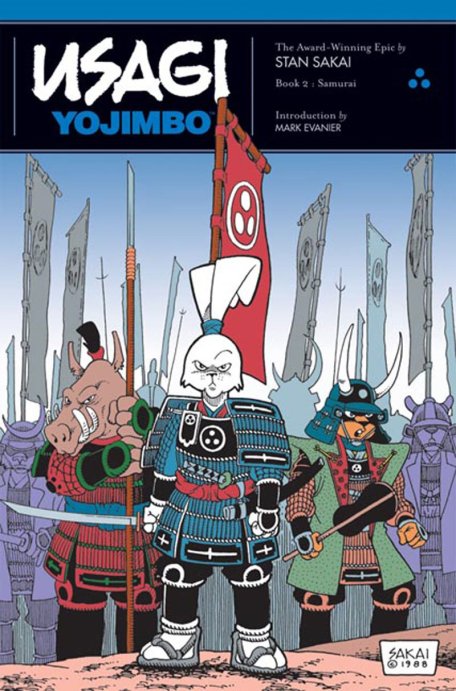
Young adult fantasy fiction author Laura Sebastian brings her debut series to a close in a big way with Ember Queen, the excellent and exciting conclusion to the Ash Princess trilogy.

Years ago, when the vicious Kalovaxians invaded the island of Astrea, they killed their queen, enslaved the Astrean people and stole their sacred magical gems. Princess Theodosia, heir the Astrean throne, was imprisoned and spent over 10 years as a captive of the Kalovaxian Kaiser, belittled by the mocking title of “Ash Princess”. However, this imprisonment didn’t break Theo; instead, with the help of her friends, she was able to escape to forge her own destiny. Now Theo has returned to Astrea, leading an army made up of freed Astreans, pirates, refugees and forces from the other nations the Kalovaxians have ruined. Hoping to free her people, Theo and her friends believe that they finally have the advantage over the Kalovaxians. However, the sins of Theo’s past have come back to haunt her.

Cress is a young Kalovaxian noblewoman who claimed Theo as her best friend during Theo’s imprisonment, despite being the daughter of the man who killed Theo’s mother. Theo chose to poison Cress and her father when she made her escape, and while she succeeded in killing Cress’s father, the magical poison she used had unexpected side effects on Cress. Despite being burned and mutilated, Cress survived, with the fire-imbued poison granting her powerful and deadly magical abilities. Using these to her advantage, Cress has done the unthinkable, killing the Kalovaxian Kaiser, poisoning Theo and claiming power over Astrea as the Kaiserin.

Barely surviving her own poisoning after a sojourn down into the magical Fire Mine, Theo must now find a way to free Astrea from her former best friend. With her own fire magic greatly increased, Theo plots to take the fight straight to the Kalovaxians. However, Cress has her own plans, and whole of Astrea may burn in order for her to get her revenge. Who will rise as the Ember Queen, and will the winner have anything left to rule?

Wow, talk about an impressive end to a great trilogy. Ember Queen is an amazing book from Laura Sebastian, who over the last couple of years has done an excellent job establishing herself as one of the best new young adult fantasy fiction authors. This is the third and final book in Sebastian’s debut Ash Princess trilogy, and this is definitely another superb addition to this fun series. I have been enjoying this trilogy since the beginning, reading Ash Princess in 2018 and Lady Smoke in 2019, both of which are pretty fantastic novels. Ember Queen turned out to be an excellent conclusion to this entire trilogy, and I had a great time reading it.

Sebastian has pulled together an excellent story for the final volume of the Ash Princess series, and I really liked the way in which she wrapped up the entire trilogy. After the first two novels dealt with the oppression of Astrea by the Kalovaxians, we finally get to see Theo’s big attempt to free her country from the invaders. I loved the way that Sebastian changed the theme of each novel, with the first novel relying on espionage, the second on diplomacy, and this third book on war. Sebastian produced a compelling narrative around this battle for the control of Astrea, and I really liked some of the directions that the story went into, especially when some intriguing new fantasy elements were introduced by the antagonist. Overall, I was really impressed with how Ember Queen turned out, especially as Sebastian used it to expertly conclude this awesome trilogy.

One of the main strengths of the Ash Princess trilogy has always been its great characters, who evolve throughout the course of the books. This is particularly true for Ember Queen, as Sebastian wraps up many of the character threads that have been introduced in the previous books, resulting in some excellent character devolvement as well as some satisfying conclusions for many character arcs. The main example of this is the series protagonist and point-of-view character, Princess Theodosia (Theo). Throughout the course of the first two books, Theo has grown substantially as a character, from a meek and seemingly broken prisoner to a cunning spy and manipulator, to a canny diplomat to finally an effective military commander. We finally get to see Theo take up the reins of leadership and responsibility that she has been somewhat apprehensive of in the previous books, as she starts making the hard decisions needed to ensure the freedom of her people. I really liked seeing all this character growth from the protagonist and I also appreciated the fact that Sebastian had Theo look back and own many of her prior mistakes and decisions that she regretted. Overall, I thought that Sebastian did an amazing job portraying Theo’s entire arc, and I think that she concluded her story in an impressive and enjoyable manner.

Sebastian has also produced some great conclusions to the arcs of the various side characters that were featured within this trilogy. For example, Soren has an intriguing story during Ember Queen, as he finds himself once again caught between the woman he loves and supports, Theo, and his people, the Kalovaxians. Like Theo does with the Astreans, Soren must come to a decision about his role as a leader of the Kalovaxians, and I think that his story and romance with Theo came together quite well. Blaise, Theo’s childhood friend and secondary love interest, also has an excellent arc within this book, finally getting some closure over his relationship with Theo, as well as the conclusion to his mine-madness arc. Several of the other supporting characters get some great advancement within this book as well. Artemisia, Erik and Heron all have their individual tales expanded on, and it’s great to see how comfortable and close they, Theo, Soren and Blaise have come together as a group. I particularly liked the way that Theo has gotten closer to Artemisia, her tough-as-nails cousin and bodyguard, and I had a good laugh at the way that Art allowed Theo a one-off session of girl talk as a way of calming her down before the final battle. New character Maile is an interesting addition to the series, and while she initially comes across as rather abrasive, she eventually becomes part of the group, resulting in a significant revelation for one of the characters.

The main thing that really made Ember Queen stand out to me was the complex relationship between the protagonist of the book, Theo, and the antagonist, Cress. This has always been a rather interesting relationship, as within the first book Theo and Cress were, in theory, best friends, referring to the other as their heart’s sister, even if Cress was actually rather controlling and manipulative. Theo eventually allowed Cress and her father to be poisoned at the end of the first book, and Cress now holds a heavy grudge against Theo for her betrayal. She has also evolved as a character since this first book, morphing into a much more confident woman who has taken control of her people in a way that is somewhat reminiscent of Theo’s growth as a leader. However, this is where some of the similarities end, as Cress is now a bit of a black mirror to Theo, as she is cruel, ruthless, determined to win whatever the cost and has no compunction about killing innocents. Despite all this, Theo is still drawn to her old friend, and the two of them have a compelling emotional bond (as well as an actual magical bond) throughout this novel. Theo feels guilty for the way that she betrayed and poisoned Cress, and she has a bit of a hard time seeing the evil person that she has become, and is more inclined to consider mercy than her friends would like. Cress, on the other hand, acts as ruthlessly as possible towards Theo and her friends, and is actually an extremely convincing antagonist for this book. Despite her actions, the reader gets to see that Cress is still deeply concerned with what Theo thinks about her and her plans, and there are still hints of a connection. However, her sense of betrayal, anger and determination to keep her newfound power always start to overwhelm any connection she feels to her old friend, and this leads to some devastating and heart-breaking confrontations. This whole dynamic between protagonist and antagonist is a really amazing part of Ember Queen, and adds significantly to the overall quality of the story.

I have always appreciated the magical system that Sebastian has featured in her Ash Princess books. This magic is elemental in nature, based around fire, earth, water or air (similar to the magic in Avatar: The Last Airbender, with a few key differences), and is exclusive to the Astreans, due to the presence of the magical mines located on their island. This magic has been a bit of an understated affair in the previous books, as the plots of those novels focused on espionage and diplomacy and required smaller, more subtle displays of magic. However, in Ember Queen, the Astreans are now at war, and so the magical gloves are off. This book is filled with a number of great examples of just how powerful or effective Astrean magic can be and it is a really cool addition to the series. Seeing the formerly enslaved or dispossessed Astreans unleash their power against their oppressors is a little cathartic, and it certainly makes for some great, if devastating, scenes. Sebastian also does some intriguing morphing of her magical system when it comes to Theo, Cress and some other characters, and this results in a rather interesting plot line that I liked.

Like the rest of the books in this series, Ember Queen is a rather good piece of young adult fiction. Sebastian has created an amazing story that features a group of young people growing as characters and sacrificing everything for freedom, friendship and justice. This a great book for younger readers, and while there is plenty of violence, war and fighting, there is nothing too graphic or over-the-top that makes it inappropriate for younger readers. I personally really appreciated Sebastian’s excellent portrayal of several LGBT+ characters within this book, especially as two of these characters had one of the best romantic relationships in the entire series. Despite being angled towards younger readers, Ember Queen is one of those books that can be enjoyed by a wider audience of people. There is definitely something for everyone in this book and it is really worth checking out.

Ember Queen by Laura Sebastian is a wonderful novel that not only contains a captivating story, but which also does an awesome job concluding the author’s debut trilogy. In this final book in the Ash Princess trilogy, Sebastian presents a desperate battle for freedom, complete with intriguing magical elements, excellent characters, complex interactions between the protagonist and antagonist and a fantastic story. All of this comes together in a first-rate read, which is a great conclusion to this series. I note that Sebastian has her next body of work already planned out, with the first book in her upcoming young adult fantasy series, Constellation of Chaos, set for release next year. This new book has an interesting plot synopsis out already and I am planning to grab this book when it comes out. Until then, Ember Queen is an excellent book from Sebastian and it is really worth seeing how this fantastic trilogy ends.

Amazon     Book Depository