Star Trek: Agents of Influence by Dayton Ward

Agents of Influence Cover

Publisher: Simon & Schuster Audio (Audiobook – 9 June 2020)

Series: Star Trek: The Original Series

Length: 11 hours and 41 minutes

My Rating: 4 out of 5 stars

Amazon     Book Depository

One of the leading figures in the Star Trek expanded universe, Dayton Ward, returns with another exciting and compelling novel about the Enterprise, Star Trek: Agents of Influence.

For years, the United Federation of Planets and the Klingon Empire have been engaged in a dangerous cold war, with each side trying to gain an advantage over the other through any means necessary.  Starfleet Intelligence has launched an ambitious secret plan to infiltrate the Klingons with surgically altered spies.  Thanks to radical surgery, advanced technology and intensive cultural and linguistic training, these undercover agents have managed to infiltrate the highest echelons of the Klingon government, obtaining some of the most sensitive intelligence about Klingon technology, military plans and political ploys.

However, Starfleet’s three most highly placed agents have somehow been discovered.  With their cover blown, the agents manage a daring escape from the Klingon home world and engage their emergency extraction procedure.  The agents successfully make their rendezvous with the USS Endeavour at the edge of Klingon space before everything goes terribly wrong.  A Klingon warship suddenly engages them in combat while mysterious energy fluctuations ensure that both ships are destroyed.

With hostilities between the Federation and the Klingons building, Starfleet dispatches Captain James T. Kirk and the crew of the USS Enterprise to the crash site in the hope of salvaging the situation.  Forced to comb through some of the most dangerous territory in the entire galaxy, Kirk hopes to find the remnants of the Endeavour and any survivors of their crash.  However, mysterious events are occurring within the border zone and the Enterprise soon encounters unnatural conditions, pirates, Klingon warships and a top-secret weapons experiment.  Kirk and his crew must navigate through all these dangers carefully if they are to avoid another destructive war.  However, it soon becomes clear that Starfleet are not the only ones with highly placed spies and Kirk must find a way to uncover an enemy agent if his crew are to survive.

Dayton Ward is a veteran science fiction author who is easily best known for his work on the Star Trek expanded universe.  Ward has written a significant number of Star Trek novels over the years, which tie-in to several of the different Star Trek television series and movies.  I have so far only read one of his books before, Star Trek: The Next Generation novel, Available Light, which I really enjoyed.  This new novel from Ward, Agents of Influence, is a brilliant standalone novel that follows the Enterprise during the period that Star Trek: The Original Series was set.

One of the things that I really like with Star Trek extended fiction is the amazing range of different stories that the authors can produce within the expanded universe.  Agents of Influence is a really good example of this, as Ward has come up with an excellent story that highlights a very interesting aspect of life in this universe: espionage between the various alien races.  This proves to be a really cool plot basis which the author utilises to his full advantage by producing an exciting and action-packed narrative.  This is a fast-paced book that sees the various characters involved in all manner of danger and intrigue as they attempt to extract the spies and thwart the efforts of their Klingon opponents.  There are several excellent action sequences designed to get the blood pumping, including a couple of fights between starships and one particularly cool pitched battle between two large opposing forces in spacesuits in the bowels of an asteroid.  There is also a really compelling storyline that sees the protagonists attempt to locate a spy aboard their ship, with a number of potential suspects adding in intrigue and drama as a result.  The author makes effective use of multiple narrators to tell his story and this ensures that the reader gets to see every side of this exciting and enjoyable narrative, including from several antagonist characters.  This helps to really pump up the intrigue and action, and I really appreciated seeing the different sides of the conflict, especially as you get to see rival plans go up against each other.  The various character perspectives also helps to build up all the major side characters present throughout the book, allowing the readers to get a good idea of who they are and what their stakes in the plot are.  All of this comes together into an exciting and compelling overall read that is very easy to enjoy.

Agents of Influence was also excellent piece of Star Trek fiction, set during the events of Star Trek: The Original Series.  Ward once again does an incredible job capturing the tone and feel of the original Star Trek television series into this book and it actually felt like I was watching an episode of the original show.  The author is really talented at bringing iconic Star Trek characters to life in his novel and each of The Original Series characters featured in this book gets their chance to shine throughout the narrative.  Like most novels that tie in to a particular media franchise, Agents of Influence is a book that will mainly appeal to dedicated Star Trek fans, who will appreciate Ward’s latest contributions to the extended universe.  There are a variety of fun references to various episodes of The Original Series, including some of the episodes that featured characters using plastic surgery to alter their appearance and disguise themselves as members of other species, such as the iconic episode The Trouble with Tribbles.  Ward also makes several references to some of the other novels in the Star Trek expanded universe, especially those featured in the Star Trek: Vanguard series of books.  This includes the USS Endeavour and its crew, who previously appeared in these novels, with some of their previous adventures and their interactions with the Enterprise explored throughout the course of the book.  However, all of these references are really well explained to the reader and even people who have less familiarity with Star Trek and some of the expanded fiction should still be able to enjoy this novel without any issues.

I ended up checking out the audiobook version of Agents of Influence, which turned out to be an extremely fun and easy way to enjoy this fantastic book.  The Agents of Influence audiobook has a run time of nearly 12 hours and is narrated by Robert Petkoff.  This is a fairly typical length for a Star Trek audiobook, and I found that I was able to power through this one’s intriguing narrative in rather short order while getting a feel for the plot and the characters.  One of the main reasons for this is the exceptional narration provided by Robert Petkoff, who is easily the most prominent narrator of Star Trek fiction.  Petkoff is an amazingly skilled narrator whose work I have really appreciated in a range of previous Star Trek audiobooks, including The Unsettling Stars, Picard: The Last Best Hope, The Captain’s Oath and The Antares Maelstrom.  Petkoff has the amazing ability to replicate the voices of the various cast members of The Original Series (as well as the cast members from The Next Generation), and this is on full display in the Agents of Influence audiobook.  Petkoff once again did an outstanding job bringing all the key Enterprise crew members to life, and at times you would be hard pressed to tell the difference between some of the voices he did and the original crew.  This, combined with the amazing species specific voices that Petkoff produces, really helps to bring the reader into the story, and I had an awesome time listening to the story unfold.

Star Trek: Agents of Influence is a compelling and clever standalone Star Trek tie-in novel that takes the reader on a bold new adventure back with the cast of The Original Series.  Dayton Ward has produced a slick and enjoyable Star Trek novel chock full of action, intrigue and references, that I had an amazing time listening to.  A highly recommend read for those fans of the Star Trek franchise which will also appeal to more casual viewers and science fiction readers.
Amazon     Book Depository

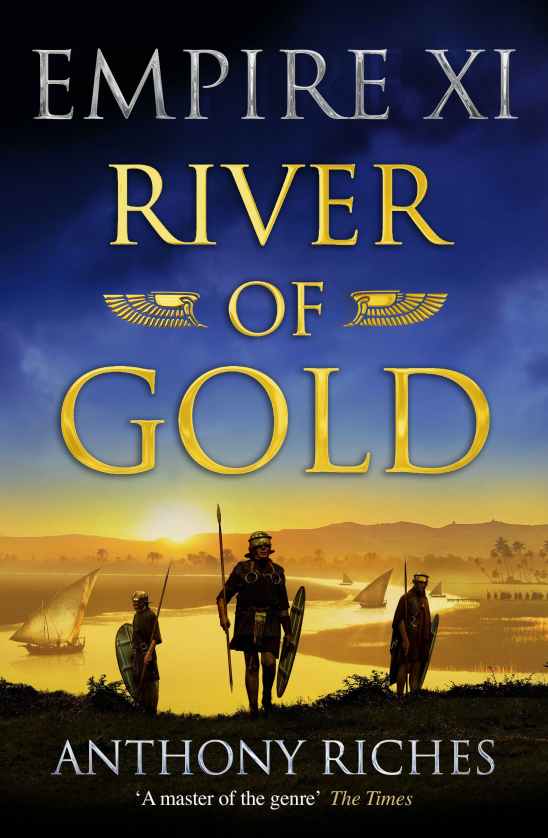
River of Gold by Anthony Riches

River of Gold Cover

Publisher: Hodder & Stoughton (Hardback – 6 August 2020)

Series: Empire – Book 11

Length: 339 pages

My Rating: 4.25 out of 5 stars

Amazon

From one of the top authors of Roman historical fiction, Anthony Riches, comes River of Gold, the action-packed and epic 11th entry in his bestselling Empire series.

Aegyptus, 187 AD.  Under the command of Tribune Scaurus, decorated Centurion and former fugitive, Marcus Valerius Aquila, serves with several elite veteran officers, each of whom has displeased the Imperial hierarchy in some way.  These Roman soldiers now find themselves part of an informal troubleshooter unit, destined to die if they should ever fail one of their impossible tasks.  The Roman Empire is once again in danger as a mysterious army advances from the south of Africa, killing a major garrison and conquering a key port city at the southernmost border of the empire.  In order to solve this problem, the Emperor’s corrupt advisor sends Centurion Marcus and his comrades on another dangerous mission.

Arriving in Alexandria, Marcus and his comrades discover a rich province riddled with corruption and with a much reduced military presence.  Taking command of the local legion, Scaurus marches what soldiers he can down to the site of the massacre to find a new grim reality waiting for them.  After centuries of peace, the mysterious kingdom of Kush has once again declared war on Rome, determined to claim what is rightfully theirs from the weakened Romans.  In order to stop them, Scaurus leads his force deep into enemy territory to recapture an abandoned fortress and hold it against impossible odds.  Their mission is borderline suicidal and only has a slim chance of success, but if anyone can pull of this impossible task, it is Marcus and his friends.

This was another fun and exciting historical novel from Riches which proved to be a fantastic new entry in his Empire series.  Riches is a prolific and talented author who has been writing since 2009, when he debuted the first Empire novel, Wounds of Honour.  Since then he has gone to write an additional 10 novels in this series, as well as writing his separate series, The Centurions.  I have previously read a few of Riches’s books, including the first three entries in the Empire series when they were released.  While these first three books were extremely enjoyable Roman historical fiction novels, I missed the chance to read a couple of entries in the series and fell too far behind to catch up.  However, I recently got a copy of this latest book and, as I was in the mood for a visit back to ancient Rome, I tried out River of Gold to see how it would turn out.

This proved to be a good decision on my behalf as River of Gold ended up being a fantastic and compelling read.  Riches sets up an excellent character-driven story that sets a group of unique Roman officers against a dangerous new foe.  The author does a good job setting the story up, allowing those readers unfamiliar with the series or the historical era to easily jump in, and then sets the characters toward their goals.  This results in a captivating narrative that has a good blend of action, character development and cool historical features, as the protagonists embark on a madcap plan to win the war.  This leads to a number of awesome battle scenes, including an extended siege sequence which was a lot of fun to read, and the various characters find themselves in sufficient danger throughout.  The story ends a tad suddenly, although Riches does a good job of setting up the overall conclusion to the main storyline.  This story also felt a bit short, and I think it could have benefited from another 50 pages or so, perhaps extending out the siege sequence and adding in some more action and peril there.  However, this was still an overall excellent narrative which I was able to get through in only a few short days.

Riches spends a good part of River of Gold focusing on the various characters he has introduced and developed over the course of his long-running series, and this proves to be an entertaining group of protagonists.  In order to examine these characters Riches utilises a detailed, in-narrative character introduction near the start of the book, in which a newcomer reads off personnel files about each of the recurring characters.  While this was rather forced and inelegant way to introduce the characters and their history, it does the job and allows the readers to get an idea of who these protagonists are and their various quirks.  I found this particularly useful after having skipped several books in the series, and new readers will definitely appreciate the background.  Most of these characters get some intriguing arcs throughout the book.  For example, Marcus is once again the lead character of the novel as he tends to get the most important missions and ends up in the most danger, including a particularly close look at the Kush and their society.  Marcus is a fairly typical Roman historical fiction protagonist who has gone from raw recruit to hardened veteran throughout the course of the series, and it was interesting to see the various developments that have occurred since the last Empire novel I read.  Tribune Scaurus also gets a fair bit of attention as the leader of the Roman force and the mastermind behind their attack.  Scaurus is a good leader character, providing the rest of the characters with backbone and fortitude, and I liked his rather unique command style that relates to the dangerous political situation he finds himself in.  The other major character arc that I liked revolved around Cotta, the group’s veteran centurion and Marcus’s mentor, who reluctantly returns to Aegyptus for the first time after assassinating a Roman general who sought to rebel against the Emperor.  Cotta’s interesting subplot revolved around him reminiscing about his past mistakes while he attempts to hide his identity from the legion they have taken over, as they suffered as a result of his actions.  All of these recurring characters provided a great base for the story and some major moments that occurred will definitely rock readers, especially those long-term fans of the series.

While the recurring characters are good, I really have to highlight some of the new characters that Riches created for this novel, one of whom in particular outshines the rest.  This new character is Demetrius, a Christian who accompanies the army down south as part of his holy mission.  Demetrius is a complex and enjoyable character mainly due to his past as a vicious Christian-hunting Roman soldier.  After a series of brutalities, Demetrius sought redemption by joining the Christian cult, and now he fights against the invaders, believing that this fight is a holy war.  Riches focuses a good amount of the plot on Demetrius, and he proves to be a captivating and central figure, offering words of wisdom and defending his newfound Christian beliefs.  I found the author’s portrayal of this character to be really intriguing and I liked the close relationship he formed with some of the recurring characters, especially Marcus, despite that fact that none of them are Christians.  The other new character I liked was Ptolemy, an Imperial secretary and scribe assigned to the group, who provides them with relevant information and history to assist with their mission.  Ptolemy is essentially a walking piece of exposition, and a large amount of the book’s historical information is revealed thanks to him.  Despite this, he was a rather entertaining character, mainly due to the odd-couple friendship he formed with Dubnus.  The two characters are pretty much opposites in every way and end up bickering on a number of subjects, while also building up a mutual respect for each other.  This fun discourse between the two resulted in some great moments throughout the book and he was an interesting addition to the plot.

In addition to the fun story and great range of characters, Riches also invests a significant amount of time and effort in bringing the historical aspects of this novel to life.  The author has obviously done some serious research on the subject of Roman military history as he does a wonderful job showcasing various elements of the Roman legions and soldiers to life, including gear, unit makeup and tactics.  This also translates incredibly across into the various combat scenes throughout the novel, as you get a real feel for how a Roman solider would have felt in combat, especially at the Centurion level, although Riches mostly focuses on unique fight situations in this book.  The book also contains a number of detailed descriptions of the historical landscapes that the protagonists traverse through, such as Alexandria and the rest of historical Egypt.  This proved to be quite a fascinating inclusion in the story and I always enjoy seeing an author’s depiction of historical settings.  However, the most fascinating part of this novel has to be the inclusion of the ancient African Kingdom of Kush, with whom our protagonists face off against.  The Kushites were a powerful and advanced civilization, who, until recently, have been somewhat overlooked by historians and archaeologists.  Riches does an incredible job working them into his novel and setting them up as a rival kingdom to Rome.  Not only does he feature a number of detailed depictions of their culture and military make up during the events of the book, but he also spends time exploring the history of Kush, including their origins as a civilization, their prior history throughout Aegyptus and their conflicts with the Romans.  This was easily one of the most interesting and compelling elements of River of Gold, and I really appreciated Riches’s inclusion of such a unique historical adversary.  Indeed, all of the historical inclusions in this book are excellent, and I had an amazing time exploring them as the story progressed.

River of Gold by Anthony Riches is a captivating and enjoyable novel that takes the reader on a fascinating and action-packed journey through history.  Riches does an excellent job continuing his bestselling Empire series, and I had a great time getting through his exciting story, loaded with great characters and an impressive historical background.  All of this results in an amazing historical fiction novel that is well worth checking out, whether you are a fan of this long-running series or a general historical fiction fan looking for a fun adventure story.

Amazon

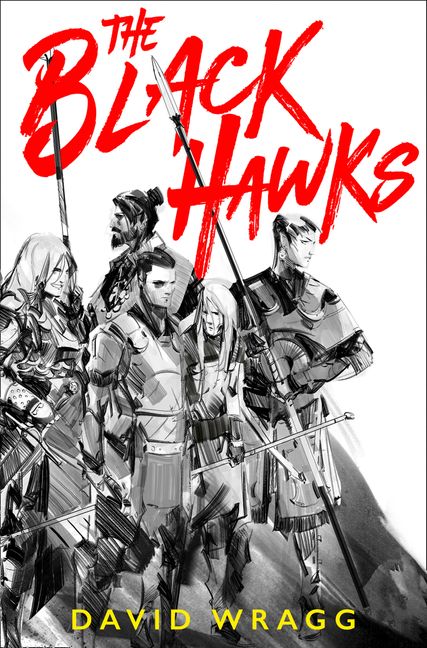
The Black Hawks by David Wragg

The Black Hawks Cover

Publisher: Harper Collins (Audiobook – 3 October 2019)

Series: Articles of Faith – Book One

Length: 12 hours and 9 minutes

My Rating: 4.5 out of 5 stars

Amazon

Prepare to join the roughest, toughest and most maladjusted mercenary band in the land with The Black Hawks by David Wragg, and excellent fantasy debut that was a lot of fun to read.

Vedren Chel is a minor noble struggling to adjust to his life as a knight and glorified servant to his lazy step-uncle.  Hoping to escape the meaningless existence that has been forced upon him, Chel suddenly finds himself thrust into a great adventure when a mysterious enemy force invades the city he is stuck in, causing panic and confusion all around.  Managing to flee from the chaos, Chel finds himself the inadvertent travelling companion to the useless and cowardly Prince Tarfel, the King’s son and second in line to the throne.

Accompanying Tarfel to safety, Chel hopes to be rewarded with his freedom and the chance to forge a new life.  Instead he finds himself swept up in the dangerous politics of the realm when he is chosen to become Tarfel’s protector and loyal servant.  Forced to accompany the prince back to the very city they just fled, Chel has very little hope for their survival.  His fears prove justified when a force of disguised men attempt to kill them the night they arrive.  Their lives are only saved when a mysterious band of warriors arrive, killing their attackers and then promptly kidnapping them.

Awakening, Chel and Tarfel find themselves under the dubious protection of the Black Hawk Company, a small group of elite mercenaries who have been hired to escort Tarfel to a mysterious destination.  Despite their unconventional tactics and makeup, the Black Hawks are a dangerous and clever collection of killers, which proves useful when several bands of assassins and fanatics associated with the kingdoms corrupt and all powerful church; converge upon the group, determined to kill Tarfel.  Deciding that their kidnappers are the only group with their best interests in minds, Chel and Tarfel accompany the Black Hawks off into the unknown.  Their journey will take them through dangers, both seen and unseen, and lead them into the very heart of the kingdom as they try to remove the corruption from within.  But dark secrets lie in store for all of them at the end of their journey and no one will be prepared for the dangers and betrayals in front of them.

The Black Hawks is an exciting and captivating dark fantasy novel that I had an absolute blast reading.  This debut novel from David Wragg was originally released about this time last year and it serves as the first entry in his planned Articles of Faith series.  I didn’t get a chance to read The Black Hawks last year, but I have been eyeing this novel off for several months now as I loved how fun its synopsis sounded.  I finally got the opportunity to read this book a couple of weeks ago and I am extremely glad that I did, as The Black Hawks proved to be an impressive and entertaining read that I ended up powering through in relatively short order.  Wragg has come up with an excellent novel that combines a compelling and slick story with some memorable characters and a dark fantasy landscape loaded with perils and betrayals.  These, combined with the book’s many intense action sequences, fun humour and several dark scenes, help to create an addictive and amazing read that I quickly fell in love with.

Wragg utilises a fun, fast-paced and compelling narrative to serve as the centre of this great book.  The entirety of The Black Hawks’ plot is told from the perspective of Chel, who is constantly falling into the midst of some world-changing events.  The plot starts off quickly, with Chel quickly finding himself in the company of Prince Tarfel and from there into the middle of a number of conspiracies and plot aimed at eliminating or manipulating the prince.  This ensures that the reader is quickly enveloped in a complex and entertaining plot which sees the protagonists surrounded on all sides by betrayals, conflicting agendas, mortal perils and all manner of conspiracies.  It was really fun and captivating to see how the various storylines turned out, and the author comes up with a number of intriguing surprises and twists to ensure that the story stays quite interesting and fresh.  There was one very major twist revealed at the end of the novel that I was particularly impressed with.  Wragg sets this twist up perfectly, with a number of hints towards it scattered throughout the book.  While I was able predict some of what was going to happen in advance, I was pleasantly surprised with some of the other revelations that came to light, and this beautifully cultivated twist was one of the high spots of the book.  I was also expecting a completely different ending to the novel, perhaps something a tad more light-hearted, but I liked the direction that Wragg took it instead, especially as it means that I will be grabbing the eventual sequel to this novel as soon as possible to see what happens next.  Overall, The Black Hawks contains a really enjoyable and smartly written narrative, and I had an outstanding time getting through it.

One of the best parts of The Black Hawks is the enjoyable and distinctive characters that Wragg has come up with.  The book’s main protagonist is Vedren Chel, who serves as the story’s point-of-view character.  Chel starts off as a fairly typical fantasy character: a young, bored minor noble who finds himself suddenly involved with events outside of his understanding.  However, as the story progresses, he shows himself to be a much more complex character, mainly thanks to his dedication to Prince Tarfel, who he becomes sworn to.  Tarfel is a spectacularly naive and incompetent royal, who is usually completely unaware of the danger that he finds himself in, or the full scope of the conspiracies playing out around him.  Despite recognising how useless Tarfel is, Chel takes his oath seriously and does all he can to protect him, even though that essentially means he gets the crap kicked out of him every second chapter or so.  This dogged loyalty and determination to do the right thing makes him quite an appealing protagonist, and he proves to be a rather resourceful individual who starts to fit in with the members of the Black Hawk company who kidnap him.  This camaraderie with the Black Hawks, something that he has been missing for most of his life, results in several great scenes, especially as he finds himself conflicted in his loyalty to them and to Tarfel.  Overall, his character arc goes in some interesting directions, and it was great to see him grow as a person through the course of the book.  Tarfel also grows a little during the course of the novel, becoming slightly less boorish and a little more capable.  Some of the reveals at the end of the novel have some rather large impacts of Tarfel’s personality, as he completely re-evaluates his entire life, and it will be rather interesting to see what happens to him in the future novels.

While Chel and Tarfel are both great characters to anchor the main plot around, the most entertaining and memorable characters are easily the members of the titular Black Hawk company.  The Black Hawks are a small group of dangerous mercenaries who have banded together after failing to fit in with all the other companies.  Wragg has gone out of his way to create a distinctive band of mismatched rogues to fill the ranks of the Black Hawk company, and there are a number of fun characters introduced as a result.  These members include a grim and taciturn leader with a notorious hidden past seeking redemption, a shadowy archer who has had her tongue cut out, a beautiful but lethal swordswoman, the group’s dangerous and self-serving assassin who is probably going to betray everyone, and a philosophical giant.  While there are a few stereotypical fantasy roles in there, such as with the Black Hawk leader, this turned out to be a particularly fun group of characters.  My personal favourite was Lemon, a short, red-haired human woman with a crude personality, amazing sense of humour and a fascination with her arsenal of axes (essentially a classic fantasy dwarf character).  Lemon is a great entry in the book, especially as she serves as the story’s main comic relief and is generally the most likeable and entertaining character in the novel, especially when she regales the protagonist with her blunt and tasteless jokes.  I really liked the excellent group dynamic that Wragg came up with for the members of the Black Hawks, and while they work together and are friends, there is a real sense of how mismatched the group is as all of its members are more individualistic than a team player.  All of these characters are great and Wragg does an excellent job introducing each of them and ensuring that all of them get their moment to shine throughout the course of the story.  However, he makes sure to keep most of their backgrounds hidden from the protagonist and the reader, ensuring there is a certain amount of mystery and mystique around them.  While certain hints about their past are revealed, for the most part the reader is left in the dark about who these people are and what brought them to the Black Hawks.  I imagine that Wragg plans to reveal each of these character’s full backstories throughout the course of the series and now that I am somewhat invested in them, I look forward to finding out more about their pasts.

In addition to the fantastic story and amazing characters, The Black Hawks features an excellent new dark fantasy world that serves as an awesome setting to this book.  Wragg’s novel features a somewhat desolate fantasy kingdom, ruined by years of constant warfare and ruled over by a corrupted and militant religious order that is desperately clinging to power.  This proved to be a really cool and enjoyable setting for the novel, and readers quickly become intrigued by the chaotic events occurring throughout the landscape.  While Wragg does drop the reader into this setting with any preamble and gets the story going rather quickly, the reader is never really lost about what is going on in this setting, and the author provides the relevant details about the fantasy world when necessary.  This proved to be an excellent overall setting, and I really liked seeing how all the politics and religious strife worked out.  This world also has a lot of potential for expansion, with a number of different nations and regions mentioned throughout the course of The Black Hawks’ story.  I imagine that the series will eventually visit many of these locations in the future, which should result in some interesting and enjoyable storylines, and I look forward to seeing how that turns out.

I ended up listening to The Black Hawks through its audiobook format, which runs for just over 12 hours and is narrated by Colin Mace.  This proved to be an excellent way to enjoy The Black Hawks, and I was able to power through it in only a few days as it was a really easy novel to listen to.  Thanks to Mace’s enjoyable narration, readers will be able to fly through this exciting and fast-paced story without losing focus for a second.  Mace also does a number of excellent voices for the various characters in the novels, capturing the diverse personalities and over-the-top characters really well.  As a result, I felt that this format was an awesome way to enjoy The Black Hawks and the audiobook comes highly recommended.

The Black Hawks by David Wragg was a cool and impressive dark fantasy adventure that I am really glad I checked out.  Thanks to his captivating and action-packed story, distinctive characters and dark fantasy setting, Wragg knocked his debut out of the park, creating an awesome overall read.  I had an amazing time listening to this fantastic book and I am looking forward to seeing how the story continues in the second Articles of Faith novel.

Amazon

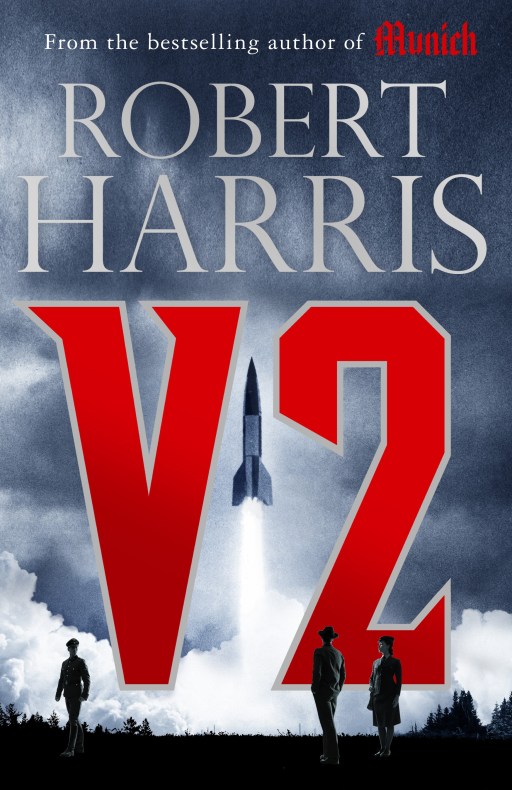
V2 by Robert Harris

V2 Cover

Publisher: Hutchinson (Ebook – 15 September 2020)

Series: Standalone

Length: 312 pages

My Rating: 4.25 out of 5 stars

Amazon

One of the most talented historical fiction authors in the game, Robert Harris, dives deep into the history of the infamous Nazi V2 rocket program in his latest novel, V2.

Harris is an impressive and well-regarded novelist who has been writing fiction for nearly 30 years.  A former journalist, Harris’s initial books were a series of non-fiction novels in the 1980’s on various subjects, including a book that is considered to be the definitive account of the investigation into The Hitler Diaries scandal which later inspired a drama-documentary miniseries.  His first fiction novel was the 1992 release, Fatherland, an alternate history novel that depicted Germany wining World War II.  He has since gone on to write a number of other fascinating novels, most of which have a historical edge to them, including Pompeii, The Ghost (later adapted into the film The Ghost Writer), The Fear Index and Munich.  Harris is one of those authors I have been meaning to read more of, but so far I have only checked out his 2013 release, An Officer and a Spy, which featured a fascinating account of the Alfred Dreyfus affair in 19th century France, and which was an outstanding piece of historical fiction.  I also currently have his 2019 release, The Second Sleep, on my bookshelf and it was one of the novels I most regret not reading last year.  As a result, I was rather interested when I got a copy of V2, which sounded like quite a fun and intriguing historical read.

In November 1944, while the Allies advance on Berlin, the Nazis are desperate to avoid defeat at all cost.  Placing his hopes in new technology, Hitler funnels vast resources into his V2 rocket program, the most sophisticated weapon on the planet.  The V2s are powerful ballistic missiles capable of delivering an explosive warhead deep into enemy territory at immense speeds.  Hitler has ordered the production of 10,000 rockets and from an isolated forest in occupied Holland, the Germans launch them towards London, causing immense damage.

Rudi Graf is a German scientist who has long dreamt of sending rockets to the moon, and who now regrets his role in the creation of the V2.  Stationed at the V2 launch site, Graf desperately tries to hang onto his humanity as he watches his dream cause only destruction and death.  At the same time, in London, Kay Caton-Wash, an officer in the WAAF, is experiencing the full horror of the V2 rockets as she barely survives one of their strikes.  Over the course of five days, these two strangers are about to be connected by their circumstances.  As Graf is forced to launch even more of his rockets at London, Kay becomes involved with a secret mission to locate and destroy the V2 launch sites in Holland.  Travelling to Belgium, armed with only a slide rule and some equations, Kay works to end the V2 menace once and for all.  However, danger and duplicity are around every corner, and both Graf and Kay soon begin to realise that they cannot trust anyone.  As both rush towards their destinies, their actions will have unintended consequences on the over, changing the course of history forever.

V2 was a clever and compelling novel from Harris, who did a wonderful job wrapping an intriguing, character-driven story around one of the most remarkable military programs of World War II.  Like the majority of Harris’s novels, V2 is a standalone book that can be easily enjoyed by anyone in the mood for informative historical tale or war story that shows the horrors of war and the terrible ways that a person’s dreams can be twisted for evil purposes.

Harris has come up with a captivating narrative for this book.  The focus of V2 is split between two fictional point-of-view characters, Kay and Graf, and follows their respective experiences over a period of five days, with several flashback scenes thrown in for context.  This proved to be a rather intriguing read, and I liked how the author tied a mostly fictional story around some fascinating historical events, such as the creation and implementation of the V2 rockets.  Both of the two separate storylines are quite intriguing and both go in some exciting directions, including Kay getting involved in a secret military operation while Graf tries to keep his sanity as he navigates the politics, treachery and sadism of his Nazi controllers.  However, the real appeal of this narrative is the way in which the two separate story arcs intersect throughout the novel.  For example, the novel starts with Graff witnessing and assisting the launch of a V2 rocket, which then lands and changes Kay’s life.  As the story proceeds, the various actions and reactions of these two point-of-view characters impacts the events occurring around the other character, resulting in danger and tragedy in equal measures.  While I really liked the fascinating individual narratives and the cool way in which the storylines overlapped, I did think that the main story ended rather suddenly and lacked a substantial or satisfying conclusion.  This narrative desperately needed some big, exciting hook at the end to really tie everything together, even if it was historically inaccurate.  Still, V2’s story was really good and easy to get into, and I had a fantastic time reading it.

In order to tell this fascinating tale, Harris utilises two great fictional characters, Kay and Graf, through whose eyes we see the events unfold.  Both of these characters are rather interesting and I quite enjoyed both their individual character arcs.  However, of the two, I definitely found Graf to be the more compelling character.  This is because Graf is a particularly tortured individual, a brilliant scientist who is forced to work for the Nazis to bomb England.  There are some excellent scenes throughout this book that show Graf agonising over his actions working for the Nazis, who have perverted his childhood dream of creating spacefaring rockets into weapons of mass destruction.  Harris also spends much more time exploring Graf’s past, investing in a series of flashbacks that show how Graf became obsessed with rocketry, how he became involved with the V2 project and some of the tragedies that working with the Nazis have brought.  Add in a very captivating storyline that shows Graf starting to rebel against the actions of his Nazi handlers and attempting to find a small measure of redemption out in the wilds of Holland and you have a very impressive and enjoyable character arc that does rather outshine the storyline Harris sets up for Kay.  That being said, Kay is still an interesting focus character in V2, and I did enjoy her arc of trying to find and destroy the V2 launch sites by travelling to Belgium with several other members of the WAAF to work out the trajectories of the rocket flights.  It was also really cool to see this portrayal of a WAAF, a female air force officer, throughout the book, especially one deployed outside of England, and I found it interesting to examine the varied roles that they played throughout the war.  Overall, these two characters do an outstanding job telling this story, and I had a great time seeing how their individual arcs unfolded.

The real highlight of this novel has to be the author’s incredible and captivating portrayal of the infamous V2 rocket program.  Harris has clearly done his research on the subject as he does an amazing job examining all the key aspects of the program and bringing them to life.  This includes a detailed examination of the history of the project, the technical aspects of the rockets and various examinations of how they fly and what they can do.  Harris makes good use of the various flashback sequences in Graf’s chapters to examine the full fascinating history of the project, including the origins of the rockets, identifying who the key architects of the project were and how the project came to the attention of the Nazis.  This includes some compelling depictions of several major historical figures associated with the V2s, such as the project’s leader and main creative driver, Wernher von Braun, as well as several key Nazi characters who had a hand in the project in some way or another.  The author also provides the reader with an unfiltered depiction of the devastating effect that these rockets had on the inhabitants of London when they hit and he actually features several real, historical rocket strikes that occurred during the timeline of the novel, including the most devastating attack that hit London.  The depictions of the horror and the carnage that the rockets caused were really striking, especially as Harris tries to capture the psychological impact that these unstoppable and ultra-fast rockets had on the populace.  I really loved learning more about the V2 rockets and it was easily the most fascinating and captivating part of the entire book.  I especially appreciated the way in which Harris used his dual character perspectives to examine the project from the point of view of the Germans and the Allies, and it was great to see the clash of understandings and opinions about the rockets.  It was also really fascinating to learn more about the Allies’ covert attempts to identify and demolish the V2 launch sites, and this was a great addition to the novel.  All of these historical aspects are immensely enjoyable and fascinating and they add a heck of a lot to the story.

V2 by Robert Harris is a particularly clever and intriguing World War II novel that presents the reader with a fascinating and memorable examination of the infamous V2 rocket program.  Featuring a compelling story, fantastic characters and an outstanding historical focus, V2 was an awesome and captivating read that is really worth checking out.

Amazon

How to Rule an Empire and Get Away with It by K. J. Parker

How to Rule an Empire and Get Away With It

Publisher: Orbit (Trade Paperback – 18 August 2020)

Series: The Siege – Book Two

Length: 357 pages

My Rating: 5 out of 5 stars

Amazon

Prepare to laugh like crazy with How to Rule an Empire and Get Away with It by K. J. Parker, an intensely funny and clever fantasy read that was one of my most anticipated releases of 2020.

Several years after their home fell under a brutal and prolonged siege, the inhabitants of the City have settled into a new way of life.  There may be a vast army camped on the plains outside and the occasional catapult shot may demolish a house or two, but that does not mean that people cannot make some money and get on with their lives.  This includes Notker, an acclaimed actor, skilled lookalike and mediocre playwright, who scrapes a living by impersonating the rich and powerful of the City at parties while trying to get someone to pay him money for his latest play.  However, what Notker does not know is that fame, opportunity, and a rather large boulder are about to land in his lap.

When the City’s greatest hero and nominal leader, Lysimachus, secretly dies, his followers/handlers, desperate to stay in power, recruit Notker to play the role of a lifetime.  Impersonating Lysimachus, Notker continues to act as the city’s figurehead, allowing life to go on, and he even begins to think he has a handle on this simple job, until someone tries to murder him.  Now he finds himself in the midst of a brutal and ongoing power struggle as the various power players in the city attempt to manipulate him for their own ends resulting in him being crowned as Emperor of the entire Robur Empire (or what is left of it).

As Notker attempts to find some sanity within his home, he begins to understand what a fragile position the City is in.  With enemies surrounding them and the besiegers slowly overcoming the City’s defences, Notker needs to choose between making a run for it or trying to save the City.  But what difference can one very good actor make in a war?  If Notker has anything to do with it, everything!

How to Rule an Empire and Get Away with It is another spectacular and extremely entertaining fantasy novel from legendary fantasy writer, K. J. Parker.  Parker, a pseudonym of bestselling author Tom Holt, has written a vast catalogue of books over the years, including a substantial collection of humorous and satirical fantasy novels.  I first really got into Parker’s work last year when I was lucky enough to receive a copy of the awesome Sixteen Ways to Defend a Walled City, a very funny novel that focused on a conniving engineer as he thwarted a massive army through guile, tricky and a substantial amount of BS.  Sixteen Ways to Defend a Walled City was an amazing read and it was easily one of my favourite books of 2019.  As a result, I have been eagerly keeping an eye out for any additional releases from Parker and was very excited when I saw that How to Rule an Empire and Get Away with It was coming out.  I was especially intrigued when I learnt that this latest Parker novel was some form of sequel to Sixteen Ways to Defend a Walled City, and I was very, very happy when I got my copy of this latest book.

This new novel from Parker proved to be an extraordinary read and it was easily one of the funniest novels of 2020.  The author writes a clever, fast-paced and addictive story that utilises the author’s unique sense of humour to create a very entertaining piece of literature.  This is a very enjoyable read, and fans of Parker’s work will love that How to Rule an Empire and Get Away with It is a sequel to Sixteen Ways to Defend a Walled City, continuing some of the great storylines from the prior book.  I had an outstanding time reading this book and it gets an easy five-star review from me.

Parker presents another brilliant and witty story for How to Rule an Empire and Get Away with It that follows the adventures of another unlucky and jaded protagonist as he tries to survive the chaotic events unfolding around him.  Just like with Sixteen Ways to Defend a Walled City, this novel is written purely from the perspective of the protagonist as he chronicles his actions and personal history into a historical text.  This results in a very fast-paced and hilarious story, as the main character bounces from one bad situation to another, encountering plotters, ambitious politicians, angry crime bosses, dangerous invaders and one particular fierce actress who serves as Notker’s leading lady.  I absolutely loved the various outrageous and challenging situations that the protagonist finds himself in, and Parker does a fantastic job presenting them in a humorous way, showing how silly everything is and the various, clever and well-written solutions to these problems.  The entire story goes in some very fun and compelling directions and this ends up being an overall excellent narrative that is extremely well written.  I was able to predict the overall conclusion of the story somewhat in advance, but Parker did an amazing job setting it up and it resulted in a very entertaining and satisfying conclusion.  This was such an amazing story and I had an absolute blast getting through it, laughing my head off the entire time.

As part of this awesome and entertaining story, Parker sets up a whole new protagonist for this novel, Notker the liar.  Notker is another fun protagonist in a similar vein to the main character of Sixteen Ways to Defend a Walled City, in that he is a self-serving and opportunistic individual who is mostly looking out for his own wellbeing.  This changes once he takes on the assignment of impersonating the dim-witted but charismatic Lysimachus and soon finds himself responsible for the safety of the city.  While at first he is mostly trying to survive and find a way to escape from all the insanity and backstabbing that is his life, once he becomes more aware of the situation facing the City and the danger it is really in he begins to take on more responsibility, manipulating everyone so that they can start fighting a more effective war.  I really liked seeing this protagonist attempt to take control of the situation surrounding the City, especially as he appears to be one of the only sane people around.  Watching his various incredulous reactions to the problems presented to him and his various solutions, which are a combination of common-sense responses and brilliant but out-there tactics, is really entertaining.  I especially loved how Parker played up the actor/screenwriter aspect of the character as many of his greatest tricks are derived from theatre techniques, such as selling something to a crowd, misdirection or the value of good lighting.  There is also a great underlying aspect to the character as he pretends to be Lysimachus and he needs to strike a balance between responses that Lysimachus would have done and his own common sense and craftiness.  This compulsion to act like Lysimachus actually becomes a major problem for Notker as he enjoys being the heroic former gladiator and soon begins emulating him instead of acting in his usual manner of self-preservation.  All of this results in another complex and likeable central character who the reader cannot help but root for as he attempts to survive.  I really liked how Notker’s story progressed and it was a real joy to read about him from start to finish.

Another thing that I really enjoyed about this book was the way in which it acts as a fantastic and humorous follow-up to Sixteen Ways to Defend a Walled CityHow to Rule an Empire and Get Away with It is set in the same city as the author’s 2019 release, and the story begins a few years after the events of this proceeding novel.  This new novel mostly presents a new story, told from the perspective of a different protagonist, but it does have a lot of connections to the previous novel.  The individual Notker is impersonating, Lysimachus, was a side character in the first novel, serving as a bodyguard to the original protagonist.  In this book it is revealed that following Sixteen Ways to Defend a Walled City, Lysimachus, a champion gladiator and a revered public figure, was given all the credit for the original protagonist’s efforts following his death.  Parker does a fantastic job revealing this to the reader, and it is extremely fitting in the scope of the first novel as this original protagonist was always getting overshadowed and overestimated.  The author makes sure to really drive this point home by completely excluding the name of the previous protagonist throughout How to Rule an Empire and Get Away with It, just to emphasise how no one in the city truly remembers who he was or what he did, which is pretty darn hilarious.  The novel contains a number of fantastic references to the events that occurred with the previous book, including giving Notker a copy of the previous protagonist’s memoirs (which formed the basis of Sixteen Ways to Defend a Walled City).  Notker of course then provides his own witty two cents to this memoir, providing a writer’s critical analysis, including doubting some of the events that occurred, such as the coincidence around the protagonist being the childhood friend of the mastermind of the siege.  All of this definitely adds a lot to the book’s overall humour, and it is always entertaining to see an author make fun of his own work.

Despite these fun references and the continuation of some story elements from Parker’s previous book, How to Rule an Empire and Get Away with It is very much its own novel, taking the reader on a whole new fun adventure.  As a result, you really do not need to have read Sixteen Ways to Defend a Walled City first, although it is a lot of fun to see the previous book’s events lampooned in this novel.  Indeed, due to the fact that the protagonist and point-of-view character has no idea of the full events of the previous book, you get a good overview as everything is explained to him, which is fun.  Overall, this serves as a very entertaining sequel to this amazing previous book and I will be interested to see if Parker decides to continue the story in some way, which I have no doubt will be another incredible read.

How to Rule an Empire and Get Away with It is a truly awesome and enjoyable read, and author K. J. Parker lived up to all my expectations with this book.  Not only does it contain a captivating and addictive narrative anchored by a likeable and complex main character, but it is also intensely funny.  I loved every second that I spent reading How to Rule an Empire and Get Away with It, and this was without a doubt one of the best books that I have read this year.

Amazon

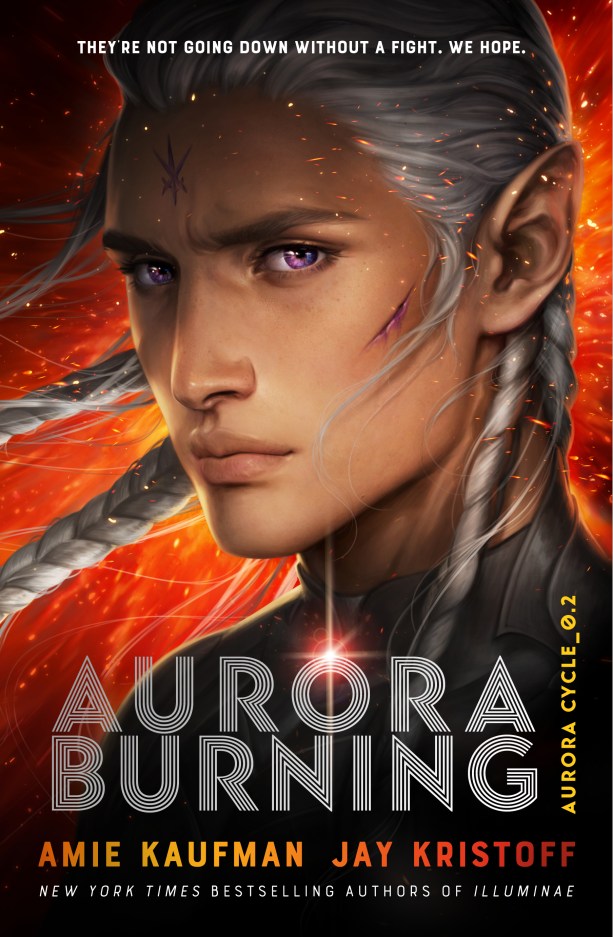
Aurora Burning by Amie Kaufman by Jay Kristoff

Aurora Burning Cover

Publisher: Allen & Unwin (Trade Paperback – 5 May 2020)

Series: Aurora Cycle – Book Two

Length: 497 pages

My Rating: 4.5 out of 5 stars

Amazon

The powerhouse writing team of Amie Kaufman and Jay Kristoff, two of Australia’s best authors, return with the second book in their epic young adult science fiction series, the Aurora Cycle, with Aurora Burning.

Far in the future, and the universe has never been in more trouble.  A sinister new threat has emerged in the galaxy, the ancient menace known as the Ra’haam, plant-like parasites that wish to incorporate all life in the universe into their hivemind.  In order to facilitate their goals, the Ra’haam have taken over humanity’s premier intelligence organisation, the GIA, and are using them to manipulate everyone towards war.  Luckily, a squad of the intergalactic peacekeeping organisation, the Aurora Legion, is on the case, desperate to stop the Ra’haam at any cost.  Unfortunately for us, the scrappy and mismatched Squad 312 are a bunch of hormonal teenagers with some serious personal issues.

Following the tragic events that occurred on Octavia III, which saw one of their members fall, Squad 312 needs to regroup and rethink their strategy.  Already disowned by the Aurora Legion and hunted by GIA, their task becomes infinitely harder when they are framed for a terrible crime and become the most wanted beings in the galaxy.  Worse, the squad’s Syldrathi tank Kal’s long lost sister is also on their trail, determined to achieve a fatal family reunion, and she has a small army of genocidal Syldrathi warriors backing her up.

As the Squad flees from those hunting them, they attempt to work out a plan to save everyone.  Their only hope is to get their resident psychic girl out of time, Auri, to the Trigger, a powerful weapon left behind by an ancient enemy of the Ra’haam, which Auri can use to wipe the plant parasites out and save everyone else.  However, they have no idea where it is, and their only clue is the salvaged remains of the colony ship Auri was trapped on for hundreds of years.  Attempting to recover the ship’s black box, the Squad soon find themselves in a whole new world of trouble.  Can they overcome their various problems and opponents before it is too late, or is the whole universe doomed?

I actually read this book a little while ago, and while I did do a short review of it in the Canberra Weekly I have been meaning to do a longer review for a while as I did have a great time reading this book.  Aurora Burning is another fun and fast-paced novel from Kaufman and Kristoff that serves as an amazing follow up to the epic first entry in the Aurora Cycle, 2019’s Aurora Rising.  This was an absolutely fantastic book that features an amazing young adult science fiction story based around several excellent characters.  Readers are guaranteed an awesome read with Aurora Burning, and it was an absolute treat to read.

At the centre of this book is a fast-paced, action-packed, character-driven narrative that follows the adventures of a mismatched and entertaining group of protagonists as they attempt to save the universe.  The story is deeply enjoyable and very addictive, allowing readers to power through this exciting novel in a remarkably short amount of time.  The story starts off extremely strong, and readers are quickly catapulted into all the fun and excitement as the team encounter all manner of problems and obstacles that they need to overcome in their own special and chaotic way.  The plot is also extremely accessible to those people who have not had the chance to read Aurora Rising first, especially with the exceptionally detailed character synopsis and history contained at the start of the book and the succinct plot replays from the various characters.  I loved the excellent science fiction adventure story that Kaufman and Kristoff have come up with for Aurora Burning, especially as it contains a great blend of action, adventure, drama and romance, all wrapped up with the series’ unique of sense humour.  I also really liked where the story went throughout the course of the book.  The authors drop in some big twists and reveals throughout Aurora Burning which have significant impacts on the plot and ensure some rather dramatic moments in the story.  All of this proves to be extremely compelling, especially as the plot leads up to some high stakes and memorable cliff-hangers at the end of the book, with the fate of many of the characters left to chance.  This pretty much ensures that I am going to have to get the next entry in the series when it comes out next year, and if the authors keep up the amazing writing that they did in Aurora Burning, I really do not have a problem with that.

Just like in the first book, Aurora Burning’s story is told from multiple perspectives, as all of the surviving members of Squad 312 serve as point-of-view characters throughout the course of the novel.  There are currently six members of the squad, including Aurora (Auri), the physic girl who the squad rescued in the first book, Tyler the team’s Alpha (leader), Kalis (Kal) the Tank (fighter extraordinaire), Scarlett the Face (team diplomat), Finian the squad’s Gearhead (mechanic) and Zila the Science Officer.  These protagonists are an eclectic and damaged group of characters, and I liked how each of them represented different young adult fiction character archetypes.  For example, Auri is the powerful chosen one, Tyler is the charismatic leader trying to live up to his heroic father’s legacy, Kal is the broody outsider with secrets, Scarlett is the team’s voice of reason and overconfident heartbreaker, Finian is the insecure one who overcompensates with sarcasm, while Zila is the brilliant but socially awkward one.  Each of these protagonists narrates several chapters throughout the book, which allows the authors to dive into their history and feelings, showing their opinions and thoughts on the events that occur throughout the course of the book.

I personally really enjoyed each of these central characters as individuals as each of them have their own unique personalities and idiosyncrasies which the authors highlight in each character’s various point-of-view chapters.  It was interesting to see how each of them has developed since the first books, with the squad coming together as a team and working together and supporting each other, as well as how the revelations and tragedies that occurred at the end of Aurora Rising have impacted them.  Each of these protagonists have their own specific story arc in Aurora Burning, and the story sees several of the characters get separated from the rest of the group and embarking on their own adventures.  There are some really interesting developments that occur throughout the book, with some characters having more of their backstory revealed, while others have major revelations about themselves be made public.  While the focus of the book is generally split rather fairly between the members of Squad 312, Auri and Tyler did rather stand out in the first novel as the main characters.  This continues in Aurora Burning, although Kal also gets a substantial amount of focus, not only due to his romance with Auri, but because his sister is introduced as a determined antagonist, resulting in secrets from his past coming out.  This does mean that Scarlett, Finian and Zila do get a little less focus, although substantial time is spent on exploring them and their personalities, such as Zila’s previously hidden past, or certain hinted relationships or personal revelations.  These entertaining and neurotic point-of-view characters are one of the main reasons this book was such a fantastic read and I really liked where the authors took their various relationships and story arcs.  It will be really interesting to see where they end up in the third book, and I am looking forward to finding out their final fates.

As a result of where the story goes, the authors continue to explore and expand on the fun and compelling universe that Aurora Burning is set in.  There are a number of interesting new elements to this book as a result, including some great new side characters, such as Kal’s murderous family, more alien races, a dive into the history of this universe and an examination of the Ra’haam and their ancient, long-dead enemies the Eshvaren.  I rather enjoyed learning more about this universe, and I particularly liked how the authors use Aurora’s defective uniglass Magellan (think an advanced iPad with an annoying and snarky AI personality), to explore extra details.  Not only does Magellan act as a sort of seventh protagonist for the book, but he also provides in-universe information summaries at the start of several chapters, as well as providing the readers with the detailed character bios at the start of the novel.  These information summaries are rich in historical and social details about several elements of this universe, and they really help to expand on the information provided throughout the story.  Naturally, Magellan provides entries that are a little more personalised and different that a standard history or encyclopedia record would be, and it was often quite amusing to see the humorous and light-hearted changes that are added in.  Overall, the novel features some rather big and dramatic reveals about the universe and what has been happening in it, resulting in some major story moments with significant and captivating consequences.

Aurora Burning is marketed towards the young adult fiction crowd, and in many ways it is a great book for a younger audience, featuring a group of diverse teens rebelling against authority and doing things their own way.  However, due to the mild sexual content, which includes quite a bit of innuendo, this is probably best suited to older teenagers who will no doubt enjoy the exciting narrative and dynamic characters.  Like many young adult fiction novels, Aurora Burning is also quite a good book for older readers who are interested in the story.  Indeed, this is one of the easiest young adult fiction novels for adult readers to get into, as the story is quite well written and exceedingly entertaining.  As result, this second book in the Aurora Cycle is a great read to check and I think that it will appeal to a wide and diverse audience of readers.

I have to say that I had an incredible time reading Aurora Burning and it turned out to be quite an excellent read.  Kaufman and Kristoff do an outstanding job of continuing the fun and action packed narrative that started in Aurora Rising and I loved the blend of fast-paced storytelling, universe building, humour, all told through the eyes of six distinctive and fantastic point-of-view characters.  This book comes highly recommended and I cannot wait to see how these awesome Australian authors finish off this series next year.

Amazon

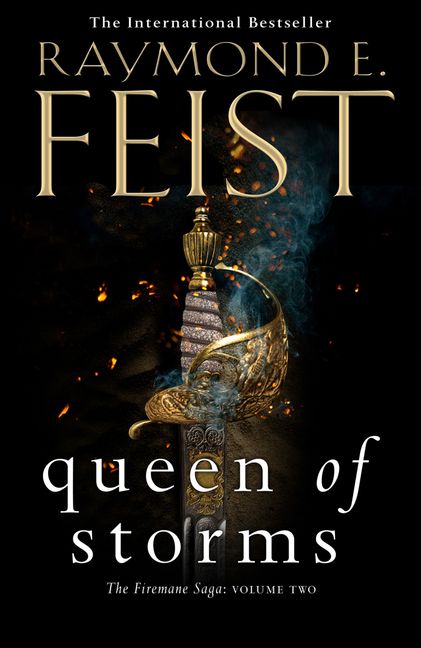
Queen of Storms by Raymond E. Feist

Queen of Storms Cover

Publisher: Harper Voyager (Hardcover – 14 July 2020)

Series: The Firemane Saga – Book Two

Length: 471 pages

My Rating: 4.5 out of 5 stars

Amazon

Legendary fantasy author Raymond E. Feist returns to his new series, The Firemane Saga, with Queen of Storms, an amazing and exciting fantasy novel that takes the reader on some intriguing adventures.

I have long been a fan of Raymond E. Feist and his epic works of fantasy.  His long-running Riftwar Cycle books were amongst some of the first fantasy novels that I ever read and many of them, including the excellent Empire trilogy that he cowrote with Janny Wurts, are still some of my favourite books of all time.  After finalising the Riftwar Cycle back in 2013, Feist released King of Ashes in 2018, which was the first book in The Firemane Saga.  I really enjoyed the fun and compelling new story featured within King of Ashes, and I have been looking forward to seeing how the series continued for a while now.  This second book, Queen of Storms, continues right after the events of King of Ashes and has some intriguing new twists and turns for readers.

In the ancient and magical world of Garn, war is coming to continent of Tembria and its first blow will fall on the trading town of Bernan’s Hill.  Many people call Bernan’s Hill home, but none are more mysterious than the new owners of the town’s inn, Hatushaly and his wife Hava.  Despite their simple outward appearances, Hatu and Hava were born on the secret island of Coaltachin and both serve their continent-spanning criminal and spy network.  A series of mysterious events have been occurring throughout the kingdoms and lands of Tembria, and Hatu and Hava are tasked with observing Bernan’s Hill and reporting anything out of the ordinary.

Having befriended the town’s blacksmith, Declan, Hatu and Hava appear content in their new lives and are they are planning to be officially married during the midsummer festival.  However, even their training and information will not prepare them for the horrors that are about to be visited upon Bernan’s Hill, as a new and mysterious force attacks without warning, plunging the entire continent into war.  Separated from each other, each of these young people embarks on their own adventure.  While Hava attempts to find her lost husband, and Declan sets out to get revenge, Hatu is kidnapped by those who wish him to fulfill his fiery legacy as the secret heir to the kingdom of Ithrace.  His family, the legendary Firemanes, have long been rumoured to contain a spark of magic, and Hatu, as the last remaining Firemane, may hold the key to the survival of magic itself.  As these three young people set out to realise their destinies, they will experience horrors and tragedy as it soon becomes apparent that a whole new threat seeks to destroy all within Tembria.

Queen of Storms was a captivating and fun book which I found myself reading in only a couple of days due to how much I enjoyed it.  Feist has come up with a fantastic and impressive story within this novel, and I liked how it followed a group of excellent characters caught up in the chaos of a mysterious war.  There is all manner of action, adventure, subterfuge, character development and exploration of a new fantasy universe that comes together extremely well into a compelling overall narrative.  Readers should be forewarned that Feist makes some rather bold plot choices throughout this book, with a major event around halfway through the book really altering the course of the story in some interesting and dramatic ways.  I also liked how Queen of Storms served as a great sequel to King of Ashes, and there are a number of amazing reveals and revelations that add to the storylines established in the first book.  For example, the real antagonists of this series are revealed in more detail in this sequel after they were foreshadowed in the previous novel while the reader focused on a different antagonist, who had the potential to be the main villain.  This bait-and-switch came together well in Queen of Storms, and I enjoyed uncovering more about these antagonists and their motives.

Queen of Storms contains a multi-character narrative which follows several key protagonists as they explore this new world from Feist and get involved in the politics and battles of the world.  The majority of the story is told from the perspective of the novel’s three major characters, Hatu, Hava and Declan.  Each of these characters gets some substantial focus throughout the course of this novel, with some interesting storylines.  For the first part of the book their various storylines are very closely intertwined, as all three are based in the town of Bernan’s Hill in various capacities.  However, after the novel’s major event around halfway through, these three characters are separated and each of them embarks on their own exciting and enjoyable adventure.  Hatu’s story is a classic tale of a chosen one finding his destiny, which sees him journey off into the unknown to learn more about his past and his secret abilities.  As Hatu is the most central protagonist, this storyline got a lot of focus, and it was interesting to learn more about his role in the world and about how his life is bonded to the world’s magic.  Declan’s story becomes an interesting one about a young man learning to become a solider to avenge the death of his loved ones.  Declan had some life events occur throughout this book and while it was a little sad to see some of the things he fought for in the first novel go up in smoke, it does serve as a good motivation for his character and it looks like Feist has some interesting plans for him in the future.  Out of the three, I think I ended up enjoying Hava’s storyline the most.  Hava attempts to find out what happened to Hatu and gets captured by slavers.  She ends up using her abilities to free herself and her fellow slaves and becomes a successful ship’s captain, chasing after her husband while also exploring the lands outside the continent of Tembria.  All three of these main character arcs are really enjoyable and together they form a fantastic heart for Queen of Storms, allowing for a rich and powerful narrative.

In addition to these main characters, Feist also utilises several minor point-of-view characters who add in some extra narrative threads to the book.  For example, Donte, Hatu and Hava’s childhood friend who was captured by sea witches in King of Ashes, returns and a small part of the book is dedicated to his attempts to find Hatu and kill him.  You also get several parts of the book told from some of the key players in fight for the continent, such as Baron of Marquensas Daylon Dumarch, the sinister adviser Bernardo Delnocio, as well as a handful of other characters.  Each of these minor point-of-view characters provide their own insights and priorities to the mix and their various storylines and actions add a lot to the narrative and provide some interesting support to the main storylines.  I also liked some of the supporting characters who rounded out the cast of Queen of Storms and several of them proved to be quite enjoyable and likable, even if they have a greater chance of getting killed off.  Overall, Feist continues to write some great characters in this novel, and I look forward to seeing where each of these intriguing protagonists end up next.

The author also did a good job of continuing to expand on the amazing new fantasy world that the series is set in.  While a substantial part of the novel is set around Brenan’s Hill, which was introduced in the prior book, the story eventually starts to examine some other parts of the world.  In particular, several storylines are set around the islands and continents on the other side of the planet, none of which have been explored by any of the point-of-view characters.  These new additions to the story proved to be quite intriguing, especially as the character’s various explorations revealed some shocking truths about the world, as well as some troubling revelations about the series’ main antagonists.  It looks like the next book is set to feature some new areas of the world and should provide some more fascinating expansions down the line, which will no doubt provide some interesting backdrops and settings from the narrative.

While I did really enjoy Queen of Storms, I did find that some of the elements within it might be a little hard to follow if you had not read the first novel in the series.  Feist does do a good job of recapping the major events of the first book throughout the course of the story, but there were a few moments in the story when the significance of certain characters, locations and events were not as highlighted as they could have been, and new readers might get a little lost at this point.  There were even a few points at which I lost track of who a new character was, mainly because of the two-year gap between reading King of Ashes and Queen of Storms.  Still, I was usually able to remember who the character was after some prompting, and it worked out fine.  While this lack of certainty might occasionally impact the flow of the story for new readers, I think they can generally follow without too much difficulty.

Queen of Storms was an outstanding and exciting second entry in this fantastic new series from one of my favourite authors of all time, Raymond E. Feist.  This was an amazing and enjoyable novel, filled with adventure, great characters, and a compelling narrative.  I had an awesome time reading this book and I cannot wait to see how Feist continues The Firemane Saga in the next book.  A must-read for fans of fantasy fiction; this one is really worth checking out.

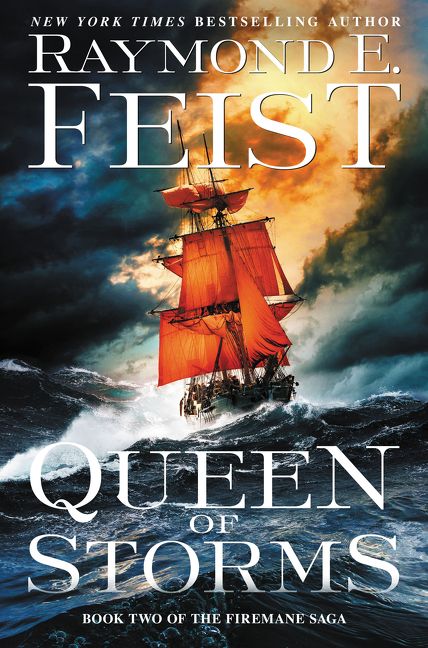
Queen of Storms Cover 2

Amazon

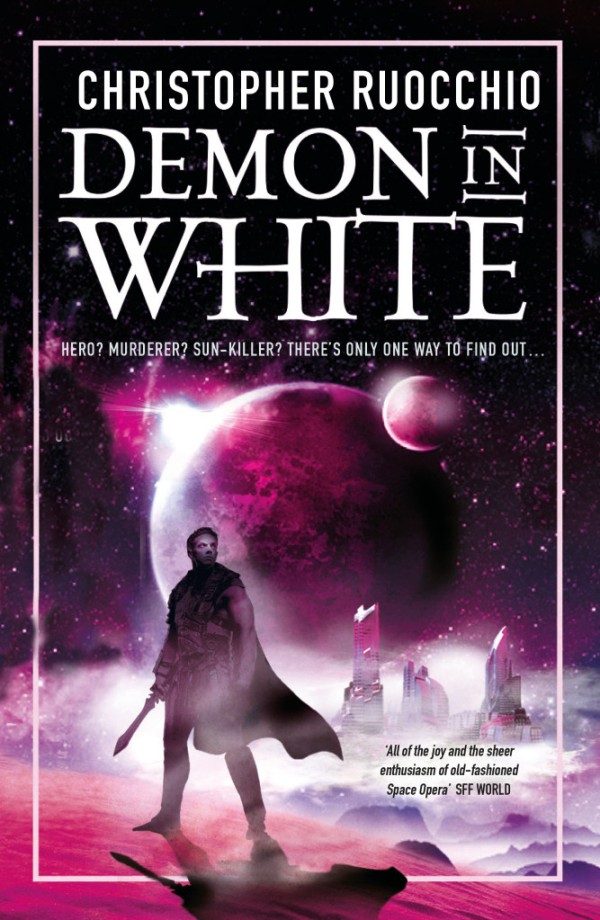
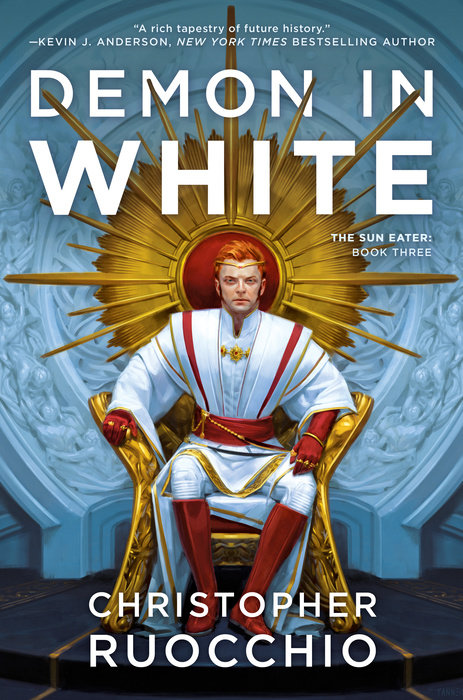
Demon in White by Christopher Ruocchio

Demon in White Cover 1

Publisher: Gollancz (Trade Paperback – 28 July 2020)

Series: Sun Eater Sequence – Book Three

Length: 776 pages

My Rating: 5 out of 5 stars

Amazon     Book Depository

One of the most impressive new science fiction authors on the block, Christopher Ruocchio, returns with the third incredible novel in his epic Sun Eater series, Demon in White.

Far in the future, most of humanity is part of the Sollan Empire, which controls vast systems of space and countless people within them.  The Sollan Empire has long reigned supreme and unopposed in the galaxy, but now it faces its greatest threat, a protracted war against the vicious alien race known as the Cielcin.  While the Cielcins typically engage in random raids and attacks at the leisure of their various chieftains, now a series of coordinated strikes are crippling the borders of the Empire.  The mastermind of these attacks is a powerful new Cielcin ruler, Syriani Dorayaica, who has managed to forge together a mighty alliance with one purpose, the complete destruction of the Empire and every human within it.

As the Empire struggles to combat this threat, all eyes turn to an unlikely hero, the rogue nobleman, adventurer and former gladiator, Hadrian Marlowe.  Following his infamous exploits across the galaxy, Hadrian has been made a knight in service of the Emperor and now finds himself stationed on the Empire’s capital, Forum.  Thanks to a series of successful campaigns against the Cielcin, Hadrian’s popularity and fame has spread across the Empire and many view him as the best hope to defeat the alien menace.  In addition, rumours of his unnatural survival of a lethal wound from a Cielcin prince and his prophetic visions of the future have created a cult-like following around him, heralding him as a divine saviour of humanity.

However, fame and popularity have a price, and Hadrian must now contend with threatened and jealous lords, politicians, and members of the royal family as they plot to undermine and disgrace him.  After several attempts on his life, Hadrian leaves to pursue his true agenda, research into the mysterious celestial being known as the Quiet, who has been manipulating Hadrian’s life while showing him terrifying glimpses of the future.  Hadrian’s mission will take him to some new and dangerous places throughout the universe, until finally he comes face to face with Syriani Dorayaica, who is determined to destroy Hadrian no matter the cost.  Hadrian’s road to the future seems set, but will he truly become the man who commits the greatest act of slaughter in the galaxy, or does a darker fate lie in store for him?

Now that was one heck of an awesome and expansive piece of science fiction.  Ruocchio has been absolutely killing it over the last couple of years ever since he burst onto the scene in 2018 with his debut novel and the first book in his Sun Eater series, Empire of Silence.  I loved this incredible debut and I was especially impressed when he managed to follow it up with an amazing sequel, Howling Dark.  I have had a blast reading Ruocchio’s prior novels, and both of them have been amongst my favourite books of 2018 and 2019 respectfully.  As a result, I have been really looking forward to Demon in White, and Ruocchio certainly did not disappoint as he has produced an outstanding and intensely captivating third entry in this series.

Demon in White is the third act in an expansive and compelling space opera that chronicles the life of Hadrian Marlowe, a man destined to destroy a sun, which will make him both humanity’s greatest hero and its most reviled monster.  The story is told in chronicle form from the perspective of an older Hadrian as he writes the account of his life after the events of this book.  Just like with Howling Dark, the story within Demon in White is set many years after the events of the previous book and details the next major stage of Hadrian’s life.  Ruocchio does an amazing job of reintroducing the readers to his universe and also examining the events that occurred during the gap between the two books (some of which occurred during the 2019 novella, Demons of Arae).  Despite the year-long gap between reading the second and third novels and the substantial amount of detail and information that they contained, I was able to pick up and continue the story without too many issues, quickly remembering who the characters where and what events they had experienced with the protagonist.  I do think that reading the prior two novels in the series first is a must, as I could easily see readers unfamiliar with the Sun Eater books having hard time following the expansive plot of Demon in White at this late stage of the overall story.  Still, this book’s ambitious and exciting narrative might prove enough to keep them going, especially if they make use of the substantial index and character list contained in the rear of the novel.

I really can not speak highly enough of the intense and clever story of Demon in White, as Ruocchio produced an epic and addictive narrative that drew me in and refused to let go.  The author does a fantastic job of bringing together a ton of great elements, including the tale of a doomed protagonist, a galaxy-spanning war, a deep dive into the history of the universe and so much more, into one impressive narrative that I had an absolute blast reading.  One of the things I liked the most about the book was the fact that the first half of the novel is primarily set on the capital planet of the Sollan Empire, essentially a science fiction version of Rome, which results in the protagonist getting involved in all manner of plots and political intrigue.  Due to the protagonist’s popularity with the people, and the rumours that he is unkillable, Hadrian is targeted by politicians, lords, members of the Royal Family, military administrators and the Empires powerful religious organisation, and he has to deal with a number of tricky situations.  I really liked this more intrigue and politics laden part of the story, and it was an interesting change from some of the previous novels.  Ruocchio also dives into some more cosmic and action based inclusions as well and there are some explorations of the universe, examinations of the unknown and a several major and enjoyable battle sequences.  All of this comes together extremely well, and I found myself powering through this 700+ page book to find out how it ended.

Another fantastic part of Demon in White’s story that I really enjoyed was the continued examination of the fascinating and compelling protagonist, Hadrian.  Hadrian is a fantastic and intriguing protagonist for the series, since the reader knows far in advance his story is going to end in fire and death.  The chronicling of his life story that is contained within these novels is always quite enjoyable, especially as the older Hadrian compiling these tales adds in his own spin to the story, ensuring that the novel is filled with his regrets and revelations made in hindsight.  The protagonist also goes through some interesting character development throughout the course of the book.  Not only is he introduced to a number of key figures who will have substantial impacts on his future life but he also starts to come to grips with his eventual destiny.  The younger Hadrian is given some tantalising and terrifying glimpses into the future and he struggles to comprehend his potential fate as a result.

The Hadrian in this book is also a very different character than in the prior novels.  Rather than the idealistic dreamer who hopes to one day make peace with the alien Cielcin, Hadrian is far more mature and battle hardened, especially after the traumatic events at the end of Howling Dark.  This version of Hadrian is convinced that there is no hope of peace with his foe, and he has become more ruthless and determined as a result.  However, despite these revelations, there are still fragments of the old Hadrian scattered throughout the novel, which contrasted well with his newer persona.  The sense of wonder he got at seeing a group of alien auxiliaries was very reminiscent of the Hadrian we saw in the first book, especially as this wonder ended up getting him in trouble.  I also liked the scenes that showed Hadrian trying to come to terms with his own legend, as his deeds and adventures have given rise to a cult-like following, with many people convinced that he is some form of divine champion or immortal being.  This proved to be a fantastic aspect of Hadrian’s character throughout Demon in White, as he does not want this attention or praise, not only because it will result in conflict with the various factions in the Empire but also because he does not want to be anyone’s worshipped hero.  However, many of the events that are focus of this cults worship, such as surviving being beheaded or his visions of the future, are actually true (in a sense), and he ends up having to rely on these abilities to survive the events of this novel, which is going to result in some interesting consequences.

There are also some major and fantastic emotional moments for the protagonist scattered throughout the book, such as when a long-running side character leaves him, or when he encounters a major figure from his past again.  I also enjoyed seeing more of his relationship with his main love interest, Valka, and their unconventional romance has flourished over the centuries that this series has been set.  Valka serves as a fantastic grounding force for Hadrian, and it is quite nice seeing them together, although the reader’s joy at seeing them together is somewhat tempered by the narrator’s hints that something tragic is bound to happen between them.  All of this makes for a very intriguing protagonist, and I have enjoyed seeing him flourish and grow over the course of the first three books, moving towards his eventual destiny.  I look forward to seeing how his story continues in the next novel, especially after the major events that occurred at the end of Demon in White.

I have always been impressed with the detailed and massive science fiction universe in which Ruochhio has set his series, and each of the Sun Eater books have added some new depth and unique features to this overarching setting.  Unlike the prior book, Howling Dark, which was set out in the wilds of space and alien planets, Demon in White returns to the confines of the Sollan Empire, a repressive, technophobic and tradition bound galactic kingdom that is stylistically based on ancient Rome.  I really enjoyed this creative science fiction setting, as it is a very dark and gothic location which clashes well with the mostly good-natured protagonist and narrator.  Demon in White adds a huge amount of detail to this universe, especially as the first two thirds are primarily set on new Imperial worlds, including the capital planet Forum.  As a result, there are a ton of intriguing new details and discussions about the politics, history and administration of the Sollan Empire, as well as the introduction of many significant characters, including the Emperor who Hadrian is destined to kill.  The later part of the book also contains some terrific new detail, and we get a really intriguing view about how this dark Empire was founded, including more details about the war against the machines created by the precursor empire, the Mericannii (Americans).  I really liked some of these dives into the past, especially as Ruocchio does a fantastic job of portraying a historical timeline that has been altered or hidden by war, destruction and political or religious censorship.  As a result, the protagonists believe in a very different version of history, and wildly incorrect discussions about historical events are often quite amusing, especially their ideas about American history.  Ruocchio also provides the clearest view of the origins and nature of the cosmic entity, the Quiet, who has been an overarching influence over the prior two books.  This was a rather intriguing, and at times metaphysical, examination of this being, and some of the revelations in this book, including about the connection the Quiet has with Hadrian, the Sollan Empire and the Cieclin, are rather major, and will have significant impacts in the next few books.  All of this proves to be exceedingly fascinating and I cannot wait to see how the author will expand on this setting in his future novels.

I also really have to highlight some of the incredible action sequences that occurred throughout Demon in White.  While a substantial amount of the plot is dedicated to the political intrigue that the protagonist finds himself involved with, there are some great action sequences in this book, including a major war sequence against the Cieclin in the last quarter of the book.  Ruocchio has done an amazing job building the Cieclin up as a major threat and the various bloody battle sequences against them help to reinforce this.  I particularly enjoyed the great scenes where the protagonist faces off against his foe in tight and confined spaces, such as on a ship or in the depths of a city, and the author ensures that the reader gets to enjoy them in all their claustrophobic glory.  Ruocchio adds to the horror by introducing a new form of antagonists in the form of giant Cieclin warriors who are cyborg hybrids enhanced with Extrasolarian (rogue human scientist) technology.  These terrifying hybrids act as very dangerous opponents for Hadrian and his allies, resulting in some dramatic and high-stakes battles.  Hadrian also gets some new combat abilities in this book, which add some intriguing new elements to the fight scenes and are generally quite fun to check out.  Overall, those readers who are interested in seeing some intense science fiction action will not be disappointed with this book as Demon in White delivers some impressive and memorable fight sequences that really help to get the heart pumping.

In this latest novel, Christopher Ruocchio has delivered another extraordinary and captivating science fiction epic that does a terrific job expanding on his fantastic Sun Eater series.  Demon in White contains an incredible and exciting story that sends its complex protagonist on a series of intriguing adventures throughout this rich and unique science fiction universe.  I had an awesome time reading Demon in White and I cannot recommend it highly enough.  This outstanding book gets a full five-star rating from me and if you are not already reading the Sun Eater series you need to start now!

Demon in White Cover 2

Amazon     Book Depository

Star Wars: Shadow Fall by Alexander Freed

Star Wars - Shadow Fall Cover

Publisher: Del Rey (Trade Paperback – 23 June 2020)

Series: Star Wars: Alphabet Squadron – Book Two

Length: 393 pages

My Rating: 4.5 out of 5 stars

Amazon

Strap in and prepare yourself for some intense combat out in the black of space, as Alexander Freed returns with another exciting and compelling Star Wars novel, Star Wars: Shadow Fall.

In the wake of the death of the Emperor and the destruction of the second Death Star above Endor, the once mighty Galactic Empire is on its last legs as they face a determined and continuous assault from the forces of the New Republic.  Amongst the New Republic troops fighting to end the tyranny of the Empire are the ragtag fighter group known as Alphabet Squadron.  Formed by New Republic Intelligence and serving under legendary Rebel General Hera Syndulla, Alphabet Squadron’s mission is to hunt down and destroy the elite TIE fighter pilots of the 204th Imperial Fighter Wing, known as Shadow Wing, who have been terrorising the galaxy and are one of the greatest threats to the New Republic’s success.

Following their recent victory, which saw Shadow Wing’s base destroyed and their commanding officer killed, Alphabet Squadron are assisting with the lengthy siege of the Imperial system of Cerberon.  Led by former Imperial pilot Yrica Quell, herself a deserter from Shadow Wing, the five pilots of Alphabet Squadron are finally starting to work together as a team.  However, while they are happy to help Syndulla with her latest vital campaign, the squadron is still determined to finish off the remaining members of Shadow Wing before they cause more chaos and destruction.  Working with their New Republic Intelligence handler, Caern Adan, Quell believes she may have come up with a plan to trap her former Imperial comrades.  However, Quell has severely underestimated just how ruthless Shadow Wing has become.

Quell’s former mentor and commanding officer, Imperial fighter ace Soran Keize, has returned and taken control of Shadow Wing.  Determined to keep his people alive while inflicting as much damage as possible to the New Republic, he launches an attack against the Cerberon system that manages to bypass the trap laid for him.  Scattered, the members of Alphabet Squadron must each fight their own battles throughout Cerberon as they all attempt to survive and strike back.  However, as they face their greatest challenge to date Alphabet Squadron soon begins to realise that their most dangerous threat may not be the pilots of Shadow Wing, but the terrible secrets their own leader is keeping.

Star Wars: Shadow Fall is a fantastic and impressive Star Wars novel that examines the immediate aftermath of the original Star Wars trilogy while focusing a group of complex and damaged characters.  Shadow Fall is the fifth Star Wars novel from science fiction author Alexander Freed, and it serves as the second book in his Alphabet Squadron trilogy, which started last year with Star Wars: Alphabet SquadronAlphabet Squadron was an excellent first novel in this series, thanks to its exciting story which did an amazing job introducing the reader to each of the main characters of the titular Alphabet Squadron (so called because each member flies a different model of Rebel ship, i.e. one X-Wing, one Y-Wing and so on).  Freed’s latest novel is an outstanding sequel to Alphabet Squadron which continues the amazing character arcs and war-based narrative, while also adding in some excellent new elements.  While I really enjoyed the prior novel from Freed, I personally felt that Shadow Fall was a stronger book than Alphabet Squadron and I ended up really getting into this powerful and action-packed story.

This latest book from Freed contains an epic and enjoyable character-driven war story that follows the pilots of Alphabet Squadron as they attempt to subdue the Empire once and for all.  This proves to be a rather elaborate and multifaceted narrative as Freed utilises the key members of Alphabet Squadron as point-of-view characters.  While Shadow Fall initially has all the squadron members together, each of them goes on their own adventures throughout the book, breaking it up into several distinctive storylines.  Each of these storylines is rather intriguing and emotionally charged, especially as all the characters go through their own voyages of discovery.  These storylines are all confined to the same star system and each has its own take on the war occurring throughout Cerberon, especially as Freed also features a number of chapters from the point-of-view of the novel’s main antagonist, which allows the reader to see the plans and issues surrounding Shadow Wing.  All of this helps to create a compelling and exhilarating read, particularly as Shadow Fall contains a number of exciting and well written action sequences, including a series of amazing and impressive ship to ship combat scenes.  The characters get into some unique and deadly battles throughout the course of this book, and I really loved seeing all the intense fighting out in space.  Overall, this was a fantastic story and it ended up being quite a remarkable and addictive read.

One of the big things that I liked about Shadow Fall was the way that it continued to explore the turbulent period of Star Wars history that follows in the immediate aftermath of the death of the Emperor.  This period within the Star Wars universe has so much potential for great fiction and I feel that Freed does an outstanding job utilising it within his novels and showing off the battles that occurred.  There is a real gritty and dark feeling to this book, as both sides are involved in a lengthy and bitter conflict.  I really liked the darker and more desperate conflict that Freed portrays throughout this book, as both sides get pushed into some corners as they battle throughout the system.  This turned out to be an excellent setting and I really found it fascinating to see this vision of the post Return of the Jedi universe, especially as there was no instant victory for the Rebels as the movies suggest.  I look forward to seeing more of the war as the Alphabet Squadron series progresses and it will be interesting to see what battles and scenarios occur in the final book.

Readers interested in checking this series out do not need to have too much knowledge about the Star Wars extended universe; a general knowledge of the movie franchise should suffice.  However, like all pieces of tie-in fiction, those readers who are familiar with the more obscure bits of the fandom’s lore and history will get a lot more out of these books than casual readers.  I would also strongly suggest that people who want to read Shadow Fall should go back first and try Alphabet Squadron, as this will allow readers to get a better idea of the various characters and their histories and ensure that their actions have greater impact.  However, if you are determined to start here, I felt that Freed made Shadow Fall pretty accessible, summarising certain key events from the prior book and also providing some wider background information about the Star Wars universe during the period the novel is set.

One of the reasons that this story is so impactful and enjoyable is that Freed has anchored his narrative on the memorable and flawed characters that are Alphabet Squadron.  Thanks to the author’s use of multiple character viewpoints, the reader gets an in-depth understanding of all the key characters and their various story arcs and development.  A large amount of the book’s plot continues to focus on the leader of Alphabet Squadron and X-Wing pilot, Yrica Quell.  Quell is a former Imperial pilot and member of Shadow Wing, who defected after the end of the war, claiming that she attempted to stop her squadron from implementing Operation Cinder, a series of genocides ordered by the Emperor in the event of his death.  However, it was revealed at the end of Alphabet Squadron that she was actually a willing participant in Operation Cinder and only defected because her commanding officer, Soran Keize, ordered her to leave.  Quell is still haunted by her actions and is attempting to find redemption by working for the New Republic to hunt down her old squadron, while at the same time being blackmailed by her handler, Caern Adan, who is keeping the information about her crimes secret.  There are several great scenes throughout this book that deal with Quell’s guilt and fear of being found out as she attempts to come to terms with all she has done and tries to become the good person everyone believes she is.  However, chaotic events towards the middle of the book undo some of her progress and force her to really look deep into herself.  Quell easily has the best character arc entire book and her entire dramatic storyline is extremely well-written and emotionally rich.  It looks like Freed is taking this character in some interesting directions and it will get see what happens next.  I also enjoyed certain LGBT+ inclusions surrounding Quell (and some other characters), and it always great to see more of that added into the Star Wars universe.

Several other members of Alphabet Squadron get their own fascinating storylines and character arcs.  First up you have Wyl Lark, the team’s young A-wing fighter pilot, who is still shaken after his encounters with Shadow Wing during the first book.  Lark is a complicated character within this novel, as due to the past trauma he has started to experience some real weariness at all the fighting.  He also bears some inner conflict thanks to his past interaction with an unnamed member of Shadow Wing, who he knows only as Blink (due to the condition of their TIE fighter in the first book), which has made him believe that the Imperials are more human than most New Republic fighters believe.  This makes him act out in some odd ways, potentially endangering himself and others.  Regardless, Lark also takes on a big leadership role within this book as he finds himself in charge of a mixed force of New Republic soldiers and pilots who he must rally together to stop the machinations of Shadow Wing.  This forces him to make some tough decisions and results in some excellent character development, which is probably going to become a key part of the next entry in the series.

The book also focuses on Chass na Chadic, the pilot of the squadron’s B-Wing.  Chass is also an emotional mess throughout the book, which causes her to act out in an aggressive and reckless manner.  However, Chass’s difficulties are a result of her own addiction to combat and danger and her worries about what she is going to do after the war.  Chass also has a rather intriguing storyline that sees her forced to seek shelter with a growing cult after she is shot down.  This only adds to her emotional confusion as, while this organisation has some very valid points about the war, Chass has her own problematic history with cults which severely colours her opinions.  A fourth member of Alphabet Squadron who also gets a fair bit of attention is Y-Wing pilot Nath Tensent.  Nath gets a little less use than Quell, Lark and Chass in this book, and rather than getting his own individual storyline he ends up being more of a supporting character to the other members of Alphabet Squadron.  I liked how Nath, after getting the revenge he desired in the first book, started taking on more of a mentor role within the team and he ends up being the glue that keeps them somewhat together.  His experience, easygoing manner and ability to socialise with everyone really helps to balance out the team, and I think it was good decision from Freed to have at least one point-of-view protagonist not be an emotional wreck.  I have to admit that I really liked seeing all of these complex and damaged protagonists and their various storylines and development became a powerful part of the book’s story.

Aside from these main four members, Shadow Fall also features several other great New Republic characters.  This includes the fifth and final member of Alphabet Squadron, Kairos, the mysterious scarred alien pilot of the team’s U-Wing.  Kairos does not get a lot of use throughout this book and is barely seen or mentioned after the first 100 pages.  Despite this, there are a few minor reveals about her shrouded past, and I can only hope that we find out a lot more about her in the final book.  There is actually a lot more of a focus on the supporting character of Caern Adan, the New Republic Intelligence officer who has been leading the hunt for Shadow Wing, as well as his companion, IT-O, a former Imperial torture droid turned therapist.  I found Caern’s use within Shadow Fall to be rather compelling, especially after he was portrayed as such a despicable and self-serving character in the first novel.  Freed dives into this Caern’s background in this novel and shows how he became the harsh, calculating person you met in Alphabet Squadron, as well as exploring his history with IT-O and Kairos.  This examination into his past, as well as his present-day adventures with Quell, helps generate a bit of sympathy for him and he ends up becoming a bit of a tragic character as a result.  I was also really glad to see more of New Republic General Hera Syndulla, who fans would know as one of the main protagonists of the Star Wars Rebels animated television show.  Hera was a great character on the show and in recent years she has been featured as a key Rebel commander in the expanded fiction (with her ship, Ghost, having brief cameos in two separate live action Star Wars movies).  I am always happy to learn more about Hera’s story post-Star Wars Rebels, especially as she has a great role as the wise overall commander throughout this book, and Star Wars Rebels fans will get sad in one or two places, such as when she wistfully asks if anyone has a Jedi hidden away.  Overall, these were some great supporting characters and I enjoyed Freed’s focus on them.

In addition to all the members of the Alphabet Squadron and the various New Republic supporting characters, Shadow Fall is also a tale of Imperial pilot Soran Keize.  After spending most of the first book trying to forget his past and exploring the post Imperial galaxy, Soran returns to claim his place as leader of Shadow Wing.  Soran is another compelling character who ends up serving as an alternate point-of-view character for roughly a third of the book.  I always love it when authors show the story from the antagonist’s perspective, and this ended up working incredibly well in this novel.  Not only do we get to see Soran’s complex motivations for returning to his wing and restarting the fight with the New Republic, but through his eyes we also get a better idea of how the Imperial remnant is fighting and surviving at this point of the war.  Freed adds some real desperation to the Imperial characters as they start to deal with the fact that they are going to lose the war, and there are some interesting discussions about the Imperial pilots having to change tactics, as they no longer have access to the vast resources they were previously used to.  Despite his at times merciless tactics, Soran’s viewpoint really helps to humanise the Imperial antagonists and, in many ways, they are mirrors to the New Republic characters, as both teams are fighting for their ideals and beliefs.  That being said, none of the Imperial characters aside from Soran popped out to me, and I had a hard time really caring about them in any way or remembering who they were.  Still, it was great to get more of an Imperial viewpoint in this novel, and I look forward to seeing what happens to them in the final entry in the Alphabet Squadron series.

Star Wars: Shadow Fall by Alexander Freed is another outstanding and enjoyable Star Wars novel that serves as an exceptional sequel to last year’s Alphabet SquadronShadow Fall is an extremely captivating and addictive read, especially as Freed features an amazing action-packed story, fun Star Wars elements and some incredibly complex and compelling characters whose damaged personalities and scarred pasts really stick in the reader’s minds.  I had an awesome time reading Shadow Fall and I cannot wait to see how Freed finishes off this darker Star Wars series.

Amazon

The Gates of Athens by Conn Iggulden

The Gates of Athens Cover

Publisher: Michael Joseph (Trade Paperback – 4 August 2020)

Series: Athenian – Book One

Length: 443 pages

My Rating: 5 out of 5 stars

Amazon

One of the top authors of historical fiction in the world today, Conn Iggulden, returns with an exciting and deeply impressive novel that chronicles the chaotic formative years of the birthplace of democracy in The Gates of Athens.

In 490 BC, Darius, King of Persia, rules a vast and powerful empire of millions.  None dare oppose him except the city states of Greece who openly defy him and refuse his demands to bow to his authority.  Determined to conquer them, Darius leads a powerful fleet across the sea towards the city of Athens.  However, the people of Athens are unlike any opponent that Darius has faced before.  Having only recently overthrown their own tyrants, they will never again bow down to a single man, no matter the cost.

As Darius’s army lands near the city on the plains of Marathon he finds a host of Athenian hoplites waiting for him ready to defend their home.  This fierce battle will set of a series of events that will not only change the life of everyone in Greece but also serve as the defining moment for several citizens of Athens, including the charismatic and scheming Themistocles, the clever and honest Aristides and the mighty warrior Xanthippus, father of Pericles.

As these leaders of Athens battle for the future of their city the choices they make will have far reaching impacts as, years later, another king of Persia, Xerxes, will lead an immense invasion of Greece in order to satisfy his father’s honour.  However, despite his vast armies and navies, Xerxes will face surprising opposition as a small force of determined Greeks decides to hold against him on both land and at sea at a place called Thermopylae.  Will the bravery of few be enough to save many or will freedom and democracy be crushed before it can truly begin?

Well damn, now that was an epic book.  I have been saying for a while that I thought that The Gates of Athens was going to be one of the best historical fiction books of 2020.  Well, just like the oracle of Delphi when she prophesised the fate of Leonidas, it turns out that I was right, as this new novel turned out to be an exceptional historical tale that proved extremely hard to stop reading.  Mind you, the awesomeness of this prediction is rather tempered by the fact that this was a historical fiction book written by Conn Iggulden, so it was a bit of a given that it was going to be damn good novel.  I am a major fan of Iggulden, having read several of his prior books including entries in both his incredible Emperor and War of the Roses series, as well as his standalone novel, The Falcon of Sparta.  This latest book from Iggulden serves as the first entry in his Athenian series, which is set to be a fantastic series over the next couple of years.

The Gates of Athens contains an extremely impressive and sprawling historical storyline that showcases and recreates some of the early defining moments of ancient Athens.  The story starts off with the battle of Marathon and then explores the aftermath of the war and its many consequences.  This results in a great multi-character narrative which shows how the various decisions of the protagonists impacted the events of the second half of the book, which is set several years later and examines the battle of Thermopylae.  Iggulden utilises a number of different character perspectives throughout the course of the plot, allowing the reader a larger view of the events occurring, while also providing some alternate viewpoints about the same events.  While there is an obvious focus on the major battles against the Persians, The Gates of Athens has a lot of different elements to it and at many points this awesome novel changes focus to examine political intrigue, social struggles, personal relationships and intense character development.  Iggulden does an outstanding job writing all of these different elements and it really comes together into an amazing overarching historical narrative.

In addition to The Gates of Athens’s fantastic story I also have to highlight the book’s detailed and intriguing historical setting.  As the title suggests, The Gates of Athens is primarily set within the ancient city of Athens, and Iggulden has done an incredible job bringing this iconic historical location to life.  The author spends significant time examining several different aspects of the city.  This includes an in-depth look at its history, its recently introduced democratic political structure, its military defences, its economic status and its layout, and an exploration of the day-to-day lives of its citizens.  Iggulden also attempts to dive into the mindset of the people of Athens, showing their collective feelings and opinions, including the immense pride that they had in being a unique and unprecedented society that extols the values of democracy and freedom (you know, except for all the slaves).  All of this comes together into a rich tapestry of culture and society that acts as a love letter to ancient Athens and everything it represented.  All of this proves to be an excellent setting for the story, and I really appreciated the lengths that Iggulden went to in order to show the reader what being an Athenian was all about.

Another fantastic part of this book was the compelling people that the author set the complex story around.  All the major characters in this novel are real-life historical figures who had a significant hand in the history of Athens, including Xanthippus, Aristides and Themistocles.  Each of these three people are extremely fascinating individuals who achieved many great things, and Iggulden does a fantastic job exploring some of the major events that occurred to them during the years that The Gates of Athens was set, including the roles they played in battles and political gambits, their impact on the city and their various rises and falls in fortunes.  I had an amazing time seeing each of their individual stories unfold.  I particularly enjoyed the way that Iggulden portrayed each of these characters, showing Themistocles (a person Iggulden praises very heavily in his Historical Notes sections) as a self-made political climber with limitless ambition, Aristides as a relentless honest person, and Xanthippus as a honourable but hot-headed individual.  Each of these main characters engage in various political battles against each other, adding significant drama and intrigue to the story, although it proved to be rather heartening to see them come together for the good of Athens and its people at various points in the book.

I also have to highlight the use of Xerxes, King of Persia, who acts as the book’s main antagonist.  Iggulden spends a good amount of time exploring this fascinating figure and examines his various motivations for invading Greece in the way that he did.  Xerxes serves as intriguing counterpoint view to the major Greek characters, and I liked this more grounded portrayal of him as a man who has inherited unlimited power and does not quite know what to do when he encounters Greeks who refuse to bow down before him.  Overall, Iggulden did an outstanding job with each of these characters, and I also really appreciated how he started setting up several other secondary characters, such as Pericles, who will probably be the protagonists of future books.

This book also has plenty for those readers who love some historical action as The Gates of Athens contains a number of major battle sequences, which showcases the fights between the Greeks and the Persians, including the battle at Marathon, and the conflicts that took place around Thermopylae.  These battle sequences are written extremely well and provide excellent and detailed reconstructions of how these battles are played out.  Iggulden has obviously done his research when it comes to these ancient battles, as each of them are chocked full of historical detail, providing the reader with immense amounts of information.  I really liked all the tactics, equipment, disposition and manoeuvres that featured and the actions of various participants during each of these fights, all of which really helps to paint a picture for the reader.  While the various land battles are very impressive, including great depiction of the Spartans’ stand against the Persians at Thermopylae (with a historically accurate number of combatants), I really have to highlight the fights that occur at sea.  As this is a book about Athens there is a major focus on the Athenian navy and their allies and the combat that they saw at Thermopylae.  Iggulden really dives into all the aspects around these naval battles, including showing all the preparation and training that the Greek sailors did before the invasion, as well as the various tactics and naval combat techniques that were developed.  The eventual fight against the Persian armada is really impressive with some amazing action sequences that show the rival fleets against each other.  These depictions of ancient combat and classic battles were extremely awesome, and they were a key part of why I had such a great time reading this book.

The Gates of Athens by Conn Iggulden is an impressive and expansive piece of historical fiction that proved to be a fantastic book to get lost in.  Iggulden once again shows why he is one of the most talented writers of historical fiction in the world today with this outstanding epic that combines masterful storytelling with compelling historical elements, great characters and some exciting action sequences.  This is easily one of the best historical fiction books of 2020 and it gets a full five-star rating from me.

Amazon