Star Wars: Doctor Aphra: Volume 6 – Unspeakable Rebel Superweapon

Doctor Aphra Unspeakable Rebel Superweapon

Publisher: Marvel Comics (Paperback – 10 December 2019)

Series: Doctor Aphra – Volume Six

Writer: Simon Spurrier

Pencilers: Wilton Santos, Caspar Wijngaard, Andrea Broccardo and Cris Bolson

Inkers: Marc Deering, Walden Wong and Scott Hanna

Colour Artists: Chris O’Halloran and Stephane Paitreau

Letterer: VC’s Joe Caramagna

Length: 112 pages

My Rating: 5 out of 5 stars

Amazon

The most devious woman in the galaxy, Doctor Aphra, is back, and she’s got both side of the Galactic Civil War gunning for her in the sixth volume of one of the best Star Wars series out there. I have been meaning to review this volume since it first came out in December. However, I just picked up the seventh and final volume of the current run of Doctor Aphra, so I thought I would quickly review this volume first before I get around to that.

DoctorAphra-32

Doctor Aphra is one of the few ongoing Star Wars comic book series that has been released in the last couple of years, and in my opinion it is one of the strongest Star Wars series out there. The Doctor Aphra comics are set in the period of time between the fourth and fifth Star Wars films (A New Hope and The Empire Strikes Back), and follow the adventures of Doctor Chelli Aphra, renowned archaeologist, adventurer and master criminal. Aphra is an original character who was introduced in the first volume of the 2015 Darth Vader series, Vader, where she served as Darth Vader’s secret agent. Following the conclusion of the Darth Vader series, Aphra, who proved to be a very popular character, received her own spin-off series, which followed on after the events of Darth Vader and feature Aphra as she attempts to make money while trying to ensure Vader doesn’t find out that she is still alive. This series was initially written by one of the original creators of the Doctor Aphra character, Kieron Gillen, however, the second half of the series has been written by Simon Spurrier. Spurrier is the sole writer of this sixth volume of Doctor Aphra, which also features the artistic talent of a several talented artists.

In Unspeakable Rebel Superweapon, Aphra is up to her old tricks again. Despite only recently recovering from a life-threatening injury, Aphra has taken on a dangerous job robbing an alien robot death cult shrine with the help of her new sidekick and ward, Vulaada. However, while aboard the shrine, Aphra notices an ancient Jedi weapon, a sniper rifle that utilises lightsaber technology to kill opponents from vast distances. Unable to help herself, Aphra steals the rifle, starting a chaotic chain of events across the galaxy.

Already extremely unpopular with the Empire, this theft pops Aphra to the top of their most wanted list with a hefty bounty placed on her head. Captured by the Rebel Alliance first, Aphra learns that her stolen rifle is the key to a secret rebel superweapon that they plan to use to assassinate the Emperor. Sensing an opportunity to make some money and permanently get the Empire of her back, Aphra recruits her old associate, the Wookiee Black Krrsantan, in order to steal the rifle back from the Rebels. However, this puts her into conflict with her ex-girlfriend, Captain Tolvan, who is now working for Rebel Intelligence.
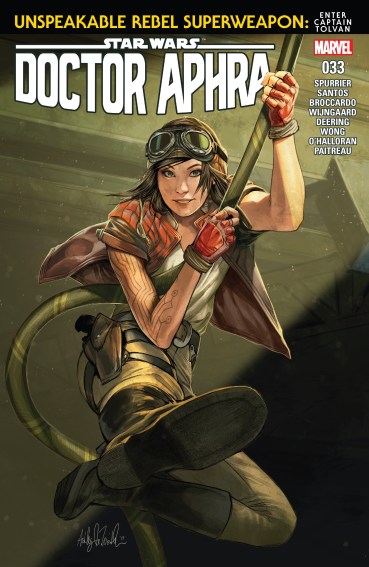
DoctorAphra-33

As Aphra recovers the rifle and flees to the Empire, she finds herself face to face with the mysterious Imperial Minister for Propaganda and Misinformation, Pitina Voor, the woman behind the latest Imperial manhunt for Aphra. Voor has plans for her, and Aphra is right in the middle of a vast scheme involving both the Rebels and the Empire. However, no plan has ever survived contact with the good doctor, especially when Aphra has revenge on her mind.

Unspeakable Rebel Superweapon was a superb and outstanding addition to the excellent Doctor Aphra comics, and this might actually be one of the strongest volumes in the entire series. Author Simon Spurrier tells a tight and compelling story within this volume which not only dives back into the past of the series’ titular character but which also showcases new elements of both sides of the Galactic Civil War. You also see the welcome return of several of the best characters from the series, such as Black Krrsantan and Aphra’s love interest, Captain Tolvan, as well as the introduction of an intriguing new antagonist. Featuring issues #32 – 36 of the Doctor Aphra series, this volume is a riot from start to finish (hell, the last two pages are the best in the entire volume), and I really loved the captivating tale that Spurrier wove together in these issues, especially as it features the series trademark dark humour and the focus on its self-destructive and conniving main character.

At the centre of Unspeakable Rebel Superweapon lies an amazing narrative of schemes, plots and lies as Aphra is hunted and manipulated by elements of both the Empire and the Rebel Alliance. Thanks to a recent archaeological theft, Aphra is thrust into the midst of a Rebel conspiracy to kill the Emperor and must decide what to do. Of course, Aphra being Aphra, she goes with the course of action that benefits herself the most and ends up backstabbing and manipulating both the Rebels and the Empire. This leads to some great scenes, including a heist aboard a Rebel spaceship and a sequence where Aphra hacks the entire Imperial communications system in order to sing her praises as an Imperial hero in order to avoid a summary execution. However, not everything is as it seems as the various sides are all trying to manipulate Aphra to their own ends, which results in a surprising number of different twists and turns (or as one character puts it “that is the most convoluted plan I’ve ever heard”). It was fascinating to see Aphra, the ultimate manipulator, being played by so many different sides, each of whom thinks they know how she is going to react. Aphra manages to end up on top, but it was cool to see the various ways she managed to get to the bottom of the plans surrounding her and use it to her own ends. Her motivations for doing so were really compelling, and it was amazing how the creative team had been building up to them throughout the course of the book. Of course, it doesn’t all end up Aphra’s way, and the end result of her schemes sees her come full circle to the last place she wants to be. This all makes for one hell of thrilling main storyline of intrigue and deception, and I really loved where all the twists and turns went.
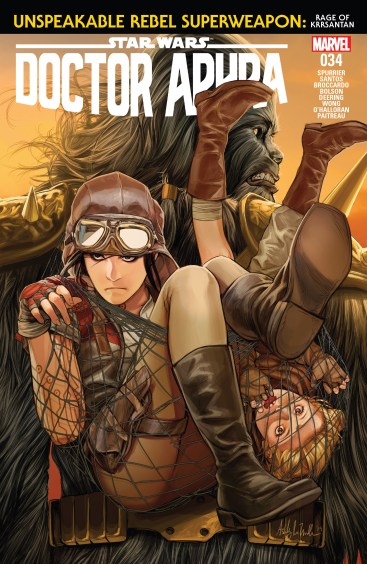
DoctorAphra-34

Just as with the rest of the entries in this series, one of the best things about the Doctor Aphra series is the titular character herself. Aphra is a complex and haunted character who seemingly lacks a moral code and will only do what is in her own best interest. The character has a rather flippant and disrespectful attitude, and most of this volume’s amazing humour is down to her clever quips and humorous observations amongst the more serious Star Wars characters. One of the things that I have really enjoyed about the Doctor Aphra series has been the examination of Aphra’s self-destructive tendencies and the way that she makes the lives of everyone she comes into contact with worse. This is continued once again in Unspeakable Rebel Superweapon, as she runs from one bad situation to the next, with her every action making her life and the lives of those around her infinity more miserable and more complicated, which makes for some very dramatic and emotional sequences. This is such an expected trait that many of the characters who Aphra has dealt with in the past or who have studied her actually expect her to make these bad or selfish decisions, and I really liked the way that this was a central plot point in the intrigue and espionage storyline. I also loved Aphra’s interactions with her love interest, Captain Tolvan, especially because, during their last meeting, Aphra purposely altered her memories to make her believe she had killed Aphra in a jealous rage. While Aphra did this with the best of intentions (it was the only way to save both Aphra and Tolvan from Vader), this has obviously had a major negative impact on their relationship, and Tolvan now actively loves and hates Aphra in equal measure and apparently has zero trust in her. This is one of the many things haunting Aphra in this volume, as she clearly knows the damage she has done to woman she loves: “I broke her heart. She’s too smart to ever help me again.” Of course, this fraught relationship is another part of the intrigue surrounding Aphra, and it was rather clever the ways in which both sides tried to manipulate Aphra through it.

In addition to the all the awesome character work happening with Aphra in the present, the readers of this volume are also treated to a look back at the characters past. In particular, you finally get to see Aphra’s mother for the first time and learn the tragic circumstances around her death. This has been hinted at for some time, all the way back to the second volume of the 2015 Darth Vader series, Shadows and Secrets. As a result, it was great to finally see the full extent of this character background, and it was fascinating to see what happened and how this has impacted on the personality of Aphra. I enjoyed the way in which the scenes from the past were mirrored in the scenes from the present, and I really liked the similarities in the way that Aphra was raised with the harsh way she is treating her new ward, Vulaada. I was also impressed by the way in which seemingly innocuous details from Aphra’s past suddenly had a big impact on her current story, and the creative team did a great job hinting about these impacts throughout the entire volume. All of this helps build up a much more complex story around the character that is Aphra, and I found this dive into her past to be extremely compelling.
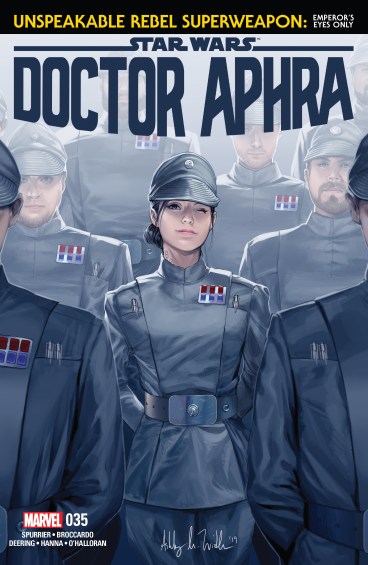
DoctorAphra-35

I also need to say how much I loved the parts of this book that featured Darth Vader, whose villainy and hatred for Aphra shine through in the few short scenes that he has. Aphra and Vader have a complicated history together, and Vader is desperate to kill Aphra once and for all (she’s faked her death on him a few times already), as she is the only living person in the galaxy who knows about his obsession with Luke Skywalker and his plans to overthrow the Emperor. Vader has two sequences in this book, both of which revolve around his determination to kill Aphra, no matter the perceived costs. While the first is really good, mainly due to Vader answering an Imperial officer’s request to state his rank with “Lord”, nothing quite beats the second appearance on the last two pages of the volume. After apparently beating all of her opponents, Aphra is sure of her safety due to her status as an Imperial hero, right up until Vader appears, lopping off heads with his lightsaber. The moment Aphra sees him, she knows she and Vulaada are dead, and she immediately hugs Vulaada and gets her to close her eyes. I really loved this scene, especially the resigned way in which she responds to Vulaada’s frantic belief that them being heroes is going to save them with “he doesn’t care”. This was a pretty outstanding end to the entire volume, and it was amazing to see the next chapter of the turbulent relationship between Aphra and Vader.

The Doctor Aphra series has always done a great job showing off several different sides of the Star Wars universe, including giving a closer look at parts of its criminal underbelly and its archaeological sector. However, in this book, we get to see new sides of both the Empire and the Rebel Alliance. In particular, we get to see the Empire’s Coalition for Progress, a sinister organisation led by new antagonist Pitina Voor that is dedicated to expanding and maintaining the Empire through manipulation, trickery and propaganda, rather than brute force. This is rather fascinating inclusion into the canon, and it was rather interesting to see a whole new side to the way that the Empire controlled the galaxy. Voor is also a rather intriguing character, with a unique vision for how the Empire should be run and maintained, and it was kind of fun to see her gripe about the PR problems that occur when you are being ruled by Sith Lords (I had to agree, the Emperor really isn’t adequately loveable). They also have a rather nifty little museum dedicated to some of the Empire’s greatest victories and propaganda coups, which the artistic team filled with several Easter eggs. I was also rather impressed by the way that the creative team explored the darker side of the Rebel Alliance by examining the covert and morally ambiguous actions of their intelligence agency. This is something that has been explored before in some other Star Wars entries, such as in Rogue One, but this volume of Doctor Aphra takes it to a new extreme with Rebel Intelligence apparently plotting to build a miniature Death Star in order to take out the Emperor and win the war. I rather liked this darker side of the Rebels, and it was interesting to see more of a Rebel organisation that uses less moral tactics to achieve their goals.
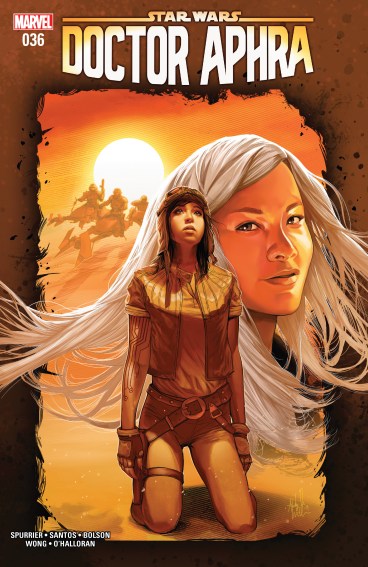
DoctorAphra-36

Unspeakable Rebel Superweapon features the work of several different artists, each of whom worked on a couple of different issues within the volume, which results in an interesting combination of styles. This means that this volume of Doctor Aphra contains a range of different art styles and techniques across the various issues. I actually liked the myriad changes that occurred issue to issue, and it was fantastic to see the different styles and artistic ideas that this large team produced. This volume contains some rather impressive and beautifully drawn scenes and sequences, which fit perfectly around Spurrier’s compelling story and which work really well together. The end result is a fantastically drawn and executed comic, which is a delight to look at.

This sixth volume of the always entertaining and incredible Doctor Aphra series, Unspeakable Rebel Superweapon, is an outstanding addition to the series, and it is one that I had an amazing time reading. This volume contains a complex plot of intrigue and doublecrosses, which sets the loveably dysfunctional protagonist down another road of self-destruction and manipulation in order to survive. Filled with some excellent and memorable story moments, and an incredible conclusion to this volume’s key storyline, Unspeakable Rebel Superweapon is relentlessly entertaining and endlessly captivating, and I had an absolute ball unwrapping it. A highly recommended read; if you have not read any Doctor Aphra yet, then you are missing out!
Amazon

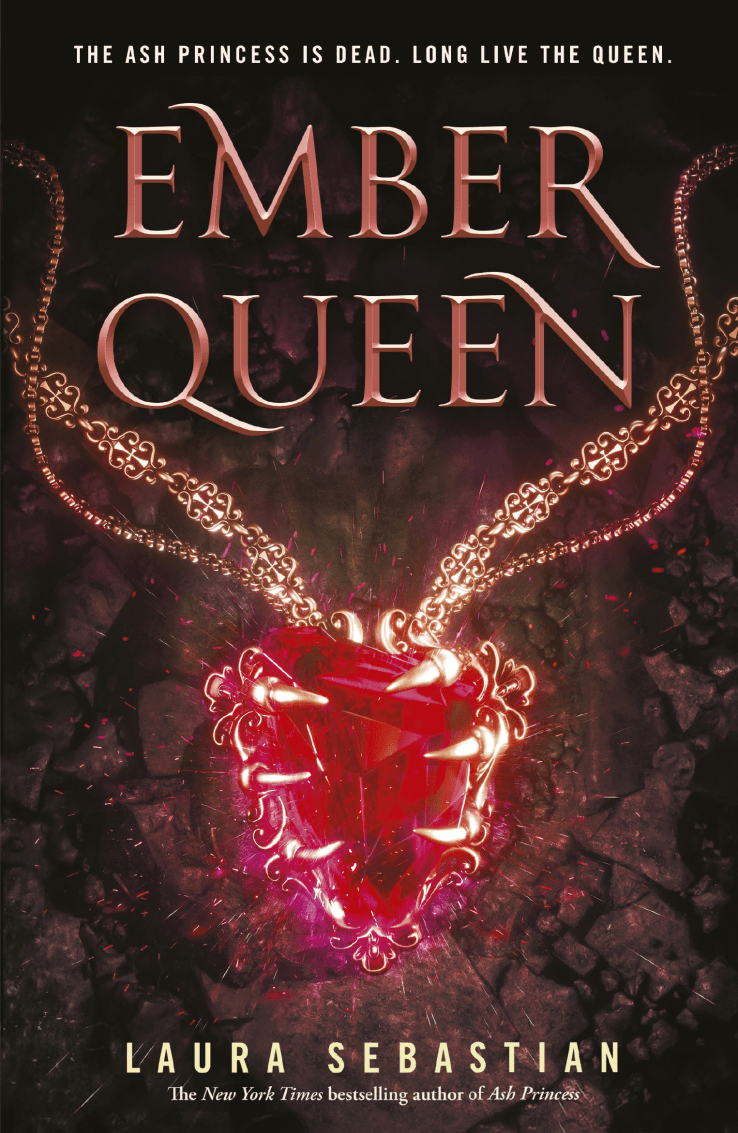
Ember Queen by Laura Sebastian

Ember Queen Cover

Publisher: Pan Macmillan Australia (Trade Paperback – 11 February 2020)

Series: Ash Princess – Book Three

Length: 465 pages

My Rating: 4.25 out of 5 stars

Amazon     Book Depository

Young adult fantasy fiction author Laura Sebastian brings her debut series to a close in a big way with Ember Queen, the excellent and exciting conclusion to the Ash Princess trilogy.

Years ago, when the vicious Kalovaxians invaded the island of Astrea, they killed their queen, enslaved the Astrean people and stole their sacred magical gems. Princess Theodosia, heir the Astrean throne, was imprisoned and spent over 10 years as a captive of the Kalovaxian Kaiser, belittled by the mocking title of “Ash Princess”. However, this imprisonment didn’t break Theo; instead, with the help of her friends, she was able to escape to forge her own destiny. Now Theo has returned to Astrea, leading an army made up of freed Astreans, pirates, refugees and forces from the other nations the Kalovaxians have ruined. Hoping to free her people, Theo and her friends believe that they finally have the advantage over the Kalovaxians. However, the sins of Theo’s past have come back to haunt her.

Cress is a young Kalovaxian noblewoman who claimed Theo as her best friend during Theo’s imprisonment, despite being the daughter of the man who killed Theo’s mother. Theo chose to poison Cress and her father when she made her escape, and while she succeeded in killing Cress’s father, the magical poison she used had unexpected side effects on Cress. Despite being burned and mutilated, Cress survived, with the fire-imbued poison granting her powerful and deadly magical abilities. Using these to her advantage, Cress has done the unthinkable, killing the Kalovaxian Kaiser, poisoning Theo and claiming power over Astrea as the Kaiserin.

Barely surviving her own poisoning after a sojourn down into the magical Fire Mine, Theo must now find a way to free Astrea from her former best friend. With her own fire magic greatly increased, Theo plots to take the fight straight to the Kalovaxians. However, Cress has her own plans, and whole of Astrea may burn in order for her to get her revenge. Who will rise as the Ember Queen, and will the winner have anything left to rule?

Wow, talk about an impressive end to a great trilogy. Ember Queen is an amazing book from Laura Sebastian, who over the last couple of years has done an excellent job establishing herself as one of the best new young adult fantasy fiction authors. This is the third and final book in Sebastian’s debut Ash Princess trilogy, and this is definitely another superb addition to this fun series. I have been enjoying this trilogy since the beginning, reading Ash Princess in 2018 and Lady Smoke in 2019, both of which are pretty fantastic novels. Ember Queen turned out to be an excellent conclusion to this entire trilogy, and I had a great time reading it.

Sebastian has pulled together an excellent story for the final volume of the Ash Princess series, and I really liked the way in which she wrapped up the entire trilogy. After the first two novels dealt with the oppression of Astrea by the Kalovaxians, we finally get to see Theo’s big attempt to free her country from the invaders. I loved the way that Sebastian changed the theme of each novel, with the first novel relying on espionage, the second on diplomacy, and this third book on war. Sebastian produced a compelling narrative around this battle for the control of Astrea, and I really liked some of the directions that the story went into, especially when some intriguing new fantasy elements were introduced by the antagonist. Overall, I was really impressed with how Ember Queen turned out, especially as Sebastian used it to expertly conclude this awesome trilogy.

One of the main strengths of the Ash Princess trilogy has always been its great characters, who evolve throughout the course of the books. This is particularly true for Ember Queen, as Sebastian wraps up many of the character threads that have been introduced in the previous books, resulting in some excellent character devolvement as well as some satisfying conclusions for many character arcs. The main example of this is the series protagonist and point-of-view character, Princess Theodosia (Theo). Throughout the course of the first two books, Theo has grown substantially as a character, from a meek and seemingly broken prisoner to a cunning spy and manipulator, to a canny diplomat to finally an effective military commander. We finally get to see Theo take up the reins of leadership and responsibility that she has been somewhat apprehensive of in the previous books, as she starts making the hard decisions needed to ensure the freedom of her people. I really liked seeing all this character growth from the protagonist and I also appreciated the fact that Sebastian had Theo look back and own many of her prior mistakes and decisions that she regretted. Overall, I thought that Sebastian did an amazing job portraying Theo’s entire arc, and I think that she concluded her story in an impressive and enjoyable manner.

Sebastian has also produced some great conclusions to the arcs of the various side characters that were featured within this trilogy. For example, Soren has an intriguing story during Ember Queen, as he finds himself once again caught between the woman he loves and supports, Theo, and his people, the Kalovaxians. Like Theo does with the Astreans, Soren must come to a decision about his role as a leader of the Kalovaxians, and I think that his story and romance with Theo came together quite well. Blaise, Theo’s childhood friend and secondary love interest, also has an excellent arc within this book, finally getting some closure over his relationship with Theo, as well as the conclusion to his mine-madness arc. Several of the other supporting characters get some great advancement within this book as well. Artemisia, Erik and Heron all have their individual tales expanded on, and it’s great to see how comfortable and close they, Theo, Soren and Blaise have come together as a group. I particularly liked the way that Theo has gotten closer to Artemisia, her tough-as-nails cousin and bodyguard, and I had a good laugh at the way that Art allowed Theo a one-off session of girl talk as a way of calming her down before the final battle. New character Maile is an interesting addition to the series, and while she initially comes across as rather abrasive, she eventually becomes part of the group, resulting in a significant revelation for one of the characters.

The main thing that really made Ember Queen stand out to me was the complex relationship between the protagonist of the book, Theo, and the antagonist, Cress. This has always been a rather interesting relationship, as within the first book Theo and Cress were, in theory, best friends, referring to the other as their heart’s sister, even if Cress was actually rather controlling and manipulative. Theo eventually allowed Cress and her father to be poisoned at the end of the first book, and Cress now holds a heavy grudge against Theo for her betrayal. She has also evolved as a character since this first book, morphing into a much more confident woman who has taken control of her people in a way that is somewhat reminiscent of Theo’s growth as a leader. However, this is where some of the similarities end, as Cress is now a bit of a black mirror to Theo, as she is cruel, ruthless, determined to win whatever the cost and has no compunction about killing innocents. Despite all this, Theo is still drawn to her old friend, and the two of them have a compelling emotional bond (as well as an actual magical bond) throughout this novel. Theo feels guilty for the way that she betrayed and poisoned Cress, and she has a bit of a hard time seeing the evil person that she has become, and is more inclined to consider mercy than her friends would like. Cress, on the other hand, acts as ruthlessly as possible towards Theo and her friends, and is actually an extremely convincing antagonist for this book. Despite her actions, the reader gets to see that Cress is still deeply concerned with what Theo thinks about her and her plans, and there are still hints of a connection. However, her sense of betrayal, anger and determination to keep her newfound power always start to overwhelm any connection she feels to her old friend, and this leads to some devastating and heart-breaking confrontations. This whole dynamic between protagonist and antagonist is a really amazing part of Ember Queen, and adds significantly to the overall quality of the story.

I have always appreciated the magical system that Sebastian has featured in her Ash Princess books. This magic is elemental in nature, based around fire, earth, water or air (similar to the magic in Avatar: The Last Airbender, with a few key differences), and is exclusive to the Astreans, due to the presence of the magical mines located on their island. This magic has been a bit of an understated affair in the previous books, as the plots of those novels focused on espionage and diplomacy and required smaller, more subtle displays of magic. However, in Ember Queen, the Astreans are now at war, and so the magical gloves are off. This book is filled with a number of great examples of just how powerful or effective Astrean magic can be and it is a really cool addition to the series. Seeing the formerly enslaved or dispossessed Astreans unleash their power against their oppressors is a little cathartic, and it certainly makes for some great, if devastating, scenes. Sebastian also does some intriguing morphing of her magical system when it comes to Theo, Cress and some other characters, and this results in a rather interesting plot line that I liked.

Like the rest of the books in this series, Ember Queen is a rather good piece of young adult fiction. Sebastian has created an amazing story that features a group of young people growing as characters and sacrificing everything for freedom, friendship and justice. This a great book for younger readers, and while there is plenty of violence, war and fighting, there is nothing too graphic or over-the-top that makes it inappropriate for younger readers. I personally really appreciated Sebastian’s excellent portrayal of several LGBT+ characters within this book, especially as two of these characters had one of the best romantic relationships in the entire series. Despite being angled towards younger readers, Ember Queen is one of those books that can be enjoyed by a wider audience of people. There is definitely something for everyone in this book and it is really worth checking out.

Ember Queen by Laura Sebastian is a wonderful novel that not only contains a captivating story, but which also does an awesome job concluding the author’s debut trilogy. In this final book in the Ash Princess trilogy, Sebastian presents a desperate battle for freedom, complete with intriguing magical elements, excellent characters, complex interactions between the protagonist and antagonist and a fantastic story. All of this comes together in a first-rate read, which is a great conclusion to this series. I note that Sebastian has her next body of work already planned out, with the first book in her upcoming young adult fantasy series, Constellation of Chaos, set for release next year. This new book has an interesting plot synopsis out already and I am planning to grab this book when it comes out. Until then, Ember Queen is an excellent book from Sebastian and it is really worth seeing how this fantastic trilogy ends.

Amazon     Book Depository

Throwback Thursday – Extinction Machine by Jonathan Maberry

Extinction Machine Cover.jpg

Publisher: Macmillan Audio (Audiobook – 26 May 2013)

Series: Joe Ledger Series – Book Five

Length: 14 hours and 53 minutes

My Rating: 4.75 out of 5 stars

Amazon     Book Depository

Reviewed as part of my Throwback Thursday series, where I republish old reviews, review books I have read before or review older books I have only just had a chance to read.

For my latest Throwback Thursday, I once again go back to one of my absolute favourite series as I check out Extinction Machine by Jonathan Maberry, the fifth book in the exciting Joe Ledger series.

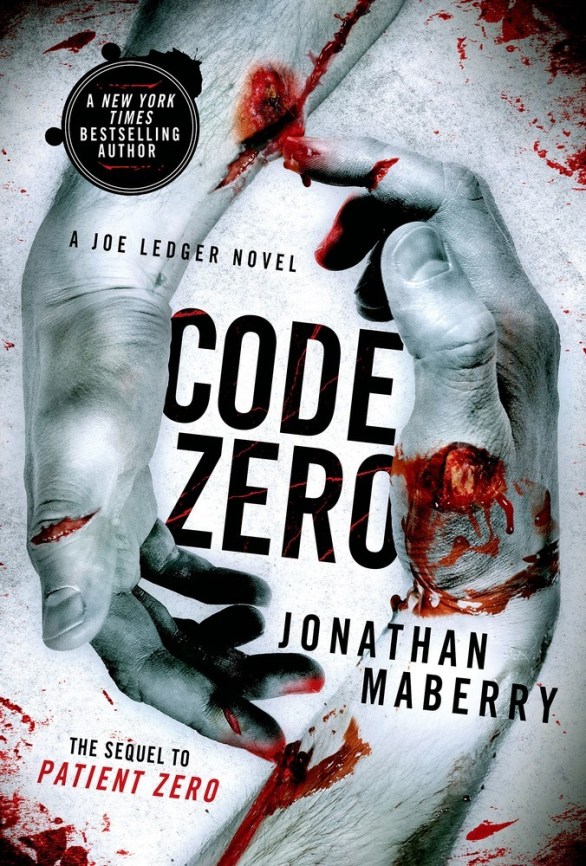
Long-term readers of this blog will be familiar with my recent obsession with the Joe Ledger thriller novels. The Joe Ledger series is one of the main bodies of work from bestselling author Jonathan Maberry, which follows a secret military organisation that targets any organisations or individual who attempts to utilise the latest science and technology for their own dangerous ends. I absolutely fell in love with this series in late 2018, when I read the 10th book, Deep Silence, and I have been slowly reading my way through the earlier Joe Ledger books ever since. So far, each of the Joe Ledger books I have read has been absolutely amazing novels, and I have awarded all of them a full five stars. I also recently read the first book in Maberry’s sequel Rogue Team International series, Rage, which was released a couple of months ago and which I consider to be amongst one of the best books (and audiobooks) of 2019. I am actually reviewing Extinction Machine a little out of order, as I have already reviewed the sixth book in the series, Code Zero, despite reading Extinction Machine first.

For years, Joe Ledger and the Department of Military Sciences (DMS) have faced off against some of the most advanced and devious weapons human ingenuity and insanity is capable of creating. However, what happens when they are forced to go up against something that is literally out of their world? In Extinction Machine, a series of strange and seemingly unrelated events begin occurring around the world. America’s leading weapons manufacturers are being targeted by elaborate computer attacks that are impossible to trace. An advanced prototype stealth fighter is destroyed during its test flight by an impossibly fast craft, while sightings of UFOs are occurring all around the world. In the midst of all this chaos, the impossible happens: the President of the United States vanishes from the White House. The only evidence of his abductors is a crop circle on the White House lawn.

Despite being officially sidelined by the corrupt Vice-President, the DMS attempts to investigate after receiving a strange message from the missing President promising unprecedented destruction. Ledger and his team soon find themselves caught in the midst of massive conspiracy involving alien technology and the deepest secret of America’s military industrial complex. Can the DMS uncover the full conspiracy before it is too late, or will the world tremble at the hands of mysterious beings who want their technology back?

Extinction Machine proved to be yet another thrilling and enjoyable entry in the Joe Ledger series, and I really had a great time listening to it. Maberry has produced another fantastic and elaborate story which utilises a number of his trademark and classic storytelling elements to produce a first-rate read. The reader is once again treated to a fast-paced and captivating narrative which is enhanced by the author’s clever use of different perspectives, point-of-view characters and time periods, which not only focus on the protagonists hunt for answers but also showcases all the fascinating aspects of the villain’s complex master plan. Extinction Machine also continues to feature some outstanding action sequences and a number of amazing and relatable protagonists, including the series’ titular character, Joe Ledger, whose ultra-sarcastic narration and half-broken psyche make him one of the most fascinating and enjoyable action heroes out there. All of these familiar elements have made the previous Joe Ledger books some of my favourite thrillers out there, so I quite enjoyed the fact that Maberry once again utilised them for Extinction Machine, especially as they were once again used to great effect to produce an overall excellent story.

In addition to using all the awesome trademark storytelling elements of the Joe Ledger series, Maberry also makes Extinction Machine stand out from the existing novels in the series by including several new and exciting plot inclusions. At the centre of this is a fantastic overarching story about alien craft that have crash landed on Earth sparking a long-term hidden arms race. This is a deeply fascinating main plot point for the book, which explores a vast and complex conspiracy theory that turns out to be true, as not only have the crashed alien craft allowed the world’s leading arms manufacturers to advance their technology at an accelerated rate, but now the world’s various superpowers all have top-secret programs aimed at obtaining certain alien components and using them to construct a working alien craft, known as a T-Craft. Maberry does an amazing job of introducing the full history and breadth of this alien technology conspiracy at an excellent pace, and it was really intriguing to see him craft an action-packed story around it as Ledger and his team must try to counter not only the antagonist’s plans to utilise the alien technology for their own twisted purposes but also the unexpected consequence of all this secret work. I also think that this story was an excellent way to introduce the concept of aliens into the series as a whole, especially as it is used again in some of the later books. Having Ledger straight up face off against aliens in this book (and presumably win) would have been a bit too much, even for a series that has so far featured genetically modified Nazis and vampires. But by having the protagonists deal with self-interested humans who have spent generations researching mysterious alien technology, Maberry is able to introduce the concept at a much more controlled pace which works a heck of a lot better.

There are a number of other amazing elements introduced or utilised in this novel that were a real highlight for me. These include a several excellent action set-pieces, including a well-choreographed fight sequence out in the woods between Ledger and a lethal hit team and a large-scale assault on the enemy’s compound; some cool new characters, including a major love interest for Ledger; and the first time political attacks hampered the DMS (which later becomes a recurring theme). I also liked the idea of Ledger and his team essentially going up against the Men in Black (known here as the Fixers), who are the henchmen for the book’s antagonists. The Fixers have some devastating alien technology which really help amp up some of the action scenes, and they are also able to pull of a pretty major attack against the DMS with it. Finally, I had a real laugh at the way that one of the main antagonists, the apparently most lethal member of the Fixers, is taken down, especially as Maberry telegraphs how it’s going to happen by mentioning a certain movie scene. All of these new elements are fantastic additions to the story, and I felt that they worked extremely well with the author’s existing writing style for the Joe Ledger books to create another awesome read.

While I really enjoyed Extinction Machine, I have to admit that it is probably my least favourite Joe Ledger book that I have read so far. To be fair, part of this might be because it falls between two of my absolute favourite entries in the series, Assassin’s Code and Code Zero, and I might be unfavourably comparing Extinction Machine to them (especially as I read these three books back-to-back in quick succession). However, in my opinion Extinction Machine’s story went a bit too slowly in places and it lacked the truly compelling villains that the other books in the series feature (even if the antagonists in this book do manage to pull off the biggest attack against DMS yet) all of which slightly tanked my enjoyment of this book. That being said, this is still an amazing read, and even my least favourite book in this series still deserves 4.75 out of 5 stars.

The audiobook is my format of choice for enjoying the Joe Ledger series, and I ended up listening to Extinction Machine over a couple of weeks while I was away travelling. The Extinction Machine audiobook runs for a little under 15 hours and is narrated by the incredible Ray Porter, who has leant his amazing vocal talents to all of the other Joe Ledger audiobooks. I have spent a lot of time over the last year singing the praises of Porter for his work with the Joe Ledger series; in my opinion, he is one of the best audiobook narrators out there. Porter has the rare ability to fully encapsulate the characters that he is voicing, and his perfect take on the character of Joe Ledger is so very impressive. Needless to say, he does another standout job with Extinction Machine, and I highly recommend this format to anyone interested in checking this book out.

Overall, I felt that Extinction Machine was another excellent addition to the Joe Ledger series, and I had a real blast checking it out. There are a lot of cool elements to this book, and I really liked where Maberry took the story this time around. This is a must-read for fans of the Joe Ledger series, and I would also highly recommend it to anyone looking for a fun and exciting science fiction thriller.

Amazon     Book Depository

Legacy of Ash by Matthew Ward

Legacy of Ash Cover

Publisher: Orbit (Trade Paperback – 5 November 2019)

Series: Legacy trilogy – Book 1

Length: 768 pages

My Rating: 4.5 out of 5 stars

Amazon     Book Depository

From impressive new author Matthew Ward comes Legacy of Ash, a massive and entertaining new fantasy adventure that was amongst one of my favourite debut novels of 2019.

Legacy of Ash is set within the Tressian Republic, a powerful nation controlled by a council of nobles. The Tressian Republic is beset by many dangers, including the constant threat of invasion from the massive Hadari Empire on its border; open rebellion from the nation’s southernmost lands, the Southshires, which have been seeking independence for years; and the machinations of the dark magic-wielding criminal organisation known as the Crowmarket.

When the Hadari Empire invades the Southshires, the political ambitions and old grudges of the Tressian Council results in a muted military response. It falls to Viktor Akadra, the champion of the Tressian Republic, to lead a small force to the Southshires in order to make a stand against the invaders. However, Viktor is the last person the inhabitants of the Southshires want defending them, as years before he brutally put down their last rebellion, which resulted in the death of their beloved Duchess Katya Trelan.

In order to defeat the Hadari Empire, Viktor needs to work with the children of Katya Trelan, Josiri and Calenne, both of whom hate and fear him, and who both have different plans to ensure their future freedom. However, as fate, self-interest and the future of the Southshires forces them together, these three must find a common ground if they are to survive. But even if they manage to face the forces of the Hadari Empire, far darker threats are assailing the Tressian Republic from within and they will stop at nothing to achieve their terrible goals.

Ward is an interesting new author who is probably best known for his work with Games Workshop, where he served as a principal architect for the company on many of their properties, including Warhammer, Warhammer 40,000 and their The Lord of the Rings range. However, in recent years he has turned his hand to fantasy writing, creating several novellas and short stories, as well as releasing two ebooks, Shadow of the Raven and Light of the Radiant. Legacy of Ash is Ward’s first printed novel, and it is actually set in the same universe as his previous ebooks. It is also the first book in his planned Legacy trilogy, with the second book in the trilogy, Legacy of Steel, set for release later this year.

Legacy of Ash is an excellent new read which contains an exciting and elaborate story, set in a large and creative new world and featuring a substantial group of point-of-view characters. I have actually been looking forward to Legacy of Ash for a while, as it sounded like one of the more exciting new fantasy books that were set for release in 2019, and I am very glad I got a chance to read and review it. However, readers should probably be aware in advance that this book is nearly 800 pages in length, making it a pretty substantial read, and requiring a significant investment of time in finishing it off. This took me a couple of weeks to read in full, mainly because Legacy of Ash would actually come in at number 12 on my recent Longest Novels That I Have Ever Read list. That being said, Legacy of Ash is well worth the time, as this was an amazing and fascinating new fantasy adventure.

Ward has come up with a large and impressive story for his first book, and there is a lot going on within it. The story actually splits up into two separate locations within the Tressian Republic, with half of it set down in the Southshires and the other half set up in the capital of the Republic, Tressia (with small parts also set in a couple of locations in between or within the Hadari Empire). The parts of the book set down in the Southshires deal with the impending invasion of the Hadari, the repression of the Southshire inhabitants by the Tressian council and the attempts by Viktor to work with both of the Trelan siblings. At the same time, the parts of the book set up in Tressia contains a lot of political intrigue, criminal undertakings, dark magical plans and gambits for control of the nation. Both sets of storylines are a lot of fun, and it was really amazing to see all the various story elements occurring at the same time in the different locations. In addition, these two storylines are strongly related to each other, with events happening in one location impacting characters down in the other part of the Republic. All of these story elements and character arcs come together to form an extremely compelling overarching narrative and I quite enjoyed how Legacy of Ash contained such a wide range of different plot points.

Legacy of Ash is populated with a multiple point-of-view characters from whose eyes we see this whole massive story unfold. The use of all these characters allows for a much richer and expansive story, especially as you get to see every side of all various character’s plots and plans as everyone attempts to come out on top of the events unfolding around them. In addition, nearly all of the point-of-view characters have some incredibly captivating and enjoyable character arcs, many of which reach their full potential within this book. There are such an interesting range of different character based stories going on throughout Legacy of Ash, from the mysterious divine magic that starts to infect the honourable knight Roslava Orova, the machinations and manipulations of Ebigail Kiradin, the chaotic adventures of Crowmarket member Apara Rann and the fun friendship that forms between old opponents Kurkas and Halvor. However, the main elements of character development occur around the book’s three central characters, Viktor Akadra, Josiri Trelan and Calenne Trelan. Due to history, resentments and circumstances, these three characters start the book with fairly distant or hostile relationships to each other. However, these barriers are slowly broken down as the book progresses, and each of these main characters slowly works to come to terms with each other and their own individual issues, such as Viktor’s hidden dark magic, or the expectations or resentments that surround Trelan siblings thanks to their long-dead mother. Overall, this is some fairly impressive character work, and Ward did an excellent job creating a fantastic cast for this novel, each of whom add a whole lot to book’s story.

While I did enjoy how this novel progressed and all the interesting story points and character inclusions that were featured, I do feel it was a perhaps a little too long. In particular, I really think that Ward would have been better off not featuring the book’s final antagonist (a long-dead magical queen), who starts to appear around two thirds of the way through the book. Instead, the author could have perhaps only hinted at her return and shaved off most of the final 100 pages. Not only would this make Legacy of Ash a bit more of a manageable read, but it would have allowed the author to expand on this antagonist’s motivations and history a lot more in the subsequent book, rather than having her introduction be somewhat rushed, like it was in this book. Still, the inclusion of this final antagonist led to some rather intriguing and emotional moments, and it also sets up some potentially fantastic story arcs for one of the main characters in the next book in the series.

I also need to say how impressed with the massive and complex new fantasy landscape that Ward created for his debut series. Ward has come up with a number of unique and enjoyable elements for this fantasy world, which really add a lot to the story. The central location of the Tressian Republic was a lot of fun, as it is filled with all manner of perils, conflicting ideals, fermenting hatreds and a hidden death-worshipping criminal organisation, while also featuring a number of external or divine groups or threats at the same time. I felt that the author did a good job of introducing all of these unique elements throughout the book, and I was never too lost or confused by any of the inclusions.

I also really enjoyed the huge number of battle sequences that took place throughout this harsh fantasy landscape, especially those which were enhanced by the series’ unique fantasy inclusions. For example, one massive sequence featured two armies, one with magical constructs and the other with armoured rhinos, facing off against each other as strange and divine magics rain down chaos all around them. Other scenes include a number of different characters attempting to combat the eldritch-enhanced assassins of the mysterious Crowmarket, often resulting in some really impressive battles. I also liked how Ward utilised the multiple point-of-view characters during some of these longer conflicts, ensuring that the reader got to see both sides of the battle, as well as the various thoughts and fears of the characters involved. All of this ensured that the book was chocked full of intense and exciting fantasy action, which is always a plus in my book.

Legacy of Ash by Matthew Ward was an extremely well-written and addictive fantasy debut, which I am very glad I made the effort to read cover-to-cover. Full of some excellent characters, a multi-faceted story and an intriguing new fantasy landscape, the first book in the Legacy trilogy was a really great read, and I had a lot of fun getting through it. Ward has a lot of potential as a fantasy author, and I am quite excited to see where this series goes next.

Amazon     Book Depository

The Bone Ships by R. J. Barker

The Bone Ships Cover

Publisher: Hachette Audio (Audiobook – 24 September 2019)

Series: The Tide Child – Book One

Length: 17 hours and 2 minutes

My Rating: 5 out of 5 stars

Amazon     Book Depository

From one of the brightest new stars in fantasy fiction, R. J. Barker, comes The Bone Ships, a remarkable and extremely captivating new adventure that can be described as Gaunt’s Ghosts meets Moby Dick in an incredibly inventive new fantasy world.

Barker has been making some serious waves in the fantasy genre over the last couple of years, ever since bursting onto the scene in 2017 with his debut novel, Age of Assassins, which started The Wounded Kingdom trilogy. He quickly followed this up in 2018, when he released the second and third books in this trilogy, Blood of Assassins and King of Assassins. I absolutely loved all three books in this trilogy, although I haven’t yet reviewed King of Assassins. Spoiler: it does get five out of five stars from me and recently made my Top Ten pre-2019 Books list.

As a result, I was very excited earlier in the year when I found out that Barker was writing a whole new series. The Bone Ships is the first book in The Tide Child series, and it has been pretty high up on my to-read list for a while, as I have featured it on both my Top Ten Most Anticipated July-December 2019 Releases and my Top Ten Books I Would Like to Read by the End of 2019 lists. I ended up listening to the audiobook version of The Bone Ships, narrated by Jude Owusu, and what I found was an excellent and inventive fantasy read that might just be one of my favourite books of 2019.

For generations the rival nations of the Hundred Isles and the Gaunt Islands have been fighting each other for dominance of the vast oceans that make up their world. In order to fight this bitter conflict, great ships of war were constructed using the bones of the giant sea dragons, the arakeesian, as only these boneships could withstand the rigours of battle and all the horrors the seas contain. However, years of warfare and shipbuilding has taken a terrible toll, as the arakeesian are now all extinct, and both sides’ supplies of dragon bone are nearing their end.

Of all the remaining boneships in the Hundred Isles fleet, none are considered lower than a black ship. Black ships are ships of the dead, where every crewmember aboard has been condemned to die in shame, unless they can redeem themselves through some great act of bravery. However, the crew of the black ship Tide Child have no intention of performing any acts of bravery, and they and their shipwife, Joron Twiner, are content to drink themselves into oblivion—that is, until the arrival of “Lucky” Meas Gillbryn.

Meas is one of the most respected and feared commanders in all the Hundred Isles, but she has recently been disgraced and banished to Tide Child. Quickly taking control of the ship from Joron, Meas works to turn Tide Child and its crew around and make it into an efficient and proud crew of sailors, because they have a dangerous mission to undertake. The first sea dragon in a generation has been spotted, and whichever side hunts it down and claims its bones will gain a distinct advantage in the war. However, Meas has a different plan in mind, and sets out to protect the dragon from all who want it. Facing off against rival ships, raiders, pirates and treachery from within, can the crew of Tide Child survive to become the stuff of legend, or will their death sentence finally be carried out?

Well damn! Now that was a pretty awesome read! This latest offering from Barker was a superb and elaborate tale of redemption, adversity, camaraderie and adventure on the high seas. Not only is it based on an inventive premise and an elaborate new fantasy world but it contains a first-rate and compelling story that I absolutely loved. This is an absolutely fantastic story which is paced out extremely well and, after the necessary introductions, quickly turns into an addictive yarn with a number of clever elements to it. The end result is a powerful and enjoyable tale which is a wonderful self-contained story but which also sets up some intriguing storylines for any future instalments of this new series.

At the heart of The Bone Ships is an excellent story of camaraderie, respect and selfish people coming together to be part of something bigger. The main setting for the book, the boneship Tide Child, is completely crewed by condemned men and women, most of whom have given up on any form of redemption and are more concerned with petty crime and getting drunk. However, when Meas enters the picture, she quickly turns them into an efficient crew and reignites their pride as sailors and soldiers for their nation. This evolves into a really good redemption arc, as the entire crew really starts to come together as a close-knit team and are eventually given a task which could make them all heroes. The vast majority of the crew subsequently rise to the challenge, so much so that their usually hard-as-nails and determined shipwife is at one point willing to sacrifice everything to save them. This is a pretty fun and amazing part of the story, and it helps that Barker spends time introducing a number of key members of the crew and building them up as likeable characters. There are quite a few fantastic and enjoyable characters scattered throughout the story, and their inclusion really helps the reader grow to care about the people on the ship.

The best character relationship in the book can be seen between the two main characters, Joron Twiner and Meas. Joron is book’s point-of-view character and starts the story off as a drunken, apathetic wreck. Upon losing the position of shipwife to Meas, he expects to be placed at the bottom of the ship’s pecking order, but Meas keeps him on as her deckkeeper (first mate), despite her evident low opinion of him. Throughout the course of the book, these two characters grow closer and eventually become something closer to friends, while at the same time they both show considerable growth as characters. Meas spends a lot of time mentoring Joron, and he slowly moves on from his personal despair to become a respected and capable officer on the ship. Moreover, Joron slowly begins to lose the resentment he holds for Meas for taking his position as shipwife, and starts to really respect her, and see why she is a better commander of the ship. At the same time, Joron also starts to better understand what drives Meas, and why she is so determined to succeed in her mission. The two make for a wonderful partnership, and I think that Barker did a particularly fantastic job with the character of Meas, and I loved his portrayal of her as a rough, tough captain with a secret heart of gold.

While all the character elements I mention above are pretty spectacular, to my mind, one of the most striking and enjoyable things about The Bone Ships is the excellent nautical elements that the author was able to work into the story. I have to say that I was very impressed that Barker, whose previous series was set entirely on land, was able to come up with a detailed and exciting story set mostly aboard a ship, especially as he was utilising these elements for the first time in this book. The author installs a huge amount of nautical detail into his story, and the depictions of life and work aboard a ship of war was pretty amazing, so much so that at times, the reader feels like they are actually aboard this ship. I felt that Barker did an amazing job of combining these cool nautical details with the new fantasy elements he introduced in this book to produce a truly unique adventure on the high seas. I also loved all the shipboard action and combat that occurred throughout the course of the book. There were some really elaborate battles set throughout the story, from an attack on the Tide Child from a flotilla of smaller boats, to a wide-ranging battle between opposing groups of larger ships. The utilisation of unique tactics and fantasy elements, such as powerful crossbows, wind magic and the fact that they are fighting above a giant sea dragon, make for some truly thrilling and exciting battle sequences, which were an absolute treat to read. I am so glad that Barker decided to set this story on the open seas, as it made for truly amazing novel.

One of the other things that I liked about The Bone Ships was the excellent new dark fantasy world that Barker created for this new series. Barker has a real talent for this, as seen in The Wounded Kingdom trilogy, and he did it again for this latest book, where the reader is given a fascinating glimpse into a large, ocean dominated world, with all manner of unique fantasy elements in it. This new world is a harsh and deadly place, filled with a huge number of deadly sea beasts that can kill a man in a number of gruesome ways. Into this, Barker also introduces a fun new ship-based culture, complete with a matriarchal society, an intriguing religion and enslaved wind-controlling bird-people. In addition, the two nations that are showcased in this first book are locked in a massive, generations-old conflict, which has completely consumed their societies. I felt that the author did a good job of introducing all the elements of his new world to the reader in a timely and complete manner, and there was never any deficit of knowledge that reduces the reader’s enjoyment of the book. There are so many tiny details that Barker installs in this world, such as the use of paint for good luck, the rarity of metals (island nations, not much room for mines) and the gender bending of ship names and titles (ships are thought of as male, while the captain is called shipwife, no matter their actual gender). All of this, as well as the cool new fantasy elements that Barker comes up with for the story, such as the giant sea-dragons whose bones are used for shipbuilding (what a concept!), make for an exceedingly fascinating background for this fun story.

As I mentioned above, I chose to listen to the audiobook version The Bone Ships, narrated by the talented Jude Owusu. It ran for just over 17 hours in length, which I was able to power through extremely quickly, especially once the story really got going. I have to say that I was really glad that I decided to utilise the audiobook format, as I felt that it helped me visualise all the cool action and excitement that was occurring aboard Tide Child. In addition, I always find that the audiobook format helps me appreciate all the details of a story’s universe, and this was definitely true for The Bone Ships, as I was really able to dive in and fully experience the great new fantasy world in all its glory.

I also have to say how impressed I was with Jude Owusu’s excellent narration of this audiobook. Owusu has a fantastic voice, which I felt really fit into the nautical theme of the entire book. He also comes up with some very distinctive and fitting voices for the various characters that feature within the book, which I felt helped bring out many of these characters personalities. I was particularly impressed with the harsh and commanding voice that he utilised for Meas, and the various sequences where she was barking out orders and threats aboard the ship were a real treat to listen to, as it perfectly encapsulated the shipwife. Other standout characters that Owusu brought to life include Mevans, who the narrator gifted with an exceedingly cheerful voice which fit his personality perfectly, and the mysterious Gullaime, whose narration contained a certain birdy quality to. I also have to commend the real and obvious enthusiasm that Owusu brought to the role. I have always found that enthusiastic narrators can make an audiobook truly come to life, and Owusu was a really good example of this. Not only did his voice contain some noticeable excitement when he narrated the various action sequences throughout the book, but he really got into voicing elements of the story, such as the various shanty-like rhymes that Barker installed throughout the story, or the various nautical response of the crew. The way that he shouted out “Ey” (the sailor’s way of saying yes) multiple times throughout the book was a lot of fun, and I could feel the infectious enthusiasm of the crew while he did this. The sheer passion and vocal skill that Owusu puts into this audiobook is just fantastic, and I cannot recommend this format enough, as it was an amazing way to enjoy this epic book.

The Bone Ships by R. J. Barker is an absolutely outstanding read that I cannot recommend enough. Barker is quickly becoming one of the most impressive new fantasy authors out there, and he honestly gets better with every book he writes. The Bone Ships had so many cool elements to it, and any readers who check it out will be quickly hooked by its captivating story and bold adventure. I cannot wait to see where Barker will take this story next, and I would strongly encourage any reader looking for their next amazing fantasy tale, to check out this great new book. Also, how awesome is the cover for this book!!

Amazon     Book Depository

Throwback Thursday – Star Wars: Scoundrels by Timothy Zahn

Star Wars Scoundrels Cover

Publisher: Random House Audio (Audiobook – 1 January 2013)

Series: Star Wars Legends

Length: 13 hours and 57 minutes

My Rating: 4.5 out of 5 stars

Amazon

Reviewed as part of my Throwback Thursday series, where I republish old reviews, review books I have read before or review older books I have only just had a chance to read.

If you like the sound of a widely entertaining read that combines a clever heist-themed storyline with iconic Star Wars elements, then you need to check out Star Wars: Scoundrels by Timothy Zahn.

Scoundrels is set shortly after the events of A New Hope and follows Han and Chewie after they have temporarily left their friends in the Rebel Alliance to return to their old jobs as smugglers. The two are desperate to make some money in order to repay Han’s debt to Jabba the Hutt and have travelled to the planet of Wukkar to meet a contact. Instead of their contact, Han and Chewie are approached by a local businessman who wishes to recruit the pair to help him break into a local crime lord’s supposedly impenetrable vault to recover a vast fortune in stolen credits.

Lured in by the promise of a rich reward, Han sets about recruiting a team of highly skilled thieves, con artists and specialists, including their old friend Lando Calrissian, to help them pull off the heist. However, as they start to put together a master plan to enter the vault, they make a startling discovery: their target is a high-ranking member of the notorious Black Sun crime syndicate, who is currently hosting one of the organisation’s most powerful leaders. More importantly, in addition to the stolen credits, the vault now contains a collection of Black Sun’s blackmail files, which are a vital and closely guarded part of their operation.

Still determined to pull off the job, Han and his team need to work out a way to break into the unbreakable vault without painting a massive target on their backs. However, they are not the only group interested in the blackmail files, as an ambitious Imperial Intelligence agent is determined to capture them. Caught between two of the most powerful organisations in the entire galaxy, these scoundrels will need every trick up their sleeve to survive and raid the vaults. But when the stakes are this high, can any of them really be trusted?

Scoundrels is a fast-paced and well-written novel that does an outstanding job setting a compelling and entertaining heist story inside the Star Wars universe. This book was written by legendary Star Wars author Timothy Zahn, who I have mentioned several times before on my blog, especially for his recent Thrawn trilogy (Thrawn, Alliances and Treason). Scoundrels is a standalone novel that was released in 2013 and was the last Star Wars novel Zahn wrote before the Disney buyout of Lucasfilm. As a result, Scoundrels technically never happened in the current canon of the franchise and is instead part of the Star Wars Legends range.

At the heart of this novel is a complex and amazing heist storyline that sees the protagonists attempt to steal a vast fortune from a high-security vault. Scoundrels, or Solo’s Eleven, as I started to think of it, features a pretty classic heist set-up, with an impossible job offered and accepted, Solo building up a team of skilled criminals to help him pull off the job, recon, various complications, and then the attempt to break into the vault. I did find in some ways this part of the story was a bit typical and derivative of other examples of the heist genre, although I think a lot of the reason why I was having these thoughts is because I saw Rick and Morty’s excellent take-down of heist movies, One Crew over the Crewcoo’s Morty, immediately before I started reading this book (literally all I could think whenever a new crew member was recruited was “You son of a bitch, I’m in”).

However, this was still an incredibly entertaining novel and Zahn did create a storyline that was unique in a number of ways. In particular, Zahn makes excellent use of the technology (a combination of pre-introduced technology and stuff that Zahn made up himself) and the political turmoil in the Star Wars Legends universe to create a truly captivating piece of crime fiction. The story is loaded with all manner of twists, turns and doublecrosses, and I really enjoyed a number of the big reveals that were featured throughout the book (the character reveal at the very end of the book was pretty cool, for example). The entire plan for breaking into the vault and stealing its contents was also extremely clever and memorable, containing an excellent combination of subtly, manipulation, improvisation and number of massive explosive distractions. Also, the way they actually got out of the heavily armed compound was very cool, and definitely one of the best heist moves I’ve ever seen. All of this results in a first-rate heist thriller storyline which I deeply enjoyed and which has actually put me in the mood for more heist-centric books.

Another great part of Scoundrels is the fantastic group of characters that the story focuses on. Not only does the book showcase the classic partnership of Han and Chewie but we also get to see more of the suavest man in the galaxy, Lando Calrissian. Han is a great leader for the team, able to come up with a cool plan and improvise when they are faced with chaos, while Lando shines as the charismatic front man of the operation, able to charm or swindle everyone he comes in contact with. Quite a bit of time is spent exploring the turbulent relationship between Han and Lando at this point of their friendship, as several prior operations (some of which were featured in other novels and comics in the Star Wars Legends range) have fallen through, resulting in some bad blood between them. While both claim that they have forgiven the other for the sake of this operation, they both have a lot of doubts and are worried that the other is going to screw them over. This adds a whole bunch of extra drama to the story and ends in a rather entertaining and typical manner.

In addition to Han, Chewie and Lando, the rest of the heist crew is made up of some strong and distinctive characters who are a lot of fun. All of these characters bring a lot of team, and at no point did any of them feel unnecessary to the plot. Zahn also goes out of his way to establish each of these characters separate backstories and motivations, which adds a large amount of substance to their inclusion. As these different motivations mean that there is also a constant potential for betrayal and sabotage, which is another layer to the heist aspect of the book. There is also a great look at the Black Sun underboss and his main security chief as they attempt to understand the threat coming their way, while also trying to stay on the right side of the powerful Black Sun overlord, who is staying at the manor and playing mind games with them. There is a growing sense of desperation and irrationality from the two of them as the various manipulations push them closer to the edge, so much so that a deal with Darth Vader actually seems like a tempting offer. I also loved the inclusion of the Imperial Intelligence agent who attempts to utilise the planned heist for his own ends. His ambitious attempts to undermine Black Sun are interesting, and he brings a whole new edge to the overall story. All of these amazing characters add so many different things to the books plot and it was a lot of fun to see how their various character arcs progressed.

As I mentioned above, Scoundrels falls within the now non-canon Star Wars Legends expanded universe. While I have not read a lot of fiction from the Star Wars Legends range recently (with the exception of Death Troopers by Joe Schreiber), I have always been impressed with the wide range of different stories and plot lines that make it up, many of which are being utilised or referenced to in the current canon (the inclusion of Zahn’s character of Grand Admiral Thrawn in the Star Wars Rebels animated show is a prime example of this). However, there are some significant differences between the two canons, and some of these can be seen in Scoundrels.

One of the most noticeable differences between these two canons is the dominance of the Black Sun crime syndicate. While they only have a few minor appearances in the current canon (and they potentially would not have been included at all if they did not show up in a couple of episodes of The Clone Wars animated show, which remained canon after the buy-out), there were a major part of the original canon as one of the premier criminal organisations the protagonists would go up against. A lot of this comes out of the 1996 novel, Shadows of the Empire (which I actually read a long, long time ago), which showed the Black Sun leader, Prince Xizor, having nearly as much power and influence as the Emperor, and as a result, was a major rival for Darth Vader. Much of the book’s plot that involves the members of Black Sun or the Imperial Intelligence agent revolves around this rivalry, as the agent is hoping to damage Black Sun to gain favour with Vader. The protagonists, knowing this, also attempt to use this conflict to their advantage, and it becomes a major part of the book. The examination of the various criminal organisations available during this period is also pretty darn fascinating, and it serves as a wonderful, larger setting behind the main story.

In addition to this focus on the criminal underbelly that was featured in the old canon, Zahn made sure to fill his book with all manner of references to other books and comics in the Star Wars Legends canon, especially those that featured Han, Chewie and Lando. No specific knowledge of these events is needed to understand these references, as Zahn makes sure to explain the necessary parts, which mostly revolve around Han having terrible luck when it comes to prior jobs. Other examples of the history and unique storylines that existed in the old Star Wars canon are also pretty fascinating, but you do not need to be an expert on any of this to enjoy Scoundrels. Indeed, anyone who has seen the original trilogy will be fully able to appreciate the cool story contained within, although, as always, those Star Wars fans with a bit more background knowledge of the franchise will get a bit more enjoyment out of this book.

Like a great many of the Star Wars books I enjoy, I ended up listening to the audiobook format of Scoundrels. Narrated by Marc Thompson, it runs for just under 14 hours, which makes it slightly longer than most Star Wars audiobooks. Scoundrels contains all the fun features of a typical Star Wars audiobook format, with the narration permeated with all manner of iconic Star Wars music and sound effects. I love hearing the amazing Star Wars music as I have the story read to me, and in many places having the music played really enhances the emotion or the significance of a scene. Scoundrels also contains an impressive abundance of various sound effects which are utilised in nearly every scene. Having blaster fire sizzling past your ears in a fire fight or listening to the gentle susurration of the crowd in a big party sequence is just amazing, and it helps bring the story to life as you listen. I was also very impressed with the way that they showed how helmets and comm links could distort a character’s voice, and the use of sound effects for Chewbacca’s communications was a smart choice.

I also have to say how impressed I was with Marc Thompson’s narration of this book. Thompson is one of the premier narrators of the Star Wars audiobook, having lent his vocal talents to a number of novels in both the Star Wars Legends and Disney canons, including for the recently released Resistance Reborn. I have previously listened to Thompson’s narration for the first book in Zahn’s recent Thrawn trilogy, and I loved the work he did on that, especially when it came to the voice he produced for the trilogy’s titular character. He also does an extraordinary job with this format of Scoundrels, producing a huge number of unique and memorable voices for the various characters featured within it. His portrayals of Han and Lando were very accurate, especially Han’s voice, and that really helped me enjoy this novel so much more. Scoundrels was a first-rate audiobook, and I would strongly recommend this format to anyone who wishes to enjoy this book.

Star Wars: Scoundrels was an outstanding read, and I cannot praise the clever combination of a heist storyline with Star Wars elements enough. Zahn really is one of the best authors of Star Wars fiction out there, and I was never in any doubt that I would love this novel. He has a new book coming out in a few months, and I am very much looking forward to it. In the meantime, I will have to check out a few more of his earlier books, and I might also look up some other novels in the Star Wars Legends range.

Amazon

Rage by Jonathan Maberry

Rage Cover

Publisher: Macmillan Audio (Audiobook – 5 November 2019)

Series: Rogue Team International – Book One/Joe Ledger – Book 11

Length: 17 hours and 28 minutes

My Rating: 5 out of 5 stars

Amazon     Book Depository

Well damn, now this was an impressive book.   Prepare for all manner of action, excitement and chaos as bestselling author Jonathan Maberry presents an incredible and outstanding start to a new series that features his long-time protagonist, Joe Ledger, with Rage.

The Joe Ledger books were a series of 10 military thriller and science fiction hybrid novels that ran between 2009 and 2018, which focused on a group of military action heroes as they faced off against a number of advanced, mad science threats. Maberry actually concluded the Joe Ledger series last year, but the stories and adventures of the titular character have been continued in the new Rogue Team International series, of which Rage is the very first book (although it could be considered the 11th Joe Ledger book). This sequel series focuses on some new circumstances for the protagonists while still maintaining the heart and soul of the original books.

People who are familiar with my blog will know that I am a massive fan of the Joe Ledger books. Ever since I picked up the 10th and final novel, Deep Silence, last year, I have been really getting into this incredible thriller series and have already gone back and read the first six Joe Ledger books. Each of these books that I have reviewed so far has received a full five out of five stars from me, and it is easily one of my favourite series at the moment. As a result, I have been very keen to get a copy of the first instalment of this sequel series for a while now, and it has been very high on my list of books to read before the end of 2019. However, nothing was able to prepare me for how awesome this book was and for how much I was going to love it.

For years, Joe Ledger was the top field agent for the Department of Military Sciences (DMS), a top-secret United States military organisation tasked with protecting America from the most advanced and devastating weapons that mad science can produce. However, the political situation in America has become untenable, with the DMS no longer able to effectively do their job under the current administration. Seeing no future working for the US government, the head of the DMS, Mr Church, has disbanded the department, and has instead formed a new organisation, Rogue Team International. Independently funded and controlled by no government, Rogue Team International is able to deploy anywhere in the world against the worst sort of threats imaginable.

However, their first major mission has some very high stakes. A mysterious group of terrorists have unleashed a new bioweapon on a small, isolated island off the coast of North Korea. This weapon drives those infected by it into a murderous rage, causing them to attack and kill anyone they see in a brutal fashion. Worse, whoever is behind the attack has gone out of their way to frame the United States and South Korea for the crime, creating a dangerous situation which could see these countries dragged into a devastating war with North Korea and China.

Deployed to the island, Ledger and his team attempt to identify who is behind the attacks and what sort of weapon they have unleashed. It soon becomes clear that they are up against a deadly and powerful organisation, that is determined to cause as much chaos as possible. As a second attack is unleashed in South Korea, Ledger must find a way to stop his opponents before it is too late and the world is engulfed in war. However, their new foes are clever and ruthless and bear a powerful grudge against Ledger and Mr Church. Can Rogue Team International save the day, or will the cost be too high to pay?

Rage is an absolutely incredible and outstanding new novel from Maberry, who has done an incredible job introducing the first book in his Rogue Team International series. Rage contains an amazing story that had me firmly addicted right from the very start. The reader is once again presented with a massive and elaborate villainous plot, as two familiar antagonists and their cohorts unleash a devastating and scientifically unique attack for their own nefarious reasons. We then get to follow our protagonists as they investigate and attempt to counter the attacks and plots that they uncover. The entirety of the book is written in Maberry’s signature style, with the story told from a huge range of different points of view and time periods, resulting in a much richer and complex story that allows the reader to see the thoughts of the protagonists, antagonists and innocent bystanders as the various events of the book take place. There are a huge number of twists and turns as the story progresses, and even though we get some insight into the antagonist’s actions and motivations, the entirety of their elaborate plan is left a mystery for most of the book, allowing for some enthralling suspense to build up. All of this ends in an explosive conclusion which not only features a major fake-out but also a massively significant tragedy that is going to be a huge part of the series going forward. This was a truly epic story, and I cannot wait to see where the author takes his new series next.

Despite Rage being part of the new Rogue Team International series, Maberry continues to utilise a number of his distinctive writing elements that made his Joe Ledger novels such a delight to read. This includes the cool multiple viewpoints I mentioned above, as well as the fantastic use of great action sequences, enjoyable characters and the fascinating antagonists. However, there are some exciting changes in this book that I think existing Joe Ledger readers are going to enjoy. For example, the protagonist is part of a whole new organisation, they have a new base (a very over-the-top secret lair in Greece), a new team name and new call signs for all the protagonists (for example, Ledger has gone from Cowboy to Outlaw), all of which is an interesting change of pace for those familiar with the original series. There is also a lot more of a focus on international politics, with only a small amount of the story taking place in the United States. While I quite liked some of the new directions that Maberry was taking with this new series, many of the story elements in Rage have made it clear that the Rogue Team International books are going to be very strongly associated with the original Joe Ledger series. There are a huge number of call-backs to the previous books, including a lot of discussion about preceding cases and the utilisation of many characters, including some of the major antagonists, who have previously appeared. While you would assume that the employment of all these elements might make Rage hard to get into for readers unfamiliar with the other Joe Ledger novels, this is really not the case. Maberry continues his practice of filling his story with some detailed summaries of the various characters and books, so that readers can understand the significance of all the reference to the previous cases. This means that new readers can easily jump into Rage without any prior knowledge of the other Joe Ledger books, although I can guarantee that most people will be keen to go back and get the full account of what has happened before.

One of the most interesting aspects of the new international focused formula of this book was that it allowed Maberry to examine the current political situation around the Korean Peninsula. There is quite an interesting analysis of both countries throughout the course of the story, and the various issues surrounding them and their differences are actually covered in a series of short chapters, made to resemble a political chat show, with experts voicing their thoughts on both Koreas, and the influence of countries such as China and the United States. Rage’s story features a fascinating look at what the author thinks would happen if a flashpoint event occurred in the region, and who could potentially benefit. I was very intrigued by Maberry’s analysis of the situation, and I liked how he featured several characters from both North and South Korea in his story. The author’s portrayal of the North Korean characters was particularly captivating, as he showed them as mostly good people who were trapped by political circumstances, and who aren’t seeking a war against the rest of the world. All of this examination of the current political situation in Korea made for a fascinating part of the book’s plot, and I am curious to see what area of the world he will explore in the next Rogue Team International book.

One of Maberry’s main strengths as a writer is his ability to create some truly enjoyable and memorable characters to populate his stories with. Perhaps one of the best examples of this is the main protagonist of Rage and its prequel series, Joe Ledger. Ledger is an extremely complex and multilayered action protagonist, who serves as the book’s main character. Thanks to the fact that Ledger narrates all of the chapters told from his point of view (about two thirds of the book; the rest of the chapters are told in the third person), we get a real sense of his character. While he likes to project a cocky, confident and humorous persona to most people he meets, cracking all sorts of jokes to both other characters and the reader, deeper down his is a psychological mess. Due to some past trauma, Ledger has some major issues, and his career as a shooter for the DMS and Rogue Team International has not helped the situation. Ledger’s anger, despair and hopelessness are constantly bubbling towards the surface, adding a fascinating dimension to the character. I have always really liked how Maberry has gone out of his way to show an action protagonist who is actually impacted by the work they do and the lives they have taken, and it makes for a refreshing change of pace. Rage in particular contains some very dark moments for Ledger, and if the conclusion of the book is anything to go by, his character is going to undergo some massive emotional changes in the next few books.

I was also really glad that Maberry continued to utilise so many of the great side characters that have been previously introduced in the Joe Ledger series. Pretty much all of the key DMS characters have moved across into the new book, and I was really glad we could continue to enjoy the fun dynamic that they have established over the course of the previous series. The enigmatic Mr Church continues to remain one of the best spy-master characters I have ever read and is probably one of my favourite people in the Joe Ledger books. While there are no major revelations about his past in this novel (my theory is that he is either an alien or some form of angel), there are some hints to his seemingly superhuman toughness and some of the previous missions he has engaged in. Mr Church also shows off some amazing diplomatic chops in this novel, utilising a network of level-headed members of various countries’ governments to work around blustering and incompetent world leaders. Most of the rest of the supporting characters remain the same, although several of them get some fun moments in this book, such as Bug unexpectedly receiving some fan-girl attention and Doc Holiday’s eccentric personality overwhelming people unfamiliar with her. There are also some great new characters in this book, many of whom appear set to become long-term recurring characters. If I had to make one complaint, it would be that there wasn’t enough of Ghost, Ledger’s attack dog, but I am sure we will see more of him in the future.

In addition to the fantastic protagonists, Maberry has also come up with a couple of conniving and evil antagonists to act as a foil to Joe Ledger and Rogue Team International. The main villains of the book are actually prior antagonists from two of the books in the Joe Ledger series, who have been reutilised to great effect in this new novel. While an exciting original major villain might have worked out well for the first novel in a new series, I think that using some existing antagonists was an excellent choice that really helped create a captivating story. Not only does this help reinforce the connection between the new Rogue Team International series and the Joe Ledger books, but it also allowed for some interesting character and story development. Both of these main two antagonists have been defeated in the past by Joe Ledger and Mr Church, so they each have very deep, personal grudges against them. Their new plan for domination, which is actually very interesting and quite complex, is also filled with elements of revenge, which helps ratchet up the intrigue and adds a whole new element. I loved the various interludes which show how these two bad guys escaped from prison and started their new team-up, and it was really cool to see what happened to them after their respective defeats in the previous books. It was also very interesting to see two antagonists, who previously had nothing to do with each other, had appeared in different novels and had very different motivations for their actions, come together as a cohesive unit with the new goals in mind. This was definitely a great use of two antagonists, and the damage that they caused was very impressive and memorable.

It is impossible to talk about one of the Joe Ledger novels without discussing all the intense action you can expect within. Maberry is a master of writing an electrifying action sequence, and the first book in the Rogue Team International series is absolutely chock full of action, fights and brutal violence. There are so many varied and thrilling battle scenes throughout the book, as the protagonist finds himself fighting in all manner of different situations. Whether the protagonist is engaging in a mass shootout against heavily armed opponents with his team backing him up, fighting by himself against a group of assassins or engaging in knock-out, throwdown fist fight against one of the antagonists, Maberry crafts some excellent and detailed sequences, allowing the reader to appreciate everything that is going on. The standout elements of this book are the victims of the new rage-inducing bioweapon that is this book’s unique science fiction element. Victims under the control of Rage attack anything they see in a frenzy, resulting in some crazy and vicious scenes. This also allows for some unique sequences where the protagonists must find a way to neutralise the victims without killing them, in the hope that they can be cured, all the while trying to avoid getting killed by either the Rage victims or some of the soldiers behind the attacks. All of the action scenes in this book are really impressive to experience, and it is impossible not to get excited as you read through them. However, readers should be warned in advance that the action can get quite brutal in places, and there are numerous examples of gruesome mutilation or torture, which might not be appealing to some people.

One of the main things that I love about the Joe Ledger series are the incredible audiobook versions of the previous novels, all of which feature the outstanding narration of Ray Porter. As I have stated in several of my previous reviews, Porter has some unbelievable vocal talents, and the life he breathes into all the characters in the Joe Ledger audiobooks is just fantastic. In particular, he portrays the voice and personality of the series titular character and protagonist, Joe Ledger, extremely well and he does a remarkable job of conveying all of the characters emotions, charm and humour to the reader. I was so happy when I saw that Porter was going to narrate Rage, and I knew I would have to grab the audiobook format of this book when it came out. I was in no way disappointed with this audiobook, as Porter has once again done a fantastic job of bringing all the characters to life and telling Rage’s amazing story. Porter still has such a fantastic handle on the book’s main character, and his portrayal of the Joe Ledger’s emotions is just superb, especially during some major scenes in the book. With a running time of 17½ hours, Rage is a somewhat substantial read, and dedicated listeners should be able to get through it in a few days. I would strongly recommend the audiobook format of Rage to anyone who wants to read this book, and it still remains my favourite and preferred way to get my Joe Ledger fix.

In Rage, Jonathan Maberry has once again outdone himself producing a wildly entertaining and deeply compelling novel that I absolutely loved. In this first instalment of his new Rogue Team International series, Maberry has brought his fantastic characters from the Joe Ledger books into a whole new era, as the story goes in some great new directions, while maintaining the best parts of the original series. Featuring one hell of a story and a pretty memorable conclusion, Rage is Maberry at his best, and I have no choice but to award it a full five stars. Highly recommended for anyone wanting a high-octane read, Rage is an outstanding book guaranteed to pull you in and leave you an emotional wreck.

Amazon     Book Depository

Throwback Thursday – Star Wars (2015) Volume 1: Skywalker Strikes by Jason Aaron and John Cassaday

Star Wars (2015) Volume 1 Cover.jpg

Publisher: Marvel Comics

Publication Date: 6 October 2015

Length: 160 pages

My Rating: 5 out of 5 stars

Amazon

Reviewed as part of my Throwback Thursday series, where I republish old reviews, review books I have read before or review older books I have only just had a chance to read.

I think it is fair to say that I have been in a real Star Wars mood lately. Maybe it is because of the imminent release of the final movie in the Skywalker Saga, Star Wars: The Rise of Skywalker, or perhaps it is because The Mandalorian is such an awesome TV show. Whatever the reason, I have been reading and reviewing quite a few Star Wars books and comics lately. For example, I am currently listening to Star Wars: Force Collector, I reviewed Tarkin last week and I recently read and reviewed Resistance Reborn and Vader: Dark Vision. As a result, I thought that this week would be a good time to do a Throwback Thursday on the first volume of the 2015 Star Wars comic book series, Skywalker Strikes, which did an outstanding job of introducing an extremely exciting ongoing comic series.

The Star Wars comic book series was started in 2015 and follows the adventures of the protagonists of the original Star Wars trilogy. Set shortly after the events of A New Hope, this series attempts to fill in the three years between the first film and The Empire Strikes Back. The Star Wars comics originally ran concurrently with the Darth Vader (2015) comic series until that series ended, and then proceeded to run alongside the Doctor Aphra comics. The Star Wars series ran for 75 issues and has only recently concluded. A sequel series with the same name is set to begin in early 2020, which will follow the events between The Empire Strikes Back and Return of the Jedi.

Star_Wars_Vol_2_2.jpg

Volume One of Star Wars begins shortly after the destruction of the Death Star. With the Empire in turmoil following the destruction of such a major weapon, Rebel Alliance members Luke Skywalker, Leia Organa, Han Solo, Chewbacca, C-3PO and R2-D2 use the chaos to infiltrate a key Imperial weapons factory. While they are able to destabilise the factory’s reactor core and free its slave labour force, the Rebels are unprepared for the unexpected arrival of Darth Vader.

Attempting to complete their mission while also trying to kill Vader, the Rebels find themselves hopelessly outmatched by the Dark Lord of the Sith, who is determined to capture the Rebel who blew up the Death Star. Not even Luke, with his newly discovered Jedi abilities, is able to stand up to Vader, and the Rebels barely manage to escape with their lives.

Frustrated by his failures against Vader, Luke decides to take a leave of absence from the Rebel Alliance and returns to Tatooine to contemplate his future. Travelling to the house where Obi-Wan Kenobi lived in exile for years, Luke hopes to find something that will guide him. Instead he finds himself walking into a trap, as the bounty hunter Boba Fett is lying in wait. At the same time, Leia talks Han into a scouting mission for the Rebels, but their simple mission soon attracts the wrong sort of attention. Who is the mysterious woman hunting Han, and why is claiming to be his wife?

Star_Wars_3_Marvel.jpg

Skywalker Strikes, which is made up of Issues #1-6 of the Star Wars series, contains an outstanding story, fantastic artwork and some of the most insane Star Wars action sequences that you will ever see. The team of Jason Aaron and John Cassaday, have done an amazing job on this comic, and this first volume does a wonderful job starting off this long-running series. While all the issues in this volume are connected together pretty well, I would say that there is a distinctive break between Issues #1-3 and Issues #4-6. Issues #1-3 focuses solely on the protagonist’s attack on the weapon facility, while the last three issues feature some more independent adventures from some of the series’ various characters, as each of them is searching for something.

The sequence contained within Issues #1-3 is just incredible, and it is easily my favourite part of the entire series. What starts as a fun infiltration of an Imperial facility quickly devolves into utter chaos as Darth Vader enters the mix. What then follows is nearly three whole issues of action, explosions, fantastic first meetings and all manner of destruction as the Rebels desperately attempt to escape the factory. While all the characters involved in this part of the comic are really good, I have to say that Vader steals the show as the indestructible villain. This was actually one of the first pieces of fiction in the new Disney Star Wars canon that shows off how amazing Vader could truly be, and it is pretty darn awesome. Pretty much from the first instance he appears, he shows off the full extent of his powers by throwing stormtroopers in front of a sneak attack from Chewbacca, and then by starting to crush an AT-AT with the force. He then subsequently survives a full-on blast from the AT-AT’s cannons and hacks it to pieces with his lightsaber. He also cuts through a bunch of escaping slaves and shows his intense displeasure to his subordinates in a number of destructive ways, including twisting a stormtrooper’s head 180 degrees with the force (to be fair, he did catch sight of Vader without his helmet) and choking a Star Destroyer captain from an insane distance. I can also not be the only person who cracked up at Vader very quickly destroying an Imperial Officer moments after he said “Lord Vader will have my….” (spoilers, he was going to say head, and Vader really did). All of this destruction and action was essentially pure awesome, and I loved every second of it.

Star_Wars_Vol_2_4.jpg

In addition to all the action in this part of the book, there are also some major moments in Star Wars history that fans of the franchise are really going to enjoy. For the one thing, it actually has the first face-to-face confrontation between Luke and Darth Vader. This scene is handled extremely well. Luke, still believing that Vader is the one responsible for the death of his father, jumps at the chance to get revenge. However, as Luke runs towards Vader’s location full of confidence, he hears the disembodied voice of Obi-Wan Kenobi telling him to run. This is advice that Luke really should have taken; Vader, after berating Luke for his obvious lack of skill with the lightsaber, rather easily disarms him. While getting ready to kill Luke, Vader notices that the lightsaber he has taken off him is the very one he used to wield as Anakin Skywalker, which obviously raises some issues within him. As events at the factory spiral out of control, Luke is able to evade Vader, who starts to grow slightly more impressed by his skills. As Luke makes his escape, Vader realises that he is not only the pilot that destroyed the Death Star but also Kenobi’s last great hope. Still not fully realising the identity of the boy he just encountered, Vader rather vindictively promises to corrupt him to his purposes. All of these events are pretty incredible moments in Star Wars history, and I think that the creative team did an outstanding job introducing them in this new canon. The initial face-to-face showdown between the main protagonist and villain of the original Star Wars trilogy is a pretty significant moment, and I really loved how it was shown. The hints at the hidden history between the two are great, and the initial realisations from Vader that there is more to Luke than he realises are fantastic. I also liked how the creative team showed Luke as having no real skill with the lightsaber or the force. Considering that he only had about an hour of training with Kenobi, it really isn’t that surprising that he has no lightsaber abilities, so this is a pretty clever and realistic inclusion, especially as a good part of the following Star Wars comic series deals with some of the earliest days of his training. While these events are probably not the most significant to occur in this volume (more on that later), they are incredibly intriguing and any fan of the Star Wars franchise is going to love it.

The last three issues of Skywalker Strikes are also very entertaining, though less action-packed, since the creative team has opted instead for storytelling and showing off the state of the Empire and Rebel Alliance. While a despairing Luke sets off to find answers, Han and Leia set off to find potential locations for a new Rebel base, while Vader has a meeting with Jabba the Hut. There are some really interesting aspects to this part of the story, from the growing hopelessness in Luke as he begins to realise how far he is from becoming a Jedi, to Vader’s sudden obsession with capturing Luke, to the growing hints of romance between Han and Leia, disguised at this point as antagonism. However, I would say that it’s the newcomers to the comic series, Boba Fett and Sana Solo, that are some of the best parts of the last three issues of the volume. Fett, who has long been a fan favourite despite his complete underutilisation in the movies, shines as the badass bounty hunter as he scours Tatooine for Luke, eventually finding out all about him through some very violent means. This leads to a pretty fun showdown between Boba and Luke, as Boba ambushes him at Kenobi’s house and easily incapacitates him and R2-D2 with his cool array of weapons and tactics. It is only thanks to Luke’s first close-combat use of the force that he is able to escape, as he successfully blocks a blaster bolt while blinded (a nice homage to the training sequence from A New Hope) and moves an item with his mind. All of this was a pretty entertaining showdown, and I loved seeing Fett in action for once. We also have the mysterious Sana Solo, who has a pretty fantastic takedown of some Rodian thugs with a great piece of technology and a ruthless demeanour. She is later able to track down Han and Leia, absolutely terrifying Han before dropping one of the biggest bombshells of the book: that she is Han’s wife. While this is not explored in any great detail in this volume, it is an excellent introduction for this great character, who goes on to become a fairly major figure in the current Star Wars canon. As a result of all of this, the second half of the volume holds up pretty well to the action-packed first half, and there are plenty of major scenes, including the very big ending.

Star_Wars_Vol_2_5.jpg

While I did really like the second part of this volume, the best way to appreciate it fully is if you understand its connection to the Darth Vader (2015) series of comics. The Darth Vader series was launched right on the heels of the Star Wars comics and it is actually set in the aftermath of the first three issues of this volume. In the first issue of this concurrent comic, it is shown that Vader has actually started going rogue on the Emperor and is making his own deals with Jabba the Hutt, before the formal discussion he has with Jabba in Issue #4 of the Star Wars series. This actually clears up the somewhat cryptic discussion he has with Jabba later in the issue, where they talk about the bounty hunters he has hired, and also shows the point where he actually tasked Boba Fett with finding Luke. While none of this is absolutely vital when it comes to fully understanding the plot of Skywalker Strikes, it is interesting to see that some of the referenced events occurred in another series. However, the main reason why readers should try to understand the connection between this comic and the Darth Vader series is in the epic conclusion both of them share, where Vader learns the last name of the boy he has been hunting. Both Issue #6 of Star Wars and Darth Vader were actually released on the same day, so readers of both series were able to see this scene at the same time. The two scenes are shown in a slightly different light in each series. It is expanded a bit more in the Darth Vader series, as it plays into the feelings of resentment towards the Emperor that have been building in Vader through the series. However, I quite liked the simpler version in Issue #6 of Star Wars, as the slow-boiling rage and anger within Vader is pretty obvious, as he takes a whole page to fully react, cracking the glass on a Star Destroyer and simply whispering, “Skywalker”. As a result of this connection, the Star Wars and Darth Vader series complement each other extremely well, and I would strongly recommend reading both pretty close together. However, no matter which series you read, the sequence showing the moment where Vader realises that his son is still alive and a Jedi is pretty darn epic and really memorable.

It could be argued that splitting this volume into two separate storylines was an interesting choice from the book’s creative team. I imagine that six issues focused on the attack on the Imperial weapons factory would have been pretty epic (just imagine how much more destruction Vader could have wrought). However, I personally think they did the right thing by splitting the story and showcasing the aftermath of this action. This way you not only get the intense action of the first few stories but you also get to see the consequences of the mission, and all the implications this has for the wider Star Wars universe. In addition, there is also quite an intriguing set up for several key moments in the upcoming series as a whole, a whole new fight between Luke and another iconic Star Wars character in Boba Fett, and some amazing connections with a sister series. I really liked how the story of the entire volume came together, and I think it was an outstanding way to start this excellent series.

Star_Wars_Vol_2_6.jpg

I have to say that I was also really impressed with the awesome artwork that was featured in this first volume. The artwork was drawn by John Cassaday, and featured Laura Martin as the colourist. It is pretty amazing the way that Cassaday was able to capture the faces of the core original trilogy cast members with his artwork. Luke, Leia and Han all look really good to my eye in this volume, and the artist has also done some great renditions of other existing characters, such as Vader, Boba Fett and Jabba the Hutt. In addition, I really enjoyed all of the marvellous and exhilarating action sequences that they artistic team portrayed throughout the volume. These action scenes, especially the ones featuring Vader at the start of the book are just incredible, and I really loved seeing all the fantastic and creative violence. In addition to all the action, there are a number of scenes where the artwork helps to enhance the emotions and hidden meaning of a scene, and I will always love the way that they portrayed the closing moments of this volume. This was some first-rate Star Wars comic book art that is really worth checking out.

As you can see from the above review, I really loved this first volume of the Star Wars (2015) comic book series. The amazing creative team behind this first volume did a fantastic job with the first six issues that make up Skywalker Strikes, producing an extraordinary story which is complimented by a connection to another series and some exceptional artwork. This volume is a fantastic introduction to the flagship comic book series of the Star Wars franchise, and it comes highly recommended. No great knowledge of the expanded Star Wars canon is required to enjoy it, and indeed this may prove to be an effective gateway to the greater Star Wars universe. This gets a full five stars from me, and I am so very glad I decided to check out the Star Wars comic book series this year.

Amazon

Starsight by Brandon Sanderson

Starsight Cover 2.jpg

Publisher: Gollancz (Trade Paperback – 26 November 2019)

Series: Skyward – Book 2

Length: 461 pages

My Rating: 5 out of 5 stars

Amazon

From one of the best authors of fantasy and science fiction in the world today, Brandon Sanderson, comes Starsight, an outstanding and addictive young adult science fiction read which continues the wildly entertaining adventures of a young starfighter years in the future.

Starsight is the second book in the Skyward series and follows on from the 2018 release of the same name. Skyward was a fantastic young adult science fiction book that told a compelling tale of bravery, determination and camaraderie in humanity’s distant future. Skyward was an amazing read, and it was easily one of my favourite books of 2018. As a result, I have been looking forward to Starsight for a while now, and it was one of my most anticipated releases for the second part of this year.

The Skyward series is set on the planet of Detritus, a desolate world that houses a population of humans in the caverns beneath the surface. The humans on Detritus are the remnants of a once great intergalactic human civilisation that has been destroyed in a war with a superior alien civilisation. Forced into hiding within the planet for hundreds of years, humanity eventually returned to the surface utilising scavenged starfighters to escape and build a military outpost to fight back against the alien ships who continue to harass the planet.

In Skyward, the reader is introduced to Spensa Nightshade, a young woman determined to become a pilot in the Defiant Defence Force (DDF), the military organisation that fights the alien invaders. While talented, Spensa faced opposition to being accepted into the military due to an apparent act of cowardice by her father years before. Despite the odds, Spensa was accepted in the DDF and was trained to become a skilled pilot, fighting in a number of actions against the enemy, while also trying to find out what actually happened to her father. Along the way, Spensa discovered an ancient but advanced human ship that had crash-landed on Detritus. Upon repairing the ship, Spensa discovered it had an AI installed in its computers, which she called M-Bot. After stopping an extremely destructive alien attack with the help of M-Bot, Spensa was compelled to fly through Detritus’s atmosphere, where she made several startling discoveries, the first of which was that Spensa and her family are powerful cytonics, beings with mental powers who are capable of traversing vast distances through space with their ability. The second discovery she made was that the aliens attacking Detritus were not simply mindless aggressors determined to wipe out humanity; instead they are members of an interstellar conglomeration called the Superiority, who are attempting to contain humanity within the planet. The Superiority hold a great fear of humans, who they see as an extremely dangerous and violent species, and Detritus is actually a prison planet/wildlife preserve where humans can live without disrupting the rest of the galaxy. Unfortunately, the actions of the DDF in reclaiming the surface and utilising spaceships have forced the Superiority to reconsider their approach, and they are now working to kill all the humans.

Usually this is the part of the review where I would give a brief plot synopsis of the new book and then go into an analysis of what I liked about it. However, this is going to prove a little hard to do without revealing some spoilers. While I don’t typically avoid talking about plot points that occur around 50-100 pages into book (I don’t particularly consider something happening that early to be a spoiler), I am a little more wary with Starsight. This is mainly because the plot of the book features some immediate substantial changes from the story that appeared in Skyward, none of which are really hinted at in any of the official online plot synopsis or book blurbs. As I am publishing this review a week before Starsight’s official release date, I think it is best that I put up a spoiler alert below, before I start going into the book in any real detail.

For those readers who do not want to risk any spoilers, I will say now that Starsight is an incredible book that I really, really enjoyed. Sanderson tells a wildly entertaining and highly addictive story that features some memorable characters, high-stakes events, some of the best science fiction action I have ever read and a ton of inventive world building. I honestly think that this is one of the best releases of 2019, and it easily gets a full five-star rating from me (if only I could go higher). I would highly recommend this book to anyone interested in an epic science fiction read, and if you loved Skyward, you are going to love this book.

Anyway, if you are not interested in learning any more details about this book’s plot or characters (which I do explore to a substantial degree), I would suggest you stop reading now, as everything below this paragraph has a spoiler alert in effect.

SPOILER ALERT:

Starsight is set a few months after the events of Skyward, and humanity has been busy. Thanks to Spensa and Skyward Flight, as well as the advanced technology contained with M-Bot, the DDF has managed to capture several of the planet’s ancient orbiting defensive platforms, which have allowed them to push the Superiority forces out of Detritus’s obit. However, despite these successes, humanity is still trapped on Detritus, and the eventual Superiority mass retaliation will likely wipe out everyone on the planet. Their only chance at survival is to flee from Detritus and find a new planet to make their home, somewhere the Superiority cannot find them. However, the only way to do this is with some form of hyperdrive, which humanity lacks access to, and Spensa’s cytonic teleportation abilities are too restrictive for mass use.

The crash-landing of an unknown alien spacecraft on Detritus may provide the solution that will ensure humanity’s survival. The pilot of this craft is a member of a non-Superiority species who has been invited for diplomatic reasons to enlist in a new Superiority fighter squadron, and she is able to pass on the cytonic coordinates to the squadron’s base to Spensa. Disguised with M-Bot’s holographic technology, Spensa travels to the Superiority space city, Starsight, in order to infiltrate the Superiority military and find and steal a working hyperdrive.

Joining the new Superiority squadron, Spensa discovers that she and her fellow recruits are being trained to fight the delvers, titanic inter-dimensional beings that dwell in the nowhere, who are capable of devastating planets if they are drawn into our dimension by an over-use of cytonic ability. But as Spensa attempts to complete her mission, she finds herself caught amidst the politics of the various Superiority races, many of whom wish for the complete and utter destruction of her people. Can Spensa navigate the strange new world she finds herself in, or will her actions result in the destruction of all she knows?

As you can see from the above synopsis, Starsight goes in some very interesting and unpredictable directions. I personally loved all of these new story elements, and the idea of Spensa having to infiltrate a mostly unknown alien society was a really clever and intriguing central plot idea that I think worked extremely well. The subsequent narrative is a fantastic blend of different story elements, which includes some great new characters, settings and plot directions, as well as some of the best parts of Skyward. For example, not only do you get to see a whole new take on the excellent space fighter training plot point that made the first book so amazing, but you also get a science fiction spy thriller story filled with all manner of political intrigue. This was a fantastic book to get into, and Sanderson has made sure that the plot is accessible to readers who did not get a chance to check out Skyward last year. However, I would strongly recommend reading Skyward first, not only because it will give you a better idea of the characters and certain plot elements, but because it is such an awesome book in its own right.

One of my favourite things about the first book in the Skyward series was the excellent group of characters that Sanderson focused on, including Spensa, M-Bot and the members of Skyward Flight. Throughout Skyward the reader got to know and care for these characters, and it was actually a little bit distressing when bad things happened to them. Skyward continues to look at several of the characters from the first book, although readers who grew attached to Skyward Flight might be a tad disappointed as Sanderson shifts the focus away from them and introduces the reader to a whole new group of alien characters.

Spensa is still the main point-of-view character for this second book and serves as a fantastic central protagonist. In many ways, Spensa is still the same impatient and reckless pilot that was such to see in the first book. However, it soon becomes obvious that the experiences, relationships and life lessons that she has faced since joining the DDF have tempered her in many ways, especially as she has to deal with the intense responsibility of being her people’s greatest hope for survival. I really enjoyed watching Spensa as she was forced to assimilate into the alien cultures on Starsight, and it was interesting to see how she reacted when she realised not everyone there is as evil as she believed. The opinions and support she gives to her alien friends result in some emotional moments, and it was really heart-warming to see how far she has progressed since the last book.

While Spensa is a great central protagonist, to my mind the best character in the entire book is still her sentient ship, M-Bot. M-Bot is the snarky and hilarious artificial intelligence that Spensa discovered crashed on Detritus, and together they form an efficient and enjoyable team. M-Bot honestly has all the best lines in the book, and nearly every interaction with Spensa results in some excellent jokes or banter. Despite the humour, M-Bot is a pretty complicated character, especially as in this book he is attempting to work out the full limits of his consciousness and code. He is continuously attempting to prove that he is actually alive, and these attempts result in safeguards in his system attempting to shut him down. I really enjoyed the way that Sanderson continues to utilise M-Bot. Even though he is a ship, he is still a fantastic and highly enjoyable character to focus on and we even get a reason for his mushroom obsession in this book.

Spensa’s new flight of Superiority comrades features an eclectic bunch of aliens, each with their own quirks and unique personalities. These include a figment called Vapour, who is essentially a sentient smell that can take control of ships and pilot them. Vapour is the ultimate spy and requires Spensa to be constantly on her toes. There is also the dione draft, Morriumur. Dione are a race of non-violent aliens high up in the Superiority hierarchy, who have a unique breeding system that combines the parents into one new being. This is a process that can take several goes, as the family of the newly bred dione may choose to reform a young dione so that they have an ideal personality. Morriumur is a draft, spending the first few months of their life testing out their personality to see if they are an ideal member of the species. Morriumur, who has slightly more violent tendencies than most of their species, is trying to prove that they belong as a starfighter, but the combined expectations of their family and the inner thoughts that they are not worthy, are a constant hindrance to them as a pilot.

While both of the above characters are pretty cool, and Sanderson spends a good amount of time exploring them, two members of Spensa’s new flight really stood out. The first of these is Brade, a human from another prison world who has been recruited as a cytonic enforcer by one of the book’s central antagonists. Brade, after being taken from her parents as a child, has essentially been brainwashed all her life to consider humans as evil and inferior, and this has a major damaging effect on her psyche. The interactions between her and Spensa throughout the book are quite fascinating, and she proved to be one of the most complex characters in this book. My favourite new character, however, had to be Hesho, who is totally not king of the kitsen. The kitsen are a race of tiny gerbil-like aliens who have recently converted from a monarchy to a democracy in an attempt to become a Superiority race. Hesho leads a group of around 50 kitsen who pilot one heavily armed fighter in Spensa’s squadron like it’s a capital ship. Hesho and the kitsen are really hilarious characters, mainly because Hesho is attempting to convince the Superiority that he is no longer ruling his people as a king, and instead the kitsen have embraced democracy. Unfortunately, despite Hesho insisting he is no longer a monarch in every interaction he has, his people continue to worship him, which kind of undercuts this message. I also found the similarities in the personalities between the kitsen and the Spensa we first encountered in Skyward to be very amusing, as the kitsen attempt to compensate for their size with extreme confidence and boasting like Spensa used to (for example, the first ship we see the kitsen flying is called Big Enough to Kill You).

All of the above characters are great, and I really loved the way that I was once again drawn into their various personalities and histories. It was a bit of a shame not to see too much of the characters I liked so much from the first book (although we do get an idea of what various members of Skyward Flight are up to), but I think the new characters that Sanderson introduced more than made up for it.

In addition to the fantastic character work, one of the other best features of Starsight is the epic and fast-paced action sequences that punctuate much of the book. Just like in Skyward, Sanderson presents a huge number of different scenes where Spensa is fighting or training in a fighter. The sheer amount of detail that goes into these various action sequences is pretty amazing, and I was able to picture all the flying and manoeuvres perfectly. The author comes up with a number of clever new scenarios in this book, including the fancy flying and combat required to fight a delver, or having Spensa fly in the type of craft she has been fighting against for her entire military career. All of the action in this book is first-rate, and I can guarantee that you will get lost in some of the incredible action sequences.

I have always been impressed by the elaborate worlds that Sanderson can create for his stories. Whether it is the vast fantasy world that he came up with for The Stormlight Archive, the supervillain dominated alternate version of Earth that appeared in The Reckoners trilogy, or the fantastic science fiction planet of Detritus that was the main setting for Skyward, Sanderson always delivers complex and intricate settings for his story, complete with huge amounts of backstory. In Starsight, Sanderson once again produces a huge and detailed new setting for his outstanding story. The alien civilisation that is living on Starsight is very impressive, and I love all the different alien races that he has come up with for this story. Many of the aliens have some very complex and fascinating history, a great deal of which featured in the story. I really look forward to seeing how Sanderson expands this universe even further in the final book in the trilogy, and I cannot wait to see what new aliens or civilisations he comes up with.

As you can see from this rather lengthy review, there is a lot to love about this book. Sanderson does an impressive job of combining the intriguing new story direction, the amazing characters, intense action and fascinating new setting into one concise narrative, and the end result is a perfect book. While Starsight is being marketed as a young adult book, and indeed it would prove appropriate for most young readers, it is really a novel that can be enjoyed by any reader of any age. I cannot recommend this book enough, and I am eagerly awaiting the next book in this series (which seems to be 2021 at this point, so far away!).

Amazon

Throwback Thursday – Code Zero by Jonathan Maberry

Code Zero Cover.jpg

Publisher: Macmillan Audio (Audiobook – 25 March 2014)

Series: Joe Ledger series – Book Six

Length: 16 hours and 6 minutes

My Rating: 5 out of 5 stars

Amazon     Book Depository

Reviewed as part of my Throwback Thursday series, where I republish old reviews, review books I have read before or review older books I have only just had a chance to read.

The ghosts of the past come back to haunt Joe Ledger and the DMS big time in this sixth book in Jonathan Maberry’s high-octane science fiction/military thriller Joe Ledger series.

For years, the Department of Military Sciences (DMS) has saved the world from some of the most deadly and insane weapons that science can create: race-specific bioweapons, genetically enhanced super soldiers, powerful plagues capable of killing people in the most horrendous way and even a pathogen that is capable of bringing its victims back to life as zombies. Each of these has been stopped by DMS agents and the legendary Joe Ledger, but these horrors are about to resurface in the most devastating of ways.

The mysterious hacker and terrorist Mother Night has been causing the DMS trouble for months, but when she broadcasts a call for anarchy, no-one is prepared for what happens next. Across America, Mother Night’s followers unleash hundreds of random acts of violence, causing horrendous amounts of terror and destruction. As Joe Ledger and the DMS attempt to counter them, a subway car full of people in New York is infected with something disturbingly familiar, the Seif-al-Din zombie pathogen that bought Ledger to the DMS in the first place.

As Ledger and Echo Team are once again forced to contend with the zombie victims of the pathogen, they find themselves targeted from several devastating angles. As the threats become more and more personal, it soon becomes apparent that they are facing someone who knows the DMS intimately and who is willing to use the most lethal tools at their disposal to win. Can Ledger and the DMS survive, or will the world burn at the hands of Mother Night?

Jonathan Maberry’s Joe Ledger books are one of my favourite series at the moment, and I love each book’s excellent blend of compelling storytelling, complex characters, over-the-top villains, electrifying action and insane plot points, which come together into fantastic, first-rate narratives. Ever since I read and got hooked on the tenth book in this series, Deep Silence, about this time last year, I have been periodically reading and reviewing the earlier novels in sequence. So far, I have read the first six novels, Patient Zero, The Dragon Factory, The King of Plagues, Assassin’s Code, The Extinction Machine and this novel, Code Zero. I am actually reviewing this book a little out of order, as I recently powered through both The Extinction Machine and Code Zero while I was away on holidays. As Code Zero is fresher in my mind, I decided to review it first, and I will hopefully get a review for The Extinction Machine up soon as well (the plan is to get it done before the next Joe Ledger book, Rage, comes out in November, but we’ll see how we go).

Considering how much I absolutely loved the rest of the books in the series, it is going to come as no surprise to anyone that I also really enjoyed Code Zero. This sixth book was pretty spectacular, and it is easily one of my favourite books in the entire series, only just being beaten out by The Dragon Factory. In Code Zero, Maberry has made sure to utilise several of the excellent features from the previous Joe Ledger books that l really love and have commented on previously, such as a first-rate story filled with intense action, a smartassed and damaged protagonist, a great group of side characters (including one of the best dogs in all of fiction) and a clever utilisation of flashbacks and multiple perspectives. This book also features some other great story and character elements that really make it stand out from the rest of the series, and which help make it such an outstanding and epic read.

I have mentioned before that one of the best things about the Joe Ledger books is the awesome antagonists that Maberry creates for each of the novels. These have so far included genetically modified Nazis, world-event manipulating masterminds and even a group of vampires. However, the villain of Code Zero, Mother Night, is perhaps one of the most interesting and complex antagonists that Maberry has come up with. Mother Night is an outstanding character who not only has a close connection with the DMS, but whose elaborate master plan does a great deal of damage. I really liked how Maberry used a series of flashback filled interludes to explore the background of this character. These flashbacks show how Mother Night is connected to all the DMS characters and examine how her exposure to various characters and threats from the previous books slowly corrupted her, and why she was compelled to become a terrorist. Despite this being the first book that Mother Night has appeared in, Maberry did a sensational job tying the character into many of the key events from the first three novels, and showing how she was actually involved with some of the previous threats. All of these cool connections really help up the personal stakes for all of the protagonists, and it allows Mother Night to actually hit Joe Ledger and his team harder than anyone else has before, resulting in an extra dramatic and compelling story.

Maberry also uses Mother Night’s plot to examine some rather interesting elements of the modern world. For example, the anarchist movement is explored in some detail, as Mother Night uses anarchist elements in her call to arms, gathering up members of America’s disenfranchised youth to form an army. There is also a rather intriguing look at the role video games can play in violence or espionage. This is not done in an attempt to demonise video games; instead Maberry, through several of the videogame savvy characters, explores how important problem-solving is for gamers, and how the skills obtained there can have real-world applications in both the espionage and defence worlds. The subsequent study of game theory and the desire to win that some gamers feel is particularly fascinating, and it adds very some interesting layers to the story and Mother Night’s overall character.

In addition to this incredible antagonist, the other thing that I absolutely loved about Code Zero is the fact that Maberry decided to bring back some of the iconic threats and story elements from the previous books in the series. Not only did the author do an outstanding job of working these pre-existing story elements into Code Zero’s plot, but their reappearance was also an excellent homage to the earlier books and a real treat for fans of the series. I really enjoyed seeing Ledger have to go up against threats like the walkers and the berserkers again, especially as each of these threats have pretty strong emotional triggers for him due to devastating previous missions. It was also really interesting to see the new and various ways that the antagonist utilised these existing elements in her own plans, and there were some really fun combinations of the insane scientific elements, such as a couple of berserkers who have been infected with Generation 12 of the Seif-al-Din Pathogen, and it’s as awesome as you’d expect.

As this is a Joe Ledger book, Code Zero is of course filled to the brim with all the action and fire fights that you could ever need. Due to the presence of so many varied threats, including some of the monsters from the previous books, Code Zero probably has some of the most intriguing fight scenes in the entire series. This book is filled with a number of elaborate battle sequences in which the protagonists face off against a variety of different opponents at the same time. These opponents can include walkers, berserkers and gunmen disguised as zombies hiding amidst the walking dead, which is just so many layers of awesome. Maberry has an exceptional talent for writing fight sequences, and all this amazing action really helps to get the adrenaline pumping. I also have to commend all of the first-rate zombie scenes in the book, as the author crafts some truly horrifying scenes that showcase how terrifying and emotional damaging it would be to face off against these undead monsters.

As with all the previous books in the Joe Ledger series, I chose to listen to the audiobook format of Code Zero which was narrated by Ray Porter. Clocking in at just over 16 hours, I managed to get through this audiobook fairly quickly, mainly because I started listening to it while on an international flight. I think it is pretty clear at this point that I really enjoy listening to the audiobook versions of the Joe Ledger books, mainly due to the narration of the outstanding Ray Porter. I have sung Porter’s praises in all of my previous reviews, and I really cannot express what a good job he does bring the series titular protagonist to live with his voice work. Code Zero was no exception, and I would strongly recommend the audiobook format to anyone even vaguely interested in this book.

Code Zero by Jonathan Maberry is another spectacular book in the Joe Ledger series, and one that I absolutely loved. Maberry continues to utilise some of the amazing story elements that made his previous six books so darn enjoyable, and he ups the ante with another exceptional antagonist and the clever reuse of memorable story elements from previous books in the series. All of this results in another science fiction/thriller masterpiece that gets an easy five out five stars from me, and it is possibly one of the most enjoyable books I have read so far this year.

Amazon     Book Depository