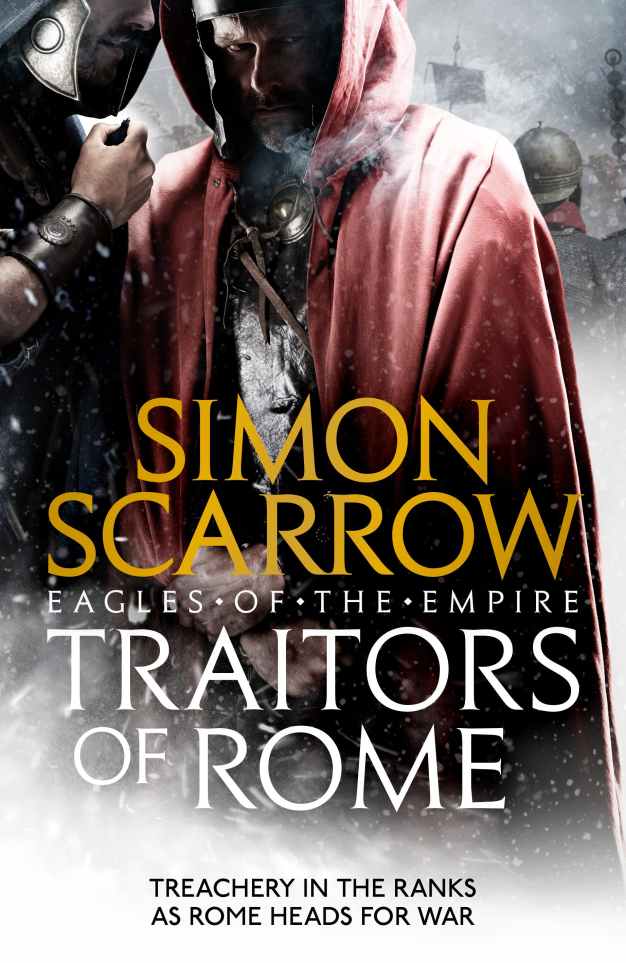
Traitors of Rome by Simon Scarrow

Traitors of Rome Cover

Publisher: Headline (Trade Paperback – 12 November 2019)

Series: Eagles of the Empire – Book 18

Length: 447 pages

My Rating: 4.5 out of 5 stars

Amazon

From one of my favourite historical fiction authors, Simon Scarrow, comes the 18th book in his long-running Eagles of the Empire series, Traitors of Rome, which once again sends his protagonists, Cato and Marco, into another dangerous scenario against Rome’s enemies. This is another of Scarrow’s books I have really been looking forward to, especially after enjoying the previous entry in the series, The Blood of Rome.

In AD 56, Rome and its great eastern rival, Parthia, are on the brink of war. Both the Roman Emperor Nero and Parthia’s king, Vologases, are in need of a great victory to fully secure their rule, and Rome’s territory has already begun to experience raids from a Parthian noble. Into this chaos Tribune Cato and Centurion Marco have been sent. Leading a cohort of Praetorian Guards, Cato and Marco have been assigned to serve under General Corbulo, who has gathered a force of over 20,000 Roman soldiers to fight against the Parthians. Unfortunately, most of the men under his command are badly trained and ill-prepared for battle, and Corbulo is desperate for more time to get them into shape.

To that end, he orders Cato to lead an embassy into Parthia to negotiate a peace treaty with Vologase. This embassy’s purpose is to delay the Parthian offensive long enough for Corbulo to finalise his preparations. Leading a small group of soldiers and accompanied by one of the general’s agents, Cato makes his way into Parthia, beset by raiders and pirates, with an uncertain reception from Vologase and his nobles awaiting him.

At the same time, the small kingdom of Thapsis on the border near Parthia has risen in revolt against Roman rule. Determined to swiftly end the revolt Corbulo leads a force to retake the kingdom with Marco at his side. However, what was initially believed to be an easy victory quickly turns into an arduous campaign as the Romans encounter heavy resistance. Worse, the harsh conditions and the even harsher discipline of Corbulo soon begin to wear on the soldier’s morale and loyalty. As Cato and Marco attempt to succeed in their missions, both officers are beset by unexpected setbacks and suspicious activities. It soon becomes apparent that a Parthian spy has infiltrated the Romans and is sabotaging their efforts and stoking a mutiny amongst the Roman ranks. Can Cato and Marco catch them before it is too late, or will this be their final mission?

This latest book from Scarrow is a fantastic and enjoyable read which features a cool new story with some unique and intriguing elements to it. I really like where Scarrow took the plot in Traitors of Rome, as he utilises two separate but equally enjoyable storylines by splitting up the two protagonists and sending them on separate missions. Both of the storylines are fairly different from each other, with Marco’s storyline being the more classic Roman military operation, while Cato’s storyline features a clandestine operation behind enemy lines with major political and espionage ramifications to it. This makes for a more complex narrative, but I found that the two different storylines worked very well together, and I really enjoyed seeing both of these plots progress. Scarrow does a good job of splitting the book between these two thrilling adventures and both of these storylines are a lot of fun.

I like some of the different elements that Scarrow featured in this fantastic, action-packed story. For example, the Cato plot had a really good team-up between Cato and the mysterious “clerk” Apollonius of Perga, a shrewd and ruthless agent of the general who lives to be mysterious and who Cato does not know if he can trust. Their relationship eventually evolves into grudging mutual respect, especially after they are forced to escape from Parthia in a great part of the book which sees them pursued by the army and other opportunists across the land. The Marco plot is also really intriguing, as it focuses on the difficult campaign to conquer Thapsis and the resultant hardships faced by the Romans when their supply lines are broken. This devolves into a messy situation where the men are fast losing their morale and General Corbulo’s harsh and unjust punishments to maintain military order and discipline start to push them in the direction of a mutiny. How this whole situation breaks down over the course of the campaign is rather fascinating, and of course Marco is caught in the middle of it. These two separate storylines come together in a great way towards the end of the book, and it looks like the series will be going in a new direction for the next book.

As always, Scarrow is a master of writing excellent historical action sequences, and after 18 books his depictions of Roman military combat have gotten pretty darn good. There are a few large-scale battle scenes throughout this book which show off Roman close-combat fighting, and the reader gets to see several other Roman battle strategies put into play. There are also several smaller-scale fights, especially in the Cato storyline, where Cato and his men face off against a more disparate array of opponents, from Parthian patrols to pirates. All of these action sequences are really well written and provide the reader with all their required excitement and thrills.

Overall, Traitors of Rome was another fantastic addition to Scarrow’s outstanding Eagles of the Empire series. Scarrow has produced another intense and exciting adventure story which goes in some cool new directions and once again puts his likeable protagonists in the middle of some major conflicts with their lives on the line. This is still one of my favourite historical fiction series of all time and is probably the best long-running Roman military sagas out there. It does feel like this series is starting to wrap up, especially as Marco gets married in this book and starts talking about retirement; however, this might be some sort of prelude to a great tragedy that keeps him in the army. Still, I am very much looking forward to the next book in the series, and I cannot wait to see where the story goes next.

Amazon

Rage by Jonathan Maberry

Rage Cover

Publisher: Macmillan Audio (Audiobook – 5 November 2019)

Series: Rogue Team International – Book One/Joe Ledger – Book 11

Length: 17 hours and 28 minutes

My Rating: 5 out of 5 stars

Amazon     Book Depository

Well damn, now this was an impressive book.   Prepare for all manner of action, excitement and chaos as bestselling author Jonathan Maberry presents an incredible and outstanding start to a new series that features his long-time protagonist, Joe Ledger, with Rage.

The Joe Ledger books were a series of 10 military thriller and science fiction hybrid novels that ran between 2009 and 2018, which focused on a group of military action heroes as they faced off against a number of advanced, mad science threats. Maberry actually concluded the Joe Ledger series last year, but the stories and adventures of the titular character have been continued in the new Rogue Team International series, of which Rage is the very first book (although it could be considered the 11th Joe Ledger book). This sequel series focuses on some new circumstances for the protagonists while still maintaining the heart and soul of the original books.

People who are familiar with my blog will know that I am a massive fan of the Joe Ledger books. Ever since I picked up the 10th and final novel, Deep Silence, last year, I have been really getting into this incredible thriller series and have already gone back and read the first six Joe Ledger books. Each of these books that I have reviewed so far has received a full five out of five stars from me, and it is easily one of my favourite series at the moment. As a result, I have been very keen to get a copy of the first instalment of this sequel series for a while now, and it has been very high on my list of books to read before the end of 2019. However, nothing was able to prepare me for how awesome this book was and for how much I was going to love it.

For years, Joe Ledger was the top field agent for the Department of Military Sciences (DMS), a top-secret United States military organisation tasked with protecting America from the most advanced and devastating weapons that mad science can produce. However, the political situation in America has become untenable, with the DMS no longer able to effectively do their job under the current administration. Seeing no future working for the US government, the head of the DMS, Mr Church, has disbanded the department, and has instead formed a new organisation, Rogue Team International. Independently funded and controlled by no government, Rogue Team International is able to deploy anywhere in the world against the worst sort of threats imaginable.

However, their first major mission has some very high stakes. A mysterious group of terrorists have unleashed a new bioweapon on a small, isolated island off the coast of North Korea. This weapon drives those infected by it into a murderous rage, causing them to attack and kill anyone they see in a brutal fashion. Worse, whoever is behind the attack has gone out of their way to frame the United States and South Korea for the crime, creating a dangerous situation which could see these countries dragged into a devastating war with North Korea and China.

Deployed to the island, Ledger and his team attempt to identify who is behind the attacks and what sort of weapon they have unleashed. It soon becomes clear that they are up against a deadly and powerful organisation, that is determined to cause as much chaos as possible. As a second attack is unleashed in South Korea, Ledger must find a way to stop his opponents before it is too late and the world is engulfed in war. However, their new foes are clever and ruthless and bear a powerful grudge against Ledger and Mr Church. Can Rogue Team International save the day, or will the cost be too high to pay?

Rage is an absolutely incredible and outstanding new novel from Maberry, who has done an incredible job introducing the first book in his Rogue Team International series. Rage contains an amazing story that had me firmly addicted right from the very start. The reader is once again presented with a massive and elaborate villainous plot, as two familiar antagonists and their cohorts unleash a devastating and scientifically unique attack for their own nefarious reasons. We then get to follow our protagonists as they investigate and attempt to counter the attacks and plots that they uncover. The entirety of the book is written in Maberry’s signature style, with the story told from a huge range of different points of view and time periods, resulting in a much richer and complex story that allows the reader to see the thoughts of the protagonists, antagonists and innocent bystanders as the various events of the book take place. There are a huge number of twists and turns as the story progresses, and even though we get some insight into the antagonist’s actions and motivations, the entirety of their elaborate plan is left a mystery for most of the book, allowing for some enthralling suspense to build up. All of this ends in an explosive conclusion which not only features a major fake-out but also a massively significant tragedy that is going to be a huge part of the series going forward. This was a truly epic story, and I cannot wait to see where the author takes his new series next.

Despite Rage being part of the new Rogue Team International series, Maberry continues to utilise a number of his distinctive writing elements that made his Joe Ledger novels such a delight to read. This includes the cool multiple viewpoints I mentioned above, as well as the fantastic use of great action sequences, enjoyable characters and the fascinating antagonists. However, there are some exciting changes in this book that I think existing Joe Ledger readers are going to enjoy. For example, the protagonist is part of a whole new organisation, they have a new base (a very over-the-top secret lair in Greece), a new team name and new call signs for all the protagonists (for example, Ledger has gone from Cowboy to Outlaw), all of which is an interesting change of pace for those familiar with the original series. There is also a lot more of a focus on international politics, with only a small amount of the story taking place in the United States. While I quite liked some of the new directions that Maberry was taking with this new series, many of the story elements in Rage have made it clear that the Rogue Team International books are going to be very strongly associated with the original Joe Ledger series. There are a huge number of call-backs to the previous books, including a lot of discussion about preceding cases and the utilisation of many characters, including some of the major antagonists, who have previously appeared. While you would assume that the employment of all these elements might make Rage hard to get into for readers unfamiliar with the other Joe Ledger novels, this is really not the case. Maberry continues his practice of filling his story with some detailed summaries of the various characters and books, so that readers can understand the significance of all the reference to the previous cases. This means that new readers can easily jump into Rage without any prior knowledge of the other Joe Ledger books, although I can guarantee that most people will be keen to go back and get the full account of what has happened before.

One of the most interesting aspects of the new international focused formula of this book was that it allowed Maberry to examine the current political situation around the Korean Peninsula. There is quite an interesting analysis of both countries throughout the course of the story, and the various issues surrounding them and their differences are actually covered in a series of short chapters, made to resemble a political chat show, with experts voicing their thoughts on both Koreas, and the influence of countries such as China and the United States. Rage’s story features a fascinating look at what the author thinks would happen if a flashpoint event occurred in the region, and who could potentially benefit. I was very intrigued by Maberry’s analysis of the situation, and I liked how he featured several characters from both North and South Korea in his story. The author’s portrayal of the North Korean characters was particularly captivating, as he showed them as mostly good people who were trapped by political circumstances, and who aren’t seeking a war against the rest of the world. All of this examination of the current political situation in Korea made for a fascinating part of the book’s plot, and I am curious to see what area of the world he will explore in the next Rogue Team International book.

One of Maberry’s main strengths as a writer is his ability to create some truly enjoyable and memorable characters to populate his stories with. Perhaps one of the best examples of this is the main protagonist of Rage and its prequel series, Joe Ledger. Ledger is an extremely complex and multilayered action protagonist, who serves as the book’s main character. Thanks to the fact that Ledger narrates all of the chapters told from his point of view (about two thirds of the book; the rest of the chapters are told in the third person), we get a real sense of his character. While he likes to project a cocky, confident and humorous persona to most people he meets, cracking all sorts of jokes to both other characters and the reader, deeper down his is a psychological mess. Due to some past trauma, Ledger has some major issues, and his career as a shooter for the DMS and Rogue Team International has not helped the situation. Ledger’s anger, despair and hopelessness are constantly bubbling towards the surface, adding a fascinating dimension to the character. I have always really liked how Maberry has gone out of his way to show an action protagonist who is actually impacted by the work they do and the lives they have taken, and it makes for a refreshing change of pace. Rage in particular contains some very dark moments for Ledger, and if the conclusion of the book is anything to go by, his character is going to undergo some massive emotional changes in the next few books.

I was also really glad that Maberry continued to utilise so many of the great side characters that have been previously introduced in the Joe Ledger series. Pretty much all of the key DMS characters have moved across into the new book, and I was really glad we could continue to enjoy the fun dynamic that they have established over the course of the previous series. The enigmatic Mr Church continues to remain one of the best spy-master characters I have ever read and is probably one of my favourite people in the Joe Ledger books. While there are no major revelations about his past in this novel (my theory is that he is either an alien or some form of angel), there are some hints to his seemingly superhuman toughness and some of the previous missions he has engaged in. Mr Church also shows off some amazing diplomatic chops in this novel, utilising a network of level-headed members of various countries’ governments to work around blustering and incompetent world leaders. Most of the rest of the supporting characters remain the same, although several of them get some fun moments in this book, such as Bug unexpectedly receiving some fan-girl attention and Doc Holiday’s eccentric personality overwhelming people unfamiliar with her. There are also some great new characters in this book, many of whom appear set to become long-term recurring characters. If I had to make one complaint, it would be that there wasn’t enough of Ghost, Ledger’s attack dog, but I am sure we will see more of him in the future.

In addition to the fantastic protagonists, Maberry has also come up with a couple of conniving and evil antagonists to act as a foil to Joe Ledger and Rogue Team International. The main villains of the book are actually prior antagonists from two of the books in the Joe Ledger series, who have been reutilised to great effect in this new novel. While an exciting original major villain might have worked out well for the first novel in a new series, I think that using some existing antagonists was an excellent choice that really helped create a captivating story. Not only does this help reinforce the connection between the new Rogue Team International series and the Joe Ledger books, but it also allowed for some interesting character and story development. Both of these main two antagonists have been defeated in the past by Joe Ledger and Mr Church, so they each have very deep, personal grudges against them. Their new plan for domination, which is actually very interesting and quite complex, is also filled with elements of revenge, which helps ratchet up the intrigue and adds a whole new element. I loved the various interludes which show how these two bad guys escaped from prison and started their new team-up, and it was really cool to see what happened to them after their respective defeats in the previous books. It was also very interesting to see two antagonists, who previously had nothing to do with each other, had appeared in different novels and had very different motivations for their actions, come together as a cohesive unit with the new goals in mind. This was definitely a great use of two antagonists, and the damage that they caused was very impressive and memorable.

It is impossible to talk about one of the Joe Ledger novels without discussing all the intense action you can expect within. Maberry is a master of writing an electrifying action sequence, and the first book in the Rogue Team International series is absolutely chock full of action, fights and brutal violence. There are so many varied and thrilling battle scenes throughout the book, as the protagonist finds himself fighting in all manner of different situations. Whether the protagonist is engaging in a mass shootout against heavily armed opponents with his team backing him up, fighting by himself against a group of assassins or engaging in knock-out, throwdown fist fight against one of the antagonists, Maberry crafts some excellent and detailed sequences, allowing the reader to appreciate everything that is going on. The standout elements of this book are the victims of the new rage-inducing bioweapon that is this book’s unique science fiction element. Victims under the control of Rage attack anything they see in a frenzy, resulting in some crazy and vicious scenes. This also allows for some unique sequences where the protagonists must find a way to neutralise the victims without killing them, in the hope that they can be cured, all the while trying to avoid getting killed by either the Rage victims or some of the soldiers behind the attacks. All of the action scenes in this book are really impressive to experience, and it is impossible not to get excited as you read through them. However, readers should be warned in advance that the action can get quite brutal in places, and there are numerous examples of gruesome mutilation or torture, which might not be appealing to some people.

One of the main things that I love about the Joe Ledger series are the incredible audiobook versions of the previous novels, all of which feature the outstanding narration of Ray Porter. As I have stated in several of my previous reviews, Porter has some unbelievable vocal talents, and the life he breathes into all the characters in the Joe Ledger audiobooks is just fantastic. In particular, he portrays the voice and personality of the series titular character and protagonist, Joe Ledger, extremely well and he does a remarkable job of conveying all of the characters emotions, charm and humour to the reader. I was so happy when I saw that Porter was going to narrate Rage, and I knew I would have to grab the audiobook format of this book when it came out. I was in no way disappointed with this audiobook, as Porter has once again done a fantastic job of bringing all the characters to life and telling Rage’s amazing story. Porter still has such a fantastic handle on the book’s main character, and his portrayal of the Joe Ledger’s emotions is just superb, especially during some major scenes in the book. With a running time of 17½ hours, Rage is a somewhat substantial read, and dedicated listeners should be able to get through it in a few days. I would strongly recommend the audiobook format of Rage to anyone who wants to read this book, and it still remains my favourite and preferred way to get my Joe Ledger fix.

In Rage, Jonathan Maberry has once again outdone himself producing a wildly entertaining and deeply compelling novel that I absolutely loved. In this first instalment of his new Rogue Team International series, Maberry has brought his fantastic characters from the Joe Ledger books into a whole new era, as the story goes in some great new directions, while maintaining the best parts of the original series. Featuring one hell of a story and a pretty memorable conclusion, Rage is Maberry at his best, and I have no choice but to award it a full five stars. Highly recommended for anyone wanting a high-octane read, Rage is an outstanding book guaranteed to pull you in and leave you an emotional wreck.

Amazon     Book Depository

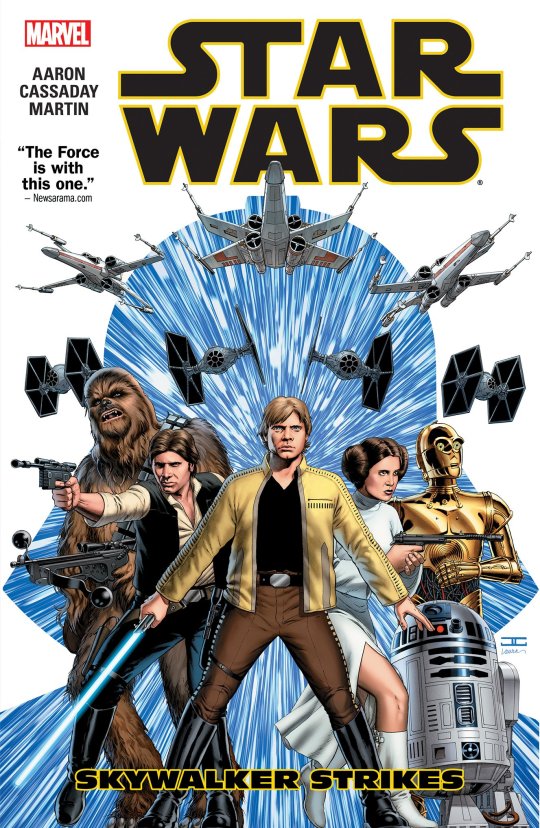
Throwback Thursday – Star Wars (2015) Volume 1: Skywalker Strikes by Jason Aaron and John Cassaday

Star Wars (2015) Volume 1 Cover.jpg

Publisher: Marvel Comics

Publication Date: 6 October 2015

Length: 160 pages

My Rating: 5 out of 5 stars

Amazon

Reviewed as part of my Throwback Thursday series, where I republish old reviews, review books I have read before or review older books I have only just had a chance to read.

I think it is fair to say that I have been in a real Star Wars mood lately. Maybe it is because of the imminent release of the final movie in the Skywalker Saga, Star Wars: The Rise of Skywalker, or perhaps it is because The Mandalorian is such an awesome TV show. Whatever the reason, I have been reading and reviewing quite a few Star Wars books and comics lately. For example, I am currently listening to Star Wars: Force Collector, I reviewed Tarkin last week and I recently read and reviewed Resistance Reborn and Vader: Dark Vision. As a result, I thought that this week would be a good time to do a Throwback Thursday on the first volume of the 2015 Star Wars comic book series, Skywalker Strikes, which did an outstanding job of introducing an extremely exciting ongoing comic series.

The Star Wars comic book series was started in 2015 and follows the adventures of the protagonists of the original Star Wars trilogy. Set shortly after the events of A New Hope, this series attempts to fill in the three years between the first film and The Empire Strikes Back. The Star Wars comics originally ran concurrently with the Darth Vader (2015) comic series until that series ended, and then proceeded to run alongside the Doctor Aphra comics. The Star Wars series ran for 75 issues and has only recently concluded. A sequel series with the same name is set to begin in early 2020, which will follow the events between The Empire Strikes Back and Return of the Jedi.

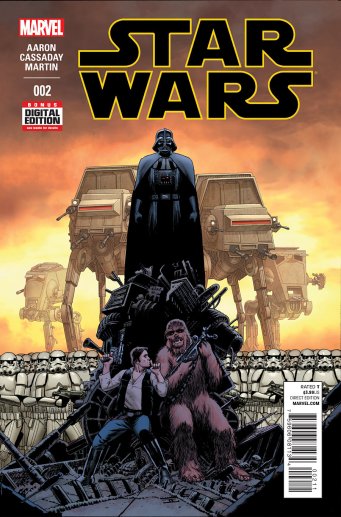
Star_Wars_Vol_2_2.jpg

Volume One of Star Wars begins shortly after the destruction of the Death Star. With the Empire in turmoil following the destruction of such a major weapon, Rebel Alliance members Luke Skywalker, Leia Organa, Han Solo, Chewbacca, C-3PO and R2-D2 use the chaos to infiltrate a key Imperial weapons factory. While they are able to destabilise the factory’s reactor core and free its slave labour force, the Rebels are unprepared for the unexpected arrival of Darth Vader.

Attempting to complete their mission while also trying to kill Vader, the Rebels find themselves hopelessly outmatched by the Dark Lord of the Sith, who is determined to capture the Rebel who blew up the Death Star. Not even Luke, with his newly discovered Jedi abilities, is able to stand up to Vader, and the Rebels barely manage to escape with their lives.

Frustrated by his failures against Vader, Luke decides to take a leave of absence from the Rebel Alliance and returns to Tatooine to contemplate his future. Travelling to the house where Obi-Wan Kenobi lived in exile for years, Luke hopes to find something that will guide him. Instead he finds himself walking into a trap, as the bounty hunter Boba Fett is lying in wait. At the same time, Leia talks Han into a scouting mission for the Rebels, but their simple mission soon attracts the wrong sort of attention. Who is the mysterious woman hunting Han, and why is claiming to be his wife?

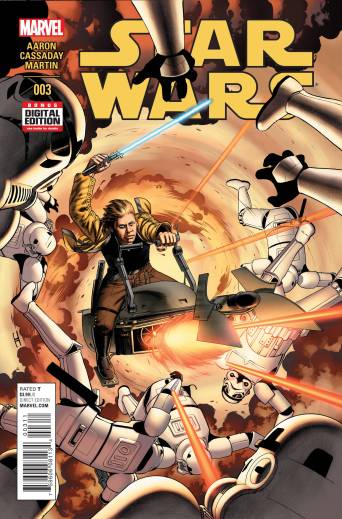
Star_Wars_3_Marvel.jpg

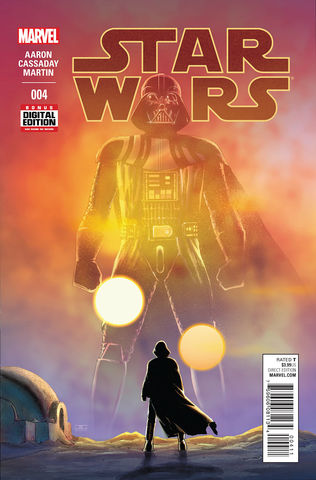
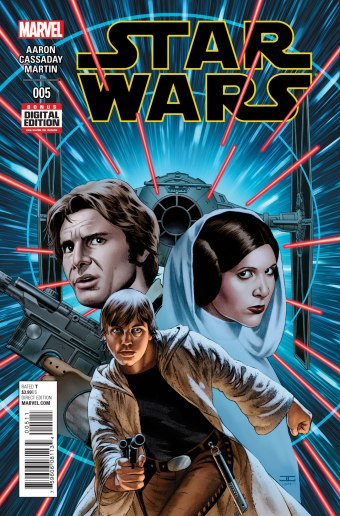
Skywalker Strikes, which is made up of Issues #1-6 of the Star Wars series, contains an outstanding story, fantastic artwork and some of the most insane Star Wars action sequences that you will ever see. The team of Jason Aaron and John Cassaday, have done an amazing job on this comic, and this first volume does a wonderful job starting off this long-running series. While all the issues in this volume are connected together pretty well, I would say that there is a distinctive break between Issues #1-3 and Issues #4-6. Issues #1-3 focuses solely on the protagonist’s attack on the weapon facility, while the last three issues feature some more independent adventures from some of the series’ various characters, as each of them is searching for something.

The sequence contained within Issues #1-3 is just incredible, and it is easily my favourite part of the entire series. What starts as a fun infiltration of an Imperial facility quickly devolves into utter chaos as Darth Vader enters the mix. What then follows is nearly three whole issues of action, explosions, fantastic first meetings and all manner of destruction as the Rebels desperately attempt to escape the factory. While all the characters involved in this part of the comic are really good, I have to say that Vader steals the show as the indestructible villain. This was actually one of the first pieces of fiction in the new Disney Star Wars canon that shows off how amazing Vader could truly be, and it is pretty darn awesome. Pretty much from the first instance he appears, he shows off the full extent of his powers by throwing stormtroopers in front of a sneak attack from Chewbacca, and then by starting to crush an AT-AT with the force. He then subsequently survives a full-on blast from the AT-AT’s cannons and hacks it to pieces with his lightsaber. He also cuts through a bunch of escaping slaves and shows his intense displeasure to his subordinates in a number of destructive ways, including twisting a stormtrooper’s head 180 degrees with the force (to be fair, he did catch sight of Vader without his helmet) and choking a Star Destroyer captain from an insane distance. I can also not be the only person who cracked up at Vader very quickly destroying an Imperial Officer moments after he said “Lord Vader will have my….” (spoilers, he was going to say head, and Vader really did). All of this destruction and action was essentially pure awesome, and I loved every second of it.

Star_Wars_Vol_2_4.jpg

In addition to all the action in this part of the book, there are also some major moments in Star Wars history that fans of the franchise are really going to enjoy. For the one thing, it actually has the first face-to-face confrontation between Luke and Darth Vader. This scene is handled extremely well. Luke, still believing that Vader is the one responsible for the death of his father, jumps at the chance to get revenge. However, as Luke runs towards Vader’s location full of confidence, he hears the disembodied voice of Obi-Wan Kenobi telling him to run. This is advice that Luke really should have taken; Vader, after berating Luke for his obvious lack of skill with the lightsaber, rather easily disarms him. While getting ready to kill Luke, Vader notices that the lightsaber he has taken off him is the very one he used to wield as Anakin Skywalker, which obviously raises some issues within him. As events at the factory spiral out of control, Luke is able to evade Vader, who starts to grow slightly more impressed by his skills. As Luke makes his escape, Vader realises that he is not only the pilot that destroyed the Death Star but also Kenobi’s last great hope. Still not fully realising the identity of the boy he just encountered, Vader rather vindictively promises to corrupt him to his purposes. All of these events are pretty incredible moments in Star Wars history, and I think that the creative team did an outstanding job introducing them in this new canon. The initial face-to-face showdown between the main protagonist and villain of the original Star Wars trilogy is a pretty significant moment, and I really loved how it was shown. The hints at the hidden history between the two are great, and the initial realisations from Vader that there is more to Luke than he realises are fantastic. I also liked how the creative team showed Luke as having no real skill with the lightsaber or the force. Considering that he only had about an hour of training with Kenobi, it really isn’t that surprising that he has no lightsaber abilities, so this is a pretty clever and realistic inclusion, especially as a good part of the following Star Wars comic series deals with some of the earliest days of his training. While these events are probably not the most significant to occur in this volume (more on that later), they are incredibly intriguing and any fan of the Star Wars franchise is going to love it.

The last three issues of Skywalker Strikes are also very entertaining, though less action-packed, since the creative team has opted instead for storytelling and showing off the state of the Empire and Rebel Alliance. While a despairing Luke sets off to find answers, Han and Leia set off to find potential locations for a new Rebel base, while Vader has a meeting with Jabba the Hut. There are some really interesting aspects to this part of the story, from the growing hopelessness in Luke as he begins to realise how far he is from becoming a Jedi, to Vader’s sudden obsession with capturing Luke, to the growing hints of romance between Han and Leia, disguised at this point as antagonism. However, I would say that it’s the newcomers to the comic series, Boba Fett and Sana Solo, that are some of the best parts of the last three issues of the volume. Fett, who has long been a fan favourite despite his complete underutilisation in the movies, shines as the badass bounty hunter as he scours Tatooine for Luke, eventually finding out all about him through some very violent means. This leads to a pretty fun showdown between Boba and Luke, as Boba ambushes him at Kenobi’s house and easily incapacitates him and R2-D2 with his cool array of weapons and tactics. It is only thanks to Luke’s first close-combat use of the force that he is able to escape, as he successfully blocks a blaster bolt while blinded (a nice homage to the training sequence from A New Hope) and moves an item with his mind. All of this was a pretty entertaining showdown, and I loved seeing Fett in action for once. We also have the mysterious Sana Solo, who has a pretty fantastic takedown of some Rodian thugs with a great piece of technology and a ruthless demeanour. She is later able to track down Han and Leia, absolutely terrifying Han before dropping one of the biggest bombshells of the book: that she is Han’s wife. While this is not explored in any great detail in this volume, it is an excellent introduction for this great character, who goes on to become a fairly major figure in the current Star Wars canon. As a result of all of this, the second half of the volume holds up pretty well to the action-packed first half, and there are plenty of major scenes, including the very big ending.

Star_Wars_Vol_2_5.jpg

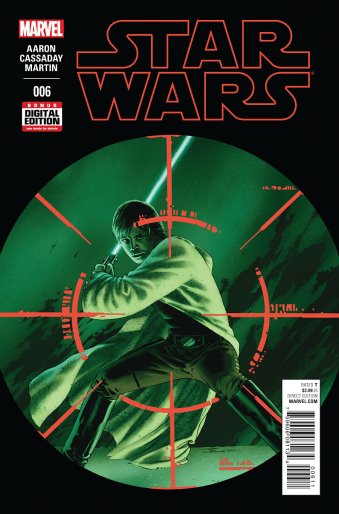
While I did really like the second part of this volume, the best way to appreciate it fully is if you understand its connection to the Darth Vader (2015) series of comics. The Darth Vader series was launched right on the heels of the Star Wars comics and it is actually set in the aftermath of the first three issues of this volume. In the first issue of this concurrent comic, it is shown that Vader has actually started going rogue on the Emperor and is making his own deals with Jabba the Hutt, before the formal discussion he has with Jabba in Issue #4 of the Star Wars series. This actually clears up the somewhat cryptic discussion he has with Jabba later in the issue, where they talk about the bounty hunters he has hired, and also shows the point where he actually tasked Boba Fett with finding Luke. While none of this is absolutely vital when it comes to fully understanding the plot of Skywalker Strikes, it is interesting to see that some of the referenced events occurred in another series. However, the main reason why readers should try to understand the connection between this comic and the Darth Vader series is in the epic conclusion both of them share, where Vader learns the last name of the boy he has been hunting. Both Issue #6 of Star Wars and Darth Vader were actually released on the same day, so readers of both series were able to see this scene at the same time. The two scenes are shown in a slightly different light in each series. It is expanded a bit more in the Darth Vader series, as it plays into the feelings of resentment towards the Emperor that have been building in Vader through the series. However, I quite liked the simpler version in Issue #6 of Star Wars, as the slow-boiling rage and anger within Vader is pretty obvious, as he takes a whole page to fully react, cracking the glass on a Star Destroyer and simply whispering, “Skywalker”. As a result of this connection, the Star Wars and Darth Vader series complement each other extremely well, and I would strongly recommend reading both pretty close together. However, no matter which series you read, the sequence showing the moment where Vader realises that his son is still alive and a Jedi is pretty darn epic and really memorable.

It could be argued that splitting this volume into two separate storylines was an interesting choice from the book’s creative team. I imagine that six issues focused on the attack on the Imperial weapons factory would have been pretty epic (just imagine how much more destruction Vader could have wrought). However, I personally think they did the right thing by splitting the story and showcasing the aftermath of this action. This way you not only get the intense action of the first few stories but you also get to see the consequences of the mission, and all the implications this has for the wider Star Wars universe. In addition, there is also quite an intriguing set up for several key moments in the upcoming series as a whole, a whole new fight between Luke and another iconic Star Wars character in Boba Fett, and some amazing connections with a sister series. I really liked how the story of the entire volume came together, and I think it was an outstanding way to start this excellent series.

Star_Wars_Vol_2_6.jpg

I have to say that I was also really impressed with the awesome artwork that was featured in this first volume. The artwork was drawn by John Cassaday, and featured Laura Martin as the colourist. It is pretty amazing the way that Cassaday was able to capture the faces of the core original trilogy cast members with his artwork. Luke, Leia and Han all look really good to my eye in this volume, and the artist has also done some great renditions of other existing characters, such as Vader, Boba Fett and Jabba the Hutt. In addition, I really enjoyed all of the marvellous and exhilarating action sequences that they artistic team portrayed throughout the volume. These action scenes, especially the ones featuring Vader at the start of the book are just incredible, and I really loved seeing all the fantastic and creative violence. In addition to all the action, there are a number of scenes where the artwork helps to enhance the emotions and hidden meaning of a scene, and I will always love the way that they portrayed the closing moments of this volume. This was some first-rate Star Wars comic book art that is really worth checking out.

As you can see from the above review, I really loved this first volume of the Star Wars (2015) comic book series. The amazing creative team behind this first volume did a fantastic job with the first six issues that make up Skywalker Strikes, producing an extraordinary story which is complimented by a connection to another series and some exceptional artwork. This volume is a fantastic introduction to the flagship comic book series of the Star Wars franchise, and it comes highly recommended. No great knowledge of the expanded Star Wars canon is required to enjoy it, and indeed this may prove to be an effective gateway to the greater Star Wars universe. This gets a full five stars from me, and I am so very glad I decided to check out the Star Wars comic book series this year.

Amazon

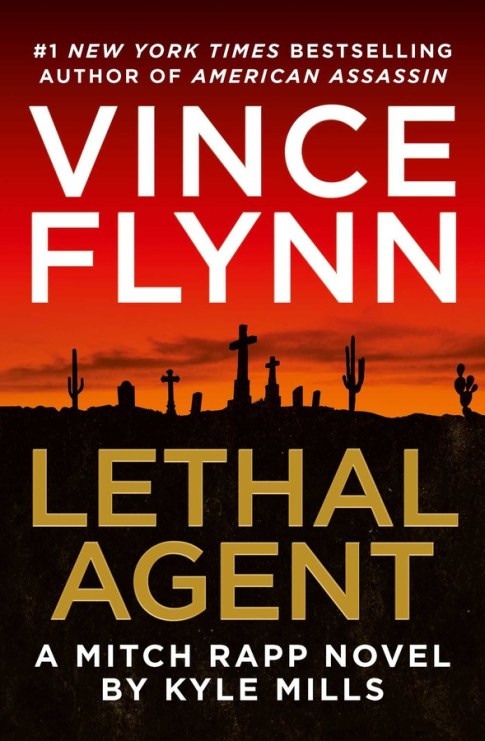
Lethal Agent by Kyle Mills (based on the series by Vince Flynn)

Lethal Agent Cover

Publisher: Simon & Schuster Audio (Audiobook – 24 September 2019)

Series: Mitch Rapp – Book 18

Length: 9 hours and 50 minutes

My Rating: 4.5 out of 5 stars

Amazon     Book Depository

Prepare to dive into a thriller rife with action, political intrigue and a killer plot with the latest book in the long-running Mitch Rapp series, Lethal Agent.

Lethal Agent is the 18th book in the Mitch Rapp series, which started back in 1999 with Transfer of Power. Initially written by Vince Flynn, since 2015 the series has been written by thriller author Kyle Mills following Flynn’s passing in 2013. I started reading the Mitch Rapp series last year, when I picked up a copy of the 17th book in the series, Red War, mainly because it had a really fascinating plot featuring a dying president of Russia going to war with the rest of the world. I ended up really enjoying Red War and I have gone out of my way to check out more military thrillers since then (this year’s Red Metal and Treason for example). In Lethal Agent, Mills takes the series back to its anti-terrorist thriller roots, as the series’ titular character, Mitch Rapp, goes up against a deadly terrorist while also having to navigate the toxic minefield that is modern American politics.

For years, legendary CIA operative Mitch Rapp has been responsible for the deaths of hundreds of America’s enemies, including numerous terrorists, fanatics, criminals and operatives of hostile foreign powers. Among those he believed he killed was the intelligent and dangerous leader of ISIS, Sayid Halabi. However, Halabi secretly managed to escape Rapp’s last attempt to kill him, and has been plotting in the shadows ever since, determined to find a way to strike back at Rapp and America.

Hiding out in Yemen, Halabi is able to capture a brilliant French microbiologist who has been working on a cure for a rare and deadly respiratory disease. Using the microbiologist to make anthrax, Halabi embarks on a campaign of terror, producing slick propaganda videos to create tension and panic within the United States. However, his real plan is to create a deadly bioweapon that will wipe out large swathes of the world’s population.

Rapp is determined to hunt Halabi down and end him once and for all, but he finds himself unable to act thanks to one enemy even he cannot defeat; politics. The upcoming battle for the presidency has become extremely ugly, and the leading candidate, Christine Barnett, is using Amercia’s fear of Halabi to make the current administration and the CIA look incompetent. She also has Rapp and his boss, Irene Kennedy, in her sights, and is determined to make them suffer for defying her. Hamstrung by the political atmosphere and no longer able to make an official move, Rapp is forced to go rogue and infiltrate a dangerous Mexican cartel who have been smuggling Halabi’s anthrax and operatives into the US. However, as Rapp moves closer to finding Halabi’s location and determining the nature of the bioweapon heading towards the states, he must deal with the fallout from Barnett’s political manoeuvring, which could end his life.

This latest book in the Mitch Rapp series is another fantastic and exhilarating read that I had a wonderful time listening to. Lethal Agent contains a thrilling, fast-paced story that goes in some fun directions, such as Rapp’s violent but effective infiltration of a Mexican drug cartel. The author does an excellent job of mixing this compelling story with fast-paced action and some clever and depressingly realistic political intrigue to create an enjoyable read that did a great job of keeping my attention until the very end. While there are some strong connections to a previous novel in this series, Lethal Agent can easily be read as a standalone novel, and I would strongly recommend it to anyone who is looking for an exciting read.

I have to say that I was impressed by Mills’s use of several point-of-view characters to tell the overall narrative of this story. While a large amount of the plot is told from the perspective of protagonist Mitch Rapp, a lot of it is also shown through the eyes of several other characters. Even though the viewpoints of Rapp, Rapp’s allies and some of the minor characters are quite fun or interesting, I personally loved the scenes shown from the perspective of the book’s various antagonists. This includes showcasing the twisted and self-serving political agenda of presidential hopeful Christine Barnett, whose attempts to take the Oval Office through fearmongering and attacks on the country’s intelligence agencies has some interesting impacts on the hunt for Rapp’s terrorist targets. I also enjoyed seeing a few scenes from the perspective of the Cartel boss Rapp is trying to get close to, and there are some great sequences where the usually confident gangster begins to realise how out of his depth he is with an operator like Rapp.

However, I thought that the chapters shown from the perspective of the book’s main antagonist, Sayid Halabi, were some of the best parts of the whole book. Halabi is an enemy of Rapp who was thought to have been killed in Enemy of the State, although the prologue of Lethal Agent shows how he managed to stay alive. Various chapters of this book are shown from Halabi’s point of view as he attempts to find a way to defeat Rapp and America, and they serve as a thrilling counterpart to the protagonist’s subsequent hunt for him. I thought it was fascinating to see the various ways that Halabi was plotting to attack America in these chapters, especially as at times he uses fear and propaganda to scare the country into immobility, rather than launch an actual attack. It was also a little disturbing to see this terrorist mastermind attempt to manipulate America’s political system by deliberately fuelling an incompetent politician’s fear mongering strategy. The use of this split perspective format really helped create a compelling novel, and Mills did a wonderful job coming up with some great antagonists for this book.

While all the espionage and spy thriller aspects of the book are extremely compelling and entertaining, the parts of the book that I found most intriguing were the various sections of political intrigue. Mills does an incredible job imitating the politics of modern-day America in his book and showing off how destructive and noxious the current political system is, especially for those people who want to become president. The focus on a politician being more concerned with their ambitions than the safety of the country, and who is willing to hamper or ignore the concerns of intelligence agencies for their own ends is something that many people can relate to at the moment. The inclusion of fearmongering as a politician’s central political tactic is also something that can be seen in the real world, and I felt that Mills had a really good depiction of it in this book, showcasing how effective it can be, and how it can impact people. While I am sure that readers from both sides of the political spectrum will be able to see politicians they despise in the character of Christine Barnett, I think that Mills was more taking aim at the rot that is infecting the entire political system rather than a particular individual. Palpable weariness seems to come out of the page whenever the book starts to talk about the modern politics in America, and a number of characters are obviously starting to become exhausted with the entire circus. The story also contains a lot of criticism towards the politics that is reducing the effectiveness of America’s intelligence community, and the story examines the potential damage that such politics could have on the country’s safety. All of this makes for an extremely intriguing inclusion into the book, which can be fascinating, aggravating and depressing all at the same time.

As you would expect from a Mitch Rapp thriller novel, Lethal Agent is chock full of enough violence and thrills to keep any action junkie sated. Rapp, a highly feared and skilled killer, tears through a ton of enemies in this book, mostly without receiving a single scratch in return. While the near-invincible action protagonist is a little played out, I did quite enjoy the various ways he showed off his skills and abilities in this book. The sequences where he systematically takes out the cartel forces are really entertaining, and I had a good laugh at a scene where he picks a lock on a cage with the fibula of one of his jailers. There is also a pretty awesome set-piece at the end of the book, which features a mass of vehicular carnage as Rapp tries to stop a terrorist attack. I did think that the sequence when he is forced to knock out coked-up facsimiles of Justin Bieber and Selena Gomez was a little weird. I understand showing two exceedingly influential but dysfunctional celebrities go insane in the same scene where the old-school Rapp reflects on the current state of America, but it was still a somewhat odd inclusion. Overall, though, if you are a fan of action-packed thrillers, then you are going to enjoy Lethal Agent.

While I enjoyed reading a physical version of Red War last year, I chose to listen to Lethal Agent on audiobook instead. This format of Lethal Agent runs for around nine hours and 50 minutes and is narrated by legendary audiobook narrator George Guidall. Despite the fact that Guidall has narrated over a thousand audiobooks in his career, this was actually the first piece of his work that I have experienced. Guidall has a fantastic voice which works very well for a high-stakes thriller novel. He also does a great job capturing the emotion of the various politicians, and there is some appropriate weariness in his voice when he describes the American political situation. If I had one criticism, it would be that most of the characters sounded very similar to each other, and it was a little hard to distinguish one person from the next. Still, I had a lot of fun listening to this book, and thanks to the intense story and short run-time, it only took me a few days to get through this book.

Lethal Agent is an excellent new addition to the Mitch Rapp series, and I loved some of the cool and intriguing directions that the author took the story. Kyle Mills has been doing a sensational job with the series since he took up the mantle of author, and I am really excited to see what sort of story he comes up with next. This is an excellent book and I would strongly recommend it to any fan of the thriller genre.

Amazon     Book Depository

Tiamat’s Wrath by James S. A. Corey

Tiamat's Wrath Cover

Publisher: Recorded Books (Audiobook – 26 May 2019)

Series: The Expanse – Book Eight

Length: 19 hours and 8 minutes

My Rating: 5 out of 5 stars

Amazon     Book Depository

With 2019 coming to an end, it is about time I got around to writing a review for one of the best science fiction books of the year, Tiamat’s Wrath by James S. A. Corey, the eighth book in the extremely popular The Expanse series. James S. A. Corey is the collaborative name of co-authors Daniel Abraham and Ty Franck, but for the purposes of this review it is simpler to treat Corey as an individual.

Tiamat’s Wrath is an outstanding piece of science fiction that I had an amazing time listening to earlier in the year. Despite being extremely keen for this book, I did not get around to reading it until a month or two after it came out, but when I did get a chance to listen to Tiamat’s Wrath, I absolutely loved it and it was one of my favourite books from earlier in the year. However, I completely failed to write a review immediately after finishing it, and it kind of got lost in the pile of books I needed to review as I read more and more stuff.

The Expanse books, which started in 2011 with Leviathan Wakes, are an extremely complex and outstandingly well-written science fiction series, which have also been turned into a very popular television show of the same name. It is important to note that while all the books in The Expanse are connected by the same universe, overarching plot and central characters, the story can be broken up into three separate trilogies of novels. After the success of the first eight books, the authors are starting to wrap up the series, with the upcoming ninth book (hopefully coming out sometime in 2020), being the last in the series. Not only is Tiamat’s Wrath the penultimate book in the series; it is also the second book in the last trilogy of the series, which started with 2017’s Persepolis Rising.

Tiamat’s Wrath is set a short time after the events of Persepolis Rising, when the Laconian Empire, under the command of High Consul Winston Duarte, successfully utilised advanced alien technology to take control of the entire gate network and destroy the navies of Earth and Mars. The Laconians now rule the entire galaxy, and the crew of the Rocinante (the central protagonists of The Expanse series), are wanted criminals as they fight a guerrilla war. This was another incredible addition to The Expanse series that not only contains a vast and captivating story in its own right but which sets up a fascinating scenario for the final book in the franchise.

Goodread’s Synopsis:

Thirteen hundred gates have opened to solar systems around the galaxy. But as humanity builds its interstellar empire in the alien ruins, the mysteries and threats grow deeper.

In the dead systems where gates lead to stranger things than alien planets, Elvi Okoye begins a desperate search to discover the nature of a genocide that happened before the first human beings existed, and to find weapons to fight a war against forces at the edge of the imaginable. But the price of that knowledge may be higher than she can pay.

At the heart of the empire, Teresa Duarte prepares to take on the burden of her father’s godlike ambition. The sociopathic scientist Paolo Cortázar and the Mephistophelian prisoner James Holden are only two of the dangers in a palace thick with intrigue, but Teresa has a mind of her own and secrets even her father the emperor doesn’t guess.

And throughout the wide human empire, the scattered crew of the Rocinante fights a brave rear-guard action against Duarte’s authoritarian regime. Memory of the old order falls away, and a future under Laconia’s eternal rule — and with it, a battle that humanity can only lose – seems more and more certain. Because against the terrors that lie between worlds, courage and ambition will not be enough…

For the plot of Tiamat’s Wrath, Corey tells the story from the perspective of several separate point-of-view characters, each of whom has a number of chapters throughout the book. This was a very interesting combination of character perspectives that helped explore various aspects of the galaxy following the rise to power of the Laconians. Three of the main point-of-view characters are former Rocinante crew members Naomi Nagata, Bobbie Draper and Alex Kamal, each of whom is involved in the war against the powerful Laconian Empire. Another point-of-view character is returning character Elvi Okoye, who, despite her loyalties to her friends upon the Rocinante, finds herself employed by High Consul Duarte as one of his primary scientists exploring the alien technology, and later finds herself drawn into the Laconian inner circle. The fifth main character is new protagonist Teresa Duarte, daughter of the High Consul, who provides insight into growing up in the Laconian Empire and the political intrigue of the capital. In addition to the five characters mentioned above, the book’s prologue, epilogue and interludes are narrated by former Rocinante captain James Holden, who is being held prisoner on Laconia and who is attempting to manipulate the system from within.

I really enjoyed the author’s use of these multiple viewpoints, especially as it allowed them to tell a complex and widespread story set across several different solar systems. Each of these various viewpoints provides the reader with different information and insight into the both the Laconian Empire and the unknown alien threat that has sprung up. While Elvi and Teresa’s story arcs are pretty fascinating and I quite enjoyed the combination of politics and alien science that filled their chapters, my favourite parts of the book are the chapters told from the perspectives of Naomi, Bobbie and Alex. This is mainly because these chapters focused on their fight against the Laconian Empire, and I really enjoyed the detailed and captivating accounts of a large-scale guerrilla conflict in a massive space location. Each of these three characters shows off a different aspect of this fight, including Naomi acting as the resistance’s master strategist while living in a supply crate, Bobbie’s work as a marine and drill sergeant on the frontline and Alex’s job piloting various combat craft into battle. Thanks to these three characters, you get an amazing idea of how this war is being fought, and the various issues involved with facing a seemingly invincible opponent. I also liked how all the various character arcs came together extremely well as the book progressed, creating a first-rate narrative that proved to be extremely addictive.

I am a man who loves his science fiction action, and I have to say that I had an absolute blast with the action sequences in this book. Corey has absolutely packed this book full of various battle sequences in space, as the protagonists go up against the various Laconian forces in both smaller skirmishes and one massive full-system assault. Not only are the battles pretty spectacular in their own right, but I love how realistic the author has tried to make them, with things like gravity, the lack of sound in space and communication delays across vast distances all taken into account. All this consideration really makes the combat in Tiamat’s Wrath stand out, and it added a lot to my overall enjoyment on this novel.

While this is an excellent piece of science fiction and an amazing read, due to its position as the eighth book in the series, and the middle book in the final trilogy, Tiamat’s Wrath is probably not the best book to start exploring The Expanse with. While Corey does a pretty good job of making this book accessible to new readers, I would strongly suggest that readers at least check out the previous book in the series, Persepolis Rising, first, as it will help readers understand more of the complex science fiction and story elements. There is no doubt in my mind that existing fans of The Expanse will love this fantastic book, especially as it takes the story in some interesting directions and sets up the series for a pretty epic conclusion. That being said, some of the developments that occur during the book are going to make dedicated The Expanse readers very sad, especially if they have grown attached to certain characters.

I ended up listening to the audiobook format of Tiamat’s Wrath, narrated by Jefferson Mays. This is a pretty substantial audiobook, running for just over 19 hours (indeed it would have just made the top 20 on my Longest Audiobook list), but I ended up getting through it rather quickly as I had a hard time turning it off. I found the audiobook to be a fantastic way to enjoy this book, and I think I absorbed a lot more of the detailed science fiction plot by listening to it. Mays has a great voice for narration, and I really enjoyed his take on the various characters in the book. All in all, listening to the audiobook version of Tiamat’s Wrath was a great experience, and I will probably end up doing the same for the final The Expanse book when it come out.

Tiamat’s Wrath is an exceptionally powerful novel that is easily one of the best books I have read so far this year. The Expanse’s authors have absolutely outdone themselves with this eighth book, which tells a complex and intriguing science fiction story. Featuring a first-rate story, a great group of core characters, some impressive action and the author’s typical attention to scientific detail, Tiamat’s Wrath comes highly recommended, and I am still kicking myself for taking so long to review this.

Amazon     Book Depository

Waiting on Wednesday – The Museum of Desire by Jonathan Kellerman

Welcome to my weekly segment, Waiting on Wednesday, where I look at upcoming books that I am planning to order and review in the next few months and which I think I will really enjoy.  I run this segment in conjunction with the Can’t-Wait Wednesday meme that is currently running at Wishful Endings. Stay tuned to see reviews of these books when I get a copy of them. In this latest Waiting on Wednesday, I am going to take a look at the latest addition to a long-running modern murder mystery series that has a really cool plot synopsis with The Museum of Desire by Jonathan Kellerman.

The Museum of Desire Cover.jpg

The Museum of Desire will be the 35th book in Kellerman’s bestselling Alex Delaware series and is set to be released in February next year. The Alex Delaware novels follow psychologist Dr. Alex Delaware as he helps his friend, Lieutenant Milo Sturgis, solve a number of complex and unusual murders in the Los Angeles areas. I am only fairly new to this series, having only read the 34th book, The Wedding Guest, earlier this year. However, I was very impressed by the way that Kellerman was able to produce a methodical and realistic police investigation centred on an intriguing murder. As a result, I decided to keep an eye out for the next book in this series and I was very happy that I did once I read the following plot synopsis.

Goodreads Synopsis:

Psychologist Alex Delaware and detective Milo Sturgis struggle to make sense of a seemingly inexplicable massacre in this electrifying psychological thriller from the #1 New York Times bestselling master of suspense.

LAPD Lieutenant Milo Sturgis has solved a lot of murder cases. On many of them–the ones he calls “different”–he taps the brain of brilliant psychologist Dr. Alex Delaware. But neither Alex nor Milo are prepared for what they find on an early morning call to a deserted mansion in Bel Air. This one’s beyond different. This is predation, premeditation, and cruelty on a whole new level.

Four people have been slaughtered and left displayed bizarrely and horrifically in a stretch limousine. Confounding the investigation, none of the victims seems to have any connection to any other, and a variety of methods have been used to dispatch them. As Alex and Milo make their way through blind alleys and mazes baited with misdirection, they encounter a crime so vicious that it stretches the definitions of evil.

The Museum of Desire is classic Kellerman at his psychopathological best.

Now, that is an intriguing-sounding mystery. I really like the hook of an exceedingly complex case, especially one that features the deaths of four unrelated people in a cruel and creative manner. As a result, I cannot wait to read this book and see how Kellerman sets this mystery out, and I have a feeling that The Museum of Desire is going to be a first-rate read.

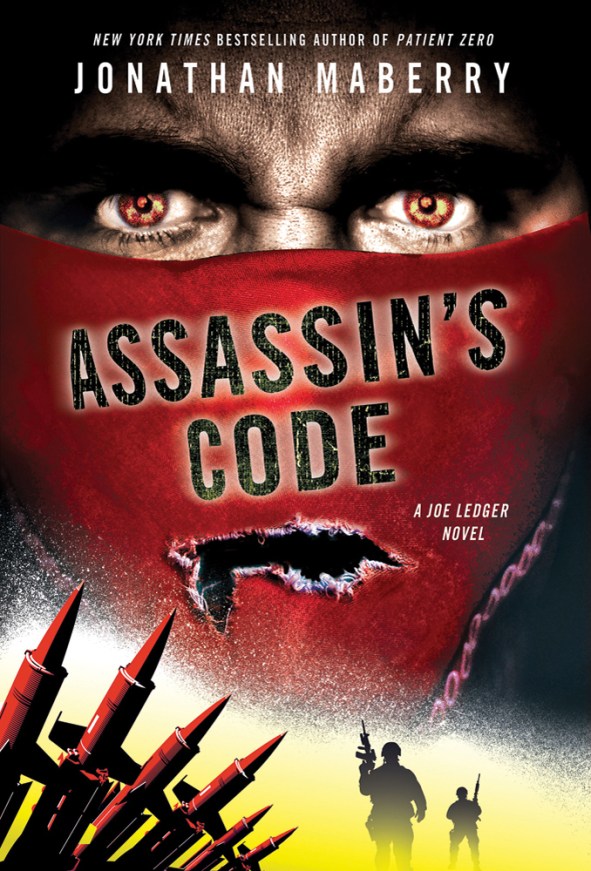
Throwback Thursday – Assassin’s Code by Jonathan Maberry

Assassin's Code Cover

Publisher: Macmillan Audio (Audiobook – 10 April 2012)

Series: Joe Ledger series – Book 4

Length: 15 hours and 35 minutes

My Rating: 5 out of 5 stars

Amazon     Book Depository

Reviewed as part of my Throwback Thursday series, where I republish old reviews, review books I have read before or review older books I have only just had a chance to read.

For this week’s Throwback Thursday, get ready for the fourth high-stakes, action-packed instalment of Jonathan Maberry’s excellent Joe Ledger series, Assassin’s Code, which sets the titular character up against a fantastic new set of antagonists.

Joe Ledger, top field agent for the elite Department of Military Sciences (DMS), is about to have a very unusual day. On assignment in Iran, Ledger and Echo Team have been tasked with rescuing American college kids held hostage by the Iranians. After successfully rescuing the hostages, Ledger is forced at gunpoint into a meeting with a high-ranking Iranian security officer. However, instead of being arrested, Ledger is given information about an impending terrorist attack that could shake the very foundations of the world.

An unknown player apparently has several nuclear weapons in play and is planning to unleash them against a number of targets around the world. As Ledger relays this information to his superiors, he is attacked by a mysterious assailant who is faster, stronger and more deadly than anything he has faced before. Barely escaping from his attacker, Ledger finds himself being pursued through the streets of Tehran by the Red Order, an ancient group of killers whose operatives appear to intimidate even Ledger’s boss, the legendary Mr Church.

As Ledger attempts to come to terms with what exactly is hunting him, he finds himself in the crosshairs of several other secret organisations, each of which has their own agendas. As Ledger gets closer to the truth, he discovers that events are being manipulated by an old enemy. An ancient conspiracy has been revealed and the fate of the world hangs in the balance. Can Ledger defeat the monsters unleashed against him or will a new world order arise?

Assassin’s Code in the fourth book in Maberry’s Joe Ledger series, which sees an elite special forces agency go up against the worst horrors that modern science and science fiction can unleash. I have already read and reviewed several books in this series so far, including the previous three novels, Patient Zero, The Dragon Factory and The King of Plagues, as well as the 10th and latest book in the series, Deep Silence. Each of these books has proven to be fantastic dark science fiction thrillers that I have had an amazing time reading, and all four of them have received a full five-star rating from me. Assassin’s Code is another incredible addition to the series, as Maberry has once again produced an intense and clever story, with some great antagonists, a complex protagonist and a heck of a lot of high-grade action.

In his fourth Joe Ledger book, Maberry has continued to utilise the same writing format that made all the other books in the series such an awesome read. While a large amount of the storyline follows Ledger and the other members of the DMS as they attempt to investigate and then counter the threats they are up against, a large amount of the book revolves around showcasing the history that led up to the book’s current events, as well as exploring the antagonists side of the story. There are several chapters that solely focus on the antagonists, showing what they are planning and the full range of their various motivations. I always love these explorations of the antagonists as I feel it creates a much more complete and interesting overall storyline, and these alternate points of view are often used to really ramp up the book’s tension and hint at events that are going to hit the protagonists.

While he continues to successfully utilises a number of these familiar writing styles, I felt that Maberry also made sure that Assassin’s Code stood out from the other books in the series. Not only does this fourth book have a lot more of a horror vibe to it than the previous two books in the series (somewhat reminiscent of the first novel, Patient Zero) but it is also told as a rush of events over a 24-hour period. Ledger is barely given an opportunity to rest as he is attacked again and again by a series of different opponents in the hostile territory of Tehran. The author has also woven together a number of interconnected conspiracies and features appearances from several individuals and organisations, each of whom has their unique agendas throughout the plot of the book, all of which need to picked through by the reader. All these various players and motivations make for a very full story, but I quite enjoyed seeing all the various revelations come to light. Assassin’s Code is also an intriguing central piece to the whole Joe Ledger series. Not only does it introduce several key characters who become major fixtures of the series but it also introduces a number of key events in the lives of characters who were introduced in the previous books. As a result, it is a must read for those people trying to get a grip on the series as a whole and is a fantastic overall read.

In my mind, one of the best things about the Joe Ledger books are the distinctive antagonists, each of whom come across as major threats not only to the protagonists, but to the entire world. So far in the series, Ledger has had to face zombies, genetically enhanced Nazis and a powerful cabal of terrorists (whose members included Osama Bin Laden) whose attacks are used to manipulate the world for profit. In Assassin’s Code, Maberry has done a fantastic job converting an old legend into a terrifying modern threat, as the major villains of this book, the mysterious Red Order and their infamous Red Knights, are essentially vampires. Maberry already has significant experience writing vampires into the modern world, thanks to his V-Wars book series (an adaption of which is coming out on Netflix in a couple of months), and he does a great job coming up with a new and somewhat plausible explanation for their existence (well, slightly more plausible than a supernatural origin), as well as a creative historical explanation for their organisation. These vampires are written as major threats for most of the book, and the fear and concern that they cause in a number of characters whose badass credentials have been firmly established in previous books is pretty impressive. The use of vampires in modern thriller was a real highlight of this book, and I really loved seeing them go up against a modern special forces unit. Maberry spends a lot of time exploring their history, as the book features a number of interludes that go back to the time of the Crusades, when they were first recruited for their mission. All of this exploration does a fantastic job of showing what true monsters these types of vampires are, which helps the reader really root for the reader. I also really liked some of the other groups featured in this book that were formed as a direct result of the existence of vampires, including a group of modern Inquisitors and the mysterious Arklight. If I had one complaint about these antagonists, it would be that they were taken down a bit too easily in the final act, and I would have preferred a more protracted or vicious fight.

In addition to the vampires, this book also features the reappearance of two key antagonists from the previous book in the series, The King of Plagues, who are major manipulators of events behind the scenes. These characters are the former King of Fear, Hugo Vox, and the mysterious priest Nicodemus, both of whom were major players in the previous book. I really liked how Maberry continued to explore both of these cool characters, and he did a fantastic job of tying their storylines into the unique events of this book. Their respective roles in the plot of this book is quite interesting, and I really enjoyed how both their storylines progressed or ended in this novel. The true reveal of who (or what) Nicodemus is has been left for a later book, and I am very curious to see what he turns out to be.

Maberry continues to do an outstanding job utilising his complex and multilayered protagonist, Joe Ledger. While on the surface, Ledger’s defining character traits are his abilities as a special forces operative and his relentless sense of humour, the character is actually extremely emotionally damaged. Thanks to the fact that Ledger is the only character whose chapters are shown from the first-person perspective (a nice distinctive touch for the central protagonist), the reader gets a much more in-depth look at his inner thoughts, and as a result you see how the events of his life, including the events of the previous three books, have impacted his psyche. It is quite refreshing to have a character who is actually emotionally affected by the events of his books, and you get the feeling that Ledger is only a short way away from truly snapping. However, in the meantime, the thick layer of humour he overlays these feelings with is great for a laugh, and it helps gives the chapters that the character is narrating a very unique and enjoyable feel. In addition to Ledger, I really liked some of the new protagonists introduced in Assassin’s Code and I look forward to exploring them more in the future. Special mention as always needs to go the awesome supporting characters of Mr Church and Ghost, Ledger’s attack dog. With his actions and woofs, Ghost honestly has more personality that some human characters in other books I have read, while Church continues to be the ultra-mysterious intelligence god who you cannot help but want to know more about. These two characters are one of the many reasons why I am excited to check out all the future books in the series.

It should come as no surprise to those who read the plot synopsis, but Assassin’s Code is filled with wall-to-wall action. Maberry has a well-established history of doing detailed research into various forms of combat, especially martial arts, which he has actually written several books on. Maberry is able to transfer all of this knowledge into his books, creating some truly amazing action sequences. There are a huge number of great and varied battle scenes throughout the course of the book, and readers are guaranteed a pulse pumping ride as a result. Also, if you have ever wondered how martial arts trained special forces soldiers would go against vampires, than this is the book for you.

Like all the other books in the Joe Ledger series, I chose to listen to the audiobook format of Assassin’s Code, narrated by Ray Porter. Coming in at around 15 hours and 35 minutes, this is a substantial audiobook; however, due to how much I enjoyed the epic story, I powered through it in a couple of days. I would strongly recommend that readers always check out the audiobook format of this series, thanks mainly to Porter’s narration. Porter, who has so far narrated all of the Joe Ledger books, has an uncanny ability to bring this central protagonist to life. His great narration fully encapsulates Ledger’s full range of emotions, from light-hearted banter, to soul-crushing despair to powerful bursts of rage, and it is really worth checking out. In addition, Porter does some really good voices for the other characters in the book, especially Mr Church, and he is probably one of my favourite audiobook narrators at the moment.

When I started reading Assassin’s Code, I knew I was going to love it, and it did not disappoint. Not only did Maberry up the ante with some incredible antagonists but he created another complex and utterly captivating story that had me hooked in an extremely short period of time. Assassin’s Code easily gets another five stars from me, and I whole-heartily recommend the audiobook format of this book. I am planning to try and read all the other Joe Ledger books in the next couple of months as I only just found out that the story is continuing in November of this year as part of a new spin-off series. Stay tuned to see what I think of the other books in this series (spoiler alert, I think I am going to love them).

Amazon     Book Depository

Emperor of Rome by Robert Fabbri

Emperor of Rome Cover

Publisher: Corvus (February 2019)

Series: Vespasian – Book 9

Length: 349 pages

My Rating: 4.5 out of 5 stars

Amazon

After eight years of being one of my favourite yearly highlights of the Roman historical fiction scene, Robert Fabbri brings his bestselling Vespasian series to an end with the ninth and final book, Emperor of Rome.

Rome, 68 AD. Vespasian started his life as the second son of a rich but rural Roman family from the Sabine Hills. Looked down upon by the older Roman families for his family’s humble origins, Vespasian was never expected to obtain any major power in Rome. But after nearly 40 years of political intrigue, unusual adventures and a distinguished military career, Vespasian may actually be in a position to claim the ultimate prize: becoming Emperor of the Roman Empire.

Ever since he first arrived at the city of Rome at the young age of 16, Vespasian has lived under several unhinged or easily manipulated emperors of the Julio-Claudian line, each of whom was worse than the last. The latest of these emperors, the ruthless and insane Nero, has ordered Vespasian to put down a major rebellion in the Roman province of Judaea. However, this appointment is the ultimate no-win situation. If he fails in his task, his family’s prestige and political future are over. But if he succeeds in bringing the rebellion to an end with a successful military campaign, he will incur Nero’s lethal jealousy for obtaining glory that could make him more popular than the Emperor. As Vespasian debates what course of action to take, news from Rome will change everything.

The rebellion of several legions and their noble commanders has forced Nero to commit suicide, and his death results in a massive power vacuum. Vespasian, being in charge of two legions and having allies governing key provinces, is now a major contender for the throne, especially with his brother Sabinus lobbying for him back in Rome. Moreover, for years Vespasian has been gifted with signs and portents of his eventual rise to power, and he wants to claim his destiny. However, Vespasian is not the only person with dreams of imperial power, and several others are marching on Rome. The Year of the Four Emperors has begun, and only one man will be left standing.

Robert Fabbri’s Vespasian series are fun and at times over-the-top novelisations of the life of one of Rome’s most important emperors. The main series is made up of nine books, but there is also a related standalone novel, Arminius: The Limits of Empire, as well as the ebook-only Crossroads series. I have been a huge fan of the series for some time and have read and reviewed several of the books in the series, as well as the Arminius novel, although only my review for the previous Vespasian novel, Rome’s Sacred Flame, is currently featured on my blog. This series really has been a favourite of mine for some time, and I have been looking forward to Emperor of Rome for a few months. Unfortunately, this book does mark the end of the series, as Fabbri brings his epic story to a close and finally brings his chosen Emperor to the throne.

Emperor of Rome is a fantastic new addition to this awesome series. It tackles the chaotic period following the death of Nero, known as the Year of the Four Emperors. I felt that Fabbri did a fantastic job finally showing the ascension of Vespasian to the throne and covering a number of other interesting historical events, many of which would have widespread implications in the future. The overall story is a great blend of action and politics, and it also ends the story of several important characters from the series, as well as the rise of some of the next generation of Roman politicians and rulers.

Emperor of Rome is primarily told from the point of view of its protagonist, Vespasian, as he campaigns in the east of the Roman Empire. This allows for Fabbri to tell a different story to some of the other historical fiction novels that feature the Year of the Four Emperors. Rather than get bogged down in the politics happening in Rome, the focus is instead completely on Vespasian and his companions as they observe the chaotic events occurring in Rome from afar while trying to decide the best time for Vespasian to make his move. I thought that this was a rather clever way to look at the story as it let Fabbri examine the potential political, military and personal implications of each of Vespasian’s actions during this period, especially as early moves on Vespasian’s part might have seen him be overthrown by some other potential candidate for the throne. Emperor of Rome also showcases the early reign of Vespasian to a degree, and it was great to finally see the character gain the throne after nine books.

In addition to the examination of Vespasian’s bid to become emperor, Fabbri also focussed on Vespasian’s campaign in Judea, which is a significant event in Middle Eastern history. For much of the book, the province of Judea (modern Israel/Palestine) and its Jewish population are in revolt against the Romans. Vespasian, and later his son Titus, lead a particularly vicious campaign against the population, killing or enslaving thousands. Fabbri spends quite a lot of time describing the events of this conflict, sometimes known as the First Jewish-Roman War, and mostly relies on the accounts of the Romano-Jewish historian Josephus, who wrote several works on the subject and actually appears as a character in Emperor of Rome, as a basis for this story. Fabbri does an amazing job providing an account of this conflict. A number of key events of this war are covered in this book, including several ridiculous events that apparently actually occurred around the siege of Jotapata. I was greatly intrigued by the author’s novelisation of this conflict, as I had not read too much about it before in other works of historical fiction. The author brings a gritty realism to the conflict and does not hold back on the probable violence, cruelties and dehumanisation of the Jewish people that would have occurred during this war. This was a captivating but essential part of Vespasian’s story, and one that was necessary to explore in order to fully understand the actions required to become Emperor.

Several of the previous books in the Vespasian series have had an enjoyable supernatural edge to them, as the protagonist encountered ancient gods, prophets and sorcerers, as well as some biblical figures from early Christianity. This is continued in Emperor of Rome, mainly in the form of omens and prophecies that Vespasian has received in the previous books that show he is destined to be a great ruler, such as his viewing of a phoenix while on a mission in Africa. In this book, many of these signs come together, encouraging Vespasian to finally make his bid for Emperor. The look at the influence of such omens and prophecies added an intriguing element to the overall story. I also liked how some of the prophecies and predictions of the some of the characters were relevant to larger historical events in the future, such as the spread of Christianity or the current conflict in modern Israel/Palestine. These supernatural elements have always been one of the things that helped distinguish the Vespasian books from other Roman historical fiction series out there, and it was great to see so many of the events from the previous books finally come together here in the final chapter of the book.

Emperor of Rome is an amazing conclusion to this outstanding and entertaining historical fiction series. Fabbri has always had the fantastic ability to turn historical fact into wild and captivating tale filled with action, intrigue and historical excesses, and in this final book he once again takes several intriguing historical events and uses them to craft another excellent story. I will miss reading the Vespasian series each year, but at the same time I am also very excited, as Fabbri’s next series, The Alexander Legacies, is set to be released next year, and it sounds like it will look at some other exciting times in ancient history.

Amazon

Throwback Thursday – Legend by David Gemmell

71IuPaXC5kL.jpg

Publisher: Hachette Audio (22 June 2017) – originally published by Century (April 1984)

Series: Drenai – Book 1

Length: 13 hours and 13 minutes

My Rating: 5 out of 5 stars

Amazon

Reviewed as part of my Throwback Thursday series, where I republish old reviews, review books I have read before or review older books I have only just had a chance to read.

In this week’s Throwback Thursday, I try out a fantasy book that has been on my mind for many years, the 1984 classic fantasy novel, Legend, by the late, great David Gemmell.

Legend was the debut novel from Gemmell, an impressive author who wrote over 30 novels between 1984 and his death in 2006, most of which fell within the fantasy genre. Some of his works included the Rigante, Stones of Power, Jon Shannow and Hawk Queen fantasy series, as well as the Troy and Greek historical fiction series. However, his most famous body of work has to be the Drenai series. Featuring 11 books, the Drenai series were a collection of loosely connected novels set within the same fantasy universe. While the storylines are all linked in some way or another, especially books like the three Waylander novels, the series can pretty much be read in any order, which is kind of what I did.

I actually have a bit of a random history with the Drenai series, as I happened to listen to the 10th book in the series, White Wolf, some years ago. For the life of me I cannot think why I would have grabbed this fantasy book off the shelf. Whatever the reason, the story of White Wolf stuck with me, and I would find myself occasionally remembering details of the plot, while completely forgetting the book’s title or the author’s name. I was eventually able to figure out what book it was thanks to the one clear detail I could remember (the names of the protagonist’s famous swords) and tracked down another audiobook copy of White Wolf to listen to a few years ago. I also really enjoyed White Wolf the second time around and was eager to find out more about the rest of the books in the series.

Out of all of the books in the Drenai series that I looked at, the one that appealed to me the most was the very first one in the series, Legend. Legend tells the story of an epic and desperate siege that sets up the entire Drenai universe and contains the defining story of Gemmell’s most iconic character, Druss the Legend, who also appeared in White Wolf. Many of the story elements of Legend deeply appealed to me, and it also made practical sense to start at the beginning of the series, especially as it serves as a significant point in the series’ chronology. Unfortunately, due to a combination of a lack of time, problems finding a copy of Legend, and a requirement to focus on more recent books, I never got a chance to read Legend or dive deeper into the Drenai series. However, it always remained high on my to-read list, and I am so happy that I finally got a chance to read it.

Legend is the story of the siege of Dros Delnoch, the fortress city that acts as a gateway to the declining Drenai Empire. Dros Delnoch is the greatest fortress in the world. Sitting in the middle of a narrow pass and guarded by six high walls and a great keep, the city should be able to withstand any attack. However, the charismatic Nadir warlord Ulric has forged together a mighty host of 500,000 Nadir tribesmen, which he plans to sweep over the walls of Dros Delnoch.

If the city is able to hold for a few months, a new Drenai army will be able to reinforce the battlements. But with only a small force of 10,000 soldiers within the city, many of them raw recruits, this seems to be an impossible task. However, help soon arrives from the most unlikely of places. Former solider Regnak follows his newfound love to the city, despite his apparent cowardice and dark secrets. A gentleman bandit leads his band of outlaws to man the walls, partly for money and partly to make up for his past sins. The mysterious band of mystical warrior priests, known as The Thirty, also arrives to fulfil their destiny to die in battle. Each group has a role to play in the defence of the city, but only one of the new defenders will give the Nadir pause and raise the defenders’ hopes, the greatest hero of the age, Druss the Legend.

For decades, Druss has fought and defeated every enemy he has come across, but there is one thing even he cannot overcome: time. Now a grizzled veteran of 60 years, Druss has come to the city for one final battle, but first he needs to come to terms with his status as a living legend. Even as an old man Druss is still a dangerous person, and there is a reason that he is known as Deathwalker by the Nadir. As the siege begins, heroes will rise, tragedy will stalk the defenders and a legend will end, but will anything be enough to withstand the Nadir horde?

Well damn, that was a pretty epic book and one that was well worth the wait it took for me to get around to reading this. Legend was an incredible and enthralling read that had me hooked from the very beginning all the way to the very last word. It is a classic piece of fantasy action and adventure. Gemmell loaded his story with some truly compelling and flawed characters to create an outstanding read. Featuring a ton of amazing, pulse pounding action, heartbreaking tragedy and an epic siege, this book was absolutely fantastic, and I am really glad I read it.

Probably the main thing that I liked about the book was Gemmell’s outstanding portrayal of a massive fantasy siege. I have always loved the classic siege storyline, and there is something about a huge army attacking a castle that I cannot turn away from. The siege of Dros Delnoch within Legend is easily one of the best sieges that I have ever read, as Gemmell produces a magnificent battle around the city that lasts nearly the entire book. The whole setup for the siege is pretty insane, with 500,000 Nadir tribesmen (who bear a lot of similarities to the historical Huns) attacking a Drenai (essentially Roman) city with six massive walls. The author does an amazing job properly pacing out this siege throughout the novel, including appropriating enough time to really showcase all the pre-siege activities, including training, preparation of the defences and initial sabotages before the first battle even happens. Once the battle begins, though, it is a non-stop barrage of action as the defenders fight off multiple assaults each day.

Due to the author’s excellent storytelling and character work, the reader becomes extremely invested in the fate of the defenders, and each time a wall falls, or the attackers gain an inch, you are mentally rooting for them to fight back. There are a number of discussions and plans that take place throughout the book, and it is quite fascinating to see the thought and planning that the author put into the defence of his city. I especially liked how the city’s six walls played into the battle, as the defenders’ decisions on how and when to hold these battlements provided some great moments and debates for the reader to appreciate. The siege lasts the entire book and features a huge number of epic fight sequences, all of which will get your adrenaline racing and your heart pounding. I loved every second of the siege that was featured in this book, and I hope to see it brought to life on screen one day (provided they do it right).

In addition to its first-rate siege, Legend also features a large number of complex and well-written characters. The first is Regnak, who turns into one of the book’s main characters. Regnak is a former soldier who is first presented as a coward, looking to flee all personal responsibility, although this is quickly revealed to be a side effect of being a natural ‘baresark’. However, when he meets Virae, the daughter of the Earl of Dros Delnoch, he falls in love and follows her back to the siege. Regnak has a great storyline about finding one’s inner courage and overcoming one’s issues, and while his romance with Virae is a bit weird at times, it does result in some tragic scenes throughout the book. Next you have the members of The Thirty, an order of 30 warrior priests who enter the fight knowing that 29 of their members are going to die. Not only do the priests represent most of the fantasy elements of this book thanks to their physic abilities but their ability to see into the future results in some interesting debates about destiny and fate. Quite a few members of The Thirty are introduced, although most of their story is focused on their youngest member, Serbitar, and his mentor, Abbot Vintar, as Serbitar has the hardest time accepting the future and wants to change it to help the defenders.

Without a doubt, the best character in the entire book is Druss the Legend. Druss is Gemmell’s most iconic character and has appeared in several other books in the Drenai series, all of which occur before the events of Legend. These include The First Chronicles of Druss the Legend, which details the rise of Druss and the events that made him a legend, The Legend of Deathwalker, which features an earlier encounter with Ulric and the Nadir, and White Wolf, where I first encountered the character of Druss. However, Legend is definitely the character’s defining book, as it features the conclusion of his epic life and his final stand.

There is a lot of great character work involved with Druss, and the man is a pretty epic character. He is an older man, many years past his prime, who was faced with a choice: die in glory at Dros Delnoch or decline into obscurity. Choosing to die in battle (mainly to spite Death), Druss arrives in Dros Delnoch ready to fulfil his destiny. Gemmell does an outstanding job portraying Druss as an old and wise warrior who is weakened by age but is still a far more capable warrior than many of the others involved with the siege. While readers will enjoy the action sequences featuring Druss, the main thing about the character is the way that he attempts to come to terms with his status as a living legend whose body can no longer keep up with his myth. Druss knows that his reputation as a man who always wins is one of the main things that keeps the soldiers going, and he is constantly working to inspire the soldiers and show that he is still the super human many of them think he is. However, at the same time he must deal with the tangible impacts of age and must try to overcome them in order to survive and inspire on the battlefield. This examination of a man uncertain about his continuing place in the world and who knows he is going to die very soon is extremely well done, and readers cannot help but fall in love with the character and get very invested in his storyline, even though you know how it is going to end. The Druss that is featured in Legend is probably one of the finest fantasy characters that I have read, and I look forward to reading some additional books featuring him in the future.

The book also features an amazing cast of secondary characters, each of whom adds so much to the story featured within Legend. These characters include:

  • Orrin – the commander of the forces defending Dros Delnoch. Orrin is a nobleman who is inexperienced and ill-suited for command. However, once Druss arrives, he works hard to change his ways and become a worthy leader of his troops. He has an amazing redemption arc and turns into quite a likeable character.
  • Bowman – a forest bandit who Druss convinces to join the defence of the city. Initially pretending he is there for money; it is eventually revealed that he is searching for some sort of redemption as well. Bowman’s sarcastic wit adds some necessary humour to the story and he proves to be quite a likeable character.
  • Gilad and Bregan – two farmers who sign up to the army and find themselves becoming heroes of Dros Delnoch. These two characters allow Gemmell to show the story of the common defender of the city. Together they have quite a surprisingly compelling storyline, and the readers actually get quite invested in their survival.
  • Hogun – one of the few professional soldiers in the city. Hogun serves as a great secondary observer for most of the book, and his growing respect and camaraderie with the other defenders mirrors the reader’s growing attachment to all those people featured within Legend.
  • Ulric – leader of the Nadir horde attacking the city. Ulric is presented as a visionary like Atilla the Hun or Genghis Khan, who has united his people against a common threat and now seeks to create a mighty empire. I quite liked how Ulric, despite being the antagonist, is only partially presented as an evil man. Instead, he sees all the violence he does as necessary and he even grows to respect the defenders of the city, especially Druss. Ulric turns out to be quite a complex and well-written antagonist that reader ends up respecting to a degree.
  • Caessa – a female member of Bowman’s band, who harbours a deep secret. She’s not my favourite character, but her storyline has a few intriguing twists, and it is interesting to see her growing attachment to Druss.

In addition to all the characters mentioned above, there are also a huge bevy of other minor characters from both sides of the conflict whose point of view and feelings are examined throughout the book. Not only does this allow for a number of short and, in some cases, tragic stories for the reader to enjoy; it also increases the scope of the battle. Overall the character work is pretty impressive, and pretty much every character allowed for a richer and more captivating tale to be told. If I had one criticism of Legend’s characters, it would be that the female characters are mostly portrayed as over-emotional, irrational or downright catty in most of their interactions, which makes the book feel a bit socially dated at times.

I ended up listening to an audiobook version of Legend narrated by Sean Barrett. At only 13 hours and 13 minutes, Legend represents a fairly quick listen, especially when you get stuck into the story. I had a fantastic time listening to the audiobook version of this book, and I felt that it really helped me sink into the story and appreciate all the amazing action and drama going on in the city. Barrett has an excellent voice for an older fantasy like Legend, and I really felt he got to the heart of most of the book’s characters. I strongly recommend the audiobook version of Legend, and I will probably check out the other books in the series on audiobook as well.

Legend really did not disappoint, as it easily met every single one of my high expectations. I enjoyed every minute of this exceptional book and it gets an easy five stars for me. I cannot overstate how epic in scale and writing the siege featured in this book was, and all of the characters within this story are just sensational, especially the Legend himself, Druss. I fully intend to check out some additional books in Gemmell’s Drenai series in the future, although there are so many interesting choices that I’m not too sure where to start. Be sure to check out future instalments of Throwback Thursday to see which other Gemmell books I look at.

Amazon

The Malta Exchange by Steve Berry – Audiobook Review

The Malta Exchange Cover

Publishers: Hodder & Stoughton and MacMillan Audio (5 March 2019)

Series: Cotton Malone – Book 14

Length: 13 hours and 31 minutes

My Rating: 4.5 out of 5 stars

Amazon

From the brilliant mind of international thriller sensation Steve Berry comes the 14th book in his acclaimed Cotton Malone series, The Malta Exchange.

When the pope unexpectedly dies, opportunity and chaos grips the Vatican.  As the world’s cardinals arrive in Rome in preparation for the conclave to elect a new pope, one cardinal, the controversial Kastor Gallo, suddenly leaves for an impromptu visit to Malta.  He has been summoned for a clandestine meeting, the results of which could hand him the papacy.  The only witness to this meeting is United States Justice Department operative Luke Daniels, whose covert observations of the meeting is quickly compromised, forcing him to fight for his life.

While Daniels attempts to uncover what is happening in Malta, his former colleague, Cotton Malone, is in Italy working for British intelligence.  An Italian collector claims to have letters between Churchill and Mussolini that could prove extremely damaging to Churchill’s legacy, and MI6 is eager to recover them.  What is meant to be a quick mission for Malone is complicated when armed men kill the collector and steal the letters.  Malone is able to trace his assailants to the legendary Knights of Malta, and his chase to recover the letters leads him into a hunt from a mysterious document from the reign of Emperor Constantine.

This document, revered by the Knights of Malta and feared by the church, has been lost for hundreds of years.  Hunted by some of history’s greatest tyrants, including Napoleon and Mussolini, this secret document not only has the potential to influence the current concave if revealed, but it could also tear the church down completely.  As a secret society within the modern incarnation of the Knights of Malta and elements of the Entity, the church’s intelligence organisation, both attempt to claim the document, Malone and Daniels once again team up to recover the document and destroy the conspiracy threatening to envelope them and the entire Catholic world.

Steve Berry is a veteran author of thrillers that focus on complex conspiracies, having written a number of exciting books since his 2003 debut.  While Berry has written four standalone novels, including The Amber Room, The Romanov Prophecy and The Third Secret, he is probably best known for his long-running Cotton Malone series of books.  The Cotton Malone series, which began in 2006 with The Templar Legacy, is made up of 14 books, each of which features the series titular character, retired U.S. Justice Department operative Cotton Malone as he is forced to investigate a series of elaborate conspiracies or secrets with origins in history.

The Malta Exchange features several characters from the previous books in the series.  While this is the 14th book in the series, The Malta Exchange can easily be read as a standalone book, as no prior knowledge of the Cotton Malone series is required to enjoy this story.  While there are some mentions of previous adventures in the series, none of these brief references are really relevant to this book’s story.  Likewise, the series’ recurring characters are re-introduced in some detail, and no pre-existing knowledge of them is needed.  Those readers who are already familiar with this series will enjoy another amazing thriller from Berry, although there may be some repetition, as the protagonists once again dive into another elaborate conspiracy centred with a secret order associated with the Catholic Church.  As one of my reviewer colleagues who is somewhat more familiar with this series than me stated, “How many conspiracies can one man wander into?”  Still, for those people who have enjoyed Berry’s stories before, The Malta Exchange is another exceptional read with a thrilling mystery that is a lot of fun to unravel.

While I received a physical copy of this book to read, I ended up listening to the audiobook format of The Malta Exchange narrated by Scott Brick.  This book was an absolutely fantastic piece of thriller fiction as the reader is thrown into an extremely intriguing and wide-reaching conspiracy involving hidden documents, major historical figures and deep dives into the history and background of several fictional and real-life organisations.

This is an excellent book for thriller fans, as The Malta Exchange contains a number of intense and complex conspiracies and plots overlayed across each other to create an addictive and enjoyable read.  The main plot focuses on the search for a long-lost document that originated during the reign of Emperor Constantine, which has the potential to damage or destroy the Catholic Church.  As a big fan of the historical fiction genre, I loved how this central mystery cleverly utilised a number of massive historical events and figures in its overall conspiracy.  For example, this central conspiracy has ties to Emperor Constantine, the founding of the Catholic Church, Napoleon, Mussolini, the Crusades and important events in World War II.  It even features a number of cool flashbacks to Mussolini and Napoleon’s life, showing how they were embroiled in this conspiracy.  This results in a treasure hunt so large, mysterious and potentially world-changing you cannot help but be intrigued and eager to see how it ends.  On top of that, a number of secret organisations with conflicting agendas and plots are duking it out around the hunt for this document and the reader is uncertain of their true motivations until later in the story.  All these story threads come together incredibly well at the end of the story, resulting in an intense, intelligent and entertaining thriller storyline that I could not wait to fully uncover.

Except for a couple of chapters featuring flashbacks to historical figures like Mussolini or Napoleon, The Malta Exchange is told from the point of view of four main characters: Cotton Malone, Luke Daniels, Cardinal Kastor Gallo and a mysterious ‘knight’ who remains unnamed for most of the book.  Malone and Daniels serve as good central protagonists, and I liked the contrast in their styles and personalities.  While Malone is the older, wiser and occasionally more careful protagonist who puts together the various clues around the hidden location of ancient document, Daniels is the younger, more action orientated character who does a number of crazy stunts throughout the book while also hiding his intelligence and cunning behind a convincing “good ol’ boy” routine.  The unnamed knight is The Malta Exchange’s main antagonist, whose identity remains hidden for much of the book.  This knight is an interesting character, and it is always fun to see the antagonist’s point of view as they attempt to outwit the protagonists.  While the reveal of this character’s secret identity is somewhat obvious due to there only being a few significant secondary characters, the antagonist’s overall plan was quite ingenious and devious.  Kastor Gallo is another interesting character; a self-serving Cardinal who wants to become Pope, he skirts the line between protagonist and villain in this story.  While the character considers himself an honest and pious priest, he is not particularly likeable due to his extremely conservative religious views and unbridled arrogance.  Still it was fun watching him try to manipulate the other characters, as well as his plot to try and gain the papacy.  There are several other fantastic side characters whom I will not discuss in any detail lest I hint at the identity of the unnamed knight above, but they really add a lot to this story.

One of the things that really impressed me about this book was the way that Berry dived into several organisations and locations in extreme and intriguing detail, particularly when it comes to two specific organisations.  The first of these organisations is the Knights of Malta, otherwise known as the Sovereign Military Order of Malta or the Sovereign Military Hospitaller Order of Saint John of Jerusalem, of Rhodes and of Malta.  Throughout this book, Berry spends a significant amount of time exploring this order, from their origins as the Knights Hospitaller and the Crusades, to their current existence as a massive charitable organisation.  Berry examines a large amount of their history, how they are organised, where they are located, what they do, their political status and how they have evolved over the years, and this amazing examination is further extended out into the incredible history of the nation of Malta.  Even the order’s leadership crisis between 2016 and 2018 is somewhat represented in the book, as the author describes a similar crisis affecting the organisation featured within The Malta Exchange.  All of this is deeply fascinating, and I really enjoyed the author’s examination of this organisation and how he was able to utilise the Knights of Malta’s actual history to the degree he did, with only a few alterations to fit his story.

The second organisation that Berry dives into is the Catholic Church, as a number of key aspects of the church and the Vatican come into play throughout the plot.  Like with his deep dive into the Knights of Malta, the author included a number of detailed examinations about church history, organisation and key events, like the selection of a new pope, that I quite enjoyed learning more about, and which fit incredibly well into the story.  The part of the examination into the church that I enjoyed the most was the look at the church’s supposed intelligence organisation, the Entity.  While the church has never confirmed they have an official intelligence organisation, several historical books have discussed its potential activities, and a number of thriller writers have utilised such an organisation, often known as the Entity, to great effect.  Perhaps because thrillers are not a genre that I read an awful lot of, this was the first book I have read that featured a church intelligence agency.  I really liked the idea of a secret intelligence organisation working for the Vatican, and Berry really utilises them well throughout his book, making them out as one of the most elite and effective intelligence organisations on the planet, who people really should not mess with.  I absolutely loved all the Catholic Church inclusions that the author featured and that, combined with the captivating examination of the Knights of Malta, helped turn this into an amazing overall story.

As I mentioned above, I chose to listen to the audiobook version of The Malta Exchange, which was narrated by Scott Brick.  This was not a massively long audiobook, only clocking in at around 13 and a half hours, and I was able to power through this really quickly, especially as I become more and more enthralled with the book’s compelling story.  I was quite glad that I chose to listen to this book rather than read it.  While you do lose out on some of the book’s visual elements, like some of the diagrams of anagrams or secret codes that feature throughout the physical copy, I found that listening to The Malta Exchange really helped me absorb the massive conspiracy storyline, as well as the history and organisation examinations, a hell of a lot more.  Brick has an amazing voice for thrillers, and I quite enjoyed listening him narrate this fantastic novel.  The voices he creates for the various characters in this book are quite good, and I liked some of the accents that he came up with.  I would strongly recommend the audiobook version of The Malta Exchange, although readers will still be able to get a huge amount out of the physical copy of the book.

The Malta Exchange by Steve Berry is an incredible and addictive ancient conspiracy thriller that I had an amazing time reading.  Once you get sucked into the book’s various conspiracies and mysteries it is hard to pull yourself out until each and every one of them is untangled.  What I enjoyed most about the main conspiracy was the author’s ability to explore fascinating history and famous organisations in outstanding detail, and then use these events to really enhance his story.  The end result is an awesome novel that comes highly recommend from me.  Appealing and accessible to established fans of the Cotton Malone series, as well as other fans of the thriller genre, I was really glad I decided to check this book out and I am curious to see what historical conspiracy Malone uncovers next.

Amazon