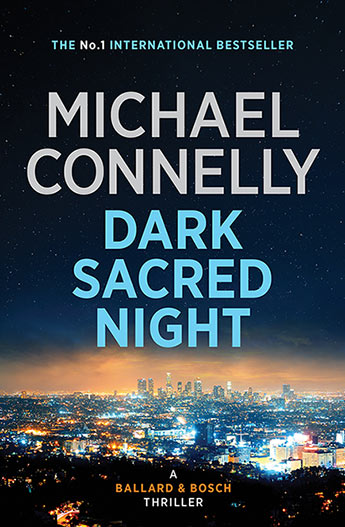
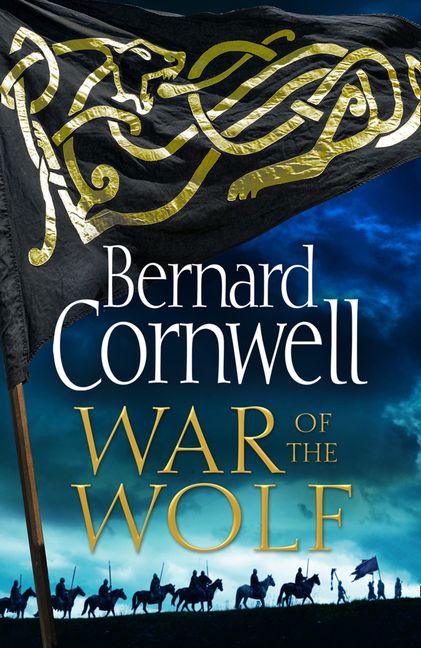
Emperor of Rome by Robert Fabbri

Emperor of Rome Cover

Publisher: Corvus (February 2019)

Series: Vespasian – Book 9

Length: 349 pages

My Rating: 4.5 out of 5 stars

Amazon

After eight years of being one of my favourite yearly highlights of the Roman historical fiction scene, Robert Fabbri brings his bestselling Vespasian series to an end with the ninth and final book, Emperor of Rome.

Rome, 68 AD. Vespasian started his life as the second son of a rich but rural Roman family from the Sabine Hills. Looked down upon by the older Roman families for his family’s humble origins, Vespasian was never expected to obtain any major power in Rome. But after nearly 40 years of political intrigue, unusual adventures and a distinguished military career, Vespasian may actually be in a position to claim the ultimate prize: becoming Emperor of the Roman Empire.

Ever since he first arrived at the city of Rome at the young age of 16, Vespasian has lived under several unhinged or easily manipulated emperors of the Julio-Claudian line, each of whom was worse than the last. The latest of these emperors, the ruthless and insane Nero, has ordered Vespasian to put down a major rebellion in the Roman province of Judaea. However, this appointment is the ultimate no-win situation. If he fails in his task, his family’s prestige and political future are over. But if he succeeds in bringing the rebellion to an end with a successful military campaign, he will incur Nero’s lethal jealousy for obtaining glory that could make him more popular than the Emperor. As Vespasian debates what course of action to take, news from Rome will change everything.

The rebellion of several legions and their noble commanders has forced Nero to commit suicide, and his death results in a massive power vacuum. Vespasian, being in charge of two legions and having allies governing key provinces, is now a major contender for the throne, especially with his brother Sabinus lobbying for him back in Rome. Moreover, for years Vespasian has been gifted with signs and portents of his eventual rise to power, and he wants to claim his destiny. However, Vespasian is not the only person with dreams of imperial power, and several others are marching on Rome. The Year of the Four Emperors has begun, and only one man will be left standing.

Robert Fabbri’s Vespasian series are fun and at times over-the-top novelisations of the life of one of Rome’s most important emperors. The main series is made up of nine books, but there is also a related standalone novel, Arminius: The Limits of Empire, as well as the ebook-only Crossroads series. I have been a huge fan of the series for some time and have read and reviewed several of the books in the series, as well as the Arminius novel, although only my review for the previous Vespasian novel, Rome’s Sacred Flame, is currently featured on my blog. This series really has been a favourite of mine for some time, and I have been looking forward to Emperor of Rome for a few months. Unfortunately, this book does mark the end of the series, as Fabbri brings his epic story to a close and finally brings his chosen Emperor to the throne.

Emperor of Rome is a fantastic new addition to this awesome series. It tackles the chaotic period following the death of Nero, known as the Year of the Four Emperors. I felt that Fabbri did a fantastic job finally showing the ascension of Vespasian to the throne and covering a number of other interesting historical events, many of which would have widespread implications in the future. The overall story is a great blend of action and politics, and it also ends the story of several important characters from the series, as well as the rise of some of the next generation of Roman politicians and rulers.

Emperor of Rome is primarily told from the point of view of its protagonist, Vespasian, as he campaigns in the east of the Roman Empire. This allows for Fabbri to tell a different story to some of the other historical fiction novels that feature the Year of the Four Emperors. Rather than get bogged down in the politics happening in Rome, the focus is instead completely on Vespasian and his companions as they observe the chaotic events occurring in Rome from afar while trying to decide the best time for Vespasian to make his move. I thought that this was a rather clever way to look at the story as it let Fabbri examine the potential political, military and personal implications of each of Vespasian’s actions during this period, especially as early moves on Vespasian’s part might have seen him be overthrown by some other potential candidate for the throne. Emperor of Rome also showcases the early reign of Vespasian to a degree, and it was great to finally see the character gain the throne after nine books.

In addition to the examination of Vespasian’s bid to become emperor, Fabbri also focussed on Vespasian’s campaign in Judea, which is a significant event in Middle Eastern history. For much of the book, the province of Judea (modern Israel/Palestine) and its Jewish population are in revolt against the Romans. Vespasian, and later his son Titus, lead a particularly vicious campaign against the population, killing or enslaving thousands. Fabbri spends quite a lot of time describing the events of this conflict, sometimes known as the First Jewish-Roman War, and mostly relies on the accounts of the Romano-Jewish historian Josephus, who wrote several works on the subject and actually appears as a character in Emperor of Rome, as a basis for this story. Fabbri does an amazing job providing an account of this conflict. A number of key events of this war are covered in this book, including several ridiculous events that apparently actually occurred around the siege of Jotapata. I was greatly intrigued by the author’s novelisation of this conflict, as I had not read too much about it before in other works of historical fiction. The author brings a gritty realism to the conflict and does not hold back on the probable violence, cruelties and dehumanisation of the Jewish people that would have occurred during this war. This was a captivating but essential part of Vespasian’s story, and one that was necessary to explore in order to fully understand the actions required to become Emperor.

Several of the previous books in the Vespasian series have had an enjoyable supernatural edge to them, as the protagonist encountered ancient gods, prophets and sorcerers, as well as some biblical figures from early Christianity. This is continued in Emperor of Rome, mainly in the form of omens and prophecies that Vespasian has received in the previous books that show he is destined to be a great ruler, such as his viewing of a phoenix while on a mission in Africa. In this book, many of these signs come together, encouraging Vespasian to finally make his bid for Emperor. The look at the influence of such omens and prophecies added an intriguing element to the overall story. I also liked how some of the prophecies and predictions of the some of the characters were relevant to larger historical events in the future, such as the spread of Christianity or the current conflict in modern Israel/Palestine. These supernatural elements have always been one of the things that helped distinguish the Vespasian books from other Roman historical fiction series out there, and it was great to see so many of the events from the previous books finally come together here in the final chapter of the book.

Emperor of Rome is an amazing conclusion to this outstanding and entertaining historical fiction series. Fabbri has always had the fantastic ability to turn historical fact into wild and captivating tale filled with action, intrigue and historical excesses, and in this final book he once again takes several intriguing historical events and uses them to craft another excellent story. I will miss reading the Vespasian series each year, but at the same time I am also very excited, as Fabbri’s next series, The Alexander Legacies, is set to be released next year, and it sounds like it will look at some other exciting times in ancient history.
Amazon

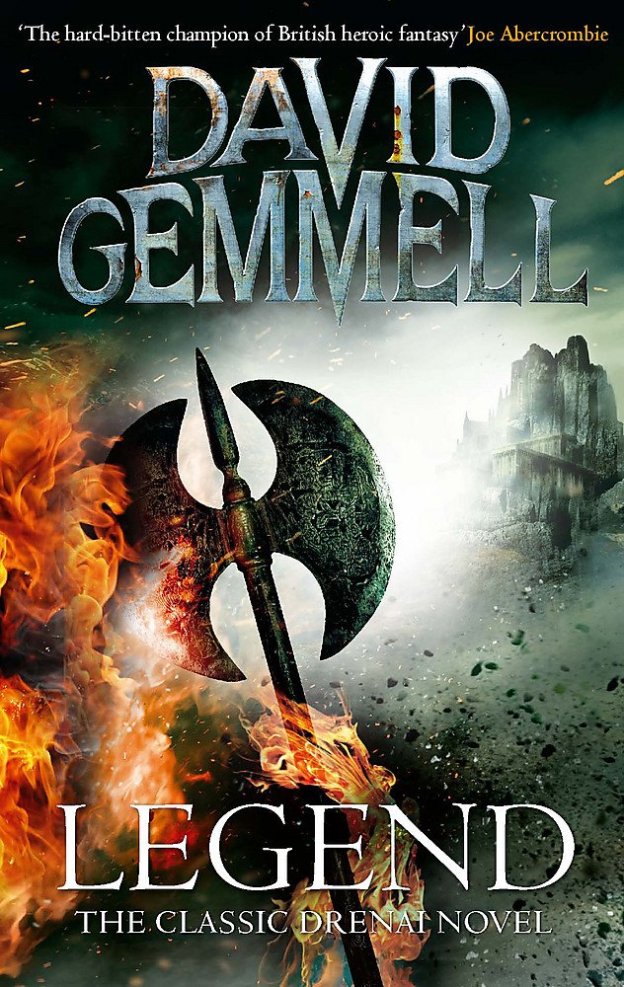
Throwback Thursday – Legend by David Gemmell

71IuPaXC5kL.jpg

Publisher: Hachette Audio (22 June 2017) – originally published by Century (April 1984)

Series: Drenai – Book 1

Length: 13 hours and 13 minutes

My Rating: 5 out of 5 stars

Amazon

Reviewed as part of my Throwback Thursday series, where I republish old reviews, review books I have read before or review older books I have only just had a chance to read.

In this week’s Throwback Thursday, I try out a fantasy book that has been on my mind for many years, the 1984 classic fantasy novel, Legend, by the late, great David Gemmell.

Legend was the debut novel from Gemmell, an impressive author who wrote over 30 novels between 1984 and his death in 2006, most of which fell within the fantasy genre. Some of his works included the Rigante, Stones of Power, Jon Shannow and Hawk Queen fantasy series, as well as the Troy and Greek historical fiction series. However, his most famous body of work has to be the Drenai series. Featuring 11 books, the Drenai series were a collection of loosely connected novels set within the same fantasy universe. While the storylines are all linked in some way or another, especially books like the three Waylander novels, the series can pretty much be read in any order, which is kind of what I did.

I actually have a bit of a random history with the Drenai series, as I happened to listen to the 10th book in the series, White Wolf, some years ago. For the life of me I cannot think why I would have grabbed this fantasy book off the shelf. Whatever the reason, the story of White Wolf stuck with me, and I would find myself occasionally remembering details of the plot, while completely forgetting the book’s title or the author’s name. I was eventually able to figure out what book it was thanks to the one clear detail I could remember (the names of the protagonist’s famous swords) and tracked down another audiobook copy of White Wolf to listen to a few years ago. I also really enjoyed White Wolf the second time around and was eager to find out more about the rest of the books in the series.

Out of all of the books in the Drenai series that I looked at, the one that appealed to me the most was the very first one in the series, Legend. Legend tells the story of an epic and desperate siege that sets up the entire Drenai universe and contains the defining story of Gemmell’s most iconic character, Druss the Legend, who also appeared in White Wolf. Many of the story elements of Legend deeply appealed to me, and it also made practical sense to start at the beginning of the series, especially as it serves as a significant point in the series’ chronology. Unfortunately, due to a combination of a lack of time, problems finding a copy of Legend, and a requirement to focus on more recent books, I never got a chance to read Legend or dive deeper into the Drenai series. However, it always remained high on my to-read list, and I am so happy that I finally got a chance to read it.

Legend is the story of the siege of Dros Delnoch, the fortress city that acts as a gateway to the declining Drenai Empire. Dros Delnoch is the greatest fortress in the world. Sitting in the middle of a narrow pass and guarded by six high walls and a great keep, the city should be able to withstand any attack. However, the charismatic Nadir warlord Ulric has forged together a mighty host of 500,000 Nadir tribesmen, which he plans to sweep over the walls of Dros Delnoch.

If the city is able to hold for a few months, a new Drenai army will be able to reinforce the battlements. But with only a small force of 10,000 soldiers within the city, many of them raw recruits, this seems to be an impossible task. However, help soon arrives from the most unlikely of places. Former solider Regnak follows his newfound love to the city, despite his apparent cowardice and dark secrets. A gentleman bandit leads his band of outlaws to man the walls, partly for money and partly to make up for his past sins. The mysterious band of mystical warrior priests, known as The Thirty, also arrives to fulfil their destiny to die in battle. Each group has a role to play in the defence of the city, but only one of the new defenders will give the Nadir pause and raise the defenders’ hopes, the greatest hero of the age, Druss the Legend.

For decades, Druss has fought and defeated every enemy he has come across, but there is one thing even he cannot overcome: time. Now a grizzled veteran of 60 years, Druss has come to the city for one final battle, but first he needs to come to terms with his status as a living legend. Even as an old man Druss is still a dangerous person, and there is a reason that he is known as Deathwalker by the Nadir. As the siege begins, heroes will rise, tragedy will stalk the defenders and a legend will end, but will anything be enough to withstand the Nadir horde?

Well damn, that was a pretty epic book and one that was well worth the wait it took for me to get around to reading this. Legend was an incredible and enthralling read that had me hooked from the very beginning all the way to the very last word. It is a classic piece of fantasy action and adventure. Gemmell loaded his story with some truly compelling and flawed characters to create an outstanding read. Featuring a ton of amazing, pulse pounding action, heartbreaking tragedy and an epic siege, this book was absolutely fantastic, and I am really glad I read it.

Probably the main thing that I liked about the book was Gemmell’s outstanding portrayal of a massive fantasy siege. I have always loved the classic siege storyline, and there is something about a huge army attacking a castle that I cannot turn away from. The siege of Dros Delnoch within Legend is easily one of the best sieges that I have ever read, as Gemmell produces a magnificent battle around the city that lasts nearly the entire book. The whole setup for the siege is pretty insane, with 500,000 Nadir tribesmen (who bear a lot of similarities to the historical Huns) attacking a Drenai (essentially Roman) city with six massive walls. The author does an amazing job properly pacing out this siege throughout the novel, including appropriating enough time to really showcase all the pre-siege activities, including training, preparation of the defences and initial sabotages before the first battle even happens. Once the battle begins, though, it is a non-stop barrage of action as the defenders fight off multiple assaults each day.

Due to the author’s excellent storytelling and character work, the reader becomes extremely invested in the fate of the defenders, and each time a wall falls, or the attackers gain an inch, you are mentally rooting for them to fight back. There are a number of discussions and plans that take place throughout the book, and it is quite fascinating to see the thought and planning that the author put into the defence of his city. I especially liked how the city’s six walls played into the battle, as the defenders’ decisions on how and when to hold these battlements provided some great moments and debates for the reader to appreciate. The siege lasts the entire book and features a huge number of epic fight sequences, all of which will get your adrenaline racing and your heart pounding. I loved every second of the siege that was featured in this book, and I hope to see it brought to life on screen one day (provided they do it right).

In addition to its first-rate siege, Legend also features a large number of complex and well-written characters. The first is Regnak, who turns into one of the book’s main characters. Regnak is a former soldier who is first presented as a coward, looking to flee all personal responsibility, although this is quickly revealed to be a side effect of being a natural ‘baresark’. However, when he meets Virae, the daughter of the Earl of Dros Delnoch, he falls in love and follows her back to the siege. Regnak has a great storyline about finding one’s inner courage and overcoming one’s issues, and while his romance with Virae is a bit weird at times, it does result in some tragic scenes throughout the book. Next you have the members of The Thirty, an order of 30 warrior priests who enter the fight knowing that 29 of their members are going to die. Not only do the priests represent most of the fantasy elements of this book thanks to their physic abilities but their ability to see into the future results in some interesting debates about destiny and fate. Quite a few members of The Thirty are introduced, although most of their story is focused on their youngest member, Serbitar, and his mentor, Abbot Vintar, as Serbitar has the hardest time accepting the future and wants to change it to help the defenders.

Without a doubt, the best character in the entire book is Druss the Legend. Druss is Gemmell’s most iconic character and has appeared in several other books in the Drenai series, all of which occur before the events of Legend. These include The First Chronicles of Druss the Legend, which details the rise of Druss and the events that made him a legend, The Legend of Deathwalker, which features an earlier encounter with Ulric and the Nadir, and White Wolf, where I first encountered the character of Druss. However, Legend is definitely the character’s defining book, as it features the conclusion of his epic life and his final stand.

There is a lot of great character work involved with Druss, and the man is a pretty epic character. He is an older man, many years past his prime, who was faced with a choice: die in glory at Dros Delnoch or decline into obscurity. Choosing to die in battle (mainly to spite Death), Druss arrives in Dros Delnoch ready to fulfil his destiny. Gemmell does an outstanding job portraying Druss as an old and wise warrior who is weakened by age but is still a far more capable warrior than many of the others involved with the siege. While readers will enjoy the action sequences featuring Druss, the main thing about the character is the way that he attempts to come to terms with his status as a living legend whose body can no longer keep up with his myth. Druss knows that his reputation as a man who always wins is one of the main things that keeps the soldiers going, and he is constantly working to inspire the soldiers and show that he is still the super human many of them think he is. However, at the same time he must deal with the tangible impacts of age and must try to overcome them in order to survive and inspire on the battlefield. This examination of a man uncertain about his continuing place in the world and who knows he is going to die very soon is extremely well done, and readers cannot help but fall in love with the character and get very invested in his storyline, even though you know how it is going to end. The Druss that is featured in Legend is probably one of the finest fantasy characters that I have read, and I look forward to reading some additional books featuring him in the future.

The book also features an amazing cast of secondary characters, each of whom adds so much to the story featured within Legend. These characters include:

  • Orrin – the commander of the forces defending Dros Delnoch. Orrin is a nobleman who is inexperienced and ill-suited for command. However, once Druss arrives, he works hard to change his ways and become a worthy leader of his troops. He has an amazing redemption arc and turns into quite a likeable character.
  • Bowman – a forest bandit who Druss convinces to join the defence of the city. Initially pretending he is there for money; it is eventually revealed that he is searching for some sort of redemption as well. Bowman’s sarcastic wit adds some necessary humour to the story and he proves to be quite a likeable character.
  • Gilad and Bregan – two farmers who sign up to the army and find themselves becoming heroes of Dros Delnoch. These two characters allow Gemmell to show the story of the common defender of the city. Together they have quite a surprisingly compelling storyline, and the readers actually get quite invested in their survival.
  • Hogun – one of the few professional soldiers in the city. Hogun serves as a great secondary observer for most of the book, and his growing respect and camaraderie with the other defenders mirrors the reader’s growing attachment to all those people featured within Legend.
  • Ulric – leader of the Nadir horde attacking the city. Ulric is presented as a visionary like Atilla the Hun or Genghis Khan, who has united his people against a common threat and now seeks to create a mighty empire. I quite liked how Ulric, despite being the antagonist, is only partially presented as an evil man. Instead, he sees all the violence he does as necessary and he even grows to respect the defenders of the city, especially Druss. Ulric turns out to be quite a complex and well-written antagonist that reader ends up respecting to a degree.
  • Caessa – a female member of Bowman’s band, who harbours a deep secret. She’s not my favourite character, but her storyline has a few intriguing twists, and it is interesting to see her growing attachment to Druss.

In addition to all the characters mentioned above, there are also a huge bevy of other minor characters from both sides of the conflict whose point of view and feelings are examined throughout the book. Not only does this allow for a number of short and, in some cases, tragic stories for the reader to enjoy; it also increases the scope of the battle. Overall the character work is pretty impressive, and pretty much every character allowed for a richer and more captivating tale to be told. If I had one criticism of Legend’s characters, it would be that the female characters are mostly portrayed as over-emotional, irrational or downright catty in most of their interactions, which makes the book feel a bit socially dated at times.

I ended up listening to an audiobook version of Legend narrated by Sean Barrett. At only 13 hours and 13 minutes, Legend represents a fairly quick listen, especially when you get stuck into the story. I had a fantastic time listening to the audiobook version of this book, and I felt that it really helped me sink into the story and appreciate all the amazing action and drama going on in the city. Barrett has an excellent voice for an older fantasy like Legend, and I really felt he got to the heart of most of the book’s characters. I strongly recommend the audiobook version of Legend, and I will probably check out the other books in the series on audiobook as well.

Legend really did not disappoint, as it easily met every single one of my high expectations. I enjoyed every minute of this exceptional book and it gets an easy five stars for me. I cannot overstate how epic in scale and writing the siege featured in this book was, and all of the characters within this story are just sensational, especially the Legend himself, Druss. I fully intend to check out some additional books in Gemmell’s Drenai series in the future, although there are so many interesting choices that I’m not too sure where to start. Be sure to check out future instalments of Throwback Thursday to see which other Gemmell books I look at.

Amazon

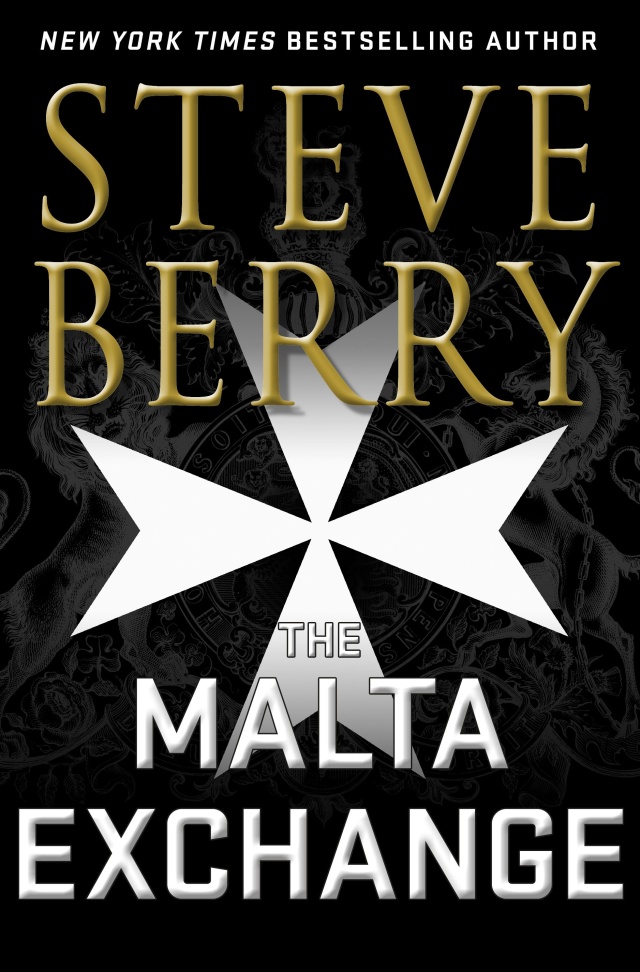
The Malta Exchange by Steve Berry – Audiobook Review

The Malta Exchange Cover

Publishers: Hodder & Stoughton and MacMillan Audio (5 March 2019)

Series: Cotton Malone – Book 14

Length: 13 hours and 31 minutes

My Rating: 4.5 out of 5 stars

Amazon

From the brilliant mind of international thriller sensation Steve Berry comes the 14th book in his acclaimed Cotton Malone series, The Malta Exchange.

When the pope unexpectedly dies, opportunity and chaos grips the Vatican.  As the world’s cardinals arrive in Rome in preparation for the conclave to elect a new pope, one cardinal, the controversial Kastor Gallo, suddenly leaves for an impromptu visit to Malta.  He has been summoned for a clandestine meeting, the results of which could hand him the papacy.  The only witness to this meeting is United States Justice Department operative Luke Daniels, whose covert observations of the meeting is quickly compromised, forcing him to fight for his life.

While Daniels attempts to uncover what is happening in Malta, his former colleague, Cotton Malone, is in Italy working for British intelligence.  An Italian collector claims to have letters between Churchill and Mussolini that could prove extremely damaging to Churchill’s legacy, and MI6 is eager to recover them.  What is meant to be a quick mission for Malone is complicated when armed men kill the collector and steal the letters.  Malone is able to trace his assailants to the legendary Knights of Malta, and his chase to recover the letters leads him into a hunt from a mysterious document from the reign of Emperor Constantine.

This document, revered by the Knights of Malta and feared by the church, has been lost for hundreds of years.  Hunted by some of history’s greatest tyrants, including Napoleon and Mussolini, this secret document not only has the potential to influence the current concave if revealed, but it could also tear the church down completely.  As a secret society within the modern incarnation of the Knights of Malta and elements of the Entity, the church’s intelligence organisation, both attempt to claim the document, Malone and Daniels once again team up to recover the document and destroy the conspiracy threatening to envelope them and the entire Catholic world.

Steve Berry is a veteran author of thrillers that focus on complex conspiracies, having written a number of exciting books since his 2003 debut.  While Berry has written four standalone novels, including The Amber Room, The Romanov Prophecy and The Third Secret, he is probably best known for his long-running Cotton Malone series of books.  The Cotton Malone series, which began in 2006 with The Templar Legacy, is made up of 14 books, each of which features the series titular character, retired U.S. Justice Department operative Cotton Malone as he is forced to investigate a series of elaborate conspiracies or secrets with origins in history.

The Malta Exchange features several characters from the previous books in the series.  While this is the 14th book in the series, The Malta Exchange can easily be read as a standalone book, as no prior knowledge of the Cotton Malone series is required to enjoy this story.  While there are some mentions of previous adventures in the series, none of these brief references are really relevant to this book’s story.  Likewise, the series’ recurring characters are re-introduced in some detail, and no pre-existing knowledge of them is needed.  Those readers who are already familiar with this series will enjoy another amazing thriller from Berry, although there may be some repetition, as the protagonists once again dive into another elaborate conspiracy centred with a secret order associated with the Catholic Church.  As one of my reviewer colleagues who is somewhat more familiar with this series than me stated, “How many conspiracies can one man wander into?”  Still, for those people who have enjoyed Berry’s stories before, The Malta Exchange is another exceptional read with a thrilling mystery that is a lot of fun to unravel.

While I received a physical copy of this book to read, I ended up listening to the audiobook format of The Malta Exchange narrated by Scott Brick.  This book was an absolutely fantastic piece of thriller fiction as the reader is thrown into an extremely intriguing and wide-reaching conspiracy involving hidden documents, major historical figures and deep dives into the history and background of several fictional and real-life organisations.

This is an excellent book for thriller fans, as The Malta Exchange contains a number of intense and complex conspiracies and plots overlayed across each other to create an addictive and enjoyable read.  The main plot focuses on the search for a long-lost document that originated during the reign of Emperor Constantine, which has the potential to damage or destroy the Catholic Church.  As a big fan of the historical fiction genre, I loved how this central mystery cleverly utilised a number of massive historical events and figures in its overall conspiracy.  For example, this central conspiracy has ties to Emperor Constantine, the founding of the Catholic Church, Napoleon, Mussolini, the Crusades and important events in World War II.  It even features a number of cool flashbacks to Mussolini and Napoleon’s life, showing how they were embroiled in this conspiracy.  This results in a treasure hunt so large, mysterious and potentially world-changing you cannot help but be intrigued and eager to see how it ends.  On top of that, a number of secret organisations with conflicting agendas and plots are duking it out around the hunt for this document and the reader is uncertain of their true motivations until later in the story.  All these story threads come together incredibly well at the end of the story, resulting in an intense, intelligent and entertaining thriller storyline that I could not wait to fully uncover.

Except for a couple of chapters featuring flashbacks to historical figures like Mussolini or Napoleon, The Malta Exchange is told from the point of view of four main characters: Cotton Malone, Luke Daniels, Cardinal Kastor Gallo and a mysterious ‘knight’ who remains unnamed for most of the book.  Malone and Daniels serve as good central protagonists, and I liked the contrast in their styles and personalities.  While Malone is the older, wiser and occasionally more careful protagonist who puts together the various clues around the hidden location of ancient document, Daniels is the younger, more action orientated character who does a number of crazy stunts throughout the book while also hiding his intelligence and cunning behind a convincing “good ol’ boy” routine.  The unnamed knight is The Malta Exchange’s main antagonist, whose identity remains hidden for much of the book.  This knight is an interesting character, and it is always fun to see the antagonist’s point of view as they attempt to outwit the protagonists.  While the reveal of this character’s secret identity is somewhat obvious due to there only being a few significant secondary characters, the antagonist’s overall plan was quite ingenious and devious.  Kastor Gallo is another interesting character; a self-serving Cardinal who wants to become Pope, he skirts the line between protagonist and villain in this story.  While the character considers himself an honest and pious priest, he is not particularly likeable due to his extremely conservative religious views and unbridled arrogance.  Still it was fun watching him try to manipulate the other characters, as well as his plot to try and gain the papacy.  There are several other fantastic side characters whom I will not discuss in any detail lest I hint at the identity of the unnamed knight above, but they really add a lot to this story.

One of the things that really impressed me about this book was the way that Berry dived into several organisations and locations in extreme and intriguing detail, particularly when it comes to two specific organisations.  The first of these organisations is the Knights of Malta, otherwise known as the Sovereign Military Order of Malta or the Sovereign Military Hospitaller Order of Saint John of Jerusalem, of Rhodes and of Malta.  Throughout this book, Berry spends a significant amount of time exploring this order, from their origins as the Knights Hospitaller and the Crusades, to their current existence as a massive charitable organisation.  Berry examines a large amount of their history, how they are organised, where they are located, what they do, their political status and how they have evolved over the years, and this amazing examination is further extended out into the incredible history of the nation of Malta.  Even the order’s leadership crisis between 2016 and 2018 is somewhat represented in the book, as the author describes a similar crisis affecting the organisation featured within The Malta Exchange.  All of this is deeply fascinating, and I really enjoyed the author’s examination of this organisation and how he was able to utilise the Knights of Malta’s actual history to the degree he did, with only a few alterations to fit his story.

The second organisation that Berry dives into is the Catholic Church, as a number of key aspects of the church and the Vatican come into play throughout the plot.  Like with his deep dive into the Knights of Malta, the author included a number of detailed examinations about church history, organisation and key events, like the selection of a new pope, that I quite enjoyed learning more about, and which fit incredibly well into the story.  The part of the examination into the church that I enjoyed the most was the look at the church’s supposed intelligence organisation, the Entity.  While the church has never confirmed they have an official intelligence organisation, several historical books have discussed its potential activities, and a number of thriller writers have utilised such an organisation, often known as the Entity, to great effect.  Perhaps because thrillers are not a genre that I read an awful lot of, this was the first book I have read that featured a church intelligence agency.  I really liked the idea of a secret intelligence organisation working for the Vatican, and Berry really utilises them well throughout his book, making them out as one of the most elite and effective intelligence organisations on the planet, who people really should not mess with.  I absolutely loved all the Catholic Church inclusions that the author featured and that, combined with the captivating examination of the Knights of Malta, helped turn this into an amazing overall story.

As I mentioned above, I chose to listen to the audiobook version of The Malta Exchange, which was narrated by Scott Brick.  This was not a massively long audiobook, only clocking in at around 13 and a half hours, and I was able to power through this really quickly, especially as I become more and more enthralled with the book’s compelling story.  I was quite glad that I chose to listen to this book rather than read it.  While you do lose out on some of the book’s visual elements, like some of the diagrams of anagrams or secret codes that feature throughout the physical copy, I found that listening to The Malta Exchange really helped me absorb the massive conspiracy storyline, as well as the history and organisation examinations, a hell of a lot more.  Brick has an amazing voice for thrillers, and I quite enjoyed listening him narrate this fantastic novel.  The voices he creates for the various characters in this book are quite good, and I liked some of the accents that he came up with.  I would strongly recommend the audiobook version of The Malta Exchange, although readers will still be able to get a huge amount out of the physical copy of the book.

The Malta Exchange by Steve Berry is an incredible and addictive ancient conspiracy thriller that I had an amazing time reading.  Once you get sucked into the book’s various conspiracies and mysteries it is hard to pull yourself out until each and every one of them is untangled.  What I enjoyed most about the main conspiracy was the author’s ability to explore fascinating history and famous organisations in outstanding detail, and then use these events to really enhance his story.  The end result is an awesome novel that comes highly recommend from me.  Appealing and accessible to established fans of the Cotton Malone series, as well as other fans of the thriller genre, I was really glad I decided to check this book out and I am curious to see what historical conspiracy Malone uncovers next.

Amazon

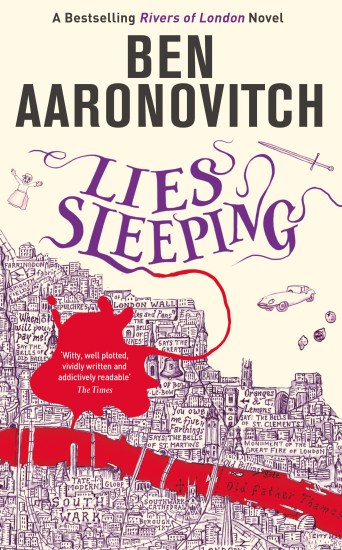
Lies Sleeping by Ben Aaronovitch

Lies Sleeping Cover.jpg

Publishers: Gollancz and Orion Audio (Audiobook format – 15 November 2018)

Series: Rivers of London – Book 7

Length: 10 hours 25 minutes

My Rating: 5 out of 5 stars

Amazon     Book Depository

Prepare to dive headfirst into one of the best urban fantasy series in the world today, with the seventh book in Ben Aaronovitch’s Rivers of London series, Lies Sleeping.

London is a magical place, especially for Peter Grant, Detective Constable and apprentice wizard.  Peter is a member of an elite unit of the London Metropolitan Police, known as the Folly, which is tasked with investigating magical crimes and protecting the city from all sorts of magical threats.  The person at the top of the Folly’s most wanted list is Martin Chorley, also known as the Faceless Man, a magical criminal mastermind who is determined to do whatever it takes to gain power.  However, despite the Met and the Folly’s considerable resources, Chorley is always able to stay one step ahead of those chasing him.

During a routine attempt to subtly panic several of Chorley’s known associates, a magical creature attacks a potential witness.  Peter’s investigation soon reveals that the witness had ordered the forging of a large and mysterious bell, which Chorley is desperate to get his hands on.  As Peter and his team dig deeper in the bell’s construction, they quickly begin to realise that Chorley is the final stages of his master plan, a plan tied deeply into the heart of London’s dark and bloody history, and one which could cause untold disaster for the entire city.

As the clock ticks down, Peter needs to work out the connection between London’s past and the mysterious magical events occurring all over the city.  Can Peter and his team once again save the day, or will their adversary finally obtain the power he has always desired?  Moreover, what will Peter do when he comes face to face with the woman who betrayed him to Chorley, his old partner in the Met, Lesley May?

Ben Aaronovitch is a highly regarded author with an interesting writing history to his name.  His writing career began back in the late 1980s and early 1990s, when he wrote a couple of Doctor Who television serials, including the highly regarded serial Remembrance of the Daleks, as well as three entries in the Virgin New Adventures series of Doctor Who books.  The Virgin New Adventure series chronicled the adventures of the Doctor after the television show’s hiatus in 1989.  Aaronovitch’s three entries in this book series sound incredibly interesting, although they were considered to be somewhat controversial at the time due to their more adult content.  Aaronovitch did not get around to writing his fantasy work until 2011, when he wrote the urban fantasy Rivers of London.  This was the first book in the author’s Rivers of London series of books (alternatively known as the Peter Grant series or the PC Grant series), for which the author is best known for.  The Rivers of London series is very highly regarded, and Aaronovitch has worked hard to expand on the story and universe of this series, writing a number of novellas, short stories and graphic novels on top of the series’ main seven books.

Before Lies Sleeping, I had never got around to reading any of Aaronovitch’s books, despite hearing good things about his main series.  As a result, I was very happy that I finally managed to check out the series earlier this year.  I did receive a trade paperback edition from Hachette Australia, but in the end, I chose to listen to the audiobook version of this book, narrated by Kobna Holdbrook-Smith.  I have to say that I was extremely impressed with this brilliant book and found that I really enjoyed the excellent and captivating story.  Lies Sleeping easily gets a full five-star rating from me, and I fully intend to go back and check out the other books in this series.  This book is an excellent blend of the fantasy and crime fiction genres, both of which come together perfectly to create an extremely compelling and complex read.

Lies Sleeping will prove to be extremely appealing to huge range of people; not only pre-existing fans of the series but also those readers who have not read any of the Rivers of London books before.  As a first-time Aaronovitch reader, I found that it was incredibly easy to step in and enjoy this series, as the author did a fantastic job making Lies Sleeping accessible to everyone.  While Aaronovitch has created a huge amount of lore around his series, including in his novellas and comics, the reader does not need to have any knowledge of these or the previous six books in the series to fully understand the entirety of Lies Sleeping’s story.  However, those readers who do have experience with this series will love how the story continues to development, as well as the massive and surprising twists that occur throughout the book.

At the core of this book lies a series of intriguing mysteries that take place throughout London.  In order to achieve his villainous goals, the antagonist has embarked on a series of seemingly random and chaotic crimes and ventures, all of which apparently form part of his master plan.  These various mysteries or criminal events were really interesting, and I liked trying to work out how they would all come together.  I particularly liked how various parts of these mysteries were deeply tied into the history of London, and the protagonist needed to gain a historical understanding of some of various myths and legends surrounding London.  Watching the protagonist attempt to unwind the complex plan of the book’s villains was extremely compelling, and I had a great time trying to work out what was happening myself.  One or two threads of these mysteries did go unsolved in this book, and I will be curious to see if they are picked up in any of the future entries in this franchise.

Aaronovitch is clearly a very creative writer, as he utilises a huge range of different and fairly unique fantasy elements throughout this book.  While there are a large number of wizards, spells and elvish beings throughout the book, the main focus is on the titular rivers of the series.  The more common magical beings encountered in this series are the personifications of the various rivers and waterways (current and historical) that flow through and around London.  These beings are similar to gods, although the term genius loci may be more appropriate, and have a huge range of powers.  These are a really intriguing addition to the book, and it was interesting to see the protagonist attempt to deal and interact with the various river characters, including his girlfriend, Beverly Brooke (yes, the main character of this series is dating a river).  There is also a huge range of other genius loci, or similar beings, that are featured within the story, including the mysterious and insane Mr Punch.  The magic that the human characters utilise is complex and slightly less ostentatious than some classic pieces of fantasy, but when the master wizards get to work it can be quite impressive.

One of the things I liked best about this book is how the author could create a realistic British police narrative and ensure magic became part of the procedure.  The Folly may be a special branch of the Metropolitan Police, but it is still part of the police force, and as such the characters are forced to follow standard procedure when investigating magical crimes.  Having these elite magical characters fill out paperwork and other various elements of day-to-day police life was deeply amusing.  I did like seeing how regular law enforcement tactics, anti-crime strategies and police combat techniques could be utilised against magical opponents.  The overall fantasy elements of this book are really enjoyable, but I really liked to see them be blended with a classic British police story.

Aaronovitch has done a fantastic job creating a huge and intriguing group of characters for this series.  The protagonist of Lies Sleeping and the Rivers of London series is Peter Grant, police officer and official wizard’s apprentice.  Peter is the sort of protagonist I really enjoy (sarcastic, funny and determined) so I quite enjoyed having him narrate the story, making a number of great jokes throughout.  The other police characters make up a great supporting and diverse cast, with a range of different abilities and characteristics.  I especially liked the classy and wise Detective Chief Inspector Thomas Nightingale, the last officially sanctioned English wizard and Peter’s mentor.  He is an extremely charming and old-fashioned character who has a huge amount of magical power at his fingertips and who can be quite intimidating if he puts his mind to it.  I also quite enjoyed the other magical characters that appeared throughout the book, as Aaronovitch has created a bevy of river gods and associated genius loci characters.  I liked how many of these ancient characters portrayed modern characteristics and ways of speaking, even when talking in a historical context.  Long-time readers of the series will also enjoy the further exploration of several recurring characters, including finally revealing the backstory of the mysterious Mr Punch.

While the protagonists and supporting cast are great characters, I really liked the antagonists in this story.  The main villain of the story is Martin Chorley, also known as the Faceless Man.  He is an excellent antagonist who is built up as a master planner, master magician and crazy villain before you even see him in the book.  His master plan was fairly complex, and the character’s overall arc in this book featured some massive twists that I did not see coming.  Lesley May is another really complex character who is a great addition to the series.  Her relationship with Peter is one of the best parts of the book, as even after her betrayals earlier in the series, he is still trying to save her from herself.  The way this works out in the end is quite dramatic, and it will be interesting to see where it goes from there.

While a large part of this book is set out more as a slow and steady police procedural, there are some fantastic action sequences within Lies Sleeping.  These come about when the protagonist attempts to stop the plans of the Faceless Man, and all manner of chaos erupts.  Nothing highlights this better than an extended action sequence which involves Peter chasing after a van on a bicycle, throwing fireballs, while all manner of debris is magically flung at him and several pursuing police vehicles.  The magical duels between some of the participants, mainly Nightingale and Martin Chorley, can be particularly impressive, but I personally liked how many of the confrontations devolved into fist fights as both sides attempt to distract the other and disrupt their castings.  Plus, where else are you likely to see British police with truncheons attempt to fight evil wizards?  These amazing action sequences really added to the story, and it was great to see all this magic in action, rather than being theorised the entire time.

While I would have already been tempted to give Lies Sleeping a five-star review, the thing that definitely clinches it for me is the amazing audiobook adaption of the novel, narrated by actor Kobna Holdbrook-Smith.  At nearly 10 hours and 30 minutes, this is a moderately easy audiobook to get through, and I had an absolute blast listening to it.  Holdbrook-Smith has an amazing voice and his work narrating this audiobook was just incredible.  His voice for protagonist and story narrator Peter perfectly encapsulated the character and got the full force of his witty and enjoyable personality across to the reader.  I really liked all the voices that Holdbrook-Smith created for the various characters featured throughout Lies Sleeping, especially for some of the magical creatures, who had an air of ancient wisdom in their voices.  However, without a doubt my favourite voice was the one for Nightingale.  The voice chosen for Nightingale is full of all sorts of old British class, and I thought it fit the character perfectly and was one of my favourite parts of this whole audiobook.  Aside from the outstanding voice work, I also quite liked the jazzy music that was played at the start of each chapter.  It gave the book a real noir private investigator feel, and I like how it added to the tone of the book as a whole.  The audiobook version of this book also helped me understand the story a bit better as an outsider to the series, and that, combined with Holdbrook-Smith’s brilliant voice work, makes me completely happy to recommend the audiobook format of Lies Sleeping.

Aaronovitch once again delivers a spectacular read that expertly combines amazing fantasy and crime fiction elements into one widely outstanding narrative.  There are so many excellent elements to this book, and I had absolutely loved my first foray into the Rivers of London series.  I strongly recommend listening to the Lies Sleeping audiobook, narrated by the very talented Kobna Holdbrook-Smith, but those readers who prefer to read their books will also find much to enjoy about this fantastic book.  This is one of the best urban fantasy books I have ever had the pleasure of reading.  I fully intend to go back and check out all the preceding books in this series, and I can’t wait to see where the series goes next.  Five stars all the way.

Amazon     Book Depository

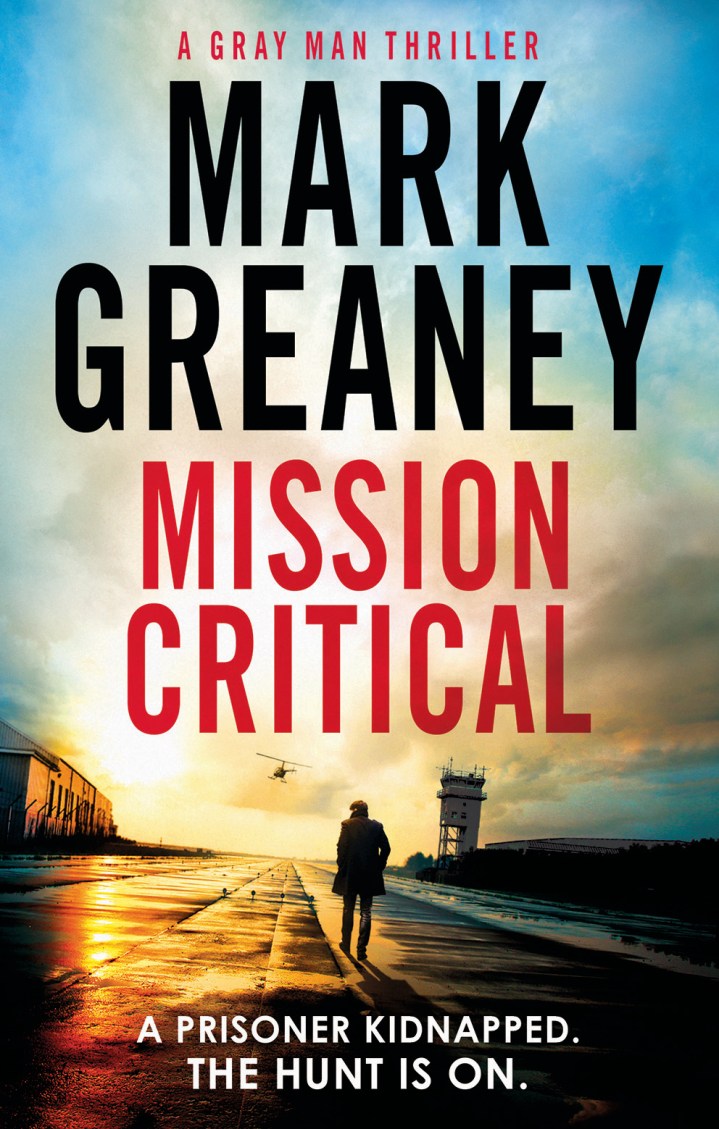
Mission Critical by Mark Greaney

Mission Critical Cover

Publisher: Sphere (Trade Paperback Edition – 26 February 2019)

Series: Gray Man – Book 8

Length: 513 pages

My Rating: 4 out of 5 stars

Amazon     Book Depository

Bestselling author Mark Greaney returns with another entertaining and fast-paced instalment in his enjoyable Gray Man spy thriller series.

Court Gentry used to be a ruthless covert assassin known as the Gray Man, a highly skilled killer considered a legend in the clandestine circles.  However, times change, and Gentry now finds gainful employment as a CIA hitter, one of three elite agents that make up the Agency’s super-secret Poison Apple program.  Going under a new codename, Violator, Gentry is redirected aboard a CIA flight in Europe.  Tensions rise when the plane’s other passengers, a team of heavily armed agents, attempt to remove Gentry from the flight in order to protect their prize, a hooded man who may have knowledge that could identify a mole within the CIA.

Allowed to remain on the plane, Gentry finds himself thrust into the middle of a firefight when the plane lands in England.  A team of mercenaries ambush the plane, overcoming the CIA and MI6 agents waiting to meet the flight and taking the kidnapped man for themselves.  Gentry gives chase to the surviving mercenaries to regain the kidnapped man and soon finds himself investigating the case by himself.

As Gentry attempts to uncover what is going on in England, one of Poison Apple’s other operatives, the former Russian agent Zoya Zakharova, finds herself under attack in her CIA safe house.  With Zoya going off the radar, Gentry’s handlers are convinced that a mole within the CIA is tipping of a dangerous opponent.  Gentry and his team are soon the only agents who can stop a devastating attack that could bring the West to its knees.

Mark Greaney is a highly regarded spy thriller writer who has some substantial works to his name.  He was Tom Clancy’s co-author for legendary espionage author’s final three books, Locked On, Threat Vector and Command Authority.  Following Clancy’s death in 2013, Greaney continued to write an additional four novels in Clancy’s Jack Ryan Universe.  Aside from the books he wrote with Clancy, Greaney has his own series, the bestselling Gray Man series, which started in 2009 with the author’s debut book, The Gray ManMission Critical is the eighth book in the Gray Man series.

This was an incredibly thrilling story which contains hell of a lot of action and espionage.  I really liked the sound of Mission Critical’s plot synopsis and was glad that I picked up a copy of this book, as the action and intrigue did not stop the entire time.  At over 500 pages long, I was worried that this might drag in some places, but I found myself fairly absorbed by the awesome plot and sufficiently pumped up by the huge number of firefights, close combat sequences and high-speed chases.

I loved the spy thriller storyline that was a prominent part of Mission Critical.  Greaney weaves together a number of plotlines to create a fantastic overall spy thriller narrative.  Because Mission Critical is told from a number of perspectives, including those of the protagonists and antagonists, the reader gets a great idea of all the action, spycraft and dirty tricks that both sides employ to complete their respective missions.  Greaney obviously has a large amount of knowledge about the espionage world, and I loved all his depictions about the inner workings of spy agencies, rogue operatives and the various tricks and techniques that agents employ.  I also liked Greaney’s depiction of the inner politics of the CIA and how that might impact on missions and the distribution of resources, as well as a look at the CIA’s relationship with other countries’ intelligence agencies.

I really liked some of the characters featured within this book.  The protagonist, Court Gentry (and I have to point out how much I love that name), is a solid and dependable badass agent to anchor this series.  He’s your typical thriller protagonist, with some badass skills and a reputation to match.  I loved his anti-authoritarian vibe, and I also quite enjoyed how he actually got his ass handed to him multiple times throughout the book, rather than being unbeatable in every encounter.  I was also impressed that Greaney kept showing him being slowed down by his injuries, rather than having him at 100% for every encounter like some other authors do.  Zoya is also a good protagonist for this story; let’s face it, a sexy Russian agent never goes amiss in a spy thriller.  The author dives into this character’s background quite a bit in Mission Critical, and her connections to the plot and the antagonists were explored in an intriguing manner.  The third Poison Apple operative, Zack Hightower, aka Romantic, was used a little less than his comrades, but he was a fun addition to the team, adding some humour to the story, especially when it came to his codename, as well as some complex history and camaraderie with Gentry.  The Poison Apple program handler, Suzanne Brewer, also adds some great things to the story.  A career-orientated CIA administrator, she has to try and play straight-woman to the three anti-authority, disrespectful operatives that are under her command.  The fact that she does not want to be working with these people and is at times actively sabotaging them to try and get a different posting adds some really intriguing elements to the story, and I liked watching her work against her agents for her own selfish ends.

Mission Critical is the eighth book in Greaney’s Gray Man series.  While this latest entry does feature a number of characters from the previous books in the series, readers are not required to have read any of the previous books to enjoy this story.  I felt that Greaney did an excellent job of explaining any elements from the previous entries in the series that become relevant throughout Mission Critical.  Fans of the Gray Man series will probably really enjoy the deeper examination of Zoya’s history and backstory, as well as her inclusion in the other Poison Apple agent’s operations.

Overall, Mission Critical was a deeply entertaining espionage novel that is bound to keep readers absorbed with its excellent action and thriller elements.  It is easily enjoyable for both existing fans of the franchise and new readers alike.  I had a lot of fun reading this book and I powered through all 500+ pages in fairly short order.  I am planning to keep an eye out for Greaney’s next book, Red Metal, a really cool-sounding war thriller that is coming out in July this year.

Amazon     Book Depository

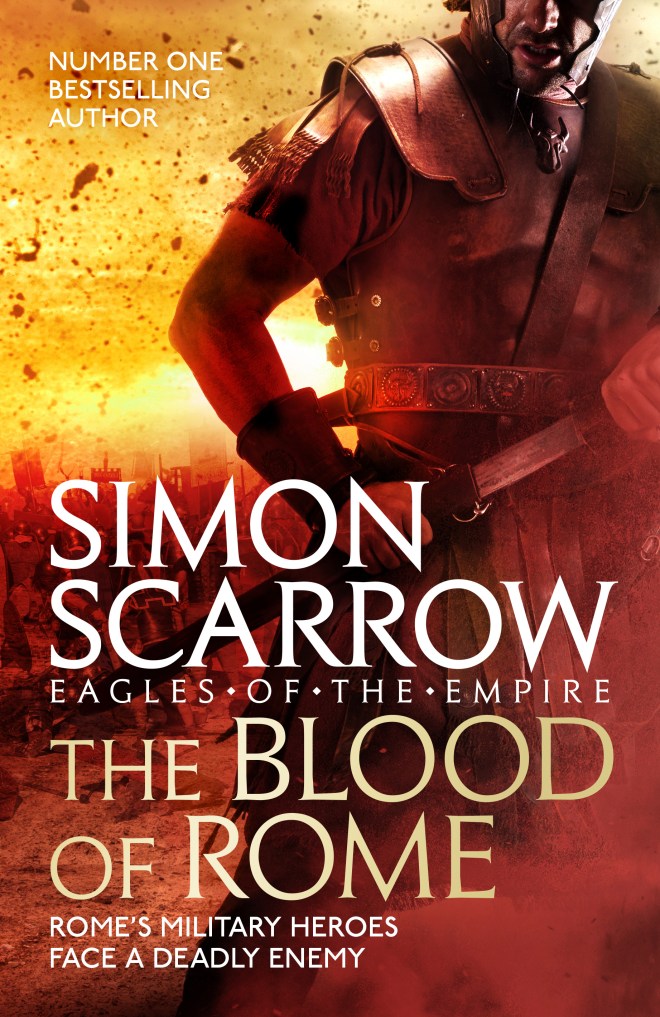
The Blood of Rome by Simon Scarrow

the blood of rome cover

Publisher: Headline

Publication Date – 13 November 2018

Amazon

One of the best and most prolific writers of Roman historical fiction, Simon Scarrow, returns with another outstanding adventure of his two Roman protagonists, Cato and Marco.

In AD 55, Nero has recently ascended to the throne, and the Roman Empire prepares itself for war with its great rival, the Parthian Empire, which sits to the east of Rome’s territories.  This recent conflict is centred on the neutral border kingdom of Armenia, which sits between the two great empires.  Years earlier, the brash Iberian prince Rhadamistus conquered Armenia and declared himself king, ruling as a terrible tyrant.  In response, a recent Parthian backed invasion routed Rhadamistus from Armenia and placed a Parthian prince on the throne.  Unwilling to let this strategic territory fall into Parthian hands, Rome sends its greatest general, Corbulo, to the east to reclaim Armenia for Rhadamistus and meet any subsequent hostilities from the Parthians.

The recently promoted Tribune Cato and his long-time companion, Centurion Marco, desperate to escape the deadly politics of Rome, lead the escort for General Corbulo.  When an early opportunity to take Armenia with minimal interference from the Parthians presents itself, the only forces that Corbulo can rely on are Cato and Marco’s elite cohort of Praetorian Guards.  Placed in command of an advance force, Cato must lead a mixed column of Romans and King Rhadamistus’s troops through unknown and hostile terrain towards Armenia’s capital.  Forced to balance his orders against the desires of the unstable Rhadamistus, Cato struggles to maintain the strength of himself and his men.  With traitors and enemies all around them, can Cato and Marco succeed, or will they find themselves killed in a strange land?

Scarrow is one of the leading authors of the historical fiction genre, whose work over the last 18 years is comparable to such established authors of the genre as Bernard Cornwell, Ben Kane or Conn Iggulden.  The Eagles of the Empire series, which started in 2000 with Scarrow’s debut, Under the Eagle, is the author’s most distinctive work, and features some superb description of Roman military action.  In addition to his main series, Scarrow has also written several other great pieces of historical fiction.  He co-wrote the Roman Arena and Invader novella series with T. J. Andrews, which are set in the same universe as the Eagles of the Empire series.  He also wrote the epic Wellington and Napoleon Quartet, also known as the Revolution Quartet, which provided an impressive examination of the opposing lives of Napoleon Bonaparte and the Duke of Wellington.  In addition to his series work, Scarrow has also written two standalone novels, The Sword and the Scimitar, which covers the siege of Malta, and Hearts of Stone, a dramatic novel set in Greece during World War II.  All of Scarrow’s novels are amazing pieces of historical fiction, and are really worth checking out if you are a fan of the genre.

The Blood of Rome is the 17th book in The Eagles of the Empire series, and follows the two protagonists’ return to Rome’s Eastern provinces for the first time since the eighth book in the series, Centurion.  I have always been a massive fan of this series and consider it to be one of the best pieces of Roman military fiction series on the market today.  After reading all of the previous books in The Eagles of the Empire series, I was particularly keen to get a copy of The Blood of Rome and eager to see where the protagonist’s latest adventure would take them.  After powering through it in a day, the result was pretty much what I expected: I loved Scarrow’s latest literary offering.  This latest book contains another fantastic historical fiction story, as the protagonists embark on an exciting campaign into an interesting new historical setting and it was great to see how the characters continue to evolve and progress in their lives.

Scarrow’s The Eagles of the Empire series has always boasted some incredible depictions of ancient Roman military combat, with most books containing several battles of varying size used to highlight the strengths and weaknesses of the Roman tactics and techniques.  This is continued in the Blood of Rome, with several battles featured throughout the book.  While most of these battles are small and quick skirmishes that differ from the traditional Roman battle sequences, the Roman soldier’s tactics and training and the effectiveness of their equipment are on full display, creating some amazing scenes.  In addition to the classic Roman legionnaires, which make up the bulk of Cato and Marco’s forces, Scarrow also focuses on the more unusual forces that the Roman’s used in combat, in the form of a cohort of auxiliary slingers, as well as a detachment of Roman siege equipment.  Both of these distinctive units get a good showing throughout the book, and both are fascinating to see in action.  The author also contains an interesting portrayal of Roman soldiers fighting side-by-side with allied troops, and it is intriguing to see the issues and advantages involved with such allies.  Overall, The Blood of Rome is another excellent example of Scarrow’s skill at portraying Roman military action sequences, and is one of the best parts of this book.

This book is also set in an extremely fascinating historical period and focuses on the rivalry between Rome and Parthia.  The continuous conflict between Rome and Parthia has always been a great literary background for many pieces of Roman historical fiction, and Scarrow has already examined it in some of his earlier books.  The conflict within The Blood of Rome continues to explore this legendary rivalry, and is an opening book in what appears to be a sequence of novels that will focus on an expanded war between the two rival nations.  This first book in this sequence looks at a rather minor opening conflict, played out as a proxy war within Armenia, but it contains a great examination of the politics at the time and the differences in battle style and tactics of the two nation’s militaries.  I really enjoyed the examination of the role of border kingdoms and provinces, such as Armenia, stuck in the middle of these two proud and ambitious empires.  The main story of The Blood of Rome, the invasion of Armenia and Rhadamistus’s attempts to claim the throne, are real pieces of history, and it was really interesting to see them utilised in this story.  All of the historical background for this book is incredibly fascinating and I had a great time reading about an amazing period of history.

The character of Rhadamistus was another intriguing addition to the book that added a whole new element to story.  Rhadamistus is a well-known historical tyrant and brutal man of ambition, and Scarrow did a good job showcasing the character’s casual cruelty and arrogance.  He was a pretty despicable character as a result, and watching the protagonists attempt to placate and counter his more ruthless actions added some dramatic twists to the story.  Scarrow examines certain parts of Rhadamistus’s life, and it was very fascinating to see his eventual fate and the role his reign as king had on the rival empires of Rome and Parthia.

I really liked Scarrow’s depiction of one of his main characters, Cato, throughout this novel.  Cato has never had an easy life, having been forced into the army at an early age, but the events of the last few books have been particularly hard on him.  As a result, certain incidents within The Blood of Rome finally push him over the edge, and it was a refreshing change of pace to see one of these usually indomitable characters show some real vulnerability.  This was a very realistic inclusion, and I thought it added some much-needed character growth to Cato.  It also served an essential story element, as his condition resulted in Cato being open to Rhadamistus’s manipulation.  This was a great part of The Blood of Rome that represents some intriguing adaptation within this long-running series.

Simon Scarrow once again produces an epic piece of historical fiction as he continues his outstanding The Eagles of the Empire series.  His long-running protagonists, Cato and Marco, are once again thrust into a fantastic historical military fiction adventure, and there are a ton of great elements for the readers to enjoy.  Another amazing outing from Scarrow, this is a highly recommended read for all fans of the historical fiction genre, as the author continues to produce some of the best Roman military fiction in the business.

My Rating:

Four and a half stars

Amazon

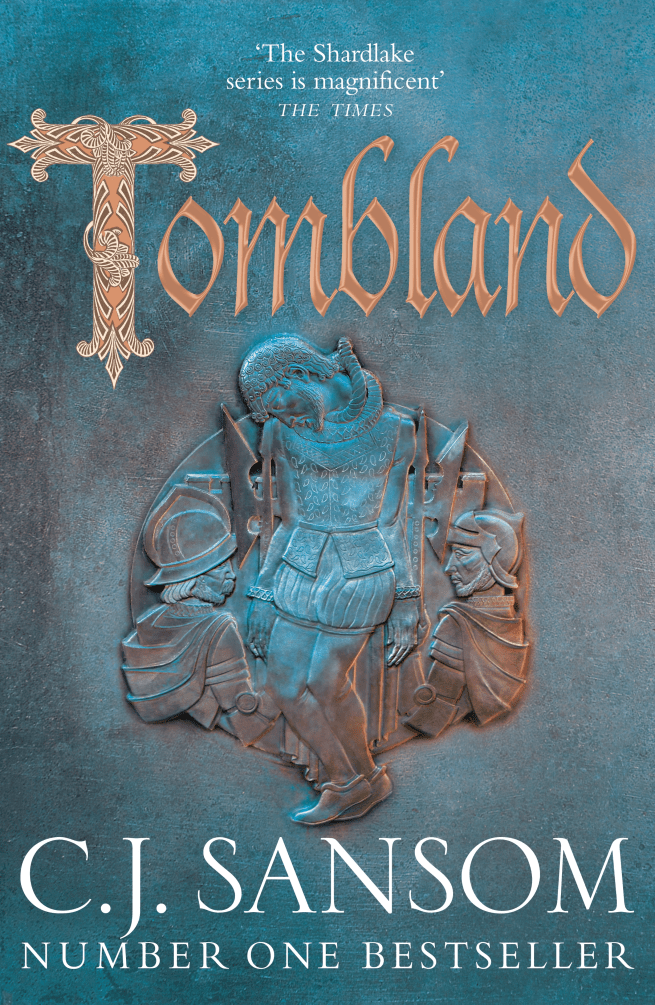
Tombland by C. J. Sansom

Tombland Cover

Publisher: Mantle

Publication Date – 18 October 2018

Amazon

One of the best historical fiction authors in the world today creates another exceptional piece of literature with Tombland, the epic historical crime fictional book set during the fictionally unexplored events of Kett’s Rebellion.

It is the summer of 1549, and King Henry VIII has been dead for two years.  The young Edward VI is on the throne, while his uncle, Edward Seymour, the Duke of Somerset, rules the country as Lord Protector.  However, the country is slowly descending into chaos as a long, unsuccessful war with Scotland, religious conflict, poverty and the corrupt actions of the rich landowners are raising discontent among England’s peasant population.

In the midst of this, Matthew Shardlake is working as a lawyer for the King’s sister, the young Lady Elizabeth.  When a distant relative of Lady Elizabeth’s mother, Anne Boleyn, is found murdered near Norwich and her husband, John Boleyn, is accused of the crime, the case could have political implications for Elizabeth.  Matthew is sent to organise a legal defence of John and to investigate whether or not he committed the crime.  Travelling with his assistant Nicholas, Matthew travels to Norwich and begins to examine the details of the case.  Meeting up with their old friend Jack Barak, the three friends are convinced of John’s innocence, but malevolent forces intervene to disrupt their defence.  As several deaths occur around Norwich, Matthew’s investigation is disrupted by events outside of his control.

A well-organised peasant rebellion erupts around the city, throwing everything into chaos.  Led by the charismatic Robert Kett, the rebels march on Norwich and set up a large camp outside the city, filled with thousands of disenfranchised peasants.  Captured by the rebels, Matthew and his companions find themselves in the midst of a dangerous and divisive situation.  Nicholas’s established views about the superiority of gentlemen sees him imprisoned, while Barak finds much in common with the peasants and their cause.  Matthew is forced to make a decision about where his loyalties lie, as Kett wishes him to assist in organising trials for the landowners they have captured.  As the rebellion drags on, Matthew finds evidence about the Boleyn murder case in the camp.  Following these leads, Matthew soon uncovers a terrible conspiracy that will not only endanger John Boleyn and his lawyers but could affect the fates of every peasant in Kett’s Rebellion.

C. J. Sansom is one of historical fiction’s most highly regarded authors, having written a series of amazing novels in the genre. His most significant body of work is the Matthew Shardlake series, which follows the titular lawyer as he finds himself forced to solve a series of elaborate mysteries during the Tudor period. All the books in this series are extremely impressive, as they all feature clever mysteries and an excellent use of the book’s historical setting.  In addition to this series, he has also written a standalone historical thriller, Winter in Madrid, as well as an alternate history novel, DominionTombland is the seventh book in the Matthew Shardlake series and Sansom’s first book since 2014, but considering the sheer amount of detail and the length of the text, this is hardly surprising.

Tombland is another epic novel from Sansom and one that I really enjoyed reading and ranked as one of my top 10 reads for 2018.  This book contains an outstanding combination of an intense and complex murder mystery and some amazing historical settings and storylines.  All of these elements are extremely amazing by themselves, but together they create one of the best reads of the year.  While I really loved this book, potential readers really need to set aside a lot of time to get through Tombland.  It has over 800 pages of story, with an additional 50 plus pages of the author’s historical notes and discussions about what events he included.  In addition, each page has such a rich amount of detail and plot that I found myself getting through this book at a lot slower pace than I usually would.  While it does take a while to get through Tombland, I personally believe it is well worth the effort, as the incredible story within had me hooked from the very first page.

This book has an intricate and powerful investigation angle, as Matthew and his associates attempt to solve a terrible murder that they believe their client has been wrongfully accused of.  The mystery part of this book is very well done and features an elaborate and intriguing solution that is slowly revealed throughout the course of the book.  Sansom introduces a significant number of potential suspects, all of whom have substantial motives to kill the victim, designed to throw the reader off the scent of the real solution.  I liked how the case continued to expand out as the book went on, as the protagonists not only attempt to solve the original murder but must also investigate several murders committed to cover up the initial acts, as well as several attempts to eliminate John Boleyn.  There are several major and surprising twists throughout the investigation, as a number of small clues and characters that at first appear minor turn out to have major implications for the overarching mystery.  The solutions to the mysteries at the end of the book reveal a dark and powerful motive that has severe consequences for several of the characters involved.  Overall, Tombland contained an outstanding central mystery, which is guaranteed to keep the reader deeply curious and engaged with this fantastic text.

One of the most interesting features of Tombland is the fact that Sansom has set it during Kett’s Rebellion of 1549.  This is a somewhat obscure piece of history that many readers might not be familiar with, but it is an incredibly fascinating event of English history.  Sansom does a masterful job of portraying the entirety of the rebellion throughout the novel and use it as a fantastic secondary storyline as the protagonists witness the beginning and end of the mystery.

Sansom does an outstanding job covering the events of this rebellion, including the events that led up it and caused the peasants to rise up against the rich landowners.  As a result, he expertly examines all the events and conditions that were making the peasants and poor of Norwich, and the rest of England, discontented with the way the country was being run.  In order to do this, a number of relevant elements are effortlessly inserted into the story and become key parts of the plot.  These elements include discussions about the poorly run war in Scotland contributing to armed deserters on the rebels’ side, talks about the political structure of the country and thoughts about the religious disagreements and schisms that were rife in the country during that period.  One of the most fascinating and significant elements that apparently led to the rebellion was the rich landowners’ focus on sheep farming and the creation of large sheep enclosures rather than the growth of traditional crops.  Before reading Tombland I would never have thought that sheep farming would have the potential to be a cause of rebellion; however, Sansom is able to explain in some significant detail how sheep farming and enclosures were negatively impacting many poorer individuals in England, and how it became a key part of Kett’s Rebellion.

In addition to covering the causes of the rebellion, Sansom’s narrative grows to cover the entire length of this intriguing event.  All sorts of elements of it are explored, and readers get an excellent idea of how the peasants were organised, what their motivations were, what sort of actions they were undertaking, how the government reacted to it and what the overall attitude of the participants was.  This was all boundlessly fascinating, and as the reader gets deeper and deeper into the book it becomes harder to put the book down as they become extremely curious about what the overall fate of this group of people was, especially after the reader gets an idea of how big the rebellion was and what sort of victories they were able to obtain.  The final results of this rebellion and the long-term impacts it had on the country are really interesting to hear about, and I had an amazing time seeing all the significant events that occurred during this underexamined historical rebellion.

As always, I was immensely impressed with the sheer amount of research that Sansom did and the historical detail that resulted from it.  Tombland includes over 50 pages of the author’s notes about the event and the conclusions he drew from his extensive research.  While these 50 pages are extremely interesting to read, the revelations about how many of the events the protagonist witnesses actually occurred were astounding, and it sounds like Sansom was able to recreate nearly every significant event of Kett’s Rebellion throughout the course of Tombland, with some necessary dramatic flourishes to create the overall story.  It was amazing how many of these events actually occurred, and how many of the secondary characters were actually real-life people who had significant impacts on the outcome of the rebellion.  Readers will also be amazed by the historical details that Sansom has included on every page of this book and will have a hard time forgetting the events of 1549 and Kett’s Rebellion.

There are several other elements I enjoyed in this book, including the seamless ways that the investigative storyline combines with the historical background of Kett’s Rebellion.  So many characters that are potential witnesses or suspects in the murders that the protagonists are investigating become key figures in the historical events that occurred around Norwich.  Suspects and witnesses are also found in the rebel camp, and I liked how the key to crime and the downfall of the rebels were both in the same place.  I also enjoyed the examination of 16th century English legal procedures and the depictions of murder trials, and found the scenes featuring them very fascinating.  The book’s focus on the divide between the rich and the poor is also a great addition to the story and gets a significant look in throughout the entire book, and it is a discussion that is still relevant to this day.

C. J. Sansom once again hits his literary ball out of the park with Tombland, another five-star historical mystery that has the perfect combination of compelling mystery and intriguing historical elements. With an incredibly addictive overall narrative and a focus on a fascinating historical event that is rarely used in other pieces of historical fiction. One of my favourite reads of 2018, I highly recommend this book, especially for people who love a great mystery.

My Rating:

Five Stars

Amazon

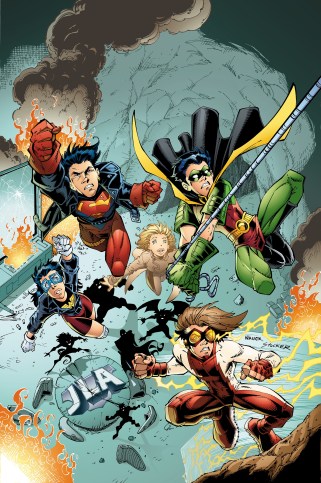
Young Justice – Book Three by Peter David and Todd Nauck

Young Justice 3.jpg

Publisher: DC Comics

Publication Date – 4 December 2018

Amazon

Before the third season of the Young Justice television show debuts after its long hiatus, go back to the comic book series that inspired it all, with the third volume of DC Comics’ reprint of the 1990s Young Justice comic book series, which includes the full collection of the Sins of Youth crossover event from 2000.

Young Justice is an interesting comic series.  Most people would probably be familiar with the 2010 television series of the same name.  The original comic book series started in the 1990s and was created in a unique period of DC Comics.  Many of the traditional sidekicks had grown up in recent years and taken on different identities to distinguish themselves from their mentors.  For example, the first Robin, Dick Grayson, had has own identity as Nightwing; the original Kid Flash, Wally West, had succeeded his mentor as the Flash; the original Wonder Girl, Donna Troy, had become Troia; while the original Speedy and Aqualad had taken on the identities of Arsenal and Tempest respectfully.  In order to fill the void, DC Comics creators in the 1990s created several new young sidekicks for their key heroes.  At the same time, with most of the former sidekicks in their early 20s, DC needed a new group of young heroes to appeal to their younger readers.  With the former sidekicks already formed up as the Titans, these younger heroes were placed into their own team, Young Justice.

Starting in 1998, this series ran alongside DC’s Titans series before both were cancelled in 2003 following the Graduation Day crossover event.  Young Justice was a successful way to launch several of its featured character outside their mentors’ orbit, much like the original Teen Titans series did for the first round of sidekicks, and many of its key characters are still used in DC Comics to this day.  Despite this, the series is probably best known for having the same name of one DC’s most popular animated shows, the Young Justice television show.  The show, which started in 2010, features a team based more on the Teen Titans comics rather than the Young Justice comics, with only one member of the original comic run of Young Justice, Superboy, appearing in the first season, although other members of the team did appear in the second season.  It did, however, make use of a number of storylines and villains from the original series, many of which were adapted into first-rate episodes.  The show received high ratings, but was cancelled after only two seasons.  However, continued petitioning from its dedicated fanbase has seen a revival of the show, with a third season airing in January 2019.  A new comic book reboot of the Young Justice comic series is also planned for 2019 and will see several of the original characters reunite for the first time in years.  Starting in 2017, DC started reprinting the original Young Justice comic run into a new set of collected editions, and this review is focused on the third volume of this reprinting.

Before this new reprinting of the original series I had not had much of a chance to read Young Justice, but it has always been high on my list of must-read comics.  This is mainly because I am such a big fan of Geoff John’s 2003 run on Teen Titans, which followed several characters from Young Justice after their team was disbanded.  This run on Teen Titans has to be one of my all-time favourite series and I was always very curious to see what happened to the characters during their Young Justice years.  So I was very happy when DC decided to reprint this original run and I have been having fun seeing these younger versions of some of my favourite characters before they got more mature and serious after the events of Graduation Day.

They are the next generation of superheroes, but being the second round of sidekicks to the leading members of the Justice League is tough, and sometimes having your own group of friends is what you need.  So Young Justice was formed: part superhero team, part friendship group.  Originally made up Robin (Tim Drake), Superboy (Kon-El/Conner Kent), Impulse (Bart Allen) and Wonder Girl (Cassandra Sandsmark), the team was later joined by new heroes Arrowette and Secret, while also being monitored by veteran hero Red Tornado.

Recent events have rocked the group and exposed them to negative attention.  The team have continuously been drawn into destructive fights and been forced to partially destroy Mount Rushmore, and Arrowette has been forced to retire after nearly killing a suspect.  At the same time, a new superhero team, Old Justice, made up of the aging sidekicks of the Golden Age of heroism, have been calling out the actions of their younger counterparts.  Railroaded by the press, politicians and even their mentors in the Justice League, the situation keeps going from bad to worse for the young heroes when they lose their base to an attack from a new superpowered group, the Point Men.

Attempting to regain public opinion, Young Justice and a supporting group of heroes attempt to hold a rally in support of young heroes, but a villainous presence wants to stop the young heroes from developing to their full potential.  A mysterious organisation, Agenda, headed by Lex Luthor’s ex-wife Contessa Erica Alexandra Del Portenza, wants to discredit all superheroes and believes that Young Justice is their weakest link.  Agenda uses the magical agent, Klarion the Witch-Boy, to cause havoc at the event, and Klarion’s magic leads to some accidental side effects.

The members of Young Justice have all been aged into adults, while their contemporaries, the members of the Justice League of America and the Justice Society of America, have all been turned into children or teenagers.  Worse, these de-aged heroes now have the emotional maturity of their age, while the members of Young Justice have the patience and wisdom of their mentors.  Forced to switch roles with the world’s greatest heroes, the members of Young Justice must find a way to not only stop the sinister machinations of Agenda but also find a way to reverse the effects of the spell.  Can Young Justice grow up to be the heroes they were always meant to be, or is the future of the DC universe a whole lot darker than anticipated?

This third volume of the reprint is another fantastic collection of a great original storyline.  I have been really enjoying this reprinting of Young Justice, and it was great to see this full collection of one of their most iconic storylines in full.  Not only does this new volume contain issues #18-19 of the original series but it also contains a huge number of tie-in storylines that feature most of the other heroes of that period of the DC universe, following their adventures as they have been de-aged or aged up.  As a result, this volume contains input from a gigantic range of DC creative talent, as the writers and artists of these other connected series do a one-shot version of the series they were working on at the time.

There is quite a lot going on in this volume and it definitely takes a while to get through.  There are a also a lot of technical and obscure comic book characters and teams that become the focus of the various stories within Young Justice Volume 3, so it might become a bit confusing for some people.  The volume is broken up by a couple of Young Justice storylines that introduce and finalise the story, while also providing the explanation for how this event unfolds and the villains responsible for it.  Once this is established, the volume goes into a series of different short stories that focus not only on the members of Young Justice but on some of the other superheros that have been caught up in the events of this crossover.  Each of these storylines show how the various heroes deal with being de-aged or turned into adults, and then follows up with an adventure, often with that particular team or hero working to find a solution to the curse afflicting them.  The four best storylines deal with the aged-up sidekick members of Young Justice (Robin, Wonder Girl, Superboy and Impulse) as they are forced to team up with teenage versions of their mentors.  There are some good jokes in this as the characters reverse roles and the younger heroes are forced to act as the mature anchors for their biggest heroes in the DC Universe.  These jokes range from Bruce Wayne being forced to pretend to be a moody Robin while his sidekick takes on the role of Batman for the first time, to Wonder Girl being forced to reign in a destructive Wonder Woman while making several snide comments about the practicality of her uniform, to a very young Flash attempting to hit on his fully grown wife.  There are also some quite heartfelt moments as the mentors are finally placed in their misunderstood sidekicks’ shoes and find a way to emphasise with them in a way they haven’t managed before.

In addition to these stories around the Young Justice sidekicks and their well-established mentors, there are a number of other interesting stories splashed through this volume.  I particularly enjoyed the short one that featured a teenage Aquaman teaming up with an adult Lagoon Boy to stop a crisis under the water.  This one is not only fun, as the teenage Aquaman is a bit of a bold ladies man, but it also shows how he was a hero even as a teenager, as he sacrifices a potential solution to his problem to restore a devastated city.  There is also a story that focuses on the Titans, which brings its founding members back to their Teen Titans days, with a storyline that reminds the readers of their classic adventures.  I was less of a fan of the storyline that focused completely on a teenage version of the Justice League, and I really disliked the storyline that contained an all-child version of the Justice Society going on an adventure.  Overall though, this huge collection of stories comes together in a fun and cohesive narrative that not only presents a massive, whole DC Universe event, but one that focuses on the core team at the heart of the adventure.

A major feature of this volume is the examination of the negative perceptions that older people have for the world’s youth.  Even 20 years later this is still incredibly relevant, as most older people these days are quite dismissive of today’s youth culture (those darn millennials).  Young Justice goes out of its way to show a group of teenagers who try to do the right thing but are constantly dismissed by adults as nuisances who do not try to see their side of the story.  After being hounded for a good part of this and the previous volume, Wonder Girl gives an impassioned speech to the media that gets the worlds attention, divides some of the older heroes and rallies several other prominent young heroes to their cause.  The creative team follows this up by putting its young heroes in the position of responsibility and showing that they can act in a mature and responsible way when given the chance, while their established mentors act irresponsibly when turned back into teenagers.  All of this is a great examination of how young people are perceived by their elders and how they can surprise you when given a chance.  This is still a great storyline to enjoy to this day and one that will resonate with the modern youth culture.

While I have been having quite a lot of fun with this re-print run of Young Justice, it may prove a little harder to get into for people who are not as familiar with some of the other 1990s DC Comics storylines which were happening at the time.  That being said, it is a series well worth getting into, especially for fans of any of the Teen Titan runs that followed the cancellation of Young Justice, as many of the members of these teams were originally featured in this series.  Fans of the Young Justice television show will probably also get a lot out of this series, as several of the show’s best storylines and villains originated in this original comic series.  Overall, Young Justice is a fantastic series that will appeal to both younger readers and well-established comic book fans.  This third volume features a full and fantastic collection of one of this series’ most iconic story events, which provides an intriguing examination of youth culture perception and a great examination of the additional hazards of being a young hero.  Extremely entertaining and a lot of fun to read, I am really glad that DC decided to do this re-print of Young Justice.

My Rating:

Four and a half stars

Amazon

Dark Sacred Night by Michael Connelly

Dark Sacred Night.jpg

Publishers: Orion

                       Hachette Audio

Publication Date – 30 October 2018

Amazon

Legendary crime author Michael Connelly returns for another clever and technically detailed crime thriller that teams up his iconic and most utilised protagonist, Harry Bosch, with his recently created female protagonist, Renée Ballard.

In the chaotic world of the LAPD, Renée Ballard is an outsider who has found herself permanently on the graveyard shift of the Hollywood beat.  Returning to the near-abandoned station after a callout, Ballard is surprised to find a stranger rifling through her unit’s filing cabinets.  The intruder is maverick retired detective Harry Bosch, formally of the LAPD, now currently working as a contractor for the San Fernando police.

Bosch is working a cold case for personal reasons.  The victim, a 15-year-old runaway, Daisy Clayton, was brutally murdered several years before and Bosch has gotten close to the girl’s devastated mother.  Initially kicking him out the station, Ballard’s subsequent investigation of Bosch’s actions reveals the full details of the case to her and she finds herself drawn to Bosch’s hunt for justice.  As the two outsider detectives join forces in order to solve the case, they are once again thrust into the grimy underworld of Hollywood.  But as they attempt to find justice, a cornered killer, departmental politics and the dangerous suspects of the two detectives other investigations may cause the case to come crashing down around them.

Michael Connelly is a prolific and award-winning crime novelist who has been writing since 1992.  During that period he has written over 30 books, all of which are set in the same shared universe.  Connelly’s debut book, The Black Echo, introduced his most iconic character, Harry Bosch, who has been the protagonist of 21 of Connelly’s books, as well as being a supporting character in several other books.  Due to the author’s focus on this character, Connelly’s extended crime universe is often referred to as the Harry Bosch universe.  Connelly has also written a number of other thrillers in this universe, featuring several other protagonists, such as lawyer Mickey Haller, reporter Jack McEvoy and investigator Terry McCaleb.  Many of the characters introduced in previous books often have small roles in later books, while Bosch has had interactions with most of Connelly’s other protagonists.  The second protagonist in Dark Scared Night, Renée Ballard, is a more recent creation who was introduced in the 2017 novel The Late Show, and this is her first interaction with Bosch in Connelly’s wider universe.

Outside of the literary world, Connelly’s works have been adapted to film and screen.  His Harry Bosch novels have been adapted into the current Bosch television series, which will air its fifth season in 2019.  Two of his books have also been adapted into movies.  His novel, Blood Work was adapted into film in 2002 with Clint Eastwood, while his first legal novel, The Lincoln Lawyer was adapted into film in 2011 with Matthew McConaughey.

Dark Sacred Night is an excellent piece of crime fiction that presents the reader with a series of interesting investigations, told from the perspectives of two fantastic police protagonists.  I listened to this book in its audiobook format, which is jointly narrated by Christine Lakin and Titus Welliver, and runs for 10 hours and 39 minutes.  Dark Sacred Night primarily focuses on the investigation into a cold case of a young runaway girl who was brutally killed nine years previously.  This central case is massively intriguing and takes the reader deep into the sordid and disturbing criminal nightlife of Hollywood.  The main case is a gritty and unique investigation as the protagonists are forced to rely on different methods than they would usually utilise to solve the case.  Rather than having any recent evidence, the detectives are forced to rely on old interviews and pieces of police intelligence to identify any potential suspects or witnesses.  This is an intriguing way to investigate an old crime, and I really enjoyed the way they were forced to utilise this less substantial evidence to find their killer.  This method results in the protagonists identifying and investigating several distinctive suspects, and the reader is presented with a series of false leads and suggested possibilities.  I was able to identify who the killer was quite early in the book, but I still had a lot of fun following the investigation to its conclusion.

I really enjoyed the way that Connelly seeded a large number of smaller cases throughout the novel for the protagonists to solve, as well as a number of examples of police work in action.  There is an interesting split here as Ballard, the full-time detective, is given a series of more official and everyday crimes to solve, such as a suspicious death, a missing persons, a theft, trespassing and a kidnapping that she investigates to various degrees throughout the book.  Bosch, on the other hand, only has one case, an old, unsolved gang execution that he is pursuing in San Fernando and which is the focus for a good portion of his chapters.  The inclusion of these smaller cases is a clever move from Connelly as it breaks up the story from a pure focus on the main case and presents a wider viewpoint of crime and policing in the book’s setting.  It also allows the author to showcase his protagonists’ divergent investigative skills and presents the readers with an additional number of compelling mysteries and adventures that they can sink their teeth into.  Some of these additional cases tie into the main mystery in some surprising ways and clues or suspects may be revealed through this.

All of these mysteries do an amazing job showing of the author’s obvious knowledge of police procedures and law enforcement techniques.  Connelly, a former crime reporter for the Los Angeles Times, has an amazing grasp of the minutiae of police work and he expertly inserts these details into his story.  As a result his police characters mostly investigate crimes, examine evidence and file the paperwork in a way that feel extremely realistic and which adds a huge amount to the books authenticity.  Connelly’s police characters even feel like real cops, as the way that they act or think feels like real life police would act.  All of this combines with the amazing mysteries to create a first-rate piece of crime fiction.

Dark Sacred Night is the first time that Connelly’s main protagonist, Bosch, engages with the author’s newest protagonist, Ballard.  There are some interesting similarities between the two characters, which makes for a great story.  Both detectives have a similar maverick style when it comes to investigating crimes, and both have been screwed over by LAPD politics and had their careers impacted as a result.  As a result, both characters are dogged in their pursuit of criminals, especially those guilty of sex crimes, and both are willing to bend the rules to get their suspects.  However, the main difference between them is how far they will go to get justice.  While Ballard is happy to bend rules, she doesn’t go too far over the line or deliberately hurt or damage her suspects.  Bosch on the other hand has a much more flexible idea of where the line is and engages in some questionable behaviour that could be seeing as going too far. The two characters work well together during this book, and I hope that Connelly continues to use his latest protagonist in the future, especially as there are some interesting stories available when it comes to her complex police past.

The audiobook version of Long Dark Night is a great way to enjoy this crime novel and I found that I quickly powered through the book with this format.  The audiobook format utilises two separate narrators to describe the adventure contained within, broken up by whichever protagonist is narrating that chapter.  For example, Christine Lakin narrates the chapters told from Ballard’s point of view, while Titus Welliver narrates Bosch’s chapters.  Both of these narrators have great voices for their central characters, and both of them fit in perfectly in this gritty crime drama.  Lakin captures Ballard’s character perfectly, and you get a real sense of the no-nonsense and wary personality that is Ballard every time you hear Lakin’s voice.  Welliver’s voice, on the other hand, is deep and gruff and really fits Bosch’s old school and veteran personality.  Overall there is some fantastic voice work in the audiobook format of Dark Sacred Night, and I found that listening to this mystery really drew me into the middle of this investigation and helped me remember certain details and clues.

This latest book from veteran crime author Michael Connelly is a fantastic mystery thriller that draws the reader in with two outstanding protagonists and a series of captivating mysteries.  Dark Sacred Night is written in a way that is very easy to get into and the reader can enjoy the full mystery without any details of the previous books in Connelly’s shared universe.  As a result, despite it being such a late book in this long-running series, Dark Sacred Night is also the perfect place to start your investigation into the crime sensation that is Michael Connelly.  First rate crime fiction at it’s very best, this is an outstanding release from Connelly that is guaranteed to draw the reader into the dark and intriguing world of mysteries.

My Rating:

Four and a half stars

Amazon

War of the Wolf by Bernard Cornwell

War of the Wolf Cover.jpg

Publisher: Harper Collins

Publication Date – 24 September 2018

Amazon

Uhtred of Bebbanburg returns in another rich historical adventure set in the heart of post-Roman Britain in this incredible and first-rate story from historical fiction legend Bernard Cornwell.

In the early 10th century, after many years of trials and tribulations, Uhtred has at last achieved his lifelong goal of reclaiming his ancestral fortress of Bebbanburg.  Finally able to claim his independence from Wessex and the Saxon Christians who have always treated him with scorn and hostility for his pagan beliefs, Uhtred seeks to move away from the politics, battles and backstabbing that has been his life for so long.  However, his new peaceful life is about to be interrupted by the interventions of enemies new and old.

In the outside world, King Edward of Wessex has made his move on the kingdom of Mercia, and has finally achieved his father’s dream of uniting the Christian kingdoms of Britain into one nation.  The only remaining country outside of his control is the Kingdom of Northumbria, ruled by Uhtred’s son in law, Sigtryggr.  These events have led to dangerous changes and new alliances for the remaining factions living outside of Edward’s control.

When a mysterious priest sends Uhtred on a mission to save Edward’s maligned firstborn son and Uhtred’s former ward, Æthelstan, from a Mercian siege, he finds himself outmanoeuvred by a new army of Danes who have come to claim Northumbria for themselves.  Faced with great loss, Uhtred finds himself in a brutal fight against an opponent who seems to have mystical powers at his command.  At the same time, the politics of the Wessex court threaten to start a war on another front, as the various contenders for the fading Edward’s throne seek to gain position, and many of the potential heirs want Uhtred dead.  With enemies all around and not enough men at his back, the odds look grim for Uhtred.  But, despite years of brutal battles and the ravages of age, Uhtred is still the most feared warrior in all of Britain, and he’s about to show everyone why he is always a force to be reckoned with.

War of the Wolf is the 11th book in The Last Kingdom series of historical fiction books from Bernard Cornwell.  To my mind, Bernard Cornwell has to be considered one of the greatest authors of historical fiction in the world today, both in the quantity of books he has written and the quality of their content.  Cornwell has been writing since 1981 and has produced more than 55 novels in his career, the vast majority of which are either set in England or focus on English characters out in the world.  The sheer scope of Cornwell’s work is incredible, as he has covered vast tracts of world history, including several more obscure eras not regularly covered by other historical fiction authors.  He is possibly best known for his long-running Richard Sharpe series, which followed the adventures of a British soldier and commander during and around the time of the Napoleonic Wars.  The Richard Sharpe series featured 24 books and was adapted into the British television series, Sharpe, featuring Sean Bean as the titular character.  Other series that Cornwell has published include the American Civil War series The Starbuck Chronicles, the Arthurian legends series The Warlord Chronicles and the Grail Quest novels, which are set during the early years of the Hundred Years’ War.  Cornwell has also produced a number of standalone novels, including several sailing based modern thrillers and a number of intriguing individual historical novels.  These standalone novels cover a huge range of different topics, from the prehistoric English story in Stonehenge, to the war novel Azincourt, the excellent examination of one of the more interesting battles of the American Revolutionary War in The Fort and the thriller set among Shakespeare’s theatre company in Fools and Mortals, which I have previously reviewed here.

The Last Kingdom series, alternatively known as the Saxon Stories, the Saxon Tales, the Warrior Chronicles or the Saxon Chronicles, started in 2004 and is Cornwell’s second–longest-running series, with 11 books currently written, and more set for the future.  The Last Kingdom series is the second of Cornwell’s series to be adapted for television, with a third season of The Last Kingdom television just starting yesterday.  I have always been a massive fan of this series, especially as one of the books in the series, Sword Song, was one of the first pieces of historical fiction I ever read and which helped get me into the genre.  This is a fantastic series, as each of the books contains an electrifying adventure set during a period of history often overlooked or underutilised by other historical fiction authors.  I have routinely reviewed several books in this series over the years, many of which will appear in future additions of my Throwback Thursday series of reviews.

War of the Wolf is another incredible outing from Cornwell that once again focuses on the life of his grizzled and battle-tested protagonist, Uhtred of Bebbanburg.  Uhtred is a superb series protagonist who has witnessed the changing political and religious landscape of this period of post-Roman Britain.  Originally a Christian Saxon, he is captured by pagan Danes as a child after the death of his father and the theft of his Uhtred’s ancestral fortress of Bebbanburg (modern day Bamburgh Castle in Northeast England) by his uncle.  Raised by the Danes, Uhtred gains an appreciation for their culture and even starts practicing their religion.  Uhtred is eventually forced into the service of the last remaining Christian kingdom of Wessex and its pious King Alfred (Alfred the Great).  Even with several falling outs between the two, Uhtred serves Alfred and his family for many years as his most ferocious warrior and war leader, participating in several of the defining battles of the era.  Throughout the series, Uhtred is constantly torn between the Christian Saxons and the invading pagan Danes.  Despite being born as a Christian in a formerly Christian kingdom, Uhtred finds more in common with the Danes after being raised by one of their noble families and taking on their religion.  While he’d rather fight alongside the Danes, circumstances force Uhtred to swear oaths of loyalty to various Saxon kings, especially Alfred, despite the hatred and disdain they show towards him for retaining his pagan faith.  These dual loyalties are a key part of the character, and often result in much internal and external conflict for Uhtred and form the basis of a number of excellent storylines.  Cornwell uses the character of Uhtred extremely well to highlight the differences between the Danes and the Saxons, as well as the importance of religion to these warring groups, especially when it comes to the somewhat insidious spread of Christianity to the Danes.

These storylines continue in War of the Wolf, as one of Uhtred’s oaths sends him into battle once again.  This sets up the main story of the new book perfectly, as Uhtred is forced to deal with the politics and betrayals of the Saxons, while also fighting against a dangerous pagan opponent.  I liked how Cornwell has continued to focus on Uhtred’s ties to the warring factions of Britain, and his attempts to reconcile his loyalties with his sense of honour and right and wrong.  I also really enjoyed the way that Cornwell has aged up his protagonists throughout the series.  Many authors will try to fit a number of adventures in to a short period of time in order to keep their protagonists in the same age range.  Cornwell, who has based many of the key occurrences of his books on real-life historical events, has instead chosen to age up his protagonist as he outlives several historical figures.  As a result, in War of the Wolf, Uhtred is no longer the young warrior he was at the start of the series, but is now an old sword in his 60s.  This is an intriguing narrative element from Cornwell, who has been slowly building up to this over the last few books in the series.  Not only has Cornwell been slowly ageing him but he’s been making him a more canny and crafty individual, able to rely on his brains and experiences more than his sword arm, although he still finds himself in the middle of every battle.  In the latest book, this leads Uhtred to think more about the future of the people he cares about than his own future, as he realises he is getting closer to death.  This is another fantastic outing featuring one of Cornwell’s best protagonists, and I am excited to see that he has left the series open for several additional stories in the future.

One of the more interesting parts of The Last Kingdom series is Cornwell’s outstanding research and his focus on historical details and events that are often not part of the public consciousness.  I can think of no better way to highlight this then to mention that while I was doing a post-Roman Britain archaeology course at university, my lecturer actually included several books from The Last Kingdom series on his suggested reading list among the usual textbooks and scholarly articles.  The previous books have all featured major battles or political events that helped decide the future of England, and his fictional point-of-view character often finds himself discussing the events with significant historical figures.  Smaller details, such as the traditional names and spellings of historical people and places, give all of these books an incredibly authentic feel and really make the reader think they are back in this time period.  As a result, these books are extremely intriguing for those fans of history and I cannot speak highly enough of the level of historical detail or insight Cornwell shows in his work.  Cornwell continues his trend of interesting historical features in War of the Wolf, as he examines several key events during this period.  This includes the annexation of the Kingdom of Mercia by King Edward of Wessex following the death of his sister Æthelflæd, the Queen of Mercia, and the subsequent rebellion by the Mercians.  There is also focus on the submission of King Sigtryggr of Northumbria to King Edward, and focuses on the events that led up to it.  Uhtred also finds himself embroiled in the politics around who would rule Sussex following the future death of Edward.  All of this is incredibly fascinating and form an amazing background for the rest of the book’s story.

Intense action sequences have always been a major part of this series, with the large-scale fight scenes between the various warring factions battling around the British countryside.  Cornwell does an excellent job replicating the battle tactics and techniques of the Saxons and the Danes, especially the standard technique of the shield wall, where the two opposing sides line up their shields and advance at each other.  The battles are always incredibly detailed and pull no punches when it comes to the gruesome realities of war and combat.  War of the Wolf in particular has quite a few great battle sequences, including one extended siege sequence towards the end of the book at an old Roman fort.  I also loved the inclusion of the úlfhéðnar, the fabled wolf berserkers, who become a major part of the story, as Uhtred and his soldiers must find a way to overcome these dangerous opponents.  It was quite interesting to see how these sorts of legendary historical fighters would actually fare in battle, and the author presents both the advantages and disadvantages of using them.  Special mention should also be given to the dual between the two opposing ‘sorcerers’ during the climactic battle that was extremely entertaining and one of the more amusing parts of the entire book.

Cornwell has once again delivered a five-star classic piece of historical fiction with the latest book in his bestselling The Last Kingdom series.  Filled with fantastic action, amazing historical context and focusing on a well-established and amazingly fleshed and complex protagonist, War of the Wolf is an incredible read that comes highly recommended.  Even after 11 books, this is still one of my favourite series and I’m very excited to get the next edition.

My Rating:

Five Stars

Amazon