House of Open Wounds by Adrian Tchaikovsky

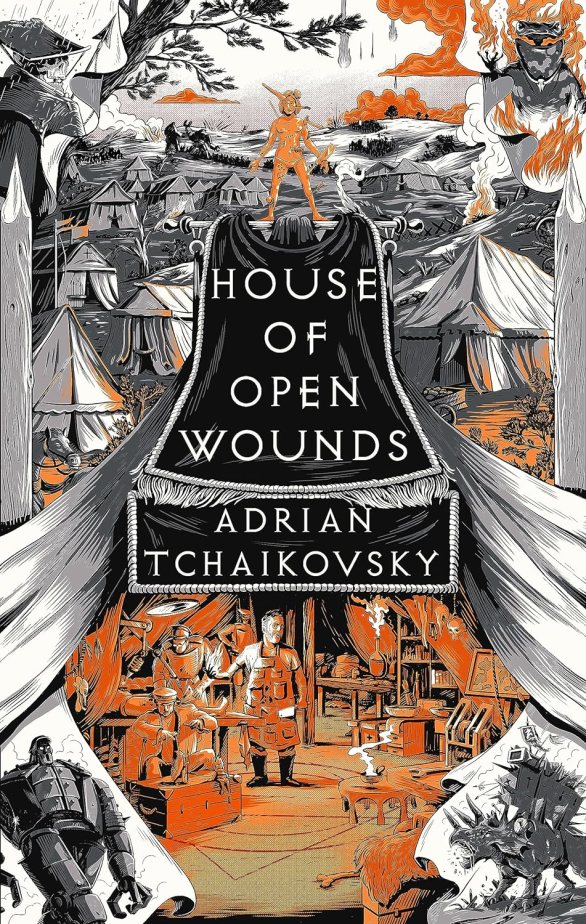
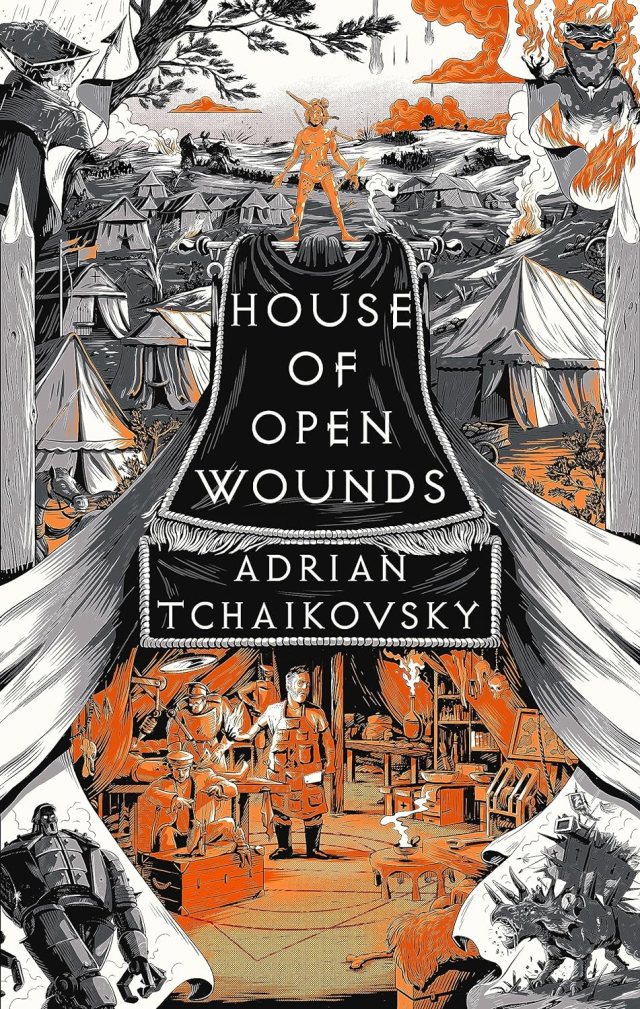
House of Open Wounds Cover

Publisher: Head of Zeus (Ebook – 7 December 2023)

Series: The Tyrant Philosophers – Book Two

Length: 636 pages

My Rating: 5 out 5 stars

Amazon

The always deeply impressive Adrian Tchaikovsky returns with an exceptional and remarkable piece of fantasy fiction, House of Open Wounds, which presents the reader with a particularly unique and ruthlessly entertaining story, chock full of brilliant characters.

Few fantasy authors have the range and style of Adrian Tchaikovsky, whose distinctive contributions to the science fiction and fantasy fields are quite remarkable.  While Tchaikovsky has written several highly regarded series, I have only just scratched the surface of his works, having read a few of his recent reads.  This includes his first foray into the Warhammer 40,000 universe, with the captivating standalone read, Day of Ascension, as well as the brilliant and elaborate novella, Ogres.  However, my favourite book from Tchaikovsky so far would have to be the outstanding City of Last Chances.

The first book in The Tyrant Philosophers series, City of Last Chances was an outstanding read that I had the pleasure of enjoying earlier this year.  Set around a conquered city with several unique magical inclusions, City of Last Chances introduced the reader to a cool new world and told a range of character driven stories about resistance, religion and sacrifice.  City of Last Chances got a very easy five-star rating from me, and it honestly was one of the best books and audiobooks I enjoyed in the first half of 2023.  I had such a brilliant time with City of Last Chances that when Tchaikovsky announced he was releasing a sequel in the second half of 2023, I was ecstatic.  This sequel, House of Open Wounds, continued some of the complex storylines Tchaikovsky started in City of Last Chances, and it was one of my most anticipated books for the second half of the year.

There are few nations more feared or relentless than the ever-expanding Palleseen.  A rising empire of zealots who are determined to bring Perfection and Correctness to an imperfect world, the Palleseen have advanced out of their homeland in an unstoppable wave, wiping out all religion and superstition as they go.  As cities and kingdoms fall before their military might, their armies leave behind mounds of dead and wounded soldiers who require tending in field hospital tents just behind the frontline.

Into this chaos is thrust the god smuggler Yasnic.  A former priest, miracle healer and occasional rebel, whose previous experiences with the Palleseen saw him hanged, attacked and banished from his city, Yasnic has experienced many upheavals throughout his life.  Saved from another execution by the army bureaucracy, Yasnic and his box of orphan gods arrive at the frontlines, where he has been assigned to work in an unorthodox medical unit.

Made up of a mixture of former priests, gods, magicians, alchemists, artificers, necromancers and led by a gigantic brute known as the Butcher, the experimental medical unit treats the soldiers no one else can save and recycles the rest into the war effort.  Entrusted to save the Palleseen soldiers, but doomed if anyone ever discovers the full extent of their abilities, the surgeons and orderlies of this unit ply their bloody trade as best they can while living as part of an unusual family, but the arrival of Yasnic could change everything.

As Yasnic works to fit into the unit and save lives, his unusual connections to the weakened and hidden gods of the world slowly begin to cause chaos throughout the army.  Not only is he aware of the divine forces that secretly hang around the hospital, but his own illegal and crotchety God is determined to bring miracles to the Palleseen, whether that want them or not.  As an outbreak of impossible healing and sudden pacifism spreads through the regiment, can Yasnic keep himself and his gods alive, or will the full force of the Palleseen zealots come crashing down upon him?

This was another epic and truly remarkable novel from Tchaikovsky that had me hooked the entire way through.  Featuring a dark, bloody and fun story, House of Open Wounds was a particularly distinctive read that told its own captivating story while continuing some of the best elements from City of Last Chances.  Funny, thoughtful and moving in equal measures, House of Open Wounds was an incredible and addictive novel that gets another very easy five-star rating.

I was very impressed with the exceptional and moving narrative that Tchaikovsky pulled together for House of Open Wounds, and I was hooked the second I got into it.  After the events of City of Last Chances, the reader is thrust into a new part of Tchaikovsky’s fantasy world as you find yourself imbedded in a Palleseen battalion following the members of an unusual but effective military hospital.  Like City of Last Chances, House of Open Wounds is strongly character driven, as you follow the personal stories surrounding each of these unusual outsider characters and learn about their complex pasts while watching their lives play out in the present.  Much of the plot revolves around returning protagonist Yasnic and his God, who are drafted into the unit, and you get to see his experiences of the other characters, the wars, and the internal Palleseen bureaucracy.  Most of the first half of House of Open Wounds is dedicated to exploring the new cast of characters and introducing their unique stories, as they find themselves closely following a bloody and dangerous war.  This part of the book is primarily focused on the healing and medical work of the protagonists, as well as diving into their reasons for being there and the unique skills they bring to the surgical table.  Apart from that, there isn’t an amazing amount of major plot progression here, except when Yasnic starts to mix things up around the battalion.  While this pace is a little slow, this first half of the book was really fun and enjoyable, as you find yourself getting really lost in the characters’ lives, unique struggles, desires, and experiences.  It also helps that many of these character details, as well as the mundane events of the hospital, eventually lead to bigger things later in the main plot, and Tchaikovsky does an outstanding amount of set up here.

The plot picks up a lot more in the second half, when the main battalion moves to a different warzone and find themselves involved in a substantial fight that really pushes the medical unit to its limits.  The new battles, as well as the intriguing location they find themselves in, move several of the character arcs in some big directions, and you find out more and more about each of the main characters as a result.  The constant chaos that surrounds Yasnic also starts to take its toll on the main story, as his strangeness and the double-edged miracles he occasionally brings cause him to make enemies and upset the delicate balance of the Palleseen army.  At the same time, the Palleseen war machine starts to alienate the members of the medical unit, who find their talents being stolen to create weapons.  Everything leads up to the big finale, where the protagonists attempt to free themselves with an elaborate and ambitious plan.  This plan makes great use of all their individual skills and histories, and so many little details and elements from the story are used to bring a fun and creative conclusion to the book.  Each of the fascinating character arcs conclude nicely and I loved how Tchaikovsky masterfully brought everything together in a satisfying and entertaining way.

Tchaikovsky utilises his typical excellent and distinctive writing style to convey this elaborate and entertaining narrative to the reader, and I had such a wonderful time seeing it unfold.  As with the previous novel in the series, Tchaikovsky relies very heavily on perspective changes to tell a multilayered, character-driven story.  Like the previous book, many of the major characters are initially showcased in their own chapter at the beginning, which often leads to additional cast introductions.  As the book progresses, the chapters feature perspective changes so you can see more interactions and a wider view of the entire story.  I loved the immediate deep background on several of these characters, and while you still often must wait a while to get their full story, you learn enough to like them in the opening parts of the novel.  Tchaikovsky makes full use of these characters to tell a fantastic story, and I loved how well he showcases some unique events through their eyes.  As with the previous book, House of Open Wounds has a range of tones as Tchaikovsky works hard to produce the right balance of humour, excitement, and moving and powerful character moments.  The multiple detailed and confronting scenes of the bloody battlefield hospitals are well balanced out by the fantastic and subtle humour, which often comes from the outrageous situations that occur throughout the book, as well as the various character’s unique outlooks on life.  This made for a particularly compelling book as you found yourself moving from comedic scene to a more dramatic or tragic moment with frequent regularity, as you find yourself stuck onboard a well-thought-out emotional roller coaster.

House of Open Wounds proves to be an intriguing and clever follow-up to City of Last Chances, especially as the author deepens the lore surrounding this fantasy world and brings back two fantastic protagonists.  Readers of City of Last Chances will have an absolute blast with this book, as you get some interesting follow up to Yasnic’s compelling storyline while also seeing a different side to the antagonistic nation from the first book.  This is a somewhat loose follow-up, and you really don’t need to have read City of Last Chances to enjoy House of Open Wounds.  In many ways this is a good standalone novel, especially as most of the focus is on a whole new group of protagonists, and even Yasnic is given a new name for much of the book.  Tchaikovsky does ensure that some of the key details and plot points from the first book are carried over when needed, although he does leave a bit of context out in places so as not to overwhelm new readers.  As such, House of Open Wounds is a very accessible read, although established fans of Tchaikovsky are going to particularly enjoy this, especially if they loved City of Last Chances.

One thing you can always rely on Tchaikovsky to do is to pull together an elaborate and deeply compelling world to set his stories around.  This is extremely true in this series as Tchaikovsky has come up with a war-torn landscape filled with magic, gods, demons and a new rising empire.  The author did some interesting set up for this world in the previous novel, although the plot there was primarily contained inside a single city.  In House of Open Wounds, the reader gets to see a bigger chunk of this world, even though much of the plot takes place either on the battlefield or in the camp behind the lines.  Despite this, you get a better idea of the politics, wars and conquests that have taken place in recent history, and you particularly learn more about the Palleseen.  The Palleseen are a group of ideological zealots dedicated to bringing their version of perfection to the world, which primarily involves breaking everything down into logic and reason, and doing away with superstitions and beliefs.  As such, their goal is to rid the world of gods, deities and other superstitions, usually by conquering the lands and bringing them under the control of their relentless bureaucracy.  Most of this book is dedicated to exploring the nature of their war machine, and you really get to see just how corrupt and ambitious some of their members are as a result.

I loved the focus on the military hospital and the war camp for most of the book, especially as seeing the various members of Palleseen camp allows the reader to fully understand the many problems, compromises and cruelties the Palleseen experience on their road to perfection.  Tchaikovsky throws in some great critiques of militarisation and empire building throughout the book as you see these perfect Palleseen become racked with pride, ambition and greed to prove themselves and advance up the ranks.  Their determination to win means they turn a blind eye to gods and superstitions when it suits them, and that results in the experimental medical unit that serves as the centre of the book.  However, while they appear to only want the assembled gods, alchemists, and other strange magics for healing, really they are working to corrupt them into terrible weapons to further their war capability.  There are several great storylines that see the Palleseen turning benevolent tools and creatures into highly inventive tools of war, and it serves as a major plot point and motivation for several characters, including a few Palleseen who have enough of their colleague’s lust for power.  Combine that with the returning minor gods, who end up having their own impact on several characters, and the reader comes away with a very cynical look at the Palleseen, and empires in general, which both ridicules them and shows just how malevolent and insidious they can be.

The real key that pulls together House of Open Wounds is the huge array of memorable and complex characters that are introduced throughout the course of the plot.  Tchaikovsky does a remarkable job of introducing and swiftly building up some truly amazing characters in this novel, and their compelling and often traumatic personal stories become so highly ingrained in the plot as a result.  There are so many great protagonists and supporting figures in this novel, and I was personally impressed with how all of them were original characters that were not built up in the prior novel.

The main exception to this rule is Yasnic and his god, both of whom were introduced in City of Last Chances and who are masterfully inserted into this sequel.  Yasnic was honestly one of Tchaikovsky’s best characters in City of Last Chances and I was so glad to see more of him here, especially as the author somehow manages to work in even more development after all the defining character moments that shaped him in the prior novel.  Since we last saw him, Yasnic has moved on from being the last priest of a forgotten god and has instead become a more generalised religious figure, offering shelter and assistance to fallen and orphaned gods who no longer have any power or believers by carrying them around in a box on his back.  After everything he has gone through, including his own crisis of faith, Yasnic now has a different view of the world, although he is still being haunted by his demanding and petty god.  Yasnic has some wonderful moments in this book as he tries to fit into his new role while also hanging onto the trappings of his old life.  Desperate to save everyone he can, Yasnic finds his views and pacifism really badly damaged by the constant war and the relentless and orderly Palleseen, and he is forced to make some haunting compromises.  You really get some very interesting insights into Yasnic’s mind in this book, especially as you see how the aftermath of him abandoning his position as a priest impacted him.  You cannot help but feel for the extremely likeable Yasnic at times, as he is thrust into tragic and heartbreaking positions against his will, and his quiet determination and general positivity pluck at your heartstrings.  Throw in some great new friends, an unusual but surprisingly wholesome love interest and a series of unfortunate misunderstandings that frustrate even this gentle soul, and Yasnic once again stands out as a particularly awesome and likeable protagonist.

The other side of Yasnic’s character resides in the body of his tiny, stumpy, and petty deity, God, a former major healing god who has lost all his worshippers apart from Yasnic, but still maintains his powerful healing abilities.  However, God refuses to heal anyone unless they swear a vow of pacifism, and if they cause harm to someone in any way, it will result in their wounds automatically returning, generally resulting in a sudden death.  Thanks to his stubbornness, pride, and his whiny focus on Yasnic’s soul, God was one of the most entertaining characters in City of Last Chances, and I am really glad that Tchaikovsky brought him back for House of Open Wounds.  While he is still a judgemental, mischievous and ugly angel on Yasnic’s shoulder in this sequel, you get to learn more about God and why he refuses to help save people.  There are some surprisingly emotional scenes where God expresses why he is so bitter and you really get a much better understanding of his angry mind, especially when Yasnic makes the same mistakes, adding to God’s sadness.  I also loved how well God played off Yasnic as he proves to be a surprising and entertaining counterpoint to the humble and nice former priest.  While most of their dialogue is quite contentious, with God trying to control his increasingly independent former priest, you can see deep down that God cares about Yasnic, and they form quite an interesting and fun duo.  Tchaikovsky took God’s character arc in some interesting directions towards the end of House of Open Wounds, and I have a feeling he is going to be a real nuisance to people in the next book.

House of Open Wounds also features quite a fun range of supporting characters, each of whom has their own compelling story to tell.  This primarily includes the crazy and unusual group of associated healers and hospital workers that work in the experimental hospital unit, as well as the competitive and dangerous Palleseen officers controlling their destinies.  I won’t go into too much detail here, as I could honestly go one for a paragraph about each, but I was really impressed with how well Tchaikovsky set each of them up and explored their histories and stories as the booked continued.  There are some brilliant and very well fleshed out character arcs everywhere in House of Open Wounds, and I loved just how compelling a story Tchaikovsky was able to make as a result.

Adrian Tchaikovsky once again shows why he is one of the absolute best authors of complex and intelligent fantasy fiction with this outstanding and epic read.  House of Open Wounds is a deeply clever, compelling and moving read that hooks the reader with its unique scenarios, fantastic humour, and memorable characters.  I loved every single second I spent reading this novel and I really appreciated the amazing way Tchaikovsky chose to continue the great story started in City of Last Chances.  I cannot wait to see what over elaborate fantasy stories Tchaikovsky creates in this universe in the future, and this epic novel is one of the best pieces of fantasy fiction I enjoyed in 2023.

Amazon

Kill Your Husbands by Jack Heath

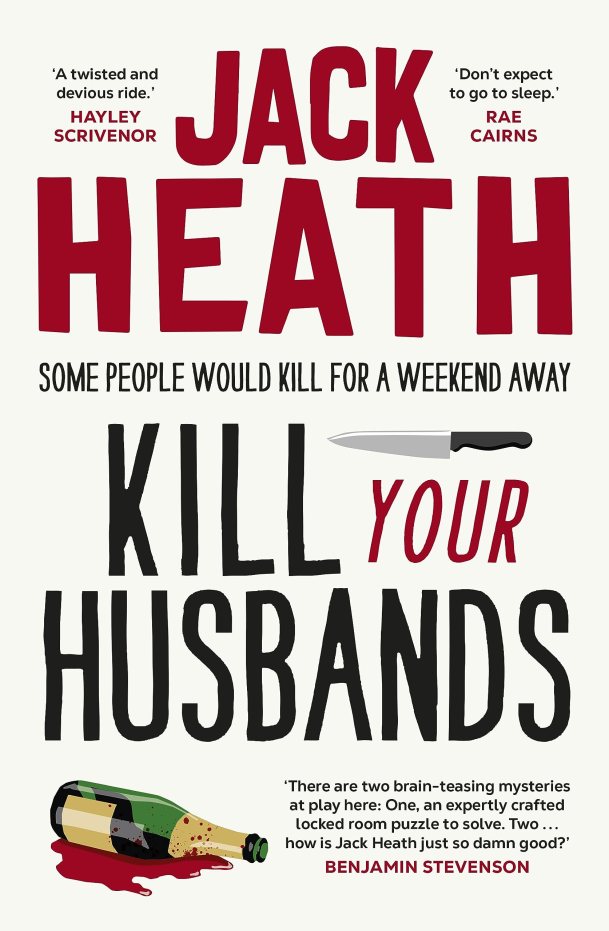
Kill Your Husbands Cover

Publisher: Allen & Unwin Australia (Trade Paperback – 28 November 2023)

Series: Kill Your Brother – Book Two

Length: 384 pages

My Rating: 4.75 out of 5 stars

Amazon

One of my favourite Australian authors, the scarily good Jack Heath, returns with another twisted and brilliant thriller, Kill Your Husbands.

Easily one of the best Australian thriller authors at the moment has to be the always impressive Jack Heath.  Hailing from my hometown of Canberra, Heath has written a compelling range of epic thrillers over the years, all of which have been fun and captivating in their own way.  I am a major fan of his Timothy Blake series (check out my reviews for Hideout and Headcase), which follows the gruesome adventures of a murder-solving cannibal.  Heath has also produced several other great standalone or Australian series, including his 2021 novel, Kill Your Brother.  An intense and shocking thriller that forced a highly damaged protagonist to choose between killing her guilty brother or dying herself, Kill Your Brother was one of the best pieces of Australian fiction in 2021 and I had such a great time reading it.  As such, when I saw that Heath had a new Australian thriller coming out this year, I was very excited, especially when I found out it was a sequel to Kill Your Brother.  This new book, Kill Your Husbands, had a wicked plot synopsis, and I fell in love with it the moment I read it.  One of my most anticipated books for the second half of 2023, Kill Your Husbands was a shocking read that I had so much fun with.

It was supposed to be a relaxing weekend away for three couples, longtime friends since school the six overworked and stressed adults decide to escape their taxing lives for a weekend up in the mountains.  With no internet or cell reception, their getaway was supposed to be a quiet time of drinking and bushwalking.  However, after the topic of partner-swapping is raised on the first night, the entire mood of the weekend shifts.  What starts as a joke soon turns into an elaborate plan to ensure anonymity between partners, with the lights turned off and the men choosing a bedroom at random.  No one will know who they’ve been with, and no one will ever be certain if they slept with anyone other than their spouse.

However, when the lights come back on, one of the participants is missing.  A search soon reveals their body outside, clearly the victim of a violent attack.  With no cell reception and the keys to the cars missing, the remaining five people quickly become suspicious of the other survivors.  As the weekend continues and more people begin to disappear and die, old wounds, festering grudges and decaying relationships come to the fore, turning husbands against wives and friend against friend.

Two weeks later, Senior Constable Kiara Lui returns to the murder scene with her girlfriend, Elise.  Having interviewed the survivors, Kiara is certain at least one of them is lying and the killer is within her grasp.  Kiara knows that the answers lie within the house, but with strange occurrences occurring around the property, one person still missing, and her own girlfriend’s strange behaviour starting to concern her, can Kiara break through all the lies and secrets and find the truth before the killer strikes again?

This was another excellent and thrilling read from Heath, who pulls together another insane, yet highly clever, mystery that you really cannot put down.  Making full use of Heath’s outrageous plot, Kill Your Husbands is a dark and twisty novel that I had so much fun reading and which is easily one of the best pieces of Australian fiction I have read all year.

I loved the unique, memorable and very twisted central idea that Heath came up with for Kill Your Husbands, as murderous partner swapping is honestly it was one of the more amusing and outrageous plot focuses I have seen.  Starting off with a quick introduction sequence, the reader is soon enthralled in split focus narrative throughout Kill Your Husbands as half the chapters recount the weekend of the murders and the events leading up to the killings, while the rest of the chapters are set after the murders and focus on Senior Constable Kiara Lui, a supporting character from Kill Your Brother, as she attempts to solve the crime.  This proves to be a very clever and impressive way to showcase the plot, and I loved the simultaneous look at the investigation, the weekend in question, and all the key events that led up to the crime.  Both separate storylines are very interesting and compelling in their own way, especially as they paint two different pictures of the chaotic events in question.  Thanks to Heath using first names during the chapters set in the past and only referring to surnames when it comes to the later investigation, you don’t get any spoilers about what is going to happen during the weekend.  As such, it isn’t until the end of the book that you are completely certain about who dies and who survives, and this allows you to remain on the edge of your seat as your watch the chaotic events unfold.

Heath paces out both arcs of the story extremely well, and they work well together to tell an intriguing and powerful story.  The scenes set in the past tell a powerful and character-driven tale, with flashbacks to prior interactions, details about their turbulent relationships, and a great range of petty slights that ensure everyone had a motive for killing the rest of the group.  Heath ensures that the characters are all stewing in this during the early chapters in the mountain before the partner swapping scene occurs.  The author sets this up perfectly, with the subterfuge, secret plans, and hidden desires all coming into their choices, and the resulting chaos sufficiently messing with them.  As such, all of them are primed to be the killer when the first victim emerges, and the subsequent environment of fear, suspicion and hatred make for some outstanding scenes, especially when all their secrets come to light.

At the same time, the reader gets a fantastic look at the ongoing investigation being undertaken by Kiara as she tries to get to grips with the case.  There are some great scenes here, especially as Kiara independently uncovers the secrets of the three married couples, which works into the other timeline extremely well.  There are some fun moments in this part of the investigation, especially when Kiara and Elise make the interesting decision to book out the murder house for a holiday so they can try and find some answers, while also dealing with their own intense personal issues.  While there are some excellent moments in this part of the book, the investigation angle of Kill Your Husbands is the weaker half of the novel, mostly because it lacks the juicy details the lead up to all the murders.  I also didn’t think that Heath needed to shoehorn in the characters from Kill Your Brother into the plot, as fresh new police protagonists would have also been just as effective.  Still this second half of the book was very fascinating, and the clues revealed within give you some great hints about who the killer is and how they got away with it.

The eventual solution for Kill Your Husbands is exceedingly clever, and I really liked how all the key events of the book played out.  The climax of the murderous weekend is pretty damn shocking in its entirety, and I loved just how well Heath managed to keep secret who survived and who died right until the end.  The killer’s motivations and the events that drove them to it are well set out, and the scenes where they commit their crimes really drive home just how dangerous they are.  Certain other reveals towards the end of the book, especially when Kiara gets close to the truth, reveal just how clever this entire story is, and I loved how certain innocuous mentions or clues are well utilised later in the story.  The entire solution of the book, as well as the final confrontation between Kiara and the killer are just perfect, and you will come away from Kill Your Husbands extremely satisfied after travelling through such a captivating, unique and brilliant mystery.

This elaborate story and murder mystery wouldn’t be possible without the great characters featured in Kill Your Husbands.  I particularly loved the six friends who journeyed to the cabin and who end up being pulled into the deadly partner swapping/murder plot.  Heath does a wonderful job of effectively introducing them and you get drawn into their complex lives, filled with emotional damage and occasionally petty problems.  While you do feel sorry for some of the characters, most of them are somewhat despicable and unlikeable to a degree, which ensures that are highly interesting and fun in the context of the main murder.  I loved how many personal issues and secrets came out as the story progressed, and you really get invested in seeing who the killer is, possibly more than finding out who survived.  I loved how fun and interesting these main characters where and Heath did such a great job featuring him in this crazy story.

The other major characters are Senior Constable Kiara Lui and her girlfriend, Elise, who serve as the main figures in the investigation arc of the book.  As I mentioned about, Kiara and Elise both appeared in Kill Your Brother, with Elise serving as the main character of that novel.  However, Elise takes more of a backseat here with Kiara stepping up and leading the investigation.  While I don’t think Kill Your Husbands really needed some of the drama and ongoing trauma surrounding these characters, I did enjoy seeing them still together after the events of Kill Your Brother, and I liked how Heath moved Kiara more to the fore in this book.  Kiara was a badass investigator, and it was great to see her try to prove herself while also still concerned about her clearly traumatised girlfriend.  For her part, Elise is still trying to prove herself after her controversial past the helpless position she found herself in during the events of Kill Your Brother.  As such, she takes some big risks and acts very recklessly in this book, often to the detriment of Kiara’s investigation or emotions.  This extra layer of emotional charge ensured that Kill Your Husbands’ plot was a little more convoluted and intense, and I did enjoy seeing these two characters again.  That being said, you don’t need to have read Kill Your Brother to full appreciate these characters in this sequel, and you can get the full range of emotions from reading Kill Your Husbands as a standalone read.  I honestly came away from Kill Your Husbands very impressed with how Heath introduced and utilised his characters and they were such a distinctive and fun group of figures who were perfect to get wrapped up in a murder.

Overall, Kill Your Husbands was another outstanding and compelling novel from Jack Heath, who continues to show why he is the master of crazy Australian crime fiction.  Heath had a lot of fun with his outrageous plot and the way he worked his excellent and damaged characters into this complex murder mystery was very impressive.  A captivating and dark read from start to finish, Kill Your Husbands is one of the most memorable and intense Australian thrillers of 2023 and Heath is a must-read author for anyone looking for some truly shocking and mental crime fiction.

Amazon

The Defector by Chris Hadfield

The Defector Cover

Publisher: Quercus (Trade Paperback – 10 October 2023)

Series: The Apollo Murders – Book Two

Length: 369 pages

My Rating: 4.5 out of 5 stars

Amazon

Former astronaut turned thriller author Chris Hadfield returns with his second excellent novel, the intriguing and clever historical read, The Defector.

Back in 2021, I was lucky enough to receive a copy of superstar astronaut Chris Hadfield’s cool and much-hyped debut novel, The Apollo Murders.  Set during the Cold War, The Apollo Murders depicted an alternate history adventure where a fictional Apollo flight mission to the moon suffered all manner of calamity, including murder, treachery, and unexpected Russian hitchhikers.  Thanks to Hadfield’s knowledge of history and spaceflight, this turned out to be quite the gripping read, and The Apollo Murders ended up being one of my top debuts for 2021.  As such, I have been eager to see how Hadfield planned to follow up his first book, and I was quite excited when I saw that his second novel was a sequel to The Apollo Murders.  This book, The Defector, was an excellent and compelling thriller which I had a brilliant time getting through.

Israel, 1973.  On the eve of the Yom Kippur War, a Soviet test pilot makes the bold decision to fake a crash in his state-of-the-art MiG fighter and secretly land in Israel.  Claiming that he wants to defect to the United States, the pilot, known by his codename, Grief, and his plane are traded to the Americans, who desperately want to know the secrets of the MiG and how it achieves such impressive altitude.

Having witnessed Grief’s defection while on holiday in Israel, NASA flight controller and former Navy test pilot Kaz Zemeckis is quickly drafted in to take carriage of the captured MiG and to work with Grief to fully understand the plane’s limitations and capabilities.  Their unlikely partnership eventually takes them to the most secure and secret location in the United States, Area 51, where Grief looks set to provide all the information the Americans have ever wanted about the MiG.  However, not everything is as it seems, and it soon becomes apparent that Grief has his own reasons for wanting to defect to the United States.  Can Kaz get to truth before it is too late, or has he let a wolf right into the heart of America’s most secret air base?

This ended up being an excellent and exciting novel from Hadfield that successfully follows up his original debut and provides a cool and intense new story that proves very hard to put down.  Hadfield tells a pretty tight and compelling story in The Defector that starts strong with the mysterious Grief defecting right in the middle of the Yom Kippur War.  This initial excitement morphs into an intense and gripping game of cat and mouse, as Kaz attempts to utilised Grief’s knowledge and keep his defection secret from the Soviets, while the Russian pilot works to initiate his own plans.

This continues for much of the book, and I thought this ended up being a much more focused and well-structured thriller narrative than we previously saw from Hadfield in The Apollo Murders.  The focus on espionage and military secrets was a great centre for the plot, and Hadfield did a good job on also utilising some intriguing characters, especially Kaz and the mysterious Grief.  The inclusion of a couple of fictional supporting characters from The Apollo Murders, namely a cosmonaut and a major Soviet antagonist, was also quite interesting, although as they were mainly there to set up a future entry in the series it did disrupt the narrative flow a little.  Everything leads up to the big conclusion, which Hadfield set up nicely throughout the course of the story.  While I do think that Hadfield might have considered utilising a twist to change the antagonist around, it was still really fun to see the full plan unfold, as well as the real reasons behind the defection.  Watching the manipulation and the resulting violence unfold was very impressive, and it led to a satisfying, if slightly predictable, final showdown with the protagonist that ended everything on a high note.

I really enjoyed how well The Defector came together, especially as Hadfield reused all his best writing elements from The Apollo Murders, while also strongly utilising his own personal experiences and knowledge as a test pilot.  The constant switching between perspective characters, as well as several interludes and flashback sequences, helped to produce a complex, multilayered storyline, and I liked seeing the various players in the plot attempt to work out what everyone else is doing.  It also allowed Hadfield to hide some good hints about the antagonist’s true motivations and feelings, which came out perfectly at the end of the book.  There was also some great character growth around the protagonist Kaz, especially as Hadfield successfully built on his personality and relationships from the first book, and it is clear that the author has some future adventures planned for him.

However, the real strength of The Defector lies in Hadfield’s encyclopaedic knowledge of military airplanes, Cold War espionage history and spaceflight, which was masterfully inserted into the plot.  Much of the plot revolves around the desire for both sides of the Cold War to get a better understanding of their opponent’s aircraft capability, and Hadfield expertly examines the history and mechanics around this.  The discussions about aircraft, fighter capabilities and more, are all quite fascinating, and Hadfield does a wonderful job of exploring them in a highly detailed way that readers unfamiliar with aircraft can easily understand.  His experience also allows for some highly realistic and intense aerial combat sequences, and I really enjoyed the elaborate scenes that resulted, especially the cool conclusion.  This grasp of aircraft, the history surrounding their development, and the espionage involved, are well worked into the plot of The Defector, and I loved how much it increased the authenticity of the book, making it so much better.

Overall, The Defector was an outstanding second novel from Hadfield that I had a wonderful time reading.  Containing a clever and well-paced spy thriller narrative loaded with intriguing details about aircraft and the cold war, The Defector had me hooked from its first awesome scene, and I managed to power through this book in no time at all.  Compelling and action packed, The Defector was an outstanding follow-up to The Apollo Murders and I cannot wait to see what Hadfield writes next.

The Defector Cover 2

Amazon

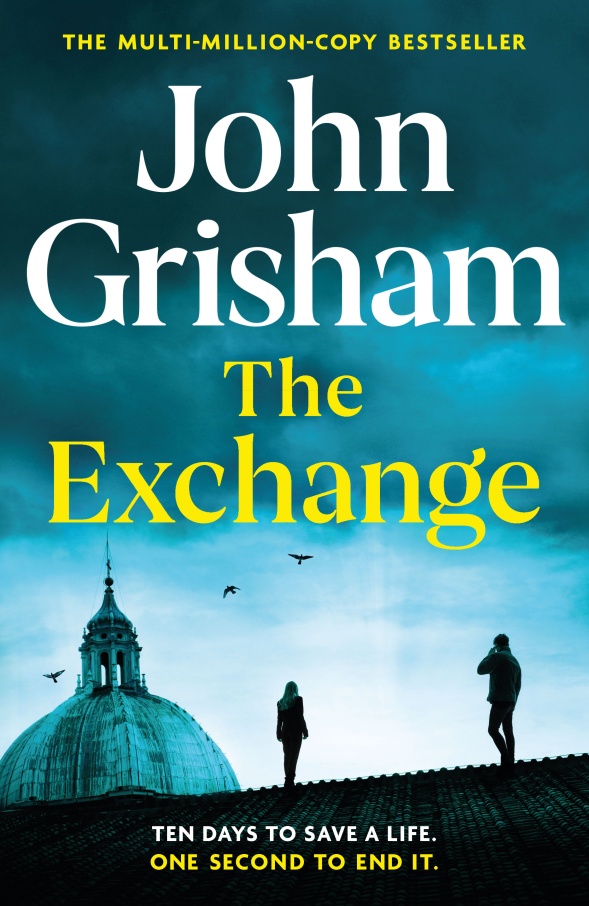
The Exchange by John Grisham

The Exchange Cover 2

Publisher: Hodder & Stoughton (Trade Paperback – 17/10/23)

Series: The Firm – Book Two

Length: 338 pages

My Rating: 3.75 out of 5 stars

Amazon

John Grisham presents an intriguing sequel to one of his best-known books with his latest release, The Exchange.

Grisham is a talented and well-respected author who needs very little introduction after wowing audiences for years with books (and their movie adaptations) such as The Pelican Brief, The Rainmaker, The Runaway Jury and A Time to Kill.  I personally came into Grisham’s novels a bit later than I probably should have, but I have had fun reading some of his latest releases such as The Judge’s List, The Boys from Biloxi and Sparring Partners.  I had a wonderful time with each of those books and I now make sure to grab the latest Grisham novel whenever they come out.  As such, I made sure to get a copy of Grisham’s new release, The Exchange, a fantastic legal thriller that serves as a sequel to one of his best-known novels, The Firm.

15 years ago, Mitch and Abby McDeere exposed the crimes of a corrupt Memphis law firm and its mobster clients, fleeing the country with a stash of the firm’s crooked money.  After spending years abroad in Europe fearing potential retribution, the McDeeres finally returned to America, taking up residence in New York, far away from their troubled past in Memphis.

Now, Mitch works as a partner in one of the biggest law firms in the world, sent to troubleshoot some of its most difficult cases.  A request from an old friend sees Mitch travel to Libya, where a Turkish construction company is suing the tyrannical Libyan government over failure to pay an extensive bill.  This is far from a routine case, and Mitch soon finds out just how dangerous that part of the world is when one of the firm’s young associates is kidnapped in a bloody attack.

Determined to save his associate before she is killed, Mitch desperately utilises all his contacts and legal knowhow to raise the ransom money needed and encourage governments to intervene.  However, the organisation that kidnapped the young woman is far more dangerous than anyone expected, and they soon launch a series of attacks against Mitch’s new firm while demanding an extravagant amount of money.  With his own family caught in the crossfire, Mitch must unwind the turbulent politics surrounding this event if he is to save everyone he cares about.

I must admit that I had some mixed feelings when it came to The Exchange, and it honestly wasn’t my favourite Grisham novel.  Let us start with what I liked about The Exchange, which for the most part was a pretty fun and exciting read.

Grisham wrote an intriguing and fast-paced narrative for The Exchange that is really easy to get into and proves very hard to put down in places.  There is a great set-up surrounding the Libyan deal, and it was fascinating to have a book set in Libya in 2005 during the Gaddafi regime.  Grisham ratchets up the tension early, as you know something bad is going to happen, and when it does, Grisham does not hold back with the brutality and violence.  The second half of the book, which primarily follows the protagonist as he uses all his contacts to try and negotiate for his colleague’s release, is also quite fascinating, and you can feel the fear and desperation of the characters, especially when Mitch’s family is brought into the situation.  Add into this the complex characters and the compelling, detailed and highly cynical examination of life in one of the world’s biggest law firms (in this case, a fictional law firm which has appeared in prior Grisham novels), and The Exchange has a lot going for it.

While I found it exiting and captivating to read, and I enjoyed a lot of how this story came together, most of my dissatisfaction came from the conclusion.  I won’t go into a lot of detail here to avoid spoilers, but frankly I found the end of the book to be rather underwhelming and a little lazy.  Despite setting up some intriguing storylines at the start that could have resulted in a great and engaging conclusion, Grisham instead chose to just resolve the storyline in a predictable manner and leave a lot of stuff hanging.  There are so many unanswered questions left over as a result, especially when it comes to the means and motive of the antagonists, and I was honestly surprised that Grisham did not tie it into the plot of The Firm somehow.  Frankly, this lacklustre conclusion put a damper on my enjoyment of The Exchange as a whole and I was a little disappointed about not getting a satisfying ending.

Another major element of the book that I am not sure hit home completely for me was its connections to Grisham’s previous novel The Firm.  I must admit upfront that I haven’t read The Firm, but I honestly don’t think The Exchange’s story really benefited from being a sequel.  While I am sure that some Grisham fans really appreciated getting a continuation of the McDeeres’s story, it didn’t do a lot for me.  For example, the first 50 or so pages are dedicated to Mitch returning to Memphis for the first time since the events of The Firm, which does serve as a good bridging element for new readers.  However, this opening scene had no connections to the main plot of the book, and it was just so unnecessary in hindsight.  I also never really connected to Mitch and his family throughout the course of The Exchange’s story, and it might have been better if Grisham had introduced an original protagonist instead.  Still, the author did do a good job of recapping the key events of The Firm to new readers, and I am sure dedicated Grisham fans will appreciate this interesting continuation after all these years.

While I did have a bunch of issues with The Exchange, I think overall it was a good book by Grisham and I did have a fun time reading it.  Much of the plot is very exciting and well set out, and there are some truly fascinating elements to it.  Probably best read by those fans of Grisham’s style and prior novels (especially The Firm), The Exchange is well worth a read, but I just wish it had a better ending.

Amazon

Waiting on Wednesday – The Girl in Question by Tess Sharpe

Welcome to my weekly segment, Waiting on Wednesday, where I look at upcoming books that I am planning to order and review in the next few months and which I think I will really enjoy.  I run this segment in conjunction with the Can’t-Wait Wednesday meme that is currently running at Wishful Endings.  Stay tuned to see reviews of these books when I get a copy of them.  In this latest Waiting on Wednesday I highlight an awesome upcoming young adult thriller with The Girl in Question by Tess Sharpe.

The Girl in Question Cover

Amazon

Back in 2021 I managed to get my hands on an amazing young adult novel, The Girls I’ve Been by Tess Sharpe, which ended up being quite an impressive read.  Following a teenage former con-artist who must use all her skills to survive a deadly hostage situation in a bank, The Girls I’ve Been was an exceptional and addictive novel with some great characters, a clever plot, and some deadly personal stakes.  I really got caught up in this fantastic novel and I have been eager to see if Sharpe was going to follow it up, especially as there were several interesting plot points left open.

Well details have finally been released about an upcoming sequel to The Girls I’ve Been that I am very keen to get my hands on.  This sequel, The Girl in Question, is set for release in February 2024 and is currently one of my most anticipated young adult novels of the new year.  With a fun sounding plot and some great potential for betrayal, murder and deadly personal heartbreak, The Girl in Question sounds pretty damn epic and I cannot wait to see how it all turns out.

Plot Synopsis:

Four teens. Three henchmen. Two thousand acres of remote forest. One very bad man. And a whole lot of new secrets to unearth. The unmissable, thrilling follow-up to The Girls I’ve Been (soon to be a Netflix film).

Nora O’Malley has survived . . . senior year, that is. School’s over, but her life isn’t, which is weird since last she checked, her murderous stepdad Raymond is finally free.

Determined to enjoy summer before her (possibly) imminent demise, Nora plans a backpacking trip with Iris and Wes. And Wes’s girlfriend tags along. Amanda’s nice, so it’s not a huge issue. Until she gets taken. Or rather, mis-taken . . . for Nora, that is.

Now they’re deep in the woods. Raymond has a hostage. Nora has no leverage. Iris is carving spears out of sticks. And Wes is building booby traps.

It’ll take all of them to make it out alive.

But someone is lying. Someone is keeping secrets. And someone has to die.

The Shadow Casket by Chris Wooding

The Shadow Casket Cover

Publisher: Gollancz (Audiobook – 16 February 2023)

Series: The Darkwater Legacy – Book Two

Length: 32 hours and 37 minutes

My Rating: 5 out of 5 stars

Amazon

Chris Wooding continues The Darkwater Legacy in a big way with his second awesome and massive entry in this great fantasy series, The Shadow Casket.

I was recently in the mood for more epic fantasy reads, so I finally got around to checking out The Shadow Casket by Chris Wooding, which has been on my to-read list for most of the yearThe Shadow Casket is the sequel to Wooding’s exceptional 2018 novel, The Ember Blade, which I had a ton of fun reading back when it originally came out.  The Ember Blade followed a band of revolutionaries, including two young teens caught up in the carnage, as they fought to free their country from an evil empire that had conquered it a generation before.  Featuring a classic fantasy adventure plot with some awesome real-life overtones and loaded with a ton of great characters, a powerful story, and a fantastic new world, The Ember Blade was such a great read, and it got an easy five-star read from me.  I have been eagerly awaiting a sequel for some time now, and Wooding finally delivered his second Darkwater Legacy book this year with The Shadow Casket, which took the reader on another dark and captivating journey.

It has been three years since the destructive events at Hammerholt, when the ragtag band of revolutionaries, known as the Dawnwardens, managed to steal back the sacred Ember Blade and kill the Krodan Emperor’s son, seemingly lighting the fires of revolution.  However, despite the Dawnwardens’ hope that recovering the Ember Blade would encourage their people to rise in revolt, the powerful Krodan empire still reigns over Ossia, bringing new levels of terror in their occupation.  With revolution still as far away as ever, the Dawnwardens, and the Ember Blade’s champion, young Aren of Shoal Point, are forced to take a risk that could turn the tide of war.

Taking the Ember Blade out of hiding, the Dawnwardens travel to the Reaches in the far north of Osia, where the wild and rebellious clans of the Fell Folk fight amongst themselves.  Hoping to recruit the fractious clans to their cause, the Dawnwardens soon find themselves once again under attack from the Krodans and their deadliest weapons, the malevolent dreadknights.  Forced to flee with new allies and returning friends, the Dawnwardens embark on mission to find out what the Krodans are truly doing in Osia and just how far they are willing to go to maintain order.

Finding their first successes since the events of Hammerholt, the Dawnwardens form a new plan to finally strike back at the Krodans and start the revolution they have long hoped for.  However, no matter how hard they fight, the Dawnwardens constantly find themselves outmatched by the dreadknights and their foul magic.  To survive this insidious threat, the Dawnwardens hope to call upon the ancient magic of a lost artefact, the Shadow Casket, which has the potential to either save them or doom the world.  But with deadly foes facing them at every corner, and traitors within their own ranks, can the heroes succeed, or will their revolution finally be cut down?

Wooding continues his epic series in a big way with The Shadow Casket, producing an exceptional and captivating novel that was quite a treat to read.  Expertly following the existing storylines from the first book while also providing an awesome new adventure, The Shadow Casket was a gripping and powerful novel that I had an absolute blast reading.

I really loved the amazing story that Wooding came up with for The Shadow Casket, which is massive in every sense of the word.  Told from many different perspectives, The Shadow Casket has a very powerful character-driven plot that really gets you involved in the lives of all the protagonists while advancing the compelling main plot.  The transition to three years after the events of The Ember Blade was a very interesting overarching choice for this new book, but it was one that works very well, and I loved the realistic detail that the protagonist’s previous adventures didn’t magically save the day as they had hoped.  Wooding starts events off at a somewhat slow pace, which was definitely necessary as he had to re-establish all the key story elements, while also introducing the new setting of Northern Ossia and the Fell Folk.  This does mean that the initial chapters of the book might drag a little for some readers, especially those who did not read The Ember Blade first, although I appreciated the refresher on all the protagonists after all this time.  This early part of the book also sets up many plot points for the rest of The Shadow Casket, and Wooding did an outstanding job laying down a lot of groundwork here.

Things do speed up quickly after the reintroductions are done, as all hell breaks loose around the protagonists in some amazing scenes.  This early part of the book also brings back Cade and Klyssen, who were seemingly killed off at the end of The Ember Blade.  This honestly isn’t that much of a spoiler as both come back very early in the plot, and frankly it wasn’t too surprising considering the deliberate ambiguity of their “deaths” in the previous book.  Their return sets up some great character-driven plots which are very well explored in the first half of the book and have some major impacts on the overall story.  The protagonists soon find themselves involved in several distinctive character-focused quests, including the liberation of a prison camp, the machinations of a traitor, and an intriguing dive into a magical organisation that was only lightly featured in the first book.  These various storylines blend into one cohesive plot, and I liked the early focus on world building and character growth in the aftermath of the first book.  Wooding works in an interesting blend of intrigue, action, adventure, and even some horror elements, which really enhanced the classic adventure quest vibe he was trying to replicate.  I did have issues with an ungainly love triangle that got a lot of attention in the first half of The Shadow Casket, which sapped my enjoyment in places.  However, the other complex storylines that were occurring simultaneously did make up for this, and it thankfully does not last the entire length of the book.

The second half of The Shadow Casket is where things really picked up, and it features all the awesome story moments that the author had been expertly building up.  This includes a deadly adventure quest to a lethal island, which amped up the intensity of the plot, especially as secrets are revealed and tragedy awaits several characters.  These storylines and more, all lead up to epic final quarter of the novel, where the protagonists have their long-awaited mass confrontation with the enemy.  Wooding really set up everything leading up to this final quarter perfectly, and I was very excited going into it, especially as it featured a massive siege.  While there is a focus on the action in this final part of the book, Wooding also amps up the intrigue, as various parties make their moves to betray or mislead either side of the conflict.  The author plays this plot line about betrayal and intrigue perfectly, and there were times when you honestly didn’t know who was betraying who, which was so much fun to see.  This last quarter honestly has a bit of something for everyone, and I loved the inherent tragedy, the gritty battles, and the awesome resolution to so many different plotlines and character arcs.  I also really enjoyed the multitude of clever twists and reveals that Wooding layered in this part of the book, especially as I did not see several of them coming despite the great setup surrounding them.  The final play of the protagonists was particularly brilliant, and the unique siege tactics were quite inventive.  While I did think a few things were wrapped up a little too easily or positively at the end, this was honestly a very strong conclusion for this second entry, and it sets up many great storylines for the rest of the series.  I really came away from The Shadow Casket feeling very satisfied, and I cannot wait to see how my heart will get broken in the next book.

I felt that Wooding did a rather wonderful job of presenting his elaborate narrative to the reader, and his fantastic style definitely drew me into the story.  While there are a lot of positives to the author’s writing, the main thing that I was mostly grateful for was how easy he set everything up so that I could dive back into this series.  As I mentioned above, it has been over four years since I read The Ember Blade, itself a hefty read, so I was initially worried that I wouldn’t remember all the key details and get a little lost.  However, Wooding expertly led readers, both new and old, into his new book and those well-thought-out and slower paced introductory chapters really filled in all the gaps for me.  As such, there wasn’t a single moment that I was lost about what was going on, which considering how elaborate The Shadow Casket gets, is pretty damn impressive.

While The Shadow Casket is a great continuation of The Ember Blade, it also has a bit of a different tone to it.  The focus on failure, regret and fighting losing battles was quite interesting and reflected the continued failed rebellion nicely.  The book itself also comes across as more of an adventure novel, with the protagonists constantly moving and taking on new quests and journeys, rather than the more heist focused revenge plot of the first book.  This ensured that The Shadow Casket stood out a lot more than I was expecting, and it really didn’t feel like a sequel or a tired middle book.  Wooding has a great sense for pacing, and the fantastic mixture of action, character growth and betrayal and intrigue helped to turn this into quite an impressive read.  I have so much love for the multiple elaborate espionage storylines that emerged, and Wooding ensured that the reader never knew what was coming.  The excellent use of multiple character perspectives really helped with this, and it was compelling and often very moving to see the various internal struggles, history and biases that drove the characters to do what they do.  The clever alternate views of the same events also helped to create a much more expansive and captivating plot, and I think that Wooding did a great job of splitting the story up, ensuring that all the key characters got their time to shine.  There was the occasional rough chapter transition that added a touch of confusion at times, but this was usually pretty harmless, and I found the overall narrative to be very powerful and bound together excellently.  Throw in a ton of brilliant and brutal action sequences, including the extended battle at the end, and The Shadow Casket has so much going for it that you will find it very hard to put down.

One of the things I liked most about The Ember Blade was the elaborate and complex world that the book was set in.  In particular, the focal nation of Ossia was such an interesting main setting, especially as it was occupied by its stronger neighbour, who had ruled it for years.  This portrayal of Ossia had a lot of similarities to occupied France during World War II, especially as the invading Krodans were an obvious stand-in for Nazis/fascism.  This occupied fantasy nation had a certain realism to it that deeply enhanced the story, especially as the characters interacted with collaborators, rebels and locals who believed the Krodans were helping them, all while witnessing examples of Krodan cruelty.  These issues were further compounded by the fact that Ossia was already a rather fractious nation, and their lack of cooperation and unity helped the Krodan conquest years before.  Wooding continued to expand on this examination of occupied Ossia in The Shadow Casket, especially as revolution and uprisings were such an important part of the plot.  I loved the intriguing plot point about how, despite the protagonist’s actions in the first book, most of Ossia was still too cowed or wracked with infighting to join in the rebellion, making the sacrifices in the first book seem pointless.  This ensured that occupied Ossia continued to be a dangerous and compelling setting for much of the story, and Wooding doubled down on the Krodan comparisons to Nazis, especially as the Krodan’s engaged in massive retaliation strikes against the Ossian populace while also rounding up a minority group into concentration camps.  These intriguing details add a lot to the plot, and it was interesting to see how they continued from the first book.

Wooding also worked in quite a lot of world building as he sought to explore new areas within the larger fantasy realm.  This includes several intriguing and deadly new locations, such as a swamp full of dark spirits and the lethal island of Yaga, where ogres and magical slavers reign supreme.  These areas, which serve as cool settings for several key parts of the book, are great to explore, adding in some very distinctive risks, and it served as a compelling expansion of an already great world.  However, the most significant new setting is probably the northern area of Ossia known as the Reaches.  A hilly area populated by warring tribes, this part of Ossia was culturally segregated from the more urbanised southern setting before the Krogans arrived, and now is even more oppressed.  A large chunk of the novel revolves around the complex tribal politics and history of this region as the protagonists attempt to bring them together as allies while also striking back at the forces oppressing them.  Several of the best sequences, including the final battle, are set around here, and I loved the craggy and isolated feel that Wooding gave this setting.  The author also does a wonderful job expanding on some of the fantasy aspects of his series.  While there were quite a number of great and freaky magical and fantasy elements in the first book, The Shadow Casket really dives into this further, showing several different batches of magic.  This includes a fascinating examination of the Ossian druids, whose magical conclave in the first half of the novel serves as a major plot setting.  There is also a fantastic and dark examination of the magic being used by the Krogans to create their more elaborate weapons.  This look at Krogan mysticism is pretty fascinating and serves as a great contrast to their usual anti-magic dogma.  It also leads to some of the darker scenes in the book, including the exploration of a corrupted prison camp, which honestly bordered more on horror than anything else.  There are some fantastic and complex hints at the dangers to come, and I cannot wait to see how dark and compelling Wooding makes his setting in the future.

However, the most impressive and memorable part of The Shadow Casket has to be the outstanding and elaborate character work that Wooding expertly inserted into the story.  The Shadow Casket has an exceptional and memorable cast, which includes a great combination of characters from The Ember Blade, as well as several intriguing new figures.  All the characters are damaged and complex, especially after the events of The Ember Blade, and thanks to the author’s excellent use of alternating perspectives, you get to see into their minds and find out what drives them and what their intentions are.  I deeply appreciated how well the character stories altered and drove the main narrative and Wooding’s excellent character work really gets you invested in everyone’s personal journey.

As with The Ember Blade, the main character of The Shadow Casket is Aren of Shoal Point.  A teenager drafted into the rebellion by circumstances, Aren is trying to live up to his own legend after masterminding the Ember Blade heist and being declared champion.  Now a figurehead leader chafing under the responsibilities and expectations of everyone around him, Aren starts the book with a lot of his usual certainty and confidence gone, especially as the disappointments of the last three years are hanging over him.  Most of his arc involves him trying to decide whether he deserves all the fame and trust people are putting into him, as well as wondering what his destiny is.  I really liked this compelling character arc that Wooding came up with for Aren, especially as it is totally understandable that he would feel these doubts with his complex history.  While Aren probably was a more passive protagonist than some readers were hoping for, I felt his early mindset of following others fit nicely into the uncertainty he felt, and Wooding did a great job of portraying this and his eventual regained confidence.  Aren also proves to be a linchpin character for The Shadow Casket, mainly because so many other character arcs are defined by the relationships that Aren has formed over the years.  While a couple of these relationships do have some flaws in them, the rest are exceedingly emotionally rich and Aren’s connections help the other characters to grow and develop alongside him.  Aren continued to be an outstanding and complex protagonist for this second Darkwater Legacy novel and I look forward to seeing how he develops in the future.

One of the other major characters I need to highlight is Cade, Aren’s childhood friend who was forced into the adventures in the last book before heroically sacrificing himself at the end of The Ember Blade.  Cade returns quite early in The Shadow Casket, having spent three years away from his friends.  However, he is now carrying some dark secrets and a new hidden history that defines most of his actions throughout The Shadow Casket.  Cade had one of the best and most powerful character arcs in the entire novel, which I will not elaborate on too much here to avoid spoilers.  However, it was extremely well written and added some much-needed emotional depth to Cade’s character.  Wooding does an outstanding job of expanding on Cade’s character arc and story from the first book and the examination of the complex relationship between Aren and Cade resulted in some of the most moving moments in the book.

There are several great antagonistic characters in The Shadow Casket, including sinister Krodan officials and several hidden traitors, but my favourite villainous figure has to be the great character Klyssen.  A member of the Krodan secret police, Klyssen was the primary villain of The Ember Blade, and Wooding takes the opportunity to develop him further in some fantastic ways in the sequel.  Not only does he provide an alternative viewpoint to the Krodans but Wooding manages to make Klyssen into a surprisingly sympathetic character in The Shadow Casket.  Thanks to the events of The Ember Blade, Klyssen starts this new book scarred, disgraced, demoted and divorced, and is now at something of a moral and emotional crossroads.  Now driven by personal reasons, Klyssen has a bit of a redemption arc in The Shadow Casket, and it is honestly a sign of just how good Wooding is at writing characters that you actually feel sorry for this previously despicable villain.  Klyssen ends up being one of the more complex and damaged figures in the entirety of this second book, and I loved his more nuanced mindset and desperate motivations, which make his chapters particularly compelling and emotionally charged.  You really begin to feel for Klyssen, even if you don’t want to, and I really appreciated the complex additional development Wooding worked into him for this sequel.

Of course, I cannot talk about characters in The Shadow Casket without mentioning Grub, who honestly might be one of the most entertaining and hilarious figures I have ever had the pleasure to read.  Gruff, crude and inappropriate in every way imaginable, Grub is a slippery and self-obsessed figure who never fails to get a laugh thanks to his jokes, selfish mindset, fun observations on the people around him, and pure disinterest in what is actually happening.  Thanks to this humour, Grub has some of the best chapters in the entire book, and you always know you are in for a good time.  However, Wooding also creates a particularly complex and intriguing story arc around Grub that really resonates with the reader.  Coming from a culture that venerates heroic actions and tales, Grub was exiled from his people after claiming another person’s deeds.  As such, a lot of Grub’s sVVavsdtoryline involves him trying to redeem himself by become a hero, which really does not come naturally to him due to his selfish nature and upbringing.  This honesty proves to be one of the more complex story arcs in the entire book and you really get invested in his attempts to do the right thing.  A lot of this story revolves around his unlikely friendship with Aren, who serves as Grub’s moral compass, and their compelling relationship is one of the most heartwarming parts of the entire book.  I cannot emphasise just how much fun Grub is as a character, and it honestly is impossible not to fall in love with him, especially with the fantastic depth Wooding adds to his story.  While I would read an entire book about Grub, I think that Wooding did a good job not overusing him in The Shadow Casket, and blending in the other characters extremely well.

Other significant characters include Vika, a powerful druid whose connection with the spirits and the gods offers the only hope against the Krodan dreadknights.  Wooding weaves a fantastic narrative around Vika that dives into her unique and desperate personality while also using her as a focus for the more mystical elements of the book.  I quite enjoyed seeing Vika develop into more of a powerful magical user, although the emotional cost associated with it turns her into a bit of an unpredictable figure.  Wooding really laces Vika’s narrative with some powerful tragedy and distinctive moments, and while I felt that the ending of her arc could have been handled a little better, she was still an outstanding and enjoyable protagonist to follow.

I also need to highlight Mira, the team’s strategist and leader of the Dawnwardens, who comes up with elaborate plans and schemes in the name of liberation.  While Mira does not have as many chapters assigned to her as I would have liked, Wooding does a lot with her in a short amount of time, and I liked how dark the character got as the book progressed.  The dour knight Harod also proves to be an excellent protagonist, mainly because so much of his arc is based around his grief after losing the woman he loved in the last book.  Wooding does a good job expanding a bit on the typically emotionally devoid Harod in this book, especially when a fantastic new secondary character is introduced, and his martial focussed chapters have some heavy personal weight to them.  Throw in the team’s hunter, Fen, whose arc mostly survives an unenjoyable love triangle, and several great new characters, including a troubled revolutionary and a mysterious fighter with his own agenda and this proved to be an exceptionally rich novel in terms of outstanding characters.  This fantastic mixture of compelling cast members really helped to turn The Shadow Casket into an extremely powerful read and I cannot wait to see how these characters develop in the rest of the series.

Like with many epic fantasy novels, I chose to check out The Shadow Casket on audiobook, which I found to be an awesome experience.  Elaborate fantasy novels always come across better in the audiobook format for me, especially when there is a ton of detail and world building, and this was once again the case with The Shadow Casket.  Wooding’s deeply impressive setting was so much cooler when it was read out to me, and I definitely absorbed a lot more detail in this format.  It also helped that they brought back narrator Simon Bubb for this second audiobook in the series.  Bubb does such a good job highlighting all the cool action, fantastic detail, and unique features of this series in The Shadow Casket, and I really liked how effortlessly he moved events along.  Bubb also has a very good handle on the massive cast featured with this book, coming up with original and fitting voices and accents for all the characters, and bringing out all their inherent emotion and struggles.  Highlights for me include the amazing characters of Klyssen, Aren and Grub, all of who really shine through in this format in the most entertaining ways, and I cannot emphasise enough how well Bubb captures all these elaborate figures.  Coming in at over 32.5 hours, The Shadow Casket is a hefty audiobook to get through, and it is one of the longest audiobooks I have ever listened to (coming in at number five on the current list).  I did struggle a bit to get through The Shadow Casket quickly due to its length, and there were a few times where I got a bit fatigued and had to take a break for a while.  However, the compelling story kept dragging me back in, and I maintain that The Shadow Casket is very much worth checking out on audiobook, especially as this format gives you the very best experience.  The great voices, fun depiction of detail, and enhanced story absorption more than make up for the length, and The Shadow Casket audiobook comes very highly recommended as a result.

Overall, this is a very impressive book, and if I did not get it across with the massive review above, I really enjoyed The Shadow Casket.  Chris Wooding is really writing something special with his Darkwater Legacy series and The Shadow Casket proved to be an exceptional second entry.  While I did have a couple of issues with length and some character elements, the sheer power and complexity of the story ensures that The Shadow Casket gets a full five-star rating from me and I had such an incredible time getting through this amazing book.  This is easily one of the best fantasy series currently going and I cannot wait to see how it continues, even if I have to wait a while for the third book to appear.  Highly recommended, all fans of epic fantasy need to get into this series.

Amazon

Waiting on Wednesday – House of Open Wounds by Adrian Tchaikovsky

Welcome to my weekly segment, Waiting on Wednesday, where I look at upcoming books that I am planning to order and review in the next few months and which I think I will really enjoy.  I run this segment in conjunction with the Can’t-Wait Wednesday meme that is currently running at Wishful Endings.  Stay tuned to see reviews of these books when I get a copy of them.  For my latest Waiting on Wednesday I highlight a particularly awesome upcoming fantasy novel that is one of my most anticipated reads for the second half of 2023, House of Open Wounds by Adrian Tchaikovsky.

House of Open Wounds Cover

Amazon

After years of accidently avoiding the works of legendary fantasy and science fiction author Adrian Tchaikovsky I have recently started getting into his novels and boy am I having fun with them.  Tchaikovsky is an author who can create elaborate and vast new worlds and fill them with complex and conflicted characters who you can’t help but become attached to.  His short novel Ogres was an excellent example of this, while his first foray in Warhammer 40,000 fiction, Day of Ascension, was one of the best Warhammer 40,000 books I have so far read.  However, my favourite novel of Tchaikovsky has to be his outstanding book City of Last Chances.

City of Last Chances is an epic and captivating read that was one of the best books (and audiobooks) I enjoyed in the first half of 2023.  Set in a complex and unique fantasy city occupied by a military force of perfection-seeking zealots, City of Last Chances was an entertaining and addictive read about revolution, religion, magic and bad choices that I could not get enough of.  Following multiple loosely connected characters on the worst day of their lives, City of Last Chances was one of the cleverest and most distinctive fantasy novels I have ever had the pleasure of reading.  This amazing novel got an easy five-star rating from me and it will probably end up topping my favourite novels and audiobooks lists of 2023 in a few months’ time.  I cannot emphasise how much I loved City of Last Chances and it has made me a pretty massive fan of Tchaikovsky as a result.

As such, you can imagine how happy I was to discover that Tchaikovsky has a sequel to City of Last Chances coming out later this year.  I have been hoping to highlight this sequel, House of Open Wounds, in a post for a while now and they just released the cover for it.  House of Open Wounds, which is set for release in December 2023, will continue at least one of the stories featured in City of Last Chances as it follows a key protagonist on a new gruesome adventure.

Plot Synopsis:

City-by-city, kingdom-by-kingdom, the Palleseen have sworn to bring Perfection and Correctness to an imperfect world. As their legions scour the world of superstition with the bright flame of reason, so they deliver a mountain of ragged, holed and scorched flesh to the field hospital tents just behind the frontline.

Which is where Yasnic, one-time priest, healer and rebel, finds himself. Reprieved from the gallows and sent to war clutching a box of orphan Gods, he has been sequestered to a particularity unorthodox medical unit.

Led by ‘the Butcher’, an ogre of a man who’s a dab hand with a bone-saw and an alchemical tincture, the unit’s motley crew of conscripts, healers and orderlies are no strangers to the horrors of war. Their’s is an unspeakable trade: elbow-deep in gore they have a first-hand view of the suffering caused by flesh-rending monsters, arcane magical weaponry and embittered enemy soldiers.

Entrusted – for now – with saving lives deemed otherwise un-saveable, the field hospital’s crew face a precarious existence. Their work with unapproved magic, necromancy, demonology and Yansic’s thoroughly illicit Gods could lead to the unit being disbanded, arrested or worse.

Beset by enemies within and without, the last thing anyone needs is a miracle…

Ok, I am so damn excited for this outstanding book for quite a number of reasons.  Not only does House of Open Wounds serve as a sequel to City of Last Chances and will further dive into the conquests of the Palleseen, a very unlikeable antagonistic group, but it will also continue the story of Yasnic, one of the best characters for City of Last Chances.  Yasnic is a fantastic and entertaining figure who had such a brilliant character arc in his first appearance.  The last priest and believer of a forgotten god, Yasnic was initially a bit of a pathetic figure, scraping through life while trying to follow the rules of a god only he can see.  However, as City of Last Chances’ story unfolded, Yasnic manages to find a purpose in healing and soon recovers several other forgotten or deposed gods, giving them a new home and using them to help sick and injured people.  Yasnic’s arc was really well done in the first book and I honestly thought Tchaikovsky had done all he could with him.  However, I am also very happy that we get more of Yasnic in the future, and it will be interesting to see how Tchaikovsky expands on his character development and growth.

While Yasnic and the continuation of City of Last Chances is a major reason why I will be picking up House of Open Wounds, I am also very intrigued by the new storylines that Tchaikovsky is featuring in this sequel, especially around the unconventional medical unit.  I absolutely love the idea of a crazed and unusual team of medical practitioners using all manner of illegal magic, gods and necromancy to heal people, and this kind of sounds like a fantasy version of M*A*S*H.  I imagine Tchaikovsky will utilise a similar writing style as what he featured in City of Last Chances, which will allow the reader to follow all the unique figures in this camp as they go about their job and their own complex lives.  This sounds like a really cool idea and I cannot wait to see what sort of compelling and fun storylines develop there, as well as the fantastic characters that emerge.  Tchaikovsky has the great ability to combine humour and crazy situation with raw power and tragedy, so this should be an outstanding read that hits all the different emotional buttons.

I honestly am so damn excited for House of Open Wounds and I cannot wait to get more Adrian Tchaikovsky in my life.  Tchaikovsky is such a talented author, and any continuation of the perfection that was City of Last Chances, is going to be good, especially when it focuses on crazy medical practitioners doing weird magic to save their patients.  I have no doubt whatsoever that House of Open Wounds is going to be an exceptional read and it will probably top all my end of year best-of lists.  This is going to be so damn awesome and I cannot wait to get my hands on this book in a few short months.

Dark Corners by Megan Goldin

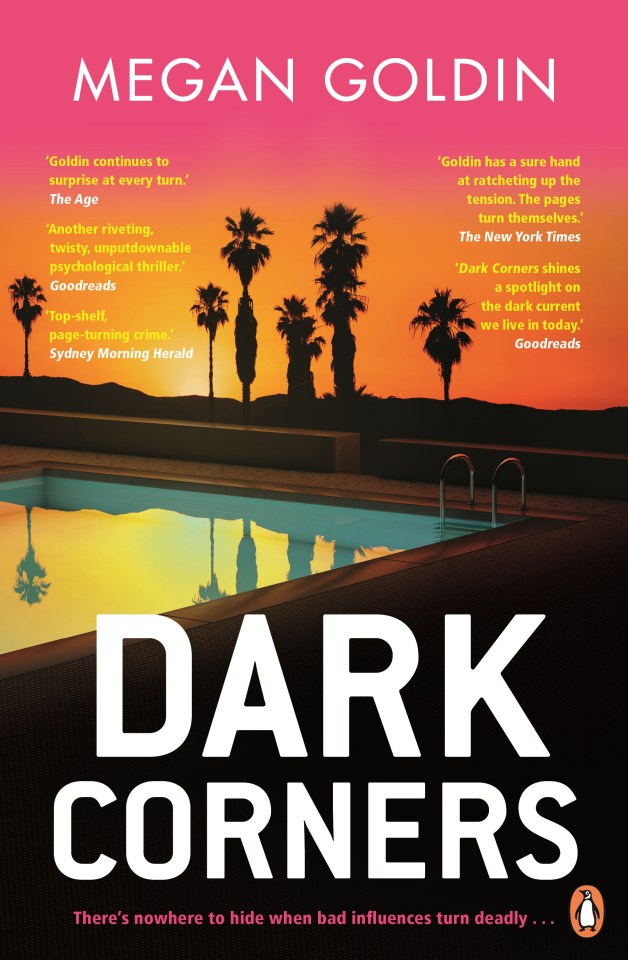
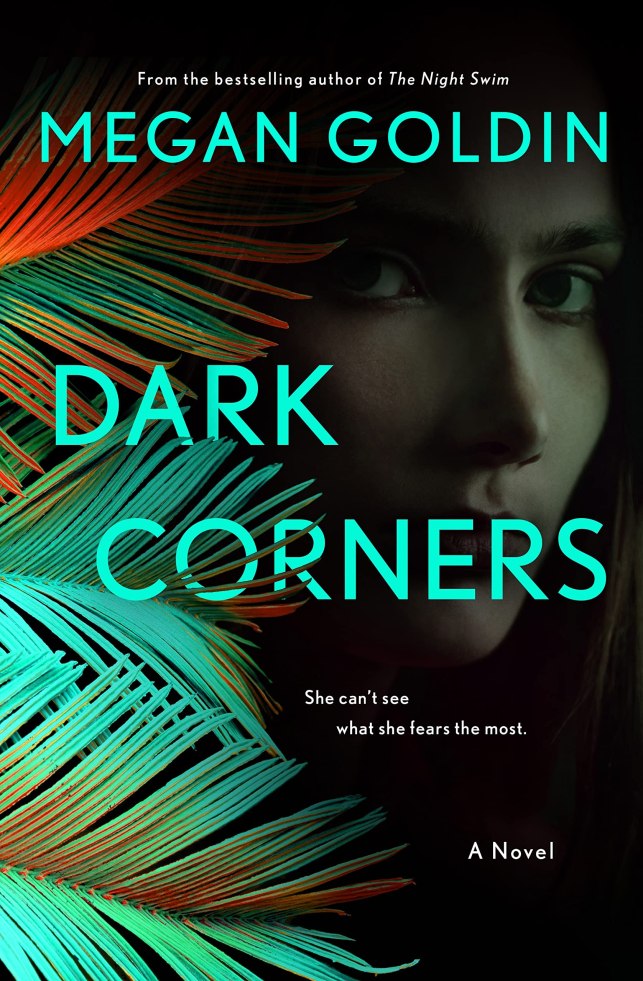
Dark Corners Cover 2

Publisher: Michael Joseph (Trade Paperback – 8 August 2023)

Series: Rachel Krall – Book Two

Length: 352 pages

My Rating: 4.5 out of 5 stars

Amazon

One of Australia’s fastest-rising crime fiction authors, Megan Goldin, returns with another awesome read, the moving and entertaining novel, Dark Corners.

Over the last few years, I have been really enjoying the works of talented Australian author Megan Goldin, whose releases have become something of a must-read for me.  Goldin has written some amazing books throughout her relatively short career, including the very gripping and intense The Escape Room (one of my favourite Australian books of 2019) and the brilliant psychological thriller, Stay Awake (one of my favourite Australian books of 2022).  One of Goldin’s best books so far was The Night Swim, which was one of my favourite Australian books of 2020The Night Swim followed protagonist Rachel Krall, a true crime podcaster, as she investigated a notorious rape trial in a small American town.  This was a particularly moving and intense read that really showcased Goldin’s range.  As such, I was very interested when I saw that Goldin was releasing a second Rachel Krall book this year with Dark Corners, and I made sure to read a copy as soon as I could.

After returning from her latest recording exploit, famous true crime podcaster Rachel Krall finds herself dragged into another sinister case when a phone call from the FBI sees her flown to a maximum security prison outside of Daytona Beach, Florida.  A famous social media star has gone missing shortly after meeting with Terence Bailey, a notorious inmate serving time for a relatively minor crime, who many believe is a serial killer.  The only clue the FBI have is a message handed between the two requesting that the missing star seek Rachel out.

Unable to let go of such a curious and intriguing case that she is inexplicably linked to, Rachel resolves to remain in Florida until she finds the truth.  Checking into a massive influencer convention being held at Daytona Beach, Rachel looks to find out more about the missing girl and finds herself being dragged into the cutthroat world of influencers, Instagrammers and internet celebrities.  However, the more information she finds about the missing girl, the more she realises that there is something peculiar about the victim and her past.

Rachel’s investigation uncovers a series of sinister deaths and disappearances in the area, each of which may be connected to Terence Bailey, who is due to be released in a couple of days.  Racing against the clock, Rachel and the FBI must uncover the truth before Bailey gets out of prison.  But it soon becomes clear that there is another predator lurking around Daytona Beach, one who hides in plain sight and will do anything to cover their tracks, including taking Rachel out.

This was a very impressive new read from Goldin, who follows up The Night Swim in a big way.  Dark Corners is a fantastic novel that beautifully combines an intense narrative with some unique and entertaining elements to create an awesome read I easily powered through.

Goldin really comes out of the gate swinging with Dark Corners, and I was swiftly drawn into the clever mystery and intense, character-driven narrative that she pulls together for this follow-up read.  The author starts the reader off with the compelling mystery of a social media star who has been kidnapped after contacting an imprisoned convict.  With the protagonist dragged in thanks to her internet fame, this swiftly turns into an intense personal investigation, as Rachel and the FBI attempt to find the missing girl and solve several unsolved murders and disappearances.  Told through several key perspectives, including that of Rachel and a mysterious rideshare driver who has a dark connection to the case, the story evolves at a rapid and powerful pace, and the author sets up an intriguing series of mysteries both in the past and the present.  The story effectively unwraps all of these interlinked and compelling cases, and you are soon powering through the intriguing web of cases, desperate to find the conclusion.  With much of the story set to the fantastic background of an influencer convention, there are several great tangents and mysteries that emerge, especially as they provide some great alternate leads and red-herring suspects.  The final solution to the case is very interesting, if somewhat spoiled by one of the alternate perspectives, and the big confrontation is well set up and filled with intense moments.  While I was a little disappointed that some of the alternate cases were not as connected to the main mystery as they could have been, this was a very impressive and captivating story, and I had such a great time getting drawn in Goldin’s narrative web.

I really liked the captivating writing style that Goldin utilised for Dark Corners, which has some intriguing similarities and contrasts to the previous Rachel Krall book.  The use of multiple character perspectives, as well as excerpts from Rachel’s true crime podcast for context, work extremely well to tell an extensive and complex narrative.  I particularly liked the inclusion of a sinister antagonist perspective for much of the story, especially as it provides some compelling insights into the deadly case as they circle the protagonist like a shark.  Despite some similarities in style, Dark Corners has a very different tone to The Night Swim, with more of a faster edge given to the story, and less focus on traumatic character histories.  The story does still contain some powerful character moments, especially when the protagonist encounters several victims’ families, but the story was more thriller focused than the last book.  Despite the connections to The Night Swim, Dark Corners can easily be read as a standalone novel, and this actually serves as a great introduction to Goldin’s flexible writing style.  Dark Corners probably has the quickest pace of any of the Goldin books I have so far read, and you will really get drawn into this elaborate book as a result.

While the fantastic mystery and intriguing character-focused stories are great, I really must highlight Goldin’s entertaining take on the social media world as her protagonist attends an influencer convention at a glitzy beachside hotel.  It does not take long for the protagonist’s, and presumably the author’s, true feelings about the influencer crowd to emerge and there is a certain amount of amusing disdain there.  You really can’t help but laugh at Goldin’s mocking and somewhat over-the-top depictions of the typical social media stars’ day-to-day lives, including obsessively recording everything they do, exceedingly fake interactions, and hollow personal relationships.  Goldin really does not pull any punches here, which I personally deeply appreciated, and it added quite a humorous edge to the book, especially when combined with the protagonist’s exasperated reactions to the various scenarios she encounters.  Despite this somewhat critical edge, Goldin does include a lot of intriguing information about the community, such as the various types of influencers, their social makeup, the ins and outs of the trade, as well as the type of personalities that are attracted to the lifestyle.  There is even a quite nuanced take on several key influencers throughout the book, and it was quite compelling to see what sort of people they really are.  While this background setting is mostly entertaining and fun, it does serve quite a vital role in the story, and I felt that Goldin was able to weave quite an intriguing and unique mystery story around it.  This ended up being one of the best inclusions of the entire novel, and I really loved how Goldin made Dark Corners stand out even further with her clever, if slightly acerbic take, on social media personalities and their influence.

Overall, Dark Corners was another outstanding book from Megan Goldin, who continues to shine as one of Australia’s premier authors of thriller fiction.  Combing a clever mystery with an intriguing character focus and a unique background setting, Dark Corners was an addictive read from start to finish and I deeply enjoyed Goldin’s latest impressive novel.  Highly recommended!

Dark Corners Cover

Amazon

Waiting on Wednesday – War Cry by Ian Ross

Welcome to my weekly segment, Waiting on Wednesday, where I look at upcoming books that I am planning to order and review in the next few months and which I think I will really enjoy.  I run this segment in conjunction with the Can’t-Wait Wednesday meme that is currently running at Wishful Endings.  Stay tuned to see reviews of these books when I get a copy of them.  In my latest Waiting on Wednesday, I look at an impressive historical fiction sequel coming out later this year that I am very excited for with War Cry by Ian Ross.

War Cry Cover

Earlier this year I had the great pleasure of reading the very fun and very captivating historical fiction novel, Battle Song by a new-to-me author, Ian Ross, who had previously written several intriguing Roman historical fiction books.  Battle Song was an outstanding novel that followed a young squire, Adam de Norton, who was forced into the service of a rogue knight, Sir Robert de Dunstanville.  The naïve Adam was soon taught the reality of life under the tutelage of Robert, who specialised in using guile and underhanded strategy to profit from the tourney scene, while also working to recover his lost lands.  This intriguing novel eventually turned into a full war story as Sir Robert and Adam return to England during Simon de Montfort’s rebellion against King Henry III and are forced to choose a side in the deadly civil war that followed.

I had an amazing time with Battle Song when I read it this year and there are so many great elements to it, including its complex characters, the fantastic adventure narrative, and all the cool historical detail, especially as Ross dived into a particularly interesting and underfeatured English civil war.  This ended up being one of the best books I read in the first half of 2023, and I was very interested to see if Ross was planning to follow up Battle Song in the future.  Well, it looks like Ross has been working overtime with his writing as a second novel is coming out in December of this year.  This book, the second entry in the de Norton trilogy, will be titled War Cry and looks set to take the protagonists of Battle Song on another deadly adventure.

Plot Synopsis:

1265

England has a new master.

Simon de Montfort’s victory at the Battle of Lewes has made him king in all but name. He has vowed to restore the rights and liberties of the kingdom, but now even his friends grow wary of his power.

As old alliances break down, new rebellions gather strength. The captive king’s supporters muster, vowing to overthrow the new regime.

Meanwhile Adam de Norton, who won the honour of knighthood on the field at Lewes, has reclaimed his ancestral lands. A peaceful and prosperous future lies before him – until he receives a summons he cannot refuse.

War is inevitable. But this time, will Adam be on the winning side?

I really like the sound of this upcoming sequel, mainly because it looks like War Cry is going to dive even deeper into the events surrounding Simon de-Montfort’s rebellion, which is really quite fascinating.  I look forward to seeing Ross explain this part of history even further and it will be even more interesting to see where the various characters introduced in the first book, particularly Adam and Richard, end up, especially with a new rebellion around the corner.  Honestly, as long as War Cry contains all the great action and intrigue of the first book, as well as keeps exploring the amazing characters, I’ll be pretty damn happy, so I’m very much looking forward to this book.

Look, after all the fun I had reading Battle Song earlier this year there is no way that I’m not going to dive into War Cry the second I get my hands on it.  I’m hoping that this awesome sounding sequel will be just as exciting and captivating as the first book and I’m very much in the mood for more historical action and adventure this year.  As such, War Cry is now very high up on my 2023 to-read list and I have no doubt that it will turn out to be particularly amazing novel.

Waiting on Wednesday – Long Past Dues by James J. Butcher

Welcome to my weekly segment, Waiting on Wednesday, where I look at upcoming books that I am planning to order and review in the next few months and which I think I will really enjoy.  I run this segment in conjunction with the Can’t-Wait Wednesday meme that is currently running at Wishful Endings.  Stay tuned to see reviews of these books when I get a copy of them.  For my latest Waiting on Wednesday, I check out a fun upcoming urban fantasy novel from a rising star with Long Past Dues by James J. Butcher.

Long Past Dues Cover

Amazon

Last year I was lucky enough to receive a copy of the excellent urban fantasy book, Dead Man’s Hand, the first book in the Unorthodox Chronicles and the debut novel from new author James J. Butcher.  Butcher, the son of legendary fantasy author Jim Butcher (check out some of my recent Throwback Thursdays), did a really good job with his first book, producing an intriguing and fast-paced urban fantasy read that I had a lot of fun with.  Following a relatively powerless magic user (an Unorthodox) with minor spells who finds themself in the middle of a massive magical conspiracy in Boston when he is accused of killing a powerful magical law enforcement officer and must team up with the victims retired partner to solve the crime.  Dead Man’s Hand was a very interesting and compelling first novel from Butcher, and it ended up being one of my favourite debuts of 2022.

Due to how impressive Butcher’s first book was, I have been keeping an eye out for any potential sequel for a while now and I was quite excited to see that Butcher had follow-up novel coming out later this year with Long Past Dues.  Set for release in October, the second Unorthodox Chronicles book will continue to follow the protagonist from the first novel as he settles into the world of magical law enforcement.  The new plot below sounds very compelling and I look forward to seeing the protagonist engage in a proper investigation, one loaded with magical rituals, hidden secrets and other cool aspects of this great magical world.  Based on how good Butcher’s first novel was, I am already quite keen for this fantastic sounding sequel and I know I am going to have a great time reading this book.  Long Past Dues has a ton of potential and I cannot wait to read the next book from this awesome new author.

Plot Synopsis:

Grimsby, the newest Auditor in the magical Department of Unorthodox Affairs, finds himself in hot water when he intercepts a friend’s case in this fast-paced and thrilling urban fantasy.

Against all odds, Grimshaw Griswald Grimsby has become an Auditor, enforcing laws about magic for Boston’s Department of Unorthodox Affairs. But Grimsby soon realizes the daily grind of his job is far removed from the glamour he imagined. Overlooked for every exciting case, Grimsby tires of being told to handle mundane magical troubles, and appropriates a case file intended for a friend.

Alongside Leslie Mayflower, the temporarily unretired Huntsman, Grimsby aims to crack the case and discover the origin of a strange, unfinished ritual—one that seems to imitate the handiwork of a foe Mayflower put down twenty years ago.

Together, they’ll have to deal with escaped werewolves, a cursed artifact, and a perilous journey to the mysterious subterranean city below Boston, all to uncover the shocking truth. At any cost, Grimsby must stop this ritual from finally being completed. Yet the cost may be paid not by himself but by his friends. . . .