Harrow the Ninth by Tamsyn Muir

Publisher: Recorded Books (Audiobook – 4 August 2020)

Series: The Locked Tomb – Book Two

Length: 19 hours and 51 minutes

My Rating: 5 out of 5 stars

Amazon     Book Depository

Sensational author Tamsyn Muir follows up her incredible 2019 debut with another epic, complex and infinitely entertaining hybrid novel, Harrow the Ninth.

Tamsyn Muir burst onto the writing scene with a real vengeance last year with her debut novel, Gideon the Ninth, the first book in The Locked Tomb series.  Gideon the Ninth was an extremely clever and compelling novel that followed a group of spacefaring necromancers who were summoned to the house of their Emperor and god, and given an opportunity to learn from him and become Lyctors, immortal beings with immense necromantic power who are considered to be living saints.  What they instead found was a haunted manor filled with secrets, weird experiments and mysterious hints at the past.  The protagonist of this first novel was the titular Gideon, a smart assed, foul mouthed lesbian swordswoman who was reluctantly serving the necromantic lady of the Ninth House, Harrowhark Nonagesimus.  I absolutely loved Gideon the Ninth and it was easily one of my favourite debuts of 2019.  As a result, I was rather intrigued when I heard about its sequel, Harrow the Ninth (which, as you can see above, featured another intense and beautiful cover by the talented Tommy Arnold) and I eagerly grabbed an audiobook copy of it when it came out.  I have to say that I am extremely glad that I decided to do so as Harrow the Ninth turned out to be a truly outstanding book and I had an incredible time reading it.

Harrow the Ninth is set shortly after the dramatic conclusion to Gideon the Ninth and switches the focus of the novel over to Harrowhark, who has succeeded in becoming a Lyctor at great personal cost.  Now alone, mentally scarred and more powerful than ever, Harrow finds herself in the personal care of the Emperor of the Nine Houses, who is determined to use his new Lyctor in a deadly war against an ancient and powerful terror, a Resurrection Beast, the insane and vengeful ghost of a murdered planet.

Travelling to the Mithraeum, the Emperor’s isolated sanctum, Harrow finds herself trapped aboard a desolate space station with her god and her fellow Lyctors.  Each of her companions on the station has their own agenda and motive for being there, and all of them are seeking to use Harrow for their own ends.  Worse, as Harrow attempts to learn the full extent of her new powers and abilities, it becomes apparent that something has gone wrong with her transition to Lyctorhood.  Her body keeps failing her, her swordcraft is shoddy, her blade makes her nauseous and her mind keeps presenting her with impossible scenarios.

As the Resurrection Beast comes ever closer to the Mithraeum, Harrow desperately attempts to understand everything that is happening to her and learn how to survive the oncoming attack.  However, she finds herself distracted with the machinations and plots of her untrustworthy rival and the attitudes of her three ancient tutors, especially as at least one of them is trying to kill her.  Can Harrow unwrap all of the dark secrets that lie hidden on the Mithraeum before it is too late, or will the entire Empire fall into ruin before them?

Well damn, now that was a truly enjoyable and incredible read.  Harrow the Ninth is a complex, clever, entertaining and exceptionally well written novel that does an awesome job following on from Muir’s impressive first novel.  I had an absolutely amazing time reading this fantastic book, which I think in many ways is somewhat stronger than Gideon the Ninth.  Not only does Harrow the Ninth have a deeply captivating story that successfully utilises elements from a range of different genres, but it also features some memorable and compelling characters, excellent universe building and a magical system that really stands out thanks to its descriptive necromantic powers.  Harrow the Ninth also serves as a marvellous follow-up to Gideon the Ninth, continuing the clever story from the first book with the same distinctive tone and writing style, while also featuring an intriguing reimagining of prior events.  All of these makes for an epic read which gets a full five-star rating from me.

At the heart of this amazing novel is an intense and multilayered narrative that presents a compelling tale of love, tragedy, treachery and self-discovery.  The story is actually split into several distinct sections, with the main storyline focusing on Harrow after her transformation to Lyctorhood as she spends time in the Mithraeum with the Emperor and the other Lyctors.  This part of the book expertly jumps back and forth through time and is an extremely entertaining part of the book, detailing Harrow’s education under the Emperor and the other Lyctors and her attempts to survive the various internal politics, plots and personal chaos.  The other major part of the story shows a curious alternate version of the events of Gideon the Ninth, shown from Harrow’s point of view, made distinctive due to the complete lack of Gideon, who appears to be erased out of existence.  This alternate version of the prior book is a really intriguing part of Harrow the Ninth’s story, and while I was initially a little confused about why it was included and where Gideon had disappeared to, it proved to be an extremely clever and compelling part of the book, especially when everything becomes fully revealed.  Due to this reimagining of already existing narrative, as well as the continued references to the events of the first book, readers interested in checking out Harrow the Ninth really do need to have read Gideon the Ninth first, as the story gets a little confusing and significantly less impactful without this established knowledge.

These separate storylines complement each other is exceedingly cleverly.  This novel does start off a tad slow, but this is mainly because Muir is re-establishing the narrative from the previous book and loading up the front end of the story with hints and foreshadowing about the multitude or revelations that come throughout the course of the plot.  A lot of big events and reveals occur towards the end of Harrow the Ninth, including a few reveals that were hinted at in the previous novel, and I felt that the author set all of these up perfectly.  This results in an extremely epic conclusion to the novel and I was really impressed by how it all turned out.  This novel contains a unique blend of genres, as Harrow the Ninth features elements from the fantasy, science fiction, psychological thriller and murder mystery genres.  All of these disparate features work together extremely well in the story and it helps to produce a distinctive and entertaining narrative, especially as Muir adds on a rather good comedic edge.  The end result is a fascinating and exceedingly captivating overarching narrative, and I had an outstanding time getting pleasantly blindsided by the inventive twists and turns.

This excellent and unique story is expertly supported by a distinctive writing style that I felt did an amazing job enhancing the narrative.  Perhaps one of the most noticeable elements is the clever narration that accompanies the story.  While Harrow is the point of view character for most of the novel, she is not actually the one narrating the story.  Instead Harrow’s actions, emotions and thoughts are identified, summarised, and relayed back to Harrow by an unidentified second person narrator.  Naturally, this proved to be an interesting and unusual way to tell this story, although it works well in the context of the overall narrative, even if it takes a little to get used to.  This narrative format plays into certain character reveals and plot points of the novel and it makes a lot of sense once you get further into the book, with the style itself actually being a hint about what is happening with Harrow.  This narration style changes at a certain point towards the end of the book in accordance with certain plot developments and the subsequent deviation is clever and reminiscent of past events.  I also really must highlight the author’s extremely descriptive form of story writing, as every event, person or location is described in overly vivid detail.  Not only did this ensure that the reader got the full breadth of certain magical action and developments but it also helped to enhance the overall gothic feel of the book and ensure that reader was able to easily imagine the various locations the protagonist found themself in.  This really helped the story to shine and I have a lot of love for how Muir was able to work story elements into this style.

In addition to the great story that Muir has come up with for this book, Harrow the Ninth also boasts an impressive array of amazing characters.  The central protagonist is the titular Harrow, who takes over from Gideon as the main character after the first book.  Harrow is a vastly different character to Gideon as she has a much more subdued personality, less self-esteem, and a more restrained, subtler sense of humour.  Due to Gideon’s somewhat biased narration in the first novel Harrow was mostly viewed as an extremely arrogant, confident, and brilliant person, and this is how Harrow attempts to act throughout most of the novel.  However, certain vulnerabilities in Harrow’s character that were previously explored in Gideon the Ninth once again come to the fore in this second novel.  Harrow was already an extremely complex individual, having been birthed by dark magic, ended up being responsible for the death of her own parents and having an interesting love interest.  However, following her alteration into Lyctorhood, Harrow is a much more damaged person due to the absorption of her cavalier.  Harrow’s already fractured psyche is made even worse throughout the course of the book, as she sees all manner of things that are not there and has some very different ideas of the past or how she perceives the world.  In addition, Harrow bears an immense amount of guilt on her shoulders as a result of various events in her past and the many deaths on her conscience.  Harrow needs to work through all these issues throughout the course of the story if she has a chance to survive, and this becomes a major and dramatic part of the story that was really intriguing to explore.  I had an amazing time seeing the story primarily through Harrow’s eyes and it was a refreshing and compelling change of pace from the first book.

Harrow the Ninth also focuses on a great collection of supporting characters who add some intrigue and drama to the story.  Perhaps the most distinctive side characters in this novel are the five beings that Harrow finds herself trapped with aboard the Mithraeum, the Emperor of the Nine Houses and his four other Lyctors.  This is an extremely fascinating collection of people and much of the story revolves around Harrow’s unique interactions with them as each of them attempts to teach her, manipulate her or kill her at various points within the book.  These characters are really entertaining and distinctive, from the seemingly kind, patient, and infinitely calm Emperor, to the three ancient Lyctors, the cool and confident Augustine, the exceedingly self-involved Mercymorn and the ultra-focused and lethal Ortus.  In addition, we see the return of the manipulative Ianthe, who became a Lyctor at the same time as Harrow and who forms a very distinctive relationship with her throughout the course of the book.  I really enjoyed the complex interactions and relationships that forms between all of these characters (including some wild relationships between various participants), with the Emperor acting as the father figure, the three existing Lyctors portrayed as older siblings who have a complicated power dynamic with each other, while Ianthe and Harrow are the younger sisters learning the ropes from the others.

I also have to highlight the inclusion of several other characters who previously appeared in Gideon the Ninth.  It was rather intriguing to see many of these characters return, especially as most of them died or appeared to die in the prior novel.  Muir does a fantastic job working them into the fabric of this novel, such as by featuring some of them in the alternate version of the events of the first book, changing their roles and impacts on the story as a result.  I particularly enjoyed the extended role of Ortus, cavalier of the Ninth House.  Ortus, not to be confused with the Lyctor mentioned above (although the names are actually a clever clue to a big reveal), died early on in the events of Gideon the Ninth.  But in this book the dour Ortus serves as a fantastic yet reluctant companion to Harrow, with surprising hidden depths and an entertaining obsession with gloomy epic poems and verse.  He is also essentially the complete opposite to Gideon, resulting in a very different dynamic between necromancer and cavalier then we saw in the prior book.  Overall, I have to say that I was exceedingly impressed with the characters featured within this amazing novel.  Each of these complex and memorable characters added a heck of a lot to the story and it was deeply fascinating to see each of their storylines unravel and come to their compelling conclusions.

One of the major elements of this series that I love so much is the weird and wonderful necromantic magical system complements the science fiction of the book.  Pretty much all of the main characters in this book are powerful necromancers, specialising in a different form or style of necromantic magic.  All of this magic is extremely cool, and it was really awesome seeing it utilised in fight sequences and other scenes throughout the book.  Most of the magical elements revolve around Harrow’s bone magic, as she creates skeleton and bone constructs, manipulates her own bones to either enhance herself or detach them to make weapons or other creations, as well as elements of biological alteration.  Muir does an outstanding job explaining the full range of different powers that Harrow has, and there are some amazing scenes where the young necromancer does some really inventive and clever things with her bones.  There is one sequence in particular that sticks in the mind, and I’ll certainly remember it when eating soup in the future. 

In addition to Harrow’s abilities, Muir also showcases the creative and impactful abilities and magical powers that some of the other characters have.  These various abilities are all biological or spiritual in nature, and it was quite fun to see what the different necromancers can do, especially when they go up against Harrow’s bone magic.  All these magic scenes feature some rather vivid imagery and descriptions from Muir as she tries to show the full biological manipulations that are occurring, which really help to make these scenes pop.  The author also does a truly fascinating deep dive into the origins and mechanics of her unique magical system.  A lot of these new magical elements are explained to protagonist in some detail from one of her teachers, so the reader is able to understand these elements really well, and a lot of the lessons and explanations of magic have major impacts on the story down the line.  This proved to be an extremely interesting and enjoyable part of the book and I have a lot of love for Muir’s creativity when it comes to her version of necromantic magic.

I also have a lot of love for the distinctive gothic settings that Muir has imagined up for this series.  Each of the central story locations are filled up with all manner of dark and macabre trappings and features, which the author does a fantastic job bringing to life with her descriptive writing.  This includes the dreary and dark Mithraeum, a vast and mostly abandoned space station where most of the story takes place, as well as an alternate version of the First House that appeared in Gideon the Ninth.  All of these locations are described in great detail and each of these fun and distinctive settings helps to present a darker vibe to story and helps makes this series more unique and memorable as a result.  Harrow the Ninth also contains some rather captivating and inventive universe building expansions as the author attempts to introduce new things into her universe.  All of these extensions to this universe are really clever, playing into the story really well and I loved learning more about this fun fictional setting which does so much to enhance the story. 

I found that the audiobook format of Harrow the Ninth proved to be an excellent way to enjoy this amazing novel.  With a run length of just under 20 hours the Harrow the Ninth audiobook does require a bit of a commitment to get through it, although I felt that it was really worth the time investment.  I do have to admit that it took me a little while to finish this audiobook, especially at the start.  However, I absolutely flew through the second half of the novel once I became extremely invested in the story, and I managed to knock out the final six hours in rather short succession.  I have to highlight the fantastic narrator for this audiobook, Moria Quirk, who does an outstanding job telling the story and bringing the various characters to life.  I felt that Quirk utilised perfect voices for each of the main characters and you get a real sense of each character’s personalities and emotions from this vocal work, from the calm, composed tones of the Emperor to the exceedingly petulant voice of the Lyctor Mercymorn.  This excellent voice work really added a lot to this audiobook. I really think that Harrow the Ninth translates well into the audiobook format, and listening to it really added to my enjoyment of this second novel, especially as I absorbed a lot more of the detail and gothic atmosphere through the narration.

Harrow the Ninth by Tamsyn Muir was an epic and exceptional piece of fiction that I deeply enjoyed, and which comes highly recommended.  Not only did Muir present an impressive follow-up to her amazing debut novel, Gideon the Ninth, but she was able to turn out a complex and beautifully written sequel that proved extremely hard to stop listening to.  Powerful, cleverly written and just generally outrageous, Harrow the Ninth is an outstanding read and you have no discovered Tamysn Muir and her fantastic pieces of literature, you are really missing out. 

Amazon     Book Depository

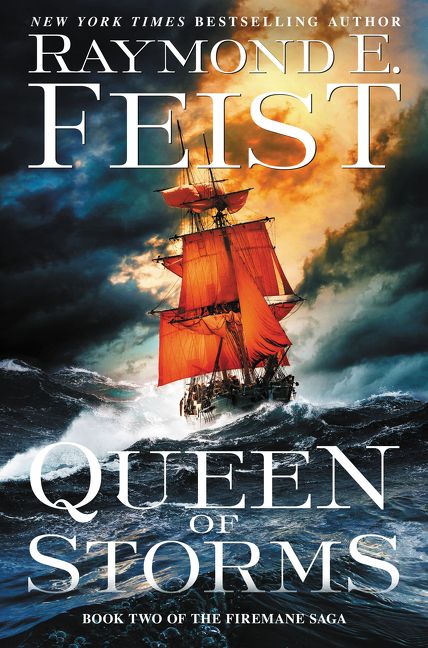
Queen of Storms by Raymond E. Feist

Queen of Storms Cover

Publisher: Harper Voyager (Hardcover – 14 July 2020)

Series: The Firemane Saga – Book Two

Length: 471 pages

My Rating: 4.5 out of 5 stars

Amazon

Legendary fantasy author Raymond E. Feist returns to his new series, The Firemane Saga, with Queen of Storms, an amazing and exciting fantasy novel that takes the reader on some intriguing adventures.

I have long been a fan of Raymond E. Feist and his epic works of fantasy.  His long-running Riftwar Cycle books were amongst some of the first fantasy novels that I ever read and many of them, including the excellent Empire trilogy that he cowrote with Janny Wurts, are still some of my favourite books of all time.  After finalising the Riftwar Cycle back in 2013, Feist released King of Ashes in 2018, which was the first book in The Firemane Saga.  I really enjoyed the fun and compelling new story featured within King of Ashes, and I have been looking forward to seeing how the series continued for a while now.  This second book, Queen of Storms, continues right after the events of King of Ashes and has some intriguing new twists and turns for readers.

In the ancient and magical world of Garn, war is coming to continent of Tembria and its first blow will fall on the trading town of Bernan’s Hill.  Many people call Bernan’s Hill home, but none are more mysterious than the new owners of the town’s inn, Hatushaly and his wife Hava.  Despite their simple outward appearances, Hatu and Hava were born on the secret island of Coaltachin and both serve their continent-spanning criminal and spy network.  A series of mysterious events have been occurring throughout the kingdoms and lands of Tembria, and Hatu and Hava are tasked with observing Bernan’s Hill and reporting anything out of the ordinary.

Having befriended the town’s blacksmith, Declan, Hatu and Hava appear content in their new lives and are they are planning to be officially married during the midsummer festival.  However, even their training and information will not prepare them for the horrors that are about to be visited upon Bernan’s Hill, as a new and mysterious force attacks without warning, plunging the entire continent into war.  Separated from each other, each of these young people embarks on their own adventure.  While Hava attempts to find her lost husband, and Declan sets out to get revenge, Hatu is kidnapped by those who wish him to fulfill his fiery legacy as the secret heir to the kingdom of Ithrace.  His family, the legendary Firemanes, have long been rumoured to contain a spark of magic, and Hatu, as the last remaining Firemane, may hold the key to the survival of magic itself.  As these three young people set out to realise their destinies, they will experience horrors and tragedy as it soon becomes apparent that a whole new threat seeks to destroy all within Tembria.

Queen of Storms was a captivating and fun book which I found myself reading in only a couple of days due to how much I enjoyed it.  Feist has come up with a fantastic and impressive story within this novel, and I liked how it followed a group of excellent characters caught up in the chaos of a mysterious war.  There is all manner of action, adventure, subterfuge, character development and exploration of a new fantasy universe that comes together extremely well into a compelling overall narrative.  Readers should be forewarned that Feist makes some rather bold plot choices throughout this book, with a major event around halfway through the book really altering the course of the story in some interesting and dramatic ways.  I also liked how Queen of Storms served as a great sequel to King of Ashes, and there are a number of amazing reveals and revelations that add to the storylines established in the first book.  For example, the real antagonists of this series are revealed in more detail in this sequel after they were foreshadowed in the previous novel while the reader focused on a different antagonist, who had the potential to be the main villain.  This bait-and-switch came together well in Queen of Storms, and I enjoyed uncovering more about these antagonists and their motives.

Queen of Storms contains a multi-character narrative which follows several key protagonists as they explore this new world from Feist and get involved in the politics and battles of the world.  The majority of the story is told from the perspective of the novel’s three major characters, Hatu, Hava and Declan.  Each of these characters gets some substantial focus throughout the course of this novel, with some interesting storylines.  For the first part of the book their various storylines are very closely intertwined, as all three are based in the town of Bernan’s Hill in various capacities.  However, after the novel’s major event around halfway through, these three characters are separated and each of them embarks on their own exciting and enjoyable adventure.  Hatu’s story is a classic tale of a chosen one finding his destiny, which sees him journey off into the unknown to learn more about his past and his secret abilities.  As Hatu is the most central protagonist, this storyline got a lot of focus, and it was interesting to learn more about his role in the world and about how his life is bonded to the world’s magic.  Declan’s story becomes an interesting one about a young man learning to become a solider to avenge the death of his loved ones.  Declan had some life events occur throughout this book and while it was a little sad to see some of the things he fought for in the first novel go up in smoke, it does serve as a good motivation for his character and it looks like Feist has some interesting plans for him in the future.  Out of the three, I think I ended up enjoying Hava’s storyline the most.  Hava attempts to find out what happened to Hatu and gets captured by slavers.  She ends up using her abilities to free herself and her fellow slaves and becomes a successful ship’s captain, chasing after her husband while also exploring the lands outside the continent of Tembria.  All three of these main character arcs are really enjoyable and together they form a fantastic heart for Queen of Storms, allowing for a rich and powerful narrative.

In addition to these main characters, Feist also utilises several minor point-of-view characters who add in some extra narrative threads to the book.  For example, Donte, Hatu and Hava’s childhood friend who was captured by sea witches in King of Ashes, returns and a small part of the book is dedicated to his attempts to find Hatu and kill him.  You also get several parts of the book told from some of the key players in fight for the continent, such as Baron of Marquensas Daylon Dumarch, the sinister adviser Bernardo Delnocio, as well as a handful of other characters.  Each of these minor point-of-view characters provide their own insights and priorities to the mix and their various storylines and actions add a lot to the narrative and provide some interesting support to the main storylines.  I also liked some of the supporting characters who rounded out the cast of Queen of Storms and several of them proved to be quite enjoyable and likable, even if they have a greater chance of getting killed off.  Overall, Feist continues to write some great characters in this novel, and I look forward to seeing where each of these intriguing protagonists end up next.

The author also did a good job of continuing to expand on the amazing new fantasy world that the series is set in.  While a substantial part of the novel is set around Brenan’s Hill, which was introduced in the prior book, the story eventually starts to examine some other parts of the world.  In particular, several storylines are set around the islands and continents on the other side of the planet, none of which have been explored by any of the point-of-view characters.  These new additions to the story proved to be quite intriguing, especially as the character’s various explorations revealed some shocking truths about the world, as well as some troubling revelations about the series’ main antagonists.  It looks like the next book is set to feature some new areas of the world and should provide some more fascinating expansions down the line, which will no doubt provide some interesting backdrops and settings from the narrative.

While I did really enjoy Queen of Storms, I did find that some of the elements within it might be a little hard to follow if you had not read the first novel in the series.  Feist does do a good job of recapping the major events of the first book throughout the course of the story, but there were a few moments in the story when the significance of certain characters, locations and events were not as highlighted as they could have been, and new readers might get a little lost at this point.  There were even a few points at which I lost track of who a new character was, mainly because of the two-year gap between reading King of Ashes and Queen of Storms.  Still, I was usually able to remember who the character was after some prompting, and it worked out fine.  While this lack of certainty might occasionally impact the flow of the story for new readers, I think they can generally follow without too much difficulty.

Queen of Storms was an outstanding and exciting second entry in this fantastic new series from one of my favourite authors of all time, Raymond E. Feist.  This was an amazing and enjoyable novel, filled with adventure, great characters, and a compelling narrative.  I had an awesome time reading this book and I cannot wait to see how Feist continues The Firemane Saga in the next book.  A must-read for fans of fantasy fiction; this one is really worth checking out.

Queen of Storms Cover 2

Amazon

Guest Review: The Testaments by Margaret Atwood

In her latest guest review, the Unseen Library’s editor, Alex, checks out one of the biggest releases of the year, and also sets herself up to do some more reviews for the blog in the future.

The Testaments Cover

Publisher: Chatto & Windus (Hardcover – 10 September 2019)

Series: The Handmaid’s Tale – Book 2

Length: 419 pages

My Rating: 5 out of 5 stars

Amazon

Unlike the Unseen Librarian himself, who seems to have no problem zipping through several books a week, I tend to buy books faster than I read them. I was very pleased, and not at all surprised, to find there’s a phrase for this in Japanese: tsundoku, meaning one who acquires books with every intention of reading them, but who never gets around to it. Well, it’s high time that I try to kick this habit and delve into my shelf of unread books, beginning with The Testaments by Margaret Atwood.

We received a copy of The Testaments way back in September 2019, before the honeymoon hiatus, but unfortunately the large, heavy hardback wouldn’t have fared well in my suitcase, so although I was keen to read it I was forced to leave it behind. Unfortunately several other distractions (including Eoin Colfer’s The Fowl Twins) meant it wasn’t until the post-Christmas calm that I took the time to finish it off, but I am so glad that I did, because this is a first-rate book that didn’t deserve to wait so long for my attention.

The Handmaid’s Tale reported the experiences of Offred, a Handmaid to a powerful Commander in the post-revolutionary United States, the totalitarian Republic of Gilead. The Testaments picks up the story several years later, and features accounts of three women and their own struggles for survival in Gilead. I won’t go into detail about the plot of the book (I’m sure reviewers with better time management skills have beaten me to it), only to say that it was incredibly engaging and suspenseful. Those who enjoyed The Handmaid’s Tale will love to see how the world has changed over the years.

I was absolutely thrilled by all of the world-building in The Testaments. The new regime of Gilead is fascinating, but in The Handmaid’s Tale details are limited to what Offred chooses to share in her narrative, which itself is limited by what Offred knows, given the sheltered and isolated life she is forced to live as a Handmaid. The Testaments, on the other hand, with its multiple narrators, presents a far broader view of life in Gilead. The first narrator is an Aunt, one of the powerful matrons who train the Handmaids and teach the children. In fact, she is none other than Aunt Lydia, the indomitable battleaxe responsible for the indoctrination of Offred who features so prominently in the original book. The second narrator is Agnes Jemima, the daughter of a powerful Commander. Her story is recorded after her liberation from Gilead and provides a fascinating insight into the experiences of a child growing up in the regime. The third narrator is Daisy, a child growing up in Canada. From her we get an outside view of Gilead—how the terrible society is viewed by its near neighbours and how the Mayday resistance seeks to help its people. The three tales are each engaging in their own right, but as they become more and more intertwined the story only gets better.

There are elements of the story that tie into the television adaptation of The Handmaid’s Tale, but literary purists who have not watched the show will enjoy The Testaments just the same. Since it is a sequel, however, I would say that it will be best enjoyed by those who have read The Handmaid’s Tale or seen at least the first season of the show. The Testaments is a book that was 35 years in the making, but it was well worth the wait.

Quick Review – Unleashed by Amy McCulloch

Unleashed Cover

Publisher: Simon & Schuster (ebook format – 22 August 2019)

Series: Jinxed Book 2

Length: 368 pages

My Rating: 4 out of 5 stars

Amazon     Book Depository

From exciting young adult author Amy McCulloch comes Unleashed, the fun sequel to her clever 2018 release, Jinxed.

Jinxed was an intriguing piece of young adult science fiction that I quite enjoyed last year. McCulloch, who also writes under the name Amy Alward, created a fascinating near-future world where the new tech obsession is bakus, the must-have technological companion. Bakus are essentially a combination of all the smart devices and a robotic pet which can take a variety of animal forms depending on their level of complexity, each with a number of different features. The story focuses on the character of Lacey Chu, a teenage baku fanatic who wants to work for Moncha Corp, the company that creates the baku. In order to secure her dream job, she needs to attend the prestigious Profectus Academy, the Moncha Corp sponsored school for all future employees. While it initially appears that she will not be able to attend due to her lack of a suitably advanced baku, Lacey discovers an abandoned and damaged baku of unknown design, called Jinx. After Jinx is repaired, his advanced systems allow her to get admitted into the academy, where she makes friends, learns all about bakus and participates in the school’s baku battles. However, she also becomes drawn into a vast conspiracy around Jinx, as powerful forces within Moncha Corp attempt to find and capture him in order to use his unique technology for their own ends.

I quite enjoyed Jinxed last year, mainly due to its clever world-building and its great, school-based story of intrigue and friendship (I enjoy stories where a person attends a school or academy to learn their universes special talent or skill). As a result, I ended up grabbing an electronic copy of Unleashed just before I went away on a trip, and it proved to be quite a good read during some travel time that I had. Unleashed is set a short time after the events of Jinxed and continues to follow Lacey as she attempts to unravel the conspiracy surrounding her and Jinx.

Goodreads Synopsis:

When Lacey Chu wakes up in a hospital room with no recollection of how she got there, she knows something is up. But with her customizable smart pet, Jinx, missing in action and Moncha, the company behind the invention of the robot pet, up to something seriously sinister, she’s got a lot of figuring out to do. Lacey must use all her engineering skills if she has a chance of stopping Moncha from carrying out their plans. But can she take on the biggest tech company in North America armed with only a level 1 robot beetle … ?

Unleashed was another great young adult science fiction read, which was also a fantastic follow up to Jinxed. There is a lot of excellent stuff in this second book, which pretty much wraps up the two books series and contains an interesting conclusion to the story established in Jinxed. I liked where the story went in this book, and while I was a little disappointed that they did not really spend any more time at the Profectus Academy, nor where there any more baku battles (which honestly was one of my favourite things about the first book), McCulloch compensates for this by increasing the level of intrigue and conspiracy that the main characters find themselves involved in. The overall plot of the main antagonist is surprisingly wide-reaching, sinister and intricate, and I liked seeing how the protagonists investigated and overcame it. There was also a great amount of teen drama and romance throughout the book, and there were some surprising character developments that made for a fantastic addition to the story.

I also really liked how the author continued to expand on her idea of what a world filled with bakus would be like. Throughout the course of this book, McCulloch comes up with a number of cool features to show how the world has adapted to having such technological creatures. These include showing off the various ways that they have revolutionised social media and day-to-day life, and also feature smaller things, such as baku cafes or add-ons to cars that hold and polish and charge your baku as you drive. All the cool expansion that McCulloch did on her amazing central idea in this novel was a lot of fun and I felt that it added a lot to the book.

Overall, I thought that Unleashed was a fantastic follow-up to Jinxed, and I really enjoyed the cool adventure contained within. Featuring a great story, some enjoyable characters and some excellent creative ideas Unleashed is awesome book for all ages that is worth checking out.

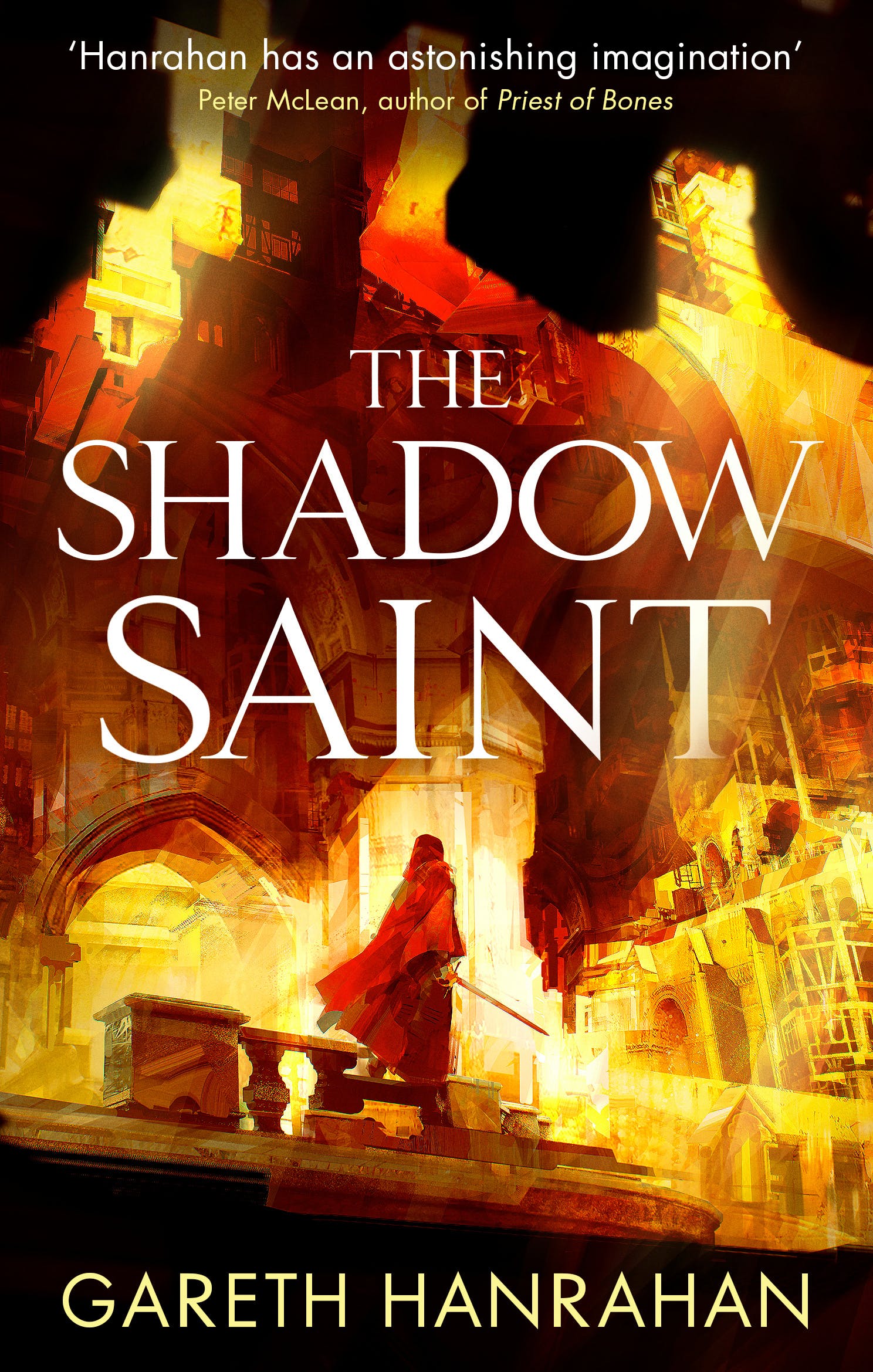
Waiting on Wednesday – The Shadow Saint and Shorefall

Welcome to my weekly segment, Waiting on Wednesday, where I look at upcoming books that I am planning to order and review in the next few months and which I think I will really enjoy.  I run this segment in conjunction with the Can’t-Wait Wednesday meme that is currently running at Wishful Endings. Stay tuned to see reviews of these books when I get a copy of them. In this week’s edition of Waiting on Wednesday, I am doing a double feature and checking out two impending fantasy sequels that are set to be released early next year, The Shadow Saint by Gareth Ryder-Hanrahan and Shorefall by Robert Jackson Bennett. Not only do both of these books sound like they are going to feature awesome stories, but I really enjoyed the first novels in each book’s respective series, and I am looking forward to continuing the stories started in these books.

The Shadow Saint Cover.jpg

The first novel that I am looking at this week is The Shadow Saint. The Shadow Saint is the second book in The Black Iron Legacy and follows through from Gareth Ryder-Hanrahan’s debut novel from earlier this year, The Gutter Prayer. The Gutter Prayer was an excellent piece of grimdark fantasy that followed the adventures of several of the disparate and desperate criminal inhabitants of the city of Guerdon as they become involved with a dark plot to unleash the city’s ancient and cruel gods. I had a lot of fun reading The Gutter Prayer, and I was really impressed by the thrilling and complex plot, the unique fantasy elements and the great characters. As a result, I am eager to check out the next book in The Black Iron Legacy. The Shadow Saint is set to be released in early January, and I am already excited by the plot synopsis that has been released.

Goodreads Synopsis:

Thieves, dangerous magic, and a weapon built with the power to destroy a god clash in this second novel of Gareth Hanrahan’s acclaimed epic fantasy series, The Black Iron Legacy.

Enter a city of spires and shadows . . .

The Gutter Miracle changed the landscape of Guerdon forever. Six months after it was conjured into being, the labyrinthine New City has become a haven for criminals and refugees.

Rumors have spread of a devastating new weapon buried beneath the streets – a weapon with the power to destroy a god. As Guerdon strives to remain neutral, two of the most powerful factions in the godswar send agents into the city to find it.

As tensions escalate and armies gather at the borders, how long will Guerdon be able to keep its enemies at bay?

The Shadow Saint continues the gripping tale of dark gods and dangerous magic that began with Hanrahan’s acclaimed debut The Gutter Prayer.

I really like the sound of this plot synopsis, and it looks like this book is set to be a pretty epic sequel to The Gutter Prayer. I am really interested in seeing how the city of Guerdon has evolved since the dramatic and destructive events of the first book, especially if it has potentially gotten even wilder and more dangerous. I am also excited about the mentions of the godswar in this synopsis and I look forward to seeing it explored in more detail in this sequel. The godswar was a major part of The Gutter Prayer’s background plot, as Guerdon was supplying a number of weapons to both sides of the conflict, while trying to maintain their neutrality. It looks like they are going to start getting dragged into this war during this book, and I am sure this is going to result in more battles, intrigue and potentially more unique fantasy elements from outside of the city. All of this is sure to equal a great new book, and I am sure that Gareth Ryder-Hanrahan is going to blow us away once again.

Shorefall Cover.jpg

The second book that I am looking at is Shorefall, the second book in the Founders series and the sequel to Robert Jackson Bennett’s 2018 release, FoundrysideFoundryside was probably one of the most popular fantasy books of 2018 and I imagine that quite a few other reviewers and fantasy fans are going to be keen to grab the sequel when it comes out. Bennett, who has also written the highly regarded The Divine Cities series of fantasy books (a series that I am actually really keen to check out), did an amazing job with Foundryside, producing a captivating and entertaining fantasy story, set in an inventive magical city. Shorefall, which is set to be released in April 2020, also has an intriguing plot synopsis, and it looks the Founders series is going to go in some really cool directions.

Goodreads Synopsis:

The upstart firm Foundryside is struggling to make it. Orso Igancio and his star employee, former thief Sancia Grado, are accomplishing brilliant things with scriving, the magical art of encoding sentience into everyday objects, but it’s not enough. The massive merchant houses of Tevanne won’t tolerate competition, and they’re willing to do anything to crush Foundryside.

But even the merchant houses of Tevanne might have met their match. An immensely powerful and deadly entity has been resurrected in the shadows of Tevanne, one that’s not interested in wealth or trade routes: a hierophant, one of the ancient practitioners of scriving. And he has a great fascination for Foundryside, and its employees – especially Sancia.

Now Sancia and the rest of Foundryside must race to combat this new menace, which means understanding the origins of scriving itself – before the hierophant burns Tevanne to the ground.

There are a lot of things that I am looking forward to in this upcoming book. Not only does the competition between the various merchant houses of the city offer some fantastic opportunities for thrilling espionage, especially when your central protagonist is a master thief, but I am excited by the continued exploration of the inventive scriving system of magic, which produced some very awesome results in the first book’s action sequences. I am also hoping that Bennett continues to infect this series with the same sense of humour and fun that appeared throughout the first book, and if he could see his way clear to bringing a certain sentient key back to life, that would be best for everyone.

Both of these upcoming books have a lot of potential, especially after both authors knocked it out of the park with the first entries in their respective series. I have extremely high expectations for The Shadow Saint and Shorefall, and I fully expect that these amazing upcoming novels are going to be some of the best fantasy books of 2020.

Shorefall Cover 2.jpg

Star Wars: Galaxy’s Edge – Black Spire by Delilah S. Dawson

Galaxy's Edge - Black Spire Cover

Publisher: Century (Trade Paperback – 3 September 2019)

Series: Star Wars

Length: 378 pages

My Rating: 4.25 out of 5 stars

Amazon     Book Depository

Man, it has been a good year for Star Wars tie-in fiction. So far in 2019 there have been a huge number of awesome books that cover some diverse periods of Star Wars history, from an intriguing look at a younger Qui-Gon Jinn and Obi-Wan Kenobi in Master & Apprentice by Claudia Gray to the electrifying third book in Timothy Zahn’s new Thrawn series, Treason. As the year draws to a close, the focus of the Star Wars extended universe starts to turn to the release of Star Wars: The Rise of Skywalker. As a result, the rest of the books coming out this year will set the scene of the Star Wars universe before the events of this upcoming film. This includes the focus of this review, Black Spire by Delilah S. Dawson.

Black Spire is an interesting addition to this later year complement of Star Wars novels, and it is one that I have been looking forward to for a while. Dawson previously contributed to the Star Wars extended universe with 2017’s Phasma, and Black Spire is also part of the Galaxy’s Edge mini-series, which is connected with the Disneyland theme park area of the same name. As such, there are some intriguing elements to the book that make it worth checking out.

Following the events of The Last Jedi, the Resistance has been decimated, and only a few survivors remain. However, those survivors are still as determined as ever to fight the tyranny of the First Order, and need to find new recruits, allies and resources to continue this war. To that end, General Leia Organa has tasked her best spy, Vi Moradi, to find an isolated planet and set up a base to serve as a much-needed bolt hole for other surviving members of the Resistance. Still recovering from the trauma of her last adventure, Vi decides that the best location for this base is on the isolated planet of Batuu, which serves as the final stop between the known galaxy and the mysterious and unexplored expanses of Wild Space.

Heading out for Batuu with a ship full of supplies, materials for a base and a rather snarky droid, Vi is joined by Archex, a former captain in the First Order turned ally who is now seeking redemption. However, their mission begins poorly when they are forced to crash land on the planet and scavengers steal all their supplies. With no help coming from the rest of the Resistance, Vi is forced to make other arrangements to secure her objectives. Finding work in the Black Spire Outpost, Vi will have to make deals with local gangsters and barter with various businesses if she is wants to build up her base of operations and attract new recruits.

However, most of Batuu’s populace want nothing to do with the Resistance and are content to live their lives on the outskirts of the current conflict. But when a force of First Order stormtroopers arrive on Batuu led by a fanatical officer determined to hunt down Vi, they begin to understand the true power and terror of the group beginning to dominate the galaxy. As Vi’s small group of Resistance recruits band together to fight back against the superior force arrayed against them, will they be able to save Batuu, or will another planet fall to the destructive tyranny of the First Order?

The first thing that needs to be addressed is that Black Spire is tied into the newest themed area at Disneyland in California, Galaxy’s Edge. I have to admit, when I first heard that this book was going to be strongly associated with a theme park attraction, the rather blatant commercialism was a little off-putting, so I can totally understand why some people may be reluctant to check it out. However, those readers who give it a chance will be in a for a treat, as Black Spire is an exciting and at times emotional book that proved to be quite enjoyable.

I really liked the storylines contained within this book, as the whole concept of two opposing factions trying to win over a town for their own ends was one that I found to be pretty cool. Watching Vi and her allies attempt to gain resources and followers in the Black Spire Outpost was very entertaining, especially as the author comes up with several compelling Resistance recruits to help Vi in their fight against the First Order. The backstories of each of these followers, who include a young farm boy from an isolated anti-tech society, a flamboyant smuggler and a small alien mechanic, are explored in some detail, and each of them gets their own captivating character arcs. The author also spends some time showing the perspective of Black Spire’s sadistic villain, which makes for a great alternate viewpoint and intriguing change of pace at times. In addition to the fun characters, there is also a ton of action and adventure, as the two opposing sides face off against each other, the locals of Batuu and dangers of the surrounding wilderness. Overall, this was a really fun read, and it is worth checking out.

As I mentioned above, Black Spire is set in the immediate aftermath of The Last Jedi and helps showcase the universe and the Resistance’s struggle between this movie and The Rise of Skywalker. This book is also a sequel to Dawson’s previous book, Phasma, as Vi was the Resistance spy who was narrating Phasma’s life story, while Archex is a reborn version of one of Phasma’s antagonists, Captain Cardinal. While readers do not need to have read Phasma to enjoy this book, those who have will appreciate the continuation of several of the stories and character arcs that were started in the first book. Archex’s character arc, for example, is particularly fascinating, as he is a former First Order commander who has been deprogrammed from the organisation’s brainwashing and propaganda. His perspectives on First Order tactics and methods are really cool and help showcase the First Order as a truly evil and ruthless group. The guilt and regret that Archex experiences, combined with Vi’s mental trauma and PTSD from the events of Phasma, make for a compelling emotional heart to the whole book, especially as the author explores the extent of their new working relationship.

I think it is also important to mention that this book has some cool connections to the Galaxy’s Edge theme park area. In a mostly unplanned coincidence, I was actually halfway through Black Spire while visiting Disneyland and the Galaxy’s Edge area just over a week ago. As a result, while I was walking around through Galaxy’s Edge and enjoying the cool atmosphere, I noticed that a number of the characters and locations featured in Black Spire were inspired by the shops within the park area. In addition, some of the performances from the Disneyland cast revolved around the First Order hunting a Resistance spy hiding in the Black Spire Outpost, which is a cool reference to the events of the book. Indeed, one of the performances I saw actually kind of spoiled an event that occurred at the end of this book, although it is a rather minor reveal. I personally found that reading this book around the same time as I visited the theme park not only helped enhance my experience of Galaxy’s Edge, but it also made me appreciate a number of the elements of Black Spire at the same time. As a result, I would strongly recommend this book to anyone who is visiting Galaxy’s Edge at Disneyland, and it is truly interesting to see how the setting of the book is brought to life.

Black Spire by Delilah S. Dawson is another excellent addition to the Star Wars expanded universe with some neat storylines and compelling characters. While its strong connections to the newest themed area of Disneyland may not be for everyone, I felt that there were a lot of cool features in this book that make it really worth checking out. I am excited to see what Star Wars stories Dawson tells in the future, as Black Spire turned out to be an incredibly enjoyable read.

Amazon     Book Depository

Spaceside by Michael Mammay

Spaceside Cover

Publisher: Harper Voyager (Ebook – 27 August 2019)

Series: Planetside – Book Two

Length: 336 pages

My Rating: 5 out of 5 stars

Amazon

Last year, Michael Mammay debuted an absolutely incredible book, Planetside, the outstanding science fiction thriller that absolutely blew me (and the planet of Cappa) away with its inventiveness, addictive story and explosive conclusion. Now Mammay attempts to follow up this amazing first novel with a second book in his Planetside series, Spaceside.

I mentioned several times already on my blog how much I loved Planetside last year. Mammay’s first book was a spectacular story that blended a science fiction story about an advanced human military occupying an alien planet with an intriguing thriller around a missing soldier. Planetside was easily one of the best books I read in 2018, and I still cannot get past that epic finale to the story.  As a result, when I found out that Mammay was following it up this year with Spaceside, I knew that I would have to read it, and featured it in both a Waiting on Wednesday post and my Top Ten Most Anticipated July-December 2019 Releases list. I was lucky enough to get an advanced electronic copy of Spaceside from Mammay and the publisher, and it did not take me long to dive in and read this book. I had pretty high expectations, considering how good the first entry in the series was.

In Planetside, veteran soldier Colonel Carl Butler is sent to the planet of Cappa to find a young officer who mysteriously disappeared following a mission against an insurgent group of the local aliens, the Cappans. Butler’s mission quickly revealed a massive conspiracy where elements of the occupying human military had been working with the Cappans to genetically modify humans with Cappan DNA, creating a dangerous hybrid species. After uncovering the existence of these hybrids and the full extent of the technology that had been traded to the Cappans, Butler is forced to make the terrible decision to initiate a major missile strike against Cappa to prevent a huge number of Cappans and hybrids from escaping into the wider galaxy. His actions stop the planned exodus and devastate the planet, killing a huge number of Cappans. Butler is subsequently arrested, frozen and sent back home for court martial, with his fate unrevealed in the last book.

Spaceside begins about two years after the events of Planetside, and reveals that Butler is now the most infamous man in the galaxy. While many view him as a hero, others consider him a genocidal monster. Forced out of the army, Butler now has an easy job as Deputy VP of Corporate Security for Varitech Production Company, a high-tech military company on the planet of Talca Four. In theory he helps protect the company against corporate threats, but in reality his job is to impress clients and utilise his substantial military connections for his bosses’ benefits.

As a result, he is surprised one day when he is called into the CEO’s office and given an actual security assignment. A rival tech company, Omicron Technology, has had a breach in their supposedly unhackable computer systems, and Varitech wants to know how it happened and whether their own systems are vulnerable. With no obvious leads and no-one claiming credit for the hack, Butler reaches out to one of his contacts working at the impacted company. However, shortly after their meeting, Butler’s contact is found dead and Butler is now the police’s prime suspect.

Determined once again to find out the truth no matter what, Butler starts to dig around at Omicron and discovers that they were working on a secret project with links to his time on Cappa. When information arrives from the most unlikely of places, Butler is once again drawn into a massive conspiracy that he is not meant to survive. Can he find a way out of this, or will he be forced to redo his greatest mistake?

Wow, just wow. This was another exceptional book from Mammay, who has once again produced a fantastic science fiction thriller hybrid with some amazing moments in it. I absolutely loved this follow-up to Planetside, which not only contains another addictive story with an amazing protagonist but also serves as an excellent sequel to the first book. I powered through Spaceside extremely quickly and loved every minute I spent glued to my screen. This gets another five out of five stars from me, and I reckon that I will once again be placing Mammay’s latest book on my top reads of the year list.

Just like the previous book in the series, Spaceside, is a compelling thriller set in a great science fiction environment and with some intriguing military thriller and science fiction elements thrown into it. However, in this book, the protagonist is no longer an official investigator for the military but a civilian involved in events that appear to be corporate espionage. This results in an intriguing change of pace from the first book that I quite enjoyed. Butler is much more of an outsider in this book, and his methods of investigating the potential crime and attempting to uncover the conspiracy are a lot more clandestine than before. Mammay takes this thriller based storyline to some interesting places and forces the protagonist to make some surprising alliances in order to survive and get to the bottom of the investigation. While the story is more focused on corporations than the army, there is still a strong military element to the book, as Butler is investigating military technology companies. There is also a strong amount of military action towards the end of the book as Butler once again sees combat against an enemy. Mammay writes some strong military action based sequences in his books, and the reader can almost see the detailed and well-written fight scenes. All of this results in an extremely strong main storyline that leaves open the potential for another intriguing entry into this series.

I was really happy that Mammay continued to follow the adventure of his protagonist from Planetside, Carl Butler. Butler, who serves as the story’s narrator and point-of-view character, is a fantastic protagonist who was one of my favourite parts of the first book. Butler is a blunt and honest old character, whose craggy, veteran solider outlook on life infects his narration of events and helps the reader connect with his story. Just like in Planetside, Butler is reluctantly dragged into the events of this book and goes up against a seemingly superior opponent, who thinks that they know how to manipulate the old soldier. However, Butler is a wily operator who is able to turn the situations to his advantage through his rough charm and experience of dealing with people, especially former military personnel, who assist him with his investigation and help keep him alive. I particularly liked the clever way that he was able to manipulate the situation towards the end of the book by playing on certain character’s weaknesses, military training and humanity, and while his final plan did not have the explosiveness of his actions at the conclusion of Planetside, it was still a great scene. I look forward to seeing what sort of trouble Butler gets up to in any future instalments of this series, as he is a truly enjoyable protagonist.

I felt that Spaceside also did a great job following on from the story established in the first book of the series. I really enjoyed seeing how the author followed through with several of the storylines left open at the end of Planetside, as well as how he explored a number of the consequences of the protagonist’s actions. The main way that this was achieved was by showing the reader how Butler’s life changed following his bombing of Cappa. Because the story is told from Butler’s point of view, we get to see how the guilt from his actions and the events that led up to them has affected his psyche. Despite the tough outer shell he shows most people, Butler is struggling with whether he did the right thing and must now deal with being the most infamous person in the galaxy, receiving glares or praise wherever he goes. These events and inner thoughts impact how he reacts to certain events later in the book, and it is a clever and natural progression for the character.

In addition to the focus on Butler, Mammay makes sure to include several characters from the first book so the reader gets to see how their storylines progressed. Not only does this help bring in a previously established sidekick for Butler, as well as a sassy reporter contact who gives him intel and clues, but it also brings back Butler’s old mentor and friend, General Serata, for a tense scene. Serata was the man who sent Butler to Cappa in the previous book, and in many ways he is responsible for the destruction on Cappa as he knew how his old friend would be forced to act in response to what was going on there. It was great seeing these two characters awkwardly try to discuss the events of the previous book and come to terms with Serata’s manipulation of Butler. All of this makes for a gripping follow-up to the first book, and I really enjoyed seeing how the author addressed some of the events from Planetside.

Spaceside is an incredible second outing from Michael Mammay, who has a truly bright future in the science fiction genre. I once again found myself drawn into the excellent story and fantastic central protagonist of this book, as Mammay does an outstanding job crafting together a clever and addictive narrative that does a spectacular job following on from the author’s amazing debut, Planetside. Spaceside gets a full five stars from me, and I am already looking forward to Mammay’s next enjoyable book.

Amazon

Howling Dark by Christopher Ruocchio

Howling Dark Cover

Publisher: Gollancz and Recorded Books (16 July 2019)

Series: Sun Eater – Book 2

Length: 679 pages or 28 hours and 3 minutes

My Rating: 5 out of 5 stars

Amazon

Outstanding new author Christopher Ruocchio, who blew me away last year with his debut novel, Empire of Silence, returns with the second book in his brilliant Sun Eater series, Howling Dark.

Empire of Silence was one of my favourite books from last year, easily making my Top Ten Reads for 2018 list, and I absolutely loved the author’s highly addictive story and its vast new science fiction universe. This was a fantastic first book from Ruocchio, and when I finished it, I really wanted to know what happened next. As a result, I have been waiting to read this sequel for a while, having done a Waiting on Wednesday article on it and including it on my Top Ten Most Anticipated July – December 2019 Releases list. I was pretty excited to receive a copy of this book a few weeks ago, especially as Ruocchio was nice enough to mention my blog in his acknowledgements (this has not affected my review or rating in any way). However, due to having a huge number of other books that were high priority reads, I ended up listening to the audiobook format of Howling Dark instead, which is narrated by Samuel Roukin. I had extremely high hopes when I started reading this book, and I was definitely not disappointed by the final result.

The Sun Eater series is set far in humanity’s future, where humans have left Earth and expanded out to thousands of worlds. While humanity, mostly in the form of the Roman-inspired Sollan Empire, has flourished, for the last four hundred years they have been fighting a brutal and destructive war with the Cielcin, a spacefaring race of aliens who have destroyed hundreds of colonies and billons of humans. Each of the books in the series is written as a part of the autobiographical chronicle of series’ protagonist, Hadrian “Halfmortal” Marlowe, otherwise knowns as the Sun Eater. Hadrian is the man who will one day destroy a sun in order to burn every Cielcin to a cinder, and in doing so become both history’s greatest hero and most infamous monster. However, these events are set to occur much further on in the future, and these earlier books focus on the events that formed Hadrian’s character, and show how he became the man to end it all.

In Howling Dark, the story is set some 50 years after the events of Empire of Silence. During this time Hadrian Marlowe has been wandering the outer fringes of the galaxy trying and failing to find a myth. Leading a band of mercenaries, former gladiators and disguised Imperial legionnaires, and carrying a cargo of frozen Cielcin prisoners, Hadrian hopes to travel the lost planet of Vorgossos. The planet’s mysterious master apparently has a way to contact the Cielcin, who Hadrian hopes to finally negotiate peace with, ending the brutal war that has ravaged both races.

However, finding Vorgossos has proven far more difficult than Hadrian initially anticipated. The legendary planet is well hidden, and the only way to uncover its location is to deal with the Extrasolarians, a group of humans who live outside of Imperial control and whose reliance on technology and enhancements borders on the heretical. As Hadrian and his companions locate a promising lead, they are suddenly ordered back to the fleet as the war against the Cielcin needs every soldier.

Determined to bring his plan for peace to fruition, Hadrian and his companions disobey these orders and go rogue. Entering the worlds of the Extrasolarians, the Exalted and other grim horrors at the edge of the known universe, they are able to obtain passage to Vorgossos. However, what they find at their destination may be even worse than the alien foes they are attempting to contact. Between facing technological monstrosities, a cruel, immortal king and the appearance of humanity’s oldest and most feared enemy, Hadrian has his work cut out for him. But the further along his path he travels, the more Hadrian begins to understand the grim destiny in front of him and the terrible cost he will have to pay.

This is another epic book from Ruocchio! Howling Dark is a dark, gothic science fiction masterpiece that was an absolute treat to read, and which really highlights the author’s creativity and ability to create a wide-ranging universe with some unique and captivating features.

This was another incredible and ambitious story from Ruocchio, who takes the reader on an extended and powerful adventure through his great universe. The Howling Dark contains a lengthy and compelling plot which goes in some very interesting directions. While this is a long book, Ruocchio does a great job of pacing the story out, and there is rarely a moment where the plot is not progressing in an intriguing way, or where the reader is left bored. I really enjoyed some of the dark places that the author took the story in this book, and there are a variety of cool new locations, antagonists and other monsters that the protagonist and his friends need to deal with in one way or another. Hadrian goes through some notable character development in this story as he takes more and more steps down the road to becoming the biggest legend in the universe. Howling Dark has a pretty epic conclusion to it, with some major plot developments occurring in the last 100 pages or so, and I really liked how Ruocchio wrapped up the storyline. Overall, this book has an intense and captivating storyline to it, and I am exceedingly glad I got a chance to read it.

I did find that the start of the book was a tad hard to get into. Due to the complex storylines (and possibly because I have read so many different books in the last year) it took me a little while to remember whom some of the characters were and where the plot was up to. It did not help that the story had jumped ahead by 50 years, and some of the events that occurred during this break are mentioned a few times at the start of the book. However, once I was able to get my bearings, it did not take me long to get hooked on the story and I had no problems following the enjoyable plot, especially as the author does a great job explaining these missing events and offering the reader several recaps of the events from the first book. Readers of the physical copy of Howling Dark will also be helped by the detailed dramatis personae, index of worlds and lexicon of terms that is included at the back of the novel, which can really help to clear up some confusion about the events that have occurred. I would say that readers would probably be best served checking out Empire of Silence first before trying to read Howling Dark, but I believe that new readers will be able to fully enjoy this story once they reach the recaps and get a sense of what happened in the previous books.

I really enjoyed how Ruocchio continued to write his story in the chronicle format that worked so well in the first book. Each of the books in the Sun Eater series are presented as part of a self-written chronicle of Hadrian’s life, penned some years in the future after he destroyed the sun. As a result, the story is told exclusively from Hadrian’s perspective and features his memories of the various events that formed his character. This is a great way to tell the story, mainly because the reader gets to see a contemplative version of the narrative. There is a real and palpable sense of regret in Hadrian’s narration, which really adds to the book’s grim tone, as the reader gets to hear the protagonist recount events that are not only traumatic for him, but which set him down the path to his defining moment. Due to Hadrian’s lifetime of self-reflection, you also get a far more in-depth examination of the character’s motivations for taking certain actions, as well as an analysis of why other characters acted the way did, which adds a great edge to the story. I also liked how the protagonist hinted at some of the key moments that occur later in the book or may occur in later books. This dramatic irony does a wonderful job of keeping a sense of tension in the air, as the reader knows that the worst is yet to come. Ruocchio’s use of the chronicle format for these novels is cleverly done, and I really enjoyed how it helped enhance the overall story.

Possibly Ruocchio’s biggest strength as a writer is his amazing ability to come up with a widespread and intriguing new universe to use as a setting for his fantastic story. This was one of my favourite things about Empire of Silence, as I loved the large, sprawling human empire that Hadrian lived in during the first book. This Sollan Empire was created after a major war with artificial intelligences thousands of years before, and therefore any technology that is too advanced or which thinks for itself is considered heretical by a controlling religious organisation. The massive empire is heavily inspired by the Roman Empire, with a similar government, military system, social castes and culture. This also affects the overall tone of the story, as the narrator, Hadrian, is a true son of this empire, and thus has a classical education that guides his overall view of life. As a result, the story is filled with the Hadrian quoting a number of historical verses and aphorisms to tell his tale, which really helps to give the overall story a more classic tone in the science fiction environment. I really liked this cool combination of science fiction elements with this antique mindset, and the general history of the Sollan Empire, with its veneration of other historical empires such as the Romans or the Victorians, is deeply interesting. This Sollan Empire actually reminded me a bit of the Imperium from Warhammer 40k, which also has a Roman inspiration and overarching gothic theme to them. As a fan of Warhammer 40k, it was cool see a universe built along similar ideas, and Ruocchio comes up with a number of clever and unique new elements to make his Sollan Empire stand out. Although most of the story in Howling Dark is spent outside of the main empire, the author still spends time expanding on elements of this massive organisation, and the reader gets more of a sense of them. I especially enjoyed seeing the Imperial legions in battle during this book, and it results in a number of incredible scenes that I really enjoyed.

Ruocchio also does an outstanding job introducing a number of intriguing new universe elements to this book in the form of the Extrasolarians. I found the dive into the world of the Extrasolarians to be extremely fascinating, especially as Ruocchio let his creativity run wild during this part of the books, coming up with all manner of technological marvels, body augmentations, genetic modifications and other science fiction wonders. However, many of these technologies have a darker side to them, which the protagonist and his friends find out the hard way. Some of these modifications are downright creepy, and this really helped the author create a dark and distinctive expansion to his universe. I was especially impressed with one of the new antagonists of this story, Kharn Sagara, a sinister, technologically enhanced ancient with hidden motivations (check out the cover below to see how cool his character design is). The reader also gets a much more in-depth look at the Cielcin in this book, as the protagonist starts to understand more about them and how they think. Ruocchio does a fantastic job exploring the mindset of these creatures and showing them as truly alien beings with very little similarities to humanity, and the reader starts to get an understanding of why Hadrian will eventually be forced to destroy them. All of this is really cool, and I could honestly go on for pages about all the cool world building that Ruocchio does in this book, it was that impressive.

As I mentioned above, I ended up listening to Howling Dark’s audiobook format. The audiobook runs for 28 hours and 3 minutes and is narrated by Samuel Roukin, who does a fantastic job bringing this story and the characters to life. This is a lengthy audiobook, and readers will need to make a bit of room in their listening schedule to get through it. It is actually the longest science fiction audiobook that I have ever listened to (so far) and would easily make my Top Ten Longest Audiobooks That I Have Listened To list. I found that Howling Dark’s audiobook format was a great way to enjoy this epic novel. I always find that listening to a complex story helps me absorb a lot more of the story and universe details, making for a much fuller read. This was definitely true for Howling Dark, as I was able to really appreciate the huge amount of gothic science fiction detail that Ruocchio installed in his work. I also found that Roukin’s narration also did a wonderful job of capturing Hadrian’s inherent regret and despair, and this really helped me appreciate the entirety of the book’s story. Roukin also creates some terrific voices for the various characters and does a fantastic job bringing them to life through the audiobook. This was a fantastic format to enjoy Howling Dark with, and I will strongly consider listening to the audiobook of the next book in this series.

Overall, I think that Christopher Ruocchio does an excellent job following up on his spectacular debut, Empire of Silence. Howling Dark is an amazing read that I absolutely loved. Ruocchio has come up with a complex story for this book, which is massively enhanced by his clever writing style and impressive imagination. Clearly, Empire of Silence was no fluke, as Howling Dark gets a full five stars from me. I am really looking forward to checking out the next book in the series, especially as Ruocchio has left a huge number of intriguing storylines open, and I fully intend to stick with this series until Hadrian destroys that sun.

Howling Dark Cover 2

Amazon

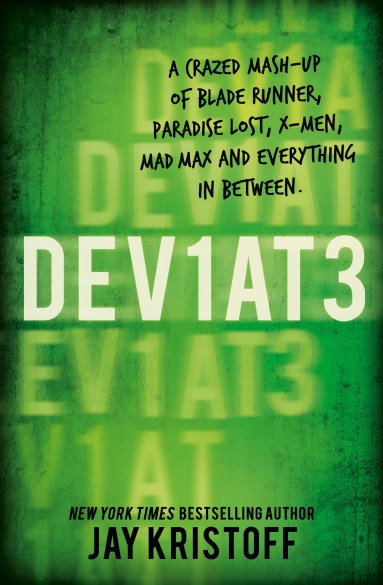
DEV1AT3 by Jay Kristoff

DEV1AT3 Cover.jpg

Publisher: Allen & Unwin (Trade Paperback – 17 June 2019)

Series: LIFEL1K3 – Book 2

Length: 423 pages

My Rating: 4.5 out of 5 stars

Amazon     Book Depository

From one of the most prolific young adult fiction authors, Jay Kristoff, comes the follow up to his electrifying 2018 smash-hit LIFEL1K3, DEV1AT3.

Over the last few years, Australian author Jay Kristoff has been one of the leading contributors to young adult fiction, writing several bestselling series. His works include The Lotus War series, the highly regarded The Nevernight Chronicles, and The Illuminae Files, which he co-wrote with fellow Australian Amie Kaufman. DEV1AT3 is actually the second of three Kristoff books being released this year, as he has already released the first book in his second collaborative series with Kaufman, Aurora Rising. Darkdawn, the third and final book in The Nevernight Chronicles, is set to be released in early September.

People who keep an eye on my blog may have noticed that I did a short review of DEV1AT3 a few weeks ago in a Canberra Weekly column. I have been meaning to write up an extended review of the book for a while now, as it was quite an enjoyable book with a lot of cool features. DEV1AT3 follows on from the incredibly popular first book, LIFEL1K3. The LIFEL1K3 series follows the adventures of four young friends in the dangerous post-apocalyptic remains of America, now controlled by rival mega-companies and gangs of religious fanatics.

DEV1AT3 is set in the immediate aftermath of the dramatic conclusion of LIFEL1K3, when the protagonist of the first book, Eve, found out the terrible truth of her origin: she is secretly a lifelike, an android who can ignore the Three Laws of Robotics. Worse, she is actually a replica of Ana Monrova, the daughter of the creator of the lifelikes, Nicholas Monrova, whose creations rebelled against him and killed his entire family. With the realisation that everything she has ever known is a lie, Eve begins to plot with the murderous Gabriel and the other lifelikes to find the comatose body of Ana. While Eve simply wants to kill the woman whose life she is imitating; the other lifelikes will use Ana’s body to unlock Monrova’s secrets in order to start a robot revolution.

Out in the post-apocalyptic wastelands surrounding Babel, Eve’s friends, Lemon Fresh, Ezekiel and Cricket, have seen better days. Not only were each of them forced to abandon Eve for different reasons but they must all face their individual consequence of the events that occurred within Babel. When unexpected events force them to separate, each of these friends find themselves in a whole world of trouble.

Lemon Fresh’s status as a deviate, a genetic mutant with the ability to manipulate electricity, has always landed her in trouble, but now she finds herself the ultimate pawn in a war between two of the major corporations that rule the land. Kidnapped by an agent of BioMaas Incorporated, Lemon eventually finds herself falling in with a band of fellow deviate teenagers, each with their own unique abilities, and whose leader, the Major, may hold the secrets to her past.

At the same time, the logika Cricket is stolen and sold to the Brotherhood, a group of religious fanatics determined to destroy every android, deviate and genetically modified being they can find. As the Brotherhood edges closer to a war with the Major’s deviates, Cricket is forced to fight as a robot gladiator while learning the dark secrets at the heart of the cult. Meanwhile, Ezekiel, the one lifelike with any love for humanity, teams up with an old enemy in order to track down Lemon Fresh and Cricket. However, when Ezekiel’s mission leads him into the path of Eve and his other lifelike brothers and sisters, he attempts to find a way to stop their destructive crusade and save his beloved Ana.

This was a fantastic piece of young adult fiction that does a wonderful job of following up the first book in the series. Kristoff tells an exciting story which not only continues the plot lines of the first book but which also takes the characters in some intriguing new directions. However, despite some differences in plot focus, the book continues to feature the cool allusions to other works of fiction that made the first book such a treat to read, and it continues to explore aspects of this intriguing post-apocalyptic setting. Readers who did not get the chance to read the first book, LIFEL1K3, last year will easily be able to start by reading DEV1AT3. Not only is the story quite accessible but it also starts off with an extremely detailed summary of the events and characters from the first book, which allows anyone to fully catch up with where the plot is.

One of the most interesting changes between this book and LIFEL1K3 is that the protagonist of the first book, Eve, is instead cast as an antagonist, and we end up seeing very little of the book’s plot from her point of view. Instead, the plot of DEV1AT3 is mostly split between the three perspectives of Lemon Fresh, Cricket and Ezekiel, who each have their own unique storylines. Each of these storylines is noticeably different, with all three of them making use of some unique features to help create an intriguing and emotionally strong story. The reader gets a real feel for all three of these point-of-view characters throughout the course of their individual plots, and several intriguing new side-characters are introduced. These separate storylines come together to form one amazing overall narrative, which ends with an amazing cliff-hanger for each of the main characters that will ensure readers will have to check out the final book in this series when it comes out.

One of the most intriguing aspects of the LIFEL1K3 series is that each of the books is marketed as a crazy mash-up of several different works of fiction. For example, the first book in the series had a real Alita Battle Angel crossed with Mad Max and Blade Runner vibe to it. Many of the references to the plots of various other media titles that were started in the first book are continued in DEV1AT3. For example, the whole Mad Max vibe of life in the wasteland is actually really enhanced in this book, as the vast majority of the story is spent out in the nuclear wastes and smaller outposts that make up the ruins of America, with a number of crazy car chases in souped-up doomsday vehicles featured throughout. We also get a deeper look at the whole Bladerunner aspect of the story, as Eve comes to terms with actually being a lifelike and attempts to get revenge for her creation.

In this second book, Kristoff’s plot also makes allusions to several other pieces of fiction in the three various storylines. For example, Lemon Fresh’s storyline is an interesting post-apocalyptic take on the X-Men, with the super-powered teen finding kinship with a group of similarly gifted individuals in a world that hates and fears them. The new deviates introduced in this storyline have a pretty cool range of powers, have all been attacked because of their abilities and even have a wise old mentor character in the Major. The various twists associated with this storyline are really clever, and it was interesting to see more deviates aside from Lemon. Ezekiel also has a great storyline within DEV1AT3. While much of his story is still tied up with his feelings for Eve, the lifelike copy of the woman he loves, and all the Bladerunner-esque emotions and thoughts he and his lifelike family experienced in the first book, Kristoff adds a fun new element to his storyline in this book. For much of his storyline, Ezekiel actually teams up with Preacher, the cyborg bounty hunter who was an antagonist of the first book. This is a very fun team-up, and it harkens back to a lot of classic odd-couple crime movies, with the two having a very rocky relationship that kind of improves as the story goes along.

I personally liked Cricket’s storyline the most. Cricket is a logika, a sentient robot who must obey the Three Laws of Robotics. Cricket, who was previously a small assistant robot, had his personality transferred into a massive combat robot in the last book. However, he is kidnapped by members of the Brotherhood, the insidious religious group fighting against Lemon Fresh’s new deviate brethren. Cricket, who has to obey all the orders given to him by the Brotherhood due to the Three Laws of Robotics, is forced to fight in a series of gladiatorial combats. This storyline gives the reader the best insight into the ranks of the Brotherhood, and Cricket uncovers certain secrets while working for them. With the whole Three Laws aspect, this storyline is obviously very reminiscent of the science fiction classic I, Robot; however, Kristoff comes up with some humorous takes on the Three Laws. Thanks to the assistance of the snarky logika Solomon (who I found to be one of the funniest characters in DEV1AT3), Cricket starts to learn how to utilise the loopholes in people’s statements, so he has a degree of freedom and he also makes use of a simple solution to counteract one of the laws, which was pretty funny. All of these references to these established pieces of fiction are great, and I really liked how the author adapted them to fit his compelling young adult story. I especially enjoyed seeing some complex science fiction ideas, such as Isaac Asimov’s Three Laws of Robotics, explained to a younger audience, with some cool tweaks to make a more entertaining and modern story.

In addition to fun story and clever references to other works, one of the most interesting things about the LIFEL1K3 series is the cool post-apocalyptic setting that the author has come up with. The nuclear ruins of America always makes for an intriguing setting for a story, and I really enjoyed the cool combination that Kristoff makes in this series with savage nuclear wasteland and high-tech cities. The sheer amount of creativity that Kristoff utilises for the setting is really impressive, as this book alone features wars between rival corporations, desert-dwelling religious nuts, mutants, rebelling androids, bandits and mutated monsters. All of these are utilised extremely well in the story, and I look forward to seeing what other cool aspects of this broken world become apparent in the next instalment of this series.

DEV1AT3 is another wild ride from Jay Kristoff that I had a lot of fun reading. Featuring an excellent story that makes great use of references to some classic pieces of science fiction and fantasy, DEV1AT3 is a fantastic read that refuses to slow down for everything. This is a highly recommended read for the older young adult market, and it will also appeal to older readers. I am extremely curious to see where Kristoff takes this story next and look forward to another electrifying adventure in this mad-cap world.

Amazon     Book Depository

Waiting on Wednesday – The Man That Got Away by Lynne Truss

Welcome to my weekly segment, Waiting on Wednesday, where I look at upcoming books that I am planning to order and review in the next few months and which I think I will really enjoy.  I run this review in conjunction with the Can’t-Wait Wednesday meme that is currently running at Wishful Endings. Stay tuned to see reviews of these books when I get a copy of them.

The Man That Got Away Cover.jpg

For this Waiting on Wednesday I will be looking at a book that I have no doubt will be one of the funniest novels of this year, The Man That Got Away, by Lynne Truss. The Man That Got Away is the second book in the Constable Twitten series, which follows on from last year’s comedic tour-de-force, A Shot in the Dark.

One of the most interesting aspects of the Constable Twitten series is that it is an adaption of Truss’s comedic Inspector Steine radio series. The Inspector Steine series is set in Brighton in the 1950s and follows the misadventures of Brighton police force members Inspector Steine, Sergeant Brunswick and Constable Twitten. Brighton in both the radio and book series is filled with as much crime as the infamous film Brighton Rock portrays; however, this goes completely unnoticed by the head of Brighton’s police force, Inspector Steine, who is convinced that his famous role in allowing a massacre of rival gangs to occur has wiped out all crime in the city. Since the massacre, his biggest problem has been the badgering of his second-in-command, Sergeant Brunswick who is obsessed with going undercover despite the fact every criminal in the city knows who he is and can easily see through his disguises, and usually ends up shooting him. What Steine and Brunswick don’t realise is that their amiable cockney charlady, Mrs Groynes, is actually a criminal mastermind who runs all the crime in the city while using her position within the station to keep the police as ineffectual as possible (not that it requires much work).

However, the entire status quo of the Brighton police is upset when the young and keen Constable Twitten is assigned to them. Twitten is an unrepentant know-it-all who is determined to sniff out criminal activity in the city, despite Steine’s insistence that none exists. Twitten is quickly able to uncover Mrs Groynes’s true identity as Brighton’s criminal mastermind (to be honest she isn’t working that hard to hide it). Unfortunately for Twitten, neither Steine nor Brunswick will believe him, especially after Mrs Groynes convinces them that Twitten’s claims of her criminal actions are the result of an unfortunate hypnosis accident. Thus, Twitten must try to uncover Mrs Groynes while also dealing with the other myriad crimes being committed in Brighton.

I only just found out that there was an upcoming sequel to A Shot in the Dark and I immediately started writing a Waiting on Wednesday for it. When I randomly received A Shot in the Dark last year from the publisher, I had not heard about the Inspector Stein radio series before, and only decided to make time to read because I was in the mood for a historical crime book. I am extremely glad that I decided to check out A Shot in the Dark in the end, as I found that it contained an incredibly funny story that got an easy five stars from me, and I couldn’t stop laughing as I read it. Since then, my future wife (and, more importantly, the person who edits all my posts), Alex, introduced me to the radio series, which I absolutely loved and has deepened my appreciation of the humour and storylines within the Constable Twitten novels. It was also intriguing to see how Truss utilised the various storylines from the radio show in the book, as A Shot in the Dark featured plot points from several different episodes, in addition to some new content, to create a fresh iteration of the story.

As a result, I am very much looking forward to the second book in the series, The Man That Got Away. I should note that this book is actually already out in some formats as of 11 July 2019. However, as the physical copies of the book will not be available in Australia until mid-September, I decided to feature it in a Waiting on Wednesday post. I have no doubt that The Man That Got Away is going to be another humorous read, especially as it has an intriguing plot synopsis.

Goodreads Synopsis:

1957: In the beach town of Brighton, music is playing and guests are sunning themselves, when a young man is found dead, dripping blood, in a deck chair.

Constable Twitten of the Brighton Police Force has a hunch that the fiendish murder may be connected to a notorious nightspot, but his captain and his colleagues are—as ever—busy with other more important issues. Inspector Steine is being conned into paying for the honour of being featured at the Museum of Wax, and Sergeant Brunswick is trying (and failing) to get the attention of the distraught Brighton Belles who found the body. As the case twists and turns, Constable Twitten must find the murderer and convince his colleagues that there’s an evil mastermind behind Brighton’s climbing crime rate.

Our incomparable team of detectives are back for another outing in the second instalment of Lynne Truss’s joyfully quirky crime series.

This sounds like it is going to be another fantastically fun story, and I cannot wait to check it out. I will be extremely curious to see which Inspector Steine episodes The Man That Got Away will draw inspiration from, and I look forward to enjoying a good laugh through the course of this book.

The Man That Got Away Cover 2.jpg