Timeless by R. A. Salvatore

Timeless Cover.jpg

Publisher: Harper Voyager

Publication Date – 4 September 2018

Amazon     Book Depository

From one of fantasy’s most legendary writers, R. A. Salvatore, comes another electrifying adventure of swords and steel, as Salvatore once again presents a thrilling tale of his iconic protagonist, the dark elf Drizzt Do’Urden.

Centuries ago, the city of Menzoberranzan gave birth to a drow whose talents with the blade were unsurpassed by any other practitioner.  This drow’s name was Zaknafein.  Desired by an ambitious noble house and its twisted Matron, Malice, Zaknafein would become a pawn in the battle of intrigue and positioning that have eternally plagued Menzoberranzan.  His only relief from his arduous life was his friendship with the young mercenary Jarlaxle.

Years later, a young Drizzt Do’Urden fled the city and the violent ways of his people.  However, his escape was only capable thanks to the twofold sacrifice of his father, Zaknafein, who not only allowed himself to be sacrificed to the dark goddess Lolth but also willed his resurrected body to its absolute destruction in order to stop its hunt for Drizzt in the catacombs of the Underdark.  Not only was Zaknafein his father; he was also the man responsible for Drizzt’s moral code and, most importantly, the man who taught Drizzt how to fight, turning him into the most skilled sword wielder in all of Faerun.

But now, after years of Drizzt’s adventures on the surface world, something truly amazing has happened: Zaknafein has been returned to life and has found his way to the surface world.  No-one is certain how he has been resurrected or why, but Zaknafein is determined to be reunited with his son, even if he has changed far more than he could ever imagine.

The world has also changed in the last few years.  The Sword Coast is undergoing a period of rare peace.  The dwarves, led by Drizzt’s friend King Bruenor Battlehammer, rule in Gauntlgrym, while the city of Luskan is secretly ruled by Jarlaxle and his mercenary band, Bregan D’aerthe.  With their territories connected by magical gates, Bruenor, Jarlaxle and the halfling community of Bleeding Vines have formed an alliance, ensuring the security of the realm.  However, the ambitious and greedy Lord Neverember, ruler of Neverwinter, is a constant thorn in their side as he plots to steal power from the lands around him.  While usually only a minor nuisance, Neverember has been making deals with a mysterious noble house of Waterdeep and a minor dwarven clan for vast sums of money.  As the allies investigate further, they uncover the start of a destructive demonic conspiracy that could destroy all they have built.  What foul plans are being hatched, and what will happen with Drizzt and Zaknafein find themselves in the middle of a demon stronghold?

R. A. Salvatore is one of the most experienced and enduring authors of fantasy fiction in the world today. Having written more than 60 fantasy books since his 1988 debut, Salvatore has created a number of worlds and characters across his career, from his 12 books in the Corona universe, which includes the 2018 release Child of a Mad God, to his Chronicles of Ynis Aielle trilogy, The Crimson Shadow series, The Cleric Quintet and The Spearwielder’s Tale trilogy. Salvatore is also somewhat infamously known for his foray into Star Wars fiction, with his 1999 release, Vector Prime, which saw the canonical death of Chewbacca in the original expanded universe, a decision that has since been retconned following the Disney acquisition of the franchise.  However, his most iconic and popular books would have to be his long-running series that follows the adventures of the dark elf Drizzt Do’Urden.

The character of Drizzt Do’Urden was first introduced in Salvatore’s debut novel, The Crystal Shard, which is also the first book in The Icewind Dale trilogy.  The Icewind Dale trilogy is set within the Forgotten Realms universe, a large-scale interconnected collection of fantasy books from a range of different authors, all set within the titular Forgotten Realms, a spinoff location of the Dungeons & Dragons roleplaying franchise.  The Icewind Dale trilogy featured a band of powerful characters including Drizzt, the dwarf chieftain Bruenor Battlehammer, the barbarian warrior Wulfgar, the halfling thief Regis and Bruenor’s adopted human daughter, Catti-brie.  While these characters all had their own adventures within this series, it was clear that Salvatore had intended to focus his series on Wulfgar and make him the main protagonist.

However, the character of Drizzt proved to be particularly popular with the fans.  A large amount of this may be a result of the characters anomalous nature, as not only is Drizzt a dark elf living above the surface, but he was one of the few good dark elves in fantasy fiction at that point in time.  The dark elves, also known as the drow, are a race of dark-skinned elves who live in the Underdark, the dark catacombs that lie under the continent of Faerun, in the world of Abeir-Toril.  In the Forgotten Realms universe, dark elves are generally an evil and self-serving race who consider themselves superior to the other races in the Forgotten Realms and often conduct destructive raids against the surface world.  As a result of this popularity, Salvatore chose to focus on Drizzt more and more as his series progressed.  This included establishing the character as one of the greatest practitioners of the sword in the Forgotten Realms, as well as introducing an equally matched adversary, Artemis Entreri.

This focus on Drizzt continued into Salvatore’s second Forgotten Realms series, The Dark Elf trilogy, which was a prequel series to The Icewind Dale trilogy.  The Dark Elf trilogy focused on the birth of Drizzt in the dark elf city of Menzoberranzan, a female-led society dedicated to the worship of the demonic spider god Lolth.  While this is where Drizzt was raised and first learnt how to wield his iconic dual blades, the character of Drizzt never fit in, except with his father Zaknafein, who tried to teach him that the dark elves, especially those dedicated to the worship of Lolth, were evil.  Drizzt would escape Menzoberranzan at the end of the first book in the trilogy, Homeland, and spend the next two books exploring the world outside the city, eventually coming to the surface and finding his home in the Icewind Dale.  Since then, Drizzt and his companions have undergone a number of adventures both above and below the surface of Faerun, with numerous changes impacting these protagonists.  Timeless is the 34th book to feature Drizzt or his companions, and is one of the few ongoing series still being produced in the Forgotten Realms universe.

Timeless is the first book in Salvatore’s new Noname trilogy, and while the series is invariably going to focus on Drizzt, this first book mostly takes a look at the returning Zaknafein.  As a result, the majority of the story is set in the current chronology of Salvatore’s universe and sees Zaknafein attempting to find his place in the new world he has returned to, while also exploring a new threat to the Companions of the Hall (Drizzt and his friends).  There is also a second timeline that is set many years before the events of Homeland and focuses on the early life of Zaknafein.  While both storylines are enjoyable, I found myself drawn more to the prequel storyline, which focused more on the elaborate and exciting intrigues of the drow and how Zaknafein and Jarlaxle became the drow we all came to know and love.  The contemporary storyline is mostly focused on the reuniting of Zaknafein and Drizzt after their many years apart, both in and out of text.  Their emotional reunion forms the heart of this storyline, while Zaknafein’s exploration of this new world he finds himself in is an intriguing part of the book.  A side effect of this is that some of the longstanding characters, such as Wulfgar and Bruenor, have a reduced role in the book.  While I hope they feature more later in this trilogy, I felt the story was able to survive without them.  This book also spends a lot of time setting up the storyline and threats that will form the focus of this new series.  To that end, Salvatore has done an incredible job, creating several intriguing storylines that readers will enjoy following in future books and presenting the protagonists with a number of potential threats for the series.  However, Salvatore has also ensured that the reader will be hit with some severe emotional gut-punches in this first instalment, ensuring that they are dragged into the next book in this trilogy.  I enjoyed going back and forth between these two separate storylines.  Each of these storylines complemented the other one perfectly and highlighted the character of Zaknafein in more detail.

While The Icewind Dale trilogy and the series that followed it are excellent pieces of fantasy fiction, my favourite Drizzt Do’Urden series has always been The Dark Elf trilogy, which I consider one of the best origin story arcs in all of fantasy fiction.  As a result, I was always going to enjoy any novel tied to this prequel trilogy.  Timeless contains a number of call-backs to this original trilogy and works to provide the reader with some interesting and unexplored backstory for the great character of Zaknafein, including how he became associated with the house of Do’Urden.  It also shows the formation of his distinctive character traits, such as his sense of mercy, his hatred of the female dark elves who enslaved him and his intense rebellion against the drow’s patron goddess, Lolth.  Some of the most emotional parts of this original trilogy revolved around Drizzt and Zaknafein as they attempted to escape from the harsh landscape of Menzoberranzan and Zaknafein’s eventual sacrifices to save his son from Lolth’s evil grasp.  Therefore it was amazing to see the two of them finally reunite after all these years in the most appropriate manner possible: a duel.  Watching Drizzt slowly realise that the person fighting against him is actually his long lost father is incredible and something that I really enjoyed.

It was also a lot of fun to see the earlier days of one of my favourite characters, Jarlaxle.  Jarlaxle is a flamboyant and deceptively cunning drow mercenary who is one of the most compelling characters in Salvatore’s books.  The character was first introduced in the second book of The Dark Elf trilogy, Exile, and quickly revealed himself to be a very memorable character.  Salvatore utilised him in a number of his follow-up series, and even gave him his own trilogy with Artemis Entreri.  I was therefore very happy to see him in both timelines of Timeless, as it provides the reader with some great entertainment as well as answering some interesting questions, like how he came up with his distinctive look.  His bromance with Zaknafein was another fun part of both storylines, and I liked seeing the previous connection these two great characters had with each other.  Overall, fans of Salvatore’s preceding books, especially The Dark Elf trilogy will love Timeless and become engrossed in seeing one of the most impactful characters in Drizzt’s life return after more than 20 years and 30 books.

As you would expect from a novel about Drizzt Do’Urden and Zaknafein, two of the most pumped-up sword users in all of fantasy fiction, there is an absolute ton of action and swordplay in this book.  Throughout the course of Timeless, the father and son duo engage in a number of exciting battles and extravagant duels as they face off against a variety of different foes in both of the book’s timelines.  There is so much going on in this book for readers to enjoy, from battles against demonic foes to Zaknafein and Jarlaxle taking on the most devious of drow opponents they can find in the prequel timeline.  The halfling Regis, who is generally one of the most entertaining characters in Salvatore’s books, also has an amazing sequence as he infiltrates a hidden vault, using a combination of alchemy, daring do and the well-honed thieves’ instincts and skills he has been displaying since The Crystal Shard.  Jarlaxle also steals any fight scene he is involved with, using his various magical devices and hidden weapons to cause all manner of chaos against his opponents, resulting in some of the most entertaining parts of the books.

However, easily the best action sequences have to be the duels between Drizzt and Zaknafein.  These two blade masters are generally regarded as the two best fighters in all of the Forgotten Realms and have not faced each other since the early 1990s.  As a result, Salvatore presents several highly detailed duels between the father and son.  These duels are written in incredible detail and Salvatore does a fantastic job highlighting the speed, intensity and skill that these two combatants have as they battle against each other in scenes which hark back to their original amazing duels in Homeland.  Ultimately, Salvatore is once again able to capture the magic that these two combatants had in their original appearances and their fights take on a completely new edge with the emotional intensity of these characters’ reunion.

Salvatore has once again provided his readers with an exhilarating adventure that pits the monsters and villains of the Forgotten Realms against your favourite fantasy heroes.  This is definitely a book that will have the most impact for existing fans of Salvatore’s Forgotten Realms novels, and as such I really enjoyed Timeless.  While newer readers may have a little trouble following the plot after 34 books worth of backstory (39 if you include The Cleric Quintet), Salvatore’s writing will ensure they get an electrifying adventure that will encourage them to look back at the original books in this series.  An outstanding fantasy adventure from one of the best writers in the business, this is fantastic read that is well worth checking out.

My Rating:

Four and a half stars

Amazon     Book Depository

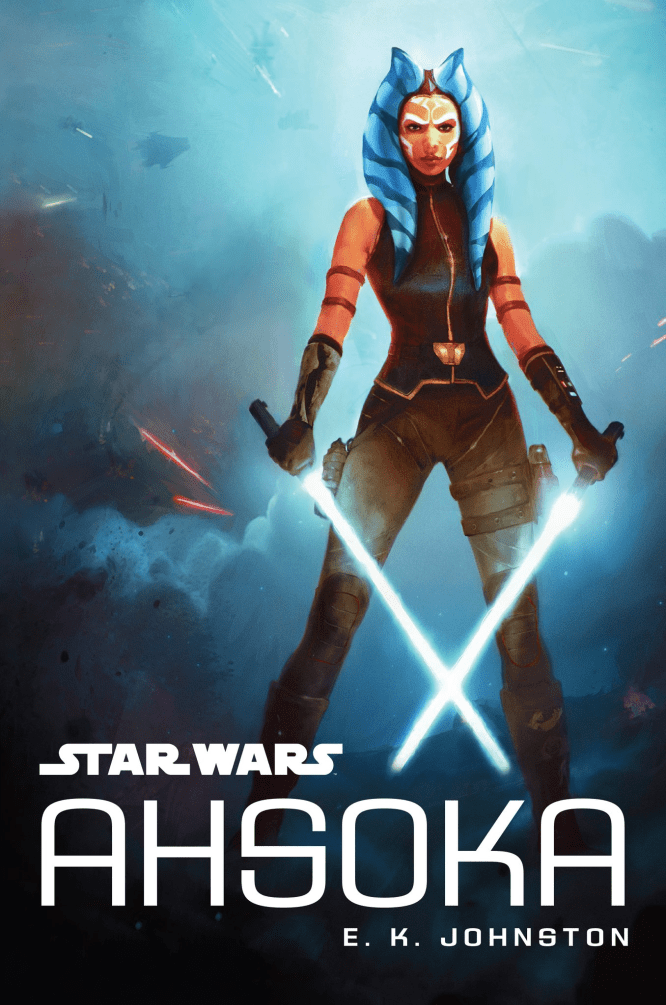
Throwback Thursday: Star Wars: Ahsoka by E. K. Johnston

Ahsoka_novel_cover

Publishers: Disney Lucasfilm Press

                        Penguin Random House Audio

Release Date – 11 October 2016

Amazon

Reviewed as part of my Throwback Thursday series, where I republish old reviews, review books I have read before or review older books I have only just had a chance to read.

The apprentice lives.  One of the best Star Wars characters that originated outside of the live-action movies returns in this action-packed, character-driven novel, which follows Ahsoka Tano’s adventures after the destruction of the Jedi Order.

Those people familiar with my previous reviews may have noticed that I am a bit of a Star Wars fan, having reviewed several pieces from the current Disney Star Wars extended universe in the last few months.  Therefore, it should not come as a surprise to anyone that I have watched and enjoyed the Star Wars: The Clone Wars and Star Wars Rebels animated television shows.  Both of these shows are very well done, can be appreciated by a varied audience and contain a large amount of the classic Star Wars heart and respect for the franchise’s lore and history that was missing in some of the more recent movies.  While many memorable characters were introduced in these shows, perhaps the most significant to the lore is the titular character of this book, Ahsoka Tano, Anakin Skywalker’s apprentice.

For those of you failing to remember Anakin having an apprentice in the live-action movies, you are not going crazy; Ahsoka has yet to appear in any live action movie.  She was instead introduced in The Clone Wars animated movie and served as one of the main characters of The Clone Wars television series, all of which take place in the years between Attack of the Clones and Revenge of the Sith.  Despite being one of the most popular characters on the show, Ahsoka would leave the Jedi Order at the end of the fifth season of The Clone Wars and only appear in the sixth season as part of a short vision sequence.  As a result, fans of the both the show and the character were frustrated and confused about what Ahsoka’s fate was and whether she had survived the events of the third prequel movie.  Fans didn’t get their answer until a couple of years later, at the end of the first season of Star Wars Rebels, where it was revealed that Ahsoka had survived the Jedi purge, becoming a member of the early Rebel Alliance.  Ahsoka, now wielding a pair of white lightsabers, became a key character in the second season of Star Wars Rebels, in which she was still an incredibly cool and powerful warrior.  She was utilised to perfection in this new show and had what is easily the best scene in the entire run of Star Wars Rebels: her long-awaited confrontation with Darth Vader.  The sheer emotion and intensity as Ahsoka finally came face-to-face with her old master and discovered that he was responsible for the fall of the Jedi was just amazing and is one of my favourite moments from all of television.

Following her appearance in Star Wars Rebels, Disney commissioned a young adult Ahsoka book, which was announced on 31 March 2016, one day after the Star Wars Rebels season 2 finale.  This book was released in late 2016 and was written by young adult author and Star Wars fan E. K. Johnston.  Ahsoka was Johnston’s first foray into Star Wars fiction, although she is currently working on Queen’s Shadow, a young adult novel focused on a post The Phantom Menace Padme Amidala, set to be released next year.  I have no doubt that a review for Queen’s Shadow will appear on this website in due time.  Now, with the recent announcement of a seventh season of The Clone Wars and the reveal that Ahsoka will be appearing in this new season, I decided to check out this book to see if it did the character any justice.  I chose to enjoy this as an audiobook, rather than read a physical copy.

During the Clone War, Ahsoka Tano was a fierce warrior and a commander of the Republic’s clone troopers.  However, after the devastation of Emperor Palpatine’s Order 66, which saw the clones turn on the Jedi, everything changed.  Fighting on Mandalore, far away from her master, Anakin Skywalker, Ahsoka is unaware of his fall to the dark side of the Force, and only just manages to escape the purge of the Jedi Order.

Now, one year after the fall of the Republic and the rise of the new Galactic Empire, the former Padawan is in hiding on the outskirts of the galaxy, trying to avoid any Imperial attention.  Living under an assumed name and with her trusty dual lightsabres gone, Ahsoka scrapes a living as a mechanic, intentionally distancing herself from the Force in order to hide her Jedi abilities.

Ahsoka journeys to a remote farming settlement on the Outer Rim moon of Raada.  Settling into her new life and making connections with its inhabitants, Ahsoka believes that she has finally found her sanctuary.  But her hopes of a peaceful life in her new home are quickly dashed when the Empire arrives, imposing their totalitarian rule on the people of Raada.  The agricultural potential of the moon is vital to the future of the Empire, and the workers are being forced to farm a new and mysterious plant.  Determined to help her new friends and wanting to make a difference, Ahsoka uses her wartime experience to help form a resistance in order to undermine Imperial control.

But when she is forced to reveal her full powers in order to save her friends, she once again finds herself on the run.  However, this time her actions have not gone unnoticed.  Her old ally, Senator Bail Organa wants her to join his fledgling rebellion, while the sinister Inquisitor, the Sixth Brother, arrives on Raada with plans to capture her, using Ahsoka’s friends as bait.

Because I am a fan of the titular character, I did go into Ahsoka with some rather high expectations.  Luckily I quite enjoyed Ahsoka, powering through this book quickly while appreciating how Ahsoka’s new adventure fit into the existing Star Wars chronology.  This story is very good, with an excellent blend of character development, Star Wars lore and some scintillating action and adventure.  The book contains a well-paced narrative that not only features Ahsoka’s personal story, but also examines the viewpoint of several side characters, in order to move the plot along, while also showing the impacts of Ahsoka’s actions from a different viewpoint.

This book is mainly focused on the adventures of Ahsoka, and fans of the animated show will appreciate seeing how she not only managed to survived the purge of the Jedi, but how she became the hardened rebel agent we encountered in Star Wars Rebels.  I feel that anyone who reads this book will appreciate the considerable amount of character development and insight that occurs with the titular character.  At the start of the book, Ahsoka is afraid, hiding who and what she is from the world while also denying herself access to the Force.  She is filled with regrets, concerns for her missing Jedi family and guilt not just about surviving but also about leaving the Jedi Order before its fall.  Throughout the book, her adventures, the new friendships she develops, the people she helps and the role she plays on Raada all help her to find a new purpose, as well as re-establishing her connection with the Force.

There are a number of great scenes featuring or concerning Ahsoka in this book.  These include her battle with the Sixth Brother, the forging of her new white lightsabres and the epic scene where she unleashes her Force abilities for the first time in a year.  It was also intriguing to see her advising the farmers in guerrilla tactics and helping them sabotage the Imperial occupation.  Fans of Ahsoka will appreciate the similarities this has to one of the character’s most significant arcs from The Clone Wars that featured her training a guerrilla army to combat a Separatist invasion, including a young Saw Gerrera (Forest Whitaker’s character in Rogue One).  I also enjoyed Johnston’s focus on the connection between Ahsoka and the female character Kaedan Larte.  It was great seeing this character help get Ahsoka out of her shell, and the subtle romantic feelings between the two of them was an interesting character direction for Ahsoka.  Overall, I thought Ahsoka contained an incredible take on its titular character, as Johnston not only provides the reader with a much clearer picture of Ahsoka’s fate following The Clone Wars, but also provides a powerful look at her thoughts and feelings following the destruction of the Jedi.

In addition to exploring the fates of one of their favourite characters, fans of the franchise are also treated to another intriguing look at events in the Star Wars universe not covered in the movies or television shows.  Ahsoka is set one year after the events of Revenge of the Sith, and shows the early days of Imperial control in the galaxy.  There is a palpable and well-utilised feeling of dread throughout the book as the various point-of-view characters encounter the steady increases in Imperial control as their military expands its influence.  It is fascinating to see the early Imperial military machine in action, especially when it comes to controlling and pacifying smaller planets and moons.  One of the most interesting aspects of this is the type of troops being utilised.  By this point in the Star Wars’ chronology, the Empire has started to phase out their clone troopers, replacing them with the human stormtroopers that appear in the original trilogy.  During her encounters with them, Ahsoka notes that these stormtroopers are still quite green and are nowhere near the clones’ level of competency when it comes to battle, controlling territory or dealing with Jedi.  This changeover in troop type for the Empire has not really been covered in too much detail before and is quite fascinating to see.

The exploration of the Empire’s methods of hunting down the remaining Jedi is also intriguing, as one of Vader’s Inquisitors serves as the book’s main antagonist.  The Sixth Brother is shown not only hunting fully trained Jedi like Ahsoka but also tracking down Force-sensitive children for his masters.  The extent of the Inquisitor’s power and influence is explored in some detail here, and I enjoyed seeing Ahsoka’s impression of these Inquisitors’ skills and actions, especially as the Inquisitors were also trained by Darth Vader.  Readers will also note the obligatory hints at the creation of the Death Star throughout the plot of the book, which is an important part of the overall Star Wars chronology.

These early days of the Imperial military is not the only thing covered in the book, as Johnston also explores the opening actions that would lead to the formation of the Rebel Alliance.  Johnston uses minor Star Wars character Bail Organa to great effect here, showing the work he beings immediately after his heroics in Revenge of the Sith to oppose the Emperor.  Ahsoka also features several cameos from other characters in the Star Wars cannon, and readers can look forward to seeing fan favourite characters Darth Maul, Obi-Wan Kenobi, R2D2, a young Princess Leia and the Grand Inquisitor.  This is a compelling and insightful addition to the Star Wars extended universe, and readers will be amazed by this new viewpoint into one of the franchise’s most volatile periods.

As I mentioned above, I chose to listen to the audiobook version of Ahsoka rather than track down a physical copy to read.  This was mainly because the creators of the Ahsoka audiobook managed to score Ashley Eckstein as the narrator.  Eckstein is the actor who voices Ahsoka in both The Clone Wars and Star Wars Rebels, and I loved the idea of having the definitive voice of the character narrate this crucial Ahsoka story to me.  As Ahsoka is the most prominent point-of-view character, this works out incredibly well, and the reader can enjoy hearing Ahsoka tell the story of what is around her.  Eckstein also provides excellent voice work for all the other speaking characters that feature in the book, as each of these characters were given a distinctive voice that does not feel out of place.

While I really enjoyed hearing Eckstein narrate the story, another benefit of listening to Ahsoka on audiobook is the use of the iconic Star Wars music, as well as the book’s cool use of sound effects.  The creators of the Ahsoka audiobook have inserted John Williams’s iconic score from the movies into a variety of the book’s scenes.  While this is slightly distracting in one or two places where the music did not quite fit properly, it works incredibly well for most of the book.  Several of the story’s big scenes, such as the pivotal battle sequence where Ahsoka reveals her Jedi powers for the first time since she went into hiding, are underscored by this music.  With this grand and powerful music playing in the background, these scenes are given a real epic quality that you just do not get from reading a psychical copy of the book.  It also serves to make Ahsoka feel a lot more connected to the movies, as the listeners are provided with a score that is instantly recognisable as belonging to this franchise.  In addition to the spectacular musical inclusions, the audiobook also features a range of relevant sound effects that really add to the book’s atmosphere and authenticity.  These sound effects range from droid noises and the sounds of ships starting up, to background music when the characters hang out in the cantina.  None of these sound effects distracts from the story and for some of the battle scenes, the lightsabers and blasters sounds really add to the reader’s excitement and involvement in the action.  Another thing I found fun while listening to Ahsoka on audiobook was the producer’s use of some sort of voice modulator for when Eckstein narrates the voices of stormtroopers or other characters wearing helmets.  This is a nice touch and really speaks to the producer’s attention to detail.  I am unsure how effective this would have been if Darth Vader had appeared in the book, but I’m sure I would found the end result amusing one way or another.

Clocking in at just over seven hours long, this is an easy book to get through and the inclusion of the classic Star Wars music, fun sounds effects and the definitive voice of the titular character make it an excellent way to experience this fantastic story.

Ahsoka has been written with a young adult audience in mind, and is definitely an enjoyable book for younger readers who are curious about the Star Wars universe, are fans of the animated shows, or are just looking for an exciting adventure in space.  That being said, the book does not pull any punches, and features an extended torture scene and quite a few deaths, including one particularly gruesome kill by the Sixth Brother.  While some of this can be a tad heavy, I personally feel that anyone mature enough to be familiar with the Star Wars franchise is probably going to be mature enough to not be affected by this violence.  Despite being intended for a young adult audience, Ahsoka, like many of the Star Wars young adult range, is definitely a series that can be appreciated by an older audience, especially those familiar with the franchise and the titular character.

Overall, I was very happy that I checked out Ahsoka, as it not only provided greater insight into the history of one of my favourite Star War’s characters but also painted a detailed and intriguing picture about the early days of the Empire.  Featuring a surprisingly deep and emotional story, this is a fantastic addition to the Star Wars extended universe that will appeal to fans of the amazing animated show, while also offering character based adventure to the more casual reader.  Definitely best to check out in the audiobook format, readers will love how this morphs this impressive Star Wars story into a memorable experience that becomes very difficult to turn off.

My Rating:

Four stars

Amazon

If you enjoy Star Wars fiction, check out some of my previous reviews:

https://unseenlibrary.com/2018/08/12/star-wars-thrawn-alliances-by-timothy-zahn/

https://unseenlibrary.com/2018/05/30/star-wars-last-shot-by-daniel-jose-older/

Foundryside by Robert Jackson Bennett

Foundryside Cover.jpg

Publisher: Jo Fletcher Books

Publication Date – 28 August 2018

Amazon

Hot on the heels of his sensational first trilogy, Robert Jackson Bennett has produced another outstanding fantasy read with Foundryside, a bold and exiting novel that brings together an excellent mixture of action, intrigue and humour and powers it with a great location and some inventive and enjoyable new fantasy elements.

In the city of Tevanne, everything runs on scrivings, magical inscriptions that make inanimate objects sentient and allow them do incredible things.  Scrivings give the city of Tevanne incredible power and influence, and the creation of scrivings has been refined into an industrial process controlled by four powerful merchant houses.  These merchant houses have complete control of the city, and those living outside their compounds are a poor, desperate bunch, attempting to eek a living from a city that doesn’t care for them.

For escaped slave Sancia Grado, the only way to survive is to steal.  Gifted with unique abilities, Sancia is one of the city’s most successful thieves, who dreams of escaping from both the city and the discomfort her abilities provide her.  When Sancia is offered a significant sum of money to steal a valuable artefact from the heavily guarded city docks, she jumps at the chance.  But not everything is as it seems, and after stealing the item, Sancia is betrayed and is now being hunted by shadowy figures with incredibly advanced scrived devices.

At the same time, the guard captain Gregor Dandolo is also hunting for Sancia, determined to bring her to justice for her destructive theft.  Caught in the middle of a conspiracy that spans the entire city, Sancia and Gregor are thrust together and must search for new allies if they are to survive.  As the mysterious assassins descend upon them, their lives may depend on the abilities of one powerful artefact.  But while they find a way to fight back, an ancient evil is about to be unleashed which could bring the entire city down around them.

Bennet is a well-established fantasy writer who is probably best known for The Divine Cities series, which concluded in 2017.  Readers may also be familiar with some of his standalone works, including The Troupe, Mr. Shivers and the science fiction book The Company ManFoundryside is the latest book from Bennet and represents the start of the captivating new The Founders trilogy.  Foundryside contains a powerful and captivating story set within a fascinating city and containing some very unique magical elements that are a truly enjoyable part of the book.  The main story contains a significant amount of adventure as the book’s protagonists attempt to uncover a conspiracy around the origin of the book’s central magical element.  Readers will be left guessing about the secrets behind the conspiracy, while several of the book’s dramatic twists will leave them reeling from the emotional gut punches.  The final conclusion of the book sets up some exciting options for the rest of the series, which I will definitely be checking out when they are released.

One of the main highlights of this book is the fantastically unique magical fantasy element known as scrivings.  Scrivings are a form of magical writings that enhance items they are engraved on, giving them certain properties, abilities or autonomy.  For example, carts can be scrived to make them travel from point A to point B, items can be scrived to move at a greater speed by making them believe they are dropping from a great height, and materials such as wood can be made to believe they have the hardness or consistency of stone.  There are a huge range of elaborate rules around scrivings, and the author has presented some fascinating background lore which provides some interesting explanations around the creation and utilisation of these items.  An unexpected side effect of the scriving process is that the scrived items are given a form of magical sentience.  Throughout the book, Sancia is at times gifted with the ability to listen to the listen to the thoughts of the scrived items, and the items are shown to be shouting out their defined roles and the rules they have to follow, often in the form of riddles.  There are quite a few funny scenes when some of the characters attempt to manipulate scrived items by exploiting loopholes in their programming, and watching people and magical items have a debate is very amusing.  The use of scriving throughout Foundryside allows the author to create some fantastic and, at times, over-the-top action sequences as the characters wield weapons that have been imbued with the ability to hit harder or faster than conventional, or items that give other risky benefits in combat.  The hidden history of the scrivings is also quite intriguing, and watching the characters uncover it is an essential and enjoyable part of the plot.  Overall, Bennett’s magical scrivings are a fantastic part of this book that readers will really love to discover.

In addition to the creative magical elements, Bennett has also set his story in an amazing new fantasy cityscape.  The city of Tevanne is full of scrived items, and Bennett has done a great job inserting these magical items into every part of the city’s day-to-day life.  An interesting feature of this city is the way that significant portions of the city has been broken up into ‘campos’, merchant enclaves where scrived items are created at an industrial level.  Each of these four campos is ruled over by a powerful merchant house, and a large amount of the book’s excellent intrigue elements are fuelled by the competition between these houses.  The campos also serve as interesting social boundaries, with the people living inside having everything that they need, while those living outside, in the area known as the Commons or Foundryside, are barely getting by.  Having areas of the city completely controlled by rich merchants is an element with a lot of potential, especially when these merchants have their own private guards and are essentially laws unto themselves.  Bennett makes full use of this, creating thrilling sequences that feature his characters sneaking into and around these heavily guarded compounds.  The control and distribution of power, here represented by the creation of scrivings, is also a compelling part of the book, and Bennett has created some great characters and scenarios around this development.

I really have to mention the strong and funny characters that are featured throughout Foundryside and are an incredible part of this exciting story.  The main protagonist is Sancia Grado, an escaped slave and thief who finds herself thrust into the centre of a deep conspiracy.  There is a lot going on with Sancia, with her tragic backstory, her unique scriving based powers that are both a blessing and a curse, and her fun and fierce attitude developed from a life on the streets.  All these elements combine together into one awesome character, and Bennett uses her to full effect as his central protagonist.  The book’s other main characters are also quite entertaining and enjoyable.  There is Gregor Dandolo, the tough and law-abiding soldier whose sense of duty draws him into the middle of the conspiracy.  Gregor is a very action based character, but his backstory is also quite traumatic and he shares some great moments with Sancia, a character he initially has very little in common with.  There are also some amazing scenes where Gregor must come to terms with the actions of his family’s merchant house, as well as some strong and emotive twists involving his history.  Other characters include the master scriver, Orso Ignacio, who acts as the book’s resident mad scientist and comes with some very fun ideas, from an audacious break in plan to a funny solution to his legal problems at the end of the book.  I also really enjoyed Orso’s assistant, Berenice, who Bennett uses to great effect as the book’s straight woman for the more outrageous characters, especially Orso, while also serving as Sancia’s love interest.  While all these characters are really enjoyable focuses for the book, the hands-down best character has to be Clef, the sentient key.  Before this book I would have had a hard time believing that a talking key could be a great central character, but I’m very happy that Bennett has proven me wrong.  Not only is Clef a fun and enjoyable character that the reader becomes strongly attached to, but a huge amount of Foundryside’s best humour comes from Clef’s banter and observations.  Bennett has really outdone himself when it comes to these characters and I had a great time watching their adventures.

With an amazing story, fantastic humour, enjoyable and memorable characters and some unique and fascinating fantasy elements, Bennett has once again shown the world what a talented fantasy writer he is.  Foundryside is another outstanding release from Bennett, and I had a lot of fun with this book.  Readers of this book are in for a real treat and they will be very eager to see where The Founders trilogy goes next.

My Rating:

Four and a half stars

Amazon

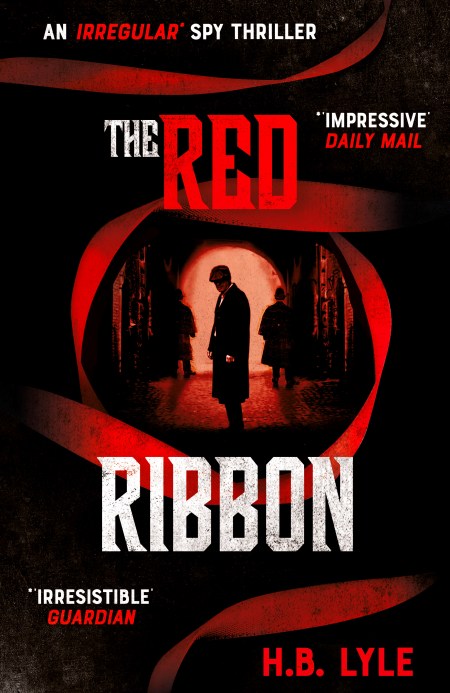
The Red Ribbon by H. B. Lyle

The Red Ribbon Cover.jpg

Publisher: Hodder & Stoughton

Publication Date – 23 August 2018

Amazon     Book Depository

Return to pre-World War I London for another compelling spy adventure in H. B. Lyle’s second book, The Red Ribbon, which is set in the same universe as Sherlock Holmes and features three exciting characters with an intriguing look at early 20th century British history and espionage.

In London, in 1910, Captain Vernon Kell is still attempting create a secret intelligence service capable of protecting England from foreign spies and infiltrators.  Despite the early success of the Secret Service Bureau, Kell’s organisation is constantly under pressure from the country’s politicians and is in danger of being absorbed into Special Branch of London’s police.

Unfortunately, Kell’s only agent, Wiggins, is distracted with his own cases and unwilling to play the political games needed to help the service survive.  Wiggins is the former leader of Sherlock Holmes’s street urchin surveillance organisation, the Baker Street Irregulars, and has picked up a few of his old master’s deductive tricks while retaining his lower-class charm and street smarts.  Wiggins is obsessed with finding the infamous anarchist, Peter the Painter, the man responsible for the death of one of Wiggins’s oldest friends, and is scouring the streets for him.

Looking for a missing girl on behalf of one of his contacts, Wiggins begins to investigate a mysterious embassy located in the affluent neighbourhood of Belgravia.  The embassy is actually a high-class brothel frequented by the rich and powerful of London.  When another girl associated with the embassy is found murdered, Wiggins attempts to find justice; however, the embassy is under the protection of someone Wiggins knows well: Tommy, a fellow former member of the Irregulars.

However, Wiggins’s personal investigations intersect with his work for Kell, as the two of them hunt for the source of a series of leaks at the highest level of government.  With the help of Kell’s wife, the suffragist Constance, Wiggins and Kell must find the connection between the events occurring around London in order to keep the country safe from sinister foreign influences.

The Red Ribbon is the follow-up to Lyle’s debut novel, The Irregular: A Different Class of Spy, and is the second book in the Irregular Spy Thriller series.  This is a great series that will appeal to a huge range of readers, as Lyle combines compelling historical fiction elements with a thrilling espionage story that has fictional links with one of the most iconic book series of all time, Sherlock Holmes.

The story within The Red Ribbon is split between the book’s three main protagonists and takes a look at each character’s different and exciting adventures.  Wiggins and Kell continue their missions from the first book, and while their investigations are ostensibly separate from each other, they eventually intersect in several clever ways.  The relationship between Wiggins and Kell is an important part of these two storylines, as Kell despairs of Wiggins’s personal investigations and wants Wiggins to solely work missions for the service.  The third focal character is Kell’s wife, Constance, who was a supporting character in the first book.  Constance becomes a much more significant character in The Red Ribbon, as the book focuses on her involvement with the suffragist and suffragette movements.  Both Wiggins and Kell become involved with Constance’s storyline in different capacities, while Constance provides significant assistance with her husband’s espionage work.  With three semi-connected stories, it does at times feel like there is too much going on for one cohesive narrative.  However, each of the stories comes together quite well in the end and provides the reader with an extremely captivating overarching narrative.

Having three separate storylines allows Lyle to highlight the differences in social classes during this historical period and highlights how different groups of people were treated.  Kell, as the influential gentleman, is forced to constantly deal with the upper-class politics and attitudes during his attempts to keep the service going.  Wiggins, who was raised on the street, deals more with the average Londoner and experiences the poverty and desperation many of them encounter.  He must also deal with the distain of the upper classes in the course of his espionage work.  While he is clearly the most competent agent in the entire British service, he is constantly looked down upon and ignored by his government superiors.  There are also several instances where Wiggins is assigned to infiltrate labour movements, something he is very reluctant to do due to his world views and background.  This divide often serves to create some significant tension with Kell, who, despite fully understanding Wiggins’s value, skills and point of view, is often exasperated by him.  The beefed-up storyline around Constance allows the reader a significant look at the suffragist movement and the early battles these women fought for equality.  In The Red Ribbon, Constance joins the much more militant suffragettes, and is constantly infuriated by the reactions of the male politicians and their oppressive policies.  The oppression of women also becomes a major point of conflict between Kell and Constance which results in a decline in their relationship, although the final payoff of this storyline is quite sweet.  I really enjoyed the way that Constance and Wiggins developed a fun comradery in this book, as their poor treatment by the upper-class men allow them to bond, with Wiggins even teaching Constance some anti-surveillance techniques.

Lyle cleverly incorporates several important historical events into this book, such as the funeral of Edward VII, the Black Friday suffragettes and suffragists protest outside Parliament and the Siege of Sidney Street.  These events are quite significant in their own right, and Lyle spends substantial time filling in their background and ensuring the reader is aware of why they are happening and why they are important.  However, they also serve as very compelling background events for the plot of The Red Ribbon and work well to enhance this already fascinating story.  In addition to these intriguing and important historical events, Lyle has also packed a number of historical figures into this story.  Quite a few prominent politicians and British civil servants have significant roles in the plot, including a young Winston Churchill, which makes the story feel a lot more authentic.  The author’s continued use of the enigmatic Peter the Painter as one of the book’s principal antagonists is another brilliant stroke, and the reader is provided with some intriguing theories about who he actually was and what his eventual fate was.  Lyle does slightly go overboard by adding in some other famous historical figures in small cameo roles, and the shoehorning in of people such as Charlie Chaplin and members of the 1910 British Antarctic Expedition seems a bit unnecessary.  That being said, it was amusing to watch Chaplin use his drunken tramp routine to help Wiggins escape a conflict in a theatre.

One of my favourite components of this book was the author’s detailed and unique look at British espionage and counter espionage in the early 20th century.  One of the book’s protagonists, Captain Kell, is an actual historical figure who is credited for creating Britain’s domestic spy service, which morphed into the modern MI5.  This fictionalised account of the early days of this organisation are quite fascinating, especially when the author looks at some of its early challenges, the political battles Kell might have had to face, and the sort of work this organisation was originally looking at.  In addition to the domestic espionage work, the protagonists of The Red Ribbon find themselves drawn into one of the most infamous espionage incidents of the era: the capture of British agents Captain Trench and Lieutenant Brandon in Germany in 1910.  This is a highly fictionalised account of the incident, as Lyle has inserted Kell and Mansfield Cummings, one of the founders of MI6, as being there.  It plays marvellously in Kell’s overall storyline, while also featuring some great scenes as the three protagonists’ attempt to evade arrest by the Germans.  Trench and Brandon are not portrayed in the best light, as Lyle has used them to further the class prejudices in Britain, portraying the two soldiers as quite incompetent spies who are captured as a result of wilfully ignoring Wiggins’s advice due to him not being a gentleman.

Another fun part of The Red Ribbon is the connection the book shares with the Sherlock Holmes novels.  The Irregular Spy Thriller series is set in the same universe as the Sherlock Holmes books.  Wiggins was mentioned several times in Arthur Conan Doyle’s original works as the leader of the Baker Street Irregulars.  As a result, Wiggins comes across as a rougher Sherlock Holmes, who uses the classic deductive method while also fighting, drinking and speaking in a lower-class manner.  As in the first book of this series, the great detective himself makes a brief appearance, providing Wiggins with a case-breaking suggestion, while casually enjoying his retirement.  The use of the Sherlock Holmes elements is definitely a defining element of the book, and while it is mostly used to draw interested readers into this historical spy thriller, Lyle successfully uses it to create a unique and enjoyable main protagonist.

B. Lyle has followed up his superb 2017 debut with another fun and exhilarating read. Continuing to use his Sherlock Holmes inspired character to great effect, Lyle weaves a full and captivating narrative that presents several unique stories chock full of adventure, mystery and interesting historical content. The Red Ribbon is an amazing second outing from Lyle which also sets up an exciting concept for a third book in the series.

My Rating:

Four and a half stars

Amazon     Book Depository

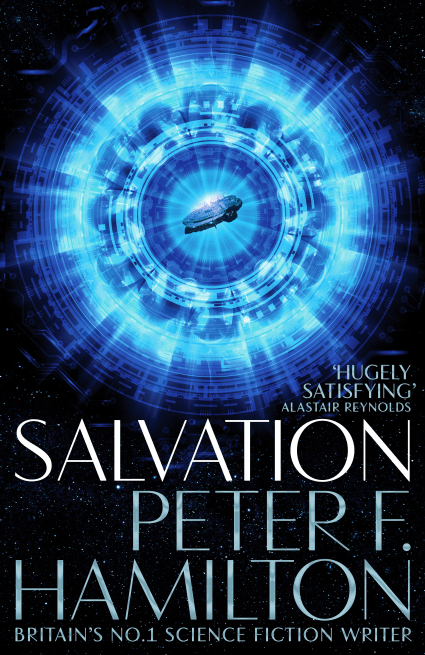
Salvation by Peter F. Hamilton

Salvation Cover.png

Publisher: Macmillan

Publication Date – 4 September 2018

Amazon     Book Depository

From one of the modern masters of the space opera comes a rich and ambitious piece of science fiction that that examines an exciting potential future for Earth and the intriguing adventures that could come as a result.

In 2204 AD, humanity has advanced by leaps and bounds and spread out among the stars.  Utilising advanced teleportation technology, next-gen computers and cutting-edge biotech, humanity has created a number of new and varied societies controlled by a handful of powerful corporations.  However, everything is about to change.  Out in the furthest reaches of human expansion, explorers have found a crashed alien craft.  While this is not humanity’s first contact with an alien species, the sinister cargo found onboard the crashed ship reveals a dangerous alien agenda.  Determined to ensure humanity’s survival, the Connexion Corporation assembles a task force to examine the craft and assess the potential threat that it could cause.  Led by Feriton Kayne, the task force is made up of Kandara Martinez, Yuri Alster, Callum Hepburn, Alik Monday and their assistants.  While on paper this group are the perfect people to investigate this potential threat, there is one significant problem: one member of the team is a hostile alien infiltrator.  As the team gets closer to the alien ship, secrets from their past are revealed and the future of the human race hangs in the balance.

Hundreds of years later, Dellian and his team of genetically enhanced soldiers are born and raised on a planet, far away from Earth.  An alien threat has forced humanity into hiding among the stars and pushed them to the edge of extinction.  As the young soldiers grow up, they encounter lessons from the past and discuss the legendary Five Saints who first encountered the invaders.

This is an absolutely spectacular piece of science fiction from bestselling author Peter Hamilton, who has once again created an elaborate and captivating space opera.  Hamilton has written a number of large-scale science fiction novels since his 1993 debut.  He first gained prominence with the Greg Mandel trilogy, which followed the adventures of a psychic detective in a dystopian future.  Hamilton followed this up with his first epic space opera series, The Night’s Dawn trilogy, which focused on souls of the dead coming back and possessing multiple human planets in the far future.  He continued with additional space operas, such as the Commonwealth Saga, the Void Trilogy, The Chronicle of the Fallers and the standalone novel Fallen Dragon, as well as the children’s fantasy series, The Queen of DreamsSalvation is the first book in Hamilton’s brand new trilogy, The Salvation Sequence, with the adventure continuing in the future releases, Salvation Lost and Saints of Salvation.

Salvation is an impressive and compelling read that combines a powerful and well-written story with a brand new, large-scale science fiction universe.  This story is told from of variety of different time periods set throughout Earth’s future.  The central story of this book is set in 2204 AD and features the exploration crew from the Connexion Corporation examining the crashed alien ship.  This storyline is narrated from Feriton Kayne’s point of view and is the only first-person narration in the entire book, except for a short flashback chapter examining Feriton’s infiltration of a different alien spacecraft.  Salvation also features five additional storylines that are set across various time periods.  Four of these storylines are presented as tales from the other four main characters in the 2204 AD timeline, Kandara Martinez, Yuri Alster, Callum Hepburn and Alik Monday.  Each of these flashback narratives is given its own significant chapter; for example the first of these flashback chapters lasts for 140 of the books 526 total pages.  The fifth storyline is set far in the future, and features a different group of characters who are living in the aftermath of these past adventures and is told across several shorter chapters.  The author makes spectacular use of these multiple time periods and combines them together into an excellent overarching narrative.  A significant amount of detail and a huge number of supporting characters are packed into this book, which falls just short of overwhelming the reader but creates the feeling of a massive universe with quite a lot going on.

Each of Salvation’s separate plotlines offers the reader a drastically different story to enjoy, and presents them with several unique adventures in one novel.  The storyline in 2204 AD is an intriguing first contact and exploration story that works incredibly well as the overall narrative that ties all the other storylines together.  The first flashback storyline is set in 2092 AD and features the story of how Callum Hepburn and Yuri Alster gained their antagonism towards each other.  It also shows the earlier days of Connexion and the darker side of their newly formed technology and world influence.  This first story is told from the point of view of Callum, Yuri and Callum’s wife, Savi, and features a thrilling spy tale that also reveals the unique and extreme form of criminal punishment that resulted from the new technology.  The second of these storylines is set in 2167 AD and focuses completely on Yuri as he searches for a missing person taken by the new and shadowy underworld that has taken shape amongst the stars.  This is the first of the flashback storylines to hint that an alien species may have nefarious plans for humanity, and also features some cool examinations of the power and tactics that Yuri and Connexion use.

The third storyline is a complex murder mystery storyline set in 2172 AD that focuses on the secretive FBI agent Alik Monday and presents another fantastic mystery with some unique science fiction elements.  The fourth storyline is set in 2194 AD and follows badass mercenary Kandara Martinez as she investigates corporate sabotage on the Utopial home planet.  This is a high-action thriller storyline that also examines the Utopials, a human society seeking to create a cultural utopia, while also going into genetic surgery in a big way.  The highlight of this storyline has to be the intense fight between Kandara and the mercenary Cancer, who had been a shadowy figure in some of the previous storylines.  The final prequel story follows the 2204 AD timeline narrator, Feriton Kayne, in 2199 as he infiltrates the large spaceship belonging to the Olyix, an alien race that humanity came in contact with some years before.  This is one of the shortest stories, but it contains the most detailed examination of the Olyix, who have appeared in several of the previous stories.

In addition to the stories set in and before 2204 AD there are also several chapters are set in the far future of humanity.  This timeline starts in 583 AA (After Arrival) and features the remnants of humanity as they prepare to fight back against the alien menace that pushed them away from Earth.  This is a rather intriguing storyline that examines children being turned into tight-knit teams of soldiers as they prepare for the war to come while also providing some hints about the events of the main storyline.  Each of the above stories are fairly self-contained and do an amazing job of showing off the sheer complexity of Hamilton’s new universe, while at the same time providing a series of unique and captivating tales across time.

Each of the prequel timelines has a storyline that could be considered either a murder mystery or thriller.  By themselves, each of these storylines is very well written and contains compelling mysteries and action packed sequences that are more than enough to keep the readers hooked to the book.  However, the real highlight of these prequel timelines is the way in which the play into Salvation’s larger mystery that is explored within the 2204 AD storyline, namely the identity of the alien race attacking humanity and which of the members of the research team is an infiltrator.  I really loved the way that these prequel stories hinted at the main mystery while also exploring the history of the main characters in an attempt to show their personality or a critical point in their lives.  The final twists in the 2204 AD storyline are very surprising and serve as a fantastic payoff for Salvation’s overall narrative.

The author has also included a significant amount of science fiction elements throughout the book that are presented in considerable detail.  It is fascinating to see Hamilton postulate how Earth may develop in the near future and the advanced technology that they would start to utilise.  The multiple timelines also come into play for this element of the book as they allow the reader to see the progression of technology over the years.  What is most interesting about this is that the main pieces of technology don’t change; instead the next generations of the same device are revealed throughout the book’s various stories before the technology eventually plateaus at its highest level.  The science fiction elements also come into play in several intriguing ways.  For example, they allow for some very creative mysteries, including a murder in a house containing teleportation gates that result in the victims being spread across multiple locations, including New York, the Moon, Mars and the Antarctic, creating a murder investigation with several unique complications.  The advent of space travel and other technology also allows the creation of some inventive new societies.  From futuristic utopias to desolate prison it is absolutely fascinating to watch these societies come together.  Overall the science fiction elements are a fantastic part of this book and add some intriguing elements to all of the book’s interconnected stories.

Peter Hamilton has produced another elaborate and powerful piece of science fiction space opera in Salvation.  With a new and unique universe that contains some fantastic and detailed new elements and multiple timelines that are combined together into an outstanding novel, this is an absolutely amazing read.  Epic science fiction at it’s very best, Salvation comes highly recommended and is a spectacular start to an exceptional new series.

My Rating:

Five Stars

Amazon     Book Depository

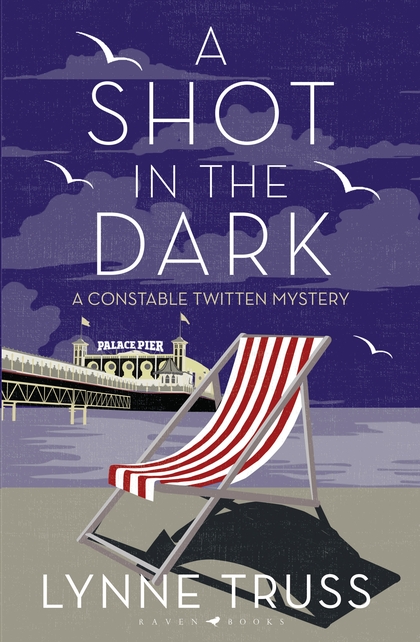
A Shot in the Dark by Lynne Truss

A Shot in the Dark Cover

Publisher: Raven Books

Publication Date – 28 June 2018

Amazon     Book Depository

From Lynne Truss, one of England’s most creative minds, comes A Shot in the Dark, a hilarious take on the historical murder mystery that sets three fantastic and exaggerated police characters against a sinister and surprising criminal mastermind.

Brighton, 1957.  Following a terrible massacre that saw the death of every member of two rival gangs some years before, the city of Brighton is now clear of all crime.  At least, that’s what Inspector Steine believes, and, as he is the famous and inspirational police detective whose actions allowed the eradication of these vicious gangs, that’s what the rest of the Brighton Constabulary believe as well.  Unfortunately for everyone, Inspector Steine is nowhere near as smart as he thinks he is.  Despite all the evidence, he simply refuses to believe the theory of his long suffering ‘bagman’ Sergeant Brunswick that a mysterious third crime boss organised the massacre and is currently running crime in Brighton.

So when the young, keen and exceedingly annoying Constable Twitten arrives in Brighton and starts investigating a series of burglaries, Steine is particularly aggrieved.  Despite Steine’s insistence that Brighton’s criminal element is no more, Twitten seems determined to find criminal activity – and he does.  The opening night of a new controversial play is unfortunately ruined when the opinionated and unpleasant film critic that Twitten is sitting next to is shot in the head.  Finally a crime that even Steine can’t ignore.

Who could have wanted the critic dead?  Is his death due to the multiple plays and productions that his reviews have destroyed?  Or is it perhaps related to a bank robbery that the critic witnessed many years ago, and that Steine failed to solve.  As Twitten and Brunswick start their investigation and Steine provides his own special brand of ‘help’, a second body is found.  As the case continues, Brighton’s newest constable is about to uncover a dark secret about his city and the sinister figure manipulating everything behind the scenes.

Truss is a highly talented writer, author and radio personality who has produced a huge range of different works, including the non-fiction book Eats, Shoots & Leaves: The Zero Tolerance Approach to Punctuation.  Truss has also created several other fictional and non-fictional books, as well as a number of popular radio series.  A Shot in the Dark is Truss’s fifth fiction novel and is the first book in her Constable Twitten Mystery series.

One of the most interesting features of A Shot in the Dark is that it is actually a novelisation of Truss’s popular radio comedy drama series, Inspector Steine, which ran between 2007 and 2013 and starred the inimitable Michael Fenton-Stevens.  This is a great introduction to the franchise that will have a massive amount of appeal both to fans of the radio show and people who are unfamiliar with this great comedy series.  Rather than being a simple write-up of one of the Inspector Steine episodes, A Shot in the Dark is a combination of several different episodes, containing plot elements from various seasons of the show’s run.  In particular, it contains components borrowed from the series one episodes While the Sun Shines, Separate Tales and The Deep Blue Sea, the series two episode The Entertainer, and the series three episode While the Sun Shines.  As a result of this combination, people unfamiliar with this series get to experience several of the radio show’s best stories and plot points in their first outing.  On the other hand, fans of the radio series get a completely new adventure that re-imagines Constable Twitten’s early days at Brighton.  Storylines listeners may be familiar with have been altered in some new and substantial ways to create a fun and excellent combination of some key stories in the series.

In the original Inspector Steine series, Truss created some amazing characters who are not only terrific by themselves but who played off each other extremely well.  The author has done an amazing job transplanting these characters into a completely different format.  The three main characters are Inspector Steine, Constable Twitten and Sergeant Brunswick.  Inspector Steine is your classic self-important senior management figure who thinks they are so much smarter than they actually are.  Steine is extremely self-absorbed and very easily manipulated, but ultimately well meaning, given he is completely convinced that all the crime in Brighton was erased years ago as a result of his brilliant actions.  Twitten, on the other hand, is actually as smart as he thinks and has no trouble letting everyone he meets know it.  His clever investigative work is capable of solving the crime, but his cleverdick attitude ensures that no-one, especially Inspector Steine, will actually listen to him.  Sergeant Brunswick plays straight man to both of his colleagues, and seems to be the middle ground between these two extreme personalities.  However, while he is a competent investigator, he is also easily manipulated, and fails to see that his brilliant plans to go undercover on every case are hampered by the fact that all of Brighton’s criminals already know who his is.  These three are all extreme examples of some of the classic police characters.  In a normal piece of crime fiction, these three characters work well together (think Endeavour for example), but in A Shot in the Dark they bring out the worst in each other and combine together for great comedic value.

While the three police characters are excellently used and a whole lot of fun by themselves, special mention needs to be given to the brilliant antagonist of this story.  Whiles fans of the radio series will not be surprised about their identity, I will try to avoid revealing too much in order not to ruin the surprise for any new readers.  That being said, this character is an excellent villain who is able to manipulate the three police characters in some suitably comedic ways.  The various and often quite unsubtle ways in which this villain manoeuvres the protagonists in A Shot in the Dark is absolutely hilarious, especially when their ridiculous plots actually work.  New readers will have a fantastic time finding out who this character is and how they’ve gotten away with their crimes, while fans of the radio series will love seeing this outstanding antagonist in all their criminal glory once again.

A Shot in the Dark contains a fantastic story that expertly combines a clever murder mystery with hilarious comedy elements.  As mentioned above, due to main characters’ various shortcomings and the devious nature of the villain, this is not your standard criminal investigation.  The protagonists have to deal with some absurd situations as well as various unusual plans to stop them solving the case.  That being said, the police do perform an investigation and the truth of the various crimes are eventually uncovered, although again without the standard solution crime fiction readers would be used to.  The crime elements are compelling and there is a really interesting mystery contained within this book, with some imaginative twists leading up to the conclusion.  In addition, the two murders are connected together in some clever ways, and the overarching conspiracy about Brighton is particularly intriguing.  While the book contains some gripping mystery elements, it is a comedy at heart; there are some really amazing comedy elements, including some great sequences that really cracked me up.  In addition to the shenanigans of the main characters, there are a range of other eccentric characters throughout the book that provide some fun moments of comic relief with their antics.  These elements come together perfectly, and it is incredibly fun watching all attempts at a serious investigation get disrupted in various silly ways.

Truss set the Inspector Steine series within Brighton in the early 1950s.  While this would already be an interesting setting, the author has amped this up by using elements from the classic crime novel and movie, Brighton Rock.  Truss has stated that her series is based on captions at the start of the 1948 movie which declared that Brighton went from a crime hub between the two World Wars to an area completely free of criminals and corruption by the 1950s.  While many people would be somewhat suspicious of such a statement, the Inspector Steine series is based on the idea that a member of the police actually believed this and acted accordingly.  As a result, the whole city has, on the surface, a wholesome family atmosphere.  That makes the crime hiding underneath a lot more fun to see, especially as the criminals really don’t need to do too much to disguise their activities, secure in Steine’s blissful ignorance.  In addition, fans of the crime classic may be interested to know that there are a number of elements from Brighton Rock that play a key part in the story.  As both the book and the movie exist within the Inspector Steine universe, Inspector Steine actually blames the events of this book on Graham Greene, the original author of Brighton Rock (a sentiment shared by Truss).  In addition, various characters within A Shot in the Dark are obsessed with the events of the classic crime book, and many locations from the Brighton Rock book and movie become major plot settings in the story.  In particular, there are several sequences based around one certain murder from the movie that results in some very entertaining scenes.  Overall, this is a great setting for this excellent comedy-mystery hybrid, which also has some fantastic tie-ins to a classic post-war crime novel.

Lynne Truss delivers an extremely fun and very entertaining adaption of her popular Inspector Steine radio series with A Shot in the Dark.  Featuring all of the exceptional characters that were a standout feature of the original series, A Shot in the Dark is an excellent piece of comedy that also contains some intriguing mystery elements and a unique settings with ties to the crime classic Brighton Rock.  This five-star book comes highly recommended and is guaranteed to leave you laughing for hours.  I am already looking forward to the next Constable Twitten Mystery.

My Rating:

Five Stars

Special thanks need to be given to my partner, Alex, who, on top of her usual editorial expertise for my reviews, happens to be a geek for BBC Radio 4 comedies and was able to help me properly analyse A Shot in the Dark without spoiling the identity of Brighton’s greatest criminal mastermind.

Amazon     Book Depository

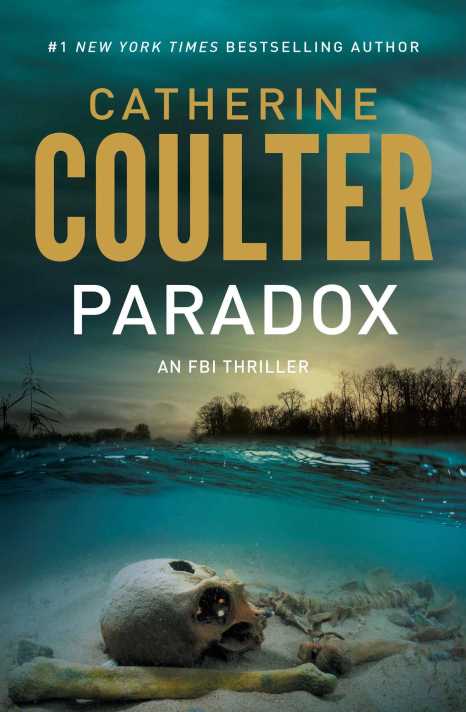
Paradox by Catherine Coulter

Paradox Cover.jpg

Publisher: Simon & Schuster

Publication Date – 31 July 2018

Amazon     Book Depository

Those looking for an intense and stimulating piece of crime fiction should look no further than the new book in the long-running FBI Thriller series, Paradox, which combines a clever murder mystery with a dark psychological thriller.

FBI Agents Sherlock and Savich wake up to their worst nightmare: an armed man in their son’s bedroom.  Only just managing to foil the potential kidnapping, Sherlock and Savich are confronted by the terrible fact that their son is being targeted by someone trying to get to them.  A few days later, in the small town of Willicott, Maryland, Police Chief Ty Christie witnesses a murder on the lake from the deck of her house.  Both of these crimes are connected to an escaped prisoner from a mental institution and a terrifying ghost from Sherlock and Savich’s past.  Things get more complicated when the lake is dredged for the victim’s body and a surprise discovery is made: the skeletal remains of several bodies that have been lying on the lake bed for years.  As the FBI is called in to investigate, Ty must face the disturbing reality that her home may have been used as the dumping ground for a serial killer.

Splitting their attentions between the two cases, Sherlock and Savich hunt for a deranged killer with a serious grudge against them, but are they prepared for just how crazy their quarry is?  At the same time, Ty and her new FBI partner, Sala Porto, start to investigate the recovered bodies.  A distinctive belt buckle may prove to be their best lead, but this discovery will have some unexpected consequences in another small town.  How are these cases connected, and what devastating secrets will be uncovered as a result?

Coulter is an extremely prolific author, having written a huge number of books since her 1981 debut.  Paradox is the 22nd book in Coulter’s long-running FBI Thriller series, which has been published annually since 1996, with only one gap in 2006.  The FBI Thriller series follows the investigation of a wide range of mysteries and crimes by members of the FBI, with many of the featured characters recurring through the various books.  At the same time, Coulter has co-written the A Brit in the FBI books with J. T. Ellison.  A Brit in the FBI is a sister series to the FBI Thriller franchise, which features several characters from the original series and already contains five books, including the 2018 release The Sixth Day.

Before this book, I had not read any of the other entries in the FBI Thriller series, and I was a little worried I might have trouble following the story of Paradox as a result.  However, I was pleasantly surprised about how easily it was for me to jump into the plot of this book and enjoy the intriguing mysteries planted within.  It is important to note that a significant part of the story does link back to the 13th entry in the series, Knockout.  Coulter does an amazing job summarising all the relevant detail of this previous book and ensuring that the readers of Paradox are well informed of the events that could have an impact on this current case.  This book also plays host to a huge range of characters employed by the FBI.  While I knew that the main two agents, Sherlock and Savich, have appeared multiple times before as the main protagonists, I was uncertain about how many times any of the other characters may have appeared in previous books in the series.  As a result, their inclusion and actions might not have had as much impact on me as they were supposed to, although I don’t think this takes too much away from the story.  As a result, while Paradox will be particularly appealing to those readers who have enjoyed the FBI Thriller books before, new readers can easily come into the series at this point and still enjoy this excellent murder mystery.

Paradox’s story is split between two separate investigations, both of which are very different in scope and content.  The focus of recurring protagonists, Sherlock and Savich, mainly involves the hunt for a deranged character from their past who is targeting several people he holds a grudge against.  In the other storyline, new characters Ty Christie and FBI Agent Sala Porto are investigating the bodies found within the lake, and find themselves on the hunt for a previously undiscovered serial killer.  Both cases are exceedingly interesting and offer different things to the reader.  The hunt for the fugitive who has committed recent crimes becomes a desperate game of cat and mouse between the investigators and the killer, and both sides have trouble predicting the actions of the other.  As a result, this storyline is faster paced and set in a bunch of different locations.  This storyline also relies on a darker psychological tone to stand out rather than dramatic twists, although there are a few noteworthy reveals for the reader to keep an eye out for.

The investigation into the bones on the bottom of the lake comes across as a more traditional murder mystery, as the characters associated with this case look at clues, follow evidence and interrogate a range of suspects.  This story has a more fixed setting, which mostly focuses on a small town located near the lake, although there are a few detours to other locations.  The examination of the connected and trusting nature of a small town is a great feature, as there are quite a few secrets and lies hidden within this friendly setting, as well as quite a few suspicious characters who show an interest in the case.  This storyline turns out to contain quite an intricate mystery that contains a huge range of twists and surprises that will keep readers on the edge of their seats.  The final reveals are quite dramatic and have significant impacts on several characters that are introduced.  This is an amazing piece of murder mystery fiction.

While these two storylines are ostensibly separate from each other, there is a bit of crossover between them.  The two teams of investigators are constantly in communication with each other, and there are several discussions about their respective cases.  In addition, one of the characters who is mainly investigating the bones in the lake, FBI agent Sala Porto, has a significant personal stake in finding the fugitive that Sherlock and Savich are hunting for, as one particular murder the antagonist commits haunts him throughout the book.  As a result, he and Ty also meet some people associated with the hunt for the fugitive, and also make a significant break in the case towards the end of the book that adds a whole new dimension to the story.  Both storylines are very well written and ensure that the readers get a variety of different elements to entertain and intrigue them.

An interesting feature of Paradox is the way that Coulter tells her story from a huge range of separate viewpoints, which helps create an interesting and unique tone for this book.  While a large part of the story is told from the point of view of Ty and the FBI agents Porto, Sherlock and Savich, other characters also tell a substantial part of the story.  The book’s main antagonist, the fugitive being pursued by Sherlock and Savich, probably has the next largest point-of-view scenes within the book.  These chapters are particularly dark, and the insight into his mind and psyche that result from these scenes are noticeably intense and chilling.  It is also fascinating to see the fugitive’s mindset as he tries to attack the people he hates, while at the same time avoid capture by the FBI.  Paradox also makes use of a range of other smaller side characters, especially in the storyline where Ty and Porto investigate the bones found in the lake.  These viewpoints are often brief, but are usually tied in to the relevant investigation and provide some interesting details about the suspects, as well as provide some background history to the case.  There is a lot of extra detail added to some of the periphery characters, as well as a significant amount of discussion especially the relationships and past that some of these minor characters had.  This focus on some of the supporting characters contributes a lot to the book’s unique tone, although at times it does feel unnecessary to go into such details.

One of the Paradox’s key highlights is the antagonist Coulter uses for the fugitive killer arc that Sherlock and Savich are investigating.  Without going into too much detail, as even mentioning the character’s name may spoil the story for long-term fans of the FBI Thriller series, this antagonist is a fantastic and memorable addition to the story.  The chapters focused on this antagonist are excellently written and turn Paradox into a partial psychological thriller, as it examines a rather unhinged character.  This character is definitely a stand-out part of this book, and represents a great return from a previous entry in the FBI Thriller series.

The latest book from bestselling author Catherine Coulter, Paradox, is an outstanding piece of modern crime fiction that presents two enthralling crime based storylines that compliment each other, working together to create a highly enjoyable and intriguing overall narrative.  Dark, clever and character driven, Paradox is an excellent addition to the long-running FBI Thriller series that will be equally appealing to both long-term fans of the franchise and causal readers looking for a new mystery fix.

My Rating:

Four stars

Amazon     Book Depository

Star Wars: Thrawn: Alliances by Timothy Zahn

Star Wars Thrawn Alliances Cover

Publisher: Century

Publication Date – 24 July 2018

Amazon

Two Star Wars fan favourite villains come together in the ultimate bad guy team-up in the latest novel from the extended universe icon, Timothy Zahn.  I reviewed the previous Star Wars release, Last Shot here: https://unseenlibrary.com/2018/05/30/star-wars-last-shot-by-daniel-jose-older/

It is the height of the Empire’s tyranny over the galaxy, but threats are always on the horizon.  When the Emperor senses a disturbance in the edge of imperial space, he despatches his two most capable servants.  One is his apprentice, the powerful dark lord of the Sith, Darth Vader, and the other is the master tactician, Grand Admiral Thrawn.  While both men are fiercely loyal to the Emperor, Vader and Thrawn are rivals for his favour and have differing views when it comes to command, combat, tactics and the future of the Empire, especially over the construction of the Death Star.

Vader and Thrawn travel to the planet of Batuu in the Unknown Regions, the vast, uncharted areas of space outside of the imperial galaxy.  As these two ambitious individuals attempt work together, they encounter a threat not only to the Empire but to Thrawn’s secret plans.  Can these two succeed in their mission, or will Vader’s distrust of Thrawn result in the Grand Admiral’s early death?

This is not the first time these two men have worked together.  Back during the Clone Wars, Jedi General Anakin Skywalker encountered Commander Mitth’raw’nuruodo of the Chiss Ascendancy.  Their chance encounter resulted in these two combining forces to uncover a Separatist plot that has resulted in the disappearance of Senator Amidala.  But as these soldiers, now known as Vader and Thrawn, grow to respect each other, their differing priorities may break their newfound alliance apart.  What connections do these two missions have to each other, and what will happen when their tragic past is brought into the present?

Grand Admiral Thrawn is one of the more interesting characters in the Star Wars universe.  Created by Zahn back in the 1991 story Heir to the Empire, Thrawn was the commander of the Imperial Remnant following their defeat in Return of the Jedi and was presented as the ultimate tactician and a major threat.  Appearing in several books, he quickly became a massive fan favourite character, and is easily one of the most popular creations in the entire Star Wars extended universe.  However, following the Disney buyout of the franchise, the books that introduced Thrawn to the Star Wars fandom are no longer considered canon.

But the Grand Admiral could not be denied and has since resurfaced in the new Disney official Star Wars universe in all his villainous glory.  First reappearing in the third season of TV’s Star Wars Rebels, voiced by Lars Mikkelsen, Thrawn serves as one of the series’ primary antagonists, masterminding plots that devastate the heroes.  In addition, a new series of books dedicated to the character of Thrawn were commissioned as part of the new extended universe, which sees the return of Timothy Zahn to the fold.  The first of these books, 2017’s Star Wars: Thrawn, saw Zahn recreate  Thrawn’s origins to fit into the new universe and detail the rise of the alien officer to the rank of Grand Admiral in the xenophobic Imperial Navy.

In addition to the two novels mentioned above, Zahn has created a huge number of books since his first release in 1983.  In the last 35 years, he has released over 50 books, most of which were science fiction novels, as well as a number of short stories, novellas and graphic novels.  Of these books, 12 are set within the Star Wars universe, with many of them representing significant entries in the now defunct extended universe.

Thrawn: Alliances is evenly split between two separate timelines, both set in different parts of the Star Wars canon.  The main story is set after the events of the third season of the Star Wars Rebels television show, which is set in the period between the Revenge of the Sith and A New Hope movies.  The repercussions of that dramatic season finale are certainly felt within this book.  The Alliances storyline set in the past focuses on a time period after the end of the Clone Wars television show, which is set between the Attack of the Clones and Revenge of the Sith movies.

Like in Zahn’s previous books, Thrawn once again shines as the best part of Alliances.  The cool, tactical way he approaches everything is a fantastic character trait, and I could almost hear Lars Mikkelsen’s voice every time Thrawn spoke in the book.  The author continues to portray Thrawn as an incredibly insightful being who is able to come to perceptive conclusions from the most mundane of items or actions.  These insights come into effect throughout the book as Thrawn comes up with some unique and effective tactics in his various encounters.  While Thrawn is an awesome character, Zahn has also included one of the greatest film villains of all time within his story.  Darth Vader is a great character throughout this book and has some destructive and memorable scenes.  Fans who enjoyed his devastating appearance in Rouge One will love to see him power through his opponents is this story.  There are also other excellent sequences where he shows off his renowned piloting skills, this time in a TIE Defender.  Readers will also see a great comparison between the styles of the two imperial commanders that really highlights the strengths and weaknesses of both characters.  Vader’s immense power and Thrawn’s tactical ability are on display as a result, but they also show off Vader’s barely contained rage and his limited ability to trust anyone.  Overall, this is a creative and thrilling use of two of these two amazing Star Wars characters.

For fans of science fiction action adventures, one of the most exciting elements of this book is the significant amount of space combat throughout the story.  Ship-on-ship battles in the darkness of space have always been some of the most impressive parts of the Star Wars screen instalments, and Zahn goes all out to showcase this in Alliances.  There are a huge range of these sequences, from smaller fighter-on-fighter combat, to demonstrations of the destructive power of a Star Destroyer, to even a large-scale space battle between multiple ships.  Zahn has spread the story across multiple characters, including imperial naval commanders and members of the stormtroopers, to really showcase these battle sequences, and this also allows him to present several boarding actions being led by the stormtroopers.  Seeing Thrawn in command of all of these engagements is also fantastic, as his well-documented tactical abilities come to the fore again.  These space engagements are a great part of the story and will prove to be exciting for the reader.

The use of the two split timelines is also an excellent way of telling this story and provides a number of noticeable benefits to the book.  There are a number of connections between the two separate storylines that come into effect throughout the book, and it’s always fun to view some hints about the past hidden in the storylines set in the present.  This split storyline is also an exceptional way to expand on the connection between Vader and Thrawn, two characters who, despite their respective service to the Empire, have never had much to do with each other before.  Having one storyline feature Vader and one storyline feature Anakin is also a smart way to show the differences between the two aspects of the one man.  Not only does Zahn examine how much Vader has changed since the Clone Wars but he also hints at the darkness already inside Anakin even back then.  This is further showcased by examining the relationship Thrawn has with both Anakin and Vader and how the character has gone from being a trusting individual to a creature more concerned about his ties to the Emperor.  That being said, Thrawn provides several taunting hints about knowing who Vader really is, and the reader is constantly wondering if the master tactician has actually worked out the biggest secret in the Star Wars universe.

Alliances also takes the reader to a more obscure part of the Star Wars universe: past the Outer Rim and into the Unknown Region.  There is less of a focus on the central story of Rebels versus the Empire which is heavily featured in the films and television series, and more on the exploration of an area never seen on screen.  This is an intriguing change of pace for this newer extended universe and opens up some interesting options for future books.

Legendary Star Wars author Timothy Zahn once again returns to what he knows best with another book focused on his most iconic and memorable character, Grand Admiral Thrawn.  Alliances sees Thrawn team up with Darth Vader in an electrifying and powerful adventure into the unfamiliar areas of the Star Wars universe.  This book is definitely geared towards the hardcore Star Wars fans, but it is also extremely accessible to the more causal science fiction reader, who will appreciate the inclusions of two sensational main characters, substantial action and combat, and a clever use of different perspectives and timelines.  This is another sensational read from Zahn, and I can’t wait to see where his greatest creation, Thrawn, next appears in the Star Wars universe.

My Rating:

Four stars

Amazon

Throwback Thursday: The Inheritance Cycle by Christopher Paolini

Inheritance Cycle.png

Publishers: Paolini LLC, Knopf Books, Random House AudioBooks

Publication dates:

Eragon – 2002                    Amazon     Book Depository

Eldest – 2005                     Amazon     Book Depository

Brisingr – 2008                  Amazon     Book Depository

Inheritance – 2011            Amazon     Book Depository

Reviewed as part of my Throwback Thursday series, where I republish old reviews, review books I have read before or review older books I have only just had a chance to read.

For my first edition of Unseen Library’s Throwback Thursday series, I have decided to review an important series from my youth, the Inheritance Cycle.  Loved by many, strongly criticised by others, the Inheritance Cycle is a highly inventive young adult fantasy series with an epic narrative of good versus evil

Released between 2002 and 2011, the Inheritance Cycle is the first series from author Christopher Paolini and contains four books.  Since its initial release, the first book in the series, Eragon, has been adapted into a movie starring Jeremy Irons, John Malkovich, Robert Carlyle, Djimon Hounsou and Rachel Weisz.  Despite its strong cast, the movie was a poor adaption of the source material and flopped both critically and financially.  As is often the case, however, the books are stronger than the film.

Eragon Cover.png

I received a copy of Eragon as a birthday gift a short time after its initial release in 2002 and powered through it in short order, as I was instantly hooked by the ambitious plot, massive amounts of lore, and the inventive fantasy elements.  Following Eragon I made sure to grab every other book in the Inheritance Cycle as soon as they came out and I considered it one of my favourite series.  Having re-listened to the entire Inheritance Cycle a few times on audiobook I still massively enjoy the series, although I have noticed a few flaws with the franchise.

The books are all set in the world of Alagaësia, a land filled with classic fantasy elements such as dragons, elves, dwarfs and magic, in addition to a few unique creatures and powers.  Many years before the start of the series, an order known as the Dragon Riders were formed to keep peace and harmony in Alagaësia.  The elven and human Riders were bound to their sentient dragons and formed a lifelong partnership with them, gaining powerful magical abilities as a result.  Following years of peace, the Dragon Riders were wiped out by a crazed former member of the order, Galbatorix, and his followers.  After destroying the Riders and driving the dragons to near extinction, Galbatorix conquered the human kingdoms of Alagaësia and forced the elves and dwarfs into hiding.

Eldest Cover.png

The first book in the series, Eragon, starts with the titular character, the young human Eragon, receiving one of the last surviving dragon eggs, which hatches forth the dragon Saphira.  Following an attack by Galbatorix’s servants, Eragon, Saphira and their mentor, Brom, are forced to flee their village of Carvahall and travel throughout Alagaësia before finally joining up with the rebel organisation, the Varden.  Along the way, Eragon and Saphira lose Brom, encounter the mysterious Murtagh, and rescue the elf Arya from Galbatorix’s captivity.

The following books in the series follow Eragon and Saphira as they lead the fight against Galbatorix while also learning about their powers and the history of the riders.  They encounter new mentors, find out terrible secrets about Eragon’s past, and eventually confront Galbatorix in a final battle.  At the same time, Eragon’s cousin Roran becomes a fugitive from the crown and must lead the entire village of Carvahall in an epic journey to the Varden.  There is also a focus on young political rebel Nasuada, who becomes leader of the Varden in the second book, and examines the trials and tribulations of leading a war against an all-powerful magic tyrant.

Brisingr Cover.png

The last two times that I enjoyed the books in the Inheritance Cycle, I chose to listen to them by audiobook, which are narrated by the outstanding Gerard Doyle.  Eragon is the shortest audiobook at 16 hours 27 minutes, while Inheritance, the finale, clocks in at 31 hours 28 minutes.  I am a huge fan of listening to books with large amounts of internal lore, history and background as it means I am less likely to miss an interesting fact or accidently skip over something with tired eyes.  As Paolini has created a massive amount of background lore and detail to accompany his story, I would heartily recommend listening to the Inheritance Cycle, as I felt that I absorbed so much more from the series as a result.  Doyle is an excellent narrator for this series, and at no point did I find his voice work either distracting or annoying.  His character voices are done very well, and he was able to produce excellent voices for both the male and female characters, as well as the various fantasy species.  I particularly enjoyed the Scottish accent that Doyle attributed to the character of Murtagh, as I felt it fit the character perfectly and made him very distinctive throughout the series.  Other features of the audiobook editions of this series that might appeal to potential listeners are the exclusive interviews with the author that were included at the end of two of the books.

Without a doubt, the best feature of this entire series is the sheer amount of imagination and lore that Paolini has invested in his book’s settings and history.  Each of the books in the Inheritance Cycle contains an incredible amount of background information, elaborate settings and a huge range of fantasy creatures, each with their own skills and history.  Paolini’s immense creativity is particularly evident in the series’ complex rules of magic that are a major feature of all the books.  The detailed explanation provided in Eragon is massively expanded upon in the later books in the series, and represents a significant part of the narrative.  It is also incredible to consider that Paolini created a completely new language for this magic.  With huge amounts of effort expended in creating complex lore, magic and history for all the races and peoples of Alagaësia, it is worth reading this entire series just to see all of these wonderful inclusions.

Inheritance Cover.png

There are some amazing story elements contained within the Inheritance Cycle books.  Paolini has created an epic fantasy adventure that draws the reader in and makes them care about the battle for Alagaësia.  This series has everything from impressive duels to large-scale battles that range from small groups of soldiers fighting to massive pitched battles and sieges.  There is also a significant amount of magic, politics, intrigue, romance, family and everything else that makes up a great fantasy story.  The main character, Eragon, is a classic hero coming into his great power storyline that fantasy fans will appreciate and enjoy.  However, I personally thought that the storylines that focused on Eragon’s cousin Roran were the best parts of the entire series, and business really picked up when he was made a point of view character in Eldest.  Roran is a much more grounded and likable character than Eragon, especially as he has to rely on his skill, cunning and luck to survive in a world where massive monsters and powerful magicians run rampart.

The first book, Eragon, is the only edition in the Inheritance Cycle that is told completely from the viewpoint of its titular character.  This book is a superb introduction to the series and spends significant time laying down the groundwork for the next three books.  Some great characters are introduced within this first novel, and there are a range of terrific battle scenes, the establishment of some fantastic relationships and some deep emotional moments.

The second book, Eldest, is another amazing part of this series.  Eragon spends a significant part of the book physically crippled following the final battle in Eragon, and Paolini’s descriptions of his despair and hopelessness are particularly vivid.  I am a real sucker for fantasy teaching sequences, so the scenes where Eragon learns magic, history and other subjects in the elven kingdom were really enjoyable for me.  However, the standout parts of this book focus on Eragon’s cousin Roran and the inhabitants of Carvahall.  Eragon’s actions in the first book results in Carvahall being targeted by Galbatorix and his forces, and Roran and the villages must first defend their home and then attempt to flee to the Varden.  Their exodus has some great scenes, including an extended voyage at sea, and is it fascinating to see how Eragon’s adventures impact the people he left behind.  Special mention should also be made of the scenes told from the viewpoint of Nasuada as she takes control of the Varden and leads its invasion of Galbatorix’s kingdom.  The final battle sequence of the book is another huge highlight, as the reader gets to see Eragon unleash his new powers in a massive battle scene.  The combination of the book’s three storylines into one conclusion is particularly enjoyable and epic, and there are some amazing battles and several important character revelations for the protagonist.

The third book, Brisingr, represents another fun addition to the series.  Eragon sets out on a journey of discovery during his arc.  Of particular note is the extremely intriguing look at dwarf politics and emotional reveals about Eragon’s heritage and family.  Roran’s arc is action-packed and exciting as it focuses on his role as a new member of Varden as he works his way up to becoming a high-ranking commander in the army.  The devastating conclusion to this book provides an emotional punch to the reader as one of the most likable characters meets their end.

Inheritance, the final book in the Inheritance Cycle, draws this story to its epic conclusion.  Readers who have enjoyed the first three entries in this series will have no choice but to see how this adventure ends.  Once again Roran’s arc shines through as the most enjoyable part of the entire book.  Not only does this arc focus on his own fantastic siege storyline, but it is through Roran’s eyes that we watch the massive battle for Galbatorix’s capital.  While Eragon and most of the other supporting characters are fighting Galbatorix, Roran is the only point of view character observing the fierce street-to-street combat happening in the city below.  Roran’s epic battles in this sequence more than make up for certain deficits with the main fight between the remaining Dragon Riders above.  That being said, Eragon, Arya and Angela’s earlier confrontation with a group of fanatical priests in tunnels below an ancient temple has a certain sinister edge to it that will appeal to some readers.  Offering a satisfying conclusion with a number of intriguing storylines left open for future books, this is a superb final chapter for the entire Inheritance Cycle.

While this series has a lot of great features and positive points in its favour, there are a few negative issues that need to be addressed.  When it was released, one of the main criticisms the Inheritance Cycle received was about its similarities to other works, and it’s honestly not hard to see some striking resemblances to the original Star Wars movies.  The Dragon Riders are extremely similar to Jedi, down to the unbreakable, colour-coded swords.  Obi-Wan Kenobi’s monologue from A New Hope about the destruction of the Jedi can pretty much be substituted for Brom’s description of the fall of the Riders.  The main character, Eragon, is essentially Luke Skywalker.  When we first encounter him he is living with a gruff uncle and suddenly receives a MacGuffin (in this case a dragon egg rather than a droid) that dramatically changes his life.  The arrival of the MacGuffin results in the death of his guardian and he flees the only home he knows with a mentor character.  The mentor character, Brom, the former Rider, has way too many similarities with Obi-Wan as he gives the protagonist his early, uncompleted training, provides him with his first weapon, and then dies about two-thirds through the first volume.  In the course of the first book Eragon also meets up with a rogue-like character, rescues a trapped female who he first sees from a distance (through magical scrying rather than a hologram) who later turns out to be a princess, and then flees to a rebel stronghold for an epic confrontation.  In later books Eragon meets a Yoda-like character in Oromis and finds he is related to the Darth Vader equivalent, Murtagh (after Murtagh obtains a red sword).  He eventually faces the Emperor-like villain, Galbatorix, at the very end of the series, and is forced to have a final duel with Murtagh in front of him.  Upon Galbatorix’s death and the utter destruction of his ultimate base, the heroes liberate the whole world from the control of the evil empire and Eragon sets out to teach a new generation of Riders.

These are only some of the more obvious similarities to Star Wars, and they are pretty glaring; however, this has never ruined the series for me.  Other criticisms about similarities to fantasy works such as Lord of the Rings, due to the inclusions of dwarfs and elves are a bit harder to credit, as these are hardly unique fantasy races anymore and Paolini does a fantastic job creating distinctive histories and traits for these races.

One thing that I really disliked about the series, however, is the terrible romantic arc between Eragon and the elf Arya.  Eragon pretty much falls in love with her the second he sees her, but Arya is strongly opposed to his romantic advances for various reasons.  Eragon’s unrelenting pursuit of her, especially in the second book, is very uncomfortable, and his depression and self-pitying attitude following her rejections are some of the worst parts of the series.  While their relationship in the third and fourth books becomes more natural and builds up as a result of mutual respect, I’m personally glad that Paolini doesn’t pull the trigger on their relationship at the end of the series.

I was also not a big fan of the extreme amount of self-doubt that Paolini injected into his protagonist, possibly to counterbalance the overpowered nature of Eragon.  Eragon spends way too long feeling sorry for himself, and the scenes where he deals with these feelings of inadequacy and doubt are some of the hardest to get through.  These character flaws, along with the Arya romance subplot, make it hard for the reader to like Eragon at times, and are part of the reason that I feel Roran is the better hero in the series.

While they did have some amazing parts, the third and fourth books in the series did seem to drag at times.  While I enjoyed Brisingr, when you view the whole series, I feel that Paolini could have probably gotten away with turning the series into a trilogy and simply incorporating some of the key story points into Inheritance instead.  The final conclusion of Inheritance is also a bit clichéd, especially when, out of nowhere, Eragon is able to use magic to make Galbatorix understand all the pain his actions have caused.  It’s a pretty weak way to end this epic confrontation, but luckily the reader isn’t too disappointed, especially with the epic Roran storyline down in the city ramping up the action in this part of the book.

Despite the above criticisms, I still rate all of the books in the Inheritance Cycle four stars out of five.  While this rating may be slightly bolstered by nostalgia, I do believe that this is an excellent series that will appeal to many fantasy fans, especially those younger readers who are only just starting to read the genre.  With an absolutely incredible amount of fantasy details, world history and established lore, I am still amazed by Paolini’s sheer imagination every time I go back to this series.  There are some electrifying storylines within all four of these books, as well as enough action, be it physical, mental or magical, to make any action junkie’s pulse run wild.  Readers looking for the next epic fantasy series to enjoy will find an incredible adventure awaits within the Inheritance Cycle.

My Rating (Series and Each Book):

Four stars

AWOL: Agent Without Licence by Andrew Lane

AWOL Agent Without Licence Cover.jpg

Publisher: Piccadilly Press

Publication date – 12 July 2018

Amazon     Book Depository

From a veteran author of young adult fiction comes this brilliant spy thriller that introduces a younger audience to the joys of modern espionage.

Kieron Mellor and his best friend, Sam, are typical teenagers living the ‘greeb’ lifestyle in Newcastle, England, with their biggest problem revolving around how to get tickets to the next rock show.  But when they witness a man being kidnapped in their local mall, they are thrust into the world of covert espionage and a plot to unleash untold destruction on the world.  Noticing that the kidnapped man has dropped a set of glasses and an earpiece, Kieron picks them up, only to discover that they are part of a high tech virtual reality kit that can provide the user with a database of information about anything they see.  They also connect Kieron to Bex, a secret agent on mission in Mumbai who is in desperate need of his help.

Bex’s handler, the man who was kidnapped, was using the technology currently in Kieron’s possession to remotely assist Bex with her mission.  Bex was observing a deal for information about nuclear weapons, but the disappearance of her handler resulted in her losing her target.  With no other options, Bex is forced to utilize Kieron and Sam’s help in order to complete her mission and stop an act of mass destruction.  However, the Newcastle teens have problems of their own; a fanatical right-wing extremist group and a mole inside Bex’s organisation are hunting them for the missing glasses, and they have no intention of leaving any witnesses alive.

Agent Without License is the first book in Lane’s AWOL series of young adult spy thrillers.  The second novel in this series, Last Safe Moment, is already set to be released later this year and will continue to follow the characters introduced in this first book.  Lane already has significant experience writing novels for a younger audience, with eight books in his bestselling Young Sherlock Holmes series, as well as his Lost Worlds and Crusoe Adventures books.  Other works from Lane include his science fiction based Netherspace series and several books set in the Dr Who extended universe.

The AWOL series is aimed towards a younger generation of reader and has been advertised for children in the 9-12 age range.  I felt that this book is an ideal read for that demographic, and it reminded me of some of the books that really caught my imagination when I was that age, including the Artemis Fowl and Alex Ryder novels.  While there is some violence and implied deaths within the storyline, it isn’t overly graphic and won’t traumatise the younger readers.  That being said, the overarching spy storyline isn’t dumbed down, and its intended audience will enjoy the realism and the references to events, ideologies and prejudices that currently affecting the real world.  There are also discussions about some mature themes, although nothing is too extreme or adult.  These small inclusions will be appreciated by the younger audience, as they will enjoy seeing some of these mature issues which they are likely already aware of included in their fiction.  Lane does make the obligatory attempts to tap into modern youth culture in order to appeal to his readers’ interests; fortunately, however, he does not go too overboard with his attempts like some authors do, and readers are not inundated with a flood of unnecessary pop culture references.  The author has also included multiple examples of the two teen heroes outsmarting older antagonists.  This is always a fun feature for the younger audience to enjoy, and these teen protagonists have some very inventive, and in some cases quite direct, solutions to the problems they encounter.  Overall, Agent Without License will prove to be an excellent read for the audience in its suggest age range.  Older readers will also have a blast with this book and enjoy the fantastic spy thriller elements.

For his AWOL series, Lane has leveraged his significant espionage experience to create intriguing novels with a sense of realism to their spy aspects.  In Agent Without License, the author lays down a foundation of tradecraft and spy techniques for the reader to enjoy as his protagonists attempt to save the world.  Lane explores the basics of spying in this book and provides information about current espionage agencies and how they impact on real world politics.  As a result, this is a fun and informative introduction to the spy thriller genre, and the younger readers will appreciate the exciting and mature content of this story.

One of the best parts of Agent Without Licence is the advanced technology that the protagonists use to help complete their mission.  This technology comes in the form of glasses and an ear piece, and is known as Augmented Reality Computer Capability (ARCC).  The ARCC is essentially Google Glass on steroids, and allows the operator to access information on anything they, or the person they are connected to, can see or interact with.  This is an awesome piece of fictional technology that sounds like an item espionage operatives could possibly already have access to.  Watching the young protagonist, Keiron, become acquainted with and learn to operate the glasses is an enjoyable part of the story which plays in well with the book’s espionage elements.  The information that Keiron obtains for himself and Bec is quiet interesting, and the ARCC technology provides them with threat analyses, escape routes, background history of the buildings they are going into, facial recognition and recording capabilities.  This is a seriously cool part of the book, and the technology’s presentation and use is a great element that will make the readers eager for glasses like these to appear on the market.

Agent Without License contains two separate but connected storylines and alternates between the two different point of view characters in each chapter.  One of the storylines focuses on Keiron in Newcastle, while the other follows Bex in India.  These storylines overlap throughout the chapters, and the characters are in constant communication with each other.  The different storylines are usually occurring at the same time, although Lane does occasionally move one storyline slightly ahead or behind to create some dramatic thrills.  Some of the most intriguing scenes feature Kerion communicating information through the ARCC glasses to Bex.  There is a fantastic interrogation sequence in which Bex uses the ARCC technology to stay in communication with Kerion as he provides her with the tools to crack her target and get the answers she is looking for.  This breakup in storylines also helps highlight the differences in espionage ability between the trained operative, Bex, and the amateur but highly skilled teenagers, Kerion and Sam.

Andrew Lane has produced a wonderful and highly enjoyable novel that is a fresh and exciting take on the teenage spy book and an excellent gateway into the world of spy thrillers.  Agent Without Licence is an ideal read for its intended younger demographic, while at the same time containing a range of mature story elements that will appeal to all ages.  This is a fantastic first instalment in a great new series that is highly recommended for young readers looking for a great adventure story.

My Rating:

Four stars

Amazon     Book Depository