Tiamat’s Wrath by James S. A. Corey

Tiamat's Wrath Cover

Publisher: Recorded Books (Audiobook – 26 May 2019)

Series: The Expanse – Book Eight

Length: 19 hours and 8 minutes

My Rating: 5 out of 5 stars

Amazon     Book Depository

With 2019 coming to an end, it is about time I got around to writing a review for one of the best science fiction books of the year, Tiamat’s Wrath by James S. A. Corey, the eighth book in the extremely popular The Expanse series. James S. A. Corey is the collaborative name of co-authors Daniel Abraham and Ty Franck, but for the purposes of this review it is simpler to treat Corey as an individual.

Tiamat’s Wrath is an outstanding piece of science fiction that I had an amazing time listening to earlier in the year. Despite being extremely keen for this book, I did not get around to reading it until a month or two after it came out, but when I did get a chance to listen to Tiamat’s Wrath, I absolutely loved it and it was one of my favourite books from earlier in the year. However, I completely failed to write a review immediately after finishing it, and it kind of got lost in the pile of books I needed to review as I read more and more stuff.

The Expanse books, which started in 2011 with Leviathan Wakes, are an extremely complex and outstandingly well-written science fiction series, which have also been turned into a very popular television show of the same name. It is important to note that while all the books in The Expanse are connected by the same universe, overarching plot and central characters, the story can be broken up into three separate trilogies of novels. After the success of the first eight books, the authors are starting to wrap up the series, with the upcoming ninth book (hopefully coming out sometime in 2020), being the last in the series. Not only is Tiamat’s Wrath the penultimate book in the series; it is also the second book in the last trilogy of the series, which started with 2017’s Persepolis Rising.

Tiamat’s Wrath is set a short time after the events of Persepolis Rising, when the Laconian Empire, under the command of High Consul Winston Duarte, successfully utilised advanced alien technology to take control of the entire gate network and destroy the navies of Earth and Mars. The Laconians now rule the entire galaxy, and the crew of the Rocinante (the central protagonists of The Expanse series), are wanted criminals as they fight a guerrilla war. This was another incredible addition to The Expanse series that not only contains a vast and captivating story in its own right but which sets up a fascinating scenario for the final book in the franchise.

Goodread’s Synopsis:

Thirteen hundred gates have opened to solar systems around the galaxy. But as humanity builds its interstellar empire in the alien ruins, the mysteries and threats grow deeper.

In the dead systems where gates lead to stranger things than alien planets, Elvi Okoye begins a desperate search to discover the nature of a genocide that happened before the first human beings existed, and to find weapons to fight a war against forces at the edge of the imaginable. But the price of that knowledge may be higher than she can pay.

At the heart of the empire, Teresa Duarte prepares to take on the burden of her father’s godlike ambition. The sociopathic scientist Paolo Cortázar and the Mephistophelian prisoner James Holden are only two of the dangers in a palace thick with intrigue, but Teresa has a mind of her own and secrets even her father the emperor doesn’t guess.

And throughout the wide human empire, the scattered crew of the Rocinante fights a brave rear-guard action against Duarte’s authoritarian regime. Memory of the old order falls away, and a future under Laconia’s eternal rule — and with it, a battle that humanity can only lose – seems more and more certain. Because against the terrors that lie between worlds, courage and ambition will not be enough…

For the plot of Tiamat’s Wrath, Corey tells the story from the perspective of several separate point-of-view characters, each of whom has a number of chapters throughout the book. This was a very interesting combination of character perspectives that helped explore various aspects of the galaxy following the rise to power of the Laconians. Three of the main point-of-view characters are former Rocinante crew members Naomi Nagata, Bobbie Draper and Alex Kamal, each of whom is involved in the war against the powerful Laconian Empire. Another point-of-view character is returning character Elvi Okoye, who, despite her loyalties to her friends upon the Rocinante, finds herself employed by High Consul Duarte as one of his primary scientists exploring the alien technology, and later finds herself drawn into the Laconian inner circle. The fifth main character is new protagonist Teresa Duarte, daughter of the High Consul, who provides insight into growing up in the Laconian Empire and the political intrigue of the capital. In addition to the five characters mentioned above, the book’s prologue, epilogue and interludes are narrated by former Rocinante captain James Holden, who is being held prisoner on Laconia and who is attempting to manipulate the system from within.

I really enjoyed the author’s use of these multiple viewpoints, especially as it allowed them to tell a complex and widespread story set across several different solar systems. Each of these various viewpoints provides the reader with different information and insight into the both the Laconian Empire and the unknown alien threat that has sprung up. While Elvi and Teresa’s story arcs are pretty fascinating and I quite enjoyed the combination of politics and alien science that filled their chapters, my favourite parts of the book are the chapters told from the perspectives of Naomi, Bobbie and Alex. This is mainly because these chapters focused on their fight against the Laconian Empire, and I really enjoyed the detailed and captivating accounts of a large-scale guerrilla conflict in a massive space location. Each of these three characters shows off a different aspect of this fight, including Naomi acting as the resistance’s master strategist while living in a supply crate, Bobbie’s work as a marine and drill sergeant on the frontline and Alex’s job piloting various combat craft into battle. Thanks to these three characters, you get an amazing idea of how this war is being fought, and the various issues involved with facing a seemingly invincible opponent. I also liked how all the various character arcs came together extremely well as the book progressed, creating a first-rate narrative that proved to be extremely addictive.

I am a man who loves his science fiction action, and I have to say that I had an absolute blast with the action sequences in this book. Corey has absolutely packed this book full of various battle sequences in space, as the protagonists go up against the various Laconian forces in both smaller skirmishes and one massive full-system assault. Not only are the battles pretty spectacular in their own right, but I love how realistic the author has tried to make them, with things like gravity, the lack of sound in space and communication delays across vast distances all taken into account. All this consideration really makes the combat in Tiamat’s Wrath stand out, and it added a lot to my overall enjoyment on this novel.

While this is an excellent piece of science fiction and an amazing read, due to its position as the eighth book in the series, and the middle book in the final trilogy, Tiamat’s Wrath is probably not the best book to start exploring The Expanse with. While Corey does a pretty good job of making this book accessible to new readers, I would strongly suggest that readers at least check out the previous book in the series, Persepolis Rising, first, as it will help readers understand more of the complex science fiction and story elements. There is no doubt in my mind that existing fans of The Expanse will love this fantastic book, especially as it takes the story in some interesting directions and sets up the series for a pretty epic conclusion. That being said, some of the developments that occur during the book are going to make dedicated The Expanse readers very sad, especially if they have grown attached to certain characters.

I ended up listening to the audiobook format of Tiamat’s Wrath, narrated by Jefferson Mays. This is a pretty substantial audiobook, running for just over 19 hours (indeed it would have just made the top 20 on my Longest Audiobook list), but I ended up getting through it rather quickly as I had a hard time turning it off. I found the audiobook to be a fantastic way to enjoy this book, and I think I absorbed a lot more of the detailed science fiction plot by listening to it. Mays has a great voice for narration, and I really enjoyed his take on the various characters in the book. All in all, listening to the audiobook version of Tiamat’s Wrath was a great experience, and I will probably end up doing the same for the final The Expanse book when it come out.

Tiamat’s Wrath is an exceptionally powerful novel that is easily one of the best books I have read so far this year. The Expanse’s authors have absolutely outdone themselves with this eighth book, which tells a complex and intriguing science fiction story. Featuring a first-rate story, a great group of core characters, some impressive action and the author’s typical attention to scientific detail, Tiamat’s Wrath comes highly recommended, and I am still kicking myself for taking so long to review this.
Amazon     Book Depository

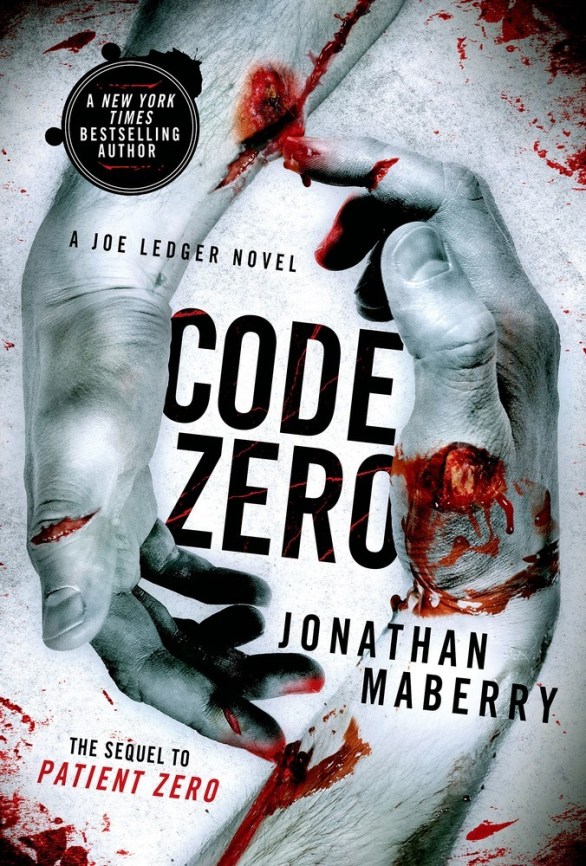
Throwback Thursday – Code Zero by Jonathan Maberry

Code Zero Cover.jpg

Publisher: Macmillan Audio (Audiobook – 25 March 2014)

Series: Joe Ledger series – Book Six

Length: 16 hours and 6 minutes

My Rating: 5 out of 5 stars

Amazon     Book Depository

Reviewed as part of my Throwback Thursday series, where I republish old reviews, review books I have read before or review older books I have only just had a chance to read.

The ghosts of the past come back to haunt Joe Ledger and the DMS big time in this sixth book in Jonathan Maberry’s high-octane science fiction/military thriller Joe Ledger series.

For years, the Department of Military Sciences (DMS) has saved the world from some of the most deadly and insane weapons that science can create: race-specific bioweapons, genetically enhanced super soldiers, powerful plagues capable of killing people in the most horrendous way and even a pathogen that is capable of bringing its victims back to life as zombies. Each of these has been stopped by DMS agents and the legendary Joe Ledger, but these horrors are about to resurface in the most devastating of ways.

The mysterious hacker and terrorist Mother Night has been causing the DMS trouble for months, but when she broadcasts a call for anarchy, no-one is prepared for what happens next. Across America, Mother Night’s followers unleash hundreds of random acts of violence, causing horrendous amounts of terror and destruction. As Joe Ledger and the DMS attempt to counter them, a subway car full of people in New York is infected with something disturbingly familiar, the Seif-al-Din zombie pathogen that bought Ledger to the DMS in the first place.

As Ledger and Echo Team are once again forced to contend with the zombie victims of the pathogen, they find themselves targeted from several devastating angles. As the threats become more and more personal, it soon becomes apparent that they are facing someone who knows the DMS intimately and who is willing to use the most lethal tools at their disposal to win. Can Ledger and the DMS survive, or will the world burn at the hands of Mother Night?

Jonathan Maberry’s Joe Ledger books are one of my favourite series at the moment, and I love each book’s excellent blend of compelling storytelling, complex characters, over-the-top villains, electrifying action and insane plot points, which come together into fantastic, first-rate narratives. Ever since I read and got hooked on the tenth book in this series, Deep Silence, about this time last year, I have been periodically reading and reviewing the earlier novels in sequence. So far, I have read the first six novels, Patient Zero, The Dragon Factory, The King of Plagues, Assassin’s Code, The Extinction Machine and this novel, Code Zero. I am actually reviewing this book a little out of order, as I recently powered through both The Extinction Machine and Code Zero while I was away on holidays. As Code Zero is fresher in my mind, I decided to review it first, and I will hopefully get a review for The Extinction Machine up soon as well (the plan is to get it done before the next Joe Ledger book, Rage, comes out in November, but we’ll see how we go).

Considering how much I absolutely loved the rest of the books in the series, it is going to come as no surprise to anyone that I also really enjoyed Code Zero. This sixth book was pretty spectacular, and it is easily one of my favourite books in the entire series, only just being beaten out by The Dragon Factory. In Code Zero, Maberry has made sure to utilise several of the excellent features from the previous Joe Ledger books that l really love and have commented on previously, such as a first-rate story filled with intense action, a smartassed and damaged protagonist, a great group of side characters (including one of the best dogs in all of fiction) and a clever utilisation of flashbacks and multiple perspectives. This book also features some other great story and character elements that really make it stand out from the rest of the series, and which help make it such an outstanding and epic read.

I have mentioned before that one of the best things about the Joe Ledger books is the awesome antagonists that Maberry creates for each of the novels. These have so far included genetically modified Nazis, world-event manipulating masterminds and even a group of vampires. However, the villain of Code Zero, Mother Night, is perhaps one of the most interesting and complex antagonists that Maberry has come up with. Mother Night is an outstanding character who not only has a close connection with the DMS, but whose elaborate master plan does a great deal of damage. I really liked how Maberry used a series of flashback filled interludes to explore the background of this character. These flashbacks show how Mother Night is connected to all the DMS characters and examine how her exposure to various characters and threats from the previous books slowly corrupted her, and why she was compelled to become a terrorist. Despite this being the first book that Mother Night has appeared in, Maberry did a sensational job tying the character into many of the key events from the first three novels, and showing how she was actually involved with some of the previous threats. All of these cool connections really help up the personal stakes for all of the protagonists, and it allows Mother Night to actually hit Joe Ledger and his team harder than anyone else has before, resulting in an extra dramatic and compelling story.

Maberry also uses Mother Night’s plot to examine some rather interesting elements of the modern world. For example, the anarchist movement is explored in some detail, as Mother Night uses anarchist elements in her call to arms, gathering up members of America’s disenfranchised youth to form an army. There is also a rather intriguing look at the role video games can play in violence or espionage. This is not done in an attempt to demonise video games; instead Maberry, through several of the videogame savvy characters, explores how important problem-solving is for gamers, and how the skills obtained there can have real-world applications in both the espionage and defence worlds. The subsequent study of game theory and the desire to win that some gamers feel is particularly fascinating, and it adds very some interesting layers to the story and Mother Night’s overall character.

In addition to this incredible antagonist, the other thing that I absolutely loved about Code Zero is the fact that Maberry decided to bring back some of the iconic threats and story elements from the previous books in the series. Not only did the author do an outstanding job of working these pre-existing story elements into Code Zero’s plot, but their reappearance was also an excellent homage to the earlier books and a real treat for fans of the series. I really enjoyed seeing Ledger have to go up against threats like the walkers and the berserkers again, especially as each of these threats have pretty strong emotional triggers for him due to devastating previous missions. It was also really interesting to see the new and various ways that the antagonist utilised these existing elements in her own plans, and there were some really fun combinations of the insane scientific elements, such as a couple of berserkers who have been infected with Generation 12 of the Seif-al-Din Pathogen, and it’s as awesome as you’d expect.

As this is a Joe Ledger book, Code Zero is of course filled to the brim with all the action and fire fights that you could ever need. Due to the presence of so many varied threats, including some of the monsters from the previous books, Code Zero probably has some of the most intriguing fight scenes in the entire series. This book is filled with a number of elaborate battle sequences in which the protagonists face off against a variety of different opponents at the same time. These opponents can include walkers, berserkers and gunmen disguised as zombies hiding amidst the walking dead, which is just so many layers of awesome. Maberry has an exceptional talent for writing fight sequences, and all this amazing action really helps to get the adrenaline pumping. I also have to commend all of the first-rate zombie scenes in the book, as the author crafts some truly horrifying scenes that showcase how terrifying and emotional damaging it would be to face off against these undead monsters.

As with all the previous books in the Joe Ledger series, I chose to listen to the audiobook format of Code Zero which was narrated by Ray Porter. Clocking in at just over 16 hours, I managed to get through this audiobook fairly quickly, mainly because I started listening to it while on an international flight. I think it is pretty clear at this point that I really enjoy listening to the audiobook versions of the Joe Ledger books, mainly due to the narration of the outstanding Ray Porter. I have sung Porter’s praises in all of my previous reviews, and I really cannot express what a good job he does bring the series titular protagonist to live with his voice work. Code Zero was no exception, and I would strongly recommend the audiobook format to anyone even vaguely interested in this book.

Code Zero by Jonathan Maberry is another spectacular book in the Joe Ledger series, and one that I absolutely loved. Maberry continues to utilise some of the amazing story elements that made his previous six books so darn enjoyable, and he ups the ante with another exceptional antagonist and the clever reuse of memorable story elements from previous books in the series. All of this results in another science fiction/thriller masterpiece that gets an easy five out five stars from me, and it is possibly one of the most enjoyable books I have read so far this year.

Amazon     Book Depository

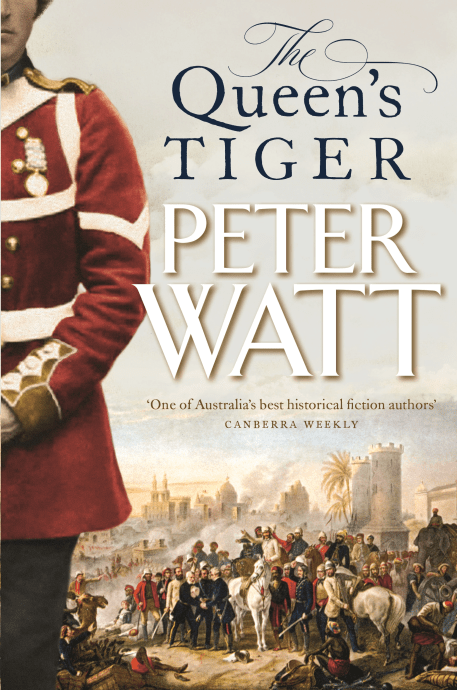
The Queen’s Tiger by Peter Watt

The Queen's Tiger Cover

Publisher: Macmillan (Trade Paperback – 12 November 2019)

Series: The Colonial series – Book 2

Length: 360 pages

My Rating: 4.5 out of 5 stars

Amazon     Book Depository

One of Australia’s best historical fiction writers, Peter Watt, returns with another exciting historical adventure in The Queen’s Tiger, the outstanding sequel to his 2018 release, The Queen’s Colonial.

Following on from the events of The Queen’s Colonial, in 1857, former Australian settler Ian Steele is still living under the guise of Samuel Forbes, a rich English noble who Ian bears an uncanny resemblance to. Ian switched places with Samuel in order to help him meet the required military service he needs to receive a vast inheritance. Serving as a captain in Queen Victoria’s army, Ian has proven himself to be a natural soldier, fighting against the odds dozens of times over against the most vicious enemies of the crown. However, despite the formidable enemies he has faced on the battlefield, Ian has encountered greater dangers far closer to home, as Samuel’s father and his murderous brother Charles are determined that Samuel will never receive his inheritance.

As Ian and his men, including his old friends Sergeant Conan Curry and Corporal Owen Williams, return from fighting the Persian army in Iran, a dangerous threat to the empire is brewing in India. Indian troops under the employ of the British East India Company have begun to mutiny, and the country, caught up in a swell of anti-British nationalism, is beginning to violently rebel against British rule. Among those caught up in the chaos are Samuel’s sister Alice and her husband the surgeon Peter Campbell, whose honeymoon turns into a brutal fight for survival.

Redeployed to India, Ian is once again leading the charge in some of the campaign’s most deadly battles against a determined foe. However, the biggest threat to his survival is happening half a world away back in England, as the real Samuel Forbes returns to London for a personal meeting under the name Ian Steele. When Samuel is spotted and his true identity is suspected, he finds himself hunted throughout England by Charles’s agents, determined to prove that Ian is an imposter. Can Ian and Samuel continue their ruse amidst the tragedy, tribulations and conflicts they encounter, or will the evil forces arrayed against them finally bring them down?

This was another fantastic book from Peter Watt, who has a true knack for producing compelling historical adventures filled with action, intrigue and family drama. The Queen’s Tiger is the second book in Watt’s Colonial series, which follows its protagonists through some of the most dangerous conflicts that the British army found itself involved with during the 19th century. I have to admit that I have been quite keen to check this book out for a little while, and not just because it quotes one of my Canberra Weekly reviews on the cover. The first book in this series, The Queen’s Colonial was an excellent read, and it did a good job following up Watt’s long-running Frontier series of which I was a big fan (make sure to check out my Canberra Weekly reviews for the last two books in this series, While the Moon Burns and From the Stars Above).

The Queen’s Tiger continues the intriguing story from the first book, which saw a simple Australian blacksmith pretend to be an English gentleman in order to serve as an officer in the Queen’s army. This was a compelling start the series, and I am glad that Watt has continued to follow through the fun blend of military action, intrigue and character interactions that have been a signature writing trend of his for some time. The Queen’s Tiger contains a wide-ranging story that covers several characters across a number of continents. This allows the author to showcase a number of different and enjoyable storylines within one book, and as such we can have one section of a book that focuses on the military action and adventure being undertaken by several of the characters in India, and the next section than looks at the sinister plotting of the book’s antagonists, or the desperate attempts of the real Samuel to keep his identity secret in England. In addition to their ongoing adventures, the author also explores the various relationships and romances that the various characters have, painting a rich tapestry of these point-of-view characters’ lives. This is a wonderful combination of storylines, all of which comes together into an excellent and highly enjoyable read.

Just like he did with the Crimean War in The Queen’s Colonial, Watt does a fantastic job bringing an intriguing historical conflict to life in this book, with his focus and examination of the Indian Mutiny of 1857. The book actually follows the entire duration of the Indian Mutiny and showcases most of the key moments of the rebellion that turned into full-scale war for independence. As a result of the way that Watt positioned his characters from the first book, the reader gets to see two separate parts of the mutiny. Alice and Peter’s storyline, which also features the new major character of Scott Campbell, focuses on how the English people who were living in India when the mutiny started would have perceived what was going on, and the desperate battle that the English forces garrisoned in India faced against a mass rebellion of their Indian soldiers. Ian’s storyline, on the other hand, shows the battles that the English relief force faced as they tried to retake the country and rescue the English citizens trapped within. This was an extremely fascinating historical event, and I think that Watt’s portrayal of this conflict was extremely intriguing and compelling. Based on the comments in the historical notes section of this book, it looks like Watt is planning to take his characters through a number of England’s various 19th century military campaigns in the following books, and I look forward to seeing where they end up next.

Needless to say, a book that has such a strong focus on soldiers and the Indian Mutiny is going to be very heavy on the action, as the protagonists fight in several battles across Indian and Iran. There are a significant number of fast-paced sequences throughout this book, from the various battles and skirmishes that occur during the mutiny, to thrilling chase scenes in the backstreets of London. Watt’s grasp of 19th century military combat is quite impressive, and there is a very realistic feel to the huge number of fight sequences that occur throughout the book, as he focuses on the tactics and weaponry of the British infantry man. As a result, there is rarely a dull or quiet moment in this book, and action fans will really appreciate the cool fights occurring throughout the book.

Peter Watt has once again delivered an electrifying and enthralling piece of historical fiction with The Queen’s Tiger. Featuring some amazing depictions of a deadly part of history, as well as a bunch of great characters whose various adventures, deceptions and relationships are particularly intriguing, this is a fantastic piece of Australian fiction that is really worth checking out.

Amazon     Book Depository

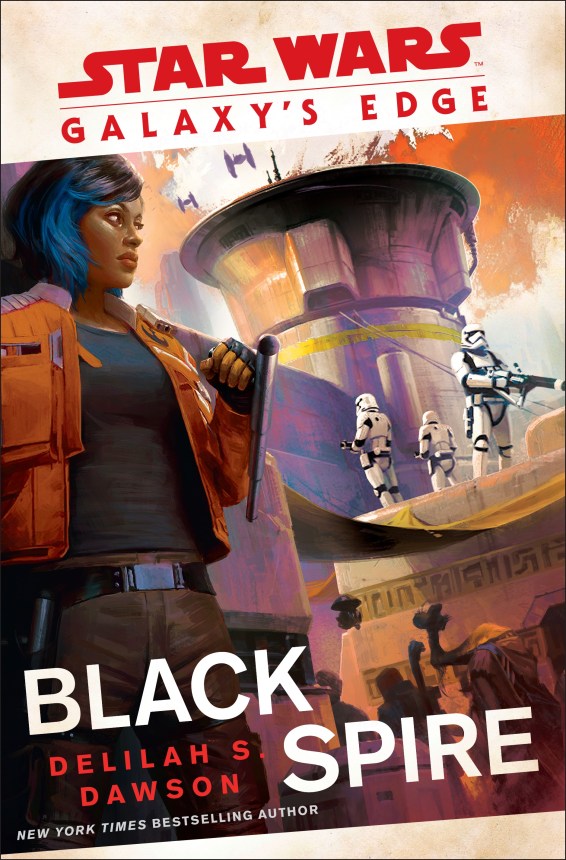
Star Wars: Galaxy’s Edge – Black Spire by Delilah S. Dawson

Galaxy's Edge - Black Spire Cover

Publisher: Century (Trade Paperback – 3 September 2019)

Series: Star Wars

Length: 378 pages

My Rating: 4.25 out of 5 stars

Amazon     Book Depository

Man, it has been a good year for Star Wars tie-in fiction. So far in 2019 there have been a huge number of awesome books that cover some diverse periods of Star Wars history, from an intriguing look at a younger Qui-Gon Jinn and Obi-Wan Kenobi in Master & Apprentice by Claudia Gray to the electrifying third book in Timothy Zahn’s new Thrawn series, Treason. As the year draws to a close, the focus of the Star Wars extended universe starts to turn to the release of Star Wars: The Rise of Skywalker. As a result, the rest of the books coming out this year will set the scene of the Star Wars universe before the events of this upcoming film. This includes the focus of this review, Black Spire by Delilah S. Dawson.

Black Spire is an interesting addition to this later year complement of Star Wars novels, and it is one that I have been looking forward to for a while. Dawson previously contributed to the Star Wars extended universe with 2017’s Phasma, and Black Spire is also part of the Galaxy’s Edge mini-series, which is connected with the Disneyland theme park area of the same name. As such, there are some intriguing elements to the book that make it worth checking out.

Following the events of The Last Jedi, the Resistance has been decimated, and only a few survivors remain. However, those survivors are still as determined as ever to fight the tyranny of the First Order, and need to find new recruits, allies and resources to continue this war. To that end, General Leia Organa has tasked her best spy, Vi Moradi, to find an isolated planet and set up a base to serve as a much-needed bolt hole for other surviving members of the Resistance. Still recovering from the trauma of her last adventure, Vi decides that the best location for this base is on the isolated planet of Batuu, which serves as the final stop between the known galaxy and the mysterious and unexplored expanses of Wild Space.

Heading out for Batuu with a ship full of supplies, materials for a base and a rather snarky droid, Vi is joined by Archex, a former captain in the First Order turned ally who is now seeking redemption. However, their mission begins poorly when they are forced to crash land on the planet and scavengers steal all their supplies. With no help coming from the rest of the Resistance, Vi is forced to make other arrangements to secure her objectives. Finding work in the Black Spire Outpost, Vi will have to make deals with local gangsters and barter with various businesses if she is wants to build up her base of operations and attract new recruits.

However, most of Batuu’s populace want nothing to do with the Resistance and are content to live their lives on the outskirts of the current conflict. But when a force of First Order stormtroopers arrive on Batuu led by a fanatical officer determined to hunt down Vi, they begin to understand the true power and terror of the group beginning to dominate the galaxy. As Vi’s small group of Resistance recruits band together to fight back against the superior force arrayed against them, will they be able to save Batuu, or will another planet fall to the destructive tyranny of the First Order?

The first thing that needs to be addressed is that Black Spire is tied into the newest themed area at Disneyland in California, Galaxy’s Edge. I have to admit, when I first heard that this book was going to be strongly associated with a theme park attraction, the rather blatant commercialism was a little off-putting, so I can totally understand why some people may be reluctant to check it out. However, those readers who give it a chance will be in a for a treat, as Black Spire is an exciting and at times emotional book that proved to be quite enjoyable.

I really liked the storylines contained within this book, as the whole concept of two opposing factions trying to win over a town for their own ends was one that I found to be pretty cool. Watching Vi and her allies attempt to gain resources and followers in the Black Spire Outpost was very entertaining, especially as the author comes up with several compelling Resistance recruits to help Vi in their fight against the First Order. The backstories of each of these followers, who include a young farm boy from an isolated anti-tech society, a flamboyant smuggler and a small alien mechanic, are explored in some detail, and each of them gets their own captivating character arcs. The author also spends some time showing the perspective of Black Spire’s sadistic villain, which makes for a great alternate viewpoint and intriguing change of pace at times. In addition to the fun characters, there is also a ton of action and adventure, as the two opposing sides face off against each other, the locals of Batuu and dangers of the surrounding wilderness. Overall, this was a really fun read, and it is worth checking out.

As I mentioned above, Black Spire is set in the immediate aftermath of The Last Jedi and helps showcase the universe and the Resistance’s struggle between this movie and The Rise of Skywalker. This book is also a sequel to Dawson’s previous book, Phasma, as Vi was the Resistance spy who was narrating Phasma’s life story, while Archex is a reborn version of one of Phasma’s antagonists, Captain Cardinal. While readers do not need to have read Phasma to enjoy this book, those who have will appreciate the continuation of several of the stories and character arcs that were started in the first book. Archex’s character arc, for example, is particularly fascinating, as he is a former First Order commander who has been deprogrammed from the organisation’s brainwashing and propaganda. His perspectives on First Order tactics and methods are really cool and help showcase the First Order as a truly evil and ruthless group. The guilt and regret that Archex experiences, combined with Vi’s mental trauma and PTSD from the events of Phasma, make for a compelling emotional heart to the whole book, especially as the author explores the extent of their new working relationship.

I think it is also important to mention that this book has some cool connections to the Galaxy’s Edge theme park area. In a mostly unplanned coincidence, I was actually halfway through Black Spire while visiting Disneyland and the Galaxy’s Edge area just over a week ago. As a result, while I was walking around through Galaxy’s Edge and enjoying the cool atmosphere, I noticed that a number of the characters and locations featured in Black Spire were inspired by the shops within the park area. In addition, some of the performances from the Disneyland cast revolved around the First Order hunting a Resistance spy hiding in the Black Spire Outpost, which is a cool reference to the events of the book. Indeed, one of the performances I saw actually kind of spoiled an event that occurred at the end of this book, although it is a rather minor reveal. I personally found that reading this book around the same time as I visited the theme park not only helped enhance my experience of Galaxy’s Edge, but it also made me appreciate a number of the elements of Black Spire at the same time. As a result, I would strongly recommend this book to anyone who is visiting Galaxy’s Edge at Disneyland, and it is truly interesting to see how the setting of the book is brought to life.

Black Spire by Delilah S. Dawson is another excellent addition to the Star Wars expanded universe with some neat storylines and compelling characters. While its strong connections to the newest themed area of Disneyland may not be for everyone, I felt that there were a lot of cool features in this book that make it really worth checking out. I am excited to see what Star Wars stories Dawson tells in the future, as Black Spire turned out to be an incredibly enjoyable read.

Amazon     Book Depository

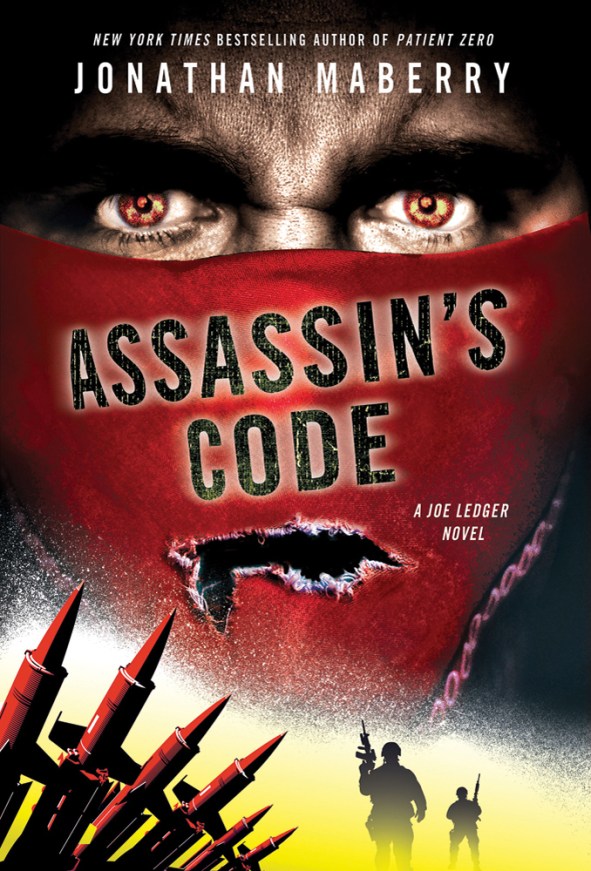
Throwback Thursday – Assassin’s Code by Jonathan Maberry

Assassin's Code Cover

Publisher: Macmillan Audio (Audiobook – 10 April 2012)

Series: Joe Ledger series – Book 4

Length: 15 hours and 35 minutes

My Rating: 5 out of 5 stars

Amazon     Book Depository

Reviewed as part of my Throwback Thursday series, where I republish old reviews, review books I have read before or review older books I have only just had a chance to read.

For this week’s Throwback Thursday, get ready for the fourth high-stakes, action-packed instalment of Jonathan Maberry’s excellent Joe Ledger series, Assassin’s Code, which sets the titular character up against a fantastic new set of antagonists.

Joe Ledger, top field agent for the elite Department of Military Sciences (DMS), is about to have a very unusual day. On assignment in Iran, Ledger and Echo Team have been tasked with rescuing American college kids held hostage by the Iranians. After successfully rescuing the hostages, Ledger is forced at gunpoint into a meeting with a high-ranking Iranian security officer. However, instead of being arrested, Ledger is given information about an impending terrorist attack that could shake the very foundations of the world.

An unknown player apparently has several nuclear weapons in play and is planning to unleash them against a number of targets around the world. As Ledger relays this information to his superiors, he is attacked by a mysterious assailant who is faster, stronger and more deadly than anything he has faced before. Barely escaping from his attacker, Ledger finds himself being pursued through the streets of Tehran by the Red Order, an ancient group of killers whose operatives appear to intimidate even Ledger’s boss, the legendary Mr Church.

As Ledger attempts to come to terms with what exactly is hunting him, he finds himself in the crosshairs of several other secret organisations, each of which has their own agendas. As Ledger gets closer to the truth, he discovers that events are being manipulated by an old enemy. An ancient conspiracy has been revealed and the fate of the world hangs in the balance. Can Ledger defeat the monsters unleashed against him or will a new world order arise?

Assassin’s Code in the fourth book in Maberry’s Joe Ledger series, which sees an elite special forces agency go up against the worst horrors that modern science and science fiction can unleash. I have already read and reviewed several books in this series so far, including the previous three novels, Patient Zero, The Dragon Factory and The King of Plagues, as well as the 10th and latest book in the series, Deep Silence. Each of these books has proven to be fantastic dark science fiction thrillers that I have had an amazing time reading, and all four of them have received a full five-star rating from me. Assassin’s Code is another incredible addition to the series, as Maberry has once again produced an intense and clever story, with some great antagonists, a complex protagonist and a heck of a lot of high-grade action.

In his fourth Joe Ledger book, Maberry has continued to utilise the same writing format that made all the other books in the series such an awesome read. While a large amount of the storyline follows Ledger and the other members of the DMS as they attempt to investigate and then counter the threats they are up against, a large amount of the book revolves around showcasing the history that led up to the book’s current events, as well as exploring the antagonists side of the story. There are several chapters that solely focus on the antagonists, showing what they are planning and the full range of their various motivations. I always love these explorations of the antagonists as I feel it creates a much more complete and interesting overall storyline, and these alternate points of view are often used to really ramp up the book’s tension and hint at events that are going to hit the protagonists.

While he continues to successfully utilises a number of these familiar writing styles, I felt that Maberry also made sure that Assassin’s Code stood out from the other books in the series. Not only does this fourth book have a lot more of a horror vibe to it than the previous two books in the series (somewhat reminiscent of the first novel, Patient Zero) but it is also told as a rush of events over a 24-hour period. Ledger is barely given an opportunity to rest as he is attacked again and again by a series of different opponents in the hostile territory of Tehran. The author has also woven together a number of interconnected conspiracies and features appearances from several individuals and organisations, each of whom has their unique agendas throughout the plot of the book, all of which need to picked through by the reader. All these various players and motivations make for a very full story, but I quite enjoyed seeing all the various revelations come to light. Assassin’s Code is also an intriguing central piece to the whole Joe Ledger series. Not only does it introduce several key characters who become major fixtures of the series but it also introduces a number of key events in the lives of characters who were introduced in the previous books. As a result, it is a must read for those people trying to get a grip on the series as a whole and is a fantastic overall read.

In my mind, one of the best things about the Joe Ledger books are the distinctive antagonists, each of whom come across as major threats not only to the protagonists, but to the entire world. So far in the series, Ledger has had to face zombies, genetically enhanced Nazis and a powerful cabal of terrorists (whose members included Osama Bin Laden) whose attacks are used to manipulate the world for profit. In Assassin’s Code, Maberry has done a fantastic job converting an old legend into a terrifying modern threat, as the major villains of this book, the mysterious Red Order and their infamous Red Knights, are essentially vampires. Maberry already has significant experience writing vampires into the modern world, thanks to his V-Wars book series (an adaption of which is coming out on Netflix in a couple of months), and he does a great job coming up with a new and somewhat plausible explanation for their existence (well, slightly more plausible than a supernatural origin), as well as a creative historical explanation for their organisation. These vampires are written as major threats for most of the book, and the fear and concern that they cause in a number of characters whose badass credentials have been firmly established in previous books is pretty impressive. The use of vampires in modern thriller was a real highlight of this book, and I really loved seeing them go up against a modern special forces unit. Maberry spends a lot of time exploring their history, as the book features a number of interludes that go back to the time of the Crusades, when they were first recruited for their mission. All of this exploration does a fantastic job of showing what true monsters these types of vampires are, which helps the reader really root for the reader. I also really liked some of the other groups featured in this book that were formed as a direct result of the existence of vampires, including a group of modern Inquisitors and the mysterious Arklight. If I had one complaint about these antagonists, it would be that they were taken down a bit too easily in the final act, and I would have preferred a more protracted or vicious fight.

In addition to the vampires, this book also features the reappearance of two key antagonists from the previous book in the series, The King of Plagues, who are major manipulators of events behind the scenes. These characters are the former King of Fear, Hugo Vox, and the mysterious priest Nicodemus, both of whom were major players in the previous book. I really liked how Maberry continued to explore both of these cool characters, and he did a fantastic job of tying their storylines into the unique events of this book. Their respective roles in the plot of this book is quite interesting, and I really enjoyed how both their storylines progressed or ended in this novel. The true reveal of who (or what) Nicodemus is has been left for a later book, and I am very curious to see what he turns out to be.

Maberry continues to do an outstanding job utilising his complex and multilayered protagonist, Joe Ledger. While on the surface, Ledger’s defining character traits are his abilities as a special forces operative and his relentless sense of humour, the character is actually extremely emotionally damaged. Thanks to the fact that Ledger is the only character whose chapters are shown from the first-person perspective (a nice distinctive touch for the central protagonist), the reader gets a much more in-depth look at his inner thoughts, and as a result you see how the events of his life, including the events of the previous three books, have impacted his psyche. It is quite refreshing to have a character who is actually emotionally affected by the events of his books, and you get the feeling that Ledger is only a short way away from truly snapping. However, in the meantime, the thick layer of humour he overlays these feelings with is great for a laugh, and it helps gives the chapters that the character is narrating a very unique and enjoyable feel. In addition to Ledger, I really liked some of the new protagonists introduced in Assassin’s Code and I look forward to exploring them more in the future. Special mention as always needs to go the awesome supporting characters of Mr Church and Ghost, Ledger’s attack dog. With his actions and woofs, Ghost honestly has more personality that some human characters in other books I have read, while Church continues to be the ultra-mysterious intelligence god who you cannot help but want to know more about. These two characters are one of the many reasons why I am excited to check out all the future books in the series.

It should come as no surprise to those who read the plot synopsis, but Assassin’s Code is filled with wall-to-wall action. Maberry has a well-established history of doing detailed research into various forms of combat, especially martial arts, which he has actually written several books on. Maberry is able to transfer all of this knowledge into his books, creating some truly amazing action sequences. There are a huge number of great and varied battle scenes throughout the course of the book, and readers are guaranteed a pulse pumping ride as a result. Also, if you have ever wondered how martial arts trained special forces soldiers would go against vampires, than this is the book for you.

Like all the other books in the Joe Ledger series, I chose to listen to the audiobook format of Assassin’s Code, narrated by Ray Porter. Coming in at around 15 hours and 35 minutes, this is a substantial audiobook; however, due to how much I enjoyed the epic story, I powered through it in a couple of days. I would strongly recommend that readers always check out the audiobook format of this series, thanks mainly to Porter’s narration. Porter, who has so far narrated all of the Joe Ledger books, has an uncanny ability to bring this central protagonist to life. His great narration fully encapsulates Ledger’s full range of emotions, from light-hearted banter, to soul-crushing despair to powerful bursts of rage, and it is really worth checking out. In addition, Porter does some really good voices for the other characters in the book, especially Mr Church, and he is probably one of my favourite audiobook narrators at the moment.

When I started reading Assassin’s Code, I knew I was going to love it, and it did not disappoint. Not only did Maberry up the ante with some incredible antagonists but he created another complex and utterly captivating story that had me hooked in an extremely short period of time. Assassin’s Code easily gets another five stars from me, and I whole-heartily recommend the audiobook format of this book. I am planning to try and read all the other Joe Ledger books in the next couple of months as I only just found out that the story is continuing in November of this year as part of a new spin-off series. Stay tuned to see what I think of the other books in this series (spoiler alert, I think I am going to love them).

Amazon     Book Depository

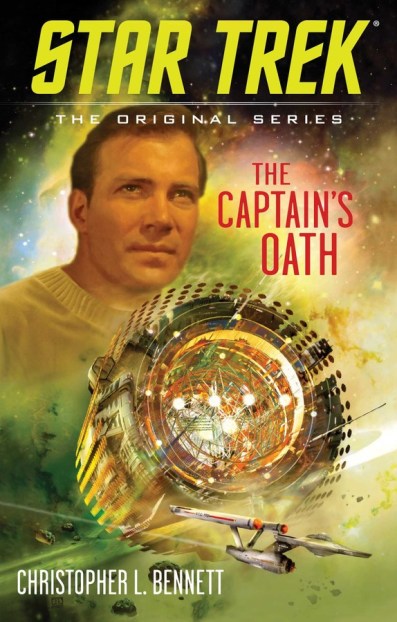
Star Trek: The Captain’s Oath by Christopher L. Bennett

Star Trek - The Captain's Oath Cover

Publisher: Simon & Schuster Audio (Audiobook – 28 May 2019)

Series: Star Trek

Length: 11 hours and 58 minutes

My Rating: 4.5 out of 5 stars

Amazon

Prepare to venture boldly into a new Star Trek: The Original Series tie-in novel which not only tells a deeply compelling story but also looks at several pivotal moments of Captain Kirk’s early Starfleet career that made him the captain we all know and love.

Captain James Tiberius Kirk is known throughout the galaxy as a great warrior, diplomat, explorer and hero. His story as the captain of the U.S.S. Enterprise is legendary, but how did a relatively young and inexperienced captain gain the right to take command of Starfleet’s most advanced and famous ship? What drives the young captain to be the best? And where did he get the tendency to bend Starfleet’s many rules in order to do the right thing?

Over three separate timelines set between 2261 and 2265, The Captain’s Oath follows Kirk’s early career as a captain. Looking at both his first command aboard the U.S.S. Sacagawea to his initial missions with the crew of the Enterprise, this book highlights several major conflicts and explorations that Kirk was involved in which shaped his personality and command style. From early conflicts with the Klingons, first contact missions that tested Kirk’s dedication to follow the Prime Directive to the letter, and diplomatic missions that had the potential to lead to war, these experiences will turn him into a captain worthy of the Enterprise.

I am fairly new to the world of Star Trek tie-in books, having only previously read two Star Trek novels that were released earlier this year, The Way to the Stars and Available Light. I was massively impressed by The Captain’s Oath, which was a spectacular and massively compelling read. Veteran Star Trek author Christopher L. Bennett, who has written a large number of Star Trek tie-in novels since 2004, crafted an excellent novel that not only showcases the past of an iconic character from the franchise but presents an exciting adventure at the same time.

The overarching narrative of The Captain’s Oath is told in three separate timelines. The first of these timelines starts in early 2261 and follows the early day of Kirk’s captaincy of the Sacagawea. The next timeline is set between 2262 and 2264, and also features Kirk as the Captain of the Sacagawea; however, this timeline starts after an undisclosed destructive event that crippled the ship and killed several of Kirk’s crew in the previous timeline, and follows Kirk’s adventures after this event. The final timeline is set in 2265 and starts the moment Kirk takes command of the Enterprise. It follows his first real mission as captain of his iconic ship, and ends just before the start of The Original Series television show. The book features lengthy chapters, with various adventures in different points of time spread throughout the course of the novel. These adventures are also usually shown from the perspectives of Kirk and some of the Starfleet personnel serving with him, although there are occasional scenes featuring characters aboard other Starfleet ships.

I did initially find it a little tricky to get my head around the use of multiple timelines, especially as I was listening to the audiobook format of The Captain’s Oath. However, once I got track of each of the three major timelines, I was able to appreciate what Bennett was doing with this writing style and how he wanted to tell the story. By using these multiple timelines, Bennett succeeds in telling a story that is much more complex and compelling than a linear story would have been. These multiple timelines allow the reader to get a much better sense of the main character and how he became the person he was in the first episode of The Original Series. By showing various stages of his time as a captain, Bennett is able to examine a number of key events that formed Kirk’s personality and command style. Through a series of intriguing missions and a ton of different scenarios, you get to see how Kirk reacts to both his success and his failures, and what lessons he takes with him. As the book progresses, you get to see how these earlier experiences affect his actions in the subsequent chronological missions. This was an extremely clever way to write the story, and I felt that the multiple timelines work extremely well together and helped create a powerful narrative that did a fantastic job showcasing the character of Captain Kirk.

I also really enjoyed the huge variety of Star Trek missions that Kirk and his crew went on throughout the course of the book. This book featured an amazing range of different missions that Starfleet are known for, including diplomatic undertakings, rescues, exploration, first contact and military missions in defence of the Federation. Some of these missions are quite complex in their individual content and in the way that most of them flow through and connect with later missions in the chronology. Bennett has come up with some truly unique and fantastic scenarios for this book, and through these various missions the reader is treated to some intriguing mysteries, intense battles and deep examinations of humanity and life. I really got into a number of these missions, including a fascinating mission where Kirk and his crew get trapped on a pre-spaceflight planet whose government is using propaganda to frighten the populace with non-existent invading aliens. However, the best scenario is a series of missions set during Kirk’s days as captain of the Sacagawea where he and his crew encounter an unusual group of aliens who are invading Federation space in some unique ships (the one on the cover). The various missions involving these new aliens not only result in some impressive space battles but also feature some intriguing diplomatic meetings and fascinating discussions about different forms of life, as the beings Kirk and his crew encounter are so alien that a number of key concepts such as territory and galactic borders are untranslatable to them. Each of the missions featured in this book were pretty amazing and are a testament to Bennett’s imagination and appreciation for the underlying material.

One of the things that I enjoyed about this book was the sheer amount of Star Trek references and lore that Bennett has managed to fit into this story. Fans of Kirk and The Original Series will be intrigued by this new look at Kirk’s early career as a captain and several of the pivotal adventures he undertook. The Captain’s Oath also features Kirk’s first meetings with several key characters from the series, including Spock, Sulu, Scotty and McCoy. Not only does the reader get an idea of the early relationship between Kirk and Spock, which only began when Kirk took command, but you also get to see Kirk befriend McCoy and then eventually talk him into becoming doctor for the Enterprise. In addition to the look at the major characters, there are also a number of great examinations of minor characters from the series. A great example of this is the inclusion of the Klingon character Captain Koloth, the villain of The Original Series episode The Trouble with Tribbles. While he was only in the book for a short period of time, it does answer a question about how Koloth and Kirk knew each other, as they recognise each other in the episode, and it shows why they disliked each other.

Perhaps the most interesting part of The Captain’s Oath was the inclusion of Gary Mitchell throughout the course of the book. In the show, Mitchell only appeared in one episode and was the original helmsman of the Enterprise before becoming the eventual antagonist of the episode Where No Man Has Gone Before. In this episode it is explained that Mitchell was one of Kirk’s oldest and closest friends, and Bennett spends a lot of time exploring this friendship in this book. Mitchell is shown to be a major influence on Kirk’s personality during the early days of him being a captain, helping him relax and become less beholden to Starfleet’s rules and regulations. Their friendship is an important part of the book, although it is a little tragic when you consider how it is destined to end. The book also features a few scenes with Lt. Kelso, who is killed by Mitchell in Where No Man Has Gone Before, and it is interesting to see some of his interactions with Mitchell and Kirk, considering his appearances in the show. It is curious to note that Bennett appears to have switched the roles of Mitchell and Kelso around, as Kelso is portrayed in the book as the helmsman, while Mitchell is the navigator. Nonetheless, the author uses the inclusion of Kelso to explain why Sulu was the ship’s physicist in this episode rather than helmsman, and why he was given the job in subsequent episodes.

Bennett has included some pretty deep Star Trek lore in this book, but do you need to be a major Star Trek fan to enjoy The Captain’s Oath? In my opinion, you do not. Obviously, hardcore Star Trek fans will get a lot more out of this book, no doubt appreciating all the references, minor characters and the backstory that Bennett has concocted. However, this book is easily enjoyable for people who only have a passing knowledge of the Star Trek shows or universe. Bennett makes the story extremely accessible, and many features from the franchise or history relevant to the story are explained in full detail, ensuring no one is left in the dark. Indeed, due to the awesome story, connection to The Original Series and the focus on such an iconic character, this is a great book to check out if you are curious about Star Trek books and want to see what they are like, and a lot of general science fiction readers will like some of the unique scenarios explored throughout the book. This would also be a really interesting book for those people whose only exposure to Star Trek has been the recent movies set in the alternate timeline, as this book shows a very different version of Kirk. Overall, I think that quite a wide audience can appreciate The Captain’s Oath, and it is a fantastic Star Trek tie-in book to check out.

While I did receive a physical copy of The Captain’s Oath, I decided to check out the audiobook version instead in order to fit it into my reading schedule. The audiobook format of this book is narrated by Robert Petkoff, who has a narrated a large number of previous Star Trek tie-in books, as well as several Star Trek novels coming out later this year. The Captain’s Oath audiobook runs for a pretty typical length of time for a Star Trek book, at just under 12 hours long, meaning that dedicated listeners should be able to get through this quite quickly. I really enjoyed listening to the audiobook format of this book, and I found that listening to the story helped enhance certain aspects of the plot, such as making the action sequences more exciting and providing the full impact of several of Kirks inspirational speeches. Petkoff is an excellent narrator whose work I have previously enjoyed when I listened to Available Light a couple of months ago. I noted back than that Petkoff did an amazing job imitating several key members of the Star Trek: The Next Generation cast, and I was very curious to see how he would go with characters from The Original Series. Petkoff’s voice work in The Captain’s Oath was pretty impressive, as he did an exceptional job bringing characters such as Spock, Scotty, Sulu and McCoy to life and making them sound very similar to their original portrayals in the show. Petkoff also did a pretty good Kirk, and I liked how he attempted to reproduce the captain’s iconic speech patterns from the show. Petkoff also had the opportunity to bring a huge range of different nationalities and alien species to life, and these were also very impressive, as he was able to produce some distinctive voice types from the show, including the specific vocal patterns of the Vulcans as well as several distinctive human accents. All of this made for an incredible listen, and I fully intend to check out the audiobook formats of any future Star Trek books narrated by Petkoff. Indeed, the next audiobook I am planning to listen to, The Antares Maelstrom, is narrated by Petkoff, and I look forward to listening to this latest book.

Star Trek: The Captain’s Oath is an exciting and captivating novel that does an outstanding job exploring the early life of Captain Kirk and examining some formative events that made him the character we all know and love. Author Christopher Bennett has created a compelling story that utilises multiple timelines and a series of intriguing missions to tell a complex tale that I had an amazing time reading. This is an excellent piece of Star Trek extended fiction that I would whole-heartily recommend for anyone who has ever been curious about learning more about Kirk’s story and the Star Trek universe prior to The Original Series.

Amazon

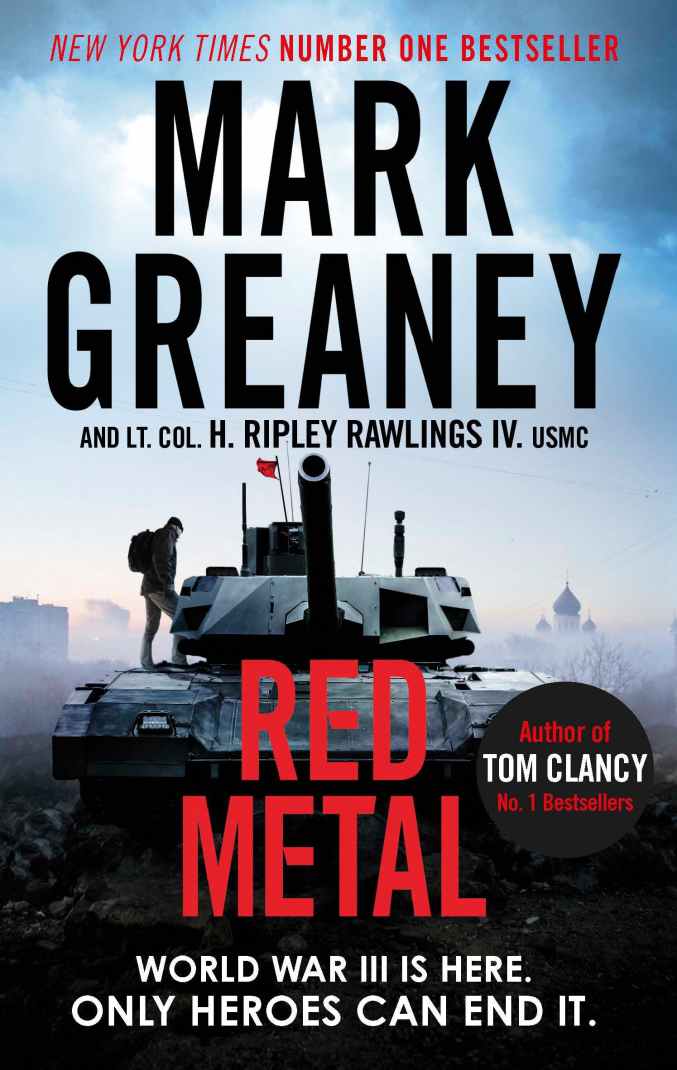
Red Metal by Mark Greaney and Lt. Col. Hunter Ripley Rawlings IV. USMC

Red Metal Cover 2.jpg

Publisher: Audible Studios (Audiobook – 16 July 2019)

Series: Standalone/Book One

Length: 21 hours and 21 minutes

My Rating: 5 out of 5 stars

Amazon     Book Depository

Get ready for World War III, because bestselling author Mark Greaney has teamed up with Lt. Col. Hunter Ripley Rawlings IV. USMC to create an absolutely incredible military thriller, Red Metal, which looks at how a potential invasion from Russia would unfold.

After years of war in the Middle East, the United States and their allies are preparing themselves for the next conflict. Many believe that this war will occur in the Pacific Ocean against China, especially after the Chinese begin to interfere in Taiwanese politics in an attempt to reunify the island nation with the mainland. As Chinese troops gather just outside of Taiwan and the United States military is rocked by a debilitating scandal, hardly anyone is expecting a move from Russia.

Since the end of the Cold War, Russia has been in an economic decline, and it desperately requires access to various advanced resources to remain a world power. An ambitious Russian colonel has come up with a complex plan to secure a vital Rare Earth mine that has the potential to secure the country’s future. Launching a high-speed and ruthlessly coordinated attack as Christmas falls, Russian forces stream across the border into Europe, crippling NATO and cutting the continent off from the United States. As America and NATO attempt to work out the extent of Russia’s plans in Europe and counter them, they are left distracted from Russia’s true goal as a second Russian army is secretly heading towards the African coast in order to reach the mine in Kenya.

As Russia continues its advance, the fate of the free world lies in the hands of several different individuals. In Washington, a veteran Marine Lieutenant Colonel and his colleagues attempt to decipher the Russian strategy before it is too late, while in Africa, a wily old French Intelligence agent and his Special Forces son must uncover why undercover Russian agents are abroad in Djibouti. In Europe, a mixture of unprepared NATO soldiers, including a young member of the Polish militia, an out-of-his-depth American tank commander and a high-flying US pilot must fight against the odds to push back against the invading Russian force. As epic battles erupt across several countries, one thing is clear: the world will never be the same again.

Wow, just wow. A few months ago, I predicted that along with The Kremlin Strike, Red Metal was going to be one of the top military thrillers of 2019. I am more than happy to report that I was 100 per cent right, as this was an outstanding read that I had an absolute blast listening to. The team of experienced thriller writer Mark Greaney, who is best known for his work on Tom Clancy’s Jack Ryan Universe and his own bestselling Gray Man series (make sure to check out my review for the latest book in this series, Mission Critical, here) and debuting author Lt. Col. Hunter Ripley Rawlings IV. USMC, have created a sensational book that I have no choice but to award a full five stars to.

Contemporary military thriller is a genre that I have only started getting into recently, although so far I have enjoyed some great examples, including The Moscow Offensive by Dale Brown, Treason by Rick Campbell and Red War by Kyle Mills. However, in my opinion Red Metal stands heads and shoulders above all of these books and it is probably the best pure military thriller that I have read. The authors of this book have come up with a truly fascinating military scenario that sees Russia sweep across two continents and influence conflict in a third. The Russians in this book have a really clever and effective military strategy that results in a massive, widespread conflict, and the reader gets to see every step of it unfold. This entire plan seems exceedingly realistic, and it is clear that Greaney and Rawlings have put some real thought into how war could break out and how the various participants would react. They really dive into the minutiae of the whole scenario and try to cover all the angles of an invasion of Europe and Africa, including cutting off communications, setting up an alternate navigation system, hacking the US and creating a number of plausible diversions. Never before has a discussion about the different sized rail tracks and rail switching stations in Europe been so fascinating. The scope of this conflict is really impressive, and the authors do a fantastic job showcasing the various types of battle that would occur in this sort of modern-day war between major superpowers. As a result, this book is filled with fighting on land, sea, air, underwater and even in cyber space, in an impressive thought exercise which translates into a compelling piece of fiction.

I really liked how the authors chose to tell this story from a variety of different perspectives, as Red Metal features a huge number of point-of-view characters. While the story is mostly focused on a few key characters, a number of minor characters often get one or two scenes, and the reader gets to see how the war unfolds from both sides of the conflict. As a result, the reader gets a much fuller understanding of how this potential scenario would unfold and how various countries or organisations such as NATO would react to war breaking out. The authors also make great use of the various perspectives to ratchet up tension throughout the book as the readers are privy to the full extent of the Russians plans. This results in the reader being fully aware of all the mistakes that the Americans and their allies are making in this war, and by the time they get their act together it seems like it is too little, too late.

The use of various perspectives also helps to create a number of different characters that the reader can really get invested in. While many of characters introduced only have small roles in the overall narrative, the authors do some detailed explorations of the backgrounds and story arcs of several key characters. Some of these characters have really well-written and have some enjoyable or intriguing storylines. I personally enjoyed the story of Paulina, a young recruit in Poland’s Territorial Defence Force (a volunteer military reserve) the most. Paulina finds herself thrust into the middle of the Russian invasion and is quickly transformed from an innocent girl to a hard-eyed killer in a few short days thanks to the horrors of war. Paulina’s story is extremely captivating, and it is potentially the character that most non-soldiers reading this book are going to identify with as they are left thinking how they would react in a similar situation. It was really quite interesting to see what role people in the various scenarios could potentially play, and I really liked seeing what sort of difference a small group of determined soldiers could make in a conflict such this.

One of the things that I really loved about this story was the realistic portrayal of the various armed forces involved in this book and the detailed examination of everything that needs to be considered in a war. This book is chocked full of military terminology, descriptions of various weapons and tactics, slang, military history and a variety of other complex features. You have to imagine the inclusion of all of these details is largely thanks to Rawlings and his extensive military experience, and I really enjoyed how the authors were able to seamlessly insert all of this knowledge into the story. Having all this information as the story progresses is extremely fascinating and I learnt a lot of cool facts. It also really amped up the realism of the whole story, in my opinion, and I found the story to be a whole lot more compelling as a result.

It is important to point out that Red Metal is not the male character dominated, exceedingly pro-American story that some military thrillers are; instead the writers went out of their way to produce a more balanced story. For example, the book features a number of great female characters, most of whom are involved in the war in some way or another, and it was cool to see how women are utilised in the modern military. The authors also take the time to show Russia’s side of the conflict and explain their motivations for engaging in this battle against the west. While a number or Russian characters are pretty villainous and/or murderous, they do tend to have some reasonable motivations for their actions, and indeed they see themselves as the good guys in this conflict. There are also a few more pragmatic Russian officers featured in the book who are a lot more likeable, especially as they come across as a bit more compassionate and less eager for war and destruction. The United States is also not heavily portrayed as the world’s most awesome country, as some military thrillers do. Instead the country is shown to be extremely unprepared for a Russian invasion, their military command is initially easily manipulated and a response to Russia’s actions is hampered by politics or pettiness from a superior officer. That being said, the book does feature a number of extremely pro-American scenes and sentiments, and there is even a sequence where an American pilot flies into combat shouting “die Commie die”, although to be fair, it is described as a historical military mantra developed in the Cold War to help pilots time their length of fire. The end result of the conflict between America and Russia is also what you’d pretty much expect, but it still makes for one hell of a read.

While the authors have added some interesting depth to this story, at its heart it is a military thriller, and that means that this book is chocked full of action. There are a huge number of fantastic and extended battle sequences throughout the entire book, some of which are truly epic in their size and content. Readers are really spoiled for action in Red Metal, as the authors have included all manner of different types of battles with a huge range of different vehicles and weapons. This book features battles in the air, at sea, underwater in submarines, on the ground with the grunts and in a variety of locations with Special Forces regiments. There are a number of impressive and memorable sequences, including a large amount of tank on tank combat, as two enemy armoured regiments face off against each other. I personally really enjoyed a particularly brutal ambush of Russian tanks in Poland, as Polish militia attempt to defeat a superior force in the middle of a city. The main set-piece has to be an extended battle between a variety of Russian units, and a force of United States Marines down in Africa. This battle down in Africa is particularly impressive, as the authors do an awesome job of bringing the fighting to life, and the sheer chaos of war and the ferocity of both sides as they try to win through any means necessary. All this action is pretty darn amazing, and the authors really outdid themselves with it.

I chose to listen to the audiobook format of Red Metal, which is narrated by experienced audiobook narrator Marc Vietor. I am really glad that I picked up the Red Metal audiobook as it was an amazing way to enjoy this fantastic book. Vietor did an excellent job narrating this book, and I felt that listening to the story brought all the intense action to life and helped place me in the centre of the story. Due to the book featuring a huge number of different nationalities, the story featured a range of character accents, all of which Vietor did extremely well, producing distinctive and memorable voices for each of his characters. The Red Metal audiobook runs for 21 hours and 21 minutes and it is an excellent format to consume this incredible novel.

Red Metal is a tour-de-force from Greaney and Rawlings, who have produced one hell of a military thriller. These two authors are a potent writing team, as Greaney’s experience as a thriller writer and Rawlings’s military knowledge helps create an epic read that just pumps the reader full of intense action, clever storylines and memorable characters. I really hope that these two authors continue to work together in the future, as Red Metal was a really impressive first collaboration. Five out of five stars all the way, you have to check out this book.

Amazon     Book Depository

The Lost Ten by Harry Sidebottom

The Lost Ten Cover

Publisher: Zaffre (Hardcover – 18 April 2019)

Series: Standalone

Length: 351 pages

My Rating: 4.5 out of 5 stars

Amazon

One of my favourite authors, Harry Sidebottom, returns with another excellent piece of Roman historical fiction, The Lost Ten.

Sidebottom is a particularly skilled historical fiction author who has written some amazing novels in the last 10 years, all of which have focused on the Roman Empire in the turbulent 3rd century AD. His works have included his excellent Warrior of Rome series, which features one of the first books I ever reviewed, King of Kings, and his well-researched Throne of the Caesars series. Sidebottom also wrote a fantastic historical fiction/thriller hybrid last year, The Last Hour, a truly awesome book that featured the protagonist of his Warrior of Rome series. The author has continued his intriguing experiment of combining historical fiction with other thriller sub-genres in his latest book, The Lost Ten, which I have been looking forward to for a while.

Rome, 265 AD. Junior Roman officer Marcus Aelius Valens is instructed to join a small squad of soldiers on a daring raid into Persia. Their objective is to infiltrate the country and make their way to the dreaded Castle of Silence, an impregnable prison high up in the mountains. Once there, they are to free young Prince Sasan, the King of Persia’s disgraced nephew, and bring him back to Rome.

Journeying to the Roman border, Valens joins up with an eclectic group of soldiers recruited from the frumentarii, Rome’s infamous secret agents. An outsider amongst these hard-bitten soldiers, Valens suddenly finds himself in command when an ambush kills their commanding officer. Aware of the consequences of abandoning their mission, Valens leads his troops onwards to Persia.

However, the closer they get to the Castle of Silence, the more misfortune seems to befall the small unit. As his soldiers die one at a time, Valens begins to believe that there is a traitor among them who does not wish for their mission to succeed. Can Valens unmask the saboteur before it is too late, or will the squad die trying to achieve their impossible mission?

This was another spectacular read from Sidebottom, who has once again done a fantastic job bringing modern thriller vibes to an ancient Roman historical setting. The Lost Ten is a fast-paced action adventure, with a clever plot hook and an excellent band of new characters that I had a lot of fun reading and which lived up to my high expectations for this novel.

While his Warrior of Rome books always had a bit of a thriller feel to them, as Ballista was usually hunting down some form of traitor or spy, Sidebottom has recently started to push the envelope even further by combining together Roman historical fiction with a variety of different thriller sub-genres. His previous novel, The Last Hour, was essentially 24 set in ancient Rome, and his next novel is apparently going to emulate a Scandi noir novel in the hills of Calabria. In The Lost Ten, Sidebottom utilises a special forces thriller storyline which sees Roman troops attempt an impossible infiltration deep into enemy territory. As a result, this novel reads a lot like an episode of Seal Team or The Unit if the team had to infiltrate antique Persia. In order to complete their objective, the team has to arrive at the border incognito, set up a cover story as traders, and then pass into Persian territory, fooling the locals and military as they near their goal. Once there, they have to find a way into the impenetrable fortress and then get their hostage out of Persia alive while being pursued by a massive army. This results in an extremely exciting and action-packed novel that was an absolute blast to read. I loved seeing all these classic spy scenarios play out in this classic Persian setting, and the special forces storylines work exceedingly well with the historical fiction background. Sidebottom has really hit onto a winning formula by mashing these genres together, and I am very excited to see how his next book turns out.

One of the aspects of The Lost Ten that I really enjoyed was the great characters who made up the Roman unit heading into Persia. Sidebottom has written a great group of protagonists with some rather interesting character traits and individual stories. The main character, Valens, who serves as the principle point-of-view character, has an intriguing arc that sees him go from being a naïve and disheartened young solider, to canny veteran troop leader throughout the course of the book. The rest of the Ten are a fantastic mixture of distinctive and rough killers who really don’t want to be going along on this mission. These troops help give the story a real Dirty Dozen vibe which I quite enjoyed, and it was also fantastic to see the group come together as they faced adversity.

In addition, it is revealed early on in the book that one of the squad characters is a traitor who is actively working to sabotage the mission. However, the identity of this double agent is not revealed until much later in the story. Instead, several chapters are shown from the perspective of the traitor, showing what actions he is taking to betray the team, such as killing the original commander or organising ambushes from bandits. As more and more misfortunes befall the group, Valens becomes suspicious and starts trying to identify the saboteur in the ranks, resulting in a wonderful storyline that plays into the thriller aspect of the book exceedingly well. Sidebottom does a clever job of hiding the identity of the traitor for the majority of the story, and the reader is fed a series of clues to slowly work out who it is. The reader is also shown the hidden character’s motivations for betraying the others, and the political and personal realities that are driving him. All of this comes to a fantastic conclusion, and this was an excellent part of the story that Sidebottom handles exceedingly well.

Sidebottom once again makes great use of the 3rd century Roman setting that has been a defining feature of all his previous novels. The Lost Ten is set in the same universe as all of Sidebottom’s other books and occurs in the same year as The Last Hour. There are actually several mentions of Sidebottom’s recurring protagonist, Ballista, and it sounds like he is getting into trouble campaigning in Gaul. The author does an amazing job showcasing the rough lands that lie between the Roman Empire and Persia and all the difficulties that would have occurred travelling to the Persian Empire. As the protagonists enter Persia, the readers get an interesting look at the landscape and Persian customs, many of which seem strange to the Romans and result in much contemplation and discussion. Sidebottom shows off several interesting areas of Persia, and it is clear that he has done his research into this location. The author also heads back to the familiar setting of ancient Rome, allowing the reader to get a good sense of the political situation in 265 AD. Sidebottom also examines the role of the frumentarii, Rome’s secret police/agents, who have appeared in several of his novels before. The various actions of this organisation are really intriguing, and it was cool to see modern spy tactics at work in this historical setting. There were some absolutely fascinating historical inclusions in this book that I had a lot of fun reading, and they proved to be an excellent backdrop to The Lost Ten’s thrilling storylines.

The Lost Ten is an outstanding book from Sidebottom that shows why he is one of the most captivating authors of Roman historical fiction in the world today. The author’s decision to combine a contemporary special forces thriller storyline with a well-researched historical setting payed dividends and resulted in a compelling and exciting read.   As a result, this book comes highly recommended and is a must-read for those people looking for an exciting historical thriller. I am looking forward to Sidebottom’s next book and cannot wait to see what he produces next.

Amazon

DEV1AT3 by Jay Kristoff

DEV1AT3 Cover.jpg

Publisher: Allen & Unwin (Trade Paperback – 17 June 2019)

Series: LIFEL1K3 – Book 2

Length: 423 pages

My Rating: 4.5 out of 5 stars

Amazon     Book Depository

From one of the most prolific young adult fiction authors, Jay Kristoff, comes the follow up to his electrifying 2018 smash-hit LIFEL1K3, DEV1AT3.

Over the last few years, Australian author Jay Kristoff has been one of the leading contributors to young adult fiction, writing several bestselling series. His works include The Lotus War series, the highly regarded The Nevernight Chronicles, and The Illuminae Files, which he co-wrote with fellow Australian Amie Kaufman. DEV1AT3 is actually the second of three Kristoff books being released this year, as he has already released the first book in his second collaborative series with Kaufman, Aurora Rising. Darkdawn, the third and final book in The Nevernight Chronicles, is set to be released in early September.

People who keep an eye on my blog may have noticed that I did a short review of DEV1AT3 a few weeks ago in a Canberra Weekly column. I have been meaning to write up an extended review of the book for a while now, as it was quite an enjoyable book with a lot of cool features. DEV1AT3 follows on from the incredibly popular first book, LIFEL1K3. The LIFEL1K3 series follows the adventures of four young friends in the dangerous post-apocalyptic remains of America, now controlled by rival mega-companies and gangs of religious fanatics.

DEV1AT3 is set in the immediate aftermath of the dramatic conclusion of LIFEL1K3, when the protagonist of the first book, Eve, found out the terrible truth of her origin: she is secretly a lifelike, an android who can ignore the Three Laws of Robotics. Worse, she is actually a replica of Ana Monrova, the daughter of the creator of the lifelikes, Nicholas Monrova, whose creations rebelled against him and killed his entire family. With the realisation that everything she has ever known is a lie, Eve begins to plot with the murderous Gabriel and the other lifelikes to find the comatose body of Ana. While Eve simply wants to kill the woman whose life she is imitating; the other lifelikes will use Ana’s body to unlock Monrova’s secrets in order to start a robot revolution.

Out in the post-apocalyptic wastelands surrounding Babel, Eve’s friends, Lemon Fresh, Ezekiel and Cricket, have seen better days. Not only were each of them forced to abandon Eve for different reasons but they must all face their individual consequence of the events that occurred within Babel. When unexpected events force them to separate, each of these friends find themselves in a whole world of trouble.

Lemon Fresh’s status as a deviate, a genetic mutant with the ability to manipulate electricity, has always landed her in trouble, but now she finds herself the ultimate pawn in a war between two of the major corporations that rule the land. Kidnapped by an agent of BioMaas Incorporated, Lemon eventually finds herself falling in with a band of fellow deviate teenagers, each with their own unique abilities, and whose leader, the Major, may hold the secrets to her past.

At the same time, the logika Cricket is stolen and sold to the Brotherhood, a group of religious fanatics determined to destroy every android, deviate and genetically modified being they can find. As the Brotherhood edges closer to a war with the Major’s deviates, Cricket is forced to fight as a robot gladiator while learning the dark secrets at the heart of the cult. Meanwhile, Ezekiel, the one lifelike with any love for humanity, teams up with an old enemy in order to track down Lemon Fresh and Cricket. However, when Ezekiel’s mission leads him into the path of Eve and his other lifelike brothers and sisters, he attempts to find a way to stop their destructive crusade and save his beloved Ana.

This was a fantastic piece of young adult fiction that does a wonderful job of following up the first book in the series. Kristoff tells an exciting story which not only continues the plot lines of the first book but which also takes the characters in some intriguing new directions. However, despite some differences in plot focus, the book continues to feature the cool allusions to other works of fiction that made the first book such a treat to read, and it continues to explore aspects of this intriguing post-apocalyptic setting. Readers who did not get the chance to read the first book, LIFEL1K3, last year will easily be able to start by reading DEV1AT3. Not only is the story quite accessible but it also starts off with an extremely detailed summary of the events and characters from the first book, which allows anyone to fully catch up with where the plot is.

One of the most interesting changes between this book and LIFEL1K3 is that the protagonist of the first book, Eve, is instead cast as an antagonist, and we end up seeing very little of the book’s plot from her point of view. Instead, the plot of DEV1AT3 is mostly split between the three perspectives of Lemon Fresh, Cricket and Ezekiel, who each have their own unique storylines. Each of these storylines is noticeably different, with all three of them making use of some unique features to help create an intriguing and emotionally strong story. The reader gets a real feel for all three of these point-of-view characters throughout the course of their individual plots, and several intriguing new side-characters are introduced. These separate storylines come together to form one amazing overall narrative, which ends with an amazing cliff-hanger for each of the main characters that will ensure readers will have to check out the final book in this series when it comes out.

One of the most intriguing aspects of the LIFEL1K3 series is that each of the books is marketed as a crazy mash-up of several different works of fiction. For example, the first book in the series had a real Alita Battle Angel crossed with Mad Max and Blade Runner vibe to it. Many of the references to the plots of various other media titles that were started in the first book are continued in DEV1AT3. For example, the whole Mad Max vibe of life in the wasteland is actually really enhanced in this book, as the vast majority of the story is spent out in the nuclear wastes and smaller outposts that make up the ruins of America, with a number of crazy car chases in souped-up doomsday vehicles featured throughout. We also get a deeper look at the whole Bladerunner aspect of the story, as Eve comes to terms with actually being a lifelike and attempts to get revenge for her creation.

In this second book, Kristoff’s plot also makes allusions to several other pieces of fiction in the three various storylines. For example, Lemon Fresh’s storyline is an interesting post-apocalyptic take on the X-Men, with the super-powered teen finding kinship with a group of similarly gifted individuals in a world that hates and fears them. The new deviates introduced in this storyline have a pretty cool range of powers, have all been attacked because of their abilities and even have a wise old mentor character in the Major. The various twists associated with this storyline are really clever, and it was interesting to see more deviates aside from Lemon. Ezekiel also has a great storyline within DEV1AT3. While much of his story is still tied up with his feelings for Eve, the lifelike copy of the woman he loves, and all the Bladerunner-esque emotions and thoughts he and his lifelike family experienced in the first book, Kristoff adds a fun new element to his storyline in this book. For much of his storyline, Ezekiel actually teams up with Preacher, the cyborg bounty hunter who was an antagonist of the first book. This is a very fun team-up, and it harkens back to a lot of classic odd-couple crime movies, with the two having a very rocky relationship that kind of improves as the story goes along.

I personally liked Cricket’s storyline the most. Cricket is a logika, a sentient robot who must obey the Three Laws of Robotics. Cricket, who was previously a small assistant robot, had his personality transferred into a massive combat robot in the last book. However, he is kidnapped by members of the Brotherhood, the insidious religious group fighting against Lemon Fresh’s new deviate brethren. Cricket, who has to obey all the orders given to him by the Brotherhood due to the Three Laws of Robotics, is forced to fight in a series of gladiatorial combats. This storyline gives the reader the best insight into the ranks of the Brotherhood, and Cricket uncovers certain secrets while working for them. With the whole Three Laws aspect, this storyline is obviously very reminiscent of the science fiction classic I, Robot; however, Kristoff comes up with some humorous takes on the Three Laws. Thanks to the assistance of the snarky logika Solomon (who I found to be one of the funniest characters in DEV1AT3), Cricket starts to learn how to utilise the loopholes in people’s statements, so he has a degree of freedom and he also makes use of a simple solution to counteract one of the laws, which was pretty funny. All of these references to these established pieces of fiction are great, and I really liked how the author adapted them to fit his compelling young adult story. I especially enjoyed seeing some complex science fiction ideas, such as Isaac Asimov’s Three Laws of Robotics, explained to a younger audience, with some cool tweaks to make a more entertaining and modern story.

In addition to fun story and clever references to other works, one of the most interesting things about the LIFEL1K3 series is the cool post-apocalyptic setting that the author has come up with. The nuclear ruins of America always makes for an intriguing setting for a story, and I really enjoyed the cool combination that Kristoff makes in this series with savage nuclear wasteland and high-tech cities. The sheer amount of creativity that Kristoff utilises for the setting is really impressive, as this book alone features wars between rival corporations, desert-dwelling religious nuts, mutants, rebelling androids, bandits and mutated monsters. All of these are utilised extremely well in the story, and I look forward to seeing what other cool aspects of this broken world become apparent in the next instalment of this series.

DEV1AT3 is another wild ride from Jay Kristoff that I had a lot of fun reading. Featuring an excellent story that makes great use of references to some classic pieces of science fiction and fantasy, DEV1AT3 is a fantastic read that refuses to slow down for everything. This is a highly recommended read for the older young adult market, and it will also appeal to older readers. I am extremely curious to see where Kristoff takes this story next and look forward to another electrifying adventure in this mad-cap world.

Amazon     Book Depository

Knight of Stars by Tom Lloyd

Knight of Stars Cover

Publisher: Gollancz (Hardcover – 27 June 2019)

Series: The God Fragments – Book 3

Length: 440 pages 

My Rating: 4 out of 5 stars

Amazon     Book Depository

Lynx, Toil and the rest of the Cards are back for another rip-roaring fantasy adventure, as the “heroes” of Tom Lloyd’s The God Fragment series prepare to bring all manner of violence and chaos to another unsuspecting corner of their fantasy world.

Knight of Stars is the third book in The God Fragments series, which follows the adventures of Anatin’s Mercenary Deck, a band of skilled mercenaries otherwise known as the Cards, whose adventures have caused havoc across the Riven Kingdom. The Cards are so called as each member of the band are given a card number or description based on a fictional deck of cards from this universe, which corresponds to their rank within the band. This is the third series from Lloyd, who has previously written the Twilight Reign and The Empire of a Hundred Houses series. The God Fragments series has so far consisted of Stranger of the Tempest in 2016 and Princess of Blood in 2017, with each of the book titles referring to the rank one of that particular novel’s major or most significant character.

In this third book, the Cards are celebrating after surviving and getting paid for their previous adventures in the Labyrinth under the city of Jarrazir. However, their last adventure had unexpected side effects as several of the band have also been magically marked by the powerful Dugar artefact they discovered in the Labyrinth. Not only have these marks magically bound many of the Cards together but they have also had unexpected effects on the Deck’s mages, who have found their magical abilities greatly increased.

The Deck’s employer, the dangerous relic hunter and intelligence officer Toil, has found them a relatively simple job in the distant Mage Islands to take over the holdings of a defaulting gang for a powerful bank. With the prospect of good food, sun, booze, bar fights and the chance to let loose in combat, the Cards are treating it like a holiday, especially as it moves them out of reach of several powerful enemies they have recently made. While Toil seeks out allies and resources for her patron city, the company’s mages attempt to research the magical consequences of their time in the Labyrinth.

However, no mission for the Cards ever goes as planned, and the Mage Islands are a very dangerous place to visit. Between the rival mage guilds, the various gangs and the thousands of giant serpentine tsyarn that surround the city, any miss-step could lead to disaster, and none of the Cards are known for treading lightly, especially as their number includes an infamous exile from the Mage Islands who has left many enemies behind. Unsurprisingly, the members of the Deck soon find themselves in conflict with many powerful members of the Mage Islands’ hierarchy. However, the real trouble comes when several of the Cards accidently awaken something dangerous that dwells beneath the islands.

I was initially drawn to Knight of Stars by the cool plot synopsis, but I found the first 50 or so pages, which detailed the actual journey to the Mage Islands, to be very slow and a little hard to follow. This may have been partly because this was my first time exploring The God Fragment series; I have not had the pleasure of reading the first two books in the series. As a result, I spent quite a bit of time trying to come to grips with the story and the large number of returning characters who were featured in the opening pages of the book. While the summary at the start of the book does a great job of detailing the major points of the adventures that occurred in the previous books in the series, this summary only focuses on a few of the main characters. This means that new readers will not have a good basis for several of the important side characters and may struggle to work out who they are. After getting deeper into the book I was eventually able to come to grips with all of the characters, especially as more details about them were released; however, it was easy to become lost when trying to figure out who was who to begin with. It also didn’t help that the real action and intrigue didn’t really start until the characters got to the Mage Islands, as before that they are mostly stuck talking on a couple of barges. There is a brief fight with some elementals, although what they were and the reason for their presence was a bit unclear in my opinion. While I am glad that I continued past it and enjoyed the rest of story, the first part of the book might not be able to hold some new readers’ interest.

While this is not the most ideal start to the book, those readers who persevere will find that Lloyd has created an excellent and highly entertaining novel. The author has done a wonderful job of taking his band of rogues to a deadly new location within his fantasy universe and the allowing them to run wild, resulting in all manner of chaos. The overall story becomes extremely compelling the deeper you get into it, and the last 150-odd pages are pretty darn epic, featuring some big moments with some significant stakes for the protagonists. All of this results in a very enjoyable story, and I ended up have an absolute blast reading this book.

One of the main things that I liked about this book that was the non-stop fantasy action featured within it. It is obvious that Lloyd has a real talent for writing exciting combat sequences, which he uses to his full advantage by featuring a huge number of electrifying fight scenes throughout the course of his book. Many of these amazing scenes feature elements of the unique magical system that Lloyd has created for The God Fragments series, and I particularly liked the mage-guns that were a major feature of the action. Mage-guns are specialised weapons which all the Cards are armed with that fire various magical rounds of ammo to great effect. This includes electrical blast, ice shots, blasts of flame and devastating earth based shots designed to smash buildings and the ground. The author does an amazing job showcasing these unique weapons and the tactics behind them throughout the book, and they really add a whole new element to the combat sequences. While the combat for the first three quarters of the story is really cool, the fight between the Cards and the major opponents that they encounter in the last part of the book are extremely impressive and very ambitious. I would therefore heartily recommend Knight of Stars to those readers who are looking for a good piece of fantasy action, as it is an amazing feature of this book.

On top of the awesome action, the Cards of the Mercenary Deck are pretty fun. I really liked how Lloyd decided to set a story around a group of rough, fun-loving group of frankly oversexed mercenaries, as it makes for a very amusing tale. The story is told from the perspective of several members of the group, including Lynx, the original protagonist of the series; Toil, the secret agent who is funding the group; and Sitain, one of the group’s three mages. The Cards are a fun group of protagonists, most of whom have seen or done too much violence, so they now see the world through a rather cynical viewpoint. Their love for life is quite infectious, and they make for an entertaining group of narrators, with their rude and crude attitudes often coming to the fore. The Cards also have a very unique way of dealing with problems, and it is always fun to follow a group whose master plan involves starting a particularly violent bar fight. Several of the characters have interesting story arcs within this book, especially Teshen, the titular Knight of Stars, who returns to the Mage Islands to face the demons of his past. There are a couple of major developments for some of the characters in this book, and readers should be careful about some upcoming heartbreak. This is a wonderful group of characters, and I really enjoyed seeing how their story progressed in this book.

The location for this latest book, the Mage Islands, is a really cool setting for this action-packed story. The Mage Islands is a brand-new setting, located some distance away from where any of the previous books were set. The Mage Islands is home to a ramshackle city of canals, slums, lagoons and giant sloths as pack animals, and is a great backdrop for all the action and criminal activity that occurs throughout the book. Lloyd does an excellent job of portraying a hot, tropical location filled with all manner of dangers, criminals and pests. However, rather than the usual vast number of tropical bugs and insects, the city is surrounded by a huge swarm of giant monsters, the tsyarn (the monster on the cover). As you can probably guess from the name, the city is also home to a massive population of mages, and the Cards find themselves drawn into a conflict between some of the rival mage guilds. Overall, this was a fantastic location for this enjoyable story, and I look forward to seeing where the Cards end up next.

Knight of Stars is an exciting and captivating third instalment in Tom Lloyd’s The God Fragments series. While I did initially struggle to get into the story, once I stuck with it, I was able to enjoy its compelling plot, amazing action, great characters and excellent new location. This book is worth checking out, and I look forward to reading Lloyd’s future instalments in this series.

Amazon     Book Depository