Star Wars: Thrawn Ascendancy: Lesser Evil by Timothy Zahn

Star Wars - Thrawn Ascendancy - Lesser Evil Cover

Publisher: Del Rey/Penguin Random House Audio (Audiobook – 16 November 2021)

Series: Thrawn Ascendancy – Book Three

Length: 23 hours and 13 minutes

My Rating: 5 out of 5 stars

Amazon

The undisputed master of Star Wars extended fiction, Timothy Zahn, returns with final book in the Thrawn Ascendancy series, Lesser Evil, which brings this excellent prequel trilogy to a fantastic and dramatic end.

Out of all the awesome authors who have contributed to the Star Wars extended universe over the years, few are more talented or highly regarded than Timothy Zahn.  Zahn, who is one of the key architects of the original extended universe (now rebranded as Star Wars Legends), is probably best known for his original trilogy of Star Wars novels, which started with Heir to the EmpireHeir to the Empire served as the introduction of several major extended universe characters, such as Mara Jade; however, his most iconic creation is probably the legendary character of Grand Admiral Thrawn.

Grand Admiral Thrawn is an intriguing and complex figure considered the greatest tactician in the entire Star Wars canon.  Serving as a major figure in the Imperial Navy, Thrawn was the brilliant antagonist of Heir to the Empire and other major Star Wars Legends novels.  The subsequent popularity of Thrawn saw him eventually introduced into the Disney canon in the Star Wars: Rebels animated series, as well as a future live-action appearance.  This also resulted in Zahn being contracted to write six new Thrawn-centric novels.  The Thrawn trilogy (made up of Thrawn, Alliances and Treason), detailed Thrawn’s introduction, rise and career in Imperial Navy and filled in some of the gaps of the show.  Zahn followed this up with the Thrawn Ascendancy trilogy, which served as a prequel to the original trilogy.

The Thrawn Ascendancy series is set during the Clone Wars period and takes place in the Chaos, the unexplored area of space outside of the main galaxy of the Star Wars series, and focuses on Thrawn’s species, the Chiss.  As such, the series is primarily set in and around the Chiss Ascendancy and focuses on several threats to the Ascendancy that Thrawn attempts to overcome.  This series has so far consisted of Chaos Rising and Greater Good, both of which were extremely cool, filled with detailed battles, fun new characters, and some intense political machinations.  Now this brilliant trilogy comes to an end, with a final chapter telling the full story of Thrawn’s greatest victory and lowest moment.

For thousands of years, the legendary Chiss Ascendancy has been one of the greatest powers within the Chaos, keeping its people safe from the alien races who seek to conquer or destroy them.  Confident in its own power and determined not to interfere in the lives of its neighbours, the Chiss maintain their borders through the Expansionary Defence Fleet.  However, in recent months, the Ascendancy has found itself under attack from a dangerous and manipulative force that seeks to utterly destroy the Chiss.  After defeating a potential external invader and weathering an attempt to drag some of the Ascendancy’s powerful families into conflict, the threat to the Chiss appears to be over.  However, these were merely a precursor to a much more sophisticated and dangerous attack by a new alien race, known as the Grysk.  Led by the dangerous and manipulative Jixtus, the Grysk seek to unleash a deadly, multi-pronged assault against the Chiss to rip the ascendancy apart inside and out.

As Jixtus traverses the planets of the Ascendancy, manipulating the great Chiss families towards civil war, his powerful fleet lies just outside its borders, waiting to attack.  With the Chiss getting closer and closer to a devastating internal and external conflict, the fate of the Ascendancy lies in the hands of Senior Captain Mitth’raw’nuruodo (Thrawn), the Chiss Expansionary Defence Fleet’s most brilliant and unconventional commander.  Having defeated the previous attacks on the Ascendancy, Thrawn is the only person that fully understands the oncoming danger and he is determined to stop Jixtus and permanently end the threat he represents.  However, Thrawn has long worn out the patience of the ruling families, and he now finds himself hamstrung by politics and personal grievances.  To save his people, Thrawn will be forced to break all the rules he has sworn to uphold.  But just how far will Thrawn go to defeat his enemy, and what consequences will his actions have on himself and the future of the Chiss Ascendancy?

Lesser Evil was another brilliant and exceptional read from Zahn that did an amazing job of wrapping the complex Thrawn Ascendancy series to an end.  Containing some awesome and unique Star Wars elements, Lesser Evil fills in all the gaps between this trilogy and the sequel Thrawn trilogy, and I think it ended up being one of Zahn’s strongest recent novels.

This novel contains an amazing narrative that brings together all the elaborate and compelling storylines from the previous Thrawn Ascendancy novels and provides a satisfying and fantastic conclusion to the trilogy.  The novel starts off right after the events of Greater Good, with several characters dealing with the aftermath of the near civil war and Thrawn’s latest unofficial mission.  The story quickly introduces the book’s antagonist, the master manipulator Jixtus, as he starts his grand plan to destroy the entire Chiss Ascendancy.  This brings out an impressive amount of intrigue, infighting and dissent, which forces many of the protagonists to attempt to slow it down.  At the same time, Thrawn engages in his own mission to try and identify the enemy’s master plan, which reintroduces several key storylines and settings from the previous novels and helps tie them into the plot of this book.  Zahn also throws in a series of flashback interludes that dive into key parts of Thrawn’s past and give some context to his current mindset and plans.  This all leads up to the big conclusion in which the great adversaries, Thrawn and Jixtus, finally meet in battle.  Lesser Evil proves to be a particularly exciting and intriguing read, and I loved the brilliant combination of world building, political intrigue, character development and fantastic battle sequences.  I had a lot of fun with this story, and it was one of the strongest in the entire Thrawn Ascendancy trilogy.

I really enjoyed how Zahn told this final entry in the series.  The great use of multiple character perspectives not only allows for a richer story that examines all angles of the conflict but it also presents several impressive character driven storylines that were wonderful to follow.  In addition, Zahn once again lays onto the universe building by expanding the reader’s knowledge of the alien Chiss Ascendancy and their domain outside of the main galaxy of the Star Wars universe.  This universe building excellently comes into play as the novel progresses, especially as the antagonist’s plan relies on manipulating the politics and history of the various ruling families.  I really appreciated this cool extended look into this intriguing setting, especially as it ties into some of Zahn’s prior work.  Due to the extensive and elaborate Star Wars lore contained within Lesser Evil, this book is probably best read by experienced fans of the franchise who will appreciate all the inclusions.  It is also highly recommended that readers check out the first two novels in this trilogy first, as the storylines of Lesser Evil are very strongly tied into them.

Lesser Evil contains some intriguing connections to the wider Star Wars universe and canon that long-term fans of the franchise will deeply appreciate.  These connections mainly revolve around Thrawn’s prior appearances and fills in many gaps that were left open from the Thrawn trilogy.  This includes the full reason why the original series began with Thrawn banished from his people and left stranded on an alien planet.  It has been pretty clear since the first Thrawn Ascendancy novel that this entire trilogy has been leading up to this moment, and Zahn did not disappoint, including a moving and complex reason for the banishment that played perfectly into the character’s personality and the events of the previous novels.  Zahn also layers in a ton of intriguing connections to his Star Wars Legends novels that fans will deeply enjoy.  For example, parts of Lesser Evil are deeply connected to Zhan’s previous novel, the now non-canon Outbound Flight, which also focused on a younger Thrawn.  Parts of Outbound Flight’s story and setting have been adapted into the Thrawn Ascendancy trilogy, such as some elements of Chiss culture and some supporting characters, and it was interesting to see Zahn retrofit his previous works for the new canon.  In addition, key flashbacks within Lesser Evil take place in a version of Outbound Flight’s narrative, and while I did think this was cool, Zahn did not include a lot of context, so readers unfamiliar with his prior book may be left a little confused.  Still, this was a clever homage to the author’s prior works, and I appreciated Zahn’s fascinating references to his now defunct novels.

One of the strongest things about Lesser Evil was the great array of characters featured throughout.  There is a very strong cast in this final book, with most of the key characters having been established in the previous Thrawn Ascendancy novels or re-introduced from some of Zahn’s Star Wars Legends novels.  All the major characters featured in Lesser Evil have some amazing story arcs and Zahn spends a lot of time fleshing out their personalities, motivations, and histories, which deeply enhances this brilliant narrative.

The most prominent of these characters is Thrawn himself, who has an epic showing in Lesser Evil after being somewhat underutilised in Greater Good. Lesser Evil proves to be a defining novel for Thrawn, especially as he encounters his true enemy, the Grysk, for the first time.  The reader is also given insights into certain previously unseen relationships that Thrawn had, namely with his adopted brother, Thrass.  It also finally reveals the reasons why he was banished from the Chiss and marooned on the deserted alien planet by the start of Thrawn.  I deeply enjoyed the cool character arc surrounding Thrawn in this book, and Zahn does a great job once again highlighting his unique personality and motivations.  Despite being a little less sinister in literary form than in Star Wars Rebels, Thrawn has a harsh edge here, and the reader gets some great insights into his constant motivation of protecting the Chiss Ascendancy.  Throughout the course of the book, it becomes deeply apparent that Thrawn will risk everything to achieve his goal, and I loved how heartless Thrawn can become when dealing with his enemies.  This motivation and background go a long way to exploring Thrawn’s actions while serving the Empire, and fans of this fantastic character will deeply appreciate this compelling story arc.  Zahn also answers several intriguing questions about Thrawn’s past in this book, and it proved incredibly fascinating to see this great character expanded even further.

I must once again highlight the great way in which Zahn displays his central protagonist.  As with his previous appearances in Zahn’s novels, Thrawn is one of the few characters whose perspective is not shown; instead all his actions and interactions are viewed through the eyes of his friends, allies, and even a couple of enemies.  I have always felt that this was a very clever technique from Zahn as it helps to highlight just how mysterious and distinctly complex his protagonist is.  Readers are only given glimpses into his brilliance, and it allows for increased suspense and surprise throughout the novel as the reader often has no idea what Thrawn is thinking or how he plans to get out of a certain situation.  The use of other observers also really helps to highlight the tactical ploys Thrawn employs, especially as he usually is forced to explain his insights, strategies, and the entire scope of his plans to the less tactically gifted people he is working with.  These elaborate explanations, coupled with the observations of the relevant side character, ensures that the readers get a much more detailed picture of Thrawn’s observations and subsequent tactics.  I have often compared this to how Watson amps up the deductive ability of Sherlock Holmes by having Sherlock explain everything to him, and the result is pretty much the same here.  I deeply enjoyed this fantastic use of perspective and I love everything that Zahn did with his iconic protagonist throughout Lesser Evil, and indeed the entire Thrawn Ascendancy series.

If Thrawn was Sherlock Holmes, then I would say that antagonist Jixtus was the Professor Moriarty of the Thrawn Ascendancy series.  A member of the mysterious Grysk species, Jixtus has been a shadowy figure throughout the proceeding novels, influencing events from the shadows and sending out proxies to fight Thrawn and the Chiss.  This comes to an end in Lesser Evil as Jixtus takes a personal hand in attacking the Chiss Ascendancy.  Jixtus proves to be an excellent and brilliant counterpoint to Thrawn and it is fascinating to see the battle of minds between them, especially as both have alternate strengths.  While Thrawn is tactically brilliant, Jixtus is better at personal manipulation and politics, something Thrawn struggles with.  As such, there is a real battle of styles here in Lesser Evil and the result is pretty brilliant.  I also really appreciated how you also never see any part of the book told from Jixtus’ perspective, ensuring that he is just as mysterious and ethereal as Thrawn.  I loved how Zahn portrays Jixtus in this novel; he comes across as an incredibly dangerous and malevolent being, even though you never see his face.

The other new character I wanted to focus on in this book was Thrass (Mitth’ras’safis), Thrawn’s friend and fellow member of the Mitth family.  Thrass is an interesting character, initially introduced in the previous canon as Thrawn’s brother.  There have only been hints of him in the Thrawn Ascendancy novels, and this final book finally features in him to a degree, showing him in a series of flashback interludes set in Thrawn’s past.  Thrass is shown to be a Mitth politician who finds himself befriending and then partnering with Thrawn through a series of adventures.  The two complement each other extremely well, with Thrass serving as a bridge for the more unconventional Thrawn, while also supporting him with his political knowledge.  Thrass’s scenes proved to be a great inclusion to the novel and I felt the author did a great job re-introducing the character, even if only for flashback sequences.  I really appreciated the author’s examination about how this friendship, and later brotherhood, was vital to Thrawn’s growth and current abilities, and I particularly enjoyed the examination about how Thrass helped develop Thrawn’s flair for the dramatic.  Fans of Zahn’s Legend’s work will deeply enjoy the new appearance of this established character in Lesser Evil, and I think it was an interesting and fun choice from the author, that ended up working incredibly well.

I must also highlight how Zahn featured the other recurring characters from the Thrawn Ascendancy series.  Pretty much all the major characters from the previous two novels are featured strongly in Lesser Evil, and there are some remarkably good storylines set around them.  Thrawn’s crew aboard the Springhawk get a decent amount of focus throughout this book, particularly Samakro, Thalias and Che’ri, and each of their storylines are nicely concluded.  In addition, I loved the continued use of Ziinda, another Senior Captain, who, after barely averting a civil war in the previous book, finds herself subsequently vilified and forced into a new family.  Ziinda proves to be a vital part of the plot, and it was great to see how much she had developed since the previous novel, especially as Zahn starts her on the path to becoming as determined as Thrawn.  Zahn also makes great use of Roscu, a former member of the Expansionary Defence Fleet who had issues with Thrawn in Chaos Rising. Roscu is initially set up as a secondary antagonist, especially as her mistrust of Thrawn, his friends, and all the rival families, drives her to do some stupid things.  However, Zahn slowly turns her into a surprisingly sympathetic character as the novel progresses and you end up really rooting for her.  I also loved Qilori, a supposedly neutral Pathfinder with a grudge against Thrawn; and Thurfian, the Mitth Patriarch who views Thrawn and his actions as a threat to his family and the Chiss as a whole.  These two serve as interesting secondary antagonists to the story, and it was great to see their outraged reaction to Thrawn’s actions, as well as their own attempts to end him.  These characters, and many more, added so much to this book, and I loved seeing all their arcs conclude with the trilogy.

I cannot talk about a Zahn Star Wars novel without highlighting the amazing and exciting space battles featured within.  No one does a space battle in Star Wars fiction better than Zahn, who devotes an impressive amount of time and detail into making them as impressive, thrilling, and tactically awesome as possible.  The reader gets a detailed mental impression of the space engagements that occur, and you can practically feel every shot, roll, or manoeuvre.  Lesser Evil was a particularly good example of this, featuring several great battle scenes, including one massive and action-packed confrontation towards the end.  Each sequence was beautifully rendered and perfectly portrayed, with the reader getting the full sense of everything that happened.  Throw in the distinctive technology of the Chiss, as well as the tactical abilities of Thrawn, and you have some of the most unique and brilliant battles in all of Star Wars fiction, especially as there is a great focus on larger cruisers and battleships, rather than smaller fighter craft.  I deeply enjoyed every battle sequence in this book, and fans of fights in space are in for a real treat here.

Unsurprisingly, I ended up checking out the audiobook version of Lesser Evil, rather than reading a psychical copy.  I cannot overemphasise just how amazing the Star Wars audiobooks are, thanks to their usual amazing combinations of impressive voice acting, clever sound effects and moving Star Wars music.  Lesser Evil is a great example of this, and I had a wonderful time getting through this brilliant audiobook, even with its extensive 23+ hours run time (it would rank 17th on the current version of My Longest Audiobook I Have Ever Listened To list).  I must once again highlight the cool sound effects that were utilised throughout the audiobook to great effect.  These effects, most of which have been taken from Star Wars films and animated shows, add so much depth and power to the audiobook’s scenes, building up a strong atmosphere around the words.  Sounds like blaster fire or roaring engines really help to bring the listeners into the centre of the book’s climatic scenes, while even smaller scenes get a boost thanks to having crowd noises or computer sounds lightly running in the background.  The audiobook also makes good use of the iconic Star Wars score in various parts.  While not featured as heavily as other Star Wars audiobooks, in several places the amazing orchestral music from the films is utilised to give some major scenes a dramatic punch.  This is particularly true in some of the battle sequences, and the listeners are treated to some of the more exciting or moving tunes, which makes the battles or major moments feel bigger and more important.

In addition to this great use of sound effects and epic Star Wars music, Lesser Evil’s audiobook also benefited immensely from the narration of Marc Thompson.  Thompson is an amazing narrator (one of my personal favourites), who has contributed his voice to a huge range of Star Wars novels, including all of Zahn’s previous Thrawn and Thrawn Ascendancy novels, and other audiobooks such as Scoundrels, Light of the Jedi, The Rising Storm, Dark Disciple and more.  Thompson has such a great range for Star Wars fiction, and he can produce some amazing and fitting voices for the various characters featured within.  Most of these voices are continuations of the ones used in the previous Thrawn Ascendancy novels, and I enjoyed the consistency from the previous two books.  I must also really highlight Thompson’s epic Thrawn voice, that perfectly captures the character’s essence, and which is incredibly close to Lars Mikkelsen’s voice from Star Wars: Rebels.  I also loved the voice that Thompson assigned to Jixtus, and the dark and sinister tones perfectly fit this awesome villain.  Thompson also cleverly modulated his voice for certain alien races to capture the unique characteristics Zahn assigned to them in his writing.  You really get a sense about how alien and strange these creatures are, which helped bring me into the zone.  This was another exceptional Star Wars audiobook, and this is easily the best way to enjoy this clever and impressive novel.

With the brilliant and captivating Lesser Evil, the legendary Timothy Zahn brings his awesome Thrawn Ascendancy trilogy to an end in a big way.  Loaded up with excellent universe building, an outstanding story, some excellent characters and some truly impressive space battles, Lesser Evil is probably the best entries in the entire Thrawn Ascendancy trilogy.  I loved how Zahn brought the trilogy’s various storylines together in this final novel, providing an exciting and captivating conclusion that perfectly leads into the original Thrawn trilogy.  Thanks to all of this and more, Lesser Evil gets a full five stars from me and comes extremely highly recommended, especially in its audiobook format.  I have had an incredible time reading the various Thrawn novels over the last few years and I really hope that Timothy Zahn continues to explore his iconic protagonist in the future, especially once Thrawn gets his long overdue live action debut.

Amazon

Top Ten Tuesday – My Favourite Audiobook Narrators

Top Ten Tuesday is a weekly meme that currently resides at The Artsy Reader Girl and features bloggers sharing lists on various book topics.  For this week’s Top Ten Tuesday, participants have been given a freebie topic, meaning that they can do a list on whatever interests them.  So, I thought I would take this opportunity to talk about something I am very passionate about, audiobooks.  In particular, I am going to have a crack at listing my favourite top ten audiobook narrators.

Readers of my blog will know that I have a particular love for the audiobook format, and it is one of my favourite ways to enjoy a good book (I’m listening to one now as I put this post up).  I have long loved audiobooks, going all the way back to my childhood when I had Goosebumps books on cassette tape.  While I eventually grew out of these series (and cassette tapes), my appreciation for audiobooks has remained, and I have become even more fond of them in recent years, due to how easy and accessible audiobooks are these days.  As such, I have had the great pleasure of listening to some outstanding audiobook in the last few years, and I honestly find myself enjoying some books a hell of a lot more in this format.

One of the main reasons why I have so much fun with audiobooks is because a lot of them have outstanding narrators who excel at telling the story or bringing the characters to life.  A great narrator can turn a good book into something truly magical, while boring narrators can ruin even the most compelling stories.  Over the years I have found myself becoming a big fan of several talented narrators due to their ability to make every story they read incredibly awesome with their impressive range.  Some of these narrators have been so good that I have followed them to other books and series, as I know that I am going to have a great time with whatever they are reading.  As a result, I thought it was about time that I highlighted my absolute favourites of these on this blog.

To pull this list together, I sifted through the best narrators I have listened and tried to work out who I enjoy listening to the most.  While there were a couple of great narrators I have enjoyed once or twice, my list tended to focus on those narrators whose work I have heard multiple time.  I ended up pulling together a descent list, which I was able to cull down into a good top ten list with a generous honourable mentions section.  The end result turned out pretty good, and I liked the cool cross section of genres and narrators that this list contained.  So, let us see who made the cut.

Honourable Mentions:

Scott Brick – Orphan X and Cotton Malone series

Prodigal Son Cover

Scott Brick is the narrator of two awesome thriller series, the Orphan X and Cotton Malone books.  I have listened to several great books narrated by Brick, including Into the Fire and Prodigal Son by Gregg Hurwitz, and The Malta Exchange, The Warsaw Protocol and The Kaiser’s Web by Steve Berry, all of which were fantastic and compelling listens.

Jim Dale – Harry Potter series

Harry Potter and the Philosopher's Stone Cover

I had to include actor Jim Dale somewhere on this due to his outstanding work narrating the Harry Potter audiobooks.  While Stephen Fry also did a version, I have only had the pleasure of listening to Dale’s version, and it is such an outstanding way to enjoy this iconic series.

Jonathan Keeble – Trollslayer series

Trollslayer

I have recently enjoyed Jonathan Keeble’s work on the Trollslayer series by William King, set in the Warhammer Fantasy universe.  I have so far listened to three of these books, Trollslayer, Skavenslayer and Daemonslayer, and each of these has featured some impressive voice work, especially around the main characters.  I am planning to check out more Warhammer novels narrated by Keeble soon, which should be a lot of fun.

Emily Woo Zeller – Star Wars: Doctor Aphra and Cyber Shogun Revolution

Doctor Aphra Audio Cover

I also needed to highlight a rising audiobook narrator who has done some awesome books lately, Emily Woo Zeller.  Zeller came to my attention when she voiced the titular character in the outstanding Star Wars: Doctor Aphra audio drama, perfectly capturing this outstanding and complex protagonist.  This amazing performance, as well as her work in Cyber Shogun Revolution, really impressed me, and I look forward to seeing what Zeller will do in the future.

Top Ten List (unranked):

Ray Porter – Joe Ledger and Rogue Team International series

Relentless Cover

The first entry on this list is the incredible Ray Porter, a narrator whose work I am deeply enjoying.  While Porter has narrated an amazing number of books, I know him primarily through his collaboration with author Jonathan Maberry.  Porter has narrated most of Maberry’s novels over the years, and they are an impressive and captivating team.  I particularly enjoyed Porter’s work in Maberry’s Joe Ledger series (which includes books like Assassin’s Code, Code Zero, and Dogs of War) and the sequel Rogue Team International series (featuring Rage and Relentless), as Porter always perfectly fits into the skin of the titular protagonist.  I also really enjoyed his work on the standalone horror novel Ink, which was one of the best audiobooks of 2020, and I am particularly keen to check out more novels narrated by Porter.

R. C. Bray – Planetside series and The Dark

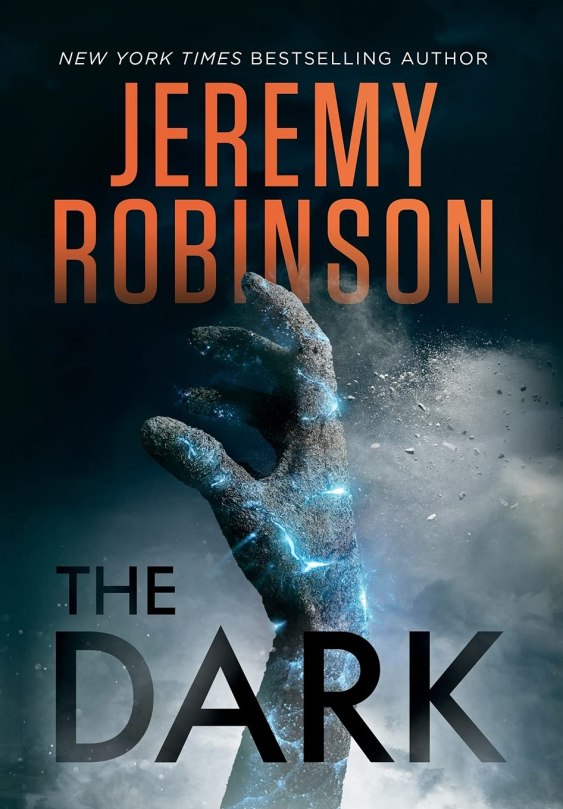
The Dark Cover

Another fantastic narrator whose work I have been appreciating lately is R. C. Bray, who has lent his voice to some amazing audiobooks.  I first came across Bray through his work on Michael Mammay’s Planetside series, including Planetside and Colonyside (one of the best audiobooks from the first half of 2021).  Bray did an outstanding job on these science fiction military thrillers, and his gruff voice was perfect for the veteran soldier the series followed.  However, Bray can also voice some other unique characters, a fact I recently discovered when I listened to the wildly entertaining horror novel, The Dark by Jeremy Robinson.  In this book, Bray voiced a stoner character who finds himself leading the fight against a horde of invading demons.  Not only did Bray really get into this different protagonist, but he helped to turn The Dark into one of the best audiobooks of the year.  I look forward to checking out more from Bray in the future, especially as he has already narrated a ton of books by Robinson that sound really cool.

James Marsters – Dresden Files series

Battle Ground Cover

The next entry on this list is someone who I was a fan of well before I enjoyed their audiobook work, actor James Marsters.  Best known for his roles in Buffy the Vampire Slayer and Angel, Marsters has also provided his voice to the audiobook versions of the Dresden Files urban fantasy series by Jim Butcher.  I found this out last year when I listened to the awesome latest entry in the series, Battle Ground, and I instantly fell in love with Marsters’ take on the various characters.  Marsters really dived into the role of titular protagonist Harry Dresden, and I appreciated all the cool voices he did throughout this novel.  When I decided to go back and check out the earlier entries in this series, I was very excited to see that Marsters narrated all these prior audiobooks as well, so it was an easy choice to check them out in audiobook as well.  I have so far enjoyed another four Dresden Files novels, Storm Front, Fool Moon, Grave Peril and Summer Knight, and each of them has featured some exceptional voice work from Marsters, which is really worth checking out.

Robert Petkoff – Star Trek audiobooks

Star Trek - Picard Cover

Each year there are a ton of Star Trek tie-in novels released, all of which get adapted to audiobook.  Of these multiple Star Trek books, nearly all feature the voice of Robert Petkoff.  Petkoff has an excellent voice for Star Trek, especially as he can perfectly replicate most of the Star Trek: The Original Series and Star Trek: The Next Generation cast.  I have already listened to a great number of his Star Trek audiobooks including More Beautiful Than Death by David Mack, Agents of Influence by Dayton Ward, The Unsettling Stars by Alan Dean Foster, Picard: The Last Best Hope by Una McCormack and The Captain’s Oath by Christopher L. Bennett, just to name a few.  I currently have several of his audiobooks currently loaded up on my phone, and I will hopefully listen to some of them soon.

Marc Thompson – Star Wars audiobooks

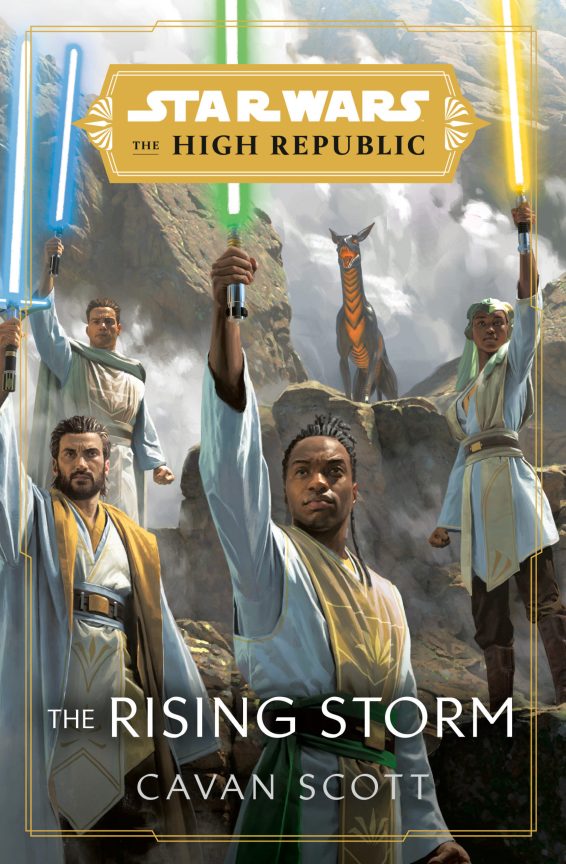
Star Wars - The Rising Storm Cover 2

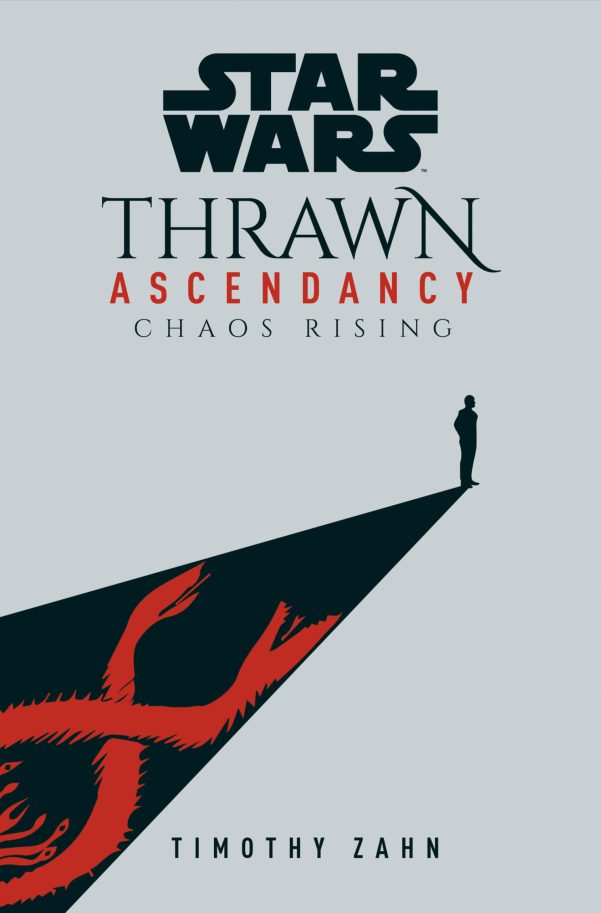
Moving from Star Trek to Star Wars the next narrator I need to highlight is the outstanding Marc Thompson.  Thompson is a wonderfully talented narrator who has been lending his voice to some of the best Star Wars tie-in novels out there, and perfectly bringing them to life.  I love the outstanding range of characters that he can voice, including those from the films, characters from the animated shows, and new characters never seen on screen.  I am a particular fan of the voice he uses for the character of Grand Admiral Thrawn, as he perfectly captures the character’s complexities, especially in books like Thrawn, Chaos Rising and Greater Good by Timothy Zahn.  Other impressive examples of his voice work can be seen in the audiobook versions of Scoundrels, Dark Disciple by Christie Golden, Light of the Jedi by Charles Soule and The Rising Storm by Cavan Scott.

Steven Pacey – First Law and Age of Madness trilogies

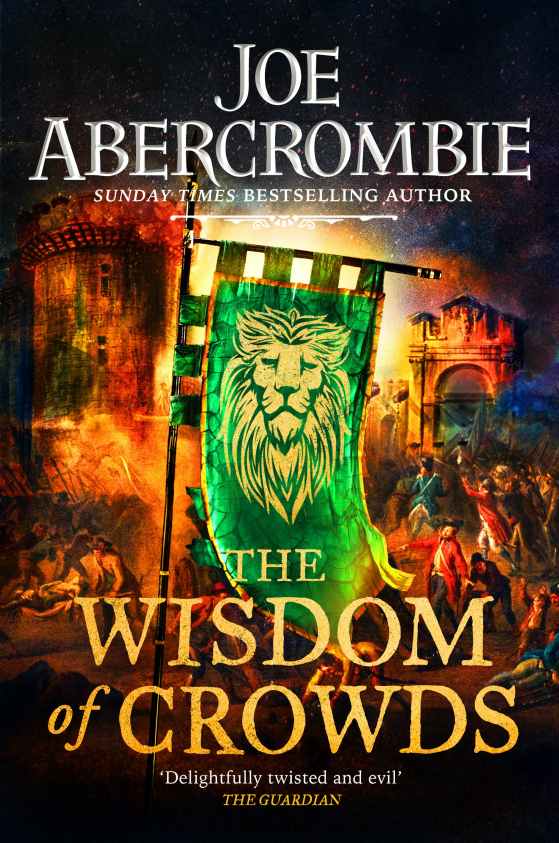
The Wisdom of Crowds Cover

I am a major fan of Joe Abercrombie’s First Law series, so I also must highlight the impressive Steven Pacey.  Pacey is a great narrator who I primarily know through his work on Abercrombie’s novels.  I deeply enjoyed the narration he provided to Abercrombie’s iconic dark fantasy series, the First Law trilogy, with each of the complex characters perfectly portrayed by this talented narrator.  Pacey really puts a lot of himself into this exceptional audiobook adaptions, and I was very happy that he continued to provide his voice to Abercrombie’s Age of Madness sequel trilogy, providing his exceptional voices to books like A Little Hatred, The Trouble with Peace and The Wisdom of Crowds.

Joe Jameson – King of Assassins and The Legacy of the Mercenary King series

The Two-Faced Queen Cover

The next entry on this list is Joe Jameson, a narrator whose voice I have been hearing a fair bit of lately.  Jameson is a very talented voice worker who has been narrating several amazing recent fantasy novels.  I first heard Jameson’s voice when I listened to the audiobook version of King of Assassins by RJ Barker, and I was particularly impressed by his impressive take on the intriguing characters contained within.  Following this, Jameson was also provided his voice to The Legacy of the Mercenary King series (currently made up of The Kingdom of Liars and The Two-Faced Queen), where I was deeply impressed with his exceptional ability.  I cannot wait to hear more of Jameson’s work on this series as it continues, and I am also thinking about listening to several unrelated novels that were also voiced by this talented narrator.

Nigel Planer/Stephen Briggs – Discworld series

Guards! Guards! Cover

There was no way that I could do a list about audiobook narrators without mentioning the epic duo of Nigel Planer and Stephen Briggs.  Both Planer and Briggs are talented actors and narrators, but I love them the most for their work on adapting the epic Discworld series by Terry Pratchett.  The Disworld books (such as Moving Pictures and The Last Continent), are my absolute favourite books, and I have so much love for them, especially in their audiobook format.  All the Discworld novels (as well as some other standalone books that Pratchett wrote), were voiced by either Planer or Briggs, with Planer voicing the first 23 books, while Briggs narrated the last 18 books.  Each of these narrators brings something a little different to the books they adapted, but both do an amazing job capturing Pratchett’s unique humour and compelling characters.  I would strongly recommend any Discworld audiobook that these two narrate, and I have so much appreciation for them.

Jonathan Davis – Star Wars audiobooks

Master & Apprentice Cover

Another great narrator who has lent his voice to the Star Wars tie-in genre is the talented Jonathan Davis.  Like Thompson, Davis is a leading Star Wars audiobook narrator, and he always does a great job portraying some of the iconic characters from the franchise.  I have had a lot of fun listening to Davis’ work on such books as Master & Apprentice by Claudia Gray, Lords of the Sith by Paul S. Kemp, Maul: Lockdown by Joe Schreiber and the Dooku: Jedi Lost audio drama by Cavan Scott.  I especially love Davis’ take on characters like Emperor Palpatine and Qui-Gon Jinn and I look forward to listening to more books from him in the future.

Jay Snyder – Gray Man series

One Minute Out Cover

The final audiobook narrator I need to highlight on this list is the fantastic Jay Snyder.  I have recently been really getting into the Gray Man books, and a lot of that is because of Snyder whose audiobook version of the last two novels, One Minute Out and Relentless, were pretty incredible.  I even recently went back and checked out the first novel in the series, The Gray Man, and I was really impressed by Snyder’s work on this initial book.  As I am intending to get through all the Gray Man books in the next little while, I will be hearing more of Snyder’s voice work in the future, and I cannot wait to see what other cool adventures he gets to narrate.

That’s the end of this latest list.  I think it turned out pretty well, and I liked the intriguing selection of narrators I ended up featuring.  Each of the above narrators are pretty damn amazing and I would honestly listen to any novel that they cared to lend their voices to.  Any audiobook narrated by them comes highly recommended and I am deeply excited to hear more from them in the future.  I had a fair bit of fun coming up with this list, and I think it is one that I will revisit in the future.  Hopefully the next version of this list will have more variety (such as more female narrators), and I cannot wait to explore even more awesome audiobooks in the future.  In the meantime, let me know who your favourite audiobook narrator is in the comments so I can check them out.

Waiting on Wednesday – Star Wars: The High Republic: Tempest Runner by Cavan Scott

Star Wars - Tempest Runner Cover

I also wanted to do a quick Waiting on Wednesday article on the upcoming Star Wars audio drama, Star Wars: The High Republic: Tempest RunnerTempest Runner, which will be written by the amazing Cavan Scott, will be the latest entry in the intriguing High Republic range of Star Wars fiction and will be released later this month.  I briefly mentioned this upcoming audio drama in another Waiting on Wednesday article, however, I was waiting to get some more details, such as the cool cover art above, before I discussed it.

For those unfamiliar with it, The High Republic is one of the most interesting and compelling current focuses of Star Wars fiction now.  Set around 200 years before the events of The Phantom Menace, High Republic media focus on a golden age of the Republic which is facing some major troubles, mainly in the form of the pirate group known as the Nihil.  Starting early this year with Light of the Jedi by Charles Soule, this era of Star Wars lore is proving to be a lot of fun, and there have been some great entries in the series, including Into the Dark by Claudia Gray and The Rising Storm by Cavan Scott, the later of which was particularly good.

Scott looks set to continue his awesome run of High Republic fiction with Tempest Runner, which appears to be a character specific sequel to The Rising StormTempest Runner will focus on one of the major High Republic antagonists, Lourna Dee, Tempest Runner of the Nihil, and has a very interesting story set around her.

Synopsis:


In this Star Wars audio original, delve into the cutthroat world of one of the High Republic’s greatest foes, the merciless Lourna Dee.

The Nihil storm has raged through the galaxy, leaving chaos and grief in its wake. Few of its raiders are as vicious as the Tempest Runner Lourna Dee. She stays one step ahead of the Jedi Order at the helm of a vessel named after one of the deadliest monsters in the galaxy: the Lourna Dee. But no one can outrun the defenders of the High Republic forever.

After the defeat of her crew, Lourna falls into the hands of the Jedi – but not before she hides her identity, becoming just another Nihil convict. Her captors fail to understand the beast they have cornered. Just like every fool she’s ever buried, their first mistake was keeping her alive.

Lourna is determined to make underestimating her their last.

Locked onto a Republic correctional ship, she’s dragged across the galaxy to repair the very damage she and her fellow Tempest Runners inflicted on it. But as Lourna plans her glorious escape, she makes alliances that grow dangerously close to friendships. Outside the Nihil – separated from her infamous ship, her terrifying arsenal, and her feared name – Lourna must carve her own path. But will it lead to redemption? Or will she emerge as a deadlier threat than ever before?

I really love the cool synopsis above.  It looks like Scott has a pretty fantastic story in place for this audio drama and I am pretty keen to see a villain-centric story, especially one that focuses on Lourna Dee, who has been particularly fun in some of the High Republic novels.  A prison drama in space has a lot of potential, especially in the Star Wars universe (Death Troopers and Maul: Lockdown are great examples of this), and I am very keen to see what compelling narrative Scott has planned.

I am also really keen to check out another full-cast Star Wars audio drama.  There have been two previous audio dramas in this current canon, Dooku: Jedi Lost, which was also written by Scott, and Doctor Aphra.  Both audio dramas have been particularly fun, and I have deeply enjoyed hearing the outstanding array of narrators and voice actors featured in them.  This latest audio drama has another particularly good cast, which includes some of my favourite Star Wars audiobook narrators.


Narrated by a Full Cast:

Jessica Almasy as Lourna Dee
Dan Bittner as Councilor Wittick
Orlagh Cassidy as Ola Hest
Sullivan Jones as Bala
January LaVoy as Tasia
Kathleen McInerney as Councilor Fry
Tara Sands as Sestin
Vikas Adam as H7-09 and Raleigh
Jonathan Davis as Andrik Keller and Asgar Ro
Neil Hellegers as Kassav, Yudiah Dee, and Jano
Saskia Maarleveld as Parr and Avar Kriss
Soneela Nankani as Muglan and Keeve Trennis
Marc Thompson as Pan Eyta, Sskeer, and Marchion Ro
Shannon Tyo as Quin and Nib Assek

The above cast sounds pretty impressive and I am very keen to see how they perform together.  It looks like Jessica Almasy is going to be the feature performer of this audio drama, and it will be great to see her take on Lourna Dee.  I am also very excited to hear more of January LaVoy (who did an amazing job narrating Star Wars: Victory’s Price earlier this year), Jonathan Davis (Master and Apprentice, Lords of the Sith) and Marc Thompson (Thrawn, Chaos Rising, Greater Good, Dark Disciple, Scoundrels), all of whom have done some great work recently.  There is also a very fun combination of characters there, and it will be interesting to see how they are worked into the plot.

Overall, Tempest Runner looks set to be a very exciting and compelling new addition to the Star Wars canon.  I am extremely keen to listen to this upcoming audio drama, especially as it features an exceptional cast, and it will probably be one of the standout pieces of Star Wars fiction in 2021.  I look forward to hearing this cool story unfold later this month, and I think this audio drama has an immense amount of potential.

Top Ten Tuesday – My Favourite Audiobooks from the First Half of 2021

Top Ten Tuesday is a weekly meme that currently resides at The Artsy Reader Girl and features bloggers sharing lists on various book topics.  The official topic for this week is Books I’d Want With Me While Stranded on a Deserted Island, but I am going to do something a little different and instead look at my favourite audiobooks from the first half of 2021.  This is a continuation of my Top Ten list from a few weeks ago that featured my favourite overall novels from the first half of 2021.

People familiar with my blog will know that I have a great deal of love for the audiobook format, and it is one of the main ways that I tend to check out books.  Each year I enjoy a great number of different audiobooks and use the format to check out recent releases and older novels.  I have been enjoying audiobooks for years, and it is amazing the various ways in which listening to a book can enhance your enjoyment.  A great narrator can really bring you into the story, and I find that listening to a book enhances the amount of detail that you can take in.  In addition, other features, such as great voices, music and sound effects can really make an audiobook something special, and there some great examples of that out there.  This year alone I have listened to several outstanding audiobooks, includes some of my favourite books from early 2021.  Because I love this format so much, I thought I would take this opportunity to highlight my favourite audiobooks from the first half of the year.

To pull this list off I had a look at all the 2021 releases that I listened to on audiobook to figure out my favourites.  It turns out that I have already gone through quite a few this year so there was a very large collection of potential additions to this list.  I was eventually able to whittle it down to the ten audiobooks I consider to be the best, as well as a generous honourable mention section.  There is a bit of a crossover with my previous Favourite Books from the First Half of 2021 list, but I think there are enough new additions to make this list worthwhile.  I did prioritise audiobook production and narration over story in a few places, as outstanding narration or use of music and sound effects can enhance the plot.  That is why so many Star Wars novels made this list, because they are awesome productions, which are really worth checking out.  I am pretty happy with how the overall list turned out and I think that the below entries really highlight what my favourite audiobooks are.


Honourable Mentions:

The Coward, written by Stephen Aryan and narrated by Matt Wycliffe

The Coward Cover


Serpentine, written by Jonathan Kellerman and narrated by John Rubinstein

Serpentine Cover


Prodigal Son, written by Gregg Hurwitz and narrated by Scott Brick

Prodigal Son Cover


The Girl and the Mountain, written by Mark Lawrence and narrated by Helen Duff

The Girl and the Mountain Cover 2


Top Ten List (No Particular Order):

The Two-Faced Queen, written by Nick Martell and narrated by Joe Jameson

The Two-Faced Queen Cover

One of my favourite books of the year, The Two-Faced Queen, is easily one of the best audiobooks as well.  There were actually two separate audiobook versions of this book, and I chose to go with the Joe Jameson version, since he previously narrated Martell’s debut novel, The Kingdom of Liars.  I am a big fan of Jameson, especially after his work on books such as King of Assassins by R. J. Barker, and he did another amazing job on this book.  The Two-Faced Queen audiobook is an excellent and addictive listen, and I would wholeheartedly recommend this format to anyone wanting to enjoy this awesome five-star novel.


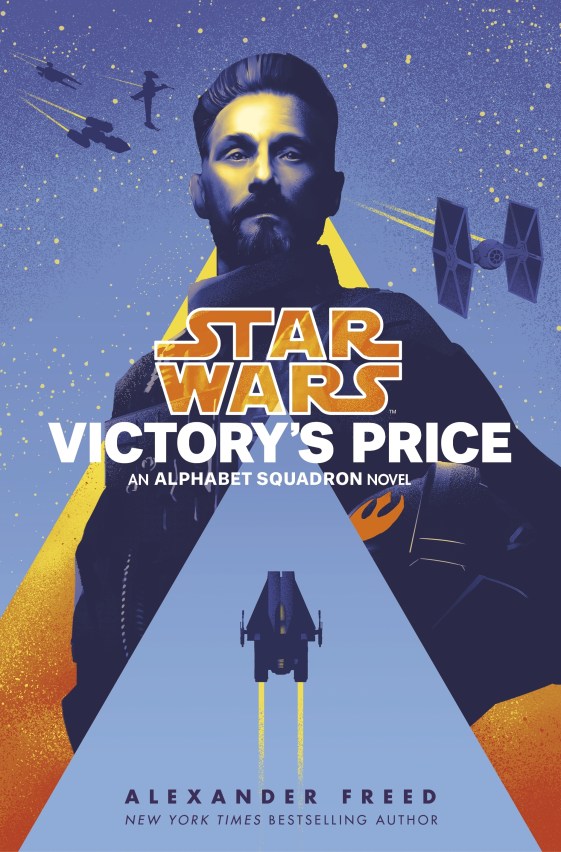
Star Wars: Victory’s Price, written by Alexander Freed and narrated by January LaVoy

Star Wars - Victory's Price Cover

Earlier this year, impressive author Alexander Freed finished off his Star Wars: Alphabet Squadron series with Victory’s Price, and in the process created one of the best books of 2021.  This audiobook massively enhances the already incredible and moving narrative within this exceptional novel, utilising outstanding voice work from January LaVoy, as well as the iconic Star Wars score and sound effects.  Easily one of best audiobooks of the year.


Relentless, written by Mark Greaney and narrated by Jay Snyder

Relentless by Mark Greaney Cover

One of the leading authors of spy thrillers, Mark Greaney, produced another intense and exciting novel this year with Relentless.  Thanks to some excellent voice work from Jay Snyder, the Relentless audiobook was pretty damn impressive, and you are in for a real treat with this exhilarating novel.


Star Wars: Light of the Jedi, written by Charles Soule and narrated by Marc Thompson

Star Wars - Light of the Jedi Cover

Another outstanding Star Wars audiobook was Light of the Jedi, the introductory novel in the new High Republic range.  Just like Victory’s Price, Light of the Jedi makes full use of the Star Wars music and effects to produce a fantastic listen.  However, Light of the Jedi also features the incredible voice work of Marc Thompson, one of the best narrators utilised by the Star Wars franchise.  Thompson produces a raft of great voices to highlight the new characters featured within this novel and it was really fun to hear him tell this story.  Thompson is lending his vocal talents to several other outstanding Star Wars audiobooks this year, including the latest High Republic novel, The Rising Storm, which is another great audiobook to check out.


The Shadow of the Gods, written by John Gwynne and narrated by Colin Mace

The Shadow of the Gods Cover

After hearing some incredible things about the latest John Gwynne novel, I ended up checking out The Shadow of the Gods on audiobook.  Not only was this book one of the absolute best fantasy releases of 2021 but the audiobook format was pretty damn exceptional.  Colin Mace’s voice really fit the dark fantasy setting and he really dives into the complex characters to highlight their deeper feelings and hidden rages.  An impressive and captivating listen.


Later, written by Stephen King and narrated by Seth Numrich

Later Cover

I was deeply impressed earlier this year when I checked out the audiobook format of the latest Stephen King novel, Later.  Outstanding new narrator Seth Numrich really dives into this excellent novel, and I had a wonderful and freaky time getting through this fantastic audiobook.


The Bone Maker, written by Sarah Beth Durst and narrated by Soneela Nankani

The Bone Maker Cover

I had an absolute blast listening to the latest great fantasy novel from Sarah Beth Durst, The Bone Maker, especially as narrator Soneela Nankani does a great job bringing the novel’s damaged protagonists to life.


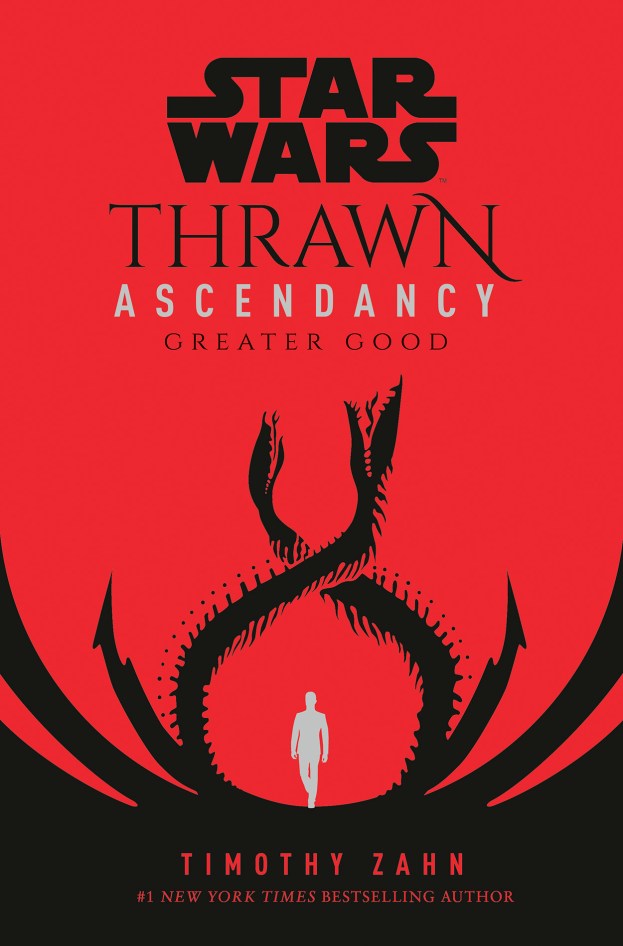
Star Wars: Thrawn Ascendancy: The Greater Good, written by Timothy Zahn and narrated by Marc Thompson

Star Wars - Thrawn Ascendancy - Greater Good Cover

The final Star Wars audiobook on this list is the second Thrawn Ascendancy entry, The Greater Good.  Thompson once again lends his incredible voice to this great book, bringing the unique characters to life.  However, his best work is reserved for main character Grand Admiral Thrawn, as Thompson perfectly replicates the character’s voice from the Star Wars Rebels animated series.  This makes for a complex and powerful audiobook, and I loved every second I spent listening to it.


Colonyside, written by Michael Mammay and narrated by R. C. Bray

Colonyside Cover

One of the fastest rising science fiction authors, Michael Mammay, continued to impress earlier this year with Colonyside, the third entry in the Planetside series, which was another awesome read.  You really need to listen to this novel’s audiobook format, as narrator R. C. Bray brings a certain necessary gruffness and fun to the central character.  An amazing book to listen to!


The Mask of Mirrors, written by M. A. Carrick and narrated by Nikki Massoud

The Mask of Mirrors Cover

The final entry on this list is the great fantasy novel, The Mask of Mirrors by M. A. Carrick.  The Mask of Mirrors is a particularly fun and intriguing read, and I found myself really drawn to its audiobook format.  This is mainly because of narrator Nikki Massoud, who strategically utilises a fantastic range of voices and accents to turn this amazing book into an incredible listening experience.


That is the end of my latest list.  As you can see, I have a pretty typical Unseen Library Top Ten List (I’ve got to fit in as many Star Wars novels as possible), but I really do think this represents all of my absolute favourite audiobooks from the first part of 2021.  All of the above audiobooks come highly recommended, and in my opinion, the audiobook format really enhances all of these great reads.  Let me know what your favourite 2021 audiobooks are in the comments below, and I look forward to seeing which of the above make my Top Audiobooks of 2021 list later this year.

Star Wars: The High Republic: The Rising Storm by Cavan Scott

Star Wars - The Rising Storm Cover

Publisher: Penguin Random House Audio (Audiobook – 6 July 2021)

Series: Star Wars – The High Republic

Length: 15 hours and 32 minutes

My Rating: 4.75 out of 5 stars

Amazon

Prepare to dive back down into one of the most unique parts of the current Star Wars canon, as bestselling author Cavan Scott presents the next exciting adventure in The High Republic era, The Rising Storm.

The High Republic is a massive collaborative multimedia Star Wars project that started earlier this year and which represents a new area of focus for the Star Wars franchise.  Set in the Golden Age of the Republic, hundreds of years before the events of the Skywalker Saga, The High Republic currently contains several amazing pieces of tie-in fiction, with unique tales making up an overarching storyline.  I have so far read two entries in this series, the introductory novel Light of the Jedi by Charles Soule and the great young adult book Into the Dark by Claudia Gray.  The next major entry in this series is the fantastic and exciting The Rising Storm by Cavan Scott, which continues several storylines from Light of the Jedi.  Scott, who previously wrote the fantastic Dooku: Jedi Lost audio drama, has come up with a fascinating and compelling novel that I really enjoyed.

Two hundred years before the events of The Phantom Menace, the Republic was at its zenith, with the Jedi leading the expansion outwards to the Outer Rim.  However, following the Great Hyperspace Disaster, the Republic’s safety and security looks uncertain.  Even after the creation of Starlight Beacon, the Outer Rim is still a dangerous place, especially with the machinations of the notorious pirate group, the Nihil, as well as the spreading attacks from the plant monsters known as Drengir.

Determined to show that the Republic and the principles that govern it are still strong, Chancellor Lina Soh has organised the Republic Fair on the planet of Valo.  The fair will bring together cultural displays, new technology, Jedi artifacts and other wonders of the galaxy in a massive celebration to demonstrate the possibilities that an expanding Republic will have on the entire galaxy.  Attended by high-ranking Republic dignitaries, visiting diplomats, celebrities, leading scientists and prominent Jedi, all eyes in the galaxy will be on the fair and its participants.  However, some of these watching eyes have far more hostile intent and are determined to see the Republic Fair fail at all costs.

The most dangerous of these is Marchion Ro, the mysterious and unpredictable Eye of the Nihil.  Under his leadership, the Nihil have achieved much infamy and caused inordinate destruction throughout the Outer Rim, and Ro is determined to keep the Republic and the hated Jedi out of his territory.  As the fair begins, Ro orders a devastating attack that will shake the very galaxy to its core.  As Jedi such as Stellan Gios, Bell Zettifar and Elzar Mann attempt to hold back to the tide of evil descending on Valo, they are about to discover that there is something far more dangerous afoot in the galaxy.  Marchion Ro has uncovered an ancient evil and the entire galaxy, and every Jedi in it, is about to fear his wrath.

Now this was an awesome book, and one that is really starting to make me fall in love with The High Republic.  Scott has produced an intense and powerful story that continues to develop some of the best The High Republic characters, while also advancing some great storylines established in the previous novels and comics.  I had a wonderful time getting through this book, and this may be one of my favourite The High Republic novels so far.

This book has an awesome and captivating narrative to it.  Set about a year after the events of the first High Republic novel, The Rising Storm quickly introduces several intriguing storylines that each follow a different key character.  This includes a great storyline surrounding Elzar Mann as he attempts to decipher a warning given to him by the Force, as well as the tale of the conflicted and distracted Jedi apprentice Bell Zettifar.  There is also great storyline that follows a new character, mercenary Force user Ty Yorrick, as she takes on a new contract, and several storylines that follow key characters in the Nihil.  All these initially separated storylines are quite fun and do a good job setting up the various main characters, as well as establishing the current relevant events occurring in the galaxy.  While these individual storylines are quite fun and feature a mixture of intriguing characters, they swiftly come together into one combined narrative, when all the participants arrive at Valo for the Republic Fair.  Based on the book’s synopsis and the initial planning by the Nihil, you know that the fair is going to be attacked in some way, and Scott makes sure to ramp up anticipation for the upcoming carnage, showing multiple scenes that could lead into it.  However, even after all that, I was still not quite prepared for how amazing the main part of the novel turned out to be.

The eventual raid on the fair ended up lasting for quite a substantial part of the novel, as a coordinated attack separates the key characters.  With communications down and chaos reigning all around them, the protagonists are on their own, with each of their separate storylines focusing on their own encounters with the Nihil.  The entire raid is utter bedlam and proves to be a hotbed of action, intense moments, and dangerous character development.  I was honestly surprised at how dark parts of this book got, and readers are guaranteed a thrilling experience as there are several outstanding and intense action sequences.  Each of the main characters is effectively highlighted during this period, and readers will quickly become engrossed in their storylines and their attempts to navigate the dangers they encountered.  The entire raid sequence comes to an end with a decent part of the novel still left, which I initially thought was a bit of a mistake, as Scott could have ended the novel perfectly in the attack’s aftermath.  Instead, he constructed an incredible final sequence that really tied the entire narrative together, resulting in a memorable conclusion that sets up the next wave of novels perfectly.  While I did feel the story could have used a little bit of trimming, this was an overall excellent narrative, which I think was stronger than the preceding Light of the Jedi, mainly because it did not require the universe setup that Soule was required to chuck in.

While I deeply enjoyed The Rising Storm’s addictive story, this novel is a bit of a niche read and is mostly going to appeal to established fans of the franchise.  The Star Wars extended universe is an interesting and enjoyable place to explore, but it can be easy to get a little lost while checking out these books.  This is especially true with the new High Republic range, which takes the reader to a fictional period that has not been introduced to a wider universe either in a film or television series.  Due to its position as a second wave High Republic novel, you really need to check out some of the earlier works in the series before you try this one out, especially Light of the Jedi, which sets up most of the storylines and characters featured in this novel.  It is also important to add that this novel ties into several of the other High Republic comics and novels.  Events from these books and comics are referenced throughout The Rising Storm as Scott’s key characters interact with the protagonists of these other works, such as the junior novel, Race to Crashpoint Tower.  Knowledge of some of these contemporaneous pieces of fiction is not 100 per cent necessary, although several plot points and references become a lot clearance once you recognise the connection.  While Scott did do his best to make story accessible to new readers, I think that most High Republic newcomers would be better served reading Light of the Jedi first, which will make it so much easier to enjoy this awesome novel.

One of the more difficult things about reading a High Republic novel is the lack of any recognisable characters from the Star Wars films or television shows, as the only character from them alive at this point is Yoda (who keeps disappearing).  However, I found myself getting really invested in the complex and intriguing characters featured in The Rising Storm, as Scott makes use of both original characters and characters introduced in previous pieces of High Republic fiction.  This novel focuses on a huge selection of supporting characters, each of whom have their own adventures and stories.  One of my favourites was damaged Jedi Elzar Mann.  Mann is a troubled being who spends most of this novel haunted by both a dark vision from the Force and his unrequited and forbidden love to his friend and fellow Jedi Avar Kriss.  Because of this, Mann spends most of the novel walking the very edge of the Jedi code, breaking nearly every rule he can, including that major one about not falling in love or having a physical relationship with someone.  This sets him on a knife’s edge, and when the Nihil come, he is pushed dangerously close to the Dark Side (which mirrors Anakin’s fall in several ways) with some spectacular results.  This portrayal of Mann is one of the most compelling and exciting in the entire novel, and I appreciated the inclusion of a rogue Jedi.  Another complex Jedi character that I enjoyed was apprentice Bell Zettifar, who was a major point-of-view character in Light of the Jedi.  Bell is still reeling from the events of the first book where his master was apparently killed by the Nihil.  Because of this and other traumatic events, Bell spends much of the novel doubting the Force and his place in it.  I found myself really drawn to this character, and I appreciated the tough journey he was going on.  Unfortunately, it looks like Bell is going to go into some very dark places in the future, which should make for some excellent and moving storylines.

Aside from Mann and Bell, another great character I liked was Stellan Gios, a Jedi recently elevated to the Jedi Council.  Stellan, who had a minor role in previous pieces of High Republic fiction gets a lot more focus in this novel and proves to be a fantastic point of view character.  He is another complex figure, especially as he also has doubts and regrets, despite his position as a Council member.  I saw Stellan as the Obi-Wan Kenobi of the High Republic (partially because of the voice used by the audiobook narrator) and I liked his mostly calm demeanour, unrelenting friendship with the wilder Elzar Mann and the way he acts as straight man to several unusual Jedi characters.  Stellan goes through a lot in The Rising Storm, and it was fantastic to see him continuously overcoming adversity as he becomes more use to his place on the Council.  I also deeply enjoyed the character of Ty Yorrick, who was probably the best original character in this novel.  Ty is a former Jedi apprentice turned rogue mercenary who uses her Force abilities and spiked purple lightsaber to hunt monsters.  Despite her aversion for getting mixed up with the Jedi, Ty finds herself at the Republic Fair and must contend with both Jedi and Nihil.  While Ty was not the most developed character in this novel, I really liked her unique style and the fantastic mentor-student bond she eventually forms with Elzar Mann.  She has a lot of potential as a character, and I can see her becoming a major figure in the High Republic novels.

Some of the final characters I need to mention include Rhil Dairo, a spunky reporter who finds herself in the middle of all the key events of the book, recording with her cam droid.  Rhil is a fantastic and fun reporter character, much in the vein of Lois Lane, who can kick ass and get the scoop at the same time.  I also loved the scenes that featured Orbalin, a Jedi archivist and history buff.  Despite his more academic inclinations, Orbalin is quite a fun character who proves to be a real badass, especially as he manages to hold off several Nihil characters, including the lethal Lourna Dee, while giving a history lesson.  Finally, it was also great to see more of Wookie Jedi Burryaga, the cuddliest and nicest Jedi of all time, who everyone loves and who the reader feels inordinately protective of.  All these protagonists and more add so much to The Rising Storm’s narrative, and it was absolutely great to see all of their storylines unfold.

I am also deeply enjoying the villains of The High Republic, the Nihil.  The Nihil are a collection of murderous and self-centred pirates, who use their unique technology and tactics to bedevil the Republic and the Jedi.  With their own unique look and style, which is a mixture of spacefaring Vikings and Mad Max villains, the Nihil are a pretty fun group of characters to follow.  After a very strong introduction in Light of the Jedi, they have another amazing showing in The Rising Storm, achieving some major acts of destruction.  Thanks to their weird weapons, violent attitude and being constantly high on a cocktail of drugs and stimulants, the Nihil prove to be pretty dangerous opponents, even to the Jedi.  This makes for some very unique fight sequences, and it was fascinating to see the Jedi overwhelmed by these criminals.  At the same time, there is also an intriguing focus on the leadership of the Nihil, as the top commanders, the Tempest Runners, fight for dominance against each other and Marchion Ro.  Ro is proving to be a particularly intense and fascinating villain and Scott really builds on the character in this novel, showing more of his flaws, his motivations and his abilities to deceive and destroy.  There are several amazing storylines following Ro throughout this novel, including one where he obtains a mysterious evil item from the past.  The eventual partial reveal of this plot device results in The Rising Storm’s memorable conclusion and the High Republic creative team clearly has some fantastic plans for Ro in the future and they are turning him into one of the more complex and dastardly villains in the entire Star Wars canon.

As is becoming my recurring habit, I ended up listening to an audiobook version of this Star Wars novel.  This of course was a wonderful experience, as the team behind these books ensured that this latest Star Wars audiobook was the usual audio treat that I have come to love.  Featuring a decent run time of just over 15 and a half hours, The Rising Storm audiobook was an exceptional listen that I managed to power through in just over a week and which proved to be an exceptional way to enjoy this Star Wars adventure.  The entire narrative of The Rising Storm is enhanced and supported by a range of awesome and iconic Star Wars sound effects and music, which are intended to draw the listener into the story.  Both the sound effects and music are used to incredible effect throughout, and I think that they both added so much to my overall enjoyment of The Rising Storm.  The sound effects do a remarkable job presenting the ambient noise of every single scene, with crowd noises, the hum of a lightsaber, the engine noises of a ship or the sounds of blaster fire, constantly played in the background.  I was particularly impressed by the chaotic sound effects used during the Nihil attack on the fair, as you are treated to background noises of terror and destruction for several hours, which helps to highlight just how devastating the entire affair is.  In addition, the always impressive John Williams musical score is so much fun to hear, and it was put to particular good use in several significant scenes to enhance dramatic impacts.  I was extremely moved when I heard some of this music, as it either pumped me up during key action scenes (Duel of the Fates always gets me hyped), or to be deeply saddened when the more tragic musical cords struck up.

In addition to the exceptional use of sound effects and music, I also was deeply impressed with the incredible voice work featured in this audiobook.  Leading Star Wars narrator Marc Thompson once again lends his voice to this audiobook, continuing the work that he did in the Light of the Jedi.  Thompson has previously narrated some of my favourite Star Wars audiobooks, including Thrawn, Chaos Rising, Greater Good, Scoundrels, Dark Disciple, and the Doctor Aphra audio drama.  I also really enjoyed the awesome work he did in The Rising Storm, as Thompson not only revises the many voices that he introduced in Light of the Jedi but also adds in several new ones for the new characters.  I felt that various voices that Thompson did fit each of the characters extremely well, and he was able to perfectly personify their personality and written nature using a variety of fun accents.  I also found that Thompson was able to highlight the various emotions that the characters were feeling, giving the listeners a great sense of what they were feeling through his tone.  It was also cool to hear the combination of sound effect and Thompson’s voice when it comes to several alien characters featured within the audiobook, especially those whose voices were altered by technology.  All this outstanding voice work, combined with the awesome sound effects and music, helps to turn The Rising Storm into an absolutely incredible and addictive audiobook, and this is easily the best way to enjoy this fantastic Star Wars book.

The High Republic continues to expand as the amazing Cavan Scott adds his own unique spin on events with the exciting and memorable Star Wars: The Rising Storm.  This latest addition in the intriguing High Republic range does a fantastic job introducing the next stage of this unique Star Wars time period, complete with a devastating event, some major changes and some outstanding new characters.  I had an incredible time reading this great novel, and The Rising Storm is a must read for all fans of the Star Wars franchise, especially in its audiobook format.  If you have not gotten into the High Republic yet, you are missing out, and I cannot wait to see what happens next.  I will also have to make sure to grab a copy of Cavan Scott’s next Star Wars audio drama, Tempest Runner, a High Republic entry which is set for release in a couple of months and which will tell the tale of one of the more intriguing Nihil characters, Lourna Dee.

Star Wars - The Rising Storm Cover 2

Amazon

Star Wars: Thrawn Ascendancy: Greater Good by Timothy Zahn

Star Wars - Thrawn Ascendancy - Greater Good Cover

Publisher: Penguin Random House Audio (Audiobook – 27 April 2021)

Series: Thrawn Ascendancy – Book Two

Length: 16 hours and 17 minutes

My Rating: 4.75 out of 5

Amazon

One of the most impressive authors of Star Wars fiction in the world today, the legendary Timothy Zahn, returns with another epic entry in his Thrawn Ascendancy series, Greater Good, which continues to explore the early life of that awesome Star Wars character, Grand Admiral Thrawn.

Zahn is an outstanding author who has been writing Star Wars fiction since 1991, with the highly regarded Heir to the Empire.  Since then, Zahn has written several amazing Star Wars novels in both the current canon and the Star Wars Legends canon.  While I have not read all of Zahn’s Star Wars novels (yet!), the ones I have were all incredible and are some of my all-time favourite Star Wars novels (such as the awesome Star Wars: Scoundrels).  However, his most distinctive works have all surrounded the awesome character of Thrawn.

Grand Admiral Thrawn is an alien officer in the Imperial Navy, renowned for his amazing tactical knowledge, brilliance in battle and ability to discern insights about his opponents by observing their personality or culture, especially art.  Ever since his introduction in Heir to the Empire, Thrawn has been a firm favourite among the fans, so much so that he was one of the few characters from the Legends extended universe reintroduced in the new canon.  This reintroduction was done in the third season of the Star Wars: Rebels animated series, where he served as an impactful antagonist for the third and fourth season.  It also looks like Thrawn will also be getting a live-action appearance at some point in the future after his name was dropped in The Mandalorian, which is pretty damn exciting.

The character has been heavily featured in the current range of Star Wars novels, as Zahn was brought back in to write some exciting new Thrawn-based novels.  This started with a brand new Thrawn trilogy in 2017, made up of Thrawn, Alliances and Treason, which showed how Thrawn joined the Imperial Navy and his early career as an officer.  These novels were all incredible reads (Thrawn got a five-star review from me, and Treason was one of the best books I read in 2019), and I loved the character’s unique adventures.  Thrawn’s story was furthered expanded last year with Chaos Rising; the first novel in Zhan’s Thrawn Ascendancy series, which examines the character’s pre-Empire life.

While the armies of the Republic and the Separatists battle for supremacy in the Clone Wars, another deadly conflict is occurring beyond the bounds of known space.  Deep in the unexplored regions, known as the Chaos, the mighty Chiss Ascendancy have just defeated the forces of General Yiv the Benevolent, shattering his empire, the Nikardun Destiny, and bringing peace back to their territories.  As the Chiss Ascendancy returns to normal, they are unaware that they are still under attack from a malevolent and clever foe that is determined to finish off the Chiss once and for all.

On a Chiss agricultural planet, a group of peaceful and seemingly harmless aliens have arrived, seeking to temporarily make a home.  In addition to their good nature, kind hearts and unique spices, these aliens have also brought something of great value that many people will kill for.  As news of the alien’s resources spread, cracks begin to appear in the very foundation of the Ascendancy, as the various powerful families fight for supremacy.

With civil war on the horizon, the future of the Chiss Ascendancy may lay in the hands of the brilliant and infamous Senior Captain Mitth’raw’nuruodo of the Chiss Expansionary Defence Fleet.  Thrawn, who is personally responsible for the defeat of Yiv and the Nikardun, is currently investigating the origins of their attack on the Ascendancy and, in doing so, comes across a previously unknown planet destroyed by its own deadly civil war.  As Thrawn attempts to explore this new mystery, he soon finds himself in the midst of a dark conspiracy.  An unseen force is attempting to take control of the entire Chaos, and the Chiss are the greatest obstacle to their plot.  Hamstrung by politics, family ties and his own inability to see the deeper motivations of his fellow Chiss, can Thrawn stop the oncoming conflict before it is too late, or will the Chiss Ascendancy burn from the inside out?

Zahn has once again produced an exceptional and outstanding piece of Star Wars fiction that further explores the fantastic early adventures of his greatest creation.  Greater Good is an excellent middle novel in this cool trilogy, and readers will deeply enjoy this book’s blend of intricate storytelling, great characters and impressive universe-building.  All of this results in an exciting and compelling novel that quickly draws readers in and has absolutely no trouble keeping their attention.  I had an outstanding time getting through this great novel and I was able to power through its audiobook format in no time at all.

At the heart of this outstanding novel is a clever and addictive narrative that follows Thrawn and a bevy of supporting characters as the Chiss Ascendancy finds itself in danger from an indirect attack.  Greater Good follows on immediately after Chaos Rising, and examines the next stage of a compelling conspiracy against the Chiss, while also focusing on Thrawn’s battles during this period.  The author utilises a substantial number of alternate perspectives to tell a rich and varied story and, while Thrawn is the centre of much of the book’s plot, Zahn has widened the focus of the novel with several compelling storylines and characters.  These include an investigation into the origins of a Nikardun attack on a remote planet, several jaunts out into different parts of space, internal political conflicts that are a threat to Thrawn, and exciting encounters with other inhabitants of the Chaos.  There is also a substantial focus on a new plot to destroy the Chiss, which includes several compelling flashback sequences that examines the origins and initial planning of the conspiracy.  This use of flashback is pretty impressive, and while certain aspects of the antagonist’s storyline are a tad odd, it was still an interesting tale.  I really enjoyed the vast array of different storylines and character arcs that really highlighted the richness of the setting and the unique plotlines they could inspire.  While some of these storylines might seem rather disconnected at times, Zahn cleverly brings them together at the end of the novel, resulting in a very impressive and intriguing conclusion.

As with most of Zahn’s novels, Greater Good is loaded to the brim with Star Wars lore and intriguing universe-expanding ideas as the author dives deeper into the origins, culture and history of the Chiss Ascendancy.  Zahn really expands on what he introduced in his previous Thrawn and Thrawn Ascendancy novels, especially Chaos Rising, and highlights the proud Chiss warrior culture.  A vast amount of new information of the Ascendancy is featured within this latest book, and the reader gets a fascinating look at the planets, political makeup and social hierarchy of this race, especially at the family level.  Not only is this really intriguing, especially for those readers who have enjoyed Zahn’s previous additions to the Star Wars canon, but the author uses it extremely well within the plot.  Much of the main narrative, including the conspiracy that threatens to destroy the Chiss, is based on their family makeup and the accompanying politics and family mentalities that go along with that.  I felt that Zahn integrated this into the narrative extremely well, forcing the characters to navigate their unusual and insane politics in order to survive.

The author also expands the reader’s knowledge of the previously unexplored area of the Star Wars universe known as the Chaos.  The Chaos, thanks to certain celestial anomalies, is harder to navigate and transverse than regular space; it is a mess of isolated planets, unknown societies and new alien races.  Zahn introduces several new aliens throughout this novel, with each unusual race playing an interesting role in the overall story.  I love the unique Star Wars setting of the Chaos, especially as many of the established Star Wars rules and technology are not as present.  For example, the various warships have some different armaments and shielding, such as acid-filled missiles, resulting in some unique and previously unseen battle tactics.  It was also interesting to see the different takes on the Force that the inhabitants of the Chaos have come up with.  Without any Jedi present, the various races within the Chaos each have their own interpretations or uses for the Force, such as the Chiss Sky-Walkers, young children who can use the Force to help ships navigate the Chaos more effectively, and it was intriguing to encounter different views of this throughout Greater Good.  Hardcore Star Wars fans will enjoy the intriguing additions that Zahn makes to the expanded universe, and the final few pages hint at some major lore introductions occurring in the next Thrawn Ascendancy novel that I am rather curious about.

While this was a great book and piece of Star Wars fiction, I did feel that it required some pre-knowledge of Zahn’s prior works.  The narrative of Greater Good is heavily linked to the events of its preceding novel, Chaos Rising, and while the author does re-explain some of the elements or storylines, a lot of the plot does rather assume you read the first book.  Having greatly enjoyed Chaos Rising, I was able to follow this quite easily, but I could easily see some newer readers getting a little lost or overwhelmed in places.  In addition, parts of the Thrawn Ascendancy series are heavily linked to the events of the previous Thrawn trilogy, and certain references or comments might not make much sense unless you had already read these books.  As a result, I would suggest newer readers check out some of Zahn’s earlier novels first, although it is still possible to enjoy Greater Good without it.  Those readers who have enjoyed these prior books are definitely in for a great treat though and will find the deeper dive into the Chiss and Thrawn’s past to be really enjoyable.

I cannot review one of Zahn’s Thrawn-centric novels without talking about the awesome space battle sequences they contain.  Each of these awesome books features some impressive and detailed space battles as the protagonists encounter a range of ships and fleets that they must fight against.  Greater Good is a particularly good example of this, as Zahn has written several outstanding sequences that are attention-grabbing and fun.  The sheer level of detail and planning that Zahn puts into these action sequences is incredible, and you get an amazing sense of what is occurring during the battle as well as the associated tactics and plans.  The sequences involving Thrawn are easily the best, as Zahn goes out of his way to showcase the character’s tactical brilliance.  This results in some very elaborate sequences, as Thrawn quickly determines the weaknesses of his opponents and uses that knowledge to craft intricate and somewhat insane strategies to utterly defeat them.  Watching these plans come to fruition is always amazing, especially as the reader has no idea in advance what is going on in Thrawn’s mind.  Instead, you only get to see the brilliance and impact of his tactics at the same time as the other characters, and it is always a lot of fun seeing how Thrawn was able to come to his conclusions about his opponents and use them against him.  Zahn comes up with some outstanding sequences for Greater Good that are guaranteed to leave readers on the edge of their seats.

In addition to the awesome narrative, action and universe-building, Greater Good also features an awesome collection of characters, each of whom add so much to the novel.  Naturally, the most impressive character is Thrawn himself.  Even amongst his own people, Thrawn is a strange being who sees the world in a very unique way, and everyone he encounters is impressed by his tactical know-how and unnatural observational skills.  I always enjoy the way in which Zahn depicts Thrawn’s actions in the novel, as Thrawn is one of the few characters whose perspective we do not see.  Instead, Thrawn is only portrayed through the eyes of the major point-of-view characters who observe and react to his actions.  Not only does this remove the inherent difficulties in depicting Thrawn’s mind, but it really enhances the impacts of his deductions and subsequent reactions.  The observing characters view Thrawn making his moves or claiming some impossible bit of knowledge, and then slowly work out how he did it, either through their own observations or thanks to comments by Thrawn.  This is done in a similar manner to the classic Sherlock Holmes novels, with the supporting characters in Greater Good acting in the role of Watson to witness and be impressed by the protagonist’s intelligent leaps.  Like with Sherlock Holmes, the use of the outside narrator in Greater Good deeply enhances the impact of Thrawn’s action, resulting in some awesome scenes.

One of the intriguing aspects of Thrawn’s character in Greater Good that I appreciated was the way in which Zahn continued to highlight his character’s one major weakness: politics.  Thrawn has absolutely no concept of politics, family alliances or some of the inner conflicts impacting the Chiss, and as such is unable to defend himself or others against political ambitions or vindictiveness.  I always really enjoy this trait in the Thrawn novels, especially as it gives Thrawn a noticeable weakness, while also enhancing the impact his fellow supporting characters have, as all of them understand politics better and can help Thrawn in this arena.  This blindness to political realities is particularly important in Greater Good, as not only is Thrawn being attacked by politicians from within his own family but the main threat facing the Chiss is more political than militaristic in nature.  This results in a rather intriguing handicap for Thrawn throughout Greater Good, and it was cool to see the sort of plan that the character came up with to compensate for it, as well as the mistakes he then makes.  Overall, Thrawn is a pretty awesome and fascinating character to follow, and I cannot wait to see what events happen to him in the final book in the trilogy.

Aside from Thrawn, I also really enjoyed some of the supporting characters featured throughout Greater Good.  In addition to being perfect conduits to observing Thrawn’s actions, each of these characters have their own intriguing storylines, many of which are continuing from Chaos Rising.  Examples of this include Thrawn’s old friend, Admiral Ar’alani, Thrawn’s second in command Mid Captain Samakro, the former Sky-Walker Thalias, who has tied her fate with that of Thrawn, and the powerful Mitth family politician, Thurfian, who serves as a secondary antagonist.  Each of these characters is further developed in Greater Good, and I enjoyed some of the cool storylines that Zhan is coming up for them.  Thurfian’s storyline is particularly intriguing going into the next novel, as the final scenes hint that he is going to come into possession of some very interesting knowledge soon.

Zhan also introduces several great new characters throughout Greater Good, many of whose narratives are tied into the malevolent plot to destroy the Chiss.  I found myself quite intrigued by the character of Lakinda, a fellow Senior Captain in the Chiss Expansionary Defence Fleet, who serves alongside Thrawn.  Not only does Lakinda offer an intriguing alternate observation angle on Thrawn, tinged with a bit of jealously and mistrust, but this character provides greater insight into the Chiss family structure.  Lakinda is an extremely loyal member of a mid-tier Chiss family, and she often finds her loyalties conflicted as she attempts to choose between family and the fleet.  This results in some captivating and emotional sequences which really help to highlight the unusual nature of Chiss society.

I also quite liked how Zahn spends time following the main antagonist of Greater Good, the mysterious alien Haplif.  Haplif and his people have been hired by a mysterious third party to orchestrate chaos and dissent within the Chiss Ascendancy to destroy them.  As a result, he masterminds an ingenious plot to promote conflict between various members of the Ascendancy.  I really enjoyed the complex and clever plot that this character came up with, and it was really cool to see him manage to manipulate several people throughout the course of the book, and he was an interesting alternative to the previous antagonist, Yiv.  It was a little odd to see Haplif, a supposedly brilliant planner and master manipulator, find his plans constantly stymied by a spoiled teenager and a backwater rancher, but it was fun to see his arrogance work against him.  All of these characters are amazing, and I really appreciate the time and effort that Zahn put into developing them.

It will not surprise anyone that I ended up listening to this Star Wars novel’s audiobook format rather than seeking out a physical copy of the book.  I absolutely love Star Wars audiobooks, and this was another excellent example that comes highly recommended.  The Greater Good audiobook has a runtime of just over 16 hours, which, while substantial for a Star Wars novel, is extremely easy to get through, especially once you become engrossed in Zahn’s cool story.  Like most modern Star Wars audiobooks, Greater Good makes amazing use of the classic Star Wars sound effects and film score to enhance the story.  I particularly enjoyed its use in Greater Good’s various space combat sequences, and it really amps up how epic those scenes were.

The real standout of this audiobook was the outstanding narration by Marc Thompson.  Thompson is an experienced narrator of Star Wars fiction who, aside from contributing his voice to all the books in the Thrawn and Thrawn Ascendancy novels, has also narrated awesome audiobooks like Light of the Jedi, Doctor Aphra, Dooku: Jedi Lost, Dark Disciple and more.  Thompson does an incredible voice for Thrawn that is filled with the character’s control, intelligence, and gentle menace, and which is very, very close to how the character is portrayed in Star Wars: Rebels.  This amazing voice for Thrawn is easily one of the best parts of the audiobook, and it is fun to listen to the character lay out his elaborate strategies in Thompsons’s awesome tones.  Aside from Thrawn, Thompson also produces a great range of different voices for Greater Good’s supporting characters.  Each character gets their own distinctive voice, which matches their personality and physical qualities, and the listener is never in doubt about who is talking.  I also quite enjoyed how Zahn makes fun accommodations for the various different species featured within the audiobook, tailoring his voices to make them sound more alien at times.  Zahn also gives more rural accents to some of the Chiss characters featured in this novel who are from, or are located on more backwater planets, which I thought was a very nice touch.  All of these amazing features help to turn the Greater Good audiobook in an absolute treat for your ears, and it is an incredible way to enjoy this epic novel.

Thrawn Ascendancy: Greater Good is another exceptional piece of Star Wars fiction from Timothy Zahn.  Featuring his iconic and impressive creation, Grand Admiral Thrawn, Greater Good serves as an outstanding second entry in the Thrawn Ascendancy series, which charts the early life of this great character.  With a clever and exciting story, chock full of universe building, fantastic characters and some unique and memorable battle moments, Greater Good is an excellent novel that comes highly recommended.  I have so much love for Zahn’s Thrawn and Thrawn Ascendancy novels and, after really enjoying Greater Good, I am very excited to see how this series ends.  The final book in the Thrawn Ascendancy trilogy, Lesser Evil, is coming out in November 2021, and I cannot wait to get my hands on it.

Amazon

Star Wars: The High Republic: Light of the Jedi by Charles Soule

Star Wars - Light of the Jedi Cover

Publisher: Random House Audio (Audiobook – 5 January 2021)

Series: Star Wars – The High Republic

Length: 13 hours and 35 minutes

My Rating: 4.5 out 5 stars

Amazon

Boldly venture into a bright new era of the Star Wars universe as acclaimed science fiction author Charles Soule introduces the first entry in the High Republic multimedia publishing project, Light of the Jedi.

We are all the Republic!

Two hundred years before the events of The Phantom Menace and the Skywalker Saga, the Republic was at its absolute height in influence, technology and culture, in a period of time known as the High Republic.  With the glorious Jedi Order leading the charge, nothing seems capable of slowing down the inevitable expansion of the Republic, especially with the creation of the Starlight Beacon, a vast space station designed to bring Republic influence to the darkest corners of the Outer Rim.

However, all it takes is one event to threaten everything.  In the depths of hyperspace, tragedy strikes when the transport ship Legacy Run, taking settlers to the Outer Rim, encounters something while travelling at light speed and is torn apart.  Shortly after, in the agricultural system of Hetzal, chunks of the ship emerge from hyperspace at incredible speeds and begin to rain down across the systems, planets and moons in an extinction-level event.  Disaster is only partially averted by the arrival of the Jedi, who work tirelessly and valiantly in an effort to save as many lives as possible.

As more pieces of debris begin to strike other systems within the Republic and the Chancellor initiates a hyperspace blockade, the Jedi are tasked with determining the origin of the crashed ship before more tragedies can occur.  As the Jedi, led by Master Avar Kriss, begin to investigate, they quickly determine that a mysterious new party has taken a twisted interest in the disaster, the Nihil.   The Nihil are a group of ruthless and chaotic raiders with dark secrets and a sinister origin, who appear out of nowhere and take what they want.  Armed with unique technology and abilities, the Nihil are about to engage in a deadly campaign against the Republic and the Jedi which the galaxy may never recover from.

I think it is fair to say that the High Republic is off to a smashing start with this exciting and captivating novel.  The High Republic is an intriguing new publishing campaign that aims to present a bold new era of Star Wars tie-in fiction.  Set around 200 years before the events of the earliest Star Wars film, the High Republic will consist of a series of connected novels, including adult, young adult and young reader books, as well as several comics, manga and audiobooks, all set in the same period of Star Wars history, with a whole new range of different characters and storylines.  The High Republic project has been in the works for some time, with several of the best Star Wars tie-in fiction authors banding together to come up with the overarching story and universe.  These various storylines are likely going to lead into some form of movie of television series in the future, especially after the success of shows like The Mandalorian, representing a whole new creative frontier for these amazing authors.

The subject of this review is Light of the Jedi, the first book in the High Republic range, which introduces readers to this fascinating time period in the Star Wars universe.  This essential introductory novel was written by the extremely talented Charles Soule, who is one of the main creative voices of this project.  Soule is a fantastic author who, in addition to writing several cool science fiction novels, is probably best known for his work in the comic book world, having authored a number of major series, such as Thunderbolts vol. 2, She-Hulk vol. 3, Death of Wolverine, and Daredevil vol. 5, just to name a few.  I personally know Soule best from his various Star Wars comics, including the very cool Poe Dameron series, The Rise of Kylo Ren miniseries and his current run on the main Star Wars series (I really need to review the first volume of that).  My favourite of Soule’s Star Wars comics is the exceptional Darth Vader: Dark Lord of the Sith series, which followed Darth Vader in the immediate aftermath of his turn to the dark side.  This was a deeply impressive series (check out my reviews for Volume 2: Legacy’s End and Volume 3: The Burning Seas, the latter of which was one of my favourite releases of 2018), with some captivating and clever storylines, and it easily one of my favourite Star Wars comics of all time.  As a result, I have been eagerly awaiting this impressive author’s first Star Wars novel, and Light of the Jedi did not disappoint as Soule created a fantastic and epic tale that I really enjoyed.

At the heart of this great novel is an exciting and compelling narrative that takes the reader on a wild adventure into the depths of Star Wars space and beyond.  Soule presents a brilliant multifaceted tale in Light of the Jedi, told from the perspective of a huge number of different characters, each of whom add some fantastic perspectives to the wider narrative.  This novel has an amazing start, with the first third of Light of the Jedi showing the cataclysmic event that rocks the galaxy and the subsequent attempts to avert it in great detail.  This entire first part of the book is pretty fantastic, filled with destruction, heroics and amazing character introductions, all of which is overlayed to a countdown clock that hints at a bigger and more destructive event to come.  I really enjoyed this fast-paced and intense start to the book, especially as Soule adds in some fantastically written action-packed scenes, loaded with some dramatic and tragic moments, setting up the novel’s subsequent story perfectly.  The rest of the book splits into several separate but related storylines that show the aftermath of the opening chaos, introduces and highlights the overall antagonists of the book, and expands on the introduced characters.  All of the storylines featured in this part of the book are extremely interesting and compelling, presenting several unique adventures with some excellent twists, while also examining cool aspects of the Star Wars universe.  The huge range of storylines and character arcs complement each other really well, producing a balanced and captivating tale that comes together extremely well in the end.  All of this leads up to an epic conclusion that not only serves as a great ending to the various storylines featured in Light of the Jedi but which also sets up some intriguing storylines for the future High Republic novels.

Perhaps the most interesting part of this book is the huge extensions that Soule, and the associated High Republic creative brain trust, made to the Star Wars universe.  The High Republic period, as portrayed in this novel, is a gleaming beacon of civilisation and democracy, where unity and positivity run rampant, especially with their near-religious catchphrase of “We are all the Republic”.  Light of the Jedi serves as the perfect introduction to this period, and Soule does an amazing job exploring all the key aspects of it, including the technology, the set-up, the significant figures and the major differences between this period and future eras of the Republic that readers are more familiar with.  I liked the overall setting of this version of the Star Wars universe, especially as it has a very distinctive frontier feel to it, with people moving out from the settled core of the Republic and encountering some of the hidden and malicious dangers in the less settled regions.  There is also something shiny and exquisite about a lot of inclusions in this book, and I particularly liked all the depictions of the spaceships and technology featured.  This historical Republic is definitely at a high-point of culture and technology, and as such this book is loaded with a ton of elegant and beautiful battleships, which sound so much more impressive than rougher technology featured even in the prequel films.

I also appreciated the way in which the author portrays people having a general sense of naivety throughout the Republic, as they all believe that everything is peaceful and nice.  This will no doubt change in future entries in the series, and it will be interesting to see if this peaceful version of the Republic starts to go downhill a bit as a result of the events featured within this series.  For me though, one of the highlights of Light of the Jedi had to be the titular Jedi.  The Jedi featured in the High Republic series are at the height of their power and majesty, and they prove to be a very impressive bunch in their white and gold robes.  There is a really fascinating collection of unique Jedi throughout the novel, and it looks like Soule attempted to feature Jedi of nearly every Star Wars species he could think of.  The thing that really stood out to me were all the cool Jedi powers that they had, as the Jedi characters in this novel were doing a ton of amazing force techniques that none of the characters featured in the films seemed possible of doing.  All of this was really cool to see, and I think that Soule and Light of the Jedi did an amazing job of introducing this impressive setting.

Another very intriguing inclusion is the Nihil.  The Nihil, who are set to be the main antagonists of the entire High Republic range, are a group of ultra-violent raiders who live by a simple code of taking what they want, when they want, and are massively opposed the ideas of law and order imposed by the Republic and the Jedi.  Soule does an amazing job introducing these antagonists in Light of the Jedi, with their first scene showing them coming out of nowhere and brutally pillaging a fleet of ships.  There was something particularly savage and intense with this first sequence, and I was getting serious Mad Max or Firefly Reaver vibes in the way that they attacked, using harpoons and vicious boarding tactics.  The author continues to expand on these antagonists throughout the course of the book, and the reader is given a solid idea of their structure, tactics, history and general mindset, as a number of chapters are told from their perspective.  The Nihil have some very interesting and unique characteristics to them, and there is a certain Viking theme to them, especially with their storm motif.  I loved the portrayal of them throughout the book, and this group of mask-wearing, savage aliens really left an impression on me, especially with their gas-based weapons, under-handed battle tactics (there is one particularly awesome sequence around that) and unique hyperspace technology.  I was slightly worried that the Nihil were going to simply be portrayed as a group of common raiders throughout the course of this series, and it appeared at times within Light of the Jedi that this is what was going to happen.  However, this was a bit of clever misdirection from Soule, who produced a very compelling and well-written story arc around these antagonists that really sets them up as a major deadly force in the Star Wars universe.  A lot of this menace is due to the many cool hints and reveals about the Nihil’s hidden secrets throughout the course of the story, especially surrounding Nihil’s mysterious leader, the Eye, and I look forward to unravelling them in future entries in this series.

Soule introduces a large range of compelling characters in Light of the Jedi, including a range of intriguing new Jedi.  Due to the author going for a mass perspective story, this novel really does not have a main character; instead Soule splits the tale across many characters, each of whom have their own unique storylines and arcs.  I have to admit that before reading this novel I was slightly concerned that the High Republic series would have a bit of a hard time gaining traction with characters, as the only figure from the films to actually be alive at this point is Yoda (and apparently Yarael Poof, who I mostly recognise from a fun Robot Chicken sketch).  However, I quite enjoyed a lot of the characters featured within this book and I appreciated the way that Soule was able to build them up into compelling and unique individuals within the series of shorter story arcs that they had.

Some of the key characters include Jedi Master Avar Kriss and Jedi Knight Elzar Mann (the two humans on the cover), powerful Jedi with unique abilities who are being set up as two of the main characters of the entire franchise.  Kriss and Mann, who are lifelong friends, form an intriguing team, especially with their underlying romantic tensions that they cannot act on (Soule makes a fun joke about Jedi and their lightsabers earlier in the novel that works perfectly there).  Another fantastic pair are Twi’lek Jedi Loden Greatstorm (awesome name) and his Padawan, Bell Zettifar, a more action orientated pairing who get into some scrapes throughout the novel.  Loden and Bell have an excellent arc throughout the novel and I enjoyed their great master-and-apprentice relationship, which mainly consists of Loden throwing Bell off high locations for training purposes.  Both characters, especially Loden, end the novel in an interesting position, and it will be very cool to see how these two characters develop and change in future entries in the series.  Other highlights for me include the Trandoshan Jedi Sskeer, mainly because of his cool look and species, and the Wookiee Padawan Burryaga Agaburry, who the reader swiftly warms up to, even if he doesn’t say anything comprehensible throughout the book.

In addition to the Jedi mentioned above, I really have to highlight some of the chaotic and intense Nihil characters, who make for some great antagonists.  The main one of these is the mysterious Marchion Ro, a leader and mystic of the Nihil with a hidden past and a sinister agenda who is being set up as the major villain of this franchise.  Ro, is a unique new antagonist, with hints of other Star Wars villains in his inspiration (particularly Kylo Ren), who has a fun arc within Light of the Jedi, completely changing and manipulating his followers for his own betterment.  I also quite liked the Tempest Runner Kassav Milliko, the drugged up, vicious and opportunistic Nihil warlord who clashes with Ro throughout the book and who serves as a major catalyst for story advancement throughout the book.  All of these characters and more prove to be quite compelling to follow, and I look forward to seeing what happens to them in future entries in this overarching publishing project.

Like I do for many Star Wars novels, I ended up grabbing Light of the Jedi in its audiobook format.  This proved to be a fantastic decision on my behalf, as the Light of the Jedi audiobook is really awesome, featuring the usual outstanding blend of great narration, epic music and clever sound effects to create an intense and enjoyable listening experience.  It had a reasonable runtime of 13 hours and 35 minutes, which listeners should be able to get through rather quickly; I personally was able to power through it rather quickly once I really got into the fantastic story.  The audiobook’s creative team did an exceptional job enhancing the story with the iconic Star Wars sound effects, and I loved the amazing ambiance that every single scene had, whether it was the sounds of destruction that occurred during a fight scene, or the simple sounds of people whispering that gave realistic life to group scenes.  The Star Wars music was also on point again, and I cannot emphasise how much emotion and excitement the awesome musical scores added to each scene in the novel.  For example, they expertly utilised John Williams’ tune of Anakin’s Betrayal during one particularly sudden and tragic scene, giving it an added layer of depth and despair that really struck me.  Many other different and iconic Star Wars musical scores were featured at various points throughout the novel, and I quite enjoyed the inclusion of several numbers that were a little less familiar to me, and which gave this audiobook a more unique flair.  Listeners will also really appreciate the cool heavy metal music that ran in the background of some of the Nihil scenes.  Identified as “wreck punk” by some of the characters (apparently created by instruments made from the metal of wrecked star ships), this heavy metal music adds an additional Mad Max edge to the Nihil in battle, and I loved how the audiobook’s creators went the extra mile to make these villains even more edgy.

In addition to the excellent musical inclusions and awesome sound effects, the Light of the Jedi audiobook also featured the superb vocal talents of veteran narrator Marc Thompson.  Thompson, who I recently mentioned in my review of Thrawn Ascendancy: Chaos Rising, did another fantastic job with Light of the Jedi, telling the story at a swift and enjoyable pace, while also giving voice to all the fun characters featured within the story.  Each of the characters gets their own unique voice, ensuring the reader can identify who is speaking at all times.  I felt that these voices fit each character perfectly, and Thompson has fun giving some of these character distinctive accents.  Thompson is also able to convey an amazing amount of emotion with his tone, adding fear, suspense and anguish into both his main narration speech, as well as the voices of the various characters.  This great outpouring of emotion in his dramatic voice helps to enhance several scenes, drawing listeners in with its realism and intensity.  I should note that listening to the audiobook did give me a clue at a fun little twist that Soule added to the story, as you can identify who a hidden speaker is at one point via his voice, something someone reading a physical copy of the book would not get.  This did not ruin the book for me in any way shape or form; indeed I kind of liked having this hint and it added a little more intrigue to the overall story.  Overall, this was some exceptional voice work from Thompson, which makes this audiobook an outstanding way to check out Light of the Jedi.

Star Wars: Light of the Jedi by Charles Soule is a fantastic and exciting new novel that serves as an intriguing and powerful introduction into the new High Republic range of novels and comics.  Featuring an epic and action-packed narrative, some awesome new characters, and an impressive amount of universe-building, this is an incredible book that was really fun to read.  Thanks to the introductory nature of the story, it is very accessible to fans with various levels of franchise knowledge, and may even prove to be a good entry point into the wonderful world of Star Wars novels.  I am a little uncertain at this point how this new Star Wars franchise is going to proceed in the future and how some of the storylines will continue, but I am really looking forward to finding out.  The future of Star Wars tie-in fiction leading into the High Republic looks bright, especially if we get more outstanding novels like Light of the Jedi, and this should be an interesting new chapter in Star Wars history.

Amazon

Star Wars: Thrawn Ascendancy: Chaos Rising by Timothy Zahn

Thrawn Ascendancy - Chaos Rising Cover

Publisher: Random House Audio (Audiobook – 1 September 2020)

Series: Thrawn Ascendancy – Book One

Length: 15 hours and 5 minutes

My Rating: 4.5 out of 5 stars

Amazon

The master of Star Wars fiction, Timothy Zahn, returns with a brand-new series that explores the early days of his most iconic character, Grand Admiral Thrawn, with the first book in the Thrawn Ascendancy trilogy, Chaos Rising.

A long time ago, beyond a galaxy far, far away…

Beyond the edges of the known galaxy, past the borders of the Republic, beyond even the backwater Outer Rim, lies the Unknown Regions.  The Unknown Regions are a chaotic and barely explored section of space, where hyperspace travel is difficult and dangers lurk around every corner.  Despite this, many species flourish in this region, fighting for their survival and forming civilisations hidden from the eyes of the Republic and the Separatists as they fight their bitter civil war.  However, out of all these races, none are more mysterious, secretive and dangerous than the Chiss Ascendancy.

The Chiss have long considered themselves to be one of the most powerful races within the Unknown Regions.  Boasting vast fleets of powerful vessels which can appear anywhere within the Unknown Regions thanks to their great secret weapon, the force-sensitive children who can navigate hyperspace in the Unknown Regions, known as Skywalkers, the Chiss believe themselves safe and secure.  However, a sudden ill-fated attack on their home planet by a mysterious fleet quickly shatters this allusion.  While many, including the Chiss ruling council, are convinced that the attacking ships are a precursor to an invasion and begin preparations to withdraw their outer fleets, Supreme General Ba’kif believes that there is more to this attack then what is apparent.  In order to explore his suspicions, Ba’kif calls upon one of his most talented officers to investigate, the young tactical genius Senior Captain Mitth’raw’nuruodo, better known as Thrawn.

Many years before he became the Emperor’s most effective weapon as a Grand Admiral in the Imperial Navy, Thrawn, served his own people as a member of the Chiss Expansionary Defence Fleet.  Already renowned for his rare tactical ability, as well as his disregard for the politics and rules of the Ascendancy, Thrawn begins his investigation into the attack and swiftly determines that it was merely a feint, designed to draw the Ascendancy’s attention away from a much more dangerous threat.  A new malevolent alien empire is building strength in the Unknown Regions, and its eyes are firmly fixed on the Chiss.  With his hands tied by protocol and with his political enemies within the Ascendancy trying to take him down, Thrawn may be unable to stop the upcoming attack before it is too late.  However, Thrawn always has a plan, and the Unknown Regions are about to understand just how dangerous he truly is.

This was another fantastic outing from Timothy Zahn, who has produced a cool and intriguing prequel novel to his previous series.  Zahn is one of the most experienced and highly regarded authors of Star Wars tie-in fiction in the world today, having written several impressive novels for both the current Disney-owned canon, and the previous Star Wars Legends canon.  While he has written various Star Wars novels, such as the fun standalone novel Scoundrels, Zahn is probably best known for his 1991 release, Heir of the Jedi, which is generally considered to be the start of a whole new era of Star Wars tie-in fiction.  While there are a number of interesting aspects to Heir of the Jedi, one of the most important things about it was that it introduced Zahn’s most distinctive and popular creation, Grand Admiral Thrawn, a rare alien officer in the xenophobic Imperial Navy who was revered as their ultimate tactician.  Thrawn proved to be a very popular character whose backstory and characterisation was later expanded on in a number of Zahn’s other Star Wars Legends novels.

Due to the Disney purchase of the Star Wars franchise and the subsequent removal of everything except the movies and the animated series from canon, Thrawn was temporarily erased as a canon character until the third season of the Star Wars Rebels animated television series, where he was reintroduced with an altered backstory and history.  As part of this reintroduction, Zahn was contracted to write several new Star Wars novels examining this new history of the character, and thus he wrote the Thrawn trilogy, featuring the excellent novels Thrawn, Alliances and Treason, which are among some of the best pieces of Star Wars tie-in fiction I have so far read.  This trilogy ended in 2019, but Zahn is far from done, having started a new trilogy, the Thrawn Ascendancy series, last year.  The Thrawn Ascendancy trilogy, of which Chaos Rising is the first entry, is an intriguing and detailed series that serves as a prequel to the novel Thrawn and which show a younger version of the character as he serves the Chiss during the same time period as the Clone Wars.  Chaos Rising is an excellent and enjoyable novel which I read a few months ago, but which I have only just had a chance to review.  It was fantastic to see this complex and compelling character in action again, as well as more of Zahn’s impressive world-building.

This new novel from Zahn contains an amazing story that looks at the earliest adventures of Thrawn.  This is a very clever and layered tale that explores the main character in more detail while also providing him a new opponent to face in this book as he attempts to engage in battle against a dangerous enemy threatening his people.  Zahn builds a great narrative around the fight against this new antagonist, with Thrawn forced to engage in a number of intricate campaigns in order to obtain information and determine which points of weakness to exploit, whilst also have to contend with the machinations of members of his own race who are concerned with the reckless Thrawn’s actions.  At the same time, the author builds up a number of intriguing side characters who help to tell the tale of Thrawn in greater detail and with some interesting personal arcs.  This main storyline proves to be an extremely enjoyable and captivating read which flows at a great pace for most of the book, broken up with a number of cool and impressive battle sequences.  The main story is also supported by a fantastic collection of flashback sequences that depict an even younger version of Thrawn, showing some of his earlier encounters with many of the characters featured in the novel and highlighting how different the character has always been.  These flashbacks are used to great effect throughout the novel, not only building up the various characters’ pasts and personalities but also creating a great pace for the novel, with several key events from the protagonist’s life introduced where necessary to the main plot.  All of this helps to turn Chaos Rising, and indeed the entire Thrawn Ascendancy series, into an intriguing prequel to the Thrawn trilogy as it begins to set up the various reasons why Thrawn was sent away by his people and recruited by the Empire.  One part of Chaos Rising even directly ties into the events of one of the books from the previous trilogy, Alliances, with the reader seeing an alternate viewpoint to Thrawn meeting with Anakin Skywalker that gives an entertaining context to the events of that previous book.  All of this results in a fantastic and clever story that is easy enjoy and which sets up some more intriguing adventures in the later entries in this series.

One of the things I always try to address while reviewing a Star Wars novel is what level of franchise knowledge a reader needs to have in order to fully enjoy the story.  While most Star Wars novels are generally fairly accessible to new readers or casual fans, I would say that Chaos Rising is one of those books that should primarily be read by major fans of the franchise.  This is because Zahn loads this novel up with a ton of Star Wars references and details, including details of obscure parts of Star Wars lore and characters.  While the author does do a good job of explaining all the relevant aspects of this extended universe through the book, I would say that having some pre-knowledge about some of these elements is important.  At a minimum I would suggest that the readers read Zahn’s original Thrawn trilogy first, especially as Chaos Rising serves as a prequel to them, although fans with some basic knowledge of the character of Thrawn should be able to follow along without too much difficulty.  For new readers who do get through Chaos Rising, you are going to experience a huge amount of new information about the Star Wars universe as Zahn does a substantial amount of universe building throughout this book.  In particular, the author explores the legendary Chiss Ascendancy, a mysterious alien empire existing outside of the main Star Wars galaxy.  This is the first time that the Chiss planets and culture have been explored in any real detail in the current canon, and it proves to be a fascinating experience learning more about them and seeing the culture that produced such a unique character as Thrawn.  This novel contains a lot of detail about this alien race, as well as many other aspects of life outside the main galaxy setting of the Star Wars franchise, and while it is a tad overwhelming at times, I had a great time expanding my Star Wars knowledge and exploring this new, intriguing region.  It seems likely that Zahn will go into even more detail about this part of the Star Wars universe in future novels in the trilogy, and I look forward to seeing what other cool aspects he comes up with.

One of the best things about this book was seeing the return of the amazing and compelling character of Thrawn.  Thrawn is a very unique and enjoyable character, mainly because he has an unfathomable mind and is able to tactically outthink and outmatch any opponent that he comes across.  A highly analytical being who is able to discern fantastic insights about a person or species’ intentions, personalities and general mindsets from viewing some aspects of their creativity, mainly their artwork, Thrawn is easily able to predict actions and provide effective or crazy counters that shock and surprise everyone watching.  This makes him an incredibly fun character to see in action, especially as he makes some amazing and credible leaps of logic off the smallest details that Zahn features in his descriptions.  These analytical leaps then lead into a number of awesome and cool scenes where he outsmarts everyone around them, including in the book’s various battle sequences, which are awesome to read as there are some truly outrageous and clever tactical moves that no one can see coming.  Because of his way of thinking, Thrawn has a very closed off and odd personality that unnerves a lot of the people he deals with and makes many wary of his motivations and actions.

Just like he did in the previous novels, Zahn portrays Thrawn as a little less vicious and dangerous than he appears in Star Wars Rebels, with a little more humanity (or the Chiss version of it) added into his character.  Zahn also continues to explore the character’s lack of political awareness, a major flaw in his thinking that continues to cause him trouble as he constantly battles against the overarching hierarchy to take actions he knows will benefit or save his people.  I felt that Chaos Rising took a very interesting look at the character’s history, personality and backstory, and I quite liked the examination of his earliest trials and battles.  Thanks to the author’s use of flashback sequences, the reader gets a great view at different parts of his history, and you see the various steps that he takes rising up the military ladder and the various aliens and people he crossed or destroyed on the way.  All of this proved to be really cool to see, and Thrawn remains one of my favourite characters in the Star Wars canon, especially after this great outing from his past.
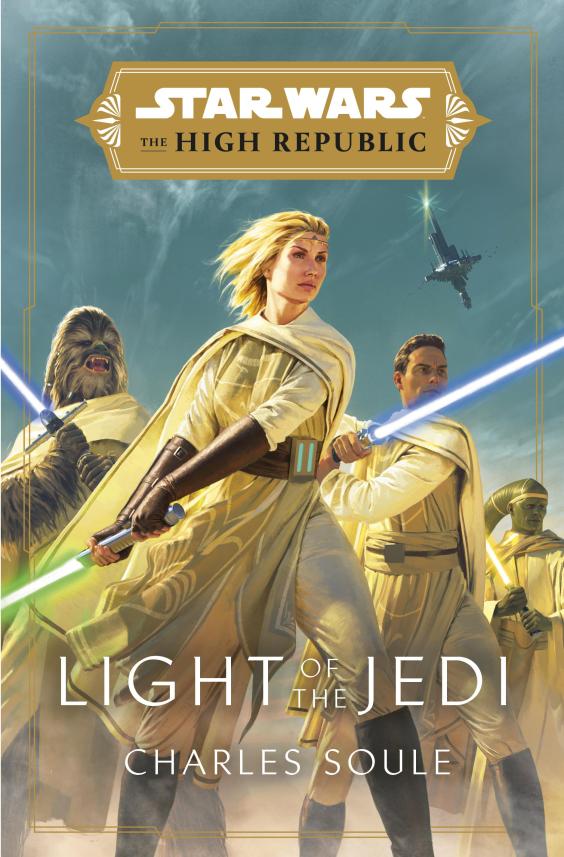
One of the most distinctive parts of any novel that follows Thrawn is the fact that none of the story is shown from his point of view; instead other characters tell his story.  This is mainly done to really highlight just how brilliant Thrawn is and to ensure that his eventual plans and insights come as a major surprise to the reader, much in the same way that a Sherlock Holmes novel is told from Watson’s perspective.  Chaos Rising features several different point-of-view characters, including one or two antagonists, who encounter Thrawn throughout the course of this novel and witness him utilise his tactical acumen.  I love seeing the various characters react to Thrawn’s impressive and clever schemes, and it is always fun when they realise that the impossible is happening right in front of them.  Several of these characters, particularly Thrawn’s allies, also provide a much deeper examination of the main character’s personality and mentality, and you see a different side to the character as a friend and mentor.

While these characters are primarily there to follow Thrawn, Zahn does take the time to explore each of these characters, with a particular focus on Thrawn’s impact on their life.  Many of these characters have some excellent and enjoyable backstories to them, and it was fascinating to see these great characters have their carefully planned out lives completely thrown around when they meet Thrawn.  While I failed to connect to some of these point-of-view side characters (for example, I just could not get invested in the arc surrounding the Skywalker Che-ri), others proved to be quite intriguing to follow.  Examples include Admiral Ar’alani, Thrawn’s former classmate at the academy, who becomes a lifelong friend and constantly finds herself trying to protect the protagonist from himself, or Thalias (Mitth’ali’astov) a former Skywalker whose encounter with a young Thrawn inspired her to join his clan and gave her a new vision for the future.  I also rather enjoyed following Qilori, an Unknown Regions navigator-for-hire, who secretly serves the Nikardun Destiny while also taking jobs for other clients like Thrawn and the Chiss.  It was immensely entertaining seeing Qilori attempting to manipulate Thrawn on the orders of the main antagonist, especially as Thrawn sees through every single one of his tricks.  Each of these great side characters added their own edge to the story, and I really appreciated having so many varied and unique viewpoints of the fantastic main character.

While I did receive a physical copy, I decided to listen to the audiobook format of Chaos Rising, not only because it made my reading schedule easier but because Star Wars audiobooks are always so much fun to listen to.  I think that I made the right decision here, as the Chaos Rising audiobook was a very awesome experience and I had a great time listening to it.  With a run time of just over 15 hours, this is a somewhat longer Star Wars audiobook, although once you get wrapped up in the story you don’t really mind.  Everything about this audiobook is cool, from the classic Star Wars sound effects, which help to drag the listener into the story (it is so much easier to imagine a dangerous fight scene when you can hear the blaster shots), to the outstanding use of John Williams’ iconic musical score, which just makes everything epic.  This audiobook also features the superb narration of the amazing Marc Thompson, who does a wonderful job.  Thompson, who has a vast experience voicing Star Wars audiobooks (for example, all the previous Thrawn novels, Dark Disciple, and roles in the Count Dooku and Doctor Aphra audio dramas), has an exceptional range of different voices which he uses to full effect throughout Chaos Rising.  Each of the characters is given a distinctive and enjoyable voice which allows the listener to easily follow who they are, while also getting an impressive and comprehensive idea of the character’s emotions and passion.  However, his most impressive work is saved for the main character himself.  Thompson has an excellent Thrawn voice, which very closely matches the voice of Lars Mikkelsen, the actor playing Thrawn in the Star Wars Rebels animated show, which helps to bring the character to life in vivid and impressive detail.  Thompson’s take on the character captures the character perfectly, and you get an amazing sense of the character’s deep analytical nature and constantly calm façade.  This was an exceptional bit of voice work from Thompson, and it really added so much to my enjoyment of the story to have this character’s words read out to me.  An overall exceptional and outstanding audiobook, this is the perfect format to check out Chaos Rising.

Thrawn Ascendancy: Chaos Rising is another outstanding novel from amazing Star Wars author Timothy Zahn that provides the reader with a captivating look at the early life of the incredible character of Grand Admiral Thrawn.  Featuring a clever and intriguing tale set deep in an unexplored area of the Star Wars universe, this novel serves as a fantastic and addictive prequel to Zahn’s impressive Thrawn trilogy and adds new layers to the author’s most iconic creation.  The second entry in this series, Greater Good, is set for release in a few months and looks set to be one of the most intriguing Star Wars novels of 2021, especially with renewed interest in the character of Thrawn after the second season of The Mandalorian.  I am extremely keen to see how the next novel turns out, but if it as good as Chaos Rising, then we should be in for a treat.

Amazon

Star Wars: Doctor Aphra written by Sarah Kuhn and performed by a full cast

Doctor Aphra Audio Cover

Publisher: Random House Audio (Audio Drama – 21 July 2020)

Series: Star Wars

Script: Sarah Kuhn

Cast: Emily Woo Zeller, Jonathan Davis, Sean Patrick Hopkins, Sean Kenin, Nicole Lewis, Carol Monda, Euan Morton, Catherine Taber and Marc Thompson

Length: 5 hours and 35 minutes

My Rating: 4.5 out of 5 stars

Amazon

The most brilliant and conniving archaeologist in the entire Star Wars canon gets her own audio drama as author Sarah Kuhn and an exceedingly talented cast of audiobook narrators present Star Wars: Doctor Aphra, the audio drama.

Throughout the galaxy Doctor Chelli Lona Aphra is renowned as a criminal and bringer of chaos without peer, but in her own eyes she is simply an archaeologist and technology enthusiast, albeit one willing to sell her findings to the highest bidder.  However, her latest venture is about to get her into the worst type of trouble, the sort that will haunt her for the rest of her incredibly short life.  Attempting to steal a dangerous weapon from a restricted alien vault, Aphra finds herself surrounded and slated to die, that is until Darth Vader, Dark Lord of the Sith and overall badass suddenly appears and saves her. 

Vader is engaging in a high-risk power play against the Emperor and Aphra has just become his most useful pawn, whether she likes it or not.  Working as his agent, Aphra must utilise her skills as a con-woman, genius technician and criminal mastermind to help Vader achieve his goals: depose the Emperor and find his new obsession, the pilot who blew up the Death Star, Luke Skywalker.  Determined to stay on Vader’s good side, Aphra, with the help of her two friendly murder droids, Triple-Zero and BT-1, helps her new master engage in all manner of shenanigans across the universe, including kidnappings, torture and elaborate heists.  However, Aphra knows that all it will take is just one mistake or slip-up to earn her new employers’ deadly wrath.  To avoid her inevitable appointment with Vader’s crimson lightsaber, Aphra will need to pull out every trick in her impressive arsenal if she is to survive.  But can even the great Doctor Aphra outsmart Darth Vader and the entire Empire, or has the smartest woman in the galaxy finally met her match?

Well this is an exceedingly fun and entertaining entry in the Star Wars expanded universe which provides a new angle to the tale of Doctor Aphra.  Doctor Aphra is an incredible and complex character who has only been recently added into the canon.  Introduced in the opening issues the 2015 Darth Vader comic book series, Doctor Aphra served as a major supporting character for much of the series run, entertaining readers with her antics and ability to survive working for Darth Vader.  Aphra proved to be an extremely popular character, and this resulted in the character getting her own comic book series (which ironically lasted more issues than the Darth Vader series she was introduced in).  The Doctor Aphra series ended up being an amazing hit thanks to some exceptional writing and it is one of my favourite pieces of Star Wars tie-in fiction (make sure to check out my reviews for the last two volumes in the series, Unspeakable Rebel Superweapon and A Rogue’s End), and there is even a second Doctor Aphra series on its way.  It seems that Aphra’s popularity has continued to grow as earlier this year this Doctor Aphra audio drama was released, written by talented author Sarah Kuhn.  This proved to be an exceptionally impressive audio release that does an amazing job bringing this fantastic character into an entirely new format.  This audio drama has a run time of around five and a half hours, which listeners are able to breeze through in no time at all.

The Doctor Aphra audio drama contains an intriguing and captivating story that follows the character as she engages in all manner of adventures in service to Darth Vader and her own survival.  Told entirely from the perspective of Aphra as she makes a series of recordings to an unknown person, and set shortly after the events of Star Wars: A New Hope, this story follows Aphra through the entirety of her ill-fated association with Darth Vader.  This employment places her in all manner of danger, as she completes a series of tasks important to Vader, including an elaborate heist; gets in the middle of a deadly conflict between Vader, one of his rivals in the Empire, and the protagonists of The Original Trilogy; and finds herself a prisoner of the Rebel Alliance before eventually attempting to manipulate the Emperor for her own ends.  At the same time, Aphra is constantly balancing on a knife’s edge, as her beloved boss has made it abundantly clear that he will kill her the moment she displeases him.  This forces Aphra into a number of tense and dangerous situations as she needs to convince Vader to keep her alive throughout the entire book.  This struggle to stay alive adds a substantial amount of suspense to the audio drama, as the listener really wants this entertaining character to survive, and it eventually leads to an outstanding and epic conclusion.  All of this proves to be an exceedingly captivating adventure, and listeners are in for an exciting and hilarious time, especially with Aphra’s entertaining and over-exaggerated narration of the events occurring. 

While I did really enjoy the story contained within this audio drama, I do need to point out that it is not actually an original tale; instead it is an adaption of several canon comic book series, namely the comics that featured Aphra’s early adventures.  The first part of the audio drama adapts most of the first two volumes of the 2015 Darth Vader comic series, Volume One: Vader and Volume Two: Shadows and Secrets.  From there the story follows the course of the crossover limited series, Vader Down, before moving on to the events of the fourth volume of the 2015 Star Wars comic, Rebel Jail.  Finally, the story returns to the Darth Vader comic, utilising parts of the fourth and final volume, End of GamesDoctor Aphra proves to be an exceptional adaptation of these comics although they only show off the events that Aphra herself witnessed or was a part of.  I had an amazing time listening to this adaptation and I really enjoyed seeing several of the amazing events that originally occurred on the page being brought to life by this enjoyable performance. 

People interested in listening to this audio drama do not need to have read the adapted comics first, as Kuhn provides Aphra with a great deal of narration that explains her role in the story and all the events leading up to the comics.  As someone who has read the comics before listening to this audio drama, I found that there was a lot in this production for fans of the comic.  I personally really enjoyed seeing these events from Aphra’s perspective (as the original comics mostly followed main characters such as Vader, Luke, Leia, and Han), and it was extremely interesting to see her thoughts on the various events occurring.  The author also comes up with a lot of additional backstory that helps to enrich Aphra’s involvement in the narrative, which fans of the character will really appreciate.  While I had a great time listening to this audio drama, I did notice that several events were glossed over, mainly because Aphra did not witness them occur in the comics.  For example, you have no idea who is behind several of the battles or attacks that Aphra finds herself in the middle of, with Aphra herself giving limited explanations for them.  While I knew full well what was going on, people who haven’t read the comics are going to be full of questions and this may make the audio drama a little confusing at times.  That being said, this was still an outstanding and deeply enjoyable production, and perhaps it will encourage listeners to check out some of the adapted comics (trust me, they are awesome).

One of the best things about this audio drama was the way in which the narrative explored the complex and exceedingly likeable character of Doctor Chelli Aphra.  Aphra is a clever, impulsive and chaotic rogue archaeologist who is obsessed with ancient technology, particularly unusual droids and dangerous weapons.  Aphra is a wildly entertaining character who is essentially an amoral version of Indiana Jones that has no problems cheating or betraying people who she encounters, as long as she gets to hold onto the valuable antiques or can sell them for vast amounts of money (none of her loot belongs in a museum!).  Aphra appears to have a relentlessly positive personality, providing the listener with a string of continual jokes and funny observations with an infectious amount of enthusiasm.  However, deep down Aphra is actually a deeply damaged individual who has suffered a number of losses and betrayals that impact her current outlook on life and other people. 

Despite the fact that Aphra is the very definition of an unreliable narrator (she literally deletes or edits the parts of the story she does not like to suit her agenda), I felt that this audio drama does an amazing job exploring this wily protagonist.  Having Aphra’s inner monologue about the events occurring during this story proved to be not only entertaining but also very enlightening, and it showed some fascinating glimpses of her inner personality and emotional state.  While much of Aphra’s story was previously explored in the comics that Doctor Aphra is based on, this adaptation does go a little further, pulling in some backstory that was introduced in the later Doctor Aphra comics and expertly working it into this narrative.  Kuhn also comes up with some additional history that is unique to this production, including a number of scenes that explore her previous romantic relationship with Sana Starros.  While this relationship has been mentioned and discussed in several of the comics, this is probably the most in-depth examination of it in the canon and it becomes an important part of the overall plot.  I really enjoyed the way in which Doctor Aphra examined its titular protagonist and I felt that the story really captured her essence and outrageous personality.

This audio drama sports an amazing voice cast and each of them does a fantastic job in this production.  However, I really must highlight the performance of Emily Woo Zeller, who portrayed the titular character.  Zeller is an experienced and talented narrator who has contributed to a huge raft of audiobooks, including several I am quite interested in checking out, such as Cyber Shogun Revolution by Peter Tieryas.  Due to how the audio drama is written, Zeller’s voice is the one we hear the most throughout Doctor Aphra, as she recounts all of the characters dialogue and the overall narration of this book.  I really loved the way that Zeller portrayed the character of Aphra in this audio drama and I thought she got all the aspects of the character down perfectly.  Zeller gives a particularly energetic performance throughout this adaption, and listeners get a real sense of the mischievous and over confident outer shell that Doctor Aphra portrays to everyone she meets.  However, Zeller also captures the vulnerable nature of this complex protagonist, showing off the character’s full range of emotions when she is scared, angry or contemplating her many regrets.  This rich and amazing performance from Zeller really helps to make this audio drama something special, and I am really glad that she was able to bring Doctor Aphra to life in such an exceptional way.

Doctor Aphra also makes use of several other impressive voice actors throughout this audio drama, each of whom are portraying major Star Wars characters who Aphra interacts with through the course of this adventure.  This audio drama features a who’s who of Star Wars audiobook narrators, many of whose works I have previously enjoyed in a range of productions including the previous Star Wars audio drama, Dooku: Jedi Lost.  These additional narrators include Jonathan Davis (who I previously enjoyed in Star Wars: Master and Apprentice and Lords of the Sith), Sean Kenin (Death Troopers), Euan Morton (Tarkin), Catherine Taber (Queen’s Peril and Queen’s Shadow), Marc Thompson (Thrawn, Thrawn: Chaos Rising, Dark Disciple and Scoundrels), Sean Patrick Hopkins, Nicole Lewis and Carol Monda.  Each of these voice actors did an exceptional job of bringing their various characters to life throughout Doctor Aphra.  I particularly enjoyed Marc Thompson’s Darth Vader and Euan Morton’s Emperor, as both voice actors brought some realistic menace to these iconic villains.  Catherine Taber, who is best known for her portrayal of Padme Amidala in The Clone Wars animated series, does an excellent Princess Leia in this production, and I really appreciated the choice to cast her.  Sean Patrick Hopkins does a really cool Luke Skywalker, and I was really struck by how close he got to a younger Mark Hamil’s voice.  I also really enjoyed Sean Kenin’s Triple-Zero, and I felt he really captured the essence of this crazy character.  Each of these side characters added a lot to the production as a whole and, while they were not as heavily featured as Aphra, each of them had their own entertaining moments and interactions.  I particularly loved the threatening aura that Darth Vader exhibited towards Aphra, and there is also a very entertaining interaction between Aphra and Han Solo that results in some of the best jokes in the entire production.  You also have to love the fact that Aphra ends up with a posse that essentially reflects the main characters from The Original Trilogy, with a protocol droid (Triple-Zero), an Astromech (BT-1) and a Wookie (Black Krrsantan).  Of course, Aphra’s friends are all dangerous killers, which makes for some extremely entertaining and deadly encounters.

In addition to featuring an impressive voice cast, Doctor Aphra also features the full range of iconic Star Wars sound effects and musical scores that were made famous in the movies.  Pretty much every action that occurs within the book is accompanied by a sound effect, whether it be blaster fire, the sound of engines or even a susurration from other people in a crowded room.  I always love how these sound effects helped to create an atmosphere throughout the course of a Star Wars novel, and I felt that they were particularly useful for this audio drama format due to the lack of narration that a standard audiobook would have.  I also have to talk up the excellent use of the incredible Star Wars musical score that features during several key scenes of the novel.  Hearing this music during some of the most pivotal, dramatic or action-packed sequences makes the narrative seem that much more epic, and I absolutely loved hearing this music throughout this production.  The use of the sound effects and music enhances the story in immeasurable ways, and it helps to turn this audio drama into an exceptional treat for the ears. 

Star Wars: Doctor Aphra is an impressive and deeply enjoyable audio production that brings fan-favourite character Chelli Aphra into a whole new light.  Cleverly adapting several amazing Star Wars comics, the Doctor Aphra audio drama features an interesting story from author Sarah Kuhn that shows the events from the perspective of the chaotic and duplicitous titular protagonist.  Featuring an exceptional voice cast, Doctor Aphra proves to be an extremely entertaining and exceedingly addictive listen that I had a very hard time turning off.  I personally think this was one of the best audio productions of 2020 and it comes highly recommended both to general Star Wars fans and to those who have read the adapted comics.  I had an amazing time listening to this audio drama and I hope that they think about adapting the later Doctor Aphra comic book series next as there are some impressive storylines featured in there.

Amazon

Star Wars: Dooku: Jedi Lost

Dooku - Jedi Lost Cover

Publisher: Penguin Random House Audio (Audio Production – 30 April 2019)

Script: Cavan Scott

Cast: Orlagh Cassidy, Euan Morton, Pete Bradbury, Jonathan Davis, Neil Hellegers, Sean Kenin, January LaVoy, Saskia Maarleveld, Carol Monda, Robert Petkoff, Rebecca Soler and Marc Thompson.

Length: 6 hours and 21 Minutes

My Rating: 4.5 out of 5 stars

Amazon

Prepare for another deep dive into the Star Wars canon with an audio drama that explores the past of one the biggest villains from the prequel movies, Count Dooku, with Dooku: Jedi Lost.

Dooku: Jedi Lost was one of the more interesting pieces of Star Wars fiction that was released last year. Based on a script written by Cavan Scott, an author who has written a multitude of comics, novels and radio drama tie-ins for several different franchises, Jedi Lost was originally released as an audio production featuring several different actors, with the script also released in novel format a few months later. I have been meaning to check out this unique story for some time, as it was one of the few pieces of Star Wars fiction that I did not read in 2019. This is actually one of the first entries I am ticking off my Books I Wish I Read in 2019 list (barring The Russian by Ben Coes, which was an honourable mention), and I am really glad I decided to check this piece of fiction out.

For many in the galaxy, Count Dooku of Serenno is one of the most dangerous and evil villains that ever lived. The leader of the ruthless Separatists during the Clone Wars, apprentice to Darth Sidious and master of several ruthless assassins, Dooku is rightfully feared and hated by many. However, he once was one of the most respected and powerful members of the Jedi Council. A former apprentice to Yoda himself, and the mentor to two exceptional Padawans, Rael Averross and Qui-Gon Jinn, Dooku dedicated decades of his life to the Jedi, before suddenly leaving and taking a different path. But how did such a revered Jedi turn to the dark side of the Force? That is a question that Dooku’s new apprentice, Asajj Ventress, is trying to understand when she is given a mission to find Dooku’s missing sister. Searching for leads through Dooku’s journals and messages, Ventress is given unprecedented access into Dooku’s past.

The son of the ruthless Count of Serenno, Dooku was abandoned as baby by his father the moment his abilities with the Force were identified, only to be rescued by Yoda. Upon learning the truth about his birth years later, Dooku struggles with balancing his duties as a Jedi with his connections to his family and home planet. Conflicted, Dooku finds comfort in his friendship with the troubled young Jedi Sifo-Dyas and the mysterious Jedi Master Lene Kostana, whose mission of locating and studying Sith artefacts fascinates Dooku and leads him to his first experiences with the dark side of the Force. As Dooku rises through the ranks of the Jedi Order, he finds himself stymied by the bureaucracy and corruption of the Republic and the hypocrisy of the Jedi Council. As the first waves of darkness fall across the galaxy, how will the younger Dooku react, and what will Ventress do when she realises what sort of person her new master is?

Dooku: Jedi Lost is an incredible and deeply captivating piece of Star Wars fiction that cleverly dives into the past of one of the franchise’s most iconic villains to present a compelling and intriguing story. I ended up listening to the full cast audio production of Jedi Lost, and I really enjoyed this fantastic and intriguing book. The plot of Jedi Lost is uniquely set across several different time periods, with the details of Dooku’s life being relayed to a younger Ventress at the start of her Sith apprenticeship through journal entries, detailed messages, oral histories and even some visions of the past. Scott did an excellent job of setting his story across multiple time periods, which allowed Jedi Lost to showcase the life of the titular character while also presenting an exciting, fast-paced and at times dramatic narrative that includes several plot threads that jump from timeline to timeline. All of this results in an excellent Star Wars story which features some fascinating inclusions to the franchise’s lore and which is enhanced by the incredible audio production.

At the centre of this book lies an intriguing and captivating exploration of one of the most significant antagonists in the Star Wars canon, Count Dooku. Jedi Lost contains quite a detailed and compelling backstory for this character, and you get to see a number of key events from his life. This includes his complicated childhood, the forbidden communication he had with his sister, the connection he maintained with his home planet, parts of his apprenticeship under Yoda, the tutelage of his own two apprentices, his time on the Jedi council, his first brushes with the dark side of the Force and finally the chaotic events that led him to leave the Jedi order and take up his position as Count of Serenno. Every part of this background proved to be extremely fascinating and it paints Dooku as a much more complex character, with understandable motivations and frustrations. He actually comes across as a much more sympathetic person thanks to this production, and readers are going to have an amazing time finding out what events and betrayals drove him away from the Jedi and towards his new master. The storytelling device of having Ventress read and analyse Dooku’s old messages and journal entries ensures that the story quickly jumps through the events of his life, and no key events really seem to be missing. I personally would have like to see some more detail about Dooku’s training under Yoda or his teaching of his apprentices, although I appreciate that this was already an expansive production and there was a limit on what could be included in the script. I also wonder what sort of story this could have turned into if this was told exclusively from Dooku’s point of view, however, this first-person narration probably wouldn’t be as feasible as a full cast audio production. Overall, those fans who check out Jedi Lost are in for quite an in-depth and fascinating look at the great character that is Count Dooku, and I am sure many will enjoy this exciting examination of his backstory.

In addition to exploring the character of Count Dooku, Jedi Lost also presents those dedicated Star Wars fans with a new canon look at the Star Wars universe before the events of The Phantom Menace. You get an intriguing look at the Republic and the Jedi Order in the years leading up to events of the Skywalker Saga, and it was fascinating to see the similarities and differences between the various eras in the Star Wars lore. In particular, I found in interesting to see that the groundwork for the Clone Wars and the fall of the Jedi order had already begun, with ineffectual leadership, corruption in the Senate and complacency in the Jedi Council all eventually leading the dark events of the future. Jedi Lost also shows the earlier days of several Jedi who were supporting characters in either the movies or the animated shows. In particular, this entry focuses on Sifo-Dyas, the Jedi who foresaw the Clone Wars and was manipulated into creating the Republic’s clone army. The story explores how Dooku and Sifo-Dyas were close friends growing up, while also showing the origin of his prescient powers, and he proved to be a rather compelling side character. Jedi Lost also saw the introduction of Jedi Master Lene Kostana to the canon. Lene Kostana was a rebellious Jedi who scoured the galaxy for Sith artefacts in the belief that the Sith were going to rise again. She proved to be an interesting mentor character for Dooku, and her recklessness and unique way of thinking had some major impacts in Dooku’s character development.

I also liked how this piece of Star Wars fiction focused on the early career of Asajj Ventress, one of the best Star Wars characters introduced outside of the movies. Much of the story is set immediately after Dooku claims Ventress as his apprentice and personal assassin, which allows the reader a compelling view of Ventress’s early brushes with the dark side of the Force and the initial corruption and manipulation she experienced under Dooku. This proved to be quite an interesting part of the novel, especially as the reader got to see Ventress’s thoughts and reactions to several revelations about Dooku’s past. Thanks to the way that the audio production is set out, Scott also included a rather cool element to Ventress’s character in the way that she is hearing the voice of her dead former Jedi Master and mentor, Ky Narec. While Ky Narec’s voice was mainly included to allow Ventress to share her thoughts in this audio production without becoming a full-fledged narrator, this ethereal character gives the reader a deeper insight into Ventress’s character. I also enjoyed the discussion about Ventress’s past with Narec, and it helped produce a much more in-depth look at this fascinating character from the expanded universe.

Like most pieces of expanded universe fiction, Jedi Lost is best enjoyed by fans of the Star Wars franchise, who are most likely to appreciate some of the new pieces of lore and interesting revelations. This production also bears some strong connections with another piece of Star Wars tie-in fiction that was released last year, Master & Apprentice by Claudia Gray. Master & Apprentice was one of the most impressive Star Wars novels released last year, and it featured a story that focussed on Dooku’s apprentices, Rael Averross and Qui-Gon Jinn. Jedi Lost heavily references some of the events that occurred or are represented in Master & Apprentice, and it was interesting to see the intersections between the two separate pieces of fiction. I particularly enjoyed seeing more of the unconventional Jedi, Rael Averross, and it was great to see some additional interactions between the proper and noble Dooku, and this rough former apprentice. Despite all of this, I believe that Jedi Lost can easily be enjoyed by more casual Star Wars fans, although some knowledge about the prequel films is probably necessary.

People familiar with this blog are going to be unsurprised to learn that I chose to listen to the audio production of Jedi Lost rather than read the book that was produced from the script. I have a well-earned appreciation for Star Wars audiobooks, which are in a league of their own when it comes to production value; however, Jedi Lost is on another level to your typical Star Wars audiobook. As I mentioned above, Jedi Lost was released as a full cast audio production, which is essentially an audio recording of a play. This was the first piece of Star Wars fiction I had experienced in this medium, and I really loved how it turned out. The cast did an amazing job with the script, and they acted out a wonderful and highly enjoyable production which I thought was just incredible. The production runs for just over 6 hours and 20 minutes, and they manage to fit a lot of plot into this shorter run-time (in comparison to normal Star Wars audiobooks), as the use of dialogue results in a lot less narration. Due to the way Jedi Lost is structured, with Ventress reading out journal entries or having Dooku’s tale told to her, there is a little more narration of events then a production like this would usually have. I think this was necessary to ensure the reader was clear on what was going on at all times, and it didn’t ruin the overall flow of Jedi Lost in any way.

Jedi Lost features a very impressive and talented group of actors who go above and beyond to make this an awesome audio production. As you can see from the cast list above, this production made use of 12 separate narrators, each of whom voice a major character (with some of the actors also voicing some minor characters as well). Many of these narrators have expansive experience with voicing Star Wars audiobooks, and I have actually had the pleasure of listening to several of these actors before, including Euan Morton (Tarkin by James Luceno), Jonathan Davies (Master & Apprentice), Sean Kenin (Death Troopers by Joe Schreiber), Robert Petkoff (multiple Star Trek novels, most recently Picard: The Last Best Hope by Una McCormack) and Marc Thompson (Dark Disciple by Christie Golden, Loki: Where Mischief Lies by Mackenzi Lee and Scoundrels and Thrawn by Timothy Zahn).

There is some truly outstanding audio work done in this production, with several actors producing near-perfect replication of several iconic characters from the Star Wars franchise. I particularly have to praise Orlagh Cassidy for her exceptional portrayal of Asajji Ventress; her take on the character sounded exactly like the Ventress that appeared in The Clone Wars animated show. I was also deeply impressed by Jonathan Davis’s Qui-Gon Jinn and Marc Thompson’s Yoda, both of which were incredible replications of the characters from the movies. Davis also did a great job once again portraying Rael Averross, a fun character who he first brought to life in Master & Apprentice, and I loved the somewhat laidback voice he provides for Rael, especially as it reminds me of an older cowboy character from a western (I personally always picture Sam Elliott when I hear it). Other standout stars in this production include Euan Morton, who came up with a great take on the titular character Count Dooku. Morton was able to produce an impressive and commanding presence for this character, and he did a great job modulating the character’s voice to represent the various jumps in age that the character experienced. The same can be said for Saskia Maarleveld’s Jenza and Sean Kenin’s Sifo-Dyas, whose characters also aged extremely well throughout the course of the production. I also really loved the voice that Carol Monda provided for new character Lene Kostana, and I felt that it fit the character described in Jedi Lost extremely well. I honestly loved all the rest of the voices that were provided throughout this production, and each of them brought some real magic to Jedi Lost.

Just like with a normal Star Wars audiobook, one of the standout features of the Jedi Lost production was the incredible use of the franchise’s iconic music and sound effects. I really cannot emphasise enough how amazing it is to have one of John Williams’s epic scores playing in the background of a scene. Not only does it really get you into the Star Wars zone, but this music markedly enhances the mood of any part of the book it is playing in. Hearing some of the more dramatic scores during a touching or tragic scene really helps the reader appreciate how impactful the sequence truly is, and nothing gets the blood pumping faster during an action sequence than Duel of the Fates or some other fast-paced piece of Star Wars music. The sound effects utilised throughout this production are not only really cool but they also have added significance for an audio production like Jedi Lost which relies on dialogue rather than narration to establish the scene. Having the various classic Star Wars sound effects reflect what is going on can be really helpful, and often the clash of lightsabers and the pew-pew of blaster bolts give life to a battle sequence. I always appreciate the way that certain sound effects can help paint a picture of what is happening in the room that the dialogue is taking place. Having the susurration of a crowd or the light hum of a starship engine in the background always makes a book seem more impressive, and it makes for a fun overall listen.

Dooku: Jedi Lost was an incredible and wonderful production which I had an extremely hard time turning off. Cavan Scott’s clever and intricate script, combined with the outstanding audio production, is a truly awesome experience which I deeply enjoyed. I loved learning more about the character of Count Dooku, and I think that Scott came up with a fantastic and intriguing background for the character. Jedi Lost is an excellent piece of Star Wars fiction, and I am extremely happy that I listened to it. Highly recommended to all Star Wars fans, and if you decide to check out Jedi Lost, you have to listen to the spectacular audio production, which is just amazing.

Amazon