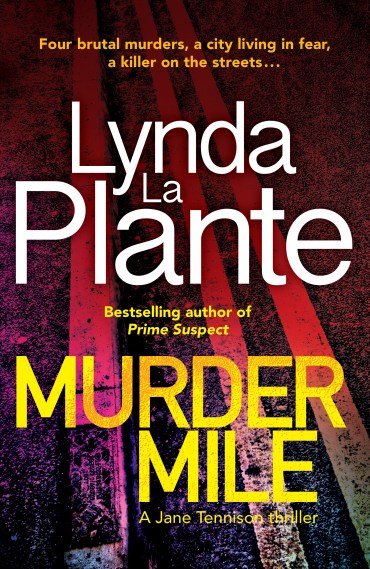
Murder Mile by Lynda La Plante

Murder Mile Cover.jpg

Publisher: Zaffre

Publication Date – 23 August 2018

Amazon     Book Depository

One of English crime fiction’s most distinctive voices, Lynda La Plante, returns with her iconic female detective, Jane Tennison, for another dark and shocking case.

In February 1979, recently promoted Detective Sergeant Jane Tennison has been posted to Peckham CID, one of the toughest beats in all of London.  Previously known as the Golden Mile due to its well-to-do shopping areas, the area is now in decline, a fact not helped by the garbage strikes besetting the entire city, ensuring that the entire area is covered rubbish and filth.

When the body of a young woman is found in the heart of Peckham, Jane and her team must investigate the suspicious circumstances surrounding her death.  But when another body is found nearby, the possibility of a serial killer raises all sorts of problems.  The media scrutinise the case and rename the area Murder Mile.  Even worse, the second victim’s son is well connected, and several important people want the matter dealt with quickly.

As more bodies are uncovered, Tennison must use all of her investigative ability to uncover this dark murderer, while also dealing with the police force’s inherent sexism and disregard for her talent that she has dealt with her entire career.  Can Tennison catch this killer, or will they find a terrible and unexpected way to win?

Lynda La Plante is a talented author and screenwriter responsible for several hit British crime series and movies.  She achieved early success with the 1983 television series, Widows, which has been adapted into a major motion picture set to be released in November this year.  Other successful shows that La Plante has created include Trial and Retribution and Above Suspicion, with nearly all of her books having been either adapted into screenplays or inspired by one of her televisions shows.  Murder Mile is the fourth book in her Jane Tennison series, which serves as a prequel series to one of La Plante’s most successful and iconic shows, Prime Suspect, which features Helen Mirren as an older Jane Tennison.  The first book in this prequel series, Tennison, also served as the basis for the short-lived prequel television series Prime Suspect 1973.

Murder Mile features a dark and disturbing mystery that serves as the central focus of this book.  The protagonist must investigate a series of murders spread out among the dilapidated Peckham area. La Plante has created an intriguing and compelling investigation storyline as Tennison and her team follow a series of promising leads across Peckham and the rest of London, finding clues in a variety of places, as well as several other bodies.  While the majority of the book leading up the conclusion of the story and the solution of the mystery is captivating in its own right, the best part of the book has to be its chilling conclusion.  Not only is the revealed antagonist a despicable creature, but the way in which they attempt to manipulate Jane and the rest of the police characters is just plain creepy.  The conclusion of the story and the ultimate reveal of the antagonist’s last actions are particularly shocking in their execution and extent.  Worse, both the reader and the protagonist can see that the villain is planning something, but you just cannot predict the terrible lengths they will go to win and spite the police.  This memorable conclusion serves as the perfect end to this dark and powerful story and represents some excellent writing from La Plante.

This story is set in 1970s London, and the author does a fantastic job bringing this iconic city to life during a period of economic downturn.  There is a certain gloom around the city, especially in Peckham, where the majority of the book’s investigation takes place.  The plot of Murder Mile is set during the infamous Winter of Discontent, a period of strikes and financial uncertainty that hit the country during 1978 and 1979.  There are several discussions about the situation from the characters and it is interesting to see a fictional perspective of this part of England’s recent history.  In addition, some of the physical effects of the ‘Winter of Discontent’ have some significant impacts on the case.  During January and February 1979, the waste collectors of London were on strike, resulting in a build-up of rubbish throughout the city.  As a result, many of the scenes set in the city feature streets strewn with garbage and littered with filth and rats.  La Plante also examines the parks that were filled with rubbish by London authorities as a stopgap measure for this situation.  This becomes particularly important in the story, as the police discover a dismembered body in one of these parks as the murderer attempted to utilise the situation for their own ends.  The author has also cleverly highlighted the police techniques and technologies that would have been available during the time.  Overall, La Plante has made full use of this chaotic period in Murder Mile, and readers will enjoy her vivid descriptions of these events.

In addition to the general descriptions of 1970s England, one of the key features of La Plante’s latest book is an examination of the inherent sexism in the London police force.  Jane as a Detective Sergeant must continue to fight to gain respect from her co-workers.  In Murder Mile she is constantly talked down to by her superiors, deals with disrespectful comments from the rank-and-file police, and must also deal with having her authority undercut by colleagues she considers to be her friends as they step in quickly to defend her.  It is infuriating to see how senior police ignore Tennison’s detective work and observations, especially as she is right most of the time.  This sexism also requires Tennison to act in a more maverick way, as her frustrations force her to work outside the main police investigation in order to prove herself – a decision that will have significant impacts on her life and career.

While the portrayal of sexism mentioned above has been used in all of the books of the Jane Tennison series, in Murder Mile La Plante has chosen to also focus on police homophobia and how it affects the investigation.  The police homophobia is quite prevalent throughout the series, especially when one of the suspects is revealed to be gay.  The police response to this is extreme, as several of the characters are quite hostile to this suspect and his relatives, alienating potentially helpful people in the investigation.  In addition, there is the stupid assumption that all homosexual males were automatically paedophiles, and this sends the investigation into several biased directions.  Tennison and several of the other characters attempt to change the minds of their colleagues, often without much success.  In addition, one of the more approachable and capable members of the police team is revealed to be homosexual in this book, which serves as a good counterpoint to the more old school and homophobic cops.  Overall, this is an intense and important part of the story, and it is intriguing to see how these old biases would likely have affected cases in the past.

Crime legend Lynda La Plante returns in fantastic form with Murder Mile, an exciting continuation of her Prime Suspect prequel series.  Featuring some deep and powerful examinations of the 1970s London police force, this absorbing mystery takes its readers to the edge of darkness and beyond.  Featuring an incredibly dark and unforgettable ending, Murder Mile is another exceptional release from La Plante and a highly recommend piece of crime fiction.

My Rating:

Four and a half stars

Amazon     Book Depository

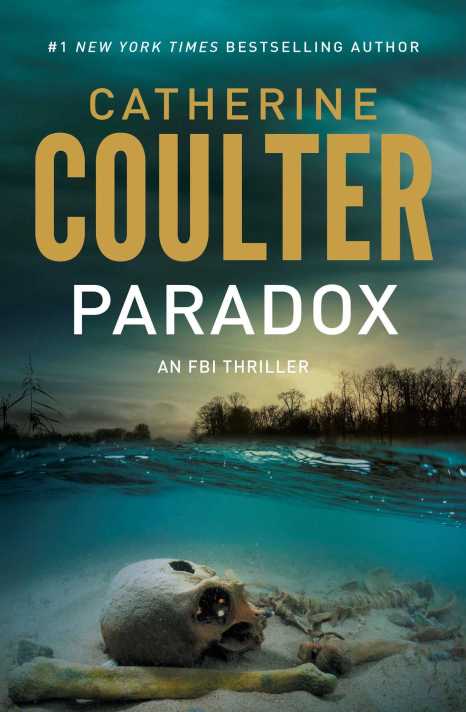
Paradox by Catherine Coulter

Paradox Cover.jpg

Publisher: Simon & Schuster

Publication Date – 31 July 2018

Amazon     Book Depository

Those looking for an intense and stimulating piece of crime fiction should look no further than the new book in the long-running FBI Thriller series, Paradox, which combines a clever murder mystery with a dark psychological thriller.

FBI Agents Sherlock and Savich wake up to their worst nightmare: an armed man in their son’s bedroom.  Only just managing to foil the potential kidnapping, Sherlock and Savich are confronted by the terrible fact that their son is being targeted by someone trying to get to them.  A few days later, in the small town of Willicott, Maryland, Police Chief Ty Christie witnesses a murder on the lake from the deck of her house.  Both of these crimes are connected to an escaped prisoner from a mental institution and a terrifying ghost from Sherlock and Savich’s past.  Things get more complicated when the lake is dredged for the victim’s body and a surprise discovery is made: the skeletal remains of several bodies that have been lying on the lake bed for years.  As the FBI is called in to investigate, Ty must face the disturbing reality that her home may have been used as the dumping ground for a serial killer.

Splitting their attentions between the two cases, Sherlock and Savich hunt for a deranged killer with a serious grudge against them, but are they prepared for just how crazy their quarry is?  At the same time, Ty and her new FBI partner, Sala Porto, start to investigate the recovered bodies.  A distinctive belt buckle may prove to be their best lead, but this discovery will have some unexpected consequences in another small town.  How are these cases connected, and what devastating secrets will be uncovered as a result?

Coulter is an extremely prolific author, having written a huge number of books since her 1981 debut.  Paradox is the 22nd book in Coulter’s long-running FBI Thriller series, which has been published annually since 1996, with only one gap in 2006.  The FBI Thriller series follows the investigation of a wide range of mysteries and crimes by members of the FBI, with many of the featured characters recurring through the various books.  At the same time, Coulter has co-written the A Brit in the FBI books with J. T. Ellison.  A Brit in the FBI is a sister series to the FBI Thriller franchise, which features several characters from the original series and already contains five books, including the 2018 release The Sixth Day.

Before this book, I had not read any of the other entries in the FBI Thriller series, and I was a little worried I might have trouble following the story of Paradox as a result.  However, I was pleasantly surprised about how easily it was for me to jump into the plot of this book and enjoy the intriguing mysteries planted within.  It is important to note that a significant part of the story does link back to the 13th entry in the series, Knockout.  Coulter does an amazing job summarising all the relevant detail of this previous book and ensuring that the readers of Paradox are well informed of the events that could have an impact on this current case.  This book also plays host to a huge range of characters employed by the FBI.  While I knew that the main two agents, Sherlock and Savich, have appeared multiple times before as the main protagonists, I was uncertain about how many times any of the other characters may have appeared in previous books in the series.  As a result, their inclusion and actions might not have had as much impact on me as they were supposed to, although I don’t think this takes too much away from the story.  As a result, while Paradox will be particularly appealing to those readers who have enjoyed the FBI Thriller books before, new readers can easily come into the series at this point and still enjoy this excellent murder mystery.

Paradox’s story is split between two separate investigations, both of which are very different in scope and content.  The focus of recurring protagonists, Sherlock and Savich, mainly involves the hunt for a deranged character from their past who is targeting several people he holds a grudge against.  In the other storyline, new characters Ty Christie and FBI Agent Sala Porto are investigating the bodies found within the lake, and find themselves on the hunt for a previously undiscovered serial killer.  Both cases are exceedingly interesting and offer different things to the reader.  The hunt for the fugitive who has committed recent crimes becomes a desperate game of cat and mouse between the investigators and the killer, and both sides have trouble predicting the actions of the other.  As a result, this storyline is faster paced and set in a bunch of different locations.  This storyline also relies on a darker psychological tone to stand out rather than dramatic twists, although there are a few noteworthy reveals for the reader to keep an eye out for.

The investigation into the bones on the bottom of the lake comes across as a more traditional murder mystery, as the characters associated with this case look at clues, follow evidence and interrogate a range of suspects.  This story has a more fixed setting, which mostly focuses on a small town located near the lake, although there are a few detours to other locations.  The examination of the connected and trusting nature of a small town is a great feature, as there are quite a few secrets and lies hidden within this friendly setting, as well as quite a few suspicious characters who show an interest in the case.  This storyline turns out to contain quite an intricate mystery that contains a huge range of twists and surprises that will keep readers on the edge of their seats.  The final reveals are quite dramatic and have significant impacts on several characters that are introduced.  This is an amazing piece of murder mystery fiction.

While these two storylines are ostensibly separate from each other, there is a bit of crossover between them.  The two teams of investigators are constantly in communication with each other, and there are several discussions about their respective cases.  In addition, one of the characters who is mainly investigating the bones in the lake, FBI agent Sala Porto, has a significant personal stake in finding the fugitive that Sherlock and Savich are hunting for, as one particular murder the antagonist commits haunts him throughout the book.  As a result, he and Ty also meet some people associated with the hunt for the fugitive, and also make a significant break in the case towards the end of the book that adds a whole new dimension to the story.  Both storylines are very well written and ensure that the readers get a variety of different elements to entertain and intrigue them.

An interesting feature of Paradox is the way that Coulter tells her story from a huge range of separate viewpoints, which helps create an interesting and unique tone for this book.  While a large part of the story is told from the point of view of Ty and the FBI agents Porto, Sherlock and Savich, other characters also tell a substantial part of the story.  The book’s main antagonist, the fugitive being pursued by Sherlock and Savich, probably has the next largest point-of-view scenes within the book.  These chapters are particularly dark, and the insight into his mind and psyche that result from these scenes are noticeably intense and chilling.  It is also fascinating to see the fugitive’s mindset as he tries to attack the people he hates, while at the same time avoid capture by the FBI.  Paradox also makes use of a range of other smaller side characters, especially in the storyline where Ty and Porto investigate the bones found in the lake.  These viewpoints are often brief, but are usually tied in to the relevant investigation and provide some interesting details about the suspects, as well as provide some background history to the case.  There is a lot of extra detail added to some of the periphery characters, as well as a significant amount of discussion especially the relationships and past that some of these minor characters had.  This focus on some of the supporting characters contributes a lot to the book’s unique tone, although at times it does feel unnecessary to go into such details.

One of the Paradox’s key highlights is the antagonist Coulter uses for the fugitive killer arc that Sherlock and Savich are investigating.  Without going into too much detail, as even mentioning the character’s name may spoil the story for long-term fans of the FBI Thriller series, this antagonist is a fantastic and memorable addition to the story.  The chapters focused on this antagonist are excellently written and turn Paradox into a partial psychological thriller, as it examines a rather unhinged character.  This character is definitely a stand-out part of this book, and represents a great return from a previous entry in the FBI Thriller series.

The latest book from bestselling author Catherine Coulter, Paradox, is an outstanding piece of modern crime fiction that presents two enthralling crime based storylines that compliment each other, working together to create a highly enjoyable and intriguing overall narrative.  Dark, clever and character driven, Paradox is an excellent addition to the long-running FBI Thriller series that will be equally appealing to both long-term fans of the franchise and causal readers looking for a new mystery fix.

My Rating:

Four stars

Amazon     Book Depository

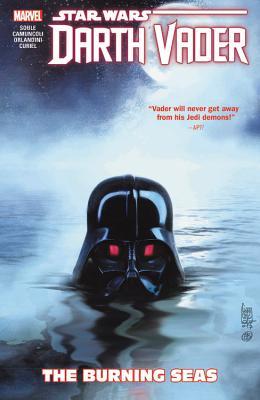
Star Wars: Thrawn: Alliances by Timothy Zahn

Star Wars Thrawn Alliances Cover

Publisher: Century

Publication Date – 24 July 2018

Amazon

Two Star Wars fan favourite villains come together in the ultimate bad guy team-up in the latest novel from the extended universe icon, Timothy Zahn.  I reviewed the previous Star Wars release, Last Shot here: https://unseenlibrary.com/2018/05/30/star-wars-last-shot-by-daniel-jose-older/

It is the height of the Empire’s tyranny over the galaxy, but threats are always on the horizon.  When the Emperor senses a disturbance in the edge of imperial space, he despatches his two most capable servants.  One is his apprentice, the powerful dark lord of the Sith, Darth Vader, and the other is the master tactician, Grand Admiral Thrawn.  While both men are fiercely loyal to the Emperor, Vader and Thrawn are rivals for his favour and have differing views when it comes to command, combat, tactics and the future of the Empire, especially over the construction of the Death Star.

Vader and Thrawn travel to the planet of Batuu in the Unknown Regions, the vast, uncharted areas of space outside of the imperial galaxy.  As these two ambitious individuals attempt work together, they encounter a threat not only to the Empire but to Thrawn’s secret plans.  Can these two succeed in their mission, or will Vader’s distrust of Thrawn result in the Grand Admiral’s early death?

This is not the first time these two men have worked together.  Back during the Clone Wars, Jedi General Anakin Skywalker encountered Commander Mitth’raw’nuruodo of the Chiss Ascendancy.  Their chance encounter resulted in these two combining forces to uncover a Separatist plot that has resulted in the disappearance of Senator Amidala.  But as these soldiers, now known as Vader and Thrawn, grow to respect each other, their differing priorities may break their newfound alliance apart.  What connections do these two missions have to each other, and what will happen when their tragic past is brought into the present?

Grand Admiral Thrawn is one of the more interesting characters in the Star Wars universe.  Created by Zahn back in the 1991 story Heir to the Empire, Thrawn was the commander of the Imperial Remnant following their defeat in Return of the Jedi and was presented as the ultimate tactician and a major threat.  Appearing in several books, he quickly became a massive fan favourite character, and is easily one of the most popular creations in the entire Star Wars extended universe.  However, following the Disney buyout of the franchise, the books that introduced Thrawn to the Star Wars fandom are no longer considered canon.

But the Grand Admiral could not be denied and has since resurfaced in the new Disney official Star Wars universe in all his villainous glory.  First reappearing in the third season of TV’s Star Wars Rebels, voiced by Lars Mikkelsen, Thrawn serves as one of the series’ primary antagonists, masterminding plots that devastate the heroes.  In addition, a new series of books dedicated to the character of Thrawn were commissioned as part of the new extended universe, which sees the return of Timothy Zahn to the fold.  The first of these books, 2017’s Star Wars: Thrawn, saw Zahn recreate  Thrawn’s origins to fit into the new universe and detail the rise of the alien officer to the rank of Grand Admiral in the xenophobic Imperial Navy.

In addition to the two novels mentioned above, Zahn has created a huge number of books since his first release in 1983.  In the last 35 years, he has released over 50 books, most of which were science fiction novels, as well as a number of short stories, novellas and graphic novels.  Of these books, 12 are set within the Star Wars universe, with many of them representing significant entries in the now defunct extended universe.

Thrawn: Alliances is evenly split between two separate timelines, both set in different parts of the Star Wars canon.  The main story is set after the events of the third season of the Star Wars Rebels television show, which is set in the period between the Revenge of the Sith and A New Hope movies.  The repercussions of that dramatic season finale are certainly felt within this book.  The Alliances storyline set in the past focuses on a time period after the end of the Clone Wars television show, which is set between the Attack of the Clones and Revenge of the Sith movies.

Like in Zahn’s previous books, Thrawn once again shines as the best part of Alliances.  The cool, tactical way he approaches everything is a fantastic character trait, and I could almost hear Lars Mikkelsen’s voice every time Thrawn spoke in the book.  The author continues to portray Thrawn as an incredibly insightful being who is able to come to perceptive conclusions from the most mundane of items or actions.  These insights come into effect throughout the book as Thrawn comes up with some unique and effective tactics in his various encounters.  While Thrawn is an awesome character, Zahn has also included one of the greatest film villains of all time within his story.  Darth Vader is a great character throughout this book and has some destructive and memorable scenes.  Fans who enjoyed his devastating appearance in Rouge One will love to see him power through his opponents is this story.  There are also other excellent sequences where he shows off his renowned piloting skills, this time in a TIE Defender.  Readers will also see a great comparison between the styles of the two imperial commanders that really highlights the strengths and weaknesses of both characters.  Vader’s immense power and Thrawn’s tactical ability are on display as a result, but they also show off Vader’s barely contained rage and his limited ability to trust anyone.  Overall, this is a creative and thrilling use of two of these two amazing Star Wars characters.

For fans of science fiction action adventures, one of the most exciting elements of this book is the significant amount of space combat throughout the story.  Ship-on-ship battles in the darkness of space have always been some of the most impressive parts of the Star Wars screen instalments, and Zahn goes all out to showcase this in Alliances.  There are a huge range of these sequences, from smaller fighter-on-fighter combat, to demonstrations of the destructive power of a Star Destroyer, to even a large-scale space battle between multiple ships.  Zahn has spread the story across multiple characters, including imperial naval commanders and members of the stormtroopers, to really showcase these battle sequences, and this also allows him to present several boarding actions being led by the stormtroopers.  Seeing Thrawn in command of all of these engagements is also fantastic, as his well-documented tactical abilities come to the fore again.  These space engagements are a great part of the story and will prove to be exciting for the reader.

The use of the two split timelines is also an excellent way of telling this story and provides a number of noticeable benefits to the book.  There are a number of connections between the two separate storylines that come into effect throughout the book, and it’s always fun to view some hints about the past hidden in the storylines set in the present.  This split storyline is also an exceptional way to expand on the connection between Vader and Thrawn, two characters who, despite their respective service to the Empire, have never had much to do with each other before.  Having one storyline feature Vader and one storyline feature Anakin is also a smart way to show the differences between the two aspects of the one man.  Not only does Zahn examine how much Vader has changed since the Clone Wars but he also hints at the darkness already inside Anakin even back then.  This is further showcased by examining the relationship Thrawn has with both Anakin and Vader and how the character has gone from being a trusting individual to a creature more concerned about his ties to the Emperor.  That being said, Thrawn provides several taunting hints about knowing who Vader really is, and the reader is constantly wondering if the master tactician has actually worked out the biggest secret in the Star Wars universe.

Alliances also takes the reader to a more obscure part of the Star Wars universe: past the Outer Rim and into the Unknown Region.  There is less of a focus on the central story of Rebels versus the Empire which is heavily featured in the films and television series, and more on the exploration of an area never seen on screen.  This is an intriguing change of pace for this newer extended universe and opens up some interesting options for future books.

Legendary Star Wars author Timothy Zahn once again returns to what he knows best with another book focused on his most iconic and memorable character, Grand Admiral Thrawn.  Alliances sees Thrawn team up with Darth Vader in an electrifying and powerful adventure into the unfamiliar areas of the Star Wars universe.  This book is definitely geared towards the hardcore Star Wars fans, but it is also extremely accessible to the more causal science fiction reader, who will appreciate the inclusions of two sensational main characters, substantial action and combat, and a clever use of different perspectives and timelines.  This is another sensational read from Zahn, and I can’t wait to see where his greatest creation, Thrawn, next appears in the Star Wars universe.

My Rating:

Four stars

Amazon

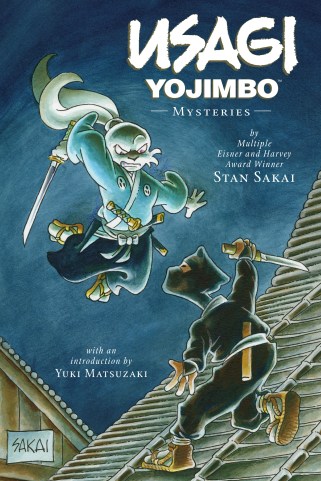
Usagi Yojimbo, Vol 32: Mysteries by Stan Sakai

Usagi Yojimbo Mysteries Cover.jpg

Publisher: Dark Horse Books

Publication Date – 10 July 2018

Amazon     Book Depository

After a year I have finally gotten the new volume of Usagi Yojimbo, one of my favourite long-running comic series.  Now I and other fans of the long-eared samurai can finally enjoy another set of exhilarating adventures in Stan Sakai’s version of feudal Japan.

Usagi Yojimbo is a great series that has been running since 1987, three years after the character was originally created.  In a world inhabited by anthropomorphic animals, the series is set in the early Edo period of Japanese history, during the time of the Shogun and the wandering samurai.  The series was originally supposed to feature human characters and a protagonist based on the famous historical samurai Miyamoto Musashi.  However, the series was changed to feature animals after the artist drew an early version of the hero with rabbit ears and created the series’ titular yojimbo, Miyamoto Usagi.

Usagi Photo 2

The Usagi Yojimbo series follows the adventures of Miyamoto Usagi through feudal Japan.  After the death of his lord, Usagi has become a ronin, a masterless samurai, and has spent the last few years wandering the country seeking employment as a yojimbo, a bodyguard.  Throughout his travels, Usagi finds all sorts of danger and adventures, and is often drawn into a range of conflicts throughout the troubled landscape, facing threats both natural and supernatural in origin.

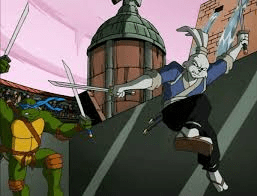
With 32 collected editions over 30 years, as well as the two additional graphic novels and the spin-off series, Space Usagi, Usagi Yojimbo has developed a dedicated fanbase.  Those who have not read this series may be familiar with it due to its frequent crossovers with the Teenage Mutant Ninja Turtles.  Characters from both franchises have crossed over into each other’s respective comic book series several times.  In addition, Usagi has appeared in all three Teenage Mutant Ninja Turtles television shows, often with some side characters.  One of my first exposures to the characters of Usagi Yojimbo was during The Big Brawl arch of the 2003 Teenage Mutant Ninja Turtles series, and I’ve been a fan of the character ever since.

Usagi photo 1.png

Stan Sakai’s series is a hybrid of western graphic novels and Japanese manga.  The style and format of the comics come across as more of a classic western style, but the story content and the series’ art is heavily influenced by Japanese culture and history.  Every issue is filled with incredible depictions of Japanese customs, history, folklore and mythology, and includes realistic and historically accurate illustrations of feudal Japanese weapons, clothes and buildings.  In addition, the dialogue includes a number of Japanese words which are translated in text, and the characters are all named using traditional Japanese naming conventions, with the family name presented before the given name.

Mysteries is the 32nd collected edition of this series, and contains issues #159-#165 of the Usagi Yojimbo series.  These issues see Usagi reunited with his friend Inspector Ishida as they investigate a series of mysteries in Ishida’s jurisdiction.  There are four main stories, including The Hatamoto’s Daughter, Death by Fugu, the two-part series The Body in the Library and the three-part series Mouse TrapMysteries also contains two of the shorter Chibi Usagi stories that Sakai writes with his wife, Julie, which feature cute versions the franchise’s characters.

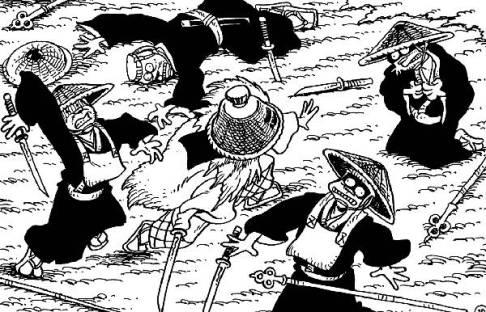
Readers of the latest volume of Usagi Yojimbo are in for another visual treat as Sakai continues to highlight the delicate beauty of the Japanese landscape and fantastic architecture of its towns with his spectacular artwork.  Each of the portrayals of the anthropomorphic characters in their period accurate clothing is amazing, and the reader will be astounded by the author’s desire to make his comic as aesthetically realistic as possible.  However, the real visual highlights of this comic are the action sequences that see the protagonists engage in a series of elaborate sword fights against a variety of opponents.  The artistic styling of these sword fights is both exciting and intricate, which allows the reader to imagine how these battles would occur in real life.  Mysteries contains some great examples of this series’ fantastic art form, and the reader will love the creativity that inhabits every panel of this book.

Usagi Photo 3.jpg

While most Usagi Yojimbo stories are standalone episodes, the separate stories featured within Mysteries share several connections with each other.  All of them are set within the same town and feature the character of Inspector Ishida.  In addition, several of the cases are connected by a shadowy crime boss, although the full nature of this connection isn’t fully known until the final story in the volume.

As you may be able to guess from the title of the volume, all of the main stories featured within Mysteries feature a murder and the following investigation by Inspector Ishida and Usagi.  Inspector Ishida is a high-ranking member of the Shogun’s police and is renowned throughout Japan as one of country’s most effective detectives.  Usagi has teamed up with him before in a number of adventures, including a great story, Murder at the Inn, back in Volume 29, which featured Usagi, Ishida, and Usagi’s frequent companion Gen investigating murders in a locked-down inn.  There are some great stories in the Mysteries volume, especially as Sakai has crafted together some intriguing mysteries in such short entries.  Several of the big mysteries and crime stories are connected into an elaborate overarching narrative that examines the criminal underworld of feudal Japan.  Two of the stories feature some really complex murder mysteries that flit back and forth between a number of suspects and contain motives that are very unique.  The final entry, Mousetrap, is the longest story in the volume and features an excellent tale about a thief getting caught in a middle of a fight to control the area’s organised crime and the sinister figure that has been manipulating the events of the previous stories.

Usagi Photo 5.jpg

Sakai ensures that his examination of feudal Japanese society carries through to each of these stories and their investigative arcs, affecting the characters’ investigations.  For example, only members of a lower caste are allowed to touch the murder victims’ dead bodies, which hinders the protagonists from properly examining the bodies to work out the cause of death.  There is also a fantastic investigation of the role of the inspectors in feudal Japan and how they bear the authority of the Shogun.  It also allows Ishida to show off his fighting skills with the jitte, one of my favourite Japanese weapons.

In addition to the returning Inspector Ishida, this volume of Usagi Yojimbo sees the return of several characters from previous stories.  Our favourite thieving duo of Kitsune and Kiyoko make a return in the middle story, The Body in the Library.  The fox thief Kitsune was first introduced in 1992 and has become one the series’ main recurring characters, adding significant amusement to the stories she appears in through her schemes, humour and continued casual theft of the other characters’ valuables.  Her young companion, Kiyoko, was introduced in a later story and serves as her apprentice in the life of crime while taking up many of her mentor’s bad habits.  Their inclusion in this story adds significant comic relief to an otherwise dark story of murder, and it is always fun to see what this mischievous duo are up to.  The mysterious masked thief Nezumi returns for a second adventure and is a major player in the book’s longest story, Mouse Trap.  Nezumi was introduced in the Volume 20 story After the Rat, and acts as a public Robin Hood character in Inspector Ishida’s town.  He is used to great effect in this new story, being framed for murder in a way reminiscent of his first appearance in the series.  Sakai continues to taunt his audience with the mystery of Nezumi’s identity and motives, and it is great to see this interesting and formidable character interact with Usagi for the first time, especially with their differing definitions of honour.  Readers should also keep an eye out for a certain recurring snitch who has played a similar role in a number of prior Usagi stories, despite the main characters failing to remember how treacherous he is.

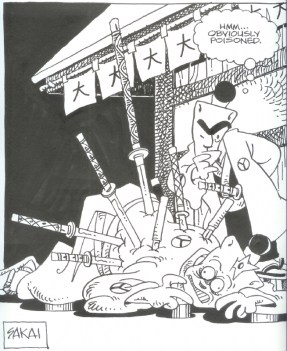
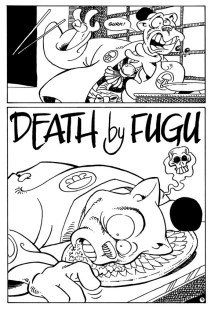
One of the best parts of the Usagi Yojimbo series is the incorporation of intriguing and unique parts of Japanese culture into amazing action based comic issues.  Throughout the series, the author has utilised a number of great Japanese cultural elements in various stories, including giant kites, giant drums, pottery, swordsmithing, tea ceremonies, seaweed farming, games of chance and a huge number of mythological creatures and legends.  These stories often contain descriptions and informative depictions of the cultural activities in question, and the author works them into a fun adventure or creative mystery.  Mysteries contains two of these stories.  The main one, Death by Fugu, focuses on the preparation of fugu, the meat of the poisonous pufferfish.  This story contains an excellent description of what fugu is and the preparation required to eat it.  Death by Fugu is a powerful and tragic tale that prominently uses the art of fugu in its mystery, and definitely one of this volume’s standout stories.  The other entry, The Body in the Library, takes a brief look at the examination and trade of western medicines in Japan.  While this is not examined in as much detail, it is a fascinating to see what impact western medicines could have in feudal Japan and to see it used as a motive for a series of murders.

Usagi Photo 4.jpg

Once again Stan Sakai has produced a powerful and fantastic new volume of his iconic Usagi Yojimbo series.  Fans of this series can look forward to seeing Sakai’s iconic art style and detailed cultural insights that are a love letter to Japan and its fascinating history and society.  Mysteries contains a range of outstanding new stories, and readers will enjoy unwrapping their mysteries with Usagi and the fan favourite Inspector Ishida.  I wish I didn’t have to wait a whole year for the next volume of this amazing series.

My Rating:

Five Stars

Amazon     Book Depository

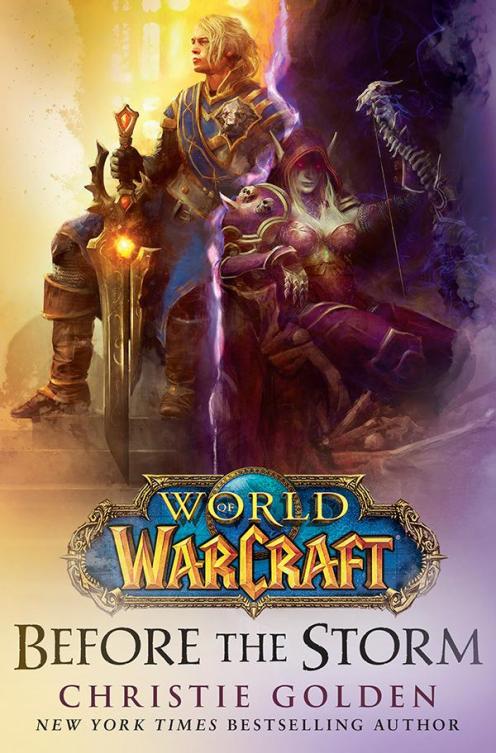
Word of Warcraft: Before the Storm by Christie Golden

Before the Storm Cover.jpg

Publisher: Titan Books

Publication Date – 12 June 2018

Amazon

War is once again coming to Azeroth in the brand new World of Warcraft novelisation from the queen of tie-in books and Blizzard Entertainment’s new in-house novelist Christie Golden.

The world of Azeroth is constantly at war, and for generations its inhabitants have known nothing but conflicts and threats.  Perhaps the greatest enemy that the people of Azeroth ever faced were the demonic Burning Legion, who are the root of many of the world’s great conflicts.  Now, after a devastating campaign, the Burning Legion has finally been defeated, although Azeroth’s victory came at a great cost.  As his final act of destruction, the leader of the Burning Legion, the Titan Sargeras, struck a great blow against Azeroth, plunging his gigantic sword into the surface of the planet and leaving a gaping wound in the side of the world.

Now both factions of Azeroth, the Alliance and the Horde, can finally recover and come to terms with the destruction caused by their demonic foes and the dramatic changes that have rocked their hierarchies.  Following the death of his father, young Anduin Wrynn has inherited the throne of the human kingdom of Stormwind, and serves as the new leader of the Alliance.  At the same time, the Horde is now under the sway of its new Warchief, the banshee queen of the Forsaken, Sylvanas Windrunner.  Both new leaders must come to terms with the running of their respective factions and the current peace blessing the land.

But there is always tension simmering between the Alliance and the Horde, and many predict that a new conflict is just around the corner, especially when both sides make a startling discovery: the blow from Sargeras’s sword has caused the very essence of Azeroth to bleed forth from the ground.  This new substance, known as Azerite, is extremely powerful, containing the very strength of Azeroth, and with the potential to be used as a mighty weapon by whichever side controls it.

As both factions investigate the wound in Azeroth and this strange new material, King Anduin seeks to finally forge peace between the Alliance and the Horde.  In order to achieve this peace, Anduin embarks on an ambitious plan to win the Forsaken to his cause and gain the trust of Sylvanas.  But Sylvanas has her own vision for the future of Azeroth, and woe betide anyone who stands between the Dark Lady and her goals.  Will peace finally be achieved, or will the discovery of Azerite result in a new war between the Alliance and the Horde?  And what role will Calia Menethil, long lost sister of the Lich King Arthas Menethil, play in this new era?  One thing is certain: the Battle for Azeroth starts here.

Before the Storm is the latest tie-in book to the massive Warcraft video game franchise.  People who have never played these games may be surprised to know that this franchise has a rich narrative history.  The original Warcraft games came with a substantial amount of lore and plot that were in some ways just as revolutionary as the game’s mechanics.  This tradition of great storytelling has continued over the years, and every single one of the games has contained a range of intricate and compelling storylines.  Many of these stories are incredibly elaborate and have great potential for future adaptations.  For example, this reviewer would be especially keen to see the corruption of Arthas and the rise of the Lich King told on the big screen.

The game’s narrative tradition has also resulted in a huge number of tie-ins that are mostly targeted towards fans of the game.  There are currently over 30 Warcraft books, as well as a number of comics and even some manga.  The vast majority of these adaptations are considered canon, and have been subsequently referenced in the plot of the games, including the franchise’s main game, the MMORPG World of Warcraft.  For example, in one of the previous novels, The Shattering: Prelude to Cataclysm, Cairne Bloodhoof a major character from Warcraft III: Reign of Chaos and the leader of the Taurens in World of Warcraft, is killed off, and this carried through to the game in several different ways.  Before the Storm is the latest book in this extended universe, and has been released as a tie-in for the upcoming Battle for Azeroth expansion, which is out in August.

The author of this latest novel, Christie Golden, has a bibliography of over 50 books, and has substantial experience writing tie-in books for big franchises.  In addition to her debut Ravenloft trilogy, Golden has written 15 Star Trek novels, five Star Wars books, and a number of full-length and short story tie-ins for franchises such as Assassin’s Creed, Invasion America, Buffy the Vampire Slayer and Angel.  Golden has also written a number of books for Blizzard, with five books based on Starcraft and 10 based around the Warcraft games.  Her previous Warcraft novels include stories that help cement the franchise’s established lore, the official novelisation of the recent Warcraft movie, and novels that have established the plot prior to several of World of Warcraft’s expansions.  For example, her 2014 novel, War Crimes, heavily set up the Warlords of Draenor expansion, while also presenting an elaborate novel that highlighted the crimes of the previous expansions main antagonist.  Golden has incredible knowledge of Warcraft’s lore and narrative history, having provided significant contributions to it in the past, and readers will appreciate the way that this new book connects with several of her previous Warcraft novels.

Before the Storm is a fun and exciting fantasy novel that has been expertly set within the World of Warcraft universe.  The narrators visit a number of key locations that feature within the games and Golden has done an amazing job of describing these distinctive and well-explored background settings.  There are some great locations used within the story, including several of the game’s main cities, such as Stormwind, Ironforge, Orgrimmar and the Undercity.  People familiar with the latest expansions will also love the addition of the Netherlight Temple, the priest class hall, as a key setting within this book, as it is such a unique and niche location within the game.

A large proportion of the novel is told from the perspectives of the leaders of the Alliance and the Horde, Anduin Wrynn and Sylvanas Windrunner.  If the awesome trailer for Battle for Azeroth is anything to judge by, the next World of Warcraft expansion will focus heavily on these two characters as they lead their factions into a large-scale war against each other.  Golden has made sure to explore both of these respective characters’ mindsets and examine potential future motives for the upcoming in-game conflict.  Other parts of the story are told from the perspective of a range of minor characters, many of whom are actually interactable NPCs within the game.  This range of perspectives gives a wide angle viewpoint of the story being told in both the book and the game, and allows the author to show off the different motivations and differences between the two rival factions.  Players will also love to see this story woven around minor NPCs they may have interacted with in the game, especially as this book may explain why they may have moved or disappeared in future versions of the game.  This is a great adaptation of the current World of Warcraft universe and Golden has successfully transplanted several key and iconic aspects of the game into this book, creating an excellent addition to this extended universe.

While a number of the different Warcraft races are featured within Before the Storm, many readers will enjoy Golden’s focus on the undead playable race, the Forsaken.  While many of the franchise’s previous novels have featured Forsaken characters, Golden has chosen to do a deeper examination of this race now that their ruler is the Warchief of the Horde.  There are some particularly interesting discussions about the role the Forsaken play within Azeroth and how the other races view them.  Readers will be intrigued by the examination about their current level of humanity, and whether they can still maintain connections to the family they had before they died, and will be intrigued by Golden’s fascinating analysis.

As an official World of Warcraft tie-in, Before the Storm is naturally a desirable read for those who are familiar with the franchise and the game’s current storylines.  As mentioned above, there are a ton of elements that will appeal to those gamers currently awaiting the next expansion, as this book ties in to its central storyline.  However, Golden makes sure to elaborate on a range of prior events in the franchise and this will ensure that former players will be able to jump in and follow from when they were last familiar with the story.  In addition, Golden’s writing is fairly accessible, and the game elements don’t massively overwhelm the story, ensuring that readers unfamiliar with the games will be able to enjoy this fantastic fantasy adventure without getting too lost.

Christie Golden has once again created a fun and electrifying novelisation of the Warcraft universe.  Before the Storm is a great tie-in to the upcoming game release, Battle for Azeroth, and serves as an excellent precursor of the exciting stories that will feature within the new expansion.  Making full use of the franchise’s significant lore and a range of iconic settings, Golden has produced a deep and thrilling fantasy tale that that will massively appeal to all fans of the Warcraft games.

My Rating:

Four stars

Amazon

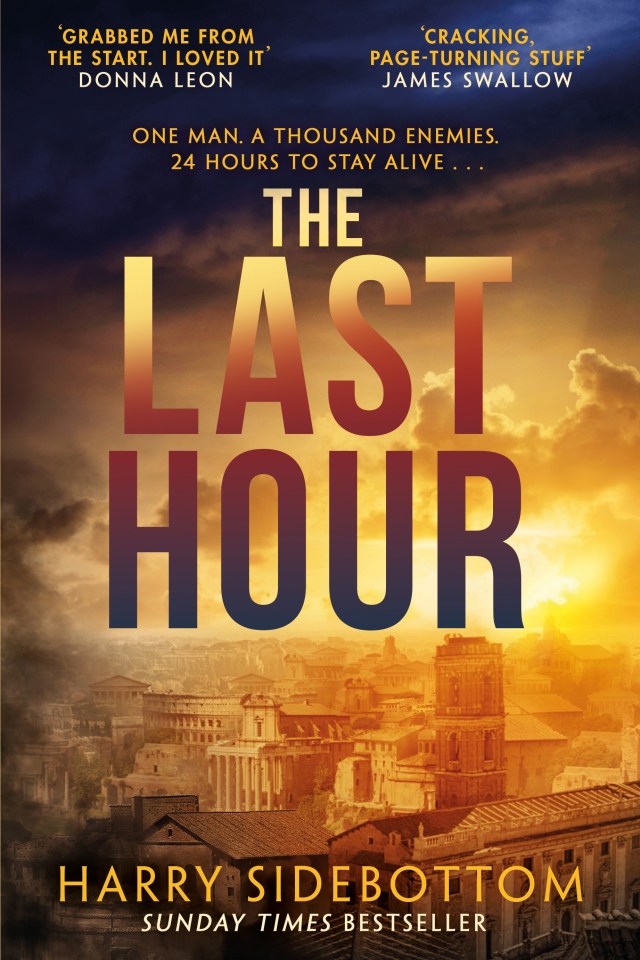
The Last Hour by Harry Sidebottom

The Last Hour Cover

Publisher: Zaffre

Australian Publication Date – 1 May 2018

World Publication Date – 8 March 2018

Amazon

Ballista is back, baby!  One of the best writers of Roman historical fiction, Harry Sidebottom, brings back his original protagonist for an incredibly gripping and action-packed novel that perfectly combines the thriller and historical fiction genres.

In Rome, in 265 AD, Marcus Clodius Ballista, former Dux Ripae of Rome and loyal friend of Emperor Gallienus, enters the Mausoleum of Hadrian to meet with an informant who wishes to talk to him about a plot to kill the emperor and usurp his throne.  But the meeting is a trap, the informant is murdered, and Ballista is forced to jump into the River Tiber to escape the horde of assassins sent to kill him.

Washed up outside of the city and pursued by killers, Ballista only has 24 hours until Gallienus is murdered.  With the conspirators still unknown to him, Ballista has no idea who he can trust and who can help him, but he must find a way to warn the emperor of the plot against him.  If he fails, not only will his friend will be assassinated but Ballista’s family will also die in the ensuing takeover.

Now alone, unarmed, and with no money, bodyguards or friends around him, Ballista must find a way to re-enter the city and transverse the entirety of Rome to get to the emperor’s side.  But the city is now a very dangerous place for him.  The city watch are fully mobilised and ordered to arrest Ballista at all costs.  In addition, mobs of disguised killers are searching for him everywhere, and they have no intention to taking him in alive.

As Ballista makes his way through the streets of Rome, he must find a way to avoid all the people searching for him while also overcoming the other dangers that lurk throughout the city.  Will Ballista be able to save his friend and his family, or will his final defeat take place in the heart of the empire he has spent his whole life protecting?

Harry Sidebottom is a renowned British historian and veteran author of Roman historical fiction, having previously written two best-selling series, Warrior of Rome and Throne of the CaesarsThe Last Hour is the 10th book from Sidebottom and a spinoff off from his Warrior of Rome series, featuring his original protagonist, Ballista.  Ballista is a heavily fictionalized version of a famous Roman prefect, and served as the main character of Sidebottom’s first six books.

I’ve always had a soft spot for Sidebottom’s works, as his debut novel, Fire in the East, was one of the first pieces of historical fiction that I ever read, and featured one of the best accounts of a siege that I have ever read.  His second book, King of Kings, was also one of the first books that I ever reviewed, and was a fantastic sequel that featured great story elements, set in an interesting and underused period of Roman history.  Sidebottom’s latest book, The Last Hour, is an amazing hybrid of the thriller and historical fiction genres, featuring an intense, high-stakes journey through the ancient city of Rome.

The thriller aspects of this book are exhilarating.  The protagonist is aware of a devastating assassination that is about to be committed and has only a limited time to reach and save the target.  Sidebottom incorporates a ticking clock element to the story, as Ballista is constantly aware of the passing of time and how short a period he has to complete his objective to save not only his friend but his entire family as well.  Needless to say, the author takes this story right down to the wire, and the reader has no idea whether Ballista will succeed or not; readers who are familiar with the previous books in the series will recall that King of Kings ended with Ballista and the previous emperor being both betrayed and captured by the enemy.  The story gains a significant amount of intensity as the protagonist has no idea of who he can trust, nor who is aligned against him.  Sidebottom also goes out of his way to ensure that the readers are in the dark about who the main conspirators are, even towards the end of the story.  This intrigue is compounded as Sidebottom gives his audience a tantalising view of the antagonists meeting while also frustrating the readers by ensuring that these characters use codenames when talking to each other.  As a result, the reader is intently drawn into the story by both the protagonist’s mad dash through the city and the immense desire to work out who the conspirators are and what their full plan is.

In addition to its electrifying thriller elements, The Last Hour also features an incredible exploration of ancient Rome and the range of people the protagonist encounters during his time in the city.  Sidebottom is determined to highlight several different groups of people that were a factor in the city, including the city watch, the Praetorian guards, the emperor’s Germanic bodyguards and the frumentarii, who served as the emperor’s secret police.  Each of these groups is an essential part of the emperor’s security and has a significant role to play in this novel, and the readers will be intrigued by Sidebottom’s descriptions of each of them.  Ballista also encounters a range of other Roman citizens, from simple shopkeepers and men of the street to members of the city’s criminal underground, cults of Egyptian priests, hidden Christians and even drunk Roman nobles looking to assault people they meet on the street.  Each of these adds to the rich tapestry of the historical city that Sidebottom has woven into existence.  This tapestry is further enhanced by Sidebottom’s determination to provide detailed examinations of several of ancient Rome’s buildings and locations.  These range from historically significant locations, like the coliseum, the Praetorian camp and the emperor’s palace, to more mundane locations that were a unique feature of the city of Rome, such as massive bathhouses and large apartment-style buildings.  All these historical elements serve as terrific background for this extraordinary thriller based story.

Readers of this book are also in for an action-packed treat as the protagonist rampages through ancient Rome, continuously fighting off either the people hunting him or the regular citizens of Rome attacking him for their own reasons.  As a result, The Last Hour is filled with innumerable action sequences that are guaranteed to amuse and delight all the action fanatics out there.  Readers will be gifted with sequences that include a crazy fight and flight across the rooftops of the city, and a down-and-dirty fight in the steamy and mechanical workings of a bathhouse.  There is also a siege on the roof of one of the city’s monuments and a large pitched battle in the streets of Rome.  These fight scenes are great fun and increase in intensity throughout the book as the protagonist’s countdown goes on.

Harry Sidebottom has once again produced an incredible, fast-paced and exceedingly exciting action novel that combines the very best elements of a first-rate thriller with all the research and detail of an excellent historical fiction novel.  A truly unique and utterly entertaining piece of literature, The Last Hour once again shows why Sidebottom is one of the very best authors writing about ancient Rome.

My Rating:

Four and a half stars

Amazon

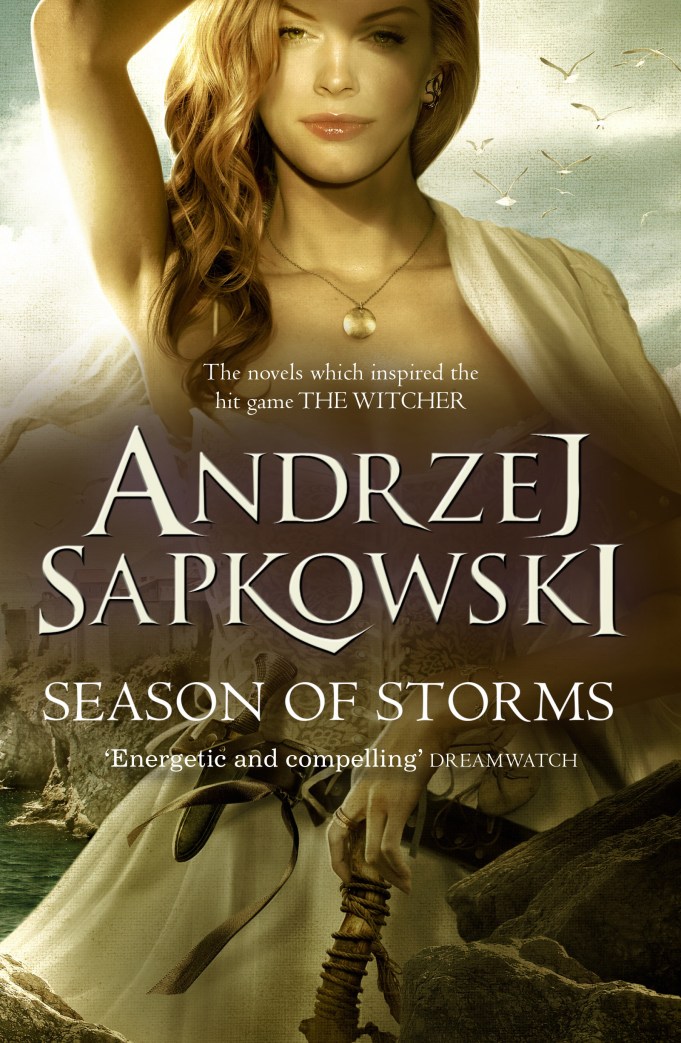
Season of Storms by Andrzej Sapkowski

Season of Storms Cover

Publication: Gollancz

English Edition Translated by David A. French

Publication Date – 19 April 2018

Amazon

The legendary Andrzej Sapkowski returns with a fun and exhilarating addition to one of the best fantasy franchises to ever come out of Europe, The Witcher.

Geralt of Rivia is a Witcher, a powerful mutant tasked with protecting ordinary people from the monsters that infest the various kingdoms and lands of the Continent.  Witchers wield a range of weapons in the fight against evil, from magical signs to powerful potions.  However, their main weapons are two swords: one made of steel, the other made of silver.  These swords are a symbol of status for a Witcher and are irreplaceable.

However, after being falsely arrested by corrupt city guards, Geralt’s swords disappear, having been stolen by unknown thieves.  Upon his release, Geralt will move heaven and earth to reclaim his weapons.  But all manner of people desire the weapons of a Witcher, and his search only throws up false leads.

The theft could not have come at a worse time.  In order to obtain his freedom, Geralt is coerced by the sorceress known as Coral into hunting a demon around the sorcerer stronghold of Rissberg.  Geralt must determine who among the fortress’s scheming sorcerers is summoning the demon forth, and stop their rampage.  At the same time, he and his old friend Dandelion must contend with the various plots taking place within the court of the King of Kerack as his heirs battle for power.

Can Geralt contend with the foes set against him, or will the loss of his faithful swords result in his destruction?

Sapkowski is one of the most popular and well-known writers of fantasy fiction in Central and Eastern Europe, where his books have achieved a cult following.  Sapkowski is best known for The Witcher series of books.  This series, which was mostly written in the 1990s, focuses on the monster hunter Geralt of Rivia and his adventures throughout Sapkowski’s dark fantasy landscape.  These books served as the basis for the popular video game series of the same name, which is how many people would be familiar with Sapkowski’s characters and stories.  The Witcher books were also adapted into both a movie and television series in Poland, called The Hexer, and Netflix has recently commissioned a new American television series based on the books, also called The Witcher, which is currently in the early stages of production.

Season of Storms is the latest The Witcher book Sapkowski has released.  It was originally published in 2013 in Polish, but an English translation of the book has only just been published.  This is a standalone book that is set between some of Sapkowski’s original short stories which were captured in his second book, The Last Wish.  While Season of Storms is a standalone book, it does contain a number of hints to some The Witcher stories chronologically set after it.  It also features a number of characters from the other books in the series, including a series of interludes that focus on Nimue, who appeared in two previous books and who many may recognise as the Lady of the Lake of Arthurian legends.  The scenes featuring Nimue in Season of Storms are set more than a hundred years after the rest of The Witcher books and contain some potential hints about the eventual fate of the series’ main characters, as well as some cryptic discussions between characters that could be open to some interesting interpretations.  As a result, people who have read the other books in the franchise will really appreciate Season of Storms for these call-backs and references.  However, while the book may be especially appealing to past readers, it is also a perfect place for readers unfamiliar with Sapkowski’s work to get started, as it does not rely on other books in the series for plot details.

Sapkowski continues to explore his fantastic fantasy world in this latest book, as Geralt quests into new areas of the Continent.  Most of the story focuses on locations and settings not previously explored in previous books of the series, giving fans of this franchise a much wider view of this detailed fantasy world.  Knowledge of the world is also expanded through the fun use of excerpts from in-universe fictional books, which offers a range of entertaining facts and jokes.  Readers will also be impressed by the wide number of foes and monsters that Sapkowski has fit in this book.  Throughout the story Geralt has to contend with magical mutations, humanoid hybrids, powerful magic users, werewolves, kitsunes, gangsters and marauding soldiers.  This rich array of opponents adds a lot to the story’s excitement and is wildly appropriate for a story about a monster hunter.

Another notable part of Season of Storms is the range of intriguing mysteries Geralt needs to solve in order to complete his quest and survive.  These mysteries are interspersed throughout the story’s fantasy adventure and include the main mystery of who stole Geralt’s swords, the political mysteries in the Kingdom of Kerack and the investigation into why summoned demons are attacking communities in the forest.  These mysteries have a large level of sophistication and do a great job of keeping the readers interested and intrigued throughout the book.  The various mysteries also combine really well with the book’s fantasy elements and strike a good balance within the book.  This exceptional combination of elements within Season of Storms impressively captivates the readers and creates an enticing overall story.

The latest book in The Witcher franchise is a brilliant new adventure that stands just to the side of the previous short stories and established longer series.  Season of Storms provides pulse pounding adventure in Sapkowski’s beloved fantasy world while also telling a series of intense interlocked stories that make great use of several riveting mysteries to drag in the reader’s attention.  This is definitely a strong recommendation for those readers who have enjoyed Sapkowski’s literary works in the past.  However, general fantasy fans and those who have only experienced The Witcher franchise through the games will enjoy this excellent and electrifying read.

My Rating:

Four stars

Amazon

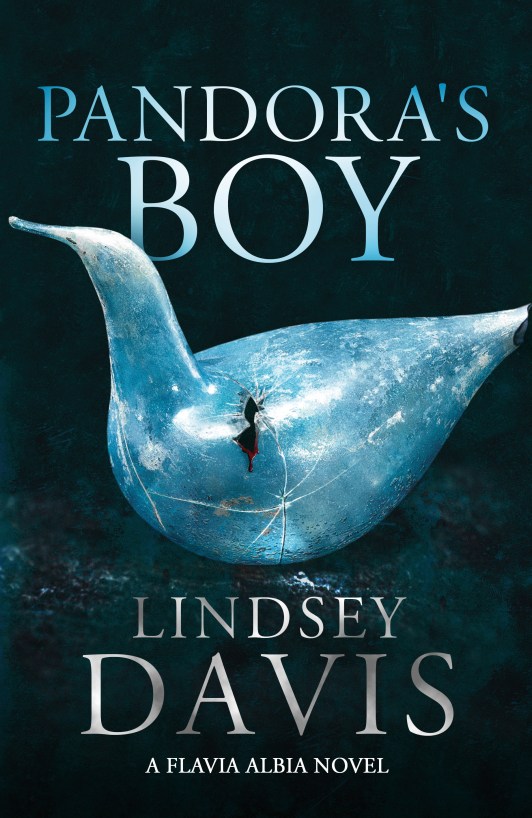
Pandora’s Boy by Lindsey Davis

Pandora's Boy Cover.jpg

Publisher: Hodder & Stoughton

Publication Date – 5 April 2018

Amazon

Ancient Rome’s premier female detective returns in the latest Flavia Albia mystery from veteran historical crime author Lindsey Davis.

Rome, 89 AD.  Flavia Albia, the daughter of the legendary investigator Falco, is now a proficient private investigator and informant in her own right.  When the ex-wife of her husband, Tiberius, brings a case of family drama to her, Flavia is tempted to refuse, but when Tiberius disappears she needs a distraction.

The case revolves around a teenaged girl found dead in the prosperous Quirinal Hill district of Rome.  The girl, Clodia, was the apparent victim of a poisoned love potion, and her parents and grandparents are blaming each other for her death.  What begins as a simple investigation quickly becomes complicated when the witch accused of supplying the potion turns out to be the sister of the city’s biggest crime boss.  No-one is talking, and everyone in the Quirinal Hill has a secret.

Flavia is forced to seek the truth from a variety of people, including warring grannies, concerned parents, criminal lawyers, secretive slaves, a lettuce salesman with an interesting religious statue and, worst of all, the overprivileged offspring of Rome’s elite.  However, as Flavia’s investigation continues and a friend of hers dies, it soon becomes apparent that a vicious gang war is imminent.  Can Flavia solve the crime without getting caught in the crossfire, especially when she has a terrible history with one of the gangs?

Pandora’s Boy is the sixth book in the Flavia Albia series, which acts as a direct sequel series to Davis’ Marcus Didius Falco series.  Davis is one of the most prolific authors of historical whodunits and has a particular focus on novels set in ancient Rome.  For example, her Marcus Didius Falco series contains 20 books, and she has produced some stand-alone books set in the same period.

Like the previous books in the Flavia Albia series, Pandora’s Boy takes a contemporary look at Roman culture and lifestyles.  The inhabitants of Davis’ books act in a very modern way despite their ancient surroundings, and this results in a very humorous interpretation of the ancient Roman characters.  Davis also uses this book to parody a specific group in modern society: the millennials.  Throughout the story, Flavia is forced to follow, interview and generally endure the victim’s friends, who are the offspring of the city’s rich and powerful.  These friends are exceedingly selfish, have sordid love lives and get into all sorts of mischief.  In other words, they act in a very similar way to how modern day millennials are often perceived and portrayed.  Their appearance is quite jarring in the ancient Roman setting and leads to a lot of the books humour.  In all, it is a fun, quirky addition, and an amusing examination of modern society through very ancient eyes.

The core of the book is the death of a young woman and its investigation by the main character.  This is a well-done mystery that takes many twists and turns to keep the attention of the reader.  Flavia’s investigation is done through interviews, trickery, observations and undercover work, and, like many other parts of the book, is infused with Davis’ trademark humour.  The investigation is wrapped up in a final scene that is a throwback to classic murder mystery dénouements.  All the interested parties are gathered together in one place and the investigator reveals their conclusions, eventually leading to their solution to the crime.  Davis provides a perfect parody of this, infused with her own unique touch.  As a result, there are several jokes about this well-used literary device, including discussions around the necessary prep work and tricks to keep the gathered parties’ concentration of the speaker that will greatly amuse many murder mystery buffs.

One of the more diverting and memorable aspects of the Flavia Albia series is Davis’ tendency to include big action sequences that devolve into near absurdity and provide some of the best laughs in the entire book.  For example, in Davis’ previous book, The Third Nero, the climactic scene was a battle in the heart of Rome that featured, among other things, a war elephant, Parthian cataphracts and one of the most improbable chase sequences in all of fiction.  While nothing will quite top this, Davis has striven to include one such scene in Pandora’s Boy, featuring an interrupted séance, an all-out brawl between legionnaires and Vigiles at a collapsing temple, all of which serves as a backdrop to a fight between two warring grannies.  This is an extremely entertaining scene and definitely a highlight to watch out for.

Another notable feature of the books in the Falco universe is the deeper examination of the Roman criminal justice system.  The investigators in these books often deal with the Vigiles and the Aediles, the ancient Roman equivalent of the police and magistrates, many of whom turn into key characters.  This is a unique feature, as most Roman historical fiction books neglect to focus on these institutions, only mentioning them if in the context of political gain.  Pandora’s Boy includes a detailed look at the Vigiles who patrol the Quirinal Hill district and their investigation into the death and other serious crimes.  Loaded up with a suitable modern twist, the inclusion of these characters is an intriguing addition that highlights an often-neglected side of ancient Roman life.

Pandora’s Boy is a wonderful addition to one of the best ancient crime series currently on the market.  Davis once again creates a fantastic murder mystery and infuses it with outrageous humour and a modernistic take on ancient Roman life.  This is an exceedingly fun and deeply absorbing novel that will appeal to a very wide audience of readers.

My Rating:

Five Stars

Amazon

The Throne of Caesar by Steven Saylor

The Throne of Caesars Cover

Publisher: Constable

Australian Publication Date – 6 March 2018

World Publication Date – 20 February 2018

Amazon

Steven Saylor’s long-running ancient Roman detective series returns as Gordianus the Finder deals with the most infamous murder in Roman history: the assassination of Julius Caesar.

For decades, Gordianus the Finder has been the most respected investigator in all of ancient Rome.  After a lifetime of solving crimes and murders for the city’s rich and powerful, Gordianus is determined to retire from the investigative game and enjoy a life of luxury.  However, one last surprise has been thrust upon him: Gordianus’ adopted son Meto has spent years in the service of Caesar as his trusted aid and ghost-writer, and Caesar now seeks to reward Meto by making his father a senator.  Reluctantly accepting this rise in station, Gordianus’ ascension will take place in five days’ time, on the Ides of March.

Caesar has an ulterior motive for meeting with Gordianus.  Warned by visions and prophets, Caesar believes that his life may be in danger, and that disaster may strike before the conclusion of the Ides.  He requests that Gordianus keep his ears to the ground and quietly question leading members of the Roman nobility to see if there is any basis to his concerns.  While initially sceptical of any attempts on the dictator’s life, Gordianus’ suspicions are aroused when one of Caesar’s old rivals, Senator Cicero, also asks him to watch out for potential conspiracies.  As Gordianus begins his investigation, he finds himself in the middle of dangerous historical events, and even the legendary Finder may be unable to stop what is to come.  The Ides of March are approaching, and Caesar’s life isn’t the only one at risk.

The Throne of Caesar is the 16th book in the Roma Sub Rosa series, a series that also includes three prequel novels and two collections of short stories.  Saylor began in 1991 with Roman Blood, set in 80 B.C. some 36 years before the events of this book, and he has slowly been working towards the assassination of Julius Caesar.  Indeed, the last three instalments of the series were prequels produced while Saylor perfected his account of this famous murder.  It was definitely worth the wait, as Saylor has produced an extremely detailed and well-researched account of the infamous killing.

Gordianus’ investigation and social interactions are used to introduce the reader to many of the key people involved with the plot, as well as to discuss the political atmosphere that lead up to the assassination.  The Ides of March is the centrepiece of the novel.  It is clear that Saylor has consulted the key historical records of the killings, as he has made sure to include several of the lesser-known events that happened on the day.  For example, Saylor includes descriptions of the supposed visions Caesar’s wife, Calpurnia, had the night before, and Decimus Brutus’ intervention at Caesar’s residence the morning of the Ides.  Saylor also dedicates a good part of the book to examining the aftermath of Caesar’s death, including the political manoeuvrings that immediately followed, as well as the violent funeral.  As a result, the description of the killings and the surrounding circumstances are first rate, and this aspect of the book will appeal to Roman history buffs.

As Saylor discusses in the author’s notes, writing a murder mystery around the assassination of Julius Caesar is particularly hard, as his death is one of the most well-known events in Roman history, with all the conspirators condemned to historical infamy.  Saylor, however uses this to his advantage and manages to create a large amount of suspense by counting down the days until the 15th of March and hinting at the events that are to come.  All the reader can do is keep going through the novel, knowing that Gordianus will be unable to stop the murder, even as he gets closer and closer to the truth.

Saylor also compensates for the lack of mystery around the death of Caesar by including a second murder subplot.  Elements of this additional murder mystery are hidden in the background of most of the book, as the reader’s attention is directed towards the upcoming assassination, and the investigation into the second murder comes to the fore after Caesar’s death.  The actual events of the second murder are unique and will be of particular interest to fans of a certain Shakespearean play.

One of the best features of The Throne of Caesar is the significant incorporation of Greek mythology throughout the book.  Several Greek myths are discussed, and parts of the plot mirror elements of these myths.  Many of these myths are also included as centrepieces of two Roman epic poems written by Gaius Helvius Cinna, a famous historical poet, which are a major part of the plot.  While one of the plays featured is completely fictional and with no historical basis, the other play is Zmyrna, considered by Cinna to be his greatest achievement, the text of which is unfortunately lost to history.  Saylor provides an interesting possible narrative for the lost play, which flows into the plot of his mystery with great effect.  The overall effect of Saylor including these myths and legends is very striking, and it provides the reader another viewpoint into the lives of the ancient Roman characters who put great stock in these old and religious stories.

The latest addition to the Roma Sub Rosa series is a meticulously detailed and well-crafted book that acts as a unique and powerful chronicle of an important historical crime.  A suspenseful and compelling read, The Throne of Caesar serves as a great continuation of the story of Gordianus the Finder, and it will be interesting to see where Saylor takes the series next.

My Rating:

Four and a half stars

Amazon

Vallista by Steven Brust

Vallista Cover

Publisher: Tor

Australian Publication Date – 28 November 2017

World Publication Date – 17 October 2017

Amazon     Book Depository

One of fantasy’s most iconic heroes returns in Vallista, the latest book from acclaimed fantasy writer Steven Brust.

In the world of Dragaera powerful and long-lived humanoids known as the Dragaerans are the planet’s dominant species, while humans, called Easterners, are second-class citizens.

Vlad Taltos is a rare anomaly, being an Easterner with a title, money and influence.  Having made his name as an enforcer and assassin, Vlad was a respected member of House Jhereg, the Dragaeran clan in charge of the Empire’s organised crime.  However, Vlad’s relationship with the Jhereg has deteriorated.  Having betrayed his clan, Vlad has spent the last few years on the run, hunted day and night by ruthless assassins.  Luckily, Vlad has friends in very high places, including the Empress, some powerful sorcerers, a necromancer and even a Dragaeran god.

Throughout his travels, Vlad has had several meetings with Devera, a small Dragaeran girl who is the daughter of one of his many powerful friends.  Devera is a mysterious creature of considerable power, an overabundance of enigma and a casual relationship with the rules of time.  Devera has once again appeared to Vlad, requesting his help and leading him to a mysterious manor that has suddenly materialised by the sea.

Despite the fact that the manor should not even exist, Vlad enters, only to find himself trapped with the manor’s mysterious inhabitants.  The inside of the manor is a weird collection of rooms and corridors altered by magic and no longer obeying the rules of reality.  Mirrors teleport people from room to room, mysterious portals lead to the ancient past, and a certain door leads to the Halls of Judgement, the Dragaeran afterlife.

The more Vlad explores, the more he understands that the manor is home to many lies and death.  The overly helpful servants are determined to keep the manor’s past a secret.  No one will explain how an unused and empty kitchen keeps providing Vlad with warm meals.  On top of this, Vlad encounters a ghost unaware of how she died, a mutant deformed by magic, and a powerful demon determined to kill him.

In order to escape, Vlad must uncover the manor’s bloody history and reveal all of its inhabitants’ dark secrets.  With his sarcastic familiars and a sentient sword to aid him, Vlad must use every trick at his disposal to survive while trying to interpret some beguiling visions of his own past lives.  If only Devera, his only guide, would stop disappearing in the middle of every conversation.

Vallista is the 15th book in Brust’s iconic Vlad Taltos series, and is set before the 14th book in the series, Hawk.

One of the most appealing features of Brust’s books has always been their trademark combination of fantasy world-building, action, adventure and fun comedic undertone.  Brust continues this trend in Vallista, creating a fast-paced book that delivers several exhilarating action scenes and a good amount of comedy without compromising the fantasy elements of the plot.  Fans of the Vlad Taltos series will be excited to see an in-depth look at Devera, a minor character who has long mystified readers, as well as visions into several of the titular character’s past lives.

Brust also has an enjoyable habit of combining elements of other genres into his stories.  This ensures that many of the books in the Vlad Taltos series are transformed into different genres, such as murder mysteries, political thrillers or heists contained within the fantasy setting.  Vallista continues this trend with its interesting and unique fantasy mystery.  The main character is forced to uncover the secrets of the mysterious manor in which he is trapped in order to escape.  As a result, Vallista reads a lot like a typical mystery, which is enhanced by the book’s various fantasy elements.

Vallista also borrows several elements from classic haunted house tales.  The main character is trapped and imperilled, the house is filled with servants reluctant to reveal their secrets, and ghosts, monsters and strange events are around every corner.  However, as this is a fantasy book, our hero has far more experience in dealing with such things, and quite a lot of the book’s humour revolves around Vlad responding to the manor’s various challenges.

Unsurprisingly, this book will appeal greatly to those readers who enjoyed the previous instalments of the Vlad Taltos series.  At the same time, this is one of the most inclusive fantasy series that I have ever read.  Burst is very good at succinctly explaining the universe’s lore so that new readers will easily be able to enjoy Vallista every bit as much as any seasoned veteran of the Vlad Taltos series.

Overall, Vallista is fun fantasy adventure that will appeal both to Brust’s established fans and to casual fantasy readers.

My Rating:

Four stars