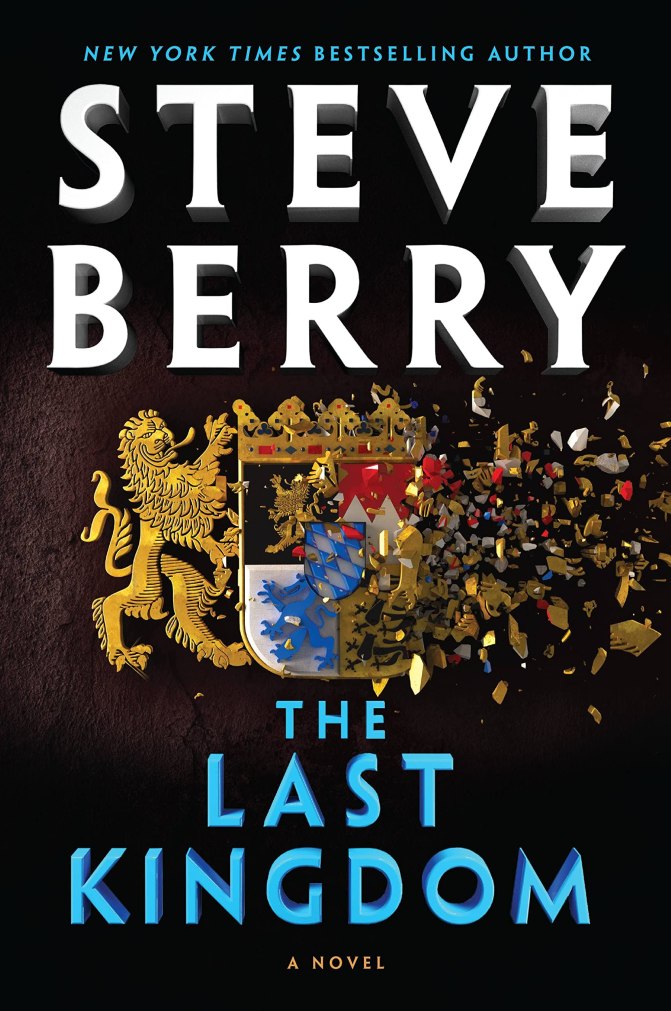
The Last Kingdom by Steve Berry

The Last Kingdom (Steve Berry) Cover

Publisher: Hachette Audio (Audiobook – 21 February 2023)

Series: Cotton Malone – Book 17

Length: 14 hours and 20 minutes

My Rating: 4.75 out of 5 stars

Amazon

Prepare for a remarkable and captivating mystery from out of history as acclaimed thriller writer Steve Berry presents another outstanding and riveting novel in The Last Kingdom.

Ever since I started reading thrillers a few years ago, one of my favourite authors in the genre, as well the most consistently entertaining, is the fantastic Steve Berry.  A veteran author who has been producing compelling reads since the early 2000s, Berry has over 25 books to his name that blend intense modern thriller narratives with intriguing history elements.  His most iconic body of work is his long-running Cotton Malone series, which follows a US Justice Department agent as he investigates unique historical conspiracies or secrets whose revelation will have major implications in the modern world.  I first fell in love with Berry’s writing back in 2019 when I read The Malta Exchange.  Since then I have gone on to read several more Cotton Malone novels including The Warsaw Protocol and The Kaiser’s Web, as well as the standalone novel The Omega Factor, each of which have contained some addictive stories that I’ve deeply enjoyed.  As such, I made sure to read his 2023 release, The Last Kingdom, as a soon as I could.  The 17th Cotton Malone novel, The Last Kingdom presented the reader with another brilliant conspiracy from history that was pretty awesome to behold.

There are many strange tales scattered throughout the history of Europe, but few are more unusual than that of King Ludwig II of Bavaria.  An unstable and fanciful figure who loved stories, solitude, and magnificent castles, King Ludwig dreamed of a magical kingdom, one far different from the lands he ruled.  Determined to find such a kingdom, he despatched agents throughout the world before his murder in 1886.  History suggests that he never found what he was looking for, but what if he did?

Now, in modern day Bavaria, freelance intelligence agent Cotton Malone has been hired by his old friend and protégé Luke Daniels to help him infiltrate a small group of radical separatists with dreams of securing Bavaria’s independence from Germany.  The focus of Luke’s investigation is the prince of Bavaria who seeks to usurp his older brother, the duke, and restore the ousted Wittelsbach monarchy with himself as king.  But to achieve his dreams, the prince needs the ultimate leverage, the Last Kingdom of King Ludwig II.

Following clues throughout several significant sites in Bavaria, Cotton and the Prince’s men are soon caught in a race to find a mysterious deed, one that Germany, China and the United States would kill for and which could greatly shift the balance of power in the world.  With the White House, Chinese intelligence, a mysterious Bavarian secret society and a rogue group of former CIA agents all vying for the prize, Cotton desperately attempts to solve the puzzle of the Last Kingdom and the terrible legacy it holds.  But can Cotton once again defeat the odds and keep the word safe from another historical mystery, or will the world be irrevocably altered by a secret form another century?

Well damn, now that was a pretty awesome read.  I have so much damn love for Steve Berry’s work, and The Last Kingdom is probably one of my favourites so far.  Perfectly combining an excellent thriller storyline with an elaborate and deeply captivating tale of history, The Last Kingdom was an exceptional read and one that I honestly could not stop listening to.

Berry has produced an amazing and addictive masterpiece of a thriller in The Last Kingdom with a particularly strong story behind it.  Like most of Berry’s books, The Last Kingdom is primarily a modern day thriller that introduces an original conspiracy that took place in history and has remained hidden until Cotton Malone wanders along (that man finds ancient mysteries wherever he goes).  As such, what starts as a simple infiltration at a famous Bavarian palace soon devolves into an elaborate treasure hunt for unique piece of history.  This latest historical mystery revolves around the eccentric and tragic final kings of Bavaria, and their desires to either retain power or find their own place in the world.  Berry expands on this historical detail throughout the entire course of the book, providing a good combination of real facts and some exaggerated fictional elements, which works into the main plot extremely well.  This modern day storyline gets some legs really early on as the protagonist and his companions are dragged into a major shadow war with several different factions attempting to take advantage of the situation and the hunt for the historical mystery.  Cotton soon finds himself working for several old colleagues, including a reckless CIA agent, while other groups, including the Bavarian prince and a rogue group of former CIA agents, start to use deadly force to solve the clues and find the hidden deed.

Berry keeps the pace of The Last Kingdom quick and compelling by raising the various stakes of the book while still showing off the entirety of Bavaria and its historic beauty.  There is a good reveal of why everyone is after the deed about halfway through which sets everyone on the road to a big confrontation.  While the full details of the conspiracy are a little over-the-top, Berry fits it into the story well, and the examination of modern and historical concerns surrounding is quite clever and intriguing.  The final half of the book is an intense thrill ride in several great ways, as Berry loads up the story with fun reveals, clever twists and so many betrayals.  I loved how the mystery of the King’s deed unfolded, and Berry really mixed the various original puzzle pieces of his conspiracy with the overlying historical detail to create a fantastic scavenger hunt.  The modern day thriller elements flitted around this extremely well, and watching the various participants in the hunt betray or outwit each other to try and get the prize was deeply exciting and led to some big moments.  The conclusion to the story is very good, and readers will come away extremely satisfied, both with how the story came together, and with all the extra knowledge Berry leaves you with.

I have a very deep appreciation for how Berry writes his outstanding novels and I think that The Last Kingdom was a particularly impressive example of this.  The blend of a high-intensity modern thriller storyline wrapped around a mystery loaded in historical detail is always entertaining, and I felt it turned out well again in The Last Kingdom.  The way that Berry splits the story out using alternate perspective chapters is particularly useful, as you get to see each of the characters interpreting the historical elements from different perspectives.  At the same time, several of the chapters are set in the 19th century and provide some deeper historical context to the story, which I felt was particularly useful and fun.  Berry really excels in simultaneously showing the different aspects of his story, and readers come away from The Last Kingdom having had fun with the thriller elements, while also learning so much more about some fascinating topics.  I really think that The Last Kingdom had one of the better thriller storylines associated with it thanks to inclusion of spies, disaffected royals, and several warring governments, and the way that story element unfolded had me pretty damn hooked the entire way through.  Like most of the Cotton Malone novels, The Last Kingdom can be read as a mostly standalone book, and readers don’t need to have any real knowledge of the previous entries in the series to enjoy this great novel.  While there are references to previous adventures and mysteries, the relevant details of these are well explained and new readers won’t be thrown by them.  However, long-term fans of the series will appreciate the continuation of several recent storylines, especially around Cotton’s feud with the US President, and I liked how that unfolded.

As I have mentioned a few times already, one of the best things about The Last Kingdom, and indeed all of the Cotton Malone novels, is the way that Berry dives into unique and intriguing parts of history to really give his stories a captivating kick.  In The Last Kingdom, this takes the form of a focus on the unique history of the kingdom of Bavaria, specifically the last 19th and early 20th century and the last three monarchs of the Wittelsbach line.  I have to admit, this was an area of history that I was not familiar with, but that changed after reading The Last Kingdom.  Berry conveys an immense amount of detail about this period and the relevant kings to the reader throughout the course of the book, so by the time you are done, you know so much about them.  However, Berry does it in such a way that ensures that the reader don’t get bored with it, as he showcases the more compelling elements of their reigns and the nation’s history around it, while also hinting at how it ties into the big conspiracy/mystery of the story.  I particularly enjoyed the detailed and fascinating examination of eccentric King Ludwig II.  Berry covers so many parts of his compelling life in this story, including his complex reign, his unusual outlook on the monarch, and his infamous end that saw him deposed and murdered.  The mysteries of Ludwig II and his search for a new kingdom proved to be a deeply compelling centre for the entire plot and I am really glad I got to learn more about them.  Another nation’s history, which I mention for spoiler reasons, is also concisely featured here, and I liked how Berry tied it together with Bavaria, resulting in a cool mixture that perfectly fed into the modern-day thriller.  The author clearly has so much fun researching and utilising all this historical detail in his books, especially if the extensive author’s notes section at the back is anything to go by.  Featuring all this historical detail works to create a great story, and I cannot emphasise how awesome it can be, especially in Berry’s capable hands.

In addition to all the historical elements of the book, I also really need to highlight how well Berry showcased Bavaria as a whole throughout the course of The Last Kingdom.  Many of the Cotton Malone novels act like a tourist brochure as the protagonists travel from one picturesque area of the country to the next, visiting all manner of historical sites.  This is very much the case for The Last Kingdom as the characters are forced to travel to several impressive locations throughout Bavaria, including iconic cityscapes, famous cathedrals, and beautiful landscapes.  Berry really spares no detail when it comes to describing these locations, and you can easily visualise them in all their stunning glory.  Some of the best descriptions are the iconic three castles that King Ludwig II built, which were strongly connected to his life story.  These castles form the basis for much of the plot’s historical scavenger hunt, and Berry really goes into the history and layout of them, even describing the furniture and the decorations.  You really grow to appreciate these locations around Bavaria, and I know that if I ever get the chance to visit, several of them are going to be on the top of my list of places to check out.  However, it is not just these iconic locations that are explored.  Berry also spends substantial time trying to show off the intangible nature of Bavaria, including its politics, its current attitudes, the state of its old monarchy, its place within larger Germany, and various other elements of its culture, including a real secret society dedicated to King Ludwig II.  All these elements are masterfully researched, examined, and showcased throughout The Last Kingdom, and all of them add to the authenticity of the story in immeasurable ways.

Aside from the excellent story and complex historical details, I also need to mention the great characters featured throughout The Last Kingdom.  Berry always writes fantastic figures, and it was awesome to see more of his central protagonist, Cotton Malone, as well as recurring supporting character Luke Daniels.  Both are well utilised throughout The Last Kingdom, and it was always great to see them working, especially as they have some major veteran presence at this point and work well against the various forces coming for them.  I did think that there was not a lot of development between the two, as both are essentially the same people they were in their last appearances, but they still make solid and likeable central focuses for the story.  However, there was some fantastic character development occurring outside of these main characters, especially as Berry introduces an amazing supporting cast of aging spies, angry deposed royalty, intriguing members of Bavarian society and deadly foreign agents.  Several of these characters have key roles in the book and Berry utilises them perfectly as great alternate perspectives for large swathes of the plot, producing a complex and powerful extended plot.  I loved the utilisation of Derrick Koger, a veteran CIA agent who has history with Cotton and has worked with him/against him in the past.  The funny and morally ambiguous Koger plays off the honourable Cotton perfectly as they work together in this book, and it was interesting to see them teaming up.  I liked how several of the antagonists, as well as Koger, shared a compelling character theme of people who believe they were overlooked or betrayed by their peers or people, and it serves as a great driving force for them to do bad things.  This group of characters and their conflicting priorities are an excellent part of The Last Kingdom and I had an outstanding time following them along this powerful quest.

I once again chose to check out this latest Steve Berry novel on audiobook, which is always a pretty epic experience.  Coming in at nearly 14 and a half hours, The Last Kingdom is medium length audiobook, although once you get caught up in the compelling story it flies by extremely quickly.  I personally love the Cotton Malone audiobooks as the narration really enhances all the elaborate detail of the story, especially the historical background, and ensures that they stick in the mind.  Hearing the key historical facts again and again really drives them home and I find that this helped me get even more fixated on the narrative as I was extremely eager to see how everything came together.  It helps that The Last Kingdom once again features narration from Scott Brick, one of the premiere thriller audiobook narrators out there who has lent his voice to all the previous Cotton Malone audiobooks.  Brick has a great voice for thrillers and I find his narration really fits Berry’s cool stories, especially as he gives some gravitas and complexity to both the modern day events and the historical elements.  Brick also has a great array of accents that he employs to full effect throughout The Last Kingdom, which I deeply appreciated.  His various American accents, which includes one from the wilds of Tennessee, are very well done, and I was once again extremely impressed by his dazzling array of German and European tones.  Even his Australian accent, something I am particularly sensitive about, was passable, if slightly stereotypical, and this fantastic choice of voices enhanced the audiobook experience.  Due to this outstanding voice work, as well as the great impact this format has on some of the key parts of the book, I would strongly recommend The Last Kingdom audiobook, and it is always one of my favourite ways to enjoy a good Steve Berry novel.

Steve Berry continues to impress with his latest outstanding Cotton Malone novel, The Last Kingdom.  Featuring his typical blend of exciting and intense thriller storylines and fascinating historical detail, The Last Kingdom is a brilliant read that powerfully showcases Bavaria in all its glory.  Examining key elements of the state’s past, as well as its current beauty, and perfectly working them into an excellent story, this was an exceptional outing from Berry and one that I had such an amazing time reading. Highly recommended!
Amazon

Son of the Poison Rose by Jonathan Maberry

Son of the Poison Rose Cover

Publisher: Macmillan Audio (Audiobook – 10 January 2023)

Series: Kagen the Damned – Book Two

Length: 25 hours and 55 minutes

My Rating: 5 out of 5 stars

Amazon

One of my favourite authors, Jonathan Maberry, returns to his intriguing fantasy world in a big way with the second Kagen the Damned novel, Son of the Poison Rose.

Readers familiar with my blog will know I am a massive Jonathan Maberry fan, and the path to my current obsession with his work is well documented throughout The Unseen Library.  I started off by reading his fantastic 2018 novel, Deep Silence, quite early in my blogging career, and this ended up getting me into the rest of his exceptional Joe Ledger series, including The Dragon Factory, The King of Plagues, Predator One and Dogs of War.  I have also had a great time reading his sequel Rogue Team International series, which featured the epic books Rage (one of my favourite books and audiobooks of 2019) and Relentless (one of my favourite books and audiobooks of 2021), as well as the fun standalone novel Ink (one of my favourite books and audiobooks of 2020).  Needless to say, I have deeply enjoyed his cool books, and this only increased when he made his impact into the fantasy fiction world last year with Kagen the Damned.

Kagen the Damned was an amazing and exceptional dark fantasy novel that took the reader on a wild ride.  Set in a brutal fantasy world of Maberry’s own invention, Kagen the Damned followed the titular character of Kagen Vale, a highly regarded hero and palace guard of the Silver Empire who loses everything in a single night when the armies of the dread nation Hakkia invade with dark magic, led by the powerful and deadly Witch-king.  Forced to watch his parents, his empress, and the royal children he was sworn to protect die terrible deaths, a haunted Kagen flees, only to be further destroyed when he beholds his gods turning their back on him, damming him for his failure.  Now known as The Damned, Kagen travels the world in a daze before finally regaining his senses and launching an attack on the Witch-king at his coronation.  However, this reveals secrets that shock Kagen further and spelling doom for the entire world.  I had an epic time reading Kagen the Damned last year, and it ended up being one of my favourite books and audiobooks of 2022.  Between this and the cool Kagen the Damned novella I Say Your Name in the Dark Nights, I have been eagerly awaiting a second novel and I was very excited when I heard that Son of the Poison Rose was coming out.  Son of the Poison Rose was one of my most anticipated books of 2023 and I finally managed to read it a short while ago and it was everything I hoped it would be and more.

“There is blood on the ground between us!”

Following his failed assassination attempt on the Witch-king of Hakkia, Kagen Vale, better known as Kagen the Damned, is once again the run with his companions, Tuke Brakson and Filia alden-Bok, attempting to find safety and come up with a new strategy of survival and revenge.  While their plan to kill the Witch-king failed, their attack stopped the return of the Hakkian God, Hastur, while also opening up the possibility of war, as the Witch-king’s fellow monarchs see the Hakkians as vulnerable.  However, Kagen also uncovered the terrible secret that the Witch-king is his older brother Herepath, who has turned his back on everything he once believed in to unleash great evil upon the world.

Wandering the wilderness, Kagen, Tuke and Filia attempt to come up with a new way to strike back against the Hakkian forces.  Their journey eventually leads them to the north of the continent, where they attempt to recruit an army of nationless-rogues, mercenaries and fighters to their cause.  But force of arms alone will not be enough to stop the Witch-king, instead Kagen and his allies will need magic.  But with magic long banned within the Silver Empire, only the Hakkians have any real knowledge of the mystic arts.  To that end, Kagen turns to former nun turned spymistress, Mother Frey, who sends Kagen on a deadly mission to a long lost city in a dangerous jungle in the hopes of recovering ancient books of dark magic.

However, the Witch-king is far from idle while Kagen is working against him.  With his army spread thin and the nations of the former Silver Empire all gearing up for war, the future looks grim for the usurper and his advisors.  But with new dark allies arriving every day, called to his side by magic, the Witch-king plans to unleash a magical plague, one that will turn his enemies into a ravenous, unthinking horde.  With such power at the Witch-king’s command, will Kagen’s quest reveal something powerful enough to defeat him?  And even if he does, will Kagen be able to fight his own brother?

Wow, wow, wow, what an epic and exceptional book!  Maberry can really do no wrong when it comes to his writing and this impressive sequel really hammers home what a talented author he is.  Masterfully expanding on the narrative set up in the first book, Son of the Poison Rose contains Maberry’s trademark blend of intensity, awesome action, complex characters, and dark world building that I love so much.  I absolutely powered through this lengthy novel, and it earns Maberry another easy five-star rating from me as I loved every single second I spent with it.

Maberry continues his sprawling and dark narrative in Son of the Poison Rose, as this book takes the reader in some great and captivating new directions.  Taking place in the explosive aftermath of Kagen the Damned, Son of the Poison Rose starts off in a big and action-packed way as Kagen and his allies find themselves being hunted by everything the Witch-king can throw at them.  Maberry quickly establishes his usual practice of featuring a huge number of different perspectives to showcase not only the adventures of the protagonists, but also the actions and schemes of the antagonists and the impacts that their machinations have throughout the world.  The main story of Kagen is pretty epic as it sees the protagonist and his friends struggling through new lands in the search of allies and magic.  While this results in some great scenes for Kagen in the first two thirds of the book, including a great haunted house sequence, his story here feels a little meandering at times without too much progress being made.  However, this is more than made up from the various alternate perspectives and worldbuilding that occurs in the same period.  It is so damn fascinating and entertaining to see the various dark and often horrifying plots of the antagonists come into effect as they plot for war.  These storylines blend spy thriller and dark fantasy elements together really well and you are drawn into these storylines, especially as Maberry takes the opportunity to strengthen the followers of the antagonists in some big ways.  The simultaneous build-up of other complex supporting characters, as well as the many examinations of various corners of Maberry’s new fantasy world adds to the impressive tapestry of the first two thirds of the story, and I was pretty damn hooked during this part of the book.

Maberry ramps up the intensity in the final third of the book as the various intriguing storylines he set up in the start of the novel really come to fruition.  This is headlined by Kagen and his allies travelling into a dangerous jungle nation to find a legendary ancient city where magical texts are hidden.  While I was initially concerned this part of Kagen’s story was going to be rushed, it ended up being very well written and awesome, as they encounter all manner of evils out in the jungle.  This final third of the book was again firmly enhanced by the continued dive back to the antagonists, where you see their evil plot to fill the jungle with zombies and other deadly creatures to kill Kagen and his comrades.  This results in an epic series of battles which keep you on the edge of your seat, as you know Maberry will not hesitate to kill off his characters.  The author chucks in several massive revelations around this part of the book, including finally showing the motivation behind the Witch-king’s actions, and the entire narrative ends on a big note while also expertly setting the stage for even more chaos in the following novel.  This ended up being a particularly epic story and I was firmly hooked the entire way through.

Those who are familiar with Mabbery’s novels will know that the author has a very distinctive style which has worked wonders in his many thriller novels.  Maberry successfully transported this style across to the fantasy genre last year with Kagen the Damned, and I felt it really enhanced his already impressive story.  Naturally he continues it in Son of the Poison Rose and it is still really effective at conveying the vast scope of his tale.  The main basis for his style is the utilisation of a vast number of shorter perspective chapters which showcase events from multiple characters across the narrative.  This results in a vast and complex story that not only allows the reader to see the adventures of the protagonist but also highlight the other players throughout the realm, including the antagonist, his court, the members of the resistance, and even several kings and rulers from unaligned nations who are making plans for war.  Maberry further expands out the plot by including a series of intriguing, often standalone interludes, which showcase smaller, self-contained stories within the wider universe.  These interludes are usually pretty cool, both by themselves and as extensions of the larger story, and I love how inventive and dark Maberry can be at times.  This mass of perspectives really helps to create an extensive and complex plot that has so many different aspects to it.  Seeing the protagonist and antagonist constantly reacting to the actions of each other, as well as other figures in the book, really ups the stakes and intensifies the plot, and I loved how Maberry gave this fantasy novel a strong thriller feel, especially with the continues focuses on politics, espionage and revenge.

Now, one thing about Maberry’s writing style that is not going to appeal to everyone is just how dark and disturbing the author makes the story.  Maberry is a particularly over-the-top writer at times, as he really does not hold back on the gore, violence and depravity, with the characters witnessing or causing all manner of mayhem or gruesome acts.  While this excessive violence and brutality fits the dark fantasy realm that Maberry has created, particularly as it highlights just how evil the antagonist and his legions can be, it is not going to be everyone’s cup of tea.  The torture, abuse and sadism of many scenes can be a bit much at times, and anyone that dislikes that sort of inclusion is probably best served to avoid this series.  However, for those that remain, I will point out that Maberry’s attention to bloody detail does ensure that the action sequences are extremely awesome.  The author has a gift for bringing the brutality and intensity of the battlefield to life in some truly glorious scenes, and you will be enthralled by every swing of the dagger or sword that he writes.  These action scenes are a beautiful, if bloody, highlight of this book, and the overall excessiveness of some of the scenes, especially when focusing on an over-the-top villain really plays into the wider narrative and setting.

I am still in love with the cool new dark fantasy world that Maberry created in Kagen the Damned, especially as the author took his time to populate with evil creatures, Lovecraftian gods and so much damn despair.  His first book served as a brilliant introduction to the various intriguing nations, and I deeply appreciated the intricate depictions of the Hakkian invasion, as well as the subtle and slow reintroduction of magic into this world.  Maberry continues to build up this world in several ways throughout Son of the Poison Rose, which results in some amazing story elements.  The focus on several of the other realms not seen in the first book is pretty interesting, as is the examination of the complex politics of the land as these now independent nations contemplate war with Hakkia after the concluding events of Kagen the Damned.  This builds up several great storylines as these rebelling nations and the Witch-king’s court plot different strategies to win any future wars.  Maberry also has a lot of fun exploring several new lands that were only hinted at in the previous books, and the protagonists soon end up in several unique and deadly landscapes, including cursed snowscapes with mysterious creatures, lethal jungles, and massive ruined cities dedicated to overthrown gods.  All of these locations are expertly introduced and described by Maberry, who uses them to his full advantage to increase tension and ensure that all the inevitable battles have a compelling new edge to them.

Another excellent thing that Maberry continues to do in Son of the Poison Rose is show how magic is slowly returning to the land due to the machinations of the Witch-king.  Thanks to several great chapters and interludes, you get to see the full horror as old magical creatures re-emerge, including the always reliable zombie, which plays very heavily into the plot.  Maberry is no stranger when it comes to zombies, having featured them in several books before (Patient Zero and Code Zero for example) and he uses to them to great effect here, both as political tools for the antagonist, and as rabid obstacles for the protagonists.  Other awesome features include the unstoppable, demonically powered, Razor Knight, which has a great showing at the end of the book, and it will be interesting to see how that, as well as some of the other magic unleashed in Son of the Poison Rose, come into effect in the rest of the series.  I also really appreciated how Maberry kept including a few references to his other series throughout Son of the Poison Rose, which is always a lot of fun for his established fans.  The hints of connection between this world and the settings of other books from Maberry is noticeable and fun without being too mysterious for new readers.  I especially loved the inclusion of a fantastic new villainous character who readers of the Joe Ledger books will be well familiar with under a different name, which I thought was an awesome touch for those who have read his other books.  I deeply enjoyed the impressive world building that Maberry did in Son of the Poison Rose, and I look forward to seeing how else he expands it in the rest of the series.

As always, one of the absolute best parts of Son of the Poison Rose were the exceptional, complex, and well-written characters that Maberry has expertly crafted together.  This includes a great combination of established figures from the first book, as well as a good collection of new characters who add some outstanding original spice to his second book.  Thanks to huge number of perspective chapters, the Kagen the Damned series features a pretty massive cast of damaged or sinister figures that Maberry uses to full effect to tell an elaborate overarching narrative.

Unsurprisingly, most of the focus of the book falls on series titular character, Kagen Vale, better known as Kagen the Damned.  Kagen had an outstanding introduction in the first book, where you see him lose everything, including his gods, in a single night, which drives him to great despair.  While he has managed to mostly recover from this thanks to his friends, he is still haunted by that dark night, especially after learning the truth about who the Witch-king is, as well as the identity of his heirs.  Driven by even further guilt, confusion, and anger towards his brother and his treachery, Kagen continues his impressive and emotionally rich journey in Son of the Poison Rose, and I had an outstanding time along the ride with him.  Maberry writes Kagen in an outstanding way throughout this book, and you really feel his pain and continued anger as he tries to deal with everything that has happened to him.  While he does bear some noticeable similarities to Maberry’s other major protagonist, Joe Ledger, especially when it comes to lethal prowess and severe psychological damage, I think that the author does enough to set Kagen apart, especially as his painful motivating event is a lot more raw and personal, resulting in some emotionally charged sequences.

Aside from Kagen, Maberry sets up a great supporting cast who add a lot to the main storyline while also introducing their own intriguing character moments.  It was great to see the return of Kagen’s main associates, Tuke and Filia, who continue to follow him into hell.  These three characters have great chemistry together and they form an impressive emotional centre to the story, especially as Tuke and Filia serve as Kagen’s conscience and voice of reason.  I also liked the return of Mother Frey, the clever spy mistress who is attempting to control the resistance against the Hakkians.  Her insights into the world and its political players often expands the intrigue of the story and she serves as a compelling figure in the plot.  I did find it interesting that one of the major figures from the first book, Ryssa, barely appeared in this novel after her fantastic storyline in Kagen the Damned.  However, her few appearances seem to hint at some sinister things in the future, and I look forward to seeing what Maberry organises with that.  Some of the more complicated and disturbing scenes of Son of the Poison Rose revolve around the captured Alleyn and Desalyn/Gavran and Foscor, the royal twins who were captured during the invasion, psychologically broken down, and forcibly given new identities.  These two mentally mutilated children spend the entire book trying to retain and regain their memories in some pretty dark scenes and thanks to their affliction, they run the gauntlet from sweet and damaged, to homicidal maniacs.  I felt that Maberry really showcased the twins’ mental state perfectly, and their dark storyline was an excellent addition to the plot.

However, to my mind, some of the best characters in Son of the Poison Rose are the villains, who add an entertaining and impressively sinister edge to the book, while also expanding out the political intrigue aspects of the plot.  These complex antagonists are led by the evil and destructive Witch-king, who was revealed to be Kagen’s long lost brother Herepath.  Empowered by dark magic, vengeance, and a need to keep his true identity hidden, the Witch-king continues his mission to kill Kagen and ensure that and opposition to this power is utterly destroyed.  The Witch-king proves to be a particularly malevolent figure throughout Son of the Poison Rose, even after his motivations are revealed to the reader, and he is the perfect foil to Kagen and his companions.

The Witch-king is backed up by a court of loyal, terrified advisors, each of whom are dedicated to the Witch-king’s plans, while also trying to stay alive and gather their own power.  This includes the fantastic trio of Lord Nespar, Lady Kestral and Jakob Ravensmere, each of whom have their own reasons for serving the Witch-king, and who each suffer for it in different ways, especially Kestral.  Nespar and Ravensmere deeply enhance the political thriller focus of Son of the Poison Rose, as their analysis, plotting and attempts to keep the Hakkians strong on behalf of their master results in some fantastic and powerful moments.  I also must call out the mysterious new evils that join the Witch-king’s side during Son of the Poison Rose, especially as many bring their own form of magic and despair with them.  The highlight of these new characters is the fantastic and devilish Prince of Games, a mysterious figure who comes to the Witch-king’s side to give advice, counsel and chaos.  The Prince of Games really stood out to me, not just because of his portrayal in Son of the Poison Rose but because of the great, universe-spanning implications his appearance has, and I cannot wait to see what havoc he creates throughout this series.  All of the antagonists are pretty great, and they all bring their own horror and darkness to the story, especially as they all do some pretty terrible and gruesome things to stay in power.  Honestly, every character in Son of the Poison Rose is awesome and memorable in their own way, and Maberry once again shows himself to be the master at effectively bringing together a truly complex cast of damaged and misfit figures.

In my opinion, the only way to properly enjoy a Jonathan Maberry novel is to listen to its audiobook, especially if that audiobook is narrated by the legendary Ray Porter.  This has been the case for pretty much every Maberry novel I have had the pleasure of reading, including Son of the Poison Rose, and all these epic audiobooks have been something special.  Not only do Maberry’s elaborate storylines and settings get the gravitas and exposure that they deserve in this format, but Porter’s narration really amps up the dark nature of the narrative and provides perfect depictions of the characters.  Porter, who is easily one of my favourite audiobook narrators, does another exceptional job in Son of the Poison Rose and I absolutely powered through this audiobook thanks to it.  His voice really lends itself to every dark and deadly scenario that Maberry envisions in this novel, and the way that he can convey fear, hatred and pure evil with his voice is just amazing.  His real talent lies in his ability to bring all Maberry’s complex characters to life in a particularly fitting way.  I especially love how he portrays the main protagonist, Kagen Vale, and he really captures every bit of pain, despair and resolve that this battered character contains.  Throw in a series of particularly disturbing voices for all the inhuman and horrifying creatures that the characters encounter, and this is a perfect narration that adds so much to my enjoyment of an already epic book.  With a run time of nearly 26 hours, Son of the Poison Rose is a particularly long audiobook (it would come in at number 14 on my latest Longest Audiobook I Have Ever Listened To list), but it is well worth the time investment especially once you get caught up in the twisted story.  I personally powered through it extremely quickly, as the combination of the amazing writing and impressive narration ensured I was listening to it continuously and loving every damn second of it.  As such, I must once again strongly recommend the audiobook format to anyone wanting to check out Son of the Poison Rose, and you will not be disappointed if you do as this is easily one of the best audiobooks of 2023.

I could go on for ages about Son of the Poison Rose, as Jonathan Maberry has done another exceptional job with this second Kagen the Damned novel.  Featuring an electric and addictive dark fantasy narrative, loaded with carnage, battles, great characters and an elaborate world on the brink of war, Son of the Poison Rose was a joy from start to finish, especially in its audiobook format.  This is easily one of the best fantasy books I have read all year and I cannot wait to see how Maberry continues this epic story in the future.  A masterful second book in one of the best ongoing dark fantasy series!

Amazon

Headcase by Jack Heath

Headcase Cover

Publisher: Allen & Unwin Australia (Trade Paperback – 29 November 2022)

Series: Timothy Blake – Book Four

Length: 416 pages

My Rating: 5 out of 5 stars

Amazon     Book Depository

One of Australia’s leading and most diabolical thriller writers, the exceedingly talented Jack Heath, returns with another twisted and immensely clever mystery, Headcase, which sees the return of his cannibalistic protagonist, Timothy Blake.

While Australia has quite a few outstanding crime fiction authors, Jack Heath is a particular favourite of mine.  Coming from my hometown of Canberra, Heath has been writing for years, producing a range of different series and standalone novels.  I have really enjoyed some of his recent books, including the 2021 standalone novel, Kill Your Brother, an ultra-intense and amazing five-star read that saw a young woman with a complex past forced to make a terrible decision: kill her imprisoned brother or die herself.  This was one of my favourite Australian novels of 2021, and it is a must-read for anyone keen for a powerful and thrilling story.  However, Heath is probably best known for his Timothy Blake books (also known as the Hangman series), which are particularly fun and gruesome.  Following the titular Timothy Blake, a brilliant investigator with cannibalistic tendencies, this epic series are set around a unique but highly entertaining series of mysteries that really draw the reader in.  I have had an amazing time with this series, including the third entry in the series, Hideout (one of my favourite Australian books of 2020), and I have been very excited to see how this series continues for a while.  Heath did not disappoint as the fourth and latest entry in the series, Headcase, proved to be an exceptional and gripping read.

Following his previous harrowing adventure, which cost him his arm and burned all the trust he had with his former FBI partner, freelance investigator and full-time cannibal Timothy ‘Hangman’ Blake’s future seemed in doubt, until he was given an offer he couldn’t refuse.  Recruited by a CIA agent nearly as insane as he is, Blake now works freelance for the agency, investigating odd occurrences throughout the country in exchange for occasionally being able to indulge in his cannibalistic habit.

His latest case sees him and his CIA partner, Zara, journey to Houston, where something unexplainable has occurred at the NASA training complex.  A fully suited Chinese astronaut has been discovered on the grounds of the facility and no one can explain how he got there.  Did he fall out of the sky, or was he murdered elsewhere and somehow dragged into the middle of a secure United States facility?  As a diplomatic catastrophe seems imminent, Blake is drafted by the CIA to unofficially investigate one of the facility’s employees, a former kidnapper who Blake helped put away seven years ago, who may hold the secret of the dead astronaut.

As Blake starts digging, he uncovers a series of surprising and unusual clues that seemed design to confuse any investigation.  The evidence seems to point to the victim falling out of a Chinese spacecraft surveilling the United States, however, all Blake’s investigative senses and knowledge of human flesh seem to tell him differently.  But with Chinese hit squads following them, the CIA attempting to forestall their investigation, several suspicious individuals working in the facility attempting to misdirect him, and Blake’s own ravenous hunger driving him crazy, this case seems near impossible to solve.  Can the Hangman crack the impossible one more time, or will he finally end up in the cage that he deserves?

Wow, I just cannot get over how good Jack Heath is an author as he produces another outstanding and captivating read with a diabolical story behind it.  This amazing thriller has everything you need to enjoy yourself, including a clever mystery and some truly insane characters, and I absolutely powered through it trying to see how everything came together.  This is an easy five-star read from me and I have already featured Headcase on my Top Australian Books of 2022 list a few weeks ago.

Headcase has a brilliant story to it that takes the reader on a very wild ride into some very gruesome murders.  Told from the perspective of main character Timothy Blake, you are soon shown the compelling murder through the eyes of a crazed cannibal who is attempting to simultaneously solve a murder and please the CIA while not revealing that they are looking into the death and sate his own hunger for dead human flesh.  Heath provides a great set-up to this entire story with the mysterious Chinese astronaut discovered in the centre of the NASA facility, which is a very good hook to drag the reader in.  As Blake tries to investigate this case, the reader is treated to several flashback chapters to when Blake was working for the FBI and helped to put away one of the NASA technicians for kidnapping, a crime Blake never believed he committed.  Heath also mixes things up by also including several chapters set a short while into the future in which Blake is incarcerated in a mental institution and is recounting the current story to his psychologist.  This three-way split storyline works extremely well for the first half the book as all three timelines support the others extremely well, and the blend of different periods and focuses helps to create a very interesting read.  The storyline focusing on the dead astronaut remains at the centre of the narrative, with the other two plotlines tying into it, and this is where the magic truly happens.  Heath sets up a particularly interesting mystery around the dead astronaut, with the protagonist forced to dive through a ton of clues, overly dodgy suspects, and government secrets to try and get to the truth.  At the same time, Blake and his partner find themselves under attack from several sources, such as Chinese hit squads, the police, a mysterious serial killer, and their own very dark inner demons.

The story advances at a quick clip the entire way through as the characters power through a range of deadly and dark scenarios.  Heath loads up the clues and the complicated supporting characters and it proves very interesting to see Blake attempt to work out who may be responsible and their very complex motivations.  Much of the story has a bit more of a spy thriller taste to it, thanks to Blake’s association with the CIA and this really helps to make Headcase standout a little from the previous Timothy Blake books.  The NASA and Chinese space surveillance proves to be a very fascinating inclusion that Heath cleverly works into the plot, and I loved that the author was able to write a whole story about mysterious Chinese surveillance craft before the current balloon crisis.  While these spy elements, which include brutal encounters with hit teams from various agencies, are a great new inclusion, some of the best parts of the book still revolve around the deeper character moments of the story, especially when it comes to the protagonist.  I deeply enjoyed how Heath utilises his protagonist’s disturbing cannibalistic insights as an investigative tool, while other insights into his mind, especially when he is in a mental institution, increase the tension and make you wonder just how reliable a narrator Heath truly is.

Everything comes together perfectly in the second half, especially when Blake is desperately trying to solve everything, not only to get to the truth but to save lives.  All the previous story elements are brought together in a big way, and it was outstanding how the clues that Heath had cleverly laid throughout the story came together.  The time split perspectives are resolved in a great way, and it is a lot of fun to see how Blake ended up in the mental hospital.  Everything leads up to several big reveals at the end of the book, not just surrounding the main murder, but other curious events that have been explored as Headcase continues, and reader will not be disappointed in what comes to light, nor how the protagonist deals with it.  The full details about the compelling and unique motivations for the main murder makes for a very interesting read, and the diabolical method of murder is something that I won’t be forgetting in a hurry.  While I did find that the use of a certain McGuffin was somewhat unrealistic, even for this crazy series, I was generally extremely happy with how the entire novel came together.  The complex mystery is resolved in a very captivating way, and the character arcs that sit at the centre of the story go in some very interesting direction which should result in some fantastic books in the future.  I personally came away from Headcase extremely elated and deeply impressed with just how clever an author Heath is.

On top of the outstanding and fantastically compelling story, I have a lot of love for Heath’s writing style, which deeply enhances each of his books.  The quick pace, the fantastic dives to both the past and future, and the intense blend of mystery and insane personal issues surrounding the main characters, makes for some outstanding reading, and there honestly isn’t a single part of Headcase that wasn’t extremely fascinating or fun.  Understandably, due to the story content, this is a pretty gruesome series, and Heath doesn’t hold back on the detailed depictions of dead bodies, nor the terrible things that his protagonist does to them.  However, he never goes way too over-the-top, and the gore and cannibalism always serves a vital purpose, either to provide clues to the mystery or to highlight the protagonist’s complex nature.  It also helps to make the series particularly distinctive, even amongst other impactful thrillers, and you must love just how obsessed and focused the main character/narrator is about dead bodies. Like most of the books in this series, Headcase can be very easily read as a standalone novel, and Heath is very careful to concisely fill in any relevant details that the reader might need.  However, as with most ongoing series, those people who have read the earlier books in the series will probably get a lot more out of Headcase emotionally, especially when it comes to seeing the progression of the protagonist.  I wouldn’t hesitate to recommend Headcase to a new reader, as they are guaranteed to have a fun and unique time with this outstanding read.

I must highlight Heath’s captivating and complex central protagonist, Timothy Blake, who is once again one of the best things about this entire book.  I really love the character of Blake in this series as he is such an intriguing and damaged character due to his deranged cannibalistic tendencies, which often drive him to do terrible things in the name of obtaining human flesh.  There are so many great scenes where Blake feels his desire and hunger for human meat start controlling his actions and the character is constantly fighting for some measure of self-control.  Despite this, he is a relatively good person and a skilled investigator whose keen observation skills, canny insights, intense survival instincts, and intimate knowledge of human bodies give him some intriguing edges during a case.  While he often likes to pretend that he is only helping the case to get fresh meat, he is also obsessed with finding the truth and getting justice, which, when combined with his romantic desires for his former FBI partner Reese Thistle make him occasionally seem like a good, if highly damaged, person.  These seemingly incompatible parts of his personality are so damn effective, and it is always quite fascinating to see what part of his personality actually wins: the feral hungry beast or the surprisingly heroic detective.

The version of Blake in Headcase is particularly interesting as Heath comes up with some new range of issues and problems for him to overcome on top of his all-consuming hunger.  After managing to survive his particularly desperate situation in Hideout, he has a somewhat different lease on life which goes with his new job.  However, he is still in love with Thistle, even after their confrontations in the last two books, and this is encouraging him to be a better person.  This desire to be a better person somewhat goes against the desires of his new masters in the CIA, especially his partner Zara, who try to use his fractured mind to their advantage and his desire to change for Thistle puts both her and Blake at risk.  He also undergoes therapy for the first time in his life, albeit somewhat against his will.  These scenes with the psychologist are particularly fascinating as they discuss his cannibalistic desires and his general sanity.  While the psychologist doesn’t believe he is a cannibal, her insights give Blake a lot to think about, especially when he comes to the revelation that he might be able to overcome these life-long issues if he sought treatment.  This really alters Blake’s perspective of his entire life, and it, as well as some insights he gets from viewing other patients at the mental hospital he is locked in, proved to be a very interesting tipping point for the character growth we have witnessed throughout the series.  It will be very interesting to see how Heath continues to explore and highlight Blake in the future and I have a feeling we are only on the start of a particularly dark and emotionally rich journey.

In addition to Blake, Heath has loaded Headcase with an intriguing array of unstable and entertaining supporting characters who add some awesome value to the entire novel.  The most prominent of these is Blake’s CIA partner in this case, Zara.  Zara was introduced in the previous novel, Hideout, when she managed to infiltrate a group of psychotic killers extremely successfully, before recruiting Blake with the promise of bodies to eat.  While Zara serves as an effective agent and partner to Blake, she is ultra-violent and has some major mental issues and might even be crazier than Blake (which is saying something).  Zara ends up forming a toxic relationship with Blake in this book, especially as she utilises his addiction and leads him into to some deadly and dark situations.  She proves to be a fantastic addition to the plot and I love how intense and threatening Heath made her at times.  There are some great reveals around her, as well as a certain incident that matches her with Blake, and I loved all the awesome stuff Heath set up around her.  Heath also makes sure to bring back Blake’s former FBI partner and love interest, Reese Thistle, who has another interesting run in Headcase.  Blake and Thistle have had a very compelling relationship throughout the series, which got even more complicated when Reese found Blake’s fridge full of corpses.  Still keeping his secret after he saved her life, Reese is very awkward with Blake, which adds to Headcase’s dramatic tension.  Despite this, the two do work together to try and solve the murder and it was nice to see them teaming up again.  Of course, this leads to more danger and despair for both of them, but Heath is taking their relationship in some interesting directions, and I look forward to seeing how that turns out.  Throw in a compelling group of potential suspects, foreign agents and mental patients that the protagonist has to work his way through to solve this complex case and you have an outstanding group of characters that I had a lot of fun with.

With his latest Timothy Blake novel, Headcase, Jack Heath continues to impress with his epic and captivating take on murder and complex characters.  This incredible novel takes the reader on an awesome journey through insanity, obsession, and desperation, all centred around an impossible and very clever mystery.  I had a brilliant time powering through Headcase, and I have so much appreciation for Heath’s scary wit and ability to dive into the head of a killer.  Headcase is an exceptional book that comes highly recommended, I cannot wait to see what outstanding mysteries and thrillers he produces in the future.

Amazon     Book Depository

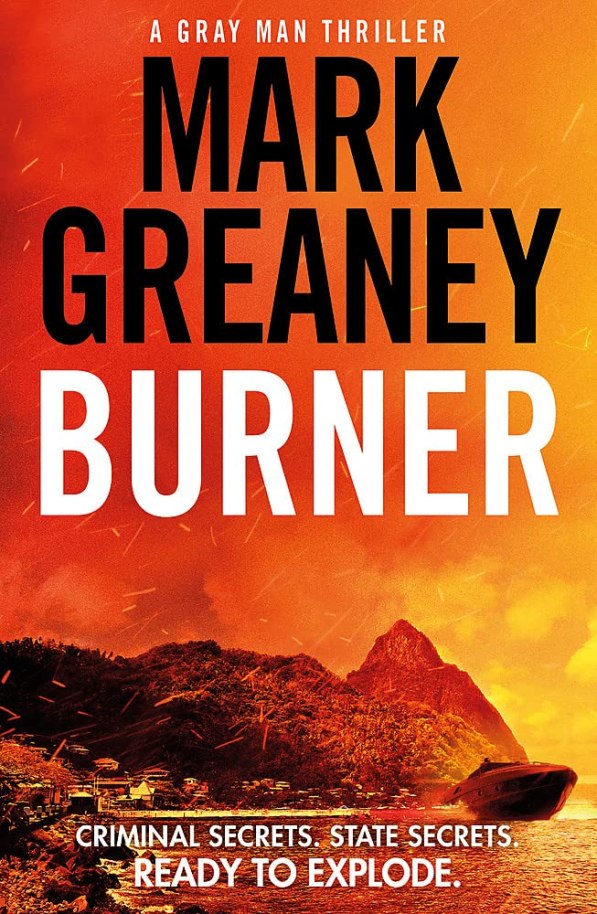
Burner by Mark Greaney

Burner Cover

Publisher: Sphere/Audible (Audiobook – 21 February 2023)

Series: Gray Man – Book 12

Length: 16 hours and 37 minutes

My Rating: 5 out of 5 stars

Amazon

The epic and captivating Gray Man series by legendary thriller author Mark Greaney returns with another exciting spy thriller entry, Burner, which thrusts the protagonists into the middle of some major real-world events.

Nothing starts off the thriller field of 2023 quite like the latest Gray Man novel from leading author Mark Greaney.  Greaney is a very impressive author who has been killing it throughout the genre for years.  Not only has he produced some cool standalone books, such as last year’s exciting action romp Armored, or the cool military thriller he co-wrote with Hunter Rawlings IV, Red Metal (one of my favourite books and audiobooks of 2019), but he has also written the exceptional Gray Man spy thriller books.  Following legendary assassin Court Gentry, better known as the Gray Man, as he gets involved in several deadly situations, the Gray Man books are one of the leading spy thriller series and I have deeply enjoyed the epic and powerful adventures that Greaney has so far released.  I personally have had an exceptional time with several of the Gray Man books, including Greaney’s debut novel, The Gray Man (which got a film adaptation last year), as well as the later entries such as Mission Critical, One Minute Out (one of my favourite books and audiobooks of 2020), Relentless (one of my favourite books and audiobooks of 2021) and Sierra Six (one of my favourite books and audiobooks of 2022).  His latest release is the outstanding Burner, which was one of my most anticipated novels of 2023.  The 12th book in the Gray Man series, Burner was a particularly intense read with a fantastic story behind it.

Alex Velesky is a Ukrainian expat living in Switzerland, whose comfy life as a notorious mover of immoral money has been hollow ever since the death of his family back in Ukraine at the start of the invasion.  Going through the motions, Velesky is suddenly given an opportunity to strike back at Russia when a disenfranchised Russian intelligence agent provides him with a trove of secret financial data.  This data, when combined with information from his own bank, reveals all the Russian bribes paid out to the West, and could damage not only Russia’s foreign intelligence apparatus but also the delicate negotiations to re-open the Russian economy to the wider world.

Immediately targeted by Russians determined to kill him and reclaim the data before it can leak out, Velesky finds himself hunted throughout Switzerland.  His only chance of survival seems to lie in rogue intelligence officer Zoya Zakharova, a woman hunted by her former employers in both Russia and the CIA, who is determined to get him and his information to New York, where it can be deciphered and released.  But Velesky and Zoya soon find themselves being stalked by an elite unit of Russian military operators who have no qualms about killing anyone in their way.

However, the Russians aren’t the only people interested in the data, as the CIA wants to claim it for themselves.  Determined to keep their interest in it quiet, the CIA reach out to Court Gentry, the Gray Man, to capture Velesky before the Russians do.  However, Court is unaware of the full significance of the data he is reclaiming, and that he will have to compete against the love of his life, Zoya.  Soon caught between the competing interests of the CIA and Russian intelligence, Court and Zoya decide to work together to keep Velesky alive.  But with the dangerous data revealing dark dealings in the highest levels of government, can even these two legendary spies survive?

Wow, Greaney really can’t miss when it comes to the Gray Man books.  Burner was another exceptional novel that had me hooked from the very beginning all the way to the final, devastating encounter.  The blend of exceptionally written action scenes, spy thriller elements, complex characters and the utilisation of contemporary issues makes Burner really stand out, even alongside the other epic Gray Man books.  This was another easy five-star rating from me as Greaney once again shows why he is currently leading the spy thriller genre.

Burner’s story is a pretty impressive and intense thrill ride that takes the reader across multiple continents in a blaze of glory and excitement.  The book starts whilst the Russian invasion of Ukraine is ongoing and introduces the reader to interesting new character, Alex Velesky, who receives information about all of Russia’s illegal financial transactions from a disaffected Russian operative.  If he can take this information, as well as data stolen from his bank, to a certain forensic accountant in New York, he will be able to disrupt Russia’s international intelligence efforts while also weakening their position against Ukraine.  However, he soon finds a deadly Russian kill team on his tail, and is only saved by reluctant operative Zoya Zakharova, who eventually believes his story and attempts to get him to New York.  However, the Russians and the CIA both want the data, and this drags in Court Gentry.  On the run from the CIA and unsatisfied with his current job sinking Russian mega-yachts, Court is given a chance to get back into the agency’s good books by helping them recover the data.  This sees him engage in a massive fight in Caribbean, before flying to Europe to find and capture Velesky and begin searching for him and the Russians.  This results in a brilliant collection of scenes as the various sides engage in elaborate tradecraft to try and outsmart the others, resulting in a particularly epic extended sequence on a train.  The resulting carnage and revelations make for some exceedingly gripping content and sets the final third of the book up extremely well.  I protagonists are forced into a series of deadly battles on a tight timeline to achieve their goals.  There are surprises, shocking deaths, elaborate fights and the resolution of several character arcs, all of which wraps up with a particularly epic, split-scene sequence that ends everything on a high note.  I was engrossed in this exceptional narrative the entire way through, and it will be very interesting to see where Greaney takes this series next.

Greaney brings all his impressive writing skills to the table with Burner, and his ability to set a dramatic and powerful scene honestly turns the already outstanding narrative into something truly special.  While I did find a few pieces of dialogue to be a bit weak and robotic, and Greaney did decide to fit in the annoying trope that two women working together must be bitchy to each other, this was mostly a very strongly written spy thriller book.  Like all the previous Gray Man books, Burner has an outstanding pacing to it that quickly draws the readers in and ensures that they stick around for the entire ride.  The action scenes are brutal and have a great veneer of realism that ensures that you can easily imagine every punch, shot or stab.  The focus on tradecraft is a particularly fascinating element to the entire story, and you must love the multiple scenes that show the characters utilising their training to outmanoeuvre their opponents.  Greaney also brings in the perfect blend of intense action focused scenes and story building, real-world issues, and character moments throughout the course of Burner and there honestly wasn’t a single moment that I wasn’t hooked on everything that was going on.  Burner also proves to be a rather interesting and significant entry in the wider Gray Man series, which long-running fans are going to appreciate.  While Burner can easily be read as a standalone novel thanks to the author’s concise and effective description of prior events, this book does continue several interesting storylines from the previous books, including Court’s fugitive status, his relationship with Zoya, and the examination of both main characters’ places in the world.  Several recurring characters from the series also make their return here, including some entertaining antagonists, and I loved how Greaney worked them into the plot.  I had a lot of fun seeing some of these call-backs to previous stories and plotlines, and Greaney leaves this book in an interesting place for the future.

I really need to mention Greaney’s exceptional use of multiple character perspectives throughout Burner.  Greaney casts a very wide net when it comes to the perspectives being followed and while primary characters, such as Court Gentry and Zoya Zakharova, do get a lot more focus, you also see a lot of events occurring through the eyes of other characters, including several antagonists.  This gives the reader a much more expansive narrative that not only lets you understand the motivations of every significant character but also allows you to see how the antagonists are responding to the actions of the protagonists, which adds intensity to the plot.  However, the best advantage is the way that Greaney utilises these perspectives to make some of his biggest sequences really pop.  In these key sequences, the point of view constantly moves around the various characters as the story unfolds and this helps to produce a particularly intricate and powerful viewpoint of how events are going down.  This is particularly evident in the book’s best extended sequence where multiple point-of-view characters, including Court, Zoya, Alex, the antagonistic Russian hit team, a lone CIA agent and more find themselves converging on a train to Switzerland.  As the scene continues, Greaney keeps quickly moving the point-of-view around from one of the characters to the next, including a couple of minor characters who are mostly there as witnesses.  Watching every character’s reactions, moves and countermoves really enhances the power of the scene as Greaney first uses it to build up tension before the inevitable firefight begins, and then switches it up to ensure that the resulting battle is even more epic as you see every shot both sides make.  Greaney uses this excellent balance of perspectives through several of Burner’s key scenes, including the big finale, and each sequence comes off much better as a result.  I cannot emphasise how effectively Greaney utilised this throughout Burner, and it was a major highlight for me.

One of the most distinctive things about Burner was the excellent and memorable use of contemporary events to enhance the already enjoyable spy thriller narrative.  Greaney has never shied away from referring to current conflicts, politics and events, and in Burner he goes for the most infamous current conflict in a big way by strongly featuring the Russian invasion of Ukraine.  Greaney pulls no punches when describing the conflict and he artfully and powerfully paints the entire invasion as the act of barbarism and greed that it is.  While no political leaders are names, multiple Ukrainian and Russian characters are featured throughout the plot and through them Greaney examines multiple sides of the conflict, ensuring that readers are fully aware of what is happening, who is responsible, and just how bad things are.  The Russian government are shown to be extremely corrupt, starting the war and then poorly preparing their own troops, all in the name of obtaining more money for the Russian elites to exploit.  This focus on corrupt money is a major part of the plot as the characters spend the entire book trying to identify funds being syphoned out of Russia to the West, either to escape sanctions or to be used for bribes or operation money by Russian intelligence.  The discussion about bribes to influential westerners is pretty interesting, especially as it seems to be a dig at certain politicians and news reporters, and it ended up being a very fascinating plot focus.  While it might seem a little insensitive to use a current conflict in a thriller novel, I personally felt that this was a master touch by Greaney.  Having the book focused on something that is such a big part of current world events ensured that I was even more invested in the story while rooting for the protagonists to succeed.  I really must compliment Greaney for using his book to shine a light on this conflict, and I feel that his warnings about how the war could end are very important.

I also need to highlight the great characters contained within Burner as Greaney brings back several of his best recurring protagonists, while also introducing some cool new figures.  This includes series protagonist Court Gentry, who has another outstanding adventure in Burner.  Court is his usual fun and effective self in this latest book, and it was great to see him utilise his skills and over-the-top abilities to achieve the mission.  Despite this, there isn’t an awful lot of character development around Court in this one, except for updating his status with the CIA.  Instead, most of the character development in this book was reserved for major recurring character and Court’s love interest, Zoya Zakharova.  Zoya last appeared in the 10th book, Relentless, which saw Court abandon her to keep her alive after he became wanted by the CIA again.  This had a major impact on Zoya’s psyche due to her previous abandonment issues and this, combined with the guilt she feels for being a former Russian spy, sends her into a massive spiral, and at the start of Burner she is an alcoholic, cocaine addicted mess.  A lot of her storyline deals with her attempts to move forward from her guilt, and she takes the mission with Alex Velesky to redeem herself.  Greaney does an outstanding job of showcasing Zoya as a woman in crisis, and I felt that this was an interesting and realistic jump in her character arc, especially after everything she’s been through in the series.  Naturally her life gets even more complicated once she is reunited with Court, which forces her to deal with some major feelings.  Greaney smartly keeps these two characters apart for a substantial part of the book and they are unaware of each other’s presence even while working the same case.  This means that when they finally do meet, the emotional pay-off is even more rewarding, and there are some great sequences with them as the story continues.  This ended up being a very substantial story for both characters and it was great to finally get some closure on the open relationship threads.

Aside from Court and Zoya, most of the other major characters are new additions to the Gray Man series, and Greaney does an outstanding job of building these characters up quickly during their initial appearances in Burner.  The most prominent of these is Alex Velesky, a Ukrainian banker working in Switzerland who ends up with the incriminating Russian data and is motivated to expose it after the death of his family.  Greaney frames an exceptionally good redemption arc around Alex in Burner as the character, who is feeling guilty for the years he’s spent illegally moving Russian money, attempts to finally reveal all the crimes he’s been apart of.  Alex’s entire arc is masterfully written by Greaney, and he proves to be an outstanding part of this book.  The other major new character was Angela Lacey, a rookie CIA operative who is sent to work with Court.  Shown to be a bit naïve, yet highly capable, Angela proves to be an interesting inclusion to Court’s mission, and he ends up become a bit of a mentor to her.  Angela is forced to grow up a lot in this book, especially when manipulated by her superiors, and it looks like Greaney has some interesting plans for her in the future.  Other great characters include a deadly new Russian assassin Luka Rudenko, slippery recurring antagonist Sebastian Drexler, and even Court’s old CIA handler Suzanne Brewer, who is up to her old diabolical tricks.  All these impressive characters add a lot to the plot of Burner, especially as Greaney takes the time to explore all their motivations and deeper secrets, and their inclusion results in some amazing sequences and confrontations.

While I did receive a paperback copy of Burner, I ended up listening to this awesome book on audiobook, mainly because I have had some great experiences with the Gray Man audiobooks in the past.  The Burner audiobook ended up being another excellent production that I managed to knock off quickly, even with a run time of over 16 and a half hours.  In my opinion, this audiobook format greatly enhanced the already epic story contained within Burner in several notable ways.  Not only does the action sequences really pop as you have them read out to you, by the format also works well to enhance the tension of some of the extended sequences involving multiple characters.  Just listening to all the players making their moves at the same time really drags you into the intense and explosive scenes and I was riveted through the scene on the train, or the final massive battle.  It also helped that Burner once again featured the exceptional vocal talents of Jay Snyder, who has lent his voice to all the previous Gray Man audiobooks.  Snyder, who was already one of my favourite audiobook narrators, has an outstanding voice that really fits the spy thriller genre.  His performances always capture the intensity, chaos, and destruction of any scene he narrates, while at the same time he manages to move the book along at a quick pace that really keeps the audience drawn in.  Snyder also has an excellent and fitting range of voices that he deploys throughout the audiobook, and I loved hearing the voices he assigns to some of the returning favourites.  His tone for Court Gentry fits perfectly, and all the other major player get some great voices with well performed accents.  All this ensures that the audiobook is an incredible way to enjoy the latest Gray Man novel and I cannot recommend the Burner audiobook enough.

I could go on more about Burner (trust me, I really could), but I think it is fair to say that I deeply enjoyed this latest Gray Man novel from Mark Greaney.  Greaney has been on a roll with his last few Gray Man books, and I honestly think that Burner is one of the better novels he has released recently.  The impactful story, great characters, compelling content and impressive writing ensured that I was enthralled throughout the entirety of Burner, and I honestly couldn’t put it down at times, especially during some of the big action sequences.  This was such an epic book, and I can already guarantee Burner is going to end up as one of my top books and audiobooks of 2023.  Highly recommended!

Amazon

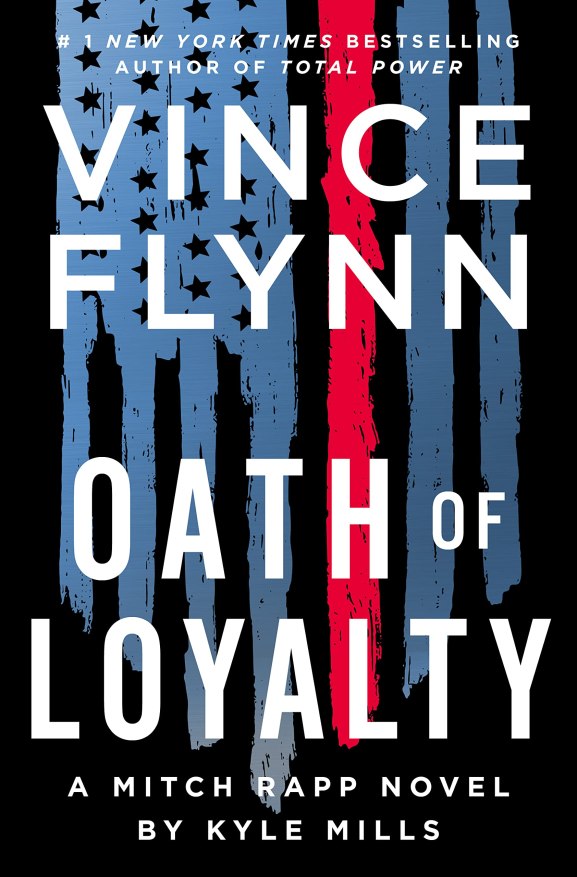
Oath of Loyalty by Kyle Mills (Based on the series by Vince Flynn)

Oath of Loyalty Cover

Publisher: Simon & Schuster Audio (Audiobook – 13 September 2022)

Series: Mitch Rapp – Book 21

Length: 9 hours and 23 minutes

My Rating: 4.5 out of 5 stars

Amazon     Book Depository

Fantastic spy fiction author Kyle Mills continues his excellent stewardship of the late, great Vince Flynn’s Mitch Rapp series, with the new action-packed thriller, Oath of Loyalty.

I have had a lot of fun with some cool spy thriller series over the last few years, but one series that keeps on pulling me back in is the ultra-compelling Mitch Rapp series.  Originally written by Vince Flynn, the Mitch Rapp series follows rugged American spy Mitch Rapp as he wages a brutal war against America’s enemies.  While sometimes a little too nationalistic for my tastes, the Mitch Rapp series nonetheless has some outstanding and inventive scenarios in its arsenal, with the protagonists forced to take on some dangerous enemies and crazy situations.  Since Flynn’s death, the series has been taken over by Kyle Mills, who has continued the tradition of compelling high-concept spy action.  I have had a great time reading Mills’s recent contributions to this series, with awesome reads like Red War, Lethal Agent, Total Power and Enemy at the Gate, all of which were extremely fascinating stories that proved very hard to put down.  As such, I am always very keen to check out the new Mitch Rapp adventure, and I was really drawn into the fascinating plot of the 21st Mitch Rapp novel, Oath of Loyalty.

After a lifetime of protecting the country he loves from terrorists, enemy nations and foreign spies, the shoe is on the other foot as Mitch Rapp finds himself as America’s most wanted man.  The corrupt and paranoid President Anthony Cook is determined to shape America into a personal kingdom that he and his calculating wife can rule for years.  However, after Mitch Rapp foils Cook’s plan to destroy his greatest rival, Rapp is now in the firing line.

Convinced that Rapp will attempt to assassinate him, especially as his actions have resulted in the death of one of Rapp’s oldest friends, Cook attempts to eliminate him, only to have Rapp slip through his fingers.  With neither side wishing to be at war with the other, the President and Rapp manage to negotiate a truce through former-CIA director Irene Kennedy, by which Rapp will remain untouched if he agrees to leave America and stay in plain sight for as long as the Cooks control the White House.  However, the ambitious new head of the CIA is determined to win the President’s influence and manages to convince Cook that Rapp still plans to kill him.  To stop Rapp from coming after them, the new administration decides to attack those closest to him by leaking the identity and location of Rapp’s partner, Claudia Gould, to her many enemies.

Soon, everyone Claudia and her dead assassin husband ever crossed is out to get her.  Despite Rapp’s violent reprisals against her attackers, the threat increases dramatically when one of Claudia’s old enemies hires the infamous Legion.  Legion is a completely anonymous team of assassins who rely on secrecy and never meet their client in person.  No one knows who they are; all they know is that once Legion accepts a contract they don’t stop until their target is dead, no matter how long that may take.  With their country turned against them, can Rapp and his allies save Claudia from this new threat before it is too late, or will he lose another woman he loves?

Kyle Mills continues to showcase just how awesome a Mitch Rapp novel can be with this fantastic new entry.  Perfectly utilising all the typical action, intrigue and political insight that the latest Mitch Rapp books have all been known for, Oath of Loyalty features a fantastic narrative that I really got stuck into.  This was another impressive and fun spy thriller read, and I ended up powering through this book in no time at all.

Oath of Loyalty had another excellent Mills narrative that took the protagonist on a wild adventure of survival, revenge, and political upheaval.  The start of the book contains a detailed prologue that replays the closing scene of the prior novel, Enemy at the Gate, which was a good recap to start off with.  The rest of Oath of Loyalty seamlessly follows on, showing Mitch Rapp in the crosshairs of the new President and his corrupt administration.  After a great escape sequence, Rapp flees to South Africa and arranges a truce, and begins to watch the decline of America from afar.  However, the President is far from done with him, and his fearmongering advisor convinces him to keep Rapp occupied while they prepare for his potential retaliation.  Rapp is forced to defend Claudia and her daughter from several dangerous assassins, which includes one particularly impressive action sequence as Rapp fends off an entire hit squad by himself.  This results in some A-grade vengeance as Rapp goes after Claudia’s enemies in retaliation, which naturally includes some very over-the-top results.

However, the characters find themselves in dire straights when one enemy hires the unstoppable Legion assassin team, who specialise in elaborate kills.  Mills sets up Legion extremely well, and the reader is soon engrossed in watching the cat-and-mouse game that emerges between them and Rapp.  At the same time, Rapp and his allies are forced to contend with a selfish and power hungry president who is determined to destroy them all.  The second half of the book has some great sequences, and I loved seeing Legion’s actions and their attempts to get past Rapp, and the protagonist finds himself in a tough situation, especially as his limited help sometimes proves to be even more dangerous than his opponents are.  Everything leads up to a fantastic and very entertaining conclusion, which I think worked very well.  While I did think that part of the solution was a little silly when it came to just how threatening the protagonist could be, this was a pretty amazing story and I had a wonderful time getting through it.

I felt that Mills did a great job setting out Oath of Loyalty’s narrative, and there are many great elements to it that make it so much fun to read.  The author makes excellent use of multiple character perspectives to showcase the fun narrative, and it was awesome to see the various sides of the story.  I especially liked the parts of the book shown from several antagonists’ standpoints, and it was great to see the simultaneous moves and counter-moves that Rapp and his opponents put into play.  Like the rest of the Mitch Rapp books, Oath of Loyalty has several great action scenes that come together extremely well.  The brutal combat is crisp and flows off the page perfectly, ensuring that every action junkie can imagine just how the protagonist is kicking ass.  This works in concert with the book’s outstanding espionage elements, which Mills features so very well here.  I love the author’s take on spy craft in Oath of Loyalty, and there is a gritty realism to how Rapp and his allies go up against their foes, especially as this time they are going up against the American intelligence apparatus.  Oath of Loyalty is also well paced out and readers are left with barely a second to breathe between the various exciting or compelling sequences of espionage, or political malfeasance.  All this, and more, definitely helped me stayed glued to Oath of Loyalty and I really got stuck into the cool narrative and couldn’t wait to see how it all came together.

While characters are never the strongest part of a Mitch Rapp novel (I always felt that the protagonist was a tad one-dimensional), I did like how some of the recurring figures turned out in Oath of Loyalty.  There was some interesting work on Mitch Rapp himself in this book.  While he is still the same highly feared and insanely talented assassin and general sadist, you can see that the years are really starting to get to him in this book as he starts to think about winding down.  The cynical weariness that infects him in this book as his country turns against him is pretty compelling, and it was interesting to see him as America’s enemy for once.  Throw in some growing family concerns and touching relationship moments, and this was an interesting book for Rapp, and I quite enjoyed seeing his deeper thoughts on several matters here.

Several other characters had some fantastic moments in Oath of Loyalty.  Irene Kennedy and several of Rapp’s allies find themselves on the wrong side of politics here, and it was compelling to see the loyal American soldiers realise they have been betrayed by their country.  Claudia gets quite a lot of focus, especially as her past mistakes are brought into focus, and Mills does a good job of examining how she fits into Rapp’s life and how their relationship has grown.  I liked the fantastic backstory around Legion, and Rapp manages to make them appear dangerous and interesting in a very short amount of time, which I really appreciated.  Without ruining too much, I also was highly entertained by Rapp’s allies in the second half of the book, especially as they result in a really mental minefield for the protagonist, who finds himself stuck with two damaged people he has no idea how to deal with.  Finally, President Cook and his inner circle prove to be entertaining antagonists, and I loved seeing them abuse their power all in an attempt to kill one man.  Their ambition, ruthless political savvy and complete disregard for the people they serve makes them quite unlikeable, and it was fun to see them thrown for a loop by a single man as they live in fear of what Rapp may do to them.  The growing instability of the president as he gets consumed by his paranoia is particularly fun, and Mills comes up with a great crony character who feeds on that for unique reasons, all of which is very amusing to see.  I had an excellent time with all these fantastic characters, and Mills certainly wrapped an awesome story around them.

One of the things I have appreciated with Mills’s last few Mitch Rapp novels is his insights into the current state of American politics and the country’s current divides.  All his major American protagonists, who are old hats at politics and espionage, are disillusioned by the direction the country has taken, and this becomes apparent in their discussions and inner thoughts, as many of them begin to wonder what they were fighting to preserve all these years.  At the same time, several of the villainous political figures in this book are shown to be quite aware of the divides occurring in America, and are very willing to manipulate it to their own ends.  Indeed, many of their discussions about strategy show them actively doing this, and there are several scenes with them attending the sort of rallies and conventions that people familiar with contemporary politics will know and loath.  I really appreciated this frank and intriguing look into American politics and the state of the country in Oath of Loyalty, and I honestly felt that the author and the characters were even more critical than in recent books (although some of that was tied into the plot).  It is honestly a little refreshing to see this sort of introspection from a series that has always been very pro-American, and it is definitely a sign of the times.  However, these political insights aren’t just there for the sake of making the novel stand out, and they play quite a vital role in the plot.  The characters have many discussions about the future of America, and their decisions are very tied into how they want it to proceed.  It proved to be quite a key part of Oath of Loyalty’s narrative, and I think that Mills did a pretty good job of utilising this modern-day elements in his latest book.  It will be quite interesting to see how this is presented going forward, and I really appreciated how Mills is trying to keep the series relevant.

As I have with the last few Mitch Rapp novels, I chose to check out Oath of Loyalty’s audiobook format, which was a great way to enjoy this book.  With a run time of just under nine and a half hours, this a relatively short audiobook and I managed to get through it quite quickly once I got stuck into the story.  I had an excellent time getting through the Oath of Loyalty audiobook, and I felt that it did a great job enhancing the narrative, especially by picking up the pace of the awesome action sequences.  I am however, once again on the fence when it comes to narrator George Guidall, who has lent his voice to most of the Mitch Rapp audiobooks.  I always find that Guidall’s voice sounds a little tired when he reads these audiobooks and there really is not that much variation between the various characters, although I never had any issue working out who was talking.  While this would ordinarily put me off, I have actually gotten quite used to Guidall as narrator for this series, and I honestly could not imagine anyone else voicing these cool books.  I also feel that Guidall’s older, wearier voice perfectly fits the character of Mitch Rapp in these latest books, especially as he is getting sick and tired of all the political games and general BS surrounding him.  I was quite happy to listen to Guidall once again in Oath of Loyalty, and I look forward to hearing him again with the next Mitch Rapp audiobook.

Overall, I was very happy with this great book and Oath of Loyalty proved to be an excellent addition to this brilliant long-running series.  Kyle Mills continues his impressive run of elaborate and clever Mitch Rapp stories here, and Oath of Loyalty served as an outstanding sequel to the author’s previous book while perfectly continuing some amazing storylines.  Exciting, intense and loaded with so much action, Oath of Loyalty is a very easy book to fall in love with, and I had a brilliant time getting through it.

Amazon     Book Depository

Warhammer 40,000: Assassinorum: Kingmaker by Robert Rath

Assassinorum Kingmaker Cover

Publisher: Black Library (Audiobook – 2 April 2022)

Series: Warhammer 40,000

Length: 11 hours and 12 minutes

My Rating: 5 out of 5 hours

Amazon     Book Depository

The most lethal assassins in the Warhammer 40,000 universe go face to face with a gigantic foe in the impressive and deeply thrilling Assassinorum: Kingmaker by amazing author Robert Rath.

I know I’ve said this before, but 2022 is turning out to be a fantastic year for Warhammer fiction.  Thanks to my recent obsession with this franchise, I have been deeply enjoying all the new tie-in novels associated with this table-top game, as a bevy of talented authors seek to expand on the already massive lore.  I have already had a lot of fun with books like Steel Tread, The Bookkeeper’s Skull, Day of Ascension, Kreig, Ghazghkull Thraka: Prophet of the Waagh!, Reign and The Vincula Insurgency, but I may have just finished one of the most purely entertaining and awesome new entries, Assassinorum: Kingmaker.  Written by Robert Rath, who previously wrote the intriguing Necron focused book, The Infinite and The Divine, Assassinorum: Kingmaker had a very appealing story that instantly grabbed my attention and which ended up being an outstanding read.

In the 41st millennium, a new generation of war has engulfed the Imperium of Man, as the forces of Chaos press mankind from all sides and the recently resurrected Roboute Guilliman leads his forces on a new crusade.  Enemies attack the Imperium from all corners, often hidden in the shadows, and all the Emperor’s agents must work to find and eliminate them.  The most deadly, effective and feared of these agents are the members of the Officio Assassinorum, elite modified assassins who kill all of the Emperor’s enemies without mercy or fear, and who many believe are merely myth.

When the mechanical warriors of the Knight World of Dominion fail in their duty, the Imperial overlords task Vindicare assassin, Absolom Raithe, to travel to the planet and kill Dominion’s High Monarch, Lucien Yavarius-Khau, and managed the succession of a suitable replacement.  However, this will be no easy kill as the High Monarch has long ago bonded himself to his massive war machine, remaining permanently within its heavily armoured cockpit.  To kill this near-invulnerable king, Raithe is forced to recruit a kill-team with variable talents, featuring the Callidus assassin Sycorax and the Vanus assassin Avaaris Koln.

Infiltrating the planet using returning Knight, Sir Linoleus Rakkan, who has been co-opted into their plans, the assassins arrive to find a world in turmoil.  The planet’s two rival ruling houses are in constant battle with each other, and in the ensuing chaos, anti-Imperial sentiment is high, and the already invincible High Monarch is under heavy guard.  Seeking to infiltrate the court of Dominion, the kill team begin to manoeuvre themselves into position, while manipulating the feuding knights around them.  However, the assassins soon begin to realise that not everything is as it seems, and a dark secret lies at the heart of this noble planet.  Can Raithe’s team achieve their goals, or are they destined to die at the hands of a dangerous foe with malicious plans for the entire Imperium?

Damn! Damn! Damn! What an over-the-top and extremely cool Warhammer 40,000 novel that I deeply, deeply loved.  Robert Rath really went out of his way to make Kingmaker as awesome as possible, and the result is an extremely thrilling, electrifying and epic read, loaded with so many cool elements.  This was honestly one of the best Warhammer novels I have had the pleasure of reading and I have very little choice but to give it a full-five star read.

I really, really loved the cool story in this book, which essentially boiled down to ultra-elite assassins attempting to kill the king of a planet of mecha, which is such an awesome idea.  Despite this being a heavy concept to achieve, Rath managed to achieve it in spades, providing readers a fantastic and clever narrative that instantly grabs your attention.  This book starts off extremely well, introducing the world of Dominion, the unique mission, and the four central characters of the three assassins, and their Knight patsy, and generally setting up all the key elements of Kingmaker to ensure some outstanding moments later.  From there, the story turns into a bit of an espionage thriller, as the three assassins begin their infiltration of the court, impersonating the knight Rakkan, and coming to grips with the unique world they have arrived at.  Rath provides an excellent balance of story elements in this first half of the novel, and the reader gets a fantastic mixture of character development, massive universe building, political intrigue, spy elements and some early mecha-action, all of which is a ton of fun and ensures that the reader is firmly addicted with this novel.

While I deeply enjoyed the excellent story elements contained with this first half of Kingmaker, it’s the second half that made me a major fan of this book, as Rath amps up the action, excitement and thrills in a massive way.  Following a major, action-packed moment around the halfway mark that sees all the characters in their element, the protagonists soon have a new objective.  This leads to several great sequences of entertaining mayhem and death as the protagonists attempt to manipulate local politics to their advantage.  However, the fun doesn’t last much longer, as the book enters its final phase and big conclusion.  While it initially appears that everything is going to plan, you just know it will end badly as there is still a lot of book left to go.  However, you do not appreciate just how bad things have gotten for the protagonists until they are suddenly hit from every direction and hell reigns down all around them.

The story essentially devolves into all-out war for its last quarter, as the protagonists find themselves facing enemies all around, and all four main characters are forced go in some amazing directions at this point as they attempt to stymie the damage before them, with varying degrees of success.  Rath really pulls out all the stops here, and the reader is dragged into non-stop action on every front, from a mass of deadly mecha fights, close combat against abominations in the bowels of an ancient castle, and an intense gun fight against overwhelming numbers.  At the same time, there are a ton of big revelations occurring here as a lot of the storylines Rath has been patiently setting up throughout the rest of Kingmaker finally come to fruition.  I honestly did not notice some of the clues that Rath set out in the earlier stages of the novel, but once you realise what he has done, it really becomes apparent how much detail and planning the author put into the story.  Everything comes together extremely well at the very end, and Rath wraps up most of the storylines perfectly, leaving the reader very, very satisfied, with all their action needs firmly quenched.  However, he also leaves a couple of storylines opened, which could potentially lead to some form of sequel in the future, which I would be very excited for.  An, epic story with so much going for it!

Rath has a great and exciting writing style which I deeply enjoyed and which I found to really enhance the cool story.  The author was able to successfully blend multiple key elements together into a very cohesive narrative which delivered the right combination of action, intrigue, character moments, world building, a little humour and more.  This was a very fast-paced and exciting story, especially during some of the key moments at the centre and towards the end, and there was honestly not a single slow moment that made me even considering turning this book off.  With the use of multiple character perspectives, particularly of the four main characters, the reader is gifted a massive overarching view of the key events occurring throughout the novel, and they are always right in the centre of the story.  I particularly need to highlight the very impressive action sequences, as Rath had a real talent when it came to displaying violence and death, whether it be by the hands of the assassins, or via the multiple Knights featured throughout the book.  There is a wonderful interchange between perspectives during some of the more impressive action sequences, with the reader is shown multiple angles of key events, which really helped to enhance how epic they were.  I was really drawn to one sequence where you see a group of characters “talking” before it flashes over to another character quickly and efficiently killing everyone nearby.  Elements like this really drew me into Kingmaker’s story and were a lot of fun to see in action.

Kingmaker proves to be a very impressive addition to the Warhammer 40,000 canon, especially as Rath ensures that the reader leaves with a healthy amount of knowledge about the universe, and several major factions within it.  Ostensibly a standalone read (although there is room to expand out into an extended series), this is a book that will appeal to a wide range of Warhammer fans, especially as it focuses on two particularly unique and brilliant Imperial sub-factions, the dual use of which clash together perfectly to create an awesome narrative.  As such, a little bit of pre-knowledge about the Warhammer 40,000 universe, its recent history and the various major groups are useful to help you enjoy this story fully.  However, Rath did a great job of explaining a lot of these key universe elements throughout his story, and general science fiction fans should be able to pick up on the context easily enough.  As such, Kingmaker has a pretty broad appeal, and I loved seeing the great ways he expanded and explored some crazy groups.

The first faction that Rath deeply explored in Kingmaker is the Officio Assassinorum, the Imperium’s elite, hidden network of ruthless trained killers, who most people believe are a myth.  Trained, conditioned and modified to become the deadliest killers in the galaxy, the Officio Assassinorum are a pretty badass part of the Warhammer 40,000 universe, and there are only a few novels currently about them.  However, Rath really goes to town exploring them, and as they come together as a Kill Team to take facilitate the plot’s main mission.  Kingmaker features three different types of Imperial assassins from Officio Assassinorum temples, each of whom has their own unique skills, methods and technology.  As such, you are given a great insight into three additional sub-factions, with the Vindicare, Callidus and Vanus temples all featured here.  Rath really does a great job showcasing these different assassins throughout Kingmaker, and you come away with some major insights into how these assassins operate, what their skills are, and how they work or don’t work together.  There is also a deep and intriguing examination of the inner minds of these assassins, and you get a good idea of their opinions on the events unfolding, as well as their general thoughts on being deadly killers in service to the Emperor.  I really enjoyed the unique and compelling team-up of assassins featured in Kingmaker, and their technologically focussed attacks and elaborate methods worked well in contrast to the other major faction in this book, the Imperial Knights.

Imperial Knights are another great human sub-faction from the Warhammer 40,000 game, and one that I really didn’t know too much about before this novel.  However, that changed really quickly as, despite Kingmaker being labelled as an Assassinorum novel, Rath spent just as much time, if not more, examining members of a Knight World.  Knight Worlds in the Warhammer 40,000 universe are unique planets that have evolved into a feudal system equivalent to Earth’s medieval period, with peasants and other servants serving the noble houses who field Knights for war.  I always love seeing the cool range of different societies, cultures and technology levels throughout the Warhammer universe, and the Knight Worlds are especially fun, as they have gone out of their way to stay as a feudal society, rather than become standard Imperial worlds.  The contrast between the spoiled nobility and the poorer peasants in this futuristic context is just great, and I loved seeing so many Medieval elements being altered to fit into a degree of advanced technology, while still retaining a lot of traditional elements (e.g. footmen with laser rifles).  However, rather than riding to battle on a horse, these knights are mounted in the Imperial Knight war machines, massive mecha that, while not as large as the god-sized Titans, are still impressive walking weapons.  Rath has a lot of fun showcasing these Knights throughout Kingmaker, and you end up getting a good look at the unique machines, which are bounded to their pilot, and which contain the spirts of all their previous riders.  The impressive Knight-on-Knight battles throughout the book are extremely good, no matter their context, and I particularly enjoyed the focused look at the war machines’ apparent sentience, as the riders are bombarded with the thoughts and voices of the previous riders.

Dominion also proves to be a great and complex setting for Kingmaker, and I loved all the unique politics and elaborate back stabbings it created.  Featuring two rival houses, Stryder and Rau, as they battle for supremacy, Rath explores its rather elaborate and distinctive rulership and court as the assassin characters search for a weak spot.  Dominion’s status as a somewhat independent planet in the Imperium was also pretty intriguing, and it was fascinating to see members of the planet arguing over whether they should serve themselves or help the Emperor.  An overall deeply impressive examination of the Imperial Knights and their worlds, I deeply enjoyed how well Rath was able to work this faction into his complex narrative and it really highlighted his attention to detail and his love for the lore.

I also need to highlight the great characters featured within Kingmaker as Rath has created an excellent collection of enticing figures whose unique personal stories deeply enhanced the overall tale.  This was a fantastic group of deep and complex characters, and their statuses within this universe ensured that they all had some unique experiences.  Most of Kingmaker’s narrative is spread amongst the three members of the Assassinorum who represent a different Assassinorum Temple, and as such have very different viewpoints on the universe and the best way to operate as killers.  This provides some compelling initial conflict amongst them as they try to work together, something none of them are really good at.  However, they soon start to come together as a team as the novel continues, and they ended up playing off each other’s strengths and personalities to create an excellent, core group of protagonists.

The Assassinorum characters in Kingmaker are headlined by Absolom Raithe, the Vindicare assassin who has been appointed team leader.  An infamous sniper, tactician, and resolute loner, Raithe struggles the most with working as a team, and his initial attempts at leadership aren’t that successful.  The author adds in some additional issues for Raithe as the story continues, especially as he is forced to deal with an injury and taking on roles that are outside his comfort zone, producing some dangerous risks for the team.  However, Raithe ends up growing a lot as a leader as the book continues, while his multiple sniper scenes contain some of the best action in the entire novels.

Apart from Raithe, there is also a lot of focus on Sycorax, a Callidus assassin who specialises in infiltration and whose enhanced abilities allow her to morph her shape.  Due to her role impersonating Rakkan for most of the novel, Sycorax is one of the most significant characters in the book, and she ends up with some thrilling and intrigue laden sequences.  Watching her take on multiple personalities throughout the novel is really cool, and it was captivating to watch her more elaborate methods strongly clash with Raithe’s more direct attempts throughout the book.  Sycorax also provides the reader with some of the best and most intense insights into being an Imperial Knight pilot, as she is required to bond with Rakkan’s Knight Jester for much of the book.  Seeing an outsider character interact with Jester’s mind, which contains the spirits of its previous riders, was extremely fascinating, and you get a good sense of the difficulties and insanities involved with piloting such a machine.  In addition, the experiences and memories she obtained from the link impacted on Sycorax’s psyche and ensure that she gets some fantastic interactions with Rakkan, while also gaining a better understanding of the people and machines she is trying to manipulate.

The final assassin character in Kingmaker is Koln, a Vanus assassin with a skill in technology, data manipulation and analysis.  Even though Koln tended to get the least focus of the assassin characters, I really grew to like this tech-focused assassin, especially after her awesome introduction at the start of the book.  Koln proved to be an excellent third member of the Assassinorum team, balancing out the impulsive Raith and manipulative Sycorax well.  Her ability to kill just by manipulating some data, providing an elaborate forgery, or by hacking into a device was really fun, and I really appreciated the examination of the lesser utilised Vanus assassins.  Koln had some interesting story moments in Kingmaker, particularly towards the end of the novel, and it sounds like the author has some intriguing plans for her in the future.

I also need to highlight the character of Sir Linoleus Rakkan, a noble of Dominion who is co-opted into the plans to kill the high monarch and becomes a member of the assassin team.  At the start of the book, he is introduced as an ambitious pilot attempting to raise his fortunes.  However, after nearly being killed, he becomes a mercenary Freeblade, fighting against the forces of Chaos, before being kidnapped by the assassins.  Initially a depressed prisoner who relies heavily on drink to mask his emotional pain and the issues surrounding his disabled legs, the assassins manage to convince him to help Sycorax impersonate him on Dominion and use his return to gain access to the court.  Due to being a son of both the rival Stryder and Rau houses, Rakkan provides some great insights into both houses and the royal court, as well providing instruction on how to pilot a Knight.  It was a lot of fun to see Rakkan’s reactions to many of the early events of the book, especially as he is forced to watch himself being impersonated, providing information to help them pull off the charade.  While Rath could have left Rakkan as a useful, one-note character, he instead spent a good portion of the novel evolving Rakkan and ensuring that he ended up being a key part of the plot.  Not only does he mature greatly after witnessing some of the key moments of the mission and Sycorax’s impersonation of him, but Rath also dives into his past and the connection he has to his father, a Dominion hero whose glorious death Rakkan continually witnesses due to his connection to Jester, which his father died in.  This obsession with his family and the past eventually leads him to some big revelations in the present, and he ends up having some major and exciting moments in the last half of the novel.  Rakkan ended up being one of the most complex and entertaining characters in Kingmaker, and I really appreciate the excellent way in which the author developed him.

Aside from these four main characters, Kingmaker is loaded with an excellent group of supporting characters, most of whom are members of the Dominion nobility.  As I mentioned above, I had an amazing time seeing the diverse and contentious Knights of Dominion, especially as most of them are engaged in a brutal blood feud between the two ruling families.  Several of these noble characters have some intriguing storylines throughout Kingmaker, with an interesting focus on the members of the Court, the king’s inner circle who are hiding some major and disturbing secrets.  Of the rest of the noble characters, the best is probably Rakkan’s mother, the leader of the Stryder family, Baroness Hawthorn Astair-Rakkan, a domineering and ambitious woman who spends most of the novel trying to manipulate Rakkan for her own gain.  Baroness Hawthorn had some excellent moments throughout the novel, and I especially loved her collection of hounds, each of whom are humorously named after famous Imperial commanders, just to show off her arrogance and disrespect to the Imperial Guards.  Hawthorn’s story arc really changes towards the end of the book, and it will be interesting to see if we get some extra appearances from her in the future.  The other major supporting character of Kingmaker is Gwynne, Rakkan’s loyal Sacristan (Jester’s mechanic, a low-level Tech Priest with some additional cultural restrictions).  Gwynne serves as another ally to the main characters, and her knowledge of the Knights and their inner workings proves invaluable, as does her inquiring mind.  The author weaves some subtle, but important, storylines around Gwynne in Kingmaker, and she ends up serving a key and impressive role.  Overall, this was an excellent collection of characters, and I deeply enjoyed how well Rath used them throughout Kingmaker’s narrative.

Like many of the newer Warhammer novels I have been lucky enough to enjoy, I chose to check out Kingmaker on audiobook, which I found to be an awesome way to enjoy this book.  Coming in with a run time of just over 11 hours, this was a decently long Warhammer novel, but I honestly flew through it in just a few days, especially once I got fully addicted to its impressive story.  The audiobook format really helped me dive into the highly detailed setting and narrative, and I deeply appreciated how much more epic it made the action sequences.  Having the intense and over-the-top fighting between the various mechanical Knights was an outstanding experience, and you got the full impact of every powerful strike.  I also really enjoyed the excellent narration of veteran audiobook voice actor Gareth Armstrong, who has done a ton of other narration for the Warhammer franchise.  Armstrong’s work in Kingmaker was very good, and I loved the great array of voices he features for the various characters, capturing the ethereal and strange nature of the assassin characters and the more robust, proud and arrogant nobles of Dominion.  There was a great contrast between these two groups, and I loved how Armstrong succeeded in making every single character stand out on their own.  An overall exceptional way to enjoy this wonderful Warhammer book, the Kingmaker audiobook is without a doubt the best way to enjoy this novel, and I deeply enjoyed every single second I spent listening to it.

I think it is fair to say that I deeply enjoyed Assassinorum: Kingmaker.  Robert Rath crafted together a brilliant and exceptionally entertaining Warhammer 40,000 novel that was loaded with action, fun and great characters.  Featuring lethal assassins facing down massive Imperial Knights, Kingmaker has a little bit of everything, including political intrigue, impressive use of Warhammer elements, and some fantastic war sequences towards the end.  Easily one of the most impressive and captivating Warhammer novels of 2022, Kingmaker is a must-read for all fans of the franchise, and you are guaranteed to have an incredible time with this epic book.

Amazon     Book Depository

Black Drop by Leonora Nattrass

Black Drop Cover

Publisher: Viper (Trade Paperback – 15 February 2022)

Series: Laurence Jago – Book One

Length: 343 pages

My Rating: 4.25 out of 5 stars

Amazon     Book Depository

Intriguing and talented new author Leonora Nattrass presents a compelling historical thriller debut with Black Drop, a fantastic novel that drags readers into the conspiracies and issues of late 18th century London.

In July of 1794, as the terror of the French Revolution reaches its height and the war on the continent goes poorly for the British army, uncertainty and fear of violent change infect the people of London.  For Laurence Jago, clerk to the Foreign Office, his position is even more uncertain that those around him.  A young man with hidden French heritage, Jago fears the day that his connections to his mother’s nation will be discovered, especially after spending years serving as a spy for sinister French agent Aglantine.

Now believing himself to be free from Aglantine’s employment, Jago is thrust into an untenable situation when vital confidential information about the British army is leaked from his office to the press.  Suspected by his peers of leaking the information and under investigation, Jago fears that all his secrets and former dealings are about to come out.  His problems are only further compounded when he discovers the body of a fellow clerk in his rooms, supposedly dead by suicide.

When the blame for the leak is shifted onto the dead man, Jago is freed of the suspicion against him.  However, Jago knows that the dead clerk was incapable of stealing the letter and believes that he was murdered.  Determined to find out the truth behind the death, Jago finds himself investigating the highest level of the British civil service and their political masters.  Out of his depth and thwarted at every turn, Jago will risk everything to root out the culprit before they strike to disrupt England again.  However, can he succeed without revealing his own dark secrets, or will Jago hang as a traitor instead of the murderer?

Black Drop is an excellent and clever novel that I had a great time reading as Nattrass perfectly combines a compelling spy thriller/murder mystery storyline with intriguing and detailed historical fiction elements.  This resulted in one of the more unique and fantastic debuts of 2022 and I really enjoyed Black Drop’s impressive story.

This awesome debut novel has an excellent story that expertly combines intriguing spy thriller and murder mystery elements with a character driven historical narrative to create a compelling and impressive read.  Set throughout key events of 1794 and told as a chronicle from the perspective of central character, Laurence Jago, Black Drop presents the reader with an intriguing tale of murder, political machinations and the threat of revolution at the heart of the period’s government.  Nattrass sets the scene perfectly at the start, introducing the key characters while also highlighting the feelings of unrest and dissent as the fear and inspiration from the French revolution hits London.  From there, the story starts to unfold in some interesting directions as the protagonist finds himself involved in political and espionage adventures while also investigating the murder of a fellow clerk, which appears to be connected.  At the same time, the slow-paced story utilises some intriguing aspects from the protagonist’s life as he struggles with dark secrets from his past that have potential implications on the current events.

Following this introduction and the initial parts of the narrative, the middle of Black Drop starts to bring in certain key historical events and figures, which results in some fantastic moments and character interactions, especially once an antagonistic figure becomes more prominent.  While the middle of this novel did drag in places, I felt that Nattrass was providing the reader with the right blend of intrigue, mystery, historical detail and character growth to produce a great overall story.  You really get to grips with the protagonist and the key aspects of the setting during this part of the book, especially when Jago hits a major personal downturn earlier than expected, and interesting reveals enhance the reader’s attachment to the mystery.  The story really starts to pick up once it gets to Nattrass’s recreation of the infamous trial surrounding supposed radical and revolutionary Thomas Hardy.  The ridiculous, and mostly accurate depiction of the trial (with certain elements from other trials thrown in for greater effect), proves to be a great high point for the novel, especially as other key parts of the plot are slotted in perfectly around it.  I did feel that the novel started to come undone around the conclusion a little, especially when it came to the big reveal.  While there were a couple of good twists around certain characters, the solution to the main mystery and the intrigue seemed a little weak to me, and I was a little disappointed with how it turned out, especially as you barely get to see anything about the final confrontation.  Still, this did not affect the overall quality of the story too much, especially as the author throws in an excellent wrap-up for the protagonist’s storyline in this novel which has a lot of potential for a sequel.  While much of the story can be a little sluggish and lacking a lot of action, I had a great time getting through Black Drop, and I loved how the excellent interplay of elements came together so well.

One of the most distinctive parts of Black Drop is the sheer amount of fascinating historical detail that was fit into the story.  Nattrass has clearly done her research on the period and the reader is presented with a fantastic and powerful view of London in the late 18th century.  Not only are there some brilliant and vibrant depictions of historical London but the reader gets some fascinating views into the inner workings of the government at the time.  Substantial parts of the book are dedicated to examining the civil service and the political hierarchy of the day, with multiple influential figures featured as supporting characters.  This proves to be a deeply fascinating part of the book, and I loved how Nattrass was able to weave these intriguing details into the thriller plot, becoming a key part of Black Drop’s story.  I also deeply appreciated the way in which Nattrass explores the social and political issues of the day, especially where it relates to the concerns in London about an uprising similar to what happened in France.  As such, you get a full spectrum of personalities from across London, as royalists and loyalists clash with potential radicals who are targeted by the worried government.  This all cumulates in the fantastic court case of Thomas Hardy, a shoemaker accused of radical actions and attempted rebellion.  This historical trial is expertly recreated by Nattrass to include all of its most interesting parts, including several extremely ridiculous elements from history (a blowgun murder conspiracy).  Nattrass also cleverly combines in some elements from related trials that occurred around the same time as the Hardy case for some amusing dramatic effect, and this extended sequence ended up being one of my favourite parts of the novel.  The overall hint of discontent by many members of London’s society, as well as the innate fear of the established institutions, is portrayed beautifully, and you get a great sense of the public issues during this period.  All these impressive historical elements are handled extremely well by Nattrass, and while it did get a tad tedious in places, it was an excellent part of the book that I deeply enjoyed.

To back up her unique historical tale, Nattrass has furnished Black Drop with a compelling array of characters with some complex and compelling character arcs.  This book actually contains a great combination of original characters and historical figures, with many major figures in 18th century British politics and the civil service featured in substantial roles throughout the book.  Not only does this brilliantly enhance the already substantial historical details of Black Drop, but it also results in some fascinating interactions and depictions as the fictional characters, including the point-of-view character, observe them.  Due to the complexity of the story, Black Drop makes use of a pretty large cast of characters, and while a few of them blend together, most come across as pretty distinctive with some interesting and fun character traits.

The best character of Black Drop is the protagonist Laurence Jago, who also serves as the book’s sole point-of-view character.  Jago turns out to be a particularly complex and damaged individual whose emotional attachment to the case and the state of London society provides some intriguing drama and insight into the events of the book.  Already made quite distinctive by his unique green-glass spectacles, Jago proves to be an impressive and captivating figure, especially as he has some major issues.  Secretly half-French, Jago lives a conflicted and fear-filled life, especially with the intense anti-French attitudes sprinkling the city.  This, combined with his foolish youthful dalliance of being a spy for France, ensures that he has a powerful sense of guilt, and is constantly worried about being discovered, especially once other accusations are made against him.  The discovery of a dead friend, combined with his guilt, the pressures of work, and the constant fear of discovery really strain his mind, and while he doggedly tries to find out the truth behind the murder, he starts to crack and nearly blows his cover.  Watching him trying to hide his own secrets while uncovering the lies and machinations of those around him becomes pretty intense, especially as you grow quite attached to this damaged soul.  His mental state further deteriorates once he becomes addicted to Black Drop (an opium concoction), which dulls his worried and troubled mind, while also leaving him lethargic and susceptible to danger.  This proves to be a serious handicap to his abilities, and it is fascinating to see him try to balance all his issues with the hunt for the truth.  All these issues and concerns result in a very conflicted and emotionally drained character, who Nattrass portrays perfectly, and it was very powerful to see Jago’s entire story unfold.

Aside from Jago there is a rich cast of supporting characters, each of whom add to the story in their own distinct way.  I particularly want to focus on two who ended up being the best supporting figures in different ways.  The first of these is William Philpott, a fiction British reporter character, who arrives in England from and extended stay in America and sets up his paper and family residence next to Jago’s lodgings.  An eccentric, rambunctious and slightly uncouth fellow, Philpott stands in stark contrast to the various stuffy characters that make up the majority of the cast, which ensures that the reader is quickly drawn to him.  Not only does he serve as a lighter character in the novel and a firm confidant for the protagonist, but you also get an interesting viewpoint into his changing feelings about the events occurring throughout London.  Philpott starts the novel as a strong, patriotic figure who fully intends to support the government in his paper when it comes to the court cases against the supposed radicals.  However, upon viewing some of the injustices they are committing, such as their harassment of and unfair case against Thomas Hardy, Philpott becomes more sympathetic, supporting the dissenting voices and writing fair accounts of the proceedings.  This interesting middle ground perspective on the historical events of the book proves to be extremely interesting, and I loved how Philpott’s unique storyline unfolded, especially as it results in him throwing some valuable lifelines to the troubled Jago.

The other character of note is real-life historical figure and future British Prime Minister George Canning, who serves a much more antagonistic role in this novel.  Canning, who at this point in the time period was a young MP with connections to the sitting PM, William Pitt, gets embroiled in the case quite early in the novel, thanks to his connection to the dead man and the suspicions surrounding Jago.  Portrayed in Black Drop as an uncaring and malicious man, Canning is a menacing antagonist for much of the novel, constantly butting heads with Jago and complicating his investigation.  I loved the use of this intriguing historical character, especially as Nattrass turns him into a very unlikable figure, who you cannot help but hate.  Not only does Nattrass do a great job of examining some of the historical elements surrounding him at this period of time but she also layers in some fantastic references to future events in his life, such as the infamous duel that he would eventually take part in.  However, his real benefit is the impact he has on the story and the deep rivalry he forms with the protagonist.  Watching these two battle it out in different arenas is very amusing, especially as Jago is constantly outmatched by this influential politician, and I do hope that we see more of Canning in future books in this series.  These great characters, and more, all add a great deal to this intriguing novel, and I really appreciated how fantastic and compelling they turned out to be.

Overall, Black Drop by Leonora Nattrass is an impressive and captivating piece of historical crime fiction that I am really glad I decided to check out.  Making excellent use of some fascinating historical elements, Nattrass did an amazing job of producing a clever and enjoyable spy thriller/murder mystery storyline in 18th century London, which came together very well.  Filled with great historical events and compelling characters, Black Drop was an absolute treat to read, and I look forward to seeing how Nattrass’s next book will turn out, especially as the sequel, Blue Water, is apparently set for release in October this year.

Amazon     Book Depository

Outcast by Louise Carey

Outcast Cover

Publisher: Gollancz (Trade Paperback – 25 January 2022)

Series: Inscape – Book Two

Length: 394

My Rating: 4.75 out of 5

Amazon     Book Depository

Impressive rising science fiction author Louise Carey continues her awesome first series with Outcast, a brilliant and powerful cyberpunk thriller read that is incredibly fun and very clever.

Outcast is a sequel to Carey’s debut novel from last year, Inscape, which told a unique and intriguing story about espionage, betrayal and corporate politics in a cyberpunk world.  Set in the distant future after a major calamity, the fractured world is now ruled over by all-powerful and advanced corporations who battle for dominance while they attempt to create the latest in weaponry and bio-tech upgrades.  The protagonist of the series, Tantra, works as an intelligence operative for one of the largest companies, InTech, and investigates a mysterious theft that could have dire consequences for her company.  Filled with dystopian cyberpunk elements, such the built-in communication and information technology known as scapes, this ended up being an excellent and captivating science fiction thriller that was one of my favourite debuts of 2021.  Carey has continued her amazing series in a big way here with Outcast, which serves as an outstanding and impressive sequel to her first solo book.

Following the success of her first mission, Tantra’s life has been turned upside down.  Despite saving her company and uncovering a traitor, Tantra has been sidelined by a jealous supervisor and now works as a lowly security guard.  Worse, Tantra now knows the terrible truth: that the company who gave her everything has long controlled her mind with the invasive Harlow Programming, which she has since been freed from.  With her loyalties tested, Tantra is thrust back into the thick of the action when she discovers a bomb sent to InTech’s headquarters.

InTech soon finds itself thrust into a brutal corporate war with its main competitor, Throughfront.  The bombing of their headquarters is the latest in a series of attacks on InTech assets, and the board are desperate to get them under control.  Determining that she is their best operative to stop the culprits behind the attack, Tantra is assigned to the case.  Teaming up once again with her former partner, Cole, the brilliant scientist with severe gaps in his memory, Tantra attempts to find the culprit before they cripple InTech for good.

But, facing opposition from both deadly internal InTech politics and lethal external forces, their chance of succeeding seems slim, especially when they are banished to a remote InTech facility in the Unaffiliated Zone for the remainder of their investigation.  Barely escaping a deadly assassination attempt, this unconventional team find themselves caught in the middle of a dangerous conspiracy that is determined to bring InTech down for good.  However, when they discover that InTech is planning their own sinister machinations, will Tantra and Cole still be as eager to save their company?

Wow, Carey follows up her excellent solo debut in a big way here with Outcast.  This second book was even better than Inscape, taking the reader on a wild and action-packed adventure through the author’s unique cyberpunk world.  Bringing together some amazing characters with a powerful and thought-provoking narrative about control and the potential evils of technology, this was an exceptional read I powered through in a few short days.

Outcast has an excellent story that perfectly continues the fantastic narrative started in Inscape.  Taking place shortly after the events of the first book, Outcast sees a struggling Tantra and Cole once again placed in the middle of a big investigation with major implications, this time involving the destruction of company drones outside the city, which is impacting the company’s food supply.  At the same time, Tantra finds herself forced to deal with deadly company internal politics, while Cole finds himself involved with a mysterious rebel group who are attempting to stop InTech’s more troublesome activities, including their latest upgrade.  This forces them to venture outside of the city where they encounter unaffiliated mercenaries, enemy agents, dangerous rebels and deep secrets about InTech’s past.  The middle of this novel is filled with an excellent series of great emotional sequences, action scenes, world building, character development and shocking twists, as the protagonists get closer to finding out who is behind the attacks, as well as the true plans of their parent company.  This leads up to a brilliant final sequence where the protagonists are forced to make some very hard decisions in a great no-winners situation.  This leads up to the amazing and powerful conclusion where the protagonists, despite their best efforts, are left devastated by the events that unfolded, and which ensures that all the readers will be back for the third entry in this awesome series.

There are so many cool elements to Outcast which really help to turn it into a first-class read.  I deeply enjoyed the way the impressive story unfolded, and Carey makes great use of a couple of alternate character perspectives to tell a unique and multifaceted tale, such as the entertaining scenes told from the perspective of a smarmy and desperate secondary antagonist.  The author does a great job of combining a thriller storyline with the unique science fiction elements, and it results in a fast-paced and action-packed story that takes the time to explore certain technological implications.  There are some brilliant twists loaded throughout the book which are well paced out and ensure that the reader is constantly on their toes.  I liked how, despite the sheer amount of world building featured in the first book, Outcast still came across as an accessible novel, and new readers can probably jump into the series here.  That being said, I think you would be missing out if you didn’t try Inscape first as this sequel does an amazing job building on and expanding some excellent storylines from Carey’s debut.  However, nothing will compete with the awesome ending that this novel has, and the reader is chucked through the emotional wringer as the book’s characters are put into an impossible situation, which produces some very dark results for them.

The excellent cyberpunk science fiction elements of this series once again shine in Outcast as Carey continues to explore the advanced biotech that was such a great feature of the first novel.  Not only is a lot of this technology very cool, especially as it results in some brilliant moments in some of the action sequences, but this mind-connected technology continues to be a key part of the plot.  Multiple storylines examine the ethics behind this technology, especially as the protagonists are now fully aware of the full extent of their parent company’s attempts to program their employees’/residents’ minds using their scapes.  This leads to some intriguing and deep discussions, especially as you get to see corporate greed and a desire for control weighed up against the rights of a person and their desire for independent thought and identity.  This exciting look at the series’ unique technology becomes even more intense and important as Outcast continues, especially when certain new advancements are revealed which could have devastating impacts on all the characters.  I loved how deep and captivating some of the scenes involving this technology get, and it results in some of the best bits of the entire book.  I cannot wait to see what happens with these cool technological aspects later in the series and I imagine it is going to be very fun.

I was also very impressed with the incredible character work featured throughout this book as Carey did a wonderful job expanding on her complex and damaged protagonists.  Like Inscape, Outcast is primarily focused on the characters of Tantra, a young intelligence officer, and Cole a formerly unethical scientist whose memory was completely erased, giving him a very different personality while retaining his brilliant mind.  These two formed a unique and fun pairing in Inscape, where they both experienced a lot of development and trauma, and it was great to see them back together again here.

Both characters had some brilliant moments throughout the novel, especially Tantra, who realised in the first book that her mind and her actions have been subtly controlled by a program her entire life.  Now rid of the Harlow Programming, Tantra is in full control of her mind, but must keep this hidden from InTech, who would kill her or reprogram her if they found out.  Forced to act like the obedient drone they think she is, Tantra chafes against the restrictions and contradictions of her superiors and the company, as she can see many of the injustices or manipulations now that her mind is solely hers.  This also results in are also some excellent ethical and loyalty implications for her as she can finally see how nefarious InTech, the company who raised her, really are, and she must decide whether she is still loyal to them.  It was especially powerful to see how her relationship with Reet, her lifelong romantic partner, has been changed.  Reet is still infected by the Harlow Programming, and Tantra can only watch as she toes the company line and fails to understand Tantra’s many concerns, criticisms or newly awakened point of view.  This puts some real strain on their relationship, and it was heartbreaking to see Tantra suffer even though she is now free.  This was easily the best character work in the entire book, and if the tragedies and hard decisions that occurred towards the end of Outcast are any indication, Tantra is going to be in for a rough ride in the third book.

Cole also had some outstanding moments in Outcast as he continues to struggle with his sense of self and identity following his memory loss and the eventual revelation that his past self was responsible for many of InTech’s evils, including the Harlow Programming.  Now mistreated and mistrusted by InTech, Cole works with a mysterious group outside of InTech to try and bring them down, while also attempting to learn more about his past actions and what led him to do what he did.  He does get some of the answers he wants as the story progresses, especially when he is reunited with an old colleague, but it only leads to tragedy and despair.  Cole’s story gets pretty dark in places, especially when he realises how InTech have repurposed and enhanced his original work, and it was fascinating to learn more about his past mistakes.

Aside from these two, there are several awesome supporting characters who also add a lot to the novel, especially as several of them are utilised as point of view characters.  This includes Douglas Kenway, a senior director at InTech and Tantra’s boss, who is determined to keep his position and power no matter what.  Convinced that Tantra is gunning for his job, he spends most of the novel trying to undermine her, while also inching closer to discovering the truth about her lack of Harlow Programming.  Kenway serves as an excellent secondary antagonist, and his dive into company politics and sabotage of the protagonist adds a fantastic and entertaining edge to the novel that I really enjoyed.  Despite his self-centred nature, Kenway does provide an intriguing alternate perspective on the events of the book, and he gives some corporate context for much of what is going on.  I also really liked how his fears were mostly realised towards the end of the book, although not in the way he expected.  I should also mention new character, Fliss, the leader of a rogue gang out in the Unaffiliated Zone who gets dragged into the conspiracy attacking InTech.  Fliss provides another great alternate perspective, especially as she and her friends have no technological upgrades to their bodies and are naturally human.  I liked the story that surrounded Fliss, especially as she struggles to control her gang when forced to work for a corporation, and she ended up being an excellent addition to the plot.  These characters, and more, help to turn Outcast into a first-rate book, and I deeply enjoyed seeing all these amazing personal stories unfold.

Louise Carey continues to shine as one of the most impressive new authors of cyberpunk fiction out there with her second novel, Outcast.  This outstanding sequel does a brilliant job of continuing the powerful storylines from Inscape, while also introducing new dangers, betrayals, and some great characters.  Filled with action, intense character moments and captivating cyberpunk science fiction elements, Outcast is a fantastic novel that proves to be exceedingly addictive and fun.  I am really starting to get hooked on this outstanding series, and all cyberpunk and science fiction fans need to do themselves a favour and check out Carey’s impressive Inscape series.

Amazon     Book Depository

Sierra Six by Mark Greaney

Sierra Six Cover

Publisher: Sphere/Audible Audio (Audiobook – 15 February 2022)

Series: Gray Man – Book 11

Length: 15 hours and 58 minutes

My Rating: 5 out of 5 stars

Amazon     Book Depository

Epic thriller author Mark Greaney returns with the latest entry in his incredible Gray Man series with Sierra Six, an intense and captivating spy thriller that will grab your attention and refuse to let go until the final explosion.

Over the last few years, I have been absolutely hooked on the incredible thrillers of Mark Greaney, who is easily one of the best authors of spy fiction in the world today.  Not only did he cowrite a very cool military thriller, Red Metal (one of my favourite books and audiobooks of 2019), but he has continued his exceptional Gray Man series.  The Gray Man books follow Court Gentry, the titular Gray Man, an elite assassin and undercover operator who has worked both for and against the CIA.  This series has been so very cool, from the first novel The Gray Man (set to become a Netflix movie later this year), to the last three awesome entries, Mission Critical, One Minute Out (one of my favourite books and audiobooks of 2020) and Relentless (one of my favourite books and audiobooks of 2021).  Due to how impressive this series has been, I have been really excited to read the next book, Sierra Six, and it was one of my most anticipated releases of 2022, especially as it had a very cool plot to it.

Court Gentry, the Gray Man, is once again the world’s most wanted spy, hunted by his former employers, the CIA, and every other intelligence agency on the planet.  Looking for work, Gentry accepts an easy infiltration mission in Algeria to spy on a delegation from Pakistan.  However, the mission goes sideways when Gentry recognises one of the Pakistanis and his rookie technical officer is captured.  Chasing after the kidnappers, Gentry follows their trail to India and must relive one of the darkest moments from his past.

12 years ago, long before he became the Gray Man, Court Gentry was a talented young agent for the CIA.  Specialising in solo operations, Gentry is suddenly reassigned to Ground Branch and must work as the junior member of veteran CIA action team, Golf Sierra.  Given a new designation, Sierra Six, Gentry is forced to adapt to a new way of fighting as he and his team attempt to hunt down a dangerous terrorist leader in Pakistan.  However, their mission resulted in a high body count and a great personal loss that has haunted Gentry ever since.

Now, as Gentry works his way through Mumbai, he must face the realisation that the target of his original Sierra Six mission is still alive and active after all these years.  Determined to finish the job once and for all, Gentry works with a small team of rogue operators to find his target.  However, his old foe has initiated a bold new plan that could have devastating consequences for all of India.  Can Gentry get his revenge before it is too late, or will the ghosts of his past finally finish him off?

Greaney is in fine form with Sierra Six as he has written another excellent and intense spy thriller that I deeply enjoyed.  Containing an action-packed and multilayered narrative loaded with major set pieces, exciting spy elements and some complex characters, this was another awesome Gray Man novel from Greaney.

Sierra Six was an absolutely thrilling read and I had an outstanding time getting through the impressive and addictive narrative.  Greaney does something a little different for this book and features an excellent and intricate split timeline narrative, with the book divided between the events of the past when Gentry was part of Golf Sierra, and the current events in Mumbai which see Gentry again contending with the target of this original mission.  The narrative switches between the two timelines every chapter or two and you get a great sense of what is happening in both well-established storylines.  These two plot lines advance at a great pace throughout the entire novel and feature their own range of distinctive and fun supporting characters, some of whom appear in both the contemporary and past storylines.  I had a lot of fun with the two separate periods, and I loved how they both made excellent use of interesting characters, fantastic developments and a ton of high-octane action sequences.

The timelines support each other extremely well, with certain hints about the events of the past contained in the contemporary storyline increasing anticipation for the historical storyline, while revealed details about the villain and the young Court Gentry from 12 years ago enhance the protagonist’s current adventure.  In both cases, Gentry and his allies embark on a methodical hunt for their quarry, with a high body count accumulating as they follow various leads and respond to their opponent’s counter plays.  While primarily told from Gentry’s perspective, both timelines utilise distinctive side characters to great effect, and you see intriguing supporting perspectives, including from the antagonist, that help to widen the picture and enhance the richness of the story.  Both timelines eventually lead up to an awesome final sequence, comprised of two near-suicidal missions that the protagonist is engaged in.  This final section of the novel is extremely fast paced, especially as Greaney shortens the chapters and introduces more frequent jumps between the timelines to make everything seem even more frenetic.  Both timelines end with some incredible and awesome major set pieces, and I loved how Greaney used the end of the past storyline to set up the antagonist’s eventual return.  The novel ends on a great note, with the two separate storylines coming together perfectly, and the reader is left very satisfied, if a little moved, at the tragic ending of the events from 12 years ago.  I was extremely impressed with how this fantastic story came together, and this ended up being an addictive read with so many awesome moments in it.

Sierra Six was a particularly good entry in this already awesome series, and I loved how Greaney was able to create a book that both stands on its own as a thriller, while also serving as an amazing entry in the wider series.  This novel is structured to be very accessible to new readers, and anyone can easily pick up this book and start reading it without any knowledge of the prior entries in the series, especially as certain key elements are carefully explained when necessary.  There is also a lot for established Gray Man fans to enjoy here, as Greaney provides a bit of an origin story for his long-running protagonist.  Not only do we get to see Court Gentry do some of his earliest work for the CIA, but you also get to see his first interactions with key supporting characters, including Matthew Hanley and Zack Hightower.  I also loved a couple of fun little cameo appearances and throwaway lines that reference some of the earlier books, including the quick but enjoyable inclusion of the antagonist from the original novel.  While there is are no major continuations of some of the established storylines this is still a key and intriguing Gray Man novel, and it is one that people familiar with this series will deeply enjoy.

I was very impressed with some of the unique elements of this book, particularly those involving tradecraft, espionage work and covert combat teams.  There is a real focus on tradecraft throughout Sierra Six, and the author ensures that everything feels exceedingly realistic and gritty as the characters play their spy games.  Not only do you get to see some of the usual undercover work that Gentry excels in but you also get a great look at paramilitary combat, as the protagonist learns from scratch the rules of fighting as part of a combat team.  All this tradecraft really adds to the authenticity of the story, although it did make parts of the book a little clunky in places, especially when the narrator or the characters explain certain espionage or military elements multiple times in overly descriptive ways.

I also rather enjoyed the exciting settings of the various timelines, as Greaney takes the reader to wartime Afghanistan, Pakistan and modern-day India.  This is an interesting change of pace from most of the Gray Man novels I have read, which have been primarily set in Europe, and I liked seeing the various descriptive landscapes and unique people.  Mumbai proved to be a great setting for most of the contemporary storyline, and it was very fun to see Gentry manoeuvre his way through the crowded districts and locals.  I also really enjoyed the focus on Pakistani intelligence and the Indian underworld, which proved to be very fascinating.  For example, the fiction criminal group B-Company are clearly based on the infamous real-life D-Company, and it was quite intriguing to see them worked into the story, while also examining their origin and goals of their leadership.  All these cool tradecraft elements and intriguing settings deeply enhanced the overall story, and it made for quite a fascinating and distinctive read.

There was some rather interesting character work going on in Sierra Six as Greaney takes his fantastic protagonist to some very dark places at various points in his timeline.  I really appreciated the dive back into the period before Court Gentry became the Gray Man, and Greaney paints a compelling figure of a habitual loner with no personal attachments only at the beginning of his espionage career.  Watching Gentry join a team and try to play nice with others was a captivating part of the book, and it was fascinating to see the rookie Gentry get rattled by stuff he’ll become much more used to in the future.  Greaney also enhances Gentry’s development by including a curious, but touching, relationship in the earlier timeline, which helped to humanise Gentry a lot.  However, certain tragic elements from this help mould him into the killer we all know and love, and Greaney subtly introduced the ripples from this into the contemporary storyline.  The reader leaves Sierra Six with a much better understanding of this cool character, and I had a great time seeing more of the Gray Man’s past.

Both timelines are filled with an excellent and comprehensive cast of side characters, each of whom add a great deal to the narrative and Gentry’s development in their own way.  While there are a few recurring characters from the previous Gray Man novels, most of the focus are on newer figures, who Greaney provides with compelling and interesting backstories.  I liked how the past and modern-day storylines both featured great female side characters who helped move the story along in their own distinctive ways.  This includes the socially awkward intelligence officer Julie Marquez, from the original Golf Sierra mission, and Indian tech guru Priyanka Bandari, who Gentry is forced to work with after saving her from kidnappers.  Both female characters add to the plot a great deal, and it is fascinating to see events unfold from their eyes, especially as they have diverse life experiences and are also seeing very different versions of the protagonist.  The storylines around both women are written extremely well, and I really appreciated where both went, especially as they both included tragedy, regret and definitive action.  I also must really highlight the use of long-running supporting character Zack Hightower, who was an excellent inclusion in the historical storyline.  Zack is always a great foil to Gentry, and I really enjoyed seeing him interact with the younger, cockier version here, especially as it shows some of the earlier dynamics between them.  Watching Gentry meet his mentor and friend for the first time was great, and I really enjoyed the cool storyline that developed between them and the other members of the Golf Sierra kill team.  All these characters were extremely impressive and I had a brilliant time getting to know them throughout the course of Sierra Six.

While I did receive a paperback version of Sierra Six, I went out of my way to also get this novel on audiobook as I have had some awesome experiences with the Gray Man books in this format before.  This proved to be an excellent decision as the Sierra Six audiobook was amazing, perfectly telling the cool story while enhancing the intriguing tradecraft and action elements.  The Sierra Six audiobook has a run time just short of 16 hours and so requires a bit of a time investment to get through it, although I think this was more than worth it and dedicated listeners should be able to get through rather quickly.  I was also very happy to see that this audiobook once again featured the vocal talents of Jay Snyder, who is one of my favourite audiobook narrators at the moment.  Snyder has a gruff and distinctive voice that fits the harder spy thriller feel of this novel perfectly and drags the listener into the intense tale.  Snyder does a brilliant voice with all the characters featured within, and you get a good sense of their various emotions and feelings, especially during some of the more action-packed sequences.  I had an outstanding time listening to this audiobook and it is an excellent format for anyone interested in trying out this latest Gray Man novel.

The always impressive Mark Greaney has done it again, producing an incredible and exciting new Gray Man novel.  Sierra Six, features a bold and captivating story that cleverly utilises two distinctive timelines to tell its intense and moving tale.  Loaded with fun character, brutal action sequences, and some intriguing espionage moments, this was another outstanding book I had a brilliant time reading.  Sierra Six comes highly recommended from me and I cannot wait to get my hands on the next Greaney book.

Sierra Six Cover 2

Amazon     Book Depository

Engines of Empire by R. S. Ford

Engines of Empire Cover

Publisher: Hachette Audio (Audiobook – 18 January 2022)

Series: The Age of Uprising – Book One

Length: 22 hours and 3 minutes

My Rating: 4.25 out of 5 stars

Amazon

Bestselling fantasy author R. S. Ford starts off an intriguing and compelling new epic fantasy series with the powerful Engines of Empire, a great read that I had a wonderful time reading.

Ford is an author who has been writing some interesting books in the last few years.  His big works include the Steelhaven and War of the Archons series, both of which have some very intriguing plots.  While I have not had the pleasure of reading any of his previous work, I have heard some great things about his War of the Archons books, and I might have to go back and check it out at some point.  After reading some early positive reviews of Ford’s latest novel, Engines of Empire, I decided to check it out, grabbing an audiobook version, which proved to be extremely good.  This cool book serves as the first entry in Ford’s new The Age of Uprising series and sets the scene for a captivating and exciting new trilogy.

For generations, the nation of Torwyn has been ruled by the Guilds, industrial powerhouses who provide the nation its food, weapons, transportation and invaluable devices that fuse magic with technology.  One of the most prominent Guilds is the Hawkspurs, an ancient and powerful family who have long held the empire together and ensured its position in the world.  However, the current generation of Hawkspurs are about to find that everything they thought they knew is about to change.

As the matriarch of the family, Rosomon Hawkspur, attempts to maintain her family’s status and standing in Torwyn’s capital, the Anvil, her children each head off to find their own destinies.  The oldest son, Conall, departs to the empire’s distant frontier to prove his worth as a military commander.  The rebellious and magical Hawkspur daughter, Tyreta, is sent to an important imperial holding to facilitate her training as the future head of the family business.  The youngest son, Fulren, a talented artificer, finds himself involved in foreign politics when he is tasked with guiding an emissary from a powerful rival nation.

However, forces of chaos, fanaticism and destruction are all around them, and soon all the Hawkspurs are placed in mortal danger.  At the frontier, Conall attempts to prove himself, but only finds rejection and hints at a rising evil.  Tyreta’s reckless actions place her in mortal danger, and her only path to salvation lies in understanding the people her nation has hurt the most.  Back in the Anvil, Fulren is framed for murder and is soon banished to a hostile foreign nation ruled by dark gods.  Rosomon, desperate to save her fractured family, finds herself thrust into the middle treachery and dark revolution, as unseen hands plot against the guilds.  As the entirety of the world changes all around them and dangerous forces reveal themselves, can the Hawkspurs endure, or will they, and the entirety of Torwyn, come to utter ruin?

Engines of Empire was a captivating and entertaining fantasy epic that transports the reader to intricate new world, filled with interesting characters, political intrigue, and intense action, and makes for an excellent and exciting read.

At the centre of Engines of Empire is a massive and complex narrative that fully explores the various main characters while also plunging the intriguing new setting into chaos and anarchy.  Ford utilises a great multiple perspective storytelling device that splits the overall book into some compelling, separate chunks.  The story initially has four distinctive storylines that follow the Hawkspur family members as they go off on their own separate adventures.  This results in an interesting blend of plotlines as you have a more military story with Conall, a survival/adventure storyline with Tyreta, Rosomon’s political intrigue narrative, and Fulren’s life-or-death struggle in a foreign land.  These storylines are mostly unconnected to each other and not only allow the point of view protagonists to grow and develop independently with their own group of supporting characters, but it also ensures that the reader gets to explore various aspects of the new fantasy realm and see the range of different problems affecting it.  These four storylines develop at a reasonable and compelling pace, and the reader soon is drawn into their individual storylines, as well as some of the overlapping conspiracies that are featured throughout.  A fifth point-of-view character is introduced about halfway through the novel, which mainly acts to bolster one of the existing storylines and proves to be an excellent feature filled with action and espionage.  This leads to the final stretch of the novel, where several big events and twists occur that shake the foundation of the novel and take it in an excellent new direction.  Several of the separate plot lines start to come together more closely towards the end, and there are some excellent moments as the characters reunite to face a common foe.  This leads to an exciting and intense conclusion that takes several of the character storylines in interesting direction and sets up the rest of the trilogy extremely well.

I really liked how Engines of Empire came together as Ford wrote an excellent fantasy tale that made sure to cover a vast range of people and places.  The entirety of Engines of Empire has a great combination of story elements that ensures there is something for all sorts of readers here, including massive world building, great action, clever political intrigue, dangerous adventures or interesting characters.  I particularly enjoyed the great use of five character driven storylines centred on different point-of-view protagonists.  Not only did they come together well to produce a great overall narrative but they also provided the reader with several unique adventures with their own appeal.  I particularly enjoyed Fulren’s story, as it featured an excellent blend of interesting world building in a rival nation ruled by dark magic and impressive character moments.  Tyreta’s jungle-based survival mission was also really cool, especially with the intriguing side characters and brutal combat, while the fifth storyline introduced halfway through the book was filled with some amazing sequences and intriguing international espionage.  Unfortunately, the remaining two storylines surrounding Rosomon and Conall were a little slower and I didn’t have as much fun reading them, even with their respective political intrigue and desert action elements.  I struggled a little to get through these specific storylines at times, especially towards the centre of the novel, and it slowed down my overall reading of Engines of Empire.  Still, both storylines end on interesting notes, and I think they might have more potential in the sequel.

Due to the narrative being focused on five specific central characters, Ford spends a lot of time in Engines of Empire exploring and building up some of the characters.  The main protagonists are the four members of the Hawkspur family, Rosomon, Conall, Tyreta and Fulren, each of whom have their own skill.  Due to certain tragedies in their past, the family is a bit dysfunctional, and there is a noticeable distance between them.  I liked seeing each of them go on their own distinctive journey throughout the book, and each of them does develop to a degree, especially Fulren and Tyreta.  However, I did find myself getting rather frustrated with some of the protagonists as the book continued, especially as there is a lot of narrative stupidity and inconsistent character work.  This is particularly true for Conall, who comes across as a whiney idiot for most of the novel, while Rosomon, who is supposed to be a brilliant leader and tactician, is soundly outsmarted at every turn and can’t even see the most obvious of traps.  I felt these negative character traits deeply impacted their individual storylines, and it made them harder to care for.  On the other hand, I felt the fifth point-of-view character, Lancelin Jagdor, rounded out the main cast extremely well.  Lancelin is a master swordsman who has a very complicated relationship with the Hawkspurs.  He finds himself getting dragged into their issues about halfway through the book, and I think his interesting outlook and unique experiences help to balance out the less enjoyable protagonists and produce a better story.

Aside from these five main protagonists, Ford has also included a great collection of supporting characters.  These supporting characters are usually unique to one of the main protagonists’ storylines and are primarily shown through their eyes.  Many of these characters prove to be allies or friends of the protagonist, although there are a few good antagonists thrown in there as well.  Some of my favourites include Sted, Conall’s hard-drinking second in command, whose fun, no nonsense personality helps to enhance Conall’s storyline to a degree.  I also had fun with Kosma Khonos, a ruthless Torwyn spy in the kingdom of Nyrakkis, Saranor the Bleeder, an over-the-top barbarian war chief, and Wenis, a foreign witch who becomes both a jailor and love interest to Fulren, which ends up being one of the more interesting relationships in the entire novel.  This huge web of supporting characters really helps to enhance the overall story and I look forward to seeing some of these elaborate and distinctive figures again in the future.

I was deeply impressed with the amazing new fantasy world featured in Engines of Empire, and it appears that Ford spent a significant amount of time developing it.  The main setting for the novel is the fascinating nation of Torwyn, a former religious nation that has been taken over by the Guilds, industrial powerhouses who now hold sway over the various industries.  Torwyn is built up beautifully by Ford, and you soon get the full sense of it, including its intriguing industrial aspects, magic-powered technology, dragon-based religion, and ruthless politics.  The arrangement of Torwyn leads to an intense civil war that looks set to shape the future of much of the novel and serves as a brutal and fantastic central setting for several storylines.  While Torwyn proves to be an exceptional area to explore, Ford goes above and beyond and takes the reader to several other intriguing locations within and without it.  Thanks to the adventurous characters, you see some of the more desolate and dangerous locations in the lands, such as the jungle-covered Sundered Isles, the war riven frontier, the snow-covered, barbarian-infested Huntan Reach, and the magical controlled nation of Nyrakkis.  While all these locations were pretty cool, I particularly loved the dive into Nyrakkis, which proved to be a very intricate location filled with intrigue and demonic magic.  The jungles of the Sundered Isles were also extremely awesome, and Ford provides an interesting examination of the tribes who were displaced by the Torwyn settlers, especially as Tyreta spends time amongst them and getting to know their culture.  Throw in an interesting blend of different magical practices and technologies, as well as a few fun creatures (giant war eagles and beast men for the win), and you have an extremely awesome world that I can’t wait to return to in the future books.

I ended up grabbing the audiobook version of Engines of Empire, which ended up being a very enjoyable experience.  With a run time of just over 22 hours, this is a pretty substantial audiobook (it would have come in at number 18 on my Top Ten Longest Audiobooks list), and it did take a fair bit of effort to get through, especially in some of the slower parts of the story.  Despite its length, I think that it is worth the time to get through this audiobook, especially as it proves to be an excellent way to absorb Engines of Empire’s story.  I always find myself really connecting more to new fantasy settings and characters in this format, and this happened again with Engines of Empire, as I really found myself absorbing all the interesting details about this world.  I also loved how the Engines of Empire audiobook had several different narrators including Alison Campbell, Ciaran Saward, Phoebe McIntosh, Ewan Goddard, Andrew Kingston, Martin Reeve and Stephen Perry.  These narrators provide a rich and powerful audible tapestry, with one narrator assigned to voice all the chapters told from the perspective of a specific point-of-view character.  Not only do the narrators do a good job capturing the personalities of the main characters they are portraying but they also provide some fun voices for the various supporting figures and antagonists.  While it is occasionally odd to hear a narrator start voicing a character who had appeared in other chapters, this ended being a great collection of voices and I loved how well they all brought the characters to life.  An overall excellent audiobook, I would strongly recommend this format to anyone who wants to check out Engines of Empire and I had a brilliant time listening to it.

I have to say that I was quite impressed with my first book from R. S. Ford.  Engines of Empire was an excellent read that takes the reader on an epic fantasy adventure.  Making awesome use of a big cast of characters, Ford transports his audience to a brilliant and elaborate fantasy realm filled with adventure, intrigue and betrayal.  I had an amazing time getting throughout Ford’s captivating narrative, and I loved the exception world building that he did.  While I didn’t enjoy all of the characters, Engines of Empire ended up being an outstanding read that does a wonderful job setting up his next The Age of Uprising novel.  A great fantasy novel that is really worth checking out, especially in its audiobook format.

Amazon