Quick Review – The Omega Factor by Steve Berry

The Omega Factor Cover

Publisher: Grand Central Publishing (Audiobook – 7 June 2022)

Series: Standalone/Book One

Length: 13 hours and 38 minutes

My Rating: 4.25 out of 5 stars

Amazon

Prepare to dive into another intense conspiracy straight out of history from legendary thriller writer Steve Berry, The Omega Factor.

A major thing I have noticed about my reading habits in recent years is that I have been getting more attached to the thriller genre due to several amazing series, many of which have long become essential reading for me each year.  One of these main series is the compelling and intriguing Cotton Malone books from veteran author Steve Berry, which I was lucky enough to discover a few years ago.  Following the titular intelligence agent as he uncovers historical conspiracy after historical conspiracy across America and Europe, the Cotton Malone novels are very cool and I love the elaborate scenarios that Berry comes up with, especially as they combine deep historical detail with cool modern-day espionage missions.  I have had a pretty epic time with Berry’s more recent Cotton Malone books, including The Malta Exchange, The Warsaw Protocol and The Kaiser’s Web, each of which were great and captivating additions to this long running series.

Berry also released an intriguing standalone novel last year, The Omega Factor.  Following a new protagonist, The Omega Factor contained another intriguing historical conspiracy, this time around the legendary Ghent Altarpiece, which sounded very cool.  I did manage to listen to it close to its release date last year, however, I didn’t publish a review for it, and I have been meaning to fix that for a while.  As I literally just started listening to Berry’s latest novel, The Last Kingdom, I figured it was about time that I gave a shout-out to the great and enjoyable The Omega Factor.

Plot Synopsis:

The Ghent Altarpiece is the most violated work of art in the world.  Thirteen times it has been vandalized, dismantled, or stolen.

Why?  What secrets does it hold?

Enter UNESCO investigator, Nicholas Lee, who works for the United Nations’ Cultural Liaison and Investigative Office (CLIO).  Nick’s job is to protect the world’s cultural artifacts—from countless lesser-known objects to national treasures.

When Nick travels to Belgium for a visit with a woman from his past, he unwittingly stumbles on the trail of the twelfth panel for the Ghent Altarpiece, stolen in 1934 under cover of night and never seen since.  Soon Nick is plunged into a bitter conflict, one that has been simmering for nearly two thousand years.  On one side is the Maidens of Saint-Michael, les Vautours, Vultures, a secret order of nuns and the guardians of a great truth.  Pitted against them is the Vatican, which has wanted for centuries to both find and possess what the nuns guard.  Because of Nick the maidens have finally been exposed, their secret placed in dire jeopardy—a vulnerability that the Vatican swiftly moves to exploit utilizing an ambitious cardinal and a corrupt archbishop, both with agendas of their own.

From the tranquil canals of Ghent, to the towering bastions of Carcassonne, and finally into an ancient abbey high in the French Pyrenees, Nick Lee must confront a modern-day religious crusade intent on eliminating a shocking truth from humanity’s past.  Success or failure—life and death—all turn on the Omega Factor.


The Omega Factor
was another great book from Berry that blends intriguing elements from history with a modern-day thriller storyline.  Starting off with a bang as the new characters, Nicholas Lee and Kelsey, become involved in a crazy plot when part of the Ghent Altarpiece is destroyed.  Berry does a good job of quickly introducing all the players in this new narrative, and the reader is soon wrapped up in the awesome storyline that sees ninja nuns, corrupt members of the Catholic Church, and a secret organisation of Cathars facing off against each other with Nick caught right in the middle.  Like most of Berry’s novels, The Omega Factor features multiple character perspectives during the entire intriguing run, as well a series of flashbacks to historical events which give the main storyline a lot more context.  This results in a very compelling read, and you soon get wrapped up in seeing the elaborate conspiracy that Berry carefully hints at come to fruition.  I had a lot of fun seeing how this entire story came together, and Berry produces a complex overall read that proves very hard to put down in places.

While I had fun with this book, I did think that the storyline behind it was a bit weaker than Berry’s typical work.  The twists are pretty obvious going in, and the stakes of the plot never seem particularly serious.  There are some good characters featured within, and I liked the elaborate motivations behind several of the antagonists.  However, I’m not really sure the use of a new protagonist was really necessary, especially as this reads like a typical Cotton Malone book. It might have been a bit better with some of Berry’s established characters, especially as I didn’t connect too much with the new protagonist of Nick, nor his failed romance with Kelsey and her personal journey.  Still, the rest of the book is pretty strong, especially with the intrigue and secrecy, and The Omega Factor also works quite well as a great standalone read and new readers can easily jump in and experience Berry’s style and story ideas for themselves.

As with all of Berry’s books, the real highlight of The Omega Factor is the elaborate and captivating historical detail that the author dives into as part of the plot.  Having the reader understand all the relevant historical events and artefacts is vital to the plot of the book and Berry meticulously relays everything through several of the characters in an interesting way that always keeps the reader’s attention.  For example, so many intriguing features about the Ghent Altarpiece are raked over again and again so that the reader can get a full understanding about why this piece of art is so important and how it has been stolen or defaced multiple times.  The author honestly needs the reader to understand every detail of this artwork’s history, and he manages that perfectly every time.  The same goes for so many other relevant bits of history that are relevant to the main story, such as the crusades against the Cathars and other relevant wars and political events.  Berry does such as outstanding job of giving concise and targeted history lessons to the readers, and he backs them up by expertly building several intriguing thriller storylines around them.  The resulting plots that see the characters attempting to fully excavate the secrets from the past are always so damn interesting, and it is a ton of fun to simultaneously uncover modern threats and ancient twists at the same time.  Berry always has the right blend of hard historical fact and inventive inclusions, and you soon get embroiled in the very elaborate historical details.  Throw in some beautifully portrayed locations throughout Europe, many of which are very historically significant and this proves to be another great example of Berry bringing history to life in a very modern story.

Like most of the Berry books I have been able to enjoy, I ended up checking out The Omega Factor on audiobook rather than a physical copy.  This proved to be an excellent way to enjoy this amazing book as the audio format really allows the reader to enjoy all the cool historical detail.  Having the characters narrate all the key elements to you again and again is quite effective at building up a listener’s understanding, and you really appreciate how well this format performs in this way.  It helps that the narrator, Scott Brick, has such a great voice for historical fiction and modern thrillers.  Brick, who in addition to voicing most of Berry’s audiobook also narrates the cool Orphan X audiobooks by Gregg Hurwitz (for example, Into the Fire, Prodigal Son and Dark Horse), is an awesome narrator who always adds some gravitas to his productions.  He does another amazing job in The Omega Factor, and you swiftly become engaged with how he makes all of Berry’s intense detail really stand out.  Coming in at over 13 and a half hours, The Omega Factor is a decent sized audiobook, but it is well worth listening to for this awesome story.

Overall, The Omega Factor was a great standalone novel from Steve Berry that his fans will have a fantastic time reading.  Bringing together another exciting and compelling historical conspiracy with a cool modern thriller storyline, The Omega Factor was very entertaining and I had an awesome time getting through it.  As I mentioned above, I am currently in the middle of Berry’s latest novel, The Last Kingdom, which I will hopefully finish off and review later this week.
Amazon

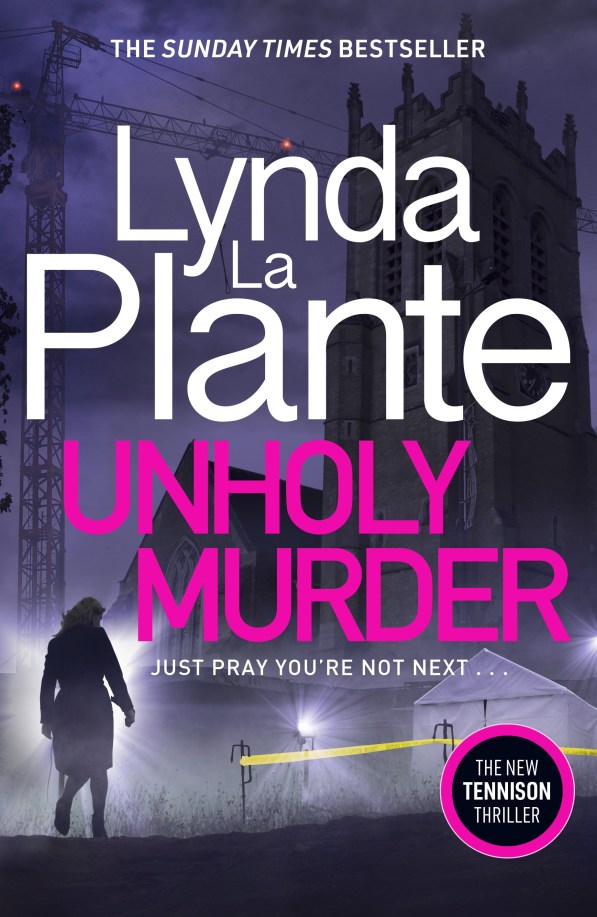
Unholy Murder by Lynda La Plante

Unholy Murder Cover

Publisher: Zaffre (Trade Paperback – 17 August 2021)

Series: Jane Tennison – Book Seven

Length: 389 pages

My rating: 4.25 out of 5 stars

Amazon     Book Depository

The reigning queen of British crime fiction, Lynda La Plante, returns with another clever and intriguing murder mystery, with her latest entry in the Jane Tennison series, Unholy Murder.

La Plante is a great author whose books I have featured several times over the last few years.  Best known for her work in British television, where she produced and wrote several shows and television movies, La Plante has really started to focus more on her novels recently, producing some awesome and compelling reads.  Out of all her recent works, the one I have been enjoying the most is the outstanding Jane Tennison series.  Serving as a prequel to the acclaimed Prime Suspect television series, the Jane Tennison novels follow a younger version of the show’s protagonist, the titular Jane Tennison, as she works her way up the ranks of the Metropolitan Police.  This series has so far contained several awesome and impressive novels, including Good Friday, Murder Mile, The Dirty Dozen and Blunt Force.  The latest entry in the series, Unholy Murder, contained another amazing mystery that sets the protagonist against the dangerous influence of the Catholic Church.

In 1982, Detective Sergeant Jane Tennison has recently been assigned to the Bromley CID, a quieter London beat where she can focus on her upcoming inspector’s exam.  However, her knack for attracting the most unusual and deadly murders once again surfaces when construction workers uncover a coffin at the back of a new housing development.  Based on the site of an old, deconsecrated convent, it is initially assumed that the coffin could be part of a forgotten graveyard, and the coffin is taken to the local morgue.  However, when opened, the coffin is revealed to contain the corpse of a brutally murdered nun.

With no idea who the deceased is or when they died, Tennison is initially unsure how to proceed.  With her superiors assuming that the coffin could be decades or even centuries old, there is little desire for the case to continue.  However, when Tennison is able to determine that the crime took place just before the convent shut down in the 1960s, she is given permission to investigate and attempts to find who the murdered nun is and how her death was left undiscovered for so long.

Digging into the past of the convent and its attached orphanage, Tennison and her team soon discover a sordid history or abuse, neglect and cover-ups.  Convinced that the murder may be related to these charges, the police attempt to find out more about the nuns who lived there.  However, the Catholic Church is uncooperative and all their files on the convent are missing or destroyed.  With the Pope’s historical visit to London only days away, Tennison is determined to get to the bottom of this terrible case, no matter what, Tennison follows every angle she can to get to the truth.  But with someone high up in the church’s hierarchy doing everything to cover up the crime, and with her own superior’s attempting to stop the investigation, can Tennison and her team unmask the killer, or will the secrets of the past came crashing back with unfortunate collateral damage?

This was another pretty awesome novel from La Plante, who has come up with a fantastic and captivating crime fiction story.  Unholy Murder has an impressive murder mystery to it, with the premise of a murdered, unknown nun secretly buried on the grounds of a former convent.  La Plante sets up this entire mystery perfectly, and the reader is soon invested in the plot.  There are some great aspects to the investigation, and I liked the usage of an older crime, with the protagonists forced to dive back nearly 20 years.  There are multiple potential suspects, twists and a range of interferences featured throughout the course of the investigation, and I had a wonderful time following through and trying to figure out who did it and who is trying to keep it quiet for their own reasons.  It all leads up to an intense and fast-paced conclusion, with a second killing seeming to occur, and several separate story threads coming together and adding in some intrigue and excitement.  I was really impressed with the final solutions to the story, and I appreciated the dark and cynical ending that it contained.  This was one of La Plante’s more captivating and clever mysteries and it was a lot of fun getting to the bottom of everything.

One of the more interesting aspects of the entire novel was the inclusion of the Catholic Church as a major force in the investigation.  While some of the lower-level clergy and staff are initially helpful, once the case is revealed to be a murder, potentially committed by someone working at the convent, senior church members work hard to halt the investigation and try to protect themselves and the reputation of the church.  This was a fascinating and intense part of the investigation, and it added in layers of complexities and difficulties that the protagonists are forced to overcome.  The case becomes even more complicated, with multiple allegations of abuse or brutality from the sisters at the convent coming to light.  I really appreciated the way La Plante worked this aspect into the novel, and it was fascinating to see this in a historical context as I am personally more used to hearing about these sorts of issues in the 21st century.  The impacts of the church and its members on the case are pretty fascinating, especially as it makes the solution a lot more clouded, and some resolutions a lot more controversial.  While some authors would use this to simply bash the church, La Plante paints a more complex and multifaceted story here, attempting to show that some of the clergy characters were really good people bound by rules, their oaths or the ambitions of others who abuse their roles and responsibilities for their own aims.  I felt that they author’s use and inclusion of the Catholic Church in this novel helped to make Unholy Murder a much better novel, and it ensured that the case was a lot more intense and complex.

Jane Tennison is always an interesting character to follow, especially as she is one of the few senior female investigators in the MET during this prequel series.  While this is a crime fiction series, a large amount of the plot revolves around Tennison’s personal life, and La Plante has spent a lot of time showing Tennison’s growth as a character, as well as the events that turned her into the hard-edged investigator featured in Prime Suspect.  It has been really fascinating to see Tennison claw her way up the ranks over the last few books, and it was great to see her once again take a leading role in a murder investigation.  Due to some of her prior experiences with fellow officers, Tennison has a bit of a chip on her shoulder in this book, although she manages to mostly prove that she has what it takes.  I do wish that Tennison weren’t portrayed as someone who lets her personal life interfere with the job, especially as she once again gets involved with a person connected to the murder to her own detriment.  Still, I enjoyed Tennison in this novel, and she was a great central protagonist to follow.

This novel featured an interesting group of supporting characters, including police officers, suspects, and members of the church.  The author’s great use of multiple character perspectives in this novel was perfect to highlight these various side characters, and I liked how it also helped to make some of the people connected to the case seem more suspicious or guilty.  While there were several characters I liked, I mostly want to focus on the various police characters featured within Unholy Murder, as they were a major part of the plot.  Not only do you have several recurring police characters from the prior Jane Tennison novels but there are also some great new characters who were very fun to follow.  I quite liked rookie investigator DC Boon, a young officer that Tennison has taken under her wing.  While he initially appears a bit clumsy and clueless, he really starts to grow as a character as the novel progressed, becoming a much more competent investigator.  He also becomes a lot more serious, especially once he gets personally involved in the case, and there are some deep and emotional moments that occur around him as the novel progresses.

I also deeply appreciated the inclusion of DCS Barnes, Tennison’s new boss who heads up the investigation.  Barnes has previously dealt with cases of child abuse by members of the church whose crimes were covered up by his superiors and the church, and this memory drives him throughout the novel and ensures that he takes the cases extremely seriously.  Once it becomes apparent that the murder was likely committed by a member of the clergy, and that the priest he previously attempted to bring down is now a senior figure leading the latest cover-up, he becomes a bit obsessive and refuses to accept any alternate possibilities and suspects.  It was really quite intriguing to see an anti-Church police officer in the 1980s, and I really liked the complex and compelling portrayal around him.  All these side characters add a lot to the overall story, and La Plante did an excellent job of fitting these intense personal stories into the wider murder mystery.

Unholy Murder is an excellent new novel that continues the excellent Jane Tennison series by the amazing Lynda La Plante.  Featuring a clever mystery, some great characters and a really intriguing plot hook, Unholy Murder easily grabs the reader’s attention and ensures that they become deeply attached to the outcome of the story.  I had an outstanding time reading this latest book and I look forward to the next instalment of this fun series in 2022.

Amazon     Book Depository

The Tower of Fools by Andrzej Sapkowski

The Tower of Fools Cover

Publisher: Gollancz (Trade Paperback – 27 October 2020)

English Translation by David French

Series: Hussite trilogy – Book One

Length: 549 pages

My Rating: 4.25 out of 5 stars

Amazon     Book Depository

From legendary Polish author Andrzej Sapkowski comes the first English translation of his 2002 release, The Tower of Fools, an intriguing and exciting fantasy/historical fiction hybrid novel that takes the reader on a weird and entertaining adventure.

1425, Silesia (South Western Poland and parts of Czechia).  War is brewing as the Catholic Church fights against the Hussites in a brutal religious struggle.  As the entire region begins to degenerate into conflict and chaos, a young doctor and amateur magician, Reinmar of Bielau, known as Reynevan, finds himself in all manner of trouble when he is caught in bed with the beautiful wife of a knight.

As Reynevan makes his escape, a member of the knight’s family, the powerful Stercza clan, is unintentionally killed, and the rest of the Stercza’s swear vengeance upon him.  Worse, Reynevan’s forays into magic have made him a target of the inquisition, who wish to have an extended and unpleasant chat about his arcane hobbies.  With a massive price on his head, Reynevan is forced to flee into the wilderness to survive as bounty hunters scour the countryside trying to find him.

Calling upon old friends, Reynevan looks for anyway to escape from his pursuers while also attempting to ‘rescue’ the knight’s beautiful wife.  Teaming up with an odd group of comrades, Reynevan makes his way throughout Silesia while attempting to outfox his pursuers.  However, his adventures have inadvertently placed him in the middle of a dangerous conspiracy, one that could change the entire fabric of the region and which threatens everyone he loves.  As Reynevan attempts to work out just what he has become involved with, his path leads him to the infamous Tower of Fools, an asylum for the insane and the heretical.  Can Reynevan escape the danger he finds himself in, or will his adventures cost him his life and his mind?

The Tower of Fools is a compelling and unique novel from veteran author Andrzej Sapkowski, who is best known for his iconic The Witcher novels.  This novel is the first entry in Sapkowski’s Hussite trilogy, which is the main series he has authored outside of The Witcher books.  The Tower of Fools was originally released back in 2002 under the original title Narrenturm, and while it has previously been translated into several other European languages, this version represents the first English translation of the book.  The translation of The Tower of Fools was done by David French, who has previously translated several Witcher novels, and no doubt we can expect the next two novels in the series (previously published in 2004 and 2006) to be translated and released in the coming years.  While I really enjoyed The Witcher television series, I must admit that I am not too familiar with Sapkowski’s writing, having so far only read the 2018 translation of The Witcher standalone novel Season of Storms.  However, due to the inevitable interest that was going to surround The Tower of Fools, I was quite keen to check out this book, and I ended up really enjoying it due to its captivating narrative, outrageous characters and excellent use of some distinctive historical fiction elements.

This novel from Sapkowski contains a fantastic and enjoyable narrative that proves surprisingly hard to put down at times.  The author has done a fantastic job blending together interesting historical fiction and fantasy elements that come together to create a distinctive adventure story.  The Tower of Fools is mostly told from the perspective of its central character, Reynevan, although several other perspectives are occasionally used throughout the novel.  What I liked about this book was the fact that it was a fast-paced, event-laden narrative that showered the reader with all manner of action and intrigue.  Reynevan and his companions essentially run into a different dangerous obstacle, major historical event or dastardly opponent every chapter, which they are forced to overcome or escape from in short order.  This ensures that the reader is constantly on their feet as they are never certain what new trouble or adventure lies on the horizon.  In addition, there is also a subtle line of intrigue that sees a sinister conspiracy begin to unfold around the protagonist as he finds himself in the midst of a series of murders and political manoeuvrings.  While this seems like a lot of elements for one book, it comes together surprisingly well into a cohesive and exhilarating narrative that I quite enjoyed, and which serves as an impressive start to the entire Hussite trilogy.  There are a lot of fun elements to this book, and I particularly want to point out the rather entertaining introductions that occur at the start of each chapter, giving the reader a humorous heads-up of what is to come throughout the series.  I did find it interesting that the titular Tower of Fools, which is referenced strongly throughout the official synopsis for this book, does not show up until really late in the book and is only a setting for a relatively short period.  While this book does contain several great and dark scenes in this location, this novel might have been more interesting if more of the story was featured in this asylum.  Still, I had an awesome time getting through The Tower of Fool’s cool story, and it was an absolute thrill ride from start to finish.

One of the major things that I liked about The Tower of Fools is the way in which Sapkowski complimented his entertaining narrative with a huge selection of distinctive characters.  This includes the main protagonist of the novel, Reynevan, the foolhardy student doctor and magician who serves as the main point-of-view character.  While he is the driving force for most of The Tower of Fools’ narrative, I actually found Reynevan to be a little annoying, especially as his impulsive nature, which is mostly driven by unrealistic ideas of heroism and romance, continues to get him into trouble.  This becomes especially annoying when his stupid decisions endanger his friends, whose determination to point out Reynevan’s mistakes help to make them more likeable.  Despite being a typical foolish young male protagonist, Reynevan does grow on you a bit as the book progresses and it proves hard not to relate to some of his impulses at time.  While his actions did occasionally exasperate me, I really did enjoy him as a character, and his keen insights and fun antics ensure that the reader has a great time following him throughout the course of the novel.

In addition to Reynevan, the main two side characters of The Tower of Fools are the fun duo of Scharley and Samson, two very different men who become Reynevan’s travelling companions.  Both of these characters are extremely entertaining in their own right, and Sapkowski weaves some great narrative threads around them.  Scharley is a crude, belligerent and surprisingly dangerous priest who leaves his imprisonment in a monastery to assist Reynevan.  Scharley serves as the main voice of reason and caution for much of the book and proves to be an interesting counterpoint to the youthful and impulsive Reynevan, whom he often has to threaten with violence in an attempt to get him to do the logical or sane course of action.  Their other companion is Samson, a giant of a man with an intense intelligence, who may or may not be possessed by a demon.  Samson is a really fun addition to the group, and I really enjoyed him as a character thanks to his unique demeanour and characterisation.  These two companions are quite intriguing in their own way and it was a lot of fun to see them interact with Reynevan and the other characters they come across.  This book also contains a multitude of extra characters, many of whom have their own intriguing storyline or character trait.  While many of these characters are entertaining and interesting additions to the plot, I think that Sapkowski might have slightly overdone it with the side characters.  While I did my best, there were honestly way too many supporting cast members to keep track of at times, especially as a lot of characters appeared or reappeared out of nowhere with very little explanation.  Still, this chaotic use of characters fits in very well with The Tower of Fool’s event-laden narrative, and it did not have too severe an impact on my enjoyment of the book.  The more distinctive characters proved to be quite entertaining and I had a good time seeing where some of their arcs ended up.

Sapkowski also makes impressive use of some cool historical fiction elements to tell his unique story.  The Tower of Fools is set in the early 15th century in an area of the world that is experiencing a lot of turmoil, Silesia.  Much of the book’s plot revolves around the major conflict of the period between the Catholic Church and the Hussites, a religious offshoot that was declared heretical and which the Church launched several Crusades against.  This proves to be a fascinating background to the main story, and Sapkowski features a lot of interesting Eastern European historical inclusions throughout his book.  This includes a range of references to key elements of regional history and politics that were quite intriguing, as well as the use of several major historical figures in varying roles, including some cameos from people like Gutenberg and Copernicus.  The author does a pretty good job of explaining these historical elements to the reader, although I did have to do some independent research to answer a few questions and fill in a few gaps.  A lot of this was due to my somewhat lacking knowledge of Eastern European medieval history, and those readers with a little more appreciation for the location will no doubt follow along a little better.  I did think that The Tower of Fools contains a rather excellent depiction of the landscape and the people that would have existed during this bleak period.  The various bits of intrigue, plots and war that occur throughout the book really fit into Sapkowski’s impressive and dark, setting, and it definitely helped to enhance part of the book’s story.  This was also the perfect setting for the various magical elements that occurred throughout the book, as their darker aesthetic matched the location to a tee, especially as there are a number of scenes set out in the dangerous and monster-filled woods.  All of this makes for a great setting, and I had an excellent time seeing this historical setting be put to amazing use throughout The Tower of Fools.

The Tower of Fools by Andrzej Sapkowski is an enjoyable and fun novel that takes the reader on an epic adventure back to a dark version of historical Eastern Europe.  Filled with some great characters, intriguing historical features and a fantastic story, The Tower of Fools turned out to be quite a captivating read.  I look forward to seeing how the rest of the Hussite trilogy unfolds and I imagine I will be in for an exciting ride.  The Tower of Fools comes highly recommended and it should prove to be an excellent read to any fans of Andrzej Sapkowski and The Witcher novels.

Amazon     Book Depository

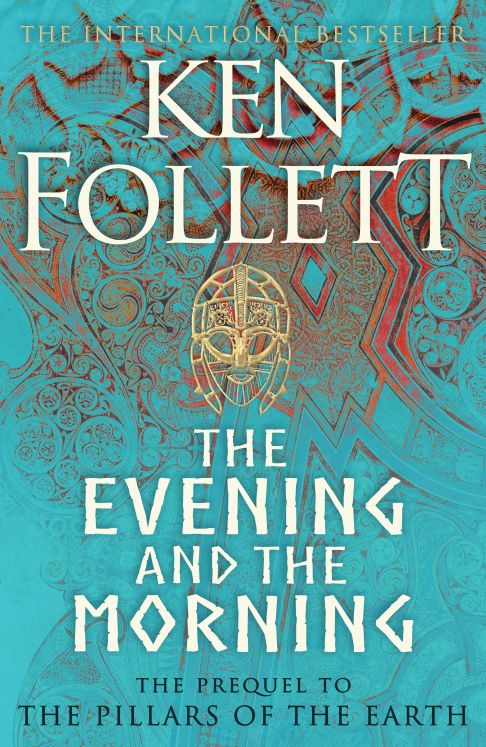
The Evening and the Morning by Ken Follett

The Evening and the Morning Cover

Publisher: Macmillan (Hardcover – 15 September 2020)

Series: Kingsbridge – Book 0

Length: 819 pages

My Rating: 5 out of 5 stars

Amazon     Book Depository

Following three long years of waiting, one of the best authors of historical fiction in the world today (and one of my all-time favourite authors), Ken Follett, returns with another historical epic, The Evening and the Morning.

Follett is a highly acclaimed author who has written a number of impressive bestsellers over his 45+ year writing career.  After starting off with thriller novels, Follett really hit his literary stride when he moved on to massive historical fiction novels.  After experiencing great success with the iconic The Pillars of the Earth, he has gone on to produce several other epic books, including two sequels to The Pillars of the Earth and the outstanding The Century trilogy.  I have been a major fan of Follett for years ever since I had the great pleasure of reading The Century trilogy.  This was followed up with the second sequel to The Pillars of the Earth, A Column of Fire, which was easily one of my favourite books of 2017.  Thanks to how overwhelmingly compelling each of these previous novels were, I have been eagerly waiting to read his latest novel, The Evening and the Morning, for a while now, and it has been one of my most anticipated novels for the second half of 2020.

The Evening and the Morning is a character driven historical fiction novel that is set near the end of the Dark Ages of England.  The novel actually serves as a prequel to Follett’s bestselling The Pillars of the Earth and is part of Follett’s Kingsbridge series.  The Kingsbridge novels are all set within the fictional town of Kingsbridge, which each novel exploring a different period of English history (for example The Pillars of the Earth is set between 1123 CE and 1174 CE, while its sequel, World Without End, starts in 1327 CE).  This prequel is once again set in the same area, with the novel running between 997 CE and 1007 CE.

At the end of the 10th century, England is far from settled and faces attack from external threats.  One particularly vicious Viking raid causes untold damage at the town of Combe, near the city of Shiring, and sets off a chain of events that will change the area forever.

Following the raid, one of the survivors, a young boat builder named Edgar is forced to abandon his home and follow his family to the small hamlet of Dreng’s Ferry.  Living amongst the unwelcoming locals and corrupt landlord, the brilliant Edgar chafes and tries to find a new way to provide for his family.  At the same time, a Norman noblewoman, Ragna, falls in love with the ealdorman of Shiring and travels to England to marry him.  However, she soon discovers herself engulfed in a brutal battle for power with her husband’s family, and any misstep could cost her everything.  These characters are joined by Aldred, a young and ambitious monk who wishes to turn the abbey at Stirling into an academic hub.  However, his strong sense of right and wrong gets him into trouble as he searches for justice in all the wrong places.

As all three of these characters try to survive the troubles of the location, they find themselves drawn into each other’s lives.  Together they have the power to solve each of their problems and prosper together.  However, each of them has run afoul of the area’s corrupt Bishop, who is determined to gain power and influence no matter the cost.

Unsurprisingly, I absolutely loved this new novel from Follett, who has once again composed an outstanding historical epic.  The Evening and the Morning is another exceptional book that takes the reader on a powerful and captivating ride through an exciting period of English history with an addictive story told through the eyes of several great characters.  I had an outstanding time reading this book, and despite its length (at 800+ pages, it is one of the longest novels I have ever read), I powered through this book in relatively short order as I found the compelling narrative that Follett produced to be deeply addictive and hard to put down.  This was a fantastic read, and it gets a full five-star rating from me.

The Evening and the Morning contains an impressive and addictive character driven narrative that sees three distinctive protagonists attempt to change their destiny and the destiny of the people they love over a period of 10 years.  Set during a turbulent period of England’s history, The Evening and the Morning follows these characters as they attempt to survive Vikings, hunger, bandits and the machinations of a dangerous bishop.  The scope of this book’s story is truly epic as Follett ensures that his protagonists are forced to contend with all manner of challenges and tragedies, from political intrigue, direct attacks, imprisonment and so much more.  The resulting story is deeply compelling, extremely intelligent and wildly entertaining, especially as Follett comes up with a ton of unique and intriguing scenarios for his characters to work around.  I had an incredible time reading The Evening and the Morning’s story and it proved extremely hard to put down.

As I mentioned above, The Evening and the Morning is part of the Kingsbridge series and serves as a prequel to the first book in the series, The Pillars of the Earth.  Despite this, I would say that readers really do not need to have any prior knowledge of the rest of the Kingsbridge books to enjoy The Evening and the Morning.  This latest novel from Follett is extremely accessible, and as it is set more than 100 years before the events of The Pillars of the Earth, readers really should consider this a standalone novel that any historical fiction fan can easily enjoy (that is true for every entry in this series).  That being said, long-term fans of Follett and the Kingsbridge series will no doubt really appreciate seeing this early version of this iconic fiction setting, especially as the author includes a number of clever connections to the future novels in the series.  I particularly liked seeing how the titular Kingsbridge of the series was created, and you also get more of a look at how important the clergy were to the early inhabitants of the town, which is fascinating if you consider how the relationship between the church and the townspeople changes over the course of the series.  As a result, I would say that The Evening and the Morning is a book that most readers will be able to enjoy, while also serving as an intriguing entry in the Kingsbridge series.

The Evening and the Morning’s story follows three major point-of-view characters, Edgar, Ragna and Aldred, and shows the reader 10 key years of their lives.  These three characters form the heart of this story, and it does not take long for you to get really drawn into their individual stories.  Each of these characters has their own intriguing and emotionally charged story arcs, such as the creative Edgar’s attempts to rebuild his life in a hostile new village after experiencing a series of terrible losses, Ragna’s marriage and the subsequent battle to gain power and influence, and Aldred’s bid for justice and knowledge.  I really enjoyed each of these character’s individual arcs, but their real strength lies in the way that their stories and lives tie into one and other.  All three major characters becoming incredibly entwined as the book continues, as they form a strong friendship between themselves and attempt to help each other come the various struggles they encounter.  These separate character storylines come together extremely well into one powerful and cohesive narrative which sees the reader become deeply engrossed in all their lives.  You really grow to care for all three of these characters as the story progresses, becoming deeply invested in their wellbeing and happiness.  While this is evidence of some outstanding writing on Follett’s behalf, it is a little unfortunate as a lot of bad things happen to each of these characters (especially Ragna), and it makes for some emotionally hard reading at times.  There is also a rather intriguing love triangle between these three characters with some interesting LGTB+ elements attached, which adds an additional level of drama to the story.  I ended up being quite satisfied with how these character arcs unfolded, and readers are going to have an incredible time seeing how they turn out.

In addition to the main three characters, there is also another major point-of-view character, Wynstan, the Bishop of Shiring.  Wynstan is the book’s main antagonist, a cunning and ruthless manipulator who is desperate to gain power and influence at the expense of others.  Wynstan is the half-brother of Ragna’s husband, who uses his familiar connections and his corrupted followers to control much of Shiring and the surrounding area.  Follett has created an extremely despicable and aggravating villain with Wynstan, who comes into conflict with all three major protagonists, as each of them cross him in some way or another.  Wynstan is an extremely vengeful and dangerous opponent, who manages to do some fairly evil deeds throughout the book, while avoiding too many repercussions.  I found myself really growing to hate Wynstan and his followers as the book progressed, becoming fairly aggravated whenever he managed to weasel his way out of trouble.  This emotional response to Wynstan is exactly what you want when you write an antagonistic character, and I think that he helped add a lot to the overall narrative.

Follett has also loaded up his story with a ton of side characters who the point-of-view characters interact with throughout their lives.  There are quite a substantial number of side characters in this book, but thanks to Follett’s excellent writing the reader is able to keep track of each of them; at no point during this book did I become lost working out who someone was.  Many of these supporting characters have their own minor story arcs throughout the book, and it is interesting to see how they evolve and change over the years.  While quite a few of them are fairly despicable (indeed, at times it seems like the three main characters are the only decent or sensible people in the story), you do grow attached to them and become wrapped up in what happens to them.  That being said, readers are advised not to get too attached to them, as they have a much higher mortality rate, although there are a few happy endings in there which are guaranteed to satisfy.  Overall, Follett does an exceptional job with all the characters in this novel, and watching their lives unfold was a real emotional rollercoaster.

I also quite enjoyed the author’s fascinating depiction of England (with a bit of Normandy thrown in for good measure) during the late 10th and early 11th century.  While the setting of this book, Shiring and its surrounding environs, are fictional, they come across as period-appropriate settlements and the reader gets a real sense of what life in the various villages and towns would have been like.  Due to the broad scope of the story and what the characters witness, the reader gets a look at a huge range of different people who would have existed during this period, including the nobility, the various members of the clergy, the common people and even slaves.  Follett does an amazing job of highlighting how these various characters would have lived, what their professions or stations were like and the problems they would have typically experienced.  The author really replicates the hard nature of the times, allowing the reader a fascinating glimpse into the harsh and dangerous lives of our ancestors.  Follett also works in some broader historical elements, such as the increased attacks from the Vikings and the political situation at the time.  A lot of these historical inclusions, such as having King Ethelred the Unready appear as a minor character, proved to be really intriguing, and I loved how the author dived back into history to enhance his tale.

With The Evening and the Morning, Ken Follett has once again shown why he is one of the top historical fiction authors in the world today.  This latest novel presents the reader with an exceptional and captivating tale of love, connection and triumph over adversity at the end of England’s dark ages.  Serving as a prequel to Follett’s bestselling The Pillars of the Earth, The Evening and the Morning contains an amazing story that follows some driven and likeable protagonists during this dark period.  The end result is an epic and incredibly addictive read that comes highly recommended and is easily one of the best books of 2020.  There is a reason why Follett is one of my favourite authors of all time, and I cannot wait to see what elaborate novel he comes up with next time.

Amazon     Book Depository

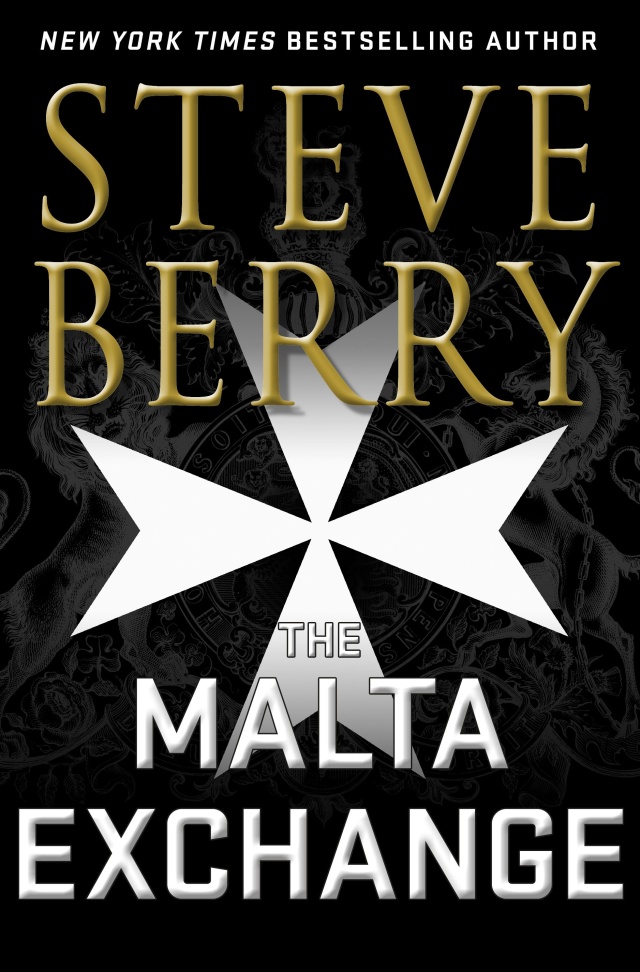
The Malta Exchange by Steve Berry – Audiobook Review

The Malta Exchange Cover

Publishers: Hodder & Stoughton and MacMillan Audio (5 March 2019)

Series: Cotton Malone – Book 14

Length: 13 hours and 31 minutes

My Rating: 4.5 out of 5 stars

Amazon

From the brilliant mind of international thriller sensation Steve Berry comes the 14th book in his acclaimed Cotton Malone series, The Malta Exchange.

When the pope unexpectedly dies, opportunity and chaos grips the Vatican.  As the world’s cardinals arrive in Rome in preparation for the conclave to elect a new pope, one cardinal, the controversial Kastor Gallo, suddenly leaves for an impromptu visit to Malta.  He has been summoned for a clandestine meeting, the results of which could hand him the papacy.  The only witness to this meeting is United States Justice Department operative Luke Daniels, whose covert observations of the meeting is quickly compromised, forcing him to fight for his life.

While Daniels attempts to uncover what is happening in Malta, his former colleague, Cotton Malone, is in Italy working for British intelligence.  An Italian collector claims to have letters between Churchill and Mussolini that could prove extremely damaging to Churchill’s legacy, and MI6 is eager to recover them.  What is meant to be a quick mission for Malone is complicated when armed men kill the collector and steal the letters.  Malone is able to trace his assailants to the legendary Knights of Malta, and his chase to recover the letters leads him into a hunt from a mysterious document from the reign of Emperor Constantine.

This document, revered by the Knights of Malta and feared by the church, has been lost for hundreds of years.  Hunted by some of history’s greatest tyrants, including Napoleon and Mussolini, this secret document not only has the potential to influence the current concave if revealed, but it could also tear the church down completely.  As a secret society within the modern incarnation of the Knights of Malta and elements of the Entity, the church’s intelligence organisation, both attempt to claim the document, Malone and Daniels once again team up to recover the document and destroy the conspiracy threatening to envelope them and the entire Catholic world.

Steve Berry is a veteran author of thrillers that focus on complex conspiracies, having written a number of exciting books since his 2003 debut.  While Berry has written four standalone novels, including The Amber Room, The Romanov Prophecy and The Third Secret, he is probably best known for his long-running Cotton Malone series of books.  The Cotton Malone series, which began in 2006 with The Templar Legacy, is made up of 14 books, each of which features the series titular character, retired U.S. Justice Department operative Cotton Malone as he is forced to investigate a series of elaborate conspiracies or secrets with origins in history.

The Malta Exchange features several characters from the previous books in the series.  While this is the 14th book in the series, The Malta Exchange can easily be read as a standalone book, as no prior knowledge of the Cotton Malone series is required to enjoy this story.  While there are some mentions of previous adventures in the series, none of these brief references are really relevant to this book’s story.  Likewise, the series’ recurring characters are re-introduced in some detail, and no pre-existing knowledge of them is needed.  Those readers who are already familiar with this series will enjoy another amazing thriller from Berry, although there may be some repetition, as the protagonists once again dive into another elaborate conspiracy centred with a secret order associated with the Catholic Church.  As one of my reviewer colleagues who is somewhat more familiar with this series than me stated, “How many conspiracies can one man wander into?”  Still, for those people who have enjoyed Berry’s stories before, The Malta Exchange is another exceptional read with a thrilling mystery that is a lot of fun to unravel.

While I received a physical copy of this book to read, I ended up listening to the audiobook format of The Malta Exchange narrated by Scott Brick.  This book was an absolutely fantastic piece of thriller fiction as the reader is thrown into an extremely intriguing and wide-reaching conspiracy involving hidden documents, major historical figures and deep dives into the history and background of several fictional and real-life organisations.

This is an excellent book for thriller fans, as The Malta Exchange contains a number of intense and complex conspiracies and plots overlayed across each other to create an addictive and enjoyable read.  The main plot focuses on the search for a long-lost document that originated during the reign of Emperor Constantine, which has the potential to damage or destroy the Catholic Church.  As a big fan of the historical fiction genre, I loved how this central mystery cleverly utilised a number of massive historical events and figures in its overall conspiracy.  For example, this central conspiracy has ties to Emperor Constantine, the founding of the Catholic Church, Napoleon, Mussolini, the Crusades and important events in World War II.  It even features a number of cool flashbacks to Mussolini and Napoleon’s life, showing how they were embroiled in this conspiracy.  This results in a treasure hunt so large, mysterious and potentially world-changing you cannot help but be intrigued and eager to see how it ends.  On top of that, a number of secret organisations with conflicting agendas and plots are duking it out around the hunt for this document and the reader is uncertain of their true motivations until later in the story.  All these story threads come together incredibly well at the end of the story, resulting in an intense, intelligent and entertaining thriller storyline that I could not wait to fully uncover.

Except for a couple of chapters featuring flashbacks to historical figures like Mussolini or Napoleon, The Malta Exchange is told from the point of view of four main characters: Cotton Malone, Luke Daniels, Cardinal Kastor Gallo and a mysterious ‘knight’ who remains unnamed for most of the book.  Malone and Daniels serve as good central protagonists, and I liked the contrast in their styles and personalities.  While Malone is the older, wiser and occasionally more careful protagonist who puts together the various clues around the hidden location of ancient document, Daniels is the younger, more action orientated character who does a number of crazy stunts throughout the book while also hiding his intelligence and cunning behind a convincing “good ol’ boy” routine.  The unnamed knight is The Malta Exchange’s main antagonist, whose identity remains hidden for much of the book.  This knight is an interesting character, and it is always fun to see the antagonist’s point of view as they attempt to outwit the protagonists.  While the reveal of this character’s secret identity is somewhat obvious due to there only being a few significant secondary characters, the antagonist’s overall plan was quite ingenious and devious.  Kastor Gallo is another interesting character; a self-serving Cardinal who wants to become Pope, he skirts the line between protagonist and villain in this story.  While the character considers himself an honest and pious priest, he is not particularly likeable due to his extremely conservative religious views and unbridled arrogance.  Still it was fun watching him try to manipulate the other characters, as well as his plot to try and gain the papacy.  There are several other fantastic side characters whom I will not discuss in any detail lest I hint at the identity of the unnamed knight above, but they really add a lot to this story.

One of the things that really impressed me about this book was the way that Berry dived into several organisations and locations in extreme and intriguing detail, particularly when it comes to two specific organisations.  The first of these organisations is the Knights of Malta, otherwise known as the Sovereign Military Order of Malta or the Sovereign Military Hospitaller Order of Saint John of Jerusalem, of Rhodes and of Malta.  Throughout this book, Berry spends a significant amount of time exploring this order, from their origins as the Knights Hospitaller and the Crusades, to their current existence as a massive charitable organisation.  Berry examines a large amount of their history, how they are organised, where they are located, what they do, their political status and how they have evolved over the years, and this amazing examination is further extended out into the incredible history of the nation of Malta.  Even the order’s leadership crisis between 2016 and 2018 is somewhat represented in the book, as the author describes a similar crisis affecting the organisation featured within The Malta Exchange.  All of this is deeply fascinating, and I really enjoyed the author’s examination of this organisation and how he was able to utilise the Knights of Malta’s actual history to the degree he did, with only a few alterations to fit his story.

The second organisation that Berry dives into is the Catholic Church, as a number of key aspects of the church and the Vatican come into play throughout the plot.  Like with his deep dive into the Knights of Malta, the author included a number of detailed examinations about church history, organisation and key events, like the selection of a new pope, that I quite enjoyed learning more about, and which fit incredibly well into the story.  The part of the examination into the church that I enjoyed the most was the look at the church’s supposed intelligence organisation, the Entity.  While the church has never confirmed they have an official intelligence organisation, several historical books have discussed its potential activities, and a number of thriller writers have utilised such an organisation, often known as the Entity, to great effect.  Perhaps because thrillers are not a genre that I read an awful lot of, this was the first book I have read that featured a church intelligence agency.  I really liked the idea of a secret intelligence organisation working for the Vatican, and Berry really utilises them well throughout his book, making them out as one of the most elite and effective intelligence organisations on the planet, who people really should not mess with.  I absolutely loved all the Catholic Church inclusions that the author featured and that, combined with the captivating examination of the Knights of Malta, helped turn this into an amazing overall story.

As I mentioned above, I chose to listen to the audiobook version of The Malta Exchange, which was narrated by Scott Brick.  This was not a massively long audiobook, only clocking in at around 13 and a half hours, and I was able to power through this really quickly, especially as I become more and more enthralled with the book’s compelling story.  I was quite glad that I chose to listen to this book rather than read it.  While you do lose out on some of the book’s visual elements, like some of the diagrams of anagrams or secret codes that feature throughout the physical copy, I found that listening to The Malta Exchange really helped me absorb the massive conspiracy storyline, as well as the history and organisation examinations, a hell of a lot more.  Brick has an amazing voice for thrillers, and I quite enjoyed listening him narrate this fantastic novel.  The voices he creates for the various characters in this book are quite good, and I liked some of the accents that he came up with.  I would strongly recommend the audiobook version of The Malta Exchange, although readers will still be able to get a huge amount out of the physical copy of the book.

The Malta Exchange by Steve Berry is an incredible and addictive ancient conspiracy thriller that I had an amazing time reading.  Once you get sucked into the book’s various conspiracies and mysteries it is hard to pull yourself out until each and every one of them is untangled.  What I enjoyed most about the main conspiracy was the author’s ability to explore fascinating history and famous organisations in outstanding detail, and then use these events to really enhance his story.  The end result is an awesome novel that comes highly recommend from me.  Appealing and accessible to established fans of the Cotton Malone series, as well as other fans of the thriller genre, I was really glad I decided to check this book out and I am curious to see what historical conspiracy Malone uncovers next.

Amazon

A People’s History of the Vampire Uprising by Raymond A. Villareal

A History of the Vampire Uprising Cover

Publisher: Hachette

Publication Date – 29 May 2018

Amazon     Book Depository

From the inspired mind of Raymond Villareal comes one of the most captivating and thought-provoking literary achievements of 2018.  Have you ever wondered what would happen if vampires came into existence in the modern world?  Villareal’s debut novel, A People’s History of the Vampire Uprising, explores the possibility of such an event through a comprehensive fictional oral history, much like Max Brooks’ observation of a zombie apocalypse in World War Z.

The body of a young woman in an Arizona morgue awakens and disappears into the night.  This mysterious event will start a chain reaction around the world that no one could predict.  The CDC investigator consulting on the case soon discovers that the woman was suffering from a mysterious disease with several incredible symptoms.  Subjects are stronger, faster, suffer a violent reaction to sunlight, have unnaturally long lives and are utterly enthralling to humans.  More importantly, they must consume blood to survive and can pass the disease on by biting another human.  As attempts to quarantine the disease fail and additional bodies start disappearing, the world quickly realises that vampires are real and here to stay.

As more and more people are infected, many of those who have been turned begin to reintegrate back into society.  These new creatures call themselves ‘gloamings’, finding the term ‘vampires’ to be derogatory.  Soon, many of the rich and famous are flocking to the gloamings, hoping to join their ranks and be re-created.  With their natural talents enhanced, the gloamings start accumulating significant wealth, power and influence as they infiltrate all levels of human society while attracting followers to their side.  Gloamings infiltrate the government, powerful companies and the Catholic Church.  One gloaming even begins a run for high political office.

However, not everyone is enamoured by the gloamings.  A faction of the church is determined to stop the vampire incursion and has formed its own militia to fight gloamings throughout the world.  Following a series of high profile cases, the FBI starts a taskforce focusing on crimes by gloamings.  The original CDC investigator continues her research into the virus despite intense political and social pressure to stop.  In New Mexico, a skilled political motivator soon discovers a terrible secret about his employers.  This is the start of the vampire uprising; the world will never be the same.

Written in the format of a history book, A People’s History of the Vampire Uprising is an epistolary novel that uses a series of fictional documents and testimonials to tell the story.  Villareal presents a large portion of the story within chapters representing testimonials from certain characters specifically taken for a history book.  Other chapters are written in the format of important documents from the fictional world and are made to represent interrogation notes, congressional transcripts, government reports and articles in scientific and legal journals.  In addition to these longer chapters, Villareal has also included numerous shorter entries that are presented as news stories, public interest articles, transcripts pulled from popular media sites, emails and the comments section of a message board.  As a result of all these different formats and documents types, A People’s History of the Vampire Uprising has the uncanny feel of an actual history book, which is further reinforced by the inclusion of footnotes in most of the longer chapters, and three short appendices slipped into the back on the book.  This is a marvellous way to structure the book and it speaks to Villareal’s skill that he was able to tell such a captivating narrative using this style of writing.

By employing fictional testimonies and documents originating from a number of different characters, Villareal is able to tell an extremely wide-reaching story about the introduction of vampires.  Most of the longer chapters are written in the style of testimonies from characters in the United States, while many of the shorter articles show a wide view of the rest of the world.  This allows Villareal to focus his main story in one specific country and focus his analysis on how the United States would react to such an event.  At the same time Villareal is also able to illustrate a much wider story showing how the vampire uprising would affect the entire world.  Exceptions to this are the chapters featuring the gloamings causing a religious and ideological schism within the church.  These chapters focus the plot on characters throughout Europe and represent some of the more fascinating fictional postulations within A People’s History of the Vampire Uprising.

While the book contains numerous narrators, authors and interviewees telling their specific stories, Villareal is still able to produce a clear overall narrative about the introduction of vampires to the world.  While Villareal initially has the individual narrators tell their own stories, eventually the characters meet and interact, allowing the multiple storylines to combine into one overarching plot.  The smaller articles and extra details within some of the longer features also allow the reader to have an amusing examination about how some social groups and individuals may react to the introduction of vampires, including celebrities such as Taylor Swift.  The end result is very well-done, overarching narrative that takes the multiple storylines within and turns it into an exciting and comprehensive overall plot.

While this is a piece of fiction, it also serves as an examination and critique of modern society.  Villareal postulates that if vampires ever did appear society would be split between distrusting such creatures and worshiping them, while the rich, famous and powerful would all try to join them, turning the gloamings into the ultimate elitist clique.  Villareal examines extremely plausible ways in which the gloamings could influence humans and attempt to win them to their side, with one chapter in particular describing how a vampire might win an election.  The result is a perceptive and astute examination of current human nature that will leave readers spinning.

A People’s History of the Vampire Uprising is one of the most impressive books of the year.  Raymond Villareal produces an insanely compelling story while using a unique and clever format that clearly highlights his skill and imagination.  In addition to being incredibly entertaining, A People’s History of the Vampire Uprising is also an insightful piece of social commentary that will greatly amuse readers.  This is a truly magnificent piece of fiction and an outstanding debut from Villareal.

My Rating:

Five Stars

Amazon     Book Depository