Dracul by Dacre Stoker and J. D. Barker

Dracul Cover

Publisher: Bantam Press

Publication Date – 2 October 2018

Amazon     Book Depository

You think you know the story of Dracula?  Prepare to have your understanding of one of history’s greatest horror novels completely turned on its head as Bram Stoker’s great-grandnephew presents a captivating new story of horror based off Bram Stoker’s notes and his original version of the iconic book.

The year is 1868, and a young Bram Stoker has barricaded himself in the top room of an abandoned abbey.  This room has crosses carved on every wall, mirrors hanging from every angle and garlic smeared around the door frame, while Bram himself is armed with roses, holy water and a rifle.  Outside the room lurks an ancient evil, its greatest desire to enter the room and claim the man waiting within.  As Bram waits for the sun to rise, he writes in his journal, desperate to describe the events that lead to this moment.

The tale he tells is an intriguing tale of horror and mystery set in the midst of 19th century Ireland.  Bram was born a sickly youth whose constant illness stopped him from leaving his bed for most of his early life.  One of the few points of comfort in his life was his nanny, Ellen Crone, who nursed him through the worst of his maladies.  Bram seemed destined for a short life, until one day a miracle occurs and Bram’s sickness is cured by the mysterious intervention of Nanny Crone.  But as Bram and his sister Matilda investigate the suspicious behaviour and abilities of Nanny Crone, she disappears, leaving behind questions about who, or what, she really was.

Years later, it appears that Ellen Crone has returned, as strange and bloody events haunt the lives of Bram, Matilda and their older brother Thornley.  As they investigate further they find that the mysterious Ellen Crone has not aged a day, is accompanied by those who died years earlier and has a strange hypnotic hold over Bram.  But even as the siblings attempt to find answers, they soon realise a far more powerful and malevolent creature is hunting in Ireland, one who will forever change the life of the Stoker family.

This is one of the most intriguing books of 2018, as it is a reimagining of the origin of one of the world’s most iconic horror novels, Dracula, which was originally published in 1897 by author Bram Stoker.  The authors of this new book are the team of established horror writer J. D. Barker, and Bram Stoker’s great-grandnephew Dacre Stoker.  This is not the first Dracula book that Dacre Stoker has had his hand in, as he also wrote the 2009 book, Dracula the Un-dead with Ian Holt, which serves as the official sequel to the original Dracula.

Dracul is a clever and compelling read that takes a deeper look at the story behind the classic horror novel.  The plot of this novel is apparently based upon Bram Stoker’s notes, journals and around 100 pages that were culled from the original draft of Dracula by his editors.  As a result, the authors of Dracul strongly hint that Bram Stoker and his family actually encountered a vampire, and that his experiences led him to publish Dracula as a warning to people about the dangers that were hidden around them and the apparent weaknesses of these creatures.  There is a great quote at the very start of this novel that the authors attribute to Bram Stoker and indicate was part of Dracula’s original preface: “I am quite convinced that there is no doubt whatever that the events here described really took place, however unbelievable and incomprehensible they might appear at first sight.”

This new novel by Stoker and Barker is an outstanding piece of fiction.  Not only is it a powerful piece of horror fiction in its own right but it has a number of clever and intriguing connections to Dracula.  The horror elements of this book are fantastic, and the authors do a great job of highlighting the dread that surrounds the protagonists as they investigate the horrors that surround them and their family.  There are a number of great scenes throughout this book where the characters encounter supernatural elements that slowly seek to drive them mad with fear or horror, and the attacks come from a variety of sources.  I have to mention the fact that the monster who inspires Dracula is particularly fearsome in Dracul and the authors really paint him as a powerful and soulless being far beyond the comprehension of the human protagonists.  I really loved the overall story of Bram and the other Stokers as they find themselves bound to this adventure at an early age and slowly encounter all the horrors around them.  There are some very clever turns throughout this book, and there are some surprising twists.  This is a great chronicle of Bram’s life and the writers even try to answer some interesting unanswered questions, like why Bram Stoker left instructions to have his body immediately cremated upon his death, an unusual custom for the time.

I really loved the way that this story is told, especially as Stoker and Barker have set large portions of this story out in a similar manner to the original Dracula novel.  Like Dracula, a large part of Dracul’s story is told in an epistolary format, featuring a series of diary entries from Bram and Thornley Stoker, as well as several letters from Matilda Stoker.  This serves to provide the reader with a large amount of backstory to the Stoker lives and show how they initially met their first vampire and the crazy events that followed them uncovering her secret.  This epistolary format is used for around the first two thirds of Dracul, and these journal entries are interlaced with short chapters set in the story’s present, with Bram stuck at the top of a tower and an evil force trying to get into him.  These scenes are particularly awesome, as they show strange forces trying to get through the door in front of Bram, while the protagonists utilise a number of techniques to force it back.  As the book continues, the reader is given a view into why Bram is up in the tower, what he is facing and the truth to everything that is happening to him, revealing a completely different story than you were expecting.  All of this is a fantastic and unique way to tell this story, and I felt it added a lot to the book, especially as the lack of knowledge about what Bram was facing in the tower at the start of the book really increased the book’s early horror elements.  These notes are also an item within the story, as the characters combine their journals together and the letters to Nanny Crone appear in a number of places that the protagonists are exploring.  At one point, the characters even arrange some of the older journals together to form a more coherent story, indicating that these journals and letters formed the basis of Bram Stoker’s original novel, and play into the idea that the events of Dracul could have actually happened.

While this book is a fantastic horror novel in its own right, fans of Dracula will appreciate how this book calls back to the original novel in a number of captivating ways.  For example, the major character of Nanny Crone has her backstory explored at one point and her real name is revealed to be Countess Dolingen of Gratz.  Fans of Stoker’s work may recognise her as a vampiric character featured in Bram Stoker’s 1914 short story, Dracula’s Guest.  While very little about this character was revealed in Dracula’s Guest, Stoker and Barker flesh her out in this book, creating a fascinating backstory for her and an interesting connection to Dracula, perhaps even explaining why she featured in Dracula’s Guest.  There are a number of other interesting features of Dracul that call back to the original novel.  For example, a large part of Dracul is set in Whitby, England, a major setting in Dracula.  I also really enjoyed the inclusion of real life historical figure Ármin Vámbéry as a major character in this book.  Vámbéry, a noted scholar and a close friend of Bram Stoker, is considered by some to be the inspiration for Professor Van Helsing in Dracula, and in Dracul he plays a similar role, understanding the threat that is before them and providing the Stokers with the tools to fight against the Vampires.  I also really appreciated the vampiric lore that Stoker and Barker put into Dracul, as the vampire characters only have the vampiric traits found around the time that Dracula was published, and not the ideas that have been included in more recent versions of the vampire legend.  As a result, Dracul comes across as an intricate and clever tribute to Dracula, which fans of the original novel will greatly appreciate.

Dacre Stoker and J. D. Barker have produced an incredibly exciting and deeply fascinating novel that breathes new life into the familiar story of Dracula.  Setting the plot around the life of a pre-Dracula Bram Stoker and his family is an amazing idea that works incredibly well to create a dark and captivating horror story.  One of the more unique books of 2018, Dracul is definitely worth checking out, especially if you have an appreciation for one of fiction’s greatest and most iconic monsters.

My Rating:

Four and a half stars

Amazon     Book Depository

The Pearl Thief by Fiona McIntosh

The Pearl Thief Cover.jpg

Publisher: Michael Joseph

Publication Date – 29 October 2018

Amazon     Book Depository

From acclaimed Australian author Fiona McIntosh comes a deep and powerful tale of loss, revenge and the traumatic shadows of World War II.

Severine Kassel is one of the Louvre’s top curators of antique jewellery and specialises in identifying pieces plundered by the Nazis during World War II.  Seconded to the British Museum in 1963, Severine maintains a careful image of mystery, distance, French elegance and control.  However, that image is shattered completely the moment Severine sets eyes on the Byzantine pearls, an incredible artefact of mysterious providence on loan to the museum.  Severine knows exactly what the pearls are and may be the only person in the world who knows their full history.  She also remembers the last time she saw them: in 1941 in the hands of the man who murdered her family, the brutal Nazi Ruda Mayek.

As she recovers from the shock of seeing the pearls again, Severine reveals to the world that she is actually Katerina Kassowicz, and her story is one of sorrow and torture.  Katerina was the daughter of a prominent Jewish family in Prague during the war.  Her family attempted to flee the Nazi purge but was betrayed by a man they considered a friend, Mayek, and only Katerina survived, although her life was never the same.

With the discovery of the pearls, it becomes apparent that Mayek may still be alive.  Desperate to hunt down the man who took everything from her, Katerina begins a desperate investigation to find him and get her revenge.  Assisted by the mysterious Daniel, a Mossad agent, Katerina’s only clue is the lawyer handling the transaction of the pearls.  As Katerina’s search intensifies, old wounds are opened and life-changing secrets are revealed.  But as she gets closer to the truth, she begins to wonder who is actually hunting who.

Australian Fiona McIntosh is a fantastic author with a diverse and intriguing bibliography to her name.  She has been writing since 2001 and initially focused on the fantasy genre with her debut book Betrayal, which formed the first book in the Trinity series.  She wrote several fantasy books over the next nine years, including The Quickening trilogy, the Percheron series and the Valisar trilogy.  During this time she also wrote several pieces of children’s fiction, including the Shapeshifter series, as well as the adult crime Jack Hawksworth series under the pen-name Lauren Crow.  In 2010, McIntosh switched to historical dramas and has written a number of these books, mostly featuring female protagonists.  Examples include the 2012 release The Lavender Keeper and last year’s epic The Tea Gardens.

 The Pearl Thief is the latest piece of historical drama from McIntosh.  It plunges the reader right into the heart of occupied Czechoslovakia and explores the horrific impacts that World War II had on the book’s main character while also providing the reader with an intense thriller in the 1960s.  Told from the point of view of several characters, the book follows an interesting format.  This first part of the book mostly follows Katerina and Daniel in Paris, and is set around Katerina telling her life story to Daniel and recounting what happened to her and her family during the war.  These flashbacks are different in style, being told from the first person perspective to highlight that Katerina is telling the story, rather than the third person perspective utilised during the rest of the book.  These flashback chapters are also visually distinctive due to the use of italicised font.  The second half of the book follows the protagonist’s hunt for Mayek, and features a different style to the first half of the book.  This different style includes the uses several more point-of-view characters, in particular the lawyer Edward, and the focus on more individualised storylines fitting into one overarching narrative.

The way that McIntosh chooses to tell this story is not only distinctive, but it is a great way to tell this dark and complex narrative.  By presenting the main character’s World War II storyline first, the author sets up just how evil the book’s antagonist is, which ups the stakes for the second half of the book as the reader is desperate to see Mayek receive the justice he deserves.  This dislike for the antagonist helps the reader stay focused on the story and makes them more eager to quickly get to the conclusion of the book to see if the protagonists succeed in catching him.  This early storyline also highlights just how damaged Katerina, and in some regards side character Daniel, really are and what impacts the war had on them.  As a result, the reader is a lot more attached to them and is keen to see how they reconcile their hatred and grief while also attempting to move past these events nearly 20 years after the end of the war.  Both parts of this book are very captivating and do a fantastic job of drawing the reader in to this deep and dramatic story.

This is a fairly grim tale and McIntosh does not pull any punches, especially when it comes to showcasing the horrors the Jewish community experienced during World War II in countries such as Czechoslovakia.  There are some very disturbing sequences throughout these flashbacks, especially when Katerina describes the final fate of her family, and the reader cannot help but feel sorrow and anger at the horror these characters and their real life historical equivalents suffered.  McIntosh focuses on the physical impacts and the persecution that these people suffered and the mental stresses and long-term emotional damage that these actions inflict both during the war and well into the 1963 storyline for the survivors.  These emotional scenes start right from the front of the book, with the first chapter showing the Kindertransport, mercy trains that got Jewish children out of Czechoslovakia and forced a permanent separation between parents and their children.  This opening scene is very emotional, and the readers are left wondering what they may have done in a similar situation.  There are also some quite dark scenes in the second half of the book, as the main characters are forced to relive the horrors they experienced and deal with the emotional fallout and the darkness they feel when it comes to Mayek.  McIntosh’s frank and grim depictions of these events turn this book into an incredible drama, and readers will be left with a memorable and emotional vision of these events.

The Pearl Thief is a deep and captivating historical drama from exceptional Australian author Fiona McIntosh.  Featuring some highly detailed and realistically dark flashback story to World War II as well as a thrilling hunt for a despicable war criminal in the 60s, this is a highly emotional and dramatic piece of literature that is well worth checking out.

My Rating:

Four stars

Amazon     Book Depository

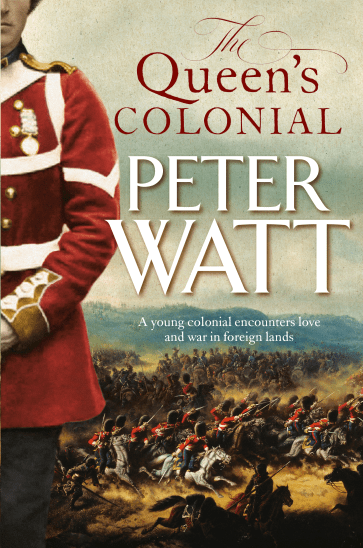
The Queen’s Colonial by Peter Watt

The Queen's Colonial Cover.png

Publisher: Macmillan

Publication Date – 13 November 2018

Amazon     Book Depository

Following the conclusion of his long-running Frontier series, one of Australia’s most intriguing authors, Peter Watt, returns with a brand new adventure that features several intriguing characters involved with unique historical events during the Victorian era.

For as long as he could remember, colonial Ian Steele has always wanted to serve as an officer in the Queen’s army.  However, for a humble blacksmith living just outside of Sydney Town, this seems like an impossibility.  That is until 1852, when he meets Samuel Forbes, a young English aristocrat, poet and former Second Lieutenant in the army, who bears a striking resemblance to Ian.  After prematurely finishing his commission following a terrifying campaign against the Maori warriors in New Zealand, Samuel is living with his uncle in Australia, avoiding returning home to a father who hates him and forced him to join the army against his will.

Samuel presents Ian with an interesting proposition.  In order to receive a massive family inheritance, he needs to complete 10 years’ service in the army, but after his previous combat experiences he has no intention of heading back, preferring to seek adventure in America with the man he loves.  However, wanting to receive the money and spite the father who abandoned him, Samuel has come up with a plan: send Ian in his place and then split the inheritance between them.

After the death of his mother, Ian accepts the offer and journeys to England to take his place as a captain in the Forbes family regiment.  As he successfully integrates himself in the Forbes household, he becomes acquainted with the members of his new family.  While Samuel’s sister and younger brother welcome him with open arms, Ian quickly discovers that Samuel’s father and older brother have no intention of giving up Samuel’s portion of the inheritance.

Ian’s desire to prove himself in battle is soon rewarded, as the regiment departs England for the continent.  Nicknamed “the Queen’s colonial” by his soldiers, he gains a reputation in the fight against the Russians in the Crimean war.  But while the Russians and disease are a constant danger, the greatest threat to Ian may come from his own side.  An Australian fugitive hiding out in the regiment knows who Ian really is and could easily report him, while the devious plots of the Forbes family could strike him down at any time.

Peter Watt is a well-established historical fiction author who has been writing Australian based novels since 2000.  The Queen’s Colonial is Watt’s 19th book, and is the first book he has written since concluding his 12-book Frontier series.

In The Queen’s Colonial, Watt continues with the same distinctive style that made his previous books such a treat to read.  Throughout the book, the reader is shown various sides of the story from multiple point-of-view characters, as both the protagonists and antagonists journey through history’s most intriguing events and wars.  There is also a minor hint of spirituality, although rather than the spirit of a vengeful Indigenous Australian that was such a major character in the Frontier series, The Queen’s Colonial features visions based around old British druids.  Watt is a master of utilising multiple character perspectives to tell a strong and addictive narrative.  While a large portion of the book is focused on the main character of Ian, several of the other characters are given starring roles throughout the book, and their adventures run parallel to the main storyline featuring Ian.  This is a great way to tell a larger narrative, and it is fascinating to see how the actions of one character could impact on a different storyline.  Each of the side storylines are pretty intriguing and allow the author to expand on several fun side characters throughout the course of the novel.  Watt has engineered quite a lot of coincidental connections, which, while a tad unrealistic, is a great way of connecting these character storylines in various intriguing ways.  I was somewhat surprised that Watt did not really show what Samuel Forbes was getting up to.  Despite him being majorly important to the plot, very little is seen of his adventures after the start of the book.  I would have been interested in seeing what he was getting up to, as well as his reactions to the events happening in the other storylines.  Hopefully Watt will explore his subsequent focus on him a little more in any books that follow on from The Queen’s Colonial.

One of the best ways that Watt utilises his multiple perspectives is by showing the villainous actions of two of his main antagonists as they plot and scheme to rid themselves of the protagonist.  These storylines are mostly told from the point of view of the oldest Forbes son Charles, and feature him and his father coming up with ways to kill the man they think is the second Forbes son, Samuel, but is really Ian in disguise.  Watching them come up with several devious plans and commit terrible acts is pretty intense, especially as you watch these plots unfold in the sections of the book told from Ian’s point of view.  It is quite fun for the reader to see Ian react to events that they knew was coming, and works to make an intriguing overall narrative.

I loved Watt’s depiction of the Crimean War, as the author does a fantastic job highlighting the brutality and harsh reality of this war, and the terrible conditions that the British troops had to deal with.  Watt really captures the horrors of battle in his writing, and the reader is constantly brought into the middle of the book’s battle sequences thanks to the author’s detailed descriptions and historical features.  While the battles are harrowing and bloody, quite a number of scenes show the horrifying results of the biggest killer of the British during this war, dysentery and other diseases.  Watt is quite critical of most of the British officers who lead this army, and places most of the blame for the war’s disasters on the backs of inexperienced or incompetent officers.  This is particularly exemplified by the character of Jenkins, who is promoted up through the army thanks to his family’s connections and money, and ends up getting many people killed thanks to his cowardice, incompetence and personal prejudices.  History buffs will enjoy Watt’s focus on this war, which is often overlooked in historical fiction, especially the author’s determination to show the trials and tribulations of an infantry regiment in this war.

Peter Watt’s new book, The Queen’s Colonial, is an excellent piece of historical fiction that takes the reader on a fantastic adventure through time.  Following a 19th century New South Wales colonial into the Crimean War is a great story, and I loved Watt’s great use multiple character perspectives to tell an overarching narrative.  Watt once again shines as one of Australia’s best authors of historical fiction and readers of his latest novel will enjoy a cleverly crafted and captivating story.

My Rating:

Four and a half stars

Amazon     Book Depository

Foundryside by Robert Jackson Bennett

Foundryside Cover.jpg

Publisher: Jo Fletcher Books

Publication Date – 28 August 2018

Amazon

Hot on the heels of his sensational first trilogy, Robert Jackson Bennett has produced another outstanding fantasy read with Foundryside, a bold and exiting novel that brings together an excellent mixture of action, intrigue and humour and powers it with a great location and some inventive and enjoyable new fantasy elements.

In the city of Tevanne, everything runs on scrivings, magical inscriptions that make inanimate objects sentient and allow them do incredible things.  Scrivings give the city of Tevanne incredible power and influence, and the creation of scrivings has been refined into an industrial process controlled by four powerful merchant houses.  These merchant houses have complete control of the city, and those living outside their compounds are a poor, desperate bunch, attempting to eek a living from a city that doesn’t care for them.

For escaped slave Sancia Grado, the only way to survive is to steal.  Gifted with unique abilities, Sancia is one of the city’s most successful thieves, who dreams of escaping from both the city and the discomfort her abilities provide her.  When Sancia is offered a significant sum of money to steal a valuable artefact from the heavily guarded city docks, she jumps at the chance.  But not everything is as it seems, and after stealing the item, Sancia is betrayed and is now being hunted by shadowy figures with incredibly advanced scrived devices.

At the same time, the guard captain Gregor Dandolo is also hunting for Sancia, determined to bring her to justice for her destructive theft.  Caught in the middle of a conspiracy that spans the entire city, Sancia and Gregor are thrust together and must search for new allies if they are to survive.  As the mysterious assassins descend upon them, their lives may depend on the abilities of one powerful artefact.  But while they find a way to fight back, an ancient evil is about to be unleashed which could bring the entire city down around them.

Bennet is a well-established fantasy writer who is probably best known for The Divine Cities series, which concluded in 2017.  Readers may also be familiar with some of his standalone works, including The Troupe, Mr. Shivers and the science fiction book The Company ManFoundryside is the latest book from Bennet and represents the start of the captivating new The Founders trilogy.  Foundryside contains a powerful and captivating story set within a fascinating city and containing some very unique magical elements that are a truly enjoyable part of the book.  The main story contains a significant amount of adventure as the book’s protagonists attempt to uncover a conspiracy around the origin of the book’s central magical element.  Readers will be left guessing about the secrets behind the conspiracy, while several of the book’s dramatic twists will leave them reeling from the emotional gut punches.  The final conclusion of the book sets up some exciting options for the rest of the series, which I will definitely be checking out when they are released.

One of the main highlights of this book is the fantastically unique magical fantasy element known as scrivings.  Scrivings are a form of magical writings that enhance items they are engraved on, giving them certain properties, abilities or autonomy.  For example, carts can be scrived to make them travel from point A to point B, items can be scrived to move at a greater speed by making them believe they are dropping from a great height, and materials such as wood can be made to believe they have the hardness or consistency of stone.  There are a huge range of elaborate rules around scrivings, and the author has presented some fascinating background lore which provides some interesting explanations around the creation and utilisation of these items.  An unexpected side effect of the scriving process is that the scrived items are given a form of magical sentience.  Throughout the book, Sancia is at times gifted with the ability to listen to the listen to the thoughts of the scrived items, and the items are shown to be shouting out their defined roles and the rules they have to follow, often in the form of riddles.  There are quite a few funny scenes when some of the characters attempt to manipulate scrived items by exploiting loopholes in their programming, and watching people and magical items have a debate is very amusing.  The use of scriving throughout Foundryside allows the author to create some fantastic and, at times, over-the-top action sequences as the characters wield weapons that have been imbued with the ability to hit harder or faster than conventional, or items that give other risky benefits in combat.  The hidden history of the scrivings is also quite intriguing, and watching the characters uncover it is an essential and enjoyable part of the plot.  Overall, Bennett’s magical scrivings are a fantastic part of this book that readers will really love to discover.

In addition to the creative magical elements, Bennett has also set his story in an amazing new fantasy cityscape.  The city of Tevanne is full of scrived items, and Bennett has done a great job inserting these magical items into every part of the city’s day-to-day life.  An interesting feature of this city is the way that significant portions of the city has been broken up into ‘campos’, merchant enclaves where scrived items are created at an industrial level.  Each of these four campos is ruled over by a powerful merchant house, and a large amount of the book’s excellent intrigue elements are fuelled by the competition between these houses.  The campos also serve as interesting social boundaries, with the people living inside having everything that they need, while those living outside, in the area known as the Commons or Foundryside, are barely getting by.  Having areas of the city completely controlled by rich merchants is an element with a lot of potential, especially when these merchants have their own private guards and are essentially laws unto themselves.  Bennett makes full use of this, creating thrilling sequences that feature his characters sneaking into and around these heavily guarded compounds.  The control and distribution of power, here represented by the creation of scrivings, is also a compelling part of the book, and Bennett has created some great characters and scenarios around this development.

I really have to mention the strong and funny characters that are featured throughout Foundryside and are an incredible part of this exciting story.  The main protagonist is Sancia Grado, an escaped slave and thief who finds herself thrust into the centre of a deep conspiracy.  There is a lot going on with Sancia, with her tragic backstory, her unique scriving based powers that are both a blessing and a curse, and her fun and fierce attitude developed from a life on the streets.  All these elements combine together into one awesome character, and Bennett uses her to full effect as his central protagonist.  The book’s other main characters are also quite entertaining and enjoyable.  There is Gregor Dandolo, the tough and law-abiding soldier whose sense of duty draws him into the middle of the conspiracy.  Gregor is a very action based character, but his backstory is also quite traumatic and he shares some great moments with Sancia, a character he initially has very little in common with.  There are also some amazing scenes where Gregor must come to terms with the actions of his family’s merchant house, as well as some strong and emotive twists involving his history.  Other characters include the master scriver, Orso Ignacio, who acts as the book’s resident mad scientist and comes with some very fun ideas, from an audacious break in plan to a funny solution to his legal problems at the end of the book.  I also really enjoyed Orso’s assistant, Berenice, who Bennett uses to great effect as the book’s straight woman for the more outrageous characters, especially Orso, while also serving as Sancia’s love interest.  While all these characters are really enjoyable focuses for the book, the hands-down best character has to be Clef, the sentient key.  Before this book I would have had a hard time believing that a talking key could be a great central character, but I’m very happy that Bennett has proven me wrong.  Not only is Clef a fun and enjoyable character that the reader becomes strongly attached to, but a huge amount of Foundryside’s best humour comes from Clef’s banter and observations.  Bennett has really outdone himself when it comes to these characters and I had a great time watching their adventures.

With an amazing story, fantastic humour, enjoyable and memorable characters and some unique and fascinating fantasy elements, Bennett has once again shown the world what a talented fantasy writer he is.  Foundryside is another outstanding release from Bennett, and I had a lot of fun with this book.  Readers of this book are in for a real treat and they will be very eager to see where The Founders trilogy goes next.

My Rating:

Four and a half stars

Amazon

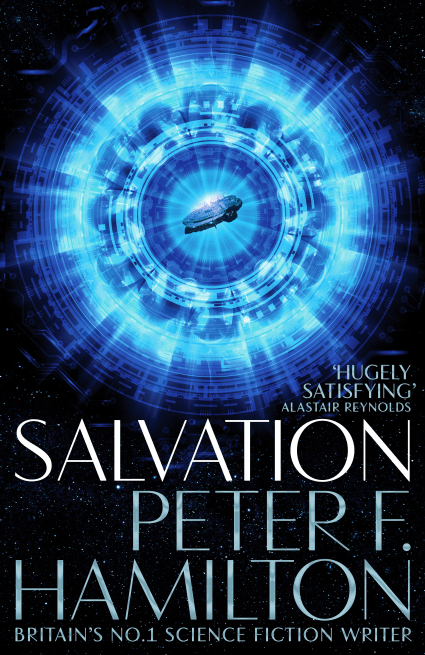
Salvation by Peter F. Hamilton

Salvation Cover.png

Publisher: Macmillan

Publication Date – 4 September 2018

Amazon     Book Depository

From one of the modern masters of the space opera comes a rich and ambitious piece of science fiction that that examines an exciting potential future for Earth and the intriguing adventures that could come as a result.

In 2204 AD, humanity has advanced by leaps and bounds and spread out among the stars.  Utilising advanced teleportation technology, next-gen computers and cutting-edge biotech, humanity has created a number of new and varied societies controlled by a handful of powerful corporations.  However, everything is about to change.  Out in the furthest reaches of human expansion, explorers have found a crashed alien craft.  While this is not humanity’s first contact with an alien species, the sinister cargo found onboard the crashed ship reveals a dangerous alien agenda.  Determined to ensure humanity’s survival, the Connexion Corporation assembles a task force to examine the craft and assess the potential threat that it could cause.  Led by Feriton Kayne, the task force is made up of Kandara Martinez, Yuri Alster, Callum Hepburn, Alik Monday and their assistants.  While on paper this group are the perfect people to investigate this potential threat, there is one significant problem: one member of the team is a hostile alien infiltrator.  As the team gets closer to the alien ship, secrets from their past are revealed and the future of the human race hangs in the balance.

Hundreds of years later, Dellian and his team of genetically enhanced soldiers are born and raised on a planet, far away from Earth.  An alien threat has forced humanity into hiding among the stars and pushed them to the edge of extinction.  As the young soldiers grow up, they encounter lessons from the past and discuss the legendary Five Saints who first encountered the invaders.

This is an absolutely spectacular piece of science fiction from bestselling author Peter Hamilton, who has once again created an elaborate and captivating space opera.  Hamilton has written a number of large-scale science fiction novels since his 1993 debut.  He first gained prominence with the Greg Mandel trilogy, which followed the adventures of a psychic detective in a dystopian future.  Hamilton followed this up with his first epic space opera series, The Night’s Dawn trilogy, which focused on souls of the dead coming back and possessing multiple human planets in the far future.  He continued with additional space operas, such as the Commonwealth Saga, the Void Trilogy, The Chronicle of the Fallers and the standalone novel Fallen Dragon, as well as the children’s fantasy series, The Queen of DreamsSalvation is the first book in Hamilton’s brand new trilogy, The Salvation Sequence, with the adventure continuing in the future releases, Salvation Lost and Saints of Salvation.

Salvation is an impressive and compelling read that combines a powerful and well-written story with a brand new, large-scale science fiction universe.  This story is told from of variety of different time periods set throughout Earth’s future.  The central story of this book is set in 2204 AD and features the exploration crew from the Connexion Corporation examining the crashed alien ship.  This storyline is narrated from Feriton Kayne’s point of view and is the only first-person narration in the entire book, except for a short flashback chapter examining Feriton’s infiltration of a different alien spacecraft.  Salvation also features five additional storylines that are set across various time periods.  Four of these storylines are presented as tales from the other four main characters in the 2204 AD timeline, Kandara Martinez, Yuri Alster, Callum Hepburn and Alik Monday.  Each of these flashback narratives is given its own significant chapter; for example the first of these flashback chapters lasts for 140 of the books 526 total pages.  The fifth storyline is set far in the future, and features a different group of characters who are living in the aftermath of these past adventures and is told across several shorter chapters.  The author makes spectacular use of these multiple time periods and combines them together into an excellent overarching narrative.  A significant amount of detail and a huge number of supporting characters are packed into this book, which falls just short of overwhelming the reader but creates the feeling of a massive universe with quite a lot going on.

Each of Salvation’s separate plotlines offers the reader a drastically different story to enjoy, and presents them with several unique adventures in one novel.  The storyline in 2204 AD is an intriguing first contact and exploration story that works incredibly well as the overall narrative that ties all the other storylines together.  The first flashback storyline is set in 2092 AD and features the story of how Callum Hepburn and Yuri Alster gained their antagonism towards each other.  It also shows the earlier days of Connexion and the darker side of their newly formed technology and world influence.  This first story is told from the point of view of Callum, Yuri and Callum’s wife, Savi, and features a thrilling spy tale that also reveals the unique and extreme form of criminal punishment that resulted from the new technology.  The second of these storylines is set in 2167 AD and focuses completely on Yuri as he searches for a missing person taken by the new and shadowy underworld that has taken shape amongst the stars.  This is the first of the flashback storylines to hint that an alien species may have nefarious plans for humanity, and also features some cool examinations of the power and tactics that Yuri and Connexion use.

The third storyline is a complex murder mystery storyline set in 2172 AD that focuses on the secretive FBI agent Alik Monday and presents another fantastic mystery with some unique science fiction elements.  The fourth storyline is set in 2194 AD and follows badass mercenary Kandara Martinez as she investigates corporate sabotage on the Utopial home planet.  This is a high-action thriller storyline that also examines the Utopials, a human society seeking to create a cultural utopia, while also going into genetic surgery in a big way.  The highlight of this storyline has to be the intense fight between Kandara and the mercenary Cancer, who had been a shadowy figure in some of the previous storylines.  The final prequel story follows the 2204 AD timeline narrator, Feriton Kayne, in 2199 as he infiltrates the large spaceship belonging to the Olyix, an alien race that humanity came in contact with some years before.  This is one of the shortest stories, but it contains the most detailed examination of the Olyix, who have appeared in several of the previous stories.

In addition to the stories set in and before 2204 AD there are also several chapters are set in the far future of humanity.  This timeline starts in 583 AA (After Arrival) and features the remnants of humanity as they prepare to fight back against the alien menace that pushed them away from Earth.  This is a rather intriguing storyline that examines children being turned into tight-knit teams of soldiers as they prepare for the war to come while also providing some hints about the events of the main storyline.  Each of the above stories are fairly self-contained and do an amazing job of showing off the sheer complexity of Hamilton’s new universe, while at the same time providing a series of unique and captivating tales across time.

Each of the prequel timelines has a storyline that could be considered either a murder mystery or thriller.  By themselves, each of these storylines is very well written and contains compelling mysteries and action packed sequences that are more than enough to keep the readers hooked to the book.  However, the real highlight of these prequel timelines is the way in which the play into Salvation’s larger mystery that is explored within the 2204 AD storyline, namely the identity of the alien race attacking humanity and which of the members of the research team is an infiltrator.  I really loved the way that these prequel stories hinted at the main mystery while also exploring the history of the main characters in an attempt to show their personality or a critical point in their lives.  The final twists in the 2204 AD storyline are very surprising and serve as a fantastic payoff for Salvation’s overall narrative.

The author has also included a significant amount of science fiction elements throughout the book that are presented in considerable detail.  It is fascinating to see Hamilton postulate how Earth may develop in the near future and the advanced technology that they would start to utilise.  The multiple timelines also come into play for this element of the book as they allow the reader to see the progression of technology over the years.  What is most interesting about this is that the main pieces of technology don’t change; instead the next generations of the same device are revealed throughout the book’s various stories before the technology eventually plateaus at its highest level.  The science fiction elements also come into play in several intriguing ways.  For example, they allow for some very creative mysteries, including a murder in a house containing teleportation gates that result in the victims being spread across multiple locations, including New York, the Moon, Mars and the Antarctic, creating a murder investigation with several unique complications.  The advent of space travel and other technology also allows the creation of some inventive new societies.  From futuristic utopias to desolate prison it is absolutely fascinating to watch these societies come together.  Overall the science fiction elements are a fantastic part of this book and add some intriguing elements to all of the book’s interconnected stories.

Peter Hamilton has produced another elaborate and powerful piece of science fiction space opera in Salvation.  With a new and unique universe that contains some fantastic and detailed new elements and multiple timelines that are combined together into an outstanding novel, this is an absolutely amazing read.  Epic science fiction at it’s very best, Salvation comes highly recommended and is a spectacular start to an exceptional new series.

My Rating:

Five Stars

Amazon     Book Depository

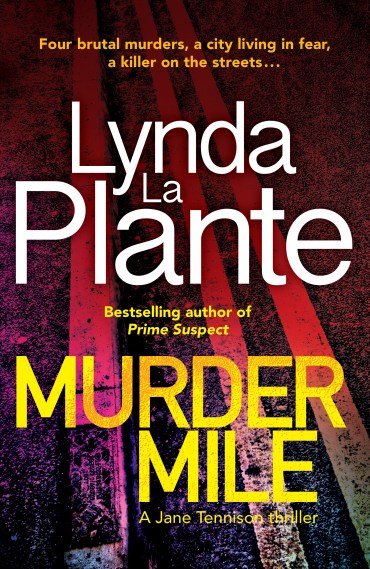
Murder Mile by Lynda La Plante

Murder Mile Cover.jpg

Publisher: Zaffre

Publication Date – 23 August 2018

Amazon     Book Depository

One of English crime fiction’s most distinctive voices, Lynda La Plante, returns with her iconic female detective, Jane Tennison, for another dark and shocking case.

In February 1979, recently promoted Detective Sergeant Jane Tennison has been posted to Peckham CID, one of the toughest beats in all of London.  Previously known as the Golden Mile due to its well-to-do shopping areas, the area is now in decline, a fact not helped by the garbage strikes besetting the entire city, ensuring that the entire area is covered rubbish and filth.

When the body of a young woman is found in the heart of Peckham, Jane and her team must investigate the suspicious circumstances surrounding her death.  But when another body is found nearby, the possibility of a serial killer raises all sorts of problems.  The media scrutinise the case and rename the area Murder Mile.  Even worse, the second victim’s son is well connected, and several important people want the matter dealt with quickly.

As more bodies are uncovered, Tennison must use all of her investigative ability to uncover this dark murderer, while also dealing with the police force’s inherent sexism and disregard for her talent that she has dealt with her entire career.  Can Tennison catch this killer, or will they find a terrible and unexpected way to win?

Lynda La Plante is a talented author and screenwriter responsible for several hit British crime series and movies.  She achieved early success with the 1983 television series, Widows, which has been adapted into a major motion picture set to be released in November this year.  Other successful shows that La Plante has created include Trial and Retribution and Above Suspicion, with nearly all of her books having been either adapted into screenplays or inspired by one of her televisions shows.  Murder Mile is the fourth book in her Jane Tennison series, which serves as a prequel series to one of La Plante’s most successful and iconic shows, Prime Suspect, which features Helen Mirren as an older Jane Tennison.  The first book in this prequel series, Tennison, also served as the basis for the short-lived prequel television series Prime Suspect 1973.

Murder Mile features a dark and disturbing mystery that serves as the central focus of this book.  The protagonist must investigate a series of murders spread out among the dilapidated Peckham area. La Plante has created an intriguing and compelling investigation storyline as Tennison and her team follow a series of promising leads across Peckham and the rest of London, finding clues in a variety of places, as well as several other bodies.  While the majority of the book leading up the conclusion of the story and the solution of the mystery is captivating in its own right, the best part of the book has to be its chilling conclusion.  Not only is the revealed antagonist a despicable creature, but the way in which they attempt to manipulate Jane and the rest of the police characters is just plain creepy.  The conclusion of the story and the ultimate reveal of the antagonist’s last actions are particularly shocking in their execution and extent.  Worse, both the reader and the protagonist can see that the villain is planning something, but you just cannot predict the terrible lengths they will go to win and spite the police.  This memorable conclusion serves as the perfect end to this dark and powerful story and represents some excellent writing from La Plante.

This story is set in 1970s London, and the author does a fantastic job bringing this iconic city to life during a period of economic downturn.  There is a certain gloom around the city, especially in Peckham, where the majority of the book’s investigation takes place.  The plot of Murder Mile is set during the infamous Winter of Discontent, a period of strikes and financial uncertainty that hit the country during 1978 and 1979.  There are several discussions about the situation from the characters and it is interesting to see a fictional perspective of this part of England’s recent history.  In addition, some of the physical effects of the ‘Winter of Discontent’ have some significant impacts on the case.  During January and February 1979, the waste collectors of London were on strike, resulting in a build-up of rubbish throughout the city.  As a result, many of the scenes set in the city feature streets strewn with garbage and littered with filth and rats.  La Plante also examines the parks that were filled with rubbish by London authorities as a stopgap measure for this situation.  This becomes particularly important in the story, as the police discover a dismembered body in one of these parks as the murderer attempted to utilise the situation for their own ends.  The author has also cleverly highlighted the police techniques and technologies that would have been available during the time.  Overall, La Plante has made full use of this chaotic period in Murder Mile, and readers will enjoy her vivid descriptions of these events.

In addition to the general descriptions of 1970s England, one of the key features of La Plante’s latest book is an examination of the inherent sexism in the London police force.  Jane as a Detective Sergeant must continue to fight to gain respect from her co-workers.  In Murder Mile she is constantly talked down to by her superiors, deals with disrespectful comments from the rank-and-file police, and must also deal with having her authority undercut by colleagues she considers to be her friends as they step in quickly to defend her.  It is infuriating to see how senior police ignore Tennison’s detective work and observations, especially as she is right most of the time.  This sexism also requires Tennison to act in a more maverick way, as her frustrations force her to work outside the main police investigation in order to prove herself – a decision that will have significant impacts on her life and career.

While the portrayal of sexism mentioned above has been used in all of the books of the Jane Tennison series, in Murder Mile La Plante has chosen to also focus on police homophobia and how it affects the investigation.  The police homophobia is quite prevalent throughout the series, especially when one of the suspects is revealed to be gay.  The police response to this is extreme, as several of the characters are quite hostile to this suspect and his relatives, alienating potentially helpful people in the investigation.  In addition, there is the stupid assumption that all homosexual males were automatically paedophiles, and this sends the investigation into several biased directions.  Tennison and several of the other characters attempt to change the minds of their colleagues, often without much success.  In addition, one of the more approachable and capable members of the police team is revealed to be homosexual in this book, which serves as a good counterpoint to the more old school and homophobic cops.  Overall, this is an intense and important part of the story, and it is intriguing to see how these old biases would likely have affected cases in the past.

Crime legend Lynda La Plante returns in fantastic form with Murder Mile, an exciting continuation of her Prime Suspect prequel series.  Featuring some deep and powerful examinations of the 1970s London police force, this absorbing mystery takes its readers to the edge of darkness and beyond.  Featuring an incredibly dark and unforgettable ending, Murder Mile is another exceptional release from La Plante and a highly recommend piece of crime fiction.

My Rating:

Four and a half stars

Amazon     Book Depository