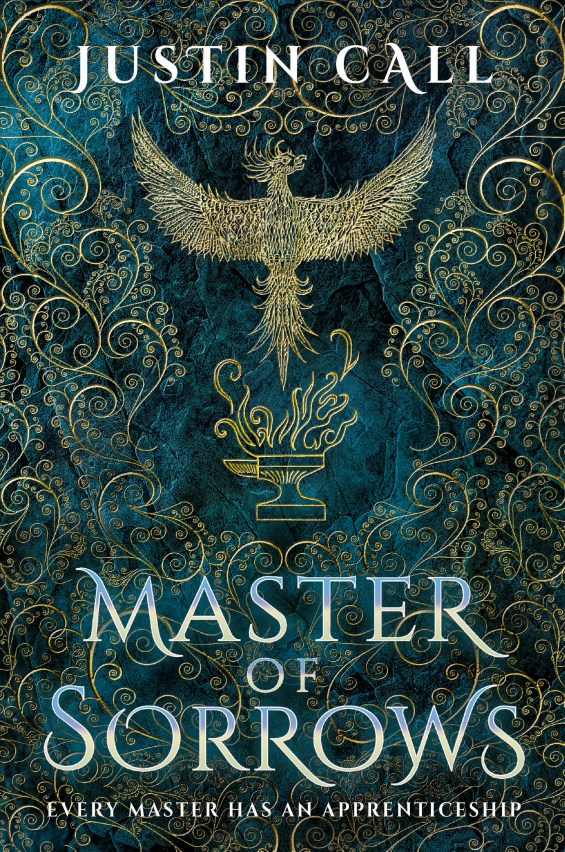
Master of Sorrows by Justin Call

Master of Sorrows Cover

Publisher: Gollancz (Trade Paperback format – 21 February 2019)

Series: The Silent Gods – Book 1

Length: 576 pages

My Rating: 4.5 out of 5 stars

Amazon     Book Depository

I have been looking forward to reading and reviewing Master of Sorrows for a while now.  I previously mentioned this book in one of my Waiting on Wednesday articles, which got a fair amount of attention, which I took as a sign of some interest from the general fantasy fandom.  The intriguing-sounding plot also made me extremely eager to check this book out, so I was very happy when I received a copy of it from Hachette Australia.  In the end I found Master of Sorrows to be a terrific piece of fantasy fiction and an outstanding debut from first-time author Justin Call.

The world of Luquatra has known much chaos and turmoil throughout its long history as three elder gods and their followers have battled for supremacy.  But now with the dark god Keos banished from the land, the greatest concern for many is the presence of magic.  The ancient and hidden Academy of Chaenbalu has long been a bastion against all things magic and will go to extreme lengths to achieve its primary objective of finding and containing the vast number of magical artefacts scattered throughout Luquatra.  No artefact, no matter its strength or intended purpose, can be allowed to remain outside the control of the Academy, as even those artefacts created for good can be used for great evil.

In order to fulfil this sacred work, the Academy trains all the children of Chaenbula in the arts of combat and magical detection.  Only the best students will become Avatars, warrior thieves capable of infiltrating any location and making away with the hidden artefacts.  Most importantly, an Avatar is trained to resist the lure of magic and the corruption of Keos.

Annev de Breth has always dreamed of becoming an Avatar and is determined to pass the Academy’s tests.  However, Annev is different from every other student at the Academy; trained by the town’s mysterious priest, Annev has an affinity for magic and hides a secret disfigurement that would see him immediately put to death.  Caught between the warring ideologies of the man who raised him and the head of the Academy, Annev needs to decide what kind of man he wants to be while navigating the complex politics of Chaenbalu.  But ancient powers are rising from the past, and it soon becomes apparent that Annev might not be the hero of this story; instead, he may be the man destined to unleash Keos once more upon Luquatra.

As I mentioned above, Master of Sorrows is author Justin Call’s debut novel.  It is also the first book in his The Silent Gods series, which is going to be made up of four books.  Call has already announced that each of the three upcoming books will be released in late February of each year for the next three years, with this series set to wrap up in February 2022.  This first book is an ambitious introduction to series that does a fantastic job of setting up the main story, as well as introducing the reader to an intriguing new fantasy universe.

I really enjoyed the story contained within Master of Sorrows, as it is well paced out and contains some fantastic moments.  The first part of the book features Annev attempting to pass the Academy’s tests in order to become an Avatar.  I love a good magical school storyline, and this one is pretty fantastic, featuring some unique, complex and entertaining testing sequences, as well as an introduction to the complex and restrictive life within the Academy.  The rest of the book is extremely exciting and eventful as the protagonist learns more about the threats and complex world outside of Chaenbalu, and even embarks on a dangerous mission where he encounters a series of mysterious threats.  This all leads up to the book’s spectacular conclusion, which not only sets the scene for all manner of adventures in the future but also results in some interesting character development while also setting up several dangerous new antagonists with personal grudges against the main character.

One of my favourite things about the plot is the general intrigue and hypocrisy surrounding the Academy of Chaenbalu.  The Academy is framed as some ultimate bastion of good in the world, opposing the evils of magic and Keos.  However, as the book progresses, the reader, through the protagonist’s eyes, begins to see that everything about the Academy is more complex and morally ambiguous than it first appears, resulting in a number of powerful story developments.  For example, in this universe, any disfigurement or disability is viewed as a mark of the dark god Keos’s favour, and people who bear them, especially those born with some sort of disfigurement, are shunned or killed.  These rules are especially enforced within the Academy, and Annev is forced to hide his disability to stay alive.  Watching a basically good character be vilified for something outside of his control makes the reader lose trust in most of the characters associated with the Academy.  It is also very thrilling to see the lengths the protagonist will go to in order to hide his disfigurement and try to live a normal life within Chaenbalu, knowing that his secret could be discovered at any turn.  The reader is also left questioning the Academy’s many archaic rules, as these rules and blind obedience are particularly frustrating to the protagonist, who chafes at the restrictions and is constantly questioning everything.  There are also a huge number of different plots and schemes occurring within the Academy, with many of the characters having secret allegiances and plans, many of which come to the surface by the end of the book.  All of these elements are fantastic, and they really add a keen edge of intrigue and thoughtfulness to an already captivating story.

Within Master of Sorrows, Call introduces his readers to a deep and enjoyable new fantasy universe that serves as an excellent basis for his story.  While the author does make an effort to set up a much larger world, the vast majority of the story is set in and around the village of Chaenbalu, which houses the Academy.  As I have mentioned before, I loved the Academy as a setting, but some of the other locations are also intriguing, such as the massive magical forest that surrounds the town.  I really loved the overall setting of the gods and magic within this world, especially when it comes to people’s perceptions about them, as they have some fantastic impacts on the story.  Call spends a bit of time expanding on the mythology of this world’s main gods, telling their stories and explaining the impacts that they had on the world.  These are quite interesting, especially as the stories they tell reveal that the conflicts of the gods were just as complex as the issues occurring within the Academy.  The author has also come up with some fun and dangerous new fantasy creatures, mostly as servants of the god Keos.  These creatures have some great scenes, especially towards the end of the book, and I look forward to seeing more of them and this intriguing new world throughout the rest of The Silent Gods series.

I really need to the hype up some of the incredible action sequences featured within Master of Sorrows.  Call has created several exceptional extended action scenes within this book, including two intricate tests within the Academy, where the students must overcome not only each other but also the various obstacles set up against them.  These testing scenes are extremely elaborate and feature some interesting rules and opposition.  I loved reading these scenes, and it was great watching the protagonist try to complete them his way.  In addition to these testing scenes, there is also a great magic based combat sequence featured later in the book, where the protagonist and his companions must overcome all manner of magical traps and attacks in order to complete their objective.  This scene is massive in terms of destruction and brutality featured and was an excellent addition to the book.  As a result, readers who love a good amount of thrilling action in their fantasy stories should definitely check this book out as Call demonstrates a real skill for creating unique and captivating fantasy action sequences.

Master of Sorrows is an amazing debut from new author Justin Call, who has done a wonderful job setting up a fresh and intriguing new fantasy series.  This first book in the planned The Silent Gods series has some awesome and memorable plot points and features a thrilling and captivating action-packed adventure.  Call has certainly set himself up as a fantasy author to watch, and I am extremely eager to see where this story goes next.  I cannot wait to check out the second book in The Silent Gods series.
Amazon     Book Depository

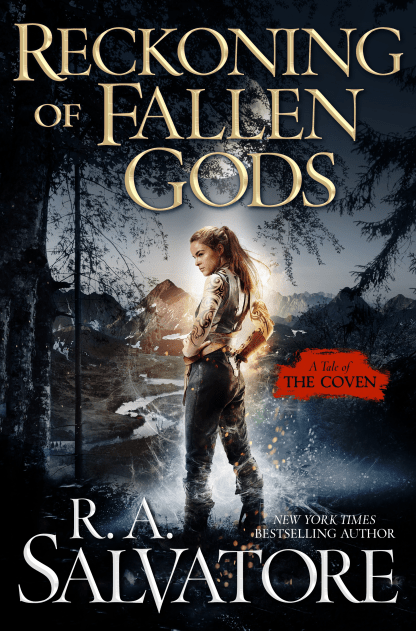
Reckoning of Fallen Gods by R. A. Salvatore

Reckoning of Fallen Gods Cover.png

Publishers: Tor Books and Audible Studios (Audiobook Format – 29 January 2019)

Series: The Coven – Book 2

Length: 14 hours 37 minutes

My Rating: 4.5 out of 5 stars

Amazon     Book Depository

Prepare to return to Corona, the world of The DemonWars Saga, for Reckoning of Fallen Gods, the latest book from master fantasy author R. A. Salvatore and the second book in his outstanding new The Coven series.

In the world of Corona, no lands are as harsh or unforgiving as those surrounding the massive Loch Beag.  All manner of dangerous creatures live in and around the loch, including one massive and unseen lake monster that lurks right below the surface.  But for those who live in the fishing villages that eke out a living around the shore of Loch Beag, the biggest danger is more human in origin.  Living at the top of the massive mountain, Fireach Speur, is a barbaric tribe, the Uscar, who constantly raid the fishing villages below.  Enhanced in battle by the crystal magic of their witches, the Uscar are ferocious warriors who consider themselves vastly superior to the inhabitants of the villages they raid.

This cycle of violence and death existed for hundreds of years until a powerful young Uscar witch, Aoelyn, attempted to change her tribe’s ways by destroying the fossa, a demonic creature that haunted the mountain at night.  However, her decision will have terrible consequences, as ambitious members of her tribe turn against her.  As Aoelyn endures the wrath of her tribe, her friend, the slave Bahdlahn, attempts to escape from the Uscar with help from an unexpected ally.  Down at the shore of Loch Beag, the trader Talmadge, who Aoelyn saved from her tribe’s brutality the night she ended the fossa, attempts to find some sort of peace among the fishing villages who have accepted him as a friend.  However, the appearance of a mysterious stranger will bring significant changes to his life.

But while those living around Loch Beag fight among themselves, they are unaware of a much bigger threat growing in the East.  A lost empire of goblinoids, the Xoconai, are on the march, driven by the return of their fallen god.  The Xoconai are determined to conquer all the lands of man, and the first obstacle they must overcome is the people of Fireach Speur and Loch Beag.

R. A. Salvatore is one of the best and most prolific authors of fantasy fiction in the world today, having a written over 60 fantasy books in his career. He is perhaps best known for his work in the established Forgotten Realms universe and the incredibly popular character of Drizzt Do’Urden. However, Salvatore has also written a series of novel set within his own unique fantasy world of Corona.

Salvatore introduced audiences to this new fantasy world in his 1997 release, The Demon Awakens, the first book in his epic The DemonWars Saga, which spanned seven books between 1997 and 2003.  This universe was expanded out in 2004 with The Highwayman, the first book in his Saga of the First King series.  After the Saga of the First King series ended in 2010, Salvatore left the world of Corona untouched for eight years while primarily focusing on his Forgotten Realms series.  However, he returned to Corona in 2018 with Child of a Mad God, the first book in his new The Coven series.  The Coven series is primarily set in a previously unexplored area of Corona, in the lands around the massive Loch Beag, with the first book focusing on a whole new group of characters.

I am a massive fan of Salvatore’s work, having read nearly all the books featuring Drizzt Do’Urden and his companions (click here for my review of the latest Drizzt Do’Urden book Timeless).  However, before last year’s Child of a Mad God, I had not really gotten into his work set in Corona, having only really read The Highwayman back when it was first released in 2004.  While Child of a Mad God was not my favourite of Salvatore’s books, it did a great job introducing this new area of Corona, while also creating an excellent starting point for the series’ overall plotline.

I found that I enjoyed Reckoning of Fallen Gods a lot more than the first book in the series, possibly because the author was able to dive right in and continue several of the more intriguing plot threads from the first book.  I quite enjoyed how the story progressed; all of the storylines contained within were very well paced and entertaining, coming together extremely well towards the book’s conclusion.  I really liked the over-the-top way that the story ended, as it sets up the next book in the series with some massive stakes and makes full use of the intriguing new fantasy elements that were included within this book.  A bit of a warning about this series: is it substantially darker than some of Salvatore’s other works.  This was particularly true of the first book of The Coven series, Child of a Mad God, which contained a fair amount of torture and sexual violence.  While there is a little less sexual violence in this book, several character development elements are based around these original events and are discussed in some detail.  There is also some fairly dark and gruesome action and torture, which might not be enjoyable for some readers.  Overall, though, this is a great follow-up to Child of a Mad God that once again highlights Salvatore’s skill as a master fantasy storyteller.

Some readers may be wary about checking this book out because it is the second book in The Coven series and the 13th overall book set in the world of Corona.  However, I found that this book to be easily accessible to new readers, with the author ensuring that relevant details from the previous book and series were easy to understand and follow nearly right away.  In addition, there are also a lot of elements for established fans of this universe to enjoy, especially as Salvatore includes a substantial character from one of his previous Corona based series in this book.  The inclusion of this character is an excellent way to tie this new series with the author’s existing works in this fantasy universe, which also highlights the importance of this story to the rest of the world of Corona.  The ending of Reckoning of Fallen Gods also hints that characters and locations from the previous series may come into play in the next book in The Coven series.

I loved all the fantasy elements in this book.  The world of Corona is a fantastic setting for the great story that is taking shape within The Coven series.  The main location for most of this book’s plot, the lands around Loch Beag and Fireach Speur, is a substantially dark and rugged area with a large number of natural and unnatural threats.  In Reckoning of Fallen Gods, there are a number of significant developments around several of these locations and creatures, some of which are pretty insane.  Just like in the first book in this series, Child of a Mad God, Salvatore continues to expand on the intriguing gem-based magic that is a feature of the books set in Corona.  The gem magic that was featured in Child of Mad God was somewhat different from the already established gem magic used in some of previous Corona books, such as The DemonWar Saga, and is based around the magic found atop Fireach Speur.  This expansion of the gem magic continues in Reckoning of Fallen Gods with the main character, Aoelyn, developing additional magical abilities.  Many of these abilities are quite spectacular, and Salvatore’s enthralling writing highlights how impressive these abilities are when Aoelyn utilises them in fights or other magical engagements.  At the same time, another character utilises some of the more traditional gemstone powers they had in one of the previous series, and it is interesting to see the differences and similarities this has with the Uscar magic.

One of the more unique and enjoyable fantasy inclusions within Reckoning of a Fallen God is the new antagonist race, the Xocanai.  The Xocanai are a new race of goblinoid creatures that exist in a realm on the other side of the mountains surrounding Fireach Speur.  The Xocanai are somewhat Aztecan in culture and their empire has been rather cut off from the rest of the world for some time.  However, recent actions have allowed them to come together to invade the human lands, and some of the events of Child of a Mad God may be to blame.  I felt that Salvatore did an excellent job of introducing them in the current book, and he was able to build them up as a substantial antagonist in quite short order.  I liked how the reader is able to get a good view of this new race’s culture and religion in only a few short chapters, while in-universe texts present at the start of each section of the book help to establish a historical past for these creatures.  In the end, they are a fantastic new inclusion to the series and the universe and serve as excellent new antagonists.

Salvatore has created some great new characters for this series, and many of the key characters who were introduced in the first book go through some significant and compelling character development throughout Reckoning of Fallen Gods.  The main character development occurs with Aoelyn, who, after the fallout of the events in the first book, develops a stronger sense of independence and rejects the established male hierarchy imposed upon her and all the female members of her tribe.  Her friend Bahdlahn gains the courage to finally flee the Uscar and is finally able to come to terms with his feelings for Aoelyn.  At the same time, the trader Talmadge comes to terms with the tragedies in his life and is finally able to find some semblance of peace with the people living around Loch Beag.  Even the established character from the previous series (who I am still not mentioning for spoiler reasons) has developed somewhat in this book, as he ruminates on the mistakes from his past that were covered in the previous series.

I have to give credit to Salvatore for creating some truly villainous antagonists for this series, especially among the Uscar characters.  The main antagonists are quite despicable, especially in the way that they deal with Aoelyn and Bahdlahn, and the reader is hoping for all sorts of comeuppance for these characters.  Even the Uscar characters that come across as more compassionate members of the tribe can still be quite dislikeable.  For example, there is one character who appears to change his ways in Reckoning of Fallen Gods.  However, he has a sudden and quite unjustified change of heart back to the Uscar ways towards the end of the book, and his complaining about the event that drove him to betray his friends really does not endear him to the reader.  These great antagonists serve as spectacular foils to the protagonists and really add a lot to the overall story.

I chose to listen to the audiobook version of Reckoning of Fallen Gods, narrated by Tim Gerard Reynolds.  This was an interesting change of pace for me, as I had read the physical copy of the first book in The Coven series, so it was cool to hear these characters come to life in the audiobook format.  At 14 hours and 37 minutes, this was not the longest audiobook I have listened to recently, but it still required a little bit of time to get through.  Reynolds is a spectacular narrator, and I really enjoyed listening to him tell this story.  His base narration voice for this book was really good, and I found I was able to absorb a lot of the story through his great narration.  The character voices he came up with were also excellent, and I loved how the distinctive cultural/species groups within Reckoning of Fallen Gods got their own accents.  For example, he ensured that the Uscar characters had a form of Scottish accent, while the other groups that feature in the book, such as the Xocani have a noticeably different way of speaking.  Because of this excellent voice work, I had a lot of fun listening to this book, and I will make sure to get the audiobook versions of this series in the future.

Fantasy icon R. A. Salvatore is in high form once again with Reckoning of Fallen Gods, the second book in his new The Coven series.  Salvatore does an outstanding job continuing the intriguing story he started in the first book of the series, Child of a Mad God, and effortlessly inserts a number of original and familiar elements to create an exciting and epic read.  With some great characters and some inventive new ideas, this is a spectacular new addition to this darker fantasy adventure series.

Amazon     Book Depository

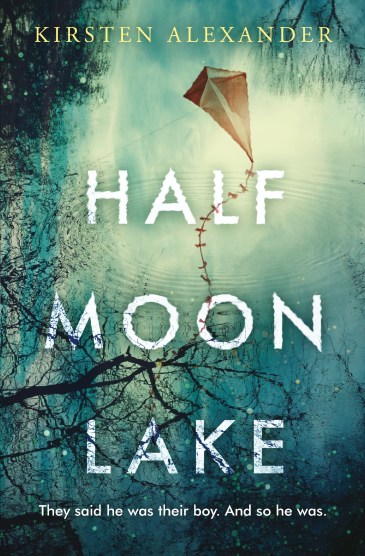
Half Moon Lake by Kirsten Alexander

Half Moon Lake Cover.jpg

Publisher: Bantam Press (Trade Paperback Edition  – 2 January 2019)

Series: Standalone

Length: 320 pages

My Rating: 4.5 out of 5

Amazon     Book Depository

Debuting Australian author Kirsten Alexander presents a dramatic, captivating and hard-hitting novel of desperation and loss loosely based around a real and shocking historical event.

In the summer of 1913, a young boy, Sonny Davenport, walks into the woods around his family’s summer home at Half Moon Lake, Louisiana, and never returns.  Despite a widespread search of the surrounding area by an army of volunteers, no trace of the boy can be found.  As the search grows in volume, the disappearance becomes headline news across the country, especially as Sonny’s parents, John Henry and Mary Davenport, are wealthy and influential members of their home town of Opelousas.  For the next two years, the Davenports engage in a desperate hunt for Sonny across the south, offering a massive reward for information on their missing son.  But with no substantiated leads, the Davenports slowly lose hope and Mary sinks more and more into her despair.

However, just when everything seems lost, a boy matching Sonny’s description is found wandering around several southern towns in the company of a tramp.  As the world watches, Mary meets the child and claims that he is Sonny.  But is he truly her missing son?  There are a number of differences between the two boys and many are convinced that the Davenports have taken in the wrong child and the real Sonny is still out there.

As the people of Opelousas, including many of the Davenport’s friends and servants, debate the true identity of this young boy, a kidnapping trial for the tramp begins.  However, the proceedings are thrown into chaos when Grace Mills, an unwed farm worker, arrives in town, claiming that the boy is her son.

This is an outstanding first book from Alexander, who has created a powerful and memorable story based partially around real-life events.  Half Moon Lake is a fantastic and dramatic story that dives deep into the hearts and psyche of its characters and the historical elements of the time to create a lasting impact on the reader.  I was very surprised about how addictive I found this book to be, as the intense character emotions and the dramatic actions that they take to alleviate their grief and the grief of their loved ones was just incredible.  I am still reeling from several of the revelations and developments that occurred towards the end of the book, many of which will stick with me for a long time.

One of the most intriguing aspects of this book is that is partially based on a real-life historical event, the disappearance of Bobby Dunbar, which took place in America’s south in the early 20th century.  Bobby Dunbar disappeared when he was four.  After months of searching, a young boy was found some distance away who appeared similar to Bobby and was claimed by Bobby’s parents, despite many people voicing their doubts about the boy’s true identity.  In addition, a second woman attempted to claim the child as her own son, and a legal case was initiated to determine the identity of the child.  I was unfamiliar with the Bobby Dunbar case before I read Half Moon Lake and did not look up the details of it until after I finished the book.  As a result, I was amazed that the intense story was so closely based on a real story.  This case and its eventual results are absolutely fascinating, and I felt that Alexander did a fantastic job of capturing the essence of this event and installing it within her story.

For example, the author does an excellent job of portraying the probable emotions, feelings and opinions of people who would have been involved in the real-life disappearance, as she utilises a number of different character perspectives throughout her book.  Readers of Half Moon Lake get a great idea of the despair all of the parents in this story would have experienced, the fear and confusion of the children, and the bewilderment and conflicted emotion of everyone else involved in the case.  I felt that Alexander’s portrayal of the missing child’s mother was done particularly well, as the readers gets to see her so filled with realistic fear, grief and despair that it drives her to try and claim a child that might not even be hers.  I also quite enjoyed the way that the author explored the highly publicised nature of the child’s disappearance and how the media at the time covered the case, dividing those following the case as they try to determine the true fate of the missing child and the real identity of the discovered child.  I also loved the way that the author looked at how the media scrutiny of the time might have affected the individuals involved in the case, and how this could have potentially influenced their actions and decisions.

I also really liked the way that the period’s ideas of class came into effect during this book.  There are some key examinations of the different ways that the rich and the poor were treated during this time, and how this would have impacted the investigation, the search for the missing child, the media scrutiny and overall results of the big trial that served as an important scene at the end of the book.  Also significant and intriguing was the way in which Alexander looked at how concerns for personal and familial reputations might have come into these events, resulting in several characters undertaking various actions that they knew to be wrong, all in the name of protecting someone’s social standing and reputation.  The story is set in America’s south during the early 20th century, and as such there are a number of African American characters who are involved with the case.  Race and the perception of certain ethnicities came into this book a lot more than I thought it would, and I thought that Alexander did a fantastic job capturing how these characters might have been ignored or disciplined for trying to get involved in proceedings.  All of these elements result in an amazing historical tapestry which forms an excellent setting for this story.

Overall, this is an amazing debut from Australian author Kirsten Alexander, who uses the inspiration of a fascinating real-life case to craft an epic and powerful story.  There are so many great story elements spread throughout Half Moon Lake, as the character’s emotions and despair drive them to desperate and immoral acts.  It features a narrative that is at times sad and at other times darn right appalling, and several reveals and character decisions at the end of the book will leave you shocked and will stick in your mind long after you finish reading it.  I loved this spectacular first book from Alexander and I am looking forward to seeing where she goes next.

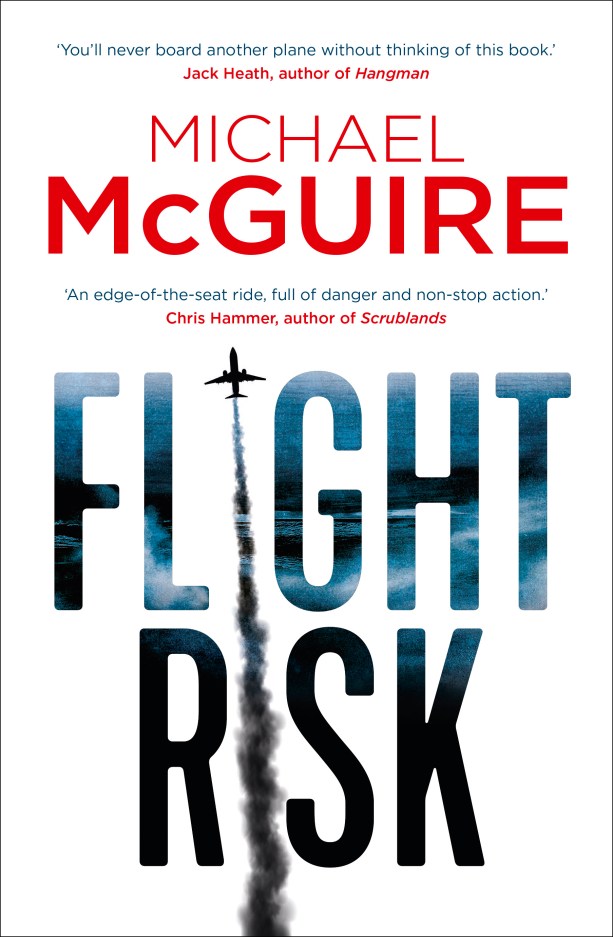
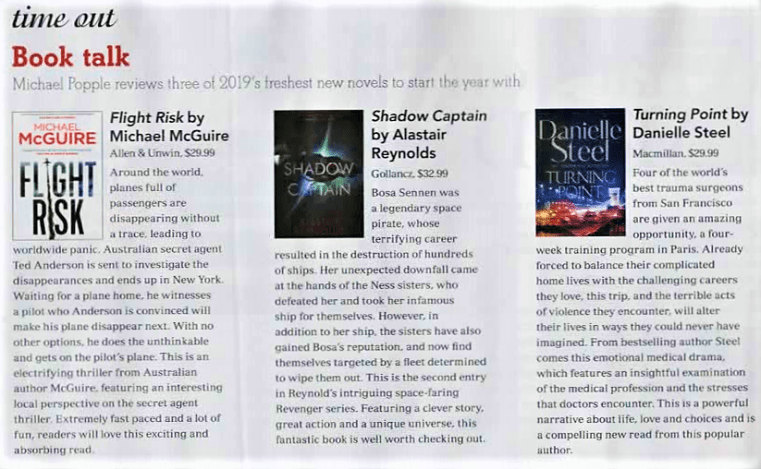
Flight Risk by Michael McGuire

flight risk cover

Publisher: Allen & Unwin

Publication Date – 7 January 2019

Amazon     Book Depository

From Australian thriller author Michael McGuire comes a fast-paced story of death and mysterious disappearances in the skies which takes the reader on a high-octane thrill ride.

Every day, thousands of planes fly across our skies, transporting huge numbers of people and goods from one end of the world to the other.  Many countries’ economies depend on the successful flights, and people have placed their trust in these machines to carry us.  So when a plane mysteriously disappears without a trace off the coast of Australia, it sends shockwaves throughout the entire system.

Ted Anderson is a disgraced former pilot who has found work as an investigator in a top-secret Australian government intelligence agency.  Sent by his bosses to find the missing plane, Ted travels to Indonesia to investigate the pilots.  But as he uncovers strange clues in one pilot’s apartment, another plane disappears, and then a third.  Like the first plane, no trace of these other missing aircrafts or their passengers can be found, and no organisation is claiming responsibility for the disappearances.

As the world descends into chaos and most people refuse to fly any more, a sudden need to escape from a squad of Indonesian police sees Ted forced onto a CIA plane to New York.  While waiting for a flight home to Australia in a nearly deserted JFK airport, Ted observes a suspicious pilot about to leave on a trip to the Ukraine.  With all his instincts screaming that this pilot’s plane will be the next one to disappear, Ted makes an insane choice and gets on the plane.

This is the second book from McGuire, following his 2017 political thriller debut, Never a True Word.  This sounded liked an exciting thriller from a relatively new Australian author, and I was eager to see how McGuire would present an Australian espionage edge to this sort of story.

Following several high-profile disappearances or crashing of airplanes in recent years, the potential dangers of air travel have been made obvious to most people; therefore it was a bold choice by the author to focus a story around this.  A lot of the suspense in this novel is based on the realistic dread that the characters within the story must be feeling as they contemplate the disappearances occurring.  The sequence where the protagonist finds himself waiting in a plane that is potentially about to disappear is particularly harrowing, and the reader is able to feel the protagonist’s apprehension and worry.  The results of these missing planes are also pretty gruesome in places, which adds to this storyline’s intense nature.  I felt that McGuire did a fantastic job of crafting a fairly interesting mystery thriller out of this story premise.  The eventual reveal of who or what is behind it is pretty intriguing and sets up some potential follow-up novels that will be worth checking out.

One of the main things you can say about this book is that it is extremely fast paced, which allows the reader to read through it rather quickly.  There is barely a quiet moment, as the protagonist jumps from one situation to the next, attempting to uncover who or what is behind the disappearing airplanes.  I rather liked this fast-paced approach to the story, as it fitted with the intense story content and reflected how quick and intense real-life intelligence agencies would jump into investigating events such as the disappearing planes featured within Flight Risk.  This book is not as action-packed as you would expect from a thriller novel, but the author is still able to convey an exciting and compelling tale that keeps the reader on their toes.  In addition, there is an extremely electrifying sequence in the air which serves as the book’s set piece.  These inclusions mean that Flight Risk is very easy to read, which provides the reader with vast amounts of fun and some significant thrills in the right places.

One of the things that I really enjoyed about Flight Risk was the portrayal of how an Australian intelligence organisation would react to a devastating event such as those examined within this book.  It was pretty cool seeing an Australian intelligence agent being at the centre of this world-wide event, and I enjoyed getting a look into his viewpoint about intelligence gathering.  I thought it was intriguing to see McGuire’s depiction of the differences between Australia’s intelligence assets and other countries, such as America.  For example, the Australian protagonist gets an iPad and some fake IDs as his gear, while his American counterpart gets a whole team and a military jet to investigate the disappearing planes.  I enjoyed this realistic and noticeable difference between the American and Australian agents and their resources, and thought it added a unique element to the book.  I also thought that the author’s examination of the world-wide implications of multiple disappearing planes was very clever and I liked the author’s look at the economic and social aspects of such an event.

Overall, I found Flight Risk to be an exciting new novel from Australian author Michael McGuire and I enjoyed the fast-paced action, enjoyable thriller elements and an intriguing new examination of Australia’s spy agencies and their place in the world’s intelligence communities.  I did find the overall lack of any significant female characters a bit concerning, but I enjoyed the book’s story and thought this was a great piece of Australian thriller fiction.

My Rating:

Four stars

Amazon     Book Depository

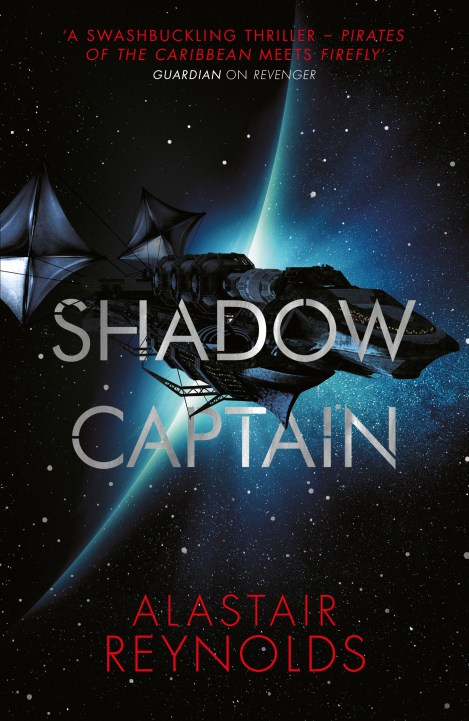
Shadow Captain by Alastair Reynolds

Shadow Captain Cover.jpg

Publisher: Gollancz

Publication Date – 8 January 2019

Amazon     Book Depository

Tens of millions of the years in Earth’s future, during the period known as the Thirteenth Occupation, humanity travels across space in sailed spaceships, with many crews searching for relics and treasures from previous eras of human and alien occupation.  For years, the greatest threat to these ships was the legendary pirate Bosa Sennen, whose deadly black ship, the Nightjammer, ruthlessly hunted down and ambushed hundreds of ships, killing all onboard, before vanishing back into the darkness.  Continuously moving her consciousness from one body to the next, Bosa was able to keep her reign of terror going for years, becoming a near-horrifying myth throughout space.  However, Bosa unexpectedly lost everything when she came up against the Ness sisters, Adrana and Fura, whose courage and daring resulted in them taking Bosa’s ship and her life.

Now the Ness sisters command Bosa’s infamous ship, rechristened as Revenger, and seek to make their own fortunes.  Veering away from the ship’s previous profession of piracy, the Ness sisters and their crew scavenge through old abandoned bases, attempting to find lost treasures or supplies as they slowly establish a new life for themselves.  But the legacy of Bosa Sennen is constantly around them, and not even her death is enough to end her legend.

While Adrana seeks to come to turns with the horrors she witnessed as Bosa’s captive, Fura becomes obsessed with finding Bosa’s hidden cache of treasure from her extended lifetime of piracy.  En route to the planet of Wheel Strizzardy to find a source who may be able to lead them to the pirate trove, Revenger is attacked, forcing the crew to brutally defend themselves.  Arriving at their destination, they find that ships they encountered were hired by a consortium of hundreds of planets who have placed a massive bounty on Bosa Sennen’s head.  What’s more, they do not particularly care if she is already dead, as long as her ship and all aboard are captured and destroyed.  Now, with an armada behind them and the crew of Revenger stuck on the gangster-controlled world of Wheel Strizzardy, the Ness sisters must find a way to escape with the information they need.  But are they prepared for the devastating secrets their search will uncover?

Reynolds is a highly regarded science fiction writer who has been writing since the 1990s.  Throughout his career he has written a slew of short stories, novels and other works of fiction.  His main body of work include the Revelation Space series, The Prefect Dreyfus Emergencies, the Poseidon’s Children series and several standalone novels.  Shadow Captain is the second book in his Revenger series, and follows on from the first book in the series, 2016’s Revenger.

Shadow Captain is an intriguing and enjoyable piece of science fiction that follows a mismatched group of semi-pirates as they navigate their way through space.  Reynolds has created an ambitious new universe for this series, and set an interesting and compelling story in the heart of it.  Unfortunately, I never got a chance to read the first book in the series, Revenger, beforehand, and this somewhat negatively impacted my enjoyment of this book, as I failed to understand several key aspects of the series universe.  Despite this, I ended up really liking this fantastic read and I am looking forward to the next book in the series.

This main reason why my lack of experience with this series impacted how much I enjoyed Shadow Captain is the detailed new science fiction universe that Reynold’s has created.  This universe is pretty impressive, with a number of unique flourishes and a fascinating-sounding history made up of multiple, distinctive eras of widespread human occupation across space.  While this is a really fun feature, I found that Reynolds did a poor job of re-explaining a number of key features of his universe that were introduced in his first book.  Without these explanations I was somewhat lost during a number of important discussions that took place during the early parts of the story.  This was not a massively widespread issue and quite a few important elements were explained to the reader at various points of the book, although Reynolds did delay some explanations longer than necessary.  However, it was a bit frustrating not having an understanding of what some key elements of universe were, or what some slang or terms being discussed by the protagonists in the early parts of the book were, and there are still one or two elements that were mentioned in Shadow Captain that I am not 100 percent certain about.

I also did find the first third of the book was a little slow going, and it took me a while to really get into the story.  This was due to an early combination of not completely knowing what the characters were talking about at certain points, and some slower pacing as the author sets the scene.  While there were some good points to the start of the book, including an great summary of events in Revenger, and some intriguing scenes inside a ‘bauble’, an ancient and abandoned human construction in space, I did find it a little hard to stay interested.  However, I stuck with it and was very glad that I did, as the rest of Shadow Captain was a very entertaining and exciting read.  The last two thirds of the book are an excellent, fast-paced adventure, which features some great battles in space, an intrigue-laced period on the planet of Wheel Strizzardy and a hunt for a hidden trove of treasure.  I really enjoyed the part of the book set on Wheel Strizzardy, as it featured the crew going up against a bunch of ruthless gangsters on a backwater planet.  While there, they have to face off against a cannibalistic crime lord, deal with the secrets of aliens and attempt to outsmart several of the planet’s colourful inhabitants, all the while the bounty hunters chasing after them quickly get closer towards them.  This awesome last two-thirds of the book more than makes up for the slower start to the narrative, and makes Shadow Captain into a very good book overall.

One of the things I liked the most about Shadow Captain was the lingering impacts of events that occurred in the first book, which results in some fantastic character work from Reynolds.  In the first book, Revenger, the primary antagonist, Bosa Sennen, was a fairly impressive villain who perpetrated a number of terrible acts against many of the book’s characters.  Both of the book’s protagonists, the Ness sisters, were impacted in different ways by her actions.  Adrana was kidnapped in Revenger in order to be conditioned to become Bosa’s next host, a process that required her to endure significant torture and physiological abuse.  As a result, throughout Shadow Captain, Adrana must constantly deal with lingering issues impacting her psyche.  She is continuously angry throughout the book, and finds herself constantly holding back new and terrible thoughts that she is convinced are the last lingering aspects of Bosa’s mind and personality that might have been partially imprinted on her.  Fura is also severely impacted by the events of the first book, and has become angry and secretive, with goals she is hiding from her crew and even her own sister.  I liked the reasons behind Fura’s change in personality, as the character was forced to become more ruthless and paranoid in order to get into the mind of her foe, Bosa.  The focus on these characters’ changes in personality is an outstanding addition to the book that results in some significant and intriguing drama throughout the book.  I personally enjoyed seeing a villain’s impact continue so significantly after their death, and it was absolutely fascinating to see the various ways she lived, especially in these different but devasting impacts on the Ness sisters.

In the end, I am going to award Shadow Captain four stars out of five.  While I really enjoyed the book as a whole, the initial problems I experience with the early story and the somewhat ordinary job that Reynolds did re-explaining all of the significant elements of his universe lowered my overall rating.  As a result, I would highly recommend that readers interested in checking out Shadow Captain should probably read Revenger beforehand, as it may increase their overall experience.  There is still an amazing amount to enjoy about Shadow Captain, including an inventive science fiction setting, an entertaining story that ramps up as the book continues and some excellent character work surrounding the actions of the first book’s primary antagonist.  Overall, this is a great piece of science fiction that is well worth checking out, and any future books in the Revenger series will definitely be on my radar.

My Rating:

Four stars

Amazon     Book Depository

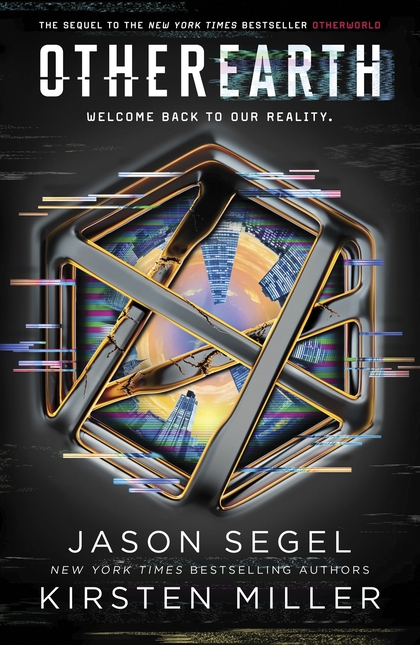
Quick Review – OtherEarth by Jason Segel and Kirsten Miller

OtherEarth Cover.jpg

Publisher: Rock the Boat

Publication Date – 30 October 2018

Amazon     Book Depository

From the superstar team of comedian Jason Segel and young adult author Kirsten Miller comes the second book in their Last Reality series, OtherEarth.

Goodreads Synopsis:

Simon saved his best friend, Kat, from the clutches of the Company and their high-tech VR gaming experience, Otherworld. But it was at a steep price. Now he, Kat, and their friend Busara are on the run. They know too much. About the Company’s dark secrets. About the real-life consequences of playing Otherworld. And about Kat’s stepfather’s involvement in everything. The group is headed to New Mexico to find Simon’s old roommate, who is a tech genius and possibly the only person who can help them reveal the truth about the Company before it’s too late and the line between what’s real and what’s fantasy is erased… forever.

Imagine a future in which you can leave reality behind and give in to your greatest desires. That future is now. And the future is terrifying.

Segel and Miller are an interesting team with some history, having previously written the Nightmares series together.  While Segel is best known for his film, television and comedy work, Miller is an established young adult author, having written two additional series.

I read the first book in this series, Otherworld, late last year, and it was one of the first young adult books I actually reviewed, as I had not professionally looked at this genre much before.  After reading and enjoying the first book a lot, I started checking out more young adult books in the last year, resulting in some really fun finds and some truly excellent reads.  As a result, I was very excited to check out the follow-up to this book and I was curious to see if I would enjoy OtherEarth the same way I enjoyed Otherworld.  I have to say that overall I had a lot of fun with this second book in the Last Reality series, and it had a lot of great and memorable elements to it.

OtherEarth follows on straight after the events of Otherworld, with the protagonists on the run from the Company.  During their previous adventure, the protagonists were able to determine that the Company had been experimenting on coma victims, installing them into their high-tech video game Otherworld, and killing anyone who learns about their secrets.  Simon, Kat, Busara and newcomer Elvis are now determined to expose the sinister actions of the Company while also saving the sentient programs that have come to life within the game.

One of the interesting things I liked about OtherEarth was the way that the authors split the story between the characters going on adventures within the Otherworld game and their attempts to evade and manipulate the company in the real world.  In order to solve their real-world problems, the protagonists are forced to venture into Otherworld in order to locate the consciences of people the Company have trapped within the game in order to obtain the information or resources to shut the Company down for good.  The blend between these in-game adventures and the subsequent real-world actions they take while evading and attacking the Company works really well and helps create an intriguing story.  Both parts of these stories have some great moments, and there are some fantastic twists throughout the book that will keep the reader keen to check out the final book in this series.

The focus on video games continues to be a major part of this book, and the authors offer up a bit of a critique of the future of this medium.  In OtherEarth, every player of Otherworld is a certifiable psychopath, as the world’s richest gamers buy up the extremely exclusive access to the game.  Watching the various players use the game to fulfil their violent desires and use the game to act as gods is quite eye opening, as is the protagonist’s growing addiction to the game and the combat mechanisms within it.  The programs within Otherworld who have gained sentience also offer a unique edge to the story and it is fascinating to watch them react against the players and creators they encounter.

There is a certain amount of humour and comedy throughout the book, although it is not as strictly comedic as other works by Jason Segel.  However, there are some pretty fun and amusing sequences throughout the novel.  The one that springs to mind the easiest is one particularly entertaining high-stakes sequence that suddenly devolves into a weird and comedic discussion about Dame Judi Dench in some very unusual contexts.  The combination of OtherEarth’s humour and the mostly serious nature of the story gives the book an unique flavour which comes together in a very enjoyable way.

From a young adult perspective, this book is probably best intended for an older teen audience as it contains some adult content.  While not as bad as the first book in the series, which contained a pretty inappropriate early scene in which the protagonist blackmails a couple of bitchy high school girls with their nudes, the intense action and some sexual content is probably not ideal for younger readers.  However, this book will be perfect for the older teen market, and most adult readers will have a good time reading this book.

Overall, OtherEarth is an excellent follow-up to Segel and Miller’s Otherworld, and continues their fun techno-thriller adventure.  With some great humour, an intriguing story and some interesting examinations of the gaming medium, OtherEarth is another exciting read for the older young adult audience.  This is a brilliant read that is well worth checking out.  I will personally am looking forward to the third book in the Last Reality series, OtherLife, which is coming out in October 2019.

My Rating:

Four stars

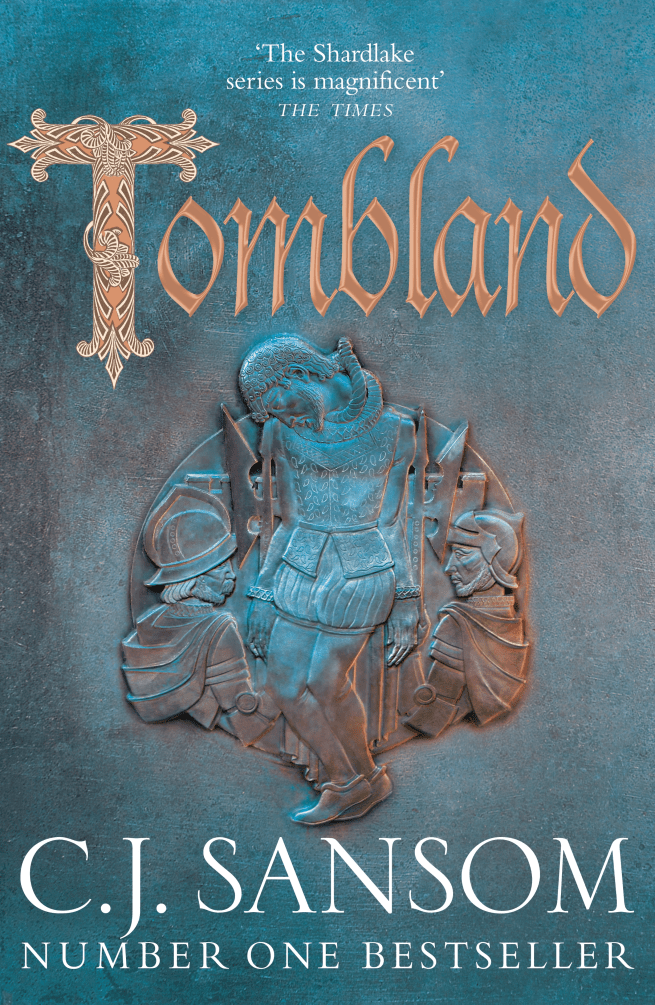
Tombland by C. J. Sansom

Tombland Cover

Publisher: Mantle

Publication Date – 18 October 2018

Amazon

One of the best historical fiction authors in the world today creates another exceptional piece of literature with Tombland, the epic historical crime fictional book set during the fictionally unexplored events of Kett’s Rebellion.

It is the summer of 1549, and King Henry VIII has been dead for two years.  The young Edward VI is on the throne, while his uncle, Edward Seymour, the Duke of Somerset, rules the country as Lord Protector.  However, the country is slowly descending into chaos as a long, unsuccessful war with Scotland, religious conflict, poverty and the corrupt actions of the rich landowners are raising discontent among England’s peasant population.

In the midst of this, Matthew Shardlake is working as a lawyer for the King’s sister, the young Lady Elizabeth.  When a distant relative of Lady Elizabeth’s mother, Anne Boleyn, is found murdered near Norwich and her husband, John Boleyn, is accused of the crime, the case could have political implications for Elizabeth.  Matthew is sent to organise a legal defence of John and to investigate whether or not he committed the crime.  Travelling with his assistant Nicholas, Matthew travels to Norwich and begins to examine the details of the case.  Meeting up with their old friend Jack Barak, the three friends are convinced of John’s innocence, but malevolent forces intervene to disrupt their defence.  As several deaths occur around Norwich, Matthew’s investigation is disrupted by events outside of his control.

A well-organised peasant rebellion erupts around the city, throwing everything into chaos.  Led by the charismatic Robert Kett, the rebels march on Norwich and set up a large camp outside the city, filled with thousands of disenfranchised peasants.  Captured by the rebels, Matthew and his companions find themselves in the midst of a dangerous and divisive situation.  Nicholas’s established views about the superiority of gentlemen sees him imprisoned, while Barak finds much in common with the peasants and their cause.  Matthew is forced to make a decision about where his loyalties lie, as Kett wishes him to assist in organising trials for the landowners they have captured.  As the rebellion drags on, Matthew finds evidence about the Boleyn murder case in the camp.  Following these leads, Matthew soon uncovers a terrible conspiracy that will not only endanger John Boleyn and his lawyers but could affect the fates of every peasant in Kett’s Rebellion.

C. J. Sansom is one of historical fiction’s most highly regarded authors, having written a series of amazing novels in the genre. His most significant body of work is the Matthew Shardlake series, which follows the titular lawyer as he finds himself forced to solve a series of elaborate mysteries during the Tudor period. All the books in this series are extremely impressive, as they all feature clever mysteries and an excellent use of the book’s historical setting.  In addition to this series, he has also written a standalone historical thriller, Winter in Madrid, as well as an alternate history novel, DominionTombland is the seventh book in the Matthew Shardlake series and Sansom’s first book since 2014, but considering the sheer amount of detail and the length of the text, this is hardly surprising.

Tombland is another epic novel from Sansom and one that I really enjoyed reading and ranked as one of my top 10 reads for 2018.  This book contains an outstanding combination of an intense and complex murder mystery and some amazing historical settings and storylines.  All of these elements are extremely amazing by themselves, but together they create one of the best reads of the year.  While I really loved this book, potential readers really need to set aside a lot of time to get through Tombland.  It has over 800 pages of story, with an additional 50 plus pages of the author’s historical notes and discussions about what events he included.  In addition, each page has such a rich amount of detail and plot that I found myself getting through this book at a lot slower pace than I usually would.  While it does take a while to get through Tombland, I personally believe it is well worth the effort, as the incredible story within had me hooked from the very first page.

This book has an intricate and powerful investigation angle, as Matthew and his associates attempt to solve a terrible murder that they believe their client has been wrongfully accused of.  The mystery part of this book is very well done and features an elaborate and intriguing solution that is slowly revealed throughout the course of the book.  Sansom introduces a significant number of potential suspects, all of whom have substantial motives to kill the victim, designed to throw the reader off the scent of the real solution.  I liked how the case continued to expand out as the book went on, as the protagonists not only attempt to solve the original murder but must also investigate several murders committed to cover up the initial acts, as well as several attempts to eliminate John Boleyn.  There are several major and surprising twists throughout the investigation, as a number of small clues and characters that at first appear minor turn out to have major implications for the overarching mystery.  The solutions to the mysteries at the end of the book reveal a dark and powerful motive that has severe consequences for several of the characters involved.  Overall, Tombland contained an outstanding central mystery, which is guaranteed to keep the reader deeply curious and engaged with this fantastic text.

One of the most interesting features of Tombland is the fact that Sansom has set it during Kett’s Rebellion of 1549.  This is a somewhat obscure piece of history that many readers might not be familiar with, but it is an incredibly fascinating event of English history.  Sansom does a masterful job of portraying the entirety of the rebellion throughout the novel and use it as a fantastic secondary storyline as the protagonists witness the beginning and end of the mystery.

Sansom does an outstanding job covering the events of this rebellion, including the events that led up it and caused the peasants to rise up against the rich landowners.  As a result, he expertly examines all the events and conditions that were making the peasants and poor of Norwich, and the rest of England, discontented with the way the country was being run.  In order to do this, a number of relevant elements are effortlessly inserted into the story and become key parts of the plot.  These elements include discussions about the poorly run war in Scotland contributing to armed deserters on the rebels’ side, talks about the political structure of the country and thoughts about the religious disagreements and schisms that were rife in the country during that period.  One of the most fascinating and significant elements that apparently led to the rebellion was the rich landowners’ focus on sheep farming and the creation of large sheep enclosures rather than the growth of traditional crops.  Before reading Tombland I would never have thought that sheep farming would have the potential to be a cause of rebellion; however, Sansom is able to explain in some significant detail how sheep farming and enclosures were negatively impacting many poorer individuals in England, and how it became a key part of Kett’s Rebellion.

In addition to covering the causes of the rebellion, Sansom’s narrative grows to cover the entire length of this intriguing event.  All sorts of elements of it are explored, and readers get an excellent idea of how the peasants were organised, what their motivations were, what sort of actions they were undertaking, how the government reacted to it and what the overall attitude of the participants was.  This was all boundlessly fascinating, and as the reader gets deeper and deeper into the book it becomes harder to put the book down as they become extremely curious about what the overall fate of this group of people was, especially after the reader gets an idea of how big the rebellion was and what sort of victories they were able to obtain.  The final results of this rebellion and the long-term impacts it had on the country are really interesting to hear about, and I had an amazing time seeing all the significant events that occurred during this underexamined historical rebellion.

As always, I was immensely impressed with the sheer amount of research that Sansom did and the historical detail that resulted from it.  Tombland includes over 50 pages of the author’s notes about the event and the conclusions he drew from his extensive research.  While these 50 pages are extremely interesting to read, the revelations about how many of the events the protagonist witnesses actually occurred were astounding, and it sounds like Sansom was able to recreate nearly every significant event of Kett’s Rebellion throughout the course of Tombland, with some necessary dramatic flourishes to create the overall story.  It was amazing how many of these events actually occurred, and how many of the secondary characters were actually real-life people who had significant impacts on the outcome of the rebellion.  Readers will also be amazed by the historical details that Sansom has included on every page of this book and will have a hard time forgetting the events of 1549 and Kett’s Rebellion.

There are several other elements I enjoyed in this book, including the seamless ways that the investigative storyline combines with the historical background of Kett’s Rebellion.  So many characters that are potential witnesses or suspects in the murders that the protagonists are investigating become key figures in the historical events that occurred around Norwich.  Suspects and witnesses are also found in the rebel camp, and I liked how the key to crime and the downfall of the rebels were both in the same place.  I also enjoyed the examination of 16th century English legal procedures and the depictions of murder trials, and found the scenes featuring them very fascinating.  The book’s focus on the divide between the rich and the poor is also a great addition to the story and gets a significant look in throughout the entire book, and it is a discussion that is still relevant to this day.

C. J. Sansom once again hits his literary ball out of the park with Tombland, another five-star historical mystery that has the perfect combination of compelling mystery and intriguing historical elements. With an incredibly addictive overall narrative and a focus on a fascinating historical event that is rarely used in other pieces of historical fiction. One of my favourite reads of 2018, I highly recommend this book, especially for people who love a great mystery.

My Rating:

Five Stars

Amazon

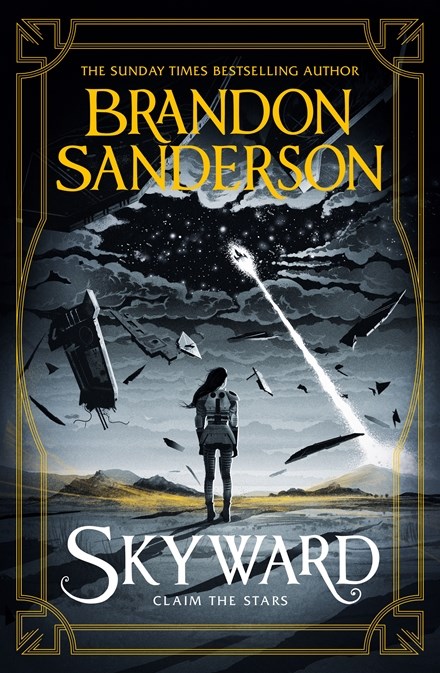
Skyward by Brandon Sanderson

Skyward Cover.jpg

Publishers: Gollancz

                        Audible Studios

Publication Date – 6 November 2018

Amazon

Legendary fantasy and science fiction author Brandon Sanderson once again delivers an incredible five-star read with Skyward, a brilliant young adult science fiction story that follows the journey of an energetic young protagonist at she attempts to claim the stars.

As of right now, I have only had the opportunity to read one of Sanderson’s novels, the epic fantasy book, The Way of Kings, which was easily one of the best fantasy reads of the last decade and which I gave a five-star review here.  After enjoying The Way of Kings I was keen to see how Sanderson’s writing ability translated to the young adult science fiction genre.  I have to say I was in no way disappointed, as Sanderson once again creates an amazing and exciting piece of literature, all set within an incredibly detailed new fictional landscape.  Skyward is the first book in Sanderson’s planned Skyward series, which is to be made up of a total of four books.  The second book in this series, Starsight, has apparently already been written, with a release planned for November 2019, while the third and fourth books, both yet untitled, already have tentative release dates in 2021 and 2022.  Starsight is already on my must-read list for next year, and will appear in my Waiting-on-Wednesday series of blog posts the moment the cover gets released.

Far in the future and on another planet, humanity has been under constant attack for hundreds of years.  A mysterious alien race known as the Krell pursued the human fleet across the stars, forcing it to crash on a desolate planet.  Those humans that survived were forced to flee below the planet’s surface, hiding in caves and only re-emerging when they gained the ability to create space fighters capable of fighting off the alien craft.  Now the Defiance Defence League (DFF) fights a constant war against the Krell, who are determined to wipe out the DFF’s main base and the production facilities beneath it.

Since she was a young girl, Spensa Nightshade has always dreamed of becoming a DDF pilot, the elite defenders of humanity, in order to claim the stars.  However, years ago, her father deserted during the most famous battle in DDF history and was shot down by his comrades.  Having been forced to live for years as a daughter of a coward, Spensa is eager to forge her own heroic destiny, but the DDF will never accept her into their flight program.

But with the war going badly and new pilots needed, Spensa is given a chance to join the DDF, thanks to the actions of her father’s old wingmate.  Joining a class of misfit cadets who dub themselves Skyward Flight, Spensa learns to fly the DDF’s ships against the Krell and quickly shows her determination and skill.  However, her father’s legacy is constantly weighing her down, whether by the sabotage of the DDF or the constant fear that deep down she might also be a coward.  With the Krell attacks getting worse, will Spensa find her place as a pilot, or will a terrible secret from the past come back to haunt her?  And through it all, what role will the ancient spaceship Spensa discovers have on the fate of humanity?

I not only received a physical copy of Skyward from Hachette Australia, but I also listened to a copy of this book in its audiobook format, which is narrated by Sophie Aldred and goes for just a little over 15 hours.  Both versions are pretty cool.  The trade paperback version of this novel contains a couple of great maps at the start of the novel that some readers may find useful when it comes to navigating around the story.  There is also a series of intriguing drawings throughout the book that show off several of the ships, both human and alien, that are featured in the story, all of which are juxtaposed against the main ships that the protagonist and her wingmates train and fight in.  The later parts of the book also contain some fantastic illustrations of flight manoeuvres and abilities, which prove informative when utilised with Skyward’s many aerial flight sequences.  I personally preferred the audiobook format of Skyward to the physical copy, as it allowed me to enjoy the many action-packed aerial scenes a whole lot more.  I also loved the narration by Aldred, who was able to create a number of excellent voices for the book’s various characters.

The reason I am giving Skyward such a high-star review is because it is an incredible piece of young adult science fiction that not only has an amazing story but which also contains several outstanding characters and some of the best ship-to-ship action sequences I have ever seen, all of which is combined with Sanderson’s trademark knack for large-scale world building.

I had a lot of fun with the story contained within this book, as Sanderson sets forth a layered and powerful narrative for the reader to enjoy.  Told primarily from the point of view of the protagonist, Spensa, Skyward contains a fantastic coming-of-age storyline set within a flight academy where the cadets learn how to fly in defence of their planet.  I always love a good school based learning narrative, and Sanderson has created an outstanding version of this, where the main characters spend most of the story learning the theory behind flying, while also engaging in real-life combat situations as they train.  As a result, there are heartbreaking losses, great emotional connections forged, and secrets and hints about the overall story slowly released to the reader, all while the protagonist is forced to contend with the machinations of a biased authoritarian figure who even gets to narrate a few chapters to highlight the reasons for her actions.  Overall this is an addictive and exciting story that will really stick in the reader’s imagination.

Sanderson has once again created a detailed and captivating new world in which to set his new series.  The book is set within a new planet that humans from Earth crashed upon years ago in the past, fleeing from a mysterious alien force.  For years the humans lived a nomadic lifestyle in the caves beneath the planet before finally fighting back using newly fabricated fighter craft.  Sanderson has created a fantastic world to host this story, exploring a society forced to live in caves and eventually creating a military base on the surface.  I love how the author has created a ton of new societal rules and features, as well as a world above and beneath the surface of this alien planet.  There is also some really cool and unique technology that comes into play throughout the book, especially in the many aerial combat sequences.  The aliens are mostly a mystery for the entirety of the novel, although I did really enjoy the reveals about them.  I imagine Skyward’s fictional universe will be expanding out in the future instalments of this series and I am very excited to see where this goes.

Some of the best things about this book are the excellent characters that the author has populated his story with.  Of particular note is the main protagonist and point-of-view character, Spensa, who is a really fun and complex character to see this story through.  Spensa is a great character whose life has always been defined by her father’s legacy.  As a result, she puts on an extremely brave and aggressive front to everyone she meets as she tries to convince people she is not a coward.  Because of this, Spensa is quite an eccentric character, spouting out long expositions about how she will harm her opponents, which is quite amusing at times.  However, as the reader gets further into the book, they find out how vulnerable she truly is, as deep down her father’s actions and legacy have had quite an impact on her.  As she progresses into flight training and becomes more and more like her father, she must content with the trials of war, emotional issues with her friends and loved ones, the DDF’s indoctrination against cowards and the secrets that have been kept from her.  The internal conflict and fear that follows is really well written by Sanderson and forms a captivating emotional centre for this amazing narrative.

Quite a lot of time is spent looking at the other cadets that make up Skyward Flight.  Each member of this flight has a unique personality and is given a callsign to make them more distinctive.  There is a fun camaraderie between these characters, and they form quite a close-knit team.  Sanderson spends significant time building up several of these characters, and Spensa, much like the reader, gets quite attached to them.  As a result, when tragedy hits the team, there are some significant emotional blows that come with it.  I liked how the different friendships and relationships help Spensa grow as a character, as she started out the book a bit of a loner.  These side characters are absolutely fantastic, and add another great emotional feature to Skyward’s story.

While Spensa and Skyward Flight are all great characters, my favourite character in all of Skyward had to be the sentient spaceship, M-Bot.  M-Bot is an advanced spaceship who, for various reasons, is obsessed with mushrooms, spends much of the book cracking bad jokes and forms a close relationship with Spensa, the human who discovers it.  M-Bot has to be one of the funniest and quirkiest characters in the whole book, providing several of the book’s best jokes and funniest lines.  The ship’s relationship with Spensa is really well written, as it attempts to balance its existing command code with its new friendship.  This results in some amazing scenes, and I never thought before this book that I would get emotional about a spaceship.  M-Bot is particularly great in the audiobook version, as Aldred gives the ship an excellent Irish accent that really fits the character’s personality perfectly and makes M-Bot stand out throughout the book.

Easily my favourite thing about Skyward has to be the insane and incredibly well-written aerial combat sequences that fill this book.  All of the battles take place within the planet’s atmosphere among falling debris fields, resulting in some elaborate and exciting dog-fights between the DDF fighters and the Krell.  Quite a number of battles feature throughout Skyward, as the protagonist and her companions attempt to stop the Krell destroying humanity’s only hope of leaving the planet.  The author spends significant time exploring the physiology of these aerial fights, including the various tactics, training and technology utilised by the DDF and the Krell.  In particular, Sanderson has created some unique technology to help create some truly amazing combat sequences, including light-lances, which are energy beams that the DDF fighters use to not only throw Krell fighters around but to also help their ships do precise and elaborate manoeuvre around the falling debris.  I also loved how Spensa and her flight got better as the book progressed, reflecting their training and their ability to work together as a team.  All of these battle scenes are fast paced and incredibly well written, and the reader constantly finds themselves placed into the middle of these epic battle sequences.  I found that the audiobook version of Skyward was particularly effective at bringing me into these combat scenes, and I was often on the edge of my seat as I listened to them.  There are a number of these amazing sequences throughout the book, whether they were real battles or simulations.  Highlights for me have to be a high-speed chase through a giant, ancient factory crashing down to the ground, or the final high-stakes battle that serves as an epic conclusion to the whole story.  These battles are truly an amazing feature of Skyward, and I cannot wait to see what incredible aerial battles feature in the future books of this series.

Skyward is one of my favourite books of 2018 and is definitely one of the best young adult books I have read this year.  Brandon Sanderson once again cements his legacy as one of modern fiction’s best fantasy and science fiction authors, as readers are treated to an epic science fiction read set in a rich and detailed new world.  Featuring some amazing characters and outstanding depictions of aerial combat between humans and aliens, this book comes highly recommended.  I have made no secret about how much I am looking forward to future entries in this series and cannot wait to see where Sanderson takes this story next.

My Rating:

Five Stars

Amazon