Everyone on this Train is a Suspect by Benjamin Stevenson

Everyone on this Train is a Suspect Cover

Publisher: Michael Joseph (Trade Paperback – 17 October 2023)

Series: Ernest Cunningham – Book Two

Length: 318 pages

My Rating: 4.75 out 5 stars

Amazon

Impressive Australian author Benjamin Stevenson returns with another hilarious and outstanding murder mystery that once again acts as a clever homage to the classics with Everyone on this Train is a Suspect.

Over the last few years, one of the most consistently enjoyable authors of Australian crime fiction has been the remarkably talented Benjamin Stevenson.  Best known prior to his writing career for his comedic work with his brother James, Stevenson adapted well to crime fiction and made his first impression with his debut novel, Greenlight.  Also released as Trust Me When I Lie and She Lies in the Vines, Greenlight was an outstanding read, and Stevenson quickly followed it up with the cool sequel Either Side of Minute.  While both of these books had great murder mystery plots with some unique twists to them, I think Stevenson didn’t truly display his writing ability until his next novel; Everyone in my Family has Killed Someone.

Everyone in my Family has Killed Someone was an exceptional 2022 novel that saw a fictional murder mystery expert try to solve a classic locked room murder that was likely committed by a member of his notorious family, each of whom has killed someone in the past.  Everyone in my Family has Killed Someone was so damn good as not only did it feature a clever case but Stevenson excelled at producing a very funny novel in his unique style that parodied the classics of the genre.  Due to its entertaining and meta storytelling, Everyone in My Family has Killed Someone was such a joy to read and it ended up being one my favourite pieces of Australian fiction in 2022.  As such, I have been eager to see what Stevenson would produce next, and while I was initially a little surprised to see that he would be writing a sequel to Everyone in my Family has Killed Someone, it was something that really excited me.  This sequel, Everyone on this Train is a Suspect, was one of my most anticipated releases for 2023, and I had another outstanding time getting through it.

Plot Synopsis:

6 WRITERS. 5 DETECTIVES. 4 DAYS. 3 WEAPONS. 2 MURDERS. 1 TRAIN…

When the Australian Mystery Writers’ Society invited me to their crime-writing festival aboard the Ghan, the famous train between Darwin and Adelaide, I was hoping for some inspiration for my second book. Fiction, this time: I needed a break from real people killing each other. Obviously, that didn’t pan out.

The program is a who’s who of crime-writing royalty:

the debut writer (me!)
the forensic science writer
the blockbuster writer
the legal thriller writer
the literary writer
the psychological suspense writer.

But when one of us is murdered, six authors quickly turn into five detectives. Together, we should know how to solve a crime.

Or commit one.

How can you find a killer when all the suspects know how to get away with murder?

Stevenson once again presents an outstanding and wildly entertaining Australian crime fiction novel that proves impossible to put down.  Thanks to his impressive story and wonderfully distinctive style for this series, Everyone on this Train is a Suspect was a particularly funny novel that takes some fun shots at classic murder mysteries, modern crime fiction and the publishing world at large.

I absolutely loved the story Stevenson came up with for Everyone on this Train is a Suspect, which essentially traps his returning protagonist, Ernest Cunningham, on the Australian version of the Orient Express with a group of other famous crime fiction authors.  Ernest, who has achieved a certain amount of literary fame writing a true-crime book about the familial murder he solved, is the somewhat ostracised newcomer to the group and is currently suffering from writer’s block.  Hoping to gain inspiration from meeting some of his fellow authors, most of whom are homages to famous crime fiction authors (Ian Rankin and Patricia Cornwell, for example), Ernest instead finds himself caught up in another deadly murder, this time involving suspicious writers, greedy publishers, scheming agents, angry mega-fans and other fun figures from the literary world.  The resulting plot is extremely fun, as an obsessed Ernest attempts to solve the crime, only to encounter additional murders, opposition from his fellow writers, unique interactions, and all manner of ridicule.

This entire story is really well written, as it features all the elements that made Everyone in my Family has Killed Someone great, including a clever mystery, outrageous characters and an irrepressible sense of humour.  Just as with Everyone in my Family has Killed Someone, Everyone on this Train is a Suspect is told in the form of a true-crime book written by the protagonist as he recounts the events that unfolded aboard the train.  I really enjoyed this fun and clever way of writing the story, especially as the character of Ernest has such an amusing and satirical outlook on life and murder mysteries.  The author also believes in challenging the classic ways of writing crime fiction and providing clues to the reader, and as such the book is loaded with a ton of hints from the protagonist about who the killer is and the events to come.  For example, he indicates how many times he is going to mention the killer’s name early on and then keeps a running countdown going throughout the book to narrow down the suspect pool.  In addition, several characters’ fates, actions and other clues are mentioned well in advance, just to heighten anticipation.  While you would imagine that this would spoil much of the plot, I felt it honestly enhanced it, as you eagerly wait to see how these events occur or try to keep track of who is being talked about and in what context.  Stevenson also does not always play it fair with these hints, with a few flagrant mistruths sprinkled through by the protagonist to mislead the reader, although this is all done in good fun.

As such, by the time you get to the second half of Everyone on this Train is a Suspect, you are really invested in the overall mystery that Stevenson has cooked up.  All the various clues, hints and other interesting story details have been cleverly built up and you are eager to see how everything unfolds.  There are a few hilarious set pieces loaded here, including an unnecessary chase sequence, a failed denouement gathering, and some major misunderstandings, all of which add to the chaotic nature of the plot.  This exciting and funny story also makes great use of its iconic background setting of the Ghan, one of Australia’s most famous trains, and Stevenson works in some fantastic personal drama for the protagonist who finds that crime solving and romance do not mix.  The eventual solution to the mystery is just great, as it blends multiple motivations, character histories and various subtle clues in an outstanding way.  Even all the overt clues that the protagonist had been directly feeding the reader come into play, although not always in the way you would expect it to.  This leads to an intense and memorable conclusion, which I thought wrapped things up nicely, especially with that fun twist designed to surprise readers familiar with first-person stories.

As with Everyone in my Family has Killed Someone, this second novel serves as a great homage and parody of classic murder mystery tropes, as the protagonist once again finds himself in a locked-room scenario.  The parallels between this story and Murder on the Orient Express are purposely obvious, and I loved seeing the very self-aware protagonist revel in them as the plot continues.  Stevenson also modernises his references by including homages to more modern mystery and crime fiction sub-genres.  The legal thriller, forensic science, modern detective and psychological suspense genres are all featured here in some ways, as fictional authors of these genres are present as supporting characters, and all their specialties are considered when it comes to solving the crime.  Stevenson works these into the plot perfectly, and it was a great deal of fun to see each of these elements discussed, satirised, and then utilised to a degree.  As such, this proves to be quite a fun book for all manner of crime fiction fans, and the fun references, jokes and hints will greatly appeal to the wider murder mystery audience.

Another awesome aspect of Everyone on this Train is a Suspect that I liked was the exploration of the literary world.  Due to the events of the first book, the protagonist finds himself as a published author, with all the baggage that brings with it.  As such, this sequel is filled with a ton of fun discussions and jokes about being a writer, with Stevenson no doubt utilising his own personal experiences to give it a splash of realism.  Most of these inclusions are done to provide another comedic edge to the story, especially as Ernest has been thrown into the deep end with a group of experienced writers who have no respect for him.  The scenes where they discuss their works while also putting down his less successful book are so damn funny, although I could not help but feel a little self-conscious with some of the comments (I know I use too many adverbs).  Stevenson also really dives into the dark side of writing and publishing, with sketchy agents, dodgy backroom deals, story thefts, and personal compromises all being featured quite heavily in the plot.  These elements make for some great potential motives, but you have to appreciate the heavy level of cynicism that Stevenson is throwing into the mix.  I deeply enjoyed the way that Stevenson explored the minefield of life as a murder mystery writer, as well as other connected literary issues, and it ensured that the protagonist’s storyline about being a new author was simultaneously funny and intriguing.

Benjamin Stevenson continues to impress as one of my favourite authors of crazy Australian crime fiction.  His amazing latest novel, Everyone on this Train is a Suspect, is so damn good, as it combines a clever mystery with Stevenson’s unique style that satirises the entire crime fiction genre.  Loaded with some brilliant homages to all manner of murder mystery, and mixing an intense murder plot with jokes, outrageous characters, and fantastic way to tell the story, Everyone on this Train is a Suspect was a blast of epic fun from start to finish.  A worthy and incredible sequel to Everyone in my Family has Killed Someone, Everyone on this Train is a Suspect is funny, brilliant and occasionally dark, and you are guaranteed to love every second of it.
Everyone on this Train is a Suspect Cover 2

Amazon

Quick Review – The Pit by Peter Papathanasiou

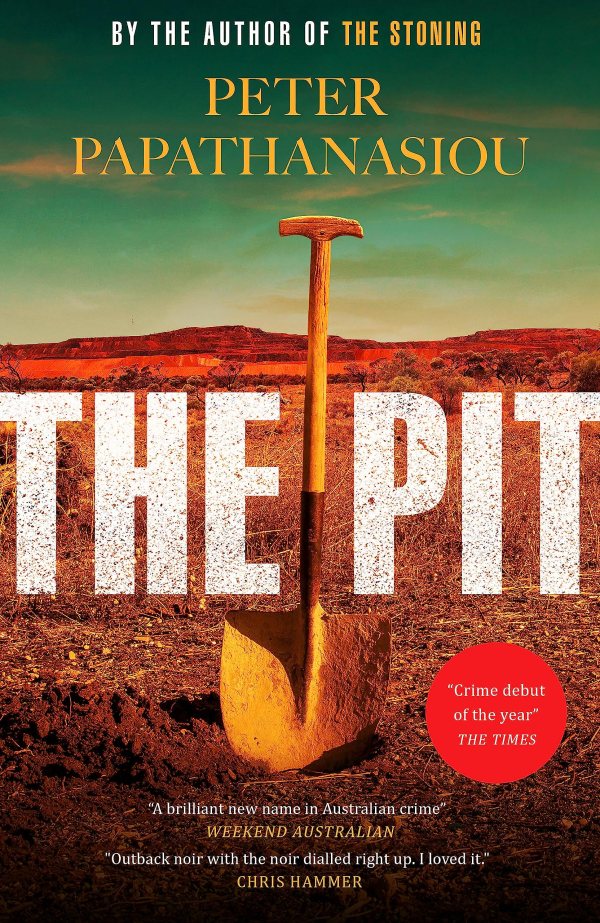
The Pit Cover

Publisher: Maclehose Press (Trade Paperback – 25 July 2023)

Series: DS George Manolis – Book Three

Length: 297 pages

My Rating: 4 out of 5 stars

Amazon

Australian author Peter Papathanasiou returns with his third DS George Manolis novel, The Pit, a complex and intriguing piece of Australian crime fiction that takes three unlikely companions on a memorable road trip.

Plot Synopsis:

A third outback noir from Peter Papathanasiou, following Special Constable Sparrow as he investigates a cold case in a barren mining region of Western Australia.

With DS Manolis on leave in Greece, Senior Constable Sparrow receives a phone call from a man who wants to turn himself in.

Bob is sixty-five years old, confined to a Perth nursing home. But thirty years ago, he killed a man in the remote northern Kimberley mining region. He offers to show Sparrow where the body is, but there’s a catch: Sparrow must travel north with him under the guise of being his carer.

They are accompanied on the drive by another nursing home resident: Luke, thirty years old, paralysed in a motorbike accident. As they embark on their road trip through the guts of Western Australia, pursued by outback police and adrenaline-soaked miners, Sparrow begins to suspect that Bob’s desire to head north may have sinister motivations. Is Luke being held against his will? And what lies in store for them when they reach their goal?


The Pit
proved to be quite an interesting and compelling novel which honestly was very different from what I was expecting.  I thought this would be more of a standard crime fiction/murder mystery novel in the Australian wilderness, but instead I got a character driven story that dove into one protagonist’s complex life, and I honestly think it worked out better this way.

The plot of The Pit is very far removed from Papathanasiou’s previous DS George Manolis novels, with the protagonist of the first two books not even actually appearing.  Instead we get an intriguing story about supporting character Special Constable Sparrow, who finds himself presented with an unusual opportunity by an old man, Bob, wanting to confess to a 30-year-old murder.  While I do think that Sparrow agreed to Bob’s strange request without backup a little too readily, it sets up an interesting and heartfelt storyline where Sparrow accompanies Bob and Bob’s unsuspecting young protégé, Luke, across Western Australia into the heart of mining country.  The narrative splits into two separate timelines at this point, with the main narrative focusing on the three companions as they travel across the Pilbara, getting into all manner of trouble and meeting a range of outrageous and unique outback locals.  The other main storyline is a series of intense flashbacks that examine the full life of Bob and the many hardships he experienced as a homosexual man in Australia from the 1960s onwards.  There is also a subplot that follows the friendship Bob formed with Luke in the nursing home and why Bob decided to take him on the road trip.

These different fantastic storylines are interesting and emotional in their own way, and the reader gets heavily invested in seeing both the past and the present.  Bob’s tragic and violent life story really drags the reader in, and it was fascinating to see his take on the homosexual experience throughout various periods of recent Australian history.  At the same time, you get quite entranced by the unique friendship that forms between the three road trippers, especially as each of them has their own secrets, personal issues and emotional turmoil.  I felt that the darker past storylines blended well with the unusual hijinks of the modern storyline, and the hidden clues in Bob’s recounting of events ended up having some interesting impacts on the central story.  These split storylines come together in an excellent way, and Papathanasiou really lays on the tragedy in the main narrative threads, especially when it comes to Bob and the tragedies he’s experienced.  The ending of the book is quietly poignant and ultimately unavoidable, and you will come away quite moved by how everything turned out and how the main characters developed.

Papathanasiou backed up this emotionally rich story with some fantastic and highly detailed background settings.  The Pilbara in particular is shown in all its red glory, and the author does a remarkable job describing its harsh beauty and the heavy burden of those who traverse it.  The anecdotes about the unusual people who worked in the Pilbara, both in the modern day and in the 1970s and 80s, are pretty over-the-top and very entertaining to absorb.  I do hope that Papathanasiou was exaggerating just how crazy everyone out in the Pilbara is, as there were a lot of unsettling and concerning characters involved who added some interesting spice to the story.  The memorable social interactions and courtship rituals of the repressed male Pilbara mining community back in the 1970s also seemed a bit unlikely, and I doubt I will be able look at a ute full of blokes the same way again after reading this book.  These outrageous scenes were quite entertaining, and I think they helped to enhance some of the more emotional parts of the book in greater detail.  Throw in other interesting historical locations, such as Sydney during the AIDS epidemic, and you have a fantastic background to this intense story that Papathanasiou used to full effect to tell his unique story.

Overall, The Pit was quite a memorable and compelling read by Papathanasiou, who told quite a complex Australian tale.  As a dramatic Australian tale with historical elements more than a pure crime fiction read, The Pit was a fantastic book that beautifully dove into some dark issues and showcased some amazing characters.  Charming and heartbreaking, The Pit was an excellent piece of Australian fiction that is well worth checking out.

Amazon

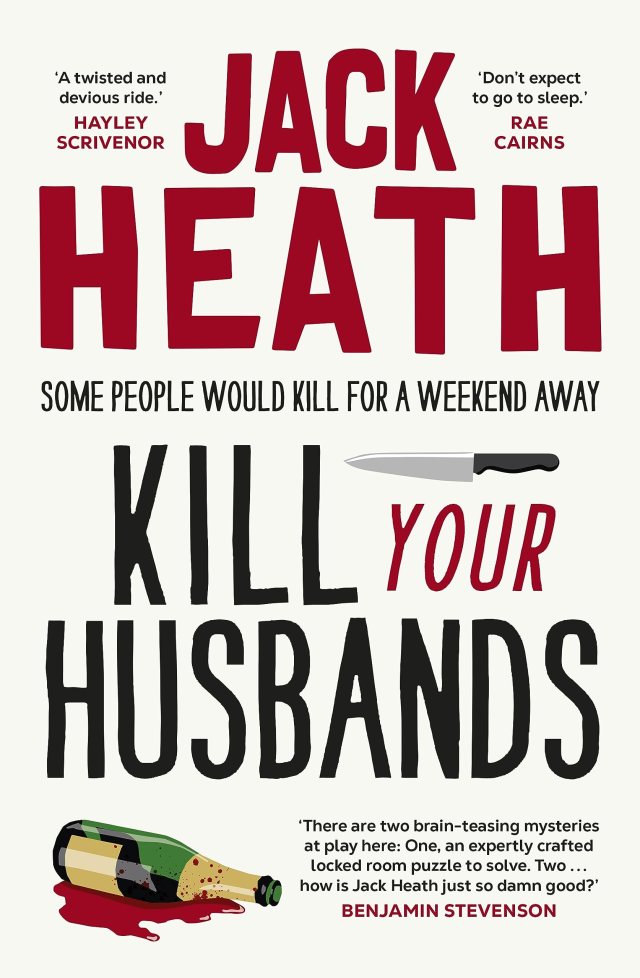
Waiting on Wednesday – Kill Your Husbands by Jack Heath

Welcome to my weekly segment, Waiting on Wednesday, where I look at upcoming books that I am planning to order and review in the next few months and which I think I will really enjoy.  I run this segment in conjunction with the Can’t-Wait Wednesday meme that is currently running at Wishful Endings.  Stay tuned to see reviews of these books when I get a copy of them.  In this week’s Waiting on Wednesday I highlight the next compelling and awesome sounding crime fiction read from one of my very favourite Australian authors with Kill Your Husbands by Jack Heath.

Kill Your Husbands Cover

Amazon

One of the things I love about being a reviewer in Australia is that I get ready access to so many outstanding Australian reads that people in the international market might not be as familiar with.  Thanks to some dedicated local publishers, I get a healthy serving of Australian fiction each year, including from several truly remarkable and talented authors.  One of my absolute favourite Australian authors is the always impressive Jack Heath, who has been killing it (literally and figuratively) in recent years.

Heath, who is from my home city of Canberra, is one of Australia’s leading crime fiction authors and I have really grown to enjoy his clever, entertaining and highly distinctive thrillers and murder mysteries.  Heath has written an intriguing raft of different books over the years, including some outstanding young adult fiction, but he is probably best known for his Timothy Blake books, also known as The Hangman series.  This gruesome series follows a highly troubled, yet skilled, investigator, who solves some elaborate cases while trying to resist his cannibalistic urgings.  I have had a lot of fun with several entries in this series, including Hideout (one of my favourite Australian books of 2020) and Headcase (one of my favourite Australian books of 2022), and my first taste of the Timothy Blake series made me a huge fan of Heath’s writing style.  This appreciation for Heath’s writing was further compounded by his epic and elaborate thriller, Kill Your Brother, which was one of my favourite Australian books of 2021Kill Your Brother was a particularly brilliant standalone read that saw a kidnapped protagonist forced to choose between her own survival and killing her own brother.  I have nothing but love for all of Heath’s work and I was very excited to discover that he had another amazing crime fiction read coming out later this year.

This upcoming book from Heath is titled Kill Your Husbands, which features another elaborate and fun murder mystery plot.  Set for release in late November 2023, Kill Your Husbands sounds quite exceptional and I have already fallen in love with its fantastic and distinctive narrative outline.

Plot Synopsis:

Three couples, friends since the university athletics team, travel to a house in the mountains for an unplugged weekend of drinking and bushwalking. No internet, no phones, no stress. On the first night, the topic of partner-swapping comes up. It’s a joke – at first.

 Not everyone is keen, but an agreement is made. The lights will be turned out. The three men will go into the three bedrooms. The three women will each pick a bedroom at random. It won’t be awkward later, because no one will know for sure who they’ve slept with – though each guest is privately sure that they alone will be able to tell.

But when the lights come back on, someone is missing. A search of the house and the surrounding bushland turns up a body.

Five people remain. They have no way of contacting the police. Nor can they leave – the keys to the cars are missing. And the killer is just getting started.

 Two weeks later, Senior Constable Kiara Lui drives to the house with her girlfriend, Elise. She’s already interviewed the survivors. Now, she must work out which of them is lying, and why…

Ok, now this is definitely one of the more amusing and memorable plot synopsises I have read in recent months.  Anonymous partner swapping in the dark leading to murder and a locked room mystery is a very interesting plot basis for a crime fiction novel, but I am definitely all on board for it, especially with Heath at the helm.  I know that Heath will pull together a truly elaborate story in Kill Your Husbands, loaded with tangled motives, hidden opportunities, and highly complicated characters, which will turn into something particularly fun and addictive.  The fantastic plot above has so many opportunities for mystery and drama and I cannot wait to see how the various characters react, as well as the eventual motivations for the killings.  I am also very excited, as the inclusion of Kiara Lui and Elise as characters means that Kill Your Husbands is a sequel to Kill Your Brother, and it will be fun to see how Heath continues the storyline from the previous novel.

Due to how great Heath’s previous books have been, there is no way that I will not be grabbing a copy of Kill Your Husbands later this year, especially with that crazy plot behind it.  Jack Heath is too talented an author not to turn such a fantastic and memorable story idea into something particularly awesome, and I already know this is going to be one of the best Australian books of 2023, if not one of my favourite reads of the year, period.  I have no doubt I am going to get completely dragged into this upcoming mystery, and I cannot wait to get my hands on Kill Your Husbands with all its over-the-top goodness.

The Drowning Girls by Veronica Lando

The Drowning Girls Cover

Publisher: Harper Collins Australia (Trade Paperback – 5 July 2023)

Series: Standalone

Length: 323 pages

My Rating: 4.5 out of 5 stars

Amazon

Rising Australian crime fiction author Veronica Lando presents a particularly intense and captivating read in her latest gritty release, The Drowning Girls.

Port Flinders in the north of Australia is a desperate town, suffering from depleted fishing and a poor economic future.  The only thing that is keeping the tiny town going is its infamous Drowning Girl Festival, which draws vast crowds of tourists to the town’s mangrove-lined shores each year.  The festival honours a statue that is symbolically dropped into the water in a seemingly harmless bit of fun, recognising an old legend that a woman must be sacrificed each year to revitalise the town’s fishing.  But not everyone thinks that the legend is untrue, especially as a tragic drowning of two girls 25 years earlier seemed to save the town.

As the new festival beings, Nate Bass arrives, set to temporarily fill in as the town’s sole teacher.  Forced to take the job after an incident at his last school, Port Flinders is the last place Nate ever wanted to come back to, as he has history with the town and its sinister festival.  However, the past has a way of coming back to haunt everyone, and soon a new development in the towns infamous history emerges.

A dead woman is pulled from the water at the height of festivities, but is she the victim of an unfortunate drowning accident, or has someone sacrificed her to the ocean?  As Nate finds himself drawn to the case, he is forced to dive back into his tragic childhood to events that have haunted him for 25 years, especially when the identity of the drowned woman is revealed.  To discover the truth, the past and present will need to come together, but is Nate ready to reveal his biggest mistake to the world?

The Drowning Girls was a very distinctive and captivating bit of Australian fiction by Lando which deeply impressed me when I checked it out.  Set around a compelling rural Australian setting with some major baggage associated with it, The Drowning Girls has a great story to it that features an excellent blend of mystery, emotional dives into the past, and some major character moments that really drew me in.

The story itself is told through two separate perspectives, that of Nate Bass, the town’s substitute teacher who returns during the height of the Drowning Girl Festival, and a young boy nicknamed Tack, who provides an intriguing alternate perspective of certain events.  Both get embroiled in the mysterious drownings that occur in Port Flinders in different ways, and their character-driven narratives swiftly come together to tell a story of tragedy, friendship, and secrets.  Nate’s story serves as the central focus of much of The Drowning Girl’s plot, and his exploration of the town’s history, the mindset of its people, and the impact of the festival adds some great depth to the story, especially as the author introduces some excellent supporting characters/suspects in the case.  The story revolving around Tack is an interesting coming-of-age tale, which shows the young protagonist trying to fit in around Port Flinders, while also learning about the mysteries of the festival.  This secondary storyline is a little harder to get into at the start, but the intriguing inclusions it features have some fantastic and fascinating impacts on the larger story.

There is a great reveal about halfway through the book that completely changes everything you thought you knew about The Drowning Girls’ plot, and which brings the two separate storylines together in an outstanding way.  I loved how Lando turned everything around at that point, and it led to a pretty addictive and exceptional second half of the book, which I honestly had a hard time putting down.  There are even more excellent twists revealed towards the end of the book, as well as some deeper dives into the protagonist, as he explores all the trauma from his past, as well as the deadly events from 25 years earlier.  The full extent of both the drownings in the past and the present are intense and very clever, and the elaborate and dramatic mystery that Lando came up with is extremely impressive and moving.  This entire story comes together pretty perfectly, and the full extent of the book’s tragic and moving storyline results in some truly shocking moments.  I honestly did not see the book’s big conclusion coming, and the Lando ensured that readers will come away from The Drowning Girls shocked and deeply moved.

There are a lot of great elements to The Drowning Girls that I enjoyed, and Lando has a real talent for writing and creativity that really connected with me.  Her creation of the fictional town of Port Flinders is fantastic, and she does a remarkable job of capturing the feel of a dying tourist town in Australia’s far north.  Everything about this town, including the crippling isolation, the rowdy tourists, the oppressive feel of the surrounding mangroves, and the various people who choose to call such a location home, feels highly realistic and it works into the dark storyline of The Drowning Girls extremely well.  I also loved the intense feelings invoked by the mysterious festival that is such a key part of the book’s plot, and you have to love the dark symbolism that Lando chose to associate with it.  You can almost understand the desperation that some of the town’s residents feel when it comes to the festival, and I felt that it was an outstanding and creepy plot focus that really stood out.  However, one of the best elements of The Drowning Girls was the main protagonist, Nate Bass, who has a complicated past and a deep and traumatic connection to the town.  Seeing the slow unravelling of Nate’s personal history is an outstanding and moving part of the book, and you really get attached to him as a result.  Watching him unload his guilt, trauma and resentment is some of the most powerful parts of the book, and you really must appreciate everything that Lando puts her protagonist through.  Thanks to the author’s great use of the split storyline, as well as the fantastic blend of drama and mystery that emerges throughout the narrative, The Drowning Girls’ story really shines through, and I came away with a huge appreciation for Lando’s style.

The Drowning Girls by Veronica Lando is one of the more unique and complex Australian crime fiction books I have so far read this year, and I was really impressed with how compelling and dark she was able to make it.  Featuring a clever and twisted mystery with some major character moments, The Drowning Girls is a highly recommended read and easily one of my favourite pieces of Australian fiction in 2023 so far.

Amazon

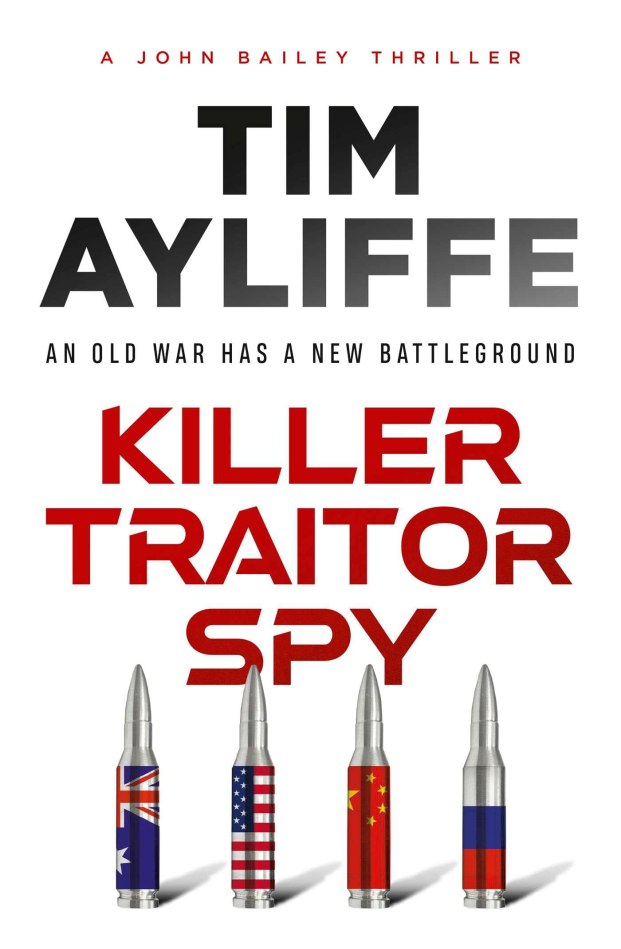
Killer Traitor Spy by Tim Ayliffe

Killer Traitor Spy Cover

Publisher: Simon & Schuster Australia (ebook – 5 July 2023)

Series: John Bailey – Book Four

Length: 310 pages

My Rating: 4.5 out of 5 stars

Amazon

One of Australia’s fastest rising thriller authors, Tim Ayliffe, returns with the fourth book in his outstanding John Bailey series, Killer Traitor Spy, which sees Cold War espionage re-emerge right in the heart of modern day Australia.

Over the last few years I have been having an amazing time reading a particularly cool Australian thriller series, the Jon Bailey books by journalist Tim Ayliffe.  Following a damaged investigative reporter who relentlessly follows his stories no matter how dangerous they are, the John Bailey books are an outstanding series that combined intriguing storylines with compelling and highly insightful depictions of modern-day Australia.  This series has so far featured three fantastic books, The Greater Good, which looked at Chinese interference in Australian politics; State of Fear, which examined Islamic radicalisation; and The Enemy Within, which presented a compelling look at Australian white supremacism.  I have deeply enjoyed all three of Ayliffe’s previous novels and I was very glad that I managed to get a copy of his fourth book, Killer Traitor Spy, a few weeks ago.

After a sex worker is accidently poisoned by a deadly neurotoxin, it quickly becomes clear that someone is trying to kill Russian millionaire Dmitry Lebedev.  As Dmitry disappears into the wind, reporter John Bailey finds himself drawn to the mysterious events, especially as his old friend, Scarlett Merriman, was the unintended victim.  As Bailey begins to dig into the circumstances around Scarlett’s poisoning, he soon discovers a hidden world of spies, espionage and secret deals, all tied to his long-time friend, CIA agent Ronnie Johnson.

It soon becomes apparent that Dmitry was an undercover spy secretly working with Ronnie and providing insights into Russian espionage efforts in Australia.  His latest bit of intelligence could expose a deadly traitor working at the highest echelons of the government, and many people wanted him dead to keep that a secret.  As Ronnie attempts to bring him in, he finds himself being targeted as well, as whoever tried to kill Dmitry has just framed Ronnie for murder.

Now on the run from the authorities and with no official backup to help him, Ronnie has no choice but to call on Bailey to help him investigate the attempted assassination and uncover the traitor.  But the more Bailey works with Ronnie, the more he discovers the dark side of the espionage business and the fact that nobody is what they seem.  Moving from the deadly urban sprawl of Sydney to the secretive suburbs of Canberra, can Bailey and Ronnie find the truth before it is too late, or will they be the latest victims of an insidious intelligence plot threatening to undermine the entire country?

This was another great book from Ayliffe, who continues to impress me with his intense and addictive reads.  Killer Traitor Spy served as a brilliant fourth book in the series, and I had such a wonderful time getting through this captivating and clever story that I ended up reading this book in a single day.

Killer Traitor Spy has a great story behind it that I instantly got hooked on.  Ayliffe sets up a fast and high-stakes narrative for his fourth book that brings in some compelling real-life spy elements to increase the realism and impact of the plot.  Starting off with a failed assassination, some fantastic spy elements, and a great reintroduction to Ayliffe’s relentless protagonist, the author gets Killer Traitor Spy going strong, and it barely slows down after that.  The author weaves together a complex net of mystery and espionage as the protagonists try to find the missing Dmitry, while also uncovering Russian agents working in Australia.  The fantastic web of murders, betrayals and lies proves to be very compelling.  There are several interesting reveals and clever turns as the plot progresses, and I loved how the story soon moved to Canberra with a ton of fun scenes.  Ayliffe really raises the stakes in the second half of Killer Traitor Spy, and the final reveal of who the various traitors and culprits are proves to be very satisfying.

I honestly had a hard time putting down this awesome book, and I wasn’t kidding when I said I read it all in a single day.  Ayliffe did a fantastic job of making his complex and compelling story as fast-paced and addictive as possible, and there wasn’t a single scene in this book that slowed me down.  There were a ton of great features to how Ayliffe wrote Killer Traitor Spy, and I personally loved how the plot featured a fun combination of journalism, espionage and mystery throughout.  While there is a bit of action throughout the book, the focus is always on uncovering the deeper secrets, and I loved seeing the different methodologies that the various protagonists used.  The author’s reliance on multiple character perspectives in Killer Traitor Spy was a particularly effective feature, especially as you got even more scenes from the always entertaining Ronnie Johnson.  This allowed Ayliffe to really separate out the various focuses of his novel, and the contrasts between Bailey’s scenes, where he investigates, and Ronnie’s scenes, where he uses more direct methods, are a lot of fun.

Unsurprisingly, the scenes focusing on journalism and investigative reporting are very impressive and insightful as Ayliffe makes full use of his background to dive into the intricacies and secrets of the trade.  However, the more espionage focused sequences are also really clever and helped ensure this book felt a lot like his original novel, The Greater Good.  The focus on the various espionage concerns in Australia were really quite compelling, and it was clear that the author did a lot of research around it.  I recognised quite a few espionage elements featured in the novel from Australian news stories, and the author covers a lot of compelling ground as a result.  I particularly liked the focus on Australia’s strategic importance, the intelligence relationship it has with other Western nations, the examination of potential espionage elements currently running around the country, and there was even a fun inclusion of the infamous “Havana Syndrome” and the potential weapons behind it.  I really enjoyed this deep dive into potential Russian espionage in Australia, and it was certainly eye opening in places, especially considering current world events.  This excellent novel really draws you in quickly and I had such an outstanding time getting through it.

One of the things that I have always deeply appreciated about the John Bailey books is the way in which Ayliffe masterfully depicts and utilises his Sydney settings throughout the stories.  So many of Sydney’s suburbs, iconic areas, and even several restaurants and bars serve as either key locations or have cameos throughout the series.  It is always very cool to see locations you are familiar with utilised in fiction, and Ayliffe always does such a wonderful job of showcasing these locales in his stories, which really help to draw Australian readers in.  This continues to be the case in Killer Traitor Spy, as several different areas of Sydney are featured strongly throughout the plot. Ayliffe, who clearly has a lot of love for Sydney, has fun bringing these locations to life throughout this book and it was really fascinating to see how he fits his narrative around these real spaces.  A good chunk of the second half of the book is set in my hometown of Canberra. As the national capital hosting government agencies and politicians, Canberra is an excellent setting for a spy thriller book such as Killer Traitor Spy, and it was great to see it utilised as such within this book.  I had a ton of fun seeing the characters reference areas that I see all the time, and it was awesome envisioning some of the action occurring within them, especially as most of our scandals aren’t so thrilling.  I also had a chuckle at all the inside jokes or references that Ayliffe layered into the story around these settings, such as his very accurate description of the drive between Sydney and Canberra (it really is that visually boring).  This excellent use of real locations as a backdrop really helped to drag me even further into Killer Traitor Spy and I really appreciate it when authors draw from their own experiences to help tell an awesome story.

Finally, I must highlight the character work featured in Killer Traitor Spy.  The intrepid and damaged protagonists have always been a big reason why the John Bailey books have been so successful as you grow very attached to these complex figures.  I have a lot of love for the impressive character growth that has surrounded the main character of John Bailey in the lead-up to Killer Traitor Spy and it was really moving to see him finally have his life together, despite all the traumas he has experienced.  This also allowed him to focus more on his journalistic work, and watching the dogged, veteran reporter chase down several stories in his usual gruff and unrelenting manner was a ton of fun.  Of course, Ayliffe did add in a few more issues for him in Killer Traitor Spy, both psychically and ethically, and I will be interested to see how they impact him in the future.  Ayliffe also features quite a lot of Ronnie Johnson in this latest novel as well, which was a major plus in my book.  Ronnie has always been a fantastic character (he caused a damned Harold Holt moment in the first book), and it was great to see him a much more of a central figure in Killer Traitor Spy.  His more espionage and violence focused chapters balance out Bailey’s chapters in some compelling ways, and I enjoyed the fantastic deeper dive into the relationship between these two protagonists that emerged as a result.  Ayliffe’s use of these two main characters was a real highlight of Killer Traitor Spy and I really appreciated the powerful story the author wove around them.

Overall, Killer Traitor Spy is a fantastic novel from Tim Ayliffe that did a wonderful job continuing his excellent John Bailey series.  A complex and entertaining Australian thriller, Killer Traitor Spy was a ton of fun to read and I really got hooked on it compelling and fast-paced story.  With great characters, a complex plot, and some intriguing Australian inclusions, Killer Traitor Spy is well worth the read, especially if you loved the previous books in the series.

Amazon

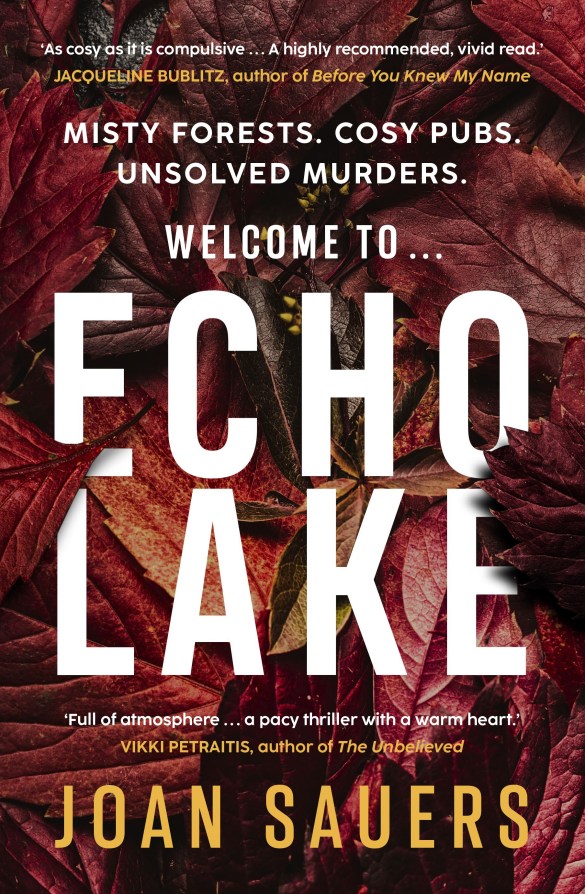
Echo Lake by Joan Sauers

Echo Laker Cover

Publisher: Allen & Unwin (Trade Paperback – 2 May 2023)

Series: Standalone/Book One

Length: 375 pages

My Rating: 4.25 out of 5 stars

Amazon

Acclaimed Australian screenwriter Joan Sauers makes her crime fiction debut in a big way with the clever and enticing mystery novel, Echo Lake, a riveting read that makes great use of its iconic Australian setting.

Following an ugly divorce, historian Rose McHugh decides to completely uproot her life and move out of the hustle and bustle of Sydney.  Following her dreams of a rural lifestyle, Rose moves to the Southern Highlands of Australia, buying a rustic cabin outside the town of Berrima.  However, despite her hopes of an idealised and quiet life in the countryside, Rose is about to discover that the Southern Highlands have some big secrets.

After an encounter with a local thug, Rose makes an intriguing discovery of an undeveloped roll of film buried in her back garden.  Burning with curiosity, Rose develops the photos, only to discover that they contain the last known pictures of a beautiful young woman who went missing six years earlier and who the police suspect was murdered.  Fascinated by the mysterious turn of events, Rose decides to do her own digging into the case.

However, rather than the fun adventure she was expecting, Rose soon finds herself in grave danger when one of the people she talks to winds up dead.  Going against the advice of the police, Rose continues her investigation, working with a cohort of new friends from around the local towns.  But the closer she gets to the truth, the more she discovers that there is something sinister going on in her new home.  Can Rose uncover the truth before it is too late, or will she also end up a cautionary tale of the Southern Highlands?

This was an excellent first novel from Sauers, who takes the reader on a magical and entertaining journey into a great Australian setting with this gripping murder mystery.  Echo Lake is a fantastic read that really does a good job of drawing you in with its scenic and beautiful locales before hooking you with the captivating mystery.  Sauers starts the story off strongly, showcasing the location while also introducing you to protagonist Rose McHugh, whose complex history, relationships, and canine companion makes her quite an appealing character.  The initial chapters focus on her getting her bearing in the various towns of the Southern Highlands, including meeting members of the supporting cast, before she is dragged into the mystery of the missing woman thanks to a discovery of film in her backyard.  From there the mystery develops at a quick pace, as a witness is murdered, and Joan finds herself both a target and a suspect.  Doing her own investigation, she uncovers several new clues that slowly begin to unravel the mystery, which becomes her new obsession.  At the same time, Sauers provides an intense and compelling examination into Rose’s life in the Southern Highlands, as well as her complex history and desires for the future.  There are some moving moments as Rose attempts to get her life on track and this ties nicely into the final revelations about who the killer is and how they have been targeting people.  This results in an intense and captivating conclusion that I was pretty hooked to, and this ended up being a really good and entertaining read.

I quite liked how Echo Lake turned out, and Sauers did a fantastic job of creating a novel that was both exciting and heartfelt.  Echo Lake falls within the cosy mystery subgenre as the book is often focused on Rose’s life and amateur sleuthing rather than scenes of death and carnage.  I felt that the author got the right balance of character development, scene setting and personal drama within Echo Lake that served as a great counterbalance to the crime fiction side of things.  You really get to know and appreciated Rose and the cast of supporting characters, and it will be fun to see them again if Sauers ends up doing a sequel.  I will admit that I wasn’t always the biggest fan of the protagonist, mainly because Sauers gave her psychic vibes (a major cliché for me) and she makes a lot of silly decisions.  Despite this, I still really enjoyed her emotional journey, and she served as a great focus for the plot.  Sauers also produced a great mystery in Echo Lake, and I liked how twisty and complex it got in the places.  The raft of intriguing and memorable supporting characters worked to create multiple possible suspects, each of whom may have had a connection to the case, and you are left wondering for a good portion of the novel who might have done it.  I think the eventual reveal of the killer was done well and Sauers set it up with some clever clues.  As such, this ends up being a very impressive read and I had a great time getting through this classy and compelling read.

While I loved the story and characters, for me the best and most iconic part of Echo Lake was the author’s brilliant use of setting as she explores the Southern Highlands of Australia.  The Southern Highlands is a historical area of Australia that lies between Canberra and Sydney, and which is now filled with picturesque small towns that cater to the tourist trade.  Sauers’ is clearly a fan of this area and makes great use of this setting throughout Echo Lake, featuring several notable local towns and bush locations, often in entertaining and clever ways.  Due to a lifetime of travelling between Canberra and Sydney, I am well familiar with these towns, and I can say that Sauers did a pretty awesome job of capturing their feel and layout.  You can really sense each town’s distinctive vibes through Sauers’ writing, and I loved how she captured the beauty and sense of community that they have.  The author goes out of her way to feature as many iconic places from these locations as possible, including several of the better cafes, stores, pubs, and even the local dog park.  I was personally happy that Sauers featured the iconic and fun antique shop, Dirty Janes, in her novel (a favourite of my wife/editor), and Echo Lake often came across a bit like a tourist brochure at times.

However, the really impressive setting descriptions in Echo Lake come when Sauers looks at the bushland that surrounds the central town locations.  Many of the most dramatic moments of Echo Lake occur out in the ancient bush and walking trails the area is known for, and the author does a beautiful job showing how isolated, quiet and hauntingly beautiful these bush locations can be.  These descriptions run the gauntlet from awe-inspiring to extremely sinister, depending on the tone of the story, but they always work to enhance the book no matter the scene.  As such, I was deeply impressed by the authors use of setting, and I loved how well she featured this familiar Australian location into this amazing novel.

Overall, Echo Lake was a great first novel from Joan Sauers who produced a comfortable and intriguing Australian murder mystery.  I loved the interesting story and striking settings of Echo Lake, which work wonderfully together to produce a captivating and entertaining read.  A fantastic novel that is really worth checking out.

Amazon

Judgement Day by Mali Waugh

Judgement Day Cover

Publisher: MacMillan (Trade Paperback – 28 February 2023)

Series: Standalone/Book One

Length: 327 pages

My Rating: 4.5 out of 5 stars

Amazon

Fantastic new author Mali Waugh presents her excellent and memorable debut with the Australian crime fiction read, Judgement Day.

Family law judge Kaye Bailey is a woman on the rise.  An honest and determined member of Melbourne’s Federal Circuit Court, Kaye is set to be the next chief judge, allowing her to make the changes she’s always dreamed about to make a real difference.  However, hours after finding out about her promotion, Kaye is brutally murdered in her chambers.

Detective Jillian Basset has just returned from maternity leave and is having trouble balancing motherhood with her complicated career.  Brought in with an arrogant partner to investigate the killing at the courthouse, Jillian hopes to crack the biggest case of her career.  However, the murder of Judge Bailey is far more complicated than anyone anticipated, as the victim was a fierce and honest woman whose determination caused her to get on the wrong side of many of her colleagues and the people she ruled on.

As the detectives dive deeper into the judge’s life, they soon find themselves surrounded by potential suspects, from jealous judges to dangerous individuals with grudges against the entire family law system.  As they attempt to understand who wanted to kill their victim, Jillian also finds her own life getting even messier, as her return to work raises problems she has been trying to avoid.  Can Jillian crack the case before her own life spirals out of control?

Judgement Day was an amazing and captivating Australian novel that got my attention early on.  Waugh pulls together a powerful and intense narrative that combines a brilliant murder mystery storyline with some fascinating legal thriller elements to produce a particularly impressive debut.

Waugh has come up with an excellent crime fiction narrative for her debut novel, and I liked the fantastic blend themes and story elements that she introduced throughout the book.  Judgement Day starts off with an extended prologue that quickly and effectively sets the scene for the plot, introduces the victim and other key suspects, and showcases the events that led up to her murder.  From there, the book primarily focuses on the main character of Detective Jillian Basset, a recent mother who is going through various personal issues as she tries to get back into her career.  Forced to work with a new, glory-seeking partner, Jillian finds the journey back into the detective groove hard, but she is soon diving into the complex case before her.  Waugh sets up an outstanding police procedural storyline here, as the character being their careful dive into the victim’s life, trying to identify who would have wanted to kill her.

The story moves along at a steady pace and the reader really gets drawn into learning about who the victim is and who might have wanted to kill her.  Waugh loads up the story with a ton of great suspects and potential motives at this point, as the protagonists find out about all the drama that occurs behind the scenes of the court system.  This takes the story in several intriguing directions, and you are soon hooked on the various leads that are presented to you.  At the same time, Waugh paints a very complex and heartbreaking tale about the main character’s personal life, which I found to be just as interesting and moving as the tragic murder of the main plotline.  The rest of the story moves very swiftly, especially as you are pretty invested in solving the case, and I personally managed to knock the second half of the book off in a single night.  Several intriguing plot points from earlier in the book, including an infamous divorce case, jealousy from other judges, a kidnapping, and some intriguing character history, are brought together in a very clever way as the solution to the murder presents itself.  Waugh set everything up extremely well, and I really liked the clever clues and hints that she had scattered through the rest of the book.  The final resolution of the case, as well as the reveal of the murderer’s motivation and methods, was handled well, and I really liked how Waugh brought everything together and left the reader with a very satisfying conclusion.

While the story itself is very strong, I also liked some of the clever and compelling elements that Waugh added in to make it even more complex and emotionally powerful.  The most prominent of these is the inclusion of some fascinating legal thriller elements that enhanced Judgment Day’s police procedural storyline and really helped to book stand out to me.  Waugh uses all her experiences as a lawyer to paint an intriguing picture of the family court system in Melbourne, and the struggles and work of its judges become a key part of the plot.  This leads to several other intriguing elements, such as domestic violence and the issues that professional women face in the workforce, especially when it comes to balancing family and the opinions of their male colleagues with a successful career.  These elements are blended into the narrative in a smart and thoughtful way, and I liked how it forced the protagonists to examine the case from several different angles.  While these intriguing elements are great, the focus on classic police work is still very strong, and I really enjoyed the impressive mystery that Waugh wove together in Judgement Day.  The author’s focus on the character development and personal issues added a great deal to the overall story, and this ended up being quite a powerful read.

The characters that Waugh chose to focus the story on are a particular strength of Judgement Day, and I deeply appreciated some of the emotionally rich personal storylines that developed around them.  In particular, Detective Jillian Basset was a brilliant lead, and you can tell that Waugh really poured her heart into her development.  Not only was she everything you want in a police detective protagonist, smart, determined and empathetic to the victim, but she is also dealing with some deeper issues related to her recent maternity leave.  While this initially shows itself to be her struggling to return to the office and fearing losing her place on the team, Waugh slowly reveals that her issues are much more concerning as she is suffering from postnatal depression.  Feeling unable to connect with her new child, Jillian instead focuses on her work and neglects her family, leading to strain and conflict in her personal life.  Waugh does an excellent job of examining her protagonist’s personal issues throughout Judgement Day, and the frank and powerful look at her mental health concerns was a key part of the book.

I also need to highlight Jillian’s new partner, Sergeant John McClintock, who was brought in as her temporary replacement while she was on leave.  Now working together, McClintock initially comes across as an arrogant and ambitious male figure trying to overshadow the main protagonist, and the two have trouble working together.  However, rather than stick with this cliche, Waugh provides a deeper look into McClintock and you realise that a lot of his attitudes are a façade brought on by his own issues.  Waugh works these into the story really well, and Jillian and McClintock soon grow to understand each other and are able to help each other in their own ways.  This partnership becomes a great part of the book, and I enjoyed these two main characters, as well as the intriguing supporting cast of suspects, witnesses and Jillian’s family, which add a great deal to story as a whole.

Overall, Judgement Day was an impressive Australian crime fiction debut from Mali Waugh and one that I am very glad I got the chance to check out.  The outstanding story with its complex mystery, intriguing elements and fantastic characters ensured that I had an excellent time reading Judgement Day.  I think that Waugh really showcased her writing ability with her first book and I think this is the start of an amazing new talent.

Amazon

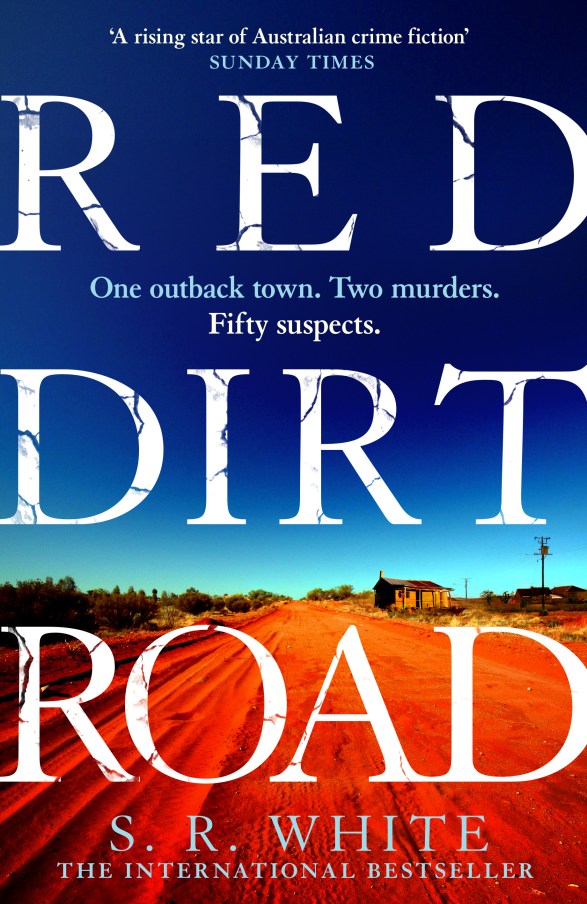
Quick Review – Red Dirt Road by S. R. White

Red Dirt Road Cover

Publisher: Headline (Trade Paperback – 10 January 2023)

Series: Detective Dana Russo – Book Three

Length: 307 pages

My Rating: 4.5 out of 5 stars

Amazon     Book Depository

Impressive author S. R. White continues to lead the Australian outback murder mystery scene with his new and compelling release, Red Dirt Road, the third book in his Detective Dana Russo series.  I had the great pleasure of reading the second book in this series, Prisoner, back in 2021 and I really enjoyed his unique take on the outback detective novel.  As such, I have been rather excited to read his new book, Red Dirt Road, especially as it featured a particularly enthralling mystery.

Plot synopsis:

One outback town. Two puzzling murders. Fifty suspects.

In Unamurra, a drought-scarred, one-pub town deep in the outback, two men are savagely murdered a month apart – their bodies elaborately arranged like angels.

With no witnesses, no obvious motives and no apparent connections between the killings, how can lone police officer Detective Dana Russo – flown in from hundreds of kilometres away – possibly solve such a baffling, brutal case?

Met with silence and suspicion from locals who live by their own set of rules, Dana must take over a stalled investigation with only a week to make progress.

But with a murderer hiding in plain sight, and the parched days rapidly passing, Dana is determined to uncover the shocking secrets of this forgotten town – a place where anyone could be a killer.


Red Dirt Road
ended up being a very fun and captivating murder mystery novel and one I had a wonderful time getting through.  I really enjoyed White’s cool and clever plot scenario and the entire concept of a cop attempting to solve a mystery in a small town with limited suspects is a fun idea that harkens back to classic whodunits.

Red Dirt Road’s story itself hits the ground running quickly, as complex protagonist Dana Russo is forced to travel to the small town for the investigation and soon becomes wrapped up in its many foibles.  This includes the sheer isolation, the lack of modern comforts and the unusual locals, many of whom are hiding from the outside world.  There is also a set of creepy angel-themed statues that mysteriously move around town, the work of a guerrilla artist who has remained hidden since the murders began.  With time restrictions on her investigation and with minimal help from the local police, Dana initiates an unconventional investigation that focuses on understanding Unamurra’s society and its people to solve the crime.  After getting to grips with the various people living there, as well examining other clues and evidence, she is able to figure out which one of the town’s residents is the most likely killer and confronts them in a particularly fascinating reveal sequence.  The full explanation for why the crime was committed, as well as the ingenious and very distinctive motivation of the murderer, was exceedingly clever, and I felt that White set everything up perfectly.  While certain elements of the conclusion were a bit over-the-top, (a very unrealistic elite government SWAT team comes to town), I felt that the story was pretty damn impressive and I was absolutely blown away with the elaborate motivation that the author came up with.  The plot of Red Dirt Road also simultaneously continues some of the series’ ongoing storylines, such as Dana’s personal relationship with her co-worker and the internal police politics that are impacting her career, and this ended up being quite a gripping read as a result.

One of the most noticeable things about Red Dirt Road was the unique, society-orientated investigation method that the protagonist used to understand the people of Unamurra and find out who the killer was.  I personally thought that this was a very smart and intriguing way to frame a murder investigation that worked extremely well in the context of the setting and the series.  When I reviewed Prisoner I noted that White likes to highlight the interrogation side of policing with his writing and this was once again in full display when it came to how Dana gathers information in Unamurra.  The flurry of casual conversation she engages in ensures she picks up all the knowledge about the town and people she needs, while also putting the potential suspects at ease as they don’t understand her style or the subtle reasons behind her lines of inquiry.  This information, when combined with some observations and additional background she gets from headquarters, allows her to pull together a full mental picture of the town and by understanding them and their needs she finally gets the insight she needs to understand the entire situation.  This results in a very unique case, and I found myself getting really wrapped up in both the characters and the setting while trying to wrap the clues together in my head.  While this style of investigation probably isn’t going to fit every murder mystery fan’s taste, I felt that it worked extremely well and I loved how the elaborate motivation was teased out through these discussions.  The final confrontation with the killer and the various revelations it contained really ties all these previous discussions together perfectly and you quickly realise just how cleverly White structured his entire mystery.

On top of the cool investigation method, I also deeply enjoyed the dusty and desolate setting of Unamurra that served as the backdrop to the murders.  White really tries to show the reader the full experience of such a lonely and decaying town, and thanks to the excellent descriptive writing you can absolutely picture every cloud of dust, quiet night, and the lack of movement.  At the same time, the protagonist begins talking to each of the residents of Unamurra and you really get to understand the sort of people that would live in such a place, whether they are desperate, trapped, or have their own strange motivations.  This excellent use of setting and compelling supporting characters greatly enhances the book’s already complex murder investigation, and I felt that White did an amazing job of working it into the larger narrative and mystery.  The sheer isolation impacts every decision and insight that Dana has and you really come away trying to imagine what life in such a location would be like.  While White does overgeneralise some areas of rural Australia in his book, especially as he makes the location of these crimes geographically vague, this setting added a great deal to the impact of Red Dirt Road and I deeply enjoyed my time in the elaborate setting of Unamurra.

Overall, Red Dirt Road was an outstanding new book from S. R. White that perfectly highlighted his distinctive take on a murder mystery investigation.  Combining another outstanding outback setting with a unique case, Red Dirt Road will have you hooked all the way to the fantastic finale.  I cannot wait to see what complex stories White comes up with in the future, but if they are anywhere near as clever and enthralling as Red Dirt Road, I know I am going to love them.

Amazon     Book Depository

How to Kill a Client by Joanna Jenkins

How to Kill a Client Cover

Publisher: Allen & Unwin Australia (Trade Paperback – 31 January 2023)

Series: Standalone

Length: 384 pages

My Rating: 4.5 out of 5 stars

Amazon

Australian lawyer and debuting author Joanna Jenkins introduces herself in a big way with her fantastic first novel, the legal thriller How to Kill a Client, which takes the reader on a fascinating journey to the dark side of Australia’s legal profession.

As the in-house lawyer at a powerful international mining company, Gavin Jones oversees millions of dollars’ worth of legal contracts each year, including to the Brisbane office of the Australian legal firm Howard Green.  Using them to negotiate lucrative contracts throughout Australia, Jones has become one of Howard Green’s biggest clients and the money he controls ensures that everyone at the law firm treats him like a god.

But while everyone fawns over Jones and his power, no-one actually likes him.  A cruel, petty and vindicative man, Jones has messed with the careers and lives of everyone in his orbit, especially women, who he reserves a particular disdain for.  His actions ensured the suffering of everyone he has power over, including his wife, his employees, and the female partners at Howard Green, as he seeks to wreck lives, destroy careers and give himself the lifestyle he feels he deserves.

So when Jones dies suddenly and suspiciously, everyone he knew is a potential suspect; thanks to his dodgy dealings and underhanded tactics, they all had a motive to kill him.  As the police begin their investigation and the lawyers at Howard Green close ranks, it falls to partner Ruth Dawson, one of the few people without a motive, to protect her firm and its secrets.  However, when her investigation reveals proof of who killed Jones and other dark secrets her firm is hiding, will Ruth reveal the truth or will she bury it to protect her firm?

How to Kill a Client is a clever and tricky novel that really showcases Jenkins’s skill as a new writer.  Blending a fantastic and compelling crime fiction narrative with intense looks at the lifestyle of members of a successful law firm, How to Kill a Client was a gripping and interesting read that is really worth checking out.

I loved the cool story contained within this book which came across as part legal thriller, part personal drama surrounding high-level professionals, and part intriguing murder mystery.  The story dives into the chaotic world surrounding the legal firm of Howard Green and its clients and effectively introduces all the key players in this drama, who have their own views on the troubles to come.  Each primary characters is connected to the eventual victim, Gavin Jones.  Jenkins spends the first half of the book showcasing Jones’s terrible nature and the various ways they are messing with everyone.  Cleverly utilising multiple character perspectives, you are soon drawn into the various main characters’ lives and soon see all the various reasons why each of them may have wanted to kill Jones, as well as some of the suspicious steps some of them took.  Jenkins perfectly sets up everything in the first part of How to Kill a Client, and by the time you reach the halfway point, you are firmly enthralled by the narrative and want to see how the rest of the book unfolds.

When the eventual death happens (a real high point) the reader is left wondering whether it was an accident, a mistake, or a deliberate action, with the evidence pointing towards a murder.  However, due to the sheer range of suspects and motives, the story produces a twisty and fun range of plotlines that you need to navigate to get to the final conclusion.  Jenkins really produces an emotional and captivating second half as you try to find out who killed Jones and why.  There are some brilliant revelations unfurled here, and I loved how some cunningly hidden clues in the first half of the book were utilised in the final mystery.  I was very impressed with the final reveals around how the killing was committed and why it happened, and you will come away from this story very satisfied, especially as Jenkins builds in some excellent character moments and ensures that all the remaining characters get a fitting end to their arcs.  I found myself getting really caught up in Jenkins’ powerful and amazing story and I honestly powered through the last half of the book very quickly to see how everything ended.

Part of the reason why How to Kill a Client is such an effective read is that Jenkins introduces an excellent cast of intriguing and complex characters who are thrust into a variety of compelling situations throughout the course of the narrative.  Each of the main cast, who Jenkins effectively builds up and utilises in the plot, are quite damaged, desperate or concerned in their own unique way, while many of the supporting characters are notably selfish or manipulative for their own ends.  Characters like Ruth Dawson and Viv Harrison give some compelling and honest insights into how women are treated in this influential professional setting, while Anne Jones shows the harsh reality of a women trapped in an abusive relationship.  At the same time, there is a great collection of supporting lawyer characters who Jenkins uses to show off the range of people and personalities one is likely to experience in Australia’s legal services.

However, out of all the characters in this book, the one I must highlight the most is probably the murder victim, Gavin Jones, mainly because he is such a despicable figure.  Jenkins really goes out of her way to make Jones into one of the most unlikable and petty characters you are ever likely to find in fiction and boy does she succeed, perfectly capturing an insecure and manipulative narcissist who enjoys controlling people.  Not only does he go out of the way to try and ruin the careers of several characters just because they are women, but he also demands attention from the male characters to feed is ego, while also abusing and controlling his wife to make him feel good.  In a very short amount of time Jenkins builds Jones up into such an unlikable character that the reader finds themselves trying to reach into the book and kill him before the murderer does.  This naturally adds quite a lot to the mystery of the book, as his malicious professional actions, deceits, violence and puppy killing (seriously, that one really angered me), ensures that everyone he came in contact with had a reason to murder him.  The huge suspect pool around this unlikable character allows Jenkins to craft an impressive murder mystery and you’ll really get drawn into finding who finally snapped and killed this infuriating character.  This villainous figure, and other great characters, all added so much to the plot of How to Kill a Client and really got invested in their stories very quickly.

One of the other features of How to Kill a Client that I particularly enjoyed was the author’s detailed and intriguing examination of an Australian law firm.  Clearly utilising all her past experiences as a lawyer, Jenkins perfectly showcases how a firm would work and act in a variety of scenarios, and you really get the senses of the day-to-day chaos the individuals working there would experience, which adds a lot of authenticity to the story.  Jenkins also dives into the backroom drama and politics that surround such entities, as the various lawyers cut deals and fight for control over various projects or clients.  There is a particularly cynical edge to the book’s portrayal of legal firms in this novel, and Jenkins shows it to be a dark and unfulfilling practice at times, especially in some of the more elite firms.  The author really showcases just how bad these companies are when it comes to the treatment of women as two of the book’s central characters are female partners in Howard Green who have to constantly deal with their male colleagues’ condescension and manipulations, and there are several pointed scenes where the arrogant male managers fail to listen to the women even when they are right.  There is also a focus on the way law firms sycophantically woo potential clients, bending over backwards to get hired, and this adds some intriguing angles to the drama.  Finally, there is also quite a dark look at the demand for profits over people, as there is a constant fear of firings and layoffs, even for the best employees.  This critical presentation of a professional law firm is pretty striking and it results in some powerful scenes throughout the course of the book, especially as the people stuck in these firms often refuse to escape it, no matter how bad it gets.  I felt this examination of the profession in Australia added so much to the outstanding story and it helps to make How to Kill a Client really stand out.

Overall, How to Kill a Client was an outstanding and captivating debut from new Australian author Joanna Jenkins and one I had a wonderful time reading.  Blending compelling legal elements with a fascinating, character-driven mystery, How to Kill a Client has a brilliant story that takes the reader on a powerful and twisty journey.  Slick, emotionally rich, and filled with exceptional characters, How to Kill a Client is one of my favourite debuts of 2023 so far, and I cannot wait to see what epic reads Jenkins will release in the future.

Amazon

Quick Review – Everyone in My Family Has Killed Someone by Benjamin Stevenson

Everyone in My Family Has Killed Someone Cover

Publisher: Michael Joseph (Trade Paperback – 29 March 2022)

Series: Ernest Cunningham – Book One

Length: 384 pages

My Rating: 5 out of 5 stars

Amazon

One of Australia’s fastest rising crime fiction stars, comedian turned mystery writer Benjamin Stevenson, returns with an outstanding standalone book that might be one of the best Australian crime fiction reads of 2022, Everyone in My Family Has Killed Someone.

One of my favourite Australian crime fiction authors now is the exceedingly talented Benjamin Stevenson, who has written some amazing works over the last couple of years.  Stevenson’s writing career began in 2018 when he released the amazing murder mystery Greenlight (which was subsequently released as Trust Me When I Lie and She Lies in the Vines outside of Australia).  A fantastic Australian crime fiction book with true crime elements to it, Greenlight followed a successful television producer who reinvestigates a murderer who was freed thanks to his show.  Stevenson followed Greenlight up in 2020 with the epic sequel, Either Side of Midnight, which saw the same protagonist investigate an impossible murder in what was one of my favourite Australian books of 2020.  Both these readers were pretty damn impressive, but Stevenson has saved his best work for the 2022 release, Everyone in My Family Has Killed Someone, which luckily has an outstanding story that matches the very cool title.

Plot Synopsis:

Everyone in my family has killed someone. Some of us, the high achievers, have killed more than once. I’m not trying to be dramatic, but it is the truth. Some of us are good, others are bad, and some just unfortunate.

I’m Ernest Cunningham. Call me Ern or Ernie. I wish I’d killed whoever decided our family reunion should be at a ski resort, but it’s a little more complicated than that.

Have I killed someone? Yes. I have.

Who was it?

Let’s get started.

EVERYONE IN MY FAMILY HAS KILLED SOMEONE

My brother

My stepsister

My wife

My father

My mother

My sister-in-law

My uncle

My stepfather

My aunt

Me

As the title and the intriguing plot synopsis above suggests, Everyone in My Family Has Killed Someone is an awesome read that sees Stevenson serve up an addictive narrative that is one part insane family drama and one part homage to classic detective novels.  I had an incredible time reading this book early on in 2022 and I honestly should have written a review for it well before now.

The plot of Everyone in My Family Has Killed Someone is pretty bonkers as it follows a very damaged protagonist, teacher and crime fiction mega-fan Ernest Cunningham, as he attends one of the most awkward family reunions in history.  Written from Ernest’s perspective as part of an in-universe book, Everyone in My Family Has Killed Someone sees Ernest reunite with the fellow members of the infamous Cunningham family at an isolated ski resort.  The black sheep of a dark family with criminal connections, Ernest has been invited to attend a special event: the release of his brother Michael from jail after Ernest testified against him.  However, once his brother arrives, a series of murders start to strike the resort, killing off several people.  With the ski resort cut off from the outside by the snow, it falls to Ernest to discover who is killing the remaining guests at the lodge.  However, everyone in his family is a suspect, as all of them have killed someone before, including Ernest, who has just as much motive as the rest.  As the book continues, it becomes very clear that someone in the Cunningham family has killed again, it’s just a matter of finding out which one did it.

I have to admit that I was pretty in love with this book from the opening pages, especially as it becomes clear early on that Stevenson planned to blend the book’s mystery with some great humour and brilliant homages to classic murder mysteries.  Stevenson lays out this story in a fun way that simultaneously focuses on the infamous main family, their complex past and relationships, while also presenting a compelling murder investigation that intentionally steals a lot of cues from classic whodunnits.  Stevenson introduces an outrageous cast of complex characters for the story, and they were very intriguing to follow, especially as they all have deeper issues brought on by the deaths they are responsible for.  The story at time transforms into a very moving and entertaining family drama, which helps to make the story richer and even more amusing.  The mystery itself is very clever, and I loved the multiple compelling twists and reveals that accompanied it as the protagonist is forced to dive back into every terrible event his family has been involved in, including murder, robbery, police corruption and kidnapping, all of which leads to final, devastating solution.  While the identity of the killer is a tad obvious, the reveal of why they are committing their crimes more than makes up for it, and Stevenson came up with one doozy of a motive.  However, the real highlight of the book is the way in which Stevenson sets out Everyone in My Family Has Killed Someone in the manner of an in-story chronicle written by the protagonist, which simultaneously takes on every established trope and rule of old-school detective novels and moulds it into itself.

As I mentioned a few times above, Everyone in My Family Has Killed Someone also acts as a homage to classic crime fiction novels, as Stevenson goes out of his way to simultaneously parody and revere the iconic detective genre.  The book starts with two intriguing elements: the membership oath of the Detectives Club (a secret society of classic crime fiction writers), and Ronald Knox’s ’10 Commandments of Detective Fiction’.  Both of these inclusions acknowledge the general tropes and rules of golden-age detective fiction, and they actually end up being used by the protagonist, and by extension Stevenson, as the main guideline for the mystery.  The author continuously refers back to this list as the novel continues (he even suggests folding this page down so you can revisit it when needed), and I loved how this mystery came together as the author tried to avoid breaking any of these rules.  The author also cheekily informs the reader in advance when in the book someone is going to die with an accompanying page number, ostensibly to allow the reader to jump ahead if needed.  However, as most people will continue through at the normal pace, it heightens the suspense a little as you get closer and closer to the page on which you know a death is going to occur.  Various elements like this, as well as a ton of self-referential internal monologues and discussions about the rules of whodunnits, gives this book an incredible meta feel, which Stevenson uses to full effect to tell a particularly hilarious story.  The author’s background as a comedian is on full display here as he creates an incredibly funny book, even with the continued murders and human tragedy.  These clever references are a great love letter to the classic detective novels, especially as he addresses them in such a satirical way, and all mystery lovers will get a real kick out this book as a result.

Overall, Everyone in My Family Has Killed Someone is an absolutely outstanding book that I cannot recommend enough.  While I have enjoyed Benjamin Stevenson’s mystery novels in the past, I think that Everyone in My Family Has Killed Someone is where he finally reveals his full potential.  Not only is the mystery itself brilliant, loaded as it is with compelling characters and a dark family history, but Stevenson finally showcases his impressive comedy skills and uses them to produce a truly delightful and incredibly addictive novel.  The combination of mystery, humour and a clever homage to the classics, is an intoxicating mixture, and it was near impossible to put this book down once you started reading it.  As such, I must give Everyone in My Family Has Killed Someone a full five-star rating, and it was one of the most entertaining books I read in all of 2022.  I have so much love for this book and I was very excited when I heard that Stevenson is releasing a sequel in October titled Everyone On This Train Is A Suspect.

Amazon