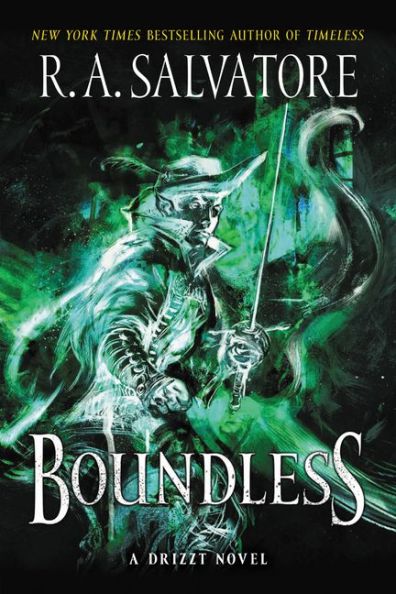
Boundless by R. A. Salvatore

Boundless Cover

Publisher: HarperAudio (Audiobook – 10 September 2019)

Series: Generations – Book 2

Length: 13 hours and 3 minutes

My Rating: 4.5 out of 5 stars

Amazon     Book Depository

From one of the world’s leading writers of fantasy fiction, R. A. Salvatore, comes an exciting and captivating new adventure that focuses on the author’s best-known protagonists, the Drow (dark elf) ranger Drizzt Do’Urden, his father Zaknafein, the rogue Jarlaxle and the Companions of the Hall.

Centuries ago, one Drow warrior was feared and respected above all others in the dark elf city of Menzoberranzan, the legendary weapon master Zaknafein. Even before the events that would eventually force him to sacrifice himself to save the life of his beloved son Drizzt Do’Urden, Zaknafein was never content with his life in Menzoberranzan. Sickened by the evil matriarchal system that rules the city in the name of the dark goddess Lolth, Zaknafein found himself trapped in the service of the ambitious Matron Malice Do’Urden. His only solace is his friendship with Jarlaxle, the charismatic leader of the mercenary band Bregan D’aerthe, with whom he forms a close bond. However, even this friendship is not immune to strife, as influential forces within Menzoberranzan attempt to turn the ranks of Bregan D’aerthe against Zaknafein.

Years later, Zaknafein has been mysteriously returned to life, finding himself in a strange new world, living within the dwarven kingdom of Gauntlgrym. Despite being reunited with his son, Drizzt, Zaknafein is once again lost; his inherent Drow distain for all non-dark elf life is making it hard for him to fit in with Drizzt’s dwarf, halfling and human friends and family. But as Zaknafein, with the help of Jarlaxle, attempts to find a new path, he is once again beset by dark and powerful opponents.

An ambitious family of human nobles from Waterdeep has combined forces with the ruler of Neverwinter, Lord Neverember, and a minor clan of dwarfs, in an attempt to topple Gauntlgrym’s king, Bruenor, and claim the elemental magical powers the great dwarven kingdom safeguards. While normally such foes would prove little threat to King Bruenor and his allies, these new enemies command a massive and ever-growing army of demons capable of overwhelming even Gauntlgrym’s substantial defences. In addition, their opponents are supported by a noble Drow House from Menzoberranzan whose matron, in a bid to become Lolth’s most favoured servant, is determined to be the Drow who finally captures Zaknafein and Drizzt. As father and son fight for their lives against their new enemies, they soon find themselves pursued by creatures far more sinister and destructive than anything they have seen before. Can the Companions of the Hall prevail, or will evil finally defeat the last bastion of light in the Forgotten Realms?

Boundless is another outstanding and incredibly enjoyable piece of fantasy fiction from one of my all-time favourite authors, the legendary R. A. Salvatore, who is easily one of the top fantasy authors of all time. This is actually the second novel from Salvatore this year, with the second book in his The Coven trilogy, Reckoning of Fallen Gods, having come out in January, and the final book in this trilogy, Song of the Risen God, is set for release in January 2020. In Boundless, Salvatore has once again returned to the iconic Forgotten Realms universe to produce another excellent story set around the character of Drizzt Do’Urden.

The dark elf ranger, Drizzt Do’Urden, is easily the most iconic and popular character that Salvatore has ever created. One of the few moral dark elf characters in all of the Forgotten Realms (the large-scale interconnected universe which has been the setting for a huge number of fantasy novels over the years), Drizzt has been one of Salvatore’s main recurring protagonist for over 30 years, ever since Salvatore’s debut novel, The Crystal Shard. I have long been a fan of Drizzt, mainly because of Salvatore’s amazing second trilogy of books, The Dark Elf trilogy, which told a captivating tale of a young Drizzt Do’Urden. Boundless is the 35th book to follow the adventures of Drizzt and his companions (if you include The Sellswords trilogy) and is the sequel to last year’s exciting fantasy adventure, Timeless. Boundless is also the second book in Salvatore’s current trilogy that focuses on Drizzt, known as the Generations trilogy, which is set to conclude next year in the final book, Relentless (a synopsis of which is already available online).

Boundless was an absolutely fantastic read which takes the reader on an epic thrill-ride through a demon invasion, the dark political underbelly of Menzoberranzan and into the heart and mind of one of Salvatore’s more complex and intriguing characters. Making exceptional use of two separate timelines, Salvatore tells a compelling and intricate story that combines a desperate battle for survival in the present with adventures in the past. Filled with action, adventure, amazing fantasy elements and an epic conclusion, this was a first-rate read that I greatly enjoyed.

This book was essentially impossible to put down from the moment I started listening to it, as Salvatore starts it off with an action packed prologue that sees a large force of halflings, dwarves and Drizzt face off against the horde of demons that were unleashed in Timeless. After this action-packed introduction, the book is then split into four parts, two of which follow the resulting battle for Gauntlgrym and the surrounding lands in the present (the present being Dalereckoning 1488), while the other two parts go back years before the events of the first book in The Dark Elf trilogy, Homeland, and tell a story of a younger Zaknafein and Jarlaxle in Menzoberranzan.

The parts set in the present offer a pretty exciting range of action and adventure as the story is split between several of the fun characters that Salvatore has introduced in all of his Forgotten Realms books. For example, throughout these parts you get to see the destructive siege of Gauntlgrym from the perspective of Bruenor, Zaknafein, Jarlaxle and the Bouldshoulder brothers (who originated in The Cleric Quintet, another one of Salvatore’s Forgotten Realms series). At the same time as Drizzt is being pursued throughout the land by a powerful magical construct, Wulfgar is caught up in an invasion of Luskan by a powerful fleet of monsters, and Regis teams up with Dahlia and Artemis Enteri to investigate their demonic opponents in Waterdeep. This was a fantastic blend of storylines in the present-day parts of the book, and I really enjoyed seeing the various adventures and perils assailing this great group of protagonists. All of the storylines in this part of the book were a lot of fun, and I really enjoyed the larger narrative that they were telling. These modern-day storylines end with a major cliff-hanger which is going to make me really want to check out the next book in this trilogy.

While the parts of the book set in Dalereckoning 1488 are pretty awesome, I have to admit that I much preferred the half of the book set back in the past. This part of the book was set over a period of several years and follows a younger Zaknafein and Jarlaxle as they navigate the highs and lows of their original friendship in the darkness of Menzoberranzan. I really liked this storyline, as it not only contained the politics, backstabbing and casual murder that makes all the stories set in Menzoberranzan so much fun, but it also explores Zaknafein’s psyche and starts to explain why he was a different Drow to the other members of his race when he was first introduced in The Dark Elf trilogy. It was also interesting to see the early days of Jarlaxle’s rise as a mercenary leader, and there is also a number of intriguing scenes that feature other Drow characters, such as Drizzt’s mother, Matron Malice, who have been dead for a while. As a result, these parts of the book serve as an excellent prequel to The Dark Elf trilogy, of which I am a massive fan. In addition, these chronologically earlier parts of the book serve to introduce some of the Drow antagonists who are threatening the characters in the present day, and it really interesting to see how the actions of Zaknafein and Jarlaxle hundreds of years in the past are impacting on the future.

I really loved this combination of the two separate timelines in the book and felt that it helped create a fantastic overall narrative. The earlier storyline of Drow house politics, friendships and small-scale grudges contrasts well with the intense war and near constant peril that makes up the 1488 storyline and helps to create a much more compelling book. I also really enjoyed how story elements, such as the exploration of Zaknafein and Jarlaxle’s friendship, or the examination of the cruel dynamics of Drow society, continued on from one part of the book to the next, and it was interesting to see how relationships and minds can change over time.

If there is one guarantee in life, it is that a Drizzt Do’Urden novel is going to feature some fancy swordplay and a ton of action. Boundless is no exception to this rule, as Salvatore has once again furnished his story with all manner of intense and detailed action and battle sequences, as his protagonists fight a variety of opponents. This makes for an exciting and really enjoyable read, as it always fun to see the various ways the Companions of the Hall engage in battle, especially since they have built up quite an impressive array of magical weapons and abilities after 35 books. In addition, Salvatore has come up with some unique and powerful opponents for this book, including two powerful magical constructs that are all but invincible and require extreme measures to combat. The parts of the book set in Menzoberranzan’s past also feature a wide array of dazzling duels and battles from Zaknafein, as he is forced to prove that he is the best weapons master in the city. The author shows off some truly impressive fight sequences in the parts of the book focusing on Zaknafein’s earlier life and Salvatore does a fantastic job providing the reader with a blow-by-blow account of what is happening. I also really liked how the author included several scenes that showed Zaknafein training for future battles in which he attempts to work out the best way to perform some elaborate or near-impossible combat move, which of course would then be utilised in a later fight. Needless to say, those looking for their next dose of fantasy action should look no further than Boundless, as Salvatore has once again provided one hell of a hit.

While I did read a physically copy of the previous book in the series, Timeless, for Boundless I ended up listening to the audiobook format instead. Boundless’s audiobook is narrated by Victor Bevine and runs for just over 13 hours, which only took me a few days to get through. I ended up having a great time listening to Boundless, especially as listening to a blow-by-blow of the amazing action sequences really helped bring these scenes to life for me. Bevine did a fantastic job of breathing life into the book’s various characters, and I really enjoyed the way that he captured the personalities of several of the characters with his performance. I also appreciated the way that he was able to emulate a number of very different characters and species throughout the course of the audiobook. Not only did he come up with sly and calculating voices for the various Drow characters, but he was also able to affect an impressive brogue for the various dwarven characters in the book. This is a fantastic range, and I quite enjoyed all of the voices that Bevine came up with. As a result, I would definitely recommend the audiobook version of Boundless to anyone who is interested, and I think that I will try to listen to next book in the trilogy.

Overall, Boundless is an outstanding and incredible new release from Salvatore, and I loved every second that I was reading it. Featuring a ton of action and some really cool plot elements, Salvatore tells a clever and intricate story that sets some high stakes for his beloved characters. Not only am I excited to see where the story goes in the next book, but I also have a very strong urge to go back and check out Salvatore’s The Dark Elf trilogy, where some of the fantastic characters explored in this book were first introduced. With this latest novel, Salvatore continues to show why he is one of the biggest names in fantasy fiction, and it is thanks to books like Boundless that I will continue to grab every new Salvatore release I can get.

Amazon     Book Depository

The Night Fire by Michael Connelly

The Night Fire Cover

Publisher: Hachette Audio (Audiobook – 22 October 2019)

Series: Ballard and Bosch – Book 2

Length: 10 hours and 4 minutes

My Rating: 5 out of 5 stars

Amazon

One of the masters of modern crime fiction, Michael Connelly, returns with another book in his bestselling interconnected crime universe. In The Night Fire, Connelly once again brings together the outstanding team of Ballard and Bosch for another exceptional murder mystery.

Back when he was a rookie detective, Harry Bosch was mentored by one of the LAPD’s best homicide detectives, John Jack Thompson, who helped stoke his internal fires of justice to ensure that no case ever goes unsolved. Now, years later, Thompson is dead, and at his funeral, the now retired Bosch is given a gift from his widow: a murder book for an unsolved crime. The case revolved around the murder of a young man in a gang-controlled alley nearly 30 years before, and it appeared that Thompson secretly took the book when he retired from the force. What was Thompson’s connection to the case, why was this one murder so important to him and why did he keep the murder book a secret for so long?

Determined to get answers, but already committed to helping his lawyer half-brother Mickey Haller defend his client in a tricky murder case, Bosch takes the book to Detective Renée Ballard for help. Ballard, Hollywood Division’s resident detective on the night shift (known as the Late Show), and Bosch have recently formed an unofficial partnership in order to work on some of Bosch’s old, unsolved cases. Identifying several inconsistencies in the cold case, Ballard decides to start digging deeper, while also investigating a suspicious death by fire that occurred on her beat.

Together Bosch and Ballard are an effective investigative team, and it does not take them long to identify a potential killer. However, the more they dig, the more they begin to realise that Thompson might not have taken the murder book to solve the murder, but to ensure that nobody ever tried to investigate it. Can these two detectives get to the truth, and what happens when their various investigations put them in the line of fire of some very dangerous people?

The Night Fire is the latest book in Connelly’s shared crime universe, which features the various adventures and investigations of several of his iconic protagonists. This new novel is a fantastic piece of crime fiction that once again combines together two of Michael Connelly’s most intriguing characters, Bosch and Ballard, after their outstanding first team-up in 2018’s Dark Sacred Night. This is the 22nd book featuring Bosch, Connelly’s original and most utilised protagonist, while Ballard has so far appeared in two prior novels. This book also briefly sees the return of Mickey Haller, another one of Connelly’s protagonists, who has appeared in several legal thrillers within the universe such as The Lincoln Lawyer (which was adapted into a film of the same name).

Just like in Dark Sacred Night, the plot of the book is shown from both Bosch’s and Ballard’s perspectives, as each of them gets a number of separate point-of-view chapters (about half each) to tell their respective stories. While there is a lot of crossover between the two characters, especially when they are working together on their joint cold case, both of them do their own independent investigations and have several chapters where they deal with their various personal issues without the other character being present. However, they also both appear in a number of chapters together, allowing the reader to not only get an interior view of the character but to see each of them through the other’s eyes.

One of the main things that I love about the Michael Connelly books I have read are the multiple cases that the protagonists investigate simultaneously, many of which may or may not be connected in some way. In The Night Fire for example, the story features one cold case that brings Ballard and Bosch together at the start of the book and which they work together on, while both characters have separate cases to work on. Bosch becomes involved in the legal defence of one of Mickey Haller’s clients who is on trial for murder, and this then evolves into the hunt for the murderer of a judge. Ballard on the other hand does most of the investigative work on the cold case, mainly because she is the one with access to the LAPD’s resources. At the same time, she is also investigating several other crimes that come across her desk during her night shifts at Hollywood Division. These include a homeless man who was burnt alive in their tent, the apparent suicide of a young girl and the discovery of a truckload of illegal immigrants. While some of these cases do not go anywhere or are investigated by a different part of the LAPD, Ballard does find herself fully investigating several different cases and getting some rather interesting results. I really enjoyed this cool combination of varied cases and examples of police work, especially as it combines together a decades-old murder with several recent crimes. There are some really complex and compelling mysteries involved with these cases, and I found myself getting drawn into each of them, as they all featured some clever police work and an intriguing bunch of potential suspects. The cold case in particular was great, as the reader not only needed to figure out who the killer was but also why Bosch’s mentor was so concerned with the murder. While it was a little disappointing not to get some follow-through on a couple of Ballard’s cases, I thought that all of these mysteries come together into an excellent overall narrative that does an outstanding job keeping the reader’s attention. I also loved how two of the cases eventually come together in an unexpected way, resulting in an explosive conclusion, while the results of another murder investigation had a very emotional impact on one of the protagonists.

In addition to the great mysteries and fictional examples of police work, one of The Night Fire’s biggest strengths is its two protagonists, Ballard and Bosch. Both of these protagonists are excellent characters with strong backstories, and I really enjoyed how the two of them played off each other. In this novel, both Ballard and Bosch are outsiders to the LAPD. Ballard has been banished to the night shift for reporting a sexual assault by a superior officer, and now has serious trust issues when it comes to many of her male counterparts. Bosch on the other hand, after a long career with the police, is now retired, and thanks to some of his actions that forced him out the LAPD, many of the police no longer see him as one of them, a point reinforced when Bosch helps Mickey Haller free a murder suspect. This outsider viewpoint makes the team-up between both of them a lot more interesting, as both characters are still learning to trust the other, even after the success of their first case. I really liked how the relationship between the two of them grew throughout this book, and their different viewpoints and experiences turn them into an effective duo. Both characters go through some big moments in this book, including some medical issues with Bosch, Ballard standing up to her attacker and the various emotional impacts of the case, and it was great to see how they helped each other out. This is definitely a team-up I want to see again in the future, and I really hope that Connelly continues more of these adventures with Ballard and Bosch.

Just as I did with Michael Connelly’s previous book, Dark Sacred Night, I ended up listening to the audiobook version of The Night Fire. This audiobook runs for just over 10 hours, and features the vocal talents of Titus Welliver and Christine Lakin. I quite enjoyed the audiobook version of The Night Fire, as not only did it allow me to power through this book is short order (I think it only took me three days to finish it off) but its use of two separate narrators was done really well. Throughout the course of the book, Welliver is the voice of Bosch (which is a good fit as Welliver actually plays this character in the Bosch television show), while Lakin is the voice of Ballard, and they each narrate the chapters for their respective characters, including most of the dialogue. Welliver and Lakin are exceptional vocal talents, who did an outstanding job of bringing Bosch and Ballard to life. Both of these narrators really get to grips with the characters and are able to capture a lot of their various nuances in their performances.

Another great thing about this audiobook was the amazing way they utilised the two separate narrators. I really liked how the book was split between them, and it ensured that both sets of chapters had a great distinctive feel throughout the book, and the reader was never left in doubt who was narrating the chapter. The only exception to this is any dialogue the other point-of-view character has in that chapter, as that character’s narrator will then speak instead. This means for example, while Welliver is the primary narrator during Bosch’s chapters, whenever Ballard speaks during these chapters you get Lakin’s voice. While it was a tad disconcerting at times to suddenly hear the other narrator’s voice in the middle of a lot of dialogue in the primary vocal talent’s chapter, it did save the reader from getting confused by having to listen to two different versions of the protagonist’s voices. Overall, I would strongly recommend the audiobook version of The Night Fire to anyone interested in checking out this book, and I know that I will be utilising this format again in the future for Connelly’s next book.

In his latest crime fiction masterpiece, Michael Connelly once again knocks it out of the park with this fantastic new addition to his connected crime universe. The Night Fire is an exceptional murder mystery that makes excellent use of its two main protagonists to tell a rich and exciting narrative, filled with a number of intriguing investigations and cases. This is probably my favourite Michael Connelly book that I have read so far, and it gets a full five stars from me. A fantastic new entry from the king of crime fiction, this is a must read for all fans of the genre.

Amazon

Tiamat’s Wrath by James S. A. Corey

Tiamat's Wrath Cover

Publisher: Recorded Books (Audiobook – 26 May 2019)

Series: The Expanse – Book Eight

Length: 19 hours and 8 minutes

My Rating: 5 out of 5 stars

Amazon     Book Depository

With 2019 coming to an end, it is about time I got around to writing a review for one of the best science fiction books of the year, Tiamat’s Wrath by James S. A. Corey, the eighth book in the extremely popular The Expanse series. James S. A. Corey is the collaborative name of co-authors Daniel Abraham and Ty Franck, but for the purposes of this review it is simpler to treat Corey as an individual.

Tiamat’s Wrath is an outstanding piece of science fiction that I had an amazing time listening to earlier in the year. Despite being extremely keen for this book, I did not get around to reading it until a month or two after it came out, but when I did get a chance to listen to Tiamat’s Wrath, I absolutely loved it and it was one of my favourite books from earlier in the year. However, I completely failed to write a review immediately after finishing it, and it kind of got lost in the pile of books I needed to review as I read more and more stuff.

The Expanse books, which started in 2011 with Leviathan Wakes, are an extremely complex and outstandingly well-written science fiction series, which have also been turned into a very popular television show of the same name. It is important to note that while all the books in The Expanse are connected by the same universe, overarching plot and central characters, the story can be broken up into three separate trilogies of novels. After the success of the first eight books, the authors are starting to wrap up the series, with the upcoming ninth book (hopefully coming out sometime in 2020), being the last in the series. Not only is Tiamat’s Wrath the penultimate book in the series; it is also the second book in the last trilogy of the series, which started with 2017’s Persepolis Rising.

Tiamat’s Wrath is set a short time after the events of Persepolis Rising, when the Laconian Empire, under the command of High Consul Winston Duarte, successfully utilised advanced alien technology to take control of the entire gate network and destroy the navies of Earth and Mars. The Laconians now rule the entire galaxy, and the crew of the Rocinante (the central protagonists of The Expanse series), are wanted criminals as they fight a guerrilla war. This was another incredible addition to The Expanse series that not only contains a vast and captivating story in its own right but which sets up a fascinating scenario for the final book in the franchise.

Goodread’s Synopsis:

Thirteen hundred gates have opened to solar systems around the galaxy. But as humanity builds its interstellar empire in the alien ruins, the mysteries and threats grow deeper.

In the dead systems where gates lead to stranger things than alien planets, Elvi Okoye begins a desperate search to discover the nature of a genocide that happened before the first human beings existed, and to find weapons to fight a war against forces at the edge of the imaginable. But the price of that knowledge may be higher than she can pay.

At the heart of the empire, Teresa Duarte prepares to take on the burden of her father’s godlike ambition. The sociopathic scientist Paolo Cortázar and the Mephistophelian prisoner James Holden are only two of the dangers in a palace thick with intrigue, but Teresa has a mind of her own and secrets even her father the emperor doesn’t guess.

And throughout the wide human empire, the scattered crew of the Rocinante fights a brave rear-guard action against Duarte’s authoritarian regime. Memory of the old order falls away, and a future under Laconia’s eternal rule — and with it, a battle that humanity can only lose – seems more and more certain. Because against the terrors that lie between worlds, courage and ambition will not be enough…

For the plot of Tiamat’s Wrath, Corey tells the story from the perspective of several separate point-of-view characters, each of whom has a number of chapters throughout the book. This was a very interesting combination of character perspectives that helped explore various aspects of the galaxy following the rise to power of the Laconians. Three of the main point-of-view characters are former Rocinante crew members Naomi Nagata, Bobbie Draper and Alex Kamal, each of whom is involved in the war against the powerful Laconian Empire. Another point-of-view character is returning character Elvi Okoye, who, despite her loyalties to her friends upon the Rocinante, finds herself employed by High Consul Duarte as one of his primary scientists exploring the alien technology, and later finds herself drawn into the Laconian inner circle. The fifth main character is new protagonist Teresa Duarte, daughter of the High Consul, who provides insight into growing up in the Laconian Empire and the political intrigue of the capital. In addition to the five characters mentioned above, the book’s prologue, epilogue and interludes are narrated by former Rocinante captain James Holden, who is being held prisoner on Laconia and who is attempting to manipulate the system from within.

I really enjoyed the author’s use of these multiple viewpoints, especially as it allowed them to tell a complex and widespread story set across several different solar systems. Each of these various viewpoints provides the reader with different information and insight into the both the Laconian Empire and the unknown alien threat that has sprung up. While Elvi and Teresa’s story arcs are pretty fascinating and I quite enjoyed the combination of politics and alien science that filled their chapters, my favourite parts of the book are the chapters told from the perspectives of Naomi, Bobbie and Alex. This is mainly because these chapters focused on their fight against the Laconian Empire, and I really enjoyed the detailed and captivating accounts of a large-scale guerrilla conflict in a massive space location. Each of these three characters shows off a different aspect of this fight, including Naomi acting as the resistance’s master strategist while living in a supply crate, Bobbie’s work as a marine and drill sergeant on the frontline and Alex’s job piloting various combat craft into battle. Thanks to these three characters, you get an amazing idea of how this war is being fought, and the various issues involved with facing a seemingly invincible opponent. I also liked how all the various character arcs came together extremely well as the book progressed, creating a first-rate narrative that proved to be extremely addictive.

I am a man who loves his science fiction action, and I have to say that I had an absolute blast with the action sequences in this book. Corey has absolutely packed this book full of various battle sequences in space, as the protagonists go up against the various Laconian forces in both smaller skirmishes and one massive full-system assault. Not only are the battles pretty spectacular in their own right, but I love how realistic the author has tried to make them, with things like gravity, the lack of sound in space and communication delays across vast distances all taken into account. All this consideration really makes the combat in Tiamat’s Wrath stand out, and it added a lot to my overall enjoyment on this novel.

While this is an excellent piece of science fiction and an amazing read, due to its position as the eighth book in the series, and the middle book in the final trilogy, Tiamat’s Wrath is probably not the best book to start exploring The Expanse with. While Corey does a pretty good job of making this book accessible to new readers, I would strongly suggest that readers at least check out the previous book in the series, Persepolis Rising, first, as it will help readers understand more of the complex science fiction and story elements. There is no doubt in my mind that existing fans of The Expanse will love this fantastic book, especially as it takes the story in some interesting directions and sets up the series for a pretty epic conclusion. That being said, some of the developments that occur during the book are going to make dedicated The Expanse readers very sad, especially if they have grown attached to certain characters.

I ended up listening to the audiobook format of Tiamat’s Wrath, narrated by Jefferson Mays. This is a pretty substantial audiobook, running for just over 19 hours (indeed it would have just made the top 20 on my Longest Audiobook list), but I ended up getting through it rather quickly as I had a hard time turning it off. I found the audiobook to be a fantastic way to enjoy this book, and I think I absorbed a lot more of the detailed science fiction plot by listening to it. Mays has a great voice for narration, and I really enjoyed his take on the various characters in the book. All in all, listening to the audiobook version of Tiamat’s Wrath was a great experience, and I will probably end up doing the same for the final The Expanse book when it come out.

Tiamat’s Wrath is an exceptionally powerful novel that is easily one of the best books I have read so far this year. The Expanse’s authors have absolutely outdone themselves with this eighth book, which tells a complex and intriguing science fiction story. Featuring a first-rate story, a great group of core characters, some impressive action and the author’s typical attention to scientific detail, Tiamat’s Wrath comes highly recommended, and I am still kicking myself for taking so long to review this.

Amazon     Book Depository

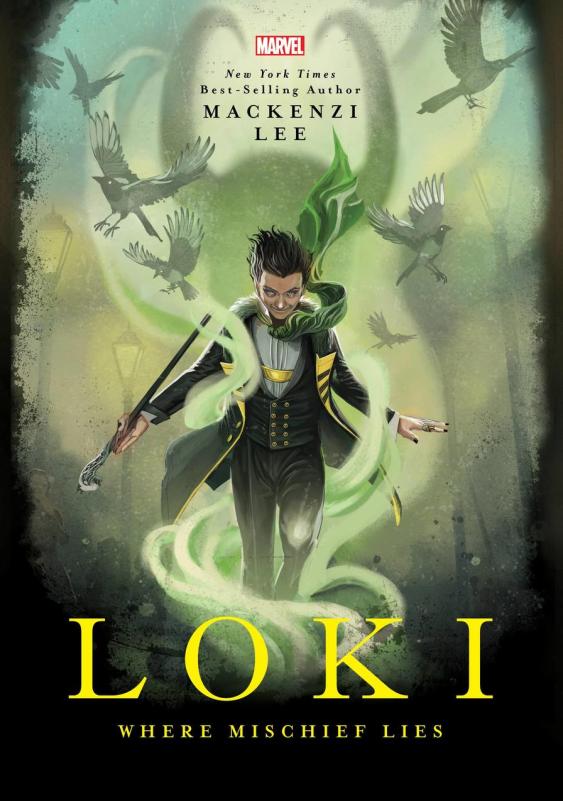
Loki: Where Mischief Lies by Mackenzi Lee

Loki Where Mischief Lies

Publisher: Penguin Random House Audio (3 September 2019)

Series: Standalone/Book One

Length: 9 hours and 10 minutes

My Rating: 4.25 out of 5 stars

Amazon

From acclaimed young adult fiction author Mackenzi Lee comes a fun and clever young adult tie-in novel to the Marvel comic book universe that follows the early life of one of the genre’s best villains, Loki, the Asgardian God of Mischief.

Loki has long been one of the most infamous and complicated villains in the Marvel Universe, whose manipulations and machinations are a constant threat to Asgard, his brother, Thor, and the Avengers. However, years before he started causing chaos in Midgard, he was a young prince of Asgard and the unfavoured son of Odin. Despised and mistrusted by the people of Asgard for his magical abilities, and feared by his father as a prophesied destroyer, Loki’s only confidant is Amora, a powerful sorceress in training.

When Loki and Amora accidently destroy an ancient and valuable magical artefact, Amora is banished to Midgard (Earth), where her magic will eventually fade, and Loki loses the one person who appreciates who he truly is. Determined to prove his father wrong, Loki dedicates himself to becoming a dutiful son, but he continues to find himself overshadowed by his brother’s bravery. When a failed mission once again disappoints Odin, Loki is sent to Midgard in order to investigate a series of murders that have been caused by Asgardian magic.

Arriving in 19th century London, Loki makes contact with a small group of humans who police interdimensional travel, the Sharp Society. Loki, despite his reluctance to help, soon finds himself trying to find the mysterious killer who is turning humans into living corpses. But when he discovers who is responsible for the deaths, he is once again torn between doing the right thing and acting the villain. As his adventure on Midgard continues, Loki soon realises that he needs to decide who he truly is: the good prince of Asgard his family always wanted, or the villain everyone expects him to be.

Loki: Where Mischief Lies is a rather intriguing read that caught my attention some time ago. I am a huge fan of Marvel comics and I will always be interested in checking out any tie-in novels connected to either the comics or the movies. As a result, I made sure to grab a copy of the audiobook version of this book as soon as I could. This turned out to be a fast-paced and enjoyable read that explores the life and times of a young Loki, placing him into a fascinating setting that helped enhance the story. Lee, who is best known for her young adult novels set in the 19th century, including This Monstrous Thing and the Montague Siblings books, created a great Loki story that does a spectacular job diving into the psyche of the character and shaping a fun adventure around it. This is actually the first book in a series of three historical novels that Lee has been contracted to write that will feature Marvel antiheros, and I am really interested in finding out which characters will be in these books.

Where Mischief Lies contains a compelling central storyline that follows the early days of Loki in Asgard and his first foray down to Midgard. Lee starts the story off by introducing a young Loki on Asgard, establishing his character, examining some of his early motivations, inserting a major life-changing event and inserting a magical premonition that will haunt the character throughout the rest of the book. I really enjoyed this introduction to the characters and the plot, and thought that it set up the rest of the story perfectly. The next few parts of the book, which are set after a time jump of a few years, do a good job showing how the character has evolved after the introductory events of the book, and then they manoeuvre him down to London where he has to discover the cause of a series of deaths done using Asgardian magic. The set up to get him down to London, the initial parts of Loki’s adventures on Midgard, his introduction to the Sharp Society and the first encounter with the mysterious bodies are all pretty interesting, and is a great follow-through from the book’s introductions.

I did however struggle with the middle parts of the book, as they felt a little flat and hard to get through. Those readers hoping for a complex mystery into who is leaving the bodies on the streets of London are going to be disappointed, as Loki solves the case quite quickly, and it is literally the most obvious suspect ever. I also wasn’t the biggest fan of the following periods of Loki’s indecision and angst as he tries to deal with the fallout from this revelation. However, the ending of the book more than makes up for it, as Lee wraps it up with an epic conclusion that showcases the full extent of the character’s nature and his eventual future, while also utilising story elements set up earlier in the book. While there were periods in the middle of the book where I was starting to get a little restless, I think overall the story of Where Mischief Lies is really good and its strong ending made it all worthwhile.

Thanks to his appearances in the MCU, Loki is probably one of the most popular and well-known Marvel antiheroes and characters, so any portrayal of him needed to be spot on. Luckily, Lee did an outstanding job with her characterisation of Loki, and the examination of the younger version of this character is probably one of the best things about this book. Lee’s version of young Loki contains all the hints of the growing arrogance, swagger, fashion sense, penchant for mischief and casual disdain for mortals and Asgardians that make him such a fun character in the comics and movies. However, what really makes this an excellent portrayal is the fact that Lee also shows all of Loki’s inherent vulnerability, frustration and anger, which have resulted from a childhood of being seen not only as the lesser son but as something that is dangerous and untrustworthy. This examination of the character’s inner psyche is a fantastic central point of the book, and it is interesting to see the world from Loki’s point of view, especially as you really start to sympathise with him. The story also shows some key moments in Loki’s life, and you get a sense of his motivations and determination to torment those around him. I also think that Lee did a fantastic job of examining the relationship between Loki and Thor. While a lot of their relationship is antagonistic, Thor is shown at times to be the only character who trusts Loki, and it is interesting to see the relationship that might lead to Loki’s eventual redemption. If I were to complain about any aspect of Lee’s portrayal of Loki, it would be that his powers and abilities were a bit inconsistent at times. For example, it was a little weird to see him being physically inconvenienced by a human in one scene, and then a chapter or two later he has the strength to lift two people up at the same time. While this is a relatively minor issue and I imagine that you could explain this away as some form of deception by Loki, I personally found it to be a little jarring.

One of the most intriguing aspects of Lee’s portrayal of Loki is his gender and sexuality. In the build-up to the release of Where Mischief Lies there was a lot of discussion about how this book was going highlight certain LGTB+ elements from the comic books, especially as Lee’s previous books have all contained LGTB+ components. Throughout his comic book history, Loki has been portrayed as both genderfluid and pansexual, and both of these elements of the character are explored within this new book to various degrees. While an interesting part of the character, the genderfluid aspect of Loki is only really shown to a small degree in this book. While Loki does not actually change his gender within Where Mischief Lies (which has occurred in some Marvel comics), when asked “if he prefers men or women”, he does indicate that he has been both. There are also several examples of Loki using his powers of magic to appear as a female character (with various degrees of success), and there are also scenes where he dresses in women’s clothing, usually stolen from Amora, who is amusedly annoyed that they look better on him. While it was not as fully explored as it could have been (and to be fair, it would have been hard to add it in to a novel of this length), it is really cool to see a genderfluid character being introduced into a novel connected to the Marvel Universe.

In addition to this, the pansexual aspect of Loki’s character is on full display throughout the book, as Loki has romantic connections with both male and female characters. Not only does he fall in love with Amora (there is a reason they call her The Enchantress), but a romantic connection also begins to spark between him and a young Sharp Society member, Theo. I really liked the way that Lee handled both of these romances. While the relationship between Loki and Amora ends in flames (which should come as no surprise to Marvel fans), the slowly growing feelings he shares with Theo are quite sweet and contain some rather interesting social commentary. The relationship with Theo is underscored with feelings of identity; due to the social conventions of the 19th century, Theo is unable to be who he really is. This is mirrored by Loki, who has complete freedom of sexuality and gender, but who finds that he is looked down on because of his magic, which he sees as a being major part of his identity. All of this was intensely fascinating, and I really enjoyed seeing this additional complexity explored within the character.

Another aspect of this book that I enjoyed was the various tie-ins it contained to the Marvel’s comics universe. This was a pretty comprehensive origin story for Loki, and quite honestly it could be used as a prequel to both the comics and the Marvel Cinematic Universe. However, given that there is a lot more focus on magic, runes, elves and artefacts, it should probably be more associated with the comics. Lee does a fantastic job bringing Asgard to life, and there are a number of cool references to the various settings and characters of the Thor comics that will appeal to major comic book fans. In addition to this, the author also peppers the story with other Marvel references, especially when the story goes down to Midgard. For example, there are mentions of an industrialist called Stark, talk of a green-skinned female alien and discussion that the Sharpe Society should be renamed as either SHIELD or SWORD. While all these references are rather amusing, I would say that no real prior knowledge of the comics or the movies are really required to enjoy this book, although Marvel fans will probably get more out of it.

Where Mischief Lies is being marketed as a young adult fiction novel, and I believe that this would be a great book for young teen readers, who will love this intriguing look at one of the best Marvel characters. Younger readers should be prepared for the typical amount of comic book level of violence and sex in this book, but there is really nothing that is too explicit for younger readers. I personally think that many teens will appreciate the various LGTB+ elements included in the story, and they will be interested to see this side of the character that has not been included in the movies. Like many young adult tie-in novels, Where Mischief Lies is very accessible to older readers, and I know that many will really like this take on Loki as well, making this a fantastic novel for all ages.

While I really enjoyed the awesome cover of Where Mischief Lies’ hardcover edition, I ended up listening to it on audiobook rather than grabbing a physical copy. The audiobook format of this book is narrated by Oliver Wyman and runs for just over nine hours in length. I think that was a pretty good way to enjoy Where Mischief Lies, as it proved to be a rather easy book to listen to, and I was able to complete it in only a couple of days. Wyman is an enjoyable narrator, and I really like his take on the book’s protagonist and point-of-view character, Loki. He did a fantastic job capturing various aspects of the character’s personality and speech patterns, from his sneering contempt to his frustrations at the way he is treated. This excellent narration really added a lot to my enjoyment of the novel and I would definitely recommend the audiobook format to anyone who is interested in checking this book out.

Loki: Where Mischief Lies by Mackenzi Lee was a fantastic young adult tie-in novel that does a wonderful job of bringing the character of Loki to life. I had a lot of fun listening to this novel, especially as Lee dives deep into the life and mind of Loki, exploring how he became the villain we all love. I was initially planning to give this book a rating of four out of 5 stars; however, considering how much I ended up writing about it, it must be worthy of 4.25 stars instead. I have to say that I was impressed with Lee’s talent for writing novelizations about Marvel antiheroes, and I look forward to her next book in this young adult series.

Amazon

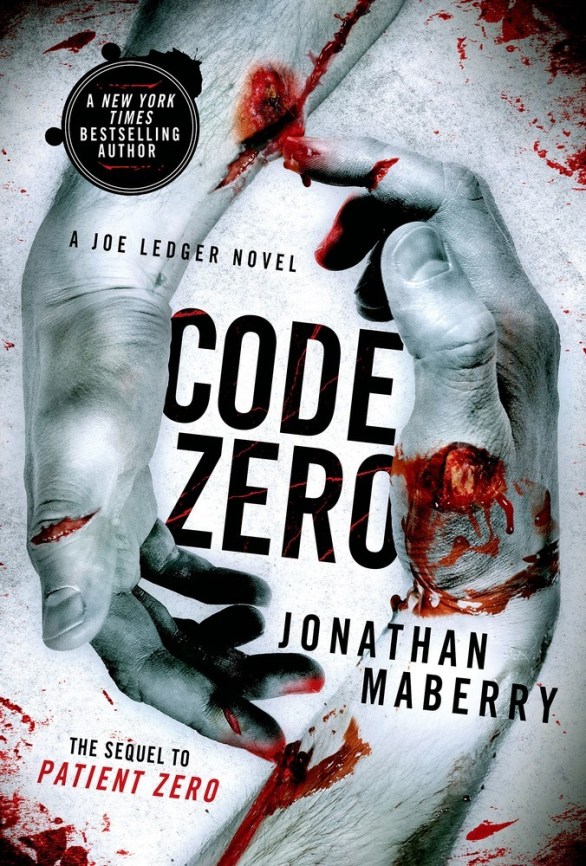
Throwback Thursday – Code Zero by Jonathan Maberry

Code Zero Cover.jpg

Publisher: Macmillan Audio (Audiobook – 25 March 2014)

Series: Joe Ledger series – Book Six

Length: 16 hours and 6 minutes

My Rating: 5 out of 5 stars

Amazon     Book Depository

Reviewed as part of my Throwback Thursday series, where I republish old reviews, review books I have read before or review older books I have only just had a chance to read.

The ghosts of the past come back to haunt Joe Ledger and the DMS big time in this sixth book in Jonathan Maberry’s high-octane science fiction/military thriller Joe Ledger series.

For years, the Department of Military Sciences (DMS) has saved the world from some of the most deadly and insane weapons that science can create: race-specific bioweapons, genetically enhanced super soldiers, powerful plagues capable of killing people in the most horrendous way and even a pathogen that is capable of bringing its victims back to life as zombies. Each of these has been stopped by DMS agents and the legendary Joe Ledger, but these horrors are about to resurface in the most devastating of ways.

The mysterious hacker and terrorist Mother Night has been causing the DMS trouble for months, but when she broadcasts a call for anarchy, no-one is prepared for what happens next. Across America, Mother Night’s followers unleash hundreds of random acts of violence, causing horrendous amounts of terror and destruction. As Joe Ledger and the DMS attempt to counter them, a subway car full of people in New York is infected with something disturbingly familiar, the Seif-al-Din zombie pathogen that bought Ledger to the DMS in the first place.

As Ledger and Echo Team are once again forced to contend with the zombie victims of the pathogen, they find themselves targeted from several devastating angles. As the threats become more and more personal, it soon becomes apparent that they are facing someone who knows the DMS intimately and who is willing to use the most lethal tools at their disposal to win. Can Ledger and the DMS survive, or will the world burn at the hands of Mother Night?

Jonathan Maberry’s Joe Ledger books are one of my favourite series at the moment, and I love each book’s excellent blend of compelling storytelling, complex characters, over-the-top villains, electrifying action and insane plot points, which come together into fantastic, first-rate narratives. Ever since I read and got hooked on the tenth book in this series, Deep Silence, about this time last year, I have been periodically reading and reviewing the earlier novels in sequence. So far, I have read the first six novels, Patient Zero, The Dragon Factory, The King of Plagues, Assassin’s Code, The Extinction Machine and this novel, Code Zero. I am actually reviewing this book a little out of order, as I recently powered through both The Extinction Machine and Code Zero while I was away on holidays. As Code Zero is fresher in my mind, I decided to review it first, and I will hopefully get a review for The Extinction Machine up soon as well (the plan is to get it done before the next Joe Ledger book, Rage, comes out in November, but we’ll see how we go).

Considering how much I absolutely loved the rest of the books in the series, it is going to come as no surprise to anyone that I also really enjoyed Code Zero. This sixth book was pretty spectacular, and it is easily one of my favourite books in the entire series, only just being beaten out by The Dragon Factory. In Code Zero, Maberry has made sure to utilise several of the excellent features from the previous Joe Ledger books that l really love and have commented on previously, such as a first-rate story filled with intense action, a smartassed and damaged protagonist, a great group of side characters (including one of the best dogs in all of fiction) and a clever utilisation of flashbacks and multiple perspectives. This book also features some other great story and character elements that really make it stand out from the rest of the series, and which help make it such an outstanding and epic read.

I have mentioned before that one of the best things about the Joe Ledger books is the awesome antagonists that Maberry creates for each of the novels. These have so far included genetically modified Nazis, world-event manipulating masterminds and even a group of vampires. However, the villain of Code Zero, Mother Night, is perhaps one of the most interesting and complex antagonists that Maberry has come up with. Mother Night is an outstanding character who not only has a close connection with the DMS, but whose elaborate master plan does a great deal of damage. I really liked how Maberry used a series of flashback filled interludes to explore the background of this character. These flashbacks show how Mother Night is connected to all the DMS characters and examine how her exposure to various characters and threats from the previous books slowly corrupted her, and why she was compelled to become a terrorist. Despite this being the first book that Mother Night has appeared in, Maberry did a sensational job tying the character into many of the key events from the first three novels, and showing how she was actually involved with some of the previous threats. All of these cool connections really help up the personal stakes for all of the protagonists, and it allows Mother Night to actually hit Joe Ledger and his team harder than anyone else has before, resulting in an extra dramatic and compelling story.

Maberry also uses Mother Night’s plot to examine some rather interesting elements of the modern world. For example, the anarchist movement is explored in some detail, as Mother Night uses anarchist elements in her call to arms, gathering up members of America’s disenfranchised youth to form an army. There is also a rather intriguing look at the role video games can play in violence or espionage. This is not done in an attempt to demonise video games; instead Maberry, through several of the videogame savvy characters, explores how important problem-solving is for gamers, and how the skills obtained there can have real-world applications in both the espionage and defence worlds. The subsequent study of game theory and the desire to win that some gamers feel is particularly fascinating, and it adds very some interesting layers to the story and Mother Night’s overall character.

In addition to this incredible antagonist, the other thing that I absolutely loved about Code Zero is the fact that Maberry decided to bring back some of the iconic threats and story elements from the previous books in the series. Not only did the author do an outstanding job of working these pre-existing story elements into Code Zero’s plot, but their reappearance was also an excellent homage to the earlier books and a real treat for fans of the series. I really enjoyed seeing Ledger have to go up against threats like the walkers and the berserkers again, especially as each of these threats have pretty strong emotional triggers for him due to devastating previous missions. It was also really interesting to see the new and various ways that the antagonist utilised these existing elements in her own plans, and there were some really fun combinations of the insane scientific elements, such as a couple of berserkers who have been infected with Generation 12 of the Seif-al-Din Pathogen, and it’s as awesome as you’d expect.

As this is a Joe Ledger book, Code Zero is of course filled to the brim with all the action and fire fights that you could ever need. Due to the presence of so many varied threats, including some of the monsters from the previous books, Code Zero probably has some of the most intriguing fight scenes in the entire series. This book is filled with a number of elaborate battle sequences in which the protagonists face off against a variety of different opponents at the same time. These opponents can include walkers, berserkers and gunmen disguised as zombies hiding amidst the walking dead, which is just so many layers of awesome. Maberry has an exceptional talent for writing fight sequences, and all this amazing action really helps to get the adrenaline pumping. I also have to commend all of the first-rate zombie scenes in the book, as the author crafts some truly horrifying scenes that showcase how terrifying and emotional damaging it would be to face off against these undead monsters.

As with all the previous books in the Joe Ledger series, I chose to listen to the audiobook format of Code Zero which was narrated by Ray Porter. Clocking in at just over 16 hours, I managed to get through this audiobook fairly quickly, mainly because I started listening to it while on an international flight. I think it is pretty clear at this point that I really enjoy listening to the audiobook versions of the Joe Ledger books, mainly due to the narration of the outstanding Ray Porter. I have sung Porter’s praises in all of my previous reviews, and I really cannot express what a good job he does bring the series titular protagonist to live with his voice work. Code Zero was no exception, and I would strongly recommend the audiobook format to anyone even vaguely interested in this book.

Code Zero by Jonathan Maberry is another spectacular book in the Joe Ledger series, and one that I absolutely loved. Maberry continues to utilise some of the amazing story elements that made his previous six books so darn enjoyable, and he ups the ante with another exceptional antagonist and the clever reuse of memorable story elements from previous books in the series. All of this results in another science fiction/thriller masterpiece that gets an easy five out five stars from me, and it is possibly one of the most enjoyable books I have read so far this year.

Amazon     Book Depository

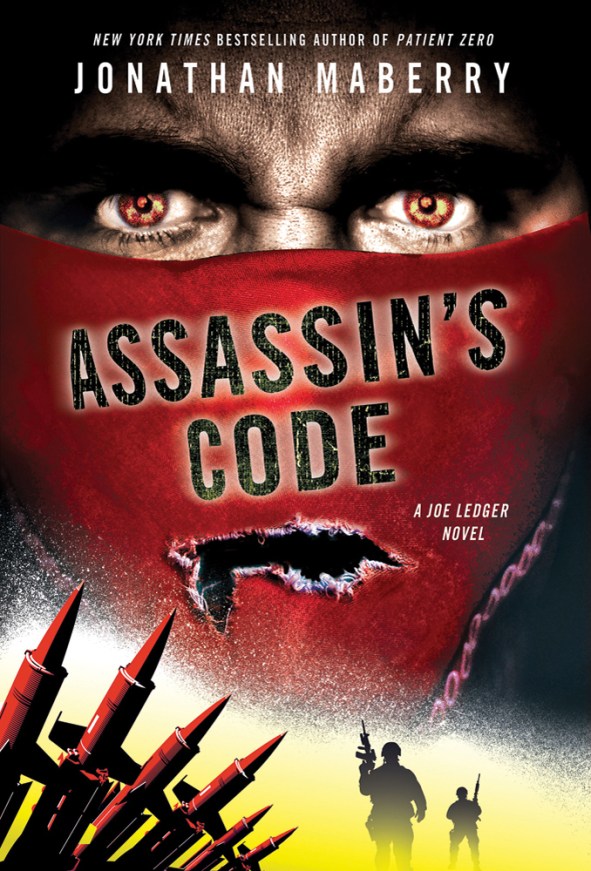
Throwback Thursday – Assassin’s Code by Jonathan Maberry

Assassin's Code Cover

Publisher: Macmillan Audio (Audiobook – 10 April 2012)

Series: Joe Ledger series – Book 4

Length: 15 hours and 35 minutes

My Rating: 5 out of 5 stars

Amazon     Book Depository

Reviewed as part of my Throwback Thursday series, where I republish old reviews, review books I have read before or review older books I have only just had a chance to read.

For this week’s Throwback Thursday, get ready for the fourth high-stakes, action-packed instalment of Jonathan Maberry’s excellent Joe Ledger series, Assassin’s Code, which sets the titular character up against a fantastic new set of antagonists.

Joe Ledger, top field agent for the elite Department of Military Sciences (DMS), is about to have a very unusual day. On assignment in Iran, Ledger and Echo Team have been tasked with rescuing American college kids held hostage by the Iranians. After successfully rescuing the hostages, Ledger is forced at gunpoint into a meeting with a high-ranking Iranian security officer. However, instead of being arrested, Ledger is given information about an impending terrorist attack that could shake the very foundations of the world.

An unknown player apparently has several nuclear weapons in play and is planning to unleash them against a number of targets around the world. As Ledger relays this information to his superiors, he is attacked by a mysterious assailant who is faster, stronger and more deadly than anything he has faced before. Barely escaping from his attacker, Ledger finds himself being pursued through the streets of Tehran by the Red Order, an ancient group of killers whose operatives appear to intimidate even Ledger’s boss, the legendary Mr Church.

As Ledger attempts to come to terms with what exactly is hunting him, he finds himself in the crosshairs of several other secret organisations, each of which has their own agendas. As Ledger gets closer to the truth, he discovers that events are being manipulated by an old enemy. An ancient conspiracy has been revealed and the fate of the world hangs in the balance. Can Ledger defeat the monsters unleashed against him or will a new world order arise?

Assassin’s Code in the fourth book in Maberry’s Joe Ledger series, which sees an elite special forces agency go up against the worst horrors that modern science and science fiction can unleash. I have already read and reviewed several books in this series so far, including the previous three novels, Patient Zero, The Dragon Factory and The King of Plagues, as well as the 10th and latest book in the series, Deep Silence. Each of these books has proven to be fantastic dark science fiction thrillers that I have had an amazing time reading, and all four of them have received a full five-star rating from me. Assassin’s Code is another incredible addition to the series, as Maberry has once again produced an intense and clever story, with some great antagonists, a complex protagonist and a heck of a lot of high-grade action.

In his fourth Joe Ledger book, Maberry has continued to utilise the same writing format that made all the other books in the series such an awesome read. While a large amount of the storyline follows Ledger and the other members of the DMS as they attempt to investigate and then counter the threats they are up against, a large amount of the book revolves around showcasing the history that led up to the book’s current events, as well as exploring the antagonists side of the story. There are several chapters that solely focus on the antagonists, showing what they are planning and the full range of their various motivations. I always love these explorations of the antagonists as I feel it creates a much more complete and interesting overall storyline, and these alternate points of view are often used to really ramp up the book’s tension and hint at events that are going to hit the protagonists.

While he continues to successfully utilises a number of these familiar writing styles, I felt that Maberry also made sure that Assassin’s Code stood out from the other books in the series. Not only does this fourth book have a lot more of a horror vibe to it than the previous two books in the series (somewhat reminiscent of the first novel, Patient Zero) but it is also told as a rush of events over a 24-hour period. Ledger is barely given an opportunity to rest as he is attacked again and again by a series of different opponents in the hostile territory of Tehran. The author has also woven together a number of interconnected conspiracies and features appearances from several individuals and organisations, each of whom has their unique agendas throughout the plot of the book, all of which need to picked through by the reader. All these various players and motivations make for a very full story, but I quite enjoyed seeing all the various revelations come to light. Assassin’s Code is also an intriguing central piece to the whole Joe Ledger series. Not only does it introduce several key characters who become major fixtures of the series but it also introduces a number of key events in the lives of characters who were introduced in the previous books. As a result, it is a must read for those people trying to get a grip on the series as a whole and is a fantastic overall read.

In my mind, one of the best things about the Joe Ledger books are the distinctive antagonists, each of whom come across as major threats not only to the protagonists, but to the entire world. So far in the series, Ledger has had to face zombies, genetically enhanced Nazis and a powerful cabal of terrorists (whose members included Osama Bin Laden) whose attacks are used to manipulate the world for profit. In Assassin’s Code, Maberry has done a fantastic job converting an old legend into a terrifying modern threat, as the major villains of this book, the mysterious Red Order and their infamous Red Knights, are essentially vampires. Maberry already has significant experience writing vampires into the modern world, thanks to his V-Wars book series (an adaption of which is coming out on Netflix in a couple of months), and he does a great job coming up with a new and somewhat plausible explanation for their existence (well, slightly more plausible than a supernatural origin), as well as a creative historical explanation for their organisation. These vampires are written as major threats for most of the book, and the fear and concern that they cause in a number of characters whose badass credentials have been firmly established in previous books is pretty impressive. The use of vampires in modern thriller was a real highlight of this book, and I really loved seeing them go up against a modern special forces unit. Maberry spends a lot of time exploring their history, as the book features a number of interludes that go back to the time of the Crusades, when they were first recruited for their mission. All of this exploration does a fantastic job of showing what true monsters these types of vampires are, which helps the reader really root for the reader. I also really liked some of the other groups featured in this book that were formed as a direct result of the existence of vampires, including a group of modern Inquisitors and the mysterious Arklight. If I had one complaint about these antagonists, it would be that they were taken down a bit too easily in the final act, and I would have preferred a more protracted or vicious fight.

In addition to the vampires, this book also features the reappearance of two key antagonists from the previous book in the series, The King of Plagues, who are major manipulators of events behind the scenes. These characters are the former King of Fear, Hugo Vox, and the mysterious priest Nicodemus, both of whom were major players in the previous book. I really liked how Maberry continued to explore both of these cool characters, and he did a fantastic job of tying their storylines into the unique events of this book. Their respective roles in the plot of this book is quite interesting, and I really enjoyed how both their storylines progressed or ended in this novel. The true reveal of who (or what) Nicodemus is has been left for a later book, and I am very curious to see what he turns out to be.

Maberry continues to do an outstanding job utilising his complex and multilayered protagonist, Joe Ledger. While on the surface, Ledger’s defining character traits are his abilities as a special forces operative and his relentless sense of humour, the character is actually extremely emotionally damaged. Thanks to the fact that Ledger is the only character whose chapters are shown from the first-person perspective (a nice distinctive touch for the central protagonist), the reader gets a much more in-depth look at his inner thoughts, and as a result you see how the events of his life, including the events of the previous three books, have impacted his psyche. It is quite refreshing to have a character who is actually emotionally affected by the events of his books, and you get the feeling that Ledger is only a short way away from truly snapping. However, in the meantime, the thick layer of humour he overlays these feelings with is great for a laugh, and it helps gives the chapters that the character is narrating a very unique and enjoyable feel. In addition to Ledger, I really liked some of the new protagonists introduced in Assassin’s Code and I look forward to exploring them more in the future. Special mention as always needs to go the awesome supporting characters of Mr Church and Ghost, Ledger’s attack dog. With his actions and woofs, Ghost honestly has more personality that some human characters in other books I have read, while Church continues to be the ultra-mysterious intelligence god who you cannot help but want to know more about. These two characters are one of the many reasons why I am excited to check out all the future books in the series.

It should come as no surprise to those who read the plot synopsis, but Assassin’s Code is filled with wall-to-wall action. Maberry has a well-established history of doing detailed research into various forms of combat, especially martial arts, which he has actually written several books on. Maberry is able to transfer all of this knowledge into his books, creating some truly amazing action sequences. There are a huge number of great and varied battle scenes throughout the course of the book, and readers are guaranteed a pulse pumping ride as a result. Also, if you have ever wondered how martial arts trained special forces soldiers would go against vampires, than this is the book for you.

Like all the other books in the Joe Ledger series, I chose to listen to the audiobook format of Assassin’s Code, narrated by Ray Porter. Coming in at around 15 hours and 35 minutes, this is a substantial audiobook; however, due to how much I enjoyed the epic story, I powered through it in a couple of days. I would strongly recommend that readers always check out the audiobook format of this series, thanks mainly to Porter’s narration. Porter, who has so far narrated all of the Joe Ledger books, has an uncanny ability to bring this central protagonist to life. His great narration fully encapsulates Ledger’s full range of emotions, from light-hearted banter, to soul-crushing despair to powerful bursts of rage, and it is really worth checking out. In addition, Porter does some really good voices for the other characters in the book, especially Mr Church, and he is probably one of my favourite audiobook narrators at the moment.

When I started reading Assassin’s Code, I knew I was going to love it, and it did not disappoint. Not only did Maberry up the ante with some incredible antagonists but he created another complex and utterly captivating story that had me hooked in an extremely short period of time. Assassin’s Code easily gets another five stars from me, and I whole-heartily recommend the audiobook format of this book. I am planning to try and read all the other Joe Ledger books in the next couple of months as I only just found out that the story is continuing in November of this year as part of a new spin-off series. Stay tuned to see what I think of the other books in this series (spoiler alert, I think I am going to love them).

Amazon     Book Depository

Star Trek: The Antares Maelstrom by Greg Cox

Star Trek - The Antares Maelstrom Cover.jpg

Publisher: Simon & Schuster Audio (Audiobook – 13 August 2019)

Series: Star Trek: The Original Series

Length: 11 hours and 34 minutes

My Rating: 4 out of 5 stars

Amazon     Book Depository

My bold new voyage down into the depths of Star Trek extended fiction continues as I review the latest exciting novel tied into Star Trek: The Original Series, The Antares Maelstrom by Greg Cox.

Get ready for a good old-fashioned “gold rush” on the outskirts of Federation space, as vast quantities of a rare and valuable mineral vital for energy production is found on the remote planet of Baldur-3. The sparsely populated planet is quickly overrun by a horde of opportunists from all over the galaxy, seeking to make their fortunes as miners and prospectors. Hailing from a variety of planets and made up of a number of different species, these determined but often under-prepared prospectors are pushing Baldur-3’s infrastructure to its limit. Despite not being part of the United Federation of Planets, Baldur-3 requests assistance from Starfleet, which dispatches Captain James T. Kirk and the crew of the U.S.S. Enterprise to help in any way they can. However, upon their arrival in the sector, Kirk discovers several major problems that require him to split his personnel.

While Kirk and the Enterprise remain above Baldur-3, Sulu and a small contingent of the ship’s crew are left behind at the local Deep Space Station S8 to help manage the prospectors in transit to the planet. While there, Sulu is forced to deal with a multitude of issues, including a malevolent saboteur, the return of an old romantic flame, and foolhardy adventurers attempting to cross the dangerous Antares Maelstrom to find a fabled shortcut to Baldur-3. At the same time, Spock and Chekov travel to a nearby planet, inhabited by a pre-spaceflight race of humanoids, where alien items have started appearing in the hands of the locals in what is clearly a severe violation of the Prime Directive. As Spock and Chekov investigate, they find themselves dragged into a sophisticated smuggling ring involving a rare tea that could prove disastrous for the planet’s future development. Each of these groups will experience mortal peril as they attempt to uphold the values of Starfleet and assist all those in need.

I have really been on a roll with Star Trek novels lately, having already read several fantastic pieces in the last few months, including The Captain’s Oath by Christopher L. Bennett, Available Light by Dayton Ward, The Way to the Stars by Una McCormack and the first volume of the Boldly Go comic book series. The Antares Maelstrom by Greg Cox is another fun and enjoyable Star Trek novel that I had a wonderful time listening to on audiobook. Cox is an experienced writer of tie-in fiction, having written novels related to a number of different media franchises, such as Buffy the Vampire Slayer, Alias, Underworld, The Librarians and titles from DC and Marvel comics. However, his most consistent body of work has been his Star Trek tie-in novels. Since 1995, Cox has written around 20 Star Trek books, set across the various television series. He has already written several books related to The Original Series, as well as three books that show the life and times of iconic franchise villain Khan.

This particular Star Trek adventure is set during the Enterprise’s five-year journey (2265 – 2270), meaning that this story occurred around the same time as the episodes of The Original Series. The Antares Maelstrom turned out to be an interesting change of pace from some of the other Star Trek books I have previously read, as it is a standalone novel that does not seek to explore character backgrounds or continue several ongoing storylines from previous novels. Instead, the episode reads a lot like an episode from The Original Series, with the crew of the Enterprise getting involved with a number of adventures in space and helping those in need.

Cox has populated his latest book with three separate storylines, each of which features various members of the Enterprise’s main crew. This includes Sulu’s stay aboard Deep Space Station S8 and Spock and Chekov’s investigation of the tea smugglers on the nearby planet. Both of these storylines branch off from Kirk’s storyline as he, Scotty, McCoy, Uhura and the Enterprise stay above Baldur-3 and provide assistance to the surface. Each of these storylines is quite interesting and has a number of great moments. While Spock and Chekov’s storyline is one extended adventure, the other two parts of the book feature a series of interconnected adventures and mysteries. This is a very interesting blend of stories, from the examination of a futuristic “gold rush” in space, to a covert investigation on an alien planet. I personally enjoyed Sulu’s storyline the most, as it featured a number of exciting moments between spaceships, a compelling investigation, several great new characters and a huge amount of action. The other two storylines are really good, and in my opinion the story benefited from having this great mixture of storylines, which did not dilute or overwhelm the overall quality of the book. Indeed, all of the storylines form a compelling overarching narrative which I found to be extremely fun and surprisingly addictive, and I was firmly glued to the story.

Like most tie-in novels, The Antares Maelstrom is intended for fans of the franchise it is based on, meaning that this is an ideal read for hardcore Trekkies. However, no great knowledge of the original series is required to enjoy this book. There are no real pre-existing storylines to follow, and anyone who has a basic knowledge of the show or who has seen the latest trilogy of movies will be able to follow along without any issues. Cox does pepper the story with a number of references to some of the past adventures of the Enterprise, and there is even a major connection to one of the more interesting episodes from the first season. The book does feature the first appearance of the titular Antares Maelstrom, which itself is a rather obscure reference to the second Star Trek movie, The Wrath of Khan, as the Antares Maelstrom is featured in one of Khan’s iconic monologues. While these many references and call-backs to previous episodes will prove to be enjoyable to fans of the franchise, most of them have no real bearing on the plot, and any that do are well explained.

I also felt that Cox did a fantastic job of capturing the original tone of the Star Trek television show in this novel. The focus on the prospectors arriving on Baldur-3 is used by the author to mirror the bold explorative and chance-taking stance that the crew of the Enterprise undertake, and there is a lot of discussion about new opportunities and venturing into the unknown. While these prospectors are initially viewed as greedy and reckless, they eventually come together as part of the book and show how, deep down, people are basically good. All this focus on unity, compassion and logic is classic Star Trek, and Kirk makes sure to accompany many of these examples with his trademark speeches, talking about the ideals of Starfleet and his crew. In addition to this, each of the major characters is strongly featured throughout the book, and the author makes sure that each of them gets a substantial amount of story time. Cox does an amazing job capturing the various personalities of the original series cast members, and it was great seeing them back in action in this new book.

As I mentioned above, I ended up listening to The Antares Maelstrom on audiobook, narrated by Robert Petkoff, which ran for 11 hours and 34 minutes. I absolutely flew through this audiobook, and I really enjoyed having this cool story narrated to me. Petkoff is still an impressive narrator, and I have previously mentioned how much I enjoyed his work narrating the voices of The Original Series cast members for The Captain’s Oath. In The Antares Maelstrom, Petkoff continues to amaze, coming up with a huge range of different voices for the various characters featured throughout the book. Just like in the previous book, his Kirk, Spock, Sulu and McCoy are darn near perfect, and I was really glad I got to hear a lot more of his Scotty, as he manages an awesome Scottish accent. I also got my first real experience of Petkoff’s Chekov in this book, and I have to say it was near perfect. The narrator expertly captures Chekov’s Russian accent, and there were a number of amazing instances where Petkoff had to imitate Chekov’s classic mispronunciations of English words. This is truly some first-class voice work and it really helps make the entire audiobook stand out. Petkoff seems to be one of the main Star Trek audiobook narrators at the moment, as several recent and upcoming books all feature his talents, and this makes me a lot more eager to check out these books in the future.

The Antares Maelstrom by Greg Cox proved to be another amazing piece of Star Trek fiction. It presents the reader with three fantastic adventures that come together to create an exciting and captivating book. While probably best read by established Star Trek fans, this book can be easily enjoyed by readers who have less Star Trek experience but who love sci-fi, intriguing mysteries, iconic characters and fast-paced action. Another great outing from Cox, The Antares Maelstrom is really worth checking out, especially in its audiobook format.

Amazon     Book Depository

Star Trek: The Captain’s Oath by Christopher L. Bennett

Star Trek - The Captain's Oath Cover

Publisher: Simon & Schuster Audio (Audiobook – 28 May 2019)

Series: Star Trek

Length: 11 hours and 58 minutes

My Rating: 4.5 out of 5 stars

Amazon

Prepare to venture boldly into a new Star Trek: The Original Series tie-in novel which not only tells a deeply compelling story but also looks at several pivotal moments of Captain Kirk’s early Starfleet career that made him the captain we all know and love.

Captain James Tiberius Kirk is known throughout the galaxy as a great warrior, diplomat, explorer and hero. His story as the captain of the U.S.S. Enterprise is legendary, but how did a relatively young and inexperienced captain gain the right to take command of Starfleet’s most advanced and famous ship? What drives the young captain to be the best? And where did he get the tendency to bend Starfleet’s many rules in order to do the right thing?

Over three separate timelines set between 2261 and 2265, The Captain’s Oath follows Kirk’s early career as a captain. Looking at both his first command aboard the U.S.S. Sacagawea to his initial missions with the crew of the Enterprise, this book highlights several major conflicts and explorations that Kirk was involved in which shaped his personality and command style. From early conflicts with the Klingons, first contact missions that tested Kirk’s dedication to follow the Prime Directive to the letter, and diplomatic missions that had the potential to lead to war, these experiences will turn him into a captain worthy of the Enterprise.

I am fairly new to the world of Star Trek tie-in books, having only previously read two Star Trek novels that were released earlier this year, The Way to the Stars and Available Light. I was massively impressed by The Captain’s Oath, which was a spectacular and massively compelling read. Veteran Star Trek author Christopher L. Bennett, who has written a large number of Star Trek tie-in novels since 2004, crafted an excellent novel that not only showcases the past of an iconic character from the franchise but presents an exciting adventure at the same time.

The overarching narrative of The Captain’s Oath is told in three separate timelines. The first of these timelines starts in early 2261 and follows the early day of Kirk’s captaincy of the Sacagawea. The next timeline is set between 2262 and 2264, and also features Kirk as the Captain of the Sacagawea; however, this timeline starts after an undisclosed destructive event that crippled the ship and killed several of Kirk’s crew in the previous timeline, and follows Kirk’s adventures after this event. The final timeline is set in 2265 and starts the moment Kirk takes command of the Enterprise. It follows his first real mission as captain of his iconic ship, and ends just before the start of The Original Series television show. The book features lengthy chapters, with various adventures in different points of time spread throughout the course of the novel. These adventures are also usually shown from the perspectives of Kirk and some of the Starfleet personnel serving with him, although there are occasional scenes featuring characters aboard other Starfleet ships.

I did initially find it a little tricky to get my head around the use of multiple timelines, especially as I was listening to the audiobook format of The Captain’s Oath. However, once I got track of each of the three major timelines, I was able to appreciate what Bennett was doing with this writing style and how he wanted to tell the story. By using these multiple timelines, Bennett succeeds in telling a story that is much more complex and compelling than a linear story would have been. These multiple timelines allow the reader to get a much better sense of the main character and how he became the person he was in the first episode of The Original Series. By showing various stages of his time as a captain, Bennett is able to examine a number of key events that formed Kirk’s personality and command style. Through a series of intriguing missions and a ton of different scenarios, you get to see how Kirk reacts to both his success and his failures, and what lessons he takes with him. As the book progresses, you get to see how these earlier experiences affect his actions in the subsequent chronological missions. This was an extremely clever way to write the story, and I felt that the multiple timelines work extremely well together and helped create a powerful narrative that did a fantastic job showcasing the character of Captain Kirk.

I also really enjoyed the huge variety of Star Trek missions that Kirk and his crew went on throughout the course of the book. This book featured an amazing range of different missions that Starfleet are known for, including diplomatic undertakings, rescues, exploration, first contact and military missions in defence of the Federation. Some of these missions are quite complex in their individual content and in the way that most of them flow through and connect with later missions in the chronology. Bennett has come up with some truly unique and fantastic scenarios for this book, and through these various missions the reader is treated to some intriguing mysteries, intense battles and deep examinations of humanity and life. I really got into a number of these missions, including a fascinating mission where Kirk and his crew get trapped on a pre-spaceflight planet whose government is using propaganda to frighten the populace with non-existent invading aliens. However, the best scenario is a series of missions set during Kirk’s days as captain of the Sacagawea where he and his crew encounter an unusual group of aliens who are invading Federation space in some unique ships (the one on the cover). The various missions involving these new aliens not only result in some impressive space battles but also feature some intriguing diplomatic meetings and fascinating discussions about different forms of life, as the beings Kirk and his crew encounter are so alien that a number of key concepts such as territory and galactic borders are untranslatable to them. Each of the missions featured in this book were pretty amazing and are a testament to Bennett’s imagination and appreciation for the underlying material.

One of the things that I enjoyed about this book was the sheer amount of Star Trek references and lore that Bennett has managed to fit into this story. Fans of Kirk and The Original Series will be intrigued by this new look at Kirk’s early career as a captain and several of the pivotal adventures he undertook. The Captain’s Oath also features Kirk’s first meetings with several key characters from the series, including Spock, Sulu, Scotty and McCoy. Not only does the reader get an idea of the early relationship between Kirk and Spock, which only began when Kirk took command, but you also get to see Kirk befriend McCoy and then eventually talk him into becoming doctor for the Enterprise. In addition to the look at the major characters, there are also a number of great examinations of minor characters from the series. A great example of this is the inclusion of the Klingon character Captain Koloth, the villain of The Original Series episode The Trouble with Tribbles. While he was only in the book for a short period of time, it does answer a question about how Koloth and Kirk knew each other, as they recognise each other in the episode, and it shows why they disliked each other.

Perhaps the most interesting part of The Captain’s Oath was the inclusion of Gary Mitchell throughout the course of the book. In the show, Mitchell only appeared in one episode and was the original helmsman of the Enterprise before becoming the eventual antagonist of the episode Where No Man Has Gone Before. In this episode it is explained that Mitchell was one of Kirk’s oldest and closest friends, and Bennett spends a lot of time exploring this friendship in this book. Mitchell is shown to be a major influence on Kirk’s personality during the early days of him being a captain, helping him relax and become less beholden to Starfleet’s rules and regulations. Their friendship is an important part of the book, although it is a little tragic when you consider how it is destined to end. The book also features a few scenes with Lt. Kelso, who is killed by Mitchell in Where No Man Has Gone Before, and it is interesting to see some of his interactions with Mitchell and Kirk, considering his appearances in the show. It is curious to note that Bennett appears to have switched the roles of Mitchell and Kelso around, as Kelso is portrayed in the book as the helmsman, while Mitchell is the navigator. Nonetheless, the author uses the inclusion of Kelso to explain why Sulu was the ship’s physicist in this episode rather than helmsman, and why he was given the job in subsequent episodes.

Bennett has included some pretty deep Star Trek lore in this book, but do you need to be a major Star Trek fan to enjoy The Captain’s Oath? In my opinion, you do not. Obviously, hardcore Star Trek fans will get a lot more out of this book, no doubt appreciating all the references, minor characters and the backstory that Bennett has concocted. However, this book is easily enjoyable for people who only have a passing knowledge of the Star Trek shows or universe. Bennett makes the story extremely accessible, and many features from the franchise or history relevant to the story are explained in full detail, ensuring no one is left in the dark. Indeed, due to the awesome story, connection to The Original Series and the focus on such an iconic character, this is a great book to check out if you are curious about Star Trek books and want to see what they are like, and a lot of general science fiction readers will like some of the unique scenarios explored throughout the book. This would also be a really interesting book for those people whose only exposure to Star Trek has been the recent movies set in the alternate timeline, as this book shows a very different version of Kirk. Overall, I think that quite a wide audience can appreciate The Captain’s Oath, and it is a fantastic Star Trek tie-in book to check out.

While I did receive a physical copy of The Captain’s Oath, I decided to check out the audiobook version instead in order to fit it into my reading schedule. The audiobook format of this book is narrated by Robert Petkoff, who has a narrated a large number of previous Star Trek tie-in books, as well as several Star Trek novels coming out later this year. The Captain’s Oath audiobook runs for a pretty typical length of time for a Star Trek book, at just under 12 hours long, meaning that dedicated listeners should be able to get through this quite quickly. I really enjoyed listening to the audiobook format of this book, and I found that listening to the story helped enhance certain aspects of the plot, such as making the action sequences more exciting and providing the full impact of several of Kirks inspirational speeches. Petkoff is an excellent narrator whose work I have previously enjoyed when I listened to Available Light a couple of months ago. I noted back than that Petkoff did an amazing job imitating several key members of the Star Trek: The Next Generation cast, and I was very curious to see how he would go with characters from The Original Series. Petkoff’s voice work in The Captain’s Oath was pretty impressive, as he did an exceptional job bringing characters such as Spock, Scotty, Sulu and McCoy to life and making them sound very similar to their original portrayals in the show. Petkoff also did a pretty good Kirk, and I liked how he attempted to reproduce the captain’s iconic speech patterns from the show. Petkoff also had the opportunity to bring a huge range of different nationalities and alien species to life, and these were also very impressive, as he was able to produce some distinctive voice types from the show, including the specific vocal patterns of the Vulcans as well as several distinctive human accents. All of this made for an incredible listen, and I fully intend to check out the audiobook formats of any future Star Trek books narrated by Petkoff. Indeed, the next audiobook I am planning to listen to, The Antares Maelstrom, is narrated by Petkoff, and I look forward to listening to this latest book.

Star Trek: The Captain’s Oath is an exciting and captivating novel that does an outstanding job exploring the early life of Captain Kirk and examining some formative events that made him the character we all know and love. Author Christopher Bennett has created a compelling story that utilises multiple timelines and a series of intriguing missions to tell a complex tale that I had an amazing time reading. This is an excellent piece of Star Trek extended fiction that I would whole-heartily recommend for anyone who has ever been curious about learning more about Kirk’s story and the Star Trek universe prior to The Original Series.

Amazon

Red Metal by Mark Greaney and Lt. Col. Hunter Ripley Rawlings IV. USMC

Red Metal Cover 2.jpg

Publisher: Audible Studios (Audiobook – 16 July 2019)

Series: Standalone/Book One

Length: 21 hours and 21 minutes

My Rating: 5 out of 5 stars

Amazon     Book Depository

Get ready for World War III, because bestselling author Mark Greaney has teamed up with Lt. Col. Hunter Ripley Rawlings IV. USMC to create an absolutely incredible military thriller, Red Metal, which looks at how a potential invasion from Russia would unfold.

After years of war in the Middle East, the United States and their allies are preparing themselves for the next conflict. Many believe that this war will occur in the Pacific Ocean against China, especially after the Chinese begin to interfere in Taiwanese politics in an attempt to reunify the island nation with the mainland. As Chinese troops gather just outside of Taiwan and the United States military is rocked by a debilitating scandal, hardly anyone is expecting a move from Russia.

Since the end of the Cold War, Russia has been in an economic decline, and it desperately requires access to various advanced resources to remain a world power. An ambitious Russian colonel has come up with a complex plan to secure a vital Rare Earth mine that has the potential to secure the country’s future. Launching a high-speed and ruthlessly coordinated attack as Christmas falls, Russian forces stream across the border into Europe, crippling NATO and cutting the continent off from the United States. As America and NATO attempt to work out the extent of Russia’s plans in Europe and counter them, they are left distracted from Russia’s true goal as a second Russian army is secretly heading towards the African coast in order to reach the mine in Kenya.

As Russia continues its advance, the fate of the free world lies in the hands of several different individuals. In Washington, a veteran Marine Lieutenant Colonel and his colleagues attempt to decipher the Russian strategy before it is too late, while in Africa, a wily old French Intelligence agent and his Special Forces son must uncover why undercover Russian agents are abroad in Djibouti. In Europe, a mixture of unprepared NATO soldiers, including a young member of the Polish militia, an out-of-his-depth American tank commander and a high-flying US pilot must fight against the odds to push back against the invading Russian force. As epic battles erupt across several countries, one thing is clear: the world will never be the same again.

Wow, just wow. A few months ago, I predicted that along with The Kremlin Strike, Red Metal was going to be one of the top military thrillers of 2019. I am more than happy to report that I was 100 per cent right, as this was an outstanding read that I had an absolute blast listening to. The team of experienced thriller writer Mark Greaney, who is best known for his work on Tom Clancy’s Jack Ryan Universe and his own bestselling Gray Man series (make sure to check out my review for the latest book in this series, Mission Critical, here) and debuting author Lt. Col. Hunter Ripley Rawlings IV. USMC, have created a sensational book that I have no choice but to award a full five stars to.

Contemporary military thriller is a genre that I have only started getting into recently, although so far I have enjoyed some great examples, including The Moscow Offensive by Dale Brown, Treason by Rick Campbell and Red War by Kyle Mills. However, in my opinion Red Metal stands heads and shoulders above all of these books and it is probably the best pure military thriller that I have read. The authors of this book have come up with a truly fascinating military scenario that sees Russia sweep across two continents and influence conflict in a third. The Russians in this book have a really clever and effective military strategy that results in a massive, widespread conflict, and the reader gets to see every step of it unfold. This entire plan seems exceedingly realistic, and it is clear that Greaney and Rawlings have put some real thought into how war could break out and how the various participants would react. They really dive into the minutiae of the whole scenario and try to cover all the angles of an invasion of Europe and Africa, including cutting off communications, setting up an alternate navigation system, hacking the US and creating a number of plausible diversions. Never before has a discussion about the different sized rail tracks and rail switching stations in Europe been so fascinating. The scope of this conflict is really impressive, and the authors do a fantastic job showcasing the various types of battle that would occur in this sort of modern-day war between major superpowers. As a result, this book is filled with fighting on land, sea, air, underwater and even in cyber space, in an impressive thought exercise which translates into a compelling piece of fiction.

I really liked how the authors chose to tell this story from a variety of different perspectives, as Red Metal features a huge number of point-of-view characters. While the story is mostly focused on a few key characters, a number of minor characters often get one or two scenes, and the reader gets to see how the war unfolds from both sides of the conflict. As a result, the reader gets a much fuller understanding of how this potential scenario would unfold and how various countries or organisations such as NATO would react to war breaking out. The authors also make great use of the various perspectives to ratchet up tension throughout the book as the readers are privy to the full extent of the Russians plans. This results in the reader being fully aware of all the mistakes that the Americans and their allies are making in this war, and by the time they get their act together it seems like it is too little, too late.

The use of various perspectives also helps to create a number of different characters that the reader can really get invested in. While many of characters introduced only have small roles in the overall narrative, the authors do some detailed explorations of the backgrounds and story arcs of several key characters. Some of these characters have really well-written and have some enjoyable or intriguing storylines. I personally enjoyed the story of Paulina, a young recruit in Poland’s Territorial Defence Force (a volunteer military reserve) the most. Paulina finds herself thrust into the middle of the Russian invasion and is quickly transformed from an innocent girl to a hard-eyed killer in a few short days thanks to the horrors of war. Paulina’s story is extremely captivating, and it is potentially the character that most non-soldiers reading this book are going to identify with as they are left thinking how they would react in a similar situation. It was really quite interesting to see what role people in the various scenarios could potentially play, and I really liked seeing what sort of difference a small group of determined soldiers could make in a conflict such this.

One of the things that I really loved about this story was the realistic portrayal of the various armed forces involved in this book and the detailed examination of everything that needs to be considered in a war. This book is chocked full of military terminology, descriptions of various weapons and tactics, slang, military history and a variety of other complex features. You have to imagine the inclusion of all of these details is largely thanks to Rawlings and his extensive military experience, and I really enjoyed how the authors were able to seamlessly insert all of this knowledge into the story. Having all this information as the story progresses is extremely fascinating and I learnt a lot of cool facts. It also really amped up the realism of the whole story, in my opinion, and I found the story to be a whole lot more compelling as a result.

It is important to point out that Red Metal is not the male character dominated, exceedingly pro-American story that some military thrillers are; instead the writers went out of their way to produce a more balanced story. For example, the book features a number of great female characters, most of whom are involved in the war in some way or another, and it was cool to see how women are utilised in the modern military. The authors also take the time to show Russia’s side of the conflict and explain their motivations for engaging in this battle against the west. While a number or Russian characters are pretty villainous and/or murderous, they do tend to have some reasonable motivations for their actions, and indeed they see themselves as the good guys in this conflict. There are also a few more pragmatic Russian officers featured in the book who are a lot more likeable, especially as they come across as a bit more compassionate and less eager for war and destruction. The United States is also not heavily portrayed as the world’s most awesome country, as some military thrillers do. Instead the country is shown to be extremely unprepared for a Russian invasion, their military command is initially easily manipulated and a response to Russia’s actions is hampered by politics or pettiness from a superior officer. That being said, the book does feature a number of extremely pro-American scenes and sentiments, and there is even a sequence where an American pilot flies into combat shouting “die Commie die”, although to be fair, it is described as a historical military mantra developed in the Cold War to help pilots time their length of fire. The end result of the conflict between America and Russia is also what you’d pretty much expect, but it still makes for one hell of a read.

While the authors have added some interesting depth to this story, at its heart it is a military thriller, and that means that this book is chocked full of action. There are a huge number of fantastic and extended battle sequences throughout the entire book, some of which are truly epic in their size and content. Readers are really spoiled for action in Red Metal, as the authors have included all manner of different types of battles with a huge range of different vehicles and weapons. This book features battles in the air, at sea, underwater in submarines, on the ground with the grunts and in a variety of locations with Special Forces regiments. There are a number of impressive and memorable sequences, including a large amount of tank on tank combat, as two enemy armoured regiments face off against each other. I personally really enjoyed a particularly brutal ambush of Russian tanks in Poland, as Polish militia attempt to defeat a superior force in the middle of a city. The main set-piece has to be an extended battle between a variety of Russian units, and a force of United States Marines down in Africa. This battle down in Africa is particularly impressive, as the authors do an awesome job of bringing the fighting to life, and the sheer chaos of war and the ferocity of both sides as they try to win through any means necessary. All this action is pretty darn amazing, and the authors really outdid themselves with it.

I chose to listen to the audiobook format of Red Metal, which is narrated by experienced audiobook narrator Marc Vietor. I am really glad that I picked up the Red Metal audiobook as it was an amazing way to enjoy this fantastic book. Vietor did an excellent job narrating this book, and I felt that listening to the story brought all the intense action to life and helped place me in the centre of the story. Due to the book featuring a huge number of different nationalities, the story featured a range of character accents, all of which Vietor did extremely well, producing distinctive and memorable voices for each of his characters. The Red Metal audiobook runs for 21 hours and 21 minutes and it is an excellent format to consume this incredible novel.

Red Metal is a tour-de-force from Greaney and Rawlings, who have produced one hell of a military thriller. These two authors are a potent writing team, as Greaney’s experience as a thriller writer and Rawlings’s military knowledge helps create an epic read that just pumps the reader full of intense action, clever storylines and memorable characters. I really hope that these two authors continue to work together in the future, as Red Metal was a really impressive first collaboration. Five out of five stars all the way, you have to check out this book.

Amazon     Book Depository

Howling Dark by Christopher Ruocchio

Howling Dark Cover

Publisher: Gollancz and Recorded Books (16 July 2019)

Series: Sun Eater – Book 2

Length: 679 pages or 28 hours and 3 minutes

My Rating: 5 out of 5 stars

Amazon

Outstanding new author Christopher Ruocchio, who blew me away last year with his debut novel, Empire of Silence, returns with the second book in his brilliant Sun Eater series, Howling Dark.

Empire of Silence was one of my favourite books from last year, easily making my Top Ten Reads for 2018 list, and I absolutely loved the author’s highly addictive story and its vast new science fiction universe. This was a fantastic first book from Ruocchio, and when I finished it, I really wanted to know what happened next. As a result, I have been waiting to read this sequel for a while, having done a Waiting on Wednesday article on it and including it on my Top Ten Most Anticipated July – December 2019 Releases list. I was pretty excited to receive a copy of this book a few weeks ago, especially as Ruocchio was nice enough to mention my blog in his acknowledgements (this has not affected my review or rating in any way). However, due to having a huge number of other books that were high priority reads, I ended up listening to the audiobook format of Howling Dark instead, which is narrated by Samuel Roukin. I had extremely high hopes when I started reading this book, and I was definitely not disappointed by the final result.

The Sun Eater series is set far in humanity’s future, where humans have left Earth and expanded out to thousands of worlds. While humanity, mostly in the form of the Roman-inspired Sollan Empire, has flourished, for the last four hundred years they have been fighting a brutal and destructive war with the Cielcin, a spacefaring race of aliens who have destroyed hundreds of colonies and billons of humans. Each of the books in the series is written as a part of the autobiographical chronicle of series’ protagonist, Hadrian “Halfmortal” Marlowe, otherwise knowns as the Sun Eater. Hadrian is the man who will one day destroy a sun in order to burn every Cielcin to a cinder, and in doing so become both history’s greatest hero and most infamous monster. However, these events are set to occur much further on in the future, and these earlier books focus on the events that formed Hadrian’s character, and show how he became the man to end it all.

In Howling Dark, the story is set some 50 years after the events of Empire of Silence. During this time Hadrian Marlowe has been wandering the outer fringes of the galaxy trying and failing to find a myth. Leading a band of mercenaries, former gladiators and disguised Imperial legionnaires, and carrying a cargo of frozen Cielcin prisoners, Hadrian hopes to travel the lost planet of Vorgossos. The planet’s mysterious master apparently has a way to contact the Cielcin, who Hadrian hopes to finally negotiate peace with, ending the brutal war that has ravaged both races.

However, finding Vorgossos has proven far more difficult than Hadrian initially anticipated. The legendary planet is well hidden, and the only way to uncover its location is to deal with the Extrasolarians, a group of humans who live outside of Imperial control and whose reliance on technology and enhancements borders on the heretical. As Hadrian and his companions locate a promising lead, they are suddenly ordered back to the fleet as the war against the Cielcin needs every soldier.

Determined to bring his plan for peace to fruition, Hadrian and his companions disobey these orders and go rogue. Entering the worlds of the Extrasolarians, the Exalted and other grim horrors at the edge of the known universe, they are able to obtain passage to Vorgossos. However, what they find at their destination may be even worse than the alien foes they are attempting to contact. Between facing technological monstrosities, a cruel, immortal king and the appearance of humanity’s oldest and most feared enemy, Hadrian has his work cut out for him. But the further along his path he travels, the more Hadrian begins to understand the grim destiny in front of him and the terrible cost he will have to pay.

This is another epic book from Ruocchio! Howling Dark is a dark, gothic science fiction masterpiece that was an absolute treat to read, and which really highlights the author’s creativity and ability to create a wide-ranging universe with some unique and captivating features.

This was another incredible and ambitious story from Ruocchio, who takes the reader on an extended and powerful adventure through his great universe. The Howling Dark contains a lengthy and compelling plot which goes in some very interesting directions. While this is a long book, Ruocchio does a great job of pacing the story out, and there is rarely a moment where the plot is not progressing in an intriguing way, or where the reader is left bored. I really enjoyed some of the dark places that the author took the story in this book, and there are a variety of cool new locations, antagonists and other monsters that the protagonist and his friends need to deal with in one way or another. Hadrian goes through some notable character development in this story as he takes more and more steps down the road to becoming the biggest legend in the universe. Howling Dark has a pretty epic conclusion to it, with some major plot developments occurring in the last 100 pages or so, and I really liked how Ruocchio wrapped up the storyline. Overall, this book has an intense and captivating storyline to it, and I am exceedingly glad I got a chance to read it.

I did find that the start of the book was a tad hard to get into. Due to the complex storylines (and possibly because I have read so many different books in the last year) it took me a little while to remember whom some of the characters were and where the plot was up to. It did not help that the story had jumped ahead by 50 years, and some of the events that occurred during this break are mentioned a few times at the start of the book. However, once I was able to get my bearings, it did not take me long to get hooked on the story and I had no problems following the enjoyable plot, especially as the author does a great job explaining these missing events and offering the reader several recaps of the events from the first book. Readers of the physical copy of Howling Dark will also be helped by the detailed dramatis personae, index of worlds and lexicon of terms that is included at the back of the novel, which can really help to clear up some confusion about the events that have occurred. I would say that readers would probably be best served checking out Empire of Silence first before trying to read Howling Dark, but I believe that new readers will be able to fully enjoy this story once they reach the recaps and get a sense of what happened in the previous books.

I really enjoyed how Ruocchio continued to write his story in the chronicle format that worked so well in the first book. Each of the books in the Sun Eater series are presented as part of a self-written chronicle of Hadrian’s life, penned some years in the future after he destroyed the sun. As a result, the story is told exclusively from Hadrian’s perspective and features his memories of the various events that formed his character. This is a great way to tell the story, mainly because the reader gets to see a contemplative version of the narrative. There is a real and palpable sense of regret in Hadrian’s narration, which really adds to the book’s grim tone, as the reader gets to hear the protagonist recount events that are not only traumatic for him, but which set him down the path to his defining moment. Due to Hadrian’s lifetime of self-reflection, you also get a far more in-depth examination of the character’s motivations for taking certain actions, as well as an analysis of why other characters acted the way did, which adds a great edge to the story. I also liked how the protagonist hinted at some of the key moments that occur later in the book or may occur in later books. This dramatic irony does a wonderful job of keeping a sense of tension in the air, as the reader knows that the worst is yet to come. Ruocchio’s use of the chronicle format for these novels is cleverly done, and I really enjoyed how it helped enhance the overall story.

Possibly Ruocchio’s biggest strength as a writer is his amazing ability to come up with a widespread and intriguing new universe to use as a setting for his fantastic story. This was one of my favourite things about Empire of Silence, as I loved the large, sprawling human empire that Hadrian lived in during the first book. This Sollan Empire was created after a major war with artificial intelligences thousands of years before, and therefore any technology that is too advanced or which thinks for itself is considered heretical by a controlling religious organisation. The massive empire is heavily inspired by the Roman Empire, with a similar government, military system, social castes and culture. This also affects the overall tone of the story, as the narrator, Hadrian, is a true son of this empire, and thus has a classical education that guides his overall view of life. As a result, the story is filled with the Hadrian quoting a number of historical verses and aphorisms to tell his tale, which really helps to give the overall story a more classic tone in the science fiction environment. I really liked this cool combination of science fiction elements with this antique mindset, and the general history of the Sollan Empire, with its veneration of other historical empires such as the Romans or the Victorians, is deeply interesting. This Sollan Empire actually reminded me a bit of the Imperium from Warhammer 40k, which also has a Roman inspiration and overarching gothic theme to them. As a fan of Warhammer 40k, it was cool see a universe built along similar ideas, and Ruocchio comes up with a number of clever and unique new elements to make his Sollan Empire stand out. Although most of the story in Howling Dark is spent outside of the main empire, the author still spends time expanding on elements of this massive organisation, and the reader gets more of a sense of them. I especially enjoyed seeing the Imperial legions in battle during this book, and it results in a number of incredible scenes that I really enjoyed.

Ruocchio also does an outstanding job introducing a number of intriguing new universe elements to this book in the form of the Extrasolarians. I found the dive into the world of the Extrasolarians to be extremely fascinating, especially as Ruocchio let his creativity run wild during this part of the books, coming up with all manner of technological marvels, body augmentations, genetic modifications and other science fiction wonders. However, many of these technologies have a darker side to them, which the protagonist and his friends find out the hard way. Some of these modifications are downright creepy, and this really helped the author create a dark and distinctive expansion to his universe. I was especially impressed with one of the new antagonists of this story, Kharn Sagara, a sinister, technologically enhanced ancient with hidden motivations (check out the cover below to see how cool his character design is). The reader also gets a much more in-depth look at the Cielcin in this book, as the protagonist starts to understand more about them and how they think. Ruocchio does a fantastic job exploring the mindset of these creatures and showing them as truly alien beings with very little similarities to humanity, and the reader starts to get an understanding of why Hadrian will eventually be forced to destroy them. All of this is really cool, and I could honestly go on for pages about all the cool world building that Ruocchio does in this book, it was that impressive.

As I mentioned above, I ended up listening to Howling Dark’s audiobook format. The audiobook runs for 28 hours and 3 minutes and is narrated by Samuel Roukin, who does a fantastic job bringing this story and the characters to life. This is a lengthy audiobook, and readers will need to make a bit of room in their listening schedule to get through it. It is actually the longest science fiction audiobook that I have ever listened to (so far) and would easily make my Top Ten Longest Audiobooks That I Have Listened To list. I found that Howling Dark’s audiobook format was a great way to enjoy this epic novel. I always find that listening to a complex story helps me absorb a lot more of the story and universe details, making for a much fuller read. This was definitely true for Howling Dark, as I was able to really appreciate the huge amount of gothic science fiction detail that Ruocchio installed in his work. I also found that Roukin’s narration also did a wonderful job of capturing Hadrian’s inherent regret and despair, and this really helped me appreciate the entirety of the book’s story. Roukin also creates some terrific voices for the various characters and does a fantastic job bringing them to life through the audiobook. This was a fantastic format to enjoy Howling Dark with, and I will strongly consider listening to the audiobook of the next book in this series.

Overall, I think that Christopher Ruocchio does an excellent job following up on his spectacular debut, Empire of Silence. Howling Dark is an amazing read that I absolutely loved. Ruocchio has come up with a complex story for this book, which is massively enhanced by his clever writing style and impressive imagination. Clearly, Empire of Silence was no fluke, as Howling Dark gets a full five stars from me. I am really looking forward to checking out the next book in the series, especially as Ruocchio has left a huge number of intriguing storylines open, and I fully intend to stick with this series until Hadrian destroys that sun.

Howling Dark Cover 2

Amazon