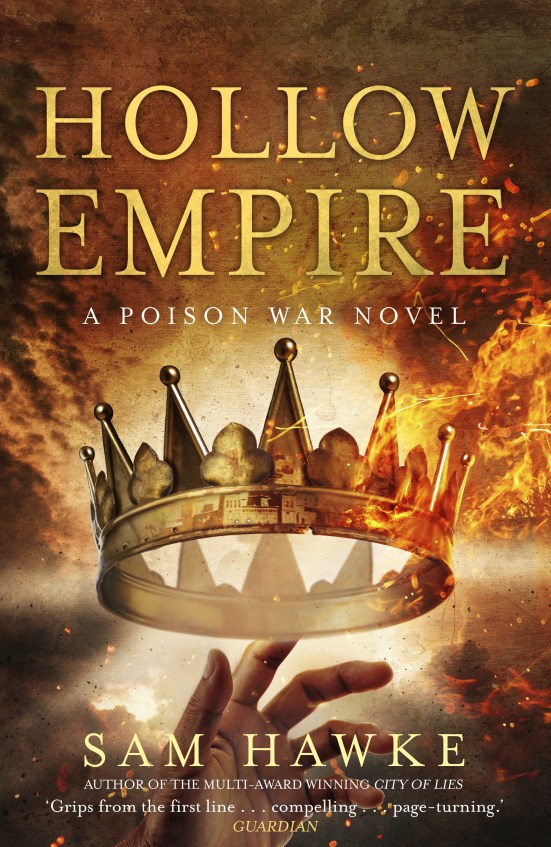
Hollow Empire by Sam Hawke

Hollow Empire Cover 2

Publisher: Bantam Press (Trade Paperback – 1 December 2020)

Series: Poison War – Book Two

Length: 560 pages

My Rating: 5 out of 5 stars

Amazon     Book Depository

After a two-year wait, we finally get to see the epic sequel to Australian author Sam Hawke’s impressive debut novel, City of Lies, with her blockbuster new novel, Hollow Empire.

Two years after the siege of the city of Silasta, where the oppressed Darfri minority were manipulated into attacking the capital by an unknown outside force, the city has started to recover.  While the city focuses on rebuilding and reconciliation with their former besiegers, the poison-eating siblings Jovana and Kalina Oromani, secret protectors of the Chancellor, continue their efforts to work out who was truly behind the attack on their city.  However, to their frustration, no-one else in the city shares their concerns; instead they have grown complacent with the returned peace.

But no peace lasts forever, especially as Silastra celebrates the karodee, a grand festival, to which representatives of all the nations surrounding the city state have been invited.  While the focus is on peace and forging ties between nations, the siblings begin to suspect that their unknown enemy is using it as an opportunity to launch a new attack against Silastra.  In order to determine what is happening, Jovana attempts to hunt down a dangerous and deadly killer that only he seems to have noticed, while Kalina navigates the treacherous world of politics and diplomacy as she works to determine which of their neighbours may have been involved in the prior attack on their city.

Working together with the Chancellor Tain and the Darfri mystic Hadrea, the Oromani siblings get closer to finding some of the answers that they desire.  However, both siblings find themselves under attack from all sides as their opponents attempt not only to kill them but to discredit their entire family.  Determined to protect Silasta no matter what, Jovana and Kalina will risk everything to find out the truth, even if the answers are too much for either of them to bear.

Hollow Empire was another awesome novel from fellow Canberran Sam Hawke, which serves as the compelling and enjoyable second entry in her Poison War series, which follows on from her 2018 debut, City of Lies.  I am a big fan of Hawke’s first novel; not only was it one of my favourite books of 2018 but it is also one of my top debuts of all time.  As a result, I have been looking forward to seeing how the story continues for some time now and I was incredibly happy to receive my copy of Hollow Empire several weeks ago.  The wait was definitely worth it, as Hawke has come up with another impressive and clever novel that not only serves as an excellent sequel to City of Lies but which takes the reader on an intrigue laden journey into the heart of an exciting fantasy city filled with great characters.

Hawke has come up with an excellent narrative for this latest novel which takes the protagonists on a wild journey throughout their city and beyond as they attempt to uncover a dangerous conspiracy threatening to destroy everything they love.  Told from alternating perspectives of the two main characters, Jovana and Kalina, Hollow Empire’s story was a clever and exciting thrill-ride of intrigue, lies, politics, crime and treachery, as the protagonists attempt to find out who is targeting them and plotting to destroy their city.  This proved to be a fun and captivating narrative, and I liked how Hollow Empire felt a lot more like a fantasy thriller than the first book, which focused a bit more on the siege of the city.  The protagonists must dig through quite a few layers of lies, hidden history and alternate suspects to find out what is happening in Silasta, and while there was a little less focus on the fun poison aspects that made the first novel such a treat, I really enjoyed how the story unfolded.  Hawke comes up with several great twists and reveals throughout the book, some of which really surprised me, although I was able to guess a couple of key ones.  I did think that the eventual reveal of the ultimate villain of the story was a tad rushed, but it resulted in an intense and fast-paced conclusion to the novel which also opens some intriguing avenues for any future entries in this series.  Readers may benefit from rereading City of Lies in advance of Hollow Empire, especially as there has been a bit of gap between the first and second novels’ releases.  However, for those wanting to jump right in, Hawke did include a fun recap at the start of the book, which sees the protagonists watching a theatrical recreation of the events of City of Lies.  Not only is this a rather entertaining inclusion (mainly due to how Jovana is portrayed) but it also serves as a good summary of some of the book’s key events, and readers should be able to follow through this second book without any trouble, even if they have not had a chance to read City of Lies.  Overall, this was an epic and impressive story, and I really enjoyed seeing how the Poison Wars continued in Hollow Empire.

I really enjoyed some of the cool writing elements that Hawke featured in Hollow Empire which added a lot to my overall enjoyment of the book and its great story.  The most noticeable of this is the use of the split perspectives, with the main protagonists, Jovana and Kalina, each getting alternating chapters shown from their point of view.  These split chapters worked extremely well in City of Lies, and I am really glad that Hawke decided to use them once again in her second book.  While the primary use of these alternate chapters was to show the different angles of investigation that the siblings were following, it does result in some additional benefits to the narrative.  I particularly liked the way in which the author uses the split perspectives to create tension and suspense throughout the novel, such as by one protagonist lacking information that the other character (and the reader) has knowledge of, or by leaving one protagonist’s fate uncertain.  It was also interesting to see the different opinions that the protagonists had on various characters and the specific relationships and friendships that they formed.  I also liked the way in which Hawke placed some intriguing in-universe poison proofing notes before each chapter, which recounted various poisonings that Oromani family has prevented or investigated over the years.  These notes were quite fun to check out and it really helped to highlight the importance the main characters place on protecting the Chancellor and their city from poison attacks.  These clever elements enhanced an already compelling narrative, and I imagine that Hawke will continue to utilise them in some of her future novels.

One of the major highlights of this book was the return to the author’s great fantasy setting that is the city of Silasta and its surrounding countryside.  Silasta is an extremely woke city full of artists, inventors and scholars who believe in equality between genders and acceptance of all sexualities and gender identities (for example, Hawke introduces a non-binary character in Hollow Empire).  While this was a fun city to explore in the first novel, especially as it was besieged for most of the book, I quite like how the author has altered the setting for Hollow Empire.  There is a significant focus on how Silasta has changed since the ending of the siege two years previously, especially on the attempted reconciliation efforts between the somewhat elitist citizens of Silasta and the Darfri, who were previously treated as second-class citizens doing the menial jobs.  While there have been changes to this relationship since the end of the first book, much is still the same and the difficulties in reconciling these two groups becomes a major and intriguing plot point within Hollow Empire.  Hawke also adds in an intriguing crime element to the novel, as several criminal gangs have used the chaos following the siege to build power within the city, peddling new drugs to the populace.  These new elements make for a different city than what the reader has previously seen, and I really liked how Hawke explored the negative elements of the aftermath of the first book and implemented them in Hollow Empire’s narrative, creating a fantastic and intriguing story.

In addition to focusing on the changes to the main city setting, I also really enjoyed the way in which Hawke decided to expand out her fantasy world.  This is mainly done by introducing emissaries from several of the nation’s neighbouring Silasta and bringing them to the city, resulting in the protagonists learning more about their respective histories and cultures, especially as they are convinced that one of them is responsible for the attack against them.  The story also explores the history of Silasta itself, with several storylines exploring how the city came into existence and its hidden past.  The author also worked to expand the magical system present within her universe by examining the spirit magic that was introduced in City of Lies and exploring more of its rules and limitations.  This results in several intriguing scenes, especially when one of the major characters, Hadrea, finds new ways to manipulate her magic.  In addition, some new forms of magic are introduced within the book.  These new magics have an origin in some of the new realms that are further explored in Hollow Empire and included an interesting and deadly form of witchcraft that differs wildly from the magical abilities that the characters utilised in the first book.  Not only are these new and inventive world-building elements quite fun to explore, but their inclusion becomes a key inclusion to the narrative.  All of this results in an enjoyable expanded universe, and it looks like Hawke has plans to introduce further lands and histories in the next Poison Wars book.

Another great part of Hollow Empire is the complexity of the characters, all of whom have evolved in some distinctive and compelling manner since the first novel.  As mentioned above, the main protagonists are the Oromani siblings, Jovana and Kalina, who serve as the book’s point-of-view characters.  Jovana is the Chancellor’s poison proofer, his secretive bodyguard who prepares his food and ensures that everything he eats is poison-free.  However, since the events of City of Lies, Jovan has become a lot more well-known throughout the city due to the role he played during the siege.  This requires him to adjust his role in society, especially as many people are now questioning how he and his family gained such prominence.  Jovan is also a lot more cautious when it comes to the Chancellor’s security after several near misses in the first novel, so that he appears almost paranoid at points throughout Hollow Empire.  This paranoia serves him well as he is forced to fight against an assassin who is using some clever means to attack his family and allies.  Jovan has also entered into a mentoring role within this book as he takes his young niece, Dija, as his new apprentice, teaching her the ways of proofing and ensuring that she has an immunity to toxins by poisoning her himself, in a similar way to how his uncle raised and taught him.  All of these add some intriguing new dynamics to Jovan’s character, and I really enjoyed seeing how he has changed since the first book.  Kalina also proves to be an excellent character throughout Hollow Empire, and I quite enjoyed reading her chapters.  Like her brother, Kalina has become a much more public figure in Silasta, although she is seen more as a hero than a suspicious poisoner like her brother.  Kalina’s chapters mainly focus on her attempts at finding out the truth through diplomacy as she interacts with the foreign delegations visiting the city.  Her investigations are just as dangerous as Jovan’s, and I really enjoyed seeing how her distinctive narrative unfolded, as well as how her character has also evolved, including with a fantastic new romance.  Both protagonists serve as excellent centres for the story and I look forward to seeing how they progress in later books in the series.

Hollow Empire also boasts a raft of fantastic side characters, many of whom have some exceptional arcs throughout the book.  The main two supporting characters are probably Chancellor Tain and Hadrea, both of whom were significant figures in City of Lies.  Like the main protagonists, Tain has also changed a lot since City of Lies, where he was the young and bold ruler thrust into a chaotic position.  Now he is a much more measured and cautious man, especially after narrowly avoiding death by poisoning in the first novel.  Tain continues to be the focus of the protagonist’s advice and protection throughout the novel, and the friendship he has with Jovana and Kalina becomes a major part of the book’s plot, resulting in some dramatic and powerful moments.  Hadrea, the young Speaker whose spirit magic saved the city in the first novel, also gets a lot of focus throughout Hollow Empire and is quite a major character.  In addition to being Jovan’s love interest, Hadrea also serves as the protagonist’s magic expert as they attempt to understand some of the mystical elements attacking them.  Hadrea’s magical power ends up becoming a major story element of Hollow Empire as she attempts to find new ways to use her magic while also chafing under the instruction of her superiors.  It looks like Hawke has some major plans for Hadrea in the future books, and I am curious to see what happens to her next.  These characters, and more, end up adding a lot to the story, and I quite enjoyed the way that Hawke portrayed them.

Hollow Empire by Sam Hawke was an impressive and deeply enjoyable novel that serves as an excellent sequel to City of Lies.  Featuring a thrilling and clever main narrative, great characters and an inventive, if damaged, fantasy setting, Hollow Empire was an epic read from start to finish that proves exceedingly hard to put down.  I had a wonderful time reading Hollow Empire and it ended up being one of my favourite books of 2020.  A highly recommended read, I cannot wait to see how the series continues in the future.

Amazon     Book Depository

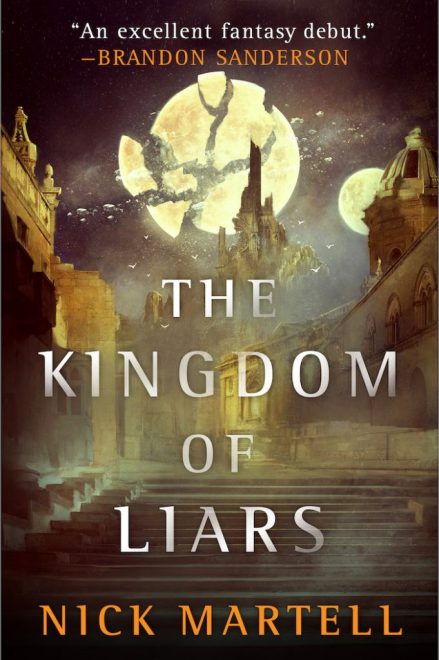
The Kingdom of Liars by Nick Martell

The Kingdom of Liars Cover

Publisher: Gollancz (Audiobook – 7 May 2020)

Series: The Legacy of the Mercenary Kings – Book One

Length: 15 hours and 37 minutes

My Rating: 5 out of 5 stars

Amazon     Book Depository

Impressive new fantasy author Nick Martell presents The Kingdom of Liars, an outstanding fantasy novel that is easily one of the top debuts of 2020.

Welcome to The Hollows, the slowly disintegrating capital of once-great kingdom where magic costs memory to used.  Once a shining beacon of culture and nobility, the city is now a shadow of its former self, surrounded by firearm-wielding rebels while petty nobles fight for scraps within and a corrupt prince plots for power.  While the people suffer under the rule of a grieving king, their only hope of survival may lie in the hands of the son of the kingdom’s most despised traitor.

Michael Kingman was only a child when he was branded a traitor for the crimes of his father.  Once the King’s loyal right-hand man, Michael’s father, David Kingman, was convicted and executed for the murder of the King’s nine-year-old son, and his family was cast out into poverty and infamy.  Now, 10 years later, Michael makes a living running petty cons on minor nobility while desperately trying to escape the legacy of his family.  However, after a devastating rebel attack rocks the city and kills someone close to him, Michael is determined to change his destiny.

Accepting employment with an eccentric and powerful noble, Michael is given a chance to re-enter noble society and find evidence that proves that his father was framed for the prince’s murder.  Participating in the Endless Waltz, the social highlight of year, Michael needs to gain influence and supporters in the court in order to gain an invitation into the king’s palace, where he believes the evidence he needs to vindicate his father can be found.  However, nearly everyone in the Endless Waltz has their own agenda and no-one wants to see a traitor’s son succeed.  Can Michael prove his father’s innocence and restore his family’s place in the kingdom, or is he doomed to share his fate and be executed as a traitor?

So, this is a book I have been meaning to read for quite some time.  Despite it coming out in May this year, I only managed to get around to listening to it a couple of weeks ago and I instantly realised I made a mistake in not reading this one sooner as The Kingdom of Liars was an epic and deeply impressive novel that I had an outstanding time listening to.  This was the debut novel from new author Nick Martell, which serves as the first entry in his planned The Legacy of the Mercenary Kings series (which is a cool series name btw).  This amazing novel from Martell contains a deeply captivating and complex story that proved incredibly irresistible to me, especially when you throw in the great characters and inventive new fantasy world that the author came up.  The end result is an exceptional and powerful read that gets a full five-star rating from me.

At the heart of this awesome book is a first-rate story that sees the protagonist, Michael Kingman, attempt to navigate his treacherous city in order to find the truth behind the death of his father.  Martell starts his narrative off with an impressive opening sequence that sees Michael being found guilty of the murder of the king, a charge he does not refute.  The story then backtracks a few weeks and the full story of Michael Kingman and his adventures is revealed to the audience through the first-person narration of Michael in a way that is reminiscent of a historical chronicle and shows how the protagonist goes from street hustling to regicide in a short period of time.  This proved to be an extremely epic tale loaded with conspiracy, political intrigue, lies, deceit and dark magic, as Michael primarily battles through a series of intense social occasions while also attempting to outwit or survive the machinations of jealous royals, betrayed friends, dangerous mercenaries, fickle nobles and scheming rebels.  At the same time, he also has to work out the motivations for the various people he encounters, most of whom have deep secrets or interesting connections to Michael and his family, as well as diving down into the history of The Hollows and the Kingman family.

There is quite a lot going on in this book, and the readers get to witness a series of different storylines and character arcs, all of which are loaded up with surprise twists and intriguing revelations.  All these storylines prove to be quite entertaining and very cleverly written and I had a great time seeing how each of them unwound.  These separate story arcs come together extremely well, and it results in a deeply compelling overall narrative which proved very hard to stop reading.  I loved all the narrative surprises that Martell came up with throughout The Kingdom of Liars and he added in some great twists which did an outstanding job keeping my attention.  While I was able to guess some of the reveals that Martell was telegraphing, several others caught me completely by surprise, which is something I deeply appreciate in a novel.  I was particularly impressed by the eventual reveal of the main antagonist and I thought that the choice of character was a real masterstroke from Martell.  I was immensely annoyed with myself for not picking up on it sooner, especially as I missed an obvious clue.  I cannot emphasise how I much loved this clever narrative, and I look forward to seeing how Martell continues this captivating tale in the future.

Because he serves as the central protagonist and only point-of-view character, most of The Kingdom of Liars is spent examining the character of Michael Kingman.  Michael is a complex and damaged protagonist who finds himself burdened with the legacy of his great family and the deeds of his traitor father.  At the start of the novel, Michael is a rather self-destructive being, who attempts to find redemption from random and pointless acts of heroism and by skimming some cash off the nobles he despises.  However, after a series of personal losses, Michael begins the path to redeeming himself and his family by attempting to prove his father’s innocence and he starts to reconnect with figures from his past, including several he had forgotten.  I quite enjoyed the character of Michael and it proved to be quite fascinating to see his constant internal battle to determine his identity and his place within the world.  Do not get me wrong, at times Michael proved to be a frustrating protagonist to follow due to his stubbornness and anger, but I think this examination of his damaged emotions helped to make him a stronger character who the reader could emphasise with more.  Thanks to the various events and revelations that become apparent to Michael as the story progresses, the protagonists develops substantially throughout The Kingdom of Liars and by the end he is a vastly different character who is placed in an interesting position for the next novel.  I look forward to seeing how Michael’s story continues throughout the rest of The Legacy of the Mercenary Kings series and I am sure it is going to be suitably dramatic and enjoyable.

In addition to the central protagonist, Martell includes an impressive supporting cast of characters who guide, befriend, manipulate, or try to kill Michael throughout the course of the narrative (sometimes they try to do all four at once).  I really enjoyed the various supporting characters that the author included in The Kingdom of Liars, especially as he ensures that each of them has a substantial and compelling backstory that is somehow interwoven with Michael’s past.  It proves to be extremely fascinating to see how each of these characters play into the larger picture of the narrative, especially as everyone has an alternate motive when it comes to dealing with Michael.  While each of the characters is suitably complex, there are a couple I need to particularly highlight.  This includes the other Kingman children, Gwen and Lyon, both of whom have been impacted by their father’s execution in a similar way to Michael, but who both deal with it in alternate ways, either by running from their family’s name or by subtly investigating it through their own means.  These two prove to be a dramatic counterpoint to Michael’s inner struggle about being a Kingman and it was fascinating to see the various, high-tension discussions they have with the protagonist on the subject.

There is also the excellent character of Trey, Michael’s best-friend, who, thanks to a tragic event early in the novel, ends up becoming more of an antagonist due to major feelings of betrayal that emerge between the two.  Trey ends up become a fantastic part of the book’s plot, as Michael is forced to constantly worry about his former friend attempting to kill him, while also attempting to do what is best for Trey’s well-being.  The various sequences with Trey are amongst the most emotional and powerful in the novel, and they add a real dramatic kick to the overall story.  The end of The Kingdom of Liars hints at a dark future for Trey in the rest of the series and I cannot wait to see what he has in store for him.  I also had quite a liking for the mysterious mercenary, Dark, a dangerous and shadowy being who Michael becomes inadvertently entangled with.  Dark is a fun and ultra-powered figure throughout the novel, and he had some great interactions with the protagonist.  However, out of all these characters my favourite is easily Charles Domet, the rich and powerful drunkard with innumerable secrets.  Domet serves as an excellent mentor character for Michael, while also being one of the most entertaining members of the cast.  I loved every scene that Domet appeared in, especially as he had a particularly intriguing backstory.  Each of these characters, and more, added substantially to The Kingdom of Liars, and it will be fascinating to see how each of them evolves in the future.
On top of the outstanding and clever story and the complex characters, Martell also invests in a captivating and highly inventive new fantasy realm, primarily set around the city of The Hollows.  This is a dark and dangerous world, with the major feature being a fractured moon hanging in the sky with occasional pieces falling to world below and causing substantial damage, while also offering cryptic remarks to those people who hold the shards.  The Hollows itself serves as an excellent setting for the novel, thanks to its dangerous politics, oppressed people, besieging rebels and withering monarchy.  Watching the scion of a once powerful house that was renowned as a force for good attempt to navigate the avenues of power throughout The Hollows proves to be extremely compelling and I really enjoyed it.  There are also some intriguing examinations of the city’s history, and each revelation about the past added a new layer to elaborate story that Martell came up with for The Kingdom of Liars.  The author has also come up with an intriguing magical system which allows people to wield substantial power at the cost of their own memories, ensuring that each magic user must work hard to maintain control.  I found this memory factor of this magical system to be very clever and it added a lot of great elements to the overall story, especially as several characters, including the protagonist, experience memory losses throughout the novel, which hinders them, and by extension the reader, from seeing the full picture.  There is also a rather intriguing comparison between magic and firearms throughout the story, as the nobles wield arcane power, while the rebels have guns.  This results in some thrilling sequences and it should be fun to see more elaborate fight scenes in the future.  Overall, this was a deeply enjoyable and compelling new setting and Martell really showed off his creativity in this first novel.  It seems likely that Martell is planning to massively expand this world in the future The Legacy of the Mercenary Kings novels and I am confident there will be some fantastic new inclusions in the future (like who actually fractured the moon).
As I mentioned above, I ended up buying The Kingdom of Liars’ audiobook format rather than grabbing a physical copy of the book.  I am extremely happy that I chose to do this as the audiobook was particularly good and it proved to be a fantastic way to enjoy this awesome novel.  I had an amazing time seeing the cool fantasy world that Martell came up be bought to life in this format and I found myself really getting into the story details as I listened to it.  The Kingdom of Liars audiobook has a relatively substantial run time of 15 hours and 37 minutes, although I found myself powering through it extremely quickly due to how much I enjoyed the story.  The audiobook features the narration of Joe Jameson, who I recently talked about in my review of King of Assassins by R. J. Barker.  Jameson’s narration in The Kingdom of Liars is pretty amazing and he does an incredible job inhabiting the various characters featured within the novel.  I think his voice and narration style really fit the way that this novel was written, and I felt that the point-of-view protagonist really came to life in his hands.  All of this results in a captivating and deeply enjoyable audiobook and this is the format I would recommend to anyone who wishes to check out The Kingdom of Liars.

The Kingdom of Liars is an incredible, compelling, and deeply exciting novel that I had an absolutely wonderful time listening to this year.  Debuting author Nick Martell really outdid himself with this first novel in his The Legacy of the Mercenary Kings series and this superb book comes highly recommended.  I loved everything about this book, including the two different but equally awesome covers that it was released with (see above and below), and I know I am going to have an amazing time following this series in the future.  The next The Legacy of the Mercenary Kings novel, The Two-Faced Queen, is set for release in March next year, and it looks set to be one of the top books of 2021.

The Kingdom of Liars Cover 2

Amazon     Book Depository

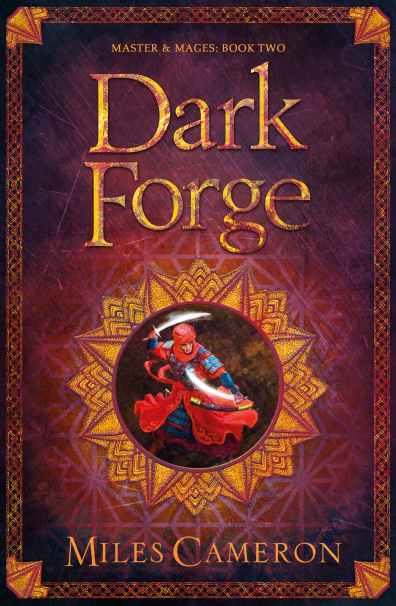
Quick Review – Dark Forge by Miles Cameron

Dark Forge Cover

Publisher: Hachette Audio (Audiobook – 24 January 2019)

Series: Masters & Mages – Book Two

Length: 16 hours and 58 minutes

My Rating: 5 out of 5 stars

Amazon     Book Depository

After finally getting around to doing a quick review of King of Assassins by R. J. Barker the other day, I thought I would take this opportunity to do a quick review for the exceptional 2019 fantasy novel, Dark Forge, the second entry in the Masters & Mages trilogy by Miles Cameron.

Miles Cameron is an interesting and talented author who has written several amazing fantasy novels over the last couple of years.  I am a little more familiar with Cameron under his main writing name, Christian Cameron, which he uses for his enjoyable and detailed historical fiction novels, such as last year’s The New Achilles.  However, I really got into his fantasy fiction last year when I read the first Masters & Mages book, Cold Iron, which proved to be a particularly captivating and impressive novel that is really worth checking out.  After enjoying Cold Iron I also decided to have listen to its sequel, Dark Forge, late last year, and while I had a fantastic time reading it, I completely failed to write a review for.  This is a shame because Dark Forge was a really great read and I actually considered it to be one of the best books (and audiobooks) I read in 2019.

Synopsis:

Only fools think war is simple.
Or glorious.

Some are warriors, some captains; others tend to the fallen or feed the living.

But on the magic-drenched battlefield, information is the lifeblood of victory, and Aranthur is about to discover that carrying messages, scouting the enemy, keeping his nerve, and passing on orders is more dangerous, and more essential, then an inexperienced soldier could imagine . . . especially when everything starts to go wrong.

Battle has been joined – on the field, in the magical sphere, and in the ever-shifting political arena . . .

Dark Forge is an excellent novel which takes the reader on a vast and complex adventure through Cameron’s detailed fantasy world.  The book follows the life of its protagonist, student Aranthur Timos, who, after getting involved in some intense espionage and intrigue in the previous novel, now finds himself on the battlefield as his city state goes to war to stop a dangerous and tyrannical new empire gaining power and destroying the current, benevolent status quo.  There is a lot going on in this book, and the authors sets the reader on an impressive and extensive adventure which proves extremely hard to put down.  Cameron starts this book off in impressive fashion, with the protagonist and many of the key side characters from the first novel involved a brutal and elaborate battle sequence that sees magic, gunpowder and troops utilised to a destructive degree.  From there, the story follows Aranthur as he engages in an extended scouting mission, where he attempts to work out the origin of his enemies and the full extent of their plan.  This is followed up with a particularly desperate siege before Aranthur finds himself back in the city that served as the main setting of Cold Iron, where political shenanigans see him branded a traitor and force him to sneak around the city in order to save his friends.

The author blends a lot of different story elements together into this book, which I felt came together well and helps to produce an extremely enjoyable narrative.  The author continues to utilise his distinctive, detail-orientated writing style which fits the scope and tone of the series and helps to produce a fun read with the feel of a classic fantasy novel.  I ended up having an outstanding time seeing the various fun and compelling places where Cameron took this great story, and it ended up being quite an enjoyable book.  It also leaves open some compelling storylines for the final entry in the series and it will be interesting to see how the author ends him impressive overarching plot.  I do think that readers who are interested in checking out Dark Forge should really read Cold Iron first.  While Cameron did do a good job of examining some of the key events that occurred in the first novel, Cold Iron contained an immense amount of story detail, and I personally feel that readers would be well suited to have this story fresh in their mind before getting into Dark Forge.

One of the things that I like the most about the first entry in this series, Cold Iron, was the way in which it served as a coming-of-age story for the protagonist, Aranthur.  Cameron continues this in Dark Forge, as the protagonist once again goes through a lot of growth.  Not only does he begin to become a key player in the fight against the Master (the antagonist of the series), but he also starts to come into his own as a magical user, a swordsman and a leader.  While he is somewhat reluctant to become a warrior and a killer, despite his clear aptitude for it, he eventually becomes more confident in his role, especially after seeing all the dangers and darkness out in the world.  All this great growth continued to endear me to Aranthur, and it was a lot of fun to see the author portray a normal character who has vast responsibilities and adventure thrust upon him and must either adapt or crumble as a result.  Dark Forge also continued to showcase several of the amazing side-characters who were initially introduced in Cold Iron.  Each of these characters gets their own intriguing arcs throughout the book and it was fantastic to see them, and their relationships with Aranthur, evolve over the course of their extended adventure.  Several new compelling characters were also introduced in this novel and their unique narratives helped to enhance Dark Forge’s story.  All of these excellent characters are a lot of fun to follow and I look forward to seeing where they end up at the end of this series.

I also have to highlight the impressive world-building that Cameron featured in Dark Forge.  The author continues to dive down deep into the lore and history of his new realm, particularly as the characters spend most of the novel exploring a new continent that was mentioned but not featured in Cold IronDark Forge’s narrative spends significant time expanding the reader’s knowledge of this new continent, mainly because the protagonists engage in an epic and lengthy trek throughout it, and it was fascinating to see the cool new landscapes that Cameron describes.  In addition, I really enjoyed the expansion of the awesome magical system featured throughout the series.  Much of this is because of a world-changing event that increases the importance and power of magic, but it is also because Aranthur is becoming much more proficient with his magical abilities.  Not only does this result in a deeper understanding of this universes magic systems work, but you also get to see some much more destructive and elaborate displays of magical ability, which results in some very impressive sequences throughout the book.  I personally found the authors inclusion of a series of magical roadside booby traps to be particularly clever, and I also had a lot of love for one of the scenes at the start of the book where the protagonist speeds up his own body in the midst of a battle, ensuring that everyone, except a few opponents, is fighting in slow motion in comparison to him.  I found all of this to be extremely cool and I really appreciated all the amazing new features that Cameron was able to fit into Dark Forge.

Like the first book in this series, I ended up checking out the audiobook version of Dark Forge, which is narrated by Mark Meadows.  The Dark Forge audiobook has a run time of just under 17 hours, which is a couple of hours shorter than Cold Iron, making for a quicker listen, and dedicated listeners can get through it in a short amount of time (I know I did).  I had an amazing time listening to this audiobook, and I really think I followed this novel a lot more closely by listening to it.  I was also really glad that Meadows returned to narrate this second novel in the series.  Meadows’s voice serves as a perfect match for Cameron’s unique writing style and he did a fantastic job moving the story along and bringing the various characters to life.  As a result, I would really recommend the audiobook format for anyone interested in checking out Dark Forge and it ended up being an excellent way to enjoy this outstanding book.

Dark Forge by Miles Cameron is an impressive and captivating fantasy read that presents the reader with an intense adventure that follows a relatable and likeable protagonist.  Filled with all manner of action, great side-characters and clever world building, Dark Forge serves as an amazing second entry in the Masters & Mages series, and I had an exceptional time listening to it.  This book gets a full five-star rating from me and I really need to check out the final entry in the series, Bright Steel, next year.

Amazon     Book Depository

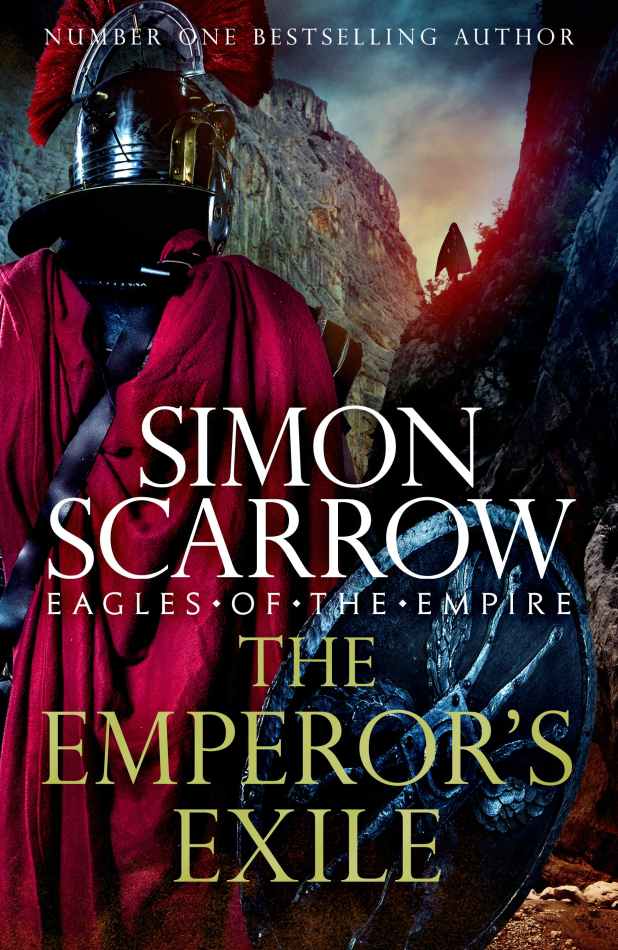
The Emperor’s Exile by Simon Scarrow

The Emperor's Exile Cover

Publisher: Headline (Trade Paperback – 10 November 2020)

Series: Eagles of the Empire – Book 19

Length: 434 pages

My Rating: 4.5 out of 5 stars

Amazon

One of the top authors of Roman historical fiction, Simon Scarrow, returns with the latest exciting novel in his Eagles of the Empire series, The Emperor’s Exile.

Rome, 57 A.D.  Following their adventures in Parthia, Legionary veterans Tribune Cato and Centurion Marco return to Rome with the remnants of their Praetorian Cohort.  Thanks to the ever-shifting politics of Rome and the fickleness of Emperor Nero’s court, Cato faces a hostile reception from some of Nero’s advisors, who hold him responsible for the military disasters experienced in the Parthian campaign.  Soon Cato has his command taken away from him, while Marco decides to resign from the Legions in protest, determined to live out his retirement in Britain.

Isolated in Rome, Cato is forced by one of Nero’s advisors to take on a new and dangerous mission.  Nero’s mistress, the beautiful Claudia Acte, has risen too high too quickly, and Nero’s political enemies have manipulated him into sending her into exile.  Travelling with a select group of Praetorian officers and his new advisor, the spy Apollonius, Cato must escort Claudia to the location of her exile, the island province of Sardinia, where he has another mission to accomplish.

Sardinia has long been plagued by tribes of bandits living wild in the centre of the island.  These proud decedents of the original inhabitants of Sardinia have been causing problems in recent months, raiding the local villages and ambushes caravans.  Taking command of Sardinia’s entire garrison, Cato begins to work out a strategy to defeat the locals and regain his position in Rome.  However, this proves harder than originally anticipated as Cato needs to contend with a disorganised military force, a dangerous plague that is beginning to overwhelm the island and a surprisingly competent group of bandits with unparalleled knowledge of the local landscape.  Worse, Cato begins to have dangerous feelings for Claudia, feelings which his enemies will exploit and which could set the entirety of Rome against him.  Can Cato pacify Sardinia before his entire force is decimated, or have his adventures finally come to an end?

This was another fantastic and highly enjoyable historical fiction novel from one of my favourite authors, Simon Scarrow, who has produced an impressive new entry in his long-running Eagles of the Empire series.  The Eagles of the Empire books are easily among the best Roman historical fiction series out there at the moment, and I have had an amazing time reading every single entry in this series, including the last two novels, The Blood of Rome and Traitors of RomeThe Emperor’s Exile is the 19th Eagles of the Empire book and the author has produced another impressive story, featuring great historical elements and some fantastic character work.  I had an awesome time reading this book and it is definitely worth checking out.

The Emperor’s Exile contains an extremely fun and captivating narrative which follows Cato work to defeat a new enemy in a new historical setting.  Scarrow sets up an exciting and fast-paced story for this latest book, with the protagonist forced to deal with all manner of politics, intrigue and various forms of deadly peril in rather quick succession as he is assigned his mission and attempts to complete it.  This naturally results in all manner of impressive action sequences which are a lot of fun to watch unfold, including one particularly good extended siege sequence.  It is not all action, adventure and historical undertakings, however, as the book also has an intriguing focus on its central protagonist, Cato.  Cato, who has been evolving as a character over the last 18 books, continues to develop in The Emperor’s Exile in several dramatic and emotionally rich ways.  Not only does he have to adapt to a major change in his personal circumstances with the retirement of a great friend but he continues to question his role in the Roman army and whether he wants to remain a brutal killer.  Throw in an ill-conceived romance, his continued regrets about his past actions and his disastrous first marriage, as well as a certain major change in his appearance for the future, and this becomes quite a substantial novel for Cato which also opens up some intriguing storylines in the future.  I had a wonderful time reading this book and, once I got wrapped up in the story, I was able to power through the book extremely quickly.
In addition to having a great story, The Emperor’s Exile also serves as a key entry in this impressive, long-running series.  While readers who want to check out this book do not particularly need to have read any of the previous Eagles of the Empire books, mainly because Scarrow does an excellent job of revisiting story aspects and characters from prior novels, those established fans of the series are going to find this book particularly significant and memorable.  This is because one of the main protagonists of this series, Centurion Marco, who has been a major part of all 18 previous novels, retires from the Legions 100 or so pages into the book then subsequently disappears off to Britain, leaving Cato to his own adventure in Sardinia.  Scarrow has been telegraphing Marco’s plans to retire for the last couple of books, and it is a natural consequence of the author realistically aging his characters (15 years have elapsed within the series at this point).  While it was somewhat expected, it was still weird and a bit sad not to have Marco fighting along Cato in this latest adventure, especially as their comradeship is one of the defining aspects of this series.  That being said, Cato has grown a lot over the last 18 books and the natural progression of Cato and Marco’s dynamic as characters did necessitate them splitting off at some point.  It will be interesting to see how Scarrow features Marco in the future, especially if he plans to continue the Eagles of the Empire series for several more books (I personally would love it if he goes all the way into The Year of the Four Emperors, as it would wrap up the Vitellius and Vespasian storylines from the earlier books quite nicely).  Based upon how The Emperor’s Exile ends, it looks like Marco is going to appear in the next book, but it is uncertain whether he will continue on as a central protagonist, become an occasional character or go down in a final blaze of glory.  I personally think that Scarrow is planning to permanently retire Marco as a character soon, potentially replacing him with new character, Apollonius.  Apollonius is the dangerous and insightful spy who Cato teamed up with during the previous novel, and who followed Cato back to Rome in this book.  Apollonius served as Cato’s aide, scout and confident during The Emperor’s Exile in place of Marco, and it looks like he will be a major character in the next book as well.  I quite liked Apollonius as a character and it will be interesting if he ends up as Marco’s replacement, especially as he shares a very different dynamic with Cato than Marco did.  All of this makes The Emperor’s Exile quite an intriguing entry in the overall series and I am extremely curious to see what is going to happen to these amazing protagonists next year in the 20th book in the series.

As always, this novel is chock full of fantastic historical detail and storytelling as the author sets his story in some intriguing parts of Roman history.  Not only does the reader get a great view of Rome under the control of Emperor Nero (whose chaotic rule as described in this novel has some interesting modern parallels) but the main story takes place in the island province of Sardinia, off the Italian coast.  Sardinia is a fascinating province that I personally have never seen used before in Roman historical fiction novels and which proved to be a fantastic setting for most of this book’s story.  Scarrow really dives into the history, culture and geography of the island, explaining how it became a Roman province, examining some of the key towns and ports and highlighting the difference between the locals and the Roman settlers.  There is a particularly compelling focus on the tribes who controlled the centre of the island and it was rather interesting to see how a group of rebellious barbarians managed to survive so close to Italy during this period.  Scarrow also provides the reader with his usual focus on the Roman legions/auxiliaries, providing impressive details and depictions of how the Roman war machine operated and what their usual tactics and strategies are.  All of this really helps to enhance the novel and I had an amazing time exploring Sardinia with the Roman protagonists.

Another intriguing aspect of The Emperor’s Exile was the plague storyline that saw the inhabitants of Sardinia, including Cato and his soldiers, have to contend with a deadly infectious sickness.  This plague added an excellent edge to the storyline, serving as a hindrance to the protagonists and ensuring that they constantly have to change their plans while dealing with their enemy.  Not only does this serve as a clever handicap for the Romans but readers cannot help but make some comparisons to modern day events.  While I could potentially be reading a little too much into this and it is possible that Scarrow always intended to feature a plague in this book, I cannot help but think that this was a deliberate choice by the author.  Either way, it proved to be an extremely fascinating part of the book and it was fun to compare the reactions of these historical characters to the actions of people in the real-world.  While this story inclusion may potentially prove to be a little tiring for readers sick of any mentions of disease, infection and quarantine in their day-to-day lives, I thought it was a great addition to the novel, especially as it raised the dangerous stakes of this exciting novel.

With his latest novel, The Emperor’s Exile, Simon Scarrow continues to show why he is one of the top authors of Roman historical fiction in the world today.  This latest novel serves as a key entry in his amazing Eagles of the Empire series and it takes the reader on an outstanding, action-packed adventure, loaded with some great character moments and some impressive historical settings.  I had a fantastic time reading this book and I cannot wait to see how Scarrow continues this epic series next year.  Luckily, I only have to wait a few more months for my next dose of this author’s work as his World War II crime fiction novel, Blackout, is set for release next March.

Amazon

The Tower of Fools by Andrzej Sapkowski

The Tower of Fools Cover

Publisher: Gollancz (Trade Paperback – 27 October 2020)

English Translation by David French

Series: Hussite trilogy – Book One

Length: 549 pages

My Rating: 4.25 out of 5 stars

Amazon     Book Depository

From legendary Polish author Andrzej Sapkowski comes the first English translation of his 2002 release, The Tower of Fools, an intriguing and exciting fantasy/historical fiction hybrid novel that takes the reader on a weird and entertaining adventure.

1425, Silesia (South Western Poland and parts of Czechia).  War is brewing as the Catholic Church fights against the Hussites in a brutal religious struggle.  As the entire region begins to degenerate into conflict and chaos, a young doctor and amateur magician, Reinmar of Bielau, known as Reynevan, finds himself in all manner of trouble when he is caught in bed with the beautiful wife of a knight.

As Reynevan makes his escape, a member of the knight’s family, the powerful Stercza clan, is unintentionally killed, and the rest of the Stercza’s swear vengeance upon him.  Worse, Reynevan’s forays into magic have made him a target of the inquisition, who wish to have an extended and unpleasant chat about his arcane hobbies.  With a massive price on his head, Reynevan is forced to flee into the wilderness to survive as bounty hunters scour the countryside trying to find him.

Calling upon old friends, Reynevan looks for anyway to escape from his pursuers while also attempting to ‘rescue’ the knight’s beautiful wife.  Teaming up with an odd group of comrades, Reynevan makes his way throughout Silesia while attempting to outfox his pursuers.  However, his adventures have inadvertently placed him in the middle of a dangerous conspiracy, one that could change the entire fabric of the region and which threatens everyone he loves.  As Reynevan attempts to work out just what he has become involved with, his path leads him to the infamous Tower of Fools, an asylum for the insane and the heretical.  Can Reynevan escape the danger he finds himself in, or will his adventures cost him his life and his mind?

The Tower of Fools is a compelling and unique novel from veteran author Andrzej Sapkowski, who is best known for his iconic The Witcher novels.  This novel is the first entry in Sapkowski’s Hussite trilogy, which is the main series he has authored outside of The Witcher books.  The Tower of Fools was originally released back in 2002 under the original title Narrenturm, and while it has previously been translated into several other European languages, this version represents the first English translation of the book.  The translation of The Tower of Fools was done by David French, who has previously translated several Witcher novels, and no doubt we can expect the next two novels in the series (previously published in 2004 and 2006) to be translated and released in the coming years.  While I really enjoyed The Witcher television series, I must admit that I am not too familiar with Sapkowski’s writing, having so far only read the 2018 translation of The Witcher standalone novel Season of Storms.  However, due to the inevitable interest that was going to surround The Tower of Fools, I was quite keen to check out this book, and I ended up really enjoying it due to its captivating narrative, outrageous characters and excellent use of some distinctive historical fiction elements.

This novel from Sapkowski contains a fantastic and enjoyable narrative that proves surprisingly hard to put down at times.  The author has done a fantastic job blending together interesting historical fiction and fantasy elements that come together to create a distinctive adventure story.  The Tower of Fools is mostly told from the perspective of its central character, Reynevan, although several other perspectives are occasionally used throughout the novel.  What I liked about this book was the fact that it was a fast-paced, event-laden narrative that showered the reader with all manner of action and intrigue.  Reynevan and his companions essentially run into a different dangerous obstacle, major historical event or dastardly opponent every chapter, which they are forced to overcome or escape from in short order.  This ensures that the reader is constantly on their feet as they are never certain what new trouble or adventure lies on the horizon.  In addition, there is also a subtle line of intrigue that sees a sinister conspiracy begin to unfold around the protagonist as he finds himself in the midst of a series of murders and political manoeuvrings.  While this seems like a lot of elements for one book, it comes together surprisingly well into a cohesive and exhilarating narrative that I quite enjoyed, and which serves as an impressive start to the entire Hussite trilogy.  There are a lot of fun elements to this book, and I particularly want to point out the rather entertaining introductions that occur at the start of each chapter, giving the reader a humorous heads-up of what is to come throughout the series.  I did find it interesting that the titular Tower of Fools, which is referenced strongly throughout the official synopsis for this book, does not show up until really late in the book and is only a setting for a relatively short period.  While this book does contain several great and dark scenes in this location, this novel might have been more interesting if more of the story was featured in this asylum.  Still, I had an awesome time getting through The Tower of Fool’s cool story, and it was an absolute thrill ride from start to finish.

One of the major things that I liked about The Tower of Fools is the way in which Sapkowski complimented his entertaining narrative with a huge selection of distinctive characters.  This includes the main protagonist of the novel, Reynevan, the foolhardy student doctor and magician who serves as the main point-of-view character.  While he is the driving force for most of The Tower of Fools’ narrative, I actually found Reynevan to be a little annoying, especially as his impulsive nature, which is mostly driven by unrealistic ideas of heroism and romance, continues to get him into trouble.  This becomes especially annoying when his stupid decisions endanger his friends, whose determination to point out Reynevan’s mistakes help to make them more likeable.  Despite being a typical foolish young male protagonist, Reynevan does grow on you a bit as the book progresses and it proves hard not to relate to some of his impulses at time.  While his actions did occasionally exasperate me, I really did enjoy him as a character, and his keen insights and fun antics ensure that the reader has a great time following him throughout the course of the novel.

In addition to Reynevan, the main two side characters of The Tower of Fools are the fun duo of Scharley and Samson, two very different men who become Reynevan’s travelling companions.  Both of these characters are extremely entertaining in their own right, and Sapkowski weaves some great narrative threads around them.  Scharley is a crude, belligerent and surprisingly dangerous priest who leaves his imprisonment in a monastery to assist Reynevan.  Scharley serves as the main voice of reason and caution for much of the book and proves to be an interesting counterpoint to the youthful and impulsive Reynevan, whom he often has to threaten with violence in an attempt to get him to do the logical or sane course of action.  Their other companion is Samson, a giant of a man with an intense intelligence, who may or may not be possessed by a demon.  Samson is a really fun addition to the group, and I really enjoyed him as a character thanks to his unique demeanour and characterisation.  These two companions are quite intriguing in their own way and it was a lot of fun to see them interact with Reynevan and the other characters they come across.  This book also contains a multitude of extra characters, many of whom have their own intriguing storyline or character trait.  While many of these characters are entertaining and interesting additions to the plot, I think that Sapkowski might have slightly overdone it with the side characters.  While I did my best, there were honestly way too many supporting cast members to keep track of at times, especially as a lot of characters appeared or reappeared out of nowhere with very little explanation.  Still, this chaotic use of characters fits in very well with The Tower of Fool’s event-laden narrative, and it did not have too severe an impact on my enjoyment of the book.  The more distinctive characters proved to be quite entertaining and I had a good time seeing where some of their arcs ended up.

Sapkowski also makes impressive use of some cool historical fiction elements to tell his unique story.  The Tower of Fools is set in the early 15th century in an area of the world that is experiencing a lot of turmoil, Silesia.  Much of the book’s plot revolves around the major conflict of the period between the Catholic Church and the Hussites, a religious offshoot that was declared heretical and which the Church launched several Crusades against.  This proves to be a fascinating background to the main story, and Sapkowski features a lot of interesting Eastern European historical inclusions throughout his book.  This includes a range of references to key elements of regional history and politics that were quite intriguing, as well as the use of several major historical figures in varying roles, including some cameos from people like Gutenberg and Copernicus.  The author does a pretty good job of explaining these historical elements to the reader, although I did have to do some independent research to answer a few questions and fill in a few gaps.  A lot of this was due to my somewhat lacking knowledge of Eastern European medieval history, and those readers with a little more appreciation for the location will no doubt follow along a little better.  I did think that The Tower of Fools contains a rather excellent depiction of the landscape and the people that would have existed during this bleak period.  The various bits of intrigue, plots and war that occur throughout the book really fit into Sapkowski’s impressive and dark, setting, and it definitely helped to enhance part of the book’s story.  This was also the perfect setting for the various magical elements that occurred throughout the book, as their darker aesthetic matched the location to a tee, especially as there are a number of scenes set out in the dangerous and monster-filled woods.  All of this makes for a great setting, and I had an excellent time seeing this historical setting be put to amazing use throughout The Tower of Fools.

The Tower of Fools by Andrzej Sapkowski is an enjoyable and fun novel that takes the reader on an epic adventure back to a dark version of historical Eastern Europe.  Filled with some great characters, intriguing historical features and a fantastic story, The Tower of Fools turned out to be quite a captivating read.  I look forward to seeing how the rest of the Hussite trilogy unfolds and I imagine I will be in for an exciting ride.  The Tower of Fools comes highly recommended and it should prove to be an excellent read to any fans of Andrzej Sapkowski and The Witcher novels.

Amazon     Book Depository

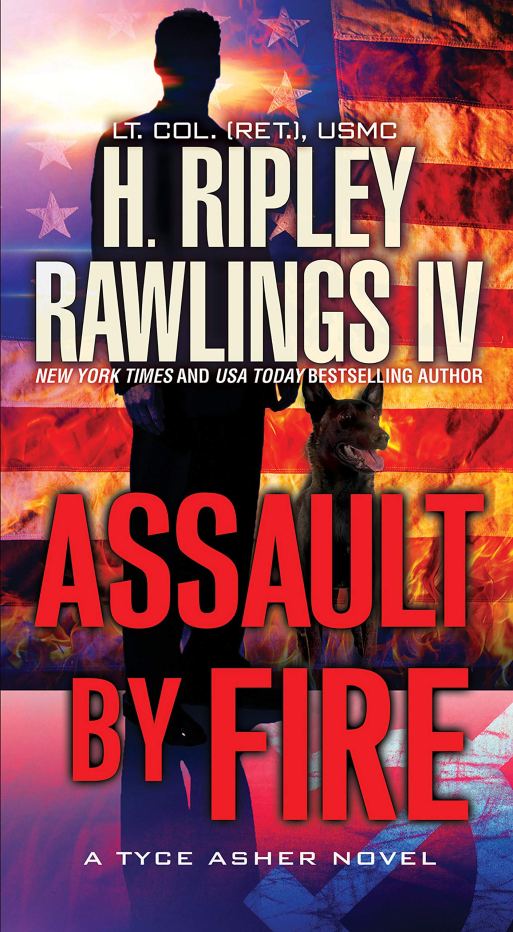
Assault by Fire by Lt. Col. Hunter Ripley Rawlings IV

Assault by Fire Cover

Publisher: Recorded Books (Audiobook – 29 September 2020)

Series: Tyce Asher – Book One

Length: 10 hours and 11 minutes

My Rating: 4 out of 5 stars

Amazon     Book Depository

From the military mind of debuting solo author Lt. Col. Hunter Ripley Rawlings IV comes Assault by Fire, an intense and action-packed novel that sees the Russians invade and take over America.

After losing his leg in the Middle East, Marine officer Tyce Asher believes that his military days are over.  Forced to babysit reserve troopers during exercises, Tyce is suddenly drawn into action when the Russians launch a sudden and unexpected invasion of America from land, sea and air, devastating the nation’s defences and swiftly gaining control of the Government.  With the bulk of the United States forces deployed to the Middle East, it falls to reserve forces, such as the one Tyce commands, to fight back against the invaders.  With minimal supplies, ammo, armoured vehicles or reinforcements, Tyce is forced to lead his combined regiment of Army and Marine reservists into the West Virginian mountains in order to regroup and avoid detection.  Recruiting what civilians, mountain men and veterans he can, Tyce forms an effective fighting force that has the potential to do some damage against the invaders.  Will Tyce’s small army be enough to hold back the tide of Russians, or are these the last days of American independence?

Assault by Fire is an exciting and entertaining novel that places the reader right into the heart of a Russian invasion of America.  This was a really cool novel from Rawlings, who first came into literary prominence last year with Red Metal, a novel he co-wrote with thriller writer Mark Greaney.  I was a major fan of Red Metal, as it was one of my favourite books (and audiobooks) of 2019, and I was keen to see how Rawlings’s first solo novel would turn out.  I ended up having a great time listening to this fantastic novel.  Rawlings has successfully utilised the always-intriguing concept of an invasion or war on American soil and ended up writing quite an enjoyable story around it.  Assault by Fire is the first novel in Rawlings’s Tyce Asher series and after how much I enjoyed the first book I am definitely planning to check out the rest of the series in the future.
This was a pretty good debut from Rawlings, who has come up with an intense and enjoyable modern military thriller novel.  Assault by Fire is a particularly fast-paced novel chock full of memorable and vivid action sequences that are guaranteed to get the readers blood pumping.  Rawlings makes good use of multiple perspectives, including from the point of view of several Russian characters, to tell a rich and clever story about a foreign invasion of the United States.  I loved some of the awesome ideas that Rawlings inserted into the compelling novel, and this ended up being a really fun book to check out.  I do need to point out that there was an occasional lack of consistency throughout the book which was a little distracting at times and some of the characterisations were a little weird or unrealistic.  However, these issues did not take away from the story too much and I think that Rawlings has the potential to improve as an author in the future.  Overall, this was an intriguing and captivating novel that is worth checking out.

I really enjoyed the cool American invasion concept that Rawlings utilises for Assault by Fire.  Russian invasions are something that Rawlings has explored before in Red Metal, with the Russians invading Europe and Africa in that novel while striking at US military targets.  Potential invasions of America have formed the basis of several intriguing novels and movies over the years (Red Dawn probably being the most prominent example) and I felt that Rawlings did an awesome job coming up with his own unique take on this story idea.  Throughout the book, Rawlings presents an interesting scenario where America is only able to be invaded after the majority of its troops are deployed to the Middle East, most nuclear weapons have been disarmed worldwide, and gun control has been introduced in America, taking away everyone’s assault rifles (I’m going to avoid getting into a gun control debate over the last point).  The way in which the Russians invade and manage to take over America is very cool and dramatic, and it was interesting to see how Rawlings, who apparently worked on several scenarios during his time working in the Pentagon, envisioned a potential invasion going down.  The initial invasion sequence is pretty awesome, and features several great scenes of Washington DC falling and other key locations getting hit, much to the surprise of the characters watching it.  Another aspect of this invasion scenario I enjoyed was the way in which the American troops were the ones who lacked resources and support after all their strategic bases and headquarters were destroyed or seized during the initial invasion.  This forced the characters to fight like insurgents and engage in guerrilla warfare, and there were several discussions from some of the veteran soldiers about using the tactics that they themselves had experienced while fighting in the Middle East.  Watching the protagonists adapt to this change of circumstances was rather fascinating, and Rawlings has clearly put some thought into how a war on American soil could actually be fought.  I really enjoyed some of the ideas he came up with for these fights, and I was especially amused by the use of some World War II relics in one major battle scene.  I do kind of wish that Rawlings had expanded the scope of his story to encompass the entirety of America and beyond.  While the events in Virginia and West Virginia were cool, I would have absolutely loved to see how the war was being fought across the entire country, and a story with multiple protagonists across America and outside of it might have been a little more impressive.  Still, I liked the way in which Rawlings explored this concept, and it made for a great story.

The real strength of this novel is the way in which Rawlings imports his substantial military knowledge into the story, creating a ton of amazing action sequences that really make an impression on the reader.  Rawlings clearly knows his stuff, as he provides a ton of details about the various weapons, vehicles, technology and tactics that the soldiers are utilising.  This added detail, as well as the impressive descriptions of how the armaments work and what they can do, really help to make the already cool action sequences even more vivid and you get a real sense of what a modern soldier experiences during battle.  A number of awesome scenes really stick in the mind as a result, from some excellent sniper scenes, a cool pitched battle with some historical technology and some particularly cool combat sequences between armoured vehicles that occurred towards the end of the novel.  Rawlings also ramps up the authenticity of the story by utilising a ton of military jargon and acronyms, so you get a real sense of being in the midst of a tactical discussion by soldiers.  The author also attempts to get into the head of the various soldiers, especially the commander, Tyce Asher, in order to show the doubts, fears and concerns that they experience during combat or while making command decisions.  I felt that all of Rawlings’s military experiences translated across into the novel extremely well, and it really helped to enhance the overall story.

I ended up grabbing the audiobook version of Assault by Fire, which was narrated by Graham Winton.  The Assault by Fire audiobook has a run time of just over 10 hours, and I was able to get through it in about a week.  Winton did a good job of narrating this fun book, and it was rather cool to hear the events of the book unfold, as the narration helped bring the listener right into the middle of the fighting.  The audiobook ended being a great way to enjoy this book, especially as the story clips along at a swift pace in this format, and I would recommend the audiobook for anyone interested in checking out Assault by Fire.

Assault by Fire by Hunter Ripley Rawlings is an awesome modern military thriller that places the reader right in the midst of a Russian invasion of America.  Featuring an impressively exciting narrative based around a cool story concept, Assault by Fire is a lot of fun, and readers can expect a high-octane, action-packed novel.  This turned out to be a rather fantastic debut from Rawlings, and I look forward to seeing where this series goes in the future.
Amazon     Book Depository

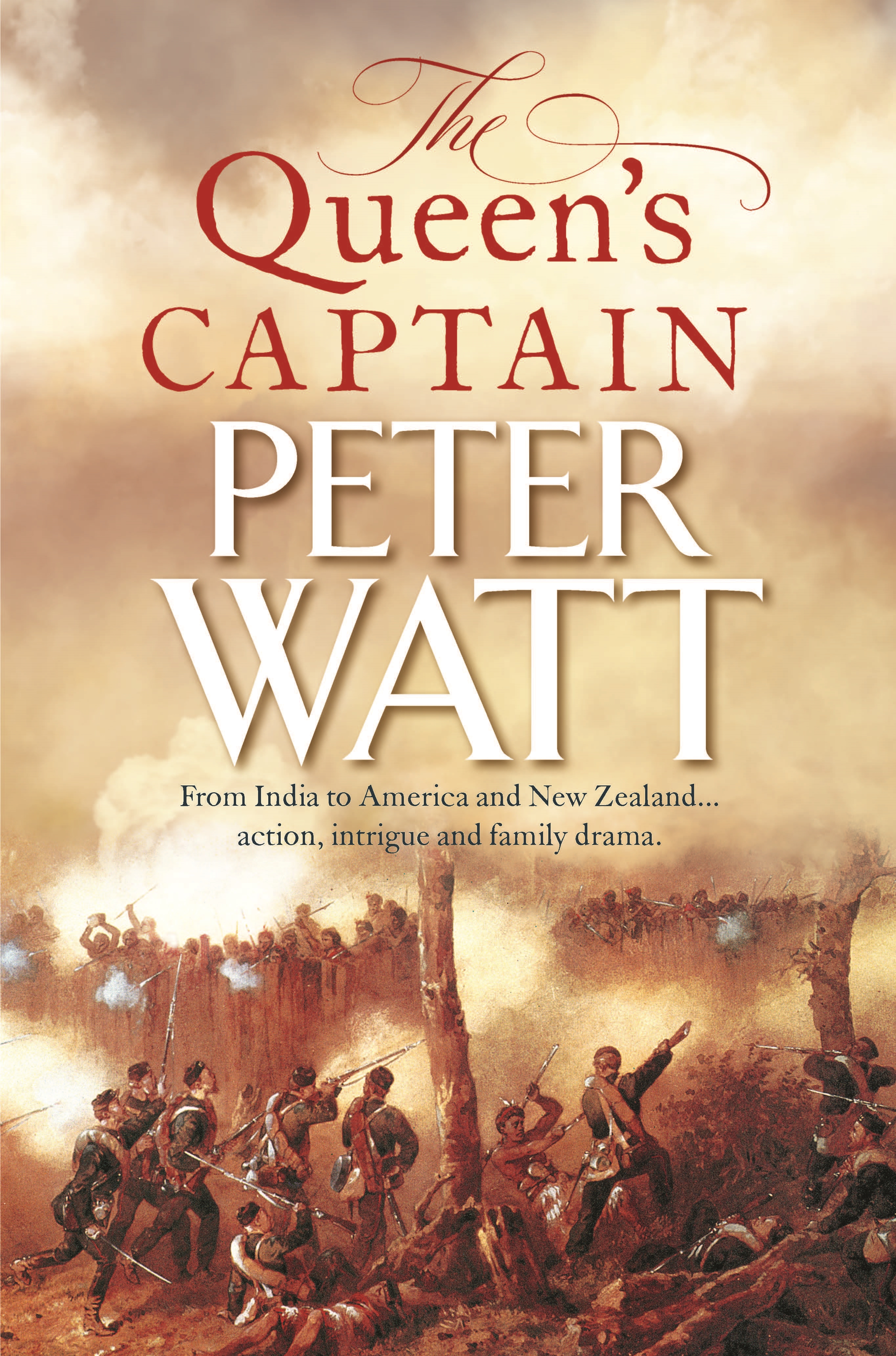
The Queen’s Captain by Peter Watt

The Queen's Captain Cover

Publisher: Macmillan (Trade Paperback – 10 November 2020)

Series: Colonial series – Book Three

Length: 358 pages

My Rating: 4.5 out of 5 stars

Amazon

One of Australia’s top historical fiction authors, Peter Watt, wraps up his ultra-exciting Colonial series with the third and final novel, The Queen’s Captain.

Watt is a fantastic Australian author who has written a huge collection of amazing historical fiction novels, most of which are set in Australia or feature Australian characters.  I have been a fan of Watt’s books for several years now and I have been particularly enjoying his current body of work, the Colonial series.  The Colonial books, which started back in 2018 with The Queen’s Colonial, follow the adventures of Ian Steele, a colonial blacksmith who manages to enlist as an officer in the British army under the name Captain Samuel Forbes, taking the identity of a friend who wished to sit out his military service.  While the real Samuel leaves to go to America, Ian fights in his place for a period of 10 years, which will allow Samuel to claim a substantial inheritance from his ruthless family.  This has so far been a really fun series, and I enjoyed reading The Queen’s Colonial and The Queen’s Tiger.  I have been looking forward to reading this third novel in the series for some time now and I was very excited when I received my copy, especially because the back cover quoted my Canberra Weekly review of The Queen’s Tiger.  I ended up having an awesome time reading this book, and it proved to be another fast-paced and compelling read.

In October 1863, Ian Steele is still fighting for the British crown as Captain Samuel Forbes, known to his men as the Queen’s Colonial.  After helping to put down the Indian Mutiny, Samuel and his comrades, including his long-time friend Sergeant Major Conan Curry, are fighting the Pashtun in the treacherous mountain passes on the north-western frontier of India.  With only a few months left until the 10-year deal with the real Samuel Forbes concludes, Ian is determined to survive so he can claim his reward and finally settle down.  However, with his typical bad luck, he finds himself drawn into several high-profile missions, including a dangerous operation to eliminate a murderous rebel army camped in the jungle.

As Ian fights for Queen and country, his friends are engaged in their own adventures.  In America, the real Samuel Forbes has followed the man he loves into battle, become a lieutenant in the Union army to fight the Confederates.  Back in London, Ella, the women Ian loves, has entered into an unhappy marriage to Russian Count Nikolai Kasatkin.  Determined to have one piece of happiness, Ella attempts to reclaim the son she had with Ian, but the jealous Nikolai will do the unthinkable to spite her.  At the same time, Samuel’s ruthless older brother, Charles Forbes, continues his relentless bid for power and money, while still determined to prove that the Samuel serving in the British army is an imposter.

All of this will come to a head down in the colonies in 1864.  As Ian is transferred to New Zealand to provide advice to the soldiers fighting against the determined Maori, he will come face to face with an old enemy, and the final chapters of his story will be told.  Friends will die, people will be changed in unexpected ways and the Queen’s Colonial will fight his last battle.  How will the story end?

The Queen’s Captain was another excellent novel from Watt, who has produced an exciting and fascinating conclusion to his latest series.  Like the rest of the books in the Colonial series, The Queen’s Captain is an extremely fast-paced story told from a series of different character perspectives around the world.  The book is broken up into two distinctive parts (although the second part only contains the last 100 pages) and features a number of compelling action and intrigue orientated storylines.  This is an extremely easy novel to get into, even for those readers who have not previously enjoyed the Colonial series, and I was able to finish it off in a short period of time as I got caught up in the various battles and double-crosses.  Watt really took this final entry in his series in some interesting directions, and readers will be intrigued by the various ways he finishes up the Colonial books.  There was a real focus on wrapping up every single storyline and character arc throughout The Queen’s Captain, and I really enjoyed the way in which Watt brought the series to end, especially as the overarching narratives comes full circle.  Overall, I felt that The Queen’s Captain was a fantastic way to conclude the Colonial series and readers are in for a real treat with this book.

Like all of Watt’s novels, The Queen’s Captain makes use of a substantial number of point-of-view characters to tell the story.  This is a combination of some of the established characters from the previous Colonial novels as well as several new characters.  This makes for a rather intriguing, character driven novel, especially as Watt was apparently determined to wrap up as many character arcs as possible for this final entry in the series.  There is a particular focus on the characters of Ian, Samuel, Ella, Charles, and Ian and Ella’s child, Josiah, although many of the other point-of-view characters get their time to shine and Watt ensures that they have a decent backstory.  I have really enjoyed seeing several of these characters develop over the course of the series, and it has been rather heart-warming to see how the hard events of their lives has changed several of them.  I was particularly impressed with the characterisation of the real Samuel Forbes in The Queen’s Captain, as he had a fantastic arc in this book.  Samuel, whose hatred of war is a major plot point of the series, actually joins the Union army in this book, following his love James Thorpe into battle, and while he still detests being a soldier, he shows some natural flair as an officer.  I thought that this inclusion in the book was extremely fascinating, and I loved how Samuel’s arc in this book mirrored that of his body-double Ian, with both of them gaining a reputation for courage and bravery from their soldiers, and both gaining an affectionate nickname from their men, with Samuel becoming known as “the Limey Officer”.  Samuel’s storyline in this book is really good, full of all manner of tragedy, heartbreak and dramatic moments, and readers will be deeply surprised how it ends up.  I also have to highlight the character of Charles Forbes in this book.  Charles serves as the series’ main antagonist, as he is determined to bring down both Ian and Samuel while gaining as much power as possible.  Charles is an extremely slimy villain who the reader cannot help but dislike, and I know I had a rather good time seeing him gradually get some comeuppance in this book.  I also quite enjoyed the various ways in which Watt provided conclusions to nearly all the side-characters featured in the series.  Some of these are rather entertaining (I had a good laugh at one in particular), and it was great to get some closure on all of these excellent characters at the end. 

The major highlights of this book are the awesome and thrilling action sequences as The Queen’s Captain’s characters journey through several intense and dangerous battlefields around the world.  The Queen’s Captain features several interesting and impressive battle scenes from around the world and possibly has the greatest variety out of all the books in the Colonial series.  Not only do you have a number of great sequences in India as Ian fights both the Pashtun in the mountains and a group of rebels in the jungle, but you also have battles from the American Civil War as Samuel fights against the Confederates.  There are also some sequences that feature the Maori fighting against the British and the New Zealand settlers which really stand out, despite the fact that this particular conflict only occurs for a short while towards the end of the novel.  Watt has clearly done his research around these battles, as they are loaded with historical detail about the typical combatants and the weapons and tactics they utilised.  The author does an amazing job bringing these sequences to life, and you get a real sense of the desperation and the horror that the participants would have felt on these fields.  I particularly enjoyed the author’s examination of the differences between small-scale guerrilla skirmishes (several of which occur throughout The Queen’s Captain), compared to the larger-scale battles of the past, and Watt includes several hints about how combat was likely to occur in the future.  All these action scenes are extremely awesome to read and they are a great part of The Queen’s Captain, especially as they help the plot to move along at a faster pace.
The Queen’s Captain by Peter Watt was another amazing and enjoyable historical fiction novel that takes the reader on a series of fast-paced adventures around the world.  Watt has done an awesome job wrapping up his Colonial series and readers will have a fantastic time seeing how he has concluded the various storylines and character arcs he has set up over the previous two novels.  A fun and exciting read, The Queen’s Captain comes highly recommended and I look forward to seeing what cool series Peter Watt comes up with next.

Amazon

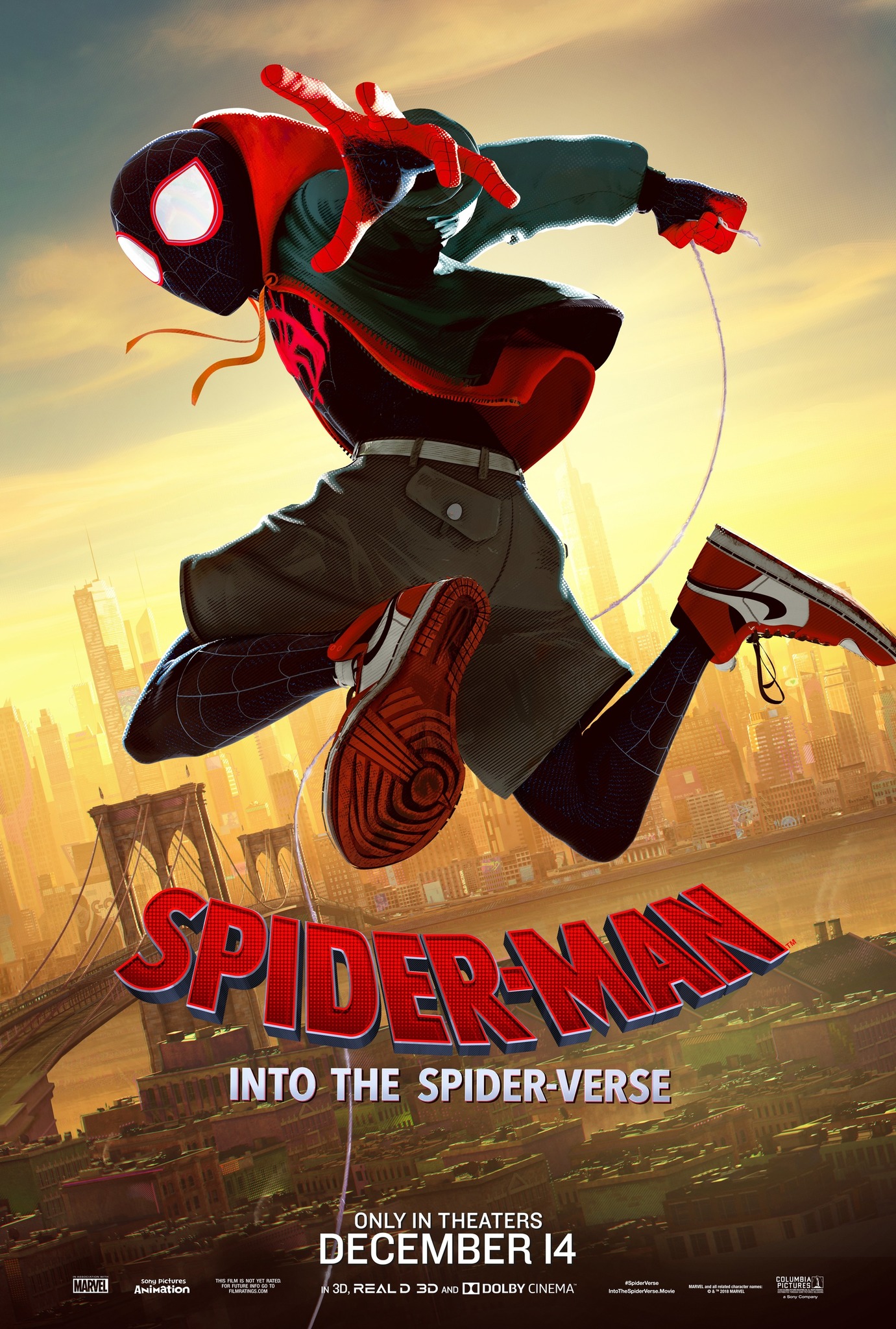
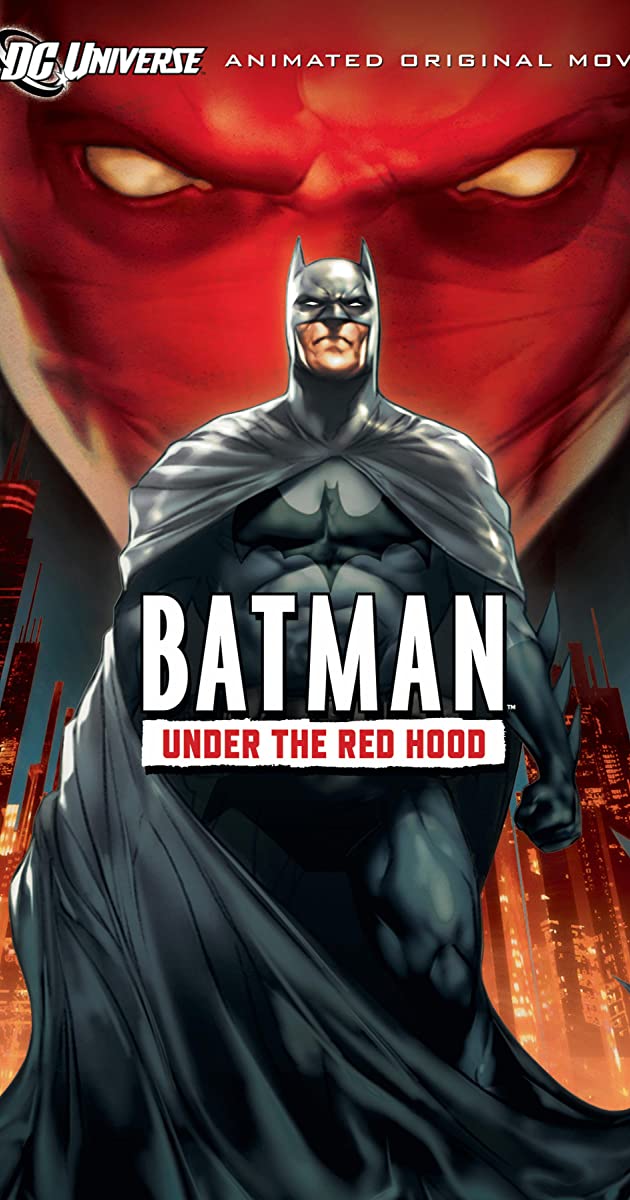
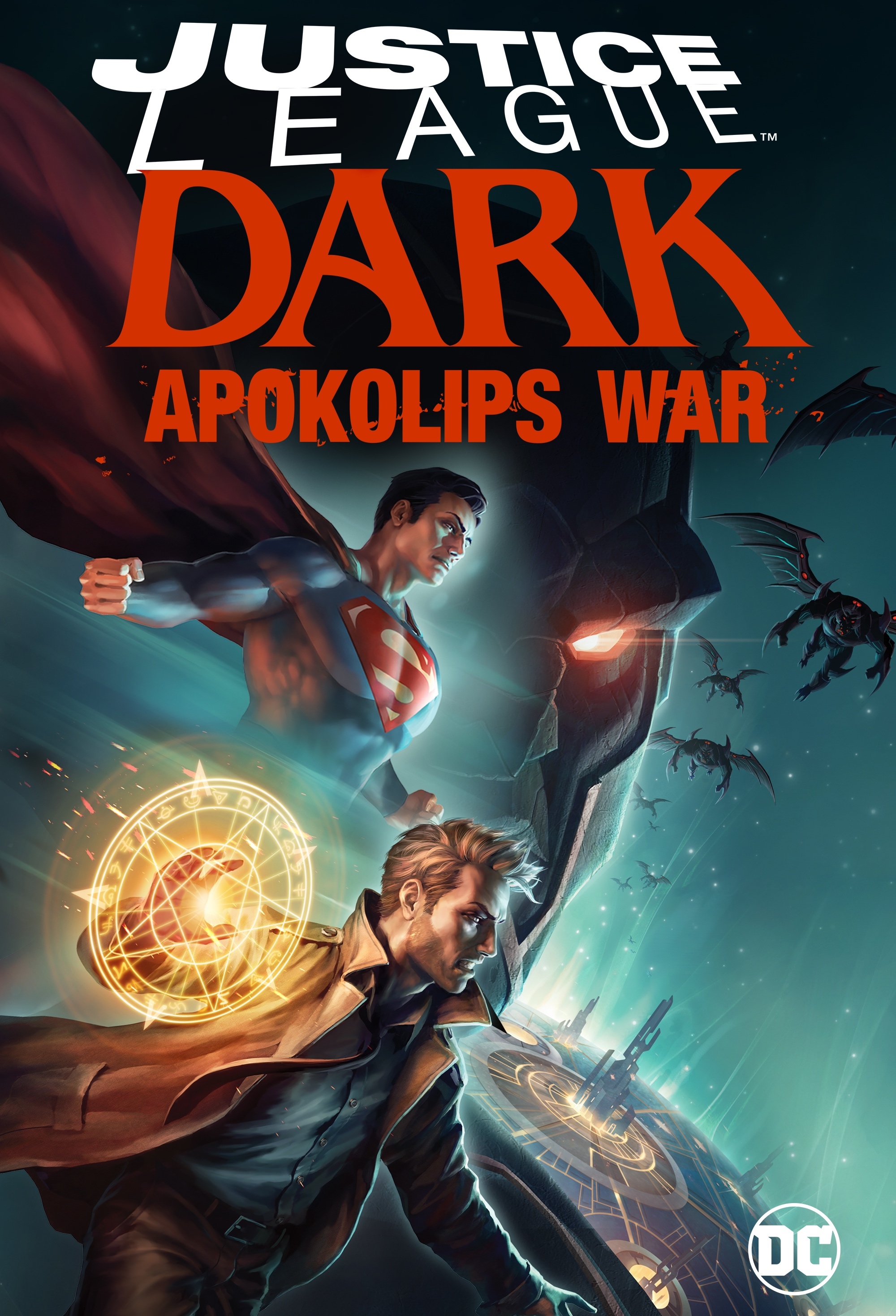
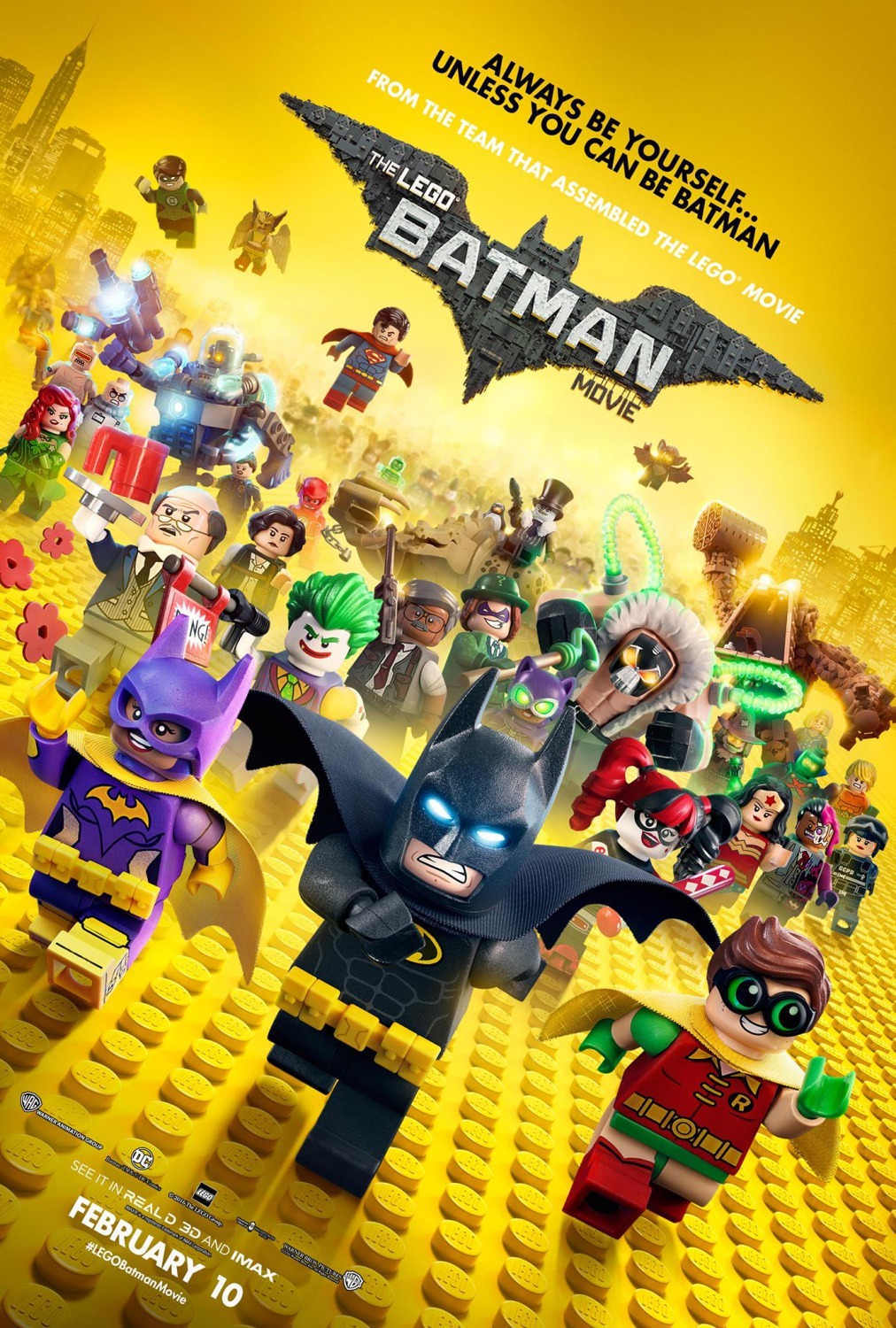
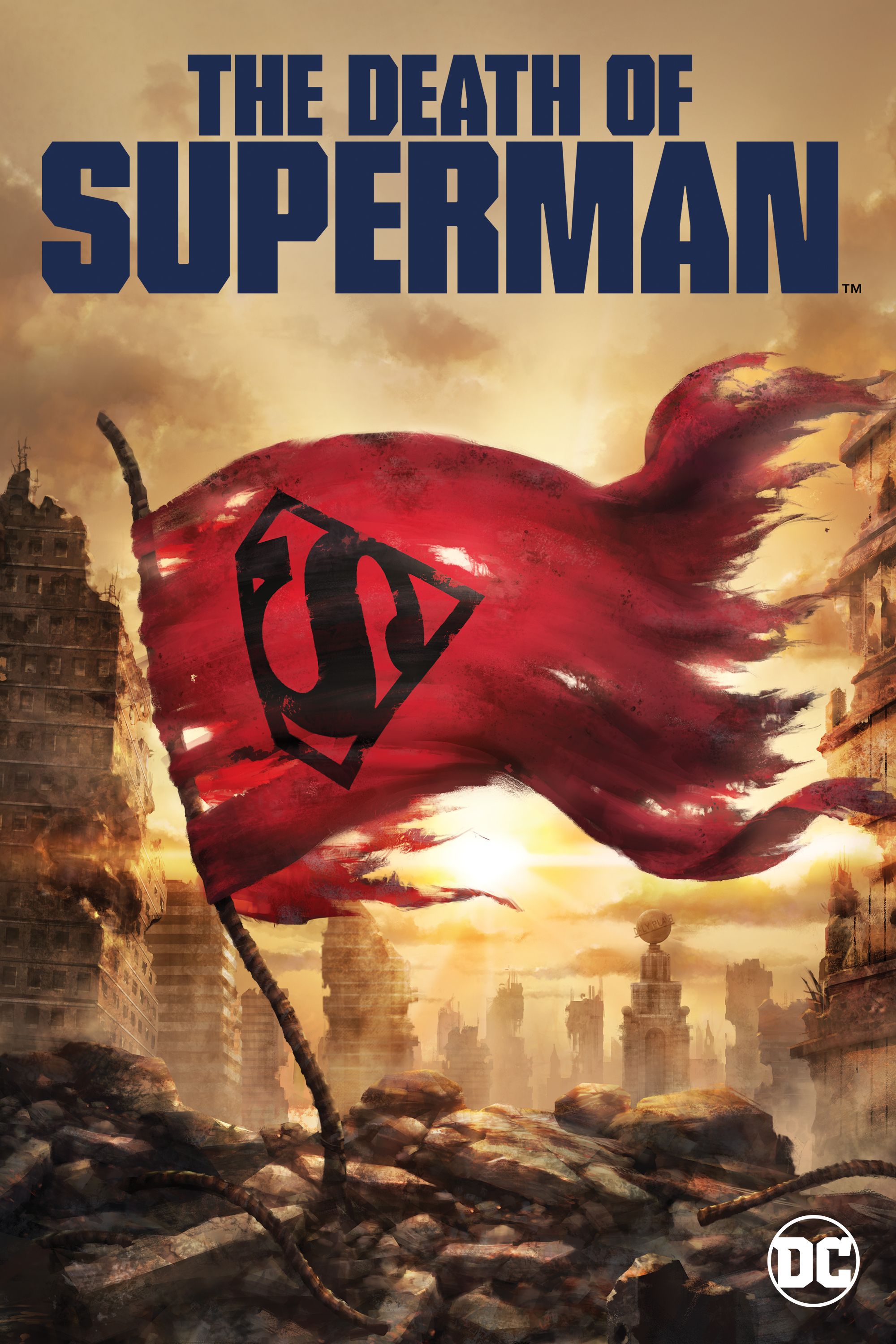
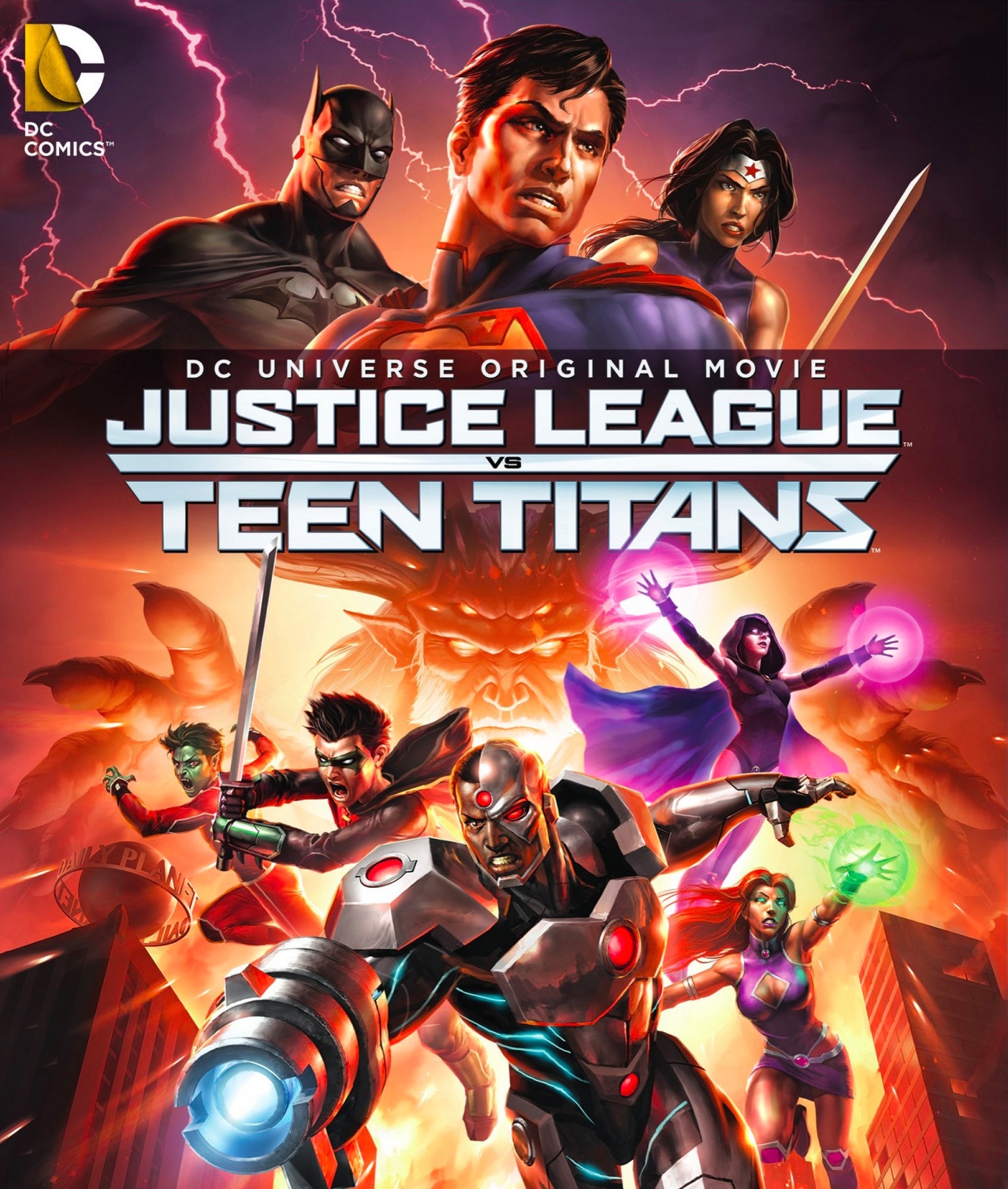
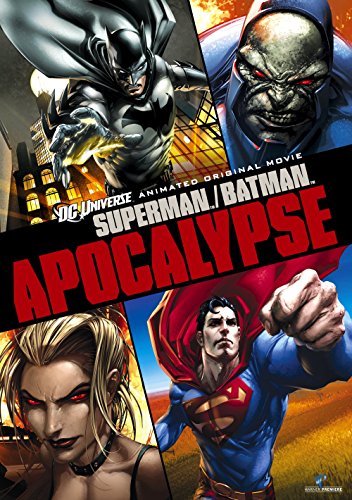
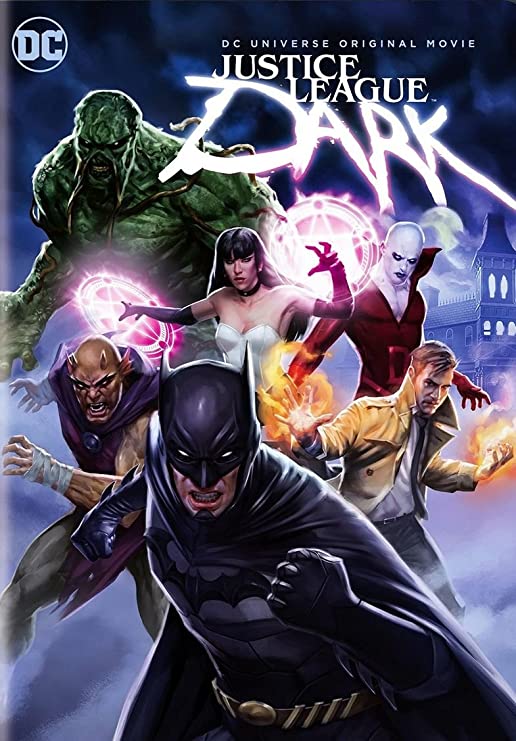
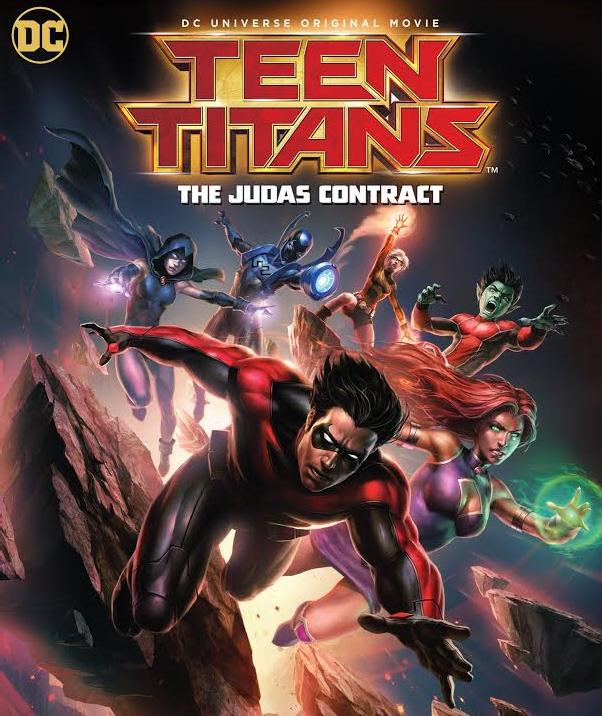
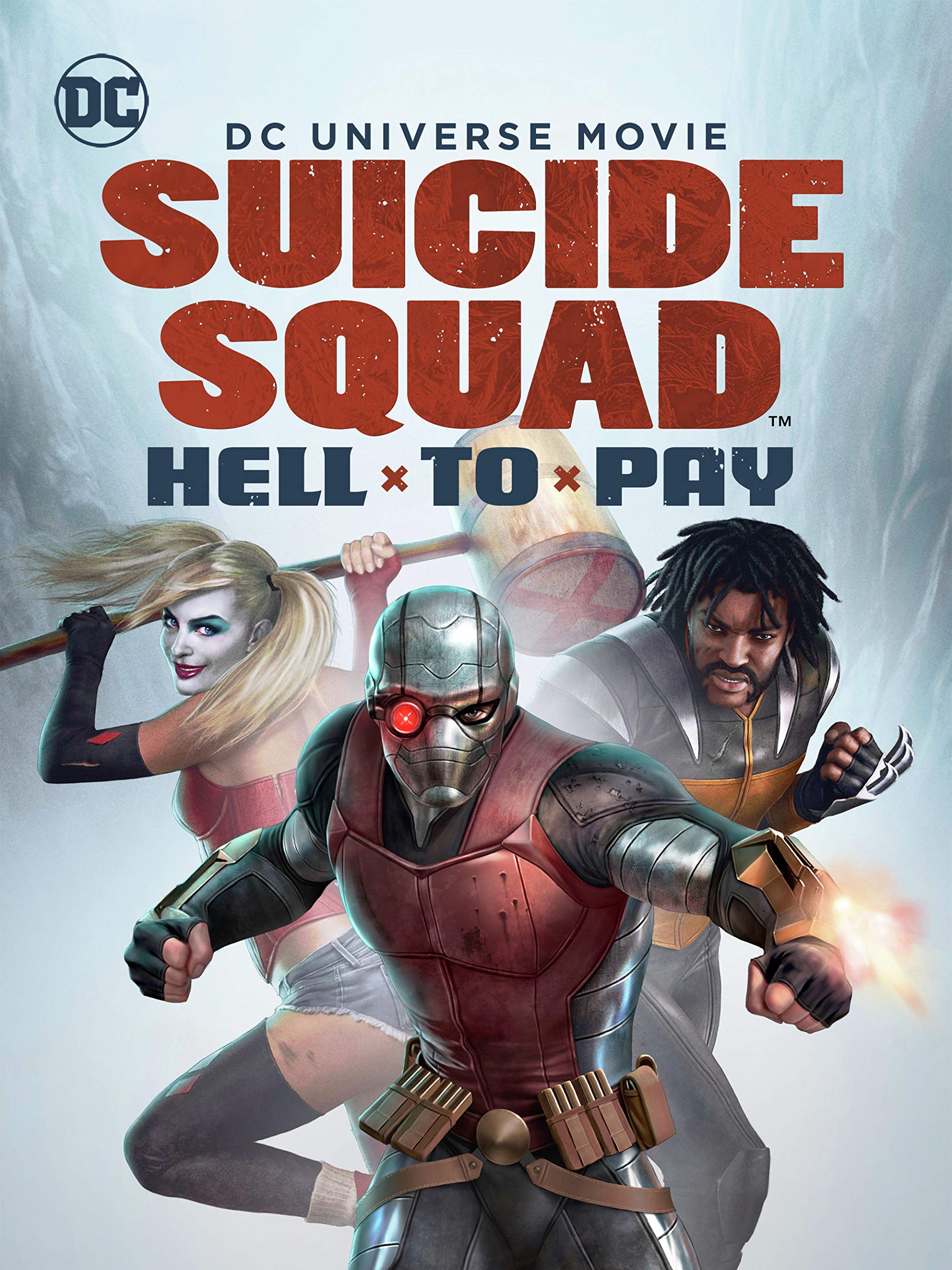
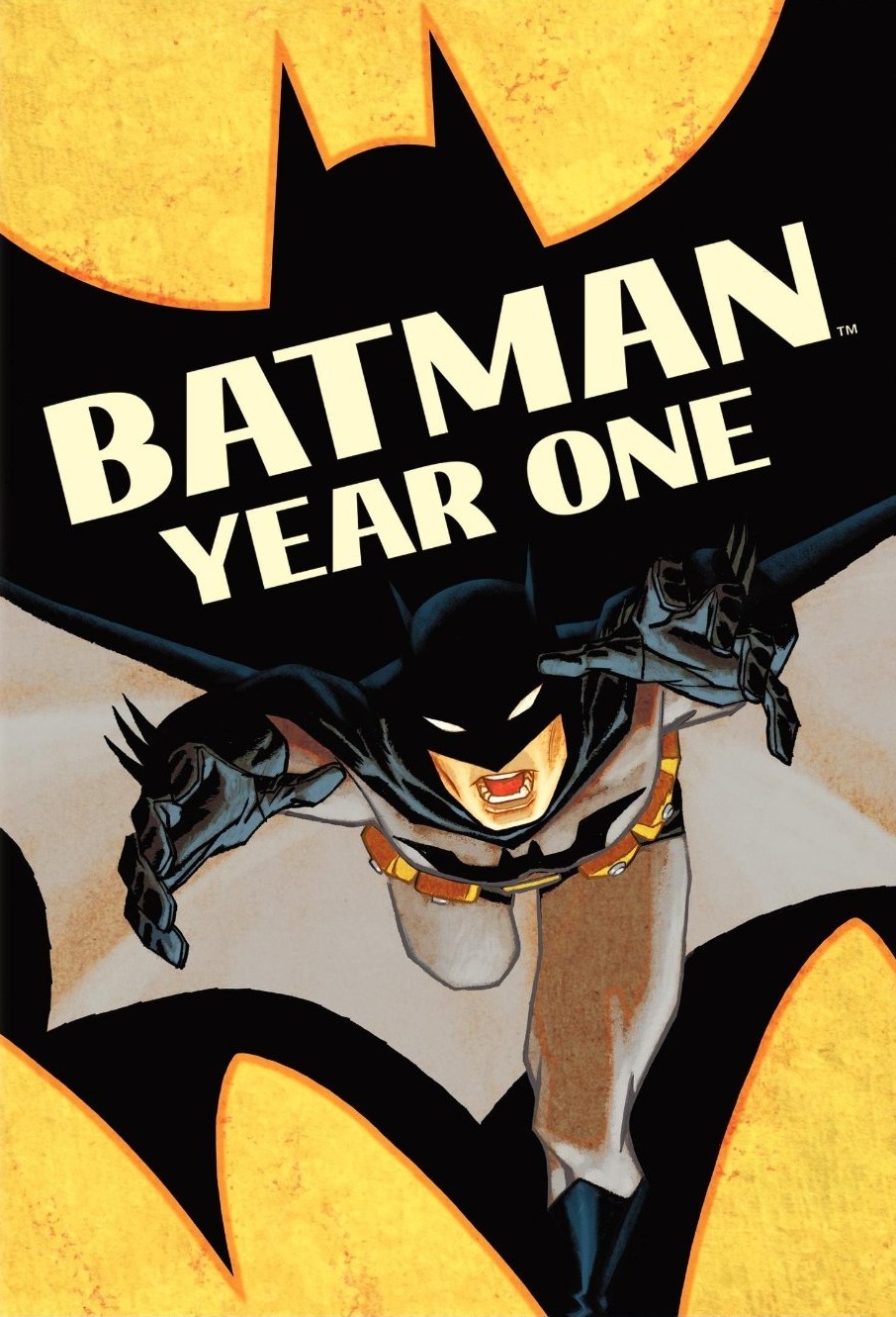
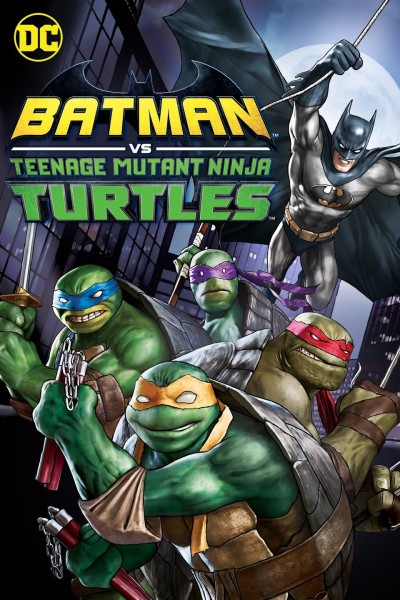
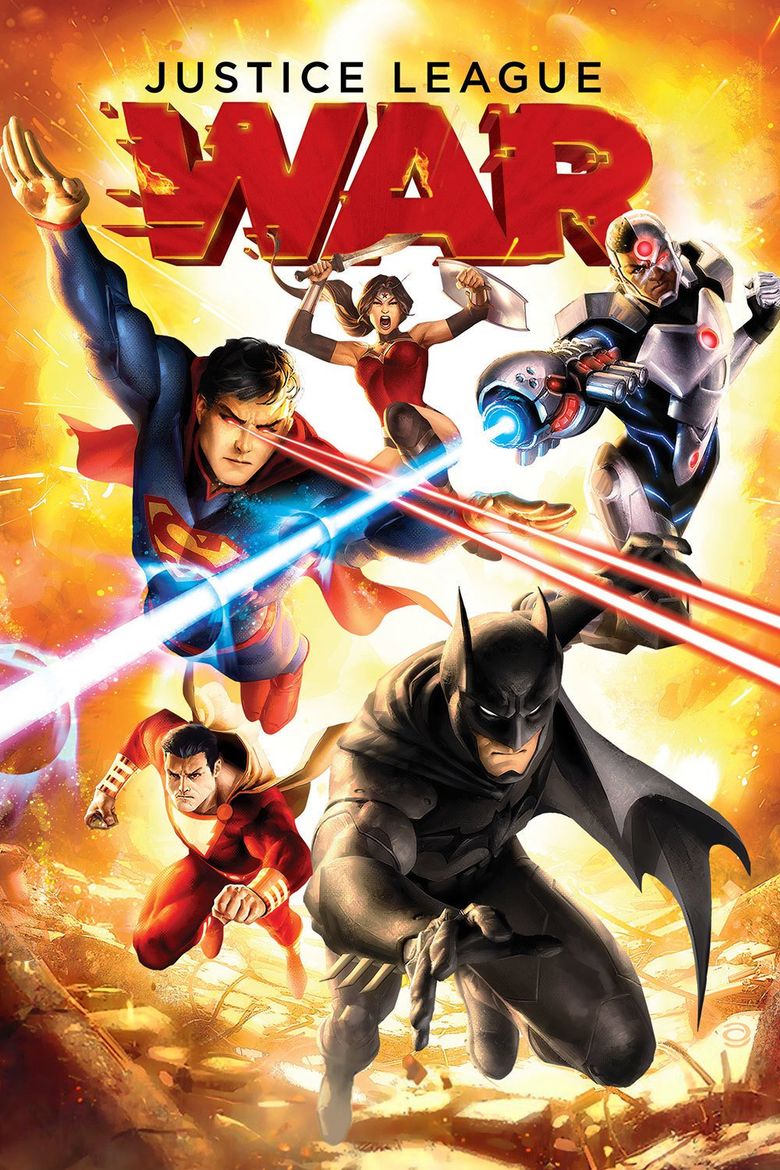
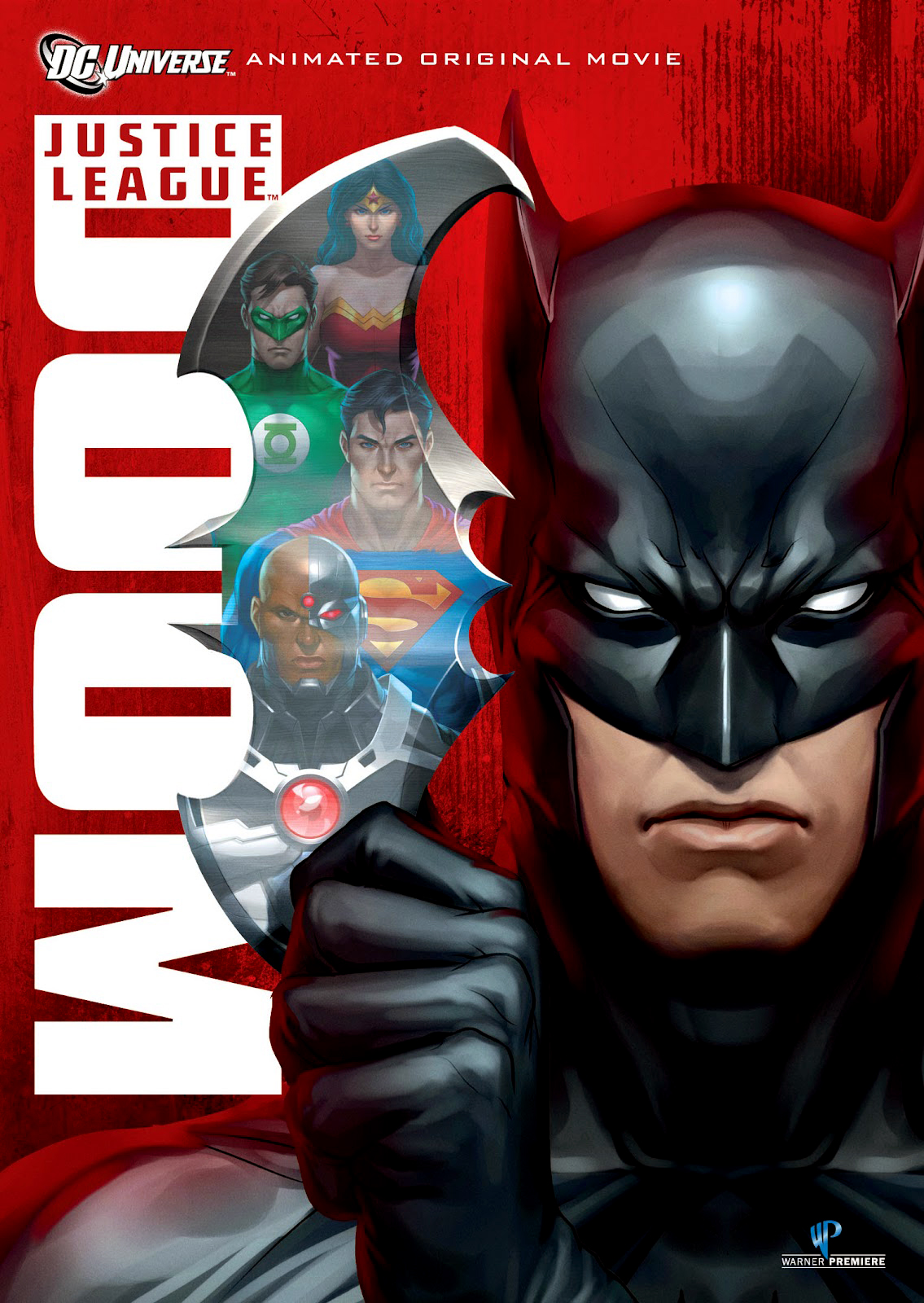
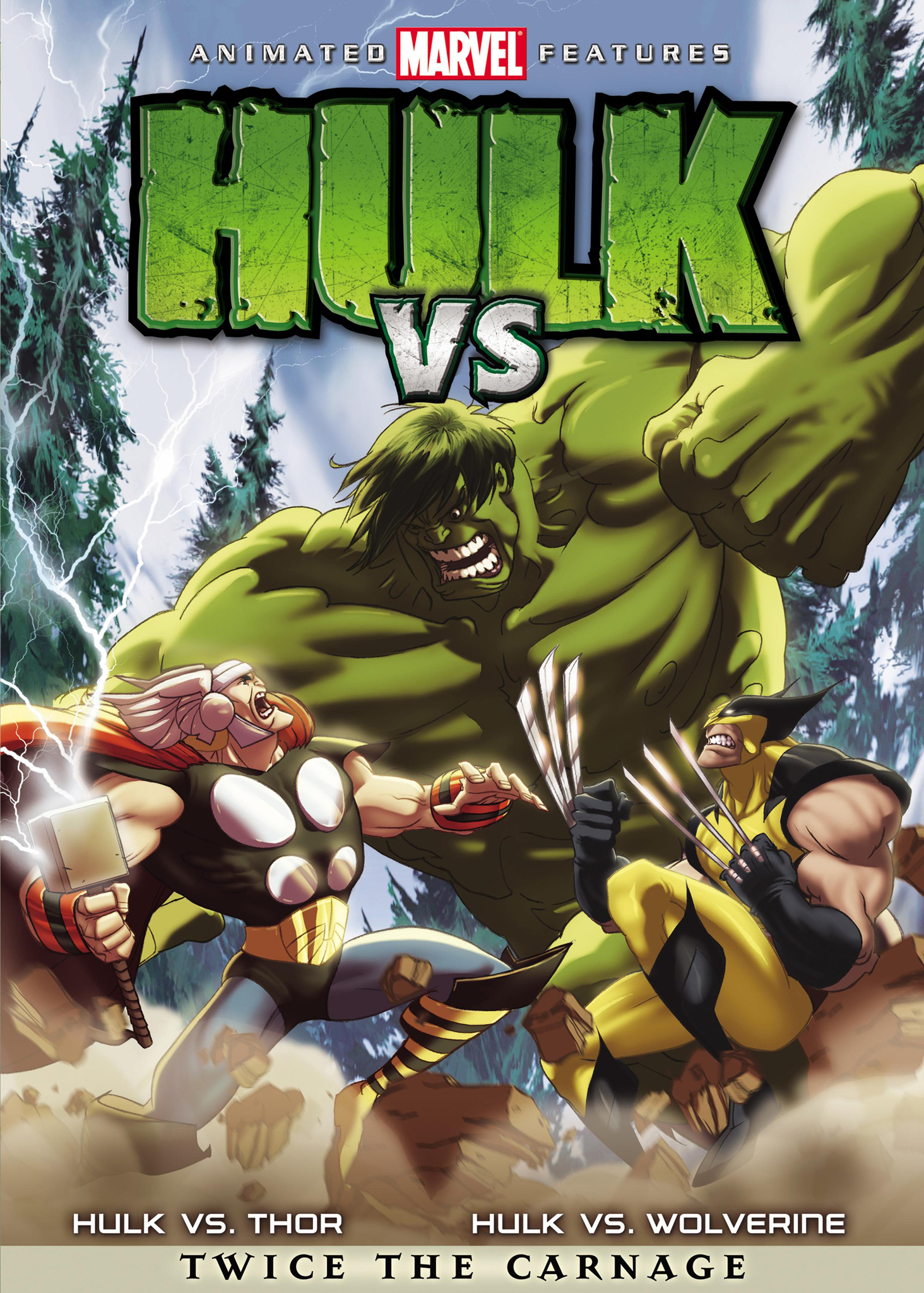
Top Ten Tuesday – Favourite Animated Comic Book Movies

Top Ten Tuesday is a weekly meme that currently resides at The Artsy Reader Girl and features bloggers sharing lists on various book topics.  For this week’s Top Ten Tuesday, participants get come up with a list around Non-Bookish Hobbies, in order for the various participants to get to know each other.  This is a rather interesting idea from The Artsy Reader Girl, and I thought that I would use this topic to talk about something I am quite passionate about, animated movies that are based on comic books.

I am a major fan of both animated television shows and of comic books, so naturally the combination of these two genres is something I am quite keen on.  Over the years there have been a huge number of animated comic book adaptions made and I have gone out of my way to watch as many as possible.  Most of these are pretty good, although several really shine through as the cream of the crop.  Surprisingly, this is one of the few areas where DC Comics really has the advantage over Marvel.  While there are a few good Marvel Comics animated adaptions, DC has more of a monopoly over animated movies, producing a huge range of high-quality and compelling films, mostly as part of their DC Universe Animated Original Movies range.  That being said, I have included a few Marvel movies into my list below, as they have done several good movies.  I am particularly keen to do this list this year as I actually reviewed one of these movies, Justice League Dark: Apokolips War, on my blog earlier this year in what was my first film review.  I had a lot of fun reviewing this animated film and it might be something I will continue to do in the future for some of the better upcoming releases.

In order to appear on this list, the film had to be an adaption of a comic book or be based upon a character or characters who originated in comic book format.  I spent a substantial amount of time going through all the various animated movies that were out there, and I have to admit that my original list was pretty substantial.  I was able to cull it down a little, although I still had way more than 10 entries that I wanted to feature.  In the end I decided to make this a Top Twenty List, which made me a lot happier and allows me to feature several more out-there entries.  I am extremely happy with how this list turned out as every single movie below is well worth checking out for a variety of reasons.

Top Twenty List:

Spider-Man: Into the Spider-Verse

Spider-Verse Poster

After talking smack about the Marvel animated films above, it does feel a little silly putting Into the Spider-Verse first on this list.  However, this is without a doubt one of the best, if not the best, animated comic book adaptation ever done, and is probably the one most people have actually seen.  This was an ultra-cool and clever movie that successfully brought the Miles Morales Spider-Man to the big screen, while also featuring an impressive voice cast, a unique animation style and an exceptionally well-written and entertaining story.  A must-watch for any comic book fan out there.

Batman: Under the Red Hood

Under the Red Hood Cover

This second entry is probably one of my absolute favourite animated comic book movies.  An adaptation of the Under the Hood storyline, this movie pits Batman against the Red Hood, a masked vigilante who has a dark connection with his past.  Despite lacking a lot of the surprise about the eventual reveal of Red Hood’s identity that most comic readers had when it was first released, this is still an extremely strong and captivating movie with a number of action-packed and emotionally charged sequences.  Anchored by an especially good voice cast, including Bruce Greenwood as Batman, Jensen Ackles as Red Hood, John DiMaggio as a delightfully evil Joker and Neil Patrick Harris as Nightwing, this is an exceptional movie, especially the end scene which sees Batman have his final dramatic confrontation with Red Hood.

Justice League Dark: Apokolips War

Apokolips War Poster

As I mentioned above, Apokolips War is a more recent release that I reviewed earlier this year.  This was another top-rate comic book movie that served as the epic final entry in the DC Animated Movie Universe, an extended collection of connected animated films all set within the same shared universe.  Containing a dark storyline and a massive cast, this movie successfully concluded the multitude of plot lines featured in the other DC Animated Movie Universe films while also providing the viewer with a number of amazing and moving scenes.  A really awesome animated film to check out.

The Lego Batman Movie

Lego Batman Poster

I could not do a list about animated comic movies without featuring The Lego Batman Movie.  While I could potentially have also used The Lego Movie or its sequel, The Lego Batman Movie is a pure superhero movie that brings a number of iconic Batman characters to life in a fun Lego way.  This is definitely the most comedic movie on this list and features a huge number of excellent jokes and send-ups of the Batman universe.  From the opening line about DC being “the house that Batman built”, to a cheeky takedown at Batman’s weird extended rogues gallery, you’ll be hard pressed not to laugh like crazy the entire way through.

The Death of Superman

Death of Superman Poster

The 1992-1993 comic book storyline The Death of Superman is one of the best-selling and iconic comics in history, and naturally several movies have attempted to adapt it before, such as the 2007 animated film Superman: Doomsday and Batman v Superman: Dawn of Justice.  However, the best adaption is the 2018 animated film, The Death of Superman, which absolutely blew me away when it came out.  Featuring an extremely brutal fight between Doomsday and Superman (after Doomsday takes down the entire Justice League by himself), and the extremely powerful Superman death sequence (I dare you not to tear up for it!), this movie is easily one of the best animated films ever done.

Batman: Assault on Arkham

Assault on Arkham Poster

This is the Suicide Squad movie we actually needed.  Set in the same universe as the bestselling Batman: Arkham games, Assault on Arkham was released two years before the live action Suicide Squad movie and is substantially better.  While it lacks the all-star cast of the live-action film, Assault on Arkham has an extremely well-written story that effectively captures the heart of the comic book and shows the villains at their worst as they attempt to break into the worst place in the world, Arkham Asylum.  Loaded up with bloody action, great characters and humour that is frankly more adult than its live-action counterpart, you will have an amazing time watching this film.

Justice League vs. Teen Titans

Justice League vs Teen Titans Poster

To me, the DC Animated Movie Universe only started to get really good when Justice League vs. Teen Titans was released.  While there were some good entries in the early going of this shared universe, this one was leaps and bounds above most of them.  Not only does Justice League vs. Teen Titans do a great job introducing my favourite superhero team, the Teen Titans, to this universe but it also presents a really good version of the Trigon/Raven storyline from the Teen Titans comics in a short amount of time.  In addition, this proved to be a key entry in the DC Animated Movie Universe, as it successfully ties into several of the other movies in the series.  An exciting and impressive movie that was great to watch multiple times.

Superman/Batman: Apocalypse

MV5BMjkzNzI0OTA5Nl5BMl5BanBnXkFtZTgwNDQzOTAwNzE@._V1_

While I was tempted to add Superman/Batman: Public Enemies to this list, I have more of a preference for the sequel, ApocalypseApocalypse is an excellent adaption of the Superman/Batman comic book arc, The Supergirl from Krypton, which reintroduced the Kara Zor-El version of Supergirl into the DC Comics universe (which eventually led to her current use in popular culture).  Apocalypse features an amazing storyline that sees Supergirl come to Earth, only to be captured by Darkseid, forcing Superman, Batman, Wonder Woman and Big Barda to travel to Apokolips to rescue her.  Not only are there several epic scenes, such as Batman’s badass showdown with Darkseid, or the massive extended fight between Darkseid and the Super cousins that decimates the Kent farm, but this movie features an impressive voice cast.  This includes the dream team of returning Justice League voice actors Kevin Conroy, Tim Daly and Susan Eisenberg (the definitive voices of Batman, Superman and Wonder Woman respectively), as well as Summer Glau as Supergirl and Andre Braugher as Darkseid.  I particularly loved Braugher’s work in this movie and I felt he gave one of the best Darkseid portrayals of all time.  An overall awesome movie, I have a lot of love for this film.

Justice League Dark

Justice League Dark Poster

This is an excellent movie that sees Batman forced to work with a mismatched team of magicians and magical creatures to stop a world-ending threat.  This was an amazing and fast-paced movie that not only serves as a key part of the DC Animated Movie Universe (the final film in the whole series was a sequel to this one), but which contains an outstanding original storyline of its own.  There are so many cool elements to this film, including the excellent reintroduction of Matt Ryan as John Constantine, the original rogue magician and world-class bastard, and it was an incredible film to enjoy.

Teen Titans: The Judas Contract

Teen Titans The Judas Contract Poster

The second Teen Titans movie set in the DC Animated Movie Universe, this film serves as a unique adaptation of the classic Teen Titans storyline, The Judas Contract.  This film sees the Teen Titans under attack from within as the master assassin Deathstroke returns to destroy the team once and for all.  Expertly tying the established comic storyline in with the version of the Teen Titans introduced in Justice League vs. Teen Titans, this was an impressive film that has a lot going for it.  You have to particularly love the complex storyline written around the character of Terra, and Beast Boy shines as not only the comic relief (the way he gets captured is just hilarious), but also as a tragic romantic figure.  Work in a fun Kevin Smith cameo, and The Judas Contract is an absolute must-see film.

Suicide Squad: Hell to Pay

Suicide Squad Hell to Pay Poster

Another exceptional Suicide Squad movie, Hell to Pay sees the titular squad compete with some of DC’s deadliest villains to obtain a “Get out of Hell Free” card.  This is wildly entertaining and surprisingly adult film that has some intriguing connections to some of the previous animated DC films.  One of the film’s advantages is that it does not take itself too seriously and at times it comes across as a gritty grindhouse action movie.  This movie has a very high death count, even amongst its main characters, and viewers are in for a bloody and exciting time.

Batman: Year One

Batman Year One Poster

This next entry was a perfect adaptation of Frank Miller’s iconic comic of the same name, which not only formed the definitive introduction to the modern Batman but which also served as the inspiration for much of Batman Begins.  This film does an outstanding job bringing this story to life, and it is anchored by its two excellent narrators, Bryan Cranston as James Gordon and Ben McKenzie as Bruce Wayne.  Cranston is of course perfect in this, and I love the fact that McKenzie voiced Batman in a movie only a few years before he was cast as James Gordon in Gotham.

Justice League: Crisis on Two Earths

Justice League Crisis on Two Earths Poster

This is another great Justice League animated movie that was originally going to be set between the Justice League and Justice League Unlimited television shows (although it ended up being separate from them).  This is an impressive movie that sees the Justice League follow a heroic Lex Luthor to an alternate Earth (Earth-Three), which is ruled over by evil versions of the Leaguers.  Not only is this a great take on a classic Justice League comic storyline, but it also contains a lot of cool moments.  I particularly liked the sociopathic Batman double, Owlman (voiced by James Woods), as he has one of the best death scenes in an animated comic book movie.

Batman: The Dark Knight Returns

The Dark Knights Return Part 2 Poster

For this entry I am combining two films into one, The Dark Knight Returns: Part One and Part Two.  These two films serve as a close adaptation of the iconic comic book by Frank Miller and feature all the best elements from the comics.  Not only does it contain a great version of the iconic battle between Batman and Superman but it has one of the most disturbing and memorable encounters between Batman and the Joker.  A truly impressive movie in both scope and delivery, it is a great way to check out one of the most revered Batman comics of all time.

Justice League: The Flashpoint Paradox

The Flashpoint Paradox Poster

This animated film is an adaption of the key DC Comics storyline, Flashpoint.  While I am not a major fan of what the Flashpoint comic did to the DC Universe (damn you New 52!), the story itself was pretty good and its adaption is also really fun to watch.  Featuring an intriguing time-travel storyline that sees the Flash trapped in a dark alternate timeline, this is a clever and compelling film, especially when some revelations come to light towards the end of the story.  The Flashpoint Paradox is a very close adaption to the comics, although there are a few clever twists here and there.  I was also really impressed in how the events of this film were reutilised in several preceding movies in the DC Animated Movie Universe, and it suggests a lot of pre-planning from the writers of this film.

Batman vs. Teenage Mutant Ninja Turtles

Batman vs Teenage Mutant Ninja Turtles Poster

While I was tempted to include the 2007 TMNT film, I ended up going with last year’s Batman vs. Teenage Mutant Ninja Turtles.  Based on the very successful Batman/Teenage Mutant Ninja Turtles comic, this is a fun and more light-hearted film that sees Batman team up with the Ninja Turtles to save Gotham from an alliance between Shredder and Ra’s al Ghul.  I really love the way this film blends together elements and characters from these two iconic franchises and there are some great moments throughout, from Batman absolutely spanking the Turtles the first time they meet, to a wild romp through Arkham Asylum as the heroes encounter mutated versions of Batman’s rogue gallery.  A very funny entry on this list, fans of both franchises are guaranteed to have a good laugh throughout this film.

Justice League: War

Justice League War Poster

The second entry in the DC Animated Movie Universe following The Flashpoint Paradox, Justice League: War is the movie this introduces the details of this new timeline.  Based off the Justice League: Origin storyline from The New 52, Justice League: War showcases the formation of the Justice League as they go from hunted vigilantes to national heroes by facing down Darkseid’s first invasion.  Not only does it do a good job introducing all seven members of the League in this timeline (with Shazam replacing Aquaman from the comics), but it lives up to its title, with a massive war sequence taking place throughout, as all seven members of the League engage in a brutal fight with Darkseid and his minions.

Big Hero 6

Big Hero 6 Poster

While this is more of a Disney movie than anything else, Big Hero 6 is still an adaption of a comic book, as Big Hero 6 are a Marvel Comics superhero team.  While not the greatest Disney animated film of all time, it is a lot of fun to watch and only someone with a heart of stone would fail to fall in love with Baymax.  Also, it has a fun Stan Lee cameo in the end, which carries a lot of weight with me.

Justice League: Doom

Justice League Doom Poster

Justice League: Doom is a sequel to Crisis on Two Earths which sees the Justice League fight another dangerous threat from both within and without.  Loosely based on the JLA: Tower of Babel comic, the Justice League is attacked by Vandal Savage and a cadre of supervillains who are determined to take the League off the board.  However, in order to achieve their goals, they utilise contingency plans originally created by Batman to take down his teammates.  A very smartly written movie with some epic sequences, I personally thought Doom was a little stronger than Crisis on Two Earths, and it is really worth checking out.

Hulk vs.

Hulk Vs Poster

The final entry on this list is a fun entry from Marvel that was released back in 2009.  Hulk vs. is actually a double feature film featuring two shorter movies, Hulk vs. Wolverine and Hulk vs. Thor.  Both these films are pretty much as described, with Wolverine and Thor forced to go up against a maddened Hulk who is lured into their path by their respective enemies.  One of the more brutal animated films from the 2000s, highlights include an entertaining Deadpool and the Hulk smashing through the entirety of Asgard’s armies to get to Thor.

Well, that is my list.  As you can see, I am quite passionate about these animated movies and I clearly have watched them too many times.  I hope the above notes encourage you to check some of them out as each of them are a lot of fun to watch and contain a lot of hidden depth.  Let me know which animated comic book films are your favourites in the comments below and keep an eye out for any future reviews I do of some of these movies.

Battle Ground by Jim Butcher

Battle Ground Cover

Publisher: Orbit/Penguin Random House Audio (Audiobook – 29 September 2020)

Series: The Dresden Files – Book 17

Length: 15 hours and 43 minutes

My Rating: 5 out of 5 stars

Amazon

One of the leading authors of the urban fantasy novel, Jim Butcher, returns with the next entry in his world-acclaimed Harry Dresden series, Battle Ground, an awesome novel that was one of the most anticipated releases of 2020.

Jim Butcher is a highly acclaimed fantasy author who has been dominating the market since his debut novel in 2000.  Butcher has written a number of books throughout his career, including his Codex Alera series, the first book of his planned Cinder Spires series, The Aeronaut’s Windlass and even a Spider-Man tie-in novel, Spider-Man: The Darkest Hours.  However, the body of work that Butcher is best known for is his long-running urban fantasy series, the Dresden Files.  The Dresden Files started back in 2000 with Storm Front and follow the adventures of Harry Dresden, a wizard who works as a private investigator in Chicago, solving supernatural crimes and protecting humans from dangerous magical creatures.  This series proved to be incredibly popular and is widely considered to be the gold standard of urban fantasy novels.  The Dresden Files currently consists of 17 books, with the universe expanded out with short stories, novellas and even some graphic novels.

While I have always heard incredible things about the Dresden Files books, I have not previously had the pleasure of reading any of them yet.  This is an admittedly massive gap in my fantasy reading knowledge, and it is one that I have been meaning to fill for a while.  So when I recently received a copy of the latest novel in the series, Battle Ground, I figured that this would be a perfect opportunity to finally break into the series.

For years, Harry Dresden, rogue wizard and general smartass, has defended the city of Chicago from all manner of supernatural threats and each time he has managed to keep it safe, until now!  War is coming to Chicago as a being of unbelievable power, the Last Titan, Ethniu, marches towards it, determined to have her revenge.  To achieve her goal, she has assembled a vast supernatural army and is in possession of a magical superweapon of unbelievable destructive power.  With these forces at her command, Ethniu has sworn to wipe out the entirety of Chicago in one night and kill all eight million of its inhabitants.

In order to combat this terrible threat, Dresden must rally together every friend, former enemy and magical ally he can find in order to face down the opposing army and stop Ethniu.  However, this will be no easy task.  Not only must he deal with the conflicting politics of the rival magical factions but dangerous monsters are also loose in the city, determined to take advantage of the destructive circumstances.  Worse, thanks to Ethniu’s superweapon, every electronic piece of technology in Chicago has been knocked out and the entire population is now helpless and unable to flee from the oncoming chaos.

As Dresden and his allies attempt drive back the enemies coming towards them, they face an uphill battle.  Ethniu is one of the most powerful beings in existence, and not even the combined might of Chicago’s magical elite may be enough to stop her.  Throughout this night Dresden will face terrible losses and be forced to make some of the hardest decisions in his life.  But even Dresden’s most desperate tricks may not be enough to turn the tide and save the city.  One thing is clear: no matter who wins, Dresden and the entire city of Chicago will never be the same again!

Well damn, Jim Butcher really went all out with Battle Ground and has produced one heck of an impressive novel.  This was a spectacular read, filled with a lot of huge, epic moments, smart storytelling, extremely likeable characters and clever fantasy inclusions, all wrapped up with a fun sense of humour and excitement.  Battle Ground is the 17th Dresden Files book, quickly following up the 16th book, Peace Talks (where several storylines explored in the novel originated).  I had an absolute blast reading Battle Ground, and I do have to admit that I am currently feeling a lot of regret for not getting into this series a heck of a lot sooner, as this latest entry is easily one of my favourite books of 2020.

At the heart of this outstanding novel is an extremely powerful story that sees beloved series protagonist Harry Dresden attempt to save his city from all-out destruction as a magical army invades, intent on killing everyone.  This results in an intense and action-packed novel that is a bit of a change of pace from some of the previous novels in the series, which usually read more like fantasy detective fiction.  Battle Ground is a war story, with the protagonist engaged in the battle of his life throughout the entirety of the novel.  Butcher starts Battle Ground off quickly with the protagonist having to face off against a kraken, which easily draws the reader in off the bat (I know I was pretty darn impressed with that introduction).  From there he sets up the start of the war perfectly, with a number of characters introduced as their roles in the coming fight are established, as well as an exploration of the various magical political entities in the city and why they are supporting Dresden in his fight.  It does not take long for the actual war for Chicago to start, and once it does the story does not slow down again until the battle reaches its brutal climax.  There are some truly epic and captivating battle sequences throughout the course of this book as Dresden and his allies face all manner of dangers and turmoil, including a range of distinctive adversaries from the previous entries in the series.  There are so many memorable and exciting moments that featured in this part of the book and I found myself going through an emotional ringer as everything unfolded, from feeling saddened at some critical scenes, to being inspired as a beloved character led an impassioned charge against the foe.  I was on the edge of my seat as I listened to Battle Ground’s story, and it honestly did not take me long to get completely and utterly addicted to the narrative as I desperately waited to see how the story would conclude.  When it did, I found myself completely satisfied with the ending and it left me with a deep longing to see where Butcher takes the series next.  Overall, this was an incredibly well-written and wildly exciting narrative which will stick in the readers mind as they wait for the next Dresden Files book to be released.

Now, was it a mistake coming into this series on the 17th book that serves as an epic conclusion to a number of key storylines?  Potentially.  But do I have any regrets about reading this latest Dresden Files novel?  Absolutely freaking not!  I had an incredible time with Battle Ground, especially as Butcher made sure to make this novel accessible to new readers, even with the book’s huge range of characters and massive stakes.  Pretty much every major character or event that is relevant to the main narrative of Battle Ground is explained in sufficient detail so that new readers coming to the series for the first time can follow what is happening and get a decent sense of the significance of a location, event from a prior book or the personal history that Dresden has with a character.  I do have to admit there were a few things I was a tad uncertain about, mainly because they would have been covered in Peace Talks.  For example, I did find the motivations of the book’s main antagonist, Ethniu, a little vague and there was a lack of build-up around her various allies and minions.  There is also a major twist towards the end of the book which did not hit me as significantly as it would have for a long-term reader of the series, as it is tied into several overarching plot threads from the previous books.  Despite this, I was able to follow the plot extremely closely, and my lack of prior knowledge in no way stopped me enjoying all the incredible action and wonderful characters that were part of the books plot.  As with any later addition to a series, Battle Ground is definitely intended to be enjoyed by established fans; however, I will recommend this to readers unfamiliar with the series as I know they will have an amazing time reading it.

One of the key things that I enjoyed about Battle Ground was the extremely likeable and entertaining series protagonist, Harry Dresden, who serves as the narrator of the entire story.  Dresden is a very fun and unique protagonist, and for most of the series he has worked outside of the established system of magical rule as a private investigator.  However, in this book he is part of the government, serving both the White Council of Wizards and as a member of Queen Mab’s court.  Despite this, he still retains his extreme anti-authoritarian streak and is constantly infuriating those people who are higher up on the magical hierarchy with his glib attitude.  I have a strong attachment to sarcastic and infuriating protagonists and Dresden is one of the more enjoyable ones I have seen in fiction.  Butcher really goes out of his way to make Dresden as likeable and entertaining as possible and most of the book’s brilliant humour is derived from Dresden’s comedic observations and statements about the events occurring around him and the outlandish people that he meets.  I also had to have a chuckle about the various pop-culture references that Dresden brought up throughout the course of the book, even in life threatening situations, such as the way he imitated Gandalf while holding off opponents on an iconic Chicago bridge.  Despite this carefree and entertaining exterior, Dresden is actually a very deep protagonist, weighed down by the responsibilities he faces and the constant desire not to be corrupted by the forces he encounters or bargains with.  Dresden goes through a lot of emotional damage in Battle Ground as he must not only contend with the guilt of letting this destruction reign down on his beloved hometown, but also with a series of losses that he faces along the way.  Butcher expertly captures Dresden’s emotional turmoil through his use of the first-person narrative, and the reader cannot help but be entranced by some of the darker moments this usually cheerful character experiences.  This excellent combination of characteristics really helps to turn Dresden into a relatable individual and an impressive protagonist and I cannot wait to see what happens to him in the future books of the series.

In addition to Dresden, Battle Ground features a veritable smorgasbord of cool side and supporting characters who the protagonist encounters throughout the course of the novel.  Due to the high stakes of the plot, this book contains a massive cast with a huge number of characters from all the previous books and novellas appearing in cameos or significant roles.  Most of these characters are really amazing, and Butcher does a fantastic job introducing them and ensuring that the reader knows who they are, what their connection to the protagonists is, as well as key elements of their history.  Due to my lack of familiarity with the series, I really appreciated the author’s dedication to reintroducing these characters and I felt fairly confident following who the various people were and what their role in the story was.  That being said, I was probably a little less emotionally impacted with some of the resultant twists and turns involving some of these characters, and I imagine long-time readers of the story are going to get a lot more out of their actions then a newcomer to the series.  These long-term readers should be warned that Butcher takes the stakes of this book particularly seriously and several characters are going to meet some dramatic fates.

I personally enjoyed many of the characters that were featured in the plot and I felt that each of these inventive personalities either added some real emotional depth to the novel or served as an entertaining additional to the story.  Some of my favourite characters in Battle Ground included River Shoulders (full name: Strength of a River in His Shoulders), a Sasquatch magician who wears Victorian era garb and who is one of the most likeable creatures in the book.  River Shoulders has a lot of fun moments throughout the story, although I have to highlight the quick scene which saw him make a pitch to improve race relations with an improvised ventriloquist act, as it made me laugh pretty hard.  I also really enjoyed Major General Toot-Toot Minimus, a small fairy who leads an army of Little Folk in defence of Dresden, all in the name of pizza.  Toot-Toot is one of the main comic reliefs of their entire novel and it was quite entertaining to see in action, especially when he manages to overcome the bigguns in defence of Za Lord.  However, the character I enjoyed the most aside from Dresden was Waldo Butters, Knight of the Cross.  Now, despite the fact that I would constantly think about the character of Butters from South Park whenever he appeared (in fairness, they have a lot of similarities with each other), Waldo Butters is probably the character who gets the most development and use throughout the course of Battle Ground.  Butters, who only recently took on the mantle of a Knight after spending most of the series as a defenceless sidekick, really comes into his own in Battle Ground, acting in a major defence role throughout the fight for the city.  Not only does he have some very inspiration fight sequences, but he also has a series of particularly emotional scenes with Dresden and adds a lot of heart to the narrative as a result.  I also really loved some of his scenes where he squares off against Battle Ground’s big bad, and you get a real Neville Longbottom vs Voldemort feel from it.  You can clearly see that Butcher has some big plans for Butters in the future, and I am personally cannot wait to see what they are.  I am honestly only scratching the surface of the various side characters who appeared throughout Battle Ground, but needless to say that they were all pretty exceptional and it was a real treat to meet them.

Battle Ground also served as my introduction to the magical version of Chicago that serves as the setting for this fantastic series.  This proved to be an excellent setting for this great book, and I really enjoyed the way that Butcher has melded together regular Chicago with some more subtle magical elements, such as a ruling magical council, hidden enclaves of power and mysterious creatures hiding just beneath the surface.  There are a lot of cool elements to this setting, and I think that the author did an amazing job reintroducing it for the context of this latest novel.  I was particularly impressed by the way Butcher brought a number of key city landmarks to life in this book, with several iconic pieces of Chicago used to great effect throughout the book as settings for epic scenes.  Unlike any previous book in the series, the events of Battle Ground ensure that Chicago goes through some massive changes as a magical army invades.  The destruction levelled upon Chicago is substantial, and there are several emotional sequences that see the citizens attempting to deal with these forces coming to kill them.  Naturally, this is going to have some major impacts in the future entries in the series, and I look forward to seeing what the long-term impacts of this book are going to be.

I also need to mention that, aside from Battle Ground’s main story, this novel and its associated audiobook format also contains the short story, Christmas EveChristmas Eve is a relatively tiny part of the novel, only made up of 15 pages (or around 25 minutes of the audiobook), and shows Dresden encountering several people on Christmas Eve.  This short story is set after the events of Battle Ground (despite being initially written and released in 2018) and contains a rather nice and emotionally rich narrative that examines Dresden’s emotional state as a father and friend.  Christmas Eve is a much more relaxed and lower-stakes story that Battle Ground, and I personally really enjoyed reading it after all the bloodshed, sacrifice and death of the main story.

While I did receive a nice hardcover copy of Battle Ground, I ended up listening to its audiobook format instead.  The Battle Ground audiobook runs for a little under 16 hours, which I powered through in only a few short days; it did not take me long to get addicted to this novel.  I deeply enjoyed the Battle Ground audiobook and I felt that it was an awesome way to enjoy this great book.  Not only did I find myself absorbing more of the story elements and getting drawn more into the plot but I also loved the top-shelf narrator they utilised for this audiobook.  Battle Ground was narrated by James Marsters, best known as Spike from Buffy the Vampire Slayer and Angel, who has also narrated all the previous books in the series as well as the short stories and other associated novels.  I am a major fan of Marsters, having watched a ton of the television shows he has appeared in, so I was very excited to listen to one of the audiobooks he narrated.  Unsurprisingly, Marsters proved to be an outstanding narrator, empowering this already impressive novel with his amazing vocal talents and moving the story along at a brisk and exciting pace.  Marsters did an awesome job providing each of the characters with their own unique and distinctive voice which fit the personality and depiction of each character perfectly.  I was also particularly impressed with how he brought the book’s protagonist to life.  Marsters really dove into the character of Harry Dresden, providing a perfect voice for the maverick wizard that effectively captured his various quirks and personality traits.  This excellent narration also explored the various raw emotions that Dresden experienced throughout the course of the novel and you get a fantastic sense of what the character is going through and how much he is struggling.  I really have to highlight the enthusiastic emphasis that Marsters utilises when reciting Dresden’s various spells and I could totally imagine the protagonist shouting out his incarnations in that way.  I also liked the humorously altered voices that were utilised for some of the supernatural creatures, such as Toot-Toot, which was not only widely entertaining but which fit the outrageous character extremely well.  All of this makes for an incredible audiobook experience and I fully intend to listen to the other entries in the series rather than seeking out a physical copy.

Battle Ground by Jim Butcher is an extraordinary and epic urban fantasy novel that serves as the latest novel in Butcher’s acclaimed Dresden Files series.  Butcher has done an incredible job with Battle Ground, presenting the reader with an awesome and captivating narrative, filled with a huge array of enjoyable characters and clever fantasy elements.  The result is an outstanding and deeply impressive novel that I had an amazing time reading.  Battle Ground gets an easy five-star rating from me and it was one of my favourite books (and audiobooks) of 2020.  I cannot praise this novel enough and it certainly served as a wonderful introduction to the Dresden Files.  I am intending to go back and start reading the series from book one and I have no doubt I will love each and every entry in the series.  I am especially keen to check them out in their audiobook format because James Marsters has narrated each of them and I know I will deeply enjoy hearing these clever stories read out.  Needless to say, this book comes highly recommended from me and I cannot wait to see what other extraordinary stories exist within Butcher’s extensive Dresden Files.

Amazon

The Trouble with Peace by Joe Abercrombie

The Trouble with Peace Cover

Publisher: Orion Audio (Audiobook – 15 September 2020)

Series: The Age of Madness – Book Two

Length: 21 hours and 56 minutes

My Rating: 5 out of 5 stars

Amazon

The master of dark fantasy fiction, Joe Abercrombie, returns with another masterful and incredible novel, The Trouble with Peace, the second entry in The Age of Madness trilogy, which is easily one of the best novels of 2020.

Abercrombie is an extremely talented author who has written several impressive dark fantasy novels over the years.  His most distinctive works are the books in The First Law universe, which started back in 2006 with the author’s debut novel, The Blade ItselfThe First Law trilogy (which I really need to review) was an amazing and captivating series that followed a motley collection of broken characters and bastards as they found themselves caught up in the chaos of a dark and brutal fantasy universe.  The author has revisited this universe several times, first with three standalone novels set after the events of The First Law trilogy, and then with The Age of Madness trilogy, of which this latest book is a part.  The Age of Madness novels serve as a sequel series to The First Law trilogy, and follow several of the children of the original protagonists (as well as some other new characters), as they engage in a whole new level of chaos and destruction.  The first entry in this trilogy, last year’s A Little Hatred, was an exceptional novel that not only got a full five-star rating from me but which was one of my favourite books (and audiobooks) of 2019.  As a result, I was extremely excited when I got my copy of The Trouble with Peace, and it was one of my most anticipated releases of 2020.

The age of madness rolls on!  Following the death of his father, Crown Prince Orso has taken the throne of the Union and is now king, a role he never wanted.  What he inherits is a nation riven with discord and disharmony, with enemies within and without waiting to cut him down and take power for themselves.  Forced to deal with the machinations of the lords of the Open Council, the revolutionary Breakers, the anarchist Burners and the rival Kingdom of Styrians attempting to take his kingdom from him piece by piece, Orso soon begins to learn that even as king, he is just as powerless as always.

As chaos begins to descend on the Union and the North, the great and the powerful attempt to find their place in the new world order.  For Savine dan Glokta, formerly Adua’s most powerful investor, she finds herself in a vulnerable position with her judgement and reputation ruined.  However, her ambition remains unchecked and an unlikely alliance may help to secure the future she has always desired.  In the North, peace temporarily reigns and the governor of Angland, Leo dan Brock, chafes at the lack of action and finds himself drawn into the political turmoil surrounding the rulership of The Union.  As a famous war hero, he now wields great influence in the Open Council and many seek to use him for their own ends.  This chaos leads to him making deals he never expected, including with his former enemy, the new King of the Northmen, Stour Nightfall.  At the same time, the Dogman’s daughter, Rikke, attempts to control her dangerous gift of prophecy and heads along a new path of blood and violence.

As order and peace unravel across the Union, discord and rebellion raise their ugly heads.  With the old leaders of the world dead and the new generation taking their place, war seems inevitable.  Those who remain must decide who they are loyal to and who they can trust.  However, no alliances, no peace and no friendships last forever, and when the dust settles the Union will be changed forever!

Well damn, that was a good read!!  The Trouble with Peace is another exceptional and captivating novel that takes the reader on a dark thrill ride that proves impossible to escape.  The author once again comes up with an impressive and clever story of war and betrayal, which is anchored by a series of complex point-of-view characters, each of whom is damaged in some unique and compelling manner.  This results in a truly incredible book that was an absolute joy to read and which I flew through in a relatively short period of time.  I absolutely loved this latest book from Abercrombie, and The Trouble with Peace gets an easy five-star rating from me as a result.

At the centre of this awesome novel is an extraordinary and fast-paced narrative that sees various diverse characters and factions attempt to manipulate and outwit each other in order to gain ultimate power in the world.  The plot of The Trouble with Peace continues immediately after the shocking conclusion of A Little Hatred and sees each of the characters introduced in the previous book continue along their established storylines.  Of course, as this is a The First Law novel, it really does not take long for events to take a downward turn and soon the characters find themselves on opposite sides of a growing, major conflict.  There is a real focus on political intrigue, personal relationships and revolution in this novel, all of which proves to be deeply captivating and a lot of fun to read.  On top of that, Abercrombie throws in his usual blend of high-adrenaline action, extreme humour and wild personalities, resulting in an impressive and addictive story that readers will lap up and try to finish off as soon as possible.  Abercrombie does a great job of making this story accessible to new readers and those people unfamiliar with the universe could easily jump in here and have a great time.  However, this is definitely a novel for those readers familiar with the other entries in The First Law series, especially the preceding novel, A Little Hatred, and fans of the series will love the clever directions Abercrombie goes in The Trouble with Peace.  This is a first-class story, and I cannot recommend it enough.

Abercrombie backs up this amazing narrative with a powerful and distinct writing style that helps to turn The Trouble with Peace into a first-class read.  Like all the novels in The First Law series, The Trouble with Peace is told from some different and unique perspectives, as several captivating characters show the events of the novel occurring in front of them.  This results in an impressive and far-reaching story as the reader gets to see a bunch of different points of the same story.  This allows you to witness the various political, tactical and personal manoeuvrings on each side of the conflict, enhancing the overall narrative and driving certain key plot points home.  Abercrombie uses these multiple perspectives to great effect throughout the novel and some of the best sequences in the book are the result of some quick changes of perspective.  This includes an amazing succession of scenes in which two rival characters are disguised in a casino and have subsequent meetings with the same person in quick succession.  It proved remarkably entertaining to see the different approaches both characters took to the same situation, and served to highlight the similarities and differences between them.  Other scenes showed how the major point-of-view characters deal with each other when they meet, and it was fun to see the various mental gambits from both sides of the conflict, especially as Abercrombie ensures that all these characters are competing to be the most manipulative person in the room.  There are also two extended sequences where a single event is witnessed not only by a main character but also by a series of side characters and minor one-off characters to really showcase the chaotic nature of some scenes and the wide range of people they impact.  The use of various perspectives also really helps to set the brutal and dark tone for the entire novel, as the characters they follow are usually right in the centre of a series of different messes that they are either the cause of or they are trying to avoid.  I also really enjoyed the unique outlooks of each character as their fun reactions to the outrageous events occurring around them provide a great deal of the book’s impressive and entertaining humour.

As with all of Abercrombie’s books, the true highlight of The Trouble with Peace is easily the fantastic selection of damaged and deranged characters that make up the main cast of the series.  Like the first entry in The Age of Madness trilogy, The Trouble with Peace is primarily told throughout the eyes of seven separate point-of-view characters, each of whom has their own unique and captivating character through the novel.  These characters include:

  • King Orso – son of King Jezal, who has taken the throne after the sudden death of his father. Orso has inherited a fractured kingdom, essentially made up of people who all hate him.  Orso has a lot of growing up to do in this novel as he soon discovers all the troubles that relate to being king and the limited power he truly has.  I really liked Orso’s storyline in this book, mainly because he comes into his own and starts to demonstrate some backbone and leadership abilities.  His unique way of dealing with problems, many of which relate to his background as a wastrel and a coward, are surprisingly effective and often very entertaining.  Orso proves to be a very enjoyable protagonist throughout this book, and I personally found myself really getting behind him and hoping that he comes out on top.
  • Savine dan Glokta – the adoptive daughter of Arch Lector Glokta and the foremost businesswomen in the Union. Savine has gone through some substantial changes since the last book.  Rather than the confident and crafty women we were introduced to, this Savine is a mess, still reeling from the horrors she experienced in Valbeck and the revelation that her former lover, Orso, is her half-brother.  However, Savine soon manages to find a way back on top, thanks to a profitable marriage, and sets her sights on a particularly tempting target.  Savine is a rather despicable character in this book, and the readers are going to have a hard time feeling too sympathetic for her.  Still, Abercrombie does an amazing job exploring her trauma damaged psyche and she ends up being a very compelling character to follow.
  • Leo dan Brock – the new governor of Angland and the son of two of the protagonists of the standalone novel, The Heroes. After securing the North and bringing Stour Nightfall to heel, Leo has gained much influence and celebrity in the Union.  However, even after the events of the first book, Leo is still as hot-headed as ever and finds himself easily led into a number of conflicts.  Despite his apparent heroism and charisma, Leo is a very hard character to like, mainly due to how stupid he is.  Essentially anyone with half a brain can manipulate him in some way, and it becomes quite tiring to see him do something stupid and destructive merely because he has been told it is the noble thing to do.  Despite this, Leo forms a very fascinating counter point to his rival, Orso, as Leo has many of the things that Orso desires, such as heroism, martial prowess and the love of the people.  I also quite enjoyed the author’s exploration of Leo’s sexuality and love interests, and I look forward to seeing how that progresses in future books.
  • Rikke – a Northern girl and the daughter of The First Law trilogy point-of-view character the Dogman. Rikke is a troubled waif who is regretting her decision to force open her Long Eye in order to increase her prophetic abilities.  Rikke has to make some hard choices in this novel, but her eventual storyline sees her take up a leadership role in the North that sees her face off against the vicious new king of the Northmen, Stour Nightfall.  Rikke is another character that really comes into her own in this book, as she is forced to grow up quick and do hard things to survive.  There are some interesting story elements involved with this character, especially thanks to her magical Long Eye, which allows her to see into the future, and which also results in some very trippy chapters shown from her perspective.  I really enjoyed Rikke’s storyline and character arc through this book, and there are some excellent scenes that show just how devious she has become.
  • Vick dan Teufel – a Union inquisitor who works for Arch Lector Glokta and is loyal only to him. Vic spends a good part of the book working throughout the Union and attempting to identify the King’s enemies, as well as trying to find out who is behind the Breakers and the Burners.  Vick is a really interesting character and I like how much of her storyline seems to mimic Glokta’s from the original trilogy.  For example, in The Trouble with Peace, she is sent to a far-off Union city and must find a way to hold it against a rival kingdom.  However, she soon starts to discover the truth about who really runs the Union and the extent of their power.  Vick is a great character to follow, especially as her chapters tend to focus on the hidden political intrigue and manipulation that infests the Union.  Abercrombie also spends a bit of time continuing to explore the traumatic childhood of Vick, and it was interesting to see how her damaged and dangerous personality came to be.
  • Gunnar Broad – a former Union soldier with a perchance for extreme violence. After the events of Valbeck, Gunnar, a former breaker, now finds himself in the employ of Savine, and works as her brutal enforcer.  Gunnar is another fascinating character, who attempts to escape from the violence that he has known his entire life.  However, this is easier said than done, and his chapters feature some fantastic examination of self and philosophical thoughts on personality and the events of the past.
  • Jonas Clover – an old and experienced Northern warrior who works as an advisor for Stour Nightfall. Clover, who remains my absolute favourite character in this new trilogy, is an exceedingly entertaining person, thanks to his unique sense of humour and jaded personality.  Clover really stands out as a character, mainly because he is so different to the other Northern characters in the book.  While most of the people he surrounds himself with are eager for combat or glory, Clover is the only one extolling the virtues of patience and self-restraint, much to the other character’s annoyance.  However, he is usually right, and he has developed a habit of surviving as a result.  I really love this character, especially because he has some of the best lines and insults in the entire book.  It was really entertaining to see him work under the brash and arrogant Stour Nightfall, as Clover is constantly forced to try and reign in his new king, with little effect.  Despite not being used as much as I would have liked, Clover is still a standout character in this novel, and he has some very memorable moments as a result.

I really enjoyed all these excellent character arcs, and I thought that each of them was incredible and enjoyable in their own rights.  However, thanks to how the narrative progressed, many of these character arcs crossed over a lot more than in the previous novel, and you get to see the various storylines proceed side-by-side as a result.  Because of how they were connected, Orso, Savine and Leo tended to get the most focus throughout the book, and some of the other point-of-view characters (Vic, Broad and Clover in particular), did not get as many chapters told from their perspective.  While I would have loved more scenes from some of the other characters (more Clover would have been awesome), I felt that this was a good character balance and I liked how the various arcs progressed.  All the character arcs worked together exceedingly well, and I really liked how together they formed an exceptional and addictive plot.  The protagonists of The Trouble with Peace go through a lot in this book, and I enjoyed seeing how each of them progressed through their latest trials and dangers.  I look forward to seeing what happens to them in the final book of the trilogy and I imagine some dark things are in store for most of them.

In addition to all the outstanding and complex main characters, Abercrombie also has a great swathe of supporting characters throughout the novel and are extremely entertaining or memorable in their own right (I was a particular fan of the wild hillwomen, Isern-i-Phail).  Abercrombie does an excellent job building these characters up through the course of the book, and there are some amazing and entertaining personalities featured as a result.  However, readers should be extremely cautious about getting too attached to some of these characters, as their life expectancy is a little less certain than the main cast.  The Trouble with Peace also saw the return of several characters featured in the original The First Law books, including a couple of former point-of-view characters.  It was great to see how their stories continued years after the heydays of their adventures, and it adds an interesting aspect to the novel.  Fans of the original trilogy will no doubt enjoy seeing these characters return but should prepare to have their hearts broken.  I really liked the various storylines associated with these characters, and I was also impressed by several twists Abercrombie threw in around them, including one particularly good twist about who the ultimate antagonist of this latest trilogy really is.  Several of the scenes that utilise a ton of separate perspectives to show a single event are often briefly shown from the perspective of some of these side characters, as well as a few additional minor characters who only appear for that scene.  The author really makes the most of these scenes, introducing the character and setting up their personality and history in short order, and then showing how that event affects them (usually in a terribly negative way).

The awesome and exciting action sequences really helped to enhance The Trouble with Peace.  Abercrombie’s books have always featured some brutal and graphic fights and examples of combat, and this latest book is no exception.  There are some very impressive fight sequences in The Trouble with Peace, and the reader is always guaranteed of some action just around the corner.  I really do have to highlight one particularly massive and well-done war sequence that occurs in the latter half of the book.  This battle is the culmination of much of the novel’s plot and has a lot of build up as a result.  Luckily, it did not disappoint in any way, as the reader is treated to a series of powerful sequences that really drag them into the midst of the fight.  Thanks to Abercrombie’s excellent writing, the reader gets an incredible sense of the chaos, the fear and the claustrophobic horrors of a battle.  I really got sucked into this major fight, especially as the author makes good use of multiple perspectives to showcase just how bad it could be in the midst of the fighting, and how destruction, death and despair can infect anyone on the battlefield.  These action scenes are exceptionally written and extremely memorable, and all I can really say is thank goodness pikes are no longer used in war.

In addition to the outstanding story, characters and action sequences, I was also quite impressed with the new elements introduced into the series’ dark fantasy world.  While part of The Trouble with Peace is set in the brutal North, most of the plot takes place in the Union, which has gone through some dark times recently.  This version of the Union is extremely different to the setting that was featured in The First Law trilogy, with a recent industrial revolution bringing both progress and problems, as the land moves away from agriculture to factories.  I really appreciate how Abercrombie has altered his primary fantasy nation since the last trilogy, and his portrayal of an early industrial nation which is on the brink of various revolutions proves to be an awesome setting for this brutal and creative novel.  The author really explores the essence and heart of the Union in this book, and there is a particular deep dive into the politics and social economics of the nation as a result.  I had a lot of fun seeing how the Union falls into war, and a lot of the elements are set up extremely well during this book and the preceding novel.  The resulting conflict has a real English Civil War feel to it at times, with the parliament-like Open Council facing off against the forces of the Crown.  All of this works extremely well as a setting, and I had an amazing time once again visiting this chaotic and dangerous fantasy world.

While I did receive a physical copy of The Trouble with Peace, I ended up listening to the excellent audiobook version which was narrated by Steven Pacey.  Pacey is a talented audiobook narrator who has lent his voice to all the previous The First Law novels.  Pacey does an outstanding job narrating this audiobook and the amazing story clips along at a substantial pace thanks to him.  The narrator also has an impressive repertoire of cool voices for the various characters featured in this book and he even utilises some of the voices of the returning characters from the original novels.  Each of these voices is distinctive and fits its respective character perfectly, which in turn enhances the book’s writing and helps to showcase the character’s personality.  All of this results in an enjoyable and deeply addictive listen and I can already tell you that The Trouble with Peace is going to be one of my top audiobooks for 2020.  Listeners should be aware that this is a substantial audiobook, which has a run time of just under 22 hours (it just cracks my top 20 longest audiobooks list).  However, I would say that it is worth the time investment to check this amazing book out in this format and listeners are guaranteed a superb listen.

Joe Abercrombie continues to cement his position as one of the best modern fantasy authors in the world today with the awesome second novel in his Age of Madness trilogy, The Trouble with Peace.  Serving as the latest instalment in the overarching The First Law series, The Trouble with Peace is a captivating and impressive novel, containing an outstanding plot, memorable multi-layered characters and intense action, all set in one of the best dark fantasy worlds in modern fiction.  The Trouble with Peace is one of the best novels of 2020 and I am so glad that I got the opportunity to read it.  Abercrombie has really knocked it out of the park again and I cannot wait to check out the final book in the trilogy next year (currently titled The Wisdom of Crowds).  You will love this book!

The Trouble with Peace Cover 2

Amazon