Outcast by Louise Carey

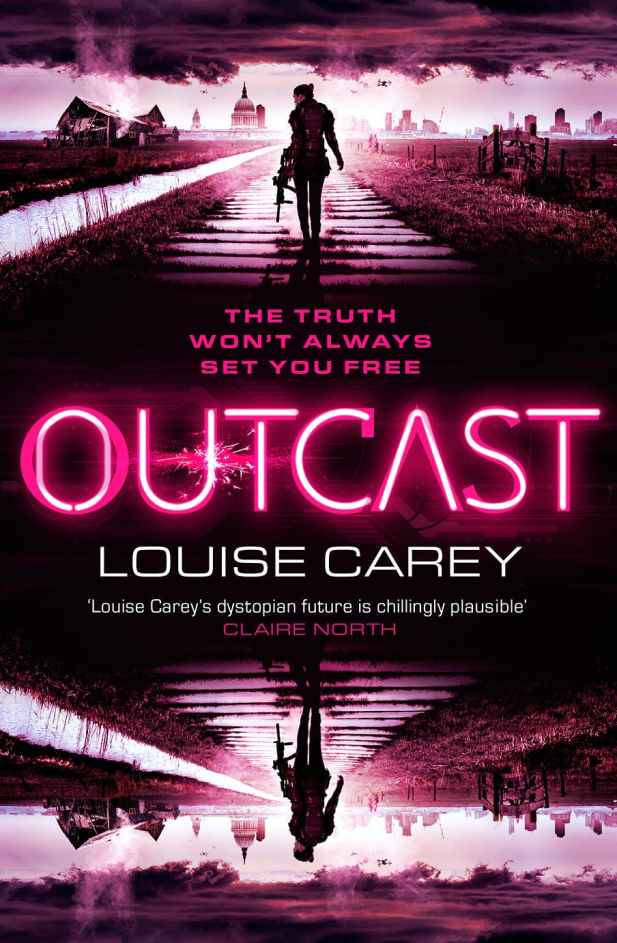
Outcast Cover

Publisher: Gollancz (Trade Paperback – 25 January 2022)

Series: Inscape – Book Two

Length: 394

My Rating: 4.75 out of 5

Amazon     Book Depository

Impressive rising science fiction author Louise Carey continues her awesome first series with Outcast, a brilliant and powerful cyberpunk thriller read that is incredibly fun and very clever.

Outcast is a sequel to Carey’s debut novel from last year, Inscape, which told a unique and intriguing story about espionage, betrayal and corporate politics in a cyberpunk world.  Set in the distant future after a major calamity, the fractured world is now ruled over by all-powerful and advanced corporations who battle for dominance while they attempt to create the latest in weaponry and bio-tech upgrades.  The protagonist of the series, Tantra, works as an intelligence operative for one of the largest companies, InTech, and investigates a mysterious theft that could have dire consequences for her company.  Filled with dystopian cyberpunk elements, such the built-in communication and information technology known as scapes, this ended up being an excellent and captivating science fiction thriller that was one of my favourite debuts of 2021.  Carey has continued her amazing series in a big way here with Outcast, which serves as an outstanding and impressive sequel to her first solo book.

Following the success of her first mission, Tantra’s life has been turned upside down.  Despite saving her company and uncovering a traitor, Tantra has been sidelined by a jealous supervisor and now works as a lowly security guard.  Worse, Tantra now knows the terrible truth: that the company who gave her everything has long controlled her mind with the invasive Harlow Programming, which she has since been freed from.  With her loyalties tested, Tantra is thrust back into the thick of the action when she discovers a bomb sent to InTech’s headquarters.

InTech soon finds itself thrust into a brutal corporate war with its main competitor, Throughfront.  The bombing of their headquarters is the latest in a series of attacks on InTech assets, and the board are desperate to get them under control.  Determining that she is their best operative to stop the culprits behind the attack, Tantra is assigned to the case.  Teaming up once again with her former partner, Cole, the brilliant scientist with severe gaps in his memory, Tantra attempts to find the culprit before they cripple InTech for good.

But, facing opposition from both deadly internal InTech politics and lethal external forces, their chance of succeeding seems slim, especially when they are banished to a remote InTech facility in the Unaffiliated Zone for the remainder of their investigation.  Barely escaping a deadly assassination attempt, this unconventional team find themselves caught in the middle of a dangerous conspiracy that is determined to bring InTech down for good.  However, when they discover that InTech is planning their own sinister machinations, will Tantra and Cole still be as eager to save their company?

Wow, Carey follows up her excellent solo debut in a big way here with Outcast.  This second book was even better than Inscape, taking the reader on a wild and action-packed adventure through the author’s unique cyberpunk world.  Bringing together some amazing characters with a powerful and thought-provoking narrative about control and the potential evils of technology, this was an exceptional read I powered through in a few short days.

Outcast has an excellent story that perfectly continues the fantastic narrative started in Inscape.  Taking place shortly after the events of the first book, Outcast sees a struggling Tantra and Cole once again placed in the middle of a big investigation with major implications, this time involving the destruction of company drones outside the city, which is impacting the company’s food supply.  At the same time, Tantra finds herself forced to deal with deadly company internal politics, while Cole finds himself involved with a mysterious rebel group who are attempting to stop InTech’s more troublesome activities, including their latest upgrade.  This forces them to venture outside of the city where they encounter unaffiliated mercenaries, enemy agents, dangerous rebels and deep secrets about InTech’s past.  The middle of this novel is filled with an excellent series of great emotional sequences, action scenes, world building, character development and shocking twists, as the protagonists get closer to finding out who is behind the attacks, as well as the true plans of their parent company.  This leads up to a brilliant final sequence where the protagonists are forced to make some very hard decisions in a great no-winners situation.  This leads up to the amazing and powerful conclusion where the protagonists, despite their best efforts, are left devastated by the events that unfolded, and which ensures that all the readers will be back for the third entry in this awesome series.

There are so many cool elements to Outcast which really help to turn it into a first-class read.  I deeply enjoyed the way the impressive story unfolded, and Carey makes great use of a couple of alternate character perspectives to tell a unique and multifaceted tale, such as the entertaining scenes told from the perspective of a smarmy and desperate secondary antagonist.  The author does a great job of combining a thriller storyline with the unique science fiction elements, and it results in a fast-paced and action-packed story that takes the time to explore certain technological implications.  There are some brilliant twists loaded throughout the book which are well paced out and ensure that the reader is constantly on their toes.  I liked how, despite the sheer amount of world building featured in the first book, Outcast still came across as an accessible novel, and new readers can probably jump into the series here.  That being said, I think you would be missing out if you didn’t try Inscape first as this sequel does an amazing job building on and expanding some excellent storylines from Carey’s debut.  However, nothing will compete with the awesome ending that this novel has, and the reader is chucked through the emotional wringer as the book’s characters are put into an impossible situation, which produces some very dark results for them.

The excellent cyberpunk science fiction elements of this series once again shine in Outcast as Carey continues to explore the advanced biotech that was such a great feature of the first novel.  Not only is a lot of this technology very cool, especially as it results in some brilliant moments in some of the action sequences, but this mind-connected technology continues to be a key part of the plot.  Multiple storylines examine the ethics behind this technology, especially as the protagonists are now fully aware of the full extent of their parent company’s attempts to program their employees’/residents’ minds using their scapes.  This leads to some intriguing and deep discussions, especially as you get to see corporate greed and a desire for control weighed up against the rights of a person and their desire for independent thought and identity.  This exciting look at the series’ unique technology becomes even more intense and important as Outcast continues, especially when certain new advancements are revealed which could have devastating impacts on all the characters.  I loved how deep and captivating some of the scenes involving this technology get, and it results in some of the best bits of the entire book.  I cannot wait to see what happens with these cool technological aspects later in the series and I imagine it is going to be very fun.

I was also very impressed with the incredible character work featured throughout this book as Carey did a wonderful job expanding on her complex and damaged protagonists.  Like Inscape, Outcast is primarily focused on the characters of Tantra, a young intelligence officer, and Cole a formerly unethical scientist whose memory was completely erased, giving him a very different personality while retaining his brilliant mind.  These two formed a unique and fun pairing in Inscape, where they both experienced a lot of development and trauma, and it was great to see them back together again here.

Both characters had some brilliant moments throughout the novel, especially Tantra, who realised in the first book that her mind and her actions have been subtly controlled by a program her entire life.  Now rid of the Harlow Programming, Tantra is in full control of her mind, but must keep this hidden from InTech, who would kill her or reprogram her if they found out.  Forced to act like the obedient drone they think she is, Tantra chafes against the restrictions and contradictions of her superiors and the company, as she can see many of the injustices or manipulations now that her mind is solely hers.  This also results in are also some excellent ethical and loyalty implications for her as she can finally see how nefarious InTech, the company who raised her, really are, and she must decide whether she is still loyal to them.  It was especially powerful to see how her relationship with Reet, her lifelong romantic partner, has been changed.  Reet is still infected by the Harlow Programming, and Tantra can only watch as she toes the company line and fails to understand Tantra’s many concerns, criticisms or newly awakened point of view.  This puts some real strain on their relationship, and it was heartbreaking to see Tantra suffer even though she is now free.  This was easily the best character work in the entire book, and if the tragedies and hard decisions that occurred towards the end of Outcast are any indication, Tantra is going to be in for a rough ride in the third book.

Cole also had some outstanding moments in Outcast as he continues to struggle with his sense of self and identity following his memory loss and the eventual revelation that his past self was responsible for many of InTech’s evils, including the Harlow Programming.  Now mistreated and mistrusted by InTech, Cole works with a mysterious group outside of InTech to try and bring them down, while also attempting to learn more about his past actions and what led him to do what he did.  He does get some of the answers he wants as the story progresses, especially when he is reunited with an old colleague, but it only leads to tragedy and despair.  Cole’s story gets pretty dark in places, especially when he realises how InTech have repurposed and enhanced his original work, and it was fascinating to learn more about his past mistakes.

Aside from these two, there are several awesome supporting characters who also add a lot to the novel, especially as several of them are utilised as point of view characters.  This includes Douglas Kenway, a senior director at InTech and Tantra’s boss, who is determined to keep his position and power no matter what.  Convinced that Tantra is gunning for his job, he spends most of the novel trying to undermine her, while also inching closer to discovering the truth about her lack of Harlow Programming.  Kenway serves as an excellent secondary antagonist, and his dive into company politics and sabotage of the protagonist adds a fantastic and entertaining edge to the novel that I really enjoyed.  Despite his self-centred nature, Kenway does provide an intriguing alternate perspective on the events of the book, and he gives some corporate context for much of what is going on.  I also really liked how his fears were mostly realised towards the end of the book, although not in the way he expected.  I should also mention new character, Fliss, the leader of a rogue gang out in the Unaffiliated Zone who gets dragged into the conspiracy attacking InTech.  Fliss provides another great alternate perspective, especially as she and her friends have no technological upgrades to their bodies and are naturally human.  I liked the story that surrounded Fliss, especially as she struggles to control her gang when forced to work for a corporation, and she ended up being an excellent addition to the plot.  These characters, and more, help to turn Outcast into a first-rate book, and I deeply enjoyed seeing all these amazing personal stories unfold.

Louise Carey continues to shine as one of the most impressive new authors of cyberpunk fiction out there with her second novel, Outcast.  This outstanding sequel does a brilliant job of continuing the powerful storylines from Inscape, while also introducing new dangers, betrayals, and some great characters.  Filled with action, intense character moments and captivating cyberpunk science fiction elements, Outcast is a fantastic novel that proves to be exceedingly addictive and fun.  I am really starting to get hooked on this outstanding series, and all cyberpunk and science fiction fans need to do themselves a favour and check out Carey’s impressive Inscape series.

Amazon     Book Depository
Usagi Yojimbo: Volume 36: Tengu War! by Stan Sakai

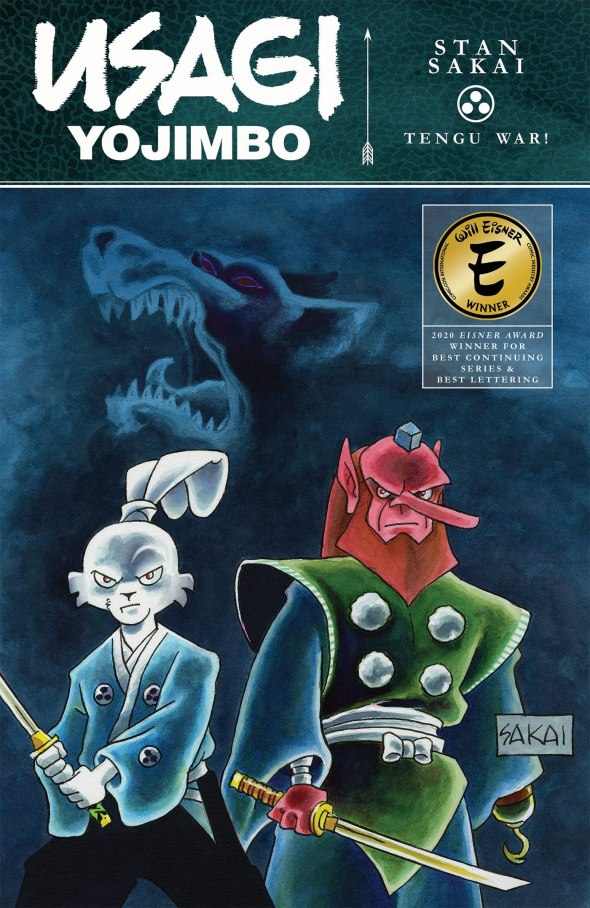
Usagi Yojimbo - Tengu War!

Publisher: IDW (Paperback – 22 March 2022)

Series: Usagi Yojimbo – Volume 36

Writer and Artist: Stan Sakai

Art Assist: Randy Clute (The Master of Hebishima)

Colourist: Hi-Fi Design

Length: 192 pages

My Rating: 5 out of 5 stars

Amazon

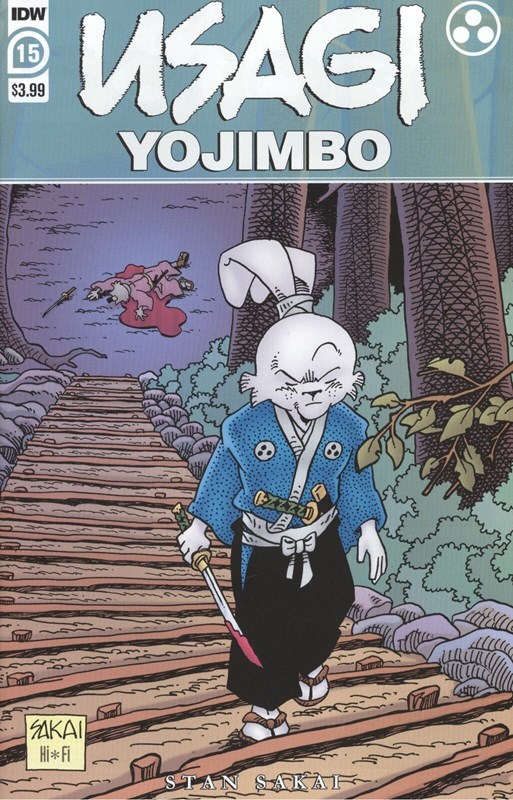
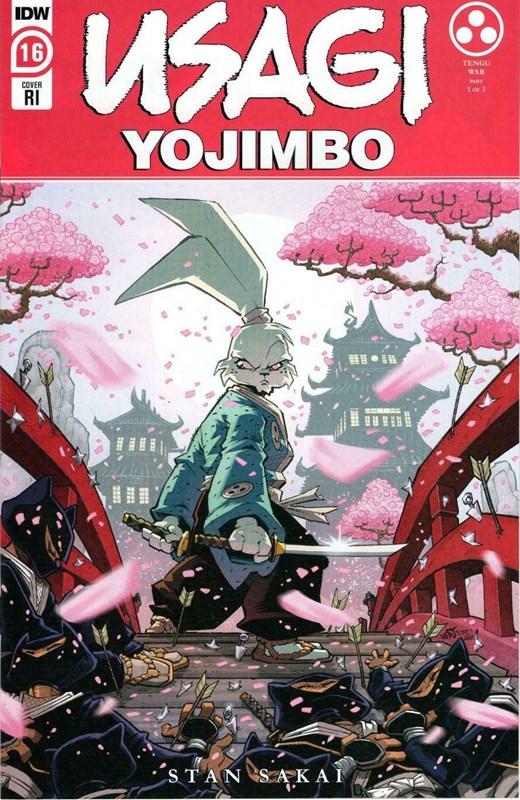
Usagi IDW #15

It is that amazing time of the year when I finally get my hands on the brand-new volume of the long-running Usagi Yojimbo comic series, written and drawn by the legendary Stan Sakai.  Fans of this blog will be well aware of my all-consuming love for this amazing series that follows a roaming rabbit ronin, Miyamoto Usagi, as he traverses an intriguing alternate version of feudal Japan inhabited by anthropomorphic animals.  Not only is this one of my favourite all-time comic book series but I have been steadily reviewing some of the older volumes as part of my Throwback Thursday series (see my recent reviews for Volume 12: Grasscutter, Volume 13: Grey Shadows and Volume 14: Demon Mask).  Unfortunately, Sakai only releases one volume of this epic series a year, so it is a very big deal when I finally get my hands on the latest volume (this latest volume has been one of my most anticipated releases for 2022 for a while now).

Usagi IDW #15b

This latest volume is Tengu War!, an intriguing and powerful comic that contains some awesome and clever new tales.  Tengu War! is the 36th overall volume in this series as well as the third volume printed by the publisher IDW (other IDW Usagi Yojimbo releases include Volume 34: Bunraku and Other Stories and Volume 35: Homecoming).  I have been rather enjoying these more recent Usagi Yojimbo volumes from IDW as not only do they contain Stan Sakai’s usual impressive storylines, characters and artistic work but they are also packaged into a fantastic new format of booklet, which is slim and more aesthetically pleasing.  In addition, the IDW volumes are also released in colour, which is an interesting change of pace from the previous volumes, which were initially released in black and white.

Usagi IDW #16

Tengu War! ended up being another great volume that makes use of Sakai’s skill and art to tell several complex and entertaining tales.  Set immediately after the final comic of the previous volume and continuing several overarching storylines and themes, Tengu War! contains four unique new stories which were set out in issues #15-21 of the IDW run on the Usagi Yojimbo series.  All four stories are fun and compelling new additions to the series that each present the reader with something different and distinctive.

Usagi IDW #16b

The first entry is the volume’s main multi-issue story that sees Usagi return to visit an old teacher only to find himself embroiled in a deadly supernatural war.  Made up of the first four issues of the volume, this entry actually consists of two stories, Sojobo and Tengu War!, which act together to tell one entire story, with Sojobo containing flashbacks to Usagi’s past, and Tengu War! featuring the current issue he and his friend are facing.  Due to how closely linked these two stories are, with Sojobo providing the background to the longer Tengu War! story, I decided to talk about them as a single entity in this article.

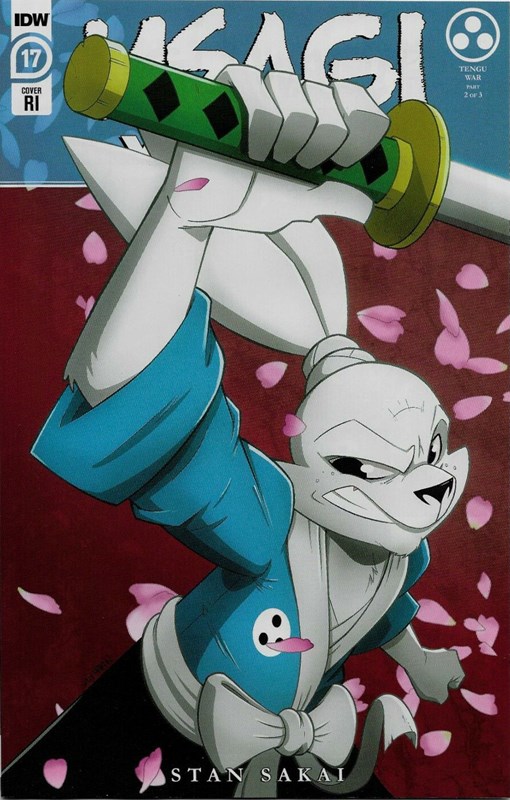
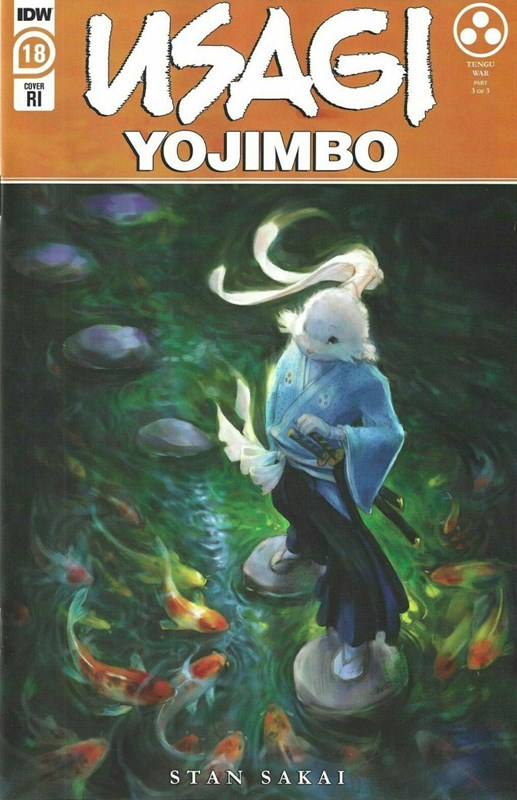
Usagi IDW #17

These stories are set right after the events of the last volume, and swiftly tell the story of Usagi and his mostly hidden second sword master, the tengu warrior Sojobo.  Years after his first meeting with Sojobo (see Volume 18: Travels with Jotaro) but before the events that would see him become a wandering ronin, a young Usagi returned to the tengu and convinced him to take him on as a pupil, enhancing his knowledge of the sword with Sojobo’s unique teachings.  Now, years later, Usagi returns to Sojobo’s clearing to pay his respects, only to discover his former master in grave danger.  A horde of guhin (lesser-tengu) are ravaging the mountainside, determined to claim the territory for themselves, and they have Sojobo and Usagi in their sights.  To survive, Sojobo is forced to return to from his self-exile and reclaim leadership of his clan.  But even with a tengu army at their back, can Sojobo and Usagi survive the onslaught of the guhin?

Usagi IDW #17b

These two stories were an excellent start to this volume, especially as they contain all the best elements of a great Usagi Yojimbo story, with great new characters, compelling Japanese supernatural elements, and another intriguing glance at Usagi’s complex past.  The first story, Sojobo, serves as a great introduction to the entire volume, perfectly continuing from the previous Sojobo story, and redefining the relationship between the two characters, showing their mentor-mentee bond.  This sets up the rest of the Tengu War! story extremely well, as you have a good basis for Sojobo’s and Usagi’s stakes in the narrative.  From there the story evolves into a classic Usagi Yojimbo tale, with Usagi getting involved in someone else’s fight, this time involving some unique and compelling supernatural foes.  This extended story continues some brilliant character moments as Sojobo becomes reacquainted with his wife and clan, while also showing off the intractability and intense honour of the tengu.  You also get to see the evolution of the bond between Sojobo and Usagi, and there are some great discussions as the wiser and battle-hardened Usagi discusses some recent changes in his life, such as the discovery of his son.  It was also quite fascinating to see the apparent impacts that Sojobo’s training had on Usagi’s skill as a warrior, and I found it fascinating that Usagi’s fighting style is described as a combination of mortal and tengu techniques.  The subsequent fights are pretty awesome and you get some fantastic and intense battle sequences that really highlight Sakai’s artistic skill.  This all leads up to the big conclusion which contains a great mixture of action, satisfaction, camaraderie and tragedy, as victory is achieved at great cost, and the reader is left extremely satisfied with how this story turned out.

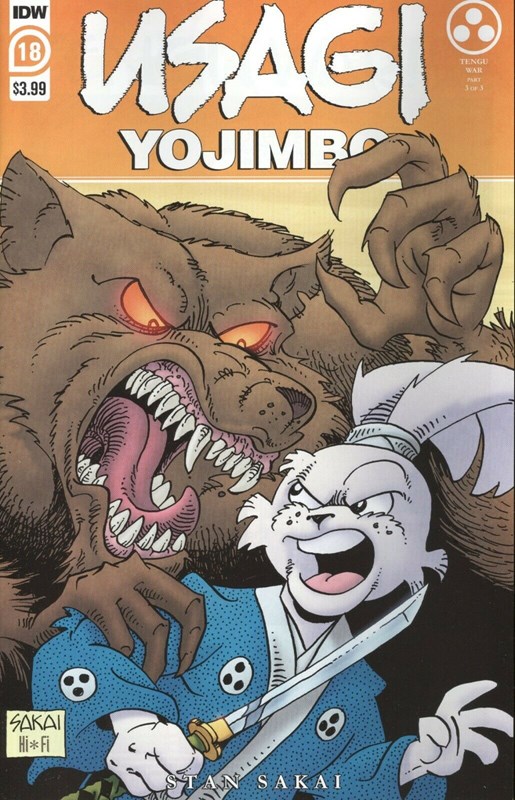
Usagi IDW #18

I have said many times before that some of the best Usagi Yojimbo stories are those where Sakai makes brilliant use of monsters, creatures or spirits from Japanese culture or mythology, and Tengu War! is a great example of this.  This cool story provides one of the best looks at the tengu, a fantastic and unique Japanese yokai (supernatural entity), in the entire Usagi Yojimbo series, and I really enjoyed the cool dive into the mythology surrounding them.  This story contains multiple different types of tengu who act as either allies or enemies, depending on their caste.  This includes the main supporting characters, Sojobo and his wife, Nozomi, who are dai-tengu, with the classic long-nosed, red-faced, humanoid-appearance that most people would associate with tengu, and who act as master warriors and wise sages.  These tengu are supported by their followers, the ko-tengu, bird-like creatures who act as samurai retainers in this comic, and I loved the cool combination of corvid features and samurai garb and mannerisms.  The final group of tengu featured within this comic are the guhin, a lesser form of tengu who act as mysterious spirits of the hills and lesser peaks.  Sakai depicts the guhin in this story in the more recent style of giant dogs (they are traditionally unseen spirits, but many modern depictions give them a canine physical form), and they come across as werewolf-like creatures, determined to take their rightful place at the top of the mountain.  These different form of tengu are explored in compelling detail, and I loved seeing the awesome scenes featuring all of them, especially as it results in some excellent fight scenes between classic tengu goblins, sentient samurai crows, and giant werewolves.  I loved this brilliant exploration of this unique part of Japanese culture (especially with the author’s comprehensive summary at the end), and it helps to enhance the outstanding overall story.

Usagi IDW #18b

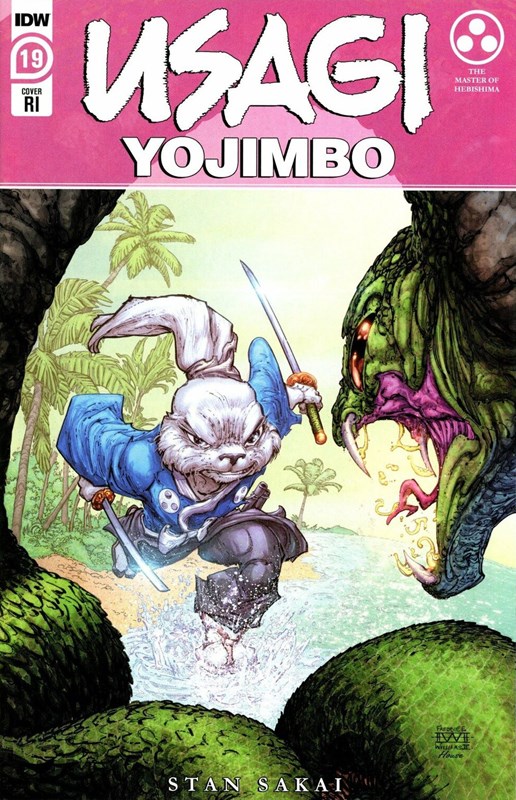
We next have the dark and captivating tale, The Master of Hebishima, which provides a chilling look at the evils of revenge, obsession and fear.  In The Master of Hebishima, the wandering Usagi chances across a couple of peasants who specialise in trapping and removing the local pests, the tokage lizards.  Upon meeting them, Usagi is intrigued to discover that the trappers sell most of their catch to a mysterious hermit on the island known as Hebishima (snake island), who lives amongst the local snakes.  When one of the trappers is injured, Usagi volunteers to transport the captured tokages to Hebishima for them.  However, what he finds there will shock and haunt him, as the hermit has a surprising history with Usagi, one that lies all the way back in the infamous battle of Adachi Plain.  Faced with this surprising threat from his past, Usagi is unprepared for just how dangerous his opponent is, or what they are truly capable of.

Usagi IDW #19

The Master of Hebishima is a tight and powerful one-issue comic that may be the best entry in the entirety of the Tengu War! volume.  Perfectly set up and executed, this tale is deeply interesting and powerful, especially with its unique and intense focus.  Sakai has come up with an excellent story for this entry that not only ties into one of the key moments of Usagi’s life but which also shows the full impact of someone’s obsession and desire for revenge.  The introduction of a mysterious stranger who has a connection to Usagi and the battle of Adachi Plain (which has been such a cool part of several volumes, including Volume 2: Samurai, Volume 11: Seasons and Volume 34: Bunraku and Other Stories), is handled perfectly, and I loved his unique backstory and the fact that you never actually find out his name.  This villain’s entire history is tied to Usagi’s, and I liked the interesting symmetry in their loyalty, sense of honour and desire to serve their respective lords.  The horror elements around this mysterious hermit are just great, especially with that snake reveal, and he proves to be an excellent opponent for Usagi, who could potentially come back in some future comics (I’d be keen for that).  I was slightly disappointed that this story had nothing to do with distinctive Usagi Yojimbo villain Lord Hebi, a giant snake who serves as the principal lackey to the series’ main antagonist, but Sakai more than made up for this with all the other inclusions.  This was an extremely well-paced story, and Sakai manages to do a lot with a single issue, producing one of his more memorable stories in recent years.

Usagi IDW #19b

One of the most notable things about The Master of Hebishima is its exquisite art, some of which bears a slight difference to Sakai’s usual work.  Parts of this issue are drawn sharper and in a slightly different style to the rest of the Tengu War! volume.  This is particularly clear in the earlier panels of this issue, with some noticeable and intriguing stylistic changes to the characters and landscapes, which I thought looked like a well-enhanced version of Sakai’s usual drawings.  I assume that this is because of the influence of artist Randy Clute, who is credited as giving “art assist” for this issue.  Whatever the reason, I quite liked how this comic looked very early on, and it was interesting to see it change back to Sakai’s more typical style as the comic continued.  The rest of the art in the comic also really needs to be highlighted though, as there are some extremely memorable and shocking moments drawn within.  Not only do you get a notably spooky island of snakes for the main story but The Master of Hebishima also features a detailed flashback sequence that looks awesome, especially some of the battle sequences.  I particularly liked how the antagonist’s face was constantly obscured by shadow during these flashbacks, as it helped to make them seem more sinister and mysterious while also ramping up anticipation for the final reveal, the best part of this story.  This extended panel reveal is pretty damn freaky as the artists present a gruesome visage, accompanied by a Medusa-esque twist.  This shot of the face is particularly well drawn in impressive detail and ends up being one of the most haunting panels I have ever seen in a Usagi Yojimbo comic.  All this beautiful, if somewhat creepy, art really works to enhance this brilliant story, and it ensures that The Master of Hebishima really sticks in the mind and is well worth checking out.

Usagi IDW #20

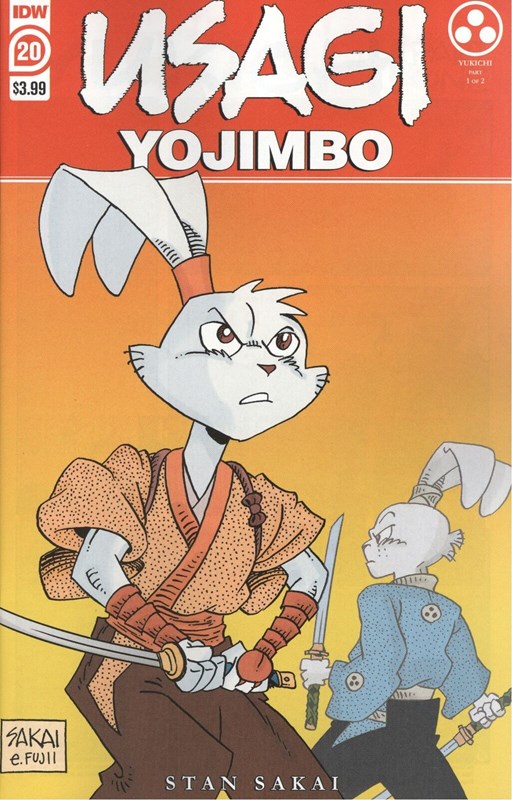
The final story in the volume is the two-issue long story, Yukichi, another excellent character-driven narrative that introduces a fantastic new supporting character for the series.  In this story Usagi encounters a fellow rabbit samurai, Yukichi Yamamoto, on the road.  It is quickly revealed that, years ago, Yukichi was a disrespectful student at a prestigious sword school who insulted Usagi when the ronin attempted to meet his master.  Now a more mature warrior, Yukichi is delivering the sword of his dead master to the school’s successor and, after he apologises to Usagi, the two decide to travel together.  However, a rival school is determined to stop them delivering the sword by any means necessary, and they will use Usagi’s recent misadventures to justify their actions.

Usagi IDW #20b

Yukichi is an amazing and fantastic story that serves as a great ending to the Tengu War! volume, especially as it combines an excellent Usagi Yojimbo story with some cool new character introductions.  This story is another one with an excellent pace to it, smartly bringing in Yukichi, revealing the history between him and Usagi, before revealing the story’s villains, the members of a dishonourable sword school.  From there the story intensifies as, after an initial confrontation, the students and instructors from the rival school attempt to kill Usagi and Yukichi, while also trying to claim a bounty on Usagi (a consequence of the main story in the previous volume, Homecoming).  This results in a brilliant climatic scene where the two protagonists take on a horde of underlings before Yukichi engages their leader in an intense duel.  This duel comes across as pretty awesome in the artwork, and you get the sense it is a real battle between master swordsmen.  The conclusion of the fight, which highlights Yukichi’s naivety compared to the more jaded Usagi, is very cool, and I liked the conclusion of the story, where Yukichi is forced to make a big decision and eventually decides to travel with Usagi.

Usagi IDW #20c

While the action, artwork, and story are great, the real highlight of this comic is the introduction of new character Yukichi, who Sakai is obviously setting up to be a big supporting figure in the overall series.  Yukichi gets an excellent and comprehensive introduction here, and you swiftly get a grasp on his personality, history and relationship with Usagi.  I mostly liked this character and his design, especially as he is a good foil to Usagi, given their divergent training history and life experiences, and his fighting style is awesome as well.  His strong sense of honour, especially when faced with the poor successor to his master, was a great inclusion, and it does bring in some similarities with Usagi.  I did think that the sudden realisation that they were cousins was a tad too coincidental, and wasn’t particularly necessary, but it does bring in a certain connection between the two which will bond them for the rest of the series.  I wasn’t the biggest fan of Yukichi’s facial design either, especially those overly large and expressive eyes.  It kind of made him look cartoonish and somewhat undercut the seriousness of some scenes.  Still, this was my only real complaint about this new character and I am very curious to see what happens with him in the future Usagi Yojimbo volumes.  I am predicting similarities to Usagi’s previous travels with Jotaro in volumes 18 and 19, and it will be interesting to see Yukichi interact with the other supporting cast members like Gen or Kitsune.  An overall excellent and impressive end to this amazing volume that wraps everything up nicely.

Usagi IDW #21

As always, I really need to highlight the fantastic and awesome artwork featured with this incredible volume as Sakai continues to enhance his excellent stories with some gripping and powerful scenes.  I have already discussed some of the best bits of art of each respective story, especially the amazing art of The Master of Hebishima, but every panel in this comic is drawn in exquisite detail.  Not only does Sakai present some great character designs, especially around the new supernatural creatures in the Tengu War! story, but you have his always impressive setting shots that perfectly highlight the beautiful Japanese natural landscape or the historical buildings.  You also must love the excellent battle sequences scattered throughout the stories.  Sakai has always excelled at conveying movement and combat with his minimalistic style, and this is brilliantly highlighted in the various comics of Tengu War!, including in elaborate group fights or one-on-one duels.  I am also really enjoying seeing these stories in colour from the get-go as part of the IDW release.  While I will always be extremely fond of Sakai’s usual black and white style, having these adventures appear in colour is also amazing, and I feel that the colour enhances some of the art, especially in The Master of Hebishima, which came up beautifully.  All this art brilliantly combines Japanese influences with western art styles and is such a joy to behold, especially as it always makes everything about the Usagi Yojimbo comics just a little bit better.

Usagi IDW #21b

Another year, another exceptional Usagi Yojimbo volume as Stan Sakai once again produces a masterful and impressive new comic.  Tengu War! is another awesome volume that presents the reader with three excellent stories that combine brilliant character work with unique narratives and outstanding artwork.  I had so much fun reading this excellent comic, and it gets another easy five-star rating from me and comes very highly recommended.

Amazon

Warhammer 40,000: Krieg by Steve Lyons

Warhammer 40,000 - Krieg Cover

Publisher: Black Library (Audiobook – 29 January 2022)

Series: Warhammer 40,000

Length: 9 hours and 33 minutes

My Rating: 4.5 out of 5 stars

Amazon     Book Depository
Death, dishonour and duty all collide as impressive author Steve Lyons returns to the epic Warhammer 40,000 universe with Krieg, which dives into the origins of one the most iconic regiments of Imperial Guard out there, the Death Korps of Krieg.

Damn this has been a good year for Warhammer fiction so far.  We may only be in March, but 2022 has already produced a great collection of awesome Warhammer novels, including Steel Tread, The Twice-Dead King: Reign and Day of Ascension.  I have deeply enjoyed all these cool books, and when another awesome sounding tie-in novel was released on audiobook, I just had to grab it.

This latest book is Krieg by veteran science fiction author Steve Lyons.  Lyons is a new author to me, but he comes with an impressive pedigree in tie-in fiction, having written several Warhammer novels and short stories, a ton of Doctor Who novels and audio dramas, and several other intriguing novels.  I knew that I was probably going to love Krieg and I turned out to be right, as this fantastic and dark Warhammer 40,000 novel contains an intense and captivating tale of a legendary regiment.

In the grim future of the universe, there is only bloodshed and death, especially near the system-spanning Octarius War, where two brutal alien races battle for supremacy, and Imperial forces fight to stop their conflict spilling out into the greater Imperium.  However, the latest round of fighting sees a massive orc ship break through Imperial lines and crash into the massive city of Hive Arathron.  As the desperate Imperial forces fail to contain the invading orcs, all hope looks lost until a new set of deadly reinforcements arrive: the Death Korps of Krieg.

The Death Korps of Krieg are a legendary unit of peerless soldiers who are utterly fearless in battle, fanatically loyal to the Emperor, and who seem to harbour an unnatural desire to die in battle.  But who are the men of Krieg under their gasmasks and coats, and why do they fight so hard to regain their lost honour?  The answer lies thousands of years ago when Krieg attempted to cede from the Imperium, thrusting the planet into a brutal civil war.  In the end, one man stepped forward to end the fighting, and his decision doomed Krieg to become a blasted wasteland where only soldiers are grown.

As the fighting around Hive Arathron continues, many of their fellow soldiers and inquisitorial observers begin to doubt the loyalty and sanity of the Death Korps, especially when their unusual habits and creeds keep them apart from the other members of the Astra Militarium.  However, a deadly discovery deep inside the Hive will show the Imperium just how invaluable the men of Krieg are, especially when history seeks to repeat itself.  Can the Death Korps succeed against the xenos, or will Hive Arathron and its planet soon share a similar fate to Krieg?

The Warhammer 40,000 hits just keep on coming as Krieg turned out to be a truly awesome read.  Steve Lyons has produced an epic and intense novel here, and I loved the brilliant story that not only showcased a dangerous alien threat but which also examined the past of an iconic and captivating faction.

I thought that Lyons came up with an exceptional and captivating narrative for Krieg, which takes the reader on several parallel journeys throughout the history of the Warhammer 40,000 universe.  I have said multiple times before that I think some of the best Warhammer stories out there focus on the common troops, and I was proved right again as Lyons does a brilliant dive into the mind of the average solider when they experience the very worst of circumstances.  The primary storyline is set in the modern era of the canon and shows a regiment of Krieg Imperial Guard dropped into the battle for Hive Arathron to fight the orcs.  This section, which is told entirely from the perspective of supporting non-Krieg characters, shows the Death Korps in battle, with a specific highlight on their unusual appearance and practices.  At the same time, another storyline dives back into the past and shows the civil war that occurred on Krieg and the events that led up to the destruction of the planet and the formation of the modern Death Korps.  Both these storylines take up about half the book and they present the reader with two unique and interesting tales which work to complement the story from the other timeline while also depicting their own brutal military actions.  The stories start to come together towards the end when the protagonists of the contemporary storyline discover nuclear weapons in Hive Arathron, which they need to recover.  This leads to an interesting conclusion that results in some clever parallels between the historical events and the current storyline.  All this leads to a satisfying, if grim, conclusion that reveals the various fates of the supporting characters and wraps up the remaining story elements.

I was really impressed with how Krieg was written, and I think that Lyon did a really good job here.  The story ended up perfectly toeing the line between examining the lore and history of the universe and providing the reader with all the necessary excitement and adventure.  I think the decision to split the book between the two separate timelines was pretty clever, and I had a brilliant time reading the unique storylines it produced.  Both timelines were really good, and I loved the grim and powerful plot points they contained, especially as the protagonists within both suffered defeats, setbacks and brutal character realisations.  If I had to choose a favourite it would probably be the historical storyline set on Krieg, mainly because it shows the more desperate situation and substantially more character development and tragedy.  The twin storylines also did a wonderful job complementing each other, ensuring that the reader gets two separate sides of the titular regiment.  It also results in a series of different battle sequences, and I loved the interesting comparisons between a protracted civil war and a short and brutal fight against orcs.  Krieg ended up being a good standalone read, with a concise, well-paced and beautifully set-up narrative that is pretty easy to get addicted to, especially once both storylines descend into the hell of battle.  This also proved to be an extremely accessible tie-in to the Warhammer 40,000 universe, with Lyons ensuring that newer readers can easily follow what is happening with a minimal of explanation about the universe.  As such I would strongly recommend this book to a wide range of readers, and both experienced Warhammer fans and general science fiction readers will really appreciate the powerful and action-packed story contained within.

Unsurprisingly for a novel named Krieg, there is an extensive and fascinating examination of the Death Korps of Krieg in this book.  Lyons does a brilliant job of diving into this distinctive Warhammer faction, and this novel ended up being a very detailed and impressive love letter towards the infamous regiment.  Every aspect of the modern regiment is shown in exquisite detail, and you get an extremely powerful look at their design, uniform (which is based on the uniforms of World War I German trench fighters), fighting style, equipment, unique regiments, and more, including the iconic Death Riders (I was so very happy they were included, especially as you get several great fight scenes with them, including against orc bikers).  However, the real focus is on their unusual behaviour, including their determination to die in combat, their complete resolve and the fact that they never remove their masks.  Lyons really hammers home the unusualness of this regiment by only showing the modern Krieg soldiers through the eyes of regular soldiers or member of the Inquisition, all of whom are at a loss about what the Krieg are or why they fight so hard.

However, while these outsider characters are left wondering about many of these events, the readers get multiple insights thanks to the chapters that explore the historical civil war on Krieg.  Lyons does an incredible job of portraying this conflict, and it is fascinating to see the events that led up to it and the lengthy and costly war that followed.  Watching the opposing mentalities on Krieg during this time is really fascinating, and you soon get caught up in the dramatic battle that follows, especially as the situation continues to deteriorate over time.  I loved how the origins of the Krieg’s many idiosyncrasies are featured here, and you soon see what necessitated the use of certain equipment or behaviours.  The real highlight is the eventual destruction of Krieg and the subsequent formation of the modern version of the Death Korps.  The scenes that cover this destruction are pretty damn brutal, and watching the slow transition from typical soldiers to the eventual shrouded figures is extremely compelling and awesome.  I really appreciated the way in which Lyons showed off the various stages of the Krieg regiments, and the use of both the historical version of the regiment and its current formation really helped to highlight just how distinctive and cool they are.  While there are still a few secrets left hidden (what’s under the mask??), the reader leaves this book with an impressive appreciation for this awesome regiment, and it wouldn’t surprise me if it convinces several Warhammer 40,000 players to start using the Death Korps in their games.

A quick shoutout also needs to go to the fantastic characters featured throughout Krieg.  Lyons makes use of a large cast to tell this interesting story, and I liked the excellent mixture that this novel contained.  The characters featured in the contemporary line are primarily made up of non-Krieg fighters who serve as an interesting counterpoint to the nameless, faceless Death Korp soldiers.  This includes Inquisitor Ven Bruin, an older witch hunter who leads the search for the hidden weapons in Hive Arathron.  Ven Bruin is a lot gentler and less cynical that a typical Imperial Inquisitor, and he has some intriguing viewpoints on the situation, with his decisions tempered by experience and weariness.  Ven Bruin ends up holding multiple secrets throughout Krieg, and it is emotional to see him impacted by his multiple hard decisions and the lives they cost.  You also get the compelling viewpoint of Sergeant Renick, a Cadian soldier who fights alongside the Krieg.  Renick, who is a surprisingly good female character for a Warhammer novel, gives the common soldier’s viewpoint of events, and I loved seeing her slow opinion change of the Death Korps after seeing them in action against the orcs.

While there are some great characters in the Hive Arathron storyline, Lyons saves his best character work for the historical storyline on Krieg, which highlights the key people in the deadly civil war that destroyed the planet.  While there are several intriguing figures here, most of the focus is given to Colonel Jurten, the Imperial Guard commander who fights to keep Krieg in the Imperium.  Jurten is a weary veteran character who borders on the fanatical, especially when it comes to saving his home from himself.  Throughout the course of the book, you see Jurten fight a desperate war for his believes that culminates in him making a terrible decision that will impact his people for generations.  Watching Jurten’s substantial resolve slowly chip away throughout the book is very intense, and Lyon really shows the weight his beliefs and determination bear on him, especially after he makes the very worst of choices.  The other characters in this past storyline serve as an excellent support cast, and it was great to see their concerns and opinions about the battles being fought, especially compared to the resilient Jurten.  My favourite is probably the mysterious Adeptus Mechanicus tech-priest, Greel, who acts as the devil on Jurten’s shoulder, convincing him to make the tough decision about the future of Krieg.  I am still a little uncertain whether Greel was a hero or a villain (probably both; it is Warhammer), and I would be curious to find out more about him and his motivations in the future.  An excellent group of characters, I would be interested to see more of some of them in the future.

Unsurprisingly, I made sure to grab the audiobook version of Krieg, which ended up being another excellent and enjoyable experience.  I deeply enjoy Warhammer audiobooks, especially as they tend to enhance the grim and brutal stories, while also highlighting all the cool details about the Warhammer universe.  I had amazing time with the Krieg audiobook, and with a runtime of only 9 hours and 33 minutes, this was a pretty easy audiobook to get through.  The audiobook did an excellent job capturing the grim battles and blasted warzones featured throughout this awesome novel, and I could easily envisage every fight and every brutal decision.  I was also really impressed with the voice work of narrator Timothy Watson, who brought a ton of gravitas and intensity to this book.  Watson’s voice fit perfectly into this grim universe, and he did an outstanding job of capturing the various larger-than-life characters featured within, while also providing great Germanic accents to all the characters who originated from Krieg.  You really get a brilliant range of voices throughout Krieg, and I loved Watson’s ability to showcase the devotion, despair and weariness of all these great figures.  Another brilliant and wonderful Warhammer audiobook, this is easily the best way to enjoy this amazing tie-in book.

Overall, Krieg by Steven Lyons was another awesome Warhammer 40,000 novel that did a wonderful job of examining one of the game’s more unique and enjoyable faction.  Containing an action-packed narrative that highlighted the fantastic Death Korps of Krieg and showcased the events that made the soldiers they are today; Krieg was an addictive and clever read.  I loved the excellent use of a split timeline narrative, especially when it dove back into the civil war on Krieg, and the result was a grim and haunting tale of regret, duty and honour.  Highly recommended to all fans of Warhammer 40,000, you will love this beautiful and moving love letter to the iconic Death Korps and their tragic origins.

Amazon     Book Depository

Warhammer 40,000: Day of Ascension by Adrian Tchaikovsky

Day of Ascension Cover

Publisher: Black Library (Audiobook – 29 January 2022)

Series: Warhammer 40,000

Length: 5 hours and 38 minutes

My Rating: 4.5 out of 5 stars

Amazon     Book Depository
Legendary science fiction and fantasy author Adrian Tchaikovsky has arrived in the Warhammer 40,000 universe with the awesome and clever novel, Day of Ascension, a deadly and wildly entertaining read that sets two brilliant factions against each other.

2022 has so far proven to be an amazing year for Warhammer fiction, with several impressive novels already released, including Steel Tread by Andy Clark and The Twice-Dead King: Reign by Nate Crowley.  However, the Warhammer 40,000 novel I have been most excited for is Day of Ascension, an awesome and unique read written by acclaimed author Adrian Tchaikovsky.  Tchaikovsky has been wowing science fiction and fantasy audiences for years, producing several impressive novels across various genres.  Not only has he written some fantastic standalone novels but he also produced highly regarded series, such as the Shadows of the Apt and Children of Time books.  I have really liked the sound of his cool novels, but I had not had a chance to read any of them yet.  Once I saw that Tchaikovsky was contributing to the extended Warhammer 40,000 universe, I knew that this would be the year I finally read something from him.  Day of Ascension is Tchaikovsky first full novel in the Warhammer universe (he previously wrote the short story Raised in Darkness), and I was deeply impressed by the brilliant and captivating story he came up with.

On the forge world of Morod, the life and soul of every human belongs to the Adeptus Mechanicus, the Imperial machine cult who provide the armies of mankind with their weaponry and war machines.  However, while the tech-priests of the Adeptus Mechanicus live in comfort and prosperity, constantly delving into the secrets of the machine, the common people of Morod have been worn down by millennia of servitude, exploitation and conscription, doomed to either die young in the mines and foundries or be turned into mindless mechanical soldiers.  In their grief and anger, the civilians of Morod have turned to a new faith that offers salvation from the harsh rule of the Mechanicus, although that devotion comes with a dark price.

In the hierarchy of Morod’s Adeptus Mechanicus, Genetor Gammat Triskellian is considered a joke due to his focus on improving the flesh rather than replacing it with machinery.  Constantly overlooked by his superiors and given the most menial of tasks, Triskellian looks to find a way to advance his research and end the corruption he sees holding the order back.  When he uncovers a particularly interesting genetic strain in the populace of Morod, he thinks it could be the answer to all his prayers, one that could enhance his science and revolutionise the advancements of his order.

Digging further, he finds evidence of an unusual and twisted religious congregation operating throughout the planet, preaching rebellion and the destruction of the tech-priests, while awaiting the return of long-gone angels who will turn the planet into a paradise.  Seeking to use this congregation to his own advantage, Triskellian captures young, idealistic infiltrator Davien to find out more about her mutated family.  But as his plans begin to come into effect, Triskellian is about to discover that not everyone is meant to rule, and that the forces he seeks to control are far more dangerous and hungrier than he could possibly know.

What an epic and impressive read!  Tchaikovsky has dived into this franchise with great relish, producing an exceptional and powerful piece of Warhammer 40,000 fiction that is not only exciting and action packed, but also extremely thought provoking as the author examines some of this universe’s most complex and intriguing factions.

I had a lot of fun with the incredible story contained within Day of Ascension, as Tchaikovsky takes the reader on an intense and dark journey.  The main premise of this book is a fun one: what if an ambitious Imperial tech-priest attempts to utilise the deadly power of a Genestealer Cult for his own machinations?  The answer: absolute chaos as an entire world implodes in the fires of revolution, destruction and religious zeal.  This was a great story that Tchaikovsky sets up brilliantly in the early stages, quickly introducing the corrupt world of Morod, the choking hierarchy of the Adeptus Mechanicus, and the malignant underlying Genestealer Cult attempting to manipulate events from the shadows.  After this great introduction, the remaining story happens at a very fast pace, especially as this overall novel is fairly short (193 pages, or just over five and a half hours on audiobook).  The political and scientific intrigue of point-of-view character Triskellian runs straight into the revolutionary aspirations of the Genestealer Cult’s Davien with the expected destructive results.  I loved the brilliant clash of styles that occur between these two groups, and all the betrayal, manipulation and alien influences melds perfectly with the non-stop action and revolution.  This quickly leads up to a destructive and powerful conclusion that I deeply enjoyed and will leave you reeling in multiple ways.  There were some absolutely amazing twists towards the end, and I loved the resultant terrifying consequences to the wider universe which were really cool and deliciously ironic.  Tchaikovsky ends everything on a captivating and dark note which will leave readers extremely satisfied after getting engrossed in the impressive story.  This is an epic narrative that drags you right into the very heart of the worst parts of the Warhammer 40,000 universe.

I really must commend Tchaikovsky’s first dive into the Warhammer 40,000 universe as the author has a noticeable appreciation for this franchise and canon.  I loved how he expertly focused the story on two particularly sinister factions within this universe, while also making excellent use of an Imperial Forge World as the main setting of this book.  The two main factions of this novel are the tech-priest of the Adeptus Mechanicus and an undercover Genestealer Cult, the dangerous human/alien hybrids who act as infiltrators and forerunners of the Tyranids.  Tchaikovsky ensures that the reader gets an exceptional and detailed look at both factions, and you are soon immersed in their lore, politics, and motivations, which is just so fascinating.  There are so many cool things about this, from the unique interactions of the cybernetic tech-priests and the mechanical soldiers to the slow infiltration and incorporation of the Genestealers who spark revolution throughout the planet.  However, the best thing about this is the way in which Tchaikovsky’s expertly showcases one of the most inescapable facts of the Warhammer 40,000 universe: there are no actual good guys here; just self-serving fanatics with their own terrible agendas formed from a universe constantly at war.  This is so brilliantly highlighted in the fact that halfway through the book you find yourself on the side of the alien infiltrators, who are taking advantage of the terrible conditions on Morod to spark a revolution.  However, no matter how beneficial and beatific they may appear, preaching about angels and the better days ahead, there is still an amazing sinister edge to them, especially if you know what horrors they are actually referring to.  I loved how brilliantly these two unique and corrupt Warhammer factions are played off each other, and it proves to be an excellent background to this awesome novel.

Like most Warhammer tie-in novels, Day of Ascension is probably best enjoyed by those fans of the franchise, especially as Tchaikovsky looks at some obscure and unique parts of the canon.  While maybe a little too-lore heavy to serve as the best introduction to the Warhammer 40,000 universe, I felt that this is an easy enough book for new fans to get into, especially if they are established science fiction fans.  Tchaikovsky ensures that the various story elements feature the right amount of detail and I the various factions are introduced extremely well especially to new readers.  I do feel that readers who don’t quite understand what the Genestealers and their Tyranid masters are might not get the true horror of this book and its conclusion, and I personally enjoyed the novel more because I knew what the true nature of the Genestealer’s plans were.  However, new readers probably will get the full benefit of this as it is made pretty clear from the context.  As such, I would probably recommend this to both established Warhammer fans and general science fiction readers, especially if they have enjoyed Tchaikovsky’s writings in the past, and I know a lot of people with have a great deal of fun with this.

I deeply enjoyed the cool and over-the-top characters featured throughout Day of Ascension, especially the main two characters, Triskellian and Davien, who act as the point-of-view characters for the novel.  Both are fantastic figures who are fully enveloped in the massive machines of their organisations, whether they like it or not, and who spend much of the book trying to battle what they see as their oppressors.  As such they form a brilliant tandem of opposing views, which perfectly shapes the morally grey nature of the narrative and makes it very unclear which one of these inherently terrible people you should be rooting for.  I particularly liked the character of Triskellian as the author envisions him as a thoroughly underappreciated middle management figure who is ignored and ridiculed by his superiors who fail to understand his work.  This constant mistreatment causes Triskellian to snap in this novel and he starts doing some darker deeds to gain what he believes is rightfully his.  I loved seeing this brilliantly portrayed figure, who will be clearly understood by anyone whose worked under an idiot boss, slowly slip off the deep end and attempt to use an evil alien cult to fulfil his objectives.  This character has some amazing moments, and it was so much fun seeing him try to manipulate events around him, only to be surprised that nothing goes to plan.  I also found his focus on genetics and biology to be quite fascinating, especially for a tech-priest, and his obsession with alterations on the flesh ended up having some intriguing parallels with the objectives of the Genestealer cult.

Davien, on the other hand, is an oppressed member of Morod’s population who acts as an infiltrator and spy for the Genestealer Cult she is a part of.  Frustrated by the slow pace of the promised revolution and the eventual appearance of their “saviours”, Davien has some outstanding scenes throughout Day of Ascension as she tries to save her loved ones from the machinations of the tech-priests.  Her rise in status and closeness to the powers that guide her family occur at the exact same time that she starts to have doubts about her organisations purpose, and the subsequent internal battle is extremely powerful and captivating, especially if you know just how right she is to be worried about the future.  Davien goes through a lot of growth, and it is fascinating to see what happens during her character arc, especially when it comes to her interactions with Triskellian and the influences of the beings guiding the cult.  Day of Ascension also has several great supporting characters who get their moments to shine throughout the book.  While most of them are a bit over-the-top in their appearance and personality, they prove to be very entertaining and I loved the outrageous and mechanically deformed highly ranked tech-priests who so badly enrage the protagonists.  There is a particularly good twist surrounding one of the minor support characters that I thought was extremely brilliant, especially as there is some subtle set up for it earlier on, and it results in an outstanding ending for the entire book.  An overall excellent cast of characters make this shorter Warhammer novel really shine.

Just like most of the Warhammer novels I have had the pleasure of reading, I chose to check out Day of Ascension in its audiobook format, which was an impressive and enjoyable experience.  As I mentioned above, this audiobook has a very short runtime and you can quickly power through it, especially once you get stuck into the intriguing and clever story.  I deeply enjoyed how this format enhanced this great narrative, and it was a lot of fun to hear all the chaos and destruction being read to you.  I must commend the narrator of Day of Ascension, actor Harry Myers, who did an exceptional job here.  I loved Myers’ great voice, which at times strongly reminded me of Stephen Fry, which is a definite plus.  Myers really dives into the various characters here, and I loved the brilliant edges he gives to them, especially the main character Triskellian.  You can really sense Triskellian’s frustration, ambition and internal outrage as the events of the novel proceeds, and this helps you to get into the mind of this entertaining figure.  An extremely cool way to enjoy Day of Ascension, I would strongly recommend this format to anyone interesting in checking out this great Warhammer 40,000 novel.

With this clever and exciting novel, Adrian Tchaikovsky has a brilliant debut in the Warhammer 40,000 universe.  Day of Ascension is an epic and intriguing novel that takes a fascinating look at two exceptional factions from the Warhammer canon and brings them together in a dark and entertaining battle of wills and manipulation.  Containing a tight, addictive story, some great characters, and a deep examination on some of the best parts of the Warhammer 40,000 universe, Day of Ascension is an outstanding read.  I really hope that Tchaikovsky writes more Warhammer fiction in the future as he absolutely killed it here.

Amazon     Book Depository

The Twice-Dead King: Reign by Nate Crowley

The Twice-Dead King - Reign Cover

Publisher: Black Library (Audiobook – 15 January 2022)

Series: The Twice-Dead King – Book Two

Length: 12 hours and 3 minutes

My Rating: 4.5 out of 5 stars

Amazon     Book Depository
The fate of Oltyx and his necron dynasty is revealed in Reign, the epic and impressive second entry in The Twice-Dead King series of Warhammer 40,000 novels by Nate Crowley.

Last year I was lucky enough to listen to the fantastic and compelling Warhammer 40,000 novel, The Twice-Dead King: Ruin, which followed an exiled necron prince, Oltyx, one of the heirs to the Ithakas Dynasty.  After defending a barren rock in the far reaches of space for centuries, the immortal, metal-coated Oltyx soon encounters a grave threat of an invading alien fleet and is forced to break his exile and head back to his dynasty’s capital planet.  However, he soon discovers that his father, the king, and his court have been infected by a terrible madness and he must find a way to claim power and unite the remnants of his people before it is too late.  I had an outstanding time with Ruin and I was extremely excited when the planned second half of the series, Reign, came out a couple of weeks ago.

Reign takes place directly after the events of Ruin and sees Oltyx, now king of the Ithakas necrons, attempting to find a way to preserve his people after his capital planet was destroyed by the massed forces of the human Imperium.  With the remnants of his people crammed aboard his fleet, Oltyx searches for a safe planet to claim as their new home.  However, the forces of the Imperium are relentless in their mission to destroy all Xenos, and Oltyx’s fleet soon finds itself under pursuit from their massive crusade fleet.  At the same time, Oltyx is forced to deal with the vicious politics of the necron court, with the bickering and scheming nobles hoping to gain power at his expense.

However, the further the necrons run, the more apparent it becomes that the humans will never leave them alone.  Spurred on by his most loyal advisors, Oltyx embarks on a risky plan to find an ancient planet, said to be ruled over by a deadly king and his hordes.  Making use of long-lost technology, Oltyx and his people undertake a deadly trip towards their goal.  However, a far greater threat soon emerges in the very heart of his ship.  The flayer curse that has long infected his people and which drove Oltyx’s father mad has returned, and soon thousands are infected.  Forced to take drastic actions to save his people, Oltyx soon learns the full weight of responsibility and loneliness that all kings must bear.  But this king has a dark secret that will threaten the entire Ithakas Dynasty.  Can Oltyx control the dark urges that reside deep within his soul or will a new twice-dead king rise to reign over the Ithakas necrons?

Reign is an epic and exciting sequel to the first The Twice-Dead King novel, and I had a brilliant time getting through this compelling and fantastic novel.  This book has an excellent story that dives deep into the Warhammer 40,000 lore to explore one of the more mysterious races in the canon while focusing on a conflicted and damaged protagonist.

This latest The Twice-Dead King book had an intense and impressive narrative that I found myself incredibly drawn to.  Reign directly follows on from Ruin and continues several great storylines and character arcs established in the first book.  The book opens with the necrons on the run after the destruction of their crown world by the Imperium, and the recently crowned Oltyx desperately trying to produce a solution while also being assailed by doubts and regrets of his new position.  It really does not take long for the action to kick off, with the Imperium continuing their chase while Oltyx is assailed from within his own ship by treachery, dissention and doubt.  What follows is an intense chase storyline as the necron fleet tries to outrun their pursuers as Oltyx leads them to potential sanctuaries.  This eventually finds the necron travelling through a featureless void for the last half of the book, where they encounter greater internal problems as the terrifying flayer curse rears its head throughout the ships.  This results in some incredibly scary and powerful scenes that dives deeps into the protagonists’ insecurities and fears as he starts a brutal reign over his people.  All this leads up to epic conclusion, which not only features a brilliant fight scene between necrons and Space Marines, but then takes the protagonist on a deep journey to the heart of his enemies and himself.  There are some clever and powerful moments throughout the entire book, and I loved how several inclusions or continued throwaway lines really paid off.  I enjoyed how this book ended and Crowley leaves the narrative open for a follow-up, as there are a few questions left unanswered that I would really like to find out about.

Crowley has a great writing style that I felt really enhanced the intriguing and captivating Warhammer story contained within Reign.  The book’s narrative is well paced, with the plot jumping perfectly between great action sequences, touching character moments and freaky near-horror spots.  The author really lays in the detail during these scenes and the reader is swiftly drawn into the elaborate world of the necron, from the outrageous characters to the massive ships and artifacts.  This level of detail really brought the powerful narrative to life, and I was impressed with how epic and cool it made the various action sequences appear.  I particularly loved one elaborate fight sequence that saw the protagonist and his guards face off against the very best of the Angels Encarmine, including a full Death Company and a Chaplain.  This led to a destructive and intriguing duel, featuring some interesting similarities and a great clash of martial styles.  Reign is primarily a book for the dedicated Warhammer fan, especially as it focuses on an obscure race from deep within the lore.  You also really need to read the preceding book, Ruin, first, as all the key storylines follow through from there.  Some readers could probably get away with only reading the second book, especially as Crowley provide some detailed refreshing context and explanation, but I would strongly suggest going from the start to get the full experience of this fun and addictive read.

I deeply enjoyed how much Warhammer 40,000 lore that Reign features, especially as it dives into the heart of one of the most interesting factions, the necrons.  The necrons, ancient aliens with an ancient Egyptian motif who were made immortal by being encased in metal, are a fascinating race who are somewhat underutilised in Warhammer extended fiction.  However, throughout The Twice-Dead King novels, Crowley has done a wonderful job of examining everything important about the necrons and he soon expands your view of this mysterious and long-dead race, turning them into a very captivating and personable group.  Crowley really dives into the lore of the necrons, focusing on everything, such as their history, their emotions, technology, philosophies, physiology, strengths and their weaknesses.  There is a great focus on the many mental conditions impacting them thanks to their transition from flesh to metal, including the flayer curse which drives them insane and forces them to cut off the skin of their opponents and attempt to eat their flesh, despite their inability to consume anything.  The author brings each of these conditions to life, especially in Reign, and watching the various necron characters attempt to overcome the curses coming for them and impacting their friends is deeply fascinating and powerful.

I really enjoyed the intense sense of tragedy and decline that Crowley installs in the various necron characters, and you swiftly start rooting for them, despite the universe usually portraying humans as protagonists.  There are some major necron moments in this novel, and I loved the range of interesting characters, desolate settings and powerful technology that Crowley cleverly features.  You also must love seeing the rest of the universe through the necron’s ancient and somewhat arrogant eyes, as it makes for some amusing insights.  It was particularly fun to see their opinions about the human fleet coming after them, including the Space Marines of the Angels Encarmine, and their constant disbelief at their crudity and apparent success is a fun part of the book.  The Angels Encarmine are actually an interesting mirror to the necrons, as the Space Marines have also attempted to become better by enhancing their weak initial flesh.  The Angels Encarmine, a successor chapter of the Blood Angels, also share a similar bloodlust, insanity and desire for killing that the necron flayed ones have, and their appearance during the Black Rage is very similar to necrons suffering from flayers curse.  I deeply enjoyed this excellent and captivating examination of this part of the Warhammer 40,000 canon and Crowley has a brilliant understanding of this complex universe.

I also really enjoyed seeing the continued journey of the main character and sole point-of-view character, Oltyx, who is now the king of his dynasty.  Oltyx is a great, damaged character who went through substantial growth in the last novel as he attempted to become a worthy prince and regain his honour, only to discover that his father, the king, had gone insane with the flayer curse, which forced Oltyx to kill him.  Reeling from this and the death of his brother by the humans, Oltyx takes control as the new king and instantly finds himself overcome with responsibility as external and internal threats threaten to overwhelm him.  It is extremely captivating to watch Oltyx attempt to deal with the various dangers and concerns of a king, especially as he is wracked with guilt over his many mistakes and riven with indecision over the best course from his people.  Thanks to his own internal suffering, insidious visions from the past and his own brush with the flayer curse, Oltyx makes some terrible decisions throughout Reign, and his slow descent towards tyranny and insanity is brilliantly portrayed.  The subsequent and intriguing evolution of his character is set up extremely well, and it results in some major changes for Oltyx.  I really hope that Crowley will continue the story of Oltyx in the future as there is still a lot of development and story to follow there.

Like most Warhammer novels I have checked out, I chose to enjoy Reign in its audiobook format, which ended up being a great decision.  Having the complex and detail laden story read to me really helped to cement all the key detail of Reign in my head, and it really helped to paint an incredible picture of the various settings, events and battles.  It also was a pretty quick way to enjoy this great book, as, with a runtime of around 12 hours, most fans can power through Reign in no time at all.  I must highlight the impressive narration from Richard Reed, who also lent his voice to the first book in the series.  Reed has a brilliant voice that does an excellent job bringing all the ancient, proud and inhuman necron characters to life.  I loved the magnificent and powerful tones he gave to the main character and point of view character Oltyx, and the entire rest of the cast are given extremely cool and fitting voices that highlight their distinctive and mechanised personalities.  Reed ensures that the various mental diseases and age-related degradations that the necron characters are suffering really comes through in his voicing of them, and the occasional stutter or lengthy pause between words helps to highlight just how decrepit some of the ancient necrons is an excellent touch.  This was a brilliant and addictive way to enjoy this second The Twice-Dead King novel, and I would strongly recommend Reign’s audiobook to all Warhammer fans.

Nate Crowley continues to shine as a brilliant and talented author of Warhammer fiction, as his latest book, The Twice-Dead King: Reign, was such an awesome read.  Continuing the great narrative set up in Ruin, Reign was an amazing sequel that continued to dive down into the troubled mind of its cursed, necron protagonist.  I loved the amazing and captivating story that followed, especially as it showed the necron in all their bloody glory and revealed just how complex they can be.  A must read for all fans of Warhammer 40,000 fiction; Reign is an outstanding book that I just could not get enough of.

Amazon     Book Depository

The Burning Road by Harry Sidebottom

The Burning Road Cover

Publisher: Zaffre (Trade Paperback – 5 January 2022)

Series: Standalone/Warrior of Rome

Length: 344 pages

My Rating: 4.75 out of 5 stars

Amazon

One of my favourite historical fiction authors, Harry Sidebottom, returns with another epic and intense historical adventure, The Burning Road, a fun-filled, action-packed thriller.

There are some amazing historical fiction authors out there now who focus on Roman history to create some excellent and compelling novels.  However, one of the best is the extremely talented Harry Sidebottom, a historian turned author who has been producing some awesome and unique reads.  I have been a major fan of Sidebottom ever since reading his debut novel, Fire in the East (an exceptional siege novel) back in 2008.  I really enjoyed his Warrior of Rome (which followed a Germanic Roman soldier, Ballista) and Throne of the Caesars series, both of which contained some exceptional historical elements.  Sidebottom has also had a lot of success recently with some standalone novels, especially his last three books, which cleverly combined his historical knowledge with elements from thriller subgenres.  This included his 2018 release, The Last Hour, which brought back Ballista and set him on a 24-esque romp through ancient Rome; The Lost Ten, which was reminiscent of special forces thrillers; and The Return, a dark and complex murder mystery that had interesting Scandi noir overtones.  I deeply enjoyed all these previous novels, and I was very excited when I received a copy of Sidebottom’s latest book, The Burning Road, a couple of weeks ago.

Sicily, 265 AD.  Throughout the strategic volcanic island, a call of freedom has been heard as a charismatic slave starts to rally his fellow enslaved workers.  The various estates and towns are in a state of uproar as vicious slaves and captured barbarian warriors rise up to kill their masters.  As the revolution gains strength and results in greater bloodshed, the fate of the island may rest in the hands of a legendary warrior, Marcus Clodius Ballista.

After years of fighting for corrupt emperors and battling deadly Roman politics, Ballista is finally free from his responsibilities, determined to enter retirement.  Whilst travelling with his eldest son, Marcus, to his estates on Sicily, their ship hits a terrible storm, forcing it aground on the west coast of the island.  Barely surviving the rough surf and destructive storm, Ballista and Marcus are soon thrust into even greater danger when a band of armed slaves mercilessly kills the other shipwrecked survivors.

Barely escaping the rampaging slaves, Ballista leads his son inland, hoping to discover what chaos has befallen Sicily.  They soon discover that the entire island is in revolution, with any non-slave at risk at being killed or brutalised.  Determined to keep his son alive and rescue his family on the other side of the island, Ballista and Marcus attempt to cross the entirety of Sicily on foot.  Constantly harassed by marauding bands of former slaves, the two Romans must find a way to survive and reach their family before it is too late.  But can the old veteran and rash youth work together to survive and save all of Sicily, or will one of Rome’s greatest warriors finally be finished off by rampaging slaves?

Wow, now this was a fun and intense novel from Sidebottom, who once again highlights his skill as a particularly inventive author of Roman historical fiction.  I deeply enjoyed The Burning Road, especially as Sidebottom once again combines compelling historical elements with an impressive and action-packed thriller storyline.

I had a lot of fun with the incredible and extremely fast-paced narrative that Sidebottom featured in The Burning Road.  While it took me a little while to get into this book (mainly because I couldn’t find any reading time), once I started, I honestly couldn’t stop, and I ended up powering through The Burning Road in less than a day.  The Burning Road has a brilliant story that pits Sidebottom’s best protagonist, Ballista, and his teenage son right in the middle of an intense slave revolt on Sicily.  Sidebottom sets this all up perfectly, with a quick prologue to establish that the slave revolt has occurred, before focusing entirely on Ballista and Marcus, who are shipwrecked off the coast of the island.  At first, the scenario reminded me of another historical fiction novel, The Gladiator by Simon Scarrow, which featured slaves revolting on Crete.  However, Sidebottom takes this in a very different direction, with a dark and non-stop story that sees the protagonist forced to navigate across the island, encountering all manner of odd characters and a ton of enemies.  The first two-thirds of the book see the protagonists on their own, walking a hellish volcanic landscape filled with murderous slaves, which was so damn cool.  Sidebottom was clearly trying to emulate some post-apocalyptic thrillers here, and there is even a scene that is a brilliant homage to The Road.  This makes for some intense and bloody sequences, and you will find yourself glued to the pages as you wait to see what danger they will encounter next.  The final third of the book sees Sidebottom return to his original writing element as Ballista is drafted into leading the defence of a besieged city.  This leads to an amazing and unique set of siege sequences, as Ballista and a small force of civilians attempt to hold back an overwhelming army of enraged slaves, which leads to a bloody and satisfying conclusion.  I loved this brilliant combination of story elements, especially the brutal walk across Sicily, and it makes for one heck of a story.

One of the best things about The Burning Road was the compelling central characters, especially as Sidebottom used it to tell a touching an enjoyable father-son story.  The first of these is Ballista, the protagonist of the Warrior of Rome series, who returns for another gruelling adventure.  As a former Germanic prince turned Roman soldier, siege expert and noble, Ballista is an old hand at danger and once again rises to the challenge even with his advancing age.  However, this time Ballista is forced to undertake his battled filled journey with his young teenage son, Marcus (also called Isangrim).  Setting Ballista and Marcus up as the main point of view characters, Sidebottom tells a fascinating tale that not only follows their desperate journey but which dives into their relationship and personality.  Due to Ballista’s military career, these two aren’t particularly close, with Marcus slightly resenting his barbarian father.  However, over the course of the book the two slowly grow closer as they face constant ordeal.  Sidebottom paces this growth in their relationship perfectly and you soon get really invested in seeing how much they begin to trust and rely on each other.  I enjoyed seeing this paternal side of Ballista, which enhanced his already complex character, and Marcus grows to become an enjoyable companion, especially as he begins to realise everything his father has done for him and how he has tried to prepare him.  This great father-son relationship becomes a major part of the book’s plot, and it put me in mind of some other similar adventures such as The Road, or even the recent God of War game (I may have imagined Ballista speaking in Christopher Judge’s voice).  This was a brilliant and powerful heart to the entire book, and it will be fascinating to see how much Marcus is featured in any of Sidebottom’s future novels.

I was also very impressed with the interesting historical detail that Sidebottom featured throughout The Burning Road.  The author has clearly done a ton of research on the various subjects contained within and there is a comprehensive reference section at the back, including a history book written by Sidebottom himself.  As such there is an amazing sense of authenticity to the setting and figures featured within The Burning Road which really helps to drag the reader into the story.  This period of Roman history has always been a rich ground for Sidebottom’s novels, and it was fascinating to see some more detail about the politics of the time.  I loved all the awesome detail about Sicily, which proves to be an exceptional and fascinating background setting for the story.  Sidebottom, who has visited Sicily many times, does a great job of filling in the historical blanks around the island and he portrays it as it would have appeared during Roman times.  All this impressive attention to environmental detail results in some cool romps through forests, mountains and ancient towns, and I think that the author really captured the historical soul of this island.  One of the big historical elements that Sidebottom invests a lot of time exploring is slavery during the Roman era.  The author includes a fascinating examination of how slaves are treated during this period, as well as some of the philosophical thought surrounding the entire process, both from the masters and the slaves.  The subsequent slave revolt really helps to highlight the Romans’ reliance on a large population of slaves to maintain their society and having the outsider Ballista explore this provided an interesting alternate perspective to the practice.  I also deeply appreciate the desperation and anger that the various slave characters had, which helped to turn them into a sympathetic enemy, even if you want the protagonists to survive more.  All this really added a lot to the overall story, and I look forward to seeing which area or historical period Sidebottom will explore next.

The Burning Road was another exceptional and epic read from Harry Sidebottom, who continues to flourish as one of the most inventive and exciting authors of historical fiction out there.  This latest novel features an intense and unique historical fiction tale chock full of action, character growth and some fascinating bits of period detail.  I had an absolute blast getting through this amazing novel, and The Burning Road comes very highly recommended as a result.

Amazon

Warhammer 40,000: Steel Tread by Andy Clark

Steel Tread Cover

Publisher: Black Library (Audiobook – 5 January 2022)

Series: Astra Militarum – Book One

Length: 9 hours and 50 minutes

My Rating: 4.75 out of 5 stars

Amazon     Book Depository

Prepare to dive back into the brutal chaos of the far future of the exceptional Warhammer 40,000 universe with the powerful and intense Steel Tread, a fantastic tank novel by Andy Clark.

At this point in its existence, the Warhammer 40,000 canon has advanced far from just a tabletop game and has turned into quite the complex extended universe that features a range of interesting factions, species and unique narratives.  From fantastic stories about crusading genetic Space Marines (check out my review for Deathwatch: Shadowbreaker), to unique underworld stories about warring gangs (Kal Jerico: Sinner’s Bounty and Fire Made Flesh), and narratives about ancient metal aliens (The Twice-Dead King: Ruin), this franchise has it all.  However, to my mind some of the best Warhammer 40,000 books are compelling war stories that pit ordinary human soldiers against the very worst monsters in this distinctive universe.  Examples of this include the awesome Gaunt’s Ghosts series by Dan Abnett, (check out my review for First and Only), which is pretty damn awesome.  As such I was very excited to check out the new novel from talented Warhammer author Andy Clark, Steel Tread, which looked to follow a group of tank soldiers in the worst of situations.

Following the fall of Cadia, war reigns across the universe as the forces of Chaos push further and further into Imperial space.  There are many battles occurring in this new warzone, but none are more desperate or destructive than those on the world of Croatoas, where the armies of the Astra Militarum, better known as the Imperial Guard, face off against twisted forces serving the Ruinous Powers of Chaos.

Following a devastating campaign, veteran tank gunner Hadeya Etsul is reassigned and consolidated into a Cadian regiment and placed in command of the ancient Leman Russ Demolisher tank, Steel Tread.  Already haunted by the events that destroyed her last tank and crew, Etsul is forced to adapt to her new command whilst immediately getting thrust into the midst of a new offensive.  However, rather than the well-run team she is used to, Etsul finds herself leading a dysfunctional and aggrieved crew who don’t believe she has earned the right to be either their commander or a member of a Cadian regiment.

As the campaign takes a turn for the worst, the crew of Steel Tread will need to find a way to work together if they are to survive.  The enemy has unleashed vast and terrible horrors against the Imperial forces, from dark sorcery to mutated machines, and only the very best crew will have a chance to hold out and fight back.  Can Etsul gain the respect of her crew in time, or will Steel Tread be yet another victim of the unrelenting forces of Chaos?

Wow, that was awesome!  I knew that I was going to have an amazing time reading Steel Tread, especially as it had a great synopsis, but I was unprepared for just how enjoyable it was.  Clark, who has previously written several Warhammer 40,000 novels, including his Imperial Knights books (which he makes certain homages to here), did a fantastic job with this latest novel, producing a grim and powerful tank novel that proves near impossible to stop reading.

Steel Tread has a powerful and action-packed narrative that sees a dysfunctional tank crew thrust into the middle of a hellish warzone (literally hellish) and forced to come together to face their foes.  Clark does a great job of setting the scene for this novel, introducing the conflict, the main characters, and the Chaos based antagonists, in quick succession and ensuring all the key aspects of the book are well established.  The first part of the narrative is mostly dedicated to setting up the crew dynamics and exposing the major personal conflicts that arise when a new commander appears.  This dysfunctional crew mentality continues as the characters are thrust into their first conflicts, before a major battle occurs that separates them from the rest of their command.  Surrounded by all manner of foes, including magical zombies and a terrifying giant war machine (a corrupted Imperial Knight), the crew are forced to come together, especially after overcoming some losses and major personal conflicts.  This all leads up to the big finale, in which the crew are once again thrust into a do-or-die battle and must overcome immense odds with little hopes of success.  This finale really pays off, as the readers are on the edge of their seats during the entire conclusive sequence and beyond as they wait to see what happens to the crew they’ve come to know and love.  This novel is brilliantly paced out and constantly in motion, ensuring that there are no slow spots to stumble across as they move from one excellent sequence to the next.  I loved the great combination of intense action and character moments, which results in a powerful and impressively thrilling read.

I deeply enjoyed the exquisite writing style that Clark utilised for this great novel, especially as it was written in the style of a tank based military thriller.  Clark is an amazingly detailed writer and he perfectly captures the claustrophobia of a classic tank movie.  It was brilliant to watch the six main characters crammed together inside Steel Tread as they face all manner of hell, often by themselves.  You really get a feel for all the stress, rage and fear that the characters are feeling, especially during the amazing action sequences.  All the battle scenes are written extremely well, and the author ensured that you are placed right in the middle of the action.  I really loved all the epic fights, and I really must highlight the scary and insane enemies they faced, including cultists, zombies and that awesome Chaos Knight.  I deeply appreciated the work that Clark put into describing that Chaos Knight into a fearsome and freaky war machine, especially its spider-like walking style, and it easily stole every scene it was in.  This impressive writing style really helped to enhance an already amazing story and I loved how the author was able to tell such a brutal and complex war story.

This proved to be an exceptional entry in the Warhammer 40,000 canon, and I deeply enjoyed the way in which Clark was able to transplant his impressive tank story into this universe.  While there are a few references to events in Warhammer history that set the scene for the plot, this ended up being one of those tie-in novels that can easily be read by people unfamiliar with the franchise.  Anyone who loves a good science fiction war novel can have a lot of fun with Steel Tread, although there is also a lot that Warhammer fans will really appreciate.  I loved all the references to the fall of Cadia featured throughout the book, especially as the characters are part of a Cadian regiment.  Clark spends a lot of time examining the psyche of a typical Cadian soldier, and there is an interesting focus on members of other regiments being consolidated into the usually insular and elite Cadians.  As such, you get some great insights into the different Imperial Guard regiments, including their unique traditions, and it was fascinating to see several characters, including the main protagonists, try and find acceptance with her new Cadian colleagues and subordinates.  This book does feature a ton of awesome Imperial Guard and Chaos troops, and it was great to see Steel Tread caught in the middle of it, especially as Clark does a great job of describing how the various units move and fight.  I also really loved seeing this story unfold from the common soldier’s perspective, and it was very insightful to see the tank crew when confronted by Chaos sorcery, corruption, mutations and other insanities, especially as half the time they don’t really know what they are.  Clark has produced a great tie-in to the Warhammer 40,000 universe, and this is honestly an excellent first novel for any reader interested in exploring this massive franchise.

Another feature of Steel Tread that I enjoyed was the amazing array of characters featured within.  Clark has come up with an interesting and diverse central group of protagonists for the book, with the primary six being the crew members of Steel Tread.  I had a lot of fun with these great characters, and I liked the interesting mix of personalities and backstories.  The author has hit on a few military stereotypes here as you have a new and untrusted officer, a grouchy sergeant, a religious zealot driver, a strong and mostly silent loader with a mysterious past, a young rookie eager to prove himself and a rebellious former street thug turned soldier who constantly tests the new commander.  While some of these character types seem a tad familiar, there is a reason that they work in a military fiction novel such as Steel Tread, as these diverse personalities play off each other extremely well.  There is the requisite hardship and clashes you would typically expect from this sort of crew, but they soon develop into a strong team, especially once their new commander finally gains their trust and respect.  Clark does a great job of setting all six of these main characters up and it was great to see them slowly come together through their joint experiences.  Most of the narration is done by central character Etsul, who is still dealing with the aftermath of her last devastating mission and must overcome her memories and doubts to lead the team.  This intense and compelling narration is perfectly complemented by the second narrator, the young rookie Garret Verro, who offers a slightly more hopeful counterpoint to the rest of the characters in the novel.  I really liked seeing this great group of characters come together and you really come to care for the whole crew by the end of the book.

Aside from the central six characters, there are a few other interesting figures that Clark features throughout the novel.  The main one of these is probably Steel Tread itself, as the author works to give the tank its own personality (which is helped by the fact that machines in the Warhammer 40,000 universe have their own souls, known as machine-spirits).  The old but still deadly tank (an Agamemnor-pattern Leman Russ Demolisher), really feels like a member of the crew, especially with how the other characters interact with it, and you end up feeing just as attached to the tank as you do to its human passengers.  Another great character was Lieutenant Horathio Aswold, a fellow tank commander who is consolidated into the Cadian regiment at the same time as Etsul.  Aswold is a fun and slightly eccentric character who bonds with Etsul over being the newest members of their Cadian regiment.  Aswold proved to be a fun counterpoint to Etsul, and I liked how he was a great soundboard for her concerns and doubts, especially when it comes to their new regiment.  The rest of the Imperial characters in this book are only really featured briefly, and due to most of the action occurring inside the tight confines of Steel Tread, there aren’t a lot of extended interactions between the main cast and supporting characters.  I think this smaller cast worked extremely well in the context of a tank-based novel, and it allowed the readers to get to know the main characters.  The fact that the reader never really sees the main antagonist of the novel was an interesting choice from Clark, but it honestly didn’t detract from how awesome the story was.  While it might have been cool to see a powerful traitor Space Marine attack the tank, I think that keeping him away from the protagonists and letting them face only opposing soldiers, machines and monsters helped to emphasise the fact that the characters were only a small part of a much larger war.  I hope we see more of Steel Tread and its crew in the future.

I ended up listening to the audiobook version of Steel Tread, which came in at just under 10 hours, which I ended up listening to in a few short days once I got caught up in the impressive narrative.  I felt that the audiobook format was an excellent way to enjoy this book, especially as the amazing narration really highlighted all the impressive action scenes.  The intensity, complexity and brutality of the various combat sequences is really emphasised in this format and I was engrossed in all the elaborate firefights.  Thanks to this great translation of Clark’s detailed writing style, I found myself practically seeing every shot as the book was read out, and it really helped bring me into the narrative.  I need to highlight the fantastic narration of Remmie Milner, who moved the book along at a quick and enjoyable pace.  Milner had an excellent voice for this thrilling science fiction novel and I loved the great voices she provided to each of the characters.  Not only did these amazing voices really help the reader to appreciate the emotions and thoughts of the protagonists but they highlighted the cultural differences that existed amongst the multiple Imperial Guard regiments, with the newcomers having different accents to the established Cadians.  This excellent voice work was also enhanced in a few places by some clever sound effects, such as the enhancement given when a radio was being utilised by a character.  This great voice work and design elements of the audiobook really helped to bring me into the story and I had a brilliant time listening to it.  Easily the best way to enjoy Steel Tread, this audiobook format comes highly recommended.

Overall, Steel Tread by Andy Clark was an exceptional and impressive Warhammer 40,000 tie-in novel that takes the reader on a wild and compelling ride with a great group of characters.  I loved the brilliant combination of the Warhammer universe with a brutal and grim tank-based military story.  Filled with all the awesome action any science fiction fan could want, Steel Tread was an extremely thrilling and very fun novel that is really worth checking out.  One of the best and most enjoyable Warhammer novels I have had the pleasure of reading.

Amazon     Book Depository
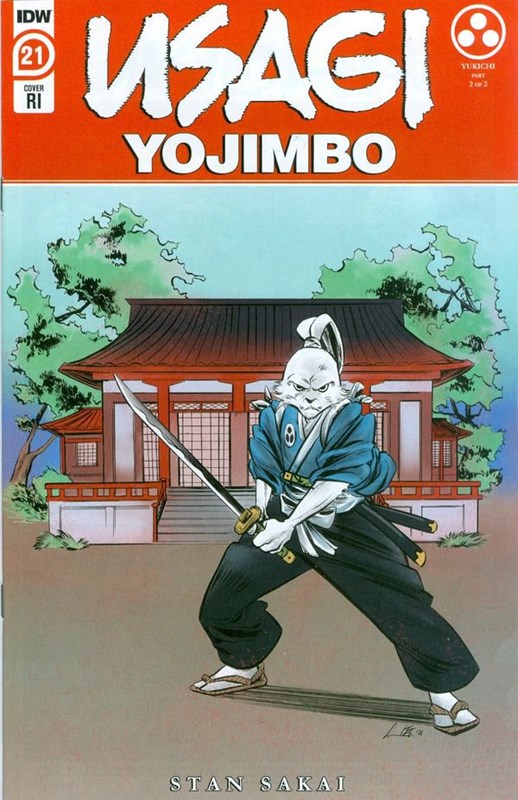
Throwback Thursday – Beastslayer by William King

Beastslayer Cover

Publisher: Black Library (Paperback – February 2001)

Series: Gotrek and Felix – Book 5

Length: 275 pages

My Rating: 4.5 out of 5 stars

Amazon     Book Depository
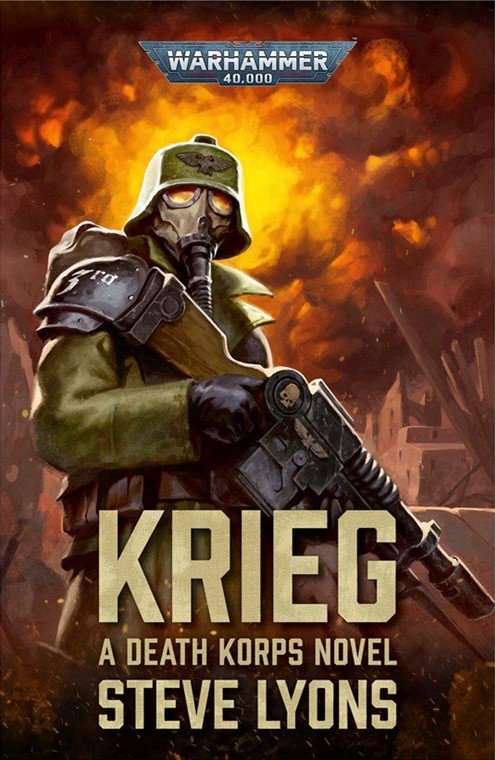
Welcome back to my Throwback Thursday series, where I republish old reviews, review books I have read before or review older books I have only just had a chance to read.  For my latest Throwback Thursday I continue to examine the awesome and exciting Gotrek and Felix series from the Warhammer Fantasy range with the fifth book, Beastslayer by William King.

Readers of my blog will have no doubt noticed my increased consumption of Warhammer novels in the last year as I have really started to get hooked on this cool franchise again.  One of my absolute favourite series has been the epic Gotrek and Felix books, the earlier entries of which are written by talented William King.  This excellent series is set in the Warhammer Fantasy world and follows two compelling protagonists, doomed dwarf Slayer Gotrek Gurnisson and his human companion Felix Jaeger, as they face the monsters, daemons and evil forces of the world in an attempt to find Gotrek a mighty death.  I have had a lot of fun with this series in 2021 and ended up reading the first four Gotrek and Felix books, Trollslayer, Skavenslayer, Daemonslayer and Dragonslayer.  This fifth book was another great entry in the franchise and pits this legendary team against an entire army of evil.

After their harrowing journey to the Chaos Wastes and their epic quest to slay a monstrous dragon, Slayer Gotrek Gurnisson and his chronicler Felix Jaeger continue their adventures throughout the Old Realm.  Once again determined to journey to the most dangerous place possible, Gotrek and Felix find themselves within the Kislev city of Prague, the great fortress city that serves as a bulwark between the Chaos Wastes and the civilised realms of man.  However, this mighty city is in mortal danger as a massive horde of Chaos descends upon it, led by the fearsome Arek Daemonclaw.

Arek, a ferocious and cunning war leader and sorcerer is determined to destroy Prague and lead his forces throughout Kislev and down into the Empire.  To carry out his goals, Arek has amassed one of the greatest armies of Chaos ever seen, filled with Northern marauders, elite warriors blessed by the dark gods of Chaos, beastmen, mutants, monsters, daemons and two sorcerers of unimaginable power.  Their victory over the people of Kislev seems certain, but Gotrek and Felix are used to fighting such impossible odds.

Accompanied by several powerful friends and allies, Gotrek and Felix are resolute in their determination to save Prague and kill as many followers of Chaos as possible.  However, their opponents are well aware of the threat these two companions represent and are doing everything in their power to destroy them.  Forced to confront both the massive army outside the walls and treacherous cultists from within who are led by a powerful member of the Prague court, can even Gotrek and Felix survive this latest attack from hell?

This was another thrilling and fun entry in the Gotrek and Felix series that I had a fantastic time reading.  Beastslayer has another great, action-packed story, and it was awesome to see the series’ two protagonists embark on another epic adventure.  This fifth novel takes place shortly after the events of Dragonslayer and sees the heroes arriving in the city of Prague just before the invading Chaos army arrives.  The story quickly devolves into a bloody siege novel, with the entire city under threat from the massive army outside.  I have a lot of love for siege stories, and this proved to a pretty good one, especially as some of the battles get quite brutal and over-the-top.  While the focus is naturally on the siege itself, King also mixes things up by installing a cool arc about a traitor within the city who is given the task of eliminating Gotrek and Felix.  This amps up the stakes for the heroes and ensures that they are facing threats from all sides.  While I did think that the identity of the mysterious traitor was a bit obvious (I had them pegged before I even knew there was a traitor), this intriguing arc worked out really well and I had a lot of fun with it.  The real highlight however is the final battle between the protagonists and the invading army.  King produces a truly amazing final battle sequence that sees Gotrek, Felix and their friends in one massive extended battle that really stretches them to their limit.  Although the eventual arrival of various allies seemed a tad predictable, it still ended up being an intense final third of the novel and I could not put the book down the entire time the battle was raging.  Throw in some interesting character development and an entertaining, if slightly disconnected, storyline around recurring antagonist Grey Seer Thanquol, and you have a great Gotrek and Felix novel that is really worth checking out.

I really liked the way that King wrote Beastslayer and I honestly think that it was one of the more consistent and compelling entries in the series so far.  King has moved away from having novels with partially separated storylines (such as the first parts of Daemonslayer and Dragonslayer), and instead presented a strong and very self-contained narrative.  Like most of the entries in this series, readers can easily dive into Beastslayer without having any prior knowledge of the series.  King makes sure to revisit and examine most of the key storylines and character moments from the previous novels, ensuring that new readers can easily follow what is happening here without too many problems.  From a series standpoint this is a key entry, wrapping up storylines from the previous novel in a fun and exciting way.  I loved seeing where some of the long-term story elements went, and by concluding a few of them, King sets up the next novel as a bit of a clean slate for new things.  This ended up being a pretty solid action-adventure novel, and I loved all the brilliant fight sequences that King loaded into the story.  These various action sequences are pretty gritty and brutal, and you get a real sense of the destruction and death being dealt around.  I had an outstanding time reading this novel and I think it was one of King’s stronger books.

One of the things that I liked about the Gotrek and Felix series is the slightly limited degree to which the plot relies on the overarching universe.  While this is clearly set within the Warhammer Fantasy world and features several iconic factions, locations and foes, enjoyment of this book is not dependent on known anything about them.  Any fantasy fan can easily dive into Beastslayer without being familiar with Warhammer lore and still have fun, and indeed this is a great introductory series for people interested in checking out the franchise.  There is of course a lot that will appeal to people more familiar with Warhammer and it was great to see some of the iconic locations, such as Prague and Hell Pit, especially as King does a wonderful job fleshing them out (especially Hell Pit, which is filled with some crazy Clan Moulder mutations).  There are also some great references to key parts of Warhammer history, such as the previous siege of Prague, and I enjoyed the continued focus on the lands of Kislev, which are often overlooked in Warhammer Fantasy fiction.  This ended up being a fantastic tie-in to the wider universe, especially as King went all out bringing in various monsters and Chaos foes, and I cannot wait to see where this series goes next.

At this point in the series, the central characters have been well established, and not only are the readers very familiar with the two main protagonists, Gotrek and Felix, but also with some of the main supporting characters, such as Max Schreiber, Ulrika Magdova and Snorri Nosebiter.  As such, there isn’t a great deal of character development in Beastslayer as King was mostly concerned with keeping the status quo.  As such, Gotrek and Felix are pretty much portrayed in the same entertaining way they have been throughout the entire series, with Gotrek being a grim, taciturn badass and Felix being a more sensible but dangerous ally.  There are a few interesting developments surrounding them, such as some fascinating peeks into Gotrek’s past which partially reveal the reason he became a Slayer, and Felix’s continued transformation into a hardened warrior and leader.  Max and Ulrika end up with a bit more development than Gotrek or Felix, with Max becoming more a sympathetic figure whose knowledge of magic becomes an important part of the novel.  Ulrika also goes through a few changes in this book, and it was great to see that annoying relationship with Felix mostly come to an end.  King still struggles a bit when it comes to writing female characters, especially since Ulrika is the only female character of note in the entire novel.  Several other fun recurring characters pop up throughout Beastslayer, although readers shouldn’t get too attached to some of them, especially during some of the climatic and deadly war scenes.

Aside from this great group of protagonists King has also included some interesting antagonists in this novel.  The most prominent of these is Arek Daemonclaw, the leader of the Chaos army attacking Prague and a follower of the dark god Tzeentch.  King does a lot with Arek in a very short amount of time, and he is soon built up to be a dangerous enemy and a real threat to Gotrek and Felix.  Aside from Arek there are a couple of other interesting villains, including some sorcerer twins who have their own agenda, and a mysterious cultist hidden within the city with some complex motivations.  King also makes sure to include the entertaining skaven character Grey Seer Thanquol, who has his own storyline throughout Beastslayer.  Thanquol once again serves as an excellent comic relief for most of the book, and it was entertaining to see all the fun intrigue and betrayal of the skaven.  I did think that Thanquol’s storylines were bit disconnected from the rest of the plot, especially as this is one of the last time we see Thanquol before he gets his own novel, but I still had a fantastic time following him.

Overall, William King’s fifth entry in the epic Gotrek and Felix series of Warhammer Fantasy books, Beastslayer, was a fun and exciting fantasy tie-in novel that I deeply enjoyed.  Featuring a ton of intense violence, a compelling siege-based storyline and some amazing Warhammer Fantasy elements, Beastslayer continued the cool storylines and character arcs established in the previous novels and made sure the reader was constantly entertained throughout.  I had an excellent time reading this awesome novel and I plan to grab the next few books in this series as soon as possible.

Beastslayer 2

Amazon     Book Depository
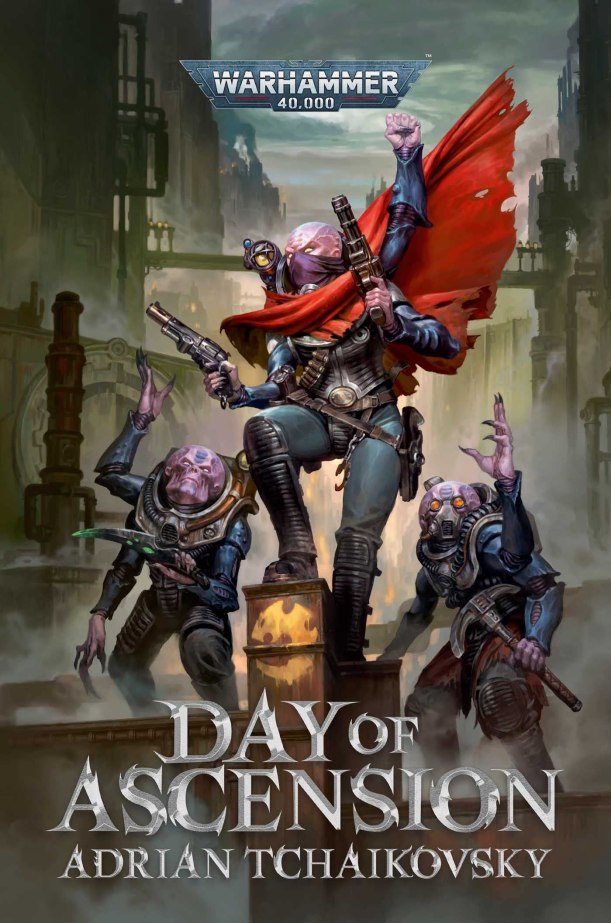
Quick Review – Resistance by Mara Timon

Resistance Cover

Publisher: Zaffre (Trade Paperback – 30 November 2021)

Series: City of Spies – Book Two

Length: 416 pages

My Rating: 4.25 out of 5 stars

Amazon     Book Depository

Prepare to dive into the intricacies of World War II espionage with a second fantastic historical thriller from Mara Timon, Resistance.

Timon is a brilliant author who debuted in 2020 with her intriguing novel, City of Spies, which followed a British agent sent to infiltrate neutral Portugal and encounter all manner of dangers and deceit.  Timon has now followed up this impressive debut with an intriguing sequel, Resistance, which follows the protagonist of City of Spies as she is sent to German-occupied Normandy days before the Allies invade.

Synopsis:

Three women. One mission. Enemies everywhere.

May 1944. When spy Elisabeth de Mornay, code name Cécile, notices a coded transmission from an agent in the field does not bear his usual signature, she suspects his cover has been blown– something that is happening with increasing frequency. With the situation in Occupied France worsening and growing fears that the Resistance has been compromised, Cécile is ordered behind enemy lines.

Having rendezvoused with her fellow agents, Léonie and Dominique, together they have one mission: help the Resistance destabilise German operations to pave the way for the Normandy landings.

But the life of a spy is never straightforward, and the in-fighting within the Resistance makes knowing who to trust ever more difficult. With their lives on the line, all three women will have to make decisions that could cost them everything – for not all their enemies are German.


Resistance
was an impressive and clever historical spy thriller that proves to be extremely addictive and exciting.  Set several months after the events of City of Spies, Resistance sees the protagonist and point-of-view character Elisabeth sent to infiltrate occupied Normandy under a new cover identity to assist the local French Resistance as a wireless operator.  Simultaneously gathering intelligence and investigating a potential mole in the French organisation, Elisabeth works with several other female spies in the area and is forced to contend with traitors, radicals and the Gestapo.  This story gets even more intense the further it goes, not only because a figure from the protagonist’s past comes into the picture and complicates events, but because the last third of the novel features the D-Day landings at the nearby Normandy beaches.  This forces the protagonist and her friends to encounter several attacks and betrayals amid the chaos of invasion and it leads to an incredibly exciting and captivating final section that is honestly impossible to put down.  While I did think that a couple of character arcs were a bit underdeveloped and unnecessary to the plot, this was an overall epic story and I really appreciated the complex and powerful narrative that Timon came up with.

I felt that new readers could easily get into Resistance with having read the preceding novel City of Spies.  Timon does an excellent job of explaining all the key events of the first novel, and readers are quickly informed of everything that would impact that plot of this sequel.  That said, fans of City of Spies will find this to be a pretty good sequel as several intriguing storylines are continued throughout the plot of the book.  Not only do key characters make significant reappearances but you also have a continuation of the fantastic romantic arc between Elisabeth and German officer Eduard Graf, who got married in the first novel.  Despite being an unusual relationship, this was an excellent storyline to continue and it was great to see the two interesting characters continue their forbidden love in the midst of war and intrigue, especially as both have major secrets (one is a spy, the other is planning to assassinate Hitler; it’s complicated) and are trying not to expose each other to their enemies.  I will be really intrigued to see where this series goes next, especially if Elisabeth is dropped into Germany either during Operation Valkyrie or the dying days of the war

One of the things that I most liked about Resistance was how this book ended up being a particularly solid and compelling historical thriller that emphasised its gritty and realistic spy elements.  Timon strives to strongly emphasise all the historical espionage aspects of the plot, and it was fascinating to see all the cool details about spy craft and being an undercover radio operator.  There was also a great focus on the abilities of Britain’s legendary female operatives, and Timon ensured that this book felt as realistic and compelling as possible.  Throw in some cool historical characters, such as members of the SOE and key German soldiers, like Erwin Rommel, and you have a particularly good historical thriller that was a lot of fun to explore.

With her second book, Resistance, impressive author Mara Timon continues to shine as a bright new figure in the historical thriller genre.  Perfectly combining realistic espionage elements with an iconic and dangerous historical setting, Resistance serves as an excellent sequel to Timon’s debut, City of Spies, and proves to be extremely addictive and compelling.  An awesome and highly recommended read.

Amazon     Book Depository
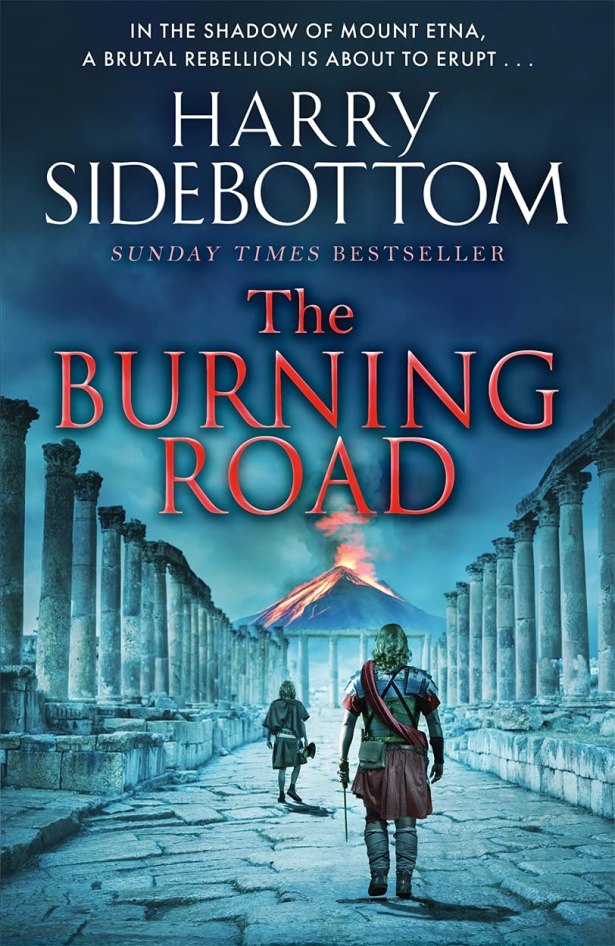
Throwback Thursday – Warhammer: Dragonslayer by William King

Dragonslayer Cover Combined

Publisher: Black Library (Paperback – November 2020)

Series: Gotrek and Felix – Book Four

Length: 271 pages

My Rating: 4.5 out of 5 stars

Amazon     Book Depository

For this week’s Throwback Thursday I check out another volume in the incredibly entertaining Gotrek and Felix Warhammer Fantasy series, Dragonslayer, by William King.

I have been having fun over the last year checking out several cool Warhammer 40,000 and Warhammer Fantasy tie-in novels, especially as all of them place great stories inside their respective elaborate extended universes.  Some of the most exciting and compelling of these Warhammer books have been part of the Gotrek and Felix series, which follows a doomed dwarven Slayer and his human companion as they face all manner of monsters and evils across the Warhammer Fantasy landscape.  I have so far had a lot of fun reading the first three books in this series, Trollslayer, Skavenslayer and Daemonslayer, all of which were some of the best pre-2021 releases I read this year.  I recently grabbed a couple more Gotrek and Felix novels second-hand, and I had a great time quickly reading the next entry in the series over the Christmas break, Dragonslayer, another fun and enjoyable read that has an action-packed narrative to it.

After their daring exploits in the Chaos Wastes, dwarf Slayer Gotrek Gurnisson and his rememberer, Felix Jaeger, return to the lands of Kislev in triumph, having rescued the survivors of a lost dwarven stronghold.  However, their victory is short lived, as danger begins to assail them the moment they return in the form of the skaven forces of their arch-enemy Grey Seer Thanquol.  Worse, their voyage has revealed a giant horde of Chaos warriors advancing towards the lands of Kislev, determined to bring destruction and death to all before them.

To warn the people of Kislev, Gotrek, Felix, and their companions travel by dwarf airship towards the capital.  However, their voyage is disrupted by an unnatural storm and an attack from a legendary dragon determined to rip them asunder.  Barely escaping with their lives, the adventurers find themselves stuck in the World’s Edge Mountains and forced to pull into the Slayer Keep of Karak Kadrin.  There they discover that the dragon that attacked them, Skjalandir, has been terrifying the mountains for months.  Determined to finally meet his mighty doom, Gotrek and his fellow Slayers head out to destroy the beast, accompanied by a reluctant Felix and their Kislev allies.  Beset on all sides by ravening orcs, desperate bandits, and a massive dragon of immense destructive potential, can even the legendary team of Gotrek and Felix survive, or will Gotrek finally find his longed-for death at the hands of the mightiest beast in the realm?

This was another very fun and intense novel from King, who once again provides the reader with an exciting and compelling dive into the Warhammer Fantasy universe.  Dragonslayer was a very good entry in the long-running Gotrek and Felix series, and I deeply enjoyed its cool and fast-paced narrative that sees the protagonists fight all manner of foes and dangers.  Filled with impressive monsters, a hilarious sense of humour and all manner of action, Dragonslayer was a fantastic read that I powered through in a few short days.

Just like all previous Gotrek and Felix novels, Dragonslayer starts off fast and never really slows down, as the various characters are thrust into one dangerous situation after another all the way up to the last page.  The first quarter of the book is firmly focussed on continuing the antagonist-centric storyline from Daemonslayer, with Grey Seer Thanquol’s planned attack from the last book finally coming to fruition.  This opening scene is pretty fun, even if it does feel a little disconnected from the following narrative, and I loved seeing more of enjoyable antagonist Thanquol.  Following this enjoyable first encounter, the protagonists head off on a new quest which is quickly detoured by an encounter with a dragon.  The dragon’s first big appearance is pretty devastating, and I loved how much of a threat this monster is made out to be, especially as the protagonists don’t come out unscathed.  The next section of the book is mostly devoted to character development and world building, as the protagonists prepare for their next adventure and gain some interesting new companions.  At the same time, Thanquol engages in another mostly unconnected storyline that sees him encounter and set up the dangerous Chaos horde that will be the major threat of the next novel.  The final third of the novel is primarily dedicated to the protagonist’s quest towards the dragon’s lair, where they encounter not only the beast but various other foes as well.  This leads up to some amazing battle sequences, the highlights of which include the deadly confrontation with the wounded and mutated dragon, and a fun full-on war scene between two forces determined to kill each other and the protagonists.  The book had an entertaining and exciting conclusion with a fun lead-in to the next novel, and I had a fantastic time getting through this brilliant and excellent read.

King has a great easy-to-read style that I really connect with in the Gotrek and Felix novels, which ensures that all fantasy fans can easily enjoy it, especially with the fast-paced narrative and crazy action scenes.  I like the author’s use of multiple character perspectives to tell a rich and impressive adventure story, and you get some fun alternate viewpoints and storylines as a result.  This is particularly apparent in the action sequences, as you see the various participants of the battle as they encounter the same foes or other narrators, and results in a much fuller and bloodier picture.  The action scenes themselves are great, filled with compelling fights that really get the blood pumping as the protagonists face off against a variety of foes.  While a couple of fights were a little shorter than I would have liked, King more than makes up for it with some of the big encounters, especially against the dragon.  I loved the two major dragon scenes, and King crafts some excellent and hard-hitting fight sequences against it, loaded with character deaths and intense brutality.  I also loved one fun final battle sequence that read like a pitched battle from the Warhammer Fantasy universe, Goblin Fanatics and Doom Diver catapults included.

Like most of the previous Gotrek and Felix books, Dragonslayer is pretty accessible to new readers, and there is no major requirement to check out any of the previous novels first, especially as King’s books tend to repeat certain elements from the preceding entries.  As such, unfamiliar readers can easily jump in here, although the Thanquol attack at the start of the books does come a little out of nowhere if you haven’t read Daemonslayer.  I would say that Dragonslayer did feel like a bit of a bridging novel in places, especially as it continued several plot points from Daemonslayer while also taking the time to set up a potentially bigger evil in the next book, but I still had a lot of fun with it.  I still really believe that the Gotrek and Felix novels are an excellent place for new Warhammer fans to start out, especially as they mostly read like classic fantasy novels rather than intense tie-in reads.  The readers get some great details about the extended Warhammer Fantasy universe here, and King expertly introduces several key locations while also featuring some of the more recognisable factions.  I really appreciate how King makes sure to reintroduce all these races in each of his novels, and it ensures that new readers can appreciate what is going on and why certain factions are acting the way they do.  This ended up being a particularly strong Gotrek and Felix entry, and I cannot wait to see what happens in this universe next.

Dragonslayer has a rather interesting cast headlined by the two central characters, Gotrek and Felix, who have another great adventure here.  Gotrek is his usual gruff self in this novel, and you don’t get a lot of development surrounding him in Dragonslayer, especially as King never shows his perspective, no doubt to highlight his secret past and the aura of unbreakable strength and confidence he gives off.  Felix, on the other hand, gets most of the plot’s attention, and it was fun to see him continue to grow as a character.  While he still has certain understandable apprehensions about the quests he follows Gotrek on, Felix has grown into quite a capable adventurer over the last few books, and it was fun to see him accompany his friend into near-certain death once again.  I enjoyed the intriguing storyline around his magical sword which was quietly introduced in the first book and which reaches its full potential here as a dragon-slaying item.  I also enjoyed the compelling examinations of Felix’s personality and resolve, especially when it comes to the oath he swore to Gotrex, as he is forced to make some big decisions here when faced with an alternate future.

Dragonslayer also features a fun supporting cast, including several intriguing characters from Daemonslayer who get an extended role here.  This includes Felix’s love interest (and the only significant female character), the Kislev noblewoman Ulrika, who ends up accompanying the main protagonists on their latest adventure.  Ulrika is an interesting character who I have mixed feelings about during the book.  While I did like how King featured a strong and complex female character (something lacking from some of his previous novels), I honestly could not stand the terrible romance that she has with Felix.  The two of them continuously bounce from being madly in love to hating each other over petty things, and it ends up getting annoyingly repetitive.  This terrible relationship made me hate Ulrika a little as the book progressed, and I kind of wanted her to get eaten by the dragon (in my defence, it would have made for a good dramatic moment).

Another character who got an expanded role in this book was the human wizard Max Schreiber, who becomes quite an intriguing addition to the plot.  Max becomes a key part of the team in this book, and his insight into magic and the wider events of the Warhammer Fantasy universe are great additions to the plot, helping to expand the reader’s knowledge.  At the same time, Max also comes across as a bit of a creeper due to his unrequited love of Ulrika, which causes him to do some stupid things.  You honestly start to worry that Max is going to do something sinister as the story continues, and I have no doubt that will become a major plot point in the future.

I also must quickly mention the mad dwarf engineer Malakai, who goes on a fun mission of vengeance here in this book to fight the dragon who crashed his beloved airship.  Malakai, who speaks with a Scottish brogue just to make him seem even wilder, is a deeply entertaining figure in this book, combining a Slayer’s death wish with a love of advanced weaponry.  It was so much fun to see this insane character advancing on his foes with explosives and giant guns, and I am still laughing about his cart-loaded gatling gun.

While there is a great focus on recurring characters, King also spend some time introducing several interesting new characters.  The best of these are the four new dwarf Slayer characters, Steg, Bjorni Bjornisson, Ulli Ullisson and Grimme, who accompany the protagonists on their quest to slay the dragon.  All four Slayers have diverse personalities, backgrounds and fun quirks that make them interesting in their own way.  King ends up doing a lot with these four characters in the 100 or so pages that they end up being featured, and there are some great story arcs drawn around them.  I quite enjoyed the compelling narrative around Ulli, a young dwarf forced to become a Slayer for his cowardice, especially as it had a good resolution.  I also must highlight Bjorni’s constant lewd stories and declarations, which add so many laughs to the book, especially as he makes some outrageous claims about his romantic conquests.  I did think he could have done a little more with the intriguing and incredibly taciturn Grimme, but overall these four characters were great additions to the plot and I look forward to seeing some of them again in the future.

The final characters I need to point out are the extremely amusing antagonist team of Grey Seer Thanquol and his minion Lurk Snitchtongue, two skaven characters who serve as secondary antagonists for Dragonslayer.  Thanquol and Lurk are really amusing characters who perfectly encapsulate the snivelling and duplicitous skaven race, with their constant talk of betrayal, self-gain and incompetence.  It is always so much fun seeing the two of them at it, and every one of their scenes is chock full of hilarious statements and continuous thoughts of treachery.  King adds in a very fun change to the dynamic between these two characters in Dragonslayer, with the previously small and deferential Lurk having been mutated into a massive beast, which gives him increased confidence.  This makes him strongly consider killing Thanquol several times throughout the book, and the two are constantly eyeing each other off.  This proves to be a hilarious addition to the plot, and I loved seeing Thanquol on the back foot with his minion after two books of pushing him around.  While they are not the most dangerous of villains at this point, they do make for an intriguing alternate viewpoint, especially as their storylines are mostly separate from that of the protagonists.  While they are a tad detached from the main narrative, their encounters and experiences add to the general tapestry of the series and help to set up the villains of the next Gotrek and Felix book.

With Dragonslayer by William King, the Gotrek and Felix books continue to impress me as one of the all-time best and most enjoyable Warhammer tie-in series.  I had an amazing time getting through this cool book, especially as it features all the best aspects of the series, including tons of fun action, great characters, and major Warhammer Fantasy settings.  Readers are guaranteed to have a blast with this book, and I loved every single second of danger, combat and dragon fighting Dragonslayer contained.  A fun and fantastic read, I look forward to checking out the rest of the books in this series, especially the fifth entry, Beastslayer.

Amazon     Book Depository