Warhammer 40,000: Renegades: Lord of Excess by Rich McCormick

Publisher: Black Library (Audiobook – 6 April 2024)

Series: Warhammer 40,000: Renegades – Book Two

Length: 14 hours and 17 minutes

My Rating: 5 out of 5 stars

Amazon

Prepare to break the bounds of sensation, desire and treachery in the amazing Warhammer 40,000 novel, Lord of Excess by Rich McCormick, the second book in the fantastic Renegades series.

I have been having a great time with the huge variety of unique and elaborate Warhammer 40,000 books coming out in recent years, and it is always fun to see the impressive reads the franchise is producing.  One of the things I particularly enjoy about the Warhammer 40,000 fiction machine is the way in which it gives new authors the chance to shine, with several talented authors writing their very first book as part of the Warhammer canon.  I have already talked about one particularly good Warhammer 40,000 debut this year with Deathworlder by Victoria Hayward, but another incredible first novel I had the great pleasure of reading was Lord of Excess by new author Rich McCormick.

Lord of Excess was an exceptional book that was released as part of the loosely connected Renegades series that looks at a different band of traitor Space Marines as they make their dark way through the universe.  For example, the first Renegades book, Harrowmaster by Mike Brooks, looked at the nefarious Alpha Legion, and I am sure that future entries will dive into the other traitor legions with some fun stories.  Lord of Excess is the second Renegades book, and it provides the reader with an outstanding and unique story focussed on the ultimate beings of excess, the Emperor’s Children.

At the dawn of the Imperium, the Emperor’s Children were the master of mankind’s most loyal and revered Space Marine Legions, dedicated to the fight for humanity while seeking perfection in all things.  However, during the tumultuous events of the Horus Heresy, the Emperor’s Children followed their Primarch into treachery, and turned against their Emperor, falling into the service of the ruinous powers of Chaos.

Now, millennia later, the Emperor’s Children are a twisted remnant of their former glory.  Scattered into smaller warbands, the Emperor’s Children now only seek pleasure and sensation in hedonistic service to the Chaos God Slaanesh, the lord of obsession and excess.  One such band is the feared and infamous group known as the Adored.  Lead by the tainted Space Marine Xantine, the Adored has ravaged the galaxy for centuries, taking slaves and bringing untold torment, but Xantine has never found what he truly desires, until now.

Suddenly dropped out of the Warp, the Adored find themselves in orbit about the isolated planet of Serrine.  A wealthy and corrupt planet of the Imperium, Serrine has been long cut off from the rest of humanity due to corrupted currents of the Warp.  Sensing the opportunity to carve out a place for himself, Xantine decides to take control of Serrine, and turn it into the perfect society, dedicated to loving him.  However, making true perfection is an impossible task, and Xantine soon finds his rule challenged by both the population of Serrine and those closest to him.  Worse, there are darker forces at work within the bowels of Serrine, and soon the world will be engulfed in perfect destruction.

Lord of Excess was an exceptional and impressive Warhammer 40,000 novel that achieved so very much for the reader.  Featuring a complex and compelling tale of betrayal, deceit and corruption, loaded with fun characters and larger-than-life personalities, Lord of Excess was an entertaining and elaborate read from the very start, and I could not get enough of it.

I really loved the story contained with Lord of Excess, and I find it hard to believe that this was McCormick’s very first novel.  The plot of Lord of Excess is an elaborate and continuous tale of woe and failed ambition as it charts main character, Xantine of the Emperor’s Children, as he attempts to bring perfection to the world of Serrine.  Starting off by introducing Xantine and his renegade Space Marines, you are soon shown the world of Serrine, an isolated and mismanaged Hiveworld with plenty of its own problems, including an uprising from a genestealer cult.  Taking advantage of these chaotic events, an obsessive Xantine leads his mostly apathetic Emperor’s Children to the planet’s surface, telling the locals they are there to save them.  This proves to be an intriguing start, as the reader is shown a battle between two very different group of villains, which is essentially the equivalent of the cenobites from Hellraiser facing off against xenomorphs from Alien (with both sides using a lot of purple).  This fight against the genestealers is a fun first part of the book, and I honestly thought that McCormick was going to stretch that conflict out for the entirety of Lord of Excess.  However, the author instead chooses to cleverly end this conflict about a third of the way through the book, and the rest of the novel goes in some very interesting directions.

Following this introduction, Lord of Excess than goes through a series of time skips, as you follow the unlucky course of Serrine under the “benevolent” rule of the Emperor’s Children.  Each new version of Serrine you see is somehow worse the previous version, and it proves extremely entertaining to watch the inherent downsides of the protagonist’s twisted version of perfection.  The plot cleverly rotates between the machinations of Xantine and his Adored as they fight over the course of their warband, and several intriguing human inhabitants of Serrine, whose reaction to the fate of their planet varies across the emotional spectrum.  The plot goes in some very interesting and entertaining directions, as Xantine finds himself continuously beset by betrayal, mostly of his own making, while many others are driven to extreme lengths by Xantine’s actions, and other malign foes hiding beneath Serrine’s surface.  Things continuously get darker and darker as the plot continues, leading up to a brutal and amusing conclusion.  I loved the various elaborate twists and captivating revelations that McCormick cleverly worked into the plot, and his accompanying character work really helps to sell it.  The book ends on a fantastic note, with devilish and deserved endings for many members of the cast, and the ultimate fates of everyone really reminds you that Lord of Excess is a grimdark book focussing on deranged villains.

McCormick really showcased his effective and powerful writing style in Lord of Excess, and I loved the elaborate and multifaceted book that he ended up creating.  The fantastic story has so many deep elements to it, and it transcends the typical action-focused Warhammer fiction by providing nuanced portrayals of society, human nature, and the impossible search for perfection.  That’s not to say that there isn’t action in Lord of Excess, as McCormick loads the book with multiple over-the-top and entertaining fight sequences that prove hard not to love.  However, he also balances these battles with intriguing character work, long-running elaborate story elements, and complex depictions of intriguing Warhammer features.  The way in which the author cleverly shifts the narrative around several fantastic characters works to create a fun and layered story with many moving parts to it.  I also love how descriptive and visual McCormick got at times.  The author clearly had fun describing the many excesses and mutations of the Adored, and you really got a clear and vivid sense of the twisted nature of the beings involved.  This ended up being such an outstanding read, and McCormick did such a great job bringing his elaborate story to life in the absolute best way.

I felt that Lord of Excess was a pretty awesome Warhammer 40,000 novel, that will really appeal to a varied audience.  Established Warhammer fans will love the fantastic depictions of the Emperor’s Children featured within this book, and I love how well McCormick captured the complexities of these renegade Space Marines and the depths to which they have sunk.  While he doesn’t do a full deep dive into the history of the Emperor’s Children, McCormick provides some detailed flashbacks into their past, that Warhammer readers will appreciate, which also providing some good context for new readers.  While this book did spend a lot of time examining the Emperor’s Children, it also featured its own unique and clever narrative, which really utilised the grimdark nature of the wider Warhammer setting to its advantage.  Readers are gifted by a truly complex and intense read, and I felt that Lord of Excess is an amazing example of just how good a Warhammer 40,000 novel can be.  This would be a pretty good entry point for new readers keen to check out the elaborate Warhammer 40,000 fictional universe, especially as you can get an amazing sense of the overall cruel, deadly and often ironic nature of this fantastic overarching setting.

Easily the key strengths of Lord of Excess were the elaborate, distinctive and damaged characters that McCormick centred his story around.  There are some brilliant characters featured in this book, from ancient traitor Space Marines lost in their own obsessions, to the normal inhabitants of Serrine, whose lives are irrevocably turned upside down by the arrival of the Adored.  These elaborate character arcs are very intriguing, and McCormick expertly features them throughout his story, ensuring that the reader becomes intrigued by the fates of these various figures.  The most prominent character is the Adored leader, Xantine.  An ambitious and twisted being, Xantine finds himself drawn to the world of Serrine and sees it as an opportunity to create a perfect world, much like the previous planets the Emperor’s Children called home.  Xantine proves to be an intriguing central figure for the book, especially as you get drawn into his obsession and the disdain of his followers for his vision.  Thanks to the machinations of the daemon S’janth, who shares Xantine’s body, you get some fascinating insights into this character’s mind, and you soon appreciate the depths of his determination to be perfect, which stems from his daddy issues and dark personal history.  I loved seeing how the events of the book were driven with this figures love of perfection, and Xantine proved to be an excellent dark heart to this entire story.

In addition to Xantine, Lord of Excess features several other great characters, all of whom are damaged in fantastic and intriguing ways.  This includes the various members of the Adored, each of whom has their own unique obsessions and focuses.  McCormick really had fun when it came to these corrupted figures, and there are some delightfully over-the-top characters as a result.  These other members of the Adored often come into conflict with Xantine, primarily due to their incompatible obsessions, and I loved the barbed interactions that followed, especially as Xantine both loves and hates his fellow renegades.  While several of these characters stood out, the best one was probably Vavisk.  Vavisk, a Noise Marine, is obsessed with finding the perfect sound, and often finds himself lost in his horrifying music.  However, Vavisk is also Xantine’s closest friend, and the unique bond of brotherhood between these two figures, proves to be a key part of the book, especially as the potential for it to break is always there.

Other major characters include several inhabitants of Serrine who attempt to survive the actions of Xantine.  Due to a creation myth, many people on Serrine initially see Xantine as a destined saviour, and the eventual revelation of his true nature leads to much heartache for them.  These characters provide an outstanding alternative perspective to that of Xantine and the other Adored, and I loved seeing the various reactions to the evil that came to their planet.  Key figures include the young man Arqat, whose rage at the injustices performed against him drives him to some dark places.  The mysterious Cecily founds salvation and escape thanks to the patronage of Xantine, although her loyalty costs her deeply.  While the foppish noble Pierod, seeks to take advantage of the arrival of the Adored, which has blistering ups and downs for him.  I really enjoyed these three human characters, and their unique storylines, some of which were nearly as extensive as Xantine’s, helped to turn Lord of Excess into a particularly brilliant read as you get drawn into their various tales of woe and opportunity.  While Pierod’s story was probably the most entertaining, due to his naked ambition and greed, you honestly connect to all three of them, and it proves fascinating to see where their encounters with the Adored takes them.  McCormick writes some grim and fitting fates for all three of them, and the other humans of Serrine, and seeing the journey they take to get there, is so damn entertaining.

As with most Warhammer 40,000 novels I enjoy, I ended up grabbing Lord of Excess on audiobook, which is just the best way to appreciate a piece of Warhammer fiction.  Coming in with a runtime of over 14 hours, the Lord of Excess audiobook is a decent length, but one you can get through quickly once you become caught up in the outstanding plot.  I love how well this format highlighted the epic narrative featured with Lord of Excess, and you get a real sense of the plot’s chaotic delights, unnatural horrors, and devilish figures when they are read out to you.  It helped that the Lord of Excess audiobook was helmed by one of the very best Warhammer 40,000 narrators, Richard Reed.  Reed has been killing it in recent years with his work in Warhammer 40,000 fiction, including The Infinite and the Divine by Robert Rath, Ruin and Reign by Nate Crowley and Grim Repast by Marc Collins, all of which were greatly enhanced by his impressive voice work.  His work in Lord of Excess is particularly awesome, as he once again produces an impressive range of unique voices to fit the big personalities of the plot.  This includes multiple mutated and utterly corrupted Space Marines, and Reed provides very fitting voices for them, as well as the unlucky humans caught up in their machinations.  The over-the-top story comes out so much better because of Reed’s compelling narration, and I love how effectively he captured the various insane figures.  This amazing voice work turned the Lord of Excess audiobook into something very special, and I had an exceptional time getting through it.

Lord of Excess by Rich McCormick is an absolutely brilliant and amazing piece of Warhammer 40,000 fiction that I could not get enough of.  Expertly combining elaborate elements of the Warhammer 40,000 canon with a complex narrative and darkly damaged characters, Lord of Excess was so much fun to read, and it proves impossible not to get caught up in this epic debut.  This might be one of the smartest and most compelling pieces of Warhammer 40,000 fiction release so far in 2024.  A truly outstanding Warhammer 40,000 book from a particularly amazing new author, Lord of Excess comes very highly recommended, and Rich McCormick is an author with big things in his future.

Amazon

The Shadow Casket by Chris Wooding

The Shadow Casket Cover

Publisher: Gollancz (Audiobook – 16 February 2023)

Series: The Darkwater Legacy – Book Two

Length: 32 hours and 37 minutes

My Rating: 5 out of 5 stars

Amazon

Chris Wooding continues The Darkwater Legacy in a big way with his second awesome and massive entry in this great fantasy series, The Shadow Casket.

I was recently in the mood for more epic fantasy reads, so I finally got around to checking out The Shadow Casket by Chris Wooding, which has been on my to-read list for most of the yearThe Shadow Casket is the sequel to Wooding’s exceptional 2018 novel, The Ember Blade, which I had a ton of fun reading back when it originally came out.  The Ember Blade followed a band of revolutionaries, including two young teens caught up in the carnage, as they fought to free their country from an evil empire that had conquered it a generation before.  Featuring a classic fantasy adventure plot with some awesome real-life overtones and loaded with a ton of great characters, a powerful story, and a fantastic new world, The Ember Blade was such a great read, and it got an easy five-star read from me.  I have been eagerly awaiting a sequel for some time now, and Wooding finally delivered his second Darkwater Legacy book this year with The Shadow Casket, which took the reader on another dark and captivating journey.

It has been three years since the destructive events at Hammerholt, when the ragtag band of revolutionaries, known as the Dawnwardens, managed to steal back the sacred Ember Blade and kill the Krodan Emperor’s son, seemingly lighting the fires of revolution.  However, despite the Dawnwardens’ hope that recovering the Ember Blade would encourage their people to rise in revolt, the powerful Krodan empire still reigns over Ossia, bringing new levels of terror in their occupation.  With revolution still as far away as ever, the Dawnwardens, and the Ember Blade’s champion, young Aren of Shoal Point, are forced to take a risk that could turn the tide of war.

Taking the Ember Blade out of hiding, the Dawnwardens travel to the Reaches in the far north of Osia, where the wild and rebellious clans of the Fell Folk fight amongst themselves.  Hoping to recruit the fractious clans to their cause, the Dawnwardens soon find themselves once again under attack from the Krodans and their deadliest weapons, the malevolent dreadknights.  Forced to flee with new allies and returning friends, the Dawnwardens embark on mission to find out what the Krodans are truly doing in Osia and just how far they are willing to go to maintain order.

Finding their first successes since the events of Hammerholt, the Dawnwardens form a new plan to finally strike back at the Krodans and start the revolution they have long hoped for.  However, no matter how hard they fight, the Dawnwardens constantly find themselves outmatched by the dreadknights and their foul magic.  To survive this insidious threat, the Dawnwardens hope to call upon the ancient magic of a lost artefact, the Shadow Casket, which has the potential to either save them or doom the world.  But with deadly foes facing them at every corner, and traitors within their own ranks, can the heroes succeed, or will their revolution finally be cut down?

Wooding continues his epic series in a big way with The Shadow Casket, producing an exceptional and captivating novel that was quite a treat to read.  Expertly following the existing storylines from the first book while also providing an awesome new adventure, The Shadow Casket was a gripping and powerful novel that I had an absolute blast reading.

I really loved the amazing story that Wooding came up with for The Shadow Casket, which is massive in every sense of the word.  Told from many different perspectives, The Shadow Casket has a very powerful character-driven plot that really gets you involved in the lives of all the protagonists while advancing the compelling main plot.  The transition to three years after the events of The Ember Blade was a very interesting overarching choice for this new book, but it was one that works very well, and I loved the realistic detail that the protagonist’s previous adventures didn’t magically save the day as they had hoped.  Wooding starts events off at a somewhat slow pace, which was definitely necessary as he had to re-establish all the key story elements, while also introducing the new setting of Northern Ossia and the Fell Folk.  This does mean that the initial chapters of the book might drag a little for some readers, especially those who did not read The Ember Blade first, although I appreciated the refresher on all the protagonists after all this time.  This early part of the book also sets up many plot points for the rest of The Shadow Casket, and Wooding did an outstanding job laying down a lot of groundwork here.

Things do speed up quickly after the reintroductions are done, as all hell breaks loose around the protagonists in some amazing scenes.  This early part of the book also brings back Cade and Klyssen, who were seemingly killed off at the end of The Ember Blade.  This honestly isn’t that much of a spoiler as both come back very early in the plot, and frankly it wasn’t too surprising considering the deliberate ambiguity of their “deaths” in the previous book.  Their return sets up some great character-driven plots which are very well explored in the first half of the book and have some major impacts on the overall story.  The protagonists soon find themselves involved in several distinctive character-focused quests, including the liberation of a prison camp, the machinations of a traitor, and an intriguing dive into a magical organisation that was only lightly featured in the first book.  These various storylines blend into one cohesive plot, and I liked the early focus on world building and character growth in the aftermath of the first book.  Wooding works in an interesting blend of intrigue, action, adventure, and even some horror elements, which really enhanced the classic adventure quest vibe he was trying to replicate.  I did have issues with an ungainly love triangle that got a lot of attention in the first half of The Shadow Casket, which sapped my enjoyment in places.  However, the other complex storylines that were occurring simultaneously did make up for this, and it thankfully does not last the entire length of the book.

The second half of The Shadow Casket is where things really picked up, and it features all the awesome story moments that the author had been expertly building up.  This includes a deadly adventure quest to a lethal island, which amped up the intensity of the plot, especially as secrets are revealed and tragedy awaits several characters.  These storylines and more, all lead up to epic final quarter of the novel, where the protagonists have their long-awaited mass confrontation with the enemy.  Wooding really set up everything leading up to this final quarter perfectly, and I was very excited going into it, especially as it featured a massive siege.  While there is a focus on the action in this final part of the book, Wooding also amps up the intrigue, as various parties make their moves to betray or mislead either side of the conflict.  The author plays this plot line about betrayal and intrigue perfectly, and there were times when you honestly didn’t know who was betraying who, which was so much fun to see.  This last quarter honestly has a bit of something for everyone, and I loved the inherent tragedy, the gritty battles, and the awesome resolution to so many different plotlines and character arcs.  I also really enjoyed the multitude of clever twists and reveals that Wooding layered in this part of the book, especially as I did not see several of them coming despite the great setup surrounding them.  The final play of the protagonists was particularly brilliant, and the unique siege tactics were quite inventive.  While I did think a few things were wrapped up a little too easily or positively at the end, this was honestly a very strong conclusion for this second entry, and it sets up many great storylines for the rest of the series.  I really came away from The Shadow Casket feeling very satisfied, and I cannot wait to see how my heart will get broken in the next book.

I felt that Wooding did a rather wonderful job of presenting his elaborate narrative to the reader, and his fantastic style definitely drew me into the story.  While there are a lot of positives to the author’s writing, the main thing that I was mostly grateful for was how easy he set everything up so that I could dive back into this series.  As I mentioned above, it has been over four years since I read The Ember Blade, itself a hefty read, so I was initially worried that I wouldn’t remember all the key details and get a little lost.  However, Wooding expertly led readers, both new and old, into his new book and those well-thought-out and slower paced introductory chapters really filled in all the gaps for me.  As such, there wasn’t a single moment that I was lost about what was going on, which considering how elaborate The Shadow Casket gets, is pretty damn impressive.

While The Shadow Casket is a great continuation of The Ember Blade, it also has a bit of a different tone to it.  The focus on failure, regret and fighting losing battles was quite interesting and reflected the continued failed rebellion nicely.  The book itself also comes across as more of an adventure novel, with the protagonists constantly moving and taking on new quests and journeys, rather than the more heist focused revenge plot of the first book.  This ensured that The Shadow Casket stood out a lot more than I was expecting, and it really didn’t feel like a sequel or a tired middle book.  Wooding has a great sense for pacing, and the fantastic mixture of action, character growth and betrayal and intrigue helped to turn this into quite an impressive read.  I have so much love for the multiple elaborate espionage storylines that emerged, and Wooding ensured that the reader never knew what was coming.  The excellent use of multiple character perspectives really helped with this, and it was compelling and often very moving to see the various internal struggles, history and biases that drove the characters to do what they do.  The clever alternate views of the same events also helped to create a much more expansive and captivating plot, and I think that Wooding did a great job of splitting the story up, ensuring that all the key characters got their time to shine.  There was the occasional rough chapter transition that added a touch of confusion at times, but this was usually pretty harmless, and I found the overall narrative to be very powerful and bound together excellently.  Throw in a ton of brilliant and brutal action sequences, including the extended battle at the end, and The Shadow Casket has so much going for it that you will find it very hard to put down.

One of the things I liked most about The Ember Blade was the elaborate and complex world that the book was set in.  In particular, the focal nation of Ossia was such an interesting main setting, especially as it was occupied by its stronger neighbour, who had ruled it for years.  This portrayal of Ossia had a lot of similarities to occupied France during World War II, especially as the invading Krodans were an obvious stand-in for Nazis/fascism.  This occupied fantasy nation had a certain realism to it that deeply enhanced the story, especially as the characters interacted with collaborators, rebels and locals who believed the Krodans were helping them, all while witnessing examples of Krodan cruelty.  These issues were further compounded by the fact that Ossia was already a rather fractious nation, and their lack of cooperation and unity helped the Krodan conquest years before.  Wooding continued to expand on this examination of occupied Ossia in The Shadow Casket, especially as revolution and uprisings were such an important part of the plot.  I loved the intriguing plot point about how, despite the protagonist’s actions in the first book, most of Ossia was still too cowed or wracked with infighting to join in the rebellion, making the sacrifices in the first book seem pointless.  This ensured that occupied Ossia continued to be a dangerous and compelling setting for much of the story, and Wooding doubled down on the Krodan comparisons to Nazis, especially as the Krodan’s engaged in massive retaliation strikes against the Ossian populace while also rounding up a minority group into concentration camps.  These intriguing details add a lot to the plot, and it was interesting to see how they continued from the first book.

Wooding also worked in quite a lot of world building as he sought to explore new areas within the larger fantasy realm.  This includes several intriguing and deadly new locations, such as a swamp full of dark spirits and the lethal island of Yaga, where ogres and magical slavers reign supreme.  These areas, which serve as cool settings for several key parts of the book, are great to explore, adding in some very distinctive risks, and it served as a compelling expansion of an already great world.  However, the most significant new setting is probably the northern area of Ossia known as the Reaches.  A hilly area populated by warring tribes, this part of Ossia was culturally segregated from the more urbanised southern setting before the Krogans arrived, and now is even more oppressed.  A large chunk of the novel revolves around the complex tribal politics and history of this region as the protagonists attempt to bring them together as allies while also striking back at the forces oppressing them.  Several of the best sequences, including the final battle, are set around here, and I loved the craggy and isolated feel that Wooding gave this setting.  The author also does a wonderful job expanding on some of the fantasy aspects of his series.  While there were quite a number of great and freaky magical and fantasy elements in the first book, The Shadow Casket really dives into this further, showing several different batches of magic.  This includes a fascinating examination of the Ossian druids, whose magical conclave in the first half of the novel serves as a major plot setting.  There is also a fantastic and dark examination of the magic being used by the Krogans to create their more elaborate weapons.  This look at Krogan mysticism is pretty fascinating and serves as a great contrast to their usual anti-magic dogma.  It also leads to some of the darker scenes in the book, including the exploration of a corrupted prison camp, which honestly bordered more on horror than anything else.  There are some fantastic and complex hints at the dangers to come, and I cannot wait to see how dark and compelling Wooding makes his setting in the future.

However, the most impressive and memorable part of The Shadow Casket has to be the outstanding and elaborate character work that Wooding expertly inserted into the story.  The Shadow Casket has an exceptional and memorable cast, which includes a great combination of characters from The Ember Blade, as well as several intriguing new figures.  All the characters are damaged and complex, especially after the events of The Ember Blade, and thanks to the author’s excellent use of alternating perspectives, you get to see into their minds and find out what drives them and what their intentions are.  I deeply appreciated how well the character stories altered and drove the main narrative and Wooding’s excellent character work really gets you invested in everyone’s personal journey.

As with The Ember Blade, the main character of The Shadow Casket is Aren of Shoal Point.  A teenager drafted into the rebellion by circumstances, Aren is trying to live up to his own legend after masterminding the Ember Blade heist and being declared champion.  Now a figurehead leader chafing under the responsibilities and expectations of everyone around him, Aren starts the book with a lot of his usual certainty and confidence gone, especially as the disappointments of the last three years are hanging over him.  Most of his arc involves him trying to decide whether he deserves all the fame and trust people are putting into him, as well as wondering what his destiny is.  I really liked this compelling character arc that Wooding came up with for Aren, especially as it is totally understandable that he would feel these doubts with his complex history.  While Aren probably was a more passive protagonist than some readers were hoping for, I felt his early mindset of following others fit nicely into the uncertainty he felt, and Wooding did a great job of portraying this and his eventual regained confidence.  Aren also proves to be a linchpin character for The Shadow Casket, mainly because so many other character arcs are defined by the relationships that Aren has formed over the years.  While a couple of these relationships do have some flaws in them, the rest are exceedingly emotionally rich and Aren’s connections help the other characters to grow and develop alongside him.  Aren continued to be an outstanding and complex protagonist for this second Darkwater Legacy novel and I look forward to seeing how he develops in the future.

One of the other major characters I need to highlight is Cade, Aren’s childhood friend who was forced into the adventures in the last book before heroically sacrificing himself at the end of The Ember Blade.  Cade returns quite early in The Shadow Casket, having spent three years away from his friends.  However, he is now carrying some dark secrets and a new hidden history that defines most of his actions throughout The Shadow Casket.  Cade had one of the best and most powerful character arcs in the entire novel, which I will not elaborate on too much here to avoid spoilers.  However, it was extremely well written and added some much-needed emotional depth to Cade’s character.  Wooding does an outstanding job of expanding on Cade’s character arc and story from the first book and the examination of the complex relationship between Aren and Cade resulted in some of the most moving moments in the book.

There are several great antagonistic characters in The Shadow Casket, including sinister Krodan officials and several hidden traitors, but my favourite villainous figure has to be the great character Klyssen.  A member of the Krodan secret police, Klyssen was the primary villain of The Ember Blade, and Wooding takes the opportunity to develop him further in some fantastic ways in the sequel.  Not only does he provide an alternative viewpoint to the Krodans but Wooding manages to make Klyssen into a surprisingly sympathetic character in The Shadow Casket.  Thanks to the events of The Ember Blade, Klyssen starts this new book scarred, disgraced, demoted and divorced, and is now at something of a moral and emotional crossroads.  Now driven by personal reasons, Klyssen has a bit of a redemption arc in The Shadow Casket, and it is honestly a sign of just how good Wooding is at writing characters that you actually feel sorry for this previously despicable villain.  Klyssen ends up being one of the more complex and damaged figures in the entirety of this second book, and I loved his more nuanced mindset and desperate motivations, which make his chapters particularly compelling and emotionally charged.  You really begin to feel for Klyssen, even if you don’t want to, and I really appreciated the complex additional development Wooding worked into him for this sequel.

Of course, I cannot talk about characters in The Shadow Casket without mentioning Grub, who honestly might be one of the most entertaining and hilarious figures I have ever had the pleasure to read.  Gruff, crude and inappropriate in every way imaginable, Grub is a slippery and self-obsessed figure who never fails to get a laugh thanks to his jokes, selfish mindset, fun observations on the people around him, and pure disinterest in what is actually happening.  Thanks to this humour, Grub has some of the best chapters in the entire book, and you always know you are in for a good time.  However, Wooding also creates a particularly complex and intriguing story arc around Grub that really resonates with the reader.  Coming from a culture that venerates heroic actions and tales, Grub was exiled from his people after claiming another person’s deeds.  As such, a lot of Grub’s sVVavsdtoryline involves him trying to redeem himself by become a hero, which really does not come naturally to him due to his selfish nature and upbringing.  This honesty proves to be one of the more complex story arcs in the entire book and you really get invested in his attempts to do the right thing.  A lot of this story revolves around his unlikely friendship with Aren, who serves as Grub’s moral compass, and their compelling relationship is one of the most heartwarming parts of the entire book.  I cannot emphasise just how much fun Grub is as a character, and it honestly is impossible not to fall in love with him, especially with the fantastic depth Wooding adds to his story.  While I would read an entire book about Grub, I think that Wooding did a good job not overusing him in The Shadow Casket, and blending in the other characters extremely well.

Other significant characters include Vika, a powerful druid whose connection with the spirits and the gods offers the only hope against the Krodan dreadknights.  Wooding weaves a fantastic narrative around Vika that dives into her unique and desperate personality while also using her as a focus for the more mystical elements of the book.  I quite enjoyed seeing Vika develop into more of a powerful magical user, although the emotional cost associated with it turns her into a bit of an unpredictable figure.  Wooding really laces Vika’s narrative with some powerful tragedy and distinctive moments, and while I felt that the ending of her arc could have been handled a little better, she was still an outstanding and enjoyable protagonist to follow.

I also need to highlight Mira, the team’s strategist and leader of the Dawnwardens, who comes up with elaborate plans and schemes in the name of liberation.  While Mira does not have as many chapters assigned to her as I would have liked, Wooding does a lot with her in a short amount of time, and I liked how dark the character got as the book progressed.  The dour knight Harod also proves to be an excellent protagonist, mainly because so much of his arc is based around his grief after losing the woman he loved in the last book.  Wooding does a good job expanding a bit on the typically emotionally devoid Harod in this book, especially when a fantastic new secondary character is introduced, and his martial focussed chapters have some heavy personal weight to them.  Throw in the team’s hunter, Fen, whose arc mostly survives an unenjoyable love triangle, and several great new characters, including a troubled revolutionary and a mysterious fighter with his own agenda and this proved to be an exceptionally rich novel in terms of outstanding characters.  This fantastic mixture of compelling cast members really helped to turn The Shadow Casket into an extremely powerful read and I cannot wait to see how these characters develop in the rest of the series.

Like with many epic fantasy novels, I chose to check out The Shadow Casket on audiobook, which I found to be an awesome experience.  Elaborate fantasy novels always come across better in the audiobook format for me, especially when there is a ton of detail and world building, and this was once again the case with The Shadow Casket.  Wooding’s deeply impressive setting was so much cooler when it was read out to me, and I definitely absorbed a lot more detail in this format.  It also helped that they brought back narrator Simon Bubb for this second audiobook in the series.  Bubb does such a good job highlighting all the cool action, fantastic detail, and unique features of this series in The Shadow Casket, and I really liked how effortlessly he moved events along.  Bubb also has a very good handle on the massive cast featured with this book, coming up with original and fitting voices and accents for all the characters, and bringing out all their inherent emotion and struggles.  Highlights for me include the amazing characters of Klyssen, Aren and Grub, all of who really shine through in this format in the most entertaining ways, and I cannot emphasise enough how well Bubb captures all these elaborate figures.  Coming in at over 32.5 hours, The Shadow Casket is a hefty audiobook to get through, and it is one of the longest audiobooks I have ever listened to (coming in at number five on the current list).  I did struggle a bit to get through The Shadow Casket quickly due to its length, and there were a few times where I got a bit fatigued and had to take a break for a while.  However, the compelling story kept dragging me back in, and I maintain that The Shadow Casket is very much worth checking out on audiobook, especially as this format gives you the very best experience.  The great voices, fun depiction of detail, and enhanced story absorption more than make up for the length, and The Shadow Casket audiobook comes very highly recommended as a result.

Overall, this is a very impressive book, and if I did not get it across with the massive review above, I really enjoyed The Shadow Casket.  Chris Wooding is really writing something special with his Darkwater Legacy series and The Shadow Casket proved to be an exceptional second entry.  While I did have a couple of issues with length and some character elements, the sheer power and complexity of the story ensures that The Shadow Casket gets a full five-star rating from me and I had such an incredible time getting through this amazing book.  This is easily one of the best fantasy series currently going and I cannot wait to see how it continues, even if I have to wait a while for the third book to appear.  Highly recommended, all fans of epic fantasy need to get into this series.

Amazon

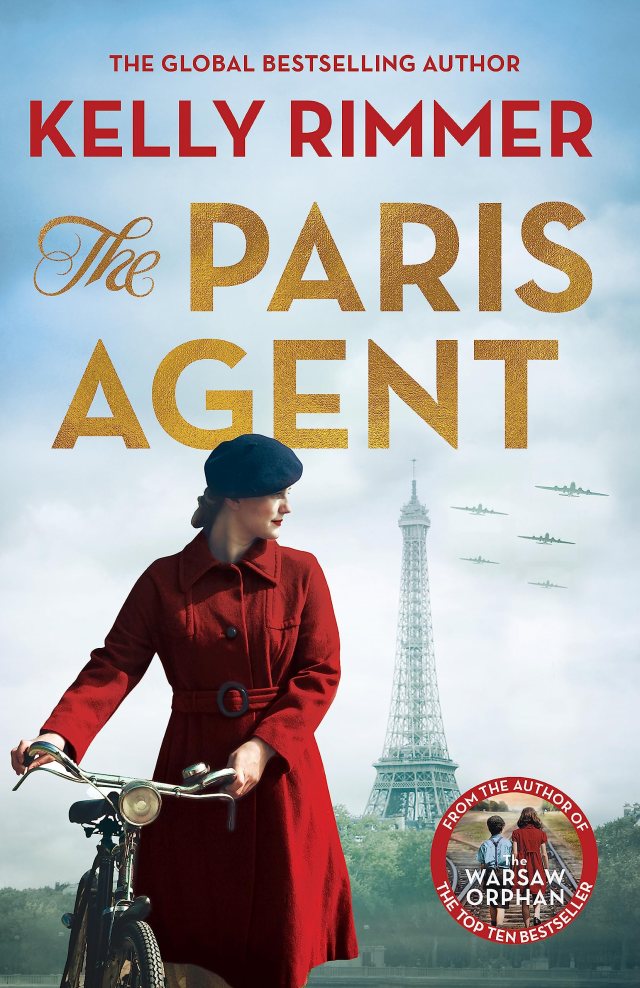
Quick Review – The Paris Agent by Kelly Rimmer

The Paris Agent Cover

Publisher: Hachette Australia (Trade Paperback – 28 June 2023)

Series: Standalone

Length: 337 pages

My Rating: 4.5 out of 5 stars

Amazon

One of Australia’s premier authors of historical fiction, the supremely talented Kelly Rimmer, returns with another moving and intense novel that dives into the horrors of World War II, The Paris Agent.

Over the last couple of years, I have been deeply impressed with the works of Kelly Rimmer, a well-established Australian author whose previous novels have been excellent historical dramas set during the Second World War.  Rimmer’s books are pretty spectacular, as they masterfully blend powerful personal stories with intense depictions of key parts of the war, especially those involving the evils of the Nazi regime.  Her last two books, The Warsaw Orphan (one of my favourite Australian books of 2021) and The German Wife (one of my favourite books and Australian books of 2022), were exceedingly moving, and I now make it a point to grab her new books each year.  Her latest novel, The Paris Agent, presented the reader with an interesting new story, one that focuses on female espionage agents in occupied France.

Plot Synopsis:

Two otherwise ordinary women become spies in WWII France in this sweeping new novel of historical suspense by New York Times bestselling author Kelly Rimmer

Twenty-five years after the end of the war, ageing British SOE operative Noah Ainsworth is reflecting on the secret agent who saved his life when a mission went wrong during his perilous, exhilarating years in occupied France. He never knew her real name, nor whether she survived the war.

His daughter Charlotte begins a search for answers. What follows is the story of Fleur and Chloe, two otherwise ordinary women who in 1943 are called up by the SOE for deployment in France. Taking enormous risks with very little information or resources, the women have no idea they’re at the mercy of a double agent within their ranks who’s causing chaos.

As Charlotte’s search for answers continues, new suspicions are raised about the identity of the double agent, with unsettling clues pointing to her father.

This was another powerful and clever novel from Rimmer, who takes on another aspect of World War II and weaves together an outstanding story.  The focus on Allied female spies being dropped into occupied France is a well-established and highly utilised topic in historical fiction and historical dramas, and Rimmer manages to produce a very distinctive read in The Paris Agent that I found very hard to put down.

To tell her story, Rimmer utilises an excellent multi-perspective narrative, with some interesting time differences also added in for each of the timelines.  The first timeline, shown from the perspective of Charlotte, is set in 1970, and follows the protagonist’s attempts to find out more about her amnesic father’s activities during the war after she finds out he was a spy in France.  The other two storylines focus on the characters of Fleur and Chloe respectively.  Both characters were dropped into France at different points of the war to do their own specific missions, including committing sabotage and investigating reports that the local network had been compromised.  These two past storylines are set across a couple of years in the war, with the two protagonists interacting with each other, and Chloe’s father, Noah, at various points, and together the three storylines wrap together to provide a complex and powerful narrative of espionage, personal relationships, and betrayal, all set in front of the brutal Nazi occupation of France.

All three stories are brought together throughout the course of The Paris Agent, and I liked the complex and intriguing narrative threads that emerged.  The risks and sacrifices of the characters during the war are pretty intense, and the emotional connections that they make bring a compelling balance to the dark story elements of espionage and betrayal.  The third storyline that focuses on Charlotte and her father is also very good, both on its own and for how it supports and enhances the other two plot lines.  This more modern storyline gives some great hints at the tragedy to come in the other storylines, while also underlying further the cost that these intelligence agents had to make.  The intriguing hints that Noah might have been a traitor responsible for terrible events is very compelling, and it is fascinating to see the impact that the war was still having on survivors like him.

The two storylines in the past eventually come together in the last quarter of the novel, and some of the compelling twists that come from this are moving and dark.  The identity of the traitor, while not overly surprising, does have some major emotional heft to it, and you can’t help to despise the antagonist, especially as Charlotte’s storyline serves to underline all the terrible things they did.  Both the Fleur and Chloe storylines end on a very tragic, if inspiring, note, and readers will come away from that exceedingly saddened but impressed by how well written these storylines were.  I did think that the ending of the Charlotte storyline was a little weaker, mainly because it relied on a little too much on coincidence, and I think that the author left some intriguing story opportunities closed.  Still, I really appreciated how cleanly and powerfully these three separate storylines came together, and it resulted in an overall exceptional read.

Rimmer utilises some intriguing writing elements to ensure her story is extra impactful.  As I mentioned before, the use of multiple character perspectives and timelines was a major part of this book, and I was mostly happy with how that turned out.  I must admit that I am not the biggest fan of historical novels that features a storyline where someone in the present day attempts to uncover family secrets, as frankly it is bit of a cliché at this point.  However, I think that Rimmer did a good job here, as it was set far closer to the war, and the family secrets that the protagonist is trying to uncover are the result of amnesia, which is well balanced by the potential spy aspect.  The rest of the story flows through extremely well as a result, and I loved how cleverly the separate wartime storylines interacted and enhanced each other, especially when it came to Noah’s connected story and the examination of the potential treachery.

However, one of the best things about The Paris Agent for me was the outstanding and deep portrayals of the Nazi occupation of France and the espionage efforts the Allies utilised in response.  Rimmer always excels at diving into some of the darkest and most intriguing parts of World War II history, and The Paris Agent was another great example of this.  The author provides some intriguing examinations of how the Nazis controlled France during the war, and Rimmer tries to showcase the occupation from several different sets of eyes in various French settings.  However, the real focus of the book is on the intelligence networks that the Allies set up in France during the war and the missions they engaged in.  This compelling part of the war is always rich ground for historical fiction authors, and I think that Rimmer’s take on it was particularly noteworthy.  She really captures the intensity and dedication that these agents had, as well as the constant risk that they found themselves in.  The focus and portrayal of tradecraft, intelligence gathering, and communication was very realistic, and I cannot emphasise how well each of the major spy protagonists were developed and featured throughout the book.  Of course, as this is a Rimmer book, The Paris Agent does get very dark in places, mainly when it comes to the fate of captured spies and intelligence agents.  Rimmer pulls no punches when it comes to how badly these prisoners were treated, nor when it comes to the terrible fates they experienced.  The fact that many of the characters are based on real historical people makes parts of the book hit even harder, and you really won’t come away from The Paris Agent without a tear in your eye.

Kelly Rimmer continues to showcase why she is one of Australia’s best writers of intense and moving historical fiction.  The Paris Agent was an excellent piece of historical drama that features a powerful and compelling story about spies, tragedy and betrayal.  Cleverly written and guaranteed to stick with you long after you’ve finished reading it, The Paris Agent is an outstanding and highly recommend book that I am really glad I got to experience.

Amazon

Falling Sky by Harry Sidebottom

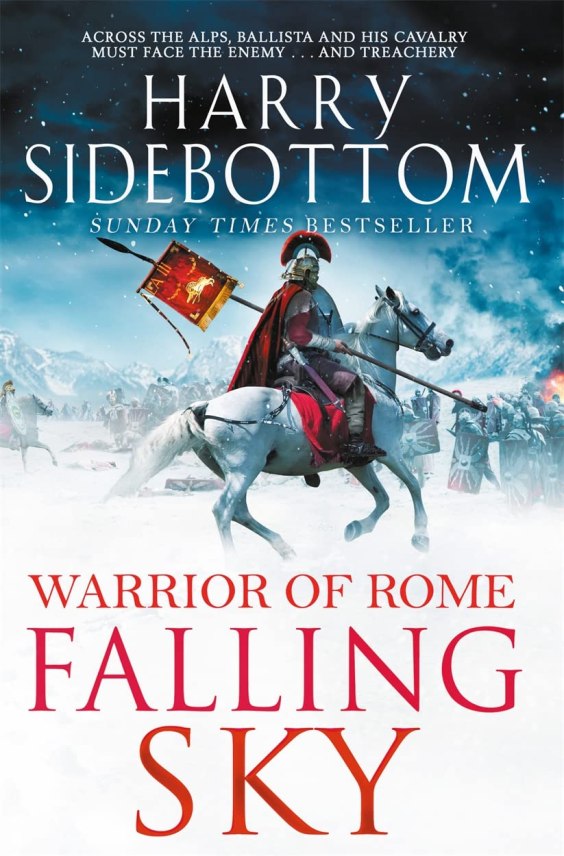
Falling Sky Cover

Publisher: Zaffre (Trade Paperback – 17 January 2023)

Series: Warrior of Rome – Book Nine

Length: 375 pages

My Rating: 4.5 out of 5 stars

Amazon

One of the best and most compelling authors of Roman historical fiction, Harry Sidebottom, returns with another outstanding entry in his Warrior of Rome series, Falling Sky.

There are many outstanding authors who specialise in historical fiction set in ancient Rome, however, one of my absolute favourites is the always impressive Harry Sidebottom, who has been dominating the genre for most of my reviewing career.  Sidebottom has written some amazing novels over the years, including his Throne of the Caesars trilogy and some excellent standalone novels, like The Lost Ten and The Return.  However, my favourite series is his Warrior of Rome novels, which follow the Roman general Ballista, a former barbarian hostage turned Roman nobleman.  This series is pretty damn epic and was amongst some of the earlies novels I ever reviewed.  His debut novel, Fire in the East, remains one of the best siege novels I have ever had the pleasure of reading, and the rest of the series is also very impressive and inventive.  I have really loved some of his more recent Warrior of Rome books, such as The Last Hour and The Burning Road, and I was very happy to see that Sidebottom was continuing this series with Falling Sky.

AD 265, Gaul.  The usurper Postumus has been declared Emperor by his soldiers and has taken control of key territories west of Rome, including Gaul, Germania, Hispania and Britannia.  Setting up his capital within Gaul, Postumus hopes to maintain control of his new empire and peacefully coexist with Emperor Gallienus.  However, Gallienus wants vengeance for the death of his son at Postumus’s hands and has assembled a massive army to cross the Alps, take back Gaul, and kill his rival.

Amongst the Roman troops gathered to attack Gaul is Ballista, one of Gallienus’s most loyal supporters.  Determined to fight one more battle and then retire to Sicily with his family, Ballista finds himself at the forefront of the fight as one of Gallienus’s most able commanders.  However, Ballista has a far more troubling problem to deal with than battle.  His recent actions in Rome exposed a massive conspiracy to kill Gallienus and install a new Emperor.  While he was able to foil the assassination, the leader of the conspiracy remains at large, and Ballista is convinced that it was the Praetorian Prefect Volusianus, the man charged with keeping Gallienus safe.

With no evidence to support his suspicions, all Ballista can do is watch Volusianus and wait for him to slip up.  However, Volusianus is aware of Ballista’s suspicions and is determined to kill him before his machinations can be revealed.  When Ballista is sent on a dangerous mission deep into enemy territory with a column of cavalry, it represents the perfect opportunity for Volusianus to strike using spies and traitors.  However, the greatest threat to Ballista may come from the turning tides of war, as he and his men soon find themselves trapped far behind enemy lines.  Pursued by the enemy and surrounded by traitors, can even the legendary Ballista survive both the war and his friends in Rome?

This was another brilliant and captivating historical read from Sidebottom that perfectly continues the Warrior or Rome series with another exciting adventure.  Falling Sky is a very thrilling read, and it was one that I was able to finish off quite quickly, especially once I got caught up in its fantastic and fun narrative.

Falling Sky has a very fast-paced narrative that sees the forces of the Emperor Gallienus, including Ballista, return to Gaul (France) to end Postumus’s rebellion and restore the Empire.  The initial chapters set the scene brilliantly, as you get reacquainted with Ballista and his recent adventures, as well as some insights into his suspicions around Volusianus’s role in the recent assassination of the emperor.  Featuring some great early battle sequences in the Alps, you soon get a great idea of the war to come, especially when you also see some events through the eyes of Postumus and his forces.  The centre of the book is dominated by a pivotal major battle sequence with both armies clashing in a brutal series of chapters that really leaves an impression.  It also sets the rest of the story up extremely well, as the still suspicious Ballista is sent out on a dangerous mission he isn’t supposed to come back from.  This cavalry focused plot dominates the second half of the book and features a great blend of action, historical logistics, and espionage as Ballista tries to keep his troops alive, while a traitor in his ranks works to bring him down by any means necessary.  This leads to an excellent final third of the book, when Ballista and his troops are forced to retreat through half of Gaul, while traitors and problems from the protagonist’s past wait for him.  This turns into a fantastic chase sequence between enemy regiments, and I really loved how epic and intense it got in places.  The entire story wraps up really well, and I had a wonderful time getting through this awesome read.

Falling Sky turned out to be a pretty awesome book, and I loved how Sidebottom set his latest novel out.  There was an interesting change of style in Falling Sky from some of his previous novels, as Sidebottom had recently been experimenting with blending different thriller genres with historical settings.  Falling Sky, however, represents a more classic historical fiction war novel, with a focus on battles, major recorded events, and the continued growth in Ballista’s character as he becomes more and more disenchanted with Rome.  While I had a ton of fun with Sidebottom’s previous unique formats, I also enjoyed him returning to the style from the previous Warrior of Rome novels, with a compelling focus on historical war.  The author still does maintain some interesting thriller elements, including the fun espionage moments as Volusianus and the hidden traitors work to take out Ballista.  In addition, the thrilling and extensive flight of Ballista and his forces really ratchets up the tension for the end of the novel and I enjoyed how complex and powerful it became, easily resulting in it some of the best parts of the book.

The author’s use of perspective was also pretty effective, especially in the first half of the novel, which sees different chapters told from the point of view of several different key characters, including Ballista, Volusianus, Postumus and Volusianus’s spy in Ballista’s regiment.  Alternating point-of-view characters really helped to produce a more extensive and compelling plot, and I loved seeing the countermoves of Ballista and Volusianus, while also getting insights into Postumus’s rebellion.  This use of perspective changes towards the end of the novel as there is a much greater focus on Ballista as the primary narrator as he leads his troops in their escape.  I appreciated Sidebottom’s decision to mix things up this late in the novel, and it really helped to emphasise just how desperate and compelling this final section of plot truly was.  While Falling Sky is part of the larger Warrior of Rome series, it can be read as a standalone novel, especially for any fans of fun historical adventure and military fiction.  Sidebottom does an excellent job of quickly recapping necessary information and events from the previous novels throughout Falling Sky, and readers can grasp key connections and details to follow along with the plot.  The events of Falling Sky actually fall between the two previous books in the series, The Last Hour and The Burning Road, which was apparently caused by a change in the publishing schedule.  That does mean that if you have read The Burning Road in advance of this novel, the stakes of Falling Sky’s plot are slightly reduced.  However, I still had a ton of fun with this outstanding novel, and I really enjoyed how Sidebottom wrote the story.

I was also deeply impressed by the historical aspects of Falling Sky, which was one of the book’s strongest features.  Sidebottom has always excelled at exploring fantastic aspects of Roman culture and history, and Falling Sky is a pretty good example of this, especially has he closely examined Emperor Gallienus’s second invasion of Gaul in the second half of the 3rd century.  This period of Roman history doesn’t get a lot of love from other historical fiction authors, and as a result, Sidebottom’s books always feel quite unique, and I always have a great time learning more about this point of Roman history.  Sidebottom really does a good job exploring the origins of the war with Postumus’s Gallic Empire, and it was fascinating to see how this part of the Roman Empire splintered off and managed to hold out against the main Roman army for so long.  This results in some deeply intriguing scenes where politics, loyalties and personal ambitions are heavily featured, and a Roman civil war novel always contains some brilliant battles as the two armies utilise similar strategies.  Falling Sky also has some outstanding depictions of Gaul and the Alps during this period, especially as the protagonist ends up spending much of the book traversing the landscape at high speed.  Not only was it really cool to see historical depictions of so many different parts of modern-day France (the map up front was very useful), but many of these locations served as fantastic backdrops for the vicious battles that emerged.

In addition to cleverly examining the historical backdrop to the narrative, Sidebottom also ensures that his representations of the Roman soldiers and battles were as detailed as possible.  You can clearly tell that Sidebottom has done a ton of research when it comes to the depictions of the various soldiers, and you can practically see how they would have marched or engaged in battle.  The author’s epic battle scenes are particularly cool to read, and the clashes between the two opposing Roman armies are perfectly showcased, allowing you to fully experience the brutality and carnage.  However, the best historical highlight of Falling Sky revolves around the Roman cavalry, which Ballista commanded for much of the book.  Sidebottom spends much of book diving into and detailing as many aspects and experiences of the classic Roman cavalry as he can, including their practices, strategies, and general experiences.  This comes across extremely well in many scenes of Falling Sky, and it was fascinating to see Ballista get to grips with his new cavalry command and turn them into an effective force.  The sheer detail that accompanies the cavalry into every major fight of Falling Sky is very cool and I loved seeing the author’s depictions of how they would have fought and what strategies a commander like Ballista would have utilised in several different scenarios.  I had such an amazing time seeing these historical details and more get translated across into a thrilling action novel, and Sidebottom clearly has so much love for all things Roman.

Harry Sidebottom remains one of my absolute favourite authors of Roman historical fiction, especially when it comes to his Warrior of Rome novels.  Falling Sky is an outstanding new addition to the series, and I loved its clever war focused plot that saw one of Sidebottom’s best characters leading in compelling circumstances.  Loaded with action, espionage, and impressive historical detail, Falling Sky is an amazing book that I had an incredible time reading.  Highly recommended to all fans of the historical fiction genre.

Amazon

Black Drop by Leonora Nattrass

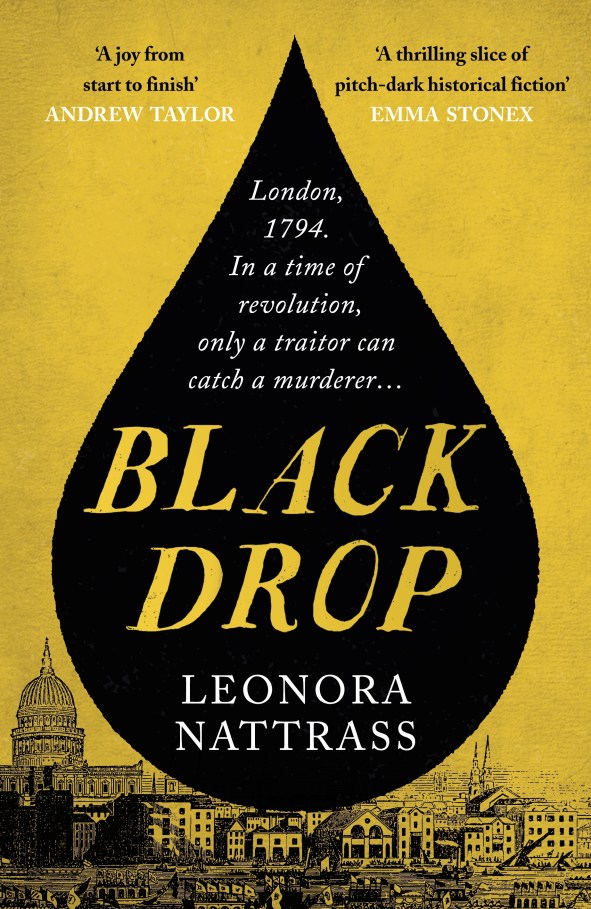
Black Drop Cover

Publisher: Viper (Trade Paperback – 15 February 2022)

Series: Laurence Jago – Book One

Length: 343 pages

My Rating: 4.25 out of 5 stars

Amazon     Book Depository

Intriguing and talented new author Leonora Nattrass presents a compelling historical thriller debut with Black Drop, a fantastic novel that drags readers into the conspiracies and issues of late 18th century London.

In July of 1794, as the terror of the French Revolution reaches its height and the war on the continent goes poorly for the British army, uncertainty and fear of violent change infect the people of London.  For Laurence Jago, clerk to the Foreign Office, his position is even more uncertain that those around him.  A young man with hidden French heritage, Jago fears the day that his connections to his mother’s nation will be discovered, especially after spending years serving as a spy for sinister French agent Aglantine.

Now believing himself to be free from Aglantine’s employment, Jago is thrust into an untenable situation when vital confidential information about the British army is leaked from his office to the press.  Suspected by his peers of leaking the information and under investigation, Jago fears that all his secrets and former dealings are about to come out.  His problems are only further compounded when he discovers the body of a fellow clerk in his rooms, supposedly dead by suicide.

When the blame for the leak is shifted onto the dead man, Jago is freed of the suspicion against him.  However, Jago knows that the dead clerk was incapable of stealing the letter and believes that he was murdered.  Determined to find out the truth behind the death, Jago finds himself investigating the highest level of the British civil service and their political masters.  Out of his depth and thwarted at every turn, Jago will risk everything to root out the culprit before they strike to disrupt England again.  However, can he succeed without revealing his own dark secrets, or will Jago hang as a traitor instead of the murderer?

Black Drop is an excellent and clever novel that I had a great time reading as Nattrass perfectly combines a compelling spy thriller/murder mystery storyline with intriguing and detailed historical fiction elements.  This resulted in one of the more unique and fantastic debuts of 2022 and I really enjoyed Black Drop’s impressive story.

This awesome debut novel has an excellent story that expertly combines intriguing spy thriller and murder mystery elements with a character driven historical narrative to create a compelling and impressive read.  Set throughout key events of 1794 and told as a chronicle from the perspective of central character, Laurence Jago, Black Drop presents the reader with an intriguing tale of murder, political machinations and the threat of revolution at the heart of the period’s government.  Nattrass sets the scene perfectly at the start, introducing the key characters while also highlighting the feelings of unrest and dissent as the fear and inspiration from the French revolution hits London.  From there, the story starts to unfold in some interesting directions as the protagonist finds himself involved in political and espionage adventures while also investigating the murder of a fellow clerk, which appears to be connected.  At the same time, the slow-paced story utilises some intriguing aspects from the protagonist’s life as he struggles with dark secrets from his past that have potential implications on the current events.

Following this introduction and the initial parts of the narrative, the middle of Black Drop starts to bring in certain key historical events and figures, which results in some fantastic moments and character interactions, especially once an antagonistic figure becomes more prominent.  While the middle of this novel did drag in places, I felt that Nattrass was providing the reader with the right blend of intrigue, mystery, historical detail and character growth to produce a great overall story.  You really get to grips with the protagonist and the key aspects of the setting during this part of the book, especially when Jago hits a major personal downturn earlier than expected, and interesting reveals enhance the reader’s attachment to the mystery.  The story really starts to pick up once it gets to Nattrass’s recreation of the infamous trial surrounding supposed radical and revolutionary Thomas Hardy.  The ridiculous, and mostly accurate depiction of the trial (with certain elements from other trials thrown in for greater effect), proves to be a great high point for the novel, especially as other key parts of the plot are slotted in perfectly around it.  I did feel that the novel started to come undone around the conclusion a little, especially when it came to the big reveal.  While there were a couple of good twists around certain characters, the solution to the main mystery and the intrigue seemed a little weak to me, and I was a little disappointed with how it turned out, especially as you barely get to see anything about the final confrontation.  Still, this did not affect the overall quality of the story too much, especially as the author throws in an excellent wrap-up for the protagonist’s storyline in this novel which has a lot of potential for a sequel.  While much of the story can be a little sluggish and lacking a lot of action, I had a great time getting through Black Drop, and I loved how the excellent interplay of elements came together so well.

One of the most distinctive parts of Black Drop is the sheer amount of fascinating historical detail that was fit into the story.  Nattrass has clearly done her research on the period and the reader is presented with a fantastic and powerful view of London in the late 18th century.  Not only are there some brilliant and vibrant depictions of historical London but the reader gets some fascinating views into the inner workings of the government at the time.  Substantial parts of the book are dedicated to examining the civil service and the political hierarchy of the day, with multiple influential figures featured as supporting characters.  This proves to be a deeply fascinating part of the book, and I loved how Nattrass was able to weave these intriguing details into the thriller plot, becoming a key part of Black Drop’s story.  I also deeply appreciated the way in which Nattrass explores the social and political issues of the day, especially where it relates to the concerns in London about an uprising similar to what happened in France.  As such, you get a full spectrum of personalities from across London, as royalists and loyalists clash with potential radicals who are targeted by the worried government.  This all cumulates in the fantastic court case of Thomas Hardy, a shoemaker accused of radical actions and attempted rebellion.  This historical trial is expertly recreated by Nattrass to include all of its most interesting parts, including several extremely ridiculous elements from history (a blowgun murder conspiracy).  Nattrass also cleverly combines in some elements from related trials that occurred around the same time as the Hardy case for some amusing dramatic effect, and this extended sequence ended up being one of my favourite parts of the novel.  The overall hint of discontent by many members of London’s society, as well as the innate fear of the established institutions, is portrayed beautifully, and you get a great sense of the public issues during this period.  All these impressive historical elements are handled extremely well by Nattrass, and while it did get a tad tedious in places, it was an excellent part of the book that I deeply enjoyed.

To back up her unique historical tale, Nattrass has furnished Black Drop with a compelling array of characters with some complex and compelling character arcs.  This book actually contains a great combination of original characters and historical figures, with many major figures in 18th century British politics and the civil service featured in substantial roles throughout the book.  Not only does this brilliantly enhance the already substantial historical details of Black Drop, but it also results in some fascinating interactions and depictions as the fictional characters, including the point-of-view character, observe them.  Due to the complexity of the story, Black Drop makes use of a pretty large cast of characters, and while a few of them blend together, most come across as pretty distinctive with some interesting and fun character traits.

The best character of Black Drop is the protagonist Laurence Jago, who also serves as the book’s sole point-of-view character.  Jago turns out to be a particularly complex and damaged individual whose emotional attachment to the case and the state of London society provides some intriguing drama and insight into the events of the book.  Already made quite distinctive by his unique green-glass spectacles, Jago proves to be an impressive and captivating figure, especially as he has some major issues.  Secretly half-French, Jago lives a conflicted and fear-filled life, especially with the intense anti-French attitudes sprinkling the city.  This, combined with his foolish youthful dalliance of being a spy for France, ensures that he has a powerful sense of guilt, and is constantly worried about being discovered, especially once other accusations are made against him.  The discovery of a dead friend, combined with his guilt, the pressures of work, and the constant fear of discovery really strain his mind, and while he doggedly tries to find out the truth behind the murder, he starts to crack and nearly blows his cover.  Watching him trying to hide his own secrets while uncovering the lies and machinations of those around him becomes pretty intense, especially as you grow quite attached to this damaged soul.  His mental state further deteriorates once he becomes addicted to Black Drop (an opium concoction), which dulls his worried and troubled mind, while also leaving him lethargic and susceptible to danger.  This proves to be a serious handicap to his abilities, and it is fascinating to see him try to balance all his issues with the hunt for the truth.  All these issues and concerns result in a very conflicted and emotionally drained character, who Nattrass portrays perfectly, and it was very powerful to see Jago’s entire story unfold.

Aside from Jago there is a rich cast of supporting characters, each of whom add to the story in their own distinct way.  I particularly want to focus on two who ended up being the best supporting figures in different ways.  The first of these is William Philpott, a fiction British reporter character, who arrives in England from and extended stay in America and sets up his paper and family residence next to Jago’s lodgings.  An eccentric, rambunctious and slightly uncouth fellow, Philpott stands in stark contrast to the various stuffy characters that make up the majority of the cast, which ensures that the reader is quickly drawn to him.  Not only does he serve as a lighter character in the novel and a firm confidant for the protagonist, but you also get an interesting viewpoint into his changing feelings about the events occurring throughout London.  Philpott starts the novel as a strong, patriotic figure who fully intends to support the government in his paper when it comes to the court cases against the supposed radicals.  However, upon viewing some of the injustices they are committing, such as their harassment of and unfair case against Thomas Hardy, Philpott becomes more sympathetic, supporting the dissenting voices and writing fair accounts of the proceedings.  This interesting middle ground perspective on the historical events of the book proves to be extremely interesting, and I loved how Philpott’s unique storyline unfolded, especially as it results in him throwing some valuable lifelines to the troubled Jago.

The other character of note is real-life historical figure and future British Prime Minister George Canning, who serves a much more antagonistic role in this novel.  Canning, who at this point in the time period was a young MP with connections to the sitting PM, William Pitt, gets embroiled in the case quite early in the novel, thanks to his connection to the dead man and the suspicions surrounding Jago.  Portrayed in Black Drop as an uncaring and malicious man, Canning is a menacing antagonist for much of the novel, constantly butting heads with Jago and complicating his investigation.  I loved the use of this intriguing historical character, especially as Nattrass turns him into a very unlikable figure, who you cannot help but hate.  Not only does Nattrass do a great job of examining some of the historical elements surrounding him at this period of time but she also layers in some fantastic references to future events in his life, such as the infamous duel that he would eventually take part in.  However, his real benefit is the impact he has on the story and the deep rivalry he forms with the protagonist.  Watching these two battle it out in different arenas is very amusing, especially as Jago is constantly outmatched by this influential politician, and I do hope that we see more of Canning in future books in this series.  These great characters, and more, all add a great deal to this intriguing novel, and I really appreciated how fantastic and compelling they turned out to be.

Overall, Black Drop by Leonora Nattrass is an impressive and captivating piece of historical crime fiction that I am really glad I decided to check out.  Making excellent use of some fascinating historical elements, Nattrass did an amazing job of producing a clever and enjoyable spy thriller/murder mystery storyline in 18th century London, which came together very well.  Filled with great historical events and compelling characters, Black Drop was an absolute treat to read, and I look forward to seeing how Nattrass’s next book will turn out, especially as the sequel, Blue Water, is apparently set for release in October this year.

Amazon     Book Depository

Throwback Thursday – Beastslayer by William King

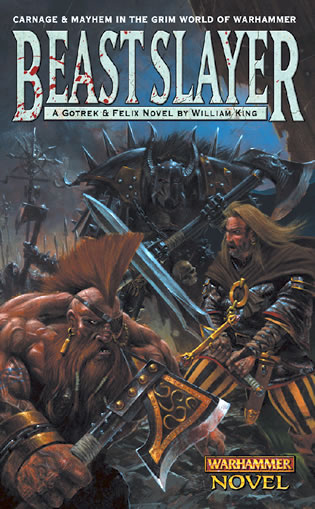
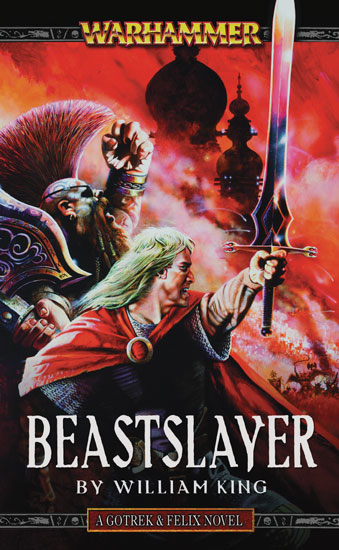
Beastslayer Cover

Publisher: Black Library (Paperback – February 2001)

Series: Gotrek and Felix – Book 5

Length: 275 pages

My Rating: 4.5 out of 5 stars

Amazon     Book Depository

Welcome back to my Throwback Thursday series, where I republish old reviews, review books I have read before or review older books I have only just had a chance to read.  For my latest Throwback Thursday I continue to examine the awesome and exciting Gotrek and Felix series from the Warhammer Fantasy range with the fifth book, Beastslayer by William King.

Readers of my blog will have no doubt noticed my increased consumption of Warhammer novels in the last year as I have really started to get hooked on this cool franchise again.  One of my absolute favourite series has been the epic Gotrek and Felix books, the earlier entries of which are written by talented William King.  This excellent series is set in the Warhammer Fantasy world and follows two compelling protagonists, doomed dwarf Slayer Gotrek Gurnisson and his human companion Felix Jaeger, as they face the monsters, daemons and evil forces of the world in an attempt to find Gotrek a mighty death.  I have had a lot of fun with this series in 2021 and ended up reading the first four Gotrek and Felix books, Trollslayer, Skavenslayer, Daemonslayer and Dragonslayer.  This fifth book was another great entry in the franchise and pits this legendary team against an entire army of evil.

After their harrowing journey to the Chaos Wastes and their epic quest to slay a monstrous dragon, Slayer Gotrek Gurnisson and his chronicler Felix Jaeger continue their adventures throughout the Old Realm.  Once again determined to journey to the most dangerous place possible, Gotrek and Felix find themselves within the Kislev city of Prague, the great fortress city that serves as a bulwark between the Chaos Wastes and the civilised realms of man.  However, this mighty city is in mortal danger as a massive horde of Chaos descends upon it, led by the fearsome Arek Daemonclaw.

Arek, a ferocious and cunning war leader and sorcerer is determined to destroy Prague and lead his forces throughout Kislev and down into the Empire.  To carry out his goals, Arek has amassed one of the greatest armies of Chaos ever seen, filled with Northern marauders, elite warriors blessed by the dark gods of Chaos, beastmen, mutants, monsters, daemons and two sorcerers of unimaginable power.  Their victory over the people of Kislev seems certain, but Gotrek and Felix are used to fighting such impossible odds.

Accompanied by several powerful friends and allies, Gotrek and Felix are resolute in their determination to save Prague and kill as many followers of Chaos as possible.  However, their opponents are well aware of the threat these two companions represent and are doing everything in their power to destroy them.  Forced to confront both the massive army outside the walls and treacherous cultists from within who are led by a powerful member of the Prague court, can even Gotrek and Felix survive this latest attack from hell?

This was another thrilling and fun entry in the Gotrek and Felix series that I had a fantastic time reading.  Beastslayer has another great, action-packed story, and it was awesome to see the series’ two protagonists embark on another epic adventure.  This fifth novel takes place shortly after the events of Dragonslayer and sees the heroes arriving in the city of Prague just before the invading Chaos army arrives.  The story quickly devolves into a bloody siege novel, with the entire city under threat from the massive army outside.  I have a lot of love for siege stories, and this proved to a pretty good one, especially as some of the battles get quite brutal and over-the-top.  While the focus is naturally on the siege itself, King also mixes things up by installing a cool arc about a traitor within the city who is given the task of eliminating Gotrek and Felix.  This amps up the stakes for the heroes and ensures that they are facing threats from all sides.  While I did think that the identity of the mysterious traitor was a bit obvious (I had them pegged before I even knew there was a traitor), this intriguing arc worked out really well and I had a lot of fun with it.  The real highlight however is the final battle between the protagonists and the invading army.  King produces a truly amazing final battle sequence that sees Gotrek, Felix and their friends in one massive extended battle that really stretches them to their limit.  Although the eventual arrival of various allies seemed a tad predictable, it still ended up being an intense final third of the novel and I could not put the book down the entire time the battle was raging.  Throw in some interesting character development and an entertaining, if slightly disconnected, storyline around recurring antagonist Grey Seer Thanquol, and you have a great Gotrek and Felix novel that is really worth checking out.

I really liked the way that King wrote Beastslayer and I honestly think that it was one of the more consistent and compelling entries in the series so far.  King has moved away from having novels with partially separated storylines (such as the first parts of Daemonslayer and Dragonslayer), and instead presented a strong and very self-contained narrative.  Like most of the entries in this series, readers can easily dive into Beastslayer without having any prior knowledge of the series.  King makes sure to revisit and examine most of the key storylines and character moments from the previous novels, ensuring that new readers can easily follow what is happening here without too many problems.  From a series standpoint this is a key entry, wrapping up storylines from the previous novel in a fun and exciting way.  I loved seeing where some of the long-term story elements went, and by concluding a few of them, King sets up the next novel as a bit of a clean slate for new things.  This ended up being a pretty solid action-adventure novel, and I loved all the brilliant fight sequences that King loaded into the story.  These various action sequences are pretty gritty and brutal, and you get a real sense of the destruction and death being dealt around.  I had an outstanding time reading this novel and I think it was one of King’s stronger books.

One of the things that I liked about the Gotrek and Felix series is the slightly limited degree to which the plot relies on the overarching universe.  While this is clearly set within the Warhammer Fantasy world and features several iconic factions, locations and foes, enjoyment of this book is not dependent on known anything about them.  Any fantasy fan can easily dive into Beastslayer without being familiar with Warhammer lore and still have fun, and indeed this is a great introductory series for people interested in checking out the franchise.  There is of course a lot that will appeal to people more familiar with Warhammer and it was great to see some of the iconic locations, such as Prague and Hell Pit, especially as King does a wonderful job fleshing them out (especially Hell Pit, which is filled with some crazy Clan Moulder mutations).  There are also some great references to key parts of Warhammer history, such as the previous siege of Prague, and I enjoyed the continued focus on the lands of Kislev, which are often overlooked in Warhammer Fantasy fiction.  This ended up being a fantastic tie-in to the wider universe, especially as King went all out bringing in various monsters and Chaos foes, and I cannot wait to see where this series goes next.

At this point in the series, the central characters have been well established, and not only are the readers very familiar with the two main protagonists, Gotrek and Felix, but also with some of the main supporting characters, such as Max Schreiber, Ulrika Magdova and Snorri Nosebiter.  As such, there isn’t a great deal of character development in Beastslayer as King was mostly concerned with keeping the status quo.  As such, Gotrek and Felix are pretty much portrayed in the same entertaining way they have been throughout the entire series, with Gotrek being a grim, taciturn badass and Felix being a more sensible but dangerous ally.  There are a few interesting developments surrounding them, such as some fascinating peeks into Gotrek’s past which partially reveal the reason he became a Slayer, and Felix’s continued transformation into a hardened warrior and leader.  Max and Ulrika end up with a bit more development than Gotrek or Felix, with Max becoming more a sympathetic figure whose knowledge of magic becomes an important part of the novel.  Ulrika also goes through a few changes in this book, and it was great to see that annoying relationship with Felix mostly come to an end.  King still struggles a bit when it comes to writing female characters, especially since Ulrika is the only female character of note in the entire novel.  Several other fun recurring characters pop up throughout Beastslayer, although readers shouldn’t get too attached to some of them, especially during some of the climatic and deadly war scenes.

Aside from this great group of protagonists King has also included some interesting antagonists in this novel.  The most prominent of these is Arek Daemonclaw, the leader of the Chaos army attacking Prague and a follower of the dark god Tzeentch.  King does a lot with Arek in a very short amount of time, and he is soon built up to be a dangerous enemy and a real threat to Gotrek and Felix.  Aside from Arek there are a couple of other interesting villains, including some sorcerer twins who have their own agenda, and a mysterious cultist hidden within the city with some complex motivations.  King also makes sure to include the entertaining skaven character Grey Seer Thanquol, who has his own storyline throughout Beastslayer.  Thanquol once again serves as an excellent comic relief for most of the book, and it was entertaining to see all the fun intrigue and betrayal of the skaven.  I did think that Thanquol’s storylines were bit disconnected from the rest of the plot, especially as this is one of the last time we see Thanquol before he gets his own novel, but I still had a fantastic time following him.

Overall, William King’s fifth entry in the epic Gotrek and Felix series of Warhammer Fantasy books, Beastslayer, was a fun and exciting fantasy tie-in novel that I deeply enjoyed.  Featuring a ton of intense violence, a compelling siege-based storyline and some amazing Warhammer Fantasy elements, Beastslayer continued the cool storylines and character arcs established in the previous novels and made sure the reader was constantly entertained throughout.  I had an excellent time reading this awesome novel and I plan to grab the next few books in this series as soon as possible.

Beastslayer 2

Amazon     Book Depository

The Councillor by E. J. Beaton

The Councillor Cover

Publisher: Daw Books (Hardcover – 20 July 2021)

Series: The Councillor – Book One

Length: 442 pages

My Rating: 4.5 out of 5 stars

Amazon     Book Depository

Australian author E. J. Beaton presents an excellent and compelling fantasy debut with The Councillor, an outstanding and impressive read.

Elira is a country still recovering from a fractious war a generation ago spurred on by the tyrannical magic-wielding White Queen.  The heroic Sarelin Brey, known as the Iron Queen, defeated the White Queen and led the subsequent hunt for the elementals, powerful magical users, who were forced into hiding.  Now, Elira once again stands on the brink of ruin when a mysterious assassin manages to kill the Iron Queen, an act that threatens to split and destroy the entire nation.

The queen’s last act before her death was to name her loyal companion, the palace scholar Lysande Prior, Councillor.  As Councillor, it is Lysande’s duty to choose the next ruler of Elira from the four city rulers and to ensure a peaceful transition of power.  As the city rulers arrive at the palace, Lysande is convinced that one of them may have orchestrated the Iron Queen’s murder.  Using her position as Councillor and the upcoming decisions around Elira’s future to her advantage, Lysande begins to investigate each of the city rulers to find who is responsible for her friend’s death.

As the investigation continues, Lysande soon learns much about the city rulers, including the secrets that they harbour.  Forced to balance her investigation with her responsibilities to the people, Lysande begins to revel in the power that she has been granted, even as her problematic addiction to a magical narcotic threatens her self-control.  However, the closer she gets to the truth, the more Lysande begins to understand that there is a dark threat rising, one that could overwhelm Elira for good.  The White Queen is returning, and this time there is no mighty Iron Queen to stop her, only a brilliant scholar with a bright vision for her nation.

The Councillor was an impressive debut fantasy novel from Beaton, who combines some intriguing characters with a powerful fantasy narrative laden with political intrigue, espionage and one character’s personal journey from scholar to ruler.

Beaton utilises a pretty awesome story in The Councillor, and it is one that I quickly became quite addicted to.  Told exclusively from the point-of-view of protagonist Lysande, the novel has a powerful start with one of the major characters killed off, leaving Lysande and the entire nation in chaos, especially as it appears that a notorious magical villain has returned years after her famous defeat.  From there the protagonist attempts to identify the agent responsible for her friend’s death, believing it to be one of the four arriving nobles vying for the throne.  This results in a compelling storyline where Lysande investigates the secrets of the city rulers, while also becoming increasingly involved in the politics of the realm after being unexpectedly placed in a position of power.  As The Councillor progresses, it evolves into a very captivating piece of political intrigue as Lysande and the city rulers tour the country, attempting to rule together, initiate plans to stop the growing influence of the White Queen, while also attempting to achieve their own goals.  There are some great misdirects and red herrings featured throughout this part of the book, as Beaton attempts to disguise who the antagonist is and what the agendas of the various other politicians are.  This all leads up to a big and explosive conclusion where the traitor is revealed and several great storylines come together, resulting in some awesome action and clever political storylines.  While I was able to guess who the traitor was in advance, Beaton did a great job setting them up, and I did find the methods of the antagonist very surprising, especially the fun super-weapon that was hinted at throughout the book.  The final scenes wrap up the entire narrative extremely well and do a great job setting up the next novel in the series.  I look forward to seeing where the narrative goes from here and I think that the series has some amazing potential.

I really enjoyed the cool and memorable fantasy world that Beaton introduced in her first novel, and it serves as a great setting for the awesome story.  The nation of Elira is broken up into several distinctive political and climate zones, based around a city state, resulting in fascinating group of different and proud people.  I loved the fun blend of cultures featured within this nation, especially as it results in some compelling and entertaining cultural and political clashes.  There is a great focus on the history of Elira, especially as it relates to the previous war against the White Queen, with the scholar protagonist attempts to uncover the full truth behind the past to determine the country’s future.  There are also a ton of LGBT+ elements associated with the setting, which I really appreciated and which helped to make the setting even richer.  Add to that several hostile nations surrounding Elira, a rampaging magical queen full of vengeance, and a covert network of independent magical users with their own agenda, and you have a fantastic combination of groups and political ideals, which helps to makes the compelling narrative even more exciting.  This all proves to be pretty damn awesome, especially as Beaton does a wonderful job describing the rich and vibrant countryside of her setting, allowing the reader to have an outstanding time exploring this new nation.  I really enjoyed this captivating setting and I look forward to seeing how the author expands it in her next novel.

Easily the best thing about The Councillor are the complex and intense characters featured throughout the story.  This includes main protagonist Lysande, who is forced to endure quite a lot of growth and betrayal during the story.  Beaton weaves a powerful and intense narrative around Lysande, an orphan who was chosen to become the Iron Queen’s companion and who grew into a brilliant scholar and thinker.  After the queen’s death, Lysande is forced to become both a ruler and politician, and she finds herself excelling in the role, especially as it allows her to use her skills as a scholar and researcher to her advantage.  Due to Lysande being the point-of-view protagonist, Beaton takes a lot of time exploring her personality, feelings, and history, and it does not take long for the reader to become attached to her, especially as she finds herself in a dangerous and complex personal and political situation.  It proved to be extremely compelling to see Lysade take the political stage for the first time, and I loved the way she adapted to the intrigue and deceit, especially once she started to revel in it.  It was pretty cool to see a scholar attempt to take the throne, resulting in a very different hero from what most fantasy fans would expect.  I also enjoyed the way that the author ensured that Lysande is a bit of a flawed protagonist, especially as she is controlled by her addiction to Chimera Scale, a magical narcotic that gives her energy and different insights to the world.  This growing reliance on Chimera Scale impacts her severely throughout the novel, especially as it covers up some deeper secrets about her, which come to fore later in the novel.  An overall exceptional main character, I am very intrigued about where this story will take Lysande next.

Aside from Lysande, The Councillor features a fantastic collection of supporting characters, each of whom add a lot the story.  The main four supporting characters are the city rulers who arrive in court to put their cases for being the next monarch.  Beaton spends a bit of time building up each character, and it proves quite enjoyable learning their flaws, personalities and secrets, especially as any of them could potentially be villainous.  The most prominent of these city rulers is the mysterious and manipulative Luca Fontaine, a dangerous bastard son who became city ruler after killing his family.  Presented as a dark figure with a love of intrigue, espionage and advanced politics, Fontaine has some outstanding back and forth with Lysande, which were extremely enthralling and compelling, and Fontaine swiftly becomes one of the more entertaining and likeable characters in the novel.  I did think that Beaton could have toned down Fontain’s manipulative side just a little, especially as it made him too obvious a suspect for being the traitor, however, I don’t think this had too much of a negative impact on the narrative.  Aside from the city rulers, the book has some interesting focus on Lysande’s advisors and guards, each of whom hep her in their own unique way.  I particularly enjoyed Lysande’s new maid, Litany, especially once her real purpose in the court is revealed.  This great supporting cast proves to be a lot of fun to follow, and I really appreciated the time and detail that the author put into setting them up.

Overall, I found The Councillor to be an outstanding and deeply entertaining fantasy read with a really addictive and compelling narrative.  Australian author E. J. Beaton did an excellent job with her first book, and this is a must read for anyone who loves a fantasy tale laden with clever political intrigue.  A highly recommend fantasy debut, I cannot wait to see where Beaton takes this series next.

Amazon     Book Depository

Inscape by Louise Carey

Inscape Cover

Publisher: Gollancz (Trade Paperback – 27 January 2021)

Series: Inscape – Book One

Length: 426 pages

My Rating: 4.5 out of 5 stars

Amazon     Book Depository

The future is a cyperpunk nightmare in Inscape, the fantastic and clever science fiction thriller debut from amazing author Louise Carey.

Years after an apocalyptic event, the world is now run by corporations who battle for control and influence.  One of the most powerful corporations is InTech, which sits on the cutting edge of a variety of technologies and advances and which does not take any prisoners in their war for dominance.  When a valuable piece of information is stolen, InTech sends a team of agents into the unaffiliated zone to retrieve them.  However, only one agent will return alive and unharmed.

Tanta has spent her entire life training to work and fight for InTech.  An orphan who was raised solely because of the company’s good will, Tanta is crushed when her first mission ends in near failure.  Attacked by a mysterious enemy agent with advanced weapons technology, Tanta is barely able to survive and is subsequently tasked with retrieving the information that the thief stole.  Teaming up with an unconventional technical genius, Cole, Tanta begins her investigation, only to discover that someone is attacking InTech’s interests around their city.

Believing the culprits to be working for a rival corporation, Tanta and Cole attempt a dangerous infiltration into their city.  However, their mission quickly runs into problems when their contact is captured and Tanta’s tech appears to be compromised.  Attempting to survive in enemy territory, the two InTech agents engage in a risky heist to find answers.  But with all evidence pointing to a traitor high up in InTech’s ranks, can Tanta and Cole survive their dangerous mission, or will secrets from both their pasts destroy them and everything they love?

I am really glad that I decided to check this cool debut out as it ended up being a pretty impressive science fiction read.  Inscape was the first solo novel from author Louise Carey, who has previously written several novels and comics with her father, comic author Mike Carey, and her mother, Linda Carey.  Carey has come up with an exciting and compelling read in her first novel, especially as it combines an excellent science fiction thriller storyline with some great characters and an inventive and unique cyberpunk setting.

At the centre of this fantastic debut is an outstanding narrative that combines an electrifying spy thriller novel with some compelling science fiction.  Carey starts Inscape off quickly, with Tanta and her comrades brutally attacked by a dangerous enemy agent out while trying to recover some stolen files.  After this great opening scene, which sets up most of the narrative perfectly, Tanta is chucked into the midst of a massive conspiracy which sees her beloved corporation under attack, and which requires her to find who stole the files and for what purpose.  The rest of the novel is captivating and clever, as readers become engrossed by Inscape’s fantastic thriller elements as the protagonists attempt to get to the bottom of the conspiracy, which includes an extended undercover sequence where they infiltrate a rival corporation’s city to discover what they know.  This entire awesome sequence, which takes nearly a third of the novel, is extremely exciting, as Tanta and Cole are forced to rely on the minimal of resources to not only survive but to also pull off a daring prison break.  I really fell in love with this novel during this part of the story, and Carey makes sure to end it with an amazing conclusion which sees some major secrets come out and significant developments moments occur for the main characters.  I felt that the author wrapped Inscape up perfectly and readers will deeply enjoy where the story leaves off, especially as there are some great hints as to where the series will go from here.

One of the key things that I really loved about Inscape was the amazingly inventive and distinctive cyberpunk themed world that Carey created as a background to her awesome story.  The world of Inscape is set several years after an apocalyptic technological event which left much of the world in ruins.  Most civilisation now revolves around massive corporations who manage cities and safe zones while monitoring their citizens and assigning resources to the most useful.  There were also some intriguing pieces of technology introduced in this novel, such as the communications and information devices built into everyone’s heads, known as scapes, which serve as a key part of Inscape’s story.  This was an impressive and well-designed science fiction setting, and I enjoyed the cool blend of advanced technology, changing social norms and predictions of future corporate control.  I felt that Carey did an amazing job of introducing information and key points about the setting and advanced technology as the novel progresses, and it proves to be an excellent backdrop to Inscape.  I also appreciated the way in which technology like the scapes are utilised throughout the story as the instantaneous communication and information they contain help to enhance some of the action orientated scenes as well as amp up the intrigue and connections between characters.  You also occasionally get the opposite effects where this technology is deactivated and the protagonists are forced to rely on their own senses, which can be rather jarring for them.  Carey works in some compelling discussions about over-reliance on technology, free will and corporate greed throughout Inscape, all of which adds a darker and fascinating edge to the entire story.  All of this makes Inscape a very intriguing read that fans of science fiction and cyberpunk will deeply enjoy.

Another wonderful aspect of Inscape was the fantastic characters featured within, particularly the three main point-of-view characters.  Carey makes excellent use of multiple character perspectives throughout the novel to provide compelling alternate viewpoints of key events and character actions, which I felt really added a lot to the overall narrative.  In addition, the author introduces several amazing characters, most of whom either have a compelling base to their unique personalities or who go through some substantial development throughout the course of the novel.

The most prominent of these is central protagonist Tantra, a young woman who was raised by InTech since she was orphaned and who has been training all her life to be an agent for them.  Tantra starts the novel as a particularly zealous and passionate character who is unquestionably loyal to her corporation and her handler, Jen.  A skilled survivor, fighter and intuitive investigator, Tantra serves as a great protagonist for the early part of the novel, as she swiftly and efficiently begins the hunt for the person who is attacking her beloved InTech.  However, as the novel progresses, Tantra goes through some substantial changes, especially after she discovers some harsh truths about InTech and herself.  While this turns her into a much more likeable and free-spirited person, it does raise certain questions about Tantra’s true self and her motivations, which is rather intriguing and captivating to see.  Tantra is a fairly badass character throughout the entirety of Inscape, and I deeply enjoyed her intensity, intelligence, capacity for violence and acting abilities, the last of which results in a couple of fun scenes.  I also enjoyed how Carey made her a lesbian character, and she has a nice and touching relationship with a fellow orphan, Reet, although certain aspects of the narrative make Tantra contemplate how and why their relationship occurred.  This was a fantastic central protagonist, and I am curious to see what happens to her in the future.

The next major character in the novel is Cole, an InTech scientist who finds himself partnered with Tantra on the case to find the missing information.  Cole is a great character, a brilliant man who has recently lost his memories due to a technological mishap.  As a result, he spends much of the novel attempting to work out who he is, which impacts much of his personality and motives.  Cole ended up being a rather fun and interesting addition to Inscape, and I loved the unusual team that he forms with Tantra.  In many ways, Tantra and Cole are complete opposites, as Cole has a bit of an anti-authoritarian streak and sees the other characters and corporations in a different light to his partner.  Cole is also far less trained as a corporate operative and finds himself extremely overwhelmed when out in the field.  In several great sequences he is shown to be very out of his depth and is forced to rely on Tantra’s skill and knowledge, which is particularly jarring for him as he is substantially older than her.  I very much enjoyed seeing Cole finding his feet throughout this book and getting a crash course in espionage and survival from his teenage partner, and I liked the fun and substantive friendship he formed with Tantra.  Several great secrets and reveals come out about Cole as the novel progresses, and it results in some great discussions about whether he is the same person that he was before he lost his memories.  These reveals are likely to have a major impact in some future novels and should result in some intriguing story arcs.

The final major point-of-view character in this novel is Jen, Tantra’s handler at InTech, who Tantra views as a mentor and mother figure.  Jen is an ambitious and driven woman who is determined to climb the InTech ranks, and who sees her control over Tantra as the way to do it.  I really liked the way that Carey portrays Jen through the various perspectives as you get a very different viewpoint of who and what Jen is.  For example, in Tantra’s eyes Jen can do no wrong, and is one of the few people that she loves and respects.  However, when Cole sees her actions, he realises just how manipulative Jen is and how little she actually cares for Tantra.  Jen’s true ruthlessness and uncaring nature is further explored in some of the scenes shown from her perspective, and it is fantastic to see the differing viewpoints about her motives and actions.  Jen serves a great role throughout the novel as Tantra’s motivation and as a dangerous controlling figure and I really enjoyed seeing the entirety of her storyline unfold.  Each of these three main characters were written pretty perfectly and I loved the fantastic development and exploration that Carey did with them in Inscape.

Inscape by Louise Carey was an incredible and addictive debut novel that ended up being a really fun and compelling read.  Carey did a wonderful job of blending an excellent thriller narrative with some great science fiction elements, amazing characters, and a clever examination about humanity’s over-reliance on technology.  I look forward to seeing how this series continues in the future, especially after this amazing first novel, and Inscape is really worth checking out.

Amazon     Book Depository

The Frenchman by Jack Beaumont

The Frenchman Cover

Publisher: Allen & Unwin (Trade Paperback – 19 January 2021)

Series: Standalone/Book One

Length: 392 pages

My Rating: 4.5 out of 5 stars

Amazon     Book Depository

Prepare to dive into the world of international espionage as debuting author Jack Beaumont delivers an impressive and deeply authentic spy thriller with The Frenchman.

In these turbulent times, France faces threats from innumerable international enemies and terrorist attacks, and it falls to the members of the DGSE, also known as The Company, France’s famed foreign intelligence service, to discover dangers in their infancy and eliminate them.  Alec de Payns is one of the top operatives of the top-secret Y Division of the DGSE, who take on the Company’s most dangerous international assignments.  With a speciality in manipulating targets into turning against their country or revealing their secrets, de Payns is the man on the ground in many of these missions, ensuring that terrorists operations and illegal weapons programs pose no threat to his country.

During his latest operation in Palermo, Sicily, de Payns attempts to infiltrate a dangerous terrorist group who have their sights set on attacking France.  However, before their planned contact and surveillance can begin in earnest, de Payns’s cover is blown and he is forced to flee from the scene, leaving behind two dead bodies.  Returning to Paris, de Payns begins to suspect that he was betrayed by a fellow agent, forcing himself to consider that his life and the lives of his young family may be in danger.

With the threat of a potential traitor hanging over him, de Payns is sent on another urgent mission to Pakistan to investigate a secretive biological weapons facility that is rumoured to be producing a weaponised bacteria for an attack on France.  In an attempt to gain information from within the facility, de Payns begins to establish a new identity to get closer to a person connected to the bacteria production.  However, when he is once again compromised, de Payns must find out who has betrayed him and what their sinister plans for Paris are.

The Frenchman is a clever and exciting spy thriller from an intriguing new author that takes a detailed and captivating look at French foreign intelligence.  This amazing new novel was written by Jack Beaumont, a pseudonym of a former French special operator who worked as part of the DGSE secret service.  Having relocated to Australia, Beaumont has utilised his experiences to create an enthralling spy thriller, packed full of impressive detail and with a central character strongly based around the author himself.  This results in an extremely thrilling and compelling novel that I found to be extremely addictive and which was a heck of a lot of fun to read.

This cool novel contains an epic and impressive story that sees the protagonist engage in a series of high-stakes espionage missions across the world.  Told primarily from the point of view of the main character, Alex de Payns, The Frenchman’s narrative starts of as one of standard international espionage, with the complex and damaged protagonist engaging in some standard missions.  However, the narrative quickly takes a turn into more dangerous territory when de Payns’s cover is blown and it is suspected that someone within his organisation set him up.  Now forced to not only investigate a dangerous weapons facility but also determine who betrayed him, The Frenchman quickly becomes an impressive tale of treachery, paranoia and deceit, with de Payns finding his attention drawn in several different directions.  Beaumont has crafted together an excellent and compelling narrative here, which unfolds in a methodical and deliberate pace.  Every story element is intricately connected, and the reader has an excellent time seeing the protagonist engage in his operations while also attending to his personal missions and his fears over the mysterious traitor in the organisation.  The author ensures that the story goes in some intriguing directions, with some captivating and suspenseful high-stakes scenes pulling the protagonist, his family and innumerable French citizens into lethal danger.  Beaumont sticks in some great twists, especially around the DGSE traitor subplot, and I particularly loved the clever, if somewhat dark, ending.  This amazing story blends in well with the author’s intriguing main protagonist and the insanely authentic detail to create an outstanding spy thriller that readers should be able to power through extremely quickly.

It is impossible to talk about The Frenchman without discussing the sheer level of detail that Beaumont shoves into the novel as he delves into the various aspects of spycraft and modern-day espionage operations.  Readers get a major crash course in every aspect of French intelligence work, from how the organisation works, what sort of operations they run and the sort of people who are employed as French spies.  There is also a huge focus on tradecraft, as the author meticulously details all the various tricks and procedures that operatives are required to perform during operations.  Beaumont features so many cool examples of tradecraft throughout this book, including the creation and maintenance of legends, coming up with cover stories while undercover in other nations, the manipulation and management of contacts for information and how to run a successful surveillance operation.  There is also a huge amount of focus on the various procedures operatives go through in everyday life, not just when they are on missions, including all the different countersurveillance and strategic movements that the protagonist utilises to ensure he is not being followed home.  I also liked how the story depicted espionage missions as relatively low-key and less exciting than people familiar with Hollywood blockbusters would expect.  Rather than the protagonist engaging in major action sequences or single-handedly taking out every single terrorist or spy he encounters, he instead performs complex surveillance operations or discrete undercover contacts, which allows his team to build up the intelligence they need to send in proper combat specialists.  All of this proves to be incredibly fascinating, if a little overwhelming, and I really loved the sheer amount of authenticity that Beaumont brings to The Frenchman by exploring this tradecraft.  While the story did occasionally get bogged down in jargon and acronyms, the author’s attention to detail and impressive insights made for a much more realistic story, which really stands out from some of the other spy thrillers out there.

In addition to this comprehensive examination of tradecraft and international espionage, I was also impressed with how Beaumont examined the psyche of an intelligence operative, highlighted the various struggles that people in this profession experience.  As the story is primarily told from de Payns’s point of view, the readers get a great view of how his job as a spy impacts him: increased stress, panic attacks and a major sense of guilt due to some of the deaths attributed to him.  The Frenchman also examines the strains that this job has on operative’s family life, and the author makes it clear that most marriages to spies do not last due to the constant secrecy and uncertainty.  Beaumont does a particularly good job exploring this through de Payns, as the protagonist is constantly forced to keep things from his wife, while also disappearing for days at end, reappearing mentally wearied and afraid.  These problems are further exacerbated by the overwhelming sense of paranoia that de Payns carries with him as he is constantly worried that his enemies will find out about his family and use them to manipulate or destroy him.  For example, he becomes increasingly suspicious of a new family friend who his wife and kids welcome into their lives, and he spends time investigating them and their family, trying to determine if they are threats.  Due to the story being told from de Payns’s perspective, this new character appears extremely suspicious, and the reader is uncertain whether they are an actual threat or a red herring brought on by the protagonist’s paranoia.  This portrayal of the mindset of the spy is deeply compelling, and I really liked that the author took the time to dive into this, especially as he probably utilised his own experiences to make it even more detailed and realistic.

Debuting author Jack Beaumont has produced an epic and exciting read with The Frenchman, a clever and deeply compelling spy thriller that ruthlessly grabs the reader’s attention and refuses to let go.  Filled with intense amounts of detail and dripping with authenticity, The Frenchman is an impressive and highly enjoyable novel that is strongly recommended.  I had an absolute blast with this debut and I really hope that Beaumont continues to write more intriguing spy novels in the future.

Amazon     Book Depository

The Kingdom of Liars by Nick Martell

The Kingdom of Liars Cover

Publisher: Gollancz (Audiobook – 7 May 2020)

Series: The Legacy of the Mercenary Kings – Book One

Length: 15 hours and 37 minutes

My Rating: 5 out of 5 stars

Amazon     Book Depository

Impressive new fantasy author Nick Martell presents The Kingdom of Liars, an outstanding fantasy novel that is easily one of the top debuts of 2020.

Welcome to The Hollows, the slowly disintegrating capital of once-great kingdom where magic costs memory to used.  Once a shining beacon of culture and nobility, the city is now a shadow of its former self, surrounded by firearm-wielding rebels while petty nobles fight for scraps within and a corrupt prince plots for power.  While the people suffer under the rule of a grieving king, their only hope of survival may lie in the hands of the son of the kingdom’s most despised traitor.

Michael Kingman was only a child when he was branded a traitor for the crimes of his father.  Once the King’s loyal right-hand man, Michael’s father, David Kingman, was convicted and executed for the murder of the King’s nine-year-old son, and his family was cast out into poverty and infamy.  Now, 10 years later, Michael makes a living running petty cons on minor nobility while desperately trying to escape the legacy of his family.  However, after a devastating rebel attack rocks the city and kills someone close to him, Michael is determined to change his destiny.

Accepting employment with an eccentric and powerful noble, Michael is given a chance to re-enter noble society and find evidence that proves that his father was framed for the prince’s murder.  Participating in the Endless Waltz, the social highlight of year, Michael needs to gain influence and supporters in the court in order to gain an invitation into the king’s palace, where he believes the evidence he needs to vindicate his father can be found.  However, nearly everyone in the Endless Waltz has their own agenda and no-one wants to see a traitor’s son succeed.  Can Michael prove his father’s innocence and restore his family’s place in the kingdom, or is he doomed to share his fate and be executed as a traitor?

So, this is a book I have been meaning to read for quite some time.  Despite it coming out in May this year, I only managed to get around to listening to it a couple of weeks ago and I instantly realised I made a mistake in not reading this one sooner as The Kingdom of Liars was an epic and deeply impressive novel that I had an outstanding time listening to.  This was the debut novel from new author Nick Martell, which serves as the first entry in his planned The Legacy of the Mercenary Kings series (which is a cool series name btw).  This amazing novel from Martell contains a deeply captivating and complex story that proved incredibly irresistible to me, especially when you throw in the great characters and inventive new fantasy world that the author came up.  The end result is an exceptional and powerful read that gets a full five-star rating from me.

At the heart of this awesome book is a first-rate story that sees the protagonist, Michael Kingman, attempt to navigate his treacherous city in order to find the truth behind the death of his father.  Martell starts his narrative off with an impressive opening sequence that sees Michael being found guilty of the murder of the king, a charge he does not refute.  The story then backtracks a few weeks and the full story of Michael Kingman and his adventures is revealed to the audience through the first-person narration of Michael in a way that is reminiscent of a historical chronicle and shows how the protagonist goes from street hustling to regicide in a short period of time.  This proved to be an extremely epic tale loaded with conspiracy, political intrigue, lies, deceit and dark magic, as Michael primarily battles through a series of intense social occasions while also attempting to outwit or survive the machinations of jealous royals, betrayed friends, dangerous mercenaries, fickle nobles and scheming rebels.  At the same time, he also has to work out the motivations for the various people he encounters, most of whom have deep secrets or interesting connections to Michael and his family, as well as diving down into the history of The Hollows and the Kingman family.

There is quite a lot going on in this book, and the readers get to witness a series of different storylines and character arcs, all of which are loaded up with surprise twists and intriguing revelations.  All these storylines prove to be quite entertaining and very cleverly written and I had a great time seeing how each of them unwound.  These separate story arcs come together extremely well, and it results in a deeply compelling overall narrative which proved very hard to stop reading.  I loved all the narrative surprises that Martell came up with throughout The Kingdom of Liars and he added in some great twists which did an outstanding job keeping my attention.  While I was able to guess some of the reveals that Martell was telegraphing, several others caught me completely by surprise, which is something I deeply appreciate in a novel.  I was particularly impressed by the eventual reveal of the main antagonist and I thought that the choice of character was a real masterstroke from Martell.  I was immensely annoyed with myself for not picking up on it sooner, especially as I missed an obvious clue.  I cannot emphasise how I much loved this clever narrative, and I look forward to seeing how Martell continues this captivating tale in the future.

Because he serves as the central protagonist and only point-of-view character, most of The Kingdom of Liars is spent examining the character of Michael Kingman.  Michael is a complex and damaged protagonist who finds himself burdened with the legacy of his great family and the deeds of his traitor father.  At the start of the novel, Michael is a rather self-destructive being, who attempts to find redemption from random and pointless acts of heroism and by skimming some cash off the nobles he despises.  However, after a series of personal losses, Michael begins the path to redeeming himself and his family by attempting to prove his father’s innocence and he starts to reconnect with figures from his past, including several he had forgotten.  I quite enjoyed the character of Michael and it proved to be quite fascinating to see his constant internal battle to determine his identity and his place within the world.  Do not get me wrong, at times Michael proved to be a frustrating protagonist to follow due to his stubbornness and anger, but I think this examination of his damaged emotions helped to make him a stronger character who the reader could emphasise with more.  Thanks to the various events and revelations that become apparent to Michael as the story progresses, the protagonists develops substantially throughout The Kingdom of Liars and by the end he is a vastly different character who is placed in an interesting position for the next novel.  I look forward to seeing how Michael’s story continues throughout the rest of The Legacy of the Mercenary Kings series and I am sure it is going to be suitably dramatic and enjoyable.

In addition to the central protagonist, Martell includes an impressive supporting cast of characters who guide, befriend, manipulate, or try to kill Michael throughout the course of the narrative (sometimes they try to do all four at once).  I really enjoyed the various supporting characters that the author included in The Kingdom of Liars, especially as he ensures that each of them has a substantial and compelling backstory that is somehow interwoven with Michael’s past.  It proves to be extremely fascinating to see how each of these characters play into the larger picture of the narrative, especially as everyone has an alternate motive when it comes to dealing with Michael.  While each of the characters is suitably complex, there are a couple I need to particularly highlight.  This includes the other Kingman children, Gwen and Lyon, both of whom have been impacted by their father’s execution in a similar way to Michael, but who both deal with it in alternate ways, either by running from their family’s name or by subtly investigating it through their own means.  These two prove to be a dramatic counterpoint to Michael’s inner struggle about being a Kingman and it was fascinating to see the various, high-tension discussions they have with the protagonist on the subject.

There is also the excellent character of Trey, Michael’s best-friend, who, thanks to a tragic event early in the novel, ends up becoming more of an antagonist due to major feelings of betrayal that emerge between the two.  Trey ends up become a fantastic part of the book’s plot, as Michael is forced to constantly worry about his former friend attempting to kill him, while also attempting to do what is best for Trey’s well-being.  The various sequences with Trey are amongst the most emotional and powerful in the novel, and they add a real dramatic kick to the overall story.  The end of The Kingdom of Liars hints at a dark future for Trey in the rest of the series and I cannot wait to see what he has in store for him.  I also had quite a liking for the mysterious mercenary, Dark, a dangerous and shadowy being who Michael becomes inadvertently entangled with.  Dark is a fun and ultra-powered figure throughout the novel, and he had some great interactions with the protagonist.  However, out of all these characters my favourite is easily Charles Domet, the rich and powerful drunkard with innumerable secrets.  Domet serves as an excellent mentor character for Michael, while also being one of the most entertaining members of the cast.  I loved every scene that Domet appeared in, especially as he had a particularly intriguing backstory.  Each of these characters, and more, added substantially to The Kingdom of Liars, and it will be fascinating to see how each of them evolves in the future.

On top of the outstanding and clever story and the complex characters, Martell also invests in a captivating and highly inventive new fantasy realm, primarily set around the city of The Hollows.  This is a dark and dangerous world, with the major feature being a fractured moon hanging in the sky with occasional pieces falling to world below and causing substantial damage, while also offering cryptic remarks to those people who hold the shards.  The Hollows itself serves as an excellent setting for the novel, thanks to its dangerous politics, oppressed people, besieging rebels and withering monarchy.  Watching the scion of a once powerful house that was renowned as a force for good attempt to navigate the avenues of power throughout The Hollows proves to be extremely compelling and I really enjoyed it.  There are also some intriguing examinations of the city’s history, and each revelation about the past added a new layer to elaborate story that Martell came up with for The Kingdom of Liars.  The author has also come up with an intriguing magical system which allows people to wield substantial power at the cost of their own memories, ensuring that each magic user must work hard to maintain control.  I found this memory factor of this magical system to be very clever and it added a lot of great elements to the overall story, especially as several characters, including the protagonist, experience memory losses throughout the novel, which hinders them, and by extension the reader, from seeing the full picture.  There is also a rather intriguing comparison between magic and firearms throughout the story, as the nobles wield arcane power, while the rebels have guns.  This results in some thrilling sequences and it should be fun to see more elaborate fight scenes in the future.  Overall, this was a deeply enjoyable and compelling new setting and Martell really showed off his creativity in this first novel.  It seems likely that Martell is planning to massively expand this world in the future The Legacy of the Mercenary Kings novels and I am confident there will be some fantastic new inclusions in the future (like who actually fractured the moon).

As I mentioned above, I ended up buying The Kingdom of Liars’ audiobook format rather than grabbing a physical copy of the book.  I am extremely happy that I chose to do this as the audiobook was particularly good and it proved to be a fantastic way to enjoy this awesome novel.  I had an amazing time seeing the cool fantasy world that Martell came up be bought to life in this format and I found myself really getting into the story details as I listened to it.  The Kingdom of Liars audiobook has a relatively substantial run time of 15 hours and 37 minutes, although I found myself powering through it extremely quickly due to how much I enjoyed the story.  The audiobook features the narration of Joe Jameson, who I recently talked about in my review of King of Assassins by R. J. Barker.  Jameson’s narration in The Kingdom of Liars is pretty amazing and he does an incredible job inhabiting the various characters featured within the novel.  I think his voice and narration style really fit the way that this novel was written, and I felt that the point-of-view protagonist really came to life in his hands.  All of this results in a captivating and deeply enjoyable audiobook and this is the format I would recommend to anyone who wishes to check out The Kingdom of Liars.

The Kingdom of Liars is an incredible, compelling, and deeply exciting novel that I had an absolutely wonderful time listening to this year.  Debuting author Nick Martell really outdid himself with this first novel in his The Legacy of the Mercenary Kings series and this superb book comes highly recommended.  I loved everything about this book, including the two different but equally awesome covers that it was released with (see above and below), and I know I am going to have an amazing time following this series in the future.  The next The Legacy of the Mercenary Kings novel, The Two-Faced Queen, is set for release in March next year, and it looks set to be one of the top books of 2021.

The Kingdom of Liars Cover 2

Amazon     Book Depository