Quick Review – The Winter Palace by Paul Morgan

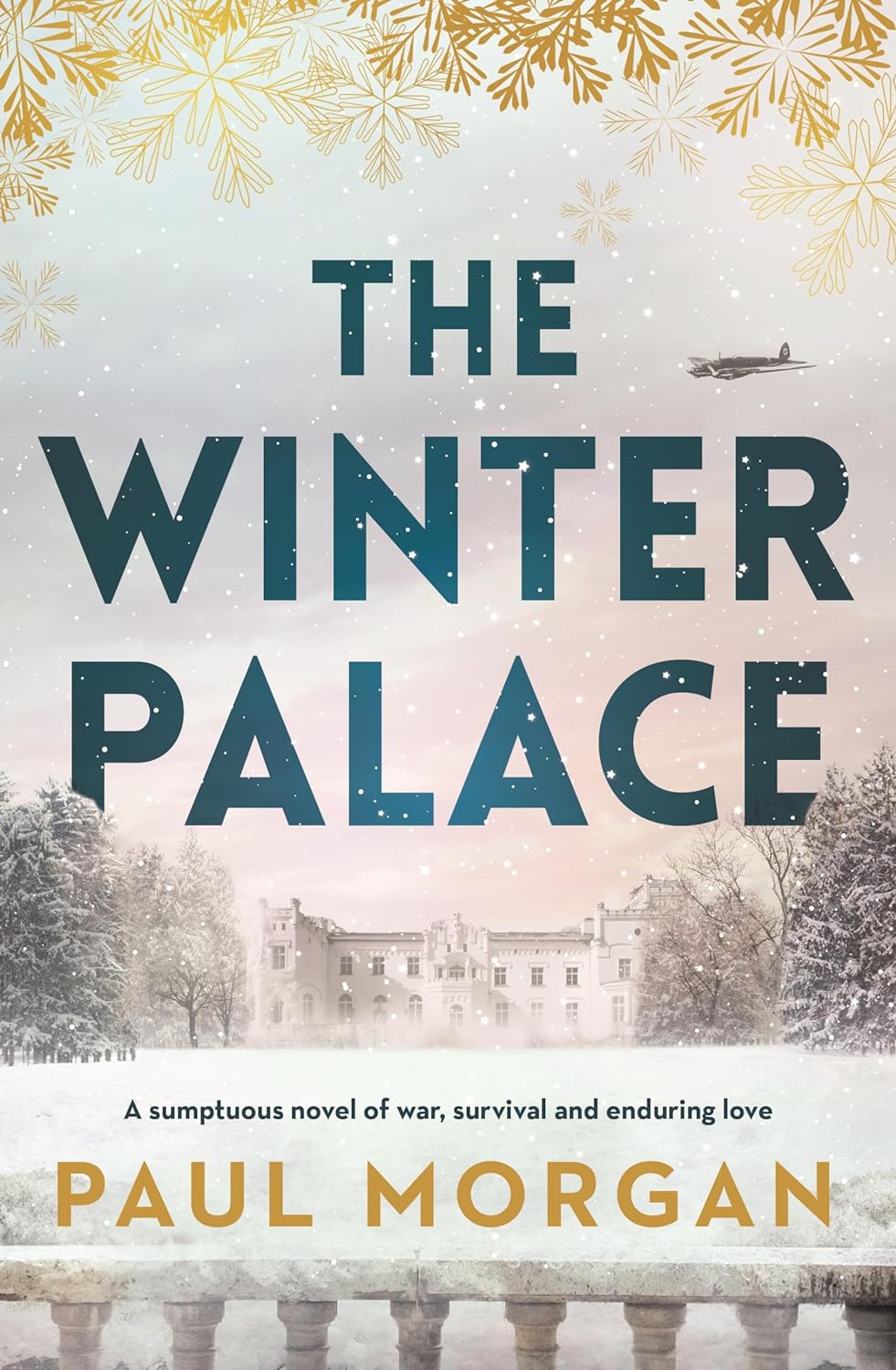
The Winter Palace Cover

Publisher: Penguin Books (Trade Paperback – 26 March 2024)

Series: Standalone

Length: 329 pages

My page: 4.25 out of 5 stars

Amazon

Compelling Australian author Paul Morgan presents an intense and intriguing historical drama that examines the tragic lives of a Polish husband and wife who find themselves torn apart by war and circumstance in The Winter Palace.

Plot Synopsis:

If he had died, I would know it in my heart.

In 1939, Anton, a captain in the Polish army, says goodbye to his wife, Elisabeth. He is leaving to defend their homeland against the invasion by Nazi Germany and Russia. They make a vow that – whatever happens, however much time passes – they’ll meet again at the Winter Palace, their stately home in the Polish countryside.

The winds of war draw them far apart. Anton is captured and sent to Siberia as a POW. He eventually joins a lost army that battles through snowstorms and scorching deserts in Central Asia to find freedom. Anton survives, driven by his determination to join Elisabeth again. She, meanwhile, is forced to be the ‘mistress’ of a Nazi officer before escaping to join the Polish resistance.

As the war ends, Anton and Elisabeth are at the opposite ends of the world. Anton is in Australia. Elisabeth is in Poland, awaiting his return for months and then years. Will they ever meet again at the Winter Palace?

From 1930s Europe to present-day Australia, this is a sweeping story of love that cannot be broken by time, distance, war or even death.

Morgan came up with a powerful and captivating tale in The Winter Palace which really hits hard.  Following Anton, a Polish military captain, and his wife Elisabeth, The Winter Palace features a well-planned-out split protagonist storyline that shows their respective dark journeys during the destructive chaos of World War II.

Both character-focused storylines are interesting and dark in their own ways, especially as the two protagonists go through hell and back as part of their respective war stories.  Anton’s plot follows the fate of the Polish soldiers who were captured during the joint Nazi and Soviet Invasion.  In Anton’s case, he experiences being a Soviet POW, a reluctant Soviet soldier fighting the Nazis, and then a member of the Allies when the Soviets send their freed Polish soldiers to Palestine.  Elisabeth’s story is more Poland focused, as she is forced to become a Nazi ‘mistress’ before escaping and finding purpose, first as a nurse, and then as a member of the Polish resistance.  Both storylines go in some very compelling directions, as the protagonists experience major traumas, tragedies and struggles, all while the two characters are convinced that they will never see their spouse again.

I honestly have a hard time saying which of these two storylines was my favourite, as both hit you in different ways.  Anton’s was possibly the more interesting to me as a fan of military history, and I found his constant struggle to survive the direct imprisonments he experienced to be both moving and intense.  There are some very direct tragedies in Anton’s experiences, including a particularly dark moment in the first half of the book, and I really found the story of the captured Polish soldiers to be extremely fascinating.  However, the other half the book that focuses on Elisabeth is just as dark, if not even more traumatic, especially as the protagonist experiences evil she can’t fight back against, at least not at first.  Watching her overcome her constant oppression and pull together a satisfying life that allows her to help people on many fronts was particularly inspiring, and I really enjoyed how her arc came together.

While these storylines are separate for the entirety of the plot, I felt that Morgan did a good job playing them off each other. The corresponding tragedies, the near misses in finding out each other’s fates, and the decisions they make as a result are all moving and captivating, and you are constantly enthralled to see if or how they will get back together.  I think that the ending Morgan left the book on was particularly moving, and it fit the overarching themes of the tragedy of war and not knowing about those left behind.  I also appreciated how Morgan didn’t overuse the trope of Australian descendants finding out the wartime secrets of their parents or grandparents.  Instead, readers were given a simple but highly effective connection to the present that ended the story on a thoughtful and peaceful note that was a great conclusion to such an intense story.

I really must emphasise how impressed and intrigued I was by some of the historical elements captured in The Winter Palace.  Morgan does an amazing job of showcasing various alterative experiences suffered by the Polish, from the initial invasion all the way up to the end of the war.  This includes a great rundown of how many citizens, especially women, were abused in Poland as the troops rolled in, which ensured a dark aura around the potential homecoming many characters were hoping for.  However, I found the historical details of the Polish soldiers and civilians captured in the opening days of the invasion to be the most interesting.  Watching the various hardships and journeys that these individuals had to go through during the war, including being POWs, having to fight alongside their former captors against the Nazis when they found themselves on the same side as the Soviets, and the transfer of their army to the Middle East to serve with the Allies on the Western front was extremely fascinating and it was an part of history you don’t see often in fiction.  These historical details from Morgan where some of my favourite parts of the book, and I deeply appreciated the compelling story he told around them.

Overall, The Winter Palace by Paul Morgan was an outstanding and compelling historical drama that really grabbed my attention.  Powerful, unflinching and focusing on a complex and dark period of our history, this was an emotionally charged and excellent read that is really worth checking out.

Amazon

Extinction by Douglas Preston

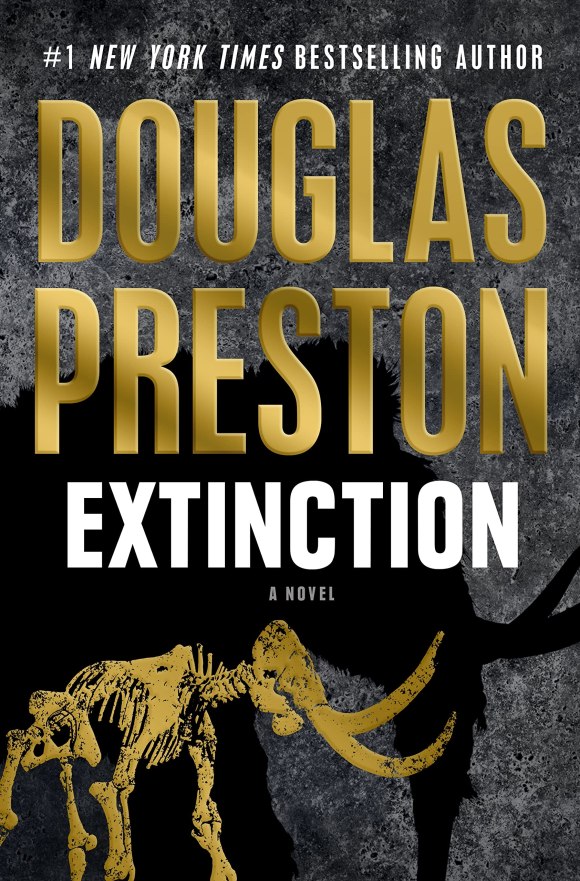
Extinction Cover

Publisher: Forge Books (ebook – 23 April 2024)

Series: Standalone/Book One

Length: 384 pages

My Rating: 4.5 out of 5 stars

Amazon

Entertaining author Douglas Preston presents Extinction, a wild science fiction thriller that will drag you in with is amazing and exciting story.

Preston is a veteran author who has been writing compelling novels for 30 years.  Preston is best known for his many collaborations with fellow author Lincoln Child, which have resulted in an impressive body of work, including several standalone novels, the long-running Agent Pendergast series, the Gideon Crew series and the Nora Kelly and Corrie Swanson books.  In addition to his work with Child, Preston has also written several of his own series, including the Tom Broadbent novels, the Wyman Ford books and his standalone novel, Jennie.  While I love the unique sound of many of these books, I have never had the opportunity to read anything from Preston before.  However, when I managed to get my hands on a copy of his new book, Extinction, I dove into it as soon as I could due to its awesome-sounding story.

Deep in the Colorado Rockies lies the exclusive and world-famous Erebus Resort.  Based in a massive 100,000-acre valley, the Erebus Resort contains many wonders of genetic science as clones of woolly mammoths, Irish Elk, giant ground sloths and other extinct species roam the valley, brought back to life, and turned into gentle tourist attractions.  The Erebus Resort seems like the most perfect place in the world, but nothing is what it seems.

When a billionaire’s son and his new wife are kidnapped on their honeymoon in the wild countryside surrounding the resort, Agent Frances Cash of the Colorado Bureau of Investigation is sent out to investigate.  Working with local county sheriff James Colcord, the two lead a force of police and Erebus security to try and locate the missing pair.  However, when the two hikers are found brutally murdered and mutilated, apparently by a group of ecological terrorists, the case takes a dark turn.

Determined to find the killers hiding out in the wilds, Cash and Colcord coordinate an exhaustive search while also trying to uncover the dark secrets hidden within the Erebus labs.  But with the body count mounting and the Erebus staff attempting to cover up the truth, Cash and Colcord find themselves pushed to the limit, especially as there is something unusual about their potential suspects.  The further they dig, the more they discover that the killers are there to pay back an old grudge and will do anything to get their revenge.

Extinction was an awesome book from Preston, and it was honestly as fun and addictive as I was hoping it would be.  Combining a great thriller storyline with some entertaining science fiction elements, Extinction was a pretty epic read which I powered through extremely quickly due to the very exciting and thrilling story.

Preston comes up with quite an entertaining and over-the-top narrative for Extinction, which is frankly glorious in just how crazy things get.  Starting off with a gruesome murder in a gigantic nature preserve with genetically resurrected creatures, the story quickly evolves into an elaborate and thrilling mystery with a background that is going to remind readers of Jurassic Park (although one character insists they are nothing alike).  The first third of the book serves as a great introduction to many of the key elements of Extinction, including the resort, the main characters, and the initial search for answers, while the hints of a wider conspiracy are also shown to the reader.  Things get even more interesting in the second third of the book, where further deaths are revealed, several intriguing and often annoying characters are introduced, and the potential antagonists of the story are somewhat revealed.  It is the later which most got my attention, as the protagonists face off against an unusual group of apparent terrorists with some distasteful and extreme methods.

I honestly was hooked after the first two thirds of the book, and I loved where the unique mystery was going.  However, it was the final third of Extinction that really sealed just how much I enjoyed this epic novel.  There are some big, if not especially surprising, reveals here about who is responsible for the attacks and why, which I was completely there for as it was so bonkers and fun.  The resulting chaos that results from these revelations is just perfect, as there are numerous outrageous and highly violent sequences that grab your attention.  Many of the supporting cast, including several particularly unlikeable characters, meet an ironic or suitably entertaining end, which really highlights the book’s focus on hubris and karma.  There are so many fun moments here, as well as some dark and serious pieces, as the protagonists try to survive and come to terms with what is going on.  I absolutely powered through this part of the book as I was so intrigued to find out how the story was going to come to an end.  Preston leaves everything on a very interesting note, and I frankly came away from the story very, very happy.

Preston did a great job of presenting this dark, if slightly exaggerated, narrative and I liked his writing style in Extinction.  In particular, he utilised the tried and tested thriller method of splitting the story amongst several intriguing characters, who told various aspects of the story.  While most of it was reserved for the well-written and compelling protagonists, Agent Frances Cash and Sheriff James Colcord, you also get to see the story through the eyes of several supporting cast members, which includes antagonists, supporting members of Cash and Colcord’s investigation, and other people located in the resort, including Cash’s politically minded boss, a grieving billionaire, and the unlucky members of a film crew working nearby.  This interesting range of characters and perspectives added some extra drama to the story, especially as Cash is forced to deal with incompetence, politics and coverups, while you also get some fantastic viewpoints of the events leading up to the inevitable carnage.  It helped that several of the characters that Preston chose to focus on where pretty unlikeable, and it proved very entertaining to see them get caught in the crossfire.

I think Preston did a good job of balancing the thriller and science fiction elements of Extinction to produce the best story.  The initial novel is primarily a crime fiction read, with the protagonist’s investigation and search taking priority while the park and its genetically engineered creatures serve as an intriguing and distinctive background.  However, as the story progresses, there are some interesting dives into the science surrounding the creation of the cloned animals, as well some of the interesting real-life history of the related genetic sciences.  This genetic science leads to some very fun and major reveals in the plot, and Extinction soon turns into a full-fledged science fiction read with some pretty over-the-top discoveries.  I feel that the inevitable science fiction story of Extinction was greatly enhanced because Preston drew the reader in with the exciting thriller elements, and it kept you guessing about who or what the antagonists were going to be.  While much of the genetics featured within Extinction is a bit overexaggerated for plot reasons, there is a grain of real science at its core, which makes the book a bit scarier to a degree.  Preston makes sure to highlight, both in the plot and his notes at the end, that much of what is being discussed is possible and could be seen in real life sooner than you’d think.  As such, you come away from Extinction being a little thoughtful, while also really appreciating the great story Preston has provided to you.

Overall, Extinction by Douglas Preston was an extremely fun book that I was very glad I decided to check out.  Loaded with some outrageous moments and exciting sequences, Extinction had me on the edge of my seat for its entire narrative, and I honestly got so caught up in seeing how events would unfold.  Dark, brutal, and gloriously unrestrained, readers will get all the excitement and thrills they could want out of Extinction, while finding the underlying mystery to be intriguing, concerning, and entertaining in equal measures.  A great novel that will no doubt bring me back to Preston’s writings in the future.

Extinction Cover 2

Amazon

The Maleficent Seven by Cameron Johnston

The Maleficent Seven Cover 2

Publisher: Angry Robot (Trade Paperback – 10 August 2021)

Series: Standalone

Length: 416 pages

My Rating: 5 out of 5 stars

Amazon

One of the fastest rising authors of dark fantasy fiction, Cameron Johnston, returns with his most entertaining book yet, the outstanding and epic novel, The Maleficent Seven.

Cameron Johnston is a great author who I was lucky to come across a few years ago with his debut novel, The Traitor God.  Bought on a whim because it sounded cool, The Traitor God ended up being one of my favourite fantasy books of the year thanks to its excellent revenge storyline.  The Traitor God was such an epic read and I ended up grabbing the intriguing sequel the following year, God of Broken ThingsGod of Broken Things (one of my favourite books of 2019) proved to be an outstanding sequel, and it ensured that I would be keeping an eye out for more of Johnston’s work.  This included his 2021 novel, The Maleficent Seven, which had an awesome plot behind it.  I honestly have been meaning to read The Maleficent Seven for ages but could never fit it into my schedule.  That was until last year, when I managed to power through the entire book in a single plane ride.  The Maleficent Seven ended up being a pretty darn exceptional novel that I wish I read a hell of a lot sooner.

It is a dangerous time in the lands of Essoran, as the Lucent Empire, a nation of apparent holiness and light, continuously expands, sweeping away all opposition and either burning or converting the survivors to their faith.  Despite their apparent benevolence, the Lucent Empire has a dark side dedicated to destroying all magic, heretics, and anything it deems evil through fire, blood and death.  The final stage of their invasion is set, but to proceed they first need to cross through the mountain road, which exits at the small town of Tarnbrooke.  All looks lost for the inhabitants of Tarnbrooke, who are likely to burn in the Lucent Empire’s light, until an unlikely figure appears to lead them.

Forty years ago, the dread demonologist Black Herron led a black horde of bloodthirsty soldiers, dark creatures and monsters on a deadly campaign that rocked all Essoran.  Total conquest of the realm looked certain, until she suddenly disappeared the eve of the final battle.  Without the will of their leader to hold them together, the army fell to infighting allowing their enemies to prevail.  No one knew what happened to Black Herron, until she reappears in Tarnbrooke, having lived there in disguises for decades.

Determined to stop the Lucent Empire and their fanatical leader no matter what, Black Herron takes over the town and prepares it for siege.  But even a being as powerful as Black Herron is unable to stop an entire divinely infused army by herself.  Instead, Herron seeks to bring together the six deadly captains of her army, whose skills and ferocity helped her to nearly conquer the world.  Together, this assortment of dangerous beings, including a vampire, a necromancer, an orc chieftain, a war god, a pirate queen and a deranged alchemist, might stand a chance against the coming storm.  But first they need to learn to work together once more, especially as each of them have a very different reasons to fight with Black Herron again.

The Maleficent Seven is a powerful, captivating and fantastically over-the-top novel that showcases Cameron Johnston’s impressive writing skill and ability to bring together great characters with dark fantasy settings.

Now, as you can probably guess from the name, The Maleficent Seven is a dark fantasy take on classic films like The Magnificent Seven and its predecessor, Seven Samurai.  Johnston sets the scenario perfectly, first introducing protagonist Black Herron and her previous evil horde, which disbands in the starting chapter.  From there, we get a time skip and are introduced to the book’s antagonists in the form of the Lucent Empire, their divinely empowered inquisitors and their leader, the Falcon Prince.  Their initial actions are enough to paint them as dangerous religious zealots who use their divine light and apparent holiness as a shield for their dark ambitions.  Their quest leads them on the road to Tarnbrooke, where the elderly Black Herron waits for them, having decided to make a stand and bring together her six former captains.

The first half of the book is dedicated to recruiting the six captains, who have scattered across the world.  All evil or deadly figures, none of them particularly wants to fight another war, but each are drawn back for different reasons, including family, pride, revenge and more.  Johnston does a good job of breaking up the recruitment process throughout the early chapters, and each of the revealed captains turn out to be crazier than the last, enhancing your anticipation for how they are going to act in the coming battles.  At the same time, you get to know the Lucent Empire, as they send agents against the captains, trying to eliminate the danger they pose.  Johnston lays down some very solid groundwork in this first half of the book, and you quickly get drawn to each of the seven main characters for various reasons.  There are a great range of character arcs spread out amongst these unlikely protagonists, and while a couple of them are purposely irredeemable, the rest prove to be surprisingly likeable and complex.  Johnston also takes the time to build up the antagonist, showcasing just how sinister they truly are, while also providing some slightly predictable revelations about their leader.

The second half of the book is dedicated to the battle for Tarnbrooke, which after seeing how crazy the first half of The Maleficent Seven is, you know is going to be good.  There is some good additional setup once the captains arrive in town, with the building of siegeworks, the training of the townsfolk, and other unusual preparations, all of which is reminiscent of the films the book is an homage to.  Johnston also builds up some additional character interactions that I really enjoyed, as certain townsfolk become connected to different saviours and there is some good follow-up regarding the protagonist’s prior adventures.  The resulting siege is everything you could hope for and more.  I am a huge fan of sieges in fiction (check out my previous list on the subject) and The Maleficent Seven is a particularly good example of an epic siege, especially as Johnston goes very over-the-top when it comes to the different weapons and methods the defenders employ.  Everything from vampiric conversion, exploding pigs and drugged townspeople are used to hold the line against the enemy in several brilliant and brutal fight sequences, while a major sea battle simultaneously occurs, featuring, amongst other combatants, a giant kraken.  All the fighting is fierce, desperate, and pretty damn bleak, while the characters each go through their own intriguing and powerful journeys.  I honestly was enthralled once the main fighting started, and Johnston really did not let up until the end.

The final sequence of the main fight turns into an impressive and extremely horrific brawl for survival as the protagonists fight against increasingly desperate odds.  There are also several betrayals as certain telegraphed plots from the evil protagonists come to fruition, and everyone fights to survive and come out on top.  You will be a bit unprepared for who lives and who dies during the final few chapters as Johnston loads up some fantastic twists and cool revelations that constantly leave you guessing.  Even when you’re sure you know who is going to survive, Johnston swiftly changes everything around with a few hilariously ironic reveals, as well as some more tragic deaths.  I liked how Johnston imbued the story with a certain level of hope towards the end, even if that was somewhat overshadowed by the carnage surrounding it.  There were also some darker moments in the conclusion, as certain characters realise just how damned they truly are.  Throw in a final great twist that really tied together a hidden motivation from the very start, and Johnston ends The Maleficent Seven on the perfect note for the reader.

Johnston did a remarkable job with this awesome book, and I loved how dark, powerful, and compelling The Maleficent Seven turned out to be.  Thanks to the unique array of characters, insane fight sequences and entertaining twists, The Maleficent Seven will prove really appealing to a wide array of readers, especially as Johnston got the right balance of action, tragedy, and humour throughout the entire read.  I especially loved how well the author flipped the established concept of heroes defending a town from villains on its head with the inclusion of seven fantasy supervillains leading the charge against a holy army.  The clever reveal that the apparently good warriors are far more sinister than the literal monsters is so well handled, and it was impressive to see a classic idea so well refreshed.  Throw in some excellent world building, an interesting collection of fantasy creatures and the sheer overwhelming chaos of a desperate siege, and there is something in The Maleficent Seven for all fantasy fans.

Something I really loved about The Maleficent Seven was the cool collection of characters who made up the key cast.  All the titular seven are very well represented throughout the book, and it proves very hard not to fall in love with each crazy member of the team; thanks to the narrative split, you get some intriguing insights into their motivations, actions, and history.

Of these characters, my favourite was probably Tiarnach, the fading war god who has fallen on hard times.  Thanks to the death of all his followers and his inability to fight against the Lucent Empire, Tiarnach starts the book off as a broken, drunken figure with barely any power left.  Joining Black Herron’s cause to get revenge and some form of redemption, Tiarnach becomes the defenders’ nominal drill instructor, trying to whip the townsfolk into a fighting force.  The connection Tiarnach forms with the townsfolk, his journey towards redemption, and the fact that he is one of the few characters without ulterior motivations, ensures that readers are drawn towards him.  He easily has one of the best, most tragic character arcs in the entire book, and I really enjoyed how Johnston utilised him.  The same can also be said for the legendary orc warrior, Amogg.  Amogg leaves her responsibilities behind to sate her desire for battle and alleviate her restlessness.  Thanks to her blunt and entertaining personality, Amogg was another character the reader connects to.  However, Johnston ensured that she became a true favourite when she begins to turn the women of Tarnsdale into an effective fighting force against their will.  Watching her empower and lead a band of fighting women into battle was very impressive, and her storyline was heartwarming and bleak in equal measures.

The other five characters each have their moment to shine.  The vampire, Lorimer Felle, was a suave and brutal figure whose inability to die, connection to his one loyal servant, and desire for destruction left a major impression.  Verena, the pirate queen, was also really good, although she kind of gets overshadowed by the other characters.  Jerak the alchemist was the most unhinged, and I loved how he ended up becoming more of a danger to his friends than his enemies thanks to his gruesome experiments.  Maeven, the necromancer, has one of the more complex story arcs in the book as she blurs the line between ambition, revenge and a desire for family.  While she fights alongside the others, her own need for vengeance and power leads her down a dark path, especially with her connections to the Lucent Empire’s leader.  Maeven’s entire story goes in some very dark directions, and I appreciated the dark note Johnston left it on.  Finally, the leader of the group, Black Herron, has a very interesting storyline that runs the gambit from dark queen to unlikely hero.  Johnston does a great job showcasing her rise and fall throughout the story, and the question of why she chose to abandon her conquest and her army is a fantastic part of the book.  All these protagonists are outstanding in their own way, and I loved how Johnston was able to weave together some compelling, entertaining, and occasionally sad storylines around such wonderfully outrageous figures.

Look, with a story this awesome there was no way I wasn’t going to love The Maleficent Seven, and I think my lengthy review above proves this point extremely well.  Cameron Johnston was on fire when he wrote his third full-length novel, and The Maleficent Seven proved to be a particularly intense, clever and impressive read.  Bringing together entertaining characters with insane violence amid a classic story scenario, The Maleficent Seven proved near impossible to put down and I loved every second I spent reading it.  A highly recommended read for all fans of dark fantasy, I cannot wait to see how Johnston’s next book (coming out later this year) turns out.

Amazon

Quick Review – Everyone Who Can Forgive Me is Dead by Jenny Hollander

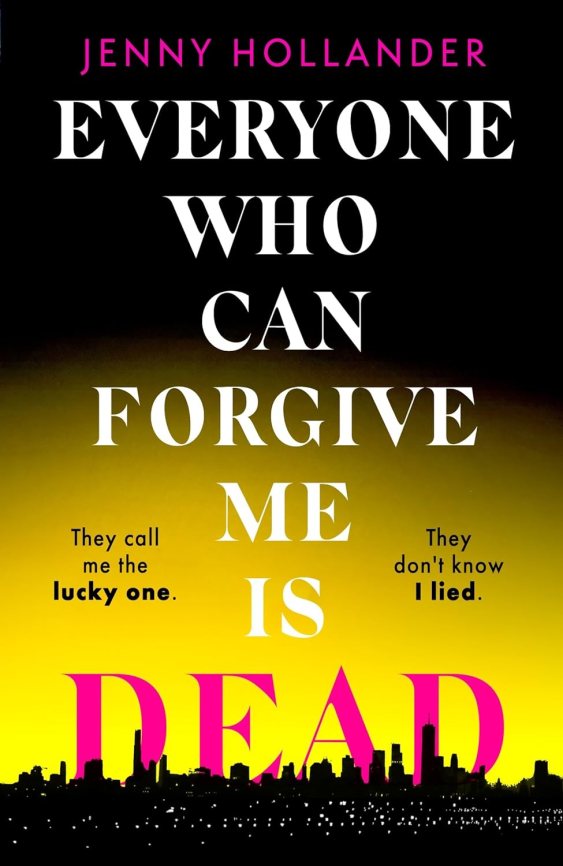
Everyone Who Can Forgive Me is Dead Cover

Publisher: Constable (Trade Paperback – 13 February 2024)

Series: Standalone

Length: 326 pages

My Rating: 4.25 out of 5 stars

Amazon

Debuting author Jenny Hollander presents a memorable first book with Everyone Who Can Forgive Me is Dead, an excellent read that provides a powerful insight into grief and trauma.

Plot Synopsis:

THEY CALL ME THE LUCKY ONE. THEY DON’T KNOW I LIED.

Nine years ago, Charlie Colbert’s life changed for ever.

On Christmas Eve, as the snow fell, her elite graduate school was the site of a chilling attack. Several of her classmates died. Charlie survived.

Years later, Charlie has the life she always wanted at her fingertips: she’s editor-in-chief of a major magazine and engaged to the golden child of the publishing industry.

But when a film adaptation of that fateful night goes into production, Charlie’s dark past threatens to crash into her shiny present.

Charlie was named a ‘witness’ in the police reports. Yet she knows she was much more than that.

The truth about that night will shatter everything she’s worked for. Just how far will she go to protect it?


Everyone Who Can Forgive Me is Dead
is an outstanding first book from Hollander, who provides a gripping and intense narrative for readers to get stuck into.  Told through the eyes of main character Charlie Colbert, the story quickly engrosses you.  Charlie has rebuilt her life after a brutal attack years ago, but when secrets from the past threaten to come forth, Charlie is forced to interact with her fellow survivors once again.  At the same time, Charlie also begins reliving the events leading up to that fateful night in her head, desperately trying to remember everything that happened to truly understand everything that she’s been running from.

The resulting story is very good, and Hollander has come up with a gripping, character-driven book that you can really sink your teeth into.  The combination of past and present storylines is quite effective, and I liked how you got to see the protagonist’s dark reactions in the present while slowly learning about the events that traumatised her and the people involved.  The way in which Hollander reveals all the secrets of the past is handled exceptionally well, and I loved the combination of flashbacks, discussions in the present, and quotes from fictional news articles that hint at what happened.  The full events of the past storyline turn out to be far more complicated than you initially think, and the author throws in some incredibly clever twists.  I honestly was surprised at some of the more brilliant reveals that come to light, and you really appreciate Hollander’s ability to misdirect the audience into assuming certain things happened.  The full reveal and the fallout in the present for the protagonist are pretty amazing, and I loved how everything came together.  The reader really comes away feeling satisfied, especially as everyone gets what they truly deserve at the end.

While I loved the intricate story that Hollander pulled together for Everyone Who Can Forgive Me is Dead, I think the most distinctive aspect of the book is the author’s focus on trauma and how different people deal with it.  This is mainly done through the eyes of the main character, Charlie, who is forced to continuously live with the trauma, guilt and emotional damage that followed the college massacre.  While a lot of this trauma results in a memory black hole for the protagonist, you get to see other aspects of it as the book continues, as she is dragged back into the past and begins to relive all the dark feelings that emerge.  The author’s portrayal of how a person would deal with such events, as well as how it would impact their memory, feels extremely realistic, and you can really feel the emotional damage done to Charlie and those closest to her as they try to help.  Other characters are also forced to deal with the trauma in other ways, and the different levels of regret, involvement and despair prove to be a captivating part of the book.  Throw in a cynical, if realistic, look at how the public idolises dark events, and Everyone Who Can Forgive Me is Dead proves to be quite an emotional rollercoaster.  This emotional charge really enhances the impact of the book, and I deeply appreciated how Hollander worked the protagonist’s attempts to remember and overcome her past into the overarching story.

Overall, I found Everyone Who Can Forgive Me is Dead to be an excellent and compelling first novel from Jenny Hollander that is really worth checking out.  Thanks to the great blend of personal storytelling, moving emotion, and dark secrets, readers come away from Everyone Who Can Forgive Me is Dead deeply moved, and I look forward to seeing what intriguing reads Hollander writes in the future.

Amazon

Quick Review – The Holy Terrors by Simon R. Green

The Holy Terrors Cover

Publisher: Severn House (ebook – 6 February 2024)

Series: Standalone

Length: 214 pages

My Rating: 3.5 out of 5 stars

Amazon

Established thriller author Simon R. Green produces a fun and compelling read with The Holy Terrors, a cool book with an interesting plot idea behind it.

Plot Synopsis:

Six people locked in a haunted hall . . . Cameras watching their every move . . . And then someone dies . . . This first in a spine-tingling new paranormal mystery series from New York Times bestselling British fantasy author Simon R. Green will make you doubt your judgement – and believe in ghosts!

Welcome to Spooky Time, the hit TV ghost-hunting show where the horror is scripted . . . and the ratings are declining rapidly. What better way to up the stakes – and boost the viewership – than by locking a select group of Z-list celebrities up for the night in The Most Haunted Hall in England (TM) and live-streaming the ‘terrifying’ results?

Soon Alistair, a newly appointed Bishop, actress Diana, medium Leslie, comedian Toby and celebrity chef Indira are trapped inside Stonehaven town hall, along with June, the host and producer of the show. The group tries to settle in and put on a good show, but then strange things start happening in their hall of horrors.

What is it about this place – and why is the TV crew outside not responding? Are they even on air?

Logical Alistair attempts to keep the group’s fears at bay and rationalise the odd events, but there are things that just can’t be explained within reason . . . Can he stop a cold-blooded would-be killer – even if it’s come from beyond the grave?

This locked-room mystery with a paranormal twist is classic Simon R. Green, featuring his trademark humour and imagination, irresistible characters, and thoroughly entertaining plotting.


The Holy Terrors
was an intriguing book from Simon R. Green that I had a fun time getting through.  Short and very sweet, The Holy Terrors made good use of its compelling plot idea, which saw a bishop, a diva, a comedian, a celebrity chef, a psychic and a TV producer become trapped in a haunted town hall.  While that sounds like the set up to an elaborate joke, it produces a great plot background for an entertaining novel that you can quickly power through.

I loved the author’s idea of simultaneously parodying ghost shows and the reality television crowd, while also presenting the reader with a unique locked-room mystery scenario that might or might not be caused by supernatural forces.  Thanks to these ideas, I think the overall story was pretty good and proved to be quite exciting.  Green sets everything up nicely, and you are quickly drawn into the plot, especially as you know that there is something bad on the horizon.  After a few early scare elements, you are led nicely to the centre of the story, where one of the characters dies and the rest are left scrambling to figure out who or what is trying to kill them.  This proves to be a great backbone for much of the story, and the initial range of characters are fun.

While I enjoyed how the book was set up, I think that it slightly fell apart in the second half.  The story gets a bit silly in places, and it is easy to predict what the subsequent order of death was going to be.  I did enjoy how Green tried to keep the reader guessing about whether this was a horror novel or a murder mystery, especially as there are some great psychic inclusions, apparitions, and other mysterious occurrences.  However, despite the included misdirection, the answer to this question proved to be a bit obvious.  The eventual culprit reveal was predictable, as it was literally the most obvious suspect there, and Green’s method reveal was pretty unsubtle.  Still, the final confrontation was nicely written, and I liked the cool conclusion to the plot.  in the end, The Holy Terrors proves to be quite an easy book to get through quickly, and I manage to finish it off in two sessions.

While Green proved adept at creating a chilling atmosphere and utilising it well in his story, I did have certain issues when it came to the characters.  The author does come up with six interesting main figures for the story, each of which is a celebrity reality star archetype, and there are some fascinating dives into their backstories, especially during an emotional sequence near the climax.  However, for the most part I felt these characters were underdeveloped, and Green could have showcased them a little better.  Certain relationships between some of the characters were a bit forced, and quite a few interactions felt unusual.  I also found some of the dialogue to be a bit stilted and weak in places, and it could have come across as a bit more natural.  These elements let down The Holy Terrors’ promising plot to a degree, although I still managed to have fun getting through it.

Overall, The Holy Terrors was an interesting read from Simon Green that you can have an entertaining time with.  The author’s intriguing scenario does prove quite compelling, and while certain elements of the book were not as strong as I would have hoped, you can easily power through this book in no time at all.  As such, The Holy Terrors is a great book for anyone looking for a quick and efficient novel that tries to blur the line between horror and murder mystery.

Amazon

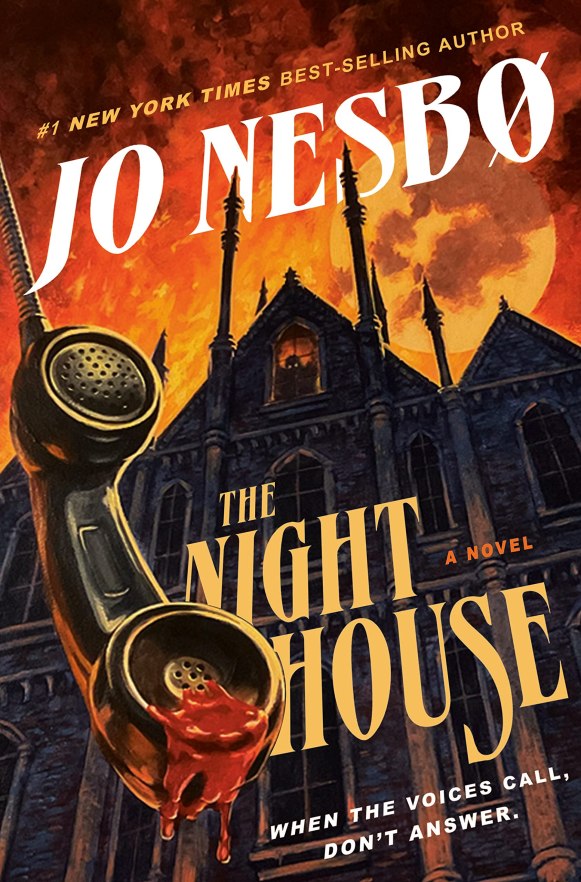
Quick Review – The Night House by Jo Nesbo

The Night House Cover

Publisher: Harvill Seeker (Trade Paperback – 26 September 2023)

Series: Standalone

Length: 263 pages

My Rating: 4.25 out of 5 stars

Amazon

Earlier this year I was lucky enough to receive a copy of the intriguing new novel from international bestselling author Jo Nesbo, The Night House.  Nesbo is an author whose work I have been interested in checking out for a while as I have heard a lot of about his intriguing crime fiction stories and thrillers.  I was really excited to check out something from Nesbo this year, and whilst The Night House is somewhat different from the author’s more typical work, it proved to be a very fascinating and compelling read with a deep story behind it.

Plot Synopsis:

WHEN THE VOICES CALL, DON’T ANSWER…

In the wake of his parents’ tragic deaths fourteen-year-old Richard Elauved has been sent to live with his aunt and uncle in the remote town of Ballantyne.

Richard quickly earns a reputation as an outcast, and when a classmate named Tom goes missing, everyone suspects the new, angry boy is responsible. No one believes him when he says the telephone booth out by the edge of the woods sucked Tom into the receiver like something out of a horror movie.

No one, that is, except Karen, a beguiling fellow outsider who encourages Richard to pursue clues the police refuse to investigate. He traces the number that Tom prank called from the phone booth to an abandoned house in the woods. There he catches a glimpse of a terrifying face in the window. And then the voices start . . .

When another classmate disappears, Richard must find a way to prove his innocence as he grapples with the dark magic that is possessing Ballantyne.

Then again, Richard may not be the most reliable narrator of his own story.


The Night House
was a very unique read that combines several disparate genre elements and turns them into a personal and moving novel set around a damaged protagonist.  The book is broken into three parts with three different, if closely related, stories being told in each section of the book.  The first story is a great coming-of-age tale that sees an extremely angry teenager, Richard Elauved, witness a series of extremely graphic and strange deaths around town, seemingly linked to a phone number he called as a prank.  Blamed for these apparent murders, Richard tries to prove his innocence and face off against a mysterious and dangerous evil threatening his town.  There is something very reminiscent of classic Stephen King in this early part of the book, and Nesbo moves this horror infused storyline at a very quick pace, setting Richard up against terrors and mysterious manipulations, with many of his friends dying all around him.  There is an interesting conclusion to this part, which really explores the protagonist’s deeper feelings and desire to be the hero, and it proved to be a great self-contained story.

Things start to take an interesting turn as Nesbo suddenly jumps into a whole new story.  The second part of The Night House puts a different tint on the prior events as an older Richard appears and shows that not everything is as it seems.  There is a great central story that takes some dark twists and turns, while you also get some intriguing continuation of character elements from the first part of the book, especially towards Richard’s past and the events that formed him.  Nesbo introduces some key revelations, hints and intriguing differences between the protagonist’s memories of events and what other characters remember, all of which lead up to the big twist revealed in the third part of the book.

I’m not going to dive too deeply into the third and final section of The Night House, as to do so would reveal too many spoilers, but it really ties everything together in an extremely clever way.  The overarching secrets, conflicting stories and differing backgrounds are all worked into this short final part of the book, and you get a complete story as the gaps in Richard’s unreliable narration are filled in.  This part of the book really brings the story full circle, and you can fully appreciate how clever Nesbo has been in the prior sections of the book, especially with how he was simultaneously telling unique stories while also setting up this finale.  There was some brilliant character work involved in building up this finale, especially when it comes to trauma and how it impacts behaviour, and I really enjoyed how the horror elements for the prior parts of The Night House had some great symbolism for the book’s conclusion.

I ended up having a great time with The Night House, and it proves to be a quick and interesting read to get through.  Thanks to its excellent character work and the clever way Nesbo sets up the story, The Night House is one of the more unique reads of 2023, and I really appreciated the compelling and heartfelt story that Nesbo told, especially as he managed to work some memorable horror moments into it.  A moving and compelling read that proves to be an excellent introduction to Nesbo’s writing.

Amazon

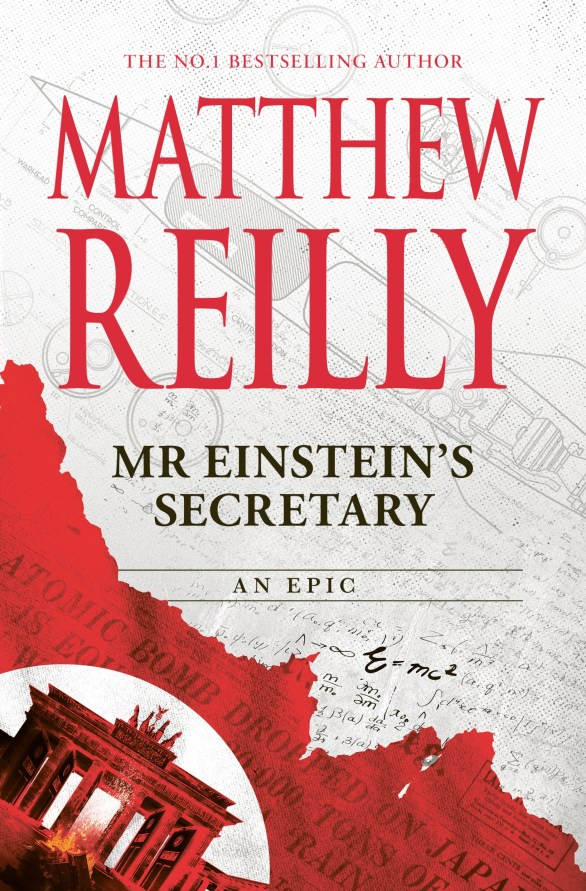
Mr Einstein’s Secretary by Matthew Reilly

Mr Einstein's Secretary Cover

Publisher: Macmillan Australia (Trade Paperback – 17 October 2023)

Series: Standalone

Length: 464 pages

My Rating: 5 out of 5 Stars

Amazon

Acclaimed Australian author Matthew Reilly presents one of the most entertaining, moving and brilliant historical fiction reads of 2023 with his compelling and well-written novel, Mr Einstein’s Secretary.

Matthew Reilly is a highly creative Australian author who has been wowing audiences for years with his elaborate and inventive thrillers and science fiction novels.  Known for his Shane Schofield and Jack West Jr series, as well as several impressive standalone reads, Reilly has produced an intriguing array of fiction throughout his career, much of which revolves around ancient secrets and action-seeking protagonists.  I have personally only had the pleasure of reading one of Reilly’s novels so far, the intriguing 2019 release, The Secret Runners of New York, which saw a group of teenagers travel back and forth between the modern city and a future dystopia.  I really enjoyed this cool book and I have been meaning to read more of Reilly’s works.  As such, when I got a copy of Reilly’s first foray into historical fiction, a favourite genre of mine, with Mr Einstein’s Secretary, I had to check it out, and boy was I glad that I did.

Born at the start of the 20th century in Berlin to an American mother and a German father, Hanna Fischer is a curious young woman whose greatest wish in life is to study physics like her mother and her neighbour the great Albert Einstein.  However, when her peaceful existence is violently turned upside down in 1919, Hanna has no choice but to flee to America and make a new life for herself in New York.

Forced to give up her dreams of studying physics, Hanna makes the fateful choice to enrol in a prestigious school for secretaries.  Her decision will place her in the orbit of some of the most interesting people in the city, including business tycoons, socialites, gangsters and one determined Treasury agent, as she works to find a way to return home.  But as the years go by, it soon becomes apparent that the Germany she left behind is no longer her home, especially when Hanna returns to Einstein’s orbit as his secretary.

Trapped in Germany when the Nazis come to power, Hanna is recruited as an American spy and soon finds herself serving as secretary to several high-ranking Nazis.  Caught between dangerous men, lethal intelligence operatives and her own conflicted loyalties, Hanna attempts to uncover the terrible truths of the Nazi regime without her own secrets coming out.  But not everything in Hanna’s life is as it seems, and one dangerous part of her past will always come back to haunt her.

Mr Einstein’s Secretary was a fascinating and compelling read that had me hooked very early thanks to its unique style, focus on various gripping parts of early 20th century history, and fantastic characters.  Loaded with some fascinating detail, a ton of action and a wonderful life story, I honestly couldn’t put this book down at times and I managed to power through the entire second half of the book in a single afternoon.  Due to its clever writing and brilliant story, I just had to give Mr Einstein’s Secretary a full five-star rating, and this is honestly one of the best historical fiction novels of 2023.

Reilly tells a very unique story in Mr Einstein’s Secretary that primarily focuses on protagonist Hanna Fischer and her experiences living through some of the most turbulent parts of history.  Reilly really piqued my interest early on when the first-perspective narrative opens on the protagonist’s funeral, with the reader apparently seeing it through her ghost’s eyes.  While having the narrator’s funeral upfront can sometimes be problematic, I think it worked out well for this book, especially as Reilly introduces a few key characters for the reader to keep an eye out for, before jumping into three key scenes from the protagonist’s life.  These scenes are three separate interrogations that the protagonist experienced during her intriguing career, each one undertaken by a different regime, including the American police, the Nazis, and the Soviets.  All of these interrogations are key reference points in the main story, and you are immediately intrigued to see the chain of events that leads the protagonist to each of them, as well as how she managed to get out of the deadly situations each time.

After this excellent introduction, the story begins in earnest with a more traditional chronological approach.  Starting with her childhood in Berlin where she lived next to Albert Einstein, Hanna’s story quickly fills with tragedy and adversity, especially as the early clouds of fascism and the consequences of World War I cause her to lose everything and force her to flee to America, where she is enrolled in a secretary school.  This early part of the book is well set out, introduced several key characters, and really showcased some of the defining early moments for the protagonist that would serve her well in the future, as well as exploring the impacts that chance and simple choices can have on a person.  The next section of the novel set in New York is initially a bit slower, but it soon picks up, especially when the Prohibition Era kicks in.  Reilly has an excellent way of portraying someone’s personal story in the most interesting way, and I loved seeing Hanna’s life in America, especially when it combined early corporate America with gangster lifestyle and the burgeoning physics scene.  There is a compelling sojourn back to Germany for Hanna that results in nothing but heartbreak, especially when her twin is involved, and I really enjoyed the protagonist’s encounters with a New York gangster during this time, especially as it showcases just how practical and cold Hanna can be when necessary.  This part of the book ends when it reaches the events of the first interrogation, and the protagonist becomes a more permanent secretary to Einstein.

From there, the plot of Mr Einstein’s Secretary moves at a much quicker pace, especially when Hanna gets dragged into the events surrounding the rise of the Nazi regime.  Trapped in Germany after Hitler’s rise to power, Hanna is recruited to spy on the Nazis and becomes the secretary to key members of the party.  Thanks to this, Hanna has an excellent view of the full evils of the Nazis and becomes involved in several espionage missions against them and the Soviets.  This part of the book combines spy thriller moments with compelling and dark historical detail, and you really get caught up in Hanna’s life as an operative, especially when it goes side by side with some of the major moments of the Nazi regime.  I was absolutely powering through this part of the book it was so darn fascinating, especially as Hanna had to also deal with personal issues and her growing revulsion about what she was witnessing.  Reilly keeps the plot moving quickly in the final third of the book, and there are some truly intense scenes leading up to the fall of Berlin, especially when Hanna is forced to make some hard choices and faces the ultimate betrayal.  I loved some of the shocking moments and twists that emerged in this last section of the novel, especially as it places the protagonist in some major trouble, and the resulting scenes have you constantly on the edge of your seat.  Everything ends on a pretty comfortable and satisfying note, and I felt that Reilly resolved his story in an excellent if crowd-pleasing way.  An overall outstanding, gripping and electrifying story from start to finish.

While this impressive story is pretty strong and exciting in its own right, what really elevates Mr Einstein’s Secretary is the author’s clever and distinctive writing style.  I loved how Reilly set up the entire story as the memories of a shadowy figure watching their own funeral, especially as events unfolding before them reminds the protagonist of some of the most traumatic memories of her life.  The initial focus on the three defining interrogation sequences produces an extra strong start for the novel, and the fascinating foreshadowing that resulted really heightened the reader’s anticipation for the rest of the story.  While the story does transfer to a more traditional biographical novel after these scenes, Reilly breaks this up masterfully by having the narrator suddenly remember other similar events of her life, and then having this scene unfold.  For example, when the character visits a certain location as a child, Reilly will then insert a quick paragraph showing the same location at a different part of her life.  This switch between time periods proves to be a fascinating and powerful way of expressing the character’s linked memories, and it also adds in some interesting additional foreshadowing and some fascinating contrasts.  Reilly does a wonderful job of highlighting what part of the character’s life these memories are from by changing the font type around, and I loved how multilayered the novel got as a result.  An additional font choice towards the end of the book also highlights a shocking and dark change in narrative focus, as a similar figure starts to tell the story in their own twisted way.  These unique writing elements really helped to turn Mr Einstein’s Secretary into quite a distinctive read, and I deeply appreciated Reilly’s desire to experiment and tell a historical story his own way.

Aside from Reilly’s intriguing narration and style choices, I also think that Mr Einstein’s Secretary had an excellent balance of action, intensity, drama and romance to appeal to a wide audience of readers.  The author does a remarkable job of developing his protagonist while simultaneously exploring so many fascinating historical events and moments, especially in New York and Germany.  So many key historical events in the lead-up to and eventual outbreak of World War II are covered in excellent detail, and Reilly does an outstanding job of working his protagonist into these events and making her a witness and participant.  I loved Reilly’s depictions of 1920s New York, which served as a grand backdrop for much of the early narrative, and the author takes the time to showcases several key periods of the decade, from the early roaring twenties with the economic boom, the prohibition era, and the eventual Wall Street crash.  There are also some fascinating, if necessarily dark, depictions of the rise of the Nazi regime in Germany, which Reilly captures perfectly, especially through the eyes of his protagonist who has her own issues with the Nazis due to her family and her association with Einstein. There is even an intriguing discussion about historical physics, with the protagonist having a fantastic inside track, and watching her spy on the German attempts at nuclear technology is an intriguing part of the book, especially after seeing Oppenheimer earlier this year.  Reilly utilises all these historical events extremely well, and his use of them allows for some great support characters, especially as there is a combination of fun original characters and multiple real life historical figures.  I had such a brilliant time with the historical focus of Mr Einstein’s Secretary, and it proved to be a powerful, exciting and well-balanced read.

Matthew Reilly does it again with his first major foray in historical fiction.  Mr Einstein’s Secretary is a powerful and captivating tale of life, love and loss in the run up to World War II and I loved every second spent with Reilly’s compelling protagonist.  Featuring a brilliant and unique style from the author that deeply enhances an already fascinating narrative, Mr Einstein’s Secretary was a treat from start to finish, and I cannot recommend it enough.

Amazon

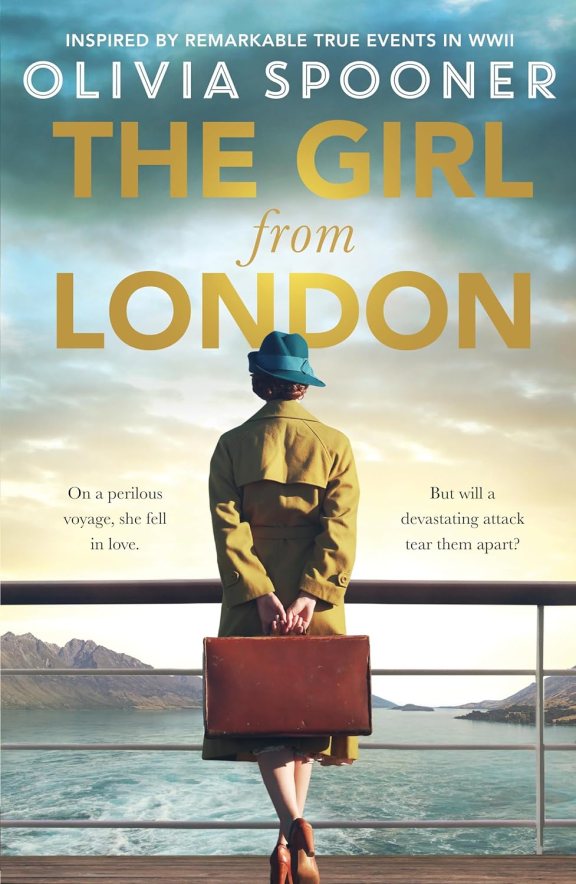
Quick Review – The Girl From London by Olivia Spooner

The Girl From London Cover

Publisher: Moa Press (Trade Paperback – 14 November 2023)

Series: Standalone

Length: 314 pages

My Rating: 4.25 out of 5 stars

Amazon

Fantastic New Zealand author Olivia Spooner presents her first dive into historical fiction, with the intriguing and clever historical drama, The Girl Form London, an outstanding read that proved quite fascinating.

Plot Synopsis:

London, 1940. Ruth, a young schoolteacher, volunteers as an escort helping to evacuate children from war-torn England to Australia and New Zealand. Her three-month voyage is fraught – their passage is perilous, and the children anxious and homesick. Nine-year-old Fergus is more troubled than most and Ruth forms an unexpected bond with the boy.

It’s not just Fergus who captures Ruth’s attention. Bobby, a fellow volunteer who initially infuriates Ruth with his laidback charm, somehow gets under her skin and throws her ordered life into chaos.

Tragedy strikes on their return voyage, when the Rangitane is attacked by German raiders. As the ship goes down, the surviving passengers are taken as prisoners of war aboard the German vessel. To the rest of the world, they are missing, presumed dead.

New Zealand 2005. Hazel boards a plane to London, eager to explore Europe. Sitting next to her is a man named Joe. On her lap is a treasured book from her grandfather, Fergus. A book that will finally reveal Ruth’s story.

A captivating, heart-wrenching story of love, loss, and the resilience of the human spirit that will stay with you long after you turn the final page.

This was an outstanding novel from Spooner that took the reader on an enchanting and tragic adventure during some very distinctive moments from World War II.  Spooner chose to tell The Girl From London’s narrative through the somewhat overused medium of a young person in modern times learning about the struggles their older relatives went through during the war.  However, I rather enjoyed Spooner’s take on this writing trope by having her modern characters getting invested in a novel that covers the adventure of Hazel’s grandfather and the people that were important to him as a child.  This not only allowed the author to dive back into the unique story generated in the past but also allowed for a quite good and heartfelt romance story to occur in the present as Hazel and Joe have a meet-cute which develops naturally into a compelling, complex relationship.

While this modern storyline was interesting, I much preferred the storyline set in the past surrounding Ruth’s journey from England to Australian and New Zealand and then the tragic events aboard the Rangitane.  That entire journey away from England was pretty darn fascinating, and I loved the captivating details of how the children were being transported to safety, the inherent tragedy of their journey, and the complicated figures who volunteered to help escort them to a new life.  Spooner covers the historical aspects of their journey extremely well and the first half of their story is quite powerful and lovely, especially as she takes the time to explore the various characters, their developing relationships, and their complex motivations for being on the ship.

The Girl From London takes a fascinating turn once the main characters start the second part of their journey aboard the Rangitane.  The historical events covering the sinking of this ship off the coast of New Zealand during the war is absolutely amazing, and despite a love for history and a good knowledge of World War II history, I had personally never heard of the Rangitane before.  As such I was really enthralled by this real-life tale, and Spooner told it magnificently, examining the taking of the ship in detail and showcasing all the remarkable events that followed.  While these events in themselves are fascinating, Spooner makes them even more compelling by tying her great characters into this historical event.  By this point of the book, you’ve come to care for the characters, so having them involved in this tragedy really raises the stakes for the reader, especially as you know something bad has to happen to Ruth at some point.  This entire part of the book was pretty remarkable, and I really got caught up in how everything unfolded.

I think that Spooner did a pretty good job of bringing the two separate storylines together in an effective and enjoyable way.  As I mentioned above, I liked Spooner’s version of the relative finding out their grandparent’s story here, and the constant breaks in the World War II storyline to explore Hazel and Joe’s burgeoning relationship gave the story a distinctive flavour.  Honestly having her grandfather’s story not become Hazel’s entire identity was quite refreshing compared to other historical dramas I’ve read and I liked the mixture of storylines that emerged.  Still, it was good to get some closure on the main storyline surrounding Ruth, and I liked the emotionally powerful way that Spooner chose to have her story be told.  The ending is both tragic and heartwarming in all the right ways and this ended up being quite an excellent read.

Overall, The Girl From London is a wonderful and compelling historical drama that I had a fantastic time reading.  Olivia Spooner produced a compelling and emotionally charged narrative, that examines romance, sacrifice and the power of choices across the generations, while also diving into a fascinating historical event.  This ended up being an amazing book and Spooner definitely showcased her ability as an author in her first foray into historical fiction.

Amazon

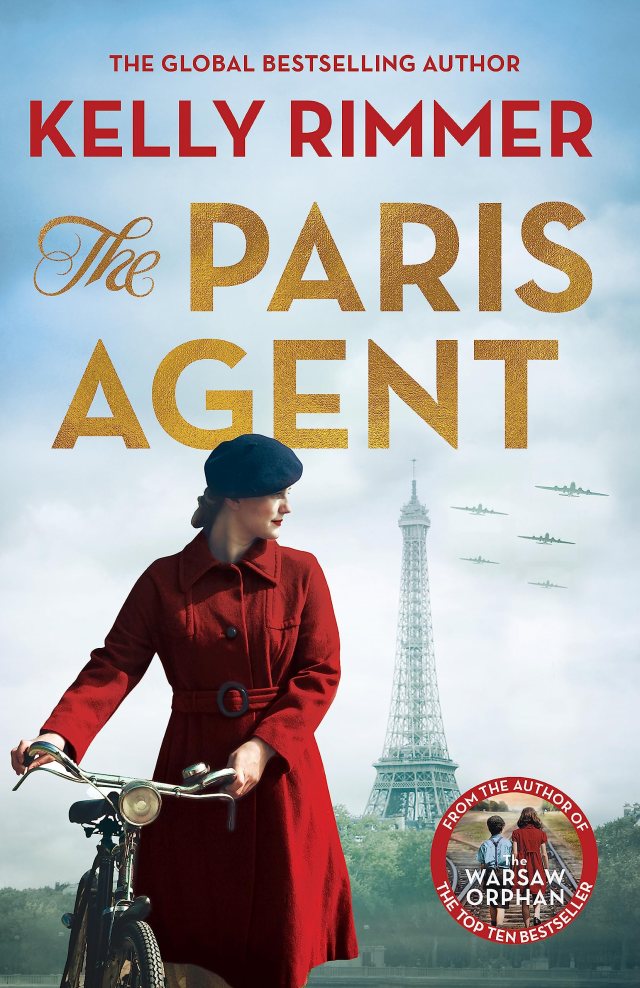
Quick Review – The Paris Agent by Kelly Rimmer

The Paris Agent Cover

Publisher: Hachette Australia (Trade Paperback – 28 June 2023)

Series: Standalone

Length: 337 pages

My Rating: 4.5 out of 5 stars

Amazon

One of Australia’s premier authors of historical fiction, the supremely talented Kelly Rimmer, returns with another moving and intense novel that dives into the horrors of World War II, The Paris Agent.

Over the last couple of years, I have been deeply impressed with the works of Kelly Rimmer, a well-established Australian author whose previous novels have been excellent historical dramas set during the Second World War.  Rimmer’s books are pretty spectacular, as they masterfully blend powerful personal stories with intense depictions of key parts of the war, especially those involving the evils of the Nazi regime.  Her last two books, The Warsaw Orphan (one of my favourite Australian books of 2021) and The German Wife (one of my favourite books and Australian books of 2022), were exceedingly moving, and I now make it a point to grab her new books each year.  Her latest novel, The Paris Agent, presented the reader with an interesting new story, one that focuses on female espionage agents in occupied France.

Plot Synopsis:

Two otherwise ordinary women become spies in WWII France in this sweeping new novel of historical suspense by New York Times bestselling author Kelly Rimmer

Twenty-five years after the end of the war, ageing British SOE operative Noah Ainsworth is reflecting on the secret agent who saved his life when a mission went wrong during his perilous, exhilarating years in occupied France. He never knew her real name, nor whether she survived the war.

His daughter Charlotte begins a search for answers. What follows is the story of Fleur and Chloe, two otherwise ordinary women who in 1943 are called up by the SOE for deployment in France. Taking enormous risks with very little information or resources, the women have no idea they’re at the mercy of a double agent within their ranks who’s causing chaos.

As Charlotte’s search for answers continues, new suspicions are raised about the identity of the double agent, with unsettling clues pointing to her father.

This was another powerful and clever novel from Rimmer, who takes on another aspect of World War II and weaves together an outstanding story.  The focus on Allied female spies being dropped into occupied France is a well-established and highly utilised topic in historical fiction and historical dramas, and Rimmer manages to produce a very distinctive read in The Paris Agent that I found very hard to put down.

To tell her story, Rimmer utilises an excellent multi-perspective narrative, with some interesting time differences also added in for each of the timelines.  The first timeline, shown from the perspective of Charlotte, is set in 1970, and follows the protagonist’s attempts to find out more about her amnesic father’s activities during the war after she finds out he was a spy in France.  The other two storylines focus on the characters of Fleur and Chloe respectively.  Both characters were dropped into France at different points of the war to do their own specific missions, including committing sabotage and investigating reports that the local network had been compromised.  These two past storylines are set across a couple of years in the war, with the two protagonists interacting with each other, and Chloe’s father, Noah, at various points, and together the three storylines wrap together to provide a complex and powerful narrative of espionage, personal relationships, and betrayal, all set in front of the brutal Nazi occupation of France.

All three stories are brought together throughout the course of The Paris Agent, and I liked the complex and intriguing narrative threads that emerged.  The risks and sacrifices of the characters during the war are pretty intense, and the emotional connections that they make bring a compelling balance to the dark story elements of espionage and betrayal.  The third storyline that focuses on Charlotte and her father is also very good, both on its own and for how it supports and enhances the other two plot lines.  This more modern storyline gives some great hints at the tragedy to come in the other storylines, while also underlying further the cost that these intelligence agents had to make.  The intriguing hints that Noah might have been a traitor responsible for terrible events is very compelling, and it is fascinating to see the impact that the war was still having on survivors like him.

The two storylines in the past eventually come together in the last quarter of the novel, and some of the compelling twists that come from this are moving and dark.  The identity of the traitor, while not overly surprising, does have some major emotional heft to it, and you can’t help to despise the antagonist, especially as Charlotte’s storyline serves to underline all the terrible things they did.  Both the Fleur and Chloe storylines end on a very tragic, if inspiring, note, and readers will come away from that exceedingly saddened but impressed by how well written these storylines were.  I did think that the ending of the Charlotte storyline was a little weaker, mainly because it relied on a little too much on coincidence, and I think that the author left some intriguing story opportunities closed.  Still, I really appreciated how cleanly and powerfully these three separate storylines came together, and it resulted in an overall exceptional read.

Rimmer utilises some intriguing writing elements to ensure her story is extra impactful.  As I mentioned before, the use of multiple character perspectives and timelines was a major part of this book, and I was mostly happy with how that turned out.  I must admit that I am not the biggest fan of historical novels that features a storyline where someone in the present day attempts to uncover family secrets, as frankly it is bit of a cliché at this point.  However, I think that Rimmer did a good job here, as it was set far closer to the war, and the family secrets that the protagonist is trying to uncover are the result of amnesia, which is well balanced by the potential spy aspect.  The rest of the story flows through extremely well as a result, and I loved how cleverly the separate wartime storylines interacted and enhanced each other, especially when it came to Noah’s connected story and the examination of the potential treachery.

However, one of the best things about The Paris Agent for me was the outstanding and deep portrayals of the Nazi occupation of France and the espionage efforts the Allies utilised in response.  Rimmer always excels at diving into some of the darkest and most intriguing parts of World War II history, and The Paris Agent was another great example of this.  The author provides some intriguing examinations of how the Nazis controlled France during the war, and Rimmer tries to showcase the occupation from several different sets of eyes in various French settings.  However, the real focus of the book is on the intelligence networks that the Allies set up in France during the war and the missions they engaged in.  This compelling part of the war is always rich ground for historical fiction authors, and I think that Rimmer’s take on it was particularly noteworthy.  She really captures the intensity and dedication that these agents had, as well as the constant risk that they found themselves in.  The focus and portrayal of tradecraft, intelligence gathering, and communication was very realistic, and I cannot emphasise how well each of the major spy protagonists were developed and featured throughout the book.  Of course, as this is a Rimmer book, The Paris Agent does get very dark in places, mainly when it comes to the fate of captured spies and intelligence agents.  Rimmer pulls no punches when it comes to how badly these prisoners were treated, nor when it comes to the terrible fates they experienced.  The fact that many of the characters are based on real historical people makes parts of the book hit even harder, and you really won’t come away from The Paris Agent without a tear in your eye.

Kelly Rimmer continues to showcase why she is one of Australia’s best writers of intense and moving historical fiction.  The Paris Agent was an excellent piece of historical drama that features a powerful and compelling story about spies, tragedy and betrayal.  Cleverly written and guaranteed to stick with you long after you’ve finished reading it, The Paris Agent is an outstanding and highly recommend book that I am really glad I got to experience.

Amazon

The Drowning Girls by Veronica Lando

The Drowning Girls Cover

Publisher: Harper Collins Australia (Trade Paperback – 5 July 2023)

Series: Standalone

Length: 323 pages

My Rating: 4.5 out of 5 stars

Amazon

Rising Australian crime fiction author Veronica Lando presents a particularly intense and captivating read in her latest gritty release, The Drowning Girls.

Port Flinders in the north of Australia is a desperate town, suffering from depleted fishing and a poor economic future.  The only thing that is keeping the tiny town going is its infamous Drowning Girl Festival, which draws vast crowds of tourists to the town’s mangrove-lined shores each year.  The festival honours a statue that is symbolically dropped into the water in a seemingly harmless bit of fun, recognising an old legend that a woman must be sacrificed each year to revitalise the town’s fishing.  But not everyone thinks that the legend is untrue, especially as a tragic drowning of two girls 25 years earlier seemed to save the town.

As the new festival beings, Nate Bass arrives, set to temporarily fill in as the town’s sole teacher.  Forced to take the job after an incident at his last school, Port Flinders is the last place Nate ever wanted to come back to, as he has history with the town and its sinister festival.  However, the past has a way of coming back to haunt everyone, and soon a new development in the towns infamous history emerges.

A dead woman is pulled from the water at the height of festivities, but is she the victim of an unfortunate drowning accident, or has someone sacrificed her to the ocean?  As Nate finds himself drawn to the case, he is forced to dive back into his tragic childhood to events that have haunted him for 25 years, especially when the identity of the drowned woman is revealed.  To discover the truth, the past and present will need to come together, but is Nate ready to reveal his biggest mistake to the world?

The Drowning Girls was a very distinctive and captivating bit of Australian fiction by Lando which deeply impressed me when I checked it out.  Set around a compelling rural Australian setting with some major baggage associated with it, The Drowning Girls has a great story to it that features an excellent blend of mystery, emotional dives into the past, and some major character moments that really drew me in.

The story itself is told through two separate perspectives, that of Nate Bass, the town’s substitute teacher who returns during the height of the Drowning Girl Festival, and a young boy nicknamed Tack, who provides an intriguing alternate perspective of certain events.  Both get embroiled in the mysterious drownings that occur in Port Flinders in different ways, and their character-driven narratives swiftly come together to tell a story of tragedy, friendship, and secrets.  Nate’s story serves as the central focus of much of The Drowning Girl’s plot, and his exploration of the town’s history, the mindset of its people, and the impact of the festival adds some great depth to the story, especially as the author introduces some excellent supporting characters/suspects in the case.  The story revolving around Tack is an interesting coming-of-age tale, which shows the young protagonist trying to fit in around Port Flinders, while also learning about the mysteries of the festival.  This secondary storyline is a little harder to get into at the start, but the intriguing inclusions it features have some fantastic and fascinating impacts on the larger story.

There is a great reveal about halfway through the book that completely changes everything you thought you knew about The Drowning Girls’ plot, and which brings the two separate storylines together in an outstanding way.  I loved how Lando turned everything around at that point, and it led to a pretty addictive and exceptional second half of the book, which I honestly had a hard time putting down.  There are even more excellent twists revealed towards the end of the book, as well as some deeper dives into the protagonist, as he explores all the trauma from his past, as well as the deadly events from 25 years earlier.  The full extent of both the drownings in the past and the present are intense and very clever, and the elaborate and dramatic mystery that Lando came up with is extremely impressive and moving.  This entire story comes together pretty perfectly, and the full extent of the book’s tragic and moving storyline results in some truly shocking moments.  I honestly did not see the book’s big conclusion coming, and the Lando ensured that readers will come away from The Drowning Girls shocked and deeply moved.

There are a lot of great elements to The Drowning Girls that I enjoyed, and Lando has a real talent for writing and creativity that really connected with me.  Her creation of the fictional town of Port Flinders is fantastic, and she does a remarkable job of capturing the feel of a dying tourist town in Australia’s far north.  Everything about this town, including the crippling isolation, the rowdy tourists, the oppressive feel of the surrounding mangroves, and the various people who choose to call such a location home, feels highly realistic and it works into the dark storyline of The Drowning Girls extremely well.  I also loved the intense feelings invoked by the mysterious festival that is such a key part of the book’s plot, and you have to love the dark symbolism that Lando chose to associate with it.  You can almost understand the desperation that some of the town’s residents feel when it comes to the festival, and I felt that it was an outstanding and creepy plot focus that really stood out.  However, one of the best elements of The Drowning Girls was the main protagonist, Nate Bass, who has a complicated past and a deep and traumatic connection to the town.  Seeing the slow unravelling of Nate’s personal history is an outstanding and moving part of the book, and you really get attached to him as a result.  Watching him unload his guilt, trauma and resentment is some of the most powerful parts of the book, and you really must appreciate everything that Lando puts her protagonist through.  Thanks to the author’s great use of the split storyline, as well as the fantastic blend of drama and mystery that emerges throughout the narrative, The Drowning Girls’ story really shines through, and I came away with a huge appreciation for Lando’s style.

The Drowning Girls by Veronica Lando is one of the more unique and complex Australian crime fiction books I have so far read this year, and I was really impressed with how compelling and dark she was able to make it.  Featuring a clever and twisted mystery with some major character moments, The Drowning Girls is a highly recommended read and easily one of my favourite pieces of Australian fiction in 2023 so far.

Amazon