The Maleficent Seven by Cameron Johnston

The Maleficent Seven Cover 2

Publisher: Angry Robot (Trade Paperback – 10 August 2021)

Series: Standalone

Length: 416 pages

My Rating: 5 out of 5 stars

Amazon

One of the fastest rising authors of dark fantasy fiction, Cameron Johnston, returns with his most entertaining book yet, the outstanding and epic novel, The Maleficent Seven.

Cameron Johnston is a great author who I was lucky to come across a few years ago with his debut novel, The Traitor God.  Bought on a whim because it sounded cool, The Traitor God ended up being one of my favourite fantasy books of the year thanks to its excellent revenge storyline.  The Traitor God was such an epic read and I ended up grabbing the intriguing sequel the following year, God of Broken ThingsGod of Broken Things (one of my favourite books of 2019) proved to be an outstanding sequel, and it ensured that I would be keeping an eye out for more of Johnston’s work.  This included his 2021 novel, The Maleficent Seven, which had an awesome plot behind it.  I honestly have been meaning to read The Maleficent Seven for ages but could never fit it into my schedule.  That was until last year, when I managed to power through the entire book in a single plane ride.  The Maleficent Seven ended up being a pretty darn exceptional novel that I wish I read a hell of a lot sooner.

It is a dangerous time in the lands of Essoran, as the Lucent Empire, a nation of apparent holiness and light, continuously expands, sweeping away all opposition and either burning or converting the survivors to their faith.  Despite their apparent benevolence, the Lucent Empire has a dark side dedicated to destroying all magic, heretics, and anything it deems evil through fire, blood and death.  The final stage of their invasion is set, but to proceed they first need to cross through the mountain road, which exits at the small town of Tarnbrooke.  All looks lost for the inhabitants of Tarnbrooke, who are likely to burn in the Lucent Empire’s light, until an unlikely figure appears to lead them.

Forty years ago, the dread demonologist Black Herron led a black horde of bloodthirsty soldiers, dark creatures and monsters on a deadly campaign that rocked all Essoran.  Total conquest of the realm looked certain, until she suddenly disappeared the eve of the final battle.  Without the will of their leader to hold them together, the army fell to infighting allowing their enemies to prevail.  No one knew what happened to Black Herron, until she reappears in Tarnbrooke, having lived there in disguises for decades.

Determined to stop the Lucent Empire and their fanatical leader no matter what, Black Herron takes over the town and prepares it for siege.  But even a being as powerful as Black Herron is unable to stop an entire divinely infused army by herself.  Instead, Herron seeks to bring together the six deadly captains of her army, whose skills and ferocity helped her to nearly conquer the world.  Together, this assortment of dangerous beings, including a vampire, a necromancer, an orc chieftain, a war god, a pirate queen and a deranged alchemist, might stand a chance against the coming storm.  But first they need to learn to work together once more, especially as each of them have a very different reasons to fight with Black Herron again.

The Maleficent Seven is a powerful, captivating and fantastically over-the-top novel that showcases Cameron Johnston’s impressive writing skill and ability to bring together great characters with dark fantasy settings.

Now, as you can probably guess from the name, The Maleficent Seven is a dark fantasy take on classic films like The Magnificent Seven and its predecessor, Seven Samurai.  Johnston sets the scenario perfectly, first introducing protagonist Black Herron and her previous evil horde, which disbands in the starting chapter.  From there, we get a time skip and are introduced to the book’s antagonists in the form of the Lucent Empire, their divinely empowered inquisitors and their leader, the Falcon Prince.  Their initial actions are enough to paint them as dangerous religious zealots who use their divine light and apparent holiness as a shield for their dark ambitions.  Their quest leads them on the road to Tarnbrooke, where the elderly Black Herron waits for them, having decided to make a stand and bring together her six former captains.

The first half of the book is dedicated to recruiting the six captains, who have scattered across the world.  All evil or deadly figures, none of them particularly wants to fight another war, but each are drawn back for different reasons, including family, pride, revenge and more.  Johnston does a good job of breaking up the recruitment process throughout the early chapters, and each of the revealed captains turn out to be crazier than the last, enhancing your anticipation for how they are going to act in the coming battles.  At the same time, you get to know the Lucent Empire, as they send agents against the captains, trying to eliminate the danger they pose.  Johnston lays down some very solid groundwork in this first half of the book, and you quickly get drawn to each of the seven main characters for various reasons.  There are a great range of character arcs spread out amongst these unlikely protagonists, and while a couple of them are purposely irredeemable, the rest prove to be surprisingly likeable and complex.  Johnston also takes the time to build up the antagonist, showcasing just how sinister they truly are, while also providing some slightly predictable revelations about their leader.

The second half of the book is dedicated to the battle for Tarnbrooke, which after seeing how crazy the first half of The Maleficent Seven is, you know is going to be good.  There is some good additional setup once the captains arrive in town, with the building of siegeworks, the training of the townsfolk, and other unusual preparations, all of which is reminiscent of the films the book is an homage to.  Johnston also builds up some additional character interactions that I really enjoyed, as certain townsfolk become connected to different saviours and there is some good follow-up regarding the protagonist’s prior adventures.  The resulting siege is everything you could hope for and more.  I am a huge fan of sieges in fiction (check out my previous list on the subject) and The Maleficent Seven is a particularly good example of an epic siege, especially as Johnston goes very over-the-top when it comes to the different weapons and methods the defenders employ.  Everything from vampiric conversion, exploding pigs and drugged townspeople are used to hold the line against the enemy in several brilliant and brutal fight sequences, while a major sea battle simultaneously occurs, featuring, amongst other combatants, a giant kraken.  All the fighting is fierce, desperate, and pretty damn bleak, while the characters each go through their own intriguing and powerful journeys.  I honestly was enthralled once the main fighting started, and Johnston really did not let up until the end.

The final sequence of the main fight turns into an impressive and extremely horrific brawl for survival as the protagonists fight against increasingly desperate odds.  There are also several betrayals as certain telegraphed plots from the evil protagonists come to fruition, and everyone fights to survive and come out on top.  You will be a bit unprepared for who lives and who dies during the final few chapters as Johnston loads up some fantastic twists and cool revelations that constantly leave you guessing.  Even when you’re sure you know who is going to survive, Johnston swiftly changes everything around with a few hilariously ironic reveals, as well as some more tragic deaths.  I liked how Johnston imbued the story with a certain level of hope towards the end, even if that was somewhat overshadowed by the carnage surrounding it.  There were also some darker moments in the conclusion, as certain characters realise just how damned they truly are.  Throw in a final great twist that really tied together a hidden motivation from the very start, and Johnston ends The Maleficent Seven on the perfect note for the reader.

Johnston did a remarkable job with this awesome book, and I loved how dark, powerful, and compelling The Maleficent Seven turned out to be.  Thanks to the unique array of characters, insane fight sequences and entertaining twists, The Maleficent Seven will prove really appealing to a wide array of readers, especially as Johnston got the right balance of action, tragedy, and humour throughout the entire read.  I especially loved how well the author flipped the established concept of heroes defending a town from villains on its head with the inclusion of seven fantasy supervillains leading the charge against a holy army.  The clever reveal that the apparently good warriors are far more sinister than the literal monsters is so well handled, and it was impressive to see a classic idea so well refreshed.  Throw in some excellent world building, an interesting collection of fantasy creatures and the sheer overwhelming chaos of a desperate siege, and there is something in The Maleficent Seven for all fantasy fans.

Something I really loved about The Maleficent Seven was the cool collection of characters who made up the key cast.  All the titular seven are very well represented throughout the book, and it proves very hard not to fall in love with each crazy member of the team; thanks to the narrative split, you get some intriguing insights into their motivations, actions, and history.

Of these characters, my favourite was probably Tiarnach, the fading war god who has fallen on hard times.  Thanks to the death of all his followers and his inability to fight against the Lucent Empire, Tiarnach starts the book off as a broken, drunken figure with barely any power left.  Joining Black Herron’s cause to get revenge and some form of redemption, Tiarnach becomes the defenders’ nominal drill instructor, trying to whip the townsfolk into a fighting force.  The connection Tiarnach forms with the townsfolk, his journey towards redemption, and the fact that he is one of the few characters without ulterior motivations, ensures that readers are drawn towards him.  He easily has one of the best, most tragic character arcs in the entire book, and I really enjoyed how Johnston utilised him.  The same can also be said for the legendary orc warrior, Amogg.  Amogg leaves her responsibilities behind to sate her desire for battle and alleviate her restlessness.  Thanks to her blunt and entertaining personality, Amogg was another character the reader connects to.  However, Johnston ensured that she became a true favourite when she begins to turn the women of Tarnsdale into an effective fighting force against their will.  Watching her empower and lead a band of fighting women into battle was very impressive, and her storyline was heartwarming and bleak in equal measures.

The other five characters each have their moment to shine.  The vampire, Lorimer Felle, was a suave and brutal figure whose inability to die, connection to his one loyal servant, and desire for destruction left a major impression.  Verena, the pirate queen, was also really good, although she kind of gets overshadowed by the other characters.  Jerak the alchemist was the most unhinged, and I loved how he ended up becoming more of a danger to his friends than his enemies thanks to his gruesome experiments.  Maeven, the necromancer, has one of the more complex story arcs in the book as she blurs the line between ambition, revenge and a desire for family.  While she fights alongside the others, her own need for vengeance and power leads her down a dark path, especially with her connections to the Lucent Empire’s leader.  Maeven’s entire story goes in some very dark directions, and I appreciated the dark note Johnston left it on.  Finally, the leader of the group, Black Herron, has a very interesting storyline that runs the gambit from dark queen to unlikely hero.  Johnston does a great job showcasing her rise and fall throughout the story, and the question of why she chose to abandon her conquest and her army is a fantastic part of the book.  All these protagonists are outstanding in their own way, and I loved how Johnston was able to weave together some compelling, entertaining, and occasionally sad storylines around such wonderfully outrageous figures.

Look, with a story this awesome there was no way I wasn’t going to love The Maleficent Seven, and I think my lengthy review above proves this point extremely well.  Cameron Johnston was on fire when he wrote his third full-length novel, and The Maleficent Seven proved to be a particularly intense, clever and impressive read.  Bringing together entertaining characters with insane violence amid a classic story scenario, The Maleficent Seven proved near impossible to put down and I loved every second I spent reading it.  A highly recommended read for all fans of dark fantasy, I cannot wait to see how Johnston’s next book (coming out later this year) turns out.

Amazon

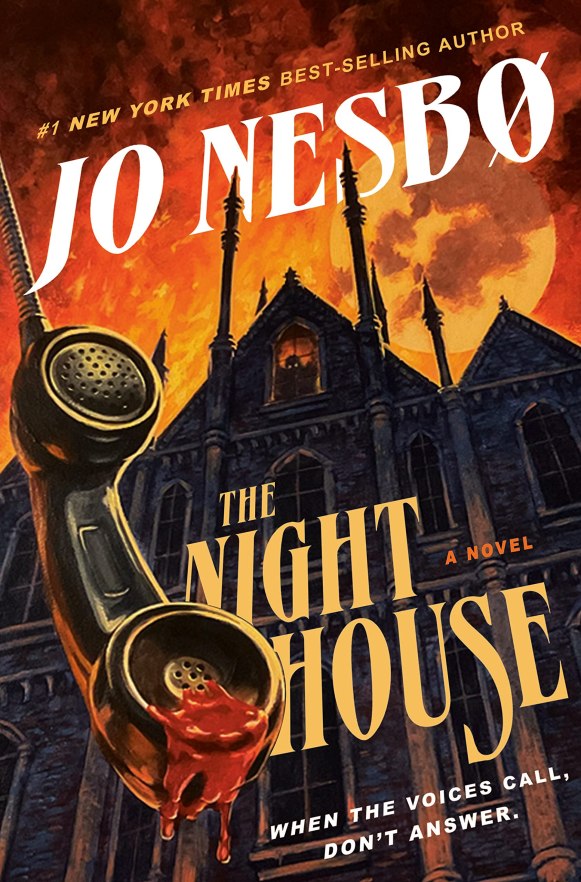
Quick Review – The Night House by Jo Nesbo

The Night House Cover

Publisher: Harvill Seeker (Trade Paperback – 26 September 2023)

Series: Standalone

Length: 263 pages

My Rating: 4.25 out of 5 stars

Amazon

Earlier this year I was lucky enough to receive a copy of the intriguing new novel from international bestselling author Jo Nesbo, The Night House.  Nesbo is an author whose work I have been interested in checking out for a while as I have heard a lot of about his intriguing crime fiction stories and thrillers.  I was really excited to check out something from Nesbo this year, and whilst The Night House is somewhat different from the author’s more typical work, it proved to be a very fascinating and compelling read with a deep story behind it.

Plot Synopsis:

WHEN THE VOICES CALL, DON’T ANSWER…

In the wake of his parents’ tragic deaths fourteen-year-old Richard Elauved has been sent to live with his aunt and uncle in the remote town of Ballantyne.

Richard quickly earns a reputation as an outcast, and when a classmate named Tom goes missing, everyone suspects the new, angry boy is responsible. No one believes him when he says the telephone booth out by the edge of the woods sucked Tom into the receiver like something out of a horror movie.

No one, that is, except Karen, a beguiling fellow outsider who encourages Richard to pursue clues the police refuse to investigate. He traces the number that Tom prank called from the phone booth to an abandoned house in the woods. There he catches a glimpse of a terrifying face in the window. And then the voices start . . .

When another classmate disappears, Richard must find a way to prove his innocence as he grapples with the dark magic that is possessing Ballantyne.

Then again, Richard may not be the most reliable narrator of his own story.


The Night House
was a very unique read that combines several disparate genre elements and turns them into a personal and moving novel set around a damaged protagonist.  The book is broken into three parts with three different, if closely related, stories being told in each section of the book.  The first story is a great coming-of-age tale that sees an extremely angry teenager, Richard Elauved, witness a series of extremely graphic and strange deaths around town, seemingly linked to a phone number he called as a prank.  Blamed for these apparent murders, Richard tries to prove his innocence and face off against a mysterious and dangerous evil threatening his town.  There is something very reminiscent of classic Stephen King in this early part of the book, and Nesbo moves this horror infused storyline at a very quick pace, setting Richard up against terrors and mysterious manipulations, with many of his friends dying all around him.  There is an interesting conclusion to this part, which really explores the protagonist’s deeper feelings and desire to be the hero, and it proved to be a great self-contained story.

Things start to take an interesting turn as Nesbo suddenly jumps into a whole new story.  The second part of The Night House puts a different tint on the prior events as an older Richard appears and shows that not everything is as it seems.  There is a great central story that takes some dark twists and turns, while you also get some intriguing continuation of character elements from the first part of the book, especially towards Richard’s past and the events that formed him.  Nesbo introduces some key revelations, hints and intriguing differences between the protagonist’s memories of events and what other characters remember, all of which lead up to the big twist revealed in the third part of the book.

I’m not going to dive too deeply into the third and final section of The Night House, as to do so would reveal too many spoilers, but it really ties everything together in an extremely clever way.  The overarching secrets, conflicting stories and differing backgrounds are all worked into this short final part of the book, and you get a complete story as the gaps in Richard’s unreliable narration are filled in.  This part of the book really brings the story full circle, and you can fully appreciate how clever Nesbo has been in the prior sections of the book, especially with how he was simultaneously telling unique stories while also setting up this finale.  There was some brilliant character work involved in building up this finale, especially when it comes to trauma and how it impacts behaviour, and I really enjoyed how the horror elements for the prior parts of The Night House had some great symbolism for the book’s conclusion.

I ended up having a great time with The Night House, and it proves to be a quick and interesting read to get through.  Thanks to its excellent character work and the clever way Nesbo sets up the story, The Night House is one of the more unique reads of 2023, and I really appreciated the compelling and heartfelt story that Nesbo told, especially as he managed to work some memorable horror moments into it.  A moving and compelling read that proves to be an excellent introduction to Nesbo’s writing.

Amazon

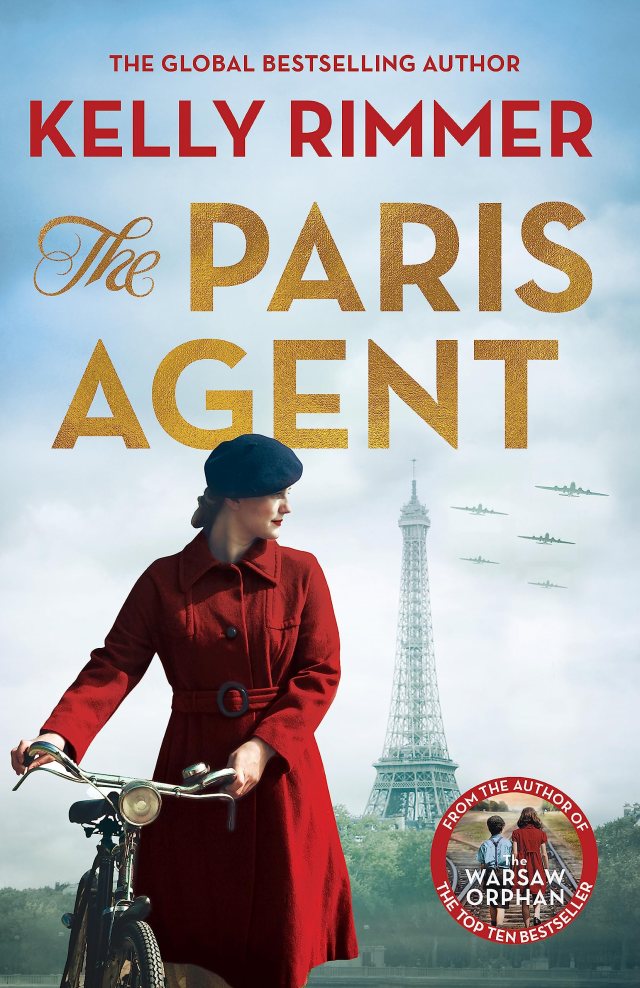
Quick Review – The Paris Agent by Kelly Rimmer

The Paris Agent Cover

Publisher: Hachette Australia (Trade Paperback – 28 June 2023)

Series: Standalone

Length: 337 pages

My Rating: 4.5 out of 5 stars

Amazon

One of Australia’s premier authors of historical fiction, the supremely talented Kelly Rimmer, returns with another moving and intense novel that dives into the horrors of World War II, The Paris Agent.

Over the last couple of years, I have been deeply impressed with the works of Kelly Rimmer, a well-established Australian author whose previous novels have been excellent historical dramas set during the Second World War.  Rimmer’s books are pretty spectacular, as they masterfully blend powerful personal stories with intense depictions of key parts of the war, especially those involving the evils of the Nazi regime.  Her last two books, The Warsaw Orphan (one of my favourite Australian books of 2021) and The German Wife (one of my favourite books and Australian books of 2022), were exceedingly moving, and I now make it a point to grab her new books each year.  Her latest novel, The Paris Agent, presented the reader with an interesting new story, one that focuses on female espionage agents in occupied France.

Plot Synopsis:

Two otherwise ordinary women become spies in WWII France in this sweeping new novel of historical suspense by New York Times bestselling author Kelly Rimmer

Twenty-five years after the end of the war, ageing British SOE operative Noah Ainsworth is reflecting on the secret agent who saved his life when a mission went wrong during his perilous, exhilarating years in occupied France. He never knew her real name, nor whether she survived the war.

His daughter Charlotte begins a search for answers. What follows is the story of Fleur and Chloe, two otherwise ordinary women who in 1943 are called up by the SOE for deployment in France. Taking enormous risks with very little information or resources, the women have no idea they’re at the mercy of a double agent within their ranks who’s causing chaos.

As Charlotte’s search for answers continues, new suspicions are raised about the identity of the double agent, with unsettling clues pointing to her father.

This was another powerful and clever novel from Rimmer, who takes on another aspect of World War II and weaves together an outstanding story.  The focus on Allied female spies being dropped into occupied France is a well-established and highly utilised topic in historical fiction and historical dramas, and Rimmer manages to produce a very distinctive read in The Paris Agent that I found very hard to put down.

To tell her story, Rimmer utilises an excellent multi-perspective narrative, with some interesting time differences also added in for each of the timelines.  The first timeline, shown from the perspective of Charlotte, is set in 1970, and follows the protagonist’s attempts to find out more about her amnesic father’s activities during the war after she finds out he was a spy in France.  The other two storylines focus on the characters of Fleur and Chloe respectively.  Both characters were dropped into France at different points of the war to do their own specific missions, including committing sabotage and investigating reports that the local network had been compromised.  These two past storylines are set across a couple of years in the war, with the two protagonists interacting with each other, and Chloe’s father, Noah, at various points, and together the three storylines wrap together to provide a complex and powerful narrative of espionage, personal relationships, and betrayal, all set in front of the brutal Nazi occupation of France.

All three stories are brought together throughout the course of The Paris Agent, and I liked the complex and intriguing narrative threads that emerged.  The risks and sacrifices of the characters during the war are pretty intense, and the emotional connections that they make bring a compelling balance to the dark story elements of espionage and betrayal.  The third storyline that focuses on Charlotte and her father is also very good, both on its own and for how it supports and enhances the other two plot lines.  This more modern storyline gives some great hints at the tragedy to come in the other storylines, while also underlying further the cost that these intelligence agents had to make.  The intriguing hints that Noah might have been a traitor responsible for terrible events is very compelling, and it is fascinating to see the impact that the war was still having on survivors like him.

The two storylines in the past eventually come together in the last quarter of the novel, and some of the compelling twists that come from this are moving and dark.  The identity of the traitor, while not overly surprising, does have some major emotional heft to it, and you can’t help to despise the antagonist, especially as Charlotte’s storyline serves to underline all the terrible things they did.  Both the Fleur and Chloe storylines end on a very tragic, if inspiring, note, and readers will come away from that exceedingly saddened but impressed by how well written these storylines were.  I did think that the ending of the Charlotte storyline was a little weaker, mainly because it relied on a little too much on coincidence, and I think that the author left some intriguing story opportunities closed.  Still, I really appreciated how cleanly and powerfully these three separate storylines came together, and it resulted in an overall exceptional read.

Rimmer utilises some intriguing writing elements to ensure her story is extra impactful.  As I mentioned before, the use of multiple character perspectives and timelines was a major part of this book, and I was mostly happy with how that turned out.  I must admit that I am not the biggest fan of historical novels that features a storyline where someone in the present day attempts to uncover family secrets, as frankly it is bit of a cliché at this point.  However, I think that Rimmer did a good job here, as it was set far closer to the war, and the family secrets that the protagonist is trying to uncover are the result of amnesia, which is well balanced by the potential spy aspect.  The rest of the story flows through extremely well as a result, and I loved how cleverly the separate wartime storylines interacted and enhanced each other, especially when it came to Noah’s connected story and the examination of the potential treachery.

However, one of the best things about The Paris Agent for me was the outstanding and deep portrayals of the Nazi occupation of France and the espionage efforts the Allies utilised in response.  Rimmer always excels at diving into some of the darkest and most intriguing parts of World War II history, and The Paris Agent was another great example of this.  The author provides some intriguing examinations of how the Nazis controlled France during the war, and Rimmer tries to showcase the occupation from several different sets of eyes in various French settings.  However, the real focus of the book is on the intelligence networks that the Allies set up in France during the war and the missions they engaged in.  This compelling part of the war is always rich ground for historical fiction authors, and I think that Rimmer’s take on it was particularly noteworthy.  She really captures the intensity and dedication that these agents had, as well as the constant risk that they found themselves in.  The focus and portrayal of tradecraft, intelligence gathering, and communication was very realistic, and I cannot emphasise how well each of the major spy protagonists were developed and featured throughout the book.  Of course, as this is a Rimmer book, The Paris Agent does get very dark in places, mainly when it comes to the fate of captured spies and intelligence agents.  Rimmer pulls no punches when it comes to how badly these prisoners were treated, nor when it comes to the terrible fates they experienced.  The fact that many of the characters are based on real historical people makes parts of the book hit even harder, and you really won’t come away from The Paris Agent without a tear in your eye.

Kelly Rimmer continues to showcase why she is one of Australia’s best writers of intense and moving historical fiction.  The Paris Agent was an excellent piece of historical drama that features a powerful and compelling story about spies, tragedy and betrayal.  Cleverly written and guaranteed to stick with you long after you’ve finished reading it, The Paris Agent is an outstanding and highly recommend book that I am really glad I got to experience.

Amazon

The Drowning Girls by Veronica Lando

The Drowning Girls Cover

Publisher: Harper Collins Australia (Trade Paperback – 5 July 2023)

Series: Standalone

Length: 323 pages

My Rating: 4.5 out of 5 stars

Amazon

Rising Australian crime fiction author Veronica Lando presents a particularly intense and captivating read in her latest gritty release, The Drowning Girls.

Port Flinders in the north of Australia is a desperate town, suffering from depleted fishing and a poor economic future.  The only thing that is keeping the tiny town going is its infamous Drowning Girl Festival, which draws vast crowds of tourists to the town’s mangrove-lined shores each year.  The festival honours a statue that is symbolically dropped into the water in a seemingly harmless bit of fun, recognising an old legend that a woman must be sacrificed each year to revitalise the town’s fishing.  But not everyone thinks that the legend is untrue, especially as a tragic drowning of two girls 25 years earlier seemed to save the town.

As the new festival beings, Nate Bass arrives, set to temporarily fill in as the town’s sole teacher.  Forced to take the job after an incident at his last school, Port Flinders is the last place Nate ever wanted to come back to, as he has history with the town and its sinister festival.  However, the past has a way of coming back to haunt everyone, and soon a new development in the towns infamous history emerges.

A dead woman is pulled from the water at the height of festivities, but is she the victim of an unfortunate drowning accident, or has someone sacrificed her to the ocean?  As Nate finds himself drawn to the case, he is forced to dive back into his tragic childhood to events that have haunted him for 25 years, especially when the identity of the drowned woman is revealed.  To discover the truth, the past and present will need to come together, but is Nate ready to reveal his biggest mistake to the world?

The Drowning Girls was a very distinctive and captivating bit of Australian fiction by Lando which deeply impressed me when I checked it out.  Set around a compelling rural Australian setting with some major baggage associated with it, The Drowning Girls has a great story to it that features an excellent blend of mystery, emotional dives into the past, and some major character moments that really drew me in.

The story itself is told through two separate perspectives, that of Nate Bass, the town’s substitute teacher who returns during the height of the Drowning Girl Festival, and a young boy nicknamed Tack, who provides an intriguing alternate perspective of certain events.  Both get embroiled in the mysterious drownings that occur in Port Flinders in different ways, and their character-driven narratives swiftly come together to tell a story of tragedy, friendship, and secrets.  Nate’s story serves as the central focus of much of The Drowning Girl’s plot, and his exploration of the town’s history, the mindset of its people, and the impact of the festival adds some great depth to the story, especially as the author introduces some excellent supporting characters/suspects in the case.  The story revolving around Tack is an interesting coming-of-age tale, which shows the young protagonist trying to fit in around Port Flinders, while also learning about the mysteries of the festival.  This secondary storyline is a little harder to get into at the start, but the intriguing inclusions it features have some fantastic and fascinating impacts on the larger story.

There is a great reveal about halfway through the book that completely changes everything you thought you knew about The Drowning Girls’ plot, and which brings the two separate storylines together in an outstanding way.  I loved how Lando turned everything around at that point, and it led to a pretty addictive and exceptional second half of the book, which I honestly had a hard time putting down.  There are even more excellent twists revealed towards the end of the book, as well as some deeper dives into the protagonist, as he explores all the trauma from his past, as well as the deadly events from 25 years earlier.  The full extent of both the drownings in the past and the present are intense and very clever, and the elaborate and dramatic mystery that Lando came up with is extremely impressive and moving.  This entire story comes together pretty perfectly, and the full extent of the book’s tragic and moving storyline results in some truly shocking moments.  I honestly did not see the book’s big conclusion coming, and the Lando ensured that readers will come away from The Drowning Girls shocked and deeply moved.

There are a lot of great elements to The Drowning Girls that I enjoyed, and Lando has a real talent for writing and creativity that really connected with me.  Her creation of the fictional town of Port Flinders is fantastic, and she does a remarkable job of capturing the feel of a dying tourist town in Australia’s far north.  Everything about this town, including the crippling isolation, the rowdy tourists, the oppressive feel of the surrounding mangroves, and the various people who choose to call such a location home, feels highly realistic and it works into the dark storyline of The Drowning Girls extremely well.  I also loved the intense feelings invoked by the mysterious festival that is such a key part of the book’s plot, and you have to love the dark symbolism that Lando chose to associate with it.  You can almost understand the desperation that some of the town’s residents feel when it comes to the festival, and I felt that it was an outstanding and creepy plot focus that really stood out.  However, one of the best elements of The Drowning Girls was the main protagonist, Nate Bass, who has a complicated past and a deep and traumatic connection to the town.  Seeing the slow unravelling of Nate’s personal history is an outstanding and moving part of the book, and you really get attached to him as a result.  Watching him unload his guilt, trauma and resentment is some of the most powerful parts of the book, and you really must appreciate everything that Lando puts her protagonist through.  Thanks to the author’s great use of the split storyline, as well as the fantastic blend of drama and mystery that emerges throughout the narrative, The Drowning Girls’ story really shines through, and I came away with a huge appreciation for Lando’s style.

The Drowning Girls by Veronica Lando is one of the more unique and complex Australian crime fiction books I have so far read this year, and I was really impressed with how compelling and dark she was able to make it.  Featuring a clever and twisted mystery with some major character moments, The Drowning Girls is a highly recommended read and easily one of my favourite pieces of Australian fiction in 2023 so far.

Amazon

Kill For Me Kill For You by Steve Cavanagh

Kill For Me Kill For You Cover

Publisher: Headline (Trade Paperback – 25 July 2023)

Series: Standalone

Length: 356 pages

My Rating: 4.5 out of 5 stars

Amazon

The always entertaining Steve Cavanagh returns with another outstanding thriller, this time with an awesome new take on an old classic with Kill For Me Kill For You.

Steve Cavanagh is an outstanding author who I have been having a wonderful time reading in recent years.  Cavanagh is best known for his awesome Eddie Flynn legal thriller series that follows a former conman turned defence attorney as he uses his unique insights and tricks to win impossible cases, even when everything is stacked against him.  I have had a ton of fun with the last few books in the series, The Devil’s Advocate and The Accomplice, and Cavanagh is firmly on my yearly must-read list now as a result.  I had been hoping for another Eddie Flynn novel this year, but I was happy to receive a copy of Cavanagh’s new standalone thriller, Kill For Me Kill For You, which throws a grieving mother into a terrible situation.

Amanda White is a woman who lost everything in life when her young daughter was kidnapped and murdered.  Left helpless as the prime suspect is found innocent while her own husband killed himself out of despair, all Amanda has left is a desire for revenge.  But with her target aware of her hatred, and the police certain to arrest her if she tries anything, Amanda can only sit back and do nothing.

Required by the court to attend a trauma support group, Amanda has a chance encounter with another member, Wendy, who has her own desire for revenge.  Like Amanda, Wendy wants to kill the man responsible for her own child’s death but is determined to avoid police retaliation.  Together, the two women plot on how to take out the men that they hate, and soon draw inspiration from a classic Hitchcock film in which two strangers kill the other’s target.

However, when Wendy suddenly kills Amanda’s obsession, she is forced to act quickly and commit her murder for Wendy before the police come for her.  But nothing is as it seems, and Amanda soon finds herself trapped in a deadly situation with the police hot on her trail.  To survive, Amanda will need to dive into the past to discover a legacy of hatred, death and manipulation that will drive her to the brink of sanity and despair.

This was an excellent new thriller from Cavanagh that I managed to power through in no time at all thanks to its exciting and fast-paced plot.  Told from several different perspectives, Kill For Me Kill For You tells a clever and multi-layered narrative that proves very hard to put down, especially as Cavanagh loads it with his usual fun collection of twists, betrayals and compelling reveals.

Kill For Me Kill For You has a great character-driven narrative that follow several very damaged protagonists in a series of compelling situations.  The main storyline follows the character of Amanda White, whose desire for revenge against her daughter’s killer sees her form a friendship with Wendy, when they try to enact their Strangers on a Train inspired double murder.  At the same time, a good chunk of the plot revolves around the character of Ruth Gelman, who survives a brutal attack by a serial killer and is forced to deal with the traumatic consequences.  These two storylines are linked by a third major point-of-view character, Detective Farrow, who investigates both the assault on Ruth and the murder of Amanda’s daughter and finds himself getting drawn into both of their lives.

Both major storylines continue at a fast and compelling pace throughout the book, with Amanda’s storyline focusing on the clever intrigue, while Ruth’s storyline has a more emotional edge to it as she and her husband Scott are forced to deal with her injuries and ongoing fear of the killer’s return.  There are some fantastic developments in both, especially for Amanda when the Strangers on a Train plan goes out the window as expected.  I really loved the fantastic twists that surround Amanda at the middle of the book which completely change the trajectory of her entire plot as a result.  Both stories continue mostly unrelated for the rest of the book, and I think both develop in a great way independent of the other.  They do eventually come together towards the end of the book, and for me that was where Kill For Me Kill For You fell apart a little.  The joining twist of these two independent storylines is very predictable, even though Cavanagh did try to cover it up in a few clever ways.  Certain elements of this twist also stretch the feasibility of the plot to a degree, and while possible, it was a very unlikely.  Still, this only ruins the flow of the book a little and readers will still be hooked on the plot.  I loved the final few twists that Cavanagh loaded towards the end of the book, and the overlying emotional story writing and character moments that are utilised throughout the entire plot ensure that this is a very powerful read.  Readers will come away from this book very satisfied, and I honestly could not put Kill For Me Kill For You down the entire way through.

With the exception of the that problematic twist I discussed above, I mostly enjoyed how Cavanagh wrote Kill For Me Kill For You.  The excellent use of multiple character perspectives which shift from chapter to chapter works well to tell an expansive story with a lot more facets than I thought it would.  The different story focuses is very interesting and I liked the unique stories that both of the major characters (Amanda and Ruth) told throughout the book.  While I did find the chapters focusing on Amanda and her crisscross a lot more interesting, the Ruth storylines are more psychologically powerful and have some compelling edges to them.

I have to say that I was also very impressed with how Cavanagh made excellent use of the Strangers on a Train inspired murder plot throughout Kill For Me Kill For You.  Cavanagh makes some clever references to the classic film (and the book it is based on) throughout the novel, and I loved how he put his own spin on this classic tale.  I was worried in advance that it would be too much like other crime fiction homages to Strangers on a Train that I have seen before, but Cavanagh really made this plot element his own in Kill For Me Kill For You, working the film into his story in an excellent and memorable way.  The resulting compelling storyline was so much fun, and I cannot emphasise how brilliant and captivating this part of the book was.

In addition to the fun story elements, I also deeply appreciated the powerful character focus that Cavanagh featured throughout Kill For Me Kill For You.  There are four major point-of-view characters in Kill For Me Kill For You, and Cavanagh ensures that they have some complex and emotionally charged moments throughout the course of the plot.  All four of these characters are damaged by trauma or loss in their own unique way, including Amanda’s deep obsessive need for revenge, Ruth’s intense fear after surviving her traumatic attack, Scott’s guilt for not being there for his wife which leads to anger and despair and Farrow’s detrimental connection to his cases and the people impacted by them.  The author does an amazing job of diving into each of these character aspects throughout the course of Kill For Me Kill For You and you really grow to understand their individual traumas, obsessions and motivations throughout the course of the book.  Each character reacts to their damage and obsessions in different ways, and watching them overcome them, or succumb to them, are a key part of the plot.  This was probably the most emotionally charged and character focused book of Cavanagh’s that I have read so far, and I really appreciated how he dove into his complex protagonist’s psyches and attempted to highlight just how damaging death, violence and trauma can be on a person.

Kill For Me Kill For You was an outstanding read from Steve Cavanagh and one that I would very strongly recommend.  Featuring a unique and highly entertaining thriller narrative that cleverly balances intensity, twists, a wonderful homage to a classic piece of crime fiction, and powerful character moments, this is an excellent read that I really got attached to.  While I did have issue with a certain key point in the book, Kill For Me Kill For You was an overall strong and compelling novel that really showcases Cavanagh’s rising talents as an awesome thriller writer.

Amazon

Quick Review – The Interpreter by Brooke Robinson

The Interpreter Cover

Publisher: Harvill Secker (Trade Paperback – 6 June 2023)

Series: Standalone

Length: 317 pages

My Rating: 4 out of 5 stars

Amazon

Debuting Australian author Brooke Robinson presents an intriguing and captivating first novel with The Interpreter, which looks at a previously unseen player in the crime fiction genre, the person translating testimony in the background.

Plot Synopsis:

THE MOST DANGEROUS PERSON IN THE COURTROOM ISN’T THE KILLER…

Single mother Revelle Lee is an interpreter who spends her days translating for victims, witnesses and the accused across London. Only she knows what they’re saying. Only she knows the truth.

When she believes a grave injustice is about to happen, and a guilty man is going to be labelled innocent, she has the power to twist an alibi to get the verdict she wants. She’s willing to risk it all to do what’s right.

But when someone discovers she lied, Revelle finds the cost might be too high… and she could lose everything, including her son.


The Interpreter
proved to be a very interesting book that I had a good time getting through.  Following the titular interpreter, Revelle Lee, The Interpreter had a very cool crime fiction story to it that contained both mystery and a compelling dark thriller element to it.  I loved how the story focused on an interpreter in the legal scene, and Robinson did a very good job of diving into this unique profession, especially as the author takes a ton of time to show how such individuals work and the range of scenarios they might find themselves in.  The author also provides the reader with a compelling introduction to the character of Revelle Lee, a dedicated interpreter with a past who is trying to learn the parenting ropes after adopting a boy from a troubled home.

The main story quickly dives into Revelle’s life as she balances her interpreting duties with being a single parent who nothing seems to go right for.  You soon begin to realise how complicated Revelle’s life is, especially as she is constantly worrying about her new child being taken away from her.  Initially shown to be necessarily neutral in the courtroom, Revelle becomes personally invested in a case when someone she knows becomes the victim of a terrible attack.  When she is required to interpret for the police in this case, she alters the witness’s testimony to ensure the potential suspect has no alibi.  I love this intriguing slide away from impartiality that she adopts, especially as it builds off some of her prior frustrations, and she starts to implement her new idea of justice into some of her other jobs.  However, this decision eventually brings some degree of regret when it turns out one of the people she worked against might have been innocent, and she tries to find out the truth.

It is around this time that the author works in a secondary point of view character, a mysterious figure who is stalking Revelle and her son, working from the shadows to destroy her.  This intriguing hidden antagonist works to increase the tension of the plot, and their eventual identity is tied to the secrets from the protagonist’s past, which is being simultaneously explored to give her more depth and a tragic background.  Robinson soon works these story elements together in a very interesting way, and the final third of the plot is loaded with particularly tense moments as the protagonist tries to deal with the attacks from unseen angles, as well as the increased demands on her interpreting ability as she tries to determine the right course of action to take.  I liked how the plot came together, although the identity of the mysterious antagonist did come a little out of nowhere.  Still, this was a well-crafted and intriguing story, and it was fascinating to see more details about interpreters.

While I did enjoy this fantastic novel, I did have some issues getting too attached to the protagonist, and this reduced my overall enjoyment a bit.  I appreciated the deep dive into the world of professional interpreters through Revelle’s eyes, as well as her complex past and desire to be a good parent, but I honestly had a hard time liking her.  This is probably because there was a certain narrative stupidity to her as she makes the worst decision possible for herself and her child time and time again.  While this is usually fine in fiction, I found myself getting a little annoyed at times with how she acted, and this impacted how much I wanted to see her succeed.  I did enjoy how Robinson tried to showcase through Revelle’s actions the importance of being neutral in the legal system, as her desire to get justice has major consequences for her.  However, the protagonist fails to learn from her mistakes, even at the very end, which was very frustrating.  This was probably the main issue I had with The Interpreter, and while it was mostly outweighed by the book’s positive features, these character elements really bugged me.

Overall, I felt that The Interpreter was a pretty solid debut from Brooke Robinson, who has an interesting future in crime fiction.  While the plot and the characters did have some issues, this was a compelling and intriguing read, especially as Robinson expertly captured the experiences and insights of professional interpreters in the legal and criminal justice fields.  I really enjoyed seeing how The Interpreter unfolded and this book is well worth the read for people interested in a fantastic crime fiction novel with a distinctive hook to it.

Amazon

Quick Review – Fairy Tale by Stephen King

Fairy Tale Cover

Publisher: Hodder & Stoughton (Trade  Paperback – 6 September 2022)

Series: Standalone

Length: 579 pages

My Rating: 4.25 out of 5 stars

Amazon

The master of horror and thriller fiction, Stephen King, dives into the world of fantasy in a big way with his compelling 2022 novel, Fairy Tale.

I have finally started to get into some of the more recent books of legendary author Stephen King, which has usually worked out pretty well for me.  His two 2021 novels, Later and Billy Summers were both excellent reads, with the later proving to be one of my favourite novels of 2021.  We also have another new Stephen King novel, Holly, coming in a couple of months, but before we get to that I thought I would quickly review King’s 2022 release, Fairy Tale, which I read last year.  While I had fun with Fairy Tale, I failed to write a review for it, which is something I am hoping to rectify now, especially after all the recent interest people have shown in his next book.  Fairy Tale was a great dark fantasy read from King that took his typical teenager protagonist on a harrowing and compelling journey into a unique and hidden realm.

Plot Synopsis:

Legendary storyteller Stephen King goes deep into the well of his imagination in this spellbinding novel about a seventeen-year-old boy who inherits the keys to a parallel world where good and evil are at war, and the stakes could not be higher—for their world or ours.

Charlie Reade looks like a regular high school kid, great at baseball and football, a decent student. But he carries a heavy load. His mom was killed in a hit-and-run accident when he was ten, and grief drove his dad to drink. Charlie learned how to take care of himself—and his dad. Then, when Charlie is seventeen, he meets Howard Bowditch, a recluse with a big dog in a big house at the top of a big hill. In the backyard is a locked shed from which strange sounds emerge, as if some creature is trying to escape. When Mr. Bowditch dies, he leaves Charlie the house, a massive amount of gold, a cassette tape telling a story that is impossible to believe, and a responsibility far too massive for a boy to shoulder.

Because within the shed is a portal to another world—one whose denizens are in peril and whose monstrous leaders may destroy their own world, and ours. In this parallel universe, where two moons race across the sky, and the grand towers of a sprawling palace pierce the clouds, there are exiled princesses and princes who suffer horrific punishments; there are dungeons; there are games in which men and women must fight each other to the death for the amusement of the “Fair One.” And there is a magic sundial that can turn back time.

A story as old as myth, and as startling and iconic as the rest of King’s work, Fairy Tale is about an ordinary guy forced into the hero’s role by circumstance, and it is both spectacularly suspenseful and satisfying.


Fairy Tale
was a pretty awesome book, although I have to admit that it wasn’t my absolute favourite Stephen King novel so far.  While it was a great story loaded with King’s usual coming-of-age themes and great characters, it did have a few issues regarding pacing and a somewhat disconnected story.

The main issue that I had with the book was that Fairy Tale honestly felt like it was two separate novels combined into one massive read.  The first half of Fairy Tale is probably my favourite, mainly because it contains the classic King coming-of-age story as the author introduces the reader to the protagonist of Charlie Reade and his complicated life.  King really hits the reader strong from the beginning, describing the tragic events of Charlie’s young life, including the death of his mother, the alcoholic crumbling of his father, and the eventual resumption of a normal life once his father recovers from grief and drink.  These events are covered perfectly, and they form a great basis for Charlie’s story, especially as they drive him to be a better person, which leads him to try and help his elderly neighbour, Howard Bowditch.

Mr Bowditch is a fantastic character, mainly because King gets his cranky persona and loner attitude down perfectly.  The growing friendship between Charlie and Mr Bowditch, as well as Charlie’s bonding with Mr Bowditch’s old dog, Radar, forms a solid emotional centre for Fairy Tale’s narrative, which really hangs around to the end.  I had a great time with the part of the book that followed Charlie helping Mr Bowditch and Radar, and I honestly think King could have written a great story purely around that.  The combination of brilliant character work, a fun generational divide, true friendship, and even some mystery elements, really produced an excellent first part to the story.  Even the hints of the fantasy elements to come are very well done, and King did a good job of only featuring a few subtle moments meant to tease the imagination.  However, this doesn’t last nearly as long as I would have liked, as you are soon drawn into the next part of the story once Mr Bowditch dies.  This sad but expected death serves as the catalyst for the second half the story, and the reader gets a full story about the hidden realm which can be accessed via a portal in the toolshed.

Now, I was initially very onboard for this second part of the book, especially as the protagonist’s main reason to visit the fantasy realm was to find a way to save Radar.  Frankly anyone who has ever owned a dog should be pretty drawn into this part of the story, and the sheer desperation that the protagonist experiences as he journeys towards the potential restorative device made this story very relatable to me.  This desperate quest with a tangible and heartbreaking time constraint melded well with the unique new land that the protagonist found himself in, and I loved seeing King’s imagination as he crafted a dying world of mysterious and damaged figures.  The story at this point had an intriguing old-school quest vibe to it, very much like a classic fable, and I was so damn invested in seeing what happened to Radar.  However, once that part of the story was resolved, there was so much left of the book left to go, and that’s where I had a little less fun with Fairy Tale.

Don’t get me wrong, King still brought together a lot of great elements that cleverly carried on from the front of the book.  The dark fantasy realm had some great fairy tale inspirations which made for an excellent background, and the deranged figures who ruled over it were excellent villains.  King also works in a very dark storyline where Charlie experiences some major adversity that he must literally battle to overcome, all while meeting a cohort of desperate new supporting characters.  However, this part of the book just didn’t grab me as much as the first half, and there is somewhat of a disconnect between this story and the earlier awesome chapters of the book.  Still, it was pretty fun to continue, and the story morphed into a classic hero narrative, with Charlie leading a mystical revolution.  I ended up quickly getting through this chunky novel, and it was great to see Charlie grow into Mr Bowditch’s shadow as he encounters some of the events that made him.  King ends everything a pretty happy and final note, and the reader comes away from Fairly Tale fairly satisfied with how everything turned out.  I felt that the second half, while not as enticing as the first, combined well with the rest of the story and together you have a great, character-driven story, that you can really sink your teeth into.

Overall, I rather enjoyed Fairy Tale, even though it took me a little while to review it.  Stephen King showed off his unsurpassed ability to create compelling stories focused on intriguing protagonists, and I love his amazing imagination and awesome ability to make me care about these fiction figures.  While I did have some issues with the second half of Fairy Tale, this was still and excellent novel, and it is really worth checking out, especially if you are an established fan of King and his complex stories.

Fairy Tale Cover 2

Amazon

Fire With Fire by Candice Fox

Fire With Fire Cover

Publisher: Penguin Random House Australia (Trade Paperback – 4 April 2023)

Series: Standalone

Length: 480 pages

My Rating: 4.5 out of 5 stars

Amazon

One of Australia’s most exciting and compelling crime fiction authors, Candice Fox, returns with another intense and impressive novel, the powerful and memorable Fire With Fire.

Over the last several years, few Australian authors have dominated the crime fiction market as effectively as veteran author Candice Fox, who has produced some outstanding reads.  Fox is a very interesting author who started off focusing on the Australian market with several books set out in the wilds of Australia, including her Archer and Bennet series and the Crimson Lake books, the latter of which was recently adapted into the Australian television show, Troppo.  However, in more recent years, Fox has moved on to the larger international audience and has produced several great books set in America, as well as collaborating with legendary author James Patterson for their Detective Harriet Blue series.  I personally know Fox more for her international work rather than her Australian fiction, as I have been lucky enough to receive copies of her last few books, including the gritty standalone read Gathering Dark, the elaborate prison break novel The Chase, and the fantastic and heartfelt 2 Sisters Detective Agency co-written with James Patterson.  Each of these novels has been fun in their own way, and 2 Sisters Detective Agency ended up being one of my favourite Australian books of 2021.  Due to excellent books like these, Fox is now a key addition to my yearly reading schedule, and I just had to grab a copy of her latest novel, Fire With Fire, especially as it had a pretty epic plot behind it.

What starts as a normal day at the understaffed Hertzberg-Davis Forensic Centre in Los Angeles swiftly turns deadly when two people take over the lab, holding three people hostage.  However, this is no ordinary hostage situation, as the kidnappers are husband and wife Ryan and Elsie Delaney.  Two years earlier, the Delaneys’ daughter Tilly went missing at the Santa Monica beach, which the police eventually ruled an accidental drowning.  However, Tilly’s body was never found, key evidence was lost, and her parents never believed the official story and resented a lacklustre police investigation.

Now, desperate for answers, the Delaneys offer the LAPD an ultimatum: find Tilly dead or alive within 24 hours or they will destroy evidence in several major cases, all but destroying key investigations.  Armed with uncanny knowledge of which evidence is the most vital to the LAPD and which samples are too valuable to lose, the Delaneys appear to hold all the cards against the police.  However, the LAPD have no intention of validating the Delaneys’ actions by searching for Tilly.

However, one LAPD detective, Charlie Hoskins, has more motivation to save the evidence in the lab than the rest of the department.  Hoskins has finished up a gruelling five-year undercover stint within the ruthless Death Machines biker gang, an experience he barely survived.  All the evidence that he collected against the gang is now sitting in the lab, and if it goes up in flames, everything he tried to accomplish would be for nothing.  With the rest of the police force angling for a more lethal solution to the Delaney problem, Hoskins decides to find Tilly himself.

Helped by recently fired rookie Lynette Lamb, the woman responsible for blowing his cover with the Death Machines, which saw him literally thrown to the sharks, Hoskins begins a new investigation into Tilly’s disappearance, hoping to find any evidence that can convince the Delaneys that their daughter really did drown.  However, the more they dig, the more Hoskins and Lamb begin to realise that there is something far more sinister behind Tilly’s disappearance.  With time running out before his evidence is destroyed, and with the Death Machines hunting him across LA, can Hoskins find out what happened to Tilly before it’s too late and a lethal gang of killers are set free?

This was another excellent novel from Fox that featured an outstanding and captivating story.  Fox sets the entire narrative up perfectly, first introducing the main characters of Hoskins and Lamb by showing them on the very worst days of their life, as Hoskins is tortured out by the gang he infiltrated, while Lamb is fired on her first day as a rookie cop for being responsible for the leak.  From there, the story focuses on the start of the lab siege as the Delaneys take over and send the police their demands.  I really love this cool main scenario for the Fire With Fire as it is such a brilliant way to gain leverage over a police force.  Fox uses this to great effect to engage the major storylines of the book.  Firstly, there is an intriguing and intense siege storyline as police, led by LAPD Chief of Police Saskia Ferboden, attempt to resolve the situation without the destruction of evidence.  Fox examines many different sides of this situation, from the desperation of the Delaneys, the fear of the hostages in the lab, the emotions of the Delaney’s remaining daughter outside, and the growing hostility of the cops as they watch their evidence get destroyed.  This leads to a captivating series of events as Saskia and her FBI negotiator try to resolve the situation peacefully, only to hit setback after setback, as the Delaneys get violent, the hostages try to be heroic, and all her cops get mutinous at her decisions.

While the storyline around the siege is pretty intense and emotionally powerful, the real meat of the story focuses on Hoskins and Lamb as they attempt to find the Delaneys’ missing daughter, Tilly, before it is too late.  This entire storyline falls together extremely well as the unlikely partnership of Hoskins and Lamb are forced to work together and soon form an entertaining team as they simultaneously investigate the disappearance while also dodging the vengeful gang gunning for Hoskins.  The investigation angle takes them into some interesting directions, and I liked the compelling mystery that Fox wove together for this part of the book.  The author loads in a ton of misleads, alternate suspects, and problematic witnesses, each of whom muddy the water and ensure that the ultimate solution to the case isn’t too clear until the end.  The confrontation between Hoskins and his former gang also forms a great part of this story, especially as there are some excellent twists involved there, and the resulting carnage adds some major danger to the book.  However, the best part of this storyline is the partnership between Hoskins and Lamb, which steals the show with its genuineness and fun moments.

Fox has a highly readable writing style that I felt lent itself to this story and helped to turn it into an enjoyable read.  Pretty much everything about this book, including its flow, its pacing and the balance of story elements is set up really well, and I had a fun time getting through it.  The fast-paced and sharp chapters really move the plot along quickly, and you find yourself reading page after page, trying to see what awesome or intense event will occur next.  I liked how Fox split the story focus around Fire With Fire and the constant changes between the investigation for the missing girl and the deadly siege at the lab, really helps to amplify the intensity of the plot and keep the stakes very high.  I was also very impressed by the excellent blend of mystery, intense drama, high-octane action, and powerful character development, that were the primary features of the plot.  There is a barely a page where Fox isn’t portraying something pretty damn interesting or moving, and you are constantly intrigued with what is going to happen to the characters or the plot moving forward.  This ended up being a pretty amazing read, and I had such a great time getting through it.

One of the major writing highlights of Fire With Fire has to be the complex and damaged characters who formed the basis for much of the story.  There are some exceptional and well-written characters featured throughout this book, and Fox does a great job of showcasing their inner pain, motivations, and compelling personal pasts to the reader as the focus switches between them.  Two of the most notable are the characters of Detective Charlie Hoskins and Lynette Lamb, who serve as the main figures of the investigate arm of the plot.  Hoskins is a tough and independent figure who spent five years infiltrating a deadly criminal gang trying to find evidence to put them all away for murder, only to be discovered at the last minute and tortured.  Barely recovered from his ordeal, Hoskins spends the book trying to protect his hard-won evidence by finding the missing girl.  There is a lot of desperation behind Hoskins as he tries to make all the sacrifices and bad things he did over the last five years matter, and this leads to some great character moments throughout Fire With Fire.  There is also a major trauma component behind Hoskins, as he tries to get over the dark things he experienced during his torture and escape, which leads to him making some reckless decisions.

Hoskins is well matched up with his young and somewhat naïve partner Lynette Lamb.  Lamb is a rookie cop who was targeted without her knowledge and used to find information that exposed Hoskins to his gang.  Fired on her first day on the job, Lamb manages to find Hoskins out of both guilt and determination, hoping that he can get her job back.  Thrust together by circumstance, Lamb stubbornly partners up with Hoskins and works with him to find the missing girl.  There are a lot of great elements to Lamb’s storyline, and out of all the characters in Fire With Fire, she has the most growth as she tries to prove she is tough and capable enough to be a police officer.  The pairing of Hoskins and Lamb is an excellent highlight of the book and I loved how Hoskins reluctantly takes Lamb under his wing and tries to toughen her up., quickly realising there is far more to her than he initially though.  The two make an outstanding team, and they both cover the other’s weakness extremely well.

Aside from Hoskins and Lamb, some of the other standout characters include Ryan and Elsie Delaney, who take over the forensic lab and hold the evidence and people there hostage.  Fox does an outstanding job portraying the desperation behind these two characters as their obsession about finding their missing daughter, bought on by guilt and anger, drives them to extremes.  These two are some of the most complex figures in the entire book, especially as their actions, while bad, are understandable.  Other characters, such as Chief Ferboden and Hoskin’s entertaining friend Surge, help to round out the excellent cast of this book and I felt that these great figures really helped to turn Fire With Fire into a powerful and highly enjoyable read.

Overall, this was an amazing novel from Candice Fox, who once again shows why she is one of Australia’s premier crime fiction authors.  Fire With Fire had an outstanding and clever narrative to it that really drew me in and kept me extremely engaged the entire way through.  The excellent blend of intense narrative, amazing characters and a unique crime fiction scenario was highly effective, and I had a wonderful time reading this awesome book.  Fire With Fire comes highly recommended, and you will get really drawn into this great standalone crime fiction novel.

Amazon

Going Zero by Anthony McCarten

Going Zero Cover 2

Publisher: Harper/Macmillan (Ebook – 11 April 2023)

Series: Standalone

Length: 298 pages

My Rating: 4.5 out of 5 stars

Amazon

Acclaimed screenwriter and author Anthony McCarten presents a compelling and intense techno-thriller that shows readers the terrifying future of surveillance technology in the intriguing read, Going Zero.

It is a time of great expansion in the world’s spy technology as every country works to increase their internal and external surveillance capability.  To keep up with their rivals, the CIA have been convinced to partner with billionaire Silicon Valley tycoon Cy Baxter to create the ultimate surveillance program.  Known as FUSION, the new system will allow the government, through Baxter’s company, to find anyone in the country, no matter how hard they hide.

But before FUSION can officially go online and Baxter’s company can be awarded its massive, multi-billion-dollar contract, Baxter needs to prove that the system can deliver everything he promises.  To that end, the ultimate test is proposed, pitting 10 random Americans against the new technology.  At an appointed hour, all 10 participants will need to “Go Zero”, going completely off the grid and leaving their lives, families, and homes behind to hide as best they can.  If they can elude the company’s technology and capture teams for 30 days, then they receive $3 million in prize money.

As the participants each choose their own unique ways of vanishing off the face of the Earth, one stands out amongst the security experts, tech geniuses and law enforcement professions that have been recruited.  Boston librarian Kaitlyn Day was chosen to be an easy target, an everyday woman who could test the most basic bounds of the program.  However, she swiftly shows that she is far more skilled and versed in counter surveillance tactics than anyone expects.  As the test continues, Kaitlyn manages to counteract every trick FUSION has up its sleeve, and soon Baxter grows desperate trying to find her.  But as the test nears its end, it becomes clear that there is far more to Kaitlyn than meets the eye, especially as she has a very personal reason for playing this elaborate game.

This was an awesome and impressive novel from McCarten, who presents the reader with a fun scenario guaranteed to grab their attention.  Going Zero is an awesome book that I really got drawn into thanks to its compelling narrative and fast-paced style.  I actually managed to read this entire book in a day, as I got quite hooked on the story and just kept going, trying to see how everything ended and I really was not disappointed with how it turned out.

Going Zero’s story itself is great, as it plays out like a giant, technological game of cat and mouse throughout the United States.  It reminded me a lot of the reality show, Hunted, on steroids, with the facilitators, the CIA and Cy Baxter’s team, having access to every single surveillance feed and scrap of digital information they need to catch the players.  The first half of the book is primarily focused on this hunt, with most of the attention on both Kaitlyn Day and Baxter’s team as they hunt for her.  The author makes great use of short, sharp chapters to move the story along at a very quick pace, which also limits the reader’s desire to stop reading, as the end of the next chapter is always in sight.  McCarten sets the entire scenario up extremely well, and you are soon dragged into the intriguing middle of this over-the-top fugitive situation.  It is incredibly fun seeing Kaitlyn’s initial exploits, as well as the overarching reach of Baxter, whose insane control room put me in mind of the game masters in The Hunger Games film.  These two intriguing primary perspectives are often interspersed with quick interludes that show the other nine participants slowly getting hunted down by Baxter’s capture teams.  Each of their methods of hiding is unique to them and seeing them getting effortlessly capture serves as a rather compelling counterpoint to Kaitlyn’s own endeavours to avoid detection.  I really got caught up in this hunt scenario, which dominates the first half of the novel, mainly because it was so damn fun, intriguing, and a little terrifying to see the FUSION system in action.  While I would have been happy enough to read a lot more of this, McCarten introduces a rather good twist about halfway through that throws everything on its head.

Now, while the inclusion of a twist wasn’t too surprising, especially as the plot had been hinting like crazy that something was suspicious about the protagonist, the full extent of it is pretty damn epic, especially as it makes you rethink everything that occurred in the first half of the book.  McCarten had done a really good job of inserting subtle hints and clues into the preceding story, and the way they were dragged together was really clever.  This major twist changes the entire story around and moves it from a mostly harmless story about advanced hide and seek to an intense and personal thriller with some major national security ramifications.  The second half of the book goes into overdrive, especially as, after the twist, you are particularly attached to the protagonist and her potential victory, while the antagonist becomes easier to root against.  There is conspiracy, espionage and deeply personal attacks against the various characters, as everyone is suddenly trying to survive the changes that the protagonist brought on.  I deeply enjoyed where the story went at this point, and the resulting exciting scenes, which also included some more twists, continue to drag you in and ensure that that stick along for the ride.  The author provides a great, if highly cynical, ending for this entire narrative, and you come away feel satisfied, especially as it leaves the reader wanting more.  An overall impressive and addictive story that I had such a great time getting through.

Perhaps one of the most distinctive features of Going Zero was McCarten’s frank and often terrifying look at the state of surveillance technology in the world today.  The hunt for the 10 participants requires FUSION team to employ a ton of intriguing methods to find their prey, with the hunters mapping out their targets’ habits, history, and personal connections to find where they will likely go and who they will try to interact with.  Some crazy technology and methods are featured throughout the book and McCarten combines some clear research with some more imaginative approaches to reveal how the hunters were able to find the contestants.  While some of the elements were obviously enhanced for narrative purposes, the story does feature quite a few more realistic methods that honestly had me thinking about how much information I have on the grid (they’d catch me in less than 10 minutes).  This intriguing focus on how humans have become used to sharing their information and leaving themselves upon to tracking and exploitation becomes a key part of the plot as certain characters start to misuse this information for their own good.  McCarten also introduces a great counterpoint to this through Kaitlyn’s perspective, as her insights into the surveillance world provide some interesting contrast, especially when she starts turning the tables on the hunters and their technology.  The loss of privacy and anonymity ended up being a pretty big theme for this novel, and I think readers will come out with their eyes opened about just how easy it may be for governments or companies to track where you are or what you are doing (or thinking) in the future.

I really liked the fun blend of characters that McCarten featured throughout Going Zero, especially as thanks to the focus on privacy loss and personal investigation, you soon learn a lot about them.  The fun, if brief, snapshots into the nine other participants in the beta test added some great colour to the story, especially as McCarten had to quickly and comprehensively showcase who they were and how they think in order to show how FUSION caught them.  Cy Baxter, the brains behind FUSION, was a great figure within the story as well, as he ticked all the boxes of an egotistical billionaire and tech genius.  While he was initially shown to be an ambitious and eccentric figure who was attempting to introduce the system for the right reasons, the moment he gets some opposition you begin to see the real Cy Baxter under the surface, and it is not pretty.  Thanks to his ego and his own belief in his intelligence, Baxter keeps going further and further down the dark path to achieve his goals, and by the end of the book he proves to quite an effective and highly unlikable antagonist (with some great similarities to a certain real-life tech billionaire twit).

However, most of the best character work is reserved for main protagonist Kaitlyn Day, who had quite a fascinating arc throughout the book.  I loved the way that McCarten initially built her up as a typical librarian and a potential amateur without any real chance of succeeding.  However, it soon becomes clear that there is far more to Kaitlyn, especially as some of her earliest moves prove to be so infuriating to Baxter and the FUSION team.  McCarten drops some excellent hints throughout her storyline about her past which provide some potential clues about what is about to happen with her character, especially when combined with the research the antagonists do on her.  I really cannot emphasise how well McCarten set up the twist around Kaitlyn, and the full details of her life and motivations only further increase how much you start rooting for her.  There is some noticeable but relatable character change that occurs after the twist is revealed, and it was interesting to see how serious she was and how she managed to manipulate the system.  These characters, and more, helped to turn Going Zero into quite the excellent read, and I loved some of the intriguing figures that emerged.

Going Zero was an exceptional and captivating read that had me hooked from the very start.  Anthony McCarten’s unique scenario led to an exciting and highly fun story that proved near impossible to put down.  I powered through Going Zero in no time at all and this was one of the more entertaining books of 2023 for me so far.  An excellent and highly enjoyable read that has potential as a film, Going Zero comes highly recommended and is definitely worth checking out.

Going Zero Cover

Amazon

How to Kill a Client by Joanna Jenkins

How to Kill a Client Cover

Publisher: Allen & Unwin Australia (Trade Paperback – 31 January 2023)

Series: Standalone

Length: 384 pages

My Rating: 4.5 out of 5 stars

Amazon

Australian lawyer and debuting author Joanna Jenkins introduces herself in a big way with her fantastic first novel, the legal thriller How to Kill a Client, which takes the reader on a fascinating journey to the dark side of Australia’s legal profession.

As the in-house lawyer at a powerful international mining company, Gavin Jones oversees millions of dollars’ worth of legal contracts each year, including to the Brisbane office of the Australian legal firm Howard Green.  Using them to negotiate lucrative contracts throughout Australia, Jones has become one of Howard Green’s biggest clients and the money he controls ensures that everyone at the law firm treats him like a god.

But while everyone fawns over Jones and his power, no-one actually likes him.  A cruel, petty and vindicative man, Jones has messed with the careers and lives of everyone in his orbit, especially women, who he reserves a particular disdain for.  His actions ensured the suffering of everyone he has power over, including his wife, his employees, and the female partners at Howard Green, as he seeks to wreck lives, destroy careers and give himself the lifestyle he feels he deserves.

So when Jones dies suddenly and suspiciously, everyone he knew is a potential suspect; thanks to his dodgy dealings and underhanded tactics, they all had a motive to kill him.  As the police begin their investigation and the lawyers at Howard Green close ranks, it falls to partner Ruth Dawson, one of the few people without a motive, to protect her firm and its secrets.  However, when her investigation reveals proof of who killed Jones and other dark secrets her firm is hiding, will Ruth reveal the truth or will she bury it to protect her firm?

How to Kill a Client is a clever and tricky novel that really showcases Jenkins’s skill as a new writer.  Blending a fantastic and compelling crime fiction narrative with intense looks at the lifestyle of members of a successful law firm, How to Kill a Client was a gripping and interesting read that is really worth checking out.

I loved the cool story contained within this book which came across as part legal thriller, part personal drama surrounding high-level professionals, and part intriguing murder mystery.  The story dives into the chaotic world surrounding the legal firm of Howard Green and its clients and effectively introduces all the key players in this drama, who have their own views on the troubles to come.  Each primary characters is connected to the eventual victim, Gavin Jones.  Jenkins spends the first half of the book showcasing Jones’s terrible nature and the various ways they are messing with everyone.  Cleverly utilising multiple character perspectives, you are soon drawn into the various main characters’ lives and soon see all the various reasons why each of them may have wanted to kill Jones, as well as some of the suspicious steps some of them took.  Jenkins perfectly sets up everything in the first part of How to Kill a Client, and by the time you reach the halfway point, you are firmly enthralled by the narrative and want to see how the rest of the book unfolds.

When the eventual death happens (a real high point) the reader is left wondering whether it was an accident, a mistake, or a deliberate action, with the evidence pointing towards a murder.  However, due to the sheer range of suspects and motives, the story produces a twisty and fun range of plotlines that you need to navigate to get to the final conclusion.  Jenkins really produces an emotional and captivating second half as you try to find out who killed Jones and why.  There are some brilliant revelations unfurled here, and I loved how some cunningly hidden clues in the first half of the book were utilised in the final mystery.  I was very impressed with the final reveals around how the killing was committed and why it happened, and you will come away from this story very satisfied, especially as Jenkins builds in some excellent character moments and ensures that all the remaining characters get a fitting end to their arcs.  I found myself getting really caught up in Jenkins’ powerful and amazing story and I honestly powered through the last half of the book very quickly to see how everything ended.

Part of the reason why How to Kill a Client is such an effective read is that Jenkins introduces an excellent cast of intriguing and complex characters who are thrust into a variety of compelling situations throughout the course of the narrative.  Each of the main cast, who Jenkins effectively builds up and utilises in the plot, are quite damaged, desperate or concerned in their own unique way, while many of the supporting characters are notably selfish or manipulative for their own ends.  Characters like Ruth Dawson and Viv Harrison give some compelling and honest insights into how women are treated in this influential professional setting, while Anne Jones shows the harsh reality of a women trapped in an abusive relationship.  At the same time, there is a great collection of supporting lawyer characters who Jenkins uses to show off the range of people and personalities one is likely to experience in Australia’s legal services.

However, out of all the characters in this book, the one I must highlight the most is probably the murder victim, Gavin Jones, mainly because he is such a despicable figure.  Jenkins really goes out of her way to make Jones into one of the most unlikable and petty characters you are ever likely to find in fiction and boy does she succeed, perfectly capturing an insecure and manipulative narcissist who enjoys controlling people.  Not only does he go out of the way to try and ruin the careers of several characters just because they are women, but he also demands attention from the male characters to feed is ego, while also abusing and controlling his wife to make him feel good.  In a very short amount of time Jenkins builds Jones up into such an unlikable character that the reader finds themselves trying to reach into the book and kill him before the murderer does.  This naturally adds quite a lot to the mystery of the book, as his malicious professional actions, deceits, violence and puppy killing (seriously, that one really angered me), ensures that everyone he came in contact with had a reason to murder him.  The huge suspect pool around this unlikable character allows Jenkins to craft an impressive murder mystery and you’ll really get drawn into finding who finally snapped and killed this infuriating character.  This villainous figure, and other great characters, all added so much to the plot of How to Kill a Client and really got invested in their stories very quickly.

One of the other features of How to Kill a Client that I particularly enjoyed was the author’s detailed and intriguing examination of an Australian law firm.  Clearly utilising all her past experiences as a lawyer, Jenkins perfectly showcases how a firm would work and act in a variety of scenarios, and you really get the senses of the day-to-day chaos the individuals working there would experience, which adds a lot of authenticity to the story.  Jenkins also dives into the backroom drama and politics that surround such entities, as the various lawyers cut deals and fight for control over various projects or clients.  There is a particularly cynical edge to the book’s portrayal of legal firms in this novel, and Jenkins shows it to be a dark and unfulfilling practice at times, especially in some of the more elite firms.  The author really showcases just how bad these companies are when it comes to the treatment of women as two of the book’s central characters are female partners in Howard Green who have to constantly deal with their male colleagues’ condescension and manipulations, and there are several pointed scenes where the arrogant male managers fail to listen to the women even when they are right.  There is also a focus on the way law firms sycophantically woo potential clients, bending over backwards to get hired, and this adds some intriguing angles to the drama.  Finally, there is also quite a dark look at the demand for profits over people, as there is a constant fear of firings and layoffs, even for the best employees.  This critical presentation of a professional law firm is pretty striking and it results in some powerful scenes throughout the course of the book, especially as the people stuck in these firms often refuse to escape it, no matter how bad it gets.  I felt this examination of the profession in Australia added so much to the outstanding story and it helps to make How to Kill a Client really stand out.

Overall, How to Kill a Client was an outstanding and captivating debut from new Australian author Joanna Jenkins and one I had a wonderful time reading.  Blending compelling legal elements with a fascinating, character-driven mystery, How to Kill a Client has a brilliant story that takes the reader on a powerful and twisty journey.  Slick, emotionally rich, and filled with exceptional characters, How to Kill a Client is one of my favourite debuts of 2023 so far, and I cannot wait to see what epic reads Jenkins will release in the future.

Amazon