Call of the Bone Ships by RJ Barker

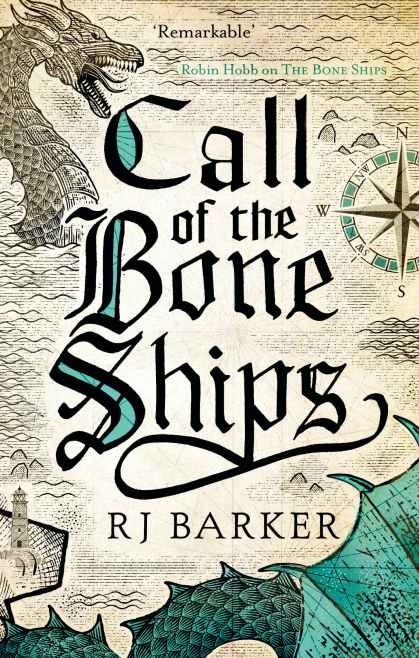
Call of the Bone Ships Cover

Publisher: Orbit (Trade Paperback – 24 November 2020)

Series: The Tide Child – Book Two

Length: 491 pages

My Rating: 5 out of 5 stars

Amazon     Book Depository

One of the biggest rising stars in fantasy fiction, the always impressive RJ Barker, returns with the second novel in The Tide Child trilogy, Call of the Bone Ships, an epic read that was one of the best fantasy releases of 2020.

Welcome back to the boneship known as Tide Child, a black ship of the damned crewed by those condemned to death for various crimes in the Hundred Isles and tasked with fighting in a war against their nation’s rivals, the Gaunt Islanders.  Following their first grand adventure, which saw Tide Child save the last of the vast sea dragons from whose bones the powerful ships are made, much has changed in the world.  The Shipwife of Tide Child, Lucky Meas Gilbryn, seeks to undermine her mother, the ruler of the Hundred Isles, by working with black ships of both nations to create a new settlement outside of their tyrannical controls.  However, their previous decision to save the last dragon has had unexpected consequences, and soon the ocean is alive with the news that more dragons have returned.  With their return comes the battle to kill the creatures and harvest their bones to create more ships, as the nation with the most ships will rule the waves.  However, the crew of Tide Child find themselves drawn into a different conflict when they chance upon a damaged ship with a hold full of dead or dying prisoners.

Attempting to find out more about the mysterious cargo, Meas and Tide Childs’ Deckkeeper, Joron Twiner, try to follow it to its original destination, only to discover that their new island sanctuary has been destroyed and its people carried off for a nefarious purpose.  As they start to fight back against their former comrades in the Hundred Isles, Tide Child finds itself in the midst of a dark conspiracy which will push the entire world into chaos and conflict.  A new war is coming to the oceans, and no-one is safe from its deadly consequences.

Well damn, how does Barker keep on doing it?  Over the last few years, RJ Barker has been one of the most consistent and outstanding fantasy fiction writers out there, producing several incredible and deeply enjoyable novels.  I was a major fan of his debut, The Wounded Kingdom trilogy, as all three novels, Age of Assassins, Blood of Assassins and King of Assassins were amazing reads, with each one being better than the last.  However, Barker’s writing was on a whole other level in 2019 when he published the first entry in The Tide Child trilogy, The Bone Ships, an epic read that detailed the trials and tribulations of a condemned crew aboard a ship made from dragon bones.  I absolutely loved The Bone Ships and it was one of my favourite books and audiobooks of 2019.  Needless to say, I was extremely eager to receive my copy of Call of the Bone Ships, and it was one of my most anticipated reads for the second half of 2020.  Unfortunately, circumstances forced me to hold off reading this novel until the end of the year, which I deeply regret as this was another awesome novel from Barker that got an easy five-star rating from me.

For Call of the Bone Ships, Barker has come up with another exciting and amazing narrative which follows a unique group of protagonists on a deadly adventure through a dark fantasy world.  Told primarily from the point of view of Tide Child’s Deckkeeper (first mate), Jordon Twiner, this is a massive character-driven story filled with action, intrigue, and betrayal.  While the first novel in this series focused on a wild adventure as a ship followed their new captain on a quest to find a sea dragon, this second novel focuses more on the politics of the Hundred Isles, as the Tide Child and their allies attacking as undercover rebels to undermine the cruel ruling hierarchy and determine what their plans are.  After an intriguing introduction, Call of the Bone Ships swiftly devolves into a war novel, as Meas and her crew begin to fight back against the oppressive Hundred Islanders who oppose them.  At the same time, Joron is forced to deal with a number of personal issues aboard the ship as he finds himself thrust into the midst of danger and betrayal as everything in his life goes to hell around him.  The plot of Call of the Bone Ships goes into some dark but captivating directions, and the Tide Child crew are hit with some major curveballs and tragic events.  All of this leads up to an impressive conclusion which is highlighted by a major and dramatic cliff-hanger that is going to require any reader of this book to desperately wait for the final entry in this series to be released.  While this book was a tad slow to start, especially if you were unfamiliar or somewhat forgetful of the events of The Bone Ships, it eventually resulted in a truly epic and outstanding story that proves impossible to put down once you get wrapped in its intense and captivating narrative.  The plot of Call of the Bone Ships has a fantastic flow on from the previous entry in the series and served as an excellent sequel, making great use of several of the story elements introduced in The Bone Ships and more than living up to the hype Barker established with the first The Tide Child novel.

One of the things that I have been most impressed with for this series is the author’s ability to create a gripping and consistently well-written maritime story.  Narratives that are primarily set aboard boats are notoriously hard to write, but Barker has risen to the challenge, writing a novel rich in naval and maritime detail, with a major fantasy fiction edge to it.  Call of the Bone Ships contains an intense amount of intriguing detail about the coming and goings aboard the ship out at sea and Barker does an amazing job highlighting the various day-to-day actions a crew are expected to undertake, as well as all the unique features that makes a ship in this fantasy universe different from real-world ships.  This impressive attention to detail translates extremely well into several naval battles and combat sequences, and it was cool to see the Tide Child engage in battle with other ships in some outstanding and beautifully written sequences.  In addition, Barker ensures that every major character in this novel had a real nautical feel to them.  Everything about these characters, from the way they spoke to how they act or think aboard the ship made you think of old sea-salts who had spent a lifetime on the waves, which helps to bring an interesting ring of realism to the story.  I also really love the intense and encapsulating atmospheres that Barker creates with his excellent writing ability, and you get a real sense of the moods of the entire ship throughout the novel, whether it be despair at something bad that has befallen the ship, or the sense of repetitive boredom that arrives from the ship doing the same action day after day with no break in routine.  All of this helps to produce a truly exceptional narrative, and I cannot emphasise how impressive the author’s various nautical inclusions are.

While the series is nominally about the dangerous events that the Tide Child finds itself involved with, in many ways its plot is driven by the growth and development of the main protagonist and point-of-view character Joron Twiner.  At the start of this series, Joron was a depressed and embittered young man who was unjustly forced aboard the black ship and made its Shipwife due to his lack of courage and determination.  But after meeting Meas and beginning to serve under her, Joron has become a competent officer who has the respect of most of his crew and who is now dedicated to Meas and her mission.  Call of the Bone Ships turns out to be a major novel for Joron as he participates in several adventures and battles, showing his skill as a commander, warrior and leader throughout the novel.  However, participation in these adventures has severe consequences as Joron gets beaten down and broken apart multiple times from injuries, betrayal and personal tragedy.  Watching Joron suffer is quite a hard part of this novel as the reader becomes extremely attached to him due to his likeable personality and sheer determination.  However, it is worth it to see Joron rise again as a stronger and much more developed person, and this ended up being a fantastic part of his personal story arc.  A lot of this book is also dedicated to Joron’s mysterious ability as the caller, someone who is prophesied by the Gullaime (the enslaved avian wind mystics who provide power to the ships) as a great saviour.  Joron, who first experienced these powers while calling a sea dragon to his aid, continues to develop certain abilities which prove to be rather effective and spectacular throughout the novel and opens up a lot of opportunities for the character.  The end of Call of the Bone Ships leaves Joron in an extremely intriguing position, and I am deeply curious about how his story will end in the final novel.

In addition to his complex protagonist, Barker also includes a literal raft of impressive and captivating characters, most of whom serve as members of Tide Child’s crew.  These great characters each have distinctive personalities and add a great deal to the narrative.  The main side character is easily Lucky Meas, the Shipwife of Tide Child who has turned her ship from a bastion of reprobates to a group of heroes with a noble purpose (mostly).  Meas is a truly inspirational character who has served as a close mentor to Joron and who continues to lead her crew with wisdom, experience, and humility.  Meas was a little less utilised in this novel than in the first book, with Joron taking more of a lead now that he has some command experience.  She was still a fantastic and distinctive character within this latest novel, and I really enjoyed where her personal story arc went, even though we still do not have that much information about her backstory.  Another great character was Tide Child’s ultra-powerful Gullaime, who continues to work along the crew, especially Joron, who has a special connection to the creature.  The Gullaime also has a rather intriguing arc in this novel, and it is clear that he will play a rather substantial role in the ending of the overall series.  The mysterious bird creature also develops a lot more as a character in this novel, especially after encountering different members of his species, although he continues to provide his entertaining tirades of broken speech to the crew.  The rest of the crew prove to be extremely compelling, and I liked the fact that Barker spent time expanding out the roles and personalities of a huge number of side characters, including giving several of them brief point-of-view chapters.  However, in some of these cases it did seem that the author only gave these characters more of a role so that he could then brutally kill them off, much to the heartbreak of the reader.  A number of these characters do get some rather substantial and enjoyable story arcs, and it will be interesting to see where the remaining members of the crew end up in the final book.

I have a lot of love for the dark and elaborate fantasy worlds that Barker creates in his novels, and the one featured in The Tide Child series is particularly amazing.  I deeply enjoyed this harsh and cruel world of small islands, deadly seas and warring nations, especially with the cool gender-bent world (for example, captains are known as Shipwives, while boats are referred to as him).  I really enjoyed returning to this amazing and creative world, especially as it proves to be an incredibly rich setting for the novel’s awesome and addictive narrative.  Barker does some excellent world-building in this second entry in the series, and you get some cool features, such as different groups of Gullaimes who lack wind powers but serve as jailers for their powered brethren, some new powers for the characters and some intriguing new locations.  All of this helped to create a more elaborate and impressive narrative and it is always cool to see more of this grim and deadly fantasy universe, especially as Barker’s awesome writing bring so many of the more impressive elements, such as the giant dragons, to life in such epic fashion.

The final thing I wanted to praise about Call of the Bone Ships were all the little details featured within the paperback version of the novel, that I would have previously missed in the first The Tide Child novel due to me checking out The Bone Ships in audiobook format.  I definitely have to highlight the impressive and intricate cover above, which was drawn by talented artist Edward Bettison.  The covers for this series are extremely cool, and I cannot wait to see what amazing design the artist comes up for the final entry in the series.  I also really liked the awesome artwork that was featured within the novel.  Not only is there a fantastic and detailed map at the very front of the book but there is also some sweet artwork at the start of each chapter, which depicts locations, creatures and characters from within the book.  Barker has also featured a short index at the end of the novel which contains some of the crew titles that were created for the series, detailing what each crew member is supposed to do.  All of these details are great and eye-catching inclusions to the novel, and I felt that it made Call of the Bone Ships just a little bit more special.

Call of the Bone Ships by RJ Barker was another epic and outstanding novel that shows why Barker is one of the most impressive new fantasy talents in recent years.  This incredible sequel to 2019’s The Bone Ships contains an exceptional and addictive story at sea, featuring rich and complex characters and all set within a creative and vibrantly dark fantasy world.  The combination of these awesome elements helps to create a captivating and powerful read which turned out to be one of the best books of the year.  I cannot recommend this novel enough.  If you have not found out about RJ Barker yet, you are really missing out!

Amazon     Book Depository

The Kingdom of Liars by Nick Martell

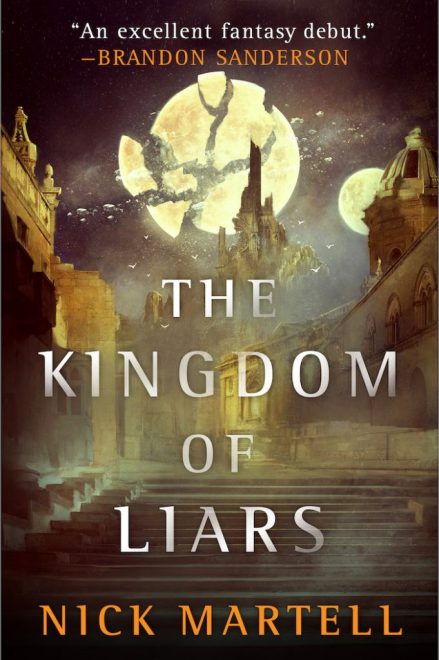
The Kingdom of Liars Cover

Publisher: Gollancz (Audiobook – 7 May 2020)

Series: The Legacy of the Mercenary Kings – Book One

Length: 15 hours and 37 minutes

My Rating: 5 out of 5 stars

Amazon     Book Depository

Impressive new fantasy author Nick Martell presents The Kingdom of Liars, an outstanding fantasy novel that is easily one of the top debuts of 2020.

Welcome to The Hollows, the slowly disintegrating capital of once-great kingdom where magic costs memory to used.  Once a shining beacon of culture and nobility, the city is now a shadow of its former self, surrounded by firearm-wielding rebels while petty nobles fight for scraps within and a corrupt prince plots for power.  While the people suffer under the rule of a grieving king, their only hope of survival may lie in the hands of the son of the kingdom’s most despised traitor.

Michael Kingman was only a child when he was branded a traitor for the crimes of his father.  Once the King’s loyal right-hand man, Michael’s father, David Kingman, was convicted and executed for the murder of the King’s nine-year-old son, and his family was cast out into poverty and infamy.  Now, 10 years later, Michael makes a living running petty cons on minor nobility while desperately trying to escape the legacy of his family.  However, after a devastating rebel attack rocks the city and kills someone close to him, Michael is determined to change his destiny.

Accepting employment with an eccentric and powerful noble, Michael is given a chance to re-enter noble society and find evidence that proves that his father was framed for the prince’s murder.  Participating in the Endless Waltz, the social highlight of year, Michael needs to gain influence and supporters in the court in order to gain an invitation into the king’s palace, where he believes the evidence he needs to vindicate his father can be found.  However, nearly everyone in the Endless Waltz has their own agenda and no-one wants to see a traitor’s son succeed.  Can Michael prove his father’s innocence and restore his family’s place in the kingdom, or is he doomed to share his fate and be executed as a traitor?

So, this is a book I have been meaning to read for quite some time.  Despite it coming out in May this year, I only managed to get around to listening to it a couple of weeks ago and I instantly realised I made a mistake in not reading this one sooner as The Kingdom of Liars was an epic and deeply impressive novel that I had an outstanding time listening to.  This was the debut novel from new author Nick Martell, which serves as the first entry in his planned The Legacy of the Mercenary Kings series (which is a cool series name btw).  This amazing novel from Martell contains a deeply captivating and complex story that proved incredibly irresistible to me, especially when you throw in the great characters and inventive new fantasy world that the author came up.  The end result is an exceptional and powerful read that gets a full five-star rating from me.

At the heart of this awesome book is a first-rate story that sees the protagonist, Michael Kingman, attempt to navigate his treacherous city in order to find the truth behind the death of his father.  Martell starts his narrative off with an impressive opening sequence that sees Michael being found guilty of the murder of the king, a charge he does not refute.  The story then backtracks a few weeks and the full story of Michael Kingman and his adventures is revealed to the audience through the first-person narration of Michael in a way that is reminiscent of a historical chronicle and shows how the protagonist goes from street hustling to regicide in a short period of time.  This proved to be an extremely epic tale loaded with conspiracy, political intrigue, lies, deceit and dark magic, as Michael primarily battles through a series of intense social occasions while also attempting to outwit or survive the machinations of jealous royals, betrayed friends, dangerous mercenaries, fickle nobles and scheming rebels.  At the same time, he also has to work out the motivations for the various people he encounters, most of whom have deep secrets or interesting connections to Michael and his family, as well as diving down into the history of The Hollows and the Kingman family.

There is quite a lot going on in this book, and the readers get to witness a series of different storylines and character arcs, all of which are loaded up with surprise twists and intriguing revelations.  All these storylines prove to be quite entertaining and very cleverly written and I had a great time seeing how each of them unwound.  These separate story arcs come together extremely well, and it results in a deeply compelling overall narrative which proved very hard to stop reading.  I loved all the narrative surprises that Martell came up with throughout The Kingdom of Liars and he added in some great twists which did an outstanding job keeping my attention.  While I was able to guess some of the reveals that Martell was telegraphing, several others caught me completely by surprise, which is something I deeply appreciate in a novel.  I was particularly impressed by the eventual reveal of the main antagonist and I thought that the choice of character was a real masterstroke from Martell.  I was immensely annoyed with myself for not picking up on it sooner, especially as I missed an obvious clue.  I cannot emphasise how I much loved this clever narrative, and I look forward to seeing how Martell continues this captivating tale in the future.

Because he serves as the central protagonist and only point-of-view character, most of The Kingdom of Liars is spent examining the character of Michael Kingman.  Michael is a complex and damaged protagonist who finds himself burdened with the legacy of his great family and the deeds of his traitor father.  At the start of the novel, Michael is a rather self-destructive being, who attempts to find redemption from random and pointless acts of heroism and by skimming some cash off the nobles he despises.  However, after a series of personal losses, Michael begins the path to redeeming himself and his family by attempting to prove his father’s innocence and he starts to reconnect with figures from his past, including several he had forgotten.  I quite enjoyed the character of Michael and it proved to be quite fascinating to see his constant internal battle to determine his identity and his place within the world.  Do not get me wrong, at times Michael proved to be a frustrating protagonist to follow due to his stubbornness and anger, but I think this examination of his damaged emotions helped to make him a stronger character who the reader could emphasise with more.  Thanks to the various events and revelations that become apparent to Michael as the story progresses, the protagonists develops substantially throughout The Kingdom of Liars and by the end he is a vastly different character who is placed in an interesting position for the next novel.  I look forward to seeing how Michael’s story continues throughout the rest of The Legacy of the Mercenary Kings series and I am sure it is going to be suitably dramatic and enjoyable.

In addition to the central protagonist, Martell includes an impressive supporting cast of characters who guide, befriend, manipulate, or try to kill Michael throughout the course of the narrative (sometimes they try to do all four at once).  I really enjoyed the various supporting characters that the author included in The Kingdom of Liars, especially as he ensures that each of them has a substantial and compelling backstory that is somehow interwoven with Michael’s past.  It proves to be extremely fascinating to see how each of these characters play into the larger picture of the narrative, especially as everyone has an alternate motive when it comes to dealing with Michael.  While each of the characters is suitably complex, there are a couple I need to particularly highlight.  This includes the other Kingman children, Gwen and Lyon, both of whom have been impacted by their father’s execution in a similar way to Michael, but who both deal with it in alternate ways, either by running from their family’s name or by subtly investigating it through their own means.  These two prove to be a dramatic counterpoint to Michael’s inner struggle about being a Kingman and it was fascinating to see the various, high-tension discussions they have with the protagonist on the subject.

There is also the excellent character of Trey, Michael’s best-friend, who, thanks to a tragic event early in the novel, ends up becoming more of an antagonist due to major feelings of betrayal that emerge between the two.  Trey ends up become a fantastic part of the book’s plot, as Michael is forced to constantly worry about his former friend attempting to kill him, while also attempting to do what is best for Trey’s well-being.  The various sequences with Trey are amongst the most emotional and powerful in the novel, and they add a real dramatic kick to the overall story.  The end of The Kingdom of Liars hints at a dark future for Trey in the rest of the series and I cannot wait to see what he has in store for him.  I also had quite a liking for the mysterious mercenary, Dark, a dangerous and shadowy being who Michael becomes inadvertently entangled with.  Dark is a fun and ultra-powered figure throughout the novel, and he had some great interactions with the protagonist.  However, out of all these characters my favourite is easily Charles Domet, the rich and powerful drunkard with innumerable secrets.  Domet serves as an excellent mentor character for Michael, while also being one of the most entertaining members of the cast.  I loved every scene that Domet appeared in, especially as he had a particularly intriguing backstory.  Each of these characters, and more, added substantially to The Kingdom of Liars, and it will be fascinating to see how each of them evolves in the future.

On top of the outstanding and clever story and the complex characters, Martell also invests in a captivating and highly inventive new fantasy realm, primarily set around the city of The Hollows.  This is a dark and dangerous world, with the major feature being a fractured moon hanging in the sky with occasional pieces falling to world below and causing substantial damage, while also offering cryptic remarks to those people who hold the shards.  The Hollows itself serves as an excellent setting for the novel, thanks to its dangerous politics, oppressed people, besieging rebels and withering monarchy.  Watching the scion of a once powerful house that was renowned as a force for good attempt to navigate the avenues of power throughout The Hollows proves to be extremely compelling and I really enjoyed it.  There are also some intriguing examinations of the city’s history, and each revelation about the past added a new layer to elaborate story that Martell came up with for The Kingdom of Liars.  The author has also come up with an intriguing magical system which allows people to wield substantial power at the cost of their own memories, ensuring that each magic user must work hard to maintain control.  I found this memory factor of this magical system to be very clever and it added a lot of great elements to the overall story, especially as several characters, including the protagonist, experience memory losses throughout the novel, which hinders them, and by extension the reader, from seeing the full picture.  There is also a rather intriguing comparison between magic and firearms throughout the story, as the nobles wield arcane power, while the rebels have guns.  This results in some thrilling sequences and it should be fun to see more elaborate fight scenes in the future.  Overall, this was a deeply enjoyable and compelling new setting and Martell really showed off his creativity in this first novel.  It seems likely that Martell is planning to massively expand this world in the future The Legacy of the Mercenary Kings novels and I am confident there will be some fantastic new inclusions in the future (like who actually fractured the moon).

As I mentioned above, I ended up buying The Kingdom of Liars’ audiobook format rather than grabbing a physical copy of the book.  I am extremely happy that I chose to do this as the audiobook was particularly good and it proved to be a fantastic way to enjoy this awesome novel.  I had an amazing time seeing the cool fantasy world that Martell came up be bought to life in this format and I found myself really getting into the story details as I listened to it.  The Kingdom of Liars audiobook has a relatively substantial run time of 15 hours and 37 minutes, although I found myself powering through it extremely quickly due to how much I enjoyed the story.  The audiobook features the narration of Joe Jameson, who I recently talked about in my review of King of Assassins by R. J. Barker.  Jameson’s narration in The Kingdom of Liars is pretty amazing and he does an incredible job inhabiting the various characters featured within the novel.  I think his voice and narration style really fit the way that this novel was written, and I felt that the point-of-view protagonist really came to life in his hands.  All of this results in a captivating and deeply enjoyable audiobook and this is the format I would recommend to anyone who wishes to check out The Kingdom of Liars.

The Kingdom of Liars is an incredible, compelling, and deeply exciting novel that I had an absolutely wonderful time listening to this year.  Debuting author Nick Martell really outdid himself with this first novel in his The Legacy of the Mercenary Kings series and this superb book comes highly recommended.  I loved everything about this book, including the two different but equally awesome covers that it was released with (see above and below), and I know I am going to have an amazing time following this series in the future.  The next The Legacy of the Mercenary Kings novel, The Two-Faced Queen, is set for release in March next year, and it looks set to be one of the top books of 2021.

The Kingdom of Liars Cover 2

Amazon     Book Depository

The Evening and the Morning by Ken Follett

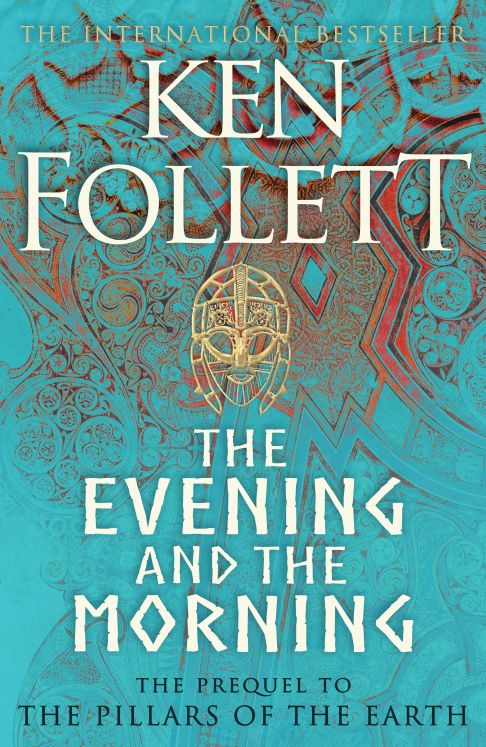
The Evening and the Morning Cover

Publisher: Macmillan (Hardcover – 15 September 2020)

Series: Kingsbridge – Book 0

Length: 819 pages

My Rating: 5 out of 5 stars

Amazon     Book Depository

Following three long years of waiting, one of the best authors of historical fiction in the world today (and one of my all-time favourite authors), Ken Follett, returns with another historical epic, The Evening and the Morning.

Follett is a highly acclaimed author who has written a number of impressive bestsellers over his 45+ year writing career.  After starting off with thriller novels, Follett really hit his literary stride when he moved on to massive historical fiction novels.  After experiencing great success with the iconic The Pillars of the Earth, he has gone on to produce several other epic books, including two sequels to The Pillars of the Earth and the outstanding The Century trilogy.  I have been a major fan of Follett for years ever since I had the great pleasure of reading The Century trilogy.  This was followed up with the second sequel to The Pillars of the Earth, A Column of Fire, which was easily one of my favourite books of 2017.  Thanks to how overwhelmingly compelling each of these previous novels were, I have been eagerly waiting to read his latest novel, The Evening and the Morning, for a while now, and it has been one of my most anticipated novels for the second half of 2020.

The Evening and the Morning is a character driven historical fiction novel that is set near the end of the Dark Ages of England.  The novel actually serves as a prequel to Follett’s bestselling The Pillars of the Earth and is part of Follett’s Kingsbridge series.  The Kingsbridge novels are all set within the fictional town of Kingsbridge, which each novel exploring a different period of English history (for example The Pillars of the Earth is set between 1123 CE and 1174 CE, while its sequel, World Without End, starts in 1327 CE).  This prequel is once again set in the same area, with the novel running between 997 CE and 1007 CE.

At the end of the 10th century, England is far from settled and faces attack from external threats.  One particularly vicious Viking raid causes untold damage at the town of Combe, near the city of Shiring, and sets off a chain of events that will change the area forever.

Following the raid, one of the survivors, a young boat builder named Edgar is forced to abandon his home and follow his family to the small hamlet of Dreng’s Ferry.  Living amongst the unwelcoming locals and corrupt landlord, the brilliant Edgar chafes and tries to find a new way to provide for his family.  At the same time, a Norman noblewoman, Ragna, falls in love with the ealdorman of Shiring and travels to England to marry him.  However, she soon discovers herself engulfed in a brutal battle for power with her husband’s family, and any misstep could cost her everything.  These characters are joined by Aldred, a young and ambitious monk who wishes to turn the abbey at Stirling into an academic hub.  However, his strong sense of right and wrong gets him into trouble as he searches for justice in all the wrong places.

As all three of these characters try to survive the troubles of the location, they find themselves drawn into each other’s lives.  Together they have the power to solve each of their problems and prosper together.  However, each of them has run afoul of the area’s corrupt Bishop, who is determined to gain power and influence no matter the cost.

Unsurprisingly, I absolutely loved this new novel from Follett, who has once again composed an outstanding historical epic.  The Evening and the Morning is another exceptional book that takes the reader on a powerful and captivating ride through an exciting period of English history with an addictive story told through the eyes of several great characters.  I had an outstanding time reading this book, and despite its length (at 800+ pages, it is one of the longest novels I have ever read), I powered through this book in relatively short order as I found the compelling narrative that Follett produced to be deeply addictive and hard to put down.  This was a fantastic read, and it gets a full five-star rating from me.

The Evening and the Morning contains an impressive and addictive character driven narrative that sees three distinctive protagonists attempt to change their destiny and the destiny of the people they love over a period of 10 years.  Set during a turbulent period of England’s history, The Evening and the Morning follows these characters as they attempt to survive Vikings, hunger, bandits and the machinations of a dangerous bishop.  The scope of this book’s story is truly epic as Follett ensures that his protagonists are forced to contend with all manner of challenges and tragedies, from political intrigue, direct attacks, imprisonment and so much more.  The resulting story is deeply compelling, extremely intelligent and wildly entertaining, especially as Follett comes up with a ton of unique and intriguing scenarios for his characters to work around.  I had an incredible time reading The Evening and the Morning’s story and it proved extremely hard to put down.

As I mentioned above, The Evening and the Morning is part of the Kingsbridge series and serves as a prequel to the first book in the series, The Pillars of the Earth.  Despite this, I would say that readers really do not need to have any prior knowledge of the rest of the Kingsbridge books to enjoy The Evening and the Morning.  This latest novel from Follett is extremely accessible, and as it is set more than 100 years before the events of The Pillars of the Earth, readers really should consider this a standalone novel that any historical fiction fan can easily enjoy (that is true for every entry in this series).  That being said, long-term fans of Follett and the Kingsbridge series will no doubt really appreciate seeing this early version of this iconic fiction setting, especially as the author includes a number of clever connections to the future novels in the series.  I particularly liked seeing how the titular Kingsbridge of the series was created, and you also get more of a look at how important the clergy were to the early inhabitants of the town, which is fascinating if you consider how the relationship between the church and the townspeople changes over the course of the series.  As a result, I would say that The Evening and the Morning is a book that most readers will be able to enjoy, while also serving as an intriguing entry in the Kingsbridge series.

The Evening and the Morning’s story follows three major point-of-view characters, Edgar, Ragna and Aldred, and shows the reader 10 key years of their lives.  These three characters form the heart of this story, and it does not take long for you to get really drawn into their individual stories.  Each of these characters has their own intriguing and emotionally charged story arcs, such as the creative Edgar’s attempts to rebuild his life in a hostile new village after experiencing a series of terrible losses, Ragna’s marriage and the subsequent battle to gain power and influence, and Aldred’s bid for justice and knowledge.  I really enjoyed each of these character’s individual arcs, but their real strength lies in the way that their stories and lives tie into one and other.  All three major characters becoming incredibly entwined as the book continues, as they form a strong friendship between themselves and attempt to help each other come the various struggles they encounter.  These separate character storylines come together extremely well into one powerful and cohesive narrative which sees the reader become deeply engrossed in all their lives.  You really grow to care for all three of these characters as the story progresses, becoming deeply invested in their wellbeing and happiness.  While this is evidence of some outstanding writing on Follett’s behalf, it is a little unfortunate as a lot of bad things happen to each of these characters (especially Ragna), and it makes for some emotionally hard reading at times.  There is also a rather intriguing love triangle between these three characters with some interesting LGTB+ elements attached, which adds an additional level of drama to the story.  I ended up being quite satisfied with how these character arcs unfolded, and readers are going to have an incredible time seeing how they turn out.

In addition to the main three characters, there is also another major point-of-view character, Wynstan, the Bishop of Shiring.  Wynstan is the book’s main antagonist, a cunning and ruthless manipulator who is desperate to gain power and influence at the expense of others.  Wynstan is the half-brother of Ragna’s husband, who uses his familiar connections and his corrupted followers to control much of Shiring and the surrounding area.  Follett has created an extremely despicable and aggravating villain with Wynstan, who comes into conflict with all three major protagonists, as each of them cross him in some way or another.  Wynstan is an extremely vengeful and dangerous opponent, who manages to do some fairly evil deeds throughout the book, while avoiding too many repercussions.  I found myself really growing to hate Wynstan and his followers as the book progressed, becoming fairly aggravated whenever he managed to weasel his way out of trouble.  This emotional response to Wynstan is exactly what you want when you write an antagonistic character, and I think that he helped add a lot to the overall narrative.

Follett has also loaded up his story with a ton of side characters who the point-of-view characters interact with throughout their lives.  There are quite a substantial number of side characters in this book, but thanks to Follett’s excellent writing the reader is able to keep track of each of them; at no point during this book did I become lost working out who someone was.  Many of these supporting characters have their own minor story arcs throughout the book, and it is interesting to see how they evolve and change over the years.  While quite a few of them are fairly despicable (indeed, at times it seems like the three main characters are the only decent or sensible people in the story), you do grow attached to them and become wrapped up in what happens to them.  That being said, readers are advised not to get too attached to them, as they have a much higher mortality rate, although there are a few happy endings in there which are guaranteed to satisfy.  Overall, Follett does an exceptional job with all the characters in this novel, and watching their lives unfold was a real emotional rollercoaster.

I also quite enjoyed the author’s fascinating depiction of England (with a bit of Normandy thrown in for good measure) during the late 10th and early 11th century.  While the setting of this book, Shiring and its surrounding environs, are fictional, they come across as period-appropriate settlements and the reader gets a real sense of what life in the various villages and towns would have been like.  Due to the broad scope of the story and what the characters witness, the reader gets a look at a huge range of different people who would have existed during this period, including the nobility, the various members of the clergy, the common people and even slaves.  Follett does an amazing job of highlighting how these various characters would have lived, what their professions or stations were like and the problems they would have typically experienced.  The author really replicates the hard nature of the times, allowing the reader a fascinating glimpse into the harsh and dangerous lives of our ancestors.  Follett also works in some broader historical elements, such as the increased attacks from the Vikings and the political situation at the time.  A lot of these historical inclusions, such as having King Ethelred the Unready appear as a minor character, proved to be really intriguing, and I loved how the author dived back into history to enhance his tale.

With The Evening and the Morning, Ken Follett has once again shown why he is one of the top historical fiction authors in the world today.  This latest novel presents the reader with an exceptional and captivating tale of love, connection and triumph over adversity at the end of England’s dark ages.  Serving as a prequel to Follett’s bestselling The Pillars of the Earth, The Evening and the Morning contains an amazing story that follows some driven and likeable protagonists during this dark period.  The end result is an epic and incredibly addictive read that comes highly recommended and is easily one of the best books of 2020.  There is a reason why Follett is one of my favourite authors of all time, and I cannot wait to see what elaborate novel he comes up with next time.

Amazon     Book Depository

Battle Ground by Jim Butcher

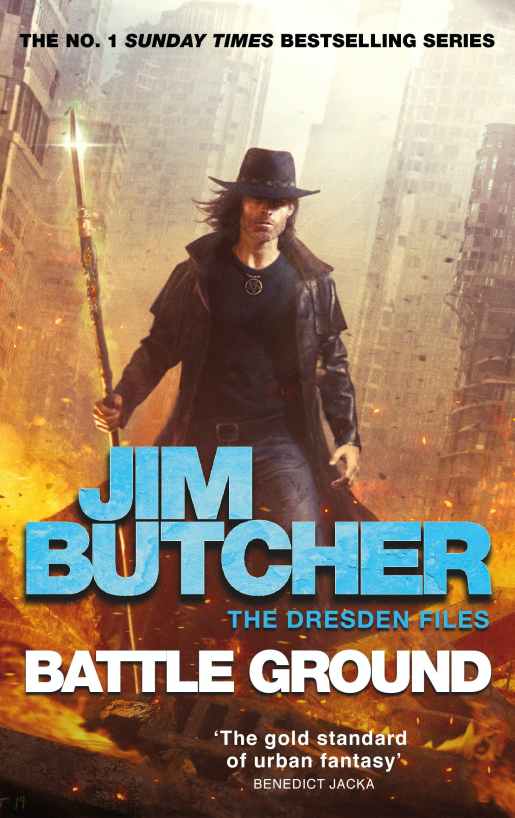
Battle Ground Cover

Publisher: Orbit/Penguin Random House Audio (Audiobook – 29 September 2020)

Series: The Dresden Files – Book 17

Length: 15 hours and 43 minutes

My Rating: 5 out of 5 stars

Amazon

One of the leading authors of the urban fantasy novel, Jim Butcher, returns with the next entry in his world-acclaimed Harry Dresden series, Battle Ground, an awesome novel that was one of the most anticipated releases of 2020.

Jim Butcher is a highly acclaimed fantasy author who has been dominating the market since his debut novel in 2000.  Butcher has written a number of books throughout his career, including his Codex Alera series, the first book of his planned Cinder Spires series, The Aeronaut’s Windlass and even a Spider-Man tie-in novel, Spider-Man: The Darkest Hours.  However, the body of work that Butcher is best known for is his long-running urban fantasy series, the Dresden Files.  The Dresden Files started back in 2000 with Storm Front and follow the adventures of Harry Dresden, a wizard who works as a private investigator in Chicago, solving supernatural crimes and protecting humans from dangerous magical creatures.  This series proved to be incredibly popular and is widely considered to be the gold standard of urban fantasy novels.  The Dresden Files currently consists of 17 books, with the universe expanded out with short stories, novellas and even some graphic novels.

While I have always heard incredible things about the Dresden Files books, I have not previously had the pleasure of reading any of them yet.  This is an admittedly massive gap in my fantasy reading knowledge, and it is one that I have been meaning to fill for a while.  So when I recently received a copy of the latest novel in the series, Battle Ground, I figured that this would be a perfect opportunity to finally break into the series.

For years, Harry Dresden, rogue wizard and general smartass, has defended the city of Chicago from all manner of supernatural threats and each time he has managed to keep it safe, until now!  War is coming to Chicago as a being of unbelievable power, the Last Titan, Ethniu, marches towards it, determined to have her revenge.  To achieve her goal, she has assembled a vast supernatural army and is in possession of a magical superweapon of unbelievable destructive power.  With these forces at her command, Ethniu has sworn to wipe out the entirety of Chicago in one night and kill all eight million of its inhabitants.

In order to combat this terrible threat, Dresden must rally together every friend, former enemy and magical ally he can find in order to face down the opposing army and stop Ethniu.  However, this will be no easy task.  Not only must he deal with the conflicting politics of the rival magical factions but dangerous monsters are also loose in the city, determined to take advantage of the destructive circumstances.  Worse, thanks to Ethniu’s superweapon, every electronic piece of technology in Chicago has been knocked out and the entire population is now helpless and unable to flee from the oncoming chaos.

As Dresden and his allies attempt drive back the enemies coming towards them, they face an uphill battle.  Ethniu is one of the most powerful beings in existence, and not even the combined might of Chicago’s magical elite may be enough to stop her.  Throughout this night Dresden will face terrible losses and be forced to make some of the hardest decisions in his life.  But even Dresden’s most desperate tricks may not be enough to turn the tide and save the city.  One thing is clear: no matter who wins, Dresden and the entire city of Chicago will never be the same again!

Well damn, Jim Butcher really went all out with Battle Ground and has produced one heck of an impressive novel.  This was a spectacular read, filled with a lot of huge, epic moments, smart storytelling, extremely likeable characters and clever fantasy inclusions, all wrapped up with a fun sense of humour and excitement.  Battle Ground is the 17th Dresden Files book, quickly following up the 16th book, Peace Talks (where several storylines explored in the novel originated).  I had an absolute blast reading Battle Ground, and I do have to admit that I am currently feeling a lot of regret for not getting into this series a heck of a lot sooner, as this latest entry is easily one of my favourite books of 2020.

At the heart of this outstanding novel is an extremely powerful story that sees beloved series protagonist Harry Dresden attempt to save his city from all-out destruction as a magical army invades, intent on killing everyone.  This results in an intense and action-packed novel that is a bit of a change of pace from some of the previous novels in the series, which usually read more like fantasy detective fiction.  Battle Ground is a war story, with the protagonist engaged in the battle of his life throughout the entirety of the novel.  Butcher starts Battle Ground off quickly with the protagonist having to face off against a kraken, which easily draws the reader in off the bat (I know I was pretty darn impressed with that introduction).  From there he sets up the start of the war perfectly, with a number of characters introduced as their roles in the coming fight are established, as well as an exploration of the various magical political entities in the city and why they are supporting Dresden in his fight.  It does not take long for the actual war for Chicago to start, and once it does the story does not slow down again until the battle reaches its brutal climax.  There are some truly epic and captivating battle sequences throughout the course of this book as Dresden and his allies face all manner of dangers and turmoil, including a range of distinctive adversaries from the previous entries in the series.  There are so many memorable and exciting moments that featured in this part of the book and I found myself going through an emotional ringer as everything unfolded, from feeling saddened at some critical scenes, to being inspired as a beloved character led an impassioned charge against the foe.  I was on the edge of my seat as I listened to Battle Ground’s story, and it honestly did not take me long to get completely and utterly addicted to the narrative as I desperately waited to see how the story would conclude.  When it did, I found myself completely satisfied with the ending and it left me with a deep longing to see where Butcher takes the series next.  Overall, this was an incredibly well-written and wildly exciting narrative which will stick in the readers mind as they wait for the next Dresden Files book to be released.

Now, was it a mistake coming into this series on the 17th book that serves as an epic conclusion to a number of key storylines?  Potentially.  But do I have any regrets about reading this latest Dresden Files novel?  Absolutely freaking not!  I had an incredible time with Battle Ground, especially as Butcher made sure to make this novel accessible to new readers, even with the book’s huge range of characters and massive stakes.  Pretty much every major character or event that is relevant to the main narrative of Battle Ground is explained in sufficient detail so that new readers coming to the series for the first time can follow what is happening and get a decent sense of the significance of a location, event from a prior book or the personal history that Dresden has with a character.  I do have to admit there were a few things I was a tad uncertain about, mainly because they would have been covered in Peace Talks.  For example, I did find the motivations of the book’s main antagonist, Ethniu, a little vague and there was a lack of build-up around her various allies and minions.  There is also a major twist towards the end of the book which did not hit me as significantly as it would have for a long-term reader of the series, as it is tied into several overarching plot threads from the previous books.  Despite this, I was able to follow the plot extremely closely, and my lack of prior knowledge in no way stopped me enjoying all the incredible action and wonderful characters that were part of the books plot.  As with any later addition to a series, Battle Ground is definitely intended to be enjoyed by established fans; however, I will recommend this to readers unfamiliar with the series as I know they will have an amazing time reading it.

One of the key things that I enjoyed about Battle Ground was the extremely likeable and entertaining series protagonist, Harry Dresden, who serves as the narrator of the entire story.  Dresden is a very fun and unique protagonist, and for most of the series he has worked outside of the established system of magical rule as a private investigator.  However, in this book he is part of the government, serving both the White Council of Wizards and as a member of Queen Mab’s court.  Despite this, he still retains his extreme anti-authoritarian streak and is constantly infuriating those people who are higher up on the magical hierarchy with his glib attitude.  I have a strong attachment to sarcastic and infuriating protagonists and Dresden is one of the more enjoyable ones I have seen in fiction.  Butcher really goes out of his way to make Dresden as likeable and entertaining as possible and most of the book’s brilliant humour is derived from Dresden’s comedic observations and statements about the events occurring around him and the outlandish people that he meets.  I also had to have a chuckle about the various pop-culture references that Dresden brought up throughout the course of the book, even in life threatening situations, such as the way he imitated Gandalf while holding off opponents on an iconic Chicago bridge.  Despite this carefree and entertaining exterior, Dresden is actually a very deep protagonist, weighed down by the responsibilities he faces and the constant desire not to be corrupted by the forces he encounters or bargains with.  Dresden goes through a lot of emotional damage in Battle Ground as he must not only contend with the guilt of letting this destruction reign down on his beloved hometown, but also with a series of losses that he faces along the way.  Butcher expertly captures Dresden’s emotional turmoil through his use of the first-person narrative, and the reader cannot help but be entranced by some of the darker moments this usually cheerful character experiences.  This excellent combination of characteristics really helps to turn Dresden into a relatable individual and an impressive protagonist and I cannot wait to see what happens to him in the future books of the series.

In addition to Dresden, Battle Ground features a veritable smorgasbord of cool side and supporting characters who the protagonist encounters throughout the course of the novel.  Due to the high stakes of the plot, this book contains a massive cast with a huge number of characters from all the previous books and novellas appearing in cameos or significant roles.  Most of these characters are really amazing, and Butcher does a fantastic job introducing them and ensuring that the reader knows who they are, what their connection to the protagonists is, as well as key elements of their history.  Due to my lack of familiarity with the series, I really appreciated the author’s dedication to reintroducing these characters and I felt fairly confident following who the various people were and what their role in the story was.  That being said, I was probably a little less emotionally impacted with some of the resultant twists and turns involving some of these characters, and I imagine long-time readers of the story are going to get a lot more out of their actions then a newcomer to the series.  These long-term readers should be warned that Butcher takes the stakes of this book particularly seriously and several characters are going to meet some dramatic fates.

I personally enjoyed many of the characters that were featured in the plot and I felt that each of these inventive personalities either added some real emotional depth to the novel or served as an entertaining additional to the story.  Some of my favourite characters in Battle Ground included River Shoulders (full name: Strength of a River in His Shoulders), a Sasquatch magician who wears Victorian era garb and who is one of the most likeable creatures in the book.  River Shoulders has a lot of fun moments throughout the story, although I have to highlight the quick scene which saw him make a pitch to improve race relations with an improvised ventriloquist act, as it made me laugh pretty hard.  I also really enjoyed Major General Toot-Toot Minimus, a small fairy who leads an army of Little Folk in defence of Dresden, all in the name of pizza.  Toot-Toot is one of the main comic reliefs of their entire novel and it was quite entertaining to see in action, especially when he manages to overcome the bigguns in defence of Za Lord.  However, the character I enjoyed the most aside from Dresden was Waldo Butters, Knight of the Cross.  Now, despite the fact that I would constantly think about the character of Butters from South Park whenever he appeared (in fairness, they have a lot of similarities with each other), Waldo Butters is probably the character who gets the most development and use throughout the course of Battle Ground.  Butters, who only recently took on the mantle of a Knight after spending most of the series as a defenceless sidekick, really comes into his own in Battle Ground, acting in a major defence role throughout the fight for the city.  Not only does he have some very inspiration fight sequences, but he also has a series of particularly emotional scenes with Dresden and adds a lot of heart to the narrative as a result.  I also really loved some of his scenes where he squares off against Battle Ground’s big bad, and you get a real Neville Longbottom vs Voldemort feel from it.  You can clearly see that Butcher has some big plans for Butters in the future, and I am personally cannot wait to see what they are.  I am honestly only scratching the surface of the various side characters who appeared throughout Battle Ground, but needless to say that they were all pretty exceptional and it was a real treat to meet them.

Battle Ground also served as my introduction to the magical version of Chicago that serves as the setting for this fantastic series.  This proved to be an excellent setting for this great book, and I really enjoyed the way that Butcher has melded together regular Chicago with some more subtle magical elements, such as a ruling magical council, hidden enclaves of power and mysterious creatures hiding just beneath the surface.  There are a lot of cool elements to this setting, and I think that the author did an amazing job reintroducing it for the context of this latest novel.  I was particularly impressed by the way Butcher brought a number of key city landmarks to life in this book, with several iconic pieces of Chicago used to great effect throughout the book as settings for epic scenes.  Unlike any previous book in the series, the events of Battle Ground ensure that Chicago goes through some massive changes as a magical army invades.  The destruction levelled upon Chicago is substantial, and there are several emotional sequences that see the citizens attempting to deal with these forces coming to kill them.  Naturally, this is going to have some major impacts in the future entries in the series, and I look forward to seeing what the long-term impacts of this book are going to be.

I also need to mention that, aside from Battle Ground’s main story, this novel and its associated audiobook format also contains the short story, Christmas EveChristmas Eve is a relatively tiny part of the novel, only made up of 15 pages (or around 25 minutes of the audiobook), and shows Dresden encountering several people on Christmas Eve.  This short story is set after the events of Battle Ground (despite being initially written and released in 2018) and contains a rather nice and emotionally rich narrative that examines Dresden’s emotional state as a father and friend.  Christmas Eve is a much more relaxed and lower-stakes story that Battle Ground, and I personally really enjoyed reading it after all the bloodshed, sacrifice and death of the main story.

While I did receive a nice hardcover copy of Battle Ground, I ended up listening to its audiobook format instead.  The Battle Ground audiobook runs for a little under 16 hours, which I powered through in only a few short days; it did not take me long to get addicted to this novel.  I deeply enjoyed the Battle Ground audiobook and I felt that it was an awesome way to enjoy this great book.  Not only did I find myself absorbing more of the story elements and getting drawn more into the plot but I also loved the top-shelf narrator they utilised for this audiobook.  Battle Ground was narrated by James Marsters, best known as Spike from Buffy the Vampire Slayer and Angel, who has also narrated all the previous books in the series as well as the short stories and other associated novels.  I am a major fan of Marsters, having watched a ton of the television shows he has appeared in, so I was very excited to listen to one of the audiobooks he narrated.  Unsurprisingly, Marsters proved to be an outstanding narrator, empowering this already impressive novel with his amazing vocal talents and moving the story along at a brisk and exciting pace.  Marsters did an awesome job providing each of the characters with their own unique and distinctive voice which fit the personality and depiction of each character perfectly.  I was also particularly impressed with how he brought the book’s protagonist to life.  Marsters really dove into the character of Harry Dresden, providing a perfect voice for the maverick wizard that effectively captured his various quirks and personality traits.  This excellent narration also explored the various raw emotions that Dresden experienced throughout the course of the novel and you get a fantastic sense of what the character is going through and how much he is struggling.  I really have to highlight the enthusiastic emphasis that Marsters utilises when reciting Dresden’s various spells and I could totally imagine the protagonist shouting out his incarnations in that way.  I also liked the humorously altered voices that were utilised for some of the supernatural creatures, such as Toot-Toot, which was not only widely entertaining but which fit the outrageous character extremely well.  All of this makes for an incredible audiobook experience and I fully intend to listen to the other entries in the series rather than seeking out a physical copy.

Battle Ground by Jim Butcher is an extraordinary and epic urban fantasy novel that serves as the latest novel in Butcher’s acclaimed Dresden Files series.  Butcher has done an incredible job with Battle Ground, presenting the reader with an awesome and captivating narrative, filled with a huge array of enjoyable characters and clever fantasy elements.  The result is an outstanding and deeply impressive novel that I had an amazing time reading.  Battle Ground gets an easy five-star rating from me and it was one of my favourite books (and audiobooks) of 2020.  I cannot praise this novel enough and it certainly served as a wonderful introduction to the Dresden Files.  I am intending to go back and start reading the series from book one and I have no doubt I will love each and every entry in the series.  I am especially keen to check them out in their audiobook format because James Marsters has narrated each of them and I know I will deeply enjoy hearing these clever stories read out.  Needless to say, this book comes highly recommended from me and I cannot wait to see what other extraordinary stories exist within Butcher’s extensive Dresden Files.

Amazon

The Trouble with Peace by Joe Abercrombie

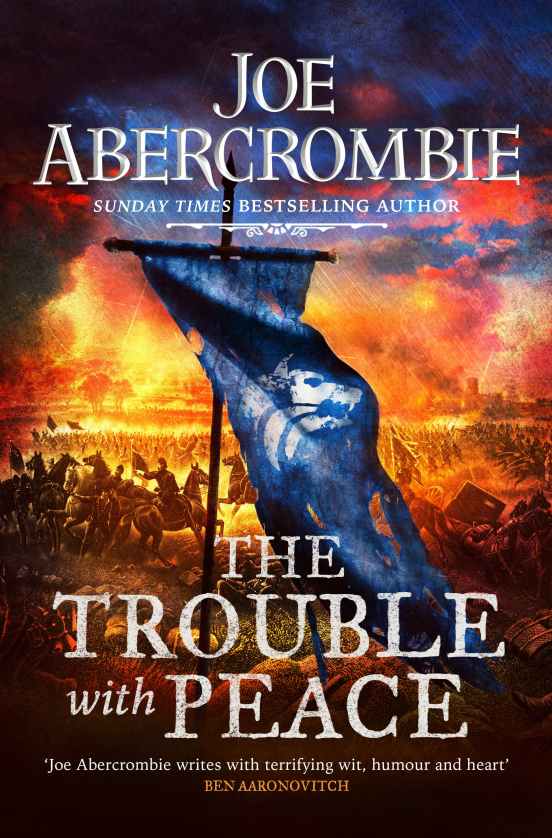
The Trouble with Peace Cover

Publisher: Orion Audio (Audiobook – 15 September 2020)

Series: The Age of Madness – Book Two

Length: 21 hours and 56 minutes

My Rating: 5 out of 5 stars

Amazon

The master of dark fantasy fiction, Joe Abercrombie, returns with another masterful and incredible novel, The Trouble with Peace, the second entry in The Age of Madness trilogy, which is easily one of the best novels of 2020.

Abercrombie is an extremely talented author who has written several impressive dark fantasy novels over the years.  His most distinctive works are the books in The First Law universe, which started back in 2006 with the author’s debut novel, The Blade ItselfThe First Law trilogy (which I really need to review) was an amazing and captivating series that followed a motley collection of broken characters and bastards as they found themselves caught up in the chaos of a dark and brutal fantasy universe.  The author has revisited this universe several times, first with three standalone novels set after the events of The First Law trilogy, and then with The Age of Madness trilogy, of which this latest book is a part.  The Age of Madness novels serve as a sequel series to The First Law trilogy, and follow several of the children of the original protagonists (as well as some other new characters), as they engage in a whole new level of chaos and destruction.  The first entry in this trilogy, last year’s A Little Hatred, was an exceptional novel that not only got a full five-star rating from me but which was one of my favourite books (and audiobooks) of 2019.  As a result, I was extremely excited when I got my copy of The Trouble with Peace, and it was one of my most anticipated releases of 2020.

The age of madness rolls on!  Following the death of his father, Crown Prince Orso has taken the throne of the Union and is now king, a role he never wanted.  What he inherits is a nation riven with discord and disharmony, with enemies within and without waiting to cut him down and take power for themselves.  Forced to deal with the machinations of the lords of the Open Council, the revolutionary Breakers, the anarchist Burners and the rival Kingdom of Styrians attempting to take his kingdom from him piece by piece, Orso soon begins to learn that even as king, he is just as powerless as always.

As chaos begins to descend on the Union and the North, the great and the powerful attempt to find their place in the new world order.  For Savine dan Glokta, formerly Adua’s most powerful investor, she finds herself in a vulnerable position with her judgement and reputation ruined.  However, her ambition remains unchecked and an unlikely alliance may help to secure the future she has always desired.  In the North, peace temporarily reigns and the governor of Angland, Leo dan Brock, chafes at the lack of action and finds himself drawn into the political turmoil surrounding the rulership of The Union.  As a famous war hero, he now wields great influence in the Open Council and many seek to use him for their own ends.  This chaos leads to him making deals he never expected, including with his former enemy, the new King of the Northmen, Stour Nightfall.  At the same time, the Dogman’s daughter, Rikke, attempts to control her dangerous gift of prophecy and heads along a new path of blood and violence.

As order and peace unravel across the Union, discord and rebellion raise their ugly heads.  With the old leaders of the world dead and the new generation taking their place, war seems inevitable.  Those who remain must decide who they are loyal to and who they can trust.  However, no alliances, no peace and no friendships last forever, and when the dust settles the Union will be changed forever!

Well damn, that was a good read!!  The Trouble with Peace is another exceptional and captivating novel that takes the reader on a dark thrill ride that proves impossible to escape.  The author once again comes up with an impressive and clever story of war and betrayal, which is anchored by a series of complex point-of-view characters, each of whom is damaged in some unique and compelling manner.  This results in a truly incredible book that was an absolute joy to read and which I flew through in a relatively short period of time.  I absolutely loved this latest book from Abercrombie, and The Trouble with Peace gets an easy five-star rating from me as a result.

At the centre of this awesome novel is an extraordinary and fast-paced narrative that sees various diverse characters and factions attempt to manipulate and outwit each other in order to gain ultimate power in the world.  The plot of The Trouble with Peace continues immediately after the shocking conclusion of A Little Hatred and sees each of the characters introduced in the previous book continue along their established storylines.  Of course, as this is a The First Law novel, it really does not take long for events to take a downward turn and soon the characters find themselves on opposite sides of a growing, major conflict.  There is a real focus on political intrigue, personal relationships and revolution in this novel, all of which proves to be deeply captivating and a lot of fun to read.  On top of that, Abercrombie throws in his usual blend of high-adrenaline action, extreme humour and wild personalities, resulting in an impressive and addictive story that readers will lap up and try to finish off as soon as possible.  Abercrombie does a great job of making this story accessible to new readers and those people unfamiliar with the universe could easily jump in here and have a great time.  However, this is definitely a novel for those readers familiar with the other entries in The First Law series, especially the preceding novel, A Little Hatred, and fans of the series will love the clever directions Abercrombie goes in The Trouble with Peace.  This is a first-class story, and I cannot recommend it enough.

Abercrombie backs up this amazing narrative with a powerful and distinct writing style that helps to turn The Trouble with Peace into a first-class read.  Like all the novels in The First Law series, The Trouble with Peace is told from some different and unique perspectives, as several captivating characters show the events of the novel occurring in front of them.  This results in an impressive and far-reaching story as the reader gets to see a bunch of different points of the same story.  This allows you to witness the various political, tactical and personal manoeuvrings on each side of the conflict, enhancing the overall narrative and driving certain key plot points home.  Abercrombie uses these multiple perspectives to great effect throughout the novel and some of the best sequences in the book are the result of some quick changes of perspective.  This includes an amazing succession of scenes in which two rival characters are disguised in a casino and have subsequent meetings with the same person in quick succession.  It proved remarkably entertaining to see the different approaches both characters took to the same situation, and served to highlight the similarities and differences between them.  Other scenes showed how the major point-of-view characters deal with each other when they meet, and it was fun to see the various mental gambits from both sides of the conflict, especially as Abercrombie ensures that all these characters are competing to be the most manipulative person in the room.  There are also two extended sequences where a single event is witnessed not only by a main character but also by a series of side characters and minor one-off characters to really showcase the chaotic nature of some scenes and the wide range of people they impact.  The use of various perspectives also really helps to set the brutal and dark tone for the entire novel, as the characters they follow are usually right in the centre of a series of different messes that they are either the cause of or they are trying to avoid.  I also really enjoyed the unique outlooks of each character as their fun reactions to the outrageous events occurring around them provide a great deal of the book’s impressive and entertaining humour.

As with all of Abercrombie’s books, the true highlight of The Trouble with Peace is easily the fantastic selection of damaged and deranged characters that make up the main cast of the series.  Like the first entry in The Age of Madness trilogy, The Trouble with Peace is primarily told throughout the eyes of seven separate point-of-view characters, each of whom has their own unique and captivating character through the novel.  These characters include:

  • King Orso – son of King Jezal, who has taken the throne after the sudden death of his father. Orso has inherited a fractured kingdom, essentially made up of people who all hate him.  Orso has a lot of growing up to do in this novel as he soon discovers all the troubles that relate to being king and the limited power he truly has.  I really liked Orso’s storyline in this book, mainly because he comes into his own and starts to demonstrate some backbone and leadership abilities.  His unique way of dealing with problems, many of which relate to his background as a wastrel and a coward, are surprisingly effective and often very entertaining.  Orso proves to be a very enjoyable protagonist throughout this book, and I personally found myself really getting behind him and hoping that he comes out on top.
  • Savine dan Glokta – the adoptive daughter of Arch Lector Glokta and the foremost businesswomen in the Union. Savine has gone through some substantial changes since the last book.  Rather than the confident and crafty women we were introduced to, this Savine is a mess, still reeling from the horrors she experienced in Valbeck and the revelation that her former lover, Orso, is her half-brother.  However, Savine soon manages to find a way back on top, thanks to a profitable marriage, and sets her sights on a particularly tempting target.  Savine is a rather despicable character in this book, and the readers are going to have a hard time feeling too sympathetic for her.  Still, Abercrombie does an amazing job exploring her trauma damaged psyche and she ends up being a very compelling character to follow.
  • Leo dan Brock – the new governor of Angland and the son of two of the protagonists of the standalone novel, The Heroes. After securing the North and bringing Stour Nightfall to heel, Leo has gained much influence and celebrity in the Union.  However, even after the events of the first book, Leo is still as hot-headed as ever and finds himself easily led into a number of conflicts.  Despite his apparent heroism and charisma, Leo is a very hard character to like, mainly due to how stupid he is.  Essentially anyone with half a brain can manipulate him in some way, and it becomes quite tiring to see him do something stupid and destructive merely because he has been told it is the noble thing to do.  Despite this, Leo forms a very fascinating counter point to his rival, Orso, as Leo has many of the things that Orso desires, such as heroism, martial prowess and the love of the people.  I also quite enjoyed the author’s exploration of Leo’s sexuality and love interests, and I look forward to seeing how that progresses in future books.
  • Rikke – a Northern girl and the daughter of The First Law trilogy point-of-view character the Dogman. Rikke is a troubled waif who is regretting her decision to force open her Long Eye in order to increase her prophetic abilities.  Rikke has to make some hard choices in this novel, but her eventual storyline sees her take up a leadership role in the North that sees her face off against the vicious new king of the Northmen, Stour Nightfall.  Rikke is another character that really comes into her own in this book, as she is forced to grow up quick and do hard things to survive.  There are some interesting story elements involved with this character, especially thanks to her magical Long Eye, which allows her to see into the future, and which also results in some very trippy chapters shown from her perspective.  I really enjoyed Rikke’s storyline and character arc through this book, and there are some excellent scenes that show just how devious she has become.
  • Vick dan Teufel – a Union inquisitor who works for Arch Lector Glokta and is loyal only to him. Vic spends a good part of the book working throughout the Union and attempting to identify the King’s enemies, as well as trying to find out who is behind the Breakers and the Burners.  Vick is a really interesting character and I like how much of her storyline seems to mimic Glokta’s from the original trilogy.  For example, in The Trouble with Peace, she is sent to a far-off Union city and must find a way to hold it against a rival kingdom.  However, she soon starts to discover the truth about who really runs the Union and the extent of their power.  Vick is a great character to follow, especially as her chapters tend to focus on the hidden political intrigue and manipulation that infests the Union.  Abercrombie also spends a bit of time continuing to explore the traumatic childhood of Vick, and it was interesting to see how her damaged and dangerous personality came to be.
  • Gunnar Broad – a former Union soldier with a perchance for extreme violence. After the events of Valbeck, Gunnar, a former breaker, now finds himself in the employ of Savine, and works as her brutal enforcer.  Gunnar is another fascinating character, who attempts to escape from the violence that he has known his entire life.  However, this is easier said than done, and his chapters feature some fantastic examination of self and philosophical thoughts on personality and the events of the past.
  • Jonas Clover – an old and experienced Northern warrior who works as an advisor for Stour Nightfall. Clover, who remains my absolute favourite character in this new trilogy, is an exceedingly entertaining person, thanks to his unique sense of humour and jaded personality.  Clover really stands out as a character, mainly because he is so different to the other Northern characters in the book.  While most of the people he surrounds himself with are eager for combat or glory, Clover is the only one extolling the virtues of patience and self-restraint, much to the other character’s annoyance.  However, he is usually right, and he has developed a habit of surviving as a result.  I really love this character, especially because he has some of the best lines and insults in the entire book.  It was really entertaining to see him work under the brash and arrogant Stour Nightfall, as Clover is constantly forced to try and reign in his new king, with little effect.  Despite not being used as much as I would have liked, Clover is still a standout character in this novel, and he has some very memorable moments as a result.

I really enjoyed all these excellent character arcs, and I thought that each of them was incredible and enjoyable in their own rights.  However, thanks to how the narrative progressed, many of these character arcs crossed over a lot more than in the previous novel, and you get to see the various storylines proceed side-by-side as a result.  Because of how they were connected, Orso, Savine and Leo tended to get the most focus throughout the book, and some of the other point-of-view characters (Vic, Broad and Clover in particular), did not get as many chapters told from their perspective.  While I would have loved more scenes from some of the other characters (more Clover would have been awesome), I felt that this was a good character balance and I liked how the various arcs progressed.  All the character arcs worked together exceedingly well, and I really liked how together they formed an exceptional and addictive plot.  The protagonists of The Trouble with Peace go through a lot in this book, and I enjoyed seeing how each of them progressed through their latest trials and dangers.  I look forward to seeing what happens to them in the final book of the trilogy and I imagine some dark things are in store for most of them.

In addition to all the outstanding and complex main characters, Abercrombie also has a great swathe of supporting characters throughout the novel and are extremely entertaining or memorable in their own right (I was a particular fan of the wild hillwomen, Isern-i-Phail).  Abercrombie does an excellent job building these characters up through the course of the book, and there are some amazing and entertaining personalities featured as a result.  However, readers should be extremely cautious about getting too attached to some of these characters, as their life expectancy is a little less certain than the main cast.  The Trouble with Peace also saw the return of several characters featured in the original The First Law books, including a couple of former point-of-view characters.  It was great to see how their stories continued years after the heydays of their adventures, and it adds an interesting aspect to the novel.  Fans of the original trilogy will no doubt enjoy seeing these characters return but should prepare to have their hearts broken.  I really liked the various storylines associated with these characters, and I was also impressed by several twists Abercrombie threw in around them, including one particularly good twist about who the ultimate antagonist of this latest trilogy really is.  Several of the scenes that utilise a ton of separate perspectives to show a single event are often briefly shown from the perspective of some of these side characters, as well as a few additional minor characters who only appear for that scene.  The author really makes the most of these scenes, introducing the character and setting up their personality and history in short order, and then showing how that event affects them (usually in a terribly negative way).

The awesome and exciting action sequences really helped to enhance The Trouble with Peace.  Abercrombie’s books have always featured some brutal and graphic fights and examples of combat, and this latest book is no exception.  There are some very impressive fight sequences in The Trouble with Peace, and the reader is always guaranteed of some action just around the corner.  I really do have to highlight one particularly massive and well-done war sequence that occurs in the latter half of the book.  This battle is the culmination of much of the novel’s plot and has a lot of build up as a result.  Luckily, it did not disappoint in any way, as the reader is treated to a series of powerful sequences that really drag them into the midst of the fight.  Thanks to Abercrombie’s excellent writing, the reader gets an incredible sense of the chaos, the fear and the claustrophobic horrors of a battle.  I really got sucked into this major fight, especially as the author makes good use of multiple perspectives to showcase just how bad it could be in the midst of the fighting, and how destruction, death and despair can infect anyone on the battlefield.  These action scenes are exceptionally written and extremely memorable, and all I can really say is thank goodness pikes are no longer used in war.

In addition to the outstanding story, characters and action sequences, I was also quite impressed with the new elements introduced into the series’ dark fantasy world.  While part of The Trouble with Peace is set in the brutal North, most of the plot takes place in the Union, which has gone through some dark times recently.  This version of the Union is extremely different to the setting that was featured in The First Law trilogy, with a recent industrial revolution bringing both progress and problems, as the land moves away from agriculture to factories.  I really appreciate how Abercrombie has altered his primary fantasy nation since the last trilogy, and his portrayal of an early industrial nation which is on the brink of various revolutions proves to be an awesome setting for this brutal and creative novel.  The author really explores the essence and heart of the Union in this book, and there is a particular deep dive into the politics and social economics of the nation as a result.  I had a lot of fun seeing how the Union falls into war, and a lot of the elements are set up extremely well during this book and the preceding novel.  The resulting conflict has a real English Civil War feel to it at times, with the parliament-like Open Council facing off against the forces of the Crown.  All of this works extremely well as a setting, and I had an amazing time once again visiting this chaotic and dangerous fantasy world.

While I did receive a physical copy of The Trouble with Peace, I ended up listening to the excellent audiobook version which was narrated by Steven Pacey.  Pacey is a talented audiobook narrator who has lent his voice to all the previous The First Law novels.  Pacey does an outstanding job narrating this audiobook and the amazing story clips along at a substantial pace thanks to him.  The narrator also has an impressive repertoire of cool voices for the various characters featured in this book and he even utilises some of the voices of the returning characters from the original novels.  Each of these voices is distinctive and fits its respective character perfectly, which in turn enhances the book’s writing and helps to showcase the character’s personality.  All of this results in an enjoyable and deeply addictive listen and I can already tell you that The Trouble with Peace is going to be one of my top audiobooks for 2020.  Listeners should be aware that this is a substantial audiobook, which has a run time of just under 22 hours (it just cracks my top 20 longest audiobooks list).  However, I would say that it is worth the time investment to check this amazing book out in this format and listeners are guaranteed a superb listen.

Joe Abercrombie continues to cement his position as one of the best modern fantasy authors in the world today with the awesome second novel in his Age of Madness trilogy, The Trouble with Peace.  Serving as the latest instalment in the overarching The First Law series, The Trouble with Peace is a captivating and impressive novel, containing an outstanding plot, memorable multi-layered characters and intense action, all set in one of the best dark fantasy worlds in modern fiction.  The Trouble with Peace is one of the best novels of 2020 and I am so glad that I got the opportunity to read it.  Abercrombie has really knocked it out of the park again and I cannot wait to check out the final book in the trilogy next year (currently titled The Wisdom of Crowds).  You will love this book!

The Trouble with Peace Cover 2

Amazon

River of Gold by Anthony Riches

River of Gold Cover

Publisher: Hodder & Stoughton (Hardback – 6 August 2020)

Series: Empire – Book 11

Length: 339 pages

My Rating: 4.25 out of 5 stars

Amazon

From one of the top authors of Roman historical fiction, Anthony Riches, comes River of Gold, the action-packed and epic 11th entry in his bestselling Empire series.

Aegyptus, 187 AD.  Under the command of Tribune Scaurus, decorated Centurion and former fugitive, Marcus Valerius Aquila, serves with several elite veteran officers, each of whom has displeased the Imperial hierarchy in some way.  These Roman soldiers now find themselves part of an informal troubleshooter unit, destined to die if they should ever fail one of their impossible tasks.  The Roman Empire is once again in danger as a mysterious army advances from the south of Africa, killing a major garrison and conquering a key port city at the southernmost border of the empire.  In order to solve this problem, the Emperor’s corrupt advisor sends Centurion Marcus and his comrades on another dangerous mission.

Arriving in Alexandria, Marcus and his comrades discover a rich province riddled with corruption and with a much reduced military presence.  Taking command of the local legion, Scaurus marches what soldiers he can down to the site of the massacre to find a new grim reality waiting for them.  After centuries of peace, the mysterious kingdom of Kush has once again declared war on Rome, determined to claim what is rightfully theirs from the weakened Romans.  In order to stop them, Scaurus leads his force deep into enemy territory to recapture an abandoned fortress and hold it against impossible odds.  Their mission is borderline suicidal and only has a slim chance of success, but if anyone can pull of this impossible task, it is Marcus and his friends.

This was another fun and exciting historical novel from Riches which proved to be a fantastic new entry in his Empire series.  Riches is a prolific and talented author who has been writing since 2009, when he debuted the first Empire novel, Wounds of Honour.  Since then he has gone to write an additional 10 novels in this series, as well as writing his separate series, The Centurions.  I have previously read a few of Riches’s books, including the first three entries in the Empire series when they were released.  While these first three books were extremely enjoyable Roman historical fiction novels, I missed the chance to read a couple of entries in the series and fell too far behind to catch up.  However, I recently got a copy of this latest book and, as I was in the mood for a visit back to ancient Rome, I tried out River of Gold to see how it would turn out.

This proved to be a good decision on my behalf as River of Gold ended up being a fantastic and compelling read.  Riches sets up an excellent character-driven story that sets a group of unique Roman officers against a dangerous new foe.  The author does a good job setting the story up, allowing those readers unfamiliar with the series or the historical era to easily jump in, and then sets the characters toward their goals.  This results in a captivating narrative that has a good blend of action, character development and cool historical features, as the protagonists embark on a madcap plan to win the war.  This leads to a number of awesome battle scenes, including an extended siege sequence which was a lot of fun to read, and the various characters find themselves in sufficient danger throughout.  The story ends a tad suddenly, although Riches does a good job of setting up the overall conclusion to the main storyline.  This story also felt a bit short, and I think it could have benefited from another 50 pages or so, perhaps extending out the siege sequence and adding in some more action and peril there.  However, this was still an overall excellent narrative which I was able to get through in only a few short days.

Riches spends a good part of River of Gold focusing on the various characters he has introduced and developed over the course of his long-running series, and this proves to be an entertaining group of protagonists.  In order to examine these characters Riches utilises a detailed, in-narrative character introduction near the start of the book, in which a newcomer reads off personnel files about each of the recurring characters.  While this was rather forced and inelegant way to introduce the characters and their history, it does the job and allows the readers to get an idea of who these protagonists are and their various quirks.  I found this particularly useful after having skipped several books in the series, and new readers will definitely appreciate the background.  Most of these characters get some intriguing arcs throughout the book.  For example, Marcus is once again the lead character of the novel as he tends to get the most important missions and ends up in the most danger, including a particularly close look at the Kush and their society.  Marcus is a fairly typical Roman historical fiction protagonist who has gone from raw recruit to hardened veteran throughout the course of the series, and it was interesting to see the various developments that have occurred since the last Empire novel I read.  Tribune Scaurus also gets a fair bit of attention as the leader of the Roman force and the mastermind behind their attack.  Scaurus is a good leader character, providing the rest of the characters with backbone and fortitude, and I liked his rather unique command style that relates to the dangerous political situation he finds himself in.  The other major character arc that I liked revolved around Cotta, the group’s veteran centurion and Marcus’s mentor, who reluctantly returns to Aegyptus for the first time after assassinating a Roman general who sought to rebel against the Emperor.  Cotta’s interesting subplot revolved around him reminiscing about his past mistakes while he attempts to hide his identity from the legion they have taken over, as they suffered as a result of his actions.  All of these recurring characters provided a great base for the story and some major moments that occurred will definitely rock readers, especially those long-term fans of the series.

While the recurring characters are good, I really have to highlight some of the new characters that Riches created for this novel, one of whom in particular outshines the rest.  This new character is Demetrius, a Christian who accompanies the army down south as part of his holy mission.  Demetrius is a complex and enjoyable character mainly due to his past as a vicious Christian-hunting Roman soldier.  After a series of brutalities, Demetrius sought redemption by joining the Christian cult, and now he fights against the invaders, believing that this fight is a holy war.  Riches focuses a good amount of the plot on Demetrius, and he proves to be a captivating and central figure, offering words of wisdom and defending his newfound Christian beliefs.  I found the author’s portrayal of this character to be really intriguing and I liked the close relationship he formed with some of the recurring characters, especially Marcus, despite that fact that none of them are Christians.  The other new character I liked was Ptolemy, an Imperial secretary and scribe assigned to the group, who provides them with relevant information and history to assist with their mission.  Ptolemy is essentially a walking piece of exposition, and a large amount of the book’s historical information is revealed thanks to him.  Despite this, he was a rather entertaining character, mainly due to the odd-couple friendship he formed with Dubnus.  The two characters are pretty much opposites in every way and end up bickering on a number of subjects, while also building up a mutual respect for each other.  This fun discourse between the two resulted in some great moments throughout the book and he was an interesting addition to the plot.

In addition to the fun story and great range of characters, Riches also invests a significant amount of time and effort in bringing the historical aspects of this novel to life.  The author has obviously done some serious research on the subject of Roman military history as he does a wonderful job showcasing various elements of the Roman legions and soldiers to life, including gear, unit makeup and tactics.  This also translates incredibly across into the various combat scenes throughout the novel, as you get a real feel for how a Roman solider would have felt in combat, especially at the Centurion level, although Riches mostly focuses on unique fight situations in this book.  The book also contains a number of detailed descriptions of the historical landscapes that the protagonists traverse through, such as Alexandria and the rest of historical Egypt.  This proved to be quite a fascinating inclusion in the story and I always enjoy seeing an author’s depiction of historical settings.  However, the most fascinating part of this novel has to be the inclusion of the ancient African Kingdom of Kush, with whom our protagonists face off against.  The Kushites were a powerful and advanced civilization, who, until recently, have been somewhat overlooked by historians and archaeologists.  Riches does an incredible job working them into his novel and setting them up as a rival kingdom to Rome.  Not only does he feature a number of detailed depictions of their culture and military make up during the events of the book, but he also spends time exploring the history of Kush, including their origins as a civilization, their prior history throughout Aegyptus and their conflicts with the Romans.  This was easily one of the most interesting and compelling elements of River of Gold, and I really appreciated Riches’s inclusion of such a unique historical adversary.  Indeed, all of the historical inclusions in this book are excellent, and I had an amazing time exploring them as the story progressed.

River of Gold by Anthony Riches is a captivating and enjoyable novel that takes the reader on a fascinating and action-packed journey through history.  Riches does an excellent job continuing his bestselling Empire series, and I had a great time getting through his exciting story, loaded with great characters and an impressive historical background.  All of this results in an amazing historical fiction novel that is well worth checking out, whether you are a fan of this long-running series or a general historical fiction fan looking for a fun adventure story.

Amazon

The Black Hawks by David Wragg

The Black Hawks Cover

Publisher: Harper Collins (Audiobook – 3 October 2019)

Series: Articles of Faith – Book One

Length: 12 hours and 9 minutes

My Rating: 4.5 out of 5 stars

Amazon

Prepare to join the roughest, toughest and most maladjusted mercenary band in the land with The Black Hawks by David Wragg, and excellent fantasy debut that was a lot of fun to read.

Vedren Chel is a minor noble struggling to adjust to his life as a knight and glorified servant to his lazy step-uncle.  Hoping to escape the meaningless existence that has been forced upon him, Chel suddenly finds himself thrust into a great adventure when a mysterious enemy force invades the city he is stuck in, causing panic and confusion all around.  Managing to flee from the chaos, Chel finds himself the inadvertent travelling companion to the useless and cowardly Prince Tarfel, the King’s son and second in line to the throne.

Accompanying Tarfel to safety, Chel hopes to be rewarded with his freedom and the chance to forge a new life.  Instead he finds himself swept up in the dangerous politics of the realm when he is chosen to become Tarfel’s protector and loyal servant.  Forced to accompany the prince back to the very city they just fled, Chel has very little hope for their survival.  His fears prove justified when a force of disguised men attempt to kill them the night they arrive.  Their lives are only saved when a mysterious band of warriors arrive, killing their attackers and then promptly kidnapping them.

Awakening, Chel and Tarfel find themselves under the dubious protection of the Black Hawk Company, a small group of elite mercenaries who have been hired to escort Tarfel to a mysterious destination.  Despite their unconventional tactics and makeup, the Black Hawks are a dangerous and clever collection of killers, which proves useful when several bands of assassins and fanatics associated with the kingdoms corrupt and all powerful church; converge upon the group, determined to kill Tarfel.  Deciding that their kidnappers are the only group with their best interests in minds, Chel and Tarfel accompany the Black Hawks off into the unknown.  Their journey will take them through dangers, both seen and unseen, and lead them into the very heart of the kingdom as they try to remove the corruption from within.  But dark secrets lie in store for all of them at the end of their journey and no one will be prepared for the dangers and betrayals in front of them.

The Black Hawks is an exciting and captivating dark fantasy novel that I had an absolute blast reading.  This debut novel from David Wragg was originally released about this time last year and it serves as the first entry in his planned Articles of Faith series.  I didn’t get a chance to read The Black Hawks last year, but I have been eyeing this novel off for several months now as I loved how fun its synopsis sounded.  I finally got the opportunity to read this book a couple of weeks ago and I am extremely glad that I did, as The Black Hawks proved to be an impressive and entertaining read that I ended up powering through in relatively short order.  Wragg has come up with an excellent novel that combines a compelling and slick story with some memorable characters and a dark fantasy landscape loaded with perils and betrayals.  These, combined with the book’s many intense action sequences, fun humour and several dark scenes, help to create an addictive and amazing read that I quickly fell in love with.

Wragg utilises a fun, fast-paced and compelling narrative to serve as the centre of this great book.  The entirety of The Black Hawks’ plot is told from the perspective of Chel, who is constantly falling into the midst of some world-changing events.  The plot starts off quickly, with Chel quickly finding himself in the company of Prince Tarfel and from there into the middle of a number of conspiracies and plot aimed at eliminating or manipulating the prince.  This ensures that the reader is quickly enveloped in a complex and entertaining plot which sees the protagonists surrounded on all sides by betrayals, conflicting agendas, mortal perils and all manner of conspiracies.  It was really fun and captivating to see how the various storylines turned out, and the author comes up with a number of intriguing surprises and twists to ensure that the story stays quite interesting and fresh.  There was one very major twist revealed at the end of the novel that I was particularly impressed with.  Wragg sets this twist up perfectly, with a number of hints towards it scattered throughout the book.  While I was able predict some of what was going to happen in advance, I was pleasantly surprised with some of the other revelations that came to light, and this beautifully cultivated twist was one of the high spots of the book.  I was also expecting a completely different ending to the novel, perhaps something a tad more light-hearted, but I liked the direction that Wragg took it instead, especially as it means that I will be grabbing the eventual sequel to this novel as soon as possible to see what happens next.  Overall, The Black Hawks contains a really enjoyable and smartly written narrative, and I had an outstanding time getting through it.

One of the best parts of The Black Hawks is the enjoyable and distinctive characters that Wragg has come up with.  The book’s main protagonist is Vedren Chel, who serves as the story’s point-of-view character.  Chel starts off as a fairly typical fantasy character: a young, bored minor noble who finds himself suddenly involved with events outside of his understanding.  However, as the story progresses, he shows himself to be a much more complex character, mainly thanks to his dedication to Prince Tarfel, who he becomes sworn to.  Tarfel is a spectacularly naive and incompetent royal, who is usually completely unaware of the danger that he finds himself in, or the full scope of the conspiracies playing out around him.  Despite recognising how useless Tarfel is, Chel takes his oath seriously and does all he can to protect him, even though that essentially means he gets the crap kicked out of him every second chapter or so.  This dogged loyalty and determination to do the right thing makes him quite an appealing protagonist, and he proves to be a rather resourceful individual who starts to fit in with the members of the Black Hawk company who kidnap him.  This camaraderie with the Black Hawks, something that he has been missing for most of his life, results in several great scenes, especially as he finds himself conflicted in his loyalty to them and to Tarfel.  Overall, his character arc goes in some interesting directions, and it was great to see him grow as a person through the course of the book.  Tarfel also grows a little during the course of the novel, becoming slightly less boorish and a little more capable.  Some of the reveals at the end of the novel have some rather large impacts of Tarfel’s personality, as he completely re-evaluates his entire life, and it will be rather interesting to see what happens to him in the future novels.

While Chel and Tarfel are both great characters to anchor the main plot around, the most entertaining and memorable characters are easily the members of the titular Black Hawk company.  The Black Hawks are a small group of dangerous mercenaries who have banded together after failing to fit in with all the other companies.  Wragg has gone out of his way to create a distinctive band of mismatched rogues to fill the ranks of the Black Hawk company, and there are a number of fun characters introduced as a result.  These members include a grim and taciturn leader with a notorious hidden past seeking redemption, a shadowy archer who has had her tongue cut out, a beautiful but lethal swordswoman, the group’s dangerous and self-serving assassin who is probably going to betray everyone, and a philosophical giant.  While there are a few stereotypical fantasy roles in there, such as with the Black Hawk leader, this turned out to be a particularly fun group of characters.  My personal favourite was Lemon, a short, red-haired human woman with a crude personality, amazing sense of humour and a fascination with her arsenal of axes (essentially a classic fantasy dwarf character).  Lemon is a great entry in the book, especially as she serves as the story’s main comic relief and is generally the most likeable and entertaining character in the novel, especially when she regales the protagonist with her blunt and tasteless jokes.  I really liked the excellent group dynamic that Wragg came up with for the members of the Black Hawks, and while they work together and are friends, there is a real sense of how mismatched the group is as all of its members are more individualistic than a team player.  All of these characters are great and Wragg does an excellent job introducing each of them and ensuring that all of them get their moment to shine throughout the course of the story.  However, he makes sure to keep most of their backgrounds hidden from the protagonist and the reader, ensuring there is a certain amount of mystery and mystique around them.  While certain hints about their past are revealed, for the most part the reader is left in the dark about who these people are and what brought them to the Black Hawks.  I imagine that Wragg plans to reveal each of these character’s full backstories throughout the course of the series and now that I am somewhat invested in them, I look forward to finding out more about their pasts.

In addition to the fantastic story and amazing characters, The Black Hawks features an excellent new dark fantasy world that serves as an awesome setting to this book.  Wragg’s novel features a somewhat desolate fantasy kingdom, ruined by years of constant warfare and ruled over by a corrupted and militant religious order that is desperately clinging to power.  This proved to be a really cool and enjoyable setting for the novel, and readers quickly become intrigued by the chaotic events occurring throughout the landscape.  While Wragg does drop the reader into this setting with any preamble and gets the story going rather quickly, the reader is never really lost about what is going on in this setting, and the author provides the relevant details about the fantasy world when necessary.  This proved to be an excellent overall setting, and I really liked seeing how all the politics and religious strife worked out.  This world also has a lot of potential for expansion, with a number of different nations and regions mentioned throughout the course of The Black Hawks’ story.  I imagine that the series will eventually visit many of these locations in the future, which should result in some interesting and enjoyable storylines, and I look forward to seeing how that turns out.

I ended up listening to The Black Hawks through its audiobook format, which runs for just over 12 hours and is narrated by Colin Mace.  This proved to be an excellent way to enjoy The Black Hawks, and I was able to power through it in only a few days as it was a really easy novel to listen to.  Thanks to Mace’s enjoyable narration, readers will be able to fly through this exciting and fast-paced story without losing focus for a second.  Mace also does a number of excellent voices for the various characters in the novels, capturing the diverse personalities and over-the-top characters really well.  As a result, I felt that this format was an awesome way to enjoy The Black Hawks and the audiobook comes highly recommended.

The Black Hawks by David Wragg was a cool and impressive dark fantasy adventure that I am really glad I checked out.  Thanks to his captivating and action-packed story, distinctive characters and dark fantasy setting, Wragg knocked his debut out of the park, creating an awesome overall read.  I had an amazing time listening to this fantastic book and I am looking forward to seeing how the story continues in the second Articles of Faith novel.

Amazon

Throwback Thursday: Dogs of War by Jonathan Maberry

Dogs of War Cover

Publisher: Macmillan Audio (Audiobook – 25 April 2017)

Series: Joe Ledger – Book Nine

Length: 17 hours and 45 minutes

My Rating: 5 out of 5 stars

Amazon     Book Depository

For this week’s Throwback Thursday, I check out Dogs of War by Jonathan Maberry, the 9th novel in the action-packed, over-the-top Joe Ledger series.

People familiar with my blog will be aware that over the last year or so I have been making my way through Maberry’s Joe Ledger science fiction thriller novels.  I have been a little obsessed with these books ever since I first checked out the 10th novel in the series, Deep Silence, and then went all the way back to book one, Patient Zero, to see how the series started.  Ever since then I have worked my way through the rest of the Joe Ledger novels, each of which has proven to be a pretty top notch read.  I absolutely love the clever writing style, unique stories and distinctive characters that Maberry features in these novels, and I usually power through them in extremely short order.  Dogs of War is no exception, as I was able to get through this in less than a week and it did not take long for me to get addicted to its intriguing and exciting plot.

Following the disastrous events of Kill Switch, the Department of Military Sciences (DMS), a secret American counterterrorist unit that focuses on dangerous and unusual technology and science, is damaged and discredited.  However, they are still determined to do good throughout the world, and their main field agent, the legendary Joe Ledger, is always keen for a new case.  So when his brother calls him out of the blue with an unusual mystery, Ledger does not hesitate to head back to Baltimore in order to investigate.

Arriving in his former hometown, Ledger discovers a curious set of circumstances.  A young street worker went on a rampage, killing several people before dying herself.  The cause of her madness appears to be a new strain of rabies, which was apparently triggered by nanobots in her brain.  Attempting to investigate more into the case, Ledger finds himself and his family targeted by ruthless killers with advanced technology, determined to ward him off the case.  It soon becomes apparent that the death of the young girl in Baltimore is just the tip of the iceberg, as other mysterious events and attacks occur across America, many of them targeting members of the DMS.  A new enemy has risen from the ashes of the DMS’s old foes, and she is determined to bring about a new world order.  Worse, the DMS’s most dangerous enemy has returned, ready to rain chaos and destruction down on the entire world.  Can Ledger and his team defeat this ruthless team of villains before it is too late, or will Ledger face the greatest tragedy of his life?

So, after reading all 10 Joe Ledger novels (as well as the spinoff novel, Rage), I have come to the conclusion that is actually impossible for Maberry to write a bad Joe Ledger novel.  I was once again blown away while reading this ninth book as Dogs of War contained an epic and addictive story that I could not stop listening to.  Maberry continues to utilise his distinctive writing style in this book, setting up a captivating and clever story that is loaded with intense action, likeable characters, memorable antagonists and a devious plot to end the world.  This results in a very captivating read and Dogs of War gets an easy five stars from me.  This is actually one of my favourite novels in the series and is probably the best one I have read this year (by a very small margin; Predator One and Kill Switch are both really good).  Also he briefly mentions my Alma mater, ANU, so yay for that!

Dogs of War contains an absolutely fantastic story that sees the fun and complicated protagonist, Joe Ledger, face off against another world ending threat.  Just like in the rest of the series, Dogs of War’s narrative is cleverly constructed with about half the novel is told from the point of view of Ledger, as he encounters the antagonist’s plot in real time.  However, the rest of the novel features a large array of alternate perspectives and preceding time periods that expands the range of the story and helps to create a complex and captivating narrative which really grabs the reader’s attention and interest.  Maberry backs up this great storytelling with a thrilling and action-packed narrative that is fast-paced and delightfully over-the-top.  I really love the unique science fiction thriller storylines that Maberry features within Dogs of War and I appreciated all the cool connections that it has to previous novels in the series.  This cool story will appeal to a wide range of different readers and it is extremely accessible to people who are unfamiliar with the Joe Ledger series as Maberry goes to great lengths to explain all the various story elements and characters featured within the book.  That being said, I really need to emphasise just how truly over-the-top this story could be, as there are a number of scenes that some readers may find uncomfortable or hard to read.  This includes some very graphic fight sequences and some rather disturbing sexual content, some of which, if I am being honest, is way too excessive (one flashback scene features the underage antagonist getting deflowered by a literal demon right after her mother’s funeral, which happened to coincide with 9/11).  Still I have a lot of love for the way in which Maberry constructs a Joe Ledger story, and Dogs of War is a truly fun and thrilling story as a result.

Just like with the previous novels in this series, Maberry has anchored his amazing story on a fantastic collection of characters who really help to enhance the narrative and turn this into a first-class read.  The main character is the series’ titular protagonist, Joe Ledger.  Ledger is an extremely complex character due to his fractured personalities and intense emotional range, and it is always incredible to see the story through his eyes, whether he is feeling each and every emotional blow that comes as way as a result of the case, or he is dishing out severe and brutal vengeance to those who have wronged him.  Ledger is also the cause of most of the book’s enjoyable humour, as he has an extremely flippant outer personality, including a hilarious and sarcastic inner monologue, which becomes especially funny when he encounters the various strange and over-the-top elements that this series is known for.

In addition to Ledger, Maberry also does an amazing job reintroducing and utilising the various recurring characters who have been featured in the previous entries in the series.  All of the side characters have their own distinctive and enjoyable personalities, and fans of the series will really appreciate seeing many of these characters return and continue their various individual storylines.  This includes the two surviving members of Ledger’s personal strike team, Top and Bunny, who serve as a great backup throughout the novel and get into some dangerous scrapes of their own.  I particularly appreciated the way in which the author examined and showcased the emotional damage that these two characters have been dealing with since the traumatic events of Kill Switch, and it added an amazing sense of realism to the story.  I also absolutely loved seeing more of Ledger’s attack dog, Ghost, the best and most lovable canine killing machine in all of fiction.  It is an absolute testament to Maberry’s writing ability that he is able to install such a fun and memorable personality into a fictional dog, and you can’t help but love it when Ghost is on the page doing his thing.  That being said, one of the best characters in the novel has to be the mysterious head of the DMS, Mr Church.  Church is a calm and measured figure throughout the novel, grounding the various main characters and providing stable leadership to them.  However, the main appeal of Church lies around his enigmatic nature and past.  Maberry has built up such an amazing amount of mystique around this character that anytime a little hint or mention of his past is presented the reader absolutely laps it up as they try to figure out who or what he is (is he an alien, an angel, some form of immortal hero from history? You just don’t know).  Dogs of War features several more tantalising hints and clues about this, and you get some very interesting glances into his past, although there is still so much mystery.  I really loved seeing all these great characters again, and it was fantastic to see how the story unwinds around them.

No Joe Ledger novel would be complete with a sensationally evil villain with a complicated past and an elaborate master plan, and Dogs of War features both in spades.  The main antagonist of this novel, Zephyr Bane, is a rather intriguing character with a unique view on the world and a range of connection to some of the villains previously featured in the series.  Maberry does an outstanding job building up this antagonist throughout the course of Dogs of War, including through a series of interludes that show key moments in Zephyr’s life, such as how she came up with her plans and how she was tutored in the art of villainy.  While Zephyr is a great antagonist, Maberry doubles down on the villainy in the novel by introducing another sinister opponent for the DMS to face.  This second antagonist is someone who has appeared in several of the past Joe Ledger novels, although his identity is hidden for a good part of the book (although fans of the series will work out who they are rather quickly).  This character is another particularly mysterious being, who spends most of the book manipulating events from the shadows, giving the reader hints at who they are and what they are capable of.  A major highlight of this novel is this villain’s long-awaited showdown with a major Joe Ledger character, and this fated interaction does not disappoint, even if it leaves the readers with more questions than answers.  Overall, these are some fantastic antagonists, and I absolutely love seeing the outrageously evil opponents that Maberry comes up with for these books.

I also have to highlight the extremely complex and intricate evil plot that these antagonists came up with for Dogs of War.  This was a great, high-stakes plan that contained a lot of different elements that are slowly revealed to the reader throughout the course of the book.  Not only does Maberry make great use of flashbacks and interludes to show how this plan came to pass and the various planning stages but he also spends time examining how the antagonists attempt to counter the inevitable interference from the DMS.  Both of the main antagonists have had interactions with the DMS before, and they know that any plan they implement will gain the attention of the DMS at some point.  As a result, they come up with a number of counters and tactics designed to directly target key elements of the DMS in order to take them off the board.  This was a really clever part of the story, as not only does it add an extra level of drama to the narrative, especially when Ledger is emotionally targeted, but it also represents a clever bit of continuity with the rest of the series.  A lot of the weaknesses that the antagonists attempt to exploit were previously introduced or discussed in some of the previous Joe Ledger novels.  The antagonists subsequently try to learn from the mistakes of their predecessors when they utilise these weaknesses, resulting in a lot of tension as some of the characters you are invested in are personally targeted.  I think this was one of the more inventive master plots that Maberry has come up with for the Joe Ledger series.

One of the most fascinating parts of Dogs of War was the author’s examination of certain real-world technologies.  Throughout the course of the book, the author examines all manner of technological marvels in great detail, including nanobots, advanced robots, drones, computer technology and artificial intelligence.  This results in a number of intriguing discussions as the various characters consider all the applications and impacts that such technology has on the world, these technologies are then cleverly worked into the plot of the book as the antagonists utilise them for their evil plans.  Not only is this immensely interesting and highlights the research that the author has obviously done, but all this technology adds a certain amount of real-world menace to the book.  As Maberry takes pains to explain at the very front of the book, all of the technologies that he features within Dogs of War is either in development, currently being tested or already exist in the real world.  As a result, the reader gets a little bit of dread at the thought that a lot of the terrible things that Maberry features within Dogs of War could happen in real life.  This of course helps to ratchet up the tension and suspense within the novel, and I really appreciated how the author used this to make the story even better.  Also, you get to see the protagonist go up against a bunch of robotic dogs, which is just awesome on so many levels.

In order to enjoy Dogs of War I checked out the audiobook format of the novel, which has a decent run time just short of 18 hours.  I absolutely love the Joe Ledger audiobooks and they are by far my preferred way to enjoy these fantastic novels.  The main reason for this is the awesome narrator, Ray Porter, who has lent his talent to every novel in the Joe Ledger series, including Dogs of War, and whose voice really enhances these books.  Porter, who is probably my favourite audiobook narrator at the moment, does an amazing job bringing the characters and the story to life, thanks to his memorable voices and the impressive way that he loads each word with so much emotion and personality.  You always get an incredible sense of the character’s emotions, as the anger, rage, fear or grief that they go through always comes through so clearly.  I particularly love the way that Porter brings the series’ main character, Joe Ledger, to life, as he perfectly captures Ledger’s diverse emotive range, including his boundless anger and his outrageous and sarcastic humour.  I also love the incredible voices he utilises for some other characters, such as the mysterious Mr Church, and his depiction of him contains all the necessary gravitas and power to match the character described in the text.  I also liked the way in which Porter loads one of the antagonist’s voices up with such pure menace and hatred, turning them into a very threatening figure in this format.  All of this made listening to Dogs of War an absolute treat, and I cannot recommend the Joe Ledger audiobooks enough.

Dogs of War was another excellent and addictive entry in Jonathan Maberry’s Joe Ledger series, and I had an amazing time listening to it.  Featuring an outstanding story, awesome characters and so many other fantastic elements, this was an incredible read and I am extremely glad that I checked it out.  I have to admit that I am actually a little sad to have finished off Dogs of War, as that was the last Joe Ledger novel that I had to read.  I have really enjoyed going back and checking out all of the wonderful novels in this superb series, and I will have to get my science fiction thriller fix somewhere else in the future.  Luckily, Maberry actually references several other great series in Dogs of War that could be worth checking out, including the Sigma Force, Seal Team 666 and Chess Team thriller novels, all of which apparently exist in a shared universe with the Joe Ledger books.  I will have to have a think about look at some of these in the future, especially as I wait for Maberry to write another entry in his spin-off Rogue Team International series.  In the meantime, Dogs of War is really worth reading and it comes very highly recommended from me.

Amazon     Book Depository

Throwback Thursday – Redshirts by John Scalzi

Redshirts Cover

Publisher: Audible Frontiers (Audiobook – 5 June 2012)

Series: Standalone

Length: 7 hours and 41 minutes

My Rating: 4.5 out of 5 stars

Amazon     Book Depository

Reviewed as part of my Throwback Thursday series, where I republish old reviews, review books I have read before or review older books I have only just had a chance to read.

Prepare to dive into one of the most meta and entertaining novels you will ever read with Redshirts by John Scalzi, a fun and clever Star Trek parody that explores what it must be like to be a background character in a science fiction series.

John Scalzi is a well-established and highly regarded science fiction author responsible for a number of impressive and expansive series.  Some of his best-known works include his Old Man’s War series, his Lock In novels and his The Interdependency series, the last of which I have been eying off for a couple of years now and have been meaning to check out.  Each of these series sounds really exciting and have received a lot of positive praise from readers and reviewers.  In addition, Scalzi has also written three standalone novels, each of which has a very fun concept behind it, including the focus of this review, Redshirts.  While I am extremely interested in some of Scalzi’s other works, the moment I found out that he had written a Star Trek parody novel told from the perspective of a redshirt, I grabbed myself a copy of its audiobook format and I have been looking for a chance to listen to it.  Last weekend I had a long car trip with my wife/editor Alex, and we decided that listening to Redshirts would be the perfect entertainment for the drive.

Redshirts takes place in humanity’s far future, aboard the flagship of the Universal Union, the starship Intrepid.  The Intrepid is the pinnacle of human ingenuity and exploration, containing only the most talented crew and scientists that humanity has to offer.  In all respects it seems like the perfect posting for newly commissioned Ensign Andrew Dahl, but it does not take long for Dahl to suspect that there is something seriously wrong aboard the Intrepid.  Not only does the lab that Dahl is assigned to have a magical box which solves every major problem that the ship runs into (with only seconds to spare, without fail), but the entire crew is terrified of the captain and his senior officers, actively trying to avoid them and the near constant away missions.  The crew has come to realise that the away missions are guaranteed to be lethal, with any crew member who joins likely to die while the senior officers constantly walk away without a scratch (with the exception of the unlucky Lieutenant Kerensky).  Now a great deal of energy is place into avoiding an away mission at all cost, with new transfers to the ship kept in the dark until it is too late.

As Dahl and his friends begin to realise the full extent of the terror that has engulfed the ship they attempt to find some sort of answers for what is going on.  However, the more deadly adventures that they go on the more obvious it becomes that some mysterious force is controlling their actions and causing their deaths.  With the lives of every crewmember aboard the Intrepid at stake, Dahl and his friends are left with only one crazy plan, to hunt down the beings controlling them and convince them to stop no matter the cost.  However, what happens when these expendable redshirts end up meeting their own creators?

I am going to say right of the bat that both Alex and I absolutely loved this book and we had an incredible time listening to it.  A good indication of how much we enjoyed it can be seen in the fact that we easily and eagerly powered through it during the two halves of our car trip without any breaks, laughing our asses off the entire time.  Redshirts is an extremely funny and clever novel that acts as both a parody of and a love letter to the Star Trek television show.  Scalzi has come up with a truly awesome and enjoyable novel that combines an amazing amount of humour and parody with a clever and heartfelt story.  This results in a memorable and addictive tale which you cannot help but enjoy, especially if you are a major fan of Star Trek.

For this great novel, Scalzi has come up with a very compelling and enjoyable story that acts in many ways like a unique combination of Galaxy Quest, The Cabin in the Woods and The French Mistake episode of Supernatural.  The story focuses on Ensign Dahl and his friends as they begin to work out the issues aboard the Intrepid.  This is a very fast-paced narrative and the reader is soon introduced to all the mysterious events occurring on the ship, from the terrified crew, the weird science, the exceedingly dangerous and improbable away missions and the strange characters who seem to have the answers.  All of this is shown to the reader in a very clever way, and while you are expecting many of these events occur, especially if you are familiar with Star Trek, seeing these characters react to the various odd occurrences with realistic shock and scepticism is a great source of entertainment.  Following the initial introduction, you get several chapters of the protagonists humorously traversing a chaotic ship full of self-aware redshirts desperately trying to avoid their fates.  The various attempts by the characters to understand what is going on and change their fates are amazing, if a little tragic in places, and this is a very comedic part of the book loaded with some of the best jokes at Star Trek’s expense.  The story then takes a very interesting change of direction as the protagonists undertake a desperate plan (inspired by a classic Star Trek film) to save the ship and prevent their upcoming deaths.  This third part of the book is exceedingly meta, and fans of both Star Trek and surreal, self-referential fiction will love where the story goes and various clever character interactions that occur.  These distinctive parts of the book come together extremely well and form an intricate and captivating overall narrative that fits a lot of story elements into a relatively short novel.  I had an amazing time listening to this complex story, as not only did it make me laugh, but it also made me care about the various characters who are introduced throughout the course of the book (something which the author is aware of and sadistically exploits at times, especially with that last joke at the end of the main story).

In addition to the main story, Scalzi also features three substantial codas at the end of the novel.  These codas are essentially short stories that follow side characters the protagonist meets during the course of the main narrative.  While I would normally be a little concerned about some concluding material taking up so much space from an already shortish novel, these codas are extremely well written and contribute a great deal to the book.  Titled Coda 1, 2 and 3, the codas are told in the first, second and third person narrative respectively, and contain some truly impressive and touching character-driven narratives.  These extremely clever codas really dive down into the psyches and emotions of their respective characters, showing their own complex histories and how their encounter with the protagonist had such a major impact on them.  Of the three, my favourite is probably Coda 1, which is easily the funniest, containing a very humorous series of blog posts, although Codas 2 and 3 are both emotionally rich and heart-warming.  While some readers may be tempted to skip these codas after the main story is finished, I would very strongly recommend checking each of these out as you are guaranteed to come away being extremely attached to each of these great side characters and also feeling a lot better after hearing each coda’s happy ending.

While Redshirts also has its own unique and captivating story at its heart it is an extremely funny parody of the iconic Star Trek television show.  Scalzi is clearly a fan of the series as he expertly works all manner of fun jokes and references to the show into the novel.  The Intrepid and its bridge crew are clear parodies of the Enterprise and the main characters of The Original Series, and Scalzi does an amazing job working his narrative around them, emphasising all their iconic character traits and showing just how ridiculous they and their actions are to the eyes of a normal person.  This includes the captain’s dramatic tone and way of over exaggerating events, and the poor junior officer with a Russian accent who gets the crap kicked out of him every single episode and yet is fully recovered by the next adventure without a hint of injury or PTSD.  Redshirts contains all manner of references or parodies to the over-the-top, badly written or ridiculous elements of the show, and Scalzi lovingly features and critiques them in an amazingly funny way; everything from the evolutionarily questionable alien monsters, the repetitive space battles (those poor people on decks six to twelve!) and the high death toll of the normal crew.  The highlight of the book has to be the terrified and disbelieving reactions that each member of the crew has to the events going on around them, and the fun and exaggerated attempts to survive them.  I also really loved the comedic metafiction elements of the book, which allowed Scalzi to take some humorous shots at the writers and creators of shows like Star Trek.  While this humour is obviously geared towards Star Trek fans, you really do not need to have a lot of in-depth knowledge of the series to appreciate the humour.  Anyone who has a passing knowledge of Star Trek and its tropes will find this book deeply amusing and hilarious and you are guaranteed to have a fun time getting through it.

While I absolutely loved Redshirts’ story, I did find that the dialogue was a little clunky in places.  While most of the conversation is quite fun and snappy, the overabundance of dialogue tags and the extreme overuse of the word “said” gets repetitive and distracting, especially in scenes where the conversations fly thick and fast.  In some heavy dialogue scenes, “character 1 said”, “character 2 said”, “character 3 said” repeats about 20 times in a minute, which is really distracting.  If Scalzi had used more variety in indicating which character said what, this book would have been pretty damn perfect.  But the story and the comedy were strong enough to overcome most of these issues, and I chose to focus on them instead.  However, I can easily see other readers getting a little frustrated with this, which would be a real shame as this is a very fun book.

The audiobook format of Redshirts ran for 7 hours and 41 minutes, although it is a closer to six hours if you decide to skip the codas at the end of the book.  This was an extremely easy audiobook to listen to quickly and we absolutely flew through it.  One of the main reasons that we were so interested in this book is because the audiobook is narrated by Wil Wheaton.  Now, there is obviously a lot of appeal to Wil Wheaton, or any cast member of a Star Trek television show, getting involved in a parody like this, but Wheaton did a pretty good job narrating this audiobook.  Wheaton had a great voice for this novel, and he was able to keep the audience’s attention through the entirety of the story.  While he did not really change his voice from character to character, the listener was generally able to tell when someone new was talking (ironically thanks to the author’s overuse of “said”).  Wheaton was, however, extremely adept at expressing the relevant emotions of the characters through his voice, and the fear, anger, frustration and sheer disbelief of the protagonist and the people he encounters really shines through.  I also really enjoyed his portrayal of the Intrepid’s senior crewmembers, each of whom is a parody of the main characters from Star Trek: The Original Series.  I particularly had a lot of love for the Captain’s “dramatic voice” that Wheaton did, which really captured the over-the-top tone Kirk had when he was excited or animated.  Overall, the audiobook format is a fantastic way to enjoy Redshirts and I would definitely recommend it to anyone interested in checking this novel out.

Redshirts by John Scalzi is a masterful and hilarious novel that presents the reader with a wonderful and clever parody to the classic Star Trek television series.  While there are some style issues associated with the dialogue, the story is loaded to the brim with all manner of great jokes, interesting characters, compelling plot elements and a whole lot of meta comedy.  An absolutely fantastic read that will appeal to all manner of Star Trek fans or people in need of a good laugh, Redshirts comes highly recommended and I can guarantee that Wil Wheaton’s audiobook format will serve as a great form of entertainment for a long road trip.

Amazon     Book Depository

Harrow the Ninth by Tamsyn Muir

Publisher: Recorded Books (Audiobook – 4 August 2020)

Series: The Locked Tomb – Book Two

Length: 19 hours and 51 minutes

My Rating: 5 out of 5 stars

Amazon     Book Depository

Sensational author Tamsyn Muir follows up her incredible 2019 debut with another epic, complex and infinitely entertaining hybrid novel, Harrow the Ninth.

Tamsyn Muir burst onto the writing scene with a real vengeance last year with her debut novel, Gideon the Ninth, the first book in The Locked Tomb series.  Gideon the Ninth was an extremely clever and compelling novel that followed a group of spacefaring necromancers who were summoned to the house of their Emperor and god, and given an opportunity to learn from him and become Lyctors, immortal beings with immense necromantic power who are considered to be living saints.  What they instead found was a haunted manor filled with secrets, weird experiments and mysterious hints at the past.  The protagonist of this first novel was the titular Gideon, a smart assed, foul mouthed lesbian swordswoman who was reluctantly serving the necromantic lady of the Ninth House, Harrowhark Nonagesimus.  I absolutely loved Gideon the Ninth and it was easily one of my favourite debuts of 2019.  As a result, I was rather intrigued when I heard about its sequel, Harrow the Ninth (which, as you can see above, featured another intense and beautiful cover by the talented Tommy Arnold) and I eagerly grabbed an audiobook copy of it when it came out.  I have to say that I am extremely glad that I decided to do so as Harrow the Ninth turned out to be a truly outstanding book and I had an incredible time reading it.

Harrow the Ninth is set shortly after the dramatic conclusion to Gideon the Ninth and switches the focus of the novel over to Harrowhark, who has succeeded in becoming a Lyctor at great personal cost.  Now alone, mentally scarred and more powerful than ever, Harrow finds herself in the personal care of the Emperor of the Nine Houses, who is determined to use his new Lyctor in a deadly war against an ancient and powerful terror, a Resurrection Beast, the insane and vengeful ghost of a murdered planet.

Travelling to the Mithraeum, the Emperor’s isolated sanctum, Harrow finds herself trapped aboard a desolate space station with her god and her fellow Lyctors.  Each of her companions on the station has their own agenda and motive for being there, and all of them are seeking to use Harrow for their own ends.  Worse, as Harrow attempts to learn the full extent of her new powers and abilities, it becomes apparent that something has gone wrong with her transition to Lyctorhood.  Her body keeps failing her, her swordcraft is shoddy, her blade makes her nauseous and her mind keeps presenting her with impossible scenarios.

As the Resurrection Beast comes ever closer to the Mithraeum, Harrow desperately attempts to understand everything that is happening to her and learn how to survive the oncoming attack.  However, she finds herself distracted with the machinations and plots of her untrustworthy rival and the attitudes of her three ancient tutors, especially as at least one of them is trying to kill her.  Can Harrow unwrap all of the dark secrets that lie hidden on the Mithraeum before it is too late, or will the entire Empire fall into ruin before them?

Well damn, now that was a truly enjoyable and incredible read.  Harrow the Ninth is a complex, clever, entertaining and exceptionally well written novel that does an awesome job following on from Muir’s impressive first novel.  I had an absolutely amazing time reading this fantastic book, which I think in many ways is somewhat stronger than Gideon the Ninth.  Not only does Harrow the Ninth have a deeply captivating story that successfully utilises elements from a range of different genres, but it also features some memorable and compelling characters, excellent universe building and a magical system that really stands out thanks to its descriptive necromantic powers.  Harrow the Ninth also serves as a marvellous follow-up to Gideon the Ninth, continuing the clever story from the first book with the same distinctive tone and writing style, while also featuring an intriguing reimagining of prior events.  All of these makes for an epic read which gets a full five-star rating from me.

At the heart of this amazing novel is an intense and multilayered narrative that presents a compelling tale of love, tragedy, treachery and self-discovery.  The story is actually split into several distinct sections, with the main storyline focusing on Harrow after her transformation to Lyctorhood as she spends time in the Mithraeum with the Emperor and the other Lyctors.  This part of the book expertly jumps back and forth through time and is an extremely entertaining part of the book, detailing Harrow’s education under the Emperor and the other Lyctors and her attempts to survive the various internal politics, plots and personal chaos.  The other major part of the story shows a curious alternate version of the events of Gideon the Ninth, shown from Harrow’s point of view, made distinctive due to the complete lack of Gideon, who appears to be erased out of existence.  This alternate version of the prior book is a really intriguing part of Harrow the Ninth’s story, and while I was initially a little confused about why it was included and where Gideon had disappeared to, it proved to be an extremely clever and compelling part of the book, especially when everything becomes fully revealed.  Due to this reimagining of already existing narrative, as well as the continued references to the events of the first book, readers interested in checking out Harrow the Ninth really do need to have read Gideon the Ninth first, as the story gets a little confusing and significantly less impactful without this established knowledge.

These separate storylines complement each other is exceedingly cleverly.  This novel does start off a tad slow, but this is mainly because Muir is re-establishing the narrative from the previous book and loading up the front end of the story with hints and foreshadowing about the multitude or revelations that come throughout the course of the plot.  A lot of big events and reveals occur towards the end of Harrow the Ninth, including a few reveals that were hinted at in the previous novel, and I felt that the author set all of these up perfectly.  This results in an extremely epic conclusion to the novel and I was really impressed by how it all turned out.  This novel contains a unique blend of genres, as Harrow the Ninth features elements from the fantasy, science fiction, psychological thriller and murder mystery genres.  All of these disparate features work together extremely well in the story and it helps to produce a distinctive and entertaining narrative, especially as Muir adds on a rather good comedic edge.  The end result is a fascinating and exceedingly captivating overarching narrative, and I had an outstanding time getting pleasantly blindsided by the inventive twists and turns.

This excellent and unique story is expertly supported by a distinctive writing style that I felt did an amazing job enhancing the narrative.  Perhaps one of the most noticeable elements is the clever narration that accompanies the story.  While Harrow is the point of view character for most of the novel, she is not actually the one narrating the story.  Instead Harrow’s actions, emotions and thoughts are identified, summarised, and relayed back to Harrow by an unidentified second person narrator.  Naturally, this proved to be an interesting and unusual way to tell this story, although it works well in the context of the overall narrative, even if it takes a little to get used to.  This narrative format plays into certain character reveals and plot points of the novel and it makes a lot of sense once you get further into the book, with the style itself actually being a hint about what is happening with Harrow.  This narration style changes at a certain point towards the end of the book in accordance with certain plot developments and the subsequent deviation is clever and reminiscent of past events.  I also really must highlight the author’s extremely descriptive form of story writing, as every event, person or location is described in overly vivid detail.  Not only did this ensure that the reader got the full breadth of certain magical action and developments but it also helped to enhance the overall gothic feel of the book and ensure that reader was able to easily imagine the various locations the protagonist found themself in.  This really helped the story to shine and I have a lot of love for how Muir was able to work story elements into this style.

In addition to the great story that Muir has come up with for this book, Harrow the Ninth also boasts an impressive array of amazing characters.  The central protagonist is the titular Harrow, who takes over from Gideon as the main character after the first book.  Harrow is a vastly different character to Gideon as she has a much more subdued personality, less self-esteem, and a more restrained, subtler sense of humour.  Due to Gideon’s somewhat biased narration in the first novel Harrow was mostly viewed as an extremely arrogant, confident, and brilliant person, and this is how Harrow attempts to act throughout most of the novel.  However, certain vulnerabilities in Harrow’s character that were previously explored in Gideon the Ninth once again come to the fore in this second novel.  Harrow was already an extremely complex individual, having been birthed by dark magic, ended up being responsible for the death of her own parents and having an interesting love interest.  However, following her alteration into Lyctorhood, Harrow is a much more damaged person due to the absorption of her cavalier.  Harrow’s already fractured psyche is made even worse throughout the course of the book, as she sees all manner of things that are not there and has some very different ideas of the past or how she perceives the world.  In addition, Harrow bears an immense amount of guilt on her shoulders as a result of various events in her past and the many deaths on her conscience.  Harrow needs to work through all these issues throughout the course of the story if she has a chance to survive, and this becomes a major and dramatic part of the story that was really intriguing to explore.  I had an amazing time seeing the story primarily through Harrow’s eyes and it was a refreshing and compelling change of pace from the first book.

Harrow the Ninth also focuses on a great collection of supporting characters who add some intrigue and drama to the story.  Perhaps the most distinctive side characters in this novel are the five beings that Harrow finds herself trapped with aboard the Mithraeum, the Emperor of the Nine Houses and his four other Lyctors.  This is an extremely fascinating collection of people and much of the story revolves around Harrow’s unique interactions with them as each of them attempts to teach her, manipulate her or kill her at various points within the book.  These characters are really entertaining and distinctive, from the seemingly kind, patient, and infinitely calm Emperor, to the three ancient Lyctors, the cool and confident Augustine, the exceedingly self-involved Mercymorn and the ultra-focused and lethal Ortus.  In addition, we see the return of the manipulative Ianthe, who became a Lyctor at the same time as Harrow and who forms a very distinctive relationship with her throughout the course of the book.  I really enjoyed the complex interactions and relationships that forms between all of these characters (including some wild relationships between various participants), with the Emperor acting as the father figure, the three existing Lyctors portrayed as older siblings who have a complicated power dynamic with each other, while Ianthe and Harrow are the younger sisters learning the ropes from the others.

I also have to highlight the inclusion of several other characters who previously appeared in Gideon the Ninth.  It was rather intriguing to see many of these characters return, especially as most of them died or appeared to die in the prior novel.  Muir does a fantastic job working them into the fabric of this novel, such as by featuring some of them in the alternate version of the events of the first book, changing their roles and impacts on the story as a result.  I particularly enjoyed the extended role of Ortus, cavalier of the Ninth House.  Ortus, not to be confused with the Lyctor mentioned above (although the names are actually a clever clue to a big reveal), died early on in the events of Gideon the Ninth.  But in this book the dour Ortus serves as a fantastic yet reluctant companion to Harrow, with surprising hidden depths and an entertaining obsession with gloomy epic poems and verse.  He is also essentially the complete opposite to Gideon, resulting in a very different dynamic between necromancer and cavalier then we saw in the prior book.  Overall, I have to say that I was exceedingly impressed with the characters featured within this amazing novel.  Each of these complex and memorable characters added a heck of a lot to the story and it was deeply fascinating to see each of their storylines unravel and come to their compelling conclusions.

One of the major elements of this series that I love so much is the weird and wonderful necromantic magical system complements the science fiction of the book.  Pretty much all of the main characters in this book are powerful necromancers, specialising in a different form or style of necromantic magic.  All of this magic is extremely cool, and it was really awesome seeing it utilised in fight sequences and other scenes throughout the book.  Most of the magical elements revolve around Harrow’s bone magic, as she creates skeleton and bone constructs, manipulates her own bones to either enhance herself or detach them to make weapons or other creations, as well as elements of biological alteration.  Muir does an outstanding job explaining the full range of different powers that Harrow has, and there are some amazing scenes where the young necromancer does some really inventive and clever things with her bones.  There is one sequence in particular that sticks in the mind, and I’ll certainly remember it when eating soup in the future. 

In addition to Harrow’s abilities, Muir also showcases the creative and impactful abilities and magical powers that some of the other characters have.  These various abilities are all biological or spiritual in nature, and it was quite fun to see what the different necromancers can do, especially when they go up against Harrow’s bone magic.  All these magic scenes feature some rather vivid imagery and descriptions from Muir as she tries to show the full biological manipulations that are occurring, which really help to make these scenes pop.  The author also does a truly fascinating deep dive into the origins and mechanics of her unique magical system.  A lot of these new magical elements are explained to protagonist in some detail from one of her teachers, so the reader is able to understand these elements really well, and a lot of the lessons and explanations of magic have major impacts on the story down the line.  This proved to be an extremely interesting and enjoyable part of the book and I have a lot of love for Muir’s creativity when it comes to her version of necromantic magic.

I also have a lot of love for the distinctive gothic settings that Muir has imagined up for this series.  Each of the central story locations are filled up with all manner of dark and macabre trappings and features, which the author does a fantastic job bringing to life with her descriptive writing.  This includes the dreary and dark Mithraeum, a vast and mostly abandoned space station where most of the story takes place, as well as an alternate version of the First House that appeared in Gideon the Ninth.  All of these locations are described in great detail and each of these fun and distinctive settings helps to present a darker vibe to story and helps makes this series more unique and memorable as a result.  Harrow the Ninth also contains some rather captivating and inventive universe building expansions as the author attempts to introduce new things into her universe.  All of these extensions to this universe are really clever, playing into the story really well and I loved learning more about this fun fictional setting which does so much to enhance the story. 

I found that the audiobook format of Harrow the Ninth proved to be an excellent way to enjoy this amazing novel.  With a run length of just under 20 hours the Harrow the Ninth audiobook does require a bit of a commitment to get through it, although I felt that it was really worth the time investment.  I do have to admit that it took me a little while to finish this audiobook, especially at the start.  However, I absolutely flew through the second half of the novel once I became extremely invested in the story, and I managed to knock out the final six hours in rather short succession.  I have to highlight the fantastic narrator for this audiobook, Moria Quirk, who does an outstanding job telling the story and bringing the various characters to life.  I felt that Quirk utilised perfect voices for each of the main characters and you get a real sense of each character’s personalities and emotions from this vocal work, from the calm, composed tones of the Emperor to the exceedingly petulant voice of the Lyctor Mercymorn.  This excellent voice work really added a lot to this audiobook. I really think that Harrow the Ninth translates well into the audiobook format, and listening to it really added to my enjoyment of this second novel, especially as I absorbed a lot more of the detail and gothic atmosphere through the narration.

Harrow the Ninth by Tamsyn Muir was an epic and exceptional piece of fiction that I deeply enjoyed, and which comes highly recommended.  Not only did Muir present an impressive follow-up to her amazing debut novel, Gideon the Ninth, but she was able to turn out a complex and beautifully written sequel that proved extremely hard to stop listening to.  Powerful, cleverly written and just generally outrageous, Harrow the Ninth is an outstanding read and you have no discovered Tamysn Muir and her fantastic pieces of literature, you are really missing out. 

Amazon     Book Depository