Waiting on Wednesday – The Andromeda Evolution by Michael Crichton and Daniel H. Wilson

Welcome to my weekly segment, Waiting on Wednesday, where I look at upcoming books that I am planning to order and review in the next few months and which I think I will really enjoy.  Stay tuned to see reviews of these books when I get a copy of them.

The Andromeda Evolution Cover

In this week’s Waiting on Wednesday, I take a look at The Andromeda Evolution, the recently announced sequel to Michael Crichton’s game-changing novel, The Andromeda Strain.

Michael Crichton is one of the most iconic authors of the last 50 years, having written a series of varied and highly regarded novels, many of which were turned into movies.  It goes without saying that you have heard of his most famous novel, Jurassic Park, which was adapted into the movie of the same name.  Between his debut in 1966 and his death in 2008, Crichton released 28 full-length fiction books, including Congo, Sphere, The Lost World, Rising Sun, Binary and Eaters of the Dead (also known as The 13th Warrior).  These books were mostly released under his own name, but several novels were released under the pseudonym John Lange.

One of Crichton’s most famous books was his 1969 release, The Andromeda Strain, his first foray into the science fiction genre.  It followed a group of scientists as they attempted to contain and study an extraterrestrial microbe, known as Andromeda, within a high-tech government laboratory.  While not his first book, this was the novel that helped launch his career, and was highly regarded by reviewers at the time of its release.  It is also considered to be one of the first books of the techno-thriller genre, and its success no doubt encouraged Crichton to write more science fiction works, such as Jurassic Park.

It was announced only a couple of weeks ago that a sequel to The Andromeda Strain will be released later this year to mark the 50th anniversary of its release.  The Andromeda Evolution will be released worldwide on 12 November 2019 and has been written by bestselling science fiction author Daniel Wilson.

No real plot details for this book have been released yet, and it will be interesting to see where the story goes.  The Andromeda Strain ended with Andromeda evolving and being released into the upper atmosphere, where it was severely impacting the space programs of the United States and the Soviet Union.  From what very little is known, it appears that in the new book the microbe will somehow evolve again to become a much more serious threat.  I am deeply intrigued to see how this new book will continue the story told in The Andromeda Strain, especially as the author could take the story in so many different directions.  I am very curious about what causes the disease to evolve again, and what new impacts this will have on Earth.  I imagine that this book will be set in more modern times, which also offers up a range of possibilities.  In particular, this might create an alternate timeline for Earth, as the lack of a space race might have severely altered history.

I am quite excited for the author chosen to continue this story, Daniel Wilson.  Wilson is one of the most intriguing authors of science fiction at the moment, having written several bestselling techno-thrillers, including his epic Robopocalypse series.  I think that Wilson’s writing style and imagination will mesh quite well Crichton’s original concept, and the resulting collaboration will be something special.

I am a bit uncertain whether The Andromeda Evolution will be based on any notes Crichton left behind, or whether it was only inspired by the original novel.  The three previous Michaels Crichton novels that were released after his death (Pirate Latitudes, Micro and Dragon Teeth) were either completed or partially written by Crichton himself.  However, as Wilson is credited as the author on the cover, I am thinking that the story is mostly based on his ideas.  This new perspective on the story may prove to be extremely interesting, and it could be the first in a new wave of Michael Crichton inspired techno-thrillers.

The Andromeda Evolution should prove to be an extremely interesting release for later in the year, and I am very eager to check it out.  Check back here tomorrow for a throwback review for The Andromeda Strain, and I may update this post later when more plot details about The Andromeda Evolution become available.

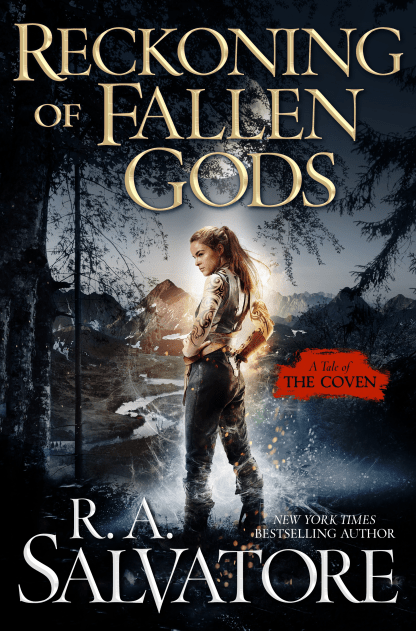
Reckoning of Fallen Gods by R. A. Salvatore

Reckoning of Fallen Gods Cover.png

Publishers: Tor Books and Audible Studios (Audiobook Format – 29 January 2019)

Series: The Coven – Book 2

Length: 14 hours 37 minutes

My Rating: 4.5 out of 5 stars

Amazon     Book Depository

Prepare to return to Corona, the world of The DemonWars Saga, for Reckoning of Fallen Gods, the latest book from master fantasy author R. A. Salvatore and the second book in his outstanding new The Coven series.

In the world of Corona, no lands are as harsh or unforgiving as those surrounding the massive Loch Beag.  All manner of dangerous creatures live in and around the loch, including one massive and unseen lake monster that lurks right below the surface.  But for those who live in the fishing villages that eke out a living around the shore of Loch Beag, the biggest danger is more human in origin.  Living at the top of the massive mountain, Fireach Speur, is a barbaric tribe, the Uscar, who constantly raid the fishing villages below.  Enhanced in battle by the crystal magic of their witches, the Uscar are ferocious warriors who consider themselves vastly superior to the inhabitants of the villages they raid.

This cycle of violence and death existed for hundreds of years until a powerful young Uscar witch, Aoelyn, attempted to change her tribe’s ways by destroying the fossa, a demonic creature that haunted the mountain at night.  However, her decision will have terrible consequences, as ambitious members of her tribe turn against her.  As Aoelyn endures the wrath of her tribe, her friend, the slave Bahdlahn, attempts to escape from the Uscar with help from an unexpected ally.  Down at the shore of Loch Beag, the trader Talmadge, who Aoelyn saved from her tribe’s brutality the night she ended the fossa, attempts to find some sort of peace among the fishing villages who have accepted him as a friend.  However, the appearance of a mysterious stranger will bring significant changes to his life.

But while those living around Loch Beag fight among themselves, they are unaware of a much bigger threat growing in the East.  A lost empire of goblinoids, the Xoconai, are on the march, driven by the return of their fallen god.  The Xoconai are determined to conquer all the lands of man, and the first obstacle they must overcome is the people of Fireach Speur and Loch Beag.

R. A. Salvatore is one of the best and most prolific authors of fantasy fiction in the world today, having a written over 60 fantasy books in his career. He is perhaps best known for his work in the established Forgotten Realms universe and the incredibly popular character of Drizzt Do’Urden. However, Salvatore has also written a series of novel set within his own unique fantasy world of Corona.

Salvatore introduced audiences to this new fantasy world in his 1997 release, The Demon Awakens, the first book in his epic The DemonWars Saga, which spanned seven books between 1997 and 2003.  This universe was expanded out in 2004 with The Highwayman, the first book in his Saga of the First King series.  After the Saga of the First King series ended in 2010, Salvatore left the world of Corona untouched for eight years while primarily focusing on his Forgotten Realms series.  However, he returned to Corona in 2018 with Child of a Mad God, the first book in his new The Coven series.  The Coven series is primarily set in a previously unexplored area of Corona, in the lands around the massive Loch Beag, with the first book focusing on a whole new group of characters.

I am a massive fan of Salvatore’s work, having read nearly all the books featuring Drizzt Do’Urden and his companions (click here for my review of the latest Drizzt Do’Urden book Timeless).  However, before last year’s Child of a Mad God, I had not really gotten into his work set in Corona, having only really read The Highwayman back when it was first released in 2004.  While Child of a Mad God was not my favourite of Salvatore’s books, it did a great job introducing this new area of Corona, while also creating an excellent starting point for the series’ overall plotline.

I found that I enjoyed Reckoning of Fallen Gods a lot more than the first book in the series, possibly because the author was able to dive right in and continue several of the more intriguing plot threads from the first book.  I quite enjoyed how the story progressed; all of the storylines contained within were very well paced and entertaining, coming together extremely well towards the book’s conclusion.  I really liked the over-the-top way that the story ended, as it sets up the next book in the series with some massive stakes and makes full use of the intriguing new fantasy elements that were included within this book.  A bit of a warning about this series: is it substantially darker than some of Salvatore’s other works.  This was particularly true of the first book of The Coven series, Child of a Mad God, which contained a fair amount of torture and sexual violence.  While there is a little less sexual violence in this book, several character development elements are based around these original events and are discussed in some detail.  There is also some fairly dark and gruesome action and torture, which might not be enjoyable for some readers.  Overall, though, this is a great follow-up to Child of a Mad God that once again highlights Salvatore’s skill as a master fantasy storyteller.

Some readers may be wary about checking this book out because it is the second book in The Coven series and the 13th overall book set in the world of Corona.  However, I found that this book to be easily accessible to new readers, with the author ensuring that relevant details from the previous book and series were easy to understand and follow nearly right away.  In addition, there are also a lot of elements for established fans of this universe to enjoy, especially as Salvatore includes a substantial character from one of his previous Corona based series in this book.  The inclusion of this character is an excellent way to tie this new series with the author’s existing works in this fantasy universe, which also highlights the importance of this story to the rest of the world of Corona.  The ending of Reckoning of Fallen Gods also hints that characters and locations from the previous series may come into play in the next book in The Coven series.

I loved all the fantasy elements in this book.  The world of Corona is a fantastic setting for the great story that is taking shape within The Coven series.  The main location for most of this book’s plot, the lands around Loch Beag and Fireach Speur, is a substantially dark and rugged area with a large number of natural and unnatural threats.  In Reckoning of Fallen Gods, there are a number of significant developments around several of these locations and creatures, some of which are pretty insane.  Just like in the first book in this series, Child of a Mad God, Salvatore continues to expand on the intriguing gem-based magic that is a feature of the books set in Corona.  The gem magic that was featured in Child of Mad God was somewhat different from the already established gem magic used in some of previous Corona books, such as The DemonWar Saga, and is based around the magic found atop Fireach Speur.  This expansion of the gem magic continues in Reckoning of Fallen Gods with the main character, Aoelyn, developing additional magical abilities.  Many of these abilities are quite spectacular, and Salvatore’s enthralling writing highlights how impressive these abilities are when Aoelyn utilises them in fights or other magical engagements.  At the same time, another character utilises some of the more traditional gemstone powers they had in one of the previous series, and it is interesting to see the differences and similarities this has with the Uscar magic.

One of the more unique and enjoyable fantasy inclusions within Reckoning of a Fallen God is the new antagonist race, the Xocanai.  The Xocanai are a new race of goblinoid creatures that exist in a realm on the other side of the mountains surrounding Fireach Speur.  The Xocanai are somewhat Aztecan in culture and their empire has been rather cut off from the rest of the world for some time.  However, recent actions have allowed them to come together to invade the human lands, and some of the events of Child of a Mad God may be to blame.  I felt that Salvatore did an excellent job of introducing them in the current book, and he was able to build them up as a substantial antagonist in quite short order.  I liked how the reader is able to get a good view of this new race’s culture and religion in only a few short chapters, while in-universe texts present at the start of each section of the book help to establish a historical past for these creatures.  In the end, they are a fantastic new inclusion to the series and the universe and serve as excellent new antagonists.

Salvatore has created some great new characters for this series, and many of the key characters who were introduced in the first book go through some significant and compelling character development throughout Reckoning of Fallen Gods.  The main character development occurs with Aoelyn, who, after the fallout of the events in the first book, develops a stronger sense of independence and rejects the established male hierarchy imposed upon her and all the female members of her tribe.  Her friend Bahdlahn gains the courage to finally flee the Uscar and is finally able to come to terms with his feelings for Aoelyn.  At the same time, the trader Talmadge comes to terms with the tragedies in his life and is finally able to find some semblance of peace with the people living around Loch Beag.  Even the established character from the previous series (who I am still not mentioning for spoiler reasons) has developed somewhat in this book, as he ruminates on the mistakes from his past that were covered in the previous series.

I have to give credit to Salvatore for creating some truly villainous antagonists for this series, especially among the Uscar characters.  The main antagonists are quite despicable, especially in the way that they deal with Aoelyn and Bahdlahn, and the reader is hoping for all sorts of comeuppance for these characters.  Even the Uscar characters that come across as more compassionate members of the tribe can still be quite dislikeable.  For example, there is one character who appears to change his ways in Reckoning of Fallen Gods.  However, he has a sudden and quite unjustified change of heart back to the Uscar ways towards the end of the book, and his complaining about the event that drove him to betray his friends really does not endear him to the reader.  These great antagonists serve as spectacular foils to the protagonists and really add a lot to the overall story.

I chose to listen to the audiobook version of Reckoning of Fallen Gods, narrated by Tim Gerard Reynolds.  This was an interesting change of pace for me, as I had read the physical copy of the first book in The Coven series, so it was cool to hear these characters come to life in the audiobook format.  At 14 hours and 37 minutes, this was not the longest audiobook I have listened to recently, but it still required a little bit of time to get through.  Reynolds is a spectacular narrator, and I really enjoyed listening to him tell this story.  His base narration voice for this book was really good, and I found I was able to absorb a lot of the story through his great narration.  The character voices he came up with were also excellent, and I loved how the distinctive cultural/species groups within Reckoning of Fallen Gods got their own accents.  For example, he ensured that the Uscar characters had a form of Scottish accent, while the other groups that feature in the book, such as the Xocani have a noticeably different way of speaking.  Because of this excellent voice work, I had a lot of fun listening to this book, and I will make sure to get the audiobook versions of this series in the future.

Fantasy icon R. A. Salvatore is in high form once again with Reckoning of Fallen Gods, the second book in his new The Coven series.  Salvatore does an outstanding job continuing the intriguing story he started in the first book of the series, Child of a Mad God, and effortlessly inserts a number of original and familiar elements to create an exciting and epic read.  With some great characters and some inventive new ideas, this is a spectacular new addition to this darker fantasy adventure series.

Amazon     Book Depository

Waiting on Wednesday – The Possession by Michael Rutger

Welcome to my weekly segment, Waiting on Wednesday, where I look at upcoming books that I am planning to order and review in the next few months and which I think I will really enjoy.  Stay tuned to see reviews of these books when I get a copy of them.

The Possession Cover.jpg

In this week’s Waiting on Wednesday I will be look at The Possession by Michael Rutger, the sequel to one of the creepiest books I read last year, The Anomaly.  Michael Rutger is an acclaimed author of horror and thrillers, having written a number of great novels over the years under a number of different names.  The Anomaly was a particularly amazing book that placed a team of amateur myth hunters inside a genuine and over-the-top ancient mystery and a real-life conspiracy which they were forced to unravel in order to survive.  In the second book, the team will face an entirely new challenge.

Goodreads Synopsis:

Still recovering from the shocking revelations they uncovered deep in uncharted territory in the Grand Canyon, American myth and legend investigator Nolan Moore and his team take on a new mission, investigating a rumoured case of witchcraft and possession.

Nolan hopes their new case, in a quaint village in the middle of the woods, will prove much more like those he and his team investigated prior to their trip to Kincaid’s cavern.

But as the residents accounts of strange phenomena add up, Nolan and company begin to suspect something all too real and dangerous may be at play. A force that may not be willing to let them escape the village unscathed.

The new story sounds like a whole lot of fun, as the team once again finds themselves with a genuine anomaly.  I really enjoyed the science fiction based horror story that featured in The Anomaly, and I am intrigued by the potential fantasy element to this story, as the synopsis makes it sound like they are encountering either demons or witches.  If Rutger continues to follow the pattern established in The Anomaly, this book will feature some historical investigation as Nolan and his production team of side characters attempt to find the source of the mysterious events.

In the first book of this series, Rutger showed off his ability to craft a disturbing and memorable piece of horror, especially through his utilisation of the claustrophobic darkness that surrounded his characters in a cave.  It will be interesting to see what in The Possession will inspire Rutger’s horror element, but I am sure it will be amazing.  After falling in love with several of the characters from the first book, I am almost a little afraid to check The Possession out, as the chance of all of them surviving seems a little low.

The Possession by Michael Rutger has the potential to be a wildly thrilling piece of horror fiction, and I am very excited to see how the author creates another dark and chilling story.  I am very tempted to check out this book’s audiobook format, especially if they get Brandon Williams to narrate it, as he did a superb job with The Anomaly, and his narration really helped to enhance the horror elements, especially the powerful lack of light around the characters.  The Possession is very high up on my list of 2019 reads, and I am very much looking forward to listening to another excellent horror read.

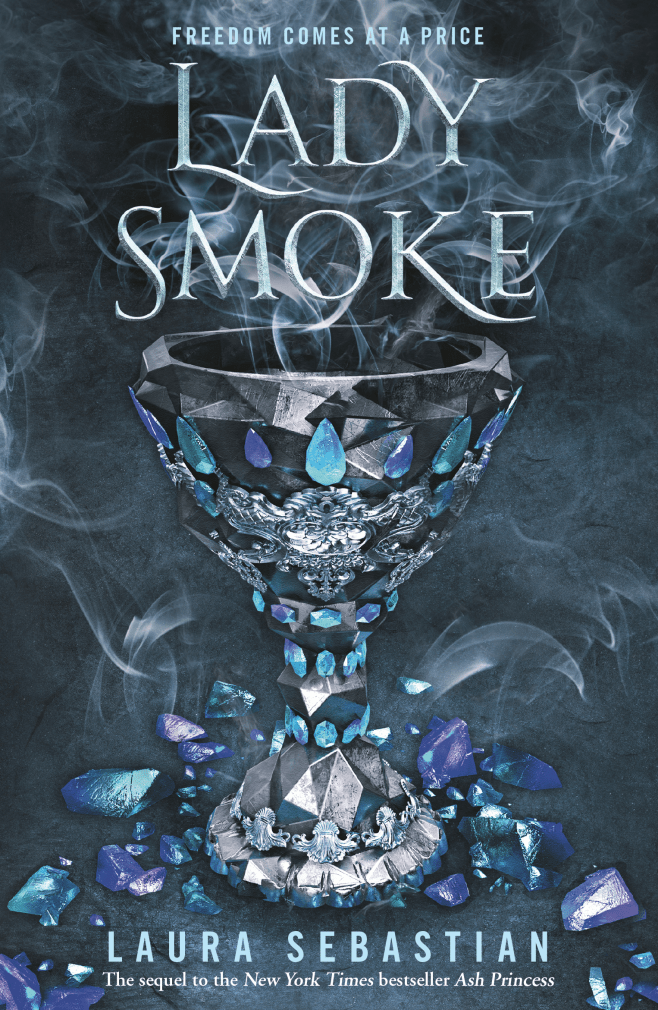
Lady Smoke by Laura Sebastian

Lady Smoke Cover

Publisher: Pan Macmillan Australia (Trade Paperback Edition – 12 February 2019)

Series: Ash Princess Trilogy

Length: 496 pages

My Rating: 4.5 out of 5 stars

Amazon     Book Depository

Bestselling young adult fantasy author Laura Sebastian presents an outstanding follow-up to her 2018 debut with this superb novel which builds on the author’s original book and uses it to create a fantastic story.

For many years, Theodosia was a prisoner in her own palace.  The brutal warrior race, the Kalovaxians conquered Theo’s country of Astrea, enslaving her people and killing her mother, the Fire Queen.  Forced to live as a trophy prisoner and ridiculed as the Ash Princess, Theo eventually rebelled, escaping from the Kalovaxian ruler, the Kaiser.  However, her escape had complications, as she was forced to kidnap the Kaiser’s son, Prinz Soren, and poison her only Kalovaxian friend, Crescentia.

Now freed and claiming her birthright as Queen of Astrea, Theodosia is determined to take her country back.  With no troops of her own and only a handful of followers, Theo is forced to rely on her aunt, the pirate known as Dragonsbane, for support.  However, her aunt believes that the only way to liberate Astrea is for Theo to marry a foreign ruler and use their army to fight the Kalovaxians.  No Astrean Queen has ever married before, but with the desperate situation that Theo finds herself in, she has no choice but to allow Dragonsbane to organise a meeting with a number of potential suitors from the lands not controlled by the Kalovaxian armies.

Descending on the wealthy nation of Sta’Crivero, Theo is thrust into a dangerous hive of foreign royals and nobles, all of whom seek to use the newly released Astrean Queen to their own advantage.  Forced to decide between her heart and the needs of her people, Theo has to play along in order to find a way to defeat the Kalovaxians.  But sinister forces are at work within the Sta’Crivero palace: politicians are playing with her people’s lives, a sinister poisoner is targeting those closest to Theo, and the Kaiser has placed a price on her head.  Theo must rely on those closest to her, but even those she cares about the most could bring her down.

Lady Smoke is Laura Sebastian’s second novel, which follows on from her debut book, Ash PrincessAsh Princess was a fantastic fantasy debut which I enjoyed thanks to its interesting blend of political intrigue and clever fantasy elements.  However, I felt that Lady Smoke was an even better book, as Sebastian creates a much more compelling story while also expanding her fantasy universe and looking at the relationships between her characters.

Sebastian continues to focus on the growth of her protagonist and point-of-view character, Theo, as she rises to become the queen her people need.  In this book, Theo is recovering, both physically and emotionally from her years of captivity in the Kalovaxian court.  She is haunted by her decisions, including her ruthless manipulation and poisoning of Cress, one of the few people who considered Theo to be a friend.  In order to obtain the power she needs to free her kingdom, she must try use a strategic marriage to arrange an alliance with one of the countries outside of Kalovaxian’s influence.  The storyline focusing on her adventures within Sta’Crivero takes up a large portion of the book, and is an interesting piece of political intrigue.  Theo and her companions must attempt to find a political suitable match while also avoiding being manipulated by the rich and powerful rulers who all want to control or exploit her or her country.  There are a variety of layers to this story, as many of the rulers she encounters have their own agendas, and she must try and unravel them while also bringing some other nations to her cause.  Add to that, a mysterious poisoner is at large within the palace, attempting to kill Theo’s favoured suitors and allies while also framing one of her advisers.  Each of these parts of the story is deeply compelling, and I was very curious to see how this part of the story turned out.  These sequences also had some great emotional depth, as Theo is forced to balance her personal desires and opinions about arranged marriages, with the requirements of an army to free her enslaved people.

I thought that the main political intrigue and arranged marriage storyline of Lady Smoke was done amazingly and was one of the most enjoyable parts of the book.  The eventual conclusion of this storyline was handled pretty well, and readers will love the solution that the protagonist came up with.  I really liked the reveal about who the poisoner was, although I kind of saw the twist coming far in advance.  Even though I knew it was coming, I felt that the reveal was done extremely well, and the sinister motivations behind them made for some extremely compelling reading.  The final twists of the book were also very shocking, and I definitely did not see one particular event coming.  Overall, I had an absolute blast with this story, and thought it was substantially better than the awesome first book in the series.

Aside from the great story, one of the things I really enjoyed about Lady Smoke was the author’s superb universe expansion.  While a number of other nations that make up Sebastian’s fantasy world were mentioned within Ash Princess, the entirety of the plot took place within the conquered country of Astrea.  The plot for Lady Smoke, however, takes place in an entirely new setting, the kingdom of Sta’Crivero, which is an extremely wealthy and elitist realm.  While the people of Sta’Crivero initially appear supportive of Theo and the Astreans, it is revealed that they look down on the refugees and treat them as slave labour.  Sebastian does an amazing job of making the Sta’Crivero nobles sound exceedingly arrogant, and her descriptions of the rich and elaborate palace are stunningly decadent.  Once Sta’Crivero has been introduced as an excellent new setting for the story, the author brings in the rulers from all the nations that have not been conquered by the Kalovaxians.  Each of these new rulers is given an introduction, and their countries’ strengths and weaknesses are explored in various degrees of detail.  As Theo interacts with each of these rulers, the reader gets a better idea of the world outside of Astra and Sta’Crivero, resulting in a richer world tapestry for the audience to enjoy.  By the end of the book, Theo has made a number of allies and enemies from amongst these various nations, and it will be extremely fascinating to see how this comes into play within any future books in the series.

I quite enjoyed the unique and somewhat subtle magical elements that were shown throughout Ash Princess.  In this second book, the author continues to expand on her interesting magical inclusions by showing her magical characters utilising their powers to a greater and more obvious degree and using their powers in different situations.  I rather liked the exploration of ‘mine madness’, the process by which some Astrean magic users become overloaded with magic, especially those who have spent significant time in their magical mines as slave labour under the Kalovaxians.  Alternate explanations for this condition are given throughout Lady Smoke, and the author also examines the destructive nature of the condition, through several impressive scenes.  Other magical maladies are also featured within this book, and I liked how several unexpected characters were affected by these changes.

Sebastian does an amazing job of exploring the main character’s relationship with her friends and companions, and this forms an intriguing part of the plot.  There is a bit of a focus on her friendships with her companions, Artemisia and Heron.  Due to story reasons (Theo spent most of the first book on the other side of a wall), Theo was unable to build much of a relationship with either of these characters, so I liked how she started to bond with both of them.  This deepening relationship results in some character development of these two interesting side characters, and some interesting explorations of their life are explored, such as Artemisia’s relationship with her mother, the Dragonsbane, and Heron’s homosexuality.

The most compelling character interactions occur between Theo and her two love interests, Blaise and Soren.  Blaise is her oldest friend, her most loyal companion and the man who broke her out of the Astrean palace.  Soren, on the other hand, is the son of the Kaiser, her most hated enemy, and the man who Theo spent the majority of Ash Princess seducing and manipulating for her own ends.  Throughout the course of Lady Smoke, Theo finds herself attracted to both of these men, and must find a way to balance her feelings for them while also having to reconcile the possibility of choosing neither of them in order to secure her country’s freedom.  Adding to this drama, both Blaise and Soren have their own storylines and character development that they must undergo.  Blaise is suffering from mine madness, which has amplified his earth-based magic to a dangerous degree.  As a result, Theo has to spend a significant part of the book as his emotional tether, trying to rein in his temper and creating chaos.  Soren, on the other hand, must reconcile the evils that his countrymen and himself have undertaken while also trying to escape his father’s cruel legacy.  In order to make amends and to get revenge on his father, he finds himself on Theo’s side, but his relationship proves to be more of a liability to Astrea in a number of ways.  All of these issues make for an utterly captivating love triangle that really adds some interesting elements to the story.

In the follow-up to her debut novel, Ash Princess, Laura Sebastian continues her incredible fantasy series.  Lady Smoke is an amazing sequel that really highlights Sebastian’s growth as an author.  Not only does Sebastian successfully expand her fantasy universe, but she further develops her characters and provides the reader with an outstanding story.  I am very much looking forward to the sequel to this book, Ember Queen, which is coming out in 2020, and I am extremely curious to see how several story developments at the end of Lady Smoke take form.  Exceptional fantasy fiction from a creative and talented new author, Lady Smoke comes highly recommended.

Amazon     Book Depository

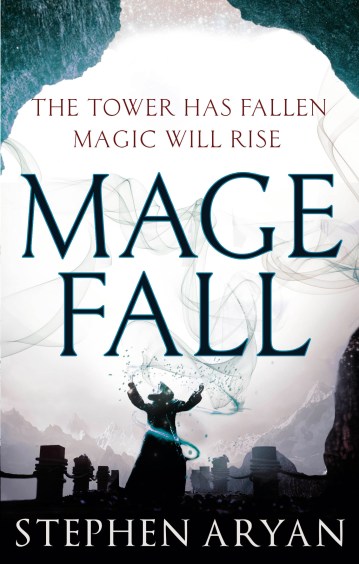
Magefall by Stephen Aryan

Magefall Cover.jpg

Publisher: Orbit

Publication Date – 4 September 2018

Amazon     Book Depository

In the aftermath of the devastating battlemage war, magic became mistrusted and feared by the common population of all the lands.  However, the mysterious Akosh managed to turn this mistrust into outright hatred, and her manipulations and minions led the populace to attack and destroy the Red Tower, the seat of all magical learning.  While the tower was destroyed, many of its students and teachers managed to escape and the outcast mages must now find a new path for their magic and abilities.

While the powerful and disturbed former instructor of the Red Tower, Garvey, leads several of his former students on a murderous rampage through the countryside, three other refugees from the Red Tower attempt to change the public perception of magic.  Wren and Danoph have started their own community of mages in the abandoned fringes of Shael, and attempt to protect the local villages from a murderous band of bandits.  At the same time, their friend Tianne returns home to Zecorria in order to take advantage of the regent’s amnesty for mages.  But as she begins to work in an official capacity for the regent, she is forced to become more involved in his despotic policies.

Elsewhere, Akosh continues to manipulate events across the lands, attempting to gain even more influence and control.  However, her actions have not gone unnoticed, and several individuals are rallying to counter her bid for power.  The new head of the Guardians, Tammy, moves to shatter Akosh’s influence in the country of Shael, but how far will she go to win this fight, and what will the consequences be?  Old friends Balfruss and Vargus attempt to counter both Garvey and Akosh, while Munroe, the most powerful mage in existence, embarks on deadly rampage to find Akosh and get her revenge.  But Akosh is far more powerful than anyone believes possible, and what will happen when a mage goes up against a god?

Magefall is an intriguing and enjoyable book from talented fantasy author Stephen Aryan and one that I had a lot of fun reading.  Magefall is the second book in Aryan’s Age of Dread trilogy, which followed on from his initial The Age of Darkness trilogy.  I have to admit that I have not had a chance to read any of Aryan’s previous books before, and as a result, I had a bit of a harder time getting into this story initially, due to the author’s assumption of his readers’ knowledge of the four previous books’ established plot and lore.  While I was eventually given a clearer picture of some of the previous events, the initial confusion and uncertainty when it came to certain plot points did slightly colour my assessment of this book.  As a result, I have knocked my rating down to four stars, rather than the four and a half stars I probably would have given to it if I were more familiar with the previous books in this universe.  That being said, Magefall is still an amazing piece of fantasy fiction that I really enjoyed, and I am intending to check out some of Aryan’s previous novels at a later date.

The book is made up of a series of semi-separated storylines that take place across various locations in Aryan’s fantasy landscape.  Each of the storylines is very exciting and incredibly captivating, resulting in some great moments of action and intrigue.  I rather enjoyed the story that focused on the former student Wren as she starts her own community of mages out in the wilderness, as it contained a great examination of a responsible group of mages who actually wanted to protect and help the people around them.  Their battles against a merciless group of bandits are particularly intriguing, especially as the bandits are actually able to cause the very powerful young mages significant issues and problems.  The various intrigue based storylines that highlighted the manipulative and wide-reaching schemes of the villainess Akosh are also done really well, and some of the best parts of the book showcase the various moves and countermoves as the protagonists seek to thwart Akosh and her goals.  There is not a single dull moment during this entire book as every single one of these fantastic stories come together in an amazing overall narrative.

One of the other things that I also really enjoyed about Aryan’s latest book is the devastating magical sequences that take place throughout the various storylines.  The magical characters engage in a number of high-octane battles in a variety of creative scenarios throughout the book.  Not only do these characters engage in battles with normal non-magical people but several mages fight each other in sequences that see buildings and scenery blown apart around them.  It is great to see the tactics of some of the non-magic characters, as well as the difference in power levels between the former students and the really powerful mages who previously taught them.  The highlight of the book has to be the fight between the uber-powerful mage Munroe and Akosh, as the two engage in an all-out power brawl.  This is magical action at its very best, and readers will have a terrific time enjoying all the carnage.

Magefall is an excellent piece of fantasy fiction from a rising star in the genre.  Making full use of his multiple-storyline format, Aryan has combined a series of enjoyable, fast-paced and electrifying adventures with some outstanding uses of magic.  While I would strongly advise reading some of the previous books in this universe before attempting to dive into Magefall, this is still a fun book to read and it serves as a mostly great introduction to this intriguing series.

My Rating:

Four stars

Amazon     Book Depository

Archenemies by Marissa Meyer

Archenemies Cover

Publisher: Pan

Publication Date – 6 November 2018

Amazon     Book Depository

Following on from her immensely popular 2017 release, Renegades, Meyer continues her exciting tale of superpowered duplicity and intrigue with Archenemies, the second book in the Renegades trilogy.

In an alternate version of Earth, superpowers exist and those that have them are known as prodigies.  For most of this world’s history, prodigies were tormented and persecuted and many were forced to live in hiding.  That was until the Age of Anarchy, when the world’s villainous prodigies rose up and established their own world order of chaos and destruction, led by the notorious Ace Anarchy.  It was not until the rise of the superhero syndicate, the Renegades, that order was restored and prodigies were accepted as a part of society.  While most people see the Renegades as symbols of hope and virtue, there are some who have good reason to hate them.

Nova is one of these people, and her hatred has led her to live a dangerous double life.  Most of the world knows her as Insomnia, a recent recruit to the Renegades, who serves as a member of a patrol team in Gatlon City, the location of the Renegade’s headquarters.  However, Nova is also secretly Nightmare, the niece of Ace Anarchy and a member of the Anarchists, a group of villains dedicated to destroying the Renegades.  Hating the Renegades for the role she believes they played in the death of her parents, Nova has infiltrated the superhero team in the hope of discovering all their secrets in order to destroy them from within.

While she has so far maintained her cover, Nova’s mission has become complicated due to her relationship with Adrian, and the son of the people she holds most responsible for her family’s tragedy.  But Adrian has secrets of his own.  While he leads Nova’s patrol team as Sketch, Adrian is also living a double life as the Sentinel, a vigilante superhero acting outside of the codes and restrictions of the Renegades.  Although Adrian was only attempting to help, his actions as the Sentinel have placed a target on his back, and the Renegades are determined to stop rogue prodigies.

While Nova is determined to complete her primary mission and retrieve a powerful artefact from within the Renegades’ headquarters, both hers and Adrian’s lives are about to get even more complicated.  The Renegades have revealed a game-changing new weapon which forces the two young prodigies to question everything they know about what justice is.  Can they keep their respective secrets from each other, or are their worlds about to come crashing down around them?

Archenemies is the latest book from bestselling young adult author Marissa Meyer, and the second book in her Renegades trilogy.  The first book in the trilogy, Renegades was one of last year’s most successful young adult hits.  Readers may also be familiar with some of Meyer’s other young adult works include The Lunar Chronicles, a series that focuses on a dystopian science fiction reimagining of classic fairy tales; Heartless, a prequel novel to Alice in Wonderland; and the young adult graphic novel series Wires and Nerve.

This second book in the trilogy continues Meyer’s incredible story of superhero intrigue and adventure.  The central story is a captivating tale told from the point of view of both Nova and Adrian and follows them as they attempt to live their double lives in this exciting world.  The storyline that follows Nova attempting to hide her affiliations with the Anarchists as she infiltrates the Renegades is a thrilling and exhilarating narrative.  Nova is constantly on edge as she must allay the suspicions and investigations into her background and her motivations for performing certain tasks around the Renegades’ headquarters.  The character must also deal with the emotional turmoil that she experiences as she struggles to stay on her original mission of betraying the Renegades, despite some conflicting feelings she develops.  The sections of the book that focus on Adrian are also very compelling, especially as his is the direct opposite to Nova’s story, as he begins to disobey the rules of the Renegades to engage in some illegal vigilante work.  His struggles about whether to keep up his activities become a major part of his storyline, especially as he experiences some severe consequences for going into the field without backup.  He is also determined to keep his identity as the Sentinel hidden from Nova, as she particularly dislikes the Sentinel, although Adrian gets the reason for the dislike completely wrong.

These two separate storylines combine together really well into one central narrative, and Meyer does an incredible job showing how the secret actions of one of the point-of-view characters impacts on the other character.  For example, part of Adrian’s storyline focuses of his investigation into the death of his mother, a famous superhero, and his search leads him to believe that Nightmare holds the answers he is looking for.  This becomes a big problem for Nova, as she has managed to fool most of the world into believing that Nightmare is dead, and Adrian’s investigation could blow her cover.  There are also several fantastic scenes where one of the protagonists comes across a clue that the reader knows could reveal the other character’s dual lifestyle.  The suspense that Meyer creates during these sequences is subtle but effective, as the reader is left holding their breath, waiting to see if this will be the event that will lead to the inevitable part of the trilogy when the two characters find out about each other.  This second book also contains some interesting hints towards some major reveals that are likely to occur in the final book of this trilogy, as well as some urgent plot points that can only lead to some intense and action-packed scenes in Meyer’s next release.

Meyer also continues the intriguing romance angle between the two main characters that began in the first book of the trilogy.  Rather than being ultra-intense, this romantic subplot comes across as more of a slow burn, as Nova and Adrian both like each other but are reluctant to act on their feelings due to the dual lives they are secretly leading.  Nova does spend most of the book attempting to heat this relationship up, but this is more in an attempt to seduce Adrian in order to help her further her goals for the Anarchists.  However, she truly has feelings for him, which continue to develop throughout the course of Archenemies.  There are several nice scenes throughout the book as the two point-of-view characters attempt to initiate the relationship, and despite the deceitful backdrop of the story, their relationship starts to feel like a genuine, heartfelt romance.  The eventual reveals about both characters’ secret identities will no doubt result in some significant drama within the next book, and readers will be interested to see the final result of this relationship.  For those interested in a less complicated romantic story, there is also a lighter romance angle between Renegades side characters Smokescreen and Red Assassin.  Their sweet and awkward flirting and courtship will be instantly recognisable and relatable to most readers, and you can’t help but hope that the two characters will realise how much they like each other.

I quite enjoyed the fantastic world that Meyer has created for the Renegades trilogy.  A world filled with superpowered beings is an excellent place to set an intrigue-studded young adult series such as this.  The creative and thrilling story of infiltration and morality is amplified by the rich number of superhero elements throughout the book.  There are a huge number of diverse superpowers, as well as mysterious and dangerous artefacts and weapons.  Meyer has created a number of interesting and unique superpowers, including a woman who makes practical weapons out of her own blood and a man whose power is to make people see the wonder in everything.  The sheer amount of different powers and technology available thanks to the author’s imagination allows for a number of cool fight scenes and action sequences throughout the book, which plays wonderfully with the other elements of the story.  A superb and creative background location.

While Archenemies’s dramatic story and fun superhero-based location forms a fantastic base for this novel, one of my favourite parts of the book was the moral and ethical issues raised by various characters throughout the story.  Both point-of-view characters have different opinions about whether the Renegades or the Anarchists are in the right and what constitutes justice.  While Nova’s opinions about the Renegades could potentially be explained away as brainwashing from her uncle and the other Anarchists, several of the actions and attitudes she encounters while undercover seem to justify her beliefs.  Her belief that the Anarchists might be in the right is supported by the fact that most of the remaining members of the team of villains seem to be really nice people who are supportive and helpful to Nova.  Several members also have somewhat tragic backgrounds which highlight why they choose to live their lives apart from the rest of society.  Adrian, on the other hand, has been raised to believe in the Renegades’ methods and code, but he has started to find them too restrictive and begins fighting crime outside them in his guise as the Sentinel.  However, he finds himself targeted by the Renegades for doing heroics outside of their code, and begins to wonder if they are making the right decisions, a feeling that becomes amplified thanks to his interactions with Nova.  Meyer further complicates matters by diving into the history of the prodigy persecution and discussing how it only ended when the villains rose up and took control, and this current golden age of super heroes only exists because they did.

This moral debate about what a group of superheroes should be able to do is further amplified by the introduction of the Renegades’ new weapon, Agent N, a formula that can permanently remove the powers of any prodigy.  Nova, in her guise as Insomnia, argues strongly against the Renegades’ policy of wilfully administrating Agent N against any rogue prodigy they encounter, believing that they don’t have the right to decide who gets to have powers and who doesn’t.  While her debates are mostly ignored by her team members, her concerns are validated thanks to the actions of a rogue team of Renegades who abuse Agent N in the field.  There is a great scene when Adrian as the Sentinel attempts to stop them committing a terrible crime, and these rogue Renegades actually believe they are still morally superior to Sentinel because they are members of a super team, and he’s not.  Despite her misgivings, Nova still utilises Agent N to achieve her own goals, and justifies it as being for the greater good.  Thanks to a series of escalating situations within the story, by the end of the book, the reader is left wondering which side, if either, is completely in the right, which personally has got me very excited for the final book in the trilogy.

Archenemies, the second book in the Renegades trilogy, is a captivating and excellent read from Meyer which presents a superb story about dual identities in a morally grey superhero universe.  While aimed at a young adult audience, this series will prove to be incredibly intriguing to older readers and is easily suitable for a younger teen audience.  Probably best read after enjoying the first book in the trilogy, Archenemies is still quite easy to follow for those who chose to enter the Renegades series at the second book, due to its detailed descriptions of major plot points that occurred earlier in the series.  I had a lot of fun with Archenemies and will definitely be checking out the final book in the trilogy when it comes out next year.  An incredible adventure from Meyer, this book comes highly recommended.

My Rating:

Four and a half stars

Amazon     Book Depository

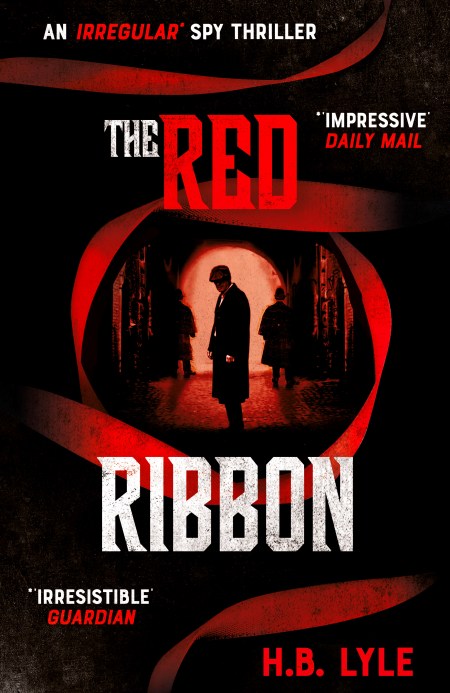
The Red Ribbon by H. B. Lyle

The Red Ribbon Cover.jpg

Publisher: Hodder & Stoughton

Publication Date – 23 August 2018

Amazon     Book Depository

Return to pre-World War I London for another compelling spy adventure in H. B. Lyle’s second book, The Red Ribbon, which is set in the same universe as Sherlock Holmes and features three exciting characters with an intriguing look at early 20th century British history and espionage.

In London, in 1910, Captain Vernon Kell is still attempting create a secret intelligence service capable of protecting England from foreign spies and infiltrators.  Despite the early success of the Secret Service Bureau, Kell’s organisation is constantly under pressure from the country’s politicians and is in danger of being absorbed into Special Branch of London’s police.

Unfortunately, Kell’s only agent, Wiggins, is distracted with his own cases and unwilling to play the political games needed to help the service survive.  Wiggins is the former leader of Sherlock Holmes’s street urchin surveillance organisation, the Baker Street Irregulars, and has picked up a few of his old master’s deductive tricks while retaining his lower-class charm and street smarts.  Wiggins is obsessed with finding the infamous anarchist, Peter the Painter, the man responsible for the death of one of Wiggins’s oldest friends, and is scouring the streets for him.

Looking for a missing girl on behalf of one of his contacts, Wiggins begins to investigate a mysterious embassy located in the affluent neighbourhood of Belgravia.  The embassy is actually a high-class brothel frequented by the rich and powerful of London.  When another girl associated with the embassy is found murdered, Wiggins attempts to find justice; however, the embassy is under the protection of someone Wiggins knows well: Tommy, a fellow former member of the Irregulars.

However, Wiggins’s personal investigations intersect with his work for Kell, as the two of them hunt for the source of a series of leaks at the highest level of government.  With the help of Kell’s wife, the suffragist Constance, Wiggins and Kell must find the connection between the events occurring around London in order to keep the country safe from sinister foreign influences.

The Red Ribbon is the follow-up to Lyle’s debut novel, The Irregular: A Different Class of Spy, and is the second book in the Irregular Spy Thriller series.  This is a great series that will appeal to a huge range of readers, as Lyle combines compelling historical fiction elements with a thrilling espionage story that has fictional links with one of the most iconic book series of all time, Sherlock Holmes.

The story within The Red Ribbon is split between the book’s three main protagonists and takes a look at each character’s different and exciting adventures.  Wiggins and Kell continue their missions from the first book, and while their investigations are ostensibly separate from each other, they eventually intersect in several clever ways.  The relationship between Wiggins and Kell is an important part of these two storylines, as Kell despairs of Wiggins’s personal investigations and wants Wiggins to solely work missions for the service.  The third focal character is Kell’s wife, Constance, who was a supporting character in the first book.  Constance becomes a much more significant character in The Red Ribbon, as the book focuses on her involvement with the suffragist and suffragette movements.  Both Wiggins and Kell become involved with Constance’s storyline in different capacities, while Constance provides significant assistance with her husband’s espionage work.  With three semi-connected stories, it does at times feel like there is too much going on for one cohesive narrative.  However, each of the stories comes together quite well in the end and provides the reader with an extremely captivating overarching narrative.

Having three separate storylines allows Lyle to highlight the differences in social classes during this historical period and highlights how different groups of people were treated.  Kell, as the influential gentleman, is forced to constantly deal with the upper-class politics and attitudes during his attempts to keep the service going.  Wiggins, who was raised on the street, deals more with the average Londoner and experiences the poverty and desperation many of them encounter.  He must also deal with the distain of the upper classes in the course of his espionage work.  While he is clearly the most competent agent in the entire British service, he is constantly looked down upon and ignored by his government superiors.  There are also several instances where Wiggins is assigned to infiltrate labour movements, something he is very reluctant to do due to his world views and background.  This divide often serves to create some significant tension with Kell, who, despite fully understanding Wiggins’s value, skills and point of view, is often exasperated by him.  The beefed-up storyline around Constance allows the reader a significant look at the suffragist movement and the early battles these women fought for equality.  In The Red Ribbon, Constance joins the much more militant suffragettes, and is constantly infuriated by the reactions of the male politicians and their oppressive policies.  The oppression of women also becomes a major point of conflict between Kell and Constance which results in a decline in their relationship, although the final payoff of this storyline is quite sweet.  I really enjoyed the way that Constance and Wiggins developed a fun comradery in this book, as their poor treatment by the upper-class men allow them to bond, with Wiggins even teaching Constance some anti-surveillance techniques.

Lyle cleverly incorporates several important historical events into this book, such as the funeral of Edward VII, the Black Friday suffragettes and suffragists protest outside Parliament and the Siege of Sidney Street.  These events are quite significant in their own right, and Lyle spends substantial time filling in their background and ensuring the reader is aware of why they are happening and why they are important.  However, they also serve as very compelling background events for the plot of The Red Ribbon and work well to enhance this already fascinating story.  In addition to these intriguing and important historical events, Lyle has also packed a number of historical figures into this story.  Quite a few prominent politicians and British civil servants have significant roles in the plot, including a young Winston Churchill, which makes the story feel a lot more authentic.  The author’s continued use of the enigmatic Peter the Painter as one of the book’s principal antagonists is another brilliant stroke, and the reader is provided with some intriguing theories about who he actually was and what his eventual fate was.  Lyle does slightly go overboard by adding in some other famous historical figures in small cameo roles, and the shoehorning in of people such as Charlie Chaplin and members of the 1910 British Antarctic Expedition seems a bit unnecessary.  That being said, it was amusing to watch Chaplin use his drunken tramp routine to help Wiggins escape a conflict in a theatre.

One of my favourite components of this book was the author’s detailed and unique look at British espionage and counter espionage in the early 20th century.  One of the book’s protagonists, Captain Kell, is an actual historical figure who is credited for creating Britain’s domestic spy service, which morphed into the modern MI5.  This fictionalised account of the early days of this organisation are quite fascinating, especially when the author looks at some of its early challenges, the political battles Kell might have had to face, and the sort of work this organisation was originally looking at.  In addition to the domestic espionage work, the protagonists of The Red Ribbon find themselves drawn into one of the most infamous espionage incidents of the era: the capture of British agents Captain Trench and Lieutenant Brandon in Germany in 1910.  This is a highly fictionalised account of the incident, as Lyle has inserted Kell and Mansfield Cummings, one of the founders of MI6, as being there.  It plays marvellously in Kell’s overall storyline, while also featuring some great scenes as the three protagonists’ attempt to evade arrest by the Germans.  Trench and Brandon are not portrayed in the best light, as Lyle has used them to further the class prejudices in Britain, portraying the two soldiers as quite incompetent spies who are captured as a result of wilfully ignoring Wiggins’s advice due to him not being a gentleman.

Another fun part of The Red Ribbon is the connection the book shares with the Sherlock Holmes novels.  The Irregular Spy Thriller series is set in the same universe as the Sherlock Holmes books.  Wiggins was mentioned several times in Arthur Conan Doyle’s original works as the leader of the Baker Street Irregulars.  As a result, Wiggins comes across as a rougher Sherlock Holmes, who uses the classic deductive method while also fighting, drinking and speaking in a lower-class manner.  As in the first book of this series, the great detective himself makes a brief appearance, providing Wiggins with a case-breaking suggestion, while casually enjoying his retirement.  The use of the Sherlock Holmes elements is definitely a defining element of the book, and while it is mostly used to draw interested readers into this historical spy thriller, Lyle successfully uses it to create a unique and enjoyable main protagonist.

B. Lyle has followed up his superb 2017 debut with another fun and exhilarating read. Continuing to use his Sherlock Holmes inspired character to great effect, Lyle weaves a full and captivating narrative that presents several unique stories chock full of adventure, mystery and interesting historical content. The Red Ribbon is an amazing second outing from Lyle which also sets up an exciting concept for a third book in the series.

My Rating:

Four and a half stars

Amazon     Book Depository

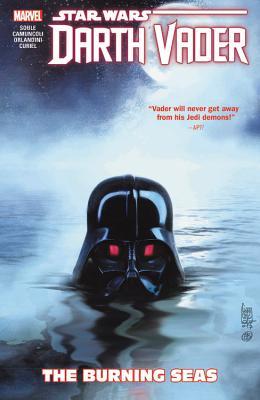
Star Wars: Darth Vader: Dark Lord of the Sith, Volume 3 – The Burning Seas

Darth Vader - The Burning Seas Cover

Publisher: Marvel Comics

Writer: Charles Soule

Artists: Giuseppe Camuncoli

              Daniele Orlandini

              David Curiel

              Java Tartaglia

Publication Date – 11 September 2018

Amazon

I have previously reviewed the second volume of this series here:

Star Wars: Darth Vader: Dark Lord of the Sith, Volume 2 – Legacy’s End

Darth_Vader_Dark_Lord_of_the_Sith_13.jpg

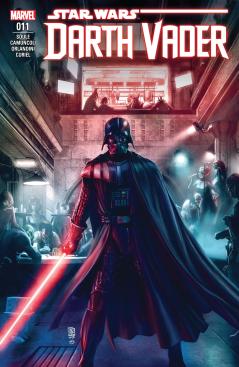
The creative team behind the amazing Darth Vader: Dark Lord of the Sith series return with their third volume, The Burning Seas, which continues to follow the early adventures of one of fiction’s greatest villains, Darth Vader.  This third volume contains issues #13-18 of what has to be one of my favourite current ongoing series.

This new volume is set one year after the formation of the Empire, and the Emperor is determined to show off the full military power he now commands.  To that end, he dispatches Vader to the aquatic planet of Mon Cala, which has been resisting attempts to be completely incorporated into the growing Empire, and whose King appears to be receiving advice from a Jedi.  However, this will not be Vader’s first journey to Mon Cala.  Years ago, during the Clone Wars, Anakin Skywalker and the Jedi saved the planet from a Separatist invasion and supported the young Mon Calamari king’s ascent to the throne.

DarthVader-DLotS-14-no.jpg

Leading a force of his Inquisitors to Mon Cala, Vader attempts to investigate the potential Jedi influencer, but the situation quickly devolves into all-out war.  With Governor Wilhuff Tarkin leading the Imperial invasion, Vader and his forces attempt to locate the Jedi behind the unfolding events.  How will Vader’s return impact the planet of Mon Cala, and what events will the mysterious Jedi’s actions have for the future of the galaxy?

In additional adventures, Governor Tarkin finds himself in the unenviable position of owing Darth Vader a favour.  Vader’s request is a hunt with a twist: the hunter will be Tarkin, while the hunted will be Vader himself.  Bored by a lack of challenges, Vader has tasked Tarkin to provide him with some worthy competition.  Will Tarkin earn Vader’s respect, or will he and his team of mercenaries be the next victims of Vader’s rage?  In addition, Vader has been tasked to investigate sabotage around the construction of the Death Star on Geonosis.  As Vader encounters the creators of the Death Star, Commander Krenik and Galen Erso, he uncovers not only the saboteurs but also the full potential of the Death Star and the impact it could have on Vader’s position.

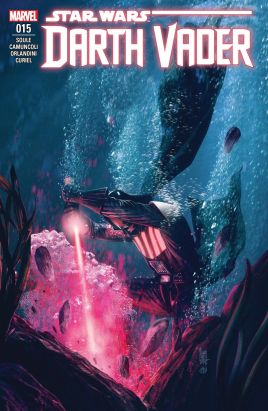
DarthVader-DLotS-15.jpg

Darth Vader: Dark Lord of the Sith returns with another fantastic and captivating volume that not only furthers the adventures of Darth Vader but also ties the series into the wider Star Wars universe while fleshing out backstories and lore not explored in the movies.  In this volume alone several minor characters’ pasts are shown, the history between Vader and Tarkin is explored and there is a particular focus on the events leading up to the Rogue One movie.  Dedicated Star Wars fans will love that the main story of this volume is set on the planet of Mon Cala and introduces several key Mon Calamari characters.  The readers are gifted with new origin stories for Admiral Raddus, who leads the Rebel fleet in Rogue One, and a young Commander Ackbar, famous for the line ‘It’s a trap’, which highlight their early abilities and show why they were so determined to fight the Empire.  Fans of the Clone Wars television show also get an intriguing conclusion to the three-part Water War arc of the show’s fourth season.  During this television arc, Anakin Skywalker and his allies helped save the planet from an invasion and helped the young Mon Calamari King Lee-Char ascend to the throne.  Now, in a reversal of this arc, Vader returns as an invader and his main target is the Mon Calamari king he once protected with his life.  It is a compelling switch that creates some terrific drama and emotion during this comic book arc.  Surprisingly enough, there is also a focus on the Mon Calamari cruisers, the large imposing ships that become a fixture of Rebel Alliance and the subsequent Resistance.  Several of the plans underway involve the future of these ships, and the twisted priorities of a Jedi regarding them are quite chilling to behold.  In addition to the main story of this volume, one of the issues is heavily involved in the construction of the Death Star.  As a result, Vader interacts with several characters who feature in the Rogue One movie, and the creative team are able to suggest he had a lot more to do with the events of Rogue One than shown in the movie.  This issue also sees Vader return to Geonosis, the main setting for the latter half of the Attack of the Clones movie, and it is very cool to see him return to this important location in his previous life.

On top of the above insertions into the Star Wars universe, the creative team also spend a significant amount of time in this volume exploring the relationship between Darth Vader and Grand Moff Tarkin.  When both characters are introduced in A New Hope, Tarkin always appeared to be in command of Vader and appeared to be someone that Vader respected.  It was an unusual relationship, considering Vader’s personality and his role as the Emperor’s apprentice.  This volume creates a fascinating new narrative that shows when Tarkin was put in charge and why Vader allowed it to happen.  This is first shown during the main story of this volume, when Governor Tarkin, who is leading the invasion of Mon Cala, requests Vader’s assistance to end the war quickly.  Vader is shown in these issues to independent from Tarkin, who still shows the ability to get what he wants from Vader, even if it may cost him down the line.  The creative team spend a good amount of time during the four issues that focus on the invasion of Mon Cala highlighting Tarkin’s tactical ability and ruthlessness, reminding the reader what a great villain Tarkin is in his own right.

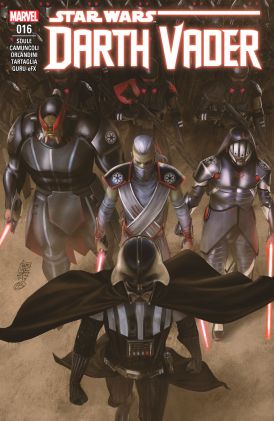
DVDLOTS-16

The rivalry between Vader and Tarkin comes to a head in the sixth issue of this volume, when the two of them hunt each other on a wild planet.  This is one of my favourite stories in the whole Darth Vader: Dark Lord of the Sith series so far, as the two Imperial heavyweights go head to head in a true battle of the villains.  This issue does an amazing job of highlighting the attributes of both characters.  Tarkin’s cunning, intelligence and determination to win are in full display, while Vader is shown to be not only a destructive force but also a creative opponent who is able to surprise even Tarkin.  The conclusion of this story is very clever and helps define the relationship these two characters have in the movie.  The final issue of this volume finds Vader officially under Tarkin’s command, but shows that Vader is not as subservient as Tarkin would wish.  The main focus of their rivalry in this volume is the Death Star, especially as Tarkin is convinced that his creation will make Vader obsolete.  Soule laces some suggestions during this final issue that many readers will find extremely intriguing and puts a whole new light on Vader and Tarkin’s relationship, especially in the final exchange between the two, where Vader presents a prediction to Tarkin: ‘If you invest too much of yourself in this battle station – – it may end up your tomb.’  The exploration of the relationship between these two dynamic and iconic Star Wars villains is an exceptional part of this new addition to the fantastic series and a really cool feature for Star Wars fans.

For the first time in this series, the creative team tackle a large-scale Star Wars battle as the forces of the Empire attempt to invade or subdue the entire planet of Mon Cala.  The battle sequences that are produced are breathtaking in their scope and execution, as the reader is treated to land battles, space fights, orbital bombardments, battles above, below and on the planet’s ocean surface and even a weaponised tidal wave which sweeps away masses of Imperial forces.  The artwork of these battle scenes is really exceptional; especially the sequences set underwater, which offers an unique scenery backdrop not typically seen in other Star Wars comics.  The creative team do a fantastic job showcasing the massive military capacities of the Empire and the pure devastation their newly created military machine can do.  I also loved the clever and very entertaining way that the rogue Jedi Ferren Barr manages to use certain Imperial forces against Vader’s Inquisitors, in what has to be one of best examples of karma in the entire history of Star Wars.

DarthVader2017-17.jpg

As they have in the previous volumes, the creative team behind the Darth Vader: Dark Lord of the Sith series go out of their way to showcase how much of a badass their titular character can be.  In addition to the issue in which he powers through all that Tarkin can throw at him, Vader spends the rest of this volume cutting through opponents like they are nothing, including hordes of Mon Calamari and Geonosians.  In addition to these fairly standard actions (standard, that is, for an all-powerful Sith Lord), Vader does some other extraordinary actions, whether it’s surviving explosive rock falls, attempting and nearly succeeding to push back a tidal wave, surviving at the bottom of the ocean and then subsequently taming and eventually killing a massive sea monster he encounters there using only the force, Vader appears like an absolute boss.  He also has a fun reaction when his Inquisitors abandon their mission and attempt to save him from the bottom of an ocean, instead of being grateful, he calls them fools and makes it very clear that ‘I never need…RESCUE’.  It is again captivating to watch how far Vader continues to move further and further away from the Jedi way, as even at the start of this series he had the potential to come back from the dark side.  However, his actions in this book, such as the utter destruction of something significant and good that he previously created, re-imagining his previous battle with Obi-Wan Kenobi with devastating new details, and his slaughter of a whole brood of Geonosians that he compares to animals just like he previously did with the Tusken Raiders in Attack of the Clones, once again show how far he has fallen.  I must also highlight the great artwork in this series when it comes to Vader.  Not only are his exploits shown in full and exquisite detail but the artwork presents him in such a sinister light in every single scene he is in.  This is another masterful portrayal of an exceptional fiction villain.

The third volume of the Darth Vader: Dark Lord of the Sith, The Burning Seas, is another outstanding addition to one of this year’s most consistent and entertaining comic book series.  This specific volume features massive and intense battles, an intense fight for supremacy between Vader and the ruthless Tarkin, and the continued outrageous and destructive adventures of one of the greatest villains of all time.  This entire run of Darth Vader: Dark Lord of the Sith is definitely worth getting into, and The Burning Seas is easily the best volume of this entire series so far.  A must read that comes highly recommended.

Darth_Vader_Dark_Lord_of_the_Sith_18.jpg

My Rating:

Five Stars.PNG

Amazon

If you enjoy Star Wars fiction, check out some of my previous reviews:

https://unseenlibrary.com/2018/08/12/star-wars-thrawn-alliances-by-timothy-zahn/

https://unseenlibrary.com/2018/05/30/star-wars-last-shot-by-daniel-jose-older/

Star Wars: Darth Vader: Dark Lord of the Sith, Volume 2 – Legacy’s End

Darth Vader Legacy's End Cover.jpg

Publisher: Marvel Comics

Writer: Charles Soule

Artists: Giuseppe Camuncoli

               Daniele Orlandini

               David Curiel

Publication Date – 12 June 2018

Amazon

Darth Vader 7.jpg

Writer Charles Soule and artist Giuseppe Camuncoli return with an action-packed addition to the new and compelling series which follows the Dark Lord of the Sith in another sinister adventure in the newly formed Empire.

Legacy’s End is the second volume in the new Star Wars series, Darth Vader: Dark Lord of the Sith, which observes the shadowy journeys of fiction’s favourite villain immediately after he turned to the dark side of the force.  The first volume of this series, Imperial Machine, followed on directly after the events of the third prequel movie, Revenge of the Sith, and contained Vader’s initial mission for the Empire, acquiring the materials to forge his first red-bladed lightsabre.  It also featured the formation of the Emperor’s Inquisitors, the group of force users who, while not quite Sith, have fallen to the dark side of the force and are now being used to hunt down the remaining Jedi.

Darth Vader 8.jpg

Set immediately after the events of the first volume of this series, Legacy’s End continues to focus on Vader’s service to the Emperor and his multiple missions to obliterate all threats to the new Empire.  Vader has begun his training of the Emperor’s Inquisitors and is using his destructive teaching techniques to turn them into dangerous hunters.  Reviewing the list of Jedi whose destruction is a priority for the Emperor, Vader notes one name that stands out from the rest: Jocasta Nu, the former librarian of the Jedi Temple.  Despite her minor powers in the force, the Emperor views her as one of the most dangerous threats in the galaxy.  This is because Madam Jocasta has an unsurpassed knowledge of the hidden lessons of the force and the powerful secrets and weapons that the Jedi are protecting, which could be used by or against the Sith.

Teaming up with the Grand Inquisitor, Vader prepares to engage in the hunt for the elusive librarian.  There is just one problem: Jocasta Nu is already on Coruscant and has managed to infiltrate the Jedi Temple.  Perhaps the most important secret of the Jedi lies hidden in the archives, and Jocasta plans to ensure that the Sith will never have access to it.  But when Jocasta is discovered by Vader, the two force users must engage in a desperate fight, with the future of the Jedi in the balance.  While Vader has the pure power, Jocasta has plenty of tricks up her sleeve and her entire archive at her disposal.

Darth Vader 9.jpg

In another adventure in this volume, Vader finds himself also being hunted by a mysterious foe.  Someone wants him dead, and the trail leads straight to the top of the Imperial Navy.  Who is trying to kill him, and how will Vader react when he finds the people responsible?

This is a fantastic second outing from the team of Soule and Camuncoli, who team up with new artists Orlandini and Curiel for Volume 2 of this fantastic series.  Soule is an experienced comic book writer, with significant work for both DC and Marvel under his belt, and is actually the man responsible for recently killing off Wolverine and Cyclops in two separate X-Men storylines.  Soule has also written several different Star Wars comics, including two limited series and the entire 31-issue run of Star Wars: Poe DameronLegacy’s End collects issues #7-#12 of the Darth Vader: Dark Lord of the Sith series, with a third collected edition currently set to be released in the next few days.

Darth Vader 10

This new Darth Vader series is an intriguing and entertaining series that takes place inside Disney’s new canon universe.  This book contains elements from the movies, while also being strongly associated with the Clone Wars and Star Wars Rebels animated shows.  As a result, it is a perfect series for dedicated fans of the Star Wars universe, although more casual fans of the movies will also enjoy this series, especially if the prospect of seeing Darth Vader kicking ass and taking names appeals to them.

This series primarily focuses on Vader and chronicles his early rise in power following his conversion to the dark side of the force.  Legacy’s End continues to examine his new role and position within the newly formed Empire.  Not only is he leading the fight against the remaining Jedi; he is also brutally training the Emperor’s Inquisitors and taking a commanding role in the imperial military complex.  Legacy’s End also does much to highlight Vader’s mindset in these days and to reveal the hateful creature that he has become.  For example, the first scene shows him chopping off the arms of several of the Inquisitors as a training exercise in order to teach them about loss, a lesson he claims they will never forget.  There are also several scenes where Vader is shown meditating, and the dark and twisted creature that appears as a representation of his inner self is an ugly and scary sight to behold.  The team behind this series do a fantastic job showing Vader’s sheer power and anger in several devastating battle sequences where he powers through his opponents with the maximum amount of brute force and zero concerns about collateral damage.  In these scenes his power is not limited to the destruction he causes with his lightsabre; it highlights the devastation he can unleash with the force and even with his fists.  For example, there is one memorable scene in which he punches a powerful droid to death when his lightsabre proves to be ineffective.  There are also several great interactions between Vader and the Emperor, and it is absolutely fascinating to see the twisted master-and-apprentice relationship that they have, especially as it is a major part of this series.  Overall, this volume continues to highlight Vader as a powerful badass, as well as showing him as a complex character, in order to create a powerful and addictive narrative.

Darth Vader 11.jpg

This volume also contains some interesting connections to the rest of the Star Wars universe.  Not only are the early days of the Empire once again shown, but the series makes use of the Inquisitors, who were introduced in the Star Wars Rebel’s animated show as key antagonists.  It is great to see the formation of this group, as well as their early interactions with Vader, as none of this was really shown in the animated show.  However, the most intriguing part of this whole book was Jocasta Nu, the Jedi Temple’s librarian.  The character of Jocasta is fairly minor one that hasn’t been explored much before in the Star Wars canon.  She appeared briefly in the second prequel movie, Attack of the Clones, played by late Australian actress Alethea McGrath, and was a minor character in a few episodes of the Clone Wars animated show.  It is therefore very cool to see her in action in this series, and curious fans will be able to see what she is capable of for the first time.  The team behind this volume cleverly showcase her talents as a librarian and archivist rather than as a great Jedi warrior, and her methods of fighting against Vader are quite fun, involving several unusual Jedi weapons, such as a blaster powered by a lightsabre.  These scenes are pretty awesome, and interactions with Vader once she knowns he is Anakin Skywalker are very intense, especially when she realises that the terrifying figure hunting her was once one of her former comrades.  I also found the exchanges between Jocasta and the Grand Inquisitor to be quite intriguing, hinting at some more of the Grand Inquisitor’s past as a Jedi and Temple Guard, much of which has yet to be revealed in the extended Star Wars universe.

The overall story within this volume is fantastic and it is backed up with some spectacular artwork.  The second part of this volume, which focus on Vader being targeted by assassins is incredibly fun, especially the battle scene in which mercenaries who believed themselves capable of defeating a standard Jedi are completely overwhelmed by Vader’s insane battle tactics.  However, the main storyline with Jocasta is the most impressive part of the volume and contains some memorable scenes.  The conclusion of this storyline is the best part of the entire entry, and it will ensure all Star Wars fans will respect the courage of the Jedi librarian.

Darth Vader 12.jpg

Legacy’s Fall, the second volume of Darth Vader: Dark Lord of the Sith is an amazing continuation of this outstanding series.  Vader continues to shine as a sensational villain, and the creative team have done an excellent job showcasing this complex character as well as the sheer destruction and power that he possesses.  If you love to see the antics of a great villain, this is the series for you, as the early and most destructive battles of one of fiction’s most popular antagonists are shown here with some breathtaking artwork and fantastic storylines.  I have already ordered the third volume of this series and I cannot wait to see what happens next.

My Rating:

Five Stars

Amazon

If you enjoy Star Wars fiction, check out some of my previous reviews:

https://unseenlibrary.com/2018/08/12/star-wars-thrawn-alliances-by-timothy-zahn/

https://unseenlibrary.com/2018/05/30/star-wars-last-shot-by-daniel-jose-older/

Bloody Rose by Nicholas Eames

Bloody Rose Cover.jpg

Publisher: Orbit

Publication Date – 10 July 2018

Amazon

Sensational fantasy author Nicholas Eames follows up his exceptional debut with the five-star novel Bloody Rose, featuring an epic quest storyline which takes its protagonists through a series of wild adventures in a spectacular and large-scale fantasy landscape.

In the human lands of Grandual, mercenary bands hold a celebrity status among the people.  Originally formed to help protect against the horrors of the world, most bands now spend their days touring from city to city, fighting monsters in arenas in order to gain fame, glory and money.  The most famous of these bands is Fable, led by the notorious Bloody Rose, daughter of the land’s greatest hero, Golden Gabe.  Years after her father led a mercenary army to rescue her from a horde of monsters, Rose has reformed Fable with the druin Freecloud, the shaman Brune, the Inkwitch Cura and their booker, the waggish satyr Roderick.  With a massive chip on her shoulder, Rose is determined to take on the toughest jobs and challenges that she can find.

In the city of Ardburg, Tam Hasford is sick of her job slinging drinks at the local pub to the famous mercenaries passing through.  As the daughter of two mercenaries herself, Tam craves adventure, and when Fable rolls into town looking for a new bard, Tam jumps at the opportunity to travel with Bloody Rose and her band.  Gaining a well-deserved reputation for her singing and an accidental reputation as a fighter, Tam receives the moniker ‘The Bard’ and a crash course in the mercenary lifestyle of drinking, gambling, fighting and good times.

But while Tam is having fun in her new role, there is still work to be done.  A massive monster horde has once again left the wilds and is threatening several human cities.  All of Grandual’s mercenary bands are gathering to meet them, all except Fable.  Rose is leading her band in the opposite direction and appears unconcerned with the potential devastation the monsters could cause.  Has Bloody Rose lost her nerve or does she have a far more dangerous quest in mind?  While Fable’s plan to become legends may prove to be successful, they will have far more destructive consequences than anyone could ever predict.

Bloody Rose is the incredible sequel to Eames’s 2017 debut, Kings of the Wyld, and forms the second book in Eames’s The Band series.  Set several years after the events of the first book, Eames switches up the story, focusing on the adventures of Rose and her band of mercenaries, while telling the narrative through the eyes of new point-of-view character Tam.  While there are many tie-ins with the first book, including several of the main characters, Eames has mostly shifted the focus onto a new generation of characters.

Although Bloody Rose is the second instalment in this series, curious readers can easily start their adventure with this book.  This book’s point-of-view character, Tam, never directly experienced the battles of the first entry in the series, and she ends up having quite a few conversations that describe or dramatise the events of the previous novel.  As a result, new readers who start with Bloody Rose will not experience any confusion and will be able to enjoy this story right off the bat.  That being said, readers who start with this book will probably get a hankering to read Kings of the Wyld due to how amazing Bloody Rose is.

This is a substantial piece of fantasy literature with a powerful story that is guaranteed to draw the reader in from the first page.  The huge scope of this story is just remarkable, as what begins as a simple adventure story transforms into an epic battle for the survival of all life in the world.  Much of this scope is the result of the significant number of secondary characters and antagonists that are introduced throughout the book.  It is a testimony to Eames’s skill as a writer that all these characters don’t overwhelm the story, and the reader finds themselves interested in seeing how each these characters ends up.  The use of a brand new point-of-view character to tell this story is a clever move from Eames as it allows a fresh insight into this world of mercenary bands and monsters, moving on from the old veterans that were the focus of Kings of the Wyld.

The author has infused his narrative with a huge amount of humour, most of it quite adult and over the top in nature.  This humorous tone infects quite a lot of the way that the book is told and makes it a very fun read.  There are some extremely funny scenes through the book, from debates about fake cockatrices, to the antics of a drunken satyr, to discussions about the dietary requirements of minotaurs.  While this humour is a key and overwhelmingly fun part of the story, Eames does get deadly serious in several parts of the book when the protagonists encounter dark days.  These darker scenes are felt particularly hard by the reader, mainly due to the sudden shift away from the lighter tone of the rest of the book.  While there are several examples of this throughout the story, I found that the final scenes of this book were particularly intense and had me absolutely captivated.  This clever combination of the outstanding comedy overtones and the gripping dramatic moments works exceedingly well and turns Bloody Rose’s story into one of the best fantasy narratives I’ve had the pleasure of reading.

In addition to the great use of comedy, drama and story, Eames has also packed this book with a significant amount of action and adventure.  The protagonists of this story essentially fight everyone as they adventure across the land, and participate in all sorts of combat, including arena battles with monsters, fights with titanic creatures, large-scale battles and even a few tavern brawls.  All these action sequences work well with the book’s other elements.  Not only do these battles result in some devastating moments but Eames also includes some comedy in these fight scenes, which can prove to be very entertaining.  Readers should also keep an eye out for the fun and inventive combat tactics used throughout this book, which are not only destructive but creative.  Never has red hair been used in battle so effectively.  With as much conflict and combat as you’ll ever need in a book, this is a perfect read those looking for those looking for their next injection of thrilling action and adventure.

Eames has also created a vast world to be the setting for this story, filled with a huge number of fantasy creatures and massive amount of world building lore.  Having such a large and well-established world is essential for a story of this magnitude.  The protagonists do a substantial amount of travel from one end of Grandual to the other, exploring large cities, small towns, barren wastes, massive battlefields and dangerous forested areas.  The author has also filled this story with every classic fantasy and mythological creature one could think of, as well as a few unique creatures from his own imagination.  All these creatures are a great addition to the story, resulting in some very fun battle sequences throughout the book, especially when their a huge number of these creatures in action.  One of the more intriguing races is the druin, the rabbit-eared humanoids created by Eames which used to rule all the humans and monsters of this fantasy world.  There is some fascinating history around the druin which has some significant impacts on the story, as well as gifting these creatures with some cool abilities that come into play in a variety of great ways.

The author has also spent time developing a fantastic band of main characters for the reader to follow on their adventure.  Using his new narrator, Tam, to full effect, the reader is given an introduction to every member of Fable and learns their history and motivations in significant and interesting detail.  A decent amount of time is spent looking at all of the members of Fable and the reader is given a deep understanding of each of them.  Each member of the band is a fairly unique fighter and character in their own right, but together they form a fun team.  Eames really hammers home how close these band members become throughout the book, and the reader becomes attached to the characters as they grow closer together.  This makes any potential harm or trauma they experience particularly hard for the reader to experience, and really adds to the books emotional depth.

With the follow-up to his epic debut, Eames has once again demonstrated why he is one of the freshest and most exciting new voices in fantasy fiction.  This exceptional story is an action-packed bonanza that sees several compelling characters engage in a heroic quest across an impressive fantasy landscape.  With the perfect blend of comedic adventure, epic fantasy storytelling and some dramatic character moments, Bloody Rose is an exceptional and excellent read that is guaranteed to become your new favourite story.

My Rating:

Five Stars

Amazon