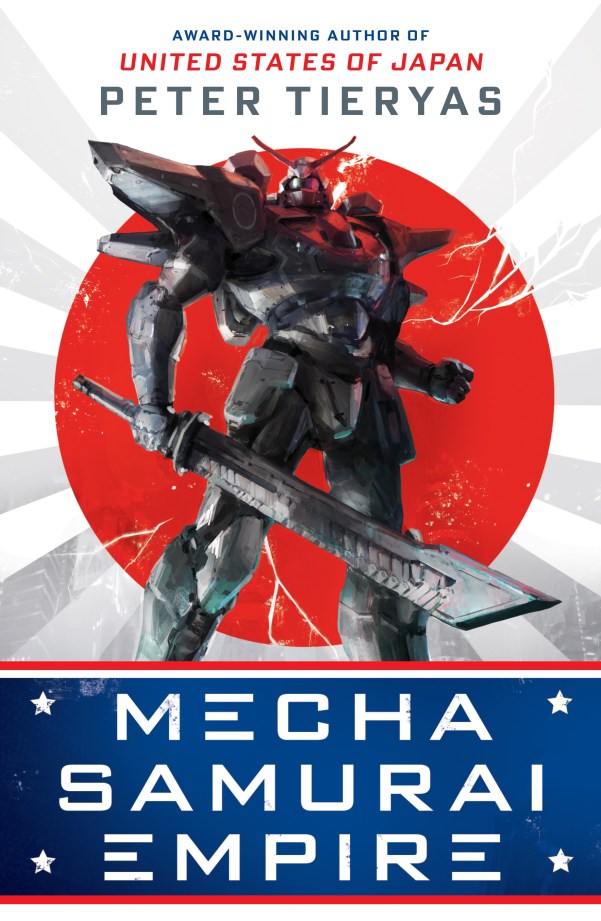
Mecha Samurai Empire by Peter Tieryas

Mecha Samurai Empire Cover

Publisher: Ace

Publication Date – 18 September 2018

Amazon     Book Depository

Prepare to experience one hell of an adventure in this follow-up to Peter Tieryas’s successful United States of Japan, in this incredibly exciting read that can best be described as The Man in the High Castle meets Pacific Rim.

Mecha Samurai Empire is set in an alternate version of our history, in which Japan and the Nazis won World War II.  This change to the outcome of the war was a result of the creation of the mecha, gigantic piloted military machines which gave the Japanese an unparallel advantage against the American forces.  In the aftermath of the war, America was split between Japan and Germany, who created distinct territories.  The western states, including California, became part of the United States of Japan, with its inhabitants swearing fealty to the Emperor.

In the 50 years that followed the end of the war, the United States of Japan entered an age of prosperity and technological advancement, and the development of more advanced mecha made them the most feared and effective military power in the world.  In addition to their military control, Japanese culture and custom has also been incorporated into American society, history has been rewritten and Japan’s wartime atrocities have been whitewashed.

In California, young student Makoto Fujimoto has only one dream: to become a mecha pilot and defend his country against the terrorists who killed his parents.  Unfortunately, Mac lacks the grades or political connections to achieve a placement in the mecha pilot training course at the elite Berkeley Military Academy, and his attempts to pass the special military exam end disastrously.  However, a chance encounter with rebel American forces allows him the opportunity to join up with a civilian mecha security company.  While his new role might not provide him much action, it might ensure his future placement at Berkeley.  But when Mac’s first mission goes horribly wrong, it might take all of his luck and skill just to survive.

Mecha Samurai Empire is an intriguing and exciting new novel from Tieryas and is the second book set in the United States of Japan universe.  Mecha Samurai Empire is not a direct sequel to the first book, United States of Japan, but it does contain a number of the story ideas that Tieryas did explore in his first book, and includes appearances from some of its characters.

As soon as I saw this book in the store and found out it featured mecha battles in an alternate timeline, I knew I was going to have to read it.  Because of the very enticing story concept, I did find myself going into this book with some very high expectations.  After reading it I am very pleased to say that I was not disappointed in the slightest, as I found Mecha Samurai Empire to be an incredibly entertaining book that makes full use of its unique elements and likeable characters to create an addictive story.  If you enjoyed the original United States of Japan, then you will definitely love this latest addition to the universe, that not only continues to highlight Tieryas’s marvellous alternate world, but which ramps the incredible mecha action.

The mecha are definitely the stars of this book, and the author spends a significant amount of time focusing on them and highlighting their importance in this new world.  Most readers of this book are going to be looking for some electrifying mecha combat, and Tieryas delivers this in abundance.  There is a huge amount of different types of mecha action, including training simulations, friendly competitions, small-scale battles between smaller mecha, larger battles between gigantic mechas and Nazi bimorphs (organic mechas), and there is even a large elimination tournament between various mecha pilots.  I’m a sucker for a good tournament, but this had to be one of my favourite extended sequences in the entire book.  Not only is there some incredible action during these tournament battles but the inclusion of multiple pilots allows the author to show off the various mecha battle techniques and fight styles as the competitors go at each other with a variety of close-combat weapons.  I also really enjoyed an earlier sequence when the protagonist finds himself piloting a small crab mecha by himself and must overcome several cannibalised mecha piloted by fanatical American rebels.  During these scenes Mac has to use all his training and skills, as well as the limited resources available to him in order to beat a larger force of opponents, and it is a very gripping scene to read.  Aside from the awesome action scenes, Tieryas has also chosen to present the reader with a much more in-depth view of the mecha in his universe.  The book contains the history of the mecha; the required training, simulations and the teamwork; discussion about famous mecha pilots; examinations of tactics and battle plans; mecha research; and even a look at the cultural impact of the mecha and the reverence shown to the pilots.  All of this additional information is deeply fascinating and really adds a lot to the book as the readers are shown they are more than just weapons.  If you’ve ever enjoyed the idea of mecha combat before, this is definitely the book for you.

While the mecha battles are one of this book’s best features, readers are also treated to an intriguing and memorable alternate history setting where the Axis powers won World War II and ended up taking control of the United States of America.  Tieryas has done an absolutely amazing job of creating a version of America that has been under Japanese control for 50 years, and it is fascinating to see how the author imagines this world would look.  In order to show the reader how the world came to be this way, Tieryas comes up with a clever alternate history of World War II and the years that followed it.  For example, Tieryas explores how a different strategy during the war could lead to a different outcome.  In this case, Japan joined the war by attacking Russia with the Nazis rather than America in the Pacific.  There is also some clever mirroring of real-life history, as the two main victorious world powers, Japan and Germany, end up in a cold war after splitting their conquered territory between them.

In addition to the changes in histories, Tieryas has also been quite inventive when it comes to the impact that a Japanese conquest would have on the culture of America.  While the Japanese influence on these territories in the book is quite noticeable, the author has come up with some captivating combinations between the two distinctive cultures.  I personally though that the way Tieryas continued to provide the reader with a ton of detailed descriptions of the food his characters were having was a very nice touch, as this showcased just how prominent Japanese food is in occupied America, while also featuring some curious examples of fusion cuisine.  It’s also interesting to see how much more advanced certain technology appears to be in this universe, a fact which can be attributed to the research into mecha technology and the fact that Japanese and Nazi scientists were able to operate with the world’s resources, including human test subjects, and a completely unchecked lack of morals.  There is also a dystopian element around this whole country, as there are a range of elements that show how controlling and despotic the United States of Japan government really is.  This is a continuation of the storyline from United States of Japan, and Tieryas continues to explore the nation’s hidden World War II war crimes, the rewriting of history, the use of propaganda, nationwide indoctrination, installed national pride and the fact that the characters are living in thinly disguised police state.  All of this serves to be an amazing background to this book that is both intriguing to explore and adds to the dramatic actions of the characters.

The story of Mecha Samurai Empire is strongly driven by the character development of the narrator and the other protagonists as they attempt to find their place in the world.  The main character and narrator, Mac, is an interesting focal character as the story is primarily set around his attempts to navigate this world and achieve his dream of becoming a mecha pilot.  Due to his past and the tragedy he experiences, Mac has a lot of self-doubt and other emotional baggage.  It is moving to see him getting through these barriers in order to become the hero his friends and country need.  I also got really attached to several of the supporting characters, especially Nori, Chieko, Kujira and Kazu, who we get to see develop in a similar manner to Mac.  Each of these characters has some distinctive character traits and motivations, and it’s cool to see how their personalities affect their mecha combat style.  It’s also intriguing to see the various levels of indoctrination and love for their country that these characters have, especially when they start to experience the darker side of the country and at times infuriating military commanders.  Another superb subplot is the relationship between Mac and Griselda, an exchange student from Nazi Germany.  Despite being old friends, their relationship is constantly criticised or forbidden by the other Japanese or German characters, and the constant us or them attitude is an accurate mirror of similar relationships throughout history.  It was a real treat to watch these characters develop throughout the course of the book, and the final fates of some these characters may leave readers reeling.

Award-winning author Peter Tieryas once again delivers another addictive and captivating story set in an alternate history version of the United States of America.  Making full use of this clever and creative setting, Tieryas packs his story full of pulse-pounding action as his characters pilot giant mecha in a variety of well-written and exciting battles.  With some real heart and emotional depth, Mecha Samurai Empire is so much more than its fun and memorable concept and comes highly recommended for all readers.

My Rating:

Four and a half stars

Amazon     Book Depository

Skyward, Volume 1: My Low G Life by Joe Henderson and Lee Garbett

Skyward Volume 1 Cover.png

Publisher: Image Comics

Publication Date – 25 September 2018

Amazon     Book Depository

Those looking for the next amazing comic book adventure they can get addicted to should look no further than Skyward, one of 2018’s breakout hits, which takes away a fundamental force and replaces it with a sensational story.

One day, around the planet, gravity all but disappeared, and the one thing that was previously holding everything to Earth’s surface all of a sudden became a fraction of what it previously was.  In the resultant chaos, huge swathes of the population simply floated away into the atmosphere.  Those that remained were forced to adjust to a new world with different rules.
Skyworld_01-1.png

Twenty years later, humanity has adapted to its new low-gravity reality.  For some, such as Willa Fowler, it’s the only way of life they have ever known, and Willa excels at navigating the skies above Chicago.  Living with her father, Nathan, a brilliant scientist traumatised by the events that sent his wife tumbling into the skies, Willa scrapes a living as a high-speed delivery girl with a number of risky and dangerous tricks up her sleeve.  But when her father reveals he has a way to bring gravity back, Willa doesn’t believe him and instead plans a meeting with Roger Barrow, her father’s rich former research partner, who has created much of the technology that allows the world to survive its new situation.  Descending to ‘The Streets’ of Chicago, the lowest level, inhabited by its richest citizens, Willa quickly discovers that Barrow is not the saviour she thought he would be.  Instead he is determined to keep gravity from returning, and will go to extreme lengths to stop Willa and her father.

Skyward_02-1.png

This is one of the first comic book works from Henderson, whose main claim to fame is as showrunner for the Lucifer television show.  The artist, Garbett, is probably best known for his work on the comic Loki: Agent of Asgard.  Together, this new team has created an incredible new comic book series that has already been picked up by Sony for a potential feature film, and it will be intriguing to see how this challenging and creative series will be adapted to the screen.  This first volume contains issues #1-5 of this new series.

Skyward contains an excellent story that examines life in a different and catastrophically affected version of Earth while also presenting an action-packed adventure with a wild protagonist.  The central idea of this series, the removal of gravity, is a crazy concept that allows for an exceptional overall package that combines great storytelling with incredible and unique artwork.  Throughout this first volume, there is a great combination of humour, action, character development and powerful emotional moments, all set within a fascinating new world shown in great artistic detail.

Skyward_03-1.png

It was quite intriguing to see the various ways in which a lack of gravity could affect the world that we live in.  Henderson and Garbett have come up with a range of different ways for the characters in this book to navigate around the skyline, and it is interesting to see the range of tools that are shown in the artwork.  The creative team has done an amazing job highlighting the various ways that the lack of gravity has affected the world, from food production to water gathering to human mobility.  One of the more intriguing aspects of the new world is the way in which guns have become obsolete due to the recoil pushing shooters back through the air, making it an ineffective weapon and more dangerous to the user than the target.  That said, the protagonist, Willa, has some more extreme and effective uses for the gun she carries around with her.  Perhaps the most intriguing idea presented in Skyward is the location known as The Streets, the lowest street level of Chicago, where the city’s richest inhabitants live in a state of denial at the changes that have happened and are trying to live like there is still gravity.  This includes wearing grav-boots to keep them stuck to the ground and forcing a man with no legs to sit in a wheelchair rather than floating in the air as he would prefer.  There are also some crazy inventions, like a magnetised hem to keep a dress from rising up.  These inhabitants of The Streets are absolutely terrified of the sky and have a very different lifestyle from the people living in Chicago’s skyline, who have embraced the new world.  One funny scene involves Willa traumatising an obnoxious bouncer by wrecking his grav-boots and making him float up into the sky a little.  Overall, this is a fun new world to set this great story in and has a lot of potential for future volumes of this series, where additional changes to day-to-day life are no doubt going to be revealed.

Skyward_04-1.png

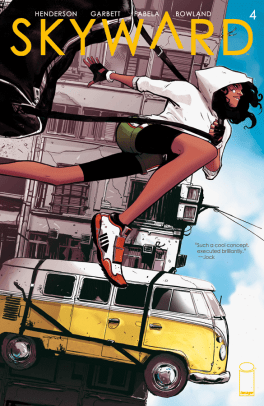
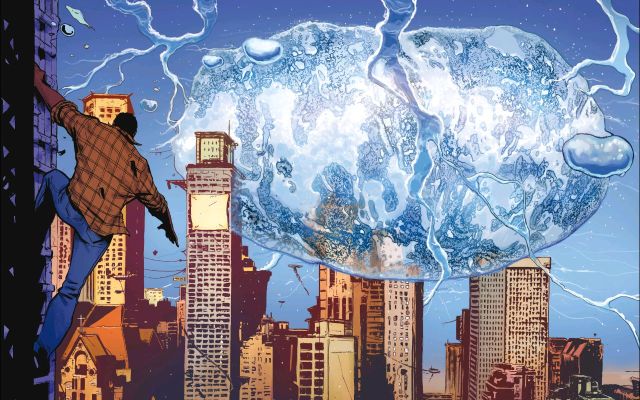
The artwork in Skyward is just gorgeous and is definitely a key highlight of this incredible book.  The creative team have done an outstanding job showing off the low-gravity concept in art form, creating some fantastic scenes and drawings.  Most of the characters are shown floating around and navigating the air, which creates some amazing panoramas of the city from high above for the reader to enjoy.  All the characters, even those rich individuals trying to ignore the lack of gravity, are shown with their hair floating up in the sky, and multiple scenes have various liquids floating in the air around the characters attempting to have drinks.  It also means that fight scenes are constantly surrounded by droplets of blood that float around the characters and add a whole new sense of realism and brutality to the story.  The artistic highlight of this book has to be the incredible and exceptional drawings of the storm in low gravity that becomes such a massive part of the background in the later part of the volume.  Due to the effects of the low gravity, the storm manifests itself as a gigantic ball of water in the sky, surrounding several high-rise buildings.  The first drawing of this is amazing, and the following scenes which show the main characters navigating around this bubble and creating massive pockets of air are just fantastic, and represent some exceptional comic book art.  I was also suitably terrified by several of the drawings in this volume, from the opening scenes which show multiple people being lifted away by the low gravity, to the horrifying shot of the planet Earth and its new artificial ring, made up of planes, cars, ships, other debris and of course multiple dead animals and humans that have not decayed in their 20 years in orbit.  Lee Garbett and the creative team have outdone themselves in Skyward and I cannot speak highly enough of the artwork in this book.

Skyward Picture 1.jpg

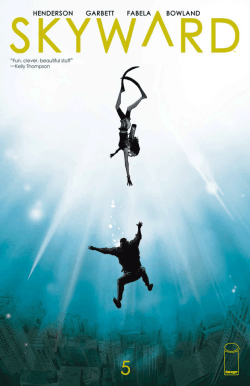
The main character, Willa, is an excellent protagonist for this series.  As a character who has never known what it’s like to live in a world with gravity, Willa’s antics through the air are pretty crazy and she does some amazing and unpredictable things throughout the book.  Whether it’s using a gun to gain rapid altitude and to come down again, or blowing out a window underwater in a low-gravity storm of water after creating an air pocket with her oxygen tank.  The constant incredulity of the other characters as she does these things is very amusing and makes it quite clear that these actions are not the social norm in the new world.  My favourite quote of the books is when the antagonist, realising that Willa is about to blow open a window with her gun says ‘She wouldn’t…’ while Willa’s friend who is being held hostage responds with ‘Oh, she would.’ I must again return to the artwork of Skyward when it comes to showing off this main character.  The artists do a fantastic job highlighting the joy on Willa’s face as she flies around in the upper city; she looks like she was born to float.  I also loved the drawings that show off her crazy antics, from the early sequence which shows her using a gun to blast off away from people attacking her, to that fantastic scene where she blows open the underwater window.  The drawings themselves are incredible and really show off the action, while the looks of shock and amazement on the faces of onlookers tell a whole new story.  Henderson and Garbett have created a perfect main character and protagonist in Willa, and I can’t wait to see what she gets up to in future volumes of this series.
Skyward_05-1.png

Skyward is an incredible new series from the fantastic team of Henderson and Garbett.  I really enjoyed the central concept of a lack of gravity, as it allowed the creative team to present a bold and exceptional new setting for this exciting and powerful story.  I really cannot hype up the artwork of this series enough, and I love the various ways that the artists show off what impacts these gravitational changes would have to everyday life on the planet.  An outstanding five-star start to a series with incredible potential, this is the perfect read for current comic book readers and a great starting point for those trying to break into the medium.

My Rating:

Five Stars

Amazon     Book Depository

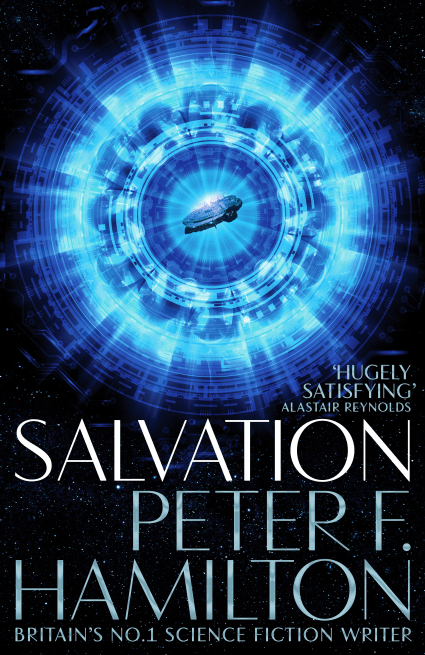
Salvation by Peter F. Hamilton

Salvation Cover.png

Publisher: Macmillan

Publication Date – 4 September 2018

Amazon     Book Depository

From one of the modern masters of the space opera comes a rich and ambitious piece of science fiction that that examines an exciting potential future for Earth and the intriguing adventures that could come as a result.

In 2204 AD, humanity has advanced by leaps and bounds and spread out among the stars.  Utilising advanced teleportation technology, next-gen computers and cutting-edge biotech, humanity has created a number of new and varied societies controlled by a handful of powerful corporations.  However, everything is about to change.  Out in the furthest reaches of human expansion, explorers have found a crashed alien craft.  While this is not humanity’s first contact with an alien species, the sinister cargo found onboard the crashed ship reveals a dangerous alien agenda.  Determined to ensure humanity’s survival, the Connexion Corporation assembles a task force to examine the craft and assess the potential threat that it could cause.  Led by Feriton Kayne, the task force is made up of Kandara Martinez, Yuri Alster, Callum Hepburn, Alik Monday and their assistants.  While on paper this group are the perfect people to investigate this potential threat, there is one significant problem: one member of the team is a hostile alien infiltrator.  As the team gets closer to the alien ship, secrets from their past are revealed and the future of the human race hangs in the balance.

Hundreds of years later, Dellian and his team of genetically enhanced soldiers are born and raised on a planet, far away from Earth.  An alien threat has forced humanity into hiding among the stars and pushed them to the edge of extinction.  As the young soldiers grow up, they encounter lessons from the past and discuss the legendary Five Saints who first encountered the invaders.

This is an absolutely spectacular piece of science fiction from bestselling author Peter Hamilton, who has once again created an elaborate and captivating space opera.  Hamilton has written a number of large-scale science fiction novels since his 1993 debut.  He first gained prominence with the Greg Mandel trilogy, which followed the adventures of a psychic detective in a dystopian future.  Hamilton followed this up with his first epic space opera series, The Night’s Dawn trilogy, which focused on souls of the dead coming back and possessing multiple human planets in the far future.  He continued with additional space operas, such as the Commonwealth Saga, the Void Trilogy, The Chronicle of the Fallers and the standalone novel Fallen Dragon, as well as the children’s fantasy series, The Queen of DreamsSalvation is the first book in Hamilton’s brand new trilogy, The Salvation Sequence, with the adventure continuing in the future releases, Salvation Lost and Saints of Salvation.

Salvation is an impressive and compelling read that combines a powerful and well-written story with a brand new, large-scale science fiction universe.  This story is told from of variety of different time periods set throughout Earth’s future.  The central story of this book is set in 2204 AD and features the exploration crew from the Connexion Corporation examining the crashed alien ship.  This storyline is narrated from Feriton Kayne’s point of view and is the only first-person narration in the entire book, except for a short flashback chapter examining Feriton’s infiltration of a different alien spacecraft.  Salvation also features five additional storylines that are set across various time periods.  Four of these storylines are presented as tales from the other four main characters in the 2204 AD timeline, Kandara Martinez, Yuri Alster, Callum Hepburn and Alik Monday.  Each of these flashback narratives is given its own significant chapter; for example the first of these flashback chapters lasts for 140 of the books 526 total pages.  The fifth storyline is set far in the future, and features a different group of characters who are living in the aftermath of these past adventures and is told across several shorter chapters.  The author makes spectacular use of these multiple time periods and combines them together into an excellent overarching narrative.  A significant amount of detail and a huge number of supporting characters are packed into this book, which falls just short of overwhelming the reader but creates the feeling of a massive universe with quite a lot going on.

Each of Salvation’s separate plotlines offers the reader a drastically different story to enjoy, and presents them with several unique adventures in one novel.  The storyline in 2204 AD is an intriguing first contact and exploration story that works incredibly well as the overall narrative that ties all the other storylines together.  The first flashback storyline is set in 2092 AD and features the story of how Callum Hepburn and Yuri Alster gained their antagonism towards each other.  It also shows the earlier days of Connexion and the darker side of their newly formed technology and world influence.  This first story is told from the point of view of Callum, Yuri and Callum’s wife, Savi, and features a thrilling spy tale that also reveals the unique and extreme form of criminal punishment that resulted from the new technology.  The second of these storylines is set in 2167 AD and focuses completely on Yuri as he searches for a missing person taken by the new and shadowy underworld that has taken shape amongst the stars.  This is the first of the flashback storylines to hint that an alien species may have nefarious plans for humanity, and also features some cool examinations of the power and tactics that Yuri and Connexion use.

The third storyline is a complex murder mystery storyline set in 2172 AD that focuses on the secretive FBI agent Alik Monday and presents another fantastic mystery with some unique science fiction elements.  The fourth storyline is set in 2194 AD and follows badass mercenary Kandara Martinez as she investigates corporate sabotage on the Utopial home planet.  This is a high-action thriller storyline that also examines the Utopials, a human society seeking to create a cultural utopia, while also going into genetic surgery in a big way.  The highlight of this storyline has to be the intense fight between Kandara and the mercenary Cancer, who had been a shadowy figure in some of the previous storylines.  The final prequel story follows the 2204 AD timeline narrator, Feriton Kayne, in 2199 as he infiltrates the large spaceship belonging to the Olyix, an alien race that humanity came in contact with some years before.  This is one of the shortest stories, but it contains the most detailed examination of the Olyix, who have appeared in several of the previous stories.

In addition to the stories set in and before 2204 AD there are also several chapters are set in the far future of humanity.  This timeline starts in 583 AA (After Arrival) and features the remnants of humanity as they prepare to fight back against the alien menace that pushed them away from Earth.  This is a rather intriguing storyline that examines children being turned into tight-knit teams of soldiers as they prepare for the war to come while also providing some hints about the events of the main storyline.  Each of the above stories are fairly self-contained and do an amazing job of showing off the sheer complexity of Hamilton’s new universe, while at the same time providing a series of unique and captivating tales across time.

Each of the prequel timelines has a storyline that could be considered either a murder mystery or thriller.  By themselves, each of these storylines is very well written and contains compelling mysteries and action packed sequences that are more than enough to keep the readers hooked to the book.  However, the real highlight of these prequel timelines is the way in which the play into Salvation’s larger mystery that is explored within the 2204 AD storyline, namely the identity of the alien race attacking humanity and which of the members of the research team is an infiltrator.  I really loved the way that these prequel stories hinted at the main mystery while also exploring the history of the main characters in an attempt to show their personality or a critical point in their lives.  The final twists in the 2204 AD storyline are very surprising and serve as a fantastic payoff for Salvation’s overall narrative.

The author has also included a significant amount of science fiction elements throughout the book that are presented in considerable detail.  It is fascinating to see Hamilton postulate how Earth may develop in the near future and the advanced technology that they would start to utilise.  The multiple timelines also come into play for this element of the book as they allow the reader to see the progression of technology over the years.  What is most interesting about this is that the main pieces of technology don’t change; instead the next generations of the same device are revealed throughout the book’s various stories before the technology eventually plateaus at its highest level.  The science fiction elements also come into play in several intriguing ways.  For example, they allow for some very creative mysteries, including a murder in a house containing teleportation gates that result in the victims being spread across multiple locations, including New York, the Moon, Mars and the Antarctic, creating a murder investigation with several unique complications.  The advent of space travel and other technology also allows the creation of some inventive new societies.  From futuristic utopias to desolate prison it is absolutely fascinating to watch these societies come together.  Overall the science fiction elements are a fantastic part of this book and add some intriguing elements to all of the book’s interconnected stories.

Peter Hamilton has produced another elaborate and powerful piece of science fiction space opera in Salvation.  With a new and unique universe that contains some fantastic and detailed new elements and multiple timelines that are combined together into an outstanding novel, this is an absolutely amazing read.  Epic science fiction at it’s very best, Salvation comes highly recommended and is a spectacular start to an exceptional new series.

My Rating:

Five Stars

Amazon     Book Depository

Phantom by Leo Hunt

Phantom Cover.jpg

Publisher: Orchard

Publication Date – 9 August 2018

Amazon     Book Depository

From bestselling author Leo Hunt comes an electrifying and fast-paced young adult science fiction adventure that takes an intriguing look at the future of technology, as well as the crime and consequences these advances could lead to.

In the far future, humanity has built towers and skyscrapers up in a major way, leaving the ground far below.  The rich and powerful live in the City, the highest level of construction, far above the poisoned ground.  Up in the City, luxuries such as sunlight, clean water, jobs and corpbloc homes are available to its hardworking corporate-owned population.  Those who do not have money live in the undercity slums, where the sun never shines and poisoned water is flooding up from the ground.

One of the inhabitants of the undercity is orphaned teenager Nova, who earns a living going up into the City and stealing from the corporate workers.  In a world where everyone has technology implanted in their heads, a skilled hacker like Nova can obtain everything from money to information.  Nova’s most important tool is Phantom, a powerful program created by the shadowy anticorporation hacker, the Moth, which hides the identity of hackers while they commit their crimes.

While Nova is only just scraping by, her skills have caught the attention of the Moth, who has a dangerous job for her.  The Moth needs Nova to infiltrate the powerful Bliss Inc and uncover their most treasured corporate secret.  Posing as a prospective assistant for the CEO of Bliss Inc, Nova goes deep undercover, changing her identity and her appearance to sneak in.  However, her mission is about to get far more complicated then she could have ever imagined.  Caught between the dark secrets of Bliss Inc and the mysterious ambitions of the Moth, Nova is going to be lucky to get out of this heist alive.

Phantom is the latest book from young adult author Leo Hunt and represents his first foray into the science fiction genre.  Hunt’s previous works have mainly focused on the fantasy and horror genres, with his 13 Days of Midnight trilogy featuring a young man who develops necromantic powers.  Phantom is an interesting new direction for Hunt, who has created a fantastic piece of young adult science fiction with strong techno-thriller elements.

This book is contains an intriguing science fiction story that takes the reader through a unique futuristic city and presents them with a thrilling and technology driven adventure.  Phantom’s story contains a superb combination of story elements which come together to form an entertaining and fast-paced plot with compelling pieces of betrayal, technologically assisted espionage and corporate intrigue.  There are a few good twists throughout the book, but I did find that one of the big reveals towards the end of the book was a little easy to predict as a result of the author only utilising on a small number of characters throughout most of the narrative.  This was more than made up for by the shocking and deeply intriguing reveals that followed the protagonist uncovering the hidden secret motivations of the book’s various antagonists.  All of these hidden surprises result in some great story elements and have a strong relation with the book’s focus on technology.

Phantom is intended for a young adult audience, and it works well as an absorbing and exciting introduction into science fiction and technology-based thrillers.  Younger readers will love the interesting examination of the potential future technology and will find the exciting adventure storyline quite fun.  The violence contained within the book is not too graphic whilst also allowing for some strong action-packed scenes.  There are some minor mentions of mind-alerting technology and substances, but nothing too inappropriate for the younger audience.  There are also some subtle but important LGTB elements that come into play later in the story, and Hunt handles these quite well.  Overall, I would recommend this book to all teenagers, and even some younger readers, who will find a lot to enjoy in this wonderful book.

The best and most compelling features of Phantom are the amazing technological elements that form a significant part of the plot and which take a particularly intriguing look into humanity’s reliance on technology and how we are likely to advance in the future.  In this potential future, everyone has neural implants inserted in them at birth that act as a mobile connection to the internet as well as a phone, music player, bank card and personal identification all in one.  This is an interesting thing to examine, especially as humans are constantly getting closer and closer to incorporating our personal technology into our own bodies.  Hunt does a great job presenting some of the potential benefits and problems that humans could experience with this sort of technology, and takes a stimulating look at that the ways that it could impact on our lives.  Quite a few things are explored throughout Phantom, from examinations of how this technology will influence human identity to how it could be abused for criminal reasons, such as stealing money, hacking someone to take control of their body or producing technology that mimics recreational drugs.  Other technological questions come into play later in the book and result in some deep emotional scenes as well as some interesting questions about ethics and the nature of humanity.  These fictional technological elements represent some truly fascinating ideas from Hunt that readers will find very captivating.

In addition to Hunt’s intriguing postulations about future technology, another compelling story element is the inventive and imaginative setting for the story.  The entirety of Phantom is set within a fictional metropolis that is constantly being built up and is split between the soaring spires of the rich and the sprawling slum-like undercity where the poor live.  Throughout the story, the protagonist journeys from areas of the city flooded with poisoned water and inhabited with humans and animals that have never seen sunlight, to the very top of the city, above the clouds.  There is a detailed exploration the city’s disparate economic zones, and significant time is spent interacting with the populace in both these areas, resulting in some fascinating comparisons.  This is an amazing setting for this science fiction and technology focused story and represents another intriguing look into the future by Hunt.

Leo Hunt’s latest book, Phantom, is an absorbing and thrilling tale of adventure and crime in a futuristic city.  Containing some extremely enthralling technological elements and a fantastic city setting where the differences between the rich and poor have never been more obvious, this is another outstanding release from Hunt that will be perfect for those younger readers looking to break into the science fiction or techno-thriller genres.

My Rating:

Four stars

Amazon     Book Depository

Early Riser by Jasper Fforde

Early Riser Cover.jpg

Publisher: Hodder & Stoughton

Publication Date – 2 August 2018

Amazon

One of modern literature’s quirkiest writers returns after a six-year hiatus to produce the eccentric and incredibly entertaining new release, Early Risers.

In an alternate version of our Earth, the entire world freezes over each winter, plunging the planet into a deep cold for the entire season.  Humanity has adjusted to this different climate by developing ways to hibernate each winter, sleeping through the long, cold months in specially designed habitations and ensuring that their bodies have enough stored fat to keep them alive.  Only a few weird and unconventional individuals choose to ignore their bodies’ need to sleep, and instead spend winter awake.  One such group are the Winter Consuls, a collection of misfits and rogues responsible for ensuring the safety of the sleeping population, whilst also patrolling against the horrors of the winter world.

In Wales, Charlie Worthing is about to experience his first winter as a new recruit in the Winter Consuls.  His first mission sees him drawn to Sector Twelve, base of the powerful HiberTech company and one of the most disreputable areas of the country, known for its controversial Winter Consuls.  Trapped within this sector, Charlie must contend with all the dangers that winter can hold.  Between the cold, his desire to fall asleep, the stamp-collecting addicted Villains, the mindless and cannibalistic Nightwalkers and the possibly mythical WinterVolk, Charlie is unlikely to survive his first winter.

However, all these threats pale in comparison to the damaging potential of a viral dream being passed around the inhabitants of Sector Twelve.  When Charlie starts to have the same dream, he finds himself thrust into a dangerous conspiracy with world changing consequences.  As Charlie becomes a target, he must work out who in this unforgiving world he can really trust, and who is using him to further their own aims.

Jasper Fforde is an exceptional author who has produced several novels since his 2001 debut, all of which were remarkable and very different from your standard read.  With an unusual style and superb skill, Fforde’s work is reminiscent of some of the novels produced by authors such as Terry Pratchett or Lemony Snicket.  Fforde has created some enjoyable and addictive reads over the years, including Shades of Grey, the Nursery Crime Division books and his exceptional Thursday Next series.  Early Riser is a standalone novel that takes the reader to another unique alternate Earth and presents them with an intriguing and very original story.

Fforde has a pattern of creating unique worlds to act as settings for his entertaining narratives.  These worlds often have elaborate rules and details that make the book’s story very distinctive.  For example, Shades of Grey is set in a world where people can only perceive limited shades of colour and social hierarchy is determined by how many shades and hues a person can identify.  The Thursday Next series is set in an alternate version of Earth where the Crimea War never ended, time travel exists and journeys into the literary world is both possible and heavily policed by characters from famous books.

Fforde continues this trend in Early Riser, creating another detailed alternate Earth setting.  This version of Earth experiences exceedingly cold winters and humanity has to hibernate each year as a result.  This is an absolutely eccentric and inventive concept, and it is fascinating to see how Fforde adapts a new fictional world around it and looks at how humanity has adapted to having to hibernate.  Like several of his other books, the story of Early Riser is set within this world’s version of Wales.  There is a focus on different types of technologies, especially those that help people successfully hibernate, different buildings and new societal norms.  One example of this is the concept that, in this colder world, larger, fatter people are more desirable and socially acceptable as they are more likely to survive their hibernation period, whilst skinny people, or those who choose not to hibernate, are seen as detrimental wastes of space.  Fforde further backs this up by creating an inventive alternate history for the world, including some funny and satirical depictions of an appropriately altered entertainment world.  Many elements of these alternate histories and new social norms are told directly within the story, but Fforde also fleshes out these ideas with a huge range of extra and very humorous details in footnotes and in-universe book excerpts at the start of every chapter.

Fforde has also ensured that Early Riser is particularly memorable by filling his story with a range of interesting and creative characters and threats.  Throughout the book, the protagonist encounters and examines the history, background and lore behind the threats roaming around the winter.  These include the Villains, aristocratic thieves who are the descents of British nobility who act in a stereotypically upper class way and are obsessed with stamp collecting and obtaining domestic servants through force.  There are also Nightwalkers, humans whose minds failed to withstand the hibernation process.  As a result, the Nightwalkers have been reduced to a zombie-like state and are potentially cannibalistic, although their urges can be controlled with comfort food.  Fforde has also included the mysterious WinterVolk, supernatural beings who reside in the winter world and have certain powers and tendencies.  There is particular focus on the Gronk, one of the newer WinterVolk, and the author includes discussions about the Gronk’s formation, its first appearance, its habit of taking the unworthy and only leaving behind their carefully folded clothes in the snow, all while singing Rodgers and Hammerstein hits.  In addition there are a range of wacky side characters throughout the series.  These side characters usually have some sort of zany quirk or a distinctive characteristic that proves to be entertaining for the reader whilst the protagonist often has to play straight man.  The standout example of this has to be the two one-eyed women who are both trying to get the protagonist on their side and who share an interesting connection with each other.  All of these imaginative literary inventions combine into one substantial and unforgettable story that will charm the reader with its quirky and fun nature.

While it is easy to focus on the unusual and humorous inclusions that Fforde has filled Early Riser with, readers will also enjoy the book’s compelling story.  The narrative is very stimulating and enjoyable, as it initially focuses on the protagonist’s introduction to life in the winter world, and then shifts to him attempting to unravel the conspiracy surrounding Sector Twelve.  Like many of the other inclusions within this book, the conspiracy is very complex and a tad strange, but it works well as the focus for a central investigative narrative.  Readers will enjoy the journey to the end of the mystery, and there are a few interesting twists along the way.  Overall, I thought that the inclusions and elements mentioned above worked well with the mystery, and while many of the solutions and suspects are bizarre, the book’s many unique inclusions do not overwhelm the story, but instead enhance it, resulting in a great story.

Jasper Fforde has once again produced a distinctive piece of literature that stands out thanks to its elaborate and original concept, its many fun story details and inclusions, and a solid and gripping central story.  Some readers may find the plot and story elements a bit weird, but this book will easily charm those who get in to Early Riser’s unashamed quirkiness and silly nature.  This is definitely one of the most inventive books of this entire year and a creative and exceptional new read from a fanciful and fantastic author.

My Rating:

Four and a half stars

Amazon

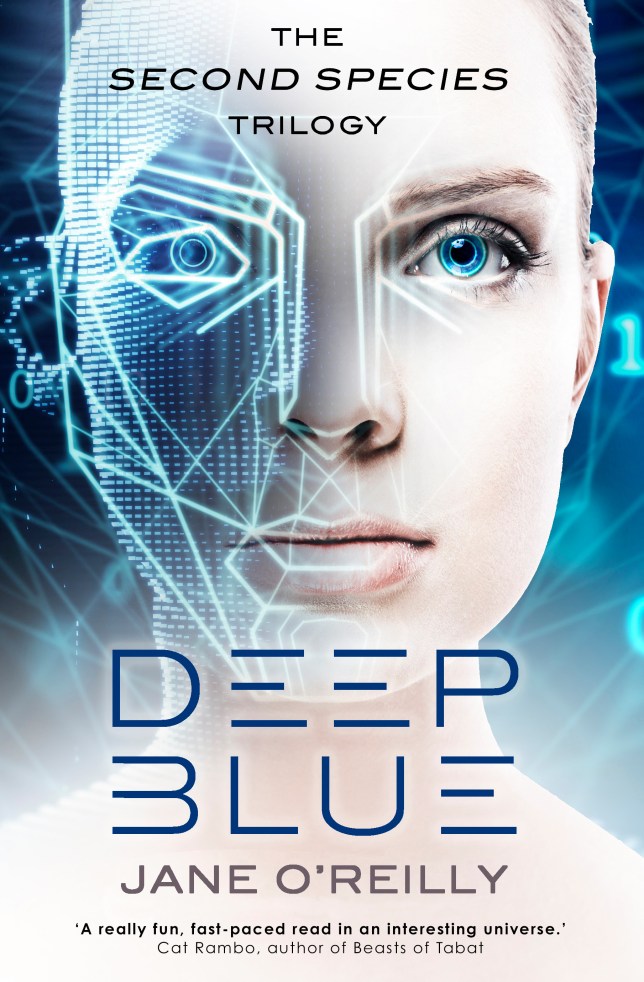
Deep Blue by Jane O’Reilly

Deep Blue Cover

Publisher: Piatkus

Publication date – 31 July 2018

Amazon     Book Depository

Following on from her 2017 release, Blue Shift, Jane O’Reilly returns to her electrifying science fiction universe for another exciting and action-packed adventure among the stars.

In the distant future of 2207, Earth is dying and humanity’s only hope for survival is a brand new planet on the other side of the galaxy.  Travel to this new sanctuary requires passage through the territory of several alien species who are unwilling to let a ragged human fleet anywhere near their areas of space.  In order to convince these aliens to allow humans access to a new planet, the government has initiated the Second Species programme to create the only resource the aliens want: human slaves genetically altered with alien DNA.

Former bounty hunter Jinnifer Blue, after failing to reveal the terrible truth about the Second Species programme, has been captured by its creator, her mother, Ferona Blue.  Now genetically altered with alien strength and pissed beyond all belief, Jinnifer escapes from the lab where she was held.  Having given up on warning humanity about the government’s sinister plans, Jinnifer’s only desire is to be reunited with her lover, the pirate Caspian Dax.

But Dax was also captured by Ferona and is now serving a brutal alien race as a mindless gladiator on the planet of Sittan.  Jinnifer has no choice but to travel to Sittan and attempt to rescue Dax, while at the same time organising the rescue of another friend, Eve, who has been captured by another dangerous alien species.  Gathering together allies and an old enemy into a ragtag team, Jinnifer initiates two desperate rescue missions to save her friends.  Can Jinnifer succeed, or has Dax fallen too far under the sway of the dangerous Sittan empress?

Deep Blue is the second book in the Second Species trilogy and a brilliant sequel to O’Reilly’s first science fiction book, Blue Shift.  This is a fun and fast-paced action series that makes use of an inventive and dangerous universe filled with unique aliens and desperate humans.  Deep Blue has a very busy plot told from a variety of viewpoints that are combined together in a clever fashion to create one thrilling narrative.  Each of the various exciting storylines also contain some flawed and damaged characters, most of whom are seeking some form of redemption.

Just like in Blue Shift, I found that the parts of the book that I enjoyed the most were the chapters that followed the machinations of the book’s central antagonist Ferona Blue.  Her despicable political manipulation on Earth was a highlight of the first book, and this continues to be the case in Deep Blue.  The added focus on Ferona’s negotiations with alien politicians, including the book’s other main antagonist, the Sittan empress, is a brief but fun addition to this equation.  Deep Blue’s other storylines are also very fascinating and contain some great sequences, including having four storylines featuring rescue missions and alien captivity running simultaneously within the book.

Readers who enjoyed the first book of the Second Species trilogy will also enjoy the significant development that the central character, Jinnifer, has undergone since the start of Blue Shift.  The character has evolved from an uncaring loner to the leader of her own small crew who harbours deep concerns for her friend’s wellbeing.  There is also a shift in the character dynamics between Jinnifer and Dax that is quite noticeable.  In the first book, Jinnifer was constantly being rescued by Dax, who ended up sacrificing everything to save her.  This is reversed in Deep Blue, as Dax is the one who is trapped and Jinnifer is the one attempting to save him by undertaking a dangerous rescue mission.  It is a fun change to the established character dynamic and readers of Blue Shift will appreciate the interesting change of pace O’Reilly takes in this second book.

O’Reilly has also created an excellent original universe to serve as the setting for her series.  There are a ton of intriguing science fiction elements, including an interesting prediction for the future of Earth and humanity and a number of unique alien species.  In Deep Blue, O’Reilly goes into greater detail of two of her alien races, the Sittan and the Shi Fai.  There is some exploration of both races’ history, culture, technology and way of life, as well as a visit to both home planets.  While there is a larger focus on the Sittan and their militaristic, female-dominated society, including using the Sittan empress as one of the book’s main antagonists, the scenes on the Shi Fai home planet are certainly memorable and more disturbing.  Other science fiction elements that readers are bound to find entertaining within Deep Blue include O’Reilly’s look at intergalactic politics, Earth’s political manipulation with advanced technology and the inclusion of human-alien hybrids.

This is a fairly action-packed book with some great combat sequences infused into the story to excite the readers.  The main character spends significant parts of the book utilising the swords she has implanted within her arms to great effect, and O’Reilly ensures that her two main characters spend significant time in gladiator-style death fights.  The author also is not too attached to some of her characters, so prepare for a few shocks and surprises.

O’Reilly once again sends the reader on an imaginative science fiction adventure through a dark and dangerous universe.  Deep Blue is a deeply fun and action-orientated story that will appeal to a wide audience and have readers hanging out for the final book in this exciting trilogy.

My Rating:

Four stars

Amazon     Book Depository

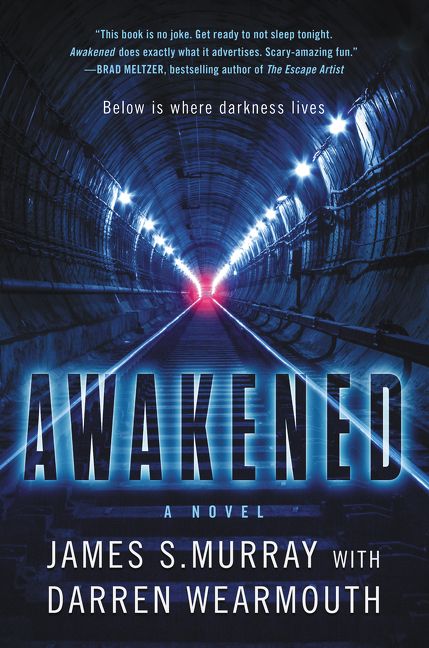
Awakened by James S. Murray and Darren Wearmouth

Awakened Cover.jpg

Publisher: Harper Voyager

Publication Date – 26 June 2018

Amazon     Book Depository

First-time author James Murray, of Impractical Jokers fame, teams up with veteran science fiction writer Darren Wearmouth to bring you the fast-paced, action-packed horror extravaganza, Awakened.

It is the unveiling of New York’s newest subway line, one of the most ambitious underground construction programs in the world.  The new express line will travel through a series of new tunnels that are now connecting the various suburbs previously separated by the Hudson River.  At the centre of this new expansion is the Visitor’s Pavilion, a gleaming state-of-the-art control centre and shopping hub situated beneath the Hudson.

The first run of the new system has been set up as a massive event, featuring the press, civic dignitaries, New York City’s mayor and even the president of the United States.  However, when the train rolls into the Visitor’s Pavilion it is not the triumphant occurrence that the waiting crowd was expecting; instead it is a scene of carnage.  The train that arrives is deserted, with all the passengers missing.  Not only that, but ragged holes have been made in the side of the carriages and the floors are covered in blood.

As the crowd panics and attempts to flee what appears to be a massive terrorist attack, an explosion rocks the tunnels and methane starts to flood the entire subway system.  As the tunnels begin to fill with gas and the slightest spark could result in another explosion, those trapped in the Visitor’s Pavilion soon discover that a far more dangerous threat is stalking them.  Something has been living under New York and the construction of the new tunnels has woken it up.  As this new threat starts to pick off both the trapped crowd and the rescuers attempting to reach them, it falls to New York’s mayor Tom Cafferty, NYPD SWAT member Sarah Bowcut and subway technician Diego Munoz to discover what is down in the dark with them.  The more they dig, the more they realise that they are dealing with something far more dangerous than they could possibly imagine, and that a sinister conspiracy has been keeping it hidden from the rest of the world.

This bold new book is the result of a collaboration between comedian James “Murr” Murray and Darren Wearmouth, a science fiction and horror writer with a number of joint novels already under his belt.  The idea for Awakened was originally developed by Murray some years ago, and represents the first novel in a new series that the two authors have been working on, with two future additions already planned for 2019 and 2020.

Awakened is a captivating adventure, science fiction and horror hybrid that goes straight for the reader’s imagination whilst throwing their action centres into overdrive.  This is one of the fastest-paced novels of 2018, as the book’s characters are forced to be quick and decisive in order to escape death.  There are ton of great sequences as the characters encounter the various dangers converging on them and must work on a range of elaborate and desperate escape and rescue attempts.  Murray and Wearmouth are able to weld together some exciting scenarios around this concept, and readers will enjoy watching the characters adapting to the problems they encounter, such as methane in the tunnels stopping them from using guns or flames to defend themselves.  In addition to these excellent action sequences, Awakened contains some truly creepy scenes that will really appeal to horror aficionados.  The characters are assailed with a range of strange sightings, noises from the darkness and the disturbing voices of children crying for help from just outside the character’s line of sight.  This pulse-pounding content is absolutely fantastic and ideal for those who love a startling adventure.

Murray and Wearmouth have also created an intriguing monster to attack the protagonists in the subway tunnel.  Without giving too much away, Awakened’s monstrous element is unique and plays into humanity’s fear of the dark and the creatures that could reside there.  The nature of the threat is revealed at just the right time, as the authors waited until the audience would be sufficiently engrossed in the book.  The eventual full reveal is one of the most memorable parts of the book, as it contains some great reactions from the characters encountering them, whilst at the same time rewarding the reader’s curiosity in a big way.  The authors work to ensure that their audience’s imagination and curiosity is continuously piqued throughout the entire story.  There is also a complex and fascinating conspiracy element that is woven into this part of the book which is intriguing to discover and unravel.  It is definitely a notable part of the story, and it looks like it will be major part of the next books in series.

The authors make significant use of multiple perspectives and viewpoints throughout Awakened.  This type of storytelling often works well for these large-scale horror novels, and this book is no exception.  This breakdown of point-of-view characters allows the reader a much larger picture of what is going on, especially as the various viewpoints tie together into one massive, high-powered story.  It is fun watching the actions of one group of people impact the decisions or choices of another group of people who are located in a different part of the book’s sprawling, underground setting.  This also allows the reader to see smaller scenarios that add to the whole story, such as one fantastic sequence which sees someone attempt to rescue the passengers only to meet their doom.  Despite it being this character’s only scene, his death affects the rest of the characters and there are multiple viewings of his corpse throughout the book to spook those who had no idea of his fate.

It is also worth noting that Murray and Wearmouth have made several homages to other works of horror within Awakened.  I was particularly drawn to several noticeable references and parallels throughout the book to Jurassic Park.  For example, there is a great reference early in the book involving the phrase “no expense had been spared” being used when discussing the celebrity written audio elements of the initial ride.  In addition, some of the characters actually compare their situation to Jurassic Park, which I found to be amusing.  These are a fun element to watch out for, and readers will enjoy noticing these throughout the book, while at the same time, appreciating that they do not overwhelm Awakened’s central horror based theme.

Awakened is a fantastic horror read that really amps up the adventure and action, leaving the reader excited for more.  With a sinister monstrous element and an enjoyable narrative containing an elaborate conspiracy-laden storyline, this collaboration between Murray and Wearmouth is a roaring success and readers should be eager to see what this duo cooks up next.

My Rating:

Four stars

Amazon     Book Depository

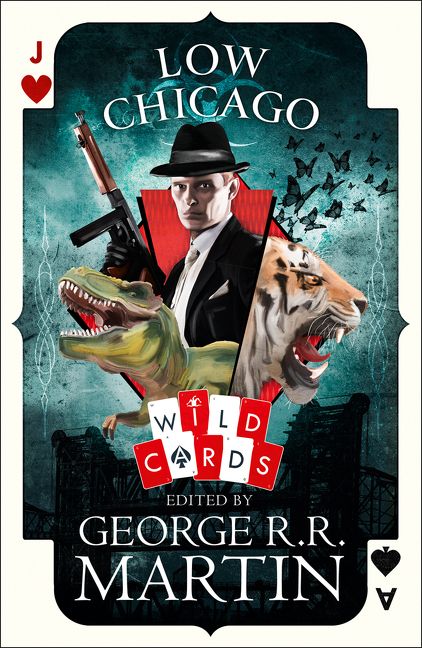
Low Chicago Edited by George R. R. Martin

Low Chicago Cover.jpg

Publisher: Harper Voyager

Publication Date – 12 June 2018

Amazon     Book Depository

From of eight of the world’s leading science fiction and fantasy writers comes the latest addition to the superhero-filled Wild Cards universe, edited by fantasy legend George R. R. Martin.

Wild Cards is one of the more interesting series currently running in the world today due to its distinctive anthology format and the unusual way the series came into existence.  The stories that would eventually form the Wild Cards books were originally written as part of a lengthy Superworld role-playing game campaign that had Martin as gamemaster.  Martin and the other players, all of whom were science fiction writers, created elaborate backstories for the campaign and characters, which were eventually incorporated into the first book in the series, a dark and gritty superhero based anthology also called Wild Cards.  The following entries in the series, despite routinely changing authors, tended to follow the same format as the original book by combining together a series of short stories into a connected narrative.  Low Chicago is the 25th Wild Cards book to be released since the 1987 debut, with two other entries due to be published later in 2018.

The Wild Cards books are set in an alternative universe where an alien virus, known as the Wild Card virus, was released in 1946 above New York City.  This virus affected thousands throughout the planet, killing most of the people it came into contact with and altering the DNA of the survivors.  The vast majority of the infected who remained alive were mutated physically and are now referred to as Jokers.  However, a small percentage gained superhuman abilities and powers and are referred to as Aces.  The stories that followed have been set between 1946 and a time period that usually corresponds to the book’s real world publication date.

In Low Chicago, Martin continues to serve as editor.  The book includes input from two long-running Wild Cards contributors, John J. Miller and Melinda M. Snodgrass, who authored stories in the original Wild Cards.  There is also input from previous contributors Paul Cornell, Marko Kloos, Mary Anne Mohanraj and Kevin Andrew Murphy, as well as newcomers to the series, Saladin Ahmed and Christopher Rowe.

Low Chicago starts in 2017, where a high-stakes poker game has been set up in the city’s famous Palmer House Hotel by a prominent mafia boss.  Each of the seven players has a one million dollar buy-in, and is allowed to bring two attendants including bodyguards.  However, all hell breaks loose when a mysterious assailant targets one of the players, causing the other players and attendants, many of whom are powerful Aces, to unleash their abilities throughout the room.  In the middle of the chaos one of the bodyguards unleashes his own mysterious power and accidently scatters everyone in the room back in time.

Now with history changing outside the hotel, it falls to John Nighthawk and the Sleeper, Croyd Crenson, to travel back to various points of Chicago’s past and find the people trapped there before the present unravels.  But among those who have been sent back are some of the world’s most dangerous criminals, who have decided to change time for their own benefit.  Stuck throughout key points of Chicago’s history, can the time travellers be recovered before the present is permanently altered?

Like many of the books in the franchise, Low Chicago is an anthology featuring several short stories that have been combined together into one overarching and interconnected narrative.  Each of the short stories is unique and features one or more of the characters sent back in time, or inhabitants of the timeline they encounter.  Whilst these short stories all have the same starting plot point, they all have different focuses thanks to that story’s specific characters or time periods.  As a result there are several varied stories, each with their own unique features.  For example, the story Stripes, by Markos Kloos, features a fantastic narrative about the half-human, half-tiger character Khan being trapped in Chicago in 1929 and getting involved in the events surrounding the St. Valentine’s Day Massacre.  Not only is the narrative about an obviously powered individual attempting to influence such an iconic moment in a mob war fun and exciting, but Kloos also includes some significant and heartfelt ethical and emotional decisions that really make you feel for the character of Khan.  At the same time, the story Meathooks on Ice is a complex and emotional story from Saladin Ahmed that focuses on a young and troubled Ace, Meathooks, as he attempts to find redemption and his place in the world back in prehistoric times.

In addition to the overarching time travel plot feature, each of these short stories is also connected together by the characters of John Nighthawk and Croyd Crenson, who could be considered the book’s main protagonists.  Nighthawk and Crenson either appear in the stories themselves or later interact with a story’s central character in order to resolve the specific storyline.  Nighthawk and Crenson are also the main characters of the book’s central storyline, A Long Night at the Palmer House, written by one of the founding authors of Wild Cards, John J. Miller.  This central storyline, told from the viewpoint of John Nighthawk, a character created by Miller in a previous book, is broken up into 11 parts and spread between Low Chicago’s other stories.  The first part of this storyline features the initial poker game and shows the events leading up to the other characters being sent back in time, while the reminder of this storyline focuses on the protagonists’ attempts to find them.  Large portions of this storyline directly tie into Low Chicago’s other short stories, but there are also some sections where they hunt down characters not featured in any of the other short stories.  Miller has included some great scenes in this central storyline, and they get particularly compelling when they encounter the results of the other characters meddling in time and they have to discuss the ethical implications of resetting the timeline.  One particularly outstanding example of this is a sequence that requires the characters to navigate through and fix up a messed up dystopia caused by one of the runaway Aces.

Despite the different authors and the varied content of Low Chicago’s stories, many of the entries complement each other and fit together really well as a result.  Nearly all of the stories contain links to the Wild Cards universe, make full use of Chicago’s rich history, have a comparable dark humour, feature intense action sequences, tell the story in the third person from point of view characters, and have a very similar pace.  There is however, one story that doesn’t follow this trend.  A Bit of a Dinosaur, by Paul Cornell, stands out from the rest of the entries in Low Chicago, as it breaks from third person narration that the other authors utilised, and is instead written in the first person.  Cornell capitalises on this by ramping up the humour in the story and making it a little lighter in tone than the other stories in the book.  The first line of A Bit of a Dinosaur, “I think it’s important to say, immediately, that I am no way responsible for the extinction of the dinosaurs” really sets the tone for this whole short story and it only gets better from there.

One of the most enjoyable parts of Low Chicago is the rich history of the book’s titular city, Chicago.  Throughout all of the short stories, the reader is transported to various periods of Chicago’s history in order to witness several of the most significant events in the city’s past.  These include The Great Chicago Fire of 1871, the Black Sox scandal of 1919, the opening of the first Playboy Club, the St. Valentine’s Day Massacre, the disastrous 1968 Democratic National Convention and the 1893 World’s Columbian Exposition.  All of the authors take significant pains to explore the significance of these events and the impact they had on Chicago and the rest of America.  The reader is given a crash course in the history of these proceedings, and also experiences the author’s interpretation of several key historical figures.  Many of these events occurred before the 1946 release of the Wild Card virus which removed the Wild Cards universe storyline from real world history, and it is fun to watch these events get altered due to the inclusion of several super-powered beings.  It is also extremely fascinating to see the various authors’ interpretations of the historical occurrences that happened after 1946, as they occur in a world where superpowers and mutations are rampant.  As a result, the authors have provided some inventive and captivating alterations that will prove to be highly enjoyable for the reader.

Fans of the Wild Cards universe will also love the deep connections that Low Chicago’s stories have with the rest of the franchise.  In addition to some interesting and complex new characters, Low Chicago features a huge range of characters who originated in the previous Wild Cards books.  There is a deep focus on the history of many of these characters and the readers get to see them placed in a range of unique and compelling situations.  In addition, the authors make full use of the overarching time travel storyline as they visit a range of characters who were killed off in previous books or whose main adventures occurred in storylines set many years before 2017.  Long-time fans of this series will love the inclusion of or nods to these early characters, especially as several have significant roles in the narrative.

Readers unfamiliar with this series may be slightly overwhelmed at the start of the book, but all of the authors contributing to Low Chicago do an amazing job of providing the relevant exposition and explanation for all the characters and the overall history of the Wild Cards universe.  Indeed, Low Chicago might be a perfect book for first time readers of the Wild Cards franchise, as the huge range of characters and the focus on time travel provides the reader with a huge amount of backstory and history that the previous books did not need to contain.

Low Chicago is an outstanding new release that is a sensational and memorable inclusion to one of the best science fiction series currently on the market.  It makes incredible use of its distinctive anthology format and the overarching time travel storyline throughout Chicago’s history that is an inspired and marvellous in its execution.  Low Chicago really stands out from the rest of the books in the Wild Cards franchise and readers will not be disappointed by this latest offering.

My Rating:

Four and a half stars

Amazon     Book Depository

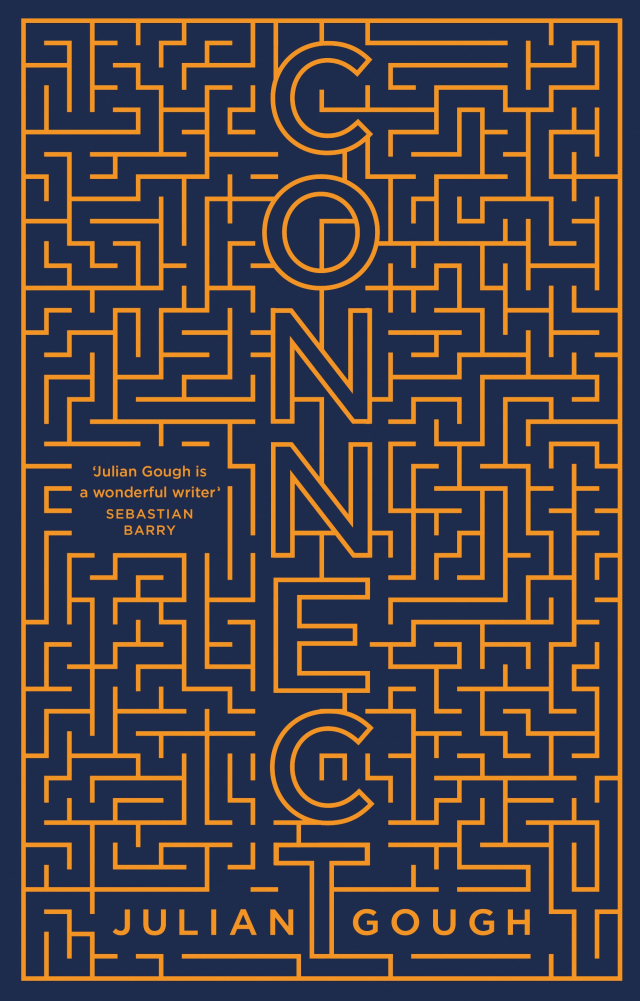
Connect by Julian Gough

Connect Cover

Publisher: Picador

Publication Date – 8 May 2018

Amazon     Book Depository

For those looking for a darkly complex and intense techno-thriller, look no further than Connect by Julian Gough, a unique novel that also critiques future trends and humanity’s increasing reliance on technology.

In the very near future, computer technology has been incorporated into nearly everything, linking the world and helping with all aspects of day to day life.  In Nevada, awkward young teen Colt is a talented hacker living with his mother, Naomi.  Seeking to create a perfect replication of the real world in virtual space, Colt has also developed a dangerous fascination with his mother’s biotech research.

When Colt submits his mother’s revolutionary work to a biotech conference, Naomi comes to the attention of the government, including Colt’s father, a high-ranking spook, Ryan, concerned with its potential implications.  However, Colt has also taken the opportunity to inject himself with the experimental biotech, turning himself into something new: a hybrid of man and technology.  Colt and Naomi are soon considered to be threats to the government, and Ryan activates an experimental defence network to hunt them down.  Colt and Naomi are forced to go on the run and must try to avoid a barrage of killer drones programmed to target and kill them at any cost.  Will Colt’s new abilities be enough to overcome the computer intelligence seeking them, or will the future of technology be changed forever?

Connect is an inspired new novel from Gough which represents a different direction from his previous writings.  Connect is a fascinating read and an interesting techno-thriller that examines the future of technology, creates a compelling dialogue and makes significant use of some excellent narrative elements.

The main story is an absorbing thriller that pits the protagonists against some sizeable opponents and threats.  One of their main opponents is an advanced and experimental computer program that is connected to every piece of technology in the country.  As a result, the protagonists are forced to find ways to avoid the overwhelming surveillance hunting them. Not only must they avoid pursuit from teaching devices and video cameras but they must also find a way to go low tech in a society that has computers connected to everything.  There are some great scenes where the characters are forced to out-think drones hunting them and try to find ways around the tracking programs that determine when and where to attack.  All of these play wonderfully into the book’s thriller storyline, and there is some real excitement when the protagonists encounter and attempt to counter these technological threats.

Gough spends a significant amount of Connect examining the future of technology and ends up offering some significant commentary on our reliance on technology and its potential influence on us.  The story is set in the immediate future, where everything is controlled by computers and certain things common in our current world no longer exist.  For example, most cars are self-driven, everything has become exceedingly automated and cash has become nearly obsolete.  In other words, it is a picture of how our world is likely to turn out in the next few years, based on current advances in technology.  Gough scrutinises how this over-reliance on technology could be detrimental to humanity, and how it could be turned against us by hackers and governments.  There is also an examination of the automation of a nation’s defence and security as an advanced security program is activated to hunt down the protagonists.  The debate around such a program is very in-depth, and the readers will be fascinated by some of the arguments presented.  Naturally, the program starts getting out of hand as it is manipulated into seeing the protagonists as a bigger threat than they are and it starts to dramatically escalate its attempts to destroy its targets.  This thought-provoking discussion and examination of the future of technology is a key part of Connect and will prove to be one of the most intriguing parts of the book for some thoughtful readers.

One of the most noticeable parts of the book is the unusual format that Gough has chosen to implement throughout his book.  The story is broken up into 12 chapters, and then further broken down into 149 sub-chapters, and is formatted in a way that vaguely reminded me of code within a computer program.  The inclusion of such a visually distinctive writing format does not break up the flow of the story, nor does it affect the reader’s ability to follow the story.  It does, however, dramatically change towards the end of the book in a way that ties in nicely with some of the significant plot elements occurring during this part of the book.  Gough has also chosen to include a number of relevant quotes at the start of each of the chapters.  I personally enjoyed reading those and connecting them to the plot of the upcoming chapter, and may prove to be more amusing to those of a more computer or technical mindset than myself.  Overall, the consistent use of this unique format and the attention grabbing quotes work well with the technology-centric plot and are a clever addition by Gough.

The point of view of Connect is mostly shared between the book’s protagonists, Colt and Naomi, although the main human antagonist, Ryan, also features in a few of the book’s chapters.  These separate viewpoints offer different subjects to the reader, and Gough has done a fantastic job of presenting unique content for both of his protagonists.  The scenes that follow Colt are a stimulating experience, allowing the reader a real sense of Colt’s social awkwardness and the disconnectedness he feels with the real world, especially when he focuses on his recreation of the real world in his virtual reality.  This virtual world appears in quite a number of scenes and plays a pivotal role in the end of the plot, and it is curious to watch Colt attempt to live most of his life within this world.  The characterisation of Colt shifts subtly after he injects himself with the experimental biotech and he starts to change.  It is interesting to watch his character change and mature after this point, especially as he attempts to initiate a very awkward romance with another young hacker.  The interactions he has with technology after this point, including with the advanced defence program hunting him, are some great scenes, especially as he creates and utilises some clever work-arounds to manipulate the computer networks to his advantage.

The scenes that feature Naomi’s perspective are significantly different, representing a noticeable change of pace for the reader.  Naomi is a very damaged person who presents herself in very different way to her socially awkward son.  Gough has made sure to communicate her multiple neuroses and issues to the reader, which adds a lot of drama to the story as she must attempt to save her son whilst trying not to get overwhelmed.  Like her son, she also undergoes substantial character development throughout the story, and the reader will enjoy watching her work towards a better relationship with her son.  In addition to this excellent piece of character work, the chapters featuring Naomi as the focal point are generally a lot darker and more adult.  For example, one of these sub-chapters features one of the most memorable and disturbing death scenes that I’ve ever read.

Connect is deep thriller that revels in its use of technological elements to create a distinctive and eccentric story.  Julian Gough’s discussion and consideration of a technologically advanced future and the problems this could create is compelling and thought-provoking, and his great use of characters and formatting elements turns this into one of the most unique pieces of literature you are likely to read this the year.

My Rating:

Four stars

Amazon     Book Depository

A People’s History of the Vampire Uprising by Raymond A. Villareal

A History of the Vampire Uprising Cover

Publisher: Hachette

Publication Date – 29 May 2018

Amazon     Book Depository

From the inspired mind of Raymond Villareal comes one of the most captivating and thought-provoking literary achievements of 2018.  Have you ever wondered what would happen if vampires came into existence in the modern world?  Villareal’s debut novel, A People’s History of the Vampire Uprising, explores the possibility of such an event through a comprehensive fictional oral history, much like Max Brooks’ observation of a zombie apocalypse in World War Z.

The body of a young woman in an Arizona morgue awakens and disappears into the night.  This mysterious event will start a chain reaction around the world that no one could predict.  The CDC investigator consulting on the case soon discovers that the woman was suffering from a mysterious disease with several incredible symptoms.  Subjects are stronger, faster, suffer a violent reaction to sunlight, have unnaturally long lives and are utterly enthralling to humans.  More importantly, they must consume blood to survive and can pass the disease on by biting another human.  As attempts to quarantine the disease fail and additional bodies start disappearing, the world quickly realises that vampires are real and here to stay.

As more and more people are infected, many of those who have been turned begin to reintegrate back into society.  These new creatures call themselves ‘gloamings’, finding the term ‘vampires’ to be derogatory.  Soon, many of the rich and famous are flocking to the gloamings, hoping to join their ranks and be re-created.  With their natural talents enhanced, the gloamings start accumulating significant wealth, power and influence as they infiltrate all levels of human society while attracting followers to their side.  Gloamings infiltrate the government, powerful companies and the Catholic Church.  One gloaming even begins a run for high political office.

However, not everyone is enamoured by the gloamings.  A faction of the church is determined to stop the vampire incursion and has formed its own militia to fight gloamings throughout the world.  Following a series of high profile cases, the FBI starts a taskforce focusing on crimes by gloamings.  The original CDC investigator continues her research into the virus despite intense political and social pressure to stop.  In New Mexico, a skilled political motivator soon discovers a terrible secret about his employers.  This is the start of the vampire uprising; the world will never be the same.

Written in the format of a history book, A People’s History of the Vampire Uprising is an epistolary novel that uses a series of fictional documents and testimonials to tell the story.  Villareal presents a large portion of the story within chapters representing testimonials from certain characters specifically taken for a history book.  Other chapters are written in the format of important documents from the fictional world and are made to represent interrogation notes, congressional transcripts, government reports and articles in scientific and legal journals.  In addition to these longer chapters, Villareal has also included numerous shorter entries that are presented as news stories, public interest articles, transcripts pulled from popular media sites, emails and the comments section of a message board.  As a result of all these different formats and documents types, A People’s History of the Vampire Uprising has the uncanny feel of an actual history book, which is further reinforced by the inclusion of footnotes in most of the longer chapters, and three short appendices slipped into the back on the book.  This is a marvellous way to structure the book and it speaks to Villareal’s skill that he was able to tell such a captivating narrative using this style of writing.

By employing fictional testimonies and documents originating from a number of different characters, Villareal is able to tell an extremely wide-reaching story about the introduction of vampires.  Most of the longer chapters are written in the style of testimonies from characters in the United States, while many of the shorter articles show a wide view of the rest of the world.  This allows Villareal to focus his main story in one specific country and focus his analysis on how the United States would react to such an event.  At the same time Villareal is also able to illustrate a much wider story showing how the vampire uprising would affect the entire world.  Exceptions to this are the chapters featuring the gloamings causing a religious and ideological schism within the church.  These chapters focus the plot on characters throughout Europe and represent some of the more fascinating fictional postulations within A People’s History of the Vampire Uprising.

While the book contains numerous narrators, authors and interviewees telling their specific stories, Villareal is still able to produce a clear overall narrative about the introduction of vampires to the world.  While Villareal initially has the individual narrators tell their own stories, eventually the characters meet and interact, allowing the multiple storylines to combine into one overarching plot.  The smaller articles and extra details within some of the longer features also allow the reader to have an amusing examination about how some social groups and individuals may react to the introduction of vampires, including celebrities such as Taylor Swift.  The end result is very well-done, overarching narrative that takes the multiple storylines within and turns it into an exciting and comprehensive overall plot.

While this is a piece of fiction, it also serves as an examination and critique of modern society.  Villareal postulates that if vampires ever did appear society would be split between distrusting such creatures and worshiping them, while the rich, famous and powerful would all try to join them, turning the gloamings into the ultimate elitist clique.  Villareal examines extremely plausible ways in which the gloamings could influence humans and attempt to win them to their side, with one chapter in particular describing how a vampire might win an election.  The result is a perceptive and astute examination of current human nature that will leave readers spinning.

A People’s History of the Vampire Uprising is one of the most impressive books of the year.  Raymond Villareal produces an insanely compelling story while using a unique and clever format that clearly highlights his skill and imagination.  In addition to being incredibly entertaining, A People’s History of the Vampire Uprising is also an insightful piece of social commentary that will greatly amuse readers.  This is a truly magnificent piece of fiction and an outstanding debut from Villareal.

My Rating:

Five Stars

Amazon     Book Depository