The Holdout by Graham Moore

The Holdout Cover

Publisher: Orion/Penguin Random House Audio (Audiobook – 18 February 2020)

Series: Standalone

Length: 10 hours and 15 minutes

My Rating: 5 out of 5 stars

Amazon     Book Depository

From acclaimed author Graham Moore comes an amazing new thriller story that is one part legal drama, one part murder mystery and 100 per cent awesome: The Holdout.

The Holdout is an outstanding standalone book that I have been looking forward to for a little while now. I really enjoyed the sound of the premise when I first heard about it, so I was really glad when I received a copy of this book. Moore is probably best known as a Hollywood screenwriter, having written the screenplay for The Imitation Game, which won him an Academy Award for Best Adapted Screenplay. However, Moore is also a novelist, having previously written two books, The Sherlockian and The Last Days of Night, the latter of which I read and enjoyed back in 2016. The Holdout is Moore’s first foray into contemporary fiction, and he has produced quite a fantastic read.

It was the trial of the century. Jessica Silver, the 15-year-old heiress to a vast fortune, vanishes and the prime suspect is her African American teacher, Bobby Nock, with whom she was having an inappropriate relationship. With substantial evidence against him, a verdict of guilty for Jessica’s murder seemed assured, until one juror voted not guilty. This one holdout, Maya Seale, refused to alter her verdict and was eventually able to convince the other jurors to change their votes. Their resulting decision would shock the country and change the juror’s lives forever.

Now, 10 years later, Maya is a successful defence attorney who has tried her hardest to move on from the infamous trial that ruined her life, until Rick Leonard, her fellow former juror and secret lover during the trial, tracks her down. Rick has spent the last 10 years obsessing with case, believing that they let a guilty man go free. Now, to mark the 10th anniversary of the trial, a true-crime show wants to interview each of the jurors in the hotel they were sequestered at during the trial. At the end of the interview, they will be presented with new evidence that Rick has uncovered which he believes definitively proves Bobby Nock’s guilt. While initially reluctant to go, Maya ends up making an appearance, only to find Rick dead in her hotel room.

Now the prime suspect in Rick’s death, Maya is forced to relive the infamy that has dogged her for years. Determined to prove her innocence, Maya begins interviewing the only potential witnesses to the crime, the former members of the jury who were gathered at the hotel. However, her investigation reveals that Rick has been digging up dirt on each of the former jurors, and several of them may have had a motive to kill him. As she digs deep, Maya begins to believe that the solution to this current murder lies in the trial that brought them together. Did they let a guilty man go free all those years ago, and is that decision coming back to haunt them with lethal consequences?

Wow, just wow, this was a pretty incredible thriller novel. Moore has pulled together quite a compelling and complex read which presents the reader with a fantastic and intricate story that combines an excellent legal thriller with a captivating murder mystery to create a first-rate read.

The Holdout’s story is told in alternating chapters, with half of the chapters set back during the original trial in 2009, and the rest of the book is set 10 years later in the present day. The 2019 chapters are told exclusively from the point of view of Maya as she attempts to uncover who killed Rick Leonard, while each of the chapters set in the past are told from the perspective of a different juror as they observe the events surrounding the trial. This is a really clever storytelling technique as it presents the reader with two connected but distinct storylines. The storyline set during the original trial is a legal drama-thriller in the vein of 12 Angry Men or Runaway Jury, and it shows various points of the Bobby Knock murder trial and the jury deliberations that followed. Through the author’s use of multiple perspectives, the reader is able to see how the various members of the jury came to their ultimate verdict, what factors influenced their decisions and what they thought about the various people involved in the case and their fellow jurors. The storyline set in the present day, on the other hand, reads more like a murder mystery, and it deals with the protagonist’s hunt to find Rick’s killer in order to prove her innocence. Both of these separate storylines work extremely well together, especially as the Maya storyline explores the impacts of the events that occurred during the older timeline. I also think that Moore did an excellent job jumping between the various time periods and character perspectives, and this clever storytelling style helped to create a compelling read with a fun flow to it.

At the centre of this novel lies two fantastic and complex mystery storylines set around 10 years apart. The first one of these revolves around what happened to Jessica Silver in 2009, while the other involves the murder of Rick Leonard in 2019. Both of these separate cases are really intriguing, and they present the reader with some clever twists, compelling potential theories, alternative suspects and conflicting evidence, so much so that the eventual solutions to these mysteries are actually quite surprising. While both of these two mysteries work really well by themselves, the real beauty is in the way that they combine together throughout the book. The solution to the Rick Leonard murder is strongly rooted to the original 2009 trial with the jury, while the eventual revelation about Jessica Silver doesn’t come out until the events of the 2019 murder are concluded. I really enjoyed seeing both of these mysteries come together, and it was cool to see the motives for one case be revealed in a prior timeline, while the protagonist investigated in the present.

I also had a great appreciation for the legal aspects of The Holdout, as the author dives deep in the United States court system and shows off what happens during a murder trial. There are some tricky legal scenes throughout this book, and one of the major appeals of the 2009 storylines is seeing the entirety of the murder trial unfold. Moore also does a great job exploring how the jury system works and how jurors deliberate and decide upon a person’s innocence and guilt. There are some intriguing examinations of the jury system throughout the book, and it was interesting to see what information they are given and how a jury could come up with one verdict when the rest of the country has already decided. The use of multiple perspectives works well during the 2009 part of the book, and I quite enjoyed seeing how the disparate jurors had different opinions about the information presented to them. The 2019 storyline also contains some intriguing legal scenes which are shown from the perspective of Maya as a successful defence attorney. As a result, these scenes contain fascinating information about legal strategy and defence plans, and it was a little scary to consider innocent people being advised that their best legal strategy for a crime they didn’t commit was to claim self-defence. The Holdout also tried to show the chaos that surrounds a high profile court case, including examining the crazy media coverage, the impact of public perception, and the fact that people involved are often more concerned with making money or advancing their careers rather than finding out who actually committed the crime. All of this is extremely fascinating, and I enjoyed seeing Moore’s take on the current legal system, especially as he comes across as somewhat critical of it at times.

Moore has also filled this book with a number of complex and relatable characters in the form of the jurors, who you get to know throughout the course of both storylines. Thanks to the two separate timelines, you get to see how the events of the trial affected these people as each of them had their lives completely ruined thanks to one decision they made 10 years ago. Thanks to the use of multiple perspectives during the earlier timeline, you actually get to briefly see inside the mind of each of the jurors, and explore how events in their past lives, plus the stress of the trial helped influence their verdict. I also found it fascinating to see how the not-guilty verdict impacted on other characters associated with the trial, such as the family of Jessica Silver and the accused, Bobby Nock. This was especially true in the case of Bobby, who, despite being found innocent, was controversially prosecuted for another crime and was then subsequently hounded by the media for years, resulting in some compelling scenes around this character in the 2019 storyline. I also have to point out the underlying theme of obsession that the author expertly inserted into this story. Obsession with the trial affected several characters within the book, causing many of them to act in unpredictable ways to achieve their goals. This obsession came from a number of places, including from guilt, a sense of righteousness, a desire for revenge or to find justice, and it was quite compelling to see what this obsession drove some characters to do. One member of the jury in particular is driven to do some very dark things that were completely out of character to the person who was introduced in the earlier storyline, and this characters development was extremely fascinating to behold. Moore did an amazing job with these characters, and I really liked seeing how the events depicted in the book influenced and impacted them.

I ended up listening to the audiobook format of The Holdout, which was narrated by Abby Craden. The Holdout audiobook runs for just over 10 hours and I found myself flying through this novel, especially when I became obsessed with working out the overall solutions to this book. Craden is an excellent audiobook narrator, and I previously enjoyed her work on Recursion by Black Crouch last year. For The Holdout, Craden comes up with a number of distinctive voices for the various characters featured within the book. Each of these voices fit their respective characters extremely well, and I think that Craden did a good job portraying these character’s various ethnicities and genders. All of this really helped me to enjoy this incredible story, and this format comes highly recommended as a result.

The Holdout was an absolutely incredible read that does a fantastic job showcasing Graham Moore’s superb skill as a master storyteller. This amazing novel expertly combines together a compelling legal thriller with an addictive murder mystery in order to produce a first-rate story with some captivating twists and intriguing character developments. The Holdout gets a full five-star rating from me, and I am very excited to see what this remarkable author produces next.
Amazon     Book Depository

Throwback Thursday – Usagi Yojimbo – Vol 1: The Ronin by Stan Sakai

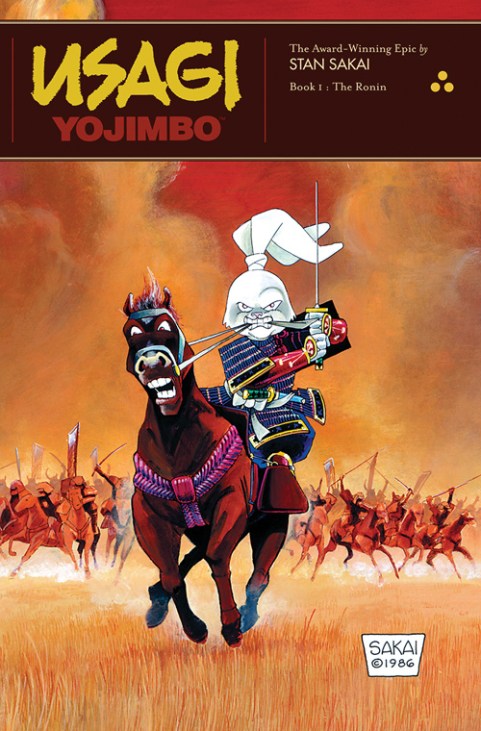
Usagi Yojimbo The Ronin Cover

Publisher: Fantagraphics Books (Paperback – 1987)

Series: Usagi Yojimbo – Book One

Length: 144 pages

My Rating: 5 out of 5 stars

Amazon     Book Depository

Reviewed as part of my Throwback Thursday series, where I republish old reviews, review books I have read before or review older books I have only just had a chance to read.

We are now less than two months until the next amazing volume of Stan Sakai’s long running Usagi Yojimbo comic series, Bunraku and Other Stories, is released, and I am getting excited. This new volume is set to feature several brand new Usagi Yojimbo stories (including an extended story about a haunted puppet drama), but it is apparently also going to feature a look back at the very first Usagi story as part of an 35th anniversary special. For that reason, I thought that this would be an excellent time to go back and review volume one of the Usagi Yojmbo series, The Ronin, to serve as a good base for the upcoming review.

Usagi Yojimbo is a unique comic book series that Stan Sakai started back in 1984. It focuses on the adventures of Miyamoto Usagi, an anthropomorphic rabbit samurai who lives in a version of feudal Japan (early Edo period) completely populated with other anthropomorphic animals. Usagi is a ronin, a masterless samurai, who wanders the land on a warrior’s pilgrimage, helping those he encounters and occasionally working as a yojimbo (bodyguard) for hire. Throughout his journey he encounters all manner of friends and foes, including a number of creatures from Japanese folklore, and finds himself constantly drawn into the political plots of the land. This series is written and drawn in a more western comic/cartoon style rather than the Japanese magna style. However, the Usagi Yojimbo series is strongly inspired by Japanese history and culture, featuring a huge range of accurate depictions of historical events and cultural icons. This series is currently collected in 33 volumes from several different publishers, with each volume containing a number of different issues from the series. These issues are usually standalone adventures, although a number of longer storylines are continued through several issues or volumes.

I have been meaning to go back and review the first volume Usagi Yojimbo for a while now. The Usagi Yojimbo series is easily one of my favourite comic book series of all time, as Stan Sakai has created a truly epic and compelling series. While on paper a series following a rabbit samurai in a version of feudal Japan populated by other anthropomorphic animals does sound a bit ridiculous, these comics are anything but. Through a combination of outstanding storylines, complex characters, intense action, great uses of humour and an intriguing and compelling look at Japanese history and culture, Sakai has created a comic series that is extremely endearing and captivating. I have been a massive fan of this series for years, having started reading it when I was in high school (thank goodness for my surprisingly well-stocked public library) after I first saw the character in the 2003 Teenage Mutant Ninja Turtles animated series. I have previously reviewed the last two volumes of Usagi Yojimbo on my blog already (Volume 32: Mysteries and Volume 33: The Hidden), with Mysteries actually being the very first comic I ever reviewed. Both of these previous volumes received a five-star rating from me, which I have also awarded to this first volume.

Unlike the rest of the collected volumes, The Ronin doesn’t actually contain any issues from the Usagi Yojimbo series. Instead, it contains several earlier Usagi stories which were part of other publications, such as Albedo Anthropomorphics, Critters, Doomsday Squad and Usagi Yojimbo: Summer Special. All of these were collected together for the first time in 1987 into this volume (I have the 2007 reprint), and appear in chronological order. The Ronin contains 10 separate chapters of various lengths, each with their own story. These include:

  • The Goblin of Adachigahara: the very first story to feature Usagi, and the one that the upcoming Bunraku and Other Stories is going to revisit. This initial story features Usagi returning to the area near the battlefield of Adachigahara, where he lost his lord, Mifune, in a battle, forcing him to become a ronin. Seeking shelter in the hut of an old lady, he recounts his story of the battle to his host, including the betrayal of one his lord’s generals which cost them the battle. Later, Usagi battles a flesh-eating goblin, revealed to be not only the treacherous general but also the husband of his elderly host, and manages to defeat him, sparing the old lady who was going to allow him to be eaten. This was an excellent introduction to Usagi, as you got some vital information about his history, his status and his skill as a warrior. You also got a great look at his moral character, as he chooses to spare a woman who would have let him be eaten, and instead instructs her to perform funeral rights on the man who cost him everything.
  • Lone Rabbit and Child: this second story involves Usagi getting involved in the politics of the nation, as he comes to the aid of a young lord, Noriyuki, and his retainer the swordswoman Tomoe Ame. Noriyuki and Tomoe are being hunted by the agents of the evil lord Hikiji, who was also responsible for the death of Usagi’s previous lord years ago (it is later revealed he also killed Usagi’s father). Usagi agrees to escort them to safety, and they must contend with mercenaries, assassins and ninja on their quest. This is an amazing second outing, which expands on the world the series is set in, continues to show off Usagi’s skill, and sets up Hikiji as the main antagonist of the series (even if you see very little of him later on).
  • The Confession: This story follows on directly from the events of Lone Rabbit and Child, and features Usagi in the possession of a vital letter implicating Lord Hikiji in the attempt to kill Noriyuki. Usagi is ambushed by the Neko Ninja, who seek to reclaim the letter, leading to a prolonged and desperate fight in the woods. This proved to be an awesome follow-up to the previous story, which continued to highlight Usagi’s skills in combat and Sakai’s ability to drawn excellent, high-stakes fight scenes. It also showed just how nefarious an opponent Hikiji and his advisor Counsellor Hebi (a big terrifying snake) can be.
  • Bounty Hunter: Usagi is hired as a Yojimbo by the bounty hunter Gennosuke as he attempts to claim his latest bounty, the leaders of a local gang. Engaging the gang in a fight at a temple, Usagi and Gen are an effective team, eventually getting their targets, although their partnership ends on an interesting note. This was an entertaining story that served as a perfect introduction to a great character. Usagi and Gen have amazing chemistry together and Gen is an awesome side character. This is also one of the first stories to feature some more humour in the story, especially in the end, which turns out to fit in well with the overall feel of the series.
  • Horse Thief: Sakai features a lot more humour when Usagi, after interfering in a robbery by a gang of bandits, takes one of the bandit’s horses. He attempts to sell the horse in town, only to discover that it was stolen from the local magistrate, who chases him into the woods. Usagi’s problems only escalate from there, when he and his pursuers run into the bandits, prompting a massive battle in which Usagi is everyone’s enemy. The story has a great ending, steeped in irony which leaves Usagi and the reader laughing hysterically. I loved the author’s use of coincidence and bad fortune in this story, and it was fantastic to watch Usagi go from one bad situation to the next.
  • Village of Fear: This is a bit more of a horror story, as Usagi comes across a village held captive by a fearsome monster. This horror is compounded when it is revealed that the monster is a shapeshifter who has taken the form of one of the villagers. This was a relatively brief story, but it is set up and executed very well, with several great character moments, and there is even time for a quick Gone with the Wind joke.
  • A Quiet Meal: This is another of the more humorous stories in the volume, which features Usagi trying to have a quiet meal in an inn. Unfortunately, a gang of rough gamblers are causing trouble, throwing the other patrons out and trying their luck with Usagi. Usagi quickly shows them the error of the ways with some extremely fancy sword work, which causes them to flee in terror. The most noticeable feature of this entry is the fact that Usagi doesn’t speak once during the entire issue (he’s trying to have a quiet meal), and it’s up to his body language and the other characters to tell the story. This works extremely well and really helps to uplift the overall humour of the story. The way in which he sees off the ruffians is absolutely fantastic, and their absolute fear and disbelief at his skill, “this one’s been filleted”, is just great.
  • Blind Swords-Pig: This is a somewhat sadder and more dramatic story which features Usagi encountering and quickly befriending the blind pig, Zato Ino, who is seeking a peaceful place to settle down. Ino, however, is an extremely skilled warrior and wanted outlaw. Constantly hunted for his bounty, he relies on his sword skills and his ability to ‘see’ with his sense of smell. When Usagi finds out his true identity, the two engage is a fierce duel in which Ino loses his nose, truly becoming blind. This is one of the best stories in the whole of The Ronin, mainly because of the complex character that is Ino. He has a true desire for a peaceful life, but his past ensures that this can never happen, as even friendly characters like Usagi turn against him. This has turned him into a somewhat bitter creature, quick to hate those he meets “and what I hate, I kill!”, and the events of this first story help turn him into something even more angry, especially when it comes to Usagi.
  • Homecoming: This story sees Usagi return to the village of his childhood, but his return is not a peaceful one, as his village is under attack by the Mogura Ninja. Usagi must work with his childhood rival, Kenichi, to save the village; however, there is much enmity between Usagi and Kenichi, mainly because Kenichi married Mariko, the love of Usagi’s life. The two rivals must move past their differences, especially when Kenichi and Mariko’s son, Jotaro, is kidnapped by the Mogura Ninja. This was another exceptional entry in the volume, as it blends together tight action sequences with a deeper dive into Usagi’s past, including his complex and dramatic history with Kenichi and Mariko. The final pages of this issue are just heartbreaking, as it is revealed that Usagi and Mariko both kept the mementos they gave each other as young lovers, and they are both clearly in love with each other, even though they can never be together. I also really liked the Mogura Ninja in this book, especially as moles apparently make effective and deadly ninja.
  • Bounty Hunter II: This final story sees the return of Gen, who once again convinces Usagi to work with him to collect another bounty. Gen of course manages to complicate the job, and his actions backfire on Usagi, resulting in him getting into a major scrape. Despite Usagi’s understandable rage towards Gen, the two are able to part amicably, although Usage gets a small measure of appropriate revenge at the end of the story. I think that Sakai really hit his stride with the Usagi/Gen friendship in this second story, and the two of them play off each other extremely well. I really loved the end of this story, and it definitely got a big laugh out of me.

Overall, I felt that this volume contained a perfect blend of stories, and I really liked how Sakai jumped between action-based stories, to comedies and then to more dramatic tales, which helped produce a range of different emotional reactions. I did appreciate that the different issues also featured a range of different opponents and story basis, allowing the reader to understand that this series is going to focus on everything including banditry, ninja attacks, political intrigue and even the supernatural. I also think that the stories in The Ronin contained the right amount of character background for Usagi, providing enough for the reader to understand his motivations, while not being too overwhelming. This great blend of storylines and character arcs works extremely well together, and it makes for one heck of a complete volume.

The Ronin serves as an excellent introduction to this series, and I would strongly recommend that anyone interested in Usagi Yojimbo start with this volume. The stories within do a wonderful job of setting up the alternate version of historical Japan that this entire series takes place in. I absolutely love the combination of vibrant animal characters with feudal Japanese settings, and it works really well as the backdrop for an action series, especially with the political uncertainty and mass of unemployed samurai that accompanied the early years of shogunate rule. That being said, it is never quite explained why certain animals (horses and small dogs) are non-sentient, or why there are packs of dinosaur-like lizards (tokage) roaming the wilderness, although I kind of like the mystery. This volume also contains fantastic introductions for so many characters who are vital to the series, such as Gen, Tomoe, Mariko and more, and you get great insights into their characters, which are built up with each appearance they make. A lot of key character arcs or storylines start in the stories featured within this volume, and as each volume of Usagi Yojimbo is sequential, readers of the series are best served starting with this first volume. Luckily, The Ronin is a really good first entry in the series, and it is definitely worth checking out.

One of the most charming things about the Usagi Yojimbo series is the way in which Sakai sneaks so many different historical and cultural references into his stories. Most of the characters are either inspired by a real-life historical figure or a fictional character from Japanese or western culture. For example, Usagi himself is based on one of the most famed samurai of all time, Miyamoto Musashi, who is often credited with creating the two-sword fighting technique that Usagi utilises in the series, while Tomoe Ame is based on famed female samurai Tomoe Gozen. Other characters however are based on Japanese movie characters, such as Zato Ino who is a clearly a pig version of Zatoichi, the blind swordsman protagonist of a series of popular Japanese movies and televisions shows. Gen is based on the character that Toshiro Mifune portrayed in samurai films such as Yojimbo (which was later adapted into A Fistful of Dollars), and Usagi’s former lord Mifune gets his name from the actor. Other references include the title of the second story in this volume, Lone Rabbit and Kid which is a references to the manga series Lone Wolf and Cub (Sakai later creates the characters of Lone Goat and Kid as another homage to this series) and the fact that this series is partially named after the Yojimbo film. Two separate stories in this volume also reference Sakai’s previous work on the Groo the Wanderer comic, with Groo even briefly appearing in Lone Rabbit and Kid, sharing a fun stare down with Usagi. I had a great time with all these references (although I admit I had to look up a couple), and some of them are really clever. They add a lot of fun to this series and they are a real treat for readers, especially those already familiar with Japanese history, film or culture.

I am a big fan of Sakai’s art style, and each issue of Usagi Yojimbo is an absolute joy to view. Not only does he produce some outstanding action sequences with his drawings, many of which do an awesome job of depicting the samurai battle style, but he also creates some fantastic characters and breathtaking landscape scenes. Nearly every issue shows some inspiring and beautiful depiction of the Japanese countryside or a historical town, and the sheer amount of detail that he throws into his various scenes is just incredible. It’s also fun to see the various animals that can be turned into samurai, as everything from bulls, rabbits, crocodiles, rhinos, monkeys, pandas, cats and dogs appear in this first volume alone. For this first volume, however, the artwork is understandably a little inconsistent, mainly because Sakai had only just started drawing these characters. The various character designs are a little rough in places, especially if you are familiar with his later work, as Sakai is clearly experimenting with how he wants to depict these characters. A few of the action sequences are also a tad different from the later entries in this series, which can be a little jarring in places, but still really cool. Overall, though, most of the art in this book is pretty incredible, and it is fun seeking Sakai get into his groove with each new story. Sakai does an amazing job conveying emotion, action and intent through his drawings in this volume, and it turns out wonderfully. If I had to pick my favourite bit of art in this entire volume, it would be a scene in A Quiet Meal, where Usagi swings his sword around the head of a ruffian who is bothering him. While it first it appears that Usagi had done nothing, you slowly realise that the flies that Sakai had been subtly drawing around this character’s head before that point, are gone. The facial reactions of the various thugs when they realise what happened to the flies are just hilarious, and I absolutely loved it.

This first volume of the Usagi Yojimbo series, The Ronin, is an amazing and spectacular read, which I have a lot of love for. Not only does it serve as an excellent introduction to the Usagi Yojimbo series, but it contains some captivating storylines, impressive artwork and a heck of a lot of fun. Needless to say, The Ronin gets a full five stars from me, and I cannot recommend this volume and the Usagi Yojimbo series enough. Reading this first volume actually got me re-reading the entire series again, and I have already made it up to volume 17. In my book, all of them are five star reads, and you can probably expect some more reviews of them in some future instalments of Throwback Thursday. Stay tuned to see my review of the next volume of this epic series, which I already know I am going to love.

Amazon     Book Depository

Ember Queen by Laura Sebastian

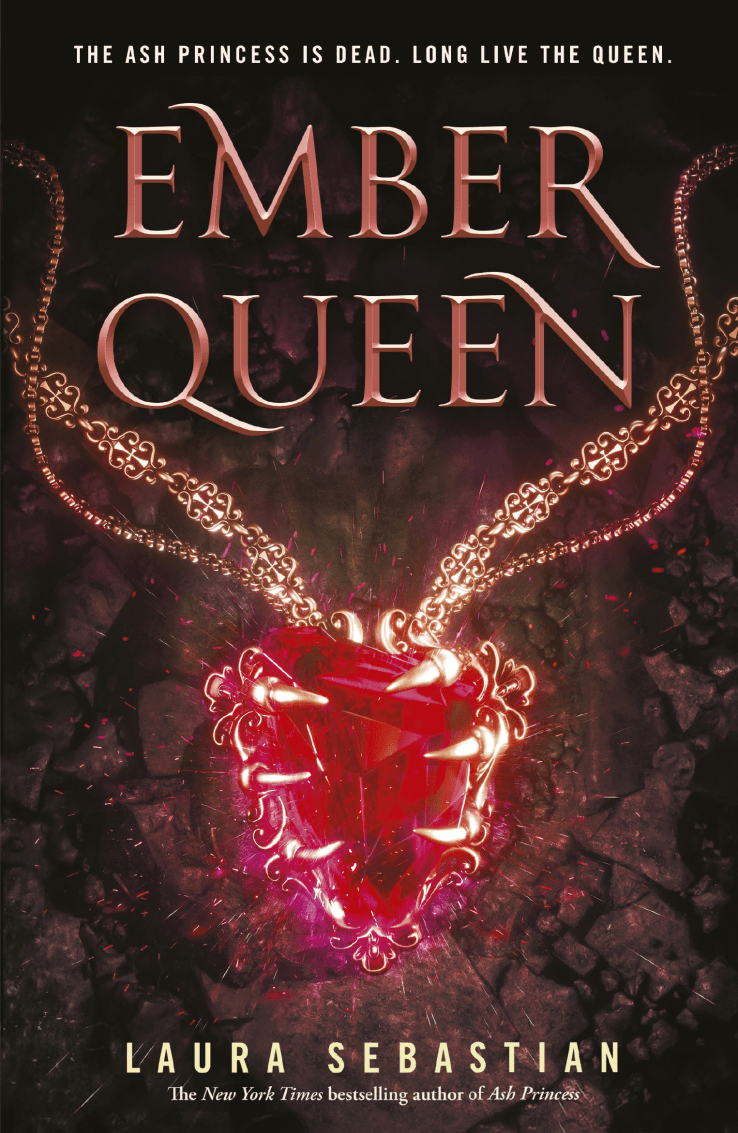
Ember Queen Cover

Publisher: Pan Macmillan Australia (Trade Paperback – 11 February 2020)

Series: Ash Princess – Book Three

Length: 465 pages

My Rating: 4.25 out of 5 stars

Amazon     Book Depository

Young adult fantasy fiction author Laura Sebastian brings her debut series to a close in a big way with Ember Queen, the excellent and exciting conclusion to the Ash Princess trilogy.

Years ago, when the vicious Kalovaxians invaded the island of Astrea, they killed their queen, enslaved the Astrean people and stole their sacred magical gems. Princess Theodosia, heir the Astrean throne, was imprisoned and spent over 10 years as a captive of the Kalovaxian Kaiser, belittled by the mocking title of “Ash Princess”. However, this imprisonment didn’t break Theo; instead, with the help of her friends, she was able to escape to forge her own destiny. Now Theo has returned to Astrea, leading an army made up of freed Astreans, pirates, refugees and forces from the other nations the Kalovaxians have ruined. Hoping to free her people, Theo and her friends believe that they finally have the advantage over the Kalovaxians. However, the sins of Theo’s past have come back to haunt her.

Cress is a young Kalovaxian noblewoman who claimed Theo as her best friend during Theo’s imprisonment, despite being the daughter of the man who killed Theo’s mother. Theo chose to poison Cress and her father when she made her escape, and while she succeeded in killing Cress’s father, the magical poison she used had unexpected side effects on Cress. Despite being burned and mutilated, Cress survived, with the fire-imbued poison granting her powerful and deadly magical abilities. Using these to her advantage, Cress has done the unthinkable, killing the Kalovaxian Kaiser, poisoning Theo and claiming power over Astrea as the Kaiserin.

Barely surviving her own poisoning after a sojourn down into the magical Fire Mine, Theo must now find a way to free Astrea from her former best friend. With her own fire magic greatly increased, Theo plots to take the fight straight to the Kalovaxians. However, Cress has her own plans, and whole of Astrea may burn in order for her to get her revenge. Who will rise as the Ember Queen, and will the winner have anything left to rule?

Wow, talk about an impressive end to a great trilogy. Ember Queen is an amazing book from Laura Sebastian, who over the last couple of years has done an excellent job establishing herself as one of the best new young adult fantasy fiction authors. This is the third and final book in Sebastian’s debut Ash Princess trilogy, and this is definitely another superb addition to this fun series. I have been enjoying this trilogy since the beginning, reading Ash Princess in 2018 and Lady Smoke in 2019, both of which are pretty fantastic novels. Ember Queen turned out to be an excellent conclusion to this entire trilogy, and I had a great time reading it.

Sebastian has pulled together an excellent story for the final volume of the Ash Princess series, and I really liked the way in which she wrapped up the entire trilogy. After the first two novels dealt with the oppression of Astrea by the Kalovaxians, we finally get to see Theo’s big attempt to free her country from the invaders. I loved the way that Sebastian changed the theme of each novel, with the first novel relying on espionage, the second on diplomacy, and this third book on war. Sebastian produced a compelling narrative around this battle for the control of Astrea, and I really liked some of the directions that the story went into, especially when some intriguing new fantasy elements were introduced by the antagonist. Overall, I was really impressed with how Ember Queen turned out, especially as Sebastian used it to expertly conclude this awesome trilogy.

One of the main strengths of the Ash Princess trilogy has always been its great characters, who evolve throughout the course of the books. This is particularly true for Ember Queen, as Sebastian wraps up many of the character threads that have been introduced in the previous books, resulting in some excellent character devolvement as well as some satisfying conclusions for many character arcs. The main example of this is the series protagonist and point-of-view character, Princess Theodosia (Theo). Throughout the course of the first two books, Theo has grown substantially as a character, from a meek and seemingly broken prisoner to a cunning spy and manipulator, to a canny diplomat to finally an effective military commander. We finally get to see Theo take up the reins of leadership and responsibility that she has been somewhat apprehensive of in the previous books, as she starts making the hard decisions needed to ensure the freedom of her people. I really liked seeing all this character growth from the protagonist and I also appreciated the fact that Sebastian had Theo look back and own many of her prior mistakes and decisions that she regretted. Overall, I thought that Sebastian did an amazing job portraying Theo’s entire arc, and I think that she concluded her story in an impressive and enjoyable manner.

Sebastian has also produced some great conclusions to the arcs of the various side characters that were featured within this trilogy. For example, Soren has an intriguing story during Ember Queen, as he finds himself once again caught between the woman he loves and supports, Theo, and his people, the Kalovaxians. Like Theo does with the Astreans, Soren must come to a decision about his role as a leader of the Kalovaxians, and I think that his story and romance with Theo came together quite well. Blaise, Theo’s childhood friend and secondary love interest, also has an excellent arc within this book, finally getting some closure over his relationship with Theo, as well as the conclusion to his mine-madness arc. Several of the other supporting characters get some great advancement within this book as well. Artemisia, Erik and Heron all have their individual tales expanded on, and it’s great to see how comfortable and close they, Theo, Soren and Blaise have come together as a group. I particularly liked the way that Theo has gotten closer to Artemisia, her tough-as-nails cousin and bodyguard, and I had a good laugh at the way that Art allowed Theo a one-off session of girl talk as a way of calming her down before the final battle. New character Maile is an interesting addition to the series, and while she initially comes across as rather abrasive, she eventually becomes part of the group, resulting in a significant revelation for one of the characters.

The main thing that really made Ember Queen stand out to me was the complex relationship between the protagonist of the book, Theo, and the antagonist, Cress. This has always been a rather interesting relationship, as within the first book Theo and Cress were, in theory, best friends, referring to the other as their heart’s sister, even if Cress was actually rather controlling and manipulative. Theo eventually allowed Cress and her father to be poisoned at the end of the first book, and Cress now holds a heavy grudge against Theo for her betrayal. She has also evolved as a character since this first book, morphing into a much more confident woman who has taken control of her people in a way that is somewhat reminiscent of Theo’s growth as a leader. However, this is where some of the similarities end, as Cress is now a bit of a black mirror to Theo, as she is cruel, ruthless, determined to win whatever the cost and has no compunction about killing innocents. Despite all this, Theo is still drawn to her old friend, and the two of them have a compelling emotional bond (as well as an actual magical bond) throughout this novel. Theo feels guilty for the way that she betrayed and poisoned Cress, and she has a bit of a hard time seeing the evil person that she has become, and is more inclined to consider mercy than her friends would like. Cress, on the other hand, acts as ruthlessly as possible towards Theo and her friends, and is actually an extremely convincing antagonist for this book. Despite her actions, the reader gets to see that Cress is still deeply concerned with what Theo thinks about her and her plans, and there are still hints of a connection. However, her sense of betrayal, anger and determination to keep her newfound power always start to overwhelm any connection she feels to her old friend, and this leads to some devastating and heart-breaking confrontations. This whole dynamic between protagonist and antagonist is a really amazing part of Ember Queen, and adds significantly to the overall quality of the story.

I have always appreciated the magical system that Sebastian has featured in her Ash Princess books. This magic is elemental in nature, based around fire, earth, water or air (similar to the magic in Avatar: The Last Airbender, with a few key differences), and is exclusive to the Astreans, due to the presence of the magical mines located on their island. This magic has been a bit of an understated affair in the previous books, as the plots of those novels focused on espionage and diplomacy and required smaller, more subtle displays of magic. However, in Ember Queen, the Astreans are now at war, and so the magical gloves are off. This book is filled with a number of great examples of just how powerful or effective Astrean magic can be and it is a really cool addition to the series. Seeing the formerly enslaved or dispossessed Astreans unleash their power against their oppressors is a little cathartic, and it certainly makes for some great, if devastating, scenes. Sebastian also does some intriguing morphing of her magical system when it comes to Theo, Cress and some other characters, and this results in a rather interesting plot line that I liked.

Like the rest of the books in this series, Ember Queen is a rather good piece of young adult fiction. Sebastian has created an amazing story that features a group of young people growing as characters and sacrificing everything for freedom, friendship and justice. This a great book for younger readers, and while there is plenty of violence, war and fighting, there is nothing too graphic or over-the-top that makes it inappropriate for younger readers. I personally really appreciated Sebastian’s excellent portrayal of several LGBT+ characters within this book, especially as two of these characters had one of the best romantic relationships in the entire series. Despite being angled towards younger readers, Ember Queen is one of those books that can be enjoyed by a wider audience of people. There is definitely something for everyone in this book and it is really worth checking out.

Ember Queen by Laura Sebastian is a wonderful novel that not only contains a captivating story, but which also does an awesome job concluding the author’s debut trilogy. In this final book in the Ash Princess trilogy, Sebastian presents a desperate battle for freedom, complete with intriguing magical elements, excellent characters, complex interactions between the protagonist and antagonist and a fantastic story. All of this comes together in a first-rate read, which is a great conclusion to this series. I note that Sebastian has her next body of work already planned out, with the first book in her upcoming young adult fantasy series, Constellation of Chaos, set for release next year. This new book has an interesting plot synopsis out already and I am planning to grab this book when it comes out. Until then, Ember Queen is an excellent book from Sebastian and it is really worth seeing how this fantastic trilogy ends.

Amazon     Book Depository

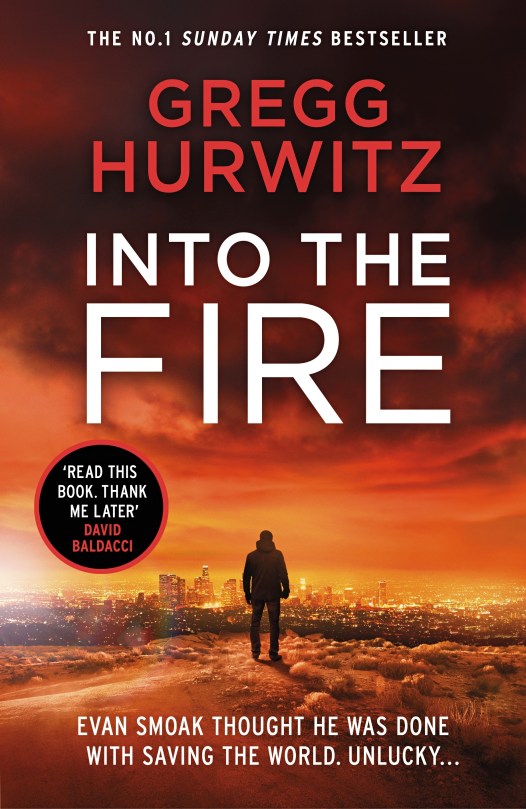
Into the Fire by Gregg Hurwitz

Into the Fire

Publisher: Michael Joseph/Brilliance Audio (Audiobook – 28 January 2020)

Series: Orphan X – Book Five

Length: 12 hours

My Rating: 5 out of 5 stars

Amazon     Book Depository

From the mind of bestselling thriller author Gregg Hurwitz comes an outstanding and captivating adventure novel, Into the Fire, the latest book in his amazing Orphan X series.

Evan Smoak is Orphan X, a former orphan child who was taken in by a secret covert government and trained from a young age to become the most skilled assassin and special operator in the world. Orphan X served his country for years before finally having enough and leaving, pursued by the people who ordered his creation. Resettling to Los Angeles, Evan forged a new identity for himself as The Nowhere Man, a vigilante dedicated to helping those in desperate need who have no one else to turn to.

After killing his greatest enemy, the United States President, Evan has had enough of violence and is determined to retire and live a quiet life. But before he leaves everything behind, Evan has decided to help one more person as The Nowhere Man, as one final act of redemption. Enter Max Merriweather, a poor construction worker in LA. Two months earlier his cousin Grant, a successful forensic accountant, entrusted Max with an envelope and instructions to take it to a reporter if anything happened to him. Now Grant is dead, an armed thug is ransacking Max’s apartment and the reporter he was told to contact has been murdered. With nowhere else left to turn, Max calls The Nowhere Man.

Taking on Max’s case, Evan dives into LA’s criminal underbelly in order to locate the people hunting Max. Easily finding the thugs responsible for Grant’s death, Evan manages to eliminate them quickly; however, it turns out that they are just the tip of an iceberg stretching throughout the entirety of LA. Grant was on the verge of uncovering a massive conspiracy, and his evidence could put away a lot of dangerous people who are now determined to kill Max to keep him quiet. Determined to keep Max safe, Evan soon finds himself embroiled in one of the most challenging and complicated missions of his life, as behind every corner a new adversary lies, each one more powerful and connected than the last. Can even this legendary assassin and vigilante win with the odds so severely stacked against him?

Gregg Hurwitz is a veteran thriller author who has been producing compelling and exciting novels since his 1999 debut, The Tower. Since then he has written over 20 novels, including his Tim Rackley series, The Rains Brothers books and several standalone novels. He has also contributed to several DC and Marvel comic book series, such as Batman: The Dark Knight and The Punisher, and he also does a bit of screenwriting, having written several episodes of the 2009 remake of V. Hurwitz’s main body of work at the moment is his Orphan X series, which started in 2016 with the novel Orphan X. Into the Fire is the fifth book in the Orphan X series and follows on shortly after the events of the fourth book, Out of the Dark. I actually got into Hurwitz’s works last year when I read Out of the Dark due its cool story premise of a former secret agent attempting to kill the President. After I enjoyed this fun action thriller last year, I was definitely keen to check out more of Hurwitz’s work and I have been looking forward to Into the Fire for a little while now.

Now, I have to admit that while I was interested in checking out Into the Fire, I was a little worried that Hurwitz was going to have a hard time topping his previous novel and its outrageous central plot point. However, Into the Fire turned out to be an outstanding read which I ended up enjoying more than Out of the Dark. Hurwitz has produced an incredible thriller that is filled with intense action, clever plot developments and an excellent character-driven central story. All of these amazing elements combine together perfectly into a novel which can easily be read as either a continuation of the series or as a compelling standalone novel.

One of the best parts of this novel is the well-written and captivating central thriller storyline which sees the protagonist attempt to take down a criminal conspiracy in the heart of LA. What starts out as a relatively simple mission to take down a small-time criminal organisation quickly morphs into a massive task, as each time Evan thinks he has succeeded, a larger and more dangerous adversary appears behind the people he has just taken out. There are so many twists and turns in this novel, you honestly don’t know when or where it is going to end, and the story goes in some very fun and clever directions. I really enjoyed how the author layered his story with seemingly innocuous comments and discussion that later morphed into major plot payoffs later down the line in the book, and I was actually surprised about a few of the reveals that occurred.

I really liked the overarching plot idea of an elite secret agent going after everyday criminals with his full range of tradecraft, advanced weapons and training, especially as it resulted in some amazing sequences throughout the book. The protagonist comes up with some truly unique, clever and at times brutal ways to take down some of his opponents, which were fun to check out. I know I will never look at a plastic drinking straw the same way again. My personal favourite part of the book are several chapters where the protagonist breaks into a prison to deal with one of his targets. The various ways that he infiltrated the prison, pulled off his mission and then escaped was not only clever but also very entertaining, and I loved every single second of it. I also really liked how Hurwitz introduced a handicap for his protagonist throughout this book in the form of a severe concussion obtained early on in the story. The author did an excellent job portraying the symptoms of a concussion, and it was interesting to watch the protagonist struggle to complete his tasks with blurred vision or a massive headache. The concussion angle was a great way to amp the risk surrounding the protagonist’s actions, as it actually put many of his opponents on an equal footing with this former elite special agent and was a fantastic inclusion to the story. Overall, this turned out to be an extremely well-written and deeply exciting thriller storyline, which proves to be quite addictive and captivating.

I was also quite impressed by the way that Hurwitz spent time examining and developing the central characters of this book. In particular, there is a fascinating focus on the complex character of Evan Smoak, who is the main protagonist of this series. Hurwitz has always done an amazing job of portraying Evan as a man very much haunted by his past lives, both as an abandoned child and as an assassin who was trained to kill since the age of 12. Both of these parts of his life still drive him, and his whole persona as The Nowhere Man is a form of redemption for him, as he attempts to not only atone for the lives he took as Orphan X but to also help those who feel as powerless as he did when he was a young child. Hurwitz continues to utilise this characterisation in Into the Fire, although this time it is further complicated by his plans to retire after this one final mission. This whole retirement angle is a major concern for Evan, as he spends a good part of the book weighing up the good he does as The Nowhere Man against all the personal benefits of attempting to live a normal life. This makes for a lot of internal conflict, which forces the author to once again dive into Evan’s motivations for being a vigilante, which adds a great dramatic edge to the entire story.

This consideration about having a more normal life is also explored in the way that the trained loner Evan starting to learn more about human interaction and relationships in this book. Part of this takes place in the way that he interacts with Joey, the teenage hacker and former Orphan trainee he saved and took under his wing. Evan has inadvertently taken on the role of a father figure to Joey, and it was great to see him continue to act protective towards her and see their unique relationship grow. There is also the rather amusing and awkward interactions that he has with the residence of his building. Despite not wanting to have much to do with them, he actually goes out of his way to protect them, and he is actually shown to care quite deeply when one of them is hurt. Finally, there is the complex relationship he has with Mia, the single mother and ADA in his building who he has feelings for but has driven away with his acts of vigilantism. All of these interactions help Evan develop more as a character and recover a little more of his lost humanity, and I really enjoyed the way that Hurwitz explored such a complex and damaged protagonist.

While most of the book’s focus is on Evan, Hurwitz also dives into the life of Evan’s latest client, Max Merriweather. Max, who serves as a significant point-of-view character, is a down-on-his-luck individual who is dragged into the events of this book by his more successful cousin. Throughout the course of Into the Fire, you get to learn about the past of Max, showing how, due to events outside of his control, he has always been seen as the family screw-up, something he has struggled to escape due to his corresponding low self-confidence. You also get to see the history of his tragic marriage, and how doing the right thing cost him everything. I really liked the way that Hurwitz took the time to explore the life of this new client, especially as it develops him into a much more sympathetic character that reader becomes invested in over the course of the book. I also liked the relationship he slowly built up with Evan, as each of them were able to provide some help in solving the deeper emotional or personal issues that were affecting the other. This excellent character was an outstanding and distinctive part of the book, and I am definitely keen to see what excellent characters are introduced in the next Orphan X book, especially after the intriguing reveal at the end of Into the Fire.

I ended up enjoying the audiobook format of Into the Fire, which was narrated by Scott Brick. This audiobook runs for a substantial 12 hours in length, but I got through it rather quickly, as I got really drawn in by the cool and compelling story. I personally found that this was an excellent way to consume this fantastic book, and I had a great time listening to the story. Brick is an excellent audiobook narrator who has a lot of experience bringing thriller novels to life. I previously enjoyed his narration of The Malta Exchange by Steve Berry, and I am currently listening to his narration of the sequel, The Warsaw Protocol. Brick did a wonderful job bringing the characters in Into the Fire to life, and I felt that he utilised perfect voices for each of them. As a result, I would strongly recommend the audiobook format of Into the Fire, as it is an amazing way to enjoy this book.

Into the Fire by Gregg Hurwitz is an incredible read that comes highly recommended. This latest book in the fantastic Orphan X series is an outstanding piece of thriller fiction, which sets its complex characters down an action-packed road of intrigue and twists to produce a five-star read. Hurwitz has really outdone himself with Into the Fire, which turned out to be one hell of a book. I cannot wait to see where Hurwitz takes the Orphan X series next, but I will definitely be grabbing a copy of his next book when it comes out.

Amazon     Book Depository

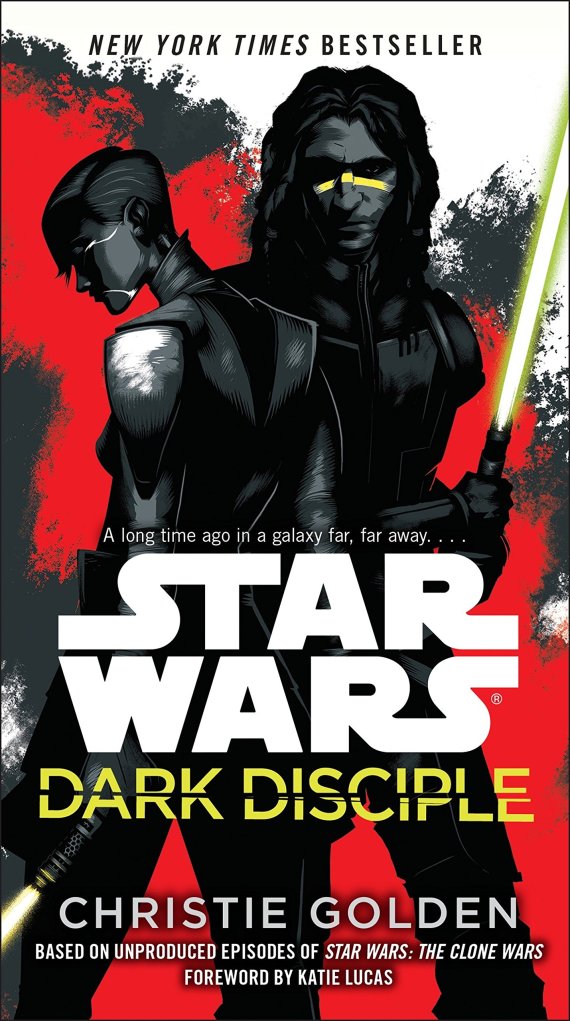
Throwback Thursday: Star Wars: Dark Disciple by Christie Golden

Star Wars Dark Disciple Cover

Publisher: Penguin Random House Audio (Audiobook – 7 July 2015)

Series: Star Wars

Length: 11 hours and 11 minutes

My Rating: 4.5 out of 5 stars

Amazon

Reviewed as part of my Throwback Thursday series, where I republish old reviews, review books I have read before or review older books I have only just had a chance to read.

For this week’s Throwback Thursday, I go back and check out an amazing piece of Star Wars fiction with Star Wars: Dark Disciple by tie-in fiction extraordinaire Christie Golden. Dark Disciple is a compelling and intense Star Wars novel that features two fan-favourite characters from the extended universe in a fantastic adventure that is deeply connected with The Clone Wars animated series.

A Jedi shall not know anger. Nor hatred. Nor love!

For years, the galaxy has been locked in one of the most destructive struggles it has ever known, the Clone Wars. Led by the ruthless Sith Lord Count Dooku, the Separatists have engaged in a gruelling and bloody conflict with the Republic that has led to the death of countless innocents. While the guardians of the Republic, the Jedi, have tried in vain to capture Dooku and end the war, their methods appear inadequate to stop him. After a particularly brutal massacre, the Jedi Council do the unthinkable and sanction the assassination of Count Dooku, believing that only his death will bring peace to the galaxy.

To that end, the Council turns to maverick Jedi Master Quinlan Vos. Unpredictable, brash and experienced in undercover work, Vos is the perfect candidate for this dangerous mission. However, this is not a one-man job. In order to track down Dooku, infiltrate his defences and defeat him in battle, Vos is going to need a partner. At the suggestion of Master Yoda, Vos seeks out the one person who knows the Count better than anyone else, Dooku’s former apprentice and assassin, Asajj Ventress.

After losing everything she held dear at the hands of Dooku, Ventress is desperate to leave her past as a Sith behind. But her hatred for Dooku is all-consuming, and she jumps at the chance to finally kill him. However, Ventress believes that Dooku can only be defeated by someone empowered by their emotions and able to access the dark side of the Force. Tutoring Vos in the methods of her race, the Nightsisters, Ventress is able to make Vos stronger and more powerful as he sits on the knife’s edge between the light and the dark side. But this balance is fragile at best, and all it will take is a single push for Vos to fully embrace the darkness. Between the machinations of Dooku, terrible secrets from the past and his growing feelings for Ventress, can Vos remain true to his vows and complete his mission, or have the Jedi have unleashed a great new evil upon the galaxy?

Dark Disciple is an intriguing addition to the Star Wars canon which not only has some major connections to the popular Star Wars: The Clone Wars animated series but also contains a cool and at times dramatic story about love, darkness within and redemption. Dark Disciple was actually based on a script for eight unproduced episodes of The Clone Wars that were never made due to the Disney buyout of Star Wars and the subsequent cancellation of the animated show. These episodes were written by The Clone Wars screenwriter Katie Lucas (who provides a foreword for this book) and subsequently adapted into this book by acclaimed science fiction and fantasy author Christie Golden. Golden has authored many tie-in novels for various franchises, and I have previously enjoyed her World of Warcraft novels, including War Crimes (probably my favourite piece of Warcraft fiction) and Before the Storm. While Golden had written a few pieces of Star Wars fiction before this book, Dark Disciple ended up being her first novel in the current canon. In the end, this turned out to be an excellent read and I was really impressed in the way that Golden ended up turning this cool script into a deep and compelling novel.

Seeing as it is based off an unused script for the show, this book obviously has some strong connections to The Clone Wars television show. This book is set a little while after the events of the already aired episodes of The Clone Wars and continues their range of storylines a little further. Not only does Dark Disciple contain several characters whose main appearance was in the animated show, but it also refers to events from several episodes, including episodes that Katie Lucas wrote herself. As a result, Dark Disciple is probably best enjoyed by those readers who are familiar with the show, who will have a greater appreciation of the book’s various story elements. That being said, anyone who has seen the Star Wars prequel movies will be able to easily follow what is going on, and will no doubt enjoy the complex story it contains.

Fair warning to fans of The Clone Wars series, though: you are going to experience some sense of crushing disappointment after reading this. The book itself is pretty damn awesome, but it’s supremely disappointing that the story contained within this novel never featured as the amazing extended arc for the animated series it clearly would have been. While I really loved this novelisation, I cannot help but imagine how emotional and explosive it would have been acted out and animated as part of the show. As I review this book, it is actually less than a month until the release of the seventh and final series of The Clone Wars. While I am deeply excited for this final season, after reading this book I am a little sad as I know that the storyline contained within Dark Disciple is unlikely to be featured in it.

That being said, I really enjoyed the fact that this book focuses on two amazing characters from the animated series, Asajj Ventress and Quinlan Vos. Ventress and Vos are fan-favourite characters who have had significant appearances within the expanded Star Wars universe. Ventress is best known for her role within The Clone Wars universe (first appearing in the original 2003 Clone Wars show), where she first served as a major antagonist, before developing into more of an anti-hero. Ventress ended up being the focus of several major arcs within The Clone Wars series, some of which were written by Katie Lucas. Her success in the animated series saw her utilised in several books and comics set in the same period, although most of these are no longer canon. Vos also has an interesting origin as he was first seen as a background character in The Phantom Menace. Thanks to his cool look and some fan interest, the character was given a fleshed-out origin story as a Jedi and subsequently utilised in several works of expanded fiction. This included books and comics and an appearance in one episode of The Clone Wars. While Ventress and Vos had several interactions in the old Star Wars Legends canon, Dark Disciples is actually the first time that they meet in the current canon. Their whole relationship is a major part of the story, and I liked how it formed and developed throughout the course of the book.

I really enjoyed how Ventress was utilised in this book. Ventress is one of the best original characters in The Clone Wars, and I have always loved the gradual journey to redemption that occurred within her story arc. As a result, a book where she is one of the main characters is deeply intriguing to me and I was excited to see how she continued to evolve after her last appearance in the animated series. There are some major developments for Ventress in this book, and if you ever enjoyed this character in the animated series and wanted to know her ultimate fate than you need to read this book. Personally, I think that this was an amazing continuation to the character arcs that had been featured within the shows, and as I mentioned above, I am disappointed that it was never included as part of The Clone Wars. In adapting the script into this novel, Golden makes sure to really cover the background of this character, so those readers who are unfamiliar with the shows will be able to understand her complex and tragic backstory. I also think that Golden did an amazing job of capturing the complex character that was Ventress in this book, getting past her prickly outer layer to see the more complicated emotional person within. This was a near perfect examination of one of the best Star Wars characters who never appeared in a movie, and after reading this book it will be a shame not to see more of her in any of the planned animated shows.

Perhaps the most compelling part of this book is the complex and gripping central tale about Quinlan Vos’s fall to the dark side of the Force. This was an intrinsic part of the book’s overall plot, as Vos and Ventress both believed that having the easy power obtained by dark side users was the only way to defeat Dooku. This turn to the dark side is spurred on by lies, revelations and intense emotions, and it necessitates some deep dives into Vos and Ventress’s respective psyches, resulting in some dramatic and personal moments from both of these great characters. Watching Vos’s slow decline as he slips further and further away from the light side is painful at times, especially when you just know he is eventually going to turn. Even then, despite realizing it was coming, the point when he fully breaks bad for the first time (yellow eyes included) is pretty powerful, as he lashes out at the only person he has, and will ever, truly love. In many ways, Vos’s fall reflects Anakin’s later turn in Revenge of the Sith, in that he believes learning about the dark side is for the greater good, the Jedi Council pushes him to do something he has moral issues with and his emotional connections to a women push him over the edge. There are also some amazing scenes in the later part of the book where the reader is unsure whether Vos is actually evil or is just pretending to have fallen to fool his foes, which leads to a lot of uncertainty and hostility from the other Jedi and Ventress as they try to work out his plan. Overall, this was an outstanding centre for this book, and the complex web of deceit, deeper examination of how one falls to the dark side and all the drama surrounding this part of novel, was really cool to read.

One of the other parts of the story that I found to be interesting was the depiction of some of the other Jedi in this book. Throughout this story the Jedi, particularly the members of their ruling council, are shown to be walking a bit of a darker path thanks to the impacts of the Clone Wars. While not attempting to learn more about the dark side of the Force, members of the Council are beginning to propose action that they usually wouldn’t consider, such as the assassination of Dooku, or the execution of Vos and Ventress. This is a really intriguing take on their characterisation which plays in well with the future events of Revenge of the Sith, where their boldness in attempting to take over the Republic to protect it or Mace Windu’s attempt to kill Chancellor Palpatine backfires on them. Windu in particular comes across as a bit of an arse in this book, and the rest of the council (with the exception of Yoda and Kenobi) seem like meek followers going along with him. I thought that this aspect of the books was pretty interesting, and it liked seeing some hints of this once wise and noble Jedi Council beginning to act more rashly and dramatically.

Like most of the Star Wars books that I look at for my Throwback Thursday articles, I ended up listening to the audiobook version of Dark Disciple, which was narrated by Marc Thompson and ran for just over 11 hours. I have mentioned several times before about how I find Star Wars audiobooks to be a step above most other audiobook productions I listen to, and Dark Disciple was yet another awesome example of just how cool they can be. This audiobook in particular does an excellent job of utilising the huge range of iconic Star Wars sound effects to create an exciting or appropriate atmosphere for much of the story, and there is nothing cooler than hearing lightsaber or blaster sound effects during a battle sequence. In addition, this format also features some of the incredible and memorable music from the films. John Williams’s epic score from the prequels was on full display in this book, with some of his most awesome pieces being used throughout several scenes to great effect. Nothing amps up an action scene quite as much as having the pulse pumping Duel of the Fates playing in the background, while hearing the mournful composition known as Anakin’s Betrayal playing during the scenes where Vos is turning to the dark side of the Force is a real emotional gut punch that brings back memories of Vader and the Emperor killing all the Jedi. This was actually one of the best utilisations of Star Wars music in an audiobook that I have so far experienced, and I really loved how much it increased my enjoyment of this fantastic audiobook.

In addition to the cool sound effects and dramatic music, the audiobook also benefited from the talented voice work of Marc Thompson. Thompson is a veteran narrator of Star Wars audiobooks, having worked on a huge number of their tie-in books since 2007. I have previously listened to two Star Wars books narrated by Thompson, Thrawn and Scoundrels, and with both of these I was really impressed with the realistic and clever voices that he came up with for some of iconic Star Wars characters. Dark Disciple is another exceptional example of Thompson’s skill, as he was able to reproduce the voices of several of the book’s major characters. Not only does he do an amazing job replicating Ventress’s voice, but he also produced excellent examples of Yoda, Count Dooku and Obi-Wan Kenobi’s voices from The Clone Wars show. This is some first-rate voice work which, when combined with all the extra sound effect and musical inclusions, made Dark Disciples an absolute treat to listen to, and I cannot recommend this format highly enough.

Star Wars: Dark Disciple by Christie Goldie is an outstanding and highly enjoyable piece of Star Wars fiction that I had an amazing time listening to. Featuring a first-rate story that revolves around two amazing characters and their complicated relationship to the force (and each other), Dark Disciple is one of the better Star Wars novels that I have had the pleasure of reading. A perfect tie-in to the amazing The Clone Wars animated series, this book is a must read for all fans of that series, especially before the seventh and final season is released. Dark Disciple comes highly recommend and is a force to be reckoned with.

Amazon

A Little Hatred by Joe Abercrombie

A Little Hatred Cover

Publisher: Orion (Audiobook – 17 September 2019)

Series: Age of Madness Trilogy – Book One

Length: 20 hours and 20 minutes

My Rating: 5 out of 5 stars

Amazon

One of the very best authors of dark fantasy fiction, Joe Abercrombie, returns to his epic First Law series with A Little Hatred, an outstanding and deeply entertaining read that serves as an excellent start to a whole new trilogy.

28 years after the failed Gurkish invasion of the Union and Jezal dan Luthar’s sudden rise to the throne, the world is much changed. Industry has come to the Union, with vast factories, production lines and businesses now defining the Union’s various cities at the expense of the nation’s farmers, labourers and working classes. In this time of change, a whole new generation is ready to make its mark in the world, but the rivalries, hatreds, manipulations and disappointments of those who have come before are hard things to overcome.

In the North, war once again rocks the lands, as the forces of Stour Nightfall invade the Dogman’s Protectorate, forcing the armies of Angland to come to their aid. Young lord Leo dan Brock is desperate to seek honour and glory on the battlefield; however, his forces are too small to defeat the vast Northern hordes. Requiring help from the Union, Leo is hopeful that a relief force led by Crown Prince Orso may help to turn the tide of battle, but the Crown Prince is a man known to constantly disappoint all who pin their hopes on him. However, the arrival of the mysterious Rikke, daughter of the Dogman, may provide him with a all the help he needs, especially with her ability to see through the Long Eye. Back in the Union, Savine dan Glokta, daughter of the feared Arch Lector Glokta, is making a name for herself as a ruthless businesswoman. Dominating the world of business and industry, Savine believes that she is untouchable, but dissent amongst the working classes are about to show her how wrong she is.

As both the North and the Union find themselves on the dawn of a whole new era, chaos will absorb all before it. While this new generation attempts to find their place, they soon begin to realise what the previous generation found out the hard way that they are not the ones in charge of their destiny, and there is nothing a little hatred cannot ruin.

Joe Abercrombie is a highly acclaimed author who has produced some truly amazing pieces of dark fantasy fiction over the years. While he has written other books, such as the Shattered Sea trilogy, he is probably best known for his First Law series. The First Law series is currently made up of seven books (including A Little Hatred), which detail bloodshed, politics and manipulation in a dark fantasy world. This series started with The First Law trilogy, which debuted in 2006 with The Blade Itself and ended in 2008 with Last Argument of Kings. The First Law trilogy followed the adventures of several complex and amazing characters as they fought to not only stop the Gurkish invasion of The Union but also the end a war in the North. Abercrombie would eventually follow this original trilogy with three standalone novels, which were set after the events of The First Law trilogy. These three books, 2009’s Best Served Cold, 2011’s The Heroes and 2012’s Red Country, each had various degrees of connection to the original trilogy, and in many cases showed what happened to some of the major characters from the first three books. These standalone novels were eventually collected together into the loose Great Leveller trilogy. I absolutely loved the original First Law trilogy, and it remains amongst one of my favourite fantasy series of all times. I do need to check out all of the Great Leveller books at some point, although I have no doubt the will all prove to be first-rate reads.

A Little Hatred is Abercrombie’s first entry in the First Law series since 2012, and it is set 28 years after the events of the original trilogy and 15 years after the events of Red Country. A Little Hatred is also the first book in a new connected trilogy that Abercrombie is producing, The Age of Madness trilogy, with the next two books in this trilogy to be released in September 2020 and September 2021. I have been looking forward to reading A Little Hatred for a while now, mainly because of how much I enjoyed the original The First Law trilogy, and I was very happy to not be disappointed with this new book. A Little Hatred was an incredible and captivating read which I powered through in short order. Not only does this book get a full five stars from me, but I even listed it as one of my favourite novels from 2019 when I was only about halfway through it.

For his latest book, Abercrombie utilises the same writing style that proved to be so successful in the previous First Law books. Readers are once again in for a dark, gruesome and very adult story that follows seven main point-of-view characters as they experience the events unfolding throughout the book. While each of the seven main characters has their own unique arcs, their various stories combine throughout the course of the novel to produce a deeply compelling overall narrative. I really like all the places the story went in this book, and it turned into an excellent blend of war, political intrigue, violent social revolution and intense interaction between a number of amazing characters. Abercrombie does not hold back any punches in this story, and there are a number of intense and excessively violent fight and torture scenes in this book, and there is plenty to keep action fans satisfied. At the same time, the author also installs a fun sense of humour throughout the book, which usually relates to the personalities of the various characters who are telling the story. All of this adds up to an absolutely amazing story and you are guaranteed to get quickly get drawn into A Little Hatred’s plot.

I thought that the author’s use of multiple character perspectives was an extremely effective storytelling method, especially as the seven point-of-view characters followed in this book often find themselves on different sides in the various featured conflicts. This allows the reader to see all the relevant angles to the political, social and military conflicts that are shown in the story, whilst also advancing the book’s various character arcs. These multiple character perspectives also allow the reader to see multiple viewpoints of the same events. This is especially effective during a couple of the larger battle sequences or during a particular duel scene, where you get to see the thoughts, fears and plans of the various participants and spectators, allowing for richer and more elaborate scenes. There are also a bunch of brief scenes which are told from the perspective of several minor characters, which are used, for example, to show off the extreme chaos surrounding the takeover of a city by members of the working class. I also really liked how Abercrombie used these different character viewpoints to imbue the story with some intriguing symmetry, such as by having two separate characters spending time with their respective parents back to back in order to show the differences and similarities in their relationships. All of this produces an excellent flow to the novel, which I really appreciated, and which helped with the overall enjoyment of the book.

A Little Hatred is an excellent continuation of the previous First Law books, and Abercrombie has come up with a bold new direction for the series. This latest novel is strongly connected to the events of the previous entries in this overarching series and continues a bunch of the storylines established in the prior books. It also continues the adventures of several characters who have previously appeared in the series, showing what has happened to them in the intervening years and how their legacy is being continued. Despite this strong connection to the previous six books in the First Law series, I would say that it is not a major necessity to have read any of the prior books, as the author does a great job of rehashing all the relevant major events while also successfully reintroducing some of the main characters, allowing new readers to enjoy this book. That being said, those readers who are familiar with some of the prior books, especially The First Law trilogy, are going to have a much better understanding of the events and characters that are featured within A Little Hatred, which may also result in a change in how readers view certain characters and events. For example, one of the main characters from the original trilogy makes several appearances throughout the book, interacting with some of the point-of-view characters. As these new characters have no prior experiences dealing with him, they believe he is a fairly harmless and friendly old man, which is how he is then presented to new readers. However, those readers who are familiar with him from the original trilogy know just how dangerous he can be, and his harmless routine actually becomes a little sinister. Readers with knowledge of the events of the original trilogy are also in for a lot more cringe throughout this book, as you know all the shocking details of a certain inappropriate relationship well before it is revealed to one of the characters later in the book.

I thought it was interesting that Abercrombie included such a significant time skip between this book and the original trilogy, but I think that it really paid off and created an excellent new setting. While the North and the conflicts that defined it remained very similar to what was featured in the previous books, the main setting of the Union proved to be very different. Since the last time you saw it, the Union has started to evolve from a more medieval society to an industrial society, with factories and production lines, which in many ways were very reminiscent of the Industrial Revolution in places like England. Of course, these changes result in different types of conflicts, as the lack of traditional jobs combined with the rich ruthlessly taking the agricultural industry away from the peasants results in an interesting bout of extreme class warfare, led by the organisation called the Breakers. These Breakers bear a lot of similarities to the organised instigator of real-life industrial revolts that occurred throughout historical Europe, and it was interesting to see Abercrombie’s take on them, especially as he included an anarchist sub-group, the Burners. I really liked this intriguing focus on class revolution, and it looks like this is going to be one of the major story threads of this new trilogy. I am very curious to see how it all unwinds, and I imagine there is more anarchy, chaos and bloody revolution on the horizon.

While the above elements are all pretty outstanding, the true highlight of the First Law books has always been the complex and damaged protagonists through whose eyes the story is told. Abercrombie has a real knack for creating compelling and memorable characters, which he once again showcases within this book. There are some really enjoyable and complex characters here, and I really liked their various interactions and character arcs. These new point-of-view characters include:

  • Crown Prince Orso – son of King Jezal and notorious wastrel who, despite his outward appearance as a lazy, useless and apathetic drunk, is actually a surprisingly capable and deeply caring individual, who hides his abilities and real feelings, especially as his attempts to be a good person usually have disappointing results.
  • Savine dan Glokta – daughter of Arch Lector Glokta, Savine has capitalised on her business sense and the fear of her father to become a successful investor. As a woman in a man’s world, she is forced to be utterly ruthless like her father, and Savine mostly comes across as heartless until a traumatic experience and revelations about her past almost break her.
  • Rikke – a Northern girl who is the daughter of the Dogman. Rikke is a powerful seer with the ability to see both into both the past and the future, although she has limited control of these powers. Rikke starts the book out as quite an innocent woman, until Stour Nightfall’s invasion hardens her and makes her keener for violence and revenge.
  • Leo dan Brock – a Union lord who is the son of two of the protagonists of The Heroes. Leo is a young man’s man, eager to prove himself in combat, whose abilities have made him a popular hero. However, his impatience and desire for glory ensure calamity on the battlefield, which guilts him to try and learn a new way of command. However, once he tastes glory again, he forgets all the lessons he has learned and the friends who got him there.
  • Vick dan Teufel – a Union Inquisitor serving under Arch Lector Glokta. Despite the fact that Glokta framed her father in the original trilogy and sent her and her entire family to a prison camp, Teufel appears loyal to him and the Union, as she likes being on the winning side. Despite her misgivings about the people she works with and her respect for some of the people she is investigating, she continues her missions and tries not to get close to anyone. Teufel is actually very similar to Glokta in personality, especially as she has the familiar storyline of being forced to investigate a conspiracy that no one wants solved.
  • Gunnar Broad – a former Union soldier who returned home after many years of fighting for his country to find that the local lord has stolen his farm. Attempting to find work in the cities, Broad becomes involved in the events of the Breaker’s revolution. Broad is a killer without peer whose temper, bloodlust and the emotional trauma of war drag him into great acts of violence, even when these actions backfire on him and his family.
  • Jonas Clover – a veteran Northern warrior who finds himself serving as an advisor to the young warlord Stour Nightfall. Clover is easily my favourite character in A Little Hatred, as his sense of humour, penchant for mockery and jaded personality really stand out amongst the more serious and blood thirsty characters he interacts with and he has some of the best lines in the whole book. Clover affects an air of laziness and cowardice and is constantly spouting wisdom and council to the younger warriors, who either don’t listen or openly mock him. Despite his apparently amiable nature, Clover is actually a vicious bastard when he needs to be, and he has a couple of memorable kills throughout the book.

In addition to the above seven new point-of-view characters, there is also a bevy of great side characters which really help move the story along. While I could go on about several of them, I might just stick to Isern-i-Phail and Stour Nightfall. Isern is another older Northern character who serves as Rikke’s mentor and protector. While Isern is generally a hard and practical character she is in many ways crafted in a similar vein to Jonas Clover, gently mocking the younger characters she interacts with and producing some of the most entertaining insults and comments throughout the book. Stour Nightfall, on the other hand, is one of the primary antagonists of the book. The cocky son of Black Calder and the grandson of Bethod, one of the major antagonists of the original trilogy, Stour has a real sense of entitlement and viciousness, brought on by his famous relatives and his skill with the blade. In many ways he is a mirror to Leo dan Brock, as both are determined to seek glory in combat, and both seek to emulate the Bloody Nine, Logen Ninefingers, despite their elder’s warnings about what kind of person their hero really was. While at times Stour was a bit two-dimensional as a character, he changes after a significant event at the end of the book, and his future in the series should prove to be very interesting.

Aside from this new group of protagonists, several of the major characters from the original trilogy make a return in this book, allowing readers to get an idea of what has happened to them since their last appearances. This includes returning former point-of-view characters Jezal dan Luthar, Sand dan Glokta (who might just be the best character Abercrombie ever came up with) and the Dogman, as well as several secondary characters. While all of these characters get a few lines and are presented as major figures in the current world order, most of the focus of A Little Hatred is given over to the newer protagonists, which I think fits in well with the book’s overall focus on change. It was great to see these characters again, and there were even some major developments surrounding one of them. It was also cool to see them interact with the younger generations, especially when they see these new characters making the same mistakes they did at their age. A Little Hatred also features the return of the First of the Magi, Bayaz, who is still pulling all the strings in the world. Despite his grandfatherly appearance, Bayaz is probably the main villain of this entire series, and you just know that he is behind all of the events occurring in this book. I look forward to seeing more of the excellent villain in the future, and I cannot wait to see how and why he is manipulating everyone this time.

Rather than read a physical copy of this book, I ended up listening to the audiobook version, which was narrated by Steven Pacey. The A Little Hatred audiobook runs for 20 hours and 20 minutes, making it a fairly substantial audiobook that would actually come in at number 19 on my longest audiobook list. The audiobook format is an excellent way to enjoy A Little Hatred, as you get a real sense of all the gore and violence as it is narrated to you, as well as a better vision of the impressive, changed world that served as the setting of this book. I was really glad that they continued to utilise Steven Pacey as narrator for this new book as Pacey has narrated all the previous First Law audiobooks. It was really good to once again hear the unique voices that Pacey assigned to the characters from the original trilogy, especially as, to me, they were the defining voices of these original characters. The voices that he came up with for the new characters in this book were also good, and I think that he got the character’s personalities down pretty effectively. As a result, I would strongly recommend the audiobook format of A Little Hatred to anyone interested in checking out this book, and I am planning to listen to the rest of The Age of Madness books.

A Little Hatred by Joe Abercrombie is an outstanding and impressive new addition to his brilliant First Law series. Abercrombie has once again produced a captivating, character-based tale of bloody war and politics, while also adding some intriguing new elements to it. This is an exceptional book, which I had an absolute blast listening to. The Age of Madness is off to an extremely strong start, and I cannot wait to see where Abercrombie takes this amazing series to next.

ALH-Final-600x925

Amazon

Legacy of Ash by Matthew Ward

Legacy of Ash Cover

Publisher: Orbit (Trade Paperback – 5 November 2019)

Series: Legacy trilogy – Book 1

Length: 768 pages

My Rating: 4.5 out of 5 stars

Amazon     Book Depository

From impressive new author Matthew Ward comes Legacy of Ash, a massive and entertaining new fantasy adventure that was amongst one of my favourite debut novels of 2019.

Legacy of Ash is set within the Tressian Republic, a powerful nation controlled by a council of nobles. The Tressian Republic is beset by many dangers, including the constant threat of invasion from the massive Hadari Empire on its border; open rebellion from the nation’s southernmost lands, the Southshires, which have been seeking independence for years; and the machinations of the dark magic-wielding criminal organisation known as the Crowmarket.

When the Hadari Empire invades the Southshires, the political ambitions and old grudges of the Tressian Council results in a muted military response. It falls to Viktor Akadra, the champion of the Tressian Republic, to lead a small force to the Southshires in order to make a stand against the invaders. However, Viktor is the last person the inhabitants of the Southshires want defending them, as years before he brutally put down their last rebellion, which resulted in the death of their beloved Duchess Katya Trelan.

In order to defeat the Hadari Empire, Viktor needs to work with the children of Katya Trelan, Josiri and Calenne, both of whom hate and fear him, and who both have different plans to ensure their future freedom. However, as fate, self-interest and the future of the Southshires forces them together, these three must find a common ground if they are to survive. But even if they manage to face the forces of the Hadari Empire, far darker threats are assailing the Tressian Republic from within and they will stop at nothing to achieve their terrible goals.

Ward is an interesting new author who is probably best known for his work with Games Workshop, where he served as a principal architect for the company on many of their properties, including Warhammer, Warhammer 40,000 and their The Lord of the Rings range. However, in recent years he has turned his hand to fantasy writing, creating several novellas and short stories, as well as releasing two ebooks, Shadow of the Raven and Light of the Radiant. Legacy of Ash is Ward’s first printed novel, and it is actually set in the same universe as his previous ebooks. It is also the first book in his planned Legacy trilogy, with the second book in the trilogy, Legacy of Steel, set for release later this year.

Legacy of Ash is an excellent new read which contains an exciting and elaborate story, set in a large and creative new world and featuring a substantial group of point-of-view characters. I have actually been looking forward to Legacy of Ash for a while, as it sounded like one of the more exciting new fantasy books that were set for release in 2019, and I am very glad I got a chance to read and review it. However, readers should probably be aware in advance that this book is nearly 800 pages in length, making it a pretty substantial read, and requiring a significant investment of time in finishing it off. This took me a couple of weeks to read in full, mainly because Legacy of Ash would actually come in at number 12 on my recent Longest Novels That I Have Ever Read list. That being said, Legacy of Ash is well worth the time, as this was an amazing and fascinating new fantasy adventure.

Ward has come up with a large and impressive story for his first book, and there is a lot going on within it. The story actually splits up into two separate locations within the Tressian Republic, with half of it set down in the Southshires and the other half set up in the capital of the Republic, Tressia (with small parts also set in a couple of locations in between or within the Hadari Empire). The parts of the book set down in the Southshires deal with the impending invasion of the Hadari, the repression of the Southshire inhabitants by the Tressian council and the attempts by Viktor to work with both of the Trelan siblings. At the same time, the parts of the book set up in Tressia contains a lot of political intrigue, criminal undertakings, dark magical plans and gambits for control of the nation. Both sets of storylines are a lot of fun, and it was really amazing to see all the various story elements occurring at the same time in the different locations. In addition, these two storylines are strongly related to each other, with events happening in one location impacting characters down in the other part of the Republic. All of these story elements and character arcs come together to form an extremely compelling overarching narrative and I quite enjoyed how Legacy of Ash contained such a wide range of different plot points.

Legacy of Ash is populated with a multiple point-of-view characters from whose eyes we see this whole massive story unfold. The use of all these characters allows for a much richer and expansive story, especially as you get to see every side of all various character’s plots and plans as everyone attempts to come out on top of the events unfolding around them. In addition, nearly all of the point-of-view characters have some incredibly captivating and enjoyable character arcs, many of which reach their full potential within this book. There are such an interesting range of different character based stories going on throughout Legacy of Ash, from the mysterious divine magic that starts to infect the honourable knight Roslava Orova, the machinations and manipulations of Ebigail Kiradin, the chaotic adventures of Crowmarket member Apara Rann and the fun friendship that forms between old opponents Kurkas and Halvor. However, the main elements of character development occur around the book’s three central characters, Viktor Akadra, Josiri Trelan and Calenne Trelan. Due to history, resentments and circumstances, these three characters start the book with fairly distant or hostile relationships to each other. However, these barriers are slowly broken down as the book progresses, and each of these main characters slowly works to come to terms with each other and their own individual issues, such as Viktor’s hidden dark magic, or the expectations or resentments that surround Trelan siblings thanks to their long-dead mother. Overall, this is some fairly impressive character work, and Ward did an excellent job creating a fantastic cast for this novel, each of whom add a whole lot to book’s story.

While I did enjoy how this novel progressed and all the interesting story points and character inclusions that were featured, I do feel it was a perhaps a little too long. In particular, I really think that Ward would have been better off not featuring the book’s final antagonist (a long-dead magical queen), who starts to appear around two thirds of the way through the book. Instead, the author could have perhaps only hinted at her return and shaved off most of the final 100 pages. Not only would this make Legacy of Ash a bit more of a manageable read, but it would have allowed the author to expand on this antagonist’s motivations and history a lot more in the subsequent book, rather than having her introduction be somewhat rushed, like it was in this book. Still, the inclusion of this final antagonist led to some rather intriguing and emotional moments, and it also sets up some potentially fantastic story arcs for one of the main characters in the next book in the series.

I also need to say how impressed with the massive and complex new fantasy landscape that Ward created for his debut series. Ward has come up with a number of unique and enjoyable elements for this fantasy world, which really add a lot to the story. The central location of the Tressian Republic was a lot of fun, as it is filled with all manner of perils, conflicting ideals, fermenting hatreds and a hidden death-worshipping criminal organisation, while also featuring a number of external or divine groups or threats at the same time. I felt that the author did a good job of introducing all of these unique elements throughout the book, and I was never too lost or confused by any of the inclusions.

I also really enjoyed the huge number of battle sequences that took place throughout this harsh fantasy landscape, especially those which were enhanced by the series’ unique fantasy inclusions. For example, one massive sequence featured two armies, one with magical constructs and the other with armoured rhinos, facing off against each other as strange and divine magics rain down chaos all around them. Other scenes include a number of different characters attempting to combat the eldritch-enhanced assassins of the mysterious Crowmarket, often resulting in some really impressive battles. I also liked how Ward utilised the multiple point-of-view characters during some of these longer conflicts, ensuring that the reader got to see both sides of the battle, as well as the various thoughts and fears of the characters involved. All of this ensured that the book was chocked full of intense and exciting fantasy action, which is always a plus in my book.

Legacy of Ash by Matthew Ward was an extremely well-written and addictive fantasy debut, which I am very glad I made the effort to read cover-to-cover. Full of some excellent characters, a multi-faceted story and an intriguing new fantasy landscape, the first book in the Legacy trilogy was a really great read, and I had a lot of fun getting through it. Ward has a lot of potential as a fantasy author, and I am quite excited to see where this series goes next.

Amazon     Book Depository

Hit-Girl, Volume 3: In Rome by Rafael Albuquerque and Rafael Scavone

Hit-Girl, Volume 3 In Rome Cover.jpg

Publisher: Image Comics

Publication Date: 19 February 2019

Length: 104 pages

My Rating: 4.5 out of 5 stars

Amazon     Book Depository

The world’s most dangerous 12-year-old, Hit-Girl, continues her world tour of crime fighting, this time heading to Rome to bring her unique brand of justice to a new group of criminals in another fantastically fun and brutal adventure.

Mindy McCready, the pre-teen vigilante killer better known as Hit-Girl, has successfully embarked on a one-girl international crusade against crime. Not only has she decimated the criminal underworld of Colombia, but she successfully eliminated a group of Canadian drug dealers while surviving all the hazards of the Great White North. Her latest adventure sees her travel to romantic and historical Rome, where a completely different breed of gangsters awaits her.

After failing to stop a masked cat-burglar stealing a bejewelled skull at the Toronto International Airport, Mindy finds herself accidently transported to Rome. Managing to recover the skull from the thief, a talented young woman known as La Gatta (the Cat), Mindy attempts to uncover who hired her to steal it and why. However, her investigation puts her firmly in the crosshairs of a dangerous and deranged mob boss, Gilistina Malvolia, who is determined the have the skull no matter what.

hit-girl-10.jpg

Teaming up with La Gatta, Mindy faces off against Gilisina’s legion of followers in Rome in a bloody game of cat and mouse. But between killer nuns, crazed bikers and medieval monks, Mindy might have bitten off a little more than she can chew. Is Hit-Girl capable of going up against Rome’s boss of all bosses, or will she meet a gruesome end at the hands of Gilistina and the bloody saint she serves?

In Rome is the third volume of the deeply entertaining new Hit-Girl series, which has spun off from the popular Kick-Ass comics by Mark Millar. The character of Hit-Girl appeared in all of the previous Kick-Ass comics and was also the main character of the Hit-Girl limited series (now referred to as Book Two of The Dave Lizewski Years of Kick-Ass). After the end of the final series of The Dave Lizewski Kick-Ass comics, Hit-Girl decided to leave New York and go on a worldwide tour of vigilante justice. This international killing spree is covered in the ongoing Hit-Girl comic series, which started in early 2018. The Hit-Girl comics now feature a series of four issue storylines (which are later released within their own collected volume), with each storyline featuring a change of writers and artists. I really enjoyed the first volume of the Hit-Girl series, In Colombia, last year and I previously reviewed it on this blog where I gave it a full five stars. The second volume, In Canada, was an interesting follow-up, and I quite enjoyed the fun change in location.

The focus of this review is In Rome, which is the third volume of the Hit-Girl series. Containing issues #9-12 of the Hit-Girl series, this comic was written by Rafael Albuquerque and was drawn by his frequent collaborator Rafael Scavone. In Rome was an excellent addition to this amazing series, and I really enjoyed where the creative team took this fun and exciting story. Not only does it feature an enjoyable and fascinating plot, but there is some excellent character work contained within and some superb artwork, making for a deeply entertaining read.

hit-girl-11.jpg

This third volume of Hit-Girl is a pretty crazy and over-the-top read, containing a very weird story. Not only does it continue to showcase the rampage of a 12-year-old vigilante as she takes out every bad person she comes across in the most gruesome or hyper-violent way she can, but it also features a very unique new set of opponents for her. The villain of In Rome is a murderous old lady, Gilistina Malvolia, who has managed to take control of the entire criminal underbelly of Rome. Gilistina is a former nun who, after being kicked out of her order for murder, now follows the teachings of a former Vatican assassin who was canonised as a saint. To that end, she now controls the city through fear and violence, murdering anyone who disappoints her, including a poor wannabe pasta chef in a rather fun introductory scene for her. Gilistina is after the bejewelled skull that Hit-Girl liberates, the skull of her beloved saint, and she is tearing up Rome to find her. As a result, Hit-Girl must go up against Gilistina’s minions, including nuns armed with machine guns, angel inspired bikers and monks armed with medieval weapons. This is all deeply insane and I loved every minute of it as this crazy story is a deeply fun and thrilling treat.

In addition to the fantastically kooky story, there are also some great character moments throughout the comic which add some dramatic elements to the plot. One of my favourite parts of it is Mindy’s team-up with the thief La Gatta. La Gatta, whose real name is Paola, is a master thief who gets caught up in Gilistina’s plans to obtain the saint’s skull and is forced to work with Mindy to survive. Despite being way older than Mindy, La Gatta comes across as the more scared and incapable of the two and is constantly shocked by all the extreme violence going on around her. The two girls bond throughout the book, especially over apparent similarities in their familiar situations and their relationship reminded me a bit of her dynamic with Kick-Ass (sarcastic younger girl mentoring someone older but way more out of their depth). It was nice to see her team up with a friend for once in this series, rather than with a killer she is blackmailing or the ghost of her father, and there are some generally funny moments between the two of them. It also ends in a rather good plot twist that I will be interested to see if the series comes back to at some point.

In Rome also does a great job of looking at the unique dynamics of Hit-Girl’s character. Despite the fact that she was raised as the ultimate killing machine, Mindy is still a little girl, and this shows through in a number of different ways, from her cute civilian outfit and toys to her rather black-and-white view of criminality. There is also a tangible sense of innocence lost around her, as well as a longing for family and her dead father, as she makes sure to interfere in an attempted theft from a tourist family she witnesses. The look of despair and unhappiness on her face after she sees the happy family walk off after she helps them is pretty heartbreaking and it makes you appreciate that she’s not as emotionally put together as her confident exterior would imply. This longing for family and connection also explains her willingness to work with La Gatta, as she sees a lot of herself in her, and it also opens her up to some subtle manipulation. All of this proves to be a really intriguing addition to the story, and I am curious to see what other examinations of Hit-Girl’s character are done in future volumes of this series.

hit-girl-12.jpg

This volume of Hit-Girl contains some pretty amazing artwork which I really enjoyed. The artistic team behind In Rome have done a great job drawing this epic adventure, and there are some awesome scenes throughout. Based on what the story is about, there is an obvious focus on all elaborate violence and death that Hit-Girl brings wherever she goes. There are some gruesome and bloody sequences throughout the book and all the different forms of fights and violence are done pretty spectacularly. I also liked the cool designs they came up with for the various characters; I was especially impressed by the realistic faces which did a fantastic job conveying all the character’s emotions. For example, you get a real sense of the anger and hatred of Gilistina (whose stooped old-lady look is a lot of fun), the despair of the various victims of either Gilistina or Hit-Girl or the complex range of emotions of Mindy, which range from joy while she kills everyone, to something more subtle and tragic when she settles down long enough to feel. This great artwork combines extremely well with the volume’s excellent story, and it produces a really enjoyable Hit-Girl comic.

Overall, I really quite enjoyed the third volume of Hit-Girl, In Rome, and I thought it was an absolutely fantastic addition to the series. This is a perfect read for anyone interested in a fun and thoroughly entertaining comic chock full of ridiculous plot points, intense action and some character work that is surprisingly deep at times. This has proven to be an outstanding series, and I really like how they change creative teams with each volume. I must make an effort to get the next few volumes of this series, and I am especially intrigued by the fourth volume in the series, In Hollywood, which was written by Kevin Smith. In the meantime, In Rome is really worth checking out, and I would definitely recommend it.

Amazon     Book Depository

Throwback Thursday – Star Wars: Scoundrels by Timothy Zahn

Star Wars Scoundrels Cover

Publisher: Random House Audio (Audiobook – 1 January 2013)

Series: Star Wars Legends

Length: 13 hours and 57 minutes

My Rating: 4.5 out of 5 stars

Amazon

Reviewed as part of my Throwback Thursday series, where I republish old reviews, review books I have read before or review older books I have only just had a chance to read.

If you like the sound of a widely entertaining read that combines a clever heist-themed storyline with iconic Star Wars elements, then you need to check out Star Wars: Scoundrels by Timothy Zahn.

Scoundrels is set shortly after the events of A New Hope and follows Han and Chewie after they have temporarily left their friends in the Rebel Alliance to return to their old jobs as smugglers. The two are desperate to make some money in order to repay Han’s debt to Jabba the Hutt and have travelled to the planet of Wukkar to meet a contact. Instead of their contact, Han and Chewie are approached by a local businessman who wishes to recruit the pair to help him break into a local crime lord’s supposedly impenetrable vault to recover a vast fortune in stolen credits.

Lured in by the promise of a rich reward, Han sets about recruiting a team of highly skilled thieves, con artists and specialists, including their old friend Lando Calrissian, to help them pull off the heist. However, as they start to put together a master plan to enter the vault, they make a startling discovery: their target is a high-ranking member of the notorious Black Sun crime syndicate, who is currently hosting one of the organisation’s most powerful leaders. More importantly, in addition to the stolen credits, the vault now contains a collection of Black Sun’s blackmail files, which are a vital and closely guarded part of their operation.

Still determined to pull off the job, Han and his team need to work out a way to break into the unbreakable vault without painting a massive target on their backs. However, they are not the only group interested in the blackmail files, as an ambitious Imperial Intelligence agent is determined to capture them. Caught between two of the most powerful organisations in the entire galaxy, these scoundrels will need every trick up their sleeve to survive and raid the vaults. But when the stakes are this high, can any of them really be trusted?

Scoundrels is a fast-paced and well-written novel that does an outstanding job setting a compelling and entertaining heist story inside the Star Wars universe. This book was written by legendary Star Wars author Timothy Zahn, who I have mentioned several times before on my blog, especially for his recent Thrawn trilogy (Thrawn, Alliances and Treason). Scoundrels is a standalone novel that was released in 2013 and was the last Star Wars novel Zahn wrote before the Disney buyout of Lucasfilm. As a result, Scoundrels technically never happened in the current canon of the franchise and is instead part of the Star Wars Legends range.

At the heart of this novel is a complex and amazing heist storyline that sees the protagonists attempt to steal a vast fortune from a high-security vault. Scoundrels, or Solo’s Eleven, as I started to think of it, features a pretty classic heist set-up, with an impossible job offered and accepted, Solo building up a team of skilled criminals to help him pull off the job, recon, various complications, and then the attempt to break into the vault. I did find in some ways this part of the story was a bit typical and derivative of other examples of the heist genre, although I think a lot of the reason why I was having these thoughts is because I saw Rick and Morty’s excellent take-down of heist movies, One Crew over the Crewcoo’s Morty, immediately before I started reading this book (literally all I could think whenever a new crew member was recruited was “You son of a bitch, I’m in”).

However, this was still an incredibly entertaining novel and Zahn did create a storyline that was unique in a number of ways. In particular, Zahn makes excellent use of the technology (a combination of pre-introduced technology and stuff that Zahn made up himself) and the political turmoil in the Star Wars Legends universe to create a truly captivating piece of crime fiction. The story is loaded with all manner of twists, turns and doublecrosses, and I really enjoyed a number of the big reveals that were featured throughout the book (the character reveal at the very end of the book was pretty cool, for example). The entire plan for breaking into the vault and stealing its contents was also extremely clever and memorable, containing an excellent combination of subtly, manipulation, improvisation and number of massive explosive distractions. Also, the way they actually got out of the heavily armed compound was very cool, and definitely one of the best heist moves I’ve ever seen. All of this results in a first-rate heist thriller storyline which I deeply enjoyed and which has actually put me in the mood for more heist-centric books.

Another great part of Scoundrels is the fantastic group of characters that the story focuses on. Not only does the book showcase the classic partnership of Han and Chewie but we also get to see more of the suavest man in the galaxy, Lando Calrissian. Han is a great leader for the team, able to come up with a cool plan and improvise when they are faced with chaos, while Lando shines as the charismatic front man of the operation, able to charm or swindle everyone he comes in contact with. Quite a bit of time is spent exploring the turbulent relationship between Han and Lando at this point of their friendship, as several prior operations (some of which were featured in other novels and comics in the Star Wars Legends range) have fallen through, resulting in some bad blood between them. While both claim that they have forgiven the other for the sake of this operation, they both have a lot of doubts and are worried that the other is going to screw them over. This adds a whole bunch of extra drama to the story and ends in a rather entertaining and typical manner.

In addition to Han, Chewie and Lando, the rest of the heist crew is made up of some strong and distinctive characters who are a lot of fun. All of these characters bring a lot of team, and at no point did any of them feel unnecessary to the plot. Zahn also goes out of his way to establish each of these characters separate backstories and motivations, which adds a large amount of substance to their inclusion. As these different motivations mean that there is also a constant potential for betrayal and sabotage, which is another layer to the heist aspect of the book. There is also a great look at the Black Sun underboss and his main security chief as they attempt to understand the threat coming their way, while also trying to stay on the right side of the powerful Black Sun overlord, who is staying at the manor and playing mind games with them. There is a growing sense of desperation and irrationality from the two of them as the various manipulations push them closer to the edge, so much so that a deal with Darth Vader actually seems like a tempting offer. I also loved the inclusion of the Imperial Intelligence agent who attempts to utilise the planned heist for his own ends. His ambitious attempts to undermine Black Sun are interesting, and he brings a whole new edge to the overall story. All of these amazing characters add so many different things to the books plot and it was a lot of fun to see how their various character arcs progressed.

As I mentioned above, Scoundrels falls within the now non-canon Star Wars Legends expanded universe. While I have not read a lot of fiction from the Star Wars Legends range recently (with the exception of Death Troopers by Joe Schreiber), I have always been impressed with the wide range of different stories and plot lines that make it up, many of which are being utilised or referenced to in the current canon (the inclusion of Zahn’s character of Grand Admiral Thrawn in the Star Wars Rebels animated show is a prime example of this). However, there are some significant differences between the two canons, and some of these can be seen in Scoundrels.

One of the most noticeable differences between these two canons is the dominance of the Black Sun crime syndicate. While they only have a few minor appearances in the current canon (and they potentially would not have been included at all if they did not show up in a couple of episodes of The Clone Wars animated show, which remained canon after the buy-out), there were a major part of the original canon as one of the premier criminal organisations the protagonists would go up against. A lot of this comes out of the 1996 novel, Shadows of the Empire (which I actually read a long, long time ago), which showed the Black Sun leader, Prince Xizor, having nearly as much power and influence as the Emperor, and as a result, was a major rival for Darth Vader. Much of the book’s plot that involves the members of Black Sun or the Imperial Intelligence agent revolves around this rivalry, as the agent is hoping to damage Black Sun to gain favour with Vader. The protagonists, knowing this, also attempt to use this conflict to their advantage, and it becomes a major part of the book. The examination of the various criminal organisations available during this period is also pretty darn fascinating, and it serves as a wonderful, larger setting behind the main story.

In addition to this focus on the criminal underbelly that was featured in the old canon, Zahn made sure to fill his book with all manner of references to other books and comics in the Star Wars Legends canon, especially those that featured Han, Chewie and Lando. No specific knowledge of these events is needed to understand these references, as Zahn makes sure to explain the necessary parts, which mostly revolve around Han having terrible luck when it comes to prior jobs. Other examples of the history and unique storylines that existed in the old Star Wars canon are also pretty fascinating, but you do not need to be an expert on any of this to enjoy Scoundrels. Indeed, anyone who has seen the original trilogy will be fully able to appreciate the cool story contained within, although, as always, those Star Wars fans with a bit more background knowledge of the franchise will get a bit more enjoyment out of this book.

Like a great many of the Star Wars books I enjoy, I ended up listening to the audiobook format of Scoundrels. Narrated by Marc Thompson, it runs for just under 14 hours, which makes it slightly longer than most Star Wars audiobooks. Scoundrels contains all the fun features of a typical Star Wars audiobook format, with the narration permeated with all manner of iconic Star Wars music and sound effects. I love hearing the amazing Star Wars music as I have the story read to me, and in many places having the music played really enhances the emotion or the significance of a scene. Scoundrels also contains an impressive abundance of various sound effects which are utilised in nearly every scene. Having blaster fire sizzling past your ears in a fire fight or listening to the gentle susurration of the crowd in a big party sequence is just amazing, and it helps bring the story to life as you listen. I was also very impressed with the way that they showed how helmets and comm links could distort a character’s voice, and the use of sound effects for Chewbacca’s communications was a smart choice.

I also have to say how impressed I was with Marc Thompson’s narration of this book. Thompson is one of the premier narrators of the Star Wars audiobook, having lent his vocal talents to a number of novels in both the Star Wars Legends and Disney canons, including for the recently released Resistance Reborn. I have previously listened to Thompson’s narration for the first book in Zahn’s recent Thrawn trilogy, and I loved the work he did on that, especially when it came to the voice he produced for the trilogy’s titular character. He also does an extraordinary job with this format of Scoundrels, producing a huge number of unique and memorable voices for the various characters featured within it. His portrayals of Han and Lando were very accurate, especially Han’s voice, and that really helped me enjoy this novel so much more. Scoundrels was a first-rate audiobook, and I would strongly recommend this format to anyone who wishes to enjoy this book.

Star Wars: Scoundrels was an outstanding read, and I cannot praise the clever combination of a heist storyline with Star Wars elements enough. Zahn really is one of the best authors of Star Wars fiction out there, and I was never in any doubt that I would love this novel. He has a new book coming out in a few months, and I am very much looking forward to it. In the meantime, I will have to check out a few more of his earlier books, and I might also look up some other novels in the Star Wars Legends range.

Amazon

Spy by Danielle Steel

Spy Cover

Publisher: Macmillan (Trade Paperback – 26 November 2019)

Series: Standalone

Length: 273 pages

My Rating: 4.25 out of 5 stars

Amazon     Book Depository

From the mind of the fourth-bestselling author of all time, drama and romance novelist supreme Danielle Steel, comes an excellent and compelling story about life, war and espionage that is really worth checking out.

Alexandra Wickham is the youngest child of a well-to-do British family living out on their estate in the country. A beautiful and intelligent young lady, Alex appears to be set for a life of privilege and marriage. However, the outbreak of World War II in 1939 allows Alex to throw off the shackles of expectation, and she moves to London, volunteering as a nurse. However, her fluency in French and German attracts the attention of a new government organisation, the Special Operations Executive (SOE), who are desperate to recruit her.

Suffering from personal losses and determined to do her part for her country, Alex joins the SOE and quickly becomes a skilled and valued agent. Trained in various forms of combat, sabotage and espionage, Alex makes several journeys into German territory to obtain valuable information. However, the hardest part of her new life is keeping her work secret from her friends and family, including her worried parents and the brave pilot she falls in love with.

Even after the war ends, Alex finds that she is unable to stop spying. When her husband, Richard, enters into the foreign service, Alex is recruited into MI6 and tasked with obtaining information from the various people she meets socially. As she follows her husband from one volatile end of the world to the next, Alex must reconcile the two separate parts of her life if she is to survive. But who is she? The loving wife and parent or the government agent who can never reveal her secret to those closest to her?

Now, I have to admit that before this year Danielle Steel was not an author that I really went out of my way to read. Steel writes a staggering number of novels each year (seven in 2019 alone), and most of them do not appeal to me (I think a quick perusal of some of the previous books I’ve read will give you a good idea of what my usual literary tastes are like). However, after enjoying Turning Point earlier this year (which I checked out because I do enjoy medical dramas), I decided to try Spy, as I was kind of curious to see how Steel would handle the historical spy genre. What I found was a captivating and enjoyable story which I was really glad I grabbed a copy of.

Spy is a historical fiction novel that follows the life story of the fictional protagonist, Alexandra Wikcham, who serves as the book’s point-of-view character. This was a rather full and exciting story that not only focuses on the main characters career as a secret government agent but also explores her personal life, such as her interactions and relationship with her family, how she fell in love, and how she become a caring wife and mother. Spy’s overall narrative is a fantastic blend of drama, historical fiction, spy thriller and romance novel, which proves to be quite addictive and rather enjoyable. I loved seeing the full progression of the main character’s life, and I found myself getting attached to several of the characters featured within.

This was the first historical fiction by Danielle Steel that I have read, and I have to say that I was impressed with the various periods that were explored. The first half of the book is set during the events of World War II, and Steel does an incredible job of portraying this iconic part of the 20th century. The story is primarily set in England during this part of the war, and the reader gets a real sense of the events that are occurring, the struggles facing normal citizens during the conflict and the various contributions that the English people were making during the war. Spy also explores the damage, both physical and emotional, that the war produced, as the main character experiences great loss and despair throughout the course of the conflict and sees the impact on people that she cares for.

In addition to the great portrayal of World War II, Spy also examines a number of other intriguing historical events, periods and locations. The second part of the book is set over a much longer period of time and follows Alex and her husband, Richard, as they travel the world as English diplomats. These diplomatic assignments place them in a number of different countries during significant periods in history. For example, Alex and Richard end up in India during the end of British rule, when India is split into two countries. Other countries they end up in include Morocco, Hong Kong, America and the Soviet Union. All of these visits are only for a short part of the book, but they offer some intriguing snapshots into the various countries during significant parts of history. These combined historical periods make for a truly captivating and enjoyable novel, and they really work well with the dramatic and espionage aspects of the book, enhancing these other story elements with the cool historical settings.

I really enjoyed the espionage parts of Spy, as Steel has come up with a fascinating underlying thriller plot for this book. The actions of the SOE during World War II have long formed a great basis for historical spy stories over the years, and Steel did a fantastic showcasing how their female agents were recruited, often from organisations such as the First Aid Nursing Yeomanry, trained, and then dropped into Europe for missions. The various missions that the protagonist undergoes in Europe are quite interesting, and range from various reconnaissance missions, to more complex information gathering exercises. The protagonist’s actions after the war are also quite intriguing, as she is recruited by MI6 to spy on the various people her husband comes into contact with as a diplomat, and this results in her getting involved in some major historical events. It was quite fascinating to see with both missions during and post-World War II, the importance of information obtained from gossip or a leading conversation with a beautiful woman, and the impacts such information could have. This espionage part of the book is also the part of the book that I personally found the most thrilling and entertaining, and it was really cool to see all the danger and intrigue that followed this central character.

As Spy is a Danielle Steel novel, there is of course a central romance storyline that dominates the course of the book. At the beginning of the war, Alex meets and falls in love with Richard, a handsome and charming English fighter pilot, and they form a great relationship that lasts over 50 years. This is a really nice and supportive relationship, which is able to overcome some rather substantial obstacles, mainly World War II and Alex’s career as a spy. Not only are the forced to put their relationship on hold during the course of the war, in fear that one of them might die, but Alex is required to keep all of her espionage activities a secret from Richard. Even when they are married, Alex is unable to tell him that she is a MI6 Agent or warn him that she might be putting their lives at risk in foreign countries. All this secrecy weighs heavily on the mind of Alex throughout the course of the book, and it adds a whole new dramatic edge to their relationship. However, I really liked the way it ended, and this was a fantastic and heart-warming romantic storyline that I quite enjoyed.

The latest Danielle Steel novel, Spy, proved to be a really compelling and moving story of life and love during the turbulence of the 20th century. Featuring a gripping story which followed the entire life of a female British espionage agent, Spy was an excellent novel that honestly has something for everyone in it. I was really impressed with this novel, and I am planning to check out more Danielle Steel novels in the future. Her next release, Moral Compass, sounds particularly intriguing, and I have already requested a copy of it.

Amazon     Book Depository