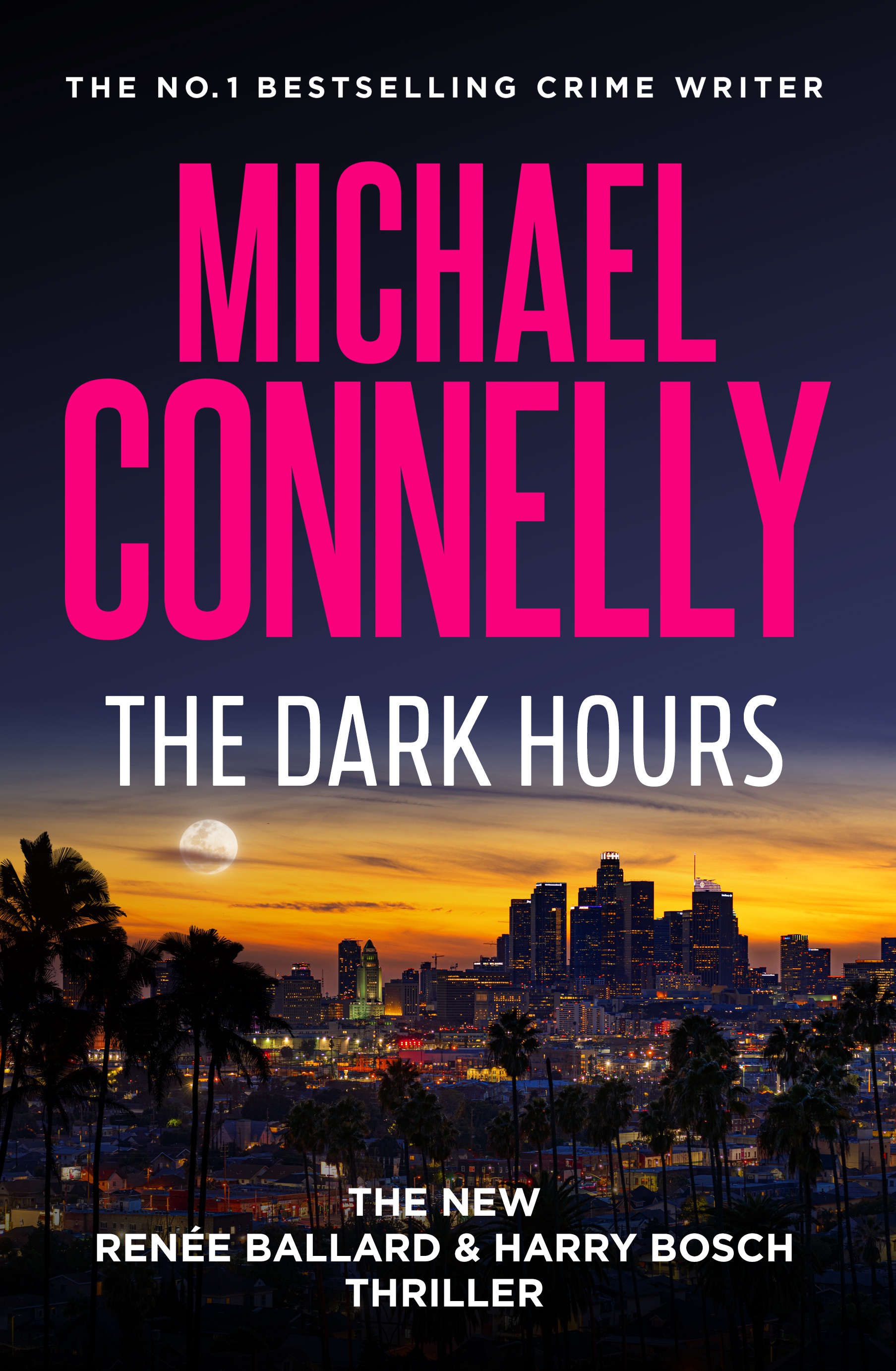
The Dark Hours by Michael Connelly

The Dark Hours Cover 2

Publisher: Allen & Unwin (Trade Paperback – 9 November 2021)

Series: Ballard & Bosch – Book Three

Length: 391 pages

My Rating: 5 out of 5 stars

Amazon

The master of crime fiction, bestselling author Michael Connelly, returns with another outstanding Ballard and Bosch novel, The Dark Hours, which sets his iconic protagonists on another intense and captivating case.

Connelly is one of those authors who needs very little introduction, having written an amazing number of crime fiction novels throughout his exceptional career.  I have really been getting into Connelly’s work lately, especially after reading his 2020 releases, Fair Warning and The Law of Everything.  However, my favourite Connelly novels have probably been the Ballard and Bosch sub-series, which follows the team of two of Connelly’s great protagonists.  This includes Renée Ballard, who debuted as the lead character of The Late Show, and Harry Bosch, Connelly’s long-running protagonist who has appeared in nearly every one of Connelly’s books since The Black Echo.  These two protagonists first teamed up in Dark Sacred Night in 2018, and then again in The Night Fire, one of the best books and audiobooks of 2019.  I have deeply enjoyed these two characters, and I was very excited when I saw that Connelly was featuring them again in his latest novel, The Dark Hours, which was one of my most anticipated releases for 2021.  The Dark Hours is the 36th overall novel in Connelly’s overarching crime fiction universe and proved to be another exciting and clever read.

As the clock ticks down the last seconds of 2020, the citizens of Los Angeles celebrate New Year’s Eve in their typical chaotic way, with hundreds of celebrators firing guns up into the air, with a rain of bullets coming down shortly after.  Sheltering under a bridge, LAPD detective Renée Ballard is staking out the nearby neighbourhood in hopes of catching a team of rapists terrorising women during the holidays.  However, she instead finds herself called to the scene of a party where an auto shop owner has been fatally hit in the head with a bullet.

Initially assuming that the death was an accident brought on by the lateral bullets fired in celebration, Ballard soon discovers that the shooting occurred at point-blank range, indicating that someone used the revels to disguise their up-close murder.  Starting her investigation, Ballard soon discovers that the same gun was used in an unsolved murder case which had been investigated by her friend and mentor, retired LAPD detective Harry Bosch.

Working with Bosch, Ballard soon finds herself on the trail of a dangerous killer who may have killed many times before and is at the centre of a deadly conspiracy.  Determined to catch this killer before the case is taken away from her, Ballard is willing to break any rule to catch her suspect, no matter the danger to herself or her career.  At the same time, Ballard becomes obsessed with catching the team of rapists destroying lives in her city, but finds herself fighting against a demoralised and uncaring police department, more concerned with maintaining their image than police work.  Can Ballard and Bosch solve these latest crimes before it is too late, or will the predators they stalk land another fatal strike?

This was another incredible book from Connelly that contains a clever and captivating murder mystery that I deeply enjoyed.  The Dark Hours has a fantastic story to it, that not only takes the reader on an intense and particularly dark couple of cases but which also explores the state of policing in 2021.  A brilliant and powerful read, this was an excellent Connelly novel that gets a full five-star rating from me.

Connelly came up with an exceptional crime fiction narrative for The Dark Hours, which I powered through in a few days.  This latest story, told exclusively from the perspective of Ballard, follows the character as she investigates several horrific crimes.  There are two central cases in this book; the first involves a murder of a mechanic, which sees Ballard connect with her old friend Harry Bosch, who previously worked a connected cold case; and the other is a series of rapes throughout LA, made distinctive by the presences of a two-man team.  These two cases are both pretty compelling and unique in their own way, with Ballard getting quite obsessed with both of them.  The murder case has several outlying threads that see Ballard and Bosch chase down gang connections, dirty cops, and a wide-ranging conspiracy of dentists, all of which results in a tight and powerful investigation story with some substantial dangers to Ballard.  The rape case is a dark and disturbing counterpart to this murder, and Connelly ensures that the full horror of this particular type of crime is on full display.  Both of these cases come together extremely well as the story progresses, and I really appreciated how some of the emotions and consequences stirred up in one case led to the characters doing some rash and dangerous things in the other.  Throw in some major professional drama around Ballard, and you have an intense and powerful narrative that really sticks in the mind.  I loved some of the cool and dark twists associated with these intriguing storylines, and Connelly certainly has the ability to create some major and memorable moments.  The Dark Hours also does a good job of continuing some of the storylines from the previous novels, particularly around Ballard’s many issues as a member of the LAPD, and it sets up some future plot points that will no doubt make for an awesome novel or two in the years to come.

One of the most interesting things about The Dark Hours is Connelly’s compelling and in-depth examination of the LAPD in early 2021, following COVID and the protests of 2020.  Connelly paints a detailed and intriguing picture of the LAPD as a dispirited and defunded organisation which has withdrawn from proactive police work and is instead more concerned with avoiding bad publicity and controversy.  The police characters featured within this novel are notably unmotivated and aggrieved, with many more concerned with their own lives than protecting people.  This is a rather grim but seemingly realistic view of the LAPD, and I really appreciated the fact that Connelly attempted to explore what life as a police officer is like in these controversial times.  The author makes sure to try and show both sides of the debate around policing, made easier by his protagonist’s status as LAPD outsiders, and it was fascinating and moving to see the police perspective.  The apathy of the LAPD comes into play in the story in multiple ways, and it was an exceptional and memorable inclusion to The Dark Hours.  In addition, Connelly spends a lot of time exploring early 2021 Los Angeles, with multiple references to masks, vaccines, unemployment and all the other aspects of COVID-19 that we have come to know and love.  While most people are probably quite sick (ha!) about seeing all the COVID stuff wherever you go, even into book-land, those authors wishing to display modern life need to include it, and I felt that Connelly did a great job showing it from an LA perspective.  Throw in some commentary on other key events of early 2021, and The Dark Hours turns into quite a contemporary novel with some extremely intriguing opinions and insights.

Another aspect of The Dark Hours that I enjoyed was the fantastic use of characters featured within it.  In particular, it was rather interesting to see which protagonists got the most focus throughout the novel.  When I first started reading this novel, I assumed that, like the previous Ballard and Bosch books, the story would be a split perspective narrative featuring the two main characters.  Instead, the entire story ended up being told exclusively from Ballard’s point-of-view, with Bosch featured as a supporting character.  While some long-term Bosch fans might feel a little let down, I personally did not mind this as Ballard has been a really fascinating and relatable protagonist in her last few novels.  Ballard has always been an outcast in the LAPD, following her attempt to report her previous supervisor for sexual harassment, and this sense of being an outsider has only intensified throughout her more recent novels.  This all comes to a boil in The Dark Hours, as Ballard is continually stymied by the new attitude of the LAPD, and is constantly undermined by ineffective, dispirited and politically minded colleagues and superiors.  This eventually forces her to adopt a more Bosch-like mentality and she goes outside the lines multiple times to try and bring her culprits to justice.  I rather liked this more reckless side of Ballard, and it ends up resulting in some major changes to her personality and potential law enforcement future.  It was also very fascinating to see Ballard’s opinions on the recent issues affecting policing, and even she finds herself quite angry with some of the accusations levelled against her and the LAPD, despite harbouring her own negative opinions.  Throw in an interesting new relationship and a fun new puppy friend, and this ended up being a particularly good Ballard story.  I look forward to seeing more of Ballard in the future, and I really think that Connelly is setting her up as his primary police character for the future.

While most of the focus is on Ballard, Bosch still has a significant role in The Dark Hours, serving as the main supporting character and Ballard’s unofficial partner.  While it was a little odd not to see Bosch’s perspective on the two main investigations, he was a great wingman to the protagonist and I liked how Connelly was able to work Bosch’s veteran mindset into Ballard’s way of thinking.  It was fun to see him serve the joint role of being Ballard’s voice of reason while also subtly encouraging her to do some more rebellious moves.  I really enjoyed seeing more of Bosch in the book, and it will be interesting to see what Connelly does with him in the future.  Considering that Bosch is currently a much older, out-of-work detective currently battling leukaemia, you have to imagine that Connelly is planning to retire him permanently some point soon, and I am curious to see how or when that happens, no doubt occurring in heartbreaking fashion.

Overall, The Dark Hours is another exceptional novel from Michael Connelly, who continues to showcase why he is one of the best and most consistent authors of crime fiction in the world today.  This latest novel serves as an excellent continuation of the Ballard and Bosch subseries, and it is always so much fun to travel back into Connelly’s expanded and intriguing crime fiction universe.  The Dark Hours has an outstanding and compelling narrative that follows the authors dogged protagonist as she investigates several major and disturbing crimes.  I was pretty much hooked the moment I picked this book up and it is a must-read for all crime fiction fans.

Amazon

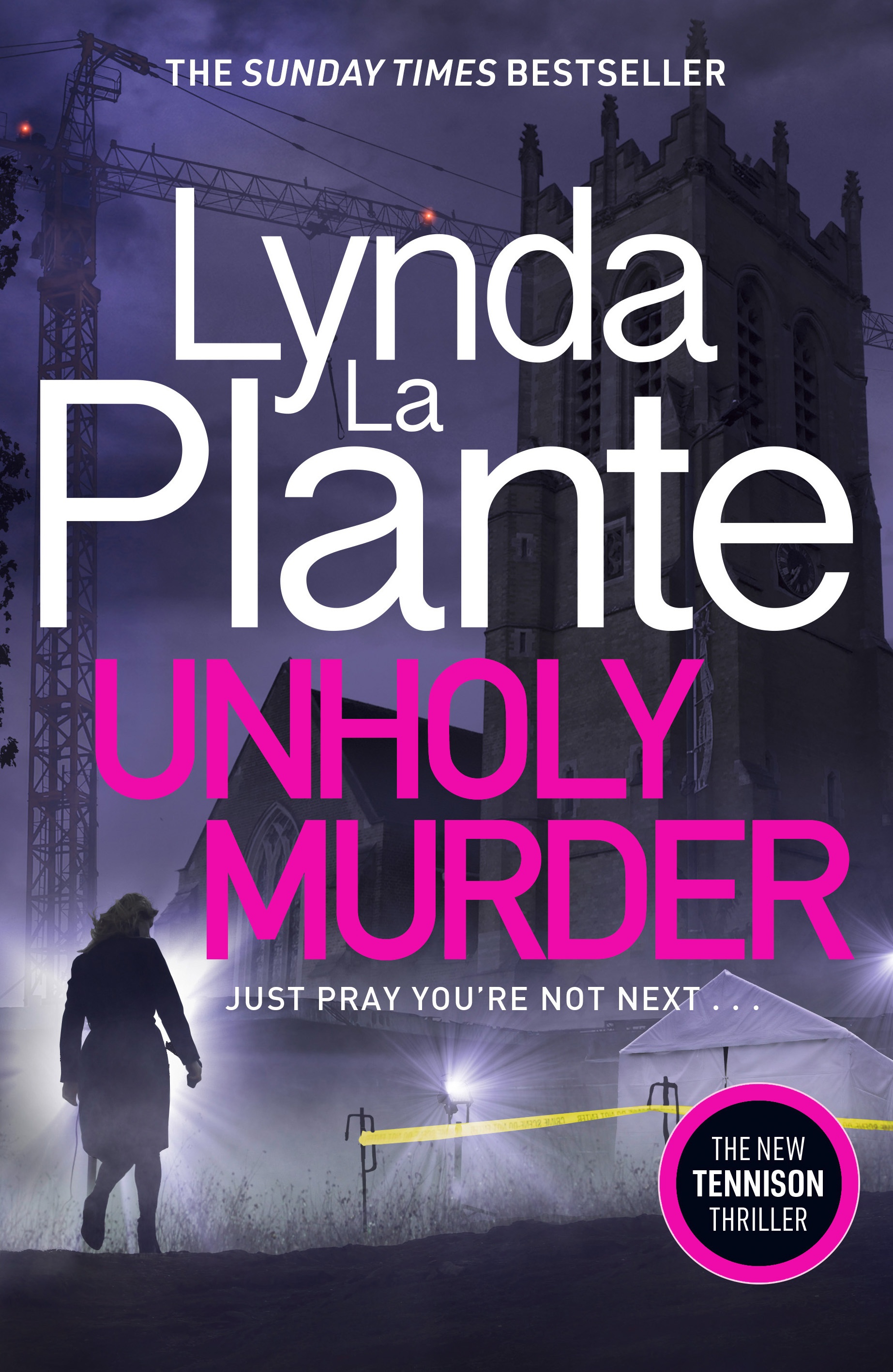
Unholy Murder by Lynda La Plante

Unholy Murder Cover

Publisher: Zaffre (Trade Paperback – 17 August 2021)

Series: Jane Tennison – Book Seven

Length: 389 pages

My rating: 4.25 out of 5 stars

Amazon     Book Depository

The reigning queen of British crime fiction, Lynda La Plante, returns with another clever and intriguing murder mystery, with her latest entry in the Jane Tennison series, Unholy Murder.

La Plante is a great author whose books I have featured several times over the last few years.  Best known for her work in British television, where she produced and wrote several shows and television movies, La Plante has really started to focus more on her novels recently, producing some awesome and compelling reads.  Out of all her recent works, the one I have been enjoying the most is the outstanding Jane Tennison series.  Serving as a prequel to the acclaimed Prime Suspect television series, the Jane Tennison novels follow a younger version of the show’s protagonist, the titular Jane Tennison, as she works her way up the ranks of the Metropolitan Police.  This series has so far contained several awesome and impressive novels, including Good Friday, Murder Mile, The Dirty Dozen and Blunt Force.  The latest entry in the series, Unholy Murder, contained another amazing mystery that sets the protagonist against the dangerous influence of the Catholic Church.

In 1982, Detective Sergeant Jane Tennison has recently been assigned to the Bromley CID, a quieter London beat where she can focus on her upcoming inspector’s exam.  However, her knack for attracting the most unusual and deadly murders once again surfaces when construction workers uncover a coffin at the back of a new housing development.  Based on the site of an old, deconsecrated convent, it is initially assumed that the coffin could be part of a forgotten graveyard, and the coffin is taken to the local morgue.  However, when opened, the coffin is revealed to contain the corpse of a brutally murdered nun.

With no idea who the deceased is or when they died, Tennison is initially unsure how to proceed.  With her superiors assuming that the coffin could be decades or even centuries old, there is little desire for the case to continue.  However, when Tennison is able to determine that the crime took place just before the convent shut down in the 1960s, she is given permission to investigate and attempts to find who the murdered nun is and how her death was left undiscovered for so long.

Digging into the past of the convent and its attached orphanage, Tennison and her team soon discover a sordid history or abuse, neglect and cover-ups.  Convinced that the murder may be related to these charges, the police attempt to find out more about the nuns who lived there.  However, the Catholic Church is uncooperative and all their files on the convent are missing or destroyed.  With the Pope’s historical visit to London only days away, Tennison is determined to get to the bottom of this terrible case, no matter what, Tennison follows every angle she can to get to the truth.  But with someone high up in the church’s hierarchy doing everything to cover up the crime, and with her own superior’s attempting to stop the investigation, can Tennison and her team unmask the killer, or will the secrets of the past came crashing back with unfortunate collateral damage?

This was another pretty awesome novel from La Plante, who has come up with a fantastic and captivating crime fiction story.  Unholy Murder has an impressive murder mystery to it, with the premise of a murdered, unknown nun secretly buried on the grounds of a former convent.  La Plante sets up this entire mystery perfectly, and the reader is soon invested in the plot.  There are some great aspects to the investigation, and I liked the usage of an older crime, with the protagonists forced to dive back nearly 20 years.  There are multiple potential suspects, twists and a range of interferences featured throughout the course of the investigation, and I had a wonderful time following through and trying to figure out who did it and who is trying to keep it quiet for their own reasons.  It all leads up to an intense and fast-paced conclusion, with a second killing seeming to occur, and several separate story threads coming together and adding in some intrigue and excitement.  I was really impressed with the final solutions to the story, and I appreciated the dark and cynical ending that it contained.  This was one of La Plante’s more captivating and clever mysteries and it was a lot of fun getting to the bottom of everything.

One of the more interesting aspects of the entire novel was the inclusion of the Catholic Church as a major force in the investigation.  While some of the lower-level clergy and staff are initially helpful, once the case is revealed to be a murder, potentially committed by someone working at the convent, senior church members work hard to halt the investigation and try to protect themselves and the reputation of the church.  This was a fascinating and intense part of the investigation, and it added in layers of complexities and difficulties that the protagonists are forced to overcome.  The case becomes even more complicated, with multiple allegations of abuse or brutality from the sisters at the convent coming to light.  I really appreciated the way La Plante worked this aspect into the novel, and it was fascinating to see this in a historical context as I am personally more used to hearing about these sorts of issues in the 21st century.  The impacts of the church and its members on the case are pretty fascinating, especially as it makes the solution a lot more clouded, and some resolutions a lot more controversial.  While some authors would use this to simply bash the church, La Plante paints a more complex and multifaceted story here, attempting to show that some of the clergy characters were really good people bound by rules, their oaths or the ambitions of others who abuse their roles and responsibilities for their own aims.  I felt that they author’s use and inclusion of the Catholic Church in this novel helped to make Unholy Murder a much better novel, and it ensured that the case was a lot more intense and complex.

Jane Tennison is always an interesting character to follow, especially as she is one of the few senior female investigators in the MET during this prequel series.  While this is a crime fiction series, a large amount of the plot revolves around Tennison’s personal life, and La Plante has spent a lot of time showing Tennison’s growth as a character, as well as the events that turned her into the hard-edged investigator featured in Prime Suspect.  It has been really fascinating to see Tennison claw her way up the ranks over the last few books, and it was great to see her once again take a leading role in a murder investigation.  Due to some of her prior experiences with fellow officers, Tennison has a bit of a chip on her shoulder in this book, although she manages to mostly prove that she has what it takes.  I do wish that Tennison weren’t portrayed as someone who lets her personal life interfere with the job, especially as she once again gets involved with a person connected to the murder to her own detriment.  Still, I enjoyed Tennison in this novel, and she was a great central protagonist to follow.

This novel featured an interesting group of supporting characters, including police officers, suspects, and members of the church.  The author’s great use of multiple character perspectives in this novel was perfect to highlight these various side characters, and I liked how it also helped to make some of the people connected to the case seem more suspicious or guilty.  While there were several characters I liked, I mostly want to focus on the various police characters featured within Unholy Murder, as they were a major part of the plot.  Not only do you have several recurring police characters from the prior Jane Tennison novels but there are also some great new characters who were very fun to follow.  I quite liked rookie investigator DC Boon, a young officer that Tennison has taken under her wing.  While he initially appears a bit clumsy and clueless, he really starts to grow as a character as the novel progressed, becoming a much more competent investigator.  He also becomes a lot more serious, especially once he gets personally involved in the case, and there are some deep and emotional moments that occur around him as the novel progresses.

I also deeply appreciated the inclusion of DCS Barnes, Tennison’s new boss who heads up the investigation.  Barnes has previously dealt with cases of child abuse by members of the church whose crimes were covered up by his superiors and the church, and this memory drives him throughout the novel and ensures that he takes the cases extremely seriously.  Once it becomes apparent that the murder was likely committed by a member of the clergy, and that the priest he previously attempted to bring down is now a senior figure leading the latest cover-up, he becomes a bit obsessive and refuses to accept any alternate possibilities and suspects.  It was really quite intriguing to see an anti-Church police officer in the 1980s, and I really liked the complex and compelling portrayal around him.  All these side characters add a lot to the overall story, and La Plante did an excellent job of fitting these intense personal stories into the wider murder mystery.

Unholy Murder is an excellent new novel that continues the excellent Jane Tennison series by the amazing Lynda La Plante.  Featuring a clever mystery, some great characters and a really intriguing plot hook, Unholy Murder easily grabs the reader’s attention and ensures that they become deeply attached to the outcome of the story.  I had an outstanding time reading this latest book and I look forward to the next instalment of this fun series in 2022.

Amazon     Book Depository

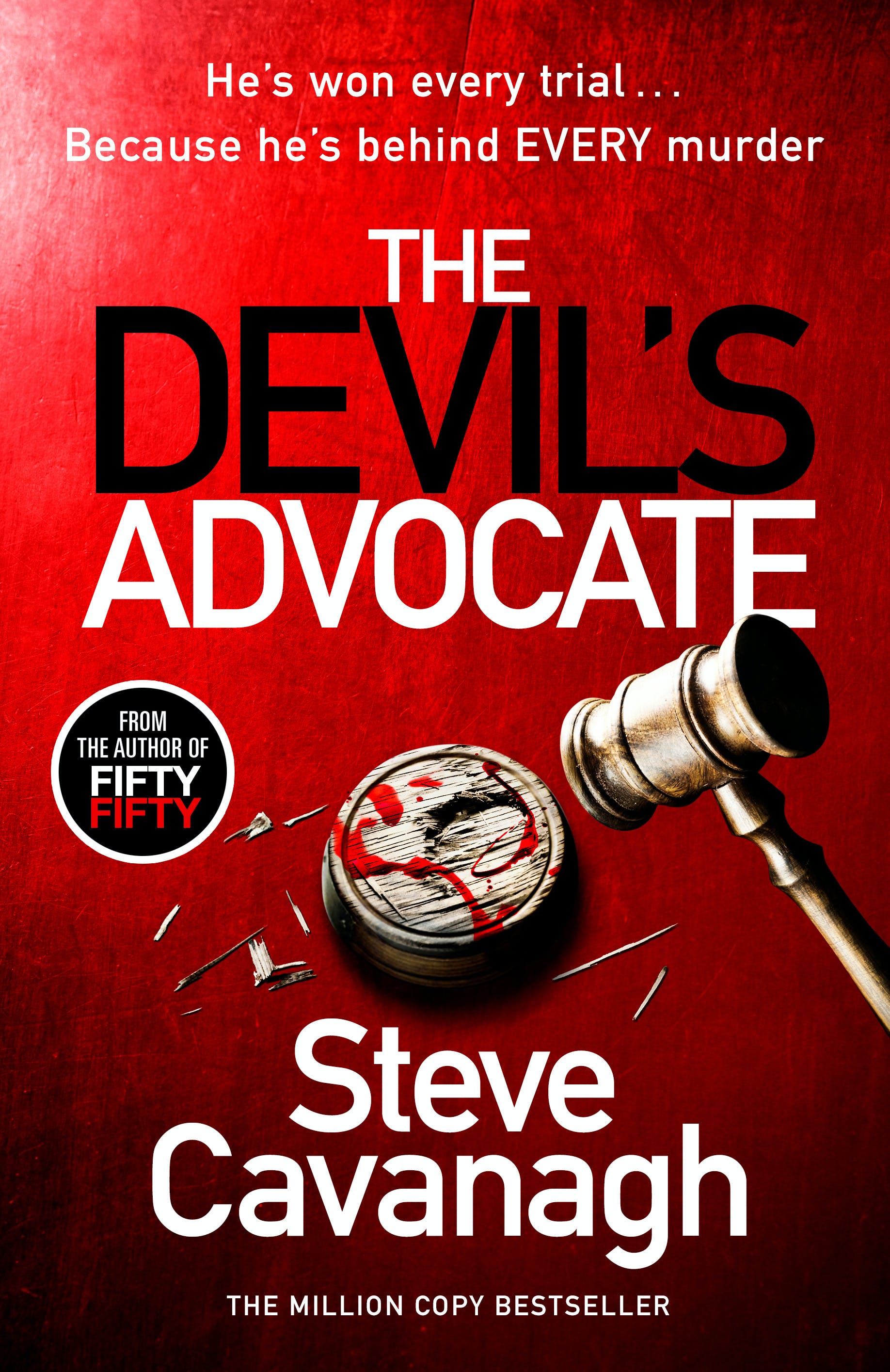
The Devil’s Advocate by Steve Cavanagh

The Devil's Advocate Cover

Publisher: Orion (Trade Paperback – 27 July 2021)

Series: Eddie Flynn – Book 6

Length: 403 pages

My Rating: 4.5 out of 5 stars

Amazon

Bestselling thriller author Steve Cavanagh returns with another exciting and over-the-top fun legal thriller, The Devil’s Advocate, an awesome read with a very entertaining plot.

Randal Korn is an evil man, a dangerous killer, and an unrepentant corrupting influence on everyone around him.  Unfortunately for the residents of Sunville County, Alabama, Randal Korn is also their District Attorney, who uses his skills and influence to get the legal system to commit his killings for him.  Known as the King of Death Row, Korn has sent more men to the electric chair than any other district attorney in US history, deriving great pleasure from every life his prosecutions have taken.  However, not all of Korn’s victims have been guilty, a fact that Korn knows and deeply relishes.

When a young woman, Skylar Edwards, is found brutally murdered in Buckstown, Alabama, the corrupt sheriff’s department quickly arrests the last person to see her alive, her innocent African American co-worker Andy Dubios.  After the racist cops quickly beat a confession out of him, Andy is set to stand trial with Korn prosecuting a seemingly airtight case.  With the entire town already convinced of his guilt and with no chance of a fair trial, Andy’s death looks certain, until Eddie Flynn arrives in town.

Hired after Andy’s previous lawyer goes missing, former conman turned brilliant New York lawyer Eddie Flynn heads down to Alabama with his team to try and save Andy’s life.  However, the moment he arrives, Eddie begins to understand just how stacked the deck is.  Thanks to Korn’s immense influence, the entire town is hostile to him, the police are refusing to cooperate, witnesses are threatened or arrested by the sheriff, the judge is already on the prosecutor’s side, and any potential juror will already believe that Andy is guilty.  To save his client’s life, Eddie will have to use every single trick he has to con the jury into finding Andy not guilty, but even that might not be enough.  Worse, it soon becomes apparent that the killing of Skylar Edwards was only the start.  A dangerous murderer still stalks Buckstown, killing whoever gets in their way to achieve their own sinister agenda, and their sights are now firmly set on Eddie.

This was a pretty awesome and wildly entertaining novel from the talented Steve Cavanagh.  A lawyer himself, Cavanagh burst onto the crime-fiction scene a few years ago with his debut novel, The Defence, the first book in his Eddie Flynn series.  There have since been several other Eddie Flynn books, each of which places the protagonist in a unique legal situation.  I have been meaning to read some of Cavanagh’s books for a while now due to the awesome sounding plot synopsis and I currently have a couple of his novels sitting on my shelf, waiting to be read.  Unfortunately, I have not had the chance yet, although I think I will have to make a bit of an effort after reading The Devil’s Advocate, which I was lucky enough to receive a little while ago.  The Devil’s Advocate was an outstanding and captivating novel and I swiftly got drawn into the exciting and amusing narrative.

The Devil’s Advocate has an awesome story to which is extremely addictive and enjoyable.  When I picked up this book, I initially intended only read around 50 pages in my first sitting, however, once I started I honestly could not put it down, and before I knew it I was halfway through and it was well past my bed time.  Cavanagh produces an extremely cool narrative that starts with an awesome scene that introduces the main antagonist and ensures that you will really hate him.  From then, Cavanagh quickly sets up the initial mystery, the introduction of the legal case, and the plot that brings the protagonist to Alabama.  The rest of the narrative neatly falls into place shortly after, with the full details of the case, the corruption of the main setting, and the massive injustice that is taking place, coming to light.  From there, the protagonists attempt to set up their case while facing sustained and deadly opposition from pretty much everyone.  While the initial focus is on the legal defence aspect of the thriller, the story quickly branches out into several captivating storylines, including an examination of the antagonist’s corrupting influence on the town, planned action from a white supremacist groups, attempts to run off or kill the protagonists, as well as mystery around who really killed Skylar.  All these separate storylines are really fascinating and come together with the plot’s central legal case to form an exceptionally fun and electrifying story.  The reader is constantly left guessing about what is going to happen next, especially with multiple red herrings and false reveals, and I ended up not predicting all the great twists that occurred.  While I did think that Cavanagh went a little too political with the overall message of the book, The Devil’s Advocate had an outstanding ending and I had an exceptional time getting through this thrilling story.

One of the best parts of this entire story is the outrageous and unfair legal case that the protagonists must attempt to win.  This case forms the centre of The Devil’s Advocate’s plot, with most of Eddie and his colleagues’ appearances focused on their upcoming legal battle.  Cavanagh really went out his way to create a truly unique and compelling set of legal circumstances for the protagonists to wade through, with the case so tightly sewn up against their innocent client before they even get there.  Despite this, the protagonist goes to work with a very effective, if unconventional, legal strategy that plays to the antagonist’s underhanded tactics.  The entire legal case soon devolves into crazy anarchy, with both sides doing outrageous actions to win, which Cavanagh writes up perfectly.  I found myself getting quite invested in the case, especially after witnessing several blatant examples of the prosecution’s corruption, and these terrible actions really got me rooting for the protagonist, who had some entertaining tricks of his own.  This all leads up to an excellent extended trial sequence, where the various strategies and manipulations in the first two-thirds of the novel come into play.  There are some brilliant and entertaining legal manoeuvrings featured here, with the protagonist initially focusing more on pissing off the prosecution and the judge rather than producing alternative evidence.  However, there are some great reveals and cross-examinations towards the end of the book, as Eddie has a very good go at dismantling the case.  The way it finally ends is pretty clever, and I really liked the way some of it was set up, even if it relied a little too much on a minor character’s conscience finally flaring.

Cavanagh also featured some great and entertaining characters in The Devil’s Advocate, with a combination of new characters and returning protagonists from the previous novels.  The author makes great use of multiple character perspectives throughout this novel, especially as it allows the reader to see the various sides of the battle for Buckstown’s soul.  Seeing the moves and counter-moves of the protagonists and antagonists enhances the excitement of the novel, especially as it shows the creation of several traps that could potentially destroy Eddie and his client.  Most of the characters featured in the novel are very entertaining, although I think in a few cases Cavanagh went a little over-the-top, with some of the villains being a bit cartoonish in their evilness.

The main character of this novel is series hero Eddie Flynn, the former conman who now works on impossible cases as a defence attorney.  Eddie was an awesome central protagonist, especially as his unique sense of justice and criminal background turns him into one of the most entertaining and likeable lawyers you are likely to ever meet.  I loved the very underhanded way in which he worked to win his case, and the variety of tricks and manipulations that he used were extremely fun to see in action, especially as it rattles the police antagonists and completely outrages the other lawyers and judges.  I loved his style in the courtroom scenes, especially as most of his appearances eventually end up with him thrown in jail for contempt (it is a pretty wise legal strategy).  Eddie has a very fun code in this novel, and I think that I will enjoy seeing the earlier novels in which he transitions from conman to lawyer.

Eddie is also supported by a fantastic team from his small law practice, each of whom get several chapters to themselves and who serve as great alternate characters who in some way overshadow the main protagonist.  These include his wise old mentor character, Harry; the younger lawyer, Kate; and the badass investigator, Bloch.  Each of them brings something fun and compelling to the overall story, and I liked the way that Cavanagh ensured that they all get their moment throughout The Devil’s Advocate.  I really enjoyed some of the great sub-storylines surrounding these three supporting protagonists.  Examples of this include Harry, a genuine silver fox with the ability to attract a certain type of older lady, who serves as the team’s heart and soul, although he’s not opposed to some improper legal tactics.  I also enjoyed Kate’s appearances as a secondary trial attorney, especially as she serves as a good alternate to the flashier Eddie, while also finding her feet in a murder case that has rattled her.  I personally enjoyed the gun-toting investigator Bloch the most, mainly because of her hard-assed attitude and inability to be intimidated by the various monsters lurking around town.  Bloch has some very intense and exciting scenes, and it was really entertaining to see her stare down rabid militiamen and crooked cops.  These protagonists end up forming an impressive and cohesive team, and it was a real joy to see them in action.

I also must highlight the outstanding villain of the story that was Randal Korn.  Korn is a truly evil and terrifying creation who is pretty much the direct opposite of the more heroic Eddie.  Cavanagh has clearly gone out of his way to create the most outrageously despicable antagonist he could, and it really works.  Korn, who apparently is a bit of a pastiche parody of five real-life American prosecutors who always seek the death penalty, is a man who became a lawyer solely so he would have a legal way to kill people.  The pleasure he receives from controlling people and ensuring that they die, even if they are innocent or undeserving, is terrifying, and it ensures that the character will go to extreme lengths to win his case.  The author does a fantastic job painting him as a despicable figure, including through several point of view chapter, and there are some interesting examinations about his psyche and his desires.  Having such an easily hated villain really draws the reader into the narrative, mainly because the reader cannot help but hope that he gets what is coming to him.  Despite that, I think Cavanagh went a little overboard in some places (the self-mutilation and the rotting smell are a bit much), and the whole soulless creature angle is layered on a bit too thickly.  Still, the author achieved what he wanted to with this antagonist, and I had a wonderful time hating this character from start to finish.

The final point-of-view character that I want to mention is the mysterious figure known as the Pastor.  The Pastor is another antagonist of this novel whose identity is kept hidden from the reader for much of the book.  This is mainly because he is the real killer of Skylar Edwards, whose death was part of an elaborate plan.  The Pastor is another great villain for this novel, due to his crazed personality, murderous tendencies and horrendous motivations for his crimes.  I think that Cavanagh did a great job utilising this second villain in his novel, and I liked the tandem usage he had with Korn.  I was especially impressed with the clever mystery that the author had surrounding his identity, which was kept hidden right till the very end.  It took me longer than I expected to work out who the Pastor was, thanks to some clever misdirects from the author, but the eventual reveal was extremely good and helped tie the entire story together.  Readers will have a lot of fun trying to work out who this character is, and I really enjoyed the extra villainy that they brought to the table.

The fantastic Steve Cavanagh has once again produced a captivating and intense legal thriller with The Devil’s Advocate.  This latest Eddie Flynn thriller was an amazing ball of crazy fun that I powered through in two sustained reading sessions.  With some over-the-top characters, a clever legal case, and an exciting overarching conspiracy, The Devil’s Advocate proved to be next to impossible to turn down and is really worth checking out.  I will definitely be going back and reading some of Cavanagh’s earlier books, and I look forward to seeing what insane scenarios he comes up with in the future.

Amazon

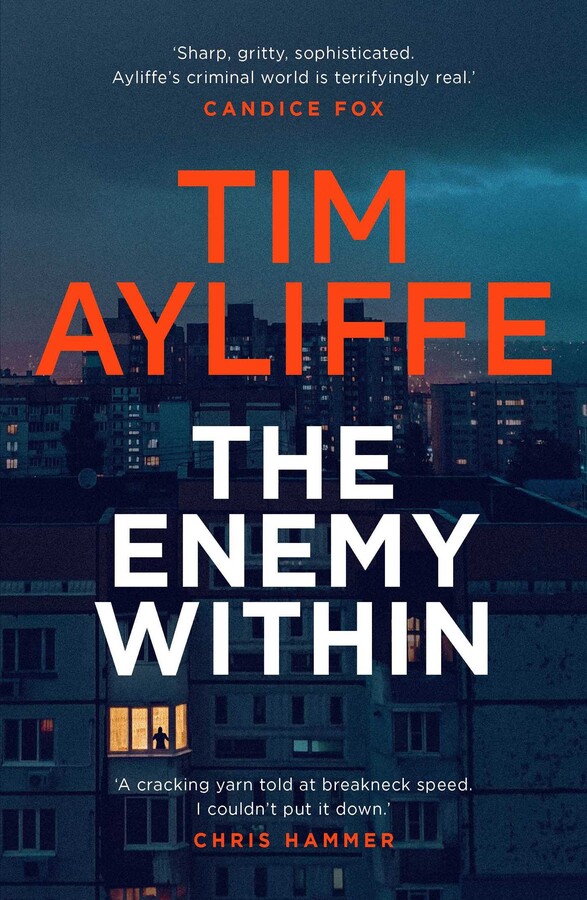
The Enemy Within by Tim Ayliffe

The Enemy Within Cover

Publisher: Simon & Schuster (Trade Paperback – 28 July 2021)

Series: John Bailey – Book Three

Length: 353 pages

My Rating: 4.5 out of 5 stars

Amazon

One of Australia’s fastest rising crime fiction authors, Tim Ayliffe, returns with another impressive and brilliantly relevant novel, The Enemy Within.

Ayliffe is a great author whose work I have been really enjoying over the last couple of years as he sets some fantastic stories around contemporary Australian subjects.  Debuting in 2018, this journalist wrote a compelling and intriguing first novel with The Greater Good, which looked at political corruption and the growing influence of China in Australia.  He followed it up in 2019 with State of Fear, which looked at Islamic terrorism and featured a dramatic and impactful story.  Now Ayliffe checks out the complete opposite end of the political spectrum in The Enemy Within, which features a look at growing right-wing radicals.

As the smoke from devastating January 2020 bushfires covers Sydney, investigative reporter John Bailey is covering a far more dangerous threat in the suburbs.  Barely recovered from the traumatic events that took the love of his life from him, Bailey is now working for a news magazine.  His first story will cover the re-emergence of right-wing nationalists and white supremacist groups in Australia.  Attending one of their meetings, where a controversial American social media star whose entrance into the country has gained much political opposition and protest, Bailey attempts to gain the pulse of this movement, only to face violence and an anti-media mentality from the crowd.

Working on his story, Bailey has no idea of the chaos that is about to rain down on his life.  After he meets with an old contact and informant, Bailey’s house is raided by the Australian Federal Police.  The police are investigating him for a story he ran back while he was a war correspondent that highlighted the alleged war crimes Australian soldiers committed in the Middle East.  Armed with a warrant granting them access to his phone, computer and all his files, the police tear through Bailey’s life and throw him in gaol for attempting to impede their search.

With the entire nation’s media covering his plight, Bailey is released from prison and soon discovers that someone orchestrated the police raid to delete evidence from the rally.  Attempting to investigate further, Bailey is shocked when his contact ends up dead in mysterious circumstances and the police fail to investigate.  With Sydney on the verge of a race war, Bailey continues his investigation and soon uncovers proof about a dangerous conspiracy that aims to shake the very foundations of Australian life.  With only his old friend CIA agent Ronnie Johnson as backup, Bailey attempts to stop this plot before it is too late.  But with a seemingly untouchable enemy targeting him from the shadows, has Bailey finally met an opponent even more determined than he is?

This was an awesome and captivating novel from Ayliffe who once again produces an intense, character-driven narrative.  Set around some very relevant and controversial topics, The Enemy Within is a powerful and exciting novel that takes the reader on a compelling ride.  I had a fantastic time reading this clever book and I loved the fascinating examinations of one of the more insidious threats facing Australia.

Set in the blistering, smoke covered streets of early 2020 Sydney, this story starts with protagonist John Bailey engaged in a controversial story about the rising far-right wing.  After a predictably violent confrontation, the narrative takes off like a shot, with the protagonist investigating a series of concerning events, including several murders, racial attacks, and a re-opened investigation into an old story of his that sees the AFP raid his house.  Each of these separate investigative threads are drawn together as the book progresses, and the reader is treated to an impressive and deadly conspiracy with several clever allusions to real-world issues and events.  This was a very exciting and captivating novel to get through, and I found myself reading it extremely quickly, nearly finishing it off in a day.  The story leads up to an awesome and intense conclusion, where Bailey uncovers the entire scope of the plot and races to stop it.  While the identity of some of the participants is very clear since the character’s introductions, their full plan, methods, and reach are more hidden and it was great to see the protagonist uncover them all, especially as several were cleverly hidden in innocuous moments earlier in the novel.  There is even an excellent twist towards the end of the book that reveals a well-hidden antagonist, which I particularly enjoyed as it was so skilfully inserted into the story.  I ended having an excellent time getting through this amazing narrative, and this might be one of the best stories that Ayliffe has so far written.

One of the things that I have always enjoyed about the John Bailey novels is the way in which so much of the amazing story was tied to how extremely damaged the titular protagonist is.  John Bailey is a veteran reporter whose previous life as a war correspondent has left him extremely broken, especially after being tortured by a dangerous terrorist leader.  This eventually led to him becoming an alcoholic, which ruined his career and separated him from his family.  However, since the start of the series, Bailey has shown some real character growth, although this is usually accompanied by some traumatic events or tragic moments.  In The Enemy Within, as Bailey is still recovering from the loss of his lover at the end of State of Fear.  Despite making some strides to recover, Bailey is still reeling from the loss, and this becomes a major aspect of his character in this latest book.  This is especially true as Ayliffe does an outstanding job of highlighting the grieving process and showing Bailey’s feelings of despair.  It was really moving to see Bailey in this novel, and I was glad to see him continue to recover from all the bad events of his life, including stopping drinking and getting a dog.  However, Bailey still has an unerring knack to annoy the subjects of his stories, and he ends up getting into all sorts of danger.  It was great to see him getting to the root of this story by any means necessary, and I continued to appreciate his impressive development.

I also love the way that the each of Ayliffe’s novels feature some fascinating contemporary issues facing Australia or the wider world.  In The Enemy Within, the main issue is the rise of Australian right-wing and white supremacist groups in recent years.  Like in the rest of the world, these groups have been becoming a bit more prominent recently in Australia, and Ayliffe does an excellent job analysing this issue throughout his novel.  The author does a deep examination of the movement as the story progresses, and the reader is given a good insight into their concerns, motivations, and the reasons why the movement has been gaining progress in recent years.  There are some clever parallels between the events or people portrayed in the novel and real life, which was interesting to see.  Examples of this include the government allowing controversial right-wing figures into the country despite protests, and the reactions of certain right-wing media groups.  I liked how Ayliffe once again featured the character of Keith Roberts, a right-wing commentator who is a pastiche of several Australian radio personalities.  It was also quite fascinating to see how the concerns and motivations of the right-wing groups were extremely like some of the Islamic terrorists featured in State of Fear, with both groups feeling disconnected from and attacked by mainstream Australian society.  Not only is this extremely fascinating and thought-provoking but it also serves as an amazing basis for Ayliffe’s narrative.  The author does a fantastic job of wrapping his thrilling story around some of these elements, and it makes the overall narrative extremely relevant.

I also must highlight another significant contemporary inclusion that was featured in The Enemy Within, and that was the Australian Federal Police’s raids on Bailey’s house.  This police raid is a direct reference to a series of controversial raids that occurred on several media organisations, including ABC News (who Ayliffe works for), in relation to articles they published.  Ayliffe uses these real-life examples to really punch up what happens within The Enemy Within, and he produces some realistic scenes that were comparable to this.  The subject of the articles that prompt the raids are also very similar and feature another topic that is quite controversial in Australia in the moment, that of alleged war-crimes by Australian soldiers fighting in the Middle East.  Just like with the other divisive topics featured in this novel, Ayliffe did a fantastic job re-imagining these events in his novel, and it produces some excellent inclusions that will particularly resonate with an Australian audience.  I deeply appreciated the way in which he was able to work these events into his story, and I think that it made The Enemy Within a much more compelling and distinctive read.

I have to say that I also really loved the author’s use of setting in The Enemy Within.  This latest book is set in early 2020, when Sydney was surrounded by some of the worst bushfires in Australian history and the entire city was covered in smoke for months.  Ayliffe does an excellent job portraying these terrible conditions, no doubt drawn from his own personal experiences, and the reader gets a good idea of how difficult life was under those conditions (it certainly brought me back to that time, although we didn’t have it quite as bad down in Canberra).  Ayliffe uses this unique setting to full effect throughout the book and it provides some fitting atmosphere for the narrative, especially as the landscape reflects the simmering tensions flaring up within the city.  This was one of the more distinctive features of The Enemy Within, and I really appreciated the way the author used it to enhance his great story.  I also quite enjoyed the throwaway references to COVID-19, with none of the characters particularly concerned about it considering everything else that was happening, and I have no doubt that Ayliffe’s next novel will make great use of the pandemic in some way.

With his latest novel, The Enemy Within, Tim Ayliffe continues to showcase why he is one of the best new writers of Australian crime fiction.  The Enemy Within had an awesome and incredible story that perfectly brings in amazing contemporary Australian issues and settings, which are expertly worked into a thrilling novel.  I had an outstanding time reading this fantastic read and it comes highly recommended.

Amazon

Prisoner by S. R. White

The Prisoner Cover

Publisher: Headline (Trade Paperback – 31 August 2021)

Series: Hermit – Book Two

Length: 421 pages

My Rating: 4.5 out 5 stars

Amazon     Book Depository

Prepare for a twisty and dark Australian murder mystery novel as author S. R. White presents the compelling and powerful Prisoner.

Deep in rural Northern Australia, a dead body has been found in the middle of a dank and dangerous swamp.  The corpse is staged to appear like a crucifixion, with the man’s arms and legs tied to poles, and his chest caved in with several blows.  Called to the scene of the crime, Detective Dana Russo soon discovers that the victim was a convicted rapist who had only been released from prison a few hours earlier and whose crime occurred only a short walk away from his murder site.

Determined to get to the bottom of this unusual murder, Russo and her team swiftly begin tearing apart the victim’s life in prison and find that he had been in communication with two local sisters who offered him a place to stay once he was released.  Investigating the sisters, they discover a unique pair of siblings who have been irreparably damaged by trauma and abuse and who live separate from the rest of society.  Believing that the solution to the mystery may lay with them, Russo brings them both in for questioning, but finds them uncooperative and elusive.

Under pressure to solve the crime, the detectives slowly unwind an intriguing case, concerning corruption, drugs and prison gangs.  However, the further they dig, the more apparent it becomes that the sisters are hiding some dark secrets about themselves and the victim.  Forced to dig deep within herself, Russo uses the memories of her own traumatic childhood to analyse the suspects and find some common understanding with them.  Can Russo break through these two unlikely suspects, or will the solution to this murder never be revealed?

This was a pretty cool and captivating novel from former British Police officer turned author S. R. White.  Prisoner is White’s second novel and serves as a sequel to his 2020 debut, Hermit.  This proved to be a fantastic read and I deeply enjoyed the intriguing and powerful narrative, especially as White loads his book with a complex mystery and some deeply damaged characters.  I got pretty hooked on this book as it progressed and ended up finishing it in only a couple of days.

Prisoner contains a very impressive and compelling narrative that I really found myself getting drawn into.  The novel mostly starts off focusing on the murder, with the discovery of the body in the first few pages, and then the protagonists immediately jump into the investigation, including the interrogation of one of the main suspects.  As the story progresses, you get some other interesting elements thrown in, mostly around Dana Russo and one of her other colleagues as they deal with some dark personal history.  There is also a captivating subplot regarding internal police politics that produces a real shakeup in the department and has some potential series-wide ramifications.  However, most of the story remains on the mystery, and I really appreciated the creativity and darkness that the author fits into the case.  Despite being a sequel to White’s first book, Prisoner can easily be read as a standalone novel, and no prior knowledge of the characters or the setting is needed.  I felt that the entire narrative progressed along at a great pace, and there were no slow bits throughout the book, as the reader was either reading about the case or dealing with the intense personal demons of the various characters.

I must highlight the fantastic writing style that White featured throughout this novel.  While most of the focus of Prisoner is on central character Russo, the author makes good use of multiple perspectives, mainly of the other detectives on the investigation team, to move the story along and provide some alternate points of view and different investigative threads.  White utilises a very detailed writing style, which encourages a slower reading pace to make sure you don’t miss anything, and I felt that enriched the mystery and increased the realism of the plot.  I also must highlight the incredibly detailed descriptions of the swampy landscape that surrounded the crime scene and the Northern Australian town where the plot is set.  White paints a grim picture of small, isolated community on its last legs, where even the landscape has turned against it.  You can really feel the stickiness and deadliness of the swamps, and it proves to be quite a haunting background to several scenes.  I also must mention the really fun and unique take that several of the characters had on the film Signs.  This film, which I personally rather enjoyed, is brought up several times and becomes a key plot point.  While that does sound a little strange, its inclusion worked surprisingly well, and the subsequent discussions and insightful analysis of the film and its themes, ended up fitting into the overall narrative quite seamlessly, helping to create quite a unique tale.

I also deeply enjoyed the crime fiction/mystery elements of Prisoner, which really helped to turn this into quite a compelling and exciting story.  White crafts together a really clever and psychologically intense mystery for this book, and I had a wonderful time seeing the protagonists unwind it.  The author sets up a great methodical criminal investigation, with the characters slowly uncovering clues, backstory and various suspects throughout the story.  While the police do achieve an impressive amount in just a couple of days, there is a gritty sense of realism to much of the story, and I really enjoyed seeing the police in action.  The best part of the investigation is easily the focus on interrogations as the protagonist engages two uncooperative suspects in several separate interviews throughout the course of the book.  These interrogation sequences are among some of the best parts of the entire book, as Russo really dives into the pasts and minds of her suspects, which also requires her to reach back and harness some of her own trauma to break through to them.  This, combined with the rest of her team’s investigation, proved to be quite fascinating, and I really enjoyed seeing the cooperative work and professional skills involved.  I also quite enjoyed the solution to the murder, especially as White comes up with quite a unique and dark motivation for the crime.  There are several good suspects and motivations for the murder, which at times made me question who the killer might be.  However, I thought the overall resolution of the mystery was extremely clever, and it really made great use of the dark psychology of some of the characters.

One of the biggest highlights of this book were the damaged and traumatised central characters, who White spent a substantial amount of time exploring throughout the course of the story.  This includes a mixture of characters who previously appeared in Hermit and some new characters brought in for Prisoner.  This includes central protagonist Dana Russo, the detective in charge of the investigation.  Dana had a very traumatic childhood, brought on by an abusive mother who beat and emotionally tormented her following her father’s death.  While this was revealed in the previous novel, it was recounted once again in Prisoner, especially as details of the case end up mimicking parts of Dana’s life.  The protagonist is forced to dive deep into her prior experiences to help solve this case, and it was fascinating to see how she could instantly spot signs of abuse, as well as rationalise the various reasons behind it and the impacts it can have on a young person.  The protagonist also uses her experiences to get into the minds of her two main suspects, resulting in some intense and extremely powerful interrogation scenes, where both suspect and interrogator are broken down at the same time.  White also produces some more revelations about Dana’s terrible childhood, including a certain reveal on the last page that was pretty memorable, and I really liked the compelling picture he painted around this impressive leading character.

The other characters who proved to be extremely compelling were the main suspects of the murder case, Suzanne and Marika Doyle.  The Doyle siblings are instantly identified as persons of interest in the case due to their house’s proximity to the crime scene and the fact that they wrote to the victim in prison and helped to organise his parole, despite having never met him.  Upon examination of their history, as well as an insightful look at their house, it soon becomes apparent that both siblings had a hard childhood because of their controlling mother.  Their life story becomes a key part of the overarching plot as Russo attempts to uncover their full history and personalities, as she believes it is important to solve the case.  The eventual reveals about the siblings and their relationship, their past and their emotional states is extremely captivating, and White paints quite a dark and troubled narrative around them that was really fascinating.  The way that this ties into the murder and their relationship with the victim is very clever, and White really outdid himself making these two sibling suspects.

I also must give a quick shout out to the character of Lucy Delaney, one of Dana’s co-workers and an invaluable resource in the case.  Dana and Lucy got quite close to each other in the previous novel, with Dana revealing some of her childhood trauma to her, something she rarely does.  In this novel, you get a much closer look at Lucy, who reveals some of her own personal issues, and the shared grief becomes a major part of her connection to Dana.  Unfortunately for Lucy, she gets dragged into some internal police politics, which impact her and her secrets quite severely and will likely become a recurring issue in the series, especially if the relationship between Dana and Lucy progresses.  Aside from Lucy, I felt that the police characters represented an interesting blend of personalities and skills, such as the wily veteran Mike or the similarly damaged officer Ali, who helped to give the film more personality.  It will be interesting to see how these characters are featured in the future, and I look forward to learning more about them.

Prisoner by S. R. White is a clever and moving piece of Australian crime fiction that proved to be a real treat to read.  White has produced a deep and compelling murder mystery narrative that focuses on a fantastic group of damaged protagonists and suspects, and who have some dark stories to tell.  I really loved the more methodical and grounded police investigation angle of this book, especially the inclusion of some powerful interrogation sequences, and I was impressed with how the narrative unfolded.  An excellent and captivating murder mystery, Prisoner comes highly recommended, and you will have a great time getting through the latest book from this fantastic Australian author.

Amazon     Book Depository

Blood Trail by Tony Park

Blood Trail Cover

Publisher: Pan Macmillan Australia (Trade Paperback – 1 August 2021)

Series: Standalone

Length: 384 pages

My rating: 4.5 out of 5

Amazon     Book Depository

One of Australia’s leading thriller authors, Tony Park, presents another clever and intense thriller set in the nature parks of Africa with his latest action-packed novel, Blood Trail.

Tony Park is a talented author who has written several amazing thriller novels over the years, all of which make use of a distinctive African setting with a focus on wildlife parks and poachers.  I have previously enjoyed three of his great books, Scent of Fear, Ghosts of the Past and Last Survivor, and his latest novel, Blood Trail, features another exceptional and exciting tale, which was an extremely fun and captivating read.

Life is always dangerous on the game preserves of South Africa, as poachers and opportunists are constantly looking for a way to make some serious money by harvesting endangered species.  In recent years, the counter-poaching patrols and police have made great strides in defending the critical wildlife, with the poachers aware that entering the reserves means death or imprisonment.  However, with South Africa severely impacted by COVID-19, more desperate locals are turning to poaching to survive, relying on the magic of their traditional medicine to protect them.

At the Lion Plains game reserve, something strange is happening.  While conducting a virtual safari, park guide and ace tracker Mia Greenway witnesses a poacher kill a rhino.  Chasing after him, Mia and her backup find no trace of him as his trail mysteriously disappears, with the killer appearing to have vanished into thin air.  At the same time, police captain Sannie van Rensburg, is called to investigate two missing local girls, who also disappeared in suspicious circumstances.  Sannie soon learns that the local populace fear that the girls have been killed and their bodies used as ingredients by a dark practitioner of traditional medicine.

When a young female tourist is kidnapped within the reserve, once again vanishing with no trail to follow, Mia and Sannie begin to realise that their cases are connected.  With the locals convinced that the poachers are using dark witchcraft to evade the police and the anti-poaching teams, all evidence suggests that the kidnapped girls are going to be killed and harvested.  However, something far more sinister is afoot, with a dark conspiracy working its way through the very heart of the game preserve.  Can Mia and Sannie uncover the truth before it is too late or will the poachers and their dangerous benefactors continue to bring terror and death to the wilds of Africa?

In Blood Trail, Park has included another intense and action-packed story that makes full use of the author’s love of all things Africa.  Set in a game reserve under siege, this multi-perspective story starts off fast, with a poacher on the loose and the trackers, led by the tenacious Mia attempting and failing to find him.  There is also an intriguing criminal case happening concurrently, as police detective Sannie attempts to find two missing girls.  Both central narrative threads are soon drawn together as Mia, Sannie and their colleagues work to solve the connected cases.  Park has come up with a very exciting, character-driven narrative here, and it honestly did not take me long to get really invested.  This book is loaded with some amazing action sequences, and the reader is treated to one electrifying scene after another as the protagonists face extreme opposition.  The overarching mystery surrounding the poachers and the missing girls is very good, and I loved the complex and clever story the author wraps around them, especially as it ties into various aspects of life in Africa and the game reserves.  The author makes sure to include a huge number of twists and reveals, especially towards the end of the novel, and while I was able to predict how a couple would go, I ended up being pleasantly surprised by some of the others, and I really enjoyed seeing how everything came together.  I also liked the huge range of intriguing characters featured throughout this book, and I really got invested in some of their stories, especially the two strong lead female protagonists, Mia and Sannie, who overcome a lot in this novel and go through some excellent development.  Blood Trail is set in the shared universe of Park’s other works, with characters from some of his prior novels and series either featured or mentioned.  Despite this, you really need no prior knowledge of these books, and Blood Trail is a very easy novel to get into.  This is an overall exceptional and thrilling narrative, and I found myself powering through the last half of this book in a day.

Easily the best things about Tony Park’s novels are his exceptional portrayals of the African wilderness and the amazing and insightful discussions about the troubles faced by game preserves.  Park, who has spent a significant amount of time in Africa and the game reserves, is clearly very passionate on the subject, and he injects all his novels with some gritty realism about the parks and the poachers who prey on them.  Blood Trail is a particularly good example of this, as a large amount of the narrative revolves around poaching on the park, the park’s anti-poaching detail and the local police who support them.  It is always incredibly interesting to learn about poaching and anti-poaching techniques and Park includes a lot of detail about both.  I found this to be extremely fascinating, and Blood Trail includes compelling detail about some of the modern techniques some of the parks potentially utilise, such as drones and even WhatsApp.  Park also weaves a particularly good story around poaching, and I loved all the thrilling sequences of poachers versus authorities that this fantastic novel contained.  You also have to love the outstanding and beautiful depictions of the African bush and the communities that serve as a backdrop for the story.  Park clearly puts all his personal experiences into these depictions, and his writing brings in a strong visual element.  I really enjoyed this use of setting, and it really sets Park’s novels apart from other contemporary thrillers.

In addition to the outstanding setting, Park also includes a deeply intriguing and fascinating examination of traditional African medicine and magic in Blood Trail, which becomes a very amazing and key part of the plot.  This traditional medicine, known as umuthi, is utilised by the South African people as protection from a variety of dangers, with the poachers, and even some protagonists, using it in the hope that it will stop bullets or impair their opponents.  This becomes a very interesting part of Blood Trail’s plot, as the characters encounter various unusual phenomenon, such as their targets vanishing without a trace or unexpected illnesses, which some blame on dark magic.  This proves to really fascinating, especially as Park keeps including several mysterious events or occurrences, and the reader is left wondering whether it is just a coincidence, a psychological ploy, or something more spiritual in nature.  I found this inclusion to be extremely intriguing, and I really appreciated the detailed and balanced examination that Park included in this book, as he goes out of his way to respectfully examine all the aspects of this traditional medicine, as well as the perceptions surrounding it.  Various characters of differing backgrounds are shown reacting to the idea of umuthi, including local Africans, foreigners, academics, and white South Africans, each of whom have differing opinions on the validity of the magic behind it.  I loved this fascinating range of views, which seems to accurately reflect the differing opinions you would find throughout South Africa, and there are some truly unique views and beliefs which Park has clearly researched.  The character of Mia proves to be a very intriguing inclusion here, as she is a white South African who was raised by black South African women, and was brought up to believe in umuthi and other traditional beliefs.  This results in some intriguing identity issues, as she and some of the other people who partake of umuthi attempt to work it around their modern perceptions or Christian teachings.  This unique and captivating examination of umuthi and other traditional beliefs was extremely interesting and I am very glad that Park took the time to include this in his latest novel.

Another extension of Blood Trail’s game reserve setting that I enjoyed was the tracking.  Several characters in the novel, particularly Mia, are trackers, who spend their days trailing animals and poachers through the bush.  As such, there are some fascinating scenes where these characters use their tracking skills to chase after the antagonists.  This proves to be extremely interesting, and Park ensures that his book features a lot of details about they various tracking techniques, and the counter techniques that poachers would use to try and avoid the trackers.  Not only is this a very captivating inclusion by Park but it also flows extremely well into the narrative, with the protagonists forced to question their abilities when the villains keep getting away.  The way in which the antagonists manage to avoid the trackers ends up being quite clever, especially as Park also includes some false leads to confuse the eventual reveal.  I deeply enjoyed this awesome look at the work the trackers do in the park, and it produces some really fantastic scenes.

The final inclusion that I found really compelling was Blood Trail’s examination of the impacts of COVID-19 on South Africa, and how it is driving people to poaching.  While I am sure that many people are getting sick of reading about COVID, even in thriller novels, I felt that Park did a really good job featuring it in Blood Trail.  Park paints a pretty grim scene surrounding the impacts that the pandemic is having in South Africa, with many side characters either out of work or negatively impacted by the government’s harsh lockdown rules, such as an alcohol ban.  This becomes quite a key theme of the novel, with the stress and loss of income impacting everyone and driving them to commit crime on the understaffed game reserves.  The author really dives into the unexpected impacts the global pandemic is having on the nature reserves, and it adds some complexity to the dark story.  Other featured aspects of COVID in South Africa are also pretty interesting, such as the increased roaming of certain animals, as well as the advent of virtual safaris, with streaming projects sharing the beauty of the wilds to a world in lockdown.  Overall, this examination of the impacts of COVID was very fascinating and topical, and Park did a fantastic job including it in his story.

The fantastically talented Tony Park once again shows why he is one of the best and most distinctive Australian thriller authors out there.  His latest novel, Blood Trail, contained an intense and compelling story that takes the reader on a wild and thrilling journey through the game reserves of Africa.  Filled with some amazing action and fantastic characters, Park makes full use of his powerful setting to craft a memorable and addictive narrative.  I loved all the unique elements that Blood Trail contained, and you are guaranteed an exceptional time if you check this awesome book out.

Amazon     Book Depository

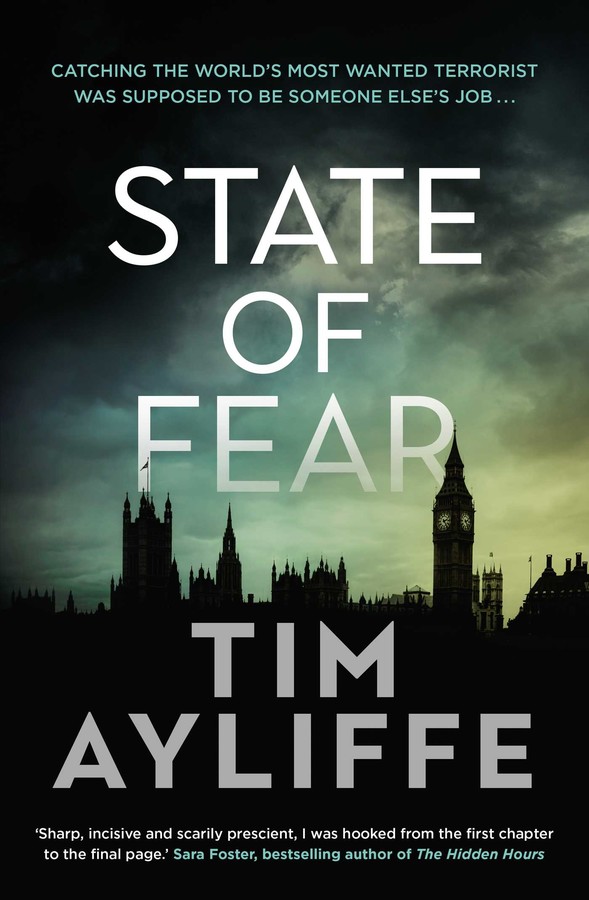
State of Fear by Tim Ayliffe

State of Fear Cover

Publisher: Simon & Schuster Australia (Trade Paperback – 22 July 2019)

Series: John Bailey – Book Two

Length: 390 pages

My Rating: 4.5 out of 5 stars

Amazon

One of the fastest-rising Australian thriller writers, Tim Ayliffe, follows up his impressive debut with an excellent second entry in his John Bailey series, State of Fear.

Tim Ayliffe is a talented author who debuted in 2018 with The Greater Good, the first John Bailey book.  This novel explored political corruption and international interference in Australia and made excellent use of the author’s experiences as a journalist.  I really enjoyed this first book and was rather interested when I received the second novel from Ayliffe, State of Fear, in 2019.  Unfortunately, I did not get a chance to read State of Fear when it first came out, and it has been in my to-read pile for a while, until I received a copy of the third John Bailey novel, The Enemy Within, a few weeks ago.  I rather liked the sound of the third book’s plot, and I really wanted to read and review it.  However, before checking out The Enemy Within I thought it would make more sense to read State of Fear first, and boy am I glad that I did.

Throughout his long career as a journalist and war correspondent, John Bailey has faced many dangers and been in several terrible situations.  However, his worst encounter was with the notorious terrorist mastermind, Mustafa al-Baghdadi, who kidnapped Bailey while he was reporting on the invasion in Afghanistan and relentlessly tortured him mentally and psychically.  Following his release from the terrorist group and a retirement from working in active war zones, Bailey thought that his days of dealing with terrorists was over, but he was wrong.

Speaking at a conference on Islamic terrorism in London, Bailey is horrified when a radicalised terrorist murders a woman in front of the convention centre.  Rattled, Bailey returns home to Sydney, only to find his troubles have followed him there.  The son of his former driver in Bagdad has gone missing, and Bailey has been implored to help.  Investigating, Bailey finds that the son has been in contact with some dangerous men with connections to Islamic terrorist cells.  Worse, it appears that they are planning to launch a massive attack in Sydney.

Desperate to save his friend’s son from making a terrible mistake, Bailey attempts to make sense of the terrible events unfolding in Sydney.  However, the deeper he goes, the clearer it becomes that Mustafa al-Baghdadi is back, and he is targeting Bailey personally.  As Bailey and everyone he loves comes under attack, Bailey is forced to turn to his old friend, CIA agent Ronnie Johnson, to find Mustafa and take him down.  But will they be able to stop Mustafa before it is too late, or will the world’s most dangerous terrorist destroy everything that Bailey holds dear?

State of Fear was an excellent and powerful novel that takes its great protagonist on a rough and dangerous journey through hell and back.  Ayliffe has definitely grown as an author since his first novel, and this second book is a compelling and intense novel with a well-crafted narrative.  Starting off with an intense beginning, the protagonist is swiftly shoved into his latest harrowing adventure, as the terrorist he thought he escaped violently bursts back into his life.  This is a very captivating novel, and despite its longer length I found myself powering through it in a very short amount of time.  The protagonist goes through a real wringer as he is forced to visit the ghosts of his past while trying to stop his foe’s latest plot.  Featuring a sprawling and deadly investigation through the suburbs of Sydney, the story eventually journeys back to London, where the protagonist and his friends engage in a deadly and dramatic fight to stop a deadly attack.  There is so much going on in this story, and the reader will experience outstanding action, powerful drama, and some major tragedy, especially in the novel’s dramatic conclusion.  This is a fantastic book which stands on its own and can easily be read by people unfamiliar with the other John Bailey novels.  I had an exceptional time reading State of Fear and it is really worth checking out.

Ayliffe works a lot of fun elements into this novel that make it quite a unique read.  Perhaps one of the most prominent of these is his experience and knowledge as a journalist which helps to produce a very Australian centric view of the events that are being depicted.  For example, Ayliffe includes a very detailed and compelling look at radical Islamic terrorism and how it is occurring both in Australia and in the wider world, particularly England.  Using several real-life Australian cases as basis, Ayliffe manages to expose and explore the heart of the issue, and he paints a fair and captivating picture of how individuals are lured into radical Islam as well as the consequences of their actions.  There are some very intriguing and powerful discussions included within this novel, especially around how the Islamic and migrant community in Australia feels isolated and prejudiced against, and I really appreciated the compelling inclusion in the novel.

Other intriguing elements contained within State of Fear include Ayliffe’s experiences with modern media and how journalist stories are produced and distributed.  There are some fascinating and fun journalistic scenes contained within this novel, and you have to assume that the protagonist’s extremely negative views about the swing to online social media based journalism has to reflect some of the author’s personal feelings.  Another great feature of this novel was the way in which Ayliffe once again used his novel to highlight the city of Sydney.  While a good portion of this novel is set in London (which Ayliffe also does a great job portraying), the scenes set within Sydney are a particular highlight.  The author really dives into showcasing this city, with the protagonist visiting several real-life suburbs and locations throughout the course of the book, distributing local knowledge as he goes.  As a result, this book is filled with some fun references that locals and Sydneysiders will really appreciate, and I enjoyed how Ayliffe spent the time to write a love letter to his city.

In addition to a fantastic story and excellent setting, Ayliffe also ensures that State of Fear is loaded with some complex and memorable characters.  The most prominent of these is series main protagonist and primary point of view character John Bailey.  Bailey is an outstanding veteran reporting character, and Ayliffe portrays him as a broken older news hound who is trying to balance his addictive career with holding onto his family.  This protagonist is the very definition of a damaged character, as he has experienced great trauma, both psychical and emotional, over the years thanks to his work as a war correspondent.  Despite this trauma, Bailey has experienced some major growth since the first book in the series, mainly thanks to the actions of major people in his life, and he is now a much more functional human being, allowing the reader to really connect with his struggles and damage.  Unfortunately, the events of this novel really hit him hard, as he experiences fresh pain while also revisiting his traumatic past through a series of dark flashbacks.  Despite this, Bailey keeps moving forward trying to solve the case, and it was great to see his determination and resolve, even under the worse of circumstances.  The ending of the novel is pretty bad for Bailey, and he goes through some tragic moments that will no doubt rock him for the rest of the series.  All of this makes for an incredible central protagonist, and readers will fall in love with this damaged and compelling character.

Aside from Bailey, State of Fear also contains several great supporting characters, most of whom are holdovers from The Greater Good, and who find themselves in all sorts of trouble in this book.  The most prominent of these is Bailey’s romantic partner, Detective Chief Inspector Sharon Dexter, who serves as a secondary point-of-view protagonist for parts of the book.  Dexter is a tough, no-nonsense cop whose past with Bailey led to a romantic relationship in the first book.  Despite having a very complex and unusual relationship with Bailey, Dexter proves to be an excellent supporting character, acting as the sensible and official support to Bailey who tries to keep him out of trouble.  While she has a bit of a cold exterior, especially when Bailey stuffs up or lies to her, Dexter is another character the reader can easily get attached to, and her involvement in the story is quite essentially the overall powerful narrative.

I also quite liked the inclusion of Bailey’s editor, Gerald Summers, another aging newsman who serves as Bailey’s emotional rock and best friend and who has an amazing run in this book.  Gerald is an outstanding and loveable character, which of course means he is going to suffer a little bit, so prepare yourself for that.  You also have to like Ronnie Johnson, the maverick CIA agent who spends most of his time living on Bailey’s couch, but who proves to be an effective and very dangerous operative when he needs to.  Ronnie has been a favourite character of mine ever since the first book (I mean, he kills an Australian Prime Minister Harold Holt style), and he does some cool things in this second novel.  Finally, I felt that Mustafa al-Baghdadi was a pretty good overarching antagonist for State of Fear.  Ayliffe did a good job portraying a manipulative religious zealot with grand plans for vengeance and the advancement of his cause.  Despite being hidden for most of the book, this character contains a great deal of menace, and I really enjoyed the sinister flashback sequences that featured him and Bailey.  I did think that some of his reasons for vengeance on Bailey were a bit weak (I mean, he had to know that the first thing Bailey was going to do when freed was to share what he knew with the Americans), but he was an overall great villain with major impacts on the narrative.  Each of these characters were well written and established, and I felt that their combined narratives really improved this fantastic novel.

State of Fear by Tim Ayliffe was an outstanding and captivating read that presents a powerful and moving adventure of journalist John Bailey.  Containing an intense narrative about terrorism, some unique elements and amazing characters, State of Fear is an excellent read which swiftly grabs the reader’s attention and refuses to let them go.  I had an incredible time reading this novel and I am still kicking myself for taking so long to check it out.  I have already read the third entry in the John Bailey series, The Enemy Within, and I am hoping to get a review out for it soon.

Amazon

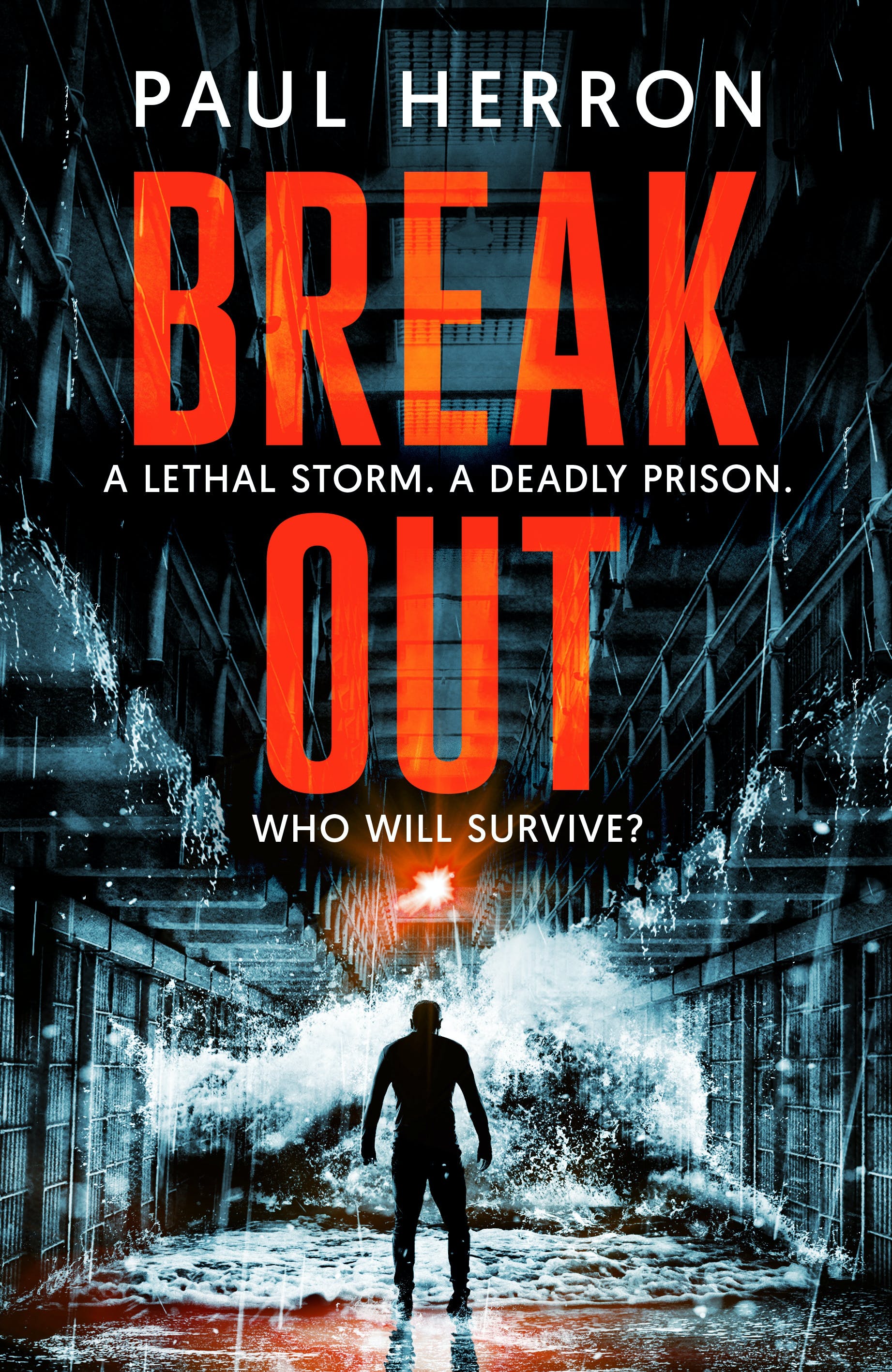
Quick Review – Breakout by Paul Herron

Breakout Cover

Publisher: Headline (Trade Paperback – 9 March 2021)

Series: Standalone

Length: 291 pages

My Rating: 4 out of 5 stars

Amazon     Book Depository

Prepare yourself for one of the most exhilarating and action-packed novels of 2021 with the ultra-exciting thriller novel, Breakout by Paul Herron.

Breakout is an intriguing and fantastic novel that caught my eyes earlier this year.  This fun book was written by Paul Herron, the pseudonym for established author and screenwriter Paul Crilley.  Crilley, whose body of work includes his Delphic Division, The Invisible Order and The Chronicles of Abraxis Wren novels, appears to have taken this opportunity to dive into the thriller genre in a big way with Breakout.  While I have not read any of Herron/Crilley’s books before, I found myself really drawn to this latest novel due to its outrageous and fun-sounding plot.

Synopsis:

As explosive as a Hollywood blockbuster, this high-concept thriller is perfect for fans of James Patterson, David Baldacci and Gregg Hurwitz.

A LETHAL STORM. THE MOST DEADLY PRISON. WHO WILL SURVIVE THE NIGHT?

Jack Constantine – a former cop who killed one of his wife’s murderers in an act of vengeance – is serving his time in Ravenhill penitentiary, a notorious ‘supermax’ home to the most dangerous convicts in the country.

When an apocalyptic superstorm wreaks havoc across the USA, the correctional officers flee the prison…but not before opening every cell door. The inmates must fend for themselves as lethal floodwaters rise and violent anarchy is unleashed.

Teaming up with Kiera Sawyer, a Correctional Officer left behind on her first day of work, Constantine has one chance of survival – he must break out of a maximum security prison. But with the building on the verge of collapse, and deadly chaos around him, time is running out…

Breathless, exhilarating and brilliantly original, this high-octane thriller is perfect for fans of Gregg Hurwitz, Lee Child and David Baldacci – and blockbuster action movies like John Wick.

As you can imagine, the idea of a supermax prison with all the inmates loose and a destructive superstorm on the way was something that sounded pretty damn awesome and it was one of the main reasons that I wanted to read Breakout.  There were so many cool things that could happen with such a narrative and Herron made sure to produce an epic and fast-paced narrative that is guaranteed to keep your attention through every electrifying scene.

The best way to describe Breakout is that it is very similar to the most insane action movie script you have ever seen.  Herron has essentially written nearly 300 pages of wall-to-wall excitement and movement, as the protagonists are thrust into an unthinkable situation with very little chance of survival.  The author does an incredible job setting up the initial threads of this great story, with compelling and detailed introductions of the troubled central character, Jack Constantine, the prison, the storm, and the other personalities contained within the prison.  The author also makes good use of some flashback sequences at the start that not only tell Jack’s story but also set up some major plot points, such as two characters the protagonist really wants to kill and a major antagonist.  All of this set up ensures that when the mayhem begins, it can go on at a continuous pace, with Jack, the trapped rookie prison guard, Keira Sawyer, and other associates running into problem after problem without any additional background information.  These obstacles include rival prison gangs, flooding, insane winds, collapsing buildings, impromptu fight clubs, a deranged cult leader, and a vengeful gangster.  These inclusions ensure that the reader can barely take a breath without something cool happening, and it is extremely easy to read this novel in one sitting.  All this leads up to big conclusion as the protagonist has to make some big decisions, as well as deal with the consequences of a few good twists that Herron added.  I deeply enjoyed this entire narrative, and action lovers everywhere are going to have an absolute blast getting through this fun book.

Breakout contains an intriguing array of characters, although I must admit that I was not taken by central protagonist, Jack Constantine.  Constantine is a bit of an ass at the best of times, as he is very arrogant and selfish.  I honestly had a hard time feeling any sympathy for the character at times, mainly because he brings all his problems on himself.  However, the deficits of this lead character are more than made up for in some of the supporting characters and antagonists featured throughout the book.  The most prominent of those is Keira Sawyer, a first-day prison guard who finds herself trapped in the prison and needs to work with Constantine to survive and escape.  I felt that the author did a great job with Keria, a strong and passionate character with a hidden backstory.  While Herron could have written Keria as a damsel in distress, he instead showed her to be a tough and resourceful figure, capable of holding her own and gaining the respect of the inmates.  I also really have to highlight Constantine’s friend and cellmate, Felix, the fantastic teller of tales.  Felix is an intensely funny character with a very unique outlook on life and the prison system.  This character is insanely likeable, and together with Constantine and Keria, Felix helps to form an excellent central trio of protagonists who you cannot help but cheer for as the action commences.

I was also quite impressed by the antagonists of this story.  Herron ensures that the protagonists have to face off with a huge raft of different criminals and gangsters as they attempt to make their escape, and it was really cool to see the range of personalities that emerged.  The main antagonist is Malcolm Kincaid, a dangerous and sadistic Miami crime figure who was able to get away with terrible acts of violence for years until Constantine framed him for murder.  Kincaid is rightfully pissed and spends much of the novel trying to brutally kill Constantine and his friends, while also causing general mayhem around the prison, including initiating an involuntary Russian roulette tournament.  Kincaid was an excellent main antagonist, and I loved some of the twists that were revealed around him.  The other villain I really liked was Preacher, a demented serial killer with a major religious bent who convinces some of the prison’s more insane members to join him in a fun little murder cult.  Preacher was a pretty intense baddie, and I loved the inclusion of a murderous cultist and his friends to an already fun story.  The final antagonist I want to talk about is the superstorm itself.  The storm, Hurricane Anna, is an absolute beast that wrecks the entirety of Florida, as well as several other states.  Herron does an amazing job bringing this crazy storm to life throughout the book, and you get to experience a number of powerful scenes where characters encounter Anna in all its windy glory.  The entire storm was an insane and fantastic addition to the plot, and it was so cool to see the character attempt to escape its pure destructive power.

Overall, I felt that Breakout was an extremely fun and exciting novel that was an absolute treat to read.  Due to all the incredible action, crazy villains and major set pieces, this is an outstanding thriller that readers will have a fantastic time getting through, especially as the action never ends.  It honestly would not surprise me if this was turned into a major blockbuster film in the next few years (perhaps with Dwayne Johnson), and it is one that I know I would deeply enjoy.  Highly recommended to anyone who wants to increase their heart rate, Breakout is an incredibly awesome read!

Blackout by Simon Scarrow

Blackout Cover

Publisher: Headline (Trade Paperback – 30 March 2021)

Series: Standalone/Book One

Length: 424 pages

My Rating: 4.5 out of 5 stars

Amazon     Book Depository

One of the leading authors of historical fiction, Simon Scarrow, breaks new ground in a thrilling and captivating historical murder mystery, Blackout.

Berlin, December 1939.  As the citizens of Berlin worry about a potential upcoming conflict with Britain and France, the Nazi party continues to sink their claws into every aspect of German society.  But as a bleak winter sets in and enforced blackouts plunge the city into darkness, a far more sinister threat begins to stalk the streets of Berlin.

A young woman has been found brutally murdered near a busy set of train tracks.  The victim is a former famous actress with a powerful husband.  Due to her marital connections, as well as a scandalous past with various high-ranking Nazi figures, including Goebbels, her case has dangerous political implications.  To that end, her case is assigned to Criminal Inspector Horst Schenke of the Kriminalpolizei, the Kripo, one of the few police officers not to join the party.  Due to his apparent disregard for the party and the importance of the victim, Horst is under intense pressure from the head of the Gestapo to solve this case.  However, what begins as an easy murder case swiftly devolves into something far more dangerous when a second body is found, and Horst is forced to face the reality that he is chasing a serial killer.

As the bodies of more young women are discovered, Horst rushes to find a killer before the government attempts to hush up the fact that a killer is loose within their perfect Nazi society.  But with the Gestapo interfering at every step and key suspects protected by the Abwehr, German Military Intelligence, this case proves difficult to solve.  When a survivor is found, Horst thinks this may be the opportunity to find the killer.  However, when the witness is revealed to be Jewish, Horst is forced to find a way to protect her from both the killer and the Gestapo.  Can Horst find the killer before it is too late, or will he discover that disloyalty to the Nazi government is considered a far worse crime?

This was another amazing novel from one of my absolute favourite authors.  Scarrow is best known as a Roman historical fiction author due to his long-running and impressive The Eagles of the Empire series, which I am a particular fan of (see my reviews for The Blood of Rome, Traitors of Rome, and The Emperor’s Exile).  However, Scarrow has also branched out into other historical periods with his Revolution quartet, the standalone novels The Sword and the Scimitar and Hearts of Stone, and a modern crime novel he wrote with his colleague Lee Francis, Playing with Death (which I really need to check out).  His latest book, Blackout, is an interesting change of pace from some of the previous Scarrow novels I have enjoyed, presenting a compelling murder mystery story with the dark historical setting of Nazi Germany.  Blackout, which was unfortunately delayed from last year, proved to be an excellent read, and I loved the complex and powerful story that Scarrow came up with.

Scarrow’s latest book has an outstanding narrative that starts with a Nazi social party scene quickly leading to the brutal murder.  This shocking opening in the dark of a blacked-out Berlin sets the scene for the rest of Blackout perfectly, and lets the reader know that they are in for an intense and dark tale.  The narrative then advances to the next day, with a great introduction to central protagonist Inspector Horst Schenke, who gets to showcase his deductive ability while also covering his personality and feelings about the Nazi government.  Once the case proper begins, Horst and his team are thrust into a lethal hunt for a serial killer, while also having to contend with the vicious politics and intrigue of the Nazi party.  Horst finds himself caught between the Gestapo, German Military Intelligence, and other influential Nazis, each of whom are attempting to manipulate the situation for their own ends.  This blend of mystery and dangerous political intrigue makes for a fantastic read, and I enjoyed the compelling balance that Scarrow produced.  The mystery itself is well crafted, with the author ensuring there is a complex and tangled web to unravel, with several promising suspects.  There are some very cool twists added into the plot, and I quite enjoyed the exciting conclusion and eventual reveal of the killer.  This is also a very effective standalone mystery, which would serve as a great introductory novel if Scarrow ever wanted to revisit this setting and characters in the future.  A series set around this book could go in some interesting directions, and I for one would be quite keen for that.

Easily the most captivating and fascinating part of this novel is the amazing historical setting that Scarrow used as the backdrop to his amazing mystery.  While several great mystery series have used World War II Germany as a setting before (the Bernie Gunther series by the late, great Philip Kerr comes to mind), I think that Blackout was a particularly good example of how it could be done, with Scarrow making sure that it really enhanced this already incredible story.  Scarrow skilfully works several fantastic and intriguing elements of this iconic setting into his narrative.  This includes the blacked-out winter streets and train lines of 1939 Berlin, which serve to hide the killer’s actions and ensures an easy hunting ground.  I also appreciated the air of worry and uncertainty that inhabited many of the characters as they are constantly left wondering if their country is heading towards a bigger war with Britain and France, not knowing of their government’s master plan.  There is also a certain amount of nationalism, patriotism and casual racism/anti-Semitism on the streets, which is a confronting and concerning aspect that the protagonist has to deal with.  There is also a fascinating focus on the way in which the Nazis infested all aspects of the German government and administration, particularly the police.  Inspector Horst is constantly butting heads with other members of the police force who were only promoted due to their party allegiances, rather than any skill or ability, which impacts the protagonists to successfully investigate his crime.  Add in the compelling depictions of German politics and Nazi interference that I mentioned before, and you have a very impactful and distinctive setting, which really helped to turn this crime novel into something very special.

Scarrow has a knack for creating some interesting and likeable characters, and this is certainly true for Blackout.  Inspector Horst is a fantastic protagonist, a former famous race car driver who experienced a traumatic crash several years ago.  He has since reworked himself as a talented police investigator and a rare man of honour in troubled times.  There is a lot to like about Horst, including his brilliant investigative skills, his courage in the face of danger, and his complete disregard for the Nazi leadership.  As one of the few senior police officers who has not joined the Nazi party, Horst is a bit of a black sheep amongst the ranks of his organisation, especially as he barely contains his disdain for the Nazis and what they are doing to his country.  This invariably leads him into a whole mess of trouble, which sees him in the crosshairs of the Gestapo and other Nazi figures, who seek to use his neutrality and skill for their own advantages.  I had a lot of fun following Horst throughout this novel, and it was great to see how a non-Nazi supporter would survive amongst the authoritarian ranks of German police in this period.  There are several great storylines surrounding this character, including about the trauma he is experiencing from his crash, as well as guilt at his failure to save the people closest to him.  I really enjoyed this character in Blackout, and it seems likely that Scarrow would have some very compelling storylines in place for this character if he ever revisited this series.

Aside from Horst, there are several other compelling side characters in this novel, which include a mixture of fictional characters and real historical figures.  One of the better characters is Ruth, the only apparent survivor of one of the serial killer’s attacks.  Ruth is a feisty and combative character, made so by her position as one of the few Jewish people still remaining in Berlin.  Despite being threatened by the entire German apparatus as well as a serial killer, Ruth remains strong throughout the book and is a very inspirational character to follow.  I also quite enjoyed the character of Liebwitz, a Gestapo agent assigned to Horst’s unit to spy on him and report back to the Gestapo commander.  However, Liebwitz proves to be a rather unusual Gestapo agent, more concerned with facts and analysis, rather than Nazi internal politics, and it was fascinating to see an honest and non-sociopathic member of the Gestapo.  While there is a lot of mistrust for Liebwitz in the beginning, he soon becomes a major part of the investigation, and Scarrow sets up some very interesting storylines for him.  Finally, I also quite enjoyed the killer of the story.  Several sequences in Blackout are shown from his point of view, although his identity is kept hidden towards the end of the book.  Scarrow paints an interesting picture of this killer’s mental state, and it was interesting to see his motivations run parallel to the goals of the Nazi party, which he uses to justify some of his actions, and indeed his actions are something that the Nazi leadership might approve of.  I felt that the author did a good job setting this antagonist up throughout the novel, and I rather liked the twist surrounding their eventual reveal.

Simon Scarrow continues to show why he is one of the leading authors of historical fiction with the outstanding and captivating historical murder mystery, Blackout.  Breaking into a whole new historical period and setting, Scarrow produces a fantastic and powerful murder investigation which makes amazing use of its complex characters and detailed historical setting.  Featuring all manner of twists, political intrigue and devious Nazi characters, Blackout was a compelling and intriguing read that comes highly recommended.  I cannot wait to get my next hit of Scarrow, and luckily I don’t have to be patient for long as the next Eagles of the Empire book, The Honour of Rome, is out in a few months time.

Amazon     Book Depository

Throwback Thursday – Fool Moon by Jim Butcher

Fool Moon Cover

Publisher: Buzzy Multimedia (Audiobook – 9 January 2001

Series: Dresden Files – Book Two

Length: 10 hours and 6 minutes

My Rating: 5 out of 5 stars

Amazon

In my Throwback Thursday series I republish old reviews, review books I have read before or review older books I have only just had a chance to read.  For my latest Throwback Thursday, I continue my exploration of one of the most highly regarded urban fantasy series out there, Jim Butcher’s The Dresden Files, with the awesome and deeply captivating second entry in the series, Fool Moon.

The Dresden Files are an outstanding collection of novels that follows professional wizard and private investigator Harry Dresden in modern-day Chicago as he battles magical creatures and practitioners that threaten innocent people.  Generally considered the gold standard of the urban fantasy genre, The Dresden Files have been going for over 20 years and currently consist of 17 novels and a massive collection of short stories and novellas.  While I have been meaning to check this series out for a while, I only started reading them last year when I received a copy of the latest entry in the series, Battle GroundBattle Ground was an epic and extraordinary read that featured a mass-supernatural war in the middle of Chicago.  I absolutely loved Battle Ground and it was easily one of my favourite books and audiobooks of 2020, while Butcher was one of the best new-to-me authors I read last year.  Because of how incredible I found Battle Ground to be I have decided to go back and start reading the series right from the beginning.  I started with Butcher’s first Dresden Files novel a couple of months ago, Storm Front, which proved to be another impressive read, and I am now extremely hooked on this series.  So when I was in the mood for a fun book to break up my reading schedule, I decided to start listening to Fool Moon, and boy am I glad that I did.

Business has been slow for Harry Dresden, Chicago’s only professional wizard, after his last investigation led to all out chaos and destruction.  However, his life is once again about to get very interesting when he is dragged to a murder scene.  One of the bodyguards of a notorious crime lord Dresden has dealt with in the past has been brutally torn to shreds.  With a full moon in the sky and bloody wolf prints surrounding the victim, Dresden comes to the only conclusion he can: there is a killer werewolf stalking the city.

Diving once more into a supernatural case, Dresden attempts to find the killer before the moon rises again.  However, this may prove more difficult than he initially believes, as Chicago is currently rife with wolf-based magic practitioners, enhanced criminal gangs and monsters, each of whom could be more than capable of committing the crime.  Worse, when an associate of his turns up dead, Dresden finds himself under suspicion for the murders by the police and the FBI.

Now on the run with his reporter girlfriend and a mysterious ethereal shifter, Dresden needs to find out who or what is responsible for the murders and why they have involved him.  But with the most bestial elements of Chicago’s criminal elements coming after him and an uncontrollable and seemingly unkillable monster hunting through the night, can Dresden stop the killers before it is too late, or will the next full moon be his last?

Wow, now this was a pretty awesome second entry in the outstanding Dresden Files series.  Butcher has crafted together something really special in Fool Moon, thanks to its compelling and intense story, amazing characters, great humour and impressive fantasy additions.  I had an absolute blast getting through this book in a few short days and it was so good I have no choice but to give it a full five-star rating.

At the centre of this incredible novel is a complex and exciting narrative that sets the protagonist on a deadly journey filled with murder, mystery and monsters.  Starting with an intriguing investigation into an apparent werewolf serial killer, Fool Moon’s story eventually devolves into a survival story for the protagonist as he finds himself on the wrong side of the law, the true killers and several different groups of criminals and werewolves.  This proved to be a really impressive and addictive narrative, and I loved the outstanding blend of a detective story with magic, wizards and wolves.  The mystery angle contained within Fool Moon is particularly good, and while the culprit is revealed about two-thirds the way through for excellent story reasons, it was still a fantastic and twisty case that I enjoyed.  Butcher really invested in several excellent and memorable extended sequences in this novel that were a lot of fun to get through, including a particularly intense brawl between several antagonistic groups with Dresden in the middle, and a fantastic high-stakes final confrontation where no one is safe.  However, my absolute favourite sequence occurred in the middle of the novel and saw Dresden forced to contend with a rampaging monster in the middle of a police station.  The sheer carnage and destruction that occurred in this sequence was really cool, and readers are left on the edge of their seats as the fates of several characters hang in the balance.  I deeply enjoyed this intense scene, and it absolutely cemented Fool Moon’s place in my dark heart.  This was an incredible and powerful story, and readers who check it out are in for a thrilling and captivating treat.

A particular strength of The Dresden Files as a series is the way in which the author makes it very accessible to new readers who can easily slip into any of the books in the series, even some of the later instalments, and easily follow what is going on.  Fool Moon is a great example of this, and I felt that people unfamiliar with the rest of the series should be able to enjoy this book without any problems.  All the recurring characters in the narrative are quickly and effectively reintroduced, often in a similar manner to how they appeared in the first book, and any relevant storylines, magical abilities or prior adventures are also covered in some detail.  As a result, new readers should have no trouble enjoying this great book, and indeed this will probably turn them into a fan of the series and ensure that they check out some of the other books.  However, there are some cool connections to the first novel that dedicated readers will notice, and I liked the underlying story thread of someone plotting and planning behind the scenes to mess with the protagonist.  Overall, this a great book for all fantasy and mystery fans, especially those who like a complex, multi-genre narrative.

I love all the awesome fantasy elements that Butcher slips into his novels, and it is always great to see the weird and magical in the midst of modern-day Chicago.  Fool Moon is no exception, as Butcher has a lot of fun expanding out some of the rules of magic in this book, as well as highlighting a few additional magical denizens and powers.  While this is very cool, the real magical highlight of Fool Moon has to be the werewolves.  Most fantasy authors who feature werewolves in their story would choose just one specific type that they like and leave it at that.  Butcher, however, is not the sort of person to do stuff by half measures (check out the massive fantasy war featured in Battle Ground) and instead features five separate subtypes of werewolves, all of whom are potential suspects for the murders.  I deeply enjoyed this use of multiple werewolves throughout the novel, not only because it really helped to enhance the book’s already fantastic mystery, but because it was awesome and fascinating to see the different creature subtypes.  Each werewolf or wolf-based magic user has their own unique abilities, source of power and personalities which Dresden has to learn about and overcome if he is to survive.  These wolves include shapeshifters, demon talisman powered wolves and humans with wolf-like mentalities that make them act like berserkers.  The standout, however, is the loup-garous, a cursed individual with no control over their actions; essentially a more monstrous version of wolf man from film.  Butcher paints his loup-garous as a particularly dangerous being which is practically invincible to everything and anything it encounters, including the protagonist’s most destructive magic.  This loup-garous causes some real carnage in this book, and watching Dresden attempt to defend himself from it is pretty crazy and makes for some excellent and intense scenes.  I deeply, deeply enjoyed the epic use of werewolves in this novel and Butcher really does the old lore surrounding them justice.

It is impossible to talk about a Dresden Files novel without discussing the incredibly well-developed characters featured within.  The most prominent of these is central protagonist Harry Dresden, Chicago’s resident wizard for hire.  Dresden is an exceptionally entertaining and likeable protagonist who provides pretty much all of the book’s great humour thanks to his outrageous personality, disrespect for authority and witty observations about the events going on around him.  As such, he is a fantastic character to follow, and you really appreciate his knowledge and insights into the supernatural and the people around him.  While much of the book shows Dresden as a confident and amusing being, we do get to see more of the character’s darker side as he deals with dark and dangerous magic.  Thanks to the author’s outstanding writing style, the reader is front and centre for all of the protagonist’s slips towards darkness and despair, especially as he encounters tragedy, loss and insane opposition.  I really appreciated this examination of the protagonist’s fragile psyche, and Butcher makes sure to take him to the edge in Fool Moon.  The author also makes some additional intriguing references to Dresden’s past which hint at some traumatic events and betrayals.  Fool Moon also shows of Dresden’s full magical potential, especially as he launches some incredible attacks here, even if they do leave him very drained.  It also shows the character at his most vulnerable, as he is forced to go it alone with only the bare amount of resources and abilities.  All of this makes for an intriguing and powerful character and I really enjoyed seeing more of this awesome protagonist.

In addition to Dresden, Butcher also makes excellent use of several great supporting characters, each of whom add some fun and compelling elements to the plot.  The most prominent supporting character was probably Karrin Murphy, Dresden’s liaison in the Chicago police.  Murphy, a hardnosed professional who is one of the few police officers to believe in the supernatural, has an intriguing character arc in this novel.  This is mostly because of Dresden’s actions in Storm Front, as well as his somewhat chauvinistic determination to protect Murphy from magic, both of which ruined have Murphy’s trust in him and placed her in some hot water with the police brass.  This fractured relationship becomes a key story point in Fool Moon, especially as it leads to Murphy being quick to jump on Dresden as a potential suspect in the crimes.  This adds some compelling difficulties for the protagonist in the story, and I really appreciated the excellent drama that emerged between the two as Murphy and a repentant Dresden attempt to work out their issues.

Aside from Murphy, you have the return of Susan Rodriquez, Dresden’s love interest and a reporter for a tabloid newspaper.  Susan is an interesting counterpoint to Dresden, being an ambitious reporter determined to find out the truth of the arcane no matter what.  She has a fun and fiery relationship with Dresden in this novel, and it was interesting to see her more involved with the story, especially as she sees Dresden at his darkest and most dangerous point.  I also loved seeing more of Gentleman Johnny Marcone, the sly and powerful gangster who Dresden has previously gone up against.  Macone is a fantastic villainous character, and I love the antagonistic relationship he has with Dresden, even when the two are on the same side.  You also have to have a laugh at Bob, a guiding spirit who resides inside a skull in Dresden’s basement, as he adds some intriguing exposition and laughs in his scenes.  There were also some intriguing new characters added in this book, although I will not go into too much detail about them as it could spoil some parts of the story.  None the less, they were all really fun additions to the plot, and having so many different new magical or shapeshifting beings ensured the reader was constantly trying to work out who was the actual villain.  All in all, a fantastic group of characters, and I felt that they really helped to turn Fool Moon into an excellent and first-rate read.

One of the reasons I have been enjoying The Dresden Files books is because they have some really awesome audiobook formats.  Each of these audiobooks I have listened to have been extremely amazing, and I love the way in which they portray these fun stories in a concise and exciting manner.  The Fool Moon audiobook has a runtime of just over 10 hours, and listeners will power through this in no time at all, especially as it is really easy to become addicted to the fantastic story.  However, the main thing that I love about these audiobooks is the perfect choice of narrator in actor James Marsters (Spike from Buffy and Angel).  Marsters does an outstanding job with his narration, imbuing the various characters with some fantastic and fitting voices that expertly convey their personality, emotions and actions.  I am particularly impressed by the way in which he portrays the story’s narrator and main protagonist, Harry Dresden, and the tone he uses for him perfectly represents the sarcastic and entertaining rogue wizard.  This is one of the best examples of an audiobook narrator matching their protagonist, and it makes for some fantastic listening.  I also appreciated the way in which Marsters started really getting into his narration of certain key events in this second novel.  While he did an excellent job in Storm Front, I felt that Marsters stepped up his game in Fool Moon, and while it was not quite at the level of enthusiasm and volume that featured in Battle Ground (he was really getting caught up in the action there), it was noticeably more exciting.  This enthusiasm added a lot to the enjoyment I felt while listening to Fool Moon and I strongly recommend this format to anyone who wants to check this book out.

Fool Moon by Jim Butcher ended up being another exceptional and spectacular addition to the author’s legendary Dresden Files series.  I had an outstanding time listening to the clever and exciting narrative that Butcher came up with for his second novel and I think that the author actually stepped up his game a little with Fool Moon.  Featuring some great characters and an addictive and thrilling mystery surrounding werewolves, Fool Moon is an incredible read that I powered through in no time at all.  I can think of no higher praise for this book than to say that the moment I finished it I immediately started the next novel in the series, Grave Peril, as I still had not gotten my fill of Dresden Files goodness.  I am already making some amazing progress with Grave Peril and I am planning to review in the next week or so.  Until then, readers are strongly encouraged to check this awesome second entry in the series out, as you will not regret it.

Amazon