Of Flame and Fury by Mikayla Bridge

Publisher: Macmillan (Trade Paperback – 15 July 2025)

Series: Standalone / Book One

Length: 383 pages

My Rating: 4.5 out of 5 stars

Amazon

Australian author Mikayla Bridge produces one of the more compelling young adult fantasy debuts of 2025 with the inventive and clever read, Of Flame and Fury.

Plot Synopsis:

On an island built from ash and shrouded in fire, phoenix racing is a sport just as profitable as it is deadly.

Seventeen-year-old Kel Varra and her team of underdogs, the Crimson Howlers, are desperate to win the annual races and the fortune that comes with it. But the Howlers need a new rider, which leads Kel to join forces with Warren “Coup” Coupers – an arrogant rival she can’t get out of her head.

As tensions rise on and off the track, Kel’s home is mistakenly burned down, and she’s forced to take a job from a mysterious tech mogul with an unsettling interest in her phoenix, Savita. This sets in motion a conspiracy that threatens everyone Kel cares for, especially Coup, for whom her embers of resentment are quickly igniting into something dangerously new.

Heart-pounding pages full of steamy romance, fiery confessions, political scheming, and volatile magic culminate in a final twist readers will never see coming.

Of Flame and Fury was a very interesting 2025 young adult fantasy release that I was quite excited to get my hands on.  The first book from Australian author Mikayla Bridge, Of Flame and Fury had a very exciting plot behind it which Bridge effectively built on with an excellent story and some fantastic writing.

I ended up really enjoying Of Flame and Fury’s intriguing narrative, which grabs the reader’s attention early thanks to an initial intense and tragic phoenix racing sequence.  This early race quickly and effectively sets up most of the book’s key characters, including protagonist Kel Varra and her rival and inevitable romantic interest, Coup, with an additional, fiery moment bonding these key figures together.  The story quickly moves onward with Kel forced to recruit Coup to her phoenix racing team, which has been recruited by a powerful tech mogul with his own hidden agenda.  This initial part of the book was quite interesting and set up a lot of key story elements, while also providing readers with a lot of the new lore in Bridge’s phoenix filled society.

While fun and loaded with interesting character introductions, this early part of the book lacked a little action, especially as there was a nearly 150-page gap between the first and second phoenix races.  I feel that some readers may lose momentum in this part of the book, especially as the promised races are such a big part of the book’s appeal.  Still, I enjoyed the story development here, and Of Flame and Fury’s big races, when they finally start, have all the chaotic fun you’d hope for, made even more exciting and compelling by the character relationships and distinctive fantasy elements Bridge introduced and built up during this period.

The second half of the book flies by quickly, as you soon get drawn into the various races, intrigues, and complex relationships that are such a vital part of the narrative, even if the main enemies-to-lovers storyline was a little tropey.  I ended up really enjoying the compelling focus on the intrigues of the corporation sponsoring Kel and her team, which leads up to the big climax of the book.  While it does have an obvious villain, the motivations of this antagonist are very important and well set out.  The revelations around this main storyline make Of Flame and Fury’s plot really stand out, especially as it leads to an impressive twist I honestly didn’t see coming.  This big twist worked extremely well, as it cleverly utilized lore elements that Bridge had been inserting into the narrative the entire time, while also completely reshaping your entire perspective of the preceding story.  I deeply appreciated how this came together, and its excellent execution honestly amplified my entire estimation of this novel.  Following on from this, Bridge leads Of Flame and Fury to its fantastic conclusion, which featured all the drama and intensity you would expect from a great young adult fantasy novel, and which leaves the reader very satisfied.

I felt that Of Flame and Fury came together extremely well as a novel, and Bridge really showcased her writing chops in her debut.  Primarily shown from the perspective of the main character, Kel, Of Flame and Fury was a very fast-paced read that did a good job of blending fantasy elements with compelling characters.  I love how seamlessly Bridge was able to work the unique elements of her fantasy universe into the narrative, and readers were quickly able to get across the cool phoenix lore.  The resulting high-octane phoenix races were a real highlight of this novel, while other bits of compelling lore were well utilised, especially in that cool twist I gushed about above.

Bridge kept an excellent young adult tone for Of Flame and Fury, resulting in a novel that would primarily appeal to teenager readers, while also being quite enjoyable for older fantasy fans, especially those who like unique ideas or compelling characters.  There is also a certain amount of appeal for the romantasy crowd, thanks to the fiery relationship between Kel and Coup.  As someone who doesn’t massively enjoy romance fiction, I personally found the enemies-to-lovers sub-plot to be one of the weaker parts of the book, while the book’s secondary romance (between team winger Dira and corporate engineer Rahn) was a little more interesting.  Still, I’m sure more typical romance/romantasy fans will enjoy the combative relationship between Kel and Coup, and it helps that both are well-written characters who stand on their own outside of the romance.

Due to its great characters, clever story and fun, fire-filled phoenix races, Of Flame and Fury was an awesome young adult fantasy novel, and it’s one I had a lot of fun reading.  New author Mikayla Bridge proved to be extremely talented with this debut book, and I will be curious to see what she writes next.  An overall wonderful novel that will appeal to a wide audience.

Amazon

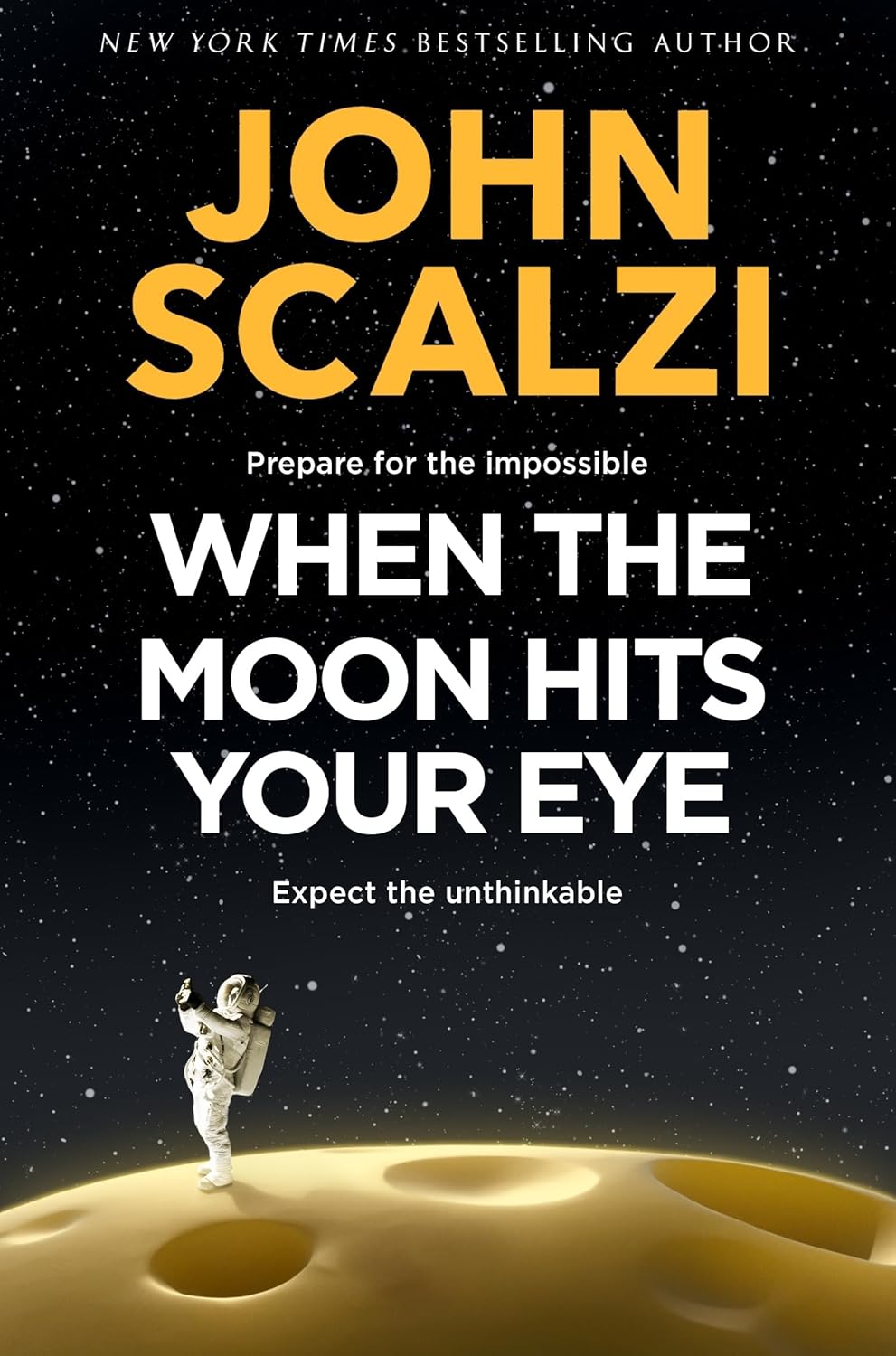
When the Moon Hits Your Eye by John Scalzi

Publisher: Tor (ebook – 25 March 2025)

Series: Standalone

Length: 336 pages

My Rating: 4.75 out of 5 stars

Amazon

Prepare for one of the most outrageous and original science fiction novels of 2025 with the fun, heartwarming and very entertaining novel, When the Moon Hits Your Eye by the always fantastic John Scalzi.

John Scalzi is a very entertaining science fiction author who has been providing his unique take on the genre for years.  Best known for Old Man’s War and The Interdependency series, Scalzi has also written a range of distinctive standalone science fiction novels that provide interesting takes on the world, as well as satirising certain elements of pop culture.  I have had a wonderful time reading novels like Redshirts, The Kaiju Preservation Society and Starter Villian, and all of them proved to be amazing books.  As such, I have been making a strong effort to read all Scalzi’s new novels, including his 2025 release, When the Moon Hits Your Eye.  A captivating read with a unique premise behind it, When the Moon Hits Your Eye was one of my most anticipated books of 2025, and I am so glad that I got the chance to read it.

Plot Synopsis:

The moon has turned into cheese.

Now humanity has to deal with it.

For some it’s an opportunity. For others it’s a moment to question their faith: In God, in science, in everything. Still others try to keep the world running in the face of absurdity and uncertainty. And then there are the billions looking to the sky and wondering how a thing that was always just there is now… something absolutely impossible.

Astronauts and billionaires, comedians and bank executives, professors and presidents, teenagers and terminal patients at the end of their lives — over the length of an entire lunar cycle, each get their moment in the moonlight. To panic, to plan, to wonder and to pray, to laugh and to grieve. All in a kaleidoscopic novel that goes all the places you’d expect, and then to so many places you wouldn’t.

It’s a wild moonage daydream. Ride this rocket.

Alright, so I knew going in that I was going to love When the Moon Hits Your Eye, primarily because it’s John Scalzi examining what happens when the moon turns to cheese, and that’s such an awesomely wacky premise.  However, even with that expectation, I was surprised at how much fun I had with When the Moon Hits Your Eye, especially as Scalzi presents a compelling, thoroughly amusing and genuinely nice book that I ended up powering through in only a couple of days. 

This was an extremely enjoyable novel, and I loved the impressive and multi-layered narrative that Scalzi was able to wrap around his original central plot idea.  Starting with a couple of great introductory chapters that showcased the people of Earth becoming aware of the makeup of the moon suddenly and inexplicably changing from rock to a cheese-like substance, the book soon evolves into a series of loosely connected stories, set over the course of the first lunar cycle of the new cheese moon.  These stories are designed to show the various reactions people in America have to the moon’s sudden change, and Scalzi has fun coming up with a range of great scenarios that only he could imagine.  Many of these involve scientists, government officials and astronauts as they explore the more scientific nature of the cheesy moon and how it impacts the larger world, and this forms the core of When the Moon Hits Your Eye’s narrative, moving the overall plot along with new developments.

These main stories are well mixed with much more personal tales of ordinary people who find the unusual world circumstances impacting their lives in various ways as they try to make sense of their new reality.  Scalzi really tries to showcase different layers of society with these stories, as he explores how religious people, philosophers, pop scientists, movie producers and even cheese shop owners would react to the unlikely scenario.  These resulting ordinary-people based narratives blended extremely well with the core storylines about the official examination of the new moon and provided the reader with an outstanding range of emotions, humour and complex character-driven tales that expertly captured the human experience and examine how people react to the unexpected and the impossible.

Scalzi goes a variety of interesting places as the overall narrative of When the Moon Hits Your Eye continues, and I appreciated how well he set out the crazy lunar cycle.  There is a more desperate edge to the second half of this book, especially as the cheese-based moon causes massive problems for the world, but this allows Scalzi to really dive into the emotional heart of the story, especially as he revisits several characters throughout the course of the book to see how these impossible events have changed their perspective and lives.  The story comes to a very interesting, if slightly sudden, end, and while I think there was room for Scalzi to possibly provide readers greater closure with some of his character arcs, I felt that his conclusion was fun and fitting, especially with its cynical, if realistic, take on Earth’s future and how it will likely look back at the past.

This ended up being a very fun and moving novel, especially as Scalzi really dove into the human side of the problem and tried to examine the various ways people would either come together and drift apart over something this insane happening.  While I’m sure some of book’s science is a little iffy, Scalzi sells the entire event in a realistic manner, and anyone can come into When the Moon Hits Your Eye and follow along with its plot, especially when it comes to the moving character-focused stories.  Scalzi has a real talent for creating some elaborate short narratives around interesting protagonists, and the cool range of cool stories set under the book’s big plot event were all quite entertaining and unique in their own way.  While some go for outright humour, others try to mirror recent real-world events, while more have much more personal and complex stories that looked at the darker side of the changes to the moon.  All feature Scalzi’s realistic and relatable characters, and I felt that the author had a great, if cynical handle, on the modern mindset and the different ways humans would react to a sudden, major event like this.

As for the many cool stories contained within When the Moon Hits Your Eye, I tended to enjoy the more outrageous or outright funny tales, primarily because Scalzi used his imagination to come up with some truly hilarious, if surprisingly realistic moments.  For example, one brilliant chapter focused on a Hollywood producer bombarded by moon and cheese focused screenplays, each one more ridiculous then the last.  Other highlights included stories following employees of an entitled uber-wealthy who wants to become the first person to eat moon cheese, a poorly received Saturday Night Live taping, and a Vegas-based narrative resulted in a very over-the-top political scandal, all of which made me chuckle.  These funnier stories were well balanced by more heartfelt narratives in unusual times, such as the tales surrounding two rival cheese shops that resulted in romance, familial reconnection, and other tales of emotional growth.  I personally found myself connecting to a particularly moving story about an aspiring and struggling fantasy author whose writing dreams are eclipsed by the changes to the moon.  Throw in several more central plot threads that move the story along in some surprisingly dark ways, including the narratives surrounding a billionaire tech-mogul with delusions of grandeur.  These stories all form quite an impressive narrative web, and I really cannot emphasise just how well they came together, nor how entertaining they are both a singular and a joint level.

John Scalzi dives into one of his craziest scenarios with When the Moon Hits Your Eye, an ultra-compelling and fantastically over-the-top novel that I couldn’t get enough of.  Smart, moving and oh-so funny, When the Moon Hits Your Eye was a breathtaking novel that brings you laughs, joy, and Scalzi’s brilliant insights into human nature.  A highly recommend book for anyone looking for something entertaining or just a little unusual.

Amazon

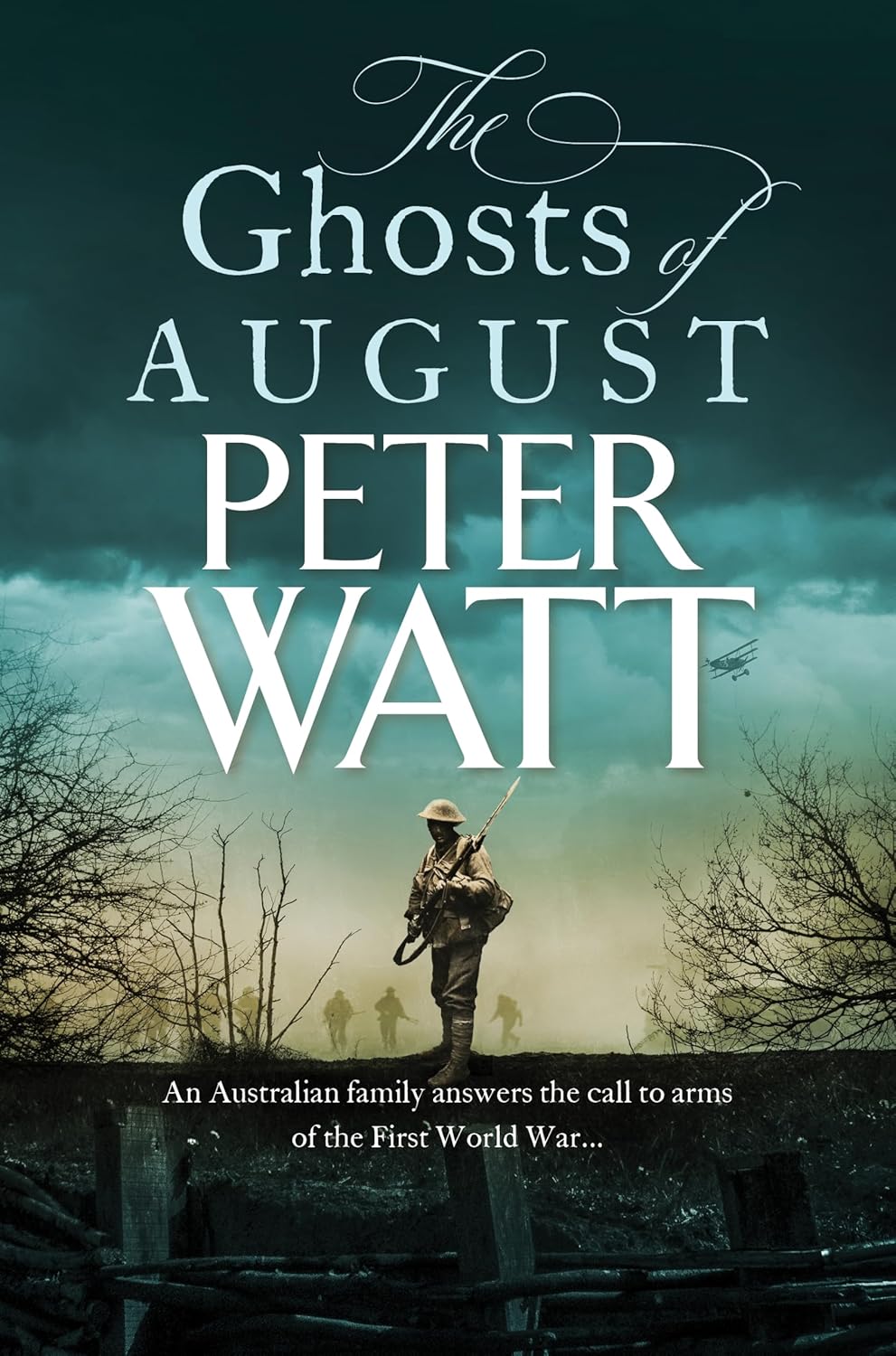
The Ghosts of August by Peter Watt

Publisher: Macmillan Australia (Trade Paperback – 29 October 2024)

Series: Colonial series – Book Six

Length: 401 pages

My Rating: 4.25 out of 5 stars

Amazon

Australia’s master of historical fiction, Peter Watt, continues to shine with the latest exciting book in his Colonial series, The Ghosts of August.

Watt is a fantastic author who has a particular skill at writing fast-paced adventure novels based around Australia’s compelling and complex history.  The author of several intriguing multigenerational series, Watt’s current body of work is the Colonial series, which started back in 2018 with The Queen’s Colonial.  An awesome book that followed a young Australian farmer, Ian Steele, who journeys to England and through a series of shenanigans gets commissioned in the British army as a captain, gaining the moniker the Queen’s Colonial.  I had a lot of fun with this first book, and Watt has kept the series going strong ever since.  The next two books in the series, The Queen’s Tiger and The Queen’s Captain, followed Ian through several mid-19th century wars, while also encountering love, loss, and dark intrigues.  The third and fourth novels, The Colonial’s Son and Call of Empire, featured a time skip to the late 19th century, where a mostly retired Ian had taken a step back from adventuring while his two sons, Josiah and Samuel, became the main characters.  With the death of Ian at the end of Call of Empire, the series entered a new phase as Watt again skipped ahead with The Ghosts of August.  Set around the turbulent events of World War I, The Ghosts of August was another fantastic entry in the series that continued to follow all the adventures of the Steele family.

The Queen’s Colonial, Ian Steele, is dead, but his family still serve the crown, especially as the threat of war spills across the globe. Ian’s oldest son, Josiah, is now head of the Steele family, and, like his father before him, he has two very different sons to worry about.  His oldest son, David, is a canny and cultured young man with the world at his feet, while his youngest son Ben is a wild child, constantly finding trouble and solving it with his fists.  However, despite their differences, both David and Ben are about to be caught up in the chaos of war.

Ben, sent away on a secret mission about the family’s boat, inadvertently finds himself trapped in German New Guinea when the war breaks out, where circumstances force him to become a desperate fugitive from the German troops stationed there.  David, determined to do his bit, becomes an officer in the Australian army, and finds himself involved in Australia’s attempt to take control of German New Guinea, hoping to reunite with his brother.

However, with petty grievances and the love of a women between them, Ben and David find themselves on different paths as the war progresses.  While David finds himself serving as an officer on the Western front, Ben signs up as an enlisted man in the deserts of Palestine.  Both brothers will face danger and death the like of which the world has ever seen before, and the desperate battles will rock the Steele family to its very core.

The Ghosts of August was another awesome book from Watt that pits the latest generation of his central family against all the horrors of war, turmoil and history.  A great addition to the Colonial series, The Ghosts of August was a very fun and action-packed read that cleverly tied into some fascinating periods of history.

Watt features a very familiar narrative structure for The Ghosts of August, which follows the current protagonists of the Colonial series into a whole new conflict.  Starting in 1914, the novel initially follows the various characters through the period leading up to the conflict, before throwing them right into the carnage with several battles and action pieces.  Making great use of the historical record to enhance his narrative, Watt sets his story throughout a range of fascinating locations and periods, all shown from the overlapping perspectives of his point-of-view characters.  Watt provides an interesting spread of protagonists in The Ghosts of August; while the key characters are the younger members of the Steele family, you also see alternate perspectives from the books various antagonists, as well as some more friendly German characters.  There is a good mixture of action, character-focused drama, and intrigue as these figures deal with issues on various fronts.  I particularly enjoyed Ben’s attempt to survive in the wilds of German New Guina for the first part of the book, while the various intricate depictions of war in the second half of the book steal the show, especially as there is a ton of tragedy and shocking moments.  Watt brings the entire narrative to a sad, but hopeful end, and it will be interesting to see if or how the author continues the series in the future.

As with all the books in the Colonial series, The Ghosts of August works well as both a standalone novel and a continuation of the rest of the series, as Watt highlights key character history and previous adventures in an effective manner for new readers.  I personally have had a lot of fun exploring the entire series from the start, and it has been great to see how the central family has evolved.  The focus on a single family and its various members, friends and enemies throughout turbulent points of history is a fun writing style that the author has a lot of experience in, and it always results in an entertaining and fast-paced book.  As with the previous Colonial novels, Watt’s focus on action, warfare, and the intricate history of the period, is the highlight of The Ghosts of August.  Anyone with a love of early 19th century warfare or adventure is in for a great time, and I deeply enjoyed the powerful war sequences the author featured.  However, I did think that some of the characters were a little one-dimensional in places, especially as his two main protagonists, brothers Ben and David, are carbon copies of other Watt central characters.  That being said, Watt writes an excellent storyline that sees the two brothers at odds due to an alluring German noblewoman, and the resulting attempts to get past it are moving, with some real tragedy thrown in.  I also enjoyed the devious German military antagonist, Kurt Jäger who plagues Ben in the first half of The Ghosts of August, and whose full storyline in the novel proves to be particularly interesting.  An overall fun book that is easy to enjoy, especially if you have read one of Watt’s novels in the past.

The final element of The Ghosts of August that I want to highlight is the fascinating historical features that really made this novel stand out.  Watt has a clear love for Australian history that shines through in his writing, especially in The Ghosts of August where he dives into various unique aspects of Australia’s contribution to World War I.  Not only does he take his characters to the obligatory battlefields of Gallipoli and the Western Front (the former of which is relatively brief for an Australian war novel), but he also examines other lesser-known conflicts Australia was involved with during this period.  This includes Australia’s contribution to the fighting in the Middle East, as there are some very intense and action-packed sequences that follow one of the protagonists fighting in Egypt and Palestine with the Australian Light Horse.  I also found the first conflict focused on in the book, Australia’s expedition to take control of German New Guinea, to be particularly fascinating.  Watt portrays the main battle in compelling and exciting detail, and it was fascinating to learn more about this expedition, especially as it rarely gets featured in fiction, despite being Australia’s first contribution to the war.  All these historical elements are expertly woven into the main narrative by Watt, who always does an outstanding job of setting his own story arcs around these events.  You really get stuck into both the narrative and the Australian history as a result, and I loved seeing more of Watt’s infection love for Australian wartime history.

The Ghosts of August was another amazing book from Peter Watt that provided a fantastic continuation to his highly enjoyable Colonial series.  Loaded with action, adventure and interesting historical inclusions, The Ghosts of August is classic Watt, and I had a ton of fun with it as always.  I am curious to see where Watt goes next, as I will always be eager to grab another historical adventure from this excellent Australian author.

Amazon

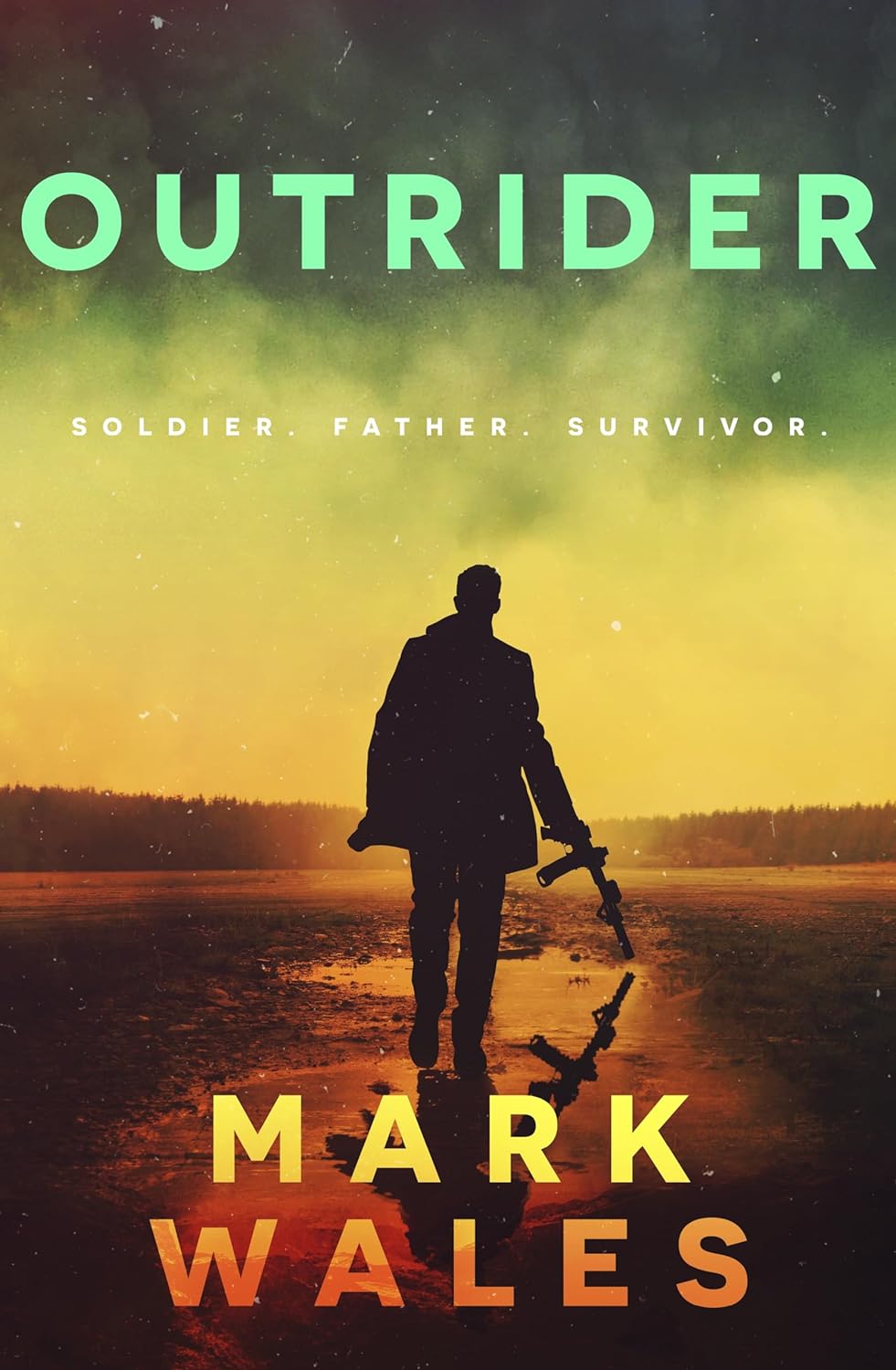
Quick Review – Outrider by Mark Wales

Publisher: Pan Macmillan Australia (Trade Paperback – 25 June 2024)

Series: Standalone/Book One

Length: 354 pages

My Rating: 4 out of 5 stars

Amazon

Former Australian soldier and current media personality Mark Wales presents a particularly exciting debut novel with the gripping thriller Outrider.  A gritty, intense, and absolutely action-packed dystopian thriller, Outrider is an awesome Australian novel readers will have a hard time getting away from.

Plot Synopsis:

Jack Dunne will do anything to save his son.

A violent civil war. An unstoppable enemy. One road to freedom.

In the wake of a global conflict, foreign forces occupy part of Australia, quashing all but a few pockets of local resistance. The tense stalemate ends in 2034, when Jack Dunne reignites the war.

Dunne is an Outrider, one of the last elite special operations soldiers in the Resistance. As the enemy prepare to eliminate the freedom fighters once and for all, he is tasked with his final mission.

If Dunne and his eleven-year-old son achieve the impossible, and survive, they’ll secure their future across the border in Free Australia.

But the road to victory will be bloody.

A cinematic action-thriller from bestselling author and veteran Mark Wales. Explosive and exhilarating, Outrider is a heartfelt father-and-son story of survival, resistance and hope.


Outrider
was an intriguing and complex novel that envisions a dark near future for Australian and sets loose a bold new action hero into the resulting carnage.  Set after a Chinese invasion of Australia, Outrider follows formidable resistance solider Jack Dunne and his son, Harry, as they attempt to save the lives of the last standing rebel fortress in Victoria from an upcoming war.  Given a mission to journey across occupied Australia to recover a military asset who can provide specialised assistance in the upcoming battle to come, Jack and his son will need to run a gauntlet of bandits, Chinese soldiers and members of the collaborating Victorian militia working for them.

This was an intense and exciting piece of Australian fiction, and Wales really dug deep to present an authentic tale of desperation and war.  Quickly and effectively introducing the 2034 dystopian setting, Wales takes the reader right into the action with a series of brutal early encounters that also set the rest of the narrative in motion.  From there, the story turns into an intense, Mad Max-style road trip as Jack and Harry embark on their journey to reach the required military asset and bring them back before it was too late.  This proves to be an excellent continued sequence, as the protagonists encounter obstacles and conflict, while also endearing themselves to the reader with a dive into their motivations and the history of events that drive Jack on.  The second half of Outrider proves to be even more epic and intense, as the protagonists desperately attempt to overcome the deadly forces coming for them.  This all leads up to the massive and impressive full on war sequence, with the fate of free Australia in the balance.  Wales does not disappoint when it comes to this final massive fight sequence, and readers will be blown away by how impressive the carnage gets.

Wales really dug deep here and produced an outstanding and fantastic debut novel that I just could not get enough of.  Making excellent use of his initial plot idea of a futuristic invaded Australia, Wales launches into a sharp and exciting narrative, that keeps grown in intensity as the book continues.  Unsurprisingly, considering the author’s background, the action sequences in Outrider are particularly well written, and Wales does an excellent job portraying the carnage of combat to the reader.  Each of these action sequences are well paced out and highly realistic (well, besides the highly advanced weapons), and the reader gets really drawn into them as a result as you can practically feel every shot or explosion.  While the main appeal of Outrider is the action and exciting story, I really appreciated that Wales took the time to set up several complex and compelling characters.  I felt that his protagonist, Jack Dunne, was an outstandingly damaged and angry main figure, whose loss of his wife is still raw for much of the book.  These intense emotions, as well as the bond he continues to form with his young son as they journey across Australia, adds a powerful edge to Wales’ narrative, and it helped Outrider be more than just an awesome action novel.

The final fantastic element I want to highlight about Outrider is the intriguing background setting of an invaded Australia.  Wales paints a haunting and disturbing picture of how this potential invasion would occur and in what form it would look like, and I liked the dark realism behind his ideas.  I particularly enjoyed how he portrayed the Chinese as only occupying key sections of Australia, rather than the whole continent, which honestly makes a lot of sense, and it allows the protagonist to slip between different parts of the country as a result.  The dive into collaborators and traitor militias continuing most of the fighting against the resistance, with China and the US playing proxy wars in the background, also had a tinge of realism behind it, even if we’d like to think differently.  Finally, the grim details surrounding the invasion add an urgent edge to the plot, and you find yourself pulling for the protagonists even more, especially after a powerful scene where they witness certain train carriages going by.  All of this proves to be an incredible background to a particularly exciting and engrossing read, and I loved seeing Wales’ intense look into the future.

Outrider by Mark Wales proved to be a particularly cool Australian thriller that I had an awesome time getting through.  An inventive and intense debut novel from Wales, Outrider comes highly recommended, especially for fans of Australian fiction with a ton of action, and it is really worth checking it.

Amazon

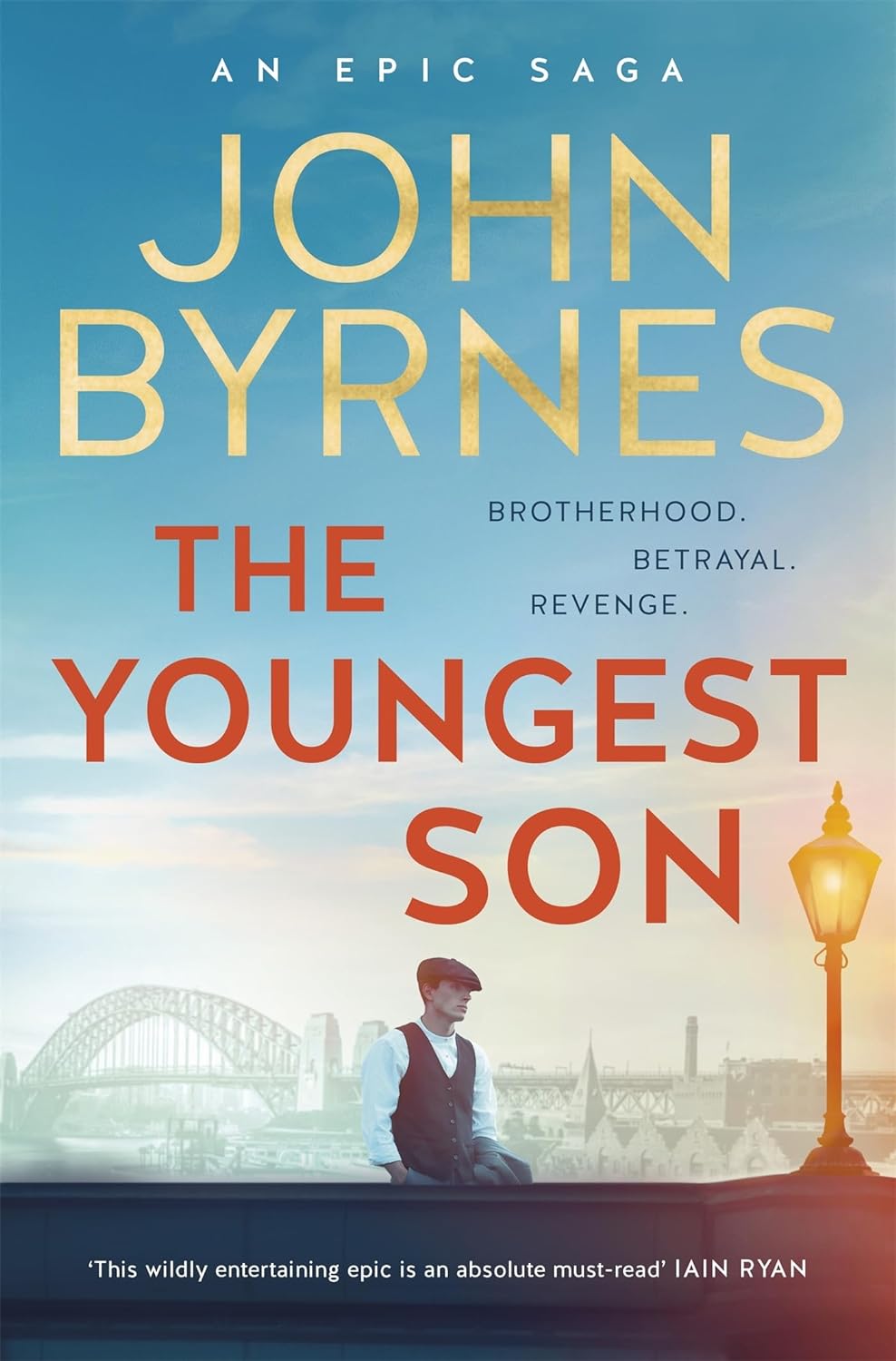
Quick Review – The Youngest Son by John Byrnes

Publisher: Pan Macmillan Australia (Trade Paperback – 30 July 2024)

Series: Standalone

Length: 386 pages

My Rating: 4.25 out of 5 stars

Amazon

Rising Australian author John Byrnes dives into a new genre with the fascinating and compelling historical fiction novel, The Youngest Son, which focuses an exciting and moving narrative around one damaged family.

Plot Synopsis:

On the unforgiving streets of 1920s Sydney, the Leach family have nothing but each other.

In a tale spanning decades, three children of the broken, working-class family find adventure, heartache and trouble as their lives drift apart.

John finds faith and love at a young age. The inevitable clash between the two leads him into a different kind of brotherhood as war clouds gather.

Maureen dreams of a life ‘just like the movies’ and waits to be swept off her feet. Yet at every crossroad, she makes the wrong choice.

Bob discovers a natural talent with his fists and an instinct for trouble. But with every win he earns the hard way, more enemies rise.

From police corruption and gambling dens to brothels and blood feuds, the Leach family toil in Sydney’s seedy underbelly and on battlefields far away. Against the backdrop of the Great Depression and the Second World War, The Youngest Son chronicles one family’s mesmerising fate in a grand saga and a masterclass in epic storytelling.

The Youngest Son was a fast-paced and addictive novel that cleverly followed the youngest members of a disadvantaged working class 1920s Sydney family through the highs and lows of early 20th century Australian history.  Byrnes, who really impressed me last year with his first novel, the gripping modern thriller Headland (one of my favourite debuts of 2023), did an outstanding job diving into the historical fiction genre, and I enjoyed the excellent and personal story that emerged.

The plot of The Youngest Son works very well, as Byrnes follows the varied lives of the three Leach children, John, Maureen and Bob, as well as a raft of other entertaining and complex characters.  Starting in the 1920s and continuing towards the end of World War II, The Youngest Son’s narrative splits between each of these primary characters and follows the highs and lows of their lives.  This includes the criminal activities of the youngest son, Bob, whose career fighting for Sydney’s criminal underbelly leads him into trouble time and time again.  The oldest son, John, attempts to live a good life and join the church, but misfortune and deceit instead lead him towards the horrors of war.  Finally, the daughter of the Leach family, Maureen, tries to find the excitement and glamour missing from her working-class life, but finds only heartbreak and bad decisions as she is constantly led along the wrong path in life.  Each of these characters experience conflict, betrayal, and tragedy as they attempt to find their way in life, and it helps produce one hell of a story.

I really enjoy historical fiction books that follow the lives of multiple characters as they follow their own path amid the backdrop of real-life history, and it is a format that has served many authors, such as Ken Follett, Jeffrey Archer and Peter Watt extremely well over the years.  Byrnes is another great author who perfectly utilised this story telling method, and I had a lot of fun getting to know the Leach family and their various friends and associates.  The author pulls together a great layered narrative, and I loved the mixture of story elements that emerged, including personal stories of self-discovery, a gritty war narrative, and a continued dive into the criminal underbelly of Sydney during the 1930s and 40s.  While all these major storylines are great in their own way, I personally found myself drawn more to Bob’s narrative, mainly because his dangerous dive into the world of underground boxing is full of excitement and action.

Each of the three main protagonists have intriguing journeys in their respective chapters, and I deeply enjoyed where each of their specific storylines go.  All their story arcs have a great mixture of success, tragedy and self-discovery, and you grow attached to all of them as a result.  The storylines also blend into a fantastic major narrative, and while for the most part they are kept separate from each other, they play off each other well, ensuring that readers get a good mixture of emotions and different experiences, as well as alternating character highs and lows.  Byrnes also makes excellent use of the 1930s and 40s background setting throughout The Youngest Son, and the author ensures each character’s story cleverly evolves to face the various changes occurring around Sydney.  The entire narrative goes in some interesting directions, and you willingly follow these characters wherever they end up, even if that leads you even deeper into tragedy.

While the three main characters are all entertaining in their own ways, I felt that the fourth perspective character Byrnes added in really helped to make The Youngest Son especially special.  This fourth character is the villainous Vince, a cowardly street thug who makes a big impact on the Leach family’s lives in different ways.  Vince proves to be a great recurring antagonist, and his slimy story of success blends in well with the alternating fortunes of the Leach children while also providing some real entertainment value.  You really cannot help but dislike Vince as he succeeds, but you really can’t look away as he succeeds, especially as his various dastardly and snivelling interactions with the other characters, primarily Bob and Maureen, prove to be excellent bridges between these protagonist’s respective storylines.  I really appreciate how Byrnes wove the story of Vince amongst the other major narrative threads of The Youngest Son, and the use of the excellent antagonist continuously moves the plot in the best direction, including with the big finale.

Overall, I felt that this was a great book from John Byrnes, who created an amazing and captivating novel with The Youngest Son.  A slick and easy-to-read novel with some real heart that makes excellent use of its impressive character-driven narrative, historical setting, and engaging protagonists, The Youngest Son is an awesome book to get lost in, and it was fantastic to see how Byrnes has grown as an author.

Amazon

Quick Reviews – Cold People, Code Red and Ordinary Gods and Monsters

In recent weeks, I have been trying to get out reviews of several books I read last year but never got the chance to write anything about.  I am hoping to partially rectify that now by publishing quick reviews of three great novels from 2023 I had a fun time reading.

Cold People by Tom Rob Smith

Cold People Cover

Publisher: Simon & Schuster (Trade Paperback – 1 February 2023)

Series: Standalone

Length: 452 pages

My Rating: 3.5 out of 5 stars

Amazon

The first book I want to quickly review in this post is Cold People by established author Tom Rob Smith.  Cold People was an intriguing science fiction read that presented a very unique scenario to the reader.

Plot Synopsis:

The world has fallen. Without warning, a mysterious and omnipotent force has claimed the planet for their own. There are no negotiations, no demands, no reasons given for their actions. All they have is a message: humanity has thirty days to reach the one place on Earth where they will be allowed to exist… Antarctica.

Cold People follows the journeys of a handful of those who endure the frantic exodus to the most extreme environment on the planet. But their goal is not merely to survive the present. Because as they cling to life on the ice, the remnants of their past swept away, they must also confront the urgent challenge: can they change and evolve rapidly enough to ensure humanity’s future? Can they build a new society in the sub-zero cold?

This was a pretty cool (ha ha) story, although I must admit it went in some directions that I really wasn’t expecting.  Based on the synopsis, I was expecting Cold People to primarily show the harrowing journey that many different people would take to get to the safety of Antarctica, which  would have made for a great story on its own.  Instead, only the first section of the book really showcased this journey, which was honestly a rushed introduction to the whole plot.  The rest of the book skips ahead many years and dives into showcasing the ongoing struggles that humanity faces whilst trapped in Antarctica.  This part of the book then becomes a cautionary tale about genetic modification as various geneticists work to make humans more adaptable to living in the ice, only to unleash something far more dangerous than the alien threat above.

I honestly had some issues with how Cold People is structured.  I felt that this book might have been better if the author had either focused fully on the journey to Antarctica or set it completely in the isolated future and explored the journey in flashbacks for several characters.  The focus on genetically enhanced humans was also an interesting choice, and while it was primarily to explore how humans are capable of surviving anything, it felt very unrealistic in places and got way out of hand.  It was also odd that you really don’t get to find out anything about the mysterious aliens who caused the human exodus, and you are instead left wondering about who or what they were.

Still, there were some great elements to this book.  The genetic antagonists are pretty scary, and Smith does a good job diving into the psychology behind them.  I also really loved the author’s intriguing insights into the hostility of Antarctica as a continent and how hard it would be to live on it.  The clever way Smith built up the background setting to showcase several ingenious ways that humans could potentially adapt and survive in such a scenario was quite fascinating, and it proved to be a great part of the book.  As such, Cold People is an interesting novel to check out, and many readers will appreciate Smith’s ideas about humanity and its strong desire to survive.

Amazon

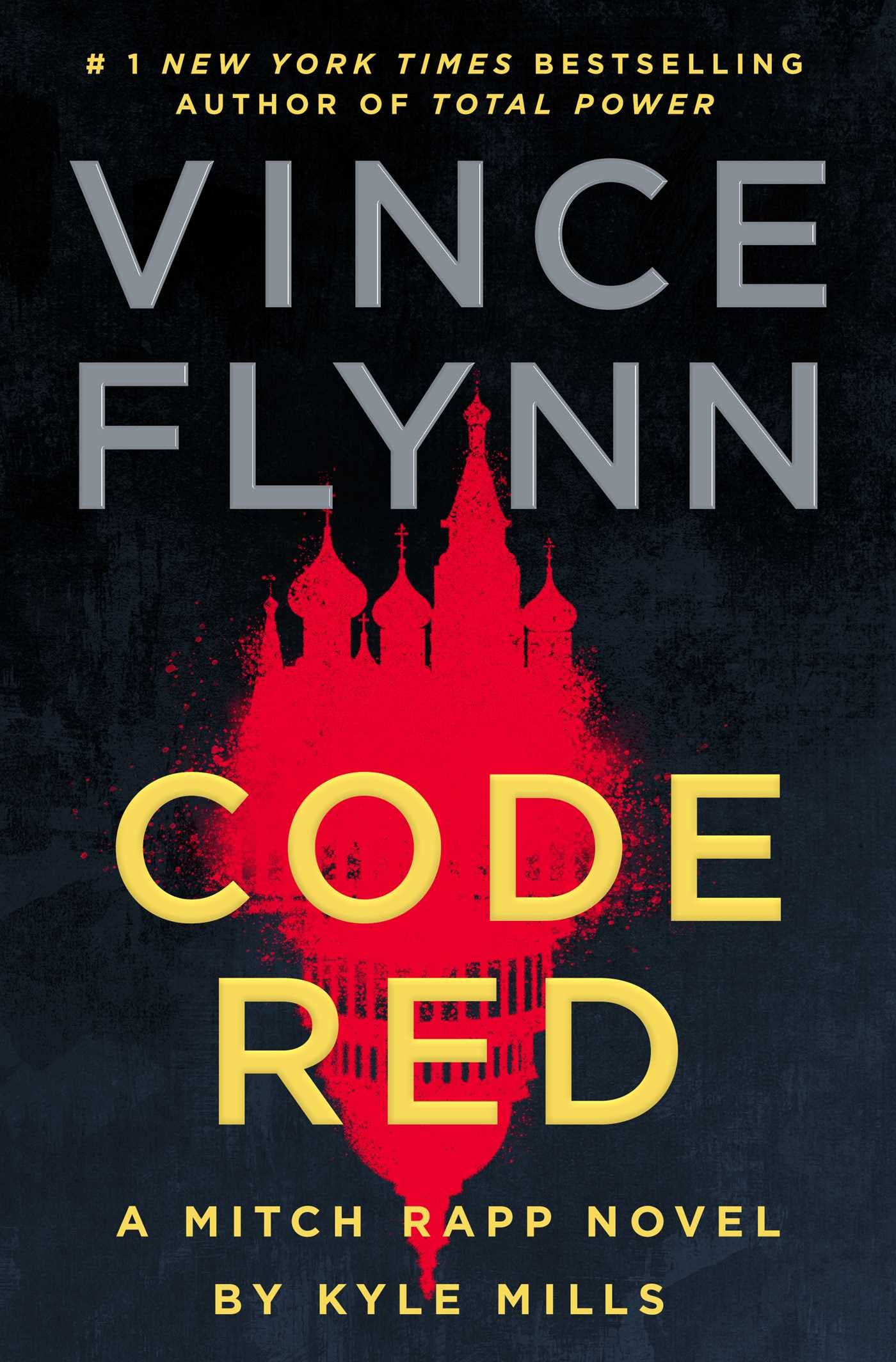
Code Red by Kyle Mills (Based on the series by Vince Flynn)

Code Red Cover

Publisher: Simon & Schuster (ebook – 4 October 2023)

Series: Mitch Rapp – Book 22

Length: 352 pages

My Rating: 4 out of 5 stars

Amazon

The next book I want to highlight here is Code Red by Kyle Mills, which served as the 22nd entry in the long-running Mitch Rapp series that was originally written by the late Vince Flynn.  Following a hyperviolent veteran American spy as he goes up against a range of deadly threats in unusual thriller situations, the Mitch Rapp books are a key part of my yearly reading schedule, and I have really enjoyed several of the latest entries, including Red War, Lethal Agent, Total Power, Enemy at the Gates and Oath of Loyalty.

Plot Synopsis:

Mitch Rapp returns to make a mortal enemy of Russia in this high-octane and up-to-the-minute installment in the #1 New York Times bestselling series from “one of the best thriller writers on the planet” (The Real Book Spy).

Mitch Rapp hates owing anyone a favor—especially when it’s the world’s most powerful crime lord. But when Damian Losa calls, Mitch is honor-bound to answer.

The Syrian government appears to have created a highly addictive new narcotic that it plans to distribute throughout Europe. It’s a major threat to Losa’s business and he’s determined to send someone to keep him on top by any means necessary. Rapp is the perfect choice for the mission. Not only does he have extensive experience operating in the Middle East, but he’s also entirely expendable. As he crosses into war-torn Syria, Rapp quickly discovers a shocking truth. The new drug isn’t being produced by Damascus to prop up the government’s collapsing finances. Instead, it was created by Russia’s asymmetrical warfare unit, not for profit but as a weapon against the West.

With far more than Damian Losa’s interests at stake, Rapp devises a desperate plan that forces him and his team onto a battlefield where the United States is virtually powerless and allegiances shift almost hourly. Further, if Russia uncovers their plot, it will set off a confrontation between the two countries that could change the course of human history.

This was another exciting entry in the Mitch Rapp books, although I must admit this book wasn’t my absolute favourite novel in the series.  Don’t get me wrong, Mills came up with a very compelling story that thrust the protagonist into some dangerous situations as he attempts to repay his debt to the entertaining crime lord Damian Losa.  However, in some ways Code Red is a little by the numbers, especially as we have just come off several impressive reads where Rapp was in some very ridiculous or deadly situations, such as a massive power-outage impacting all of America, or the last two books where Rapp found himself at war with a corrupt US President.  An infiltration mission into Syria seems a little tame in comparison, so this might have coloured my appreciation for Code Red a little.

Despite this minor complaint, Code Red was a great action-packed read that showcased Mitch Rapp doing what he does best, infiltrating the Middle East and frustrating Russian plans.  There are loads of firefights and intense action scenes scattered throughout this book, and I thought the underlying Russian plot to destroy economies and weaken Western society through an addictive drug was very intriguing, especially as it also featured some dark scenes of exploitation and utilisation.  Easily read as a standalone novel or as an entry into the wider Mitch Rapp series, Code Red was a fantastic novel that I managed to get through quickly, and it is well worth checking out.

Amazon

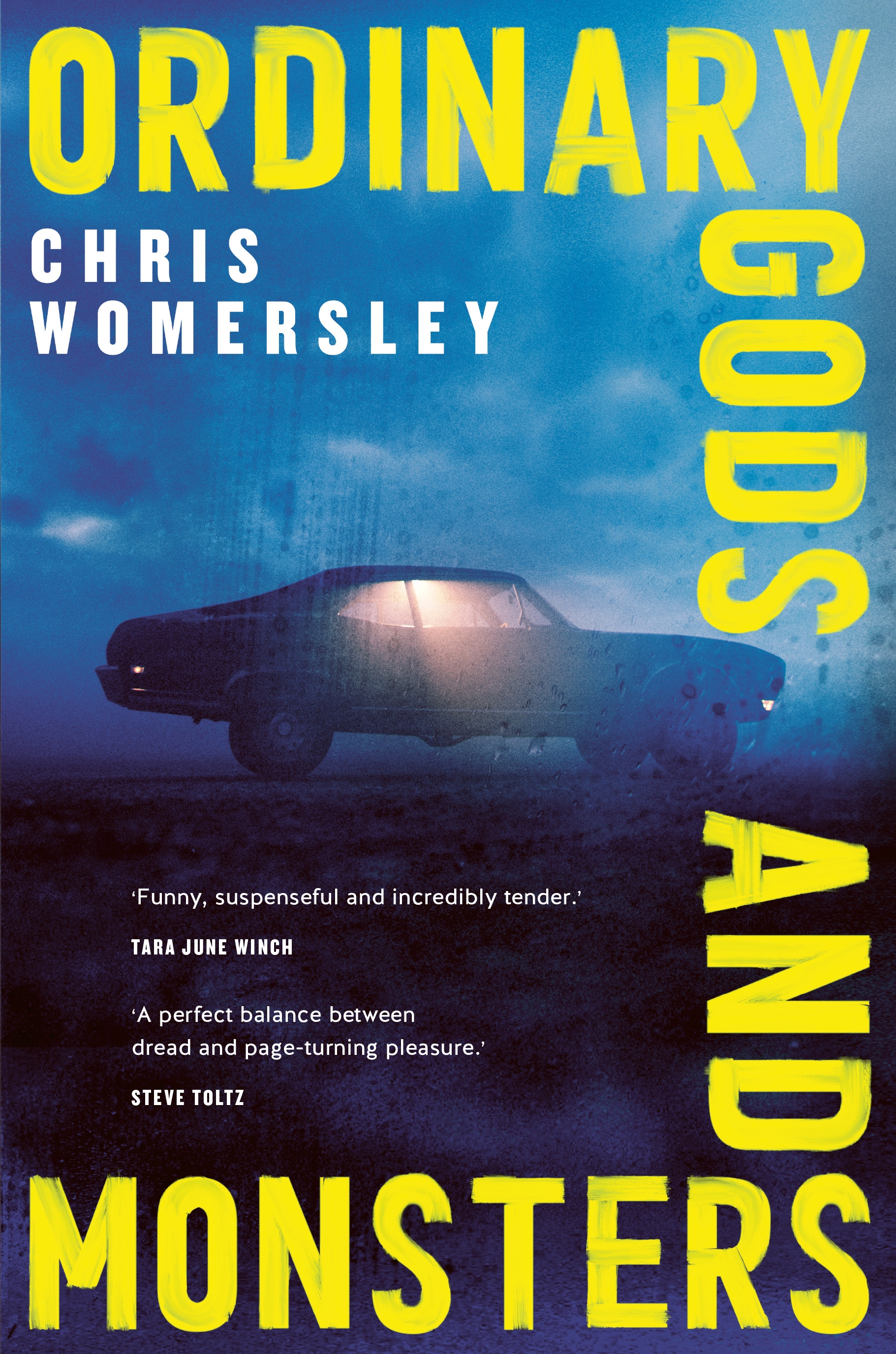
Ordinary Gods and Monsters by Chris Womersley

Ordinary Gods and Monsters Cover

Publisher: Picador (Trade Paperback – 29 August 2023)

Series: Standalone

Length: 300 pages

My Rating: 4.25 out of 5 stars

The final book I want to feature in this post was the excellent Australian novel, Ordinary Gods and Monsters by Chris Womersley.

Plot Synopsis:

It could have been any summer’s evening, but of course it wasn’t.
It was the end of some things, the beginning of so many others.

Nick Wheatley has finished high school, but he isn’t ready for the rest of his life. His parents are getting divorced, his sister is downright weird and his best friend and neighbour, Marion, seems to have acquired a boyfriend.

One hot night, Marion’s father is killed in a hit-and-run. There are no suspects and no leads. But a sly tip from the local psychic sends Nick and Marion into the undertow of a strange and sinister world they hadn’t known existed in the suburbs – one of inscrutable gangsters, speed-dealing bikies and unpredictable, one-eyed conspiracy theorists.

It’s a world they’ll be lucky to survive.


Ordinary Gods and Monsters
was a pretty awesome book from Womersley that proved to be one part crime fiction novel, one part Australian coming-of-age story.  Following Nick Wheatley, a young teenager in 1980s suburban Melbourne, as he simultaneously deals with life, complex family issues, and his uncertain relationship with his best friend and neighbour Marion.  Life becomes even more complicated when he is forced come to terms with the death of Marion’s father.  Thanks to a tip from a drug-dealing psychic, Nick finds himself identifying a series of clues that suggest that Marion’s father was murdered, and he takes it upon himself to investigate.

The resulting story is an interesting mixture of elements that will appeal to a range of different readers.  Womersley does an excellent job of portraying the life and difficulties of a teenage protagonist, and I loved the protagonist’s very relatable take on the various events, both mundane and unusual, going on around him.  This dramatic, 80’s focused, character-driven storyline blends extremely well with the more crime fiction elements of the book, as the protagonist finds himself becoming more and more involved with searching for the person responsible for Marion’s father’s death.  His unlikely investigation adds some exciting spice to an already engrossing coming of age tale, and you get drawn into his attempt to find answers.

The result of this plot is very interesting, especially as the reveal about who is behind everything is well handled and compelling.  Womersley also adds in a very compelling final sequence, where Nick and Marion find themselves confronting the perpetrators in a dangerous scenario.  The conclusion of this confrontation will leave readers wondering about what truly happened, and which I felt was a great end to this book.  An overall excellent piece of Australian fiction that I had a great time reading.

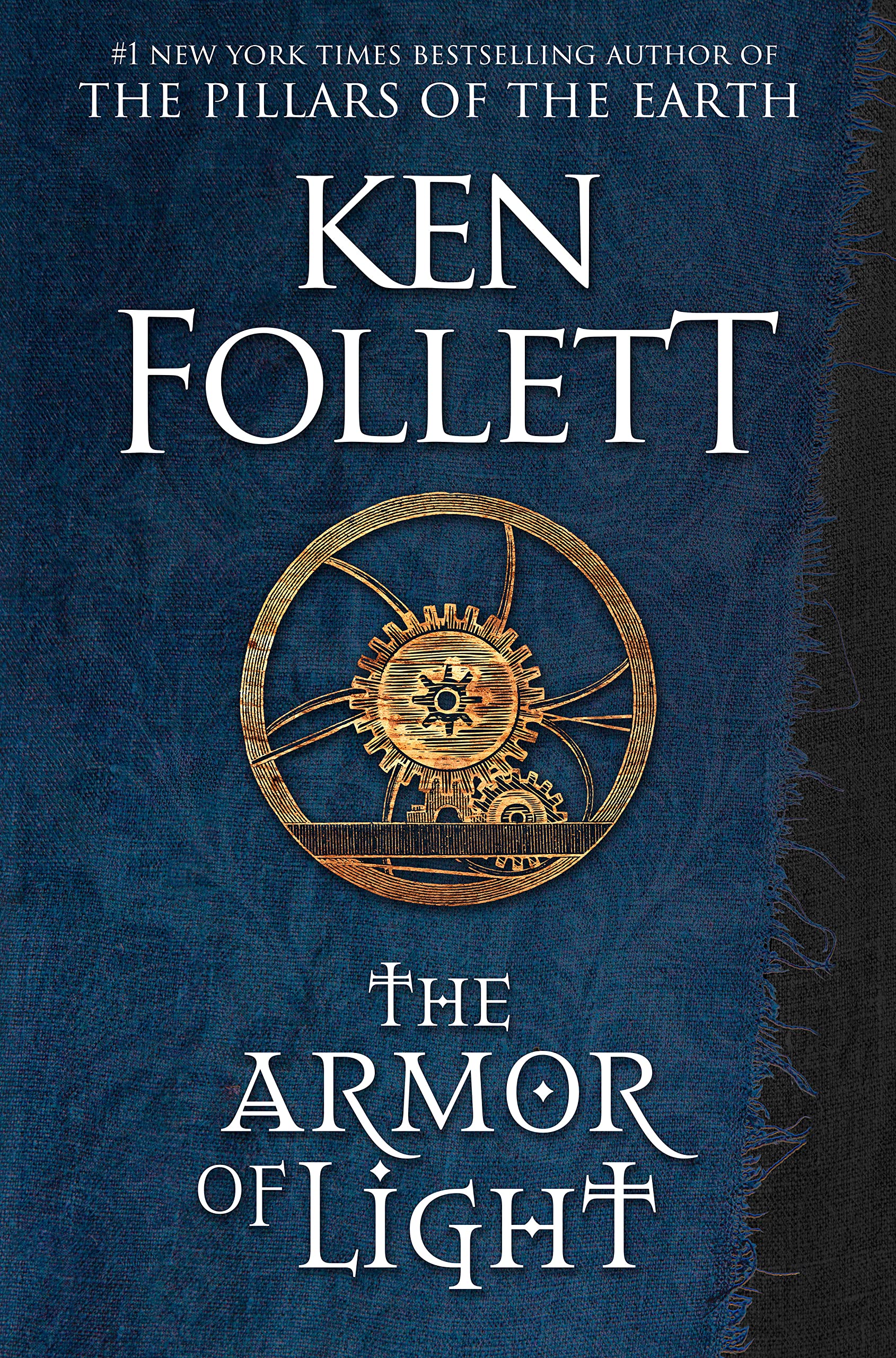
The Armour of Light by Ken Follett

The Armour of Light Cover

Publisher: Macmillan (Hardcover – 26 September 2023)

Series: Kingsbridge – Book Four

Length: 737 pages

My Rating: 5 out of 5 stars

Amazon

Acclaimed author Ken Follett returns with another exceptional addition to his iconic Kingsbridge historical fiction series with the fantastic and captivating The Armour of Light.

Out of all the authors who dive into the complex and impressive genre of historical fiction, few are as well-known or epic as Ken Follett, who has been dominating the genre for years with his massive and epic thrillers.  I have only really had the chance to explore Follett’s historical fiction books, with his Century trilogy being a particular favourite of mine (one of my favourite trilogies of all time).  However, Follett’s most iconic work is his Kingsbridge series, which has long gained mass recognition and accolades

The Kingsbridge books are a series of massive, epic novels that chronicle the complex lives of the residence of the town of Kingsbridge in historical England.  Each book follows the lives of several intriguing characters as they attempt to survive the various challenges and turmoil of the age, often coming into conflict with each other in some elaborate and extended ways.  The series started in 1989 with The Pillars of Earth, which is probably Follett’s most successful novel.  Set over the course of 50 years in the 12th century, The Pillars of Earth showcased a range of personal, political, economic and social issues that the characters spent their lives overcoming in different ways, often loaded with dramatic or historical significance.  An exceptionally epic book, The Pillars of the Earth is very highly regarded and was turned into a compelling TV miniseries with an awesome cast.

Follett has since followed up his original novel several times throughout his career, with each of the Kingsbridge books set in a different period of the town’s history.  For example, the 2007 release World Without End (which was also adapted into a miniseries), is set in the 14th century around the start of the Hundred Year’s War.  The 2017 novel, A Column of Fire, was another compelling sequel that mirrored the life and reign of Queen Elizabeth I and featured a compelling plot involving Catholic spies and religious conflict.  The fourth book was the 2020 novel, The Evening and the Morning (one of my favourite books of 2020), which served as a prequel to the rest of the series and showed the founding of Kingsbridge in the early years of Viking infested 11th century.  All four of these books have been exceptionally good, and I love following a whole new group of characters while exploring the unique aspects and conflicts of their historical era.  Due to how much love I have for this amazing series, I was pretty damn excited when I found out that Follet had a new Kingsbridge novel coming out in late the 2023 with The Armour of Light.  Set during the early years of the English Industrial Revolution, The Armour of Light sounded so damn good, and it was one of my most anticipated books of 2023 as a result.

England, 1792.  As Napoleon Bonaparte begins his rise to power in France, the people of England look on in fear and curiosity at the changes wracking their neighbour.  As the march towards progress continues throughout England, many people find their way of life changing faster than they can adapt.  Nowhere is this felt more keenly that the town of Kingsbridge.  A major hub of England’s cloth industry, Kingsbridge has been transformed by the rampant industrialisation and modernisation of ancient textile processes.  Now the cloth workers of Kingsbridge are forced to work in crowded factories, pushing out vast amounts of material in often unsafe conditions.  But with each new advance and new dangerous machine, the number of workers needers diminishes, and soon many in Kingsbridge find themselves out of work and thrust into poverty.

As the march towards war with France continues, many inhabitants of Kingsbridge will find themselves thrust into a conflict between the rich and the poor of England.  Spinner Sal Clitheroe tries to make an honest living, but her stubborn determination to get justice continues to put her into conflict with the town’s rich and elite.  Wool merchant Amon Barrowfield attempts to salvage his family’s business, only to find tough rivals on every front.  Weaver David Shoveller attempts to run a fair business, but an ill-advised love affair could ruin everything, while Sal’s son Kit finds himself obsessed with the new machines manipulating the wool.  These figures personal struggles will define the struggle of their generation, as the fight for freedom and enlightenment coincides with a much bigger war.

Ken Follett has another fascinating and impressive character-driven read with The Armour of Light that once again follows several complex figures as they live their lives in historical England.  Clever, powerful and chock full of historical detail, The Armour of Light was an outstanding addition to the Kingsbridge series and just had to give it a full five-star review.

Much like the other books in the Kingsbridge series, The Armour of Light follows a group of intriguing characters as they navigate life during a turbulent period of England’s history and attempt to change their destiny and the destiny of the people they love.  Set between 1772 and 1824 (although most of the main story ends in 1815), you get an intriguing examination of each of these characters as they overcome all manner of adversity, oppression, war and more.  The scope of The Armour of Light’s story is pretty damn epic as Follett really lays on the challenges and tragedies for his characters to endure and overcome.  There is intrigue, politics, imprisonment, business rivalries, unexpected deaths, conscription, unrequited loved and much more as many of the protagonists find themselves going up against the system and often coming off second best.  You really grow attached to these characters as you follow them throughout the decades and see many of them grow up, find their callings, fall in love, and more, only to often see them then at their worst as they encounter setbacks they can’t overcome.  While most of the story deals with the industrial changes the characters are trying to get used to, the plot does also tie into the Napoleonic War.  Naturally, pretty much all the characters find themselves over in Belgium in 1815, so everyone is involved at Waterloo to some degree or another.  This proves to be an impressive end to the story, and it was fascinating to see where all the various characters ended up, especially after experiencing the deadliest of battles.  I had an outstanding time getting through this elaborate story, which honestly had me hooked the entire time.  Despite The Armour of Light’s near 750-page length, I managed to power through it in a matter of days, its story was that damn interesting.

As I mentioned, The Armour of Light is part of the Kingsbridge series and serves as a sequel to all four previous novels.  However, due to compartmentalised nature of the book’s plot and the focus on completely new characters, readers do not need a prior knowledge of the rest of the Kingsbridge books to enjoy The Armour of Light.  The novel is very accessible, and due to the substantial gap between it and A Column of Fire, readers should really consider this a standalone novel that any historical fiction fan can easily enjoy.  However, long-term fans of Follett and the Kingsbridge series will no doubt appreciate seeing how the setting of Kingsbridge has evolved over the years, especially in the face of industrial revolution, which changed the nature of the textiles industry that has always been central to the series’ plots.  There are also a bunch of clever references and connections to the previous novels, although if you don’t pick these up it in no way ruins your flow or enjoyment of the story.  As such, The Armour of Light is a book most readers and historical fiction fans will be able to enjoy, while also serving as an intriguing continuation to the Kingsbridge series.

One of the main reasons why I enjoy the Kingsbridge books so much is because Follett excels at showcasing fascinating historical periods and working his characters into unique situations based on the events of the period.  The Armour of Light is an incredibly good example of this as it examines the impact of the early Industrial Revolution on a textile town like Kingsbridge.  Follett really dives into the intricacies of the mechanised weaving process that would have taken place in factories like this, and the various issues they caused.  As the book progresses, the characters are introduced to new machines more efficient than the last, which causes more of the characters and inhabitants of Kingsbridge to lose work.  This leads to discontent amongst the working classes, many of whom are trying to raise themselves up through any means possible, and the rich factory owners and the other elites try to hold them down using various legal and political angles.  As such, the story captures interesting aspects about the English legal system and the controversial politics at the time, especially as parliament was so against unionisation and other actions after seeing the revolution in France.  I quite enjoyed the discussions that occurred surrounding the French Revolution and Napoleon at various points of the book, and it was fascinating to see the various classes reactions to these events, such as fear from the wealthy, and interest from the poor.  Other intriguing historical elements were also examined throughout the book, such as the growing rivalry between the Church of England and the Methodist faith, and I had a wonderful time seeing them all introduced into the plot.  Follett did a remarkable job working so many of these historical details into The Armour of Light’s story, and it helped to make this a fantastic and fascinating read I couldn’t put down.

Finally, I need to highlight the great characters featured throughout the plot.  Follett came up with an intriguing collection of figures to follow in The Armour of Light, and each of them goes through some compelling trials and tribulations.  I really enjoyed the range of different characters featured within the novel, although most of them were tied into the wool trade to some degree to really hammer home the novel’s main point about change and industrial revolutions.  Follett came up with some very interesting personal stories for each of these characters, and their powerful journeys through life, love and loss, was the true heart of the book.  This includes Sal Clitheroe, the heart and soul of the book, Amon Barrowfield, the always hopeful young merchant, and David Shoveller, a mostly noble figure who works to help those he can.  I also loved the striking Alderman Joseph Hornbeam, who served as the book’s main villain.  The wealthiest man in Kingsbridge, Hornbeam is determined to expand his empire no matter who he must crush to do so.  As such, he comes into conflict with many of the protagonists, and his actions are usually the crux for much of the book’s plot.  I really enjoyed Hornbeam as an antagonist, and Follett weaves some interesting storylines around him, including a hidden backstory, and a redeeming examination of his love of family.  Pretty much all the characters in The Armour of Light were extremely well written, although I thought it was a bit odd that every major female character either committed adultery or lusted after another man while married.  I’m not sure if that was commentary on women’s lack of choice back in the 18th and 19th centuries or some particularly interesting choices from Follett, but it was weird that it happened at least four times.

Ken Follett did an outstanding job continuing his amazing Kingsbridge series with the wonderful book, The Armour of Light.  A compelling and historically rich novel, The Armour of Light was another great read and I had such a fantastic time getting through it.  I have so much love for the Kingsbridge series, and I cannot wait to see what period Follett decides to explore next.  Highly recommended.

Amazon

Quick Review – He Who Drowned the World by Shelley Parker-Chan

He Who Drowned The World Cover

Publisher: Mantle (Trade Paperback – 29 August 2023)

Series: The Radiant Emperor – Book Two

Length: 487 pages

My Rating: 4.5 out of 5 stars

Amazon

Rising Australian author Shelley Parker-Chan returns with the second part of her Radiant Emperor duology, He Who Drowned the World, an impressive and complex historical fantasy set in 14th century China.  He Who Drowned the World is the exciting sequel to the author’s first novel, She Who Became the Sun, which provided a compelling spin on a legendary Chinese Emperor by imagining them as a female who takes on her dead brother’s identity to achieve greatness.  She Who Became the Sun was a pretty awesome read, loaded with intriguing imagery, excellent characters, and a unique story.  I deeply enjoyed reading it when it first came out and it ended up being one of my favourite debuts and pieces of Australian fiction in 2021.  I was very excited to get a copy of He Who Drowned the World, especially as Parker-Chan does an excellent job of fishing off her epic story in a big and compelling way.

Plot Synopsis:

How much would you give to win the world?

Zhu Yuanzhang, the Radiant King, is riding high after her victory that tore southern China from its Mongol masters. Now she burns with a new desire: to seize the throne and crown herself emperor.

But Zhu isn’t the only one with imperial ambitions. Her neighbour in the south, the courtesan Madam Zhang, wants the throne for her husband – and she’s strong enough to wipe Zhu off the map. To stay in the game, Zhu will have to gamble everything on a risky alliance with an old enemy: the talented but unstable eunuch general Ouyang, who has already sacrificed everything for a chance at revenge on his father’s killer, the Great Khan.

Unbeknownst to the southerners, a new contender is even closer to the throne. The scorned scholar Wang Baoxiang has maneuvered his way into the capital, and his lethal court games threaten to bring the empire to its knees. For Baoxiang also desires revenge: to become the most degenerate Great Khan in history – and in so doing, make a mockery of every value his Mongol warrior family loved more than him.

All the contenders are determined to do whatever it takes to win. But when desire is the size of the world, the price could be too much for even the most ruthless heart to bear . . .


He Who Drowned the World
proved to be a unique and captivating novel that continued to follow former monk turned general Zhu Yuanzhang as she attempts to free China from the Great Khan, outwit her rivals, and take the throne as Emperor.  Parker-Chan dives right into this scenario as the book starts, and you are soon enthralled by the complex, multilayered story that emerges.  Thanks to the power shift from the first book, the battle for control of China turns into a fight for dominance with four armies in the field, while the shadowy Wang Baoxiang manipulates events in his favour from the shadows at the capital.  The events are shown from the various unique perspectives of the four main characters, each of whom is trying to survive and win the throne by their own methods.  I love the blend of storylines that evolved here, whether it is the main protagonist’s plan to seize her destiny no matter what, Ouyang’s destructive quest for revenge, Madam Zhang’s attempt to manipulate all the men in her life to gain power, or Wang Baoxiang’s careful and lustful politicking.  All these character arcs are deeply fun in their own right, although I must admit I found Wang Baoxiang’s storylines to be the most fascinating, mainly because he was so deliciously devious and swiftly rose up as a brilliant villain.

As the book continues, the reader is treated to some amazing story points, including Ouyang being forced to work with Zhu, who keeps winning with inventive tactics; Madam Zhang’s plots failing her left and right; and Wang Baoxiang’s malevolent rise to power, taking down everyone he gets close to.  Each of these characters gets their moment to shine, and I loved some of the interactions that emerged, especially when the characters begin to meet each other.  Zhu and Ouyang in particular play off each other perfectly, with Ouyang’s sheer anger finding no purchase with Zhu’s more Zen outlook on life, which only infuriates Ouyang more.  I really loved the part of the book that focused on the complex alliance between these two characters, and its dramatic end also works extremely well, especially as it leads to that haunting scene where Ouyang encounters his destiny only for it to destroy him.

The entire book moves at an outstanding pace, and the compelling detail, unique world-building, and fascinating characters continue to build as the novel reaches its zenith.  The final fate of Ouyang really was a major highlight of He Who Drowned the World, and the rest of the plot that follows had me hooked to the end.  The last part of the book was a little more subtle than I was expecting, but it still featured some great moments as Zhu, who is not as benevolent as you would think, sacrifices much to try and achieve victory.  The taut emotions, devastating betrayals, and determined attempts for revenge really help this conclusion stand out, and I was enthralled the entire way through.  Parker-Chan ends everything on a somewhat hopeful note, which was nice after how dark the rest of the book was, and the reader will come away from He Who Drowned the World satisfied, if a little emotionally raw and shaken.

I really must comment on the fantastic and unique setting that Parker-Chan utilised for this duology.  The overarching setting of 14th century China is pretty awesome in itself as the author worked hard to capture the unique cultural aspects of the period, such as the control by the Mongolian dynasty, while also presenting all the chaos and war that emerged when Zhu attempted to claim the throne.  However, things get even more interesting as the author works in some subtle but significant fantasy elements that really make these books standout.  These elements are all tied into a person’s right to rule as those with the will, ability and destiny are gifted with a literal Mandate of Heaven, which allows them to call forth an aurora of light and fire to show their divine right to rule.  Several key characters in the series are gifted by the mandate, and the way they use it, whether to install fear, show their divinity, or utilise it for even darker purposes, is pretty damn fascinating.  The other major fantasy element revolves around ghosts that only a few characters can see, which end up being an interesting part of the plot.  The protagonist’s ability to see and occasionally manipulate these ghosts adds a certain edge to their story, especially as it serves as a representation of their deeper guilt, regret or determination, and I felt it was a fitting character element.  The manipulation of ghosts also results in some dark scenes, especially when one of the antagonists does some horrible things to get a supernatural advantage.  This interesting blend of historical and fantasy elements really helped to give the world of these duology a fantastic and unique tinge, and I really enjoyed seeing the elaborate war story Parker-Chan set out in it.

I also enjoyed how nearly all the major characters in this book had some compelling gender and orientation feature to them, which helped to define their character and take them to some interesting places.  This includes the main protagonist taking over a male identity and entering a unique relationship with their wife, while General Ouyang deals with the shame of being a eunuch, although that doesn’t stop him from being the biggest badass in the book.  These elements were really well handled by the author, who featured them in a thoughtful and tasteful manner, and it was interesting to see how this defined them.  Parker-Chan really dove into the emotional, cultural and spiritual nature of these factors, especially in their historical context.  I particularly enjoyed how all these characters tended to rise up above the shame or taboo nature surrounding this character element, and indeed many of them used it to their advantage.  I really enjoyed seeing how well Parker-Chan utilised these elements in the plot and it made for some great representation.

I really enjoyed this distinctive and fascinating novel from Shelley Parker-Chan who produced a remarkable conclusion to her impressive debut duology.  He Who Drowned the World was a powerful, intense and complex read that really showcased the horrors of war, ambition and self-delusion.  Featuring a moving and devastating narrative, loaded with great characters and a unique take on Chinese history, He Who Drowned the World is an exceptional read and a worthy sequel to Parker-Chan’s first book.

He Who Drowned the World Cover 2

Amazon