Star Trek: Discovery: Die Standing by John Jackson Miller

Die Standing Cover

Publisher: Simon & Schuster Audio (Audiobook – 14 July 2020)

Series: Star Trek: Discovery

Length: 12 hours and 15 minutes

My Rating: 4.5 out of 5 stars

Amazon     Book Depository

One of the leading authors of media tie-in fiction, John Jackson Miller, returns with his second Star Trek: Discovery novel, Die Standing, an awesome and captivating read that follows the adventures of an excellent protagonist, the evil version of Michelle Yeoh’s Philippa Georgiou.

After the dramatic conclusion of the first season of Star Trek: Discovery, Emperor Philippa Georgiou, former ruler of the Terran Empire, a power-hungry and xenophobic human interstellar empire from a twisted alternate universe, has been stranded in the main Federation’s universe.  Biding her time while trapped on the Klingon home planet of Qo’noS, Georgiou is finally given a the opportunity she has been waiting for when Starfleet’s covert spy organisation, Section 31, offers her a chance to work as one of their agents.  However, Georgiou is far more interested in gaining her freedom and plotting to use Section 31’s resources to flee beyond Starfleet’s control.

Georgiou’s plans change when she receives news about a mysterious attack on one of Starfleet’s military vessels by a malicious and dangerous cosmic entity, one that her counterpart in this universe may have seen years before.  Intrigued by the description of the attack, Georgiou decides to remain with Section 31, especially as it bears a striking similarity to a powerful superweapon that was kept from her when she was Emperor.

Determined to use this weapon to regain her stolen power and take control of this weaker universe, Georgiou accepts Section 31’s proposal to travel to an isolated section of space where the creature was first witnessed.  Travelling with two mismatched minders who are already well out of their depth, Georgiou attempts to contact an old flame of this universe’s Georgiou, one who has a lot of influence in this quadrant of space.  Forced to conduct a subtle investigation amongst the secretive alien races of the sector, Georgiou and her companions follow the clues that will lead them to the entities they seek.  But what will happen when the former Terran Emperor has ultimate power within her grasp?  Will she ensure the safety of the Federation she despises, or will another universe bow before her might?

This was a fun and impressive new novel from bestselling author John Jackson Miller.  Miller is an interesting author who has a lot of experience writing tie-in stories, having previously written several pieces of Star Wars fiction as well as some notable Star Trek novels.  I have not previously read anything from Miller before, although I think that will have to change due to how much I enjoyed Die Standing.  Miller has written a couple of books that have been on my radar for a bit, including a previous Star Trek: Discovery novel, The Enterprise War, and the Star Wars: A New Dawn novel, which ties into the Star Wars: Rebels animated show.  This latest novel from Miller is an exceptional read, as he has come up with a wildly entertaining and clever novel based around the excellent character of Philippa Georgiou.  Backed up with an extremely compelling story, some interesting side characters and some wonderful universe-building, this is one of the better if not the best Star Trek novels of 2020, and ended up being an awesome read.

At the heart of this fantastic novel is a captivating and intense narrative that sees the protagonist and her companions venture into an unknown area of space in search of a creature with deadly potential.  This was an extremely clever and well-written character-driven story that features an excellent Star Trek narrative, filled with all manner of espionage, betrayal and war.  I really liked the way that the author blended together familiar Star Trek elements with a thrilling espionage narrative, especially one that was centred on a morally ambiguous protagonist who plans to betray everyone she encounters.  This makes for a number of great scenes, and I really liked the fascinating and clever places that the story went.  There are a number of particularly good twists featured throughout the book, and while I was able to predict where some parts of the story were going to go, I found myself pleasantly surprised and intrigued at some of the other reveals.  I also enjoyed the way in which Miller worked in some compelling comparisons between the two mirror universe, one mostly good and the other mostly evil, and it served as a clever and distinctive part of the book, especially as Miller does a lot with only one scene set in the Terran universe.  All of this makes for an exciting and powerful story that readers are going to have a wonderful time reading.  I really enjoyed the dark, thrilling and twist laden narrative and it honestly did not take me long to become hopeless addicted to this incredible Star Trek novel.

Die Standing is one of those tie-in novels that require some prior knowledge of its associated content to fully enjoy.  In this case, readers really do need to have a good understanding of the Star Trek: Discovery television show, as much of the story is derived from key events in the first and second seasons.  In particular, knowing the full tale around the character of Philippa Georgiou (both versions) is quite essential to fully appreciate the book’s story elements and character work.  At the very least, having some general knowledge of the Star Trek universe and the events of some of the shows would be useful, especially as the book is fairly dependent on some established story elements, such as the evil alternate universe.  That being said, Miller does do a really good job making this novel accessible to those readers whose knowledge of the genre might be lacking, and many of the key elements are explained in sufficient detail to follow the story and enjoy it.  However, this is definitely a novel most suitable for established Star Trek fans, especially as the author loads it up with a ton of fun or clever references to Star Trek: Discovery and some of the other television shows.  For example, this novel features the great inclusion of a younger version of the Dax symbiont (see more below), and I personally really liked how a major part of the book’s plot revolved around a key moment from Captain Kirk’s backstory (from The Original Series episode Obsession), not only showing the event from a different perspective, but also adding in some explanation for its origins and the reaction from Starfleet.  Die Standing also serves as a rather good bridge between the first and second seasons of Star Trek: Discovery, and it does an excellent job setting up the main character for her reintroduction to the show.

While this book did have an exceptionally captivating story and some cool Star Trek elements, the absolute highlight of this book has to be its wonderful protagonist (and occasional antagonist), the evil Terran version of Philippa Georgiou.  Die Standing features Georgiou in all her evil glory and she quickly makes an impression of the reader, especially after one particularly brutal and entertaining prison break sequence at the start of the book.  Pretty much every scene that features Georgiou is highly entertaining, and the snarky, arrogant personality she displays to anyone she meets proves to be spot on to how she is portrayed in the television show.  While I really enjoyed this character in Star Trek: Discovery (she is easily one of the best parts of the show) I personally felt that Miller actually helped to make Georgiou an even more compelling character throughout the course of this book.  The author really dives down into her personality and motives, showing just how twisted and self-serving she can be while also reflecting on all the things she has lost and the changes she is forced to deal with.  Georgiou goes through some fascinating self-examinations in Die Standing, especially when she is confronted with the legacy of her dead counterpart in this universe, and this serves as a fantastic emotional centre of the book.  The author’s impressive use of this fantastic character works extremely well, and it certainly helps Die Standing stand out from some of the other Star Trek novels of 2020.

Die Standing also features an excellent cast of side characters who add a lot to the story.  There are two characters who particularly stand out, Emony Dax and Sean Finnigan, who both serve as alternate protagonists, with significant parts of the book told from their perspective.  While Dax and Finnigan are nowhere near as dynamic as Georgiou, they are both distinctive in their own ways, and Miller does a good job at making them both likeable and compelling parts of Die Standing.  Emony is a young Trill gymnast who is the third host of the Dax symbiont.  This makes her an earlier incarnation of the Dax character who appeared in the Star Trek: Deep Space Nine television in two different guises (Jadzia Dax and Ezri Dax).  Thanks to her youth, both as a symbiont and a host, this version of Dax is a little more unsure and scared then her later counterparts, but is determined thanks to the terrible things she witnesses at the start of the book.  While she is initially extremely cowed by Georgiou’s overwhelming personality, Dax grows throughout the book and is eventually able to influence Georgiou.  Deep Space Nine fans will no doubt enjoy seeing this earlier version of Dax, and I rather appreciated the excellent character growth she experienced.  The other main character, Sean Finnigan, is definitely one of the more entertaining characters in this book.  Finnigan is an unashamedly Irish character who serves as the book’s comic relief.  A wild and unruly former Star Fleet officer, Finnigan is drafted into the mission due to an interesting connection he has to Georgiou, as a murderous, brainwashed version of himself served as the Emperor’s assassin in the mirror universe.  While Finnigan is a mostly entertaining character, joking, drinking and socialising with all everyone he meets, there are some deeper elements to his character, especially as he spends a good part of the book trying to balance his real personality with the more insane version of himself that Georgiou tries to bring out.  Dax and Finnigan form a compelling team with Georgiou, and they ended up being an extremely good trio the anchor the story around.

I also quite enjoyed the intriguing Star Trek universe-building that Miller featured throughout Die Standing.  A key part of this book’s story is set within an isolated section of space that is home to three distinctive alien races who are attempting to stay separate from the Federation.  All of these species are quite intriguing and inventive, and include a race of giant living spindles, an intensely warlike species of living tanks and a group of gaseous psychics.  Miller does an exceptional job exploring each of the three new alien species throughout the course of the book and giving them each unique characteristics, histories, and personalities.  Not only are these aliens quite fascinating in their own right but each of their specific traits plays into the overall story extremely well, with some fantastic twists tied into them.  In addition, Miller also spends time exploring some of the differences between the main Star Trek universe and the mirror universe that contained the Terran Empire.  Not only is there an excellent opening sequence set in this mirror universe that showcases the brutal nature of this alternate reality, but there are a number of fantastic discussions that examine how different these universes could be.  Miller ensures that the protagonist Georgiou spends a good amount of time recounting some of the horrifying details of her universe to her companions (mostly to unnerve them), and it proves quite entertaining to hear all of her various stories, especially as most are apparently not exaggerated.  I also loved the fun way that Miller altered famous historical quotes to show how different the universes could be, with a number of classic lines twisted into something far more brutal and cynical, such as “Let them eat field rations” from General Antoinette.  The book itself is also broken up into five separate sections, based upon the Terran stages of grief (for coping with a loss of status): defiance, murder, plundering, destruction and vengeance, with each sections starting up with a quote from the Terran universe that describe its history.  Needless to say that Star Trek fans are going to love the cool additions that Miller works into the expanded universe in this novel, and I personally had a wonderful time seeing all the inventive and entertaining things that the author could come up with.

Like most of the Star Trek books I have had read in the past, I chose to check out Die Standing’s audiobook format.  This was, as always, an excellent way to enjoy this clever Star Trek novel, and I had a wonderful time listening to the story unfold.  Die Standing has a run time of 12 hours and 15 minutes, which is actually the longest Star Trek audiobook that I have so far listened to, but I was still able to breeze through it in relatively short order once I got hooked on the story.  In order to tell this amazing book, Die Standing makes use of the vocal talents of narrator January LaVoy.  This is the first audiobook I have heard narrated by LaVoy, although she did voice a minor character in Star Wars: Dooku: Jedi Lost.  She has also served as narrator for several books I have physically read, such as Star Wars: Galaxy’s Edge: Black Spire, Star Wars: Last Shot and The Night Swim, and she has also narrated a couple of books I am hoping to checking out in the future, including Star Wars: Phasma.  I have to admit that I was initially a little thrown to have LaVoy as narrator, as this was the first Star Trek audiobook I have listened to that was not narrated by Robert Petkoff.  However, it makes a lot more sense to feature LaVoy as narrator due to the female lead, and I really enjoyed listening to her narration of this book.  LaVoy did an incredible job bringing the characters to life throughout Die Standing and she ascribed some very apt and distinctive voices to each of them.  I was particularly impressed with the fantastic voice she utilised for Philippa Georgiou, and I felt it was very similar to how the character was portrayed in the television show.  LaVoy makes sure to channel all of Georgiou’s scorn and sarcasm to the reader, and it was an absolute treat to listen to her villainous rants throughout the book.  I also quite enjoyed the voice that LaVoy utilised for Sean Finnigan, Irish accent included, and it helped to enhance him as a fun and entertaining character.  All of this leads to quite an exceptional Star Trek audiobook and I would strongly recommend this format to anyone interested in checking out Die Standing.

Star Trek: Discovery: Die Standing is an amazing and impressive Star Trek novel from John Jackson Miller that was an absolute joy to read.  Miller has crafted together a captivating and clever narrative for this book that follows several excellent protagonists on a high-stakes adventure through all manner of intrigue and betrayal.  Featuring some compelling story elements, fantastic world-building and an awesome evil protagonist, Die Standing was an exceptional novel and it ended up being one of my favourite Star Trek novels I have so far had the pleasure to read.  A highly recommend piece of tie-in fiction, fans of the Star Trek: Discovery television show really need to check this fantastic book as soon as possible.
Amazon     Book Depository

Battle Ground by Jim Butcher

Battle Ground Cover

Publisher: Orbit/Penguin Random House Audio (Audiobook – 29 September 2020)

Series: The Dresden Files – Book 17

Length: 15 hours and 43 minutes

My Rating: 5 out of 5 stars

Amazon

One of the leading authors of the urban fantasy novel, Jim Butcher, returns with the next entry in his world-acclaimed Harry Dresden series, Battle Ground, an awesome novel that was one of the most anticipated releases of 2020.

Jim Butcher is a highly acclaimed fantasy author who has been dominating the market since his debut novel in 2000.  Butcher has written a number of books throughout his career, including his Codex Alera series, the first book of his planned Cinder Spires series, The Aeronaut’s Windlass and even a Spider-Man tie-in novel, Spider-Man: The Darkest Hours.  However, the body of work that Butcher is best known for is his long-running urban fantasy series, the Dresden Files.  The Dresden Files started back in 2000 with Storm Front and follow the adventures of Harry Dresden, a wizard who works as a private investigator in Chicago, solving supernatural crimes and protecting humans from dangerous magical creatures.  This series proved to be incredibly popular and is widely considered to be the gold standard of urban fantasy novels.  The Dresden Files currently consists of 17 books, with the universe expanded out with short stories, novellas and even some graphic novels.

While I have always heard incredible things about the Dresden Files books, I have not previously had the pleasure of reading any of them yet.  This is an admittedly massive gap in my fantasy reading knowledge, and it is one that I have been meaning to fill for a while.  So when I recently received a copy of the latest novel in the series, Battle Ground, I figured that this would be a perfect opportunity to finally break into the series.

For years, Harry Dresden, rogue wizard and general smartass, has defended the city of Chicago from all manner of supernatural threats and each time he has managed to keep it safe, until now!  War is coming to Chicago as a being of unbelievable power, the Last Titan, Ethniu, marches towards it, determined to have her revenge.  To achieve her goal, she has assembled a vast supernatural army and is in possession of a magical superweapon of unbelievable destructive power.  With these forces at her command, Ethniu has sworn to wipe out the entirety of Chicago in one night and kill all eight million of its inhabitants.

In order to combat this terrible threat, Dresden must rally together every friend, former enemy and magical ally he can find in order to face down the opposing army and stop Ethniu.  However, this will be no easy task.  Not only must he deal with the conflicting politics of the rival magical factions but dangerous monsters are also loose in the city, determined to take advantage of the destructive circumstances.  Worse, thanks to Ethniu’s superweapon, every electronic piece of technology in Chicago has been knocked out and the entire population is now helpless and unable to flee from the oncoming chaos.

As Dresden and his allies attempt drive back the enemies coming towards them, they face an uphill battle.  Ethniu is one of the most powerful beings in existence, and not even the combined might of Chicago’s magical elite may be enough to stop her.  Throughout this night Dresden will face terrible losses and be forced to make some of the hardest decisions in his life.  But even Dresden’s most desperate tricks may not be enough to turn the tide and save the city.  One thing is clear: no matter who wins, Dresden and the entire city of Chicago will never be the same again!

Well damn, Jim Butcher really went all out with Battle Ground and has produced one heck of an impressive novel.  This was a spectacular read, filled with a lot of huge, epic moments, smart storytelling, extremely likeable characters and clever fantasy inclusions, all wrapped up with a fun sense of humour and excitement.  Battle Ground is the 17th Dresden Files book, quickly following up the 16th book, Peace Talks (where several storylines explored in the novel originated).  I had an absolute blast reading Battle Ground, and I do have to admit that I am currently feeling a lot of regret for not getting into this series a heck of a lot sooner, as this latest entry is easily one of my favourite books of 2020.

At the heart of this outstanding novel is an extremely powerful story that sees beloved series protagonist Harry Dresden attempt to save his city from all-out destruction as a magical army invades, intent on killing everyone.  This results in an intense and action-packed novel that is a bit of a change of pace from some of the previous novels in the series, which usually read more like fantasy detective fiction.  Battle Ground is a war story, with the protagonist engaged in the battle of his life throughout the entirety of the novel.  Butcher starts Battle Ground off quickly with the protagonist having to face off against a kraken, which easily draws the reader in off the bat (I know I was pretty darn impressed with that introduction).  From there he sets up the start of the war perfectly, with a number of characters introduced as their roles in the coming fight are established, as well as an exploration of the various magical political entities in the city and why they are supporting Dresden in his fight.  It does not take long for the actual war for Chicago to start, and once it does the story does not slow down again until the battle reaches its brutal climax.  There are some truly epic and captivating battle sequences throughout the course of this book as Dresden and his allies face all manner of dangers and turmoil, including a range of distinctive adversaries from the previous entries in the series.  There are so many memorable and exciting moments that featured in this part of the book and I found myself going through an emotional ringer as everything unfolded, from feeling saddened at some critical scenes, to being inspired as a beloved character led an impassioned charge against the foe.  I was on the edge of my seat as I listened to Battle Ground’s story, and it honestly did not take me long to get completely and utterly addicted to the narrative as I desperately waited to see how the story would conclude.  When it did, I found myself completely satisfied with the ending and it left me with a deep longing to see where Butcher takes the series next.  Overall, this was an incredibly well-written and wildly exciting narrative which will stick in the readers mind as they wait for the next Dresden Files book to be released.

Now, was it a mistake coming into this series on the 17th book that serves as an epic conclusion to a number of key storylines?  Potentially.  But do I have any regrets about reading this latest Dresden Files novel?  Absolutely freaking not!  I had an incredible time with Battle Ground, especially as Butcher made sure to make this novel accessible to new readers, even with the book’s huge range of characters and massive stakes.  Pretty much every major character or event that is relevant to the main narrative of Battle Ground is explained in sufficient detail so that new readers coming to the series for the first time can follow what is happening and get a decent sense of the significance of a location, event from a prior book or the personal history that Dresden has with a character.  I do have to admit there were a few things I was a tad uncertain about, mainly because they would have been covered in Peace Talks.  For example, I did find the motivations of the book’s main antagonist, Ethniu, a little vague and there was a lack of build-up around her various allies and minions.  There is also a major twist towards the end of the book which did not hit me as significantly as it would have for a long-term reader of the series, as it is tied into several overarching plot threads from the previous books.  Despite this, I was able to follow the plot extremely closely, and my lack of prior knowledge in no way stopped me enjoying all the incredible action and wonderful characters that were part of the books plot.  As with any later addition to a series, Battle Ground is definitely intended to be enjoyed by established fans; however, I will recommend this to readers unfamiliar with the series as I know they will have an amazing time reading it.

One of the key things that I enjoyed about Battle Ground was the extremely likeable and entertaining series protagonist, Harry Dresden, who serves as the narrator of the entire story.  Dresden is a very fun and unique protagonist, and for most of the series he has worked outside of the established system of magical rule as a private investigator.  However, in this book he is part of the government, serving both the White Council of Wizards and as a member of Queen Mab’s court.  Despite this, he still retains his extreme anti-authoritarian streak and is constantly infuriating those people who are higher up on the magical hierarchy with his glib attitude.  I have a strong attachment to sarcastic and infuriating protagonists and Dresden is one of the more enjoyable ones I have seen in fiction.  Butcher really goes out of his way to make Dresden as likeable and entertaining as possible and most of the book’s brilliant humour is derived from Dresden’s comedic observations and statements about the events occurring around him and the outlandish people that he meets.  I also had to have a chuckle about the various pop-culture references that Dresden brought up throughout the course of the book, even in life threatening situations, such as the way he imitated Gandalf while holding off opponents on an iconic Chicago bridge.  Despite this carefree and entertaining exterior, Dresden is actually a very deep protagonist, weighed down by the responsibilities he faces and the constant desire not to be corrupted by the forces he encounters or bargains with.  Dresden goes through a lot of emotional damage in Battle Ground as he must not only contend with the guilt of letting this destruction reign down on his beloved hometown, but also with a series of losses that he faces along the way.  Butcher expertly captures Dresden’s emotional turmoil through his use of the first-person narrative, and the reader cannot help but be entranced by some of the darker moments this usually cheerful character experiences.  This excellent combination of characteristics really helps to turn Dresden into a relatable individual and an impressive protagonist and I cannot wait to see what happens to him in the future books of the series.

In addition to Dresden, Battle Ground features a veritable smorgasbord of cool side and supporting characters who the protagonist encounters throughout the course of the novel.  Due to the high stakes of the plot, this book contains a massive cast with a huge number of characters from all the previous books and novellas appearing in cameos or significant roles.  Most of these characters are really amazing, and Butcher does a fantastic job introducing them and ensuring that the reader knows who they are, what their connection to the protagonists is, as well as key elements of their history.  Due to my lack of familiarity with the series, I really appreciated the author’s dedication to reintroducing these characters and I felt fairly confident following who the various people were and what their role in the story was.  That being said, I was probably a little less emotionally impacted with some of the resultant twists and turns involving some of these characters, and I imagine long-time readers of the story are going to get a lot more out of their actions then a newcomer to the series.  These long-term readers should be warned that Butcher takes the stakes of this book particularly seriously and several characters are going to meet some dramatic fates.

I personally enjoyed many of the characters that were featured in the plot and I felt that each of these inventive personalities either added some real emotional depth to the novel or served as an entertaining additional to the story.  Some of my favourite characters in Battle Ground included River Shoulders (full name: Strength of a River in His Shoulders), a Sasquatch magician who wears Victorian era garb and who is one of the most likeable creatures in the book.  River Shoulders has a lot of fun moments throughout the story, although I have to highlight the quick scene which saw him make a pitch to improve race relations with an improvised ventriloquist act, as it made me laugh pretty hard.  I also really enjoyed Major General Toot-Toot Minimus, a small fairy who leads an army of Little Folk in defence of Dresden, all in the name of pizza.  Toot-Toot is one of the main comic reliefs of their entire novel and it was quite entertaining to see in action, especially when he manages to overcome the bigguns in defence of Za Lord.  However, the character I enjoyed the most aside from Dresden was Waldo Butters, Knight of the Cross.  Now, despite the fact that I would constantly think about the character of Butters from South Park whenever he appeared (in fairness, they have a lot of similarities with each other), Waldo Butters is probably the character who gets the most development and use throughout the course of Battle Ground.  Butters, who only recently took on the mantle of a Knight after spending most of the series as a defenceless sidekick, really comes into his own in Battle Ground, acting in a major defence role throughout the fight for the city.  Not only does he have some very inspiration fight sequences, but he also has a series of particularly emotional scenes with Dresden and adds a lot of heart to the narrative as a result.  I also really loved some of his scenes where he squares off against Battle Ground’s big bad, and you get a real Neville Longbottom vs Voldemort feel from it.  You can clearly see that Butcher has some big plans for Butters in the future, and I am personally cannot wait to see what they are.  I am honestly only scratching the surface of the various side characters who appeared throughout Battle Ground, but needless to say that they were all pretty exceptional and it was a real treat to meet them.

Battle Ground also served as my introduction to the magical version of Chicago that serves as the setting for this fantastic series.  This proved to be an excellent setting for this great book, and I really enjoyed the way that Butcher has melded together regular Chicago with some more subtle magical elements, such as a ruling magical council, hidden enclaves of power and mysterious creatures hiding just beneath the surface.  There are a lot of cool elements to this setting, and I think that the author did an amazing job reintroducing it for the context of this latest novel.  I was particularly impressed by the way Butcher brought a number of key city landmarks to life in this book, with several iconic pieces of Chicago used to great effect throughout the book as settings for epic scenes.  Unlike any previous book in the series, the events of Battle Ground ensure that Chicago goes through some massive changes as a magical army invades.  The destruction levelled upon Chicago is substantial, and there are several emotional sequences that see the citizens attempting to deal with these forces coming to kill them.  Naturally, this is going to have some major impacts in the future entries in the series, and I look forward to seeing what the long-term impacts of this book are going to be.

I also need to mention that, aside from Battle Ground’s main story, this novel and its associated audiobook format also contains the short story, Christmas EveChristmas Eve is a relatively tiny part of the novel, only made up of 15 pages (or around 25 minutes of the audiobook), and shows Dresden encountering several people on Christmas Eve.  This short story is set after the events of Battle Ground (despite being initially written and released in 2018) and contains a rather nice and emotionally rich narrative that examines Dresden’s emotional state as a father and friend.  Christmas Eve is a much more relaxed and lower-stakes story that Battle Ground, and I personally really enjoyed reading it after all the bloodshed, sacrifice and death of the main story.

While I did receive a nice hardcover copy of Battle Ground, I ended up listening to its audiobook format instead.  The Battle Ground audiobook runs for a little under 16 hours, which I powered through in only a few short days; it did not take me long to get addicted to this novel.  I deeply enjoyed the Battle Ground audiobook and I felt that it was an awesome way to enjoy this great book.  Not only did I find myself absorbing more of the story elements and getting drawn more into the plot but I also loved the top-shelf narrator they utilised for this audiobook.  Battle Ground was narrated by James Marsters, best known as Spike from Buffy the Vampire Slayer and Angel, who has also narrated all the previous books in the series as well as the short stories and other associated novels.  I am a major fan of Marsters, having watched a ton of the television shows he has appeared in, so I was very excited to listen to one of the audiobooks he narrated.  Unsurprisingly, Marsters proved to be an outstanding narrator, empowering this already impressive novel with his amazing vocal talents and moving the story along at a brisk and exciting pace.  Marsters did an awesome job providing each of the characters with their own unique and distinctive voice which fit the personality and depiction of each character perfectly.  I was also particularly impressed with how he brought the book’s protagonist to life.  Marsters really dove into the character of Harry Dresden, providing a perfect voice for the maverick wizard that effectively captured his various quirks and personality traits.  This excellent narration also explored the various raw emotions that Dresden experienced throughout the course of the novel and you get a fantastic sense of what the character is going through and how much he is struggling.  I really have to highlight the enthusiastic emphasis that Marsters utilises when reciting Dresden’s various spells and I could totally imagine the protagonist shouting out his incarnations in that way.  I also liked the humorously altered voices that were utilised for some of the supernatural creatures, such as Toot-Toot, which was not only widely entertaining but which fit the outrageous character extremely well.  All of this makes for an incredible audiobook experience and I fully intend to listen to the other entries in the series rather than seeking out a physical copy.

Battle Ground by Jim Butcher is an extraordinary and epic urban fantasy novel that serves as the latest novel in Butcher’s acclaimed Dresden Files series.  Butcher has done an incredible job with Battle Ground, presenting the reader with an awesome and captivating narrative, filled with a huge array of enjoyable characters and clever fantasy elements.  The result is an outstanding and deeply impressive novel that I had an amazing time reading.  Battle Ground gets an easy five-star rating from me and it was one of my favourite books (and audiobooks) of 2020.  I cannot praise this novel enough and it certainly served as a wonderful introduction to the Dresden Files.  I am intending to go back and start reading the series from book one and I have no doubt I will love each and every entry in the series.  I am especially keen to check them out in their audiobook format because James Marsters has narrated each of them and I know I will deeply enjoy hearing these clever stories read out.  Needless to say, this book comes highly recommended from me and I cannot wait to see what other extraordinary stories exist within Butcher’s extensive Dresden Files.

Amazon

Star Trek: Agents of Influence by Dayton Ward

Agents of Influence Cover

Publisher: Simon & Schuster Audio (Audiobook – 9 June 2020)

Series: Star Trek: The Original Series

Length: 11 hours and 41 minutes

My Rating: 4 out of 5 stars

Amazon     Book Depository

One of the leading figures in the Star Trek expanded universe, Dayton Ward, returns with another exciting and compelling novel about the Enterprise, Star Trek: Agents of Influence.

For years, the United Federation of Planets and the Klingon Empire have been engaged in a dangerous cold war, with each side trying to gain an advantage over the other through any means necessary.  Starfleet Intelligence has launched an ambitious secret plan to infiltrate the Klingons with surgically altered spies.  Thanks to radical surgery, advanced technology and intensive cultural and linguistic training, these undercover agents have managed to infiltrate the highest echelons of the Klingon government, obtaining some of the most sensitive intelligence about Klingon technology, military plans and political ploys.

However, Starfleet’s three most highly placed agents have somehow been discovered.  With their cover blown, the agents manage a daring escape from the Klingon home world and engage their emergency extraction procedure.  The agents successfully make their rendezvous with the USS Endeavour at the edge of Klingon space before everything goes terribly wrong.  A Klingon warship suddenly engages them in combat while mysterious energy fluctuations ensure that both ships are destroyed.

With hostilities between the Federation and the Klingons building, Starfleet dispatches Captain James T. Kirk and the crew of the USS Enterprise to the crash site in the hope of salvaging the situation.  Forced to comb through some of the most dangerous territory in the entire galaxy, Kirk hopes to find the remnants of the Endeavour and any survivors of their crash.  However, mysterious events are occurring within the border zone and the Enterprise soon encounters unnatural conditions, pirates, Klingon warships and a top-secret weapons experiment.  Kirk and his crew must navigate through all these dangers carefully if they are to avoid another destructive war.  However, it soon becomes clear that Starfleet are not the only ones with highly placed spies and Kirk must find a way to uncover an enemy agent if his crew are to survive.

Dayton Ward is a veteran science fiction author who is easily best known for his work on the Star Trek expanded universe.  Ward has written a significant number of Star Trek novels over the years, which tie-in to several of the different Star Trek television series and movies.  I have so far only read one of his books before, Star Trek: The Next Generation novel, Available Light, which I really enjoyed.  This new novel from Ward, Agents of Influence, is a brilliant standalone novel that follows the Enterprise during the period that Star Trek: The Original Series was set.

One of the things that I really like with Star Trek extended fiction is the amazing range of different stories that the authors can produce within the expanded universe.  Agents of Influence is a really good example of this, as Ward has come up with an excellent story that highlights a very interesting aspect of life in this universe: espionage between the various alien races.  This proves to be a really cool plot basis which the author utilises to his full advantage by producing an exciting and action-packed narrative.  This is a fast-paced book that sees the various characters involved in all manner of danger and intrigue as they attempt to extract the spies and thwart the efforts of their Klingon opponents.  There are several excellent action sequences designed to get the blood pumping, including a couple of fights between starships and one particularly cool pitched battle between two large opposing forces in spacesuits in the bowels of an asteroid.  There is also a really compelling storyline that sees the protagonists attempt to locate a spy aboard their ship, with a number of potential suspects adding in intrigue and drama as a result.  The author makes effective use of multiple narrators to tell his story and this ensures that the reader gets to see every side of this exciting and enjoyable narrative, including from several antagonist characters.  This helps to really pump up the intrigue and action, and I really appreciated seeing the different sides of the conflict, especially as you get to see rival plans go up against each other.  The various character perspectives also helps to build up all the major side characters present throughout the book, allowing the readers to get a good idea of who they are and what their stakes in the plot are.  All of this comes together into an exciting and compelling overall read that is very easy to enjoy.

Agents of Influence was also excellent piece of Star Trek fiction, set during the events of Star Trek: The Original Series.  Ward once again does an incredible job capturing the tone and feel of the original Star Trek television series into this book and it actually felt like I was watching an episode of the original show.  The author is really talented at bringing iconic Star Trek characters to life in his novel and each of The Original Series characters featured in this book gets their chance to shine throughout the narrative.  Like most novels that tie in to a particular media franchise, Agents of Influence is a book that will mainly appeal to dedicated Star Trek fans, who will appreciate Ward’s latest contributions to the extended universe.  There are a variety of fun references to various episodes of The Original Series, including some of the episodes that featured characters using plastic surgery to alter their appearance and disguise themselves as members of other species, such as the iconic episode The Trouble with Tribbles.  Ward also makes several references to some of the other novels in the Star Trek expanded universe, especially those featured in the Star Trek: Vanguard series of books.  This includes the USS Endeavour and its crew, who previously appeared in these novels, with some of their previous adventures and their interactions with the Enterprise explored throughout the course of the book.  However, all of these references are really well explained to the reader and even people who have less familiarity with Star Trek and some of the expanded fiction should still be able to enjoy this novel without any issues.

I ended up checking out the audiobook version of Agents of Influence, which turned out to be an extremely fun and easy way to enjoy this fantastic book.  The Agents of Influence audiobook has a run time of nearly 12 hours and is narrated by Robert Petkoff.  This is a fairly typical length for a Star Trek audiobook, and I found that I was able to power through this one’s intriguing narrative in rather short order while getting a feel for the plot and the characters.  One of the main reasons for this is the exceptional narration provided by Robert Petkoff, who is easily the most prominent narrator of Star Trek fiction.  Petkoff is an amazingly skilled narrator whose work I have really appreciated in a range of previous Star Trek audiobooks, including The Unsettling Stars, Picard: The Last Best Hope, The Captain’s Oath and The Antares Maelstrom.  Petkoff has the amazing ability to replicate the voices of the various cast members of The Original Series (as well as the cast members from The Next Generation), and this is on full display in the Agents of Influence audiobook.  Petkoff once again did an outstanding job bringing all the key Enterprise crew members to life, and at times you would be hard pressed to tell the difference between some of the voices he did and the original crew.  This, combined with the amazing species specific voices that Petkoff produces, really helps to bring the reader into the story, and I had an awesome time listening to the story unfold.

Star Trek: Agents of Influence is a compelling and clever standalone Star Trek tie-in novel that takes the reader on a bold new adventure back with the cast of The Original Series.  Dayton Ward has produced a slick and enjoyable Star Trek novel chock full of action, intrigue and references, that I had an amazing time listening to.  A highly recommend read for those fans of the Star Trek franchise which will also appeal to more casual viewers and science fiction readers.

Amazon     Book Depository

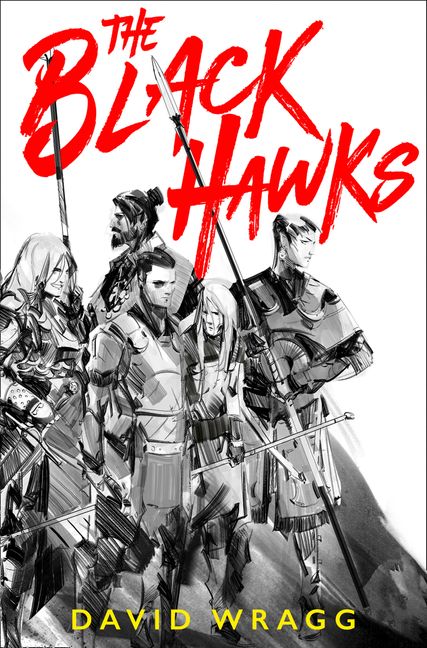
The Black Hawks by David Wragg

The Black Hawks Cover

Publisher: Harper Collins (Audiobook – 3 October 2019)

Series: Articles of Faith – Book One

Length: 12 hours and 9 minutes

My Rating: 4.5 out of 5 stars

Amazon

Prepare to join the roughest, toughest and most maladjusted mercenary band in the land with The Black Hawks by David Wragg, and excellent fantasy debut that was a lot of fun to read.

Vedren Chel is a minor noble struggling to adjust to his life as a knight and glorified servant to his lazy step-uncle.  Hoping to escape the meaningless existence that has been forced upon him, Chel suddenly finds himself thrust into a great adventure when a mysterious enemy force invades the city he is stuck in, causing panic and confusion all around.  Managing to flee from the chaos, Chel finds himself the inadvertent travelling companion to the useless and cowardly Prince Tarfel, the King’s son and second in line to the throne.

Accompanying Tarfel to safety, Chel hopes to be rewarded with his freedom and the chance to forge a new life.  Instead he finds himself swept up in the dangerous politics of the realm when he is chosen to become Tarfel’s protector and loyal servant.  Forced to accompany the prince back to the very city they just fled, Chel has very little hope for their survival.  His fears prove justified when a force of disguised men attempt to kill them the night they arrive.  Their lives are only saved when a mysterious band of warriors arrive, killing their attackers and then promptly kidnapping them.

Awakening, Chel and Tarfel find themselves under the dubious protection of the Black Hawk Company, a small group of elite mercenaries who have been hired to escort Tarfel to a mysterious destination.  Despite their unconventional tactics and makeup, the Black Hawks are a dangerous and clever collection of killers, which proves useful when several bands of assassins and fanatics associated with the kingdoms corrupt and all powerful church; converge upon the group, determined to kill Tarfel.  Deciding that their kidnappers are the only group with their best interests in minds, Chel and Tarfel accompany the Black Hawks off into the unknown.  Their journey will take them through dangers, both seen and unseen, and lead them into the very heart of the kingdom as they try to remove the corruption from within.  But dark secrets lie in store for all of them at the end of their journey and no one will be prepared for the dangers and betrayals in front of them.

The Black Hawks is an exciting and captivating dark fantasy novel that I had an absolute blast reading.  This debut novel from David Wragg was originally released about this time last year and it serves as the first entry in his planned Articles of Faith series.  I didn’t get a chance to read The Black Hawks last year, but I have been eyeing this novel off for several months now as I loved how fun its synopsis sounded.  I finally got the opportunity to read this book a couple of weeks ago and I am extremely glad that I did, as The Black Hawks proved to be an impressive and entertaining read that I ended up powering through in relatively short order.  Wragg has come up with an excellent novel that combines a compelling and slick story with some memorable characters and a dark fantasy landscape loaded with perils and betrayals.  These, combined with the book’s many intense action sequences, fun humour and several dark scenes, help to create an addictive and amazing read that I quickly fell in love with.

Wragg utilises a fun, fast-paced and compelling narrative to serve as the centre of this great book.  The entirety of The Black Hawks’ plot is told from the perspective of Chel, who is constantly falling into the midst of some world-changing events.  The plot starts off quickly, with Chel quickly finding himself in the company of Prince Tarfel and from there into the middle of a number of conspiracies and plot aimed at eliminating or manipulating the prince.  This ensures that the reader is quickly enveloped in a complex and entertaining plot which sees the protagonists surrounded on all sides by betrayals, conflicting agendas, mortal perils and all manner of conspiracies.  It was really fun and captivating to see how the various storylines turned out, and the author comes up with a number of intriguing surprises and twists to ensure that the story stays quite interesting and fresh.  There was one very major twist revealed at the end of the novel that I was particularly impressed with.  Wragg sets this twist up perfectly, with a number of hints towards it scattered throughout the book.  While I was able predict some of what was going to happen in advance, I was pleasantly surprised with some of the other revelations that came to light, and this beautifully cultivated twist was one of the high spots of the book.  I was also expecting a completely different ending to the novel, perhaps something a tad more light-hearted, but I liked the direction that Wragg took it instead, especially as it means that I will be grabbing the eventual sequel to this novel as soon as possible to see what happens next.  Overall, The Black Hawks contains a really enjoyable and smartly written narrative, and I had an outstanding time getting through it.

One of the best parts of The Black Hawks is the enjoyable and distinctive characters that Wragg has come up with.  The book’s main protagonist is Vedren Chel, who serves as the story’s point-of-view character.  Chel starts off as a fairly typical fantasy character: a young, bored minor noble who finds himself suddenly involved with events outside of his understanding.  However, as the story progresses, he shows himself to be a much more complex character, mainly thanks to his dedication to Prince Tarfel, who he becomes sworn to.  Tarfel is a spectacularly naive and incompetent royal, who is usually completely unaware of the danger that he finds himself in, or the full scope of the conspiracies playing out around him.  Despite recognising how useless Tarfel is, Chel takes his oath seriously and does all he can to protect him, even though that essentially means he gets the crap kicked out of him every second chapter or so.  This dogged loyalty and determination to do the right thing makes him quite an appealing protagonist, and he proves to be a rather resourceful individual who starts to fit in with the members of the Black Hawk company who kidnap him.  This camaraderie with the Black Hawks, something that he has been missing for most of his life, results in several great scenes, especially as he finds himself conflicted in his loyalty to them and to Tarfel.  Overall, his character arc goes in some interesting directions, and it was great to see him grow as a person through the course of the book.  Tarfel also grows a little during the course of the novel, becoming slightly less boorish and a little more capable.  Some of the reveals at the end of the novel have some rather large impacts of Tarfel’s personality, as he completely re-evaluates his entire life, and it will be rather interesting to see what happens to him in the future novels.

While Chel and Tarfel are both great characters to anchor the main plot around, the most entertaining and memorable characters are easily the members of the titular Black Hawk company.  The Black Hawks are a small group of dangerous mercenaries who have banded together after failing to fit in with all the other companies.  Wragg has gone out of his way to create a distinctive band of mismatched rogues to fill the ranks of the Black Hawk company, and there are a number of fun characters introduced as a result.  These members include a grim and taciturn leader with a notorious hidden past seeking redemption, a shadowy archer who has had her tongue cut out, a beautiful but lethal swordswoman, the group’s dangerous and self-serving assassin who is probably going to betray everyone, and a philosophical giant.  While there are a few stereotypical fantasy roles in there, such as with the Black Hawk leader, this turned out to be a particularly fun group of characters.  My personal favourite was Lemon, a short, red-haired human woman with a crude personality, amazing sense of humour and a fascination with her arsenal of axes (essentially a classic fantasy dwarf character).  Lemon is a great entry in the book, especially as she serves as the story’s main comic relief and is generally the most likeable and entertaining character in the novel, especially when she regales the protagonist with her blunt and tasteless jokes.  I really liked the excellent group dynamic that Wragg came up with for the members of the Black Hawks, and while they work together and are friends, there is a real sense of how mismatched the group is as all of its members are more individualistic than a team player.  All of these characters are great and Wragg does an excellent job introducing each of them and ensuring that all of them get their moment to shine throughout the course of the story.  However, he makes sure to keep most of their backgrounds hidden from the protagonist and the reader, ensuring there is a certain amount of mystery and mystique around them.  While certain hints about their past are revealed, for the most part the reader is left in the dark about who these people are and what brought them to the Black Hawks.  I imagine that Wragg plans to reveal each of these character’s full backstories throughout the course of the series and now that I am somewhat invested in them, I look forward to finding out more about their pasts.

In addition to the fantastic story and amazing characters, The Black Hawks features an excellent new dark fantasy world that serves as an awesome setting to this book.  Wragg’s novel features a somewhat desolate fantasy kingdom, ruined by years of constant warfare and ruled over by a corrupted and militant religious order that is desperately clinging to power.  This proved to be a really cool and enjoyable setting for the novel, and readers quickly become intrigued by the chaotic events occurring throughout the landscape.  While Wragg does drop the reader into this setting with any preamble and gets the story going rather quickly, the reader is never really lost about what is going on in this setting, and the author provides the relevant details about the fantasy world when necessary.  This proved to be an excellent overall setting, and I really liked seeing how all the politics and religious strife worked out.  This world also has a lot of potential for expansion, with a number of different nations and regions mentioned throughout the course of The Black Hawks’ story.  I imagine that the series will eventually visit many of these locations in the future, which should result in some interesting and enjoyable storylines, and I look forward to seeing how that turns out.

I ended up listening to The Black Hawks through its audiobook format, which runs for just over 12 hours and is narrated by Colin Mace.  This proved to be an excellent way to enjoy The Black Hawks, and I was able to power through it in only a few days as it was a really easy novel to listen to.  Thanks to Mace’s enjoyable narration, readers will be able to fly through this exciting and fast-paced story without losing focus for a second.  Mace also does a number of excellent voices for the various characters in the novels, capturing the diverse personalities and over-the-top characters really well.  As a result, I felt that this format was an awesome way to enjoy The Black Hawks and the audiobook comes highly recommended.

The Black Hawks by David Wragg was a cool and impressive dark fantasy adventure that I am really glad I checked out.  Thanks to his captivating and action-packed story, distinctive characters and dark fantasy setting, Wragg knocked his debut out of the park, creating an awesome overall read.  I had an amazing time listening to this fantastic book and I am looking forward to seeing how the story continues in the second Articles of Faith novel.

Amazon

How to Rule an Empire and Get Away with It by K. J. Parker

How to Rule an Empire and Get Away With It

Publisher: Orbit (Trade Paperback – 18 August 2020)

Series: The Siege – Book Two

Length: 357 pages

My Rating: 5 out of 5 stars

Amazon

Prepare to laugh like crazy with How to Rule an Empire and Get Away with It by K. J. Parker, an intensely funny and clever fantasy read that was one of my most anticipated releases of 2020.

Several years after their home fell under a brutal and prolonged siege, the inhabitants of the City have settled into a new way of life.  There may be a vast army camped on the plains outside and the occasional catapult shot may demolish a house or two, but that does not mean that people cannot make some money and get on with their lives.  This includes Notker, an acclaimed actor, skilled lookalike and mediocre playwright, who scrapes a living by impersonating the rich and powerful of the City at parties while trying to get someone to pay him money for his latest play.  However, what Notker does not know is that fame, opportunity, and a rather large boulder are about to land in his lap.

When the City’s greatest hero and nominal leader, Lysimachus, secretly dies, his followers/handlers, desperate to stay in power, recruit Notker to play the role of a lifetime.  Impersonating Lysimachus, Notker continues to act as the city’s figurehead, allowing life to go on, and he even begins to think he has a handle on this simple job, until someone tries to murder him.  Now he finds himself in the midst of a brutal and ongoing power struggle as the various power players in the city attempt to manipulate him for their own ends resulting in him being crowned as Emperor of the entire Robur Empire (or what is left of it).

As Notker attempts to find some sanity within his home, he begins to understand what a fragile position the City is in.  With enemies surrounding them and the besiegers slowly overcoming the City’s defences, Notker needs to choose between making a run for it or trying to save the City.  But what difference can one very good actor make in a war?  If Notker has anything to do with it, everything!

How to Rule an Empire and Get Away with It is another spectacular and extremely entertaining fantasy novel from legendary fantasy writer, K. J. Parker.  Parker, a pseudonym of bestselling author Tom Holt, has written a vast catalogue of books over the years, including a substantial collection of humorous and satirical fantasy novels.  I first really got into Parker’s work last year when I was lucky enough to receive a copy of the awesome Sixteen Ways to Defend a Walled City, a very funny novel that focused on a conniving engineer as he thwarted a massive army through guile, tricky and a substantial amount of BS.  Sixteen Ways to Defend a Walled City was an amazing read and it was easily one of my favourite books of 2019.  As a result, I have been eagerly keeping an eye out for any additional releases from Parker and was very excited when I saw that How to Rule an Empire and Get Away with It was coming out.  I was especially intrigued when I learnt that this latest Parker novel was some form of sequel to Sixteen Ways to Defend a Walled City, and I was very, very happy when I got my copy of this latest book.

This new novel from Parker proved to be an extraordinary read and it was easily one of the funniest novels of 2020.  The author writes a clever, fast-paced and addictive story that utilises the author’s unique sense of humour to create a very entertaining piece of literature.  This is a very enjoyable read, and fans of Parker’s work will love that How to Rule an Empire and Get Away with It is a sequel to Sixteen Ways to Defend a Walled City, continuing some of the great storylines from the prior book.  I had an outstanding time reading this book and it gets an easy five-star review from me.

Parker presents another brilliant and witty story for How to Rule an Empire and Get Away with It that follows the adventures of another unlucky and jaded protagonist as he tries to survive the chaotic events unfolding around him.  Just like with Sixteen Ways to Defend a Walled City, this novel is written purely from the perspective of the protagonist as he chronicles his actions and personal history into a historical text.  This results in a very fast-paced and hilarious story, as the main character bounces from one bad situation to another, encountering plotters, ambitious politicians, angry crime bosses, dangerous invaders and one particular fierce actress who serves as Notker’s leading lady.  I absolutely loved the various outrageous and challenging situations that the protagonist finds himself in, and Parker does a fantastic job presenting them in a humorous way, showing how silly everything is and the various, clever and well-written solutions to these problems.  The entire story goes in some very fun and compelling directions and this ends up being an overall excellent narrative that is extremely well written.  I was able to predict the overall conclusion of the story somewhat in advance, but Parker did an amazing job setting it up and it resulted in a very entertaining and satisfying conclusion.  This was such an amazing story and I had an absolute blast getting through it, laughing my head off the entire time.

As part of this awesome and entertaining story, Parker sets up a whole new protagonist for this novel, Notker the liar.  Notker is another fun protagonist in a similar vein to the main character of Sixteen Ways to Defend a Walled City, in that he is a self-serving and opportunistic individual who is mostly looking out for his own wellbeing.  This changes once he takes on the assignment of impersonating the dim-witted but charismatic Lysimachus and soon finds himself responsible for the safety of the city.  While at first he is mostly trying to survive and find a way to escape from all the insanity and backstabbing that is his life, once he becomes more aware of the situation facing the City and the danger it is really in he begins to take on more responsibility, manipulating everyone so that they can start fighting a more effective war.  I really liked seeing this protagonist attempt to take control of the situation surrounding the City, especially as he appears to be one of the only sane people around.  Watching his various incredulous reactions to the problems presented to him and his various solutions, which are a combination of common-sense responses and brilliant but out-there tactics, is really entertaining.  I especially loved how Parker played up the actor/screenwriter aspect of the character as many of his greatest tricks are derived from theatre techniques, such as selling something to a crowd, misdirection or the value of good lighting.  There is also a great underlying aspect to the character as he pretends to be Lysimachus and he needs to strike a balance between responses that Lysimachus would have done and his own common sense and craftiness.  This compulsion to act like Lysimachus actually becomes a major problem for Notker as he enjoys being the heroic former gladiator and soon begins emulating him instead of acting in his usual manner of self-preservation.  All of this results in another complex and likeable central character who the reader cannot help but root for as he attempts to survive.  I really liked how Notker’s story progressed and it was a real joy to read about him from start to finish.

Another thing that I really enjoyed about this book was the way in which it acts as a fantastic and humorous follow-up to Sixteen Ways to Defend a Walled CityHow to Rule an Empire and Get Away with It is set in the same city as the author’s 2019 release, and the story begins a few years after the events of this proceeding novel.  This new novel mostly presents a new story, told from the perspective of a different protagonist, but it does have a lot of connections to the previous novel.  The individual Notker is impersonating, Lysimachus, was a side character in the first novel, serving as a bodyguard to the original protagonist.  In this book it is revealed that following Sixteen Ways to Defend a Walled City, Lysimachus, a champion gladiator and a revered public figure, was given all the credit for the original protagonist’s efforts following his death.  Parker does a fantastic job revealing this to the reader, and it is extremely fitting in the scope of the first novel as this original protagonist was always getting overshadowed and overestimated.  The author makes sure to really drive this point home by completely excluding the name of the previous protagonist throughout How to Rule an Empire and Get Away with It, just to emphasise how no one in the city truly remembers who he was or what he did, which is pretty darn hilarious.  The novel contains a number of fantastic references to the events that occurred with the previous book, including giving Notker a copy of the previous protagonist’s memoirs (which formed the basis of Sixteen Ways to Defend a Walled City).  Notker of course then provides his own witty two cents to this memoir, providing a writer’s critical analysis, including doubting some of the events that occurred, such as the coincidence around the protagonist being the childhood friend of the mastermind of the siege.  All of this definitely adds a lot to the book’s overall humour, and it is always entertaining to see an author make fun of his own work.

Despite these fun references and the continuation of some story elements from Parker’s previous book, How to Rule an Empire and Get Away with It is very much its own novel, taking the reader on a whole new fun adventure.  As a result, you really do not need to have read Sixteen Ways to Defend a Walled City first, although it is a lot of fun to see the previous book’s events lampooned in this novel.  Indeed, due to the fact that the protagonist and point-of-view character has no idea of the full events of the previous book, you get a good overview as everything is explained to him, which is fun.  Overall, this serves as a very entertaining sequel to this amazing previous book and I will be interested to see if Parker decides to continue the story in some way, which I have no doubt will be another incredible read.

How to Rule an Empire and Get Away with It is a truly awesome and enjoyable read, and author K. J. Parker lived up to all my expectations with this book.  Not only does it contain a captivating and addictive narrative anchored by a likeable and complex main character, but it is also intensely funny.  I loved every second that I spent reading How to Rule an Empire and Get Away with It, and this was without a doubt one of the best books that I have read this year.

Amazon

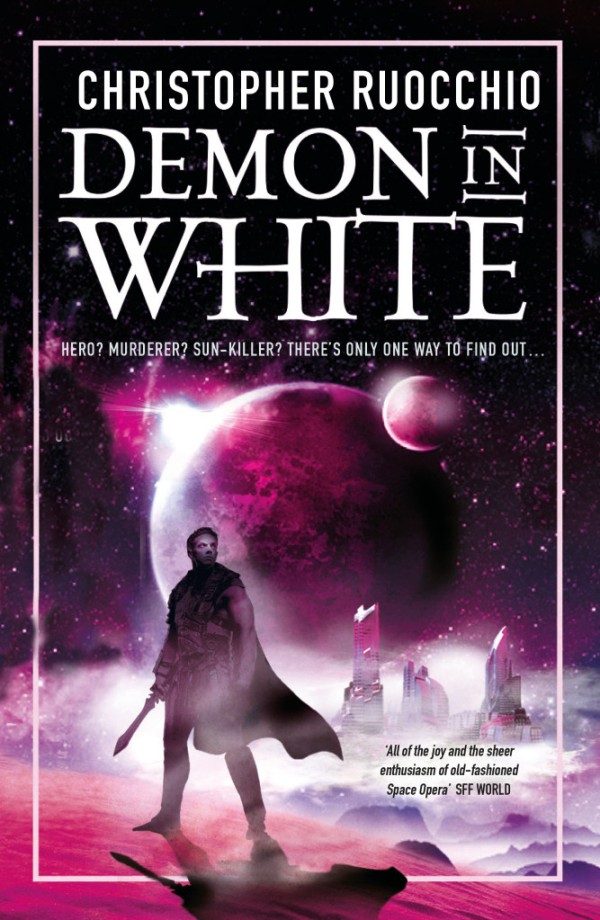
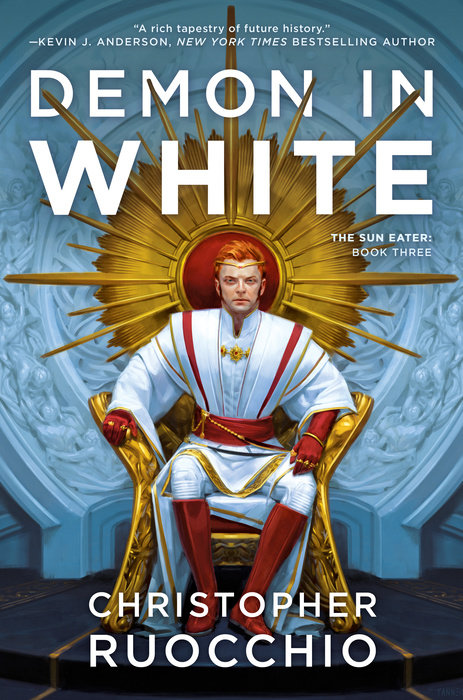
Demon in White by Christopher Ruocchio

Demon in White Cover 1

Publisher: Gollancz (Trade Paperback – 28 July 2020)

Series: Sun Eater Sequence – Book Three

Length: 776 pages

My Rating: 5 out of 5 stars

Amazon     Book Depository

One of the most impressive new science fiction authors on the block, Christopher Ruocchio, returns with the third incredible novel in his epic Sun Eater series, Demon in White.

Far in the future, most of humanity is part of the Sollan Empire, which controls vast systems of space and countless people within them.  The Sollan Empire has long reigned supreme and unopposed in the galaxy, but now it faces its greatest threat, a protracted war against the vicious alien race known as the Cielcin.  While the Cielcins typically engage in random raids and attacks at the leisure of their various chieftains, now a series of coordinated strikes are crippling the borders of the Empire.  The mastermind of these attacks is a powerful new Cielcin ruler, Syriani Dorayaica, who has managed to forge together a mighty alliance with one purpose, the complete destruction of the Empire and every human within it.

As the Empire struggles to combat this threat, all eyes turn to an unlikely hero, the rogue nobleman, adventurer and former gladiator, Hadrian Marlowe.  Following his infamous exploits across the galaxy, Hadrian has been made a knight in service of the Emperor and now finds himself stationed on the Empire’s capital, Forum.  Thanks to a series of successful campaigns against the Cielcin, Hadrian’s popularity and fame has spread across the Empire and many view him as the best hope to defeat the alien menace.  In addition, rumours of his unnatural survival of a lethal wound from a Cielcin prince and his prophetic visions of the future have created a cult-like following around him, heralding him as a divine saviour of humanity.

However, fame and popularity have a price, and Hadrian must now contend with threatened and jealous lords, politicians, and members of the royal family as they plot to undermine and disgrace him.  After several attempts on his life, Hadrian leaves to pursue his true agenda, research into the mysterious celestial being known as the Quiet, who has been manipulating Hadrian’s life while showing him terrifying glimpses of the future.  Hadrian’s mission will take him to some new and dangerous places throughout the universe, until finally he comes face to face with Syriani Dorayaica, who is determined to destroy Hadrian no matter the cost.  Hadrian’s road to the future seems set, but will he truly become the man who commits the greatest act of slaughter in the galaxy, or does a darker fate lie in store for him?

Now that was one heck of an awesome and expansive piece of science fiction.  Ruocchio has been absolutely killing it over the last couple of years ever since he burst onto the scene in 2018 with his debut novel and the first book in his Sun Eater series, Empire of Silence.  I loved this incredible debut and I was especially impressed when he managed to follow it up with an amazing sequel, Howling Dark.  I have had a blast reading Ruocchio’s prior novels, and both of them have been amongst my favourite books of 2018 and 2019 respectfully.  As a result, I have been really looking forward to Demon in White, and Ruocchio certainly did not disappoint as he has produced an outstanding and intensely captivating third entry in this series.

Demon in White is the third act in an expansive and compelling space opera that chronicles the life of Hadrian Marlowe, a man destined to destroy a sun, which will make him both humanity’s greatest hero and its most reviled monster.  The story is told in chronicle form from the perspective of an older Hadrian as he writes the account of his life after the events of this book.  Just like with Howling Dark, the story within Demon in White is set many years after the events of the previous book and details the next major stage of Hadrian’s life.  Ruocchio does an amazing job of reintroducing the readers to his universe and also examining the events that occurred during the gap between the two books (some of which occurred during the 2019 novella, Demons of Arae).  Despite the year-long gap between reading the second and third novels and the substantial amount of detail and information that they contained, I was able to pick up and continue the story without too many issues, quickly remembering who the characters where and what events they had experienced with the protagonist.  I do think that reading the prior two novels in the series first is a must, as I could easily see readers unfamiliar with the Sun Eater books having hard time following the expansive plot of Demon in White at this late stage of the overall story.  Still, this book’s ambitious and exciting narrative might prove enough to keep them going, especially if they make use of the substantial index and character list contained in the rear of the novel.

I really can not speak highly enough of the intense and clever story of Demon in White, as Ruocchio produced an epic and addictive narrative that drew me in and refused to let go.  The author does a fantastic job of bringing together a ton of great elements, including the tale of a doomed protagonist, a galaxy-spanning war, a deep dive into the history of the universe and so much more, into one impressive narrative that I had an absolute blast reading.  One of the things I liked the most about the book was the fact that the first half of the novel is primarily set on the capital planet of the Sollan Empire, essentially a science fiction version of Rome, which results in the protagonist getting involved in all manner of plots and political intrigue.  Due to the protagonist’s popularity with the people, and the rumours that he is unkillable, Hadrian is targeted by politicians, lords, members of the Royal Family, military administrators and the Empires powerful religious organisation, and he has to deal with a number of tricky situations.  I really liked this more intrigue and politics laden part of the story, and it was an interesting change from some of the previous novels.  Ruocchio also dives into some more cosmic and action based inclusions as well and there are some explorations of the universe, examinations of the unknown and a several major and enjoyable battle sequences.  All of this comes together extremely well, and I found myself powering through this 700+ page book to find out how it ended.

Another fantastic part of Demon in White’s story that I really enjoyed was the continued examination of the fascinating and compelling protagonist, Hadrian.  Hadrian is a fantastic and intriguing protagonist for the series, since the reader knows far in advance his story is going to end in fire and death.  The chronicling of his life story that is contained within these novels is always quite enjoyable, especially as the older Hadrian compiling these tales adds in his own spin to the story, ensuring that the novel is filled with his regrets and revelations made in hindsight.  The protagonist also goes through some interesting character development throughout the course of the book.  Not only is he introduced to a number of key figures who will have substantial impacts on his future life but he also starts to come to grips with his eventual destiny.  The younger Hadrian is given some tantalising and terrifying glimpses into the future and he struggles to comprehend his potential fate as a result.

The Hadrian in this book is also a very different character than in the prior novels.  Rather than the idealistic dreamer who hopes to one day make peace with the alien Cielcin, Hadrian is far more mature and battle hardened, especially after the traumatic events at the end of Howling Dark.  This version of Hadrian is convinced that there is no hope of peace with his foe, and he has become more ruthless and determined as a result.  However, despite these revelations, there are still fragments of the old Hadrian scattered throughout the novel, which contrasted well with his newer persona.  The sense of wonder he got at seeing a group of alien auxiliaries was very reminiscent of the Hadrian we saw in the first book, especially as this wonder ended up getting him in trouble.  I also liked the scenes that showed Hadrian trying to come to terms with his own legend, as his deeds and adventures have given rise to a cult-like following, with many people convinced that he is some form of divine champion or immortal being.  This proved to be a fantastic aspect of Hadrian’s character throughout Demon in White, as he does not want this attention or praise, not only because it will result in conflict with the various factions in the Empire but also because he does not want to be anyone’s worshipped hero.  However, many of the events that are focus of this cults worship, such as surviving being beheaded or his visions of the future, are actually true (in a sense), and he ends up having to rely on these abilities to survive the events of this novel, which is going to result in some interesting consequences.

There are also some major and fantastic emotional moments for the protagonist scattered throughout the book, such as when a long-running side character leaves him, or when he encounters a major figure from his past again.  I also enjoyed seeing more of his relationship with his main love interest, Valka, and their unconventional romance has flourished over the centuries that this series has been set.  Valka serves as a fantastic grounding force for Hadrian, and it is quite nice seeing them together, although the reader’s joy at seeing them together is somewhat tempered by the narrator’s hints that something tragic is bound to happen between them.  All of this makes for a very intriguing protagonist, and I have enjoyed seeing him flourish and grow over the course of the first three books, moving towards his eventual destiny.  I look forward to seeing how his story continues in the next novel, especially after the major events that occurred at the end of Demon in White.

I have always been impressed with the detailed and massive science fiction universe in which Ruochhio has set his series, and each of the Sun Eater books have added some new depth and unique features to this overarching setting.  Unlike the prior book, Howling Dark, which was set out in the wilds of space and alien planets, Demon in White returns to the confines of the Sollan Empire, a repressive, technophobic and tradition bound galactic kingdom that is stylistically based on ancient Rome.  I really enjoyed this creative science fiction setting, as it is a very dark and gothic location which clashes well with the mostly good-natured protagonist and narrator.  Demon in White adds a huge amount of detail to this universe, especially as the first two thirds are primarily set on new Imperial worlds, including the capital planet Forum.  As a result, there are a ton of intriguing new details and discussions about the politics, history and administration of the Sollan Empire, as well as the introduction of many significant characters, including the Emperor who Hadrian is destined to kill.  The later part of the book also contains some terrific new detail, and we get a really intriguing view about how this dark Empire was founded, including more details about the war against the machines created by the precursor empire, the Mericannii (Americans).  I really liked some of these dives into the past, especially as Ruocchio does a fantastic job of portraying a historical timeline that has been altered or hidden by war, destruction and political or religious censorship.  As a result, the protagonists believe in a very different version of history, and wildly incorrect discussions about historical events are often quite amusing, especially their ideas about American history.  Ruocchio also provides the clearest view of the origins and nature of the cosmic entity, the Quiet, who has been an overarching influence over the prior two books.  This was a rather intriguing, and at times metaphysical, examination of this being, and some of the revelations in this book, including about the connection the Quiet has with Hadrian, the Sollan Empire and the Cieclin, are rather major, and will have significant impacts in the next few books.  All of this proves to be exceedingly fascinating and I cannot wait to see how the author will expand on this setting in his future novels.

I also really have to highlight some of the incredible action sequences that occurred throughout Demon in White.  While a substantial amount of the plot is dedicated to the political intrigue that the protagonist finds himself involved with, there are some great action sequences in this book, including a major war sequence against the Cieclin in the last quarter of the book.  Ruocchio has done an amazing job building the Cieclin up as a major threat and the various bloody battle sequences against them help to reinforce this.  I particularly enjoyed the great scenes where the protagonist faces off against his foe in tight and confined spaces, such as on a ship or in the depths of a city, and the author ensures that the reader gets to enjoy them in all their claustrophobic glory.  Ruocchio adds to the horror by introducing a new form of antagonists in the form of giant Cieclin warriors who are cyborg hybrids enhanced with Extrasolarian (rogue human scientist) technology.  These terrifying hybrids act as very dangerous opponents for Hadrian and his allies, resulting in some dramatic and high-stakes battles.  Hadrian also gets some new combat abilities in this book, which add some intriguing new elements to the fight scenes and are generally quite fun to check out.  Overall, those readers who are interested in seeing some intense science fiction action will not be disappointed with this book as Demon in White delivers some impressive and memorable fight sequences that really help to get the heart pumping.

In this latest novel, Christopher Ruocchio has delivered another extraordinary and captivating science fiction epic that does a terrific job expanding on his fantastic Sun Eater series.  Demon in White contains an incredible and exciting story that sends its complex protagonist on a series of intriguing adventures throughout this rich and unique science fiction universe.  I had an awesome time reading Demon in White and I cannot recommend it highly enough.  This outstanding book gets a full five-star rating from me and if you are not already reading the Sun Eater series you need to start now!

Demon in White Cover 2

Amazon     Book Depository

Throwback Thursday – Kill Switch by Jonathan Maberry

Kill Switch Cover

Publisher: Macmillan Audio (Audiobook – 26 April 2016)

Series: Joe Ledger – Book Eight

Length: 17 hours and 56 minutes

My Rating: 5 out of 5 stars

Amazon     Book Depository

Reviewed as part of my Throwback Thursday series, where I republish old reviews, review books I have read before or review older books I have only just had a chance to read.

I recently found myself in the mood for another intense and crazy thriller novel, and luckily I knew exactly the book to check out, as I ended up listening to the eighth entry in the fantastic Joe Ledger series by Jonathan Maberry, Kill Switch.

People familiar with my blog will know that I have been really getting into Maberry’s writing over the last couple of years.  In particular, I have been making my way through the Joe Ledger series, which follows the titular agent as he investigates all manner of weird science and world-ending plots.  This has swiftly become one of my favourite series of all time thanks to the incredible stories that Maberry has come up with, and my intention is to finish off all the Joe Ledger books before the end of the year.  As a result, I knew far in advance that I was going to enjoy Kill Switch and I ended having an amazing time reading it.

In this eighth novel, Joe Ledger, agent for the clandestine Department of Military Sciences (DMS), is investigating a strange anomaly down in the Antarctic.  A secret military research facility has gone offline, and Ledger and his team need to find out why.  However, what at first appears to be a routine mission quickly devolves into an unnatural horror show as the DMS agents uncover a mysterious facility deep beneath the ice.  The things that Ledger and his team see will haunt them for the rest of their lives, and by the time they escape all three are infected with a deadly disease that places them into a coma.

Awakening several days later, Ledger discovers that much has happened in his absence.  America has been targeted by a ruthless terrorist organisation that apparently has access to an advanced EMP weapon that can turn off all power and technology in a certain area with devastating effects.  Worse, thanks to the consequences of the mission down in Antarctica and other recent failures, the DMS no longer has the confidence of the President, who refuses to give them the case.

Frustrated at being left out in the cold, Ledger and the DMS investigate where they can and soon come across several strange and seemingly unconnected events.  Able to piece together a pattern that no one else can see, Ledger soon finds himself in the heart of a vast conspiracy that aims to launch a shocking attack on the American people.  However, before they can intervene, Ledger and his team find themselves under attack from the most unlikely of places.  Can even the legendary Joe Ledger defeat an opponent who can attack him in his own mind, or will America face a wave of death and destruction the like of which they have never seen before?

Kill Switch was another fantastic and amazing novel from Maberry that continues the amazing Joe Ledger series.  This eighth book contains a captivating story that combines several different genres together to create an exciting and fast-paced read with some rather enjoyable elements to it.  I had an awesome time listening to this book, and while it is not my absolute favourite entry in the Joe Ledger series (I would have to give that honour either to The Dragon Factory or Code Zero), it was still a very impressive book that gets a full five-star rating from me.

In this eighth Joe Ledger novel, Maberry once again uses his distinctive style to tell another impressive and intriguing story that draws the reader in and ensures that they cannot turn away until it is finished.  Kill Switch contains a rather clever thriller storyline that deals with the protagonist attempting to stop another terrible terrorist plot utilising advanced technology.  While some of the elements to Kill Switch’s story are familiar, Maberry really gives this book a distinctive dark horror tint, as the novel deals with a number of Lovecraftian horror elements.  While this genre is not something that I have ever really gone out of my way to check out, I did enjoy its use in Kill Switch, especially as it sent its already unstable protagonist through some particular vivid and trippy vision sequences.  The various horror, science fiction and thriller aspects of the book’s narrative work together extremely well and it is a testament to Maberry’s skill as an author that the plot did not get too convoluted or hard to follow.  Instead, Kill Switch has an extremely elegant and fast-paced story with some great flashes of humour, enhanced by the author’s trademark use of multiple perspectives and interludes set before the main plot.  Maberry rounds this out with the return of the series enjoyable and long-running cast of characters, including protagonist Joe Ledger, who provides a first-person narration for around half the story.  Ledger’s warped and eccentric view of all the events going on around him adds so much enjoyment to the plot, resulting in much of the book’s humour.  This all ensures that Kill Switch contains another top-notch story that was an absolute pleasure to read.

The key parts of any Joe Ledger novel are the complex and memorable antagonists and the elaborate and destructive plots that they weave.  Maberry does another great job of this in Kill Switch, introducing some compelling villains and associated side characters who have some fascinating motivations for initiating the events of this book.  Thanks to a series of interludes and short chapters that are told from the perspective of the antagonist and their puppets, you get a full sense of why these characters are doing what they are doing, especially when you get a glimpse into several key moments of their lives.  Seeing so much of the antagonist’s past and the formation of their plans adds quite a lot of depth and tension to the story, and I always really appreciate the way that Maberry tries to expand these character’s narratives.  I was also quite enraptured by the complex and detailed plan that the antagonist set in motion, especially as it required using some unique technology in some novel ways.  I especially enjoyed the cunning way in which the villains went after Ledger and the DMS, including by destroyed their image and their influence, and I appreciated the way in which it was easier for them to achieve this due to an inadvertent backlash at the organisations prior extreme successes and advanced technology.

Kill Switch ended up being a major part of the overall series with some big moments occurring and some interesting connections to the prior novels, ensuring that this is a must-read for established Joe Ledger fans.  This book ended up continuing a bunch of key storylines that were introduced in the fifth novel, The Extinction Machine, with several plot points from that story revisited, as well as some antagonists.  In addition, several of the story elements introduced in Kill Switch are heavily utilised in future novels, such as in the tenth book, Deep Silence, which also matches its Lovecraftian horror vibes and story.  In addition, readers might also really appreciate the cameo appearance of Maberry’s alternate zombie-filled universe that is used as a setting for several of his other series, such as the Dead of Night books and his iconic Rot & Ruin/Broken Lands young adult novels, all of which feature a different version of Joe Ledger as a character.  There were also a couple of references to the town of Pinedeep, which served as the setting for Maberry’s first series, and which Ledger visited in the short story Material Witness.

While Kill Switch does have some intriguing connections to some of Maberry’s other works, this novel is incredibly accessible for those readers unfamiliar with the Joe Ledger books.  Like all the novels in this series, Kill Switch’s narrative is mostly self-contained, and you can start reading this book without any issues.  While there are a number of references to the events of the prior books, Maberry also makes sure to cover the relevant backstory, expertly inserting anecdotes about prior books and description of key plot points into the story often in a great entertaining manner (mainly because the protagonists still cannot believe that these previous events actually occurred).  This ensures that readers have more than enough background information to follow the story and understand who all the various characters are and what their personalities are like.

While it is extremely possible to read Kill Switch out of order, I would strongly suggest that readers read this series from the first novel, Patient Zero, rather than starting at the eighth book.  Not only does this allow you to see the various characters develop and progress throughout the course of the series, but it also enhances the emotional attachment that readers will have to the events of this book, including a couple of key character deaths.  Reading the series in order also helps to cut down on spoilers for some of the prior books.  This was something that I particularly noticed while reading Kill Switch, due to the fact that I have already read the sequel novels Deep Silence and Rage.  Both of these books make several references to the events of Kill Switch, so I had an idea of some of the events that were going to occur, as well as the identity of who the main antagonist was going to be.  While this did not derail my enjoyment of Kill Switch by too much, it did slightly reduce the suspense, which was not ideal.

I cannot review a Joe Ledger novel without commenting on the impressive and graphic action sequences that occurred throughout the course of the plot.  Maberry always does such a fantastic job writing his action scenes and the various close combat fights and shoot outs that occur throughout these novels feel extremely realistic as the protagonist and the narrator provide detailed explanations of what is occurring and its destructive impacts.  Kill Switch contains some very impressive action sequences as Ledger and his comrades are placed in some unique fight situations.  While there are the usual swift and one-sided fights against nameless goons, the characters often find themselves facing off against unexpected opponents who visit surprising violence upon them.  This makes for some truly shocking scenes, especially as Maberry’s excellent writing ensures that the reader fully understands the various characters’ surprise and despair.  You also have a unique situation where Ledger, generally considered to be one of the deadliest killers on the planet, finds himself severely handicapped in several fights due to the machinations of the antagonists.  This adds a whole new element to the typical fight sequences from this series, and it is nice to see the protagonist have some new challenges.  All this action helps to pump the reader up as they enjoy the excellent story and it is an amazing part of the overall book.

It should come as no surprise to anyone who has read my prior Joe Ledger reviews that I ended up listening to the audiobook version of Kill Switch, which in my opinion is the best format for enjoying these fantastic novels.  The Kill Switch audiobook has a run time of just under 18 hours, which I was able to get through incredibly quickly, and it was once again narrated by Ray Porter, whose voice work is easily my favourite thing about this format.  I have extolled the virtues of Porter’s narration in several of my other reviews due to his impressive vocal skills and his ability to move the story along at a swift and exciting pace.  Very few narrators are as in touch with the characters that they voice than Porter especially when it comes to the series’ titular protagonist, Joe Ledger.  Porter always does such an outstanding job capturing Ledger’s intense emotions and sweeping personality, and this enhances the listener’s experience when it comes to these books.  Porter also does amazing and consistent personifications for all the other characters in these books and it was great to hear all the familiar voices of the series’ recurring characters again.  This first-rate narration from Porter makes the audiobook format of these novels, including Kill Switch, an absolute treat to listen to and the audiobook format remains my preferred format for enjoying this series.

Kill Switch by Jonathan Maberry is an excellent and impressive thriller novel that served as a great eighth entry in the incredible Joe Ledger series.  I had an absolute blast going back and reading this book, and I really enjoyed the clever and intriguing story that Maberry cooked up for Kill Switch, especially as it contained an outstanding blend of different genres.  This was a fantastic read and it comes very highly recommended.  At this point in time I only have one more Joe Ledger novel to check out, Dogs of War, which I am really hoping to read before the end of the year, and I am also looking forward to checking out Maberry’s new upcoming novel, Ink.

Amazon     Book Depository

Star Wars: Queen’s Peril by E. K. Johnston

Queen's Peril Cover

Publisher: Random House Audio (Audiobook – 2 June 2020)

Series: Star Wars

Length: 6 hours and 10 minutes

My Rating: 3.75 out of 5 stars

Amazon

Prepare to dive back into a galaxy far, far away, as bestselling young adult author E. K. Johnston presents the very first Star Wars novel of 2020, Star Wars: Queen’s Peril.

Padmé Naberrie has always wanted to serve the people of her home planet of Naboo, and she knows that the best way to do that is to become Queen. Entering the competitive election, the 14-year-old politician is elected as ruler of Naboo. Casting aside her real identity for the protection of herself and her family, Padmé takes on a new name, Amidala, and moves into the royal palace, determined to bring change to Naboo. However, even a ruler as brilliant and diplomatic as Padmé is unable to do everything by herself, and she finds out that she is going to need help.

In order to keep her safe and to assist her with her needs, Padmé is introduced to a group of talented young women who will serve as her handmaidens. Acting as her assistants, confidantes, bodyguards and decoys, each of her handmaidens brings something different to the group, and it is up to Padmé to turn them into an effective team. Together, Padmé and her new friends seem capable of dealing with any challenge that may impact them.

However, there is a dark plot at work within the Republic, and its mastermind has Naboo in their sights. Soon Naboo is invaded by the armies of the Trade Federation, who seek to capture Queen Amidala and force her to sign away the planet. Forced to flee in disguise, Padmé sets out to reclaim her home and will do anything to free her planet. While Jedi, soldiers and a young chosen one may rally to their cause, the fate of Naboo ultimately rests on the shoulders of a young queen and her loyal handmaidens.

Queen’s Peril is an intriguing and enjoyable new addition to the Star Wars canon from bestselling author E. K. Johnston. I have been rather enjoying some of Johnston’s recent Star Wars releases, and I had a fun time reading her 2016 novel, Ahsoka, as well as last year’s fantastic release, Queen’s Shadow. Queen’s Peril is the first of several Star Wars books being released in 2020 (although some have been delayed), and I have been looking forward to seeing how this book turns out. This new novel acts as a prequel to Queen’s Shadow and is set both before and during the events of the first Star Wars prequel film, The Phantom Menace. This ended up being a fun and interesting read that explores some unique parts of Star Wars lore.

This latest Star Wars novel contains an intriguing tale that starts from the moment that Padmé is elected queen and takes on the Amidala persona. The first two thirds of this book follow the early days of Amidala’s reign, introducing Padmé and her handmaidens and showing how they became such a tight-knit team. There are a number of great moments during this first part of the story, and it was interesting to see the origin of a number of elements of the Amidala character that are shown in The Phantom Menace, such as her voice, the establishment of the decoy system, and a huge range of other compelling features. There are also several scenes that are dedicated to exploring why the Trade Federation decided to target Naboo and what the origins of their conflict were. I really enjoyed the first two thirds of this book, and I feel that the final third kind of let it down a little. The last part of the book focuses on the invasion of Naboo and follows the events of The Phantom Menace. While it was cool to see some different perspectives on the events of the film, this part of the book felt rather rushed, as the narrative jumped between a number of sequences from the movie in rather quick succession. Despite the problems with the ending, this was still a rather compelling story, and I did enjoy Johnston’s additions to the Star Wars universe.

While on the surface this book appears to be purely about Padmé, Queen’s Peril is actually about a number of different characters who made Padmé’s role as Queen Amidala possible. Padmé is naturally one of the main characters of the book, but all five of her handmaidens are just as important to the story. Johnston previously introduced each of these handmaidens in Queen’s Shadow, and briefly explored their unique skills and what they brought to the group. She does this again in Queen’s Peril, although this is done in greater detail, as this book shows each character’s history and how each of them became a handmaiden. Each of the handmaidens is given a distinctive personality, and all five get a number of scenes told from their point-of-view. I really enjoyed learning more about these characters, and it was great to see them come together as a group and work towards ensuring that Padmé was protected and an effective queen. While each of the characters are explored in some detailed, the biggest focus is on Sabé, Padmé’s first handmaiden and her main decoy (played by Keira Knightly in the film). The author spends time showing the unique relationship between Sabé and Padmé, and it was captivating to see the trust between them grow. Because she was so heavily focused on in the movie, Padmé does not get a lot of scenes in the last third of the book, so quite a bit this part of the story is told from the perspective of all the handmaidens. It was rather interesting to see how each of these characters went during the course of the film, and it was particularly cool to see some scenes with Sabé as she pretended to be the Queen.

In addition to Padmé and her handmaidens, Queen’s Peril also featured point-of-view chapters or scenes from pretty much all the key characters from The Phantom Menace film. The use of all these extra characters was an interesting choice from Johnston, and I liked how it expanded the story and showed some fresh perspectives and backstory for several major Star Wars protagonists. Most of these appearances are rather brief, with characters like Anakin, Obi-Wan Kenobi and Qui-Gon Jinn only getting a few minor scenes. However, other characters do get some extended sequences, especially Captain Panaka, the head of Amidala’s palace guards. Several chapters are told from Panaka’s perspective, and he becomes quite a key character within the book, mainly because he is the person who finds and recruits all of the handmaidens. Panaka is a major driving force of the plot, and it was interesting to see his role expanded from the films, especially as you get more insight into why he is so dedicated to the Queen. I also really liked how the book features several sequences told from the perspective of Senator Palpatine/Darth Sidious. These scenes were fun, as they showed a lot of Palpatine’s earliest manipulations, including how he was able to organise the invasion of Naboo. Overall, I rather appreciated how the author utilised all the characters within Queen’s Peril, and watching their development and interactions proved to be quite compelling.

Like the author’s other Star Wars novels, Queen’s Peril is intended for a young adult audience, and Johnston does a fantastic job tailoring it towards younger readers. This book has a lot of great young adult moments to it, especially as it focuses on a group of teen girls working together to outsmart a variety of adults and then eventually save their entire planet from an invasion. Queen’s Peril has some fantastic portrayals of these teen protagonists, and there are a number of sequences which show them stepping up or dealing with complicated issues that younger female readers will appreciate. While it is intended for younger readers, Queen’s Peril, like most young adult Star Wars novels, is also very accessible to all readers who are major fans of the franchise, and it is easy for older readers to get into and enjoy the plot of the book and its intriguing new additions to the Star Wars lore.

I did have a minor complaint about the release order of the books in Johnston’s series about Padmé. While I enjoyed both Queen’s Peril and Queen’s Shadow, I really do think that it was an odd decision to release Queen’s Shadow first, and then release a prequel novel a year later. It would have been better to release Queen’s Peril first to introduce the various handmaidens and help build up the emotional connection between them and Padmé, making their use and inclusion in Queen’s Shadow a bit more impactful. It might also have made a bit more sense to have Queen’s Peril only focus on events before The Phantom Menace, have another book focus exclusively on what was happening with the handmaidens and Padmé during the course of the film (which would have ensured that Queen’s Peril did not feel as rushed as it did towards the end), and then release Queen’s Shadow. While I am sure that there is some reason why the order for these books was a bit off, probably at the publisher level, I think they could have planned this out a little better.

I ended up grabbing the audiobook version of Queen’s Peril, and I had a great time listening to this book. Queen’s Peril has a short run time of just over six hours, so it is rather easy to get through this book quickly. Like all Star Wars audiobooks, this version of Queen’s Peril was a real auditory treat, due to the excellent use of the iconic Star Wars sound effects and scores from the movies, which are used to enhance each of the scenes. While it was great to once again hear all the fantastic music and intriguing background noises, Queen’s Peril’s greatest strength as an audiobook comes from its fantastic narrator, Catherine Taber. Taber is the actress who voiced Padmé in The Clones Wars animated television show, and, short of getting Natalie Portman in, is the perfect person to narrate a novel about the character. Taber also narrated the previous Johnston book about Padmé, Queen’s Shadow (indeed all of Johnston’s Star Wars books have featured the character’s voice actor as a narrator for their audiobook), and it was great to see her return. She naturally does a perfect voice for the character of Padmé, as well as for the handmaidens, who had similar speaking patterns due to their role as decoys. There are some great vocal scenes between these characters, especially when they are trying to perfect the Amidala voice, and they go through several variations throughout the book. In addition, because Queen’s Peril features nearly every major character from The Phantom Menace, Taber also had to voice several different people who were brought to life by some amazing actors in the original film. I felt that Taber did a fantastic job as imitating some of these voices, and it proved to be a real showcase for her skills as a voice actor. Overall, I had an amazing time listening to this audiobook, and I would strongly recommend this format to anyone interested in checking out Queen’s Peril.

Star Wars: Queen’s Peril is an intriguing and exciting new young adult Star Wars release from E. K. Johnson that acts as a sequel to her previous awesome novel, Queen’s Shadow. Johnston comes up with another compelling story that explores the early life of Padmé/Queen Amidala and her loyal handmaidens. While it does have some flaws, it is a very good book, and it should prove to be a fun read for established fans of the franchise and younger readers who are interested in breaking into the expanded universe. I had an amazing time listening to this book and I look forward to seeing what sort of Star Wars story Johnston produces next.

Amazon

The Ballad of Songbirds and Snakes by Suzanne Collins

The Ballad of Songbirds and Snakes Cover

Publisher: Scholastic Audio (Audiobook – 19 May 2020)

Series: The Hunger Games – Book 0

Length: 16 hours and 16 minutes

My Rating: 4 out of 5 stars

Amazon

It is time to return to Panem as bestselling young adult fiction author Suzanne Collins presents the thrilling prequel to her acclaimed The Hunger Games series, The Ballad of Songbirds and Snakes.

It has been 10 years since the third and final book in The Hunger Games trilogy was published. Since then the series has gone from strength the strength, thanks to the four films that converted these books into an ultra-popular franchise. Like many, I jumped onto The Hunger Games bandwagon after the first film was released, and I ended up listening to all three of the novels in quick succession. This of course turned me into a pretty major fan of the franchise, and I eagerly watched the next three films as they were released. As a result, I was extremely intrigued when I heard that Collins was writing a prequel novel, and I have been looking forward to it for some time. I ended up listening to the audiobook version of The Ballad of Songbirds and Snakes right after its release, and it proved to be an extremely interesting book that I rather enjoyed.

It has only been a decade since the Capitol won the war that ravished Panem, defeating the Districts and forcing them back under Capitol control. As punishment for their crimes, every year two children from each of the 12 surviving Districts are forced to compete in the Hunger Games, a brutal fight to the death from which there is only one survivor. While many in both the Capitol and the Districts view the Games as distasteful, for one young man it represents an invaluable opportunity.

Coriolanus Snow is a young academy student whose family has fallen on hard times after the war. Coriolanus’s one chance to get into the Capitol university and have a chance at wealth and prestige is to successfully mentor one of the tributes in the annual Hunger Games and ensure that they win. The odds seem to be against him when he is given the female tribute from District 12, generally considered the lowest tribute with the worst odds of surviving. However, when his tribute, the wild and alluring Lucy Gray Baird, sings on stage at the reaping, Coriolanus’s hopes rise, as her antics capture the attention of everyone in the Capitol. Determined to succeed no matter the cost, Coriolanus soon finds his fate entwined with that of Lucy Gray. But as he gets closer and closer with his tribute, just how far is Coriolanus willing to go, and how will his decisions now affect the future of Panem forever?

The Ballad of Songbirds and Snakes is a captivating and entertaining read that serves as a fascinating prequel to the original Hunger Games novels. Collins comes up with a fantastic, character-driven story that focuses on the main antagonist of the first trilogy, President Snow, while also diving back into the past of her unique dystopian future, showing the early days of the Hunger Games. I have to admit that I had rather high expectations going into this novel, and I ended up being a little disappointed at times with how it turned out. This was a rather less exciting read than the previous Hunger Games books, as Collins spends a lot of time exploring society, human nature and the psyche of the villainous protagonist. It was also way too long, and I think it could have been shortened down a little. Despite probably being my least favourite Hunger Games novel so far, The Ballad of Songbirds and Snakes is still a really good book that I had an amazing time listening to it.

This book contains an intriguing plot that follows the protagonist as he becomes involved in the events of the 10th annual Hunger Games. The story is broken up into three distinctive parts, each of which takes up about a third of the book’s narrative. The first part deals with the lead-up to the Hunger Games, the second part follows the actual Hunger Games as Snow watches from the outside, while the last third of the book details the aftermath of the games, and features a new adventure for the protagonist. Each of these three parts proved to be enjoyable in their own right, and together they formed a rather compelling overall narrative. I was a little surprised that the actual Hunger Games ended about two-thirds of the way into the story. When the novel suddenly jumped to a post-Hunger Games storyline with third of the book still to go, I honestly thought that Collins had made a mistake, and would have been better off portraying an extended Hunger Games. However, this third part served as a rather good conclusion to the entire novel, and I actually really liked some of the major plot elements that occurred there, especially as they were the most transformative part of the novel for the main character. There are a lot of cool moments within this story, as well as a bevy of supporting characters, many of whom Collins is able to give a bit of depth to with a few short paragraphs. I actually really enjoyed where this story went, and while I did envision it going in a different direction, I think that Collins did a good job with it in the end.

One of the key things about The Ballad of Songbirds and Snakes is that it serves as an origin story for President Snow, the main antagonist of the original Hunger Games trilogy. It features an 18-year-old Snow as the main character and is told completely from his perspective. I understand that quite a few people were not exactly thrilled that President Snow was the focus of this novel, and many did not want to see a book that followed a young version of him. While I can understand their feelings about this, I personally enjoyed seeing something that focused on Snow and his early history. I have read and enjoyed many stories in the past that focus on a villain, or which features them as a major protagonist, and it can often be quite fun to see their perspectives and motivations. The Ballad of Songbirds and Snakes is a good example of this, and I found it fascinating to see a younger Snow and watch his involvement in his first Hunger Games.

Collins has an interesting take on the character of the young President Snow, and presents the reader with some key moments from his life, as well as some of the people who helped shape him into the villain we know in the later books. The author spends time exploring elements of his childhood, such as showing how he suffered during the war, not only losing both his parents, but also nearly dying from starvation as the Districts besieged the Capitol. There are also some intriguing examinations of his family, such as the grandmother who gifted him his love of roses, and the revelation that the character of Tigress, who appeared in the third book (fourth movie), is actually Snow’s cousin and closest living relative. However, despite these more humanising elements, Snow is shown to be a truly irredeemable person even before the transformative events of the novel. From the very start of the book, Collins portrays him as a manipulative and conceited individual, constantly sucking up to people in order to get what he wants, resentful of those around him who have more than he does and concerned most of all with status. While there are some intriguing nature versus nurture elements to his early behaviours, Snow is shown to be just an unpleasant person. This of course makes him a hard protagonist to get behind for this book, and for most of the story you really were not rooting for him to succeed. Despite this, I found his story to be rather compelling and I enjoyed seeing this mostly amoral teenager attempt to succeed, while presenting the reader with various, weak or selfish justifications for his actions in his mind.

While he is already a pretty despicable person, it is the events of The Ballad of Songbirds and Snakes that truly turn him into the cutthroat person that takes control of the Capitol in the future. Thanks to a combination of his experiences and some perceived betrayals (which are always worse from his point of view), as well as the mentorship of the Capitol’s sadistic head gamemaker, Doctor Gaul, Snow becomes much more ruthless and ambitious, and some of his actions towards the end of the book show just how evil he has become. It was also cool to see him embrace the philosophy around the Hunger Games, as well as developing a hatred of District 12 and certain other symbols and songs, all of which the character would carry with him to the main trilogy 60 years in the future. All of this analysis of Snow’s character formed a captivating heart to the story, and I liked the more villain-centric novel, even if this great antagonist did come across as a winy child at times. I will be intrigued to see more of the events that influenced Snow in the future, although I can appreciate that many others would prefer stories based around Collins’s protagonists.

The other major character that I have to discuss is Snow’s tribute from District 12, Lucy Gray Baird. Lucy Gray is an entertaining and likeable character who steps off the page right at the moment of her introduction and sticks in the mind. Lucy Gray is a very different tribute to that of Katniss from the main trilogy, being a singer and rebellious entertainer who effortlessly makes everyone fall in love with her, and who relies on cunning and underhanded tactics to survive rather than martial prowess. She also serenades both the reader and the other characters with a variety of different songs, and I quite enjoyed seeing several of the musical numbers she came up with, especially as you find out the origins of one of the musical pieces that appear in the original trilogy. Lucy Gray is the character who the reader is most drawn to, and you find yourself even hoping that Snow succeeds, as this will ensure Lucy Gray’s survival. Snow and Lucy Gray end up having a bit of an awkward romance, which on the surface seems nice, although you only see it from Snow’s point of view, and he becomes rather possessive of her in his own mind. I would have been interested to see Lucy Gray’s thoughts on Snow, as it could have really changed the whole dynamic of their relationship. Overall, though, Lucy Gray is a great new character, and the way her arc in this book ends really helps drive home how terrible Snow can be.

The thing that I think most people, especially established fans of The Hunger Games novels, will enjoy about this prequel novel is the substantial world building that Collins does. The author does an outstanding job showing off an early version of Panem, which is still recovering from the impacts of the war, and where control over the Districts is not yet complete. This is a rather different Capitol to what you see in the other The Hunger Games books, as there are no elaborate costumes, outrageous styles, strange cosmetic surgery or excessive luxuries. Instead it is a far more subdued Capitol, with less food, traumatised people and rubble still in the streets. This made for a curious contrast to what we see in the future books, and it was interesting to see the differences and similarities. There are also some exciting flashbacks to the war itself from the memory of Snow, and it was cool to learn a little more about that. Naturally, The Ballad of Songbirds and Snakes contains a lot of foreshadowing to the events of the original Hunger Games trilogy, and fans will enjoy seeing historical views of certain key events, locations and people.

One of the most fascinating aspects of this world building is the author’s exploration of the early Hunger Games and how they took place. These Games are very different to the elaborate affairs shown in the original trilogy. Up until this point the Hunger Games are rather basic, with the tributes simply thrown into an abandoned sports arena with a bunch of weapons. There are some great comparisons between these more basic games and the games that we are more familiar with, such as the way that the tributes are treated, as rather than the luxurious train with all the fancy food that Katniss and Peeta travelled in, the tributes for these Hunger Games arrive starved and injured in a livestock train. This is also the games where they start to experiment with some of the elements that are recognisable from the main games, such as having a mentor, brief interviews with a Flickerman (in this case, Lucky Flickerman, the local news weatherman and amateur magician), gambling and sponsors. It was really cool to see the origins of these ideas, and why they were implemented, and it makes for a truly fascinating addition to the book. Collins also really dives into the philosophy behind the Games, and why the leaders of the Capitol were so eager for them to succeed and why they believed that they helped control the Districts. The origin of the Games is also revealed, as well as some of the key players, and I think it served as an invaluable piece of this universe’s lore. I quite liked learning more about the early days of the Hunger Games, and I imagine that a lot of readers will love to find out how such a terrible event came to pass.

The actual Hunger Games that took place in The Ballad of Songbirds and Snakes was a shorter and more barebones affair than what we have seen before. The tributes are fighting in an actual sporting arena, rather than a terraformed zone, and most of them spend the time hiding in the tunnels. Due to the fact that we are seeing it from Snow’s point of view, and because the arena only has a couple of cameras that only cover a fraction of the area, there are a lot of periods of inactivity and blank time, where the reader has no idea what is going on. This made for a much more disrupted experience, and while it was interesting to see the games unfold from the outside (something we saw a little bit of in the movie, but not in the books), it was nowhere as exciting as it could have been. That being said, there are still some really cool moments of child murder, and I did like seeing the mentor’s role in winning the games. The way in which the games came to an end was also rather clever, and it played into the events occurring outside with Snow. While it could have been longer, more exciting and perhaps more intense, this was still a fun part of the novel, and I look forward to seeing more fights to the death in any future Hunger Games novels Collins writes.

As I mentioned above, I ended up listening to the audiobook version of The Ballad of Songbirds and Snakes rather than grab a physical copy, and I am rather glad that I did, as it proved to be a great way to enjoy this book. The Ballad of Songbirds and Snakes audiobook is narrated by Santino Fontana and has a run time of just over 16 hours. This was a rather extensive run time for a Hunger Games novel; it was around five hours longer than any of the previous audiobooks in the series. That being said, I was able to get through this audiobook in a rather short period of time, and I found myself really engaged by this format, as it helped explore all the elements of this earlier version of Panem. Santino Fontana proved to be a very good narrator for this novel and he does an excellent job bringing the book’s large host of characters to life. The various voices he does fit the characters rather well, and I thought that his narration helped to highlight how horrible Snow could be at times. I also liked how Fontana’s narration worked with the multiple songs that Collins featured throughout the novel, and his spoken version of them sounded rather cool. As a result, I would definitely recommend the audiobook version of The Ballad of Songbirds and Snakes to people interested in checking this book out, as it was a wonderful format to enjoy this great story with.

The Ballad of Songbirds and Snakes was a curious and unique new addition to The Hunger Games franchise, which I thought turned out to be a rather good read. Collins ended up writing an intriguing, character-based narrative that showed a new side to the main antagonist of her original trilogy. While this book is not without its flaws, I had a wonderful time reading it, and once I got into its plot I had a hard time putting it down. Ideal for those fans of the previous Hunger Games novel, this book should make for an interesting movie in the future, and I am planning to grab any future novels from Collins set in this universe.

Amazon

Star Trek: The Unsettling Stars by Alan Dean Foster

The Unsettling Stars Cover

Publisher: Simon & Schuster Audio (Audiobook – 14 April 2020)

Series: Star Trek: Kelvin Timeline – Book One

Length: 8 hours and 5 minutes

My Rating: 4 out of 5 stars

Amazon     Book Depository

My continued exploration of the fun and entertaining genre that is Star Trek fiction continues, as I check out the latest tie-in novel, Star Trek: The Unsettling Stars by Alan Dean Foster, an intriguing read which serves as a tie-in to the alternate Kelvin timeline, the spinoff timeline that occurred during the 2009 Star Trek film.

The Unsettling Stars is a rather interesting Star Trek read that is the first original novel set in the Kelvin timeline, except for official film novelisations and the Star Trek: Starfleet Academy young adult miniseries. This book was originally set for release back in 2010 under the title Refugees, but it was pulled from publication along with three other proposed novels that tied in to the most recent Star Trek movies. Another one of these books, More Beautiful Than Death by David Mack, is set for release later this year, and no doubt the other two proposed novels from 2010 will be published at some point as well. The Unsettling Stars is the third Star Trek novel released this year (behind The Last Best Hope and The High Frontier), and it is the first one in a series of Star Trek novels I identified in a recent Waiting on Wednesday article. As a result, I was rather pleased to get a copy of the audiobook format of this novel, especially as this book was written by the acclaimed author Alan Dean Foster.

Foster is a veteran science fiction and fantasy author who has been writing since the 1970s. He has written a multitude of novels over the years, including books set in his long-running Humanx Commonwealth Universe, The Damned trilogy, the Spellsinger series, The Taken trilogy, The Tipping Point trilogy and a huge range of standalone novels. Foster also has a large amount of experience writing tie-in novels to popular franchises, having written the official novelisations to several series, including the Alien movies, the Transformers movies, Terminator Salvation and The Chronicles of Riddick. Foster also has a deep connection with the Star Wars franchise, having ghost-written the official novelisation for the original Star Wars movie. He also wrote Splinter of the Mind’s Eye, which was intended to be a low-budget spinoff from Star Wars if the first movie did badly in the box office. Seeing that Star Wars was a major success, Splinter of the Mind’s Eye was released as the first official Star Wars novel, meaning that Foster started the Star Wars expanded universe (which has become a major staple for this blog). Foster has since gone on to write a second Star Wars novel, The Approaching Storm, and he recently wrote the official novelisation to Star Wars: The Force Awakens, nearly 40 years after he first got involved with the franchise.

Foster also has some rather interesting connections to the Star Trek franchise. While The Unsettling Stars is the first original novel that he has written for Star Trek, he has produced some official novelisations of several shows and movies over his career. Back in the 1970s, he wrote the official novelisations for Star Trek: The Animated Series, contained in 10 separate books. He also wrote the official novelisations for the 2009 Star Trek film, as well as for its sequel, Star Trek Into Darkness. However, his most significant contribution to the Star Trek universe has to be the fact that he wrote the story for the original Star Trek film, 1979’s Star Trek: The Motion Picture. As a result, Foster is definitely an interesting author to check out, and while I have not had the pleasure of reading any of his stuff previously, I was rather intrigued to see how this novel would turn out.

Years ago, a time travelling Romulan ship attacked and destroyed the Federation starship the U.S.S. Kelvin, killing the father of James T. Kirk. The changes which occurred following the destruction of this ship resulted in a whole new timeline, similar to the main Star Trek universe in most ways, but with a number of key differences. In this new timeline, Kirk, with the help of his young crew aboard the U.S.S. Enterprise, was eventually able to defeat this powerful Romulan ship, but not before it destroyed the Vulcan home planet. Now, after being promoted to captain of the Enterprise, Kirk and his crew embark on their first mission together.

With their ship repaired after the battle with the Romulan ship, the crew of the Enterprise take it out of spacedock in what is seen as a simple shakedown cruise. However, not long after they set out, they receive a distress signal from a ship just outside of Federation space. Arriving at the source of the signal, they find a single colony ship belonging to an alien race known as the Perenorean. Appearing to be peaceful refugees, the Perenorean request help as they have sustained damaged and are lacking the resources to travel to their original destination. But within moments of contact between the two ships, a second group of unknown alien ships arrive, determined to wipe out the Perenoreans. Despite not knowing the full history of this conflict, Kirk eventually comes to the aid of the Perenoreans, sending their attackers running, although not before they give the crew of the Enterprise a cryptic warning about the people they just saved.

Meeting with the Perenoreans, Kirk and his comrades discover that their new acquaintances are an extremely advanced group of beings whose capacity to learn and innovate seems limitless. Extremely grateful and determined to repay those who have helped them, the Perenoreans endear themselves to the Enterprise’s crew, who decide to help them relocate to a nearby planet. However, not everything is as it seems with the Perenoreans, whose desire to help and improve everything around them comes with its own unique set of issues. Can the crew of the Enterprise find a solution to the problems their new friends are causing or have they unwittingly unleased a terrible scourge on the Federation?

The Unsettling Stars proved to be a compelling and exciting Star Trek novel that I was able to get through quite quickly. Foster comes up with a rather clever and entertaining central story, set in the unique Kelvin alternate timeline, that revolves around a classic Star Trek first contact mission, with some interesting twists to it. The author crafts together a great story that spends a good amount of time with the key members of the Enterprise crew, with a particular focus on Kirk, Spock, McCoy, Uhura and Scott, as well as introducing several other new members of the crew, who each have a couple of scenes. The Unsettling Stars comes across like a typical Star Trek adventure, featuring a good blend of action, adventure, diplomacy and scientific discussion, similar to an episode of one of the shows. No real prior knowledge about the greater Star Trek universe is needed to enjoy this book, although it is geared more towards those readers who have a greater appreciation for the franchise, and who have at least watched the 2009 Star Trek film. Overall, The Unsettling Stars is a gripping and enjoyable Star Trek novel with a great story that I had a fantastic time listening to.

One of my favourite elements of this book was Foster’s inclusion of the new alien race, the Perenoreans. The Perenoreans are a group of extremely friendly aliens that the Enterprise rescue and help relocate to a new colony planet. The Perenoreans are an interesting new alien species in the Star Trek canon, characterised by their great intelligence, ability to adapt and evolve to any situation, and their desire to help anyone they come across. While it is also intriguing to see a new fictional alien species, a large amount of this book’s narrative lies around the crew discovering the true intentions and motivations of this species. While they seem friendly, you just know that they are going to turn out to be sinister or problematic in some way or another. The way that they genuflect is way over the top, and there is no way a whole race of people is that friendly. Also, there would not be much of story if they did not turn out to be problematic in some way. Foster does an excellent job of slowly hinting at their true nature, and it helps build up a good amount of tension throughout the course of the book. The eventual reveal of their secrets is rather fascinating and makes for a great payoff after all the build-up. I also really liked the conclusion to their whole arc, especially as it made use of a fun, but seemingly unimportant story element to wrap the whole thing up. These aliens are an amazing part of this book’s story, and it was one that made me enjoy The Unsettling Stars a whole lot more.

I also think that Foster did a good job of writing this book like it was set in the Kelvin timeline. The Kelvin timeline is filled with all manner of intriguing differences to the main Star Trek timeline, and the author spent a bit of time incorporating these differences into The Unsettling Stars. While at times the book did a feel a little like a tie-in to The Original Series, Foster was always quick to showcase some key elements of the Kelvin universe. Kirk is a little more arrogant and eager for glory in this book, and there are several discussions about his rapid promotion to captain, which results in a bit more scrutiny from Starfleet. McCoy is a bit more of a grump in this novel, and he has a bit more of an antagonistic relationship with Spock. There is also a bit of time spent exploring the new relationship between Spock and Uhura, and there are several mentions about Spock’s new dynamic as a member of a refugee species. I liked seeing the return of Simon Pegg’s fun version of Scotty, whose inclusion makes for several entertaining and enjoyable scenes. I also have to highlight the excellent reference to Star Trek: The Motion Picture that occurred in this book, as the crew of this version of the Enterprise come across a key item from this film well before it becomes a problem. It’s not often that a writer gets to erase the entirety of a film they scripted over 40 years previously, and I quite liked how this event turned out as part of the larger story. I had a fantastic time exploring the Kelvin timeline in this book, and I look forward seeing more of it in the future novels set in this timeline.

As I mentioned above, I ended up checking out The Unsettling Stars in its audiobook format, which was narrated by Robert Petkoff. This is a rather short audiobook, which runs for just over eight hours. While it took me a few days to get through (mainly due to lack of listening time than anything else), most readers should be able to listen to the whole book rather quickly, especially once they get engrossed in the intriguing story. Like every other Star Trek book I have so far listened to, The Unsettling Stars audiobook featured the vocal talents of Robert Petkoff, who seems to be the primary narrator for Star Trek audiobooks. Petkoff is an amazingly talented narrator who has come up with some incredibly realistic voices for key members of the various Star Trek television shows. In particular, he has come up with some fantastic voices for the members of The Original Series, which he uses throughout The Unsettling Stars to great effect, bringing the main crew of the Enterprise to life, while also coming up with great voices for some of the additional members of the crew and the various aliens that they encounter. All of this is really cool, and hearing these similar voices helps bring the reader into the Star Trek zone. If I had one criticism, though, it would be that Petkoff uses the same voices here that he uses for all the other audiobooks based around The Original Series. While I appreciate that the characters in the Kelvin timeline are supposed to be versions of the cast from The Original Series, hearing the Kelvin timeline characters speak in the same voice as their counterparts was a tad disjointing, and it made me forgot at times that this book is supposed to be set in an alternate timeline. A little bit of variation from Petkoff could have potentially helped this, although I am uncertain about what exactly he could have done to set this apart. Despite this minor criticism, I still really enjoyed listening to the audiobook version of this book, and I would recommend this format to anyone who wanted to check out The Unsettling Stars.

The Unsettling Stars is an excellent and exciting new Star Trek novel from the legendary author Alan Dean Foster. I had a great time unwrapping the cool mystery around the new race of aliens that Foster came up with for this novel, and it was fun to see a story in the Kelvin universe. This was a fantastic addition to the Star Trek canon, and I would recommend this to any fans of the franchise who want a clever new read.

Amazon     Book Depository