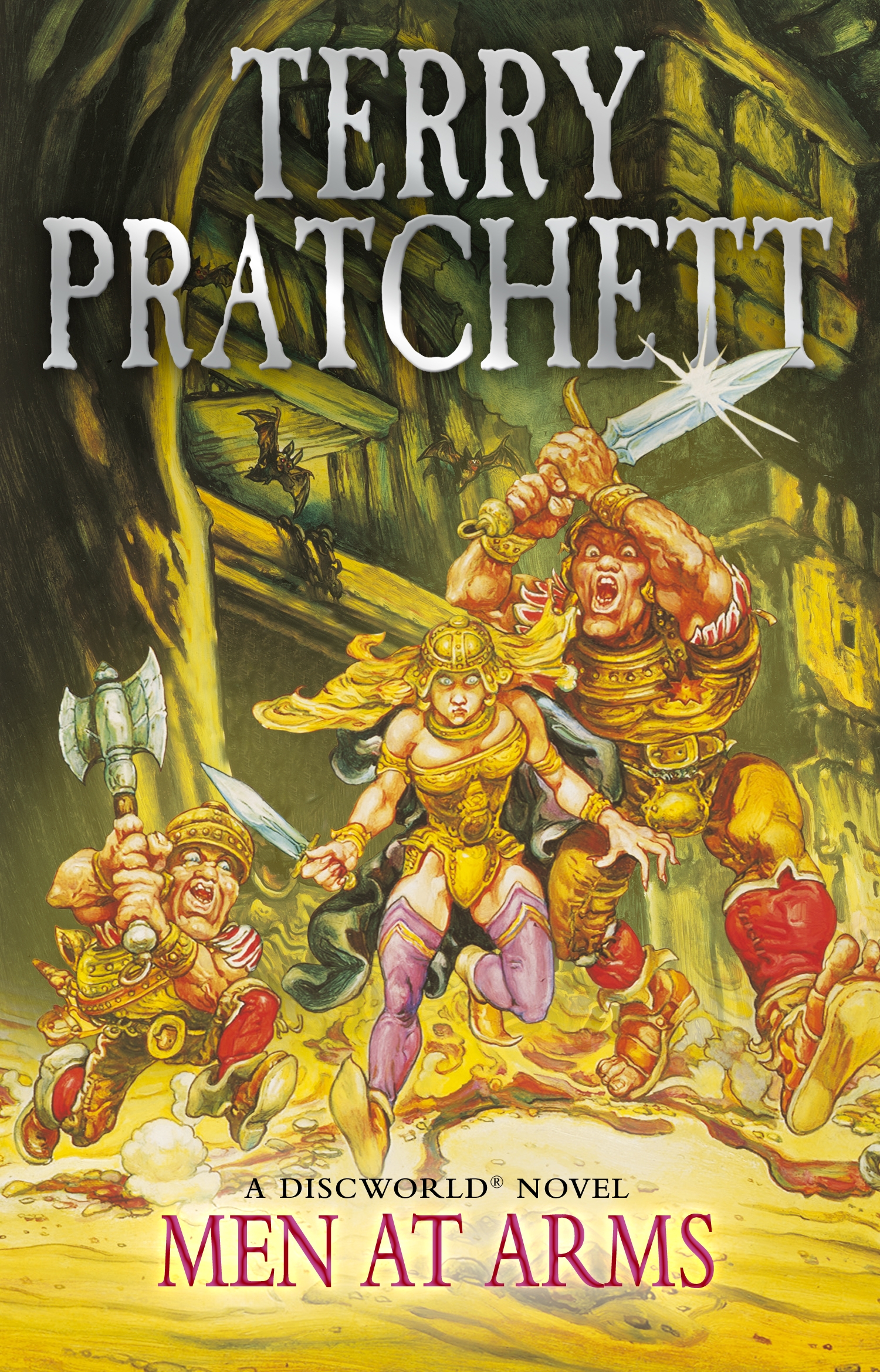
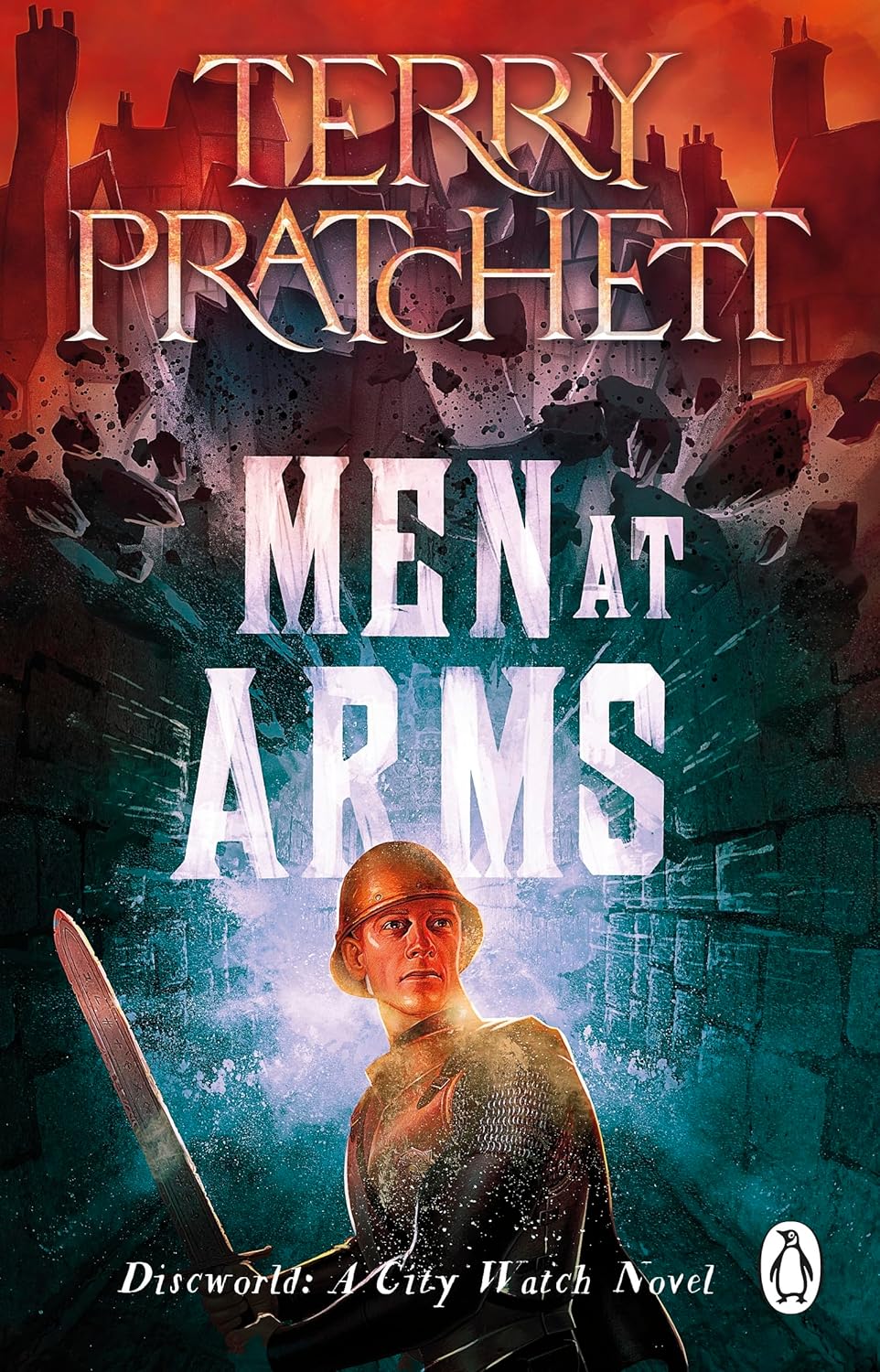
Men at Arms by Terry Pratchett

Publisher: Gollancz/Penguin Random (Audiobook – 1993)

Series: Discworld – Book 15/City Watch – Book Two

Length: 12 hours and 58 minutes

My Rating: 5 out of 5 stars

Amazon

After yet another re-read, the classic fantasy satire novel, Men at Arms remains as one of my favourite Discworld novels by the late, great Terry Pratchett, especially as its new audiobook version breaths fresh life into the always impressive novel.

Readers of this blog will have noticed that I have been on a real Discworld rampage lately, having re-read several books from my absolute favourite fantasy series.  Much of this is due to the recent release of a cool new audiobook version of all the Discworld books, featuring an awesome array of new narrators and vocal talents.  This new format has proven particularly awesome for books like Pyramids, Moving Pictures and Small Gods, and I have been eager to see how some of the books in my favourite Discworld sub-series, the City Watch books, come across with the new narrators.

While I have a lot of love for all the books in Terry Pratchett’s Discworld, my absolute favourites come from the City Watch sub-series.  Following the unlikely members of the Ankh-Morpork City Watch, a rag-tag team of guards generally looked down upon by the entire city, the City Watch books features an exceptional combination of fantasy and crime fiction elements, wrapped up in Pratchett’s usual satirical humour, as the protagonists investigate a series of dastardly crimes in the supernatural Discworld.  The series started perfectly with the awesome novel Guards! Guards!, which I reviewed last year, and Pratchett did an outstanding job following this up with the brilliant sequel, Men at Arms.

After saving the sprawling and eternally crime-ridden city of Ankh-Morpork from a fire-breathing dragon, the men of the Night Watch are still at work protecting the city, even though most of the city wishes they didn’t exist.  Despite their previous escapades, it’s a bad time to be a copper in Ankh-Morpork, with species tension between the dwarfs and the trolls at boiling point, while the powerful guilds disregard the Watch’s non-existent authority.  Worse, the Night Watch has been forced to accept three diversity hires, and must now contend with a mad dwarf, a thick troll and a woman (gasp) amongst their ranks.

Despite this, when an explosion at the Assassin’s Guild literally rocks the city, it falls to Captain Samuel Vimes and his small squad to investigate the heist hidden by the blast, despite the deliberate orders of the city’s tyrannical ruler to stop.  Determined to wrap up the case before his impending marriage and retirement, Vimes is soon forced to contend with a series of unusual, but seemingly linked murders, many of which have been caused by a lethal weapon never seen on the Disc.

With riots on the streets, and assassins and fools dodging their questions, all the members of the watch, including their contentious recruits, will need to work together to solve the murders before the city descends into chaos.  But how will they fare when going up against the most dangerous criminal mind the city has ever seen, one determined to bring back the Ankh-Morpork’s ancient kings, while wielding a dangerous new weapon that could change the entire Disc forever?

Even after many, many re-reads, Men at Arms continues to shine as one of Pratchett’s better books.  Featuring an epic crime fiction narrative, loaded with impressive characters, fantastic humour and great use of Pratchett’s iconic Discworld setting, Men at Arms is a complex, emotionally charged and deeply moving read that I could honestly read 100 times and still not get bored with.  A brilliant novel that unsurprisingly gets an instant five-star rating from me.

Pratchett wrote some exceptional narratives throughout his career, but few stand up to Men at Arms in terms of complexity, cleverness and emotional impact.  Expertly reintroducing the cast of Guards! Guards!, while also bringing in some impressive new support characters, Men at Arms starts off an excellent pace, as Pratchett cleverly examines the changes to the characters, sets up the new case, while also showcasing the motivations of the apparent main antagonist.  From there, it doesn’t take long for a dark series of crimes to take place, with Vimes and his squad investigating despite the apathy of the rest of the city.  Pratchett does a lot of excellent set up in the early part of the book, and the reader soon becomes invested in the investigation, especially as the book begins to follow a series of deaths, some of which were caused by a particularly deadly weapon that modern readers will be all-too familiar with.  Some great character arcs are also introduced here, as the extended cast all hit their own various problems they are forced to overcome, with Vimes dreading his eventual retirement, Carrot feeling the added responsibility, the fun buddy-cop arc between Detritus and Cuddy, and Angua dealing with her own problems.  The author sets up and expands on these arcs throughout the book perfectly, providing additional emotional impact, as well as some interesting side angles on the main storyline.

While the first half of the novel sets everything up perfectly, it is in its second half where Men at Arms truly shines.  Pratchett keeps raising the stakes of the story, with more victims, run-ins with the shadowy antagonist, and the Watch characters attempting to understand the nature of the weapon that has been turned against the city.  The author throws in some interesting wrinkles to the case, which shadow who the true villain is, while other events throw emotional shade across several of the characters.  The various connected character arcs start to come together perfectly as the book continues, and you go into the final stretch with a range of emotions around you.  While ostensibly a comedy, Pratchett chooses to hit the tragedy element of the plot really hard in the lead up to the finale, with some big moments that will leave you speechless.  The big end reveal and confrontation is exceptional, and I loved how well all the storylines and cleverly setup plot points came together.  Everything leads up to a very desperate struggle that helps to define some of the main characters in some very powerful ways.  Pratchett chooses to leave the book on a hopeful note that sets the expanded course for the future City Watch books, while also providing some interesting insights into one of the main characters and his role in the city.  An overall epic narrative that twists, turns and keeps you guessing, while constantly entertaining and emotionally charged.

As with his other books, Pratchett perfectly sets out Men at Arms with impeccable writing, and I loved how this complex novel came about.  Featuring his usual impressive blend of fantasy and humour elements at its base, Men at Arms is both intriguing and quite funny in equal measures, and I love the subtle comedy that runs through it.  Many of these scenarios involve classic fantasy scenarios being seen through the eyes of self-aware characters, allowing the situation to be taken up to an 11, with sarcastic commentary from the witnesses.  This humour is well enhanced by several of its best characters, including a fantastic new buddy cop routine, with members of two separate and historically antagonistic species forced to work together and eventually becoming friends.  Some of the other hilarious moments in the book include unlikely members of the city’s population being conscripted into the Watch, unfunny clowns, unconventional investigation methods, and other subtle humour.  You also have to love the brilliant footnotes that seek to enhance the story and showcase just how ridiculous the Discworld is by providing additional details about the universe and the people within it.  All this results in a brilliant and highly entertaining fantasy read, and that’s before you even get to the great crime fiction elements of the story.

As with Guards! Guards!, Men at Arms stands out from the rest of the Discworld series due to the way that Pratchett provides a complex and compelling crime fiction narrative.  Focused on an explosive heist that eventually results in a series of brutal murders, Men at Arms tries to envision how firearms would disrupt the Discworld.  This allows for quite a captivating crime fiction narrative, which I feel was a much better mystery than Guards! Guards!.  Advancing more into police procedural territory than its predecessor, the mystery of Men at Arms proves to be top rate, with the protagonists going after an already known villain for much of the book.  Much of the early story involves the protagonists trying to unfurl the antagonist’s plan and discover how he committed the crime, which allows for some great scenes as the Watch inexpertly investigate.  Pratchett cleverly twists the fact that think you know who the antagonist is towards the end of the book, and I love how well he switched this key story element, especially as the implied true villain of the story is far more sinister than just evil humans.  I really enjoyed how well Pratchett sets up this mystery in Men at Arms, and even after so many re-reads there are still additional subtle clues and foreshadowing that I’m only just picking up on.  The police procedural elements of the story are also extremely well handled, with a lot of humour focused around three very unlikely recruits joining the already scruffy outsiders who make up the Watch.  All these elements come together extremely perfectly and allow for readers of various genres to come into Men at Arms and have an incredible time.

Due to Pratchett’s excellent writing style, Men at Arms does work quite well as a standalone novel, and new readers can generally enjoy this book without any prior knowledge of the Discworld series, especially once they get caught up in the cool story and amazing humour.  However, I do feel that to get the best experience with Men at Arms, readers really do need to have checked out Guards! Guards! first.  The continuing storylines, history of the city and character arcs all come into play extremely well in Men at Arms, and you get a much more complete experience viewing all City Watch novels in order.  There is also a continuation of some character arcs from the standalone novel, Moving Pictures, especially as a few major characters from there get a recurring role in this new sub-series.  As such, I would say that Men at Arms is a novel more aimed towards Pratchett’s established fans, with those who loved Guards! Guards! guaranteed to enjoy its impressive sequel and the compelling direction Pratchett starts to take the City Watch books in.  It helps that the author continued to explore the crumbling and crime-ridden city that is Ankh-Morpork in this Men at Arms, providing even more details about its governance, mindset and people.  This includes really expanding on the species tension between the dwarfs and trolls and showcasing it as a major plot point while also paralleling real-life racial tensions.  This focus on dwarf and troll conflict becomes a major plot point of the Discworld going forward (especially in the later City Watch books), and its setup here was spectacular.  Combine that with the changes that happen to the Watch at the end of the book, and Men at Arms is an important entry in the wider Discworld context, especially as so many key City Watch storylines start here.

While there are so many amazing writing elements to Men at Arms, few things top the exceptional character work that ensured that this novel was far more than just a funny fantasy novel with crime fiction elements.  Instead, the complex and heartfelt dives into its extensive main cast ensured that Men at Arms was one of the more powerful and emotionally charged entries in the Discworld (a very impressive feat).  The combination of returning protagonists from previous books, as well as a few outstanding new characters, allows for a range of different plot perspectives and personal storylines, and Pratchett effortlessly works to make you invested in all these character arcs before hitting you with intense tragedy and powerful moments.

At the centre of the plot lies main character Captain Samuel Vimes, the cynical veteran leader of the Night Watch, who has finally found happiness and romance in his life.  Now on course to retire and become a man of leisure, Vimes must deal with the horror of becoming the thing he hates most: a rich civilian.  Dealing with it by diving into one last investigation, Vimes finds himself facing everything he hates about his job, including bureaucracy and the whims of powerful people, resulting in some brilliantly chaotic scenes.  While it does seem that Vimes’s role in this story is slightly diminished compared to in other City Watch books, especially in the centre, he is still a major part of the book, and Pratchett writes some excellent storylines around him being the dogged and worn-down investigator pushing against authority and trying to solve one more crime.  The focus on his identity as a copper, the sacrifices he makes for his fellow officers, as well as the horror at having to give up the job are major parts of his character arc, and there are some truly heartbreaking moments when he realises he must give it all up.  This is well balanced with his heartwarming romance with his unlikely partner, Lady Sybil Ramkin, whose well-meaning support and determination help to make Vimes a better person.  However, it is the major sequence when Vimes finally encounters the antagonist which really provides the best look at the character.  Forced to decide between being a good cop or a figure of vengeance (a battle that rears its ugly head for Vimes many times during the series), Vimes truly hits his mental and moral limit as he faces down his adversary, and it is one of the most powerful scenes in the entire Discworld series.

While Vimes is the main character of the City Watch series, the focus of Men at Arms is a little more skewed more towards Corporal Carrot Ironfoundersson, as Pratchett expands on his excellent introduction in Guards! Guards!.  Now firmly a part of Ankh-Morpork society, Carrot has evolved from naïve newcomer to a seasoned police officer who knows literally everyone in the city.  Fully utilising his natural charisma, Carrot proves to be a major force for law and order in the city.  I loved how much Pratchett enhanced Carrot in this sequel, as his personality evolves due to his role and responsibility, and despite still appearing quite naïve and obedient, Carrot showcases some impressive intelligence driving much of the investigation.  I especially appreciated the various scenes where Carrot managed to outfox many of the city’s more dangerous figures who fall for the dumb copper routine.  Despite his new confidence and ability to bring out loyalty in others, Pratchett makes sure to show that Carrot isn’t infallible, and you see some vulnerability at times. Carrot also serves as the moral centre of the book, bringing out the best in the other members of the Watch.  His interactions with Vimes in the final confrontation were very heartfelt, especially as he keeps the man he admires most from doing the wrong thing, while the way he handles the antagonists goes to show that he is truly a good man, who you better pray you never face.  I also think that his talk with Vetinari at the end of the book was one of the best scenes in Men at Arms, especially as he truly surprises the Patrician, while also dancing around the tricky subject of Carrot’s potential position as heir to the throne.  His decision to refuse power and ensure that Vimes will be there instead really helps you keep faith in the good of people, and this was frankly Carrot’s best book.

I also have to highlight the fantastic and fun duo that was the newly instated watchmen, Cuddy and Detritus, the later of whom previously appeared in Moving Pictures.  An unusual dwarf and the thickest of trolls, the two make for a particularly unlikely and chaotic duo, which Pratchett uses to full effect as the book continues.  Thanks to the enmity that exists between their respective species, Cuddy and Detritus spend much of the early part of Men at Arms bickering with each other, including in one scene in the middle of a riot.  However, after being forced to work together, the two form a grudging bond, especially when Cuddy stops seeing Detritus as a dumb troll.  I loved how well Pratchett took the classic odd-couple police partner trope and twisted it around the compelling species-rivalry theme of the book, and the fun dynamic that forms between the new friends is a major highlight of the book.  The various sequences that follow the big scene that defines these two partners are some of the most powerful in the entire Discworld.

Following on the heels of Cuddy and Detritus is Angua, the other new recruit to the Night Watch.  Angua is an interesting figure in the story, mainly because she’s one of the few people able to see how ridiculous the entire Night Watch is.  The subsequent storylines surrounding her potentially doomed romance with Carrot and her desire to keep her status as a werewolf secret from everyone, add some excellent alternate perspectives to the plot, and Pratchett did an outstanding job setting her up as a compelling figure for the rest of the series.  It helped that for this first book she worked as a bit of a double act with the small talking street dog, Gaspode, who also previously appeared in Moving Pictures.  Gaspode proves to be a fantastic wise-cracking counterpoint to Angua, and it was hilarious to watch him mess with the various human characters who refuse to believe he can talk.  Their resulting storylines about investigating the crime as canines, as well as the unlikely dog rebellion brewing within the city, works well with the other character focused arcs, and it was fun to get a little more closure on Gaspode’s story after his previous appearance.

Other great supporting characters in Men at Arms includes the returning members of the City Watch, Sergeant Colon and Corporal Nobbs.  While not as well utilised in this book as the rest of the City Watch series, they still prove to be a fantastic addition to the supporting cast.  Entertaining backers to the various other character-driven storylines, both show interesting depths in this book, whether it’s Colon acting as a put-upon drill sergeant, or Nobby’s use of his quartermaster past to obtain a collection of weapons.  Other members of the city also prove to extremely entertaining, with the tyrannical Lord Vetinari being the highlight.  The way in which Vetinari manipulates Vimes throughout the entire novel, while also understanding the true nature of most of the city’s residents is highly impressive, and I love that he stayed on as a major character after Guards! Guards!.  Throw in a complex arrangement of well-hidden antagonists, including an idea of violence that takes on a familiar form, and the cast of Men at Arms proves quite exceptional.  I really cannot emphasise just how much these carefully written character arcs and complex personal storylines increased the impact and emotional power of this novel, and you will come away loving everything about them.

I doubt anyone will be too surprised that I am about to write several paragraphs about Men at Arms’s epic audiobook formats, which I have long described as the very best way to enjoy Pratchett’s stories.  I honestly love all the Discworld audiobooks and luckily for connoisseurs, there are two outstanding versions of the Men at Arms audiobook that you can check out.

The first of these is the classic edition that was released back in 1996 and which is read by Nigel Planer.  Planer, who is one of my favourite audiobook narrators, lent his voice to most of the early Discworld novels, and is a key reason why I love Discworld books in this audio format.  Planer unsurprisingly does an amazing job with Men at Arms, especially as he perfectly captures Pratchett’s complex humour and intense story arcs with his brilliant narration, with every element of the book coming across in an exceptional and addictive manner.  This includes the brilliant characters, many of whom Planer previously voiced in other Discworld books.  Planner does an amazing job once again diving into these unique characters throughout Men at Arms, and the way he effortlessly portrays each character and shows their full personality and emotional range is just amazing.  He frankly provides the definitive portrayal for all the City Watch characters, and I honestly love the passion he brings to the Men at Arms audiobook. 

While the Nigel Planer audiobook version is always going to be a favourite of mine, I also have come to deeply appreciate the latest Men at Arms audiobook.  Part of a newly released collection of Disworld audiobooks that feature an interesting array of British talents bringing their vocal skills to Pratchett’s classic tales, this new Men at Arms audiobook is very impressive and is just as easy to get lost in at the classic Planer version.  Featuring the amazing cast of Jon Culshaw, Peter Serafinowicz and Bill Nighy, this Men at Arms audiobooks has a runtime just short of 13 hours, which is a few hours longer than Planer version.  However, the excellent array of narrators really makes it worth a listen.

The heart of this new Men at Arms’ audiobook is British radio and television personality Jon Culshaw, who dove into this role in a very impressive manner.  Culshaw really makes the story his own with his take on the novel and the characters, resulting in a very different feel that fans of the original Planer version will really appreciate.  Part of the reason why it was so good was that Culshaw brought back the excellent character voices and tones he previously used in Guards! Guards!, many of which provide great and often gritty new takes on some classic characters.  This includes a much rougher and despair filled Vimes, which fits the darker places Pratchett took the character in Men at Arms, especially when he goes up against the system.  His voice for Carrot captures the same keenness and naiveté that we saw in the previous book, however Culshaw’s vocal work also backed up Carrot’s excellent character development as the protagonist came into his own.  His voices for Lord Vetinari and Nobby Nobbs were also a ton of fun, with the dark and insister tones of Vetinari stealing every scene he is in, while Culshaw’s Nobby voices sounded appropriately similar to David Bradley or Jon Pertwee, which is just hilarious.  Culshaw also did an excellent job with several newly introduced City Watch characters, and I felt he got ever new additional cast members’ voice down perfectly.  My favourite was probably the troll Detritus, as Culshaw worked hard to showcase his massive and rocky troll nature, as well as his serious and slow personality.  This excellent vocal work from Culshaw ensured that the core of this Men at Arms audiobook was extremely impressive, and I really could listen to Culshaw’s take on these epic characters all day long.

As with all books in this new collection of Discworld audiobook’s, Culshaw’s main narration was perfectly backed up by recuring voices of Bill Nighy and Peter Serafinowicz. Both play key parts in this audiobook, with Nighy providing the narration for the footnotes, while Serafinowicz was the voice of Death whenever he appeared. These performances were once again perfect, and I especially loved Nighy’s excellent work with the vital, comedic footnotes.  Nighy really enhances the impact and value of these footnotes with his calm and impressive voices, and I especially loved his take on some of the more entertaining footnotes, including one where he partially sings a bad folk song.  Serafinowicz’s role in Men at Arms is also very fun, as he brings the fan-favourite character of Death to life.  Death has several great appearances in Men at Arms, and hearing Serafinowicz’s excellent voice suddenly appear amongst the general narration really increases the impact of the character.  Both Bill Nighy and Peter Serafinowicz’s inclusions were extremely fun, and I felt that they were combined with Culshaw’s main narration in a very impressive way.  These three brilliant British talents ensured that the new version of Men at Arms was particularly impressive, and while the original audiobook will always remain one of my favourite ways to enjoy Men at Arms, this new version is very much worth a listen and will likely inspire a new generation of Discworld fans.

Well, I think that my above excessive ramblings have probably made the point by now that I deeply enjoyed Men at Arms by Terry Pratchett.  One of the best Discworld and City Watch novels, Men at Arms was a glorious, captivating and moving read that perfectly blended crime fiction, fantasy and satire into one truly addictive and impactful book.  Clever, sharp and loaded with truly exceptional characters, Men at Arms was Pratchett at his very best, and I cannot recommend this book enough, especially on audiobook.  I can think of no higher praise for Men at Arms than to once again state that I will never get bored with this exceptional book, and it inspired me to continue the series and re-listen the next City Watch book, Feet of Clay.
Amazon

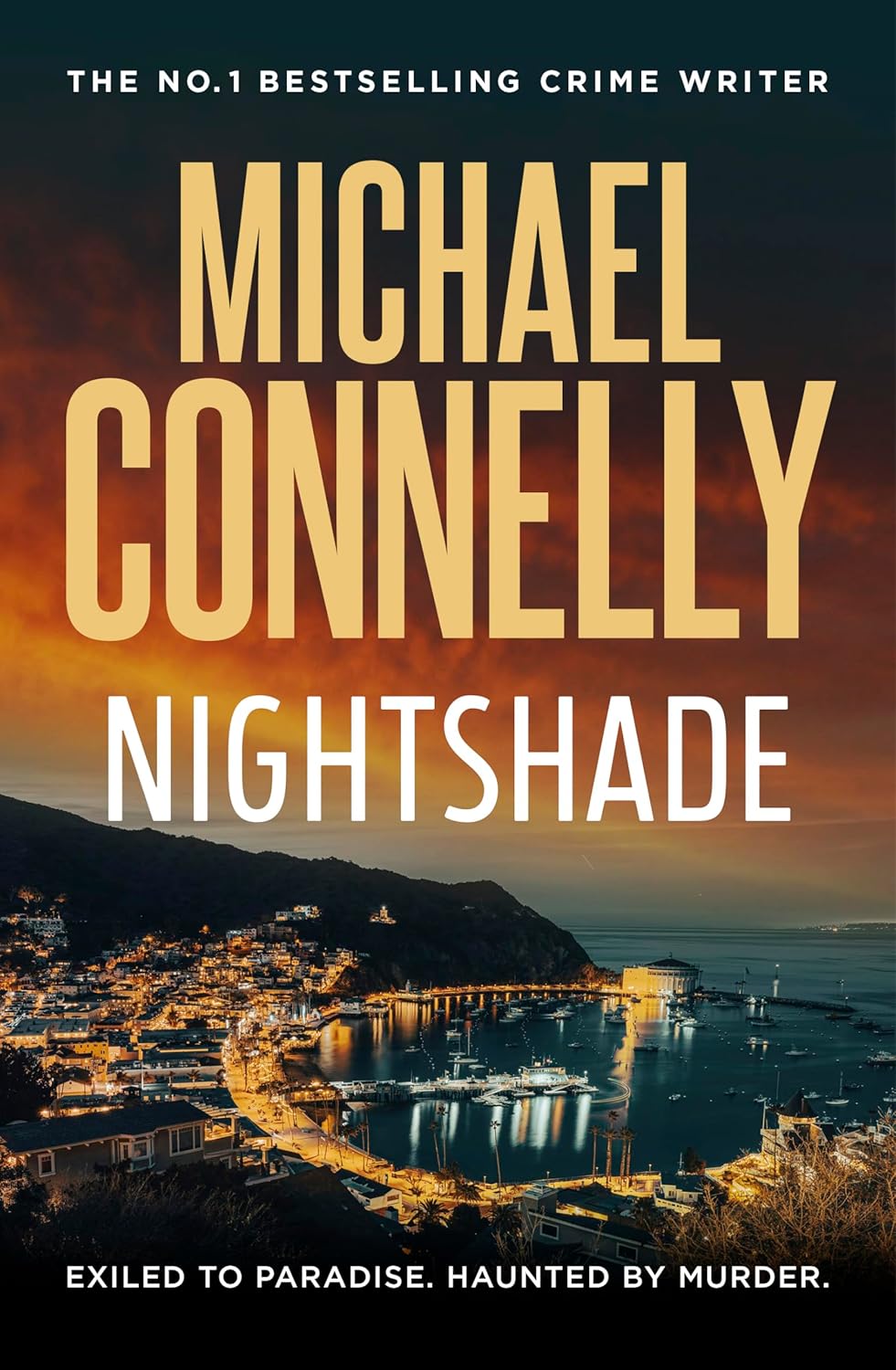
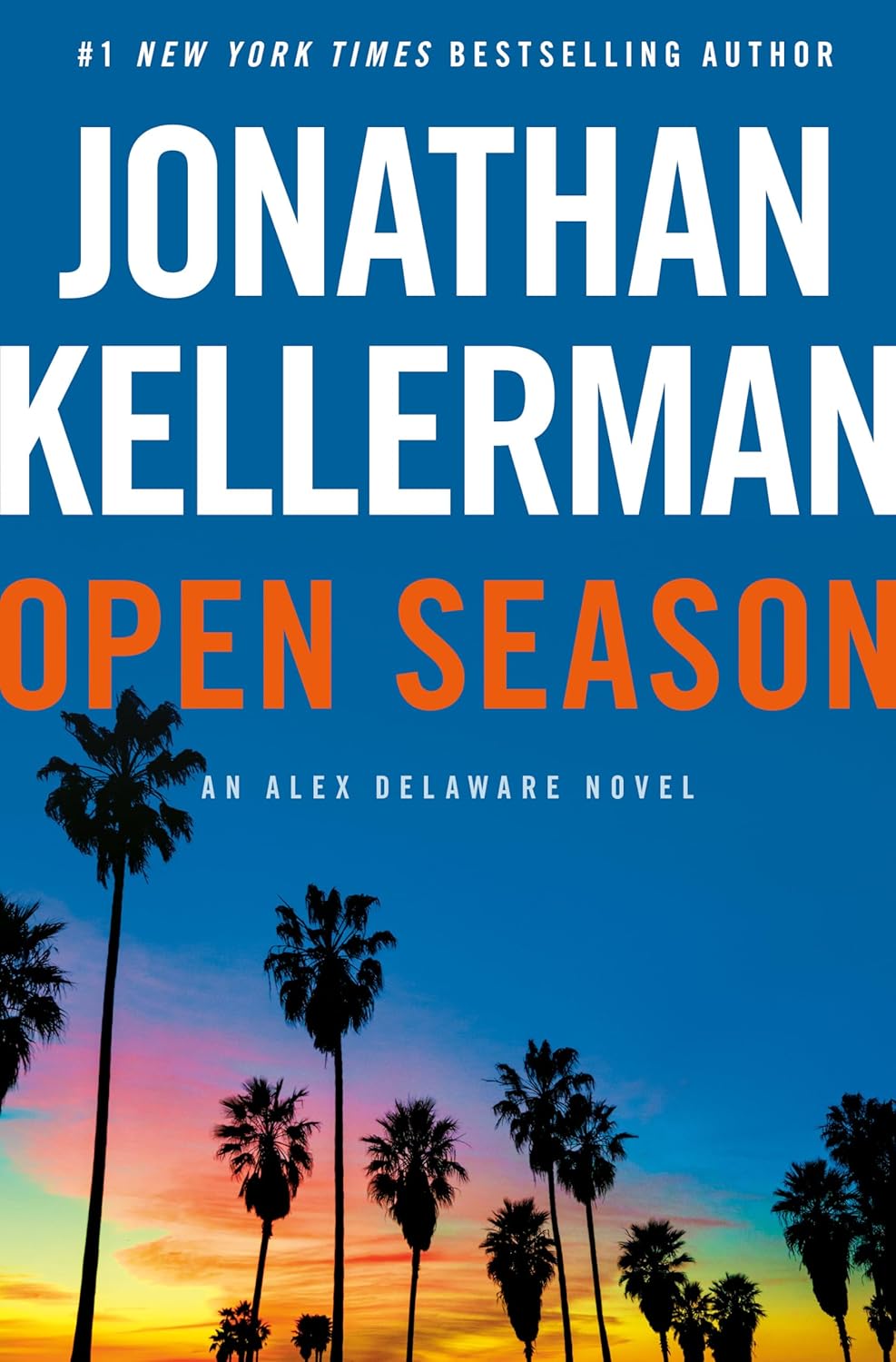
Open Season by Jonathan Kellerman

Publisher: Penguin Random House Audio (6 February 2025)

Series: Alex Delaware – Book 40

Length: 9 hours and 10 minutes

Rating: 4.5 out of 5 stars

Amazon

Still going strong after 40 Alex Delaware crime fiction novels, the always dependable Jonathan Kellerman presents another clever and captivating read with Open Season, an intense novel that proves very hard to put down.

Jonathan Kellerman is an excellent veteran author, whose massive body of work has been impressing crime fiction readers for decades.  While he has a couple of big series, Kellerman is best known for his long-running Alex Delaware series, which follows titular protagonist Alex Delaware, a child psychologist, and his best friend, LAPD Lieutenant Milo Sturgis as they investigate unusual or deranged murders around Los Angeles.  This is a really great series, and ever since I came across it, I’ve made a major effort to read each new entry, especially as they also provide some great mysteries and complex police investigation narratives.  Books like (The Wedding Guest, The Museum of DesireSerpentineCity of the DeadUnnatural History and The Ghost Orchid), have all been extremely amazing, and I eagerly await my new Alex Delaware hit at the start of each year.  The latest entry in the series, Open Season, is the 40th Alex Delaware novel, with Kellerman still going strong this far into the series.

Los Angeles is filled with all manner of dreamers and aspiring stars, but when one of them meets a tragic end, it falls to psychologist Alex Delaware and veteran homicide detective Milo Sturgis to find them justice.  Called in to investigate the dumping of an aspiring actress’s drugged body near a hospital emergency room, Alex and Milo soon set their sights on a known abuser as a likely culprit.  However, their hunt is prematurely ended when their suspect is found murdered, shot by a sniper.

Forced to switch to a new investigation, the two friends and their team are surprised to discover that the execution of the sexual predator is connected to two other unsolved homicides, with both additional victims shot from a distance using the same rifle.  Determined to figure out how the cases are linked, the team uncover a web of seemingly unconnected innocent victims, each of whom appeared to have been killed for very different reasons.

With additional bodies starting to pile up around the city, Alex and Milo find themselves in a race to solve the case before more victims can be cut down.  But are they facing a dangerous spree killer with no rhyme or reason to their actions, or a darker figure with their own complex rationales for murder?  To solve the case and stop the shooter, these two friends will need to use all their combined skills to decipher their strange motivation before even more people wind up dead.

Jonathan Kellerman continues to deeply impress with this new addictive and captivating crime fiction novel that I couldn’t get another off.  Featuring another brilliant and unique case, Open Season was an exceptional 40th entry in the Alex Delaware series that takes the reader down some dark and twisty paths.  This was a truly excellent read that I powered through in a very short amount of time.

Open Season was a particularly strong murder mystery from Kellerman, and I loved the compelling, multi-layered narrative that emerged.  Once again bringing together his two loveable main characters, Alex Delaware and Milo Sturgis, the two initially begin the book by investigating the murder of a young aspiring actress, drugged and dumped near a hospital.  Starting off with the typical look at the victim and anyone who knew her, the detectives are quick to narrow in on a suspect, only for the story to take an interesting turn when their potential killer ends up dead.  From there the story becomes a lot more complex, as the protagonists and a larger team begin to investigate the shooting of the first suspect, as well as several connected crimes.  This allows for a larger story with a ton of distinctive potential witnesses and suspects, and the protagonists investigate in several different directions, adding a lot of different pieces to the puzzle. 

Thanks to a series of varied clues, compelling research and additional discovered killings, the protagonists eventual narrow down on a potential suspect with interesting connections to each of the victims.  Without giving too much away, I felt that the overall solution for Open Season’s investigation was very clever, and it nicely tied into each of the victims/cases that make up the larger mystery.  The motivations for the killer were very unique and memorable, so it proved quite fascinating to see how the protagonists identified the antagonist and led to a great conclusion to the overall story.  I particularly enjoyed the final confrontation that the protagonists had with the killer towards the end of the book, and it wrapped the story up perfectly.  An overall excellent murder mystery narrative that will have you hooked all the way to the end.

I deeply enjoy Kellerman’s style for the Alex Delaware books and he really knows how to pull together a fascinating and intense police investigation narrative.  The author prefers a slow and methodical style of investigation as the protagonists pull together various clues and connections and work them into their various theories, which always adds a great touch of realism to proceedings.  There is a particular reliance on diving into the personal histories of the victims and suspects that Kellerman enjoys, which works to drag the reader further into the plot as they become even more invested in the investigations.  I felt that Kellerman’s typical style worked particularly well in Open Season, and I loved the complex investigation that emerged.  The multiple separate murders and the large array of connected people associated with each case allowed for a particularly elaborate story, and Kellerman carefully allowed his protagonists to explore these different elements allowing for compelling drive to the big conclusion around who was responsible.  I felt that Kellerman did an excellent job layering the more important clues around the case throughout the entire story, and it was very interesting to see what discussions or personal details came into play later.  I really got invested in Open Season’s complex case as a result, and this proved to be a particularly clever and well written mystery that deeply enhanced Kellerman’s already excellent story.

In addition to the very well-written story, Kellerman features some interesting characters and interactions in Open Season that help to create a unique feel that fans of the Alex Delaware series will be very familiar with.  Much of this lies with the two main characters, Alex Delaware and Milo Sturgis, who have an established and comfortable way of speaking with each other.  These two characters, both of whom are quirky in their own ways, are an excellent centre for the story, and I love how well the play off each other.  While their dialogue can be a little unique and occasionally flippant, Kellerman has spent a lot of time developing their patter, and you grow to appreciate the way these two characters work together.  In addition to their usual discussions, Open Season also had some more personal interactions between the two, especially when Alex is forced to keep some information from the team to protect the confidence of a medical professional.  I also liked how this was one of the Alex Delaware novels where the protagonist got to use his expertise as a psychologist to try to get to the root of the various suspects potential motivations.  This psychological work comes into play nicely, especially once they identify who the killer is, and it helped to give Open Season more of a distinctive edge away from other crime fiction reads.

While most of Open Season’s focus is on Alex and Milo, Kellerman also introduces an array of interesting supporting characters, each of whom are connected to the case in some specific way.  I really enjoyed the unique collection of characters that emerged, and there are some interesting storylines and connections that emerge thanks to the protagonists constant digging into the past.  The characters that get the most attention are some of the victims of the case, whose lives are explored in detail by the detectives.  Despite not interacting with the protagonists or readers while alive, you get to know all the victims thanks to interviews with their friends and families.  These many detailed interviews not only provide key information about who the victims are and potential motivations for their murders, but they also provide compelling and emotional testimony from those that loved them, which ensures that the reader becomes very invested in finding out who killed them.  You also meet a compelling group of people connected to the victims, who serve as witnesses, sources of information or suspects (sometimes all at once) in the case.  Due to the nature of Open Season’s story, you meet quite a few supporting characters, often for only a scene or two.  Kellerman makes these appearances count, though, and I liked some of the unique interactions that occurred, even if some of these characters were a little weird or had an unrealistic way of communicating.  The eventually revealed killer was particularly outrageous when eventually revealed, which I personally thought was very entertaining, although I could see some readers finding him to be too over-the-top.  Still, all these characters added something to the plot, and I enjoyed the effective way in which Kellerman introduced and utilised them throughout the book.

While I usually try to get physical copies of the Alex Delaware novels, for Open Season I ended up listening to the audiobook version, which I felt was an excellent way to enjoy this amazing book.  I personally find that the audiobook format does wonders for helping readers appreciate detailed and multilayered crime fiction narratives and Open Season was a great example of this, as I soon got drawn into every level of the author’s compelling mystery.  Part of the reason this worked so well was narrator John Rubinstein, who has lent his voice to a large chunk of the Alex Delaware series.  Rubinstein has a fun voice that lends itself to the occasionally zanier style of the Alex Delaware books and really brings the author’s complex narratives to life.  I especially enjoy how Rubinstein perfectly captures the characters featured in Open Season, including the main protagonists, Alex and Milo.  A great example of this is the very distinctive voice that Rubinstein utilises for Milo, which really captures the man’s complex and entertaining nature, and frankly I don’t know any other way how this character could be voiced.  The narrator also successfully captures the distinctive patter that the two main protagonists have between each other, and the way conversation flows between them in the audiobook is a ton of fun.  The various other characters featured with Open Season are also well represented, and I loved the colourful array of voices and accents that Rubinstein utilises for the supporting cast and various witnesses that protagonists encounter.  While a few of these voices are a little over-the-top, I personally liked them, and I felt it fit the long-running and distinctive series tone extremely well.  This exceptional narration allowed me to absolutely power through Open Season’s roughly nine-hour long run time, and I had such a blast picking up every single clue or compelling character interaction in this format.  As such, I would strongly recommend the audiobook version of Open Season to anyone interested in checking this mystery out, and I can personally guarantee it makes for great entertainment on a long trip.

Even after all these years, Jonathan Kellerman still shines as one of the masters of the crime fiction genre.  The 40th Alex Delaware novel, Open Season, was an outstanding addition to the series, and I love the compelling and awesome narrative that emerged.  Slick, addictive and featuring some interesting twists, Open Season was a truly impressive read, and I am still having so much fun with Jonathan Kellerman’s incredible books.

Amazon

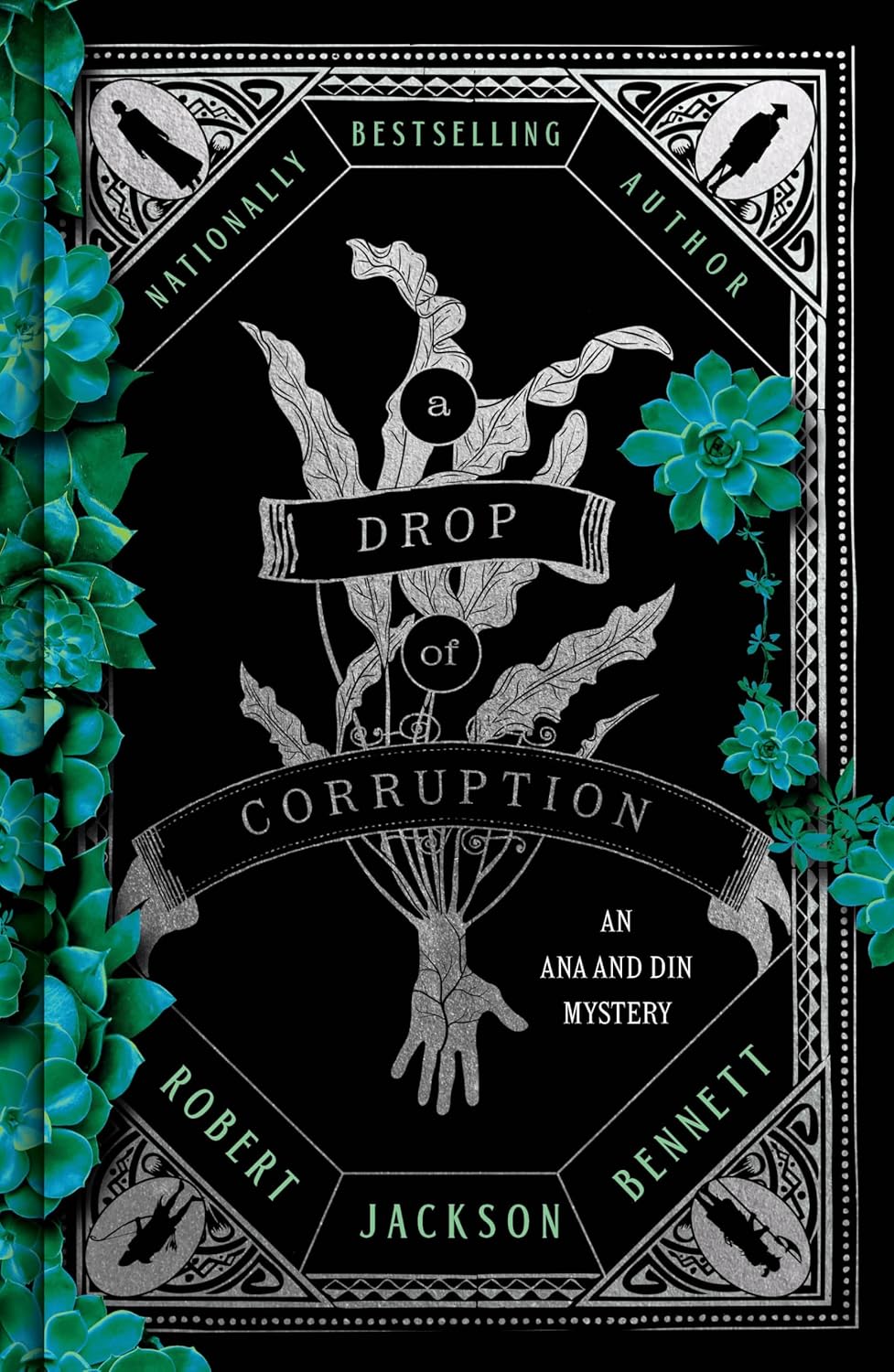
A Drop of Corruption by Robert Jackson Bennett

Publisher: Hodderscape (ebook – 8 April 2025)

Series: Shadow of the Leviathan – Book Two

Length: 432 pages

My Rating: 5 out of 5 stars

Amazon

Robert Jackson Bennett continues to shine brightly with the epic second novel in his Shadow of the Leviathan series, A Drop of Corruption, an exceptional and incredible fantasy murder mystery that I could not get enough of.

Robert Jackson Bennett is an awesome author who has produced some impressive fantasy series over the last few years.  Best known for his Divine Cities and Founders trilogies, Bennett has consistently wowed audiences with his elaborate settings, great characters and intricate narratives.  However, even though I knew how good an author Bennett was, I honestly was not prepared for how much I would enjoy his 2024 novel, The Tainted Cup.

The Tainted Cup was a truly outstanding novel that saw Bennett bring together the fantasy and murder mystery genres into an exceptional and highly addictive fusion.  The first book in the author’s Shadow of the Leviathan series, The Tainted Cup followed the young assistant to an unnaturally gifted investigator as they attempted to solve several murders brought about by magical grass.  Set in a powerful Empire constantly under attack from giant leviathans, The Tainted Cup was a truly epic read, and I loved the elaborate narrative that emerged, as Bennett perfectly set a highly clever mystery amongst the chaotic and highly detailed fantasy setting.  The result was a five-star novel that ended up being one of my favourite books of 2024.  I really cannot emphasise enough just how good The Tainted Cup was, and I think it goes without saying that I was very keen to continue the series after that outstanding first entry.  As such, the second Shadow of the Leviathan novel, A Drop of Corruption, was one of my most anticipated books of this year, and it really did not disappoint.

On the borders of the Empire of Khanum lies the small canton of Yarrowdale, part of an independent kingdom that is reluctantly set to join the Empire.  A dank and impoverished land filled with swamps and waterways, the only thing of importance for the Empire in Yarrowdale is the high-security compound known as the Shroud.  A top-secret lab where the best scientists from the Empire dissect fallen leviathans to harvest the transformative magic found in their blood, the Shroud keeps Yarrowdale on the map and its inclusion in the Empire an inevitability.  However, when an impossible crime takes place within its borders, all eyes within the Empire will be looking towards it.

An important Imperial Treasury officer on assignment to Yarrowdale has gone missing, seemingly disappearing into thin air inside his locked and guarded quarters.  Needing answers, the Empire calls upon its most unlikely hero, the brilliant, and possibly insane, special investigator Ana Dolabra.  Accompanied by her loyal and often exasperated assistant, Dinios Kol, Ana soon invokes her uncanny talent for observations and ability to make unlikely connections to find answers.  But despite quickly working out how the victim disappeared, Ana discerns that the crime was only the first move in a diabolical master plan.

A dangerous and clever killer is stalking Yarrowdale, one with the ability to think ten steps ahead and effortlessly cover their tracks.  Worse, the killer has devious designs on the Shroud and is willing to use the facilities own dark science against it, crippling the Empire’s ability to defend itself.  To save the Empire, Ana and Din will need to discern the killer’s schemes and stop them before it is too late.  But have the pair finally met an opponent even more brilliant that Ana?

Wow, wow, wow, now that was an outstanding book!  Robert Jackson Bennett once again impresses to the extreme as A Drop of Corruption was an incredible read that I honestly could not put down.  Another excellent blend of brilliant mystery and inventive fantasy fiction, A Drop of Corruption was so damn good, and I loved every single second I spent absorbed in its captivating pages.  A very easy five-star read and one of the very best fantasy novels of 2025.

I just loved the story Bennett cooked up for A Drop of Corruption, and frankly I am still thinking about its many elaborate twists, turns and revelations.  Starting off with a good introduction to Yarrowdale, a setting starkly different to the locations from the previous book, the reader is soon brought up to speed about the unusual case within the isolated canton.  Told exclusively from the perspective of assistant investigator Dinios Kol, you soon become emmeshed in finding out how the treasury official disappeared from his guarded room, with his body soon discovered in the nearby waterways.  Thanks to the combination of Kol’s enhanced memory and the unique mind of lead investigator Ana Dolabra, the manner of the victim’s disappearance becomes apparent; however, this only raises more questions and reveals a dangerous killer stalking the canton.

Now I guarantee that at this point of the story you will be extremely hooked, thanks to the compelling mystery that is developing, as well as the intriguing characters, cool new setting and the hints of a very clever killer capable of outthinking the protagonists.  Following some cool moments that indicate just how far the killer is willing to go to achieve their goals, Bennett cleverly ties his mystery into some of the fantastic elements of the setting, including Yarrowdale politics, and the hidden science of the Apothetikal, the branch of the Empire dedicated to the biological alchemy that enhances people.  The author really raises the stakes as the book continues, especially with dangerous bioweapons, essential scientific advances, and ancient political turmoil all impacting the plot.  Bennett keeps the shocks going with several impressive scenes, especially the killer works to alter the destiny of both Yarrowdale and the Empire.

This leads up to the very exciting and fast-paced final third of the book, where all the pieces of the mystery come together.  Despite knowing the identity of their opponent, the protagonists are forced to work overtime to try and catch them as they constantly stay multiple steps ahead of them.  The protagonists are soon forced to take drastic action to get answers, and there are some great scenes as some interesting revelations come to light and various characters are forced to face the consequences of their actions.  After a particularly powerful scene that hints at dark secrets that will likely become a bigger problem later in the series, Bennett masterfully builds up to the final confrontation, where Ana provides her final deductions, and chaos reigns as a result.  This entire conclusion was so damn clever, and it was very satisfying to see Ana bring all the story threads and hidden elements of the mystery together in the climatic revelation scene.   This all results in a thoughtful, moving but overall satisfying end to the book that perfectly wraps everything up, and allows the series to continue.  Readers are guaranteed to come away from A Drop of Corruption very happy, and I know that I am even more eager to continue this series after this exceptional second outing.

As with the first Shadow of the Leviathan novel, A Drop of Corruption was an outstanding and captivating blend of fantasy and murder mystery storytelling elements, as Bennett wraps a particularly impressive investigation narrative around a distinctive fantasy setting.  In many ways an over-the-top fantasy Sherlock Holmes novel, A Drop of Corruption was so damn addictive, with no slow moments as the protagonists follow a deadly trail of a dangerous and unnatural killer.  The mystery itself is just perfect, and I loved how well the author enhanced the elaborate investigation with his own unique fantasy elements, carefully blending them together to create and even more elaborate tale.  Thanks to the constant revelations, carefully hidden clues, sudden outrageous twists and some very entertaining characters, I honestly found myself unable to put this book down, as I couldn’t wait to see what amazing reveal was coming next.  Bennett also successfully balanced the darker tone of the narrative with his own excellent character-driven humour, which ensured some lighter moments amongst the serious investigation and dangerous results.  This humour, which mostly lay around the author’s outrageous detective protagonist, often had me chuckling out loud, while never overpowering the murder mystery or fantasy elements.  Working well as either a standalone novel or a sequel to The Tainted Cup, there is something very fun for everyone in this book, and all fans of either fantasy or crime fiction can have a brilliant time here.

In addition to featuring a cool story with some wonderful blended elements, A Drop of Corruption also served as a great expansion of the outstanding fantasy realm introduced in The Tainted Cup.  I personally loved the overarching setting of the Empire of Khanum, which not only features gigantic, mutated monsters constantly attacking its walls from the sea, but also features a unique magical system of biological grafts originating from leviathan blood that alters people, animals and plants to benefit the Empire.  Many of these unique elements are on full display in A Drop of Corruption, with the focus on new grafts, research into the leviathans, and the existing enhancements of the protagonists all serving as key plot points in the main mystery.  Highlights include dangerous bio-weapons, grafts that turn the antagonist into a particularly dangerous opponent, and an elaborate look inside the research station known as the Shroud.  These unique fantasy elements are well re-introduced and expanded on as the novel continues and allowed for quite a unique crime fiction read as they are cleverly inserted into the plot.

Bennett also uses this book to explore new areas of his fantasy setting, particularly by introducing Yarrowdale, a semi-autonomous nation under the Empire’s influence that has yet to officially join it.  Filled with its own people, politics and history, as well as the influence of the Apothetikal, who have one of their most important bases there, Yarrowdale is a very different place to the previous settings featured in The Tainted Cup, and Bennett paints an elaborate picture of swamps, waterways and disgruntled locals who have their own opinions about joining the Empire.  As with the existing fantasy and setting elements of the book, Bennett expertly introduces and utilises this new setting into his narrative, and it serves as an effective and compelling background to the plot, especially when the case gets even more complicated, and the protagonists are forced to become involved in Yarrowdale politics and its royal family.  These scenes also allow Bennett to engage in a bit of social commentary, especially when it comes to the overall wickedness of kings (or other autocratic rulers), and it was fascinating to read his notes at the end where he expands on some of these points.  I really enjoyed this complex additional world building from Bennett, especially with how well it was utilised in the main story, and every new glimpse of the Empire of Khanum makes me an even bigger fan of this series.

I must also highlight the two awesome main protagonists that helped to make A Drop of Corruption so impressive, as Dinios Kol and Ana Dolabra were a highly entertaining duo.  Featuring an often exasperated but loyal subordinate working for a brilliant and eccentric detective, Bennett once again achieves the iconic detective/sidekick dynamic that fans of Sherlock Holmes will be familiar with.  In this case, Dinios serves the Watson role as the book’s only point of view, which allows him to be the sounding board for the mad detective, in this case Ana, while also being present for all of her deductions.  As such the reader, through Dinios’ eyes and ears, get the full explanation for how Ana reached her conclusion as she brings her assistant up to date.

This method of splitting the load between the detective and the sidekick is a classic for a reason, and I loved seeing the compelling story emerge from Dinios’s perspective, as he was front and centre for all the case’s twists and turns.  He was also a witness to all the crazy behaviour of his boss, and Ana did not disappoint, being her usual disrespectful and slightly unhinged self.  Most of the book’s humour came from Ana’s insane behaviour and the reactions of the other characters seeing it, which, alongside her incredible detective skills, is quickly making her one of my favourite fictional detectives.  I really enjoyed the dynamic that continued in this sequel novel between Dinios and Ana, and you get a great balance of eccentric genius and troubled young apprentice throughout the story.  While this partnership hits some snags in this book, especially as Dinios dreams of a more heroic career while Ana proves to be her usual impossible self, it proves to be a strong centre to the book, especially as certain revelations bring them even closer together.  A truly incredible central pair of protagonists whose entertaining antics I could not get enough of.  Throw in a great selection of supporting characters, including an intelligent and enhanced local assistant who manages to out-sass the protagonist, a multitude of suspicious individuals who have their own secrets around Yarrowdale, and an antagonist who is built up to be an insanely intelligent opponent for the protagonists, and this really ends up being an exceptional, character focused novel with some real emotional heart to it.

Overall, A Drop of Corruption was another exceptional novel from Robert Jackson Bennett, who did a truly outstanding job continuing his Shadow of the Leviathan series.  A Drop of Corruption was so damn good, and I loved every single part of this epic fantasy and crime fiction hybrid.  I honestly cannot recommend this book enough, and it easily one of the top fantasy reads of the year.

Amazon

Pacific Heights by S. R. White

Publisher: Headline (Trade Paperback – 25 March 2025)

Series: Standalone

Length: 279 pages

My Rating: 4.5 out of 5 stars

Amazon

Over the last couple of years one of the more compelling authors of Australian crime fiction has been S. R. White.  A former member of the UK police, White has been writing intriguing crime fiction novels since his move to Australia.  His main body of work has so far included excellent reads like PrisonerRed Dirt Road and White Ash Ridge (part of the Detective Dana Russo series), which featured complex mysteries centred around layered suspects.  I really enjoyed the compelling way in which White’s investigators break down the motivations and personalities of the suspects and the victim to get to the truth, and the author has a unique and striking writing style.  As such, I was eager to read his 2025 novel, Pacific Heights, which is a standalone spin-off of White Ash Ridge, featuring one of the supporting characters from the previous book in a more substantial role.

Plot Synopsis:

FIVE WITNESSES. FIVE DIFFERENT STORIES. WHO IS THE KILLER?

In the courtyard of the Pacific Heights building, a local waitress is found dead.
Five apartments overlook the murder scene. Five people witnessed a crime take place.
Finding the killer should be simple.

Except none of the witnesses’ stories match.
They all saw something – from a different angle, at a different time.
None of them saw everything. Anyone could be the killer.

Detectives Carl “Bluey” Blueson and Lachlan Dyson, each with their own careers in peril, must solve what others assume is a straightforward case. But to unmask a killer they must unpick a complex puzzle – where the motivations of the witnesses are as mystifying as the crime itself.

How can you solve a crime if anyone could be lying?

This was a very clever and addictive Australian crime fiction read that I had such a blast getting through.  White wove together a very compelling mystery narrative for Pacific Heights that cleverly explored a range of great characters and examined how people view events differently.

White starts Pacific Heights off well by introducing the detective protagonists and swiftly bringing them to the scene of the crime, where they attempt to ascertain the events leading up to the victim’s death by interviewing several people who either witnessed part of the murder or knew the victim.  The author takes his time with these initial interviews, ensuring that readers get a complete picture of what the witness’s account of events, as well as how they knew the victim.  It doesn’t take long for the reader and the protagonists to realise that the witnesses’ stories don’t match and none of them can definitively say who the murderer was.

By this point in the book, you’re strongly hooked, especially as the author has raised some interesting question about the victim and you are very intrigued by the main five witnesses and their potential secrets.  White rewards your interest with a series of insightful re-interviews, as well as bringing in new suspects and additional investigation methods to paint a larger picture of events, none of which quite fits together.  There is a great methodical style to the investigation, as the police chip away at all the inconsistencies and questions, although they are never quite as close to an answer due to the conflicting testimonies.

Everything leads up to the final third of Pacific Heights, which I honestly thought was a tad rushed, but which presented a solid and very clever ending.  Thanks to a brilliantly laid-out series of clues throughout in the plot, the protagonists are eventually able to solve the case, and I felt that the solution was extremely smart.  While I did predict who the killer would be, getting to their motivations behind the murder, as well as finding out how events unfolded, ensured that this was a powerful conclusion that fit the rest of the story really well.  I especially loved the twist around which of the witnesses were lying, and it tied in nicely to the complex character profiles White provided for the supporting cast, as well as utilising the protagonist’s own prejudices.  The result was an extremely impactful and captivating crime fiction story that I couldn’t stop reading and managed to power through in a couple of short days.

Pacific Heights proved to be an excellent read, and I really appreciated the intricate, character-focused mystery that White came up with.  Featuring a similar style to his Detective Dana Russo novels, the investigation is primarily based around understanding the people associated with the case, including the victim, witnesses, and other potential suspects.  This ensures that the author spends a lot of time carefully constructing and utilising his cast of supporting characters, and the array of motivations, personal issues and hidden histories, results in a particularly complex and emotionally charged read.  The focus on the various witnesses blends well with the character arcs surrounding the detective protagonists, and there is also a complex dive into the life of the victim, Tahlia Moore, even though she never actually appears alive in the plot.  Thanks to the protagonists diving into every aspect of her life, Tahlia comes to life through the descriptions of the other characters, and you soon begin to realise that she wasn’t as innocent or perfect as you are initially led to believe.  While I did feel that the author could have revealed some key history around certain witnesses earlier, for the most part I really appreciated how well White set up these compelling characters, and it helped to create a very powerful novel with some heavy emotional edges to it.

I also must commend how White worked this character-focused plot into Pacific Height’s police investigation narrative, as the protagonists are forced to wade through the conflicting testimonies to get the truth.  There is a certain amount of gritty realism to how White examines witness testimony and people’s motivations that really enhances the impact of Pacific Height’s plot, and I liked the underlying theme about how the way we see the world is flawed.  This focus on witness testimony blended well with the additional investigative tools featured in the plot, and this entire story came together extremely well. These combine nicely with the series of subtle clues that White lays down throughout the course of the book, and I loved how effectively this mystery came about.  While I did once again have minor issues with the author’s vagueness around where in Australia this book was set, this was honestly a very impressive crime fiction read that works well as both a standalone novel and a continuation of White’s existing series. 

Loaded with great characters, a deeply addictive mystery, and an excellent story hook, Pacific Heights was a very impressive read, and I had such an amazing time with this new novel from S. R. White.  Pacific Heights is White at his very best, and I really cannot recommend this book enough.

Amazon

A Death in Berlin by Simon Scarrow

Publisher: Headline (Trade Paperback – 11 March 2025)

Series: Berlin Wartime/Criminal Inspector Schenke Thriller – Book Three

Length: 385 pages

My Rating: 4.5 out of 5 stars

Amazon

One of the world’s leading historical fiction authors returns with another intriguing and captivating historical murder mystery with the outstanding read, A Death in Berlin.

I have made no bones about the fact that I am a major fan of historical fiction author Simon Scarrow, who has been diving into awesome scenarios from history for over 20 years.  While I probably know him best from his outstanding Eagles of the Empire Roman historical fiction series (see my review for the latest entry, Revenge of Rome), Scarrow has also written some other amazing series, including his current ongoing Berlin Wartime Thriller novels.  Set in Berlin towards the start of World War II, the series follows a studious and troubled police detective as he attempts to uphold justice in a city overrun with murderous Nazis.  The first two books in this series, Blackout and Dead of Night, were both very impressive, and I have been eagerly awaiting this third novel in the series, A Death in Berlin, for some time.

Berlin, May 1940.  As the German army prepares for its invasion of France and Western Europe, crime still roams the street of Berlin, and it falls to CI Horst Schenke and his investigative Kripo to keep order and maintain justice, a job made markedly harder by the dark policies of their Nazi overloads.  Despite his own dislike of the Nazi regime, which grows increasingly suspicious of him, Schenke is determined to do his job, especially when it comes to the criminals controlling the streets.

Assigned to find the source of forged ration coupons that are disrupting the war effort, Schenke and his team find themselves investigating a growing gang war when a prominent black-market operator is gunned down in the dead of night.  Convinced that the gangster’s murder is related to the forged coupons, Schenke leads the Kripo into investigating the criminal underworld that lies beneath Berlin.

However, this is no ordinary gang crime.  A dark series of events have led to the death of their victim, and the Kripo investigators soon uncover a dangerous conspiracy to profit from the war.  Worse, the gangster they are chasing are protected by powerful Nazi leaders, and Schenke must continue to walk a fine line in avoiding their attention.  But when his enemies uncover his deepest secret, can Schenke survive with his honour intact, or will he need to make a dark deal to get what he wants?

A Death in Berlin was another excellent novel from Scarrow, who cleverly combines exciting crime fiction elements with a compelling historical setting.  Clever, action-packed, and constantly moving, A Death in Berlin was an outstanding read, and I think this might be his best Berlin Wartime Thriller novel yet.

I really liked the cool story that Scarrow came up with for A Death in Berlin, especially as this latest novel features a complex narrative revolving around Berlin gangsters and crime wars.  Starting off fast and getting into the heart of the case, readers soon become invested in finding out who was behind the killing of the gang leader and what impact it is having on the larger criminal underworld of Berlin in the leadup to the invasion of France.  Thanks to an excellent early shootout, the stakes of the book become even higher, as the protagonist finds himself in the middle of a gang war, which he is forced to navigate to solve the main mystery of the book.  Scarrow also continues to focus on the complex life of protagonist CI Horst Schenke, who constantly finds himself coming to the attention of his Nazi superiors, despite his dislike of the party and his secret romance with Ruth, a Jewish woman hiding out in Berlin.

Following this great initial setup, Scarrow takes the plot of A Death in Berlin in some outstanding directions, especially as there is quite a compelling mystery here, with multiple potential suspects and motivations for the murder, many of which lead to other alternate crimes investing the Nazi controlled city.  Scarrow cleverly reveals the involved parties at key parts of the book, and while there aren’t too many surprises, it was very interesting to see how everything tied together.  The final third of the book is probably the best, as the protagonist finds himself trapped by his own secrets and is forced to make compromises to keep those important to him safe.  This leads to a massive and intense final confrontation, as the protagonist risks everything with some unlikely allies in a brilliant, action-packed set piece.  The final revelations revealed during this climax brought the entire story together nicely, and I really appreciated how the tight and complex mystery was resolved.  This was an overall fun and exciting narrative, and one that is quite easy to power through quickly, especially once you get caught up in the mystery.

Scarrow did an outstanding job pulling together A Death in Berlin, as the novel was a compelling and exciting read with a lot of awesome elements behind it.  The author successfully blends an excellent murder mystery storyline around the intriguing historical elements of his series, showcasing the potential hurdles a police detective needed to face during the Nazi regime.  At the same time, there is a fantastic emotional heart to A Death of Berlin, as the protagonist continues his ill-advised romance with Ruth, while also being forced to once again confront the dark side of the government he is wilfully working for.  I felt that Scarrow perfectly balanced these elements throughout A Death in Berlin, and there is a little something for everyone here, including a ton of amazing action and firefights, as the protagonist attempts to bring down a dangerous collection of emboldened criminal gangs.  As such, this is a very easy book to get into and follow, and while there are some references to the previous Berlin Wartime Thriller novels, for the most part A Death in Berlin acts as an accessible standalone novel, which allows for a wider audience.

For me, one of the more intriguing elements of A Death in Berlin was the author’s excellent examination of life in Berlin during the early days of World War II.  Scarrow has always done an amazing job showcasing the uncertainty, fear and underlying issues of Berlin in the early days of the war in this series, and I enjoyed how he further outlined the tension involved with the pre-invasion of France.  The overarching fear that certain members of the public have with the Nazi regime is still a key part of the plot, and while the protagonist isn’t as directly targeted by the Nazis as he was in previous books, he still has to play by their twisted rules, especially when invited to a party of the Nazi elite, where he meets some very high-level members.  However, it was the focus on the criminal element infesting Berlin during these years that I found to be particularly fascinating, as Scarrow explores the potential scams, nightspots and other enterprises that would have been run in early wartime.  While coupon forgeries have been mentioned in previous novels, it was fascinating to see the entire novel focussed on the control of this valuable wartime currency, and it resulted in some truly compelling scenes.  Despite this being a more crime-fiction novel than a book examining hidden Nazi plots or killers, the influence of the Nazi government still plays a big role in the murder investigation elements of the book, especially as the protagonist and his colleagues must worry about high-level party members protecting the criminals.  These elements proved to be an outstanding part of the book, and I really appreciated how well Scarrow worked it into the main plot of the book.

As with the rest of the series, Scarrow does some excellent character work in A Death in Berlin, bringing together a complex cast of characters to work the case, each of whom are dealing with their own issues associated with Nazi-controlled Germany.  The most prominent of these is the protagonist and main point-of-view character, CI Horst Schenke, a former race car driver turned police investigator.  While generally shown to be a studious and steadfast lawman, Schenke’s life has become even more complicated due to his growing dislike of the Nazis and his refusal to join the party, much to the displeasure of his superiors.  It is fascinating to see the seemingly strait-laced Schenke walking the line between doing the right thing and surviving the Nazis, especially as he has fallen in love with the fiery Ruth, a Jewish woman who has managed to stay hidden in Berlin after the first purges.  Many of Schenke’s more radical actions in this book are driven by his complicated relationship with Ruth, and you really grow attached to both characters, especially when their secret relationship causes great risk for them. 

Other great characters A Death in Berlin include Schenke’s main police backup, Sergeant Hauser and former Gestapo agent Liebwitz.  These two prove to be an excellent double act behind Schenke, as not only do the three form an effective crime fighting force, but they also showcase alternate viewpoints of Germany during this period.  Hauser is a former World War I soldier and family man, who is the classic everyman figure who supports the Nazi regime.  Despite this, he merely wants to support his country and has some doubts about the more extreme actions of Hitler.  Liebwitz is a more unusual figure, who honestly steals the show in some ways.  An exceedingly logical figure who has gravitated away from the Gestapo to be a police investigator, Liebwitz finds his life still bound by his Nazi training, despite the many flaws he sees in it, and he is well used as a compelling alternative point-of-view character.  However, as with the previous book, the influence of Schenke and the investigation of crimes that show the true evils of the Nazis are slowly changing Liebwitz’s way of thinking, and it will be fascinating to see where Scarrow takes his character arc in the future.  Throw in a series of entertaining and over-the-top Berlin criminals and the cast of A Death in Berlin is quite entertaining, and I really enjoyed how their complicated arcs impacted the overall narrative.

Simon Scarrow continues his outstanding Berlin Wartime Thriller series in a massive way with the captivating and impressive novel, A Death in Berlin.  Combining a great crime fiction narrative with a clever historical background setting, A Death of Berlin proved quite addictive, and I had an incredible time getting through it.

Amazon

Waiting on Wednesday – The Final Vow by M. W. Craven

Welcome to my weekly segment, Waiting on Wednesday, where I look at upcoming books that I am planning to order and review in the next few months and which I think I will really enjoy.  Stay tuned to see reviews of these books when I get a copy of them.  For this latest Waiting on Wednesday, I highlight an upcoming thriller that will no doubt be one of the darker and more captivating upcoming reads of 2025 with The Final Vow by M. W. Craven.

Amazon

M. W. Craven is an outstanding author who has been blowing people away with his twisty and captivating reads for the last 10 years. I personally only started reading his works in 2023 when I was lucky enough to get a copy of his first Ben Koenig book, Fearless. An exciting, fun and extremely over-the-top thriller, Fearless was an outstanding read that I really got into, especially as the author featured some awesome characters and very imaginative scenarios.  Craven upped the ante on the Ben Koenig series the following year with the outstanding 2024 sequel, Nobody’s Hero, that took the reader on another wild thrill-ride with even higher stakes, and which proved to be another amazing read.

Due to how much fun I was having with the Ben Koenig books, I decided to also check out Craven’s other 2024 release, The Mercy Chair, which served as the sixth book in the author’s Washington Poe series.  A UK based crime fiction series, the Washington Poe books follow the titular protagonist and his unusual but brilliant civilian partner, Tilly Bradshaw, as they investigate some of the country’s most disturbing crimes.  The Mercy Chair for example saw the protagonist investigate the stoning-death of a controversial religious leader, which revealed some dark secrets about the local inhabitants.  I ended up having an absolute blast with The Mercy Chair, especially as Craven loaded it with shocking twist after shocking twist, as well as a compelling narrative structure, and it ended up being one of my favourite books of 2024.

As you would expect after I had such a great time with Craven’s last several books, I am very eager to grab anything new coming our way from this author.  Luckily it looks like Craven fans are going to have a great 2025 as the author has a new entry in his Washington Poe series coming out in August 2025 with the incredible sounding novel, The Final Vow.

The Final Vow, which will be the seventh Washington Poe novel, will once again bring the protagonist back to investigate a sinister serious crime.  This time, the protagonists find themselves hunting a dangerous sniper causing terror throughout the entire country in what promises to be a particularly epic read.

Plot Synopsis:

The next unmissable novel* in the Sunday Times bestselling, multi-award-winning Washington Poe series. Poe and Tilly fans: be prepared for the most twisted thrill-ride so far . . .

An invisible killer with a 100% success rate. No one is safe. Not even those closest to Washington Poe . . .

A shooting at Gretna Green. A bride is murdered on her wedding day, seconds after she slips on her new ring. It’s brutal and bloody but she isn’t the first victim and she won’t be the last. With the body count now at 17, people are terrified, not knowing where the sniper will strike next.

With the nation in a state of panic, the police are at a loss and turn to Washington Poe and Tilly Bradshaw – the only team who just might be able to track down a serial killer following no discernible pattern and with the whole country as his personal hunting ground. Can Poe and Tilly stop an unstoppable assassin, who never misses his mark and never makes a mistake? Or will he find them before they find him…

I honestly love the sound of this cool upcoming thriller, and it looks like Craven has something very special in store for us in The Final Vow.  A dangerous sniper who never misses is a very interesting basis for a thriller narrative, and it is one that I know Craven will excel at utilising, especially with his very distinctive protagonists involved in the chase.  I am very excited to see what narrative devices Craven will utilise to tell this complex new story, and I have a feeling he will present this tale in a very compelling and chilling manner.  I am also expecting a ton of dark twists, especially once the antagonist starts hunting Poe and Tilly, and it wouldn’t surprise me if there is some major collateral damage.  I’m not entirely sure how the author is going to match the array of over-the-top twists that made The Mercy Chair such an epic read, but if anyone can pull it off its probably Craven.

Frankly, after how awesome I found The Mercy Chair to be last year, there is no way I will be missing this next Washington Poe book.  M. W. Craven has really impressed me with his last few books, and The Final Vow sounds incredibly intriguing with some great plot hooks around it.  I have a feeling that The Final Vow is going to be a very dark and powerful read, and I cannot wait to see the many twists, turns and shocking reveals will bedevil the protagonists.  This novel has so much potential, and I am fully expecting The Final Vow to be one of my favourite books of the year.

Quick Review – Death on the Tiber by Lindsey Davis

Publisher: Hodder & Stoughton (Trade Paperback – 9 April 2024)

Series: Flavia Albia – Book 12

Length: 380 pages

My Rating: 4.75 out of 5 stars

Amazon

Those in the mood for a clever murder mystery in ancient Rome look no further than the 2024 entry in the long-running Flavia Albia series with Death on the Tiber by Lindsey Davis.

I am a huge fan of historical fiction, and one of my favourite ongoing historical series is the outstanding Flavia Albia books by veteran author Lindsey Davis.  The Flavia Albia books, which are a sequel series to the author’s long-running Falco series, follow a determined private investigator in ancient Rome who takes on a range of complex cases and murder investigations, often encountering many of the city’s over-the-top inhabitants.  I have had an amazing time reading this series over the years, including The Third NeroPandora’s BoyA Capitol DeathThe Grove of the Caesars (one of my favourite books of 2020), A Comedy of TerrorsDesperate Undertakings (one of my favourite books of 2022) and Fatal Legacy.  As such, I try to read every new Flavia Albia book that comes out, and after accidently avoiding it for much of 2024, I recently finished off the 12th book in the series, Death on the Tiber.


Plot Synopsis:

Rome is in chaos. The empire of a mobster chief is falling apart following his death. Rivals, fearsome relatives and associates are taking up position to vie for the spoils.

With hideous murders in the streets of Rome, a lone female traveller arrives with an agenda of her own. But when her corpse is dragged out of the river bearing signs of foul play, Flavia Alba is drawn in, concerned about her fellow Briton’s fate.

Alba’s quest to find the killer becomes deeply personal when she discovers a man at the centre of the plot is an old adversary of hers. Will she be obsessed by revenge? Can she let the past go, or will it consume her?

Death on the Tiber was a great addition to the Flavia Albia series that features its own distinctive crimes, while also cleverly tying into several of the author’s previous Falco and Flavia Albia books. 

The plot of Death on the Tiber is very compelling, as the protagonist, Flavia Albia, finds herself drawn into the investigation of a murdered tourist pulled out of the Tiber.  However, the case becomes personal for Albia when she discovers the victim’s connection to the gangster Florius, an old foe of her fathers, who years before committed unspeakable evils against Albia and who may have finally returned to Rome.  Determined to finally hunt down Florius and make him pay for his crimes, Albia begins her investigation and soon finds herself embroiled in a deadly gang war that could tip the balance of Rome’s underworld.  Forced to compete with a range of interested parties, including her own vengeful father and uncle, the Roman military and several gangsters and their families who Flavia has previously encountered through her work, the protagonist slowly begins to piece together the events that lead to the victim’s death and the connection to her quarry’s current location.

This proved to be a highly personal and complex entry in the series, and one that I felt served as a love letter to the author’s prior works.  A huge range of characters from previous Flavia Albia novels, as well as major figures from the preceding Falco books, are featured throughout Death on the Tiber as the author takes the opportunity to tie together a range of ongoing storylines related to a major antagonist of the Falco books.  This allows for quite a fascinating read, especially for those readers familiar with the previous works, and it was awesome to see Davis bring together a compelling cast of returning figures. 

The plot moves in some interesting directions as the book nears the end, and Davis adds in a range of compelling layers to the case, including disgruntled mobster wives, a big gang war for the control of Rome, and alternating bands of Roman officials seeking to disrupt events.  The conclusion for the book proves to be very emotionally charged, especially as the protagonist comes face to face with her biggest monster and finally gets some closure.  The main mystery of Death on the Tiber is also extremely well written and utilised, and Davis does an excellent job tying in a lot of the novel’s leads and investigative plots into the main hunt for the returning Florius.  While the reveal of the ultimate culprit behind the killing isn’t especially surprising, the way in which Davis addresses their fate is particularly impressive, and it leads to a very fun final moment in the book.  I loved this last little twist, which I honestly think tied the book together very nicely, and it certainly was one of the moments that has stuck with me since finishing Death on the Tiber off.

This ended up being another strong Flavia Albia book as Davis continues to utilise her trademark style in Death on the Tiber.  Focused primarily through the sarcastic and cynical Flavia, Death in the Tiber evolves into a twisty hunt for answers, that brings together mystery, criminal intrigue, and the protagonist’s various personal connections.  Davis has a very compelling way of writing her stories, and her examinations of Rome through the protagonist’s eyes are often light-hearted, sarcastic, and applying modern mentalities to the ancient society.  This results in an impressive read, especially as Davis lays down an exceptional combination mystery and revenge-focussed narrative.  While I really enjoyed how well Davis revisited multiple previous books from both the Falco and Flavia Albia series, it does mean that readers do need a bit of pre-knowledge of these earlier works to fully appreciate Death on the Tiber’s plot.  Davis does provide some much-needed context at times, which will allow some new or forgetful readers to enjoy this book, but I personally think that people should have at least read the last few Flavia Albia books before Death on the Tiber to really get this book.

Despite the series’ general comedic vibe, Death on the Tiber gets very dark at times, especially as the protagonist is forced to revisit her traumatic history.  The author does an excellent job of diving into Flavia’s trauma and pain on the subject, and it was nice for this compelling protagonist to finally get some closure.  Davis nicely balances some of these darker moments by including an extensive cast of eccentric characters, many of whom are continuing their storylines from both the Falco and Flavia Albia series, and there are some very fun moments scattered throughout Death on the Tiber as a result.  This includes a fun competitiveness with Flavia’s father, Falco, a dive into some other important parental figures in her life, as well as her very strong relationship with her supportive and relentless husband.  I personally loved the return of all the various major gangsters Flavia has dealt with over the years, and it was fun to see her try to investigate them after prior experiences.  However, two of Flavia’s female relatives end up stealing the show in Death on the Tiber, especially at the end where they showed an ironic sense of justice.  An overall great extended cast that served to connect this book to the larger series in some outstanding ways.

With Lindsey Davis’s typical impressive writing and a cool plot laden with mystery and criminal intrigue, Death on the Tiber was an amazing entry in one of my favourite historical fiction series.  Entertaining, addictive and very moving, Death on the Tiber had me hooked from the very beginning, and I wish I’d read it sooner.  I look forward to continuing the Flavia Albia series this year, especially as Davis has a cool book coming out in April set around the ruins of Pompei with There Will Be Bodies.

Amazon

Quick Review – Little Red Death by A. K. Benedict

Publisher: Simon & Schuster (ebook – 13 February 2025)

Series: Standalone

Length: 383 pages

My Rating: 4.25 out of 5 stars

Amazon

I had a wonderful time reading one of the more unique murder mystery novels of 2025, the compelling and occasionally bonkers novel, Litte Red Death by bestselling author A. K. Benedict.


Plot Synopsis:

ONCE UPON A TIME LIKE YOU’VE NEVER READ IT BEFORE . . .

DI Lyla Rondell is on the case of a lifetime. Tasked with investigating a series of perplexing deaths, the only lead she has is that each appears to be based on a different classic fairy tale. Far from the stuff of bedtime stories, the press is having a field day with what they have named the Grimm Ripper Murders.

But as the bodies stack up, Lyla’s whole world is about to flip on its head. Because the killer’s bloody trail stretches deep into her own origin story, and when she discovers the truth, nothing will ever be the same again.

Faced with the fact that everything she knows is fiction, Lyla will have to take a little creative license of her own if she’s going to turn the final page on the killings . . .


Little Red Death
was a quite a fascinating read that went in some very surprising directions.  While I was expecting a less conventional crime fiction book, I honestly wasn’t prepared for just how fantastical Little Red Death turned out to be, as Benedict loads in some memorable twists that change everything, while keeping the readers engaged with its compelling plot.

I felt that Little Red Death started off strong and provided some intriguing details that will hook most readers.  The main plotline revolves around DI Lyla Rondell, who is called in to investigate a killing that has been inspired by classic Grimm fairytales.  This case strikes Lyla hard, as years before the girl she loved suddenly disappeared with a classic fairytale plot device left behind.  Receiving taunting messages apparently from the killer, known as the Grimm Ripper, as more vicious fairytale themed murders are carried, Lyla becomes obsessed with the case, hoping that she will finally find her missing friend.  This initial storyline around Lyla is quite impactful in its own right, and Benedict ensures that the first half of the book is made further intriguing thanks to a perspective from a second major character, Katie, a mystery writer who has been kidnapped by the killer and is now being forced to write a series of twisted fairytale murder stories that the Grimm Ripper is using as a guideline for his crimes.  These two major storylines blend quite nicely, and Benedict cleverly layers in some clues at the major events to come, which was very well done in hindsight.  However, despite some hints about the unusual nature of events, nothing quite prepares you for the big twist at the centre of the book.

Now, I don’t want to give too much away about what the big twist is, especially as it is quite fun to find out on your own.  I will say that Benedict does set it up nicely, and it fits the unusual nature of Little Red Death extremely well.  While I can see some murder mystery purists not enjoying it, especially as it veers the story towards fantasy grounds, I personally liked it.  I must admit that I did laugh like crazy when I initially discovered what was happening, because it is pretty out there, but Benedict really commits to it, and it makes Little Red Death really stand out.  Because of this twist, the second half of Little Red Death has a very different tone to it, but it also allows for some great character moments, especially as the main protagonists discover more about themselves and are forced to come to terms with some very hard truths.  It leads up nicely to a series of big twists and shocking moments at the end, which were quite clever in their way, although it did feel like Benedict was trying to make things too complicated at times.  Still, it was a very fun ending, and I liked the sadistically satisfying and unique overall conclusion to Little Red Death, which is extremely meta and brings together a lot of fun references from the rest of the book.

Little Red Death proved to be a very exciting and outrageous book in the end, and I think that Benedict did a great job of introducing and utilising all her unique ideas to create a very distinctive story.  As I mentioned above, the use of multiple character perspectives between Lyla and Katie worked very well to tell a layered narrative with some great added complexity, especially after the big twist showcases their unlikely connection.  Benedict also has fun including a series of Katie’s twisted fairytales throughout the book, which allows the reader to see the inspiration behind the killer’s next murders.  These stories, and other inclusions, add a great self-referential edge to the plot, especially as the characters discuss writing techniques and how to come up with elaborate murders which clearly emulate the author’s own personal experiences.  It also allowed Benedict to showcase knowledge of the original Grimm fairytales, and she twists the classic tales into even darker scenarios.  Benedict further adds to the mystery and darker elements of the story by including multiple subtle meta references and hints throughout the book.  While a few of these at the start seem weird, by the end you realise that Benedict was trying something very clever, and they play in nicely to the book’s complex ending.  I quite liked this fun way in which the author tried to make Little Red Death just a bit more memorable and zanier, and it ensures that you come away from the book really thinking about the full implications of the plot and what it means to both the reader and all the characters.

With a very out-there plot, a unique mystery and some intriguing characters, Little Red Death was one of the more distinctive novels of 2025, and one that I had an outstanding time with.  A. K. Benedict clearly had fun coming up with this dark fairytale themed romp (or maybe not depending on how you see the final meta twist), and Little Red Death is really worth a read, especially if you enjoy unusual and exciting murder mysteries.

Amazon

Quick Review – The Wrong Man by Tim Ayliffe

Publisher: Simon & Schuster (Trade Paperback – 3 July 2024)

Series: John Bailey series – Book Five

Length: 335 pages

My Rating: 4.5 out of 5 stars

Amazon

From one of my favourite Australian crime fiction authors, Tim Ayliffe, comes the fantastic 2024 novel, The Wrong Man, which sees the author’s damaged protagonist investigate a dark new crime in Sydney.

For the last few years, I have become a major fan of Australian author Tim Ayliffe, who has been producing some excellent books as part of his John Bailey series.  Utilising his experience as a journalist, Ayliffe has pulled together a series of compelling and complex crime fiction novels as part of a series that follows his journalist protagonist, John Bailey, as he finds himself part of a series of dark crimes.  Many of these books, which include The Greater Good, State of Fear, The Enemy Within and Killer Traitor Spy, cleverly reference or utilise real-world elements that have been impacting Australia, such as terrorism, espionage and the rise of right-wing extremism, to enhance their narratives, and I have really enjoyed the captivating Australian stories that emerge.  The fifth book in this series, The Wrong Man, presents the reader with a cool new case as Ayliffe expands his series with an excellent new protagonist.

Plot Synopsis:

The fifth novel in the John Bailey thriller series. Bailey is trying to solve two murders, ten years apart – unfinished business from his former flame Sharon Dexter. But will it cost him his life?

When Sydney socialite Tottie Evans is found dead at a house in Palm Beach, Detective Holly Sutton is called in to investigate. She immediately suspects the boyfriend, a millionaire property developer and ex-mercenary soldier, who refuses to cooperate with police.

Across the city, old-school reporter John Bailey – still haunted by the death of his girlfriend, former cop Sharon Dexter – gets a call about a break-in. It leads to the unearthing of an old case file on a murder at the men-only Sydney Club that Dexter had been pursuing a decade earlier. Her notes reveal a link between that murder and the killing of Tottie Evans.

Suddenly, John Bailey and Holly Sutton have the same mission. And for Bailey, this is a chance to finish a job for the woman who saved his life.

The only problem: a serial killer is already serving a life sentence for the Sydney Club murder.


The Wrong Man
was a very impressive addition to the John Bailey series that sees the protagonist dragged into a series of dark murders.  Ayliffe pulls together an intense, compelling and character-focused narrative that makes great use of its protagonists to tell a layered and complex story of murder, secrets and redemption.

The plot of The Wrong Man is cleverly told from the perspective of three central characters, each of whom have their own unique contribution to the overarching story.  The central character is John Bailey, Ayliffe’s damaged series protagonist who has managed to rebuild his life after the trauma of the earlier books and now serves as a mostly balanced figure, determined to uncover the truth no matter what.  Forced to investigate two murders, including a recent slaying and an older killing that his dead former love interest solved, Bailey finds old pain coming to the surface again and must also face interference from one of his only friends, CIA spy Ronnie Johnson, who is trying to stop Bailey’s investigation into a prominent military contractor.  Bailey is backed up in this book by his current love interest, reporter Annie Brooks, whose own journalistic interest in the case is supported by her connection to one of the suspects.  The two of them prove to be an effective team, although I felt that the third central protagonist, Holly Sutton, was the one who stole the show.

Holly Sutton is a new police protagonist who is assigned to investigate the murders Bailey and Brooks are looking into.  Another highly damaged protagonist who has issues with debts and her own past, Sutton proves to be a jaded figure in the investigation.  This is enhanced by her realisation she has a dark connection to the case, especially when a cover-up she was inadvertently involved with forces her to keep key facts hidden from her boss.  This adds an additional element of secrecy to the plot, which works well alongside the complimentary storylines of the other protagonists.  Ayliffe presents a tight and exciting narrative for the entirety of The Wrong Man that goes in some intriguing directions.  I felt that the compelling mystery comes together extremely well, and the character-driven storylines are brought together in an exciting and high-stakes manner.  I felt that this was one of Ayliffe’s stronger stories, and I honestly powered through it in no time at all.

As with his preceding narratives in the John Bailey series, Ayliffe cleverly utilises some real-life Australian issues and themes in The Wrong Man, which I always enjoy, and which I feel gives some extra realism and impact.  This includes some interesting references to current Pacific politics and alliances, with the protagonist’s ability to interrogate a potential suspect impacted by the CIA, who have a vested interest in the area.  Ayliffe also provides some examinations of police corruption in the story, with the long-term impacts of cover-ups, conspiracies and other darker elements of the police, such as sexism, having a compelling role in the plot.  Other compelling inclusions examine the roles and responsibility of journalists in modern society, as well as some interesting references to reality television stars.  I really felt these elements worked well alongside the crime fiction storyline, and Ayliffe expertly utilises and explores these in the plot.

Overall, The Wrong Man was a fantastic and powerful piece of Australian fiction that once again highlights Tim Ayliffe’s ability to tell a compelling and intense narrative.  Cleverly continuing the author’s series while also exploring cool new protagonists, The Wrong Man was an excellent and captivating read that I had an outstanding time getting through.

Amazon

High Wire by Candice Fox

Publisher: Bantam (Trade Paperback – 24 September 2024)

Series: Standalone

Length: 480 pages

My Rating: 4.5 out of 5 stars

Amazon

One of Australia’s top authors of crime fiction finishes of 2024 with a massive bang as Candice Fox presents the powerful thriller, High Wire.

Few authors had the awesome year that Candice Fox did in 2024, as the author released three impressive crime fiction reads.  The first of these was the fast-paced crime fiction read, The Murder Inn, which Fox cowrote with the legendary James Patterson.  The sequel to their previous book, The Inn, The Murder Inn was a fantastic book that once again highlighted how well Fox and Patterson work together (see my review for their other book 2 Sisters Detective Agency).  Fox also released the intense character-driven thriller, Devil’s Kitchen, that saw two highly damaged characters attempt to uncover the secrets of a seemingly heroic group of firefighters with a true dark side to them.  Both The Murder Inn and Devil’s Kitchen were outstanding reads, and I was very happy I checked them out.  However, Fox decided to provide us with even more fun before the year was over with the standalone novel High Wire.  Taking the author back to her home country, High Wire was a compelling and deeply intense Australian thriller that takes you hostage and refuses to let go.

Out in the outback of Australia lies a notorious unmarked track known as the High Wire.  Cutting across the country from Broome to Sydney, the High Wire is a lawless road full of small towns, unregulated trails and mobile phone blackspots.  A favourite hangout of smugglers, hijackers and criminals, only the desperate, the dangerous and those looking for trouble use the High Wire.

Harvey Buck, former soldier and current recluse, knows all about the dangers of the High Wire, but desperation forces him to travel along it to reach his dying girlfriend.  Despite knowing better, he stops to pick up a hapless traveller, Clare Holland, whose car has broken down on the road.  However, Clare isn’t the person he should be worried about, as the two are soon ambushed by a masked assailants with their own sinister agenda.

Strapped into bomb vests, Harvey and Clare are forced into a twisted game by vengeful figures from Harvey’s past seeking to ruin his life and reputation.  Forced to commit a series of increasingly murderous missions across several small towns, the two prisoners try to work together to escape and stop the insanity going on around them.  Harvey and Clare’s only hope may be Senior Sergeant Edna Norris, one of the few police officers stationed on the Wire, and who soon begins to follow the trail of destruction being left in their wake.  But Edna has her own problems, especially when Clare’s husband arrives on the scene with his own dark plans.

High Wire was another awesome book from Candice Fox that provides readers will some of the best Australian thrills and action that there were likely to get in 2024.  Featuring a bold, compelling and powerful character-driven tale of revenge and escape, High Wire was an outstanding read from one of my favourite Australian authors and one that I cannot recommend enough.

Fox hits the ground running hard with High Wire’s excellent narrative, and I honestly was hooked early on thanks to the compelling and intense story.  Quickly introducing the protagonist, Harvey Buck, as well as the High Wire, the lawless road that serves as an intriguing background setting for the plot.  After a quick introduction to a secondary protagonist, the mysterious Clare Holland, the main plot of High Wire takes off as the two are ambushed by a group of armed attackers, who take them prisoner after a bloody shootout, and strap them into elaborate bomb vests.  Fox keeps the tension running high here, as it becomes clear that the kidnappers know Harvey and are seeking revenge for some past misdeed.  Around the same time, the readers are introduced to the other major point-of-view character, Senior Sergeant Edna Norris, who finds herself on the trail of Harvey, Clare and the kidnappers without knowing who is responsible and with an unlikely teenage sidekick helping and hindering her in equal measure.

The plot soon becomes even more intense on several levels, as Fox works several intriguing storylines and elements simultaneously to tell a complex and exciting narrative.  The main plot around Harvey and Clare proves to be quite intense, as the two are forced to commit a series of brutal crimes while also trying to escape or take out their captors.  Fox carefully doles out intriguing background on both Harvey and Clare to the readers, and you soon discover both have complicated pasts, as Clare is running from her suddenly murderous husband, while Harvey’s past connection to the kidnappers is revealed in a series of dark flashbacks.  These flashbacks help to paint the main storyline in some different shades of grey, as you begin to realise that Harvey isn’t the moral hero you initially believed he would be, and while the antagonists are worse, you begin to doubt that Harvey deserves to survive.

At the same time, the focus on Edna and her intriguing supporting cast goes in some interesting directions, as she follows the carnage left behind by the kidnappers and their unwilling pawns.  Not only is Edna forced to deal with her hard-headed charge Talon, but she finds herself in all manner of trouble when Clare’s husband, Gareth Holland the Northern Territory Police Commissioner, arrives on the scene looking for his wife.  Instantly suspicious of Gareth, Edna is forced off the case due to police politics but continues to try and investigate, determining that she needs to get to Clare first.  Edna’s storyline, which I personally enjoyed the most in High Wire, goes in some fantastic directions, and she soon finds herself forced to survive the murderous attentions of Gareth, while also trying to solve the clues being left behind by Harvey.  Fox does an excellent job running these somewhat separated storylines simultaneously, and they tie into each other just enough to create an amazing overarching narrative.  Fox wrapped these various storylines up in a very effective way, with a satisfying moment in the Edna storyline, while the main narrative goes out on a very dark note, which I felt was a powerful result to some of the character work that Fox had been building up.  This honestly ended up being an epic and compelling standalone thriller, and I really appreciated how Fox held back no punches to create this powerful read.

Fox did another amazing job bringing this intense and complex narrative together, and I felt that High Wire was one of her more hard-hitting and enjoyable novels.  I loved how the author imbued High Wire with a very dark edge, and between the intense action, despicable villains and deadly plot you really come away not wanting to visit central Australia.  The setting of the “High Wire”, a semi-secret road running the length of Australia proved to be an awesome background, and Fox’s strong descriptions of the red-earthed, isolated road combined with its inherent lawlessness and dangerous inhabitants, gave me some major Mad Max vibes as I was reading the book.  I felt that Fox utilised this setting perfectly throughout High Wire, and it helped to give this novel a very distinctive feel.  The author also made great use of splitting the story across several intriguing central characters.  The two main storylines, the one involving Harvey and Clare and the one following Edna and Talon, played off each other extremely well, and having Edna constantly behind the other protagonists and their captors allowed for a great chase narrative, as they tried to interpret all the events going on in front of them.  Information from Harvey and Clare also cleverly increased the tension in the other storyline, especially as you learn in advance just how deadly secondary antagonist Gareth Holland is, which allows you to fully appreciate his manipulations and darker agenda.  The balance between these two storylines was extremely effective, even with the additional flashback chapters, and this ensured that High Wire had a great pace to it that easily keeps the reader’s attention.

High Wire’s intense and compelling story was greatly enhanced by several fantastic and complex characters whose unique, and often dark narratives, provided some nuanced and complicated tales of personal growth and survival.  The main protagonist, Harvey Buck (a great uber-masculine name btw), is a former soldier who spends the book trying to survive the plans of his attackers and save as many people as possible.  While Harvey seems to be a good character, Fox makes excellent use of flashbacks to dive into his history with the antagonists, which provides some added complexity to the plot, as both sides have committed atrocities against the other.  The same can be said for secondary protagonist, Clare Holland, a seemingly helpless figure inadvertently dragged into events.  While Clare is portrayed as a victim for much of the plot, she eventually reveals an intriguing backstory to Harvey that ties into her complicated marriage, which implies she isn’t as innocent as she seems.  The character I most got drawn to was local cop, Senior Sergeant Edna Norris, who comes away as one of the few legitimately decent people in the book.  Thanks to her caring personality and clever insights, Edna is a protagonist you can get behind 100%, and even when elements of her past are brought up, it proves hard not to still see her as the best figure in the book.

Aside from these key characters, Fox features several intriguing supporting figures in High Wire, including some impressive antagonists.  The main supporting character that is featured in the book is Talon, a teenager who is taken under Edna’s wing after she arrests him.  An initially annoying and impulsive figure, Talon grows on you as the book continues, especially with his entertaining imagination and surprisingly accurate insights.  However, it is the villains of the High Wire who I think stole the show here.  The two kidnappers who take control of Harvey and Clare with bomb vests prove to be despicable, if highly damaged figures, and it was fascinating to see how much their current behaviour is due to previous rough treatment from Harvey.  Clare’s husband, Gareth Holland, proves to be an excellent secondary antagonist, especially as he has his own murderous agenda and uses his position as Northern Territory Police Commissioner to get away with his goals.  In some ways Gareth was a better villain than the kidnappers, especially as he is far more soulless figure who ends up being quite smug and controlling.  I really enjoyed the entertaining way that Fox wrapped up Gareth’s storyline in this book, and it was quite satisfying to see him get what he deserved.  These character deeply enhanced Hire Wire’s narrative, and it was awesome to see their various storylines unfold.

High Wire ended up being an incredible and thrilling piece of crime fiction from one of Australia’s best writers Candice Fox.  Dark, brutal and filled with some complex and damaged characters, High Wire quickly gets you hooked, and you are in for an outstanding time with this brilliant read.

Amazon