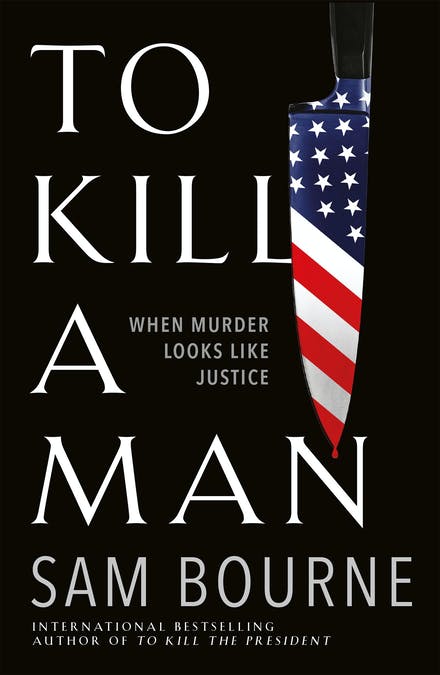
To Kill a Man by Sam Bourne

To Kill a Man Cover

Publisher: Quercus (Trade Paperback – 19 March 2020)

Series: Maggie Costello – Book Five

Length: 438 pages

My Rating: 4.5 out of 5

Amazon     Book Depository

Acclaimed thriller writer Sam Bourne delivers another captivating and intriguing novel about the dark side of American politics in his latest clever and exhilarating release, To Kill a Man.

In Washington DC, a woman is brutally assaulted in her own home by a masked intruder. Defending herself, she manages to kill her assailant, leaving him dead on the floor. While it seems to be a simple case of self-defence, the victim is no ordinary woman; instead, she is Natasha Winthrop, a high-flying lawyer whose highly publicised work during a House intelligence committee has many people wanting her to run for President of the United States.

As the events of this case are torn apart by the media, politicians and the general public, certain inconsistencies in Winthrop’s story emerge, and the police start to investigate the possibility that Winthrop knew her attacker and that she arranged the entire situation. With a hostile press and her potential political opponents swarming all around her, Winthrop calls in Maggie Costello, Washington’s top political troubleshooter for help.

Maggie eagerly takes on the case and quickly finds herself helping a woman at the centre of one of America’s most controversial and divisive news stories. While the country divides over whether Winthrop is innocent or guilty, and several violent retaliatory attacks against sexual offenders occur around the globe, Maggie is determined to find something that will prove her client’s innocence and allow her to keep her political future intact. However, the further Maggie digs, the more inconsistencies and surprises she uncovers. Who is Natasha Winthrop really, and what connections did she have to the man who attacked her? As the political sharks circle and the deadline for Winthrop’s announcement as a potential candidate gets closer, Maggie attempts to uncover the truth before it is too late. But what will Maggie do when the entire shocking truth comes to the surface?

To Kill a Man is an impressive and captivating political thriller from Sam Bourne, the nom de plume of British journalist Jonathan Saul Freedman, who started writing thrillers back in 2006 with his debut novel, The Righteous Men. He has since gone on to write eight additional thrillers, five of which, including To Kill a Man, have featured Maggie Costello as their protagonist. I have been meaning to read some of Bourne’s novels for a couple of years now, ever since I saw the awesome-sounding synopsis for his 2018 release, To Kill the President. While I did not get a chance to read that book back then, I have been keeping an eye on Bourne’s recent releases, and when I received a copy of To Kill a Man I quickly jumped at the chance to read it. What I found was a cool and intriguing novel with a compelling and complex plot that I had an outstanding time reading.

Bourne has come up with a rather intriguing story for To Kill a Man that sends the reader through a twisted political thriller filled with all manner of surprises and revelations that totally keeps them guessing. I honestly had a hard time putting this book down as I quickly became engrossed in this fantastic story, and every new reveal kept me more and more hooked right up until the very end, where there was one final revelation that will keep a reader thinking and eager to check out the next Bourne book. The entire story is rather clever, and I really liked how Bourne showed the plot from a variety of different perspectives around the world, from Maggie Costello and Natasha Winthrop, to the media, the police, Winthrop’s political opponents and their team, as well as several other people who are affected by the events of the narrative. This use of multiple point-of-view characters, even if they have only short appearances, makes for a more complete story, and I quite liked seeing how fictional members of the public perceived the events going on. While connected to the events of the previous Maggie Costello books, To Kill a Man is essentially a standalone novel, and no prior knowledge of any of Bourne’s other novels are required to enjoy this thrilling plot. I really enjoyed where Bourne took this great story, and this turned into a rather captivating thriller.

One part of the book that I particularly liked was the author’s exploration of America’s current political system, and how some of the events of this novel’s plot would play out in a modern effort to become president. As the main plot of To Kill a Man progresses, there are several scenes that feature both Maggie Costello and members of the election team of Winthrop’s main potential rival discussing the various pros and cons of someone in her position running and attempting to game plan how to defeat her if she did run. This was a rather intriguing aspect of the book, and Bourne really did not pull any punches when it comes to his portrayal of just how weird and depressing modern-day politics in America really is. The various political discussions show a real lack of decency and ethics around modern politicians, and there were multiple mentions of how a certain recent election changed all the rules of politics, making everything so much dirtier. The various news stories that followed such an event also had a rather depressing reality to them, especially as the various biases of certain networks and correspondents were made plain, and do not get me started on the various Twitter discussions that were also occurring. All of this works itself into the main story rather well, and some of the revelations that Maggie was able to uncover have some very real and significant real-world counterparts, some of which have not been solved as well in the real world as they were in this somewhat exaggerated thriller. I think all these political inclusions were a terrific part of the book and they really helped to enhance the potential reality of the story and make the story feel a bit more relatable to anyone who follows modern American politics.

To Kill a Man also featured an interesting and topical discussion about the scourge of sexual assaults and harassment that are occurring throughout the world. The main plot of this book follows in the aftermath of a sexual assault against a woman in which the victim fought back and killed her attacker. This results in a huge number of discussions from the characters featured in the novel, as they all try to work out the ethics of her actions in defending herself, and the perceptions of these actions from a variety of people makes for an intriguing aspect of the book, and feeds in well to the political aspects of the story. This also leads to some deep and powerful discussions about sexual assault in America (and the world), the impact that it has on people and the mostly muted response from the public and authorities. This sentiment is enforced by several scenes that show snapshots of women being assaulted and sexually harassed across the world that run throughout the course of the book. While the inclusion of these scenes does appear a little random at times, it ties in well with the main story and the overarching conspiracy that is being explored in the central part of the book. Bourne makes sure to show off the full and terrible effect of these actions, and many of these may prove to be a little distressing to some readers, although I appreciate that he was attempting to get across just how damaging such experiences can be for the victims. I also liked his subsequent inclusion of members of the extreme male right wing who were being used as weapons against some of the female characters in the book, which made for an interesting if exasperating (as in: why do people like this exist in the real world) addition to the story. This discussion about sexual crimes in the world today proved to be a rather powerful and visible part of the book’s plot that I felt worked well within the context of the thriller storyline.

To Kill a Man is an excellent new thriller from Sam Bourne, who produces a clever and layered narrative that really hooks the reader with its compelling twists, intriguing political elements and Bourne’s in-your-face examination of sexual crimes and how they are perceived in a modern society. To Kill a Man comes highly recommended, and I look forward to reading more of Bourne’s fantastic thrillers in the future.

Amazon     Book Depository

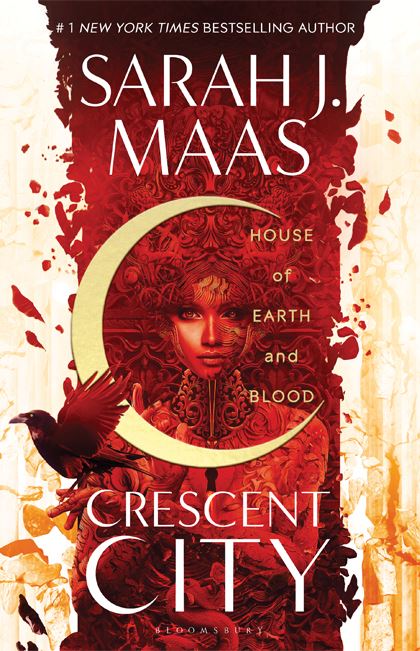
House of Earth and Blood by Sarah J. Maas

House of Earth and Blood Cover

Publisher: Bloomsbury/Audible Studios (Audiobook – 3 March 2020)

Series: Crescent City – Book One

Lenght: 27 hours and 50 minutes

My Rating: 5 out of 5 stars

Amazon

Prepare to meet your new obsession! One of the world’s top young adult fantasy fiction authors, Sarah J. Maas, breaks into the adult fantasy fiction genre in a big way with the first book in her brand-new Crescent City series.

Sarah J. Maas is an author that needs very little introduction. She is one of the most highly regarded young adult fantasy authors in the world today, having written two major bestselling series and a couple of standalone young adult novels. Maas debuted in 2012 with Throne of Glass, the first novel in her acclaimed seven-book long Throne of Glass series, and she has since gone on to write a second major series, A Court of Thorns and Roses. I have been meaning to check out some of Maas’s main series for a while now, especially Throne of Glass, as I have heard some very good things about them. Unfortunately, the only book of Maas’s that I have so far read was her DC Comics tie-in novel, Catwoman: Soulstealer, which I really enjoyed, especially as Maas had an amazing understanding of some iconic comic characters. As a result, I was interested when I heard about her new book, House of Earth and Blood, and I was curious to see how her first adult fiction novel would turn out. This is the first book in the Crescent City series, which presumably will be the author’s main body of work for the next few years. I received a physical copy of this book to review, although I eventually decided to listen to the audiobook format to fit it into my reading schedule, and I have to say I was rather impressed.

Welcome to Crescent City, a bustling metropolis where magic and technology meet in a world ruled over by all-powerful godlike creatures. Bryce Quinlan is a half-Fae, half-human, party girl at the low end of her world’s magical hierarchy, content to live her days clubbing and celebrating with her best friend, the powerful werewolf Alpha Danika Fendyr. All that changes the night Danika and her entire wolf pack are brutally slaughtered while Bryce is out partying. Bryce arrives home just in time to encounter the demon that committed the act, chasing it out into the streets before it escapes, never to be seen again.

Two years later, Bryce is a shell of her former self. Still reeling from the death of the closest person in her life, Bryce finds herself without direction or purpose. However, the revelation that a fresh wave of killings that mirror the bloody way Danika and her pack were taken out quickly changes that. Due to her experiences with the unknown species of demon and her intimate knowledge of Danika’s movements and history, Bryce is tasked by the governor of Crescent City to find who or what is summoning the destructive demons and unleashing them upon seemingly random members of the populace. However, Bryce will not be working on this case alone, as she finds herself teamed up with the governor’s personal assassin, the brooding, dangerous and surprisingly attractive fallen angel, Hunt Athalar.

Begrudgingly agreeing to work together, Bryce and Hunt start to scour the dark underbelly of their city, attempting to find any leads to who summoned the demon. However, they soon run afoul of many of Crescent City’s inhabitants, some of whom do not want the pair to uncover the truth. As they dig further, they begin to uncover a terrible conspiracy with terrible connections to Bryce’s traumatic past and which threatens all of Crescent City. However, the closer they come to the truth, the more pain and torment the two damaged souls uncover, especially as both of them try to fight the intense feelings blooming between them. With the fate of Crescent City hanging in the balance, can Bryce and Hunt get to the bottom of these killings, or will they be overwhelmed by all the hurt that is about to come their way?

Well damn, that turned out to be one hell of a book. I do have to admit that I’m not usually a fan of major romantic subplots in the novels I read (I know, typical male, Bryce would probably be calling me an Alphahole), and I was a little apprehensive that the romantic angles described in the book’s synopsis would overwhelm the fantasy story. However, any doubts I had about whether I was going to enjoy House of Earth and Blood were quickly blown away in the early stages of the story, especially once I hit the major plot development about 70 pages in. From there I was absolutely hooked on the story, as Maas kept piling on revelations, shocking moments, character development and an impressive murder mystery. I ended up really loving this amazing novel, and I ended up giving it a five-star rating.

I really enjoyed the way that Maas told this story, and this book contained an expansive and deeply addictive narrative that proved hard to put down at times. House of Earth and Blood is told from several character perspectives, most notably Bryce and Hunt, although quite a bit of the story is shown from the perspective of Bryce’s half-brother, Ruhn Danaan. Having these three main point-of-view characters results in a much more expansive story, as each of them has their own contributions to the plot, although there is a huge amount of crossover between each of their storylines. While Mass tends to focus most of her character development and storylines around Bryce, Hunt and Ruhn, there are a number of additional supporting characters, some of whom have some rather interesting roles throughout the book. Maas also includes a huge amount of foreshadowing throughout the book, hinting at several things that are to come further along in the narrative. While it is obvious where some of this foreshadowing is going, some of it was only noticeable in hindsight, and some of these more subtle inclusions made me really appreciate the author’s clever writing style.

One of the best things about this book was the incredible and intriguing new fantasy world. The Crescent City series is set on a version of Earth called Midgard, which was invaded thousands of years ago by vast armies of various magical creatures, ending humankind’s dominance of the planet. The modern world of Midgard is a chaotic and fascinating place, filled will all manner of magic and creatures who live in a hierarchal system, with all-powerful beings at the top and humans at the very bottom. There are so many cool elements to this world, from the unique magical systems, the different factions and organisations, and a vast multitude of different magical creatures with their own traits and characteristics. Maas dedicates a substantial amount of time exploring all these different elements of her new world, and the result is an impressive and vast setting which serves as a fantastic backdrop to this exciting story. I also liked the rather fun similarities between this fantasy world and the modern world, and it was interesting to see fantasy creatures running around with modern technology such as phones and guns. I also had a rather good laugh at some of the television shows that the author featured in the book, including a rather trashy-sounding True Blood inspired television show, which was made fun of relentlessly for its sexual content (which is kind of ironic considering how much sex was in this novel). Maas is clearly a master of universe building, and she has come up with a really great fantasy world that holds a lot of potential for future novels in the series, as well as opening up the possibilities of spin-off stories around some of the fantastic side characters introduced. I personally would love to see a novel based around the character of Fury Axtar, the mysterious assassin friend of Bryce, who has a minor role in the book.

In addition, Maas has also come up with a rather clever murder mystery storyline that I had an outstanding time unwrapping. The vast majority of House of Earth and Blood’s plot revolves around the murder of Danika Fendyr and her pack, as well as the similar murders that are occurring in the modern day. The subsequent investigation by Bryce and Hunt turned into a rather captivating storyline, as they explored the underbelly of their fascinating city, trying to find leads and uncover who had a motive to kill Danika. This whole mystery storyline goes to some very interesting places, and Maas comes up with a number of red herrings, alternate suspects, potential leads and side mysteries (a missing magical horn and a new street drug), all of which come together into a pretty incredible and clever narrative. I was actually rather surprised about who the culprit turned out to be, although Maas does set up the reveal rather well, and there are some rather clever hints in hindsight. That being said, while I didn’t know who the culprit was in advance, I totally knew where the final showdown with them was going to take place, and how the whole confrontation was bound to go down (there was a literal Chekov’s gun there). Still, it turned into quite a good confrontation scene, and I had a good laugh at the over-the-top way that the villain was taken down for good. This was a rather impressive element of the story, and I hope that Maas includes some more clever mysteries in her future books.

While I really loved the fantastic story, incredible world building and captivating mystery, the true centre of this book are the two compelling and exceedingly damaged main characters who Maas sets the story around, Bryce Quinlan and Hunt Athalar. Maas does some outstanding work setting these characters up, exploring their pasts and developing their personalities and emotions throughout the book. Bryce starts House of Earth and Blood as a seemingly carefree party girl with major daddy issues. However, the loss of Danika in the book’s first act severely changes her, as she has to deal with an extreme amount of guilt, isolation and social hatred in the following two years. This really alters her as a character and turns her into an extremely vulnerable person with a real emotional investment in the case, who hides all her true feelings behind a sassy and angry façade. Hunt, on the other hand, is a powerful fallen angel who lost his freedom and the love of his life in a failed rebellion against the ruling gods of the planet, and has spent the last several decades being tortured and used by the victorious archangels, and is now the personal assassin of the governor of Crescent City. Now known throughout the city as the Umbra Mortis, the Shadow of Death, Hunt is a simmering pot of anger who is resentful of how he has been treated all his life, and who is determined to be set free. Like Bryce, he is deeply invested in solving the case, as its resolution will allow him to take a serious step towards freedom, and on the surface he is the more serious of the duo. However, also like Bryce, Hunt has some major vulnerabilities and he is hurting deep inside. Both Bryce and Hunt are incredibly interesting protagonists, and I am really impressed with the layers that Maas was able bring to their characters, which added a significant amount to the story.

While Bryce and Hunt are amazing characters in their own right, the real magic comes when they are paired together. It is obvious from the start that these two are going to hook up at some point, but the journey to get there was written extremely well. The combination of these two exceedingly vulnerable and complex characters in the story is great, and it makes for some incredible and dramatic story moments, as Bryce and Hunt slowly work out all their issues and history. The way they slowly go from dislike to mutual respect to lust/romance is accompanied with a slow exchange of secrets, facts and personality reveals, and I had an amazing time seeing them come together as a couple. This turned into quite a good romantic subplot, although the two of them have some major bumps and betrayals along the way. Still, there are some rather nice moments in their relationship, from the way that they take care of each other after traumatic events, to funny reveals and mutual moments of protecting one and other. Bryce and Hunt make for a great pair, and I am really impressed with the way that Maas portrayed them and the complex story she wove around them. It looks like there are more secrets and backgrounds about both coming up in the future books, and I am looking forward to seeing where Maas takes them in the future.

While this book had some amazing elements, I did find this novel to be a tad trashy at times. As I mentioned above, this is Maas’s first foray into non-young adult fiction, and she certainly did not shy away from adding all manner of adult content into her book. While I can certainly appreciate Maas wanting to differentiate this book from some of her young-adult fiction work, I honestly think she overcompensated. This book is filled with a huge amount of adult language and sexual content, as pretty much every character in this book is crude, rude, oversexed and incredibly thirsty. While some of this served a purpose, such as showing what sort of party-girl character Bryce was before the traumatic incident, the sheer amount of stuff that Maas included was a bit over the top, and I found it to be somewhat distracting at times. This book also introduced me to the brand-new term, Alphahole. In the context of this book, an Alphahole is the term that Bryce gives to any magical male who thinks that their abilities and power give them the right to control women and run their lives, especially those women with less magical power than them (i.e. humans and half-humans like Bryce). Unfortunately, in this book pretty much every male that Bryce encounters is an Alphahole in her opinion; even the more redeemable characters like Hunt or Ruhn are deemed Alphaholes at the start of the novel, especially once they venture an opinion about her behaviour or actions. While I appreciate that this dislike for domineering men is part of Bryce’s character due to her father, and controlling guys really aren’t that cool in either fiction or real life, I do think that Maas kind of overdid their inclusion just a bit and I was honestly getting sick of hearing Alphahole as a descriptive term by the end of the book (although it became less apparent as the story progressed).

As I mentioned above, I ended up listening to the audiobook version of House of Earth and Blood. This audiobook has a runtime of 27 hours and 50 minutes and is narrated by Elizabeth Evans. I am rather glad that I decided to check out this format of the book. While I probably would have finished it off faster if I had read a physical copy (it took me a few weeks to get through the audiobook), I always feel that I absorb more of the novel when I listen to it, especially with longer books. This proved to be really useful when listening to House of Earth and Blood, as Maas packed so much plot and world building into this immense novel, and I think I ended up getting more out of this book by utilising this format. I have to say that I was also immensely impressed with Elizabeth Evans’s narration. Evans did an incredible job bringing the story to life, and her steady and emotional dictation of the story really helped me get to the end. I really loved the cool voices that Evans was able to come up with for all the characters, and I think that each of them matched the distinctive personalities of each character. Evans produced a huge range of different voices for these characters, and I really liked how she was able to alter them to reflect the ethereal or magical nature of some of the characters featured in the book, as well as hint at how powerful some of these creatures were by modulating her tone and adding a commanding quality to it. This was an impressive and deeply enjoyable audiobook adaptation, and I would strongly recommend it to anyone interested in enjoying House of Earth and Blood. That being said, be careful where you listen to this book, as it can be a little awkward to hear some of the steamy sex scenes when you are out in public. I somehow managed to be out shopping during two separate and particularly graphic scenes, and it proved very hard to keep a straight face while I was trying to grab groceries.

House of Earth and Blood is an incredible adult fiction debut from Sarah J. Maas, who has produced another outstanding and captivating read. There are so many excellent and enjoyable story elements in this book, and I absolutely loved every second I spend listening to it, even though some parts were a little over the top at times. This was an awesome start to Maas’s new Crescent City series, and I cannot wait to see what impressive and addictive story the author comes up with next. This novel comes highly recommended, and it gets a full five-star rating from me.

Amazon

Waiting on Wednesday – Daughters of Night and Blackout

Welcome to my weekly segment, Waiting on Wednesday, where I look at upcoming books that I am planning to order and review in the next few months and which I think I will really enjoy.  I run this segment in conjunction with the Can’t-Wait Wednesday meme that is currently running at Wishful Endings. Stay tuned to see reviews of these books when I get a copy of them. For my latest Waiting on Wednesday article, I am going to take a look at two excellent sounding historical murder mysteries that are coming out later this year.

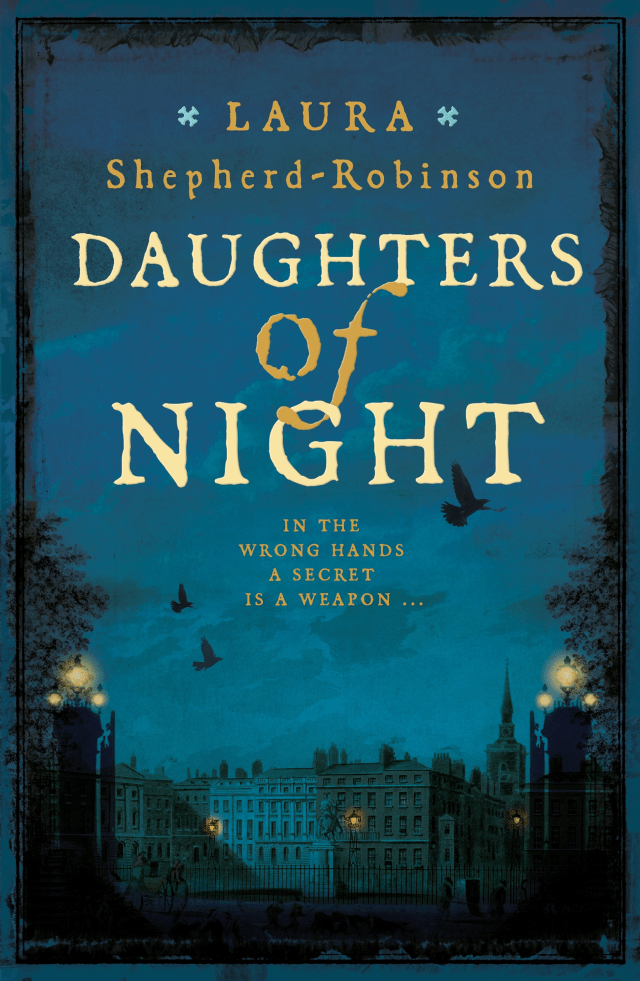
Daughters of Night

The first of these books is Daughters of Night by Laura Shepherd-Robinson, the intriguing follow-up to one of my favourite novels from last year, Blood & Sugar. Blood & Sugar was Shepherd-Robinson’s captivating and fascinating debut novel which featured a clever mystery revolving around the slave trade in late 18th century London. I really loved this fantastic book; it received a full five stars from me and it made several of my best-of lists from last year, including my favourite novels of 2019 list, my favourite debut novels of 2019 list and my favourite books from the first half of 2019 list. As a result, I am very excited to see how Shepherd-Robinson’s second book turns out and I cannot wait to see where the series goes next.

This book, Daughters of Night, will be set in the same universe as Blood & Sugar, and it is actually going to follow the wife of Blood & Sugar’s protagonist, who was a minor character in the first novel, as she attempts to solve a whole new murder.

Goodreads Synopsis:

From the brothels and gin-shops of Covent Garden to the elegant townhouses of Mayfair, Laura Shepherd-Robinson’s Daughters of Night follows Caroline Corsham, as she seeks justice for a murdered woman whom London society would rather forget . . .

Lucia’s fingers found her own. She gazed at Caro as if from a distance. Her lips parted, her words a whisper: ‘He knows.’

London, 1782. Desperate for her politician husband to return home from France, Caroline ‘Caro’ Corsham is already in a state of anxiety when she finds a well-dressed woman mortally wounded in the bowers of the Vauxhall Pleasure Gardens. The Bow Street constables are swift to act, until they discover that the deceased woman was a highly-paid prostitute, at which point they cease to care entirely. But Caro has motives of her own for wanting to see justice done, and so sets out to solve the crime herself. Enlisting the help of thieftaker, Peregrine Child, their inquiry delves into the hidden corners of Georgian society, a world of artifice, deception and secret lives.

But with many gentlemen refusing to speak about their dealings with the dead woman, and Caro’s own reputation under threat, finding the killer will be harder, and more treacherous than she can know . . .

It sounds like this upcoming book is going to contain another intriguing historical murder mystery, and I am very curious to see how this next mystery plays out. I am also looking forward to seeing how the author portrays the complex city of London and its society in this book, as I really loved the historical elements that were contained in Blood & Sugar. I have very high hopes for this novel, and I recently featured it in an article about upcoming books that I think could be five-star reads. Daughters of Night is currently set for release on 25 June 2020, and I am quite keen to get a copy of this book.

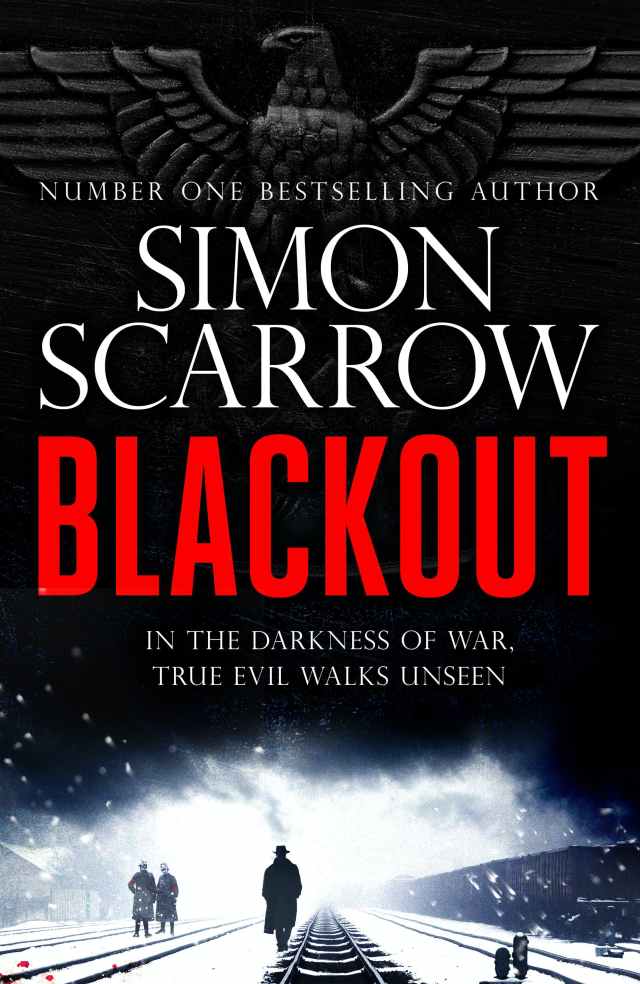
Blackout Cover

The second book that I am going look at in this article is Blackout by Simon Scarrow. I have long been a fan of Simon Scarrow, mainly because of how much I love his epic Eagles of the Empire Roman historical fiction series (make sure to check out my reviews for the 17th and 18th entries in the series). Scarrow has also produced a few other fantastic books throughout his career, including his Revolution series, several novella series and some standalone novels such as The Sword and the Scimitar and Hearts of Stone. While he also has 19th entry in his Eagles of the Empire series coming out later this year, I luckily don’t have to wait until November to get my Scarrow fix, as he has an awesome-sounding historical murder mystery coming out in August with Blackout.

Goodreads Synopsis:

Berlin, December 1939

As Germany goes to war, the Nazis tighten their terrifying grip. Paranoia in the capital is intensified by a rigidly enforced blackout that plunges the city into oppressive darkness every night, as the bleak winter sun sets.

When a young woman is found brutally murdered, Criminal Inspector Horst Schenke is under immense pressure to solve the case, swiftly. Treated with suspicion by his superiors for his failure to joining the Nazi Party, Schenke walks a perilous line – for disloyalty is a death sentence.

The discovery of a second victim confirms Schenke’s worst fears. He must uncover the truth before evil strikes again.

As the investigation takes him closer to the sinister heart of the regime, Schenke realises there is danger everywhere – and the warring factions of the Reich can be as deadly as a killer stalking the streets . . .

This also looks like it is going to be quite an excellent read, and I am really looking forward to it. I will honestly grab any Scarrow book that I can get my hands on, but this one sounds particularly intriguing. I have previously read some rather good murder mystery novels set in Nazi Germany, and I am really curious to see what sort of mystery novel Scarrow can produce with this compelling setting. Blackout sounds like it is going to be an exciting and entertaining read, and I cannot wait to check it out.

Both of these upcoming novels sound like they are going to be really impressive, and I think that they both have a lot of potential. I have had some extremely positive experiences with both these authors in the past, and I look forward to being wowed by them once again.

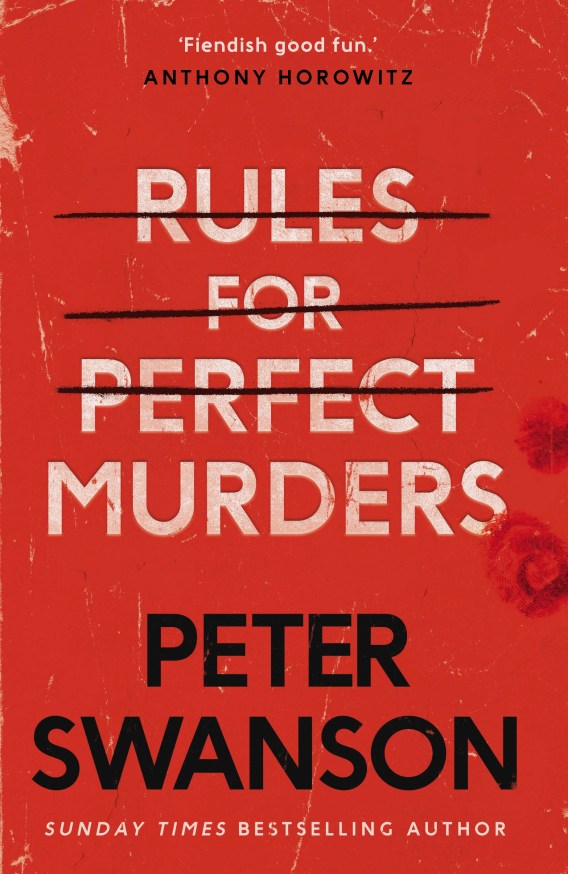
Rules for Perfect Murders by Peter Swanson

Rules for Perfect Murders Cover

Publisher: Faber & Faber (Trade Paperback – 3 March 2020)

Series: Standalone

Length: 272 pages

My Rating: 4.5 out of 5 stars

Amazon     Book Depository

In a mood for a complex and rather clever murder mystery? Make sure to check out Rules for Perfect Murders, the curious latest release from bestselling crime fiction author Peter Swanson.

Across the greater Boston area a series of unsolved murders have been committed. None of the deaths appear to have anything in common, except for the fact that each one bears a similarity to a famous literary murder. However, there is one other tenuous link that could tie the murders together, and FBI agent Gwen Mulvey is curious enough to meet with the owner of the Old Devils mystery bookshop, Malcolm Kershaw, to test her theory.

Years ago, Malcolm posted an article on his bookshop’s blog titled Eight Perfect Murders, detailing the eight homicides in literary fiction that he thought were the cleverest ways to kill someone and get away with it. This list features some of the most devious cases ever conceived by some of the history’s greatest mystery writers, from Agatha Christie’s The ABC Murders to Strangers on a Train by Patricia Highsmith. Now it appears that several of the killings match the unique selection of books that Malcolm listed all those years ago. Is the killer using his post as a guide for his gruesome work?

Working with Agent Mulvey, Malcolm soon discovers a link between himself and the killings, as one of the victims was a former customer of his store. Convinced that the killer is someone he knows, Malcolm attempts to find them before they finish off his list. However, not everything is as it seems, and Malcolm must come to terms with some of his darkest secrets if he is to find the killer stalking him from the shadows.

This is the sixth novel from Swanson, who debuted back in 2014 with The Girl with a Clock for a Heart. I have not previously had the pleasure of reading any of Swanson’s books before; however, I really loved the concept behind this novel, and thought it would be a fun one to check out. Rules for Perfect Murders, which was also released as Eight Perfect Murders, is an intriguing and compelling novel that presents the reader with a fantastic murder mystery while also acting as a love letter to the murder mystery genre. This turned out to be an excellent read, which I was able to power through in just over a day.

I rather enjoyed the way that Swanson wrote Rules for Perfect Murders, mainly because he emulated some of the classic murder mystery novels which he clearly loves throughout the story. The book is told in first person, from the point of view of the protagonist, Malcolm Kershaw, and it is made to represent a manuscript, recalling the events that he experienced. The story than details the investigation into the murders that are occurring in the present day, while also diving back into the protagonist’s past, while also featuring a number of examinations about elements of the protagonist’s world, including his opinion about certain mystery novels. This first-person perspective really fits the tone of the book extremely well, and Swanson did an excellent job winding the various elements of the story, including the protagonist’s flashbacks, into a tight and captivating read. The various writing methods that Swanson employs throughout the book are direct references to a number of famous mystery novels, as the fictional author of the book is inspired by them as he writes. It was really fun to see the protagonist discussing the pros and cons of things like unreliable narrators, red herrings and other elements, right when he was utilising them in his manuscript. At the same time, the way that parts of the story go down, are very similar to some classic mystery stories. All of this helps create a very unique tale, and I think that Swanson did an amazing job bringing this clever concept together.

In the midst of Swanson’s homages and descriptions of classic and great mystery novels lies a rather good murder mystery storyline, as the protagonist attempts to find out who using his blog post as a basis for the killing spree. Swanson is able to produce a thrilling and clever mystery, full of twists, false leads and intriguing motive that tie into the protagonist’s complex past. It was also rather interesting to see the killer craft modern murders out of the classic scenarios featured in the fictional Eight Perfect Murders list, especially as these elements served as a complicating factor in the investigation. I thought that the end result of the mystery was pretty satisfying, and while I was able to make some guesses about parts of the protagonist’s past, the identity of the murderer was a bit of a surprise for me. I had a fantastic time getting to the bottom of this mystery, and the compelling murders that Swanson painted did an amazing job catching my attention and interest, which ensured that I powered through Rules for Perfect Murders in short order.

In addition to utilising a number of classic murder mystery tropes and techniques in Rules for Perfect Murders, Swanson also spends considerable time discussing or analysing a number of classic and iconic murder mystery novels. Swanson really dives in and does several mini reviews of a swath of great murder mystery novels, providing what I assume are his own opinions, while also examining the book’s featured murders, the strengths and weakness of their stories, the cultural impact that they had and so much more. The main focus is on the books that appeared on the fictional Eight Perfect Murders list which is made up of such classics as The Red House Mystery by A. A. Milne, Malice Aforethought by Anthony Berkeley Cox, The A.B.C. Murders by Agatha Christie, Double Indemnity by James M. Cain, Strangers on a Train by Patricia Highsmith, The Drowner by John D. MacDonald, Deathtrap by Ira Levin and The Secret History by Donna Tartt. However, Swanson also references and discusses a bunch of other mystery novels, the plots of which or the lessons they contained often having some impact or bearing on the story. I loved this dive into each of these mystery novels, and I found it really cool that Swanson was able to insert his own opinions and obvious love from each of these books into this story.

Due to the author’s examination of all these classic novels, Rules for Perfect Murders is highly recommended for those hardcore murder mystery fans who are familiar with the books featured on the list, who will really love all the references and discussions that Swanson features throughout his novel. Those who are particularly knowledgeable about murder mystery stories will be able to guess where the story is going based on the literary clues the author leaves throughout the narrative. At the same time, Rules for Perfect Murders is also a great book for readers who are less familiar with these mystery novels. I personally have not read any of the eight books on the fictional list, although I was familiar with how some of the plots went. However, despite this lack of knowledge, I was in no way disadvantaged while reading Rules for Perfect Murders, as Swanson gives concise and knowledgeable summaries of each of the relevant books, which allowed me to follow the plot without any issues. I was able to appreciate most of the references that the author included throughout the book, and I am tempted to go out and read some of the featured books, as most of them sounded extremely interesting. I think that this examination and utilisation of classic murder mysteries works well with story Swanson came up with, and I honestly had fun learning more about these books and seeing the impact that they can have on a modern story.

It was kind of cool to read this novel from the perspective of a blogger and book reviewer, as this is novel written by a book lover, about a book lover. I found myself relating to the protagonist in a number of ways, and his observations about the joy books can bring really resonated with me. His habit of analysing the various books he reads is something many reviewers are going to appreciate, and I really liked that this novel is based around a best-of list. As someone who regularly produces top ten lists, I had a fun time with this concept, and I couldn’t help imagining what I would do in a similar situation (gasp, what if someone used my one of my lists to commit some crimes? Think about all the Star Wars themed murders that would happen!). I also had a good chuckle when the protagonist starting reminiscing about all the troubles he had creating his lists, such as leaving key books off, going back and reconsidering his choices and troubles with including entries that technically don’t belong on the list, as I have been there multiple times. This was a fun part of the book, which I rather enjoyed, although it didn’t take away from the darker tone of the book’s murder mystery and character elements.

Rules for Perfect Murders by Peter Swanson was a rather interesting and unique read that I am glad I decided to check out. Swanson crafts a fascinating and captivating tale, that not only contains a fantastic central whodunnit, but which acts as an amazing homage to the murder mystery genre. Filled with some excellent and entertaining elements, this is an outstanding read which I had a great time reading. This is a book perfect for all murder mystery fans, Swanson is definitely on my radar from now on, and I look forward to seeing what he writes next.

Amazon     Book Depository

A Testament of Character by Sulari Gentill

A Testament of Character Cover

Publisher: Pantera Press (Trade Paperback – 3 March 2020)

Series: Rowland Sinclair – Book 10

Length: 337 pages

My Rating: 4.5 out of 5 stars

Amazon     Book Depository

Acclaimed Australian author Sulari Gentill returns with the 10th book in her bestselling Rowland Sinclair series, A Testament of Character, an intense and compelling new entry which was a lot of fun to read.

Gentill is an excellent Australian author who has written several amazing books since her 2010 debut. While her main body of work is the Rowland Sinclair series, Gentill has also written The Hero trilogy, a young adult fantasy trilogy based on classic Greek stories, and the standalone novel Crossing the Lines. I am mostly familiar with her Rowland Sinclair books, however, as I have read the last several books in this series, all of which have been extremely enjoyable due to their fantastic blend of history and mystery. The Rowland Sinclair books follow the adventures of the titular Rowland Sinclair, a wealthy left-wing Australian gentleman artist, and his three artistic friends in the 1930s, as they find themselves in the middle of several murder investigations. Each Rowland Sinclair book is a fun and entertaining part of my yearly reading calendar, and I have been looking forward to checking out A Testament of Character for a while now.

In 1935, after the horrors they experienced in Shanghai, Rowland and his bohemian friends Edna, Clyde and Milton are enjoying a leisurely holiday in Singapore before heading back to Australia. However, their travel plans are dramatically changed when Rowland receives tragic news. An old friend of Rowland from his Oxford days, Daniel Cartwright, has died suddenly, and he has appointed Rowland as the executor of his vast estate.

Detouring from Australia to Cartwright’s home city of Boston, Rowland and his companions arrive for the funeral and find themselves in the midst of controversy and familiar conflict. Not only was Cartwright estranged from the rest of his family, especially his brothers, who disapproved of his lifestyle choice, but it turns out he was murdered, and the police have yet to find any suspects. Even more mysteriously, Cartwright had only just written every member of his family out of the will, leaving all his money to an unknown man everyone claims does not exist.

Determined to carry out the last wishes of his dear friend, Rowland attempts to find the man who apparently meant so much to him. However, his investigation quickly turns sour, as he runs into numerous people who do not want Cartwright’s will to come to pass. Forced to scour Boston, New York and other parts of post-Depression America for leads, the four friends encounter all manner of dangerous and eccentric characters as they pursue their quest. However, none of them are prepared for the terrible truth they encounter, especially now that Cartwright’s killer has them in their sights.

A Testament of Character is an exciting and compelling novel that proves to be a fantastic new addition to the Rowland Sinclair series. Gentill has done an amazing job coming up with another captivating story that not only features an exciting and gripping mystery but which takes an intriguing look at America in the 1930s. This story contains the series’s usual blend of fun, intrigue and action, as the four exceedingly liberal protagonists get into all manner of trouble across conservative America. There are some rather impressive and at times dark scenes throughout this book, and Gentill has also included some major character developments that will appeal to long-term readers of this series. The end result is an exceedingly enjoyable and thrilling story of love, adventure and revenge which proved extremely hard to put down.

At the heart of this book lies a clever mystery storyline that revolves around the murder of the protagonist’s friend and the identity of the mysterious beneficiary of the will. Gentill crafts an excellent multi-layered mystery, with a number of surprising twists, turns and false leads on the way to the exciting conclusion. While I was able to guess a little bit in advance who the main perpetrator turned out to be, all the revelations that came out in the final confrontation were really impressive and helped wrap up the entire mystery storyline extremely well. I also thought that Gentill came up with a very compelling and memorable motivation for the various crimes featured within the book. Some of these reveals were a bit dark and shocking, but they did make for some very dramatic and captivating sequences throughout the book. Overall, I thought that this was one of the strongest mysteries to have so far been featured within one of the Rowland Sinclair books, and it served as an amazing centre to this entire fantastic book.

One of the most distinctive features of this whole series is the way that Gentill dives into the history and culture of the period in which the books are set. She has previously done a wonderful job of exploring parts of 1930s Australia, Europe and occupied Shanghai, and in A Testament of Character Gentill’s characters explore post-Depression America. This proves to be an excellent backdrop to the book’s superb story, and I loved the examination of the key cities of Boston and New York, as well as some rural areas of the country. Gentrill provides the reader with a fantastic and at times in-depth look at various parts of the 1930s American culture and society. This is done in two distinct ways, the first of which involves the protagonists exploring America as Australians, providing an outsider’s perspective of the events or places they visit (while constantly getting complemented for speaking such good English!). The second way is through Gentill’s inclusion of historical newspaper clippings at the front of every chapter. The use of these newspaper clippings is another recurring trait of the Rowland Sinclair series, and I have always enjoyed the way in which the articles relate to some cultural or historical aspect of the chapter the clipping fronts. Through the use of these methods, the author paints an intriguing picture about America during this period, which I think worked extremely well as a background to the main mystery plot. This is especially true as some of the motives and elements of the mystery revolve around the social attitudes and cultural expectations of the time, which the reader will need to have a bit of an understanding about. I have to say that I was glad that as part of this examination of historical America, Gentill also had a look at public opinion around the Nazis and fascists in the lead up to World War II, as this has been one of the more interesting story threads to follow throughout the series.

Another distinctive aspect of the Rowland Sinclair series is the way that Gentill writes a number of historical figures into the story, either as cameos or in major roles. The best previous example of this is easily the author’s inclusion of Eric Campbell and The New Guard (an ultra-right-wing Australian organisation in the 1930s) as recurring antagonists in some of the books, as these real-life historical figures are great foils to the progressive protagonists. Gentill continues to do this in A Testament of Characters, making great use of several iconic American historical figures to flesh out the story and create several memorable inclusions. Several of these historical figures have pretty major roles in the plot, including Joseph Kennedy, F. Scott Fitzgerald and his wife and fellow author, Zelda Fitzgerald. There are also some fun cameos from several other notable people, including Errol Flynn, a young JFK, Marion Davies, Randolph Hearst and Orson Welles, as well as several other characters who were in Boston or New York during the 1930s. There are also a ton of references to other unique figures in America during this time, including the Parker Brothers Company (Monopoly was released in 1935, and the protagonists of course end up playing a game), as well as a unique goat competition that was held in Central Park, of which Gentill of course names the winner. This is an extremely fun and amusing part of A Testament of Character, and I always enjoy seeing Gentill’s protagonists run into these real-life historical figures, especially as the author does a fantastic job examining and showcasing their personalities and motivations. I love how Gentill effortlessly works these people into the plot, and the reader is always left wondering who is going to appear next.

A Testament of Character is a superb and exciting new addition to the outstanding Rowland Sinclair series that is really worth checking out. Sulari Gentill has once again produced a fantastic mystery storyline that strongly benefits from the author’s clever dive back into 1930’s history. This results in a powerful and exhilarating novel which makes amazing use of its fun, distinctive inclusions and intriguing characters. I cannot wait to see what misadventures Rowland Sinclair and his friends get up to in their next book, and this is a truly wonderful Australian series with a real unique flair to it.

Amazon     Book Depository

The Holdout by Graham Moore

The Holdout Cover

Publisher: Orion/Penguin Random House Audio (Audiobook – 18 February 2020)

Series: Standalone

Length: 10 hours and 15 minutes

My Rating: 5 out of 5 stars

Amazon     Book Depository

From acclaimed author Graham Moore comes an amazing new thriller story that is one part legal drama, one part murder mystery and 100 per cent awesome: The Holdout.

The Holdout is an outstanding standalone book that I have been looking forward to for a little while now. I really enjoyed the sound of the premise when I first heard about it, so I was really glad when I received a copy of this book. Moore is probably best known as a Hollywood screenwriter, having written the screenplay for The Imitation Game, which won him an Academy Award for Best Adapted Screenplay. However, Moore is also a novelist, having previously written two books, The Sherlockian and The Last Days of Night, the latter of which I read and enjoyed back in 2016. The Holdout is Moore’s first foray into contemporary fiction, and he has produced quite a fantastic read.

It was the trial of the century. Jessica Silver, the 15-year-old heiress to a vast fortune, vanishes and the prime suspect is her African American teacher, Bobby Nock, with whom she was having an inappropriate relationship. With substantial evidence against him, a verdict of guilty for Jessica’s murder seemed assured, until one juror voted not guilty. This one holdout, Maya Seale, refused to alter her verdict and was eventually able to convince the other jurors to change their votes. Their resulting decision would shock the country and change the juror’s lives forever.

Now, 10 years later, Maya is a successful defence attorney who has tried her hardest to move on from the infamous trial that ruined her life, until Rick Leonard, her fellow former juror and secret lover during the trial, tracks her down. Rick has spent the last 10 years obsessing with case, believing that they let a guilty man go free. Now, to mark the 10th anniversary of the trial, a true-crime show wants to interview each of the jurors in the hotel they were sequestered at during the trial. At the end of the interview, they will be presented with new evidence that Rick has uncovered which he believes definitively proves Bobby Nock’s guilt. While initially reluctant to go, Maya ends up making an appearance, only to find Rick dead in her hotel room.

Now the prime suspect in Rick’s death, Maya is forced to relive the infamy that has dogged her for years. Determined to prove her innocence, Maya begins interviewing the only potential witnesses to the crime, the former members of the jury who were gathered at the hotel. However, her investigation reveals that Rick has been digging up dirt on each of the former jurors, and several of them may have had a motive to kill him. As she digs deep, Maya begins to believe that the solution to this current murder lies in the trial that brought them together. Did they let a guilty man go free all those years ago, and is that decision coming back to haunt them with lethal consequences?

Wow, just wow, this was a pretty incredible thriller novel. Moore has pulled together quite a compelling and complex read which presents the reader with a fantastic and intricate story that combines an excellent legal thriller with a captivating murder mystery to create a first-rate read.

The Holdout’s story is told in alternating chapters, with half of the chapters set back during the original trial in 2009, and the rest of the book is set 10 years later in the present day. The 2019 chapters are told exclusively from the point of view of Maya as she attempts to uncover who killed Rick Leonard, while each of the chapters set in the past are told from the perspective of a different juror as they observe the events surrounding the trial. This is a really clever storytelling technique as it presents the reader with two connected but distinct storylines. The storyline set during the original trial is a legal drama-thriller in the vein of 12 Angry Men or Runaway Jury, and it shows various points of the Bobby Knock murder trial and the jury deliberations that followed. Through the author’s use of multiple perspectives, the reader is able to see how the various members of the jury came to their ultimate verdict, what factors influenced their decisions and what they thought about the various people involved in the case and their fellow jurors. The storyline set in the present day, on the other hand, reads more like a murder mystery, and it deals with the protagonist’s hunt to find Rick’s killer in order to prove her innocence. Both of these separate storylines work extremely well together, especially as the Maya storyline explores the impacts of the events that occurred during the older timeline. I also think that Moore did an excellent job jumping between the various time periods and character perspectives, and this clever storytelling style helped to create a compelling read with a fun flow to it.

At the centre of this novel lies two fantastic and complex mystery storylines set around 10 years apart. The first one of these revolves around what happened to Jessica Silver in 2009, while the other involves the murder of Rick Leonard in 2019. Both of these separate cases are really intriguing, and they present the reader with some clever twists, compelling potential theories, alternative suspects and conflicting evidence, so much so that the eventual solutions to these mysteries are actually quite surprising. While both of these two mysteries work really well by themselves, the real beauty is in the way that they combine together throughout the book. The solution to the Rick Leonard murder is strongly rooted to the original 2009 trial with the jury, while the eventual revelation about Jessica Silver doesn’t come out until the events of the 2019 murder are concluded. I really enjoyed seeing both of these mysteries come together, and it was cool to see the motives for one case be revealed in a prior timeline, while the protagonist investigated in the present.

I also had a great appreciation for the legal aspects of The Holdout, as the author dives deep in the United States court system and shows off what happens during a murder trial. There are some tricky legal scenes throughout this book, and one of the major appeals of the 2009 storylines is seeing the entirety of the murder trial unfold. Moore also does a great job exploring how the jury system works and how jurors deliberate and decide upon a person’s innocence and guilt. There are some intriguing examinations of the jury system throughout the book, and it was interesting to see what information they are given and how a jury could come up with one verdict when the rest of the country has already decided. The use of multiple perspectives works well during the 2009 part of the book, and I quite enjoyed seeing how the disparate jurors had different opinions about the information presented to them. The 2019 storyline also contains some intriguing legal scenes which are shown from the perspective of Maya as a successful defence attorney. As a result, these scenes contain fascinating information about legal strategy and defence plans, and it was a little scary to consider innocent people being advised that their best legal strategy for a crime they didn’t commit was to claim self-defence. The Holdout also tried to show the chaos that surrounds a high profile court case, including examining the crazy media coverage, the impact of public perception, and the fact that people involved are often more concerned with making money or advancing their careers rather than finding out who actually committed the crime. All of this is extremely fascinating, and I enjoyed seeing Moore’s take on the current legal system, especially as he comes across as somewhat critical of it at times.

Moore has also filled this book with a number of complex and relatable characters in the form of the jurors, who you get to know throughout the course of both storylines. Thanks to the two separate timelines, you get to see how the events of the trial affected these people as each of them had their lives completely ruined thanks to one decision they made 10 years ago. Thanks to the use of multiple perspectives during the earlier timeline, you actually get to briefly see inside the mind of each of the jurors, and explore how events in their past lives, plus the stress of the trial helped influence their verdict. I also found it fascinating to see how the not-guilty verdict impacted on other characters associated with the trial, such as the family of Jessica Silver and the accused, Bobby Nock. This was especially true in the case of Bobby, who, despite being found innocent, was controversially prosecuted for another crime and was then subsequently hounded by the media for years, resulting in some compelling scenes around this character in the 2019 storyline. I also have to point out the underlying theme of obsession that the author expertly inserted into this story. Obsession with the trial affected several characters within the book, causing many of them to act in unpredictable ways to achieve their goals. This obsession came from a number of places, including from guilt, a sense of righteousness, a desire for revenge or to find justice, and it was quite compelling to see what this obsession drove some characters to do. One member of the jury in particular is driven to do some very dark things that were completely out of character to the person who was introduced in the earlier storyline, and this characters development was extremely fascinating to behold. Moore did an amazing job with these characters, and I really liked seeing how the events depicted in the book influenced and impacted them.

I ended up listening to the audiobook format of The Holdout, which was narrated by Abby Craden. The Holdout audiobook runs for just over 10 hours and I found myself flying through this novel, especially when I became obsessed with working out the overall solutions to this book. Craden is an excellent audiobook narrator, and I previously enjoyed her work on Recursion by Black Crouch last year. For The Holdout, Craden comes up with a number of distinctive voices for the various characters featured within the book. Each of these voices fit their respective characters extremely well, and I think that Craden did a good job portraying these character’s various ethnicities and genders. All of this really helped me to enjoy this incredible story, and this format comes highly recommended as a result.

The Holdout was an absolutely incredible read that does a fantastic job showcasing Graham Moore’s superb skill as a master storyteller. This amazing novel expertly combines together a compelling legal thriller with an addictive murder mystery in order to produce a first-rate story with some captivating twists and intriguing character developments. The Holdout gets a full five-star rating from me, and I am very excited to see what this remarkable author produces next.

Amazon     Book Depository

The Museum of Desire by Jonathan Kellerman

The Museum of Desire Cover

Publisher: Century (Trade Paperback – 4 February 2020)

Series: Alex Delaware – Book 35

Length: 348 pages

My Rating: 4.25 out of 5 stars

Amazon     Book Depository

Prepare for a compelling and intricate novel from one of the leading authors of the murder mystery genre as I check out The Museum of Desire, the newest novel from Jonathan Kellerman.

The Museum of Desire is the latest book in Kellerman’s Alex Delaware series of murder mystery books, which is the author’s main body of work. This series has been running since Kellerman’s 1985 debut, When the Bough Breaks, and the author has since released over 50 books, several of which he has co-written with either his wife or his daughter. I only started reading Kellerman’s novels last year when I picked up a copy of the previous book in the Alex Delaware series, The Wedding Guest, which contained a rather clever mystery that I had a great time reading. As a result, I made sure to keep an eye out for Kellerman’s next release and I subsequently found myself deeply intrigued when I saw the plot for his latest novel, The Museum of Desire, and really wanted to check it out. This latest Kellerman novel is the 35th novel in the Alex Delaware series and it contains another intriguing and complex murder mystery storyline that I had a lot of fun unravelling.

In the aftermath of a wild party in a Beverly Hills mansion, the cleaner assigned to the property makes a terrible discovery: a limousine containing four blood-soaked dead bodies. Each of the four has been murdered and artistically posed within the car, making for a grim and disturbed scene. To make matters even more unusual, the victims all appear to have been chosen at random, with none of the victims having any apparent connection to any of the others.

Realising that they are dealing with another special case, LAPD Lieutenant Milo Sturgis calls in his friend and frequent consultant, psychologist Dr Alex Delaware, to help unravel this mystery. Over the years that Alex and Milo have been working together, they have seen some particularly heinous and unusual murders, but these might be the most disturbing one yet. As the two begin running down the case, they find themselves on the trail of a vicious killer with a love for unusual art and a penchant for eliminating any potential witnesses to their crime. Worse, it soon becomes apparent that their killer is not yet done, and that many more people are going to die.

The Museum of Desire is another excellent release from Kellerman that delivers the reader an amazing and compelling murder mystery. The author has done a fantastic job with his latest mystery, coming up with a unique and interesting murder scenario, with four apparently random victims posed in a very distinctive manner. This turned into a quite a clever and complex mystery storyline that went in some very intriguing directions. Kellerman makes sure to fill the story up with a substantial number of twists, strong false leads and a raft of plausible suspects, making the real killer a bit hard to predict. I was certainly a bit surprised by who it turned out to be, but I thought it was quite a good twist. Kellerman makes sure to wrap this whole murder mystery storyline up with a memorable conclusion, which I thought was an incredible way to end this entire plot. The end result is a very captivating tale of passion, brutality and revenge, and I very much enjoyed unravelling this awesome mystery storyline.

One of the things that I really like about Kellerman’s books is the slower-paced, methodical style in which his protagonists investigate the various murders that they come across. Rather than coming to a massive conclusion off the smallest pieces of evidence, the two central characters slowly build up their case throughout the course of the book in order to work out what happened. This is mostly done by interviewing witnesses to the crime, as well as the friends and family of the murder victims, establishing what sort of people they were, where they spent their time and who they interacted with. With this information in hand, as well as some physical or forensic evidence and potentially some internet search results, they can create a rough picture of what happened and what sort of people they are dealing with in order to narrow down their suspects and come up with the necessary leads to identify the killers. This methodical approach to a murder investigation is quite distinctive and it makes the whole book feel a lot more realistic, like you are reading about a real investigation rather than one of those television shows where the crime is solved in a matter of hours. That being said, several breaks in the case are only coincidently revealed because the narrator happened to be driving by. This feeling of realism is backed up by the protagonists having to deal with things like delays in the lab, conflicting priorities within the department and a lack of manpower from overworked police officers who have multiple cases, all of which expands the investigative timeline out. I actually really like this style of crime writing from Kellerman, as it makes The Museum of Desire stand out from some of the other murder mysteries out there. I am a big fan of the realism that he installs in his work, and I feel that it makes the story even more compelling and enjoyable.

Another great part of the Alex Delaware books are the two main characters, Doctor Alex Delaware and LAPD Lieutenant Milo Sturgis. While this is the Alex Delaware series, with Alex Delaware serving as the books narrator and point-of-view character, Milo is just as important to the series. Both Alex and Milo are great characters in their own right. Alex is the brilliant child psychologist whose insights into the human mind are useful for many of the cases seen in these books and who also serves as a bit of stand-in for the author, who himself is a noted psychologist. Milo, on the other hand, is an openly gay veteran homicide detective who is heavily respected by both his fellow officers and the wider community he has been serving for years. While on paper this seems like a bit of an unusual partnership, Alex and Milo have been working together since the first book in the series and have now formed a rather effective team and a close friendship. It is a lot of fun watching the two of them solve crimes, especially as play off each other really well during the course of the book, with Milo providing the police knowledge and experience, while Alex brings his outside view and professional expertise to the game. While both are serious when it comes to the crimes they are investigating, Milo has a bit of a comedic edge to him, which works well as Alex is a bit more of the team’s straight man. Their views of the various people they meet and circumstances surrounding the cases are usually amusing, especially when dealing with unusual situations. The Museum of Desire is a great example of this, as you get to see them deal with art snobs, disrespectful rich kids, fierce landladies, a socially different teenager and unhelpful witnesses, and they have some good discussions about them later. Overall, I am a massive fan of this team up (although I like Milo a bit more as a character) and I cannot wait to see what crazy crimes and people they go up against in Kellerman’s next book.

With his latest novel, The Museum of Desire, Jonathan Kellerman has produced another captivating murder mystery. Featuring a unique case, a fantastic and twisty mystery and Kellerman’s trademark brand of investigation, this latest novel is an amazing and enjoyable read that pits his great protagonists against a clever killer. This was another awesome addition to the terrific Alex Delaware series, and readers are going to have an amazing time getting to the bottom of his latest case.

Amazon     Book Depository

Magnus and the Crossroads Brotherhood by Robert Fabbri

Magnus and the Crossroads Brotherhood Cover

Publisher: Corvus (Hardcover – 3 December 2019)

Series: Crossroads Brotherhood – Collected Edition

Length: 369 pages

My Rating: 4.5 stars out of 5 stars

Amazon     Book Depository

From the mind of one of the most entertaining authors of historical fiction, Robert Fabbri, comes Magnus and the Crossroads Brotherhood, a superb collection of fun and exciting short stories set in the same universe as Fabbri’s bestselling Vespasian series.

Over the last couple of years, Fabbri’s Vespasian series has been one of my absolute favourite historical fiction series out there, so much so that Fabbri is now one of those authors whose works I will automatically buy, no questions asked. The Vespasian books, which ran between 2011 and 2019, examined the life story of the titular character, Vespasian, and showed the events that eventually led to him becoming emperor of Rome. Fabbri utilised a mixture of historical facts and a number of fictionalised potential adventures to tell an entertaining story which also mixed in some of the wildest and most over-the-top recorded tales of ancient Rome and its Emperors. This series featured a huge cast of figures from Roman history and it also made use of several fictional characters of Fabbri’s own design to move the story along. While the books featured several great fictional characters, the most significant of these was Magnus.

Marcus Salvius Magnus, mostly referred to as Magnus in the series, was Vespasian’s best friend, confidant and fixer throughout the series and was at his side for most of the wild adventures Vespasian found himself on. Magnus was the leader of the South Quirinal Crossroads Brotherhood, one of the major criminal gangs in ancient Rome, but he also worked for his patron, Vespasian’s uncle, Gaius Vespasius Pollo, and helped him and his nephews rise politically. Magnus appeared in all nine Vespasian books and was a major part of the series. Fabbri evidently enjoyed featuring him in his stories as he was also used as the protagonist of the Crossroads Brotherhood series of novellas, which featured six separate novellas released between 2011 and 2018.

Magnus and the Crossroads Brotherhood is the first full collection of the six Crossroads Brotherhood novellas, which follow the adventures of Magnus and his brethren as they navigate the dangerous criminal underbelly of ancient Rome. Set out in chronological order across several points in the Vespasian series (which was set over the course of 40-plus years), these various short stories each feature a different criminal enterprise, including fixing a chariot race, manipulating an arms dealer, and property speculation, all whilst trying to stay on top of the city’s rival criminal organisations and surviving the crazy whims of Rome’s rulers.

This was a fun and exciting book that I really enjoyed, and I am exceptionally glad that I was able to read all these great novellas inside a single book. Fabbri has produced some truly entertaining tales which not only tie in with and close up some gaps in the Vespasian series but also provide a much more in-depth look at one of the series’ more amusing characters and the criminal undertakings he was getting up to in ancient Rome.

The featured novellas were a lot of fun to read, and I really liked the clever and fast-paced stories contained within them. Fabbri did an exceptional job of using the short story format to introduce and conclude a compelling tale as this book features some absolute rippers, each of which is around 60 pages long. The author has come up with some very intriguing scenarios for each of these short stories, all of which follow Magnus as he embarks on a new scheme or implements elaborate and at times brutal plans to gain power and wealth and address some form of threat to his criminal organisation. The sheer variety of criminal enterprises that Fabbri came up with is very impressive, and I enjoyed seeing how the author imagined Roman politics and crime would have intersected. I also liked how some of the crimes that the protagonists engaged in had a more modern flair to them, such as engaging in the lucrative opium trade. Out of all of these short stories, I think my favourite was the second one featured in this book, The Racing Factions. The Racing Factions followed Magnus as he attempted to fix a chariot race, to not only make himself and his associates a lot of money but also get revenge on a crooked bookie who foolishly tried to cheat Magnus out of his winnings. This story was filled with all manner of double-crosses, plotting, manipulations and intrigue, as Magnus put all the pieces into place for his revenge, resulting in a chaotic and entertaining story that can be quickly read in a short period of time. While The Racing Factions was my favourite short story, there were honestly no weak links in this book, and I loved every novella that was included, especially as I was able to easily read their entire stories in a single session each.

While each of the novellas can easily be enjoyed as standalone stories, there are some real benefits to reading all of them within this collected edition. The main advantage is that the reader gets to see each of the stories progress in chronological order over the course of many years. This allows us to see how Magnus slowly evolves over the years, becoming more devious as he ages, and it is interesting to see what happens to the various side characters in the novellas. While some of Magnus’s companions age with their leader and seem ready to retire with him, you also get to see the rise of Magnus’s successor, Tigran. Tigran is introduced in the first novel as a street urchin, and he rises up the ranks each story, eventually becoming a viable contender for Magnus’s throne. The slowly building tension between Magnus and the ambitious Tigran is quite intriguing, and it makes for a really fun confrontation in the final book. I also liked how having all the novellas in one place allowed Fabbri to showcase the continued street war between the South Quirinal Crossroads Brotherhood and their rivals the West Viminal Brethren. The West Viminal Brethren make several plays for Magnus’s interests throughout the course of the books, and many of the criminal plans featured where Magnus’s destructive retaliation, which caused some real trouble for the West Viminal Brethren and their leader.

While the character of Vespasian only briefly appears in a couple of stories within Magnus and the Crossroads Brotherhood, this book has some major connections to the Vespasian series. While each of these novellas has their own self-contained adventures, one of the main reasons they were written was to help fill in the gaps between the various Vespasian books. As a result, some of the novellas provide background on how Vespasian or his brother came to be in some key position of power or unique place at the start of certain books within the series. There were also some examinations of how Magnus was able to readily come up with key ideas that were later used in the main books, such as how he came up with a certain inventive murder technique that was necessary to eventually eliminate one of Vespasian’s opponents. These novellas also helped explain the reasons why Magnus was often away from Rome in the company of Vespasian rather than staying in the city running his criminal brotherhood. Through short introductions that appear in front of each novella featured in this book, Fabbri explains the context of each of these and details what gaps he was trying to fill. This of course means that Magnus and the Crossroads Brotherhood is going to hold a lot more appeal to those readers who are already familiar with the Vespasian series, especially as they will have a much better appreciation for each of these novella’s backgrounds. That being said, no knowledge of any of the Vespasian books is really required to enjoy the fun stories contained within this collected edition, and Magnus and the Crossroads Brotherhood would actually be a fantastic introduction to Fabbri’s excellent historical fiction series.

I quite enjoyed the intriguing snapshots of ancient Rome that Fabbri included in each of the novellas. There are some truly fascinating aspects of Roman life explored in this book, from the popularity of the chariot races for all levels of society, the various forms of law enforcement patrolling the streets, the role criminal organisations may have played and many other cool historical elements. I personally really liked how most of the stories were centred on some form of ancient Roman festival or celebration. There are some obscure and weird festivals occurring here, from one celebration that sees organised mobs from the various neighbourhoods fight over the head of a sacrificed horse, to another festival where the Rome’s dogs are brutally punished for failing to stop an ancient invasion of the city. These prove to be distinctive and interesting backdrops for several of the stories, especially as the protagonist uses several elements of these celebrations in his schemes, in often entertaining ways. As a result, this is a great read for fans of ancient Roman fiction, and I guarantee you will find some intriguing and entertaining portrays of Roman culture and society in this book.

Magnus and the Crossroads Brotherhood is a fantastic new addition from the amazing Robert Fabbri, which proved to be an exceedingly entertaining book. I really loved being able to read all of these excellent novellas in one place and I deeply enjoyed every one of their exciting and captivating stories. This is a perfect companion piece to Fabbri’s outstanding Vespasian series, and there is quite a lot to love about this collection of fun novellas. Compelling pieces of fiction like this is one of the main reasons why Fabbri is one of my favourite historical fiction authors at the moment, and I cannot wait to get my hands on his upcoming book, To the Strongest.

Amazon     Book Depository

Just Watch Me by Jeff Lindsay

Just Watch Me Cover.jpg

Publisher: Orion (Trade Paperback – 10 December 2019)

Series: Riley Wolfe series – Book One

Length: 358 pages

My Rating: 4.5 out of 5 stars

Amazon     Book Depository

From one of the world’s most popular thriller authors, Jeff Lindsay, comes Just Watch Me, an electrifying heist novel that pits an intriguing new protagonist against impossible odds.

Prepare to meet Riley Wolfe, the world’s greatest thief. Wolfe is a master of disguise, an expert con artist and a true devotee of the ridiculous heist. There is nothing he can’t steal, and he lives to target the super-rich with his capers in order to make them suffer. However, Wolfe is starting to get bored. His last few heists have gone off without a hitch and he is looking for a challenge. But his new target might be truly impossible to steal, even for him.

Wolfe has his eyes on some of the most impressive treasures in the world, the Crown Jewels of Iran, and in particular the Daryayeh-E-Noor, a gigantic pink diamond that is valued beyond compare. With the jewels finally out of Iran and in New York for a tour, Wolfe knows that this is the time to steal them. They have been placed within the most secure gallery in the country, which utilises impenetrable security systems, state-of-the-art alarms and a small army of former special forces soldiers acting as guards. In addition, a regiment of the lethal Iranian Revolutionary Guard are also standing watch, ready to kill anyone who gets too close. With these security measures in place, the jewels appear to be beyond the reach of any potential thieves, no matter how careful or elaborate their plan may be, and anyone who tries is going to end up dead. However, Wolfe is no ordinary thief, and he has come up with a cunning scheme that no one else would have ever thought of. If all his planning succeeds, he will have an opportunity to make off with the jewels. But with all manner of complications in front of him and a determined FBI agent hunting down his past, can even the great Riley Wolfe succeed, or will his most daring heist be his last?

When I first saw that Jeff Lindsay was doing a heist novel, I knew that I was going to have to grab a copy of it. Lindsay is a bestselling thriller author who debuted in 1994 with the novel Tropical Depression. Lindsay is of course best known for his Dexter series, which was adapted into a highly popular television series. While I have not had the pleasure of reading any of Lindsay’s work prior to this book, I did really enjoy the first few seasons of the Dexter television show, so I was really interested in seeing the author’s take on a heist novel. I am really glad that I checked Just Watch Me out as Lindsay has produced a deeply compelling and exceedingly fun novel that not only contains a really cool heist story, but which also features another complex protagonist for the reader to sink their teeth into.

First of all, let’s talk heists. For Just Watch Me, Lindsay came up with a very interesting heist scenario which sees one man try to break into a massively secure gallery guarded by some of the most sophisticated technology in the world, as well as some of the deadliest killers. The story follows Wolfe as he attempts to find some way into the building that everyone agrees in impenetrable, and while he initially encounters major setbacks, he eventually comes up with an audacious plan to get in. This plan is very bold and complicated, and involves a lot of manipulation, disguises, seduction, confidence work, forgeries, doublecrosses and even a couple of well-placed murders. All of this comes together into one fun and exciting conclusion which sees everyone understand the full extent of the plan. Lindsay paces out all the parts of the heist extremely well, and I really enjoyed how the entire thing unfolded, especially as it was a cool, roundabout way to attempt to steal something from a gallery. The heist proves to be an exceptional centre to the whole narrative, and I really enjoyed seeing how this part of the book progressed.

I also liked the way that Lindsay utilised multiple viewpoints to tell this story. While several chapters are told from the protagonist’s point of view using the first-person perspective, a large amount of the book is actually told from the perspective of the book’s side characters. These side characters include a range of different people, such as Wolfe’s allies, the people he is trying to manipulate, the FBI agent hunting him and even several bystanders who are caught up in the whole heist. All of these different viewpoints help to show off the various angles of the heist, which I felt helped enhance this part of the story. It was also really cool to see how normal people, including police officers, guards, gallery employees and some of his marks, perceive the various disguises he comes up with or the confidence tricks that he is pulling. I loved seeing this outside perspective of Wolfe’s criminal techniques, and it was a great way to portray a large amount of the heist.

While the heist is a really amazing part of this book, one of the most compelling parts of Just Watch Me is actually its protagonist, Riley Wolfe. Lindsay obviously has a lot of experience writing complex and intriguing protagonists for his thrillers, and he has done an amazing job creating another one here in Wolfe. Wolfe is a master thief whose defining characteristic is an overwhelming compulsion to steal from the mega-rich, especially those who obtained their wealth by screwing over the little people in the world. Wolfe is absolutely obsessed with his crusade against the rich due to his experiences as a child, and this obsession forces him to complete his heists no matter the cost. The author spends quite a bit of time exploring Wolfe’s hatred for the rich, and it is quite fascinating to see his internal thoughts on why he is stealing from them. The reader also gets to see some of the events from the character’s childhood which form the basis for this obsession. Ironically enough, the reason we get to learn so much about Wolfe’s childhood is because one of the book’s antagonists, FBI Special Agent Frank Delgado, becomes so obsessed with learning more about him that he briefly leaves the FBI in an attempt to hunt him down (obsession is a key element of several of the book’s main characters). Delgado spends several scenes scouring the country trying to find out Wolfe’s history, which is slowly revealed throughout the course of the book. I really enjoyed that Lindsay included this dive into the character’s past, and I felt that it really complemented the main heist storyline and helped to create a fantastic overall narrative, especially as this investigation into his history, represents the biggest risk to Wolfe’s freedom.

Now, as Wolfe steals from the richest of the rich, it might be easy to assume that he’s a good guy or an anti-hero you can cheer on, but that is really not true. Not only does this protagonist come across as an excessively arrogant person who is high on himself, but he also does a ton of stuff that is totally morally wrong. For example, throughout the course of the book, Wolfe commits several murders, frames people for crimes they did not commit and totally ruins a number of people’s lives. While some of these people probably deserve to suffer at the hands of Wolfe, a bunch really did nothing wrong; they were either born into money, in his way, or merely collateral damage. In one case, he even spends time thinking about how much he respects one of his victims right before he arranges for her to be arrested for art fraud. What’s even worse is that, in many cases, Wolfe doesn’t even realise that he’s done something wrong. While he knows that he maybe should not have committed some of the murders, he totally fails to think of the emotional consequences some of his cons or manipulations will have on the people he is playing. He is even called out about some of his actions towards the end of the book by his only friend; however, he completely fails to see her point of view. Instead he merely thinks that she is overreacting and goes right back to plotting to get into her pants. Stuff like this makes Wolfe a very hard protagonist to like, and even the knowledge that his actions and viewpoint are the result of a messed-up childhood doesn’t really help. It does result in a much more compelling story though, and it was refreshing to follow a morally ambiguous protagonist. I will be interested to see if Lindsay will examine the impacts Wolfe’s actions had on some of the supporting characters in a later book, and I personally would love to see a story where one of his incidental victims attempts to hunt him down to get revenge for their ruined lives.

I have to say that I was also really impressed with all the discussions of art, paintings and other valuables that the author was able to fit into the story. Lindsay obviously did a large amount of research into the subject (his acknowledgements mention an art professor he consulted) and it was interesting to read the various discussions about art and art forgery. I have to admit that I have no real knowledge of or appreciation for art (except comic book art), but I really enjoyed all the discussions about art style and technique that were peppered throughout the novel. Overall, this was a pretty intriguing inclusion in the book, and I found it to be quite fascinating at times.

In conclusion, Just Watch Me is an amazing fast-paced heist thriller that is really worth checking out. Lindsay has come up with not only an awesome scenario that features a fun heist at the centre but also another complex and morally corrupted protagonist whose inner demons and powerful obsessions we get to explore. I really enjoyed this excellent new book from Lindsay, and I am definitely planning to grab any future novels that come out in this series.

Amazon     Book Depository

Waiting on Wednesday – The Holdout by Graham Moore

Welcome to my weekly segment, Waiting on Wednesday, where I look at upcoming books that I am planning to order and review in the next few months and which I think I will really enjoy.  I run this segment in conjunction with the Can’t-Wait Wednesday meme that is currently running at Wishful Endings. Stay tuned to see reviews of these books when I get a copy of them. In this week’s Waiting on Wednesday, I’m going to take a look at a deeply thrilling and intriguing-sounding upcoming murder mystery, The Holdout by Graham Moore.

The Holdout Cover.jpg

Graham Moore is an interesting author who has experience both as a screen writer and a novelist, having written the screenplay for The Imitation Game, as well as two previous novels, The Sherlockian and The Last Days of Night. I really enjoyed The Imitation Game a few years back, and I also read The Last Days of Night when it was first released, and was very impressed with the fantastic story it contained about the battle between Thomas Edison and George Westinghouse (which has no connection to the recent Benedict Cumberbatch film The Current War). As a result of this prior work, I was very interested when I heard that Moore was releasing a new piece of crime fiction, and I was especially keen to check it out once I read its cool plot synopsis.

Goodreads Synopsis:

It’s the most sensational case of the decade. Fifteen-year-old Jessica Silver, heiress to a billion-dollar real estate fortune, vanishes on her way home from school. Her teacher Bobby Nock is the prime suspect after illicit text messages are discovered between them–and Jessica’s blood is found in his car. The subsequent trial taps straight into America’s most pressing preoccupations: race, class, sex, law enforcement, and the lurid sins of the rich and famous. It’s an open and shut case for the prosecution, and a quick conviction seems all but guaranteed. Until Maya Seale, a young woman on the jury, convinced of Nock’s innocence, persuades the rest of the jurors to return the verdict of not guilty, a controversial decision that will change all of their lives forever.

Flash forward ten years. A true-crime docuseries reassembles the jurors, with particular focus on Maya, now a defense attorney herself. When one of the jurors is found dead in Maya’s hotel room, all evidence points to her as the killer. Now, she must prove her own innocence–by getting to the bottom of a case that is far from closed.

As the present-day murder investigation weaves together with the story of what really happened during their deliberation, told by each of the jurors in turn, the secrets they have all been keeping threaten to come out–with drastic consequences for all involved.

The above plot synopsis sounds quite captivating, and I have a good feeling up this upcoming book. I really like the idea of a story that blends together a controversial jury debate from the past with a murder in the present. The true crime documentary series aspect of the story could also prove to be interesting, although it has become a bit of an overused device in recent crime fiction novels. Still, if handled right, it could help turn this novel into an enjoyable and exciting read. In addition, I am anticipating a lot of twists and turns throughout this novel, and I very curious to see how the mystery unfolds. The Holdout is set for release in early 2020, and it looks like it will be released in Australia in late February, so I will be probably checking it out then. This is an amazing-sounding piece of crime fiction that has some intriguing potential, and I really look forward to unravelling the entire story in a couple of short months.