Wake by Shelley Burr

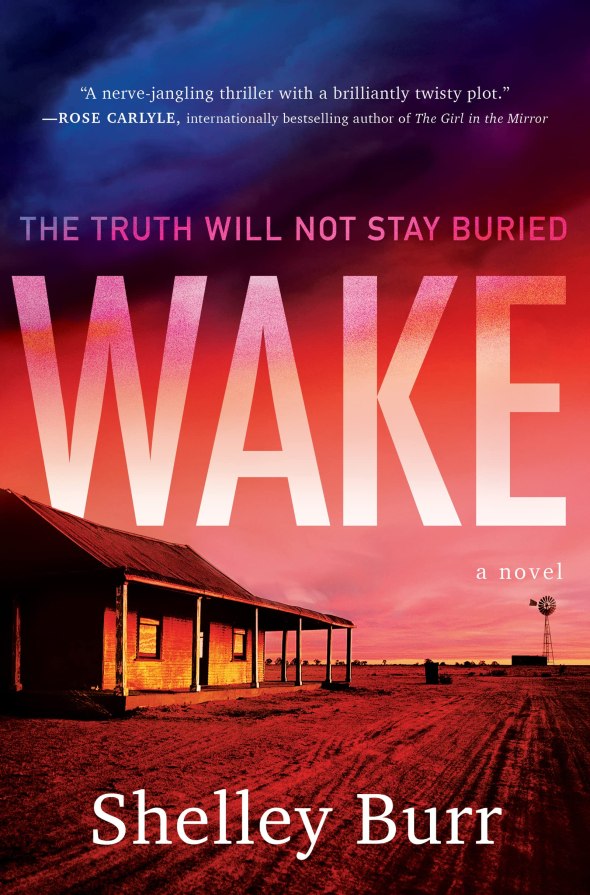
Wake Cover

Publisher: Hachette Australia (Trade Paperback – 27 April 2022)

Series: Standalone

Length: 360 pages

My Rating: 4.5 out of 5 stars

Amazon     Book Depository

2022 is proving to be quite the year for Australian crime debuts, with several compelling and thrilling read already out.  However, one of the more impressive recent debuts is probably the amazing release by new Canberran author Shelley Burr, Wake, a gripping and powerful crime thriller that takes the reader on a wild and emotionally charged ride.

Nannine is a small rural town in the harsh heart of New South Wales, punished by drought and slowly declining as the local agriculture industry starts to deteriorate.  However, Nannine will always have one harrowing claim to fame: the unsolved disappearance of Evelyn McCreery.  In 1999, young Evelyn disappeared from her rural house in the dead of night, right from the bedroom that she shared with her twin sister, Mina.

Now, 19 years after Evelyn’s disappearance, Mina lives a reclusive life on the destocked family farm, desperately seeking some shreds of normality.  However, the shadow of the unsolved case and the subsequent massive media storm that bombarded her family still haunts her, especially as many question whether she had a role in the tragic events, while others constantly attempt to claim the massive reward the family posted.  However, despite the time and her attempts to not get involved in the craziness again, Mina finds old wounds reopened when Lane Holland arrives in town.

Lane is a private investigator and failed Federal Police cadet who has made a living out of cracking cold cases involving missing girls.  Interested in claiming the substantial reward, Lane begins his own in-depth investigation of Evelyn’s disappearance, and his determination and insights soon grab Mina’s attention and she finds herself drawn close to Lane.  However, Lane has his own personal reasons for solving the case, and his dark ghosts could end up dragging Mina down with him.

This was an excellent and captivating debut novel from Shelley Burr, which is already gaining some major recognition, including some major Australian awards.  While I knew I was likely to enjoy this amazing novel, I ended powering through Wake in a day as I got really hooked on its compelling and intense outback story.

I deeply enjoyed Wake’s awesome story, especially as Burr makes sure that it contains all the necessary elements to grab your attention.  This novel starts in the modern day, 19 years after the disappearance that rocked Nannine, and sees newcomer Lane Holland arrive to attempt to solve the case.  The introduction of this sleuth character helps to jumpstart the narrative, especially as his new investigation allows the reader to find out all the relevant details about the old case, while also revealing the lasting issues it had on the various protagonists, including the long-running infamy of being involved with such a major case.  Most of the first half of the book revolves around Lane trying to find his feet in the investigation and get close to Mina, while also finding himself involved in a separate case involving another missing girl.  At the same time you get to know Mina from her perspective, and find out just how messed up she is because of the disappearance and media scrutiny.  All the key characters, major story elements, hints and settings are perfectly set up in the first half of Wake, and the captivating mystery and damaged characters really drag you in and ensure that you become deeply invested in seeing how the case unfolds.

After some big reveals about halfway through the novel, the story intensifies even further, especially once you fully understand Lane’s drive and get to know the characters even better.  There are some compelling twists and turns in this second half of the book, with multiple theories and red herrings to cleverly distract the reader, while major personal moments hit all the key characters.  This all perfectly sets up the big finale, as all the plot points, tragic backstories and hidden hints come together extremely well for the major reveal.  I really liked how Wake’s story concluded, and I think both the solution to the mysteries and the resolution of all the character arcs was pretty ingenious, especially with how well it tied together the various character’s secrets, histories and regrets.  Overall, the reader will come away very satisfied with how everything is tied up, and this ended up being a very impressive and compelling narrative that was well-paced and loaded with some great surprises, major moments, and a very intriguing central mystery.

There were many cool elements to Wake that I deeply enjoyed and which I felt helped to enhance the mystery-laden story.  I liked the rural setting of Nannine, a fictional town that captures the heart of feel of many rural Australian communities, especially those that are suffering from many issues such as drought and the slow decline of the agricultural economy.  This decaying agricultural town serves as the perfect backdrop to this amazing story, and you really get to see how the small-town vibes and attitudes affect the investigation of the case.  I also appreciated the fantastic dive into the over-the-top press coverage that surrounds famous crime cases.  The disappearance attracted a massive media focus, and Burr spends a lot of time exploring how it initially covered the case, how it morphed over the years, and the lasting impact that growing up as a media sensation had on both Mina and the other supporting characters from Nannine.  I particularly enjoyed the examination of how the case became a favourite of true-crime fanatics, which is primarily shown through a series of posts on the murder forum that appears in front of multiple chapters.  These posts highlight the attitudes, theories, mindsets and more of the true-crime internet community and serves as an intriguing weather vane for the wider Australian community.  I loved these posts, not only because they were entertaining and realistic but because it proved to be a great way to provide the reader with some interesting context while also having some impacts on the main story.  Throw in the great way that Burr utilised several flashback sequences, some hidden clues in character names, some clever insights into missing person cases, and other outstanding elements, and you have a really impressive book that will easily keep your attention.

I also need to highlight Wake’s awesome damaged characters that the plot focuses on.  Burr has come up with some sensational and powerful story arcs for these great characters, and their various histories, connections and life events add some excellent emotional heft to the story that I really enjoyed.  This includes Mina McCreery, who serves as a major point-of-view character for most of the plot.  Mina is the twin of the disappeared Evelyn, and has spent the last 19 years living in her disappeared sister’s shadow.  Not only did she have to deal with the emotional backlash of her sister being either killed or abducted but she also had to experience the intense media scrutiny and other issues associated with the major case, especially as her mother ended up becoming a media sensation to keep the focus on Evelyn’s case.  Due to this, the strained relationship she had with her sorrowful mother, and certain suspicions from some that she had something to do with her sister’s disappearance, Mina now lives a solitary life, avoiding most people and not having many friends.  This makes her rather standoffish, angry and a little paranoid (for good reason) for most of the novel, and she has a hard time connecting to anyone, especially Lane.  The events of this book really shock her in some major ways, as the years of repressed trauma and emotional uncertainty come to the surface again, especially once secrets and long-hidden truths come to the surface.  I felt that the author did an amazing job highlighting all the major issues contained within Mina’s psyche, and the subsequent emotional moments were a fantastic and powerful part of the book.

Aside from Mina, the other major character in Wake that I need to discuss is private investigator Lane Holland, who arrives in Nannine to investigate the case.  Burr created something really impressive in Lane, a former police cadet turned private investigator, as he ends up having one of the more intense and memorable character arcs in the entire novel.  Initially seen as an unwelcome outsider by most of the other characters, apparently interested in only the reward money, Lane is able to prove himself to Mina and other characters and manages to gain their trust.  However, everything you think you know about Lane is blown out the water when you find out his surprising connection to the case, as well as his motivations for investigating it.  Burr sets up the connections extremely well in the early parts of the novel, putting in several clever hints and suggestions, while also doling out useful flashbacks to Lane’s past that explain everything.  These revelations, as well as some insights into Lane’s personal history and motivations, help to both intensifies the story, while also dragging you closer to Lane as a character, hoping that he will succeed for everyone’s goods.  Burr takes Lane’s character arc into some very dark, by captivating, directions, and his entire story comes together in a brilliant and powerful way, especially with some major decisions made towards the end of the book.  These two excellent, intense, and very damaged central characters, really acted as the heart-and-soul of Wake, and I was really drawn into the outstanding narrative Burr wove around them.

With her excellent debut novel, Wake, Shelley Burr has successfully entered the world of Australian crime fiction in a big way.  Featuring a captivating and distinctively dark murder mystery narrative that sees damaged characters bring a notorious cold case into the light, Wake was a gripping and deeply thrilling read that I had a fantastic time reading.  A moving and enthralling novel, Wake was an exceptional Australian crime debut and I am extremely excited to read more stories from Burr in the future.

Wake Cover 2

Amazon     Book Depository

Waiting on Wednesday – The Bullet That Missed by Richard Osman

Welcome to my weekly segment, Waiting on Wednesday, where I look at upcoming books that I am planning to order and review in the next few months and which I think I will really enjoy.  I run this segment in conjunction with the Can’t-Wait Wednesday meme that is currently running at Wishful Endings.  Stay tuned to see reviews of these books when I get a copy of them.  In this latest Waiting on Wednesday, I highlight one of best novels coming out later this year with The Bullet That Missed by Richard Osman.

The Bullet That Missed Cover

Amazon     Book Depository

Over the last couple of years, comedian and British television personality Richard Osman has branched off into a whole new avenue of entertainment, murder mystery writing.  Starting in 2020 with his debut novel, The Thursday Murder Club, Osman revealed that he had quite an inventive mind when it came to unique and complex mysteries, with his impressive story about a group of retirees, who form a club to investigate murders around their retirement village.  Made up of former spy Elizabeth, retired nurse Joyce, the intellectual Ibrahim and notorious rabble rouser Ron, this mismatched group turned out to be an effective and entertaining team, utilising their experience and ability to manipulate young people to get to the bottom of their cases.  Featuring some incredibly realistic and relatable characters, a captivating investigation, fantastic humour, all wrapped up with some moving drama, The Thursday Murder Club was an extraordinary read.  I had so much fun with The Thursday Murder Club, that it ended up being one of my top books, audiobooks, and debuts of 2020.

However, Osman was far from done, as last year readers were gifted with an awesome second novel in the Thursday Murder Club series, with The Man Who Died Twice.  This second novel brought back the characters from the first novel and set them on a different case, this time around Elizabeth’s former husband who had stolen a fortune in valuable jewels from a notorious criminal.  This was an excellent and exciting sequel that I had another great time with, especially as you get even more connected with the brilliant characters.  The Man Who Died Twice also topped my end of year lists and was one of my favourite books and audiobooks of 2021.

After enjoying the first two books as much as I did, there is no way that I am going to stop with this series now.  Luckily for me, Osman has another amazing sounding novel on the way with the third Thursday Murder Club book, The Bullet That Missed.  Set for release in mid-September 2022, The Bullet That Missed will see our intrepid protagonists return, this time with a compelling new case and a dangerous new enemy determined to take one of them out of the game permanently.

Synopsis:

It is an ordinary Thursday, and things should finally be returning to normal.

Except trouble is never far away where the Thursday Murder Club are concerned. A local news legend is on the hunt for a sensational headline, and soon the gang are hot on the trail of two murders, ten years apart.

To make matters worse, a new nemesis pays Elizabeth a visit, presenting her with a deadly mission: kill or be killed…

While Elizabeth grapples with her conscience (and a gun), the gang and their unlikely new friends (including TV stars, money launderers and ex-KGB colonels) unravel a new mystery. But can they catch the culprit and save Elizabeth before the murderer strikes again?

I love the sound of this new Thursday Murder Club novel and it looks like Osman has another captivating and fun story for The Bullet That Missed.  Not only does the new mystery sound cool, with the gang getting involved in a case that covers multiple years, but you also have the intriguing concept of someone targeting tough-as-nails Elizabeth.  Throw in the impressive character development and wacky adventures that Osman is known for and I am sure that The Bullet That Missed is going to be another awesome and addictive read.

Based on how much I enjoyed the first two Thursday Murder Club novels, there is no way that I am going to miss out on Osman’s next great novel.  The Bullet That Missed has so much potential behind it, and I can’t wait to dive into this new, captivating mystery.  Sure to feature all the best elements of the first two novels, as well as some great new developments, I have very high hopes for The Bullet That Missed, and I have no doubt this will end up being of the top books of 2022.

One Foot in the Fade by Luke Arnold

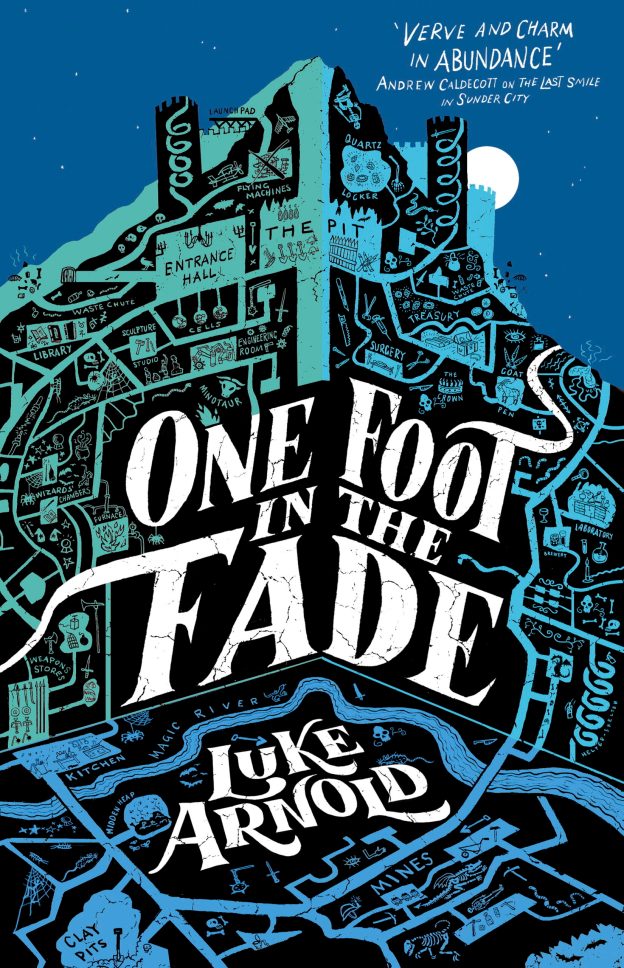
One Foot in the Fade Cover

Publisher: Orbit (Trade Paperback – 26 April 2022)

Series: Fetch Phillips – Book Three

Length: 439 pages

My Rating: 4.75 out of 5 stars

Amazon     Book Depository

One of Australia’s fastest rising fantasy authors, Luke Arnold, returns with the third novel in his Fetch Phillips series, the fantastic and impressive One Foot in the Fade.

Back in 2020, Australian actor turned author Luke Arnold made his fantasy debut with his first Fetch Phillips novel, The Last Smile in Sunder City.  This very clever and intense read, which ended up being one of my favourite debuts of 2020, was set in the unique landscape of Sunder City, a formerly majestic fantasy city facing hard times in a world that has just lost all its magic, causing all the fantasy creatures and beings who lived there to become deformed and dying beings.  The story focused on the character of Fetch Phillips, a human private investigator responsible for the disaster, who tries to redeem himself by helping the disenfranchised former magical beings.  Arnold followed it up later that year with a sequel, Dead Man in a Ditch, which was just as impressive and exciting as the first book.  Both these novels were extremely good, and they perfectly set up Arnold’s intriguing and magic-less universe.  I have been rather keen to see how the story continues so I was quite excited when I received a copy of the third book, One Foot in the Fade, a few weeks ago.

A new dawn has risen in the formerly magical Sunder City.  Under the leadership of human business mogul Thurston Niles, the city is entering a technological age, leaving behind its mystical roots and providing everyone, both human and former magical being, with cars, guns and electricity to service their needs.  Most are content with the new way of life, all except man-for-hire Fetch Phillips.  Still ridden with guilt for the role he played in destroying the world, Fetch spends his days taking on odd jobs for former magical beings while also desperately searching for any way to bring back the magic.

After his latest assignment, recovering stolen artefacts still containing traces of their power, ends badly, Fetch’s hopes for bringing back magic are at an all-time low, until a new clue literally and fatally lands at his feet.  An Angel has fallen from the sky at a great height, his formerly decayed wings once again feathered and whole, clearly the result of magic.  But who or what is responsible for reinvigorating the unfortunate Angel’s magic?

Desperate to uncover the roots of this new mystery, Fetch discovers a former Genie, Khay, whose body is slowly losing its hold on reality.  Still apparently capable of granting wishes, including returning a person’s magic to them, Khay may be the best chance for Fetch to redeem himself.  However, in order to make her powerful enough to bring magic back, Khay requires a legendary crown located at the deadly and isolated Wizard city of Incava.  Pulling together a small team, Fetch embarks for Incava to reclaim the crown.  But the further Fetch goes on his quest, the more he begins to realise that not everything is as it seems.  Blinded by his obsession with magic and redemption, Fetch walks a dangerous path that may end up damning him once again.

This was another extremely awesome read from Arnold who continues to showcase his impressive talent as a fantasy author.  One Foot in the Fade did a brilliant job continuing from the previous Fetch Philips novels, and I loved revisiting the deformed and depressed world of Sunder City.  Loaded with complex characters and powerful settings, this latest story was particularly captivating, and I think that One Foot in the Fade is probably Arnold’s best novel yet.

I really appreciated the powerful and intriguing narrative contained with One Foot in the Fade as Arnold has come up with some deeply fascinating and intense storylines that make this novel very hard to put down.  Taking place shortly after Dead Man in a Ditch, One Foot in the Fade’s story places Fetch Phillips right into the action as he attempts to recover some magical artefacts.  Thrown off by his villainous corporate antagonist, Fetch falls into despair, only to immediately find a dead angel whose magic has been returned to them.  This leads him into a hunt for the being responsible for the miracle, quickly finding Khay, who reunites his faith and hope in magic.  Bringing together a new team of comrades, Fetch travels outside of Sunder City on an epic quest to retrieve a legendary magical crown in order to empower Khay’s abilities.  This works as a particularly fun and exciting centre to the entire narrative, and Arnold really pumps up the action and danger in this part of the book, seeing the protagonists deal with all manner of dangers, deadly creatures, former allies with their own agendas, a mysterious secret society, a giant Minotaur, and even some surprising and very dark magic.

I had an absolute blast with the first two-thirds of the novel, especially with all its action, intriguing new characters and world building; however, it is the final third that really turns One Foot in the Fade into something truly special as Arnold adds in some intense and intriguing twists.  Despite Fetch’s best efforts, everything turns pear-shaped on him as some of the supporting characters are revealed to be far darker and more damaged than he ever believed.  Thanks to some big and dramatic tragedies, Fetch is forced to make some hard decisions that will deeply impact him and change the entire course of the story.  These later twists and revelations are pretty well set up throughout the first two-thirds and the novel, and I really appreciated the way in which Arnold brought the entire story together in such a clever and enjoyable way.  While there are a few excessive plot points that slightly distract the main story, One Foot in the Fade’s narrative was pretty tight and never really slows down.  I love the cool blend of dark fantasy, detective noir and urban fantasy elements contained within this impressive read, and Arnold has come up with a pretty bleak, character-driven narrative that really gets to the heart of the protagonist while also exploring the possibilities of redemption.  The reader will find themselves getting quite drawn into this epic story, and I myself powered through most of it in a single night.  Despite the author’s best efforts to recap the necessary background, One Foot in the Fade is a little hard to read by itself and I feel that most readers should read the first two books in this series first, although this is hardly a chore.  I really enjoyed the hopeful end note of this third novel, and I cannot wait to see where the rest of the series goes from here.

While the Fetch Phillips novels all have great narratives to them, their best qualities are the unique and striking settings.  Primarily set in the once majestic and glorious Sunder City on the fantasy continent of Archetellos, the stories generally explore how the city has changed since magic left the world.  The first two books in this series saw Sunder City as a decaying metropolis, filled with depressed and dying magical beings who were trying to adapt to the new world.  However, in the second book, an industrious human company is starting to provide technological alternatives to everything formerly powered by magic.  Since then, the entire feel and tone of the city has changed, with Sunder City transforming into an industrious and factory orientated city, with 1920’s-esque technology like cars, firearms (that everyone carries) and neon signs.  I really appreciated the brilliant and logical way that Arnold keeps changing the feel and look of his great setting every novel, especially as every change seems to match the series’s overarching noir feel.  I had a lot of fun seeing the comparisons between the setting’s current technology and the former magical glory, and watching the protagonist compete against the march of progress.  Arnold doubles down with the world building in One Foot in the Fade, with some interesting new additions that I found really fascinating.  Not only are we introduced to multiple new magical races, all of whom have been impacted by the death of magic in their own unique ways, but a large portion of the novel takes place outside of Sunder City, as the characters head to another former major settlement, the Wizard city of Incava.  The journey to and into Incava showcases multiple new interesting features about the larger continent of Archetellos, and I appreciated how much time Arnold put into expanding it.  Incava itself proves to be a particularly haunting and deadly setting for a good part of the book, and the various dangers within really amp up the action-packed story.  Overall, Arnold remains well on top of the cool settings in this novel, and readers will once again be entranced by the fantastic and distinctive setting of this series.

One Foot in the Fade also boasts a great array of complex and damaged characters whose personal journeys and intense pain really enhance the impressive narrative.  This is particularly apparent in series protagonist and first-person narrator Fetch Phillips, a man with a particularly intense backstory.  Due to bad choices in his past, Fetch is moderately responsible for the death of magic in the world and all the bad things that went with it.  This led him into an extremely dark spiral and he has spent the rest of the books trying to redeem himself.  However, this has not been easy, especially as he was forced to go up against his magical mentor and best friend in the second novel and his guilt is at an all-time high at the start of One Foot in the Fade.  As such he is particularly obsessed with bringing back magic in this novel and embarks on the quest to repower his new Genie friend and redeem himself no matter the cost.  This obsession blinds him (and by extension the reader) to the risks of what he is doing, and he ends up endangering his friends, while also ignoring some troubling signs from other characters that hinted at the books tragic ending.  This is easily the most obsessed we have seen Fetch throughout the entire series, and it really fits into his brilliantly written character arc which sits at the core of the moving narrative.  Watching him continue to try and fail is always very heartbreaking, and you really feel for Fetch throughout this novel, even with all the mistakes he’s made.  As such, he serves as an excellent centre for the story, and I have a great time following his personal tale, especially as Arnold has also imbued him with a good sense of humour.  The author also sets up a few intriguing character developments and changes throughout One Foot in the Fade that I think will lead to some very compelling storylines in the future, so I look forward to seeing where Fetch goes in the future.

Aside from Fetch, Arnold has filled this novel with a substantial collection of excellent supporting characters, each of whom adds their own distinctive flair to the narrative as well as a complex and often damaging relationship with the protagonist.  One Foot in the Fade features a combination of new and existing supporting characters, and it was interesting to see who returned after the events of the last book.  It was great to see more of former Witch and academic Eileen, one of Fetch’s main compatriots, who helps him throughout most of the book.  Eileen serves as Fetch’s sense of reason, and her more measured approach to the tasks at hand balance well with the protagonist’s more impulsive nature.  I also enjoyed seeing more of futurist company leader Thurston Niles, who is serving as something of an overarching series antagonist.  Thurston, who was introduced in the second book, is the human businessman whose company is responsible for the industrialisation of Sunder City and all its new technology.  While his appearances are a little brief in this novel, he serves as an excellent alternative human character to Fetch and I am really enjoying their rivalry.  Despite appearing as the villain due to his desire to replace magic completely with technology, Thurston has more layers and he actually appears to enjoy Fetch’s efforts to bring back magic.  Their various interactions in this novel are pretty entertaining, and I look forward to seeing their conflict continue in the rest of the series.

The author also introduces several great new characters in One Foot in the Fade, and their interesting and often self-contained storylines are pretty impressive.  My favourite was Theodor, a Werewolf adventurer who Fetch and his friends hire to help get to Incava.  Despite being disfigured and partially disabled (Werewolves and other shape-changers were also partially transformed into dark human-animal hybrids without their magic), Theodor is a badass hunter and tracker who quickly becomes one of the more likeable figures in the novel.  Theodor serves as a mentor to many of the characters, especially Fetch, and it was fun to watch him teach the city slickers how to survive out in the wilds.  Due to the way that Theodor’s storyline in One Foot in the Fade ends I am very curious to see if or how he returns in the future, and I am sure that Arnold will come up with some plot points elements for him.  The other impressive new character was Khay, the Genie who serves as the book’s sentient McGuffin.  Arnold paints a tragic picture around Khay as a Genie literally fading away due to the death of magic.  Only able to survive through certain magical objects and granting wishes to people, namely returning their magic, Kay is just as obsessed as Fetch to achieve their objective.  However, there is a powerful and captivating alternate side to Khay, and the consequences of her actions will have some lasting impacts in the entire series.  These outstanding characters, and more, are an impressive and very important part of One Foot in the Fade, and I really appreciate how much effort Arnold put into making them so relatable and memorable.

With One Foot in the Fade, Australian author Luke Arnold continues to showcase his amazing literary talent, bringing together an epic new story with his already distinctive characters and settings.  Thanks to the powerful and intense new narrative, this third Fetch Phillips novel is probably Arnold’s best novel so far and it is really worth checking out.  I cannot wait to see how Arnold impresses me with the next book.

Amazon     Book Depository

Amongst Our Weapons by Ben Aaronovitch

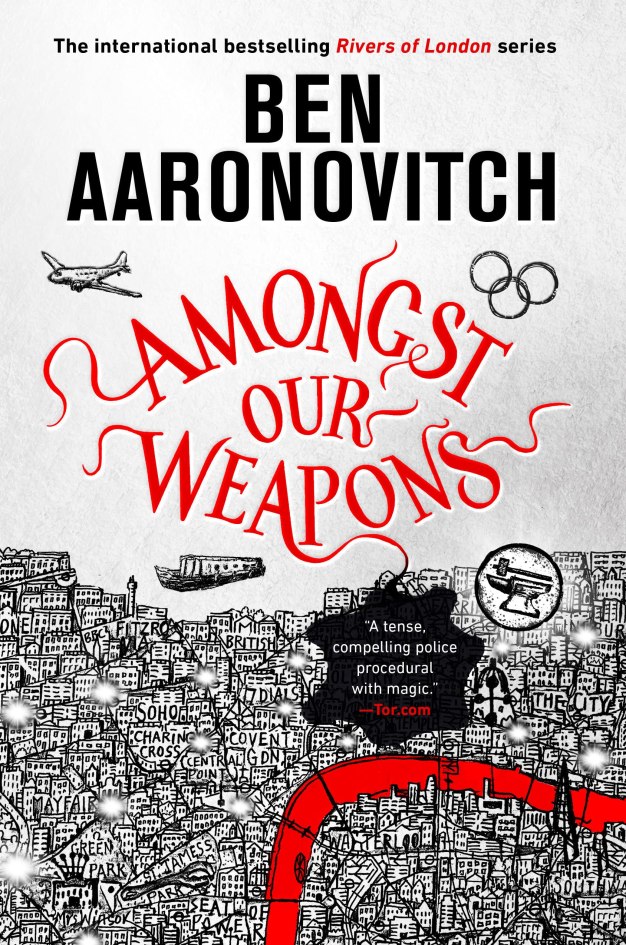
Amongst our Weapons Cover

Publisher: Orion (Trade Paperback – 12 April 2022)

Series: Rivers of London – Book Nine

Length: 406 pages

My Rating: 5 out of 5 stars

Amazon     Book Depository

One of the leading lights in the urban fantasy genre, the exceedingly talented Ben Aaronovitch, returns with the latest epic book in his brilliant Rivers of London series, Amongst our Weapons.

For the last 10 years, the fantasy world has been exceedingly impressed by the fantastic writings of Ben Aaronovitch, who came up with a real winner with his Rivers of London series (also known as the Peter Grant series).  Aaronovitch, who already had some major nerd cred as a writer of two Doctor Who serials, debuted the first book in this series, Rivers of London, back in 2011.  This book told the story of Peter Grant, a young Metropolitan Police officer who is assigned to a specialised branch of the Met that deals with magic and supernatural incidents.  This intriguing debut combined magical elements with a classic police procedural format to create an epic and captivating read.  The author has since expanded this series out to several novels, as well as a range of novellas, short stories, and even a graphic novel series, all of which continue the story of Peter Grant and Aaronovitch’s unique magical world.  I have had a lot of fun over the last few years with this series, and I have greatly enjoyed Aaronovitch’s last two entries, Lies Sleeping and False Value.  Aaronovitch is back with another exceptional read in his ninth Rivers of London novel, Amongst our Weapons, which continues the excellent format and presents the reader with an awesome new mystery.

The London Silver Vaults are a renowned underground market for silverware in the heart of London.  They are highly secured and constantly monitored, so getting away with any sort of crime in the vaults is impossible.  So when a crazed would-be robber is brutally killed in the middle of the vaults with no witnesses or cameras catching the act, the Met are forced to call in their secret weapon, Peter Grant and his fellow detectives from the Special Assessment Unit, better known as the Folly.

Specialising in investigating magical incidents, Peter and his team are quickly able to determine that the death and the murder’s subsequent escape were a result of powerful magic.  Taking the lead on the case, Peter hopes to catch the killer quickly, but are quick to discover that their investigation is about to get far too complicated.  Ancient magics and unknown powers are loose around London, and after discovering a second body, the Folly team begin to investigate the members of a mysterious college cult from Manchester that has been inactive for years.  As more attacks occur, it becomes apparent that members of the cult are being hunted down and that their killer appears to be a vengeful, spear-wielding angel.

Determined to get to the bottom of the killings, Peter dives into the history of the cult and the mysterious artefacts they uncovered.  His investigation will lead him all over England, from the colleges of Manchester all the way to the dismal North.  But even as he begins to uncover the truth behind the killings and the being responsible, does even the full might of the Folly have the power to stop an angel and the deadly magic gifted to her?  Worse, another party has involved themselves in the case, someone that Peter knows far too well.  Can Peter solve this case before it is too late, and how will he deal with the greatest challenge of his life, becoming a father to his two magical twins?

Wow, Aaronovitch continues to massively impress me, bringing together another brilliant and unique urban fantasy read.  Once again bringing together an outstanding story that features distinctive fantasy elements with a clever mystery, Amongst our Weapons was a fantastic read that I had an incredible time reading.  This book was pretty damn awesome and gets a full five-star rating from me.

I had an absolute blast with the story contained within Amongst our Weapons as Aaronovitch has once again cleverly combined complex fantasy elements with a compelling murder mystery investigation, resulting in a deeply entertaining and addictive story.  Aaronovitch starts this latest novel off strong, with the protagonist and his team immediately thrust into an investigation of a man with a mysterious magical hole blown into his chest and no witnesses who saw what happened.  This intriguing start quickly becomes even more enticing, as a second murder is soon discovered, as well as other unusual signs and discoveries at the various crime scenes.  However, the excitement does not end there, as Aaronovitch also fits in an early encounter with the powerful murder, who appears to be an exceedingly deadly angel of vengeance, as well as the sudden reappearance of recurring antagonist Lesley May, Peter’s former partner who now acts as a magical mercenary.  Throw in some great character driven storylines about the protagonist’s family, as his river goddess wife is about to give birth, and you have quite an exceptional start to the novel.  Indeed, once all these elements were set up, I was hopelessly hooked on the story, and it proved extremely hard to put this book down at all.

The rest of the narrative flows on from here extremely strongly, as the characters launch an exhaustive and intense investigation not only into the murders but into the origins of certain magical items and the history of the college cult who appear to be targeted.  This takes the protagonist on a bit of a fieldtrip outside London, exploring Manchester and the North, and introducing the characters to some intriguing new magical elements.  While parts of the story here did get a bit bogged down when it came to exploring some of the more complex new fantasy inclusions, I flew through the second part of the book, especially as it is laced with several brilliant and imaginative confrontations between the protagonist and the book’s various antagonists.  Everything comes together extremely well in the lead-up to the conclusion, which results in a fantastic battle that helps resolve everything perfectly.  I did think that it got a little too metaphysical in places, but I still deeply enjoyed this great conclusion, which should really satisfy every reader, while also setting up some interesting storylines for the future.

Aaronovitch has such a distinctive writing style for the Rivers of London series, which is put to great use throughout Amongst our Weapons.  Like most of the Rivers of London novels, Amongst our Weapons can be read as a standalone read, with Aaronovitch doing a great job of rehashing some of the relevant continued storylines when they become relevant to the ongoing story.  This book features the usual awesome blend of magic, crime fiction and character-led storylines, wrapped up with a great sense of fun and humour, which helps to produce quite an entertaining and captivating read.  I particularly loved how the author makes his novels feel like a police procedural with magic, and this is perfectly on display in Amongst our Weapons, as the protagonists engage in elaborate investigation into several unique deaths.  It is so much fun to watch these magic-wielding protagonists do research, official police investigations, paperwork, evidence collecting and various theorising as they examine both the magical and human sides of the case, and I always love how well these elements can be fit into a seemingly typical murder mystery storyline.  Everything flows extremely well through this novel, and while I think there are some minor pacing issues towards the middle, readers will power through this entire book once they get caught up in the mystery and the magic.

I have always been really impressed with the distinctive and captivating fantasy elements contained within the Rivers of London novels, which prove to be intrinsic and outstanding parts of the book.  Rather than use classic fantasy elements, the magic and unique creatures featured within this series are a lot more abstract with a focus on energy manipulation, creatures from alternate universes and godlike beings who get their powers by being embodiments of important locations.  This really gives the novels a great, unique feel that is brilliantly enhanced by the way that the various characters treat magic in an almost scientific way, especially from a policing perspective, as the protagonists are effectively investigating and monitoring it in London.  This fantastic way of examining magic proves to be quite effective in Amongst our Weapons, as you get to see all manner of theorising, analyses and scientific conclusions drawn up as the protagonists attempt to identify and quantify the new forms of magic they are dealing with, especially when they come face to face with an unknown being of immense power.  This cool magic is also quite stunningly described throughout the novel, and I loved seeing its unique and clever use throughout the various magical confrontation sequences, and there is nothing more awesome than reading about a couple of wizards face off against an apparent angel.  I find all the cool magical elements quite fascinating to explore, and I loved seeing some of the world building that occurred throughout Amongst our Weapons, with some new groups of magical users introduced or referenced throughout.  Aaronovitch actually sets up some intriguing new world-building elements throughout Amongst our Weapons, and I look forward to seeing how this expands in some of the future novels.

Finally, I really must highlight the outstanding characters featured within Amongst our Weapons, who really help to turn this awesome story into something truly special.  This cast is headlined by the book’s main protagonist and point-of-view character, Peter Grant, who I really have a lot of fun with.  Grant is a funny and bold protagonist, who has been really growing since the first novel, not only in personality and responsibility but also in magical talent.  He serves as a brilliant protagonist for Amongst our Weapons, and his dogged and clever investigation of the unusual events moved the story along at a swift and enjoyable pace.  While his police work is a major part of the character, this latest novel also focuses again on his personal life, showing his unique marriage to a river (well, the living embodiment of a river), and the upcoming birth of his likely magical children.  This puts some major responsibility on Peter’s head, which he struggles to deal with, still taking risks with his work.  Watching him obsessively chase after the culprit while also trying to balance the upcoming birth of his children was a great part of the novel, and it really helped to make the reader feel attached to him.  However, I personally loved his outstanding sense of humour throughout this novel, as much of the book’s comedic elements are thanks to this protagonist’s funny statements and clever observations about the outrageous events he is witnessing.

Aside from this excellent and relatable protagonist, Amongst our Weapons features a large and diverse cast of figures, including a combination of new people associated with the case and a huge batch of recurring characters who have been perfectly set up before.  Most of the recurring characters are re-introduced extremely well, and even new readers should be able to follow who is who amongst this unique cast of magic users and professional police officers who work together to solve crimes.  My favourite supporting character is Detective Chief Inspector Thomas Nightingale, head of the Folly and the last official wizard.  A gentlemanly figure who fought in World War II, Nightingale serves as a great mentor as well as a badass magician able to throw down with the worst creatures or dark magic users.  While not featured as heavily here as in previous novels, Nightingale has some great moments throughout Amongst our Weapons, and it was awesome to see him squaring off against the winged antagonist.  Aaronovitch also sets up some interesting storylines for him in this book, and it sounds like he will have a much more altered role in the future.  The other major character I should highlight is Lesley May, who serves as a secondary antagonist throughout this book.  Lesley, who spends most of the book as a mercenary character attempting to undermine the police’s investigation, is a great addition to the plot and I am extremely glad that Aaronovitch brought her back for this novel.  Not only do you get more of the regret-filled interactions with Peter but she serves as a great foil for the protagonists, and it was really fun to see her get involved and attempt to manipulate the situation to her advantage.  All these characters, and many more, are great additions to the fantastic and complex plot of the book, and I deeply enjoyed seeing the fantastic and powerful interactions between them.

The Rivers of London series continues to shine as one of the best and impressive urban fantasy series with Amongst our Weapons.  Ben Aaronovitch is such a talented author, and I deeply enjoyed distinctive and captivating stories he crafts, especially with its outstanding blend of unique fantasy and memorable murder mystery elements.  Amongst our Weapons is one of my favourite books from Aaronovitch I have read so far and it is a highly recommended for all fantasy fans.  If you aren’t exploring the Rivers of London, then you are really missing out!

Amazon     Book Depository

Nine Lives by Peter Swanson

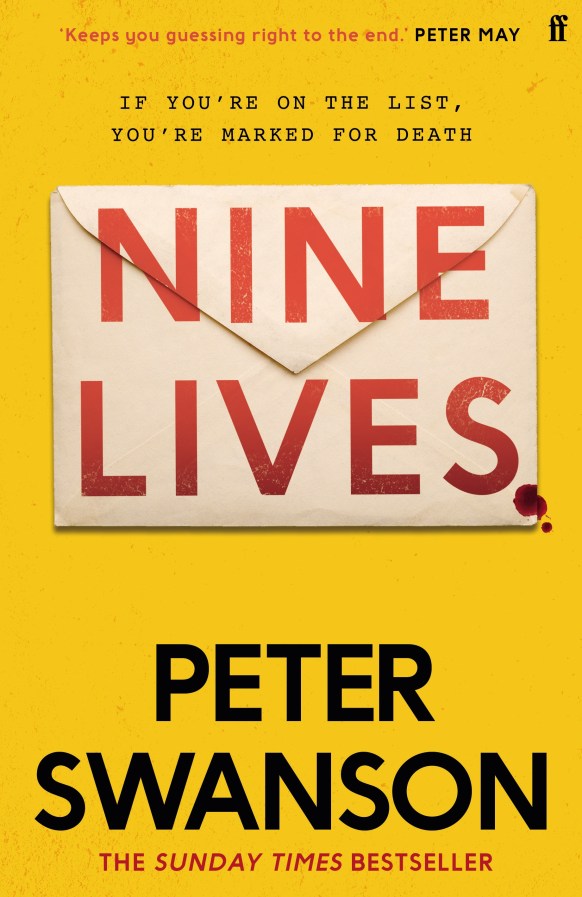
Nine Lives Cover

Publisher: Faber (Trade Paperback – 29 March 2022)

Series: Standalone

Length: 321 pages

My Rating: 4.5 out of 5 stars

Amazon     Book Depository

Prepare yourself for an engrossing and captivating mystery from the talented Peter Swanson, with the standalone read Nine Lives.

Back in 2020 I was lucky enough to receive a very cool book called Rules for Perfect Murders (also released as Eight Perfect Murders), written by a new-to-me author, Peter Swanson.  This fantastic novel focused on a bookshop owner who discovers that a blog list he wrote about the most perfect murders in crime fiction was being used as inspiration by a serial killer.  I deeply enjoyed this awesome concept, not only because it was very unique read that served as a fantastic love letter to multiple classic crime fiction authors/novels, but also because the idea of a killer using a blog post to plan their crimes appealed to me as a blogger (think of all the Star Wars themed murders you could plan if you used my lists as a basis for crime).  I ended up having a great time reading Rules for Perfect Murders and have been interested in reading more stuff from Swanson ever since.  I recently got the chance when I received a copy of his latest novel, Nine Lives, a few weeks ago, and I quickly jumped at the chance to read it, especially as it had another unique plot.

On a seemingly normal day, nine random strangers receive a mysterious envelope at their homes.  Each unmarked envelope is unremarkable except for its contents: a single sheet of paper with nine names typed upon it.  None of the recipients recognise any of the names upon the sheets, except their own, and are baffled by the seemingly random piece of mail.  Most assume it to be an advertisement scam or a silly prank and start to go about their day, forgetting about the strange letter they received.  However, one of the recipients, an old man in Maine, is brutally killed the moment he receives his letter.

As the local police and FBI agent Jessica Winslow, who herself received one of these letters, attempt to investigate and discover the connection between the names, another person on the list is killed, this time in Massachusetts.  Quickly determining that the others on the list are at risk, the FBI jumps in and tries to protect the potential victims, but they soon discover they are facing off against an extremely clever murderer capable of killing their victims in elaborate ways.  But why is he targeting these specific people?

Desperate to find the identity of the killer before everyone on the list ends up dead, the investigators and the potential victims each attempt to find the connection between themselves.  However, it appears that they have nothing in common, as they live across the country from each other and have a range of jobs and backgrounds.  The truth behind the killings lies in a dark place, and the lengths the killer will go to for their revenge will rock everyone to their core.

This was a great murder mystery novel from Swanson, who really amped up the twists and turns to create a compelling and intriguing read.  Nine Live’s story starts off with the various characters each receiving the relevant list with their names on it in several short chapters told from their relevant perspectives, and I found this interesting introduction to be good way to grab the reader’s attention.  From there you start to get to know the characters in some detail, except for a couple of people on the list who are efficiently and systematically killed off.  This serves as a pretty good basis for this story, and I loved getting to know the various characters, as well as seeing the cool and clever investigation angle that forms around it as the FBI attempt to find the killer.  Swanson sets the entire narrative/mystery up extremely well, and there are some very clever moments at the start as important clues and hints are laid down for the observant reader.

The first few kills come quick to set the rest of the characters into a panic, and once you get to the third or fourth person on the list you start to have an idea of what the killer is after.  I felt that the novel started to get really good towards its centre, as there are some big surprises as certain events really did not turn out the way I expected.  Once a particularly massive and game-changing twist occurred, I was absolutely hooked and I honestly powered through the remainder of the novel extremely quickly.  The following plot falls into place extremely well, and I loved seeing the entire mystery unfold, especially as Swanson keeps the twists coming as more of the characters you get to know are targeted by the killer.  While I was able to see elements of the solution from a distance, I was pleasantly surprised by several reveals towards the end, and I really appreciated how well Swanson set everything up throughout the novel.  The book comes to an excellent end reminiscent of a certain classic crime novel, and readers will come away very satisfied with how this standalone read turned out.  I did think that Swanson went a twist too far, as a big reveal in the last four pages was completely unnecessary and the book would have honestly been better if the author had just left it out.  Still, this was a really impressive and fun mystery, and I had an absolutely brilliant time getting through it.

There are a lot of fun elements to this book that really help enhance the story and turn Nine Lives into an excellent read.  However, my favourite is probably the way that Swanson turns it into a massive homage to a specific classic murder mystery novel.  While I won’t reveal which one, I will say that Swanson did an extremely good job of utilising its iconic elements throughout Nine Lives.  Just like he did in Rules for Perfect Murders, Swanson provides a detailed examination of this classic novel through his character’s eyes, especially once they themselves start to realise the similarities between it and their own situation.  These similarities are slightly more subtle at the start of the book, but by the time you get to the end the homages are very striking and cleverly tie into some of Nine Lives’ big moments.  These intriguing connections and clever recycling of story and writing elements from this iconic crime fiction novel worked really well in Nine Lives, and I felt that it complemented the rest of Swanson’s story perfectly, helping to turn it into a particularly great read.  Swanson also throws in some references and discussions about similar notable mystery novels at various parts of Nine Lives to throw the author around and to highlight his passion for the classics.  I love how the author takes the time to reference his personal favourites in his own works, and hardcore crime fiction fans and aficionados of classic murder mystery novels will no doubt have a blast seeing how Swanson utilises parts from a famous novel throughout Nine Lives.

I also loved the fantastic characters contained within Nine Lives, and Swanson achieves quite a lot with them.  Even though there are 10 or more point of view protagonists in a relatively short novel, Swanson ensures that each character stands out.  I felt that each protagonist was set up extremely well and they have their own quirks and back stories.  You swiftly get to know all the main characters as the book progresses, even with the quick changes between perspectives, and once you have made a good dent into the book, the reader finds themselves getting attached to several of them.  There are some great character arcs featured throughout the novel, and I liked how these distinctive characters came together and interacted.  The focus on FBI agent Jessica Winslow, herself a person on the list, works to set up the investigative angle of the novel, and her storyline goes in some very interesting directions.  I also quite enjoyed the intriguing storyline around Ethan Dart and Caroline Geddes, who meet because of the list and form a moving, if inevitably tragic, relationship.  The antagonist is also set up brilliantly throughout the novel and I found their motivations and methods to be expertly portrayed and explored as the narrative continues.  None of these characters are perfect or particularly have their life together, and it fascinating to see how a random list of names can change this for better, or more likely, for worse.  Swanson really does some great character work in Nine Lives, just don’t get too attached as your favourites may not survive.

Peter Swanson continues his entertaining and unique blend of crime fiction with the extremely clever and highly addictive Nine Lives.  Featuring a compelling, wide-ranging mystery and some brilliant references to classic murder mysteries, Nine Lives proves to be highly entertaining and memorable read, and I really had fun getting through it.  A great novel to fulfil all your murder mystery needs, Nine Lives comes highly recommended and will not disappoint.

Amazon     Book Depository

Desperate Undertaking by Lindsey Davis

Desperate Undertaking Cover 2

Publisher: Hodder & Stoughton (Trade Paperback – 12 April 2022)

Series: Flavia Albia – Book 10

Length: 398 pages

My Rating: 5 out of 5 stars

Amazon

Buckle up for an intense, captivating and exceedingly memorable historical murder mystery as bestselling author Lindsey Davis unleashes the 10th entry in the deeply clever and compelling Flavia Albia series, Desperate Undertaking.

It’s that awesome time when I get to gush about the newest entry in Davis’s excellent, long-running Flavia Albia series, which has been a major fixture in my reading schedule for the last several years.  The sequel series to her iconic Marcus Didius Falco novels, the Flavia Albia novels follow the daughter of Davis’s original protagonist as she solves unusual murders across ancient Rome.  Thanks to the series’ typical great combination of intriguing characters, complex mysteries, excellent historical elements and great humour, I always have an amazing time reading these novels, which usually get very high ratings from me.  Some of the more intriguing Flavia Albia novels in recent years include The Third Nero, Pandora’s Boy, A Capitol Death, The Grove of the Caesars (one of my favourite books of 2020) and A Comedy of Terrors.  Due to the quality and entertainment capability of this series, I eagerly keep an eye out for Davis’ new book each year and I was exceedingly chuffed when I got a copy of Davis’ latest novel, Desperate Undertaking.

Rome, 89 AD.  The year is coming towards an end and the city is ready to enter a sleepy holiday period.  Unfortunately, murderers are notoriously bad at taking breaks, and Flavia Albia, paid informer, dogged investigator and daughter of notorious busybody Marcus Didius Falco, is about to get dropped into the most disturbing case of her life.  With her parents away on holiday and her impromptu family preparing to settle in for the quiet period, Albia receives a job request she cannot refuse.  An aged actor, part of a troupe her parents travelled with in their youth, has been killed, horribly crucified in a public place.  Starting her investigation, Albia and her husband, Tiberius, are shocked to discover this is not the only murder confronting them as they suddenly discover the first victim’s widow was also murdered in terrible circumstances.  Her last words to Albia: “The undertaker did it…”.

Determined to find the person responsible for the horrific murders of her parent’s friends, Albia begins her investigation, diving into Rome’s theatre scene.  But when another actor associated with the troupe is killed in a cruelly inventive way, Albia begins to realise that these are no ordinary murders.  A twisted and determined serial killer is on the loose, bearing a terrible grudge against the actors and anyone associated with them.  Worse, their exceedingly public killings all bear striking similarities to some of the most brutal moments in classic plays, causing their victims to suffer in horrific ways.

With the bodies piling up and the city in an uproar, Albia must solve the most unusual and deadly case of her career before more of her parents’ friends end up dead.  But the closer she gets to the truth, the more she begins to realise that these murders bear a strong connection to one of her father’s past cases.  Worst, Albia soon realises that her connection to the currently absent Falco has made herself and everyone she loves a target of a demented killer determined to get revenge.

Davis does it again with Desperate Undertaking, producing a wildly entertaining and exceedingly clever historical murder mystery that I had a brilliant time reading.  Perfectly bringing together a disturbing mystery with an excellent historical setting, some great characters and the author’s trademark humour, Desperate Undertakings is an outstanding read and it ended up being yet another Flavia Albia book that gets a full five-star rating from me.

I must admit that I have sometimes found Davis to be a bit of an inconsistent writer; while most of her novels are extremely good, a few of them do not quite measure up in terms of substance or entertainment.  However, Desperate Undertakings is easily one of the better books in the Flavia Albia series as Davis pulled together an exceptional and dark murder mystery narrative that will leave a memorable impression on the reader.  For this latest story, Davis drops a lot of the family/household storylines that have been a significant, if slightly distracting, feature of the previous novels, and instead focuses on an intense and elaborate murder mystery that effortlessly grabbed my attention and ensured I was extremely hooked on this fantastic novel.  The book starts off extremely strong, firstly with a foreboding introductory short chapter, and then with a great series of compelling early chapters that drag the protagonist into the investigation.  These early chapters feature two dramatic (literally) and elaborate murders that really stand out due to their brutal and distinctive nature (the second one is particularly gruesome and over-the-top), as well as their connections to some of Davis’s iconic protagonists.  As such, the reader becomes really invested in the case early on, and you soon get thrust into an elaborate in clever murder inquiry storyline.  Davis sets up this investigation really well, and there are a series of great leads, potential suspects and unique theories that pan out as the novel proceeds in an excellent way.  While the novel slowed down slightly after the initial murders, the next series of killings picks the pace right up again, which the story maintains for the rest of the book.  I really enjoyed how the entire mystery came together, and there are some really clever twists and turns here, with seemingly minor characters or story elements coming back in some big ways later in the book.  Everything leads up to a big and impressive conclusion and readers will be left rocked by the elaborate and powerful nature of the plot, as well as how damn dark this novel got in places.

Desperate Undertakings is extremely well written and I loved how Davis pulled this entire novel together.  Davis once again hits the perfect blend of murder mystery, historical elements and character driven story elements in this book, as the reader is engrossed in this brilliant Roman based tale.  I did feel that this one was significantly darker in places than some of Davis’s previous novels, which I really liked, especially as it results in some particularly gruesome killings.  The story is once again told from the perspective of central character Flavia Albia as she traverses the mean streets of Rome to find her culprit.  This central focus allows for much of the books fantastic humour, as Albia’s comedic and exceedingly modern perspective of events is extremely entertaining, while also providing a Roman noir feel for the murder investigation.  Like most of the books in the Flavia Albia series, Desperate Undertakings can easily be read as a standalone read, with any relevant elements from the previous novel rehashed for the new reader.  However, Desperate Undertakings also bears a strong connection to one of Davis’s older novels, the sixth book in the Falco series, the 1994 release Last Act in Palmyra.  Multiple characters and elements from this book make an appearance here, with several of them serving big roles in this book, either as supporting characters, suspects or victims.  Davis rehashes the events of this previous book extremely well, and readers who haven’t had the chance to enjoy it are still able to enjoy Desperate Undertakings without any issues, while those who have will no doubt enjoy the fun call back.  I felt that these past elements were utilised extremely well, especially as these past events also impacted the present storyline.  This entire novel came together brilliantly, and I was extremely enthralled by its great writing and powerful story the entire way through.

I always deeply enjoy how Davis portrays the historical elements in her novels and Desperate Undertakings was a particularly good example of this.  The reader is once again treated to breathtaking depictions of ancient Rome, with everything from the chaos of the streets, the culture of the people, and the slapdash take on law enforcement used to full effect throughout the course of the plot.  There are some brilliant descriptions of some of ancient Rome’s earlier sties, especially as the murders make use of some iconic locations for the sites of their crimes, and you get an excellent sense of the city thanks to Davis’s descriptive and powerful writing.  However, the best part of these historical elements is the dive into the Roman theatre scene, which is a key part of the books plot.  Davis provides an intriguing and entertaining look at the city’s theatre elements throughout the novel, and you soon become deeply engrossed in her entertaining portrayal of these eccentric and proud actors and entertainers.

Desperate Undertakings also takes quite an intriguing look at the various plays and performances put on during this period as the killer utilises some of Rome’s bloodiest and most elaborate plays as a basis for setting up their murders.  This causes the protagonist to really dive into all the plays of the period and you get a good idea of several of the more iconic and distinctive ones, especially those that have elements of death involved.  I found it really interesting to find out about this part of Roman culture, especially the deadly twists that are sometimes involved with them, and it was a great part of the plot.  I also felt that Davis did a remarkable job working these historical theatre aspects into the plot of Desperate Undertakings, and it really helped to make the murder mystery stand out.  I particularly enjoyed how the author broke the book down into sections, each one of them named after a play that corresponds to the murder that Flavia is about to discover.  This allows for a glorious bit of foreshadowing, especially for those with an interest in classics and theatre, and it was an excellent addition to the book.  I deeply appreciate how Davis utilised these historical plays as the inspiration for her murders in Desperate Undertaking and it really gave this book a very distinctive feel.  Readers are warned that some of the murders are a bit graphic thanks to how they are portrayed in these plays, and you are in for some barbaric punishment as a result.

Another strong aspect of Desperate Undertakings was the excellent and compelling characters that Davis featured throughout.  As usual, this great cast is headed up by the intrepid Flavia Albia, who serves as the main protagonist and point-of-view character for the book.  Albia is a really entertaining protagonist, especially as Davis presents her as a cynical private investigator with very specific views of the reality of life in ancient Rome.  The daughter of another cynical protagonist, Falco, Albia spends most of the book making astute and hilarious observations about the people, locations, and events around her, and much of the book’s humour results from the amusing and noticeably modern way she sees the world around her.  As such, Albia really adds a lot to this intriguing story and it is always so much fun to see her waltzing around Rome solving her elaborate cases.  It was particularly interesting to see her reactions to the murders that occur in Desperate Undertakings.  Despite her familiarity with death and Rome’s underbelly, these killings really hit her hard due to their brutal nature and the connection that the victims have to her parents.  I felt this was a really compelling and powerful change to the character, and it really helped to highlight just how dark this book got in places.

Desperate Undertaking also features a wide cast of characters, all of whom have some entertaining or intriguing moments through the book.  Davis utilises a blend of established characters, new figures and even several characters who have not appeared since the Falco series.  All these characters are utilised extremely well in this novel, and the author does a good job of introducing (or reintroducing) them throughout the course of the plot.  As usual, this includes Albia’s husband, Tiberius, who serves as a good straight man to Albia’s eccentric antics, and helps to focus the investigation in places.  Other interesting characters include a newly introduced cop who balances between competence and political expediency and serves as another excellent foil to Albia’s more unusual investigation methods.  The various actors and theatre related figures are pretty entertaining, and Davis introduces some eccentric characters, many of whom serve as potential suspects or victims as you get to know them more.  I also felt that Davis did a good job with the killer (or killers) featured in this book, as they have a unique motivation, and a compelling personality that is slowly uncovered throughout the course of the book.  Finding out just who they are and why they are doing these dreadful killings is extremely fascinating and results in some brilliant character moments.  Other supporting characters are also extremely entertaining, including a very strong butcher and two very cultured vigils, and I had a brilliant time getting to know them all.

With the extremely awesome and captivating Desperate Undertakings, the always incredible Lindsey Davis continues to reign from atop the historical murder mystery mountain.  This latest Flavia Albia novel is exceedingly epic, containing a brilliant and dark investigation story that sees the series’ outstanding protagonist encounter a truly demented killer.  With some fascinating and distinctive historical elements, especially those surrounding the bloody and memorable plays, Desperate Undertakings really stands out and was an amazing amount of fun to read.  This was one of the better and more memorable entries in this excellent long-running series, especially with its vicious murders and great character work, and it comes extremely highly recommended.

Desperate Undertaking Cover 1

Amazon

Waiting on Wednesday – Desert Star by Michael Connelly

Welcome to my weekly segment, Waiting on Wednesday, where I look at upcoming books that I am planning to order and review in the next few months and which I think I will really enjoy.  I run this segment in conjunction with the Can’t-Wait Wednesday meme that is currently running at Wishful Endings.  Stay tuned to see reviews of these books when I get a copy of them.  In this latest Waiting on Wednesday I take a look at the next epic book from the master of crime fiction, Michael Connelly, Desert Star.

Desert Star Cover

Amazon     Book Depository

Over the last few years, I have started to really become much more of a crime fiction reader after years of primarily focusing on other genres.  During this time, I have had the pleasure of reading excellent series from several great and impressive crime fiction authors, however one of my absolute favourites is legendary author Michael Connelly, who has been one of the leading figures of this genre since his debut back in 1992.  Despite becoming a fan of Connelly much later than most readers, I have really enjoyed his recent work which features an intriguing range of murder mysteries and thrillers set inside one combined crime fiction universe.  While I have had the pleasure of reading novels from his Jack McEvoy (Fair Warning) and Mickey Haller (The Law of Innocence) sub-series, the books I have read the most are the Ballard and Bosch novels.

Starting in 2018 with Dark Sacred Night, the Ballard and Bosch books brought together one of Connelly’s newest protagonists, Renee Ballard, with his most iconic and heavily featured character, Harry Bosch.  This fun team up worked really well, and I loved seeing the fantastic mentor/mentee relationship that formed between the cynical and damaged female detective and the retired, veteran investigator still trying to stay in the game.  Connelly followed this initial novel with two brilliant books, The Night Fire (one of my favourite books and audiobooks of 2019) and The Dark Hours (one of my favourite books of 2021), both of which utilised the combination of characters extremely well.

It looks like this fun will continue later this year as Connelly is producing another Ballard and Bosch book with Desert Star.  This awesome upcoming novel, which is currently set for release in November 2022, contains an incredible sounding story that will see these two impressive characters team up for another complex case.

Synopsis:

LAPD detective Renée Ballard and Harry Bosch work together to hunt the killer who is Bosch’s “white whale”—a man responsible for the murder of an entire family.

A year has passed since LAPD detective Renée Ballard quit the force in the face of misogyny, demoralization, and endless red tape. Yet, after the chief of police himself tells her she can write her ticket within the department, Ballard takes back her badge, leaving “the Late Show” to rebuild the cold case unit at the elite Robbery-Homicide Division.

For years, Harry Bosch has been working a case that haunts him but that he hasn’t been able to crack—the murder of an entire family by a psychopath who still walks free. Ballard makes Bosch an offer: come work with her as a volunteer investigator in the new Open-Unsolved Unit, and he can pursue his “white whale” with the resources of the LAPD behind him.

The two must put aside old resentments to work together again and close in on a dangerous killer. 

I really like the sound of Desert Star and think it is going to end up being a particularly awesome and memorable entry in this extended universe.  There are several interesting storyline elements already hinted at in the above synopsis that have grabbed my attention.  I am very intrigued to see the fallout from the previous book where Ballard quit the LAPD, and it will be pretty cool to see her return to the force and start up her own investigative unit.  At the same time, we get some compelling investigative elements as Bosch attempts to catch a killer he has been pursuing for years, and no doubt there will be some other connected cases that Ballard is working on.  Some of these storylines have been hinted at before in some of the previous books, and I look forward to seeing how they are resolved, as well as the impact that they have on the main two characters.

Another part of the book that I am quite keen on seeing is the continued partnership between Ballard and Bosch, as well as the overall impressive character development of this sub series.  Both characters have gone through a lot in their last few books, and I am curious to see how some of their storylines continue here.  Ballard’s brush with sexism, corruption and harassment in the LAPD, will no doubt be continued, and it will be fascinating to see how her recent decisions will impact that.  It will also be great to see Bosch finally get a chance to solve a case that has been bugging him for years, and I’m sure there will be some follow up to the family and health focused storylines that have been hinted at in some of the prior books.  I am also a little curious to see how much Bosch is utilised in Desert Star, considering he was partially sidelined in the previous novel.  Based on how much he is featured in the synopsis above, I would assume he’ll once again be used as a point-of-view character here, and it will be interesting to see his take on all the relevant events.  I have a feeling there is going to be some major, passing of the torch moments in Desert Star and I cannot wait to see how everything turns out.

Look, based on how much I have loved Connelly’s latest books I was already extremely confident that I was going to love Desert Star, even before I knew all the details about it.  However, now that I’ve seen the plot synopsis above, I reckon this is going to be an incredible read.  Not only does the central mystery element sound really cool, but it seems like this one is going to present some major changes for the main two protagonists.  I cannot wait to see how this awesome novel unfolds and I foresee Desert Star receiving a five-star rating from me.

Quick Review – A Comedy of Terrors by Lindsey Davis

A Comedy of Terrors Cover

Publisher: Hodder & Stoughton (Trade Paperback – 1 April 2021)

Series: Flavia Albia – Book Nine

Length: 386 pages

My Rating: 4 out of 5 stars

Amazon

I am a big fan of several great historical fiction series currently running, but one I find to be particularly entertaining is the Flavia Albia series from bestselling author Lindsey Davis.  Davis has been dominating the ancient historical murder mystery scene for years, first with her extensive Marcus Didius Falco novels, and then with the successor Flavia Albia series, which follows the daughter of the original series’ protagonist.  While I never had the opportunity to get into the Falco novels, I have been reading the Flavia Albia books since the outset and have had a brilliant time with all of them, including The Third Nero, Pandora’s Boy, A Capitol Death, and The Grove of the Caesars, each of which have been excellent in their own way.  Indeed, this is such a great series that I have been pretty eager to start reading the latest novel, Desperate Undertaking, which I just got my hands on a couple of days ago.  I really want to read it next, but before I start, I absolutely must do a review of the preceding novel in the series, A Comedy of Terrors.

A Comedy of Terrors was the ninth book in the Flavia Albia series and was released this time last year.  I had initially planned to read A Comedy of Terrors when it first came out, but unfortunately, it took me a little longer to grab it than I intended.  By the time I was able to fit it into my reading schedule, I was a bit rushed off my feet with other reviews and other reading (excuses, excuses!), so I never got a chance to really write anything about it when I finished.  This was an inexcusable oversight of my behalf, and it is one that I really wanted to fix before checking out Desperate Undertaking, so here we are.

Plot Synopsis:

In Rome, 89 A.D., poisonings, murders, and a bloody gang war of retribution breaks out during the festival of Saturnalia, and when her husband, Tiberius, becomes a target, it’s time for Flavia Albia to take matters into her own hands — in Lindsey Davis’s next historical mystery, A Comedy of Terrors.

Flavia Albia, daughter and successor of private informer Marcus Didius Falco is twiddling her thumbs with no clients during the December festival of Saturnalia. But that doesn’t mean all is quiet. Her husband Tiberius and the Fourth Cohort are battling organized crime interests that are going to war over the festival nuts. A series of accidental poisonings, then bloody murders of rival nut-sellers, and finally a gruesome warning to Tiberius from the hidden criminal powers to back off.

Albia has had just about enough and combines forces with Tiberius to uncover the hidden criminal gangs trying to worm their way into the establishment at a banquet of the emperor Domitian.


A Comedy of Terrors
was another fun book from Davis that takes the reader back to ancient Rome to investigate an intriguing mystery.  In this case, the book revolves around Flavia and her family’s dangerous interaction with a criminal gang who are trying to take advantage of a religious festival and have come into conflict with Flavia’s husband Tiberius.  This results in an interesting story which sees Flavia getting involved in several conflicts, intimidation attempts, assorted mysteries and other connected events, all in the name of investigating the gang’s activities and trying to bring them down.  At the same time, Flavia is dealing with multiple personal and familial issues, as she and Tiberius now find themselves responsible for Tiberius’s semi-orphaned nephews.

I must admit that this wasn’t my absolute favourite Flavia Albia novel, and I felt that the story was lacking some of the usual flair and tight storytelling that I usually so enjoy from Davis’s novels.  A Comedy of Terrors’s narrative was a bit unfocused in places, particularly when it came to main storyline involving the ancient Roman gang.  Rather than the series’ typical attention on a central investigation, this was a bit more of a meandering affair, which, while interesting in places, did seem to go on some random tangents.  There was also a much greater examination of the protagonist’s home life, as not only did Flavia and Tiberius have their young relatives to look after, but there was also some domestic drama around their unusual household of slaves, servants and random family members.  While I enjoyed seeing the continued domestic evolution of the formerly wild Flavia and the notoriously honest Tiberius, which resulted in several rather entertaining scenes, I could see newer readers who came for the mystery getting a bit frustrated with this extra attention on family life.  Still, A Comedy of Terrors did have some great moments throughout its plot, and Davis did the usual excellent job of combining crime fiction and historical elements together into an entertaining story filled with the writer’s fantastic sense of humour.  In addition, the characters were sharply written as always, there were some intriguing historical crime fiction elements to the plot (who would have thought there was criminal opportunity in festival nuts?), and I still really enjoy the author’s inclusion of modern attitudes and reactions in this historical environment.  I particularly loved the final resolution of the case which saw a classic gangster move turned around on its user in dramatic fashion, which served as an amazing end to this fantastic book.

Overall, A Comedy of Terrors was another great addition to the Flavia Albia series by Lindsey Davis.  While it lacked some of the focus and compelling mystery of some of Davis’ most impressive reads, this was still a clever piece of historical crime fiction, and I loved seeing the continuation of her character-driven storylines.  A must read for fans of this series, I cannot wait to see what happens in the 10th book, Desperate Undertakings.

Amazon

A Comedy of Terrors Cover 2

Warhammer 40,000: The Bookkeeper’s Skull by Justin D. Hill

The Bookkeeper's Skull Cover

Publisher: Black Library (Audiobook – 18 January 2022)

Series: Warhammer 40,000/Warhammer Horror

Length: 4 hours and 32 minutes

My Rating: 4.5 out of 5 stars

Amazon     Book Depository

Get ready to dive back into the crazy and terrifying Warhammer 40,000 universe with the clever and exciting read, The Bookkeeper’s Skull by acclaimed author Justin D. Hill, which serves as a great entry in the Warhammer Horror sub-series.

Despite not being even halfway done yet, 2022 has already produced some epic new entries in the Warhammer 40,000 universe, including Steel Tread by Andy Clark, Reign by Nate Crowley, Day of Ascension by Adrian Tchaikovsky and Krieg by Steve Lyons, just to name a few.  After these awesome reads, there was no way I wasn’t going to check out The Bookkeeper’s Skull, especially when it had such an intriguing name.  The Bookkeeper’s Skull is an awesome book that forms part of a sub-series of Warhammer tie-in fiction known as Warhammer Horror.  This series unsurprisingly presents the reader with horror-based stories in its various universes and has already produced some very cool sounding reads.  The Bookkeeper’s Skull is my first brush with this horror series, and I was very excited to read one, especially as it was written by Justin D. Hill, a fantastic author who has been impressing recently with several great novels, including his Cadia series.  I loved the unique and clever story that Hill came up with for The Bookkeeper’s Skull.

Throughout the Imperium of Man, many planets serve the God Emperor in different ways.  For the agri-world of Potence, its only duty is to meet the iron-firm food quotas levied upon it by Imperial hierarchy, ensuring that the armies of the Imperium are supplied with all the food they need to fight the aliens and the heretics.  The enforcers, implacable lawmen with the ability to deal out death on an arbitrary basis, roam the planet and the farms of Potence, ensuring that the populace and serfs do all there is to produce the appropriate amounts.

Rudgard Howe is a new enforcer recruit who has just reported to duty.  The son of the planet’s chief enforcer, Rudgard faces a deadly future which will eventually force him to kill his older brothers to claim his dying father’s position.  But before he faces his family, he must learn the ropes by journeying out to the farmsteads of the planet and ensuring they can meet their quotas.  Travelling with a veteran enforcer, Rudgard learns the hard truths about life in the Imperium and the necessities of justice in keeping the planet running.  However, no lessons will prepare Rudgard for the horrors awaiting the enforcers at their final destination, the far-flung farmstead of Thorsarbour.

Located out in an ancient and unknown region of the planet, Thorsarbour is a cursed settlement, with its overseers poorly led and its serfs living in terror of the strange presences they claim to feel.  Finding the settlement far behind its quotas, the enforcers attempt to whip the farm into shape, but between the unnatural feeling of the land surrounding Thorsarbour and the dangerous presence of a bloody sanguinary cult amongst the serfs, they have their work cut out for them.  Worse, a series of unexplained and brutal murders are occurring around Thorsarbour, each one accompanied by mysterious strawman placed near the body.  As Rudgard tries to uncover the cause of these mysterious deaths before they destabilise their work, the enforcers begin to discover something unnatural behind them.  Can they discover the culprit before it is too late, or will the horrors of Thorsarbour consume them all?

This was a really interesting first dive into the Warhammer Horror series for me and it is one that I am very glad that I undertook.  The Bookkeeper’s Skull is an excellent novel that very quickly grabbed my attention with its clever storytelling and fantastic, fast-paced plot.  Hill manages to do a lot with this story in a very short amount of time as The Bookkeeper’s Skull has a pretty short run time.  Despite this, the reader is quickly and succinctly introduced to the main character and narrator, Rudgard, and the world of Potence, in a great couple of opening chapters, before dropping them right into the horror of Thorsarbour.  Once the narrator arrives then you are quickly struck by the unnatural and freaky nature of the location, as they encounter several of the unusual issues surrounding the farmstead.  Following the initial discovery of a multitude of bodies and death, the protagonists encounter one dangerous situation after another, as they contend with religious fanatics, terrified serfs and overseers, monstrous farm animals, mysterious strawmen, a strange and prophetic girl, and a mysterious force brutally killing off everyone in the compound.  Even with so much happening, the pace of this novel never slackens, and there is a very high death count as everything goes wrong in some very brutal way.  I was pretty hooked on this novel from the very start, and I loved where the story went, even if it did get a little predictable towards the end.  I had a fairly good idea of who was going to live and die from the start, as well as who the killer was likely to be (the title is very suggestive).  I do think that the novel slightly fell apart at the very end, as Hill chooses to leave a little too much mystery behind what sort of force might be ultimately responsible for the events of the book, but this was still an amazing story that I had a lot of fun with.

The Bookkeeper’s Skull turned out to be a pretty good Warhammer 40,000 novel, and I liked how it fit into the wider universe.  This novel is closely related to one of Hill’s other novels, Cadian Honour, which is also set on the world of Potence and features an older version of the protagonist.  I love it when a novel provides an interesting connection to an author’s previous work, especially one that provides some exciting context and personal history, and this was a great example of that.  Despite this, people interested in checking out The Bookkeeper’s Skull don’t need to have any pre-knowledge of Hill’s writing or any other Warhammer 40,000 novels to enjoy this excellent book.  Indeed, this is a fantastic introduction to both Hill’s writing and the wider Warhammer universe and could be an interesting first book to readers curious about either.

I was very impressed with how the author was able to meld horror elements into this Warhammer 40,000 novel to create a unique and impressive story.  Hill did a beautiful job of creating a powerful and creepy atmosphere for this novel right off the bat, especially as the opening chapter features a sinister and freaky toy/companion that the protagonist had as a child (seriously, WTF).  This dark atmosphere only increases as the book continues, especially once the characters arrive at Thorsarbour.  Between the brutal conditions imposed upon the serfs, the unsettling atmosphere, the undercurrent of fear, the crazed religious cult of self-mutilating fanatics, the graphic murders and the haunting presence of several otherworldly characters, you have all the elements you need for a truly impressive and memorable horror tale.  The pacing of the killings is excellent, and the reader finds themselves drawn in by their cruel and bloody nature as the bodies keep dropping in even more elaborate ways.  These killings also work well with the presence of the cult and the appearance of all the strawmen and other agricultural elements, and the book ends up with vibes reminiscent of films like The Wicker Man or Children of the Corn, especially with a pale and potentially psychic child talking about a supernatural figure responsible for the killings.  This ended up being an awesome horror read, and I find myself getting really drawn into the creepy story thanks to some of the freaky elements it contained.

This proved to be a particularly good Warhammer 40,000 novel due to the distinctive setting.  The Bookkeeper’s Skull takes place on a seemingly peaceful agri-world, which gives the reader some intriguing insights into this wider universe.  I loved the cool look at the various archaic ways that this spacefaring civilisation gets food and other resources.  The entire agri-world acts in a mostly feudalistic manner, with practically enslaved serfs doing much of the work on farmsteads.  The blend of gothic science fiction with modern and ancient agriculture elements works really well and it serves as a brilliant background for this darker tale.  Indeed, many of the book’s horror elements are derived from just how bleak and harsh the Imperium of Man truly is and just how badly they treat their own citizens (and they’re the good guys, apparently).  Hill paints some truly shocking pictures of the conditions on this world, including some very gruesome depictions of a rabid self-mutilating cult and some brutal scenes of violence that the enforcers inflict upon the people.  However, the most disturbing part of this world is Gambol, a being who is revealed to be a former criminal who had their arms and legs amputated, his mind modified by technology, and then dressed as a clown to become the protagonist’s childhood toy.  This disturbing figure, equipped with his festering flesh-plugs (shudder!), is sprung on you in the first few pages of the book and really helps to set the horror mood for the reader, as well as just how dark and horrific the Imperium can get (they do this sort of thing to a lot of people).  I loved how grim and dark Hill made this Warhammer story and you really get a sense of just how messed up everything is.

I quite enjoyed the character of Rudgard, who serves as the central protagonist and narrator.  The Bookkeeper’s Skull is told from Rudgard’s point of view in a chronicle format, so you get a real sense of this excellent character both as an experienced enforcer and the young rookie he is in this novel.  This version of Rudgard is a young and inexperienced man who is trying to live up to his family’s legacy, which includes a cruel father, two murderous brothers and an insane mother.  Sent out on routine mission with veteran enforcer Tarrini, Rudgard quickly learns all the terrible truths about his job as he essentially becomes an executioner.  Because of his past and the terrible events of this book, you get to see Rudgard turn into the no-nonsense figure from Hill’s previous novels, and I liked the continued change in his character.  I enjoyed the excellent mentor/mentee relationship he forms with Tarrini, as well as the narrators continued comments attempting or excusing some of his actions.  These considered and compelling notations from the older Rudgard give some interesting context to both the younger and older versions of the character, and it is interesting to see how much he has changed and developed over the years.  While I did think that parts of his backstory were wrapped up a little too quickly, this was still a fantastic examination of a great character and I look forward to seeing more of him in some of Hill’s other works.

I made sure to grab the audiobook version of The Bookkeeper’s Skull, which proved to be an incredible way to enjoy this brilliant novel.  Due to the shorter length of the story, this is a relatively quick audiobook with a rough run time of four and a half hours, which can be powered through extremely quickly.  I found that the audiobook format was highly conducive to the powerful horror mood of the novel and I personally felt that it really enhanced the tension and fear that the story produced.  A lot of the reason why I enjoyed this audiobook was the excellent voice work from narrator Matthew Hunt.  Hunt, who has lent his voice to several Warhammer audio productions in the past, had an excellent voice for this audiobook, and I felt that he captured both the main character and the overall tension of this novel extremely well.  Hunt moved this audiobook along at a swift and compelling pace that really grabs the attention and ensures that you keep listening as events get darker and darker.  Throw in some fantastic and fitting voices (Gambol’s near childlike voice is pretty damn freaky, and I loved the sly and manipulative voice given to the cult leader), and you have an outstanding audiobook that is really worth checking out.

Overall, The Bookkeeper’s Skull by Justin D. Hill is an outstanding and epic Warhammer Horror novel that I had a brilliant time reading.  Hill came up with a clever and captivating story that does an excellent job combining freaky horror elements with the expansive and fun Warhammer 40,000 universe.  I loved my first taste of the Warhammer Horror brand and I look forward to checking out more of it in the future, as well as some more exceptional writing from Hill.

Amazon     Book Depository

Black Drop by Leonora Nattrass

Black Drop Cover

Publisher: Viper (Trade Paperback – 15 February 2022)

Series: Laurence Jago – Book One

Length: 343 pages

My Rating: 4.25 out of 5 stars

Amazon     Book Depository

Intriguing and talented new author Leonora Nattrass presents a compelling historical thriller debut with Black Drop, a fantastic novel that drags readers into the conspiracies and issues of late 18th century London.

In July of 1794, as the terror of the French Revolution reaches its height and the war on the continent goes poorly for the British army, uncertainty and fear of violent change infect the people of London.  For Laurence Jago, clerk to the Foreign Office, his position is even more uncertain that those around him.  A young man with hidden French heritage, Jago fears the day that his connections to his mother’s nation will be discovered, especially after spending years serving as a spy for sinister French agent Aglantine.

Now believing himself to be free from Aglantine’s employment, Jago is thrust into an untenable situation when vital confidential information about the British army is leaked from his office to the press.  Suspected by his peers of leaking the information and under investigation, Jago fears that all his secrets and former dealings are about to come out.  His problems are only further compounded when he discovers the body of a fellow clerk in his rooms, supposedly dead by suicide.

When the blame for the leak is shifted onto the dead man, Jago is freed of the suspicion against him.  However, Jago knows that the dead clerk was incapable of stealing the letter and believes that he was murdered.  Determined to find out the truth behind the death, Jago finds himself investigating the highest level of the British civil service and their political masters.  Out of his depth and thwarted at every turn, Jago will risk everything to root out the culprit before they strike to disrupt England again.  However, can he succeed without revealing his own dark secrets, or will Jago hang as a traitor instead of the murderer?

Black Drop is an excellent and clever novel that I had a great time reading as Nattrass perfectly combines a compelling spy thriller/murder mystery storyline with intriguing and detailed historical fiction elements.  This resulted in one of the more unique and fantastic debuts of 2022 and I really enjoyed Black Drop’s impressive story.

This awesome debut novel has an excellent story that expertly combines intriguing spy thriller and murder mystery elements with a character driven historical narrative to create a compelling and impressive read.  Set throughout key events of 1794 and told as a chronicle from the perspective of central character, Laurence Jago, Black Drop presents the reader with an intriguing tale of murder, political machinations and the threat of revolution at the heart of the period’s government.  Nattrass sets the scene perfectly at the start, introducing the key characters while also highlighting the feelings of unrest and dissent as the fear and inspiration from the French revolution hits London.  From there, the story starts to unfold in some interesting directions as the protagonist finds himself involved in political and espionage adventures while also investigating the murder of a fellow clerk, which appears to be connected.  At the same time, the slow-paced story utilises some intriguing aspects from the protagonist’s life as he struggles with dark secrets from his past that have potential implications on the current events.

Following this introduction and the initial parts of the narrative, the middle of Black Drop starts to bring in certain key historical events and figures, which results in some fantastic moments and character interactions, especially once an antagonistic figure becomes more prominent.  While the middle of this novel did drag in places, I felt that Nattrass was providing the reader with the right blend of intrigue, mystery, historical detail and character growth to produce a great overall story.  You really get to grips with the protagonist and the key aspects of the setting during this part of the book, especially when Jago hits a major personal downturn earlier than expected, and interesting reveals enhance the reader’s attachment to the mystery.  The story really starts to pick up once it gets to Nattrass’s recreation of the infamous trial surrounding supposed radical and revolutionary Thomas Hardy.  The ridiculous, and mostly accurate depiction of the trial (with certain elements from other trials thrown in for greater effect), proves to be a great high point for the novel, especially as other key parts of the plot are slotted in perfectly around it.  I did feel that the novel started to come undone around the conclusion a little, especially when it came to the big reveal.  While there were a couple of good twists around certain characters, the solution to the main mystery and the intrigue seemed a little weak to me, and I was a little disappointed with how it turned out, especially as you barely get to see anything about the final confrontation.  Still, this did not affect the overall quality of the story too much, especially as the author throws in an excellent wrap-up for the protagonist’s storyline in this novel which has a lot of potential for a sequel.  While much of the story can be a little sluggish and lacking a lot of action, I had a great time getting through Black Drop, and I loved how the excellent interplay of elements came together so well.

One of the most distinctive parts of Black Drop is the sheer amount of fascinating historical detail that was fit into the story.  Nattrass has clearly done her research on the period and the reader is presented with a fantastic and powerful view of London in the late 18th century.  Not only are there some brilliant and vibrant depictions of historical London but the reader gets some fascinating views into the inner workings of the government at the time.  Substantial parts of the book are dedicated to examining the civil service and the political hierarchy of the day, with multiple influential figures featured as supporting characters.  This proves to be a deeply fascinating part of the book, and I loved how Nattrass was able to weave these intriguing details into the thriller plot, becoming a key part of Black Drop’s story.  I also deeply appreciated the way in which Nattrass explores the social and political issues of the day, especially where it relates to the concerns in London about an uprising similar to what happened in France.  As such, you get a full spectrum of personalities from across London, as royalists and loyalists clash with potential radicals who are targeted by the worried government.  This all cumulates in the fantastic court case of Thomas Hardy, a shoemaker accused of radical actions and attempted rebellion.  This historical trial is expertly recreated by Nattrass to include all of its most interesting parts, including several extremely ridiculous elements from history (a blowgun murder conspiracy).  Nattrass also cleverly combines in some elements from related trials that occurred around the same time as the Hardy case for some amusing dramatic effect, and this extended sequence ended up being one of my favourite parts of the novel.  The overall hint of discontent by many members of London’s society, as well as the innate fear of the established institutions, is portrayed beautifully, and you get a great sense of the public issues during this period.  All these impressive historical elements are handled extremely well by Nattrass, and while it did get a tad tedious in places, it was an excellent part of the book that I deeply enjoyed.

To back up her unique historical tale, Nattrass has furnished Black Drop with a compelling array of characters with some complex and compelling character arcs.  This book actually contains a great combination of original characters and historical figures, with many major figures in 18th century British politics and the civil service featured in substantial roles throughout the book.  Not only does this brilliantly enhance the already substantial historical details of Black Drop, but it also results in some fascinating interactions and depictions as the fictional characters, including the point-of-view character, observe them.  Due to the complexity of the story, Black Drop makes use of a pretty large cast of characters, and while a few of them blend together, most come across as pretty distinctive with some interesting and fun character traits.

The best character of Black Drop is the protagonist Laurence Jago, who also serves as the book’s sole point-of-view character.  Jago turns out to be a particularly complex and damaged individual whose emotional attachment to the case and the state of London society provides some intriguing drama and insight into the events of the book.  Already made quite distinctive by his unique green-glass spectacles, Jago proves to be an impressive and captivating figure, especially as he has some major issues.  Secretly half-French, Jago lives a conflicted and fear-filled life, especially with the intense anti-French attitudes sprinkling the city.  This, combined with his foolish youthful dalliance of being a spy for France, ensures that he has a powerful sense of guilt, and is constantly worried about being discovered, especially once other accusations are made against him.  The discovery of a dead friend, combined with his guilt, the pressures of work, and the constant fear of discovery really strain his mind, and while he doggedly tries to find out the truth behind the murder, he starts to crack and nearly blows his cover.  Watching him trying to hide his own secrets while uncovering the lies and machinations of those around him becomes pretty intense, especially as you grow quite attached to this damaged soul.  His mental state further deteriorates once he becomes addicted to Black Drop (an opium concoction), which dulls his worried and troubled mind, while also leaving him lethargic and susceptible to danger.  This proves to be a serious handicap to his abilities, and it is fascinating to see him try to balance all his issues with the hunt for the truth.  All these issues and concerns result in a very conflicted and emotionally drained character, who Nattrass portrays perfectly, and it was very powerful to see Jago’s entire story unfold.

Aside from Jago there is a rich cast of supporting characters, each of whom add to the story in their own distinct way.  I particularly want to focus on two who ended up being the best supporting figures in different ways.  The first of these is William Philpott, a fiction British reporter character, who arrives in England from and extended stay in America and sets up his paper and family residence next to Jago’s lodgings.  An eccentric, rambunctious and slightly uncouth fellow, Philpott stands in stark contrast to the various stuffy characters that make up the majority of the cast, which ensures that the reader is quickly drawn to him.  Not only does he serve as a lighter character in the novel and a firm confidant for the protagonist, but you also get an interesting viewpoint into his changing feelings about the events occurring throughout London.  Philpott starts the novel as a strong, patriotic figure who fully intends to support the government in his paper when it comes to the court cases against the supposed radicals.  However, upon viewing some of the injustices they are committing, such as their harassment of and unfair case against Thomas Hardy, Philpott becomes more sympathetic, supporting the dissenting voices and writing fair accounts of the proceedings.  This interesting middle ground perspective on the historical events of the book proves to be extremely interesting, and I loved how Philpott’s unique storyline unfolded, especially as it results in him throwing some valuable lifelines to the troubled Jago.

The other character of note is real-life historical figure and future British Prime Minister George Canning, who serves a much more antagonistic role in this novel.  Canning, who at this point in the time period was a young MP with connections to the sitting PM, William Pitt, gets embroiled in the case quite early in the novel, thanks to his connection to the dead man and the suspicions surrounding Jago.  Portrayed in Black Drop as an uncaring and malicious man, Canning is a menacing antagonist for much of the novel, constantly butting heads with Jago and complicating his investigation.  I loved the use of this intriguing historical character, especially as Nattrass turns him into a very unlikable figure, who you cannot help but hate.  Not only does Nattrass do a great job of examining some of the historical elements surrounding him at this period of time but she also layers in some fantastic references to future events in his life, such as the infamous duel that he would eventually take part in.  However, his real benefit is the impact he has on the story and the deep rivalry he forms with the protagonist.  Watching these two battle it out in different arenas is very amusing, especially as Jago is constantly outmatched by this influential politician, and I do hope that we see more of Canning in future books in this series.  These great characters, and more, all add a great deal to this intriguing novel, and I really appreciated how fantastic and compelling they turned out to be.

Overall, Black Drop by Leonora Nattrass is an impressive and captivating piece of historical crime fiction that I am really glad I decided to check out.  Making excellent use of some fascinating historical elements, Nattrass did an amazing job of producing a clever and enjoyable spy thriller/murder mystery storyline in 18th century London, which came together very well.  Filled with great historical events and compelling characters, Black Drop was an absolute treat to read, and I look forward to seeing how Nattrass’s next book will turn out, especially as the sequel, Blue Water, is apparently set for release in October this year.

Amazon     Book Depository