Warhammer 40,000: Lazarus: Enmity’s Edge by Gary Kloster

Publisher: Black Library (Audiobook – 9 March 2024)

Series: Warhammer 40,000

Length: 11 hours and 47 minutes

My Rating: 5 out of 5 stars

Amazon

Secrets, lies and devils from the past converge around the Dark Angels in this exceptional Warhammer 40,000 novel from Gary Kloster, Lazarus: Enmity’s Edge.

I have been on a real roll with Warhammer 40,000 fiction this year, as books like Da Big Dakka by Mike Brooks, Deathworlder by Victoria Hayward, Oaths of Damnation by Robbie MacNiven and Renegades: Lord of Excess by Rich McCormick have all proven to be exceptional additions the Warhammer canon.  But despite how awesome the above books and others have proven to be, I am still keen for more.  That is why I made sure to listen to a copy of the early 2024 novel, Lazarus: Enmity’s Edge by new-to-me author Gary Kloster.  An interesting entry that follows members of the iconic Dark Angels chapter, Lazarus: Enmity’s Edge was a book I nearly didn’t read this year, but I was sure glad that I did.

For over 10,000 years the Space Marines of the Dark Angels chapter have defended the Imperium of Man from all manner of insidious threats, all while keeping their own terrible secrets hidden.  Maintaining watch for fallen members of their order, the Dark Angels are forced to balance their Chapter’s need for secrecy and revenge with their solemn duty to keep humanity safe from the monsters and heretics stalking the stars.  But not every member of the Dark Angel’s inner circle believes that the battles of the past should impact the Chapter’s future.

Lazarus, Master of the Dark Angels Fifth Company, knows the burden that history can have on the soul.  The first Primaris Marine to hold rank within the chapter’s inner circle, Lazarus finds himself haunted by the battle that killed him and forced him to undergo the Rubicon surgery.  Determined to rid the universe of all psykers and the foul forces of Chaos behind them, Lazarus is a dedicated warrior, although one that questions the secrets that impact his ability to fulfill his duty.  That is why, when an ancient beacon located on the planet Reis is activated, the Supreme Grand Master of the Dark Angels, Azrael, summons Lazarus and his Fifth Company to fulfill an old debt of honour.

A thousand years before, the Imperial Knight world of Reis was nearly overwhelmed by a rampaging army of daemons, resulting in the destruction of the planet’s war machine guardians, and only through the intervention of the Dark Angels was Reis saved.  But now, after years of peace, Reis finds itself under attack from a new foe, one that may cause another daemonic incursion.  Determined to ensure the daemons stay in the warp, Lazarus arrives to assess the situation on Reis, but soon discover that not everything is as it seems.  The planet is a hotbed of sinister politics, ancient grudges, and long-buried secrets, all of which conspire to drag Reis closer to destruction.  Forced to navigate the planet’s complex history, Lazarus discovers a terrible enemy hiding deep within the planet’s jungles, one that, like Lazarus, refuses to die.  To save Reis and his brothers, Lazarus must uncover the true hidden past of the planet and understand the origin of the grudge that could turn the Dark Angels against the Imperium they are sworn to protect.

Wow, Warhammer 40,000 fiction is in peak form in 2024 as Gary Kloster deeply impressed me with Lazarus: Enmity’s Edge.  Featuring a particularly complex and captivating narrative that blended awesome action and great characters with a clever and well-written plot, Enmity’s Edge proved to be extremely addictive, and I found myself irreversibly hooked.  Exciting, intense and loaded with all manner of intrigue, Enmity’s Edge is one of the best Warhammer books of 2024 and gets a full five-star rating from me.

I must admit that when I first decided to check out Enmity’s Edge, I didn’t quite know what to expect.  Space Marine focused Warhammer 40,000 novels can sometimes be an overloaded, action slog colloquially known as “Bolter porn”, and I was initially slightly worried that was the direction Enmity’s Edge was going, especially as it started off with an intense war sequence against orks.  However, Kloster instead showcased a remarkably compelling and layered Warhammer 40,00 novel that made excellent use of its Dark Angel protagonists and a unique, secret-laden background setting.  The initial battle serves as a great introduction to the main protagonist, Lazarus, and his command staff, and you get a sense of his tactical skills, as well as his dislike of psykers and the secrets of his order.  This leads nicely to the more complex part of the book, as the reader is introduced to some interesting side characters, as well as the world of Reis, where Lazarus and his company are sent to.

Arriving on Reis, Lazarus discovers a unique world of secrets, lies and hidden history, with the populace attacked by a mysterious fungal infection that has taken over various host bodies.  Quickly diving into the fray to determine the full extent of the threat, the first half of the book sees the Dark Angels essentially taking on the zombies from The Last of Us with an intelligent malevolence behind them, and these unique antagonists prove an interesting alternative to the classic villains of the franchise.  From there the story devolves into an intriguing combination of sequences, as Lazarus attempts to uncover his true opponent, while also dealing with attacks on multiple fronts.  This leads to some compelling and occasionally brutal scenes, including a continued conflict inside an Adeptus Mechanicus base, as well as some other great sequences scattered throughout the planet.  The author spends some substantial time building up some impressive and moving character arcs, as various figures deal with the chaotic events in different ways.

The author does an excellent job building up a great hidden villain who the protagonist must uncover, and the secrets and mysterious surrounding the figure really adds to the intrigue of the story.  While the identity of some of the antagonists are a little predictable, the journey getting there is impressive, and I loved the setup to the answers that Kloster subtly hid through the earlier parts of the book, with the reliance on understanding the past to survive the future being a great recurring theme.  This leads up to a particularly intense and dark final third as the antagonist’s very long-term plot comes to dramatic fruition.  Kloster does a masterful job of building up tension and substantially upping the stakes in the leadup to this, and you find yourself deeply engaged as you wait to see how everything will unfold.  There are some brilliant moments here, including a ton of over-the-top action, some fantastic plot resolutions, and several particularly tragic moments as the protagonists face overwhelming foes.  The overall resolution is very clever and builds on some excellent prior story inclusions and character growth, that Kloster wraps up perfect.  The end result is an awesome, memorable and particularly enthralling standalone story, that really showcases just how cool and complex a Warhammer 40,000 story can be.

I really enjoyed how Enmity’s Edge came together, and I felt Kloster had a great writing style the ensured a powerful and intense story.  His entire complex narrative was a ton of fun from start to finish, and it proved to be well showcased through several compelling protagonist perspectives.  While there is a ton of awesome and intense action in this book, as is required for a Warhammer 40,000 novel (war is in the name for a reason), the focus on a more subtle threat ensured that Enmity’s Edge stood out from the pack.  I particularly appreciated how subtly Kloster set up a lot of key story elements early in the book and they all paid off extremely well, with a great theme on the lessons of the past recurring in an excellent way.  I also must highlight the great new setting of the planet Reis, which Kloster made fantastic use of.  The Warhammer 40,000 universe is home to a multitude of intriguing and unique worlds, but Reis really stood out to me thanks to Kloster’s vibrant descriptions and the clever way the planet’s complex history and disposition played into the narrative.  An Imperial Knight planet (a feudal world governed by mech pilots who take the whole knight thing way too seriously) that has fallen on hard times thanks to the destruction of the ruler’s battle suits, Reis is a hotbed of dark history, lingering secrets, and intense rivalries, covered with useful fungus.  Kloster perfectly introduces and then utilizes this planet throughout the narrative, and you find yourself getting really drawn into the revealed history, especially as it produces a particularly effective and dark antagonist.  These writing elements ensure that Kloster’s captivating narrative pops in the reader’s mind, and I was really impressed with how he presented this excellent Warhammer novel.

In addition to being an outstanding read, I also felt that Enmity’s Edge was an excellent piece of Warhammer 40,000 fiction, and one that really emphasizes how clever and compelling a story in this canon can be.  Focusing on the Space Marine chapter, the Dark Angels, Kloster presents a gripping standalone narrative that makes great use of the franchise’s unique features and history without getting too bloated or lore heavy.  Thanks to how effectively the author covers these franchise inclusions, I felt that readers unfamiliar with Warhammer fiction could easily jump into Enmity’s Edge without too much pre-knowledge and still deeply enjoy the plot, especially as it really showcases how cool the iconic Space Marines can be.  More established Warhammer 40,000 fans will naturally get a lot more out of the story, especially as Kloster explored some particularly awesome aspects of the universe.  I personally loved how well he showcased the various squads featured within a specific Space Marines company, and it was fun to have a mixture of troop specializations and vehicles which reminded me of tabletop gameplay at times.  He also does an outstanding job showcasing the Dark Angels, who are one of the more popular Space Marine chapters for a reason.  This proved to be a very strong book for Dark Angels fans, and I appreciated how he veered away from the typical topics you’d expect for a Dark Angels novel (completely focused on the Fallen), and instead showed them facing a fresh foe with some excellent motivations to hate them.  As such, this is a highly recommend read for all Warhammer fans that might also attract a few new readers to the franchise.

One of Enmity’s Edge’s real strengths was the excellent batch of characters that Kloster set the narrative around.  This includes the titular protagonist, Lazarus, Master of the Dark Angels Fifth Company, who proves to be an intriguing central character.  A well-known tactician, secret holder, and one of the few commanding Primaris marines (an upgraded Space Marines) in the Chapter, Lazarus proves to be a great main figure for the plot.  While some Space Marine characters in fiction can be a little one-dimensional, I felt that Kloster did an excellent job turning Lazarus into a complex figure, haunted by his previous battles, concerned about the future of his chapter, and bitter about those friends he has lost to psykers.  There are some great scenes featuring Lazarus throughout Enmity’s Edge, especially as he showed a lot of humanity to a certain point-of-view character, and it was intriguing to see his tactical mind in action.  He also proves to be an excellent foil to the excellent main antagonist of the plot, and they had some compelling scenes together.

Aside from Lazarus, Enmity’s Edge featured a raft of notable support characters, including several major members of the Dark Angels Fifth Company.  I particularly enjoyed the imposing and unfailingly honorable figure of Ancient Jequn, the Fifth Company’s veteran standard bearer.  Jequn has a particularly tragic arc in this book, and I really grew attached to him and his resolve throughout the run of Enmity’s Edge.  Other enjoyable characters included members of Lazarus’s command squad, an Adeptus Mechanicus tech-priest whose technology reflects their obsession with birds, and the various key rulers of Reis.  The antagonists of Enmity’s Edge are also well set-up and utilized, and while I won’t got into too much detail of them here, they had some brilliant sequences, and really enhanced the overall narrative.

However, I felt that one of the best characters in Enmity’s Edge was Learned Ysentrud, an enhanced human of a type found only on Reis called a Wyrbuk, who finds themselves helping the Dark Angels.  Essentially a living repository of knowledge, Ysentrud becomes a key figure in the plot as she provides the Dark Angels with history and insights into Reis that allow them to uncover the plot’s big mystery.  Probably the book’s main point-of-view protagonist after Lazarus, Ysentrud had one of the more relatable character perspectives in Enmity’s Edge, as she finds herself surrounded by the demi-god figures of the Space Marines as they engage in combat.  Not only does Ysentrud’s perspective help to bring readers a little more into the plot, but I really enjoyed the compelling story arc Kloster wove around her as she attempted to find her courage and prove her worth to the Dark Angels.  Kloster’s entire arc around Ysentrud was really well written, and I felt that her complex personal narrative was a particularly strong part of the book.

Those familiar with this blog will be unsurprised that I chose to enjoy Enmity’s Edge on audiobook, which is how I primarily check out all my Warhammer content.  As with most Warhammer 40,000 books, Enmity’s Edge came across extremely well in this format, and you are in for a really good time listening to it.  Coming in with a runtime just short of 12 hours, listeners can get through Enmity’s Edge’s audiobook in no time at all, especially once you get caught up in its fantastic story.  The intense action, elaborate sequences and deep intrigue of the plot is perfectly enhanced by having it read out to you, and I loved hearing the elaborate descriptions of the setting and the unique characters within it.  I was also very impressed by narrator John Banks, who has lent his voice to several Warhammer audiobooks over the years.  Banks did a remarkable job diving into the various characters featured within Enmity’s Edge, and I also felt that his amazing voice lent a lot of gravitas to these figures.  While all the characters are given excellent and fitting voices, I particularly loved his take on the various Dark Angels characters featured throughout the plot.  He gives these genetically enhanced, ancient warriors the booming and commanding voices you would expect, and their emphatic declarations sound really cool here.  I absolutely powered through this excellent audiobook, and I would strongly recommend it as the very best way to enjoy Enmity’s Edge.

Lazarus: Enmity’s Edge by Gary Kloster was another excellent 2024 Warhammer 40,000 novel that I could not get enough of.  Featuring a complex and intense plot of betrayal, secrets and dark history, Enmity’s Edge grabs your attention early and ensures you can’t put it down as you rush towards the end.  One of the best Warhammer 40,000 novels of the year, Enmity’s Edge is a must read of all fans of the franchise, and I really loved its brilliant story.
Amazon

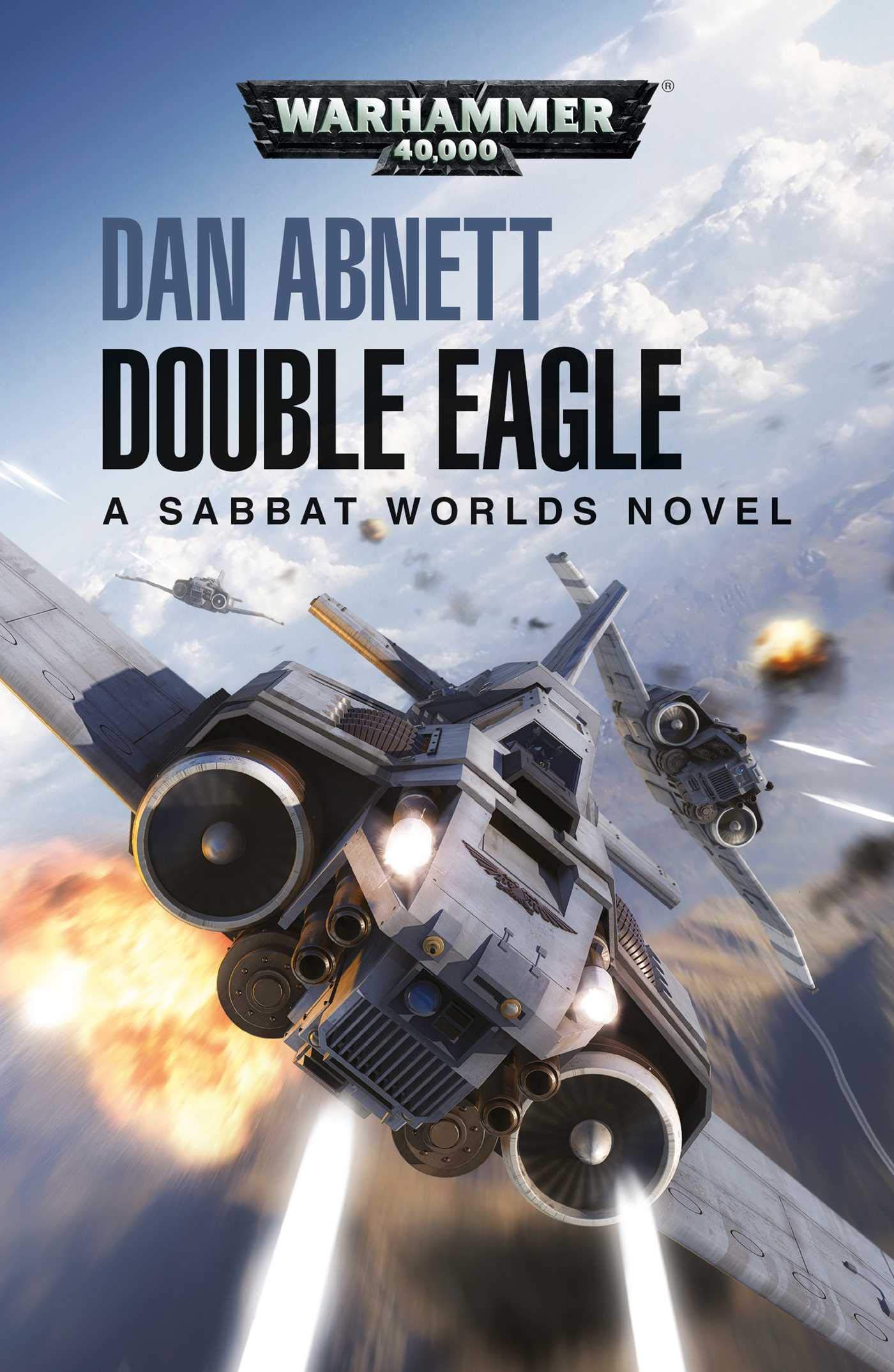
Warhammer 40,000: Double Eagle by Dan Abnett

Publisher: Black Library (Audiobook – 1 January 2004)

Series: Warhammer 40,000/Sabbat Worlds

Length: 10 hours and 16 minutes

My Rating: 5 out of 5 stars

Amazon

The master of Warhammer fiction, Dan Abnett, takes to the skies with the deeply addictive and ultra epic fighter pilot novel Double Eagle.

Readers familiar with this blog will know that I have been extremely damn obsessed with Warhammer fiction the last couple of years, having spent a substantial amount of time reading and reviewing numerous books from the franchise.  Of the many Warhammer fiction authors I have read during this period, one of the most impressive is the legendary Dan Abnett, who has written so many exceptional and powerful books around the franchise, including several series considered to be the seminal texts of the extended universe.  I have had a ton of fun with many of his books, including his brilliant Eisenhorn trilogy (Xenos, Malleus and Hereticus), and he has multiple entries in my current favourite Warhammer 40,000 books list.  However, his best-known series is the iconic Gaunt’s Ghosts books, which I am currently in the middle of reading.

The Gaunt’s Ghosts books are a beloved and key series of Warhammer 40,000 fiction that seeks to give readers a moving look at the lives of the frontline human soldier in this grimdark universe.  Set in an extended, multi-planet campaign, known as the Sabbat Worlds Crusade, the Gaunt’s Ghosts books follow a ragged regiment of soldiers as they attempt to survive the dark servants of Chaos coming for them.  I am having an exceptional time reading the Gaunt’s Ghosts series, and in 2024 alone I have read two particularly epic entries, Straight Silver and Sabbat Martyr.  However, before I dive any further into the series, I decided to read the spin-off novel, Double Eagle, which I have had on my to-read list for a while now.  Double Eagle was an interesting and unique novel that follows members of an airmen wing who were introduced in the fifth Gaunt’s Ghosts book, The Guns of Tanith.  Set after their mission with the Ghosts, Double Eagle follows these pilots, including a few characters from The Guns of Tanith, in a brutal new campaign.

War has engulfed the Sabbat World system as the forces of the Imperium of Man attempt to reclaim multiple worlds invaded by the forces of Chaos.  After years of fighting, the Imperium’s crusade has reached a tipping point, with victory or defeat for the entire campaign hanging on the results of a few key battles.  While the fighting is fierce throughout the system, nowhere is it more desperate than the beleaguered world of Enothis.

After failing to conquer the Chaos footholds on Enothis, the infantry and armoured forces of the Imperium are in full retreat, attempting to traverse miles of hostile terrain to return to safe territory, all while being harassed by relentless enemy aircraft.  With the fate of the planet in the balance, the commanders of the crusade deploy multiple squadrons of Imperial fighters and bombers to Enothis to turn the entire conflict into an air war.  If the Imperial pilots can hold back the advancing tides of Chaos and allow the ground forces to regroup the war for Enothis may be won.  But if the airmen fail, then Enothis and the entire Sabbat Worlds campaign is doomed.

Amongst the pilots sent to Enothis are the elite flyers of the Phantine Air Corps.  Veterans from the recent war to liberate their home planet of Phantine, the pilots of the Phantine Air Corps are determined to do their bit in this new conflict.  But the battle for Enothis will be unlike anything seen before, as thousands of Chaos aircraft descend on the planet, hoping to obliterate the defenders.  Severely outnumbered, can even the dogged Phantine pilots hold back the approaching tide of dark air machines before the planet is conquered, especially with an unnaturally skilled Chaos ace stalking the skies, determined to bring every opposing pilot down in flames?

Just when I think that Dan Abnett couldn’t impress me even more, I go and read Double Eagle.  A brilliant, intense, and exceptionally well-written novel that focuses on a particularly cool aspect of the Warhammer universe, Double Eagle blew me away with its great characters and elaborate air combat sequences.  I had an incredible time with Double Eagle, and it gets an easy five-star rating from me.

I deeply, deeply enjoyed Double Eagle, as Abnett took the brief of a Battle of Britain-inspired Warhammer 40,000 story and applied his usual impressively detailed style and powerful character-driven storytelling to produce an outstanding and addictive read.  Perfectly spinning off from the previous Gaunt’s Ghosts books and bringing the reader to another adventure in the expansive Sabbat World Crusades, Double Eagle has a brilliant narrative loaded with action that goes hard and fast for your feels and refuses to let go once it has you firmly in your grasp.

Double Eagle starts off quickly, getting the reader across the brutal new campaign and the importance of the aerial war that emerges, you are soon introduced to multiple characters and shown some initial awesome sequences with some explosive dogfights.  From there the story moves at a fast but smart pace, as you follow several distinctive and often overlapping character arcs throughout the length of the brutal campaign on Enothis.  You really get dragged into each major protagonist’s story as they attempt to survive the flying war.  There are some excellent battle scenes in this first half of the book and Abnett really shows how epic he can make a fighter pilot dogfight very early on.  The characters each experience some highs and lows in the first half of the book, and it doesn’t take you long to get attached the protagonists and their complex personal tales within the confines of the main story.

However, it is the second half of the book where everything comes together perfectly.  Each of the protagonists experience some version of personal loss or difficulty, and the impact of the war slowly drains them, taking them to some dark places.  Abnett sets up a brilliant underdog narrative around the protagonists, as the massive fleet of Chaos airships seek to crush them.  You can really see the parallels between this narrative and the Battle for Britain at this point, especially as the tired and severely outnumbered Phantine fighters and their local allies attempt to hold back the overwhelming and often Germanic-inspired forces coming for them.  Everything leads up to a massive final confrontation, as the protagonists engage in a series of brutal and drawn-out dogfights and aerial confrontations as we lead up to the finale.  While a couple of the character arcs leading up to this are a tad unsurprising, the way that Abnett writes them makes you love every second it.  The author brings everything to an epic close with continued and captivating action that honestly is impossible not to react to at times.  There are some very powerful moments at the closes, especially when some characters get everything they want, and you come away from Double Eagle wishing Abnett had made this book even longer.

Abnett once again masterfully crafts his compelling narrative together in such an effective way that I honestly just couldn’t stop listening to this book.  Making excellent use of multiple complex perspectives, you are swiftly drawn into the lives of several ordinary soldiers drafted into the deadly aerial war against a massive opposing fleet.  Featuring a range of complex characters arcs, Abnett expertly balances the character-driven plot between the various perspectives, while also featuring an epic war story that hits in all the right places.  Abnett’s use of quick-fire perspective changes works to create an excellent and fast-paced narrative, and it works especially well in some of the novel’s more intense sequences.  Speaking of action, you can’t talk about Double Eagle without discussing the amazing and epic aerial fight scenes and dogfights that make the book so damn distinctive.  Abnett did a remarkable job of harnessing the energy and feel of classic World War II fighter combat and bringing it into the Warhammer 40,000 universe.  Featuring many, many awesome sequences of aerial combat, Double Eagle really feels like you’re in a futuristic Battle for Britain as you witness fights between small groups of fighters fending off mass raids from Chaos forces, as well as sequences from the perspective of Imperial bombers.  The resulting dogfights between advanced fighter craft works so damn well in the context of the story, and you are treated to some truly epic sequences.  I was constantly enthralled by the brilliant aerial combat and flight sequences, and Abnett did an exceptional job expressing the intensities of flight, the ultra-fast pace nature of the combat, and the craziness of a massed aerial battle.  I could have honestly spent many, many more hours listening to Abnett’s descriptions of aerial combat, and there are so many excellent writing elements to this book that drag you in.

Double Eagle also proved to be an interesting and particularly strong Warhammer 40,000 novel that is really going to appeal to a wide range of readers.  Spinning off from the Gaunt’s Ghosts books, Double Eagle is tailor made for fans of the original series, although familiarity with the Gaunt’s Ghosts books isn’t necessary to enjoy this epic book.  While there are a few references, returning characters, and discussions about the overarching Sabbat Worlds Crusade, for the most part any reader can easily dive into Double Eagle and follow the story with no issues at all.  As with most tie-in books in the franchise, Double Eagle is best enjoyed by existing Warhammer fans, who will once again enjoy Abnett’s compelling insights into the canon.  I know that I really loved the exploration of Warhammer 40,000 air combat, and I loved how Abnett explored the physics, as well as the reasons why aerial fighters are still utilised in a universe where space travel exists.  However, I also felt that Double Eagle would serve as a pretty good entry point to any new readers interested in finding out why the Warhammer 40,000 universe is so damn cool.  Indeed, readers who are a fan of aerial focused military fiction or World War II fighter combat fiction can very easily jump into the new world here, as Abnett really presents a tale they would enjoy.  I need to read more Warhammer books from Abnett (I have several currently in my queue), and I currently very excited to read the recently announced sequel to Double Eagle, Interceptor City, which is set to be released later this year.

I found that the writing element that really brought Double Eagle together where the excellent characters at the heart and soul of the plot.  Focusing on several intriguing pilot characters, Abnett dove into the mindset of these flyers and did an amazing job capturing their love of the air and their desire to be the best.  However, as the book continues, you see a darker side to many of these characters, as the toil of war drags them down into their own mental hells.  While it did take me a little while to get across every protagonist, I eventually got drawn into the excellent character-focused storylines that Abnett set up in Double Eagle, and it was great to see the return of several characters introduced in The Guns of Tanith.  This includes the Phantine flight commander, Bree Jagdea, and the bombardier Oskar Viltry.  Jagdea proves to be a great centre for much of the plot, and her steady determination to keep her flight together and survive the various rigors of war, really strike a chord with the reader.  Viltry’s narrative is a little more complex, as the veteran pilot is suffering from trauma after being shot down and captured in The Guns of Tanith.  Certain about his own impending death, Viltry spends much of the book as a morose and depressed figure, until he finds someone worth living for.  Viltry’s storyline proves to be particularly heartfelt, especially as he has a relatively nice romance angle, and I felt that Abnett really captured his trauma and desire for a better life.

Aside from Jagdea and Viltry, Double Eagle also features several other impressive perspective characters who really bring the narrative together.  This includes young Phantine pilot, Vander Marquall, who serves as a major protagonist.  A rookie pilot fighting in his first campaign, Marquall has a massive desire to prove himself.  His obsession with becoming an ace and being respected becomes an overwhelming part of his character, and you find yourself occasionally disliking him, while also simultaneously cheering him on.  Thanks to his interactions with the other characters, Marquall gets some much-needed perspective at times (that scene with his mechanic at the end was brilliant), and I felt he had one of the most complex, dark and relatable storylines in the entire book.  Abnett rounds out the characters with local pilots August Kaminsky, a wounded veteran no longer allowed to fly, and Enric Darrow, a rookie without a plane after getting shot down in the opening scenes by the novel’s big bad.  While parts of Kaminsky and Darrow’s storylines are a little predictable, you really get invested in their various battles, especially as Abnett produces some interesting character moments and interactions for them.  I especially loved the hilarious exchanges between Kaminsky and Jagdea during one fun sequence, and Darrow proves to be a very likeable and determined young character to get behind.  These main characters, plus an excellent supporting cast, were great to follow in Double Eagle, and it will be awesome to continue at least one survivor’s story in the upcoming sequel.

It should come as no surprise to anyone that I ended up listening to Double Eagle on audiobook, as there is frankly no better way to enjoy an epic Warhammer 40,000 novel.  While I always gush about how much I enjoy a Warhammer audiobook, I frankly really need to emphasise just how impressive and exceptional Double Eagle was in this format.  The many, many aerial combat sequences come across so damn well when they are read out to you, and I loved how easily it was to visualise the fast-paced and exceptional flight scenes.  You really get lost in the battles when you listen to them, and I was frankly buzzing the entire time I was listening to Double Eagle.  Part of the reason this audiobook was so damn good was the inclusion of one of my favourite audiobook narrators Toby Longworth.  Longworth has lent his voice to most of Abnett’s Warhammer 40,000 novels in recent years, and frankly the two are a match made in heaven.  The story comes across so effectively in Longworth’s voice, and he really makes every scene, especially the exciting action sequences, that little more epic.  I also really love the fantastic and compelling voices he uses for the various characters.  While a couple of character voices sounded the same as those Longworth used in the Gaunt’s Ghosts audiobooks, I felt that they perfectly fit every figure they were assigned to, and you really get drawn into the matching character arcs as a result.  Frankly this audiobook was perfect, and I had so much fun listening to it.  With a run time of just over 10 hours, the Double Eagle audiobook is very easy to power through, and that is exactly what I did.

With an elaborate, powerful and addictive story about glorious battles in the sky, Double Eagle was a particularly epic Warhammer 40,000 novel that proves impossible not to fall in love with.  Another exceptional novel from Dan Abnett, who once again shows why he is one of the best authors of Warhammer fiction, Double Eagle had me hooked from the very first chapter, and I honestly couldn’t stop reading it until the very end.  This book comes very highly recommended, and I cannot wait to read the sequel later this year.

Amazon

The Last Shield by Cameron Johnston

Publisher: Angry Robot (Ebook – 13 August 2024)

Series: Standalone

Length: 376 pages

My Rating: 5 out of 5 stars

Amazon

One of the rising stars of dark fantasy fiction, Cameron Johnston, returns with an intense, gritty and addictive novel of revenge, desperation and brutal murder, with the brilliant novel, The Last Shield.

One of the more intriguing authors of fantasy fiction I have enjoyed reviewing in recent years is the outstanding Cameron Johnston, who has deeply impressed me with his small but excellent collection of works.  Since his debut book in 2018, The Traitor God, I have grown to enjoy Johnston’s novels, especially as his first book was a brilliant story of dark magical revenge.  Following up with the awesome sequel, God of Broken Things, Johnston cemented himself as an author to watch, and I have yet to be disappointed by him since.  His third novel, The Maleficent Seven, was a fantastically bonkers read that saw a small town become the unwilling recipients of a band of monstrous defenders when a massive army comes to destroy them.  I had an amazing time with The Maleficent Seven, and indeed all of Johnston’s books, which is why I was so eager for his latest novel, The Last Shield.  One of my most anticipated books of 2024, The Last Shield had an epic and cool plot behind it, and I was so very eager to check it out.

In a world of warring realms and dark magic, the ancient forest realm of Sunweald survives by serving as a buffer country between two far mightier nations on either side of its borders.  A realm of tradition and druidical magic, the heart of the nation lies in Sunweald Palace, where the Lord Regent, and the young heir to the throne reside, guarded by Sunweald’s elite warriors, the Shields.  Rough and old, Sunweald Palace is an impenetrable fortress designed protect the nation’s royal family, as well as safeguarding a massive vault of unspeakably powerful magical artefacts.

Despite its peaceful status, Sunweald finds itself beset by a group of vicious brigands, the Wildwood Reivers, who have made a living stealing away magical artefacts and trading them across the border.  Led by a mysterious witch, the Wildwood Reivers have grown bold, even launching an attack on the royal family.  When word reaches the palace of the location of the brigand’s base, the Shields depart to destroy them once and for all.  However, their mission is a devious decoy, as through treachery, dark magic and deceit, the Wildwood Reivers and their allies manage to take over Sunweald Palace.

With the Shields away and traitors holding the wall, the brigands plan to loot the palace’s ancient vaults and steal every magical artefact hidden within.  However, the Wildwood Reivers face one substantial obstacle to their success, Briar, feared, if hobbled, commander of the Shields.  Despite being outnumbered, wounded and near retirement, Briar is determined to perform her duty and reclaim the palace.  Using her knowledge of the palace’s secret tunnels and ancient corridors, Briar sets about dismantling the invaders in brutal fashion.  But battered, alone and loosing strength, can even a legendary Shield like Briar face the overwhelming odds and lethal magic set against her?

Gosh this was a very impressive and exciting read.  Cameron Johnston has a real flair for fantastically over-the-top narratives, and The Last Shield is some of his best work yet.  A complex and compelling tale of revenge and redemption, The Last Shield was a non-stop thrill ride, and I loved the deeply intense story that emerged.  This was a truly outstanding book that gets a full five-star rating from me thanks to how much sheer fun I had reading it.

The narrative that Johnston pulls together for The Last Shield is extremely awesome, and it can best be described as a gender bent, dark fantasy Die Hard, with some amazing fantasy elements.  An excellent standalone story, The Last Shield was a constantly moving book, which drew me in with its clever plot concept and the promised resulting violence.  Part of the reason the story works so well is the initial setup, which introduces the new intriguing world, but more importantly effectively gets you across the central characters and the main setting of Sunweald Palace.  There are some great early character moments here, especially when it comes to the main protagonist, Briar.  The veteran leader of the Shields, Briar is badly wounded in the opening scenes of the book, which kicks off a great arc for her as she attempts to find her purpose after the injury potentially robs her of her position.  Some other key character arcs and storylines are also introduced here, including around the young heir to the throne, whose brush with death drives him closer to the disapproving Briar as a mentor.  Johnston also takes the time to explore the full extent of the conspiracy to takeover Sunweald Palace, and you grow to appreciate just how dastardly the plot is.  As such, you are well prepared for the chaos and carnage to come, and the anticipation Johnston expertly builds up in first part of the book, really enhanced the overall impact of The Last Shield.

As such, the reader is very much ready to go when the villains initiate their plan around a third of the way into The Last Shield.  The resulting takeover is as dark and brutal as you’d expect, and the reader is well prepared to despise the antagonists and root for any sort of victory from the protagonist.  You don’t have to wait long as the despondent Briar quickly finds herself in the ideal position to fight back and begins her bloody and justified one-woman assault on the invaders.  Johnston initiates a series of intense, powerful and increasingly desperate battles, as Briar encounters greater and great hurdles and opponents as she attempts to save the Lord Regent and stop the looting of the castle’s vaults.  The author expertly ramps up the intensity every confrontation, and you really find yourself more and more off the edge of your seat as the story proceeds and Briar becomes increasingly injured.  There are some brilliantly brutal confrontations all the way to the end, and the author throws in some great twists and major final threats.  I honestly loved every second of the epic second half of The Last Shield, and Johnston wrote an amazing, blood-soaked story.

I felt that Johnston did an outstanding job bringing his cool story to life in The Last Shield, and readers are in for a great time if they check this book out.  The excellent blend of dark action, intriguing fantasy, and powerful characters really worked for me, and I felt that Johnston perfectly blended storytelling elements throughout the entire book.  The writing of The Last Shield is crisp, fast-paced, and well planned out, and it proves impossible not to be drawn into the fantastic scenario and intriguing storytelling.  Cameron does an excellent job exploring the new fantasy world that The Last Shield is set in, and you really get drawn into the bronze-age Celtic setting, and the focus on a small kingdom with some intriguing gender roles.  I particularly enjoyed how Jonston managed to emulate the feel of a classic action thriller like Die Hard or Under Siege and blend it with the dark fantasy setting.  The resulting scenes, which forced a nearly retired badass female palace guard to crawl through the secret tunnels of the castle to save the male reagent while disrupting a magical heist, were so damn fun, and it was a fantastic take on a classic film trope.  It helped that Johnston brought his typical, over-the-top mindset to the action sequences in The Last Shield, presenting the readers with an increasing bloody series of fights as the protagonist unleashed her inner fury.  These scenes of carnage and brutality paired perfectly with the complex narrative and character arcs that Johnston built up, and the resulting book was so much fun.

I need to highlight The Last Shield’s awesome characters which were a fantastic part of the book.  I have mentioned the main protagonist, Briar, a few times already, and frankly she was the heart of The Last Shield due to her intense personality and well-written storyline.  Johnston very cleverly set up Briar’s story at the start of the novel, first showing the warrior in her prime, before hobbling her and forcing her to consider retirement before the main plot kicked off.  As such, the version of Briar we see for much of the novel is a desperate, tired and absolutely pissed-off figure, especially when she realises the many betrayals that led up to both this current assault and her previous injury.  I loved how well Johnston set up this character’s revenge arc, and it was so much fun to see Briar finally get her hands on all the people responsible for her misery.  The author really dives into Briar’s mindset and emotions as the book continues, and it proves very, very hard not to root for her, especially when she is driven to her absolute limit.

While most of the focus of The Last Shield is on Briar, there are several other great characters featured throughout the book who also enhance the story.  The most prominent of these is probably the heir to the Sunweald, Ves, who has excellent parallel character growth to Briar.  Initially portrayed as a young fop, Ves grows due to the sacrifices he witnesses in his name and the brash mentorship of Briar, and he ends up proving himself in his own way.  Aside from that, I really need to highlight the excellent group of villains who Briar finds herself up against.  Featuring a band of traitors, brigands, an assassin and a dark witch, the antagonists of The Last Shield play off the stoic Briar extremely well, especially as each of them enrage her in a different way.  Johnston does a fantastic job showcasing the antagonist’s perspective throughout the course of the story, and their early scenes really work to ensure the reader dislikes them.  I personally loved seeing their point of view once they realised that Briar was loose in the castle with them, and the outrageous sequences of fear, anger and regret that followed are incredibly fun.  These characters proved to be a great boon to The Last Shield’s plot, and I deeply enjoyed the fantastic and powerful storylines that Johnston built around them.

Cameron Johnston continues to greatly impress with his fourth novel, The Last Shield.  An exceptional, addictive and gloriously over-the-top dark fantasy novel that takes inspiration from some classic action films, The Last Shield was pure entertainment and excitement, that I could not turn away from.  With great characters, an awesome setting, and so much damn action, there is something for every dark fantasy fan in The Last Shield, and I cannot recommend it enough.  One of my favourite fantasy books of 2024.

Amazon

Terra Incognita by Simon Turney

Publisher: Head of Zeus (Ebook – 12 September 2024)

Series: Standalone

Length: 407 pages

My Rating: 4.5 out of 5 stars

Amazon

Simon Turney continues to explore the Roman Empire with his latest novel Terra Incognita, a fantastic read that proves to be one of the top historical fiction adventure novels of 2024.

Simon Turney, who also writes as SJA Turney, is a fantastic author who has been penning various intriguing historical novels for several years now.  I have enjoyed a couple of his books in the past, including the deeply compelling read, Commodus, which was part of his Damned Emperors series.  2024 has proven to be another good year for Turney, as he managed to also to impress me with the first book in his Agricola series, InvaderInvader was a very fun military novel that followed the early career of a famous Roman general and his potential involvement with Boudica’s rebellion.  I deeply enjoyed Invader, and I am very keen for the sequel, Warrior, which is set for release in early 2025.  However, before Warrior comes out, I was very happy to receive a copy of Turney’s intriguing novel Terra Incognita.  Providing his own take on a truly fascinating adventure hinted at in Roman historical records, Terra Incognita was an awesome read I was excited to check out.

Rome, 61 AD.  Under the rule of Emperor Nero, the Roman Empire is a wealthy and powerful civilisation covering much of Europe and Africa.  However, Nero is eager to expand the range of his control even further and sets his eyes down the River Nile.  Desiring to conquer the mysterious and reportedly rich lands and kingdoms below Egypt, Nero devises an elaborate plan to learn more about the world beyond his borders.

Under the command of an ambitious tribune, Nero sends two centuries of his elite Praetorian Guard into the African wilds with orders to follow the Nile until they find the source of the river.  If they succeed, they are to offer tribute to the river’s spirits, and ensure favourable waters for any subsequent invasion of the lands that follow.  However, reaching these fabled waters alive will prove to be an arduous journey.

Travelling down the Nile, the soldiers of Rome experience great hardships as they make their way to their empire’s borders.  But even greater challenges wait beyond, as the Romans will have to overcome bandits, hostile kingdoms, disease, inhospitable desert, fierce beasts and the madness of their own commander.  Can the Romans make it to their goal alive, or will the insanity of their Emperor and the impossible mission he’s set for them destroy even these elite soldiers?

Terra Incognita was as an outstanding and epic historical read that I honestly could not stop reading.  Presenting a powerful and deeply compelling narrative of trials, tribulations, and the dark side of ambition and duty in the wilds of Africa, Turney expertly grabs the reader in with his elaborate historical adventure tale and refused to let go.

I really loved the fun and distinctive story that Turney sets up in Terra Incognita, which proved to be particularly captivating and gripping to me.  A fictional account of the two Praetorian centuries the historical record indicates Nero reportedly sent to find the source of the River Nile, Terra Incognita is an exciting, entertaining and occasionally grim book, that just keeps loading compelling misadventure after compelling misadventure.  Told from the perspective of the venture’s two centurions, Sempronius Densus and Claudius Faventinus, you witness the full extent of the expedition through their eyes, from its hopeful if apprehensive start, all the way to its grim conclusion, and you will love every single second of it.

The narrative itself starts off as a classic Roman historical adventure, as it follows its protagonists down into Egypt.  This early part of the book is very much focused on introducing the characters and setting the scene for the adventures to come, and the readers get some fun sights of Roman occupied Egypt, while also experiencing the initial hurdles of the expedition.  However, once they leave Egypt and journey into land owned by the Kushites, Rome’s southern neighbour in Africa at the period, things start to unravel for them, as they come under attack, encounter greater setbacks, and are beset by bad omens.

The second half of the book sees the Romans enter unexplored territory and encounter the world beyond their known borders.  The already tired and demoralised soldiers face a lengthy and grim trudge deeper into Africa, with things getting worse for them the further they get away from home.  Trapped in their mission by their stubborn and seemingly unkillable commander, the book takes on a real Heart of Darkness vibe as their commander’s obsession drives them forward no matter the consequences.  Things continue to get more and more desperate for the protagonists as they continue, and you are constantly on the edge of your seat waiting to see what disaster or intriguing new turn of events they are likely to stumble across next.  After an increasingly tense series of events, Turney brings the reader to a deeply interesting and compelling conclusion, which fit the overall themes of obsession, insanity and a desire to survive perfectly.  This ended up being an excellent and well-crafted standalone narrative, and I had such a brilliant time getting through this elaborate adventure.

Turney is probably one of the top current authors of Roman historical fiction, and he clearly had a lot of fun bringing this elaborate novel together through his great writing.  Written as one continuous and compelling historical adventure, readers are really drawn into the epic tale of exploration and insanity that evolves, and Turney does a wonderful job of blending historical inclusions with a deep and powerful narrative.  I think the author had the right elements of action, exploration, history and personal stories in Terra Incognita, and it’s hard not to get drawn into the constant adventure and the interaction with new obstacles and societies.

In addition to the well-written story, I really must highlight the excellent main characters of Terra Incognita, especially as you see the entire disastrous expedition through the eyes of the group’s two centurions, Sempronius Densus and Claudius Faventinus.  Cast as the group’s sensible, disciplined and stubborn hearts, the two centurions doggedly lead their soldiers on, forced to serve as a buffer between the disgruntled Praetorian Guard, and their increasingly unhinged commander.  While there sometimes isn’t a lot to distinguish between the two centurions, you grow attached to them, especially as they are forced into impossible situations time and time again and are compelled by duty to continue.

However, the best character in the book is easily the expedition’s leader, Tribune Lucius Curtius Lupus.  An ambitious and regal figure, the tribune serves as a great foil to the sensible protagonists in the first half of the book, especially as his bluster, unreasonable orders and lack of common sense ensure that the centurions are forced to work against him to continue.  However, once the Romans find themselves in the African wilds, the tribune really turns into a fantastic character.  Due to a mixture of illness, pettiness and fear, the tribune becomes continuously more detached from the reality of the situation they are in and keeps dragging his mutinous soldiers further down into Africa.  Absolutely driven by obsession, Lupus refuses to stop until Nero’s orders are fulfilled, no matter the cost to the troops, and every action forces his centurions to decide whether to support him or kill him.  I loved the constant battle of duty and practicality that emerged, as the two centurion protagonists attempt to find their line in the sand against the tribune, only to allow him to make more bad decisions.  It also proves quite amusing to see the continued tribulations that the tribune survives, so much so that his soldiers become to believe his mission is blessed by the gods.  It’s hard not to both love and hate Tribune Lupus as the book unfolds, and I felt that Turney’s use of him was perfect, especially as there are some interesting parallels between him and a key figure from Heart of Darkness/Apocalypse Now.

Finally, I need to highlight the excellent historical inclusions featured within Terra Incognita.  Turney does an outstanding job bringing the wild and uncharted territories of Africa to life through his excellent writing, and you are constantly envisioning the elaborate landscapes and intriguing people that the Romans may have encountered on this expedition.  I also really appreciated how Turney utilised and expanded on details from the Roman historical records as well more modern understandings of the period in his story.  The depiction of several different tribes, nations and kingdoms that likely existed along the Nile at that point in history was fascinating.  I also enjoyed seeing how Turney envisioned the Roman’s reactions to the various crazy creatures, obstacles and unusual people they would have encountered, including crocodiles, hippopotamuses, and some of Africa’s more impassable terrain.  These obstacles also led to some interesting solutions, and I particularly appreciated Turney’s idea for a potential malaria treatment/preventative.  Throw in some great depictions of the Roman soldiers themselves, something the author has a lot of experience showcasing, and this was a great historical book with some unique features.

Terra Incognita was an outstanding standalone book from Simon Turney that provides readers with an awesome historical adventure.  Fast-paced, addictive, and loaded with some fantastic intensity, especially around the great characters, Terra Incognita was an epic read that comes very highly recommended.

Amazon

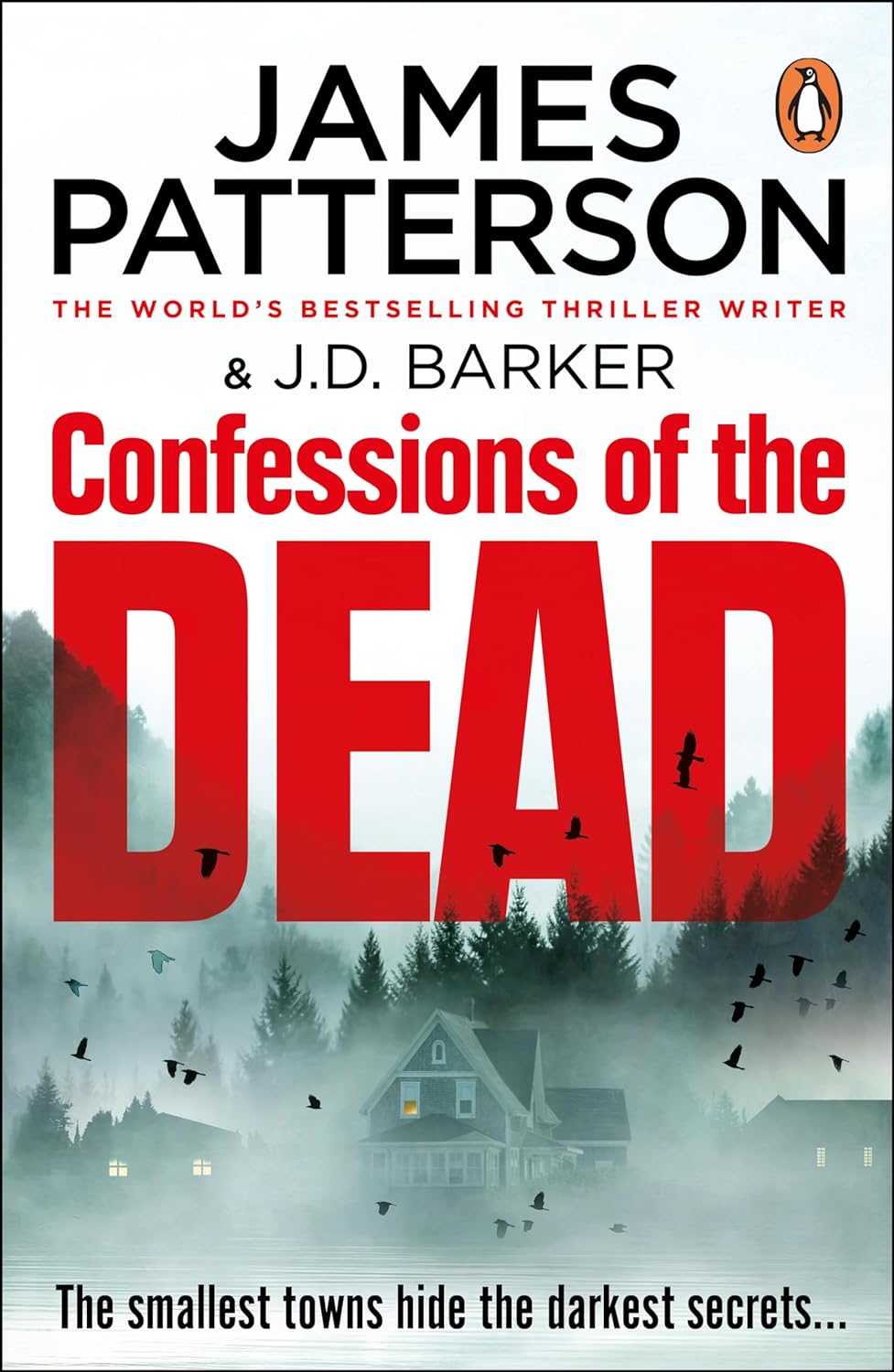
Quick Review – Confessions of the Dead by James Patterson and J. D. Barker

Publisher: Century (Trade Paperback – 2 July 2024)

Series: Standalone

Length: 454 pages

My Rating: 4.25 out of 5 stars

Amazon

One of the weirder and more compelling thrillers of 2024 so far has to be the unique Confessions of the Dead by the superstar team of James Patterson and J. D. Barker.

2024 has been an excellent year for both Patterson and Barker, as both authors have produced some excellent books.  Barker wrote the engrossing and highly adult thriller, Behind a Closed Door, while Patterson has continued to release a raft of compelling thrillers cowritten with talented authors, including The No. 1 Lawyer with Nancy Allen and The Murder Inn with Candice Fox.  As such it is unsurprising that the two would come together again this year with another collaboration, this time with the intriguing novel, Confessions of the Dead.  Their last collaboration, Death of the Black Widow, was one of my favourite books of 2022, so I was very excited to read Confessions of the Dead, especially as it featured a particularly interesting plot.

Plot Synopsis:

The smallest towns hide the darkest secrets . . . Drawing elements from the horror genre, this eerie standalone suspense thriller is perfect for fans of Stephen King.

The dead tell no tales . . .

Hollows Bend is a picture-perfect New England town. The crime rate – zero – is a point of pride for Sheriff Ellie Pritchett.

The day the stranger shows up is when the trouble starts.

The sheriff and her deputy investigate the mysterious teenage girl. None of the locals can place her. She can’t – or won’t – answer any questions. She won’t even tell them her name.

While the girl is in protective custody, the officers are called to multiple crime scenes leading them closer and closer to a lake outside of town that doesn’t appear on any map . . .


Confessions of the Dead
proved to be an intense and captivating horror/thriller hybrid as Patterson and Barker make the full use of their inventive narrative to unleash death, destruction and horror onto a seemingly innocent small town.  Starting off with a rain of suicidal birds hitting main street, and only getting darker and weirder from there, Confessions of the Dead follows several intriguing characters as they witness their fellow townspeople descend into madness and begin to enact dark and violent acts against each other, all while a mysterious teenage girl silently witnesses their hatred and crimes.  Things get even weirder, when it becomes clear that their town has become fully isolated from the outside world, with shadowy soldiers holding watch from the outskirts of town.  The various storylines soon reveal the dark secrets of Hollows Bend and the young girl seemingly causing the chaos, and you will not be prepared for the full truth that is revealed, and the terrifying implications.

This proved to be a rather interesting and horror-laden story that takes the readers in some surprising directions.  The narrative within Confessions of the Dead is spooky, deeply personal, and occasionally outrageous, as dark deeds slowly begin to sweep the town, turning the innocent townspeople against each other.  Patterson and Barker do a really good job of building up the mystery in the first half of the book.  There are so many intriguing secrets and mysteries lurking in this first part of the book, which are well matched by scenes of horror and human violence.  The fast-paced chapter changes that are such a distinctive part of Patterson’s writing style work wonders in conveying the unusual situation, and I loved how well the plot switched between multiple unique characters, all of whom have some dark secret they are hiding, even if they don’t know what it is.  The authors also add in some intriguing wrinkles to the plot through the use of multiple well-placed interludes that show a point in the future where one of the book’s protagonists is being interviewed by a member of the mysterious organisation keeping the town.  These inclusions really helped to build up tension as they hinted at events to come, while the elaborate setup surrounding the interviews, gave some idea of how serious the situation really was.

Everything leads up to a very intense second half of the book, as Confessions of the Dead’s story gets darker and darker.  Indeed, the authors build together a real horror/thriller vibe for Confessions of the Dead, which I honestly enjoyed, and it was great to see a more unusual and inventive thriller come out of the Patterson production machine.  There is an interesting combination of storylines in the second half of the book, from vigilante townspeople, monstrous killers, and even a Stranger Things/Goonies inspired sideline following a group of the town’s younger residents as they try to investigate the chaos engulfing the lives of their parents.  The authors set up a big and intriguing conclusion to the story, that provides a particularly unique ending that will stick in the reader’s mind.  I did think that Patterson and Barker did perhaps make the ending a little too complicated and meta for its own good, and that certain aspects of the crazy conclusions impacted my overall enjoyment of the book.  Still, this was for the most part a great story, and I had fun getting through it.

Confessions of the Dead was a particularly fascinating and memorable 2024 thriller that I was glad I checked out.  Written by the brilliant team of James Patterson and J. D. Barker, Confessions of the Dead had a wonderfully dark and brutal plot behind it, that allowed for quite the outrageous read.  Grim, intense, and featuring some interesting concepts, Confessions of the Dead proved very hard to put down and it will be interesting to see where these two authors go the future.

Amazon

Warhammer 40,000: Daemonbreaker by Jude Reid

Publisher: Black Library (Audiobook – 24 August 2024)

Series: Warhammer 40,000

Length: 7 hours and 27 minutes

My Rating: 4.25 out of 5 stars

Amazon

Gird yourself in faith, fury and fire, as fantastic author Jude Reid presents her latest Warhammer 40,000 novel, Daemonbreaker, which follows a complex figure as she blazes forth into the darkness of the Warhammer 40,000 universe.

After having a wonderful time with Warhammer 40,000 novels like Deathworlder by Victoria Hayward, Lord of Excess by Rich McCormick, Siege of Vraks by Steven Lyons and Oaths of Damnation by Robbie MacNiven, there was no way I was going to stop loving this franchise this year, so I eagerly dove into the cool new audiobook, Daemonbreaker by Jude Reid.  Reid, who really impressed me last year with Creed: Ashes of Cadia (one of my favourite debuts of 2023), presents an intriguing and dark novel that follows members of the Adepta Sororitas, the Warhammer 40,000’s resident nuns-with-guns.

On the battlefields of faith and fury, few warriors in the Imperium of Man can match the battle prowess of Celestian Sacresant Aveline of the Order of the Sacred Rose.  A deadly sister of the Adepta Sororitas, devoted to killing the mutants, witches, heretics and daemons that oppose the Emperor, Aveline is always eager for greater combat, and soon finds the ultimate opportunity she has been waiting for, defending the fortress world of Cadia from the ravening forces of Chaos as they embark on their 13th Black Crusade.

However, before Aveline can join her sisters in the massive battle for Cadia, she has been assigned final sacred duty.  Sent to Orrison VIII, a minor shrine world in the Cadia Gate system, Aveline is tasked with securing the desert world for the Emperor and scouring the forces of Chaos from its surface.

Desperate to find glory on Cadia, Aveline chafes at the slow speed of the mission on Orrison VIII, especially as their primary target, a deranged Chaos sorcerer, is content with playing a slow game of cat-and-mouse with her.  However, when Aveline finally gets her chance to face the enemy, she finds herself confronting a dark foe who knows her name and has a sinister scheme to destroy her and her sisters through her own arrogance.  If Aveline is unable to stop the dark Chaos forces before her, a deadly foe will be unleashed upon Holy Terra that could destroy the heart of humanity as it faces its darkest moment.

Daemonbreaker was a fantastic and compelling Warhammer 40,000 novel that expertly features an iconic faction and looks at the faith and emotions lying beneath their militant surface.  Jude Reid continues to impress with this cool novel and I had an excellent time getting through the intense and exciting story, which seeks to bring to life the figure of Celestian Sacresant Aveline who recently got her own model in the game.

I must admit, before diving too far into this review, that I sometimes found it a little hard to connect with Daemonbreaker at times, primarily because I’ve never been a massive fan of the Adepta Sororitas as a faction.  They’re honestly a little too one-note for me at times, and I never been especially drawn to their fiction as a result.  However, I felt that Reid was able to lift her narrative above some of the inherent limitations of this faction throughout the course of the book.  It helped that Daemonbreaker was a relatively shorter Warhammer 40,000 novel, so Reid sped up the plot, which in turn kept the reader from getting bogged down.  The resulting story is exciting and intriguing, as author quickly sets up the primary plot of the hunt for Chaos on Orrison VIII, while some initial compelling action set pieces help grab the reader’s attention.

The main narrative moves at a quick pace, with the protagonist leading her force into several encounters out in the desert while battling her own emotional turmoil and disappointment.  However, everything in the story changes around the halfway point of Daemonbreaker, when the author decides to throw the entire status-quo of the book on its head.  Thanks to a combination of the protagonist’s mistake and a major Warhammer 40,000 universe event, everything gets substantially more desperate for the protagonists, and Reid goes a little nuclear stacking the odds against them.  While there are a few gaps in the storytelling, the second half of Daemonbreaker is extremely fun and exciting, as the protagonists face impossible odds and encounter the very worst the universe has to offer.  There is a ton of tragedy and some horrifying moments as the reader races towards the end of the book, and it proves harder and harder to put it down as you near the conclusion.  Reid loads up some big final battles that showcase just how grim things can get in this universe, before the expected miracle brings things to a close.  Readers come away from Daemonbreaker feeling pretty satisfied with how things come to an end, although I did feel that part of the plot was a bit thin in places.

Reid has a great handle on writing Warhammer 40,000 fiction, and this is on display again in Daemonbreaker.  There is a notable cutdown in the exposition and Reid brings the reader right into the action and carnage which made it an easier book to get through, especially considering the faction focus.  The various action sequences come across as gritty and powerful, and you can feel the raw emotions of the protagonists as they encounter their dark opponents and the dreadful things they need to overcome.  Reid ensured that this was a concise and well-contained narrative through her use of two point-of-view characters, and I appreciated the excellent alternating perspectives.  Both protagonists were very well written, with the main story around Celestian Sacresant Aveline being the most prominent.  A deadly, if arrogant, sister of the Emperor, Aveline finds her devotion challenged by her own selfish desires and issues, which leads to dark things in the middle of the book.  While I didn’t always connect with Aveline as a character, I felt that Reid wrote a rather good redemption arc around her, and she becomes a lot more likeable and relatable in the second half of the book, especially as she comes to recognise her hubris and flaws.  Recognising these things allows her to fully appreciate her fellow sisters and leads her into the right place for the final arc of the plot to unfold.

Aveline is well balanced by the second perspective character, Novitate Gwineth, a young, keen and determined figure, whose eagerness to become a member of the Adepta Sororitas is drawn from her impending doom.  Reid writes an interesting and unique Warhammer storyline around Gwineth having haemophilia, which ensures that her days on the battlefield and in life are limited.  Wishing to die as a full sister, Gwineth’s keenness becomes a key part of the plot, and I loved seeing her grow into the role she wishes, especially as her innocence and determination are a driver for the rest of the cast.  The rest of the characters within Daemonbreaker are also very fun, if sparingly used.  I do perhaps wish that the author had added in additional perspective, preferably from a villain’s point of view, as I feel that would have enhanced the narrative to a degree, especially to provide some missing plot answers or explain the motivation and plans of the antagonists.  However, for the most part, this was a very well-written story with some intriguing protagonists, and one that I had an excellent time getting through.

The author has really gotten the hang of showcasing the grim and intriguing Warhammer 40,000 universe, and I loved some of the directions and figures that she featured within Daemonbreaker.  I especially felt that Reid does an excellent job examining Adepta Sororitas faction, the Sisters of Battle, within the book.  The various different units and figures of the faction are dropped into the plot fairly seamlessly, and even someone unfamiliar with the Adepta Sororitas unit types can easily appreciate their role in the plot.  I must also once again emphasise that Reid was able to overcome my disinterest in the classic Adepta Sororitas depictions with her clever narrative and compelling writing.  While this was a great Warhammer 40,000 novel, I feel that Daemonbreaker is perhaps a book best left to established Warhammer fans, as Reid does feature some heavy lore elements, and Adepta Sororitas players will probably get the most out of it.  Still, a new reader can easily come along and have a lot of fun with Daemonbreaker, as Reid’s story gets quite intense, personal and brutal.  You may have to ignore the fact that Daemonbreaker mainly written to promote a new model released in the tabletop game, but if you can get past that, this is a book well worth checking out.

Naturally, I ended up grabbing Daemonbreaker on audiobook, as this format is the absolute best way to enjoy a Warhammer book.  I really cannot emphasise how much more epic a Warhammer 40,000 tale comes across when it is read out to you, and I always have so much more fun listening to it.  This is particularly true when it comes to all the epic action, and I felt that the carnage in Daemonbreaker was very strongly enhanced by the audiobook format, with listeners also able to appreciate the compelling characters and intriguing lore while it’s being read out to you.  With a runtime of around seven and a half hours, this is a relatively short audiobook, and one that listeners can really power through, especially when they get caught up in the action and compelling character arcs.

One of the big highlights of this audiobook for me was the fact it was narrated by the appropriately named Faith Alabi, who really dives into the complex Adeptus Sororitas characters with her voice.  Each of the key protagonists is given their own unique voice, and I liked how well Alabi expressed their holy rage, and personal issues.  Alabi’s excellent voice work is cleverly supported by some fun additional audio enhancements, which I thought was a fun way to express some unique elements of the Warhammer 40,000 canon.  For example, the cybernetic figures, such as members of the Adeptus Mechanicus, have a noticeable robotic voice modulation that really tries to capture their machine nature, while communication occurring over vox-casters (radios), are filled with static and sound effects to emulate how the voices would sound in real life.  In addition, certain audio effects give dark and otherworldly voices to the antagonists, such as a particularly booming tone that makes the dialogue of a Chaos sorcerer antagonist that more impactful, or freaky vocal effects that make a major daemon seem even more powerful.  These audio effects work extremely well alongside Alabi’s narration, and I really appreciate the effort the producers made to drag listeners further into the story.  As such, those who decide to check out Daemonbreaker on audiobook are in for a very fun treat and this is such an awesome way to enjoy this fantastic addition to the Warhammer 40,000 canon.

Daemonbreaker was another amazing Warhammer 40,000 outing from Jude Reid, and one I was very glad I checked out.  The author effectively brings the main character to life in this book while also showcasing a compelling and intense Warhammer narrative of sacrifice, tragedy and holy war.  As such, Daemonbreaker is an excellent read for all fans of Warhammer 40,000 fiction, and I cannot wait to see what Reid takes on in the future.

Amazon

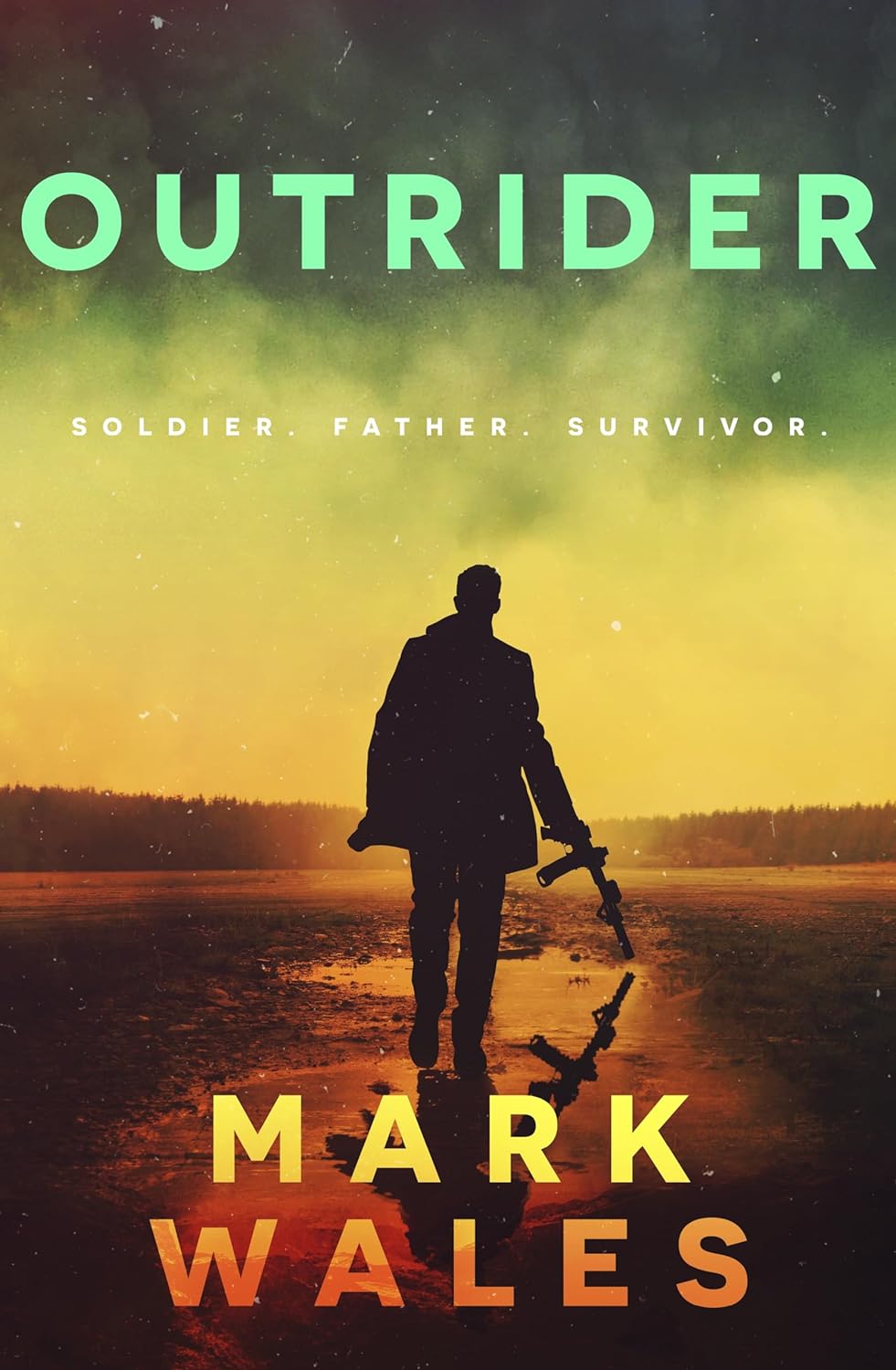
Quick Review – Outrider by Mark Wales

Publisher: Pan Macmillan Australia (Trade Paperback – 25 June 2024)

Series: Standalone/Book One

Length: 354 pages

My Rating: 4 out of 5 stars

Amazon

Former Australian soldier and current media personality Mark Wales presents a particularly exciting debut novel with the gripping thriller Outrider.  A gritty, intense, and absolutely action-packed dystopian thriller, Outrider is an awesome Australian novel readers will have a hard time getting away from.

Plot Synopsis:

Jack Dunne will do anything to save his son.

A violent civil war. An unstoppable enemy. One road to freedom.

In the wake of a global conflict, foreign forces occupy part of Australia, quashing all but a few pockets of local resistance. The tense stalemate ends in 2034, when Jack Dunne reignites the war.

Dunne is an Outrider, one of the last elite special operations soldiers in the Resistance. As the enemy prepare to eliminate the freedom fighters once and for all, he is tasked with his final mission.

If Dunne and his eleven-year-old son achieve the impossible, and survive, they’ll secure their future across the border in Free Australia.

But the road to victory will be bloody.

A cinematic action-thriller from bestselling author and veteran Mark Wales. Explosive and exhilarating, Outrider is a heartfelt father-and-son story of survival, resistance and hope.


Outrider
was an intriguing and complex novel that envisions a dark near future for Australian and sets loose a bold new action hero into the resulting carnage.  Set after a Chinese invasion of Australia, Outrider follows formidable resistance solider Jack Dunne and his son, Harry, as they attempt to save the lives of the last standing rebel fortress in Victoria from an upcoming war.  Given a mission to journey across occupied Australia to recover a military asset who can provide specialised assistance in the upcoming battle to come, Jack and his son will need to run a gauntlet of bandits, Chinese soldiers and members of the collaborating Victorian militia working for them.

This was an intense and exciting piece of Australian fiction, and Wales really dug deep to present an authentic tale of desperation and war.  Quickly and effectively introducing the 2034 dystopian setting, Wales takes the reader right into the action with a series of brutal early encounters that also set the rest of the narrative in motion.  From there, the story turns into an intense, Mad Max-style road trip as Jack and Harry embark on their journey to reach the required military asset and bring them back before it was too late.  This proves to be an excellent continued sequence, as the protagonists encounter obstacles and conflict, while also endearing themselves to the reader with a dive into their motivations and the history of events that drive Jack on.  The second half of Outrider proves to be even more epic and intense, as the protagonists desperately attempt to overcome the deadly forces coming for them.  This all leads up to the massive and impressive full on war sequence, with the fate of free Australia in the balance.  Wales does not disappoint when it comes to this final massive fight sequence, and readers will be blown away by how impressive the carnage gets.

Wales really dug deep here and produced an outstanding and fantastic debut novel that I just could not get enough of.  Making excellent use of his initial plot idea of a futuristic invaded Australia, Wales launches into a sharp and exciting narrative, that keeps grown in intensity as the book continues.  Unsurprisingly, considering the author’s background, the action sequences in Outrider are particularly well written, and Wales does an excellent job portraying the carnage of combat to the reader.  Each of these action sequences are well paced out and highly realistic (well, besides the highly advanced weapons), and the reader gets really drawn into them as a result as you can practically feel every shot or explosion.  While the main appeal of Outrider is the action and exciting story, I really appreciated that Wales took the time to set up several complex and compelling characters.  I felt that his protagonist, Jack Dunne, was an outstandingly damaged and angry main figure, whose loss of his wife is still raw for much of the book.  These intense emotions, as well as the bond he continues to form with his young son as they journey across Australia, adds a powerful edge to Wales’ narrative, and it helped Outrider be more than just an awesome action novel.

The final fantastic element I want to highlight about Outrider is the intriguing background setting of an invaded Australia.  Wales paints a haunting and disturbing picture of how this potential invasion would occur and in what form it would look like, and I liked the dark realism behind his ideas.  I particularly enjoyed how he portrayed the Chinese as only occupying key sections of Australia, rather than the whole continent, which honestly makes a lot of sense, and it allows the protagonist to slip between different parts of the country as a result.  The dive into collaborators and traitor militias continuing most of the fighting against the resistance, with China and the US playing proxy wars in the background, also had a tinge of realism behind it, even if we’d like to think differently.  Finally, the grim details surrounding the invasion add an urgent edge to the plot, and you find yourself pulling for the protagonists even more, especially after a powerful scene where they witness certain train carriages going by.  All of this proves to be an incredible background to a particularly exciting and engrossing read, and I loved seeing Wales’ intense look into the future.

Outrider by Mark Wales proved to be a particularly cool Australian thriller that I had an awesome time getting through.  An inventive and intense debut novel from Wales, Outrider comes highly recommended, especially for fans of Australian fiction with a ton of action, and it is really worth checking it.

Amazon

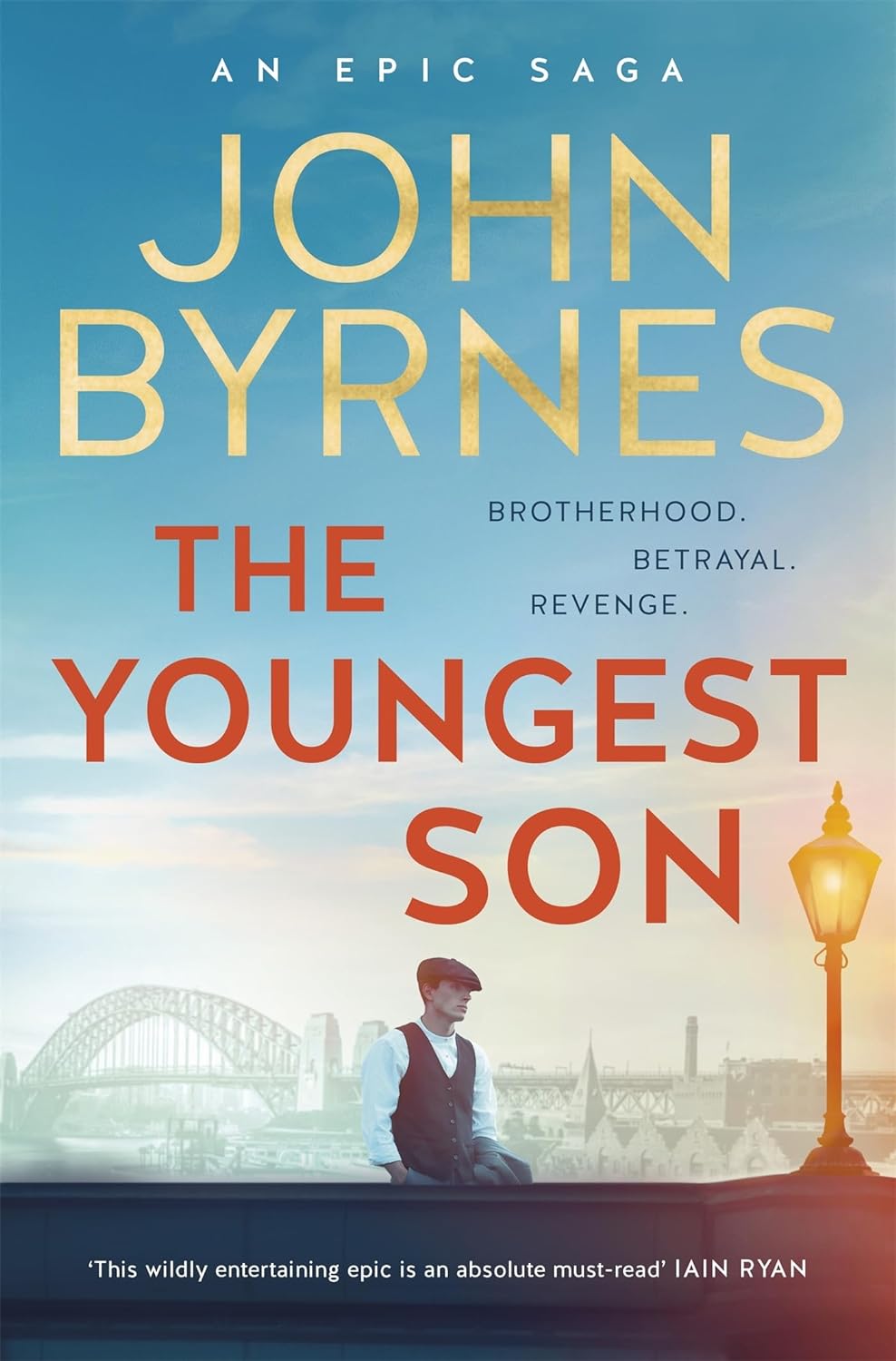
Quick Review – The Youngest Son by John Byrnes

Publisher: Pan Macmillan Australia (Trade Paperback – 30 July 2024)

Series: Standalone

Length: 386 pages

My Rating: 4.25 out of 5 stars

Amazon

Rising Australian author John Byrnes dives into a new genre with the fascinating and compelling historical fiction novel, The Youngest Son, which focuses an exciting and moving narrative around one damaged family.

Plot Synopsis:

On the unforgiving streets of 1920s Sydney, the Leach family have nothing but each other.

In a tale spanning decades, three children of the broken, working-class family find adventure, heartache and trouble as their lives drift apart.

John finds faith and love at a young age. The inevitable clash between the two leads him into a different kind of brotherhood as war clouds gather.

Maureen dreams of a life ‘just like the movies’ and waits to be swept off her feet. Yet at every crossroad, she makes the wrong choice.

Bob discovers a natural talent with his fists and an instinct for trouble. But with every win he earns the hard way, more enemies rise.

From police corruption and gambling dens to brothels and blood feuds, the Leach family toil in Sydney’s seedy underbelly and on battlefields far away. Against the backdrop of the Great Depression and the Second World War, The Youngest Son chronicles one family’s mesmerising fate in a grand saga and a masterclass in epic storytelling.

The Youngest Son was a fast-paced and addictive novel that cleverly followed the youngest members of a disadvantaged working class 1920s Sydney family through the highs and lows of early 20th century Australian history.  Byrnes, who really impressed me last year with his first novel, the gripping modern thriller Headland (one of my favourite debuts of 2023), did an outstanding job diving into the historical fiction genre, and I enjoyed the excellent and personal story that emerged.

The plot of The Youngest Son works very well, as Byrnes follows the varied lives of the three Leach children, John, Maureen and Bob, as well as a raft of other entertaining and complex characters.  Starting in the 1920s and continuing towards the end of World War II, The Youngest Son’s narrative splits between each of these primary characters and follows the highs and lows of their lives.  This includes the criminal activities of the youngest son, Bob, whose career fighting for Sydney’s criminal underbelly leads him into trouble time and time again.  The oldest son, John, attempts to live a good life and join the church, but misfortune and deceit instead lead him towards the horrors of war.  Finally, the daughter of the Leach family, Maureen, tries to find the excitement and glamour missing from her working-class life, but finds only heartbreak and bad decisions as she is constantly led along the wrong path in life.  Each of these characters experience conflict, betrayal, and tragedy as they attempt to find their way in life, and it helps produce one hell of a story.

I really enjoy historical fiction books that follow the lives of multiple characters as they follow their own path amid the backdrop of real-life history, and it is a format that has served many authors, such as Ken Follett, Jeffrey Archer and Peter Watt extremely well over the years.  Byrnes is another great author who perfectly utilised this story telling method, and I had a lot of fun getting to know the Leach family and their various friends and associates.  The author pulls together a great layered narrative, and I loved the mixture of story elements that emerged, including personal stories of self-discovery, a gritty war narrative, and a continued dive into the criminal underbelly of Sydney during the 1930s and 40s.  While all these major storylines are great in their own way, I personally found myself drawn more to Bob’s narrative, mainly because his dangerous dive into the world of underground boxing is full of excitement and action.

Each of the three main protagonists have intriguing journeys in their respective chapters, and I deeply enjoyed where each of their specific storylines go.  All their story arcs have a great mixture of success, tragedy and self-discovery, and you grow attached to all of them as a result.  The storylines also blend into a fantastic major narrative, and while for the most part they are kept separate from each other, they play off each other well, ensuring that readers get a good mixture of emotions and different experiences, as well as alternating character highs and lows.  Byrnes also makes excellent use of the 1930s and 40s background setting throughout The Youngest Son, and the author ensures each character’s story cleverly evolves to face the various changes occurring around Sydney.  The entire narrative goes in some interesting directions, and you willingly follow these characters wherever they end up, even if that leads you even deeper into tragedy.

While the three main characters are all entertaining in their own ways, I felt that the fourth perspective character Byrnes added in really helped to make The Youngest Son especially special.  This fourth character is the villainous Vince, a cowardly street thug who makes a big impact on the Leach family’s lives in different ways.  Vince proves to be a great recurring antagonist, and his slimy story of success blends in well with the alternating fortunes of the Leach children while also providing some real entertainment value.  You really cannot help but dislike Vince as he succeeds, but you really can’t look away as he succeeds, especially as his various dastardly and snivelling interactions with the other characters, primarily Bob and Maureen, prove to be excellent bridges between these protagonist’s respective storylines.  I really appreciate how Byrnes wove the story of Vince amongst the other major narrative threads of The Youngest Son, and the use of the excellent antagonist continuously moves the plot in the best direction, including with the big finale.

Overall, I felt that this was a great book from John Byrnes, who created an amazing and captivating novel with The Youngest Son.  A slick and easy-to-read novel with some real heart that makes excellent use of its impressive character-driven narrative, historical setting, and engaging protagonists, The Youngest Son is an awesome book to get lost in, and it was fantastic to see how Byrnes has grown as an author.

Amazon

Quick Review – Eruption by Michael Crichton and James Patterson

Publisher: Century (Trade Paperback – 4 June 2024)

Series: Standalone

Length: 424 pages

My Rating: 3 out 5 stars

Amazon

If you’re in the mood for an easy-to-read, fast-paced thriller with cinematic scenes of destruction, then look no further than this year’s big blockbuster novel, EruptionEruption was a very interesting 2024 novel that caught my attention early in the year due to the eye-catching superstar writing team of Michael Crichton and James Patterson.  Apparently based on the notes of the late, great Crichton and then written by the world’s biggest thriller author, Eruption was a somewhat improbable creation that came to fruition this year in a big, explosive way that fans of crazy, over-the-top reads are bound to love.

Plot Synopsis:

Two of the bestselling storytellers of all time have created an unforgettable thriller.

A once-in-a-century volcanic eruption is about to destroy the Big Island of Hawaii.

But a decades-old military secret could turn the volcano into something even more terrifying…

Now it’s up to a handful of brave individuals to save the island – and the entire world.


Eruption
turned out to be a unique and memorable read, although not necessarily for all the right reasons.  The overall plot idea is exciting and easy to get into, with a massive volcanic eruption on the Big Island of Hawaii becoming a much more cataclysmic event when the predicted lava flow is expected to destroy a secret government vault containing decades of illegal radioactive waste material.  If the vault is breached, the resulting fallout from some of the vault’s more destructive contents would destroy all life on the planet.  To prevent this, a team of volcano experts from the observatory overlooking the volcano must work with the army and other skilled individuals to find a way to disrupt the lava flow and save the world.

On paper, this plot idea has a lot of potential, and the combination of Crichton’s vision and Patterson’s ability to create intense and exciting books should ensure that this is a pretty epic read.  Indeed, the reader does end up with a highly detailed volcano disaster novel that you could see Crichton imagining, brought to life with the quickfire storytelling and short-burst chapters that readers of Patterson would be familiar with.  However, despite all this, Eruption just doesn’t quite work, and a lot of people are going to come away from this book disappointed.

The main reason for this disappointment is that Eruption’sstory, while interesting in places, is very weak and just a little bit stupid.  While I don’t want to spend an entire review badmouthing every flaw with the story, there were several plot and writing issues that really bugged me which I must mention (SPOILER ALERT).  The first thing I couldn’t get past was the multiple weird and sudden jumps in the timeline that occurred throughout the book, which really throw me off from the story.  This was a minor structural issue in itself, but when combined with the other gaps and issues in the storytelling it’s very noticeable, and I hated it.  In addition, I felt that most of the characters acted like caricatures, and they routinely made stupid decisions again and again.  This includes a group of slightly ridiculous antagonists who, after nearly dying in a helicopter accident halfway through the book, decide to try the exact same thing several chapters later with results you can’t even call ironic, just dumb.  Another memorable issue involves the main protagonist’s major love interest dying in another country from an unrelated volcanic eruption (because why not?), only for the protagonist to mostly forget about them by the end of the book and instead start hitting on the other hot girl he works with.  To top this all off, they throw in a ridiculous ending which has the veneer of cleverness but literally makes all the protagonist’s actions in the book useless, and which kind reveals that none of the experts you’ve been following know that much about either volcanoes or geology.

Now, while I could completely trash Eruption for all its glaring storytelling issues, I’m a positive man, so I will also highlight bright points which will appeal to some readers.  For example, the authors have clearly done some research on volcanoes and volcanic eruptions, and they load up the book with the relevant science and history of volcanic occurrences in Hawaii.  Readers get a real crash course in volcanology, which proves highly fascinating at times, especially as the authors emphasise just how unpredictable and dangerous they can be, especially major volcanoes like those on Hawaii.  This deep understanding of volcanoes also translates into some amazing and thrilling sequences once the inevitable eruptions occur.  Massive and cinematic carnage unfolds before the readers eyes in the second half of the book, and the authors go out of their way to capture the intensity and deadly potential of a volcano, especially through a variety of gruesome deaths.  All these destructive scenes are really enhanced by the quickfire chapter changes featured throughout the book, and the authors do an excellent job of consistently building up tension as you count down to the potential destruction of the world.  All this ensures that, even with the issues I mentioned above, Eruption proves to be a hard book to put down, and you can really get lost in the insanity.

Overall, Eruption proves to be a mostly interesting and fun read, that will stick in the mind, especially as you witness the combined work of two legendary authors.  While there are a lot of obvious flaws, especially with the narrative, Eruption will still appeal to readers looking for a ton of action and over-the-top excitement.  I can honestly see Eruption being turned into a very cinematic action blockbuster at some point in the future, and if that appeals to you, you will have fun reading this cool book.  However, I do hope they fix up the storytelling holes in any eventual adaptation of Eruption.

Amazon

Warhammer 40,000: Oaths of Damnation by Robbie MacNiven

Publisher: Black Library (Audiobook – 24 August 2024)

Series: Warhammer 40,000

Length: 10 hours and 57 minutes

My Rating: 4.5 out of 5 stars

Amazon

Prepare to follow the most damned heroes in the Warhammer 40,000 canon in the impressive and intense new novel from Robbie MacNiven, Oaths of Damnation.

Recurring readers of this blog will know that I am constantly in the mood for fun and exciting Warhammer 40,000 action, which is why I listened to the awesome new book, Oaths of Damnation, the moment I could.  Written by new-to-me veteran Warhammer author Robbie MacNiven, a man with a lot of experience writing about complex Space Marines, Oaths of Damnation was one of the more intriguing Warhammer 40,000 books of 2024, and I really loved the opportunity to check out the infamous Exorcists Space Marines Chapter.

In the far, war-torn future, the Imperium of Man is under constant attack from the forces of the Chaos gods and their deadly daemon servants.  Few within the Imperium, even amongst the legendary Space Marines of the Adeptus Astartes, can fight against the daemons of Chaos on an equal footing, but there is one Space Marines Chapter, the Exorcists, that takes the battle to them in the most unorthodox and heretical of ways.

The Exorcists are an elite and secretive Chapter of Space Marines who make the ultimate sacrifice to fight the forces of Chaos.  Willingly accepting daemonic possession as part of their initiation, prospective Exorcists need to banish the daemon within themselves to join the Chapter.  Those who succeed become fierce warriors who are now resistant to the corruption of Chaos at the cost of their own fractured souls.  However, those that fail suffer a fate worse than death as they become Broken Ones, living prisons for the daemons summoned and expelled by the rest of the Chapter.  Few in the Imperium know the sacrifices that this Chapter makes to fight the enemy; if it were to become common knowledge, all the Exorcists would be put to the flame as heretics.

As such, when a dark conspiracy sees a Broken One containing a powerful daemon, the Red Marshal, escape from the Exorcists custody, the Chapter sends a unit of its elite Hexbreakers to hunt it down before their secrets are exposed.  Led by the dogged Almoner-Lieutenant Daggan Zaidu and powerful psyker Codicier Torrin Vey, the Exorcists strike force journeys to Fidem IV, a planet littered with ancient battlefields, to hunt down the Broken One and destroy the daemons within.

But as the Exorcists battle across the planet looking for their prey, it soon becomes clear that members of the Word Bearers traitor Space Marines Legion are on Fidern IV, seeking the Broken One for their own sinister purposes.  Worse, a dangerous connection exists between Zaidu and the Red Marshal, one that could endanger the entire mission.  Can the Hexbreakers succeed and hunt down the Broken One before it is too late, or will their Chapter’s darkest secret be unleashed upon the entire Imperium in a wave of blood?

Oaths of Damnation was a particularly intriguing and intense Warhammer 40,000 novel that really showcased MacNiven’s skill as an author.  Featuring a detailed look at a particularly cool faction in the Warhammer 40,000 canon, Oaths of Damnation was an excellent and exciting read that constantly grabbed my attention and refused to let go.

I really enjoyed the fantastic narrative contained within Oaths of Damnation, especially as MacNiven was able to produce a book that allowed him to tell his own distinctive story while also expertly highlighting the Exorcists Chapter.  Oaths of Damnation’s story starts off strong, with a look at the Broken One’s bloody escape from the Exorcists’ custody, which effectively sets up the Red Marshal as a deadly antagonist.  The following story moves at a quick pace as. With only a minimal amount of exposition and introduction, the protagonists set forth to Fidern IV to find the escaped Broken One, only to encounter opposition from the desperate daemon and the Word Bearers.

What follows is a series of intense and well-written battle sequences as the Exorcists pursue their target across the planet and fight against the various forces of Chaos.  MacNiven ensures a compelling story structure, as the protagonists face determined opposition, brutal fights and unexpected setbacks on the way to victory.  The author also spends time diving into the psyche of several key characters, which adds some intriguing intensity of the plot, especially as many find themselves distracted or conflicted by the mission.  MacNiven anchors the end of story on two massive action set-pieces that push the Exorcists to the limit and force them to face their internal and external daemons.  I liked some of the fun, if not unexpected, twists that MacNiven threw in in the lead up to the final battle, and the constant prophetic hints about dark events to come really enhanced the intensity of the plot towards the end.  The final confrontation is particularly impactful and moving, especially as there are some major sacrifices being made and all manner of carnage to behold.  I really appreciated the dark ending that MacNiven left the story on, and no-one should come into Oaths of Damnation looking for a happy ending.

MacNiven did an outstanding job capturing the dark and grim nature of the Warhammer 40,000 universe with his writing, and I felt that this was an extremely strong read overall.  While there are some complex lore events contained within, for the most part Oaths of Damnations was an accessible novel, even for those readers unfamiliar with the canon (although some basic Warhammer 40,000 knowledge would be helpful).  The author does an excellent job exploring the plot through the perspective of multiple complex characters, which resulted in a very compelling read, as many of the protagonists are forced to continually overcome their literal inner daemons.  I felt that this focus on damaged characters, as well as the intriguing examination of some unique Warhammer lore, helped Oaths of Damnation escape the ‘bolter porn’ label that many Space Marine novels are painted with.  That being said, Oaths of Damnation does have some particularly striking action sequences that fans of Warhammer 40,000 battles will really enjoy.  MacNiven clearly has a gift for showcasing Space Marines in all their martial glory with his writing, and you really get a sense of their power, intensity, and sheer destructive capability.  I also deeply enjoyed how he richly depicted their fighting capability and style, and the way in which he detailed the impacts of the bolt shells, the durability of the power armour, and the strength of their attacks, was honestly some of the best representations of Space Marines in combat I have ever seen.  I really cannot emphasise how impactful MacNiven’s writing style was, and Oaths of Damnation is a great book for all Warhammer fans, especially those buzzing for some Adeptus Astartes action after playing Space Marine 2.

A major highlight of this book for Warhammer 40,000 fans is the inclusion of the very cool Space Marines Chapter, the Exorcists.  A band of secretive and hidden Space Marines who willingly allow themselves to be possessed so they can learn to fight daemons better is an awesome concept, and MacNiven did an outstanding job showcasing this to the readers of Oaths of Damnation.  With only minimal lore dumps at the start of the novel, MacNiven ensures that the reader gets a sufficient and intriguing idea of who the Exorcists are and how they become lethal daemon fighters, and it proves fascinating to dive deeper and deeper into their Chapter as the book continues.  Not only is there is a great focus on how and why they damn themselves, but I also really appreciated the comprehensive way in which MacNiven tried to explore the other side effects of becoming an Exorcists, as well as the unique culture that they share.  The concept of the lingering bond that each Exorcist holds with their Never-brother, the daemon that possessed them, so much so that they still hear fragments of their voices and gain personality traits or combat abilities reminiscent of their former possessor, was particularly cool, and the author does an excellent job of showcasing it.  MacNiven also expertly covers the concept of the Orison Cults, social and ceremonial cults of the Exorcists dedicated to specific rituals and combat styles, and which serve a vital part in the larger Exorcists culture.  It was fascinating to see the ways that the now practically soulless Exorcists try to retain their humanity throughout their day to day lives, and how they replace the holes in their being with ritual and false comradery.  This combination of Exorcists’ lore, and MacNiven’s compelling dive into the deeper motivations and minds of its members, made for outstanding reading and it fun to see this complex and damaged Chapter in action.

I also have a lot of love for the compelling main characters featured within Oaths of Damnation.  While Space Marine characters in Warhammer fiction can sometimes be a little dull, the main two protagonists of this book, Almoner-Lieutenant Daggan Zaidu and Codicier Torrin Vey, each has a complex background and connection to the target that ensures that the reader is drawn into their story.  Zaidu’s is particularly fun, as Zaidu feels substantial guilt and anger at the damage caused by the Red Marshal, as it was the daemon that formerly possessed him.  Determined to end the connection between them once and for all, Zaidu lets his recklessness control him in many parts of the book, and it was deeply compelling to see how obsessed he became.  Vey on the other hand is a veteran Space Marines librarian, who stands as the beacon of knowledge to the group.  The man responsible for Zaidu’s possession by the Red Marshal, Vey bears a lot of guilt within himself, and he works hard to keep Zaidu safe from his own anger, impatience and desperation to kill his Never-brother.  Vey and Zaidu play off each other perfectly throughout Oaths of Damnation with their troubled mentor/mentee relationship, and MacNiven makes sure to hit all the right emotional notes to get the reader involved in their tales of personal woe.

In addition to Zaidu and Vey, MacNiven provides some fantastic alternative perspectives from several other members of the Exorcists who journey to Fidem IV.  As with the main two characters, each of these Exorcists are deeply troubled and damaged because of their former daemonic possession, and each then battles with the side-effects of the process, as well as the lingering taint of their Never-brothers.  This ensures that Oaths of Damnation has a rather dour tone to it at times, but seeing these damaged, yet highly determined and loyal Space Marines in battle is powerful and really drags the reader in.  The Exorcist characters are well balanced by a raft of compelling and distinctive villains, including a darkly charismatic Dark Apostle with great ambitions and a weary veteran Word Bearer who has started to question his role in the universe.  However, the most important villain is the fallen daemon known as the Red Marshal, who hungers for freedom and a return to power.  You get several intriguing trips into the Red Marshal’s mind, and I enjoyed seeing his boiling rage and determination to regain his god’s dark favour.  These great characters really helped elevate Oaths of Damnation’s plot, and I enjoyed seeing all their respective narratives unfold.

As usual, I ended up grabbing this cool Warhammer 40,000 novel on audiobook, which is my preferred way to enjoy books from this franchise.  While all Warhammer audiobooks are great, I felt that Oaths of Damnation came across particularly well in this format, and you really got dragged into the action and excitement as it was read out to you.  I personally found myself absorbing the complex lore surrounding the Exorcists a little better while listening to it, which helped with the overall impact of the story.  Oaths of Damnation also strongly benefited from the excellent narration of Charles Armstrong.  Armstrong, who previously impressed me with his narration of the Warhammer Crime audiobook, Bloodlines by Chris Wraight, did another excellent job in Oaths of Damnation as he expertly showcased the elaborate story with his voice.  I particularly enjoyed his compelling take on the various characters featured within the novel, especially the main protagonists, and he really captured their dark inner feeling and dedication in multiple scenes.  This proved to be an epic audiobook, and, with a runtime of just under 11 hours, it is one that dedicated listeners can get through fairly quickly.  I personally would recommend this format as the best way to enjoy Oaths of Damnation, or indeed any Warhammer 40,000 novel.

Oaths of Damnation was a particularly strong and exciting piece of Warhammer 40,000 fiction that I had an incredible time getting through.  Robbie MacNiven has produced another gripping and intriguing read that cleverly dives into the complex lives of a unique Space Marines chapter, and I loved every second of it.  An intense, dark and action-packed read, Oaths of Damnation really expresses the grimdark nature of the Warhammer 40,000 universe and you’ll have a very hard time escaping once you get sucked in.

Amazon