Star Wars: Thrawn: Treason by Timothy Zahn

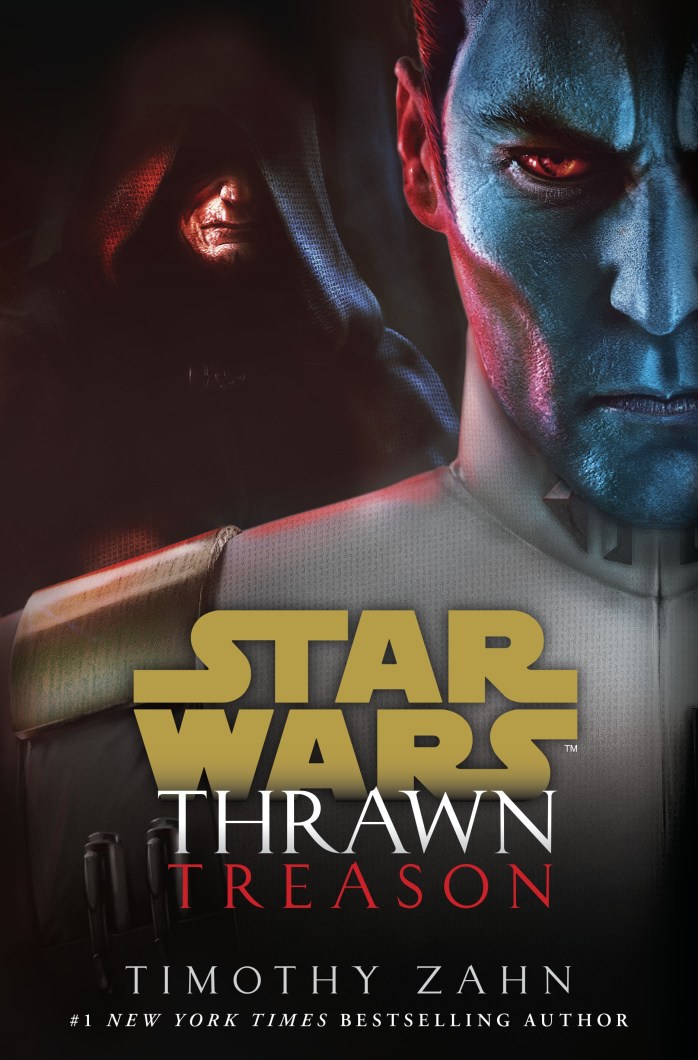
Thrawn Treason Cover

Publisher: Century (Trade Paperback – 25 July 2019)

Series: Thrawn – Book 3

Length: 333 pages

My Rating: 4.5 out of 5 stars

Amazon

The master of Star Wars extended universe novels, Timothy Zahn, returns with a third incredible book in his outstanding Thrawn series, Treason, which features the final adventure of his most iconic protagonist, Grand Admiral Thrawn, before his last appearance in Star Wars: Rebels.

While the new Disney Star Wars extended universe has produced some truly exceptional entries in the last couple years, the Thrawn series of books has been a real bright spot amongst them. Grand Admiral Thrawn was the antagonist of Zahn’s original Thrawn trilogy back in the 1990s, and quickly became a fan favourite character among the Star Wars fandom. After Thrawn was introduced into the new Star Wars canon as the primary antagonist of Star Wars Rebels in seasons 3 and 4, Zahn was brought back to write a series of novels that provided an updated history for this character.

The Thrawn series has so far consisted of two books, Thrawn and Alliances. In Thrawn, we are introduced to Mitth’raw’nuruodo, or Thrawn, a member of the Chiss Ascendancy, a race of aliens from outside the known galaxy, who was marooned within Imperial Space. Thanks to a secret connection to Anakin Skywalker and a clear demonstration of his tactical ability, the Emperor takes Thrawn into his service and employs him as an officer in the Imperial Navy. Accompanied by a young officer, Eli Vanto, who serves as his translator, aide and student, Thrawn rises through the ranks all the way to Grand Admiral by defeating a series of rebel and pirate forces. Towards the end of the book, it is revealed that Thrawn is still in service to the Chiss Ascendancy, and his loyalty to the Empire may be conditional on the Empire not threatening his people. In addition, he has sent Vanto to the Chiss, as he believes that his tactical abilities, honed under Thrawn’s tutorage, may be of benefit to their forces. Alliances, which is set after the events of the third season of Star Wars Rebels, reveals the history between Thrawn and Anakin Skywalker, and has Thrawn work with Darth Vader to investigate mysterious events in the Unknown Regions. There the reader is introduced to the Grysk, a dangerous alien species living in the Unknown Regions who are making aggressive moves against both the Empire and the Chiss Ascendancy. Together, Thrawn and Vader are able to foil the Grysk’s immediate plans, although they remain a dangerous force.

I really enjoyed both of the previous books in the Thrawn series. Thrawn is probably the best expanded Star Wars book I have had the pleasure to read so far, while Alliances did a great job continuing the series and featured a fantastic team-up between two of my favourite Star Wars characters. I personally enjoyed the first book a lot more than the second, although this may be because I did read the series out of order, starting with Alliances and then going back to Thrawn. I have been looking forward to the third book in the series for a while now. Not only did I look at it for one of my Waiting on Wednesday articles, but it also featured on my recent Top Ten Most Anticipated July-December 2019 Releases list.

In Treason, which is set in the midst of the fourth season of Star Wars Rebels, Thrawn is forced to postpone his campaign against the Rebels on Lothal when Grand Moth Tarkin informs him that funding for his Tie Defender Program is at risk of being reappropriated by Director Krennic’s secret program, Stardust. Placed in the middle of a political battle between Tarkin and Krennic, Thrawn must ensure the security of Stardust’s supply chains in order to retain his funding. What at first appears to be a routine mission against a dangerous form of alien space vermin quickly reveals that the supply lines are actually being targeted pirates who have knowledge about the materials being sent to Project Stardust.

The subsequent arrival of a Chiss ship with his former protégé Eli Vanto serving aboard raises further problems, when they reveal that a force of Grysk ships are active deep within Imperial Space. Now Thrawn must not only find out what the Grysk’s mission is but also foil a large-scale conspiracy from within the Empire. As Thrawn engages his opponents in space, the real danger comes when his loyalty to the Empire is called into question. Can Thrawn continue to serve both the Emperor and the Chiss Ascendancy, or will the Emperor finally tire of his treason?

Treason was another outstanding outing from Zahn, who once again produces an addictive and clever entry in the Star Wars expanded universe that does an exceptional job showing off his iconic protagonist. Treason was a real pleasure to read, and I found myself unable to put it down at times, as I was so engrossed by the excellent story and the fantastic examples of action in the Star Wars universe. The end result was amazing book which wraps up Thrawn’s current storyline and ties it into his appearances in the wider Star Wars universe.

Just like the previous books in the series, my favourite aspect of Treason is the focus on the titular character of Thrawn. Thrawn is one of the most tactically minded and analytical individuals in the entire Star Wars universe and is an unsurpassed military genius, able to defeat superior forces with his tactics and intelligence. Zahn has always done a spectacular job of portraying a character like this in his books, and Treason is no exception. Throughout the course of the book, Thrawn comes up with a series of tactical plans and deductions to confound his opponents and defeat their forces totally. The sheer range of different strategies and plans he comes up with are pretty ingenious, as are the ways that he is able to deduce how his opponents think, such as by analysing their artwork or their body language and movements. This results in some pretty amazing sequences throughout the book and included one extremely epic conclusion that sees Thrawn defeat a massively superior force without even being on the command deck of his ship. Instead, he leaves step-by-step instructions with his subordinate to perfectly counter and defeat his opponents. Honestly, I wish I could elaborate more because it was such an epic sequence, but that would require revealing some pretty big spoilers. I really love the focus on Thrawn and hope we get to see some more of his adventures and battles again in the future.

Despite the focus on Thrawn, much of the story is told from the perspective of some of his colleagues and subordinates, although many of these scenes also feature Thrawn’s observations on the other character’s body language and intentions. The use of all these point-of-view characters actually works really well, as it allows the reader to see Thrawn’s various tactical moves through the eyes of a normal character, thus requiring Thrawn or one of his protégés to explain in detail how he was able to come up with his actions, kind of like how Watson was used in the Sherlock Holmes novels. The characters of Eli Vanto and Commodore Faro have both served this purpose in the previous two books in the series, and it was good to see them both at it again in Treason. However, both have pretty major story arcs within this book, and it was interesting to see how their characters have evolved since first meeting Thrawn. This book also features several Chiss characters, such as Admiral Ar’alani, and it was intriguing to see their view on Thrawn’s actions and his role within the Empire. Zahn has also included a new character, Assistant Director Ronan, who has a major point-of-view role within the book. Ronan is a fairly annoying character most of the time, due to his arrogance and blind worship of his superior, Director Krennic. However, he does offer some pretty cool insights into Thrawn and the other character’s actions, and it was fun to see his respect for Thrawn reluctantly grow through the course of the book. These alternate point-of-view characters also allowed for some enjoyable speculation about Thrawn’s actual loyalties, and whether he currently serves the Emperor or the Chiss, and I felt that using all these side characters really added a whole lot to the overall story.

Like all of the other books in the Thrawn series, Zahn includes a huge number of action-packed sequences that are very exciting to read. Due to the focus on characters in the Imperial Navy, the vast majority of these battles are set within space and feature battles between the various spacecraft of the Star Wars universe. These space battle sequences are written extremely well, and they allow the reader to get an excellent idea of the cool fights that are occurring on the pages. Many of these sequences are enhanced by the various protagonists’ reliance on advanced tactics and stratagems, and as a result you get a much more complex and entertaining fight than some of the other space battles that occur in other examples of Star Wars fiction. I really enjoyed all the cool battles in this book, and the ones featured in Treason are a real highlight of the entire series.

Honestly, Treason is probably best explored by hardcore Star Wars fans. Not only does it deal with some quite obscure characters and aspects of the Star Wars universe but it is also the third book in a series with strong connections to Star Wars Rebels. I would therefore strongly recommend that readers check out the first two books in the Thrawn series first, as this will give them a more solid base to the story within Treason and provide them with some useful background into the Star Wars universe. However, for those readers who do not have any prior experience of the Thrawn books or some of the storylines explored in Star Wars Rebels, this is still an extremely accessible book, and Zahn does a good job of exploring key events of the previous stories featuring the character of Thrawn. I think that all readers, even those who only have knowledge of the franchise’s films, will also enjoy the deep dive into Star Wars lore that is featured within this book.

The entire Thrawn series so far has explored a number of aspects of the Empire before the events of the first Star Wars film, A New Hope, which I have found to be exceedingly fascinating. This is continued in Treason, where the author continues to examine the running of the Imperial Navy and also looks at the creation of the Death Star, namely the supply lines heading out to the construction zone. This book also features an intriguing look at the rivalries and politics that existed at the highest echelons of the Imperial power structure. In particular, Thrawn finds himself in the middle of the conflict between Grand Moth Tarkin and Director Krenic, which was shown in the Rogue One film. This was a particularly intriguing part of the book, and it is always interesting to see Thrawn engaged in political activities, as it very much outside his wheelhouse, although the results of this political battle were extremely fun. Treason also features more details on the species that inhabit the mysterious Unknown Regions of space, in particular the Chiss Ascendancy and the Grysk. Neither has been explored too much in the current canon, and Thrawn has been the only Chiss featured so far. All these explorations of the Star Wars lore are a really interesting part of the book that I loved reading and found extremely fascinating.

Treason is set in the fourth season of the Star Wars Rebels television show. In particular, the start of the book mirrors a scene in the 10th episode, Jedi Knight, and ends with the set–up of the final two episodes of the series. Unfortunately, this probably means that Treason will be the last Thrawn book for a little while as Star Wars Rebels ended (spoilers! although it’s been over a year since the finale) with Thrawn and the protagonist of Rebels, Ezra Bridger, being transported off into an unknown area of space. While the end of the episode hinted that Ezra was still alive (and therefore Thrawn would be as well), it may be some time before we find out his eventual fate. While there are no current plans for a continuation or sequel to Star Wars Rebels, I could see them trying to do something after the release of the seventh season of the related The Clone Wars show. Zahn has also stated that he is planning to write some additional Thrawn novels, although these are tied up until the ninth Star Wars film, The Rise of Skywalker, is finalised. Whether these Thrawn books will be tied into any future animated versions of Thrawn or be set before the end of Star Wars Rebels remains to be seen, although I personally would love to see what happens to Thrawn and some of the other supporting characters from these series.

Treason by Timothy Zahn is another exceptional entry in the Thrawn series, which once again explores one of the best characters in the Star Wars universe. Thrawn is a fantastic character, and Zahn does an exceptional job showing off his tactical prowess through a series of intense and complex battles in space. I really loved seeing how this part of Thrawn’s adventure unfolded, and Zahn has really produced a compelling story that proved exceedingly hard to stop reading. A first-rate Star Wars tie-in novel, Treason is really worth checking out. I honestly can’t think of any character I would love to see more of in the future than Grand Admiral Thrawn.
Amazon

The Kremlin Strike by Dale Brown – Audiobook Review

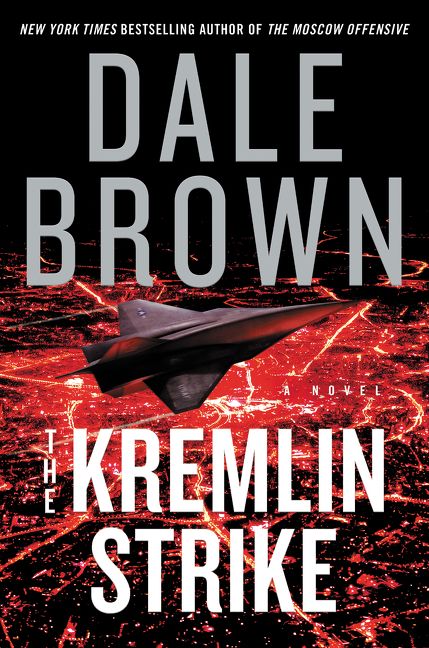
The Kremlin Strike Cover

Publisher: HarperAudio (7 May 2019)

Series: Patrick McLanahan series – Book 23

Length: 13 hours and 18 minutes

My Rating: 4.5 out of 5 stars

Amazon     Book Depository

Bestselling author Dale Brown, perhaps one of the best current writers of military thrillers in the world today, returns with another exciting instalment of his Patrick McLanahan series, which takes America’s battle with Russia up into high orbit.

Following the recent defeat of his deadly combat robots in Texas, Russian President Geenadiy Gryzlov is desperate to strike back against the hated Americans. However, he no longer faces the inept US administration he enjoyed over the last couple of years. Instead, his failed attack on America has resulted in the election of a strong new president, John Dalton Farrell. With Farrell once again backing the innovative and resourceful private companies of former US President Kevin Martindale and former general Patrick McLanahan, Sky Masters and Scion Aviation International, America’s future looks bright. One of Farrell’s first priorities is the immediate resumption of America’s research into space flight and defence, resulting in Iron Wolf Squadron members Brad McLanahan and Nadia Roz being recruited by Sky Masters to head up their revamped space initiative.

However, the Americans are not the only ones with an eye to space. Knowing that Russia’s future world dominance depends on controlling the stars, Gryzlov has ordered the construction of a high-tech space station, Mars 1. Armed with devastating plasma weapons capable of shooting down every US satellite orbiting the planet as well as missile launchers that can rain down fire anywhere on the world, Mars 1 is an absolute game changer that will ensure Gryzlov finally achieves victory over the United States.

America’s only hope once again rests in the hands of the men of Sky Masters and Scion. As the Scion operatives attempt to determine a weakness in Mars 1’s defences, Sky Masters have created a number of advanced space planes and weapons that will allow Brad and Nadia to take the fight to the Russians in space. Will this new equipment be enough, or will Russia’s grip on high orbit propel them to a final, devastating victory?

Brown has been one of the best and most prolific authors of military fiction for over 30 years, having written 29 military thrillers in this period, as well as co-writing 18 books in the Dreamland series with Jim DeFelice. I only recently got into Brown’s books last year, when I read his 2018 release, The Moscow Offensive. After being drawn in by the promise of advanced military robots fighting it out in the American heartland, I fell in love with the awesome plot, intense action and analyses of real-world political strife, and as a result, The Kremlin Strike was one of the military thrillers I was looking forward to the most this year. The Kremlin Strike is the 23rd book in Brown’s Patrick McLanahan series, which follows the titular character and his allies as they attempt to keep America safe from a series of high-tech military threats. This book could also be considered to be sixth book in the Brad McLanahan series, as the overarching plot of the series started to focus more on Patrick’s son, Brad, in Tiger’s Claw, especially after Patrick McLanahan’s supposed death.

I absolutely loved the central concept of The Kremlin Strike, which looks at the potential of Earth’s high orbit to host the next major military conflicts that we see. This is not a new focus for Brown, as some of his previous books in this series, including Executive Intent and Starfire, have looked at the potential of space-born weapons. Before the story even starts, Brown makes it clear that he believes the United States needs to focus more on the possibility of a future war in space, and even includes some real-world news excerpts that look at recent advances in military technology that can be used to fight battles in space or destroy satellites orbiting the planet.

Based on this, Brown is able to come up with an incredibly intriguing military thriller that looks at the battles that could occur in the near future. I found it absolutely fascinating to see the author’s theories about how space warfare could be conducted, and the tactical advantages of having control of Earth’s orbit. While some of the technology in featured in the story, such as the Cybernetic Infantry Devices, are probably more advanced than what Russia or America can currently use (probably), Brown does examine a number of weapons and vehicles that are currently being tested in space. The various laser weapons, plasma launchers (OK, these are slightly less likely), missiles and other cool weapons or technology used in the battle in space make for some interesting reading. There were also some intriguing looks at the various limitations or downsides of the space technologies featured in this book, such as energy issues, fuel consumption or the gravitational backlash some weapons may experience. I especially liked how Brown was able to capture a more accurate view of space combat, with invisible laser beams rather than the colourful blasts you see in most science fiction movies.

All of the focus on combat in space is a superb basis for a story, and Brown backs that up with some first-rate storytelling to make this an outstanding read. The Kremlin Strike was an excellent blend of action, advanced technology and spy fiction that also has some intriguing mirrors to current world politics. The author tells the story from a range of different character perspectives, allowing for a widespread story that works incredibly well. I especially liked seeing the opposing views of the protagonists and antagonists, as it allowed the reader to see multiple sides of the overall conflict. For example, the reader gets to see the Russians plan their moves, and then you get to see the American countermoves. This view of the different sides of the conflict also works because neither the Americans nor the Russians have a solid idea of what the other side is planning. The reader is the only person who knows what is going on in both camps, and it is really fun to see the opponents slowly work out each other’s tactics during the course of the narrative, and then panic when they realise what their enemy is planning.

In addition to the combat in space, Brown also displays his detailed knowledge of modern warfare and military throughout the course of The Kremlin Strike. There are a huge number of scenes where modern military technology, techniques, strategies or standard operating procedures are featured, all topped off with a good helping of military terminology and acronyms. Brown utilises all of these extremely well, and there is nothing too overwhelming for readers who have a low understanding of the relevant jargon. All the action in this book is written incredibly well, and it was just plain thrilling to see some of the battles in the sky or in space take place. There were also some cool espionage sequences thrown in throughout the story as well, emphasising the benefit of human intelligence in current conflicts. All of these various aspects come together into a wonderful military thriller narrative, which proved extremely hard to stop listening to.

Another part of The Kremlin Strike that I enjoyed was the use of the fantastic prime antagonist, Russian President Geenadiy Gryzlov. Gryzlov has been a key villain in the last few books of the Patrick McLanahan series, and his angry, vindictive nature and his sheer inability to admit his own mistake makes him an amazingly easy character to dislike. I always find that a great antagonist can add so much to a story, and this is especially true in this book, where you can’t help but root for the protagonists and enjoy when the antagonist’s plots come to naught. You also cannot help but feel sorry at times for Gryzlov’s subordinates, who are forced to obey his wild orders, despite knowing that they will be punished when they fail. I really enjoyed a fun story development that occurs around this character in The Kremlin Strike, which I thought that Brown planned out very well, and which was one of my favourite highlights of this book.

While I absolutely loved The Kremlin Strike, the author has included a few right-wing political issues that might not be appealing to every reader. Right at the start of the book, Brown is very supportive about recent decision by the current US administration to form a specific armed force for space warfare, and this book examines the necessity of such a force. In addition, if you read between the lines a little, the US president in The Kremlin Strike, Farrell, could be a partial stand in for the current real-life United States president, while the previous incompetent president, Stacy Anne Barbeau, could be seen to represent this president’s real-life opponent at the 2016 election. Farrell is a political outsider, disliked by the media, whose tough talk and determination to cut through the bureaucracy of Washington (drain the swamp, if you will), won the support of the American people. The book’s apparent support of the current US president and some of his controversial decisions may be off-putting to some readers, although I do not believe that it harmed the entertainment value of the story. I personally found it interesting that in this scenario Brown once again painted Russia as America’s greatest enemy, which is something the current US president appears extremely reluctant to do, although perhaps I am reading into this too much.

I ended up listening to the audiobook version of The Kremlin Strike, which is narrated by William Dufris. The audiobook version of this book runs for a moderate 13 hours and 18 minutes, and I found it to be a great way to enjoy this exciting and detailed military thriller. Having only read Brown’s work before, I felt that having the audiobook book version playing in my ear helped ramp up the action sequences as well as increase the sense of urgency of the events occurring in the book. Dufris is also an excellent narrator, coming up with a huge number of great voices for the various characters that make up the cast of this book. The voices he attributed to these characters were really good and captured their personalities extremely well, such as, for example, the anger, ruthlessness and paranoia exhibited by Gryzlov. Dufris also did a good job with the character accents, continuing utilising a number of Russian accents throughout the book, as well as accents from other Eastern European countries such as Poland. I really enjoyed listening to the audiobook version of The Kremlin Strike and I think I will check out this format for any future books in the Patrick McLanahan series.

In this latest book in his long running Patrick McLanahan series, Dale Brown has once again created a first-class military thriller that is an absolute treat to read. The author’s focus on the future conflicts that may occur in our planet’s orbit were extremely fascinating, and the story created around it was a captivating and electrifying read. Easily accessible to those readers who have not previously had the pleasure of reading the Patrick McLanahan series before, The Kremlin Strike was a deeply enjoyable book, and a must for all fans of both the science fiction and military thriller genres.

Amazon     Book Depository

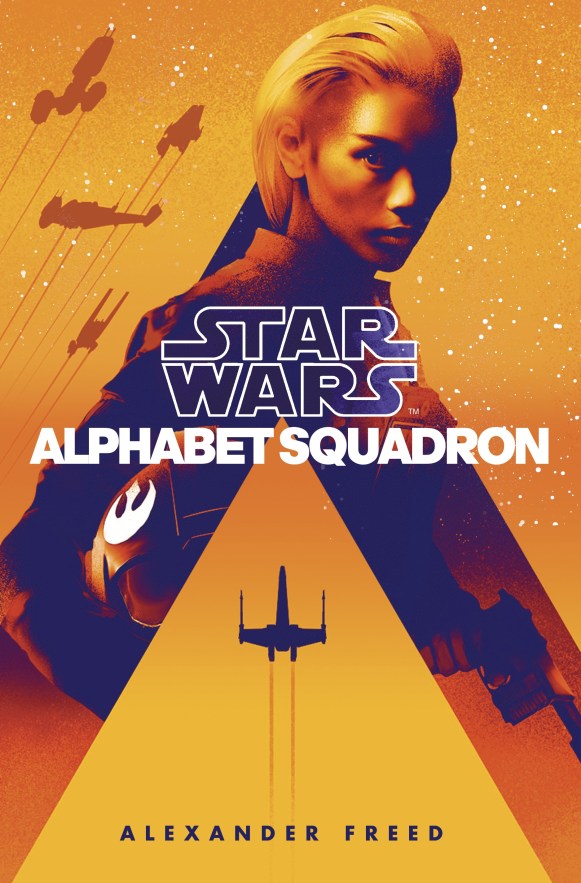
Star Wars: Alphabet Squadron by Alexander Freed

Alphabet Squadron Cover

Publisher: Century (Trade Paperback – 18 June 2019)

Series: Star Wars

Length: 408 pages

My Rating: 4.5 out of 5 stars

Amazon

The Star Wars expanded universe continues to grow as Alexander Freed presents a new and exciting adventure in the Star Wars canon, Alphabet Squadron.

Following the death of the Emperor and the destruction of the second Death Star during the Battle of Endor, the Empire has fragmented. Without the Emperor’s leadership, the various Imperial commanders have devolved into infighting and are faltering in the face of opposition from the united forces of the Rebel Alliance, who have renamed themselves as the New Republic. However, pockets of Imperial power still exist throughout the galaxy, many of which have the destructive potential to fulfil the Emperor’s final order, Operation Cinder, the devastation of as many planets as possible.

Yrica Quell is a former Imperial TIE fighter pilot who deserted in the face of the Emperor’s final order. Living in exile with other Imperial deserters, Quell is recruited by Caern Adan from New Republic Intelligence to hunt down the remnants of the 204th Imperial Fighter Wing, Quell’s old unit. Known as Shadow Wing, the 204th, under the command of Colonel Nuress, has taken command of the planet of Pandem Nai, and is using it as a base to launch raids against New Republic targets.

In order to find and defeat Shadow Wing, Quell and Adan bring together a group of talented pilots who have experienced loss at the hands of the 204th pilots. Flying an assortment of starfighters and given the name of Alphabet Squadron, these pilots must learn to work together if they wish to have a chance against Shadow Wing. As Alphabet Squadron launches under the command of New Republic General Hera Syndulla, they must face not only some of the most skilled pilots in the galaxy but also some dangerous secrets from Quell’s volatile past.

Those readers who have followed my blog for a while will know that I have been really getting into the new Star Wars expanded universe in the last year. Alphabet Squadron has been high on my to-read list for a while now, and I had high hopes that this book would represent the start of an intriguing new series within the overarching Star Wars franchise. I have to say that I was in no way disappointed. Freed, who has written several Star Wars novels in the past, creates an intriguing new addition to the franchise which was a real pleasure to read.

Alphabet Squadron is set shortly after the events of the third original Star Wars film, Return of the Jedi, and focuses on the chaotic aftermath of the Rebels’ victory at Endor. In addition to that, Alphabet Squadron also crosses over with Marvel Comics’ latest Star Wars comic, TIE Fighter, which follows the exploits of the elite TIE fighter flight known as Shadow Wing. The trade paperback version of Alphabet Squadron even contains the first few pages of TIE Fighter Issue #1 in the centre of the book. The artwork in it actually looks pretty cool, and I think I will pick up a collected edition of it in the future.

This latest addition to the Star Wars universe contains an entertaining and at times emotional story that not only expands on the Star Wars universe, but which also features examinations of the horrors of war, the emotional toil of combat and characters attempting to find their place in a new reality. Alphabet Squadron is split among a huge range of perspectives, including of protagonists and antagonists, which really works to tell a complex and multifaceted story. In addition to this fantastic original story, Alphabet Squadron also features exciting starfighter combat, a new and at times darker perspective on the franchise lore and some excellent character work. There is also a lot of potential for the story to continue into additional books in the series, which I think would be good.

One of the big focuses of this book is the starfighter combat between the protagonists flying as Alphabet Squadron and the antagonists flying as Shadow Wing. The space combat in this book flies thick and fast, and there are a number of high-energy and action-packed sequences as the various starfighters engage in all sorts of combat. There are some great space fight sequences in this book, such as the protagonist fleeing from her old squadron or the continuous attacks of Shadow Wing against a New Republic cruiser and its fighter escort over a sustained period of time. Freed also does an exceptional job using multiple character perspectives to show various sides of the battle, which really helps to make these action sequences even more impressive. This all leads up to a massive final battle sequence that has some pretty epic moments and a whole lot of destruction.

One of the aspects of the focus on the starfighters that was particularly intriguing was the makeup of the titular Alphabet Squadron. Alphabet Squadron was so named because each of its five members fly a different Rebel Alliance fighter, each of which has been featured in the various movies. These include: (add photos)

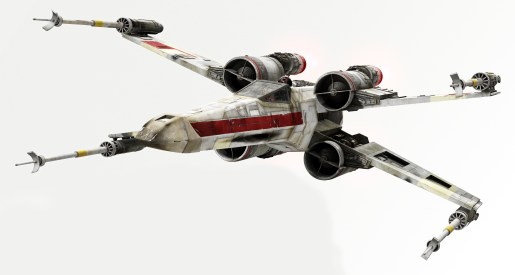
Yrica Quell – X-wing. X-wings are the iconic fighter seen in most of the movies and serve as the main fighter of the Rebel fleets.

Xwing-SWB.jpg

Nath Tensent – Y-wing. Y-wings were seen in all three of the original movies and are the Rebel Alliance’s bombers.

Y Wing.png

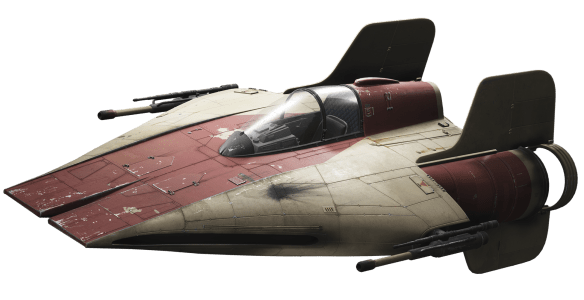
Wyl Lark – A-wing. A-wings have appeared in a couple of the movies and television shows and were the fastest ships in the Rebel Fleet.

A-wing_DICE.png

Chass na Chadic – B-wing. One of the more usual ships in the Rebel arsenal, these are slower ships with a huge amount of firepower.

BWingsKillISD2-ST.jpg

Kairos – U-wing. The Rebel Alliances troop transports. A couple of them first appeared in Rogue One and have been a feature of the Rebel Fleet ever since.

U-wing-SW_Battlefront.png

Having all five different ships in one squadron was a really cool concept that I really liked. Not only did it give a cool name for both the book and the squadron, but it showcased the various pros and cons of the various Rebel starfighters. Having a group made up of one of each of these ships makes for some intriguing problems, as well as giving the protagonist some unique advantages. The various tactics these mixed ships can employ in battle are really interesting, and it was a great concept that Freed did a good job exploring. The focus on starship combat was a real highlight of this book, as it allowed for some extremely exciting and enjoyable scenes that really set this book apart from some other Star Wars novels.

Alphabet Squadron is an interesting new addition to the overarching Star Wars canon that ties into the movies and other additions to the expanded universe and also helps set up a new series of books. One of the main things I enjoyed about the book was that the story was set in a fascinating part of Star Wars history, immediately following the events of Return of the Jedi. During this period the Rebel Alliance is achieving victory after victory while the Empire fragmented. I found this examination of the aftermath of the original film trilogy to be extremely enjoyable, especially as the ending of Return of the Jedi always seemed to imply that the Rebels won completely and the Empire was no longer a threat. Alphabet Squadron instead shows it as a far darker period, filled with mass desertions from the Imperial Army, uncertainty and lawlessness throughout the galaxy and the devastating results of Operation Cinder. Freed does and amazing job examining this period, for example, I really liked how he highlighted the sense of victory coming of the Rebel Alliance characters and the hints of desperation and despair that the Imperial characters were feeling. Freed also does a good job examining the general feeling of weariness that both sides are feeling by this point in the extended war.

This book ties into a bunch of entries in the current Star Wars expanded universe. It is going to run side by side with the TIE Fighter comic book series, and it has links to the Star Wars: Battlefront II video game and the Star Wars Rebels television show. The whole concept of Operation Cinder was first introduced in Star Wars: Battlefront II, as the protagonists were trying to stop it. Alphabet Squadron shows more of this intriguing piece of Star Wars lore, as the main character Quell was there when Operation Cinder was undertaken at one of the planets, becoming a key motivation for her. Having not played the Battlefront games, I thought this was an incredibly interesting and dark inclusion to the overarching Star Wars story, and I really enjoyed how Freed explored it. I was particularly intrigued by the inclusion of the Sentinel droids, scary red droids that project the Emperor’s face on a screen and which were sent out after his death to deliver his final order. Not only are these droids a cool and sinister inclusion from the Battlefront game, but I find anything that could potentially explain the Emperor’s presence in the upcoming film, The Rise of Skywalker, to be extremely fascinating.

As I stated in the Waiting on Wednesday I did for this book, one of the things I was excited for was the presence of Hera Syndulla. Hera was one of the main characters in the Star Wars Rebels television show, serving as the group’s pilot and the leader of a Rebel fighter squadron. Since the end of Star Wars Rebels, Hera has had a number of small appearances in other pieces of Star Wars media, including the Star Wars comic book series and cameo mentions in the Rogue One movie. Hera was a good supporting character in this book, serving as the New Republic General overseeing Alphabet Squadron’s missions and as a confidant for several of the main characters. Fans of Rebels will love seeing more of Hera in this book, and I know I was happy to get another snapshot of this character’s history. I was slightly disappointed there were no mentions of the other surviving characters from the show, but there were probably restrictions on what the author was allowed to say about them in case of contradictions with a future show.

For this book, Freed drew together a great bunch of central characters to serve as the heart of the story and as the book’s various narrators. Each of Alphabet Squadron’s members has their own intriguing story to tell, including Yrica Quell, Alphabet Squadron’s leader. Quell is a former Imperial TIE pilot who is still haunted by the events surrounding her defection and the guilt of participating in Operation Cinder. Thanks to her status as a former Imperial, Quell is a bit of an outsider in the New Republic forces but is determined to stay and fly for them. However, her connection to Shadow Wing and certain secrets she is hiding become a major part of her character and a really intriguing central focus for this book. Quell was a good central protagonist for this book with a really cool story arc about her past and her attempts to find redemption. I also liked seeing her thoughts on the pros and cons of the various Rebel starfighters compared to the TIE Fighters she was used to flying, which really helped with the book’s focus on starfighter combat.

Alphabet Squadron also includes Nath Tensent, who acts like a bit of a rogue operator, with his own objectives and cons to run. He is recruited into Alphabet Squadron because Shadow Wing killed his entire squadron and he wants revenge. There are also Wyl Lark and Chass na Chadic, the surviving members of two squads of fighters devastated by Shadow Wing earlier in the book. Both of these characters are impacted by the recent losses of their previous squads, which affects how they act within this book. They are also somewhat antagonistic towards each other due to the guilt and anger they feel over being the sole survivors of their group. Both Wyl and Chass have their own fun personalities and unique quirks, including Chass’s love of music while she flies. The final member of the squadron is Kairos, a mysterious alien of indeterminate species who is covered in bandages. Kairos’s lack of past or connection to Shadow Wing are an intriguing anomaly within this book that I hope is explored in future books.

As an overall group, Alphabet Squadron is an intriguing bunch of characters who the reader finds themselves getting rather attached to. Each of them has their own emotional or personal damage, and it is great watching them try to redeem themselves by flying as part of this mismatched group, and each of them has a certain Rebel spirit to them. I really liked how Freed spent time looking at their various motivations for joining the Rebel Alliance in the first place, especially as they each have some interesting stories about the oppression of the Empire or inspiration from certain characters. The Squadron also has a certain everyman or outsider status to them, and I found it pretty interesting to hear their various opinions or takes on the events that happened in the movies or about Luke Skywalker’s Jedi abilities.

Freed has also included a few great characters from outside of Alphabet Squadron. For example, there is Caern Adan, the New Republic intelligence agent who recruits Quell at the start of the book. Despite being a member of the New Republic, Adan is something of an antagonistic in this book, as his obsession with finding and neutralising Shadow Wing drives him to control and manipulate members of Alphabet Squadron. Adan is accompanied by IT-O, a repurposed Imperial torture droid, who acts as a therapist for Alphabet Squadron and who provides Adan with psychological analyses of the various members of the squadron. Freed also seeks to tell the story from the perspective of the Imperials by including Colonel Nuress as a point-of-view character. Nuress, who is a character in the TIE Fighter comic book series, offers an interesting counter viewpoint into the fall of the Empire, especially as she views the Empire as more of a stabilising force than a destructive one. Her desire to rebuild the Empire and serve the will of the deceased Emperor is rather intriguing to read, and I liked how the author has included a character from the comic. While they were never specifically named, I assume that the group of highly skilled TIE fighter pilots that the protagonists faced off against where the main cast of the TIE Fighter comics, and I look forward to seeing them in any future books in this series.

Alphabet Squadron is an outstanding piece of Star Wars fiction that was an absolute blast to read. Not only has Freed created a compelling story filled with electrifying starfighter action and a great array of characters, but he has made some truly intriguing additions to the Star Wars canon. Like all pieces of the Star Wars expanded universe, Alphabet Squadron will be most enjoyed by fans of the franchise. However, I would say that readers who are not familiar with Star Wars fiction will find a lot to love in this book, and no real prior knowledge of other expanded universe entries is required to follow the exciting story. This is another amazing addition to the Star Wars canon that comes highly recommended. I am looking forward to seeing if Freed will continue the storylines he started here in any future books and I hope that Alphabet Squadron flies again.

Amazon

The Emerald Tablet by Meaghan Wilson Anastasios

The Emerald Tablet Cover

Publisher: Macmillan (Trade Paperback – 25 June 2019)

Series: Benedict Hitchens series – Book 2

Length: 404 pages

My Rating: 4 out of 5 stars

Amazon     Book Depository

It’s time for another exciting archaeological adventure in the turbulent 1950s as Meaghan Wilson Anastasios returns with the second book in her Benedict Hitchens series, The Emerald Tablet.

Anastasios is an Australian academic who started writing fiction back in 2014 when she co-wrote her first historical fiction novel, The Water Diviner, with her husband, Andrew Anastasios. This first book was fairly successful and was loosely adapted into a film of the same name featuring Russel Crowe. Last year, Meaghan Anastasios wrote her first solo novel, The Honourable Thief. The Honourable Thief serves as the first book in the Benedict Hitchens series, which follows the adventures of the series’ titular protagonist, Benedict Hitchens, an ambitious American archaeologist living in Turkey.

In The Honourable Thief, Hitchens, a respected academic and war hero, was seduced by the beautiful Eris, who showed him a fabulous collection of artefacts she had apparently recovered. The seduction and the artefacts were revealed to be part of an elaborate con which ended up ruining Hitchens’s academic reputation and forced him to live a life of exile in Istanbul. The incident also provided Hitchens with a series of clues which eventually leads him to the hidden tomb of Achilles. However, this was revealed to be part of a further con: while he was able to find the tomb, Eris and her employer, Garvé, a man who Hitchens had significant history with during World War II, subsequently stole the tomb’s greatest treasure, the Shield of Achilles.

Now, a year later in 1956, Hitchens’s excavation of Achilles’s tomb has helped restore his academic reputation, and his life is back on track. However, he has never forgotten Eris, who still has a hold on his heart even after she betrayed him. When he finds out that Eris, now calling herself Essie, is in Istanbul researching a rare and ancient document, he decides to investigate what she is up to. He quickly discovers that she and Garvé are searching for the Emerald Tablet, a legendary artefact rumoured to hold powerful alchemical secrets that could alter the world.

Determined to keep the Emerald Tablet out of Garvé’s hands, Hitchens begins his own hunt for the tablet. With his friend the crooked antiques dealer Ilhan Aslan at his side, Hitchens follows a series of clues deep into the Middle East. However, this is a dangerous time, as tensions between Egypt, Israel and the European powers are at an all-time high. Hitchens and Aslan soon find that the Emerald Tablet’s trail leads them right into the middle of the chaotic Suez Canal crisis. With agents of the various world powers also searching for the tablet and a murderous assassin following Hitchens’s every move, can he recover the tablet before it is too late, or will Garvé once again outsmart him? And what will happen when Hitchens once again comes face-to-face with the woman who stole his heart?

This was a fantastic follow-up to Anastasios’s first solo novel, and the author has done a great job continuing the story from the first Benedict Hitchens book. The Emerald Tablet has a fast-paced and exciting story focused on the search for an intriguing artefact and featuring an interesting look at a major historical event of the 1950s. In addition, Anastasios tries out some new storytelling methods and a focus on one of the villains from the first novel, which work well to create a fascinating overall narrative. All of this results in an amazing book which I had a fun time reading.

While the first book in the series, The Honourable Thief, employed several separate timelines spread out through the book, Anastasios chose a different format for The Emerald Tablet. This second book is told in a linear way, with the events occurring in a chronological order. This time, however, the story is told from the perspectives of Hitchens and Eris/Essie, who show two different sides of the hunt for the Emerald Tablet.

I really enjoyed the central hunt for the Emerald Tablet that formed the main part of the book. Not only has Anastasios chosen an absolutely fascinating artefact for all the characters to chase but she has created a compelling archaeological and historical mystery surrounding its hidden location. The point-of-view characters are forced to follow a series of elaborate historical clues, many of which can be interpreted in different ways thanks to historical context or locations. Having the two-separate point-of-view characters works incredibly well for this part of the story, as both Hitchens and Eris receive different hints or have conflicting interpretations of the same historical clues, which results in them searching in different locations. This central story is filled with a number of great twists and betrayals, and I quite liked how the protagonists had to contend with agents of the various world powers who have an interest in the tablet for their own ends. Agents of the American, Soviet, British, Israeli and Turkish governments all have a role to play in the adventure, as well as agents of the central antagonist, Garvé. Not only does this increase the action and intrigue of the book but it also raises the stakes of the hunt for the artefact. The reader is constantly left guessing about the location and nature of the artefact Hitchens is hunting for. This was an excellent central narrative for this book, and I had a great time exploring this new archaeological mystery.

Just like she did with The Honourable Thief, Anastasios has chosen a fascinating treasure that the book’s various characters are trying to locate. The Emerald Tablet is an intriguing item out of history and mythology, which is rumoured to hold the secrets to transmutation. The author does a fantastic job of exploring the various myths and theories about the origins and nature of the tablet and the reader gets a great idea of its potential and why it has been hidden. It was a great summary of such an intriguing and unique item from history, especially as the author plays up the mystical side of the whole artefact. There are also outright hints that magic or alchemy, especially the alchemical transmutation of the Emerald Tablet, are real in this universe, which not only makes this story just that little more entertaining, but it could result in some fun adventures in the future. The whole mystical angle also allowed the author to explore some of the occultist groups of the early 20th century, such as the followers of Aleister Crowley, who was quite a peculiar historical figure. Readers will find all of this incredibly riveting, and I felt that these curious subjects added a lot of interest to the overall story.

Anastasios’s use of historical Turkey and Crete was one of the highlights of The Honourable Thief, and I loved that she has once again chosen another captivating historical setting to use as the backdrop for this sequel. While the author does set a bit of The Emerald Tablet in Turkey, this book also explores the Suez Crisis of 1956, as the point-of-view characters spend time in Egypt and Israel and witness some of the crisis firsthand. Most of the course of the war is shown through the excellent use of realistic newspaper clippings set at the front several chapters that showcase how the situation between Egypt, Israel, France, England, the United States and other nations broke down and led to conflict. However, the accounts from Hitchens and Eris reveal that parts of the crisis where instigated as a cover for some of the sides to attempt to seize the Emerald Tablet. This makes for a fun tweak to history which fits the rest of the story quite well. The use of two separate point-of-view characters also allowed for a broader vision of the crisis, as one character mostly viewed it from Egypt, while the other saw it from within Israel, and both characters interacted with members of the country who had opinions about the upcoming conflict. I once again really enjoyed Anastasios’s use of 1950s historical settings, especially the Suez Crisis, and I feel it is one of the best parts of her Benedict Hitchens books.

There is a lot of good character work included in The Emerald Tablet. Not only do we finally get a close look at the mysterious character from the first book, Eris, but we get to further explore the psyche of Hitchens following the traumatic events of the previous book. Eris’s background is revealed in this book and it is a pretty interesting tale. I really enjoyed seeing her side of the story in this book. Not only does it allow the author to showcase this character’s past and her association with the villainous Garvé but we also get to see her motivations for the actions in this book and The Honourable Thief, including her feelings for Hitchen’s following her betrayal of him. Hitchens was already a fairly emotionally damaged character in the first book due to the death of his wife during World War II. However, Eris’s betrayal in the previous book has also had a marked impact on him, and he is obsessed with finding her again. This becomes one of his main motivations in The Emerald Thief, and he goes to extreme lengths to try and claim the tablet before she does, partially to frustrate her and partially in case it leads him to her. Their eventual meeting is an excellent part of the book, and we finally get to see how their relationship might be without the manipulations of Garvé. Certain complications will likely make this relationship an intriguing part of any future books in the series, and I look forward to them reuniting again. Can I also say: thank goodness that Hitchens wised up a little in this book. After some serious blunders from the genius archaeologist in the first book, I was glad that it took a little more to fool him this time.

I feel the need to comment on some of the rather racy scenes that Anastasios included in this book which may prove to be a bit surprising for some readers. Not only is there a rather disturbing ritualistic orgy as part of the story but there was a rather explicit scene in the first few pages of the book that nearly threw me off right at the start. I personally thought that these scenes were a bit unnecessary and somewhat distracting from the main story, but there were some plot reasons for them, and the rest of the story is really enjoyable.

Overall, The Emerald Tablet is an extremely entertaining novel, which does a superb job building on the foundations of the first book in the series. Anastasios has done an outstanding job combining together a fascinating archaeological mystery with emotional character work and an excellent historical setting. The Emerald Tablet is an amazing read, and I look forward to seeing what crazy artefact Benedict Hitchens attempts to find in his next book.

Amazon     Book Depository

Quick Review – Texas Hold ‘Em edited by George R. R. Martin

Texas Hold 'Em Cover

Publisher: Harper Voyager (Trade Paperback – 6 November 2019)

Series: Wild Cards series – Book 27

              American Triad trilogy – Book 3

My Rating: 4 out of 5 stars

Amazon     Book Depository

Texas Hold ’Em is the 27th book in the long-running Wild Cards series, which started in 1987. I read this book late last year but did not get a chance to review it until just now, so I’m just going to do a quick one.

The Wild Cards books make up one of the more interesting book series at the moment. Started by George R. R. Martin and his tabletop game friends (all of whom where fantasy and science fiction writers), this series has since expanded into a massive book franchise that has featured an impressive line-up of authors. There are a huge number of books, and the series is even currently being adapted into a couple of television series on Hulu.

Each of the Wild Cards books is made up of several short, interconnected stories written by a different author, with the entire novel edited together by Martin. Texas Hold ’Em, for example, features the talents of David Anthony Durham, Max Gladstone, Diana Rowland, Caroline Spector, Walton Simons, William F. Wu and the late Victor Milán. Melinda M. Snodgrass, who has contributed to a huge number of the previous Wild Cards books, also assisted in editing this book.

I came into this franchise fairly late and have only read the books which make up the most recent trilogy, The American Triad. I quite enjoyed the first two books in the trilogy, Mississippi Roll and Low Chicago, and was looking forward to the third and final book, Texas Hold ’Em.

Blurb:

In the aftermath of World War II, the Earth’s population was devastated by a terrifying alien virus. Those who survived changed forever. Some, known as jokers, were cursed with bizarre mental and physical mutations; others, granted superhuman abilities, became the lucky few known as aces.

San Antonio, home of the Alamo, is also host to the USA’s top high school jazz competition, and the musicians at Xavier Desmond High are excited to outplay their rivals. But they are also jokers; kids with super abilities and looks that make them stand out. On top of that, well, they are teenagers – prone to mischief, mishaps, and romantic misunderstandings.

Ace Michelle Pond, aka The Amazing Bubbles, thinks that her superhero know-how has prepared her to chaperone the event. But little does she know the true meaning of the saying, ‘Don’t mess with Texas’.

I found Texas Hold ‘Em to be a fun addition to this fantastic series. However, unlike the other two Wild Cards books that I have read, this one seemed to be a bit more like a young adult fiction novel. This is mainly because many of the short stories focus on teenage characters as they encounter the many ups and downs of San Antonio and the jazz competition. The rest of the stories are a pretty interesting mix of mystery, thriller and other action adventure type stories, as the various adult characters encounter a range of situations, mostly associated with protecting or wrangling their young charges. There were some good stories within this book, and fans of the franchise will appreciate the return of several recurring characters who have appeared in some of the previous books.

The stories in this book are told in a different way to the previous Wild Cards books. Rather than having several short stories told to their full extent and then connected by one split short story that overlaps with each of them, Texas Hold ’Em is instead broken up by a period of several days. Each of the days contains multiple parts of the various short stories, featuring the events of that story that happens on that day. This is a much more fragmented way to tell each story, but the chronological consistency is an interesting narrative choice. The combined short stories do make for quite a good overall narrative, although it does seem a little lower stakes than some of the previous books in the series.

One of the most interesting parts of this book is the examination of prejudice and hatred that infects each of the stories. In this universe, many of the humans who were unaffected by the Wild Card virus discriminate against Jokers and Aces; Jokers because of their disfigurations and Aces because they are afraid of them. This appears to be particularly enhanced down in San Antonio, mainly due to the appearance of the Purity Baptist Church, this universe’s version of everyone’s favourite hate group, the Westboro Baptist Church. The various protests and prejudices of the fiction group against those affected by the Wild Card virus do reflect the Westboro Baptist Church, so it was definitely an accurate depiction, and it was cool to see how they would react when confronted with someone with superpowers. That being said, the writers really needed to come up with a better term than “God’s Weenies” to refer to this group, or least stop repeating it to the degree that they did. Many of the characters in the book also encounter other forms of discrimination aside from the protests occurring outside the event, most of which mirrored discrimination real-life minority groups experience every day. This was a pretty good look at discrimination, and I liked how the various authors attempted to examine this problem by putting it in the context of the Wild Cards universe, especially as it led to some curious scenarios and interesting story moments.

Overall, this was a great new addition to the Wild Cards series. If I’m going to be honest, this was probably my least favourite book in the American Triad trilogy, but I still had fun reading it. I am interested to see what the next book in the Wild Cards universe will be like, and I will be curious to see if the show I mentioned above actually comes into being.

Amazon     Book Depository

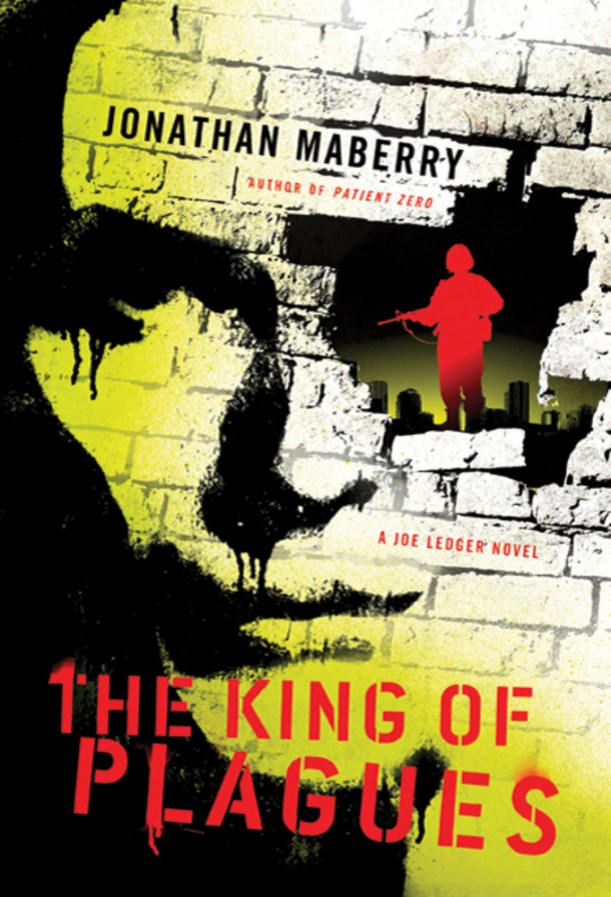
Throwback Thursday – The King of Plagues by Jonathan Maberry – Audiobook Review

The King of Plagues Cover.jpg

Publisher: Blackstone Audio (8 April 2011)

Series: Joe Ledger series – Book 3

Length: 16 hours and 10 minutes

My Rating: 5 out of 5 stars

Amazon     Book Depository

Reviewed as part of my Throwback Thursday series, where I republish old reviews, review books I have read before or review older books I have only just had a chance to read.

Over the last year or so, reading and reviewing all of the books in Jonathan Maberry’s Joe Ledger series has been something of a passion project for me. I absolutely loved the 10th and latest book in the series, Deep Silence, when I read it last year and found its superb blend of the horror, science fiction and thriller genres to be incredibly compelling and a whole lot of fun to read. Since then, I have gone back and read and reviewed the first two books in the series, Patient Zero and The Dragon Factory, and I found that I enjoyed them just as much as Deep Silence. As a result, when I got a gap in my reading schedule recently, I decided to check out the third book in the series, The King of Plagues, and once again found myself drawn into the world of Joe Ledger and the DMS.

Following the events of The Dragon Factory, which saw the death of the women he loved, Joe Ledger has left the chaotic world of the Department of Military Sciences (DMS) behind. Living in London, Ledger is suddenly thrust back into the field when an explosion levels a busy London hospital, killing everyone inside in one of the worst acts of terrorism the world has ever seen. Horrified by this callous attack, Ledger returns to active duty with the DMS and is immediately targeted by a hit team, before traveling to investigate a second attack at an Ebola research laboratory.

It does not take long to identify that the people behind these attacks are the group known as the Seven Kings. The Seven Kings are a mysterious secret society that Ledger and the DMS have dealt with before, as they influence and equip terrorist organisations around the world. Pledging fealty to a shadowy goddess and having a small army of highly trained mercenaries and the ability to influence highly placed people around the world, the Seven Kings are determined to change the world for their own benefit and are willing to kill anyone to achieve their goals.

As part of their plan to destabilise the world and benefit from the resulting economic chaos, the Seven Kings are planning to unleash weaponised versions of the Ten Plagues of Egypt that will not only kill untold masses but which will cripple the Seven Kings’ major opponents. If that was not bad enough, an old enemy from Joe Ledger’s past has resurfaced and is working with the Seven Kings to extract his revenge as the King of Plagues. Can Ledger and the DMS stop the devastating plans of the Seven Kings, or will the world once again bear witness to the devastation of the Ten Plagues?

The King of Plagues was another excellent addition to the Joe Ledger series that I had a fantastic time listening to. Maberry once again presents an exciting and addictive story that combines thriller action, a despicable evil scheme and a great group of characters, all told in Maberry’s distinctive writing style. This was an outstanding novel and yet another book in the Joe Ledger series that gets a five-star rating from me.

I always really enjoy the way that Maberry sets out the plots of his Joe Ledger books. The author utilises a huge range of different character perspectives across a number of different time periods to tell a full and complex overall story. By doing this the author is able to showcase a number of sides of the story. Not only does the reader get to see the protagonist’s story, but they also get to see how the antagonist’s evil scheme was planned and executed. Overall, this was a spectacular way to tell the story, and I always think that the reader gets so much more out of these books as a result. Maberry also did a fantastic job making this book accessible to readers unfamiliar with the series. While reading the Joe Ledger series out of order may result in some series spoilers for some of the earlier books, readers are easily able to start exploring this series with The King of Plagues and not have their enjoyment of the story suffer as a result.

The King of Plagues is filled with an amazing roster of characters, each of whom brings a lot of depth and emotion to the story. The main protagonist, Joe Ledger, has to be one of the biggest smartasses in fiction, and it is always a delight to watch him quip and make sarcastic comments across the world. However, despite that flippant exterior, Ledger is a complex emotional wreck who is still dealing with all manner of trauma and is barely containing his anger and bloodlust, especially when dealing with terrible events like the one in this book. I always find it fascinating when Maberry dives into the psyche of the series’ titular character, and it was especially poignant in The King of Plagues, as Ledger is still dealing with the loss of his love interest from the first two books, Grace Courtland. However, Ledger is not the only great character in this book. One of my favourites has to be Mr Church, the mysterious leader of the DMS, who everyone seems to be afraid of. Church once again shines in his role as the ultimate spymaster, but in this book he has some additional scenes that add to his character. In just one scene he shows the reader just why everyone is so afraid of him. There is also an attempt to humanise the character with some interesting reveals towards the end of the book, and I found those worked well and helped me like Church even more.

This book also featured the introduction of several other new characters. The main one of these, Circe O’Tree, is a brilliant young woman with a major chip on her shoulder who works as an analyst helping the DMS. I thought she was an intriguing character, especially due to her connections with the Seven Kings and several members of the DMS and her ability to analyse human behaviour. The King of Plagues also saw the introduction of the infamous Aunt Sallie, the second-in-command of the DMS, who is fearfully mentioned several times in the first two books. Aunt Sallie is a pretty fun character, and I am looking forward to seeing more of her scary, no-nonsense charm in the future. Funnily enough, one of my favourite characters was actually a dog, as The King of Plagues sees the inclusion of Ledger’s DMS attack dog, Ghost. Ghost was actually introduced in short story set between the second and third novels, Dog Days, but this is the first time readers of the main series get to see him in action. Despite being a ferocious and well-trained killing machine, Ghost is an absolutely adorable character who is responsible for some very funny moments in the story. Also, because he is such a good boy, you cannot help but get attached to him, and really get worried when he is in danger.

In addition to the great cast of protagonists, Maberry also utilises a great cast of antagonists in this novel in the form of The Seven Kings. The Seven Kings are an evil secret organisation who revel in deception and lies as they put their various plots and schemes into place. The identities of the various members of the Seven Kings is certainly interesting, and I really enjoyed this group and found them to be a fantastic group of antagonists. I absolutely loved the complex and devastating grand evil plan that they came up with in this story, and the full scope of their plot was pretty darn impressive. I was a little wary of this group at first, as they were introduced as some great threat that the DMS had apparently faced before, although there hadn’t been any mention of them in any of the previous books. However, in a number of interlude chapters set in the months before the current events of the plot, their lack of mention in the previous book is explained and they are presented as a force to be reckoned with. I quite liked this group of antagonists, and while certain revelations about them were not as surprising as in other Joe Ledger books, such as The Dragon Factory, for example, I did like certain developments that occurred within the Seven Kings, and I look forward to seeing how certain members show up again.

One of the things that makes the Seven Kings really sinister is their use of coercion and manipulation to achieve all their goals. At the most disturbing level, they target a number of people across the world with families and manage to terrify them so much that they will commit terrorist acts in order to save their loved ones. There are some quite chilling scenes in this book where the chief enforcer for the Seven Kings threatens these victims, and the lengths these innocent people will go to and the evils they will commit in the name of their families are horrifying at times. In addition, the Seven Kings use Twitter and other social media to fan the fires of hatred around the world, creating conspiracies and prejudice against certain ethnic groups that eventually result in violence. This examination of the evils of social media and how it can be used to spread hate is pretty fascinating, and it’s interesting to note that, as the book was written in 2011, it precedes a lot of the more recent and highly publicised incidents of Twitter being used to influence people. These inclusions really help set the Seven Kings apart from other villains in the Joe Ledger series and makes sure the reader is both disgusted and impressed by their methods.

The King of Plagues also saw the return of two antagonists from a previous book in the series, who join up with the Seven Kings to help them fulfil their master plan. I felt that both of these characters were used to their full potential within this book, and both had some truly intriguing and clever story arcs which contrasted quite impressively. For example, one starts on the long, hard road to redemption, while the other falls even further down the rabbit hole to pure evil. I won’t go into any more detail in order to avoid spoilers, but these two characters were extremely impressive, and were the main characters showing the inner workings of the Seven Kings.

Like the rest of the books in the Joe Ledger series, The King of Plagues is rich with action and firefights, as the protagonists engage in a number of battles with the minions of the Seven Kings. The action comes thick and fast throughout the book, and Maberry’s knowledge and research into various forms of armed and unarmed combat is extremely obvious. The way some of the firefights are paced out is pretty spectacular, and it is always impressive what a well-trained special operations team can do. Maberry really shines when it comes to the hand-to-hand combat sequences, though, as Ledger rips through his opponents with his martial arts prowess. The fight sequences in this book are straight up awesome, and those readers who love an action-packed book will be well catered to with The King of Plagues.

One of the things that I quite enjoyed about The King of Plagues was the author’s decision to include a number of celebrity cameos throughout the story. Not only does the protagonist encounter some famous singers and actors as part of the plot (including having a weird conversation at the end of the book with a famous rock star), but a number of celebrities are put into some interesting and deadly positions throughout the plot. I also had a good laugh at Maberry’s inclusion of a terrorist think tank made up of thriller writers coming up with the most outrageous situations they could think of, especially as that becomes a major plot point later in the book (and may have serious ramifications later in the series). The authors named dropped in these scenes are pretty impressive, and I thought it was a cute touch from Maberry to include his contemporaries like that. The use of the celebrities was an interesting choice from Maberry, but I think it fits into the wacky vibe of the Joe Ledger series quite well, and it was not too distracting from the main plot.

As with the previous books in the Joe Ledger series, I listened to The King of Plagues on audiobook. The audiobook is around 16 hours and 10 minutes long and is narrated by Ray Porter, who has to be my favourite audiobook narrator at the moment. Porter has an amazing vocal range, and I love the way that he portrays the main character of this book, Joe Ledger. Porter really brings Ledger to life in these audiobooks, not only amplifying the character’s sarcasm and smartass nature, giving real anger and sadness to Ledger when needed. The rest of the characters in this series are also really well done. I have mentioned before how much I love the voice he uses for Mr Church, and Porter really gets a lot of mileage out his Boston accent for some of the other characters. In addition to Porter’s awesome vocal work, I found that listening to The King of Plagues really helped bring me into the story. Not only does the action really pop in this format but listening to the antagonists come up with their evil plans and threats can be quite chilling at times. As a result, I would strongly recommend that readers check out the audiobook version of The King of Plagues. I know I will be checking out the rest of the books in the Joe Ledger series on audiobook as well.

Once again, I had an absolute blast listening to a book in Jonathan Maberry’s Joe Ledger series, as The King of Plagues was another outstanding addition to this fantastic series. Featuring a well-written and captivating story, some amazing characters, an evil and over-the-top plot, a number of intriguing plot points and some of the best action sequences in modern thriller fiction, this was an incredible read. I cannot wait to check out the fourth book in this series, and quite frankly all of the upcoming books sound like they have some truly outrageous stories.

Amazon     Book Depository

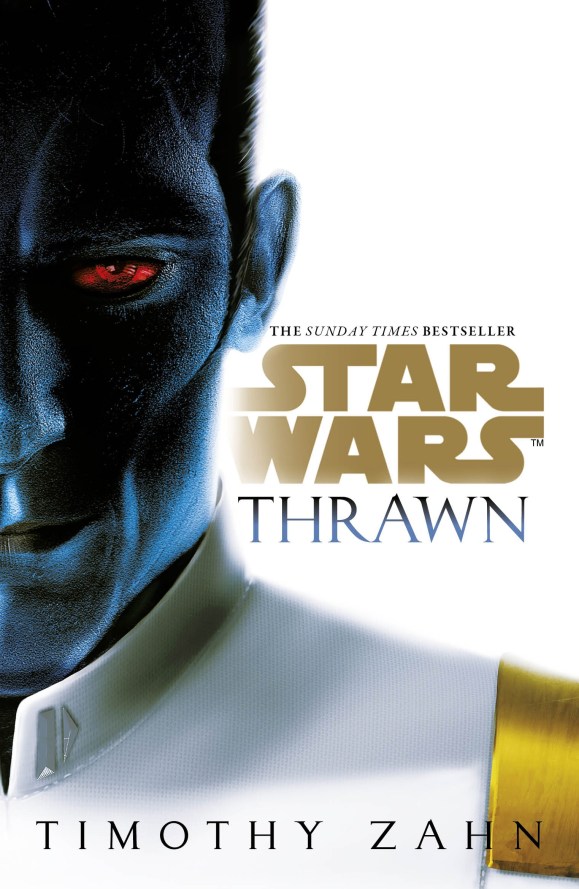
Throwback Thursday – Star Wars: Thrawn by Timothy Zahn – Audiobook Review

Thrawn Cover

Publisher: Random House Audio (11 April 2017)

Series: Star Wars

Length: 16 hours and 56 minutes

My Rating: 5 out of 5 stars

Amazon

Reviewed as part of my Throwback Thursday series, where I republish old reviews, review books I have read before or review older books I have only just had a chance to read.

While Disney are currently releasing quite a large number of Star Wars tie-in novels and comics, none of them quite had the history behind them that Thrawn did. Timothy Zahn is probably one of the best authors of Star Wars fiction of all time, having written several books in the previous Star Wars expanded universe (now rebranded as Star Wars Legends) before Lucasfilm was bought out in 2012. Without a doubt, his most iconic contribution to the Star Wars universe was the character of Grand Admiral Thrawn, who was introduced in his 1991 book, Heir the Empire, the first book in Zahn’s original Thrawn trilogy. Grand Admiral Thrawn was the Empire’s greatest tactician and naval commander, who led the war against the protagonists of the original Star Wars trilogy following the events of Return of the Jedi and proved to be an effective major antagonist. Thrawn swiftly became a fan favourite, and Zahn revisited the character several times.

While Thrawn was an amazing character, many assumed that he was unlikely to be seen again after Disney shelved the original expanded universe to allow for their own stories and characters. However, Disney surprised many when they announced that Thrawn would be brought back to their extended universe in the Star Wars Rebels animated show. Thrawn was introduced as the show’s main antagonist for the third and fourth season and he shone as the villain of the show, bringing his tactical abilities and unique view of war to bear against the rebels. Brought to life with the voice work of the extremely talented Lars Mikkelsen, Thrawn is easily one of my favourite things about the show’s last two seasons and was a fantastic addition to the plot.

Disney also decided to include Thrawn in their slowly building collection of Star Wars novels, with a whole new Thrawn trilogy commissioned from Timothy Zahn. Given the unique opportunity to have a second go at introducing one of his most iconic creation, Zahn has so far written two books in this series, Thrawn and Alliances. I read and reviewed Alliances last year, but I unfortunately missed getting a copy of Thrawn when it first came out. With the third and final book, Treason, coming out at the end of July, I decided to finally go back and check out an audiobook copy of Thrawn.

In the Star Wars Legends canon, Thrawn was active for a long period of time, essentially from before the events of Attack of the Clones until several years after the events of Return of the Jedi, with a lengthy service in the Imperial Navy. In this book, however, Zahn has to reintroduce his character in a much earlier and compacted period of Star Wars history, as his character could only have come to prominence between Revenge of the Sith and the third season of Star Wars Rebels in the Disney canon. I was quite keen to see this new version of the character, especially as Zahn gets to once again show how an alien managed to rise to the highest of ranks in the xenophobic Imperial military.

Several years after the fall of the Galactic Republic and the Jedi, the Empire reigns supreme throughout the galaxy and is always looking to expand its control. A routine survey of an unexplored world in Wild Space uncovers a small, ramshackle settlement with items featuring writing in an unknown alien language. As the Imperial survey team investigates, they find themselves under attack from an unseen adversary who manages to inflict heavy causalities with minimal resources. Retreating back to their ship, the Imperials discover that their attacker, a blue-skinned, blue-haired alien, has stowed away on their transport. The alien identifies himself as Mitth’raw’nuruodo, a member of the Chiss Ascendency, a legendary race from the Unknown Regions. The Imperial commander takes Mitth’raw’nuruodo, or Thrawn, to Coruscant to be presented to the Emperor, who he impresses with his tactical ability and his mysterious connection to the Clone War General, Anakin Skywalker.

Taking Thrawn into his service, the Emperor makes him an officer in the Imperial Navy, along with his translator, cadet Eli Vanto. As Thrawn and Vanto are first enrolled in the Imperial Naval Academy and then assigned junior roles on a ship, they face opposition and resentment from other members of Navy. However, thanks to Thrawn’s unparalleled tactical and strategic mind, as well as his ability to understand and predict the actions of his opponents on the battlefield, the two are able to rise in the Imperial hierarchy.

As Thrawn is quickly promoted up the ranks, he starts to become obsessed with the enigmatic Nightswan, a brilliant rogue tactician who has been helping criminals and dissidents defy the Empire across the galaxy. At the same time, Thrawn’s inability to understand the political realities of the Imperial Navy proves to be a major threat. Luckily the politically ambitious Arihnda Pryce is willing to provide help, as long Thrawn assists with her plans to gain political power and become governor of her home planet of Lothal. As rebellion spreads through the galaxy, Thrawn leads the assault to cut it down as he heads towards his promotion as Grand Admiral.

This was a pretty outstanding novel. I absolutely loved Thrawn and it is probably the best canon Star Wars novel in that I have so far had the pleasure of reading. Zahn did an amazing job revamping his iconic character by presenting a fantastic new story that not only harkens back to the author’s original novels but also fits the character perfectly into the Disney timelines. Thrawn is an excellent balance of character work, action, political intrigue and exploration of the Star Wars universe, all of which adds up to an incredible novel that I was nearly unable to stop listening to and which results in an easy five-star rating from me.

The events of this book take place over the course of nine years, between the events of Revenge of the Sith and A New Hope. More specifically, it starts 11 years after Revenge of the Sith, and continues directly at the start of the third season of Star Wars Rebels, approximately two years before A New Hope. Thrawn is split into two separate storylines: one that follows the rise of Thrawn through the Imperial Navy and another that focuses on the machinations of Arihnda Pryce as she becomes governor of Lothal. The Thrawn storyline is mostly told from the perspective of Thrawn’s companion, Eli Vanto, although a few chapters are shown from Thrawn’s perspective alone. While the two storylines start off showing Thrawn and Pryce’s separate rises to power and are not initially connected, once the two characters start working together, their stories mesh together a lot more. While I had a stronger preference for the parts of the book focussing on Thrawn, I did quite enjoy the sections focusing on Pryce, as they had some compelling elements and showed a different side of the Empire. The two separate storylines mesh together quite well, and together they tell a complete and intriguing story that highlights how the characters obtained the relevant positions in the Imperial hierarchy that they had when introduced in Star Wars Rebels.

At the heart of this book is the focus on Thrawn, an absolutely amazing central protagonist, whose escapades and adventures are some of the best parts of the book. Zahn has done an amazing job reinventing Thrawn for this new era of Star Wars history, keeping all the character traits that made him such a hit in the original expanded universe, while fitting his character timeline into a much shorter period. Thrawn is still the same highly intelligent alien with an unmatched tactical mind and an appreciation for the culture and art of the various people he encounters. However, in this universe, he achieves his rank of Grand Admiral in a far shorter period of time. Starting with his rescue on a remote planet after ambushing Imperial forces (the entire scene is a rewrite of Zahn’s 1995 short story, Mist Encounter, although with a few necessary changes), this book shows him joining the Imperial Academy, and then climbing the ranks all the way up to Grand Admiral within a few short years. The entire story of Thrawn’s early career in the Imperial Navy is absolutely fascinating, and I really enjoyed this look at the character’s history, especially as his rapid promotions were due to the multiple intriguing military actions he oversaw. His entire storyline is extremely well paced out, and the reader gets a full story that is incredibly captivating. This was a really clever reimagining of the character’s history, and it is a great story to tell.

Zahn does a great job showcasing Thrawn as an utterly brilliant individual who is clearly smarter than everyone else he encounters. There are some great characteristics to Thrawn, like the way he is able to get into his opponents’ heads and anticipate their actions and intentions. His shear analytic ability is showcased so many times throughout the book, most notably in the way that he analyses the emotions and body language of all the people he encounters. For example, whenever Thrawn is talking with someone, the reader gets a short description of the facial reactions or emotions that the character talking to Thrawn is exhibiting. I’m unsure what this looks like in the hard copy of the book, but in the audiobook version the narrator uses his chilling Thrawn voice rather than his baseline narrator voices. From these short descriptions, the reader gets an idea of what Thrawn thinks the other character is thinking, and it is deeply fascinating to see how this affects Thrawn’s actions. I loved that the author continued to show how Thrawn gains insight into a people’s culture and personalities through their art. Throughout the book, Thrawn is shown appreciating a potential opponent’s art and culture, and then using the conclusions and observations he gleams from the items to alter his strategies or the way that he deals with them. This is a fantastic character trait that I am glad Zahn continued to use in his works.

Probably one of the best things about the character of Thrawn in this book is the inventive and brilliant strategies that he comes up with to defeat his enemies. Throughout the course of the book, Thrawn utilises some deeply inventive plans for both large-scale conflicts and smaller battles, and it is always very entertaining to watch these plans come to fruition. I loved some of the strategies that Thrawn used in this book; whether he is swamping a shielded fortress with artificial tidal waves or using Clone Wars era buzz droids to take out a pirate ship, the end result is just spectacular. In many ways, the Thrawn in this book is a bit like Sherlock Holmes, if Sherlock worked for an evil space empire. His opponent, Nightswan, is essentially Moriarty (a man nearly as smart as Thrawn, who sells his tactical abilities to members of the underworld), and the author uses this to make the battle scenes even more intense, as a brilliant attack from Nightswan is countered by an even more sophisticated move from Thrawn. In addition, Thrawn also has a loyal sidekick in Eli Vanto, who is essentially the Watson to Thrawn’s Sherlock. Not only are there certain similarities between the two within the story, such as the way that Thrawn takes Vanto and train him in his methods, turning Vanto into an extremely competent strategist, but Zahn also uses him in a similar literary way to Watson in the Sherlock Holmes novels. Vanto is used as a proxy for the audience, so when he questions Thrawn on how he came up with his plans or anticipated his opponents, the audience gets a full explanation within the scope of the story. Thrawn was an extremely awesome character in this book, and his presence helps turn this into an outstanding read.

In addition to the character of Thrawn, Zahn also looks at Governor Arihnda Pryce, another major antagonist from Star Wars Rebels. Zahn spends a good amount of time showing Pryce’s past and how she went from a nobody to a powerful planetary governor with major political connections and a history working with Grand Admiral Thrawn. I liked this look at Pryce; her story is pretty compelling and it offers a great look at the political side of the Empire. Pryce is already a pretty despicable character in Star Wars Rebels (she is responsible for the tragic death of one of the main characters), but this book does a masterful job of showing just how evil she is. While it starts off showing her experiencing early hardship and difficulties, she quickly stops being a character you can root for the moment she has any sort of power within her grasp. The way she turns on her friends and her extreme act of self-preservation towards the end of the book are pretty dark, and you cannot help but dislike the character even more after reading her full arc in this book. This was some really good character work, and Zahn does an amazing job showcasing Pryce’s motivations and despicable nature.

If you are a fan of massive and electrifying space battles, there is a lot for you to love in Thrawn. Zahn has packed this book with a huge number of large and impressive battles between Imperial ships and the various pirates and rebels that are encountered throughout the story. There are some really fun ship-to-ship battles throughout this book, and they are absolutely spectacular to watch unfold. Thanks to the brilliant adversary that Thrawn faces for most of the book, the characters face some unique opposition, such as Clone War era ships, like the vulture droids, and an impressive island base with massive guns. These result in some amazing sequences, especially when Thrawn comes up with a surprising strategy to defeat the opposition. I had a lot of fun listening to these battle sequences, and they are a real highlight I feel that many readers will enjoy.

Thrawn takes quite an interesting look at certain parts of the Star Wars universe, and fans of the series will enjoy the author’s canonical deep dive into the Empire at the height of its power. Quite a lot of time is spend showcasing the ins and outs of the Imperial Navy, and readers get a good idea of how it operates and its system of command as the main character rises through the ranks during the course of the book. In addition to the military side of the Empire, the storyline focusing on Governor Pryce highlights how brutal Imperial politics is during this period, as she attempts to gain power and influence. Zahn also includes a number of key characters from Star Wars lore and inserts them into his story. Characters such as Grand Moth Tarkin and Colonel Wullf Yularen (a background Imperial character in A New Hope who was given an expanded role in The Clone Wars animated show) are used quite successfully in this book and offer some interesting insights into additional aspects of the Empire. There are also the obligatory hints at the Death Star (seriously, nearly every piece of Star Wars fiction set in the period has some mention of a “secret Imperial project”) and other elements of the Star Wars movies. I quite enjoyed this intriguing look at the Empire between the events of the first two trilogies, and it helped with the story.

Like most Star Wars tie-in novels, Thrawn is intended more for dedicated fans of the franchise, although I felt that this book would be particularly accessible to those readers with only a basic knowledge of the Star Wars franchise. Zahn does an excellent job explaining key aspects of the Star Wars universe that fans who are only familiar with the movies might not understand, and the book features some really fun and exciting moments. As a result, this might be the perfect book to try if you are interested in exploring the Star Wars expanded universe for the first time, especially if you happened to enjoy Thrawn in Star Wars Rebels. There really is so much in here for dedicated Star Wars fans to enjoy, and those readers who grew up with Zahn’s original Thrawn trilogy will no doubt be extremely curious to see this new version of the character.

Like most of the Throwback Thursday books I review, I chose to listen to the audiobook version of Thrawn rather than read the physical copy. The Thrawn audiobook is narrated by veteran Star Wars audiobook narrator Marc Thompson and runs for 16 hours and 56 minutes. I have mentioned before that listening to a Star Wars audiobook is an intriguing experience, as the productions are filled with all manner sound effects, including a number of iconic sounds from the Star Wars franchise. Thrawn continues this tradition, featuring a huge number of sound effects in pretty much every scene. These sound effects are really effective at creating an ambiance and atmosphere, and the reader gets a whole other experience of the events occurring in the book. This includes a background susurration during parties and large gatherings or the sound of blaster fire during a battle sequence. While I really love how most of these sound effects work, I did have a slight issue with an effect used to alter the voices of a certain alien species. The producers added a high-pitched screeching echo to the voices of the aliens known as the Afe in order to simulate their unique vocal patters as described in the book. However, this sound effect is extremely distracting and unpleasant, and I found it hard to listen to the dialogue of the Afe characters. While these characters were only in the book for a short while, their voices were extremely memorable and it is hard to forget that screeching sound. On the plus side, the audiobook also featured several pieces of John Williams’s epic music from the Star Wars films at key parts of the book, which helped enhance several of the scenes and bring the audience into the story.

In addition to all the sound effects and music, the Thrawn audiobook also featured the vocal talents of narrator Marc Thompson. Thompson is an extremely talented voice actor, and his work in Thrawn was pretty amazing. He has an excellent voice for the character of Thrawn that not only sounds like Lars Mikkelsen from Star Wars Rebels but which also carries all of the character’s intelligence and charm. Thompson comes up with a great voice for Eli Vanto, utilising an accent that screams space yokel and which stands out from the voices of other Imperial characters in this book. I was also quite impressed with how Thompson was able to imitate key characters from the Star Wars universe. For example, Thompson does a great Emperor Palpatine voice and also comes up with passable imitation of Grand Moth Tarkin. I felt that Thompson really got the heart of many of the characters he narrated, whether by showcasing Thrawn’s cool intelligent manner or by replicating the arrogance that comes off many of the book’s Imperial characters. As a result, I would wholeheartedly recommend the audiobook version of Thrawn, as not only do the producers continue to make good use of sound effects and music, but they also use an amazing narrator to bring this story to life.

I had an absolute blast going back and listening to Thrawn for the first time. This is an exception piece of Star Wars fiction and Zahn does an outstanding job bringing his iconic character, Grand Admiral Thrawn, into the new Disney canon. Featuring a ton of amazingly entertaining moments and some excellent character work, Thrawn is an exceedingly fun book that will prove to be extremely appealing to both hardcore Star Wars fans and novice readers. This was a wonderful five-star read, and I cannot wait to see how Zahn wraps up this trilogy.

Amazon

We are Blood and Thunder by Kesia Lupo

We are Blood and Thunder Cover

Publisher: Bloomsbury YA (Trade Paperback – 4 April 2019)

Series: Standalone / Book 1

Length: 400 pages

My rating: 4.5 out of 5 stars

Amazon

From first-time author Kesia Lupo comes We are Blood and Thunder, a clever, inventive and at times dark young adult fantasy novel that represents a brilliant start to a bold new fantasy world.

In the nation of Valorian, a powerful magical curse has been laid upon the city of Duke’s Forest. The curse has wrapped the entire city in a mystical storm cloud filled with death, sickness and despair. Following a series of virulent pestilences brought on by the storm cloud, the city has been placed in quarantine, although passage in or out of the cloud is already extremely difficult. Now, six years after the curse first struck Duke’s Forest, the fate of the city and all who live within will lie upon the shoulders of two young women.

Lena is a cryptling, one of the deformed or marked offspring of Duke’s Forest’s inhabitants who live in the sprawling crypts underneath the city and watch over the Ancestors, the interred dead of the city, who are worshiped as gods. Lena, whose birthmark saw her abandoned as a baby, led a quiet life below the city until strange things started happening all around her. Accused of being a mage by the magic-hating Lord Justice, Lena just barely escapes execution when she encounters Constance in the mists outside the city. Constance is the daughter of Duke’s Forest’s ruler, the Duke, and has returned to the city to reclaim what is hers. Trained as a mage, Constance recognises the magic within Lena and sends her outside the mist while she continues back to Duke’s Forest. However, this fateful meeting will have huge consequences on the lives of both women.

Once outside the mists, Lena encounters the huntsman Emris, a magic user trained to locate untrained mages like Lena, known as Rogues, who has been pursuing Constance for magical crimes she has been accused of. Emris brings Lena back to the City of Kings, the capital of Valorian, where she attempts to learn how to control her magic. However, her unusual magical abilities and status as a Rogue bring her to the attention of some of the city’s worst inhabitants. Back in Duke’s Forest, Constance finds that her city and her father have fallen under the control of the tyrannical Lord Justice. Keeping her status as a mage hidden, Constance attempts to regain control of Duke’s Forest while also searching for the source of the curse surrounding the city. As both Lena and Constance attempt to survive in their respective cities, fate keeps bringing their destinies together. The future of Duke’s Forest rests in the hands of these young women. Can they save the city, or will they be the storm that destroys it?

We are Blood and Thunder is a clever and extremely captivating young adult fantasy novel that I read a little while ago but only just got a chance to review. I wish I had gotten a review of this book up a little earlier as it is a fantastic first book and I have been quite keen to sing the author’s praises for a while. We are Blood and Thunder is the debut novel of exciting new talent Kesia Lupo and presents a powerful story filled with magic, betrayal, personal growth and the hunt for power. At the moment, We are Blood and Thunder is a standalone novel, but the author has indicated on Goodreads that she may set future books within the same universe.

The story of We are Blood and Thunder is told from the perspectives of Lupo’s two main characters, Lena and Constance. Each character narrates about half the book and tells their separate narratives through alternating chapters. This allows Lupo to tell two separate stories that are not only very different in content but which help show a far wider area of the new fantasy world that Lupo has created. I found both of the storylines contained within this book to be extremely fascinating. The first storyline, which is narrated by Lena, follows the character as she journeys to the City of Kings to learn more about magic. While there, she learns more about her mysterious powers and finds herself embroiled in the conflict between the Temples that control magic and an influential mage outside the control of the Temples who has the ear of the King. The second storyline, which is narrated by Constance, is a darker story of political intrigue, murder and dark magic within the walls of Duke’s Forest, as Constance attempts to find the heart of the storm cloud before it is too late, while also attempting to neutralise the tyrannical Lord Justice.

While the magical learning, emotional growth and world building featured within Lena’s storyline are really good, I did prefer the Constance storyline a little more. All the dark political manoeuvring within the unique setting of the cursed Duke’s Forest and the battle between Constance and the Lord Justice were pretty darn compelling, and I had a very hard time putting down the book while I was reading the Constance chapters. While both of these storylines are really good, I was quite impressed by the way that Lupo was able to combine the two separate stories together into one amazing overarching narrative. I felt that the two storylines really complemented each other and helped make each respective storyline better. For example, the explanations of this fantasy universe’s magic in Lena’s chapters help the reader understand some of the magical elements occurring in Constance’s chapters. At the same time, many of the preparations and relationships Constance forged for her desperate return to Duke’s Forest impact Lena as she uncovers dark secrets within the City of Kings. There are also a number of excellent plot twists cleverly hidden throughout the book that are slowly revealed in both storylines. I thought some of these twists, especially a big reveal towards the end of the book, were just amazing and helped turn this into an epic and electrifying story. I felt that the author’s use of the two separate storylines was an incredible way to tell the story, and the overall narrative was quite outstanding.

In addition to her excellent twin storylines, Lupo also came up with two awesome fantasy cities: the City of Kings and Duke’s Forest. The City of Kings is your classic fantasy capital with massive temples and palaces, where everything appears to be perfect and harmonious on the surface. However, there are some dark secrets at the heart of this city, and the magical politics prove to be a major threat to one of the book’s main characters. While this is a great setting, I have to say that the city of Duke’s Forest is the far more impressive setting. Even before the city was cursed, Duke’s Forest would have been an amazing fantasy setting, with its massive crypts staffed by abandoned children and its rabid intolerance of magic. However, by turning it into a city on the brink of death, surrounded by dangerous magical mists and clouds, Duke’s Forest transformed into a much more intriguing and memorable fantasy setting. Lupo does an amazing job bringing this inventive location to life, and I was impressed by the sense of despair and hopelessness that seemed to hang in the air in each chapter set in this city. These two city settings were great, and I felt that they both enhanced the book’s narratives. Duke’s Forest in particular added a sense of urgency to Constance’s hunt for the heart of the storm cloud. I am very curious to see what other locations Lupo will create for the nation of Valorian in the future, and I look forward to exploring more of this clever fantasy world.

I also quite enjoyed the interesting magical elements that the author utilised in We are Blood and Thunder. Lupo has invented some great magical lore in this book, and I had a lot of fun exploring the various aspects of it. Not only is there a city-wide magical curse but there is also a whole new system of magic for the reader to enjoy. I quite liked the intriguing magical systems that Lupo came up with, and there are a number of great elements to them. These include the vision-filled practice of mages binding their magic to a god in order to control their power, which then influences their magical power and abilities, as well as mages who don’t bind their powers and then subsequently lose control and become a Radical, a destructive being controlled by the underlying darkness in magic. These magical elements are mostly explored by Lena. As a member of an ostracised minority who lived beneath a quarantined city where all knowledge of magic was punished, Lena is a perfect character to explore Lupo’s magical elements. Lena has the same lack of knowledge of this world’s mage as the reader, so the readers get a baseline explanation of magic that also makes sense to the plot. I quite enjoyed the various magical elements that the author came up with in this book, and I am sure that she will further expand upon them in later books in this universe.

We are Blood and Thunder is an outstanding debut from Kesia Lupo which combines some amazing and complex character-based storylines with inventive fantasy settings and cool magical fantasy elements to create an awesome overall book. Lupo has some considerable skill when it comes to a compelling young adult fantasy book, and We are Blood and Thunder is an excellent first outing for this talented author. I look forward to reading more of Lupo’s work in the future, especially if she returns to the excellent world she created in We are Blood and Thunder.

Amazon

Throwback Thursday – Legend by David Gemmell

71IuPaXC5kL.jpg

Publisher: Hachette Audio (22 June 2017) – originally published by Century (April 1984)

Series: Drenai – Book 1

Length: 13 hours and 13 minutes

My Rating: 5 out of 5 stars

Amazon

Reviewed as part of my Throwback Thursday series, where I republish old reviews, review books I have read before or review older books I have only just had a chance to read.

In this week’s Throwback Thursday, I try out a fantasy book that has been on my mind for many years, the 1984 classic fantasy novel, Legend, by the late, great David Gemmell.

Legend was the debut novel from Gemmell, an impressive author who wrote over 30 novels between 1984 and his death in 2006, most of which fell within the fantasy genre. Some of his works included the Rigante, Stones of Power, Jon Shannow and Hawk Queen fantasy series, as well as the Troy and Greek historical fiction series. However, his most famous body of work has to be the Drenai series. Featuring 11 books, the Drenai series were a collection of loosely connected novels set within the same fantasy universe. While the storylines are all linked in some way or another, especially books like the three Waylander novels, the series can pretty much be read in any order, which is kind of what I did.

I actually have a bit of a random history with the Drenai series, as I happened to listen to the 10th book in the series, White Wolf, some years ago. For the life of me I cannot think why I would have grabbed this fantasy book off the shelf. Whatever the reason, the story of White Wolf stuck with me, and I would find myself occasionally remembering details of the plot, while completely forgetting the book’s title or the author’s name. I was eventually able to figure out what book it was thanks to the one clear detail I could remember (the names of the protagonist’s famous swords) and tracked down another audiobook copy of White Wolf to listen to a few years ago. I also really enjoyed White Wolf the second time around and was eager to find out more about the rest of the books in the series.

Out of all of the books in the Drenai series that I looked at, the one that appealed to me the most was the very first one in the series, Legend. Legend tells the story of an epic and desperate siege that sets up the entire Drenai universe and contains the defining story of Gemmell’s most iconic character, Druss the Legend, who also appeared in White Wolf. Many of the story elements of Legend deeply appealed to me, and it also made practical sense to start at the beginning of the series, especially as it serves as a significant point in the series’ chronology. Unfortunately, due to a combination of a lack of time, problems finding a copy of Legend, and a requirement to focus on more recent books, I never got a chance to read Legend or dive deeper into the Drenai series. However, it always remained high on my to-read list, and I am so happy that I finally got a chance to read it.

Legend is the story of the siege of Dros Delnoch, the fortress city that acts as a gateway to the declining Drenai Empire. Dros Delnoch is the greatest fortress in the world. Sitting in the middle of a narrow pass and guarded by six high walls and a great keep, the city should be able to withstand any attack. However, the charismatic Nadir warlord Ulric has forged together a mighty host of 500,000 Nadir tribesmen, which he plans to sweep over the walls of Dros Delnoch.

If the city is able to hold for a few months, a new Drenai army will be able to reinforce the battlements. But with only a small force of 10,000 soldiers within the city, many of them raw recruits, this seems to be an impossible task. However, help soon arrives from the most unlikely of places. Former solider Regnak follows his newfound love to the city, despite his apparent cowardice and dark secrets. A gentleman bandit leads his band of outlaws to man the walls, partly for money and partly to make up for his past sins. The mysterious band of mystical warrior priests, known as The Thirty, also arrives to fulfil their destiny to die in battle. Each group has a role to play in the defence of the city, but only one of the new defenders will give the Nadir pause and raise the defenders’ hopes, the greatest hero of the age, Druss the Legend.

For decades, Druss has fought and defeated every enemy he has come across, but there is one thing even he cannot overcome: time. Now a grizzled veteran of 60 years, Druss has come to the city for one final battle, but first he needs to come to terms with his status as a living legend. Even as an old man Druss is still a dangerous person, and there is a reason that he is known as Deathwalker by the Nadir. As the siege begins, heroes will rise, tragedy will stalk the defenders and a legend will end, but will anything be enough to withstand the Nadir horde?

Well damn, that was a pretty epic book and one that was well worth the wait it took for me to get around to reading this. Legend was an incredible and enthralling read that had me hooked from the very beginning all the way to the very last word. It is a classic piece of fantasy action and adventure. Gemmell loaded his story with some truly compelling and flawed characters to create an outstanding read. Featuring a ton of amazing, pulse pounding action, heartbreaking tragedy and an epic siege, this book was absolutely fantastic, and I am really glad I read it.

Probably the main thing that I liked about the book was Gemmell’s outstanding portrayal of a massive fantasy siege. I have always loved the classic siege storyline, and there is something about a huge army attacking a castle that I cannot turn away from. The siege of Dros Delnoch within Legend is easily one of the best sieges that I have ever read, as Gemmell produces a magnificent battle around the city that lasts nearly the entire book. The whole setup for the siege is pretty insane, with 500,000 Nadir tribesmen (who bear a lot of similarities to the historical Huns) attacking a Drenai (essentially Roman) city with six massive walls. The author does an amazing job properly pacing out this siege throughout the novel, including appropriating enough time to really showcase all the pre-siege activities, including training, preparation of the defences and initial sabotages before the first battle even happens. Once the battle begins, though, it is a non-stop barrage of action as the defenders fight off multiple assaults each day.

Due to the author’s excellent storytelling and character work, the reader becomes extremely invested in the fate of the defenders, and each time a wall falls, or the attackers gain an inch, you are mentally rooting for them to fight back. There are a number of discussions and plans that take place throughout the book, and it is quite fascinating to see the thought and planning that the author put into the defence of his city. I especially liked how the city’s six walls played into the battle, as the defenders’ decisions on how and when to hold these battlements provided some great moments and debates for the reader to appreciate. The siege lasts the entire book and features a huge number of epic fight sequences, all of which will get your adrenaline racing and your heart pounding. I loved every second of the siege that was featured in this book, and I hope to see it brought to life on screen one day (provided they do it right).

In addition to its first-rate siege, Legend also features a large number of complex and well-written characters. The first is Regnak, who turns into one of the book’s main characters. Regnak is a former soldier who is first presented as a coward, looking to flee all personal responsibility, although this is quickly revealed to be a side effect of being a natural ‘baresark’. However, when he meets Virae, the daughter of the Earl of Dros Delnoch, he falls in love and follows her back to the siege. Regnak has a great storyline about finding one’s inner courage and overcoming one’s issues, and while his romance with Virae is a bit weird at times, it does result in some tragic scenes throughout the book. Next you have the members of The Thirty, an order of 30 warrior priests who enter the fight knowing that 29 of their members are going to die. Not only do the priests represent most of the fantasy elements of this book thanks to their physic abilities but their ability to see into the future results in some interesting debates about destiny and fate. Quite a few members of The Thirty are introduced, although most of their story is focused on their youngest member, Serbitar, and his mentor, Abbot Vintar, as Serbitar has the hardest time accepting the future and wants to change it to help the defenders.

Without a doubt, the best character in the entire book is Druss the Legend. Druss is Gemmell’s most iconic character and has appeared in several other books in the Drenai series, all of which occur before the events of Legend. These include The First Chronicles of Druss the Legend, which details the rise of Druss and the events that made him a legend, The Legend of Deathwalker, which features an earlier encounter with Ulric and the Nadir, and White Wolf, where I first encountered the character of Druss. However, Legend is definitely the character’s defining book, as it features the conclusion of his epic life and his final stand.

There is a lot of great character work involved with Druss, and the man is a pretty epic character. He is an older man, many years past his prime, who was faced with a choice: die in glory at Dros Delnoch or decline into obscurity. Choosing to die in battle (mainly to spite Death), Druss arrives in Dros Delnoch ready to fulfil his destiny. Gemmell does an outstanding job portraying Druss as an old and wise warrior who is weakened by age but is still a far more capable warrior than many of the others involved with the siege. While readers will enjoy the action sequences featuring Druss, the main thing about the character is the way that he attempts to come to terms with his status as a living legend whose body can no longer keep up with his myth. Druss knows that his reputation as a man who always wins is one of the main things that keeps the soldiers going, and he is constantly working to inspire the soldiers and show that he is still the super human many of them think he is. However, at the same time he must deal with the tangible impacts of age and must try to overcome them in order to survive and inspire on the battlefield. This examination of a man uncertain about his continuing place in the world and who knows he is going to die very soon is extremely well done, and readers cannot help but fall in love with the character and get very invested in his storyline, even though you know how it is going to end. The Druss that is featured in Legend is probably one of the finest fantasy characters that I have read, and I look forward to reading some additional books featuring him in the future.

The book also features an amazing cast of secondary characters, each of whom adds so much to the story featured within Legend. These characters include:

  • Orrin – the commander of the forces defending Dros Delnoch. Orrin is a nobleman who is inexperienced and ill-suited for command. However, once Druss arrives, he works hard to change his ways and become a worthy leader of his troops. He has an amazing redemption arc and turns into quite a likeable character.
  • Bowman – a forest bandit who Druss convinces to join the defence of the city. Initially pretending he is there for money; it is eventually revealed that he is searching for some sort of redemption as well. Bowman’s sarcastic wit adds some necessary humour to the story and he proves to be quite a likeable character.
  • Gilad and Bregan – two farmers who sign up to the army and find themselves becoming heroes of Dros Delnoch. These two characters allow Gemmell to show the story of the common defender of the city. Together they have quite a surprisingly compelling storyline, and the readers actually get quite invested in their survival.
  • Hogun – one of the few professional soldiers in the city. Hogun serves as a great secondary observer for most of the book, and his growing respect and camaraderie with the other defenders mirrors the reader’s growing attachment to all those people featured within Legend.
  • Ulric – leader of the Nadir horde attacking the city. Ulric is presented as a visionary like Atilla the Hun or Genghis Khan, who has united his people against a common threat and now seeks to create a mighty empire. I quite liked how Ulric, despite being the antagonist, is only partially presented as an evil man. Instead, he sees all the violence he does as necessary and he even grows to respect the defenders of the city, especially Druss. Ulric turns out to be quite a complex and well-written antagonist that reader ends up respecting to a degree.
  • Caessa – a female member of Bowman’s band, who harbours a deep secret. She’s not my favourite character, but her storyline has a few intriguing twists, and it is interesting to see her growing attachment to Druss.

In addition to all the characters mentioned above, there are also a huge bevy of other minor characters from both sides of the conflict whose point of view and feelings are examined throughout the book. Not only does this allow for a number of short and, in some cases, tragic stories for the reader to enjoy; it also increases the scope of the battle. Overall the character work is pretty impressive, and pretty much every character allowed for a richer and more captivating tale to be told. If I had one criticism of Legend’s characters, it would be that the female characters are mostly portrayed as over-emotional, irrational or downright catty in most of their interactions, which makes the book feel a bit socially dated at times.

I ended up listening to an audiobook version of Legend narrated by Sean Barrett. At only 13 hours and 13 minutes, Legend represents a fairly quick listen, especially when you get stuck into the story. I had a fantastic time listening to the audiobook version of this book, and I felt that it really helped me sink into the story and appreciate all the amazing action and drama going on in the city. Barrett has an excellent voice for an older fantasy like Legend, and I really felt he got to the heart of most of the book’s characters. I strongly recommend the audiobook version of Legend, and I will probably check out the other books in the series on audiobook as well.

Legend really did not disappoint, as it easily met every single one of my high expectations. I enjoyed every minute of this exceptional book and it gets an easy five stars for me. I cannot overstate how epic in scale and writing the siege featured in this book was, and all of the characters within this story are just sensational, especially the Legend himself, Druss. I fully intend to check out some additional books in Gemmell’s Drenai series in the future, although there are so many interesting choices that I’m not too sure where to start. Be sure to check out future instalments of Throwback Thursday to see which other Gemmell books I look at.

Amazon

Stranger Things: Darkness on the Edge of Town by Adam Christopher

Darkness on the Edge of Town Cover.jpg

Publisher: Century (Trade Paperback – 4 June 2019)

Series: Stranger Things

Length: 411 pages

My Rating: 4 out of 5 stars

Amazon     Book Depository

With the third season of the sensational and entertaining television show Stranger Things fast approaching (4 July cannot come fast enough), another tie-in novel, Darkness on the Edge of Town by Adam Christopher, has been released and offers another intriguing look into the wider Stranger Things universe. This story heads back into 1970s and focuses on the life of Hawkins police Chief Jim Hopper, portrayed in the show by David Harbour, and presents a thrilling and curious new adventure.

Stranger Things is one of the hottest televisions shows on at the moment, featuring a captivating plot, some incredible characters, amazing young actors and the fun use of 1980s nostalgia, all of which come together into one hell of a show. With the final season of Game of Thrones just wrapped up, the third season of Stranger Things is the next big release I am looking forward to (with the possible exception of Good Omens), and I fully intend to binge-watch it the weekend it comes out. It is not surprising that some tie-in material has been released to capitalise on the success of the show, and, truth be told, they have actually been a little restrained with it, with only one tie-in novel and one comic book series released so far. While I have not had a chance to the read the comic book series, The Other Side, which looks at Will Beyers’ time in the Upside Down in Season 1, I did previously read and review the first official Stranger Things tie-in novel, Suspicious Minds by Gwenda Bond, a few months ago. Suspicious Minds was set back in 1969 and looked at how Eleven was born and then subsequently stolen by the US Government, and it proved to be quite a thrilling read which explored some fascinating backstory to the television show.

As a result, I was very keen to check out what the next Stranger Things tie-in novel was like and what secrets it might reveal about the show. Darkness on the Edge of Town is set to be released on 4 June 2019, exactly one month before the release of Stranger Things’ third season, which is going to be set around Independence Day in 1985. Another Stranger Things book, which I will also try to get a copy of, Runaway Max, is also due out on 4 June, and this book will be aimed at a young adult audience.

Darkness on the Edge of Town was written by New Zealand-born author Adam Christopher, who has some experience with tie-in novels, having previously written three books that tie in to the Dishonoured video game and two books that tie in to the Elementary television show. Christopher is probably best known for his 2012 debut novel, Empire State, as well his Ray Electromatic Mysteries and Spider Wars series. I have not previously read any of Christopher’s work before, but several of his books, especially Empire State (a noir superhero thriller with parallel words, yes please!), sound like a lot of fun and I may have to check them out in the future.

Darkness on the Edge of Town’s story starts in December 1984, around two months after the end of the second season of Stranger Things. While enjoying a quiet Christmas with his adopted daughter, Eleven, Jim Hopper is suddenly brought back to his past when Eleven pulls out a cardboard box marked “New York”. Despite his reluctance, Hopper begins to tell Eleven the story of the greatest case he solved before tragedy forced him back to Hawkins.

On Independence Day in 1977, after returning from the Vietnam War, Jim Hopper is living in New York City with his wife, Diane, and his daughter, Sara. While the city deals with bankruptcy and a heatwave, Hopper, a rookie NYPD detective, finds himself investigating a series of brutal, ritualistic murders with his new partner, Rosario Delgado. The murderer has already killed three people, leaving a mysterious card at each crime scene. Before Hopper and Delgado can make any progress, their investigation is shut down by shadowy federal agents who order them off the case. Disobeying orders and putting his career on the line, Hopper continues to investigate the murders and is able to connect the deaths to the mysterious leader of the Viper gang, who is reputed to have paranormal powers. Going undercover to infiltrate the Vipers, Hopper makes some startling revelations about the scope and devastation of the gang leader’s sinister plans, and he must do everything he can to protect his city from an upcoming evil.

This was quite an interesting and engaging novel from Christopher, who not only manages to examine some interesting aspects of the Stranger Things television show but also creates his own intriguing story set during an interesting time in American history. The story is split between two separate time periods. Some of the story is set in December 1984 and follows the older Hopper as he tells the story to Eleven, while the majority of the book is set back in 1977 and follows Hopper and his partner as they investigate the brutal murders and the Vipers. Most of the book comes across as a dark murder mystery thriller that also spends significant time examining the psyche of its protagonist. I quite liked the murder mystery angles of the 1977 storyline, and it provides an interesting counterpoint to the more science fiction/horror/young protagonist focus of the television show.

The previous Stranger Things novel, Suspicious Minds, explored in detail events that featured in the show in flashbacks. Darkness on the Edge of Town, however, is a character study that may not have too much relevance to franchise’s overall story. While this might not appeal to some Stranger Things fans, it does allow Christopher a lot more freedom to explore the character of a younger Hopper. The result is a fantastic story that dives deep into the psyche of this great character and really lets the reader see what drives Hopper and what initially convinced him to become a police officer. There are some amazing parts to this examination of the character, but I personally liked the way that Christopher decided to focus on the lasting effects of Hopper’s service in Vietnam. This is explored in some detail, and the reader gets a really good idea of how emotionally vulnerable Hopper was even before his daughter became sick and his wife left him. I also thought that the author did a great job showing Hopper’s relationship with Eleven in the 1984 storylines, and their oddball father-daughter relationship comes across quite well.

In addition to the focus on the character of Hopper, this book also contains a few plot points that tie into the wider Stranger Things universe. The contents of the mysterious box Hopper had hidden in his house, which Eleven uncovered in Season 2, becomes a major part of this book’s story. In addition, there are several things that could potentially become significant in the future, and which the reader can leave to their own imagination. The first thing that comes up is a physic prediction about clouds or tendrils of darkness covering the world, mentioned a few pages in and repeated throughout the book. While events that occur later in the book do fit in with some of these predictions, the imagery of the Mind Flayer from the show comes to mind every time this vision is mentioned, and in some ways, it fits the predictions a little better. In addition, quite early in the book the antagonist is rumoured to have mental abilities as a result of government experiments. For a large part of the book, the reader is left wondering whether he actually has abilities like Eleven and, if he does, how he is connected to the institute that Eleven was being tested in. All of these, plus some other great references, will prove to be deeply appealing to fans of the television show, and I will be really intrigued to see if any of these references might appear in the third season of the show (do these authors have the inside track on the series?).

One of the most interesting parts of Darkness on the Edge of Town was its setting in 1970s New York City. The 1970s, especially 1977, were a pretty chaotic period in the city’s history, which serves as an excellent backdrop to this dark and gritty tale. Not only was the city suffering through a severe economic downturn but there was also a tremendous heatwave, especially in July of 1977, when the vast majority of the storyline is set. The Son of Sam killer was also active during this time, a fact commented on in several parts of the book, which also ties into the darker ‘70s crime nature of this book. I liked the way that Christopher was able to bring the atmosphere of this period to life in his book, as well as the way he was able to tie the story into a certain major event that occurred in New York in July 1977. This great use of setting really added a lot to the story and helped turn Darkness on the Edge of Town into quite a compelling read.

One of the reasons why Stranger Things is such a success is the show’s writers and creators have such an amazing ability to channel its viewers’ nostalgia for the 1980s into each episode. Writers of these tie-in novels also attempt to capitalise on this nostalgia by highlighting aspects of that decade’s culture in their writing. I previously felt that Gwenda Bond did an amazing job of that in Suspicious Minds, and Christopher also did his job exploring parts of that culture, specifically when it relates to New York City. As a result, there are several fun references to relevant movies, television shows, books, sports and music for fans of the 1970s to notice and reminisce about. Whether the characters are having fun thoughts about M*A*S*H or cheeky discussions about whether Princess Leia will end up with Luke or Han in Star Wars, there are some really fun inclusions throughout the book, and Christopher luckily does not go too overboard loading his story up with these references. I personally quite liked the way that the author envisioned the New York City gangs at this point, and the main one that Hopper encounters has a very Warriors vibe around it. An extended sequence later in the book kind of put me in mind of Escape from New York (although that was released in ’81). I really enjoyed the strong nostalgia included in the book, and it added a certain amount of fun to the book that fans of the show will greatly appreciate.

Darkness of the Edge of Town is a fantastic new addition to the burgeoning Stranger Things extended universe, and Adam Christopher does an amazing job of exploring one of the show’s main characters. The author’s examination of Jim Hopper is a deep and emotional dive into the character’s psyche, and it proves to be an effective and compelling centre to this book. Christopher is also able to utilise ’70s nostalgia and fan interest in the franchise quite effectively and turn this into an excellent tie-in novel to this complex and enjoyable show. The end result is an excellent character-driven story that will greatly appeal to fans of Stranger Things. This book is really worth checking out, especially before the third season of the show is released, and I look forward to seeing what other tie-in novels Christopher produces in the future.

Amazon     Book Depository