Fool Me Twice by Jeff Lindsay

Fool Me Twice Cover

Publisher: Orion (Trade Paperback – 8 December 2020)

Series: Riley Wolfe – Book Two

Length: 357 pages

My Rating: 4.25 out of 5 stars

Amazon     Book Depository

Superstar thriller writer Jeff Lindsay presents his second entry in the awesome Riley Wolfe series, Fool Me Twice, which sees a master thief attempt to pull off a truly impossible heist.

Riley Wolfe is the world’s greatest thief and heist artist, able to steal the most heavily guarded artefacts and treasures no matter their security or value.  However, he is about to face a task that may prove to be too difficult even for him to accomplish after he is kidnapped at the end of his latest heist and taken to a desolate remote island.  His kidnapper, the world’s most dangerous and powerful arms dealer, wants Riley to steal one of the world’s greatest artworks, The Liberation of St. Peter by Raphael.  Unfortunately for Riley, The Liberation of St. Peter is a fresco, a massive painting plastered onto a wall in the interior of the Vatican.

Despite how ridiculous the job appears to be, Riley has no choice but to accept it, especially as his refusal would result in a prolonged and painful death.  With his head still spinning over the impossibility of the task in front of him, Riley’s life becomes even more complicated when he is kidnapped a second time by another deadly arms dealer.  His new kidnapper offers Riley the chance to double-cross his first employer in exchange for the life of Monique, Riley’s close associate and love interest.

Caught between two deadly opponents, each of whom would not hesitate to kill everyone Riley knows and cares about, Riley finds himself in the ultimate no win scenario.  Determined to survive no matter the cost, Riley begins to come up with a new plan that could save his and Monique’s lives, even if it does mean attracting the attention of an old rival in the FBI.  But in order for his plan to succeed, Riley and Monique will need to achieve the impossible and steal the fresco from the Vatican.  Can the legendary Riley Wolfe pull of his greatest heist yet, or has he finally met a caper too insane for even him?

Fool Me Twice is an exciting and addictive thriller novel from Jeff Lindsay, the author best known for the murderous Dexter series.  Following the conclusion of his Dexter books, Lindsay has started writing a brand-new series which focuses on a whole new criminal protagonist, Riley Wolfe.  The Riley Wolfe series follows the titular character as he engages in a series of elaborate and high-stakes heists around the world.  The first entry in this series, Just Watch Me, was a fantastic and fun novel which saw the protagonist steal a major treasure that was under the protection of the Iranian Revolutionary Guards.  I absolutely loved Just Watch Me and I have been extremely eager to check out the second entry in this series for some time.  I am very glad that I received a copy of this book and I ended up really enjoying Fool Me Twice due to its entertaining and thrilling story.

Just like the first entry in the Riley Wolfe series, Fool Me Twice was an exciting and enjoyable romp that sees its complex protagonist attempt to pull off an incredible heist.  Lindsay has come up with a pretty epic scenario revolving around an impossible art heist within the Vatican, which by itself would be fun to read.  However, this time Riley also has to contend with the competing interests of two ruthless arms dealers who are using him as a pawn for their deadly game.  This proved to be a fantastic and compelling thriller story that is extremely easy to read and fall in love with.  The author does an excellent job setting up the entire plot, and the protagonist is forced into a high-stakes, no-win scenario pretty early on in the book.  The rest of the story then deals with Riley trying to extricate himself from this situation through a vast range of manipulations, tricks, third-person interference and the impossible heist with a twist.  This all comes together quite well into an enjoyable and intricate narrative, and I love the various places that the author took the story.  There are some great surprises and reveals throughout the novel, and the readers are constantly left on the edge of their seats as they try to figure out what is going to happen next.  I particularly loved the cool heist that formed the centre of this story, and Lindsay did a good job delivering on this amazing premise with a great plan and a clever conclusion.  While I was able to predict how part of the heist would go, I was a little surprised about the full plan, and it was really cool to see the entire thing unfold.  Overall, this proved to be an amazing and exciting narrative, and I really enjoyed seeing the various twists and turns that the author was able to weave into the story.

One of the most distinctive elements about this series is the protagonist, Riley Wolfe, the master thief whose exploits the novels follow.  Riley is an interesting figure who, on the exterior, appears to be a brilliant Robin-Hood-esque figure, stealing from the rich, who he has a pathological hatred of.  However, it does not take long for the reader to work out that Riley is pretty much a pure arsehole with psychopathic tendencies.  Nearly everything Riley did in this novel annoyed me to a certain degree as he manipulates, insults or flat out murders everyone he comes into contact with.  While the author utilises a number of different perspectives throughout Fool Me Twice, Lindsay makes sure to write all of Riley’s chapters from the first-person perspective, ensuring that the reader gets a look into his mind as he works.  While this does help to redeem the character in some ways, especially as you get a hint about how much he cares about his mother or Monique, the unfiltered thoughts running through his head mostly make you dislike the character even more.  Pure arrogance rains off the page every time Riley’s perspective is shown, and you get a real sense of how high an opinion the guy has of himself.  Worse, you also see how much of a psychopath that Riley truly is as he murders several people throughout the novel, often in quite brutal ways.  While perhaps one or two of his victims deserved their fates, most definitely did not, they were merely in Riley’s way, for which he makes no apologies.  Instead he merely offers up some half-arsed rationalisations, most of which are usually along the lines that the victim was rich, so they deserved to suffer.  All of this makes Riley Wolfe a very hard character to root for, and I think this is what the author intended.  The reader becomes addicted to the narrative, not because they want him to succeed (if only to save his friends), but because that are hoping that he fails in some way and gets his long-deserved comeuppance.  I personally think this is a great writing choice from Lindsay, which makes for an excellent read; it is always fun to see a book told from a villain’s perspective, even if said villain is a dick.  I look forward to seeing what the character gets up to in the next book, which will no doubt irritate me to some degree.

Fool Me Twice is filled with a great collection of supporting characters, pretty much all of whom become worse off after meeting the protagonist.  The most notable of these is returning character Monique, Riley’s costumer, art forger and strongly unrequited love interest.  Monique gets a lot more involved in the plot of Fool Me Twice than she did in the first novel, with circumstances forcing her to take an active role in the heist.  You really can’t help but feel sorry for Monique throughout this novel, as she gets into all manner of trouble thanks to Riley and has to constantly deal with his bad behaviour and condescending attitude.  Thanks to the author portraying her as an out-of-her-depth and terrified art genius, she is the main reason you hope that Riley succeeds, although she still ends up going through a lot of bad stuff in this book.  In addition to Monique, Fool Me Twice also sees the return of Special Agent Frank Delgado, the brilliant FBI agent who is obsessed with capturing Riley.  Despite his somewhat odd and dedicated personality, Delgado is another character you find yourself rooting for, mainly because you hope he finally catches up with his white whale and arrests him.  Delgado has another interesting arc in this novel, which sees his obsession with Riley become a useful tool for several other characters in the novel, and I imagine we will be seeing a lot more of him in future entries in the series (although I imagine Riley will eventually end up killing him).

There are several intriguing new characters featured throughout the novel.  These new characters are generally only featured for a few chapters and are mostly used as outside witnesses to Riley’s heist methods, which help to keep the readers guessing at how he is actually pulling it off.  The main antagonists of the novel are an interesting bunch.  I was not the biggest fans of the two competing arms dealers, although their rivalry and manipulation of Riley helped to create a very interesting plot scenario.  I personally quite liked the character of Bernadette, one of the arms dealer’s bodyguards, who was essentially a female Terminator.  Bernadette is a particularly intimidating woman, who manages to consistently put Riley in his place and ensure that he is nowhere near as cocky as he usually is, and she ends up being an extremely dangerous and relentless antagonist.  If I had to complain about any of the characters it would probably be the mysterious Betty/Evelyn, who becomes an ally of Riley.  I felt that this character was severely underdeveloped; despite seeing several scenes from her perspective as she plays a key role in the plot, you end up knowing very little about her or what she does.  While part of this is due to the character constantly changing identities, I do think that the author could have explored her more or explained her role in the heist better, although perhaps this lack of identity will come into play in a future Riley Wolfe novel.

Fool Me Twice by Jeff Lindsay was a fantastic and captivating read that sees the author’s new antihero, Riley Wolfe, engage in a more heist-based shenanigans.  This second Riley Wolfe novel had an excellent and fun story that was really easy to enjoy and which was enhanced by several great characters, including one unlikeable main protagonist.  I had an amazing time getting through this cool book and it is definitely recommended for anyone interested in an exciting and compelling thriller.  I look forward to seeing what unique heist situation Lindsay comes up with in his next book, but I am sure it will be something extremely memorable and really fun.
Amazon     Book Depository

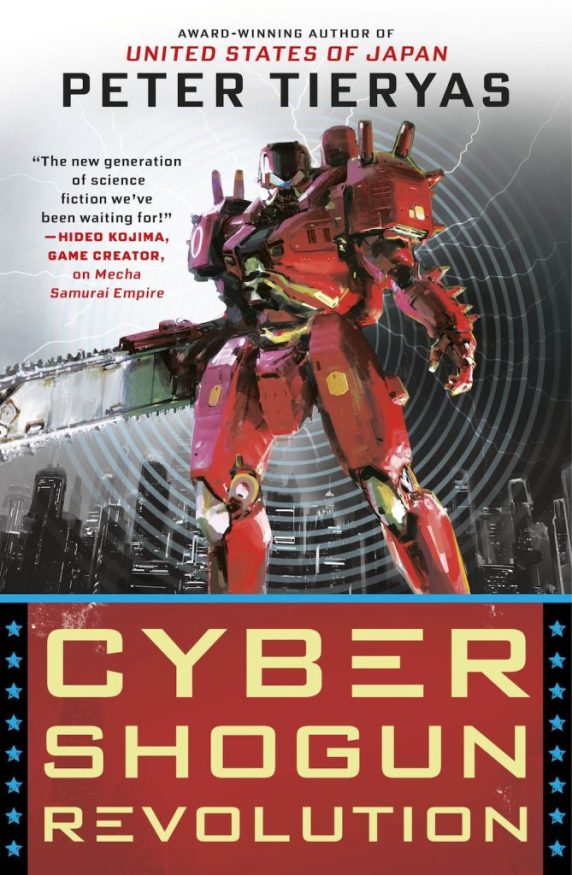
Cyber Shogun Revolution by Peter Tieryas

Cyber Shogun Revolution

Publisher: Penguin Random House Audio (Audiobook – 3 March 2020)

Series: United States of Japan – Book Three

Length: 10 hours and 55 minutes

My Rating: 4.5 out of 5 stars

Amazon     Book Depository

If you like the sound of a gritty spy thriller set in an alternate version of America filled with destructive mechas, then you really need to check out Cyber Shogun Revolution, the third novel in Peter Tieryas’s outstanding United States of Japan series.

The United States of Japan novels are a fun and inventive series that is routinely described as a combination between The Man in the High Castle and Pacific Rim.  This series is set in an alternate history in which the United States lost World War II after Japan invented mechas to defeat the Allies.  Following the end of the war, the United States was split between the Japanese Empire and the Nazis, who subsequently engaged in an extended and brutal Cold War against each other.  This latest novel is set in 2020 and features an intense and thrilling new tale that is separate from the stories told in the previous two entries in the series.

Following the end of the latest war against the Nazis, the United States of Japan is facing a crisis as their corrupt governor appears to be a Nazi sympathiser, secretly doing their enemy’s bidding.  Seeking justice after a brutal Nazi attack in Kansas, mecha pilot Reiko Morikawa joins a secret organisation of high-ranking soldiers, mecha pilots and politicians, known as The Sons of War, who plot to assassinate the governor and replace him with one of their own.  While their initial plan to kill the governor goes awry, their target is still killed thanks to the intervention of the mysterious assassin and feared Nazi slayer, Bloody Mary.

However, Bloody Mary has a whole different agenda and swiftly turns against The Sons of War, assassinating key members of the organisation in a brutal strike that leaves Reiko as the only survivor.  Determined to find out why Bloody Mary betrayed them, Reiko teams up with Bishop Wakan, an agent of Japan’s secret police, the Tokko, to hunt her down and stop her plot.  Tracing a shipment of black market mecha parts to Nazi America, Reiko and Bishop travel into enemy territory to find answers and soon find themselves in the midst of a massive conspiracy.  Bloody Mary has plans to change the entire United States of Japan forever, and she does not care who dies to achieve her goal.  Can Reiko and Bishop stop her before it is too late, or will the entire world feel Bloody Mary’s wrath?

Cyber Shogun Revolution is an exciting and compelling new novel from Tieryas, which serves as the third entry in the United States of Japan series.  I have a lot of love for this series after powering through the second novel, Mecha Samurai Empire, when it came out a couple of years ago.  I have been meaning to check out this latest entry for some time now, and I was glad I was able to get around to it before the end of 2020.  This latest book was really cool, and I loved the bold new story that Tieryas was able to come up with, especially as he once again makes excellent use of his unique and captivating alternate world.

This latest entry in the United States of Japan series proved to be a fun and fast-paced novel, which sees two intense protagonists forced to investigate a lethal conspiracy in an inventive and clever setting.  Told from the alternating perspectives of its two main characters, Reiko and Bishop, this story gets off the ground quick and does not slow down one bit throughout the entire book as the protagonists quickly find themselves in the midst of all manner of intrigue and suspense.  This was a deeply exciting novel, and I liked how the author changes focus from the previous novel, writing Cyber Shogun Revolution as more of a spy thriller with alternate history and science fiction elements.  I really liked the impressive pace of this novel and I was quickly drawn in by the compelling and complex thriller that Tieryas weaves for the reader, especially as it makes great use of its setting and unique world elements to tell the entire story.  The author throws in a few good twists and turns throughout the narrative, and I quite enjoyed seeing the story unfold in all its action-packed glory.  Readers do not need to have any pre-knowledge of the United States of Japan series to enjoy this book as the narrative is mostly unrelated to the events of the previous novels, although fans of the series will no doubt enjoy seeing the various changes to the universe.  Overall, Cyber Shogun Revolution had a fantastic and exhilarating story that is guaranteed to keep the reader wildly entertained throughout the entire run of the book.

A major highlight of Cyber Shogun Revolution, and indeed the entire United States of Japan series, is the inventive and unique alternate version of the world that the author has created.  The Japanese-controlled America featured within this series is an intriguing blend of Western and Japanese culture, mixed with advanced technology and an entirely new history.  I really enjoyed seeing all the clever combinations of culture that the author featured throughout his story, and there are quite a few amusing references and ideas featured throughout.  There is a particular focus on cuisine, and Tieryas once again enthrals the reader with descriptions of intense and interesting-sounding fusion foods, many of which I would love to try out.  These descriptions of the United States of Japan are really cool, and it proves to be a rich setting for the narrative to run through, especially as it is not the shiny utopia that it appears on the surface.  The country is instead a dangerous and oppressive regime ruled over by fanatical thought police, where even a momentary slipup is enough to condemn you to a horrible fate.  Tieryas spends time really highlighting this darker side of his universe in Cyber Shogun Revolution and it ends up become a major part of the plot.  The author also takes the reader on a brief tour of Nazi-occupied America, which proves to be a particularly horrible experience (strangely enough, the Nazis are just as bad, if not worse, in this reality), mainly due to the Nazis’ reliance on bioengineering rather than machines, which results in a number of disturbing and disgusting creatures, such as their bimorphs (giant organic mechas).  The comparisons between the Japanese and Nazi controlled parts of America are really fascinating, and I am really glad the author based a bit of the story there.  Needless to say, I absolutely loved the setting for Cyber Shogun Revolution, especially as it helped create a clever and complex narrative, and I cannot wait to revisit it in some of Tieryas’s future novels.

Now there is no way that I can talk about Cyber Shogun Revolution without mentioning the mechas, the giant and powerful human-controlled battle machines which won the war for the Japanese.  Mechas are a distinctive and exciting pop culture creation, especially in anime, and Tieryas uses them to great effect throughout the entire book.  While this latest entry in the series has a definite focus on conspiracies and espionage, Tieryas still slips in several mecha fights and combat scenes.  Indeed, the entire last third of the novel sees the protagonists go up against a series of different and powerful mechas in some intense and epic sequences.  The author has clearly had some creative fun in this book as Cyber Shogun Revolution features a raft of new mechas, each with some unique or advanced piece of technology that gives them an edge over their opponents, including mechas with magnet guns, a mammoth-shaped mecha with a chainsaw trunk, and a mecha that has super speed.  This naturally leads to some fantastic and distinctive sequences, as the protagonists need to find a way to defeat the varied opponents around them.  I particularly enjoyed one sequence that saw one of the characters fighting against a rival mecha, while the other protagonist assists from the outside while riding a jetpack.  Needless to say, if you love mecha combat and fantastic battle scenes (who doesn’t?) then you are going to have a lot of fun with Cyber Shogun Revolution.

In order to tell this fantastic novel, Tieryas utilises two excellent, if damaged, point-of-view protagonists in the duo of mecha pilot Reiko Morikawa and secret agent Bishop Wakan.  After both have separate run-ins with Bloody Mary in which they are the only survivor, the two team up in order to get to the bottom of why she betrayed their nation and what her end goal really is.  Both characters are extremely interesting, mainly because they both have complex and tragic pasts which drive them towards their goals.  Tieryas does an amazing job diving down into these characters’ inner psyches, creating some truly complex characters with major flaws who the reader are inexorably drawn to.  In addition, both characters also have some intense history with Bloody Mary and some of her co-conspirators, resulting in some emotionally charged moments throughout the novel.  These two characters are also a little anti-authoritarian, having seen the dark side of their nation firsthand, which alters the way that they deal with events, and also ensures that they are a little more susceptible to their enemy’s manipulation.  I really enjoyed these amazing characters and I thought that they made for a great duo of central protagonists.

While I had initially planned to grab a paperback version of this book, I ended up splashing out and getting Cyber Shogun Revolution’s audiobook format.  This audiobook has a relatively quick runtime of just under 11 hours and was narrated by the talented Emily Woo Zeller.  Zeller, who I recently enjoyed in the Star Wars: Doctor Aphra audio drama, did an exceptional job narrating Cyber Shogun Revolution and I had an outstanding time listening to it.  Zeller came up with some fantastic and distinctive voices for the various characters featured within this novel, and the entire audiobook quickly flew by thanks to her fast-paced narration.  I also loved having the cool mecha fights being narrated to me, as hearing the action being described made it pop a lot more for me than simply reading it on a page.  Because of this, Cyber Shogun Revolution comes highly recommended in its audiobook format, and I really enjoyed hearing all the awesome action and excitement contained within this amazing novel.

Cyber Shogun Revolution is an epic and captivating novel from the amazing Peter Tieryas that serves as the third entry in his fantastic United States of Japan series.  Containing an intense story laden with action, intrigue, and treachery, all set with a clever alternate version of America, Cyber Shogun Revolution is a ball of excitement that readers will have an incredible time reading.  An excellent and fun read to check out, I look forward to exploring more of Tieryas’s outrageous universe in the future.

Amazon     Book Depository

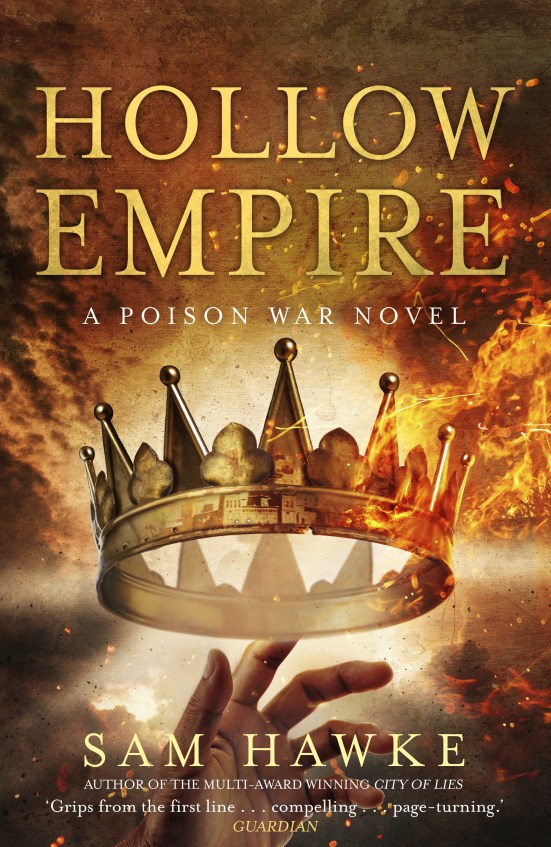
Hollow Empire by Sam Hawke

Hollow Empire Cover 2

Publisher: Bantam Press (Trade Paperback – 1 December 2020)

Series: Poison War – Book Two

Length: 560 pages

My Rating: 5 out of 5 stars

Amazon     Book Depository

After a two-year wait, we finally get to see the epic sequel to Australian author Sam Hawke’s impressive debut novel, City of Lies, with her blockbuster new novel, Hollow Empire.

Two years after the siege of the city of Silasta, where the oppressed Darfri minority were manipulated into attacking the capital by an unknown outside force, the city has started to recover.  While the city focuses on rebuilding and reconciliation with their former besiegers, the poison-eating siblings Jovana and Kalina Oromani, secret protectors of the Chancellor, continue their efforts to work out who was truly behind the attack on their city.  However, to their frustration, no-one else in the city shares their concerns; instead they have grown complacent with the returned peace.

But no peace lasts forever, especially as Silastra celebrates the karodee, a grand festival, to which representatives of all the nations surrounding the city state have been invited.  While the focus is on peace and forging ties between nations, the siblings begin to suspect that their unknown enemy is using it as an opportunity to launch a new attack against Silastra.  In order to determine what is happening, Jovana attempts to hunt down a dangerous and deadly killer that only he seems to have noticed, while Kalina navigates the treacherous world of politics and diplomacy as she works to determine which of their neighbours may have been involved in the prior attack on their city.

Working together with the Chancellor Tain and the Darfri mystic Hadrea, the Oromani siblings get closer to finding some of the answers that they desire.  However, both siblings find themselves under attack from all sides as their opponents attempt not only to kill them but to discredit their entire family.  Determined to protect Silasta no matter what, Jovana and Kalina will risk everything to find out the truth, even if the answers are too much for either of them to bear.

Hollow Empire was another awesome novel from fellow Canberran Sam Hawke, which serves as the compelling and enjoyable second entry in her Poison War series, which follows on from her 2018 debut, City of Lies.  I am a big fan of Hawke’s first novel; not only was it one of my favourite books of 2018 but it is also one of my top debuts of all time.  As a result, I have been looking forward to seeing how the story continues for some time now and I was incredibly happy to receive my copy of Hollow Empire several weeks ago.  The wait was definitely worth it, as Hawke has come up with another impressive and clever novel that not only serves as an excellent sequel to City of Lies but which takes the reader on an intrigue laden journey into the heart of an exciting fantasy city filled with great characters.

Hawke has come up with an excellent narrative for this latest novel which takes the protagonists on a wild journey throughout their city and beyond as they attempt to uncover a dangerous conspiracy threatening to destroy everything they love.  Told from alternating perspectives of the two main characters, Jovana and Kalina, Hollow Empire’s story was a clever and exciting thrill-ride of intrigue, lies, politics, crime and treachery, as the protagonists attempt to find out who is targeting them and plotting to destroy their city.  This proved to be a fun and captivating narrative, and I liked how Hollow Empire felt a lot more like a fantasy thriller than the first book, which focused a bit more on the siege of the city.  The protagonists must dig through quite a few layers of lies, hidden history and alternate suspects to find out what is happening in Silasta, and while there was a little less focus on the fun poison aspects that made the first novel such a treat, I really enjoyed how the story unfolded.  Hawke comes up with several great twists and reveals throughout the book, some of which really surprised me, although I was able to guess a couple of key ones.  I did think that the eventual reveal of the ultimate villain of the story was a tad rushed, but it resulted in an intense and fast-paced conclusion to the novel which also opens some intriguing avenues for any future entries in this series.  Readers may benefit from rereading City of Lies in advance of Hollow Empire, especially as there has been a bit of gap between the first and second novels’ releases.  However, for those wanting to jump right in, Hawke did include a fun recap at the start of the book, which sees the protagonists watching a theatrical recreation of the events of City of Lies.  Not only is this a rather entertaining inclusion (mainly due to how Jovana is portrayed) but it also serves as a good summary of some of the book’s key events, and readers should be able to follow through this second book without any trouble, even if they have not had a chance to read City of Lies.  Overall, this was an epic and impressive story, and I really enjoyed seeing how the Poison Wars continued in Hollow Empire.

I really enjoyed some of the cool writing elements that Hawke featured in Hollow Empire which added a lot to my overall enjoyment of the book and its great story.  The most noticeable of this is the use of the split perspectives, with the main protagonists, Jovana and Kalina, each getting alternating chapters shown from their point of view.  These split chapters worked extremely well in City of Lies, and I am really glad that Hawke decided to use them once again in her second book.  While the primary use of these alternate chapters was to show the different angles of investigation that the siblings were following, it does result in some additional benefits to the narrative.  I particularly liked the way in which the author uses the split perspectives to create tension and suspense throughout the novel, such as by one protagonist lacking information that the other character (and the reader) has knowledge of, or by leaving one protagonist’s fate uncertain.  It was also interesting to see the different opinions that the protagonists had on various characters and the specific relationships and friendships that they formed.  I also liked the way in which Hawke placed some intriguing in-universe poison proofing notes before each chapter, which recounted various poisonings that Oromani family has prevented or investigated over the years.  These notes were quite fun to check out and it really helped to highlight the importance the main characters place on protecting the Chancellor and their city from poison attacks.  These clever elements enhanced an already compelling narrative, and I imagine that Hawke will continue to utilise them in some of her future novels.

One of the major highlights of this book was the return to the author’s great fantasy setting that is the city of Silasta and its surrounding countryside.  Silasta is an extremely woke city full of artists, inventors and scholars who believe in equality between genders and acceptance of all sexualities and gender identities (for example, Hawke introduces a non-binary character in Hollow Empire).  While this was a fun city to explore in the first novel, especially as it was besieged for most of the book, I quite like how the author has altered the setting for Hollow Empire.  There is a significant focus on how Silasta has changed since the ending of the siege two years previously, especially on the attempted reconciliation efforts between the somewhat elitist citizens of Silasta and the Darfri, who were previously treated as second-class citizens doing the menial jobs.  While there have been changes to this relationship since the end of the first book, much is still the same and the difficulties in reconciling these two groups becomes a major and intriguing plot point within Hollow Empire.  Hawke also adds in an intriguing crime element to the novel, as several criminal gangs have used the chaos following the siege to build power within the city, peddling new drugs to the populace.  These new elements make for a different city than what the reader has previously seen, and I really liked how Hawke explored the negative elements of the aftermath of the first book and implemented them in Hollow Empire’s narrative, creating a fantastic and intriguing story.

In addition to focusing on the changes to the main city setting, I also really enjoyed the way in which Hawke decided to expand out her fantasy world.  This is mainly done by introducing emissaries from several of the nation’s neighbouring Silasta and bringing them to the city, resulting in the protagonists learning more about their respective histories and cultures, especially as they are convinced that one of them is responsible for the attack against them.  The story also explores the history of Silasta itself, with several storylines exploring how the city came into existence and its hidden past.  The author also worked to expand the magical system present within her universe by examining the spirit magic that was introduced in City of Lies and exploring more of its rules and limitations.  This results in several intriguing scenes, especially when one of the major characters, Hadrea, finds new ways to manipulate her magic.  In addition, some new forms of magic are introduced within the book.  These new magics have an origin in some of the new realms that are further explored in Hollow Empire and included an interesting and deadly form of witchcraft that differs wildly from the magical abilities that the characters utilised in the first book.  Not only are these new and inventive world-building elements quite fun to explore, but their inclusion becomes a key inclusion to the narrative.  All of this results in an enjoyable expanded universe, and it looks like Hawke has plans to introduce further lands and histories in the next Poison Wars book.

Another great part of Hollow Empire is the complexity of the characters, all of whom have evolved in some distinctive and compelling manner since the first novel.  As mentioned above, the main protagonists are the Oromani siblings, Jovana and Kalina, who serve as the book’s point-of-view characters.  Jovana is the Chancellor’s poison proofer, his secretive bodyguard who prepares his food and ensures that everything he eats is poison-free.  However, since the events of City of Lies, Jovan has become a lot more well-known throughout the city due to the role he played during the siege.  This requires him to adjust his role in society, especially as many people are now questioning how he and his family gained such prominence.  Jovan is also a lot more cautious when it comes to the Chancellor’s security after several near misses in the first novel, so that he appears almost paranoid at points throughout Hollow Empire.  This paranoia serves him well as he is forced to fight against an assassin who is using some clever means to attack his family and allies.  Jovan has also entered into a mentoring role within this book as he takes his young niece, Dija, as his new apprentice, teaching her the ways of proofing and ensuring that she has an immunity to toxins by poisoning her himself, in a similar way to how his uncle raised and taught him.  All of these add some intriguing new dynamics to Jovan’s character, and I really enjoyed seeing how he has changed since the first book.  Kalina also proves to be an excellent character throughout Hollow Empire, and I quite enjoyed reading her chapters.  Like her brother, Kalina has become a much more public figure in Silasta, although she is seen more as a hero than a suspicious poisoner like her brother.  Kalina’s chapters mainly focus on her attempts at finding out the truth through diplomacy as she interacts with the foreign delegations visiting the city.  Her investigations are just as dangerous as Jovan’s, and I really enjoyed seeing how her distinctive narrative unfolded, as well as how her character has also evolved, including with a fantastic new romance.  Both protagonists serve as excellent centres for the story and I look forward to seeing how they progress in later books in the series.

Hollow Empire also boasts a raft of fantastic side characters, many of whom have some exceptional arcs throughout the book.  The main two supporting characters are probably Chancellor Tain and Hadrea, both of whom were significant figures in City of Lies.  Like the main protagonists, Tain has also changed a lot since City of Lies, where he was the young and bold ruler thrust into a chaotic position.  Now he is a much more measured and cautious man, especially after narrowly avoiding death by poisoning in the first novel.  Tain continues to be the focus of the protagonist’s advice and protection throughout the novel, and the friendship he has with Jovana and Kalina becomes a major part of the book’s plot, resulting in some dramatic and powerful moments.  Hadrea, the young Speaker whose spirit magic saved the city in the first novel, also gets a lot of focus throughout Hollow Empire and is quite a major character.  In addition to being Jovan’s love interest, Hadrea also serves as the protagonist’s magic expert as they attempt to understand some of the mystical elements attacking them.  Hadrea’s magical power ends up becoming a major story element of Hollow Empire as she attempts to find new ways to use her magic while also chafing under the instruction of her superiors.  It looks like Hawke has some major plans for Hadrea in the future books, and I am curious to see what happens to her next.  These characters, and more, end up adding a lot to the story, and I quite enjoyed the way that Hawke portrayed them.

Hollow Empire by Sam Hawke was an impressive and deeply enjoyable novel that serves as an excellent sequel to City of Lies.  Featuring a thrilling and clever main narrative, great characters and an inventive, if damaged, fantasy setting, Hollow Empire was an epic read from start to finish that proves exceedingly hard to put down.  I had a wonderful time reading Hollow Empire and it ended up being one of my favourite books of 2020.  A highly recommended read, I cannot wait to see how the series continues in the future.

Amazon     Book Depository

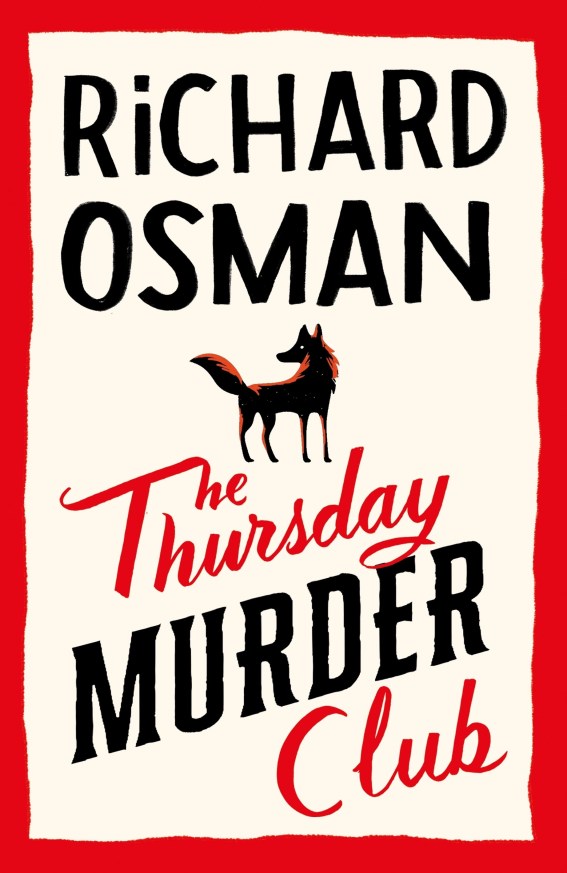
The Thursday Murder Club by Richard Osman

The Thursday Murder Club Cover

Publisher: Penguin Audio (Audiobook – 22 September 2020)

Series: Thursday Murder Club – Book One

Length: 12 hours and 25 minutes

My Rating: 5 out of 5 stars

Amazon

British comedian and television personality Richard Osman presents one of the best debut novels of 2020 with The Thursday Murder Club, a clever and hilarious murder mystery novel that was an absolute treat to read.

Welcome to Coopers Chase, a luxury retirement estate near the town of Fairhaven where the elderly can relax and enjoy their final years in peace, quiet and good company.  But for four enterprising septuagenarians, Elizabeth, Joyce, Ibrahim and Ron, retirement also offers them a bold opportunity for some excitement and adventure as the Thursday Murder Club.  Meeting up each Thursday in the Jigsaw Room, these four friends attempt to solve cold cases forgotten by the police.  While it may seem like a harmless hobby, these retirees are thrilled by their amateur investigations and welcome the chance to bring a little justice in the world.  However, when a local property developer with a dodgy past is brutally murdered with a mysterious photograph left next to his body, the Thursday Murder Club jump at the chance to investigate a real live case.

Thanks to a lifetime of connections, skills and intuition, the members of the Thursday Murder Club are able to quickly position themselves in the middle of the burgeoning case, much to the frustration of the local police.  Using every unorthodox and somewhat unethical trick at their disposal, the club members gain vital information about the murder.  However, when a second person is poisoned right in front of them, the club soon begin to realise how high the stakes are.  A killer is stalking Coopers Chase and they will do anything to protect their secret.  Can the Thursday Murder Club stop them before it is too late, or will their first real mystery be their last?

Well, that was exceedingly delightful.  Osman is a fantastic British comedian who has been in a number of great British television programs (we’re big fans of Pointless), and, like many celebrities, he decided to have a go at writing his own novel.  I have to admit that when I first heard that Osman was writing a crime fiction book, I was intrigued but I did not initially plan to read it.  However, after hearing some positive buzz from other reviewers and being in the mood for something a little different I decided to check it out, and boy was I glad that I did!  The Thursday Murder Club turned out to be an exceptional read which blew me away with this incredible and unique crime fiction story.  Osman has come up with something special with this book, and I had an outstanding time listening to it and exploring the fun story, unique characters, and clever depictions of the elderly of Britain.  This is easily one of my favourite debuts of 2020 and it gets a full five stars from me.

Osman has come up with an elaborate and entertaining story for The Thursday Murder Club that combines an excellent murder mystery with large amounts of brilliant humour and several amazing and tragic moments of drama.  The author makes great use of multiple character perspectives to tell his clever story, and the reader is soon wrapped up in a number of different personal tales that all tie into the murders that form the centre of this book.  While The Thursday Murder Club is a little slow at the start, it does not take long for the story to get going, and once the first body drops the reader is firmly entranced and cannot wait to see where the author is going next.  There are so many great elements associated with this book, and you are guaranteed to have an outstanding time getting through The Thursday Murder Club.

At the centre of The Thursday Murder Club’s narrative lies a compelling and intriguing murder mystery that follows an intense case around the Coopers Chase retirement village.  Osman has weaved together a pretty impressive murder mystery here, with two disreputable people killed in quick succession in apparently connected killings, which prompts the members of the Thursday Murder Club to get involved.  Watching these characters investigate proved to be extremely fascinating and entertaining, especially as they employ some much more unique and unusual methods to get the answers they are looking for.  Osman pairs this unorthodox search for the killer with the official investigation being conducted by the police, and the two different methodologies make for a good contrast, especially when they both get some extremely different results.  The two murder cases go in some extremely compelling and clever directions, and Osman has come up with a number of impressive twists and misleading suspects to deflect from the real culprits.  The conclusions of the cases were really good; I loved how the entirety of the mystery came together and how the various crimes were connected.  Osman adds in lot of foreshadowing for the various twists featured within The Thursday Murder Club, but some of the results were still pleasantly unexpected.  I was able to predict one of the major twists of the book in advance, which allowed me to work out who a killer was and why they were doing it, but I did not see certain other twists and reveals coming.  I really love it when a mystery can shock and surprise me and I think that The Thursday Murder Club was one of the best murder mystery novels I read all year.

An exceptional highlight of The Thursday Murder Club is the excellent characters from whose eyes we see the story unfold.  The Thursday Murder Club is made up of four unusual friends who make for very fun central protagonists.  All four members of the Thursday Murder Club are entertaining and complex characters in their own right and who each add a lot to the story.  Osman spends a great deal of time exploring each of these characters, and the reader soon becomes intimately familiar with their lives while also becoming enamoured with their intriguing personalities.  The main character of the book is probably Elizabeth, the founder of the Thursday Murder Club and its apparent leader.  Elizabeth is extremely determined, and it is strongly hinted throughout the book that she was formerly a rather successful spy.  Described by one of the other characters as being essentially Marlon Brando in The Godfather, Elizabeth is the driving force behind the club’s investigation into the murders around Coopers Chase, especially with her innumerable contacts and natural intuition.  Elizabeth has a very strong personality, and it is fantastic to see her go about her business, intimidating and outmanoeuvring everyone she encounters with practiced ease.  Despite this hard, clever exterior, Elizabeth has a number of emotional vulnerabilities, including an ailing husband and a comatose best friend, which Osman explores throughout the novel.  These vulnerabilities help to drive Elizabeth throughout the book, and she becomes quite a complex character as a result.

The other female member of the Thursday Murder Club is Joyce, a former nurse.  Joyce is a great character who becomes an invaluable part of the investigation.  Appearing to be mostly quiet and somewhat placid, Joyce is actually a deeply intelligent person who uses her mild and kind personality to get people to do what she wants.  As the newest member of the club, Joyce provides the reader with an outsider’s view of the other major characters, and you get an interesting glimpse of how the investigation is progressing as her point-of-view chapters are written in a fun journal format that is unique to her.  Aside from Elizabeth, Joyce probably gets the most character assessment and development in The Thursday Murder Club, especially as some of her personal relationships become key parts of the plot, and she proves to be a particularly intriguing character as a result.

The other members of the Thursday Murder Club are Ibrahim and Ron, two very different people who are actually the best of friends.  Ibrahim is a particularly pleasant man, a former psychologist, who is nice and sociable to everyone he meets and who serves as the heart and soul of the team.  Out of all the main characters in this book I think that Ibrahim got the least amount of development, which was a shame considering how entertaining he proved to be.  I hope he gets more of a storyline in the future entries of this series and I look forward to seeing how Osman expands this character out.  Ron, on the other hand, is the complete opposite of Ibrahim.  A famous former union activist, Ron enjoys the spotlight and revels in fighting for lost causes against authority figures.  Ron is the hot-headed member of the group and he has a personal stake in the investigation when his son becomes a prime suspect for the police.  Despite his rough and impulsive attitude, Ron fits in well with the rest of the club and is a keen investigator, mainly because of the way he refuses to believe anything anyone else tells him.  All four of these main characters are exceptionally well written, and I really enjoyed the way that they played off each other and used their unique talents to solve the case.

This novel also focuses on two police officers, Donna and Chris, who are leading the official investigation into the murders and who find themselves working with the members of the Thursday Murder Club.  Donna is a young rookie cop who has transferred over from the London Police and now finds herself bored to death as a member of a small town force.  Thanks to the manipulations of Elizabeth, she finds herself assigned to the case, which revitalises her and helps address some of her issues and concerns from her past.  Donna proves to be a fun character to follow, especially as she is the only younger person who sees through the members of the Thursday Murder Club and doesn’t fall for their antics.  She also has a fun partnership with Chris, the senior officer investigating the case, and the two swiftly form a connection throughout the story.  Chris, despite being a clever and experienced detective, is a bit of a sad-sack who finds himself stuck in a rut.  This fresh case also reinvigorates Chris, and he starts to fall out of his bad habits with Donna’s help.  However, unlike Donna, Chris is a lot more susceptible to the charms of the Thursday Murder Club, and it is extremely entertaining to see him get manipulated for a good part of the novel.  These two police characters get a fair bit of attention throughout the novel, and their official investigation nicely complements the unofficial one being run by the Thursday Murder Club, with the divergent information they receive coming together perfectly in the final results.  I also quite enjoyed the friendship that forms between Donna and Chris, as it allows both of them to grow and has a very nice development at the end which I thought was rather sweet.

Osman also creates a bevy of distinctive and entertaining side characters, many of whom have a connection to the crime or are a potential suspect.  This includes all the residents of the retirement village, which is filled with unique personalities with lifetimes of secrets.  Osman explores several of these great characters throughout the course of the book, providing some rich backstory and intriguing motivations for their potential involvement.  I personally enjoyed the character of Bogdan, a relatively young Polish immigrant who works as a labourer for the local property developers and who finds himself involved in the case after finding a body.  Bogdan forms a fantastic friendship with Elizabeth and her husband throughout the book, and I really enjoyed his guarded personality and shrewd intelligence, which proves to be an excellent match for the secretive Elizabeth.  I also have to highlight the two major murder victims.  Both of these victims get a few scenes early on in the novel before they are killed, and Osman sets them up as particularly outrageous and unlikeable people.  While this does ensure that the readers are not too cut up when they end up dead, it does mean that there are a whole of suspects when it comes to their murders, and I liked how that added to the case.  All of the characters featured in The Thursday Murder Club were a lot of fun and I had an amazing time seeing how each of their individual arcs unfolded and what each of them was capable of deep down.

I quite enjoyed how Osman turned The Thursday Murder Club into a fun and entertaining ode to the elderly that highlights the fact that retirees can achieve quite a bit and have a lot to offer to the world.  I really enjoyed the author’s story idea of four senior citizens investigating a murder and it produced a truly entertaining and enjoyable read.  Some of The Thursday Murder Club’s funniest moments revolved around the four protagonists manipulating or swindling the younger characters in the book to get what they want, whether it be information on the case or a confession about certain illegal actions.  The way in which they go about influencing the younger people they encounter is very entertaining, as they mostly utilise the classic trick of appearing helpless and innocent, while in reality they are controlling the entire situation.  Some of their methods will be very familiar to any reader with an elderly grandparent or parent, and I personally laughed my head off at one scene where one younger character is slowly worn down through a unique interrogation method involving crowded chairs, friendly company, an overflowing mug of tea and crumbly cake.  Watching the veteran police characters slowly work out how and why they are being manipulated was extremely funny, and by the end of the book they are noticeably more wary about dealing with the members of the Thursday Murder Club.  As this is a book about senior citizens, there are naturally a number of jokes about growing old, including entertaining discussions about their thoughts on today’s society and several depictions of them trying and failing to work modern technology.  While most of the discussion about the elderly is light-hearted and inspiring, it does get quite sad in places.  There are a number of scenes that focus on the debilitating impacts of aging, with each of the protagonists witnessing someone close to them starting to fade for one reason or another, resulting in several deep sequences when they consider their own mortality or frailty.  There are also a number of extremely tragic character moments involving age, and you can’t help but feel a little heartbroken in several places thanks to Osman’s excellent writing.  This adds some memorable and necessary drama to the overall narrative and it really helps to turn The Thursday Murder Club into a much more captivating read.  Overall, I think that Osman captured the issues surrounding aging extremely well, and I very much enjoyed his depictions of these badass septuagenarians outsmarting everyone they meet.

I also liked how Osman went out of his way to make his debut novel exceedingly British.  Everything about this book screams “British” to the reader, from the way the characters, act, talk and interact with each other, to the classic, subtle humour that is featured throughout.  Osman also includes a ton of references to various cultural, social and political elements of the country, with the characters discussing or reminiscing about everything from their favourite foods, television shows, bands, locations, historical experiences (Ron, for example, has some thoughts on Thatcher) and various other aspects of day-to-day life.  Due to the way that British culture funnels down into Australia, I had a decent understanding of most of the references that Osman made, although I imagine that some readers could get a little offput by the many references to aspects of the culture they are unfamiliar.  That being said I found the constant discussion about everything British to be exceedingly fun, and I really appreciated the way in which the author made a truly British book.

In order to enjoy this fantastic book I decided to grab a copy of the audiobook version of The Thursday Murder Club which was narrated by actress Lesley Manville.  The Thursday Murder Club audiobook has a run time of 12 hours and 25 minutes, and I got through it rather quickly, especially once I become wrapped up in the fun and captivating mystery.  I found myself really enjoying this excellent audiobook version of this novel and I think that having the events of the book narrated to me helped me follow the plot more closely and connect to the characters more.  I do have to admit that I was a tad disappointed that Osman did not narrate his own audiobook, but this disappointment quickly faded once I experienced Manville’s excellent narration.  Manville’s voice and narration style really fit into the unique tone of The Thursday Murder Club, and she was able to convey all of the novel’s humour, mystery and drama extremely well.  I also absolutely loved the great voices that Manville came up with for the characters featured within the novel, and I felt that she was able really accentuate the various personalities that made up the story, as well as come up with several different accents.  While Osman doesn’t narrate this audiobook, there is an interview between Osman and Marian Keyes featured at the end of it, in which Osman details how he came up with the idea for his book and why he wrote it, which I am sure many people will find fascinating.  I ended up having a wonderful time listening to this version of The Thursday Murder Club, and it ended up being one of my favourite audiobooks of 2020.

The Thursday Murder Club by Richard Osman is an exceptional and masterful crime fiction novel that is easily one of the best debuts of 2020.  Osman has crafted together an outstanding read that follows some entertaining and compelling protagonists as they investigate a complex murder mystery in a very fun way.  I had an amazing time listening to this fantastic novel and I would strongly recommend this book to anyone interested in a fun and intriguing read.  This was an absolute triumph from Osman, and I am extremely keen to see what he writes next.  I note that a sequel to The Thursday Murder Club is planned for next year and I cannot wait to get my hands on a copy.

Make sure to also check out my review for the sequel novel, The Man Who Died Twice.

Amazon

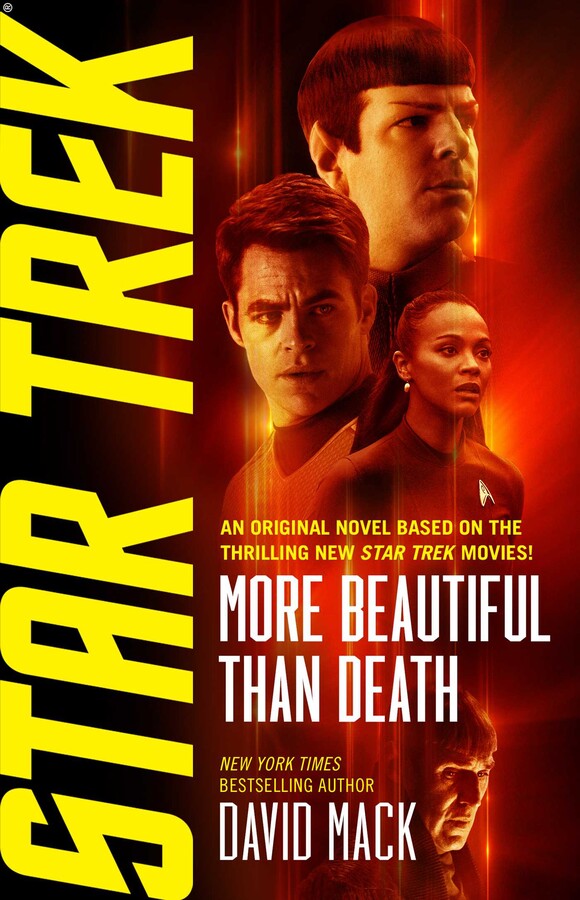
Star Trek: More Beautiful Than Death by David Mack

Star Trek More Beautiful than Death Cover

Publisher: Simon & Schuster Audio (Audiobook – 11 August 2020)

Series: Star Trek – Kelvin Timeline – Book Two

Length: 8 hours and 16 minutes

My Rating: 4.5 out of 5

Amazon     Book Depository

Prepare to once again dive into the alternate timeline version of the Star Trek universe, known as the Kelvin timeline, in this latest exciting tie-in novel from acclaimed author David Mack, Star Trek: More Beautiful Than Death.

Set shortly after the events of the 2009 Star Trek film, in which the planet of Vulcan was destroyed by the mad Romulan Nero, Captain James T. Kirk is now captain of USS Enterprise.  Given a new mission, the Enterprise and its crew are ordered to rendezvous with Spock’s father, Ambassador Sarek, and escort him to the planet of Akiron.  Akiron, a resource-rich world containing a substantial amount of dilithium, has recently sent out a distress signal to the Federation, who are hoping to exchange aid for favourable trading rights.

Arriving at Akiron, they find the planet in a state of chaos as the population are under attack by demonic dark-energy creatures, known as wights, who strike from the darkness, eat energy, and appear to suck the life right out of any living being.  Determined to save the people of Akiron no matter what, Kirk begins his preparations to investigate the wights.  However, before he can act, Sarek orders Kirk to abandon the mission and leave Akiron.

Refusing to obey Sarek’s orders, Kirk attempts to find the cause of the terrible events on Akiron and save who he can.  With the help of an old mystic who believes that Kirk has faced the wights in his prior lives the Enterprise crew are soon able to discover the source of the wights on Akiron and the deadly potential their invasion has.  As Kirk and his crew attempt to save the entirety of the planet they must overcome several deadly attacks as well as the sinister agenda of Sarek’s Vulcan aide, L’Nel, who hatches a dangerous personal plan to kill Spock.  Can the Kirk and the Enterprise succeed, or will darkness engulf everything it touches?

Over the last couple of years, I have had a great pleasure of reading/listening to several amazing pieces of Star Trek fiction and I always love seeing the unique and varied tales that the talented team of tie-in authors can come up with.  More Beautiful Than Death is an excellent example of this as it features a fantastic and captivating tale of exploration and desperation within an interesting part of the Star Trek canon.  This latest novel is written by a true veteran of Star Trek fiction, David Mack, who has not only written a ton of different tie-in novels but who also has writing credits for two episodes of Star Trek: Deep Space NineMore Beautiful Than Death is set in the alternate timeline introduced in the 2009 film Star Trek, known as the Kelvin timeline.  This is the second Kelvin timeline novel I have read this year after previously enjoying The Unsettling Stars, and it set between the events of Star Trek and Star Trek: Into DarknessMore Beautiful Than Death ended up being an impressive and exciting Star Trek novel, and I had an amazing time listening to it.

Mack has come up with an excellent narrative for More Beautiful Than Death which sees the crew of this alternate timeline Enterprise attempt to defend an alien planet from a series of demonic creatures.  The author writes this much like an episode of a Star Trek series, with the crew arriving at the planet, analysing the situation, facing all manner of conflicts, getting beat up and then engaging in a course of action to save the day.  I felt that this worked extremely well for the novel and readers are treated to a captivating and dramatic science fiction story that easily keeps the attention from start to finish.  The stakes are high throughout More Beautiful Than Death, and Mack keeps the tension and excitement going through much of the book, focusing both on the mission at hand and on the contentious personalities aboard the ship.  There are a number awesome action-packed sequences throughout the book, and I especially enjoyed the various scenes that showed the Enterprise being attacked by the wights, forcing the crew to flee from an opponent they cannot even touch.  There is also a particularly good subplot around the Vulcan characters aboard the Enterprise, with the mysterious character of L’Nel apparently plotting to kill Spock.  I really enjoyed the way that Mack explored this subplot, showing L’Nel’s attack on Spock as a prelude to the rest of the book, and then slowly exploring the events that led up to it in the main story.  This subplot combined with the main narrative extremely well and the result is a deeply compelling overall novel that I had an amazing time listening to.

Like many Star Trek tie-in novels, More Beautiful Than Death is best enjoyed by those readers who have some familiarity with the franchise.  However, I felt that Mack made his latest book extremely accessible to new readers, and anyone can have a great time enjoying the fast-paced and intriguing novel with minimal knowledge of Star Trek lore.  There are a lot of fun Star Trek elements associated with this novel, and I really enjoyed the author’s intriguing additions to the canon.  Not only does this book serve as an excellent follow-up to the 2009 movie, showing the early missions of this younger Enterprise crew, but Mack also utilises the alternate timeline setting of this novel to come up with clever alterations to the classic Star Trek lore.  One part of the book’s narrative ends up being an extremely ingenious homage to a key episode of The Original Series.  Mack cleverly inserts this compelling altered version of this episode throughout the book, and it was deeply fascinating to see it unfold, especially as the events of the Star Trek film have ensured it is sufficiently different.  This revision of a classic Star Trek episode was extremely impressive and it was one of my favourite parts of the entire book.  All of this makes for an amazing Star Trek read, and fans of the franchise are in for a real treat with this book.

In addition to some cool call-backs to The Original Series, Mack also does an exceptional job bringing the Kelvin timeline versions of the Enterprise crew to life.  The author ensures that all of the main characters in this book are portrayed slightly differently to how they are in The Original Series.  For example, Kirk is a lot more impulsive, younger and combative than the classic version.  Spock is a little stiffer, as he has only been influenced by Kirk a short while.  Uhura is a lot more combative and emotional, mainly due to her relationship with Spock.  Scotty is a lot more humorous, channelling his inner Simon Pegg, while McCoy is a lot gruffer and even more reluctant to get involved in the usual crazy Enterprise adventures (if that was possible).  All this makes for a tie-in novel that is a lot more in line with the newer generation of films and I personally appreciated the effort from the author.  I was tad disappointed that Sulu and Chekhov were not featured as heavily as the other major characters in the novel (something I have noticed in other Star Trek tie-in novels), but this was still a great novel for Star Trek characters.

I also appreciated how Mack takes the time to explore the psyches of several of his major characters, especially as it produces some compelling and dramatic results.  This includes a deep dive into this version of Captain Kirk, such as exploring his mental state after the events of the 2009 film, with a particular focus on the guilt and hopelessness he felt over watching the destruction of Vulcan, which has made him more determined to save entire worlds.  There is also an intriguing inclusion about Kirk’s past lives, with a couple featured as part of the plot.  This leads into some great discussion about how the character is destined to be thrust into great and tumultuous events, which I quite enjoyed.  Spock also gets a major focus in More Beautiful Than Death, thanks to the author’s inclusion of other Vulcan characters like Sarek and L’Nel.  Spock’s complicated relationship with his father and other Vulcans is a major theme throughout the novel, and aspects of his life aboard the Enterprise, particularly Spock’s romantic attachment to Uhura and his loyalty to Kirk, increase the tension.  This adds an excellent amount of drama to the narrative and it plays extremely well into the clever subplot around L’Nel, resulting in an intriguing and compelling narrative arc.  I had a great time diving down into several of these characters, and it helped to produce a much more complete and emotionally driven narrative.

As I do with most Star Trek books, I ended up checking out More Beautiful Than Death in its audiobook format rather than getting a physical copy.  The More Beautiful Than Death audiobook has a run-time of just over eight hours, making it an extremely easy audiobook to get through quickly.  I had an amazing time listening to this audiobook, especially as it features the vocal talents of the outstanding Robert Petkoff.  I have mentioned Petkoff before in several my reviews as he is the go-to narrator for any piece of Star Trek fiction that gains an audiobook format, due to his fantastic ability to perfectly replicate the cast members of both The Original Series and The Next Generation television shows.  Petkoff did another exceptional job in More Beautiful Than Death, expertly bringing every key member of the Enterprise’s crew to life and providing fantastic voices for each of them.  While they do sound more like The Original Series cast than the actors from the 2009 Star Trek film, this was still excellent work from Petkoff, and listeners are well aware which character is speaking at every point in the audiobook.  I also liked the voices that Petkoff utilised for the various supporting characters in More Beautiful Than Death, and there are some great differentiation in tones between the various alien species, such as for the Vulcan characters Sarek and L’Nel.  All of this makes for an epic listen, and Star Trek fans are strongly advised to check out More Beautiful Than Death in its audiobook format.

With his latest novel, David Mack continues to explore and add to the Star Trek expanded universe, this time diving into the intriguing Kelvin timeline.  More Beautiful Than Death is an excellent and entertaining read that takes the reader on a gripping adventure in space.  Thanks to the author’s excellent use of characters, Star Trek elements and his fantastic and unique narrative, More Beautiful Than Death is a fantastic Star Trek tie-in novel which will really appeal to established fans of this franchise.  Highly recommended.

Amazon     Book Depository

Ink by Jonathan Maberry

Ink Cover

Publisher: Macmillan Audio (Audiobook – 17 November 2020)

Series: Standalone/Pine Deep series

Length: 15 hours and 9 minutes

My Rating: 4.75 out of 5 stars

Amazon     Book Depository

Prepare to journey back to the weirdly dangerous town of Pine Deep as one of my favourite authors, Jonathan Maberry, presents his latest novel, Ink, an intriguing and clever horror thriller that dives down into the world of memories and tattoos.

Pine Deep, Pennsylvania is a town long-steeped in blood and death.  After barely surviving the terrible events of 15 years ago, now known by the locals as The Trouble, the town has slowly recovered, with fresh businesses and people bringing in new life.  However, no one is ever truly safe in Pine Deep, especially with a malicious predator haunting the streets, one with very particular appetites.

Monk Addison is man who has experienced many weird and horrifying things in his life, but what he is about to encounter in Pine Deep will shake him to his core.  A bounty hunter who has sought redemption in life by covering his body with tattoos depicting the faces of murder victims, Monk has recently moved to Pine Deep to be closer to his friend and tattoo-artist Patty Cakes, but what he arrives he finds Patty in a state of shock.  An important tattoo on Patty’s hand has started to disappear, and as it fades, so do the memories associated with it until Patty can no longer remember anything about, not even the precious person who inspired it.

As Monk desperately tries to understand what is happening to his friend, a pattern begins to emerge.  Several people within Pine Deep are experiencing losses of traumatic or significant memories, and in every case tattoos related to these events have also disappeared.  Worse, in some cases new tattoos are appearing on people, forcing them to do terrible deeds.  Working with Pine Deep’s chief of police, Malcolm Crow, and his adopted son, Mike Sweeney, Monk, Patty and other impacted residents of Pine Deep attempt to discover who or what is behind these stolen memories.  But can they find who is responsible before their memories fade, or will this predator continue to feast on the very thing that makes them human?  The Lord of the Flies is hungry, and his reign of terror has only just begun!

Over the last couple of years, I have become a major fan of Jonathan Maberry’s writings, and I only just recently finished reading all 10 Joe Ledger novels, as well as the first Rogue Team International book, Rage, so I was very excited to get my next fix of Maberry excitement with InkInk was one of my most anticipated novels for the second half of 2020, and it really did not disappoint in any way, as Maberry has produced an intense and captivating horror novel that proved to be both extremely exciting and deeply terrifying.

Ink is an outstanding and impressive book that contains one heck of a story that sees several remarkable characters attempt to deal with a weird and powerfully scary supernatural threat that is attempting to destroy what is most precious to them.  Maberry has crafted together a fantastic narrative for this book that is equal parts clever, compelling and scary, and which dives down deep into the psyche of several complex individuals.  The author utilises his trademark style to produce a wide-ranging, multi-character story that shows the full impact of the antagonist’s dark machinations, and the slow hunt of the protagonists to comprehend what is happening to them, and their subsequent attempts to combat the threat.  While I did think that the story was a little slow at the start, once it gets going the reader has a hard time putting it down, as they become obsessed with seeing the full extent of the horror, as well as becoming connected to the characters featured within.  While Ink contains a lot less action than a typical Maberry novel, this is an extremely exciting and fast-paced read, with the thrilling game of cat and mouse between the villain and his victims proving to be quite intense.  Readers should be warned that this is an extremely adult read, containing some fairly graphic sequences of violence, torture, mental manipulation and sexual content, which may not be for everyone.  Overall though, this is an exceptional read, and I really loved getting to the end of this enthralling and excellent narrative.

While Ink is ostensibly a standalone novel, in many ways it is a sequel to Maberry’s debut series, the Pine Deep trilogy, while also being set in the same universe as several of his other books, namely the Joe Ledger novels.  The entirety of Ink is set in the town of Pine Deep, which was the titular setting of the original trilogy.  As a result, several characters from these books appear throughout the course of the novel and there are a lot of mentions of the events of the Pine Deep trilogy, some of which play into the plot.  While you potentially could get a little more out of Ink by reading the Pine Deep novels first, I would say that you really do not need any prior knowledge of these books to enjoy Maberry’s latest novel.  Like always, Maberry’s writing is very inclusive, providing the reader with relevant information about the events that occurred in these previous novels.  As a result, the reader gets a decent summary of what occurred in the Pine Deep trilogy and how it relates to Ink.  This allows readers unfamiliar with the Pine Deep books to enjoy Ink without any issues, and this might even be a good Maberry starter novel for anyone who has been interested in reading some of his books.  On the other hand, those fans of Maberry who are familiar with this prior trilogy will no doubt really enjoy the return to this iconic setting and will have an amazing time seeing what has happened in the 15 years following the end of Bad Moon Rising (the third and final book in the Pine Deep trilogy).  The summaries of the Pine Deep novels contained within Ink are rather easy to get through and Maberry works them into the story extremely well, so those people familiar with these prior works should be able to read them without getting bored of a forced recap, and this is book that any horror or thriller fan can easily enjoy.

At the heart of Ink are the excellent main point-of-view characters that Maberry utilises to tell his complex tale.  There are several major characters featured throughout the book, including several original characters created specifically for Ink.  The most notable of these is Monk Addison, the relentless and scary former soldier who is desperately seeking redemption after a long and bloody life.  Monk turned out to be an amazing central character for this book and I loved the way that Maberry slowly revealed his past in order to show just how special he his.  Monk goes through a fair bit of development in this novel, and I found myself getting quite attached to him as the story progressed.  In addition to Monk, Ink also has a particular focus on Patty Cakes, Monk’s tattoo artist friend whose memories are impacted by the book’s antagonist.  Patty is a deeply tragic and magical character who has gone through a lot in her life and who now finds herself being attacked in a much more personal and devastating way.  Seeing Patty being overwhelmed by the loss of her memories is really disturbing and heartbreaking and you cannot help but feel her loss deep in your soul, which is a testament to Maberry’s excellent writing.  Patty is another character who you grow to care for as the story unfolds and the constant danger she is put into, both mentally and physically, keeps the reader on edge.  The other two original major characters I need to highlight are Dianna and Gayle.  Dianna is a medium who also has her memories stolen by Ink’s antagonist, while Gayle is someone who builds a connection to Dianna, who is then impacted by Gayle’s lost memories in a different way.  I liked the way that Dianna and Gayle were worked into the story, and they helped to provide a new angle to the narrative.  Watching them team up with Patty added some enjoyable female empowerment elements to the novel, and there is a touching LGBT romance between Dianne and Gayle that I thought Maberry handled well, even if it was a tad explicit.

In addition to these new characters, Maberry also makes use of the protagonists from the Pine Deep novels who return as major characters in Ink.  This includes major characters Malcolm Crow, Mike Sweeney, Val Guthrie and Jonatha Corbiel (now Jonatha Newton).  While Val and Jonatha have mostly smaller roles in this book, Malcolm and Mike are major point-of-view characters, performing their own investigation of the latest batch of weird events occurring around Pine Deep.  Both proved to be exceptional additions to the cast, as not only are they complex characters (especially after the events of the Pine Deep trilogy), but they also add some distinctive viewpoints into the investigate parts of the book.  Maberry does a fantastic job introducing these characters to new readers, while those who have read the Pine Deep books will deeply appreciate seeing what has happened to them since the events of this initial trilogy.  While I am sure that many of Maberry’s readers would have hoped for happy lives for Malcolm, Mike and Val after all they have been through, all three characters have experienced additional difficulties and tragedies in the last 15 years.  These additional life events, as well as their traumas from the Pine Deep books, are expertly incorporated into their characterisation for Ink, and it proved deeply compelling to see their arcs unfold.  I personally enjoyed seeing the new protagonists’ reactions when encountering Malcolm and Mike, and there are a lot of depictions about realising how dark, dangerous and damaged both of them are.  Some of these new characters are also in for a hair-raising surprise when it comes to Mike, and it was interesting to see how that certain aspect of Mike’s character has evolved since his last book.  All of the characters featured in Ink were deeply compelling, and I felt that Maberry did an exceptional job featuring them throughout this novel.

If there is one thing that Maberry is particularly good at it, it is creating iconic and despicable antagonists for his novels.  Ink is no exception to this, as Maberry has once again produced a dark and sinister figure in Owen Minor, the self-proclaimed Lord of the Flies.  Owen is an inherently creepy and deeply disturbing individual who has gained the ability to steal people’s tattoos and the associated memories with them, as well as several other abilities.  Thanks to a series of intriguing interludes, Maberry dives into the history of Owen, showing his origins as a character, what his motivations are and how he realised what his powers were.  This examination of Owen’s psyche and history is both fascinating and unsettling and getting this deeper look into the character’s soul makes the reader dislike him even more, especially as you begin to realise just how twisted he truly is.  The author also includes a number of chapters from the point of view of several different side characters who have been infected by Owen in some way or another.  These scenes not only help to explore the true extent of his abilities but they also show the lengths he is willing to go to get his favourite meal.  The way in which he attacks his victims and then revels in their mental agony ensures that the reader builds a deep hatred for him and you really cannot wait to see him get some form of comeuppance.  All in all, this was another great antagonist from Maberry, and I look forward to seeing what sort of maniac creature he comes up with next time.

As I mentioned above, Maberry returns to his iconic town of Pine Deep for this latest novel, with most of the story set within it.  This proves to be a fascinating and dark location for this great book, and I think that Maberry had fun revisiting this haunted town.  The author really loads a sense of menace and despair into nearly every scene set within the town, and this is enhanced by every character recognising just how weird and dangerous the place can be.  There is a lot of history associated with Pine Deep, as during the original Pine Deep trilogy the town was nearly destroyed by dark forces, with the survivors deeply traumatised as a result.  These events, now know by everyone as The Troubles, are a major part of the town’s identity, and Maberry does a great job teasing out what happened during The Troubles to new readers, with only hints and vague comments describing for the first part of the book.  It proved to be quite fascinating to see how the town has recovered in the roughly 15 years since the events of the Pine Deep trilogy, and Maberry fans will have an amazing time seeing this continuation of the setting.  I really enjoyed seeing the characters explore Pine Deep once again and I hope that Maberry has plans to revisit again in some of his future novels.

One of the more compelling elements of this book is the author’s examination of the importance of tattoos and the memories that people associate with them.  I have to admit that I am not particularly into tattoos; while I can appreciate the cool art that other people get, it is really not something I would consider doing for myself.  However, I deeply enjoyed the way in which Maberry explored the tattoo world in this novel, examining both tattoo artists and the people who desire the art on their body.  In particular, he explores the way in which people get tattoos to mark special or significant occasions, or how tattoos can be used to memorialise tragedy or dark moments from someone’s life and the emotional and memory connections that result from the tattoos.  This becomes quite a significant part of the novel, because the antagonist steals the tattoos to get to the memories associated with it.  As a result, Maberry than examines the impact of losing such a memory and what it could potentially do it to a person.  While some characters manage ok with losing these darker memories, a lot of them are deeply troubled by it, as going through these events and overcoming them, are key to their identity.  Without these memories, and the tattoos that personify them on their body, these characters become despondent, and in many cases it becomes too much for them to bear.  It helps to really emphasise just how evil and malignant the actions of the antagonist is, and I really appreciated the author’s dives into the human psyche and his compelling depiction of what happens when someone loses their memory and identity.  The removal of certain memories from the various point-of-view characters also adds a new level of difficulty to the protagonist’s investigation, as they have to try and find a way to hunt down someone who they can’t remember.  These inclusions really added a lot to the story, and readers may come away with a deeper understanding of how important tattoos can be to people.

As with all of Maberry’s novels that I have so far enjoyed, I really could not resist grabbing the audiobook version of Ink.  The Ink audiobook has a run time of just over 15 hours, which is a typical length for one of Maberry’s novels, and I found it extremely easy to power through this book in less than a week.  Part of this was because of the excellent narration of long-time Maberry narrator, Ray Porter, who once again lends his awesome vocal talent to this thrilling book.  Porter is probably one of my favourite audiobook narrators at the moment, and I cannot imagine listening to one of Maberry’s novels without his amazing voices.  Just like he does in the Joe Ledger novels, Porter really dives into the characters he is portraying, ensuring that the full range of their emotions become abundantly clear to anyone to who listening to the story.  He is also does an amazing job enhancing the horror elements of this book with some of his creepier tones, and the listener can get chills at the horrible and slimy voices he uses for the antagonist or for some of the darker scenes in Ink.  While it was a little disconcerting at time to hear some of the familiar voices from the Joe Ledger audiobooks in this new novel, Porter was once again fantastic narrating Ink, and I would strongly recommend this format as the ideal way to check this book out.

Jonathan Maberry once again shows why he is one of the preeminent authors of the weird thriller novel, with this outstanding horror book InkInk is an extremely clever and thrilling horror book that grabs the reader’s attention from the beginning and refuses to let go.  Thanks to the outstanding narrative, impressive characters and interesting themes, Ink proves to be a captivating and exciting read, especially when combined with the distinctive setting of Pine Deep from Maberry’s previous novels.  As a result, Ink comes highly recommended, especially in its audiobook format, and this novel is worth checking out.  I had an exceptional time reading this book and I cannot wait for Maberry’s next novel, Relentless, which comes out in several long months.

Amazon     Book Depository

Firefly: Generations by Tim Lebbon

Firefly Generations

Consulting Editor: Joss Whedon

Publisher: Titan Books (Hardcover – 3 November 2020)

Series: Firefly – Book Four

Length: 287 pages

My Rating: 4.5 out of 5 stars

Amazon     Book Depository

Over the last couple of years, there has been a resurgence of tie-in fiction around the Firefly television series, such as a new range of comics that was released by Boom!  However, the tie-in fiction I have been enjoying the most has been the excellent Firefly novels released by Titan Books.  I have so far had the great pleasure of reading and reviewing the first three novels in the series, Big Damn Hero, The Magnificent Nine and The Ghost Machine.  All three of these Firefly novels have been extremely fun to read and The Ghost Machine was one of my favourite books from the first half of 2020.  As a result, I have been eagerly awaiting the next novel in the series, Firefly: Generations by bestselling author Tim Lebbon.  Lebbon is an intriguing author who has been writing since the late 1990s across a variety of different genres.  Not only has he written several of his own novels and series, including Coldbrook, Relics and the Toxic City series, but he also authored an impressive amount of tie-in fiction, including a Star Wars novel, the official novelisation of The Cabin in the Woods and, most notably, the Rage Wars series, which encompassed both the Predator and Alien franchises.  Generations is the author’s first foray into the Firefly universe and it was originally set for release last year, before being temporarily delayed.  However, it was well worth the wait as this new novel from Lebbon is an extremely good Firefly tie-in novel that sees the crew of the Serenity embark on another dangerous adventure in space.

Set between the events of the television show and the Serenity movie, Generations sees the crew of Serenity once again low on cash after another poor job.  Hoping to turn their fortunes around by visiting a backwater planet with some potential smuggling jobs, the crew are disappointed by a lack of work.  However, an intriguing new opportunity presents itself when Mal wins a mysterious and seemingly unreadable map from an old mercenary.

While initially sceptical of its worth, Mal is convinced he may have something when a rival group of smugglers attack the crew, desperate to retrieve the map.  Curious, the crew investigate further and find that their wayward psychic, River Tam, can read the map and believes that it leads to an abandoned Generation ship, one of the massive vessels that brought humans to this galaxy from Earth-that-was.  With the potential for priceless salvage too much to resist, Mal and his crew decide to follow the map out into deep space, hoping for a miracle.

Arriving at the coordinates indicated on their map, they find the wreck of the Generation ship exactly where expected and loaded with valuables.  However, the ship appears to have been recently visited by the Alliance, who have made some surprising modifications to it.  Even worse, the closer they get to the ship the more animated River becomes, convinced that something is waiting for them.  Ignoring River’s cryptic warnings, Mal leads a team aboard, but what they find will haunt them to the end of their days.  Something extremely dangerous has awakened on the ship, and it is very, very angry!

Firefly: Generations is an impressive and exciting novel that sees the crew of Serenity embark on another thrilling money-making expedition in space.  This particular adventure was a rather cool one, and I really loved the way in which the author sends the characters off to explore a seemingly abandoned ship.  Lebbon sets his story up extremely well, and the subsequent action-packed narrative moves as an exceedingly fast pace as the protagonists quickly encounter all manner of problems that require them to escape from the ship before it is too late.  While this is a story that revolves around thrilling action and excitement, Lebbon makes time for several character-driven arcs, and the reader gets some excellent backstory and universe lore.  In many ways, this felt like an episode of the Firefly television show, and I had an extremely hard time putting the book down once I got drawn into the story.  Overall this was an amazing and enjoyable novel, and I had an awesome time reading Generations.

As part of this excellent story, Lebbon makes sure to bring several of the key Firefly characters to life throughout his book.  While Inara and Shepherd Book are mostly absent, the rest of the cast of the television show take part in this intriguing adventure, and I think it worked a little better with the smaller group of characters.  Lebbon did a great job with their characterisations in this novel and most of the featured characters are well utilised throughout the story, especially as they each spent time as a point-of-view character.  The always entertaining Captain Malcolm Reynolds serves as the driving force of much of the plot in this book, obtaining the map and taking his crew out on the adventure.  Mal was a lot of fun throughout the book, providing the reader with a number of clever jokes and observations about the dangerous events they are encountering and trying to work his way around it.  Wash was also particularly funny throughout this book, mainly because, out of all the characters, he was the most apprehensive about visiting the Generation ship.  Wash keeps up an amusing patter throughout the book, and there are several great scenes where he is forced to deal with some uninvited guests aboard Serenity.  I also quite enjoyed the use of Jayne and Kaylee throughout Generations, as they both get a lot of focus as they team up together.  Kaylee has a particularly deep attachment to the events occurring throughout the book, due to her fascination with the Generation ships, and this leads her into the heart of the action, somewhere she usually tries to avoid.  Luckily, she spends most of her time with the dangerous Jayne, who is up to his usual mercenary ways, attempting to loot the ship for anything valuable.  While Jayne maintains his typical gruff exterior for much of the book, there are some excellent moments when he opens up to Kaylee and shows how much closer he has grown to the rest of crew as a result of their adventures.  However, some of the most interesting scenes in this book concern River, who finds herself coming face to face with a dangerous figure from her terrifying past.  River has a unique history with the main antagonist of this book, which results in her attempting to establish a connection with him.  However, it doesn’t take long for this connection to take a dark turn, and she is forced to make some hard decisions about whether she wants to continue on with her crew or with someone she has an intense connection with.  Not only are River’s scenes quite emotionally deep, by Lebbon presents several great sequences where she uses her combat training to overwhelm the crew in order to get to where she wants to go.  I did think that Zoe and Simon were a bit underutilised throughout the novel, however, they still served vital supporting roles throughout the plot and they had some fun interactions with the rest of the characters.

In addition to his portrayal of the main characters from the television show, Lebbon also features some intriguing new antagonists for Generations’ story.  This includes the mysterious person who the crew encounter aboard the Generation ship, Silas, someone with a connection River’s past.  Silas is quite an interesting character, mainly due to the parallels between him and River, and it proved to be quite fascinating to see him in action throughout Generations, especially as he is one of the most dangerous things the crew has ever encountered.  Lebbon has also introduced a new female duo the mysterious agents known as The Hands of Blue (two by two, hands of blue).  Lebbon presents a compelling take on these two characters, and it is one of the first times fans of the show get to see inside the heads of any members of this secretive group.  I quite liked the utilisation of them in this book, especially as the author spends time showing just how bonded and weird these characters are and it was great to get some more information on this mysterious group.  Having both Silas and The Hands of Blue (with their associated Alliance backup) as antagonists in this novel really raised the stakes of this action packed novel and it was exciting to see the three-way fight that resulted between these two competing antagonists and the crew of Serenity.  I really enjoyed all the excellent character work in this book and it resulted in some amazing and intense scenes.

One of the things that I enjoyed the most about Generations was the way in which Lebbon spends time exploring and expanding on the Firefly universe.  Not only does the author do an amazing job replicating the old-west feel of this great science fiction series, continuing the cool adventures in a post-civil war landscape, but he also expands on the lore of this universe.  As part of this, Lebbon provides a lot of background and details about the transition of humanity to the star system where the Firefly series is set, including the massive Generation ships they used as transport, providing the reader with insights into their construction and how the technology has changed in the period between the exodus from Earth and the events of this book.  It was really fascinating to see the characters from the television show explore this ship and learn more about their long-forgotten history and past.  It was particularly entertaining to see them interact with some of the technology and cultural items from our time period, and there are numerous jokes around the characters not understanding certain brands or references.  In addition to this intriguing expansion of the Firefly timeline, certain reveals in the plot necessitate a deeper look into the history of River and the program that made her, and you get some other hints at what projects and military testings the Alliance does.  All of this makes for a fantastic addition to the Firefly cannon and fans of the franchise will appreciate some of the cool new additions that Lebbon brings to the table.  While Generations is probably best read by those people familiar with the Firefly show, the novel is also extremely accessible to newcomers to the series, who will no doubt enjoy the cool and enjoyable science fiction adventure.

Firefly: Generations by Tim Lebbon is a thrilling novel that takes the reader on a wild and compelling adventure into the amazing Firefly universe.  Generations contains an impressive and exciting story that makes excellent use of the characters from the Firefly television show while also exploring the franchise’s expanded universe.  A fun and easily enjoyable novel, this book comes highly recommended to all Firefly fans and you are guaranteed to have an amazing time getting through this awesome book.

Amazon     Book Depository

The Evening and the Morning by Ken Follett

The Evening and the Morning Cover

Publisher: Macmillan (Hardcover – 15 September 2020)

Series: Kingsbridge – Book 0

Length: 819 pages

My Rating: 5 out of 5 stars

Amazon     Book Depository

Following three long years of waiting, one of the best authors of historical fiction in the world today (and one of my all-time favourite authors), Ken Follett, returns with another historical epic, The Evening and the Morning.

Follett is a highly acclaimed author who has written a number of impressive bestsellers over his 45+ year writing career.  After starting off with thriller novels, Follett really hit his literary stride when he moved on to massive historical fiction novels.  After experiencing great success with the iconic The Pillars of the Earth, he has gone on to produce several other epic books, including two sequels to The Pillars of the Earth and the outstanding The Century trilogy.  I have been a major fan of Follett for years ever since I had the great pleasure of reading The Century trilogy.  This was followed up with the second sequel to The Pillars of the Earth, A Column of Fire, which was easily one of my favourite books of 2017.  Thanks to how overwhelmingly compelling each of these previous novels were, I have been eagerly waiting to read his latest novel, The Evening and the Morning, for a while now, and it has been one of my most anticipated novels for the second half of 2020.

The Evening and the Morning is a character driven historical fiction novel that is set near the end of the Dark Ages of England.  The novel actually serves as a prequel to Follett’s bestselling The Pillars of the Earth and is part of Follett’s Kingsbridge series.  The Kingsbridge novels are all set within the fictional town of Kingsbridge, which each novel exploring a different period of English history (for example The Pillars of the Earth is set between 1123 CE and 1174 CE, while its sequel, World Without End, starts in 1327 CE).  This prequel is once again set in the same area, with the novel running between 997 CE and 1007 CE.

At the end of the 10th century, England is far from settled and faces attack from external threats.  One particularly vicious Viking raid causes untold damage at the town of Combe, near the city of Shiring, and sets off a chain of events that will change the area forever.

Following the raid, one of the survivors, a young boat builder named Edgar is forced to abandon his home and follow his family to the small hamlet of Dreng’s Ferry.  Living amongst the unwelcoming locals and corrupt landlord, the brilliant Edgar chafes and tries to find a new way to provide for his family.  At the same time, a Norman noblewoman, Ragna, falls in love with the ealdorman of Shiring and travels to England to marry him.  However, she soon discovers herself engulfed in a brutal battle for power with her husband’s family, and any misstep could cost her everything.  These characters are joined by Aldred, a young and ambitious monk who wishes to turn the abbey at Stirling into an academic hub.  However, his strong sense of right and wrong gets him into trouble as he searches for justice in all the wrong places.

As all three of these characters try to survive the troubles of the location, they find themselves drawn into each other’s lives.  Together they have the power to solve each of their problems and prosper together.  However, each of them has run afoul of the area’s corrupt Bishop, who is determined to gain power and influence no matter the cost.

Unsurprisingly, I absolutely loved this new novel from Follett, who has once again composed an outstanding historical epic.  The Evening and the Morning is another exceptional book that takes the reader on a powerful and captivating ride through an exciting period of English history with an addictive story told through the eyes of several great characters.  I had an outstanding time reading this book, and despite its length (at 800+ pages, it is one of the longest novels I have ever read), I powered through this book in relatively short order as I found the compelling narrative that Follett produced to be deeply addictive and hard to put down.  This was a fantastic read, and it gets a full five-star rating from me.

The Evening and the Morning contains an impressive and addictive character driven narrative that sees three distinctive protagonists attempt to change their destiny and the destiny of the people they love over a period of 10 years.  Set during a turbulent period of England’s history, The Evening and the Morning follows these characters as they attempt to survive Vikings, hunger, bandits and the machinations of a dangerous bishop.  The scope of this book’s story is truly epic as Follett ensures that his protagonists are forced to contend with all manner of challenges and tragedies, from political intrigue, direct attacks, imprisonment and so much more.  The resulting story is deeply compelling, extremely intelligent and wildly entertaining, especially as Follett comes up with a ton of unique and intriguing scenarios for his characters to work around.  I had an incredible time reading The Evening and the Morning’s story and it proved extremely hard to put down.

As I mentioned above, The Evening and the Morning is part of the Kingsbridge series and serves as a prequel to the first book in the series, The Pillars of the Earth.  Despite this, I would say that readers really do not need to have any prior knowledge of the rest of the Kingsbridge books to enjoy The Evening and the Morning.  This latest novel from Follett is extremely accessible, and as it is set more than 100 years before the events of The Pillars of the Earth, readers really should consider this a standalone novel that any historical fiction fan can easily enjoy (that is true for every entry in this series).  That being said, long-term fans of Follett and the Kingsbridge series will no doubt really appreciate seeing this early version of this iconic fiction setting, especially as the author includes a number of clever connections to the future novels in the series.  I particularly liked seeing how the titular Kingsbridge of the series was created, and you also get more of a look at how important the clergy were to the early inhabitants of the town, which is fascinating if you consider how the relationship between the church and the townspeople changes over the course of the series.  As a result, I would say that The Evening and the Morning is a book that most readers will be able to enjoy, while also serving as an intriguing entry in the Kingsbridge series.

The Evening and the Morning’s story follows three major point-of-view characters, Edgar, Ragna and Aldred, and shows the reader 10 key years of their lives.  These three characters form the heart of this story, and it does not take long for you to get really drawn into their individual stories.  Each of these characters has their own intriguing and emotionally charged story arcs, such as the creative Edgar’s attempts to rebuild his life in a hostile new village after experiencing a series of terrible losses, Ragna’s marriage and the subsequent battle to gain power and influence, and Aldred’s bid for justice and knowledge.  I really enjoyed each of these character’s individual arcs, but their real strength lies in the way that their stories and lives tie into one and other.  All three major characters becoming incredibly entwined as the book continues, as they form a strong friendship between themselves and attempt to help each other come the various struggles they encounter.  These separate character storylines come together extremely well into one powerful and cohesive narrative which sees the reader become deeply engrossed in all their lives.  You really grow to care for all three of these characters as the story progresses, becoming deeply invested in their wellbeing and happiness.  While this is evidence of some outstanding writing on Follett’s behalf, it is a little unfortunate as a lot of bad things happen to each of these characters (especially Ragna), and it makes for some emotionally hard reading at times.  There is also a rather intriguing love triangle between these three characters with some interesting LGTB+ elements attached, which adds an additional level of drama to the story.  I ended up being quite satisfied with how these character arcs unfolded, and readers are going to have an incredible time seeing how they turn out.

In addition to the main three characters, there is also another major point-of-view character, Wynstan, the Bishop of Shiring.  Wynstan is the book’s main antagonist, a cunning and ruthless manipulator who is desperate to gain power and influence at the expense of others.  Wynstan is the half-brother of Ragna’s husband, who uses his familiar connections and his corrupted followers to control much of Shiring and the surrounding area.  Follett has created an extremely despicable and aggravating villain with Wynstan, who comes into conflict with all three major protagonists, as each of them cross him in some way or another.  Wynstan is an extremely vengeful and dangerous opponent, who manages to do some fairly evil deeds throughout the book, while avoiding too many repercussions.  I found myself really growing to hate Wynstan and his followers as the book progressed, becoming fairly aggravated whenever he managed to weasel his way out of trouble.  This emotional response to Wynstan is exactly what you want when you write an antagonistic character, and I think that he helped add a lot to the overall narrative.

Follett has also loaded up his story with a ton of side characters who the point-of-view characters interact with throughout their lives.  There are quite a substantial number of side characters in this book, but thanks to Follett’s excellent writing the reader is able to keep track of each of them; at no point during this book did I become lost working out who someone was.  Many of these supporting characters have their own minor story arcs throughout the book, and it is interesting to see how they evolve and change over the years.  While quite a few of them are fairly despicable (indeed, at times it seems like the three main characters are the only decent or sensible people in the story), you do grow attached to them and become wrapped up in what happens to them.  That being said, readers are advised not to get too attached to them, as they have a much higher mortality rate, although there are a few happy endings in there which are guaranteed to satisfy.  Overall, Follett does an exceptional job with all the characters in this novel, and watching their lives unfold was a real emotional rollercoaster.

I also quite enjoyed the author’s fascinating depiction of England (with a bit of Normandy thrown in for good measure) during the late 10th and early 11th century.  While the setting of this book, Shiring and its surrounding environs, are fictional, they come across as period-appropriate settlements and the reader gets a real sense of what life in the various villages and towns would have been like.  Due to the broad scope of the story and what the characters witness, the reader gets a look at a huge range of different people who would have existed during this period, including the nobility, the various members of the clergy, the common people and even slaves.  Follett does an amazing job of highlighting how these various characters would have lived, what their professions or stations were like and the problems they would have typically experienced.  The author really replicates the hard nature of the times, allowing the reader a fascinating glimpse into the harsh and dangerous lives of our ancestors.  Follett also works in some broader historical elements, such as the increased attacks from the Vikings and the political situation at the time.  A lot of these historical inclusions, such as having King Ethelred the Unready appear as a minor character, proved to be really intriguing, and I loved how the author dived back into history to enhance his tale.

With The Evening and the Morning, Ken Follett has once again shown why he is one of the top historical fiction authors in the world today.  This latest novel presents the reader with an exceptional and captivating tale of love, connection and triumph over adversity at the end of England’s dark ages.  Serving as a prequel to Follett’s bestselling The Pillars of the Earth, The Evening and the Morning contains an amazing story that follows some driven and likeable protagonists during this dark period.  The end result is an epic and incredibly addictive read that comes highly recommended and is easily one of the best books of 2020.  There is a reason why Follett is one of my favourite authors of all time, and I cannot wait to see what elaborate novel he comes up with next time.

Amazon     Book Depository

The Queen’s Captain by Peter Watt

The Queen's Captain Cover

Publisher: Macmillan (Trade Paperback – 10 November 2020)

Series: Colonial series – Book Three

Length: 358 pages

My Rating: 4.5 out of 5 stars

Amazon

One of Australia’s top historical fiction authors, Peter Watt, wraps up his ultra-exciting Colonial series with the third and final novel, The Queen’s Captain.

Watt is a fantastic Australian author who has written a huge collection of amazing historical fiction novels, most of which are set in Australia or feature Australian characters.  I have been a fan of Watt’s books for several years now and I have been particularly enjoying his current body of work, the Colonial series.  The Colonial books, which started back in 2018 with The Queen’s Colonial, follow the adventures of Ian Steele, a colonial blacksmith who manages to enlist as an officer in the British army under the name Captain Samuel Forbes, taking the identity of a friend who wished to sit out his military service.  While the real Samuel leaves to go to America, Ian fights in his place for a period of 10 years, which will allow Samuel to claim a substantial inheritance from his ruthless family.  This has so far been a really fun series, and I enjoyed reading The Queen’s Colonial and The Queen’s Tiger.  I have been looking forward to reading this third novel in the series for some time now and I was very excited when I received my copy, especially because the back cover quoted my Canberra Weekly review of The Queen’s Tiger.  I ended up having an awesome time reading this book, and it proved to be another fast-paced and compelling read.

In October 1863, Ian Steele is still fighting for the British crown as Captain Samuel Forbes, known to his men as the Queen’s Colonial.  After helping to put down the Indian Mutiny, Samuel and his comrades, including his long-time friend Sergeant Major Conan Curry, are fighting the Pashtun in the treacherous mountain passes on the north-western frontier of India.  With only a few months left until the 10-year deal with the real Samuel Forbes concludes, Ian is determined to survive so he can claim his reward and finally settle down.  However, with his typical bad luck, he finds himself drawn into several high-profile missions, including a dangerous operation to eliminate a murderous rebel army camped in the jungle.

As Ian fights for Queen and country, his friends are engaged in their own adventures.  In America, the real Samuel Forbes has followed the man he loves into battle, become a lieutenant in the Union army to fight the Confederates.  Back in London, Ella, the women Ian loves, has entered into an unhappy marriage to Russian Count Nikolai Kasatkin.  Determined to have one piece of happiness, Ella attempts to reclaim the son she had with Ian, but the jealous Nikolai will do the unthinkable to spite her.  At the same time, Samuel’s ruthless older brother, Charles Forbes, continues his relentless bid for power and money, while still determined to prove that the Samuel serving in the British army is an imposter.

All of this will come to a head down in the colonies in 1864.  As Ian is transferred to New Zealand to provide advice to the soldiers fighting against the determined Maori, he will come face to face with an old enemy, and the final chapters of his story will be told.  Friends will die, people will be changed in unexpected ways and the Queen’s Colonial will fight his last battle.  How will the story end?

The Queen’s Captain was another excellent novel from Watt, who has produced an exciting and fascinating conclusion to his latest series.  Like the rest of the books in the Colonial series, The Queen’s Captain is an extremely fast-paced story told from a series of different character perspectives around the world.  The book is broken up into two distinctive parts (although the second part only contains the last 100 pages) and features a number of compelling action and intrigue orientated storylines.  This is an extremely easy novel to get into, even for those readers who have not previously enjoyed the Colonial series, and I was able to finish it off in a short period of time as I got caught up in the various battles and double-crosses.  Watt really took this final entry in his series in some interesting directions, and readers will be intrigued by the various ways he finishes up the Colonial books.  There was a real focus on wrapping up every single storyline and character arc throughout The Queen’s Captain, and I really enjoyed the way in which Watt brought the series to end, especially as the overarching narratives comes full circle.  Overall, I felt that The Queen’s Captain was a fantastic way to conclude the Colonial series and readers are in for a real treat with this book.

Like all of Watt’s novels, The Queen’s Captain makes use of a substantial number of point-of-view characters to tell the story.  This is a combination of some of the established characters from the previous Colonial novels as well as several new characters.  This makes for a rather intriguing, character driven novel, especially as Watt was apparently determined to wrap up as many character arcs as possible for this final entry in the series.  There is a particular focus on the characters of Ian, Samuel, Ella, Charles, and Ian and Ella’s child, Josiah, although many of the other point-of-view characters get their time to shine and Watt ensures that they have a decent backstory.  I have really enjoyed seeing several of these characters develop over the course of the series, and it has been rather heart-warming to see how the hard events of their lives has changed several of them.  I was particularly impressed with the characterisation of the real Samuel Forbes in The Queen’s Captain, as he had a fantastic arc in this book.  Samuel, whose hatred of war is a major plot point of the series, actually joins the Union army in this book, following his love James Thorpe into battle, and while he still detests being a soldier, he shows some natural flair as an officer.  I thought that this inclusion in the book was extremely fascinating, and I loved how Samuel’s arc in this book mirrored that of his body-double Ian, with both of them gaining a reputation for courage and bravery from their soldiers, and both gaining an affectionate nickname from their men, with Samuel becoming known as “the Limey Officer”.  Samuel’s storyline in this book is really good, full of all manner of tragedy, heartbreak and dramatic moments, and readers will be deeply surprised how it ends up.  I also have to highlight the character of Charles Forbes in this book.  Charles serves as the series’ main antagonist, as he is determined to bring down both Ian and Samuel while gaining as much power as possible.  Charles is an extremely slimy villain who the reader cannot help but dislike, and I know I had a rather good time seeing him gradually get some comeuppance in this book.  I also quite enjoyed the various ways in which Watt provided conclusions to nearly all the side-characters featured in the series.  Some of these are rather entertaining (I had a good laugh at one in particular), and it was great to get some closure on all of these excellent characters at the end. 

The major highlights of this book are the awesome and thrilling action sequences as The Queen’s Captain’s characters journey through several intense and dangerous battlefields around the world.  The Queen’s Captain features several interesting and impressive battle scenes from around the world and possibly has the greatest variety out of all the books in the Colonial series.  Not only do you have a number of great sequences in India as Ian fights both the Pashtun in the mountains and a group of rebels in the jungle, but you also have battles from the American Civil War as Samuel fights against the Confederates.  There are also some sequences that feature the Maori fighting against the British and the New Zealand settlers which really stand out, despite the fact that this particular conflict only occurs for a short while towards the end of the novel.  Watt has clearly done his research around these battles, as they are loaded with historical detail about the typical combatants and the weapons and tactics they utilised.  The author does an amazing job bringing these sequences to life, and you get a real sense of the desperation and the horror that the participants would have felt on these fields.  I particularly enjoyed the author’s examination of the differences between small-scale guerrilla skirmishes (several of which occur throughout The Queen’s Captain), compared to the larger-scale battles of the past, and Watt includes several hints about how combat was likely to occur in the future.  All these action scenes are extremely awesome to read and they are a great part of The Queen’s Captain, especially as they help the plot to move along at a faster pace.

The Queen’s Captain by Peter Watt was another amazing and enjoyable historical fiction novel that takes the reader on a series of fast-paced adventures around the world.  Watt has done an awesome job wrapping up his Colonial series and readers will have a fantastic time seeing how he has concluded the various storylines and character arcs he has set up over the previous two novels.  A fun and exciting read, The Queen’s Captain comes highly recommended and I look forward to seeing what cool series Peter Watt comes up with next.

Amazon

Star Trek: Discovery: Die Standing by John Jackson Miller

Die Standing Cover

Publisher: Simon & Schuster Audio (Audiobook – 14 July 2020)

Series: Star Trek: Discovery

Length: 12 hours and 15 minutes

My Rating: 4.5 out of 5 stars

Amazon     Book Depository

One of the leading authors of media tie-in fiction, John Jackson Miller, returns with his second Star Trek: Discovery novel, Die Standing, an awesome and captivating read that follows the adventures of an excellent protagonist, the evil version of Michelle Yeoh’s Philippa Georgiou.

After the dramatic conclusion of the first season of Star Trek: Discovery, Emperor Philippa Georgiou, former ruler of the Terran Empire, a power-hungry and xenophobic human interstellar empire from a twisted alternate universe, has been stranded in the main Federation’s universe.  Biding her time while trapped on the Klingon home planet of Qo’noS, Georgiou is finally given a the opportunity she has been waiting for when Starfleet’s covert spy organisation, Section 31, offers her a chance to work as one of their agents.  However, Georgiou is far more interested in gaining her freedom and plotting to use Section 31’s resources to flee beyond Starfleet’s control.

Georgiou’s plans change when she receives news about a mysterious attack on one of Starfleet’s military vessels by a malicious and dangerous cosmic entity, one that her counterpart in this universe may have seen years before.  Intrigued by the description of the attack, Georgiou decides to remain with Section 31, especially as it bears a striking similarity to a powerful superweapon that was kept from her when she was Emperor.

Determined to use this weapon to regain her stolen power and take control of this weaker universe, Georgiou accepts Section 31’s proposal to travel to an isolated section of space where the creature was first witnessed.  Travelling with two mismatched minders who are already well out of their depth, Georgiou attempts to contact an old flame of this universe’s Georgiou, one who has a lot of influence in this quadrant of space.  Forced to conduct a subtle investigation amongst the secretive alien races of the sector, Georgiou and her companions follow the clues that will lead them to the entities they seek.  But what will happen when the former Terran Emperor has ultimate power within her grasp?  Will she ensure the safety of the Federation she despises, or will another universe bow before her might?

This was a fun and impressive new novel from bestselling author John Jackson Miller.  Miller is an interesting author who has a lot of experience writing tie-in stories, having previously written several pieces of Star Wars fiction as well as some notable Star Trek novels.  I have not previously read anything from Miller before, although I think that will have to change due to how much I enjoyed Die Standing.  Miller has written a couple of books that have been on my radar for a bit, including a previous Star Trek: Discovery novel, The Enterprise War, and the Star Wars: A New Dawn novel, which ties into the Star Wars: Rebels animated show.  This latest novel from Miller is an exceptional read, as he has come up with a wildly entertaining and clever novel based around the excellent character of Philippa Georgiou.  Backed up with an extremely compelling story, some interesting side characters and some wonderful universe-building, this is one of the better if not the best Star Trek novels of 2020, and ended up being an awesome read.

At the heart of this fantastic novel is a captivating and intense narrative that sees the protagonist and her companions venture into an unknown area of space in search of a creature with deadly potential.  This was an extremely clever and well-written character-driven story that features an excellent Star Trek narrative, filled with all manner of espionage, betrayal and war.  I really liked the way that the author blended together familiar Star Trek elements with a thrilling espionage narrative, especially one that was centred on a morally ambiguous protagonist who plans to betray everyone she encounters.  This makes for a number of great scenes, and I really liked the fascinating and clever places that the story went.  There are a number of particularly good twists featured throughout the book, and while I was able to predict where some parts of the story were going to go, I found myself pleasantly surprised and intrigued at some of the other reveals.  I also enjoyed the way in which Miller worked in some compelling comparisons between the two mirror universe, one mostly good and the other mostly evil, and it served as a clever and distinctive part of the book, especially as Miller does a lot with only one scene set in the Terran universe.  All of this makes for an exciting and powerful story that readers are going to have a wonderful time reading.  I really enjoyed the dark, thrilling and twist laden narrative and it honestly did not take me long to become hopeless addicted to this incredible Star Trek novel.

Die Standing is one of those tie-in novels that require some prior knowledge of its associated content to fully enjoy.  In this case, readers really do need to have a good understanding of the Star Trek: Discovery television show, as much of the story is derived from key events in the first and second seasons.  In particular, knowing the full tale around the character of Philippa Georgiou (both versions) is quite essential to fully appreciate the book’s story elements and character work.  At the very least, having some general knowledge of the Star Trek universe and the events of some of the shows would be useful, especially as the book is fairly dependent on some established story elements, such as the evil alternate universe.  That being said, Miller does do a really good job making this novel accessible to those readers whose knowledge of the genre might be lacking, and many of the key elements are explained in sufficient detail to follow the story and enjoy it.  However, this is definitely a novel most suitable for established Star Trek fans, especially as the author loads it up with a ton of fun or clever references to Star Trek: Discovery and some of the other television shows.  For example, this novel features the great inclusion of a younger version of the Dax symbiont (see more below), and I personally really liked how a major part of the book’s plot revolved around a key moment from Captain Kirk’s backstory (from The Original Series episode Obsession), not only showing the event from a different perspective, but also adding in some explanation for its origins and the reaction from Starfleet.  Die Standing also serves as a rather good bridge between the first and second seasons of Star Trek: Discovery, and it does an excellent job setting up the main character for her reintroduction to the show.

While this book did have an exceptionally captivating story and some cool Star Trek elements, the absolute highlight of this book has to be its wonderful protagonist (and occasional antagonist), the evil Terran version of Philippa Georgiou.  Die Standing features Georgiou in all her evil glory and she quickly makes an impression of the reader, especially after one particularly brutal and entertaining prison break sequence at the start of the book.  Pretty much every scene that features Georgiou is highly entertaining, and the snarky, arrogant personality she displays to anyone she meets proves to be spot on to how she is portrayed in the television show.  While I really enjoyed this character in Star Trek: Discovery (she is easily one of the best parts of the show) I personally felt that Miller actually helped to make Georgiou an even more compelling character throughout the course of this book.  The author really dives down into her personality and motives, showing just how twisted and self-serving she can be while also reflecting on all the things she has lost and the changes she is forced to deal with.  Georgiou goes through some fascinating self-examinations in Die Standing, especially when she is confronted with the legacy of her dead counterpart in this universe, and this serves as a fantastic emotional centre of the book.  The author’s impressive use of this fantastic character works extremely well, and it certainly helps Die Standing stand out from some of the other Star Trek novels of 2020.

Die Standing also features an excellent cast of side characters who add a lot to the story.  There are two characters who particularly stand out, Emony Dax and Sean Finnigan, who both serve as alternate protagonists, with significant parts of the book told from their perspective.  While Dax and Finnigan are nowhere near as dynamic as Georgiou, they are both distinctive in their own ways, and Miller does a good job at making them both likeable and compelling parts of Die Standing.  Emony is a young Trill gymnast who is the third host of the Dax symbiont.  This makes her an earlier incarnation of the Dax character who appeared in the Star Trek: Deep Space Nine television in two different guises (Jadzia Dax and Ezri Dax).  Thanks to her youth, both as a symbiont and a host, this version of Dax is a little more unsure and scared then her later counterparts, but is determined thanks to the terrible things she witnesses at the start of the book.  While she is initially extremely cowed by Georgiou’s overwhelming personality, Dax grows throughout the book and is eventually able to influence Georgiou.  Deep Space Nine fans will no doubt enjoy seeing this earlier version of Dax, and I rather appreciated the excellent character growth she experienced.  The other main character, Sean Finnigan, is definitely one of the more entertaining characters in this book.  Finnigan is an unashamedly Irish character who serves as the book’s comic relief.  A wild and unruly former Star Fleet officer, Finnigan is drafted into the mission due to an interesting connection he has to Georgiou, as a murderous, brainwashed version of himself served as the Emperor’s assassin in the mirror universe.  While Finnigan is a mostly entertaining character, joking, drinking and socialising with all everyone he meets, there are some deeper elements to his character, especially as he spends a good part of the book trying to balance his real personality with the more insane version of himself that Georgiou tries to bring out.  Dax and Finnigan form a compelling team with Georgiou, and they ended up being an extremely good trio the anchor the story around.

I also quite enjoyed the intriguing Star Trek universe-building that Miller featured throughout Die Standing.  A key part of this book’s story is set within an isolated section of space that is home to three distinctive alien races who are attempting to stay separate from the Federation.  All of these species are quite intriguing and inventive, and include a race of giant living spindles, an intensely warlike species of living tanks and a group of gaseous psychics.  Miller does an exceptional job exploring each of the three new alien species throughout the course of the book and giving them each unique characteristics, histories, and personalities.  Not only are these aliens quite fascinating in their own right but each of their specific traits plays into the overall story extremely well, with some fantastic twists tied into them.  In addition, Miller also spends time exploring some of the differences between the main Star Trek universe and the mirror universe that contained the Terran Empire.  Not only is there an excellent opening sequence set in this mirror universe that showcases the brutal nature of this alternate reality, but there are a number of fantastic discussions that examine how different these universes could be.  Miller ensures that the protagonist Georgiou spends a good amount of time recounting some of the horrifying details of her universe to her companions (mostly to unnerve them), and it proves quite entertaining to hear all of her various stories, especially as most are apparently not exaggerated.  I also loved the fun way that Miller altered famous historical quotes to show how different the universes could be, with a number of classic lines twisted into something far more brutal and cynical, such as “Let them eat field rations” from General Antoinette.  The book itself is also broken up into five separate sections, based upon the Terran stages of grief (for coping with a loss of status): defiance, murder, plundering, destruction and vengeance, with each sections starting up with a quote from the Terran universe that describe its history.  Needless to say that Star Trek fans are going to love the cool additions that Miller works into the expanded universe in this novel, and I personally had a wonderful time seeing all the inventive and entertaining things that the author could come up with.

Like most of the Star Trek books I have had read in the past, I chose to check out Die Standing’s audiobook format.  This was, as always, an excellent way to enjoy this clever Star Trek novel, and I had a wonderful time listening to the story unfold.  Die Standing has a run time of 12 hours and 15 minutes, which is actually the longest Star Trek audiobook that I have so far listened to, but I was still able to breeze through it in relatively short order once I got hooked on the story.  In order to tell this amazing book, Die Standing makes use of the vocal talents of narrator January LaVoy.  This is the first audiobook I have heard narrated by LaVoy, although she did voice a minor character in Star Wars: Dooku: Jedi Lost.  She has also served as narrator for several books I have physically read, such as Star Wars: Galaxy’s Edge: Black Spire, Star Wars: Last Shot and The Night Swim, and she has also narrated a couple of books I am hoping to checking out in the future, including Star Wars: Phasma.  I have to admit that I was initially a little thrown to have LaVoy as narrator, as this was the first Star Trek audiobook I have listened to that was not narrated by Robert Petkoff.  However, it makes a lot more sense to feature LaVoy as narrator due to the female lead, and I really enjoyed listening to her narration of this book.  LaVoy did an incredible job bringing the characters to life throughout Die Standing and she ascribed some very apt and distinctive voices to each of them.  I was particularly impressed with the fantastic voice she utilised for Philippa Georgiou, and I felt it was very similar to how the character was portrayed in the television show.  LaVoy makes sure to channel all of Georgiou’s scorn and sarcasm to the reader, and it was an absolute treat to listen to her villainous rants throughout the book.  I also quite enjoyed the voice that LaVoy utilised for Sean Finnigan, Irish accent included, and it helped to enhance him as a fun and entertaining character.  All of this leads to quite an exceptional Star Trek audiobook and I would strongly recommend this format to anyone interested in checking out Die Standing.

Star Trek: Discovery: Die Standing is an amazing and impressive Star Trek novel from John Jackson Miller that was an absolute joy to read.  Miller has crafted together a captivating and clever narrative for this book that follows several excellent protagonists on a high-stakes adventure through all manner of intrigue and betrayal.  Featuring some compelling story elements, fantastic world-building and an awesome evil protagonist, Die Standing was an exceptional novel and it ended up being one of my favourite Star Trek novels I have so far had the pleasure to read.  A highly recommend piece of tie-in fiction, fans of the Star Trek: Discovery television show really need to check this fantastic book as soon as possible.

Amazon     Book Depository