Warhammer 40,000: The King of the Spoil by Jonathan D. Beer

The King of the Spoil Cover

Publisher: Black Library (Audiobook – 1 July 2023)

Series: Warhammer Crime

Length: 12 hours and 33 minutes

My Rating: 4.75 out of 5 stars

Amazon

Get ready for another awesome round of Warhammer Crime goodness as Jonathan D. Beer presents an epic and captivating novel thick with action, intrigue and cool characters in The King of the Spoil.

Out of all the many Warhammer 40,000 novels and series currently running, few are as fun as the very impressive Warhammer Crime collection of books.  An intriguing subseries designed to mix distinctive crime fiction narratives with the awesome grimdark Warhammer 40,000 universe, the Warhammer Crime novels are a ton of fun, and I love the crazy and powerful stories that result.  All loosely connected and set in the same massive dystopian city of Varangantua, the Warhammer Crime series has so far produced some epic reads, including The Wraithbone Phoenix and Dredge Runners by Alec Worley, Grim Repast by Marc Collins, Flesh and Steel by Guy Hayley, and Bloodlines by Chris Wraight.  Each of these Warhammer Crime books has been pretty damn exceptional in their own way, and most of them appeared on my recent favourite Warhammer 40,000 list.  As such, I was very excited when I saw that a new Warhammer Crime novel was on its way with The King of the Spoil.

The King of the Spoil was an outstanding novel from author Jonathan D. Beer that introduced the reader to a new area of the overarching setting of Varangantua while also supplying them with a compelling and impressive story.  This is actually the first full novel from Beer, and it continues several of his short stories that were previously published in the Warhammer Crime collected editions, Broken City and Sanction and Sin.  I had an epic time with this fantastic novel as Beer produced an exceptional and addictive read.

In the vast continent-spanning city of Varangantua, there is no section of the city more desperate or devastated than the broken chunk of land known as the Spoil.  A formerly prominent industrial area, time has turned the Spoil in a useless wasteland abandoned by the rest of the city.  With the remaining populace of the Spoil forced to remain within its bounds, there are very few choices for survival and little chance for escape.  But even in this fallen area, someone must rise to the top, and only one man can be king.

For over a generation, the Spoil was ruled by Andreti Sorokin, the self-proclaimed King of the Spoil.  His rule brought stability to the once lawless section of the city, while his unpopular alliance with the Valtteri business cartel ensured that money once again flowed through the Spoil.  However, no king can rule forever, and when Sorokin is brutally murdered by a mysterious assassin, it doesn’t take long until someone tries to replace him.

As the Spoil devolves into a deadly gang war, with rival factions fighting for control of whatever they can get, the Valtteri turn to their most effective agent to find them an edge.  Melita Voronova is an info-broker and hacker of unsurpassed skill who has been forced to work for the Valterri.  However, after failing to predict Sorokin’s assassination, her only hope to survive her employer’s wrath is to travel to the Spoil and determine who killed Sorokin.  However, many people within the Spoil had a motive for killing the king, and Melita is about to discover that Sorokin’s death is only the first step in an elaborate plot that could change the very foundation of the Spoil.  Can Melita find the truth before it’s too late, or will this massive conspiracy destroy her and everything she cares about?

This was a pretty awesome book from Beer, who really showcases his fantastic writing ability in his debut novel.  Featuring an excellent and intense story, loaded with intrigue, action and complex characters, The King of the Spoil is an excellent addition to the Warhammer Crime series and I had so much fun getting through it.

Beer comes up with a very elaborate and fun story in The King of the Spoil, which starts very strong and never really slows down.  Beginning with the assassination of the titular king, Beer takes his time before introducing the main protagonist, instead utilising a series of short chapters to effectively bring several supporting cast members into the narrative while also showcasing the immediate aftermath of Sorokin’s death.  I really liked how Beer decided to focus on these other characters first, especially as it adds in some interesting story angles that come into play later in the story.

Once the scene has been effectively set, the story starts to primarily focus on protagonist Melita Voronova who, after failing to warn her dangerous corporate employers about Sorokin’s death, is forced to journey to the Spoil to find out who killed him and manage the appointment of a successor.  Beer also introduces a great alternate point of view protagonist in young Spoil resident Haska Jovanic, who provides an intriguing look at the events occurring on the ground in the Spoil, especially as warlords and other involved parties make their move.  Both major narratives evolve at a steady pace, mostly independent of each other, and I liked the competing views of the events and the city that they provided to the reader.  Out of the two, Melita’s investigation-focused chapters were probably the more entertaining, and she leads the reader on the hunt for the killer and the complex politics of the Spoil and its gangs.  These two main perspectives are cleverly interspersed with a series of interludes shown from other side characters, including the true antagonist and their patsies, as they put their masterplan into commission.  While a more detailed perspective from the antagonist might have been interesting, Beer chose to keep their involvement mostly mysterious for the moment, and it was interesting to see their intermittent involvement to the larger plot.

The King of the Spoil takes a big turn in the second half when the antagonist makes a big move and absolutely rocks the entire plot.  The full extent of their ambitious plan and its massive repercussions are pretty over the top, and I loved how Beer cleverly hinted at what was to come while setting everything up in the first half of the book.  Everything honestly goes to hell for Melita at that point while Haska finds herself in the middle of conflict, fighting for everything she believes in.  The stakes of the book keep getting bigger and bigger, and Melita is forced to find help more in keeping with the Warhammer Crime vibe to uncover who some of the major hidden players in the case are, which only results in a more sinister conspiracy than anyone realised.  This leads up to a massively explosive conclusion, which leads to some major changes and mostly resolves events, although there are some big plot points left open which Beer is clearly looking to explore in the future.  Both the main protagonists are left in interesting positions, which cleverly fits their respective development, and it will be great to see what happens to them next.  This was overall an exciting and gripping narrative that lived up to the lofty heights of the Warhammer Crime series.

Like many of the Warhammer Crime books, The King of the Spoil is a mostly standalone read that does not require a lot of pre-knowledge of the other entries in the series, or the wider Warhammer 40,000 universe to enjoy.  While Beer has written about the main character in several prior short stories, you don’t really need to check these out first, as the author makes sure that any relevant details are revisited or mentioned where necessary.  I think that Beer did a really good job of converting the characters and scenarios from his previous shorter works into the larger novel format, and his debut book was pretty epic as a result.

I loved the intriguing mixture of storylines that were featured within The King of the Spoil, and the blend of investigation, gang politics, and character driven storylines worked to produce a fantastic and complex read that fit well within the larger Warhammer Crime universe.  Beer maintains a steady and compelling pace throughout the course of The King of Spoil, and there honestly wasn’t a dull moment throughout the entire book, whether the focus was on intrigue, action, or character growth.  The intriguing crime elements of the novel, such as the protagonist’s major investigation, criminal politics, and the brewing gang war, were all expertly inserted into the story and it blended well with both the setting and the accompanying character arcs.  Beer proved competent at ratchetting up the tension at certain parts of the novel, as both main protagonists are continuously experiencing major threats, momentous decisions, and tragedy.  The action scenes were pretty damn awesome, and I loved how Beer was able to capture the intricacies of the various battles that occurred, whether they be gang scraps or something even more serious.  Thanks to the author’s inclusive writing style and determination to bring a powerful crime fiction story to life, I found The King of the Spoil to be a great entry novel into the Warhammer Crime series, and indeed this might even be a good read for those readers looking to explore the Warhammer 40,000 universe for the first time.  This entire story was showcased extremely well by Beer and I honestly had a hard time putting down The King of the Spoil.

One of the things I love so much about the Warhammer Crime books is the great overarching setting of the massive city of Varangantua, which each author adds to throughout the course of the series.  I love all the unique and different areas of the city that have so far been introduced, but I think the Spoil is one of the best.  Showcased as an extremely poor district that has been deliberately cut off from the rest of the city and is now completely ruled by gangs, the Spoil is a particularly grim and desperate place in an already notoriously grim city/universe.  Beer does a wonderful job diving into the unique history of the Spoil and its inhabitants throughout the course of the book, including how things changed during the reign of Andreti Sorokin, who brought some stability to the region, but in a way that damaged their pride and independence.  This desperation and desire to be free becomes a key part of the plot, as the antagonists use this to bring anarchy to the Spoil and beyond in some impressively destructive ways.  There is also an outstanding and enjoyable focus on gang politics and interactions, as various factions seek to take control of the Spoil throughout the course of the book.  I deeply appreciated how Beer wove these elements of his major setting into the plot, and it made for a much more complex story where neither side is really in the right.  Beer also cleverly works in some larger Warhammer 40,000 elements into the story, which work to enhance the stakes of the story.  The inclusion of one notorious Imperial organisation really showcases just how serious events get at times, and I honestly enjoyed just how widespread and massive Beer decided to make his plot, especially as there are implications of darker forces at work.  This was such a great addition to the Warhammer Crime sub-series of books, and I loved how Beer made this part of Varangantua his own and built an outstanding story around it.

One of the major highlights of The King of the Spoil was the intriguing group of characters the story was set around.  Beer does a great job of introducing a fantastic cast of thieves, gangsters, mercenaries, cut-throat industrialists and more throughout the book, and their battles for supremacy and respect ensured this was an excellent read.  The main protagonist is Melita Voronova, a talented info-broker who has been forced into service by the Valterri cartel and is tasked with keeping an eye on the Spoil.  A brilliant, analytical person with the ability to recruit and maintain a large spy network, Melita is a very intriguing protagonist, and you swiftly grow to ensure her unique outlook and abilities.  However, thanks to her indentured servitude, her complex past, and the cybernetic implants she’s received, Melita is a bit of a mess and is using drugs to cope.  Beer portrays Melita is a deeply damaged figure, who is resentful of her current lot in life and is constantly pushing everyone close to her away.  This makes for several deeply personal scenes throughout The King of Spoil, and it was heartbreaking at times to see her refuse any help, even when she really needs it.  Thanks to the chaotic events of the book, Melita experiences several tragedies in The King of the Spoil which adds further strain to her psyche and enhances the already dark tension of the novel.  I really liked where Beer left Melita’s character arc at the end of The King of the Spoil, especially as it became clear that she still has a lot of development to go, and it will be fascinating to see what happens to her next, especially as she is now on several powerful people’s radar.

The other major protagonist of The King of the Spoil was Haska Jovanic, a young resident of the Spoil who gets a front row view of all the changes and conflict that occurs throughout the book.  In some ways, Haska has a much more complete character journey in this book than Melita, especially as she goes from scared street rat to hardened and vengeful gang soldier.  Dragged into various conflicts in the book thanks to her eager friends, Haska is a bit of a reluctant figure for much of the story, and there are some intriguing chapters around her motivations and what she wants out of life.  Forced to choose between being a fighter or being exploited, Haska is thrust into some of the major plot points of the book, where she finds courage, motivation and tragedy.  Beer did a particularly good job of building up the reader’s attachment to Haska throughout The King of the Spoil, especially as she is one of the more relatable figures in the entire book.  Watching her be forced by circumstances, fear and loyalty into several deadly situations which usually backfire on her is pretty powerful, and the author builds some fantastic storylines around her as a result, especially in the second half of the book.  I deeply enjoyed how her entire complex storyline unfolded, and the compelling conclusion to her arc in The King of the Spoil ensures that she is going to be particularly interesting to follow when she shows up again next.

Aside from Melita and Haska, there are a ton of other great characters featured throughout The King of the Spoil, mainly to bolster the protagonist’s storyline or provide some intriguing antagonistic figures.  Some of the most notable includes Edi, Melita’s bodyguard and former enforcer who serves as the main character’s conscience, resolve and sounding board.  Edi is probably one of the more likeable and honourable figures in the novel, and his intriguing relationship with Melita as he tries to act like her father against her wishes, makes him that much more enjoyable.  The Valterri security chief Tomillan Vasimov, who controls Melita for his organisation, served as an outstanding secondary antagonist, especially due to his rivalry and disdain for the protagonist.  Beer turns him into quite a fantastically unlikeable figure, so much so that you quite enjoy it when the real antagonists take shots at him.  Haska’s ambitious and inexperienced gang friends also prove an excellent addition to the cast, especially as they give Haska a lot of motivation to get involved in events, while Mattix, the grizzled Probator (investigator for the Enforcers), adds a great police presence, despite his often less-than-honourable motivations.  Other great characters also have their moment in the book, such as the actual, and somewhat hidden, antagonist of the story, who masterfully sets every event into play.  I quite liked the deadly intrigue that surrounded this figure, although I do wish we had gotten to see more of them in The King of the Spoil or find out more about their motivations.  I imagine this antagonist will be a recurring figure in any future Beer Warhammer Crime novels, and I look forward to seeing them face off against the protagonist again.  These characters, and more, were all deeply enjoyable and I loved the intriguing range they brought to the plot.

I checked out The King of the Spoil on audiobook, as frankly it is the best way to enjoy a Warhammer 40,000 novel.  Unsurprisingly, I had an amazing time listening to The King of the Spoil, and I really felt that the audiobook format helped to enhance its already exciting and fantastic story.  The frenetic intrigue and brutal action sequences all really come to life when it is read out to you from the protagonist’s perspective, and I definitely absorbed more of the elaborate and desolate landscape of the Spoil thanks to the narration.  I also a very big fan of the narration provided by relatively new audiobook narrator, Gabrielle Nellis-Pain, whose intriguing range added a great deal to the impact and enjoyment of the story.  Nellis-Pain does such a great job of inhabiting the roles of the various characters contained within The King of the Spoil, especially the main two protagonists, Melita and Haska.  I felt that the narrator did a wonderful job capturing their various personalities, as well as the emotional pain and distress the events of this book inflict upon them, and you really get drawn into their story arcs as a result.  The rest of the cast also come together extremely well, and I liked how Nellis-Pain was able to really showcase some of their key character traits, which really helped me to enjoy the excellent story.  Coming in with a decent runtime of 12 and a half hours, dedicated listeners can get through The King of Spoil fairly quickly, especially once they get caught up in its wonderful detail.  I would strongly recommend The King of the Spoil’s audiobook to anyone interested in checking this book out and you will really enjoy it more in this format.

Overall, The King of the Spoil was an excellent and captivating Warhammer Crime novel that I had an epic time listening to.  Author Jonathan Beer did an outstanding job with his first Warhammer novel, and I deeply enjoyed the powerful and exciting crime fiction story he came up with, loaded with amazing characters and set in a fantastic and compelling new part of the Warhammer Crime shared setting.  The King of the Spoil was an impressive addition to an already awesome sub-series and it is clear that Beer has some interesting plans to continue the storylines started here in the future.  I cannot wait to see what Beer delivers in the future and if this first book is anything to go by, it’s bound to be exceptional.

Amazon

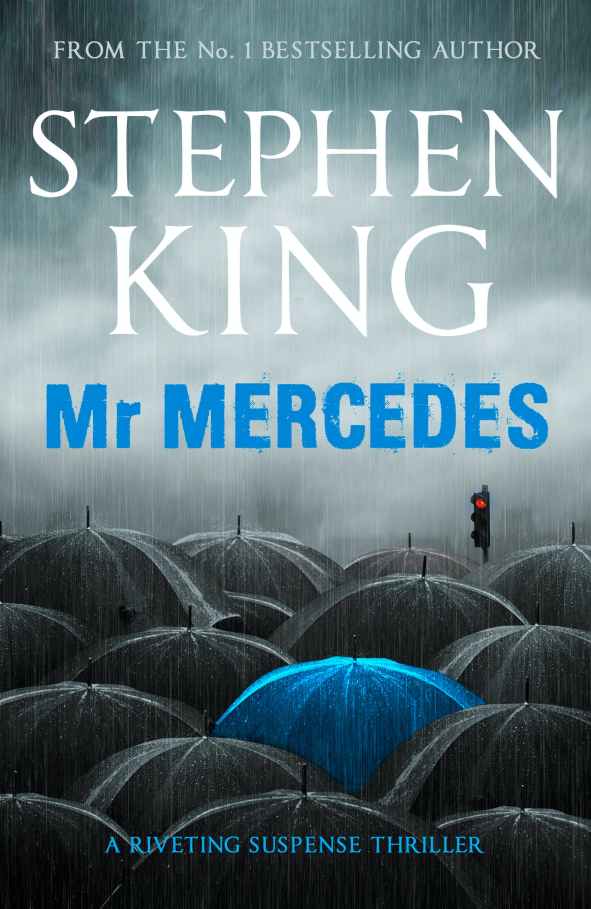
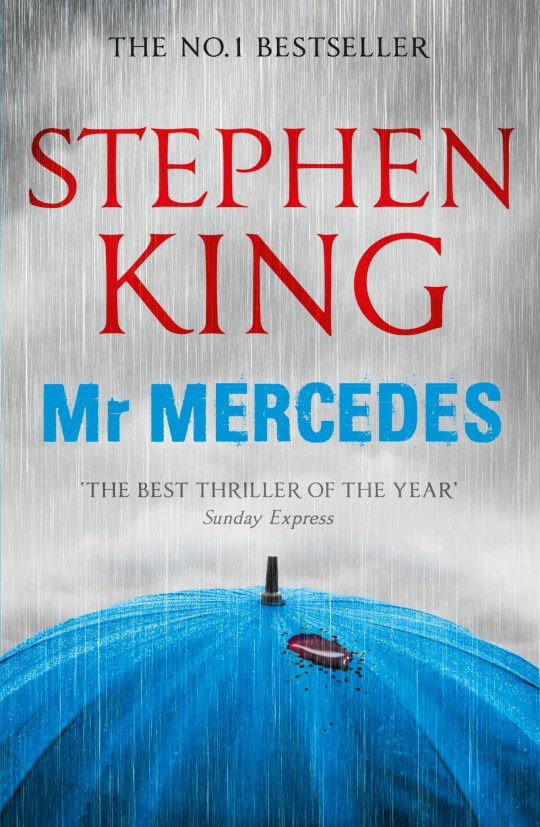
Throwback Thursday – Mr Mercedes by Stephen King

Mr Mercedes Cover 1

Publisher: Hodder & Stoughton (Paperback – 3 June 2014)

Series: Bill Hodges – Book One

Length: 407 pages

My Rating: 5 out of 5 stars

Amazon

Welcome back to my Throwback Thursday series, where I republish old reviews, review books I have read before or review older books I have only just had a chance to read. Is this week’s Throwback Thursday, I am going back to some of the older works of the legendary Stephen King lately, starting with his compelling and intense psychological thriller, Mr Mercedes, an excellent and captivating read that I had an outstanding time reading.

I have to admit that I don’t have a lot of experience with Stephen King’s books, having only read some of his more recent releases, such as Later, Billy Summers (one of my favourite novels of 2021), and Fairy Tale.  However, I have been keeping an eye out for King’s upcoming novels, including his next book, Holly, which is out very soon.  In preparation for Holly’s release, I decided to go back and read an earlier King novel, Mr Mercedes, especially as it serves as the introduction of the titular character from the upcoming book, and boy was I glad to try this fantastic novel out.

On a dark and cold morning in a depressed mid-western city, a desperate crowd gathers outside a jobs fair, hoping to turn their lives around.  However, many never got the chance, as a lone driver in a stolen Mercedes drives into the crowd, killing eight people and wounding more, before managing to escape.  This gruesome crime has haunted the community, and especially detective Bill Hodges, who was unable to catch the “Mercedes Killer” before he retired.

Years later, Hodges is living the solitary and depressed life of a former police officer who has seen too much.  Barely managing to get through each day, Hodges is suddenly revitalised when he receives a disturbing letter from someone claiming to be the Mercedes Killer.  Now more determined than ever to hunt down this killer and bring him to justice, Hodges jump-starts an unofficial investigation, hoping that his prey’s decision to contact him will be his biggest mistake.

Hodges’s new search leads him back to the owner of the Mercedes, who committed suicide from the guilt of her car being used in such a horrendous attack.  Teaming up with the dead woman’s sister and a band of unlikely helpers, Hodges begins to finally unravel the case.  However, the Mercedes Killer is a far more dangerous prey than Hodges ever realised.  Not only is he obsessed with killing Hodges, but he also has a nefarious plan that will rock the city to its core.  Can Hodges finally defeat his nemesis before it is too late, or will the Mercedes Killer once again get away with an outrageous act of violence?

This was a very impressive novel from King, who masterfully explores the psychological thriller genre the way only he can.  Featuring some powerful and complex characters, an elaborate cat-and-mouse plot, and King’s intense and addictive writing style, Mr Mercedes is a masterful novel that proves near impossible to put down.

I loved the powerful and captivating story that King pulled together for Mr Mercedes, as the author really dives into this dark story in a big way.  Starting with the gruesome and over-the-top Mercedes killing, which definitely sets the scene for much of the book, the main plot begins years later, with the retired Bill Hodges receiving a letter from the Mercedes Killer, who is attempting to persuade Hodges to kill himself.  However, Hodges instead enters into an off-the-books investigation, attempting to goad the Mercedes Killer into making a mistake while also connecting with the sister of the case’s key witness.  Half the book also focuses on the character of Brady Hartfield, the Mercedes Killer, who has become obsessed with ending Hodges, while also launching a new attack.  Disturbed, and determined to win, Brady’s perspective adds a great narrative edge to Mr Mercedes, and you are soon swept up in his complex emotional journey, especially once he realises that Hodges is on his tail.

The plot develops at a pretty fast and compelling pace, and you swiftly get drawn into each perspective character’s unique view on life and the grizzly events unfolding around them.  King really focuses on the dark and damaged minds of each of his characters, and the ongoing narrative is littered with compelling and fascinating dives into each of their pasts and the events that led them to where they are now.  The author also introduces several great supporting characters, each of whom adds their own unique elements to the book, whether it’s by helping Hodges with his investigation or by adding to the emotional fire that burns within both main characters.  Most of the story is devoted to the cat-and-mouse chase between Hodges and Brady, especially as they come closer and closer to confronting each other and digging at each other’s psyche.  King really moves the story along in the second half, thanks to a massive moment that really shatters the somewhat comfortable narrative that had been building at that point.  Everything leads up to the big and inevitable conclusion, as Brady attempts to unleash his master plan and Hodges and his allies close in on him.  This big confrontation is pretty damn interesting and intense, especially as a surprising third party takes the lead, but it leaves a fantastic and satisfying conclusion that readers will deeply appreciate and will leave you wanting more of the great characters and King’s unique style.

This awesome story was well backed up by King’s uncanny and wonderful writing style, and he really had me hooked the entire way through.  While early parts of the book where a tad slow in places, especially as King was building up the main two characters, once the full psychological dance between Hodges and the Mercedes Killer truly begins, you really cannot pull away from this great novel.  The mounting tension as these characters make their respective plays is so damn effective, and you get drawn into the dark mental battle between them.  King’s use of multiple perspectives really helps to enhance the brilliant story, and the captivating look into all the key characters’ minds is such an essential part of the book that it proves hard to turn away from these tragic and damaged figures.  I honestly could not put this book down in places, especially the last third, as the tension, emotional power and tragedy that King had built up by then was extremely palpable.  This was probably one of the better King novels I have read so far, especially as it had an excellent conclusion that fit the earlier themes of the book, and I deeply appreciated how well he explored the darker areas of the mind.

As I mentioned above, one of the main highlights of Mr Mercedes were the complex and highly damaged characters that were such a vital part of the plot.  King always excels at effectively utilising impressive and highly realistic character driven narratives in his books, and Mr Mercedes was no exception to this.  The major figures featured in this book were also highly unique and complex in their own way, often with some distinctive and understandable psychological damage that defines them and which they spend much of the book trying to overcome.  These highly personal and compelling character elements were really well woven into Mr Mercedes’ plot, and you really get drawn into each character’s own damaged journeys, as well as the intriguing relationships that they form.

The main character of Mr Mercedes is retired police detective Bill Hodges, who serves as a dogged and solid protagonist.  A rugged and tired figure who has seen too much, Hodges was an awesome retired cop character, and King did an outstanding job of capturing his loneliness and regret, especially in the early stages of the book.  However, this burns away when the killer contacts him, and he once again has a purpose.  I felt that this change in character focus was very well done and you easily understand why he dives back in the case, desperate to solve that one lingering case.  While initially driven by obsession, Hodges soon develops more reasons to live, as he connects with several of the other characters in the book and each connection makes him want to live that little bit more.  It was also interesting to see him revisit and reflect on his previous actions as a police officer, especially when he connects with the family of the witness he falsely accused of negligence, and the insights and empathy he develops now he is no longer a cop is quite touching.  You really grow to appreciate Hodges as a character as the book continues, especially as you see him once again enjoying life, and King’s portrayal of a man who suddenly rediscovers his purpose is very well done.  Of course, this opens him up to even greater tragedy, and watching him suffer cuts you to the core.  Thanks to the television adaptation of the book, I could only envision Hodges as Brendon Gleeson, which I think fit the depictions shown in the book, and I really enjoyed seeing this gruff, no-nonsense figure in action.

I also really need to highlight the excellent work that King puts into creating the antagonist of Mr Mercedes, Brady Hartfield, the titular Mercedes Killer.  I have read many good villains of the years, but frankly, the Mercedes Killer was one of the best, mainly because of how quickly and effectively King makes you despise him.  King does such a good job of introducing and utilising the character of Hartfield throughout Mr Mercedes, and his dual life and obsession with Hodges become a key part of his chapters.  The character’s sheer arrogance, distain and disregard for human life are so well written, and you understand just how deranged and damaged Hartfield is in just a few pages of his introduction.  King does take the time to build up Hartfield as a character, showcasing his traumatic past, formulative family events and unsettling relationship with his mother, all of which helps the reader understand how he become the monster he currently is and why he does the things he does.  However, even with that, it proves very hard to find any sympathy for the character, especially as every scene of his features an arrogant and hateful internal diatribe about the people he encounters and the world around him.  I deeply appreciated how King was able to capture Hartfield’s sociopathic superiority complex and inherent sense of greater intelligence with his writing, and it was such a key part of Hartfield’s character.  This ensures that when things do not go his way or when he is outsmarted by Hodges, a man he views as his inferior, he takes it badly, and watching Hodges manipulate Hartfield this way was a fantastic part of the book.  This is honestly one of the better King villains I have so far had the pleasure of reading and his obsession with Hodges and being the smartest man in the room, was so damn well written.

Aside from the main perspective characters of Hodges and Hartfield, King also features several other intriguing figures in Mr Mercedes who also add a great deal to the plot in a supporting role.  I personally really enjoyed the character of Janelle Patterson, who serves as Hodges’ main love interest.  Janelle was a feisty and highly likeable figure in the book, and I actually really enjoyed the heartfelt connection she formed with Hodges, especially as they filled an emotional hole in each other’s lives.  Janelle’s self-involved sister, Olivia Trelawney, also proves to be a great inclusion, despite being dead by the time the main plot starts.  King builds her into a complex and tragic figure, and it was intriguing to see her sense of reality combat with guilt and despair in several flashback scenes.  Jerome, the wisecracking teenager who serves as Hodges’s assistant and tech support added some great humour to the story, and his loyalty to Hodges ensured the reader grew quite attached to him, while also getting worried as Hartfield circled around.  However, probably the most unique supporting character was Holly Gibney, who, as I mentioned above, is getting her own spin-off story soon.  Initially shown as emotionally damaged and barely able to function, Holly doesn’t strike you as having protagonist potential.  However, thanks to her bond with Hodges and certain shocking events breaking her out of her trauma shell, Holly ends up becoming a key supporting figure, able to assist in the case due to her unique insights and life experiences.  Despite only being in the book for a relatively short amount of time, Holly really shines through as a complex and exciting figure who the reader quickly gravitates to.  As such, by the end of the book you very much understand why Holly goes on to become her own protagonist, and I look forward to seeing how much she further developed when I grab King’s next novel.

Overall, Mr Mercedes was just as good as I had been led to believe, if not better.  Stephen King did a masterful job with this powerful and captivating dark psychological thriller, and I got so wrapped up in the awesome battle of damaged minds that emerged.  Featuring an excellent story, some exceptionally complex protagonists, and King’s infallible character-focused writing style, Mr Mercedes was a joy to read from start to finish, and I have to give it a full five-star rating as a result.  I cannot wait to dive into King’s next book, Holly, when I get my hands on it in the next week, and I have no doubt that will also blow me away.

Mr Mercedes Book Two

Amazon

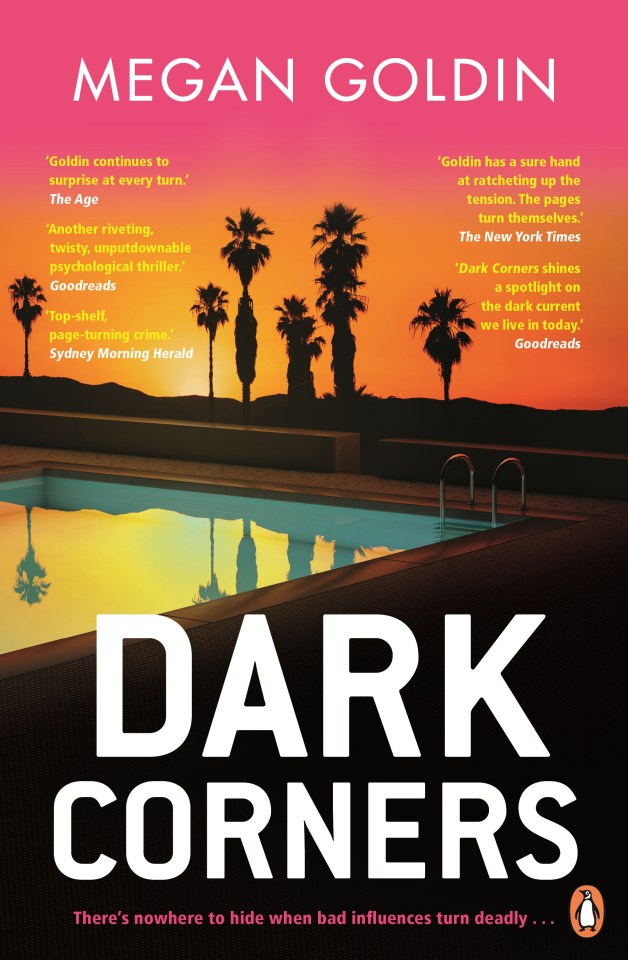
Dark Corners by Megan Goldin

Dark Corners Cover 2

Publisher: Michael Joseph (Trade Paperback – 8 August 2023)

Series: Rachel Krall – Book Two

Length: 352 pages

My Rating: 4.5 out of 5 stars

Amazon

One of Australia’s fastest-rising crime fiction authors, Megan Goldin, returns with another awesome read, the moving and entertaining novel, Dark Corners.

Over the last few years, I have been really enjoying the works of talented Australian author Megan Goldin, whose releases have become something of a must-read for me.  Goldin has written some amazing books throughout her relatively short career, including the very gripping and intense The Escape Room (one of my favourite Australian books of 2019) and the brilliant psychological thriller, Stay Awake (one of my favourite Australian books of 2022).  One of Goldin’s best books so far was The Night Swim, which was one of my favourite Australian books of 2020The Night Swim followed protagonist Rachel Krall, a true crime podcaster, as she investigated a notorious rape trial in a small American town.  This was a particularly moving and intense read that really showcased Goldin’s range.  As such, I was very interested when I saw that Goldin was releasing a second Rachel Krall book this year with Dark Corners, and I made sure to read a copy as soon as I could.

After returning from her latest recording exploit, famous true crime podcaster Rachel Krall finds herself dragged into another sinister case when a phone call from the FBI sees her flown to a maximum security prison outside of Daytona Beach, Florida.  A famous social media star has gone missing shortly after meeting with Terence Bailey, a notorious inmate serving time for a relatively minor crime, who many believe is a serial killer.  The only clue the FBI have is a message handed between the two requesting that the missing star seek Rachel out.

Unable to let go of such a curious and intriguing case that she is inexplicably linked to, Rachel resolves to remain in Florida until she finds the truth.  Checking into a massive influencer convention being held at Daytona Beach, Rachel looks to find out more about the missing girl and finds herself being dragged into the cutthroat world of influencers, Instagrammers and internet celebrities.  However, the more information she finds about the missing girl, the more she realises that there is something peculiar about the victim and her past.

Rachel’s investigation uncovers a series of sinister deaths and disappearances in the area, each of which may be connected to Terence Bailey, who is due to be released in a couple of days.  Racing against the clock, Rachel and the FBI must uncover the truth before Bailey gets out of prison.  But it soon becomes clear that there is another predator lurking around Daytona Beach, one who hides in plain sight and will do anything to cover their tracks, including taking Rachel out.

This was a very impressive new read from Goldin, who follows up The Night Swim in a big way.  Dark Corners is a fantastic novel that beautifully combines an intense narrative with some unique and entertaining elements to create an awesome read I easily powered through.

Goldin really comes out of the gate swinging with Dark Corners, and I was swiftly drawn into the clever mystery and intense, character-driven narrative that she pulls together for this follow-up read.  The author starts the reader off with the compelling mystery of a social media star who has been kidnapped after contacting an imprisoned convict.  With the protagonist dragged in thanks to her internet fame, this swiftly turns into an intense personal investigation, as Rachel and the FBI attempt to find the missing girl and solve several unsolved murders and disappearances.  Told through several key perspectives, including that of Rachel and a mysterious rideshare driver who has a dark connection to the case, the story evolves at a rapid and powerful pace, and the author sets up an intriguing series of mysteries both in the past and the present.  The story effectively unwraps all of these interlinked and compelling cases, and you are soon powering through the intriguing web of cases, desperate to find the conclusion.  With much of the story set to the fantastic background of an influencer convention, there are several great tangents and mysteries that emerge, especially as they provide some great alternate leads and red-herring suspects.  The final solution to the case is very interesting, if somewhat spoiled by one of the alternate perspectives, and the big confrontation is well set up and filled with intense moments.  While I was a little disappointed that some of the alternate cases were not as connected to the main mystery as they could have been, this was a very impressive and captivating story, and I had such a great time getting drawn in Goldin’s narrative web.

I really liked the captivating writing style that Goldin utilised for Dark Corners, which has some intriguing similarities and contrasts to the previous Rachel Krall book.  The use of multiple character perspectives, as well as excerpts from Rachel’s true crime podcast for context, work extremely well to tell an extensive and complex narrative.  I particularly liked the inclusion of a sinister antagonist perspective for much of the story, especially as it provides some compelling insights into the deadly case as they circle the protagonist like a shark.  Despite some similarities in style, Dark Corners has a very different tone to The Night Swim, with more of a faster edge given to the story, and less focus on traumatic character histories.  The story does still contain some powerful character moments, especially when the protagonist encounters several victims’ families, but the story was more thriller focused than the last book.  Despite the connections to The Night Swim, Dark Corners can easily be read as a standalone novel, and this actually serves as a great introduction to Goldin’s flexible writing style.  Dark Corners probably has the quickest pace of any of the Goldin books I have so far read, and you will really get drawn into this elaborate book as a result.

While the fantastic mystery and intriguing character-focused stories are great, I really must highlight Goldin’s entertaining take on the social media world as her protagonist attends an influencer convention at a glitzy beachside hotel.  It does not take long for the protagonist’s, and presumably the author’s, true feelings about the influencer crowd to emerge and there is a certain amount of amusing disdain there.  You really can’t help but laugh at Goldin’s mocking and somewhat over-the-top depictions of the typical social media stars’ day-to-day lives, including obsessively recording everything they do, exceedingly fake interactions, and hollow personal relationships.  Goldin really does not pull any punches here, which I personally deeply appreciated, and it added quite a humorous edge to the book, especially when combined with the protagonist’s exasperated reactions to the various scenarios she encounters.  Despite this somewhat critical edge, Goldin does include a lot of intriguing information about the community, such as the various types of influencers, their social makeup, the ins and outs of the trade, as well as the type of personalities that are attracted to the lifestyle.  There is even a quite nuanced take on several key influencers throughout the book, and it was quite compelling to see what sort of people they really are.  While this background setting is mostly entertaining and fun, it does serve quite a vital role in the story, and I felt that Goldin was able to weave quite an intriguing and unique mystery story around it.  This ended up being one of the best inclusions of the entire novel, and I really loved how Goldin made Dark Corners stand out even further with her clever, if slightly acerbic take, on social media personalities and their influence.

Overall, Dark Corners was another outstanding book from Megan Goldin, who continues to shine as one of Australia’s premier authors of thriller fiction.  Combing a clever mystery with an intriguing character focus and a unique background setting, Dark Corners was an addictive read from start to finish and I deeply enjoyed Goldin’s latest impressive novel.  Highly recommended!

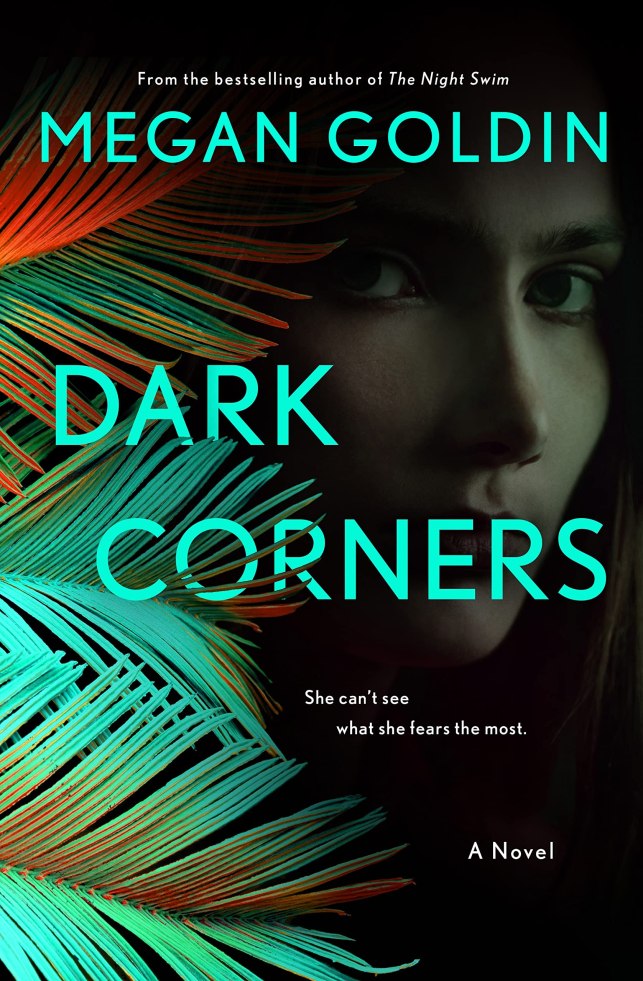
Dark Corners Cover

Amazon

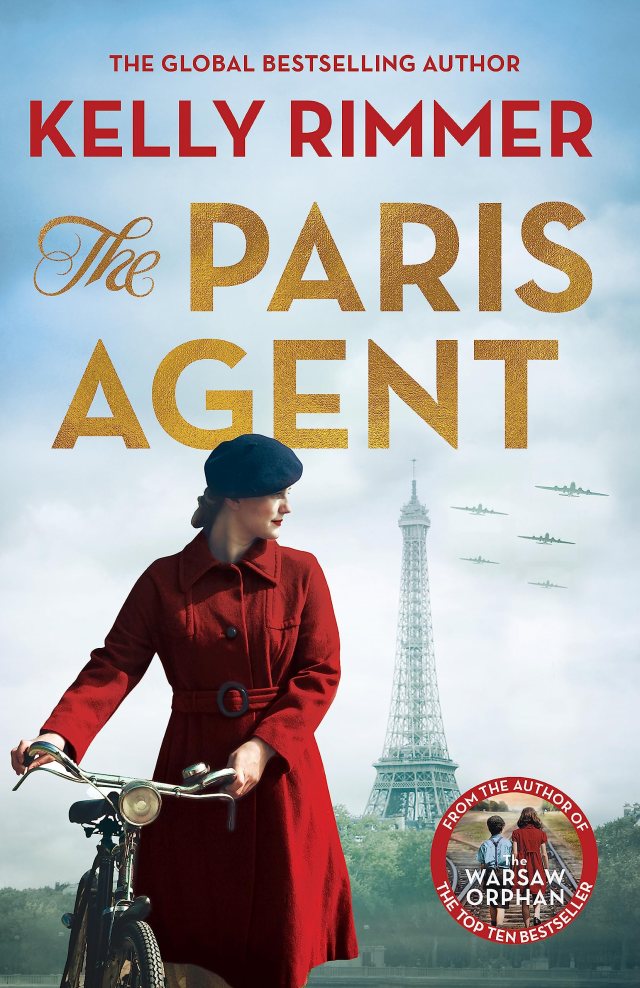
Quick Review – The Paris Agent by Kelly Rimmer

The Paris Agent Cover

Publisher: Hachette Australia (Trade Paperback – 28 June 2023)

Series: Standalone

Length: 337 pages

My Rating: 4.5 out of 5 stars

Amazon

One of Australia’s premier authors of historical fiction, the supremely talented Kelly Rimmer, returns with another moving and intense novel that dives into the horrors of World War II, The Paris Agent.

Over the last couple of years, I have been deeply impressed with the works of Kelly Rimmer, a well-established Australian author whose previous novels have been excellent historical dramas set during the Second World War.  Rimmer’s books are pretty spectacular, as they masterfully blend powerful personal stories with intense depictions of key parts of the war, especially those involving the evils of the Nazi regime.  Her last two books, The Warsaw Orphan (one of my favourite Australian books of 2021) and The German Wife (one of my favourite books and Australian books of 2022), were exceedingly moving, and I now make it a point to grab her new books each year.  Her latest novel, The Paris Agent, presented the reader with an interesting new story, one that focuses on female espionage agents in occupied France.

Plot Synopsis:

Two otherwise ordinary women become spies in WWII France in this sweeping new novel of historical suspense by New York Times bestselling author Kelly Rimmer

Twenty-five years after the end of the war, ageing British SOE operative Noah Ainsworth is reflecting on the secret agent who saved his life when a mission went wrong during his perilous, exhilarating years in occupied France. He never knew her real name, nor whether she survived the war.

His daughter Charlotte begins a search for answers. What follows is the story of Fleur and Chloe, two otherwise ordinary women who in 1943 are called up by the SOE for deployment in France. Taking enormous risks with very little information or resources, the women have no idea they’re at the mercy of a double agent within their ranks who’s causing chaos.

As Charlotte’s search for answers continues, new suspicions are raised about the identity of the double agent, with unsettling clues pointing to her father.

This was another powerful and clever novel from Rimmer, who takes on another aspect of World War II and weaves together an outstanding story.  The focus on Allied female spies being dropped into occupied France is a well-established and highly utilised topic in historical fiction and historical dramas, and Rimmer manages to produce a very distinctive read in The Paris Agent that I found very hard to put down.

To tell her story, Rimmer utilises an excellent multi-perspective narrative, with some interesting time differences also added in for each of the timelines.  The first timeline, shown from the perspective of Charlotte, is set in 1970, and follows the protagonist’s attempts to find out more about her amnesic father’s activities during the war after she finds out he was a spy in France.  The other two storylines focus on the characters of Fleur and Chloe respectively.  Both characters were dropped into France at different points of the war to do their own specific missions, including committing sabotage and investigating reports that the local network had been compromised.  These two past storylines are set across a couple of years in the war, with the two protagonists interacting with each other, and Chloe’s father, Noah, at various points, and together the three storylines wrap together to provide a complex and powerful narrative of espionage, personal relationships, and betrayal, all set in front of the brutal Nazi occupation of France.

All three stories are brought together throughout the course of The Paris Agent, and I liked the complex and intriguing narrative threads that emerged.  The risks and sacrifices of the characters during the war are pretty intense, and the emotional connections that they make bring a compelling balance to the dark story elements of espionage and betrayal.  The third storyline that focuses on Charlotte and her father is also very good, both on its own and for how it supports and enhances the other two plot lines.  This more modern storyline gives some great hints at the tragedy to come in the other storylines, while also underlying further the cost that these intelligence agents had to make.  The intriguing hints that Noah might have been a traitor responsible for terrible events is very compelling, and it is fascinating to see the impact that the war was still having on survivors like him.

The two storylines in the past eventually come together in the last quarter of the novel, and some of the compelling twists that come from this are moving and dark.  The identity of the traitor, while not overly surprising, does have some major emotional heft to it, and you can’t help to despise the antagonist, especially as Charlotte’s storyline serves to underline all the terrible things they did.  Both the Fleur and Chloe storylines end on a very tragic, if inspiring, note, and readers will come away from that exceedingly saddened but impressed by how well written these storylines were.  I did think that the ending of the Charlotte storyline was a little weaker, mainly because it relied on a little too much on coincidence, and I think that the author left some intriguing story opportunities closed.  Still, I really appreciated how cleanly and powerfully these three separate storylines came together, and it resulted in an overall exceptional read.

Rimmer utilises some intriguing writing elements to ensure her story is extra impactful.  As I mentioned before, the use of multiple character perspectives and timelines was a major part of this book, and I was mostly happy with how that turned out.  I must admit that I am not the biggest fan of historical novels that features a storyline where someone in the present day attempts to uncover family secrets, as frankly it is bit of a cliché at this point.  However, I think that Rimmer did a good job here, as it was set far closer to the war, and the family secrets that the protagonist is trying to uncover are the result of amnesia, which is well balanced by the potential spy aspect.  The rest of the story flows through extremely well as a result, and I loved how cleverly the separate wartime storylines interacted and enhanced each other, especially when it came to Noah’s connected story and the examination of the potential treachery.

However, one of the best things about The Paris Agent for me was the outstanding and deep portrayals of the Nazi occupation of France and the espionage efforts the Allies utilised in response.  Rimmer always excels at diving into some of the darkest and most intriguing parts of World War II history, and The Paris Agent was another great example of this.  The author provides some intriguing examinations of how the Nazis controlled France during the war, and Rimmer tries to showcase the occupation from several different sets of eyes in various French settings.  However, the real focus of the book is on the intelligence networks that the Allies set up in France during the war and the missions they engaged in.  This compelling part of the war is always rich ground for historical fiction authors, and I think that Rimmer’s take on it was particularly noteworthy.  She really captures the intensity and dedication that these agents had, as well as the constant risk that they found themselves in.  The focus and portrayal of tradecraft, intelligence gathering, and communication was very realistic, and I cannot emphasise how well each of the major spy protagonists were developed and featured throughout the book.  Of course, as this is a Rimmer book, The Paris Agent does get very dark in places, mainly when it comes to the fate of captured spies and intelligence agents.  Rimmer pulls no punches when it comes to how badly these prisoners were treated, nor when it comes to the terrible fates they experienced.  The fact that many of the characters are based on real historical people makes parts of the book hit even harder, and you really won’t come away from The Paris Agent without a tear in your eye.

Kelly Rimmer continues to showcase why she is one of Australia’s best writers of intense and moving historical fiction.  The Paris Agent was an excellent piece of historical drama that features a powerful and compelling story about spies, tragedy and betrayal.  Cleverly written and guaranteed to stick with you long after you’ve finished reading it, The Paris Agent is an outstanding and highly recommend book that I am really glad I got to experience.

Amazon

The Drowning Girls by Veronica Lando

The Drowning Girls Cover

Publisher: Harper Collins Australia (Trade Paperback – 5 July 2023)

Series: Standalone

Length: 323 pages

My Rating: 4.5 out of 5 stars

Amazon

Rising Australian crime fiction author Veronica Lando presents a particularly intense and captivating read in her latest gritty release, The Drowning Girls.

Port Flinders in the north of Australia is a desperate town, suffering from depleted fishing and a poor economic future.  The only thing that is keeping the tiny town going is its infamous Drowning Girl Festival, which draws vast crowds of tourists to the town’s mangrove-lined shores each year.  The festival honours a statue that is symbolically dropped into the water in a seemingly harmless bit of fun, recognising an old legend that a woman must be sacrificed each year to revitalise the town’s fishing.  But not everyone thinks that the legend is untrue, especially as a tragic drowning of two girls 25 years earlier seemed to save the town.

As the new festival beings, Nate Bass arrives, set to temporarily fill in as the town’s sole teacher.  Forced to take the job after an incident at his last school, Port Flinders is the last place Nate ever wanted to come back to, as he has history with the town and its sinister festival.  However, the past has a way of coming back to haunt everyone, and soon a new development in the towns infamous history emerges.

A dead woman is pulled from the water at the height of festivities, but is she the victim of an unfortunate drowning accident, or has someone sacrificed her to the ocean?  As Nate finds himself drawn to the case, he is forced to dive back into his tragic childhood to events that have haunted him for 25 years, especially when the identity of the drowned woman is revealed.  To discover the truth, the past and present will need to come together, but is Nate ready to reveal his biggest mistake to the world?

The Drowning Girls was a very distinctive and captivating bit of Australian fiction by Lando which deeply impressed me when I checked it out.  Set around a compelling rural Australian setting with some major baggage associated with it, The Drowning Girls has a great story to it that features an excellent blend of mystery, emotional dives into the past, and some major character moments that really drew me in.

The story itself is told through two separate perspectives, that of Nate Bass, the town’s substitute teacher who returns during the height of the Drowning Girl Festival, and a young boy nicknamed Tack, who provides an intriguing alternate perspective of certain events.  Both get embroiled in the mysterious drownings that occur in Port Flinders in different ways, and their character-driven narratives swiftly come together to tell a story of tragedy, friendship, and secrets.  Nate’s story serves as the central focus of much of The Drowning Girl’s plot, and his exploration of the town’s history, the mindset of its people, and the impact of the festival adds some great depth to the story, especially as the author introduces some excellent supporting characters/suspects in the case.  The story revolving around Tack is an interesting coming-of-age tale, which shows the young protagonist trying to fit in around Port Flinders, while also learning about the mysteries of the festival.  This secondary storyline is a little harder to get into at the start, but the intriguing inclusions it features have some fantastic and fascinating impacts on the larger story.

There is a great reveal about halfway through the book that completely changes everything you thought you knew about The Drowning Girls’ plot, and which brings the two separate storylines together in an outstanding way.  I loved how Lando turned everything around at that point, and it led to a pretty addictive and exceptional second half of the book, which I honestly had a hard time putting down.  There are even more excellent twists revealed towards the end of the book, as well as some deeper dives into the protagonist, as he explores all the trauma from his past, as well as the deadly events from 25 years earlier.  The full extent of both the drownings in the past and the present are intense and very clever, and the elaborate and dramatic mystery that Lando came up with is extremely impressive and moving.  This entire story comes together pretty perfectly, and the full extent of the book’s tragic and moving storyline results in some truly shocking moments.  I honestly did not see the book’s big conclusion coming, and the Lando ensured that readers will come away from The Drowning Girls shocked and deeply moved.

There are a lot of great elements to The Drowning Girls that I enjoyed, and Lando has a real talent for writing and creativity that really connected with me.  Her creation of the fictional town of Port Flinders is fantastic, and she does a remarkable job of capturing the feel of a dying tourist town in Australia’s far north.  Everything about this town, including the crippling isolation, the rowdy tourists, the oppressive feel of the surrounding mangroves, and the various people who choose to call such a location home, feels highly realistic and it works into the dark storyline of The Drowning Girls extremely well.  I also loved the intense feelings invoked by the mysterious festival that is such a key part of the book’s plot, and you have to love the dark symbolism that Lando chose to associate with it.  You can almost understand the desperation that some of the town’s residents feel when it comes to the festival, and I felt that it was an outstanding and creepy plot focus that really stood out.  However, one of the best elements of The Drowning Girls was the main protagonist, Nate Bass, who has a complicated past and a deep and traumatic connection to the town.  Seeing the slow unravelling of Nate’s personal history is an outstanding and moving part of the book, and you really get attached to him as a result.  Watching him unload his guilt, trauma and resentment is some of the most powerful parts of the book, and you really must appreciate everything that Lando puts her protagonist through.  Thanks to the author’s great use of the split storyline, as well as the fantastic blend of drama and mystery that emerges throughout the narrative, The Drowning Girls’ story really shines through, and I came away with a huge appreciation for Lando’s style.

The Drowning Girls by Veronica Lando is one of the more unique and complex Australian crime fiction books I have so far read this year, and I was really impressed with how compelling and dark she was able to make it.  Featuring a clever and twisted mystery with some major character moments, The Drowning Girls is a highly recommended read and easily one of my favourite pieces of Australian fiction in 2023 so far.

Amazon

Quick Review – The Last Orphan by Gregg Hurwitz

The Last Orphan Cover 2

Publisher: Michael Joseph (Trade Paperback – 21 February 2023)

Series: Orphan X – Book 8

Length: 342 pages

My Rating: 4.5 out of 5 stars

Amazon

The always impressive Gregg Hurwitz continues his amazing Orphan X series with the awesome and wonderful new addition, The Last Orphan.

One of my favourite spy thriller series at the moment is easily the exciting and cool Orphan X series by rising thriller author Gregg Hurwitz.  This fantastic series follows a former elite government assassin, Evan Smoak, codenamed Orphan X, who is forced to go rogue and hide himself away from his old employers.  Hoping to redeem himself after all the killing he’s done, Evan takes up a new identity, the Nowhere Man, a vigilante who helps the most desperate people in ways no one else can.  I have been a fan of this series for ages, ever since I read Out of the Dark, which pitted the protagonist against a deranged US President.  Since then, I have had an outstanding time reading the latest books in the series, including Into the Fire, Prodigal Son, and Dark Horse.  I always make it a point to pick up the new Orphan X book each year, and the latest entry, The Last Orphan, was another pretty awesome book that I was quickly able to power through.

Plot Synopsis:

As a child, Evan Smoak was plucked out of a group home, raised and trained as an off-the-books assassin for the government as part of the Orphan program. When he broke with the program and went deep underground, he left with a lot of secrets in his head that the government would do anything to make sure never got out.

When he remade himself as The Nowhere Man, dedicated to helping the most desperate in their times of trouble, Evan found himself slowly back on the government’s radar. Having eliminated most of the Orphans in the program, the government will stop at nothing to eliminate the threat they see in Evan. But Orphan X has always been several steps ahead of his pursuers.

Until he makes one little mistake…

Now the President has him in her control and offers Evan a deal – eliminate a rich, powerful man she says is too dangerous to live and, in turn, she’ll let Evan survive. But when Evan left the Program he swore to only use his skills against those who really deserve it. Now he has to decide what’s more important – his principles or his life.


The Last Orphan
was another outstanding entry in this great series and Hurwitz ensures that it features all his trademark features, including strong characters, a powerful emotional heart, and a ton of action and intrigue.

This latest Orphan X book has a very strong start to it as Evan is ambushed right at the beginning of the novel by a massive Secret Service detail, determined to finally bring him in after he went rogue on the President a few too many times.  Captured and trapped, Evan is forced to make a deal: kill mysterious industrialist Luke Devine or lose his own life.  However, Orphan X makes his own decisions about who he assassinates, and after escaping, he begins his own research into his target, hoping to determine if he deserves to die.  Investigating a mysterious death associated with Devine’s estate and the massive parties that go on there, Evan begins to make his own connections about the case and is forced to go up against Devine’s lethal and morally dangerous security detail.  There are some pretty intense scenes in this part of the book as Evan makes some curious discoveries about Devine and his company, while also being forced to protect potential witnesses from his target’s security.  At the same time, Evan begins to wonder if Devine actually deserves to die and must soon choose between his conscious and his peaceful life of anonymity.

This was a pretty good entry in this series, although possibly not the best that I have so far read (in my mind, that’s Into the Fire).  I really liked the awesome start to The Last Orphan, especially as the over-the-top and intense capture by the Secret Service was so damn cool and it was interesting to finally see Evan taken down by the Government.  However, this doesn’t last long, and once he rather easily escapes, the intensity and pace of the story kind of slows down a bit.  Don’t get me wrong; I did really enjoy the subsequent storyline set around the investigation into the mysterious industrialist and his security crew, but it was a bit of a step down after the initial excitement.  Still, this second half of the novel is a ton of fun, and Hurwitz presents his usual blend of fascinating spy thriller moments, particularly intense and brutal action, as well as the focus on Evan’s strained and unique personal life.

The villains of this story, Devine’s security detail, are some pretty over-the-top but genuinely threatening figures, and Hurwitz comes up with some excellent scenes around them, even presenting them as real threats to the protagonist.  At the same time, Hurwitz works in a very compelling morality edge to the story, as Evan tries to work out whether Devine is actually evil or just a political threat to the President.  The author makes this determination pretty hard, especially as Devine comes across as a very manipulative and unusual figure who manages to make even the legendary Orphan X doubt himself.  The big conclusion of this books is very good and features all the typical action and carnage that you would expect.  However, parts of the story go in some very surprising directions and I liked the unique ideas that Hurwitz presented here.

In addition to all the action and intrigue, quite a lot of The Last Orphan revolved around the compelling and moving emotional and personal concerns of the protagonist and his great supporting cast.  Evan has always been a very complex figure due to his unusual upbringing, his lack of personal skills, and his crippling OCD, and a fantastic recurring theme of the books has been him trying to overcome this and finally make some connections.  This continues extremely well in The Last Orphan, as he once again relies on his friends and his surrogate daughter/little sister to pull him out of the fire and keep his sanity.  There are some pretty emotional interactions between Evan and these figures throughout the course of The Last Orphan, especially as it appears that Evan might not be able to come back from his latest adventure, and I felt that this was another powerful and impressive evolution of some already deep character growth.  There are some other pretty big personal moments for Evan in The Last Orphan, including the seeming end of one relationship due to Evan’s fugitive status, and the potential development of another as Evan finally attempts to dive into his own complex past.  It will be fascinating to see how this develops in the future, and I am sure that Hurwitz has some very intense moments planned for all of us.  I honestly felt that the author got the right balance between action and emotion for The Last Orphan, and this ended up being a stronger book as a result.

Overall, The Last Orphan was a pretty awesome new entry in the great Orphan X series, and I really liked how Gregg Hurwitz continued his fantastic ongoing narrative.  Featuring an excellent blend of spy thriller fun and powerful character work, The Last Orphan was an addictive and clever read, and I am glad I got the chance to check it out.  Highly recommended, especially to established fans of the series, The Last Orphan is really worth the read.

Amazon

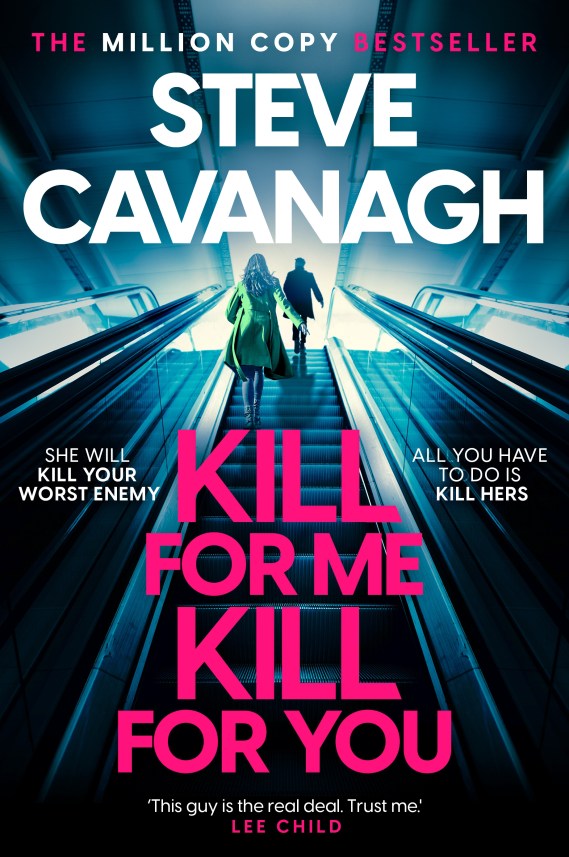
Kill For Me Kill For You by Steve Cavanagh

Kill For Me Kill For You Cover

Publisher: Headline (Trade Paperback – 25 July 2023)

Series: Standalone

Length: 356 pages

My Rating: 4.5 out of 5 stars

Amazon

The always entertaining Steve Cavanagh returns with another outstanding thriller, this time with an awesome new take on an old classic with Kill For Me Kill For You.

Steve Cavanagh is an outstanding author who I have been having a wonderful time reading in recent years.  Cavanagh is best known for his awesome Eddie Flynn legal thriller series that follows a former conman turned defence attorney as he uses his unique insights and tricks to win impossible cases, even when everything is stacked against him.  I have had a ton of fun with the last few books in the series, The Devil’s Advocate and The Accomplice, and Cavanagh is firmly on my yearly must-read list now as a result.  I had been hoping for another Eddie Flynn novel this year, but I was happy to receive a copy of Cavanagh’s new standalone thriller, Kill For Me Kill For You, which throws a grieving mother into a terrible situation.

Amanda White is a woman who lost everything in life when her young daughter was kidnapped and murdered.  Left helpless as the prime suspect is found innocent while her own husband killed himself out of despair, all Amanda has left is a desire for revenge.  But with her target aware of her hatred, and the police certain to arrest her if she tries anything, Amanda can only sit back and do nothing.

Required by the court to attend a trauma support group, Amanda has a chance encounter with another member, Wendy, who has her own desire for revenge.  Like Amanda, Wendy wants to kill the man responsible for her own child’s death but is determined to avoid police retaliation.  Together, the two women plot on how to take out the men that they hate, and soon draw inspiration from a classic Hitchcock film in which two strangers kill the other’s target.

However, when Wendy suddenly kills Amanda’s obsession, she is forced to act quickly and commit her murder for Wendy before the police come for her.  But nothing is as it seems, and Amanda soon finds herself trapped in a deadly situation with the police hot on her trail.  To survive, Amanda will need to dive into the past to discover a legacy of hatred, death and manipulation that will drive her to the brink of sanity and despair.

This was an excellent new thriller from Cavanagh that I managed to power through in no time at all thanks to its exciting and fast-paced plot.  Told from several different perspectives, Kill For Me Kill For You tells a clever and multi-layered narrative that proves very hard to put down, especially as Cavanagh loads it with his usual fun collection of twists, betrayals and compelling reveals.

Kill For Me Kill For You has a great character-driven narrative that follow several very damaged protagonists in a series of compelling situations.  The main storyline follows the character of Amanda White, whose desire for revenge against her daughter’s killer sees her form a friendship with Wendy, when they try to enact their Strangers on a Train inspired double murder.  At the same time, a good chunk of the plot revolves around the character of Ruth Gelman, who survives a brutal attack by a serial killer and is forced to deal with the traumatic consequences.  These two storylines are linked by a third major point-of-view character, Detective Farrow, who investigates both the assault on Ruth and the murder of Amanda’s daughter and finds himself getting drawn into both of their lives.

Both major storylines continue at a fast and compelling pace throughout the book, with Amanda’s storyline focusing on the clever intrigue, while Ruth’s storyline has a more emotional edge to it as she and her husband Scott are forced to deal with her injuries and ongoing fear of the killer’s return.  There are some fantastic developments in both, especially for Amanda when the Strangers on a Train plan goes out the window as expected.  I really loved the fantastic twists that surround Amanda at the middle of the book which completely change the trajectory of her entire plot as a result.  Both stories continue mostly unrelated for the rest of the book, and I think both develop in a great way independent of the other.  They do eventually come together towards the end of the book, and for me that was where Kill For Me Kill For You fell apart a little.  The joining twist of these two independent storylines is very predictable, even though Cavanagh did try to cover it up in a few clever ways.  Certain elements of this twist also stretch the feasibility of the plot to a degree, and while possible, it was a very unlikely.  Still, this only ruins the flow of the book a little and readers will still be hooked on the plot.  I loved the final few twists that Cavanagh loaded towards the end of the book, and the overlying emotional story writing and character moments that are utilised throughout the entire plot ensure that this is a very powerful read.  Readers will come away from this book very satisfied, and I honestly could not put Kill For Me Kill For You down the entire way through.

With the exception of the that problematic twist I discussed above, I mostly enjoyed how Cavanagh wrote Kill For Me Kill For You.  The excellent use of multiple character perspectives which shift from chapter to chapter works well to tell an expansive story with a lot more facets than I thought it would.  The different story focuses is very interesting and I liked the unique stories that both of the major characters (Amanda and Ruth) told throughout the book.  While I did find the chapters focusing on Amanda and her crisscross a lot more interesting, the Ruth storylines are more psychologically powerful and have some compelling edges to them.

I have to say that I was also very impressed with how Cavanagh made excellent use of the Strangers on a Train inspired murder plot throughout Kill For Me Kill For You.  Cavanagh makes some clever references to the classic film (and the book it is based on) throughout the novel, and I loved how he put his own spin on this classic tale.  I was worried in advance that it would be too much like other crime fiction homages to Strangers on a Train that I have seen before, but Cavanagh really made this plot element his own in Kill For Me Kill For You, working the film into his story in an excellent and memorable way.  The resulting compelling storyline was so much fun, and I cannot emphasise how brilliant and captivating this part of the book was.

In addition to the fun story elements, I also deeply appreciated the powerful character focus that Cavanagh featured throughout Kill For Me Kill For You.  There are four major point-of-view characters in Kill For Me Kill For You, and Cavanagh ensures that they have some complex and emotionally charged moments throughout the course of the plot.  All four of these characters are damaged by trauma or loss in their own unique way, including Amanda’s deep obsessive need for revenge, Ruth’s intense fear after surviving her traumatic attack, Scott’s guilt for not being there for his wife which leads to anger and despair and Farrow’s detrimental connection to his cases and the people impacted by them.  The author does an amazing job of diving into each of these character aspects throughout the course of Kill For Me Kill For You and you really grow to understand their individual traumas, obsessions and motivations throughout the course of the book.  Each character reacts to their damage and obsessions in different ways, and watching them overcome them, or succumb to them, are a key part of the plot.  This was probably the most emotionally charged and character focused book of Cavanagh’s that I have read so far, and I really appreciated how he dove into his complex protagonist’s psyches and attempted to highlight just how damaging death, violence and trauma can be on a person.

Kill For Me Kill For You was an outstanding read from Steve Cavanagh and one that I would very strongly recommend.  Featuring a unique and highly entertaining thriller narrative that cleverly balances intensity, twists, a wonderful homage to a classic piece of crime fiction, and powerful character moments, this is an excellent read that I really got attached to.  While I did have issue with a certain key point in the book, Kill For Me Kill For You was an overall strong and compelling novel that really showcases Cavanagh’s rising talents as an awesome thriller writer.

Amazon

Killer Traitor Spy by Tim Ayliffe

Killer Traitor Spy Cover

Publisher: Simon & Schuster Australia (ebook – 5 July 2023)

Series: John Bailey – Book Four

Length: 310 pages

My Rating: 4.5 out of 5 stars

Amazon

One of Australia’s fastest rising thriller authors, Tim Ayliffe, returns with the fourth book in his outstanding John Bailey series, Killer Traitor Spy, which sees Cold War espionage re-emerge right in the heart of modern day Australia.

Over the last few years I have been having an amazing time reading a particularly cool Australian thriller series, the Jon Bailey books by journalist Tim Ayliffe.  Following a damaged investigative reporter who relentlessly follows his stories no matter how dangerous they are, the John Bailey books are an outstanding series that combined intriguing storylines with compelling and highly insightful depictions of modern-day Australia.  This series has so far featured three fantastic books, The Greater Good, which looked at Chinese interference in Australian politics; State of Fear, which examined Islamic radicalisation; and The Enemy Within, which presented a compelling look at Australian white supremacism.  I have deeply enjoyed all three of Ayliffe’s previous novels and I was very glad that I managed to get a copy of his fourth book, Killer Traitor Spy, a few weeks ago.

After a sex worker is accidently poisoned by a deadly neurotoxin, it quickly becomes clear that someone is trying to kill Russian millionaire Dmitry Lebedev.  As Dmitry disappears into the wind, reporter John Bailey finds himself drawn to the mysterious events, especially as his old friend, Scarlett Merriman, was the unintended victim.  As Bailey begins to dig into the circumstances around Scarlett’s poisoning, he soon discovers a hidden world of spies, espionage and secret deals, all tied to his long-time friend, CIA agent Ronnie Johnson.

It soon becomes apparent that Dmitry was an undercover spy secretly working with Ronnie and providing insights into Russian espionage efforts in Australia.  His latest bit of intelligence could expose a deadly traitor working at the highest echelons of the government, and many people wanted him dead to keep that a secret.  As Ronnie attempts to bring him in, he finds himself being targeted as well, as whoever tried to kill Dmitry has just framed Ronnie for murder.

Now on the run from the authorities and with no official backup to help him, Ronnie has no choice but to call on Bailey to help him investigate the attempted assassination and uncover the traitor.  But the more Bailey works with Ronnie, the more he discovers the dark side of the espionage business and the fact that nobody is what they seem.  Moving from the deadly urban sprawl of Sydney to the secretive suburbs of Canberra, can Bailey and Ronnie find the truth before it is too late, or will they be the latest victims of an insidious intelligence plot threatening to undermine the entire country?

This was another great book from Ayliffe, who continues to impress me with his intense and addictive reads.  Killer Traitor Spy served as a brilliant fourth book in the series, and I had such a wonderful time getting through this captivating and clever story that I ended up reading this book in a single day.

Killer Traitor Spy has a great story behind it that I instantly got hooked on.  Ayliffe sets up a fast and high-stakes narrative for his fourth book that brings in some compelling real-life spy elements to increase the realism and impact of the plot.  Starting off with a failed assassination, some fantastic spy elements, and a great reintroduction to Ayliffe’s relentless protagonist, the author gets Killer Traitor Spy going strong, and it barely slows down after that.  The author weaves together a complex net of mystery and espionage as the protagonists try to find the missing Dmitry, while also uncovering Russian agents working in Australia.  The fantastic web of murders, betrayals and lies proves to be very compelling.  There are several interesting reveals and clever turns as the plot progresses, and I loved how the story soon moved to Canberra with a ton of fun scenes.  Ayliffe really raises the stakes in the second half of Killer Traitor Spy, and the final reveal of who the various traitors and culprits are proves to be very satisfying.

I honestly had a hard time putting down this awesome book, and I wasn’t kidding when I said I read it all in a single day.  Ayliffe did a fantastic job of making his complex and compelling story as fast-paced and addictive as possible, and there wasn’t a single scene in this book that slowed me down.  There were a ton of great features to how Ayliffe wrote Killer Traitor Spy, and I personally loved how the plot featured a fun combination of journalism, espionage and mystery throughout.  While there is a bit of action throughout the book, the focus is always on uncovering the deeper secrets, and I loved seeing the different methodologies that the various protagonists used.  The author’s reliance on multiple character perspectives in Killer Traitor Spy was a particularly effective feature, especially as you got even more scenes from the always entertaining Ronnie Johnson.  This allowed Ayliffe to really separate out the various focuses of his novel, and the contrasts between Bailey’s scenes, where he investigates, and Ronnie’s scenes, where he uses more direct methods, are a lot of fun.

Unsurprisingly, the scenes focusing on journalism and investigative reporting are very impressive and insightful as Ayliffe makes full use of his background to dive into the intricacies and secrets of the trade.  However, the more espionage focused sequences are also really clever and helped ensure this book felt a lot like his original novel, The Greater Good.  The focus on the various espionage concerns in Australia were really quite compelling, and it was clear that the author did a lot of research around it.  I recognised quite a few espionage elements featured in the novel from Australian news stories, and the author covers a lot of compelling ground as a result.  I particularly liked the focus on Australia’s strategic importance, the intelligence relationship it has with other Western nations, the examination of potential espionage elements currently running around the country, and there was even a fun inclusion of the infamous “Havana Syndrome” and the potential weapons behind it.  I really enjoyed this deep dive into potential Russian espionage in Australia, and it was certainly eye opening in places, especially considering current world events.  This excellent novel really draws you in quickly and I had such an outstanding time getting through it.

One of the things that I have always deeply appreciated about the John Bailey books is the way in which Ayliffe masterfully depicts and utilises his Sydney settings throughout the stories.  So many of Sydney’s suburbs, iconic areas, and even several restaurants and bars serve as either key locations or have cameos throughout the series.  It is always very cool to see locations you are familiar with utilised in fiction, and Ayliffe always does such a wonderful job of showcasing these locales in his stories, which really help to draw Australian readers in.  This continues to be the case in Killer Traitor Spy, as several different areas of Sydney are featured strongly throughout the plot. Ayliffe, who clearly has a lot of love for Sydney, has fun bringing these locations to life throughout this book and it was really fascinating to see how he fits his narrative around these real spaces.  A good chunk of the second half of the book is set in my hometown of Canberra. As the national capital hosting government agencies and politicians, Canberra is an excellent setting for a spy thriller book such as Killer Traitor Spy, and it was great to see it utilised as such within this book.  I had a ton of fun seeing the characters reference areas that I see all the time, and it was awesome envisioning some of the action occurring within them, especially as most of our scandals aren’t so thrilling.  I also had a chuckle at all the inside jokes or references that Ayliffe layered into the story around these settings, such as his very accurate description of the drive between Sydney and Canberra (it really is that visually boring).  This excellent use of real locations as a backdrop really helped to drag me even further into Killer Traitor Spy and I really appreciate it when authors draw from their own experiences to help tell an awesome story.

Finally, I must highlight the character work featured in Killer Traitor Spy.  The intrepid and damaged protagonists have always been a big reason why the John Bailey books have been so successful as you grow very attached to these complex figures.  I have a lot of love for the impressive character growth that has surrounded the main character of John Bailey in the lead-up to Killer Traitor Spy and it was really moving to see him finally have his life together, despite all the traumas he has experienced.  This also allowed him to focus more on his journalistic work, and watching the dogged, veteran reporter chase down several stories in his usual gruff and unrelenting manner was a ton of fun.  Of course, Ayliffe did add in a few more issues for him in Killer Traitor Spy, both psychically and ethically, and I will be interested to see how they impact him in the future.  Ayliffe also features quite a lot of Ronnie Johnson in this latest novel as well, which was a major plus in my book.  Ronnie has always been a fantastic character (he caused a damned Harold Holt moment in the first book), and it was great to see him a much more of a central figure in Killer Traitor Spy.  His more espionage and violence focused chapters balance out Bailey’s chapters in some compelling ways, and I enjoyed the fantastic deeper dive into the relationship between these two protagonists that emerged as a result.  Ayliffe’s use of these two main characters was a real highlight of Killer Traitor Spy and I really appreciated the powerful story the author wove around them.

Overall, Killer Traitor Spy is a fantastic novel from Tim Ayliffe that did a wonderful job continuing his excellent John Bailey series.  A complex and entertaining Australian thriller, Killer Traitor Spy was a ton of fun to read and I really got hooked on it compelling and fast-paced story.  With great characters, a complex plot, and some intriguing Australian inclusions, Killer Traitor Spy is well worth the read, especially if you loved the previous books in the series.

Amazon

Warhammer 40,000: Leviathan by Darius Hinks

Warhammer 40,000 - Leviathan Cover

Publisher: Black Library (Audiobook – 24 June 2023)

Series: Warhammer 40,000

Length: 12 hours and 13 minutes

My Rating: 4.5 out of 5 stars

Amazon

Prepare for all-out war as the righteous Ultramarines battle the insidious Tyranids in this epic new Warhammer 40,000 novel from Darius Hinks, Leviathan.

It has been a pretty good year for Warhammer 40,000 fiction already, with several fantastic novels coming out in 2023, including Warboss and The Lion: Son of the Forest by Mike Brooks (the latter being one of my favourite books from the first half of 2023), and Shadowsun: The Patient Hunter by Phil Kelly.  However, the hits are far from over, especially as there are several fantastic new Warhammer 40,000 novels set to come out later this year.  But before we get to those, I managed to jump onto another recent release with the outstanding novel Leviathan, written by established Warhammer author Darius Hinks.  Hinks was a new author to me, but I soon grew to appreciate his latest book, especially as it showcased a dark and intense alien invasion that made for a great story.

In the far future of the 41st millennium, the besieged Imperium of Man faces many threats, but few are more deadly, unstoppable, or insidious as the unrelenting and seemingly endless hordes of the Tyranids, an alien race determined to devour everything it encounters.  While several of the larger invading Tyranid fleets have been destroyed, a splinter tendril is making its way towards the galactic centre, threatening the very heart of the Imperium.

Standing in the way of this fleet is the fortress world of Regium, an ancient planet recently taken over by Imperial forces, it now serves as a bulwark against invasions heading towards the inner-Imperium.  Many believe that Regium is secure from all threats, but when the people of the planet are haunted by parasites, strange cults, and mysterious dreams of terrifying monsters, it soon becomes clear that a Tyranid swarm is about to descend upon them.

It falls to the decorated hero, Lieutenant Castamon of the Ultramarines, to hold Regium against the foes and keep the rest of the Imperium safe.  A veteran of many battles, Castamon believes that this new Tyranid fleet will be swiftly destroyed.  However, these Tyranids are led by something far more sinister than the Ultramarines have encountered before, something cunning and ruthless that is able to disrupt minds and outthink even the cleverest of humans.  With his forces split, Regium’s defences compromised, and his allies panicking, even the vaunted Lieutenant Castamon may be unable to save Regium from the Tyranid invasion.  However, Castamon has one last trick up his sleeve, the brilliant Ultramarine Apothecary Biologis, Vultis, whose research into the Tyranid biology might be the only thing that can stop them.  Unfortunately, the enemy knows all about the Ultramarines and their plans, and the deadly creature known as the Harbinger is coming for them.

Leviathan was a pretty awesome and intense Warhammer 40,000 novel that shines a real spotlight on one of the more insidious alien races in the canon.  Featuring a strong and at times terrifying narrative, Leviathan was a great read, and I really got caught up in Hinks’s fantastic book.

Hinks pulls together an excellent story for Leviathan, and it is one that will appeal to a range of different readers, especially those fans of Warhammer 40,000 fiction.  Set around the already troubled planet of Regium, Leviathan follows an intriguing range of different human/space marine characters as they attempt to make sense and prepare for a Tyranid invasion of their world.  The early parts of the book are dedicated to introducing the key characters and the overall setting of the story, while also attempting to cast a more psychological edge to the main story as visions, doubts and other insanities haunt the populace.  There are some great early action sequences, including a disastrous shipboard incursion, and a dark hunt in some interesting terrain, and Hinks works well to set up for the second half of the book, especially as several unique, character driven stories were introduced and given some early weight.  While I enjoyed a lot of this set up, I did find the first half of the story to be a bit slow with its pacing and I was initially having trouble getting too invested in any of the characters or story elements.  However, this changed when I got to the second half of the book.

This second half masterfully builds on all the setup and character development that occurred at the start of Leviathan and readers are in for a particularly intense and gruesome narrative from this point on.  This entire second half is dedicated to the full-on invasion of Regium, as swarms of aliens, including some new creatures, emerge to decimate the populace and challenge the protagonists.  Each of the character focused plot lines set up in the first part of the book, as well as a few additional story inclusions, are perfectly thrust into this overlying chaos, and you get to see them try to survive the oncoming horrors and monstrosities.  Hinks really pulls no punches when it comes to this Tyranid invasion, and you get to witness all the devastation, the deadly transformation of the planet, and the subsequent epic battles, as the Tyranids fight against the human and Ultramarine defenders in some epic and well-crafted set pieces.  Each storyline was really good in its own way, and together they formed a fantastic and at times over-the-top overarching narrative that successfully showcased just how overwhelming the Tyranids can be.  I loved how dark Hinks made Leviathan at times, especially as he had no qualms about killing off key characters in some particularly brutal ways, which really raised the stakes for the reader.  While I did think that a lot of the plot did rely a little on the narrative stupidity of certain characters (the Ultramarines kept forgetting everything they knew about the Tyranids), the second half of the book was extremely epic, and I had real trouble putting it down.  All the separate storylines were concluded in entertaining and fitting ways, and I particularly appreciated the final plan that Hinks introduced for the main protagonists, which really fitted the outrageous feel of a lot of the plot.  This brutal and continuously exciting second half really turned Leviathan into such a great read, and I really loved how the entire thing turned out.

Leviathan proved to be an interesting and compelling addition to the wider Warhammer canon, especially as Hinks took the opportunity to really dive into some of the factions and showcase how crazy they can be.  However, I know that Leviathan has been copping a little flack in this department, mainly because some people see it as merely a promotional novel tied-in with some of the recently announced Ultramarines and Tyranid models.  While I can definitely see that, especially as Hinks spends a lot of time highlighting some of the newer Tyranid creatures in his narrative, I still enjoyed Leviathan a lot.  His depictions of the Tyranids were one of the major highlights of the book, and I loved how much he upped the horror aspect of them, showing them to be ravenous monsters who alter and devour everything they encounter.  This might be one of the better portrayals of Tyranids that I have so far seen in Warhammer fiction, and they were certainly a lot less one-dimensional here than they are in other books.  Part of this was because of the inclusion of several newer Tyranid creatures, such as the Neurotyrant and the Norn Emissary, with both being shown as unstoppable monsters with interesting abilities.  This allowed the Tyranids to attack their prey in all new ways, and it was very fun to see the various intricate tactics they were able to come up with.  Hinks tempers some of the more commercial aspects of these creatures’ inclusion by not actually using the names of the models in Leviathan, instead all you have is the protagonist’s descriptions of them when they encounter them in person.  These personal and often deeply terrified accounts of the various Tyranid bioforms really help to showcase just how terrifying and alien they are, especially to the ordinary human, and it really added a great edge to the narrative.  This darker edge is further exacerbated by the author’s powerful examination of how the planet of Regium is altered once the Tyranids arrive.  The spores constantly raining down on the planet slowly poison the various humans as they breathe in, and the depictions of the protagonists dying from within as they inhale alien matter, while their skin starts to slowly melt is pretty damn memorable and terrifying, especially as this is the first step in turning all biological matter in the planet into edible goo.  Frankly, I don’t think I’ve ever experienced the horror that is the Tyranid better than in Leviathan, and Hinks’ brilliant use of this faction enhanced the entire book.

On top of the Tyranids, Leviathan also features another intriguing major faction, the all-time classic Ultramarines chapter of Space Marines.  I mostly liked how the various Ultramarine characters were featured in Leviathan, although I did think that Hinks could have perhaps done a little more to distinguish them from other general Space Marines.  Still, Hinks goes out of his way to make the Ultramarines as badass as possible, and you really get a sense of their courage and battle prowess, especially as the severally outnumbered Ultramarines (I won’t go into the logistics of Regium’s defence here, but it did seem a tad low for such a vital planet), managed to put up quite a showing against the Tyranid swarm.  Some of the fight sequences featuring the Ultramarines in combat were pretty damn epic, and while some Space Marines did die easily for plot effect (especially when going up against a Tyranid with a new model), I felt that Hinks did a good job highlighting just how dangerous a Space Marine can be.  Hinks really tries to cover various aspects of the Space Marines throughout Leviathan, including the reverence and respect that most normal people have for them, and while this might not be the absolute best portrayal of an Ultramarine detachment ever, it was still pretty damn good, especially in those fantastic fight sequences.

I also must highlight some of the great characters featured within Leviathan as Hinks comes up with a diverse and compelling cast to tell the story with.  Thanks to the way the story is set out, each of the key plotlines revolves around some excellent characters, each with their own motivations, missions, and big moments, as they try to weather or escape the oncoming Tyranid doom.  Hinks crafts some great storylines for each of these major characters, and it proves easy to get invested in them, such as the tale of two ordinary farm workers who try to escape the monsters around them, the hapless Governor who finds himself out of his depth, or the proud Cadian leader who is drawn into war by the machinations of a delusional priest.  However, some of the best characters in Leviathan are members of the Ultramarines, and much of the story focuses on the elites of this chapter on Regium.  I really enjoyed these major Ultramarine characters, including the bold Lieutenant Castamon, the heroic leader who lives up to all the hype, the Apothecary Biologis, Vultis, whose analytical mind and desire for knowledge might hold the key to victory, and even the arrogant Sergeant Tanaro has his moments, especially in that powerful last scene.  However, my favourite character in the book is probably the scarred Ultramarine Baraca.  Baraca is a seemingly unkillable figure who has survived an insane amount of damage, but who has grown detached from even the rest of his battle brothers.  Despite appearing to be a mindless brute, Baraca is a deep and complex figure whose friendship with Vultis provides some emotional power to their scenes together.  Baraca honestly steals every scene he is in, especially his last, and Hinks writes a great storyline around him as he courts death, while trying to find his place in life.  All these characters, and more are very well written, and the impact they have on the plot is pretty impressive.

Like most Warhammer 40,000 content that I absorb, I chose to listen to Leviathan’s audiobook format, which is such a fantastic way to enjoy these intense stories.  I think that I made the right choice when it came to Leviathan, as this amazing audiobook really helped to throw me into the midst of the action.  Narrator Theo Solomon did an excellent job of setting a fast pace with his narration, and his descriptions of the massive battles, compelling heroics, and gruesome aliens was very fun to listen to.  While I wasn’t always the biggest fan of some of the character voices that he came up with, Solomon did produce some excellent tones for some of the main characters, particularly that of Lieutenant Castamon, who is made to sound very heroic and bold, which worked to showcase this intriguing protagonist.  As such, I felt that this was an excellent way to enjoy Leviathan, and with a run time of just over 12 hours, this isn’t a massive audiobook to get through, especially once you get caught up in the impressive second half.  I had an awesome time with Leviathan on audiobook, and I recently featured it on my favourite audiobooks from the first half of 2023 list.

Overall, I think that Leviathan was a pretty good Warhammer 40,000 novel and I was pretty impressed with my first book from Darius Hinks.  While I did have some issues with the story, especially in the early goings, this ended up being a very memorable and captivating read, especially thanks to the use of the cool Tyranid faction.  Loaded with carnage, brutal fights to the death, and complex characters dealing with an oncoming horde of clever aliens, Leviathan was an outstanding novel that deeply enjoyed.

Amazon

The Hunger by Marsheila Rockwell

The Hunger Cover

Publisher: Aconyte Books (ebook – 3 October 2023)

Series: Marvel Zombies

Length: 249 pages

My Rating: 4.5 out 5 stars

Amazon

Prepare to dive into a wacky, time travelling, zombie filled Marvel novel with Marsheila Rockwell’s fantastic tie-in book, The Hunger.

After having a lot of fun reading the awesome Marvel Comics tie-in novel The Tyrant Skies by David Annandale earlier this year, I thought it would be an excellent idea to dive into another amazing Marvel book, especially one with a great plot like The Hunger.  Written by intriguing fantasy and science fiction author, Marsheila Rockwell, whose previous foray in Marvel fiction produced the magic Sisters of Sorcery novel, The Hunger is an awesome upcoming book that I was very happy to get an early copy of thanks to Netgalley.  Set around the iconic Marvel Zombies concept, The Hunger was a pretty epic read that I had an outstanding time with.

When a mysterious object falls to Earth, landing in New York city, it unleashes a wave of evil and despair as the world’s greatest heroes are turned into ravenous zombies determined to feast on all living flesh.  As the zombified superheroes begin to spread out across the planet, turning or eating everything before them, only Doctor Strange can briefly retain his sanity to try and find a way to avert disaster, but despite his best efforts, his overwhelming hunger threatens all around him.

With no alternative, Doctor Strange is forced to turn to one of the few magic users left unaffected by the zombie outbreak, the librarian of the Sanctum Sanctorum, Zelma Stanton, who reluctantly takes up the burden and imprisons her zombified mentor.  Despite her lack of experience, Zelma has access to all the magical knowledge and ancient artefacts in Doctor Strange’s Sanctum Sanctorum, and she hopes to find some answer to the deadly chaos consuming her planet.  But Zelma soon realises that even all the books in the Sanctum aren’t enough; if she wants to succeed, she’s going to need help.

Pulling together a ragtag team of survivors, including Runaway witch Nico Minoru, monster hunter Elsa Bloodstone and the living embodiment of insanity, Deadpool, Zelma hopes that together they can find a solution.  But their plan to trap the zombies in a time loop backfires on them, thanks to antics of Deadpool, unsurprisingly.  Now with time fracturing all around them, an evil magic threat unleashed, and the zombie horde still determined to eat everything, Zelma and her strange team need to find a way to reverse the damaged they caused while still saving the world.  But is this group of survivors truly capable of stopping the flesh-eating nightmares waiting for them?

That was an insanely fun book about zombies and time travel shenanigans that I desperately needed, and I am sure glad that I decided to check this novel out.  The Hunger was a very entertaining book that I ended up knocking out in a few hours because of how easy and fantastic it was to read.  Rockwell came up with a very impressive story that quickly grabbed my attention and took me along a wild journey loaded with so many awesome moments.  Starting off with a great new introduction to an alternate Marvel Zombies event, where Doctor Strange and pretty much every other hero gets brutally turned into zombies, the story gets bleak very quickly and rarely lightens up after that.  The resulting narrative focuses on the intriguing figure of Zelma Stanton, a supporting character in one of the recent Doctor Strange comics, and it proves to be very interesting as you follow a young, inexperienced magician as she tries to survive in a very dangerous world.  The resulting story has a lot of great features to it as Zelma finds her courage, gathers a unique group of allies, and then finds herself getting thrown into all manner of chaos as her actions produce more zombie mayhem and every time travel issues you could think of.  The second half of The Hunger is pure, unadulterated bedlam, and I frankly loved every second of it, as Rockwell comes up with some outrageous and exciting scenarios that never really slow down.  Bringing together some well set-up storylines in some excellent ways, you honestly will find it hard to put down The Hunger once you get rolling with it, and I found the entire story to be exceedingly entertaining, especially as Rockwell wove together some complex scenes that saw the characters journey through all manner of unique points the Marvel Universe timeline.  This story was a riot from start to finish, especially the fantastic extended time travel sequences, and you will come away from this book very satisfied and honestly wanting more.

Rockwell has a great writing style that I felt really lent itself to the emotionally charged and intense story that came together in The Hunger.  Primarily told from the perspective of two young female magic users, The Hunger is a strong, character-driven tale that showcases how people grow under adversity, while also treating the reader to a brilliant amount of action, carnage and Marvel comics lore.  Rockwell really leans into the Marvel Zombies background of her story to provide some gruesome and graphic moments, which I felt helped set The Hunger apart from some of the other Marvel tie-in books.  While there is a lot of humour attached to the book, mainly thanks to the inclusion of a particular merc-with-a-mouth, The Hunger gets very deep and serious at times, and I loved the impactful dive into the traumas affecting the protagonists.  I loved the fast pace that Rockwell sets for The Hunger’s story, and frankly there was not a single moment of this book where I wanted to stop, as I just wanted to see what was going to happen next.  I did think some of the early sequences of the book felt a little simplistic in their writing, which almost threw me off.  However, Rockwell found her stride as the book continued, and I loved some of the elaborate sequences that emerged, especially those that feature multiple figures, time elements and obscure bits of Marvel lore.  Some of The Hunger’s twists were very well set up in the earlier stages of the book, and I loved how well things came together in the end, especially as Rockwell made such great use of the time travel elements to tell a very entertaining story.

The Hunger serves as a rather interesting addition to the wider Marvel lore that exists as Rockwell makes fine use of several existing storylines, concepts and characters, to create a pretty fun read.  Set in a version of the main Marvel universe that is suddenly impacted by a Marvel Zombies event, The Hunger has a ton of curious and distinctive elements to it that established fans of the comics will deeply enjoy.  Not only are there a ton of different characters present, often in zombie form, but Rockwell goes out of her way to feature or reference multiple storylines from the comics.  This includes a great mixture of more recent comics and some classic storylines, both of which work extremely well in the context of the story and its time travel elements.  I felt that Rockwell did a very good job of cleverly introducing and then utilising these different storylines throughout the course of the comics, and the resulting crazy plot encounters and big moments were pretty damn awesome.  Each of the main characters also makes sure to remember or mention many key story arcs from their history, many of which have a compelling impact on the current storyline or mental state.  The author clearly has an appreciation for the various storylines and obscure characters that she featured and I loved how random and compelling the later scenes got.  While Rockwell does go to some diverse areas of the Marvel universe and history, all of these elements and characters are explored in excellent detail so that anyone with some basic knowledge of Marvel comics can easily enjoy what is going on.  I personally loved all the cool references that emerged, as well the excellent reimagining of the Marvel Zombies storyline which helped turn The Hunger into a pretty awesome tie-in novel.

As with her previous Marvel tie-in novel, Sisters of Sorcery, Rockwell chose to focus The Hunger on three intriguing and somewhat underused female characters from the Marvel canon, Zelma Stanton, Nico Minoru, and Elsa Bloodstone.  All three characters are already epic, but it was great to see them forming a team here in The Hunger, especially when faced with an insane, world-ending threat.  Of these three characters, Zelma is probably the one I knew the least about, mainly because I’ve never read any of the Doctor Strange comics she is in, but she soon proved to be the invaluable heart of this entire novel.  Rockwell did a remarkable job of introducing and utilising Zelma as a character, even to a reader like me that has had no experience with her.  You are swiftly brought up to speed on who Zelma is and why she is involved, and soon you follow this overwhelmed magical character as she is thrust into events beyond her comprehension.  I loved the overarching narrative of this character finding her confidence and ability in this ultimate post-apocalyptic setting, and it was great to see her become the hero that Doctor Strange believed her to be.  Watching her use her unique intelligence and experiences to survive and attempt to stop all the chaos is quite compelling, and you really grow to appreciate Zelma, especially as she has very relatable doubts and concerns.  Zelma is the emotional heart of this entire book and I felt that Rockwell was very wise to use her as a central character, especially with how exceptionally she is portrayed.

In addition to Zelma, I really enjoyed the fantastic use of Nico Minoru and Elsa Bloodstone in The Hunger who served as impressive joint protagonists.  I particularly loved seeing Nico Minoru here in The Hunger, mainly because I’m such a big fan of Runaways, and Rockwell featured her in an excellent way.  Focusing on her at a key part of her character development from the comics, this already jaded and wary Nico arrives on the scene after seeing her entire adopted family turned to zombies and is swiftly forced into another harrowing adventure with a new group of strangers.  I really enjoyed exploring Nico’s fears, concerns and complex history throughout The Hunger, and she served as a great secondary point-of-view character for the plot.  These female characters are further enhanced by monster hunter extraordinaire Elsa Bloodstone, who is well suited for this sort of dark, monstrous tale.  The foul-mouthed, highly confident figure is a great addition to the focal cast of the novel, especially as her loud personality plays off the more reserved Zelma and Nico for a good chunk of the novel.  While initially shown to be mostly carefree, there are some compelling darker feelings under the surface, especially related to the start of the zombie apocalypse, and I felt that Elsa was a brilliant and great addition to the plot.

The final major character in the book really needs no introduction as Rockwell features Deadpool as the much need comic relief.  Brought into the story for very unique reasons, Deadpool is his usual blend of irrelevant humour, catchy one-liners, and all-round killing machine that works well with the female protagonists to save the day.  His constant jokes, weird comments and fourth wall breaks deeply add to the enjoyment I had of the book, even with its darker story content.  So many of the best plot moments in The Hunger revolve around Deadpool’s antics, and he really is an unsurpassed character to include in a crazy book like this.  His interactions with the other protagonists are also a lot of fun, with an intriguing blend of comedic conversations, crazed resentment, and even a grudging respect for his fellow survivors.  Throw in a ton of zombified superheroes, an overpowered magical witch from history, a fun new mount for Deadpool, and some intriguing figures from the dawn of the Marvel canon, and The Hunger has an outstanding cast that are a lot of fun to follow, especially during their darker and emotionally charged moments.

The Hunger really lived up to all its great potential and I had an epic time getting through this insane and highly exciting read.  Marsheila Rockwell produced one hell of a story here that made great use of the Marvel Zombies theme and featured a bonkers story with fantastic time travel elements, complex characters, and a ton of compelling references to the wider Marvel canon.  I honestly had such an incredible time with The Hunger and readers are guaranteed to get caught up in its cool story just like me.  Highly recommended, for all Marvel fans, you will have fun with this book.

Amazon