Dark Blade by Steve Feasey

Dark Blade Cover

Publisher: Bloomsbury (Trade Paperback – 11 July 2019)

Series: Whispers of the Gods – Book 1

Length: 352 pages

My Rating: 4 out of 5 stars

Amazon     Book Depository

For those readers looking for a cool new young adult fantasy series to check out, look no further than Dark Blade, the first book in Steve Feasey’s Whispers of the Gods series.

The gods have abandoned the land, monsters are starting to return, war is afoot and in the darkness of the Void, an ancient evil begins to stir, eager to return to the mortal world.

Into all this, a young boy, Lann, is born. Left as a foundling and with no knowledge of his past, Lann lives a normal life as a farmer’s son until destiny suddenly finds him on the eve of his 14th birthday. Barely surviving an attack from a vicious monster, Lann is left blinded and is taken in by Fleya, a powerful witch with knowledge of his past. While Lann learns to cope with his blindness, dangerous events are unfolding in the land.

In Stromgard, a young and bitter member of the royal family, Kelewulf, has utilised dangerous magic to bind a powerful lich to his body. Together, the young sorcerer and his new undead shadow plan to open a gateway to the void and release a powerful dark god imprisoned there. After murdering the king and framing his son for his death, Kelewulf begins to implement his evil plans unopposed, while the king’s young daughter, Astrid, is forced to take the throne in an attempt to save her brother’s life,

The only hope for the world may be Lann, who awakens one night to find one of the ancient gods in his room. In exchange for the return of his sight, all Lann has to do is take up the Dreadblade, a powerful and ancient blade with a dark history. As the Dreadblade’s wielder, Lann becomes a deadly warrior compelled to hunt down the monsters that roam the land. However, the Dreadblade is a sentient item with its own destructive objectives. Can Lann learn to wield the sword before it is too late, or will an ancient evil once again be let loose?

This is a fantastic new book from established young adult author Steve Feasey. Feasey has been writing for around 10 years, creating two intriguing young adult series. These include the Changeling series, which follows the adventures of a young teen werewolf, and the Mutant City books, which focus on a group of super-powered mutants in a dystopian future. His latest book, Dark Blade, is the first novel in his Whispers of the Gods series, which focuses on a new young protagonist in an original fantasy world.

This was a really fun and enjoyable young adult fantasy book that does a wonderful job setting up a new series with some real potential. Feasey has come up with some really interesting ideas for his fantasy world, populating a Norse-inspired landscape with deadly creatures, fading gods, powerful magic and intense adventures. This book is incredibly fast paced, jumping from intriguing scene to intriguing scene exceedingly fast while maintaining the overall integrity of the story. The story goes in some interesting directions, and Feasey does a good job introducing several enjoyable major characters, including a ruthless villain and a great female protagonist in Astrid. On top of that, there are some amazing action sequences, especially surrounding the main character as he and his magic sword face off against a variety of monsters.

While the overall story is filled with some interesting twists and some creative story developments, the Dark Blade does utilise a number of classical or general adventure tropes. The story of a young orphaned hero who discovers that he has a secret destiny and is gifted a weapon of immense powers (SPOILERS: which used to belong to his father) and who finds a wise mentor to guide him in the first book are all pretty familiar story ideas. However, Feasey uses them to great effect and they help enhance his overall story and help make his book feel more like a young adult version of an old school epic fantasy. The author also makes some amazing changes to the classic storylines, such as granting the sword a malevolent and dominating sentience that attempts to manipulate the protagonist into destroying evil, no matter the cost. Lann’s struggles to control to the sword and stop its attempts to influence him make for some intriguing scenes, and I loved one sequence that sees the Dreadblade go to some extreme lengths to achieve its goals.

Dark Blade is a really fun read that is mostly aimed towards a younger audience. Containing a number of intense battle sequences and scenes of magical devastation, this novel is probably best suited to younger teen or pre-teen readers, who will love the fun adventure contained within this book. This first entry in the Whispers of the Gods series would actually serve as an excellent introduction to the fantasy genre for young readers, who will really enjoy the great combination of action, clever story and interesting fantasy elements.

Overall, this is a compelling and exciting novel that does a wonderful job setting up an intriguing series. Dark Blade has a number of great elements, including an enjoyable, fast-paced story and some inventive modernisation of classic fantasy features, all of which make for a cool read that younger readers in particular will find enjoyable. The Whispers of the Gods series is off to a fine start, and I look forward to seeing how Feasey expands his story in the future.

Amazon     Book Depository

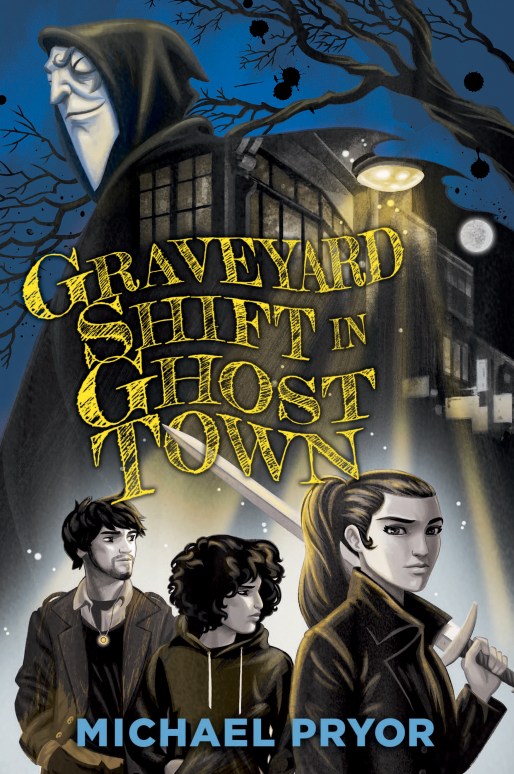
Graveyard Shift in Ghost Town by Michael Pryor

Graveyard Shift in Ghost Town Cover

Publisher: Allen & Unwin (Trade Paperback – 1 July 2019)

Series: Ghost Town – Book 2

Length: 307 pages

My Rating: 4 out of 5 stars

Amazon     Book Depository

Acclaimed Australian author Michael Pryor revisits his Ghost Town young adult series with another entertaining and intriguing story, Graveyard Shift in Ghost Town.

Anton Marin is having an extremely odd gap year. As a member of an infamous outcast ghost-hunting family, Anton can see the ghosts that linger in our world, and he has recently taken up the family business. Working with his new partner, the English badass Rani Cross, Anton works to protect the people of Melbourne from the more dangerous types of ghosts while also ensuring that all the wandering spirits they encounter are helped on to the next world. However, even with Rani’s help, ghost hunting in Melbourne has recently gotten even more difficult as the city finds itself in the midst of a genuine ghost plague. A massive infestation of the most dangerous types of ghosts imaginable is wreaking havoc across the city, and even usually benign or harmless spirits are starting to attack people.

Anton and Rani’s problems are about to get even worse; a deadly cult of Trespassers, humans who use magic to control ghosts for their own ends, is in town and determined to capture anyone with ghost sight for use in their rituals. As Anton and Rani find themselves with a target on their back, Anton must deal with the return of his long-lost aunt Tanja. While Anton is overjoyed to have a member of his family back, he quickly realises that not everything with his aunt is as it seems. What secrets is Tanja hiding and what is her connection to the leader of this group of Trespassers? As secrets and occult dangers arise within Melbourne, the fate of the world hangs in the balance.

Michael Pryor is one of Australian’s most notable authors of young adult fiction, having written a number of fantasy and science fiction novels for a younger audience. Some of his most notable series include The Law of Magic, The Extraordinaries and his six entries in the long-running The Quentaris Chronicles. Graveyard Shift in Ghost Town is the second book in Pryor’s latest series, Ghost Town, and follows on from his 2017 release, Gap Year in Ghost Town. I initially thought that Graveyard Shift in Ghost Town was my first experience reading Pryor’s work, but I actually remember reading some of the books in The Doorways trilogy back when I was kid. While this was something like 20 years ago (and now I feel old), I do know that I greatly enjoyed these books and their clever concept, so I was excited to check it out.

Graveyard Shift in Ghost Town is an interesting and engaging piece of young adult fantasy with a number of cool features. Pryor has done a fantastic job combining a unique concept of ghost hunting with a group of enjoyable characters and grounded the story in the author’s home city of Melbourne. This results in a great piece of fiction that will do a wonderful job of enthralling a whole new generation of young Australian readers. For those readers who are only just coming onto this series, knowledge of the previous book is not a necessity to enjoy this sequel, as the author does a good job of re-introducing the characters, plot details and adventures that were featured in Gap Year in Ghost Town.

One of the most enjoyable aspects of this series is the overarching concept of a world haunted by real and potentially malevolent ghosts, and the adventures of the few individuals who can actually see them. Pryor has populated his story with all manner of different types of ghosts, each with their own specific characteristics, strengths and appearances. Readers will get to see the various ghosts that the protagonists go after, including the Lingers, Moaners, Thugs, Weepers and a new breed of zombie ghosts, just to name a few. All of these ghosts are really cool, and I enjoyed how this book started going into a little more detail about the origins of ghosts and the malevolent forces behind them. I also liked how the story also pivoted towards a more human antagonist in the form of the Trespassers, and it was intriguing to see how a group of people utilising the ghosts for nefarious purposes. It was interesting to see the protagonist’s ghost hunting techniques in action, and it results in some intense action sequences, especially when they have to fight ghosts and the Trespassers at the same time. This is an inventive and clever concept that helps make this series stand out from some of the other young adult fantasy books out there.

Another great distinguishing feature about this book is the author’s inclusion of a contemporary Melbourne setting. I love fantasy stories that utilise modern settings, and Pryor did an exceptional job bringing the city of Melbourne to life. The characters visit all manner of key landmarks in the city throughout the course of the story, and I really liked seeing locations I have visited featuring fights between ghost hunters and spirits. Pryor also uses the opportunity to showcase some of his favourite restaurants and cafes and it was nice to see an author insert elements of a city they clearly love into their story.

In addition to its intriguing concept and excellent setting, I was also impressed with the complex characters in Graveyard Shift in Ghost Town. The main protagonist is Anton, the funny and slightly odd heir to an exiled ghost hunting family with their own unique techniques for dispersing ghosts. Anton serves as the narrator and point-of-view character for the story, and he offers a fun and introspective narration to the book, while the revelations about certain family secrets offer up some interesting drama. The other main protagonist, Rani, is an extremely skilled sword-wielding badass who is a former member of an established ghost-hunting order from England and is an excellent female character for this series. Anton and Rani form a great team in this book, as the two of them find their groove as a partnership and work well against the threats they face. The character of Bec is an interesting third member of this partnership, as not only is she Anton’s oldest friend, who plays a cute game where they try to guess quotes from famous figures, but she is also Rani’s girlfriend, who they share an apartment and cat with. Bec really brings the team together, and there are some interesting examinations of the dynamics between the three of them, as each of them feels like they are the outsider in the group. There are also a few cool new additions to the series in this book, including a couple of Scottish ghost hunters, their ghost-hunting dog and a good antagonist in the form of the leader of the new cult of Trespassers.

Graveyard Shift in Ghost Town is an excellent piece of young adult fiction that is appropriate for a wide range of different ages and tastes. While there are a few dark scenes, such as a somewhat gruesome torture sequence, the vast majority of the book is appropriate for young teens and perhaps particularly mature young readers. I thought the author’s inclusion of a positive lesbian relationship between Rani and Bec was a really good feature for the young adult audience, and it was that was portrayed extremely well. I am also sure that young Australian readers, especially those living in Melbourne, will love to see these fantasy variations of locations they are familiar with, and it will hopefully invigorate their imagination.

Michael Pryor has done an amazing job following up Gap Year in Ghost Town, as he presents another compelling and enjoyable paranormal young adult adventure. With inventive ghosts, scary antagonists, great characters and a fantastic Australian setting, Pryor has once again shown why he is one of the leading authors of young adult fiction in Australia. Graveyard Shift in Ghost Town is definitely worth checking out, and it has a lot of features that should prove appealing to the younger teen audience.

Amazon     Book Depository

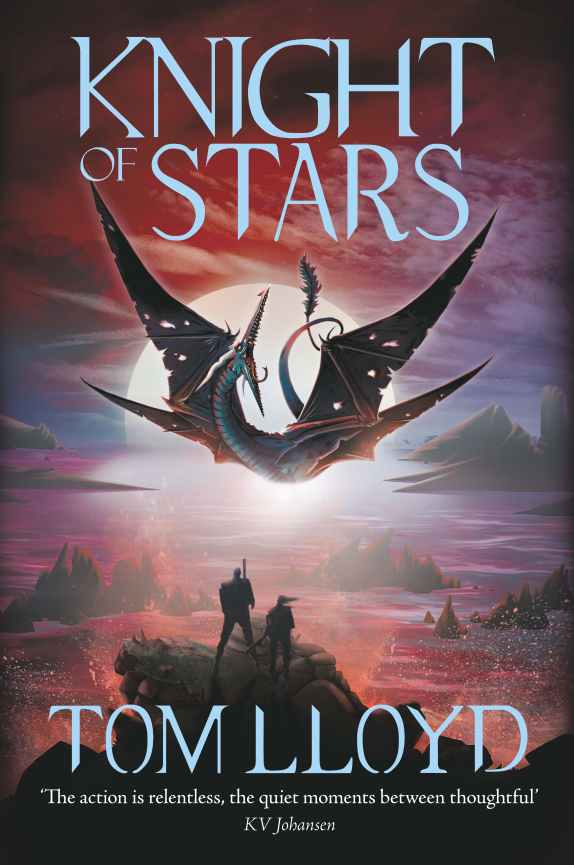
Knight of Stars by Tom Lloyd

Knight of Stars Cover

Publisher: Gollancz (Hardcover – 27 June 2019)

Series: The God Fragments – Book 3

Length: 440 pages 

My Rating: 4 out of 5 stars

Amazon     Book Depository

Lynx, Toil and the rest of the Cards are back for another rip-roaring fantasy adventure, as the “heroes” of Tom Lloyd’s The God Fragment series prepare to bring all manner of violence and chaos to another unsuspecting corner of their fantasy world.

Knight of Stars is the third book in The God Fragments series, which follows the adventures of Anatin’s Mercenary Deck, a band of skilled mercenaries otherwise known as the Cards, whose adventures have caused havoc across the Riven Kingdom. The Cards are so called as each member of the band are given a card number or description based on a fictional deck of cards from this universe, which corresponds to their rank within the band. This is the third series from Lloyd, who has previously written the Twilight Reign and The Empire of a Hundred Houses series. The God Fragments series has so far consisted of Stranger of the Tempest in 2016 and Princess of Blood in 2017, with each of the book titles referring to the rank one of that particular novel’s major or most significant character.

In this third book, the Cards are celebrating after surviving and getting paid for their previous adventures in the Labyrinth under the city of Jarrazir. However, their last adventure had unexpected side effects as several of the band have also been magically marked by the powerful Dugar artefact they discovered in the Labyrinth. Not only have these marks magically bound many of the Cards together but they have also had unexpected effects on the Deck’s mages, who have found their magical abilities greatly increased.

The Deck’s employer, the dangerous relic hunter and intelligence officer Toil, has found them a relatively simple job in the distant Mage Islands to take over the holdings of a defaulting gang for a powerful bank. With the prospect of good food, sun, booze, bar fights and the chance to let loose in combat, the Cards are treating it like a holiday, especially as it moves them out of reach of several powerful enemies they have recently made. While Toil seeks out allies and resources for her patron city, the company’s mages attempt to research the magical consequences of their time in the Labyrinth.

However, no mission for the Cards ever goes as planned, and the Mage Islands are a very dangerous place to visit. Between the rival mage guilds, the various gangs and the thousands of giant serpentine tsyarn that surround the city, any miss-step could lead to disaster, and none of the Cards are known for treading lightly, especially as their number includes an infamous exile from the Mage Islands who has left many enemies behind. Unsurprisingly, the members of the Deck soon find themselves in conflict with many powerful members of the Mage Islands’ hierarchy. However, the real trouble comes when several of the Cards accidently awaken something dangerous that dwells beneath the islands.

I was initially drawn to Knight of Stars by the cool plot synopsis, but I found the first 50 or so pages, which detailed the actual journey to the Mage Islands, to be very slow and a little hard to follow. This may have been partly because this was my first time exploring The God Fragment series; I have not had the pleasure of reading the first two books in the series. As a result, I spent quite a bit of time trying to come to grips with the story and the large number of returning characters who were featured in the opening pages of the book. While the summary at the start of the book does a great job of detailing the major points of the adventures that occurred in the previous books in the series, this summary only focuses on a few of the main characters. This means that new readers will not have a good basis for several of the important side characters and may struggle to work out who they are. After getting deeper into the book I was eventually able to come to grips with all of the characters, especially as more details about them were released; however, it was easy to become lost when trying to figure out who was who to begin with. It also didn’t help that the real action and intrigue didn’t really start until the characters got to the Mage Islands, as before that they are mostly stuck talking on a couple of barges. There is a brief fight with some elementals, although what they were and the reason for their presence was a bit unclear in my opinion. While I am glad that I continued past it and enjoyed the rest of story, the first part of the book might not be able to hold some new readers’ interest.

While this is not the most ideal start to the book, those readers who persevere will find that Lloyd has created an excellent and highly entertaining novel. The author has done a wonderful job of taking his band of rogues to a deadly new location within his fantasy universe and the allowing them to run wild, resulting in all manner of chaos. The overall story becomes extremely compelling the deeper you get into it, and the last 150-odd pages are pretty darn epic, featuring some big moments with some significant stakes for the protagonists. All of this results in a very enjoyable story, and I ended up have an absolute blast reading this book.

One of the main things that I liked about this book that was the non-stop fantasy action featured within it. It is obvious that Lloyd has a real talent for writing exciting combat sequences, which he uses to his full advantage by featuring a huge number of electrifying fight scenes throughout the course of his book. Many of these amazing scenes feature elements of the unique magical system that Lloyd has created for The God Fragments series, and I particularly liked the mage-guns that were a major feature of the action. Mage-guns are specialised weapons which all the Cards are armed with that fire various magical rounds of ammo to great effect. This includes electrical blast, ice shots, blasts of flame and devastating earth based shots designed to smash buildings and the ground. The author does an amazing job showcasing these unique weapons and the tactics behind them throughout the book, and they really add a whole new element to the combat sequences. While the combat for the first three quarters of the story is really cool, the fight between the Cards and the major opponents that they encounter in the last part of the book are extremely impressive and very ambitious. I would therefore heartily recommend Knight of Stars to those readers who are looking for a good piece of fantasy action, as it is an amazing feature of this book.

On top of the awesome action, the Cards of the Mercenary Deck are pretty fun. I really liked how Lloyd decided to set a story around a group of rough, fun-loving group of frankly oversexed mercenaries, as it makes for a very amusing tale. The story is told from the perspective of several members of the group, including Lynx, the original protagonist of the series; Toil, the secret agent who is funding the group; and Sitain, one of the group’s three mages. The Cards are a fun group of protagonists, most of whom have seen or done too much violence, so they now see the world through a rather cynical viewpoint. Their love for life is quite infectious, and they make for an entertaining group of narrators, with their rude and crude attitudes often coming to the fore. The Cards also have a very unique way of dealing with problems, and it is always fun to follow a group whose master plan involves starting a particularly violent bar fight. Several of the characters have interesting story arcs within this book, especially Teshen, the titular Knight of Stars, who returns to the Mage Islands to face the demons of his past. There are a couple of major developments for some of the characters in this book, and readers should be careful about some upcoming heartbreak. This is a wonderful group of characters, and I really enjoyed seeing how their story progressed in this book.

The location for this latest book, the Mage Islands, is a really cool setting for this action-packed story. The Mage Islands is a brand-new setting, located some distance away from where any of the previous books were set. The Mage Islands is home to a ramshackle city of canals, slums, lagoons and giant sloths as pack animals, and is a great backdrop for all the action and criminal activity that occurs throughout the book. Lloyd does an excellent job of portraying a hot, tropical location filled with all manner of dangers, criminals and pests. However, rather than the usual vast number of tropical bugs and insects, the city is surrounded by a huge swarm of giant monsters, the tsyarn (the monster on the cover). As you can probably guess from the name, the city is also home to a massive population of mages, and the Cards find themselves drawn into a conflict between some of the rival mage guilds. Overall, this was a fantastic location for this enjoyable story, and I look forward to seeing where the Cards end up next.

Knight of Stars is an exciting and captivating third instalment in Tom Lloyd’s The God Fragments series. While I did initially struggle to get into the story, once I stuck with it, I was able to enjoy its compelling plot, amazing action, great characters and excellent new location. This book is worth checking out, and I look forward to reading Lloyd’s future instalments in this series.

Amazon     Book Depository

God of Broken Things by Cameron Johnston

god of broken things cover

Publisher: Angry Robot (Paperback – 11 June 2019)

Series: Age of Tyranny – Book 2

Length: 312 pages

My Rating: 4.75 out of 5 stars

Amazon

Those readers looking for the next entertaining grimdark fantasy adventure to sink their teeth into need look no further than God of Broken Things, the electrifying second book in Cameron Johnston’s Age of Tyranny.

It has only been a few short months since the devastating attack by the Skallgrim raiders on the city of Setharis, which severely weakened the city. Despite repulsing the Skallgrim and their monstrous hordes, Setharis is still in incredible danger. The Skallgrim forces are massing to launch another attack on Setharis, and the Skallgrim’s masters, the parasitic alien lifeforms known as the Scarrabus, are determined to enslave the entire city to their will. Setharis’s salvation once again rests in the hands of its most hated son, Edrin Walker.

Edrin is powerful magus whose rare abilities allow him to crack open and control the minds of all those around him. His breed of magus, known as tyrants, are feared throughout the world due to their propensity to lose control and use their magic to rule whole civilisations. Despite his role in saving the city from the Skallgrim, Edrin is still distrusted by both the common people and his fellow magus of the Arcanum. However, his skills may be the only thing that can win the war against the Skallgrim and the Scarrabus.

A massive force of Skallgrim are advancing over the mountain passes of the Clanholds, hoping to launch a fresh assault on Setharis. Against his will, Edrin is forced to lead a small army to reinforce the tribes of the Clanholds against the Skallgrim army. Accompanied by a small personal bodyguard of killers and thieves, Edrin leads his forces into the mountains, where far more dangerous things than the Skallgrim and their monsters lurk. Spirits, demons, gods and his own deadly past all lie in wait for Edrin, whose powers have been altered following his battle with a treacherous god. Can Edrin and his forces hold back the Skallgrim, or will he succumb to one of the many horrors in the mountains? And what happens when the tyrant comes out to play?

Johnston is a talented author whose debut novel, The Traitor God, really impressed me last year thanks to its awesome story and enjoyable main character. As a result, I was extremely keen to get a copy of the sequel, God of Broken Things, this year and was very happy when I received it a few weeks ago. God of Broken Things turned out to be a fantastic follow-up to the first book and I had an incredible time reading it. Not only does Johnston present another wildly entertaining story for the reader to enjoy, but he also does a fantastic job of expanding his dark fantasy world and exploring the complex mind of his main character.

I really liked where Johnston took the story in this book. While The Traitor God’s story of a hunt for answers in the dark fantasy city was cool, I really liked seeing the main character go to war in God of Broken Things. The whole storyline of Edrin leading an army up into the Clanholds, a dangerous mountainous environment filled with all manner of horrors and dangers was really cool, especially as he kept encountering worse situations and more terrifying opponents. This resulted in some epic moments and massive battles, and Johnston also took the opportunity to explore the history of several of the different races mentioned within the first books, including the Scarrabus, the Ogarim and some more mystical creatures like spirts and demons. This expansion of the Age of Tyranny universe was quite intriguing, and I wonder if there will be more exploration of the world and the various mentioned multiverses in future books. I also liked the deeper look that the author took into his protagonist’s past, showing some of the activities that occurred during the years he was exiled from Setharis. I loved the various twists and epic moments that Johnston sprinkled throughout the book’s plot, and there was never a dull moment in the entire story. I especially enjoyed how the final battle in God of Broken Things ended, especially as the author included a clever red herring in the book’s formatting to throw the reader off. Overall, this was an incredible story, and Johnston did an amazing job trapping me within this entertaining narrative.

One of the best parts of this book was the author’s continued focus on the protagonist, Edrin Walker, who serves as the book’s narrator and point-of-view character. Edrin was already a fairly complex character in The Traitor God, where he was portrayed as a powerful exiled magus hated, distrusted and ostracised by everyone due to the specific nature of his magical gift. Because of the way he is treated he acts hostile and uncaring to the world, while still participating in the odd act of heroism and compassion. This is continued in the second book, where Edrin continues to battle with his natural instincts and irritation while trying to do the right thing, especially for the few people who actually like or respect him. I really liked the way that the author continued to show Edrin exploring his moral side in this book as, against his better judgement, he actually attempts to help people and keep Setharis safe. The various sacrifices that he subsequently makes for the greater good are very much against the grain of his original character, and it is interesting to see this side of Edrin grow.

Due to the way he is treated, Edrin is an incredibly jaded character, and the author utilises this in a number of clever ways. Not only does this ensure that Edrin is the most likeable character in the book, mostly because he stands in sharp contrast to all the other magus characters, who are elitist snobs, but it also makes him a really entertaining narrator. The character’s sarcastic and mocking manner permeates the entire way he tells the story, resulting in some great reactions and a very amusing overall story.

Edrin continues to get into all sorts of entertaining misadventures in God of Broken Things, and it is hard not to love the unorthodox way he deals with things. Not only does he lead a bodyguard of deranged killers into battle but he rarely ever takes things seriously, no matter who he is dealing with. I love the disrespect and mockery that the character shows when encountering anyone in authority, be it friend or foe, magus or human, god or monster, and I laughed out loud at the way he got his revenge on one of Setharis’s gods in this book. It was also great to see the character apply his particular brand of bastardry to the battlefield, coming up with all manner of unconventional traps and attacks for the forces that are up against him. I particularly loved the cool way he took down the main antagonist of this book, and it really reflected both his cunning and his growth as a character.

The main character’s mind-bending magic continues to be a really cool part of this series, especially as his abilities become even more powerful in God of Broken Things. Johnston’s portrayals of the way that Edrin’s powers to break into and manipulate the minds of all those around him is done extremely well and it results in a number of epic scenes. I never realised how many creative ways someone could magically manipulate a person’s mind until seeing some of the scenes in this book, as Johnston comes up with some very inventive ways to utilises his protagonist’s magic. I especially loved seeing Edrin using these powers in the middle of the battle, as there are some awesome ways he disadvantages his enemies and helps his allies. However, the author also explores the consequences of the tyrant powers, as Edrin continuously runs the risk of taking things too far and grossly abusing his powers. Several examinations of the character’s guilt over some of the mental actions he commits become a compelling part of the story, and the character’s mental magic is a great part of the book.

Those readers who are looking for an explosive amount of fantasy action are in for a real treat with this book. Johnston makes sure to include a ton of battles and fight sequences in God of Broken Things, as the ragtag defenders of the Clanholds face off against a massive horde of Skallgrim, Scarrabus, demons and monsters. All of these fight scenes are incredibly brutal as Johnston depicts some amazing battles throughout this book. Most of these scenes are enhanced through the use of magic, and the sheer destructive power of the various characters’ magical abilities is pretty impressive. The various demons and monsters the protagonist finds himself up against in this book are pretty gruesome and offer up some pretty great battle scenes as a result. Overall, the action in God of Broken Things is quite superb, and fans of bloody fantasy fights will not be disappointed.

Cameron Johnston’s second outing, God of Broken Things, is an amazing piece of grimdark fantasy fiction that proved to be just as much fun as his debut novel, The Traitor God. I had an incredible time reading God of Broken Things as the excellent combination of story, magical action and character work kept me trapped until the very last page. Readers are guaranteed to love this outstanding dark fantasy read, and I strongly recommend this book to anyone looking for a fun and powerful adventure. The ending of the book makes it a little unclear if Johnston will continue the Age of Tyranny series, but I will be keeping a close eye out for any future books from this rising star in the grimdark fantasy genre.

Amazon

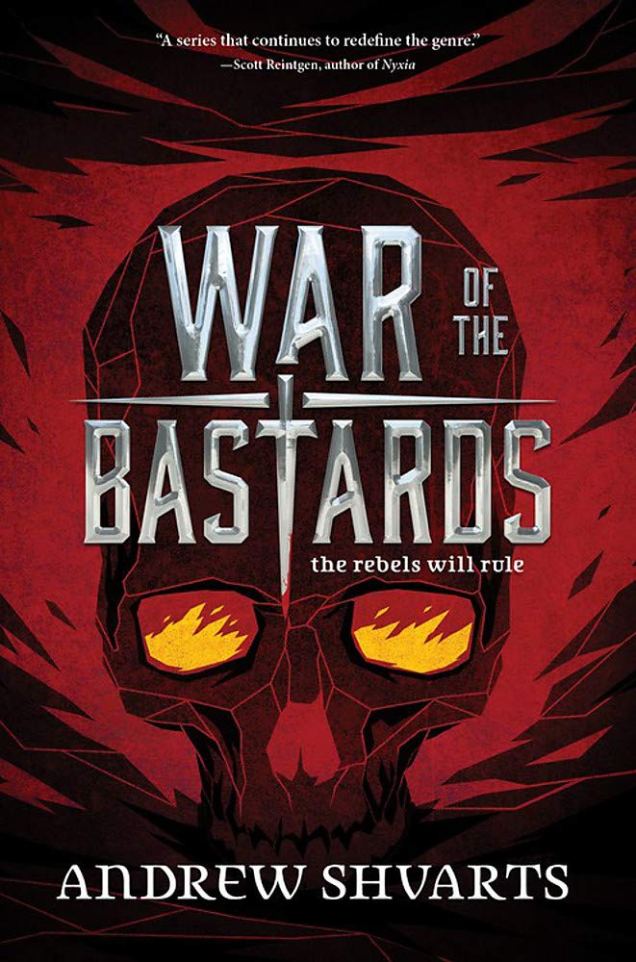
War of the Bastards by Andrew Shvarts

War of the Bastards Cover 2

Publisher: Hyperion (Hardcover – 4 June 2019)

Series: Royal Bastards trilogy – Book 3/Final

Length: 392 pages

My Rating: 5 out of 5 stars

Amazon     Book Depository

War, rebellion, magic and one hell of kickass story! Shvarts brings the outstanding Royal Bastards trilogy to an end with War of the Bastards, the relentlessly entertaining conclusion that rounds out the series with an epic bang. The Royal Bastards trilogy is the debut work of author Andrew Shvarts, who has produced an incredible young adult fantasy series that has been an absolute delight to read over the last three years. Set in the fantasy nation of Noveris, the series follows the adventures of its protagonist, Tilla, and her friends as they try to navigate the treachery and war that has engulfed their nation.

I had an absolute blast reading the second book in the trilogy, City of Bastards, last year. Not only did the book feature a compelling story style and an amazingly captivating plot, but it ended with an outstanding cliff hanger with the protagonist failing to stop the antagonist’s sinister plot, which results in the entire royal family being killed off and the enemy gaining control of the throne. This was such an epic ending, especially because the massacre of the entire royal family was just so unexpected (I really was expecting a last-minute rescue from the protagonists), and I have been extremely curious to see how this story ended for quite a while.

It has been a year since the destructive events that changed Noveris forever. After orchestrating the explosion that decimated the royal court of Noveris, killing the King and Queen and most of Noveris’s nobles, Lord Elric Kent has assumed the throne. With a huge number of powerful bloodmages under the command of his ruthless Inquisitor, Miles Hampstedt, Kent’s rule over Noveris looks to be nearly absolute. However, many are still fighting back against the despotic new rule, including Kent’s bastard daughter, Tilla.

Tilla is a member of the resistance group known as the Unbroken, which fights to return Tilla’s friend, the rightful Queen, Lyriana Volaris, back to the throne. With the help of her lover, Zell, and Lyriana’s cousin, Ellarion, Tilla and the Unbroken are engaged in a brutal guerrilla war against the new regime. However, the situation looks dire and victory near impossible to achieve, until a mission to rescue a major source of rebel intelligence reveals that their informant was none other than King Kent himself. Kent’s rule has been usurped by Miles, whose absolute control over the bloodmages has allowed him to take over Noveris without anyone noticing. While attempting to deal with the implications of capturing Tilla’s father, the Unbroken also free Syan Syee, a young woman from the Red Wastes with mysterious magical powers, who brings an urgent message to the people of Noveris. Syan warns of a coming apocalypse and believes that defeating Miles is the key to stopping it. Needing new allies, Tilla, Lyriana, Zell, Ellarion, Kent and Syan journey to the Red Wastes, hoping to recruit Syan’s people to their cause. However, what they discover in the Red Wastes will change everything. With this new knowledge, can Tilla and her friends save Noveris, or will Miles’s lust for power and control tear their world apart?

Before I started reading this book, I honestly thought that Shvarts was going to have an extremely hard time matching the awesomeness of City of Bastards. However, I am pleased to report that War of the Bastards is an incredible and massively compelling read that I enjoyed just as much as the second book in the series. While it may lack the shocking cliff hanger ending of City of Bastards, War of the Bastards has an excellent fast-paced story that proves extremely hard to put down once you start.

I really loved the story contained within War of the Bastards and felt that it was an amazing conclusion to the trilogy. The tale of an epic battle to free a kingdom is a classic, but the author has put some fantastic modern twists on it, and his entertaining writing style and dedication to bringing out huge moments, really turns this into something special. Shvarts has included a number of cool twists and turns throughout this book, and I really liked where the story went at times. There was also a slight turn away from fantasy towards another genre about two-thirds through the story that proved to be a bit surprising, but I found it to be an interesting addition to the story. Without giving too much away, I was very satisfied with the clever way that the antagonist was taken down at the end of the book, and it was a nice call-back to earlier events in the series. I really enjoyed how this story turned out, and it was an outstanding conclusion to the epic tale that had been told throughout the Royal Bastards trilogy.

In the previous books in the series, the author tended to only set the story in one general setting, such as the West for the first book and the Lightspire for the second book. In War of the Bastards, Shvarts continues to expand on his fantasy world, but this time he takes his characters to several new locations that had been alluded to in the other books. The story starts in the Heartlands and focuses on the characters fighting their guerrilla war there. This land has been transformed by the oppression of Kent and Miles, and it was intriguing to see how bad things had gotten under their rule. The protagonists also journey through the Southlands and the Red Wastes, both of which are pretty fascinating and distinctive locales. The Red Wastes was definitely the most unique location, ravaged by terrifying magical storms and featuring interesting new civilisation. Overall, these new locations are pretty cool, and readers will enjoy exploring more of this great fantasy world.

One of the major strengths of Shvarts’s previous books has been the excellent character work. Each of the major characters has gone through tremendous growth through the course of the first two books, and this growth has continued through the course of War of the Bastards. Tilla has gone from being two different types of social outcast (a bastard in the first book and a traitor’s daughter in the second) to a respected rebel warrior fighting the good fight. However, despite knowing she is fighting for what is right, Tilla is not natural killer and has to constantly deal with the guilt of her actions, keeping a running mental count of all those she has killed. She also has to finally come to terms with her strained relationship with her father once he joins them on their quest. Due to her status as a bastard, her father has always kept a certain distance with her. Now, with him joining their band, Tilla is forced to have several emotional confrontations with him over the terrible things he has done in previous books and how he treated her in the past. This results in some dramatic moments within the book, and the exploration of their relationship makes for great reading. Tilla still serves as the book’s narrator and point-of-view character, and it is through her eyes that we see the story unfold. This is extremely fortunate, as her sassy and sarcastic outlook on the events occurring around her leads to a lot of the book’s humour. All in all, I have always found Tilla to be a pretty awesome main character, and it was great to see how her story ended.

In addition to Tilla, the other three main characters from the previous Royal Bastards books all get great character arcs within this book. Lyriana spends this book as the Queen in exile of her people and is burdened with the responsibility of being a figurehead. However, she rises to the challenge and proves herself to be powerful badass and war leader thanks to her epic magical abilities. This was a massive change in her character from the second book, where she was devastated with loss and trauma, and it was great to see her at her full potential. Readers will also like the new relationship she finds herself in, and it was nice to see her finally get some emotional happiness. I would say that Zell is character least utilised in this book, but we do get to witness him trying to come to terms with guilt from the previous book thanks to the inadvertent role he had in facilitating the massacre. The character most impacted by the events of the previous book is Ellarion, Lyriana’s cousin and the most powerful magician in the lands. He lost his hands at the end of City of Bastards when defending his friends from the massive explosion and must now learn how to live without them and, more importantly, the magic they allowed him to perform. Shvarts did an amazing job portraying Ellarion’s despair at his situation and the longing he has for his lost magical arts. Some interesting things happen to him in this book and he has a major moment that readers will absolutely love.

Two new characters join the main characters in this book: Syan from the Red Wastes and Tilla’s father, Lord Kent. Syan is a pretty cool lesbian character who has some significant secrets in her past. Shvarts does a great job telling her entire story within this one book, and I found her to be quite an enjoyable character. Lord Kent was another fantastic addition to the main group of protagonists. While he has appeared in both of the previous books in the trilogy, we have never really gotten his side of the story before. In addition to all the drama surrounding his relationship with Tilla, we also get to see his motivations for his actions, as well as the regret for what he has brought about. I really liked the inclusion of Kent in War of the Bastards and thought it was a clever touch from Shvarts because of all the extra emotional complexities and drama he brings to the story.

I should quickly mention the main antagonist of this book, Miles. Miles has always been a pretty unlikeable character, especially after betraying the group in the first book due to his jealousy over Tilla choosing Zell. Shvarts really makes him even more despicable in War of the Bastards by showing him as the facilitator of all the worst things that have been done in Noveris in the last year. Later confrontations with him reveal that he has no remorse and really does not see himself as the bad guy. His continued obsession with Tilla is pretty messed up (cough, harem, cough), but I do like how that was used against him at times. Overall, Miles makes for an excellent series villain, and Shvarts did an amazing job utilising him in this final book.

The author has a very creative mind when it comes to the magic and fantasy elements contained within this series. The magical abilities and rules that govern the lands of Noveris are extremely interesting and have led to some impressive magical destruction and battles in the past. Shvarts continues to do this in the final book, and the exploration of the origins of magic and the devastating consequences of using it are really fascinating. Shvarts came up with some cool and unique new magical abilities in War of the Bastards, especially for the magic utilised by the people of the Red Wastes. The author has been really creative in this final book, and I am sure readers will like some of the ideas he comes up with.

Like the previous books in the series, War of the Bastards is being marketed towards the young adult audience. However, it should only really be read by the older teen audience, as it features a lot of adult content. While it does not have as much sex, drugs and drinking as City of Bastards did, it does feature a heck of a lot more violence, and some of the action scenes are pretty gruesome. This does mean the book is really easy for older readers to enjoy, and I would strongly recommend this to all adult fantasy readers.

While I am sad to see the Royal Bastards series end, War of the Bastards was such an incredible conclusion to the story that it does not seem too devastating. Due to its near perfect blend of electrifying story content, excellent characters and entertaining writing style, I found that it was near impossible to put War of the Bastards down, and I had an amazing time reading it. This is easily a five-star read, and I reckon this is my favourite young adult book of 2019 so far. With his debut trilogy, Andrew Shvarts has shown himself to be an extremely talented author, and I will be eagerly keeping an eye out for his next series.

Amazon     Book Depository

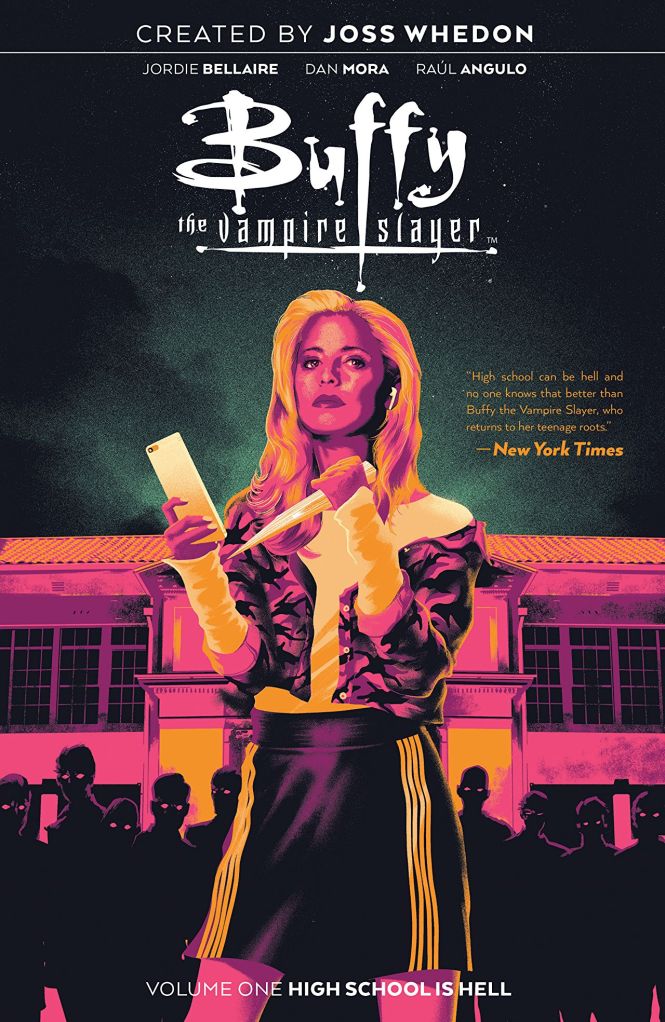
Buffy the Vampire Slayer – Vol.1: High School is Hell by Jordie Bellaire and Dan Mora

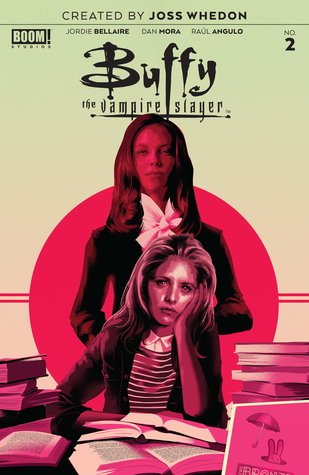
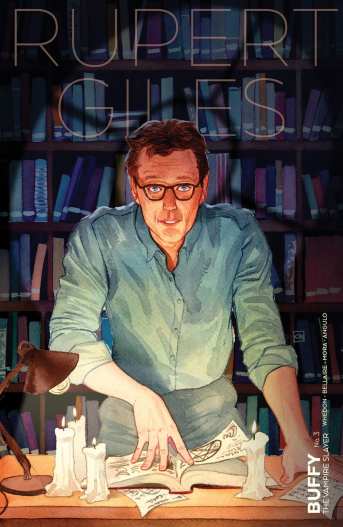
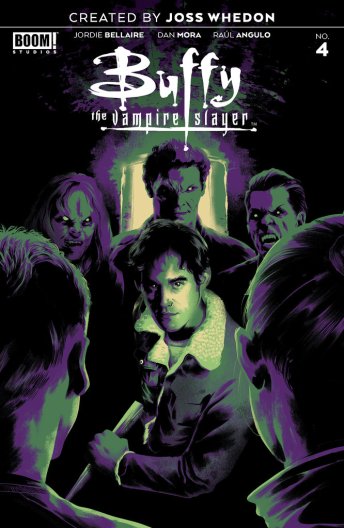
Buffy The Vampire Slayer - High School is Hell Cover

Publisher: BOOM! Studios (28 May 2019)

Series: Buffy the Vampire Slayer – Volume 1

Length: Four issues – 128 pages

My Rating: 4.5 out of 5 stars

Amazon     Book Depository

Prepare for a whole new take on Buffy the Vampire Slayer as the first four issues of BOOM! Studios’ new Buffy comic series are collected together in their first volume, High School is Hell.

For those unfamiliar with it, Buffy the Vampire Slayer was an extremely popular fantasy television show that started in 1997 and ran for seven seasons until 2003. The show followed the adventures of the titular Buffy, who has inherited the role of the Slayer, a magically strengthened warrior chosen to fight vampires, demons and the forces of darkness. Buffy the Vampire Slayer was the first show helmed by Joss Whedon, who went on create one of the best science fiction shows of all time, Firefly, as well as direct the first two Avengers movies (and parts of the Justice League movie, but let’s not look to closely at that). Buffy was actually an adaption of Whedon’s 1992 movie of the same name; however, there were some significant differences between the tone and writing of the movie and the show, as the show had some superb storylines and an amazing cast. It eventually resulted in the spin-off Angel, which also had a strong five-season run and some amazing episodes.

Buffy-01-01a.jpg

Due to the immense popularity of the show, a huge amount of Buffy the Vampire Slayer tie-in material has been created, including a number of novels and video games. A substantial number of comic books were also created through Dark Horse Comics, many of which involved Whedon in the creative process. Indeed, the storylines of both Buffy the Vampire Slayer and Angel were continued for many years as a comic book series that followed a huge number of events that occurred following the end of both television shows.

Recently, Dark Horse Comics gave up the comic book rights to several of Joss Whedon’s works, including Buffy the Vampire Slayer, Angel and Firefly. These rights were subsequently obtained by BOOM! Studios, who have embarked on a whole new wave of comics for these franchises. The first of these, Firefly, started up last year, and the first collected volume was released in late April (I grabbed a copy the other day and will hopefully review it in the next couple of weeks). A new Angel comic book series is also currently running, although the first issue was only released a short while ago, so it might be a little while before I get my hands on the collected edition of it. BOOM! Studios are producing a bunch of different stories for these various properties and have different plans for each of them. The Firefly comics, for example, will be set in the same universe as the shows and have presented an interesting new adventure. However, for the new Buffy the Vampire Slayer comic, they have decided to do something different. Rather than continue the storylines written by Dark Horse Comics or try to fit in the established universe left by the shows, the new creative team have taken the bold step of completely revamping the entire series, restarting the story from the beginning and swapping the setting to a more modern era. This new series takes place in 2018/19 instead of the 1990s and features a completely different story to the original series, similar to what Marvel Comics did with their Ultimate universe.

Buffy the Vampire Slayer - 2.jpg

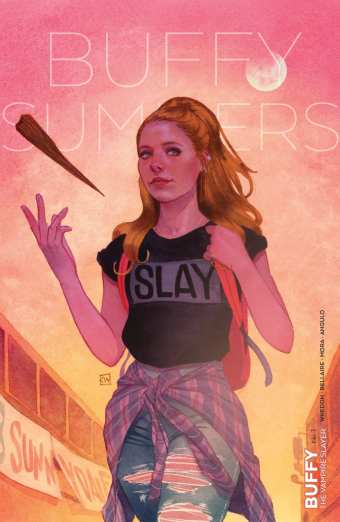
This new series starts in a similar way to the events of the show, with Buffy Summers only recently arrived in Sunnydale and ready to start as the new kid at Sunnydale High. Buffy has to deal with many of the pitfalls of being a modern teenager, grades, friends and an embarrassing dead-end job. However, Buffy has one thing no over teenager has to deal with, an unescapable destiny as the latest in a line of vampire slayers. While the story may sound familiar so far, this is not the grunge era of the 1990s; instead it is the modern era of smart phones, social media and social norms. Buffy soon settles in as the new girl in school, training with her watcher, Giles, and making two new friends, Xander and Willow, after she saves them from a vampire. While the worst thing in her life may appear to be the exceedingly peppy Cordelia, Sunnydale is still Sunnydale. Vampires and demons are always lurking just beneath the surface, and two familiar and deadly foes are in town. The devastating team of Drusilla and Spike are looking for a mysterious power and will kill anyone who gets in their way. What is their sinister plan, and how will the lives of the new Scooby Gang be changed forever?

Volume 1, High School is Hell, features issues #1-4 of this new Buffy series and was written by Jordie Bellaire. It also features the artistic skills of Dan Mora as the illustrator and Raúl Angulo as colourist. Joss Whedon is also credited as the original creator of this series in all the issues, although I am uncertain if he consulted on this new project at all. Pretty much the moment I saw this comic in the shop, I knew I was going to enjoy it. I grew up with watching Buffy and Angel when I was younger and have enjoyed a lot of their comics in the past. I really liked the concept of this new series, and I was incredibly interested in seeing where the creators of this new series were going to take it. I have to say that I was not disappointed with the end result. These first four issues not only tell an excellent and deeply compelling story with some incredible artwork; they also present an incredible reimagining of the classic Buffy the Vampire Slayer universe and bring it into modern times.

Buffy-02-01a

The issues featured within Volume 1 tell a pretty amazing story. The whole reintroduction of the Buffy world is done extremely well, as the new story told within is filled with the right amount of new ideas, classic characters and an exciting, action filled storyline with some major twists. I really think the blend of the old characters and story elements with the new storylines where done exceedingly well, and it creates and excellent new world that has some amazing potential for the future. Bellaire also does a fantastic job capturing the tone and humour of the original series and inserting it into this new vision of the Buffy universe, and it makes for quite an entertaining and enjoyable read. I also like how the creators brought the story out of the 90s into more modern times, incorporating all the relevant technology and social norms into the plot. There are also quite a few jokes making fun of the 90s, which is a nice touch, and a great call back to the original series. As a result, I thought the new story introduced in High School is Hell was pretty darn amazing and I had a lot of fun reading it.

The issues featured in High School is Hell feature an interesting mix of characters from the original television show, and I think fans of Buffy will enjoy the changes that the creative team introduce to the various characters. Firstly, Buffy remains pretty much unchanged; she is still the new girl at the school who is trying to balance the Slayer part of her life with high school, friends and romance. While there is a tad additional teenage apathy, perhaps as a result of her job at Tunaverse, her character remains as a pretty consistent touchstone from the original series. The same could be said of Giles, who is still the same stuffy English gentleman he was in the first few episodes of the original show with the disapproving mentor vibe, although we do get to see him playing his guitar in public a lot sooner.

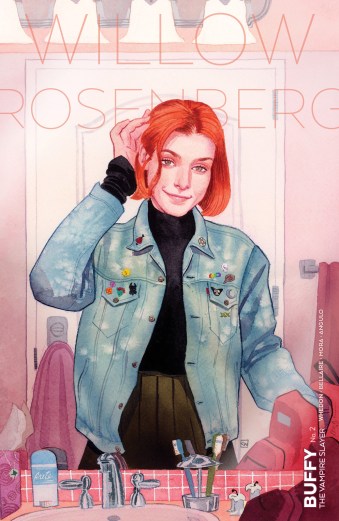
Buffy-03-00a

While Buffy and Giles are fairly similar to their original versions in the show, there are some interesting changes to the other major Buffy characters featured in this new series. For example, Willow has already discovered her sexuality and has a girlfriend, new character Rose. She also seems to be a whole lot more confident than she originally was in the series and is already eager to fight evil and start learning magic (which couldn’t possibly go wrong). Cordelia is still the most popular girl in school, although she is a lot braver and nicer than she was in the original show, although most of the characters find her extreme peppiness to be a bit too much. She also garners a rather unhealthy obsession with Spike, which was an intriguing addition which will no doubt become a major plot point in the future. Interestingly enough, Xander is probably the character who has changed the most in this series. On the exterior he is still the same happy-go-lucky character he was in the show. However, none of the characters realise that Xander is actually quite depressed, lonely and feels quite powerless, something the audience is made aware of by viewings of his anonymous blog. The inclusion of the blog entries is quite clever; we are initially made to think they are Buffy’s inner monologue. Once we are shown they belong to Xander, it gives an emotional look into his mind. Xander’s resultant story arc in this book ends in a pretty shocking twist, which has real potential to be a defining moment of this series.

Buffy-03-01a

In addition to these main characters who were the focus of the original Buffy first season, there is also an interesting use of other characters from the show. Major characters Anya, Robin Wood, Spike and Drusilla all show up in these first four issues, each entering the story far earlier than they did in the television show, and with very different storylines. Anya is a demonic witch who deals magical artefacts from a secret occult shop (a fun nod to her business from the show). Anya is a neutral force in the town, and it is an interesting departure from her role as a vengeance demon. We only see a little of Robin Wood in these first four issues, although he is set up as Buffy’s potential love interest. In this series he’s set up as a star athlete and overall nice guy, with no real indication of whether he’ll have the same connections to the Slayers or Spike that he did in the show. Spike and Drusilla are a cool choice as the initial antagonists for this version of Buffy. The two of them always make a great team, although there is a bit of a change to the dynamic. Dru is somewhat less insane in this series, and seems to be the brains of the operation, relying on Spike a lot less. Spike is pretty much his usual fun self, although he appears a little less in love or devoted to Dru as he was in the show. He also has a fun relationship with Cordelia, and there is also a certain debate about his name. While Dru and Anya refer to him as William, he introduces himself to Cordelia as Spike to try and sound edgy, which results in a good joke from Dru about how the name “hardly played in the 90s”.

Buffy-04-00a

Overall, I was quite happy with how the creative team behind this new series utilised the show’s existing characters and brought them into the new century. Some of the changes are really quite cool, and I liked how some of the dynamics were altered. Some of the new characters were also pretty cool, and it will be interesting to see what overall impact they will have on the series. I think that some of their decisions will lead to some excellent stories in the future, and I look forward to seeing how other existing characters are introduced.

The artwork in the first four issues of this series was pretty awesome and really added a lot to this volume. Mora did an outstanding job capturing the likenesses of the existing characters from the show; they looked so much like the original actors. The action sequences are done exceedingly well and there is a real sense of motion in some of the scenes that bring all the fights to life. The artwork and the colour schemes help add a lot of dread or unease to several scenes throughout the volume, which add a lot more to story. The artwork in this new version of Buffy the Vampire Slayer was first rate and really exciting.

Buffy-04-01a.jpg

Buffy the Vampire Slayer: High School is Hell represents a bold new direction for the Buffy franchise, and one that I am quite excited for. The alternate timeline that the creative team has decided to set this story in is quite an intriguing concept that works exceedingly well. Bellaire has come up with a captivating initial storyline that is enhanced by Mora’s artwork. This series will definitely appeal to fans of the original television series, who will love seeing these great characters altered in a brand-new timeline. It is also easily accessible to those readers less familiar with the show and could be a good starting point for those who want to check out the franchise. This volume is highly recommended, and I am looking forward to the future inclusions in this excellent new comic book series.

Amazon     Book Depository
We are Blood and Thunder by Kesia Lupo

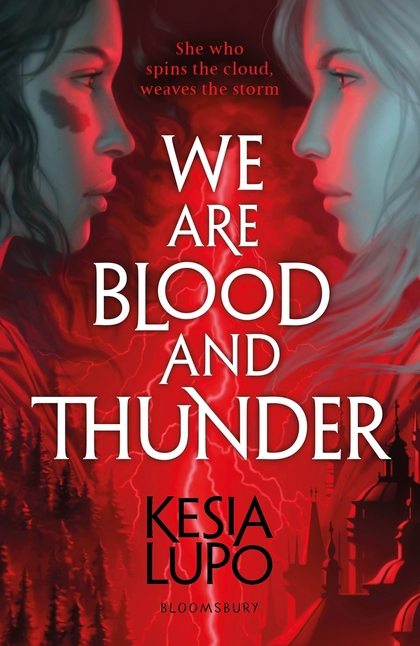
We are Blood and Thunder Cover

Publisher: Bloomsbury YA (Trade Paperback – 4 April 2019)

Series: Standalone / Book 1

Length: 400 pages

My rating: 4.5 out of 5 stars

Amazon

From first-time author Kesia Lupo comes We are Blood and Thunder, a clever, inventive and at times dark young adult fantasy novel that represents a brilliant start to a bold new fantasy world.

In the nation of Valorian, a powerful magical curse has been laid upon the city of Duke’s Forest. The curse has wrapped the entire city in a mystical storm cloud filled with death, sickness and despair. Following a series of virulent pestilences brought on by the storm cloud, the city has been placed in quarantine, although passage in or out of the cloud is already extremely difficult. Now, six years after the curse first struck Duke’s Forest, the fate of the city and all who live within will lie upon the shoulders of two young women.

Lena is a cryptling, one of the deformed or marked offspring of Duke’s Forest’s inhabitants who live in the sprawling crypts underneath the city and watch over the Ancestors, the interred dead of the city, who are worshiped as gods. Lena, whose birthmark saw her abandoned as a baby, led a quiet life below the city until strange things started happening all around her. Accused of being a mage by the magic-hating Lord Justice, Lena just barely escapes execution when she encounters Constance in the mists outside the city. Constance is the daughter of Duke’s Forest’s ruler, the Duke, and has returned to the city to reclaim what is hers. Trained as a mage, Constance recognises the magic within Lena and sends her outside the mist while she continues back to Duke’s Forest. However, this fateful meeting will have huge consequences on the lives of both women.

Once outside the mists, Lena encounters the huntsman Emris, a magic user trained to locate untrained mages like Lena, known as Rogues, who has been pursuing Constance for magical crimes she has been accused of. Emris brings Lena back to the City of Kings, the capital of Valorian, where she attempts to learn how to control her magic. However, her unusual magical abilities and status as a Rogue bring her to the attention of some of the city’s worst inhabitants. Back in Duke’s Forest, Constance finds that her city and her father have fallen under the control of the tyrannical Lord Justice. Keeping her status as a mage hidden, Constance attempts to regain control of Duke’s Forest while also searching for the source of the curse surrounding the city. As both Lena and Constance attempt to survive in their respective cities, fate keeps bringing their destinies together. The future of Duke’s Forest rests in the hands of these young women. Can they save the city, or will they be the storm that destroys it?

We are Blood and Thunder is a clever and extremely captivating young adult fantasy novel that I read a little while ago but only just got a chance to review. I wish I had gotten a review of this book up a little earlier as it is a fantastic first book and I have been quite keen to sing the author’s praises for a while. We are Blood and Thunder is the debut novel of exciting new talent Kesia Lupo and presents a powerful story filled with magic, betrayal, personal growth and the hunt for power. At the moment, We are Blood and Thunder is a standalone novel, but the author has indicated on Goodreads that she may set future books within the same universe.

The story of We are Blood and Thunder is told from the perspectives of Lupo’s two main characters, Lena and Constance. Each character narrates about half the book and tells their separate narratives through alternating chapters. This allows Lupo to tell two separate stories that are not only very different in content but which help show a far wider area of the new fantasy world that Lupo has created. I found both of the storylines contained within this book to be extremely fascinating. The first storyline, which is narrated by Lena, follows the character as she journeys to the City of Kings to learn more about magic. While there, she learns more about her mysterious powers and finds herself embroiled in the conflict between the Temples that control magic and an influential mage outside the control of the Temples who has the ear of the King. The second storyline, which is narrated by Constance, is a darker story of political intrigue, murder and dark magic within the walls of Duke’s Forest, as Constance attempts to find the heart of the storm cloud before it is too late, while also attempting to neutralise the tyrannical Lord Justice.

While the magical learning, emotional growth and world building featured within Lena’s storyline are really good, I did prefer the Constance storyline a little more. All the dark political manoeuvring within the unique setting of the cursed Duke’s Forest and the battle between Constance and the Lord Justice were pretty darn compelling, and I had a very hard time putting down the book while I was reading the Constance chapters. While both of these storylines are really good, I was quite impressed by the way that Lupo was able to combine the two separate stories together into one amazing overarching narrative. I felt that the two storylines really complemented each other and helped make each respective storyline better. For example, the explanations of this fantasy universe’s magic in Lena’s chapters help the reader understand some of the magical elements occurring in Constance’s chapters. At the same time, many of the preparations and relationships Constance forged for her desperate return to Duke’s Forest impact Lena as she uncovers dark secrets within the City of Kings. There are also a number of excellent plot twists cleverly hidden throughout the book that are slowly revealed in both storylines. I thought some of these twists, especially a big reveal towards the end of the book, were just amazing and helped turn this into an epic and electrifying story. I felt that the author’s use of the two separate storylines was an incredible way to tell the story, and the overall narrative was quite outstanding.

In addition to her excellent twin storylines, Lupo also came up with two awesome fantasy cities: the City of Kings and Duke’s Forest. The City of Kings is your classic fantasy capital with massive temples and palaces, where everything appears to be perfect and harmonious on the surface. However, there are some dark secrets at the heart of this city, and the magical politics prove to be a major threat to one of the book’s main characters. While this is a great setting, I have to say that the city of Duke’s Forest is the far more impressive setting. Even before the city was cursed, Duke’s Forest would have been an amazing fantasy setting, with its massive crypts staffed by abandoned children and its rabid intolerance of magic. However, by turning it into a city on the brink of death, surrounded by dangerous magical mists and clouds, Duke’s Forest transformed into a much more intriguing and memorable fantasy setting. Lupo does an amazing job bringing this inventive location to life, and I was impressed by the sense of despair and hopelessness that seemed to hang in the air in each chapter set in this city. These two city settings were great, and I felt that they both enhanced the book’s narratives. Duke’s Forest in particular added a sense of urgency to Constance’s hunt for the heart of the storm cloud. I am very curious to see what other locations Lupo will create for the nation of Valorian in the future, and I look forward to exploring more of this clever fantasy world.

I also quite enjoyed the interesting magical elements that the author utilised in We are Blood and Thunder. Lupo has invented some great magical lore in this book, and I had a lot of fun exploring the various aspects of it. Not only is there a city-wide magical curse but there is also a whole new system of magic for the reader to enjoy. I quite liked the intriguing magical systems that Lupo came up with, and there are a number of great elements to them. These include the vision-filled practice of mages binding their magic to a god in order to control their power, which then influences their magical power and abilities, as well as mages who don’t bind their powers and then subsequently lose control and become a Radical, a destructive being controlled by the underlying darkness in magic. These magical elements are mostly explored by Lena. As a member of an ostracised minority who lived beneath a quarantined city where all knowledge of magic was punished, Lena is a perfect character to explore Lupo’s magical elements. Lena has the same lack of knowledge of this world’s mage as the reader, so the readers get a baseline explanation of magic that also makes sense to the plot. I quite enjoyed the various magical elements that the author came up with in this book, and I am sure that she will further expand upon them in later books in this universe.

We are Blood and Thunder is an outstanding debut from Kesia Lupo which combines some amazing and complex character-based storylines with inventive fantasy settings and cool magical fantasy elements to create an awesome overall book. Lupo has some considerable skill when it comes to a compelling young adult fantasy book, and We are Blood and Thunder is an excellent first outing for this talented author. I look forward to reading more of Lupo’s work in the future, especially if she returns to the excellent world she created in We are Blood and Thunder.

Amazon

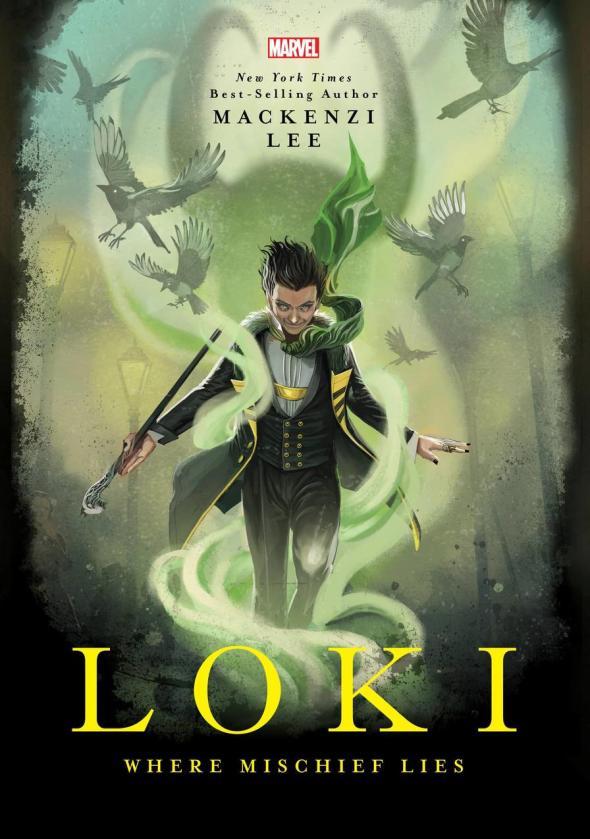
Waiting of Wednesday – Loki: Where Mischief Lies by Mackenzi Lee

Welcome to my weekly segment, Waiting on Wednesday, where I look at upcoming books that I am planning to order and review in the next few months and which I think I will really enjoy.  Stay tuned to see reviews of these books when I get a copy of them.

I am a man that loves a good and complex anti-hero story, so for this week’s Waiting on Wednesday I check out an absolutely spectacular-sounding book that is set to be released in September 2019: Loki: Where Mischief Lies.

Loki Where Mischief Lies.jpg

Loki: Where Mischief Lies is the first of three young adult novels that acclaimed author Mackenzi Lee has been contracted to write by Marvel Comics. Each of these books will focus on a different Marvel anti-hero and will feature a historical setting. The first of these anti-heroes is the master of mischief himself, Loki, Prince of Asgard, who, thanks to the Marvel Cinematic Universe, has to be one of the most popular comic book villains at the moment.

Even before Tom Hiddleston brought him to life with some significant swagger in the MCU, the character of Loki has been a major figure in the Marvel Comics universe. A re-imagining of the Norse god of mischief, Loki is portrayed as a powerful magician who battles against his brother, the superhero Thor, out of jealousy or for control of Asgard or the world. He has been a recurring Marvel villain for over 60 years and is the villain responsible for the formation of the Avengers. Over the years, a large amount of complexity has been added to his character, with some significant developments to his motivations and history, and a number of notable shifts in his allegiance and relationship with Thor and the rest of Asgard. As a result, I am quite eager to see any sort of novel written about Loki, especially one that sounds as awesome as this one.

Goodreads Synopsis:
Before the days of going toe-to-toe with the Avengers, a younger Loki is desperate to prove himself heroic and capable, while it seems everyone around him suspects him of inevitable villainy and depravity . . . except for Amora. Asgard’s resident sorceress-in-training feels like a kindred spirit-someone who values magic and knowledge, who might even see the best in him.

But when Loki and Amora cause the destruction of one of Asgard’s most prized possessions, Amora is banished to Earth, where her powers will slowly and excruciatingly fade to nothing. Without the only person who ever looked at his magic as a gift instead of a threat, Loki slips further into anguish and the shadow of his universally adored brother, Thor.

When Asgardian magic is detected in relation to a string of mysterious murders on Earth, Odin sends Loki to investigate. As he descends upon nineteenth-century London, Loki embarks on a journey that leads him to more than just a murder suspect, putting him on a path to discover the source of his power-and who he’s meant to be.

There are so many amazing elements to unwrap in the plot synopsis, but the bottom line is I think I am going to like this. Not only do we have a comic book novelisation focusing on an amazing character, but we have Loki investigating murders in 19th century London. Historical fiction is one of my favourite genres, and a murder mystery in 19th century London is always a great basis for a good story. Combine that with comic book shenanigans and a young Loki investigating the crimes, and you have a book with insane amounts of potential.

I am also quite excited by the choice of author for this trilogy. Mackenzi Lee is a fantastic author known for her unique and powerful novels, most of which are set in 19th century England. I am very much looking forward to seeing her take on the character of Loki, and I cannot wait to see what sort of backstory and conflicted thought processes she attributes to this amazing character.

One of the things about Where Mischief Lies that is getting a lot of attention is the author’s apparent intention to make Loki a genderfluid and pansexual character. This is based on a tweet from December 2017, in which Lee responds to someone’s question about Loki being queer in her upcoming book. Lee correctly points out that Loki “is a canonically pansexual and gender fluid character” and then ends it with “So.”. Based on that, quite a lot of people are assuming she will explore this aspect of the character in her book. Loki’s gender identity and sexuality have been featured in many comics, with the character reincarnating as a female several times, and there are also some examples of Loki romancing members of various genders. I am quite interested in seeing how much of this is explored in Where Mischief Lies, and I am sure it will result in quite an intriguing part of the story.

I am uncertain whether I will grab a physical copy of this book or try to get it on audiobook. While I love the awesome cover for Where Mischief Lies and imagine it would look great on a hardcover book, I do love a good audiobook and I have had excellent experiences with comic book based audiobooks in the past. They have also gotten Marc Thompson, one of the best Star Wars audiobook narrators, to narrate this book. I have recently finished listening to one of his Star Wars audiobooks and would be really intrigued to see what voice he would attribute to Loki and the other iconic Marvel characters.

This has the potential to be an outstanding novel, and I am really looking forward to seeing how Lee tackles the character of Loki. The plot of this book sounds like a huge amount of fun, and I am sure there will be some amazing story and character developments throughout the book. I think this is going to be one of the best tie-in novels of the year and I plan to get it as soon as it comes out.

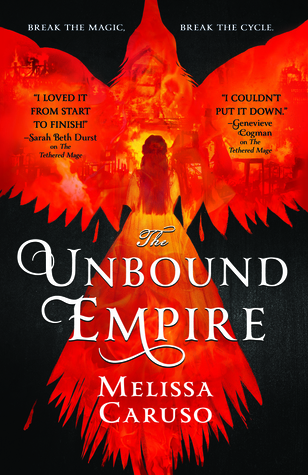
The Unbound Empire by Melissa Caruso

The Unbound Empire Cover (WoW)

Publisher: Orbit (Trade Paperback – 25 April 2019)

Series: Swords and Fire – Book 3

Length: 508 pages

My Rating: 5 out of 5 stars

Amazon

One of the fast-rising authors of fantasy fiction, Melissa Caruso, brings her outstanding debut series to an end with the third book in the Swords and Fire trilogy, The Unbound Empire.

It is always a bittersweet moment when a great book series comes to an end. For the last two years, the Swords and Fire trilogy has been one of my favourite new fantasy series due to its excellent combination of characters, story, intrigue, fantasy elements and world building. I absolutely loved the first book in the series, The Tethered Mage, and I felt that Caruso did an excellent job following this up with The Defiant Heir, which made my Top Ten Reads For 2018 list and my Top Ten Books I Loved with Fewer than 2,000 Ratings on Goodreads list. As a result, I have been eagerly waiting for The Unbound Empire for the last year, and it even featured in my very first Waiting on Wednesday post.

The Swords and Fire series is set on the continent of Eruvia, which is made up of two great nations, the Serene Empire of Raverra and the loosely collected states of Vaskandar. The Serene Empire is the home of our protagonists, and is a land where magic is controlled by the government, led by the Doge and the Council of Nine. All mages who are identified as having enough power are conscripted into the army as a Falcon. Each Falcon is bound to a non-magical handler, a Falconer, who is entrusted to control and protect their Falcon. One such Falconer is Lady Amalia Cornaro, heir to one of the most powerful families in Raverra and future member of the Council of Nine. While the nobility is usually forbidden from becoming Falconers, desperate circumstances forced Amalia to be bound to the powerful and rebellious fire warlock Zaira.

Vaskandar, on the other hand, is a far wilder nation, ruled by the Witch Lords, magicians whose powerful vivomancy literally flows through their land, making them part of everyone and everything in their domain. War is always looming between these two nations, and while Vaskandar as a nation has decided to remain out of the most recent conflict, nothing can stop an individual Witch Lord from attacking. The cruel and ambitious Witch Lord Ruven, the Skinwitch, has long wanted to conquer and rule over The Serene Empire. His most recent ambitions have been stymied by the combined actions of Amalia and Zaira, who managed to stop his plan to unleash a destructive volcano, although it came at great cost to Amalia.

However, Ruven is far from done and is determined to gain new land, either in the Serene Empire or in the domains of the other Witch Lords. Launching a series of attacks against the Empire’s capital, Raverra, as well as several outlying holdings, with a range of horrifying strategies, Ruven is able to cause significant damage. But while he launches his attacks, he is also trying to recruit Amalia to his cause by any means necessary, as her unique heritage gives her the ability to usurp the domains of other Witch Lords. As Amalia and Zaira race to counter Ruven’s actions, Amalia finds herself once again torn between love, duty and friendship, as the responsibilities of her office clash with the friendships she has formed. As Amalia struggles to maintain her humanity in the heat of war, Ruven’s greatest cruelty might be the thing that finally breaks her and leads to the fall of the Serene Empire.

Caruso once again knocks it out of the park with The Unbound Empire, creating a satisfying conclusion to her series that still contains her trademark storytelling ability and character work. The final book in the Swords and Fire trilogy does a great job utilising the previous entries of the series and also attempts to tie up all of the existing loose storylines and plot points. The Unbound Empire is filled with some really emotional storylines, a number of powerful magical action sequences and several surprising plot developments. The end result is another five-star book from Caruso that I powered through in quite a short period.

At the heart of this book lies the series’ main two characters, the narrator and point-of-view character, Amalia, and the fire warlock Zaira. The challenging and evolving relationship between the initially sheltered Falconer and the rebellious and infinitely destructive Falcon has always been a major part of this series. While the two characters have been establishing a better relationship with each book, it was great to see the two of them becoming even closer in this book and helping each other deal with some major issues. I also liked how both characters’ stories come full circle in this book, as Amalia becomes more and more like her mother, while Zaira finally confronts a number of her personal demons and for once starts to consider having a future. The author’s depiction of the doubt and guilt that Amalia is feeling after the events of the last book forced her to kill her cousin added some extra emotional depth to the story, and I liked the inclusion of such a realistic emotional reaction. The character arcs for the two main characters were incredible, and it was great to see how much they had evolved over the course of the trilogy.

Caruso has also developed a number of great side characters for this series, and she continues to expertly utilise them in this final book. The main two side characters of The Unbound Empire were Amalia’s love interests: Captain Marcello of the Serene Empire; and the Witch Lord Kathe, known as the Crow Lord. Throughout the course of the book, Amalia is caught between them; while she loves Marcello, her position makes a relationship impossible, and Kathe presents a more suitable match. Marcello’s storyline in this book is pretty significant, and there are some substantial and emotive changes to his character that really helped make The Unbound Empire extra compelling. I also really liked the deeper dive into Kathe’s personality and backstory, as well as the natural strengthening of the relationship between Amalia and Kathe. Thankfully the book’s love triangle aspect wasn’t too over-the-top or filled with insufferable toxic jealousy, as both the men understand the difficult position Amalia is in. The arc of Zaira’s love interest, Terika, is really sweet, and I liked how she continues to have a positive effect of Zaira’s personality. Other side characters, such as the Amelia’s powerful and unflappable mother; the surprisingly lethal Cornaro servant, Ciardha; and Marcello’s eccentric artificer sister, Istrella, all shine through in this book, and all of them add quite a lot to this book’s story.

No great fantasy story would be complete without a despicable antagonist threatening the heroes, and luckily this book has a truly evil and threatening villain. The Witch Lord Ruven is a powerful Skinwitch, a person with the ability to control and alter other creatures just by touching him. Not only is this power by itself pretty horrifying but Ruven uses it in some fairly novel and evil ways, unleashing all manner of horrors upon the protagonists. I thought that Ruven had some of the best magical powers in the entire series, and his abilities were really fun to see in this book. Caruso also tried to humanise the character in places throughout this book, which was a nice touch and added some new depth to the story, although he does mostly come off as utterly irredeemable. Overall, I feel that Ruven was an excellent villain and his antagonism really helped make this book and the series as a whole.

I have always loved the complex fantasy world and elements that the author came up with for this series. The various forms of magic and resulting rules that form the backbone of this book are very imaginative, and I loved how Caruso was able to utilise them in her story. There are some amazing new versions of the magic and fantasy elements from the previous two books included in The Unbound Empire, as well as some new locations to explore. While the world building is not as intense as the first two books in the trilogy, Caruso still offers some great new elements, and I had a lot of fun seeing these extra expansions to the universe. Hopefully Caruso will come back to this world at some point in the future, as I had a lot of fun there over the course of the series.

The Unbound Empire was another incredible piece of fantasy fiction from author Melissa Caruso that expertly wraps up her debut trilogy. This has got to be one of the best debut fantasy trilogies I have had the pleasure of reading, and it has been a lot of fun absorbing the excellent tales of magic, adventure and intrigue that Caruso has woven over the last two years. I have really loved the Swords and Fire trilogy, and while I am sad to see it go, I am excited to see where Caruso goes next as this author has amazing potential for the future. I highly recommend each and every book in the series and encourage you to get wrapped up in the magic and characters of this series if you have not had a chance to read it.

Amazon

Waiting on Wednesday – The Kingkiller Chronicles – Book 3 by Patrick Rothfuss

Welcome to my weekly segment, Waiting on Wednesday, where I look at upcoming books that I am planning to order and review in the next few months and which I think I will really enjoy.  Stay tuned to see reviews of these books when I get a copy of them.

For this week’s Waiting on Wednesday, I am going to look at the book that is easily number 1 on my personal must-read list, the third book in Patrick Rothfuss’s epic The Kingkiller Chronicle, which is at the moment tentatively titled Doors of Stone.

Doors of Stone - Fan Cover.jpg

There are several problems with wanting to read this book. I have no idea when it is going to be released, nor do I have a firm idea of the book’s plot. Even the title, Doors of Stone, might change, and the cover I have included above is a fan-made cover that features on Goodreads. Nonetheless, it tops my list mostly due to how exceptionally awesome the first two books in the series were.

The Kingkiller Chronicles is a series of massive fantasy books written by Patrick Rothfuss. The first book in the series, The Name of the Wind, was released in 2007, and the second book, The Wise Man’s Fear, was released in 2011. The series focuses on a young man called Kvothe, a legendary figure known throughout the land as a master magician, swordfighter, musician and adventurer who gained the epitaph ‘Kingkiller’ after killing a king and igniting a war that is still being fought to this day. Kvothe has since hidden himself from the world, disguising himself as an innkeeper in a small town. At the start of The Name of the Wind, Kvothe is recognised by a renowned historian known as Chronicler, who wishes to know and record the true story of Kvothe’s life. Kvothe agrees and tells Chronicler that his story will take three days to tell, with each day of storytelling corresponding to one of the three planned books in The Kingkiller Chronicles.

Over the course of the first two days, Kvothe regales Chronicler with a long and detailed story of his early life, starting with his childhood as a travelling performer, his early training and the violent death of his family and performing troupe by the Chandrian, which are mythical demonic creatures his father somehow angered. Kvothe eventually makes his way to the University, the most prestigious education institute in the world, where he manages to gain admission despite his lack of funds. There he learns various forms of magic, as well as other academic interests, while also gaining a reputation as a musical prodigy. The story told during the first day mainly recounts his first year in the University, while the second day recounts more of his educational experiences, as well as a long and fateful trip outside the University. At the same time as the story is being told, strange events are occurring around Kvothe’s inn, and it soon becomes apparent that Kvothe has somehow lost most of his magic and martial skill since the events he described.

These first two books in The Kingkiller Chronicles are absolutely incredible and are by far two of the best fantasy novels I have ever read. The story of Kvothe is a deeply fascinating, and Rothfuss has an uncanny ability to tell a captivating tale that plucks at the imagination and stays with a reader long after they have read the book. The series is set in an amazingly detailed world, filled with all manner of intriguing secrets and history, many of which the protagonist is destined to unravel. I am a huge fan of fantasy books that feature schools, magical education or extensive training sequences, and The Kingkiller Chronicles is easily the most well-written and enjoyable example of this sort of fantasy sub-genre that I have ever read. I also love how Rothfuss’s story contains such a major focus on music, and the various songs and performances in the two books pretty much flow off the page. There is honestly so much to love about both of these books that I could go on for pages and pages about both of them (something I intend to do in future reviews). Unsurprisingly to anyone who has read these books, The Kingkiller Chronicles is a massive bestseller, and many consider it to be the best fantasy series in the world today. The series has also been optioned for adaption, with rumours of both a movie and television series in the near future. Lin-Manuel Miranda is even attached to the television show and will compose the show’s music, which is pretty darn exciting.

Unfortunately, this series has remained unfinished, and the third book has yet to appear. Readers have been waiting for this third book since 2011, and it is probably one of the most anticipated fantasy releases in the world today, rivalled only by the next book in A Song of Ice and Fire, or perhaps The Thorn of Emberlain (my Waiting on Wednesday review for The Thorn of Emberlain certainly gets a lot a views). The third book in The Kingkiller Chronicles, which will feature the third and final day of Kvothe’s story to Chronicler, will apparently conclude all the events of Kvothe’s life that led to his current life of exile and the loss of his powers. Unfortunately, after eight years of waiting, there is still no sign of the book on the horizon, and no-one is certain when the third book will be published.

Rothfuss has apparently been working on this book for some time, with a note on Goodreads in 2012 indicating he was working on polishing the book and he hoped to transform it from a 3½-star book to a five-star book. Since then there have been innumerable speculations from a variety of sources about when the book would be released, but these potential release dates keep getting pushed back. There has been some recent discussion about the book coming out in 2019, with some interviews or Q&As with Rothfuss apparently indicating this. Rothfuss also sparked speculation in January 2019 when he retweeted some fan art that contained the words “I want to return in 2019 – Kvothe”. However, as we are now in mid-May and there have been no official announcements, a 2019 release date seems incredibly unlikely. I honestly doubt that this book will even be released in 2020. An interview from April 2019 indicates he is still working on it, and I imagine that even when he is finished with it the publication process is going to take a while. I had hoped that the work on the movies or television shows might spur the author on, although progress on both of these projects is also apparently going quite slowly as well. As a result, it might be a while before we see the third book in this series, which is a real shame, as there are so many open plot points that need to be concluded in order to give this story a satisfactory conclusion.

While no plot synopsis for the third book has been released yet, it is possible to puzzle out what needs to happen in it. According to dialogue in the first two books, a number of events need to occur to define the story of Kvothe. These include Kvothe’s banishment from the University; his meeting with his assistant, Bast; the loss of his great love; the battle he apparently had with an angel to bring her back; the events that broke him and his magic; and, most importantly, his meeting with and subsequent murder of a king. In addition to all of these, there ought to be some explanation for all the open plot points, such as the mysterious artefact from the Maer’s new, bigoted wife (who is totally his aunt), the reason for the mysterious stone door in the University archives or the identity and origin of the Chandrian, just to name a few. There also has to be an explanation for the events occurring at the inn, such as the reason he is being hunted by demons, and there also needs to be some indication of where Rothfuss’s universe will go from there.

I actually think that all these open plot points that need to be addressed are why Rothfuss is having such a hard time finishing the book. For the life of me, I cannot see how it is possible to include or explore all of these potential plot points in one book and keep the story as interesting or rich in detail as the first two books in the series. As a result, he may have shot himself in the foot by claiming that the story could be told in just three days/books, and I think that he may have let the story get way more extensive than he originally intended (not that I’m complaining).

Whatever the reason, it seems like we may be waiting a while to read the third book in The Kingkiller Chronicles, although I will make sure to grab a copy as soon as it is available, and I know many readers will be doing the same. The third book is going to be epic, and I am really looking forward to seeing how Rothfuss ends this chapter in his story. I may do another one of these Waiting on Wednesday articles for this book later down the track when more details of the plot are revealed, or when a proper cover comes out. I also intend to eventually post a review of the first two books in The Kingkiller Chronicles at some point in the future; I just need to carve out some time to reread them first.