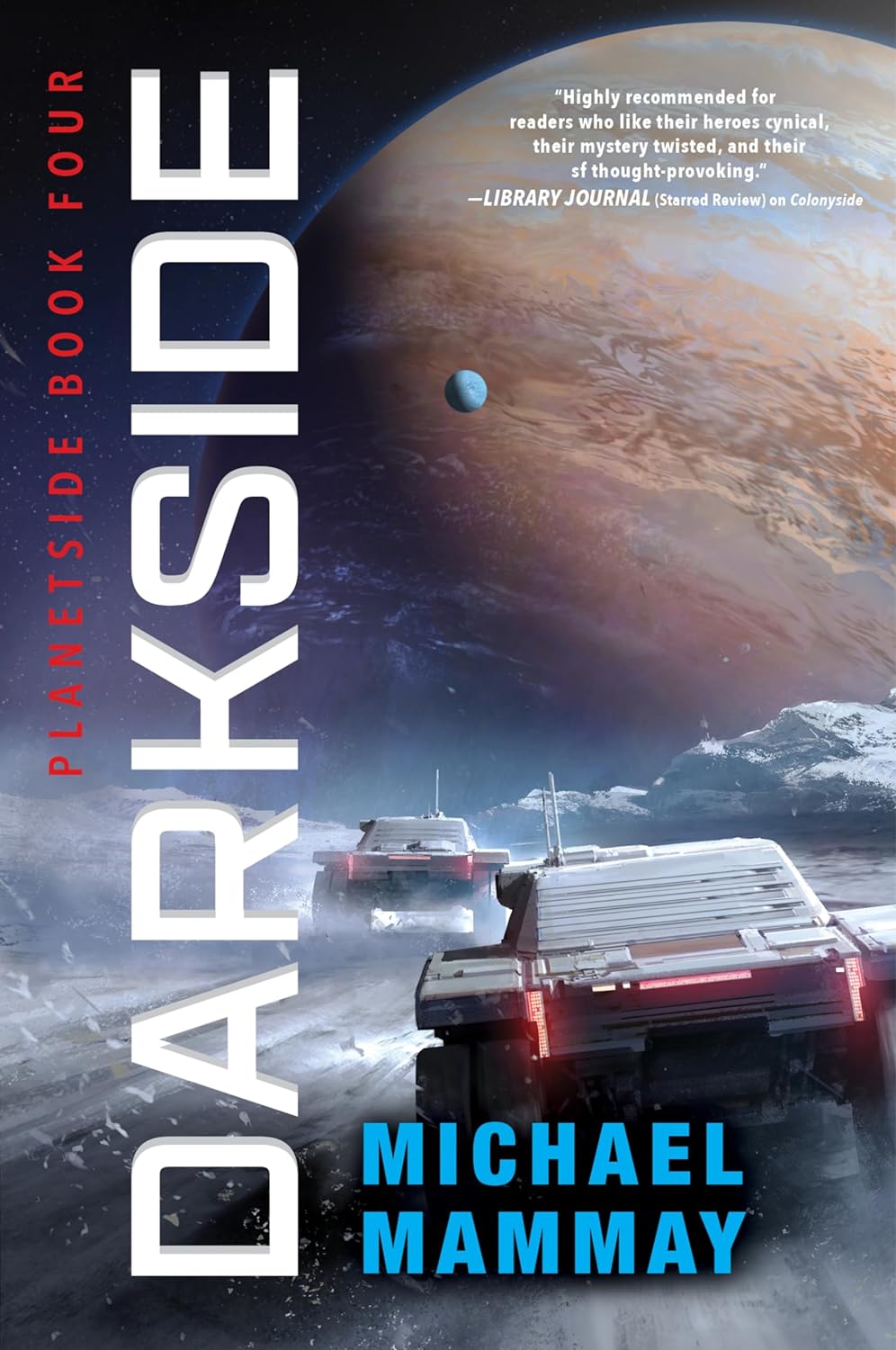
Darkside by Michael Mammay

Publisher: Harper Audio (Audiobook – 24 September 2024)

Series: Planetside – Book Four

Length: eight hours and six minutes

My Rating: 5 out of 5 stars

Amazon

One of my favourite science fiction authors returns with another fantastic and compelling military thriller in space, the highly addictive Darkside by Michael Mammay.

Back in 2018 I had the very great pleasure of reading the debut novel of new author Michael Mammay, Planetside.  An intriguing science fiction thriller that sent a retiring military officer to an alien planet to find a missing soldier, Planetside turned into quite the clever and exciting read, and I really got attached to its complex narrative and maverick protagonist.  Ending on a massive and well-written twist, Planetside was an exceptional read and was one of my favourite books of 2018.  The series continued strong from that point on as Mammary released more cool additions to the Planetside series, each of which pit the protagonist against human corruption and corporate greed in the depths of space with Spaceside (one of my favourite books of 2019) and Colonyside (one of my favourite books and audiobooks of 2021).  I have been curious to see if Mammay was planning to continue this series going forward, and I was nicely surprised earlier this year to find out that there was a fourth book coming out with Darkside.  One of my most anticipated books of 2024, Darkside was an intriguing entry to the series that once again forced the author’s protagonist to deal with old corporate threats on a distinctive new environment.

Colonel Carl Butler, former military officer turned genocidal fall-guy, has had an interesting life since his retirement from the military.  Thanks to the machinations of both the government and powerful corporation, Butler has found himself drawn into multiple conspiracies, and his direct way of dealing with the resulting controversy has made him infamous throughout the galaxy, as well as making him some very dangerous enemies.

Attempting to live out a quiet life on a remote planet, Butler finds his retirement once again disturbed when a young girl tracks him down, requesting his help in finding her missing father.  Finding it hard to say no to the desperate girl, especially when it becomes clear that something truly sinister has befallen her father, Butler reluctantly agrees to help, not realising the trouble he is about to find himself in again.

The missing father, Jorge Ramiro, had been working as the assistant for a famous archaeologist on the isolated moon of Taug.  With no electronic trace of Jorge remaining on the planet, Butler and his team chart a ship to the mining operations of Taug to find him.  However, Butler soon finds his investigation complicated by the fact that he has history with the two consortiums who control mining on Taug, Caliber and Omicron, as both have tried to kill him in the past.  Determined to find the truth no matter what, Butler relentless follows the dwindling trail of clues before him, even when that leads to the dangerous dark side of Taug where secrets lie hidden, and the two corporations are free to act without repercussion.

Michael Mammay presents another outstanding and impressive science fiction thriller that drags the reader in with its elaborate tale of intrigue, secrets, and one determined man seeking to fight the system.  Featuring a great combination of elements and a fantastically fun protagonist, Darkside was a brilliant addition to the Planetside series, and I had such an amazing time with it that it gets a full five-star rating from me.

I felt that Mammay produced another exciting and captivating narrative for his fourth Planetside book that ties in nicely to the rest of the series while providing readers with an excellent and entertaining ride capable of standing on its own feet.  Once again bringing in series protagonist Carl Butler to investigate a mysterious case on a new planet, Darkside features a fantastic tale of mystery, corporate antics and deeper intrigue.  The author does a great job of quickly setting the scene at the start of Darkside before dropping the protagonist right into the action as they attempt to find the missing father on Taug.  Seeking information from both corporations on the moon, Butler initially starts a methodical and low-key investigation.  However, things get tricky when Butler and his team discover evidence of a major coverup, and the protagonist is forced to pit the corporations against each other in his attempts to find the missing person.  This complex first half proves to be an excellent start to the novel, and Mammay ensures that the tension, stakes and mystery rise at an effectively rate, keeping the reader’s attention the entire way through.

Things take a very exciting turn around halfway through Darkside, as Butler’s investigation provoke action from his opponents that results in some extremely dramatic and intense moments.  While I had been enjoying the investigation and intrigue of the first half of the book, it was fun to dive into something much more action packed for the second half, and I really enjoyed the exciting direction that Mammay took the story.  There are some great reveals here, and I love how complicated the various corporate lies and agendas became at times.  Everything leads up to a very intense final set of sequences, as Butler finds his back against the wall and is forced to decide which devil to have in his corner.  There are some great twists here, as well as a cool chapter told from the perspective of one of the series’ major supporting characters, and it leads up to a particularly intense and moving conclusion that perfectly fit the overarching anti-corporate message of the entire series.

Darkside has an excellent and addictive style to it that really draws the reader in.  Told from the perspective of the cynical, but realistic, Colonel Butler, readers are presented an outstanding thriller novel expertly set in a futuristic setting.  Starting off with a mystery of a missing person, the story evolves into a more elaborate game of intrigue as the protagonist attempts to outsmart two rival companies.  Mammay hits the right blend of manipulation, investigation and action throughout Darkside, and readers are presented with a great story that thrills the reader while dragging them further in with the curious mystery.  This story is well set by the moon of Taug, which proves to be an outstanding setting for this intense novel.  Not only does Mammay provide some striking descriptions of this desolate moon, but the isolated nature of it, as well as more scientific elements like gravity and composition, are well utilised in the plot, creating problems and opportunities for the protagonists.  Whilst Darkside is part of a larger series, for the most part it is a standalone novel that new readers can easily dive into, especially as there is an effective summary at the front to fill in some major details about the protagonist and his previous outings.  I think I had a bit more fun having read the previous books first, especially as you appreciate how Butler’s relationship with some of the supporting characters has grown, as well as having a better understanding the protagonist’s adversarial relationship with the corporations on the moon.  Darkside was such a great addition to this series, and I had an exceptional time powering through this novel in record time.

Another major element of Darkside, and indeed the entire Planetside series, that I come to really enjoy, was the outstanding characters who sat at the heart of the story and who add some real emotional depth to the book.  This primarily refers to the protagonist and point-of-view character, Colonel Carl Butler, who is very fun to follow.  A former career soldier trying to enjoy retirement, Butler has been hit by controversy, betrayal and the downside of duty, which has made him infamous and forced him to live on a remote planet.  Despite this, he is still a cheerful figure whose desire to do good forces him into another adventure.  Witty and honourable, Butler has a very eccentric personality that results in most of Darkside’s humour, and you have to laugh at some of his clever thoughts and responses to the dark events around him.  Despite having a seemingly carefree, easy-going attitude, Butler is a canny operator at this point in the series, and it was great to see how he has finally learnt from his previous experiences of dealing with corrupt corporations.  I also really enjoy how Mammay portrays Butler’s thought process in this novel, as you get to see him weighing the options and impacts of his various potential actions, and seeing the steps Butler takes to make his decisions makes him a little more human and relatable to the reader.  As such, you really get caught up in Butler’s latest crusade, and it proves hard not to root for him the entire way, even despite his dark history.

In addition to Butler, Mammay also features a great supporting cast of characters in Darkside, most of whom play off Butler extremely well.  This includes the returning characters of Mac and Ganos, Butler’s bodyguard and computer expert respectively, who once again saddle up to help.  Mammay works these two characters back into the plot quickly and effectively, and it was great to see this team in action again.  Mac and Ganos serve as an entertaining support to Butler, especially as by this point, they have learned to anticipate their boss’s likely course of action.  I really enjoyed seeing the close camaraderie and support these three had together, and it there were some excellent and moving moments as a result.  The rest of the case also worked well around these central characters, with several new members of Butler’s team providing some intriguing plot options.  Throw in the usual collection of local soldiers who work with Butler, and a group of manipulative corporate officers who serve as the antagonists, and the cast of Darkside proves to be a fantastic part of the book, and I loved seeing them all in action.

I ended up enjoying Darkside on audiobook, which has been my preferred way of enjoying the Planetside books, primarily because of the inclusion of R. C. Bray as the narrator.  Bray, who is one of my favourite audiobook narrators, did another exceptional job voicing the characters in Darkside, and I love how well his gruff and rich voice fits Colonel Butler.  Bray’s voice work perfectly captures Butler’s sarcastic, pragmatic and rebellious streak, and you really get caught up in this excellent narrator’s central performance.  In addition to his excellent portrayal of Butler, Bray also brings all the supporting cast to life in fun and effective manner, with each character given their own distinctive voice or accent.  I particularly enjoyed the fun voice he gave to Butler’s right-hand man, Mac, which was handy considering Mac got a lengthy chapter from his perspective that really popped in Bray’s voice.  I honestly don’t think I would have enjoyed Darkside quite as much without having Bray read it out to me, and I have so much love for the paring between Bray and Mammay’s great writing.  Coming in with a runtime of just over eight hours, most people will be able to power through Darkside very quickly, and I honestly found it very hard to stop listening to this audiobook, which comes very highly recommended.

Michael Mammay continues to impress with Darkside, a brilliant addition to his fantastic Planetside series that proves hard to turn away from.  Clever, exciting, and featuring a well-written and intense story, Darkside is one of Mammay’s best Planetside novels yet, and I cannot wait to see how he continues the story in the future, especially as the rascally protagonists keeps making more and more enemies.
Amazon

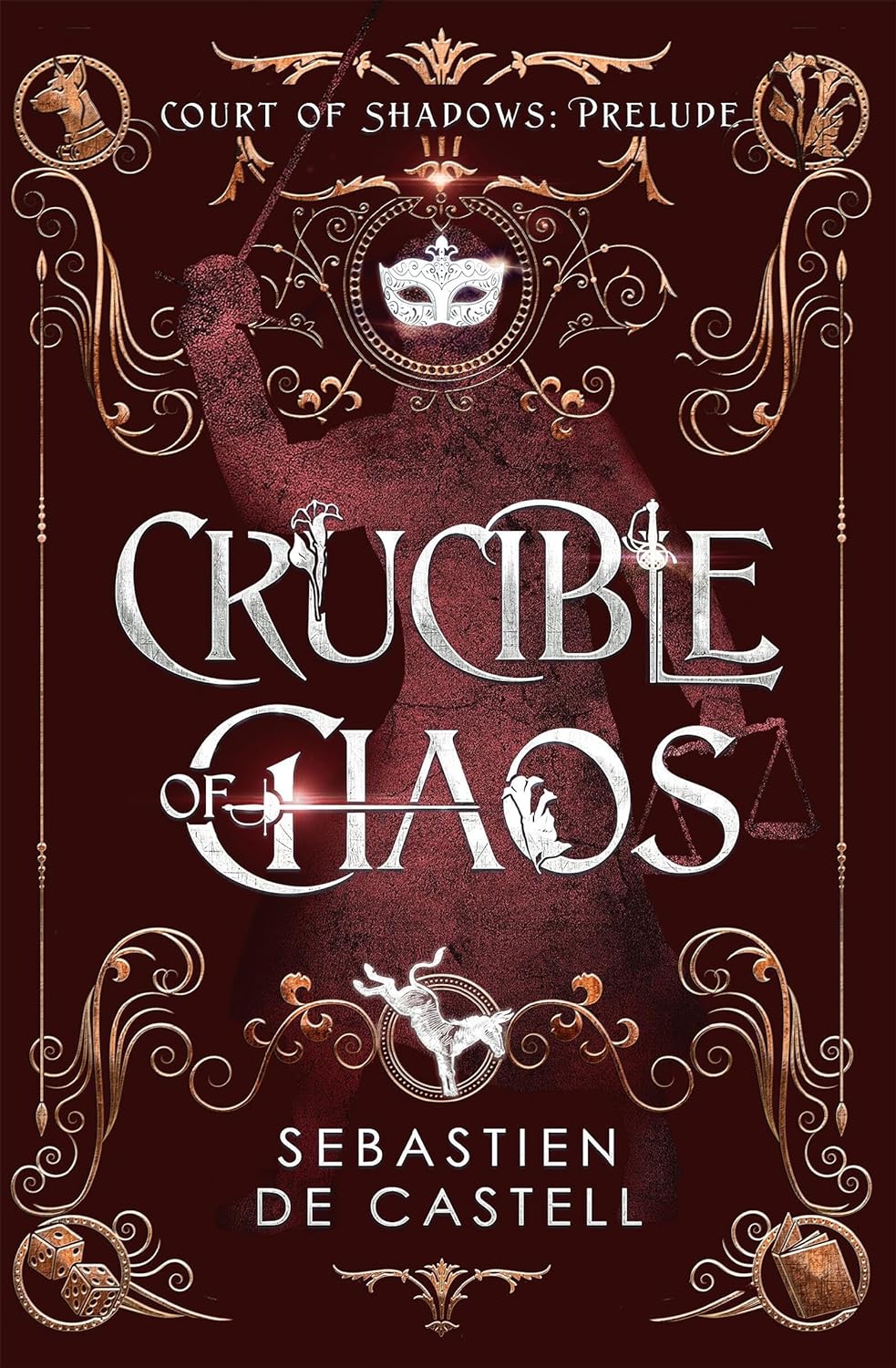
Crucible of Chaos by Sebastien de Castell

Crucible of Chaos Cover

Publisher: Jo Fletcher Books (Audiobook – 7 December 2023)

Series: Court of Shadows – Book 0.5

Length: 12 hours and 32 minutes

My Rating: 5 out of 5 stars

Amazon

In the mood for a witty, intense and highly unusual murder mystery?  Make sure to grab Crucible of Chaos, an outstanding and impressive novel from Sebastien de Castell, which serves as a prelude to his Court of Shadows series.

Earlier this year I was very lucky to receive the first book in Sebastien de Castell’s Court of Shadows series, Play of Shadows.  Set in the author’s Greatcoats universe, Play of Shadows was a truly epic and outstanding read that saw an unlucky actor with unusual gifts attempt to unravel a dark conspiracy inflicting his city.  I deeply enjoyed Play of Shadows, which was one of the best books I have read so far in 2024, and I was intrigued to check out more from de Castell, an author who had previously impressed me with his hilarious standalone novel, The Malevolent Seven.  While de Castell has several great series to his name, the book that caught my eye the most was the late 2023 release, Crucible of Chaos, which apparently served as a prelude to the other Court of Shadows novels.  Curious to see how this prequel would turn out, I grabbed the audiobook version of Crucible of Chaos and started listening to it, and boy was I glad that I did.

Travelling duellist and scholar Estevar Borros is a Greatcoat, one of the king’s legendary sword-fighting magistrates.  However, even amongst the unusual ranks of the Greatcoats, Estevar is peculiar, not just for his girth, but because of skills in deductive reasoning and his obsession with investigating the supernatural.  Known as the King’s Crucible, Estevar has travelled the lands of Tristia, seeking out unusual occurrences and trying to determine whether their cause is natural or supernatural.  However, even this renowned investigator of supernatural is unprepared for the chaos awaiting him in Tristia’s most holy site.

Summoned by his old acquaintance Abbot Venia, Estevar travels to Isola Sombra, an isolated island abbey considered the religious heart of Tristia.  According to Venia’s letter, the monks of the abbey are starting to fracture into factions following the recent murder of the gods, each with their own ideas of who the nation should worship in the future.  A frightened Venia needs Estevar, in his position as a magistrate and an authority on the supernatural, to arbitrate the debate and to help keep the fighting monks in line.

Despite his better judgement, Estevar, already suffering from a wound after a failed duel, agrees to travel to Isola Sombra, but what he finds there will chill him to his very soul.  Arriving amid a brutal storm, Estevar finds that the monks have fallen into madness, and now three factions are at war on the island, desperate to claim it for their own.  Worse, the abbot has been murdered, and evidence of dark magic lingers throughout the abbey.

Determined find a reasonable explanation for the insanity infesting Isola Sombra, Estevar begins his investigation, hoping to find the source of the chaos rippling across the island.  Alone except for a mysterious girl and his trusty mule, a wounded Estevar needs to face off against three very dangerous groups of monks, each of whom have deadly intentions for the interfering Greatcoat.  Worse, there are far more dangerous things awaiting the inhabitants of Isola Sombra, even if Estevar doesn’t believe in them.  Can the justice-loving Estevar stop the insanity of Isola Sombra with his deduction, sword and courtroom etiquette before it’s too late, or has the King’s Crucible finally found a mystery to insane for even him?

Wow, what an amazing and compelling novel.  Crucible of Chaos was another outstanding book from de Castell, and one that really grabbed my attention from the very beginning.  Containing an elaborate story, great writing, amazing characters, and so much more, Crucible of Chaos was a joy to read from start to finish, and one that I have little choice but to give a full five-star rating.

De Castell came up with an impressive novel that sets a classic detective story into The Three Musketeer inspired Greatcoats universe.  Readers are quickly introduced to two of the main characters, Estevar Borros and his trusty steed, as the dejected pair arrive at Isola Sombra to investigate a religious feud enveloping the island and its abbey.  While that is an interesting premise for a story, de Castell raises the stakes by introducing murder, mysterious mysticism, fearful locals, unnatural storms, and three warring factions of monks, which Estevar needs to unravel to get his beloved justice.  What follows is a complex and highly entertaining murder investigation as Estevar, with the help of a mysterious girl, begins to interrogate key members of the remaining monks to find out what they know and how their fighting and the resulting murder came about.  This proves to be quite addictive, and I found myself getting really drawn into this excellent mystery and the unique fantasy elements surrounding it.

The story takes a very interesting turn around halfway through as Estevar gets some dramatic proof that the events on Isola Sombra are more supernatural than he thought they would be.  This leads the protagonist into some dark places as he tries to fully understand everything that is happening, and who is ultimately responsible for the crimes committed.  De Castell cleverly lays out some intriguing revelations, as well as some tragic secrets that are cleverly hinted at by false memory and lies, and I had so much fun following all the breadcrumbs.  Everything leads up to several great confrontations, as Estevar first deals with some political intrigue that ties Crucible of Chaos into the rest of the series, before once again facing the strange powers haunting the island.  There are some inspiring moments here, especially as strange bedfellows fight together against the darkness, before the protagonist initiates a unique trial to reveal the whole truth.  The solution to the mystery is very clever, and I was really impressed with how de Castell pulled the whole thing together.  The conclusion really goes over-the-top as justice meets religion in some dark ways, and you will come away very impressed and satisfied with the dark, yet hopeful, story that emerged.

I love the tone that de Castell set out for Crucible of Chaos, mainly because there are so many elements that he managed to fit into his story.  The blend of mystery, character development, and unique fantasy inclusions from his pre-existing universe is extremely awesome, and I loved how the author managed to create such an elaborate and focused story.  The investigation element of Crucible of Chaos was the book’s true heart, and I have a lot of respect for the complex series of crimes that emerged, especially as de Castell managed to incorporate religious conspiracies, political intrigues and supernatural occurrences into the mystery’s solution.  There are so many moments of desperation, despair, and dark hope contained within this book, and the reader is constantly left feeling either intrigued by the mystery or shocked by the revelations that emerged.  It helped that de Castell’s characters are all so vibrant and entertaining, and there is a captivating humour that runs through the book that proves hard not to enjoy.  This whole novel comes together with a great pace that never lets up, and I honestly could not stop listening to Crucible of Chaos at times, especially when all seemed dire, or the protagonist was on the hunt for justice.

As I mentioned above, I came to Crucible of Chaos after reading Play of Shadow, so I was interested in seeing how it would fit into both the Court of Shadows series and the Greatcoats universe.  While there are obvious connections to both, for the most part Crucible of Chaos is more of a standalone novel than anything else, as the plot is primarily focused on the intense mystery the protagonist finds himself trapped in.  While there are a lot of strong references to previous Greatcoats novels, de Castell does an outstanding job of rehashing these events in a thorough and sensible manner, allowing the readers to get all the necessary context that they need.  Readers also do not need to get this book first to enjoy the next book in the series, Play of Shadows, which was reassuring in hindsight, and I kind of like how independent the two books are from each other.  The only real connection lies in a couple of revelations towards the end of Crucible of Chaos that hint at dark deeds on the horizon and a shadowy hand manipulating events from afar.  As such, Crucible of Chaos is a very accessible book for new readers and serves as a great introduction to the various series associated with it.

I will say that Crucible of Chaos did provide some interesting insights into the nation of Tristia, which serves as the primary setting for the Greatcoats series.  There are substantial examinations of the nation’s history, the backstory from the prior books, and other worldbuilding that de Castell has previously come up with, and I found this to be quite fascinating.  The often fractured and duellist obsessed nation of Tristia is an amazing background for this story, and I enjoyed the multiple discussions about the role of the Greatcoats as magistrates and keepers of the king’s peace, especially as the protagonist is quite passionate about the ideals of justice they represent.  However, a lot of Crucible of Chaos’ focus lies around the religion of the world, as the gods of Tristia become a major aspect of the plot.  Indeed, key events of the original Greatcoats series become vitally important here as the protagonist needs to consider the impact that the previous murder of the gods has had on the current religious institutions.  I really liked the constant contrasts between the philosophies of human justice and religious practice that becomes recurring theme in Crucible of Chaos, and I rather enjoyed seeing both unique elements of this landscape.

While I loved the story and the dive into the Greatcoats universe, the absolute best part of Crucible of Chaos were the exceptional characters that de Castell set his narrative around.  Each of them was complex and endearing in their own fun way, and I really enjoyed the powerful storylines that the author wrote around them.  The most prominent of these is protagonist and point-of-view character Estevar Borros.  A member of the king’s Greatcoats, Estevar was a very distinctive protagonist, mainly because he didn’t fit the typical fantasy protagonist mould that most readers would be familiar with.  A rather girthy and older duellist, Estevar is nonetheless a formidable warrior, often able to overcome younger or more in shape opponents through skill and trickery.  However, for this adventure, Estevar recently lost a duel due to his own arrogance and is forced to investigate the events on Isola Sombra while wounded and exhausted, and with his tools and authority missing.  I deeply appreciated the multiple handicaps that de Castell placed on his protagonist, especially as it enhanced the intensity of the plot, and it was compelling to see Estevar deal not only with his wounds but his own dark temperament, while trying to solve the case.  Despite his disadvantages, Estevar proves to be a capable investigator, and his deductive ability, which results in him being shown as a supernatural obsessed cross between Sherlock Holmes and Porthos.  I deeply enjoyed how determined and curious Estevar was throughout the plot, and he was a fun character to follow as he keeps up a genial and pleasant demeaner for most of the book, with some fun cracks of humour.  However, we do see some great flashes of emotion from Estevar at key moments, especially when he realises just how deranged the crime he is investigating is.  I was a huge fan of Estevar from the opening pages, and he is a protagonist I would love to see again in the future.

Aside from Estevar, de Castell features several other exceptional characters that you have a fantastic time following.  This includes the mysterious young female lead, Caeda, who serves as Estevar’s impromptu assistant during the investigation, determined to help find the truth on the island.  Shown initially as an energetic and enthusiastic figure, Caeda plays well off Estevar, and I liked the entertaining partnership they formed, even if Caeda is keeping secrets, which eventually leads to some tragic revelations.  However, the character you are most likely to fall in love with is Estevar’s mule, Imperious.  Much more than a stubborn mule, Imperious is the bravest, most rambunctious and expressive character in the entire novel, and de Castell has a lot of fun throwing him into the story in entertaining ways.  A dangerous and near unstoppable figure, Imperious stole every scene he was in, and you honestly end up caring for this heroic mule more than any other character in the book.  Throw in a cadre of mad monks, including an obsessive inquisitor, a wannabe general, and a lecherous sorcerer lord, and the cast of Crucible of Chaos proves to be really fun and intriguing to follow.

While I was tempted to grab a physical copy of Crucible of Chaos, I ended up getting the audiobook version instead, which proved to be an epic format to enjoy the book in.  Coming in with a runtime of 12 and a half hours, this was a moderately long audiobook, but it was one I managed to power through in less than a week due to how caught up I got in the story.  I found that the audiobook format really helped me to enjoy the complex narrative that de Castell came up with, and having it read out helped me to appreciate the depictions of the dark abbey and the elaborate mystery that much more.  It helped that Crucible of Chaos was narrated by one of my favourite audiobook narrators, Joe Jameson, whose work I enjoyed so much in the Legacy of the Mercenary Kings audiobooks (The Kingdom of Liars, The Two-Faced Queen and The Voyage of the Forgotten).  Jameson has a great voice for fantasy fiction, and I loved how he brings the elaborate story of Crucible of Chaos to life with his recitation.  The narrator had some great voices for the various characters, and while a few are similar to those he used in other audiobooks his other works, they all expertly fit the character they were assigned to perfectly.  I particularly enjoyed the distinctive and overly accented voice that Jameson gave to the main character, Estevar Borros, which perfectly fit his foreign origins, as well as his personality and physical attributes.  This booming, cheerful, yet penetrating voice, really captured the protagonist, and I could always envision this amazing character whenever Jameson spoke.  This, and other great voices, really helped to turn the Crucible of Chaos audiobook into something really special, and I cannot recommend this format enough to someone interested in this book.

Overall, Crucible of Chaos proved to be a remarkable and highly impressive novel from Sebastien de Castell that I had such an outstanding time reading.  Combining a unique story with great characters and compelling elements from the Greatcoats universe, Crucible of Chaos was a truly epic novel that I could not get enough off.  I look forward to seeing what other intriguing adventures occur in the rest of the Court of Shadows books, and this is swiftly becoming one of my favourite ongoing fantasy series.

Amazon

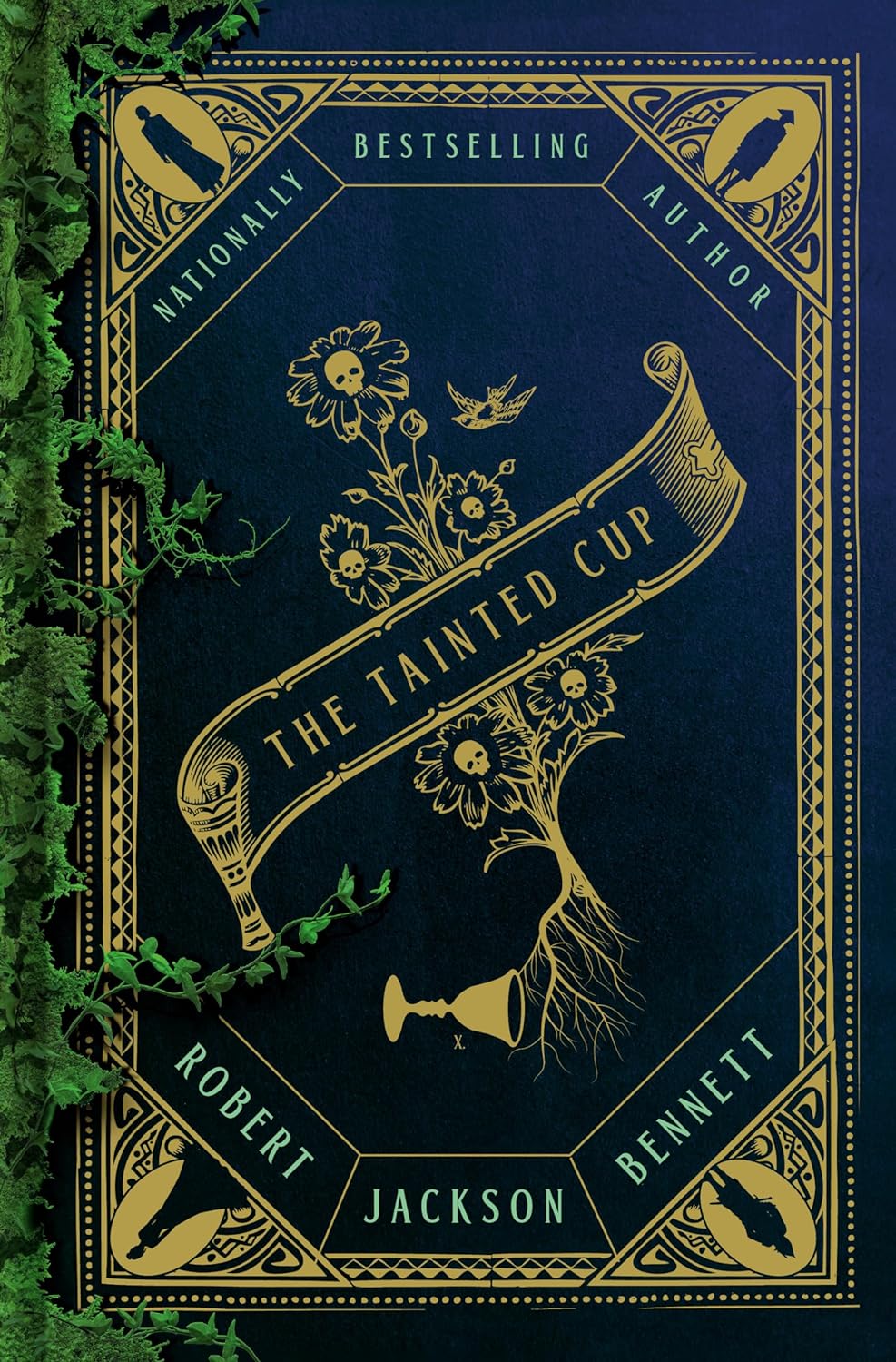
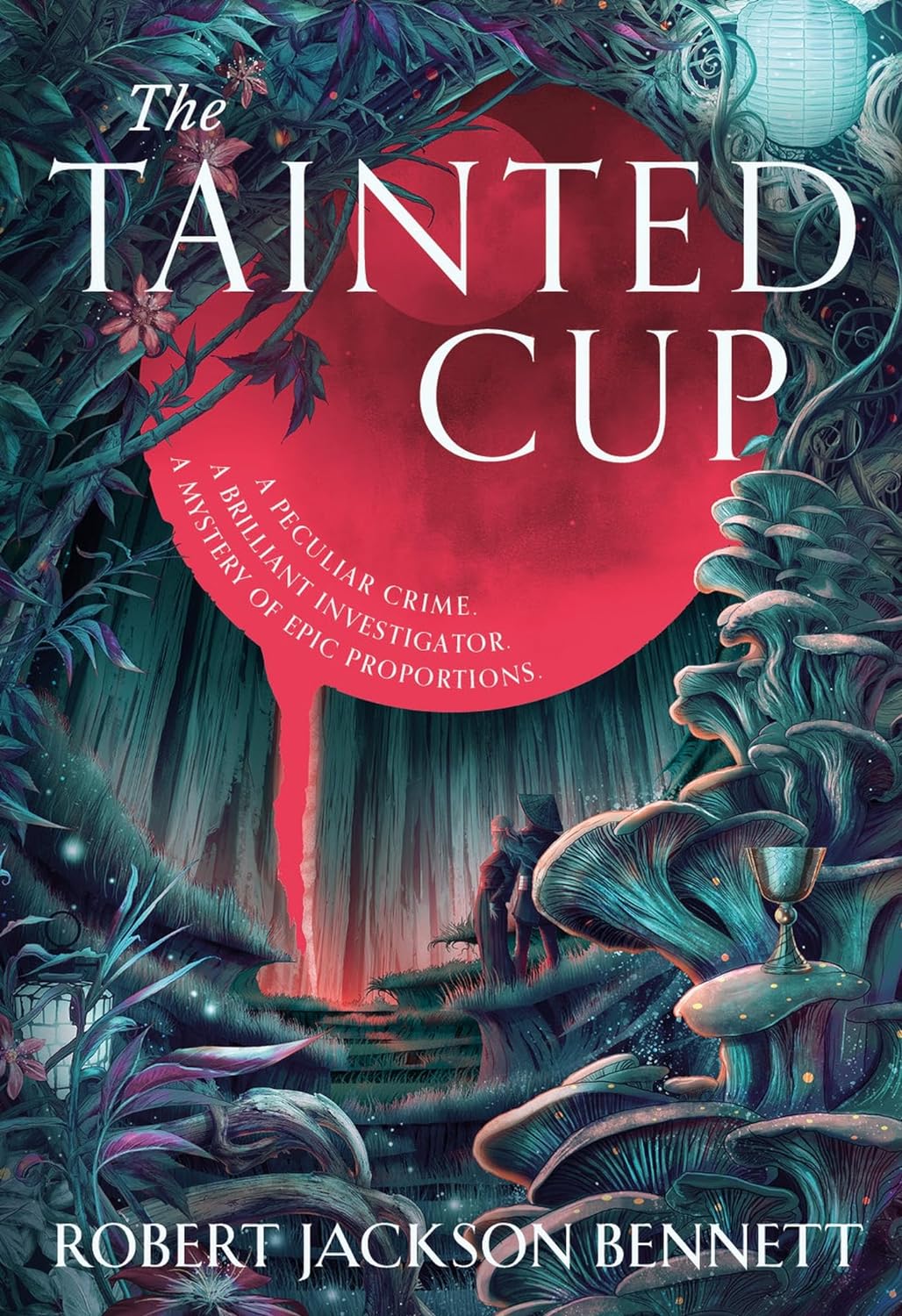
The Tainted Cup by Robert Jackon Bennett

The Tainted Cup Cover

Publisher: Hodderscape (Trade Paperback – 13 February 2024)

Series: Shadow of the Leviathan – Book One

Length: 420 pages

My Rating: 5 out of 5 stars

Amazon

Acclaimed fantasy author Robert Jackson Bennett kicks off a brilliant new series with the captivating and impressive novel, The Tainted Cup, which sees two unique investigators dive into an enthralling magical murder.

Robert Jackon Bennett is an outstanding author who has been writing since 2010 with his debut novel, Mr. Shivers.  Best known for his iconic The Divine Cities trilogy, as well as the intricate The Founders trilogy (of which I read Foundryside), Bennett has been on a real roll of late, and I have been meaning to read more of his works.  I finally got the chance when I recently received a copy of his latest novel, The Tainted Cup, an intriguing combination of the crime fiction and fantasy genres.  I instantly fell in love with The Tainted Cup’s awesome sounding plot and The Tainted Cup ended up being one of my most anticipated reads of 2024 for very good reason.

In an opulent mansion in the backwater province of Daretana, an unusual case emerges when an important Imperial officer is apparently killed when a tree spontaneously erupted from his body.  Even in the unpredictable Empire of Khanum, which is constantly besieged by Leviathans, giant beings from the ocean whose blood and bodies can mutate the land and create unique contagions, this is a shocking death.

The job of discovering what caused this unusual death falls to Ana Dolabra, an Imperial investigator known both for her staggering intellect and her many oddities.  Able to make connections no-one else can, Ana begins her unique investigation, using her new assistant, Dinios Kol, as her proxy.  Din, an engraver magically altered to possess a perfect memory, acts as his boss’s eyes on the case, and begins to gather all the raw information Ana needs to uncover the full mystery.  The conclusion she makes about the case: murder!

Determining the case to be an unusual and deadly form of magical poisoning, Ana and Din manage to find one of the culprit’s accomplices.  But it quickly becomes apparent that this is only the beginning of their investigation when several engineers responsible for maintaining the great outer walls of the Empire against the Leviathan threat are killed in a similar manner in the next canton.  Determined to discover who is responsible for both the murders and the resulting Leviathan attacks, Ana and Din journey to the wall to find out more.  What they discover is an elaborate conspiracy, one that threatens the entire Empire and could result in the death of everyone to the Leviathans.

The Tainted Cup ended up being an incredible read from Bennett who masterfully blended a complex mystery with unique fantasy elements and amazing characters to tell a gripping and powerful story.  I had such a great time with this book and honestly couldn’t put it down until I worked out every secret and twist that Bennett loaded into this outstanding five-star read.

Bennett comes up with an excellent premise for The Tainted Cup that is essentially a twisty Sherlock Holmes tale of intrigue and conspiracy, set in a cool new fantasy realm besieged by giant monsters.  Told from the perspective of main character Dinios Kol, who works as the eyes of his peculiar master, Ana Dolabra, the eccentric criminal investigator, Bennett quickly and effectively introduces the mystery of a man killed when a tree explodes out of him.  I’ve read a lot of amazing mystery novels over the years, and frankly this must be one of the more unique murder tools I’ve seen, and Bennett uses it to full effect to tell such a great story.  The initial investigation proves to be quite impressive, as Ana manages to quickly solve the murder using the observations provided by Dinios, finding the catspaw responsible for this first crime in a fantastic scene that really highlights to the author what a great investigator this protagonist truly is.

However, this is only the start of the case, as several similar deaths occur in the next town over, killing multiple engineers and damaging the massive walls that protect the Empire.  The resulting chaos results in Dinios and Ana travelling to the nearby garrison town where the engineers were billeted to try and work out who is responsible and why.  The situation swiftly degenerates as the protagonists uncover additional murders, corruption, secrets and lies, as everyone tries to hide who is responsible for the killings.  What results is an elaborate and addictive investigation as Ana sends Dinios on a series of investigative missions to get closer to the truth and uncover the conspiracies infecting the Empire, while the threat of an approaching Leviathan literally looms on the horizon.  I was on the edge of my seat the entire way through the second half of the book, as I desperately waited to see who was responsible and why.  While I saw a couple of the big twists coming, the full picture that emerged was extremely impressive, and I honestly loved every clever reveal and surprise that Bennett loaded into the story.  Not only are the main mystery and the underlying conspiracies behind it solved perfectly, but Bennett sets up the entire trilogy to be something truly special.  I cannot wait to see how this series continues in the future, and I already know it is going to be amazing.

I really loved how Bennett set out The Tainted Cup, especially as his great blend of storytelling elements and genres helped to turn it into a particularly fun and captivating read.  The elaborate and intriguing mystery blended well with the other unique elements of the book, and Bennett did an outstanding job of keeping the pace of The Tainted Cup fast and exciting, layering the story with reveals and hints to keep the reader firmly attached.  There were so many times that I needed to stop reading but just couldn’t as I wanted to see what was going to happen next.  While this book is mostly a little dark and emotionally charged, Bennett also layers the plot with a good amount of humour, mostly tied into the main investigator, which I think really turned The Tainted Cup into something special.  This humour tied in nicely with both the more serious mystery and fantasy elements and helped to cut down the tension in an effective and targeted way.  Throw in some fantastically elaborate action sequences, unique fantasy battles, and vivid descriptions of the world through the eyes of a complex protagonist, and you will come away with a great appreciation for Bennett’s fantastic writing style.

One of the more memorable features of The Tainted Cup was the awesome new fantasy realm that Bennet imagined for the plot, as well as the intriguing and unique magic that infested it.  The plot of the book is completely set within the Empire of Khanum, a walled-off nation completely dedicated to protecting itself from the Leviathan, gigantic, mutated creatures from the seas that are constantly trying to make landfall and destroy everything within.  I also loved how the magical elements of The Tainted Cup revolve around the manipulation of strange plants and biological grafts that enhance the physical and mental abilities of the humans.  A lot of these plant elements are tied into the Leviathan, and it was fascinating to see the impacts it has both on the land and on the people within it.  This is a pretty awesome background for this already fantastic plot, and it reminded me pretty strongly of Attack on Titan or Pacific Rim.  Bennett does an outstanding job working the plot of The Tainted Cup around this cool background, and it was fascinating to try and work out how the protection of the wall and the threats of the Leviathan and other magical concerns plays into the main plot.  There are some unique conspiracies produced as a result, as well as a some very distinctive killers and suspects, and I was really impressed with how Bennett came up with all these new elements and ensured that become so intrinsic to the plot.  The author also makes sure to hint at some future secrets throughout The Tainted Cup, such as the true nature of the Leviathan, which I have no doubt will be revealed in future novels in a big way.

Another awesome element I really need to highlight about The Tainted Cup was the two main protagonists, Dinios Kol and Ana Dolabra.  These two honestly make this entire book, with Dinios serving as the harried subordinate while Ana is the brilliant, if slightly unhinged and blunt, investigative savant.  Bennett expertly captures the classic detective/sidekick dynamic that was made so famous with Sherlock Holmes and Watson, with Dinios serving the Watson role as point of view character and the sounding board for Ana’s observations and solutions to the various murders encountered.  Not only is this very cool in the fantasy context, but Bennett works to make Ana even more outrageous than some of the more recent Sherlock Holmes adaptations, as she is an agoraphobic, disgraced, drug-addicted figure, who mostly goes around wearing a blindfold and terrifying everyone she encounters.  I loved Ana so much, and so much of the humour of the book comes from her unusual behaviour.  Despite these eccentricities, Ana is still shown to be a brilliant investigator, and I think that Bennett masterfully found the balance between genius and madwoman for this protagonist.

I really appreciated how Dinios proves to be the perfect foil for his unusual master, and it was great to see the story unfold through his eyes, especially as he proves to be a keen student and an interesting figure in his own right.  Initially shown to be a little desperate and naive, with secrets of his own, Dinios slowly becomes more confident as the book continues, and I enjoyed seeing him come into his own the more involved with the case he became.  His student/friend relationship with Ana was heartwarming at times, and he also serves as the more responsible member of the team, using rules and commonsense to stop Ana from going too far.  Dinios gets a well-written glow-up as the book continues, thanks to a revelation about his abilities, and while that potentially makes him a little overpowered as a character, I assume that Bennett has some interesting long-term storytelling involved with them that I cannot wait to see.

Thanks to the masterful combination of mystery, unique fantasy elements and amazing characters, The Tainted Cup was an outstanding read that really showcased Robert Jackson Bennett’s ability as an author.  Inventive, entertaining, and emotionally charged, The Tainted Cup is perfect for both fans of fantasy fiction and unique mysteries, and there is so much to fall in love with here.  Easily one of the best books of 2024 so far, The Tainted Cup comes highly recommended, and I cannot wait to see how Bennett follows this amazing read off in the future.

The Tainted Cup Cover

Amazon

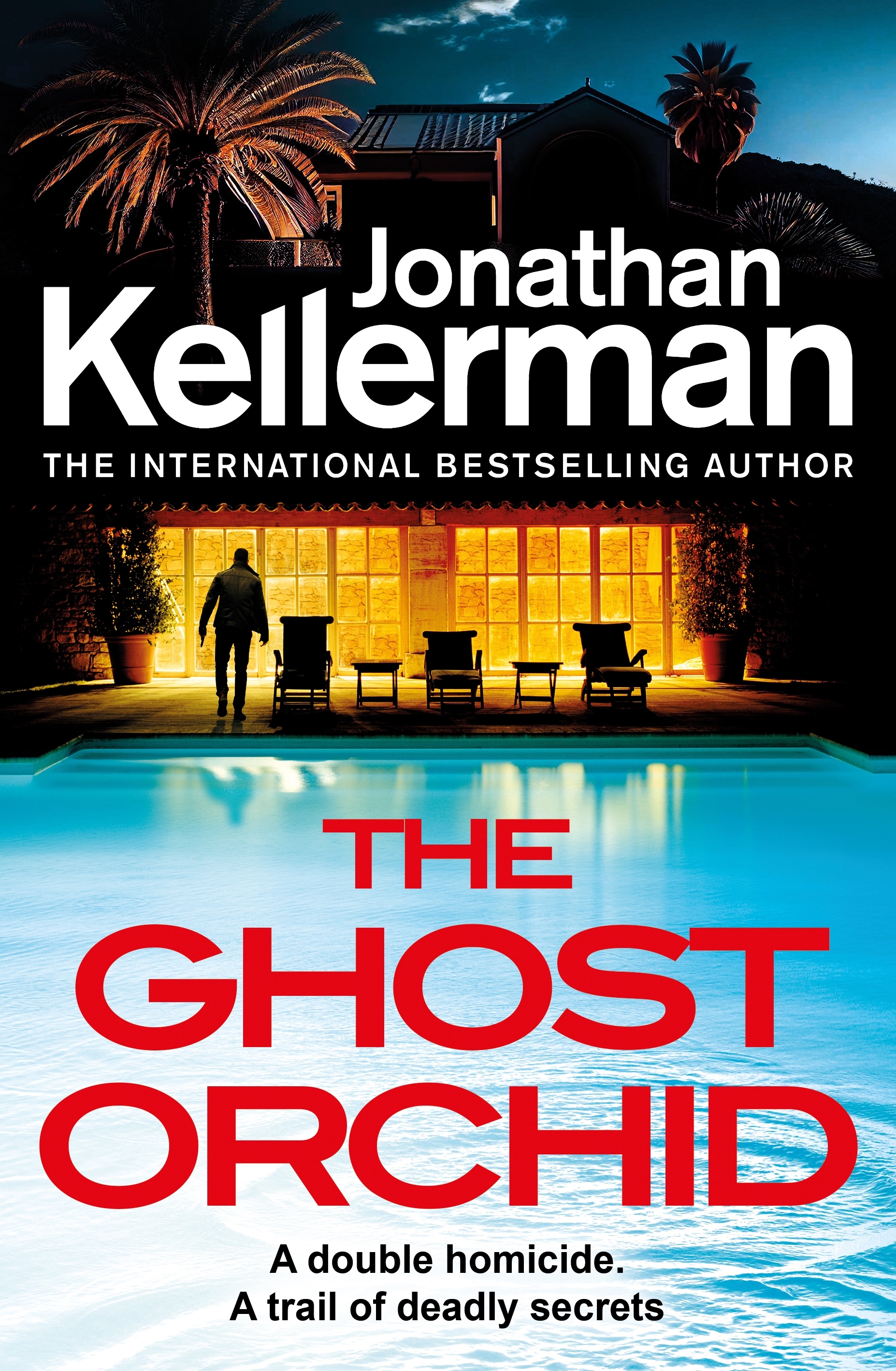
The Ghost Orchid by Jonathan Kellerman

The Ghost Orchid Cover (2)

Publisher: Century (Trade Paperback – 13 February 2024)

Series: Alex Delaware – Book 39

Length: 293 pages

My Rating: 4.5 out of 5

Amazon

Legendary crime fiction author Jonathan Kellerman returns with another outstanding read in his long-running Alex Delaware series with The Ghost Orchid, which presents the reader with another gripping murder mystery.

Over the last few years, I have developed an awesome and highly enjoyable habit of starting the new year off by reading the new Jonathan Kellerman book as soon as I can.  An excellent and well-established crime fiction author, Kellerman has been producing amazing reads for decades, with his best-known works being the Alex Delaware novels, following that follow a plucky psychologist and his cop best friend as they solve the most unusual or mysterious murders in Los Angeles.  While I got into Kellerman’s work late, I have had an outstanding time with some of his more recent books, including The Wedding Guest, The Museum of Desire, Serpentine, City of the Dead and Unnatural History.  All of these novels have been amazing and filled with great mysteries, and I am always very excited to check out a new Kellerman book.  That is why I made sure to grab a copy of the new Alex Delaware novel, The Ghost Orchid, as soon as I could, and boy did it prove to be another outstanding read.

Love, revenge and deceit are all in the air when two bodies are found beside the pool in an upscale Bel Air mansion.  The two victims have been mercilessly shot down in what appears to be a targeted hit.  But who was the intended victim?  Was it the rich playboy heir who lived in the mansion or was it his wealthier neighbour with whom he had been having an illicit affair?

Noting the apparent anger behind the case, LAPD homicide detective lieutenant Milo Sturgis calls in his old friend and colleague psychologist Alex Delaware to help unwind the twisted threads of both victims’ lives.  Only recently recovered from a dangerous encounter on their last investigation, Alex is keen to get back into the saddle, even for what appears to be a simple case of revenge from a spurned husband.  However, it soon becomes clear that this murder is anything but simple.

As Alex and Milo dig deeper into the case, they discover that both dead lovers had troubled pasts and dark secrets that they were running from.  To discover who was behind the deadly murders, the two friends will need to uncover everything about their victims’ lives, including any dark connections that could identify the killer or their motives.  But neither Alex nor Milo are prepared for just how convoluted the lives of these two Los Angeles elites truly were or just how far they went to escape their pasts.

This was another brilliant read from Jonathan Kellerman that I instantly fell in love with.  The 39th entry in the Alex Delaware series, The Ghost Orchid featured Kellerman’s trademark investigative style and iconic character as they dive into another excellent mystery.

The Ghost Orchid’s story proved to be extremely interesting and addictive as it once again followed the protagonists as they embark on another fascinating investigation.  Mostly shown through the eyes of main character Alex Delaware, Kellerman paints a fantastic picture at the start of The Ghost Orchid, as he sets up the crime scene and then introduces the reader to the two murder victims.  From there, the plot advances at a steady pace, as the protagonists begin to dive into the lives of their victims and learn about their past, their secrets, and their deeper motivations.  Much of this investigation involves methodical interviews of the victim’s various friends, acquaintances, and relatives, and the running down of any leads that come their way.

Kellerman effectively moves this story along, and you are soon given some great clues regarding the case, as well as some potential additional crimes.  I loved how well the author kept up a level of suspense and uncertainty regarding which victim is the most likely intended target, and the expert blending of their backstories worked extremely well.  At the same time, Kellerman also adds in some more personal elements for the main character, including examining the fallout of the last book and his own work as a psychologist.  The entire mystery comes together extremely well at the end of the novel, and I loved the compelling story that resulted, especially as one character’s past holds the secrets for the solution of the case.  I did think that Kellerman wrapped everything up a little suddenly and with less involvement from the protagonists than you would expect, although there is a certain amount of realism in the final confrontation.  However, this proved to be an overall extremely epic story that you can’t help but get drawn into.

I really love how Kellerman structures his outstanding mysteries in the Alex Delaware series, and The Ghost Orchid is a great example of this.  Kellerman’s methodical and more realistic style of investigation always stands out to me, and I deeply appreciate how the protagonist’s attempts to solve the crime usually requires talking to multiple intriguing suspects or people with any sort of connection to the case.  While some of the dialogue between these witnesses and the protagonists occasionally feels a little off, for the most part Kellerman succeeds in building a powerful and massive picture of events that fills the reader’s mind’s eye and really draws them into the mystery.  The entire mystery in The Ghost Orchid was extremely well structured, and the slow move towards answers really drew me in and made for some great reading.  Like most of the books in the Alex Delaware series, The Ghost Orchid can be easily read as a standalone novel.  While parts of the main character arc do discuss events from the prior book and there are some callbacks to earlier novels in the series, you honestly don’t need any pre-knowledge of these books to completely appreciate The Ghost Orchid.  Due to how insular the main mystery is, as well as how well Kellerman effectively covers any relevant prior events, anyone can dive into the series here without any issue, and The Ghost Orchid proves to be an excellent addition to the Alex Delaware books.

Like all the Alex Delaware novels, the heart of The Ghost Orchid lies in the fantastic and heartfelt partnership and friendship of main characters Alex Delaware and Milo Sturgis.  Due to their long association together, the two have become best friends whose insights into the way the other thinks result in them being quite an effective investigative team.  These two have a great patter as they investigate their cases, and it always so much fun to see them bounce ideas, suggestions and insights off each other.  This friendship is always a great part of the series, and it was interesting to see it changed to a degree in The Ghost Orchid.  Due to the closing events of the previous novel, Unnatural History, Alex was badly injured while investigating a case and has been out of action for a while.  This led to quite a bit of guilt from Milo, who blamed himself for Alex getting hurt.  This changed the dynamic between the two for much of the book, especially as Milo was reluctant to bring Alex into another investigation.  It was moving and a little heartbreaking to see this guilt induced damage in their relationship, especially as Milo was a lot more protective as a result.  As such, this was a great addition to the series, and I enjoyed seeing Kellerman try to stretch the bounds of this well-established partnership in some new ways.

Aside from Alex and Milo, the two character who impact the plot of The Ghost Orchid the most are the murder victims, Giovanni Aggiunta and Meagin Lea March.  While dead for the entirety of the plot, their lives and legacies cast a shadow over the whole book, and the protagonists, as well as the reader, need to dive into the past to find out who the killer is.  Kellerman does an excellent job of featuring these two dead characters in The Ghost Orchid, and the slow-burn examination of their lives becomes a key part of the story, as the protagonists talk to family, contacts and more, while also doing copious research.  As such, you really get to know both dead characters as the book continues, which proves to be quite intriguing and powerful.  Both victims are revealed to have complicated pasts, and the disentanglement of these secrets and the examination of all their interactions, relationships and motivations raises the tension of the plot while simultaneously increasing the reader’s attachment to solving the case.  Kellerman ensures that there is a balanced focus on both victim’s pasts for much of the narrative to disguise who the intended target was for.  This really enhances the mystery of the story, and you are constantly wondering what new secret or hidden truth will be uncovered to finally allow the reader to pinpoint why they were killed.  As such, these dead characters prove just as important to The Ghost Orchid as the protagonist, and I was once again impressed at Kellerman’s ability to make me care about character we never actually see alive.

Even after decades of writing, Jonathan Kellerman continues to produce fascinating and complex mysteries that readers can get so easily lost in.  The Ghost Orchid was an outstanding novel, that saw Kellerman’s fantastic protagonists dive into another elaborate mystery.  Powerful, loaded with great characters, and making full use of Kellerman’s distinctive style, The Ghost Orchid was an excellent novel from start to finish, and I cannot recommend this latest Alex Delaware novel enough.

Amazon

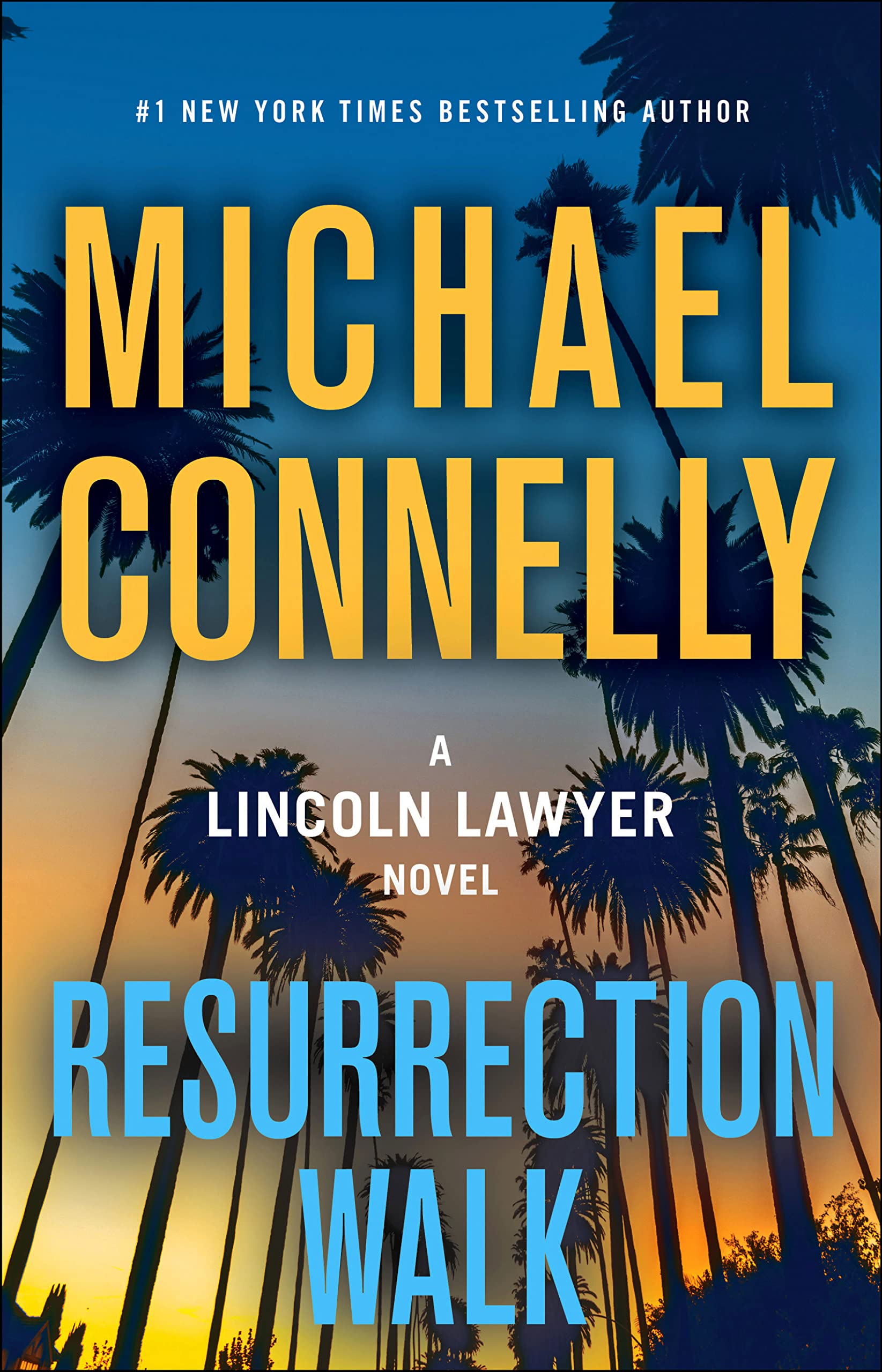
Resurrection Walk by Michael Connelly

Resurrection Walk Cover

Publisher: Allen & Unwin Australia (Trade Paperback – 31 October 2023)

Series: Mickey Haller/Lincoln Lawyer – Book Seven

Length: 407 pages

My Rating 5 out of 5 stars

Amazon

Acclaimed crime fiction author Michael Connelly returns with another outstanding and captivating read, Resurrection Walk, a clever and impressive legal thriller featuring two of Connelly’s best characters.

Gosh it has been a very good few years for fans of crime fiction author Michael Connelly.  Not only have we got two fantastic television adaptations currently going, but Connelly has been producing several great books across his multiple subseries.  Most of these books were part of his Ballard and Bosch series, with excellent novels like Dark Sacred Night, The Night Fire (one of my favourite books and audiobooks of 2019), The Dark Hours (one of my favourite books of 2021) and Desert Star (one of my favourite books of 2022), and he has also released a cool book from his fantastic Jack McEvoy series with Fair Warning (one of my favourite books of 2020).  Each of these novels has been excellent in its own way, but for the best Connelly fun nothing beats a Mickey Haller novel.

The Mickey Haller series, also known as the Lincoln Lawyer books, follow Mickey Haller, an infamous and effective defence attorney in L.A who got his nickname, “the Lincoln Lawyer” by working out of a Lincoln town car.  Known for intricate cases, elaborate court scenes and fantastic legal shenanigans, the Mickey Haller books are always a ton of fun and I love both the books and its current television adaption.  Connelly’s last Mickey Haller book came out in 2020 with The Law of Innocence, and I was very happy to find out that he was releasing a new one this year with Resurrection WalkResurrection Walk was one of my most anticipated books of 2023, especially as it featured a great plot and fantastic team-up between Haller and Connelly’s best-known protagonist, Harry Bosch.

Following a successful case that freed an innocent man from prison, defence attorney Mickey Haller has gotten a taste for hopeless cases and is now working on helping those unfairly convicted of crimes they didn’t commit.  Hiring his half-brother, retired detective Harry Bosch to vet the various requests for help being sent to him, Haller hopes that he can do a little good alongside his usual controversial legal practice.  However, the first case that Bosch picks might be the most dangerous.

Several years ago, Lucinda Sanz was accused of killing her sheriff’s deputy ex-husband in front of her house, a crime she always claimed she was innocent of.  Reading through her case, Bosch is convinced that there is far more to the murder than the files indicate, especially when he discovers evidence that the victim was part of a notorious police gang.  Convincing Haller to take on Lucinda’s case, the pair begin to investigate further and begin the process of having her conviction appealed.

However, proving Lucinda’s innocence is no easy task, especially with substantial evidence proclaiming her guilt, a police force closing ranks against them, and no new witnesses willing to come forward.  Worse, there are many people who don’t want Lucinda’s case re-opened, and soon Bosch and Haller find themselves being threatened on all fronts.  With determined legal opponents facing them in the court and dangerous foes waiting for them at home, can even the Haller-Bosch dream team uncover the truth and save their client?

Connelly does it again with an outstanding and deeply addictive read that had me hooked from the very beginning.  Expertly bringing together two of his best characters into an intense and clever legal thriller, Resurrection Walk is an amazing book, and it was probably one of my favourite Connelly reads from the last few years.

Resurrection Walk has a brilliant story around it that sees the characters of Haller and Bosch teaming up to try and get an innocent woman out of prison.  While billed as a Lincoln Lawyer novel, the plot of Resurrection Walk is split between Bosch and Haller, with both characters working on the case from their own unique perspectives.  Connelly dives into the fantastic story of Resurrection Walk quickly, effectively setting up the primary case, while also including some intriguing minor side cases and the compelling personal issues of the two protagonists.  While a couple of the side cases and adventures at the start of the book do seem a little unnecessary in the context of the main plot, I quite enjoyed them, and Connelly does tie a couple of them back into the story in some compelling ways.

The main plot itself is extremely fun as it cleverly builds on Haller and Bosch’s existing character arcs, while also presenting the reader with a unique case.  Haller and Bosch working to free a woman who pled no contest to a murder charge was always going to be a recipe for success, and Connelly turns it into gold with his writing.  The author breaks the story perfectly down the middle between Haller and Bosch, and the combination of an intriguing investigation arc and Haller’s entertaining legal manoeuvrings was a ton of fun.  There were also some intriguing thriller elements as the two protagonists are targeted by parties interested in stopping their investigation, which really ensures the reader gets more invested in the story.  The start of the book deals with the initial investigations into their client’s claims and coming up with a game plan for a potential appeal.  This proved to be a fascinating and vital part of the book as it expertly introduced a lot of the salient points to the reader while also quickly indicating that there are a ton of anomalies at play.

I really liked that Connelly took his time getting to the trial, and it helped to set up anticipation for the legal shenanigans to come.  The trial in question takes up most of the second half of the novel, and it proved to be the best part of the entire novel as it brings together a lot of the story threads that Connelly previously set up.  By the time you get to it, the reader is pretty invested in Lucinda Sanz’s story of innocence, and you want to see her triumph over the system that oppressed her.  It also helped that Connelly was presenting a unique legal case in this book as Haller goes federal and sues the State of California with a habeas petition to try and overturn his client’s decision to plead out a murder they were framed for.  This results in a very different game plan for Haller, and the resulting trial goes in some very interesting directions.  Connelly really keeps the reader on their feet during the trial, and there is a blazing back and forth between Haller and his opposition, especially when both start playing some dirty tricks.  Both sides have victories and defeats, and I liked how Connelly kept the reader in constant suspense, as you were never certain which way the case was going to go.  Haller of course puts in his typical over-the-top and unconventional legal strategies, which throws the case in some interesting directions and leaves the reader very entertained at times.  It was especially fun when some of them backfire on him, and the reminder that the protagonist isn’t legally invulnerable was a great part of the plot.

Everything leads up to a big conclusion which wraps up the plot in an interesting way.  While I liked elements of the finale, I did think that Connelly got there a little suddenly, and it kind of messed up the overall flow of the book.  I also wasn’t the biggest fan of the fact that the major event that sealed the deal occurred outside of the courtroom, and I honestly would have preferred some form of elaborate legal tactic to save the day.  Still, there are some great moments at the end, especially when Haller uses a few more tricks to make things go his way, minus some funny legal repercussions, but it was a generally satisfying ending that I deeply enjoyed.

Connelly did a wonderful job writing Resurrection Walk, and I loved how well he set out the story.  I deeply appreciated how there was some real authenticity in the various legal elements of this book, from the unique trial, the boundless prep-work, and the other vital work involved in the process.  Connelly also broaches some interesting concepts during the trial, including AI generated crime scene renderings, which was fascinating, even if it didn’t always go the way you hoped it would.  This book has a wonderful pace to it, especially during the intense and moving trial sequences, and I loved how invested I got in events, including those associated with the main case, and the personal lives of the two dynamic protagonists.  Connelly has a lot of experience of inserting his main protagonist, Harry Bosch, into other protagonists’ stories, and I think that he was a strong inclusion in Resurrection Walk as an equal protagonist to tell an outstanding story.  There is an equal balance of storylines and actions between the two, and I deeply appreciated the different tenses that the author uses depending on who the perspective character is, especially as the first-person perspective is perfect for Haller and his ego, while the third-person perspective fits Bosch’s quieter personality better.  This, and other elements, ensured Resurrection Walk’s narrative really popped, and Connelly amazing writing helped to turn this into an amazing read.

I mentioned how well the author switched between these two well-established protagonists, but Resurrection Walk also had some awesome character dynamics and arcs that added to the overall impact of the plot.  Both Haller and Bosch have been going through some intriguing ongoing storylines for several of their last appearances, and it was great to see some resolution or continuation of it here.  Haller, for example, has been trying to come to terms with what he wants to do as a lawyer as he has been having a certain amount of dissatisfaction with being a defence attorney for the city’s scum.  Bosch, on the other hand, has been slowly (ever so slowly) dying of cancer for the last few books, and his work with Haller in Resurrection Walk is due to Haller getting him on his insurance.  However, this raises even more issues for Bosch, as he, a former cop, is now working for a defence attorney, and he finds himself on the other end of the law process as a result.  This results in some intriguing and tense interactions between the two protagonists, especially as these brothers have different interpretations of the law, and it was really fascinating to see them come at the same case from very different angles.  Tension, inner drama, and other personal concerns added some excellent emotional weight to Resurrection Walk’s plot, and I really enjoyed seeing these protagonists in action, especially as there is a certain amount of respect gained between them as the case proceeds.  The author handles both characters extremely well in Resurrection Walk, and while I am a little dissatisfied that Connelly seems to be backing away from Bosch being on death’s door (an experimental treatment is making him better), both of Connelly’s amazing and iconic protagonist have an amazing time in this book and their collaboration was pure gold.

Michael Connelly once again produces one of the best crime fiction books of the year with the exciting legal thriller Resurrection Walk.  This is a captivating and powerful novel that combines a fascinating and intense legal case with two fan favourite characters to produce an exceptional and awesome read.   I powered through Resurrection Walk in no time at all, and it ended up getting an easy five-star rating from me.  One of my favourite books of the year, I cannot recommend the clever, moving, and highly addictive Resurrection Walk enough.

Amazon

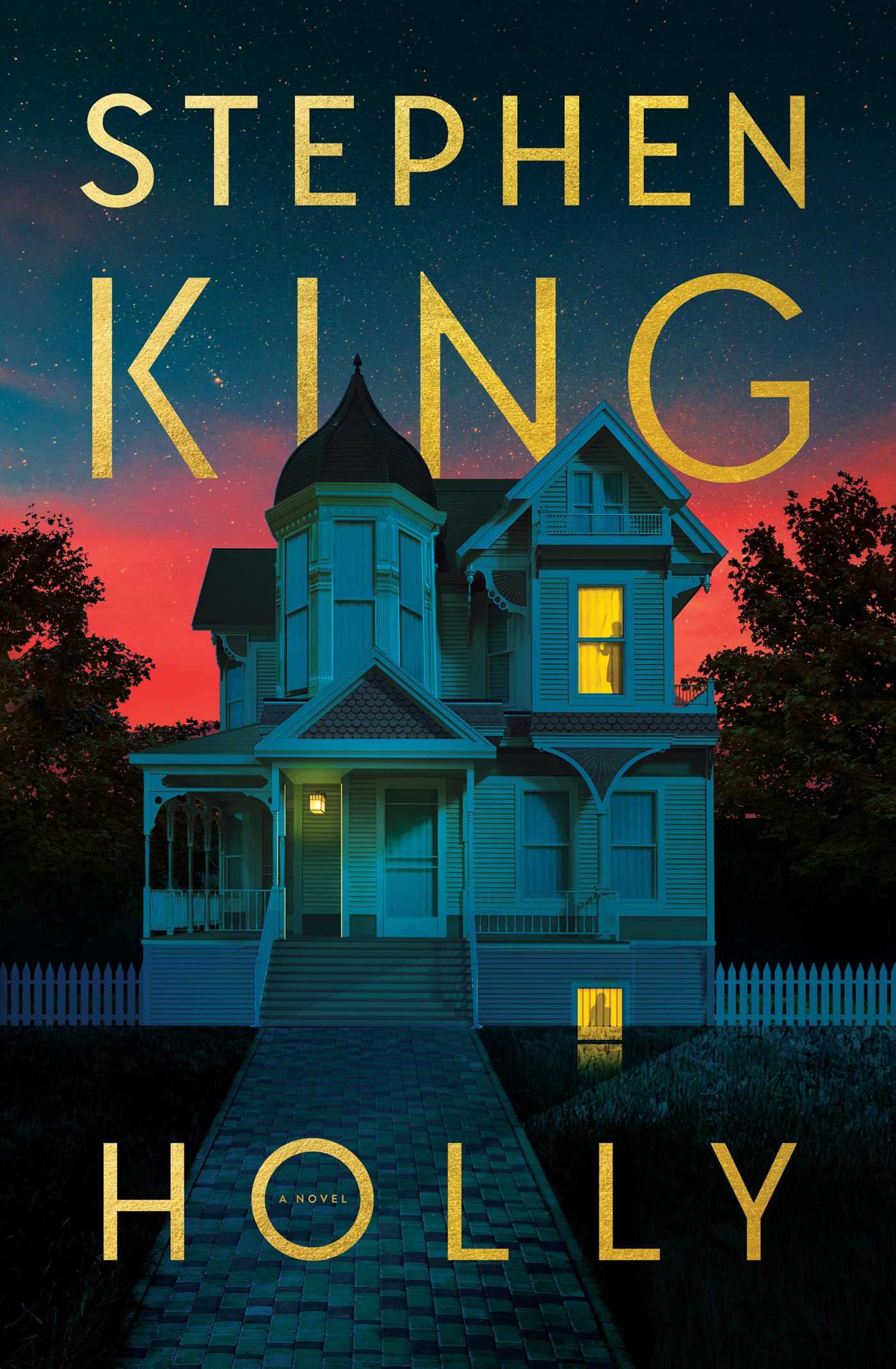
Holly by Stephen King

Holly Cover

Publisher: Hodder & Stoughton/Scribner (Audiobook – 5 September 2023)

Series: Holly Gibney

Length: 15 hours and 24 minutes

My Rating: 5 out of 5 stars

Amazon

The master of thrills and chills, Stephen King, returns with his latest exceptional read, the powerful and gruesome thriller Holly, an outstanding and utterly gripping read that brings back an amazing original protagonist.

Fans of this blog will be aware that I have been in a bit of a Stephen King mood recently, especially being quite a latecomer to his books.  I have had a wonderful time reading some of his latest works, including Later, Billy Summers and Fairy Tale, each of which has been great in its own way.  I have also been keeping a firm eye out for any upcoming books from King, and I was highly intrigued when I saw that he was releasing Holly in the second half of 2023.

Holly, which was one of my most anticipated books of the year, serves as a continuation of the adventures of protagonist Holly Gibney.  Holly Gibney, who first appeared in Mr Mercedes, is a unique and damaged figure who ended serving a vital supporting role in all three Bill Hodges books, as well as the horror-filled thriller, The Outsider (both of which have been adapted into awesome television series).  Holly is the first full novel where this quirky figure will be the main protagonist (although there was the novella, If It Bleeds), and I was very intrigued to see how that turned out.  I even went back and read Mr Mercedes for the first time so I would have a better idea of the character and their fascinating story.

It is the height of the 2021 COVID pandemic, and Holly Gibney is reeling from the sudden death of her domineering and stubborn mother.  Initially planning to take some time off, Holly finds herself drawn to a new case when distraught mother Penny Dahl calls the Finders Keepers detective agency hoping to get help in finding her missing daughter, Bonnie.  With her partner, Pete, out of commission with COVID, Holly decides to take on the case by herself, especially when Penny’s desperation breaks through to her.

Diving into the case to distract herself from her deep personal concerns, Holly begins to uncover all the details surrounding Bonnie’s sudden disappearance.  But the further she digs, the more sinister the case becomes, especially when it becomes apparent that more than one person has disappeared in the same residential area.  To uncover the truth, Holly will need to find out more about these other disappearances.

However, Holly is unaware of a deadly threat watching her from the suburban shadows.  Professors Rodney and Emily Harris are octogenarians living an easy life as semi-retired academics.  But this old married couple is keeping a dark and unimaginable secret in their basement, one that will shake Holly to her very core.  Can Holly find out what really happened to Bonnie and the other missing persons before the clever and patient professors make their move?

Wow, just wow!  This was such an exceptional and powerful read, and it is one of the best books I have ever read from Stephen King.  Featuring an exciting, emotionally charged and highly gruesome story that will leave you breathless and horrified, Holly had me hooked from the second I started it and it refused to let me go even after I finished it.  Intense, clever, and oh so beautifully disturbing, Holly gets an easy five-star review from me for so many delicious reasons.

Holly has an epic and addictive narrative that grabs the reader’s attention right off the bat, especially as you are immediately introduced to the horrifying schemes of the antagonists.  This great introduction perfectly leads into the main story, which focuses on the protagonist’s investigation into the disappearance of a missing girl.  This is very much a character driven plot, as the protagonist simultaneously deals with her troubled history and roiling emotions following the death of her mother.  King features a range of intriguing character perspectives throughout the course of Holly, showcasing different angles to the case and introducing several additional personal stories.  Thanks to these intriguing perspectives, especially those surrounding Holly herself, the investigative storyline rolls along at a fast and exciting pace, and Holly quickly begins to realise something nefarious did happen to her client’s daughter, as well as other people in the same area.  King backs up these revelations with great flashback chapters that showcase the actual sinister deeds of the antagonists, while also giving you some fascinating insights into who they are and what drives them to commit these insanities.

The resulting story continues at a fast and compelling clip, as you get further drawn into both Holly’s case and the intriguing history of the Harrises and the people whose lives they impact.  King writes a very tight and captivating investigative storyline around the protagonist, and I liked how Holly methodically finds connections and identifies new victims through a series of fun character interviews.  Thanks to the flashback sequences, the reader already knows what the Harrises have done and what Holly is going to find as her investigation continues, which gave the protagonist’s scenes more of an edge as you wait for her to uncover the full horrors awaiting her.  As this unfolds, you are also gifted to several compelling and emotionally charged scenes around Holly, as well as several other great supporting figures, as they go about their damaged and complex lives.  This includes a large sub-story thread around returning character Barbara Robinson, whose foray into the literary world proves quite powerful and personal, while also revealing several major clues in the case.  These multiple character-driven storylines are pretty fascinating and captivating in their own way, and they pull together perfectly into one cohesive and bloody narrative that you can’t prove away from.

While the first two thirds of Holly are extremely cool and addictive, the third act is where everything comes together, and boy is it glorious.  King came up with an excellent and very impressive conclusion that keeps you irresistibility hooked up to the end.  Several lingering questions, such as the fates of characters, are cleverly and gruesomely answered in the leadup to Holly pulling the clues together.  At the same time, the author also revolves several key character arcs and storylines, which set up these various figures for the big confrontations, for better or for worse.  I love how King maneuverers all the characters around through chance, tragedy and mistakes so that there is the maximum risk for his protagonists, and you are seriously left wondering who is going to survive and how the entire story will unfold.  The climatic scenes are pretty damn memorable, as King brings everything together in a brutal way that only he could envision.  The shock, the emotional damage and the horrors that are revealed are extremely powerful and cool, and you will come away from Holly disturbed and satisfied in equal measure.

While I already had a great deal of respect for King’s writing ability before reading this book, I have to say that I was even more deeply impressed with how he pulled Holly together.  This fantastic book was the perfect blend of mystery, suspense and character-driven narrative, and there was frankly not a single second that I did not enjoy.  The way that the author told his complex narrative is outstanding, and I loved how the perspective switches between the various intriguing characters, as well as featuring flashback chapters that range from heartfelt to highly sinister.  The constant changes in focus helped to create a very compelling and elaborate read, and showcasing all the key characters ensures that the reader gets a much more complete and powerful narrative, especially during the main investigative storyline.  While I liked the protagonist’s narrative, some of the best scenes were those that focused on the antagonists and their sinister secrets in the basement.  The Harrises’ scenes are pure and exquisite horror that had me shuddering and shivering the entire way through, especially when you find out exactly what they are doing and why.  I cannot fully express how gruesome King made this part of the book, and I could not stop reacting at his horrifying descriptions at times; it was that damn dreadful.  Combine that with the highly personal and relatable character arcs, and this ended up being an exceptional read that you will have a hard time putting down.

While Holly is part of a larger series of books and stories that feature the main character of Holly Gibney in some way, King makes sure to cover all the relevant details from these previous works where needed, and this can be read as a standalone novel.  Both I and my wife (who hasn’t read any of the books, but did watch the Mr Mercedes television series), were able to follow every point of this book without any issue, although established King readers will probably have fun seeing the story continue from these previous reads.  As such, Holly is an easy and compelling read to check out, even if you are unfamiliar with King’s work, and you are guaranteed to have fun with it.

I cannot talk about Holly without discussing the outstanding and beautifully written characters that help to turn this amazing novel into such a classic and exceptional read.  King has always excelled at wrapping his elaborate narratives around powerful and distinctive protagonists and villains, and Holly is a brilliant example of this.  The heart of the tale lies in the motivations and actions of Holly’s excellent cast, and the simultaneous examination of their lives and the case is so very addictive.

The most prominent of these characters is titular protagonist Holly Gibney, who returns this time as the main character of her own book.  Holly is such a fascinating and complex figure to focus a story around, and while much of her development occurred in previous novels, King still has a lot to work with here.  Already somewhat emotionally damaged and immature, especially after a lifetime of anxiety and manipulation, Holly has only come out of her shell in recent years thanks to the help of her friends and her new career as a private investigator.  However, the death of her mother brings up a whole new bag of issues, especially as it uncovers additional layers of manipulation that Holly had previously been unaware of.  Most of Holly’s scenes see her try to deal with continual feelings of guilt, betrayal and regret that results from these revelations, while the words of her mother continue to play in her head, influencing her decisions.  While this pain and uncertainty is a big part of Holly’s personality, King expertly balances this with some more positive character aspects, including her expert investigation skills, the emotional strength she draws from her friends, and her unyielding determination to find the truth.  King really did a great job of reintroducing and utilising Holly here, and I felt that she served as an excellent central protagonist of her own novel.  I did think that King really didn’t write Holly as a woman in her mid-50s, as she felt a lot younger than she should have, but a lot of this is due to how emotionally immature the character is due to her hard life.  Honestly, her unique insights, thoughts and relationships are extremely refreshing and so much fun, and I would read so many more novels that have Holly Gibney as the main protagonist.

While Holly is a great protagonist, this book would be nothing without the fantastic figures of Rodney and Emily Harris, who might be some of the best villains that King has ever written (which is saying something).  The Harrises are quickly shown to be anything but the harmless retired academics they present to the world, especially when readers are treated to a view of their basement.  I don’t want to give too much away here, because you really need to read King’s excellent buildup to fully experience the horror around them, but they are gloriously and exceptionally sinister.  Part of this is because their age belies how dangerous and malicious they truly are, with other characters constantly underestimating them, and watching these frail figures commit acts of utter evil is very shocking.  Other elements of their sinister nature are derived from the initial secrecy surrounding their motivations as well as the uncertainty around whether their actions are normal human evil or something more unnatural.  King does such a good job of diving into the mind of these characters throughout the course of Holly, and you really get some powerful and captivating insights into who they are and why they are committing their crimes.  The author works in a complex layer of fear, regret, love and insanity underneath their actions, you can kind of empathise with their desires and understand why they are doing what they are doing.  However, these brief flashes of empathy only ensure that the reader is even more repulsed by their actions, especially when you also get the points of view from their victims.  Honestly, I could go on, but I think I will just leave it here and say that Rodney and Emily Harris are exceptional villains, and you won’t be the same after visiting their basement.

Aside from the complex protagonist and the amazing villains, Holly is also loaded with a great cast of supporting characters, each of whom have their own moments to shine.  Many of these are returning figures from the previous Bill Hodges books, such as Jerome and Barbara Robinson, Holly’s friends and emotional support.  Both Jerome and Barbara have had a lot of growth in the previous novels, and it was great to see their stories continue in Holly.  Barbara in particular has a fascinating and moving character arc in this novel, as her horrifying experiences from the previous books inspire her to write haunting poetry.  This proves to be an intriguing and moving side storyline for part of the book, which, while it does have certain implications for the main investigation, also expands on Barbara’s creativity and highlights the joy that writing and creativity in all forms can bring to a person.  Barbara’s mentor, elderly poet Oliva Kingsbury, also proves to be a wonderful additional to the cast, and her canny insights and elaborate experiences add some great depth to parts of the novel.  I also need to highlight the poor unfortunates who serve as the victims of this story.  While many of them are only briefly featured throughout Holly, King ensures that each of them is effectively and emotionally highlighted.  While each of them is primarily shown at their very worst, you really get a sense of who they are, and the inherent tragedy of their lives and what is being done to them, will stick with you.  All these characters and more are so perfectly written by King, and their unique journeys and powerful emotions, help to drive Holly’s narrative in some outstanding directions.

King also injects an interesting level of social commentary into Holly by strongly featuring some of the key events of the last couple of years into this story.  Holly is King’s first novel set during COVID times, and he really tries to showcase how life was changed during this period.  The characters are constantly talking about masks, vaccines, and the impact of the pandemic on their lives.  While this is somewhat repetitive and traumatic for people trying to put that behind them, I felt that it was a perfect reenactment of how life was a few years ago.  The characters encounter all manner of different mindsets and opinions about the pandemic and other key events during this time, which will be instantly recognisable to readers, and I liked seeing the protagonists react to it, especially when it plays into their own personal experiences.  While King mostly speaks through his protagonists, there is a certain level of social commentary, and you can feel that King has some strong opinions about recent events.  While this commentary might not be for everyone, I really appreciated it and I felt that it gave the story some more realism, especially when the author sticks his narrative right in the middle of recent major events.

While I did get a physical copy of Holly, I decided to check out the audiobook version instead, because I had a road trip that this was the perfect accompaniment for, and also because they got the perfect narrator in Justine Lupe, who plays the character of Holly Gibney in the Mr Mercedes television series.  I love it when audiobooks get fun and appropriate narrators with connections to related media, and Justine Lupe was easily one of the best examples of this.  Not only does she perfectly capture Holly’s spirit, emotions and personality due to her experiences with Mr Mercedes, but she also does an amazing job narrating the rest of the story and bringing the other characters to life.  Lupe really dives into all the members of this brilliant cast in a great way, and I love how each of them is gifted a distinctive and fitting voice, such as how she made the Harrises sound both innocent and sinister at the same time.  I was really impressed with Holly’s perfect choice in casting, and I loved the continuation on from the existing portrayal of the titular protagonist.  Coming in at around 15 and a half hours, the Holly audiobook has a decent length to it, but once you start listening to it, you really can’t stop.  As such, I would strongly recommend this audiobook to anyone interested in checking out Holly in all its gory glory, especially if you also enjoyed the Mr Mercedes television series.

I could go on about Holly, but the point is that this latest Stephen King novel is pretty damn exceptional.  Perfectly blending established characters and an elaborate new narrative with some gruesome and intense elements, Holly had me hooked from the first scene thanks to its brilliant storytelling.  Dark, shocking and deeply personal, there is so much to love about Holly, and it was one of the strongest King stories that I have had the pleasure of reading.  I honestly cannot recommend this book enough, both to new readers and established King fans, and Holly is easily one of the best books of 2023.

Amazon

Proven Guilty by Jim Butcher

Proven Guilty Cover

Publisher: Penguin Audio (Audiobook – 1 February 2006)

Series: Dresden Files – Book Eight

Length: 16 hours and 16 minutes

My Rating: 5 out of 5 stars

Amazon

Welcome back to my Throwback Thursday series, where I republish old reviews, review books I have read before or review older books I have only just had a chance to read.  This week I dive into another awesome entry in the exceptional Dresden Files series by Jim Butcher with Proven Guilty.

I have been having an outstanding time reading Butcher’s iconic and fantastic Dresden Files books over the last couple of years.  One of the absolute best urban fantasy series ever written, the Dresden Files follows titular wizard and supernatural protector, Harry Dresden, as he investigates a series of crimes and magical conspiracies in Chicago.  I got into these books back in 2020 and have been slowly getting through the series from the start, with most of the entries getting five-star reviews from me as I go.  This includes the outstanding novels, Storm Front, Fool Moon, Grave Peril, Summer Knight, Death Masks, Blood Rites, Dead Beat and Battle Ground, as well as the novella The Law.  I had so much fun reading the previous novels that I just had to dive into the eighth book this week with Proven Guilty, which proved to be another amazing read.

A year after officially becoming a Warden for the White Council of Wizards, Harry Dresden is chafing under his new role, especially the part that forces him to punish young practitioners with no real knowledge of the magic they wield.  However, he must put aside his concerns when he is warned about black magic being used in Chicago, forcing him to start a new investigation into the city’s magical underbelly.

His investigations soon lead him to a seemingly normal horror movie convention where mysterious and sinister events are taking place.  Brought in by one of the convention’s staff, Molly Carpenter, the daughter of holy knight Michael Carpenter, Dresden soon finds himself attempting to stem a series of supernatural attacks against innocent humans.  The dangerous perpetrators all appear in the form of classic horror movie monsters, and their deadly attacks soon leaves a trail of mayhem across the convention.  Forced to circumnavigate the police and other dangers waiting for him, Dresden works to hold back the dark supernatural tide, only to discover dangerous secrets that shock him to his core.

Working with his faithful dog, his vampiric half-brother, a cop with her own problems, and the most dangerous mother on the planet, Dresden attempts to right all the wrongs in front of him.  But to succeed, he’ll need to confront the forces of the Nevernever, a rogue White Court Vampire, dangerous creatures forged from fear, and even the White Council itself.  Can Dresden succeed or will his actions lead to even more suffering for those he cares about the most?

Butcher keeps his epic Dresden Files going in an amazing way with this eighth book, and I had an outstanding time reading Proven Guilty.  Featuring an elaborate plot that effortless combines mystery and supernatural elements in modern day Chicago, while also serving as a key entry in the wider Dresden Files, Proven Guilty is a powerful and deeply captivating read that I had a great time listening to.  I have so much love for this fantastic series, and Proven Guilty got another five-star rating from me as a result.

Proven Guilty has an outstanding story to it which sees the protagonist go up against a cohort of deadly enemies, some of which are disguised as horror movies creatures.  I will admit that the start of the book was a tad slow, and I honestly thought that this was going to be more of a filler novel than anything else.  However, it soon develops into an excellent story that loads up a cool mystery with some exciting encounters, deep emotional moments, strong character development, and the continuation or creation of several major storylines for the entire series.  A conflicted Dresden is dragged into everything when Molly Carpenter requests his help, and he soon finds himself looking into the mysterious events at the horror convention.  The main story goes in some very interesting directions, and I liked the great combination of investigation and fantasy elements as it continued, while several compelling side stories see Dresden facing even more danger and mystery.  Several of these storylines came together quite nicely as the book continued, and Dresden soon identifies the main perpetrator of the threat, as well as other forces taking advantage of their actions.  The impact of the big reveal of who was responsible wasn’t as significant for me, as I’d had that spoiled in advance, but it was still well crafted, especially the motivations behind it.  However, the real meat of the story revolves around darker designs as unknown forces manipulate Dresden and his allies to do their bidding.  This results in some very impressive scenes, including a massive magic battle in the Fae realm, and I loved how everything came together while also leaving some big mysteries open for later in the series.  I also really enjoyed the complex wrap-up chapters, which saw Dresden go up against the White Council in some very intense scenes, as well as providing some excellent emotional resolutions that I deeply appreciated.  Everything comes together perfectly, and this proves to be a fantastic new addition to already impressive series.

Butcher applies his usual excellent writing style to Proven Guilty, which always works well to convey his complex narratives.  Like the rest of the series, Proven Guilty moves at a swift pace, quickly taking readers from one intriguing scene to the next, all of which is great in its own particular way, whether it be character interactions, plot developments, or lore downloads.  At the same time, readers are treated to a great blend of fantasy elements, emotional moments, and a compelling investigation storyline, all of which is overlayed with a fun and signature bout of humour and snark, often directed from the protagonist.  You really get drawn into Proven Guilty as a result, and I always love Butcher’s approach to the urban fantasy style, especially as both his unique fantasy world and the cool investigative story arcs work so well together.  Like the rest of the Dresden Files books, Proven Guilty can be read as a standalone novel, although Butcher is juggling a few ongoing storylines and character arcs that had been built up in the previous entries.  While the author always does a good job of recapping key events and reintroducing key characters, I really do feel that at this point in the series readers need to have enjoyed some of the previous books to get the full emotional and story impact Butcher is conveying.  I do really need to critique one part of Butcher’s writing style for Grave Peril though, particularly how he oversexualised a teenage female character.  The Dresden Files have always featured over-the-top descriptions of women, and while Butcher has gotten better about them as the series continues, he backslid here in Proven Guilty when it came to this character.  While I do get what he was trying to do from a literary perspective, i.e. showing the vulnerability and confusion of teenagers, and how they act out a result, it honestly felt really icky to me, and I think the book would have been better off without it.  Apart from that though, Proven Guilty is very well written, and I had a wonderful time getting through it.

I always really enjoy how well Butcher manages to utilise cool and complex fantasy elements into his narratives and Proven Guilty has some outstanding examples of this.  Thanks to Dresden’s promotion to Warden in the last book, he is now a very prominent member of the White Council, and this provides him some bigger insights into the council and its members.  This results in some great political scenes, as well as a deeper dive into the council’s law enforcement wing, which exists to hunt down and punish magic users who break the laws of magic.  I found this to be pretty interesting and compelling, especially as the council’s determination to enforce the laws leads to some dark moments in the plot, and I liked the clever comparisons between them and the Chicago PD.  The case also sees a return of the Fae Summer and Winter Courts, both of which have been featured heavily in the past, and Butcher has a lot of fun revisiting both and expanding the lore surrounding them.  One of the most pivotal moments of the plot sees Dresden and his allies invading one of the most significant locations of the Winter Court, and I loved the carnage that resulted.  As always, the various scenes of magical battle and encounters are a great highlight of Proven Guilty, and Butcher has a real talent for making the featured spells feel intense and spectacular.  I also rather enjoyed the use of a horror convention (SplatterCon!!!) as a major background for the plot, especially as it allowed for a menagerie of movie monsters to emerge and attack the convention goers.  There were a ton of fun homages here as a result, and it was very entertaining to see Dresden face off against several iconic monsters in some great scenes.  These fantasy elements merge with the rest of the plot extremely well, and it was fun to see Dresden dive through the worst parts of his world to save the day.

One of the major highlights of all the Dresden Files novels in the fantastic cohort of characters that Butcher features and Proven Guilty is no exception to this as the author has utilised another fantastic group of figures, each of whom brings something emotional or compelling to the plot.  The most prominent of these is naturally series protagonist Harry Dresden, who serves as the book’s main voice.  Cocky, confident, emotionally damaged and highly conflicted, Dresden makes a great focal character and I have deeply enjoyed seeing his personal journey throughout this series.  While still responsible for most of the book’s humour thanks to his jokes and fun observations about the other characters and all things magic, Dresden is decidedly a little more serious in Proven Guilty, especially as he is still recovering from some of the traumas of the previous books, including his injuries, his possession by a fallen angel, emotional conflicts with those closest to him, and the guilt over being forced to kill two people in his previous adventure.  This provides a noticeable change to Dresden in this book, and I felt that Butcher did a wonderful job showcasing this in several emotionally charged confrontations and scenes.  At the same time, Dresden is also dealing with his misapprehensions for working for the White Council as a Warden, especially as he is having trouble believing in all their rules.  This leads him into even greater conflict as the book continues, especially when he finds out who is truly responsible for the latest evils he uncovers.  All these personal issues and traumas help to provide a deep emotional layer to the plot, and it was one that Butcher masterfully addressed, providing some compelling and satisfying resolutions to several of them.  I particularly liked how Dresden’s story is coming full circle in some ways, and it will be interesting to see how that plays out in the future.

Aside from Dresden, there are a ton of other great characters featured through Proven Guilty who add their own flavour to the plot.  This includes an excellent range of new figures and well-established supporting characters, and I liked the mixture of storylines and character arcs that emerged.  Dresden’s usual allies, Karrin Murphy and Thomas Raith are very well utilised again here, both as supporting characters for Dresden’s adventures, and as individuals with considerable personal and professional issues to deal with.  Molly Carpenter, a minor figure from the previous novels, returns in a big way here and serves as an intriguing new addition to the plot.  While I have some major concerns about Molly’s portrayal at times, her storyline had some great depth and it will be interesting to see how that develops in the future.  This use of Molly also allowed a great focus on her mother Charity, another minor character from the previous novels, who gets a fantastic showing in Proven Guilty, especially as she shows herself to be an absolute badass.  Throw in Harry’s giant dog Mouse, who is one of my favourite characters in this series now, and differing voices of Dresden’s two supernatural advisors, Bob and Lasciel, the angel and demon on his magical shoulder (both literally and figuratively), and you have a pretty outstanding cast here, and one that I always have a great time following.

As always with one of the Dresden Files novels I really need to highlight the exceptional and awesome audiobook versions which are my favourite way to enjoy this amazing books.  The format really lends itself to the intense action, fast-paced storytelling and great characters contained within Proven Guilty, and I really found myself powering through this great audiobook in no time at all.  With a run time of over 16 hours, this is one of the longer Dresden Files audiobooks, but I still managed to knock it off in a few days, as I never got sick of listening to it.  The main reason for this is the outstanding narration of actor James Marsters, who has lent his powerful voice to the entire Dresden Files series.  Marsters effortlessly dives into the story each time, and he brings some real gravitas and feeling to the plot and characters.  The various voices he produces does each member of the complex cast great justice and I love how well he portrays their feelings, interactions, and personalities.  This is mostly easily seen in main character Harry Dresden, who is suffering from a lot of different abuses by this point in the series.  Marsters really does such a great job showcasing his various emotional and personal issues and I am always so impressed with how the narrator just gets this complicated character and brings that out with his voice.  This great performance does so much to enhance the experience of listening to Proven Guilty on audiobook and I cannot recommend this format enough to people interested in checking out this cool Dresden Files entry.

Unsurprisingly, I had an outstanding time with Proven Guilty and it proved to be an excellent continuation of Jim Butcher’s epic Dresden Files series.  Featuring another brilliant story, some fantastic character growth, and even more magic and mayhem, Proven Guilty was a ton of fun to get through, and I have so much love for this series.  Indeed, I had such an incredible time with Proven Guilty that I have already started listening to the next book in the series, White Night, which I will hopefully review next week. I honestly can’t give Proven Guilty a higher compliment than that, and this is a pretty damn amazing read.

Amazon

Quick Review – Red Dirt Road by S. R. White

Red Dirt Road Cover

Publisher: Headline (Trade Paperback – 10 January 2023)

Series: Detective Dana Russo – Book Three

Length: 307 pages

My Rating: 4.5 out of 5 stars

Amazon     Book Depository

Impressive author S. R. White continues to lead the Australian outback murder mystery scene with his new and compelling release, Red Dirt Road, the third book in his Detective Dana Russo series.  I had the great pleasure of reading the second book in this series, Prisoner, back in 2021 and I really enjoyed his unique take on the outback detective novel.  As such, I have been rather excited to read his new book, Red Dirt Road, especially as it featured a particularly enthralling mystery.

Plot synopsis:

One outback town. Two puzzling murders. Fifty suspects.

In Unamurra, a drought-scarred, one-pub town deep in the outback, two men are savagely murdered a month apart – their bodies elaborately arranged like angels.

With no witnesses, no obvious motives and no apparent connections between the killings, how can lone police officer Detective Dana Russo – flown in from hundreds of kilometres away – possibly solve such a baffling, brutal case?

Met with silence and suspicion from locals who live by their own set of rules, Dana must take over a stalled investigation with only a week to make progress.

But with a murderer hiding in plain sight, and the parched days rapidly passing, Dana is determined to uncover the shocking secrets of this forgotten town – a place where anyone could be a killer.


Red Dirt Road
ended up being a very fun and captivating murder mystery novel and one I had a wonderful time getting through.  I really enjoyed White’s cool and clever plot scenario and the entire concept of a cop attempting to solve a mystery in a small town with limited suspects is a fun idea that harkens back to classic whodunits.

Red Dirt Road’s story itself hits the ground running quickly, as complex protagonist Dana Russo is forced to travel to the small town for the investigation and soon becomes wrapped up in its many foibles.  This includes the sheer isolation, the lack of modern comforts and the unusual locals, many of whom are hiding from the outside world.  There is also a set of creepy angel-themed statues that mysteriously move around town, the work of a guerrilla artist who has remained hidden since the murders began.  With time restrictions on her investigation and with minimal help from the local police, Dana initiates an unconventional investigation that focuses on understanding Unamurra’s society and its people to solve the crime.  After getting to grips with the various people living there, as well examining other clues and evidence, she is able to figure out which one of the town’s residents is the most likely killer and confronts them in a particularly fascinating reveal sequence.  The full explanation for why the crime was committed, as well as the ingenious and very distinctive motivation of the murderer, was exceedingly clever, and I felt that White set everything up perfectly.  While certain elements of the conclusion were a bit over-the-top, (a very unrealistic elite government SWAT team comes to town), I felt that the story was pretty damn impressive and I was absolutely blown away with the elaborate motivation that the author came up with.  The plot of Red Dirt Road also simultaneously continues some of the series’ ongoing storylines, such as Dana’s personal relationship with her co-worker and the internal police politics that are impacting her career, and this ended up being quite a gripping read as a result.

One of the most noticeable things about Red Dirt Road was the unique, society-orientated investigation method that the protagonist used to understand the people of Unamurra and find out who the killer was.  I personally thought that this was a very smart and intriguing way to frame a murder investigation that worked extremely well in the context of the setting and the series.  When I reviewed Prisoner I noted that White likes to highlight the interrogation side of policing with his writing and this was once again in full display when it came to how Dana gathers information in Unamurra.  The flurry of casual conversation she engages in ensures she picks up all the knowledge about the town and people she needs, while also putting the potential suspects at ease as they don’t understand her style or the subtle reasons behind her lines of inquiry.  This information, when combined with some observations and additional background she gets from headquarters, allows her to pull together a full mental picture of the town and by understanding them and their needs she finally gets the insight she needs to understand the entire situation.  This results in a very unique case, and I found myself getting really wrapped up in both the characters and the setting while trying to wrap the clues together in my head.  While this style of investigation probably isn’t going to fit every murder mystery fan’s taste, I felt that it worked extremely well and I loved how the elaborate motivation was teased out through these discussions.  The final confrontation with the killer and the various revelations it contained really ties all these previous discussions together perfectly and you quickly realise just how cleverly White structured his entire mystery.

On top of the cool investigation method, I also deeply enjoyed the dusty and desolate setting of Unamurra that served as the backdrop to the murders.  White really tries to show the reader the full experience of such a lonely and decaying town, and thanks to the excellent descriptive writing you can absolutely picture every cloud of dust, quiet night, and the lack of movement.  At the same time, the protagonist begins talking to each of the residents of Unamurra and you really get to understand the sort of people that would live in such a place, whether they are desperate, trapped, or have their own strange motivations.  This excellent use of setting and compelling supporting characters greatly enhances the book’s already complex murder investigation, and I felt that White did an amazing job of working it into the larger narrative and mystery.  The sheer isolation impacts every decision and insight that Dana has and you really come away trying to imagine what life in such a location would be like.  While White does overgeneralise some areas of rural Australia in his book, especially as he makes the location of these crimes geographically vague, this setting added a great deal to the impact of Red Dirt Road and I deeply enjoyed my time in the elaborate setting of Unamurra.

Overall, Red Dirt Road was an outstanding new book from S. R. White that perfectly highlighted his distinctive take on a murder mystery investigation.  Combining another outstanding outback setting with a unique case, Red Dirt Road will have you hooked all the way to the fantastic finale.  I cannot wait to see what complex stories White comes up with in the future, but if they are anywhere near as clever and enthralling as Red Dirt Road, I know I am going to love them.

Amazon     Book Depository

Warhammer 40,000: Bloodlines by Chris Wraight

Warhammer 40,000 - Bloodlines Cover

Publisher: Black Library (Audiobook – 8 August 2020)

Series: Warhammer Crime

Length: 8 hours and 30 minutes

My Rating: 4.75 out of 5 stars

Amazon     Book Depository

After some of my recent awesome experiences with the Warhammer Crime series, I just had to check out the outstanding novel, Bloodlines by Chris Wraight, which has one of the best pure crime fiction stories in this entire epic franchise.

Regular readers may have noticed I have been having an absolutely amazing time getting through a ton of Warhammer 40,000 novels in recent weeks as everything about this extended franchise has been so damn fun.  One of the more intriguing sub-series of Warhammer fiction I have been tearing through has been the Warhammer Crime books which, as the name suggests, blends cool crime fiction narratives with a Warhammer 40,000 settings.  The entire series is set within the massive, corrupt city of Varangantua on the planet of Alecto, and several very talented writers have come up with some exceptional novels that perfectly showcase murder, mystery and death in the midst of this great setting.  I have so far deeply enjoyed the epic entries, Dredge Runners and The Wraithbone Phoenix by Alec Worley, Grim Repast by Marc Collins, and Flesh and Steel by Guy Haley, each of which have contained different, if equally exceptional stories.  However, few have had the excellent central mystery of the very first full-length Warhammer Crime novel, Bloodlines from new-to-me author Chris Wraight, which took a veteran cop on an intensive investigation with fantastic results.

After a lifetime working for the Varangantua Enforcers, Probator Agusto Zidarov is well aware that the only certainties in the continent-spanning city are wealth, corruption and criminality.  Tired of the games played between the warring gangs, trade combines, and nobles as they battle for control of the city’s resources, Zidarov is more concerned about his own life, family and secrets.  However, when a simple missing person investigation gets unexpectantly complicated, Zidarov will find a terrible case that he can’t turn away from.

Called to the estate of wealthy business magnate Udmil Terashova, Zidarov is ordered to find her son and heir, who has gone missing.  Forced to plumb the depths of Varangantua’s underbelly, Zidarov attempts to find any trace of the boy, who has likely just disappeared taking part in the rich’s hedonistic lifestyles.  However, when an uncovered lead places him conflict with one the city’s most ruthless gangs, Zidarov soon begins to believe that there is more to this case than he initially believed.

Discovering that the gang is involved in the notorious crime of cell draining, Zidarov’s attempts to shut them down.  However, his raid ends up being a bust, and the fallout results in a dead sanctioner, a wounded probator and a full-on war between the gang and the enforcers.  Attempting to mitigate the consequences of his actions, Zidarov soon discovers that there is far more going on behind the scenes than he ever imagined as corporate interests work to influence the investigation.  To find the truth about the city’s new crime ring and the missing noble, Zidarov is forced to probe both Varangantua’s lowest gangs and wealthiest citizens.  But can Zidarov survive the encounter with his secrets and life intact?

Bloodlines is an incredible and deeply impressive Warhammer Crime novel that I had an excellent time reading, especially as Wraight perfectly blended his crime fiction story with the cool Warhammer setting.  Featuring one of the more elaborate and intriguing cases in the Warhammer Crime books I have read so far, I absolutely powered through Bloodlines and this was truly an outstanding read.

At the heart of Bloodlines lies a pretty awesome and captivating narrative building on the basic crime fiction premise of a veteran cop attempting to solve a crime no one wants investigated.  Taking its cues from classic noir entries (I was reminded a bit of Chinatown), Bloodlines follows Probator Agusto Zidarov, a family man with a cynical view of his job and his place in the city, as he gets dragged into a missing persons case.  Initially starting off a little slow, the story quickly heats up as Zidarov attempts to find the missing heir to the wealthy Terashova family, a disappearance he assumes is a simple case of young rebellion.  However, his routine investigation into the missing lad leads him to discover a cell draining operation being run by one of the major gangs, and he shifts his investigation in an attempt to shut it down.  But when his plans go wrong and his colleagues end up injured or dead, Ziadarov finds himself on everyone’s firing line.

There are some interesting jumps in the case around halfway through as the protagonist soon realises there is far more going on than he initially believed and he is forced to simultaneously investigate both the gangs and some of the wealthiest families and businesses in the city.  I loved this gradual escalation of the stakes of the crime as the book continues, as the original missing persons case is revealed to be far more complex and intriguing than initially believed when the protagonist discovers that he is being used by everyone.  At the same time, Zidarov is forced to deal with some major personal issues, as his wife begins to resent his choices, his rebellious daughter has gone missing in a city full of predators, and certain dark secrets around Zidarov threaten to come into the light.  The eventual reveal about who is responsible for the various crimes is very clever, and I liked the subtle and effective hints and clues leading up to it as the unique motivations and plots utilised intriguing aspects of the Warhammer 40,000 universe.  Wraight ends Bloodlines on a great note as Zidarov gets justice through drastic means after a very intense and powerful confrontation with one of the book’s more intriguing and complex supporting characters.  As such, you come away from Bloodlines feeling very satisfied, although you instantly want to see more of this great character, especially as the sinister connotations about Zidarov’s dark secret indicate that some tragic events are going to befall this character in the future.

The entirety of Bloodlines was laid out extremely well by Wraight, who uses a great style to tell a complex and captivating story.  Told exclusively from Zidarov’s perspective, you are given a personal and close examination of the events of the book as Zidarov slowly and methodically investigates the various crimes.  You are quickly drawn into the elaborate narrative Wraight lays out as the author does a good job of combining an excellent crime fiction storyline with intriguing character development, all set with Varangantua and the wider Warhammer 40,000 universe.  The noir inspired elements of Varangantua really stand out in this book, especially as Zidarov is forced to simultaneously investigate both the criminal cartels and some of the city’s wealthiest residents.  Bloodlines really recalls some classic noir tales, as it focuses on the experienced and dogged investigator fighting the entire system to get answers and justice, and I loved exploring even more of this enormous city and its many colourful residents.  The whole concept of cell draining, which sees thousands of people literally drained of their essence to make life-extending products, was pretty damn horrifying, and I liked how the examination of this gave Bloodline’s crimes a distinctive feel.  Wraight’s great writing style really lends itself to producing a particularly impactful and compelling crime narrative, and I loved how the entire storyline unfolded, especially with the effective twists and the well thought out foreshadowing.  I ended up coming away from this book quite enthralled and happy and I am really excited to read more books from Wraight in the future.

One of the things that I have so far found with all the Warhammer Crime entries is that readers really need very little familiarity with the wider Warhammer 40,000 universe to appreciate these great books.  Anyone interested in a compelling and intense crime fiction story set in a cool and grim futuristic city can easy dive into one of these novels, and all these books are an awesome introduction to the Warhammer fandom.  Bloodlines is no exception to this, as Wraight writes a very accessible crime fiction thriller that anyone can enjoy while simultaneously enjoying the gothic setting.  That being said, Wraight does make excellent use of several intriguing elements from the Warhammer 40,000 lore to enhance his story and there are hints and discussions about elements outside of Varangantua, such as the Imperial Guard or the wider wars of the Imperium, which fans of the franchise will deeply appreciate.  Wraight does do an amazing job of explaining these elements so that newer readers will fully appreciate them, however, established readers will always get a little bit more out of it.  For example, the full significance of Zidarov’s secret isn’t going to be too apparent to new readers, while in-the-know fans are going to get a blast out of the potential implications.  I felt that Bloodlines has a lot to offer all readers, no matter their experiences with Warhammer, and you might find yourself falling for the franchise with this first book.

Another key aspect of the Warhammer Crime series that Wraight perfectly captured in Bloodlines was the excellent utilisation of a complex and likeable central character.  Wraight’s protagonist and main point of view character, Probator Agusto Zidarov, is a deeply intriguing figure who stands out from the other protagonists in the Warhammer Crime series for being much less of a damaged outsider.  Instead, he is a veteran probator who worked his way up to his position with a very realistic view of the world around him than most other characters, and I liked his no-nonsense approach to his job and his city which has been formed from years on the job staying alive.  Despite this veteran presence and cynicism, Zidarov is still willing to do what is right, even if it endangers him, and his dogged approach to solving the case is extremely addictive, especially as Wraight puts in some deeper motivations behind them.  I really enjoyed some of the scenes where Zidarov continuously ignores his friend’s advice and keeps going forward with the case, simply explaining to them and the reader that he is unable to let it go, and he just keeps moving forward despite the inherent weariness of the character.  This determined and tired cop persona is well balanced by the family man aspect of Zidarov, which is another intriguing element that you don’t see in a lot of Warhammer fiction, as most protagonists don’t have wives or children.  Watching him attempt to balance his family responsibilities with that of his job adds some intriguing drama to the story, and I enjoyed seeing this portrait a ‘normal’ Warhammer 40,000 family.  Wraight perfectly weaves together these dual aspects of Zidarov’s personality with a certain darker, secretive thread that really shows the character in a whole new light when revealed, and which is going to have some intriguing impacts down the line.  All of this, and more, helps to make Zidarov one of the more relatable and enjoyable protagonists I have ever enjoyed in Warhammer fiction, and I really hope that Wraight produces some additional Zidarov stories soon.

Once again, I chose to listen to this cool Warhammer novel in its audiobook format, which, as always, was an excellent and deeply fun experience.  The Bloodlines audiobook did an amazing job of bringing this intense and powerful story to life in some very fun ways.  In particular, the complex central setting of Varangantua is really shown in all its corrupt glory when you hear it being described, and I loved how the fast pacing of the audiobook kept the story rolling by.  This format of Bloodlines was also greatly helped by veteran narrator Charles Armstrong, who has so far only lent his talented voice to a few Warhammer audiobooks.  Armstrong provided an excellent performance in Bloodlines, really diving into the various complex characters and helping to showcase their unique personalities and emotions.  I loved the tired and resigned voice that Armstrong came up with for the main character, which really sells the audience on Zidarov’s veteran status which is the result of an exhaustive and draining career.  Other great voices include that fun Irish accent he gifted to supporting character Brecht, which added to his entertaining nature, as well as some excellent voices the various suspects in the main case had.  All this makes the Bloodlines audiobook the very best way to enjoy this exceptional novel and with a runtime of eight and a half hours, you can power through it in no time at all.

Overall, Bloodlines was a particularly epic entry in the Warhammer Crime series, and it is one that author Chris Wraight should be extremely proud off.  Wraight did a remarkable job of blending together an intense and clever crime fiction story with the dark and grim Warhammer 40,000 setting, and the result is a brilliantly twisted case that I couldn’t turn away from.  Combined with instantly likeable character, Bloodlines proved to be extremely fun and deeply captivating, and I loved how the entire book unfolded.  As such, Bloodlines comes extremely highly recommended and you are guaranteed to love every second of it.  I look forward to seeing how Wraight continues this character in the future, and any future books featuring Zidarov are going to be something truly amazing.

Amazon     Book Depository

Throwback Thursday – Warhammer 40,000: Hereticus by Dan Abnett

Warhammer 40,000 - Hereticus Cover

Publisher: Black Library (Audiobook – 30 July 2022)

Series: Eisenhorn – Book Three

Length: 9 hours and 48 minutes

My Rating: 5 out of 5 stars

Amazon     Book Depository

Welcome back to my Throwback Thursday series, where I republish old reviews, review books I have read before or review older books I have only just had a chance to read.  For this latest Throwback Thursday, I finish off the outstanding and iconic Eisenhorn trilogy by legendary Warhammer author, Dan Abnett, by reviewing the exceptional novel, Hereticus.

I have mentioned several times in the last few weeks that one of my absolute favourite authors of Warhammer fiction lately is the amazingly talented Dan Abnett, whose works have shaped a generation of lore and extended fiction.  I have really enjoyed several of the books in his excellent Gaunt’s Ghosts novels, such as First and Only, Ghostmaker and The Vincula Insurgency, which provide some captivating depictions of the common soldier in the Warhammer 40,000 universe.  However, based on what I have read so far, Abnett’s best series is the epic Eisenhorn trilogy, which follows titular character Inquisitor Eisenhorn as he attempts to protect humanity from a range of diabolical threats.  The first book, Xenos, served as an excellent introduction to Eisenhorn and his major supporting characters, while Malleus showed an older Eisenhorn as he attempts to unravel a massive conspiracy painting him as the villain.  I absolutely loved these outstanding novels and they both got a full five-star rating from me, and I immediately dove into the third and final book, Hereticus, as I really wanted to find how everything ended.

For over 150 years, Inquisitor Gregor Eisenhorn has loyally served the Imperium of Men, disrupting and ending multiple conspiracies and plots by heretics, daemons, and malicious xenos.  Throughout all this time, Eisenhorn has always tried to avoid the lure of the radical path that many of his fellow inquisitors tread, determined not to be corrupted by the forces he has sworn to destroy.  But desperation can drive even the best man towards the brink and Eisenhorn’s previous deal with a dark figure is coming back to haunt him.

Overseeing a Inquisitorial examination of the planet of Durer, Eisenhorn receives news that an old foe, one who cost him the life of a dear friend, is active on world.  Assembling his forces, Eisenhorn is unprepared for the full horror that awaits him, as his enemy unleashes an ancient evil capable of destroying worlds.  Facing tragedy and near death, Eisenhorn is forced to do the unthinkable and use foul rites to summon forth a greater evil in the form of the daemonhost Cherubael to survive.

Shocked and disgusted by his actions, Eisenhorn attempts to recover and atone for his mistakes.  However, before he can begin, his manor house is raided by a dangerous army of mercenaries and all his forces throughout the sector are brutally destroyed in an instant.  On the run with only a few loyal followers left, Eisenhorn needs to discover the identity of whoever is orchestrating his downfall before it is too late.  But to defeat his enemy, Eisenhorn is forced to dive deeper into heresy and call upon dark forces that are best left untouched.  Can Eisenhorn retain his sanity and soul, or is the price of his victory his own utter damnation?

Wow, just wow.  After how epic Xenos and Malleus proved to be, I knew that there was no way that I wasn’t going to love Hereticus.  However, I was unprepared for just how brutal and intense Abnett made this final book in the Eisenhorn trilogy, as Hereticus ended up being an exceptional read that perfectly ends his great series on a very high note.  Loaded with action, intrigue, and some amazingly complex characters, Hereticus gets another five-star rating from me, and this is honestly one of the best trilogies I have ever read.

Part of the reason why I enjoyed Hereticus so much is because it has an exceptionally epic story to it that really drags you in from the offset.  Set 50 years after the events of Malleus (150 years since the start of the series), Hereticus starts off big and never really slows down.  The book has a calamitous introduction that sees Eisenhorn and his comrades forced to confront a Chaos Titan which decimates them and forces Eisenhorn to call upon his captured daemonhost Cherubael.  This fantastic introduction not only perfectly continues the story from Malleus but also shows Eisenhorn’s progression towards radicalism as he uses his new knowledge in some pretty dark ways.  Following this introduction, which splits his main team up, the story continues strongly, as there is a major and extended battle sequence in the heart of Eisenhorn’s sanctum, which sees him forced out on the run.  Becoming a fugitive from new enemies, old foes, and the Inquisition itself, the rest of the novel is a very captivating and intense character-driven read that shows a desperate Eisenhorn continue to make radical decision after radical decision, all in the name of defeating his enemies, no matter the cost.  There are some extremely moving and powerful scenes scattered through the second half of the book, as Eisenhorn comes to terms with many of his long-running comrades, many of whom do not agree with his methods, as well as some deadly confrontations.  Everything leads up to a trippy and action-packed finale, as Eisenhorn finally faces down an old enemy.  While the ultimate confrontation is short and the main antagonist only has a brief appearance in the book, the real joy of the story is the hunt to find out who they are and what they are after, with a focus on investigation, intrigue, and ethics.  The conclusion leaves everyone extremely satisfied, and Abnett leaves the series open for follow-up, even if a ton of character-centric storylines are permanently closed by a series of deaths and destruction.

The author once again does an amazing job presenting the complex story contained within Hereticus and I have a lot of love for the writing style that Abnett utilised in this series.  Blending tense galaxy-spanning intrigue with the hunt for dark forces, massive mysteries, complex revenge plots, and a focus on the corruption of the spirit, there is a ton of fun for a lot of readers in this book, and I loved the elaborate conspiracy that was the fantastic focus of the plot.  I especially enjoyed the overall theme of Hereticus that saw Abnett try and bring a lot of storylines and character arcs full circle back to the original novel in the trilogy, Xenos.  The history of all the characters in the book, as well as multiple prior events, are essential parts of Hereticus’s plot, and I loved how the author was able to tie together a ton of compelling overlying storylines that really highlights the importance of the first two novels.  The primary storytelling method, a chronicle style from Eisenhorn’s perspective, adds a lot of power and flair to the overall book, especially as it enhances the character-driven aspect of the story and gives you some intriguing insights into the conflicted protagonist’s mind.  There are a ton of great scenes showcased as result of this first-person perspective, from multiple massive battles, to intimate conversations and even a very well-written psychic interrogation sequence.  Abnett has a great eye for detail and some of the resulting action sequences and unique locations are painted in such a way that the reader fully grasped every action or cool element of the setting.  This, and so much more, really helps Hereticus’ exceptional story shine through and I had so much fun seeing how this entire novel unfolded.

Like most of Abnett’s books, Hereticus can be read as a standalone novel, especially as the author does an exceptional job of recapping key events, characters, and relationships from the previous Eisenhorn entries.  However, to get the full emotional impact of epic narrative, I would strongly recommend checking out Xenos and Malleus first, as you really understand how the character has changed over the course of the series, as well as how well the storylines have continued.  I also felt that Hereticus proved to be a particularly good entry into the wider Warhammer 40,000 canon as Abnett continues to explore some of the most intriguing parts of this grim universe, including the dark cults that are constantly a threat to the Imperium’s stability and the Inquisitors who hunt them.  The fantastic dive into the different types of Inquisitors and their different ways of fighting the enemy is pretty cool and I loved seeing the various rivalries and discussions that eventuated, especially as Eisenhorn has an opinion on everything.  This book also takes the reader to a variety of unique locations within the Warhammer universe, with several unique planets becoming key settings for the plot.  I loved seeing the variety of worlds out there in this massive universe, and Abnett has fun tying the events of this book into some of the wider canon aspects of the franchise.  I would say that overall the Eisenhorn trilogy really is one of the best series to start reading Warhammer 40,000 fiction with, especially as you get a completely different and more elaborate story than the classic military fiction plots that make up the majority of the genre.

As always, I can’t go away from an Eisenhorn book without talking about the exceptional character work that Abnett brings to the table.  This is especially true in Hereticus, as Abnett brings so many compelling character arcs to a tragic and moving end, while also ensuring that his impressive protagonist is changed forever.

As you would expect, the focus of Hereticus is on protagonist Gregor Eisenhorn, who serves as the book’s primary narrator.  I mentioned during my previous reviews of these books that I have loved the complex and powerful story that Abnett has woven around Eisenhorn.  Starting off as a relatively innocent and uncontroversial Inquisitor who was just trying to do what is right, Eisenhorn has slowly slipped down the path of the radical by employing the methods and powers of his heretical foes.  Abnett has showcased this gradual fall perfectly in the first two books, and while he made some questionable decisions out of desperation in Malleus, you still believed that he could be redeemed.  Hereticus really has you doubt this as he begins to employ darker methods during this book, which not only cost him but impact the people around him.  However, this is not entirely his fault, as forces outside of his control drive him to do so.  Pretty much every mistake that Eisenhorn has made in his past seems to come back to bite him in Hereticus, and these events, and more, force him to make hard decisions to survive and defeat foes who are even worse than him.  While he does bad things, you can fully understand and appreciate why he feels he needs to do so, even if you don’t agree with them.  Despite these bad things, Eisenhorn remains a sympathetic character for most of the book, and his own realisation that what he is doing is wrong just makes the entire story that much sadder.  However, there is a layer of arrogance over this that makes you slightly concerned about Eisenhorn’s actions, and you’re never quite sure just how far he has truly fallen.  Abnett covers Eisenhorn’s overall character arc pretty damn perfectly, and while the author throws the protagonist’s decline into overdrive in this book, it felt pretty natural and showcases just how destructive desperation is as his good intentions lead him to hell.

On top of Eisenhorn, Hereticus features a bevy of compelling supporting characters who add their own complex spin to the story.  Many of the supporting characters from the first two books are once again featured in this third Eisenhorn novel, and I really appreciated how Abnett sought to bring many of their arcs and storylines full circle here.  Unfortunately for fans of the series, wrapping up their storylines results in most of the supporting character’s deaths or severe injury, and quite a substantial number of supporting figures from the first two books have their final appearance here.  While I won’t go into too much detail, several of these deaths are pretty damn tragic, especially after they follow on from some noble self-sacrifices or major character moments.  I was honestly shocked at how brutal Abnett was when it came to killing off his supporting characters, but all of these instances really worked in the context of the story and ensured that Hereticus ended up being particularly memorable.  Before these major deaths, though, the author dives into the powerful relationships that each of these supporting characters has with Eisenhorn, and there are some deeply emotional moments scattered through, especially as each of them have their own opinion about Eisenhorn’s recent actions and whether he has gone too far.  Watching his oldest friends become disgusted or outraged by his actions really hammers home how far Eisenhorn has fallen, especially as he drags several characters down with him.  Throw in some outstanding central antagonists, all of whom have a complex history with Eisenhorn, and some intriguing cameos from the previous novels, and this was an exceptionally character rich novel designed to hit you in the feels.

As with all of Abnett’s books to date, I grabbed the audiobook version of Hereticus, which was once again an exceptional way to enjoy this amazing novel.  Coming in at just under 10 hours and featuring the impressive narration of Abnett’s go-to audiobook narrator, Toby Longworth, this format was an excellent way to enjoy this book, and I managed to power through this entire story in no time at all.  Longworth really brings the entire story to life with his excellent narration, and he makes sure to infuse all the characters with a ton of personality, while also tailoring their voices to match their history and physical (or metaphysical) attributes.  I also thought that several of the best scenes of this book, including some desperate battles, a cool interrogation scene, and some particularly poignant character interactions, were made even more epic in this format, as the exceptional acting from Longworth showcased them in a way they truly deserved.  I was utterly enthralled the entire way through Hereticus’s audiobook and this was easily the best way to experience Abnett’s compelling tale.

Overall, I felt that Hereticus was a pretty amazing book and a suitably epic finale to Dan Abnett’s original Eisenhorn trilogy.  Bringing together a powerful story with some unique Warhammer 40,000 elements and an exceptional dive into the mind of a fallen inquisitor, Hereticus was utterly addictive and ended up being one of the best Warhammer books I have ever read.  I was really impressed with how Abnett concluded this incredible trilogy, and I felt that Hereticus was an excellent final entry that tied together some of the complex storylines from the first two books.  I cannot recommend this entire trilogy enough; it truly is one of the cornerstones of Warhammer 40,000 fiction.  I look forward to reading more from Abnett in the future, especially as there are several spin-offs associated with this trilogy, as well as a recently released fourth Eisenhorn book in The Magos.  However, I think I will try and get through some Gaunt’s Ghosts books first, before diving back into Abnett’s Inquisitor stories, although if I ever want a powerful Warhammer thriller, I know where to look.

Amazon     Book Depository