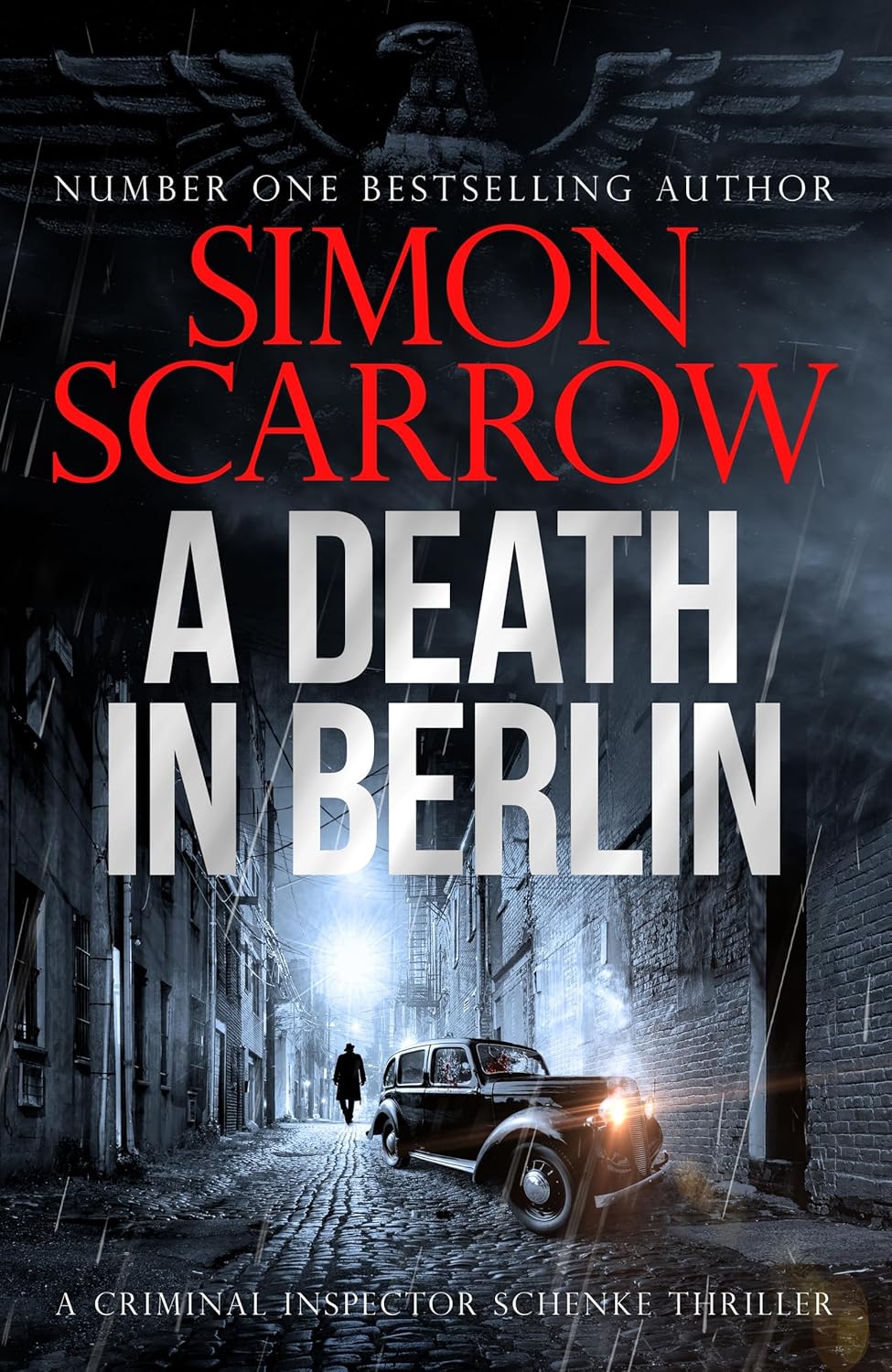
A Death in Berlin by Simon Scarrow

Publisher: Headline (Trade Paperback – 11 March 2025)

Series: Berlin Wartime/Criminal Inspector Schenke Thriller – Book Three

Length: 385 pages

My Rating: 4.5 out of 5 stars

Amazon

One of the world’s leading historical fiction authors returns with another intriguing and captivating historical murder mystery with the outstanding read, A Death in Berlin.

I have made no bones about the fact that I am a major fan of historical fiction author Simon Scarrow, who has been diving into awesome scenarios from history for over 20 years.  While I probably know him best from his outstanding Eagles of the Empire Roman historical fiction series (see my review for the latest entry, Revenge of Rome), Scarrow has also written some other amazing series, including his current ongoing Berlin Wartime Thriller novels.  Set in Berlin towards the start of World War II, the series follows a studious and troubled police detective as he attempts to uphold justice in a city overrun with murderous Nazis.  The first two books in this series, Blackout and Dead of Night, were both very impressive, and I have been eagerly awaiting this third novel in the series, A Death in Berlin, for some time.

Berlin, May 1940.  As the German army prepares for its invasion of France and Western Europe, crime still roams the street of Berlin, and it falls to CI Horst Schenke and his investigative Kripo to keep order and maintain justice, a job made markedly harder by the dark policies of their Nazi overloads.  Despite his own dislike of the Nazi regime, which grows increasingly suspicious of him, Schenke is determined to do his job, especially when it comes to the criminals controlling the streets.

Assigned to find the source of forged ration coupons that are disrupting the war effort, Schenke and his team find themselves investigating a growing gang war when a prominent black-market operator is gunned down in the dead of night.  Convinced that the gangster’s murder is related to the forged coupons, Schenke leads the Kripo into investigating the criminal underworld that lies beneath Berlin.

However, this is no ordinary gang crime.  A dark series of events have led to the death of their victim, and the Kripo investigators soon uncover a dangerous conspiracy to profit from the war.  Worse, the gangster they are chasing are protected by powerful Nazi leaders, and Schenke must continue to walk a fine line in avoiding their attention.  But when his enemies uncover his deepest secret, can Schenke survive with his honour intact, or will he need to make a dark deal to get what he wants?

A Death in Berlin was another excellent novel from Scarrow, who cleverly combines exciting crime fiction elements with a compelling historical setting.  Clever, action-packed, and constantly moving, A Death in Berlin was an outstanding read, and I think this might be his best Berlin Wartime Thriller novel yet.

I really liked the cool story that Scarrow came up with for A Death in Berlin, especially as this latest novel features a complex narrative revolving around Berlin gangsters and crime wars.  Starting off fast and getting into the heart of the case, readers soon become invested in finding out who was behind the killing of the gang leader and what impact it is having on the larger criminal underworld of Berlin in the leadup to the invasion of France.  Thanks to an excellent early shootout, the stakes of the book become even higher, as the protagonist finds himself in the middle of a gang war, which he is forced to navigate to solve the main mystery of the book.  Scarrow also continues to focus on the complex life of protagonist CI Horst Schenke, who constantly finds himself coming to the attention of his Nazi superiors, despite his dislike of the party and his secret romance with Ruth, a Jewish woman hiding out in Berlin.

Following this great initial setup, Scarrow takes the plot of A Death in Berlin in some outstanding directions, especially as there is quite a compelling mystery here, with multiple potential suspects and motivations for the murder, many of which lead to other alternate crimes investing the Nazi controlled city.  Scarrow cleverly reveals the involved parties at key parts of the book, and while there aren’t too many surprises, it was very interesting to see how everything tied together.  The final third of the book is probably the best, as the protagonist finds himself trapped by his own secrets and is forced to make compromises to keep those important to him safe.  This leads to a massive and intense final confrontation, as the protagonist risks everything with some unlikely allies in a brilliant, action-packed set piece.  The final revelations revealed during this climax brought the entire story together nicely, and I really appreciated how the tight and complex mystery was resolved.  This was an overall fun and exciting narrative, and one that is quite easy to power through quickly, especially once you get caught up in the mystery.

Scarrow did an outstanding job pulling together A Death in Berlin, as the novel was a compelling and exciting read with a lot of awesome elements behind it.  The author successfully blends an excellent murder mystery storyline around the intriguing historical elements of his series, showcasing the potential hurdles a police detective needed to face during the Nazi regime.  At the same time, there is a fantastic emotional heart to A Death of Berlin, as the protagonist continues his ill-advised romance with Ruth, while also being forced to once again confront the dark side of the government he is wilfully working for.  I felt that Scarrow perfectly balanced these elements throughout A Death in Berlin, and there is a little something for everyone here, including a ton of amazing action and firefights, as the protagonist attempts to bring down a dangerous collection of emboldened criminal gangs.  As such, this is a very easy book to get into and follow, and while there are some references to the previous Berlin Wartime Thriller novels, for the most part A Death in Berlin acts as an accessible standalone novel, which allows for a wider audience.

For me, one of the more intriguing elements of A Death in Berlin was the author’s excellent examination of life in Berlin during the early days of World War II.  Scarrow has always done an amazing job showcasing the uncertainty, fear and underlying issues of Berlin in the early days of the war in this series, and I enjoyed how he further outlined the tension involved with the pre-invasion of France.  The overarching fear that certain members of the public have with the Nazi regime is still a key part of the plot, and while the protagonist isn’t as directly targeted by the Nazis as he was in previous books, he still has to play by their twisted rules, especially when invited to a party of the Nazi elite, where he meets some very high-level members.  However, it was the focus on the criminal element infesting Berlin during these years that I found to be particularly fascinating, as Scarrow explores the potential scams, nightspots and other enterprises that would have been run in early wartime.  While coupon forgeries have been mentioned in previous novels, it was fascinating to see the entire novel focussed on the control of this valuable wartime currency, and it resulted in some truly compelling scenes.  Despite this being a more crime-fiction novel than a book examining hidden Nazi plots or killers, the influence of the Nazi government still plays a big role in the murder investigation elements of the book, especially as the protagonist and his colleagues must worry about high-level party members protecting the criminals.  These elements proved to be an outstanding part of the book, and I really appreciated how well Scarrow worked it into the main plot of the book.

As with the rest of the series, Scarrow does some excellent character work in A Death in Berlin, bringing together a complex cast of characters to work the case, each of whom are dealing with their own issues associated with Nazi-controlled Germany.  The most prominent of these is the protagonist and main point-of-view character, CI Horst Schenke, a former race car driver turned police investigator.  While generally shown to be a studious and steadfast lawman, Schenke’s life has become even more complicated due to his growing dislike of the Nazis and his refusal to join the party, much to the displeasure of his superiors.  It is fascinating to see the seemingly strait-laced Schenke walking the line between doing the right thing and surviving the Nazis, especially as he has fallen in love with the fiery Ruth, a Jewish woman who has managed to stay hidden in Berlin after the first purges.  Many of Schenke’s more radical actions in this book are driven by his complicated relationship with Ruth, and you really grow attached to both characters, especially when their secret relationship causes great risk for them. 

Other great characters A Death in Berlin include Schenke’s main police backup, Sergeant Hauser and former Gestapo agent Liebwitz.  These two prove to be an excellent double act behind Schenke, as not only do the three form an effective crime fighting force, but they also showcase alternate viewpoints of Germany during this period.  Hauser is a former World War I soldier and family man, who is the classic everyman figure who supports the Nazi regime.  Despite this, he merely wants to support his country and has some doubts about the more extreme actions of Hitler.  Liebwitz is a more unusual figure, who honestly steals the show in some ways.  An exceedingly logical figure who has gravitated away from the Gestapo to be a police investigator, Liebwitz finds his life still bound by his Nazi training, despite the many flaws he sees in it, and he is well used as a compelling alternative point-of-view character.  However, as with the previous book, the influence of Schenke and the investigation of crimes that show the true evils of the Nazis are slowly changing Liebwitz’s way of thinking, and it will be fascinating to see where Scarrow takes his character arc in the future.  Throw in a series of entertaining and over-the-top Berlin criminals and the cast of A Death in Berlin is quite entertaining, and I really enjoyed how their complicated arcs impacted the overall narrative.

Simon Scarrow continues his outstanding Berlin Wartime Thriller series in a massive way with the captivating and impressive novel, A Death in Berlin.  Combining a great crime fiction narrative with a clever historical background setting, A Death of Berlin proved quite addictive, and I had an incredible time getting through it.
Amazon

Quick Review – Death on the Tiber by Lindsey Davis

Publisher: Hodder & Stoughton (Trade Paperback – 9 April 2024)

Series: Flavia Albia – Book 12

Length: 380 pages

My Rating: 4.75 out of 5 stars

Amazon

Those in the mood for a clever murder mystery in ancient Rome look no further than the 2024 entry in the long-running Flavia Albia series with Death on the Tiber by Lindsey Davis.

I am a huge fan of historical fiction, and one of my favourite ongoing historical series is the outstanding Flavia Albia books by veteran author Lindsey Davis.  The Flavia Albia books, which are a sequel series to the author’s long-running Falco series, follow a determined private investigator in ancient Rome who takes on a range of complex cases and murder investigations, often encountering many of the city’s over-the-top inhabitants.  I have had an amazing time reading this series over the years, including The Third NeroPandora’s BoyA Capitol DeathThe Grove of the Caesars (one of my favourite books of 2020), A Comedy of TerrorsDesperate Undertakings (one of my favourite books of 2022) and Fatal Legacy.  As such, I try to read every new Flavia Albia book that comes out, and after accidently avoiding it for much of 2024, I recently finished off the 12th book in the series, Death on the Tiber.


Plot Synopsis:

Rome is in chaos. The empire of a mobster chief is falling apart following his death. Rivals, fearsome relatives and associates are taking up position to vie for the spoils.

With hideous murders in the streets of Rome, a lone female traveller arrives with an agenda of her own. But when her corpse is dragged out of the river bearing signs of foul play, Flavia Alba is drawn in, concerned about her fellow Briton’s fate.

Alba’s quest to find the killer becomes deeply personal when she discovers a man at the centre of the plot is an old adversary of hers. Will she be obsessed by revenge? Can she let the past go, or will it consume her?

Death on the Tiber was a great addition to the Flavia Albia series that features its own distinctive crimes, while also cleverly tying into several of the author’s previous Falco and Flavia Albia books. 

The plot of Death on the Tiber is very compelling, as the protagonist, Flavia Albia, finds herself drawn into the investigation of a murdered tourist pulled out of the Tiber.  However, the case becomes personal for Albia when she discovers the victim’s connection to the gangster Florius, an old foe of her fathers, who years before committed unspeakable evils against Albia and who may have finally returned to Rome.  Determined to finally hunt down Florius and make him pay for his crimes, Albia begins her investigation and soon finds herself embroiled in a deadly gang war that could tip the balance of Rome’s underworld.  Forced to compete with a range of interested parties, including her own vengeful father and uncle, the Roman military and several gangsters and their families who Flavia has previously encountered through her work, the protagonist slowly begins to piece together the events that lead to the victim’s death and the connection to her quarry’s current location.

This proved to be a highly personal and complex entry in the series, and one that I felt served as a love letter to the author’s prior works.  A huge range of characters from previous Flavia Albia novels, as well as major figures from the preceding Falco books, are featured throughout Death on the Tiber as the author takes the opportunity to tie together a range of ongoing storylines related to a major antagonist of the Falco books.  This allows for quite a fascinating read, especially for those readers familiar with the previous works, and it was awesome to see Davis bring together a compelling cast of returning figures. 

The plot moves in some interesting directions as the book nears the end, and Davis adds in a range of compelling layers to the case, including disgruntled mobster wives, a big gang war for the control of Rome, and alternating bands of Roman officials seeking to disrupt events.  The conclusion for the book proves to be very emotionally charged, especially as the protagonist comes face to face with her biggest monster and finally gets some closure.  The main mystery of Death on the Tiber is also extremely well written and utilised, and Davis does an excellent job tying in a lot of the novel’s leads and investigative plots into the main hunt for the returning Florius.  While the reveal of the ultimate culprit behind the killing isn’t especially surprising, the way in which Davis addresses their fate is particularly impressive, and it leads to a very fun final moment in the book.  I loved this last little twist, which I honestly think tied the book together very nicely, and it certainly was one of the moments that has stuck with me since finishing Death on the Tiber off.

This ended up being another strong Flavia Albia book as Davis continues to utilise her trademark style in Death on the Tiber.  Focused primarily through the sarcastic and cynical Flavia, Death in the Tiber evolves into a twisty hunt for answers, that brings together mystery, criminal intrigue, and the protagonist’s various personal connections.  Davis has a very compelling way of writing her stories, and her examinations of Rome through the protagonist’s eyes are often light-hearted, sarcastic, and applying modern mentalities to the ancient society.  This results in an impressive read, especially as Davis lays down an exceptional combination mystery and revenge-focussed narrative.  While I really enjoyed how well Davis revisited multiple previous books from both the Falco and Flavia Albia series, it does mean that readers do need a bit of pre-knowledge of these earlier works to fully appreciate Death on the Tiber’s plot.  Davis does provide some much-needed context at times, which will allow some new or forgetful readers to enjoy this book, but I personally think that people should have at least read the last few Flavia Albia books before Death on the Tiber to really get this book.

Despite the series’ general comedic vibe, Death on the Tiber gets very dark at times, especially as the protagonist is forced to revisit her traumatic history.  The author does an excellent job of diving into Flavia’s trauma and pain on the subject, and it was nice for this compelling protagonist to finally get some closure.  Davis nicely balances some of these darker moments by including an extensive cast of eccentric characters, many of whom are continuing their storylines from both the Falco and Flavia Albia series, and there are some very fun moments scattered throughout Death on the Tiber as a result.  This includes a fun competitiveness with Flavia’s father, Falco, a dive into some other important parental figures in her life, as well as her very strong relationship with her supportive and relentless husband.  I personally loved the return of all the various major gangsters Flavia has dealt with over the years, and it was fun to see her try to investigate them after prior experiences.  However, two of Flavia’s female relatives end up stealing the show in Death on the Tiber, especially at the end where they showed an ironic sense of justice.  An overall great extended cast that served to connect this book to the larger series in some outstanding ways.

With Lindsey Davis’s typical impressive writing and a cool plot laden with mystery and criminal intrigue, Death on the Tiber was an amazing entry in one of my favourite historical fiction series.  Entertaining, addictive and very moving, Death on the Tiber had me hooked from the very beginning, and I wish I’d read it sooner.  I look forward to continuing the Flavia Albia series this year, especially as Davis has a cool book coming out in April set around the ruins of Pompei with There Will Be Bodies.

Amazon

Waiting on Wednesday – A Death in Berlin by Simon Scarrow

Welcome to my weekly segment, Waiting on Wednesday, where I look at upcoming books that I am planning to order and review in the next few months and which I think I will really enjoy.  Stay tuned to see reviews of these books when I get a copy of them.  In this week’s Waiting on Wednesday, I check out an epic upcoming historical murder mystery with A Death in Berlin by Simon Scarrow.

Amazon

Readers of this blog will know that I am a massive fan of historical fiction author Simon Scarrow, whose various books set across multiple historical periods has produced some gripping and fantastic reads.  I am primarily a fan of his Eagles of the Empire series, the latest book of which, Revenge of Rome, I am planning to read next.  However, I am looking ahead with this post to the next Scarrow book coming out with A Death in Berlin, the third book in the author’s Berlin Wartime thriller series.

The Berlin Wartime books are an addictive and captivating series that focus on dark murder investigations in Berlin during World War II.  Following CI Horst Schenke, a Kripo investigator and one of the few good cops left in the city, the series sees the protagonist investigate sinister murders that occur against the backdrop of the war and the Nazi regime.  Inevitably, Schenke runs up against powerful Nazis and members of the SS as the major crimes he investigates skirt the dark secrets of the Nazi government.  The first two books in this series, Blackout and Dead of Night were impressive reads that expertly combined compelling narratives with the ominous historical setting and produced some amazing books.  As such, I make sure to keep a close out for any additional books in the series, and it looks like we are going to be blessed with a new entry in the series in 2025 with A Death in Berlin.

A Death in Berlin, which is currently set for release in March 2025, will once again force Schenke to take up a risk-laden investigation likely to put him at odds with his Nazi masters.  This new book will see Schenke go up against corrupt and protected gangster running crime in Berlin, while war rages all around.

Plot Synopsis:

BERLIN. MAY 1940. AS HITLER PREPARES TO INVADE WESTERN EUROPE, THERE IS BLOODSHED CLOSER TO HOME

CI Horst Schenke is an investigator with the Kripo unit. Powerless against the consequences of the war, he fights to keep criminals off his patch. But with doubts growing about his loyalty to the Nazi regime, he is walking a tightrope. If his relationship with a Jewish woman is exposed, a dreadful fate awaits.

Berlin’s gangsters run their crime rings with impunity. Decadent senior Nazis protect them. Schenke is different. He won’t turn a blind eye when innocents are caught in the crossfire between warring gangs. But dangerous enemies know everything about him. They will do whatever it takes to bend him to their will . . .

From the seedy wartime nightlife scene to aristocratic homes frequented by the Führer, as the distant war spirals ever closer, A Death in Berlin conveys the horror and banality of evil – and the terrible danger for those who dare stand against it.


A Death in Berlin
sounds like another amazing novel from Scarrow, and I am very excited to dive into this new murder mystery.  The first two books in this series have been outstanding, and I look forward to seeing some of the ongoing storylines continue as the moral protagonist attempts to deal with the evils of the regime that hold power in his country.  I am also intrigued to get a closer look at the German crime rings in action during the war, and this will likely lead to another clever and complex murder investigation.  I have no doubt Scarrow will tie the crime fiction elements of this book around some interesting historical elements, and I cannot wait to see how this elaborate and exciting story will unfold.

Based on how much I have enjoyed the first two novels in this series, there is no way that I won’t be grabbing A Death in Berlin next year.  Simon Scarrow is such a good author, and I have really enjoyed his impressive Berlin Wartime novels, especially as it allows him to explore wartime Berlin through the eyes of a conflicted protagonist.  I am very curious to see how this new story will unfold, and I have no doubt I am going to find it fascinating and compelling.  A Death in Berlin is currently one of my most anticipated historical fiction novels for next year, and I will dive into it the first chance I get.

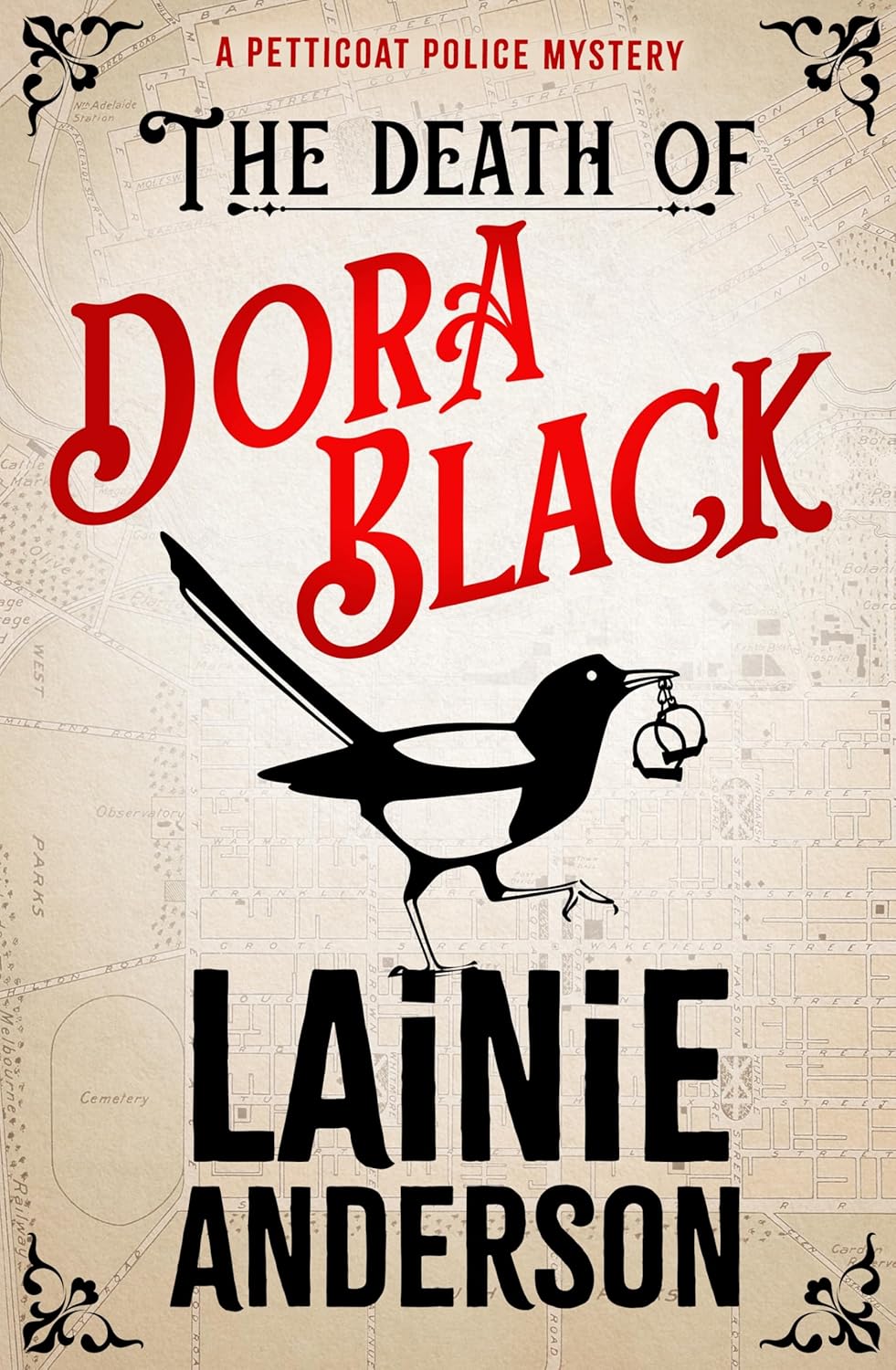
Quick Review – The Death of Dora Black by Lainie Anderson

Publisher: Hachette Australia (Trade Paperback – 28 August 2024)

Series: Petticoat Police Mystery – Book One

Length: 312 pages

My Rating: 4.25 out of 5 stars

Amazon

Australian author Lainie Anderson presents a fun and compelling historical murder mystery that looks at a unique Australian historical figure with The Death of Dora Black.

Plot Synopsis:

Summer, Adelaide, 1917. The impeccably dressed Miss Kate Cocks might look more like a schoolmistress than a policewoman, but don’t let that fool you. She’s a household name, wrangling wayward husbands into repentance, seeing through deceptive clairvoyants, and rescuing young women (whether they like it or not) with the help of a five-foot cane and her sassy junior constable, Ethel Bromley.

When shop assistant Dora Black is found dead on a city beach, Miss Cocks and Ethel are ordered to stay out of the investigation and leave it to the men. But when Dora’s workmate goes missing soon after, the women suspect something sinister, and determine to take matters into their own hands. After all, who knows Adelaide better than the indomitable Miss Cocks?

*In 1915, Fanny Kate Boadicea Cocks became the first policewoman in the British Empire employed on the same salary as men. This novel is a rich exploration of that little-known chapter of Australian history.*


The Death of Dora Black
was a particularly interesting and entertaining read from Lainie Anderson, who has struck upon a fascinating figure to set her book around.  The first book in Anderson’s new Petticoat Policy Mystery series, The Death of Dora Black was a clever novel that blended the real-life history of the infamous Miss Kate Cocks with the author’s own crime fiction narrative.

Starting out in Adelaide, 1917, the book’s story sees formidable real-life police officer Miss Kate Cocks become embroiled in a deadly murder mystery when shop assistant Dora Black is found dead on the city’s beach.  What follows is an excellent story that blends the historical exploits of Cocks, which included helping the needy of Adelaide in her own unique way and attempting to save the morality of the young women of the city with her cane, with a gritty informal murder investigation.  This later investigation of course adds most of the meat to the story, as Cocks, and her junior constable Ethel Bromley, uncover a dark conspiracy of murder, drugs and kidnapping, with its roots deep in the heart of the city.

Anderson brings these disparate elements together into a fantastic overall read, and it was fascinating to see the more cozy and historical elements you would associate with Kate Cocks and her real-life actions blend with a darker murder plot.  I felt that Anderson’s main murder mystery was very well set out, and the resulting investigation by two underestimated women got quite thrilling and exciting.  There are some dark moments and intriguing twists featured throughout this plot, and Anderson produces a particularly powerful crime fiction narrative.  The entire murder mystery and the investigative arc came together extremely well, and I really enjoyed seeing Anderson’s unique protagonists trying to solve the case in their own unique way.  The background setting of Adelaide during World War I also added quite a lot to the narrative, and the author provided a complex and detailed recreation of the historical setting.

The real highlight of The Death of Dora Black was the intriguing main protagonists, Miss Kate Cocks and her junior constable Ethel Bromley.  The two protagonists play off each other extremely well throughout the course of the novel, and the blend of personalities, with the strict but caring Kate and the sassy and exceedingly keen Ethel, proved to be a winning combination.  Readers will particularly enjoy Anderson’s portrayal of Miss Kate Cocks in this book, especially as the author tried to capture all this unique figures’ quirks and historical reputation.  Anderson, who is a major expert on Kate Cocks, paints her as a particularly complex and conflicted figure driven by her religious principals but also willing to do the moral choice and help anyone in need.  It was fascinating to see Miss Cocks wander around historical Adeliade, distributing her moral judgement with her cane, while also solving problems no-one else can.  Anderson succeeded in capturing various aspects of her occasionally controversial history, and I really appreciated the way in which she converted her into a fearsome crime-fighting force, capable of hunting down murderers and drug smugglers.  The utilisation of this very distinctive figure helped to turn The Death of Dora Black into something very special, and I look forward to more exploits with Miss Kate Cocks in the future.

Overall, I felt that The Death of Dora Black was an amazing and highly entertaining novel from Lainie Anderson, who successfully brings her real-life historical protagonist to life and sets a wonderfully enjoyable crime fiction book around her.  Clever, fascinating, and with a lot of crossover appeal to many different readers, The Death of Dora Black was a great book, and I had a ton of fun getting through it.

Amazon

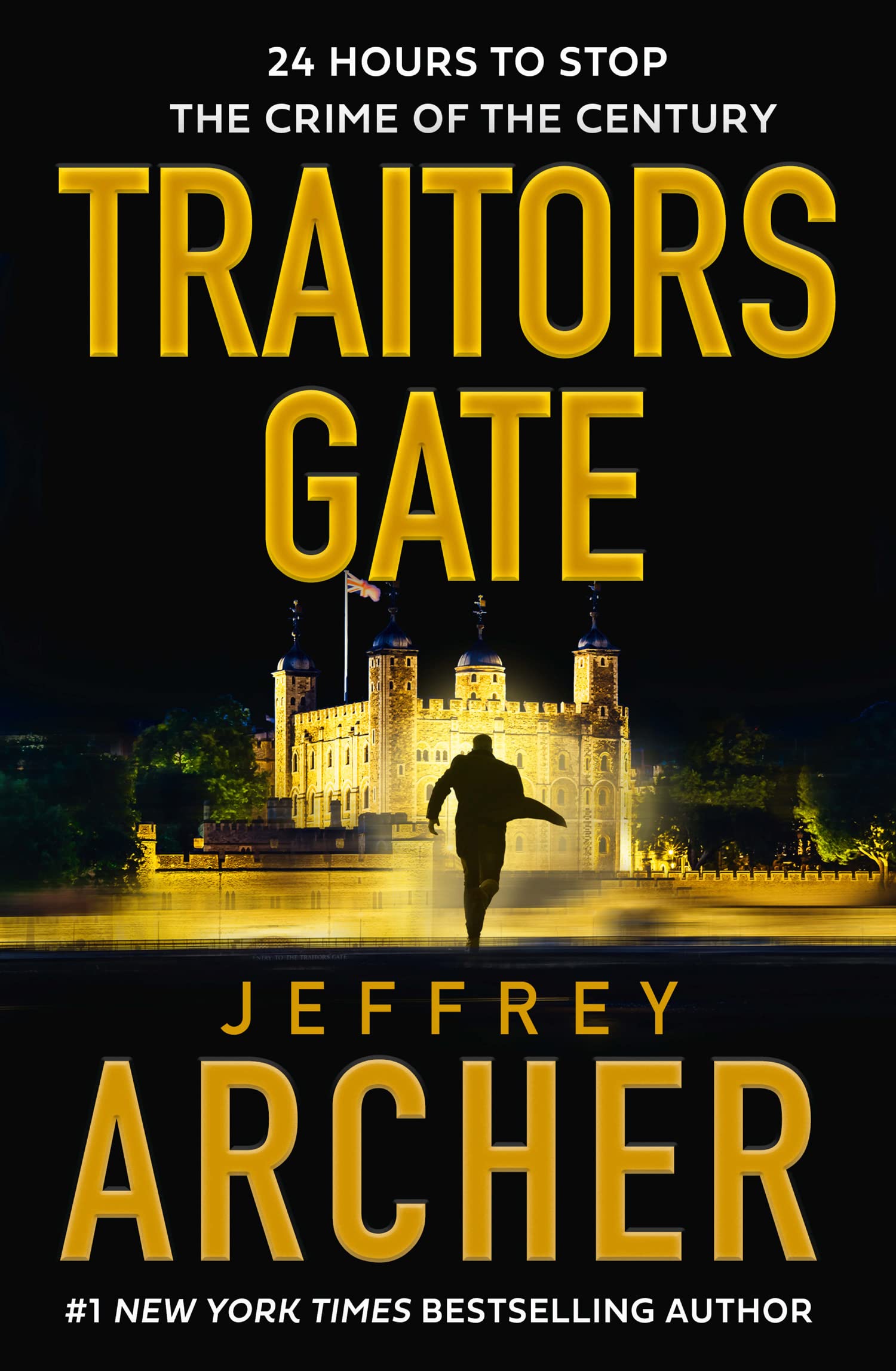
Traitors Gate by Jeffrey Archer

Traitors Gate Cover 2

Publisher: Harper Collins (ebook – 26 September 2023)

Series: William Warwick – Book Six

Length: 384 pages

My Rating: 4.5 out of 5 stars

Amazon

Bestselling author Jeffrey Archer returns with another exciting addition to his fun and compelling William Warwick series with Traitors Gate.

Jeffrey Archer is a well-known and interesting British figure: a former politician, a convicted criminal, a life peer and member of the House of Lords.  However, these days Archer is best known as a bestselling author, having written a large catalogue of novels that usually contain a historical or thriller element to them.  Some of his works include the Kane and Abel series, his well-known Clifton Chronicles and a range of standalone books like Heads You Win.  I particularly enjoy the William Warwick series, which is a fun and entertaining collection of historical thrillers.

The William Warwick novels, which originated within the fiction universe of the Clifton Chronicles series, follows the life and career of titular protagonist William Warrick, an idealistic London police officer who rises through the ranks while solving a series of dastardly crimes.  This series, which is defined by its character-driven plots, new criminal focuses for each novel, and the protagonist’s bitter rivalry with a notorious crook, are always very entertaining and feature some compelling stories.  I personally really enjoyed the first three books in the series, Nothing Ventured, Hidden in Plain Sight, and Turn a Blind Eye, although I unfortunately missed the next two books in the series.  Luckily, I was able to grab a copy of the upcoming sixth William Warwick book, Traitors Gate, which honestly might be one of the best entries in the series.

London, 1996.  There is nothing more sacred nor valuable in the entire realm than the crown Jewels of England.  Kept secure within the Tower of London, the jewels are only brought out once a year for the Queen to attend the State Opening of Parliament.  Providing security for the transfer between the Tower and the palace is one of the most important jobs done by the Metropolitan Police, and this vital duty is now overseen by Chief Superintendent William Warwick and his crack team.  Thanks to all the elaborate precautions around the transfer, the jewels are considered unstealable, but there is one audacious crook who is about to prove them wrong.

For years, William has sought to bring down notorious criminal mastermind Miles Faulkner, a gentleman thief and deadly rogue who has brought nothing but misery to William’s friends and family.  But despite the best effort of William and the men under his command, Faulkner has always managed to elude justice as he continues to hatch his despicable plots and thefts.

However, Faulkner also has a vengeful streak, and when William manages to finally get one over on his rival by recovering a stolen artwork, Faulkner decides it is time to get his final retribution against William and everyone close to him.  Pulling together a team of rogues and villains, Faulkner sets in place his boldest plan yet: steal the Crown Jewels and ruin the career of William and the other police involved in its protection.  Can William stop this plan before everything he loves is destroyed, or has Faulkner finally won their decades-long game of cat and mouse?

Archer continues to impress with his latest William Warwick book, which honestly had me hooked the entire way through.  An intriguing continuation of his fun ongoing series, Traitors Gate was a great character-driven thriller that was fun from start to finish.

Traitors Gate has a great story to it that expertly combines existing storylines from the series with an excellent and wildly entertaining new plot.  Once again focusing on protagonist William Warwick and fantastic antagonist Miles Faulkner, Archer sets up a great story that takes their rivalry to a new level.  The author does an outstanding job of setting this up, with the early parts of the novel recapping key events from the previous William Warwick novels whilst highlighting the protagonist’s current role in protecting the Crown Jewels.  The first half of Traitors Gate follows some intriguing story threads focused on several key existing characters that eventually lead to William getting one over on Faulkner in their long-running feud.  This first half of this book is very entertaining, especially as the rivalry between the protagonist and antagonist is so damn fun, and you really get drawn into the unique and continuing character stories.

The second half of the book really amps up a notch as Faulkner initiates a series of elaborate and daring revenge plots against those who wronged him, while also setting up his master heist.  These various storylines, which include a con job and a fantastically fun court sequence, work together well to tell an excellent overall story, and they play into the build-up for the big conclusion extremely well.  However, the crown jewel (pun intended) of the plot has to be the great heist scene, which was so damn tense and exciting.  Archer sets the entire thing up perfectly, and by constantly switching back and forth between various characters on both sides, you get quite the intense and captivating sequence.  This entire heist is a ton of fun from conception to implementation and leads to a compelling final part of the novel which sees the characters all desperately trying to come out on top.  The various elements of this, from the fun characters involved, the multiple elaborate steps the antagonists take, and the ticking clock the protagonists need to beat, are designed to keep the reader on their toes, and I had such a fun time seeing everything unfold.  The entire story honestly comes together extremely well, and frankly this was one of the more impressive and addictive stories that Archer has come up with yet.

Archer pulled this excellent story together in his typical style that focuses on the characters and makes great use of quick jumps between various perspectives.  I loved the multiple fantastic storylines that emerge as a result, and the author does a great job of balancing the various elements and character arcs.  Archer also proves very apt at building suspense and laying down the ground work for the key sequences for his story where the real magic happens.  Watching some of the more impressive scenes, such as the excellent entertaining court sequences (which are generally the highlight of all the William Warwick books) and the brilliant heist, are so much fun, and you really appreciate the planning and build-up he puts into it.  The author also makes excellent use of the 1990s London setting for the majority of the plot, and I have really enjoyed how the William Warwick books have moved from the 80s to the 90s, incorporating real-life events as they go.  The 1996 election plays a key role in the plot of Traitors Gate, and I loved the historical colour that Archer added to the plot, including a great in-story presentation about Colonel Blood and his own infamous Crown Jewel heist.  I also really need to highlight the way that Archer makes each of his novels inclusive and open so that new readers can easily dive into Traitors Gate.  Thanks to some quick and effective recaps and reintroductions, new readers can start the series at Traitors Gate without any issues, and indeed even after missing the last two books in the series, I was able to dive in without any pause at all.  This book comes together so well and I had a great time reading it.

I really need to highlight the fantastic and outrageous characters the plot of Traitors Gate follows.  Throughout the course of six William Warwick books, Archer has built up quite an intriguing cast of characters to follow, and he does an excellent job of breaking up the story between them.  There is a notable divide between the protagonists and the antagonists throughout the course of Traitors Gate, and watching the cast play off each other with their moves and countermoves is exceedingly fun.  Each of the protagonists, especially the police characters, are very righteous in their dealings (William goes by the nickname “Choir Boy”, for example), although they aren’t averse to breaking the rules if it gets them justice, which makes for some great scenes.  However, it’s the baddies are the ones who really make the book extremely entertaining.

Archer has done such a great job building up main antagonist Miles Faulkner throughout the course of the series, and the elaborate and spiteful rivalry he forms with William and his friends drives so much of the plot.  Faulkner honestly steals every scene he is in with his elaborate schemes, villainous persona, and sheer petty hate of the protagonists, and I have so much fun following throughout the book.  I also have a lot of fun with secondary antagonist Booth Watson QC, Faulkner’s lawyer, who seems to act for every criminal and villain in the William Warwick series.  A morally corrupt lawyer who specialises in every devious legal trick you can think of, Watson is nearly as bad as Faulkner, and he proves to be such a delightful thorn in the protagonist’s side.  Watching him legally manipulate and pontificate is so much fun, especially when he faces off against William’s straightlaced and proper father, Sir Julian Warwick, who he brings out the worst in.  These two characters are at their best when they face off against each other in the courtroom, and it so damn entertaining to see them get childish and outraged in the middle of a trail.  These characters, and more, add so much enjoyment to Traitors Gate and I look forward to seeing the epic rivalry between William and Faulkner continue in the future.

Jeffery Archer has produced a fantastic and awesome new addition to his always entertaining William Warwick series with Traitors Gate.  Featuring a fun and inventive narrative that makes great use of the bitter rivalries of Archer’s well-established cast, Traitors Gate is a highly addictive and exciting novel that has some outstanding moments to it.  Slick, hilarious and always compelling, Traitors Gate is an amazing novel that is well worth checking out.

Traitors Gate Cover

Amazon

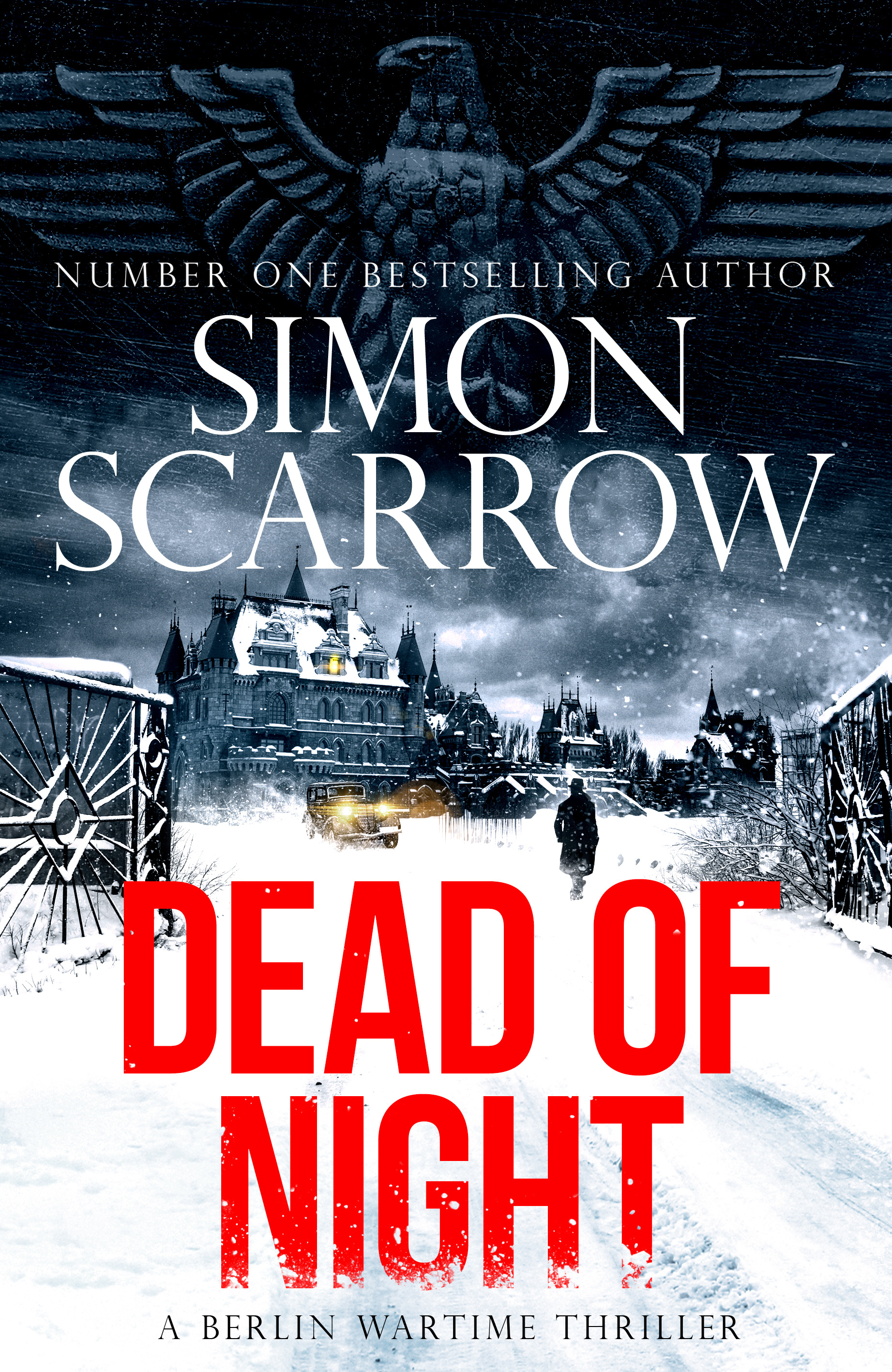
Dead of Night by Simon Scarrow

Dead of Night Cover

Publisher: Headline (Trade Paperback – 14 February 2023)

Series: Berlin Wartime Thriller – Book Two

Length: 422 pages

My Rating: 4.75 out of 5 stars

Amazon

One of my favourite historical fiction authors, the always impressive Simon Scarrow, dives back into turbulent World War II Germany with his latest compelling read, Dead of Night, an excellent and intense historical thriller with a dark twist to it.

Readers of this blog will know that I have long been a fan of Simon Scarrow ever since I read his first exceptional novel many years ago.  I particularly enjoy his long-running Eagles of the Empire series, an outstanding adventure series that follows two Roman officers as they travel throughout the empire.  The Eagles of the Empire books are some of the best historical fiction I have ever read, and I have had the pleasure of reviewing several of them, including The Blood of Rome, Traitors of Rome, The Emperor’s Exile, The Honour of Rome and Death to the Emperor.  Aside from his Roman novels, Scarrow has also written several other series and standalone books set in various periods of history.  This includes his 2021 release, Blackout, a gritty and complex murder mystery set in Nazi-controlled Berlin.  Blackout was an awesome book, and I was very happy to hear that Scarrow was producing a sequel, Dead of Night, which turned out to be another outstanding read.

Berlin, January 1940.  As Germany’s invasion of Poland rolls along, the Nazis continue to take complete control of their own country.  While the people of Berlin wait to see how the Allies will retaliate, a mysterious death is about to occur with massive ramifications.  A prominent SS doctor and his wife return home, having had a seemingly normal night attending a concert with the Nazi elite of the city.  However, by the morning, the doctor will be dead in his study, the result of an apparent suicide.

After his last near-fatal brush with the Nazi state, Criminal Inspector Horst Schenke of the Berlin Kripo is determined to simply do his job and stay off the party’s radar.  However, when Ruth Frankel, the Jewish woman whose life he saved during his previous investigation, reappears, Horst is once again dragged into unwanted trouble.  The dead SS doctor is an old friend of Ruth’s family, and Ruth has promised his widow that she would help find out the truth behind his death, and Horst is her tool to do so.

Reluctantly agreeing to help, Horst looks into the case and quickly realises that the doctor’s death was no suicide.  However, his superiors soon pull him off the investigation and forbid him from digging any further.  But with his curiosity peaked, Horst cannot turn away, especially when he manages to connect the victim to the mysterious deaths of several children throughout Germany.  Determined to find the truth no matter what, Horst soon discovers a terrible secret that places him in the firing line of the entire Nazi party and other volatile factions in the city.  Can Horst survive this new case, or will the regime he despises finally take him off the board?

This was an excellent read from Scarrow, who has been on a real roll lately with his awesome books.  Dead of Night not only served as an incredible sequel to Blackout, but it also features an intense and historically powerful narrative that had me hooked from the very beginning.

Dead of Night follows several of the same characters from the first book, primarily Criminal Inspector Horst Schenke, who serves as the main protagonist and point of view character, in another intriguing and complex case.  Schenke must again work with Ruth Frankel to investigate the apparent suicide of a prominent SS doctor, which produces an intriguing and compelling early investigation storyline that I really enjoyed.  However, Schenke soon runs into political problems, as well as threats of violence, which force him to conduct a subtle investigation.  At the same time, Schenke’s socially crusading love interest, Karin, requests that he look into the mysterious deaths of several children at a remote medical institute.  This second investigation takes up a good chunk of the novel and the protagonists dive into really starts to enhance the intensity of the plot.  This is because Scarrow starts to utilise particularly sinister elements of Nazi history in the plot, which ensures that the novel gets fairly dark in tone and content.  Scarrow is very subtle in how he brings these elements to the character’s attention, and there is a lot of emotion and disgust that emerges in the story as the protagonists realise what is going on.

From there the two divergent investigations start to come together as subtle clues that the author introduced in the first half of the book are brought to light again.  The revelation of how the two cases are connected is pretty captivating, especially as it gives the ‘antagonists’ of the novel a very compelling and relatable motivation.  The protagonist is forced to make some hard decisions as they come to terms with just what is going on and this leads to some great scenes about the differences between duty and what is right.  Everything leads up to an emotionally charged confrontation which cleverly brings the entire story together and wraps up all the remaining mysteries and character arcs.  This final major sequence is pretty damn awesome and it results in some of the most dramatic and powerful moments in the entire novel.  I really liked how the entire novel came together at the end, especially as the protagonist is left in several unenviable positions while he watches his country descend further into darkness.  I felt that the entire novel was very well paced out, and it doesn’t take long for the readers to get hooked on the story, especially with the two quality mysteries that Scarrow came up with.  The blend of mystery, dark historical moments, and intriguing character interactions is pretty perfect, and it works to create a memorable and haunting tale.  Combined with some of the great twists, many of which are based around evil parts of real-life history, and I felt that Dead of Night surpassed is predecessor in some very awesome ways

For me, the best thing about Dead of Night was the fantastic and distinctive wartime setting that surrounded the plot.  Stories set in Nazi controlled Germany are always intense and dark for obvious reasons, but I felt that Scarrow did a particularly outstanding job of capturing it, especially as he pairs the dark mood with a gritty winter backdrop.  Just like with Blackout, there is a focus on the evils of the Nazi regime in Dead of Night, and quite a lot of the plot is devoted to seeing how normal citizens, including non-political police officers, view what their city and country has turned into.  There is a good focus on the fear and control that the Nazis blanket the city with, and the investigation angles of the narrative become even more complex and compelling due to the protagonist being constantly blocked by his Nazi and SS superiors.  However, the best, or worst, historical elements of the book revolve around one of the cases that Inspector Schenke is dragged into, specifically around the death of several children.  This case thrusts the protagonist right into the heart of some of the darkest things the Nazis ever did to their own people, which really gives this entire book a powerfully tragic edge.  Scarrow uses this historical inclusion to his full advantage, as not only does it provide an excellent motivation for some of the crimes being committed, but it also increases the emotional conflict of the protagonist.  Scarrow really does not hold back when it comes to showcasing these historical horrors and the readers get a full idea of what is going on and the sort of people behind it.  This dark historical inclusion really helped to turn Dead of Night’s narrative into something particularly distinctive and captivating, and I felt that Scarrow did a fantastic job of drawing the reader in by giving them knowledge of this terrible moment from history.

I also need to highlight some of the excellent characters featured within Dead of Night, several of whom carry on from the previous novel in the series.  Most of the focus is around Inspector Horst Schenke, one of the few senior police officers left in Berlin without a connection to the Nazi Party.  Dedicated to the law, Schenke, a man already traumatised by his past, keeps finding it harder and harder to do his job in the new regime.  Despite his best efforts, Schenke keeps getting dragged into the middle of the several Nazi plots and hidden schemes, which constantly place him in political danger.  I loved the deep conflict that this builds within him as he is forced to choose between ignoring what he discovers, or trying to get justice and doing something.  Further complicating matters are his relationships with the two women in his life, his girlfriend, Karin, and the Jewish women he previously saved, Ruth Frankel.  Both keep pushing him to do more to oppose the Nazis or get to the truth of crimes they are covering up, and he is forced to balance his desires to help them with his sense of pragmatism while trying to protect them from the Nazis.

Other great characters in this book include Schenke’s police backup, Sergeant Hauser and former Gestapo agent Liebwitz.  These two are great supporting characters and they provide interesting counterviews to German life, with Hauser being a more everyman figure, while Liebwitz is bound up by his Gestapo training.  Despite the apparent differences between Hauser and Liebwitz, the two work together well and serve as good support to Schenke, and I liked the fun odd-couple team that they formed.  They also have some intriguing moments throughout the book, especially when they encounter some of the horrors of the Nazi regime.  While Hauser has some great emotional reactions, especially when it comes to the death of children, Liebwitz has the more intriguing responses, as he balances his loyalty to the state with his own past experiences and conscious.  Watching him come to terms with some of the evils he witnesses makes for some powerful reading and I am glad that Scarrow added in these intriguing alternate characters.  I also really enjoyed the complex main antagonists of the story, as they had quite a powerful motivation for some of the crimes committed in the book.  While they are not as noble as they believe, the antagonist’s goal still serves to trouble the protagonist’s sense of justice, and interesting compromises have to be made as a result.  I deeply appreciated some of the deep characters that Scarrow featured in this novel and I look forward to seeing how they are utilised in any future books in the series.

Simon Scarrow continues to impress me as one of the best historical fiction authors out there with this incredible new read.  Dead of Night has a brilliant and powerful story behind it that takes full advantage of its bleak and historically rich setting.  Featuring an outstanding investigation narrative and some dark insights into the horrors of the Nazi regime, Dead of Night will easily grab your attention and ensure you will not forget it anytime soon.  A highly recommended novel from one of my favourite authors.

Amazon

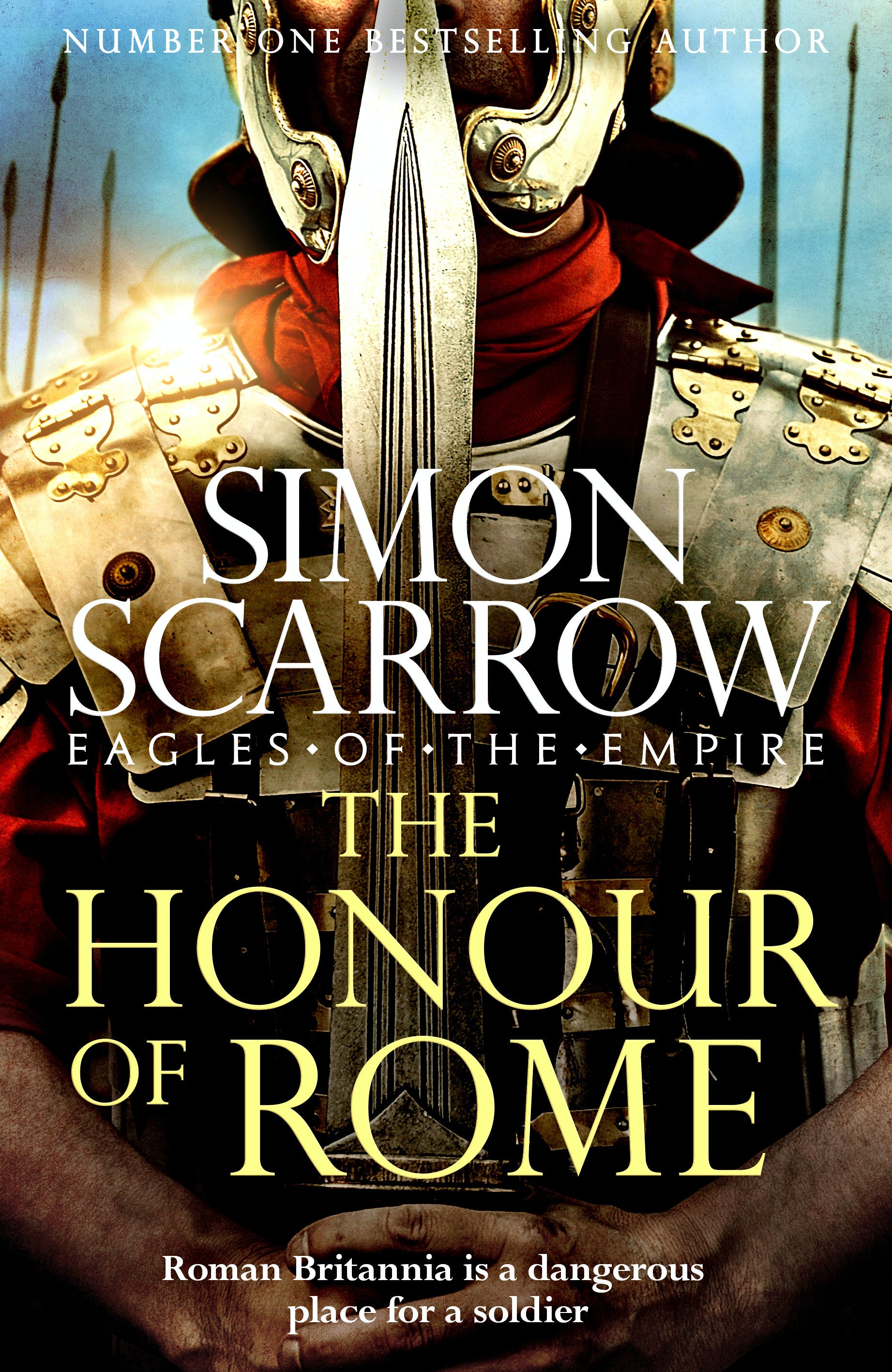
The Honour of Rome by Simon Scarrow

The Honour of Rome Cover

Publisher: Headline (Trade Paperback – 9 November 2021)

Series: Eagles of the Empire – Book 20

Length: 431 pages

My Rating: 4.5 out of 5 stars

Amazon

One of the best authors of Roman historical fiction, Simon Scarrow, returns with another exceptional adventure back in time with The Honour of Rome.

2021 has been a particularly good year for Simon Scarrow readers, as this acclaimed historical fiction author has released two fantastic novels.  The first of these, Blackout, was a clever historical murder mystery novel set in pre-war Nazi Germany, which contained a fantastic and impressive story.  While I deeply enjoyed Blackout, I was a little more excited for the next awesome entry in Scarrow’s long-running Eagles of the Empire series.  The Eagles of the Empire books follow two officers in the Roman army, Centurion Marco and Prefect Cato, as they fight in multiple battle fields across the Roman Empire.  I have been a major fan of this series for years and have had the pleasure of reading every prior entry in it, while also reviewing some of the latest entries, including The Blood of Rome, Traitors of Rome and The Emperor’s Exile.  As such, I was very excited when I received the latest entry in this series, The Honour of Rome, a couple of days ago, and instantly started reading it.  The Honour of Rome is the 20th novel in this series and takes its great protagonists on another intense adventure.

Britannia, 59 AD.  After retiring from the Roman Legions, former Centurion Marco has travelled back to Britannia 15 years after he helped conquer it.  Now a married man, Marco is hoping for a quiet life, enjoying the fruits of the successful inn in Londinium that he half-owns with his mother.  However, not everything is as calm as he hoped.  There are rumours about the tribes being restless once again, and the streets of Londinium are alive with criminal gangs.

Upon arriving at his mother’s inn, Marco discovers that she is being extorted for protection money by a ruthless gang.  Determined to stop this, Marco attempts to resist the gangsters, only to find himself outmatched and a potential pawn into the middle of a vicious gang war.  At the same time, Marco finds himself drawn into the defence of the colony, especially when one of the local tribes refuses to pay any more taxes.

After a bloody punitive raid with a group of veteran reserve soldiers, Marco returns to Londinium, only to face the consequences for his defiance.  Beaten and bloodied, Marco is unsure how to fight back until his old friend Cato appears.  Cato, who has left Rome without leave to hide Nero’s exiled mistress, is always willing to back Marco up in any sort of fight, and he has an ambitious plan to end the gang problem once and for all.  Will the team of Marco, Cato, and their veteran allies be enough to overcome the city’s vicious gangs, or have these proud war heroes finally met their match?

This was another awesome novel from Scarrow, who has once again produced an exciting and fast-paced historical fiction read that perfectly envisions the landscape of Roman-occupied England.  The Honour of Rome is a great read, and I loved the cool combination of historical and crime fiction elements throughout it.  I ended up reading this book in only a few short days and loved every second of it.

Scarrow has come up with another amazing and entertaining story for this compelling book, which takes his long-running protagonists on another intense and bloody adventure.  One of the things that I have always enjoyed about the Eagles of the Empire series is the range of different subgenres that can be blended with its historical fiction elements.  The Honour of Rome is a great example of this as Scarrow utilises a crime fiction based storyline that blends with the overarching historical elements extremely well.  The protagonist is swiftly drawn into a vicious confrontation with two warring gangs of criminals upon his arrival in Londinium, which proves to be an outstanding basis for the main storyline.  At the same time, he once again becomes involved in the Roman garrison’s ongoing conflicts with the local Britons.  This combination of crime and military elements is very effective throughout the novel, and I liked seeing the conflicts with both gangsters and rebellious natives.  This also allows Scarrow to bring in several solider characters into the main crime-fiction storyline as backup as the story progresses, and it was pretty fun to see a bunch of retired soldiers taking on the antagonists.  The author really sets up everything extremely well in this book, and there isn’t a moment of calm or quiet throughout the entire novel, as the protagonist gets involved in several intense and well-written fights and battle sequences.  I found the last third of the novel to be particularly exciting, especially as the protagonists attempt an ambitious and risky strategy.  This results in the predictable satisfying, if bloody, conclusion, and Scarrow has made sure to set up some cool new storylines that will no doubt be the basis for the next few books.  An enjoyable and action-packed thrill-ride from start to finish, I had a fantastic time reading this latest historical adventure.

One of the more interesting things about The Honour of Rome was the noticeable change in character focus that helped set it apart from the other Eagles of the Empire books, namely that it spent most of the narrative focusing on only one of the series’ protagonists.  This is not too surprising, especially as the previous book in the series, The Emperor’s Exile, focused on Cato to such a degree that I kind of assumed that Scarrow was planning to permanently retire Marco.  However, I’m pleased to say I was wrong about this, as two-thirds of this latest book is exclusively told from Marco’s perspective.  I had a great time following Marco in this novel, and it is always a lot of fun to see the gruff and hard-headed Centurion in action.  There are some great moments surrounding Marco in this novel, from being out of his depth when it comes to combating criminals rather than enemy soldiers, to his great camaraderie with the fellow veterans in the colony.  You also have to love the fun interactions that occur around him as he finds himself stuck between his strong-willed wife and his equally strong-willed mother.  This ended up being a really good Marco novel, and I deeply enjoyed it.  Of course, Cato does show up towards the end of the book, and the novel is soon back to its typical dynamic, with Cato taking tactical lead.  There are also some interesting long-term storylines surrounding Cato, especially as he has fled from Rome with the Emperor’s exiled mistress.  It was great to see this team in action once again, especially as they enact another madcap scheme, and I had another fun time following them.

I also rather enjoyed the cool historical setting featured within this great novel, as the protagonists once again return to Britannia.  Historical Britannia is a well-utilised setting in the Eagles of the Empire books, having been the location of several of the earlier novels, including the first five entries in the series.  It made me a little nostalgic to see this damp and gloomy setting once again, especially as it proves to be just as chaotic and violent as ever.  This book makes full use of its clever move from the more traditional battlefields of Britannia to the city of Londinium, and I loved the inclusion of a crime-ridden, early London, especially as Scarrow tries his best to show it in all its dark and rapidly expanding glory.  I also enjoyed the inclusion of the veterans’ colony that was a major secondary setting for much of the book.  It proved to be fascinating to follow these characters who have chosen to settle in this harsh country and spending time conquering it, and I liked their inclusion in the novel.  It was pretty cool to see these retired soldiers in reserve taking on enemies, both on a proper battlefield and against the criminal element, and I thought it was a fun and compelling inclusion to the story.  I also appreciated that, after several books, we finally get a continuation of the Boudica storylines that were set up in some of the earlier novels.  Scarrow is also clearly setting up Boudica’s rebellion for later in the series, and I cannot wait to see how our protagonists, with their established history with Boudica and her people, will fit into it.

With this awesome 20th entry in his amazing Eagles of the Empire series, Simon Scarrow continues to highlight why he is one of the absolute best authors of historical fiction in the world today.  The Honour of Rome has a brilliant and compelling story that perfectly blends historical and crime fiction elements together into one thrilling tale.  I had a wonderful time reading this great book, and I deeply appreciated the way in which Scarrow continues the adventures of his compelling characters by once again returning them to the familiar setting of occupied Britannia.  The Honour of Rome is another highly recommended historical read, and I cannot wait to see what happens next in this series.

Amazon

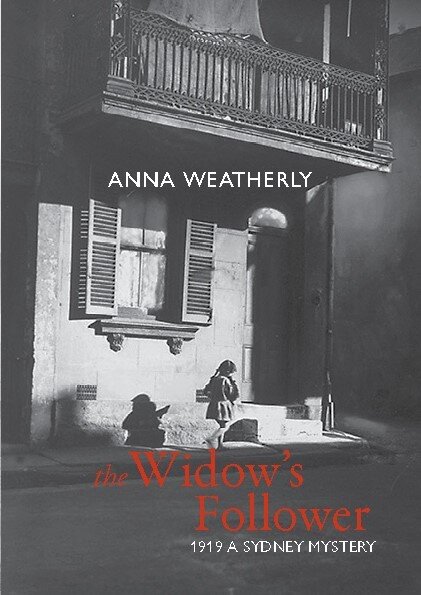
Quick Review – The Widow’s Follower by Anna Weatherly

The Widow's Follower

Publisher: Self-Published (Trade Paperback – 8 June 2021)

Series: Bermagui Mystery – Book Two

Length: 222 pages

My Rating: 4 out of 5 stars

Prepare for a quick and fun historical murder mystery with The Widow’s Follower, an excellent and compelling second novel from Canberran author Anna Weatherly.

Synopsis:

1919, Sydney.  No-one was shedding tears for the death of Roy Maguire, especially not his wife. She’d been hiding from him for the past five years and now she’d come back to reclaim her freedom. It should’ve been simple. So why was she finding herself the object of interest for half the criminals in Sydney? At first it was mystifying. Then it was terrifying.

This is the second novel involving May Williams, once the wife of Sydney crime figure Roy Maguire. This time May travels to Sydney where she finds that extricating herself from her abusive husband is a dangerous business, even when he’s dead.


The Widow’s Follower
is the second novel from Weatherly, following on from her 2018 debut, Death in the Year of Peace.  This series is a fantastic historical murder mystery series that follows a young woman in 1919 who takes the name May Williams and flees from Sydney to the small town of Bermagui to escape from her abusive, criminal husband.  The first book sets the scene for this series while also presenting a murder mystery as the protagonist attempts to uncover a killer in town.  This sequel is set right after the initial book and sees May return to Sydney after the death of her husband.

I really liked the interesting story contained within The Widow’s Follower, as it combines historical fiction elements with an interesting, gangster-filled mystery, as well as featuring some great character development.  Despite being relatively short for a novel, clocking in at just over 200 pages, Weatherly manages to achieve a lot in this book.  The Widow’s Follower primarily focuses on May being harassed by gangsters and criminals around Sydney as she attempts to settle her late husband’s affairs.  This gets complicated when it becomes apparent that before his death, her husband had stolen a great deal of money from his employers and managed to annoy all the big movers in town.  This forces May to investigate her husband’s last few days to find the money to save herself and her friends from these gangster’s ruthless attentions.  She also starts investigating the murder of her husband’s lover, a crime he was accused of before his death, as she cannot believe that even he could kill the father of his illegitimate child, whose welfare May also becomes concerned about.

This leads to an intriguing and extremely fast-paced story, as May is drawn into a twisted web of lies, manipulations and additional murders, while also trying to decide about her future.  There is an interesting blend of storylines contained within this novel, and I quite liked the exciting and dramatic directions that it went in, especially as May slowly gets closer to the truth.  May finds herself the target of several dangerous people from Sydney’s underbelly, each of whom is interested in her for all the wrong reasons.  At the same time, May’s friends back in Bermagui find themselves in danger, and this results in some compelling discussions about May’s future and whether she wants to stay in Sydney, where she has some chance at professional success, or return to the small town and pursue love.  These enjoyable storylines cleverly set up a massive twist about three quarters of the way through that I honestly did not see coming.  This cool twist changes everything about the novel, and I deeply appreciated how it was foreshadowed and the implications it has on the rest of the story.  The final part of the book is an intensely paced, as May finds herself in the middle of a dangerous conflict between some of the antagonists, while also reeling from some big revelations.  I really found myself glued to the final part of the book, especially as it contained some cool scenes, such as a multi-person chase throughout the streets of Sydney.  The book ends on a positive note, and it will be interesting to see where Weatherly takes the story next, especially as the protagonist’s storyline seems mostly fulfilled.

I also appreciated the cool setting of this novel, the historical city of Sydney in 1919.  Weatherly spends a significant amount of time exploring Sydney throughout the novel, and you end up getting a great sense of its size, layout and people during the early 20th century.  The author goes out of their way to try and emulate the historical version of this city, including by featuring clippings from real-life historical newspapers at the start of every chapter, a fun technique that I felt helped drag me into the moment.  Weatherly also spends time examining how recent world events had impacted the city, such as the recent Spanish Flu pandemic (very topical) and the slow return of Australian troops from the European battlefronts of World War I.  This fascinating setting added a lot to the authenticity and intrigue of The Widow’s Follower’s story, and it was really fun to explore this captivating historical locale.

Overall, I had a wonderful time with The Widow’s Follower, and I ended up reading pretty much the entire thing in one sitting.  Anna Weatherly came up with a clever and entertaining tale, and I had a great time getting to the bottom of the intense mystery that was featured within.  A fantastic and enjoyable piece of Australian historical fiction, this is a great book to check out and I look forward to seeing what this new author produces in the future.

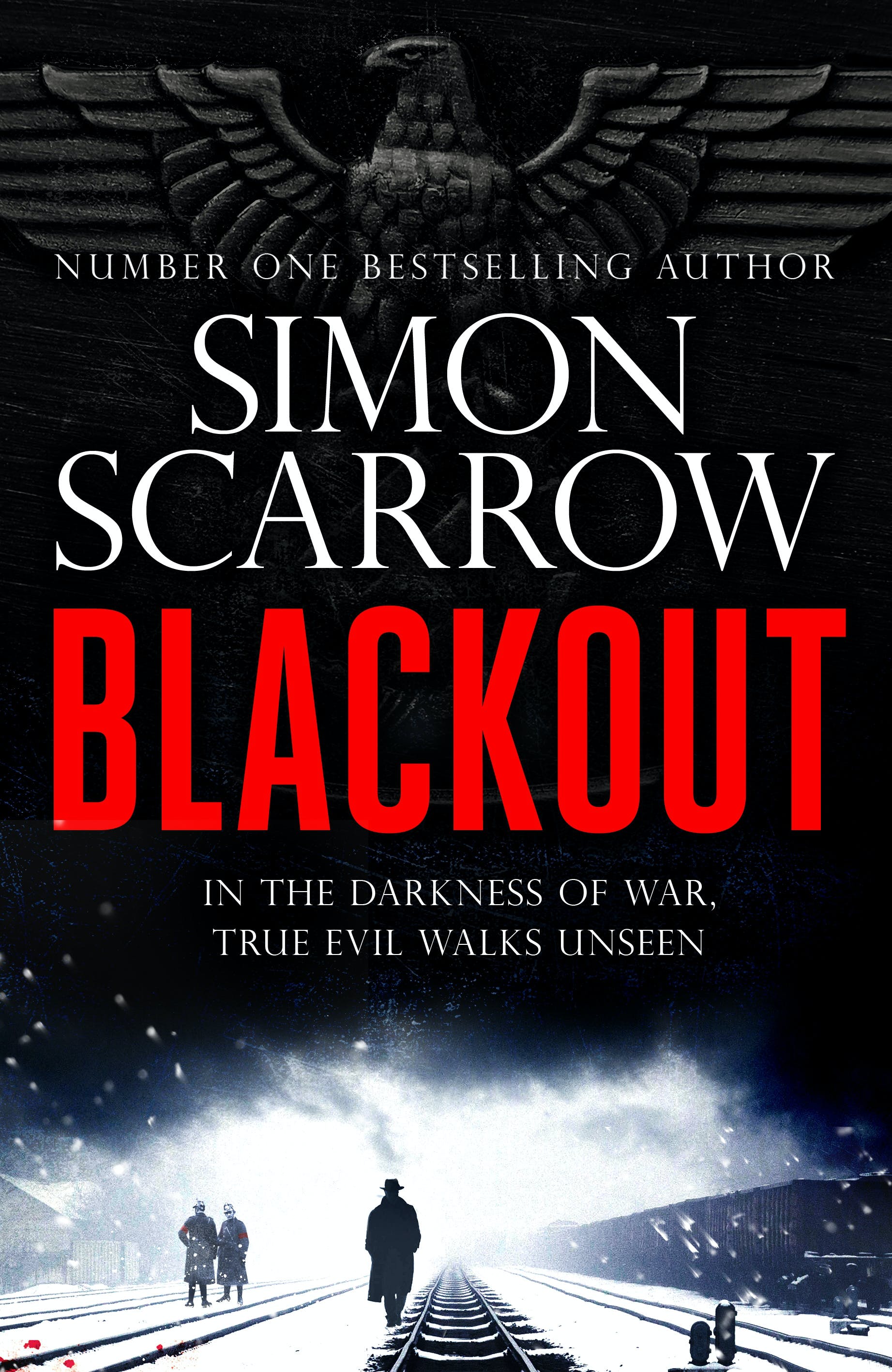
Blackout by Simon Scarrow

Blackout Cover

Publisher: Headline (Trade Paperback – 30 March 2021)

Series: Standalone/Book One

Length: 424 pages

My Rating: 4.5 out of 5 stars

Amazon     Book Depository

One of the leading authors of historical fiction, Simon Scarrow, breaks new ground in a thrilling and captivating historical murder mystery, Blackout.

Berlin, December 1939.  As the citizens of Berlin worry about a potential upcoming conflict with Britain and France, the Nazi party continues to sink their claws into every aspect of German society.  But as a bleak winter sets in and enforced blackouts plunge the city into darkness, a far more sinister threat begins to stalk the streets of Berlin.

A young woman has been found brutally murdered near a busy set of train tracks.  The victim is a former famous actress with a powerful husband.  Due to her marital connections, as well as a scandalous past with various high-ranking Nazi figures, including Goebbels, her case has dangerous political implications.  To that end, her case is assigned to Criminal Inspector Horst Schenke of the Kriminalpolizei, the Kripo, one of the few police officers not to join the party.  Due to his apparent disregard for the party and the importance of the victim, Horst is under intense pressure from the head of the Gestapo to solve this case.  However, what begins as an easy murder case swiftly devolves into something far more dangerous when a second body is found, and Horst is forced to face the reality that he is chasing a serial killer.

As the bodies of more young women are discovered, Horst rushes to find a killer before the government attempts to hush up the fact that a killer is loose within their perfect Nazi society.  But with the Gestapo interfering at every step and key suspects protected by the Abwehr, German Military Intelligence, this case proves difficult to solve.  When a survivor is found, Horst thinks this may be the opportunity to find the killer.  However, when the witness is revealed to be Jewish, Horst is forced to find a way to protect her from both the killer and the Gestapo.  Can Horst find the killer before it is too late, or will he discover that disloyalty to the Nazi government is considered a far worse crime?

This was another amazing novel from one of my absolute favourite authors.  Scarrow is best known as a Roman historical fiction author due to his long-running and impressive The Eagles of the Empire series, which I am a particular fan of (see my reviews for The Blood of Rome, Traitors of Rome, and The Emperor’s Exile).  However, Scarrow has also branched out into other historical periods with his Revolution quartet, the standalone novels The Sword and the Scimitar and Hearts of Stone, and a modern crime novel he wrote with his colleague Lee Francis, Playing with Death (which I really need to check out).  His latest book, Blackout, is an interesting change of pace from some of the previous Scarrow novels I have enjoyed, presenting a compelling murder mystery story with the dark historical setting of Nazi Germany.  Blackout, which was unfortunately delayed from last year, proved to be an excellent read, and I loved the complex and powerful story that Scarrow came up with.

Scarrow’s latest book has an outstanding narrative that starts with a Nazi social party scene quickly leading to the brutal murder.  This shocking opening in the dark of a blacked-out Berlin sets the scene for the rest of Blackout perfectly, and lets the reader know that they are in for an intense and dark tale.  The narrative then advances to the next day, with a great introduction to central protagonist Inspector Horst Schenke, who gets to showcase his deductive ability while also covering his personality and feelings about the Nazi government.  Once the case proper begins, Horst and his team are thrust into a lethal hunt for a serial killer, while also having to contend with the vicious politics and intrigue of the Nazi party.  Horst finds himself caught between the Gestapo, German Military Intelligence, and other influential Nazis, each of whom are attempting to manipulate the situation for their own ends.  This blend of mystery and dangerous political intrigue makes for a fantastic read, and I enjoyed the compelling balance that Scarrow produced.  The mystery itself is well crafted, with the author ensuring there is a complex and tangled web to unravel, with several promising suspects.  There are some very cool twists added into the plot, and I quite enjoyed the exciting conclusion and eventual reveal of the killer.  This is also a very effective standalone mystery, which would serve as a great introductory novel if Scarrow ever wanted to revisit this setting and characters in the future.  A series set around this book could go in some interesting directions, and I for one would be quite keen for that.

Easily the most captivating and fascinating part of this novel is the amazing historical setting that Scarrow used as the backdrop to his amazing mystery.  While several great mystery series have used World War II Germany as a setting before (the Bernie Gunther series by the late, great Philip Kerr comes to mind), I think that Blackout was a particularly good example of how it could be done, with Scarrow making sure that it really enhanced this already incredible story.  Scarrow skilfully works several fantastic and intriguing elements of this iconic setting into his narrative.  This includes the blacked-out winter streets and train lines of 1939 Berlin, which serve to hide the killer’s actions and ensures an easy hunting ground.  I also appreciated the air of worry and uncertainty that inhabited many of the characters as they are constantly left wondering if their country is heading towards a bigger war with Britain and France, not knowing of their government’s master plan.  There is also a certain amount of nationalism, patriotism and casual racism/anti-Semitism on the streets, which is a confronting and concerning aspect that the protagonist has to deal with.  There is also a fascinating focus on the way in which the Nazis infested all aspects of the German government and administration, particularly the police.  Inspector Horst is constantly butting heads with other members of the police force who were only promoted due to their party allegiances, rather than any skill or ability, which impacts the protagonists to successfully investigate his crime.  Add in the compelling depictions of German politics and Nazi interference that I mentioned before, and you have a very impactful and distinctive setting, which really helped to turn this crime novel into something very special.

Scarrow has a knack for creating some interesting and likeable characters, and this is certainly true for Blackout.  Inspector Horst is a fantastic protagonist, a former famous race car driver who experienced a traumatic crash several years ago.  He has since reworked himself as a talented police investigator and a rare man of honour in troubled times.  There is a lot to like about Horst, including his brilliant investigative skills, his courage in the face of danger, and his complete disregard for the Nazi leadership.  As one of the few senior police officers who has not joined the Nazi party, Horst is a bit of a black sheep amongst the ranks of his organisation, especially as he barely contains his disdain for the Nazis and what they are doing to his country.  This invariably leads him into a whole mess of trouble, which sees him in the crosshairs of the Gestapo and other Nazi figures, who seek to use his neutrality and skill for their own advantages.  I had a lot of fun following Horst throughout this novel, and it was great to see how a non-Nazi supporter would survive amongst the authoritarian ranks of German police in this period.  There are several great storylines surrounding this character, including about the trauma he is experiencing from his crash, as well as guilt at his failure to save the people closest to him.  I really enjoyed this character in Blackout, and it seems likely that Scarrow would have some very compelling storylines in place for this character if he ever revisited this series.

Aside from Horst, there are several other compelling side characters in this novel, which include a mixture of fictional characters and real historical figures.  One of the better characters is Ruth, the only apparent survivor of one of the serial killer’s attacks.  Ruth is a feisty and combative character, made so by her position as one of the few Jewish people still remaining in Berlin.  Despite being threatened by the entire German apparatus as well as a serial killer, Ruth remains strong throughout the book and is a very inspirational character to follow.  I also quite enjoyed the character of Liebwitz, a Gestapo agent assigned to Horst’s unit to spy on him and report back to the Gestapo commander.  However, Liebwitz proves to be a rather unusual Gestapo agent, more concerned with facts and analysis, rather than Nazi internal politics, and it was fascinating to see an honest and non-sociopathic member of the Gestapo.  While there is a lot of mistrust for Liebwitz in the beginning, he soon becomes a major part of the investigation, and Scarrow sets up some very interesting storylines for him.  Finally, I also quite enjoyed the killer of the story.  Several sequences in Blackout are shown from his point of view, although his identity is kept hidden towards the end of the book.  Scarrow paints an interesting picture of this killer’s mental state, and it was interesting to see his motivations run parallel to the goals of the Nazi party, which he uses to justify some of his actions, and indeed his actions are something that the Nazi leadership might approve of.  I felt that the author did a good job setting this antagonist up throughout the novel, and I rather liked the twist surrounding their eventual reveal.

Simon Scarrow continues to show why he is one of the leading authors of historical fiction with the outstanding and captivating historical murder mystery, Blackout.  Breaking into a whole new historical period and setting, Scarrow produces a fantastic and powerful murder investigation which makes amazing use of its complex characters and detailed historical setting.  Featuring all manner of twists, political intrigue and devious Nazi characters, Blackout was a compelling and intriguing read that comes highly recommended.  I cannot wait to get my next hit of Scarrow, and luckily I don’t have to be patient for long as the next Eagles of the Empire book, The Honour of Rome, is out in a few months time.

Amazon     Book Depository

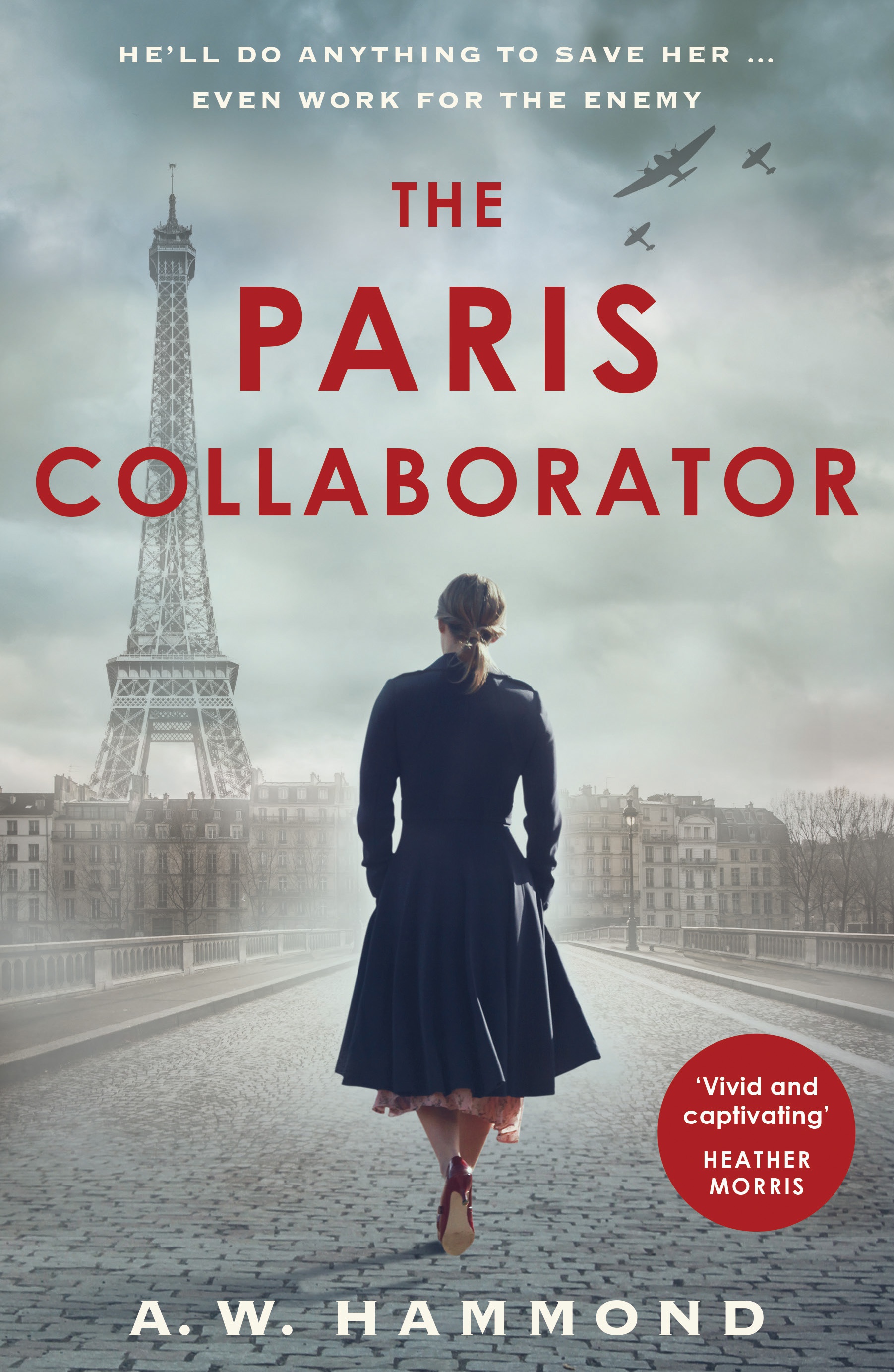
The Paris Collaborator by A. W. Hammond

The Paris Collaborator Cover

Publisher: Echo Publishing (Trade Paperback – 4 May 2021)

Series: Standalone

Length: 312 pages

My Rating: 4.5 out of 5

Amazon     Book Depository

Amazing Australian thriller author A. W. Hammond presents his first historical read with The Paris Collaborator, a clever and exciting novel set in occupied Paris.

August 1944.  With Allied forces advancing towards Paris, the Nazi occupation of the city seems to be nearly at an end.  But just because the Germans are poised to leave does not mean that the city is any less dangerous, especially for those whose loyalties are in question.  Since the Germans arrived, former teacher Auguste Duchene has taken on a whole new profession to survive: finding missing children.  With his impressive observational skills, Duchene has proven to be a keen investigator, but his talents are about to get noticed by all the wrong people.

Despite his desire to only help reunite lost families, Duchene is forced into working for a violent faction of the French Resistance after they threaten the safety of his collaborating daughter, Marienne.  Recruited to find a missing priest and the cache of stolen weapons he was hiding for them; Duchene reluctantly begins his search.  However, hours after he begins working for the Resistance, he is approached by a senior Nazi officer who blackmails him into finding a missing German soldier.

Caught between two dangerous masters, Duchene has no choice by to comply with both if he and Marienne are to survive.  With only 48 hours until both groups will deliver on their deadly threats, Duchene scours Paris for both the missing men.  However, the more he discovers, the more he begins to realise that the cases may be connected, and that he may be only able to satisfy one of his employers.  Worse, the Gestapo have taken an interest in Duchene’s investigation and are determined to interfere for their own ends.  Can Duchene find his targets before it is too late, or will everything he love be taken away from him?

This was an awesome and fantastic novel from an impressive author who I was not too familiar with before I picked up this outstanding read.  A. W. Hammond has previously written two Australian thrillers under the name Alex Hammond.  These books, 2013’s Blood Witness and 2015’s The Unbroken Line, were intriguing legal thrillers that focused on his Will Harris protagonist.  The Paris Collaborator is the author’s first foray into historical fiction, and he did an exceptional job producing a clever and addictive historical thriller.  I had an incredible time reading The Paris Collaborator and I ended up finishing it off in a few short days once I got drawn into its cool and memorable narrative.

Hammond has come up with an excellent thriller storyline for The Paris Collaborator that is exciting and clever, and which also makes great use of its historical backdrop.  This is a very fast-paced story, and it really does not take long for it to take off, as unconventional missing child investigator Duchene is drawn into the conflicting webs of radical French Resistance fighters and an influential Nazi officer.  Forced to work on both cases on a very lean timeline, the protagonist conducts a hurried investigation, trying to find hints of two different missing persons while also trying to survive in the middle of a chaotic and failing city.  With the interference of the Gestapo, Duchene is trapped in the middle of a three-way battle for his loyalties, as each of these very dangerous groups threatens to kill him and his daughter unless he complies.  This results in a very epic final third of the book, as the protagonist runs around Paris, which is in the middle of overthrowing its German occupiers, trying to find the last pieces of the puzzle with everybody trying to kill or capture him.

This was a very captivating and high-stakes story, and I loved all the thrilling intrigue, action and suspense as the protagonist jumps from one bad situation to the next.  The overall investigation had some rather intriguing twists to it, many of which took me pleasantly by surprise, although they were very well set up in hindsight.  I absolutely lost it when the final twist was revealed, as it was so outrageous and surprising that I ended up laughing for several minutes.  This reveal, while a little hilarious, did fit nicely into the dark tone of the novel, and I felt it was an outstanding way to wrap up this novel, especially as it is guaranteed to stick in the reader’s mind.  I deeply enjoyed The Paris Collaborator’s clever story, and this ended up being one of the more entertaining and unique thrillers I have read all year.

While readers will definitely remember the amazing thriller story, I also must highlight the exceptional historical setting that was featured in The Paris Collaborator.  Hammond chose to set his clever story amid the final days of the Nazi occupation of Paris, which I really enjoyed.  The author does an outstanding job of portraying this intriguing historical setting, and I loved the exploration of an occupied city on the edge, with minimal resources, a thriving black market, a near-rebelling populace, nervous soldiers starting to pull out and a dangerous resistance movement planning their next strike.  Hammond makes great use of this unique setting throughout the story, and I really appreciated the way he featured historical elements like the Resistance, the Gestapo and the German army throughout the story.  The final part of the book is set during the French uprising to free Paris from the Nazis, and I loved how the protagonist had to overcome all the obstacles this put in his way, from tanks attempting to put down dissent, to crowds determined to kill any Germans they could find.  This was an outstanding depiction of occupied Paris and I felt that Hammond perfectly utilised it throughout this amazing book.

One of the most intriguing aspects of the historical setting of The Paris Collaborator is the compelling focus on the French mentality of collaboration and resistance.  Throughout the novel, the protagonist encounters a wide range of different characters who have survived the Nazi occupation by working for, engaging with, or falling in love with German soldiers, much to the disgust of their fellow French citizens.  The protagonist himself is considered by some to be a collaborator, not only because he has helped wealthy French collaborators find their children but because he finds himself working for various Nazis throughout the course of the book.  This forces the protagonist to walk a thin line, as he must appear to be a patriotic Frenchman disgusted with the occupiers while also making sure that he does not enrage any of the Nazis who are employing him, something he does not do particularly well.  As a result, Duchene, and several supporting characters, encounters dangerous reactions from some French characters and Resistance members, and this really adds to the tension and danger that he encounters.  I think that Hammond did an excellent job examining and portraying this mentality of anti-collaboration throughout the novel, especially as it is cleverly layered into nearly every interaction the protagonist has.  Some of the actions of French characters who were actively resisting against the Germans were also pretty intriguing, including one particularly over-the-top one that is definitely going to stick in my mind.  It was also fascinating to see what some people would do to avoid being labelled as a collaborator, even if that means completely changing who they are.  I really enjoyed the author’s examination of how collaborator would have been viewed during this turbulent period of history and it ended up being an excellent and compelling addition to The Paris Collaborator’s narrative.

The Paris Collaborator by A. W. Hammond is an outrageous and impressive historical thriller that comes highly recommended.  Hammond has written a fantastic fast-paced story that is heavy on action, intrigue, and amazing twists, all set amid Paris in the final days of the Nazi occupation.  I had a lot of fun getting through this awesome novel, and thanks to some outstanding reveals and exciting moments, The Paris Collaborator is really going to stick in my mind.  Readers are guaranteed a thrilling and clever time with this book and will power through it in no time at all.

Amazon     Book Depository