The Atlas Maneuver by Steve Berry

The Atlas Maneuver Cover

Publisher: Hachette Audio (Audiobook – 20 February 2024)

Series: Cotton Malone – Book 18

Length: 13 hours and 21 minutes

My Rating: 4.5 out of 5 stars

Amazon

The always exciting Steve Berry continues his long-running Cotton Malone series with the intriguing and addictive novel, The Atlas Maneuver, which once again blends modern plots with historical riddles.

Over the last few years, I have been having a wonderful time getting to know the works of acclaimed thriller author Steve Berry.  Known for his intricate and complex works that dive into the past, Berry is an amazing author whose style and story focus really appeals to me.  I have had a wonderful time getting through the last several books in his main series, the Cotton Malone books, as well as his standalone novel, The Omega FactorCotton Malone is a particularly fun series following the titular Cotton Malone as he attempts to stop sinister modern-day plots that have their roots in ancient conspiracies and secrets.  All the Cotton Malone books I have read have been extremely epic in their own way, including The Malta Exchange, The Warsaw Protocol, The Kaiser’s Web, and The Last Kingdom (one of my favourite books of 2023), and I cannot recommend them enough.

As World War II entered its final phase, the retreating Japanese hid vast quantities of looted gold and other stolen valuables throughout the Philippines.  Stored in hidden underground bunkers, the gold was supposed to be used to rebuild Japan after the war and expand its interests.  But with the location of the vaults lost, most of the gold remained hidden, except for a small fraction recovered by the United States government and the nascent CIA, who kept it for themselves in secret.

In the present day, retired Justice Department agent Cotton Malone, is in Switzerland, working for an old CIA friend to keep a potential asset safe.  However, when someone tries to take his target out, Cotton soon finds himself thrust into the middle of a dangerous battle between a shadowy branch of CIA and the Bank of St. George, one of the world’s oldest financial institutions, with whom the recovered gold was entrusted.

Forced to act, Cotton begins to unravel a dangerous conspiracy and discovers that the directors of the Bank of St. George are seeking to initiate a radical plot involving bitcoin, the elusive online currency, which could destabilise the entire financial world and leave them in control.  Working with a skilled Japanese agent, his lover, and a ghost from his past, Cotton seeks to stop the plot before it is too late.  But with a deadly team of CIA assassins also closing in, no-one is safe and everyone is a target.

This was a pretty interesting novel from Berry that I had an excellent time with.  Thanks to its unique thriller story combining historical secrets with contemporary mysteries and plots, The Atlas Maneuver proved to be an amazing and intricate novel that I found to be quite impressive.

I really enjoyed the compelling story that Berry came up with for his latest novel, especially as he once again successfully blends an elaborate historical conspiracy with an exciting modern thriller story.  This story came together extremely well and overall proved to be quite an exciting read as Berry comes up with several compelling story arcs that you become absorbed in.  Starting off with a glimpse at the origins of the hidden Japanese war loot, The Atlas Maneuver soon jumps to Cotton Malone as he finds himself drawn into a plot to disrupt the world economy by a powerful bank through bitcoin.  Working with an old flame whose financial brilliance is behind much of the bank’s plans, Cotton desperately tries to keep her safe, while also contending with a relentless Japanese agent.  At the same time, Cotton’s partner Cassiopeia Vitt and old CIA associate Derrick Koger attempt to discover the location of the lost wartime gold that was supposed to be in the bank’s possession.  Their inquiries lead them into conflict with the bank, as well as a shadowy arm of the CIA that attempts to take out everyone associated with the case.

The alternating thrusts of the hunt for lost gold and the attempts to stop the elaborate financial attack make for great reading, and Berry continuously raised the stakes while also dragging the story back to the past with the fun historical inclusions.  While the story did drag in places, especially around the middle, I honestly couldn’t turn away from this book at times, especially when the action got particularly intense and there were multiple fun figures to follow.  Berry perfectly sets up the big conclusion of The Atlas Maneuver, which has surprisingly more devastation than expected.  I loved the dark and ironic ending to some of the storylines that emerged, and I felt this strong finish enhanced the entire book as a result.  Berry also leaves the story on an excellent emotional cliffhanger, that I feel is really going to pay off later in the series, and I will ensure I come back for the next Cotton Malone book.

I really liked how Berry set out his methodical and intense story as he once again relied on his classic style that prioritised historical inclusions, while also ensuring that the new book is accessible to all readers.  Thanks to the author’s excellent use of multiple perspectives, you get a great wide-angle perspective story, which allows you to understand the motivations, desires and actions of most of the opposing parties.  I always love books that show the story from the antagonist’s perspective, and this was a great example of that as you got to see the leader of the evil bank manipulate one of the other main characters, while also trying to implement her wider plan.  Berry utilises these multiple perspectives to tell an excellent overarching story, and while the parts focusing on Cassiopeia Vitt and Derrick Koger felt a little too detached from Cotton Malone’s storyline, for the most part this was a very cohesive tale.  The writing is also very tight and fluid in The Atlas Maneuver as Berry does a great job moving the story along, while also including his trademark historical lectures and flashbacks.  The mixture of modern-day action, elaborate schemes and examinations of the past was pretty on-point for this latest Cotton Malone book, and you really get drawn into the story as a result.  There were also some fantastic character interactions, especially as the protagonist is forced to interact with a love interest from his past who looks set to change the status quo of the series.  I had such a good time reading this book, and it proved to be an excellent addition to Cotton Malone series.

I always love the elaborate and compelling dives into various parts of history that Berry takes the reader on in the Cotton Malone series.  Berry, who clearly does his research on all things history, once again set his new novel around a unique piece of history, which has intriguing implications for the modern day thriller storyline.  In this case, much of the story revolves around Yamashita’s gold, the infamous treasure hoard supposedly located in the Philippines.  The author does a deep dive into the subject highlighting all the history surrounding it, as well as mentioning many of the intriguing details that followed it as people attempted to find it.  Much of the plot of The Atlas Maneuver revolves around the fate of this gold, and Berry really does a great job of highlighting its importance and the cultural implications surrounding it.  While certain elements of Yamashita’s gold featured in The Atlas Maneuver were exaggerated or changed for narrative purposes, you really get a good grounding in history surrounding it.  I found this focus on the lost treasure to be highly fascinating, especially as it wasn’t something I was too familiar about before.  However, this only proved to be the tip of the historical iceberg, as other intriguing historical events were also cleverly featured throughout the book.  compelling examinations about the early days of the CIA, banking history, the financial affairs of Switzerland and Luxembourg, and post-war recovery of Japan are also covered in interesting detail, much of which helps to give context to the current story and which are cleverly inserted into the modern-day plot.  These historical elements are truly fascinating, and I love the unique conspiracies and hidden secrets that Berry creates utilising them.

In addition to this 20th century history, Berry also chooses to dive into something a little more modern with a detailed look at bitcoin, which also has a significant impact to the plot of The Atlas Maneuver.  Berry dives into the history surrounding bitcoin, how it came into being and how it eventually expanded out in a major currency.  While some of this history is altered for the book, there is still a lot of detail about its origins and how it become prevalent throughout the world, which I honestly didn’t know a lot about, and was quite fascinating.  Berry also tries to capture other aspects of bitcoin, such as its function, how it is mined, and how it is currently viewed throughout the world.  There is a focus on bitcoin’s potential, and how it can be used to change economies and grant financial freedoms to people.  I liked how Berry took a neutral, if hopeful, stance around bitcoin, as while certain characters are critical of the cryptocurrency, many see its potential and hope to make the world a better place through its usage.  I honestly found the entire inclusion of bitcoin to be highly interesting, and the focus on its manipulation, creation and exploitation drove the plot to some cool places.

Another aspect of all Berry’s books that I really enjoy is his highly detailed examinations of various intriguing places that his protagonists end up in.  These background settings are always a key part of the book, and I like how well Berry incorporates them into the story, especially as the history or unique locations are invariably explored or utilised in the plot.  While The Atlas Maneuver lacks some of the grandiose sites that I enjoyed in the previous books, there is still a range of cool locations featured here that are well done.  This includes deep looks at several cities and locations with Switzerland and Luxembourg, as well as a lengthy excursion to Morocco.  Berry loving describes all the historical cities, lakes and other key locations in high detail, and it is always very clear when he is working from memory, especially as some of his characters’ reactions clearly mirror his own.  These detailed depictions always allow the reader to effectively envision the locations quite clearly, and it is a lot of fun imagining the daring exploits taking place in these picturesque locales.  I always love Berry’s descriptions of these locations, not only because I find the history fascinating, but because there are so many places featured in these books that I want to visit.  As such, this is a great part of The Atlas Maneuver, and I cannot wait to see what cool locations Berry features in his next book.

As has been my custom with most of the Cotton Malone series, I ended up listening to The Atlas Maneuver on audiobook, which ended up being a pretty great way to enjoy this book.  Coming in a nearly 13 and a half hours, this is a moderately long audiobook, so it took me a little while to get through it.  However, I felt that the way it helped to portray the intense action and thrilling storyline was very impressive, especially as having the story read out to me engrained the elaborate historical details a little better.  The Atlas Maneuver once again featured the fantastic voice work of veteran audiobook narrator Scott Brick, who has lent his voice to all the previous Cotton Malone books.  Brick has a very serviceable voice that works well for the thriller books he usually narrates, especially as it helps to highlight the great action sequences and elaborate conspiracies.  Thanks to his good voice work, the plot of The Atlas Maneuver moves along at a brisk pace, and I really got swept up in the elaborate story.  As such, I feel that the audiobook version is a great way to enjoy The Atlas Maneuver, and I had an excellent time getting through it.

Overall, The Atlas Maneuver by Steve Berry was an amazing book that I had an outstanding time getting through.  Once again successfully combining intriguing and elaborate historical conspiracies with an exciting thriller storyline, The Atlas Maneuver was a blast from start to finish and will be deeply appreciated by both fans of the long-running Cotton Malone series and new readers experiencing Berry’s writing for the first time.  A compelling read that comes highly recommended.
Amazon

The Last Kingdom by Steve Berry

The Last Kingdom (Steve Berry) Cover

Publisher: Hachette Audio (Audiobook – 21 February 2023)

Series: Cotton Malone – Book 17

Length: 14 hours and 20 minutes

My Rating: 4.75 out of 5 stars

Amazon

Prepare for a remarkable and captivating mystery from out of history as acclaimed thriller writer Steve Berry presents another outstanding and riveting novel in The Last Kingdom.

Ever since I started reading thrillers a few years ago, one of my favourite authors in the genre, as well the most consistently entertaining, is the fantastic Steve Berry.  A veteran author who has been producing compelling reads since the early 2000s, Berry has over 25 books to his name that blend intense modern thriller narratives with intriguing history elements.  His most iconic body of work is his long-running Cotton Malone series, which follows a US Justice Department agent as he investigates unique historical conspiracies or secrets whose revelation will have major implications in the modern world.  I first fell in love with Berry’s writing back in 2019 when I read The Malta Exchange.  Since then I have gone on to read several more Cotton Malone novels including The Warsaw Protocol and The Kaiser’s Web, as well as the standalone novel The Omega Factor, each of which have contained some addictive stories that I’ve deeply enjoyed.  As such, I made sure to read his 2023 release, The Last Kingdom, as a soon as I could.  The 17th Cotton Malone novel, The Last Kingdom presented the reader with another brilliant conspiracy from history that was pretty awesome to behold.

There are many strange tales scattered throughout the history of Europe, but few are more unusual than that of King Ludwig II of Bavaria.  An unstable and fanciful figure who loved stories, solitude, and magnificent castles, King Ludwig dreamed of a magical kingdom, one far different from the lands he ruled.  Determined to find such a kingdom, he despatched agents throughout the world before his murder in 1886.  History suggests that he never found what he was looking for, but what if he did?

Now, in modern day Bavaria, freelance intelligence agent Cotton Malone has been hired by his old friend and protégé Luke Daniels to help him infiltrate a small group of radical separatists with dreams of securing Bavaria’s independence from Germany.  The focus of Luke’s investigation is the prince of Bavaria who seeks to usurp his older brother, the duke, and restore the ousted Wittelsbach monarchy with himself as king.  But to achieve his dreams, the prince needs the ultimate leverage, the Last Kingdom of King Ludwig II.

Following clues throughout several significant sites in Bavaria, Cotton and the Prince’s men are soon caught in a race to find a mysterious deed, one that Germany, China and the United States would kill for and which could greatly shift the balance of power in the world.  With the White House, Chinese intelligence, a mysterious Bavarian secret society and a rogue group of former CIA agents all vying for the prize, Cotton desperately attempts to solve the puzzle of the Last Kingdom and the terrible legacy it holds.  But can Cotton once again defeat the odds and keep the word safe from another historical mystery, or will the world be irrevocably altered by a secret form another century?

Well damn, now that was a pretty awesome read.  I have so much damn love for Steve Berry’s work, and The Last Kingdom is probably one of my favourites so far.  Perfectly combining an excellent thriller storyline with an elaborate and deeply captivating tale of history, The Last Kingdom was an exceptional read and one that I honestly could not stop listening to.

Berry has produced an amazing and addictive masterpiece of a thriller in The Last Kingdom with a particularly strong story behind it.  Like most of Berry’s books, The Last Kingdom is primarily a modern day thriller that introduces an original conspiracy that took place in history and has remained hidden until Cotton Malone wanders along (that man finds ancient mysteries wherever he goes).  As such, what starts as a simple infiltration at a famous Bavarian palace soon devolves into an elaborate treasure hunt for unique piece of history.  This latest historical mystery revolves around the eccentric and tragic final kings of Bavaria, and their desires to either retain power or find their own place in the world.  Berry expands on this historical detail throughout the entire course of the book, providing a good combination of real facts and some exaggerated fictional elements, which works into the main plot extremely well.  This modern day storyline gets some legs really early on as the protagonist and his companions are dragged into a major shadow war with several different factions attempting to take advantage of the situation and the hunt for the historical mystery.  Cotton soon finds himself working for several old colleagues, including a reckless CIA agent, while other groups, including the Bavarian prince and a rogue group of former CIA agents, start to use deadly force to solve the clues and find the hidden deed.

Berry keeps the pace of The Last Kingdom quick and compelling by raising the various stakes of the book while still showing off the entirety of Bavaria and its historic beauty.  There is a good reveal of why everyone is after the deed about halfway through which sets everyone on the road to a big confrontation.  While the full details of the conspiracy are a little over-the-top, Berry fits it into the story well, and the examination of modern and historical concerns surrounding is quite clever and intriguing.  The final half of the book is an intense thrill ride in several great ways, as Berry loads up the story with fun reveals, clever twists and so many betrayals.  I loved how the mystery of the King’s deed unfolded, and Berry really mixed the various original puzzle pieces of his conspiracy with the overlying historical detail to create a fantastic scavenger hunt.  The modern day thriller elements flitted around this extremely well, and watching the various participants in the hunt betray or outwit each other to try and get the prize was deeply exciting and led to some big moments.  The conclusion to the story is very good, and readers will come away extremely satisfied, both with how the story came together, and with all the extra knowledge Berry leaves you with.

I have a very deep appreciation for how Berry writes his outstanding novels and I think that The Last Kingdom was a particularly impressive example of this.  The blend of a high-intensity modern thriller storyline wrapped around a mystery loaded in historical detail is always entertaining, and I felt it turned out well again in The Last Kingdom.  The way that Berry splits the story out using alternate perspective chapters is particularly useful, as you get to see each of the characters interpreting the historical elements from different perspectives.  At the same time, several of the chapters are set in the 19th century and provide some deeper historical context to the story, which I felt was particularly useful and fun.  Berry really excels in simultaneously showing the different aspects of his story, and readers come away from The Last Kingdom having had fun with the thriller elements, while also learning so much more about some fascinating topics.  I really think that The Last Kingdom had one of the better thriller storylines associated with it thanks to inclusion of spies, disaffected royals, and several warring governments, and the way that story element unfolded had me pretty damn hooked the entire way through.  Like most of the Cotton Malone novels, The Last Kingdom can be read as a mostly standalone book, and readers don’t need to have any real knowledge of the previous entries in the series to enjoy this great novel.  While there are references to previous adventures and mysteries, the relevant details of these are well explained and new readers won’t be thrown by them.  However, long-term fans of the series will appreciate the continuation of several recent storylines, especially around Cotton’s feud with the US President, and I liked how that unfolded.

As I have mentioned a few times already, one of the best things about The Last Kingdom, and indeed all of the Cotton Malone novels, is the way that Berry dives into unique and intriguing parts of history to really give his stories a captivating kick.  In The Last Kingdom, this takes the form of a focus on the unique history of the kingdom of Bavaria, specifically the last 19th and early 20th century and the last three monarchs of the Wittelsbach line.  I have to admit, this was an area of history that I was not familiar with, but that changed after reading The Last Kingdom.  Berry conveys an immense amount of detail about this period and the relevant kings to the reader throughout the course of the book, so by the time you are done, you know so much about them.  However, Berry does it in such a way that ensures that the reader don’t get bored with it, as he showcases the more compelling elements of their reigns and the nation’s history around it, while also hinting at how it ties into the big conspiracy/mystery of the story.  I particularly enjoyed the detailed and fascinating examination of eccentric King Ludwig II.  Berry covers so many parts of his compelling life in this story, including his complex reign, his unusual outlook on the monarch, and his infamous end that saw him deposed and murdered.  The mysteries of Ludwig II and his search for a new kingdom proved to be a deeply compelling centre for the entire plot and I am really glad I got to learn more about them.  Another nation’s history, which I mention for spoiler reasons, is also concisely featured here, and I liked how Berry tied it together with Bavaria, resulting in a cool mixture that perfectly fed into the modern-day thriller.  The author clearly has so much fun researching and utilising all this historical detail in his books, especially if the extensive author’s notes section at the back is anything to go by.  Featuring all this historical detail works to create a great story, and I cannot emphasise how awesome it can be, especially in Berry’s capable hands.

In addition to all the historical elements of the book, I also really need to highlight how well Berry showcased Bavaria as a whole throughout the course of The Last Kingdom.  Many of the Cotton Malone novels act like a tourist brochure as the protagonists travel from one picturesque area of the country to the next, visiting all manner of historical sites.  This is very much the case for The Last Kingdom as the characters are forced to travel to several impressive locations throughout Bavaria, including iconic cityscapes, famous cathedrals, and beautiful landscapes.  Berry really spares no detail when it comes to describing these locations, and you can easily visualise them in all their stunning glory.  Some of the best descriptions are the iconic three castles that King Ludwig II built, which were strongly connected to his life story.  These castles form the basis for much of the plot’s historical scavenger hunt, and Berry really goes into the history and layout of them, even describing the furniture and the decorations.  You really grow to appreciate these locations around Bavaria, and I know that if I ever get the chance to visit, several of them are going to be on the top of my list of places to check out.  However, it is not just these iconic locations that are explored.  Berry also spends substantial time trying to show off the intangible nature of Bavaria, including its politics, its current attitudes, the state of its old monarchy, its place within larger Germany, and various other elements of its culture, including a real secret society dedicated to King Ludwig II.  All these elements are masterfully researched, examined, and showcased throughout The Last Kingdom, and all of them add to the authenticity of the story in immeasurable ways.

Aside from the excellent story and complex historical details, I also need to mention the great characters featured throughout The Last Kingdom.  Berry always writes fantastic figures, and it was awesome to see more of his central protagonist, Cotton Malone, as well as recurring supporting character Luke Daniels.  Both are well utilised throughout The Last Kingdom, and it was always great to see them working, especially as they have some major veteran presence at this point and work well against the various forces coming for them.  I did think that there was not a lot of development between the two, as both are essentially the same people they were in their last appearances, but they still make solid and likeable central focuses for the story.  However, there was some fantastic character development occurring outside of these main characters, especially as Berry introduces an amazing supporting cast of aging spies, angry deposed royalty, intriguing members of Bavarian society and deadly foreign agents.  Several of these characters have key roles in the book and Berry utilises them perfectly as great alternate perspectives for large swathes of the plot, producing a complex and powerful extended plot.  I loved the utilisation of Derrick Koger, a veteran CIA agent who has history with Cotton and has worked with him/against him in the past.  The funny and morally ambiguous Koger plays off the honourable Cotton perfectly as they work together in this book, and it was interesting to see them teaming up.  I liked how several of the antagonists, as well as Koger, shared a compelling character theme of people who believe they were overlooked or betrayed by their peers or people, and it serves as a great driving force for them to do bad things.  This group of characters and their conflicting priorities are an excellent part of The Last Kingdom and I had an outstanding time following them along this powerful quest.

I once again chose to check out this latest Steve Berry novel on audiobook, which is always a pretty epic experience.  Coming in at nearly 14 and a half hours, The Last Kingdom is medium length audiobook, although once you get caught up in the compelling story it flies by extremely quickly.  I personally love the Cotton Malone audiobooks as the narration really enhances all the elaborate detail of the story, especially the historical background, and ensures that they stick in the mind.  Hearing the key historical facts again and again really drives them home and I find that this helped me get even more fixated on the narrative as I was extremely eager to see how everything came together.  It helps that The Last Kingdom once again features narration from Scott Brick, one of the premiere thriller audiobook narrators out there who has lent his voice to all the previous Cotton Malone audiobooks.  Brick has a great voice for thrillers and I find his narration really fits Berry’s cool stories, especially as he gives some gravitas and complexity to both the modern day events and the historical elements.  Brick also has a great array of accents that he employs to full effect throughout The Last Kingdom, which I deeply appreciated.  His various American accents, which includes one from the wilds of Tennessee, are very well done, and I was once again extremely impressed by his dazzling array of German and European tones.  Even his Australian accent, something I am particularly sensitive about, was passable, if slightly stereotypical, and this fantastic choice of voices enhanced the audiobook experience.  Due to this outstanding voice work, as well as the great impact this format has on some of the key parts of the book, I would strongly recommend The Last Kingdom audiobook, and it is always one of my favourite ways to enjoy a good Steve Berry novel.

Steve Berry continues to impress with his latest outstanding Cotton Malone novel, The Last Kingdom.  Featuring his typical blend of exciting and intense thriller storylines and fascinating historical detail, The Last Kingdom is a brilliant read that powerfully showcases Bavaria in all its glory.  Examining key elements of the state’s past, as well as its current beauty, and perfectly working them into an excellent story, this was an exceptional outing from Berry and one that I had such an amazing time reading. Highly recommended!

Amazon

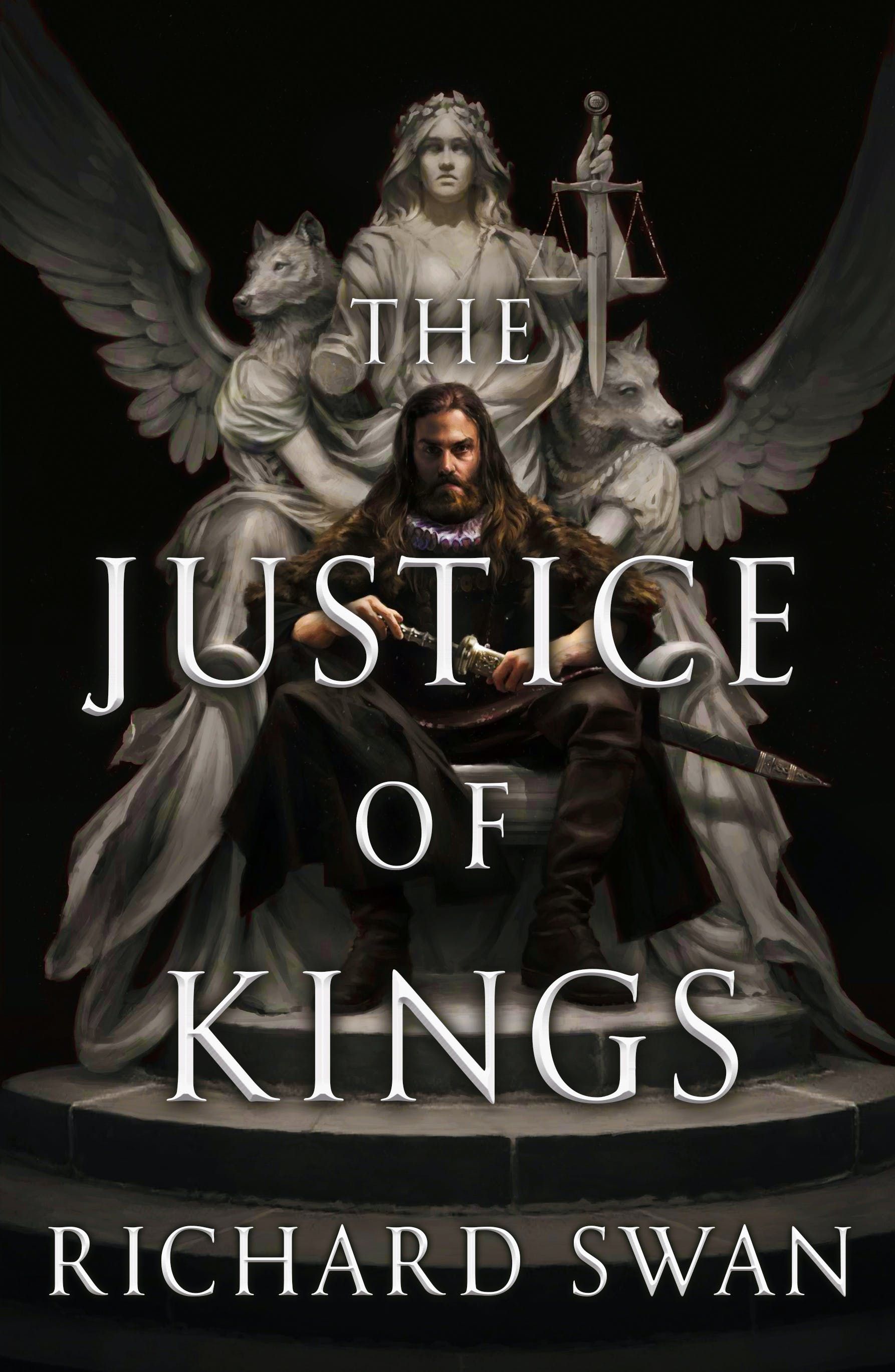
Quick Review – The Justice of Kings by Richard Swan

The Justice of Kings Cover

Publisher: Orbit/Hachette Audio (Audiobook – 22 February 2022)

Series: Empire of the Wolf – Book One

Length: 13 hours and 45 minutes

My Rating: 4.25 out of 5 stars

Amazon     Book Depository

Richard Swan makes his highly acclaimed fantasy debut with the much loved The Justice of Kings, a slick and compelling novel that combines a murder mystery with epic fantasy and political thriller elements in some very impressive ways.

Few authors have gained the respect of the fantasy community as quickly as Richard Swan did this year as he made the jump from science fiction to fantasy in a very big way.  The Justice of Kings is an intriguing and awesome novel that serves as the author’s first entry in his new Empire of the Wolf series.  Following a magical lawman as he investigates a terrible murder while also attempting to keep the political peace in the realm, The Justice of Kings has a lot of great parts to it and it received a lot of kudos as a result.  I read it several months ago and neglected to write a review for it, which I making up for now.  I had a great time getting through The Justice of Kings and it lives up to a lot of the hype surrounding it.

Plot Synopsis:

NO MAN IS ABOVE THE LAW

The Empire of the Wolf simmers with unrest. Rebels, heretics and powerful patricians all challenge the power of the imperial throne.

Only the Order of Justices stands in the way of chaos. Sir Konrad Vonvalt is the most feared Justice of all, upholding the law by way of his sharp mind, arcane powers and skill as a swordsman. In this he is aided by Helena Sedanka, his clerk and protege, orphaned by the wars that forged the empire.

When the pair investigate the murder of a provincial aristocrat, they unearth a conspiracy that stretches to the very top of imperial society. As the stakes rise and become ever more personal, Vonvalt must make a choice: will he abandon the laws he’s sworn to uphold in order to protect the empire?

Introducing an unforgettable protagonist destined to become a fantasy icon, The Justice of Kings is an unmissable debut where action, intrigue and magic collide.


The Justice of Kings
is an excellent book which manages to bring together a lot of different genres for an excellent story.  Told from the perspective of Helena Sedanka, the Justice’s protégé and clerk, the book follows Sir Konrad Vonvalt, a Justice of the Empire who acts as a travelling judge, lawyer, investigator and executioner.  Able to wield unique magic, Vonvalt and his staff arrive in a small provincial city to investigate the murder of a local noblewoman.  As they dive into the case, the Justice and his team discover that this is no simple murder, instead the victim was killed as part of an elaborate conspiracy infecting the town, forcing them to dive into a dark web of blackmail, bribery, religious corruption and assassination to find the killers.  At the same time, Vonvalt finds himself going up against some deadly politics of the realm as a group of religious zealots with an ambitious and ruthless leader attempt to make a play for power in the Empire, specifically choosing to target the Order of Justices.  These two separate concerns come together as the story unfolds, and the characters find themselves in an intense battle to save themselves.

Swan came up with a particularly strong narrative for The Justice of Kings, and I deeply enjoyed the interplay of the different elements.  Not only does it perfectly introduce an outstanding and impressive fantasy series and realm, but it also presents the reader with a complex story of politics, intrigue, war and religious turmoil, overlaying an intense murder investigation.  Swan starts the story off strong, introducing the protagonists, as well as the deliciously evil series antagonist, and the reader is soon quickly enveloped in the main mystery, finding out who is behind the brutal murder.  The investigation embarks at a rapid pace, and it was fascinating to see how the magical protagonist and his cohorts attempt to solve the murder.  At the same time, the protagonists get involved in some of the more urgent politics of the realm as they attempt to bring a group of religious zealots to justice.  Things really intensify in the second half of the book, as the narrator is dragged into a disastrous undercover operation and the culprits of the murder are uncovered, resulting in a cool court trial sequence which gives the book an additional legal thriller edge.  However, solving the case brings everyone further misery as the culprits are connected to the wider antagonists who arrive, seeking their own version of justice.  This leads to a major and brutal confrontation, which really amped up the intensity and ensured you really could not put the book down.  I had a brilliant time getting through this captivating narrative, and Swan really ensures you will come back for the next read, especially following some epic character developments and major confrontations.  I cannot emphasise how amazing this story was, and Swan did a brilliant job of bringing so many different elements together into one exciting story.

I was pretty impressed with the detailed and compelling new fantasy universe that Swan created for this series.  The divided, multi-nation Empire of the Wolf provided rich ground for the many conspiracies and plots that were uncovered in this book and readers are going to have a lot of fun exploring it.  I also really loved the interesting magic elements of the book, especially as it revolves around the Justices.  The idea of magical roaming lawmen bringing justice to the outer reaches of a massive empire is exceedingly cool, and Swan introduces it extremely well in this book.  I also enjoyed the fantastic magical abilities that Swan featured in The Justice of Kings, although they are subtle compared to other fantasy books.  Magic in this universe lies primarily with the Justices and each of them can wield one or two abilities at a time.  Since there are only two Justices featured in this book you only really see a few of these abilities in action, although they are impressive in their own way.  The main ability is The Emperor’s Voice, which is a bit of low-level magical mind control, forcing unsuspecting and weak-minded suspects to the tell the truth and admit their crimes.  This ability is used to great effect throughout the book, and I loved the idea of a magical lawman’s primary power being the ability to force out a truthful confession.  The other major ability was a bit of necromancy that Vonvalt can do which allows him to talk to recently deceased people to gain extra information from them.  The scenes that feature Vonvalt talking to the dead are terrifying and they hint at some darker forces in the universe, which are no doubt going to be featured later in the series.  I felt that these magical abilities and the wider world were perfectly introduced in The Justice of Kings and you really get an idea of how impressive the Justices are, as well as how unstable the Empire is.  I look forward to some more worldbuilding in the future, which will hopefully feature some deep examinations of the Justices, perhaps in a magical school setting.  No matter what, though, Swan really showed off his aptitude for fantasy fiction here and I very much enjoyed his magical inventiveness.

I will admit that I had a bit of a mixed reaction when it came to the characters in The Justice of Kings, which really did impact my overall enjoyment of the story.  This mixed reaction was mainly down to the main character of Helena Sedanka, the book’s narrator and point of view character.  While Helena was an interesting character and her unique perspective on the events as the Justice’s clerk moved the story along, I personally did not connect with her as a character.  No matter how hard I tried, I found a lot of her actions to be annoying and I was constantly groaning at her dialogue and narration.  While I realise that many of her actions were done to highlight the character’s youth and inexperience, I had a hard time enjoying the story when events where focused on her, and my dislike never abated.  Considering that she was the only voice of the book, this naturally affected my overall experience of The Justice of Kings and it was the major hurdle in my enjoyment of the novel.  I am really hoping that Swan will tone down the characteristics of Helena I disliked in the future books, and perhaps I will have a much better time with the next book in the series.

Luckily, the other major character in The Justice of Kings were pretty damn awesome, and I felt that they did a great job offsetting my dislike for Helena.  This character was the Justice, Sir Konrad Vonvalt, who serves as the complex and intense protagonist of the story.  Vonvalt is pretty damn epic from the very start of the book, and even before it (he looks very cool on the cover above).  A tough but fair Justice, Vonvalt is one of the few honest men left in the Empire and his primary concern is his duty and the administration of the law to anyone, no matter their station.  You honestly can’t help but like Vonvalt throughout this book, as his straight forward and honest approach to the situations, as well as his general kindness and deeper fury at injustice, really struck a chord with me.  Unfortunately, after getting you to like him, Swan ensures that Vonvalt goes through a lot of pain, which slowly start to change him, especially when his own naivety about the state of the Empire and his own order comes back to bite him in a big way.  This really wounds Vonvalt, and you really see him change, especially towards the end of the book, where he becomes harsh, bordering on cruel, in his search for justice and revenge.  All of this is extremely hard to watch for the reader, and you have to both hate and love Swan for making Vonvalt such a great character that these events also hurt you.  This change in character is obviously going to be a major part of Vonvalt’s character arc in the future, and I can’t wait to see the more vengeful version of this once noble night. 

I grabbed The Justice of Kings on audiobook, which was a fantastic and fun way of enjoying this intriguing read.  Coming in with a run time of a little under 14 hours, The Justice of Kings audiobook has a descent length to it, although dedicated listeners can easily power through it quickly.  I felt that this format did a great job of enhancing the complex story contained within this book, and you really appreciate some of the compelling details of the new universe when they are read out to you.  I also quite enjoyed the narration of Lucy Paterson, who brings the story to life with her excellent voice.  Paterson gives some amazing voices to all the key figures in the book, especially Helena, and I appreciated her take on all the characters.  As such, this was a pretty awesome format to enjoy The Justice of Kings on and I will definitely be grabbing the next book on audiobook when it comes out.

Overall, The Justice of Kings was a particularly cool and enjoyable book that has rightfully put Richard Swan on the fantasy fiction map.  Swan was deeply impressive with his fantasy debut here and it is hard not to love the amazing blend of mystery, magic, politics and the search for justice that were contained within.  While I did have some dislikes when it came to The Justice of Kings, I felt that this was a wonderful book and I plan to come back to the series in the new year, especially as there is an awesome, potential laden sequel out very soon. 

Amazon     Book Depository

The Martyr by Anthony Ryan

The Martyr Cover

Publisher: Orbit/Hachette Audio (Audiobook – 28 June 2022)

Series: The Covenant of Steel – Book Two

Length: 19 hours and 42 minutes

My Rating: 5 out of 5 stars

Amazon

The always impressive Anthony Ryan continues his outstanding Covenant of Steel series with The Martyr, which was hands down one of the best fantasy novels of 2022.

Anthony Ryan is an extremely talented author who has been one of the leading authors of fantasy fiction for the last decade, producing several intriguing and major series.  Best known for his Raven’s Shadow trilogy (which was followed on by the Raven’s Blade duology), Slab City Blues, The Draconis Memoria and Seven Swords series, Ryan has a substantial catalogue of fantasy works to his name, most of which sound pretty damn epic.  However, I have so far only read the books from his latest series, The Covenant of Steel series, which has proven to be exceptional.  The first book in The Covenant of Steel was last year’s deeply compelling release, The Pariah, an excellent novel that set up a deeply intriguing and highly addictive character-driven tale of adventure, conspiracy and war.

The Pariah told the adventure of Alwyn Scribe, a young outlaw who was raised by brutal bandit chief.  However, his time as a member of a notorious band of villains came to a bloody end when his entire gang is brutally killed by the crown and his mentor is executed.  Imprisoned in a mine, Alwyn finds a new mentor in an imprisoned religious figure, who teaches him to be a talented scribe, and he is eventually able to escape.  Chance and self-preservation lead him to join the Covenant Company of Lady Evadine Courlain, a pious woman whose religious visions, sermons and sheer faith allow her to bring together a band of dedicated soldiers.  Swiftly growing loyal to her, Alwyn becomes one of her key followers, and saves her from certain death several times as they fight across the Kingdom of Albermaine.  I deeply enjoyed the elaborate and extremely addictive narrative contained within The Pariah, and this ended up being one of my absolute favourite books and audiobooks of 2021 (as well as being one of my favourite new-to-me authors of the year as well).  As such, I was extremely happy to receive a copy of The Martyr a little while ago, although I held out reading it until I could get a copy of the audiobook version as well.

The Martyr takes places shortly after the bloody conclusion to The Pariah and sees Alwyn Scribe now firmly in the service of Lady Evadine Courlain, whose apparent resurrection has led to her being proclaimed a living martyr of the Covenant church.  However, this and the fanatical devotion of the faithful of Albermaine have placed her in the crosshairs of both the Crown and the Covenant, both of whom see her as a dangerous pretender to their power.  Unable to kill her without starting a religious rebellion, the king decides to use Evadine for his own purposes.

Sent south to the Duchy of Alundia to put down a rebellion and stop a series of religious attacks upon the Covenant faithful, Alwyn, Evadine and the Covenant Company take up residence in a small, dilapidated castle, which soon draws the attention of the Alundian nobility.  Besieged by a massive army, Alwyn and his companions must survive the onslaught if they are to pass on Evadine’s message for the future.  However, not everything is as it seems.  Dark forces are in play and Alwyn soon finds himself in the middle of treacheries, both new and old, as he desperately stands beside his mistress.  Forced to dive into the secret past of the land, Alwyn soon discovers that many of the things that Evadine preaches are true, including the legend of the Scourge that destroyed the world and threatens to re-emerge.  But is Alwyn fully prepared for all the heartache, betrayal and bloodshed his quest is about to unleash?

Anthony Ryan is on fire once again with his second book in The Covenant of Steel series.  The Martyr is an epic and deeply addictive read that perfectly follows on from Ryan’s previous book and in some ways surpasses it with its impressive storytelling and amazing characters.  Thanks to its incredible story and cool expansion of Ryan’s fantasy universe, I had an outstanding time getting through The Martyr, and it receives an easy five-star rating from me.

I had such an outstanding time with the epic story that Ryan pulled together for The Martyr, especially as it cleverly expands on the narrative from the first book, while also taking the characters in some awesome new directions.  The book has a very strong start to it, which follows on from a useful, and slightly humorous, summary of the events of The Pariah.  From there, we quickly see the fallout from the last book, with the protagonist Alwyn and his comrades forced to engage in the politics of the realm to ensure that living martyr Evadine is allowed to continue her work.  The narrative is still told from Alwyn’s perspective as he recounts the events in chronicle form, so I was quickly hooked, and I liked the immediate dive into fantastic political intrigue and compelling universe building.  However, the story only gets even more awesome from there, as the protagonist and his company are deployed to a war setting, which turns out to be particularly epic as they are soon caught up in some outstanding siege scenarios.

Now, I frankly had no idea how Ryan was going to improve on the outstanding story from The Pariah, but having a siege storyline was a pretty good way to go about it.  I love sieges, and Ryan featured an incredible example here, as a large amount part of the book revolves around two amazing battles between attackers and castle defenders.  The first of these sees the protagonists trapped inside a dilapidated fortress facing off against a larger army, which proved to be a lot of fun.  The author really captures the chaos and drama of an impromptu siege with this earlier one, and the carnage comes quick and fast as the characters are forced to bring the attackers to battle before repelling them, using their wits and limited resources.  The action here is pretty intense and shown in excellent detail, as Ryan does not hold back on the brutality and the complexities of a siege.  I had such a great time with this first siege, and words cannot describe how ecstatic I was that he followed it up with a second siege, with the protagonists now acting as besiegers, in a more traditional siege, with artillery, sapping and even a deadly storm of the breach with the point-of-view character in the front.  These two sieges were pretty damn exceptional and have some of the best and most bloody action scenes in the entire book.  I particularly liked how well the author contrasted the differing experiences that the protagonist experienced as both a defender and an attacker, and it was fascinating and very fun to see him on both sides of the wall, especially as he learns from his experiences to become a better invader.  However, it is not all about the action, as you have some compelling political considerations going on here, as well as some great character development and the protagonist gets closer to some of the other characters during the heat of combat.

Following the sieges, the story goes in some interesting and unique directions, as Ryan continues the epic of Alwyn Scribe by expanding the universe around him.  This includes a visit to a dangerous foreign land, where he learns some harsh and surprising truths about the universe he lives in and his place within it.  This results in some trippy but deeply fascinating scenes, especially as there are some interesting reveals and some great hints for the future.  Ryan also once again dives into the political intrigue, as the protagonists are involved in some great fights for the future of the realm.  Watching the protagonists fight both on and off the battlefield is pretty cool, and the sheer threats growing around them in the last quarter of the book bode well for the future of the series.  There are some interesting reveals towards the end of The Martyr, and Ryan also works to tie up a few loose ends from the previous book, which I was very happy to have closure on.  Everything ends on a very intriguing note, as Ryan leaves behind a great little cliff-hanger reveal that will be very thought-provoking in the lead-up to the next book.  I had such a great time with this story, and it really drew me in with its fantastic moments and complex, overarching storylines.

I am a pretty big fan of how The Martyr’s story came together, and Ryan has a great writing style that really enhanced the whole experience.  I absolutely loved the chronicle style that he uses to detail the plot.  Told completely from the protagonist’s perspective as he writes down all he experiences, you get a unique view of the events occurring, especially as the protagonist writes in funny or insightful comments that show his opinions of the events in hindsight.  At the same time, they allow the protagonist to air his many regrets, and you get a certain sense of foreboding for some of the events that are to come, either in this book or in the rest of the series.  I was pretty consistently entertained by this style of writing, and I think that it also added in some extra humour to a somewhat darker fantasy story, especially as the protagonist is quite a funny and unconventional figure.  The Martyr’s story has an amazing blend of different elements, and while I lavished my love above on the great action, especially during the siege sequences, most of the book is about the development of the protagonist and his attempts to keep Evadine alive.  This results in a brilliant combination of politics, intrigue, great interactions between figures, and some awesome character development, which works to produce quite an addictive read.  Watching Alwyn trying to come to grips with the many dangers threating his friends, while also unpicking the multitude of mysteries and secrets surrounding him is just great, and Ryan keeps adding in new secrets and supporting storylines to keep the reader interested.  While there is a lot going on within The Martyr, the pace is pretty fast and consistently exciting, and at no point was I not immensely entertained, either by the powerful action or fascinating world building.  Due to the amount of lore and history featured in the first book, I would strongly suggest that interested readers get through The Pariah before trying out The Martyr, and fans of the first book will really enjoy where this second book goes and how Ryan effectively tells the story.

I was very impressed with all the cool ways that Ryan expanded the series’ setting in The Martyr, as he adds in some great additional history, expands on some of the mysterious religious and mystical aspects of the first, while also showing off some fascinating new lands.  This additional context around parts of the nation of Albermaine proves to be pretty damn intriguing, and you learn a lot more about it, while also seeing a lot more about its internal politics and rule, especially as the characters are forced to deal with the royalty and the church.  The inclusion of the Duchy of Alundia, where much of the plot takes place, was also pretty excellent, especially as Ryan portrays it as a more rugged and dangerous locale, whose unique take on the Covenant religion leads to a veritable holy war when Evadine and her company arrive.  However, the most captivating new part of the book has to involve the protagonist’s journey to the Caerith Wastes.  Alwyn has been haunted by members of the mysterious Caerith race since the start of The Pariah, and their strange ways and powerful magics have been both a boon and a curse to him.  As such, a journey to their homeland was always inevitable, and Ryan ensures that there are many surprises, mysteries and some interesting reveals for the protagonist when he finally arrives.  Ryan did a really good job introducing this new race of people in the story, and there are some great scenes where Alwyn attempts to learn more of them, while using his own personal history to stay alive with them.  The subsequent reveals about some of their powers and how it has been impacting Alwyn are pretty amazing.  One reveal, which illuminates the origins of Alwyn’s historical chronicle that the entire series is based on, was particularly compelling, and it sheds a whole new light on everything you have been reading.  Overall, Ryan did a fantastic job expanding his fantasy realm in The Martyr, and I look forward to seeing what cool inclusions he features in the next book.

Easily one of the best things about The Martyr was the outstanding and complex characters that were such a key part of the book.  Ryan expands on many of the great characters from the first book and takes their unique narratives in some amazing new directions.  The compelling and dramatic interactions that occur between these figures results in some powerful moments and I deeply enjoyed seeing the outstanding ways their tales and lives evolved in this second book.

The character who naturally gets the most focus is central protagonist and sole point-of-view character, Alwyn Scribe.  A former bandit who, thanks to a series of influential leaders and friends, became first a talented scribe and then a soldier, Alwyn is a man with a past and a fast mind who now finds himself in the centre of his nation’s crisis.  Dedicated to the Lady Evadine, Alwyn spends much of this book advancing her cause, while also evolving further as a character.  While he still primarily considers himself to be a scribe, Alwyn ends up taking on more and more different roles as he finds himself thrust into Evadine’s adventures, including being a knight, a military commander, a politician and a spymaster.  As such, you see him go through some major leaps and developments as he tries to reconcile what he is with what he needs to be to keep those around him alive.  This proves to be quite fascinating, and I loved the various unique situations he finds himself in, especially as he begins to realise some of the mystical mysteries the world contains and his place in them.  Alwyn continues to be an excellent main character for this series, and I loved his depictions of how the events of the book unfold, especially as his later insights from when he chronicles his adventures add both weight and humour to the current story.  His unique background as a criminal and a scribe continues to serve him well in The Martyr, and he has some very inventive ways of solving problems that often rely on his criminal or academic past.  I also deeply enjoyed seeing him take on a role as a teacher and mentor to several younger characters in this book, and it was a nice to see Alwyn come full circle after all the mentorship he received in the first book.  I had a great time seeing how he grew into the new roles in this book, and it will be fascinating to see what different positions he takes on in the future, especially as he becomes more and more devoted to Evadine, not matter how crazy their adventures become.

That leads nicely to the other major character I wanted to highlight, Lady Evadine Courlain.  Evadine is a fascinating figure in this series, a pious and devote noblewoman who has been receiving prophetic visions all her life.  Believing these visions to be from the Seraphile (the divine focus of the Covenant religion), Evadine created her own military company in the hopes of averting the Second Scourge (an apocalyptic calamity).  After miraculously recovering from a fatal wound, Evadine has now been declared a Risen Martyr, and believes herself to have been raised up by the Seraphile, despite it actually being caused by a magical bargain struck by Alwyn.  Now a major religious figure, Evadine has become a threat to both the church and the crown and must deal with their attempts to destroy her while she attempts to achieve her mysterious goals.  I deeply enjoy Evadine as a character, particularly as there is such an inherent mystery behind her, as you have no idea whether she is actually divinely blessed or just crazy.  Ryan portrays her as both at times, and while it is easy to assume the latter, she keeps coming up with knowledge and insights that should be impossible to achieve.  Watching her continue to evolve as a religious figure in The Martyr is both fascinating, and a little concerning, as you really have no idea where her story is going to go, or what insanity or divine revelation may come from her next.  Evadine serves as a quite a good foil to the more cynical character of Alwyn, and they become quite an intriguing team in The Martyr, with Alwyn providing the means to many of her successes, while strongly disbelieving her divine status.  There is also a certain growing instability in Evadine that underlies much of the book and adds to the general tension between her an Alwyn.  This, as well as a few intriguing reveals, makes Evadine one of the most compelling and unique figures in the series and it is clear that Ryan has some very, very interesting plans for her future.

Aside from Alwyn and Evadine, The Martyr is loaded with a ton of great supporting characters who add a substantial amount to the overall narrative.  Many of these characters carry over from the first book, and there are some intriguing and dramatic developments that occur in The Martyr that prove to be quite shocking and fun in places.  Great examples of this include the disgraced knight Wilhum Dornmahl, who is a major figure in the Covenant Company’s ranks, Ayin a murderous young girl Alwyn takes under his wing and teaches, and the mysterious Sack Witch, who haunts the character, despite barely appearing in the book.  In addition, Ryan introduces many new great characters in the second book, or else finally introduces and expands on characters mentioned in The Pariah.  Two minor characters from the first book who really stood out to me in the sequel were Princess Leannor, the king’s sister, who serves as a canny and complex political adversary to Alwyn; and Ehkbert Bauldry, a legendary knight who Alwyn bears a grudge against, but who also proves to be an interesting ally.  Both have some intriguing interactions with Alwyn, especially as they know he has some substantial dirt on them that makes him quite a threat.  I also must highlight outstanding new characters like Juhlina, better known as a The Widow, a deadly Covenant Company soldier with a tragic backstory and unstoppable rage, and Lilat, another new mentee for Alywn.  These characters were all extremely fun and compelling, and I loved how Ryan fit them into the story and made them shine.

As I mentioned above, I did receive a psychical copy of The Martyr a little while ago, however, I held off reading it until the audiobook version came out.  While I did regret not diving into the story as soon as I got it, I think it was more than worth it as the audiobook format of The Martyr was pretty damn exceptional.  Coming in with a run time of just under 20 hours, The Martyr has a decent length to it, although I found myself getting through it in just a week, mainly because I was just so addicted to Ryan’s outstanding story.  The audiobook format really helped with my enjoyment of this book, and I really found myself getting drawn into the elaborate narrative through the narration.  I definitely absorb more narrative detail when I listen to a book, and this was particularly noticeable with The Martyr audiobook, as I found all the cool story elements, details about the setting, intriguing characters and epic action popped more into my head through this format.  I also really need to highlight the exceptional voice work of actor Steven Brand (who I best know as the villain from The Scorpion King) who has lent his voice to the audiobook versions of all of Ryan’s works.  Brand is an extremely talented audiobook narrator who deftly captures the many characters contained with The Martyr and gives them distinctive and compelling voices that really fit the character and showcase their emotions.  I particularly liked the way in which he portrays protagonist and narrator Alwyn Scribe, and you really get a sense of the character’s emotional state, as well as the sense of weariness the chronicle format conveys through Brand’s voice.  This ended up being a pretty awesome audiobook and it was definitely my preferred way to enjoy The Martyr.  As such, this format is highly recommended, and when I get around to reading the rest of Ryan’s books, I will be grabbing their audiobook versions.

After all the gushing above, I think it is fair to say that I deeply enjoyed Anthony Ryan’s latest book.  The Martyr was an exceptional and deeply addictive read that I felt perfectly continued the amazing groundwork he established in The Pariah.  This second entry in The Covenant of Steel series was something special, and I had such an epic time seeing what unique and captivating adventures and battles the great protagonists found themselves in.  The Martyr was such an outstanding fantasy read, and I can’t wait to see how Ryan continues this awesome series in the future.  A truly incredible read!

Amazon

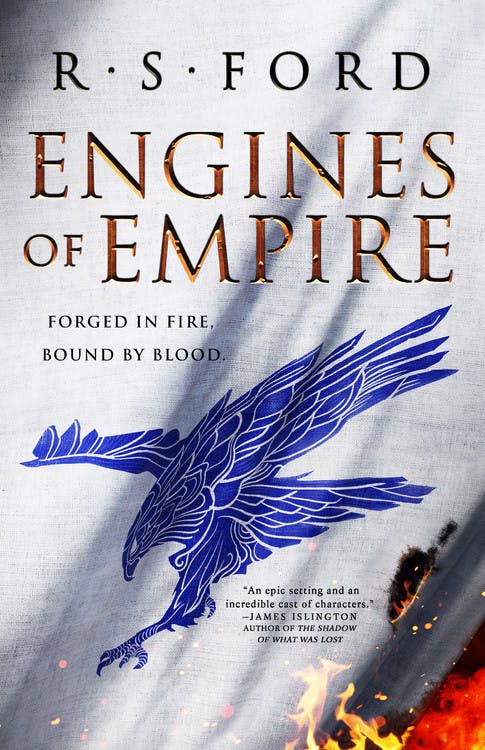
Engines of Empire by R. S. Ford

Engines of Empire Cover

Publisher: Hachette Audio (Audiobook – 18 January 2022)

Series: The Age of Uprising – Book One

Length: 22 hours and 3 minutes

My Rating: 4.25 out of 5 stars

Amazon

Bestselling fantasy author R. S. Ford starts off an intriguing and compelling new epic fantasy series with the powerful Engines of Empire, a great read that I had a wonderful time reading.

Ford is an author who has been writing some interesting books in the last few years.  His big works include the Steelhaven and War of the Archons series, both of which have some very intriguing plots.  While I have not had the pleasure of reading any of his previous work, I have heard some great things about his War of the Archons books, and I might have to go back and check it out at some point.  After reading some early positive reviews of Ford’s latest novel, Engines of Empire, I decided to check it out, grabbing an audiobook version, which proved to be extremely good.  This cool book serves as the first entry in Ford’s new The Age of Uprising series and sets the scene for a captivating and exciting new trilogy.

For generations, the nation of Torwyn has been ruled by the Guilds, industrial powerhouses who provide the nation its food, weapons, transportation and invaluable devices that fuse magic with technology.  One of the most prominent Guilds is the Hawkspurs, an ancient and powerful family who have long held the empire together and ensured its position in the world.  However, the current generation of Hawkspurs are about to find that everything they thought they knew is about to change.

As the matriarch of the family, Rosomon Hawkspur, attempts to maintain her family’s status and standing in Torwyn’s capital, the Anvil, her children each head off to find their own destinies.  The oldest son, Conall, departs to the empire’s distant frontier to prove his worth as a military commander.  The rebellious and magical Hawkspur daughter, Tyreta, is sent to an important imperial holding to facilitate her training as the future head of the family business.  The youngest son, Fulren, a talented artificer, finds himself involved in foreign politics when he is tasked with guiding an emissary from a powerful rival nation.

However, forces of chaos, fanaticism and destruction are all around them, and soon all the Hawkspurs are placed in mortal danger.  At the frontier, Conall attempts to prove himself, but only finds rejection and hints at a rising evil.  Tyreta’s reckless actions place her in mortal danger, and her only path to salvation lies in understanding the people her nation has hurt the most.  Back in the Anvil, Fulren is framed for murder and is soon banished to a hostile foreign nation ruled by dark gods.  Rosomon, desperate to save her fractured family, finds herself thrust into the middle treachery and dark revolution, as unseen hands plot against the guilds.  As the entirety of the world changes all around them and dangerous forces reveal themselves, can the Hawkspurs endure, or will they, and the entirety of Torwyn, come to utter ruin?

Engines of Empire was a captivating and entertaining fantasy epic that transports the reader to intricate new world, filled with interesting characters, political intrigue, and intense action, and makes for an excellent and exciting read.

At the centre of Engines of Empire is a massive and complex narrative that fully explores the various main characters while also plunging the intriguing new setting into chaos and anarchy.  Ford utilises a great multiple perspective storytelling device that splits the overall book into some compelling, separate chunks.  The story initially has four distinctive storylines that follow the Hawkspur family members as they go off on their own separate adventures.  This results in an interesting blend of plotlines as you have a more military story with Conall, a survival/adventure storyline with Tyreta, Rosomon’s political intrigue narrative, and Fulren’s life-or-death struggle in a foreign land.  These storylines are mostly unconnected to each other and not only allow the point of view protagonists to grow and develop independently with their own group of supporting characters, but it also ensures that the reader gets to explore various aspects of the new fantasy realm and see the range of different problems affecting it.  These four storylines develop at a reasonable and compelling pace, and the reader soon is drawn into their individual storylines, as well as some of the overlapping conspiracies that are featured throughout.  A fifth point-of-view character is introduced about halfway through the novel, which mainly acts to bolster one of the existing storylines and proves to be an excellent feature filled with action and espionage.  This leads to the final stretch of the novel, where several big events and twists occur that shake the foundation of the novel and take it in an excellent new direction.  Several of the separate plot lines start to come together more closely towards the end, and there are some excellent moments as the characters reunite to face a common foe.  This leads to an exciting and intense conclusion that takes several of the character storylines in interesting direction and sets up the rest of the trilogy extremely well.

I really liked how Engines of Empire came together as Ford wrote an excellent fantasy tale that made sure to cover a vast range of people and places.  The entirety of Engines of Empire has a great combination of story elements that ensures there is something for all sorts of readers here, including massive world building, great action, clever political intrigue, dangerous adventures or interesting characters.  I particularly enjoyed the great use of five character driven storylines centred on different point-of-view protagonists.  Not only did they come together well to produce a great overall narrative but they also provided the reader with several unique adventures with their own appeal.  I particularly enjoyed Fulren’s story, as it featured an excellent blend of interesting world building in a rival nation ruled by dark magic and impressive character moments.  Tyreta’s jungle-based survival mission was also really cool, especially with the intriguing side characters and brutal combat, while the fifth storyline introduced halfway through the book was filled with some amazing sequences and intriguing international espionage.  Unfortunately, the remaining two storylines surrounding Rosomon and Conall were a little slower and I didn’t have as much fun reading them, even with their respective political intrigue and desert action elements.  I struggled a little to get through these specific storylines at times, especially towards the centre of the novel, and it slowed down my overall reading of Engines of Empire.  Still, both storylines end on interesting notes, and I think they might have more potential in the sequel.

Due to the narrative being focused on five specific central characters, Ford spends a lot of time in Engines of Empire exploring and building up some of the characters.  The main protagonists are the four members of the Hawkspur family, Rosomon, Conall, Tyreta and Fulren, each of whom have their own skill.  Due to certain tragedies in their past, the family is a bit dysfunctional, and there is a noticeable distance between them.  I liked seeing each of them go on their own distinctive journey throughout the book, and each of them does develop to a degree, especially Fulren and Tyreta.  However, I did find myself getting rather frustrated with some of the protagonists as the book continued, especially as there is a lot of narrative stupidity and inconsistent character work.  This is particularly true for Conall, who comes across as a whiney idiot for most of the novel, while Rosomon, who is supposed to be a brilliant leader and tactician, is soundly outsmarted at every turn and can’t even see the most obvious of traps.  I felt these negative character traits deeply impacted their individual storylines, and it made them harder to care for.  On the other hand, I felt the fifth point-of-view character, Lancelin Jagdor, rounded out the main cast extremely well.  Lancelin is a master swordsman who has a very complicated relationship with the Hawkspurs.  He finds himself getting dragged into their issues about halfway through the book, and I think his interesting outlook and unique experiences help to balance out the less enjoyable protagonists and produce a better story.

Aside from these five main protagonists, Ford has also included a great collection of supporting characters.  These supporting characters are usually unique to one of the main protagonists’ storylines and are primarily shown through their eyes.  Many of these characters prove to be allies or friends of the protagonist, although there are a few good antagonists thrown in there as well.  Some of my favourites include Sted, Conall’s hard-drinking second in command, whose fun, no nonsense personality helps to enhance Conall’s storyline to a degree.  I also had fun with Kosma Khonos, a ruthless Torwyn spy in the kingdom of Nyrakkis, Saranor the Bleeder, an over-the-top barbarian war chief, and Wenis, a foreign witch who becomes both a jailor and love interest to Fulren, which ends up being one of the more interesting relationships in the entire novel.  This huge web of supporting characters really helps to enhance the overall story and I look forward to seeing some of these elaborate and distinctive figures again in the future.

I was deeply impressed with the amazing new fantasy world featured in Engines of Empire, and it appears that Ford spent a significant amount of time developing it.  The main setting for the novel is the fascinating nation of Torwyn, a former religious nation that has been taken over by the Guilds, industrial powerhouses who now hold sway over the various industries.  Torwyn is built up beautifully by Ford, and you soon get the full sense of it, including its intriguing industrial aspects, magic-powered technology, dragon-based religion, and ruthless politics.  The arrangement of Torwyn leads to an intense civil war that looks set to shape the future of much of the novel and serves as a brutal and fantastic central setting for several storylines.  While Torwyn proves to be an exceptional area to explore, Ford goes above and beyond and takes the reader to several other intriguing locations within and without it.  Thanks to the adventurous characters, you see some of the more desolate and dangerous locations in the lands, such as the jungle-covered Sundered Isles, the war riven frontier, the snow-covered, barbarian-infested Huntan Reach, and the magical controlled nation of Nyrakkis.  While all these locations were pretty cool, I particularly loved the dive into Nyrakkis, which proved to be a very intricate location filled with intrigue and demonic magic.  The jungles of the Sundered Isles were also extremely awesome, and Ford provides an interesting examination of the tribes who were displaced by the Torwyn settlers, especially as Tyreta spends time amongst them and getting to know their culture.  Throw in an interesting blend of different magical practices and technologies, as well as a few fun creatures (giant war eagles and beast men for the win), and you have an extremely awesome world that I can’t wait to return to in the future books.

I ended up grabbing the audiobook version of Engines of Empire, which ended up being a very enjoyable experience.  With a run time of just over 22 hours, this is a pretty substantial audiobook (it would have come in at number 18 on my Top Ten Longest Audiobooks list), and it did take a fair bit of effort to get through, especially in some of the slower parts of the story.  Despite its length, I think that it is worth the time to get through this audiobook, especially as it proves to be an excellent way to absorb Engines of Empire’s story.  I always find myself really connecting more to new fantasy settings and characters in this format, and this happened again with Engines of Empire, as I really found myself absorbing all the interesting details about this world.  I also loved how the Engines of Empire audiobook had several different narrators including Alison Campbell, Ciaran Saward, Phoebe McIntosh, Ewan Goddard, Andrew Kingston, Martin Reeve and Stephen Perry.  These narrators provide a rich and powerful audible tapestry, with one narrator assigned to voice all the chapters told from the perspective of a specific point-of-view character.  Not only do the narrators do a good job capturing the personalities of the main characters they are portraying but they also provide some fun voices for the various supporting figures and antagonists.  While it is occasionally odd to hear a narrator start voicing a character who had appeared in other chapters, this ended being a great collection of voices and I loved how well they all brought the characters to life.  An overall excellent audiobook, I would strongly recommend this format to anyone who wants to check out Engines of Empire and I had a brilliant time listening to it.

I have to say that I was quite impressed with my first book from R. S. Ford.  Engines of Empire was an excellent read that takes the reader on an epic fantasy adventure.  Making awesome use of a big cast of characters, Ford transports his audience to a brilliant and elaborate fantasy realm filled with adventure, intrigue and betrayal.  I had an amazing time getting throughout Ford’s captivating narrative, and I loved the exception world building that he did.  While I didn’t enjoy all of the characters, Engines of Empire ended up being an outstanding read that does a wonderful job setting up his next The Age of Uprising novel.  A great fantasy novel that is really worth checking out, especially in its audiobook format.

Amazon

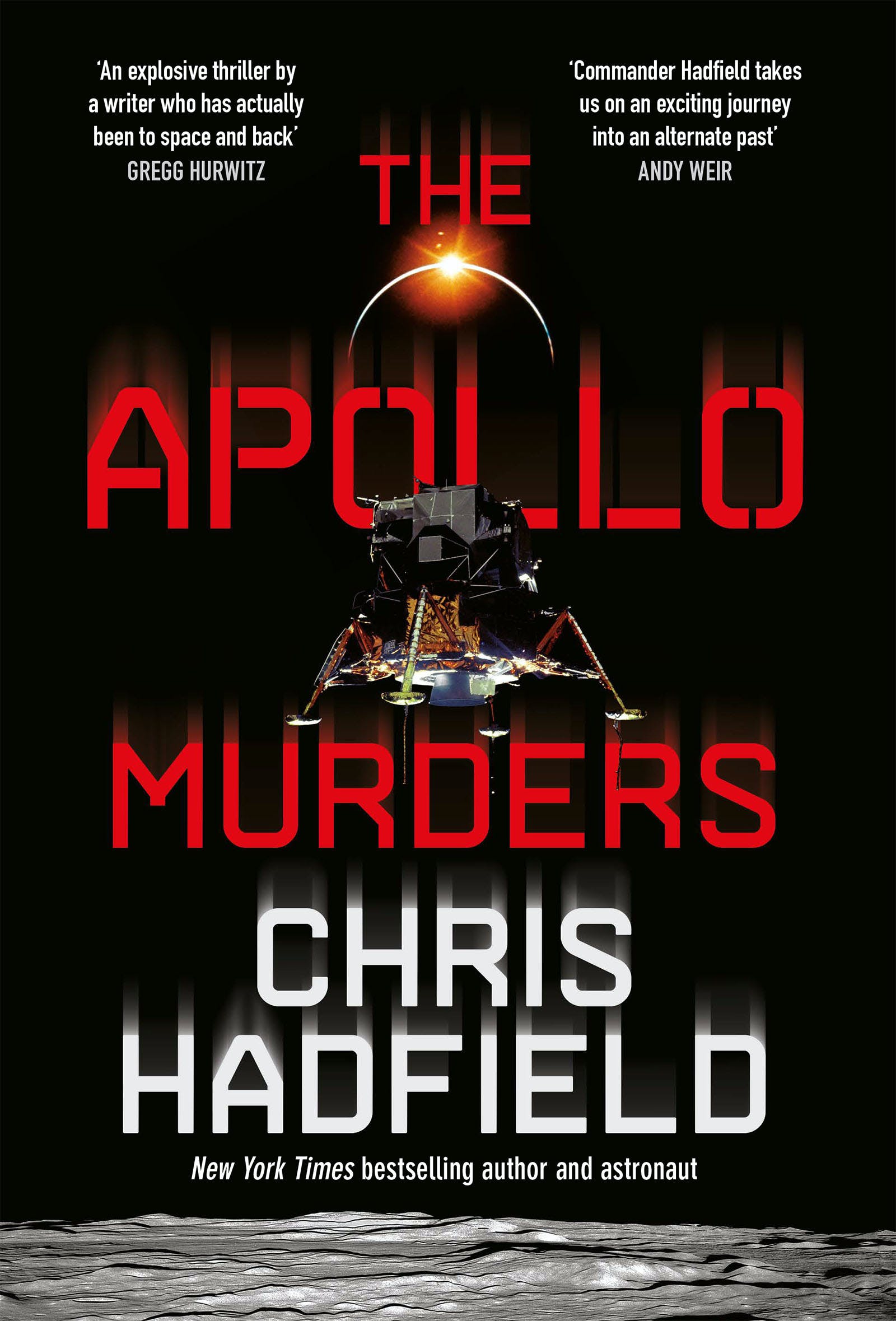
The Apollo Murders by Chris Hadfield

The Apollo Murders Cover

Publisher: Quercus/Hachette Audio (Audiobook – 12 October 2021)

Series: Standalone/Book One

Length: 15 hours and 14 minutes

My Rating: 4.5 out of 5 stars

Amazon

Prepare for one of the most impressive and complex debuts of 2021, with the exciting alternate history science fiction thriller, The Apollo Murders, by former astronaut Chris Hadfield.

In 1973, former test pilot turned government liaison officer Kazimieras “Kaz” Zemeckis arrives at Huston to supervise NASA’s latest voyage into space for their 18th Apollo mission.  On paper, NASA plans to send three astronauts to the moon, seemingly on a scientific expedition.  However, Kaz is also under orders to prepare the military astronauts on board for a covert operation to investigate the Russians’ recent rover mission to the moon as well as a secret spy satellite orbiting Earth that could give the Soviets an invaluable advantage in the Cold War.

As the crew prepares for their mission, tragedy strikes when a helicopter crash results in the death of one of the astronauts.  Forced to take on a new crew member at the last minute, the team launches and begins to make for their primary mission, the spy satellite.  However, the Americans are unprepared for the satellite to be manned by Russian cosmonauts determined to defend their station.  The encounter results in a terrible accident and a cosmonaut being trapped aboard the Apollo craft as it hurtles towards the moon.

As the American and Soviet governments argue over the unfortunate events, the Apollo crew attempt to undertake a moon landing with limited crew and resources.  Forced to work together with their Russian stowaway, the crew begins to descend towards the moon on an apparent joint venture.  However, back on Earth, the Soviet government is determined to turn this to their advantage by any means necessary, even if it means utilising a long-hidden intelligence asset.  Worse, it soon becomes clear that the helicopter crash that killed one of the astronauts was no accident.  Forced to contend with the knowledge that an Apollo astronaut in space might be a murderous saboteur with nothing to lose, Kaz and the flight team at Huston can only watch helplessly as events unfold and the future of space travel is changed forever.

This was a pretty impressive debut from Chris Hadfield, who really showed a lot of talent in this book.  Hadfield, a former astronaut known for his excellent rendition of ‘Space Oddity‘ filmed aboard the ISS, was able to construct a compelling and fast-paced novel with an amazing story to it.  Combining detailed science with a complex alternate history thriller, The Apollo Murders ended up being an excellent and powerful read that I deeply enjoyed.

At the heart of this novel lies a captivating and multilayered narrative surrounding a doomed mission into space.  Set in the 1970s during the golden age of spaceflight, The Apollo Murders follows a fictional 18th Apollo mission that goes very differently than intended, with fantastic espionage thriller elements combining with the science and historical fiction storyline.  Told from a huge range of different perspectives, this book initially focuses on the planning for an Apollo flight, which intends to both explore the moon and disable a Soviet spy satellite.  However, the story takes a turn when one of the astronauts is killed, and from there the story ramps up as the astronauts blast off into space while the other characters, both American and Russian, attempt to follow them while also conducting their own investigations and espionage missions.  The novel has an explosive middle, in which the American and Soviet astronauts encounter each other in space with disastrous results.  The consequences of this encounter lead into an epic second half filled with lies, deceit, sabotage and backstabbing, as two characters in space attempt to manipulate the situation to their advantage, while everyone on the ground, including Kaz, the astronauts, mission control, the Russians and a variety of other characters try to influence what is happening.  This all builds to one hell of a conclusion, with interesting consequences for several of the characters, and one surprise after another.

I really enjoyed this cool story, and I loved the fun blend of genres that Hadfield featured throughout it.  On paper, a thriller and murder mystery set around a fictional historical space flight seems a bit too complex for its own good, but Hadfield made it work, and the story is crisp and easy to follow, with none of the component parts overwhelming any of the others.  The reader is swiftly drawn into the story and it was fun to see everything unfold, especially as Hadfield ensures that you can see all the various angles and treacheries as they occur.  The author made excellent use of multiple character perspectives to tell a rich and captivating story, and it was extremely fun to see how the various characters viewed the situation and reacted to certain events.  Each of the characters featured in this novel is set up extremely well, and the reader quickly get to see their unique personalities, history and motivations surrounding the events of this book, which makes them extremely relatable and easily to follow.  While the identity of the person responsible for the murder at the start of the novel was a tad obvious, Hadfield uses this to its full advantage, helping to establish the book’s main antagonist, turning him into quite an arrogant and unlikable figure whom the reader really starts to root against.  It was really fascinating to see all the various character arcs and storylines come full circle by the end of the narrative, and The Apollo Murders ended up being a brilliant and compelling self-contained novel.

Easily one of the best things about The Apollo Murders was the incredible amount of detail about space flight and the science of space featured within.  Throughout the narrative, Hadfield spends an amazing amount of time explaining all the relevant science and technology that is relevant to the plot as the protagonists encounter it.  At the same time, the author also features a ton of relevant anecdotes or discussion about the history of spaceflight up to this point, which often serves to highlight the scientific information being provided at the same time.  All of this is worked into the plot extremely well, and the reader is soon given insight into what the characters are doing and the significance of their actions.  While all this information had the potential to be extremely overwhelming, Hadfield manages to dole it out in appropriate snippets, ensuring that there is never too much science or history in one scene, only enough for the reader to follow what happens.  This information is usually very easy to follow, and Hadfield’s writing style ensures that all the relevant facts are explained appropriately as the reader requires.  As such, the reader is never left confused at any point, and it leaves them open to enjoy some of the epic scenes.  I really must highlight some of the great spaceflight sequences featured throughout this book, including some of the epic take-off and landing scenes.  Hadfield really paints a beautiful picture here with his writing, and the reader gets a detailed understanding of every element of the flight and what the astronaut characters are experiencing or attempting to do.  These spaceflight elements are extremely well written, and I really must commend Hadfield for the work he put into making them seem as realistic and accurate as possible.

I must also highlight the great historical elements featured in this novel.  I rather expected this to be one of the weaker spots of the book, especially with so much focus on the spaceflight or the thriller parts of the book.  Instead, the reader is treated to a detailed and compelling discussion about the state of the world in the 1970s, especially surrounding the Cold War and the capabilities of both America and the Soviet Union.  A lot of this history relates to space travel, which is probably why Hadfield knows so much about it, and he uses it to great effect throughout the novel, giving the story an appropriate feel.  However, Hadfield also takes the time to examine the competing nations of America and the Soviet Union, and there are some brilliant scenes set in both, especially when it comes to the covert geopolitical battle occurring between them.  Hadfield portrays this period perfectly, and I especially liked his great use of multiple real historical characters, including politicians, NASA flight crew, espionage heads and even a few famous astronauts such as Alan Shepard, all of whom played vital roles in fleshing out the espionage elements of the plot.  While a lot of this book is based on historical events and facts, it is set around a fictional 18th Apollo mission.  This alternate history element is a fun part of the book, and I really appreciated the way in which Hadfield tried to envision how the various governments would react to such as disastrous mission to the moon.  I feel that Hadfield captured the political and social elements of this period extremely well, and I really appreciated this examination into history, especially as it combined with the thriller and space faring elements of the book extremely well to produce an outstanding and compelling narrative.

While I did receive a physical copy of The Apollo Murders, I was unable to resist the audiobook version, which proved to be really impressive.  With a run time of just over 15 hours, I was able to power through this audiobook quickly, especially once I got engrossed in the cool story.  I felt that the audiobook format was very conducive to following the various scientific elements featured throughout the novel, and I had a wonderful time imagining the elaborate space manoeuvres brought to life by the narration.  However, the main reason that I wanted to listen to this book was due to its narrator, Ray Porter.  Porter is one of the best audiobook narrators in the world today, and I am a big fan of his voice work in the thrillers of Jonathan Maberry (such as Code Zero, Deep Silence, Rage, Relentless and Ink).  Porter ended up providing an excellent narration for The Apollo Murders, with each of the various characters presented with a compelling and fitting voice that fit their personalities and nationalities.  While it was a bit weird in places to hear a voice from one of the other books I have heard him narrate, Porter was able to produce an excellent flow throughout The Apollo Murders, and the story swiftly moved across at a great pace.  This ended up being an excellent way to enjoy this novel and I would strongly recommend checking out this audiobook version of The Apollo Murders.

The Apollo Murders is a brilliant and powerful literary debut from former astronaut Chris Hadfield, who blew me away with this amazing first novel.  The Apollo Murders contains a fantastic and complex story that blends several genres into an exciting and clever read that takes the reader on a wild and thrilling adventure into space.  Featuring a deeply fascinating look at historical space flights and based around a fictional 18th Apollo mission, The Apollo Murders was one of the best debuts of 2021 and I had a fantastic time listening to it.  This is a great novel to check out and I cannot wait to see what Hadfield writes next.

Amazon

The Bone Ship’s Wake by R. J. Barker

The Bone Ship's Wake Cover

Publisher: Orbit/Hachette Audio (Audiobook – 28 September 2021)

Series: The Tide Child Trilogy – Book Three

Length: 20 hours and 49 minutes

My Rating: 5 out of 5 stars

Amazon     Book Depository

One of the fastest rising fantasy authors in the world today, the brilliant and exceedingly talented R. J. Barker, brings The Tide Child trilogy to an end in epic fashion with the exceptional and powerful The Bone Ship’s Wake, one of the best fantasy reads of 2021.

There have been some really impressive fantasy authors producing great reads over the last few years, but in my opinion none have been as consistently amazing and addictive as R. J. Barker.  Barker burst onto the scene in 2017 with Age of Assassins, the first book in The Wounded Kingdom trilogy, and soon followed it up with two additional outstanding reads, Blood of Assassins and King of Assassins.  While I have a lot of love for this brilliant trilogy, especially the final novel King of Assassins, Barker has since eclipsed it with his second series, The Tide Child trilogy.

The Tide Child trilogy is a grim and powerful series that follows a unique set of characters in an exceptional, character driven, adventure tale.  The Tide Child books are set in a dark fantasy world, primarily made up of deadly oceans and seas which have produced a harsh breed of warring humans.  The inhabitants of this world traverse these oceans in ships made of the harvested bones of sea dragons, known as the keyshans, the creation of which led to the mass extinction of these dragons.  The first novel in this series, The Bone Ships, set the scene for this great series and introduced the primary characters as they set out on an epic quest to hunt the last sea dragon aboard the boneship, Tide Child.  This was an exceptional read that ended up being one of the best books and audiobooks of 2019.  Barker followed this up in 2020 with Call of the Bone Ships, a great sequel that saw the crew of Tide Child engage in a rebellion against the established order.  Call of the Bone Ships ended on a pretty massive cliffhanger that set the scene for an exceptional and stunning conclusion.  As such, the final entry in this trilogy, The Bone Ship’s Wake, was one of my most anticipated reads of 2021, and Barker did not disappoint here, as he produced an epic and captivating read.

It has been a year since the climactic battle that saw the boneship Tide Child and the rebel fleet barely escape the wrath of the Hundred Isles after being forced to abandon shipwife Meas Gilbryn.  In that time, loyal deck keeper Joron Twiner has taken on the mantle of leadership for the rebel black ships and turned them into a fleet of marauding pirates.  Now known by all as the feared Black Pirate, Joron constantly raids the Hundred Isles, determined to weaken its fleet and devastate its defences for an invasion from the rival Gaunt Islands, Joron’s only true priority is to discover the location of his lost commander and rescue her.

After a particularly vicious raid nearly sees the destruction of Tide Child, Joron is only more determined to find the shipwife before the entire fleet is lost.  With time running out for Joron thanks to the insidious keyshan’s rot that is slowly eating away at his body, Joron embarks on an ambitious plan to find and rescue Meas by returning to the most dangerous place in the world, the capital city of the Hundred Isles.

Accompanied by a small crew, Joron hopes to infiltrate the city and force Meas’s location from the ruthless rule of the Hundred Isles, Meas’ estranged mother.  However, all Joron will discover is blood and betrayal, as dangerous forces seek to take control of the oceans for their own nefarious ends.  Worse, Joron must continue to struggle with the dangerous legacy of the magical gullaimes, who believe that he is the Caller, the man who can sing up the keyshans and use them to destroy the world.  Will Joron and his crew succeed against impossible odds, or will the final voyage of the Tide Child result only in the death of everyone and everything Joron loves and cares about?

Well damn, now that was an incredibly awesome book.  I have said time and time again that Barker seems to get better with every book he writes, and I honestly believe that The Bone Ship’s Wake is the very best so far.  The Bone Ship’s Wake has an exceptional narrative filled with emotion, tragedy and powerful action on the high seas, which perfectly wraps up this epic series and provides the reader with an emotional and captivating goodbye.  Easily one of the best books of the year, The Bone Ship’s Wake gets a full five-star rating from me.

This final entry in The Tide Child trilogy has an extremely powerful, character-driven narrative to it, which perfectly continues the epic tales told in the preceding novels while also providing an extremely satisfying and moving conclusion to the entire series.  Told nearly exclusively from the perspective of central protagonist Joron Twiner, The Bone Ship’s Wake starts one year after Call of the Bone Ships, with some major changes occurring to the world and the characters during this period.  Told in three parts, this book has a bit of a slower introduction, which Barker uses to full effect to highlight the situation the characters find themselves in, while also reintroducing all the key elements of the fantasy world.  The first part of the novel is primarily used to show how far Joron has come, placing him in command of a ship as he faces off against his enemies.  This outstanding introduction sets up several key storylines while also featuring a tense and detailed chase out on the seas, with deadly and monstrous consequences.  The second part of the novel follows a desperate Joron, after leaving his ship and most of his crew behind, as he embarks on a dangerous all-or-nothing quest to save his shipwife and bring her back to the fleet.  This second part is loaded with some major dramatic moments, intrigue, treachery, and politics, which does an outstanding job expanding the already captivating storylines, while also serving as a great buffer from the nautical heavy start and end of the novel.  The story goes in some amazing directions here, and Barker throws in some captivating and surprising twists that alter everything you thought about how the story would end.

All this leads up to the conclusion of the novel, which sees the surviving primary characters caught in a desperate situation on the high seas.  After some daring actions and clever plans which have some unfortunate costs, all the characters are perfectly set up for their final places the series’ brilliant storyline.  This last part of the novel is deeply thrilling and powerful, and it honestly proves impossible to put it down as you wait to see how everything comes to an end.  Barker really amps up the desperation and hopelessness during this part of The Bone Ship’s Wake, as the crew of Tide Child and its allies are pressed in some destructive naval actions.  It all leads up to one final gambit, with the lives and the hopes of the survivors held in the balance.  This epic conclusion is extremely dramatic and powerful, with some big sacrifices and major character moments that will leave you breathless and deeply moved.  I thought that this amazing conclusion perfectly wrapped up the entire series, with all the key storylines and character arcs coming to a very satisfying and emotional end.  I loved every single second I spent getting through this exceptional story, and every brilliant turn, clever revelation and powerful character moment is still firmly engrained in my mind.

I really need to highlight Barker’s fantastic writing style, which brings this brilliant story to life.  It has been an absolute pleasure to see Barker grow as an author throughout the last few years, especially as he utilises more and more complex techniques with each passing novel.  The Bone Ship’s Wake is a particularly good example of this, as an amazingly well paced novel that slowly builds momentum as the story requires, with the intensity of the book turning on a dime, from the deep slowness of sailing to the fast pace of an epic nautical battle.  This is often accentuated by the author’s great use of repetition, with key sentences throughout the novel repeated multiple times to build up tension or to highlight the rapidity of duty aboard a ship.  This pacing and repetition almost gives The Bone Ship’s Wake a pulse, and you can feel the rhythmic build towards the high points of a novel.

I was once again deeply impressed by Barker’s incredible ability to produce a nautically focused novel.  Nautical novels require an insane amount of detail and dedication to work, and Barker has done that in spades throughout The Tide Child trilogy.  Thanks to Barker’s ultra-detailed writing style, life aboard the boneships is brought to life for the reader, showcasing every single action of the crew or movement of the ship.  The reader gets an amazing sense of what is happening aboard Tide Child, and you feel that you are aboard the ship itself, watching the crew in action.  This works particularly well during some of the intense, high-concept naval battles, where the actions of multiple ships are followed, ensuring that the reader gets a great idea about what is going on.  Barker also works in a lot of ship details that are unique to the series’ fantasy universe, allowing for a much more distinctive and compelling time at sea.  The combination of traditional nautical elements and fantasy features, such as ships crafted from dragon bone, ultra-powerful bolt throwers, wind calling bird men and the various monsters stalking the deeps is particularly striking and really helps this cool trilogy stand out.  This is honestly one of the best series set on a ship you are ever likely to read, and I am still so impressed with how well Barker was able to feature it in his novels.

I also must highlight the cool, dark fantasy world that Barker has created for this series.  Throughout this trilogy Barker has put an amazing amount of work into crafting this complex and deadly fantasy world, containing hostile oceans with only a few small islands, where the inhabitants are forced to fight on ships made from dragon bone.  I have had an outstanding time exploring this complex and compelling landscape, and I have a lot of love for some of the more unique details, including the enslaved gullaime (bird-like windtalkers), crazy monsters, the gender reversed human society which includes subtle changes like ships being consider male by their crews, and the constant naval warring and raiding such a landscape has created.  Barker does some very interesting expansions in this final entry, resulting in some substantial changes and journeys to new locations within the world.  There are some cool new creatures, including a mist-spewing kraken, as well as some fascinating and intense developments amongst the established creatures, including the gullaimes and the keyshans.  I similarly appreciated the way Barker examined the troubles with his female dominated society, especially as the motivations for some of the antagonists are closely tied into it.  Overall, I had a wonderful time with my last exploration of this unique and dangerous setting, and I cannot wait to see what sort of distinctive setting Barker comes up with next, although I already know it will be pretty incredible.

You cannot talk about any novel in The Tide Child series without praising the outstanding character work that Barker has done.  Each of these novels has done an exceptional job of building up all the major characters, from the central point-of-view perspective, to the various supporting characters found upon the central ship setting.  I have deeply enjoyed seeing each of these characters develop into better and well-rounded figures as this series has progressed, and Barker makes sure to give them an impressive send-off in this final entry.  Pretty much all the key surviving characters get some great moments throughout The Bone Ship’s Wake, and most of their associated storylines come to an end, one way or another.  This naturally results in some intense emotional moments throughout the novel, especially as readers of this series will have become deeply attached to a lot of these characters, and you will not be prepared for how some of these characters go out!

Just like in the previous two novels, the central focus of The Bone Ship’s Wake was on Joron Twiner, the deck keeper (first mate) of Tide Child, who has grown from scared drunkard to experienced officer within the course of the series.  Twiner has gone through an incredible amount during the last two books, and when we first see him again in The Bone Ship’s Wake, he is a very different person.  Joron has since lost a leg and is now infected by the keyshan’s rot, an incurable disease that is slowly eating him alive.  Despite this, he has finally taken on command of his vessel and an extended fleet and fashioning himself a new persona, that of the Black Pirate, a notorious killer of ill-repute.  This is a fascinating change for Joron, and it is absolutely amazing to see how the differences between this character and the one we first saw in The Bone Ships.  While this change is substantial, it has been well built up in the last few books, and it was great to finally see Joron take on the command he was always meant to have.  Despite this, Joron still has some uncertainty dogging his steps that proves great to explore, especially as he is hesitant to risk the lives of those under his command on his missions.  Joron is also forced to deal with the insane prophecy and power hanging over his head, as he is forced to contemplate his ability to summon the sea dragons and potentially end the world.  Throw in his unwillingness to take on the role of his mentor, and the extreme guilt he feels for all the lives he has taken in her name since the conclusion of the last book, and you have a quite a conflicted figure, desperate to do anything to redeem himself.  This makes for some amazing character moments, and I really appreciated the sheer amount of development that went into Twiner in this novel.  A lot of Twiner’s storylines come full circle in this novel, and there are some extremely satisfying moments  between him and the other characters in the novel.  I deeply enjoyed this flawed and uncertain protagonist throughout this series, and Baker ensures that he is given a fitting and powerful ending.

The novel also spends a lot of time examining Tide Child’s shipwife, Meas Gilbryn, also known as Lucky Meas.  When we last saw Meas, she was surrendering herself to the Hundred Isles to give her fleet a chance to escape.  In the year that follows, she has been brutally tortured by her captors, who are attempting to gain all her secrets, especially regarding the sea dragons.  Due to her capture, and the primary focus on Joron, we don’t see that much of Meas for the first half of The Bone Ship’s Wake, and when we finally do, she is very different.  Rather than the always confident captain we are used to, we have a broken and brooding figure, unsure of the correct actions to take and unprepared for how much her legend has spread in the year she has been gone.  This makes for a very interesting counterpoint to the growth in Joron, and it is fascinating to see the slight role reversal that occurs between them.  I loved this exceptional character change that occurred around Meas, and Barker uses it to full effect to create some dramatic and emotionally charged moments.  The author also ensures that several lingering questions about Meas are answered, especially as she finally gets some closure with members of her family, such as her mother.  It was also amazing to see the unique relationship she forged with Joron come full circle, as the man she chose to be her second surpasses her.  The outstanding character work surrounding Meas, especially when it comes to her connection to Joron, added so much to the overall quality of this novel, and it was great to see how Barker altered and explored this character in The Bone Ship’s Wake.

I have to highlight the outstanding storylines surrounding the Gullaime, the ship’s windtalker of legendary power, who is destined to destroy the world alongside Joron.  This humanoid bird creature is always an entertaining figure in the novel, due to their unique appearance and outrageous behaviour and Barker does an exceptional job giving unique avian features to it.  However, like the other characters, the Gullaime goes through some big events in this final novel, especially once certain species detail is revealed, as well as the full scope of its powers and prophesised responsibilities.  Out of the all the characters in this series, the Gullaime is probably the easiest to like, and the end of its story cuts deep to the heart.

I also really appreciated Cwell’s storyline in this novel, especially after all the changes that occurred around her in this series.  Cwell initially started as a secondary antagonist who led a mutiny against Joron in the previous novel.  Despite this, Joron spared her life and kept her as his shadow, a silent bodyguard always watching his back.  This final book really explores the extent of this bond forged between them, as Cwell’s loyalty is tested multiple times throughout the course of the novel.  Barker is such a canny writer when it comes to Cwell, and it was fascinating to see some of her final depths in this book, especially as you honestly have no idea what she is going to do and whether she will end up betraying Joron.  It was also great to see more of Farys, the young woman Joron mentored through the series, and who now finds herself as his second.  Farys has a complex and compelling storyline in this novel, and I really appreciated how much time Barker put into enhancing her role in this final novel.  I also want to give callouts to recurring characters Mevans, Solemn Muffaz and Aelerin the courser, who all have some great moments in this novel, and whose roles each had their own emotional weight.  There is also a certain interesting reveal about one side character, right at the end of the novel that was a little surprising to me, but which I really appreciated, especially as Barker set up some great hints about them as the novel progressed.  Overall, all the side characters in this book are extremely awesome, and I am so deeply impressed with the work that Barker put into them, and the outstanding impacts that had on this already epic and captivating tale.

While I did receive a physical copy of The Bone Ship’s Wake, I ended up enjoying this novel in its audiobook format, not only for scheduling reasons but because I knew that I would have an amazing experience with it.  The Bone Ship’s Wake’s audiobook format has a substantial runtime of just under 21 hours, which does require a substantial time investment to enjoy.  I can guarantee that the time spent is well worth it, as the audiobook format perfectly gets the reader into the flow of the story and the detailed fantasy world of the series, and I found myself really absorbing all the many details Barker places into his writing.  I was also deeply impressed with the narration of Jude Owusu, who really threw himself into voicing the various books in The Tide Child trilogy.  Owusu has a brilliant voice that perfectly fit the epic, marine based tale, and which perfectly translated every single action and move to the listener.  Owusu has an excellent range of voices for the various characters featured throughout the novel, and each character ended up with a distinctive voice that perfectly fit their personality and demeanour.  I particularly enjoyed the weird and hyper-excited voices he utilised for the various gullaime characters, fully highlighting their birdlike characteristics in his voicing.  I felt that the narrator did an amazing job of injecting all the relevant emotion into the tale, and you have no doubt what the characters are feeling as they speak.  This brilliant and powerful voice work really helped to bring this epic tale to life, and I loved every single second of this fantastic audiobook.  This format comes very highly recommend, and it was easily one of the best audiobooks I have had the pleasure of listening to in 2021.

With The Bone Ship’s Wake, the final incredible and epic entry in The Tide Child trilogy, the unstoppable R. J. Barker has once again shown the world he is the future of the fantasy genre.  This outstanding and captivating nautical fantasy novel masterfully wrapped up one of the best trilogies I have ever read, ensuring that the reader will be emotionally blasted by this brilliant and clever tale.  The entire story came together perfectly, and fans of this series will be amazed and moved by the fates of so many well-established characters.  Not only was this Barker’s best book to date, but The Bone Ship’s Wake is also one of the most impressive novels I have enjoyed all year.  An exceptional five-star read that comes very highly recommended, especially in its audiobook format.  Anyone who loves fantasy needs to read this series!

Amazon     Book Depository

Quick Review – Dark Forge by Miles Cameron

Dark Forge Cover

Publisher: Hachette Audio (Audiobook – 24 January 2019)

Series: Masters & Mages – Book Two

Length: 16 hours and 58 minutes

My Rating: 5 out of 5 stars

Amazon     Book Depository

After finally getting around to doing a quick review of King of Assassins by R. J. Barker the other day, I thought I would take this opportunity to do a quick review for the exceptional 2019 fantasy novel, Dark Forge, the second entry in the Masters & Mages trilogy by Miles Cameron.

Miles Cameron is an interesting and talented author who has written several amazing fantasy novels over the last couple of years.  I am a little more familiar with Cameron under his main writing name, Christian Cameron, which he uses for his enjoyable and detailed historical fiction novels, such as last year’s The New Achilles.  However, I really got into his fantasy fiction last year when I read the first Masters & Mages book, Cold Iron, which proved to be a particularly captivating and impressive novel that is really worth checking out.  After enjoying Cold Iron I also decided to have listen to its sequel, Dark Forge, late last year, and while I had a fantastic time reading it, I completely failed to write a review for.  This is a shame because Dark Forge was a really great read and I actually considered it to be one of the best books (and audiobooks) I read in 2019.

Synopsis:

Only fools think war is simple.
Or glorious.

Some are warriors, some captains; others tend to the fallen or feed the living.

But on the magic-drenched battlefield, information is the lifeblood of victory, and Aranthur is about to discover that carrying messages, scouting the enemy, keeping his nerve, and passing on orders is more dangerous, and more essential, then an inexperienced soldier could imagine . . . especially when everything starts to go wrong.

Battle has been joined – on the field, in the magical sphere, and in the ever-shifting political arena . . .

Dark Forge is an excellent novel which takes the reader on a vast and complex adventure through Cameron’s detailed fantasy world.  The book follows the life of its protagonist, student Aranthur Timos, who, after getting involved in some intense espionage and intrigue in the previous novel, now finds himself on the battlefield as his city state goes to war to stop a dangerous and tyrannical new empire gaining power and destroying the current, benevolent status quo.  There is a lot going on in this book, and the authors sets the reader on an impressive and extensive adventure which proves extremely hard to put down.  Cameron starts this book off in impressive fashion, with the protagonist and many of the key side characters from the first novel involved a brutal and elaborate battle sequence that sees magic, gunpowder and troops utilised to a destructive degree.  From there, the story follows Aranthur as he engages in an extended scouting mission, where he attempts to work out the origin of his enemies and the full extent of their plan.  This is followed up with a particularly desperate siege before Aranthur finds himself back in the city that served as the main setting of Cold Iron, where political shenanigans see him branded a traitor and force him to sneak around the city in order to save his friends.

The author blends a lot of different story elements together into this book, which I felt came together well and helps to produce an extremely enjoyable narrative.  The author continues to utilise his distinctive, detail-orientated writing style which fits the scope and tone of the series and helps to produce a fun read with the feel of a classic fantasy novel.  I ended up having an outstanding time seeing the various fun and compelling places where Cameron took this great story, and it ended up being quite an enjoyable book.  It also leaves open some compelling storylines for the final entry in the series and it will be interesting to see how the author ends him impressive overarching plot.  I do think that readers who are interested in checking out Dark Forge should really read Cold Iron first.  While Cameron did do a good job of examining some of the key events that occurred in the first novel, Cold Iron contained an immense amount of story detail, and I personally feel that readers would be well suited to have this story fresh in their mind before getting into Dark Forge.

One of the things that I like the most about the first entry in this series, Cold Iron, was the way in which it served as a coming-of-age story for the protagonist, Aranthur.  Cameron continues this in Dark Forge, as the protagonist once again goes through a lot of growth.  Not only does he begin to become a key player in the fight against the Master (the antagonist of the series), but he also starts to come into his own as a magical user, a swordsman and a leader.  While he is somewhat reluctant to become a warrior and a killer, despite his clear aptitude for it, he eventually becomes more confident in his role, especially after seeing all the dangers and darkness out in the world.  All this great growth continued to endear me to Aranthur, and it was a lot of fun to see the author portray a normal character who has vast responsibilities and adventure thrust upon him and must either adapt or crumble as a result.  Dark Forge also continued to showcase several of the amazing side-characters who were initially introduced in Cold Iron.  Each of these characters gets their own intriguing arcs throughout the book and it was fantastic to see them, and their relationships with Aranthur, evolve over the course of their extended adventure.  Several new compelling characters were also introduced in this novel and their unique narratives helped to enhance Dark Forge’s story.  All of these excellent characters are a lot of fun to follow and I look forward to seeing where they end up at the end of this series.

I also have to highlight the impressive world-building that Cameron featured in Dark Forge.  The author continues to dive down deep into the lore and history of his new realm, particularly as the characters spend most of the novel exploring a new continent that was mentioned but not featured in Cold IronDark Forge’s narrative spends significant time expanding the reader’s knowledge of this new continent, mainly because the protagonists engage in an epic and lengthy trek throughout it, and it was fascinating to see the cool new landscapes that Cameron describes.  In addition, I really enjoyed the expansion of the awesome magical system featured throughout the series.  Much of this is because of a world-changing event that increases the importance and power of magic, but it is also because Aranthur is becoming much more proficient with his magical abilities.  Not only does this result in a deeper understanding of this universes magic systems work, but you also get to see some much more destructive and elaborate displays of magical ability, which results in some very impressive sequences throughout the book.  I personally found the authors inclusion of a series of magical roadside booby traps to be particularly clever, and I also had a lot of love for one of the scenes at the start of the book where the protagonist speeds up his own body in the midst of a battle, ensuring that everyone, except a few opponents, is fighting in slow motion in comparison to him.  I found all of this to be extremely cool and I really appreciated all the amazing new features that Cameron was able to fit into Dark Forge.

Like the first book in this series, I ended up checking out the audiobook version of Dark Forge, which is narrated by Mark Meadows.  The Dark Forge audiobook has a run time of just under 17 hours, which is a couple of hours shorter than Cold Iron, making for a quicker listen, and dedicated listeners can get through it in a short amount of time (I know I did).  I had an amazing time listening to this audiobook, and I really think I followed this novel a lot more closely by listening to it.  I was also really glad that Meadows returned to narrate this second novel in the series.  Meadows’s voice serves as a perfect match for Cameron’s unique writing style and he did a fantastic job moving the story along and bringing the various characters to life.  As a result, I would really recommend the audiobook format for anyone interested in checking out Dark Forge and it ended up being an excellent way to enjoy this outstanding book.

Dark Forge by Miles Cameron is an impressive and captivating fantasy read that presents the reader with an intense adventure that follows a relatable and likeable protagonist.  Filled with all manner of action, great side-characters and clever world building, Dark Forge serves as an amazing second entry in the Masters & Mages series, and I had an exceptional time listening to it.  This book gets a full five-star rating from me and I really need to check out the final entry in the series, Bright Steel, next year.

Amazon     Book Depository

Quick Review – King of Assassins by R. J. Barker

king of assassins cover

Publisher: Hachette Audio (Audiobook – 7 August 2018)

Series: The Wounded Kingdom – Book Three

Length: 17 hours and 17 minutes

My Rating: 5 out of 5 stars

Amazon     Book Depository

I recently received a copy of R. J. Barker’s latest epic fantasy novel, Call of the Bone Ships, but before I dive into that I figured I would finally review for the third and final novel in Barker’s The Wounded Kingdom trilogy, King of Assassins.

Barker is a talented fantasy author who has been absolutely killing it over the last couple of years, creating several outstanding fantasy novels since his 2017 debut, Age of Assassins.  I was lucky enough to receive Age of Assassins, which is also the first book in The Wounded Kingdom series, when it first came out and had a fantastic time reading it.  I also really enjoyed the sequel, Blood of Assassins, which continued the excellent storylines from the first book in epic fashion.  I was quite keen to read the third book, King of Assassins, when it first came out, but I did not get a chance to read it back in 2018, which I had deep regrets about.  I did  manage to read it late last year, but I then completely failed to review it, even after I enjoyed Barker’s new novel, The Bone Ships.  So it is high time I got off my ass and pulled something together for it, especially as King of Assassins was a particularly amazing novel that gets a full five-star rating from me.

Synopsis:

The King is dead, long live the King….

Many years of peace have passed in Maniyadoc, years of relative calm for the assassin Girton Club-Foot. Even the Forgetting Plague, which ravaged the rest of the kingdoms, seemed to pass them by. But now Rufra ap Vthyr eyes the vacant High-King’s throne and will take his court to the capital, a rat’s nest of intrigue and murder, where every enemy he has ever made will gather and the endgame of 20 years of politics and murder will be played out in his bid to become the King of all Kings.

Friends become enemies, enemies become friends and the god of death, Xus the Unseen, stands closer than ever – casting his shadow over everything most dear to Girton.

One of the things that I really enjoy about Barker is the way in which he significantly improves as an author with every single book that he writes.  King of Assassins is a particularly great example of this, as the author does an impressive job expanding and enhancing his already amazing series in this novel, presenting the reader with an incredible story that makes excellent use of its dark setting and exceptional characters.  The result is an awesome and deeply captivating read that was easily my favourite book in the entire trilogy, which is saying a bit considering how good the first two entries were.

At the centre of this novel is an outstanding dark fantasy narrative which sees the assassin, Girton Club-Foot, accompany his lord, Rufra ap Vthyr, into the dangerous capital of the broken and war-ravished kingdom this series is set in.  This results in Girton and his companions stuck in the middle of a dark and crumbling citadel, surrounded by nearly every enemy and manipulator that they have encountered throughout the course of the series, as well as several new ones who pop up in this book.  As Rufra attempts to politic his way into becoming High-King, Girton navigates his way through the many dangers of the citadel, attempting to uncover the hidden motives and plans of his enemies.  Unsurprisingly, nearly every other player gathered in the citadel has plans to either kill Girton and Rufra or manipulate them for their own advantage.  As a result, King of Assassins quickly turns into an intense and exciting narrative, as the characters must unravel every plot and conspiracy in the fortress to find out everyone working against them and what their ultimate goals are.  These leads to several amazing storylines and impressive reveals throughout the course of the book, as Girton desperately attempts to save his friends while also protecting his darkest secret.  All of this comes together in an amazing conclusion which will not only satisfy fans of the series but which also delivers some clever and surprising twists that will leave the reader breathless.

There is a bit of a significant time skip between the events of this book and the preceding Blood of Assassins, which Barker works into the story very well, allowing for some subsequent changes in relationships and the simmering of old grudges.  The author also spends a substantial amount of time wrapping up some of the storylines and character arcs from the previous novels in the series, which really helped to give the novel a sense of completeness while also resulting in some big moments for the various characters.  I also really must highlight the dark, foreboding setting in which the characters find themselves in.  Not only has Barker created a great location for treachery, betrayal, and bloodshed, but he installed an extremely dark and oppressive atmosphere into it that the reader can taste as they read/listen to the book.  The sense of dread and despair that washes over the reader as they have the castle and its people described to them really enhances the story and ensures that they are eagerly waiting for the protagonists to prevail and rid the world of darkness.  All in all, this was an extremely well-written and utterly compelling narrative, and readers will quickly find themselves enthralled within it.

Among the main things I liked about King of Assassins were the impressive characters, most of whom have appeared in some of the previous novels in The Wounded Kingdom trilogy.  Barker has done an awesome job of developing each of these characters throughout the course of the series, and in this final book they all reach the conclusion of their individual or joint arcs.  While this does result in a bit of heartbreak and betrayal for some characters, one or two are quite nice, and I think those readers who have read the earlier entries in the series will be quite satisfied by where each character ends up.  The focus of the book is naturally on the point-of-view character Girton, who has gone through a lot throughout the course of the series.  Girton continues to battle his demons in this book, including his hidden and dangerous magical ability, and he must come to terms with several betrayals and old wounds from the previous books.  A major focus of the series has been the friendship between Girton and Rufra, as their lives have become inexorably bound together.  While their friendship had some ups in downs in the past, by the start of this book relationship has become a lot more strained due to differences in opinions about certain events.  Despite this the two constantly attempt to reconcile throughout the course of the novel, often unsuccessfully, but the power and complexity of their friendship is a key cornerstone of the book’s plot.  However, their joint character arc has a major twist into it near the end of the book, and the devastated feelings that result make for quite an epic and heartfelt conclusion to their narrative.  I also quite liked how the character of Aydor was featured in this book.  Aydor was one of the main antagonists of the first novel who eventually morphed into a reluctant ally in the second book.  However, in King of Assassins, after the time-skip he has become one of Girton’s closest friends and confidants.  I loved this gradual and excellent change in personality for Aydor, especially as he becomes one the nicest and warmest people in the entire novel and it was fantastic to see his relationship with Girton change throughout the series.  I ended up really loving all the amazing character arcs that concluded in King of Assassins and each of them added a strong, emotionally rich pillar to the overall narrative.

I ended up listening to King of Assassins on audiobook, and I would wholeheartedly recommend this format to anyone interested in checking out this excellent fantasy novel.  The King of Assassins audiobook is narrated by the talented Joe Jameson and has a run time of 17 hours and 17 minutes.  I had an amazing time listening to this audiobook, not only because the format helped me dive into the narrative but because of Jameson’s impressive narration.  Jameson did a fantastic job bringing the various characters to life in this book and his voice works extremely well for the first-person narration that Barker uses for his novels.  I personally found that Jameson’s narration helped to enhance the dark atmosphere that the author created with his writing and this made for an outstanding listen.  At just over 17 hours in length, this is a somewhat more substantial audiobook listen, but I found myself getting through it in an extremely short amount of time as it proved very hard to turn off.  This is an overall awesome audiobook and an excellent way to enjoy this great novel.

King of Assassins by R. J. Barker is an exceptional and captivating novel which takes the reader on an exciting and addictive ride.  This is an extremely well-written and impressive book that serves as an excellent conclusion to the fantastic The Wounded Kingdom trilogy.  This was honestly one of the better fantasy novels of 2018 and this review is a long-time coming.  King of Assassins is an outstanding book, and I am looking forward to checking out Barker’s latest novel, Call of the Bone Ships, in the next week or so.

Amazon     Book Depository

The Bone Ships by R. J. Barker

The Bone Ships Cover

Publisher: Hachette Audio (Audiobook – 24 September 2019)

Series: The Tide Child – Book One

Length: 17 hours and 2 minutes

My Rating: 5 out of 5 stars

Amazon     Book Depository

From one of the brightest new stars in fantasy fiction, R. J. Barker, comes The Bone Ships, a remarkable and extremely captivating new adventure that can be described as Gaunt’s Ghosts meets Moby Dick in an incredibly inventive new fantasy world.

Barker has been making some serious waves in the fantasy genre over the last couple of years, ever since bursting onto the scene in 2017 with his debut novel, Age of Assassins, which started The Wounded Kingdom trilogy. He quickly followed this up in 2018, when he released the second and third books in this trilogy, Blood of Assassins and King of Assassins. I absolutely loved all three books in this trilogy, although I haven’t yet reviewed King of Assassins. Spoiler: it does get five out of five stars from me and recently made my Top Ten pre-2019 Books list.

As a result, I was very excited earlier in the year when I found out that Barker was writing a whole new series. The Bone Ships is the first book in The Tide Child series, and it has been pretty high up on my to-read list for a while, as I have featured it on both my Top Ten Most Anticipated July-December 2019 Releases and my Top Ten Books I Would Like to Read by the End of 2019 lists. I ended up listening to the audiobook version of The Bone Ships, narrated by Jude Owusu, and what I found was an excellent and inventive fantasy read that might just be one of my favourite books of 2019.

For generations the rival nations of the Hundred Isles and the Gaunt Islands have been fighting each other for dominance of the vast oceans that make up their world. In order to fight this bitter conflict, great ships of war were constructed using the bones of the giant sea dragons, the arakeesian, as only these boneships could withstand the rigours of battle and all the horrors the seas contain. However, years of warfare and shipbuilding has taken a terrible toll, as the arakeesian are now all extinct, and both sides’ supplies of dragon bone are nearing their end.

Of all the remaining boneships in the Hundred Isles fleet, none are considered lower than a black ship. Black ships are ships of the dead, where every crewmember aboard has been condemned to die in shame, unless they can redeem themselves through some great act of bravery. However, the crew of the black ship Tide Child have no intention of performing any acts of bravery, and they and their shipwife, Joron Twiner, are content to drink themselves into oblivion—that is, until the arrival of “Lucky” Meas Gillbryn.

Meas is one of the most respected and feared commanders in all the Hundred Isles, but she has recently been disgraced and banished to Tide Child. Quickly taking control of the ship from Joron, Meas works to turn Tide Child and its crew around and make it into an efficient and proud crew of sailors, because they have a dangerous mission to undertake. The first sea dragon in a generation has been spotted, and whichever side hunts it down and claims its bones will gain a distinct advantage in the war. However, Meas has a different plan in mind, and sets out to protect the dragon from all who want it. Facing off against rival ships, raiders, pirates and treachery from within, can the crew of Tide Child survive to become the stuff of legend, or will their death sentence finally be carried out?

Well damn! Now that was a pretty awesome read! This latest offering from Barker was a superb and elaborate tale of redemption, adversity, camaraderie and adventure on the high seas. Not only is it based on an inventive premise and an elaborate new fantasy world but it contains a first-rate and compelling story that I absolutely loved. This is an absolutely fantastic story which is paced out extremely well and, after the necessary introductions, quickly turns into an addictive yarn with a number of clever elements to it. The end result is a powerful and enjoyable tale which is a wonderful self-contained story but which also sets up some intriguing storylines for any future instalments of this new series.

At the heart of The Bone Ships is an excellent story of camaraderie, respect and selfish people coming together to be part of something bigger. The main setting for the book, the boneship Tide Child, is completely crewed by condemned men and women, most of whom have given up on any form of redemption and are more concerned with petty crime and getting drunk. However, when Meas enters the picture, she quickly turns them into an efficient crew and reignites their pride as sailors and soldiers for their nation. This evolves into a really good redemption arc, as the entire crew really starts to come together as a close-knit team and are eventually given a task which could make them all heroes. The vast majority of the crew subsequently rise to the challenge, so much so that their usually hard-as-nails and determined shipwife is at one point willing to sacrifice everything to save them. This is a pretty fun and amazing part of the story, and it helps that Barker spends time introducing a number of key members of the crew and building them up as likeable characters. There are quite a few fantastic and enjoyable characters scattered throughout the story, and their inclusion really helps the reader grow to care about the people on the ship.

The best character relationship in the book can be seen between the two main characters, Joron Twiner and Meas. Joron is book’s point-of-view character and starts the story off as a drunken, apathetic wreck. Upon losing the position of shipwife to Meas, he expects to be placed at the bottom of the ship’s pecking order, but Meas keeps him on as her deckkeeper (first mate), despite her evident low opinion of him. Throughout the course of the book, these two characters grow closer and eventually become something closer to friends, while at the same time they both show considerable growth as characters. Meas spends a lot of time mentoring Joron, and he slowly moves on from his personal despair to become a respected and capable officer on the ship. Moreover, Joron slowly begins to lose the resentment he holds for Meas for taking his position as shipwife, and starts to really respect her, and see why she is a better commander of the ship. At the same time, Joron also starts to better understand what drives Meas, and why she is so determined to succeed in her mission. The two make for a wonderful partnership, and I think that Barker did a particularly fantastic job with the character of Meas, and I loved his portrayal of her as a rough, tough captain with a secret heart of gold.

While all the character elements I mention above are pretty spectacular, to my mind, one of the most striking and enjoyable things about The Bone Ships is the excellent nautical elements that the author was able to work into the story. I have to say that I was very impressed that Barker, whose previous series was set entirely on land, was able to come up with a detailed and exciting story set mostly aboard a ship, especially as he was utilising these elements for the first time in this book. The author installs a huge amount of nautical detail into his story, and the depictions of life and work aboard a ship of war was pretty amazing, so much so that at times, the reader feels like they are actually aboard this ship. I felt that Barker did an amazing job of combining these cool nautical details with the new fantasy elements he introduced in this book to produce a truly unique adventure on the high seas. I also loved all the shipboard action and combat that occurred throughout the course of the book. There were some really elaborate battles set throughout the story, from an attack on the Tide Child from a flotilla of smaller boats, to a wide-ranging battle between opposing groups of larger ships. The utilisation of unique tactics and fantasy elements, such as powerful crossbows, wind magic and the fact that they are fighting above a giant sea dragon, make for some truly thrilling and exciting battle sequences, which were an absolute treat to read. I am so glad that Barker decided to set this story on the open seas, as it made for truly amazing novel.

One of the other things that I liked about The Bone Ships was the excellent new dark fantasy world that Barker created for this new series. Barker has a real talent for this, as seen in The Wounded Kingdom trilogy, and he did it again for this latest book, where the reader is given a fascinating glimpse into a large, ocean dominated world, with all manner of unique fantasy elements in it. This new world is a harsh and deadly place, filled with a huge number of deadly sea beasts that can kill a man in a number of gruesome ways. Into this, Barker also introduces a fun new ship-based culture, complete with a matriarchal society, an intriguing religion and enslaved wind-controlling bird-people. In addition, the two nations that are showcased in this first book are locked in a massive, generations-old conflict, which has completely consumed their societies. I felt that the author did a good job of introducing all the elements of his new world to the reader in a timely and complete manner, and there was never any deficit of knowledge that reduces the reader’s enjoyment of the book. There are so many tiny details that Barker installs in this world, such as the use of paint for good luck, the rarity of metals (island nations, not much room for mines) and the gender bending of ship names and titles (ships are thought of as male, while the captain is called shipwife, no matter their actual gender). All of this, as well as the cool new fantasy elements that Barker comes up with for the story, such as the giant sea-dragons whose bones are used for shipbuilding (what a concept!), make for an exceedingly fascinating background for this fun story.

As I mentioned above, I chose to listen to the audiobook version The Bone Ships, narrated by the talented Jude Owusu. It ran for just over 17 hours in length, which I was able to power through extremely quickly, especially once the story really got going. I have to say that I was really glad that I decided to utilise the audiobook format, as I felt that it helped me visualise all the cool action and excitement that was occurring aboard Tide Child. In addition, I always find that the audiobook format helps me appreciate all the details of a story’s universe, and this was definitely true for The Bone Ships, as I was really able to dive in and fully experience the great new fantasy world in all its glory.

I also have to say how impressed I was with Jude Owusu’s excellent narration of this audiobook. Owusu has a fantastic voice, which I felt really fit into the nautical theme of the entire book. He also comes up with some very distinctive and fitting voices for the various characters that feature within the book, which I felt helped bring out many of these characters personalities. I was particularly impressed with the harsh and commanding voice that he utilised for Meas, and the various sequences where she was barking out orders and threats aboard the ship were a real treat to listen to, as it perfectly encapsulated the shipwife. Other standout characters that Owusu brought to life include Mevans, who the narrator gifted with an exceedingly cheerful voice which fit his personality perfectly, and the mysterious Gullaime, whose narration contained a certain birdy quality to. I also have to commend the real and obvious enthusiasm that Owusu brought to the role. I have always found that enthusiastic narrators can make an audiobook truly come to life, and Owusu was a really good example of this. Not only did his voice contain some noticeable excitement when he narrated the various action sequences throughout the book, but he really got into voicing elements of the story, such as the various shanty-like rhymes that Barker installed throughout the story, or the various nautical response of the crew. The way that he shouted out “Ey” (the sailor’s way of saying yes) multiple times throughout the book was a lot of fun, and I could feel the infectious enthusiasm of the crew while he did this. The sheer passion and vocal skill that Owusu puts into this audiobook is just fantastic, and I cannot recommend this format enough, as it was an amazing way to enjoy this epic book.

The Bone Ships by R. J. Barker is an absolutely outstanding read that I cannot recommend enough. Barker is quickly becoming one of the most impressive new fantasy authors out there, and he honestly gets better with every book he writes. The Bone Ships had so many cool elements to it, and any readers who check it out will be quickly hooked by its captivating story and bold adventure. I cannot wait to see where Barker will take this story next, and I would strongly encourage any reader looking for their next amazing fantasy tale, to check out this great new book. Also, how awesome is the cover for this book!!

Amazon     Book Depository