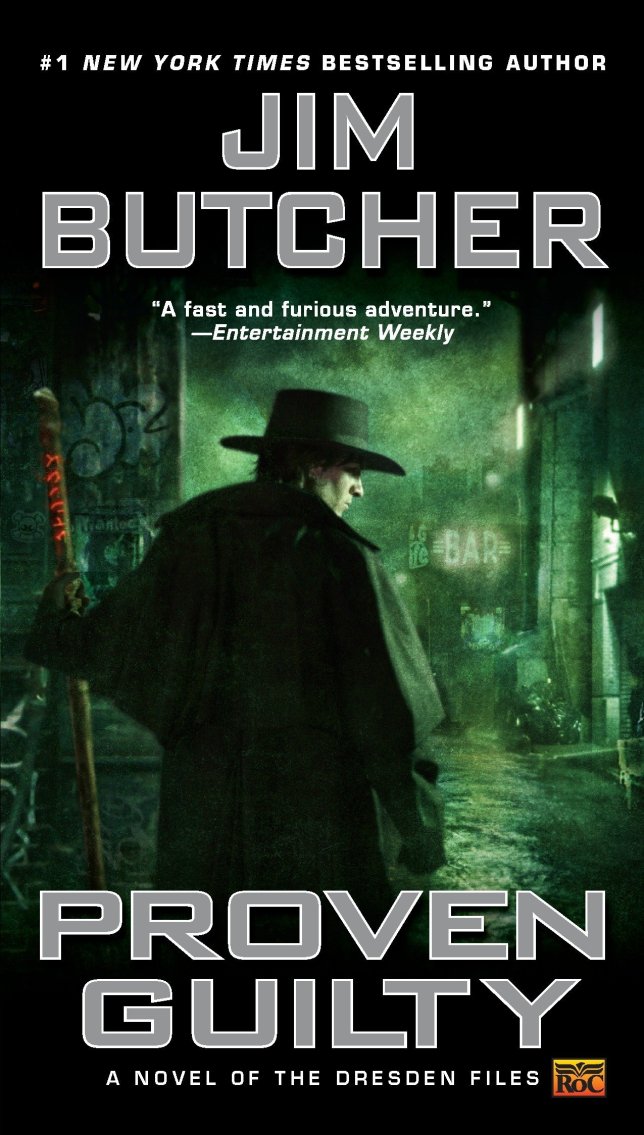
Throwback Thursday – Dead Beat by Jim Butcher

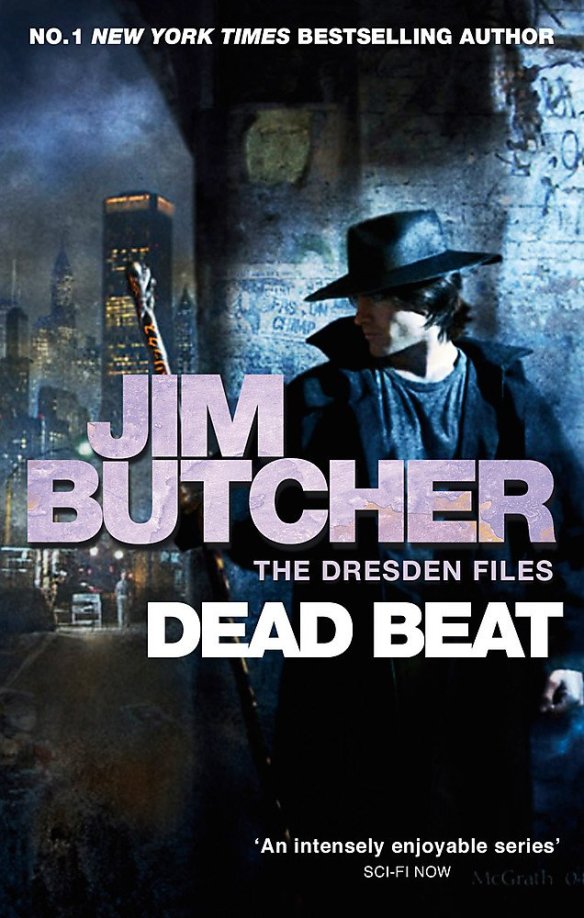
Dead Beat Cover

Publisher: Penguin Audio (Audiobook – 3 May 2005)

Series: Dresden Files – Book Seven

Length: 15 hours and 7 minutes

My Rating: 5 out of 5 stars

Amazon

Welcome back to my Throwback Thursday series, where I republish old reviews, review books I have read before or review older books I have only just had a chance to read.  For this latest review I dive back into the epic Dresden Files series by Jim Butcher with the seventh entry, Dead Beat.

Over the last couple of years, I’ve had a ton of fun finally getting into the iconic Dresden Files books by legendary author Jim Butcher.  Generally considered one of the very best urban fantasy series, the Dresden Files are a deeply captivating series that follows Chicago’s resident wizard, Harry Dresden, as he investigates a series of mystical cases throughout the city, often resulting in epic moments loaded with magic.  I started this series with the latest book, Battle Ground (one of my favourite books and audiobooks of 2020), and then went back to the start to experience the series from the beginning.  So far, I have managed to read Storm Front, Fool Moon, Grave Peril, Summer Knight, Death Masks and Blood Rites, as well as last year’s novella, The Law.  All these books have been extremely good in their own way, and I have loved the elaborate stories each of them contained.  As such, when I was in the mood for something I was guaranteed to love this week, listening to the next Dresden Files book on my to-read list was an easy choice for me, with the seventh book, Dead Beat.

Harry Dresden, private wizard detective and magical protector of Chicago is always willing to help a person in need no matter the cost.  But even he is unprepared for how far he’ll have to go when an old and merciless enemy imperils one of the people closest to him.  The ancient vampire Mavra has evidence that could destroy his best friend, Karrin Murphy, and threatens to unleash it unless Dresden recovers a powerful book of magic written by the legendary, long-dead necromancer Kemmler.

With no choice but to find the book, Dresden begins his search around Chicago, attempting to discover any trace of its location.  However, his search soon leads him into conflict with a new dark power arriving in the city.  Three of Kemmler’s students have their eyes on the book and the rituals it contains, and they are willing to destroy everyone and anyone to get it, including each other, especially when the prize at stake is godhood.

Caught between the three warring necromancers and their minions, Dresden needs to find the book first to stop their dark ultimate ritual before it can decimate Chicago.  However, each of Kemmler’s students far outclasses him in terms of magical ability and ruthlessness, and with only limited allies to call upon, it looks like even Dresden will have trouble saving the day again.  To survive, he might have to a make a dark deal with an even more malevolent evil, one that that has the potential to damn him forever.

I don’t know how he does it, but every single one of Jim Butcher’s novels that I read is so damn addictive and epic that I always struggle to put it down.  Dead Beat was another outstanding entry in the Dresden Files series, and honestly it might be one of the best I have read so far.  I absolutely powered through its clever and elaborate story as I tried to get to the end, and everything about it was highly enjoyable and fun.  Dead Beat gets another easy five-star rating and I have so much love for how amazing this seventh entry in the series turned out.

Dead Beat has an amazing story to it that effortlessly drew me in with the cool combination of magic, character moments and investigative angles.  Starting off quickly with Dresden drafted into the search for a powerful magic book, the protagonist begins his new investigation, only to discover the dangerous necromancers waiting for them.  Dresden soon has deadly encounters with all three necromancers in Chicago searching for the book, as well as their various minions and associates, which results in some brilliant scenes.  Dead Beat continues by setting Dresden and his allies on a dark course as they simultaneously attempt to find the book and the full extent of the warring necromancer’s plans, while also fending off their attacks.  Dresden keeps getting confronted again and again by his foes, barely escaping each time while also learning more about what is to come.  At the same time, he is forced to deal with certain personal issues, including trauma, complicated relationships, and a literal demon in his head, tempting him with power and knowledge.  There are some great twists, dark moments and emotionally powerful scenes set up around the middle of the novel, and I loved how well Butcher laid out the storylines and hinted at some big moments to come. Everything leads up to an epic concluding final third of the book as Dresden makes some hard decisions and compromises to save the day.  The final confrontation with the bad guys is pretty damn awesome, especially as the protagonist, utilising his usual restraint and good judgment, unleashes a very monstrous response to the antagonist’s minions.  This entire narrative was enthralling from start to finish, and I cannot emphasise just how addictive and entertaining the entire story was.

Dead Beat featured Butcher’s usual excellent writing style which once again lent itself extremely well to the elaborate narrative he came up with.  The pacing of this book was constantly fast and exciting, which guarantees that the reader is always paying attention, especially as every page has either action, some intriguing bit of lore or history, or some intense and compelling character development.  Butcher also ensures that this latest novel has the right blend of great story elements to it, and I deeply enjoyed how the fantasy and mystery elements are well featured as the protagonist is forced to do detective work to get the answers.  All this is overlayed by a great smattering of humour, mostly from the funny protagonist, who approaches the dark events and villains with his usual cockiness and disrespect.  The use of a first-person perspective from Dresden is also quite effective, and I loved seeing events through his eyes, as it allows readers to fully grasp the mystery, while also showcasing the great character developments.  While Dead Beat can be read as a standalone read, especially as Butcher is good at quickly recapping events, at this point in the series readers will benefit from going back and reading the earlier Dresden Files books first.  Dead Beat proves to be a key entry in the larger series, with multiple major events occurring here, and there are a ton of references to the preceding books, including the return of several fantastic characters.  I really got a lot more out of Dead Beat’s story for having read the previous novels, especially as you get to see how much Dresden has been through in the lead up to this book.  Overall, this was a very well-written and impressive novel, and Butcher really ensured that his cool story came through perfectly.

As with the rest of the Dresden Files books, I was really impressed with the blend of fantasy and urban fiction elements in Dead Beat, especially as Butcher has come up with such an elaborate world to set his stories in.  The author adds some cool new elements into his complex world throughout Dead Beat, as Dresden is forced to deal with a whole new branch of dark magic, necromancy.  Necromancy, or the control over the dead, is always a great villainous power in fantasy fiction, and Butcher makes excellent use of it in this book, with three rival necromancers vying for power.  Each uses a different form of necromantic magic in battle, and this results in some outstanding scenes where Dresden is forced to confront them.  The resulting magical mayhem is pretty epic, and Butcher’s unique depiction of zombies was both fun and a little scary.  This intriguing new form of magic ensured that Dead Beat really stood out, and I appreciated how Butcher turned it on its head towards the end when Dresden gets creative.  These excellent portrayals of magic fit within the fantastic setting of modern-day Chicago and it is always fun to see the elaborate balance of magical and mundane features that Butcher has set up within the city.  These great fantasy inclusions blend well with the character work and mystery elements of Dead Beat, and I look forward to seeing how Butcher further expands it in future books.

One thing that I felt Butcher did particularly well in Dead Beat was how he portrayed his brilliant cast of characters.  The Dresden Files always contain great protagonists and villains, but this novel had some of the best portrayals of them to date.  This is especially true for series protagonist and point-of-view character Harry Dresden, who had a great outing here.  Dresden has always been a damaged and conflicted figure in the series, but recent traumas are really weighing him down in Dead Beat as he struggles with a terrible hand injury, as well as the malign influence of the fallen angel bound to him, Lasciel.  The protagonist spends most of the book trying to deal with the influence of Lasciel who subtly manipulates him in many ways, tempting him with power or a solution to his many problems.  Each damaging and desperate encounter that Dresden survives in Dead Beat forces him to reconsider the wisdom of refusing her help, and the subsequent internal battles produce some of the most intense and compelling scenes in the novel.  This continued temptation and manipulation alters Dresden’s personality at times, and it was interesting to see how his allies and friends treat him, especially as Dresden begins to understand the different ways that members of the magical community view him.  Of course, Dresden hides most of his internal pain with his usual hilarious wit and humour, and his irreverent opinions, funny observations, and sheer ability to annoy anyone he encounters, results in most of the book’s humour and over-the-top moments.  Throw in other concerns, including complex relationships, unrequited love, and the character’s desire to prove himself and do the right thing, and this was some of the best character work that Butcher has ever done around his main protagonist.

On top of Dresden, Butcher also features a brilliant cast of support characters and villains that really help to enliven the book.  Dead Beat features a mixture of established supporting characters, as well as several great new ones, each of whom get some excellent moments to show off throughout the book.  I particularly enjoyed how well Butcher utilised the character of Waldo Butters in Dead Beat.  Butters, a kooky and big-hearted mortal medical examiner who had minor roles in a previous novel, is thrust into the limelight during this book, becoming a major ally to Dresden.  Butcher weaves some great storylines around him as he simultaneously finds his courage and begins to understand the magical world that keeps trying to kill him.  Butters proves to be a great supporting figure to Dresden in this book, and I loved their amusing team-up and developing friendship.  There is also a couple of great hints at some of the future storylines involving Butters, and I look forward to seeing more of him.

Aside from Butters, I also enjoyed the appearance of Dresden’s half-brother, the vampire Thomas Raith, who has been crashing at Dresden’s place.  Butcher paints a fun brotherly relationship between the two in this novel, which was quite entertaining at times.  However, the more humorous elements of their relationship are often overshadowed by the deep pain within Raith as he tries to overcome the emotional damage done to him in the previous novel.  I also loved learning more about Dresden’s skull spirit companion, Bob, in Dead Beat, and his dark history proves to be quite fascinating, especially as his former nature contrasts substantially with his usually entertaining persona.  The three necromantic villains, Grevane, the Corpsetaker and Cowl, each bring a certain level of sinisterness to the table, and they prove to be exceptional antagonists in their own way.  Finally, I must highlight the inclusion of Dresden’s new dog, Mouse, who has an awesome outing in Dead Beat.  A young and growing gentle giant, Mouse is a fun animal companion to Dresden and his allies, and I look forward to seeing more of his hijinks in the future.  Honestly, the entire cast of Dead Beat was pretty damn exceptional, and their powerful interactions and internal issues, added so much to the impact and power of this awesome novel.

As with all the Dresden Files novels, I chose to listen to Dead Beat on audiobook, which was an exceptional experience as the audio format helps to enhance the great characters and magical action.  Coming in at just over 15 hours, this is a substantial audiobook, however, I manage to knock it out in a few days, especially once I got caught up in fantastic story.  Naturally, the best thing about the Dead Beat audiobook is the return of actor James Marsters as the narrator.  Marsters, who is one of my favourite audiobook narrators thanks to his work on this series, did another brilliant job in Dead Beat and I have so much love for his outstanding performance.  After lending his voice to all the previous Dresden Files novels, Marsters has all the characters down, and each figure is given a fitting and powerful voice that carries through from book to book.  I particularly appreciated his portrayal of main character Harry Dresden, and Marsters perfectly captures the protagonist’s deep emotions and cocky demeaner, ensuring that you are both drawn to his pain and entertained by his antics.  In addition to the excellent voices, Marsters also has some noticeable and contagious enthusiasm in his narration, especially when it comes to the magical battles, and you can really feel his passion and excitement in parts of the story, especially when he loudly shouts out Dresden’s magical spells.  This narration from Marsters is so damn good, and it ensures that I had an exceptional time with Dead Beat’s audiobook, while is the absolute best way to enjoy a Dresden File novel.

In the seventh entry in his iconic Dresden Files series, Dead Beat, Jim Butcher has produced another exceptional read and one that I cannot recommended enough.  Featuring a particularly impressive and captivating narration, cool magical inclusions, and some of the best character work Butcher has ever done, Dead Beat is one the best Dresden Files novels I have read so far, and I loved everything about it.  This was such an amazing book, and I am very much intending to read several more entries in this outstanding series later this year.

Amazon

Son of the Poison Rose by Jonathan Maberry

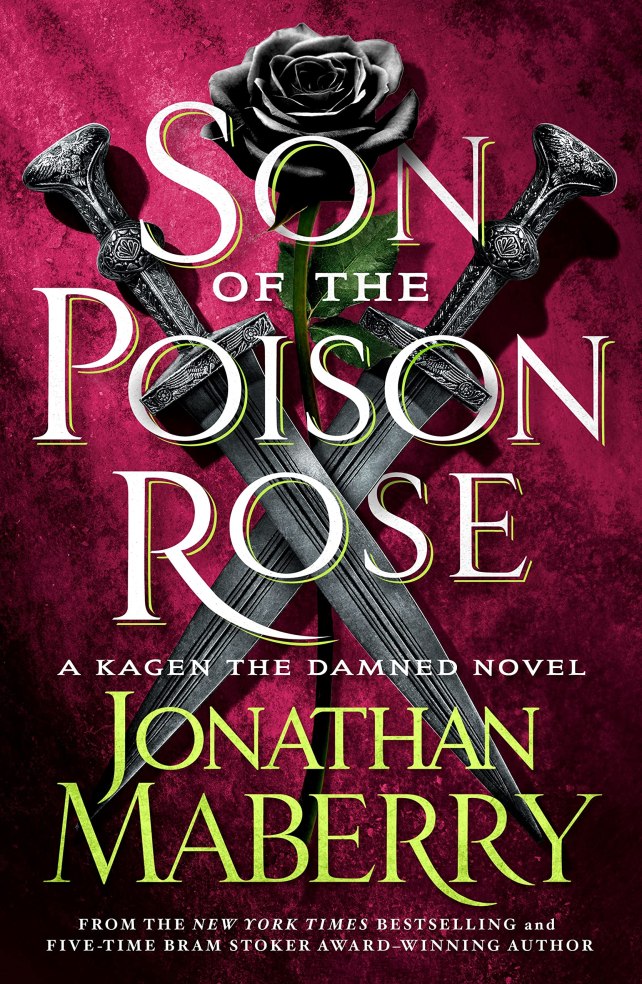
Son of the Poison Rose Cover

Publisher: Macmillan Audio (Audiobook – 10 January 2023)

Series: Kagen the Damned – Book Two

Length: 25 hours and 55 minutes

My Rating: 5 out of 5 stars

Amazon

One of my favourite authors, Jonathan Maberry, returns to his intriguing fantasy world in a big way with the second Kagen the Damned novel, Son of the Poison Rose.

Readers familiar with my blog will know I am a massive Jonathan Maberry fan, and the path to my current obsession with his work is well documented throughout The Unseen Library.  I started off by reading his fantastic 2018 novel, Deep Silence, quite early in my blogging career, and this ended up getting me into the rest of his exceptional Joe Ledger series, including The Dragon Factory, The King of Plagues, Predator One and Dogs of War.  I have also had a great time reading his sequel Rogue Team International series, which featured the epic books Rage (one of my favourite books and audiobooks of 2019) and Relentless (one of my favourite books and audiobooks of 2021), as well as the fun standalone novel Ink (one of my favourite books and audiobooks of 2020).  Needless to say, I have deeply enjoyed his cool books, and this only increased when he made his impact into the fantasy fiction world last year with Kagen the Damned.

Kagen the Damned was an amazing and exceptional dark fantasy novel that took the reader on a wild ride.  Set in a brutal fantasy world of Maberry’s own invention, Kagen the Damned followed the titular character of Kagen Vale, a highly regarded hero and palace guard of the Silver Empire who loses everything in a single night when the armies of the dread nation Hakkia invade with dark magic, led by the powerful and deadly Witch-king.  Forced to watch his parents, his empress, and the royal children he was sworn to protect die terrible deaths, a haunted Kagen flees, only to be further destroyed when he beholds his gods turning their back on him, damming him for his failure.  Now known as The Damned, Kagen travels the world in a daze before finally regaining his senses and launching an attack on the Witch-king at his coronation.  However, this reveals secrets that shock Kagen further and spelling doom for the entire world.  I had an epic time reading Kagen the Damned last year, and it ended up being one of my favourite books and audiobooks of 2022.  Between this and the cool Kagen the Damned novella I Say Your Name in the Dark Nights, I have been eagerly awaiting a second novel and I was very excited when I heard that Son of the Poison Rose was coming out.  Son of the Poison Rose was one of my most anticipated books of 2023 and I finally managed to read it a short while ago and it was everything I hoped it would be and more.

“There is blood on the ground between us!”

Following his failed assassination attempt on the Witch-king of Hakkia, Kagen Vale, better known as Kagen the Damned, is once again the run with his companions, Tuke Brakson and Filia alden-Bok, attempting to find safety and come up with a new strategy of survival and revenge.  While their plan to kill the Witch-king failed, their attack stopped the return of the Hakkian God, Hastur, while also opening up the possibility of war, as the Witch-king’s fellow monarchs see the Hakkians as vulnerable.  However, Kagen also uncovered the terrible secret that the Witch-king is his older brother Herepath, who has turned his back on everything he once believed in to unleash great evil upon the world.

Wandering the wilderness, Kagen, Tuke and Filia attempt to come up with a new way to strike back against the Hakkian forces.  Their journey eventually leads them to the north of the continent, where they attempt to recruit an army of nationless-rogues, mercenaries and fighters to their cause.  But force of arms alone will not be enough to stop the Witch-king, instead Kagen and his allies will need magic.  But with magic long banned within the Silver Empire, only the Hakkians have any real knowledge of the mystic arts.  To that end, Kagen turns to former nun turned spymistress, Mother Frey, who sends Kagen on a deadly mission to a long lost city in a dangerous jungle in the hopes of recovering ancient books of dark magic.

However, the Witch-king is far from idle while Kagen is working against him.  With his army spread thin and the nations of the former Silver Empire all gearing up for war, the future looks grim for the usurper and his advisors.  But with new dark allies arriving every day, called to his side by magic, the Witch-king plans to unleash a magical plague, one that will turn his enemies into a ravenous, unthinking horde.  With such power at the Witch-king’s command, will Kagen’s quest reveal something powerful enough to defeat him?  And even if he does, will Kagen be able to fight his own brother?

Wow, wow, wow, what an epic and exceptional book!  Maberry can really do no wrong when it comes to his writing and this impressive sequel really hammers home what a talented author he is.  Masterfully expanding on the narrative set up in the first book, Son of the Poison Rose contains Maberry’s trademark blend of intensity, awesome action, complex characters, and dark world building that I love so much.  I absolutely powered through this lengthy novel, and it earns Maberry another easy five-star rating from me as I loved every single second I spent with it.

Maberry continues his sprawling and dark narrative in Son of the Poison Rose, as this book takes the reader in some great and captivating new directions.  Taking place in the explosive aftermath of Kagen the Damned, Son of the Poison Rose starts off in a big and action-packed way as Kagen and his allies find themselves being hunted by everything the Witch-king can throw at them.  Maberry quickly establishes his usual practice of featuring a huge number of different perspectives to showcase not only the adventures of the protagonists, but also the actions and schemes of the antagonists and the impacts that their machinations have throughout the world.  The main story of Kagen is pretty epic as it sees the protagonist and his friends struggling through new lands in the search of allies and magic.  While this results in some great scenes for Kagen in the first two thirds of the book, including a great haunted house sequence, his story here feels a little meandering at times without too much progress being made.  However, this is more than made up from the various alternate perspectives and worldbuilding that occurs in the same period.  It is so damn fascinating and entertaining to see the various dark and often horrifying plots of the antagonists come into effect as they plot for war.  These storylines blend spy thriller and dark fantasy elements together really well and you are drawn into these storylines, especially as Maberry takes the opportunity to strengthen the followers of the antagonists in some big ways.  The simultaneous build-up of other complex supporting characters, as well as the many examinations of various corners of Maberry’s new fantasy world adds to the impressive tapestry of the first two thirds of the story, and I was pretty damn hooked during this part of the book.

Maberry ramps up the intensity in the final third of the book as the various intriguing storylines he set up in the start of the novel really come to fruition.  This is headlined by Kagen and his allies travelling into a dangerous jungle nation to find a legendary ancient city where magical texts are hidden.  While I was initially concerned this part of Kagen’s story was going to be rushed, it ended up being very well written and awesome, as they encounter all manner of evils out in the jungle.  This final third of the book was again firmly enhanced by the continued dive back to the antagonists, where you see their evil plot to fill the jungle with zombies and other deadly creatures to kill Kagen and his comrades.  This results in an epic series of battles which keep you on the edge of your seat, as you know Maberry will not hesitate to kill off his characters.  The author chucks in several massive revelations around this part of the book, including finally showing the motivation behind the Witch-king’s actions, and the entire narrative ends on a big note while also expertly setting the stage for even more chaos in the following novel.  This ended up being a particularly epic story and I was firmly hooked the entire way through.

Those who are familiar with Mabbery’s novels will know that the author has a very distinctive style which has worked wonders in his many thriller novels.  Maberry successfully transported this style across to the fantasy genre last year with Kagen the Damned, and I felt it really enhanced his already impressive story.  Naturally he continues it in Son of the Poison Rose and it is still really effective at conveying the vast scope of his tale.  The main basis for his style is the utilisation of a vast number of shorter perspective chapters which showcase events from multiple characters across the narrative.  This results in a vast and complex story that not only allows the reader to see the adventures of the protagonist but also highlight the other players throughout the realm, including the antagonist, his court, the members of the resistance, and even several kings and rulers from unaligned nations who are making plans for war.  Maberry further expands out the plot by including a series of intriguing, often standalone interludes, which showcase smaller, self-contained stories within the wider universe.  These interludes are usually pretty cool, both by themselves and as extensions of the larger story, and I love how inventive and dark Maberry can be at times.  This mass of perspectives really helps to create an extensive and complex plot that has so many different aspects to it.  Seeing the protagonist and antagonist constantly reacting to the actions of each other, as well as other figures in the book, really ups the stakes and intensifies the plot, and I loved how Maberry gave this fantasy novel a strong thriller feel, especially with the continues focuses on politics, espionage and revenge.

Now, one thing about Maberry’s writing style that is not going to appeal to everyone is just how dark and disturbing the author makes the story.  Maberry is a particularly over-the-top writer at times, as he really does not hold back on the gore, violence and depravity, with the characters witnessing or causing all manner of mayhem or gruesome acts.  While this excessive violence and brutality fits the dark fantasy realm that Maberry has created, particularly as it highlights just how evil the antagonist and his legions can be, it is not going to be everyone’s cup of tea.  The torture, abuse and sadism of many scenes can be a bit much at times, and anyone that dislikes that sort of inclusion is probably best served to avoid this series.  However, for those that remain, I will point out that Maberry’s attention to bloody detail does ensure that the action sequences are extremely awesome.  The author has a gift for bringing the brutality and intensity of the battlefield to life in some truly glorious scenes, and you will be enthralled by every swing of the dagger or sword that he writes.  These action scenes are a beautiful, if bloody, highlight of this book, and the overall excessiveness of some of the scenes, especially when focusing on an over-the-top villain really plays into the wider narrative and setting.

I am still in love with the cool new dark fantasy world that Maberry created in Kagen the Damned, especially as the author took his time to populate with evil creatures, Lovecraftian gods and so much damn despair.  His first book served as a brilliant introduction to the various intriguing nations, and I deeply appreciated the intricate depictions of the Hakkian invasion, as well as the subtle and slow reintroduction of magic into this world.  Maberry continues to build up this world in several ways throughout Son of the Poison Rose, which results in some amazing story elements.  The focus on several of the other realms not seen in the first book is pretty interesting, as is the examination of the complex politics of the land as these now independent nations contemplate war with Hakkia after the concluding events of Kagen the Damned.  This builds up several great storylines as these rebelling nations and the Witch-king’s court plot different strategies to win any future wars.  Maberry also has a lot of fun exploring several new lands that were only hinted at in the previous books, and the protagonists soon end up in several unique and deadly landscapes, including cursed snowscapes with mysterious creatures, lethal jungles, and massive ruined cities dedicated to overthrown gods.  All of these locations are expertly introduced and described by Maberry, who uses them to his full advantage to increase tension and ensure that all the inevitable battles have a compelling new edge to them.

Another excellent thing that Maberry continues to do in Son of the Poison Rose is show how magic is slowly returning to the land due to the machinations of the Witch-king.  Thanks to several great chapters and interludes, you get to see the full horror as old magical creatures re-emerge, including the always reliable zombie, which plays very heavily into the plot.  Maberry is no stranger when it comes to zombies, having featured them in several books before (Patient Zero and Code Zero for example) and he uses to them to great effect here, both as political tools for the antagonist, and as rabid obstacles for the protagonists.  Other awesome features include the unstoppable, demonically powered, Razor Knight, which has a great showing at the end of the book, and it will be interesting to see how that, as well as some of the other magic unleashed in Son of the Poison Rose, come into effect in the rest of the series.  I also really appreciated how Maberry kept including a few references to his other series throughout Son of the Poison Rose, which is always a lot of fun for his established fans.  The hints of connection between this world and the settings of other books from Maberry is noticeable and fun without being too mysterious for new readers.  I especially loved the inclusion of a fantastic new villainous character who readers of the Joe Ledger books will be well familiar with under a different name, which I thought was an awesome touch for those who have read his other books.  I deeply enjoyed the impressive world building that Maberry did in Son of the Poison Rose, and I look forward to seeing how else he expands it in the rest of the series.

As always, one of the absolute best parts of Son of the Poison Rose were the exceptional, complex, and well-written characters that Maberry has expertly crafted together.  This includes a great combination of established figures from the first book, as well as a good collection of new characters who add some outstanding original spice to his second book.  Thanks to huge number of perspective chapters, the Kagen the Damned series features a pretty massive cast of damaged or sinister figures that Maberry uses to full effect to tell an elaborate overarching narrative.

Unsurprisingly, most of the focus of the book falls on series titular character, Kagen Vale, better known as Kagen the Damned.  Kagen had an outstanding introduction in the first book, where you see him lose everything, including his gods, in a single night, which drives him to great despair.  While he has managed to mostly recover from this thanks to his friends, he is still haunted by that dark night, especially after learning the truth about who the Witch-king is, as well as the identity of his heirs.  Driven by even further guilt, confusion, and anger towards his brother and his treachery, Kagen continues his impressive and emotionally rich journey in Son of the Poison Rose, and I had an outstanding time along the ride with him.  Maberry writes Kagen in an outstanding way throughout this book, and you really feel his pain and continued anger as he tries to deal with everything that has happened to him.  While he does bear some noticeable similarities to Maberry’s other major protagonist, Joe Ledger, especially when it comes to lethal prowess and severe psychological damage, I think that the author does enough to set Kagen apart, especially as his painful motivating event is a lot more raw and personal, resulting in some emotionally charged sequences.

Aside from Kagen, Maberry sets up a great supporting cast who add a lot to the main storyline while also introducing their own intriguing character moments.  It was great to see the return of Kagen’s main associates, Tuke and Filia, who continue to follow him into hell.  These three characters have great chemistry together and they form an impressive emotional centre to the story, especially as Tuke and Filia serve as Kagen’s conscience and voice of reason.  I also liked the return of Mother Frey, the clever spy mistress who is attempting to control the resistance against the Hakkians.  Her insights into the world and its political players often expands the intrigue of the story and she serves as a compelling figure in the plot.  I did find it interesting that one of the major figures from the first book, Ryssa, barely appeared in this novel after her fantastic storyline in Kagen the Damned.  However, her few appearances seem to hint at some sinister things in the future, and I look forward to seeing what Maberry organises with that.  Some of the more complicated and disturbing scenes of Son of the Poison Rose revolve around the captured Alleyn and Desalyn/Gavran and Foscor, the royal twins who were captured during the invasion, psychologically broken down, and forcibly given new identities.  These two mentally mutilated children spend the entire book trying to retain and regain their memories in some pretty dark scenes and thanks to their affliction, they run the gauntlet from sweet and damaged, to homicidal maniacs.  I felt that Maberry really showcased the twins’ mental state perfectly, and their dark storyline was an excellent addition to the plot.

However, to my mind, some of the best characters in Son of the Poison Rose are the villains, who add an entertaining and impressively sinister edge to the book, while also expanding out the political intrigue aspects of the plot.  These complex antagonists are led by the evil and destructive Witch-king, who was revealed to be Kagen’s long lost brother Herepath.  Empowered by dark magic, vengeance, and a need to keep his true identity hidden, the Witch-king continues his mission to kill Kagen and ensure that and opposition to this power is utterly destroyed.  The Witch-king proves to be a particularly malevolent figure throughout Son of the Poison Rose, even after his motivations are revealed to the reader, and he is the perfect foil to Kagen and his companions.

The Witch-king is backed up by a court of loyal, terrified advisors, each of whom are dedicated to the Witch-king’s plans, while also trying to stay alive and gather their own power.  This includes the fantastic trio of Lord Nespar, Lady Kestral and Jakob Ravensmere, each of whom have their own reasons for serving the Witch-king, and who each suffer for it in different ways, especially Kestral.  Nespar and Ravensmere deeply enhance the political thriller focus of Son of the Poison Rose, as their analysis, plotting and attempts to keep the Hakkians strong on behalf of their master results in some fantastic and powerful moments.  I also must call out the mysterious new evils that join the Witch-king’s side during Son of the Poison Rose, especially as many bring their own form of magic and despair with them.  The highlight of these new characters is the fantastic and devilish Prince of Games, a mysterious figure who comes to the Witch-king’s side to give advice, counsel and chaos.  The Prince of Games really stood out to me, not just because of his portrayal in Son of the Poison Rose but because of the great, universe-spanning implications his appearance has, and I cannot wait to see what havoc he creates throughout this series.  All of the antagonists are pretty great, and they all bring their own horror and darkness to the story, especially as they all do some pretty terrible and gruesome things to stay in power.  Honestly, every character in Son of the Poison Rose is awesome and memorable in their own way, and Maberry once again shows himself to be the master at effectively bringing together a truly complex cast of damaged and misfit figures.

In my opinion, the only way to properly enjoy a Jonathan Maberry novel is to listen to its audiobook, especially if that audiobook is narrated by the legendary Ray Porter.  This has been the case for pretty much every Maberry novel I have had the pleasure of reading, including Son of the Poison Rose, and all these epic audiobooks have been something special.  Not only do Maberry’s elaborate storylines and settings get the gravitas and exposure that they deserve in this format, but Porter’s narration really amps up the dark nature of the narrative and provides perfect depictions of the characters.  Porter, who is easily one of my favourite audiobook narrators, does another exceptional job in Son of the Poison Rose and I absolutely powered through this audiobook thanks to it.  His voice really lends itself to every dark and deadly scenario that Maberry envisions in this novel, and the way that he can convey fear, hatred and pure evil with his voice is just amazing.  His real talent lies in his ability to bring all Maberry’s complex characters to life in a particularly fitting way.  I especially love how he portrays the main protagonist, Kagen Vale, and he really captures every bit of pain, despair and resolve that this battered character contains.  Throw in a series of particularly disturbing voices for all the inhuman and horrifying creatures that the characters encounter, and this is a perfect narration that adds so much to my enjoyment of an already epic book.  With a run time of nearly 26 hours, Son of the Poison Rose is a particularly long audiobook (it would come in at number 14 on my latest Longest Audiobook I Have Ever Listened To list), but it is well worth the time investment especially once you get caught up in the twisted story.  I personally powered through it extremely quickly, as the combination of the amazing writing and impressive narration ensured I was listening to it continuously and loving every damn second of it.  As such, I must once again strongly recommend the audiobook format to anyone wanting to check out Son of the Poison Rose, and you will not be disappointed if you do as this is easily one of the best audiobooks of 2023.

I could go on for ages about Son of the Poison Rose, as Jonathan Maberry has done another exceptional job with this second Kagen the Damned novel.  Featuring an electric and addictive dark fantasy narrative, loaded with carnage, battles, great characters and an elaborate world on the brink of war, Son of the Poison Rose was a joy from start to finish, especially in its audiobook format.  This is easily one of the best fantasy books I have read all year and I cannot wait to see how Maberry continues this epic story in the future.  A masterful second book in one of the best ongoing dark fantasy series!

Amazon

City of Last Chances by Adrian Tchaikovsky

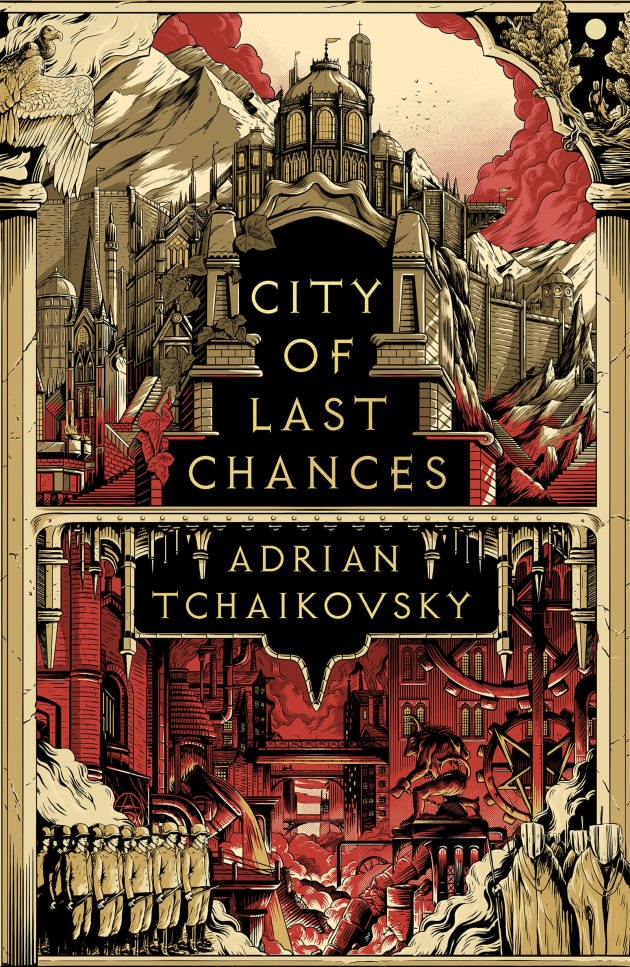
City of Last Chances Cover

Publisher: W. F. Howes (Audiobook – 15 December 2022)

Series: Standalone/Book One

Length: 20 hours and 7 minutes

My Rating: 5 out of 5 stars

Amazon

Acclaimed fantasy and science fiction author Adrian Tchaikovsky delivers one of the best fantasy books of 2023 with the intricate and captivating City of Last Chances.

Over the last year I have been really getting into the works of Adrian Tchaikovsky, one of the most inventive and imaginative authors of fantasy and science fiction writing today.  Tchaikovsky is a skilled and prolific author who has been a major figure in genre since 2008.  Best known for his Shadows of the Apt, Children of Time, Echoes of the Fall and The Final Architecture series, as well as a compelling collection of standalone novels and novellas (I personally have my eye on his previous novel, Guns of the Dawn), Tchaikovsky has a great habit of creating elaborate new worlds filled with intriguing characters and scenarios.  I have only read a couple of his books so far, including Tchaikovsky’s first Warhammer 40,000 novel, Day of Ascension, and his outstanding 2022 novella, Ogres, but both were outstanding reads and I loved the epic stories both of them contained.  Because of this, Tchaikovsky’s latest standalone novel, City of Last Chances, has been on my radar for a while.  It was released last year, and I finally managed to get a copy on audiobook a short while ago and dove into it as soon as I could.  However, I was unprepared for just how captivating its story would be.

There has always been a darkness hanging over the ancient city of Ilmar.  Known colloquially as the City of Long Shadows, the City of Bad Decisions, and the City of Last Chances, Ilmar is home to many dangerous magical occurrences, including the mysterious Anchorwood at its centre, which serves as a gateway to other far-off worlds.  However, a far more sinister enemy has arrived at Ilmar, the soldiers of the Palleseen, a powerful empire seeking to bring its ideas of perfection and order to all it conquers, whether they like it or not.

After several years of occupation, Ilmar is at a tipping point.  Its citizens are fed up of the corrupt and brutal soldiers, and everyone in Ilmar, be they rebels, criminals, refugees, idealistic students or factory workers, is looking for an opportunity to strike back and make their lives better.  With these forces straining to be unleashed, all it takes is one spark to set the fire of anarchy.  That spark occurs when a powerful Palleseen official leads an ill-advised expedition into the Anchorwood, searching for additional power.  However, he is unaware that an opportunistic thief has stolen the necessary protective amulet in advance, and the expedition is massacred by the creatures that live within the wood.

As news of this crime spreads throughout the city, chaos begins to rear its head.  Everyone is searching for the valuable amulet that was stolen as it represents the greatest chance of freedom many will see, while the Palleseen soldiers are clamping down on the entire city, determined to find those responsible and make them pay.  In this chaos, a mixture of Ilmar’s citizens, including a desperate priest, a violent murderer, an unlucky thief, a duplicitous lecturer and several of the most lost people in the city, will seek to survive the oncoming storm, only to fan the flames further.  However, none are truly prepared for the full danger about to engulf Ilmar, or the heartbreak that follows with it.

Well damn, now that was a pretty damn epic book.  Tchaikovsky has delivered an exceptionally intriguing and addictive novel in City of Last Chances that got me hooked very early on.  I was honestly blown away with the captivating and unique narrative that City of Last Chances contained, and Tchaikovsky drew me in with every fantastic detail and distinctive character.  This book gets a very easy five-star rating from me as I am still thinking about every detail of this book.

City of Last Chances has an amazing fantasy narrative at its centre, which Tchaikovsky backs up with his impressive and distinctive writing style that results in an extremely entertaining, powerful, and intense read.  City of Last Chances follows a raft of different characters as they attempt to navigate a series of deadly events following a single theft.  Tchaikovsky sets out the story in a very interesting way, and the book initially feels more like a collection of short stories than one cohesive narrative; for most of the first half of the book, each chapter acts as a semi-independent story that introduces the reader to a new character and shows their place in Ilmar.  These new characters are often supporting or named figures from a previous character’s chapter, who have their own unique stories and lives.  These character-driven stories are all quite enjoyable and compelling in their own way, and Tchaikovsky cleverly alters the tone so that some come off as very serious, some are quite dark, and others can be a little more comedic and thought provoking.  Some of my initial favourites include the funny and philosophical first chapter around the priest Yasnic and his relationship with God (which reminded me a lot of Small Gods by Terry Pratchett), Langrice’s scene-setting chapter at the mysterious Anchorage inn, and the chapter that gave a proper and humorous introduction to the grim figure of Blackmane as he finds himself about to be executed by a very cheery hangman.  Not only are these chapters very entertaining in themselves, but they effectively set up a larger narrative within City of Last Chances, while also providing great character moments and more and more glimpses into the many aspects of Ilmar.

As the book continues, the character-driven chapters begin to flow on from the preceding storylines, with the catalytic theft of the Palleseen artefact leading to bigger events down the line.  Each chapter adds its own spin to these events by showing new factions, impacted characters, or horrors within the city, or by introducing a new series of spiralling events that begin to unwind the situation even further.  As the story continues, a main cast begins to develop as more of the chapters focus on certain characters.  This really starts to bring the overarching narrative together, and soon the best parts of each unique character and their arcs begin to mingle with the other fantastic figures.  The story soon develops into a great tale of revolution with some Les Misérables vibes to it, as students, refugees, resistance fighters and factory workers begin to revolt.  The substantial main cast is worked into these events extremely well, and the reader is soon wrapped up in their powerful character arcs as well as the overarching story of Ilmar as everything begins to unfold.  Most of this is captured in a series of great chapters focused on the main cast, although new characters are still introduced right up into the end, with some unique, if brief, storylines skilfully worked into the larger narrative.  The author really pushes everything up a notch as the book comes towards the end, and every danger, unusual occurrence and strange character is unleashed to some degree.  There are some outstanding reveals, big battles, and some deeply personal moments that really help to bring the entire fantastic story together.  I particularly loved how some great story elements that were hinted at earlier in the book are brought to the fore at the end, especially as this includes some outstanding twists (Hellgram’s wife was a fun one for me).  However, the true joy is in the way that every major character gets a resolution to their emotional and complex character arcs, leaving the reader breathless in multiple ways.  I felt that Tchaikovsky wrapped everything up perfectly, and this serves as a brilliant and captivating standalone fantasy narrative.

I cannot compliment the way that Tchaikovsky presented this outstanding story enough, as his distinctive writing style really helped to compliment the epic and complex plot.  I have already mentioned his great use of different character focused chapters above, and I must once again highlight how effectively they were used to tell a cohesive and distinctive narrative with so many entertaining facets.  While it did take me a little while to fully appreciate what Tchaikovsky was trying to achieve with these semi-independent chapters, once you notice how the story is coming together through character-focused sequences, you really grow to appreciate it.  The continued change of character focus ensures that Tchaikovsky keeps the pace of City of Last Chances pretty brisk, and it is easy to quickly move through the story, especially once you get caught up in the tale of Ilmar and its people that the author is developing.  Tchaikovsky also introduces some impactful changes in tone throughout the book, as City of Last Chances runs the gauntlet from being light-hearted to emotionally draining, as the protagonists go through hell and back while also trying to deal with their own personal problems.  The author puts in some pretty intense scenes throughout this powerful story, many of which leave the characters reeling in different ways, and there are also some quite terrifying or shocking sequences as the full horror of this city is revealed in gruesome fashion.  However, these darker scenes are often undercut with some fun and amusing humour that helps to diffuse the tension at some key parts of the plot and which I found to be very refreshing.  This humour is often a little black and cynical in context, which ensures that the reader is left amused, and sometimes laughing, without the story getting too light and drifting away from its harsher content.  I really think that Tchaikovsky found the right balance here, and I rather enjoyed how he mixed everything together.  I had so much fun seeing how Tchaikovsky wove his complex tale into this book and City of Last Chances really emphasises just how talented he is as an author.

One of the key things that made City of Last Chances such a hit for me was the outstanding setting of Ilmar.  Tchaikovsky has always been exceedingly good at effectively building up an inventive and complex new setting for his stories, and this is some of his best work yet.  The author shows Ilmar through the eyes of so many different characters in this book, each of whom adds a new aspect to its history, character, and energy, as the story progresses.  This proves to be quite an effective way to introduce the setting, and the reader soon gets an impressive picture of the entire chaotic glory of this oppressed city.  I love all the aspects of this place, including the magical dimension-hopping wood and the responsibilities surrounding it, the demon powered factories, the oppressed refugee areas, the idealistic student academy and the sinister Reproach, an abandoned part of the city filled with magically cursed wretches dancing to their death.  Each of these complex and compelling elements are explored to their fullest throughout City of Last Chances and I really appreciated how Tchaikovsky built them up and then effectively featured them again later in the story.

The author also explores various parts of the world outside of Ilmar, and it is interesting to see how that impacts on the main story.  I particularly liked the use of the Palleseen as the overarching antagonists of the story and Tchaikovsky paints them as an obsessed group of fanatics trying to bring their ideas of perfection to an unwilling world.  This plays into several of Tchaikovsky usual themes about oppression and revolution, and he sets the Palleseen up as a vindictive group, who are often hamstrung by the practices and bureaucracy they force on their enemy.  The entire focus on the city of Ilmar being unleashed to face the occupiers was an excellent part of the book, and Tchaikovsky built up all the factions and chaotic nature of the city really well.  As such, Ilmar is a brilliant background setting to this great story and I really appreciated how Tchaikovsky set his story into it.

While I loved so many of City of Last Chances elements, for me the most important and powerful part of the book is the characters, as Tchaikovsky introduces the reader to a massive and captivating cast of figures who travel through the story in their own fashion.  Due to the way the story is set out, there are quite a lot of characters in City of Last Chances, with new cast members being added in every chapter, either to support the current point-of-view protagonist or to set them up for their own chapter later.  As such, there is a real focus on quickly and effectively getting to the root of each character in their first chapter, and I think that Tchaikovsky did a great job on this score.  You get to know each of these figures really quickly and you really get drawn into their unique tales and arcs, many of which are perfectly developed over the course of the book.  While the cast is pretty massive, each of these characters is given plenty of time to develop and many prove to be particularly complex and relatable as a result.

While there are so many great characters, several definitely stood out to me, especially as Tchaikovsky kept going back to them.  This includes Yasnic, the last priest of a diminished and petty god who now haunts his one follower.  Yasnic is a fantastic and occasionally comedic character, which reminded me a little of the protagonist of Terry Pratchett’s Small Gods.  While I did think that Yasnic was a bit one-note at the start of the book, he develops as the story continues, and you really appreciate just how complex and damaging his life as a priest has been, thanks to his god’s arbitrary rules, many of which have actual good reasons behind them.  Watching him try to balance his faith and connection to his god against the terrible things being done to him and the city is a key part of the book, and it leads to some emotionally powerful scenes, especially when Yasnic thinks that his god is being taken away from him against his will.

Other great characters include Langrice, the shunned owner of the Anchorage, the inn that borders the Anchorwood, and Blackmane, an Allorwen refugee and former sorcerer, who serves as a criminal pawnbroker.  Both characters are older and wearier figures who are trying to survive the harsh circumstances of their lives the best way they can.  Both are shown to be outcasts to their own people in different ways, and this leads to a compelling relationship between the two, even if they do not actually trust each other.  I also quite liked the character of Maestro Ivarn Ostravar, a lecturer at Ilmar’s Gownhall university, who acts as a great patriot to his students while actually collaborating with the Palleseen.  Ivarn is a particularly arrogant figure who manages to manipulate people’s views of him, and it is really fun to see him thrown into situations outside of his control, especially when his own reputation works against him and forces him to become the figure head of resistance.  His student, Lemya, is also a great part of the book due to her fervent idealism brought on by Ivarn’s teachings.  Off course, her naivety comes back to bite her and the other characters repeatedly, and while her actions are often a little frustrating, it is great to see her slowly realise she is being manipulated and gain some common sense.

However, to my mind the best character in the book is Ruslav, which is frankly a shock as he initially shown as a simple thug with an obsession for women.  However, Tchaikovsky keeps coming back to him as the story develops and each new situation he finds himself in makes him more complex and likeable.  His first chapter shows how his entire perspective on life is changed when he falls in love with a beautiful painting, which starts a great character arc of self-discovery and confusion for him.  Tchaikovsky keeps developing Ruslav’s story as the book continues and he soon faces more and more challenges, including a mortal injury, a hanging, and forced religion.  The latter is the most damaging to him as he is forced to give up violence, the one thing in life he is good at, to stay alive, which results in quite the existential crisis.  Watching him try to fit all the unusual events occurring to him into his insights as a street thug proves to be entertaining and very relatable, as you understand just how much of a struggle each of his new experiences are for him.  His coarse humour fits into this arc very well, and watching him swear at his new, inadvertent god and all the people of different backgrounds he is forced to deal with, makes for some very fun scenes.  However, not all of Ruslav’s storyline is comedic, as Tchaikovsky loads in continued tragedy for him as well, that really shakes him, and the reader, to their core.  The author seems to both love and hate Ruslav, and the resulting damage and development he goes through result in some of the most emotionally rich parts of City of Last Chances.  I honestly am still surprised that Ruslav turned out to be such a great character, but he and the rest of the cast really make City of Last Chances an epic book, and I am really glad I got the opportunity to dive into their unique lives.

As with many of the larger fantasy books I tend to read, I chose to seek out the City of Last Chances audiobook format, which served as an outstanding way to enjoy this fantastic and elaborate book.  This new Tchaikovsky audiobook is pretty long with a run time of just over 20 hours, and it did take me a little while to get through it, although it was very much worth the time.  I always find that listening to an audiobook helps me to absorb more detail for some books, and this was particularly useful for City of Last Chances as Tchaikovsky has once again loaded his unique setting and captivating story with so many intricate elements.  As such, I was really able to full appreciate the full complexity of the dark city of Ilmar and its many, desperate residents.

I was also extremely impressed with the voice work of narrator David Thorpe, who ensured that the listeners could full enjoy every single aspect of City of Last Chances.  Thorpe, whose narration I have not had the pleasure of before, did a spectacular job here in City of Last Chances and I honestly enjoyed every second he spent telling this story.  Not only has he got a great base voice that tells the main story at a clipped and exciting pace but he also provides a ton of impressive tones for all the characters in this book.  Every one of City of Last Chances’ unique characters is given a particularly fitting voice that captures their personalities and really helps to convey to the reader some of their key points, such as Yasnic’s meekness, Ostravar’s arrogance, or Lemya’s unbridled idealism.  Thorpe also comes up with several great accents that he uses to differentiate some of the different races and nationalities contained within the city, and I felt that this really helped to emphasise the cultural elements contained within the story.  Overall, the City of Last Chances audiobooks is pretty damn spectacular, and I loved how the entire thing came together.  I had so much fun listening to Thorpe’s great take on the characters, and this is easily the best way to enjoy this epic read.

City of Last Chances is a brilliant and wonderful novel by Adrian Tchaikovsky that I cannot start raving about.  I quickly became enthralled the outstanding and compelling narrative that he pulled together throughout City of Last Chances, and his fantastic delivery, intriguing setting, and impressive characters all drew me in.  This is easily one of the best books I have read so far in 2023 and it comes very highly recommended by The Unseen Library.  I cannot wait to see what amazing book Tchaikovsky comes up with next, as if it is any where as good as City of Last Chances, I am going to love it.

Amazon

Headcase by Jack Heath

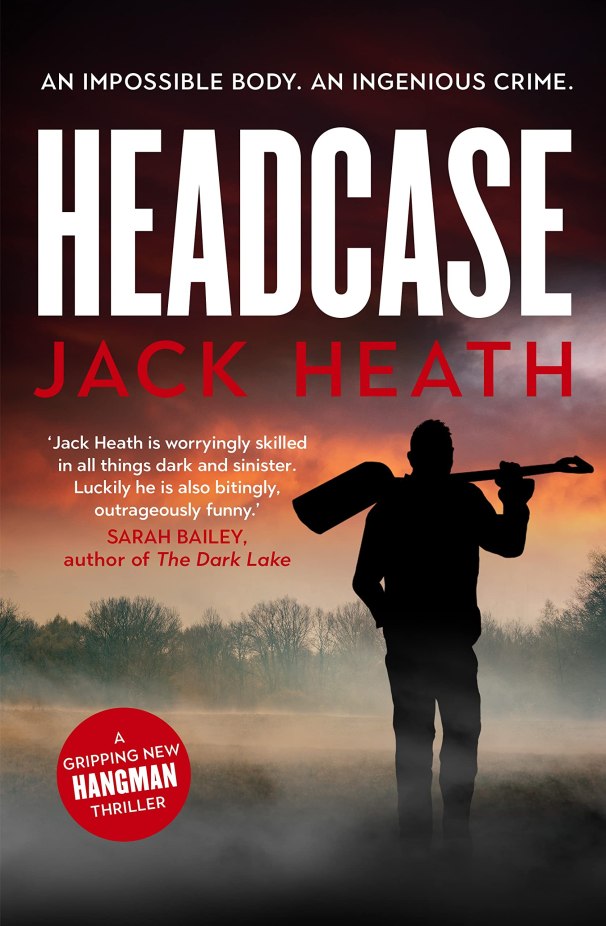
Headcase Cover

Publisher: Allen & Unwin Australia (Trade Paperback – 29 November 2022)

Series: Timothy Blake – Book Four

Length: 416 pages

My Rating: 5 out of 5 stars

Amazon     Book Depository

One of Australia’s leading and most diabolical thriller writers, the exceedingly talented Jack Heath, returns with another twisted and immensely clever mystery, Headcase, which sees the return of his cannibalistic protagonist, Timothy Blake.

While Australia has quite a few outstanding crime fiction authors, Jack Heath is a particular favourite of mine.  Coming from my hometown of Canberra, Heath has been writing for years, producing a range of different series and standalone novels.  I have really enjoyed some of his recent books, including the 2021 standalone novel, Kill Your Brother, an ultra-intense and amazing five-star read that saw a young woman with a complex past forced to make a terrible decision: kill her imprisoned brother or die herself.  This was one of my favourite Australian novels of 2021, and it is a must-read for anyone keen for a powerful and thrilling story.  However, Heath is probably best known for his Timothy Blake books (also known as the Hangman series), which are particularly fun and gruesome.  Following the titular Timothy Blake, a brilliant investigator with cannibalistic tendencies, this epic series are set around a unique but highly entertaining series of mysteries that really draw the reader in.  I have had an amazing time with this series, including the third entry in the series, Hideout (one of my favourite Australian books of 2020), and I have been very excited to see how this series continues for a while.  Heath did not disappoint as the fourth and latest entry in the series, Headcase, proved to be an exceptional and gripping read.

Following his previous harrowing adventure, which cost him his arm and burned all the trust he had with his former FBI partner, freelance investigator and full-time cannibal Timothy ‘Hangman’ Blake’s future seemed in doubt, until he was given an offer he couldn’t refuse.  Recruited by a CIA agent nearly as insane as he is, Blake now works freelance for the agency, investigating odd occurrences throughout the country in exchange for occasionally being able to indulge in his cannibalistic habit.

His latest case sees him and his CIA partner, Zara, journey to Houston, where something unexplainable has occurred at the NASA training complex.  A fully suited Chinese astronaut has been discovered on the grounds of the facility and no one can explain how he got there.  Did he fall out of the sky, or was he murdered elsewhere and somehow dragged into the middle of a secure United States facility?  As a diplomatic catastrophe seems imminent, Blake is drafted by the CIA to unofficially investigate one of the facility’s employees, a former kidnapper who Blake helped put away seven years ago, who may hold the secret of the dead astronaut.

As Blake starts digging, he uncovers a series of surprising and unusual clues that seemed design to confuse any investigation.  The evidence seems to point to the victim falling out of a Chinese spacecraft surveilling the United States, however, all Blake’s investigative senses and knowledge of human flesh seem to tell him differently.  But with Chinese hit squads following them, the CIA attempting to forestall their investigation, several suspicious individuals working in the facility attempting to misdirect him, and Blake’s own ravenous hunger driving him crazy, this case seems near impossible to solve.  Can the Hangman crack the impossible one more time, or will he finally end up in the cage that he deserves?

Wow, I just cannot get over how good Jack Heath is an author as he produces another outstanding and captivating read with a diabolical story behind it.  This amazing thriller has everything you need to enjoy yourself, including a clever mystery and some truly insane characters, and I absolutely powered through it trying to see how everything came together.  This is an easy five-star read from me and I have already featured Headcase on my Top Australian Books of 2022 list a few weeks ago.

Headcase has a brilliant story to it that takes the reader on a very wild ride into some very gruesome murders.  Told from the perspective of main character Timothy Blake, you are soon shown the compelling murder through the eyes of a crazed cannibal who is attempting to simultaneously solve a murder and please the CIA while not revealing that they are looking into the death and sate his own hunger for dead human flesh.  Heath provides a great set-up to this entire story with the mysterious Chinese astronaut discovered in the centre of the NASA facility, which is a very good hook to drag the reader in.  As Blake tries to investigate this case, the reader is treated to several flashback chapters to when Blake was working for the FBI and helped to put away one of the NASA technicians for kidnapping, a crime Blake never believed he committed.  Heath also mixes things up by also including several chapters set a short while into the future in which Blake is incarcerated in a mental institution and is recounting the current story to his psychologist.  This three-way split storyline works extremely well for the first half the book as all three timelines support the others extremely well, and the blend of different periods and focuses helps to create a very interesting read.  The storyline focusing on the dead astronaut remains at the centre of the narrative, with the other two plotlines tying into it, and this is where the magic truly happens.  Heath sets up a particularly interesting mystery around the dead astronaut, with the protagonist forced to dive through a ton of clues, overly dodgy suspects, and government secrets to try and get to the truth.  At the same time, Blake and his partner find themselves under attack from several sources, such as Chinese hit squads, the police, a mysterious serial killer, and their own very dark inner demons.

The story advances at a quick clip the entire way through as the characters power through a range of deadly and dark scenarios.  Heath loads up the clues and the complicated supporting characters and it proves very interesting to see Blake attempt to work out who may be responsible and their very complex motivations.  Much of the story has a bit more of a spy thriller taste to it, thanks to Blake’s association with the CIA and this really helps to make Headcase standout a little from the previous Timothy Blake books.  The NASA and Chinese space surveillance proves to be a very fascinating inclusion that Heath cleverly works into the plot, and I loved that the author was able to write a whole story about mysterious Chinese surveillance craft before the current balloon crisis.  While these spy elements, which include brutal encounters with hit teams from various agencies, are a great new inclusion, some of the best parts of the book still revolve around the deeper character moments of the story, especially when it comes to the protagonist.  I deeply enjoyed how Heath utilises his protagonist’s disturbing cannibalistic insights as an investigative tool, while other insights into his mind, especially when he is in a mental institution, increase the tension and make you wonder just how reliable a narrator Heath truly is.

Everything comes together perfectly in the second half, especially when Blake is desperately trying to solve everything, not only to get to the truth but to save lives.  All the previous story elements are brought together in a big way, and it was outstanding how the clues that Heath had cleverly laid throughout the story came together.  The time split perspectives are resolved in a great way, and it is a lot of fun to see how Blake ended up in the mental hospital.  Everything leads up to several big reveals at the end of the book, not just surrounding the main murder, but other curious events that have been explored as Headcase continues, and reader will not be disappointed in what comes to light, nor how the protagonist deals with it.  The full details about the compelling and unique motivations for the main murder makes for a very interesting read, and the diabolical method of murder is something that I won’t be forgetting in a hurry.  While I did find that the use of a certain McGuffin was somewhat unrealistic, even for this crazy series, I was generally extremely happy with how the entire novel came together.  The complex mystery is resolved in a very captivating way, and the character arcs that sit at the centre of the story go in some very interesting direction which should result in some fantastic books in the future.  I personally came away from Headcase extremely elated and deeply impressed with just how clever an author Heath is.

On top of the outstanding and fantastically compelling story, I have a lot of love for Heath’s writing style, which deeply enhances each of his books.  The quick pace, the fantastic dives to both the past and future, and the intense blend of mystery and insane personal issues surrounding the main characters, makes for some outstanding reading, and there honestly isn’t a single part of Headcase that wasn’t extremely fascinating or fun.  Understandably, due to the story content, this is a pretty gruesome series, and Heath doesn’t hold back on the detailed depictions of dead bodies, nor the terrible things that his protagonist does to them.  However, he never goes way too over-the-top, and the gore and cannibalism always serves a vital purpose, either to provide clues to the mystery or to highlight the protagonist’s complex nature.  It also helps to make the series particularly distinctive, even amongst other impactful thrillers, and you must love just how obsessed and focused the main character/narrator is about dead bodies. Like most of the books in this series, Headcase can be very easily read as a standalone novel, and Heath is very careful to concisely fill in any relevant details that the reader might need.  However, as with most ongoing series, those people who have read the earlier books in the series will probably get a lot more out of Headcase emotionally, especially when it comes to seeing the progression of the protagonist.  I wouldn’t hesitate to recommend Headcase to a new reader, as they are guaranteed to have a fun and unique time with this outstanding read.

I must highlight Heath’s captivating and complex central protagonist, Timothy Blake, who is once again one of the best things about this entire book.  I really love the character of Blake in this series as he is such an intriguing and damaged character due to his deranged cannibalistic tendencies, which often drive him to do terrible things in the name of obtaining human flesh.  There are so many great scenes where Blake feels his desire and hunger for human meat start controlling his actions and the character is constantly fighting for some measure of self-control.  Despite this, he is a relatively good person and a skilled investigator whose keen observation skills, canny insights, intense survival instincts, and intimate knowledge of human bodies give him some intriguing edges during a case.  While he often likes to pretend that he is only helping the case to get fresh meat, he is also obsessed with finding the truth and getting justice, which, when combined with his romantic desires for his former FBI partner Reese Thistle make him occasionally seem like a good, if highly damaged, person.  These seemingly incompatible parts of his personality are so damn effective, and it is always quite fascinating to see what part of his personality actually wins: the feral hungry beast or the surprisingly heroic detective.

The version of Blake in Headcase is particularly interesting as Heath comes up with some new range of issues and problems for him to overcome on top of his all-consuming hunger.  After managing to survive his particularly desperate situation in Hideout, he has a somewhat different lease on life which goes with his new job.  However, he is still in love with Thistle, even after their confrontations in the last two books, and this is encouraging him to be a better person.  This desire to be a better person somewhat goes against the desires of his new masters in the CIA, especially his partner Zara, who try to use his fractured mind to their advantage and his desire to change for Thistle puts both her and Blake at risk.  He also undergoes therapy for the first time in his life, albeit somewhat against his will.  These scenes with the psychologist are particularly fascinating as they discuss his cannibalistic desires and his general sanity.  While the psychologist doesn’t believe he is a cannibal, her insights give Blake a lot to think about, especially when he comes to the revelation that he might be able to overcome these life-long issues if he sought treatment.  This really alters Blake’s perspective of his entire life, and it, as well as some insights he gets from viewing other patients at the mental hospital he is locked in, proved to be a very interesting tipping point for the character growth we have witnessed throughout the series.  It will be very interesting to see how Heath continues to explore and highlight Blake in the future and I have a feeling we are only on the start of a particularly dark and emotionally rich journey.

In addition to Blake, Heath has loaded Headcase with an intriguing array of unstable and entertaining supporting characters who add some awesome value to the entire novel.  The most prominent of these is Blake’s CIA partner in this case, Zara.  Zara was introduced in the previous novel, Hideout, when she managed to infiltrate a group of psychotic killers extremely successfully, before recruiting Blake with the promise of bodies to eat.  While Zara serves as an effective agent and partner to Blake, she is ultra-violent and has some major mental issues and might even be crazier than Blake (which is saying something).  Zara ends up forming a toxic relationship with Blake in this book, especially as she utilises his addiction and leads him into to some deadly and dark situations.  She proves to be a fantastic addition to the plot and I love how intense and threatening Heath made her at times.  There are some great reveals around her, as well as a certain incident that matches her with Blake, and I loved all the awesome stuff Heath set up around her.  Heath also makes sure to bring back Blake’s former FBI partner and love interest, Reese Thistle, who has another interesting run in Headcase.  Blake and Thistle have had a very compelling relationship throughout the series, which got even more complicated when Reese found Blake’s fridge full of corpses.  Still keeping his secret after he saved her life, Reese is very awkward with Blake, which adds to Headcase’s dramatic tension.  Despite this, the two do work together to try and solve the murder and it was nice to see them teaming up again.  Of course, this leads to more danger and despair for both of them, but Heath is taking their relationship in some interesting directions, and I look forward to seeing how that turns out.  Throw in a compelling group of potential suspects, foreign agents and mental patients that the protagonist has to work his way through to solve this complex case and you have an outstanding group of characters that I had a lot of fun with.

With his latest Timothy Blake novel, Headcase, Jack Heath continues to impress with his epic and captivating take on murder and complex characters.  This incredible novel takes the reader on an awesome journey through insanity, obsession, and desperation, all centred around an impossible and very clever mystery.  I had a brilliant time powering through Headcase, and I have so much appreciation for Heath’s scary wit and ability to dive into the head of a killer.  Headcase is an exceptional book that comes highly recommended, I cannot wait to see what outstanding mysteries and thrillers he produces in the future.

Amazon     Book Depository

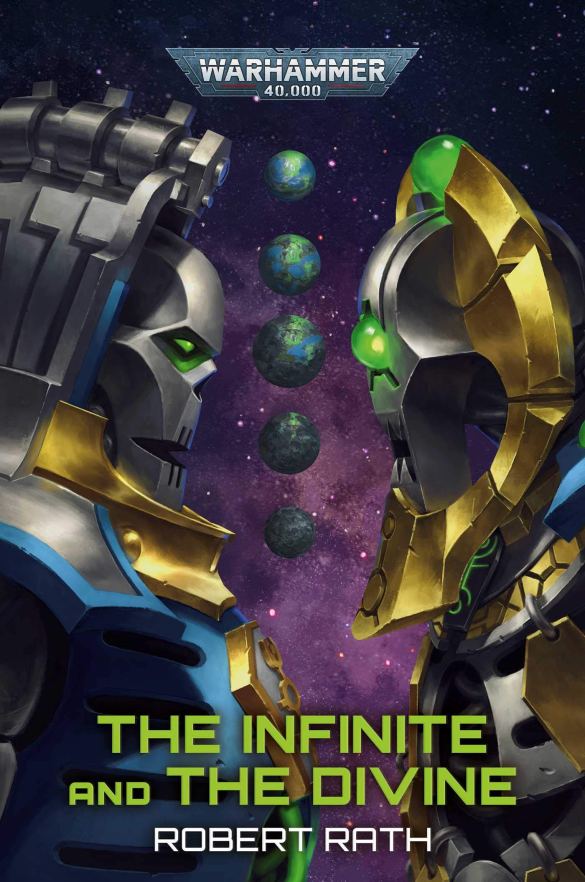
Warhammer 40,000: The Infinite and The Divine by Robert Rath

The Infinite and the Divine Cover

Publisher: Black Library (Audiobook – 10 October 2020)

Series: Warhammer 40,000

Length: 13 hours and 21 minutes

My Rating: 5 out of 5 stars

Amazon     Book Depository

Prepare to dive into one of the most entertaining and elaborate rivalries in Warhammer history with the outstanding and captivating read, The Infinite and The Divine, by the exceedingly talented Robert Rath.

Before I pause my current obsession with Warhammer fiction to pursue other recent books, I just had to read one more intriguing Warhammer 40,000 novel that I have been hearing a lot about in recent years, The Infinite and The Divine.  The debut Warhammer 40,000 novel of exceptional author Robert Rath, who previously wowed me with last year’s epic book, Assassinorum: Kingmaker (one of my favourite books and audiobooks of 2022) The Infinite and The Divine dives into one of the more unique factions in the Warhammer universe, the Necron.  This intriguing and fun novel follows two fantastic Necron characters as they engage in a bitter and lengthy feud across time and space.  Pretty much every review I’d read about The Infinite and The Divine was highly positive and I just had to try it out, and boy did it live up to all my expectations.

Long before the Imperium of Man and the Emperor existed, before the fall of the Aeldari and even before the Necrons traded their flesh away for immortal metal, there existed something far more deadly and permanent, an undying conflict between two arrogant scholars.  Even before they became immortal beings of metal, Trazyn the Infinite and Orikan The Divine were bitter rivals.  While Trazyn glorifies the past and seeks to capture and contain anything of rare or historical value, Orikan looks only to the future, divining events that are to come and hoping to find a way to become a being of energy.  But despite their differences, these two Necron are about to be drawn into the same obsession.

When Trazyn manages to obtain a rare Necron artefact, Orikan infiltrates Trazyn’s gallery to steal it, believing that it is the key to locating an ancient Necron tomb that could provide invaluable knowledge for the future of the Necrons.  However, Trazyn is unwilling to lose such a treasure, nor let Orikan’s trespass go unanswered, and swiftly snatches the artefact back, hoping to locate and plunder the tomb for himself.

So begins a battle of cat and mouse that will last millennia.  As both academics attempt to unlock the secrets of the artefact and gain the knowledge to find the tomb, they will engage in a series of deadly attacks and subterfuges to gain the advantage and destroy their opponent.  Their battles will destroy planets and shape the future of civilizations as they proceed, unheeding of the cost to those around them.  But the closer Trazyn and Orikan get to their goal, the more apparent it becomes that the treasure they seek is far beyond anything that the two rivals can ever imagine, and soon they and the entire Necron race sits on the precipice of destruction.

Wow, now that was an exceedingly epic and engaging Warhammer book.  Rath really pulled out all the stops for his debut here as The Infinite and The Divine is an incredibly clever and captivating read that I had an exceedingly hard time putting down.  Following two outstanding and petty protagonists, Rath hits the perfect blend of humour, intense action, and compelling lore expansions to elaborate Warhammer 40,000 lore, which turns The Infinite and The Divine into quite an elaborate and impressive read.

The Infinite and The Divine has a pretty epic and entertaining character driven story  that essentially boils down to two highly arrogant immortals going on an elaborate scavenger hunt across the galaxy for thousands of years, while also simultaneously engaging in a petty and deadly feud to ensure they win and their opponent fails.  This is an exceptional and highly amusing story concept which Rath utilises to his full ability, creating a captivating narrative that really drags you in and keeps you chuckling the entire way through.  The book starts with Trazyn facing off against an offshoot tribe of dinosaur-riding Aeldari, which does a lot to grab your attention while also perfectly introducing one of the main characters.  Rath keeps the momentum rolling after these initial fun fight scenes as Trazyn returns home to discover his rival, Orikan, invading his sanctum trying to steal one of his precious artefacts.  After a compelling fight that really highlights the differences between the two characters, Orikan escapes, and this sets off their bitter feud.

What follows is a series of fights and schemes across several different battlefields and locations as the two trade their advantage back and forth by claiming and then losing the artefact, all while attempting to kill each other.  There are some gloriously entertaining scraps throughout this book, especially as both Trazyn and Orikan have very different abilities and focuses, which Rath perfectly works into the story.  I have to highlight a particularly awesome and funny trial sequence near the start that played out in several different and amusing ways as Orikan uses his mastery of time to rewind events to try and get a result that favours him.  The two engage in some gloriously petty and hilarious methods to try and claim victory, and their reactions at being bested and the lengths they go to win really helps to turn this book into a fantastic and epic read.  Rath does a great job of switching attention between these two excellent characters as the book continues and I loved seeing the intriguing differences of opinions and the elaborate schemes that swirl within both their minds as they squabble.  The author adds in some great additional context of the wider universe throughout the story as well, and I loved the use of in-universe texts, such as the Necron epic The War in Heaven, at the start of each chapter, as they provide some subtle hints of what is to come.

The story gradually focuses on one specific planet which the Necron characters visit and fight across as they attempt to unlock the mysteries of the contested artefact and the treasure it unlocks.  This part of the book is particularly intriguing, as Rath adds in some compelling examinations of the evolution of this planet, and it is fascinating to see how their feud influences the people within, often to everyone’s detriment.  Trazyn and Orikan are eventually able to unlock the secrets of the artefact, which only intensifies their conflict, and I loved some of the very fun ways that they each try to knock off their opponents, especially as it often makes their own situation even worse.  I also felt that it was very clever how the author worked in the planet’s history and culture into the solution of the main mystery, and it was great when seemingly innocuous discussions about human society were actually hints about major events to come.  Everything leads up to the final opening of the tomb they have long been searching for, which of course only unleashes more problems.  Rath did a really good job of layering in hints and clever clues about the final twist, and I deeply enjoyed the massive reveal that emerged.  The protagonists are forced to work together in several spectacular scenes which did a wonderful job of highlighting the relationship the two formed throughout the conflict, while deeply upping the stakes and providing the reader with some memorable moments and entertaining battles.  Everything ends on an amazing note, especially with some final great betrayals by the protagonists, and you come away from The Infinite and The Divine pretty damn satisfied and extremely amused.

I was deeply impressed with how Rath brought The Infinite and The Divine’s complex and entertaining story together and considering the outstanding way in which he dove into the subject matter, it is pretty remarkable that this was his first Warhammer novel.  I was always going to be very interested in a book that focused on the Necrons, one of the more intriguing and distinctive factions in the Warhammer 40,000 canon, but I felt that Rath did a particularly exceptional job at capturing the essence of these immortal beings.  The great humour and comedy that he brought to the protagonists’ eternal feud really helped to make these ethereal beings very relatable and I loved their fun and arrogant opinions about the other races in the galaxy.  Rath manages to load a lot of snark into their observations about humans, orks and other species throughout their discussions, and it was quite fascinating to see their divergent opinions on the subject, as Orikan is determined to ignore and scorn all organics, while Trazyn is fascinated by culture and hopes to study or collect everything of value they have.  However, Rath also goes a lot deeper and you get an intense and powerful examination of the Necron self, including how they feel about their current state of being, the decline of their empire and the many sacrifices they have made over the years.  This, combined with an intriguing examination of their history, culture and personalities, gives readers a great understanding of the Necron race and any fan of this faction is absolutely going to love The Infinite and The Divine.  Rath’s excellent descriptions of the events, history, and the elaborate battles and technology really paints a beautiful picture around the Necrons and I felt that he did a remarkable job fitting the story around this background lore.  I especially loved the intriguing dive into Necron magic and other technology discussions, and it was really fun to see Orikan manipulate time throughout the book to make some very epic scenes.  While a few elements were extremely lore heavy, especially when it came to decoding the artefact, this was a very good use of the Necrons, and I really hope that Rath dives into additional unique factions in the future.

Despite Rath’s impressive and compelling descriptions of the Necrons and the wider universe, I don’t think I would recommend The Infinite and The Divine to those new to the Warhammer franchise, as the sheer amount of lore might break their reading flow.  However, for those a little more familiar with the history and background of the Warhammer 40,000 universe, this is a fantastic read which would serve as an exceptional transitional novel for those interested in checking out non-human stories in this canon.  I really cannot emphasise how great a book this was for Necron fans though and I deeply enjoyed Rath’s vision of these aliens and their unique culture.

I also really must highlight the excellent and compelling central characters of this book who take the form of ancient Necrons, Trazyn the Infinite and Orikan The Divine.  Ancient Necron lords who are the masters in their respective fields, Trazyn and Orikan are both particularly entertaining and fun in their own ways, as each of them believes themselves to be the smartest person in the room at all times.  Due to this, and many other reasons, the two hate each other with a passion and they enter into their eternal feud over several perceived grievances.  There is something delightfully entertaining about watching these supposedly highly evolved, ancient and wise beings engage in such petty actions against each other, and the way they bring out the worst in each other is so glorious, especially as it permeates the entire novel with some exceptional humour.  I personally loved how both were just as bad as the other in this feud, as this ensures that you don’t actually care which one of them wins and you can just get lost in the resulting chaos.  Ironically, the two protagonists actually have a lot in common, and when they are forced to work together they prove to be an effective team capable of so much more.  There are some great flashes of a deeper potential friendship at times, although this never lasts, although it is entertaining and moving to see what could have been had their rivalry not consumed their lives.  Throw in some very unique abilities, technology and artefacts between the two, which results in some particularly entertaining scenes and battles (watching Trazyn unleash his captured collections against his foes is always fun), and these two prove to be an outstanding central focus who really bring this exceptional story together.  I had so much fun with Trazyn and Orikan and I hope we see much more of them in the future, especially if the future of their private war is revealed.

I naturally listened to The Infinite and The Divine on audiobook, which was an epic experience as always.  The audiobook versions of all the Warhammer books are very effective at conveying the cool narratives, and I felt that The Infinite and The Divine’s audiobook really helped the reader to appreciate the elaborate story and the ton of lore that Rath fit into this book.  With a run time of nearly 13 and a half hours, this is a decent length Warhammer audiobook, although dedicated readers will power through it once you get caught up in the story.  I had a lot of fun listening to this audiobook, especially as they got the very talented Richard Reed to narrate the format.  Reed is an outstanding voice actor, who has a lot of experience narrating Warhammer novels, such as the Warhammer Crime novel Grim Repast by Marc Collins.  However, the main reason that I liked the use of Reed was because he also narrated the two The Twice-Dead King audiobooks, Ruin and Reign by Nate Crowley, which also focused on the Necrons.  Reed once again expertly captures the ancient and deadly nature of these metal alien creatures in his narration, and I felt that both main characters, Trazyn and Orikan, were perfectly portrayed by him.  Their intelligence and ancient emotions are shown to the listener, and I felt that Rath did a great job of showcasing their arrogance and pettiness through his voice work.  Throw in some additional great portrayals of the other eclectic characters and aliens contained in this book, and you have an outstanding performance which really helped The Infinite and The Divine’s audiobook format shine.  As such, this is absolutely the best way to enjoy this amazing novel and I cannot recommend it enough.

Robert Rath really cemented his Warhammer fiction legacy early with The Infinite and The Divine, which is one of the best and funniest Warhammer 40,000 novels I have read.  The exceptional book presents the reader with a unique and captivating narrative that perfectly utilises the iconic Necron faction while also telling a deep, personal and humorous story of betrayal, antagonism and treasure hunting.  I absolutely loved The Infinite and The Divine and I am really regretting not reading it earlier, especially as it lives up to all the hype.  A highly recommend book that is frankly one of the better Warhammer tie-in novels out there.

Amazon     Book Depository

The Voyage of the Forgotten by Nick Martell

The Voyage of the Forgotten Cover

Publisher: Gollancz (Audiobook – 3 November 2022)

Series: The Legacy of the Mercenary King – Book Three

Length: 19 hour and 47 minutes

My Rating: 5 out of 5 stars

Amazon     Book Depository

One of the very last books I read in 2022 might be one of the very best: the latest epic novel from Nick Martell, The Voyage of the Forgotten, which showcases just how much of an impressive, rising talent this outstanding author truly is.

Since 2020, one of my absolute favourite new fantasy authors has been the very, very talented Nick Martell, who burst into the scene in a big way with his elaborate and compelling The Legacy of the Mercenary King trilogy.  This series started with The Kingdom of Liars, an exceptional book that introduced Martell’s intriguing fantasy world and distinctive protagonist Michael Kingman.  The scion of a formerly great family whose patriarch was executed for a murder he didn’t commit, Michael spent most of The Kingdom of Liars trying to prove his father’s innocence while also finding himself dragged into various conspiracies infecting his home city of Hollow.  I had an amazing time reading The Kingdom of Liars, and it ended up being one of my favourite books, audiobooks and debuts of 2020.  Martell expertly followed his first novel up a year later with the equally incredible The Two-Faced Queen, which continued many of the fantastic story threads from the first book.  However, the stakes were raised even further with the protagonist forced to deal with immortals, dragons, assassins, serial killers and more, all while trying to stop the woman he loves from killing him.  This was another exceptional read, and The Two-Faced Queen was easily one of the best books and audiobooks of 2021.  Naturally, there was no way that I would not read the third and final book in the series as soon as I could.  This third book, The Voyage of the Forgotten, was one of my most anticipated reads of 2022, and I eagerly dove into it just before the year came to a close.

After proving his father’s innocence and restoring his family’s place in Hollow society, Michael Kingman should be happy.  However, the closer he comes to victory, the more tragedy and defeat he suffers.  Not only is the love of his life, Serena, the queen of Hollow, engaged to a merchant prince with his own elaborate agenda, but dangerous conspiracies centred on Michael seem to emerge from around every corner.  His sister is enslaved to an immortal Wolven King who seeks war with his soon to be freed brothers, while his mercenary mentor, Dark, is becoming one of the most dangerous creatures in existence, using his stolen dragon magic to wreak havoc and destruction in the name of love.  However, his true enemy remains Angelo Shade, Dark’s father, who seeks to bring back his dead wife and will burn the world, and everything Michael loves, to achieve it.

Thrust once again into this deadly battle of forces outside his league or ability to comprehend, Michael only has his wits, his barely trained magic ability, and a few dedicated friends to fight against the immortal schemers who have spent years bringing their elaborate plans to fruition.  However, Michael is well used to being outclassed and underestimated by everyone he goes up against, and he resolves once again to make everyone pay to keep those he loves safe from harm.

Gathering his allies, Michael embarks on a foolish quest to fully understand all the world’s secrets that have long been hidden from him and ensure that he has the weapons to survive.  But his course of action will put him at odds with the deadly mercenaries of Regal Company, all three of the ancient Wolven Kings, and even his own mercenary company.  Defeating all of them seems impossible, but that has never stopped him from trying before.  Can even the legendary stubborn Michael Kingman succeed and achieve his goals of becoming a Mercenary King when fate itself seems set against him?  And even if he succeeds, is he willing to pay the terrible price that victory demands?

Wow oh wow, what an epic book.  Nick Martell continues to deeply impress me with his captivating story writing ability as he brings this trilogy to a powerful and momentous end that I was instantly addicted to.  The Voyage of the Forgotten was a truly exceptional read, loaded with amazing characters, elaborate fantasy lore and an intense story that refused to drop my attention.  I can find no higher praise for this book than the fact that I named it one of my favourite books of 2022 well before I had even finished it; the first half was that damn good.

Martell has come up with a pretty epic narrative for The Voyage of the Forgotten, and it is one that I will not forget in a hurry.  However, the first thing that I need to say about the story is: if you haven’t read the first two The Legacy of the Mercenary Kings novels, go back and start at the beginning.  Martell has loaded the entire series with a ton of intricate and interesting lore, and he starts rapid firing back to the events of the last two books extremely early on in the story.  While there is a useful Dramatis Personae, as well as a fun summary of previous events from one of the side characters, which helped to refresh my memory, if you haven’t read the previous books you will get lost very quickly when trying to read The Voyage of the Forgotten.  The narrator is constantly making references to previous events, revelations, or characters who only appeared in the prior books, and it can get a little confusing if you don’t know what he is talking about.  As such, I would strongly recommend reading (or re-reading) The Kingdom of Liars and The Two-Faced Queen in advance, which is a very small chore considering how amazing they are.

Now, if you’re up to speed on the prior books, you are in for a real treat when it comes to The Voyage of the Forgotten’s story.  Told mainly from the perspective of protagonist and calamity-magnet Michael Kingman, Martell weaves together an intriguing, action-packed and character-driven conclusion to the elaborate story he set up in the first two books, which also leaves a lot of room for the larger series to grow in the future.  The author once again primarily utilises a chronicle style from Michael’s perspective, which really helps to tell this unique story, especially as it forces Michael’s chaotic and hilarious personality into the story and made every scene seem that little more entertaining and personal.

The narrative itself starts quickly and effectively, with a series of fun battles, big confrontations, and a horde of vengeful dragons, all of which ensures that the reader is quickly reintroduced to the chaotic main character and the multiple tangled webs and conspiracies that he has found himself involved in.  The story quickly advances to the main issue of this book as Serena Hollow loses her memory, and Michael is forced into an epic quest to find a cure.  This of course leads Michael to fight against the entire world, as everyone is opposed to his quest, and this ends up resulting in multiple intriguing or over-the-top encounters.  At the same time, Michael is constantly trying to unravel the mysteries of the world and his many enemies.  There are some epic scenes and sequences in this first half of the book that I really fell in love with, and Martell has some fantastic writing chops behind him that makes his outrageous concepts really work and come to life.  For example, one of the best sequences in the first half of the book sees Michael trapped in his own mind, forced to experience multiple loops of a historical battle from an ancient time.  The constant death and fighting that occurs over innumerable rotations slowly drives the protagonist mad, which Martell captures perfectly in exquisite detail.  Partnered with this intriguing sequence are several scenes showing an external view of Michael’s body, which has been taken over by a malevolent entity.  This ended up being one of the best moments of the entire book, especially as it has a very fun ending.

In addition to the action, Martell continues to unwind or add to the overlying layers of conspiracies, plots and personal or historical secrets that have always been such a fun part of this series.  Several long-running story threads are finally resolved in the first half of the book, and it is so much fun to see Michael finally get quite a few intriguing answers.  Martell really does not hold back with the revelations in The Voyage of the Forgotten, and the entirety of the book is loaded with characters unburdening their secrets (at least some of them) or discussing the unique history of the wider world.  I absolutely loved every sequence where revelations about this universe and its fun inhabitants came to the surface, and it was fascinating to see how they fit into the wonderful tapestry that Martell has woven throughout this trilogy.  This universe building is further enhanced by a series of great interludes with alternate narrators, which show events outside of Michael’s knowledge and experiences.  Not only do these help to showcase some of the fun supporting characters from the first two books but it also deepens the narrative and shows what schemes his friends, and more importantly his enemies, are up to, which provides some fun foreshadowing.

Everything really comes to a head in the second half of the book as Michael and his companions are thrust towards their destinies.  After several major setbacks and further revelations that show off the sheer scope and intricacies of the story, you and the protagonist are dragged back on the road towards the final epic confrontation.  The author sets all of this off perfectly by finally answering some big secrets that have been bedevilling the protagonist since the beginning, and there is a particularly cool twist that makes you rethink every major event of the first two books.  I really loved how Martell briefly changed the narration around when this big twist is revealed and had Michael address the audience directly to reveal why he never mentioned certain details in his previous storytelling.  This helped to really sell the effectiveness of this major reveal, as well as showcase a previously unseen alternate layer to the character’s personality, and I personally thought that this was bit of pure genius from Martell.  All this leads up to the big final confrontation as Michael finally comes face to face with Angelo Shade, the main architect of his family’s pain, as well as some other surprising foes.  This big conclusion is everything you would want it to be, with some epic moments, utter tragedy and multiple character arcs coming full circle in all the right ways.  While parts of this conclusion do get a bit overly complicated and metaphysical, I felt that it came together pretty damn perfectly in ways that really fit the universe and the controversial main character to a T.  Readers will come away from this conclusion both heartbroken and hopeful, and I felt that it was an exceptional and very on-brand ending to one of the more distinctive fantasy trilogies of the last few years.

I honestly think that Martell wrapped this book up extremely well, and my only major disappointment is that there was not more crammed in, as I would have gladly listened to several more hours of it.  The exceptional narrative, backed up with extensive lore, amazing character development and the very distinctive writing style helped to make this final book really pop, and I was honestly impressed every step of the way.  I was also very happy with how Martell handled the sheer range of extensive storylines that he had set up in the previous books.  My main concern before reading the final book was that Martell would be unable to wrap up every storyline or plot point he had set up.  Indeed, there are still quite a lot of potential storylines and questions that were unresolved by the end of the book, but Martell is clearly setting up a sequel trilogy of some design in the same universe.  Some of the best ongoing storylines have been left to continue in the future, and I for one am very excited for that as I hope to spend many more years getting lost in Martell’s world.  I felt that the author was cleverly selective when it came to which storylines ended in The Voyage of the Forgotten, as he chose to close off the ones connected with protagonist Michael Kingman, while leaving others open.  This ensures that any future stories will probably focus on some of the other characters that Martell has set up in this trilogy, and indeed it is pretty clear who that will be.  I personally look forward to seeing a new take on this universe in the future, and it will be very interesting to see how the narrative continues with a major change in perspective.

One of the things that has always impressed me about The Legacy of the Mercenary King trilogy is the elaborate and well-thought-out fantasy world that the story has been set in.  Its dark and grim nature, coupled with the intricate history, compelling magic system, and diverse people, has always added so much to the story, and this remains true in The Voyage of the Forgotten.  Because he did not shut off this universe completely, Martell was given free rein to continue to expand on his elaborate universe, and boy did he.  The reader is treated to a ton of extra information and history about this amazing world, including some of the strongest glimpses about the mysterious Wolven Kings, the world’s various immortals and other unique creatures, and their long-running battles throughout history.  There are several glimpses of the past thanks to magic, and you really learn a lot about what previously befall many of the immortal characters and how this affects their current motivations.  In addition, several new cities, islands, nations, groups and other great elements are featured heavily in the plot as Michael and his companions explore the wider world and engage on some massive sea voyages.  Martell does a great job of incorporating these new elements or character history into his wider narrative, with the protagonists either spending substantial time exploring this information, or else discussing it with the clear intention that it might become a major detail in the future.  I really enjoyed how many of the previous novel’s mysteries were answered thanks to world expansion featured in this novel, and it is very clear that Martell has a lot more planned for this fantasy world in the future.

Of course, I also need to mention the cool magical system that Martell features throughout The Voyage of the Forgotten, especially as it has some major and extremely clever implications on the plot.  Like the first two books, the main form of magic featured is Fabrication, which forces the user to sacrifice their memories to perform magic.  It is actually quite horrifying to see the consequences of Fabrication misuse, as some of the users forget friends, facts or family, and this is often enhanced by the user’s sacrifice or by the fact that they suddenly lose all concept of someone they’d grown close to.  However, this is nothing to becoming a Forgotten, someone who has completely lost their memories or sense of self, and this is strong explored in this book.  I deeply appreciate the amazing way that Martell utilises this memory loss throughout The Voyage of the Forgotten, especially when it relates to the protagonist, as he often does not remember what he is forgetting, and it is always very heartbreaking when you notice that he, or one of the supporting characters, has forgotten something or someone important.  This darker side of magic is well counterbalanced by the various impressive usages that occur throughout The Voyage of the Forgotten, and there are some rather elaborate battles that take place as a result.  Martell also does a very deep dive into the origins of magic in this novel, and you find out some interesting facts about Fabrication, as well as other magical disciplines that exist in this universe, many of which have been cleverly foreshadowed throughout the trilogy.  I really enjoyed seeing some of the over-the-top magic that was utilised by other characters throughout the various battles, and there are some very interesting moments as a result.  It will be very interesting to see what happens to the magic use in the future, especially considering the major changes to Fabrication theory that occurred at the end of The Voyage of the Forgotten, and I look forward to seeing how Martell continues that intriguing plot thread.

While I can go on about the story, setting, magic and writing, for me the true strength of The Legacy of the Mercenary King books has always been the outstanding and extremely complex characters.  This remains the case in The Voyage of the Forgotten as Martell brings many of his best characters back for a particularly emotional adventure.  There are so many major and dramatic character moments throughout this book as Martell used the end of the trilogy to wrap up multiple character storylines and events.  I really appreciated some of the fantastic development and big character moments that occurred throughout this final book in the trilogy, and fans of the first two novels are going to be very moved by what happens to their favourite characters.

The primary focus of the plot is naturally Michael Kingman.  Martell has done some real wonders around Michael Kingman in the last two books, and he has ended up being one of the most complex characters you are ever likely to encounter.  A highly damaged individual who has had his mind warped by magic, has seen his family destroyed, has been forced to live up to an impossible legacy, and has been kept apart from the love of his life, Michael has had a lot of growing to do in the last two books, and Martell has really laid on the character development.  As such, the Michael Kingman in The Voyage of the Forgotten is wiser and more mature than we have previously seen, although he still has some ways to go.  However, Martell ensures that this growth continues in this final book, as he keeps trying to become a better person, especially when faced with the certainty of his death and the loss of people he loves.  There are some major moments when Michael is forced to face damaging revelations or hard truths and each of them change him in some way, often during a pivotal and well-written scene.  Martell also cleverly includes some great secrets about his past and his life that I thought were pretty damn epic, especially as it answers some major questions about his personal history and why he is stuck in the middle of events.

Despite all this, Michael is still the same cocky bastard that he was at the start of the trilogy and his overconfidence, determination and sheer ability to enrage anyone he comes into contact with is so damn entertaining.  Seeing normally calm and collected characters trying to deal with the Michael problem always result in some of the funniest scenes, and I loved the often hilarious edge that the character brings to much of the story due to his amusing narration.  As such, you find it very hard to dislike Michael, no matter how hard you try, and his unique and heartbreaking tale is one that will appeal to many people.  Martell wraps up much of Michael’s great and intense story in this final book and it was very moving to see some of the dark sacrifices the character is forced to make to save his family and fix some of his biggest mistakes.  I guarantee you will not be prepared for everything that Michael goes through in The Voyage of the Forgotten, but you won’t be able to turn away as Martell does some dark, yet wonderful things, to his best creation.

In addition, quite a lot of the book focuses on major secondary character Serena Hollow, Queen and love of Michael’s life, who has had a turbulent relationship with her Kingman.  This relationship gets even more complex in The Voyage of the Forgotten, especially when Serena becomes a Forgotten without any idea of who she is or what her many responsibilities are.  You see a much more free version of the character in this book, and I found the differences between this person and the vengeful queen of the second book to be very intriguing.  The continued focus on the relationship between Michael and Serena hits extra hard as a result of this loss of memory, and it is fascinating and moving to see them attempt to rekindle what they had.  Honestly, their entire story is pretty tragic in this final book, but I was nice to see a powerful conclusion to their doomed love story and Martell features some damn fine character work when it comes to Serena.

Aside from Michael, The Voyage of the Forgotten features a rich and extensive cast of characters, many of whom are returning from the previous two books.  Standout characters include Dark, the mercenary killer who serves as Michael’s mentor and possibly most dangerous foe, as he attempts to find his own way to bring back the dead.  Dark is a brilliant character, and I love how Martell has written such an edge of menace around him, although by the events of The Voyage of the Forgotten Michael is pretty much immune to it, resulting in some very entertaining interactions.  You also have to love the sinister Angelo Shade as the main antagonist of the book.  Michael’s former foster father and the man responsible for his family’s downfall, Angelo has been an outstanding manipulative bugger the entire way through this trilogy, and I loved seeing more of his games in this final book.  Watching his elaborate plans come to fruition is pretty amazing, and Martell does a good job continuing to show his past and motivations, ensuring his obsession with bringing back his dead wife is mirrored by Michael’s attempts to save Serena.  Other great characters like Naomi, Chloe and Alexis have some fantastic moments in this book as the main supporters of Michael and Serena, and it was great to see some of their storylines.  The rest of the cast make some fantastic appearances as well, although it is interesting that several key characters from the first two novels only had minor appearances, and indeed I was a tad disappointed that some figures, such as amusing immortal nobleman, Charles Domet, were barely featured.  However, it is clear that Martell is saving them up for future entries in this larger series, and I look forward to seeing what happens to them next.  Overall, this was a great cast of characters and Martell should be congratulated on the amazing character work he did.

While I received a massive physical copy of The Voyage of the Forgotten, I chose to listen to the audiobook version of this book when it first came out, and boy was I glad that I did.  I have often said that the audiobook format is the perfect way to absorb vast amount of lore and universe elements (at least for me), and, with all the revelations and expansions that Martell featured here, that proved to be a major boon.  The story came across perfectly in this format, and you can easily visualise the powerful scenes, battles of wits, and some of the more outrageous actions of the characters, as they are read out to you.  It helps that this audiobook was once again narrated by one of my favourite audiobook narrators, Joe Jameson, who has impressed me before with the first two audiobooks in the series, and with his work on King of Assassins by R. J. Barker and the fun Warhammer 40,000 novel, Fire Made Flesh.  Jameson always does a remarkable job with his narration of Martell’s books, and his great tones and pacing help to move The Voyage of the Forgotten along at a fast clip.  However, the main advantage of Jameson as a narrator is the cool voices he brings out for the characters.  While I was not the biggest fan of a couple of his female voices, the majority of his narration was pretty much spot on and I felt that he really showcased the cool personalities and emotions of the key figures.  However, the best voice is saved for the main protagonist and narrator Michael Kingman, who Jameson perfectly encapsulates throughout the course of the audiobook.  Jameson really gets into Michael’s head with his narration and expertly portrays his personality, emotions and thought process.  This great portrayal of the central characters adds so much to overall quality of the entire audiobook, and my enjoyment of The Voyage of the Forgotten as a whole, and I loved every damn second of Jameson’s narration as a result.  This honestly was the best way I found to enjoy The Voyage of the Forgotten, and I very strongly recommend it as a result.  With a run time of just under 20 hours, it does take a little bit of effort to get through this audiobook, however, it is more than worth the effort as you will have a fantastic time.

If this extensive write-up didn’t give it away, I clearly deeply loved The Voyage of the Forgotten.  Nick Martell has wrapped up his The Legacy of the Mercenary King trilogy in an exceedingly epic way, and I deeply enjoyed how the elaborate, powerful, and character rich narrative came to an end.  This is some of Martell’s best work yet, and if you haven’t experienced this amazing fantasy author’s work yet, you are really missing out.  I look forward to seeing how Martell will continue this story in the future, and any follow-up trilogy that will jump to the top of my to-read list the moment it is announced.  In the meantime, make sure to check out this exceptional book, as well as the proceeding two novels in the trilogy, as The Voyage of the Forgotten gets one of the easiest five-star ratings I have ever given out.

The Voyage of the Forgotten Cover 2

Amazon     Book Depository

Throwback Thursday – Warhammer 40,000: Hereticus by Dan Abnett

Warhammer 40,000 - Hereticus Cover

Publisher: Black Library (Audiobook – 30 July 2022)

Series: Eisenhorn – Book Three

Length: 9 hours and 48 minutes

My Rating: 5 out of 5 stars

Amazon     Book Depository

Welcome back to my Throwback Thursday series, where I republish old reviews, review books I have read before or review older books I have only just had a chance to read.  For this latest Throwback Thursday, I finish off the outstanding and iconic Eisenhorn trilogy by legendary Warhammer author, Dan Abnett, by reviewing the exceptional novel, Hereticus.

I have mentioned several times in the last few weeks that one of my absolute favourite authors of Warhammer fiction lately is the amazingly talented Dan Abnett, whose works have shaped a generation of lore and extended fiction.  I have really enjoyed several of the books in his excellent Gaunt’s Ghosts novels, such as First and Only, Ghostmaker and The Vincula Insurgency, which provide some captivating depictions of the common soldier in the Warhammer 40,000 universe.  However, based on what I have read so far, Abnett’s best series is the epic Eisenhorn trilogy, which follows titular character Inquisitor Eisenhorn as he attempts to protect humanity from a range of diabolical threats.  The first book, Xenos, served as an excellent introduction to Eisenhorn and his major supporting characters, while Malleus showed an older Eisenhorn as he attempts to unravel a massive conspiracy painting him as the villain.  I absolutely loved these outstanding novels and they both got a full five-star rating from me, and I immediately dove into the third and final book, Hereticus, as I really wanted to find how everything ended.

For over 150 years, Inquisitor Gregor Eisenhorn has loyally served the Imperium of Men, disrupting and ending multiple conspiracies and plots by heretics, daemons, and malicious xenos.  Throughout all this time, Eisenhorn has always tried to avoid the lure of the radical path that many of his fellow inquisitors tread, determined not to be corrupted by the forces he has sworn to destroy.  But desperation can drive even the best man towards the brink and Eisenhorn’s previous deal with a dark figure is coming back to haunt him.

Overseeing a Inquisitorial examination of the planet of Durer, Eisenhorn receives news that an old foe, one who cost him the life of a dear friend, is active on world.  Assembling his forces, Eisenhorn is unprepared for the full horror that awaits him, as his enemy unleashes an ancient evil capable of destroying worlds.  Facing tragedy and near death, Eisenhorn is forced to do the unthinkable and use foul rites to summon forth a greater evil in the form of the daemonhost Cherubael to survive.

Shocked and disgusted by his actions, Eisenhorn attempts to recover and atone for his mistakes.  However, before he can begin, his manor house is raided by a dangerous army of mercenaries and all his forces throughout the sector are brutally destroyed in an instant.  On the run with only a few loyal followers left, Eisenhorn needs to discover the identity of whoever is orchestrating his downfall before it is too late.  But to defeat his enemy, Eisenhorn is forced to dive deeper into heresy and call upon dark forces that are best left untouched.  Can Eisenhorn retain his sanity and soul, or is the price of his victory his own utter damnation?

Wow, just wow.  After how epic Xenos and Malleus proved to be, I knew that there was no way that I wasn’t going to love Hereticus.  However, I was unprepared for just how brutal and intense Abnett made this final book in the Eisenhorn trilogy, as Hereticus ended up being an exceptional read that perfectly ends his great series on a very high note.  Loaded with action, intrigue, and some amazingly complex characters, Hereticus gets another five-star rating from me, and this is honestly one of the best trilogies I have ever read.

Part of the reason why I enjoyed Hereticus so much is because it has an exceptionally epic story to it that really drags you in from the offset.  Set 50 years after the events of Malleus (150 years since the start of the series), Hereticus starts off big and never really slows down.  The book has a calamitous introduction that sees Eisenhorn and his comrades forced to confront a Chaos Titan which decimates them and forces Eisenhorn to call upon his captured daemonhost Cherubael.  This fantastic introduction not only perfectly continues the story from Malleus but also shows Eisenhorn’s progression towards radicalism as he uses his new knowledge in some pretty dark ways.  Following this introduction, which splits his main team up, the story continues strongly, as there is a major and extended battle sequence in the heart of Eisenhorn’s sanctum, which sees him forced out on the run.  Becoming a fugitive from new enemies, old foes, and the Inquisition itself, the rest of the novel is a very captivating and intense character-driven read that shows a desperate Eisenhorn continue to make radical decision after radical decision, all in the name of defeating his enemies, no matter the cost.  There are some extremely moving and powerful scenes scattered through the second half of the book, as Eisenhorn comes to terms with many of his long-running comrades, many of whom do not agree with his methods, as well as some deadly confrontations.  Everything leads up to a trippy and action-packed finale, as Eisenhorn finally faces down an old enemy.  While the ultimate confrontation is short and the main antagonist only has a brief appearance in the book, the real joy of the story is the hunt to find out who they are and what they are after, with a focus on investigation, intrigue, and ethics.  The conclusion leaves everyone extremely satisfied, and Abnett leaves the series open for follow-up, even if a ton of character-centric storylines are permanently closed by a series of deaths and destruction.

The author once again does an amazing job presenting the complex story contained within Hereticus and I have a lot of love for the writing style that Abnett utilised in this series.  Blending tense galaxy-spanning intrigue with the hunt for dark forces, massive mysteries, complex revenge plots, and a focus on the corruption of the spirit, there is a ton of fun for a lot of readers in this book, and I loved the elaborate conspiracy that was the fantastic focus of the plot.  I especially enjoyed the overall theme of Hereticus that saw Abnett try and bring a lot of storylines and character arcs full circle back to the original novel in the trilogy, Xenos.  The history of all the characters in the book, as well as multiple prior events, are essential parts of Hereticus’s plot, and I loved how the author was able to tie together a ton of compelling overlying storylines that really highlights the importance of the first two novels.  The primary storytelling method, a chronicle style from Eisenhorn’s perspective, adds a lot of power and flair to the overall book, especially as it enhances the character-driven aspect of the story and gives you some intriguing insights into the conflicted protagonist’s mind.  There are a ton of great scenes showcased as result of this first-person perspective, from multiple massive battles, to intimate conversations and even a very well-written psychic interrogation sequence.  Abnett has a great eye for detail and some of the resulting action sequences and unique locations are painted in such a way that the reader fully grasped every action or cool element of the setting.  This, and so much more, really helps Hereticus’ exceptional story shine through and I had so much fun seeing how this entire novel unfolded.

Like most of Abnett’s books, Hereticus can be read as a standalone novel, especially as the author does an exceptional job of recapping key events, characters, and relationships from the previous Eisenhorn entries.  However, to get the full emotional impact of epic narrative, I would strongly recommend checking out Xenos and Malleus first, as you really understand how the character has changed over the course of the series, as well as how well the storylines have continued.  I also felt that Hereticus proved to be a particularly good entry into the wider Warhammer 40,000 canon as Abnett continues to explore some of the most intriguing parts of this grim universe, including the dark cults that are constantly a threat to the Imperium’s stability and the Inquisitors who hunt them.  The fantastic dive into the different types of Inquisitors and their different ways of fighting the enemy is pretty cool and I loved seeing the various rivalries and discussions that eventuated, especially as Eisenhorn has an opinion on everything.  This book also takes the reader to a variety of unique locations within the Warhammer universe, with several unique planets becoming key settings for the plot.  I loved seeing the variety of worlds out there in this massive universe, and Abnett has fun tying the events of this book into some of the wider canon aspects of the franchise.  I would say that overall the Eisenhorn trilogy really is one of the best series to start reading Warhammer 40,000 fiction with, especially as you get a completely different and more elaborate story than the classic military fiction plots that make up the majority of the genre.

As always, I can’t go away from an Eisenhorn book without talking about the exceptional character work that Abnett brings to the table.  This is especially true in Hereticus, as Abnett brings so many compelling character arcs to a tragic and moving end, while also ensuring that his impressive protagonist is changed forever.

As you would expect, the focus of Hereticus is on protagonist Gregor Eisenhorn, who serves as the book’s primary narrator.  I mentioned during my previous reviews of these books that I have loved the complex and powerful story that Abnett has woven around Eisenhorn.  Starting off as a relatively innocent and uncontroversial Inquisitor who was just trying to do what is right, Eisenhorn has slowly slipped down the path of the radical by employing the methods and powers of his heretical foes.  Abnett has showcased this gradual fall perfectly in the first two books, and while he made some questionable decisions out of desperation in Malleus, you still believed that he could be redeemed.  Hereticus really has you doubt this as he begins to employ darker methods during this book, which not only cost him but impact the people around him.  However, this is not entirely his fault, as forces outside of his control drive him to do so.  Pretty much every mistake that Eisenhorn has made in his past seems to come back to bite him in Hereticus, and these events, and more, force him to make hard decisions to survive and defeat foes who are even worse than him.  While he does bad things, you can fully understand and appreciate why he feels he needs to do so, even if you don’t agree with them.  Despite these bad things, Eisenhorn remains a sympathetic character for most of the book, and his own realisation that what he is doing is wrong just makes the entire story that much sadder.  However, there is a layer of arrogance over this that makes you slightly concerned about Eisenhorn’s actions, and you’re never quite sure just how far he has truly fallen.  Abnett covers Eisenhorn’s overall character arc pretty damn perfectly, and while the author throws the protagonist’s decline into overdrive in this book, it felt pretty natural and showcases just how destructive desperation is as his good intentions lead him to hell.

On top of Eisenhorn, Hereticus features a bevy of compelling supporting characters who add their own complex spin to the story.  Many of the supporting characters from the first two books are once again featured in this third Eisenhorn novel, and I really appreciated how Abnett sought to bring many of their arcs and storylines full circle here.  Unfortunately for fans of the series, wrapping up their storylines results in most of the supporting character’s deaths or severe injury, and quite a substantial number of supporting figures from the first two books have their final appearance here.  While I won’t go into too much detail, several of these deaths are pretty damn tragic, especially after they follow on from some noble self-sacrifices or major character moments.  I was honestly shocked at how brutal Abnett was when it came to killing off his supporting characters, but all of these instances really worked in the context of the story and ensured that Hereticus ended up being particularly memorable.  Before these major deaths, though, the author dives into the powerful relationships that each of these supporting characters has with Eisenhorn, and there are some deeply emotional moments scattered through, especially as each of them have their own opinion about Eisenhorn’s recent actions and whether he has gone too far.  Watching his oldest friends become disgusted or outraged by his actions really hammers home how far Eisenhorn has fallen, especially as he drags several characters down with him.  Throw in some outstanding central antagonists, all of whom have a complex history with Eisenhorn, and some intriguing cameos from the previous novels, and this was an exceptionally character rich novel designed to hit you in the feels.

As with all of Abnett’s books to date, I grabbed the audiobook version of Hereticus, which was once again an exceptional way to enjoy this amazing novel.  Coming in at just under 10 hours and featuring the impressive narration of Abnett’s go-to audiobook narrator, Toby Longworth, this format was an excellent way to enjoy this book, and I managed to power through this entire story in no time at all.  Longworth really brings the entire story to life with his excellent narration, and he makes sure to infuse all the characters with a ton of personality, while also tailoring their voices to match their history and physical (or metaphysical) attributes.  I also thought that several of the best scenes of this book, including some desperate battles, a cool interrogation scene, and some particularly poignant character interactions, were made even more epic in this format, as the exceptional acting from Longworth showcased them in a way they truly deserved.  I was utterly enthralled the entire way through Hereticus’s audiobook and this was easily the best way to experience Abnett’s compelling tale.

Overall, I felt that Hereticus was a pretty amazing book and a suitably epic finale to Dan Abnett’s original Eisenhorn trilogy.  Bringing together a powerful story with some unique Warhammer 40,000 elements and an exceptional dive into the mind of a fallen inquisitor, Hereticus was utterly addictive and ended up being one of the best Warhammer books I have ever read.  I was really impressed with how Abnett concluded this incredible trilogy, and I felt that Hereticus was an excellent final entry that tied together some of the complex storylines from the first two books.  I cannot recommend this entire trilogy enough; it truly is one of the cornerstones of Warhammer 40,000 fiction.  I look forward to reading more from Abnett in the future, especially as there are several spin-offs associated with this trilogy, as well as a recently released fourth Eisenhorn book in The Magos.  However, I think I will try and get through some Gaunt’s Ghosts books first, before diving back into Abnett’s Inquisitor stories, although if I ever want a powerful Warhammer thriller, I know where to look.

Amazon     Book Depository

Throwback Thursday – Warhammer 40,000: Malleus by Dan Abnett

Warhammer 40,000 - Malleus Cover

Publisher: Black Library (Trade Paperback – 27 December 2001)

Series: Eisenhorn – Book Two

Length: 10 hours and 13 hours

My Rating: 5 out of 5 stars

Amazon     Book Depository

Welcome back to my Throwback Thursday series, where I republish old reviews, review books I have read before or review older books I have only just had a chance to read.  For this week’s Throwback Thursday, I continue my extensive dive into the Warhammer 40,000 universe with the awesome, galaxy-spanning thriller, Malleus by Dan Abnett.

For one of my latest Throwback Thursday reviews, I took a look at one of Dan Abnett’s iconic Warhammer 40,000 novels, Xenos, the first book in the incredible Eisenhorn trilogy.  This fantastic book, which followed Inquisitor Gregor Eisenhorn, a hunter of dark influences in the Imperium of Man, was a clever and compelling read that saw Eisenhorn face off against a range of terrible foes who seek to destroy humanity from within.  I had an outstanding time with Xenos, which really showcased Abnett’s skill as an author (I have also really enjoyed his Gaunt’s Ghosts novels, including First and Only, Ghostmaker and The Vincula Insurgency).  Indeed, I enjoyed it so much that I quickly decided to continue the Eisenhorn trilogy by listening to the second book in the series, Malleus, another exceptional read that takes its protagonist on another dark and engrossing adventure.

In the 41st Millennium, the dark enemies of mankind, whether they be heretical, daemonic, or alien in nature, continue to try and destroy the Imperium of Man from within.  It falls to dedicated inquisitors, such as Gregor Eisenhorn, to battle their malign influences by whatever means they deem necessary.  But what happens when the very institutions that Eisenhorn has long fought to uphold are turned against him?

Whilst battling against deadly alien influences on an isolated planet, Eisenhorn is made aware of certain allegations against his character which suggest that he has been corrupted by the influence of Chaos.  Initially planning to ignore the rumours and continue his vital work safeguarding humanity, his plans are put on hold when a terrible act of destruction unfolds on the planet of Thracian Primaris.  Investigating its causes, Eisenhorn is thrust into another deadly conspiracy, one tied to a foe he last encountered 100 years before, the daemonhost Cherubael.

Chasing after Cherubael and his minions, Eisenhorn attempts to discover what their latest unholy plan is.  However, his investigation reveals that Cherubael is just a pawn, and that the true mastermind of the plot he has uncovered may be a fellow inquisitor.  However, before Eisenhorn can find and confront them, he himself is declared a heretic and renegade by puritan members of his order, forcing him to flee.  Chased by the members of the Ordo Malleus, as well as other deadly hunters loyal to Imperium, Eisenhorn must work outside the bounds of his usual authority to prove his innocence and find the true culprits.  But to defeat his enemies, Eisenhorn may be forced to cross a dangerous line and become the very thing he has sworn to destroy.

Damn, Abnett was on a major roll when he wrote the Eisenhorn novels, as the second book, Malleus, is getting another five-star rating from me.  Brilliantly combining a taut and intrigue-laden plot with the darkest elements of the Warhammer 40,000 universe, Malleus is an addictive and powerful read that proves near impossible to stop listening to.

Malleus has an incredible story that I found to be pretty damn addictive.  Set 100 years after the events of Xenos, Malleus continues to follow Inquisitor Eisenhorn as he investigates several malign cults and figures throughout his sub-sector of space.  The story soon ties into some of the lingering storylines from Xenos as the daemonhost Cherubael makes another appearance, framing Eisenhorn as a heretic.  After a massive and suitably destructive series of events, Eisenhorn is thrust into a whole new investigation, trying to finally hunt down the figures that vexed him during the events of Xenos.  Traversing the sector in pursuit of Cherubael and other rogue inquisitors, Eisenhorn finds himself thrust into battle after hopeless battle, and his constant losses war with his determination to finish the case.  The protagonist faces several major hurdles towards the middle of the book, including capture and imprisonment by a fellow inquisitor for false crimes.  Eventually escaping, Eisenhorn spends much of the book as a fugitive hunted by loyalist forces, which is an exciting new element that Abnett plays to full effect to enhance the plot.  The overarching mystery/conspiracy plot of the book comes together extremely well, and I loved the outstanding investigation angle that follows as Eisenhorn desperately tries to find the evidence that not only ends the threat but exonerates him.  This hunt for answers is actually set over a substantial period of time, mainly due to the delays associated with space travel, but this only increases the power of the plot as you witness Eisenhorn lose years of his life being hunted.  Everything leads up to a massive confrontation with plenty of bloody battles and dangerous decisions that leave several fantastic characters dead or damaged.  The ultimate conclusion is pretty impressive, especially as Abnett really starts to showcase his protagonist’s inevitable fall from grace here, and he leaves the book on a particularly dark note that was so damn awesome.

Just like with Xenos, Abnett has a fantastic writing style that really helps to enhance Malleus’s narrative and make the book very addictive and exciting.  Perfectly utilising an excellent chronicle style that allows you to see inside Eisenhorn’s head, you are swiftly drawn into the complex plot.  Abnett keeps up a swift and intense pace the entire way through, and you barely have a moment to stop and breathe before the next intriguing event takes over.  The blend of intrigue, Inquisition politics, sector-spanning conspiracies, complex character development, unique Warhammer concerns, and impressive action is a heady mix and you get really get caught up in the hunt for the antagonists and Eisenhorn’s fight to prove his innocence.  I loved how intense and deadly some of the crazy battle scenes got and Abnett has great skill at showcasing his characters in mortal danger.  His attention to detail also results in some breathtaking sequences, and I was really impressed by that epic parade sequence, especially its ultra-chaotic ending.  Abnett also takes the time in Malleus to set up some future storylines and alternate books, with some fun hints at novellas/short stories you should check out, while also quickly introducing his next major protagonist, Ravenor.  All these brilliant writing elements, and more, really help to drag you into this elaborate narrative, and I deeply enjoyed the more intrigue-focused stories that are the hallmark of the Eisenhorn books.  A worthy and powerful sequel to Xenos that really showcases the awesome characters and continues the outstanding and elaborate storylines.

I really loved the elaborate Warhammer 40,000 elements that Abnett featured within Malleus as the author dives right into the heart of the Inquisition and their battles.  Just like with Xenos, you get a great understanding of the various internal threats that the Imperium faces in this universe, as Eisenhorn attempts to combat various conspiracies and threats.  However, there is also a much deeper look at the inner workings of the often hidden Inquisition Ordos, especially as Eisenhorn is forced to work against the factions associated with them, including the Ordo Malleus, who think he has been compromised.  The ensuing hunt for answers leads the protagonist, and by extension the reader, on a mighty chase around various unique planets in the Imperium, including Cadia before the fall, and Abnett has a lot of fun exploring the intriguing elements associated with these locations, as well as the general lore surrounding inquisitors, daemons and more.  I did find it interesting that one of the major McGuffins of the book, the mysterious pylons of Cadia, ended up seeming a little more important in hindsight after the 13th Black Crusade, and you have to wonder if the antagonist’s villainous plan didn’t actually have some merit.  I felt that this was a particularly awesome Warhammer 40,000 book and I deeply appreciated how the universe’s unique elements and lore were able to seamlessly support the elaborate tale that Abnett wrote here.  Due to Abnett’s detailed and compelling writing style, new Warhammer readers could easily start their exploration of the franchise with Malleus and get a rather good idea of the universe.  However, I would really recommend starting with Xenos, as you get a much better introduction to key details and characters there.  An overall exceptional read that makes full use of the massive, extended setting.

A highlight of any Abnett book is always the outstanding and highly complex characters, and Malleus has those in spades.  The focus is once again on series protagonist and narrator, Gregor Eisenhorn, who grows as a character with each passing adventure.  I really liked how Abnett portrayed Eisenhorn in Malleus and his compelling mission for justice and redemption is pretty intense.  The Eisenhorn here is a different creature to that in Xenos, especially as, after 100 additional years in the Inquisition, he is a lot more experienced and skilled in his work.  Now commanding a small army of followers, Eisenhorn has different methods and resources than before, but the same determination, loyalty and kindness (at least compared to other inquisitors) is still there.  However, Malleus sees Eisenhorn go through some major battles, both mentally and physically, as he is forced to confront an enemy within his own order while defending his own methods and character.  Watching him declared a heretic by his fellow inquisitors is pretty brutal, and Abnett throws in a heartbreaking prison scene to keep the readers intrigued.  These events, coupled with some personal losses, and the continued presence of beings far more powerful than him, force Eisenhorn to make deals and cross lines he really shouldn’t.  I love how each of the Eisenhorn books show the protagonist’s slow fall towards radicalism, and Malleus is an interesting starting point for that, as you understand why Eisenhorn is forced to go down this route.  While he ends the book with most of his humanity and integrity intact, that brilliant final scene shows that he is getting awfully comfortable with his feet over a line he previously feared, and I cannot wait to see how far he falls in the next Eisenhorn novel.

On top of Eisenhorn, Abnett features a pretty awesome collection of supporting characters who assist the inquisitor in his investigation and they each add their own distinctive personality to the narrative.  There is a good continuation of character arcs from the first book as several of his followers from Xenos make a return here, including the entertaining Savant Aemos, former Arbites investigator Fischig and his dedicated psychic blank Bequin.  Each of them is a little older, wiser and more familiar with the hardships of being an inquisitor’s acolyte, and I liked the stronger relationships that developed amongst them, particularly Bequin, who really comes into her own in this book as a veteran.  There are several interesting new characters added as well, such as the bounty hunter Nayl or brash pilot Medea Betancore (replacing her father Midas), and I felt that their distinctive personalities added a fun and entertaining edge to the narrative.  I was surprised that new character Gideon Ravenor, who goes on to get his own spinoff series, only had a relatively small appearance in this book, as I figured he would be a pretty major character to get his own story.  Still, he gets a good introduction here and it will be interesting to see how his arc plays out in the future.

Malleus also features several intriguing antagonists, each of whom test Eisenhorn and his colleagues in different ways.  While there are the usual array of cultists, aliens and other creatures, most of the antagonists in this novel prove to be other inquisitors, who are either working on their own radical plots or who believe that Eisenhorn is the true heretic who needs to be stopped.  This adds a very interesting dynamic to the story and it was fascinating to see the varied philosophies and plots amongst the rival orders and factions.  I did find it interesting that the main villain of the story, a mysterious inquisitor acting from the shadows, only had a very minor appearance in the book, and while you feel his presence, a bigger appearance from him might have been in order.  However, this character is more than made up for by his principal minion, the daemonhost Cherubael, who returns after his fantastic appearance in Xenos.  Cherubael is a brilliantly sinister character who steals every single scene they are in thanks to their menacing monologues and intriguing insights.  The outstanding obsession he forms with Eisenhorn is a great deal of fun and I loved seeing this evil figure toy with the inquisitor and force him to go to great lengths to defeat him.  Abnett really knows how to write an outstanding character, even in a limited amount of time, and it will be fascinating to see what happens to these characters in the next Eisenhorn book.

I of course chose to listen to Malleus on audiobook, as it is my preferred way of enjoying great Warhammer books, and I was not disappointed with how it turned out.  This fantastic format once again deeply enhanced the quality of the story and you can practically see the awesome battle scenes and other breath-taking elements of the wider Warhammer 40,000 universe.  Narrator Toby Longworth, who is the go-to narrator for all of Abnett’s Warhammer audiobooks, does another outstanding job with Malleus, and I loved how he was able to keep the pace of the production going.  He also has an outstanding voice that really conveys the dark and dangerous nature of the universe, while also perfectly bringing the characters to life.  I deeply appreciated how Longworth made sure to utilise the same character tones that he previously featured in Xenos here, and it gave the Malleus audiobook a great sense of continuation.  All the new characters are also given excellent voices, and I loved how awesome he made them sound, especially the more supernatural or alien beings that the protagonist comes across.  I was frankly hooked on this audiobook from the very start, and it is an exceptional way to enjoy this epic narrative.  With a run time of just over 10 hours, I managed to power through this audiobook very quickly, and this is definitely the best format for the Eisenhorn series.

Dan Abnett continues to showcase why he is one of the absolute best Warhammer authors out there with the second book in his superb and beloved Eisenhorn trilogy, Malleus.  Featuring a powerful and incredibly captivating narrative of conspiracy, heretics and desperation, Malleus takes Abnett’s compelling protagonist on an even darker journey of despair, compromise and hard choices.  Brutal, intense and impossible to put down, Malleus is easily one of the best Warhammer books I have ever read, and I cannot get over how exceptional it was.  A very highly recommended book, I plan to check out the third and final Eisenhorn book soon as I can to see how this epic series ends.

Amazon     Book Depository

Throwback Thursday – Warhammer 40,000: Xenos by Dan Abnett

Warhammer 40,000 - Xenos Cover

Publisher: Black Library (Audiobook – 1 May 2001)

Series: Eisenhorn – Book One

Length: 9 hours and 55 minutes

My Rating: 5 out of 5 stars

Amazon

Welcome back to my Throwback Thursday series, where I republish old reviews, review books I have read before or review older books I have only just had a chance to read.  In my latest Throwback Thursday I continue to review the awesome Warhammer 40,000 works of Dan Abnett with his impressive and dark space thriller, Xenos.

For my Throwback Thursday last week, I talked about legendary Warhammer fiction author Dan Abnett and his Gaunt’s Ghosts series, which is one of the pillars of Warhammer 40,000 fiction.  I have already had a lot of fun reading several of the Gaunt’s Ghosts novels (including First and Only, Ghostmaker and The Vincula Insurgency), so I thought I would take the opportunity to check out one of Abnett’s other major Warhammer entries, the Eisenhorn series, which I have heard some extremely good things about.  Set in a different area of the Warhammer 40,000 universe than the Gaunt’s Ghosts books, the Eisenhorn books are a darker and more intense series that follows a troubled Imperial Inquisitor hunting down a deadly conspiracy at the heart of humanity.

In the dark future, the Imperium of Man is under constant attack from aliens, monsters and daemons who seek to destroy or corrupt all within.  However, the greatest threat to the Imperium comes from within as diabolical heretics, witches and cultists work from the shadows to weaken the Imperium, worship the forces of Chaos, and bring humanity crashing down around them.  The only protection humanity has against these nefarious and hidden threats are the members of the Inquisition, deadly agents who wield great power and authority to pursue their investigations by any means necessary.

Gregor Eisenhorn is a talented and experienced Inquisitor who has long fought against the shadows constantly threatening stability and order.  When he finally corners and kills an old adversary amid a dark ritual, Eisenhorn hopes that his actions have permanently ended an ongoing source of Chaos and despair in the Imperium.  However, evidence he recovers from the crime scene hints at a greater conspiracy that threatens several local systems.

Travelling to a prosperous system hub, Eisenhorn restarts his investigation, determined to get to the bottom of this new danger.  However, he is unprepared for the full scope of the hidden forces of Chaos that wait for him, as a massive and hidden cabal rises in opposition against him.  As multiple planets within the system burn due to the action of the Chaos cultists, Eisenhorn works with a series of unique allies to bring this cult to heel before they cause irreparable damage to the Imperium.  However, the more sinister danger may come from the prize that his enemies are seeking, an ancient and dark tome of knowledge, known as the Necroteuch, which has the potential to burn the universe and turn the entire Inquisition against Eisenhorn.

Xenos was another exceptional novel from Abnett, and one that really showcases his ability to tell a varied and complex tale.  This is a dark, powerful, and impressive character-driven read, and I loved the switch to dark intrigue and heretical investigations, which made for such an incredible story.  I was an instant fan of Xenos’s clever and highly addictive plot, and I must give it a full five-star rating for how awesome it was.

I was deeply impressed with the outstanding and compelling story that Abnett featured in Xenos, especially as it was very different in style and substance to his previous works I have enjoyed.  While the Gaunt’s Ghosts novels are gritty war stories that focus on the common soldier, Xenos was a powerful and twisty space thriller that saw a determined Inquisitor attempt to root out the manipulations of Chaos far away from the battlefields.  The story itself is extremely clever and well-paced, and it swiftly draws you in with its dark events, especially its intense and action-packed introduction.  Despite killing his nemesis early in the story, Eisenhorn is forced to keep digging even further as he uncovers more conspiracies and plots.  Utilising undercover methods, interrogations, obscure evidence and a series of bloody fights, Eisenhorn and his unique comrades follow the trail across the sub-sector, attempting to discover the true plot of their enemies.  This leads to several large and memorable set pieces, and I loved the constant change of locations, especially as it allowed you to get a whole new idea of the scope of their foes plans and the desperate battles being fought to stop them.  I also enjoyed the quieter scenes that were laid out between them as they not only added some great intrigue, but also highlighted the personal nature of the protagonist’s quests and the bonds he forged along the way.  The plot is eventually resolved after several major battles, including some very trippy sequences, and I came away from this book very satisfied and wanting more, especially as Abnett laid some intriguing hints about deeper conspiracies towards the end.  I was absolutely hooked the entire way through this narrative and I had such an amazing time reading this exciting and compelling story.

Xenos was an extremely well written Warhammer novel, and I really appreciated how Abnett was able to seamlessly change writing style and tone for this darker read.  The author makes excellent use of a first-person perspective for Xenos, as the story is in a chronicle format being written by the central character of Inquisitor Eisenhorn.  This allows for a much more personal and protagonist-centric narrative which really draws you into the hunt as you see the protagonist’s obsession with capturing the heretics and ending the threat to the Imperium.  Abnett keeps the pace pretty fast and intense throughout the entirety of Xenos, even during the sequences between the main action-packed scenes, and you are constantly engaged with the hunt or the intriguing relationships between the characters.  I was personally very impressed with how Abnett was able to blend a lot of distinctive story elements together throughout Xenos to produce an excellent story.  The way that the author combines Warhammer, thriller, mystery, science fiction and even horror (the Chaos creatures can get pretty bad at times) elements together is just amazing, and it opens up the appeal of the book to a wide range of readers.  I loved the continued and powerful hunt throughout the Imperium, especially as all the protagonist’s actions and attempts to end the threat result in major consequences for those around him.  This was a deeply captivating and intense read, and I cannot empathise how addictive and fun I found it.

One of the main reasons I chose to check out Xenos and the Eisenhorn series, aside from generally loving Abnett’s writing, is it is generally considered to be one of the best series to start a dive into Warhammer fiction.  After powering through Xenos, I can confirm this as Abnett uses the lore and the darker side of the Warhammer universe to its full advantage throughout this fantastic thriller tale.  While some slight knowledge of the large Warhammer 40,000 universe might be helpful to understand parts of Xenos, new readers unfamiliar with the franchise can easily dive into this book and follow the story with no problem, and any science fiction fan can have an amazing time reading it.  Abnett patiently and competently explores key details of the Warhammer universe as the story continues, although never in a way that interferes with the captivating flow of the book.  As such, you get a good view of the overall state of humanity and the Imperium during this novel, with a particular focus on the Inquisitors and their mission.  The Inquisitors have always been a fascinating and complex part of Warhammer 40,000 lore, and this series really highlights just how dangerous their tasks are, as well as the fine line they walk in their hunt for justice and purity.  Naturally, this dive into the Inquisition will also make this book very appealing to experienced Warhammer readers as well, and Abnett is considered to be one of the best franchise authors for a reason.  I have a deep appreciation for all the cool lore elements that were featured here, and I particularly enjoyed how Xenos offers a very different story to many of the other Warhammer 40,000 books out there, and really highlights just how complex the universe can be.

I was also very impressed by the exceptional character work that Abnett featured with Xenos, as this compelling read features some great characters.  The primary figure of this book is naturally Inquisitor Gregor Eisenhorn, who serves as the main protagonist and narrator of the story.  I felt that Xenos served as a particularly good introduction to this iconic Warhammer figure, and I found myself getting quite attached to his journey.  A no-nonsense and extremely practical Inquisitor, Eisenhorn is seen by many as a cold and calculating man, although deep down he is a caring individual who feels great attachment to his friends and comrades.  Abnett portrays Eisenhorn as a pretty reasonable figure, preferring subtle investigations, which makes him appear a bit radical to some of his fellow Inquisitors whose preferred methods are to kill anyone with any potential for evil.  It was very interesting to see him as a pretty strait-laced guy in Xenos, especially as I have heard of how radical he gets in the future, and I think it was very smart of Abnett to showcase him in this way first to enhance the impact of his future actions.  However, Eisenhorn does go through a lot in Xenos, including mental, psychical and spiritual tortures, and you can really see the damage done to him and how his desire for vengeance and getting the job done by any means grows.  I cannot wait to see how his story advances in the next few books, as I know that Abnett has damaging days in store for him.

In addition to Eisenhorn, Abnett loads Xenos with a ton of interesting supporting characters, all of whom are seen through Eisenhorn’s eyes.  This includes Eisenhorn’s eccentric entourage of follows and agents, including a data-obsessed scholar, a skilled pilot, a grim justice operative and his newest associate, Bequin, a psychic blank who is drafted into the war against Chaos against her will.  This unusual team prove to be great backup to the dour Eisenhorn, and I liked the genuine connection that Eisenhorn forms with them, especially as it shows that he really isn’t the monster many people think he is.  Other characters of note include the varied and distinctive fellow inquisitors that either assist or oppose Eisenhorn, and the various deadly enemies he goes up against.  Rather than have one specific antagonist in Xenos, Abnett featured a cabal of Chaos worshipping foes, each of whom despises Eisenhorn for what he represents.  While there isn’t a massive focus on any specific villain, each of the major players in the cabal are pretty distinctive, and I liked the overall effect that Eisenhorn is fighting a multi-faced beast in Chaos, rather than a specific evil.  These outstanding characters really enhanced this epic and captivating narrative and I look forward to seeing what other insane figures show up in this series as it progresses.

Unsurprisingly, I chose to enjoy Xenos in its audiobook format, which is frankly the best way to experience any Warhammer novel.  With a run time of just under 10 hours, I absolutely powered through this audiobook and I found that it perfectly conveyed all of Abnett’s elaborate and compelling story elements.  This was partially due to the brilliant narration of veteran voice actor Toby Longworth, who has lent his fantastic vocal talents to most of Abnett’s Warhammer books.  Longworth did another remarkable job here with Xenos, and I loved his take on this slighter darker narrative.  I deeply appreciated all the voices he provided to the characters in Xenos, especially as he is not just recycling the voices he uses in the Gaunt’s Ghosts books.  Each of the voices here are pretty fitting to their respective character and there is some fantastic variation based on plot details such as the speaker’s planet of origin, species, inclination, and personality.  This excellent voice work really enhanced my enjoyment of this captivating read and I would strongly recommend this format to anyone interested in reading Xenos.

The first entry in Dan Abnett’s Eisenhorn series, Xenos, lives up to all the hype surrounding it as it proved to be an exceptional and highly addictive read.  Perfectly combining an elaborate thriller story with the dark Warhammer 40,000 universe, Xenos was a joy to read from start to finish.  I cannot recommend this novel enough and my plan is to listen to yet another book from Abnett in the next couple of days.

Amazon

The Golden Enclaves by Naomi Novik

The Golden Enclaves Cover Better

Publisher: Del Rey (Trade Paperback – 20 September 2022)

Series: Lesson Three of the Scholomance

Length: 408 pages

My Rating: 5 out of 5 stars

Amazon

Naomi Novik ends her addictive and clever Scholomance trilogy in a big way with the very impressive The Golden Enclaves, which takes the protagonists out of the school and into a whole new world of trouble.

For the last few years I have been having an epic time with the exceptional Scholomance series by acclaimed author Naomi Novik.  Novik, who is best known for her Temeraire series, as well as the standalone novels Uprooted and Spinning Silver, has been absolutely killing it with the Scholomance books, which serve as a compelling, dark homage to classic magical school fantasy novels.  Set within the deadly magic school, the Scholomance, the trilogy follows a group of teenage magic users who are attempting to hone their skills while surviving the school and the many dangerous magical creatures, known as maleficaria (mals) who inhabit it.  The first book, A Deadly Education, introduced the reader to protagonist Galadriel “El” Higgins, a loner student who has a big secret, she is an unbelievably powerful magic user, capable of easily unleashing destructive magic that could level cities.  Teaming up with Orion Lake, a mal hunter with a hero complex, El attempts to survive the school and ensure her and her friends survive.  A Deadly Education was an excellent read and it ended up being one of my favourite books of 2020.  Novik followed it up perfectly last year with The Last Graduate (one of my favourite books of 2021), which brilliantly continued the story while also ending it on a traumatic cliff-hanger which I may never forgive Novik for.  Needless to say, I have been extremely excited for The Golden Enclaves and it was one of my most anticipated reads for 2022.

After trapping most of the worlds mals in the Scholomance and untethering it from reality, El looks to have finally defeated fate.  Instead of turning into the city-destroying dark witch she was prophesied to become, she is now a hero who has saved generations of young magic users from needing to hide in the deadly school.  However, her victory has come at a great cost, as the love of her life, Orion Lake, chose to stay behind in the dying school to wage his eternal war against the mals, including the ravenous maw-mouth that finally claimed him.

Traumatised, El attempts to regain her sanity at home, her only plan to one day implement her dream of ending the elite enclave system and using the Golden Stone sutras book she liberated from the school to bring about a new era of magical communities.  However, fate still has other ideas in store for her, and El is about to come face-to-face with the full horrors that her world has in store for her.

Someone is attacking the previously protected enclaves, striking at their very cores, and inflicting untold damage on those who rely on them for shelter.  When two fall within days of El coming back into the real world, she is recruited to find out who is responsible and hunt them down before an all-out enclave war erupts amongst the world’s magic users.  However, El is far more concerned with finding a way back into the Scholomance, the school she fought so hard to destroy, and attempt to either save Orion or kill the maw-mouth that ate him.  However, her mission will lead her to a dark truth that lies at the very heart of the enclave system and which will turn the entire world on its head.  Worse, it will finally force El to face the truth, that she really is destined to be a destroyer, no matter how much she hates it.

There is a lot to unpack here with The Golden Enclaves and it is partly one of the reasons why it has taken me so long to write a review for it.  I honestly did not know what to expect when The Golden Enclaves was released, especially as it was missing the great dark magic school setting which was one of the things that I most liked about the first two books.  It was also clear that Novik would have to work very hard to follow on from her last book after she left it on such a major and heartbreaking cliff-hanger, and I did not know if this book would live up to all these expectations.  Despite these concerns, I dove into The Golden Enclaves as soon as I got my hands on it, as I desperately wanted to see how everything was going to end.  I quickly powered through the book itself and I found the final product to be extremely interesting and not at all what I was expecting.  I did end up giving this book a full five-star rating, but this rating comes with some caveats.

Firstly, I should state that I really loved The Golden Enclaves and I felt that it perfectly wrapped up the series.  Not only do the main characters get some further interesting development, as well as even more trauma and emotional damage, but the story goes in some very unique directions which ties together all the various loose ends.  The story itself is pretty fast paced, if loaded with a lot of fantasy exposition, and follows on right from the events of The Last Graduate.  The impact of Orion Lake’s decision to stay behind in the Scholomance really messes with El and she spends a good part of the book attempting to come to terms with it, often in some very unhealthy ways.  However, before she can get too bereaved, she is forced to help the enclaves (magical communities that offer protection from mals to magic users) to try and discover who is responsible for destroying them.  This results in a compelling, multi-continent trip where she visits various magic communities, gets involved with deadly world politics, as well as checking in with the supporting cast from the first two books, trying to discover answers.  El also searches for a way to rescue Orion from the Scholomance, which culminates in her visiting the mostly destroyed school and finding out some heartbreaking revelations about the man she loves.  Those aren’t the only big secrets El and her companions uncover as they soon discover the true terrible price of the enclave system, as well as who is truly behind the destruction of the enclaves and why.  Novik layers these revelations perfectly, so each new one is even more impactful than the last, culminating in a particularly major gut punch regarding El and her prophesied destiny.  All this leads up to a fantastic and complex final confrontation where El is faced with a terrible choice and must try to find a way out of it.  Everything ends on an interesting and mostly satisfying conclusion, which I think ended the series on the right hopeful note, especially after all the dark trauma the characters have witnessed.

While the story itself is pretty compelling, I personally don’t think it stood on its own legs as much as the first two books in the series.  Not only does it get a bit slow in places, but parts of the big conclusion are a little weak and not as impressive as I was expecting.  Readers also really need to have read the first two books in the series; The Golden Enclaves would be pretty hard to appreciate without some context going in.  For these reasons and a few more (I really missed the school), I might have been tempted to give this a lower rating if not for the big revelations which are deeply connected to the events of the first few books.  Novik expertly ties the entire series together in The Golden Enclaves and if you look at this novel from a larger series perspective, than it is a pretty exceptional book with some very awesome moments to it.  You soon release just how clever Novik has been with her first two novels as she previously set up every big revelation in The Golden Enclaves extremely well.  The various discussions about the enclaves, the outside world and the character’s history comes full circle in this final entry and every lingering question you ever had is answered completely here.  I was so damn impressed with how everything was wrapped up, especially with some emotionally devastating discoveries that were in line with the darker tone of this series, that I honestly could not put this book down.  Novik really is an extremely talented author with an exceptional ability for planning out long-term storylines and this book really proves it.

In addition, I also deeply appreciated how Novik expanded and explained various fantasy elements that she introduced in the previous books and merged them into her outstanding story.  While many of these fantasy elements, such as enclaves, maw-mouths, the creation of the Scholomance and the magical politics that dominate the world, have been discussed in the prior novels, Novik brings everything about them together in this final read and it works extremely well.  The secret histories and crazy lore behind these events are fully revealed in The Golden Enclaves, and the true horror about magic and what people have done to hold onto it is pretty damn shocking.  Novik does a remarkable job in filling in all the gaps she purposefully left out of the first two books and the reader finally gets to appreciate just how complex and integral to the plot they truly were.  She also has a lot of fun expanding out the magical universe substantially in this final book as the reader is finally introduced to some settings outside of the magical school.  I loved the elaborate international enclaves that the protagonist visits throughout this final book and the subsequent political squabbles, discussions of magical castes and the larger worldview of magic becomes a fascinating part of the book.  All this intriguing expansion, as well as the impressive revelations about certain magical elements in the previous books, mostly make up for the lack of the magical school setting you’ve come to love so much, and I think that Novik handled a story outside of the Scholomance extremely well.

The final thing I want to mention is the outstanding character work contained within The Golden Enclaves.  While I don’t want to go into too much detail here, I think that Novik hit the main characters out of the park in this final book and I loved the brilliant examinations of trauma, grief and deep psychological damage that many of them had after spending years inside a hellish death school.  El continues to shine as the main protagonist and only point-of-view character, and her expansive, if highly cynical worldview, helps you get stuck into the narrative.  El goes through a huge emotional roller coaster in The Golden Enclaves, as she is wracked with guilt, grief and anger for much of it, especially after her perceived failure to save Orion from himself.  Watching her break down at the start of the book is extremely heartbreaking, and she never really seems to recover as she keeps finding herself getting dragged into crazy events in the real world.  Many of these events impact her even further, especially once she realises just how evil many of the enclavers are, and she must work very hard to not unleash her destructive fury.  However, one major final revelation really knocks her around, especially as it ties into her extended family who have long abandoned her, as well as her destined place in the world.  I deeply appreciated the outstanding work that Novik put into El, and I also really enjoyed the supporting cast who were featured here as well.  Many of your favourite characters from the first two books make another appearance here, and it was very interesting to see how they were dealing with the aftermath of their Scholomance education, as well as seeing their place in the wider world.  There are a few surprising choices for major supporting characters in The Golden Enclaves, and some interesting interactions that resulted.  Without spoiling too much, I will say that Orion does appear in The Golden Enclaves, and the storylines around him, especially the deep dive into his past, prove to be an outstanding and traumatic part of the plot.  An exceptional expansion of the amazing character work that was such as distinctive feature of the first two novels.

Overall, The Golden Enclaves proved to be an epic final chapter in Naomi Novik’s amazing Scholomance series and I had an outstanding time reading it.  While I did think that The Golden Enclaves had a few flaws, the way that Novik used it to tie the entire series together blew my mind and I was so deeply impressed with how every loose thread and inventive fantasy element was dragged together to create an outstanding final inclusion.  The subsequent shocking and dark revelations, powerful character work and the compelling expansion of Novik’s fantasy universe help to make this a pretty incredible book and it is one that I had a wonderful time reading.  I really cannot get over how well set up this final novel was and I think that it serves as a brilliant conclusion to one of my most favourite recent fantasy series.  As such, I have to award The Golden Enclaves a five-star rating as one of the better books of the year, especially as I don’t think Novik could have written a more powerful and moving end to the incredible Scholomance books.

Amazon