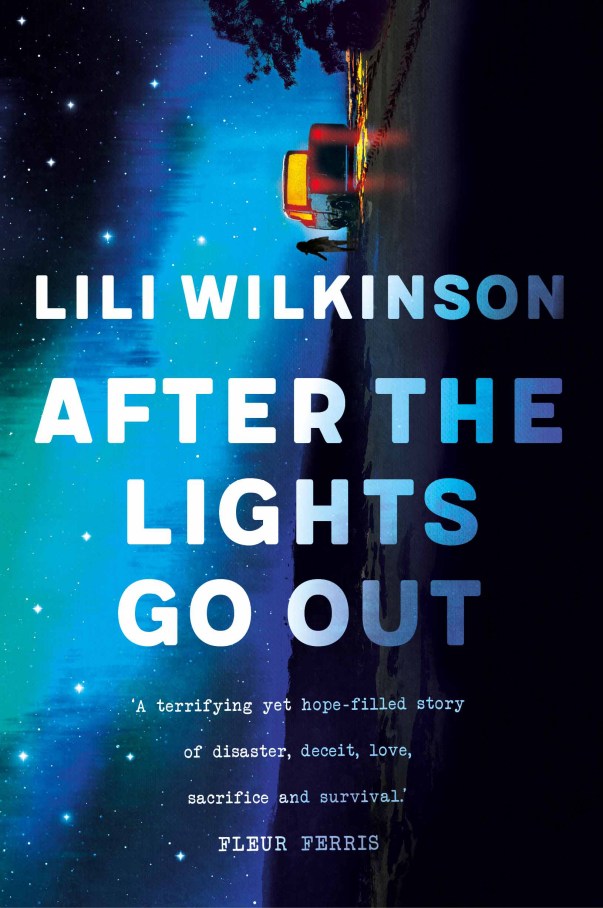
After the Lights Go Out by Lili Wilkinson

After the Lights Go Out

Publisher: Allen & Unwin

Publication Date – 1 August 2018

Amazon     Book Depository

From bestselling Australian author Lili Wilkinson comes After the Lights Go Out, an incredible and powerful young adult adventure set in the heart of the bush that asks the impossible question: should a person choose family or community in an emergency?

Seventeen-year-old Prudence Palmer is a young woman living outside the small Australian outback town of Jubilee with her father, Rick, and her younger twin sisters, Grace and Blyth.  To the other inhabitants of the town, they are just another mining family, living close to Rick’s workplace.  However, they are actually hiding a much deeper secret: they are doomsday preppers.  Convinced that the world will soon suffer some form of imminent catastrophe, Rick has moved his daughters off the grid to Jubilee and has constructed a hidden bunker out the back of his property.  Filled with a substantial amount of food, medicine, equipment, weapons and entertainment, the bunker has everything they need to survive the end of the world.  The girls have also been trained to survive and are ready to react against a variety of scenarios.

While Rick is sure a world-changing disaster is just around the corner, Pru is less certain, and is happy to keep her family’s activities a secret.  So it is a great shock to her when something actually happens and every electrical device, modern car and generator in Jubilee suddenly fails.  With Rick gone, Pru and her sisters must suddenly implement their survival plan without their father’s guidance and make the hard decision to hide their bunker and supplies from their friends in the town.  With food, water and medicine becoming scarce, and with no transportation, communications or other vital necessities, the town starts to fall apart.  As the situation gets even worse, Pru and her sisters must decide between helping their friends or doing as they have been trained and survive alone.

Lili Wilkinson is an exciting Australian author who has produced 10 intense and dramatic young adult novels since her 2006 debut, Joan of Arc: The Story of Jehanne Darc.  Her eleventh novel, After the Lights Go Out is an outstanding standalone book that could potentially replace Tomorrow, When the War Began as the go-to disaster story for Australian young adult audiences.  This book contains a dramatic and moving main story that plunges the world into chaos and places the potential survival of a small town in the hands of one young woman.

At the heart of this book lies a tough moral dilemma for the narrator Pru when she must decide between helping her local community and guaranteeing her family’s survival.  Pru’s father, Rick, a hardcore survivalist, has stocked the family bunker with enough supplies to keep Pru and her sisters alive for several years.  He has also taught his daughters to never help anyone but themselves, and to keep all their supplies for the family.  When a disaster strikes and Rick goes missing, it is up to Pru and her sisters to make the decision, and at first they choose to keep the bunker and supplies hidden from their friends in Jubilee.  As the situation in the town gets worse, Pru’s guilt conflicts with her father’s training and instructions.  This internal debate is intensified when she falls in love with newcomer Mateo and watches him and his mother doing everything they can to save the townsfolk, despite the fact they are not locals and have no significant connection to people living there.  Watching Pru’s internal struggle and the external debate with her sisters is intense, and the reader is left wondering what they would do in a similar situation.  How Pru’s eventual decision affects her family and her relationships with the people of Jubilee is very memorable, and hits all the right emotional notes in this excellent story.

After the Lights Go Out contains an intriguing examination of the doomsday prepper phenomenon that is currently occurring around the world.  The main character’s father believes every single conspiracy theory that exists and is determined to prepare his daughters for anything.  It is clear that Wilkinson has done some significant research into survivalists and their various techniques, and as a result her characters are prepared for every doomsday scenario and have a ton of supplies and a high-tech bunker at their disposal.  There is a lot of discussion and exposition about the various survivalist conspiracies, plans to live in an altered world, the necessary techniques and the ideal supplies that every prepper should have.  Despite most doomsday preppers being American, many of the techniques in this book have an Australian flavour to them, as the girls know the local fauna, flora and means of survival out in the harsh bush conditions.  While every preparation the Palmer family has undertaken is fascinating to read about, I found the examination of the improvised medical techniques the characters use to be particularly outstanding.  This includes including one memorable and somewhat graphic sequence where the narrator needs to perform some rudimentary dentistry.  Overall, the use of the doomsday preppers’ planning and theories is an incredibly intriguing part of this story that provides the reader with some cool facts and the results of the author’s in-depth research.

Wilkinson has also populated the book with some excellent characters who really bring the story together.  While the Palmer sisters are good central characters and Pru is a great narrator who has to make a huge range of tough decisions, the best character has to be the Palmer father, Rick.  Rick is a crazed survivalist who is convinced that the world is about to end and whose paranoia has driven him to outback Australia.  When one of his disaster scenarios actually comes true, he becomes even more erratic, and watching his fears overcome his love for his daughters is very tragic to behold.  There is also Mateo, the young American tourist and liberal city-slicker who is essentially the opposite of Pru when it comes to life experiences.  The relationship between him and Pru is nice.  It evolves at a natural pace and offers the reader some different insights into the situation and the motivations of the Palmer sisters.  Another effective character is Keller Reid, the older boy with an unhealthy obsession with Pru’s younger sisters.  Keller is a particularly despicable character who serves as a very annoying minor antagonist who moves the plot around.  Watching him through the narrator’s eyes, you cannot help but hate him and hope he gets some eventual comeuppance.  The other townsfolk of Jubilee are a good mixture of characters, and it’s nice seeing them come together as a community rather than break down and kill each other as Rick believed they would.

Another part of this book that stood out to me was Wilkinson’s use of the powerful Australian landscape and the examination of small country towns.  The author provides some vivid images of the distinctive Australian bush, and looks at the various features that make it an intriguing backdrop for a story about survivalists.  The author also produces some exceptional portrayals of the close communities that exists in small town Australia and how they their isolation might be both a benefit and a detriment to their survival in a doomsday scenario.  It is definitely a unique setting for a catastrophe novel such as After the Lights Go Out, and one which I felt really added to the beauty and intensity of the story.

I really enjoyed this book and thought it was an incredible piece of literature from Wilkinson.  Because of its excellent story and the phenomenal look it takes at survivalists and their viewpoint of the world, I think this book is perfect for its intended young adult audience, which could prove to be very empowering and enjoyable read for them.  Parents should aware that there are some adult moments and a couple of graphic scenes, but this excellent and informative story is worth the risk.  After the Lights Go Out is a deep and powerful five-star book that provides its readers with an excellent examination of doomsday preppers.  This is definitely one of the best young adult books I have read this year and I cannot recommend this outstanding Australian book enough.

My Rating:

Five Stars

Amazon     Book Depository

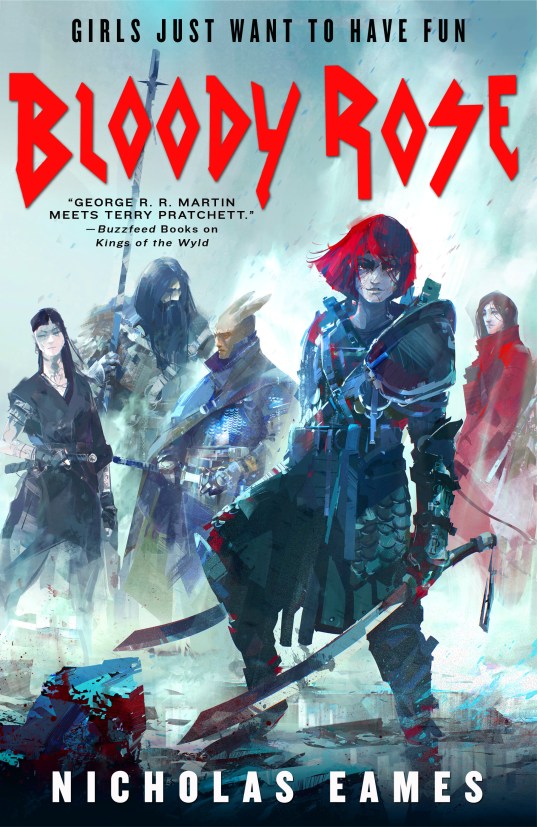
Bloody Rose by Nicholas Eames

Bloody Rose Cover.jpg

Publisher: Orbit

Publication Date – 10 July 2018

Amazon

Sensational fantasy author Nicholas Eames follows up his exceptional debut with the five-star novel Bloody Rose, featuring an epic quest storyline which takes its protagonists through a series of wild adventures in a spectacular and large-scale fantasy landscape.

In the human lands of Grandual, mercenary bands hold a celebrity status among the people.  Originally formed to help protect against the horrors of the world, most bands now spend their days touring from city to city, fighting monsters in arenas in order to gain fame, glory and money.  The most famous of these bands is Fable, led by the notorious Bloody Rose, daughter of the land’s greatest hero, Golden Gabe.  Years after her father led a mercenary army to rescue her from a horde of monsters, Rose has reformed Fable with the druin Freecloud, the shaman Brune, the Inkwitch Cura and their booker, the waggish satyr Roderick.  With a massive chip on her shoulder, Rose is determined to take on the toughest jobs and challenges that she can find.

In the city of Ardburg, Tam Hasford is sick of her job slinging drinks at the local pub to the famous mercenaries passing through.  As the daughter of two mercenaries herself, Tam craves adventure, and when Fable rolls into town looking for a new bard, Tam jumps at the opportunity to travel with Bloody Rose and her band.  Gaining a well-deserved reputation for her singing and an accidental reputation as a fighter, Tam receives the moniker ‘The Bard’ and a crash course in the mercenary lifestyle of drinking, gambling, fighting and good times.

But while Tam is having fun in her new role, there is still work to be done.  A massive monster horde has once again left the wilds and is threatening several human cities.  All of Grandual’s mercenary bands are gathering to meet them, all except Fable.  Rose is leading her band in the opposite direction and appears unconcerned with the potential devastation the monsters could cause.  Has Bloody Rose lost her nerve or does she have a far more dangerous quest in mind?  While Fable’s plan to become legends may prove to be successful, they will have far more destructive consequences than anyone could ever predict.

Bloody Rose is the incredible sequel to Eames’s 2017 debut, Kings of the Wyld, and forms the second book in Eames’s The Band series.  Set several years after the events of the first book, Eames switches up the story, focusing on the adventures of Rose and her band of mercenaries, while telling the narrative through the eyes of new point-of-view character Tam.  While there are many tie-ins with the first book, including several of the main characters, Eames has mostly shifted the focus onto a new generation of characters.

Although Bloody Rose is the second instalment in this series, curious readers can easily start their adventure with this book.  This book’s point-of-view character, Tam, never directly experienced the battles of the first entry in the series, and she ends up having quite a few conversations that describe or dramatise the events of the previous novel.  As a result, new readers who start with Bloody Rose will not experience any confusion and will be able to enjoy this story right off the bat.  That being said, readers who start with this book will probably get a hankering to read Kings of the Wyld due to how amazing Bloody Rose is.

This is a substantial piece of fantasy literature with a powerful story that is guaranteed to draw the reader in from the first page.  The huge scope of this story is just remarkable, as what begins as a simple adventure story transforms into an epic battle for the survival of all life in the world.  Much of this scope is the result of the significant number of secondary characters and antagonists that are introduced throughout the book.  It is a testimony to Eames’s skill as a writer that all these characters don’t overwhelm the story, and the reader finds themselves interested in seeing how each these characters ends up.  The use of a brand new point-of-view character to tell this story is a clever move from Eames as it allows a fresh insight into this world of mercenary bands and monsters, moving on from the old veterans that were the focus of Kings of the Wyld.

The author has infused his narrative with a huge amount of humour, most of it quite adult and over the top in nature.  This humorous tone infects quite a lot of the way that the book is told and makes it a very fun read.  There are some extremely funny scenes through the book, from debates about fake cockatrices, to the antics of a drunken satyr, to discussions about the dietary requirements of minotaurs.  While this humour is a key and overwhelmingly fun part of the story, Eames does get deadly serious in several parts of the book when the protagonists encounter dark days.  These darker scenes are felt particularly hard by the reader, mainly due to the sudden shift away from the lighter tone of the rest of the book.  While there are several examples of this throughout the story, I found that the final scenes of this book were particularly intense and had me absolutely captivated.  This clever combination of the outstanding comedy overtones and the gripping dramatic moments works exceedingly well and turns Bloody Rose’s story into one of the best fantasy narratives I’ve had the pleasure of reading.

In addition to the great use of comedy, drama and story, Eames has also packed this book with a significant amount of action and adventure.  The protagonists of this story essentially fight everyone as they adventure across the land, and participate in all sorts of combat, including arena battles with monsters, fights with titanic creatures, large-scale battles and even a few tavern brawls.  All these action sequences work well with the book’s other elements.  Not only do these battles result in some devastating moments but Eames also includes some comedy in these fight scenes, which can prove to be very entertaining.  Readers should also keep an eye out for the fun and inventive combat tactics used throughout this book, which are not only destructive but creative.  Never has red hair been used in battle so effectively.  With as much conflict and combat as you’ll ever need in a book, this is a perfect read those looking for those looking for their next injection of thrilling action and adventure.

Eames has also created a vast world to be the setting for this story, filled with a huge number of fantasy creatures and massive amount of world building lore.  Having such a large and well-established world is essential for a story of this magnitude.  The protagonists do a substantial amount of travel from one end of Grandual to the other, exploring large cities, small towns, barren wastes, massive battlefields and dangerous forested areas.  The author has also filled this story with every classic fantasy and mythological creature one could think of, as well as a few unique creatures from his own imagination.  All these creatures are a great addition to the story, resulting in some very fun battle sequences throughout the book, especially when their a huge number of these creatures in action.  One of the more intriguing races is the druin, the rabbit-eared humanoids created by Eames which used to rule all the humans and monsters of this fantasy world.  There is some fascinating history around the druin which has some significant impacts on the story, as well as gifting these creatures with some cool abilities that come into play in a variety of great ways.

The author has also spent time developing a fantastic band of main characters for the reader to follow on their adventure.  Using his new narrator, Tam, to full effect, the reader is given an introduction to every member of Fable and learns their history and motivations in significant and interesting detail.  A decent amount of time is spent looking at all of the members of Fable and the reader is given a deep understanding of each of them.  Each member of the band is a fairly unique fighter and character in their own right, but together they form a fun team.  Eames really hammers home how close these band members become throughout the book, and the reader becomes attached to the characters as they grow closer together.  This makes any potential harm or trauma they experience particularly hard for the reader to experience, and really adds to the books emotional depth.

With the follow-up to his epic debut, Eames has once again demonstrated why he is one of the freshest and most exciting new voices in fantasy fiction.  This exceptional story is an action-packed bonanza that sees several compelling characters engage in a heroic quest across an impressive fantasy landscape.  With the perfect blend of comedic adventure, epic fantasy storytelling and some dramatic character moments, Bloody Rose is an exceptional and excellent read that is guaranteed to become your new favourite story.

My Rating:

Five Stars

Amazon

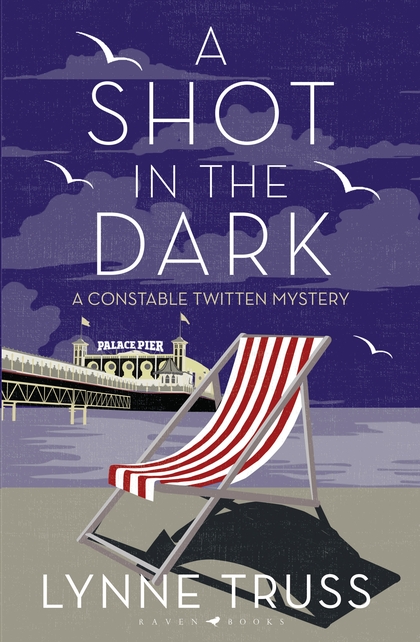
A Shot in the Dark by Lynne Truss

A Shot in the Dark Cover

Publisher: Raven Books

Publication Date – 28 June 2018

Amazon     Book Depository

From Lynne Truss, one of England’s most creative minds, comes A Shot in the Dark, a hilarious take on the historical murder mystery that sets three fantastic and exaggerated police characters against a sinister and surprising criminal mastermind.

Brighton, 1957.  Following a terrible massacre that saw the death of every member of two rival gangs some years before, the city of Brighton is now clear of all crime.  At least, that’s what Inspector Steine believes, and, as he is the famous and inspirational police detective whose actions allowed the eradication of these vicious gangs, that’s what the rest of the Brighton Constabulary believe as well.  Unfortunately for everyone, Inspector Steine is nowhere near as smart as he thinks he is.  Despite all the evidence, he simply refuses to believe the theory of his long suffering ‘bagman’ Sergeant Brunswick that a mysterious third crime boss organised the massacre and is currently running crime in Brighton.

So when the young, keen and exceedingly annoying Constable Twitten arrives in Brighton and starts investigating a series of burglaries, Steine is particularly aggrieved.  Despite Steine’s insistence that Brighton’s criminal element is no more, Twitten seems determined to find criminal activity – and he does.  The opening night of a new controversial play is unfortunately ruined when the opinionated and unpleasant film critic that Twitten is sitting next to is shot in the head.  Finally a crime that even Steine can’t ignore.

Who could have wanted the critic dead?  Is his death due to the multiple plays and productions that his reviews have destroyed?  Or is it perhaps related to a bank robbery that the critic witnessed many years ago, and that Steine failed to solve.  As Twitten and Brunswick start their investigation and Steine provides his own special brand of ‘help’, a second body is found.  As the case continues, Brighton’s newest constable is about to uncover a dark secret about his city and the sinister figure manipulating everything behind the scenes.

Truss is a highly talented writer, author and radio personality who has produced a huge range of different works, including the non-fiction book Eats, Shoots & Leaves: The Zero Tolerance Approach to Punctuation.  Truss has also created several other fictional and non-fictional books, as well as a number of popular radio series.  A Shot in the Dark is Truss’s fifth fiction novel and is the first book in her Constable Twitten Mystery series.

One of the most interesting features of A Shot in the Dark is that it is actually a novelisation of Truss’s popular radio comedy drama series, Inspector Steine, which ran between 2007 and 2013 and starred the inimitable Michael Fenton-Stevens.  This is a great introduction to the franchise that will have a massive amount of appeal both to fans of the radio show and people who are unfamiliar with this great comedy series.  Rather than being a simple write-up of one of the Inspector Steine episodes, A Shot in the Dark is a combination of several different episodes, containing plot elements from various seasons of the show’s run.  In particular, it contains components borrowed from the series one episodes While the Sun Shines, Separate Tales and The Deep Blue Sea, the series two episode The Entertainer, and the series three episode While the Sun Shines.  As a result of this combination, people unfamiliar with this series get to experience several of the radio show’s best stories and plot points in their first outing.  On the other hand, fans of the radio series get a completely new adventure that re-imagines Constable Twitten’s early days at Brighton.  Storylines listeners may be familiar with have been altered in some new and substantial ways to create a fun and excellent combination of some key stories in the series.

In the original Inspector Steine series, Truss created some amazing characters who are not only terrific by themselves but who played off each other extremely well.  The author has done an amazing job transplanting these characters into a completely different format.  The three main characters are Inspector Steine, Constable Twitten and Sergeant Brunswick.  Inspector Steine is your classic self-important senior management figure who thinks they are so much smarter than they actually are.  Steine is extremely self-absorbed and very easily manipulated, but ultimately well meaning, given he is completely convinced that all the crime in Brighton was erased years ago as a result of his brilliant actions.  Twitten, on the other hand, is actually as smart as he thinks and has no trouble letting everyone he meets know it.  His clever investigative work is capable of solving the crime, but his cleverdick attitude ensures that no-one, especially Inspector Steine, will actually listen to him.  Sergeant Brunswick plays straight man to both of his colleagues, and seems to be the middle ground between these two extreme personalities.  However, while he is a competent investigator, he is also easily manipulated, and fails to see that his brilliant plans to go undercover on every case are hampered by the fact that all of Brighton’s criminals already know who his is.  These three are all extreme examples of some of the classic police characters.  In a normal piece of crime fiction, these three characters work well together (think Endeavour for example), but in A Shot in the Dark they bring out the worst in each other and combine together for great comedic value.

While the three police characters are excellently used and a whole lot of fun by themselves, special mention needs to be given to the brilliant antagonist of this story.  Whiles fans of the radio series will not be surprised about their identity, I will try to avoid revealing too much in order not to ruin the surprise for any new readers.  That being said, this character is an excellent villain who is able to manipulate the three police characters in some suitably comedic ways.  The various and often quite unsubtle ways in which this villain manoeuvres the protagonists in A Shot in the Dark is absolutely hilarious, especially when their ridiculous plots actually work.  New readers will have a fantastic time finding out who this character is and how they’ve gotten away with their crimes, while fans of the radio series will love seeing this outstanding antagonist in all their criminal glory once again.

A Shot in the Dark contains a fantastic story that expertly combines a clever murder mystery with hilarious comedy elements.  As mentioned above, due to main characters’ various shortcomings and the devious nature of the villain, this is not your standard criminal investigation.  The protagonists have to deal with some absurd situations as well as various unusual plans to stop them solving the case.  That being said, the police do perform an investigation and the truth of the various crimes are eventually uncovered, although again without the standard solution crime fiction readers would be used to.  The crime elements are compelling and there is a really interesting mystery contained within this book, with some imaginative twists leading up to the conclusion.  In addition, the two murders are connected together in some clever ways, and the overarching conspiracy about Brighton is particularly intriguing.  While the book contains some gripping mystery elements, it is a comedy at heart; there are some really amazing comedy elements, including some great sequences that really cracked me up.  In addition to the shenanigans of the main characters, there are a range of other eccentric characters throughout the book that provide some fun moments of comic relief with their antics.  These elements come together perfectly, and it is incredibly fun watching all attempts at a serious investigation get disrupted in various silly ways.

Truss set the Inspector Steine series within Brighton in the early 1950s.  While this would already be an interesting setting, the author has amped this up by using elements from the classic crime novel and movie, Brighton Rock.  Truss has stated that her series is based on captions at the start of the 1948 movie which declared that Brighton went from a crime hub between the two World Wars to an area completely free of criminals and corruption by the 1950s.  While many people would be somewhat suspicious of such a statement, the Inspector Steine series is based on the idea that a member of the police actually believed this and acted accordingly.  As a result, the whole city has, on the surface, a wholesome family atmosphere.  That makes the crime hiding underneath a lot more fun to see, especially as the criminals really don’t need to do too much to disguise their activities, secure in Steine’s blissful ignorance.  In addition, fans of the crime classic may be interested to know that there are a number of elements from Brighton Rock that play a key part in the story.  As both the book and the movie exist within the Inspector Steine universe, Inspector Steine actually blames the events of this book on Graham Greene, the original author of Brighton Rock (a sentiment shared by Truss).  In addition, various characters within A Shot in the Dark are obsessed with the events of the classic crime book, and many locations from the Brighton Rock book and movie become major plot settings in the story.  In particular, there are several sequences based around one certain murder from the movie that results in some very entertaining scenes.  Overall, this is a great setting for this excellent comedy-mystery hybrid, which also has some fantastic tie-ins to a classic post-war crime novel.

Lynne Truss delivers an extremely fun and very entertaining adaption of her popular Inspector Steine radio series with A Shot in the Dark.  Featuring all of the exceptional characters that were a standout feature of the original series, A Shot in the Dark is an excellent piece of comedy that also contains some intriguing mystery elements and a unique settings with ties to the crime classic Brighton Rock.  This five-star book comes highly recommended and is guaranteed to leave you laughing for hours.  I am already looking forward to the next Constable Twitten Mystery.

My Rating:

Five Stars

Special thanks need to be given to my partner, Alex, who, on top of her usual editorial expertise for my reviews, happens to be a geek for BBC Radio 4 comedies and was able to help me properly analyse A Shot in the Dark without spoiling the identity of Brighton’s greatest criminal mastermind.

Amazon     Book Depository

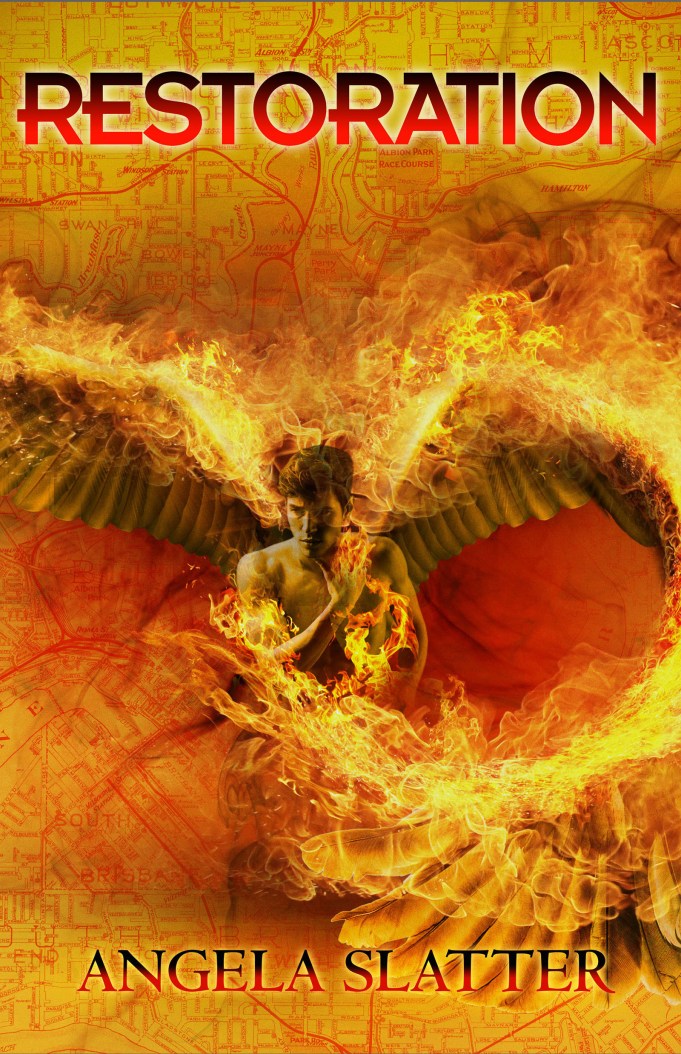
Restoration by Angela Slatter

Restoration Cover

Publisher: Jo Fletcher Books

Publication Date – 9 August 2018

Amazon     Book Depository

One of the very best authors of Australian crime fantasy returns with another outstanding release in her fast-paced and exceedingly entertaining Verity Fassbinder series.

In a world where the magical beings known as the Weyrd remain hidden from the Normal, non-magical population, Verity Fassbinder is a half-Weyrd, half-human agent for Brisbane’s Weyrd Council and is charged with policing the city’s Weyrd population.  However, following an adventure to the underworld, Verity has been forced into the employ of a crazed fallen angel, and must take up his quest to find two secretive artefacts hidden in Brisbane.  In order to protect those she loves from her murderous new employer, Verity has sent her family away and resigned her position with the Weyrd Council.  Saddled with a murderous Kitsune, Joyce, as a driver and spy, Verity must find a way to recover these mysterious two items without giving ultimate power to the creature holding everything she love hostage.

As if her involuntary quest wasn’t hard enough, Verity is also forced to contend with a myriad of other problems from Brisbane’s Weyrd population.  The vengeful sorceress Dusana Nadasy is back in town, determined to kill Verity for the role she played in the death of her family.  The angel Tobit is refusing to take Verity’s calls, Weyrd Council politics is seriously starting to annoy her, literal ghosts from her past are haunting her and her friends the Norns have developed strange new powers.  Finally, her contact in the Brisbane police, Inspector McIntyre, needs her help investigating a series of desecrated corpses of Normal women found around Brisbane whose bodies show the distinctive impact of Weyrd magic.  What Verity does not know is that all of these strange occurrences will play a part in her quest for the fallen angel’s prize and will change her life forever.

Restoration is the third book from Australian author Angela Slatter and represents the third book in her Verity Fassbinder series.  Restoration is an exceptional example of the benefits of combining two genres, and contains incredible fantasy and mystery elements blended together into a powerful final narrative set in modern day Brisbane.

Throughout Restoration, Slatter has surrounded her central storyline with an elaborate series of smaller mysteries and adventures, all of which cleverly tie into the protagonist’s hunt for the artefacts.  Each of the smaller plot lines and investigations is very interesting, and readers will be amazed about how interlocked the story really is.  Those who have read the previous books in the Verity Fassbinder series will also enjoy how Slatter expertly utilises elements and plot lines from the earlier books in the series throughout Restoration.  This is a fun feature, and really shows off how much planning and foreshadowing Slatter included in her first two books, as even minor observations and actions from the earlier books have some big impacts in the latest volume.  Despite this, Restoration is still an excellent book to come into this series with.  The author makes sure all the relevant details of the last two books are fully explained and explored.  As a result, new readers will be able to follow everything that is happening within Restoration, while also being tempted to check out the earlier books in this fabulous series.  Fans will enjoy how the storylines and side quests come together in the end of the book for a big and exciting confrontation sequence that serves as an epic conclusion to the first three books in the Verity Fassbinder series.

In addition to the book’s strong mysteries, the author has also included a range of enticing fantasy elements for the readers to enjoy.  The huge variety of fantasy aspects included within Restoration have been pulled together from a range of different cultural backgrounds.  As a result, the book’s protagonist interacts with creatures that have their origins in Greek, Germanic, Norse and Japanese mythologies and culture, as well as the usual ghosts, magic users and generally powered individuals.  There are also strong components from the Judeo-Christian religion that play a significant part in the story and which tie in well with the other fantasy elements.  The great mystery elements mentioned above work in conjunction with these fantasy features to create an amazing story.  Slatter comes up with some terrific fantasy based motives, plots and suspects for the reader to enjoy, and this helps create an intriguing and entertaining overall narrative.  The protagonist’s hunt for the artefacts, the “grail” and the “tyrant”, leads to a greater insight into this universe’s magical and religious roots, and turn into some intriguing pieces of this universe’s lore.  In addition, the protagonist’s curiosity about her Weyrd ancestors leads to her finding out some fascinating facts about their history, as well as a detailed bit of fictional mythology from Slatter.  This focus on the family she is descended from also hints at these characters being involved in future additions of this series, and will no doubt prove to be excellent antagonists.  Overall, the book’s fantasy elements are highly enjoyable and add sufficient wonder and enhancement to an already outstanding book.

Restoration is mostly set within the Australian city of Brisbane and its local environs.  Slatter, a Brisbane local, has created a detailed and personal depiction of her city and it serves as a fun location for this book’s plot.  People familiar with Brisbane will appreciate the descriptions of city and enjoy the concept of a hidden and chaotic fantasy world lying just below its surface.  Special note should be given about the inclusion of the University of Queensland, Slatter’s alma mater, as a setting within the book, and it is always fascinating to see a location that the author is familiar with and passionate about.

Slatter has continued to use the humour-laden tone of writing that was such a standout of the first two books in the Verity Fassbinder series.  The protagonist is a remarkable character who does not care who she annoys or who gets in her way as she tries to achieve her goals.  This nonconformist attitude and general disregard for the rules for the Weyrd Council has a great way of getting the reader to support her, and as a result she has always been a very likable main character.  The jokes and humour that inhabit the narrative as she encounters a range of strange and dangerous situations help lighten the tone of the dark investigations she is involved with.  Things get serious towards the end, especially when the protagonist’s family gets involved and this helps raise the stakes in the readers mind, although some humour is still involved.  Audiences will love the sass and humorous observations that inhabit this whole book, and it fits in well with the overarching urban fantasy crime narrative that Slatter has cultivated.

Restoration is another superb read from Angela Slatter and an outstanding addition to one of the best fantasy crime series in the world today.  The books in this series are up there with The Dresden Files and the Peter Grant series, and are fantastic examples of this combination of genres.  The third book in this Australian series makes full use of its elaborate mystery, intriguing fantasy elements, exciting Brisbane setting and distinctive humour to create an extraordinary read that comes highly recommended.

My Rating:

Five Stars

Amazon     Book Depository

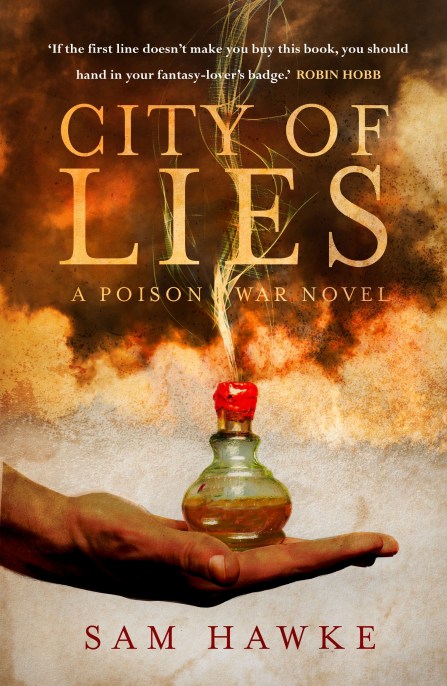
City of Lies by Sam Hawke

City of Lies Cover.jpg

Publisher: Bantam Press

Publication Date – 3 July 2018

Amazon     Book Depository

Poison, murder, conspiracy, and war are all on the way for readers of City of Lies, one of the best fantasy reads of the year from Canberra author Sam Hawke.

In the country of Sjona, the capital city of Silasta is a glittering beacon of culture and art.  Young nobleman Jovan and his family serve a special role, subtly protecting Sjona’s ruler, the Chancellor, and his heirs from being poisoned.  As a result of his training, Jovan is now capable of detecting and identifying poisons that could be slipped to his charges.  While his uncle and mentor directly protects the Chancellor, Jovan serves the Chancellor’s carefree young heir, Tain.

When Jovan and Tain return to the city following a diplomatic journey, they are soon placed in a terrible situation.  The impossible has happened: an unidentified poison has been slipped to the Chancellor, killing him and Jovan’s uncle.  Without their respective mentors’ guidance both young men are thrust into new roles: Tain as an untested Chancellor, and Jovan now responsible for the safety of his nation’s ruler.

However, things can always get worse.  A mysterious army has arrived undetected at the gates of Silasta, and the city, which has never known anything but peace, is soon besieged.  The army appears to be made up of Sjona’s peasants and contains powerful individuals in control of spirits.  With the majority of the military far away fighting in another conflict, few professional soldiers are left to defend Silasta, and Tain must lead a desperate defence against a superior force.

As the siege continues, it soon becomes apparent that not everything is as it seems.  Why is the city being attacked, and how did no one see this coming?  A deep conspiracy lies across the capital and no one can be trusted, not even Silasta’s ruling council.  It also appears that the person who killed the Chancellor is still at large within the city and is aiming to poison Tain as well.  As Jovan utilises all his skill to protect his friend, his sister Kalina searches for the traitors hiding inside their walls.

City of Lies is Australian author Sam Hawke’s debut novel and represents an outstanding first outing from a remarkable new talent.  This ambitious book contains a fantastic plot, with some unique story elements and an elaborate thriller narrative that combines perfectly with the book’s overarching fantasy narrative.  This is the first book in Hawke’s planned Poison War series, and is focused on two separate point-of-view characters, Jovan and Kalina, who each narrate around half the book.

This book contains an amazing and extremely compelling overarching thriller narrative that sees the protagonist attempt to unravel the conspiracies surrounding their city.  Hawke has put a lot of work into creating an elaborate and multilayered plot that draws the reader in with its significant intrigue.  The is so much for the reader to discover as the protagonists try to work out who the army attacking them is, what their motives are, and how the siege relates to the secrets of the ruling class.  This intrigue-driven storyline is amped up even more once it is revealed that the person who poisoned the chancellor might not be a member of the army camped outside the city.  Hawke presents the reader with a number of likely suspects, most of whom are on the city’s ruling council, as well as a range of interesting and plausible motives for the betrayal.  The full extent of the interwoven conspiracies is quite impressive, and Hawke presents an extremely captivating storyline of the protagonists unravelling the plot that is guaranteed to pull in the reader’s full attention.  This is definitely a high point of this fantastic book.

One of City of Lies’ standout features is Hawke’s substantial focus on poisons and role the main character plays in protecting the city’s ruler from harmful substances.  At the start of the story, the Chancellor and the protagonists’ uncle are both poisoned and killed by an unknown toxin.  Jovan, who already served Tain as his ‘proofer’, a combination food taster, poison master, and trusted personal chef, spends the rest of the book trying to defend Tain from a poisoner he knows is out there, who apparently has access to a poison he has no idea how to detect or cure.  The battle of wits between Jovan and the poisoner is an intense part of the book’s narrative, and the reader can feel the desperation that Jovan feels trying to keep his friend and, by extension, his city alive.  There are some great scenes throughout this book as Jovan attempts to work out how poison could be administered to Tain, as well as trying to work out potential cures and solutions to the poison’s victims.

In addition to examining the tension that the book’s poison elements elicit, Hawke also spends a significant amount of time exploring the various toxins of her universe and the techniques of the book’s poison ‘proofers’.  The descriptions of these skills in training is utterly fascinating, and the author has come up with some amazing ideas that prove to be enthralling for the reader.  In addition, Hawke has chosen to deepen the audience’s interest and knowledge of her universe’s poisons by including a page of the protagonist’s ‘proofer tome’ before each chapter in the book.  These pages contain a description of the poison, what effects it has when administrated and what clues the proofer can use to identify the poison in food, such as taste or texture.  This is a fun addition that also contains some information relevant to the book’s plot, and the readers will find themselves deeply exploring the lore being presented to them.  Another cool feature was the way in which Jovan uses his knowledge and cache of poisons in an offensive manner against his opponents to compensate for his lack of martial skill.  There are some fantastic scenes where Jovan uses a range of different substances in the middle of battles, as well as some excellent sequences where he doses potential opponents in advance of a confrontation.

Special mention should also be given to the wonderful fantasy setting that Hawke has created for City of Lies.  The vast majority of the plot is set within the capital of Silasta, a large city that has a reputation and preference for culture and the arts, whilst viewing violence and warfare as a distasteful profession.  The author does an amazing job describing this city’s many wonders, whilst at the same time creating a unique societal setup that plays brilliantly into the story’s intriguing elements.  While the focus of this book is solely within the nation of Sjona, expect the sequels to follow adventures in other countries mentioned.

The siege elements of this book are also very enjoyable and offer another interesting point to this fantastic book.  I’m always a fan of a good siege storyline, especially when it’s told from the point of view of the defenders.  The parts of the book that focus on the siege are extremely well written and provide the book with some substantial action sequences.  It is also fun to see how a city mostly made up of peace-loving artists and performers can defend itself without an army to help.  Hawke produces some great ideas for her defenders, which also ties into the fantastic poison elements above, when the protagonists use their knowledge to create some defences for their city.

Overall, City of Lies is an intrigue-studded masterpiece of a fantasy novel that combines together a range or magnificent story elements with an excellent setting and an addictive overarching thriller narrative.  Hawke’s use of poisons as a key plot point is just incredible and represents one of the most interesting parts of this book, and I am intrigued to see how she will continue to use poisons in future entries in this series.  This is a five-star debut from Hawke, and I would wholeheartedly recommend City of Lies to any fans of the fantasy genre.

My Rating:

Five Stars

Amazon     Book Depository

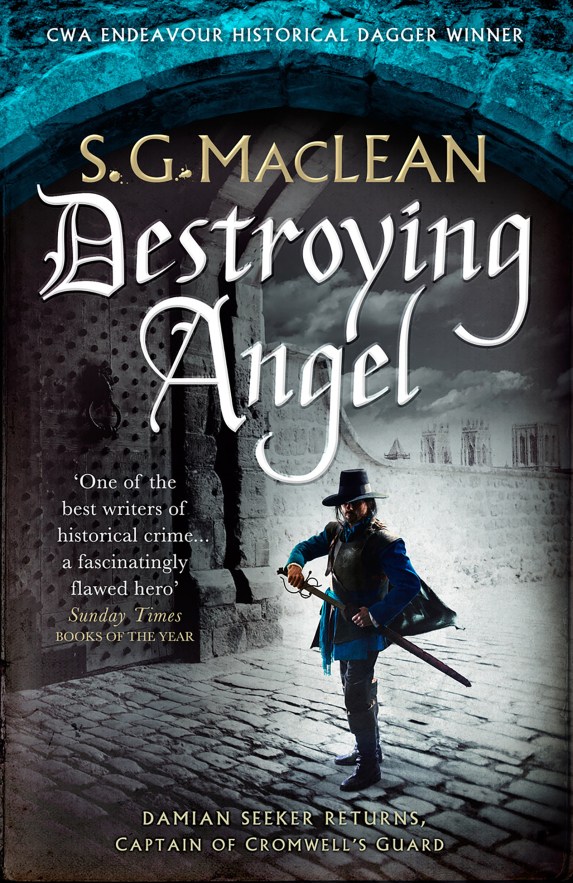
Destroying Angel by S. G. MacLean

Destroying Angel Cover.jpg

Publisher: Quercus

Publication date – 12 July 2018

Amazon

Prepare to experience an excellent multi-mystery story set deep in the heart of Cromwell’s Puritan England in Destroying Angel, the new book from historical thriller sensation S. G. MacLean.

It is 1655, a time of great change for England.  Oliver Crowell’s forces have cleared the Royalist armies from England, and exiled the King and his court to the continent.  The country is now in the grip of Puritan morals and the rule of Cromwell’s major-generals.

In York, Captain Damian Seeker of Cromwell’s army is responsible for hunting down Royalist elements hiding within the country and quelling dissent against the new regime.  His latest mission requires him to journey to the small village of Faithly on the Yorkshire moors to deliver the government’s new laws and ordinances and inspect the area for traitors.  In addition, a fugitive member of the King’s exiled court may have returned to his family estates near Faithly, and Seeker is charged with searching the village and the surrounding countryside.

But upon arriving in Faithly, Seeker bears witness to the tragic death of the young ward of the town’s commissioner.  Her death appears to be the result of poisoned mushrooms, slipped to her at a formal dinner attended by Seeker and several of the village’s notable citizens.  Was she the intended target or just a causality of a far larger game?  As Seeker begins to investigate, he soon finds that Faithly is a seething hotbed of resentment and fear.  Plots, secrets, lies and petty jealousies lie just beneath the surface, and many of the village’s inhabitants seek to use the dramatic changes in England’s rule for their own gain.  As Seeker attempts to navigate the chaos he finds in Faithly, a chance encounter from his past will change everything for the captain.

MacLean has once again delivered a fantastic and intensely thrilling piece of historical fiction.  Destroying Angel is the third book in the Captain Seeker series, and the seventh overall book from MacLean, who has also published four historical thrillers in his Alexander Seaton series.  In his latest book, Maclean has created several compelling mysteries that are expertly combined with the book’s fascinating historical background.

The main storyline of Destroying Angel is a fantastic investigation into the secrets and mysteries surrounding a small village.  When the book’s protagonist arrives at Faithly, the central location of the plot, he encounters a village that is brimming with hidden secrets and lies.  While the core mysteries revolve around the poisoned girl and the location of the fugitive Royalist lord, the protagonist is forced to uncover all of the village’s many secrets in order to find the solutions to the murder and treachery that he encounters.  The reader is presented with a massive stream of information about many of the characters in the book, all of which is cleverly woven into a series of intriguing solutions.  For example, the eventual motives for the poisoning of the commissioner’s ward are particularly captivating, and fairly tragic.  MacLean ensures that every single secret and hidden past is tied into the overall story and has created an outstanding narrative that highlights his substantial skill at historical mysteries.

In addition to the huge range of mysteries that MacLean has inserted into his book, there is also a significant storyline that will prove to be extremely interesting to fans of the previous books in the Captain Seeker series.  While performing his other investigations, the protagonist is thrust into an emotive storyline when he suddenly encounters ghosts from his past.  This new storyline is particularly intriguing as it goes deep into the protagonist’s past, uncovering old wounds and substantially increasing his emotional stake in the story.  Previous readers of this series will find it intriguing to see the usually implacable character of Seeker so rattled and unbalanced in this story.  The sudden and violent introduction into this storyline is particularly memorable and represents a noticeable change in the book’s tone, and is an excellent inclusion in an already fantastic read.

One of the most impressive and enjoyable elements of this book is the author’s spectacular use of an absorbing historical setting.  During this period, England is experiencing significant change, as the King and his followers have all been expelled from the country and a new group of people have risen in power.  Despite it being a significant part of England’s history, not too many historical fiction authors have chosen to set their books during this period.  MacLean does an amazing job of exploring the various aspects of this new regime and tying them into the overall plot of Destroying Angel.  This includes the new laws that have been put in place, the changes to local governance and the effect of military rule on the people.  However, one of the most fascinating aspects of the entire plot is MacLean’s examination of the Puritan moralities that were imposed on the people of England.  Destroying Angel focuses on how this affected day to day life, what role the new church had in England and how they treated priests who didn’t meet Puritan expectations.  One of the best parts of the book is the blatantly biased trial of the priest of Faithly village, as members of the populace and a special state examiner, known as ‘the Trier’, attempt to remove him from his parish.  The author has chosen a great location to showcase these examples of life under Cromwell, as the small village setting allows the reader to see how it affected normal, everyday people.  It also allows the reader to get an idea about some of the discontent and petty power plays that could have possibly resulted from the changes to the system.  Overall, MacLean has set his series with a deeply interesting time period that serves as the perfect background for a murder and conflict ridden story.

Destroying Angel is a fantastic and incredibly enjoyable novel that serves as an outstanding and powerful new addition to MacLean’s Captain Seeker series, combining several captivating mysteries with an outstanding and rarely utilised historical setting.  Readers will find so much to love about this book, which is historical murder mystery at its very best.

My Rating:

Five Stars

Amazon

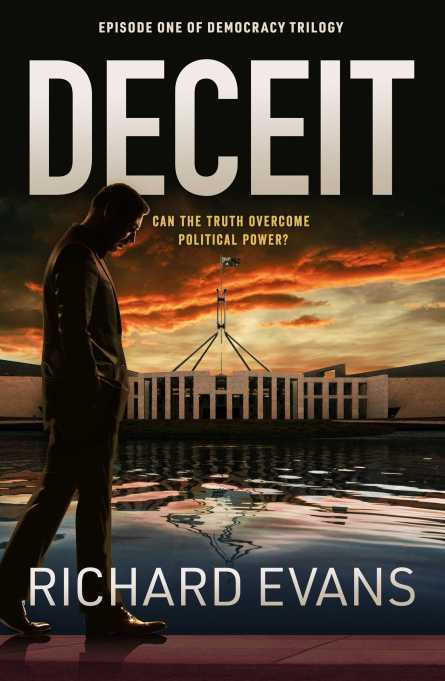
Deceit by Richard Evans

Deceit Cover

Publisher: Impact Press

Publication date – 18 June 2018

Amazon     Book Depository

From former politician Richard Evans comes one of the most incredible fictional examinations of the Australian political system with Deceit, an exciting and superb political thriller.

When corrupt Australian Prime Minster Andrew Gerrard makes a deal with his Indonesian counterpart, he embarks on a plan to build up a retirement nest egg by passing a controversial funding bill for overseas detention centres over a period of several years.  However, when key members of his party die in a tragic plane accident, Gerrard decides to process all of the funding in one go and receive the full amount of his payoff.

Outnumbered in the House of Representatives, and with only one week to pass the bill through both houses of parliament, the task looks impossible.  But the Prime Minister is a canny political operator with no conscience to speak of and with the Speaker deep in his pocket and with no conscience to speak off.  Equipped with a master plan, Gerrard starts to manipulate the bill through parliament.

The only person who may be able to stop him is the outgoing Clerk of the House of Representatives, Gordon O’Brien, who suspects that the Prime Minister’s mysterious last-minute bill is more sinister than it appears.  As one of the few people who believe in the sanctity of the parliament, O’Brien will risk everything to find out the truth and ensure no wrongdoing is done on his watch.  Utilising all the tools at his disposal, including the opposition and investigative journalist Anita Devlin, O’Brien prepares to move against the Prime Minister.  Let the political games begin!

Evans is a former Australian politician who served two terms as a federal member of parliament in the 1990s.  Evans has decided to utilise his political experience and expertise by creating a series of Australian politics based thrillers and dramas, with several books planned for release in 2019 and 2020.  Deceit is his debut novel and the first book of his planned Democracy trilogy, with the second book in this series, Duplicity, already set to be released in 2019.  Readers interested in fictional depictions of Australian politics should also keep an eye out for his upcoming Referendum and Jack Hudson series, both of which will start to be published in the next two years.

Deceit is a fabulous political thriller with a fantastic story that twists and turns through multiple layers of manipulation, deceptions, lies and double-crosses.  The book’s main antagonist, Australian Prime Minister Andrew Gerrard is a selfish, manipulative and sleazy character who serves as a perfect villain for this story and whose plots are a highlight of this book.  Evans has done a clever job of spreading the story out among multiple point-of-view characters, as this allows the reader to view the impact of Gerrard’s manoeuvrings and lets them see how they are received by members of the opposition, the media and O’Brien.  Evans is a very talented storywriter, and the entire plot of Deceit is extremely compelling and very well thought out.  Readers will fall in love with this amazing story and will find its overall conclusion very satisfying.

As someone who lives and works in the book’s main setting, Australia’s capital city, Canberra, I have received a lot of exposure to Australian politics.  As a result, I loved the author’s exceedingly realistic and accurate depictions of the Australian political system and how it was used within this story.  There is some great coverage of Australia’s parliamentary procedure and the creation and passage of bills and laws through both houses of parliament that are presented in a precise and well-described way.  There are also a number of characters who hold roles that are actually part of Australia’s political and civil service.  These positions and roles are explored in detail, and the reader is given significant insights into what work and requirements are needed by the people holding them.  Evan’s does a fantastic job of weaving these usually dry subjects into a very enthralling narrative, and readers will be intrigued to see how the fictional Prime Minister plans to get a dodgy bill past the entire country without anyone noticing what he is doing.

The standout scene of the book has to be an extended chapter that featured a session of question time in the House of Representatives.  Question time is a daily occurrence during the parliamentary sitting period during which government and non-government members of parliament ask ministers questions about their various portfolios.  As someone who has been exposed to many question times, I was struck by how genuine Evans’s description of this event was.  Evans perfectly encapsulates the entire process from start to finish and was able to recreate the snarky and sometimes petulant nature of the discourse that are the usual fare of question time.  The author expertly links the overarching storyline of political corruption into this scene, as one member of the opposition is suspicious and starts to ask the Prime Minister leading questions about the controversial bill he has put forward.  The political back-and-forth around these questions was amazing, and it was fascinating watching them being tied into the rest of the story.  Overall, this sequence was exceedingly compelling, and the entire time I was reading it I was physically incapable of putting the book down.

Deceit also contains some detailed and enjoyable depictions of Australia’s Parliament House and the capital city, Canberra.  Parliament House is a beautiful building, and Evans does a wonderful job describing Parliament House in detail and examining various parts of the building, from the Prime Minister’s office and courtyard, to the various gardens, media offices and even cafes.  Other little nuances of life within Parliament House are also captured within the text, no doubt because of Evans’s prior experiences working within the building.

I also really enjoyed seeing my home city of Canberra featured in this book.  Despite being the capital city, Canberra does not feature much in fiction, due to it being a smaller and newer city than Sydney or Melbourne.  Deceit, however, contains some great depictions of the areas of Canberra close to Parliament House.  There are several references to some real restaurants and cafes that politicians are known to frequent and where several big political discussions are known to have taken place.  There are also several scenes where the characters explore other parts of Canberra as part of the book’s plot.  I for one found it incredibly amusing and disconcerting to read a scene about a secretive handoff of documents set in a cinema that I’ve watched The Hunger Games and Doctor Who specials in.  Canberra locals will love seeing their city as a major fixture of this book, and other readers will get to explore Australia’s capital and see its potential as a setting in this exciting thriller.

Richard Evans’ first book, Deceit, is a five-star thriller that brings the Australian political process to life.  Former politician Evans brings all of his insight and expertise to this new book, and readers will be astounded by the realistic descriptions of Australian politics and the way it has been utilised in this exciting and first-rate story.  This is an outstanding debut from Evans, and this terrific read comes highly recommended.

My Rating:

Five Stars

Amazon     Book Depository

Empire of Silence by Christopher Ruocchio

Empire of Silence Cover.jpg

Publisher: Gollancz

Publication Date – 3 July 2018

Amazon     Book Depository

First time author Christopher Ruocchio boldly introduces himself with his five-star debut, Empire of Silence, an extraordinary and spellbinding science fiction epic.

In the far future, humanity has left Earth behind and made its home in the stars by colonising thousands of the planets.  However, expansion was halted when the humans encountered the Cielein, the only other race in the galaxy with the ability to travel through space.  For years, the humans and the Cielein fought a brutal and devastating war against each other, until one man changed everything.

That man is Hadrian Marlowe, who, for the best of reasons, destroys a sun and burns every last Cielein from the stars.  This destruction also results in the deaths of four billion humans, including the Emperor of Sollan Empire.  After this infamous act, Hadrian is considered throughout the galaxy as both humanity’s greatest hero and its most terrible villain, known as The Sun-Eater, Starbreaker, Palekiller and Deathless.  But how did one man who was neither a soldier nor a hero seize such a responsibility and commit such atrocities?  The Sun Eater series is the chronicle of Hadrian’s life, of which Empire of Silence is the first part.

Born the eldest son of a noble house, Hadrian fled his family and his overbearing father to escape his future as a member of the Chantry, The Stella Empire’s state religion.  When the ship he chartered is mysteriously abandoned en route to his destination, Hadrian finds himself stranded on the wrong planet with no means of escape and none of his family’s resources available to him.  Forced to fight his way up from the gutters, Hadrian attempts to survive on this strange new world by any means necessary.  Starting out as a beggar and thief, Hadrian eventually embarks on a career as a gladiator in the hope of making enough money to buy a ship.  But when his true identity is revealed, Hadrian must find a way to survive in a foreign court, where powerful enemies lurk around every corner.

However, all of Hadrian’s problems become immaterial when the Cielein arrive above the planet, searching for something.  Drafted into a war he never wanted to be involved in, Hadrian seeks to understand the Cielein, but finds only mysteries and secrets.  Hadrian’s path to becoming The Sun-Eater is set, and his journey begins here.

Empire of Silence is the first volume in Ruocchio’s incredibly ambitious debut series, The Sun Eater.  Featuring fantastic storytelling and a galaxy-wide setting that is breathtaking in its scope and content, this is an outstanding first book and an excellent start to a series with real potential.

Many readers will be interested to know that Empire of Silence is already receiving quite a few comparisons to Patrick Rothfuss’s highly regarded fantasy epic, The Name of the Wind.  It is an easy comparison to make, as there are a large number of similarities between the two books.  Both books contain utterly compelling content designed to capture the reader’s imagination; however, the major similarity is the use of a chronicle format to tell their massive, character-driven epics.  Like The Name of the Wind, Empire of Silence is told solely from the point of view of the protagonist, Hadrian, and takes the form of a written retrospective explaining the terrible act that makes him infamous throughout the galaxy.  The series will completely explore Hadrian’s life, examining every action that leads up to this event.

The chronicle format is a superb choice for the Empire of Silence’s epic story.  Not only does it allow the author to produce a complex and extremely detailed epic storyline but it also allows him to add to the story’s gravitas by having the narrator comment on and reflect on his actions in hindsight.  This great format also allows the author to show off his protagonist in a range of different circumstances.  Because of various science fiction elements, Hadrian is destined to have an extremely long life span and a great many opportunities for adventure.  Within Empire of Silence alone, Ruocchio portrays Hadrian performing a range of different roles, including the presumed heir to a planet, a scholar, a fugitive, a beggar, a thief, a gladiator, a companion and tutor to noble children, an amateur archaeologist, a translator, a torturer, a negotiator and an irregular member of the military.  Each of the different roles that Hadrian plays influences his mindset and viewpoint, which allows the reader to see him evolve in front of their eyes.  It is also interesting to note that Ruocchio has not pre-emptively indicated how many books will be in his series, a mistake some other authors using a chronicle format have made before.  This will allow him to tell the whole story he envisioned without compromising on pacing, world-building or character development in order to reach a hasty conclusion, and will no doubt result in a much more complete and enjoyable series.

The overall plot of Empire of Silence contains various storytelling elements that are masterfully combined throughout the book.  It contains everything from science fiction elements and action sequences to long discussions of the history of the galaxy in which the series is set.  There is also a series of significantly dramatic storylines, such as Hadrian dealing with the difficulties of having a self-interested and manipulative father and an uncaring family.  There are some great coming-of-age moments within the storyline as Hadrian first seeks independence from his family and their history and then tries to find his own way on a new world where he has none of his power and influence.  The reader gets to witness several powerful scenes in which Hadrian’s life changes dramatically and he desperately attempts to claim some sense of normality or sanity in this new world.  Of particular note are some very emotional scenes during Hadrian’s first encounters with the Cielcin.  In these scenes, Hadrian is forced to contend with his own curiosity, conscience and morality while stuck between his own species, represented by the cruel and domineering Empire, and the aliens that somehow appear to bear much more humanity.  This results in some truly spectacular scenes that make this book impossible to put down.

One of the most impressive and enjoyable aspects of Empire of Silence is the vast and imaginative universe in which the story is set.  Ruocchio has an extremely interesting vision of the future that readers will find quite intriguing.  The entirety of the first book is set within the Sollan Empire, which represents the largest faction of humans in the future galaxy.  This civilisation, whilst retaining some advanced technology, such as spaceships, has reverted socially and culturally following a catastrophic event many years before.  There is a rigid class system, with the nobles wielding considerable power and disregard for the ordinary people.  A religious organisation holds sway over much of the empire, using inquisitor-like tactics to control the population and prevent what they consider heresy, which includes an aversion to advanced technology.  An interesting twist to this is the large number of cameras and drones that they and the nobles use to continually survey and intimidate the populace.  The Empire’s culture appears to be strongly inspired by the ancient Roman and Greek civilisations, and their various influences can be seen throughout the book.  This is an excellent setting for such an expansive story, and the reader gets to experience a unique and compelling combination of science fiction advancements and old school ideals.

Aside from the main setting of the Sollan Empire, Ruocchio has also stacked his universe with a range of characters, aliens, mysteries and side storylines that prove to be massively intriguing for the reader.  Several of these of mysteries and side stories are explored to an extent throughout the book; however, many are left open and will carry through to later books in the series.  The protagonist interacts with a massive of number of characters, which plays into the overall concept of him having a busy life.  In order to assist the reader in keeping track of the cast of thousands, who sometimes have limited scenes within the story, Ruocchio has provided extensive indexes.  Not only do these indexes contain details of all the characters the protagonist encounters but they also contain a huge amount of history, definitions and other useful information to help the audience absorb this massive new universe.

In one of the most impressive and elaborate science fiction novels of the year, first-time author Christopher Ruocchio has shown himself to be one of the brightest new stars in the science fiction genres.  Empire of Silence contains an absolutely amazing story that makes full use of its original and immense overarching setting, and is guaranteed to capture the reader’s imagination.  This is epic science fiction at its very best, and I cannot wait for the second book in Ruocchio’s The Sun Eater series.

My Rating:

Five Stars

Amazon     Book Depository

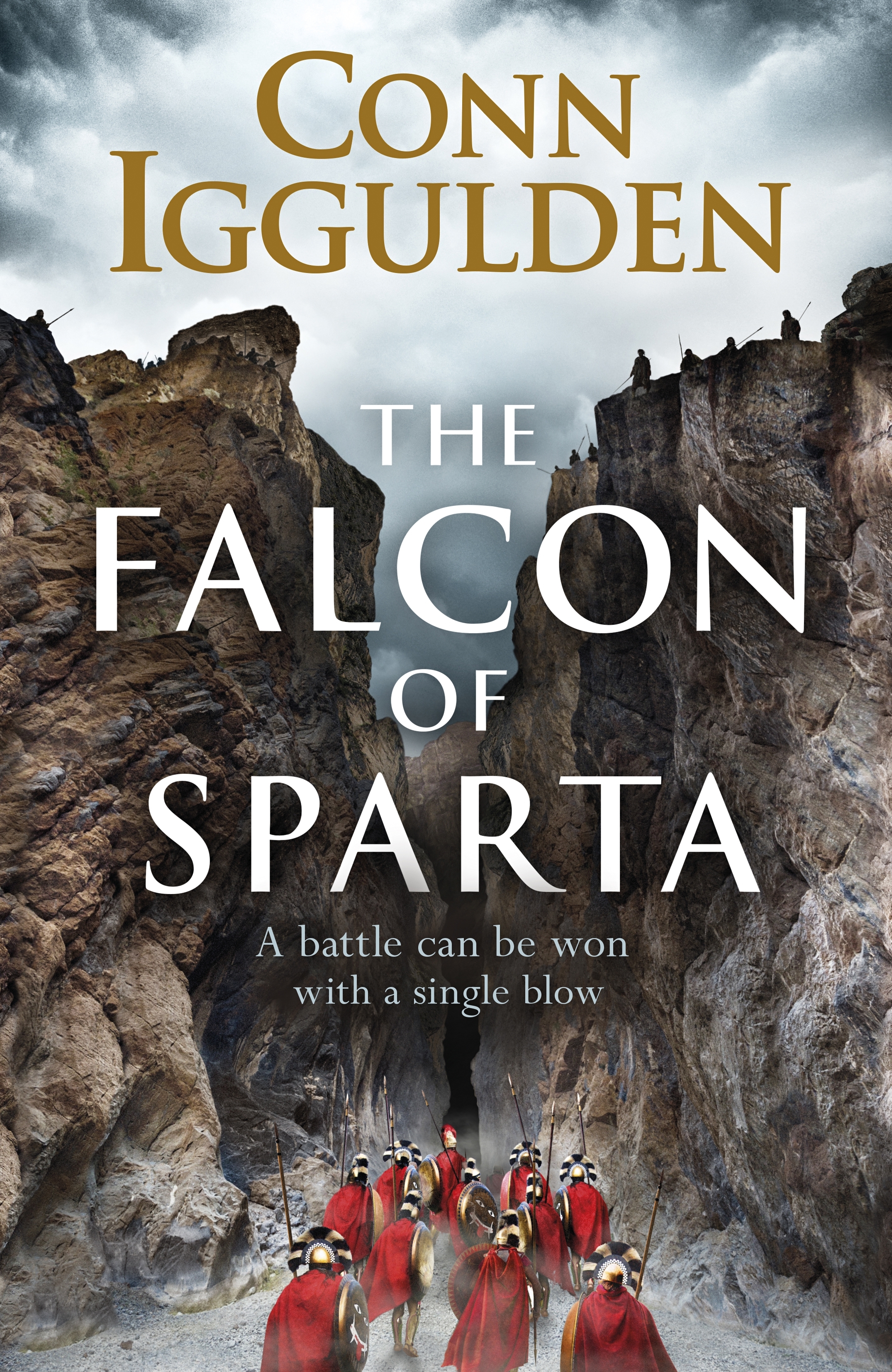
The Falcon of Sparta by Conn Iggulden

Publisher: Michael Joseph

Publication Date – 3 May 2018

Amazon

One of historical fiction’s very best authors is back with an enthralling story that follows history’s greatest warriors on one of their most legendary journeys.  Without a doubt, Conn Iggulden is one of the top authors of historical fiction in the world today.  Since 2003 he has consistently produced some of the most in-depth, detailed and engrossing chronicles of several different historical periods and cultures.  His previous work includes lengthy examinations of Julius Caesar and Genghis Khan in his bestselling Emperor and Conqueror series, and he has also produced the definitive fictional account of one of the bloodiest civil wars in English history with his extraordinary War of the Roses series.  Now, following his 2017 fantasy debut Darien, Iggulden has once again returned to his historical fiction roots by exploring another new realm of history, the Spartans.

In 401 BC, the new Persian king, Artaxerxes II, rules the largest empire in the known world.  With an empire sprawling from the Aegean Sea to the north of India, the king of Persia is the undisputed ruler of 50 million people.  However, despite all their wealth and power, the kings of Persia have never conquered Greece.  From Thermopylae to Marathon and Platea, the Persians have suffered the ferocity of the Greeks, and none are more feared than the men of Sparta.  As a result, it has been many years since the Persians have attempted to invade Greece, and many Spartans now serve as mercenaries in the Persian army.

When Prince Cyrus, Artaxerxes’s brother, is nearly executed by the new king following the death of their father, the young prince is determined to claim the throne of Persia for himself.  After hiring an army of skilled Greek mercenaries led by an elite core of Spartan warriors and the revered Spartan General Clearchus, Cyrus marches against his brother.  But battles can be lost with a single blow, and when Cyrus is killed on the battlefield the Greeks suddenly find themselves trapped in the middle of the Persian Empire.

With Clearchus and the other Greek generals having been killed through treachery, it falls to a young solider, Xenophon, to lead the surviving Greeks to safety.  With limited supplies and no knowledge of the land before them, Xenophon must find a way to lead 10,000 soldiers and an additional 10,000 camp followers back to Greece.  Forced to endure constant attacks from the Persian army as they travel through deserts and across mountains, their journey will become legendary.

The Falcon of Sparta is a standalone novel primarily based on the classic Greek text, Anabasis, which was written by the historical Xenophon.  Iggulden’s novel focuses on the events of the first four of the seven books of Anabasis.

While The Falcon of Sparta does not contain the full version of Anabasis, in some ways it is a much more complete and detailed story that focuses on the people who featured in this great adventure.  Xenophon related his tale in a rather simple and direct manner, and Iggulden has compensated for this by providing his own storytelling and dramatic writing.  Many of the key characters now have significant backstories fictional justifications for many of these characters’ actions and motives.  For example, Iggulden attempts to provide a more complex and dramatic explanation for the schism between Artaxerxes and Cyrus, rather than the historical story that Cyrus simply desired the throne.  Iggulden also provides additional context for one of the main villains of the Anabasis, the Persian noble Tissaphernes, who led the Persian armies against the retreating Greek forces.  In The Falcon of Sparta his role as a villain is greatly expanded.  Not only is he portrayed as a former friend of Cyrus who betrayed him for power but also as one of the main reasons Cyrus fails to seize the throne and the protagonists are placed into such peril.  Iggulden’s additional backstories and character traits make for a much more compelling and complete story with thrilling and absorbing motivations and antagonists.

These additional story elements are greatly enhanced by the author’s use of character perspectives.  For the first two thirds of the story, narration is split between a number of characters, including Cyrus, Clearchus, Tissaphernes, Artaxerxes and Xenophon.  Not only does this split narration help to build up the respective characters’ histories and allow the audience a better view of their personalities, but it also adds significantly to the story as these characters provide various perspectives on the events occurring in the formative parts of the main story.  Through the narrators we are given glimpses into a range of interesting things, including Artaxerxes’s and Cyrus’s thoughts on the war for their father’s throne, as well as the events and feelings that led up to the conflict.  We also see the respect that Cyrus and Xenophon have for their Spartan allies, as they see examples of their effectiveness in combat and their legendary self-discipline.

The scenes told from Tissaphernes’s point of view further highlight his role as a villain as his inner monologue reveals his selfish motivations and ambitions.  The story told from Tissaphernes’s viewpoint helps turn him into an embodiment of the distain that the ancient Persians had for the Greeks and their soldiers.  Despite seeing the Greeks’ substantial battle prowess, Tissaphernes and many of the Persians viewed the Greeks as second-rate soldiers, and it is fascinating to see how deeply held this belief was.

After the first two thirds of the book, the story is told exclusively from the point of view of Xenophon and starts to mostly represent Book III and Book IV of the Anabasis.  This part of the book allows the reader a closer view of the Spartan and Greek forces as they participate in their epic march and is very entertaining.  Even as the story becomes confined to only one narrator, Iggulden is still able to provide the necessary detail and drama in the final part of the book to keep the story going strong and maintain the reader’s attention and enjoyment.

Special attention needs to be given to the masterful portrayal of the Greeks and Spartans in battle.  Iggulden has an incredible eye for detail and an amazing writing style that brings the reader right into the heart of the book’s large-scale action sequences.  In particular, he spends a significant amount of time focusing on the Greeks and the Spartans and does an amazing job of capturing their battle techniques, tactics and mentality.  There are a large number of battle scenes within this book, and Iggulden uses every opportunity to show off the prowess of his heroes in as much detail as possible, allowing the reader to easily witness the events in their minds.  The Persian soldiers are also examined in the scenes narrated by Cyrus, and it is interesting to see the differences in the fighting style and mentality of the Greeks and Persians.  Those interested in reading about this part of history will love the amount of attention given to the Spartans and find many of the associated descriptions deeply fascinating.

Conn Iggulden has once again produced a masterful and absorbing fictional account that focuses on an utterly intriguing historical event.  Bringing the reader right into the middle of the march of the Ten Thousand, Iggulden expands on Xenophon’s Anabasis and provides a more dramatic and elegant story of betrayal, endurance and survival.  The Falcon of Sparta is a love letter to one of history’s most legendary race of warriors, and it provides the reader with a detailed exploration of Spartan warfare, lifestyle and mentality.  This is a breathtaking and highly recommended piece of historical fiction that is guaranteed to drag you in for the long haul.

My Rating:

Five Stars

Amazon

A People’s History of the Vampire Uprising by Raymond A. Villareal

A History of the Vampire Uprising Cover

Publisher: Hachette

Publication Date – 29 May 2018

Amazon     Book Depository

From the inspired mind of Raymond Villareal comes one of the most captivating and thought-provoking literary achievements of 2018.  Have you ever wondered what would happen if vampires came into existence in the modern world?  Villareal’s debut novel, A People’s History of the Vampire Uprising, explores the possibility of such an event through a comprehensive fictional oral history, much like Max Brooks’ observation of a zombie apocalypse in World War Z.

The body of a young woman in an Arizona morgue awakens and disappears into the night.  This mysterious event will start a chain reaction around the world that no one could predict.  The CDC investigator consulting on the case soon discovers that the woman was suffering from a mysterious disease with several incredible symptoms.  Subjects are stronger, faster, suffer a violent reaction to sunlight, have unnaturally long lives and are utterly enthralling to humans.  More importantly, they must consume blood to survive and can pass the disease on by biting another human.  As attempts to quarantine the disease fail and additional bodies start disappearing, the world quickly realises that vampires are real and here to stay.

As more and more people are infected, many of those who have been turned begin to reintegrate back into society.  These new creatures call themselves ‘gloamings’, finding the term ‘vampires’ to be derogatory.  Soon, many of the rich and famous are flocking to the gloamings, hoping to join their ranks and be re-created.  With their natural talents enhanced, the gloamings start accumulating significant wealth, power and influence as they infiltrate all levels of human society while attracting followers to their side.  Gloamings infiltrate the government, powerful companies and the Catholic Church.  One gloaming even begins a run for high political office.

However, not everyone is enamoured by the gloamings.  A faction of the church is determined to stop the vampire incursion and has formed its own militia to fight gloamings throughout the world.  Following a series of high profile cases, the FBI starts a taskforce focusing on crimes by gloamings.  The original CDC investigator continues her research into the virus despite intense political and social pressure to stop.  In New Mexico, a skilled political motivator soon discovers a terrible secret about his employers.  This is the start of the vampire uprising; the world will never be the same.

Written in the format of a history book, A People’s History of the Vampire Uprising is an epistolary novel that uses a series of fictional documents and testimonials to tell the story.  Villareal presents a large portion of the story within chapters representing testimonials from certain characters specifically taken for a history book.  Other chapters are written in the format of important documents from the fictional world and are made to represent interrogation notes, congressional transcripts, government reports and articles in scientific and legal journals.  In addition to these longer chapters, Villareal has also included numerous shorter entries that are presented as news stories, public interest articles, transcripts pulled from popular media sites, emails and the comments section of a message board.  As a result of all these different formats and documents types, A People’s History of the Vampire Uprising has the uncanny feel of an actual history book, which is further reinforced by the inclusion of footnotes in most of the longer chapters, and three short appendices slipped into the back on the book.  This is a marvellous way to structure the book and it speaks to Villareal’s skill that he was able to tell such a captivating narrative using this style of writing.

By employing fictional testimonies and documents originating from a number of different characters, Villareal is able to tell an extremely wide-reaching story about the introduction of vampires.  Most of the longer chapters are written in the style of testimonies from characters in the United States, while many of the shorter articles show a wide view of the rest of the world.  This allows Villareal to focus his main story in one specific country and focus his analysis on how the United States would react to such an event.  At the same time Villareal is also able to illustrate a much wider story showing how the vampire uprising would affect the entire world.  Exceptions to this are the chapters featuring the gloamings causing a religious and ideological schism within the church.  These chapters focus the plot on characters throughout Europe and represent some of the more fascinating fictional postulations within A People’s History of the Vampire Uprising.

While the book contains numerous narrators, authors and interviewees telling their specific stories, Villareal is still able to produce a clear overall narrative about the introduction of vampires to the world.  While Villareal initially has the individual narrators tell their own stories, eventually the characters meet and interact, allowing the multiple storylines to combine into one overarching plot.  The smaller articles and extra details within some of the longer features also allow the reader to have an amusing examination about how some social groups and individuals may react to the introduction of vampires, including celebrities such as Taylor Swift.  The end result is very well-done, overarching narrative that takes the multiple storylines within and turns it into an exciting and comprehensive overall plot.

While this is a piece of fiction, it also serves as an examination and critique of modern society.  Villareal postulates that if vampires ever did appear society would be split between distrusting such creatures and worshiping them, while the rich, famous and powerful would all try to join them, turning the gloamings into the ultimate elitist clique.  Villareal examines extremely plausible ways in which the gloamings could influence humans and attempt to win them to their side, with one chapter in particular describing how a vampire might win an election.  The result is a perceptive and astute examination of current human nature that will leave readers spinning.

A People’s History of the Vampire Uprising is one of the most impressive books of the year.  Raymond Villareal produces an insanely compelling story while using a unique and clever format that clearly highlights his skill and imagination.  In addition to being incredibly entertaining, A People’s History of the Vampire Uprising is also an insightful piece of social commentary that will greatly amuse readers.  This is a truly magnificent piece of fiction and an outstanding debut from Villareal.

My Rating:

Five Stars

Amazon     Book Depository