The Greater Good by Tim Ayliffe

The Greater Good Cover

Publisher: Simon & Schuster

Publication Date – 23 April 2018

Amazon

Australian author Tim Ayliffe presents a fantastic debut thriller set in iconic Sydney that delves into the heart of politics and the role of the media in the modern world.

John Bailey was a brilliant war correspondent for the Australian paper, The Journal.  However, his life took a downward turn when he was kidnapped in Iraq and tortured for several months.  Now, years later, Bailey is living a life of alcoholism and self-destruction, only occasionally contributing articles to The Journal.

However, when a prostitute is found murdered in her high-end Sydney apartment, his editor and old friend, Gerald Summers, sends him to investigate the crime, claiming that Bailey is the only person he trusts to report the story.  The prime suspect in the case is an influential political advisor who had a close relationship with the victim.  When Bailey encounters the advisor, he claims to have information that will clear his name, while at the same time implicating his boss, the defence minister.

After a run-in with an old friend in the CIA, Bailey soon realises that there is much more to this story than a simple murder.  Investigating further, he soon discovers that the murder was committed to cover up a massive conspiracy that the defence minister is linked to.  When witnesses to the crime start turning up dead and the police are pressured to drop their investigation, Bailey is determined to uncover the truth and publish the full story.  But powerful people are invested in keeping this case quiet, and Bailey soon finds himself in their crosshairs.

This is an exciting and high-energy first book from Ayliffe, who makes full use of his journalistic experience and political insights to create a smashing thriller with a tangible Australian presence.  The investigation into the conspiracy and its associated murders works well as the heart of this story, and readers are invited along on a wild thrill ride as the protagonists rush through this murky world of Australian politics and espionage in a quest to find the truth.

The character of Bailey serves as a great central narrator for this frenetic story, and readers will love the maverick approach he has to investigating the case and the lack of restraint of manners he has when it comes to dealing with Sydney’s political and financial elite.  Ayliffe also spends a significant amount of time attempting to humanise his main character by examining his past as a prisoner and the effects his PTSD has had on his life and career.  There are some great, emotional scenes as Bailey attempts to get over his problems with the help of other characters, and Bailey comes across as a much more grounded and damaged protagonist as a result.  The other main narrator in The Greater Good is Sharon Dexter, who serves as the official police investigator and Bailey’s main love interest.  Her investigation focuses more on cover-ups, sexism, and corruption in the police force, and these parts of the book serve as a great counterpoint to the sections featuring Bailey.

Ayliffe has made full use of his political knowledge and insight throughout this book.  A large amount of the plot revolves around both Australian and international politics, and readers will be amazed at the potential conspiracy he is able to create.  Various Australian political elements are dragged into the story and play a key part of the plot.  These include discussions about pre-selections of federal seats, government spending and the role of several federal government agencies.  World politics and the current status of Australia on the world stage are also examined within the story.  There is a large focus on the expanding role of China, and the discussion about whether Australia should strengthen its relationship with this new world power or whether it should maintain its current relationship with the United States.  This discussion is a key part of understanding the plot, and plays out in the book in a similar manner to current debates on the subject within Australia.  This adds a real sense of realism to the story and makes readers, especially those familiar with current Australian news and politics, very thoughtful.

Throughout The Greater Good, the main characters are attempting to obtain evidence of a conspiracy so that they can print it in their newspaper, The Journal.  As a result, the role of print media in keeping government’s honest and uncovering political corruption is examined in some detail.  It is clear that Ayliffe, a career Australian journalist, is very supportive of the media remaining in this role, and many of his characters are quite critical of attempts to stall the publication of these stories.  This allegorical analysis of the current role of media in politics and society is an intriguing part of the book and many readers will find this exceedingly relevant in light of recent world events.

Readers also need to keep an eye out for Ayliffe’s clever and entertaining inclusion of characters that are clearly based on real life Australian personalities.  For example, the fictional Australian Prime Minister is described as an athletic man who is known for his fun runs and surfing, in a way reminiscent of former Prime Minister Tony Abbott.  In addition, certain plot twists towards the end of the book will also remind the audience of another previous Prime Minster.  Another example is a minor character who is introduced as a prominent talk show radio host.  This character appears to be a composite creation of several of Australia’s right-wing radio commentators and comes across in a very similar manner to these real life presenters.  These cheeky additions are a fun inclusion that will amuse readers with even a passing knowledge of these Australian personalities.

In many ways The Greater Good can be considered a love letter to the author’s home city of Sydney, as it contains a number of different locations and references that will be quite familiar to Sydneysiders.  The narrator visits a number of different suburbs within Sydney, including Palm Beach, King Street, Finger Wharf at Woolloomooloo, Bondi and Chinatown, and also frequents some real life Sydney venues, such as Harry’s Café de Wheels.  Not only is the food, geographical location and description of this Sydney café described in the text, but the author has also included a write-up of the restaurant’s owners and its history.  In addition to furnishing the story with real life Sydney locations, Ayliffe also includes brief references to events and occurrences that Australians would recognise the significance of, such as Australian rugby, lockout laws and the current ice epidemic.  While none of these locations or occurrences is essential to the plot, they do add a certain sense of reality to the entire novel, and Australian readers will enjoy seeing locations and scenarios that they recognise and understand.

Tim Ayliffe’s debut novel, The Greater Good, is a fun and exhilarating political crime thriller that is guaranteed to electrify and entertain in good measure.  Making full use of Ayliffe’s extensive knowledge of Australian politics, culture and media, this very topical book is an excellent read for Australian audiences and those international readers keen to explore Australia’s potential for thrillers.

My Rating:

Four stars

Amazon

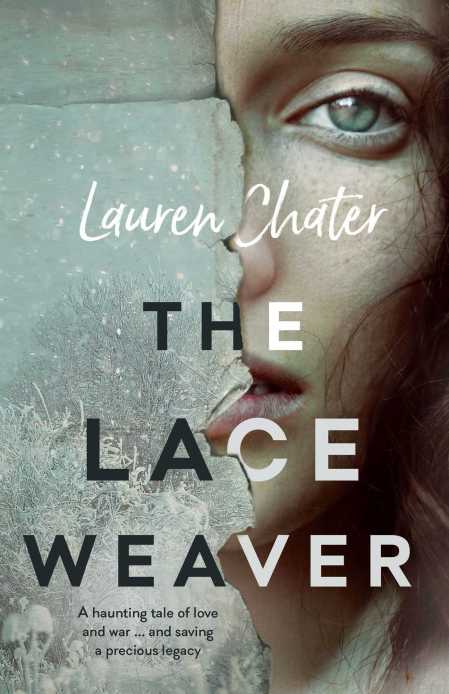
The Lace Weaver by Lauren Chater

The Lace Weaver Cover.jpg

Publisher: Simon & Schuster

Publication Date – 19 March 2018

Amazon     Book Depository

Love, war, suffering, oppression, hope and lace all come together in this emotionally charged debut from Australian author Lauren Chater.

It has been two years since the outbreak of World War II.  Following their respective expansions, Nazi Germany and the USSR now control much of Europe between them.  The small country of Estonia, located on the border of the USSR, has been occupied by the Soviets and is now controlled by Stalin’s Red Army, who have brutally installed their communist ideals.  Now all of Estonia’s resources are controlled by the Soviets and any signs of opposition are brutally cracked down on.

In the middle of this horrific occupation lives Katarina, a young Estonian woman whose family survives because their farm produces food for the occupying forces.  While the Soviets are attempting to control all parts of Estonian life, Katarina works to preserve her family’s culture through their lace shawls, which contain intricate and unique patterns and stories.  She must also deal with her feelings for her old friend Oskar, who is leading the revolution against the Soviets.

At the same time in Moscow, another young woman, Lydia, lives an ostensible life of privilege, but is really living in a gilded cage, controlled by her ruthless guardian.  Fleeing to Estonia, the land of her mother, Lydia attempts to find sanctuary but finds out just how far her captivity truly extends.

When a Soviet crackdown forces Katarina and Lydia together, these two women must find a way to survive the horrors of the occupation.  As they become part of Oskar’s resistance against the Soviets, Katarina and Lydia must learn to work together, even when Lydia falls for Katarina’s brother Jakob.  But their situation is about to get even worse, with the forces of the Third Reich set to invade.

This is fantastic first book from Chater, who has woven together an amazing tale filled with great characters and an outstanding and underused historical location.  This book is also an extraordinary piece of dramatic literature.  All of the main characters experience significant loss, heartache and disappointment as they attempt to survive the most turbulent time in our world’s history.  These heartbreaking losses of friends, family and other loved ones draw the reader in, while Chater’s fantastic writing makes them feel the character’s loss and grief as she highlights the brutal reality of those caught in the middle of war.

Perhaps the most memorable part of The Lace Weaver is the story’s central setting of Estonia.  During World War II, Estonia was in the unfortunate position of being one of the countries that fell between the Soviet Union and Nazi Germany.  Estonia was a significant theatre of war where many horrors occurred, and yet very few novels focus on this part of World War II.  Chater’s decision to focus on this underused period of war history is intriguing, and she has done a commendable job of calling attention to the horrors experienced by the Estonians during the time that they were occupied by two of the world’s most brutal regimes.

Estonia was brutally occupied by the Soviets in 1940, and a large portion of this book is set during this period.  Chater does an amazing job of describing this brutal period through the eyes of her Estonian characters.  There is a serious sense of dread from these characters as they anticipate what horrible crimes might occur next.  The descriptions of the Soviet soldiers’ brutality and contempt for the Estonians is at times harrowing, and there is one sequence describing a mass deportation that will stick in the reader’s mind.  While the scenes describing the occupation of the Soviets are pretty distressing, one of the most disturbing parts of this story is that for much of the book many of the characters, especially Oskar and Jakob, believe that their salvation and freedom could be granted to them by the Nazis.  Reading this can prove to be disquieting as you are forced to watch the characters help the Nazis occupy their country.  The characters working out what they have let into their country is chilling to behold, and by this point readers will be desperate to see what happens next in Estonia.

In addition to focusing on the terrible occupations Estonia suffered during the war, The Lace Weaver also contains an insightful look into some aspects of Estonian culture.  This is mainly shown through the use of the lace shawls, which are described as an important part of Estonian culture and history.  Chater spends a large part of the book investigating these shawls, and the reader soon appreciates their importance.  Katarina spends a significant part of her narration describing the significance of these shawls to her family, and her interactions allow the readers to see how vital they were to her social and familiar circles.  These shawls are also very important to the story as they draw many of the characters together, especially the two main characters, Katarina and Lydia.  The scenes in which the shawls are being worked can also be seen as an indicator of the periods when the characters are managing to survive and have some hope for the future, and are to be cherished, especially as the reader grows to care for these characters.

There are some great characters within The Lace Weaver that readers will find themselves deeply invested in.  Narration of this story is split evenly between the two main characters, Katarina and Lydia, both of whom have unique stories to tell.  Lydia’s transformation from a sheltered girl in Russia to a hardboiled Estonian survivor is particularly gripping, and revelations about who she actually is offer big thrills in the first part of the book and up her personal stakes.  Katarina’s story of survival and her attempts to keep the cultural ways of life she inherited from her beloved grandmother are also heartfelt and compelling.  The unique stories that these two characters have are deeply absorbing and emotional, and Chater does a masterful job of eventually combining these two stories together into one extraordinary and captivating tale.

The Lace Weaver is a deep and emotional wartime drama that makes full use of its dark setting, rare historical fiction location and amazing characters.  Australian author Lauren Chater has produced a very impressive first book and readers will fall in love with this fantastic tale.

My Rating:

Four stars

Amazon     Book Depository

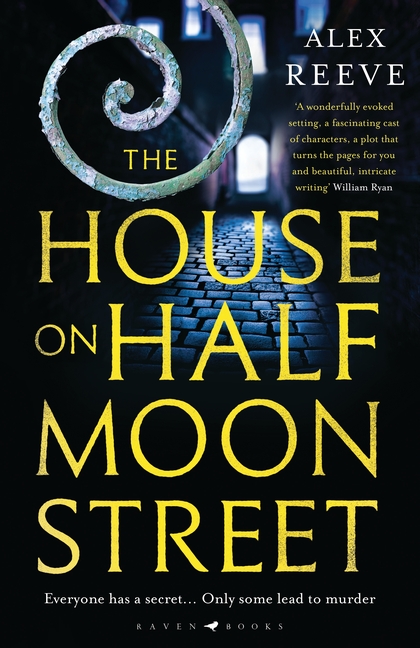
The House on Half Moon Street by Alex Reeve

The House on Half Moon Street Cover

Publisher: Raven Books

Publication Date – 3 May 2018

Amazon     Book Depository

Prepare yourself for an extraordinary tale of love, life and murder in Victorian London, all with a unique twist that will make this book one of the most talked-about pieces of historical fiction this year.

In London, in 1880, Leo Stanhope is a bright young man living the city life.  He is employed as an assistant to a London coroner and is in love with Maria, a high-class prostitute.  However, Leo also has a big secret: he was actually born Charlotte.  Born a woman, but knowing deep inside that he was a man, he ran away as a teenager and has been living as Leo ever since.  Only a few trusted people know this, and Leo fears the day he’ll be discovered.

When Maria is found dead, Leo finds himself accused of her murder.  With his life falling down around him, Leo starts his own investigation into the case.  But what does Maria’s death have to do with another corpse found drowned in the river, and how do Maria’s rich employers and an infamous London abortionist fit into the case?  Leo will risk everything to find Maria’s killers, even if that means revealing his biggest secret.

This is an outstanding debut from author Alex Reeve, who has created a fabulous addition to the historical crime genre.  The House on Half Moon Street has massive potential to expand out into a fantastic and iconic new series.

Without a doubt, the most distinctive and memorable part of The House on Half Moon Street is the main character, Leo Stanhope, who is a transgender man.  The first thing that needs to be mentioned is that Reeve has done a great job of writing this character and has produced an appropriate and non-controversial description of a transgender person.  There is a lengthy examination of the protagonist’s views about his identity, which includes descriptions of his childhood, memories of how he has always felt this way and internal monologues on how uncomfortable he felt behaving as a woman.  Reeve also does a fantastic job of portraying Leo’s fears and frustrations at the way he has to live and the way some characters, such as members of his family, treat him.  Overall, this is an emotional and insightful examination of a transgender character in a historical setting, and Reeve has chosen an excellent protagonist for his novel.

The focus on a transgender main character and gender issues works well with Reeve’s great use of the Victorian setting, as he explores how transgender people lived in historical times.  As described in the book, transgender individuals were not treated well within Victorian England.  In one scene Leo describes how someone who was living in a similar situation to himself had recently been discovered by the authorities and institutionalised as a result.  The views and responses of the people who discover his secret also reflect the attitudes of the time, although there are some obvious parallels with some modern opinions, resulting in thought-provoking social commentary.  There are also some interesting descriptions of the techniques, tools and clothing that the protagonist uses to hide his female characteristics and make himself appear more masculine.  Due to differences in technology and social expectations, these techniques are obviously different from modern alternatives and represent some interesting hypotheses from Reeve.

There are also some amazing descriptions of Victorian London, which serves as a great backdrop for this story.  Not only does the dingy Victorian setting help to highlight Leo’s dark emotional state throughout the book; it is also the perfect background for a murder mystery that revolves around the murky criminal underworld.

On top of the compelling protagonist and the wonderful use of setting, those who read The House on Half Moon Street will also be treated to a top-notch murder mystery that also delves into the criminal and policing elements of 1880s London.  The investigation into the deaths is an intense experience that takes the protagonist through a series of different suspects and clues, creating an intriguing and complex case.  The emotional impact of the case on Leo is plainly obvious due to superb story narration, and this proves to be engaging to the reader, who becomes invested in solving the case.  The final solution to the book’s mystery is very clever, and the readers will love how the case comes to its conclusion.

Historical fiction buffs will also enjoy the examination of law and order during the era, as Reeve examines several police institutions, including the work of the coroner during the time.  The protagonist also encounters some of the city’s criminal elements, and there are some surprising crimes that are covered within the book.  Reeve’s use of a transgender protagonist once again comes into play during the character’s investigations, and the reader will be drawn into the scenes where Leo attempts to hide his previous life from the police and criminals.

The House on Half Moon Street is a phenomenal new book that takes a deep and sensitive look at transgender issues in Victorian London whilst also making use of a dark and detailed historical setting and a first-rate overarching murder mystery.

My Rating:

Four stars

Amazon     Book Depository

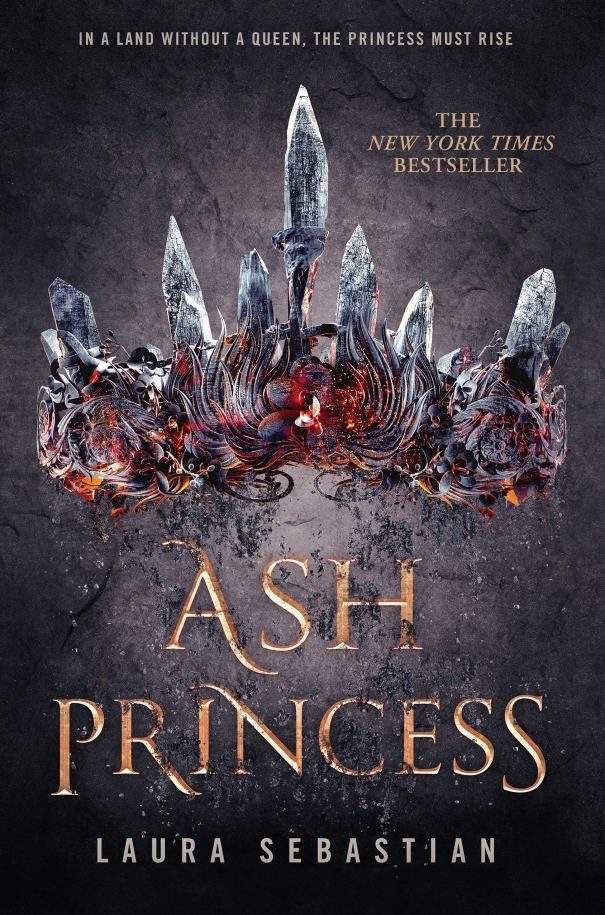
Ash Princess by Laura Sebastian

Ash Princess Cover

Publisher: Pan

Publication Date – 24 April 2018

Amazon     Book Depository

From an exciting new voice in young adult fantasy fiction comes a powerful tale of independence and freedom.

Ten years ago the Kalovaxians invaded the peaceful island nation of Astrea, killing its guardians and enslaving the entire populace to work in the island’s magical gem mines.

Theodosia was only six when Astrea was invaded and her mother, the Fire Queen, was murdered before her eyes. Since then she has lived in her former palace as a prisoner to the cruel and despotic Kaiser, who seeks to destroy all trace of the Astrea culture and language. Given a new title, the Ash Princess, and forced to endure constant humiliation and punishment for her people’s rebellion, Theodosia has become a subservient creature, trying to survive as she waits for any sort of rescue.

When the Kaiser forces her to perform a terrible act, Theodosia is no longer willing to stand back and watch her people suffer. With unexpected allies suddenly close at hand, Theodosia stops a plan for her escape and instead chooses to remain at court to obtain information for the rebellion.

However, the Kalovaxians are a cruel and merciless race of warriors who excel at raiding and destroying the lands they conquer. Theodosia soon realises that supplying information to her companions is not enough; she needs to find a way to strike at the heart of the Kalovaxians and disrupt their tight control of Astrea. When opportunity presents itself, she must risk everything to give her people a shot. It is time for the Ash Princess to rise.

Ash Princess is the debut novel from Laura Sebastian and the first book in a young adult trilogy with a lot of potential.

This story is told completely from the point of view of the main protagonist, Theodosia, with a large amount of the book dedicated to her growth as a leader. Theodosia starts the book as a completely broken person, having been oppressed and abused for years and kept as a symbol of humiliation. As the story continues, Theodosia detaches herself from the persona she created to survive and starts to finally oppose her captors. Watching her obtain the courage to fight back is an integral part of the book, and her attempts to become the ruler her people need are touching and emotive. There is also a riveting inner conflict within Theodosia as she debates whether to hurt people that she cares about, even if her actions could bring relief to her people. While Theodosia strongly wishes to save her people and defeat the invaders, there is also a great desire to not become like the enemies she hates. The character runs a fine line throughout the book as a result, and many readers will enjoy how Sebastian examines this inner conflict.

Sebastian has included an intricate background setting for her electrifying story. The nation of Astrea had been brutally subjugated 10 years before the start of the story and is currently ruled by the Kalovaxians. Because of how total this subjugation has been, with a large number of deaths and the rest of the populace forced to do heavy labour, very few characters originating from Astrea are featured within the story. This background of a near-obliterated country is dark and grim, but serves as the perfect setting for an inspiring story of freedom and rebellion. The antagonists of the story, the Kalovaxians, are also the perfect villains for such a story, as they are undeniably evil. All of the Kalovaxians–even the milder ones that consider themselves Theodosia’s friends–are power hungry, destructive and feel that they are superior to all other peoples. The use of the setting and the antagonists within Ash Princess adds significant impact to the main story and forces the reader to care about the fate of the main character.

Readers of Ash Princess will enjoy the covert activities that take place as part of the main story. In order to find a way to liberate her country, Theodosia needs to infiltrate and influence parts of the oppressive Kalovaxian society. The scenes were she attempts to seduce, manipulate and commits acts of sabotage are compelling and one of the more intriguing parts of the books. In addition to the protagonist’s actions, there are also the secret plans that the Kalovaxians are undertaking. These plans are rather dark and include magical experiments on Theodosia’s people. These Kalovaxian plans result in some interesting actions from Theodosia and play a significant part in the plot. The fascinating gem magic of the Astrea plays an interesting role in the clandestine actions of both the protagonist and antagonists, and fantasy-minded readers will enjoy the resultant exploration of this branch of magic.

Ash Princess is a poignant tale of hidden strength and the fight for freedom. This is a satisfying start to Sebastian’s first series which introduces a memorable main character and a powerful story that makes full use of its awesome background story elements. This is an ideal choice for readers looking for their new fix of young adult fantasy fiction.

My Rating:

Four stars

Amazon     Book Depository

A People’s History of the Vampire Uprising by Raymond A. Villareal

A History of the Vampire Uprising Cover

Publisher: Hachette

Publication Date – 29 May 2018

Amazon     Book Depository

From the inspired mind of Raymond Villareal comes one of the most captivating and thought-provoking literary achievements of 2018.  Have you ever wondered what would happen if vampires came into existence in the modern world?  Villareal’s debut novel, A People’s History of the Vampire Uprising, explores the possibility of such an event through a comprehensive fictional oral history, much like Max Brooks’ observation of a zombie apocalypse in World War Z.

The body of a young woman in an Arizona morgue awakens and disappears into the night.  This mysterious event will start a chain reaction around the world that no one could predict.  The CDC investigator consulting on the case soon discovers that the woman was suffering from a mysterious disease with several incredible symptoms.  Subjects are stronger, faster, suffer a violent reaction to sunlight, have unnaturally long lives and are utterly enthralling to humans.  More importantly, they must consume blood to survive and can pass the disease on by biting another human.  As attempts to quarantine the disease fail and additional bodies start disappearing, the world quickly realises that vampires are real and here to stay.

As more and more people are infected, many of those who have been turned begin to reintegrate back into society.  These new creatures call themselves ‘gloamings’, finding the term ‘vampires’ to be derogatory.  Soon, many of the rich and famous are flocking to the gloamings, hoping to join their ranks and be re-created.  With their natural talents enhanced, the gloamings start accumulating significant wealth, power and influence as they infiltrate all levels of human society while attracting followers to their side.  Gloamings infiltrate the government, powerful companies and the Catholic Church.  One gloaming even begins a run for high political office.

However, not everyone is enamoured by the gloamings.  A faction of the church is determined to stop the vampire incursion and has formed its own militia to fight gloamings throughout the world.  Following a series of high profile cases, the FBI starts a taskforce focusing on crimes by gloamings.  The original CDC investigator continues her research into the virus despite intense political and social pressure to stop.  In New Mexico, a skilled political motivator soon discovers a terrible secret about his employers.  This is the start of the vampire uprising; the world will never be the same.

Written in the format of a history book, A People’s History of the Vampire Uprising is an epistolary novel that uses a series of fictional documents and testimonials to tell the story.  Villareal presents a large portion of the story within chapters representing testimonials from certain characters specifically taken for a history book.  Other chapters are written in the format of important documents from the fictional world and are made to represent interrogation notes, congressional transcripts, government reports and articles in scientific and legal journals.  In addition to these longer chapters, Villareal has also included numerous shorter entries that are presented as news stories, public interest articles, transcripts pulled from popular media sites, emails and the comments section of a message board.  As a result of all these different formats and documents types, A People’s History of the Vampire Uprising has the uncanny feel of an actual history book, which is further reinforced by the inclusion of footnotes in most of the longer chapters, and three short appendices slipped into the back on the book.  This is a marvellous way to structure the book and it speaks to Villareal’s skill that he was able to tell such a captivating narrative using this style of writing.

By employing fictional testimonies and documents originating from a number of different characters, Villareal is able to tell an extremely wide-reaching story about the introduction of vampires.  Most of the longer chapters are written in the style of testimonies from characters in the United States, while many of the shorter articles show a wide view of the rest of the world.  This allows Villareal to focus his main story in one specific country and focus his analysis on how the United States would react to such an event.  At the same time Villareal is also able to illustrate a much wider story showing how the vampire uprising would affect the entire world.  Exceptions to this are the chapters featuring the gloamings causing a religious and ideological schism within the church.  These chapters focus the plot on characters throughout Europe and represent some of the more fascinating fictional postulations within A People’s History of the Vampire Uprising.

While the book contains numerous narrators, authors and interviewees telling their specific stories, Villareal is still able to produce a clear overall narrative about the introduction of vampires to the world.  While Villareal initially has the individual narrators tell their own stories, eventually the characters meet and interact, allowing the multiple storylines to combine into one overarching plot.  The smaller articles and extra details within some of the longer features also allow the reader to have an amusing examination about how some social groups and individuals may react to the introduction of vampires, including celebrities such as Taylor Swift.  The end result is very well-done, overarching narrative that takes the multiple storylines within and turns it into an exciting and comprehensive overall plot.

While this is a piece of fiction, it also serves as an examination and critique of modern society.  Villareal postulates that if vampires ever did appear society would be split between distrusting such creatures and worshiping them, while the rich, famous and powerful would all try to join them, turning the gloamings into the ultimate elitist clique.  Villareal examines extremely plausible ways in which the gloamings could influence humans and attempt to win them to their side, with one chapter in particular describing how a vampire might win an election.  The result is a perceptive and astute examination of current human nature that will leave readers spinning.

A People’s History of the Vampire Uprising is one of the most impressive books of the year.  Raymond Villareal produces an insanely compelling story while using a unique and clever format that clearly highlights his skill and imagination.  In addition to being incredibly entertaining, A People’s History of the Vampire Uprising is also an insightful piece of social commentary that will greatly amuse readers.  This is a truly magnificent piece of fiction and an outstanding debut from Villareal.

My Rating:

Five Stars

Amazon     Book Depository

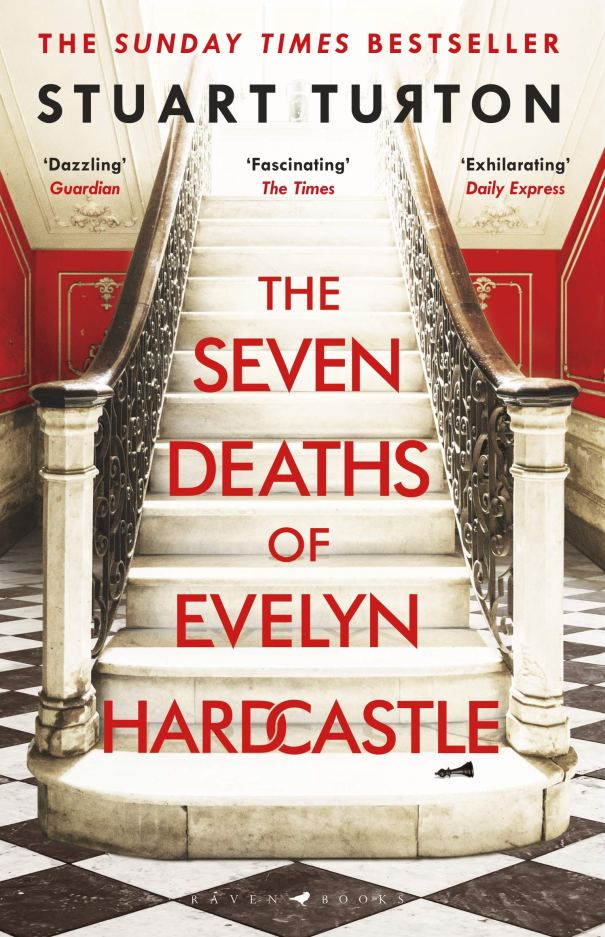
The Seven Deaths of Evelyn Hardcastle by Stuart Turton

The Seven Deaths of Evelyn Hardcastle Cover

Publisher: Raven Books

Publication Date – 8 February 2018

Amazon     Book Depository

A classic and complex murder mystery in an English manor combines with ingenious elements from fantastic genres to create one of the best new releases of 2018.  Reading like the outrageous combination of Groundhog Day, Inception, Downton Abby and Sherlock Holmes written by Agatha Christie, The Seven Deaths of Eveyln Hardcastle is the triumph debut from outstanding new author Stuart Turton.

In a turn-of-the-century country manor, Blackheath, a group of distinguished family guests have gathered for the first time since a terrible incident many years ago.  Before the end of the weekend’s masquerade, a terrible crime will be committed.  A young woman will be killed, and no one will realise that her death was the result of murder.

Inserted into the middle of all this chaos is Aiden Charles, who awakens with no memory of who he really is.  Aiden thinks at first that he is a cowardly doctor with amnesia until a man wearing a plague mask reveals that nothing is as it seems.  Aiden is an outsider, inhabiting and controlling the body of the doctor through unknown means.  The plague doctor reveals that Aiden has been trapped within the manor and is being forced to repeatedly relive the same day again and again, awakening each morning in a different host and living the entire day in their body.

There is only one way Aiden can earn his freedom: solve the murder of Evelyn Hardcastle, the estranged daughter of the manor’s owners.  If Aiden can solve the murder by the end of his eighth day, he will be able to leave.  If he fails to solve the murder his memory will be erased and the cycle will start again.

Using the abilities and connections of his eight very different hosts, Aiden must navigate the halls of Blackheath and the various guests who have arrived for the party.  However, Blackheath has a dark history of murder and betrayal that still casts a shadow to this day.  Every one of its inhabitants has a secret, and many of the guests would willingly kill to protect theirs.

Aiden is also forced to overcome several unnatural problems associated with his circumstances.  While the bodies he inhabits all hold the means to solving the crime, he is forced to balance the varied personalities of his hosts, each of which causes him to act or think in a very different way.  The longer he remains trapped in Blackheath, the more powerful the personalities are.

It also soon becomes apparent that Aiden is not as alone as he thought.  Two other people like him have also been trapped in Blackheath, but only one of them can solve the murder and earn their freedom.  One of his competitors appears to be trying to help him, but Aiden may not be able to trust the mysterious Anna, even though her name is the only thing from his past life that he can remember.  The third competitor has taken on the persona of a murderous footman and has no qualms about killing all of Aiden’s hosts to remove him from the competition.  Can Aiden solve an unsolvable crime before all his hosts are killed, or will he be trapped forever within Blackheath?

The Seven Deaths of Evelyn Hardcastle is a fantastic read that features a unique and imaginative combination of genres.  The basis of the story is a complicated murder mystery placed within the setting of a British manor house.  However, there is a certain and mysterious fantastic element that makes the narrator relive the day over and over again within a new host.  The murder mystery, the manor house setting and the time travelling body swapping, combine together perfectly into a tremendously addictive narrative.

At the heart of the story is an intense and compelling mystery that quickly becomes the main draw for the reader.  Solving the murder of Evelyn Hardcastle requires the protagonist to discover and expose every single secret and lie within the manor.  The sheer amount of details and enigmas that Turton has included with the book are so immense that it takes nearly eight different perspectives of the same sequence of events to get them all together.  Even then, the reader will be amazed by every single twist and turn that it takes to get to the final reveals.  The time travel and body  switching elements of the plot cleverly tie in and enhance the book’s mystery elements.  These elements allow the reader to see multiple versions of the same event, provide a wide variety of different perspectives on the clues, and pull together different testimonies from the same characters as they are questioned by the various hosts.

In addition to enhancing the murder mystery elements, the time travel and body switching aspects of the novel also help to increase the pacing and suspense throughout the book.  The transition between the main character’s various hosts is not as linear as it first appears.  Not only does the narrator switch to his next host once a day is over, he can also switch back to a previous host when he one of his hosts is knocked out, falls asleep or is killed.  This allows the reader to flip through these hosts when a lot of action is occurring, especially when the narrator’s various hosts are targeted in quick succession.  Additional suspense is also introduced due to many of the incidents within the story being out of sync with the narrator.  Various events have been put into place by either future hosts of the narrator or by characters from different points of the book’s timeline.  As a result, the reader has no idea why some events are happening, especially at the start of the book, and it is cool when the various causes of these events are revealed throughout the later parts of the book.

An appealing part of The Seven Deaths of Evelyn Hardcastle is the eight unique hosts for the main character to possess.  Each of these hosts has their own strengths and weaknesses, and it is intriguing watching the main character try and work out what they are.  They also have their own distinctive personalities that affect the main character in different and subtle ways.  The hosts also have their own way of dealing with people or situations, and this affects how the main character reacts and goes about his investigation.  It is intriguing to see how he changes from host to host.  In addition, there is no certainty about who the main character’s future hosts are going to be.  While there are hints, the reader doesn’t know until the narrator wakes up in the body, so the reader can’t help but examine the other characters with whom the narrator interacts in case they are a future host.  There are also some interesting scenes in which the narrator attempts to find and interact with a future version of himself.  Turton’s use of multiple hosts for his narrator is an important and distinctive part of this book that cleverly adds additional mystery to the narrative while also providing suspense and a changing array of personalities and challenges for the protagonist.

Representing a masterful combination of crime fiction and otherworldly attributes, The Seven Deaths of Evelyn Hardcastle is pure enthrallment that is guaranteed to transfix all eyes to its pages.  As one of the best releases of 2018, I cannot recommend this book enough.

My Rating:

Five Stars

Amazon     Book Depository

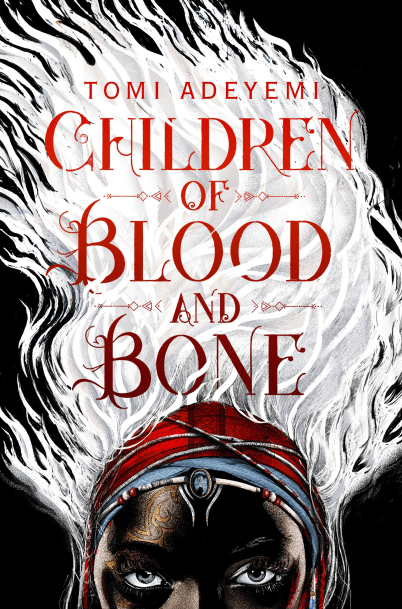
Children of Blood and Bone by Tomi Adeyemi

Children of Blood and Bone Cover.png

Publisher: Henry Holt and Company

Australian Publication Date – 13 March 2018

World Publication Date – 6 March 2018

Amazon     Book Depository

A brand new magical world is born in Children of Blood and Bone, the enthralling first book from a talented new author.

In the nation of Orisha, magic was once controlled by the maji, powerful practitioners who were respected and feared throughout the land.  However, that all changed eleven years ago, when magic suddenly and mysteriously died, leaving the maji powerless and confused.  Taking advantage of this uncertainty, the magic-fearing King Saran struck out, arresting and killing all the former maji.  Now the people of Orisha consider magic evil and all links to the old order are shunned.  Those children who would have become maji, if not for the death of magic, are known as diviners.  Made distinctive by their white hair, they have become a second-class citizenry within Orisha and are routinely targeted by abusive guards and crippling taxes as King Saran seeks to slowly kill them all off.

Zelie Adebola is one of these diviners and remembers what it was like before magic died.  Haunted by the death of her maji mother and still defiant after years of oppression, Zelie is determined to survive.  However, when a chance run-in with an ancient scroll awakens her latent magical abilities, Zelie is given an unexpected chance to restore magic to the world.  With the help of her brother, Tzain, and the rogue princess, Amari, Zelie must reclaim three artefacts and travel across Orisha before the solstice.  If they fail, magic will be gone forever.

As the trio encounter the dangers that lurk throughout Orisha they must also contend with a dangerous force that is following them.  Amari’s brother, Prince Inan, has been tasked by the king to hunt the fugitives down and ensure that magic can never return.  However, Inan’s own latent magical powers have surfaced, and he is torn between the burning powers in his head and his father’s instilled hatred of all things magical.  Will his sudden infatuation with Zelie save him, or will it lead to his destruction?

The greatest threat to the quest may come from Zelie herself, whose powers over life and death may turn out to be too dangerous to control.

Children of Blood and Bones is the first book from Nigerian American author Tomi Adeyemi.  It is a bold fantasy adventure targeted towards the young adult demographic, and has already received significant hype from various sources, including discussion about a possible movie adaption.

One of the most obvious things that will appeal to potential readers is the considerable work and imagination that Adeyemi has put into her fantasy creation.  The central focus on a group of oppressed magic users who have lost their power and influence is particularly engrossing, as is the distinctive magical practice and lore that Adeyemi has used.  The detailed landscapes and cities of the nation of Orisha do a wonderful job of catching the imagination, especially as the characters traverse a number of different locations, each with their own unique environments and features.  There are also a number of intricate battle scenes that add significant excitement to the narrative, including a particularly memorable sequence where the main characters participate in a massive ship-to-ship gladiatorial battle in a flooded desert arena.

In addition to the above elements, readers will enjoy the use of multiple character perspectives throughout Children of Blood and Bone.  Three of the main characters, Zelie, Amari and Inan, each narrate their own chapters and provide a detailed overview of the story from their point of view.  There are many quick-fire perspective changes that serve to give multiple different viewpoints of the same event.  This is particularly useful as much of the book is dedicated to Zelie, Amari and Tzain being closely pursued by Inan.  Seeing how close Inan gets to the protagonists through these separate perspectives adds a lot of tension and suspense to the book.  It also works well in enhancing many of the larger battle scenes, especially the above mentioned gladiatorial naval battle.  The different viewpoints also allow the reader a clear picture of the ideological breakdown of Adeyemi’s world, as the readers are given insight from both the oppressed diviners and the paranoid King Saran

Adeyemi’s clever use of multiple narrators also allows for a clearer view of the personal and group development of the main characters, which can be seen not just through their own eyes but through the eyes of the other narrators.  Amari’s change from spoiled princess to hardened warrior is fun and heart-warming.  The changes to Zelie and Inan as a result of their dramatic internal conflicts are much more intriguing and draw the audience in emotionally.

While Adeyemi explores several themes throughout the book, the most intriguing is her examination of power and the responsibility to wield it.  Within Children of Blood and Bone, the maji have had their magical power taken away from them and are oppressed by the king as a result.  The subsequent quest to return magic to the world raises certain ethical questions, like whether an oppressed group should suddenly have destructive powers returned to them?  Within the book there a number of characters who have dissenting views on the subject, but only Zelie and Inan are in the unique position of seeing both parts of this debate.  Inan has always been taught to fear and hate magic, but his perception of magic changes when he gains his own powers, meets Zelie and experiences the oppression brought on by his father.  As a result, his opinion about the future of magic is changed multiple times throughout the book.  Zelie on the other hand, has experienced oppression all her life, and is at first determined to bring back magic.  However, when she uses her own destructive powers and sees the devastation caused by other magic users, she starts to question her previously held beliefs.  This fascinating internal debate is masterfully woven in the story through the books narrators, and it will be interesting to see how this debate continues in any future books.

Children of Blood and Bone is an intricate and ambitious young adult fantasy debut that includes a first-rate, emotionally charged story.  Set in an inventive new universe and featuring slick use of characters and multiple narrators, Children of Blood and Bones lives up to its significant hype.

My Rating:

Four stars

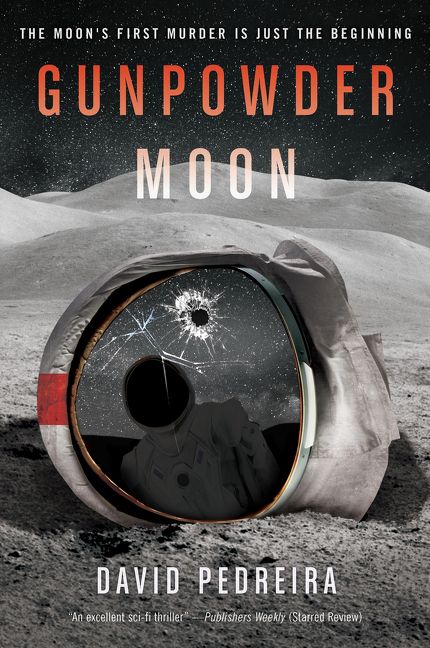
Gunpowder Moon by David Pedreira

Gunpowder Moon Cover

Publisher: Harper Voyager

Publication Date – 13 February 2018

Amazon     Book Depository

Murder has just been committed on the Moon, and all hell is about to break loose.

By 2072 the world has dramatically changed.  A devastating natural disaster shook the planet and altered the balance of power between nations.  The only hope for the future lies in a new energy source, helium-3, which can power Earth’s fusion reactors and provide unlimited clean energy.

Earth’s main source of helium-3 is on the Moon.  Desperate to have as much of this valuable material as possible, the world’s leading nations each have their own mining expeditions in play.  Life is tough for the miners, death lies around every corner and Moon dust can quickly destroy the hardiest of equipment.

For Caden Dechert, the Moon is the perfect place for a man trying to escape his past, even if it does strongly smell of gunpowder.  Trying to forget the long wars he fought back on Earth as a marine, Caden has forged a new life as the chief of the U.S. mining station Sea of Serenity 1, a vital station for a country only just coming back into world prominence.

However, Caden’s small slice of peace is broken when a member of his mining team is murdered in a deliberate explosion.  Evidence quickly points to the United States’ most prominent rival, China, whose bases are located a short distance from Caden’s station.  Tensions are quick to rise, and a series of escalating incidents sees the two nations draw closer to the brink of war.

Despite the evidence supplied by his own country, Caden is not convinced that the Chinese are behind the explosion.  Years spent working near the Chinese mining team has built up a certain respect, and Caden’s suspicions of a conspiracy begin to grow after noticing other unusual activities around his base.  With his team trapped at Sea of Serenity 1, and with both nations ready to fire the first shot, Caden is forced to investigate the murder himself in order to stop a destructive war that could tear his beloved Moon apart.

From first time author David Pedreira comes Gunpowder Moon, a spectacular piece of crime fiction set on the harsh and unforgiving surface of the Moon.  Pedreira has created an interesting murder mystery that combines with a high-stakes plot, science fiction elements and exotic location in order to produce a great story.

Without a doubt, the most memorable feature of this book is its setting of the Moon.  Pedreira has done a remarkable job of highlighting and describing his story’s brutal backdrop.  Significant time is also spent describing the narrator’s emotional attachment to the Moon and how it represents a new beginning for his crew of outcasts.  By the end of the book, the Moon is nearly an additional character as it acts as an excellent emotive setting for the reader.

The Moon also serves as an important plot device, as various features of life on the Moon, such as the required technology, gravity, the isolation and the devastating effects of Moon dust, all play a key part in the overall story.  In addition, Pedreira’s observations about the requirements for living on the Moon and his descriptions of the technology and mining work will appeal to the interests of many curious readers.

While the Moon is the main location for this book, Pedreira has also created an interesting potential future for humanity that serves as a backdrop for the story.  Pedreira postulates an interesting build-up to a war between America and China made up of ecological problems on Earth, expansion outside the planet and a fight for a new energy source.  Views of the near future of Earth are always fascinating, and the predicted future presented in Gunpowder Moon is a particularly intriguing story element that combines well with the books overarching mystery.

The plot of Gunpowder Moon focuses on a riveting murder mystery that is made unique by its location and the limited options for an investigation.  The investigators do not have any traditional evidence or witnesses.  They have limited information due to their isolation and they are unable to discuss the case with many of their suspects, who may be on Earth.  The background plot of the United States and China going to war combines well with the murder elements, as there is a real sense of urgency and import to the investigation as the main characters are trying to stop an upcoming war.

Gunpowder Moon is an excellent science fiction murder mystery that contains a fast-paced, action-packed story.  The author makes great use of his futuristic setting and unique location, providing the reader with impassioned descriptions of the Moon’s surface.  David Pedreira’s debut novel is a captivating and intriguing new read that spectacularly captures humanity’s imagination with the Moon.

My Rating:

Four stars

Amazon     Book Depository

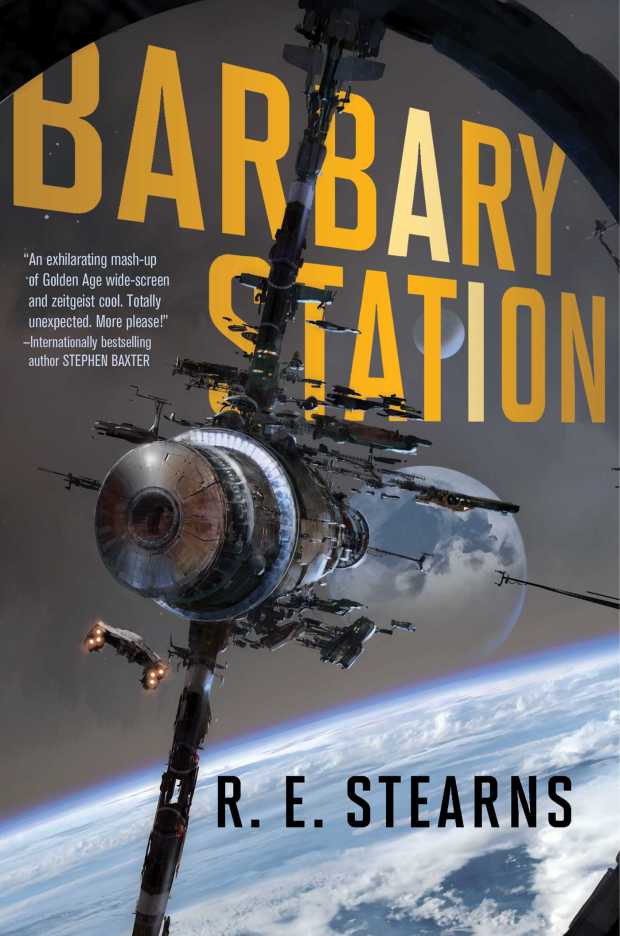
Barbary Station by R. E. Seams

barbary-station-9781481476867_hr

Publisher: Saga Press

Publication Date – 31 October 2017

Amazon     Book Depository

Space pirates take on rogue artificial intelligences in this electrifying young adult science fiction debut from R. E. Stearns.

In the distant future, humanity is recovering from a devastating civil war between Earth and its colonies.  Life is hard for all, especially for newly graduated engineers Adda Karpe and Iridian Nassir, who can only look forward to a lifetime of paying off their loans on a minimum wage.  So when Adda’s brother, Pel, contacts her with an opportunity, Adda and Iridian decide on a future as pirates.  Hijacking a massive colony ship, the girls make for Barbary Station, the base of operations for the infamous Captain Sloan, whose adventures and riches have been romanticised across the system.

Hoping to impress the pirates with their stolen ship, Adda and Iridian are shocked when, instead of bold adventurers living in luxurious conditions, they find a mismatched crew barely surviving in a hidden makeshift base welded to the hull of Barbary Station.

The station’s AI, AegiSKADA, has gone haywire and has taken to targeting all life forms on the station, bearing a particular grudge against the pirates.  Armed drones hunt people through the interior of the station, and the station’s gun batteries shoot down any ship that gets too close.  On top of that, a colony of refugees are hiding in the station, a team of crazed doctors are making life difficult for everyone and three mysterious ships swoop around the station, killing or saving as they see fit.

Now wanted criminals, Adda and Iridian have to destroy the AI to become members of the pirate crew.  The last team that tried to shut down AegiSKADA died a fiery death, and the pirates have already taken bets on how long the newcomers will survive.  Luckily, Adda is an expert on artificial intelligences and Iridian is a former solider with a big combat shield and superior survival skills.

However, AegiSKADA is the most is one of the most advanced AIs in the galaxy and is surrounded by lethal defences.  AegiSKADA is learning and is determined to kill every invader on Barbary Station.  And, as malevolent as the AI is, it is not the only danger facing Adda and Iridian.

Barbary Station is a great debut from R. E. Stearns, a thrilling new voice in science fiction.  This young adult book takes an exhilarating look into a future of artificial intelligences while introducing some exciting characters and fast-paced action.

Stearns does a great job of exploring the concepts of artificial intelligences, as well as examining the theories and debates about whether they are truly alive.  Among the highlights of the book are the multiple scenes in which Adda interfaces with the station’s systems, including some especially tense scenes in which she interfaces directly with AegiSKADA in order to determine what actions it is taking against the humans.  Stearns masterfully handles the complex matter of AI sentience, creating a narrative which is engaging and thought provoking without oversimplifying the underlying concepts.

Narration for the novel is split between the two main characters, Adda and Iridian, allowing for a well-balanced breakup of the book’s various scenes.  Iridian’s scenes are usually filled with action and exploration, while Adda’s scenes tend to involve the technical exposition and theoretical debate.  The dual perspectives help enhance certain scenes while also adding a dash of realism and tension to those moments when Adda and Iridian are unaware of how the other is faring in their respective missions.  Our heroes, with their varied experiences and character traits, are great foils for each other and can meet the challenges within Stearns’ universe.  It is great to see a same-sex couple so well portrayed in a young adult novel.

Stearns has also populated the book with a range of other interesting characters.  The majority of inhabitants within the station are a typical group of mismatched misfit pirates, led by the revered and enigmatic Captain Sloan, enduring and reflecting the chaotic nature of life within Barbary Station.  Stearns does take the time to introduce a few key characters for the reader to get attached to, and uses them for full emotional effect.  Perhaps the most interesting is Pel, a flakey, skittish character who manipulates his sister into a dangerous environment in order to save himself.  He undergoes some great character development within the story.  Readers will be intrigued as elements of his history and his motivations are revealed, especially regarding his unique connection to events within the space station.

Overall, Stearns has produced a charming and engrossing first book, bringing together several individually great science fiction elements and combining them into one kickass novel.  Barbary Station is a fantastic choice for science fiction fans no matter their age.

My Rating:

Four stars

Amazon     Book Depository