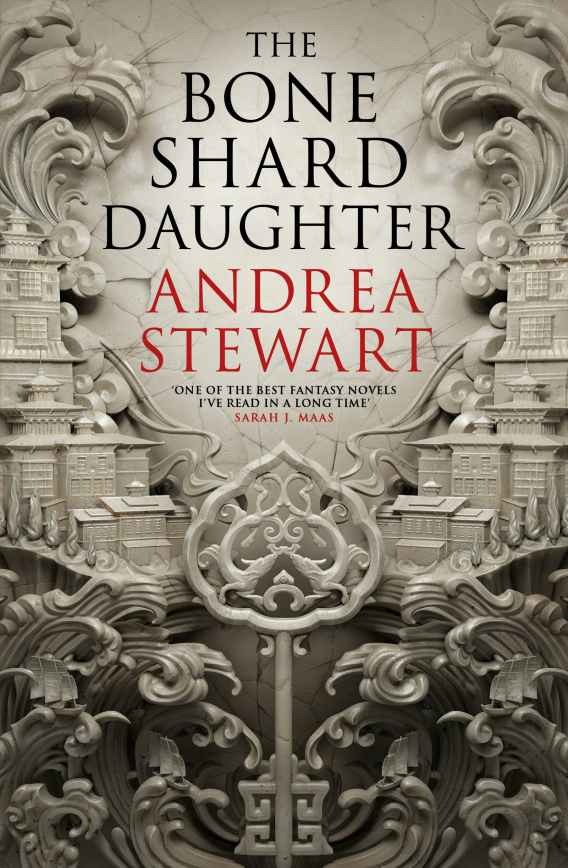
The Bone Shard Daughter by Andrea Stewart

The Bone Shard Daughter Cover

Publisher: Orbit (Trade Paperback – 8 September 2020)

Series: The Drowning Empire – Book One

Length: 439 pages

My rating: 4.5 out of 5 stars

Amazon     Book Depository

From outstanding new fantasy author Andrea Stewart comes The Bone Shard Daughter, the first entry in The Drowning Empire series and one of the best debuts of 2020.

For generations the Sukai Dynasty has ruled the floating islands of the sprawling Phoenix Empire, protecting it from a mysterious force from the past.  In exchange for the Sukai’s protection and governance, each citizen must provide the Emperor with a shard of bone from their head, which can be utilised by the royal family to bring life to magnificent and dangerous magical constructs of flesh and power.  However, as the Emperor’s influence fades, revolution and change is coming to the Phoenix Empire, and the fate of the land lies with a handful of exceptional people.

In the capital, Lin, the Emperor’s daughter, has lost her status as heir after a disease takes her childhood memories from her.  Desperate to gain her father’s respect and her rightful place on the throne, Lin embarks on a dangerous quest to unlock the secrets of her father’s palace and gain the knowledge to master her family’s dangerous bone shard magic.  However, ambition and fear will drive her to attempt the impossible: turning her father’s most powerful constructs against their creator.

Elsewhere, Jovis, a notorious smuggler, is chasing the ghosts of his past as he attempts to find a shadowy ship that took something precious from him.  As he scours the seas of the Empire, he becomes an unlikely hero to the people, saving children from the Emperor’s bone shard tithe and ensuring their safety.  His mission will take him to the island of Nephilanu, where rebels are massing, and the governor’s unruly daughter Phalue finds herself torn between love and duty.  At the same time, a mysterious woman awakens on an isolated island with no memories of her past and a desire to gain freedom.  Each of these people will find the fate of many thrust upon them, and their adventures will shake the Phoenix Empire to its foundation.  But are any of them truly prepared for the consequences of their actions?

The Bone Shard Daughter is a fantastic and clever novel from Andrea Stewart that was one of the most hyped-up fantasy releases of last year.  I have been meaning to read this excellent book for a while now and I finally got the chance to do so a couple of weeks ago.  I am extremely glad that I did as Stewart’s debut novel was an exciting and captivating book that transports the reader to a compelling and unique fantasy setting with all manner of conflicts, magic and terrible secrets.  This was an outstanding debut novel, and I had a great time reading it.

Stewart has come up with a captivating and complex character-driven narrative for her first novel, which sees several young protagonists from various walks of life attempt to survive in this brutal empire while also discovering its dangerous and earth-shattering secrets.  The Bone Shard Daughter contains four separate and distinctive storylines, each of which follows a separate protagonist (or in one case, two linked protagonists), on their own adventure of discovery.  Stewart does a fantastic job of introducing each of these storylines at the start of the novel, with some compelling opening chapters that hook the reader in different ways, whether with descriptions of complex magic, the start of an apparent kidnapping or a frantic attempt to escape from a sinking island.  Once these storylines have their hooks in the reader, Stewart starts to grow each of them throughout the course of the book, with all four of them maintaining a well-balanced pace.  While some of the storylines have a little more prominence than others, they are all really intriguing and exciting in their own right, especially as they have different focuses based on their respective protagonist’s abilities and history.  As the narrative progresses, the separate storylines start to come together as the various protagonists interact with each other, and the reader is gradually treated to a much more cohesive tale.  I felt that these unique storylines fitted together well, and Stewart ensured that they support and strengthen each other, forming a coherent and captivating narrative.  The end result is an excellent tale, filled with conflict, revenge, betrayal and magical chaos.

Stewart sets the narrative around five excellent point-of-view characters, each of whom narrates several chapters within The Bone Shard Daughter.  All five of these fantastic protagonists have their own enjoyable tale to tell, and their varied narratives helped to produce a comprehensive and rich overall narrative.  While each character has their own role to play in the novel, two of these characters in particular, Lin and Jovis, have more prominence then their fellows, especially as their chapters are told in the first person.  Lin is the young daughter of the Emperor of the Phoenix Empire, who has only recently recovered from a peculiar sickness that took away her childhood memories.  Now out of favour with her father, who instead focuses on training her rival, Bayan, Lin uses her skills for climbing, exploring and thievery to steal her father’s keys and gain access to the locked rooms of the palace.  With each key she gains, Lin obtains more information about her past and the secrets behind her family’s powerful bone shard magic.  However, the more information she uncovers, the more she becomes certain that something is wrong, and that her father is no longer fit to be emperor.  I really enjoyed the Lin storyline; not only does it give the reader the most information about this series’ distinctive bone shard magic but there is a substantial amount of intrigue and mystery surrounding Lin’s entire life which I found really fascinating to unravel.  There are some really good twists involved with Lin’s tale, and this was definitely a standout part of The Bone Shard Daughter’s overall story.

The other major character is Jovis, a skilled smuggler, sailor and navigator with a knack for getting into trouble.  Jovis is a fun and entertaining fellow with a heart of gold, who runs afoul of everyone while trying to find his lost love, Emahla, who was taken from him by an unknown ship with blue sails many years before.  While searching for the ship, Jovis finds himself caught up in the wider story when he survives the sinking of an island, managing to rescue a small child and a strange aquatic creature he names Mephi.  Returning the child to its parents, Jovis gains a reputation as a legendary hero, especially as he finds himself gaining unnatural strength and other abilities, and he soon becomes a key figure in the rebellion against the throne.  Due to his likeable personality, the adorable relationship he formed with Mephi, and his action-orientated chapters, Jovis quickly grew to become my favourite character within The Bone Shard Daughter and I deeply enjoyed seeing his adventures unfold.  Jovis proved to be the major bridging character of this novel, as he was the person who encountered many of the other protagonists, bringing their tales together and ensuring that they were all connected.  I also liked how Jovis’s story and points of reference were so different from Lin’s, due to his underprivileged start in life, as he has seen the worst that the Phoenix Empire and the Sukai Dynasty have to offer.  Jovis is also the most insightful and realistic protagonist of the bunch, able to spot the deeper and sinister motivations of some side characters that the other characters miss, and I appreciated how and why he developed these much-needed survival skills.  Overall, Jovis proved to be an exceptional and enjoyable character, and I looked forward to reading his chapters the most while getting through The Bone Shard Daughter.  There are a lot of questions left over when it comes to Jovis’s tale, especially with his relationship to Mephi, and it will be interesting to see how they unfold in future entries in this series.

In addition to the main characters of Lin and Jovis, there was the intriguing couple of Phalue, the Governor of Nephilanu’s daughter, and her girlfriend, Ranami.  Their joint storyline, which is told in the third person, follows the two as they become embroiled in a plot to overthrow Phalue’s corrupt father, with Ranami acting as the idealistic rebel while Phalue reluctantly goes along in the name of love.  This proved to be an excellent and enjoyable narrative that aims to highlight the inequality in the various classes featured throughout the empire and which seeks to explore the rebellion of the group known as the Shardless.  While neither character is featured as heavily as Lin or Jovis, Phalue and Ranami easily have the most interconnected storyline, and together they narrate nearly as many chapters as either of the main two protagonists.  While I quite enjoyed seeing Phalue and Ranami’s chapters unfold, I do have to admit that I wasn’t as invested in their storyline as I was with Lin’s or Jovis’s, as it just was not as interesting.  This was particularly true when Jovis arrives at Nephilanu, and becomes embroiled in their rebellions, as the charismatic smuggler immediately starts to steal focus from Phalue and Ranami.  I also really didn’t buy the relationship between these two as the book progressed, as there were way too many betrayals and lies by the seemingly highly moral Ranami to her girlfriend Phalue, and I am very surprised that they stayed together.  Still, there were some excellent moments in this chapter and it proved really intriguing to see.

The final point-of-view character in this novel is the mysterious Sand, who awakens on an island with no clear memories of who she is or how she arrived there.  Working with the similarly amnesiac inhabitants of her island, Sand attempts to find out something about her past, and swiftly determines that there is something very wrong with her life.  The chapters focusing on Sand and her compatriots, which are also told in the third person, are an intriguing and compelling addition to The Bone Shard Daughter but get the least amount of prominence throughout the book.  Due to the amnesiac nature of the protagonist, these chapters are shaded in mystery and uncertainty, and at first it is very unclear how they fit into the greater story, making them a little hard to get invested in.  However, as the novel progresses and more details are revealed about the island and its inhabitants, the reader swiftly begins to understand just how significant the character of Sand is and what has happened to her.  This was an interesting fourth storyline to this book, and while it was not featured as heavily or appeared to be as significant as the others, it is obviously going to be a major part of the series as a whole and was well set up.  Overall, I was deeply impressed with each of these fantastic characters and their captivating personal storylines, and it proved to be an exceptional and powerful centre to this entire novel.

In addition to the great story and excellent characters, I also really enjoyed the unique and inventive new fantasy world that Stewart created for The Drowning Empire series.  The Phoenix Empire, where the entirety of the series is set, is made up of a range of populated floating islands separated by sprawling oceans.  I quite enjoy novels that feature an oceanic or nautical theme to them, and Stewart features a number of fun sequences aboard or around boats, which here are powered by burning a magical substance to gain speed on the water ways.  I also liked the sequences set within the islands, as there is a particularly cool Asian influence to the people and settlements contained on them and I loved the unique and clever tale that they were able to inspire.  While there are some really cool elements to this setting, such as the vast and complex royal palace where Lin roams, the highlight of this world had to be the magical constructs that are powered by bone shard magic.  Each of these constructs contains a number of bone shards depending on their complexity, which give them intelligence and power, while simultaneously draining the life force out of the person from whom the shard was extracted.  Stewart, through the medium of her curious character Lin, provides a detailed and compelling examination of these constructs and the magical science behind them, and I really appreciated how the author set them up and utilised them throughout the novel.  These were a cool and distinctive part of The Bone Shard Daughter, and I look forward to seeing how Stewart expands on them in later books in her series.

The Bone Shard Daughter by Andrea Stewart is an amazing and incredible fantasy read that serves as the fantastic first entry in the cool new The Drowning Empire series and which really lived up to the hype I was hearing about it.  I had an outstanding time reading this novel and I really got lost in the inventive new fantasy world and the multiple compelling character perspectives.  This book comes highly recommended and I cannot wait to the see what happens in the series next.  The second entry in this series, The Bone Shard Emperor, is currently set for release in November this year, and I think it will end up being one of the top fantasy releases of 2021.

Amazon     Book Depository

Altered Realms: Ascension by B. F. Rockriver

Altered Realms cover

Publisher: Audible (Audiobook – 18 November 2020)

Series: Altered Realms – Book One

Length: 21 hours and 26 minutes

My Rating: 4.5 out of 5 stars

Amazon     Book Depository

In the mood for a really cool LitRPG novel?  Look no further than one of my favourite debuts of 2020, the impressive first book in the Altered Realms series, Ascension by B. F. Rockriver.

Welcome to the magical land of Entarra, an elaborate world filled with all manner of complicated people, creatures and war, where death lies just around the corner.  For simple hunter Eli Miller, his life consists of protecting his family and his small grove from outside forces, the most dangerous of which are the Adventurers.  The Adventurers are a dangerous group of seemingly immortal beings from another dimension who treat his world like their own personal playground, killing and destroying all they encounter with little concern for consequences and the lives of the citizens of Enterra.

When a group of Adventurers attack his home, killing him and his family, Eli finds his worst nightmare coming true when, after being stabbed by a mysterious blade, instead of dying he becomes an Adventurer.  Forced to become a whole new person, Eli returns to his hometown, only to discover that no-one recognises him and that he is now bound to the rules of Enterra, with quests, character sheets and a bodiless guide voicing advice in his head.

As Eli begins to explore the limitations of his new life, he soon begins to realise that his world was not what he thought it was.  Enterra Online is a vast and futuristic video game, of which he and his family were NPCs, or non-player characters.  Determined to find out if his family also somehow survived and get revenge on the people who attacked and killed him, Eli begins to play the game and soon becomes involved in a quest to save the land from the mysterious Blight.  Teaming up with fellow Adventurer Don Nutello, Eli begins to master his new character and level up.  But as the two progress even further, the finds that something is very wrong with Enterra Online.  Forced to contend with mindlessly controlled Blighted creatures, dangerous magic users and corrupted Adventurers, Eli will need to use every bit of his resolve and courage to face his destiny.  If he fails, it could mean the destruction of Enterra and every person and NPC trapped within.

This was an interesting and compelling read from a brand-new author who has created an excellent LitRPG novel.  I have to admit that the Literary Role Playing Game genre, which features fantasy or science fiction adventures set within the environments of a game (rather than a tie-in novel, like a World of Warcraft book for example), is one that I am not massively familiar with.  I have only really read one or two of these sorts of books in the past (the first two novels in Jason Segel and Kirsten Miller’s Last Reality series, Otherworld and OtherEarth are the only ones coming to mind at the moment), but it is a genre that I have always been interested in as there are some fantastic-sounding LitRPG novels out there.  A couple of weeks ago I was in the mood to try something new and thought that this would be a good place to start, especially after I came across the synopsis for Altered Realms: AscensionAscension is the debut novel of exciting new author B. F. Rockriver, which I believe was previously released in parts online, and it ended up being a particularly fun and exciting read.  This was an outstanding debut and a particularly good introduction to the LitRPG genre for me.

I thought that this was a pretty impressive first effort from Rockriver, who tells a rather intriguing tale in Ascension that felt to me like a fun combination of Sword Art Online and the upcoming Ryan Reynolds film, Free Guy, as an NPC starts to play the game he is trapped within.  Told primarily from the point of view of Eli, Ascension contains a vast and compelling narrative filled with adventure, action and substantial world-building, as Eli turns from a hapless, yet sentient, NPC into an Adventurer, and is forced to play Enterra Online the same way the human players do.  The story takes a little while to get going, with the author building up some key elements in the beginning, but once the main character gets killed and then respawned as an Adventurer, allowing for the intriguing RPG elements to work their way into the plot, the book really picks up.  The reader is than treated to an intriguing bit of world-building as the gameplay of Enterra Online is explained, before the confused protagonist is dropped back into the world, understandably freaking out.  After some false starts and the introduction of the book’s other main character, Don, Eli starts getting into the game, as he needs to gain levels and equipment to get revenge for his family.  This leads the two characters to get involved in a series of interesting quests that may directly impact the survival of the entire game, forcing them to venture towards an ancient temple to cure themselves, and the world, of a magical, sentient disease known as the Blight.  Along the way they’ll contend with dangerous creatures, friendly and malicious NPCs, hostile Adventurers with conflicting motivations and world-changing events that are impacting both the game and the humans trapped within.  All of this leads up to an epic and exciting confrontation as Eli and his friends come face to face with the corrupted Adventurers who killed his family.

This narrative proved to be extremely exciting and captivating, and I found myself getting really caught up in the adventures of this excellent and conflicted protagonist.  There are a number of amazing elements to this book, and I very much enjoyed seeing the author combine the LitRPG elements with a classic fantasy adventure tale and some cool advanced science fiction elements as well.  The author does an excellent job setting up his game world throughout Ascension and the reader quickly becomes deeply concerned with the fate of Enterra Online and all its players and NPCs.  I also loved all the very cool action sequences featured throughout the story, and there are a number of intense and deadly scenes that really stood out to me. 

I did find the writing to be a little rough in places, and there is room for Rockriver to grow as an author.  For example, there was a bit of repetition throughout the novel, as a number of key plot points kept getting brought up again and again.  While some of this repetition was done to replicate how an online game talks to its players, a lot of it was the author providing unnecessary re-examinations of certain story elements, character back story and emotional responses, which I felt interrupted the flow of the novel.  I also felt that Rockriver should have ended Ascension a lot sooner for a more climactic finish, as the novel continues for a number of chapters after the book’s big showdown.  While this later section of the novel contained a lot of interesting and enjoyable moments, I do think that perhaps the author could have saved most of them for the next entry in the series.  Still, overall this was an excellent read, especially with the inventive and exciting story, and it does set up the rest of the series quite nicely.

As I mentioned above, Ascension proved to be quite an outstanding introduction to LitRPG novels, a genre that Rockriver is clearly very passionate about.  Ascension contains a huge amount of RPG elements which are seamlessly woven into the story.  Once the protagonist wakes up as an Adventurer, every element of a classic MMORPG comes into effect, with Eli choosing a race, gaining experience, being forced to complete quests, obtaining skill points, distributing attribute points, deciding his class and a huge range of other game features a player in his situation would have to consider.  I felt that this was an incredibly realistic portrayal of what an avatar in a game would experience, and the author covers this in exceptional detail, down to the pun-ridden quest titles and the funny names of the other Adventurers Eli and Don encounter.  Rockriver has also created an impressive and vast MMORPG to serve as the setting for his novel, and it actually sounds like it would be a really cool game to play (you know, minus the ethical implications of the AI and the deadly disease which tries to turn you evil).  I have to admit that I did not quite know how all the various skill and quest updates would play throughout the book, but Rockriver did an excellent job working them into the story and it felt very natural to see Eli get an update, new skill or experience.  All the LitRPG elements also work incredibly well in some of the action sequences, and seeing the protagonist get debuffs or watch him lose health, mana and energy during a fight actually added to the intensity of the scenes.  The author also works in some intriguing twists to the gaming world, with the protagonists set to face off against a major antagonist threatening people both in the game and outside of it, and I quite enjoyed how this raised the stakes of the narrative.  Overall, I really fell in love with Ascension’s LitRPG elements, and this is definitely a genre I can see myself getting into.

I really enjoyed some of the characters featured within Ascension, as Rockriver has come up with some amazing complex figures for this clever LitRPG story.  The main character is Eli, a former NPC who is turned into an Adventurer and swiftly becomes a key figure in saving Enterra Online.  Eli proved to be a really intriguing character to follow, as he is forced to adventure whilst facing a major existential crisis.  Due to the situation surrounding his death and rebirth, Eli is an emotional mess, grieving for the loss of his family, while simultaneously finding out that they never truly existed.  This makes him a particularly deep and intriguing character to follow, as his new experiences changes his perspective completely.  Thanks to his complete lack of knowledge about anything related to online gaming, Eli proves to be the perfect protagonist for this book as every element of this game is explained to him in great detail.  I also quite enjoyed the fantastic handicap that Rockriver installed to his main character halfway through the book, as Eli learns a Berserk Rage move that forces him to lose control when he is close to death or encounters one of the players who killed him and his family.  This causes a number intense scenes throughout the book, and I really appreciated the incredible scenes that the author wrote around the first time Eli lost control, which got pretty dark and bloody.  While Eli was not the most consistent character at times, as he occasionally experiences some random personality changes, it was still really interesting to see him develop, especially as a number of intriguing elements about his past become quite essential to the plot.

Aside from Eli, the other main character in the novel is Don Nutello, a player who befriends Eli when he spawns as an Adventurer and follows him throughout the game.  Don plays a humanoid turtle race, known as a Turta, and has chosen to play him as a monk class, dressed in purple and fighting with martial arts and occasionally a staff (I wonder who his favourite ninja turtle is?).  Rockriver gives Don a particularly intriguing background as a former soldier playing Enterra Online long-term as a treatment for his PTSD, flashes of which come through into the game at times, and his role as a healer in the team is related to his former profession as a medic.  Don proves to be a particularly great supporting character to Eli, not only helping him to understand the game but giving him a different perspective on the other people playing as Adventurers.  Don also has a very appealing pacifistic edge to him, choosing not to attack people or sentient AI if he can help it, which does get the characters in trouble but helps to distinguish them from the antagonists.  Don ended up being my favourite character in the end, and I really enjoyed his unique partnership with Eli as they formed a fantastic and deep friendship over the course of the novel. 

In addition to Eli and Don, Rockriver has also loaded this book up with a series of intriguing side characters, most of whom are NPCs in Enterra Online.  I liked the contrast in how the NPCs are blissfully unaware that they are in a game, while most Adventurers are portrayed as selfish and murderous.  This is mainly because the Adventurers are unaware that the NPCs are sentient, and are playing the game the way they typically would for an MMORPG. Indeed, I routinely do all the same bad things when I play games, everyone does (or so I tell myself so I can sleep at night).  This interesting dichotomy in the perceptions of the world between these two unique groups was pretty interesting to see, and I very much enjoyed seeing a game where every NPC is fed up with the invading human players. 

I also have to highlight some of the fun Adventurer characters in the novel, most of whom are fairly typical of the sort of people you would encounter in the game.  For example, the third person to join Eli and Don’s party is Michelle, a sexy female troll with an attitude, who serves as their tank.  Michelle is one of those players who flaunts their avatar’s sexuality, even though you are a little uncertain whether they are a guy or a girl in real life. Michelle was a rather sassy and fun character to follow, and she definitely evened out the serious personalities on the team.  I also quite liked some of the selfishly antagonistic Adventurers who the heroes eventually go up against, and game players will easily see parallels between them and the worst sort of people you’ve played against online, even if some may be influenced by things outside of their control.  Each of these excellent characters adds a lot to this great book, and I look forward to seeing how they develop in the future instalments of this series, especially with some major changes impacting the Adventurers long term.

In order to enjoy Ascension I ended up grabbing the audiobook, which proved to be a fantastic way to experience the fun story.  Ascension has a pretty hefty run-time of 21 hours and 26 minutes, which is almost one of the longest audiobooks I have ever listened to.  Naturally, this took me a little while to listen to, although once I got really caught up in the story I found myself getting through it even quicker, especially with some of the epic combat sequences, which I never wanted to interrupt.  I always find that the audiobook format is a great way to fully absorb all the details contained within a novel, and this was particularly true with Ascension, as Rockriver has come up with an amazing amount of inclusions that are really great to absorb in this format.  This audiobook also featured the excellent narration of Maximillian Breed, a relatively new audiobook narrator, who has so far vocalised an interesting collection of fantasy and science fiction novels.  I felt that Breed was a great choice for this epic audiobook and I enjoyed listening to his narration of Ascension for the full 21 plus hours.  While it took me a little while to get used to his voice, I felt that it fit into the story really well, and I especially liked the somewhat robotic/computer generated tone he used whenever the system talks to the protagonist, such as during a quest update, or when it provides details about equipment or skills.  All of this makes for a great listen, and I would definitely recommend the audiobook format of Ascension to anyone interested in checking out this fun book.

Ascension by B. F. Rockriver is a fantastic and impressive debut novel that serves as an outstanding first entry in the Altered Realms LitRPG series.  Rockriver has come up with a clever and captivating tale that masterfully utilises video game elements, cool characters and some awesome action sequences to create a first-rate read.  I had an absolutely incredible time listening to this book and I cannot wait to see where the series goes next.  Rockriver is currently working on two separate novels at the moment, the second entry in the Altered Realms series, Uprising, and a companion novel, Origins, which examines the backstory of several key Altered Realms side characters.  Both sound like a lot of fun, with some superb covers (BTW how epic are the covers that Ascension had!), and I look forward to reading them.  Until then, Ascension is a guaranteed exciting read for LitRPG fans.

Altered Realms Cover 2

Amazon     Book Depository

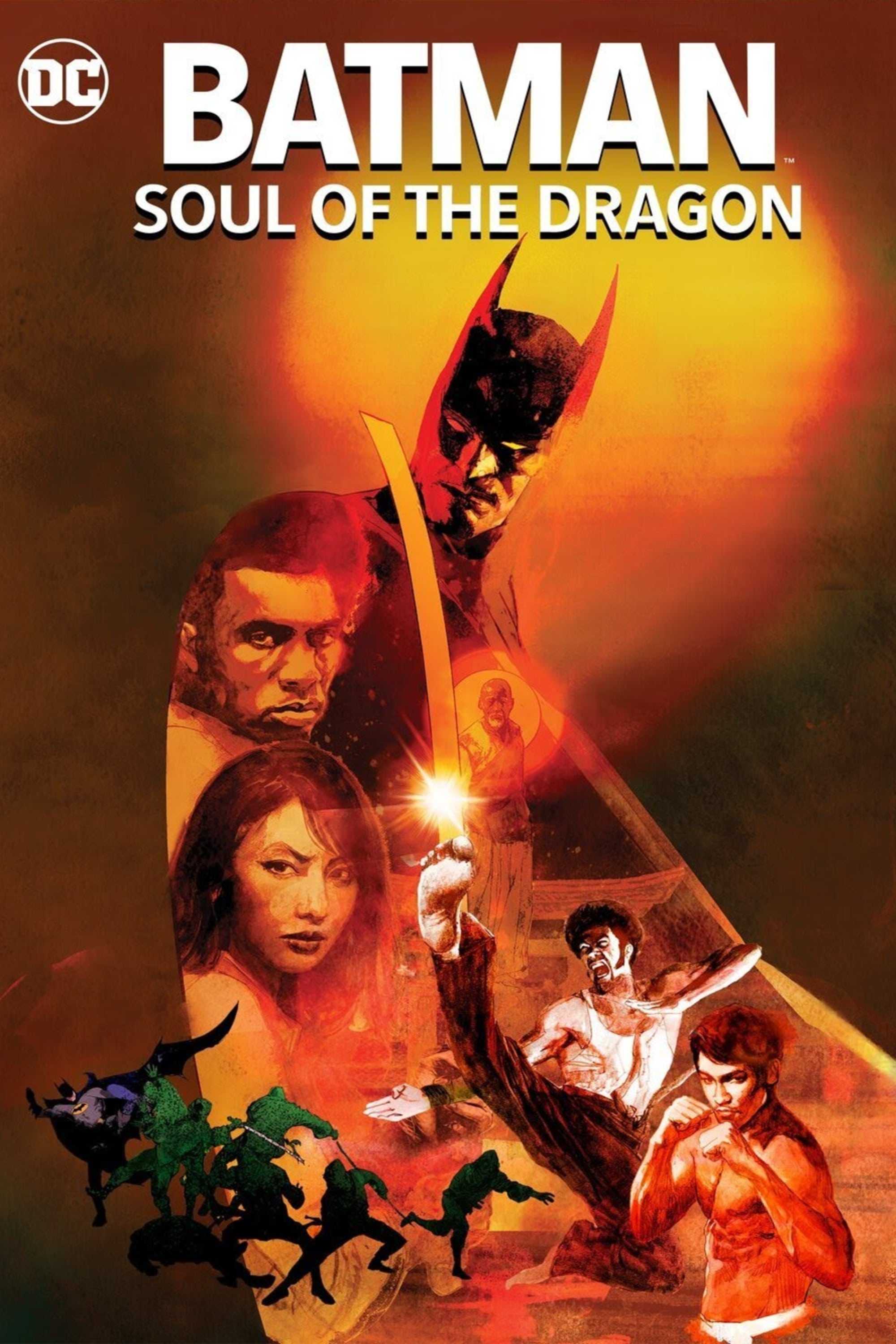
Film Review – Batman: Soul of the Dragon

Batman - Soul of the Dragon

Studio: Warner Bros. Animation and DC Entertainment

Series: DC Universe Animated Original Movies – Film 40

Director: Sam Liu

Producer: Bruce Timm

Writer: Jeremy Adams

Length: 82 minutes

My Rating: 5 out of 5 stars

Prepare to dive into an intense and addictive DC Comics martial arts adventure with the latest entry in the DC Universe Animated Original Movies range, Batman: Soul of the Dragon, an outstanding and deeply enjoyable film that explores several amazing DC characters in a very unique way.

While The Unseen Library is primarily dedicated to providing book and comic reviews, I have in the last year been experimenting with reviews and articles about another great passion of mine, animated superhero films.  I have always had a lot of fondness for this genre and I started focusing on it more last year when I reviewed Justice League Dark: Apokolips War, and even further when I did an extended Top Ten Tuesday article listing my favourite superhero animated films, which primarily featured DC Universe Animated Original Movies.  DC continues their domination of the animation market with the very awesome Soul of the Dragon film, which serves as the 40th entry in the DC Universe Animated Original Movies range.  I had an outstanding time watching this latest animated offering and it is definitely a new favourite film of mine.

Bruce Wayne, Richard Dragon, Shiva and Ben Turner are four of the best martial artists on the planet, utilising their skills and training to become truly elite fighters.  While each of these renowned warriors are now on their own different paths, they shared a similar start on their journey as students at the secret monastery of Nanda Parbat.  Training under the legendary O-Sensei, these four, along with other notable students, not only learned the martial techniques that allowed them to become the fighters they are today but also became a close-knit family, until one terrible night changed everything for them.

Now their paths are about to cross again when Richard Dragon discovers that a fanatical organisation, the Cult of the Kobra, have stolen an ancient and dangerous artefact that Dragon and his fellow former students are intimately and tragically familiar with.  Travelling to Gotham City, Dragon recruits Bruce Wayne, who now fights criminals as the vigilante Batman, to help him stop Kobra and save the entire world.  Attempting to recover another artefact guarded by Shiva, now a feared Gotham crime boss, they soon discover just how long and deadly Kobra’s reach is.

With Shiva and Ben in tow, the four former disciples of O-Sensei prepare for the battle of their lives as they attempt to infiltrate Kobra’s island base.  However, nothing will prepare them for the dangers they will encounter, nor the horrors unleashed from their past.  Can these four dangerous fighters work together to save the world or will an ancient and deadly force be unleashed?

Batman: Soul of the Dragon is an excellent and amazing animated comic book film that proved to be an absolute treat to watch.  This is a standalone film which is directed by Sam Liu, written by Jeremy Adams and featuring Bruce Timm as an executive producer, and together these talented people have produced a fantastic and powerful feature.  Liu and Timm are the genius behind some of the best animated comic films that are out there, including Justice League vs. Teen Titans, Suicide Squad: Hell to Pay and the incredible The Death of Superman, and they have once again done an outstanding job with Soul of the Dragon, creating a unique and entertaining comic book tale.  Making excellent use of an exceptional narrative, a great group of characters and a very distinctive vibe, Soul of the Dragon is an outstanding and wonderful film that is really worth watching.

Soul of the Dragon has a particularly awesome and captivating narrative that follows its four iconic central protagonists on an epic quest to right the wrongs of their collective past.  This movie contains an original tale set in the 1970s that draws heavily from classic DC martial arts comics to create a fantastic film that not only dives into the origins of some amazing DC characters but which also presents an exciting character-driven adventure.  This movie starts off with a captivating bang with Richard Dragon discovering a sinister plot with ties to his time as a student.  The story then quickly starts to reunite the four major characters, with several impressive action set-pieces dominating the early part of this movie, all of which were a real treat to watch.  The story than takes the protagonists to an island fortress where they must face their enemy before he can unleash a terrible force of destruction.

Interspersed with the main story are a series of compelling flashbacks that follow the protagonists’ training under O-Sensei, which provide some excellent context to the main story.  I thought that the flashbacks were a particularly impressive part of the movie and I liked they expertly tied together main narrative with the past, creating a richer overall story.  I also felt that the narrative did an excellent job of introducing each of the characters while also highlighting the differences between their modern appearances and their former lives as students.  I did think that the main story was a little rushed and could have potentially used a little more plot in between the protagonists’ reunion and their arrival at the antagonists’ island.  Still, this did not impact my enjoyment of the movie too much, and the last third of the film is so damn epic and emotionally charged that you forget about this slight misstep of pacing.  All of this wraps up with a memorable and interesting ultimate conclusion, which will leave you wondering about what, if anything, is going to happen next.

Thanks to the standalone nature of this movie, potential viewers do not need to have watched any prior DC animated features to enjoy Soul of the Dragon, and indeed minimal knowledge of the various characters and comic elements is needed to follow along, as the narrative provides a fantastic and detailed introduction to all the relevant parts of the plot.  All of this makes for an epic and just plain awesome story that honours some classic DC characters and comics while also introducing them to a new generation of DC fans with this fantastic adventure.

In addition to the first-rate story, I was also impressed with how well this cool movie was put together.  It contains some outstanding animation, especially when it comes to the impressively exciting action scenes, with a particularly well-put-together car chase halfway through the film being an amazing example.  This proves to be a very action-heavy film, with a huge number of fluid combat sequences that perfectly captures the skill of the combatants and which successfully translates the style of the original martial arts comic.  Parents should be warned that this is not an animated feature for younger children, thanks to some of its over-the-top content, but everyone else is going to love seeing all the exciting fast-paced scenes unfold.  I particularly liked how this animated movie had such a distinctive and entertaining style to it, which really enhanced my enjoyment of the film.  As the story is set in to the 1970s, the creators attempted to replicate the feel and tone of the era in a number of different ways, such as the technology, locations and the animated appearances of the characters.  The creative team also made sure to include a ton of appropriate slang (you haven’t seen anything till you’ve seen Batman say: “Let’s get it on”) and an excellent instrumental musical score that is not only very 70s in its sound but which perfectly fits the movie’s distinctive narrative and tone.  Soul of the Dragon draws a lot of inspiration from classic kung fu films, especially those featuring Bruce Lee, and you can really feel the creators’ love of the genre with all the little details they chuck in.  There are also a number of fantastic allusions to classic James Bond films, including several very familiar musical themes, some entertaining lines from certain characters and even a dangerous car chase with a gadget-laden car that ends with a vehicle getting whisked away on an electromagnet attached to a helicopter (a very fun call-back to You Only Live Twice).  I absolutely loved how well this film came together, and all the exceptional animation and clever tonal shifts combine perfectly with the great story to produce an enthralling and memorable viewing experience.

In addition to have an amazing and entertaining narrative, Soul of the Dragon is backed up by a fantastic roster of characters from across the DC Comics canon, voiced by an exceptional and talented collection of actors.  While this movie contains several great supporting characters, the story is mostly set around Bruce Wayne, Richard Dragon, Shiva and Ben Turner, each of whom are heavily featured in both the main narrative and the flashbacks.  While all four of these main characters are great in their own right, a lot of their appeal lies in fantastic connection they have with each other and with their master, O-Sensei.  These great protagonists have an excellent rapport, and it proved to be really great to see them interact with each other throughout the film.

The lead of the film is probably Batman, who is voiced by David Giuntoli of Grimm fame, who provides a fantastic take on the character with his voice work.  I liked how there were two versions of Batman: the vigilante who featured in the main story and the younger student in Nanda Parbat.  This proved to be an interesting portrayal of this iconic character, as the writers attempt to explore Bruce’s determination, even as a young man, to do the impossible and fight evil no matter the cost.  It was also great to see him evolve from the student in the flashbacks to the vigilante in the main story, and there are some fun scenes that showcase him becoming a more focused and terrifying fighter when he puts on the mask.

While Soul of the Dragon is nominally a Batman movie, Bruce is somewhat overshadowed by some of the other main protagonists.  This is no fault of the character’s portrayal or characterisation; it is just because the other protagonists are just a little more exciting and enjoyable.  Part of the reason why this is the case is that Batman is the least skilled martial artist in what is essentially a kung fu movie, as it is established that his fellow students are better fighters than him (this is true in both the film and in the comics).  While this does mean that some of the other characters’ action sequences are a little more visually impressive, you instead get to see Batman fight in different ways.  There is a great focus on how Batman utilises trickery and fear to supplement his weaker fighting abilities, and there are some excellent scenes around this, including a key one towards the end of the film where he uses a combination of his gadgets, cunning, and even his own cape to defeat a superior foe.  I did think that the version of the character was a bit blasé about keeping his identity secret with his friends, and he didn’t seemed as opposed to people using lethal force as you would expect, but this was an outstanding take on Batman and I really enjoyed his appearance in this film.

One major character who was a true highlight of this movie was Richard Dragon, an iconic character who is widely regarded as one of the best fighters in the DC canon.  Despite his popularity in DC’s martial arts comics, this is the character’s first appearance outside of the comics (the Richard Dragon featured in Arrow is a different character altogether) and he voiced by The Chairman himself, Mark Dacascos.  Depicted as Asian in the film (the comic character is traditionally a red-haired Caucasian), this character looks a lot like Bruce Lee in Enter the Dragon and is portrayed as an international super spy.  Despite this being a Batman film, in many ways Richard is just as much the main character of this movie, with much of the story revolving around him.  Richard grabs focus right from the start, where he engages in some amusing spy antics, which include outwitting a James Bond-esque character in a fancy casino, effortlessly and stylishly fighting off some goons, and parachuting onto a boat filled with beautiful women (a scene very reminiscent of The Living Daylights, Bond music included), before identifying himself as “Dragon, Richard Dragon”.  Each of Dragon’s subsequent scenes are really fantastic, from the fluid and exceptional action sequences to the fun interactions he has with other characters, including an entertaining scene with a pompous bouncer.  Dacascos does an exceptional job voicing this character and he provides Richard with a confident, intelligent and generally calm air that proves to be extremely easy to enjoy, while also including some vulnerability in several amazing scenes.  All of this helps to produce an exceptional character and I am extremely glad that the introduction of Richard Dragon to a wider media went so well.

The next major character in the movie is the dangerous and delightful Shiva, who was voiced by the talented Kelly Hu.  Lady Shiva, as she is better known, is one of the deadliest assassins and martial artists in the DC canon.  I felt the creative team did an outstanding job showcasing Shiva in Soul of the Dragon, as she is portrayed as a merciless killing machine and living weapon able to destroy her opponents with minimal effort and nothing but her bare hands.  The character has some of the most brutal combat sequences, which were not only beautifully animated but which proved to be extremely entertaining to watch.  I felt that Shiva went through some fantastic character development throughout the film as she transforms from a dedicated student to a ruthless crime lord who even Batman is afraid to deal with: “I’m working up to it…”  I also really loved the choice of voice actor for this character as Kelly Hu does a sensational job bringing Shiva to life.  Hu, who is known for her comic book roles in both animation (as Cheshire in Young Justice and Karai in Teenage Mutant Ninja Turtles) and live action (as Lady Deathstrike in X-Men 2 and China White in Arrow), has previously voiced Lady Shiva in the Batman: Arkham Origins video game, and it was great to see her return to this fantastic character.  She gives this version of Shiva a particularly deadly air; you can tell with every sentence just how confident she is in her own ability and lethal potential.  Not only does Shiva have some of the best fight scenes in the movie but she also has some of the best lines, such as when she chooses her opponent in one of the big boss fights: “I’ll take the girl, her look offends me!”  I also absolutely loved one scene which saw the voice of Karai from Teenage Mutant Ninja Turtles face off against three green-clad ninjas respectfully wielding sai, nunchaku and a bo staff.  The character’s casual comment of “You know how to use those?” followed by her effortlessly taking all three out was just perfect and it has me laughing pretty heavily.  I think that Shiva was probably my favourite character in the entire movie and I am really impressed with how she was written and portrayed.

The final member of the main four characters is Ben Turner, the angry and dangerous African-American fighter better known as Bronze Tiger.  Bronze Tiger is a major martial artist in the DC canon who is probably best known for his run in the Suicide Squad comics.  Bronze Tiger is voiced by Michael Jai White, who recently portrayed the live-action version of the character in Arrow.  I really liked Bronze Tiger throughout Soul of the Dragon, as the film captures a lot of his essence from his original comic appearances and subsequently turn him into a fantastic character in this movie.  Part of the reason why is that he goes through the most development out of all the main characters, especially as several flashbacks bridge the gap between his student days and his current character, showing several pivotal events in his life.  I absolutely loved his look in this movie, as they made the decision to model him on African-American actor and martial artist, Jim Kelly, with some elements of other 70s African-American characters like Shaft and Luke Cage thrown in.  There is a particularly fun joke around this character when Richard misremembers the character’s codename as Black Samurai, a reference to the Jim Kelly movie of the same name, and the subsequent approval of the team at his actual codename of Bronze Tiger was very entertaining.  White does some excellent voice work for Bronze Tiger in this film and he successfully showcases the character’s intense anger at the start of the story before evolving it into a more zen-like persona towards the end.  I would say that Bronze Tiger was a little overshadowed by the three other protagonists, but he was still a great addition to the movie and is a fun character to follow.

Aside from the main four characters, there is a particular focus on the mentor character of O-Sensei, who is voiced in this film by the legendary James Hong.  O-Sensei is a fantastic character with an intriguing history in DC Comics, being a major figure in the lives of Richard Dragon, Shiva and Bronze Tiger.  This is actually O-Sensei’s first named appearance outside of the comics, and he proves to be a fantastic and fun addition to the movie’s narrative.  Hong portrays the character as a wise but humorous kung fu master, offering deep insights and amusing jokes in equal measure to the younger characters, while also forming them into a close family.  O-Sensei proves to be an extremely likeable character, with some deep and powerful moments that ensure that the viewer appreciates and enjoys him.  I particularly loved Hong’s voice work throughout the movie and I felt that he really dived into the character and made him stand out, especially in some later scenes in the movie where there are some intriguing twists around him.  An overall outstanding and exceptional part of the cast, I am extremely glad they got Hong for this movie.

No comic book movie will be complete without some villains, and to my mind this is where Soul of the Dragon falls a little flat.  The antagonists of this film are the members of the Cult of the Kobra (essentially DC’s version of Hydra, both of which were created by Jack Kirby).  Kobra are led by their prophet, Jeffrey Burr (voiced by Josh Keaton), backed up by his henchmen Schlangenfaust (Robin Atkin Downes), Lady Eve (Grey Griffin) and King Snake (Patrick Seitz).  While all of these characters are voiced perfectly and have some cool moments throughout the movie, such as Burr’s creepy introduction, his belief in his prophesised destiny and Schlangenfaust’s hidden abilities, I honestly found each of these villains to be a little underwhelming.  None of them (with the possible exception of Schlangenfaust) really stood out to me and they were all very generic sort of villains to the story.  That being said, Soul of the Dragon did feature two hidden antagonists at different points of film who add some major twists to the tale.  Both of these villains were rather good and moved the story along in some intriguing and entertaining directions.  I particularly loved the appearance of one antagonistic character towards the end of the movie, and while his appearance was slightly predictable, it proved to be a major highlight of the film, resulting in some outstanding scenes.  As a result, it was rather easy for me to forgive some of the downsides of the Kobra villains as the overall antagonists of this film turned out to be extremely good.

Overall, I think that Batman: Soul of the Dragon was an exceptional animated film that was a heck of a lot of fun to watch.  Thanks to its combination of an epic story, captivating and well-written characters and a tone that is a fun nod to classic and campy kung fu movies, this movie gets a full five stars from me.  This is definitely a movie I will watch multiple times in the future, and it comes highly recommended.  I very much looking forward to seeing the next entries in the DC Universe Animated Original Movies range (there is a Justice Society movie and an adaption of Batman: The Long Halloween coming out later this year), and I will have to have a go at reviewing them when they come out.

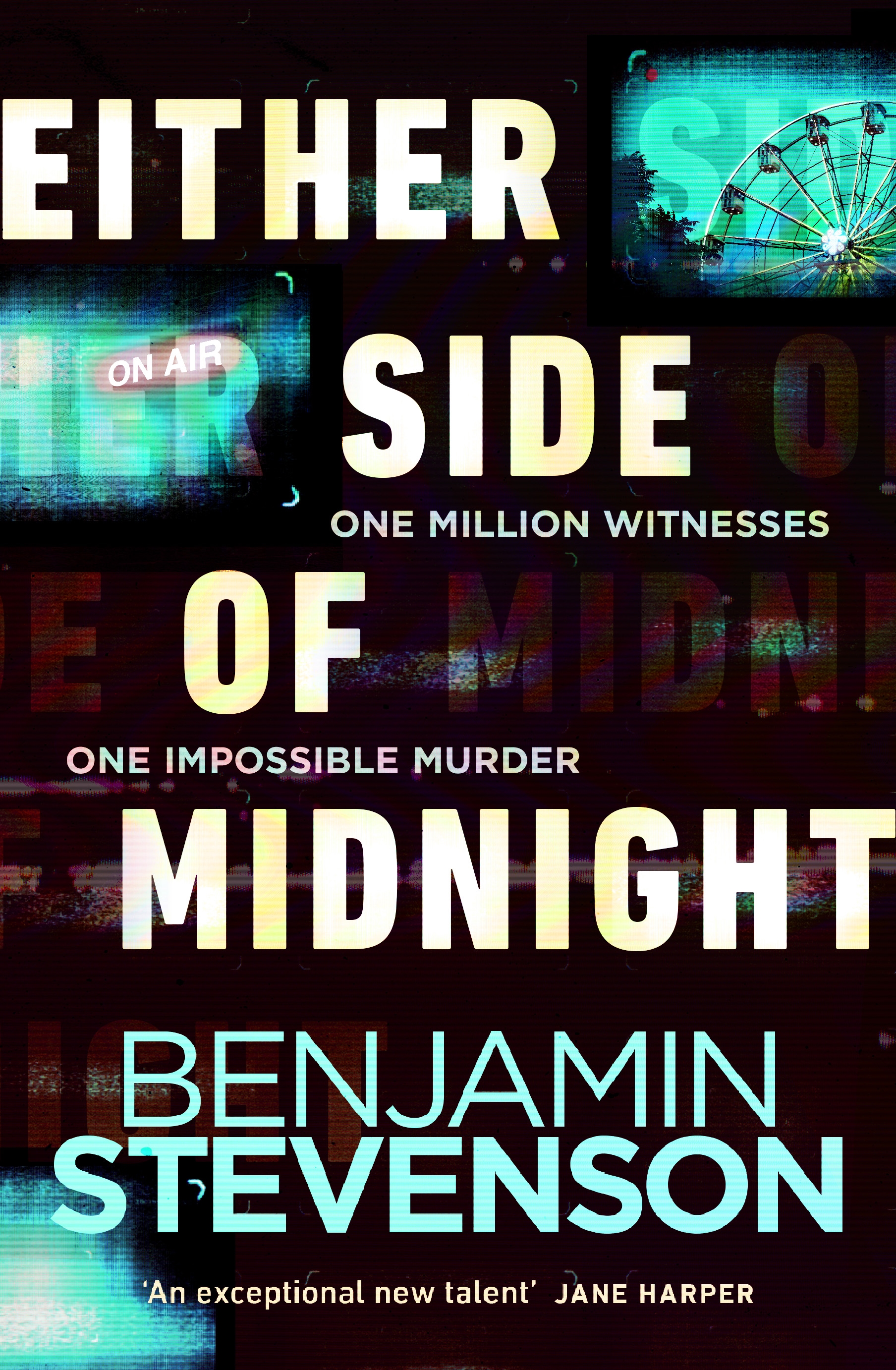
Either Side of Midnight by Benjamin Stevenson

Either Side of Midnight Cover

Publisher: Michael Joseph (Trade Paperback – 1 September 2020)

Series: Jack Quick – Book Two

Length: 327 pages

My Rating: 4.5 out of 5 stars

Amazon

Following his outstanding 2018 debut, up and coming Australian crime fiction author Benjamin Stevenson returns with an excellent and exciting new novel, Either Side of Midnight.

Sam Midford is a man who seems to have it all.  The host of a popular current affairs program, Midnight Tonight, Sam routinely provides fun and insightful jokes to the Australian public.  But his latest show is about to deliver something very different for the audience, as a nervous Sam pulls out a gun on live television and shoots himself in the head.  The resulting video is seen by millions, and the entirety of the country is shocked by his actions, believing it to be the tragic suicide of a secretly disturbed and haunted individual.

However, there is one person who is convinced that Sam’s death was something very different from suicide: his twin brother, Harry.  Harry believes that Sam was murdered, but with incontrovertible evidence of his suicide seen by a multitude of witnesses, how can this possibly be the case?  Determined to prove that there is more to his brother’s death, Harry seeks the help of someone who is almost as notorious as his dead brother, disgraced former television producer and true crime documentary maker Jack Quick.

Following the infamous and deadly conclusion to his documentary series, Jack is currently serving time in prison for tampering with evidence in a murder investigation.  In the final days of his sentence, Jack is approached by Harry, who believes that he is the only person capable of finding out the real truth behind Sam’s death.  In desperate need of money to support his family, Jack reluctantly accepts the case, believing that all he will uncover is proof that Sam committed suicide.  However, he soon discovers several inconsistencies in Sam’s death as well as evidence that connects his suicide to that of a young girl in the brothers’ past.  Diving deeper, Jack begins to think that there is a sinister killer at work, using subtle and deadly methods to murder their victims.  There is more than one way to kill someone, and Jack is about to discover just how dangerous his new obsession is.

Either Side of Midnight is a fantastic and outstanding read from one of the rising stars of Australian fiction, Benjamin Stevenson.  Stevenson is a Canberra-born comedian and musician who recently made the jump to crime fiction author with his debut novel, Greenlight (which was subsequently released as Trust Me When I Lie and She Lies in the Vines outside of Australia).  Greenlight was a compelling and intriguing novel that followed a guilt-ridden true crime documentary maker who suddenly became convinced that the man his show released from prison was actually guilty.  Set amongst the distinctive scenery of Australia’s wine country, Greenlight was a deeply impressive debut that provided the reader with a dark and clever murder mystery.  Either Side of Midnight is the sequel to Greenlight and is set 18 months after the events of the first book, with the same protagonist engaging in another sinister investigation.

Either Side of Midnight contains an outstanding story that presents the reader with another captivating and intense investigation told through the eyes of the series’ damaged and dark protagonist.  Stevenson has come up with a very clever story for this novel which forces the characters to investigate a murder that appears to be a very public suicide.  I really liked this cool plot premise when I first heard about it and I was glad that Stevenson was able to work it into such a captivating and cohesive narrative.  The investigation starts off quick and fast and does not slow down throughout the entire book, as the author comes up with some excellent twists and dark turns to throw the reader on an emotional rollercoaster, and I was deeply surprised with the final reveals of this mystery.  The entire premise of how the victim is killed is extremely clever and topical, and while I cannot talk about it without spoiling the plot, I felt that Stevenson came up with a great story around it and did a fantastic job tying it into real-world events.  I also really enjoyed Either Side of Midnight’s intense and impressive ending, not only because of the eventual reveal of the true perpetrator of the murder was extremely clever and perfectly set up, but also because of the thrilling and deadly confrontation with the protagonist, which includes the villain setting up extraordinarily evil and extremely memorable means of taking Jack out.

Either Side of Midnight also serves as an excellent sequel to Stevenson’s first novel and I felt that the story elements from Greenlight flowed really well into the plot of this second novel.  This fantastic mystery can also be easily read as a standalone novel, as the author does a great job of revisiting some of the key plot elements from the previous entry.  This ended up being a fantastic read, and I really appreciated the very dark edge that Stevenson gave to the story, which allowed for an extremely compelling and dangerously addictive tale.  I do need to point out that this book is probably best avoided by readers who are triggered by mentions of suicide, as there are some rather graphic scenes and discussions, so be warned about that.  That being said, I had an amazing time reading this new novel from Stevenson and I ended up powering through this intense story in less than a day.

You cannot talk about Either Side of Midnight without discussing the compellingly damaged main protagonist, Jack Quick, who returns for another harrowing adventure.  When we last left Jack, he had been sentenced to two years in prison for manipulating evidence to ensure the success of his true crime documentary.  Jack, who was extremely emotionally and mentally strained in the first book, has started to recover somewhat since the events of Greenlight, having finally started to get help with his bulimia and having confessed his darkest secret to his father.  But life once again gets substantially complicated for Jack when he is reluctantly drawn back into the triggering world of lies, murder and television production due to his family obligations.  I liked Stevenson’s portrayal of Jack in this novel; the events of the first book have made him a little more responsible and compassionate and less of a dick than before.  However, he is still a clever and somewhat manipulative person who manages to BS his way towards the truth and proves to be an entertaining protagonist to follow.  Stevenson continues to examine Jack’s battle with bulimia, a particularly distinctive character trait for a male crime fiction protagonist, in a realistic manner and I really appreciated the way in which the author dives into the psychology of the disorder.  There is also a fantastic continuation of the storyline from the first novel around Jack’s older brother Liam who, after an accident Jack witnessed as a child, has been in a permanent vegetative state.  The fate of Liam and the guilt that Jack feels for his condition is a major part of the protagonist’s character arc in Either Side of Midnight, especially as Jack and his father are forced to discuss ending his care, and it proved to be an excellent and touching part of the novel’s plot.  I really enjoy Stevenson’s outstanding portrayal of this complex character and the examination of his various battles and issues was an essential part of Either Side of Midnight’s outstanding plot.

While the obvious focus of Either Side of Midnight is Jack, Stevenson has also loaded up his second novel with several other damaged and distinctive characters, each of whom add some intriguing angles to this great story.  The most significant of these characters are the Milford twins, Sam and Harry, who serve as the victim and main driving force of the novel respectfully.  The Milford twins, also known as the Midnight Twins, are a former comedy duo who split apart several years earlier, when Sam went on to host his television show and Harry vanished into obscurity.  The author really dives into the background and psyche of these two characters.  Sam was haunted by the guilt over his lost girlfriend, who died while the two twins were trapped on a Ferris wheel.  Harry, the younger twin, is filled with regret and sadness over how their partnership ended, and their relationship soured.  Both characters ended up being complex and damaged individuals, and their struggles have major impacts on Either Side of Midnight’s narrative.  Stevenson did a fantastic job with these characters, and I really appreciated the intriguing storylines that he weaved around them.  It was also interesting to see Benjamin Stevenson portray a set of twin comedy entertainers, as he himself is a member of a comedy duo, known as The Stevenson Experience, with his twin brother James.  You have to assume that Stevenson used a lot of his own experiences to build up these characters and their comedy routine, and I felt this was a fantastic part of the novel, although I’m going to avoid reading too much into the author killing off one of the twins.  I also really enjoyed some of the other damaged characters featured throughout the book, and the protagonist is forced to examine several compelling and tragic backstories to get to the truth of this case.  There is a particular focus on loss and the impacts it has on relatives of the deceased that I particularly appreciated, especially as three major characters (Jack, Harry and side character Ryan) each survived a great tragedy that impacted an older sibling.  I had an incredible time getting to know the broken and bereaved characters in this novel, and it turned out to be a significant part of this fantastic narrative.

One of the other cool features of this book was the author’s excellent use of the rugged Australian setting, which was also one of the most distinctive features of the first entry in the series.  While this book does not spend as much time in the rough countryside as Greenlight did, with most of Either Side of Midnight taking place in urban Sydney, a good part of the plot does take place in a small coastal town.  I really liked the parts of the novel set within this small-town environment as it proved to be an isolated and at times dark setting for this excellent mystery.  The author did a fantastic job of bringing a distinctively Australian rundown town to life in a way that is very realistic to anyone who has done some travel around coastal Australia, which was really cool to see.  I also liked how Stevenson takes the time to examine and parody some elements of wider Australia, particularly its television industry, with the investigation centred on a fictional Australian television network.  This fictional network shares a lot in common with some of the real-life television networks here in Australia.  Anyone who is familiar with some of the main Australian networks will really appreciate Stevenson’s portrayal of these television stations, as he mirrors the stations’ numerical names, provides notable callouts to some extremely popular shows, and portrays some of bitter rivalries the main commercial networks have with each other.  This actually becomes a major part of the plot, and I loved seeing the cynical protagonist navigating the cutthroat rivalries based around a series of soap operas and reality television programs (especially as I am not a big fan of these sort of shows, and they are absolutely saturated in our programming).  Overall, I felt that the author provided a very Australian setting which proved to be an amazing backdrop to this excellent novel.

Either Side of Midnight was an exceptional and amazing second novel from Australian author Benjamin Stevenson that comes highly recommended.  Stevenson has produced an addictive and dark crime fiction story that sees an excellent protagonist investigate an impossible crime.  Featuring great characters, an impressive mystery and a fantastic setting, Either Side of Midnight is an excellent novel that is easily one of my favourite Australian fiction novels of 2020.

Amazon

Call of the Bone Ships by RJ Barker

Call of the Bone Ships Cover

Publisher: Orbit (Trade Paperback – 24 November 2020)

Series: The Tide Child – Book Two

Length: 491 pages

My Rating: 5 out of 5 stars

Amazon     Book Depository

One of the biggest rising stars in fantasy fiction, the always impressive RJ Barker, returns with the second novel in The Tide Child trilogy, Call of the Bone Ships, an epic read that was one of the best fantasy releases of 2020.

Welcome back to the boneship known as Tide Child, a black ship of the damned crewed by those condemned to death for various crimes in the Hundred Isles and tasked with fighting in a war against their nation’s rivals, the Gaunt Islanders.  Following their first grand adventure, which saw Tide Child save the last of the vast sea dragons from whose bones the powerful ships are made, much has changed in the world.  The Shipwife of Tide Child, Lucky Meas Gilbryn, seeks to undermine her mother, the ruler of the Hundred Isles, by working with black ships of both nations to create a new settlement outside of their tyrannical controls.  However, their previous decision to save the last dragon has had unexpected consequences, and soon the ocean is alive with the news that more dragons have returned.  With their return comes the battle to kill the creatures and harvest their bones to create more ships, as the nation with the most ships will rule the waves.  However, the crew of Tide Child find themselves drawn into a different conflict when they chance upon a damaged ship with a hold full of dead or dying prisoners.

Attempting to find out more about the mysterious cargo, Meas and Tide Childs’ Deckkeeper, Joron Twiner, try to follow it to its original destination, only to discover that their new island sanctuary has been destroyed and its people carried off for a nefarious purpose.  As they start to fight back against their former comrades in the Hundred Isles, Tide Child finds itself in the midst of a dark conspiracy which will push the entire world into chaos and conflict.  A new war is coming to the oceans, and no-one is safe from its deadly consequences.

Well damn, how does Barker keep on doing it?  Over the last few years, RJ Barker has been one of the most consistent and outstanding fantasy fiction writers out there, producing several incredible and deeply enjoyable novels.  I was a major fan of his debut, The Wounded Kingdom trilogy, as all three novels, Age of Assassins, Blood of Assassins and King of Assassins were amazing reads, with each one being better than the last.  However, Barker’s writing was on a whole other level in 2019 when he published the first entry in The Tide Child trilogy, The Bone Ships, an epic read that detailed the trials and tribulations of a condemned crew aboard a ship made from dragon bones.  I absolutely loved The Bone Ships and it was one of my favourite books and audiobooks of 2019.  Needless to say, I was extremely eager to receive my copy of Call of the Bone Ships, and it was one of my most anticipated reads for the second half of 2020.  Unfortunately, circumstances forced me to hold off reading this novel until the end of the year, which I deeply regret as this was another awesome novel from Barker that got an easy five-star rating from me.

For Call of the Bone Ships, Barker has come up with another exciting and amazing narrative which follows a unique group of protagonists on a deadly adventure through a dark fantasy world.  Told primarily from the point of view of Tide Child’s Deckkeeper (first mate), Jordon Twiner, this is a massive character-driven story filled with action, intrigue, and betrayal.  While the first novel in this series focused on a wild adventure as a ship followed their new captain on a quest to find a sea dragon, this second novel focuses more on the politics of the Hundred Isles, as the Tide Child and their allies attacking as undercover rebels to undermine the cruel ruling hierarchy and determine what their plans are.  After an intriguing introduction, Call of the Bone Ships swiftly devolves into a war novel, as Meas and her crew begin to fight back against the oppressive Hundred Islanders who oppose them.  At the same time, Joron is forced to deal with a number of personal issues aboard the ship as he finds himself thrust into the midst of danger and betrayal as everything in his life goes to hell around him.  The plot of Call of the Bone Ships goes into some dark but captivating directions, and the Tide Child crew are hit with some major curveballs and tragic events.  All of this leads up to an impressive conclusion which is highlighted by a major and dramatic cliff-hanger that is going to require any reader of this book to desperately wait for the final entry in this series to be released.  While this book was a tad slow to start, especially if you were unfamiliar or somewhat forgetful of the events of The Bone Ships, it eventually resulted in a truly epic and outstanding story that proves impossible to put down once you get wrapped in its intense and captivating narrative.  The plot of Call of the Bone Ships has a fantastic flow on from the previous entry in the series and served as an excellent sequel, making great use of several of the story elements introduced in The Bone Ships and more than living up to the hype Barker established with the first The Tide Child novel.

One of the things that I have been most impressed with for this series is the author’s ability to create a gripping and consistently well-written maritime story.  Narratives that are primarily set aboard boats are notoriously hard to write, but Barker has risen to the challenge, writing a novel rich in naval and maritime detail, with a major fantasy fiction edge to it.  Call of the Bone Ships contains an intense amount of intriguing detail about the coming and goings aboard the ship out at sea and Barker does an amazing job highlighting the various day-to-day actions a crew are expected to undertake, as well as all the unique features that makes a ship in this fantasy universe different from real-world ships.  This impressive attention to detail translates extremely well into several naval battles and combat sequences, and it was cool to see the Tide Child engage in battle with other ships in some outstanding and beautifully written sequences.  In addition, Barker ensures that every major character in this novel had a real nautical feel to them.  Everything about these characters, from the way they spoke to how they act or think aboard the ship made you think of old sea-salts who had spent a lifetime on the waves, which helps to bring an interesting ring of realism to the story.  I also really love the intense and encapsulating atmospheres that Barker creates with his excellent writing ability, and you get a real sense of the moods of the entire ship throughout the novel, whether it be despair at something bad that has befallen the ship, or the sense of repetitive boredom that arrives from the ship doing the same action day after day with no break in routine.  All of this helps to produce a truly exceptional narrative, and I cannot emphasise how impressive the author’s various nautical inclusions are.

While the series is nominally about the dangerous events that the Tide Child finds itself involved with, in many ways its plot is driven by the growth and development of the main protagonist and point-of-view character Joron Twiner.  At the start of this series, Joron was a depressed and embittered young man who was unjustly forced aboard the black ship and made its Shipwife due to his lack of courage and determination.  But after meeting Meas and beginning to serve under her, Joron has become a competent officer who has the respect of most of his crew and who is now dedicated to Meas and her mission.  Call of the Bone Ships turns out to be a major novel for Joron as he participates in several adventures and battles, showing his skill as a commander, warrior and leader throughout the novel.  However, participation in these adventures has severe consequences as Joron gets beaten down and broken apart multiple times from injuries, betrayal and personal tragedy.  Watching Joron suffer is quite a hard part of this novel as the reader becomes extremely attached to him due to his likeable personality and sheer determination.  However, it is worth it to see Joron rise again as a stronger and much more developed person, and this ended up being a fantastic part of his personal story arc.  A lot of this book is also dedicated to Joron’s mysterious ability as the caller, someone who is prophesied by the Gullaime (the enslaved avian wind mystics who provide power to the ships) as a great saviour.  Joron, who first experienced these powers while calling a sea dragon to his aid, continues to develop certain abilities which prove to be rather effective and spectacular throughout the novel and opens up a lot of opportunities for the character.  The end of Call of the Bone Ships leaves Joron in an extremely intriguing position, and I am deeply curious about how his story will end in the final novel.

In addition to his complex protagonist, Barker also includes a literal raft of impressive and captivating characters, most of whom serve as members of Tide Child’s crew.  These great characters each have distinctive personalities and add a great deal to the narrative.  The main side character is easily Lucky Meas, the Shipwife of Tide Child who has turned her ship from a bastion of reprobates to a group of heroes with a noble purpose (mostly).  Meas is a truly inspirational character who has served as a close mentor to Joron and who continues to lead her crew with wisdom, experience, and humility.  Meas was a little less utilised in this novel than in the first book, with Joron taking more of a lead now that he has some command experience.  She was still a fantastic and distinctive character within this latest novel, and I really enjoyed where her personal story arc went, even though we still do not have that much information about her backstory.  Another great character was Tide Child’s ultra-powerful Gullaime, who continues to work along the crew, especially Joron, who has a special connection to the creature.  The Gullaime also has a rather intriguing arc in this novel, and it is clear that he will play a rather substantial role in the ending of the overall series.  The mysterious bird creature also develops a lot more as a character in this novel, especially after encountering different members of his species, although he continues to provide his entertaining tirades of broken speech to the crew.  The rest of the crew prove to be extremely compelling, and I liked the fact that Barker spent time expanding out the roles and personalities of a huge number of side characters, including giving several of them brief point-of-view chapters.  However, in some of these cases it did seem that the author only gave these characters more of a role so that he could then brutally kill them off, much to the heartbreak of the reader.  A number of these characters do get some rather substantial and enjoyable story arcs, and it will be interesting to see where the remaining members of the crew end up in the final book.

I have a lot of love for the dark and elaborate fantasy worlds that Barker creates in his novels, and the one featured in The Tide Child series is particularly amazing.  I deeply enjoyed this harsh and cruel world of small islands, deadly seas and warring nations, especially with the cool gender-bent world (for example, captains are known as Shipwives, while boats are referred to as him).  I really enjoyed returning to this amazing and creative world, especially as it proves to be an incredibly rich setting for the novel’s awesome and addictive narrative.  Barker does some excellent world-building in this second entry in the series, and you get some cool features, such as different groups of Gullaimes who lack wind powers but serve as jailers for their powered brethren, some new powers for the characters and some intriguing new locations.  All of this helped to create a more elaborate and impressive narrative and it is always cool to see more of this grim and deadly fantasy universe, especially as Barker’s awesome writing bring so many of the more impressive elements, such as the giant dragons, to life in such epic fashion.

The final thing I wanted to praise about Call of the Bone Ships were all the little details featured within the paperback version of the novel, that I would have previously missed in the first The Tide Child novel due to me checking out The Bone Ships in audiobook format.  I definitely have to highlight the impressive and intricate cover above, which was drawn by talented artist Edward Bettison.  The covers for this series are extremely cool, and I cannot wait to see what amazing design the artist comes up for the final entry in the series.  I also really liked the awesome artwork that was featured within the novel.  Not only is there a fantastic and detailed map at the very front of the book but there is also some sweet artwork at the start of each chapter, which depicts locations, creatures and characters from within the book.  Barker has also featured a short index at the end of the novel which contains some of the crew titles that were created for the series, detailing what each crew member is supposed to do.  All of these details are great and eye-catching inclusions to the novel, and I felt that it made Call of the Bone Ships just a little bit more special.

Call of the Bone Ships by RJ Barker was another epic and outstanding novel that shows why Barker is one of the most impressive new fantasy talents in recent years.  This incredible sequel to 2019’s The Bone Ships contains an exceptional and addictive story at sea, featuring rich and complex characters and all set within a creative and vibrantly dark fantasy world.  The combination of these awesome elements helps to create a captivating and powerful read which turned out to be one of the best books of the year.  I cannot recommend this novel enough.  If you have not found out about RJ Barker yet, you are really missing out!

Amazon     Book Depository

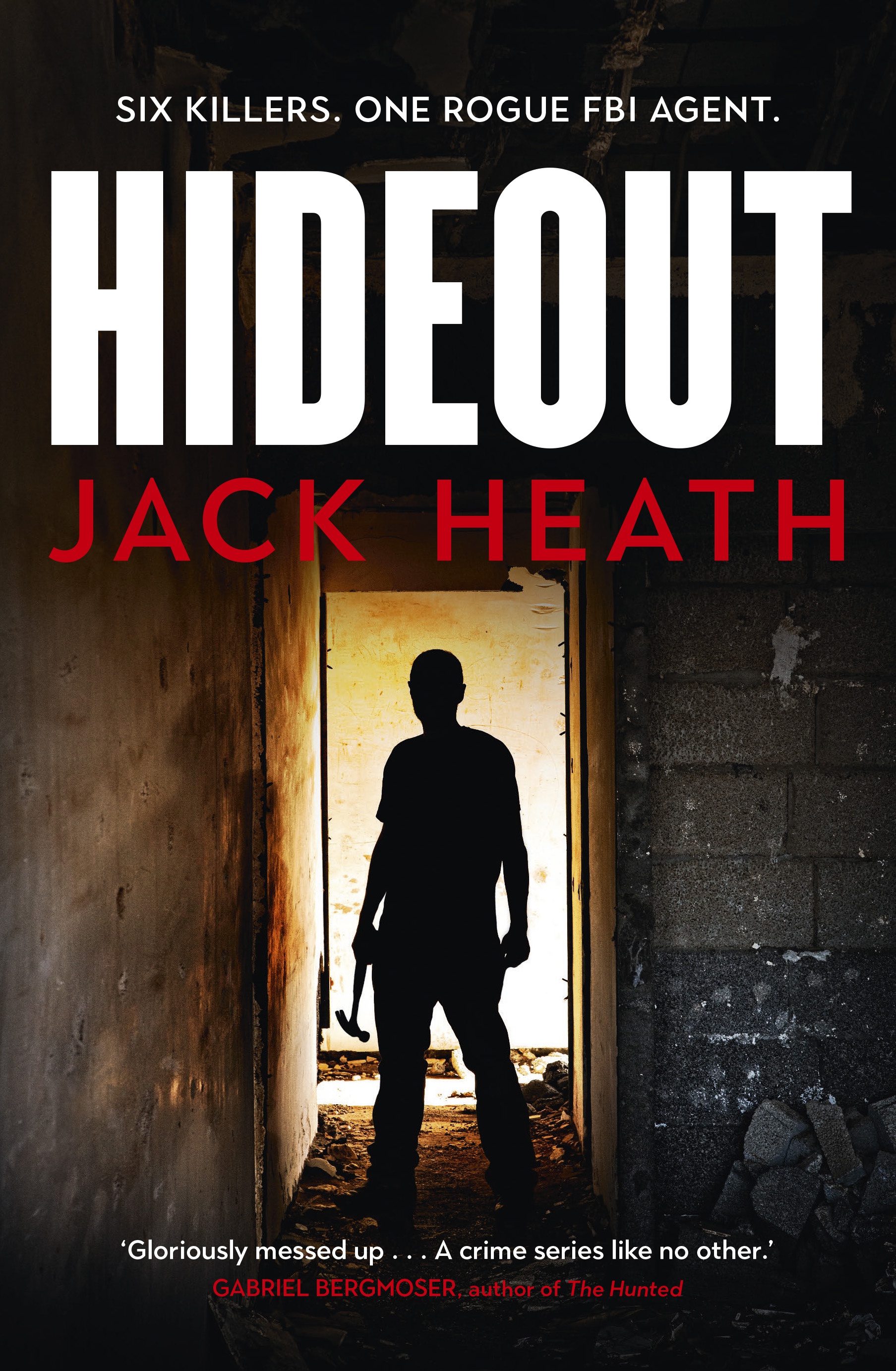
Hideout by Jack Heath

Hideout Cover

Publisher: Allen & Unwin (Trade Paperback – 1 December 2020)

Series: Timothy Blake – Book Three

Length: 406 pages

My Rating: 4.25 out of 5 stars

Amazon     Book Depository

Australian bestselling author Jack Heath brings back his cannibalistic protagonist, Timothy Blake, for another gruesome adventure in Hideout.

Timothy Blake, occasional FBI consultant and full-time murderous cannibal, is on the run, convinced that his former employers are close to capturing him for his unfortunate habit.  With nothing to lose, Blake decides to take out one final target and travels to a house in rural Texas where Fred, the ringleader of a group of dark web torture video producers, lives.  However, his plan to kill and consume Fred quickly goes out the window when he finds out that this target is not alone.

Fred has gathered five of his cohorts, known as the Guards, each of whom makes a living off torturing, extorting and killing people on the dark web.  Pretending to be an online associate of the Guards who is in trouble, Blake manages to con his way into the house, convincing them that he is a just as twisted as they are.  His subsequent plan to pick off his new companions one by one seems like a winner, until one of the Guard turns up dead by someone else’s hands.

It soon becomes apparent to Blake that another killer is stalking his new hideout, one who is determined to keep their secrets no matter what.  With his cover likely to be blown at any second and his ravenous hunger for human flesh threatening to overwhelm him, Blake needs to find a way to survive and overwhelm his companions.  However, the discovery of a group of desperate people chained up in the building behind the house complicates everything, especially when the Guards’ latest victim arrives.  Can Blake take out this group of psychopaths before he is picked off by another killer, or has this cannibal finally met his match?

Hideout is a fun and compelling novel from Canberran author Jack Heath, who has once again come up with an exciting adventure for his distinctive protagonist.  Heath is a well-established author who primarily made a name for himself with young adult and children’s thriller fiction, such as his Six of Hearts, The Liars, The Danger and The Scream series.  However, Heath has also branched off into adult thrillers with his Timothy Blake novels.  The Timothy Blake series started in 2018 with the first entry, Hangman, and it follows its dysfunctional cannibal protagonist as he investigates a series of different and thrilling mysteries.  Hideout is the third entry in this series and is set shortly after the events of the second novel, Hunter (which was also released under the title Just One Bite).  This is actually first Jack Heath novel that I have read, and while I was deeply intrigued by the previous Timothy Blake books, I did not get a chance to grab a copy.  However, I really enjoyed Hideout and I am definitely going to go out of my way to obtain any additional novels Heath writes in the future.

This third Timothy Blake book proved to be quite an impressive and compelling read, as the protagonist finds himself trapped with six other psychopaths, each of whom torture and kill people online for a living.  This proves to be quite an intriguing scenario, as this bold protagonist bluffs his way into the house and plots various ways to kill them.  However, the whole scenario inevitably gets out of hand, and Blake finds himself having to investigate the murder of one of the killers he is trapped with.  This results in an excellent story and I loved the blend of mystery, great interactions, and the character’s attempts to keep his cover, especially as Heath also throws in a little commentary about current society (some of which is exceedingly relevant, particularly this week).  I really liked where the author took his awesome story, and all the various twists, revelations and surprising actions made for quite a compelling and thrilling read.  I especially loved all the excellent foreshadowing that the author utilised, as nearly every stray thought or memory from the protagonist came into play somewhere later in the book.  The story is extremely fast paced, and readers should be able to power through it in short order, especially once they get wrapped up in the captivating narrative.  I also appreciated how easy it was for those people unfamiliar with the previous Timothy Blake novels to read Hideout, as Heath has made it quite accessible, with all the key elements from the previous books explained in sufficient detail.  Naturally, as this is a novel about a cannibal living undercover with dark web torturers, this is a particularly dark book and people who have issues with torture, gruesome killings and cannibalism might want to avoid it.  Overall, this was an amazing narrative, and I had a fantastic and exhilarating time getting through it.

I quite enjoyed the damaged and intriguing protagonist that was Timothy Blake, and it was rather fun following the adventures of a cannibal.  While there are some obvious parallels to Dexter in this character as a killer who target criminals, I felt that Blake was distinctive enough in his own right and he ended up being an interesting character to set a book around.  I really enjoyed seeing the entire narrative unfold from his perspective as the character adds some intriguing elements to the story.  There is something desperate and feral in this character that translates off the page, and he is haunted by some of the events from the previous novels, especially as he believes that his freedom or life is nearly over.  While the origins of his cannibalistic tendencies are not really covered in Hideout (I assume that they are detailed in prior books), you do get an idea of this character’s troubled past and how he helped as an FBI consultant.  Despite being a killer and unrepentant flesh eater, Blake is constantly trying to be a good person, and it was fascinating to see him try to save certain lives while plotting the deaths of the various members of the Guards.  Blake also proves to be a canny investigator and trickster even though his formal education is rather lacking, managing to fool the people he lives with while also solving the curious mysteries that Heath came up with.  I loved the cannibalistic side of the protagonist and it was quite amusing to see him considering the various people and corpses he encounters, wondering about how much meat he could get off them and how likely he could get away with eating.  This hunger proves to be an interesting driving force for Blake throughout the book, especially as, to maintain his cover, he has to consume a vegetarian diet, which messes with his mind a little.  I also enjoyed the way in which Heath is clearly not amazingly attached to his protagonist, as Blake goes through some stuff which changes him in some substantial ways.  I ended up really liking this complex and enjoyable character and I look forward to seeing what his future adventures entail, especially as Heath sets up an interesting potential story arc for the next book.

Heath has also filled up Hideout with some other compelling characters who stay on the property with Blake for most of the book.  The most prominent of these are the members of the Guards, the six psychopaths who video themselves torturing people to make money.  While on the surface all of these characters are despicable, Heath spends time examining each of their personalities and histories, fleshing them out and showing that their various motivations are a lot more complex than initially believed.  This helps to create a richer story, especially as each of the characters have their own unique secrets that come into play throughout the narrative and ensure a much more complex mystery for Blake to solve, as well as adding in some compelling connections to the protagonist.  There is also a further group of characters on the property who are a major part of the book’s plot.  Like the members of the Guards, there is more to these characters than initially appears, and their plight is a rather intriguing ethical inclusion to the story.  One of these characters is featured quite significantly throughout the book due to their prior connections to Blake, and it was fascinating to see the massively negative impacts of Blake’s interactions with them.  All of this results in quite a character-rich narrative, and I quite enjoyed seeing how some of the arcs played out and how the protagonist interacted with them.

Hideout by Australian author Jack Heath ended up being a fun and compelling novel, and I had an amazing time reading it.  Heath makes excellent use of his unique protagonist, inventive plot scenario and fast-paced story to create an awesome thriller that readers can easily enjoy and get through quickly.  While a bit gruesome in places, this is an undoubtedly entertaining thriller that readers are going to have fun getting through.  I look forward to seeing how the Timothy Blake series continues in the future, and the next book should be a fantastic and exhilarating ride.

Amazon     Book Depository

Cyber Shogun Revolution by Peter Tieryas

Cyber Shogun Revolution

Publisher: Penguin Random House Audio (Audiobook – 3 March 2020)

Series: United States of Japan – Book Three

Length: 10 hours and 55 minutes

My Rating: 4.5 out of 5 stars

Amazon     Book Depository

If you like the sound of a gritty spy thriller set in an alternate version of America filled with destructive mechas, then you really need to check out Cyber Shogun Revolution, the third novel in Peter Tieryas’s outstanding United States of Japan series.

The United States of Japan novels are a fun and inventive series that is routinely described as a combination between The Man in the High Castle and Pacific Rim.  This series is set in an alternate history in which the United States lost World War II after Japan invented mechas to defeat the Allies.  Following the end of the war, the United States was split between the Japanese Empire and the Nazis, who subsequently engaged in an extended and brutal Cold War against each other.  This latest novel is set in 2020 and features an intense and thrilling new tale that is separate from the stories told in the previous two entries in the series.

Following the end of the latest war against the Nazis, the United States of Japan is facing a crisis as their corrupt governor appears to be a Nazi sympathiser, secretly doing their enemy’s bidding.  Seeking justice after a brutal Nazi attack in Kansas, mecha pilot Reiko Morikawa joins a secret organisation of high-ranking soldiers, mecha pilots and politicians, known as The Sons of War, who plot to assassinate the governor and replace him with one of their own.  While their initial plan to kill the governor goes awry, their target is still killed thanks to the intervention of the mysterious assassin and feared Nazi slayer, Bloody Mary.

However, Bloody Mary has a whole different agenda and swiftly turns against The Sons of War, assassinating key members of the organisation in a brutal strike that leaves Reiko as the only survivor.  Determined to find out why Bloody Mary betrayed them, Reiko teams up with Bishop Wakan, an agent of Japan’s secret police, the Tokko, to hunt her down and stop her plot.  Tracing a shipment of black market mecha parts to Nazi America, Reiko and Bishop travel into enemy territory to find answers and soon find themselves in the midst of a massive conspiracy.  Bloody Mary has plans to change the entire United States of Japan forever, and she does not care who dies to achieve her goal.  Can Reiko and Bishop stop her before it is too late, or will the entire world feel Bloody Mary’s wrath?

Cyber Shogun Revolution is an exciting and compelling new novel from Tieryas, which serves as the third entry in the United States of Japan series.  I have a lot of love for this series after powering through the second novel, Mecha Samurai Empire, when it came out a couple of years ago.  I have been meaning to check out this latest entry for some time now, and I was glad I was able to get around to it before the end of 2020.  This latest book was really cool, and I loved the bold new story that Tieryas was able to come up with, especially as he once again makes excellent use of his unique and captivating alternate world.

This latest entry in the United States of Japan series proved to be a fun and fast-paced novel, which sees two intense protagonists forced to investigate a lethal conspiracy in an inventive and clever setting.  Told from the alternating perspectives of its two main characters, Reiko and Bishop, this story gets off the ground quick and does not slow down one bit throughout the entire book as the protagonists quickly find themselves in the midst of all manner of intrigue and suspense.  This was a deeply exciting novel, and I liked how the author changes focus from the previous novel, writing Cyber Shogun Revolution as more of a spy thriller with alternate history and science fiction elements.  I really liked the impressive pace of this novel and I was quickly drawn in by the compelling and complex thriller that Tieryas weaves for the reader, especially as it makes great use of its setting and unique world elements to tell the entire story.  The author throws in a few good twists and turns throughout the narrative, and I quite enjoyed seeing the story unfold in all its action-packed glory.  Readers do not need to have any pre-knowledge of the United States of Japan series to enjoy this book as the narrative is mostly unrelated to the events of the previous novels, although fans of the series will no doubt enjoy seeing the various changes to the universe.  Overall, Cyber Shogun Revolution had a fantastic and exhilarating story that is guaranteed to keep the reader wildly entertained throughout the entire run of the book.

A major highlight of Cyber Shogun Revolution, and indeed the entire United States of Japan series, is the inventive and unique alternate version of the world that the author has created.  The Japanese-controlled America featured within this series is an intriguing blend of Western and Japanese culture, mixed with advanced technology and an entirely new history.  I really enjoyed seeing all the clever combinations of culture that the author featured throughout his story, and there are quite a few amusing references and ideas featured throughout.  There is a particular focus on cuisine, and Tieryas once again enthrals the reader with descriptions of intense and interesting-sounding fusion foods, many of which I would love to try out.  These descriptions of the United States of Japan are really cool, and it proves to be a rich setting for the narrative to run through, especially as it is not the shiny utopia that it appears on the surface.  The country is instead a dangerous and oppressive regime ruled over by fanatical thought police, where even a momentary slipup is enough to condemn you to a horrible fate.  Tieryas spends time really highlighting this darker side of his universe in Cyber Shogun Revolution and it ends up become a major part of the plot.  The author also takes the reader on a brief tour of Nazi-occupied America, which proves to be a particularly horrible experience (strangely enough, the Nazis are just as bad, if not worse, in this reality), mainly due to the Nazis’ reliance on bioengineering rather than machines, which results in a number of disturbing and disgusting creatures, such as their bimorphs (giant organic mechas).  The comparisons between the Japanese and Nazi controlled parts of America are really fascinating, and I am really glad the author based a bit of the story there.  Needless to say, I absolutely loved the setting for Cyber Shogun Revolution, especially as it helped create a clever and complex narrative, and I cannot wait to revisit it in some of Tieryas’s future novels.

Now there is no way that I can talk about Cyber Shogun Revolution without mentioning the mechas, the giant and powerful human-controlled battle machines which won the war for the Japanese.  Mechas are a distinctive and exciting pop culture creation, especially in anime, and Tieryas uses them to great effect throughout the entire book.  While this latest entry in the series has a definite focus on conspiracies and espionage, Tieryas still slips in several mecha fights and combat scenes.  Indeed, the entire last third of the novel sees the protagonists go up against a series of different and powerful mechas in some intense and epic sequences.  The author has clearly had some creative fun in this book as Cyber Shogun Revolution features a raft of new mechas, each with some unique or advanced piece of technology that gives them an edge over their opponents, including mechas with magnet guns, a mammoth-shaped mecha with a chainsaw trunk, and a mecha that has super speed.  This naturally leads to some fantastic and distinctive sequences, as the protagonists need to find a way to defeat the varied opponents around them.  I particularly enjoyed one sequence that saw one of the characters fighting against a rival mecha, while the other protagonist assists from the outside while riding a jetpack.  Needless to say, if you love mecha combat and fantastic battle scenes (who doesn’t?) then you are going to have a lot of fun with Cyber Shogun Revolution.

In order to tell this fantastic novel, Tieryas utilises two excellent, if damaged, point-of-view protagonists in the duo of mecha pilot Reiko Morikawa and secret agent Bishop Wakan.  After both have separate run-ins with Bloody Mary in which they are the only survivor, the two team up in order to get to the bottom of why she betrayed their nation and what her end goal really is.  Both characters are extremely interesting, mainly because they both have complex and tragic pasts which drive them towards their goals.  Tieryas does an amazing job diving down into these characters’ inner psyches, creating some truly complex characters with major flaws who the reader are inexorably drawn to.  In addition, both characters also have some intense history with Bloody Mary and some of her co-conspirators, resulting in some emotionally charged moments throughout the novel.  These two characters are also a little anti-authoritarian, having seen the dark side of their nation firsthand, which alters the way that they deal with events, and also ensures that they are a little more susceptible to their enemy’s manipulation.  I really enjoyed these amazing characters and I thought that they made for a great duo of central protagonists.

While I had initially planned to grab a paperback version of this book, I ended up splashing out and getting Cyber Shogun Revolution’s audiobook format.  This audiobook has a relatively quick runtime of just under 11 hours and was narrated by the talented Emily Woo Zeller.  Zeller, who I recently enjoyed in the Star Wars: Doctor Aphra audio drama, did an exceptional job narrating Cyber Shogun Revolution and I had an outstanding time listening to it.  Zeller came up with some fantastic and distinctive voices for the various characters featured within this novel, and the entire audiobook quickly flew by thanks to her fast-paced narration.  I also loved having the cool mecha fights being narrated to me, as hearing the action being described made it pop a lot more for me than simply reading it on a page.  Because of this, Cyber Shogun Revolution comes highly recommended in its audiobook format, and I really enjoyed hearing all the awesome action and excitement contained within this amazing novel.

Cyber Shogun Revolution is an epic and captivating novel from the amazing Peter Tieryas that serves as the third entry in his fantastic United States of Japan series.  Containing an intense story laden with action, intrigue, and treachery, all set with a clever alternate version of America, Cyber Shogun Revolution is a ball of excitement that readers will have an incredible time reading.  An excellent and fun read to check out, I look forward to exploring more of Tieryas’s outrageous universe in the future.

Amazon     Book Depository

Star Wars: Doctor Aphra written by Sarah Kuhn and performed by a full cast

Doctor Aphra Audio Cover

Publisher: Random House Audio (Audio Drama – 21 July 2020)

Series: Star Wars

Script: Sarah Kuhn

Cast: Emily Woo Zeller, Jonathan Davis, Sean Patrick Hopkins, Sean Kenin, Nicole Lewis, Carol Monda, Euan Morton, Catherine Taber and Marc Thompson

Length: 5 hours and 35 minutes

My Rating: 4.5 out of 5 stars

Amazon

The most brilliant and conniving archaeologist in the entire Star Wars canon gets her own audio drama as author Sarah Kuhn and an exceedingly talented cast of audiobook narrators present Star Wars: Doctor Aphra, the audio drama.

Throughout the galaxy Doctor Chelli Lona Aphra is renowned as a criminal and bringer of chaos without peer, but in her own eyes she is simply an archaeologist and technology enthusiast, albeit one willing to sell her findings to the highest bidder.  However, her latest venture is about to get her into the worst type of trouble, the sort that will haunt her for the rest of her incredibly short life.  Attempting to steal a dangerous weapon from a restricted alien vault, Aphra finds herself surrounded and slated to die, that is until Darth Vader, Dark Lord of the Sith and overall badass suddenly appears and saves her. 

Vader is engaging in a high-risk power play against the Emperor and Aphra has just become his most useful pawn, whether she likes it or not.  Working as his agent, Aphra must utilise her skills as a con-woman, genius technician and criminal mastermind to help Vader achieve his goals: depose the Emperor and find his new obsession, the pilot who blew up the Death Star, Luke Skywalker.  Determined to stay on Vader’s good side, Aphra, with the help of her two friendly murder droids, Triple-Zero and BT-1, helps her new master engage in all manner of shenanigans across the universe, including kidnappings, torture and elaborate heists.  However, Aphra knows that all it will take is just one mistake or slip-up to earn her new employers’ deadly wrath.  To avoid her inevitable appointment with Vader’s crimson lightsaber, Aphra will need to pull out every trick in her impressive arsenal if she is to survive.  But can even the great Doctor Aphra outsmart Darth Vader and the entire Empire, or has the smartest woman in the galaxy finally met her match?

Well this is an exceedingly fun and entertaining entry in the Star Wars expanded universe which provides a new angle to the tale of Doctor Aphra.  Doctor Aphra is an incredible and complex character who has only been recently added into the canon.  Introduced in the opening issues the 2015 Darth Vader comic book series, Doctor Aphra served as a major supporting character for much of the series run, entertaining readers with her antics and ability to survive working for Darth Vader.  Aphra proved to be an extremely popular character, and this resulted in the character getting her own comic book series (which ironically lasted more issues than the Darth Vader series she was introduced in).  The Doctor Aphra series ended up being an amazing hit thanks to some exceptional writing and it is one of my favourite pieces of Star Wars tie-in fiction (make sure to check out my reviews for the last two volumes in the series, Unspeakable Rebel Superweapon and A Rogue’s End), and there is even a second Doctor Aphra series on its way.  It seems that Aphra’s popularity has continued to grow as earlier this year this Doctor Aphra audio drama was released, written by talented author Sarah Kuhn.  This proved to be an exceptionally impressive audio release that does an amazing job bringing this fantastic character into an entirely new format.  This audio drama has a run time of around five and a half hours, which listeners are able to breeze through in no time at all.

The Doctor Aphra audio drama contains an intriguing and captivating story that follows the character as she engages in all manner of adventures in service to Darth Vader and her own survival.  Told entirely from the perspective of Aphra as she makes a series of recordings to an unknown person, and set shortly after the events of Star Wars: A New Hope, this story follows Aphra through the entirety of her ill-fated association with Darth Vader.  This employment places her in all manner of danger, as she completes a series of tasks important to Vader, including an elaborate heist; gets in the middle of a deadly conflict between Vader, one of his rivals in the Empire, and the protagonists of The Original Trilogy; and finds herself a prisoner of the Rebel Alliance before eventually attempting to manipulate the Emperor for her own ends.  At the same time, Aphra is constantly balancing on a knife’s edge, as her beloved boss has made it abundantly clear that he will kill her the moment she displeases him.  This forces Aphra into a number of tense and dangerous situations as she needs to convince Vader to keep her alive throughout the entire book.  This struggle to stay alive adds a substantial amount of suspense to the audio drama, as the listener really wants this entertaining character to survive, and it eventually leads to an outstanding and epic conclusion.  All of this proves to be an exceedingly captivating adventure, and listeners are in for an exciting and hilarious time, especially with Aphra’s entertaining and over-exaggerated narration of the events occurring. 

While I did really enjoy the story contained within this audio drama, I do need to point out that it is not actually an original tale; instead it is an adaption of several canon comic book series, namely the comics that featured Aphra’s early adventures.  The first part of the audio drama adapts most of the first two volumes of the 2015 Darth Vader comic series, Volume One: Vader and Volume Two: Shadows and Secrets.  From there the story follows the course of the crossover limited series, Vader Down, before moving on to the events of the fourth volume of the 2015 Star Wars comic, Rebel Jail.  Finally, the story returns to the Darth Vader comic, utilising parts of the fourth and final volume, End of GamesDoctor Aphra proves to be an exceptional adaptation of these comics although they only show off the events that Aphra herself witnessed or was a part of.  I had an amazing time listening to this adaptation and I really enjoyed seeing several of the amazing events that originally occurred on the page being brought to life by this enjoyable performance. 

People interested in listening to this audio drama do not need to have read the adapted comics first, as Kuhn provides Aphra with a great deal of narration that explains her role in the story and all the events leading up to the comics.  As someone who has read the comics before listening to this audio drama, I found that there was a lot in this production for fans of the comic.  I personally really enjoyed seeing these events from Aphra’s perspective (as the original comics mostly followed main characters such as Vader, Luke, Leia, and Han), and it was extremely interesting to see her thoughts on the various events occurring.  The author also comes up with a lot of additional backstory that helps to enrich Aphra’s involvement in the narrative, which fans of the character will really appreciate.  While I had a great time listening to this audio drama, I did notice that several events were glossed over, mainly because Aphra did not witness them occur in the comics.  For example, you have no idea who is behind several of the battles or attacks that Aphra finds herself in the middle of, with Aphra herself giving limited explanations for them.  While I knew full well what was going on, people who haven’t read the comics are going to be full of questions and this may make the audio drama a little confusing at times.  That being said, this was still an outstanding and deeply enjoyable production, and perhaps it will encourage listeners to check out some of the adapted comics (trust me, they are awesome).

One of the best things about this audio drama was the way in which the narrative explored the complex and exceedingly likeable character of Doctor Chelli Aphra.  Aphra is a clever, impulsive and chaotic rogue archaeologist who is obsessed with ancient technology, particularly unusual droids and dangerous weapons.  Aphra is a wildly entertaining character who is essentially an amoral version of Indiana Jones that has no problems cheating or betraying people who she encounters, as long as she gets to hold onto the valuable antiques or can sell them for vast amounts of money (none of her loot belongs in a museum!).  Aphra appears to have a relentlessly positive personality, providing the listener with a string of continual jokes and funny observations with an infectious amount of enthusiasm.  However, deep down Aphra is actually a deeply damaged individual who has suffered a number of losses and betrayals that impact her current outlook on life and other people. 

Despite the fact that Aphra is the very definition of an unreliable narrator (she literally deletes or edits the parts of the story she does not like to suit her agenda), I felt that this audio drama does an amazing job exploring this wily protagonist.  Having Aphra’s inner monologue about the events occurring during this story proved to be not only entertaining but also very enlightening, and it showed some fascinating glimpses of her inner personality and emotional state.  While much of Aphra’s story was previously explored in the comics that Doctor Aphra is based on, this adaptation does go a little further, pulling in some backstory that was introduced in the later Doctor Aphra comics and expertly working it into this narrative.  Kuhn also comes up with some additional history that is unique to this production, including a number of scenes that explore her previous romantic relationship with Sana Starros.  While this relationship has been mentioned and discussed in several of the comics, this is probably the most in-depth examination of it in the canon and it becomes an important part of the overall plot.  I really enjoyed the way in which Doctor Aphra examined its titular protagonist and I felt that the story really captured her essence and outrageous personality.

This audio drama sports an amazing voice cast and each of them does a fantastic job in this production.  However, I really must highlight the performance of Emily Woo Zeller, who portrayed the titular character.  Zeller is an experienced and talented narrator who has contributed to a huge raft of audiobooks, including several I am quite interested in checking out, such as Cyber Shogun Revolution by Peter Tieryas.  Due to how the audio drama is written, Zeller’s voice is the one we hear the most throughout Doctor Aphra, as she recounts all of the characters dialogue and the overall narration of this book.  I really loved the way that Zeller portrayed the character of Aphra in this audio drama and I thought she got all the aspects of the character down perfectly.  Zeller gives a particularly energetic performance throughout this adaption, and listeners get a real sense of the mischievous and over confident outer shell that Doctor Aphra portrays to everyone she meets.  However, Zeller also captures the vulnerable nature of this complex protagonist, showing off the character’s full range of emotions when she is scared, angry or contemplating her many regrets.  This rich and amazing performance from Zeller really helps to make this audio drama something special, and I am really glad that she was able to bring Doctor Aphra to life in such an exceptional way.

Doctor Aphra also makes use of several other impressive voice actors throughout this audio drama, each of whom are portraying major Star Wars characters who Aphra interacts with through the course of this adventure.  This audio drama features a who’s who of Star Wars audiobook narrators, many of whose works I have previously enjoyed in a range of productions including the previous Star Wars audio drama, Dooku: Jedi Lost.  These additional narrators include Jonathan Davis (who I previously enjoyed in Star Wars: Master and Apprentice and Lords of the Sith), Sean Kenin (Death Troopers), Euan Morton (Tarkin), Catherine Taber (Queen’s Peril and Queen’s Shadow), Marc Thompson (Thrawn, Thrawn: Chaos Rising, Dark Disciple and Scoundrels), Sean Patrick Hopkins, Nicole Lewis and Carol Monda.  Each of these voice actors did an exceptional job of bringing their various characters to life throughout Doctor Aphra.  I particularly enjoyed Marc Thompson’s Darth Vader and Euan Morton’s Emperor, as both voice actors brought some realistic menace to these iconic villains.  Catherine Taber, who is best known for her portrayal of Padme Amidala in The Clone Wars animated series, does an excellent Princess Leia in this production, and I really appreciated the choice to cast her.  Sean Patrick Hopkins does a really cool Luke Skywalker, and I was really struck by how close he got to a younger Mark Hamil’s voice.  I also really enjoyed Sean Kenin’s Triple-Zero, and I felt he really captured the essence of this crazy character.  Each of these side characters added a lot to the production as a whole and, while they were not as heavily featured as Aphra, each of them had their own entertaining moments and interactions.  I particularly loved the threatening aura that Darth Vader exhibited towards Aphra, and there is also a very entertaining interaction between Aphra and Han Solo that results in some of the best jokes in the entire production.  You also have to love the fact that Aphra ends up with a posse that essentially reflects the main characters from The Original Trilogy, with a protocol droid (Triple-Zero), an Astromech (BT-1) and a Wookie (Black Krrsantan).  Of course, Aphra’s friends are all dangerous killers, which makes for some extremely entertaining and deadly encounters.

In addition to featuring an impressive voice cast, Doctor Aphra also features the full range of iconic Star Wars sound effects and musical scores that were made famous in the movies.  Pretty much every action that occurs within the book is accompanied by a sound effect, whether it be blaster fire, the sound of engines or even a susurration from other people in a crowded room.  I always love how these sound effects helped to create an atmosphere throughout the course of a Star Wars novel, and I felt that they were particularly useful for this audio drama format due to the lack of narration that a standard audiobook would have.  I also have to talk up the excellent use of the incredible Star Wars musical score that features during several key scenes of the novel.  Hearing this music during some of the most pivotal, dramatic or action-packed sequences makes the narrative seem that much more epic, and I absolutely loved hearing this music throughout this production.  The use of the sound effects and music enhances the story in immeasurable ways, and it helps to turn this audio drama into an exceptional treat for the ears. 

Star Wars: Doctor Aphra is an impressive and deeply enjoyable audio production that brings fan-favourite character Chelli Aphra into a whole new light.  Cleverly adapting several amazing Star Wars comics, the Doctor Aphra audio drama features an interesting story from author Sarah Kuhn that shows the events from the perspective of the chaotic and duplicitous titular protagonist.  Featuring an exceptional voice cast, Doctor Aphra proves to be an extremely entertaining and exceedingly addictive listen that I had a very hard time turning off.  I personally think this was one of the best audio productions of 2020 and it comes highly recommended both to general Star Wars fans and to those who have read the adapted comics.  I had an amazing time listening to this audio drama and I hope that they think about adapting the later Doctor Aphra comic book series next as there are some impressive storylines featured in there.

Amazon

Star Trek: More Beautiful Than Death by David Mack

Star Trek More Beautiful than Death Cover

Publisher: Simon & Schuster Audio (Audiobook – 11 August 2020)

Series: Star Trek – Kelvin Timeline – Book Two

Length: 8 hours and 16 minutes

My Rating: 4.5 out of 5

Amazon     Book Depository

Prepare to once again dive into the alternate timeline version of the Star Trek universe, known as the Kelvin timeline, in this latest exciting tie-in novel from acclaimed author David Mack, Star Trek: More Beautiful Than Death.

Set shortly after the events of the 2009 Star Trek film, in which the planet of Vulcan was destroyed by the mad Romulan Nero, Captain James T. Kirk is now captain of USS Enterprise.  Given a new mission, the Enterprise and its crew are ordered to rendezvous with Spock’s father, Ambassador Sarek, and escort him to the planet of Akiron.  Akiron, a resource-rich world containing a substantial amount of dilithium, has recently sent out a distress signal to the Federation, who are hoping to exchange aid for favourable trading rights.

Arriving at Akiron, they find the planet in a state of chaos as the population are under attack by demonic dark-energy creatures, known as wights, who strike from the darkness, eat energy, and appear to suck the life right out of any living being.  Determined to save the people of Akiron no matter what, Kirk begins his preparations to investigate the wights.  However, before he can act, Sarek orders Kirk to abandon the mission and leave Akiron.

Refusing to obey Sarek’s orders, Kirk attempts to find the cause of the terrible events on Akiron and save who he can.  With the help of an old mystic who believes that Kirk has faced the wights in his prior lives the Enterprise crew are soon able to discover the source of the wights on Akiron and the deadly potential their invasion has.  As Kirk and his crew attempt to save the entirety of the planet they must overcome several deadly attacks as well as the sinister agenda of Sarek’s Vulcan aide, L’Nel, who hatches a dangerous personal plan to kill Spock.  Can the Kirk and the Enterprise succeed, or will darkness engulf everything it touches?

Over the last couple of years, I have had a great pleasure of reading/listening to several amazing pieces of Star Trek fiction and I always love seeing the unique and varied tales that the talented team of tie-in authors can come up with.  More Beautiful Than Death is an excellent example of this as it features a fantastic and captivating tale of exploration and desperation within an interesting part of the Star Trek canon.  This latest novel is written by a true veteran of Star Trek fiction, David Mack, who has not only written a ton of different tie-in novels but who also has writing credits for two episodes of Star Trek: Deep Space NineMore Beautiful Than Death is set in the alternate timeline introduced in the 2009 film Star Trek, known as the Kelvin timeline.  This is the second Kelvin timeline novel I have read this year after previously enjoying The Unsettling Stars, and it set between the events of Star Trek and Star Trek: Into DarknessMore Beautiful Than Death ended up being an impressive and exciting Star Trek novel, and I had an amazing time listening to it.

Mack has come up with an excellent narrative for More Beautiful Than Death which sees the crew of this alternate timeline Enterprise attempt to defend an alien planet from a series of demonic creatures.  The author writes this much like an episode of a Star Trek series, with the crew arriving at the planet, analysing the situation, facing all manner of conflicts, getting beat up and then engaging in a course of action to save the day.  I felt that this worked extremely well for the novel and readers are treated to a captivating and dramatic science fiction story that easily keeps the attention from start to finish.  The stakes are high throughout More Beautiful Than Death, and Mack keeps the tension and excitement going through much of the book, focusing both on the mission at hand and on the contentious personalities aboard the ship.  There are a number awesome action-packed sequences throughout the book, and I especially enjoyed the various scenes that showed the Enterprise being attacked by the wights, forcing the crew to flee from an opponent they cannot even touch.  There is also a particularly good subplot around the Vulcan characters aboard the Enterprise, with the mysterious character of L’Nel apparently plotting to kill Spock.  I really enjoyed the way that Mack explored this subplot, showing L’Nel’s attack on Spock as a prelude to the rest of the book, and then slowly exploring the events that led up to it in the main story.  This subplot combined with the main narrative extremely well and the result is a deeply compelling overall novel that I had an amazing time listening to.

Like many Star Trek tie-in novels, More Beautiful Than Death is best enjoyed by those readers who have some familiarity with the franchise.  However, I felt that Mack made his latest book extremely accessible to new readers, and anyone can have a great time enjoying the fast-paced and intriguing novel with minimal knowledge of Star Trek lore.  There are a lot of fun Star Trek elements associated with this novel, and I really enjoyed the author’s intriguing additions to the canon.  Not only does this book serve as an excellent follow-up to the 2009 movie, showing the early missions of this younger Enterprise crew, but Mack also utilises the alternate timeline setting of this novel to come up with clever alterations to the classic Star Trek lore.  One part of the book’s narrative ends up being an extremely ingenious homage to a key episode of The Original Series.  Mack cleverly inserts this compelling altered version of this episode throughout the book, and it was deeply fascinating to see it unfold, especially as the events of the Star Trek film have ensured it is sufficiently different.  This revision of a classic Star Trek episode was extremely impressive and it was one of my favourite parts of the entire book.  All of this makes for an amazing Star Trek read, and fans of the franchise are in for a real treat with this book.

In addition to some cool call-backs to The Original Series, Mack also does an exceptional job bringing the Kelvin timeline versions of the Enterprise crew to life.  The author ensures that all of the main characters in this book are portrayed slightly differently to how they are in The Original Series.  For example, Kirk is a lot more impulsive, younger and combative than the classic version.  Spock is a little stiffer, as he has only been influenced by Kirk a short while.  Uhura is a lot more combative and emotional, mainly due to her relationship with Spock.  Scotty is a lot more humorous, channelling his inner Simon Pegg, while McCoy is a lot gruffer and even more reluctant to get involved in the usual crazy Enterprise adventures (if that was possible).  All this makes for a tie-in novel that is a lot more in line with the newer generation of films and I personally appreciated the effort from the author.  I was tad disappointed that Sulu and Chekhov were not featured as heavily as the other major characters in the novel (something I have noticed in other Star Trek tie-in novels), but this was still a great novel for Star Trek characters.

I also appreciated how Mack takes the time to explore the psyches of several of his major characters, especially as it produces some compelling and dramatic results.  This includes a deep dive into this version of Captain Kirk, such as exploring his mental state after the events of the 2009 film, with a particular focus on the guilt and hopelessness he felt over watching the destruction of Vulcan, which has made him more determined to save entire worlds.  There is also an intriguing inclusion about Kirk’s past lives, with a couple featured as part of the plot.  This leads into some great discussion about how the character is destined to be thrust into great and tumultuous events, which I quite enjoyed.  Spock also gets a major focus in More Beautiful Than Death, thanks to the author’s inclusion of other Vulcan characters like Sarek and L’Nel.  Spock’s complicated relationship with his father and other Vulcans is a major theme throughout the novel, and aspects of his life aboard the Enterprise, particularly Spock’s romantic attachment to Uhura and his loyalty to Kirk, increase the tension.  This adds an excellent amount of drama to the narrative and it plays extremely well into the clever subplot around L’Nel, resulting in an intriguing and compelling narrative arc.  I had a great time diving down into several of these characters, and it helped to produce a much more complete and emotionally driven narrative.

As I do with most Star Trek books, I ended up checking out More Beautiful Than Death in its audiobook format rather than getting a physical copy.  The More Beautiful Than Death audiobook has a run-time of just over eight hours, making it an extremely easy audiobook to get through quickly.  I had an amazing time listening to this audiobook, especially as it features the vocal talents of the outstanding Robert Petkoff.  I have mentioned Petkoff before in several my reviews as he is the go-to narrator for any piece of Star Trek fiction that gains an audiobook format, due to his fantastic ability to perfectly replicate the cast members of both The Original Series and The Next Generation television shows.  Petkoff did another exceptional job in More Beautiful Than Death, expertly bringing every key member of the Enterprise’s crew to life and providing fantastic voices for each of them.  While they do sound more like The Original Series cast than the actors from the 2009 Star Trek film, this was still excellent work from Petkoff, and listeners are well aware which character is speaking at every point in the audiobook.  I also liked the voices that Petkoff utilised for the various supporting characters in More Beautiful Than Death, and there are some great differentiation in tones between the various alien species, such as for the Vulcan characters Sarek and L’Nel.  All of this makes for an epic listen, and Star Trek fans are strongly advised to check out More Beautiful Than Death in its audiobook format.

With his latest novel, David Mack continues to explore and add to the Star Trek expanded universe, this time diving into the intriguing Kelvin timeline.  More Beautiful Than Death is an excellent and entertaining read that takes the reader on a gripping adventure in space.  Thanks to the author’s excellent use of characters, Star Trek elements and his fantastic and unique narrative, More Beautiful Than Death is a fantastic Star Trek tie-in novel which will really appeal to established fans of this franchise.  Highly recommended.

Amazon     Book Depository

The Kingdom of Liars by Nick Martell

The Kingdom of Liars Cover

Publisher: Gollancz (Audiobook – 7 May 2020)

Series: The Legacy of the Mercenary Kings – Book One

Length: 15 hours and 37 minutes

My Rating: 5 out of 5 stars

Amazon     Book Depository

Impressive new fantasy author Nick Martell presents The Kingdom of Liars, an outstanding fantasy novel that is easily one of the top debuts of 2020.

Welcome to The Hollows, the slowly disintegrating capital of once-great kingdom where magic costs memory to used.  Once a shining beacon of culture and nobility, the city is now a shadow of its former self, surrounded by firearm-wielding rebels while petty nobles fight for scraps within and a corrupt prince plots for power.  While the people suffer under the rule of a grieving king, their only hope of survival may lie in the hands of the son of the kingdom’s most despised traitor.

Michael Kingman was only a child when he was branded a traitor for the crimes of his father.  Once the King’s loyal right-hand man, Michael’s father, David Kingman, was convicted and executed for the murder of the King’s nine-year-old son, and his family was cast out into poverty and infamy.  Now, 10 years later, Michael makes a living running petty cons on minor nobility while desperately trying to escape the legacy of his family.  However, after a devastating rebel attack rocks the city and kills someone close to him, Michael is determined to change his destiny.

Accepting employment with an eccentric and powerful noble, Michael is given a chance to re-enter noble society and find evidence that proves that his father was framed for the prince’s murder.  Participating in the Endless Waltz, the social highlight of year, Michael needs to gain influence and supporters in the court in order to gain an invitation into the king’s palace, where he believes the evidence he needs to vindicate his father can be found.  However, nearly everyone in the Endless Waltz has their own agenda and no-one wants to see a traitor’s son succeed.  Can Michael prove his father’s innocence and restore his family’s place in the kingdom, or is he doomed to share his fate and be executed as a traitor?

So, this is a book I have been meaning to read for quite some time.  Despite it coming out in May this year, I only managed to get around to listening to it a couple of weeks ago and I instantly realised I made a mistake in not reading this one sooner as The Kingdom of Liars was an epic and deeply impressive novel that I had an outstanding time listening to.  This was the debut novel from new author Nick Martell, which serves as the first entry in his planned The Legacy of the Mercenary Kings series (which is a cool series name btw).  This amazing novel from Martell contains a deeply captivating and complex story that proved incredibly irresistible to me, especially when you throw in the great characters and inventive new fantasy world that the author came up.  The end result is an exceptional and powerful read that gets a full five-star rating from me.

At the heart of this awesome book is a first-rate story that sees the protagonist, Michael Kingman, attempt to navigate his treacherous city in order to find the truth behind the death of his father.  Martell starts his narrative off with an impressive opening sequence that sees Michael being found guilty of the murder of the king, a charge he does not refute.  The story then backtracks a few weeks and the full story of Michael Kingman and his adventures is revealed to the audience through the first-person narration of Michael in a way that is reminiscent of a historical chronicle and shows how the protagonist goes from street hustling to regicide in a short period of time.  This proved to be an extremely epic tale loaded with conspiracy, political intrigue, lies, deceit and dark magic, as Michael primarily battles through a series of intense social occasions while also attempting to outwit or survive the machinations of jealous royals, betrayed friends, dangerous mercenaries, fickle nobles and scheming rebels.  At the same time, he also has to work out the motivations for the various people he encounters, most of whom have deep secrets or interesting connections to Michael and his family, as well as diving down into the history of The Hollows and the Kingman family.

There is quite a lot going on in this book, and the readers get to witness a series of different storylines and character arcs, all of which are loaded up with surprise twists and intriguing revelations.  All these storylines prove to be quite entertaining and very cleverly written and I had a great time seeing how each of them unwound.  These separate story arcs come together extremely well, and it results in a deeply compelling overall narrative which proved very hard to stop reading.  I loved all the narrative surprises that Martell came up with throughout The Kingdom of Liars and he added in some great twists which did an outstanding job keeping my attention.  While I was able to guess some of the reveals that Martell was telegraphing, several others caught me completely by surprise, which is something I deeply appreciate in a novel.  I was particularly impressed by the eventual reveal of the main antagonist and I thought that the choice of character was a real masterstroke from Martell.  I was immensely annoyed with myself for not picking up on it sooner, especially as I missed an obvious clue.  I cannot emphasise how I much loved this clever narrative, and I look forward to seeing how Martell continues this captivating tale in the future.

Because he serves as the central protagonist and only point-of-view character, most of The Kingdom of Liars is spent examining the character of Michael Kingman.  Michael is a complex and damaged protagonist who finds himself burdened with the legacy of his great family and the deeds of his traitor father.  At the start of the novel, Michael is a rather self-destructive being, who attempts to find redemption from random and pointless acts of heroism and by skimming some cash off the nobles he despises.  However, after a series of personal losses, Michael begins the path to redeeming himself and his family by attempting to prove his father’s innocence and he starts to reconnect with figures from his past, including several he had forgotten.  I quite enjoyed the character of Michael and it proved to be quite fascinating to see his constant internal battle to determine his identity and his place within the world.  Do not get me wrong, at times Michael proved to be a frustrating protagonist to follow due to his stubbornness and anger, but I think this examination of his damaged emotions helped to make him a stronger character who the reader could emphasise with more.  Thanks to the various events and revelations that become apparent to Michael as the story progresses, the protagonists develops substantially throughout The Kingdom of Liars and by the end he is a vastly different character who is placed in an interesting position for the next novel.  I look forward to seeing how Michael’s story continues throughout the rest of The Legacy of the Mercenary Kings series and I am sure it is going to be suitably dramatic and enjoyable.

In addition to the central protagonist, Martell includes an impressive supporting cast of characters who guide, befriend, manipulate, or try to kill Michael throughout the course of the narrative (sometimes they try to do all four at once).  I really enjoyed the various supporting characters that the author included in The Kingdom of Liars, especially as he ensures that each of them has a substantial and compelling backstory that is somehow interwoven with Michael’s past.  It proves to be extremely fascinating to see how each of these characters play into the larger picture of the narrative, especially as everyone has an alternate motive when it comes to dealing with Michael.  While each of the characters is suitably complex, there are a couple I need to particularly highlight.  This includes the other Kingman children, Gwen and Lyon, both of whom have been impacted by their father’s execution in a similar way to Michael, but who both deal with it in alternate ways, either by running from their family’s name or by subtly investigating it through their own means.  These two prove to be a dramatic counterpoint to Michael’s inner struggle about being a Kingman and it was fascinating to see the various, high-tension discussions they have with the protagonist on the subject.

There is also the excellent character of Trey, Michael’s best-friend, who, thanks to a tragic event early in the novel, ends up becoming more of an antagonist due to major feelings of betrayal that emerge between the two.  Trey ends up become a fantastic part of the book’s plot, as Michael is forced to constantly worry about his former friend attempting to kill him, while also attempting to do what is best for Trey’s well-being.  The various sequences with Trey are amongst the most emotional and powerful in the novel, and they add a real dramatic kick to the overall story.  The end of The Kingdom of Liars hints at a dark future for Trey in the rest of the series and I cannot wait to see what he has in store for him.  I also had quite a liking for the mysterious mercenary, Dark, a dangerous and shadowy being who Michael becomes inadvertently entangled with.  Dark is a fun and ultra-powered figure throughout the novel, and he had some great interactions with the protagonist.  However, out of all these characters my favourite is easily Charles Domet, the rich and powerful drunkard with innumerable secrets.  Domet serves as an excellent mentor character for Michael, while also being one of the most entertaining members of the cast.  I loved every scene that Domet appeared in, especially as he had a particularly intriguing backstory.  Each of these characters, and more, added substantially to The Kingdom of Liars, and it will be fascinating to see how each of them evolves in the future.

On top of the outstanding and clever story and the complex characters, Martell also invests in a captivating and highly inventive new fantasy realm, primarily set around the city of The Hollows.  This is a dark and dangerous world, with the major feature being a fractured moon hanging in the sky with occasional pieces falling to world below and causing substantial damage, while also offering cryptic remarks to those people who hold the shards.  The Hollows itself serves as an excellent setting for the novel, thanks to its dangerous politics, oppressed people, besieging rebels and withering monarchy.  Watching the scion of a once powerful house that was renowned as a force for good attempt to navigate the avenues of power throughout The Hollows proves to be extremely compelling and I really enjoyed it.  There are also some intriguing examinations of the city’s history, and each revelation about the past added a new layer to elaborate story that Martell came up with for The Kingdom of Liars.  The author has also come up with an intriguing magical system which allows people to wield substantial power at the cost of their own memories, ensuring that each magic user must work hard to maintain control.  I found this memory factor of this magical system to be very clever and it added a lot of great elements to the overall story, especially as several characters, including the protagonist, experience memory losses throughout the novel, which hinders them, and by extension the reader, from seeing the full picture.  There is also a rather intriguing comparison between magic and firearms throughout the story, as the nobles wield arcane power, while the rebels have guns.  This results in some thrilling sequences and it should be fun to see more elaborate fight scenes in the future.  Overall, this was a deeply enjoyable and compelling new setting and Martell really showed off his creativity in this first novel.  It seems likely that Martell is planning to massively expand this world in the future The Legacy of the Mercenary Kings novels and I am confident there will be some fantastic new inclusions in the future (like who actually fractured the moon).

As I mentioned above, I ended up buying The Kingdom of Liars’ audiobook format rather than grabbing a physical copy of the book.  I am extremely happy that I chose to do this as the audiobook was particularly good and it proved to be a fantastic way to enjoy this awesome novel.  I had an amazing time seeing the cool fantasy world that Martell came up be bought to life in this format and I found myself really getting into the story details as I listened to it.  The Kingdom of Liars audiobook has a relatively substantial run time of 15 hours and 37 minutes, although I found myself powering through it extremely quickly due to how much I enjoyed the story.  The audiobook features the narration of Joe Jameson, who I recently talked about in my review of King of Assassins by R. J. Barker.  Jameson’s narration in The Kingdom of Liars is pretty amazing and he does an incredible job inhabiting the various characters featured within the novel.  I think his voice and narration style really fit the way that this novel was written, and I felt that the point-of-view protagonist really came to life in his hands.  All of this results in a captivating and deeply enjoyable audiobook and this is the format I would recommend to anyone who wishes to check out The Kingdom of Liars.

The Kingdom of Liars is an incredible, compelling, and deeply exciting novel that I had an absolutely wonderful time listening to this year.  Debuting author Nick Martell really outdid himself with this first novel in his The Legacy of the Mercenary Kings series and this superb book comes highly recommended.  I loved everything about this book, including the two different but equally awesome covers that it was released with (see above and below), and I know I am going to have an amazing time following this series in the future.  The next The Legacy of the Mercenary Kings novel, The Two-Faced Queen, is set for release in March next year, and it looks set to be one of the top books of 2021.

The Kingdom of Liars Cover 2

Amazon     Book Depository