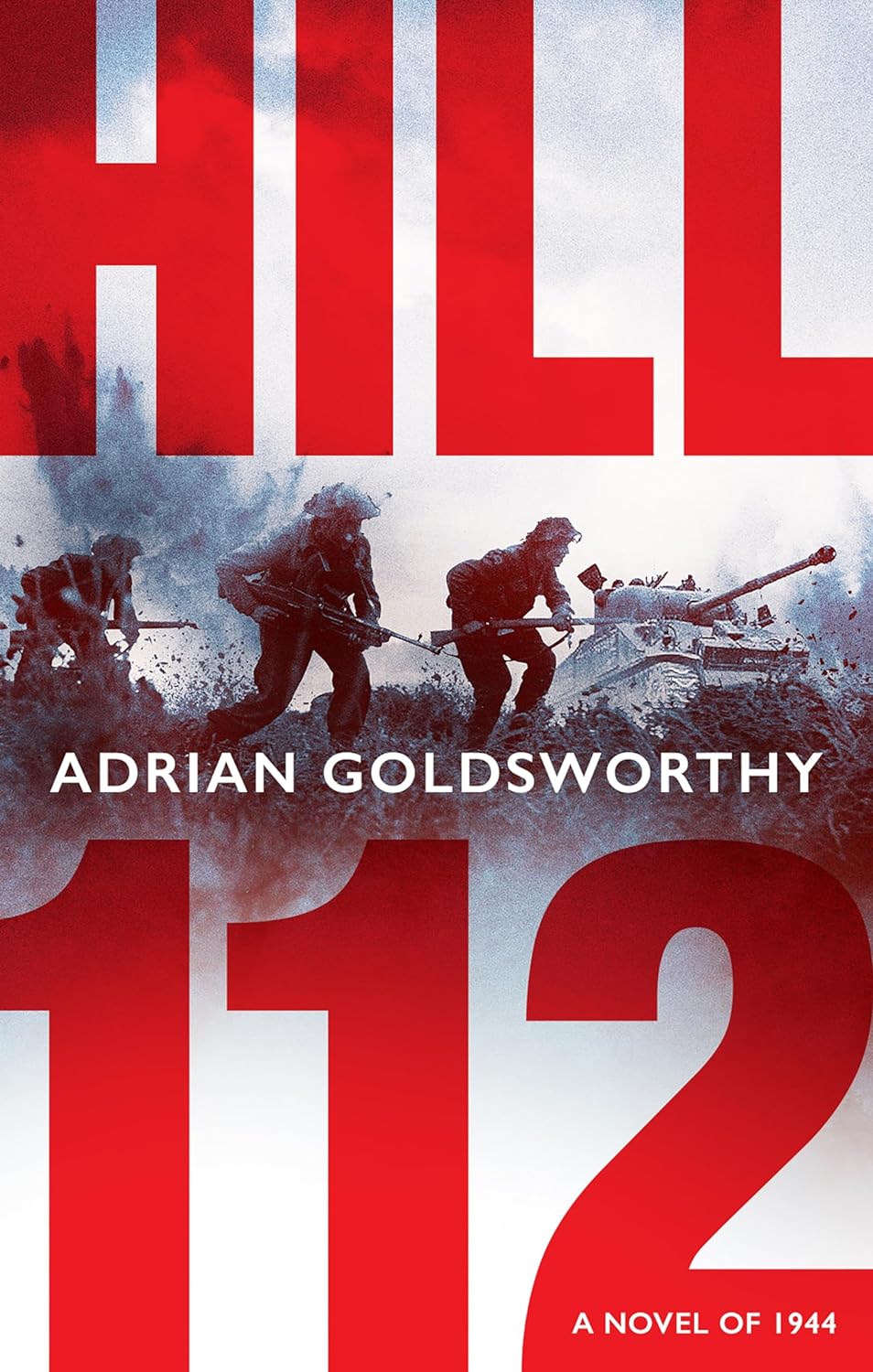
Hill 112 by Adrian Goldsworthy

Hill 112 Cover

Publisher: Head of Zeus (ebook – 23 May 2024)

Series: Standalone/Book One

Length: 495 pages

My Rating: 4.75 out of 5 stars

Amazon

Prepare to dive headfirst into the deadliest of struggles as acclaimed historical fiction author Adrian Goldsworthy provides a captivating look at the Normandy invasions with his epic novel, Hill 112.

Adrian Goldsworthy is an impressive historical fiction author who has been producing some great novels as of late.  A respected historian, Goldsworthy made the jump back to fiction in 2011 when he started his Napoleonic Wars series.  I had the great pleasure of reading the first few books in the series, including True Solider Gentlemen and Beat the Drums Slowly, and Goldsworthy prove to be an outstanding author who would focus his stories on intriguing historical elements.  His Napoleonic Wars series ended up featuring six novels before he dove into Roman historical fiction in 2017 with his Roman Britain series.  Starting with Vindolanda and also featuring six novels, the Roman Britain series sounds very awesome, and it is one I need to check out in the future.  Due to how much I enjoyed some of Goldsworthy’s previous books, I made sure to grab a copy of his latest release, Hill 112, which provides a compelling examination of the bloody invasion of Normandy during World War II.

June 6th, 1944.  After years of enduring the Nazi onslaught, the Allies are finally ready to begin their campaign to invade occupied France.  But to liberate France and free all of Europe, the Allies first must make a perilous landing and brave the full force of the German army waiting for them.  The destination for their fateful landing: Normandy!

As the Allies begin their invasion, three young soldiers, former classmates from south Wales, are amongst the troops landing in Normandy.  The charismatic James must put his previous experience as cricket captain into practice by leading a troop of Sherman tanks into fray.  The athletic Mark is forced to prove himself as the young officer in charge of a platoon of infantrymen, while Bill, the group’s resident firebrand, finds himself in the middle of the fighting as he serves as a private soldier.  However, none of these young men are truly prepared for the carnage to come.

The battle-hardened German army is determined to push the Allies back into the sea, and soon both sides find themselves caught up in a brutal battle for survival.  Into the middle of this, James, Mark and Bill find their courage and luck tested like never before as they finally experience the horrors of war and the seemingly unbeatable Germans.  Their fates, and that of the entire Allied war effort, will be decided in one of the most brutal fights of the Normandy campaign, the battle for Hill 112.

Goldsworthy brings together one of his heaviest and moving novels yet with the incredible Hill 112.  A gritty and realistic war story that seeks to capture the experiences of young soldiers during Normandy, Hill 112 was a fantastic and moving novel that drags readers right into the heart of the fighting.

Hill 112 has a great story to it that, while simple in concept, hits the reader hard and provides a powerful look into the realities of war.  Told from the perspective of three young soldiers as they experience their first taste of combat, Hill 112 is a very moving war novel that is hard to look away from at times.  Starting with the first day of the Normandy landings, you initially follow James, who leads the charge with his tank unit, while Mark and Bill wait back in England for their deployment to the front.  While this did make James’s chapters a lot more interesting and exciting than the others’ at the start of the book, I liked how Goldsworthy chose to start the remaining two characters off back in England.  Not only was historically realistic, but it allowed you to get to know these two protagonists and other supporting characters before the fighting, while also building up the tension, especially when you compared their experiences with what James was going through on the front.

It doesn’t take long for Mark and Bill to make it over to Normandy, and from there the reader becomes enmeshed in seeing all three protagonists facing the tough campaign in Europe.  There is a lot of action and a ton of tragedy in this part of the book, and it was fascinating to see them slowly adjust to the new normal of battle, as they experience the true horrors of war.  Goldsworthy continued to keep the three protagonists separated for most of the story, which allows each of them to grow, while also showcasing several different fronts at the same time.  Their storylines start to converge as the book continues, especially when they find themselves at the foot of the tactically significant Hill 112.  The last third of the book is essentially all out fighting as the three protagonists attempt to survive the desperate battle for the hill.  The carnage flies thick and fast in this part of the book, and you are constantly on edge as the three characters fight on, while also trying to understand the necessity and impacts of war.  I was deeply captivated for this entire part of Hill 112, and I couldn’t stop reading as I waited to see the fates of all three characters.  Goldsworthy did not disappoint, as the ending to this book was extremely shocking and powerful, and you come away wondering about the sacrifices, experiences and emotions of those involved in the fighting.  This was a such a great character-driven war story, and I came away very impressed with how it all unfolded.

I deeply enjoyed the compelling and powerful story that Goldsworthy created for Hill 112 that hits all the right notes for the reader.  Goldsworthy made the clever choice to provide the reader with a more insular look at the invasion, as the viewpoint is limited to the lower-ranked protagonists, more concerned with their own battles, rather than a look at the large war going on around them.  This proved to be an excellent choice of focus, and I deeply appreciated the way in which Goldsworthy was able to get into the mindset of the young soldiers fighting this war.  The constant switching between the three main protagonists allowed for a complex and intriguing story, as they experienced different battles while coming to terms with the fighting in their own ways.  Goldsworthy has a real talent for showing the chaos of war, and you are thrown into innumerable skirmishes, firefights and large-scale battles, all of which is captured in its full destructive glory.  You can honestly feel the bullets flying and the shells landing as you pour through Hill 112, and the constant conflict, danger and excellent portrayal of the fighting ensures that readers have a very hard time pulling their attention away from this amazing book.

Goldsworthy clearly did an exceptional amount of research for Hill 112 as this book is loaded with historical detail as the author meticulously covers key events of this initial invasion.  While the main regiments featured in Hill 112 are fictitious, Goldsworthy bases them on actual participants of the fighting, and you get incredibly detailed depictions of the early days of the Normandy campaign for the English and Canadian forces.  This includes events that followed from the initial landings on Normandy all the way to the conclusion of the fighting around the titular Hill 112, a key historical battle.  Readers get a very compelling and intensive look at how the campaign unfolded, and it was interesting to see how hotly contested this initial fighting in France was, especially as most modern war movies/television series usually show swift victory the moment the allies are off the beaches.  The battle of Hill 112 was naturally a compelling part of the book which the author covers in heavy detail, noting the movement of all the relevant units and the various attacks.  I got so engrossed in Goldsworthy’s recounting of this battle, and readers are left haunted and amazed that so much death occurred for a simple hill in the countryside.

The author really did not spare any detail when it comes to the fighting, and you get a comprehensive vision of the potential experiences of the participants in these battles.  Goldsworthy really dives into every single aspect of the solider experience, and you come away with insights into the conditions, equipment, training and attitudes of the troops, all of which greatly adds to the gritty realism of the story.  This is particularly true in the battle scenes, and it was very compelling to see how the soldiers would have fought, as well as other factors that came into play, such as the Allies’ overwhelming artillery.  I especially enjoyed the many scenes that focused on vehicular combat as one of the protagonists spends most of the book inside a Sherman tank, fighting against German armoured units.  The sequences in the tank are always a high-strung affair, and Goldsworthy expertly captures the cramped conditions, fast-paced fighting, and constant peril that the British crews experienced.  The author further increases the authenticity of the book by having his protagonists experience various incidents that were recorded to have happened during these invasions.  The author cleverly retells these events to feature his characters, and the various experiences, some of which are quite hellish, add a lot of intensity to the book.  Goldsworthy really pulls no punches when it comes to showcasing the experiences of Allied soldiers in Hill 112, and it proves hard not to deeply appreciate his ability to utilise a massive amount of historical detail to tell a good story.

I must also highlight the intriguing characters featured within Hill 112 who added a lot to the impact of the book.  The three main characters, James, Mark and Bill, are all quite intriguing in their own way, and I appreciated how they ran the gambit of young people who would have joined the war effort after leaving school.  Goldsworthy ensures that each of these main characters have a compelling backstory which contrasts in a moving way to their current experiences, and it was moving to see them grow up throughout the course of the horrendous ordeals they find themselves in.  These three main characters are also accompanied by a huge supporting cast of fellow soldiers, officers, tank crews and other figures, each of whom travel with the protagonists to engage in the fighting.  Many of these supporting characters are exclusive to the chapters told from the perspective of a particular protagonist, allowing for unique interactions, and Goldsworthy often provides relevant backstories for these supporting characters as well.  This cast of additional characters gets quite extensive as the book continues, which can make remembering everyone a little hard at times.  However, that proves to be a short-term problem at best, as the supporting players usually doesn’t last too long in the fighting.  This proved to be an excellent and intense character-driven novel, and I really appreciated how well Goldsworthy captured the experiences of these young soldiers in war.

Adrian Goldsworthy once again brings the past back to haunt his readers in the outstanding and moving novel, Hill 112.  A highly detailed and impressive war novel, Hill 112 does an incredible job capturing the experiences of young soldiers in the Normandy campaign and you will quickly become absorbed in the resulting story.  Highly recommended, especially for those fans of military history, Hill 112 was such an amazing read.
Amazon

Agricola: Invader by Simon Turney

Agricola - Invader Cover

Publisher: Head of Zeus (ebook – 14 March 2024)

Series: Agricola – Book One

Length: 352 page

My Rating: 4.5 out of 5 stars

Amazon

I was in the mood for a compelling historical adventure, and the intriguing upcoming novel Invader, the first book in the Agricola series, seemed like the perfect choice, especially with the always impressive Simon Turney at the helm.

Simon Turney, who also writes as SJA Turney, is a well-established historian and historical fiction author who has been producing complex and action-packed reads for years.  Predominantly known for his Roman historical fiction works, including the Marius’ Mules, Tales of the Empire, Praetorian, Roman Adventure and Damned Emperors series, as well as the Knights Templar and Wolves of Odin books, Turney has a substantial catalogue of fantastic books to his name.  I have had some great experiences with Turney in the past, especially as I loved his 2019 novel Commodus, which perfectly captured the life of one of Rome’s most complex Emperors.  I have been meaning to read more from Turney for years and I finally got the chance when I received an early copy of his upcoming book, Invader.  The first book in a new series that will follow the life of famous Roman general Gnaeus Julius Agricola, a historical figure Turney is very familiar with, Invader was a great read that covered Agricola’s first military command.

58 AD, Rome.  Teenager Gnaeus Julius Agricola is the son of a distinguished Roman family that has languished into poverty since the death of his father.  Determined to bring honour and glory back to his family’s name, Agricola sets out to prove himself to the people or Rome through military service.  Utilising the last favour owed to his family, Agricola secures a posting as Tribune in the province of Britannia.

Determined to make the most of his opportunity, Agricola finds himself assigned to the staff of Roman general Suetonius Paulinus, who is about to launch an ambition campaign to capture more of the island and pacify the resentful tribes.  Marching across Britannia, Agricola begins to show himself a capable leader, especially while be forced to deal with rebelling locals, dangerous rivals, and an incompetent commander.

Soon, the war leads to the ancient stronghold of the druids, where Agricola finds his star on the rise.  However, great disaster awaits the Romans back at the heart of the province.  The warrior queen Boudicca has risen in revolt, determined to wipe out all the Romans in Britannia.  With the fate of the entire colony hanging in the balance, can Agricola help find a way to ensure victory for the Romans, even with the odds firmly stacked against them?

Invader was an epic and compelling piece of historical fiction from Turney, who starts up an awesome new series in a big way.  Loaded with action, intriguing characters, and some great historical detail, Invader was a highly addictive read that I was able to power through in two days.

Turney came up with an excellent story for the first Agricola book that quickly grabbed my attention and ensured I couldn’t stop reading.  Told exclusively from the focus on the new series, historical figure Gnaeus Julius Agricola, Invader serves to both introduce the protagonist, while also highlighting some of his early adventures.  The author starts the book off quick, setting the scene for the protagonist and ensuring you’re invested in his ambitions, before dropping him into a particularly chaotic period of the Roman occupation of Britania.

Thanks to the setting, most of the story focuses on General Paulinus’s massive campaign to conquer more territory and destroy the druids, which is a fascinating historical backdrop, especially considering where it led.  I liked how Turney primarily showed one leg of the invasion as the protagonist accompanied one of the split forces through a lengthy march of suppression, colonisation and negotiation.  This results in several interesting encounters and situations, especially as Agricola is desperate to prove himself against the enemy, while also dealing with internal issues, including a rival Tribune and a drunk commander.  This combination of obstacles helps to create a compelling story, and I enjoyed seeing the characters simultaneously involved with internal politics and external fights.  There are some great battles featured here, and this lengthy march of Agricola’s central force through the miserable British landscape proves to be one of the best parts of the entire book.

The rest of the story only gets better, as the protagonist and the supporting characters find themselves involved in two key conflicts, the Roman invasion of the island of Mona and Boudica’s revolt back in the settled provinces.  These scenes are loaded with more action as Turney does an excellent job of setting the protagonist right into the centre of the conflict, and the resulting chaotic warfare, personal worries and other issues really works to tell an engrossing story.  I was initially a little surprised that Turney chose to condense these two major events into the second half of the book, as you probably could have written a whole second Agricola novel about them.  However, after finishing the story, I think it worked well and honestly wasn’t too rushed.  This entire part of the novel proved to be highly entertaining and exciting, and I honestly couldn’t put it down as I waited to see how everything ended.  Turney also sets everything up nice for a sequel/continuing series, and it will be interesting to see how that turns out, especially now that we have the protagonist’s earliest adventures, a potential long-term rival, and a connection to the province Agricola is most known for.

I loved the historical elements that Turney featured in Invader as he did an outstanding job of capturing the feel of both the wild, unexplored areas of Britania and the conquering Roman legions advancing through it.  I loved the author’s great depictions of the various Roman units featured throughout Invader, and you really get a sense of the order, battle tactics and arrangements of a Roman army.  Turney also expertly portrays the intriguing events surrounding General Paulinus’s massive invasion of inner Britannia and, to a lesser degree, the events that led to Boudica’s uprising.  Many of the key recorded moments of these historical events are showcased in an amazing way in Invader, including some major battles, figures and locations.  I rather enjoyed how we saw these events from the perspective of a Roman soldier on campaign, who had no idea about the upcoming revolt that they would have to fight against, nor the wider political issues that led up to it.  Instead, you see how the army was forced to react and the resulting actions that led them to face off in the final battle against Boudicca.  As such, Invader proved to be a particularly impressive historical read, and I cannot wait to see how Turney portrays other key events that Agricola was involved within in future books of this series.

In addition to showcasing the historical events, Turney also features an intriguing range of characters who make up the story.  Most of this is shown through the eyes of series protagonist Gnaeus Julius Agricola, who serves as the point of view character.  Agricola is a historical figure that Turney is very familiar with, and Turney really does a great job featuring him.  While Agricola is generally strongly covered in historical texts (his son-in-law is one of the few surviving historical sources of the period), only a little is known about Agricola’s first visit to Britannia as a young man.  Turney does a great job of portraying Agricola as a hungry young man looking to prove himself, and I think he presented a great potential story about the character.  Watching Agricola battle against everything holding him back was very entertaining, and I look forward to seeing what happens next in the series.  Naturally, Turney places Agricola in the middle of every major battle or encounter he could find, mainly to flesh out the sparse historical notes, and it was interesting to see the combination of ambition, dedication, tactical ability and pride that the author imagined this figure would have in his youth.  Invader also features a great range of supporting characters, both from history and fictional inclusions, who all add a lot to the story.  Standouts include a frustrating rival for the protagonist, a drunk and unpredictable commander who the protagonist is forced to work around, and a native slave, Luci, with whom the protagonist forms an unusual friendship.  I really enjoyed these characters, and it will be interesting to see how their stories continue in the rest of the series.

Overall, Invader was an impressive piece of historical fiction from Simon Turney.  Featuring a great historically important protagonist, Invader served as a brilliant first entry in the new Agricola series, and I really enjoyed the intense and intriguing story that emerged.  Exciting, entertaining, and highly addictive, Invader was an outstanding read that comes highly recommended.  I had an awesome time reading Invader, and I cannot wait to see how Turney captures the rest of Agricola’s complex life throughout this series.

Amazon

House of Open Wounds by Adrian Tchaikovsky

House of Open Wounds Cover

Publisher: Head of Zeus (Ebook – 7 December 2023)

Series: The Tyrant Philosophers – Book Two

Length: 636 pages

My Rating: 5 out 5 stars

Amazon

The always deeply impressive Adrian Tchaikovsky returns with an exceptional and remarkable piece of fantasy fiction, House of Open Wounds, which presents the reader with a particularly unique and ruthlessly entertaining story, chock full of brilliant characters.

Few fantasy authors have the range and style of Adrian Tchaikovsky, whose distinctive contributions to the science fiction and fantasy fields are quite remarkable.  While Tchaikovsky has written several highly regarded series, I have only just scratched the surface of his works, having read a few of his recent reads.  This includes his first foray into the Warhammer 40,000 universe, with the captivating standalone read, Day of Ascension, as well as the brilliant and elaborate novella, Ogres.  However, my favourite book from Tchaikovsky so far would have to be the outstanding City of Last Chances.

The first book in The Tyrant Philosophers series, City of Last Chances was an outstanding read that I had the pleasure of enjoying earlier this year.  Set around a conquered city with several unique magical inclusions, City of Last Chances introduced the reader to a cool new world and told a range of character driven stories about resistance, religion and sacrifice.  City of Last Chances got a very easy five-star rating from me, and it honestly was one of the best books and audiobooks I enjoyed in the first half of 2023.  I had such a brilliant time with City of Last Chances that when Tchaikovsky announced he was releasing a sequel in the second half of 2023, I was ecstatic.  This sequel, House of Open Wounds, continued some of the complex storylines Tchaikovsky started in City of Last Chances, and it was one of my most anticipated books for the second half of the year.

There are few nations more feared or relentless than the ever-expanding Palleseen.  A rising empire of zealots who are determined to bring Perfection and Correctness to an imperfect world, the Palleseen have advanced out of their homeland in an unstoppable wave, wiping out all religion and superstition as they go.  As cities and kingdoms fall before their military might, their armies leave behind mounds of dead and wounded soldiers who require tending in field hospital tents just behind the frontline.

Into this chaos is thrust the god smuggler Yasnic.  A former priest, miracle healer and occasional rebel, whose previous experiences with the Palleseen saw him hanged, attacked and banished from his city, Yasnic has experienced many upheavals throughout his life.  Saved from another execution by the army bureaucracy, Yasnic and his box of orphan gods arrive at the frontlines, where he has been assigned to work in an unorthodox medical unit.

Made up of a mixture of former priests, gods, magicians, alchemists, artificers, necromancers and led by a gigantic brute known as the Butcher, the experimental medical unit treats the soldiers no one else can save and recycles the rest into the war effort.  Entrusted to save the Palleseen soldiers, but doomed if anyone ever discovers the full extent of their abilities, the surgeons and orderlies of this unit ply their bloody trade as best they can while living as part of an unusual family, but the arrival of Yasnic could change everything.

As Yasnic works to fit into the unit and save lives, his unusual connections to the weakened and hidden gods of the world slowly begin to cause chaos throughout the army.  Not only is he aware of the divine forces that secretly hang around the hospital, but his own illegal and crotchety God is determined to bring miracles to the Palleseen, whether that want them or not.  As an outbreak of impossible healing and sudden pacifism spreads through the regiment, can Yasnic keep himself and his gods alive, or will the full force of the Palleseen zealots come crashing down upon him?

This was another epic and truly remarkable novel from Tchaikovsky that had me hooked the entire way through.  Featuring a dark, bloody and fun story, House of Open Wounds was a particularly distinctive read that told its own captivating story while continuing some of the best elements from City of Last Chances.  Funny, thoughtful and moving in equal measures, House of Open Wounds was an incredible and addictive novel that gets another very easy five-star rating.

I was very impressed with the exceptional and moving narrative that Tchaikovsky pulled together for House of Open Wounds, and I was hooked the second I got into it.  After the events of City of Last Chances, the reader is thrust into a new part of Tchaikovsky’s fantasy world as you find yourself imbedded in a Palleseen battalion following the members of an unusual but effective military hospital.  Like City of Last Chances, House of Open Wounds is strongly character driven, as you follow the personal stories surrounding each of these unusual outsider characters and learn about their complex pasts while watching their lives play out in the present.  Much of the plot revolves around returning protagonist Yasnic and his God, who are drafted into the unit, and you get to see his experiences of the other characters, the wars, and the internal Palleseen bureaucracy.  Most of the first half of House of Open Wounds is dedicated to exploring the new cast of characters and introducing their unique stories, as they find themselves closely following a bloody and dangerous war.  This part of the book is primarily focused on the healing and medical work of the protagonists, as well as diving into their reasons for being there and the unique skills they bring to the surgical table.  Apart from that, there isn’t an amazing amount of major plot progression here, except when Yasnic starts to mix things up around the battalion.  While this pace is a little slow, this first half of the book was really fun and enjoyable, as you find yourself getting really lost in the characters’ lives, unique struggles, desires, and experiences.  It also helps that many of these character details, as well as the mundane events of the hospital, eventually lead to bigger things later in the main plot, and Tchaikovsky does an outstanding amount of set up here.

The plot picks up a lot more in the second half, when the main battalion moves to a different warzone and find themselves involved in a substantial fight that really pushes the medical unit to its limits.  The new battles, as well as the intriguing location they find themselves in, move several of the character arcs in some big directions, and you find out more and more about each of the main characters as a result.  The constant chaos that surrounds Yasnic also starts to take its toll on the main story, as his strangeness and the double-edged miracles he occasionally brings cause him to make enemies and upset the delicate balance of the Palleseen army.  At the same time, the Palleseen war machine starts to alienate the members of the medical unit, who find their talents being stolen to create weapons.  Everything leads up to the big finale, where the protagonists attempt to free themselves with an elaborate and ambitious plan.  This plan makes great use of all their individual skills and histories, and so many little details and elements from the story are used to bring a fun and creative conclusion to the book.  Each of the fascinating character arcs conclude nicely and I loved how Tchaikovsky masterfully brought everything together in a satisfying and entertaining way.

Tchaikovsky utilises his typical excellent and distinctive writing style to convey this elaborate and entertaining narrative to the reader, and I had such a wonderful time seeing it unfold.  As with the previous novel in the series, Tchaikovsky relies very heavily on perspective changes to tell a multilayered, character-driven story.  Like the previous book, many of the major characters are initially showcased in their own chapter at the beginning, which often leads to additional cast introductions.  As the book progresses, the chapters feature perspective changes so you can see more interactions and a wider view of the entire story.  I loved the immediate deep background on several of these characters, and while you still often must wait a while to get their full story, you learn enough to like them in the opening parts of the novel.  Tchaikovsky makes full use of these characters to tell a fantastic story, and I loved how well he showcases some unique events through their eyes.  As with the previous book, House of Open Wounds has a range of tones as Tchaikovsky works hard to produce the right balance of humour, excitement, and moving and powerful character moments.  The multiple detailed and confronting scenes of the bloody battlefield hospitals are well balanced out by the fantastic and subtle humour, which often comes from the outrageous situations that occur throughout the book, as well as the various character’s unique outlooks on life.  This made for a particularly compelling book as you found yourself moving from comedic scene to a more dramatic or tragic moment with frequent regularity, as you find yourself stuck onboard a well-thought-out emotional roller coaster.

House of Open Wounds proves to be an intriguing and clever follow-up to City of Last Chances, especially as the author deepens the lore surrounding this fantasy world and brings back two fantastic protagonists.  Readers of City of Last Chances will have an absolute blast with this book, as you get some interesting follow up to Yasnic’s compelling storyline while also seeing a different side to the antagonistic nation from the first book.  This is a somewhat loose follow-up, and you really don’t need to have read City of Last Chances to enjoy House of Open Wounds.  In many ways this is a good standalone novel, especially as most of the focus is on a whole new group of protagonists, and even Yasnic is given a new name for much of the book.  Tchaikovsky does ensure that some of the key details and plot points from the first book are carried over when needed, although he does leave a bit of context out in places so as not to overwhelm new readers.  As such, House of Open Wounds is a very accessible read, although established fans of Tchaikovsky are going to particularly enjoy this, especially if they loved City of Last Chances.

One thing you can always rely on Tchaikovsky to do is to pull together an elaborate and deeply compelling world to set his stories around.  This is extremely true in this series as Tchaikovsky has come up with a war-torn landscape filled with magic, gods, demons and a new rising empire.  The author did some interesting set up for this world in the previous novel, although the plot there was primarily contained inside a single city.  In House of Open Wounds, the reader gets to see a bigger chunk of this world, even though much of the plot takes place either on the battlefield or in the camp behind the lines.  Despite this, you get a better idea of the politics, wars and conquests that have taken place in recent history, and you particularly learn more about the Palleseen.  The Palleseen are a group of ideological zealots dedicated to bringing their version of perfection to the world, which primarily involves breaking everything down into logic and reason, and doing away with superstitions and beliefs.  As such, their goal is to rid the world of gods, deities and other superstitions, usually by conquering the lands and bringing them under the control of their relentless bureaucracy.  Most of this book is dedicated to exploring the nature of their war machine, and you really get to see just how corrupt and ambitious some of their members are as a result.

I loved the focus on the military hospital and the war camp for most of the book, especially as seeing the various members of Palleseen camp allows the reader to fully understand the many problems, compromises and cruelties the Palleseen experience on their road to perfection.  Tchaikovsky throws in some great critiques of militarisation and empire building throughout the book as you see these perfect Palleseen become racked with pride, ambition and greed to prove themselves and advance up the ranks.  Their determination to win means they turn a blind eye to gods and superstitions when it suits them, and that results in the experimental medical unit that serves as the centre of the book.  However, while they appear to only want the assembled gods, alchemists, and other strange magics for healing, really they are working to corrupt them into terrible weapons to further their war capability.  There are several great storylines that see the Palleseen turning benevolent tools and creatures into highly inventive tools of war, and it serves as a major plot point and motivation for several characters, including a few Palleseen who have enough of their colleague’s lust for power.  Combine that with the returning minor gods, who end up having their own impact on several characters, and the reader comes away with a very cynical look at the Palleseen, and empires in general, which both ridicules them and shows just how malevolent and insidious they can be.

The real key that pulls together House of Open Wounds is the huge array of memorable and complex characters that are introduced throughout the course of the plot.  Tchaikovsky does a remarkable job of introducing and swiftly building up some truly amazing characters in this novel, and their compelling and often traumatic personal stories become so highly ingrained in the plot as a result.  There are so many great protagonists and supporting figures in this novel, and I was personally impressed with how all of them were original characters that were not built up in the prior novel.

The main exception to this rule is Yasnic and his god, both of whom were introduced in City of Last Chances and who are masterfully inserted into this sequel.  Yasnic was honestly one of Tchaikovsky’s best characters in City of Last Chances and I was so glad to see more of him here, especially as the author somehow manages to work in even more development after all the defining character moments that shaped him in the prior novel.  Since we last saw him, Yasnic has moved on from being the last priest of a forgotten god and has instead become a more generalised religious figure, offering shelter and assistance to fallen and orphaned gods who no longer have any power or believers by carrying them around in a box on his back.  After everything he has gone through, including his own crisis of faith, Yasnic now has a different view of the world, although he is still being haunted by his demanding and petty god.  Yasnic has some wonderful moments in this book as he tries to fit into his new role while also hanging onto the trappings of his old life.  Desperate to save everyone he can, Yasnic finds his views and pacifism really badly damaged by the constant war and the relentless and orderly Palleseen, and he is forced to make some haunting compromises.  You really get some very interesting insights into Yasnic’s mind in this book, especially as you see how the aftermath of him abandoning his position as a priest impacted him.  You cannot help but feel for the extremely likeable Yasnic at times, as he is thrust into tragic and heartbreaking positions against his will, and his quiet determination and general positivity pluck at your heartstrings.  Throw in some great new friends, an unusual but surprisingly wholesome love interest and a series of unfortunate misunderstandings that frustrate even this gentle soul, and Yasnic once again stands out as a particularly awesome and likeable protagonist.

The other side of Yasnic’s character resides in the body of his tiny, stumpy, and petty deity, God, a former major healing god who has lost all his worshippers apart from Yasnic, but still maintains his powerful healing abilities.  However, God refuses to heal anyone unless they swear a vow of pacifism, and if they cause harm to someone in any way, it will result in their wounds automatically returning, generally resulting in a sudden death.  Thanks to his stubbornness, pride, and his whiny focus on Yasnic’s soul, God was one of the most entertaining characters in City of Last Chances, and I am really glad that Tchaikovsky brought him back for House of Open Wounds.  While he is still a judgemental, mischievous and ugly angel on Yasnic’s shoulder in this sequel, you get to learn more about God and why he refuses to help save people.  There are some surprisingly emotional scenes where God expresses why he is so bitter and you really get a much better understanding of his angry mind, especially when Yasnic makes the same mistakes, adding to God’s sadness.  I also loved how well God played off Yasnic as he proves to be a surprising and entertaining counterpoint to the humble and nice former priest.  While most of their dialogue is quite contentious, with God trying to control his increasingly independent former priest, you can see deep down that God cares about Yasnic, and they form quite an interesting and fun duo.  Tchaikovsky took God’s character arc in some interesting directions towards the end of House of Open Wounds, and I have a feeling he is going to be a real nuisance to people in the next book.

House of Open Wounds also features quite a fun range of supporting characters, each of whom has their own compelling story to tell.  This primarily includes the crazy and unusual group of associated healers and hospital workers that work in the experimental hospital unit, as well as the competitive and dangerous Palleseen officers controlling their destinies.  I won’t go into too much detail here, as I could honestly go one for a paragraph about each, but I was really impressed with how well Tchaikovsky set each of them up and explored their histories and stories as the booked continued.  There are some brilliant and very well fleshed out character arcs everywhere in House of Open Wounds, and I loved just how compelling a story Tchaikovsky was able to make as a result.

Adrian Tchaikovsky once again shows why he is one of the absolute best authors of complex and intelligent fantasy fiction with this outstanding and epic read.  House of Open Wounds is a deeply clever, compelling and moving read that hooks the reader with its unique scenarios, fantastic humour, and memorable characters.  I loved every single second I spent reading this novel and I really appreciated the amazing way Tchaikovsky chose to continue the great story started in City of Last Chances.  I cannot wait to see what over elaborate fantasy stories Tchaikovsky creates in this universe in the future, and this epic novel is one of the best pieces of fantasy fiction I enjoyed in 2023.

Amazon

Quick Reviews – Dark Rooms, Essex Dogs and Blow Back

In recent weeks, I have been trying to review several older books; especially ones that I read last year but never got a chance to publish about.  I am hoping to rectify that to a degree now by publishing brief reviews for three intriguing 2022 releases that I had a great time reading.

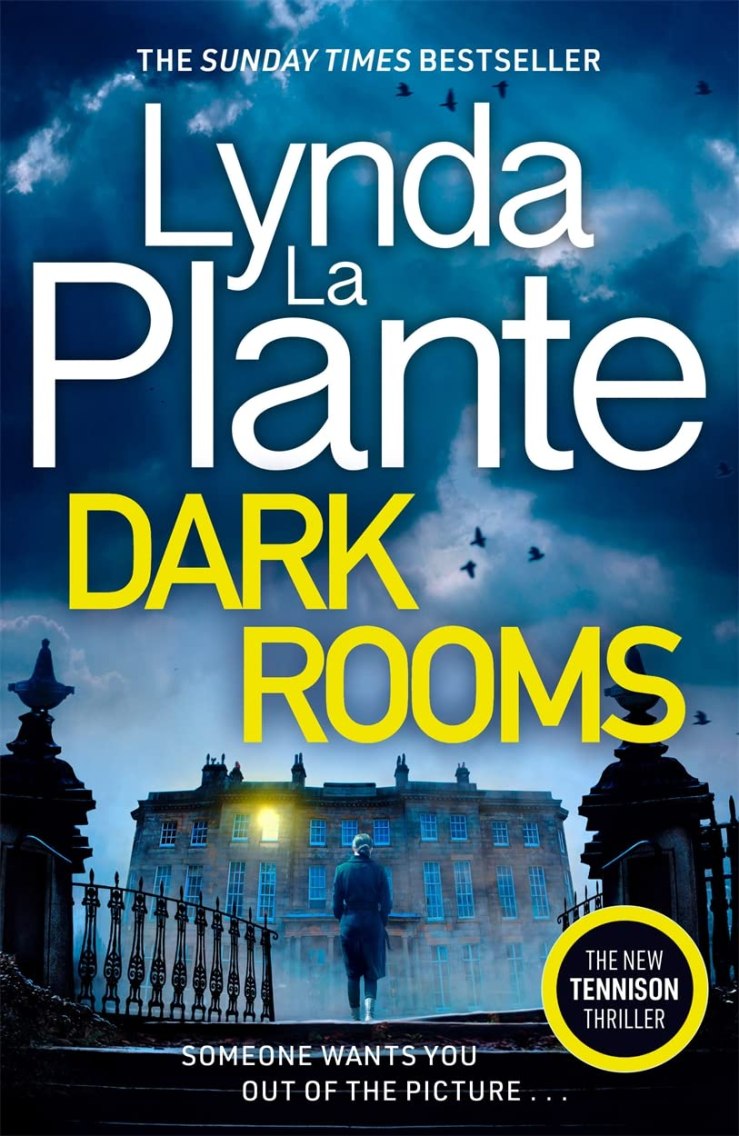
Dark Rooms by Lynda La Plante

Dark Rooms Cover

Publisher: Zaffre (Trade Paperback – 16 August 2022)

Series: Tennison – Book Eight

Length: 319 pages

My Rating: 3.5 out of 5 stars

Amazon

Over the last few years, I have had a great time getting through the amazing Tennison series by iconic crime fiction author Lynda La Plante.  A prequel series to the Prime Suspect television series, the Tennison books follows a younger version of Prime Suspect’s protagonist, Jane Tennison, as she works her way up the ranks while investigating several intriguing crimes.  There have been some awesome books in this series so far, including Good Friday, Murder Mile, The Dirty Dozen, Blunt Force and Unholy Murder, each of which is worth a read, especially for fans of the original show.  I managed to get through the eighth book in the series, Dark Rooms, last year, and it is high time I wrote a review for it, especially as the next Tennison thriller is out just around the corner.

Plot Synopsis:

Helena Lanark is an elderly woman, living in a luxurious care home. The heiress of an immense family fortune, she keeps the secret to the horror which once occurred within the Lanark family house.

Jane Tennison is leading a murder investigation into the recent brutal death of a young girl, her decomposed starved body discovered in an old air raid shelter in the garden of the Lanark’s now derelict house. Initially the focus is on identifying the victim, until another body is found, hidden in the walls of the shelter.

As the investigation and search for answers intensifies, Jane travels to Australia. There she discovers the dark secret, that the Lanark family has kept hidden for decades.  A secret, that not only threatens to bring down a family dynasty, but also places Jane Tennison in mortal danger . . .

This was a fairly compelling crime fiction novel from La Plante, although I must admit that it wasn’t my favourite Tennison novel.  Dark Rooms’ story has an excellent start to it, with Tennison investigating the sinister death of a young woman in an abandoned air raid shelter.  This mystery gets even more complicated when the body of a young baby is also found in the basement.  However, this strong start doesn’t last for as long as I would have liked, with the more interesting case about the dead young woman being solved relatively quickly (although with an extremely dark solution), leaving only the mystery of the dead baby behind.

This second case, while interesting in its own way, is simpler than I would have liked, and the mystery behind it is actually a bit obvious.  La Plante does insert some great dramatic elements behind it, especially behind the tragic nature of the events behind it, as well as the unreliability of the main witness, which increases the emotional impact of the story.  I also quite liked the quick journey to Australia that Tennison undertakes to get answers, which was a nice change of pace that I rather enjoyed.  However, none of this helps to make the case as interesting or suspenseful as it needed to be, and I did not get as attached to the second half of the book.  It also didn’t help that La Plante was a reusing a lot of story elements from the previous entries in the series here, with Tennison facing the usual sexist boss and police department, and the author spending too much time on the protagonist’s social life than was strictly needed.  As such, the story drags in the places, and the lack of a particularly substantive and complex mystery ensures that it never really picks up to the degree you hope it would.

Overall, Dark Rooms was a weaker Tennison novel from Lynda La Plante, and one that does not really stand out when compared to some of the more impressive books in the series.  While I am little critical of it, Dark Rooms did have its interesting and powerful moments, and is still worth a read, especially for established fans of the series.  I am hoping that the next book in the series, Taste of Blood, has a better story behind it, and I am still intrigued to see how this series continues.

Amazon

Essex Dogs by Dan Jones

Essex Dogs Cover

Publisher: Head of Zeus (Trade Paperback – 30 August 2022)

Series: Essex Dogs – Book One

Length: 456 pages

My Rating: 4.25 out of 5 stars

Amazon

One of the more intriguing historical fiction debuts of 2022 had to be the awesome action adventure novel, Essex Dogs by Dan Jones.

Plot Synopsis:

July 1346. Ten men land on the beaches of Normandy. They call themselves the Essex Dogs: an unruly platoon of archers and men-at-arms led by a battle-scarred captain whose best days are behind him. The fight for the throne of the largest kingdom in Western Europe has begun.

Heading ever deeper into enemy territory toward Crécy, this band of brothers knows they are off to fight a battle that will forge nations, and shape the very fabric of human lives. But first they must survive a bloody war in which rules are abandoned and chivalry itself is slaughtered.

Rooted in historical accuracy and told through an unforgettable cast, Essex Dogs delivers the stark reality of medieval war on the ground – and shines a light on the fighters and ordinary people caught in the storm.

This was a very fun and exciting historical read that followed a small band of soldiers, the titular Essex Dogs, as they find themselves in the middle of the initial campaign of the Hundred Years War.  Jones writes a very compelling and action-packed story with a huge focus on camaraderie and survival, as the small band works together to try and overcome the many obstacles before and around them.  Written in the same character and themes as Band of Brothers or Saving Private Ryan, Essex Dogs has a good mixture of compelling historical detail, intense action, and interesting character moments, as the full story unleashes itself upon the reader with some major dramatic moments.  Cleverly working these characters into the middle of all the key events that occurred between the English landing in France all the way up to the Battle of Crécy (with some intriguing real historical extracts to give a fun contrast included at the start of each chapter), you will get wrapped up in Jones’ awesome and electrifying story.

This was a very impressive overall read, and I loved how well Jones managed to bring to life several desperate soldiers and lead them through the chaotic historical events depicted in Essex Dogs.  The captivating action, deep character moments, and inherent tragedy of war really help to turn this into an outstanding read and a pretty great first outing from Dan Jones as an author.  This ended up being one of my favourite debuts of 2022, and I am very interested to see how Jones will continue the story in the upcoming 2023 sequel, Wolves of Winter.

Amazon

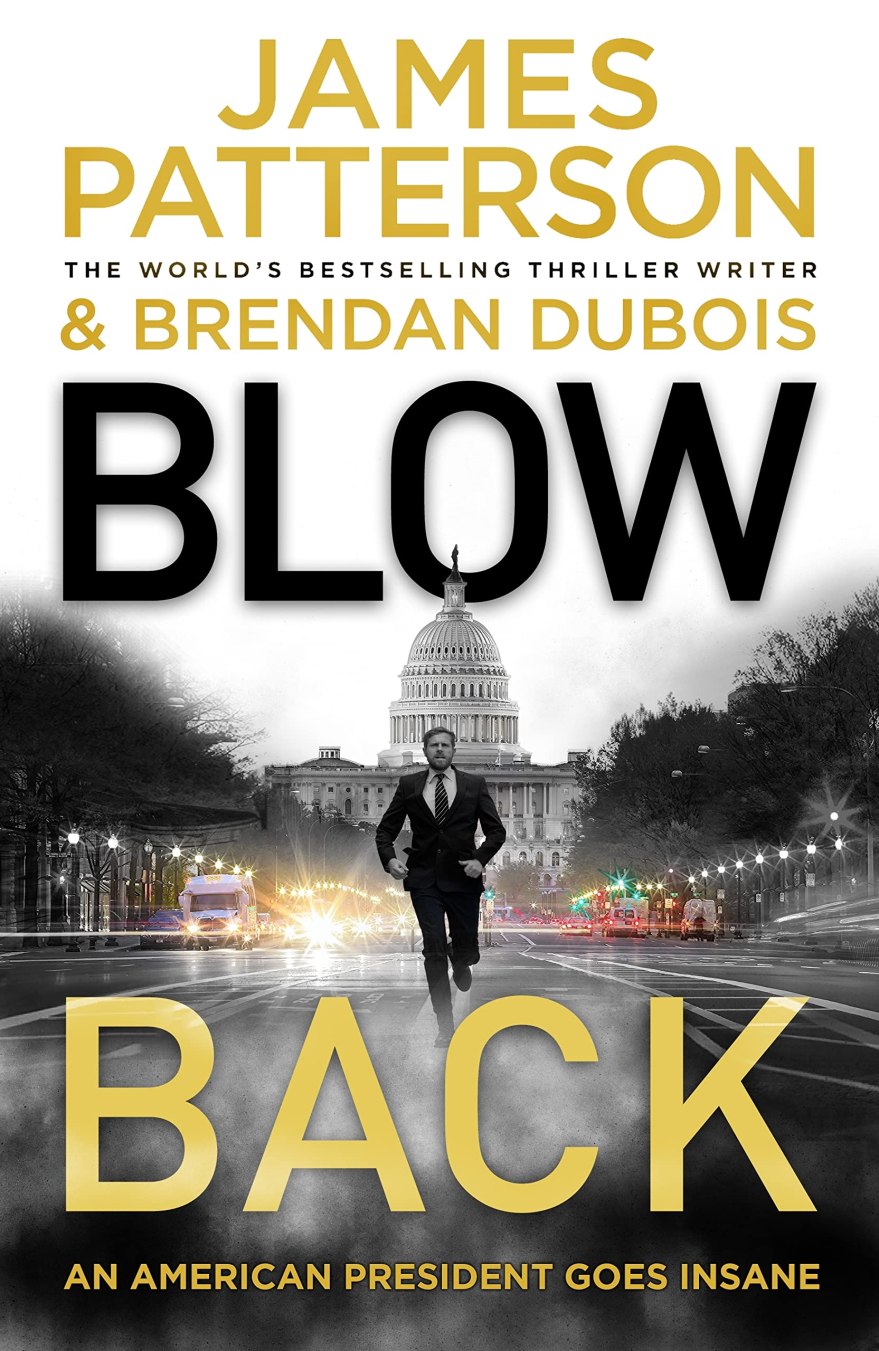
Blow Back by James Patterson and Brendan Dubois

Blowback Cover

Publisher: Century (Trade Paperback – 1 September 2022)

Series: Standalone

Length: 503 pages

My Rating: 4 out of 5 stars

Amazon

A great thriller that I had high hopes for in 2022 was the compelling James Patterson novel (co-written with Brendan Dubois), Blow Back, that featured a fun story about an insane US President.

Plot Synopsis:

He’s America’s most brilliant president ever. He’s also a psychopath.

US president Keegan Barrett swept into office on his success as director of the CIA. Six months into his first term, he devises a clandestine power grab with a deadly motive: Revenge.

President Barrett personally orders Special Agents Liam Grey and Noa Himel to execute his plan, but their loyalties are divided. As CIA agents they’ve sworn to support and defend the Constitution of the United States against all threats, both foreign and domestic.

When the threat comes directly from the Oval Office, that’s where the blowback begins.


Blow Back
ended up being a very entertaining thriller that was extremely easy to read.  The authors deploy the typical Patterson style of short, sharp chapters, and several intriguing character perspectives to showcase the exciting tale, and I loved the great buildup that occurs in the first third of the novel.  Told primarily through the eyes of two US intelligence agents brought in to oversee the President’s planned intelligence revival, the first third of the book is pretty awesome as you watch them change the game in several exciting ways.  There is a ton of action-packed sequences and exciting espionage moments during this first half, as well as some frank and compelling assessments of the state of US, Russian and Chinese intelligence programs in America and across the world, all of which makes for some epic reading.  While the focus is primarily on espionage and the actions of the protagonists, there is also a tangible and compelling sense of dread building in the background as the reader gets closer and closer to seeing what the President is actually planning.

The eventual reveal of the President’s full duplicity and the evil schemes he has cooked up help change the tone of the second half of the book as the protagonists, who have been manipulated the entire way through, are now forced to work outside the system to try and save themselves and the entire world.  This makes for a pulse-pounding second half, and the cool story is loaded with chases, firefights and betrayals, all set around an apocalyptic scenario with a ticking clock behind it.  I honestly had a hard time putting the novel down, and the authors’ easy-to-read style really worked in Blow Back’s favour, producing a lightning quick read with a fun conclusion to it.  I did think that the story did not hit as hard as it possibly could have, and I might have preferred a few more twists or big moments towards the end.  I also didn’t get particularly invested in any of the major protagonists, although I did find President Barrett to be a very fun villain, especially when he completely loses his marbles and goes full evil warmongering tyrant on his enemies.

While I did think that Blow Back’s narrative did have a few issues and could have been a little tighter and more explosive in places, this was a still a very fun read and one that is guaranteed to keep thriller fans highly entertained and engaged.  The fast-paced story proves very hard to put down, and you will get really swept up in Blow Back’s ultra-exciting story of a psychotic and morally bankrupt President trying to destroy the world in his own compelling way.

Amazon

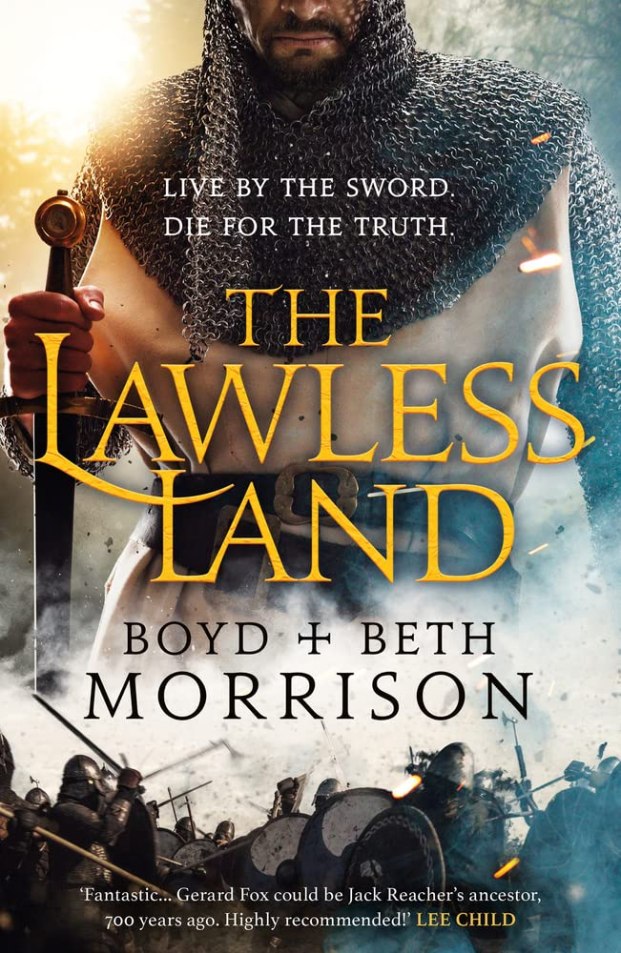
The Lawless Land by Boyd and Beth Morrison

The Lawless Land Cover

Publisher: Head of Zeus (Trade Paperback – 31 May 2022)

Series: Standalone/Book One

Length: 474 pages

My Rating: 5 out of 5 stars

Amazon

Get ready for one of the most thrilling historical adventures of 2022 with the wildly entertaining and deeply captivating medieval fiction novel, The Lawless Land, by the outstanding team of Boyd and Beth Morrison.

Despite my recent focus on other genres, historical fiction in all its forms remains one of my favourite book categories to check out, especially with awesome new novels coming out all the time.  One of the best examples of this is The Lawless Land, which I was lucky enough to receive a copy of a little while ago.  The Lawless Land was a fascinating read that takes some great protagonists on a bold adventure through medieval Europe.  This book was written by Boyd and Beth Morrison, a brother and sister team who have deeply impressed me.  This was a rather interesting combination of writers, as Boyd Morrison is an acclaimed thriller and historical fiction author, and Beth Morrison is the Senior Curator of Manuscripts at the J. Paul Getty Museum and has a PHD in history.  These overachieving siblings really cooked up something special here with their first book, and I loved the outstanding story it contained.

In 1351, Europe is in utter chaos as the Hundred Years’ War rages in France and the Pestilence ravages the countryside, depopulating towns and devastating cities.  These are dark days indeed, and only the desperate and the foolish can be found traversing the roads.  Unfortunately, this includes skilled knight Gerard Fox, whose lands and titles have been taken from him as punishment for a crime against the church, and who is now forced to wander the world by himself, desperate to reclaim his family’s honour.

Journeying towards the castle of Lord Tonbridge, the one man who may be able to prove his innocence, Gerard witnesses a band of armed men waylaying a noblewoman.  Impulsively jumping into action, Gerard saves the women, slaughtering her attackers and forever changing his life.  The young woman, Lady Isabel, is Lord Tonbridge’s betrothed, who has fled from her future husband, taking with her a sacred relic she is sworn to protect.  Forced to abandon his own quest, Gerard agrees to escort Isabel to safety, however, he is unaware of the chaos that is about to be unleashed upon him.

Tonbridge had promised Isabel’s relic to an ambitious Cardinal in Paris, one who is determined to rise to the station of Pope.  Desperate to reclaim the relic and use it to cement his position, the Cardinal and his pawn, Tonbridge, unleash their substantial forces to hunt down Gerard and Isabel.  Fleeing their pursuers, Gerard and Isabel traverse the breadth of England and France to find safe harbour for the relic.  Forced to contend with dangerous foes around every corner, Gerard, Isabel, and their faithful companions will face the worse that medieval Europe has to offer and more.  But worse lies in wait for Gerard, as he bears a dark connection with his pursuers that will ensure they will never stop hunting him.

Wow, now this was a really cool historical fiction novel.  The exceptional writing team behind The Lawless Land have produced an outstanding novel that is extremely exciting, action-packed, and character driven, while also being heavy on the historical detail and accuracy.  This results in an exceptional and epic historical thriller read that I had an absolute blast getting through and which gets a well-deserved five-star rating from me.

The Lawless Land was such a cool read, and I quickly fell in love with its brilliant and exceptional story.  Essentially an adventure thriller set in medieval times, the authors start The Lawless Land off very quickly, showing the protagonist in battle as he saves the damsel in distress, only to end up in even more trouble.  Effectively introducing the key characters early on, you get a real sense of the novels impressive style right at the start, especially with its gritty feel and intense action sequences.  The story soon evolves into a high stakes chase across Europe, as Gerard, Isabel and their companions try to outrace and outwit their opponents to save Isabel’s relic and get revenge for Gerard.  The authors make excellent use of multiple character perspectives here to showcase the chase from both sides, and you get a good look at the various schemes and ploys of the antagonists, as well as the full depths of their villainy.  These amazing and action-packed scenes are expertly interspersed with some flashback chapters that examine the full history and tragedy of the protagonists, especially Gerard, and work to fully establish the enmity between him and the antagonists.  This entire first half of the book is very well written, and the authors’ excellent style will appeal to wide range of readers, not just historical fiction fans, as anyone who enjoys a great adventure or gripping thriller read, can get really engrossed in this excellent story.

This perfectly sets up the second half of this epic novel, which sees the character involved in all manner of carnage and battle as they attempt to win.  I honestly powered through the last 250 pages or so in a day; I was having that much fun reading it.  This second part has everything, including jousting tournaments, prison breaks, desperate chases, elaborate skirmishes, political intrigue, skullduggery and more action than you can shake a stick at.  There is even a full-on judicial duel (think The Last Duel), which was one of the most impressive and gritty fights in the entire book.  There are some intriguing twists, clever reveals, major tragedies, and some outstanding action throughout this entire second half, and it was so much fun to see it all unfold.  I really must highlight the impressive action of The Lawless Land, as all the fights felt particularly realist and very epic, and you can honestly feel every powerful swing and strike of steel on steel.  The authors bring all the established story elements of The Lawless Land together extremely well in the end, and readers will come away satisfied, especially with the fun conclusion and the great ending for the characters.  While this is ostensibly a standalone read, and the authors do wrap up everything really well, there is potential for a sequel at the end, and I for one would not be opposed to seeing more from these characters in the future.

One of the most compelling parts of The Lawless Land was the brilliant dive into the history of medieval Europe.  The writing team clearly did their research when it came to this novel, which is hardly surprising considering the scholarly expertise of one of its authors.  As such, this novel is loaded with impressive and captivating historical detail which isn’t overshadowed by some of the more over-the-top action.  You get a great sense of the how bleak and brutal the continent was at this point in history, with some chilling depictions of plague and pestilence, as well as some intriguing looks at The Hundred Years’ War, including a full flashback chapter to the Battle of Crécy.  The authors spend time exploring a ton of fascinating stuff from this period, including knightly conduct, the power and influence of the church, day to day life for people in cities and the countryside, and so much more.  I particularly loved the scenes set around a tournament in France, where the protagonist engages in a series of jousts.  The sheer amount of detail and realism around these scenes are so very cool, and you can really picture how everything would have looked and felt.  There is also a great examination of medieval manuscripts (again, because of one of the author’s academic focuses), which become a key part of The Lawless Land’s plot, and it was really interesting to examine the significance and process behind them.  All this impressive work around the setting and other historical elements of The Lawless Land really enhanced the overall quality of the book, and I loved how seamlessly it was worked into the epic narrative.

I also must highlight the fantastic characters featured within The Lawless Land, which includes an awesome balance of likeable protagonist and maniacal villains who hunt them.  The story is perfectly split between the two groups, and you get some fun and intense competing views of events throughout the story as a result.  The protagonists are headlined by the awesome character of Gerard Fox, a wandering knight, banished from his family’s lands by the church following a confrontation with one of the antagonists years ago.  Dragged into this conspiracy by accident, Gerard becomes Isabel’s companion and protector, and tries to escort the relic to safety.  A man of action and honour, Gerard is haunted by his past and his many failures, which include watching his brother die in battle, and being tricked into losing everything.  He is also obsessed with discovering the true fate of his mother, and her mysterious disappearance and certain revelations draw him into this conspiracy even further.  A lot of the novel revolves around Gerard’s past, and it was fascinating to see him come to terms with it and try to balance this current quest with his own desires.  Gerard ends up being a pretty awesome protagonist to follow, especially with his martial prowess, unique weaponry, penchant for mischief and trickery (like a certain French fox), and his unbending desire to do the right thing.

Gerard is accompanied by some interesting companions, and the most prominent of these is Lady Isabel.  A noblewoman who was forced into marriage, Isabel seeks to protect her family’s most sacred relic from her betrothed and goes to great length to escape him.  Although she is initially seen as a bit of a damsel in distress, you soon begin to realise that there is a lot more to Isabel than what first appears, as she is an incredibly capable woman with some keen insights and strategies that prove invaluable to her companions.  The authors work some excellent storylines around Isabel in this novel, and you really come to appreciate and enjoy her pluck, courage and intelligence.  There is also a very clever twist about this character revealed in the second half of the book, which was set up extremely well by the authors, including in some flashbacks that both hint at and hide the truth from the reader.  I also should mention the fun supporting characters of Henri and Youssef, two friendly rogues who have substantial history and friendship with Gerard.  Henri and Youssef are excellent additions to the protagonists, and their fun personalities balance well with Gerard and Isabel’s to create a very likeable group of heroes that you become quite attached to, even if that leads to eventual heartbreak for the reader.

I also need to talk about The Lawless Land’s outstanding trio of villains who dog the protagonists’ steps throughout the entire narrative.  This includes the evil Lord Tonbridge, Isabel’s betrothed who she runs away from.  While Tonbridge is mainly hunting them for Isabel’s relic, it also becomes clear that Tonbridge is even more obsessed with righting the perceived slight to his honour and is eager for vengeance.  However, Tonbridge is also partially subservient to villainous French cardinal Molyneux, who has promised him power and a kingship if he succeeds.  Molyneux is particularly despicable, as an ambitious and immoral member of the church who is attempting to become Pope.  Using his influence and the protection of the church for his advantage, Molyneux gains large amount of money and land through unscrupulous means and has some dark history with Gerard’s family, which deeply impacts both his and Gerald’s motivations to confound each other.  The final villain is Molyneux’s vassal and bastard son Basquin, who serves as the protagonist’s main pursuer.  A skilled swordsman and tactician, Basquin is a worthy, if not superior, foe to Gerard, whom he bears a powerful grudge against.  There is some fascinating history behind Basquin that became quite an awesome part of the plot, and it was great to see the intense and captivating confrontations between the two.  The authors take Basquin in some intriguing directions in this book, especially when his own desires clash with that of his abusive father, forcing him to go rogue and enact his own ambitious plan.  All these villains were extremely well written, and it proved highly entertaining to see them go up against Gerard, Isabel and the rest throughout The Lawless Land.  I had such a great time with the characters in this book, and their intense relationships, rivalries and schemes added so much to the power of the novel.

Overall, The Lawless Land was an exceptional and impressive historical fiction read from the great new team of Boyd and Beth Morrison.  These two talented writers came up with something very special with The Lawless Land, and I loved the outstanding and highly addictive narrative contained in this book.  Featuring a ton of epic action, some amazing characters, and some superb historical detail, The Lawless Land was an incredible read that comes very highly recommended by me.

Amazon

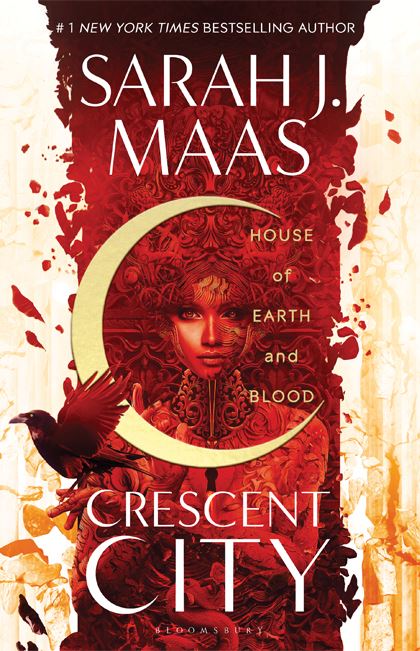
House of Earth and Blood by Sarah J. Maas

House of Earth and Blood Cover

Publisher: Bloomsbury/Audible Studios (Audiobook – 3 March 2020)

Series: Crescent City – Book One

Lenght: 27 hours and 50 minutes

My Rating: 5 out of 5 stars

Amazon

Prepare to meet your new obsession! One of the world’s top young adult fantasy fiction authors, Sarah J. Maas, breaks into the adult fantasy fiction genre in a big way with the first book in her brand-new Crescent City series.

Sarah J. Maas is an author that needs very little introduction. She is one of the most highly regarded young adult fantasy authors in the world today, having written two major bestselling series and a couple of standalone young adult novels. Maas debuted in 2012 with Throne of Glass, the first novel in her acclaimed seven-book long Throne of Glass series, and she has since gone on to write a second major series, A Court of Thorns and Roses. I have been meaning to check out some of Maas’s main series for a while now, especially Throne of Glass, as I have heard some very good things about them. Unfortunately, the only book of Maas’s that I have so far read was her DC Comics tie-in novel, Catwoman: Soulstealer, which I really enjoyed, especially as Maas had an amazing understanding of some iconic comic characters. As a result, I was interested when I heard about her new book, House of Earth and Blood, and I was curious to see how her first adult fiction novel would turn out. This is the first book in the Crescent City series, which presumably will be the author’s main body of work for the next few years. I received a physical copy of this book to review, although I eventually decided to listen to the audiobook format to fit it into my reading schedule, and I have to say I was rather impressed.

Welcome to Crescent City, a bustling metropolis where magic and technology meet in a world ruled over by all-powerful godlike creatures. Bryce Quinlan is a half-Fae, half-human, party girl at the low end of her world’s magical hierarchy, content to live her days clubbing and celebrating with her best friend, the powerful werewolf Alpha Danika Fendyr. All that changes the night Danika and her entire wolf pack are brutally slaughtered while Bryce is out partying. Bryce arrives home just in time to encounter the demon that committed the act, chasing it out into the streets before it escapes, never to be seen again.

Two years later, Bryce is a shell of her former self. Still reeling from the death of the closest person in her life, Bryce finds herself without direction or purpose. However, the revelation that a fresh wave of killings that mirror the bloody way Danika and her pack were taken out quickly changes that. Due to her experiences with the unknown species of demon and her intimate knowledge of Danika’s movements and history, Bryce is tasked by the governor of Crescent City to find who or what is summoning the destructive demons and unleashing them upon seemingly random members of the populace. However, Bryce will not be working on this case alone, as she finds herself teamed up with the governor’s personal assassin, the brooding, dangerous and surprisingly attractive fallen angel, Hunt Athalar.

Begrudgingly agreeing to work together, Bryce and Hunt start to scour the dark underbelly of their city, attempting to find any leads to who summoned the demon. However, they soon run afoul of many of Crescent City’s inhabitants, some of whom do not want the pair to uncover the truth. As they dig further, they begin to uncover a terrible conspiracy with terrible connections to Bryce’s traumatic past and which threatens all of Crescent City. However, the closer they come to the truth, the more pain and torment the two damaged souls uncover, especially as both of them try to fight the intense feelings blooming between them. With the fate of Crescent City hanging in the balance, can Bryce and Hunt get to the bottom of these killings, or will they be overwhelmed by all the hurt that is about to come their way?

Well damn, that turned out to be one hell of a book. I do have to admit that I’m not usually a fan of major romantic subplots in the novels I read (I know, typical male, Bryce would probably be calling me an Alphahole), and I was a little apprehensive that the romantic angles described in the book’s synopsis would overwhelm the fantasy story. However, any doubts I had about whether I was going to enjoy House of Earth and Blood were quickly blown away in the early stages of the story, especially once I hit the major plot development about 70 pages in. From there I was absolutely hooked on the story, as Maas kept piling on revelations, shocking moments, character development and an impressive murder mystery. I ended up really loving this amazing novel, and I ended up giving it a five-star rating.

I really enjoyed the way that Maas told this story, and this book contained an expansive and deeply addictive narrative that proved hard to put down at times. House of Earth and Blood is told from several character perspectives, most notably Bryce and Hunt, although quite a bit of the story is shown from the perspective of Bryce’s half-brother, Ruhn Danaan. Having these three main point-of-view characters results in a much more expansive story, as each of them has their own contributions to the plot, although there is a huge amount of crossover between each of their storylines. While Mass tends to focus most of her character development and storylines around Bryce, Hunt and Ruhn, there are a number of additional supporting characters, some of whom have some rather interesting roles throughout the book. Maas also includes a huge amount of foreshadowing throughout the book, hinting at several things that are to come further along in the narrative. While it is obvious where some of this foreshadowing is going, some of it was only noticeable in hindsight, and some of these more subtle inclusions made me really appreciate the author’s clever writing style.

One of the best things about this book was the incredible and intriguing new fantasy world. The Crescent City series is set on a version of Earth called Midgard, which was invaded thousands of years ago by vast armies of various magical creatures, ending humankind’s dominance of the planet. The modern world of Midgard is a chaotic and fascinating place, filled will all manner of magic and creatures who live in a hierarchal system, with all-powerful beings at the top and humans at the very bottom. There are so many cool elements to this world, from the unique magical systems, the different factions and organisations, and a vast multitude of different magical creatures with their own traits and characteristics. Maas dedicates a substantial amount of time exploring all these different elements of her new world, and the result is an impressive and vast setting which serves as a fantastic backdrop to this exciting story. I also liked the rather fun similarities between this fantasy world and the modern world, and it was interesting to see fantasy creatures running around with modern technology such as phones and guns. I also had a rather good laugh at some of the television shows that the author featured in the book, including a rather trashy-sounding True Blood inspired television show, which was made fun of relentlessly for its sexual content (which is kind of ironic considering how much sex was in this novel). Maas is clearly a master of universe building, and she has come up with a really great fantasy world that holds a lot of potential for future novels in the series, as well as opening up the possibilities of spin-off stories around some of the fantastic side characters introduced. I personally would love to see a novel based around the character of Fury Axtar, the mysterious assassin friend of Bryce, who has a minor role in the book.

In addition, Maas has also come up with a rather clever murder mystery storyline that I had an outstanding time unwrapping. The vast majority of House of Earth and Blood’s plot revolves around the murder of Danika Fendyr and her pack, as well as the similar murders that are occurring in the modern day. The subsequent investigation by Bryce and Hunt turned into a rather captivating storyline, as they explored the underbelly of their fascinating city, trying to find leads and uncover who had a motive to kill Danika. This whole mystery storyline goes to some very interesting places, and Maas comes up with a number of red herrings, alternate suspects, potential leads and side mysteries (a missing magical horn and a new street drug), all of which come together into a pretty incredible and clever narrative. I was actually rather surprised about who the culprit turned out to be, although Maas does set up the reveal rather well, and there are some rather clever hints in hindsight. That being said, while I didn’t know who the culprit was in advance, I totally knew where the final showdown with them was going to take place, and how the whole confrontation was bound to go down (there was a literal Chekov’s gun there). Still, it turned into quite a good confrontation scene, and I had a good laugh at the over-the-top way that the villain was taken down for good. This was a rather impressive element of the story, and I hope that Maas includes some more clever mysteries in her future books.

While I really loved the fantastic story, incredible world building and captivating mystery, the true centre of this book are the two compelling and exceedingly damaged main characters who Maas sets the story around, Bryce Quinlan and Hunt Athalar. Maas does some outstanding work setting these characters up, exploring their pasts and developing their personalities and emotions throughout the book. Bryce starts House of Earth and Blood as a seemingly carefree party girl with major daddy issues. However, the loss of Danika in the book’s first act severely changes her, as she has to deal with an extreme amount of guilt, isolation and social hatred in the following two years. This really alters her as a character and turns her into an extremely vulnerable person with a real emotional investment in the case, who hides all her true feelings behind a sassy and angry façade. Hunt, on the other hand, is a powerful fallen angel who lost his freedom and the love of his life in a failed rebellion against the ruling gods of the planet, and has spent the last several decades being tortured and used by the victorious archangels, and is now the personal assassin of the governor of Crescent City. Now known throughout the city as the Umbra Mortis, the Shadow of Death, Hunt is a simmering pot of anger who is resentful of how he has been treated all his life, and who is determined to be set free. Like Bryce, he is deeply invested in solving the case, as its resolution will allow him to take a serious step towards freedom, and on the surface he is the more serious of the duo. However, also like Bryce, Hunt has some major vulnerabilities and he is hurting deep inside. Both Bryce and Hunt are incredibly interesting protagonists, and I am really impressed with the layers that Maas was able bring to their characters, which added a significant amount to the story.

While Bryce and Hunt are amazing characters in their own right, the real magic comes when they are paired together. It is obvious from the start that these two are going to hook up at some point, but the journey to get there was written extremely well. The combination of these two exceedingly vulnerable and complex characters in the story is great, and it makes for some incredible and dramatic story moments, as Bryce and Hunt slowly work out all their issues and history. The way they slowly go from dislike to mutual respect to lust/romance is accompanied with a slow exchange of secrets, facts and personality reveals, and I had an amazing time seeing them come together as a couple. This turned into quite a good romantic subplot, although the two of them have some major bumps and betrayals along the way. Still, there are some rather nice moments in their relationship, from the way that they take care of each other after traumatic events, to funny reveals and mutual moments of protecting one and other. Bryce and Hunt make for a great pair, and I am really impressed with the way that Maas portrayed them and the complex story she wove around them. It looks like there are more secrets and backgrounds about both coming up in the future books, and I am looking forward to seeing where Maas takes them in the future.

While this book had some amazing elements, I did find this novel to be a tad trashy at times. As I mentioned above, this is Maas’s first foray into non-young adult fiction, and she certainly did not shy away from adding all manner of adult content into her book. While I can certainly appreciate Maas wanting to differentiate this book from some of her young-adult fiction work, I honestly think she overcompensated. This book is filled with a huge amount of adult language and sexual content, as pretty much every character in this book is crude, rude, oversexed and incredibly thirsty. While some of this served a purpose, such as showing what sort of party-girl character Bryce was before the traumatic incident, the sheer amount of stuff that Maas included was a bit over the top, and I found it to be somewhat distracting at times. This book also introduced me to the brand-new term, Alphahole. In the context of this book, an Alphahole is the term that Bryce gives to any magical male who thinks that their abilities and power give them the right to control women and run their lives, especially those women with less magical power than them (i.e. humans and half-humans like Bryce). Unfortunately, in this book pretty much every male that Bryce encounters is an Alphahole in her opinion; even the more redeemable characters like Hunt or Ruhn are deemed Alphaholes at the start of the novel, especially once they venture an opinion about her behaviour or actions. While I appreciate that this dislike for domineering men is part of Bryce’s character due to her father, and controlling guys really aren’t that cool in either fiction or real life, I do think that Maas kind of overdid their inclusion just a bit and I was honestly getting sick of hearing Alphahole as a descriptive term by the end of the book (although it became less apparent as the story progressed).

As I mentioned above, I ended up listening to the audiobook version of House of Earth and Blood. This audiobook has a runtime of 27 hours and 50 minutes and is narrated by Elizabeth Evans. I am rather glad that I decided to check out this format of the book. While I probably would have finished it off faster if I had read a physical copy (it took me a few weeks to get through the audiobook), I always feel that I absorb more of the novel when I listen to it, especially with longer books. This proved to be really useful when listening to House of Earth and Blood, as Maas packed so much plot and world building into this immense novel, and I think I ended up getting more out of this book by utilising this format. I have to say that I was also immensely impressed with Elizabeth Evans’s narration. Evans did an incredible job bringing the story to life, and her steady and emotional dictation of the story really helped me get to the end. I really loved the cool voices that Evans was able to come up with for all the characters, and I think that each of them matched the distinctive personalities of each character. Evans produced a huge range of different voices for these characters, and I really liked how she was able to alter them to reflect the ethereal or magical nature of some of the characters featured in the book, as well as hint at how powerful some of these creatures were by modulating her tone and adding a commanding quality to it. This was an impressive and deeply enjoyable audiobook adaptation, and I would strongly recommend it to anyone interested in enjoying House of Earth and Blood. That being said, be careful where you listen to this book, as it can be a little awkward to hear some of the steamy sex scenes when you are out in public. I somehow managed to be out shopping during two separate and particularly graphic scenes, and it proved very hard to keep a straight face while I was trying to grab groceries.

House of Earth and Blood is an incredible adult fiction debut from Sarah J. Maas, who has produced another outstanding and captivating read. There are so many excellent and enjoyable story elements in this book, and I absolutely loved every second I spend listening to it, even though some parts were a little over the top at times. This was an awesome start to Maas’s new Crescent City series, and I cannot wait to see what impressive and addictive story the author comes up with next. This novel comes highly recommended, and it gets a full five-star rating from me.

Amazon

Dark Blade by Steve Feasey

Dark Blade Cover

Publisher: Bloomsbury (Trade Paperback – 11 July 2019)

Series: Whispers of the Gods – Book 1

Length: 352 pages

My Rating: 4 out of 5 stars

Amazon     Book Depository

For those readers looking for a cool new young adult fantasy series to check out, look no further than Dark Blade, the first book in Steve Feasey’s Whispers of the Gods series.

The gods have abandoned the land, monsters are starting to return, war is afoot and in the darkness of the Void, an ancient evil begins to stir, eager to return to the mortal world.

Into all this, a young boy, Lann, is born. Left as a foundling and with no knowledge of his past, Lann lives a normal life as a farmer’s son until destiny suddenly finds him on the eve of his 14th birthday. Barely surviving an attack from a vicious monster, Lann is left blinded and is taken in by Fleya, a powerful witch with knowledge of his past. While Lann learns to cope with his blindness, dangerous events are unfolding in the land.

In Stromgard, a young and bitter member of the royal family, Kelewulf, has utilised dangerous magic to bind a powerful lich to his body. Together, the young sorcerer and his new undead shadow plan to open a gateway to the void and release a powerful dark god imprisoned there. After murdering the king and framing his son for his death, Kelewulf begins to implement his evil plans unopposed, while the king’s young daughter, Astrid, is forced to take the throne in an attempt to save her brother’s life,

The only hope for the world may be Lann, who awakens one night to find one of the ancient gods in his room. In exchange for the return of his sight, all Lann has to do is take up the Dreadblade, a powerful and ancient blade with a dark history. As the Dreadblade’s wielder, Lann becomes a deadly warrior compelled to hunt down the monsters that roam the land. However, the Dreadblade is a sentient item with its own destructive objectives. Can Lann learn to wield the sword before it is too late, or will an ancient evil once again be let loose?

This is a fantastic new book from established young adult author Steve Feasey. Feasey has been writing for around 10 years, creating two intriguing young adult series. These include the Changeling series, which follows the adventures of a young teen werewolf, and the Mutant City books, which focus on a group of super-powered mutants in a dystopian future. His latest book, Dark Blade, is the first novel in his Whispers of the Gods series, which focuses on a new young protagonist in an original fantasy world.

This was a really fun and enjoyable young adult fantasy book that does a wonderful job setting up a new series with some real potential. Feasey has come up with some really interesting ideas for his fantasy world, populating a Norse-inspired landscape with deadly creatures, fading gods, powerful magic and intense adventures. This book is incredibly fast paced, jumping from intriguing scene to intriguing scene exceedingly fast while maintaining the overall integrity of the story. The story goes in some interesting directions, and Feasey does a good job introducing several enjoyable major characters, including a ruthless villain and a great female protagonist in Astrid. On top of that, there are some amazing action sequences, especially surrounding the main character as he and his magic sword face off against a variety of monsters.

While the overall story is filled with some interesting twists and some creative story developments, the Dark Blade does utilise a number of classical or general adventure tropes. The story of a young orphaned hero who discovers that he has a secret destiny and is gifted a weapon of immense powers (SPOILERS: which used to belong to his father) and who finds a wise mentor to guide him in the first book are all pretty familiar story ideas. However, Feasey uses them to great effect and they help enhance his overall story and help make his book feel more like a young adult version of an old school epic fantasy. The author also makes some amazing changes to the classic storylines, such as granting the sword a malevolent and dominating sentience that attempts to manipulate the protagonist into destroying evil, no matter the cost. Lann’s struggles to control to the sword and stop its attempts to influence him make for some intriguing scenes, and I loved one sequence that sees the Dreadblade go to some extreme lengths to achieve its goals.

Dark Blade is a really fun read that is mostly aimed towards a younger audience. Containing a number of intense battle sequences and scenes of magical devastation, this novel is probably best suited to younger teen or pre-teen readers, who will love the fun adventure contained within this book. This first entry in the Whispers of the Gods series would actually serve as an excellent introduction to the fantasy genre for young readers, who will really enjoy the great combination of action, clever story and interesting fantasy elements.

Overall, this is a compelling and exciting novel that does a wonderful job setting up an intriguing series. Dark Blade has a number of great elements, including an enjoyable, fast-paced story and some inventive modernisation of classic fantasy features, all of which make for a cool read that younger readers in particular will find enjoyable. The Whispers of the Gods series is off to a fine start, and I look forward to seeing how Feasey expands his story in the future.

Amazon     Book Depository

We are Blood and Thunder by Kesia Lupo

We are Blood and Thunder Cover

Publisher: Bloomsbury YA (Trade Paperback – 4 April 2019)

Series: Standalone / Book 1

Length: 400 pages

My rating: 4.5 out of 5 stars

Amazon

From first-time author Kesia Lupo comes We are Blood and Thunder, a clever, inventive and at times dark young adult fantasy novel that represents a brilliant start to a bold new fantasy world.

In the nation of Valorian, a powerful magical curse has been laid upon the city of Duke’s Forest. The curse has wrapped the entire city in a mystical storm cloud filled with death, sickness and despair. Following a series of virulent pestilences brought on by the storm cloud, the city has been placed in quarantine, although passage in or out of the cloud is already extremely difficult. Now, six years after the curse first struck Duke’s Forest, the fate of the city and all who live within will lie upon the shoulders of two young women.

Lena is a cryptling, one of the deformed or marked offspring of Duke’s Forest’s inhabitants who live in the sprawling crypts underneath the city and watch over the Ancestors, the interred dead of the city, who are worshiped as gods. Lena, whose birthmark saw her abandoned as a baby, led a quiet life below the city until strange things started happening all around her. Accused of being a mage by the magic-hating Lord Justice, Lena just barely escapes execution when she encounters Constance in the mists outside the city. Constance is the daughter of Duke’s Forest’s ruler, the Duke, and has returned to the city to reclaim what is hers. Trained as a mage, Constance recognises the magic within Lena and sends her outside the mist while she continues back to Duke’s Forest. However, this fateful meeting will have huge consequences on the lives of both women.

Once outside the mists, Lena encounters the huntsman Emris, a magic user trained to locate untrained mages like Lena, known as Rogues, who has been pursuing Constance for magical crimes she has been accused of. Emris brings Lena back to the City of Kings, the capital of Valorian, where she attempts to learn how to control her magic. However, her unusual magical abilities and status as a Rogue bring her to the attention of some of the city’s worst inhabitants. Back in Duke’s Forest, Constance finds that her city and her father have fallen under the control of the tyrannical Lord Justice. Keeping her status as a mage hidden, Constance attempts to regain control of Duke’s Forest while also searching for the source of the curse surrounding the city. As both Lena and Constance attempt to survive in their respective cities, fate keeps bringing their destinies together. The future of Duke’s Forest rests in the hands of these young women. Can they save the city, or will they be the storm that destroys it?

We are Blood and Thunder is a clever and extremely captivating young adult fantasy novel that I read a little while ago but only just got a chance to review. I wish I had gotten a review of this book up a little earlier as it is a fantastic first book and I have been quite keen to sing the author’s praises for a while. We are Blood and Thunder is the debut novel of exciting new talent Kesia Lupo and presents a powerful story filled with magic, betrayal, personal growth and the hunt for power. At the moment, We are Blood and Thunder is a standalone novel, but the author has indicated on Goodreads that she may set future books within the same universe.

The story of We are Blood and Thunder is told from the perspectives of Lupo’s two main characters, Lena and Constance. Each character narrates about half the book and tells their separate narratives through alternating chapters. This allows Lupo to tell two separate stories that are not only very different in content but which help show a far wider area of the new fantasy world that Lupo has created. I found both of the storylines contained within this book to be extremely fascinating. The first storyline, which is narrated by Lena, follows the character as she journeys to the City of Kings to learn more about magic. While there, she learns more about her mysterious powers and finds herself embroiled in the conflict between the Temples that control magic and an influential mage outside the control of the Temples who has the ear of the King. The second storyline, which is narrated by Constance, is a darker story of political intrigue, murder and dark magic within the walls of Duke’s Forest, as Constance attempts to find the heart of the storm cloud before it is too late, while also attempting to neutralise the tyrannical Lord Justice.

While the magical learning, emotional growth and world building featured within Lena’s storyline are really good, I did prefer the Constance storyline a little more. All the dark political manoeuvring within the unique setting of the cursed Duke’s Forest and the battle between Constance and the Lord Justice were pretty darn compelling, and I had a very hard time putting down the book while I was reading the Constance chapters. While both of these storylines are really good, I was quite impressed by the way that Lupo was able to combine the two separate stories together into one amazing overarching narrative. I felt that the two storylines really complemented each other and helped make each respective storyline better. For example, the explanations of this fantasy universe’s magic in Lena’s chapters help the reader understand some of the magical elements occurring in Constance’s chapters. At the same time, many of the preparations and relationships Constance forged for her desperate return to Duke’s Forest impact Lena as she uncovers dark secrets within the City of Kings. There are also a number of excellent plot twists cleverly hidden throughout the book that are slowly revealed in both storylines. I thought some of these twists, especially a big reveal towards the end of the book, were just amazing and helped turn this into an epic and electrifying story. I felt that the author’s use of the two separate storylines was an incredible way to tell the story, and the overall narrative was quite outstanding.

In addition to her excellent twin storylines, Lupo also came up with two awesome fantasy cities: the City of Kings and Duke’s Forest. The City of Kings is your classic fantasy capital with massive temples and palaces, where everything appears to be perfect and harmonious on the surface. However, there are some dark secrets at the heart of this city, and the magical politics prove to be a major threat to one of the book’s main characters. While this is a great setting, I have to say that the city of Duke’s Forest is the far more impressive setting. Even before the city was cursed, Duke’s Forest would have been an amazing fantasy setting, with its massive crypts staffed by abandoned children and its rabid intolerance of magic. However, by turning it into a city on the brink of death, surrounded by dangerous magical mists and clouds, Duke’s Forest transformed into a much more intriguing and memorable fantasy setting. Lupo does an amazing job bringing this inventive location to life, and I was impressed by the sense of despair and hopelessness that seemed to hang in the air in each chapter set in this city. These two city settings were great, and I felt that they both enhanced the book’s narratives. Duke’s Forest in particular added a sense of urgency to Constance’s hunt for the heart of the storm cloud. I am very curious to see what other locations Lupo will create for the nation of Valorian in the future, and I look forward to exploring more of this clever fantasy world.

I also quite enjoyed the interesting magical elements that the author utilised in We are Blood and Thunder. Lupo has invented some great magical lore in this book, and I had a lot of fun exploring the various aspects of it. Not only is there a city-wide magical curse but there is also a whole new system of magic for the reader to enjoy. I quite liked the intriguing magical systems that Lupo came up with, and there are a number of great elements to them. These include the vision-filled practice of mages binding their magic to a god in order to control their power, which then influences their magical power and abilities, as well as mages who don’t bind their powers and then subsequently lose control and become a Radical, a destructive being controlled by the underlying darkness in magic. These magical elements are mostly explored by Lena. As a member of an ostracised minority who lived beneath a quarantined city where all knowledge of magic was punished, Lena is a perfect character to explore Lupo’s magical elements. Lena has the same lack of knowledge of this world’s mage as the reader, so the readers get a baseline explanation of magic that also makes sense to the plot. I quite enjoyed the various magical elements that the author came up with in this book, and I am sure that she will further expand upon them in later books in this universe.

We are Blood and Thunder is an outstanding debut from Kesia Lupo which combines some amazing and complex character-based storylines with inventive fantasy settings and cool magical fantasy elements to create an awesome overall book. Lupo has some considerable skill when it comes to a compelling young adult fantasy book, and We are Blood and Thunder is an excellent first outing for this talented author. I look forward to reading more of Lupo’s work in the future, especially if she returns to the excellent world she created in We are Blood and Thunder.

Amazon

Guest Review: Pan’s Labyrinth: The Labyrinth of the Faun by Guillermo del Toro and Cornelia Funke

For this entry, my editor and future wife Alex managed to talk me into letting her do a review.  We hope you enjoy this guest review, and Alex may do some more in the future.

Pan's Labyrinth Cover

Publisher: Bloomsbury (Trade Paperback – 2 July 2019)

Series: Pan’s Labyrinth

Length: 297 pages

Rating: 5 out of 5 stars

Amazon

As the chief editor for The Unseen Library, I read far more book reviews than books, but every now and then the mood strikes just right, and I am fortunate to share a house filled to the brim with books waiting to be enjoyed. I thought I’d commemorate the latest occasion by writing a review of my own:

Pan’s Labyrinth is a Spanish-language dark fantasy film written and directed by acclaimed filmmaker Guillermo del Toro. Thirteen years after its release, Guillermo del Toro and bestselling author Cornelia Funke have transformed the screenplay of the film into a beautiful work of prose.

Pan’s Labyrinth is part of a modern tradition of fairytales in which children have fantastic adventures whilst the adults are busy with war. In Spain, in 1944, young Ofelia and her mother join the household of Capitan Vidal, who is responsible for hunting down the anti-fascist guerrillas hiding in the mountainous forests nearby. Left to her own devices and enchanted by fairy tales, Ofelia is drawn to the ancient stone labyrinth near their new home. There she meets the Faun, who tells her she is in fact the missing princess of the Underground Kingdom. In order to reclaim her place in the kingdom and escape her terrible new stepfather, she must prove her courage and worthiness by completing three tasks. This is easier said than done; these tasks themselves are life-threateningly perilous, but Ofelia must also try to protect herself and her heavily pregnant and ailing mother from the ruthless Capitan and the rebels at the door.

Guillermo del Toro is renowned for making visually stunning films, and Pan’s Labyrinth was no exception; in fact, it won Academy Awards for Best Cinematography, Best Art Direction and Best Makeup. I am happy to report that the novelisation of Pan’s Labyrinth faithfully re-imagines the amazing sets, characters and creatures of the film. In the absence of cinematography, visual design and Doug Jones in monster makeup, the authors have relied on using a great deal of descriptive language to bring scenes to life in text. This is also supported by a number of illustrations throughout the book which clearly drew from the art of the film. It had been many years since I last saw the film, but the imagery of the story is so well produced that I was easily able to imagine many long-forgotten scenes according to del Toro’s vision.

There are many advantages of this novelisation. In particular, the book gives a great deal of insight into various characters not afforded by the film. We see Ofelia’s thought processes as she observes the adults around her and as she obeys or defies the Faun’s instructions. We understand the fierce motivation of Mercedes and Dr Ferreira as they desperately try to assist the rebels in the hills without being discovered. Most terrifying of all, we catch a glimpse of the inner mind of Capitan Vidal, the Wolf, whose horrendous acts of violence rival those of the Pale Man. The inner monologues of these characters provided in the book enable us to have a greater appreciation of their perspectives, actions and motivations.

For the most part, the novelisation follows the story of the film faithfully, but it also includes a number of additional chapters. These feature stories of the Underground Kingdom and its magic bleeding into the Upper Kingdom, creating the lore and mythology that surrounds the Spanish landscape in which the story is set. These grim and interconnected fairy tales provide amazing context for the enigmatic Faun and the nature and gravity of the tasks Ofelia must complete, as well as being beautiful and moving stories in their own right.

Fans of the film will know exactly what to expect from the novelisation of Pan’s Labyrinth and will appreciate the additional fairy tales and insights it provides. Those who haven’t seen the film (and there is always a cohort of cinemagoers that dislikes or struggles with subtitled films) will feel as though they had, as this gruesome and fantastic story has been beautifully transferred onto the page.

Quick Review – OtherEarth by Jason Segel and Kirsten Miller

OtherEarth Cover.jpg

Publisher: Rock the Boat

Publication Date – 30 October 2018

Amazon     Book Depository

From the superstar team of comedian Jason Segel and young adult author Kirsten Miller comes the second book in their Last Reality series, OtherEarth.

Goodreads Synopsis:

Simon saved his best friend, Kat, from the clutches of the Company and their high-tech VR gaming experience, Otherworld. But it was at a steep price. Now he, Kat, and their friend Busara are on the run. They know too much. About the Company’s dark secrets. About the real-life consequences of playing Otherworld. And about Kat’s stepfather’s involvement in everything. The group is headed to New Mexico to find Simon’s old roommate, who is a tech genius and possibly the only person who can help them reveal the truth about the Company before it’s too late and the line between what’s real and what’s fantasy is erased… forever.

Imagine a future in which you can leave reality behind and give in to your greatest desires. That future is now. And the future is terrifying.

Segel and Miller are an interesting team with some history, having previously written the Nightmares series together.  While Segel is best known for his film, television and comedy work, Miller is an established young adult author, having written two additional series.

I read the first book in this series, Otherworld, late last year, and it was one of the first young adult books I actually reviewed, as I had not professionally looked at this genre much before.  After reading and enjoying the first book a lot, I started checking out more young adult books in the last year, resulting in some really fun finds and some truly excellent reads.  As a result, I was very excited to check out the follow-up to this book and I was curious to see if I would enjoy OtherEarth the same way I enjoyed Otherworld.  I have to say that overall I had a lot of fun with this second book in the Last Reality series, and it had a lot of great and memorable elements to it.

OtherEarth follows on straight after the events of Otherworld, with the protagonists on the run from the Company.  During their previous adventure, the protagonists were able to determine that the Company had been experimenting on coma victims, installing them into their high-tech video game Otherworld, and killing anyone who learns about their secrets.  Simon, Kat, Busara and newcomer Elvis are now determined to expose the sinister actions of the Company while also saving the sentient programs that have come to life within the game.

One of the interesting things I liked about OtherEarth was the way that the authors split the story between the characters going on adventures within the Otherworld game and their attempts to evade and manipulate the company in the real world.  In order to solve their real-world problems, the protagonists are forced to venture into Otherworld in order to locate the consciences of people the Company have trapped within the game in order to obtain the information or resources to shut the Company down for good.  The blend between these in-game adventures and the subsequent real-world actions they take while evading and attacking the Company works really well and helps create an intriguing story.  Both parts of these stories have some great moments, and there are some fantastic twists throughout the book that will keep the reader keen to check out the final book in this series.

The focus on video games continues to be a major part of this book, and the authors offer up a bit of a critique of the future of this medium.  In OtherEarth, every player of Otherworld is a certifiable psychopath, as the world’s richest gamers buy up the extremely exclusive access to the game.  Watching the various players use the game to fulfil their violent desires and use the game to act as gods is quite eye opening, as is the protagonist’s growing addiction to the game and the combat mechanisms within it.  The programs within Otherworld who have gained sentience also offer a unique edge to the story and it is fascinating to watch them react against the players and creators they encounter.

There is a certain amount of humour and comedy throughout the book, although it is not as strictly comedic as other works by Jason Segel.  However, there are some pretty fun and amusing sequences throughout the novel.  The one that springs to mind the easiest is one particularly entertaining high-stakes sequence that suddenly devolves into a weird and comedic discussion about Dame Judi Dench in some very unusual contexts.  The combination of OtherEarth’s humour and the mostly serious nature of the story gives the book an unique flavour which comes together in a very enjoyable way.

From a young adult perspective, this book is probably best intended for an older teen audience as it contains some adult content.  While not as bad as the first book in the series, which contained a pretty inappropriate early scene in which the protagonist blackmails a couple of bitchy high school girls with their nudes, the intense action and some sexual content is probably not ideal for younger readers.  However, this book will be perfect for the older teen market, and most adult readers will have a good time reading this book.

Overall, OtherEarth is an excellent follow-up to Segel and Miller’s Otherworld, and continues their fun techno-thriller adventure.  With some great humour, an intriguing story and some interesting examinations of the gaming medium, OtherEarth is another exciting read for the older young adult audience.  This is a brilliant read that is well worth checking out.  I will personally am looking forward to the third book in the Last Reality series, OtherLife, which is coming out in October 2019.

My Rating:

Four stars