X-Men Red Volume 1: The Hate Machine by Tom Taylor, Mahmud Asrar and Pascal Alixe

X-Men Red Volume 1 Cover.jpg

Publisher: Marvel Comics

Publication Date – 18 September 2018

Amazon     Book Depository

Writer Tom Taylor and his artistic team have created an excellent and thought-provoking new X-Men series that not only follows the reintroduction of one of comics’ most interesting characters to the turbulent Marvel Universe but once again examines the real world problems of hatred and prejudice.
X-Men_Red_Annual_Vol_1_1_Johnson_Variant.jpg

For years, Jean Grey’s fate has always been tied to the universe-ending Phoenix Force, the cosmic entity of rebirth and destruction that is constantly seeking the most powerful host it can find.  However, following her latest resurrection during the events of Phoenix Resurrection: The Return of Jean Grey, Jean has renounced the Phoenix power once and for all and is now determined to live her life on her own terms.  Still one of the most powerful mutants in the entire world, Jean Grey sets out to restore her connections and find her place in a world that has changed dramatically since her last death.

The one thing that hasn’t changed is the fact that mutants are still feared and hated by a world that doesn’t understand them.  Despite all the adventures and endeavours of Charles Xavier and his X-Men, animosity towards mutants has never been higher.  Determined to change the world for the better, the resurrected founding member of the X-Men sets out to achieve her vision for the future and change world opinion about mutants once and for all.  To do that, Jean first attempts to create a mutant nation at the UN.  But when she is framed for the murder of politician, Jean is declared a criminal and mutants are subject to greater hatred from mankind.

X-Men_Red_Vol_1_1.jpg

Realising that someone must be behind the recent upswing in anti-mutant sentiment and determined to protect those mutants targeted by hatred, Jean forms a new team of X-Men, made up of Nightcrawler, Storm, Namor, Gambit, Gentle, Wolverine (Laura Kinney – X-23), Honey Badger (Wolverine’s adorable clone) and newcomer Trinary.  But even as Jean and her team fight to save those mutants being targeted, more hatred and attacks are occurring around the world.  The sinister Cassandra Nova is determined to wipe mutants out once and for all and views Jean Grey as the greatest threat to this goal.

Following the end of his All-New Wolverine series, Australian author Tom Taylor returns at the head of a brand new X-Men series, X-Men Red, which takes fans back to the basics of the X-Men franchise.  Volume 1 of X-Men Red is made up of issues #1-5 of this new series, as well as Annual #1.  After enjoying Taylor’s work in All-New Wolverine (check out my review here: https://unseenlibrary.com/2018/09/08/all-new-wolverine-volumes-1-6-complete-series-by-tom-taylor/), I was excited to see him continue to work with Marvel, especially as it allows him to expand on characters and story elements he introduced in his previous Marvel series.  Most of the artistic work in this new series has been produced by veteran artist Mahmud Asrar, who has significant work in DC, Image, Marvel and other publishers.  X-Men fans may be familiar with his work on All-New X-Men and Wolverine and the X-Men.  Asrar was the main artist for issues #1-5, while the work on Annual #1, which is placed at the start of the volume, was drawn by Pascal Alixe.

X-Men_Red_Vol_1_2.jpg

It is always fun when starting a new superhero team comic book series made up of established characters to see which heroes the creative team will include in their version of the team.  Taylor has certainly chosen an intriguing and previously unseen mixture of characters for this new X-Men series, and it is interesting to see which characters he focuses on.  The central character of this new team is the newly resurrected Jean Grey, the red in the series title.  This is one of the few times we see Jean step up to lead a team, as she is no longer in the shadow of her mentors or former lovers.  Aside from Jean, the main team members are Nightcrawler, Wolverine and Honey Badger, who are featured in all the issues contained within this first volume.  It was great to see Nightcrawler given such a prominent role in the comic, and it feels like it’s been a while since he’s been such a major character within an X-Men series.  I also liked new character Trinary, who is introduced in this series and is given an interesting set of powers.  Trinary is from India, and has technopathy powers, or the ability to manipulate technology.  Introduced as a new mutant who is attempting to fight the good fight in her own way, Trinary is given a key role in the series understanding the full nature of the technological attacks of the volume’s antagonist, while also taking over a sentinel to use as the team’s new primary source of transportation.  I think this character is given a great introduction, and could have an interesting future in the Marvel universe.  Other characters, Namor, Gentile, Gambit and Storm join the team at various points in the volume, and have a slightly reduced role, appearing for some of the big team ups, with only some short introductory storylines.

I was especially happy to see Taylor transplant the main characters of his previous All-New Wolverine series, Wolverine and Honey Badger, into his next project.  As I mentioned in my previous review, this version of Wolverine, Laura Kinney, also known as X-23, has always been one of my favourite X-Men characters, so I was very happy to see her used again in this series.  She plays a similar role in this team to the original Wolverine, as the silent infiltrator and bodyguard who is loyal to the team’s leader, who in this case is Jean rather than Professor X.  Just like in All-New Wolverine, the heart and soul of this series is definitely Honey Badger, Laura’s clone, who, as well as being a full member of the team, is the series’ comic relief.  Her humorous interactions with all the other characters in the book, especially the stern and serious characters, add a good amount of levity to the book.  Having her refer to Namor as Abs-lantis, or making Gambit hurriedly justify his actions for blowing up Honey Badger by saying it was “for strategic reasons” is particularly amusing and definitely made me smile.  However, the best line in the book has to be given to Wolverine, who casually replies to Jean’s amusement about Laura’s excitement about being in an underwater city with “Being Wolverine doesn’t make me impervious to the wonder of a #$%@%$& mermaid”.
X-Men_Red_Vol_1_3.jpg

One of the most defining things about the start of this new series is how it focused on the evolution of the character of Jean Grey.  Despite being a founding member of the X-Men, Jean’s most significant storylines have usually been about her relationships with Cyclops and Wolverine, or her connection to the Phoenix Force.  Now, after coming back to life, Jean has stepped out of these currently deceased characters’ shadows and starts her own attempt to change the world, as she is no longer content to return to her old life.  Essentially, Taylor is trying to set Jean up as the new Professor X, with her own vision for mutant kind and her determination to change the world for the better and end the current level of hatred and prejudice.  While she has her own unique style and vision, there are a lot of call backs to the original Professor X, including the standard “To me, my X-Men” saying that Professor X and other X-Men leaders utilised throughout X-Men history.  I also enjoyed seeing a Jean Grey that is no longer defined by her relationship with the Phoenix Force, especially as Jean lets it be known that the Phoenix Force was holding her back.

It was also nice to see Jean repair the relationships she previously lost with several prominent X-Men characters, as well as establishing new relationships with characters she’s never had a chance to meet before.  This is particularly prevalent in Annual #1, which starts the volume, as she reunites with her surrogate X-Men family, which is heart-warming, especially as there is a focus on her friendship with Nightcrawler, who spends the volume as her BFF.  I also really enjoyed seeing her think about her relationships with Cyclops and Wolverine.  For the first time in X-Men history, Jean is alive when Cyclops and Wolverine are both dead, and must focus on the world without the two men she’s loved.  As such, she spends time adventuring with the daughters of these two men, Rachel Grey and the new Wolverine, and meeting up with them is one of the first priorities she has returning to the world.  I liked how one of the definitive love triangles of Marvel Comics is acknowledged in this new series, even though two points of the triangle are currently dead, and the focus of Jean’s relationship with the next generation of these characters was a clever idea.  I’ll be very interested to see what relationships are explored in the future, with all sorts of different iterations or offspring of Jean and Cyclops out in the world at the moment.  It will also be very intriguing when the original Wolverine is resurrected to see what role he plays in this series, as the creative team will have to have a look at the relationships that this character has with Jean, the current Wolverine and Honey Badger, a new daughter character he’ll have to interact with.
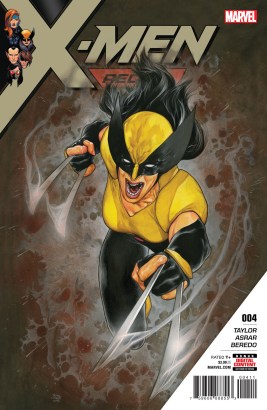
X-Men_Red_Vol_1_4.jpg

Since its earliest days, X-Men has always been about the fight against prejudice, as the hatred the mutant characters experience has often been seen as an analogy for social issues such as racism, anti-Semitism and homophobia.  Taylor and the creative team behind X-Men Red continue this tradition of using their X-Men series to reflect social issues, in this case focusing on modern issues such as the latest rise of the extreme right-wing, intense nationalism, islamophobia, fear and concern about refugees and migrants, as well as racism.  All of these social issues are reflected in the portrayed hatred of mutants in this volume, with various elements of recent world events shown directed towards the mutant characters.  For example, you have Poland attempting to use their military to round up and detain mutants, similar to how some countries have been using their military to stop or detain refugees.  In another very unconcealed scene, rioters carrying tiki torches start attacking mutants, not considering them people, and even killing one mutant counter protestor, in events that are reminiscent of those of Charlottesville.  There is also a focus on the damage or the impact that social media and the internet can have on these events, as many of the anti-mutant events or rhetoric are contained online.  This will be very familiar to readers, as it is impossible not to see the online hatred that many anonymous people direct towards various groups around the world, and at least the one in the comic may be the result of supervillain plot.  Overall this focus on prejudice is a familiar subject to X-Men readers, and many will appreciate how the creative team have tried to bring in modern issues in this new series.  The creative team do end Volume 1 with a message of hope, with some of these antagonist people given a proper understanding of an opposing viewpoint, momentarily giving up their hatred and prejudice, and is something aspire for in the real world.

The artwork within Volume 1 of X-Men Red is just gorgeous and a real highlight of the book.  As mentioned above, Alixe does the artwork for Annual 1, while Asrar does the artwork for issues #1-5.  Both artists’ works are visually distinctive and give the reader something different when it comes to character design, displays of power and fight sequences.  Asrar in particular does some gorgeous backdrops and landscapes, as the stories he is illustrating see the characters go to all sorts of locations, including India, underwater cities and Wakanda.  There are a lot of well-drawn action scenes throughout this volume, although I found the final pages of issue #1 to be some of the most powerfully drawn in the entire volume.  Not only is there a somewhat graphic scene for a Marvel comic but the final panel shows the look of despair on the main characters as the volume’s antagonist makes her first move.  The artistic team of X-Men Red have outdone themselves in this first volume, creating some superbly drawn artworks that are catch the eye and the imagination.

X-Men_Red_Vol_1_5.jpg

X-Men Red takes this new version of this iconic superhero team back to the sort of storylines that made the X-Men such a smash hit in the first place.  With a resurrected Jean Grey taking the lead, Australian author Tom Taylor and his creative team have cleverly brought current social issues to the forefront of their new series while also doing some superb character work, including redefining one of the original X-Men.  This is a great start to an amazing new comic series and a fantastic read for fans of the X-Men franchise.

My Rating:

Four and a half stars

Amazon     Book Depository

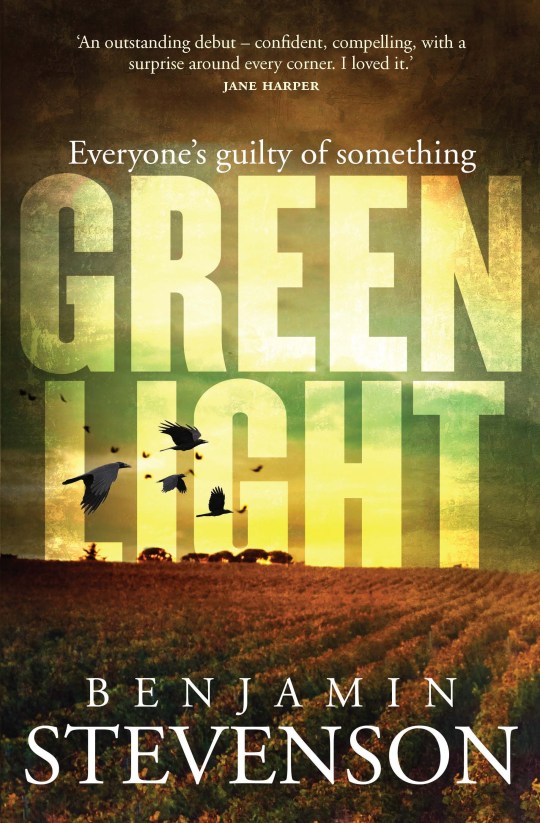
Greenlight by Benjamin Stevenson

Greenlight by Benjamin Stevenson Cover.jpg

Publisher: Michael Joseph

Publication Date – 3 September 2018

Amazon

From debuting Australian author Benjamin Stevenson comes this chilling and intelligent murder mystery that builds a thrilling case with some sensational twists around an intriguing true crime documentary plot device.

Four years ago, in the small Australian country town of Birravale, Curtis Wade was arrested and tried for the murder of young woman Eliza Dacey.  Hated by the entire town and viewed as an outsider, Curtis was quickly found guilty of the crime with very little evidence presented at the trial.  Everyone was convinced of Curtis’ guilt until podcaster and documentarian Jack Quick decided to get involved.

Noting some inconsistencies in the case and sensing an opportunity for fame, Jack decided to make a true crime documentary series, presenting the local police as incompetent and biased.  His series becomes an overnight hit across Australia, and his edited footage convinces many in the country of Curtis’s innocence.  But the night before the finale is due to air, Jack notices a piece of crucial evidence near the murder scene that could prove that Curtis is guilty after all.  Determined not to ruin his series, and convinced that no matter what happens Curtis will never see the light of day again, he disposes of the evidence.  However, thanks to his series, Curtis is released on retrial, and then a second murder is committed, with several grisly details of the first case replicated.  Has Jack just let a murderer go free?

Returning to Birravale, Jack must once again dive into the secrets of a town that hates him for the way his show portrayed them.  As Jack attempts to solve this crime, he must overcome his own past while also dealing with the guilt of the situation.  But did Curtis commit this new crime, or is he being framed by the real killer?  Whoever the murderer is, Jack is wrapped up in their game and for once he needs to reveal the whole truth.

Greenlight is the first novel from Australian comedian and author Benjamin Stevenson and represents a brilliant and exhilarating debut.  This book has an amazing central storyline with a massively intriguing mystery that focuses on the innocence or guilt of the man who has already been both convicted and found innocent of the same murder.  The protagonist must look at whether the person he released from jail committed the murder he was originally convicted of, as well as a second, similar murder that occurred after the suspect has been released.  The reader is constantly left guessing about whether the prime suspect, Curtis, has committed either or both of the crimes, or whether he is actually innocent.  At the same time, the reader is presented with a series of plausible alternative suspects who have motive for either of the murders or, in some cases, the same motive for both of the killings, and this creates some exciting doubt about the original suspect’s guilt.  The final reveals and twists of this case are rather shocking and will definitely provide the readers with some excellent surprises.  Stevenson does a good job providing a lot of hints and foreshadowing in his text, and readers will enjoy seeing how these cleverly scattered clues are brought together in the end.  Overall, this is a hell of a mystery and the author does a fantastic job tying the investigation into the book’s other elements.

One of the most noticeable and outstanding parts of Greenlight is its true crime elements and how this affects both the story and the way that the book is written.  Ever since the dramatic popularity of the 2015 Netflix true crime show, Making a Murderer, various books and shows have attempted to emulate the documentary setting in their works.  What I liked about Stevenson’s book was that, rather than dealing with the creation of the documentary, it is mostly set some months after the television series was released and instead takes a look at the consequences that the show has had.  Not only is a potential murderer released, but various lives and careers have been ruined as a result of the protagonist’s actions.  It is absolutely fascinating to see the various ways that the reaction and follow-up of the true crime television series comes into play through the story.  The protagonist has to deal with a series of characters who are annoyed or angry about their portrayal in the series, which informs the help, assistance or compassion that these characters give.  The success of the series also affects the police response, leaving the protagonist much more open to investigate the crime.  It is also intriguing to see a television show being used as a motive for murder throughout the book, as the second murder could potentially be tied into righting the wrongs that the show caused.  Stevenson covers all these elements incredibly well, and the examination of the consequences and damages of a successful true crime documentary series turns out to be the perfect backdrop for this captivating murder story.

On top of the powerful mystery and the terrific plot focus, Stevenson has also created an interesting central protagonist who serves as the point of view character for most of the book.  The main character, Jack, is the documentarian who makes the show that gets the mystery’s main suspect freed from jail.  Watching the guilt and shame that this character experiences as a result of his various actions, such as the creation of the show, tampering with evidence and editing the videos to tell a specific story, is a great part of this story, and it serves as a perfect motivation for this character’s continued and at times frantic investigation.  Watching the character understand the full extent of his questionable actions, especially after the second murder, is an outstanding part of this book that highlights Stevenson’s strong writing ability.  It is also interesting to see how his experiences creating a documentary have affected his judgement and the way he perceives the world.  The protagonist now sees the slanted way many of the characters talk when it comes to case, and he is constantly trying to determine what role the people who are involved in the case would have in a television show, such as a main character or a supporting cast member.  The author also creates some interesting character background for Jack that works well with this story, as guilt and trauma from his childhood combines with the current extreme blame and he is currently feeling.  Stevenson also produces an accurate and powerful description of an eating disorder that Jack is suffering from, and not only is this description respectful done and informative, but it adds another level to this excellent main character.

A large amount of Greenlight’s plot is set in the fictional small, winegrowing country town of Birravale in the Hunter Valley of New South Wales.  This serves as a great background setting for the murder investigation as the small town secrets and attitudes play a huge role in the overall mystery.  Stevenson does an amazing job portraying a winegrowing community, and provides some interesting details that come into play in a number of ways and often result in a number of potential murder motives.  The small-town setting also works well with the post true crime series plot element, as the protagonist encounters an entire town that has been portrayed in a negative light throughout this series and is viewed in a different way by the rest of the country.  Seeing these resultant attitudes and the impacts his series has had on the town works wonders for the main character and is a great part of this book.

In his debuting novel, Australian author Benjamin Stevenson has created an incredibly captivating mystery storyline.  Greenlight contains a number of outstanding elements, from shocking plot twists and reveals, an excellent central character and an utterly fascinating central plot device, all of which come together into one amazing novel.  This is an exceptional first book from Stevenson which highlights both his fantastic ability and his huge potential as a crime writer.

My Rating:

Four and a half stars

Amazon

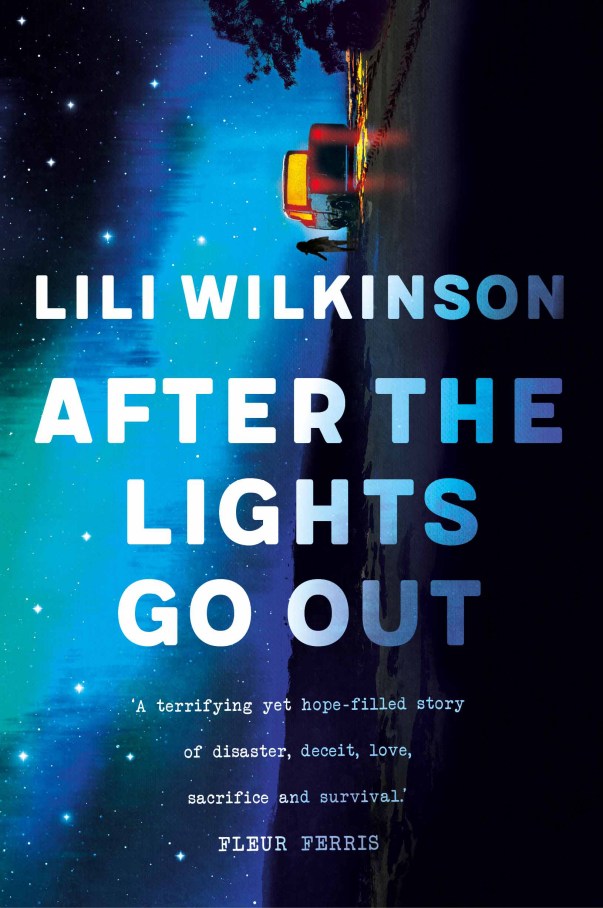
After the Lights Go Out by Lili Wilkinson

After the Lights Go Out

Publisher: Allen & Unwin

Publication Date – 1 August 2018

Amazon     Book Depository

From bestselling Australian author Lili Wilkinson comes After the Lights Go Out, an incredible and powerful young adult adventure set in the heart of the bush that asks the impossible question: should a person choose family or community in an emergency?

Seventeen-year-old Prudence Palmer is a young woman living outside the small Australian outback town of Jubilee with her father, Rick, and her younger twin sisters, Grace and Blyth.  To the other inhabitants of the town, they are just another mining family, living close to Rick’s workplace.  However, they are actually hiding a much deeper secret: they are doomsday preppers.  Convinced that the world will soon suffer some form of imminent catastrophe, Rick has moved his daughters off the grid to Jubilee and has constructed a hidden bunker out the back of his property.  Filled with a substantial amount of food, medicine, equipment, weapons and entertainment, the bunker has everything they need to survive the end of the world.  The girls have also been trained to survive and are ready to react against a variety of scenarios.

While Rick is sure a world-changing disaster is just around the corner, Pru is less certain, and is happy to keep her family’s activities a secret.  So it is a great shock to her when something actually happens and every electrical device, modern car and generator in Jubilee suddenly fails.  With Rick gone, Pru and her sisters must suddenly implement their survival plan without their father’s guidance and make the hard decision to hide their bunker and supplies from their friends in the town.  With food, water and medicine becoming scarce, and with no transportation, communications or other vital necessities, the town starts to fall apart.  As the situation gets even worse, Pru and her sisters must decide between helping their friends or doing as they have been trained and survive alone.

Lili Wilkinson is an exciting Australian author who has produced 10 intense and dramatic young adult novels since her 2006 debut, Joan of Arc: The Story of Jehanne Darc.  Her eleventh novel, After the Lights Go Out is an outstanding standalone book that could potentially replace Tomorrow, When the War Began as the go-to disaster story for Australian young adult audiences.  This book contains a dramatic and moving main story that plunges the world into chaos and places the potential survival of a small town in the hands of one young woman.

At the heart of this book lies a tough moral dilemma for the narrator Pru when she must decide between helping her local community and guaranteeing her family’s survival.  Pru’s father, Rick, a hardcore survivalist, has stocked the family bunker with enough supplies to keep Pru and her sisters alive for several years.  He has also taught his daughters to never help anyone but themselves, and to keep all their supplies for the family.  When a disaster strikes and Rick goes missing, it is up to Pru and her sisters to make the decision, and at first they choose to keep the bunker and supplies hidden from their friends in Jubilee.  As the situation in the town gets worse, Pru’s guilt conflicts with her father’s training and instructions.  This internal debate is intensified when she falls in love with newcomer Mateo and watches him and his mother doing everything they can to save the townsfolk, despite the fact they are not locals and have no significant connection to people living there.  Watching Pru’s internal struggle and the external debate with her sisters is intense, and the reader is left wondering what they would do in a similar situation.  How Pru’s eventual decision affects her family and her relationships with the people of Jubilee is very memorable, and hits all the right emotional notes in this excellent story.

After the Lights Go Out contains an intriguing examination of the doomsday prepper phenomenon that is currently occurring around the world.  The main character’s father believes every single conspiracy theory that exists and is determined to prepare his daughters for anything.  It is clear that Wilkinson has done some significant research into survivalists and their various techniques, and as a result her characters are prepared for every doomsday scenario and have a ton of supplies and a high-tech bunker at their disposal.  There is a lot of discussion and exposition about the various survivalist conspiracies, plans to live in an altered world, the necessary techniques and the ideal supplies that every prepper should have.  Despite most doomsday preppers being American, many of the techniques in this book have an Australian flavour to them, as the girls know the local fauna, flora and means of survival out in the harsh bush conditions.  While every preparation the Palmer family has undertaken is fascinating to read about, I found the examination of the improvised medical techniques the characters use to be particularly outstanding.  This includes including one memorable and somewhat graphic sequence where the narrator needs to perform some rudimentary dentistry.  Overall, the use of the doomsday preppers’ planning and theories is an incredibly intriguing part of this story that provides the reader with some cool facts and the results of the author’s in-depth research.

Wilkinson has also populated the book with some excellent characters who really bring the story together.  While the Palmer sisters are good central characters and Pru is a great narrator who has to make a huge range of tough decisions, the best character has to be the Palmer father, Rick.  Rick is a crazed survivalist who is convinced that the world is about to end and whose paranoia has driven him to outback Australia.  When one of his disaster scenarios actually comes true, he becomes even more erratic, and watching his fears overcome his love for his daughters is very tragic to behold.  There is also Mateo, the young American tourist and liberal city-slicker who is essentially the opposite of Pru when it comes to life experiences.  The relationship between him and Pru is nice.  It evolves at a natural pace and offers the reader some different insights into the situation and the motivations of the Palmer sisters.  Another effective character is Keller Reid, the older boy with an unhealthy obsession with Pru’s younger sisters.  Keller is a particularly despicable character who serves as a very annoying minor antagonist who moves the plot around.  Watching him through the narrator’s eyes, you cannot help but hate him and hope he gets some eventual comeuppance.  The other townsfolk of Jubilee are a good mixture of characters, and it’s nice seeing them come together as a community rather than break down and kill each other as Rick believed they would.

Another part of this book that stood out to me was Wilkinson’s use of the powerful Australian landscape and the examination of small country towns.  The author provides some vivid images of the distinctive Australian bush, and looks at the various features that make it an intriguing backdrop for a story about survivalists.  The author also produces some exceptional portrayals of the close communities that exists in small town Australia and how they their isolation might be both a benefit and a detriment to their survival in a doomsday scenario.  It is definitely a unique setting for a catastrophe novel such as After the Lights Go Out, and one which I felt really added to the beauty and intensity of the story.

I really enjoyed this book and thought it was an incredible piece of literature from Wilkinson.  Because of its excellent story and the phenomenal look it takes at survivalists and their viewpoint of the world, I think this book is perfect for its intended young adult audience, which could prove to be very empowering and enjoyable read for them.  Parents should aware that there are some adult moments and a couple of graphic scenes, but this excellent and informative story is worth the risk.  After the Lights Go Out is a deep and powerful five-star book that provides its readers with an excellent examination of doomsday preppers.  This is definitely one of the best young adult books I have read this year and I cannot recommend this outstanding Australian book enough.

My Rating:

Five Stars

Amazon     Book Depository

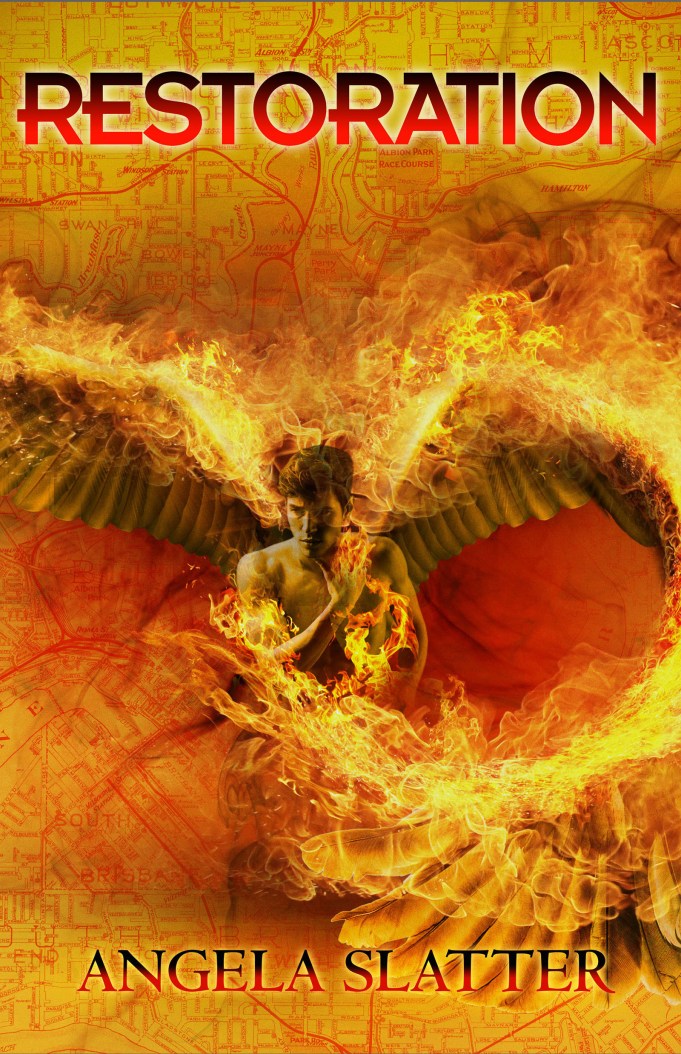
Restoration by Angela Slatter

Restoration Cover

Publisher: Jo Fletcher Books

Publication Date – 9 August 2018

Amazon     Book Depository

One of the very best authors of Australian crime fantasy returns with another outstanding release in her fast-paced and exceedingly entertaining Verity Fassbinder series.

In a world where the magical beings known as the Weyrd remain hidden from the Normal, non-magical population, Verity Fassbinder is a half-Weyrd, half-human agent for Brisbane’s Weyrd Council and is charged with policing the city’s Weyrd population.  However, following an adventure to the underworld, Verity has been forced into the employ of a crazed fallen angel, and must take up his quest to find two secretive artefacts hidden in Brisbane.  In order to protect those she loves from her murderous new employer, Verity has sent her family away and resigned her position with the Weyrd Council.  Saddled with a murderous Kitsune, Joyce, as a driver and spy, Verity must find a way to recover these mysterious two items without giving ultimate power to the creature holding everything she love hostage.

As if her involuntary quest wasn’t hard enough, Verity is also forced to contend with a myriad of other problems from Brisbane’s Weyrd population.  The vengeful sorceress Dusana Nadasy is back in town, determined to kill Verity for the role she played in the death of her family.  The angel Tobit is refusing to take Verity’s calls, Weyrd Council politics is seriously starting to annoy her, literal ghosts from her past are haunting her and her friends the Norns have developed strange new powers.  Finally, her contact in the Brisbane police, Inspector McIntyre, needs her help investigating a series of desecrated corpses of Normal women found around Brisbane whose bodies show the distinctive impact of Weyrd magic.  What Verity does not know is that all of these strange occurrences will play a part in her quest for the fallen angel’s prize and will change her life forever.

Restoration is the third book from Australian author Angela Slatter and represents the third book in her Verity Fassbinder series.  Restoration is an exceptional example of the benefits of combining two genres, and contains incredible fantasy and mystery elements blended together into a powerful final narrative set in modern day Brisbane.

Throughout Restoration, Slatter has surrounded her central storyline with an elaborate series of smaller mysteries and adventures, all of which cleverly tie into the protagonist’s hunt for the artefacts.  Each of the smaller plot lines and investigations is very interesting, and readers will be amazed about how interlocked the story really is.  Those who have read the previous books in the Verity Fassbinder series will also enjoy how Slatter expertly utilises elements and plot lines from the earlier books in the series throughout Restoration.  This is a fun feature, and really shows off how much planning and foreshadowing Slatter included in her first two books, as even minor observations and actions from the earlier books have some big impacts in the latest volume.  Despite this, Restoration is still an excellent book to come into this series with.  The author makes sure all the relevant details of the last two books are fully explained and explored.  As a result, new readers will be able to follow everything that is happening within Restoration, while also being tempted to check out the earlier books in this fabulous series.  Fans will enjoy how the storylines and side quests come together in the end of the book for a big and exciting confrontation sequence that serves as an epic conclusion to the first three books in the Verity Fassbinder series.

In addition to the book’s strong mysteries, the author has also included a range of enticing fantasy elements for the readers to enjoy.  The huge variety of fantasy aspects included within Restoration have been pulled together from a range of different cultural backgrounds.  As a result, the book’s protagonist interacts with creatures that have their origins in Greek, Germanic, Norse and Japanese mythologies and culture, as well as the usual ghosts, magic users and generally powered individuals.  There are also strong components from the Judeo-Christian religion that play a significant part in the story and which tie in well with the other fantasy elements.  The great mystery elements mentioned above work in conjunction with these fantasy features to create an amazing story.  Slatter comes up with some terrific fantasy based motives, plots and suspects for the reader to enjoy, and this helps create an intriguing and entertaining overall narrative.  The protagonist’s hunt for the artefacts, the “grail” and the “tyrant”, leads to a greater insight into this universe’s magical and religious roots, and turn into some intriguing pieces of this universe’s lore.  In addition, the protagonist’s curiosity about her Weyrd ancestors leads to her finding out some fascinating facts about their history, as well as a detailed bit of fictional mythology from Slatter.  This focus on the family she is descended from also hints at these characters being involved in future additions of this series, and will no doubt prove to be excellent antagonists.  Overall, the book’s fantasy elements are highly enjoyable and add sufficient wonder and enhancement to an already outstanding book.

Restoration is mostly set within the Australian city of Brisbane and its local environs.  Slatter, a Brisbane local, has created a detailed and personal depiction of her city and it serves as a fun location for this book’s plot.  People familiar with Brisbane will appreciate the descriptions of city and enjoy the concept of a hidden and chaotic fantasy world lying just below its surface.  Special note should be given about the inclusion of the University of Queensland, Slatter’s alma mater, as a setting within the book, and it is always fascinating to see a location that the author is familiar with and passionate about.

Slatter has continued to use the humour-laden tone of writing that was such a standout of the first two books in the Verity Fassbinder series.  The protagonist is a remarkable character who does not care who she annoys or who gets in her way as she tries to achieve her goals.  This nonconformist attitude and general disregard for the rules for the Weyrd Council has a great way of getting the reader to support her, and as a result she has always been a very likable main character.  The jokes and humour that inhabit the narrative as she encounters a range of strange and dangerous situations help lighten the tone of the dark investigations she is involved with.  Things get serious towards the end, especially when the protagonist’s family gets involved and this helps raise the stakes in the readers mind, although some humour is still involved.  Audiences will love the sass and humorous observations that inhabit this whole book, and it fits in well with the overarching urban fantasy crime narrative that Slatter has cultivated.

Restoration is another superb read from Angela Slatter and an outstanding addition to one of the best fantasy crime series in the world today.  The books in this series are up there with The Dresden Files and the Peter Grant series, and are fantastic examples of this combination of genres.  The third book in this Australian series makes full use of its elaborate mystery, intriguing fantasy elements, exciting Brisbane setting and distinctive humour to create an extraordinary read that comes highly recommended.

My Rating:

Five Stars

Amazon     Book Depository

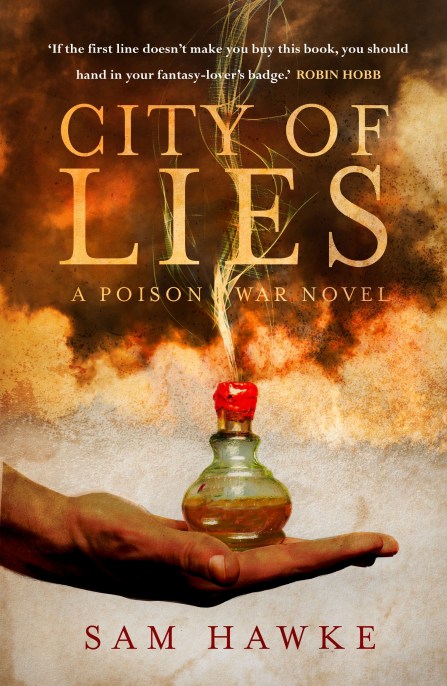
City of Lies by Sam Hawke

City of Lies Cover.jpg

Publisher: Bantam Press

Publication Date – 3 July 2018

Amazon     Book Depository

Poison, murder, conspiracy, and war are all on the way for readers of City of Lies, one of the best fantasy reads of the year from Canberra author Sam Hawke.

In the country of Sjona, the capital city of Silasta is a glittering beacon of culture and art.  Young nobleman Jovan and his family serve a special role, subtly protecting Sjona’s ruler, the Chancellor, and his heirs from being poisoned.  As a result of his training, Jovan is now capable of detecting and identifying poisons that could be slipped to his charges.  While his uncle and mentor directly protects the Chancellor, Jovan serves the Chancellor’s carefree young heir, Tain.

When Jovan and Tain return to the city following a diplomatic journey, they are soon placed in a terrible situation.  The impossible has happened: an unidentified poison has been slipped to the Chancellor, killing him and Jovan’s uncle.  Without their respective mentors’ guidance both young men are thrust into new roles: Tain as an untested Chancellor, and Jovan now responsible for the safety of his nation’s ruler.

However, things can always get worse.  A mysterious army has arrived undetected at the gates of Silasta, and the city, which has never known anything but peace, is soon besieged.  The army appears to be made up of Sjona’s peasants and contains powerful individuals in control of spirits.  With the majority of the military far away fighting in another conflict, few professional soldiers are left to defend Silasta, and Tain must lead a desperate defence against a superior force.

As the siege continues, it soon becomes apparent that not everything is as it seems.  Why is the city being attacked, and how did no one see this coming?  A deep conspiracy lies across the capital and no one can be trusted, not even Silasta’s ruling council.  It also appears that the person who killed the Chancellor is still at large within the city and is aiming to poison Tain as well.  As Jovan utilises all his skill to protect his friend, his sister Kalina searches for the traitors hiding inside their walls.

City of Lies is Australian author Sam Hawke’s debut novel and represents an outstanding first outing from a remarkable new talent.  This ambitious book contains a fantastic plot, with some unique story elements and an elaborate thriller narrative that combines perfectly with the book’s overarching fantasy narrative.  This is the first book in Hawke’s planned Poison War series, and is focused on two separate point-of-view characters, Jovan and Kalina, who each narrate around half the book.

This book contains an amazing and extremely compelling overarching thriller narrative that sees the protagonist attempt to unravel the conspiracies surrounding their city.  Hawke has put a lot of work into creating an elaborate and multilayered plot that draws the reader in with its significant intrigue.  The is so much for the reader to discover as the protagonists try to work out who the army attacking them is, what their motives are, and how the siege relates to the secrets of the ruling class.  This intrigue-driven storyline is amped up even more once it is revealed that the person who poisoned the chancellor might not be a member of the army camped outside the city.  Hawke presents the reader with a number of likely suspects, most of whom are on the city’s ruling council, as well as a range of interesting and plausible motives for the betrayal.  The full extent of the interwoven conspiracies is quite impressive, and Hawke presents an extremely captivating storyline of the protagonists unravelling the plot that is guaranteed to pull in the reader’s full attention.  This is definitely a high point of this fantastic book.

One of City of Lies’ standout features is Hawke’s substantial focus on poisons and role the main character plays in protecting the city’s ruler from harmful substances.  At the start of the story, the Chancellor and the protagonists’ uncle are both poisoned and killed by an unknown toxin.  Jovan, who already served Tain as his ‘proofer’, a combination food taster, poison master, and trusted personal chef, spends the rest of the book trying to defend Tain from a poisoner he knows is out there, who apparently has access to a poison he has no idea how to detect or cure.  The battle of wits between Jovan and the poisoner is an intense part of the book’s narrative, and the reader can feel the desperation that Jovan feels trying to keep his friend and, by extension, his city alive.  There are some great scenes throughout this book as Jovan attempts to work out how poison could be administered to Tain, as well as trying to work out potential cures and solutions to the poison’s victims.

In addition to examining the tension that the book’s poison elements elicit, Hawke also spends a significant amount of time exploring the various toxins of her universe and the techniques of the book’s poison ‘proofers’.  The descriptions of these skills in training is utterly fascinating, and the author has come up with some amazing ideas that prove to be enthralling for the reader.  In addition, Hawke has chosen to deepen the audience’s interest and knowledge of her universe’s poisons by including a page of the protagonist’s ‘proofer tome’ before each chapter in the book.  These pages contain a description of the poison, what effects it has when administrated and what clues the proofer can use to identify the poison in food, such as taste or texture.  This is a fun addition that also contains some information relevant to the book’s plot, and the readers will find themselves deeply exploring the lore being presented to them.  Another cool feature was the way in which Jovan uses his knowledge and cache of poisons in an offensive manner against his opponents to compensate for his lack of martial skill.  There are some fantastic scenes where Jovan uses a range of different substances in the middle of battles, as well as some excellent sequences where he doses potential opponents in advance of a confrontation.

Special mention should also be given to the wonderful fantasy setting that Hawke has created for City of Lies.  The vast majority of the plot is set within the capital of Silasta, a large city that has a reputation and preference for culture and the arts, whilst viewing violence and warfare as a distasteful profession.  The author does an amazing job describing this city’s many wonders, whilst at the same time creating a unique societal setup that plays brilliantly into the story’s intriguing elements.  While the focus of this book is solely within the nation of Sjona, expect the sequels to follow adventures in other countries mentioned.

The siege elements of this book are also very enjoyable and offer another interesting point to this fantastic book.  I’m always a fan of a good siege storyline, especially when it’s told from the point of view of the defenders.  The parts of the book that focus on the siege are extremely well written and provide the book with some substantial action sequences.  It is also fun to see how a city mostly made up of peace-loving artists and performers can defend itself without an army to help.  Hawke produces some great ideas for her defenders, which also ties into the fantastic poison elements above, when the protagonists use their knowledge to create some defences for their city.

Overall, City of Lies is an intrigue-studded masterpiece of a fantasy novel that combines together a range or magnificent story elements with an excellent setting and an addictive overarching thriller narrative.  Hawke’s use of poisons as a key plot point is just incredible and represents one of the most interesting parts of this book, and I am intrigued to see how she will continue to use poisons in future entries in this series.  This is a five-star debut from Hawke, and I would wholeheartedly recommend City of Lies to any fans of the fantasy genre.

My Rating:

Five Stars

Amazon     Book Depository

The Honourable Thief by Meaghan Wilson Anastasios

The Honourable Thief Cover.png

Publisher: Macmillan Australia

Publication date – 31 July 2018

Amazon     Book Depository

In her first solo novel, Australian Meaghan Anastasios has produced a deeply compelling historical drama that combines a thriller storyline with an archaeological investigation into one fun and invigorating narrative.

In 1955, world-renowned archaeologist and war hero Benedict Hitchens has been living a life of academic exile in Istanbul.  His promising archaeological career and professional reputation were destroyed after a chance encounter with the mysterious Eris, who held a horde of ancient treasures that validated the legends of the Iliad.  When Eris and her treasures suddenly disappear, Ben’s attempts to find her result in suspicion from the authorities and disbelief from the world at large.  His only tangible proof of the encounter is a small tablet that hints at the existence of Achilles, Ben’s archaeological obsession.

Now, Ben embarks on an ambitious plan to flush out the people responsible for Eris’s disappearance, hoping to bring her to justice and salvage his life and reputation.  The clues that he uncovers take him on a quest to find the tomb of Achilles, travelling through Greece, London and Turkey in order to locate one of the world’s greatest treasures.  However, a shadowy group is manipulating Ben at every turn.  Can Ben find the Achilles’s tomb before the ghosts of his past catch up with him?

Despite this being her first solo book, Anastasios is already a successful author, having previously teamed up with her husband to produce the historical drama The Water Diviner, which was adapted into a movie starring Russell Crowe.  While this book does not appear to be connected to Anastiasios’s previous work, both stories are primarily set in Turkey and focus on key events in the country’s history.  The Honourable Thief does contain a fun little callback to her other novel when its main character is at one point nicknamed ‘the Water Diviner’ due to his uncanny ability to find archaeological material.

The overall story that Anastasios presents with The Honourable Thief is a fantastic narrative that combines mystery and suspense aspects, great historical fiction elements, exploration of Greece and Turkey, and a whole lot of archaeology.  There is a great focus on the impact of World War II on Greece, especially Crete, as well as a detailed examination of Turkish history and culture.  Having the protagonist work on uncovering both an archaeological investigation and a conspiracy around missing artefacts is an interesting combination that creates a very interesting story.  The ties to the stories of the Iliad as the protagonist examines the possibility of finding the tomb of Achilles are fascinating and will appeal to fans of the classics.

The author has split The Honourable Thief into two parts and three separate timelines.  Part I of the book only briefly touches on the storyline set in 1955, and instead focuses on the events in the protagonist’s life that led up to the latest timeline.  One of these storylines looks at Ben’s early life during the 1930s and 1940s, including his experiences during World War II.  The second storyline is set in the early 1950s and focuses on the events that led up to Ben losing his reputation and the beginnings of his self-destructive life in Istanbul.  Part II of the book mostly contains the 1955 storyline, and follows Ben’s quest to clear his name.

This split into three distinct storylines is a great way to highlight The Honourable Thief’s intricate narrative, and it was interesting to focus on the earlier timelines in the first half of the book.  This also allows the main plot to continue almost uninterrupted in the second half of the book, ensuring that the reader can completely focus on the intense and electrifying adventure set around the protagonist’s hunt for answers.  This formatting decision was a great change of pace from other novels that slowly reveal their protagonist’s past through the course of the entire story.

While the vast majority of The Honourable Thief is told from the protagonist’s point of view, some very short chapters that buck this trend have been added into Part II of the book.  These smaller entries are inserted before the longer chapters that focus on the protagonist and contain brief, shadowy conversations between the story’s villains.  During these chapters, these hidden characters discuss and analyse the actions of Ben and work out ways to manipulate him further.  The identities of these conspirators are not revealed within these chapters, which builds intrigue as the reader tries to work out who they are.  These short chapters are a terrific addition to the book, as they provide the story with some short, but stimulating, breaks in the narrative.  It also adds a completely new perspective to the story and allows the reader insight into the machinations of the book’s antagonists.

Anastasios has created an interesting and memorable protagonist for her excellent story.  When Benedict Hitchens is introduced, he is a disgraced and self-destructive character who does not elicit a great deal of sympathy from the audience.  However, the author’s clever use of the separate storylines allows the reader to view his backstory, which explores his obsession with finding Eris and Achilles.  Both earlier timelines are vital in explaining the character’s motives and emotional baggage, turning Ben into a tragic and sympathetic character.  It is also fascinating to see the changes that have happened to the character during the various timelines.  For example, his experiences change his entire outlook on life and make him more likely to engage in reckless actions.  It also changes his style of archaeology as he goes from the academically accepted practice of carefully digging trenches and laboriously recording every single detail, to a more reckless technique reminiscent of a tomb raider like Indiana Jones.  Anastasios has included an interesting character flaw for her protagonist: despite him being a brilliant archaeologist, he keeps falling for a series of blindingly obvious manipulations, which becomes quite frustrating for the reader to watch.

The reader may find it is possible to predict many of the book’s various twists well in advance, and that lessens the impact of the story.  The eventual reveal of who the antagonists are also was not too uprising.  However, there is one significant, if not slightly ridiculous, twist in the last few pages of the book that nobody is likely to see coming.  While these negative aspects are slightly detrimental to the story, I felt that the all the book’s other amazing elements more than make up for it and turn The Honourable Thief into a captivating and highly enjoyable read.

This fantastic novel is a superb first solo outing from Anastasios, who has crafted an excellent story of betrayal, mystery and adventure, all bound together with archaeology and history.  Cleverly utilising three separate timelines into one compelling narrative, The Honourable Thief is a powerful and distinctive read that will appeal to a huge range of readers.

My Rating:

Four stars

Amazon     Book Depository

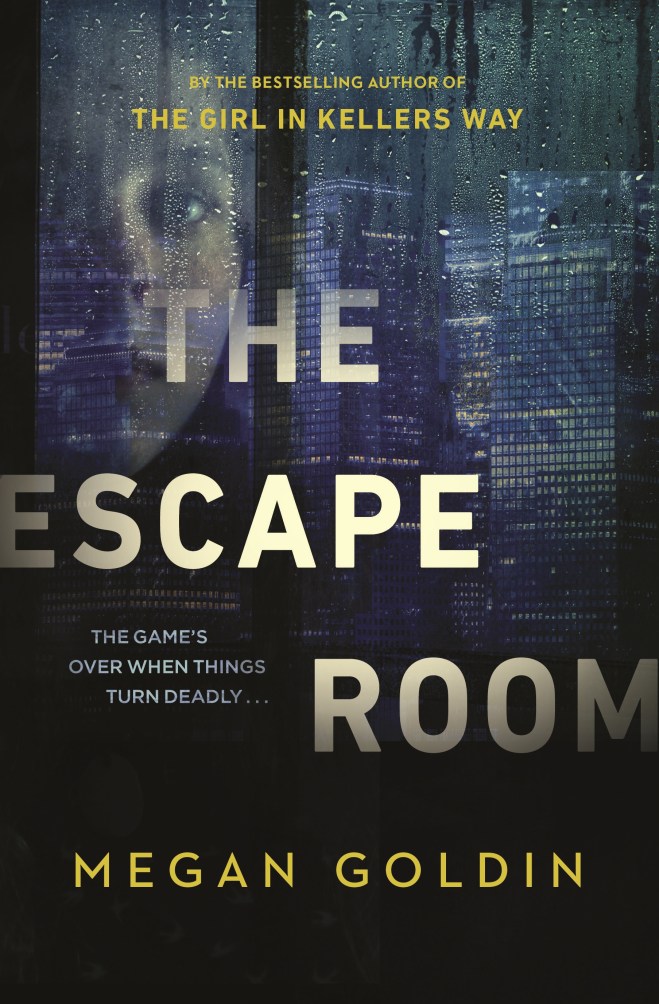
The Escape Room by Megan Goldin

The Escape Room Cover.jpg

Publisher: Michael Joseph

Publication Date – 28 May 2018

Amazon     Book Depository

Australian thriller star Megan Goldin follows up her 2017 debut, The Girl in Kellers Way, with The Escape Room, a sensational new story that stabs right into the heart of Wall Street and the corruption and death festering within.

For years, the high-flying Wall Street investment team of Vincent, Jules, Sylvie and Sam have been the ultimate movers and shakers in the world of rich financiers.  Despite years of success, recent setbacks have put them all at risk of being fired from the large investment firm of Stanhope and Sons.  Ordered to a mandatory team-building exercise, the four colleagues meet at a half-constructed building and enter an express elevator to one of the top floors.  However, the elevator only ascends halfway up the building before stopping and leaving them suspended between floors and high above the ground.  As the four investors attempt to work out what is happening, they receive a chilling message: “Welcome to the escape room.  Your goal is simple.  Get out alive.”

While the team searches for a way out of the elevator, it soon becomes apparent that this is no ordinary escape room.  Secrets and lies are revealed through cryptic clues, and the information revealed is designed to make the four strong personalities clash and lash out at each other.  But the greatest mystery is the clues that hint to the team’s past, and particularly to a dark secret they have kept hidden for years.  As time passes and their situation becomes even more desperate, the four financiers start to turn on each other in their search for answers.  Who has trapped them, and how is it linked to the deaths of two young women who used to be members of their team?

The Escape Room is the second book from Goldin and is another great work from this fantastic Australian author.  I really enjoyed this book and found it to be so compelling that I read the whole thing in one go, intrigued as I was by the unique concept and eager to see how the story ended.

Goldin has split her book into distinctive halves, with two separate stories told in alternating chapters throughout the book.  Half of the book is dedicated to the characters trapped in the elevator and is set over the period that they spend in their confinement.  The other half of the book focuses on the life of Sarah Hall, a young college graduate and entrant to the team at Stanhope and Sons.  The chapters that focus on Sarah are set over several years leading up to the events shown in the book’s other storyline.  The chapters following Sarah feature younger versions of the characters trapped in the elevator and provide significant backstory on these people and the work that they do.

Apart from plot content, there is also another key change between the two halves of the book that is very noticeable to the reader.  The chapters set within the elevator are all told in the third person from the viewpoints of the four characters trapped within it.  However, the chapters set in the past that focus on Sarah are all told in the first person.  This is an effective way of differentiating between the two halves of the book and represents a distinctive change of tone within the story.  The use of two different styles is an interesting choice from Goldin, but it actually works really well in this book.  The third person point of view is the best choice for the scenes in the elevator, as it allows the author to show the actions of the four characters, each of whom have strong personalities.  It also allows the reader to see the mindsets of each of the characters, as their recent actions and relationships issues are explored at multiple points throughout the chapter.  These extra details add to the story and help explain the pressures they are under and the reasons they start to disintegrate mentally.  Using the first person point of view for the chapters following Sarah is also a good choice from Goldin, as the reader gets to see Sarah’s personal experiences of the Wall Street lifestyle and her impressions of the characters from the other storyline who are her superiors at the firm.  This allows the reader to see the characters who become desperate and crazy in the elevator chapters as they were when they were confident and arrogant Wall Street hotshots.  This results in some great scenes and is an amazing pay-off for this unique choice of format.

The Escape Room contains some exceptional storytelling from Goldin, who has managed to create an intricate and captivating thriller.  The scenes of the book set in the elevator are particularly intriguing, as the reader gets to witness these characters slowly become more erratic the longer they are trapped, and finally turn against each other.  The final reveal of who is set up the escape room is a little predictable towards the end of the book.  That being said, there are some great twists and turns getting there, as well as some exciting revelations, such as how the whole situation was set up, the motives behind it, as well as which characters in the elevator actually knew the dark secret that resulted in their captivity.  These additions to the narrative are intricate and clever, and are one of the main reasons that The Escape Room is such a great read.

While this book had a number of amazing elements, the thing that I enjoyed the most was the examination of the Wall Street lifestyle.  Goldin has done a superb job of capturing the sleaze, the sexism, the nepotism and the cronyism that infects such an old-school boys’ club like Wall Street.  The descriptions of the lifestyles that the Wall Street brokers have to live are just insane, and Goldin spends significant time describing every aspect of these character’s lives and how their work, with the long hours, focus on appearances, the corporate backstabbing and the hunt for more money completely consumes their lives.  While Goldin does not paint Wall Street in the best light, it is the perfect background for a thriller, and I really hope that she returns to this setting in some of her future books.

The Escape Room by Megan Goldin is an outstanding second outing from this amazing new Australian author.  With a brilliant setting that contains a deep and confronting look at the daunting Wall Street lifestyle and a complex and captivating narrative that masterfully combines two excellent storylines, The Escape Room takes the readers on a wild thrill ride that they will be unable to escape.

My Rating:

Four and a half stars

Amazon     Book Depository

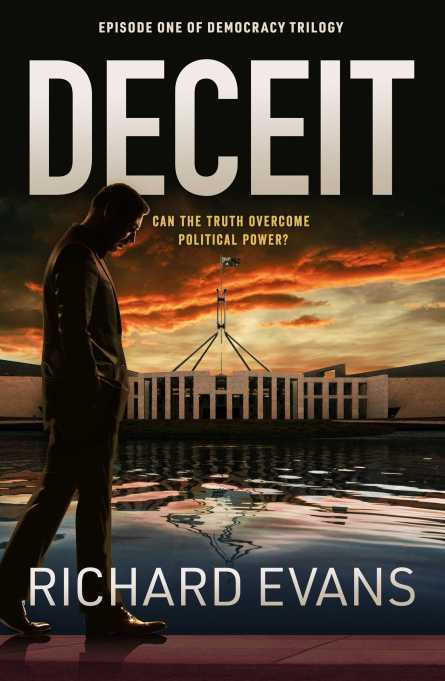
Deceit by Richard Evans

Deceit Cover

Publisher: Impact Press

Publication date – 18 June 2018

Amazon     Book Depository

From former politician Richard Evans comes one of the most incredible fictional examinations of the Australian political system with Deceit, an exciting and superb political thriller.

When corrupt Australian Prime Minster Andrew Gerrard makes a deal with his Indonesian counterpart, he embarks on a plan to build up a retirement nest egg by passing a controversial funding bill for overseas detention centres over a period of several years.  However, when key members of his party die in a tragic plane accident, Gerrard decides to process all of the funding in one go and receive the full amount of his payoff.

Outnumbered in the House of Representatives, and with only one week to pass the bill through both houses of parliament, the task looks impossible.  But the Prime Minister is a canny political operator with no conscience to speak of and with the Speaker deep in his pocket and with no conscience to speak off.  Equipped with a master plan, Gerrard starts to manipulate the bill through parliament.

The only person who may be able to stop him is the outgoing Clerk of the House of Representatives, Gordon O’Brien, who suspects that the Prime Minister’s mysterious last-minute bill is more sinister than it appears.  As one of the few people who believe in the sanctity of the parliament, O’Brien will risk everything to find out the truth and ensure no wrongdoing is done on his watch.  Utilising all the tools at his disposal, including the opposition and investigative journalist Anita Devlin, O’Brien prepares to move against the Prime Minister.  Let the political games begin!

Evans is a former Australian politician who served two terms as a federal member of parliament in the 1990s.  Evans has decided to utilise his political experience and expertise by creating a series of Australian politics based thrillers and dramas, with several books planned for release in 2019 and 2020.  Deceit is his debut novel and the first book of his planned Democracy trilogy, with the second book in this series, Duplicity, already set to be released in 2019.  Readers interested in fictional depictions of Australian politics should also keep an eye out for his upcoming Referendum and Jack Hudson series, both of which will start to be published in the next two years.

Deceit is a fabulous political thriller with a fantastic story that twists and turns through multiple layers of manipulation, deceptions, lies and double-crosses.  The book’s main antagonist, Australian Prime Minister Andrew Gerrard is a selfish, manipulative and sleazy character who serves as a perfect villain for this story and whose plots are a highlight of this book.  Evans has done a clever job of spreading the story out among multiple point-of-view characters, as this allows the reader to view the impact of Gerrard’s manoeuvrings and lets them see how they are received by members of the opposition, the media and O’Brien.  Evans is a very talented storywriter, and the entire plot of Deceit is extremely compelling and very well thought out.  Readers will fall in love with this amazing story and will find its overall conclusion very satisfying.

As someone who lives and works in the book’s main setting, Australia’s capital city, Canberra, I have received a lot of exposure to Australian politics.  As a result, I loved the author’s exceedingly realistic and accurate depictions of the Australian political system and how it was used within this story.  There is some great coverage of Australia’s parliamentary procedure and the creation and passage of bills and laws through both houses of parliament that are presented in a precise and well-described way.  There are also a number of characters who hold roles that are actually part of Australia’s political and civil service.  These positions and roles are explored in detail, and the reader is given significant insights into what work and requirements are needed by the people holding them.  Evan’s does a fantastic job of weaving these usually dry subjects into a very enthralling narrative, and readers will be intrigued to see how the fictional Prime Minister plans to get a dodgy bill past the entire country without anyone noticing what he is doing.

The standout scene of the book has to be an extended chapter that featured a session of question time in the House of Representatives.  Question time is a daily occurrence during the parliamentary sitting period during which government and non-government members of parliament ask ministers questions about their various portfolios.  As someone who has been exposed to many question times, I was struck by how genuine Evans’s description of this event was.  Evans perfectly encapsulates the entire process from start to finish and was able to recreate the snarky and sometimes petulant nature of the discourse that are the usual fare of question time.  The author expertly links the overarching storyline of political corruption into this scene, as one member of the opposition is suspicious and starts to ask the Prime Minister leading questions about the controversial bill he has put forward.  The political back-and-forth around these questions was amazing, and it was fascinating watching them being tied into the rest of the story.  Overall, this sequence was exceedingly compelling, and the entire time I was reading it I was physically incapable of putting the book down.

Deceit also contains some detailed and enjoyable depictions of Australia’s Parliament House and the capital city, Canberra.  Parliament House is a beautiful building, and Evans does a wonderful job describing Parliament House in detail and examining various parts of the building, from the Prime Minister’s office and courtyard, to the various gardens, media offices and even cafes.  Other little nuances of life within Parliament House are also captured within the text, no doubt because of Evans’s prior experiences working within the building.

I also really enjoyed seeing my home city of Canberra featured in this book.  Despite being the capital city, Canberra does not feature much in fiction, due to it being a smaller and newer city than Sydney or Melbourne.  Deceit, however, contains some great depictions of the areas of Canberra close to Parliament House.  There are several references to some real restaurants and cafes that politicians are known to frequent and where several big political discussions are known to have taken place.  There are also several scenes where the characters explore other parts of Canberra as part of the book’s plot.  I for one found it incredibly amusing and disconcerting to read a scene about a secretive handoff of documents set in a cinema that I’ve watched The Hunger Games and Doctor Who specials in.  Canberra locals will love seeing their city as a major fixture of this book, and other readers will get to explore Australia’s capital and see its potential as a setting in this exciting thriller.

Richard Evans’ first book, Deceit, is a five-star thriller that brings the Australian political process to life.  Former politician Evans brings all of his insight and expertise to this new book, and readers will be astounded by the realistic descriptions of Australian politics and the way it has been utilised in this exciting and first-rate story.  This is an outstanding debut from Evans, and this terrific read comes highly recommended.

My Rating:

Five Stars

Amazon     Book Depository