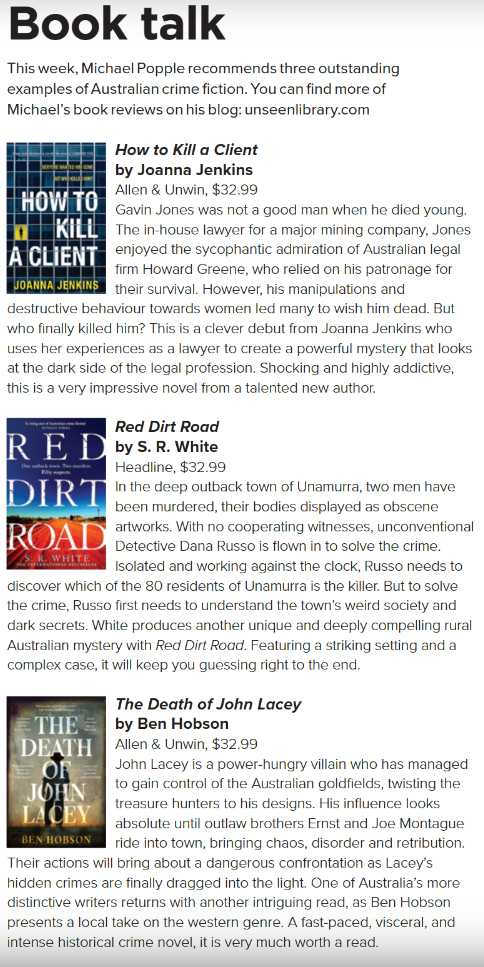
Originally published in the Canberra Weekly on 16 February 2023.
Make sure to check out my extended reviews for How to Kill a Client and Red Dirt Road.
Expert reviews of the latest and the best in Fantasy, Historical Fiction, Science Fiction and Crime Fiction from an Australian reviewer.

Originally published in the Canberra Weekly on 16 February 2023.
Make sure to check out my extended reviews for How to Kill a Client and Red Dirt Road.
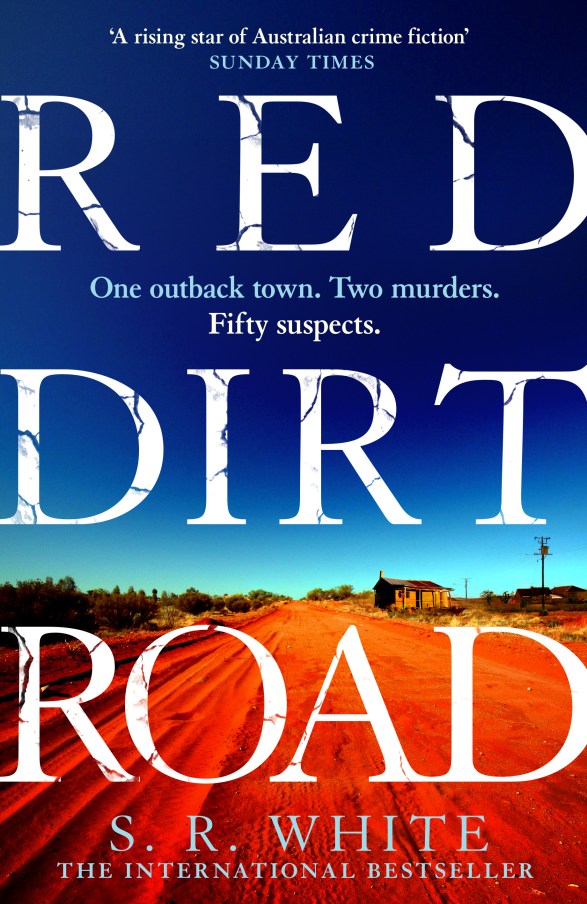
Publisher: Headline (Trade Paperback – 10 January 2023)
Series: Detective Dana Russo – Book Three
Length: 307 pages
My Rating: 4.5 out of 5 stars
Impressive author S. R. White continues to lead the Australian outback murder mystery scene with his new and compelling release, Red Dirt Road, the third book in his Detective Dana Russo series. I had the great pleasure of reading the second book in this series, Prisoner, back in 2021 and I really enjoyed his unique take on the outback detective novel. As such, I have been rather excited to read his new book, Red Dirt Road, especially as it featured a particularly enthralling mystery.
Plot synopsis:
One outback town. Two puzzling murders. Fifty suspects.
In Unamurra, a drought-scarred, one-pub town deep in the outback, two men are savagely murdered a month apart – their bodies elaborately arranged like angels.
With no witnesses, no obvious motives and no apparent connections between the killings, how can lone police officer Detective Dana Russo – flown in from hundreds of kilometres away – possibly solve such a baffling, brutal case?
Met with silence and suspicion from locals who live by their own set of rules, Dana must take over a stalled investigation with only a week to make progress.
But with a murderer hiding in plain sight, and the parched days rapidly passing, Dana is determined to uncover the shocking secrets of this forgotten town – a place where anyone could be a killer.
Red Dirt Road ended up being a very fun and captivating murder mystery novel and one I had a wonderful time getting through. I really enjoyed White’s cool and clever plot scenario and the entire concept of a cop attempting to solve a mystery in a small town with limited suspects is a fun idea that harkens back to classic whodunits.
Red Dirt Road’s story itself hits the ground running quickly, as complex protagonist Dana Russo is forced to travel to the small town for the investigation and soon becomes wrapped up in its many foibles. This includes the sheer isolation, the lack of modern comforts and the unusual locals, many of whom are hiding from the outside world. There is also a set of creepy angel-themed statues that mysteriously move around town, the work of a guerrilla artist who has remained hidden since the murders began. With time restrictions on her investigation and with minimal help from the local police, Dana initiates an unconventional investigation that focuses on understanding Unamurra’s society and its people to solve the crime. After getting to grips with the various people living there, as well examining other clues and evidence, she is able to figure out which one of the town’s residents is the most likely killer and confronts them in a particularly fascinating reveal sequence. The full explanation for why the crime was committed, as well as the ingenious and very distinctive motivation of the murderer, was exceedingly clever, and I felt that White set everything up perfectly. While certain elements of the conclusion were a bit over-the-top, (a very unrealistic elite government SWAT team comes to town), I felt that the story was pretty damn impressive and I was absolutely blown away with the elaborate motivation that the author came up with. The plot of Red Dirt Road also simultaneously continues some of the series’ ongoing storylines, such as Dana’s personal relationship with her co-worker and the internal police politics that are impacting her career, and this ended up being quite a gripping read as a result.
One of the most noticeable things about Red Dirt Road was the unique, society-orientated investigation method that the protagonist used to understand the people of Unamurra and find out who the killer was. I personally thought that this was a very smart and intriguing way to frame a murder investigation that worked extremely well in the context of the setting and the series. When I reviewed Prisoner I noted that White likes to highlight the interrogation side of policing with his writing and this was once again in full display when it came to how Dana gathers information in Unamurra. The flurry of casual conversation she engages in ensures she picks up all the knowledge about the town and people she needs, while also putting the potential suspects at ease as they don’t understand her style or the subtle reasons behind her lines of inquiry. This information, when combined with some observations and additional background she gets from headquarters, allows her to pull together a full mental picture of the town and by understanding them and their needs she finally gets the insight she needs to understand the entire situation. This results in a very unique case, and I found myself getting really wrapped up in both the characters and the setting while trying to wrap the clues together in my head. While this style of investigation probably isn’t going to fit every murder mystery fan’s taste, I felt that it worked extremely well and I loved how the elaborate motivation was teased out through these discussions. The final confrontation with the killer and the various revelations it contained really ties all these previous discussions together perfectly and you quickly realise just how cleverly White structured his entire mystery.
On top of the cool investigation method, I also deeply enjoyed the dusty and desolate setting of Unamurra that served as the backdrop to the murders. White really tries to show the reader the full experience of such a lonely and decaying town, and thanks to the excellent descriptive writing you can absolutely picture every cloud of dust, quiet night, and the lack of movement. At the same time, the protagonist begins talking to each of the residents of Unamurra and you really get to understand the sort of people that would live in such a place, whether they are desperate, trapped, or have their own strange motivations. This excellent use of setting and compelling supporting characters greatly enhances the book’s already complex murder investigation, and I felt that White did an amazing job of working it into the larger narrative and mystery. The sheer isolation impacts every decision and insight that Dana has and you really come away trying to imagine what life in such a location would be like. While White does overgeneralise some areas of rural Australia in his book, especially as he makes the location of these crimes geographically vague, this setting added a great deal to the impact of Red Dirt Road and I deeply enjoyed my time in the elaborate setting of Unamurra.
Overall, Red Dirt Road was an outstanding new book from S. R. White that perfectly highlighted his distinctive take on a murder mystery investigation. Combining another outstanding outback setting with a unique case, Red Dirt Road will have you hooked all the way to the fantastic finale. I cannot wait to see what complex stories White comes up with in the future, but if they are anywhere near as clever and enthralling as Red Dirt Road, I know I am going to love them.
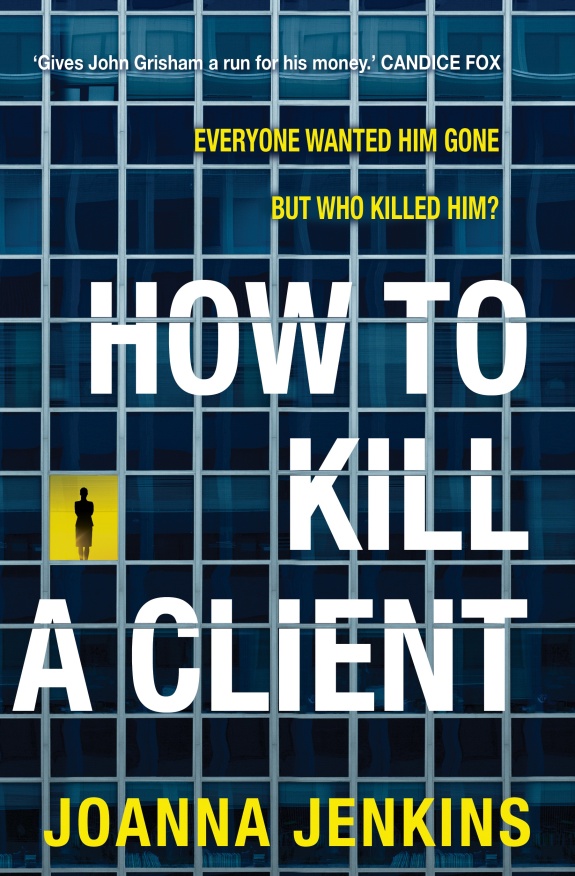
Publisher: Allen & Unwin Australia (Trade Paperback – 31 January 2023)
Series: Standalone
Length: 384 pages
My Rating: 4.5 out of 5 stars
Australian lawyer and debuting author Joanna Jenkins introduces herself in a big way with her fantastic first novel, the legal thriller How to Kill a Client, which takes the reader on a fascinating journey to the dark side of Australia’s legal profession.
As the in-house lawyer at a powerful international mining company, Gavin Jones oversees millions of dollars’ worth of legal contracts each year, including to the Brisbane office of the Australian legal firm Howard Green. Using them to negotiate lucrative contracts throughout Australia, Jones has become one of Howard Green’s biggest clients and the money he controls ensures that everyone at the law firm treats him like a god.
But while everyone fawns over Jones and his power, no-one actually likes him. A cruel, petty and vindicative man, Jones has messed with the careers and lives of everyone in his orbit, especially women, who he reserves a particular disdain for. His actions ensured the suffering of everyone he has power over, including his wife, his employees, and the female partners at Howard Green, as he seeks to wreck lives, destroy careers and give himself the lifestyle he feels he deserves.
So when Jones dies suddenly and suspiciously, everyone he knew is a potential suspect; thanks to his dodgy dealings and underhanded tactics, they all had a motive to kill him. As the police begin their investigation and the lawyers at Howard Green close ranks, it falls to partner Ruth Dawson, one of the few people without a motive, to protect her firm and its secrets. However, when her investigation reveals proof of who killed Jones and other dark secrets her firm is hiding, will Ruth reveal the truth or will she bury it to protect her firm?
How to Kill a Client is a clever and tricky novel that really showcases Jenkins’s skill as a new writer. Blending a fantastic and compelling crime fiction narrative with intense looks at the lifestyle of members of a successful law firm, How to Kill a Client was a gripping and interesting read that is really worth checking out.
I loved the cool story contained within this book which came across as part legal thriller, part personal drama surrounding high-level professionals, and part intriguing murder mystery. The story dives into the chaotic world surrounding the legal firm of Howard Green and its clients and effectively introduces all the key players in this drama, who have their own views on the troubles to come. Each primary characters is connected to the eventual victim, Gavin Jones. Jenkins spends the first half of the book showcasing Jones’s terrible nature and the various ways they are messing with everyone. Cleverly utilising multiple character perspectives, you are soon drawn into the various main characters’ lives and soon see all the various reasons why each of them may have wanted to kill Jones, as well as some of the suspicious steps some of them took. Jenkins perfectly sets up everything in the first part of How to Kill a Client, and by the time you reach the halfway point, you are firmly enthralled by the narrative and want to see how the rest of the book unfolds.
When the eventual death happens (a real high point) the reader is left wondering whether it was an accident, a mistake, or a deliberate action, with the evidence pointing towards a murder. However, due to the sheer range of suspects and motives, the story produces a twisty and fun range of plotlines that you need to navigate to get to the final conclusion. Jenkins really produces an emotional and captivating second half as you try to find out who killed Jones and why. There are some brilliant revelations unfurled here, and I loved how some cunningly hidden clues in the first half of the book were utilised in the final mystery. I was very impressed with the final reveals around how the killing was committed and why it happened, and you will come away from this story very satisfied, especially as Jenkins builds in some excellent character moments and ensures that all the remaining characters get a fitting end to their arcs. I found myself getting really caught up in Jenkins’ powerful and amazing story and I honestly powered through the last half of the book very quickly to see how everything ended.
Part of the reason why How to Kill a Client is such an effective read is that Jenkins introduces an excellent cast of intriguing and complex characters who are thrust into a variety of compelling situations throughout the course of the narrative. Each of the main cast, who Jenkins effectively builds up and utilises in the plot, are quite damaged, desperate or concerned in their own unique way, while many of the supporting characters are notably selfish or manipulative for their own ends. Characters like Ruth Dawson and Viv Harrison give some compelling and honest insights into how women are treated in this influential professional setting, while Anne Jones shows the harsh reality of a women trapped in an abusive relationship. At the same time, there is a great collection of supporting lawyer characters who Jenkins uses to show off the range of people and personalities one is likely to experience in Australia’s legal services.
However, out of all the characters in this book, the one I must highlight the most is probably the murder victim, Gavin Jones, mainly because he is such a despicable figure. Jenkins really goes out of her way to make Jones into one of the most unlikable and petty characters you are ever likely to find in fiction and boy does she succeed, perfectly capturing an insecure and manipulative narcissist who enjoys controlling people. Not only does he go out of the way to try and ruin the careers of several characters just because they are women, but he also demands attention from the male characters to feed is ego, while also abusing and controlling his wife to make him feel good. In a very short amount of time Jenkins builds Jones up into such an unlikable character that the reader finds themselves trying to reach into the book and kill him before the murderer does. This naturally adds quite a lot to the mystery of the book, as his malicious professional actions, deceits, violence and puppy killing (seriously, that one really angered me), ensures that everyone he came in contact with had a reason to murder him. The huge suspect pool around this unlikable character allows Jenkins to craft an impressive murder mystery and you’ll really get drawn into finding who finally snapped and killed this infuriating character. This villainous figure, and other great characters, all added so much to the plot of How to Kill a Client and really got invested in their stories very quickly.
One of the other features of How to Kill a Client that I particularly enjoyed was the author’s detailed and intriguing examination of an Australian law firm. Clearly utilising all her past experiences as a lawyer, Jenkins perfectly showcases how a firm would work and act in a variety of scenarios, and you really get the senses of the day-to-day chaos the individuals working there would experience, which adds a lot of authenticity to the story. Jenkins also dives into the backroom drama and politics that surround such entities, as the various lawyers cut deals and fight for control over various projects or clients. There is a particularly cynical edge to the book’s portrayal of legal firms in this novel, and Jenkins shows it to be a dark and unfulfilling practice at times, especially in some of the more elite firms. The author really showcases just how bad these companies are when it comes to the treatment of women as two of the book’s central characters are female partners in Howard Green who have to constantly deal with their male colleagues’ condescension and manipulations, and there are several pointed scenes where the arrogant male managers fail to listen to the women even when they are right. There is also a focus on the way law firms sycophantically woo potential clients, bending over backwards to get hired, and this adds some intriguing angles to the drama. Finally, there is also quite a dark look at the demand for profits over people, as there is a constant fear of firings and layoffs, even for the best employees. This critical presentation of a professional law firm is pretty striking and it results in some powerful scenes throughout the course of the book, especially as the people stuck in these firms often refuse to escape it, no matter how bad it gets. I felt this examination of the profession in Australia added so much to the outstanding story and it helps to make How to Kill a Client really stand out.
Overall, How to Kill a Client was an outstanding and captivating debut from new Australian author Joanna Jenkins and one I had a wonderful time reading. Blending compelling legal elements with a fascinating, character-driven mystery, How to Kill a Client has a brilliant story that takes the reader on a powerful and twisty journey. Slick, emotionally rich, and filled with exceptional characters, How to Kill a Client is one of my favourite debuts of 2023 so far, and I cannot wait to see what epic reads Jenkins will release in the future.
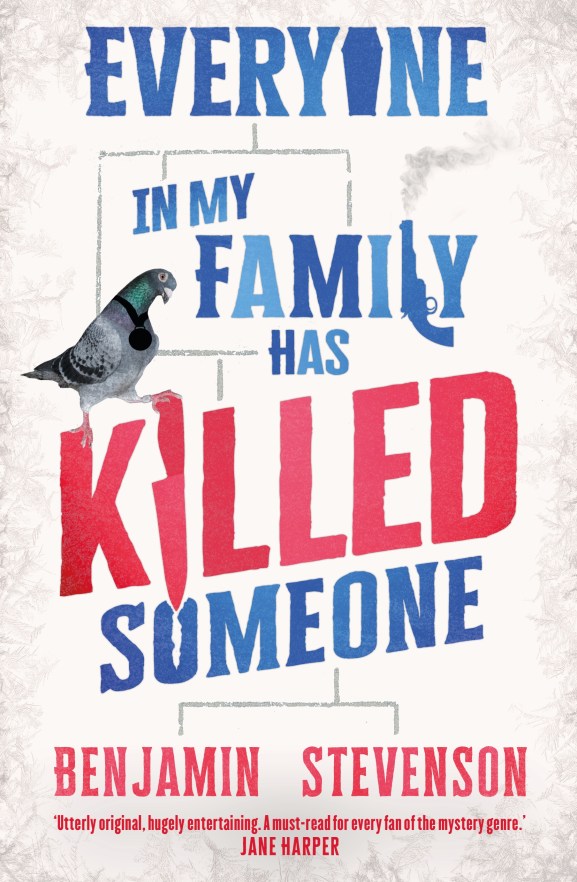
Publisher: Michael Joseph (Trade Paperback – 29 March 2022)
Series: Ernest Cunningham – Book One
Length: 384 pages
My Rating: 5 out of 5 stars
One of Australia’s fastest rising crime fiction stars, comedian turned mystery writer Benjamin Stevenson, returns with an outstanding standalone book that might be one of the best Australian crime fiction reads of 2022, Everyone in My Family Has Killed Someone.
One of my favourite Australian crime fiction authors now is the exceedingly talented Benjamin Stevenson, who has written some amazing works over the last couple of years. Stevenson’s writing career began in 2018 when he released the amazing murder mystery Greenlight (which was subsequently released as Trust Me When I Lie and She Lies in the Vines outside of Australia). A fantastic Australian crime fiction book with true crime elements to it, Greenlight followed a successful television producer who reinvestigates a murderer who was freed thanks to his show. Stevenson followed Greenlight up in 2020 with the epic sequel, Either Side of Midnight, which saw the same protagonist investigate an impossible murder in what was one of my favourite Australian books of 2020. Both these readers were pretty damn impressive, but Stevenson has saved his best work for the 2022 release, Everyone in My Family Has Killed Someone, which luckily has an outstanding story that matches the very cool title.
Plot Synopsis:
Everyone in my family has killed someone. Some of us, the high achievers, have killed more than once. I’m not trying to be dramatic, but it is the truth. Some of us are good, others are bad, and some just unfortunate.
I’m Ernest Cunningham. Call me Ern or Ernie. I wish I’d killed whoever decided our family reunion should be at a ski resort, but it’s a little more complicated than that.
Have I killed someone? Yes. I have.
Who was it?
Let’s get started.
EVERYONE IN MY FAMILY HAS KILLED SOMEONE
My brother
My stepsister
My wife
My father
My mother
My sister-in-law
My uncle
My stepfather
My aunt
Me
As the title and the intriguing plot synopsis above suggests, Everyone in My Family Has Killed Someone is an awesome read that sees Stevenson serve up an addictive narrative that is one part insane family drama and one part homage to classic detective novels. I had an incredible time reading this book early on in 2022 and I honestly should have written a review for it well before now.
The plot of Everyone in My Family Has Killed Someone is pretty bonkers as it follows a very damaged protagonist, teacher and crime fiction mega-fan Ernest Cunningham, as he attends one of the most awkward family reunions in history. Written from Ernest’s perspective as part of an in-universe book, Everyone in My Family Has Killed Someone sees Ernest reunite with the fellow members of the infamous Cunningham family at an isolated ski resort. The black sheep of a dark family with criminal connections, Ernest has been invited to attend a special event: the release of his brother Michael from jail after Ernest testified against him. However, once his brother arrives, a series of murders start to strike the resort, killing off several people. With the ski resort cut off from the outside by the snow, it falls to Ernest to discover who is killing the remaining guests at the lodge. However, everyone in his family is a suspect, as all of them have killed someone before, including Ernest, who has just as much motive as the rest. As the book continues, it becomes very clear that someone in the Cunningham family has killed again, it’s just a matter of finding out which one did it.
I have to admit that I was pretty in love with this book from the opening pages, especially as it becomes clear early on that Stevenson planned to blend the book’s mystery with some great humour and brilliant homages to classic murder mysteries. Stevenson lays out this story in a fun way that simultaneously focuses on the infamous main family, their complex past and relationships, while also presenting a compelling murder investigation that intentionally steals a lot of cues from classic whodunnits. Stevenson introduces an outrageous cast of complex characters for the story, and they were very intriguing to follow, especially as they all have deeper issues brought on by the deaths they are responsible for. The story at time transforms into a very moving and entertaining family drama, which helps to make the story richer and even more amusing. The mystery itself is very clever, and I loved the multiple compelling twists and reveals that accompanied it as the protagonist is forced to dive back into every terrible event his family has been involved in, including murder, robbery, police corruption and kidnapping, all of which leads to final, devastating solution. While the identity of the killer is a tad obvious, the reveal of why they are committing their crimes more than makes up for it, and Stevenson came up with one doozy of a motive. However, the real highlight of the book is the way in which Stevenson sets out Everyone in My Family Has Killed Someone in the manner of an in-story chronicle written by the protagonist, which simultaneously takes on every established trope and rule of old-school detective novels and moulds it into itself.
As I mentioned a few times above, Everyone in My Family Has Killed Someone also acts as a homage to classic crime fiction novels, as Stevenson goes out of his way to simultaneously parody and revere the iconic detective genre. The book starts with two intriguing elements: the membership oath of the Detectives Club (a secret society of classic crime fiction writers), and Ronald Knox’s ’10 Commandments of Detective Fiction’. Both of these inclusions acknowledge the general tropes and rules of golden-age detective fiction, and they actually end up being used by the protagonist, and by extension Stevenson, as the main guideline for the mystery. The author continuously refers back to this list as the novel continues (he even suggests folding this page down so you can revisit it when needed), and I loved how this mystery came together as the author tried to avoid breaking any of these rules. The author also cheekily informs the reader in advance when in the book someone is going to die with an accompanying page number, ostensibly to allow the reader to jump ahead if needed. However, as most people will continue through at the normal pace, it heightens the suspense a little as you get closer and closer to the page on which you know a death is going to occur. Various elements like this, as well as a ton of self-referential internal monologues and discussions about the rules of whodunnits, gives this book an incredible meta feel, which Stevenson uses to full effect to tell a particularly hilarious story. The author’s background as a comedian is on full display here as he creates an incredibly funny book, even with the continued murders and human tragedy. These clever references are a great love letter to the classic detective novels, especially as he addresses them in such a satirical way, and all mystery lovers will get a real kick out this book as a result.
Overall, Everyone in My Family Has Killed Someone is an absolutely outstanding book that I cannot recommend enough. While I have enjoyed Benjamin Stevenson’s mystery novels in the past, I think that Everyone in My Family Has Killed Someone is where he finally reveals his full potential. Not only is the mystery itself brilliant, loaded as it is with compelling characters and a dark family history, but Stevenson finally showcases his impressive comedy skills and uses them to produce a truly delightful and incredibly addictive novel. The combination of mystery, humour and a clever homage to the classics, is an intoxicating mixture, and it was near impossible to put this book down once you started reading it. As such, I must give Everyone in My Family Has Killed Someone a full five-star rating, and it was one of the most entertaining books I read in all of 2022. I have so much love for this book and I was very excited when I heard that Stevenson is releasing a sequel in October titled Everyone On This Train Is A Suspect.
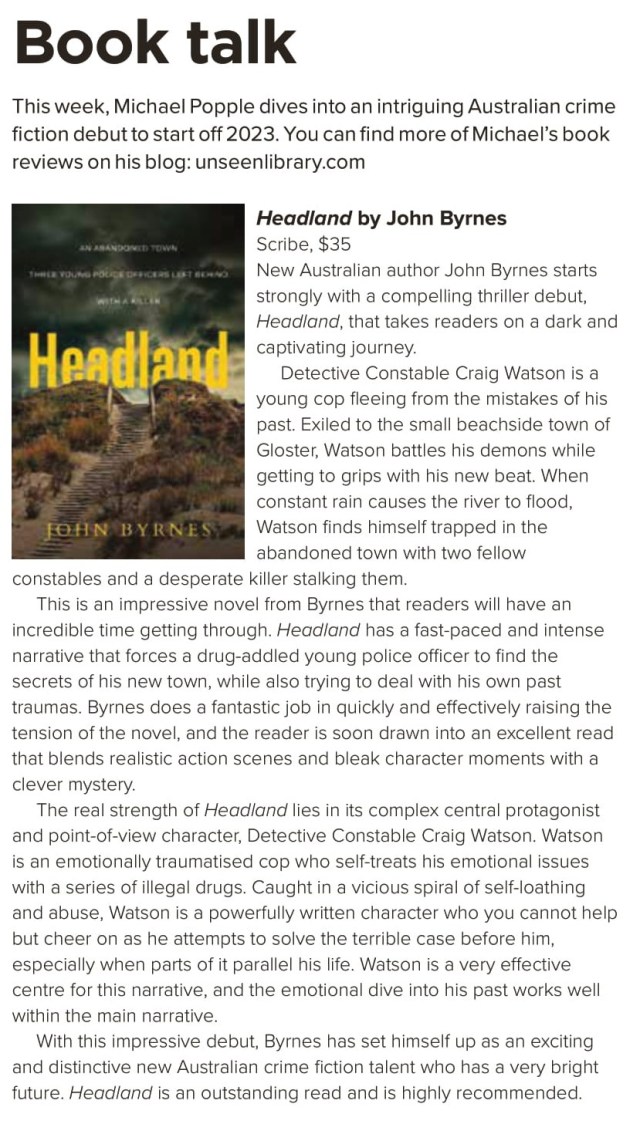
Originally published in the Canberra Weekly on 12 January 2023.
This review can also be found on the Canberra Weekly website.
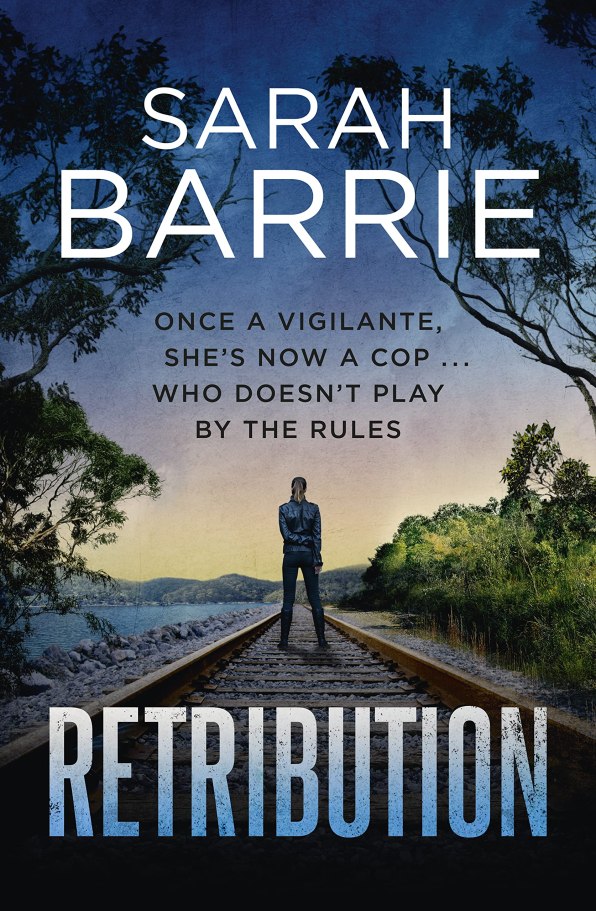
Publisher: HQ (Trade Paperback – 30 November 2022)
Series: Lexi Winter – Book Two
Length: 349 pages
My Rating: 4.25 out of 5 stars
Australian author Sarah Barrie brings back her awesome vigilante protagonist, Lexi Winter, for another intense and dark crime fiction read in Retribution.
Earlier this year I was lucky enough to receive a copy of the 2021 Australian crime release, Unforgiven. An amazing novel by a talented Australian author, Unforgiven told the story of a former child abuse victim turned effective vigilante, Lexi Winter, who used her skills as a hacker to hunt down abusers online and bring them to justice. Initially keen to do her own thing, Lexi is forced to work with the police detective who failed her as a child when evidence at a series of murders suggests that the monster who ruined her childhood might still be out there. Unforgiven ended up being a shocking and captivating read that made great use of its darker subject matter to produce an addictive narrative. Unforgiven ended up being one of my favourite Australian fiction releases of 2021, and I have been keen to see how Barrie would follow this book up. Luckily, I received a copy of her sequel, Retribution, a few weeks ago, and it proved to be an outstanding read and a worthy sequel to Unforgiven.
Plot Synopsis:
Once a vigilante, she’s now a cop … but she still plays by her own rules. A fast-paced, suspenseful thriller for readers of Candice Fox and Sarah Bailey.
Ace hacker, ex-prostitute, Jack Daniels drinker and part-time vigilante Lexi Winter returns, now working with the police – mostly – with a new enemy in the target and an old foe at the back of her mind.
Most probationary constables would baulk at chasing a drug dealer into a train tunnel in the dead of night. Not Lexi Winter. She emerges injured but alive, to face the wrath of her boss. Lexi may now be in uniform, but she has as much trouble with authority as ever, and is quietly using her hacking skills to investigate a notorious drug-dealing Sydney crime family with links to her old prey, the paedophile Damon Vaughn.
Meanwhile, Detective Sergeant Finn Carson investigates a death on a Sydney building site … which oddly enough, leads him to the picturesque Wondabyne station on the Hawkesbury River, and Inspector Rachael Langley oversees an investigation that could tie it all together. Lexi holds the key … if only she’ll toe the line …
Retribution is an excellent follow-up to Unforgiven that provides the reader with an interesting continuation of the main character’s journey. Starting out about a year after the events of the first book, Barrie immediately introduces a new element to the story by having Lexi now an official member of the New South Wales police. However, despite her position, Lexi is the same reckless rebel who is using her spare time and hacker skills to mess with members of the infamous Hamill crime family, who are actively hiding her nemesis, the paedophile Damon Vaughn and his former police officer accomplice, Debbie Reynolds. Her efforts soon tie into the work of her friends, Detective Sergeant Finn Carson and Inspector Rachael Langley, who are not only involved with the official search for Vaughn and Reynolds but are investigating the murder of a successful businessman in a Sydney building site that has connections to the main case.
Barrie features a ton of distinctive plotlines in Retribution, and I really appreciated how she was able to keep up the darker tone that was such a distinctive feature of the previous book. The central focus on Lexi’s attempt to take down a notorious crime family was an awesome part of the book’s plot, and I felt that Barrie did a good job tying them into the previous book and making them a sensible continuation target for the protagonist. While they weren’t as despicable as the original antagonists of this series, they proved to be just as dangerous, and Barrie did an amazing job building them up quickly and making them a major threat. At the same time, the murder investigation that the other characters are involved in adds some fantastic mystery elements to the book. Not only does this result in a very compelling investigation with additional bodies, but it also ties into the rest of the story extremely well, especially when it is revealed that the murders have connections to the Hamill family. These two major storylines, as well as some interesting character development, blend well as the story continues and then end up becoming a fantastic joint case. The Hamills prove to be extremely impressive villains with some deadly plots they unleash against the police, and I loved seeing the protagonist take on a family, rather than a single potential threat. At the same time, the murder investigation slowly reveals a fantastically dark motivation that results in some great and memorable twists that I particularly enjoyed. Everything pulls together for an explosive conclusion which not only wraps up this narrative extremely well but also sets up a great potential sequel that I am quite excited for.
There was some good character work in Retribution as Barrie carries over all the major characters from the first book and keeps developing her central protagonist. As I mentioned before, the main character, Lexi Winter, goes through some major changes in this book as she moves from being a lone investigator to a member of the New South Wales police force. However, she still maintains her rebel attitude and her determination to solve everything herself. This, and her own deep trauma and desire for revenge, sees her attempt her own rogue mission against the Hamills, with some deadly consequences. I felt that this was a good natural progression of Lexi’s character, especially as she finds herself relying on other people especially after experiencing even more trauma in this second book. While I feel that Barrie is making some progress with Lexi, she still maintains a lot of rough edges, which I am sure will get addressed in the future. I did think that the repetitive reckless actions did get a little tiring as the book continued, but it generally results in some excellent storylines. The rest of the characters form an amazing supporting cast to Lexi, and there are a few interesting new characters that I really enjoyed. I must admit though that I didn’t massively care about Finn’s personal issues regarding his ex-wife, and I felt it was a bit of a distracting story element. I’m also not sure why Barrie introduced a hostile rivalry between Lexi and the new female member of the main police team, especially as it didn’t result in any major revelation or come to a good conclusion. Apart from that, I had a great time with the characters in Retribution and I look forward to seeing what happens to them in the next book.
Sarah Barrie’s excellent dark Australian crime fiction series gets an outstanding second book in Retribution. Combining some of the fantastic thriller elements from Unforgiven with a very clever murder mystery, Retribution continues the Barrie’s compelling narrative and results in a captivating and powerful read that will keep you hooked right up until the end. I had an incredible time with Retribution and I can’t wait to see how this intense series continues in the future.

Publisher: Allen & Unwin Australia (Trade Paperback – 31 May 2022)
Series: Standalone/Book One
Length: 349 pages
My Rating: 4.5 out of 5 stars
Fantastic new author Matthew Spencer presents one of the best Australian crime debuts of 2022 with the powerful and intense Black River.
Plot Synopsis:
A long, burning summer in Sydney. A young woman found murdered in the deserted grounds of an elite boarding school. A serial killer preying on victims along the banks of the Parramatta River. A city on edge.
Adam Bowman, a battling journalist who grew up as the son of a teacher at Prince Albert College, might be the only person who can uncover the links between the school murder and the ‘Blue Moon Killer’. But he will have to go into the darkest places of his childhood to piece together the clues. Detective Sergeant Rose Riley, meanwhile, is part of the taskforce desperately trying to find the killer before he strikes again. Adam Bowman’s excavation of his past might turn out to be Rose’s biggest trump card or it may bring the whole investigation crashing down, and put her own life in danger.
Black River was a highly compelling Australian murder mystery thriller that I was lucky enough to receive a copy of a few months ago. The debut novel of veteran Australian journalist Matthew Spencer, Black River was an impressive read that dove into the dark heart of Sydney with a brilliant mystery.
Spencer comes up with a pretty exceptional and clever mystery for his first book, as Black River sees a damaged journalist and a dedicated cop investigate a deadly killer haunting Sydney. The investigation in question is a combination serial killer hunt and standard murder investigation, with the main question being whether a murder at an elite boarding school is connected to the larger case or whether it was the work of a copycat. At the same time, there is also a captivating dive into the mysterious history of the fantastically dreary and haunting boarding school setting, which seems to have a deeper connection to the case, especially as central protagonist, Adam Bowman, has some major history there. Spencer takes the investigation on several great tangents throughout the book and presents a powerful story with some clever twists and turns. I loved the balance of clever investigation, deep character examination, and psychological twists as you try to determine who the killer is and whether the two cases are linked. Spencer introduces some great side plots and red herrings to distract the reader from the solution, including some concerning revelations about the main protagonist. The eventual solution to the mystery was extremely good, and I loved just how shocking the main reveal was, especially as there is a very cool twist surrounding the identity of the killer. Everything came together extremely well, and I was spellbound throughout the entire book as Spencer delivered a great, dark Australian mystery.
In addition to the excellent story, I loved Spencer’s amazing use of Sydney as a background setting to the intense mystery, especially the parts of the city that border the Parramatta River. Watching the police characters slowly traverse the elegant river, trying to work out how the killer uses it to choose their victims, is a brilliant touch that is sure to bring a shiver to any readers familiar with the area. I also need to highlight the cool private school setting where the book’s primary murder takes place. The old elite school with its coating of history and tradition makes for a memorable background where murder and tragedy feel like they belong. Spencer really built up this school throughout the book, no doubt using his own personal experiences of such educational institutions, and it played into the plot extremely well, especially when aspects of class, privilege and money start to influence the investigation.
Spencer caps this all off with a great cast of excellent and captivating characters that add to the power and impact of the story. Most of the book focuses on the character of Adam Bowman, the damaged journalist who is dragged into the case thanks to his personal connection to the private school. Bowman is forced to revisit some of the worst moments from his past in this book, which helps to turn him into quite an intriguing protagonist, especially as you begin to wonder just how connected he is to everything. Bowman is well balanced out by police character Rose Riley, who serves as one of the primary investigators in the book. Rose is a great foil to Bowman and acts as the professional member of the cast who keeps the police storyline on track. I liked the connection and partnership that develops between Bowman and Rose in this novel, especially as it was lacking any romance. They make a great team, even though Rose considers him a possible suspect, and it will be interesting to see if Spencer revisits these characters again the future.
Overall, Black River is a pretty impressive crime fiction debut that really made an impression on me in 2022. New author Matthew Spencer came up with a dark and memorable mystery story that makes great use of its Australian setting and cool characters. A brilliant first outing from an amazing new talent and a must-read for all fans of Australian murder mysteries.

Publisher: Hachette Australia (Trade Paperback – 27 April 2022)
Series: Standalone
Length: 360 pages
My Rating: 4.5 out of 5 stars
2022 is proving to be quite the year for Australian crime debuts, with several compelling and thrilling read already out. However, one of the more impressive recent debuts is probably the amazing release by new Canberran author Shelley Burr, Wake, a gripping and powerful crime thriller that takes the reader on a wild and emotionally charged ride.
Nannine is a small rural town in the harsh heart of New South Wales, punished by drought and slowly declining as the local agriculture industry starts to deteriorate. However, Nannine will always have one harrowing claim to fame: the unsolved disappearance of Evelyn McCreery. In 1999, young Evelyn disappeared from her rural house in the dead of night, right from the bedroom that she shared with her twin sister, Mina.
Now, 19 years after Evelyn’s disappearance, Mina lives a reclusive life on the destocked family farm, desperately seeking some shreds of normality. However, the shadow of the unsolved case and the subsequent massive media storm that bombarded her family still haunts her, especially as many question whether she had a role in the tragic events, while others constantly attempt to claim the massive reward the family posted. However, despite the time and her attempts to not get involved in the craziness again, Mina finds old wounds reopened when Lane Holland arrives in town.
Lane is a private investigator and failed Federal Police cadet who has made a living out of cracking cold cases involving missing girls. Interested in claiming the substantial reward, Lane begins his own in-depth investigation of Evelyn’s disappearance, and his determination and insights soon grab Mina’s attention and she finds herself drawn close to Lane. However, Lane has his own personal reasons for solving the case, and his dark ghosts could end up dragging Mina down with him.
This was an excellent and captivating debut novel from Shelley Burr, which is already gaining some major recognition, including some major Australian awards. While I knew I was likely to enjoy this amazing novel, I ended powering through Wake in a day as I got really hooked on its compelling and intense outback story.
I deeply enjoyed Wake’s awesome story, especially as Burr makes sure that it contains all the necessary elements to grab your attention. This novel starts in the modern day, 19 years after the disappearance that rocked Nannine, and sees newcomer Lane Holland arrive to attempt to solve the case. The introduction of this sleuth character helps to jumpstart the narrative, especially as his new investigation allows the reader to find out all the relevant details about the old case, while also revealing the lasting issues it had on the various protagonists, including the long-running infamy of being involved with such a major case. Most of the first half of the book revolves around Lane trying to find his feet in the investigation and get close to Mina, while also finding himself involved in a separate case involving another missing girl. At the same time you get to know Mina from her perspective, and find out just how messed up she is because of the disappearance and media scrutiny. All the key characters, major story elements, hints and settings are perfectly set up in the first half of Wake, and the captivating mystery and damaged characters really drag you in and ensure that you become deeply invested in seeing how the case unfolds.
After some big reveals about halfway through the novel, the story intensifies even further, especially once you fully understand Lane’s drive and get to know the characters even better. There are some compelling twists and turns in this second half of the book, with multiple theories and red herrings to cleverly distract the reader, while major personal moments hit all the key characters. This all perfectly sets up the big finale, as all the plot points, tragic backstories and hidden hints come together extremely well for the major reveal. I really liked how Wake’s story concluded, and I think both the solution to the mysteries and the resolution of all the character arcs was pretty ingenious, especially with how well it tied together the various character’s secrets, histories and regrets. Overall, the reader will come away very satisfied with how everything is tied up, and this ended up being a very impressive and compelling narrative that was well-paced and loaded with some great surprises, major moments, and a very intriguing central mystery.
There were many cool elements to Wake that I deeply enjoyed and which I felt helped to enhance the mystery-laden story. I liked the rural setting of Nannine, a fictional town that captures the heart of feel of many rural Australian communities, especially those that are suffering from many issues such as drought and the slow decline of the agricultural economy. This decaying agricultural town serves as the perfect backdrop to this amazing story, and you really get to see how the small-town vibes and attitudes affect the investigation of the case. I also appreciated the fantastic dive into the over-the-top press coverage that surrounds famous crime cases. The disappearance attracted a massive media focus, and Burr spends a lot of time exploring how it initially covered the case, how it morphed over the years, and the lasting impact that growing up as a media sensation had on both Mina and the other supporting characters from Nannine. I particularly enjoyed the examination of how the case became a favourite of true-crime fanatics, which is primarily shown through a series of posts on the murder forum that appears in front of multiple chapters. These posts highlight the attitudes, theories, mindsets and more of the true-crime internet community and serves as an intriguing weather vane for the wider Australian community. I loved these posts, not only because they were entertaining and realistic but because it proved to be a great way to provide the reader with some interesting context while also having some impacts on the main story. Throw in the great way that Burr utilised several flashback sequences, some hidden clues in character names, some clever insights into missing person cases, and other outstanding elements, and you have a really impressive book that will easily keep your attention.
I also need to highlight Wake’s awesome damaged characters that the plot focuses on. Burr has come up with some sensational and powerful story arcs for these great characters, and their various histories, connections and life events add some excellent emotional heft to the story that I really enjoyed. This includes Mina McCreery, who serves as a major point-of-view character for most of the plot. Mina is the twin of the disappeared Evelyn, and has spent the last 19 years living in her disappeared sister’s shadow. Not only did she have to deal with the emotional backlash of her sister being either killed or abducted but she also had to experience the intense media scrutiny and other issues associated with the major case, especially as her mother ended up becoming a media sensation to keep the focus on Evelyn’s case. Due to this, the strained relationship she had with her sorrowful mother, and certain suspicions from some that she had something to do with her sister’s disappearance, Mina now lives a solitary life, avoiding most people and not having many friends. This makes her rather standoffish, angry and a little paranoid (for good reason) for most of the novel, and she has a hard time connecting to anyone, especially Lane. The events of this book really shock her in some major ways, as the years of repressed trauma and emotional uncertainty come to the surface again, especially once secrets and long-hidden truths come to the surface. I felt that the author did an amazing job highlighting all the major issues contained within Mina’s psyche, and the subsequent emotional moments were a fantastic and powerful part of the book.
Aside from Mina, the other major character in Wake that I need to discuss is private investigator Lane Holland, who arrives in Nannine to investigate the case. Burr created something really impressive in Lane, a former police cadet turned private investigator, as he ends up having one of the more intense and memorable character arcs in the entire novel. Initially seen as an unwelcome outsider by most of the other characters, apparently interested in only the reward money, Lane is able to prove himself to Mina and other characters and manages to gain their trust. However, everything you think you know about Lane is blown out the water when you find out his surprising connection to the case, as well as his motivations for investigating it. Burr sets up the connections extremely well in the early parts of the novel, putting in several clever hints and suggestions, while also doling out useful flashbacks to Lane’s past that explain everything. These revelations, as well as some insights into Lane’s personal history and motivations, help to both intensifies the story, while also dragging you closer to Lane as a character, hoping that he will succeed for everyone’s goods. Burr takes Lane’s character arc into some very dark, by captivating, directions, and his entire story comes together in a brilliant and powerful way, especially with some major decisions made towards the end of the book. These two excellent, intense, and very damaged central characters, really acted as the heart-and-soul of Wake, and I was really drawn into the outstanding narrative Burr wove around them.
With her excellent debut novel, Wake, Shelley Burr has successfully entered the world of Australian crime fiction in a big way. Featuring a captivating and distinctively dark murder mystery narrative that sees damaged characters bring a notorious cold case into the light, Wake was a gripping and deeply thrilling read that I had a fantastic time reading. A moving and enthralling novel, Wake was an exceptional Australian crime debut and I am extremely excited to read more stories from Burr in the future.

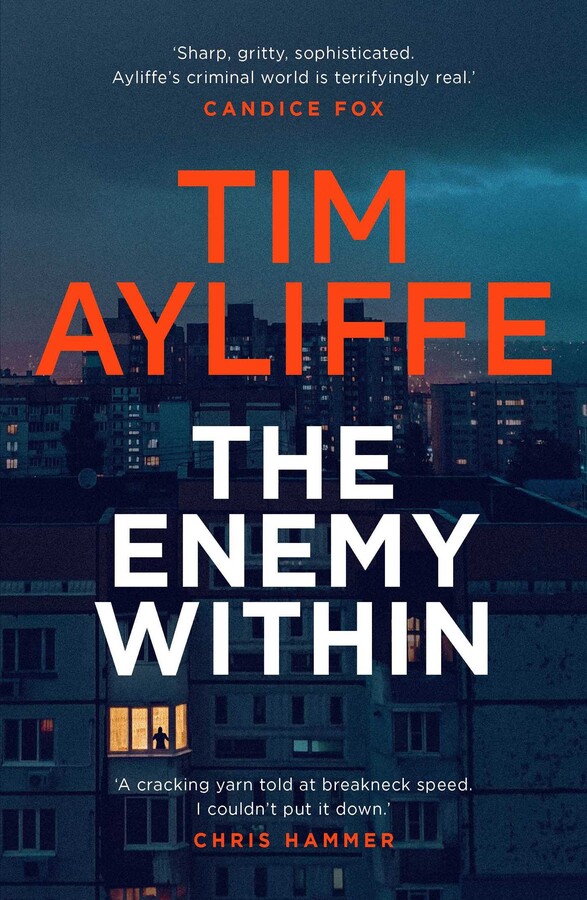
Publisher: Simon & Schuster (Trade Paperback – 28 July 2021)
Series: John Bailey – Book Three
Length: 353 pages
My Rating: 4.5 out of 5 stars
One of Australia’s fastest rising crime fiction authors, Tim Ayliffe, returns with another impressive and brilliantly relevant novel, The Enemy Within.
Ayliffe is a great author whose work I have been really enjoying over the last couple of years as he sets some fantastic stories around contemporary Australian subjects. Debuting in 2018, this journalist wrote a compelling and intriguing first novel with The Greater Good, which looked at political corruption and the growing influence of China in Australia. He followed it up in 2019 with State of Fear, which looked at Islamic terrorism and featured a dramatic and impactful story. Now Ayliffe checks out the complete opposite end of the political spectrum in The Enemy Within, which features a look at growing right-wing radicals.
As the smoke from devastating January 2020 bushfires covers Sydney, investigative reporter John Bailey is covering a far more dangerous threat in the suburbs. Barely recovered from the traumatic events that took the love of his life from him, Bailey is now working for a news magazine. His first story will cover the re-emergence of right-wing nationalists and white supremacist groups in Australia. Attending one of their meetings, where a controversial American social media star whose entrance into the country has gained much political opposition and protest, Bailey attempts to gain the pulse of this movement, only to face violence and an anti-media mentality from the crowd.
Working on his story, Bailey has no idea of the chaos that is about to rain down on his life. After he meets with an old contact and informant, Bailey’s house is raided by the Australian Federal Police. The police are investigating him for a story he ran back while he was a war correspondent that highlighted the alleged war crimes Australian soldiers committed in the Middle East. Armed with a warrant granting them access to his phone, computer and all his files, the police tear through Bailey’s life and throw him in gaol for attempting to impede their search.
With the entire nation’s media covering his plight, Bailey is released from prison and soon discovers that someone orchestrated the police raid to delete evidence from the rally. Attempting to investigate further, Bailey is shocked when his contact ends up dead in mysterious circumstances and the police fail to investigate. With Sydney on the verge of a race war, Bailey continues his investigation and soon uncovers proof about a dangerous conspiracy that aims to shake the very foundations of Australian life. With only his old friend CIA agent Ronnie Johnson as backup, Bailey attempts to stop this plot before it is too late. But with a seemingly untouchable enemy targeting him from the shadows, has Bailey finally met an opponent even more determined than he is?
This was an awesome and captivating novel from Ayliffe who once again produces an intense, character-driven narrative. Set around some very relevant and controversial topics, The Enemy Within is a powerful and exciting novel that takes the reader on a compelling ride. I had a fantastic time reading this clever book and I loved the fascinating examinations of one of the more insidious threats facing Australia.
Set in the blistering, smoke covered streets of early 2020 Sydney, this story starts with protagonist John Bailey engaged in a controversial story about the rising far-right wing. After a predictably violent confrontation, the narrative takes off like a shot, with the protagonist investigating a series of concerning events, including several murders, racial attacks, and a re-opened investigation into an old story of his that sees the AFP raid his house. Each of these separate investigative threads are drawn together as the book progresses, and the reader is treated to an impressive and deadly conspiracy with several clever allusions to real-world issues and events. This was a very exciting and captivating novel to get through, and I found myself reading it extremely quickly, nearly finishing it off in a day. The story leads up to an awesome and intense conclusion, where Bailey uncovers the entire scope of the plot and races to stop it. While the identity of some of the participants is very clear since the character’s introductions, their full plan, methods, and reach are more hidden and it was great to see the protagonist uncover them all, especially as several were cleverly hidden in innocuous moments earlier in the novel. There is even an excellent twist towards the end of the book that reveals a well-hidden antagonist, which I particularly enjoyed as it was so skilfully inserted into the story. I ended having an excellent time getting through this amazing narrative, and this might be one of the best stories that Ayliffe has so far written.
One of the things that I have always enjoyed about the John Bailey novels is the way in which so much of the amazing story was tied to how extremely damaged the titular protagonist is. John Bailey is a veteran reporter whose previous life as a war correspondent has left him extremely broken, especially after being tortured by a dangerous terrorist leader. This eventually led to him becoming an alcoholic, which ruined his career and separated him from his family. However, since the start of the series, Bailey has shown some real character growth, although this is usually accompanied by some traumatic events or tragic moments. In The Enemy Within, as Bailey is still recovering from the loss of his lover at the end of State of Fear. Despite making some strides to recover, Bailey is still reeling from the loss, and this becomes a major aspect of his character in this latest book. This is especially true as Ayliffe does an outstanding job of highlighting the grieving process and showing Bailey’s feelings of despair. It was really moving to see Bailey in this novel, and I was glad to see him continue to recover from all the bad events of his life, including stopping drinking and getting a dog. However, Bailey still has an unerring knack to annoy the subjects of his stories, and he ends up getting into all sorts of danger. It was great to see him getting to the root of this story by any means necessary, and I continued to appreciate his impressive development.
I also love the way that the each of Ayliffe’s novels feature some fascinating contemporary issues facing Australia or the wider world. In The Enemy Within, the main issue is the rise of Australian right-wing and white supremacist groups in recent years. Like in the rest of the world, these groups have been becoming a bit more prominent recently in Australia, and Ayliffe does an excellent job analysing this issue throughout his novel. The author does a deep examination of the movement as the story progresses, and the reader is given a good insight into their concerns, motivations, and the reasons why the movement has been gaining progress in recent years. There are some clever parallels between the events or people portrayed in the novel and real life, which was interesting to see. Examples of this include the government allowing controversial right-wing figures into the country despite protests, and the reactions of certain right-wing media groups. I liked how Ayliffe once again featured the character of Keith Roberts, a right-wing commentator who is a pastiche of several Australian radio personalities. It was also quite fascinating to see how the concerns and motivations of the right-wing groups were extremely like some of the Islamic terrorists featured in State of Fear, with both groups feeling disconnected from and attacked by mainstream Australian society. Not only is this extremely fascinating and thought-provoking but it also serves as an amazing basis for Ayliffe’s narrative. The author does a fantastic job of wrapping his thrilling story around some of these elements, and it makes the overall narrative extremely relevant.
I also must highlight another significant contemporary inclusion that was featured in The Enemy Within, and that was the Australian Federal Police’s raids on Bailey’s house. This police raid is a direct reference to a series of controversial raids that occurred on several media organisations, including ABC News (who Ayliffe works for), in relation to articles they published. Ayliffe uses these real-life examples to really punch up what happens within The Enemy Within, and he produces some realistic scenes that were comparable to this. The subject of the articles that prompt the raids are also very similar and feature another topic that is quite controversial in Australia in the moment, that of alleged war-crimes by Australian soldiers fighting in the Middle East. Just like with the other divisive topics featured in this novel, Ayliffe did a fantastic job re-imagining these events in his novel, and it produces some excellent inclusions that will particularly resonate with an Australian audience. I deeply appreciated the way in which he was able to work these events into his story, and I think that it made The Enemy Within a much more compelling and distinctive read.
I have to say that I also really loved the author’s use of setting in The Enemy Within. This latest book is set in early 2020, when Sydney was surrounded by some of the worst bushfires in Australian history and the entire city was covered in smoke for months. Ayliffe does an excellent job portraying these terrible conditions, no doubt drawn from his own personal experiences, and the reader gets a good idea of how difficult life was under those conditions (it certainly brought me back to that time, although we didn’t have it quite as bad down in Canberra). Ayliffe uses this unique setting to full effect throughout the book and it provides some fitting atmosphere for the narrative, especially as the landscape reflects the simmering tensions flaring up within the city. This was one of the more distinctive features of The Enemy Within, and I really appreciated the way the author used it to enhance his great story. I also quite enjoyed the throwaway references to COVID-19, with none of the characters particularly concerned about it considering everything else that was happening, and I have no doubt that Ayliffe’s next novel will make great use of the pandemic in some way.
With his latest novel, The Enemy Within, Tim Ayliffe continues to showcase why he is one of the best new writers of Australian crime fiction. The Enemy Within had an awesome and incredible story that perfectly brings in amazing contemporary Australian issues and settings, which are expertly worked into a thrilling novel. I had an outstanding time reading this fantastic read and it comes highly recommended.
 The Unseen Library