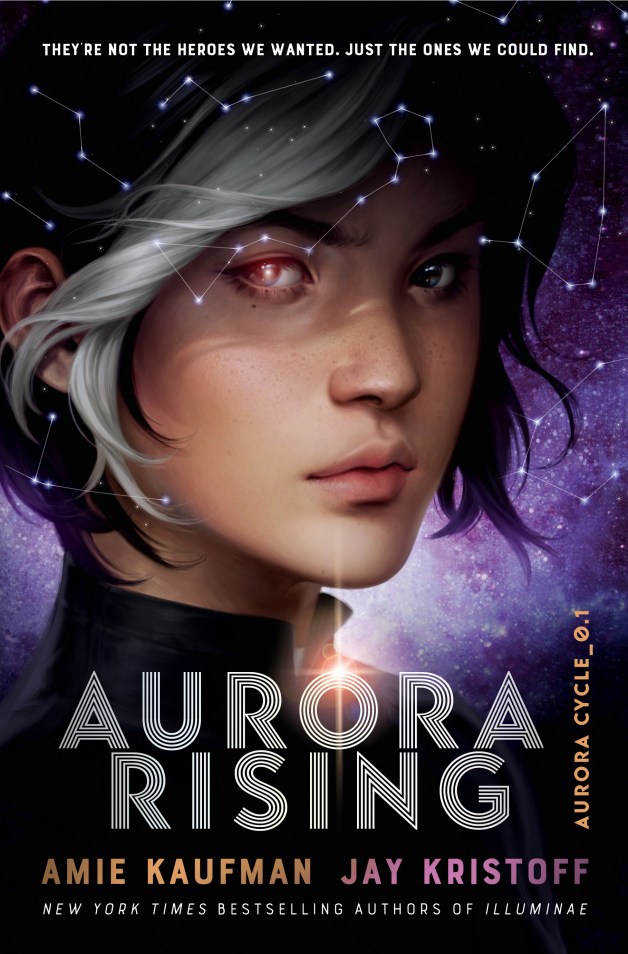
Aurora Rising by Amie Kaufman and Jay Kristoff

Aurora Rising Cover

Publisher: Allen & Unwin (Trade Paperback – 6 May 2019)

Series: Aurora Cycle – Book 1

Length: 470 pages

My Rating: 5 out of 5 stars

Amazon

The superstar team of Australian young adult fiction authors Amie Kaufman and Jay Kristoff comes together once more to create an outstanding, heartfelt and deeply entertaining new novel that may prove to be one of the best young adult books of 2019.

Kaufman and Kristoff are two of the biggest and most creative authors currently writing young adult fiction.  Kaufman is probably best known for her work with Meagan Spooner, where they have co-authored the Starbound trilogy and Unearthed series of books, the second book of which, Undying, was released earlier this year.  She is also in the process of writing her own Elementals series, with the second book, Scorch Dragons, released a month ago.  Kristoff first came into prominence with The Lotus War series, which debuted in 2012.  Since then he has also written The Nevernight Chronicle, the final book of which is set to be released in September, while his latest book, Lifel1k3, was one of the most talked about young adult releases of 2018.  Kristoff’s sequel to Lifel1k3, Dev1at3, is set to be released in a month, and he is currently working on an epic fantasy series, Empire of the Vampire, with the eponymous first book set to be released in September next year.

Kaufman and Kristoff have previously collaborated on the bestselling and award winning The Illuminae Files, a space opera epistolary series made up of three books which ran between 2015 and 2018.  Their latest collaboration, Aurora Rising, is another epic piece of young adult science fiction and is the first book in their planned Aurora Cycle series, which is currently set to feature another two books, released in 2020 and 2021.

Aurora Rising is set in the year 2380 and follows a spacefaring team of young adventurers as they attempt to save the galaxy.  In the future, humans have expanded out deep into the Milky Way, with fast intergalactic travel made possible through the Fold, dangerous space found on the other side of literal folds in the universe.  The Aurora Legion are an independent peacekeeping force made up of humans and several friendly alien races.  In order to complete their various humanitarian, exploration and peacekeeping missions, the Aurora Legion sends teams of young legionnaires, who can better withstand the rigors of the Fold, into the field.  Each team is made up of six highly trained and skilled individuals, who together can solve any problem they encounter.

Tyler Jones is the star graduating cadet of the Aurora Academy, who, thanks to his dedication and ability, will be given first pick of his fellow graduating cadets to form an elite team.  However, when an unscheduled joyride forces him to perform a risky rescue in the Fold, he misses the cadet draft, leaving him with a team of the cadets none of the other graduating squad leaders wanted.  These include (the descriptions were copied from the blurb due to accuracy):

  • His sister, Scarlet – A cocky diplomat with a blackbelt in sarcasm;
  • His best friend, Cat – A tomboy pilot who’s totally not into her squad leader, in case you were wondering;
  • Zila – a sociopath scientist with a fondness for shooting her bunkmates;
  • Finian – a smart-ass tech-whiz with the galaxy’s biggest chip on his shoulder;
  • Kal – an alien warrior with anger management issues.

Forced to make the most of his bad luck, Tyler leads his team on a routine mission that quickly turns hairy when a hostile force of aliens seek to destroy them.  However, genocidal aliens are the least of their problems, when they discover that the girl Tyler saved in the Fold, Aurora O’Malley, has stowed away on their ship.  Aurora, the only survivor of a colony ship long thought lost, is 200 years out of time and desperate to figure out what happened to her colony and the family she left behind.  The squad discovers that she is far more significant than they could ever imagine when she displays strange abilities and impossible knowledge of both the past and future.  When shadowy government agents attempt to arrest Aurora, the squad are forced to go rogue to solve the mystery and end up in a race to save the galaxy.

Aurora Rising is a spectacular read, as these skilled authors take the reader through an intense young adult science fiction adventure in an intriguing new universe.  The book’s story as a whole is an outstanding mixture of intense action, enjoyable science fiction elements and excellent character work, all wrapped up with clever storytelling that is both compelling and humorous.  There are a number of great scenes and epic moments throughout this book that really highlight this book’s unique style and the writer’s ability to tell a story.  For example, I personally liked an extended sequence that followed the protagonists as they embarked on an elaborate and seemingly impossible heist on a massive space station ruled by a vicious crime lord.  The overall result is a near perfect read that I had an absolute blast checking out.  This is an amazing piece of young adult fiction, with enough action and relatable characters to appeal to all manner of potential teen readers.  Older science fiction readers will also have a great time with this book, especially as it sets up a captivating and ambitious new trilogy that will appeal to a huge and diverse audience.

This book is told from the first-person perspectives of the book’s seven protagonists, which includes Aurora and all six members of Tyler’s squad, each of whom gets a series of chapters throughout the book to tell the story.  Kaufman and Kristoff make good use of the chapters each of the characters narrate and the reader gets a good idea of each character’s individual personality, as well as important snippets into their individual backstory.  The authors also try to differentiate these chapters out a bit for some of the characters.  For example, Zila’s chapters are rather short, blunt and analytical in nature, matching her personality, while Scarlet’s chapters feature her listing off the humorous pros and cons of her ex-boyfriends, figuring out which ones to stay in contact with.  I really enjoyed how the authors told the story through these seven separate narrators, as not only did it bring me closer to the characters but it allowed the authors to showcase various perspectives of some of the more impressive sequences and events, allowing for a fuller and more intense story.

Aurora Rising features an outstanding complement of main characters, as each member of the squad, including Aurora, are looked at in some detail.  I was very impressed with how the authors where able to create such expansive and intriguing backstories for all seven main characters, as each of them has their own issues or concerns.  For example, Tyler and Scarlett are living in the shadow of their dead father’s heroics and trying to make him proud, Cat is deeply in love with Tyler and is having a hard time keeping her feelings in check, and Zila struggles with her disconnection with other people brought on by her tragic past.  Other examples include the team’s two alien members: Finian, who to hides his feelings of abandonment behind his brilliance and snark; and Kal, who is torn between guilt about what his race’s warrior caste, of which he is a member, has done to his home planet and his surprising feelings for one of the other members of his squad.  Aurora is perhaps one of the most complex characters, waking after 200 years to find that everything and everyone she knew is dead and parts of her past have been hidden for nefarious reasons.  Add into that her discovery of uncontrollable mental abilities and the feeling that something mysterious is guiding her and she has a lot to worry about.  One of the best things about this book is that whilst all seven characters are fairly complex individually, the book’s true strength revolves around the fact that when these characters come together they are an extremely dysfunctional crew.  The crew starts off as a rebellious and overly sarcastic mess unable to work together effectively, even with their individual abilities and strengths.  However, as the book continues, they do learn to cooperate to a degree, and the reader is made to really care for them, both individually and as a whole.  I loved how these character relationships expanded and strengthened throughout the book, and I had a lot of fun with this humorous and entertaining group of people.

I really enjoyed the universe that Kaufman and Kristoff crafted to fit around this enjoyable and intriguing story.  Visions of humanity’s future can always be a bit hit or miss, but I thought that the science fiction setting that the authors utilise in this book, which sees humanity expanding and interacting with other races while dark secrets and wars build up in the background, to be a fun and well-thought-out setting.  The characters visit an interesting and inventive number of locations through the book, all of which really add to Aurora Rising’s adventure and action.

I liked the author’s concept of the Aurora Legion, an intergalactic peacekeeping organisation that sends teenage operatives into action due to science fiction reasons.  One of the things I quite enjoyed about this was how these teams were designed to have six members whose joint abilities and specialities would allow them to anticipate and overcome any problem.  As a result the teams are made up of:

  • Alphas – leaders
  • Faces – diplomats
  • Aces – pilots
  • Gearheads – mechanics/inventors/technicians
  • Tanks – combat specialists
  • Brains – science officers/medics

This team breakdown proved to be quite an interesting concept, even if they do sound like party roles in a MMORPG (tank, healer, DPS etc).  I liked this idea and the various characters slid into the roles quite effectively.

I also had a lot of fun with the universe-expanding insertions that Kaufman and Kristoff placed before a number of the book’s chapters.  These insertions are written as information pages being read by Aurora on her uniglass, an AI tablet called Magellan, who has a playful sense of humour and who also provides some amusing commentary within the story.  These information pages provide the reader extra information about the universe, including about the Aurora Legions, the roles of the squads’ various members, the history of the universe, alien species, locations the protagonists visit and other relevant inclusions.  While each of these pages contains universe factual information, Magellan adds humorous twists to each of these pages which are very entertaining and really fit into the easy going and entertaining mood of most of the book.  However, these information pages do change and get more serious in the darker parts of the book, which also helps prepare the reader for the shift in mood.  I loved these inclusions, not only appreciating the inventive universe building they allowed, but also the fun take on the classic idea of in-universe media inclusions.

Aurora Rising is an absolutely fantastic book that blasts off with action, humour and amazing characters to create a deeply compelling and relentlessly entertaining story.  Australian authors Kaufman and Kristoff are an outstanding writing duo, and their latest collaboration is an amazing piece of young adult fiction that brilliantly establishes their new trilogy and ensures that future instalments of the Aurora Cycle will be some of the most sought after young adult books for 2020 and 2021.  Aurora Rising comes highly recommended from me, and it is one of my favourite new young adult books of 2019 so far.

Amazon

In a Great Southern Land by Mary-Anne O’Connor

In a Great Southern Land Cover

Publisher: HQ (Trade Paperback format – 18 March 2019)

Series: Standalone

Length: 416 pages

My Rating: 4.5 out of 5 stars

Amazon     Book Depository

Historical drama author Mary-Anne O’Connor once again presents the readers with a powerful and moving journey through a number of iconic moments in Australian history with her fourth book, In a Great Southern Land, which focuses on Australia’s colonial history and the chaos surrounding the infamous Eureka Stockade.

In 1851, the colonised but still mythical continent of Australia represents many things for many different people.  For the Clancy family living in Ireland it represents freedom, as they seek their own land away from the British aristocracy that controls their country.  For young Eve Richards it represents a harsh prison; she is unfairly transported as a convict after losing everything that she cares about.

Once in New South Wales, Eve briefly encounters the wild but kind Clancy brother, Kieran, who manages to save her from a harsh life in the Tasmanian colonies.  Following a bad experience as he left Ireland, Kieran is wondering around Australia in search of a new purpose, while his family, including his brother, Liam, and his sister, Eileen, settle in Orange.  Despite the love of his family, Kieran’s temper and thirst for adventure leads him down to the goldfields at Ballarat, close to where Eve is employed as a convict servant.

It does not take long for Kieran and Eve to find each other again, and the two are soon drawn together romantically.  However, their plans for their future and a life together are imperilled by events occurring around the goldfields.  The corrupt colonial regime is imposing harsh taxes on the miners attempting to scratch a living at the fields, and resentment and hostility is growing.  When several shocking events become a catalyst for revolt among the miners, Kieran finds himself being forced to choose between supporting his friends or marrying Eve.  Can Kieran and Eve’s relationship survive the chaos of the Eureka Stockade, or will tragedy once again strike them both?

This is the fourth book from Australian author Mary-Anne O’Connor, who specialises in historical dramas set in the backdrop of significant events in Australia’s history.  Her 2015 debut, Gallipoli Street, features aspects of World Wars I and II as well as the Great Depression.  Her second book, Worth Fighting For, is set in World War II, while her third book, War Flower, focuses on Australia in the 1960s, including the country’s involvement in the Vietnam War.  In a Great Southern Land is the author’s first foray into a 19th century setting, and her love and dedication to recounting parts of Australia’s complex and chaotic history once again shines through.

At its heart, In a Great Southern Land is a dramatic story of several individuals who are searching for a new beginning, and find love, loss and upheaval in their new home.  I have to admit that dramatic novels are not usually the sort of book that I am naturally drawn to, but something about this book really appealed to me and I had a great time reading it.  The main characters are extremely sympathetic and realistic, and the reader can not help but get drawn into their story.  A lot of bad stuff affects all of them, especially Kieran and Eve, and you are left hoping that they can hang on and find the happiness that they deserve.  I quite enjoyed the romance angle between Kieran and Eve; it came about quite naturally and had quite a satisfying conclusion.  I really got into this fantastic story and I was impressed by how this fantastic dramatic tale was woven so effectively into the book’s amazing historical elements.

One of the things I quite liked about this book was O’Connor’s ability to examine and bring several aspects of Australia’s colonial history to life.  Several iconic parts of the mid-19th century Australian experience are explored by the author, including the transportation of convicted criminals from England to Australia, the often terrible convict lifestyle, the resettlement of Irish settlers to various parts of Australia and the trials and tribulations of those seeking their fortunes in the goldfields.  On top of that, O’Connor also explores various Australian locations, including historical Sydney, Melbourne, Orange and Ballarat.  All of these examinations of history are deeply fascinating, and I really enjoyed reading about them.  The author has obvious skill at portraying all the historical aspects, and the reader gets a real sense of what it would have been like to experience these historical events, ordeals and locations.

The most significant historical event that occurs within this book is the Eureka Stockade, which plays a huge role in the overall story.  O’Connor does an amazing job examining this interesting and often venerated piece of Australia’s colonial history and explores so many of the key elements surrounding the event.  As such, the reader gets an excellent idea of what events led up to the Eureka Stockade, and why the participants thought it was necessary to organise as they did.  The actual battle at the Eureka Stockade is pretty brutal and tragic for the reader and becomes one of the major parts within the book.  I quite liked the examination of the aftermath of the event, especially the rather entertaining, but apparently accurate, courtroom sequence, which I was not as familiar with.  O’Connor does a fantastic job brining the Eureka Stockade to life, and I was quite impressed with how it was utilised in the telling of the book’s dramatic storylines.

I really enjoyed the author’s underlying examination of freedom and control that seemed to permeate a large amount of In a Great Southern Land’s plot.  Throughout the story, the main characters experience high amounts of oppression or prejudice, often from upper-class English characters, due to a wide range of social factors.  For example, before the Clancy family leave for Australia, they are oppressed by the rich, English family who controls their land and whose greed takes something precious from Kieran.  Eve is taken advantage of by the son of the household she works for and is then cast out when the affair is discovered without the son standing up for her.  Even when they reach the promised land of Australia, the characters are still oppressed.  The Clancy family still face discrimination for being Irish, with the police targeting Kieran, and one particularly dislikeable doctor refusing to leave a party to treat someone from Ireland.  Eve, on the other hand, is treated poorly as a convict, and even after she finds work with a nice, wealthy family, she and Kieran are forced to act a certain way with Eve’s employers in order to gain permission to marry.  This underlying oppression and the resentment and anger that these characters felt plays wonderfully into the events that led up to the Eureka Stockade, and it was intriguing to see how these events affected the characters’ decisions in relation to these events.

In this book, Mary-Anne O’Connor has produced another outstanding historical drama that the reader really gets drawn into.  The main story is deep and emotive and ties in well with O’Connor’s rich and detailed depictions of historical events that represent key points in Australia’s colonial history.  In a Great Southern Land is an amazing and powerful read that I was quite happy to find myself really enjoying.  I ranked this book 4.5 stars, and I will be quite interested to see what period of Australian history O’Connor decides to explore next.

Amazon     Book Depository

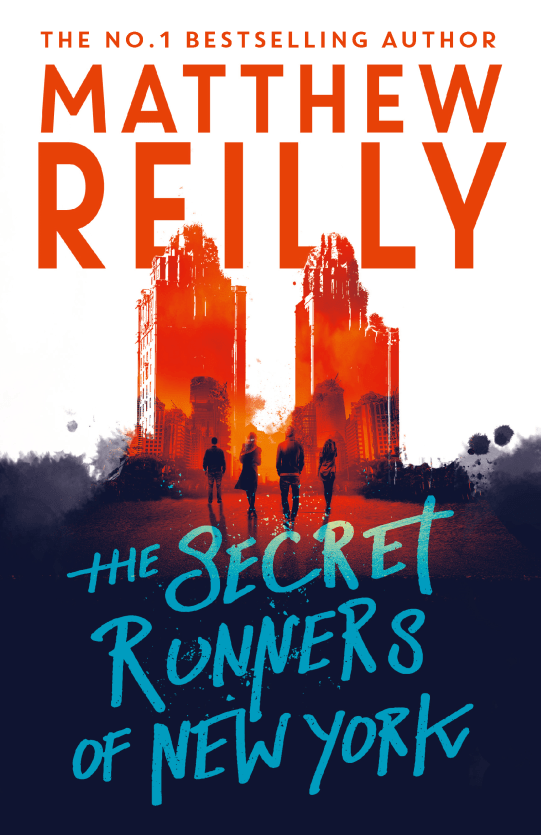
The Secret Runners of New York by Matthew Reilly

The Secret Runners of New York Cover

Publisher: Pan Macmillan Australia (Trade Paperback Format – 26 March 2019)

Series: Standalone/Book 1

Length: 328 pages

My Rating: 4.5 out of 5 stars

Amazon

The end of the world has nothing on the horrors of high school in this fast-paced and widely entertaining new book from bestselling Australian author Matthew Reilly.

When Skye Rogers and her twin brother, Red, are forced to move to New York city, they are enrolled in the prestigious The Monmouth School, learning institute of choice for the city’s ultra-wealthy and social elite.  Even among the children of the rich and powerful there exists a well-established hierarchy, and in The Monmouth School, the top of the social ladder are the friends and cronies of the Collins sisters, Misty and Chastity.  Despite only wanting a quiet existence in her new school, Skye finds herself drawn into their orbit against her better judgement.

Skye soon discovers that hanging out with the Collins sisters is very different from the usual high school cliques.  The social group is probably the most exclusive in New York, and it comes with certain privileges.  Thanks to an ancient family secret, the Collins sisters are able to activate an ancient tunnel beneath Central Park that allows teenagers to run through an alternate version of New York: a post-apocalyptic nightmare littered with ruined buildings and filled with crazed survivors.

When Skye and her fellow runners find evidence that the New York they are visiting is actually a future version of their own timeline, they need to find a way to come to terms with the end of the world, especially as the apocalypse appears to be only days away.  As society starts to crumble and the poor rise up against the rich, Skye tries to find a way to use her knowledge of the future to save everyone she loves.  However, Skye is about to learn that her new friends are far more concerned with revenge and are planning to use the end of the world to take her down.

Matthew Reilly is a veteran author of weird and electrifying fiction, having written a number of intriguing books in the last 20 years, many of which fall within the techno-thriller or science fiction genres.  In addition to a number of fun sounding standalone novels, Reilly has also published two substantial series, the Shane Schofield series and the Jack West Jr series.  Matthew Reilly is one of those authors that I have been meaning to check out for some time, as a number of his novels sound absolutely bonkers and really creative.  I am particularly drawn to his 2014 release, The Great Zoo of China, which essentially sounds like Jurassic Park with dragons; his 2013 historical thriller The Tournament; and the books in the Jack West Jr series, which features secret organisations fighting for control of ancient artefacts with world-and universe-ending potential.

I was therefore very excited to get an advanced copy of The Secret Runners of New York, due to its intriguing time travel and armageddon concepts.  I actually really enjoyed The Secret Runners of New York and had a lot of fun reading it.  The book features a surprisingly entertaining use of over-the-top high school drama that actually combines really well with the interesting science fiction elements mentioned above.  The result is an unpredictable and amusing overall story that I had a very hard time putting down and which I powered through in very short order.

The book revolves around the students at The Monmouth School (you have to say the “The”; it’s that type of place), New York’s premier high school for the rich and snooty.  Please remind me to never send any of my theoretical children to any school thought up by Reilly, as the author creates a learning institution that is essentially a viper’s nest of bitchiness, enforced social hierarchy and petty revenge, all of which is enhanced by the fact that the characters are all ultra-rich or have massive superiority complexes.  The quote below from main character Skye, one of the few well-adjusted characters in the book, shows her experiences within the first few minutes at The Monmouth School:

“In the space of a few minutes I’d seen a taunt about sluttiness, a threatened punch to the uterus, some humble bragging by the Head Girl about the school’s social status and a dose of good old-fashioned mean-girl passive aggressiveness from Misty.  School, I reflected sadly, was school no matter how high the tuition fees were.”

I have to admit I did find Reilly’s portrayal of most of the rich teenage girls in this book to be a tad extreme and unrealistic (yes, in a book featuring time travel, that’s what I am finding unrealistic).  I have never been and never will be a teenage girl, but I hope that teenage girls in high school couldn’t possibly be as petty and vicious as the girls portrayed within this book, even if they are the daughters of the uber-privileged.  That being said, I found this over-the-top viewpoint of high school life to be extremely entertaining and it was a fantastic element throughout the book.  Watching the level-headed and somewhat cynical protagonist have to deal with this insanity was a lot of fun, especially when you would imagine most people would be more concerned with the end of the world than with who made out with which guy.  An unbelievably amusing part of the story, these high school elements are great, just try and avoid thinking about it too much.

In addition to the look at the mean girls of high school, I did quite enjoy Reilly’s critique of the ultra-rich and powerful in New York City.  The protagonist finds herself drawn into the world of debutant balls, society politics and the other classy responsibilities of being rich in New York.  Again, this is an interesting part of the story, and the rich characters with their extravagant lifestyles do offer a nice disconnect from reality.  I liked Reilly’s examination of how the rich would be targeted during apocalyptic events such as the one portrayed within this book, and it played nicely into some of the current protests and perceptions of the 1%.  it’s another glorious over-the-top element for this book that provides the reader with a lot of entertainment and a real dislike of most of the privileged characters.

The science fiction parts of this book are incredibly well done and are an excellent part of this book.  Not only is there a devastating cosmic storm that will wipe out most of humanity in hours, but there is an unrelated magical tunnel that the protagonists can use to visit the future.  Reilly does an amazing job creating a devastating and crazy post-apocalyptic New York City for the readers to explore.  I was really impressed with all the brutal descriptions of how the city was in ruins and had been dramatically reclaimed by nature as the infrastructure falls into disrepair, and the whole thing is an amazing setting that Reilly uses to full effect.  I really liked how the author uses the time travel elements within the book.  Watching the protagonists slowly work out that this world is a future version of their own timeline is amazing, and it was great seeing them see all the testimonials and letters from their families describing the events that are yet to happen in their future.  The various time travelling shenanigans used by both the protagonists and antagonists of this book helped enhance this already exciting story, and I loved the way that the characters are able to see the consequences of their actions in both timelines before they actually happen.

The author has also utilised some eye-catching visual elements throughout the book to enhance the story being told.  There are a number of maps used to show the key locations of the book, and there are even a couple of diagrams used to explain the potential time travel issues in this book.  I personally liked the way that the font changed to signify the characters going into a different timeline and thought it was a nice touch.  A range of other text techniques are used to signify angry or desperate messages on different locations, such as walls or the entirety of buildings, often conveying the emotion behind these messages.  All these visual treats are great, and they really make this book stand out.

The Secret Runners of New York is currently being marketed to the teen and young adult audiences, but this book is really on the edge of what young adult fiction is.  While it is focused on teenage characters in high school, there are a significant number of very adult inclusions throughout the book.  It is interesting to note that in an interview at the back of the book, Reilly himself indicates that he does not see this story as being as a piece of young adult fiction, and I think that is shown in the way that he wrote this over-the-top story.  There is a high level of violence, drug use, coarse language and sexual references featured throughout this book, and as a result, I would say it is not really appropriate for the younger audiences and is probably more suited for older teenage readers.  This is definitely one of those young adult marketed books that adult readers can really enjoy, and there is no upper limit on enjoying this crazy tale.

This was an incredibly entertaining and captivating book that I had a lot of fun with.  Matthew Reilly pulls no punches when it comes to portraying the book’s petty and vicious teenage rich girl antagonists, which turns an already intriguing science fiction book into a wild thrill ride of revenge, betrayal and insanity.  I have to say that I quite enjoyed my first taste of Matthew Reilly’s writing and I am extremely keen to check out some of his other works in the future.  At the moment The Secret Runners of New York is a standalone book, although the author leaves a number of storylines open for sequels or prequels, and I would be interested to see where he takes the story next.

Amazon

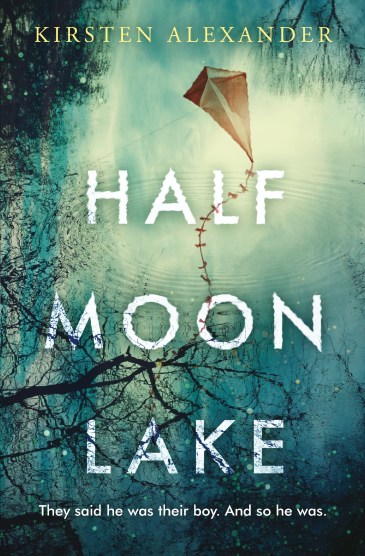
Half Moon Lake by Kirsten Alexander

Half Moon Lake Cover.jpg

Publisher: Bantam Press (Trade Paperback Edition  – 2 January 2019)

Series: Standalone

Length: 320 pages

My Rating: 4.5 out of 5

Amazon     Book Depository

Debuting Australian author Kirsten Alexander presents a dramatic, captivating and hard-hitting novel of desperation and loss loosely based around a real and shocking historical event.

In the summer of 1913, a young boy, Sonny Davenport, walks into the woods around his family’s summer home at Half Moon Lake, Louisiana, and never returns.  Despite a widespread search of the surrounding area by an army of volunteers, no trace of the boy can be found.  As the search grows in volume, the disappearance becomes headline news across the country, especially as Sonny’s parents, John Henry and Mary Davenport, are wealthy and influential members of their home town of Opelousas.  For the next two years, the Davenports engage in a desperate hunt for Sonny across the south, offering a massive reward for information on their missing son.  But with no substantiated leads, the Davenports slowly lose hope and Mary sinks more and more into her despair.

However, just when everything seems lost, a boy matching Sonny’s description is found wandering around several southern towns in the company of a tramp.  As the world watches, Mary meets the child and claims that he is Sonny.  But is he truly her missing son?  There are a number of differences between the two boys and many are convinced that the Davenports have taken in the wrong child and the real Sonny is still out there.

As the people of Opelousas, including many of the Davenport’s friends and servants, debate the true identity of this young boy, a kidnapping trial for the tramp begins.  However, the proceedings are thrown into chaos when Grace Mills, an unwed farm worker, arrives in town, claiming that the boy is her son.

This is an outstanding first book from Alexander, who has created a powerful and memorable story based partially around real-life events.  Half Moon Lake is a fantastic and dramatic story that dives deep into the hearts and psyche of its characters and the historical elements of the time to create a lasting impact on the reader.  I was very surprised about how addictive I found this book to be, as the intense character emotions and the dramatic actions that they take to alleviate their grief and the grief of their loved ones was just incredible.  I am still reeling from several of the revelations and developments that occurred towards the end of the book, many of which will stick with me for a long time.

One of the most intriguing aspects of this book is that is partially based on a real-life historical event, the disappearance of Bobby Dunbar, which took place in America’s south in the early 20th century.  Bobby Dunbar disappeared when he was four.  After months of searching, a young boy was found some distance away who appeared similar to Bobby and was claimed by Bobby’s parents, despite many people voicing their doubts about the boy’s true identity.  In addition, a second woman attempted to claim the child as her own son, and a legal case was initiated to determine the identity of the child.  I was unfamiliar with the Bobby Dunbar case before I read Half Moon Lake and did not look up the details of it until after I finished the book.  As a result, I was amazed that the intense story was so closely based on a real story.  This case and its eventual results are absolutely fascinating, and I felt that Alexander did a fantastic job of capturing the essence of this event and installing it within her story.

For example, the author does an excellent job of portraying the probable emotions, feelings and opinions of people who would have been involved in the real-life disappearance, as she utilises a number of different character perspectives throughout her book.  Readers of Half Moon Lake get a great idea of the despair all of the parents in this story would have experienced, the fear and confusion of the children, and the bewilderment and conflicted emotion of everyone else involved in the case.  I felt that Alexander’s portrayal of the missing child’s mother was done particularly well, as the readers gets to see her so filled with realistic fear, grief and despair that it drives her to try and claim a child that might not even be hers.  I also quite enjoyed the way that the author explored the highly publicised nature of the child’s disappearance and how the media at the time covered the case, dividing those following the case as they try to determine the true fate of the missing child and the real identity of the discovered child.  I also loved the way that the author looked at how the media scrutiny of the time might have affected the individuals involved in the case, and how this could have potentially influenced their actions and decisions.

I also really liked the way that the period’s ideas of class came into effect during this book.  There are some key examinations of the different ways that the rich and the poor were treated during this time, and how this would have impacted the investigation, the search for the missing child, the media scrutiny and overall results of the big trial that served as an important scene at the end of the book.  Also significant and intriguing was the way in which Alexander looked at how concerns for personal and familial reputations might have come into these events, resulting in several characters undertaking various actions that they knew to be wrong, all in the name of protecting someone’s social standing and reputation.  The story is set in America’s south during the early 20th century, and as such there are a number of African American characters who are involved with the case.  Race and the perception of certain ethnicities came into this book a lot more than I thought it would, and I thought that Alexander did a fantastic job capturing how these characters might have been ignored or disciplined for trying to get involved in proceedings.  All of these elements result in an amazing historical tapestry which forms an excellent setting for this story.

Overall, this is an amazing debut from Australian author Kirsten Alexander, who uses the inspiration of a fascinating real-life case to craft an epic and powerful story.  There are so many great story elements spread throughout Half Moon Lake, as the character’s emotions and despair drive them to desperate and immoral acts.  It features a narrative that is at times sad and at other times darn right appalling, and several reveals and character decisions at the end of the book will leave you shocked and will stick in your mind long after you finish reading it.  I loved this spectacular first book from Alexander and I am looking forward to seeing where she goes next.

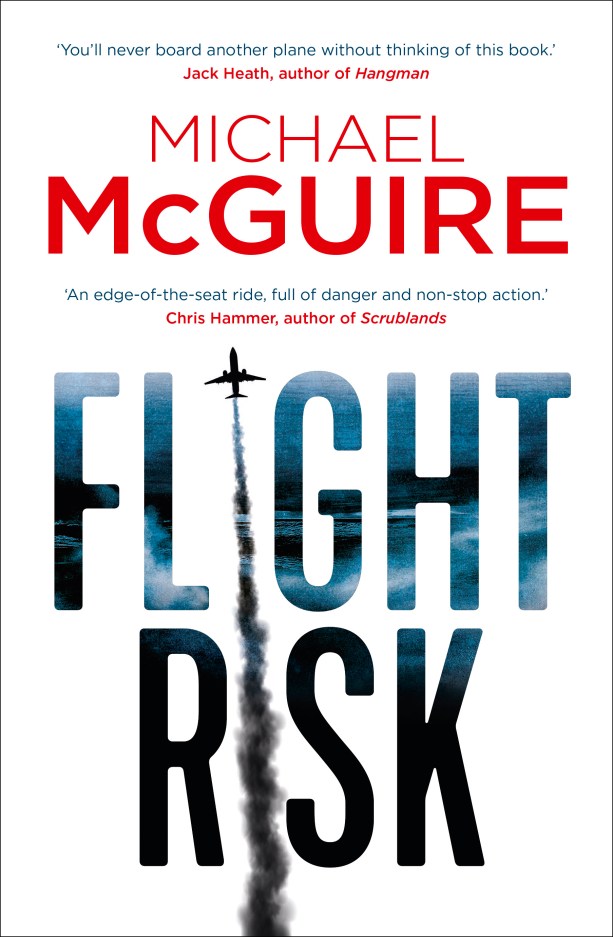
Flight Risk by Michael McGuire

flight risk cover

Publisher: Allen & Unwin

Publication Date – 7 January 2019

Amazon     Book Depository

From Australian thriller author Michael McGuire comes a fast-paced story of death and mysterious disappearances in the skies which takes the reader on a high-octane thrill ride.

Every day, thousands of planes fly across our skies, transporting huge numbers of people and goods from one end of the world to the other.  Many countries’ economies depend on the successful flights, and people have placed their trust in these machines to carry us.  So when a plane mysteriously disappears without a trace off the coast of Australia, it sends shockwaves throughout the entire system.

Ted Anderson is a disgraced former pilot who has found work as an investigator in a top-secret Australian government intelligence agency.  Sent by his bosses to find the missing plane, Ted travels to Indonesia to investigate the pilots.  But as he uncovers strange clues in one pilot’s apartment, another plane disappears, and then a third.  Like the first plane, no trace of these other missing aircrafts or their passengers can be found, and no organisation is claiming responsibility for the disappearances.

As the world descends into chaos and most people refuse to fly any more, a sudden need to escape from a squad of Indonesian police sees Ted forced onto a CIA plane to New York.  While waiting for a flight home to Australia in a nearly deserted JFK airport, Ted observes a suspicious pilot about to leave on a trip to the Ukraine.  With all his instincts screaming that this pilot’s plane will be the next one to disappear, Ted makes an insane choice and gets on the plane.

This is the second book from McGuire, following his 2017 political thriller debut, Never a True Word.  This sounded liked an exciting thriller from a relatively new Australian author, and I was eager to see how McGuire would present an Australian espionage edge to this sort of story.

Following several high-profile disappearances or crashing of airplanes in recent years, the potential dangers of air travel have been made obvious to most people; therefore it was a bold choice by the author to focus a story around this.  A lot of the suspense in this novel is based on the realistic dread that the characters within the story must be feeling as they contemplate the disappearances occurring.  The sequence where the protagonist finds himself waiting in a plane that is potentially about to disappear is particularly harrowing, and the reader is able to feel the protagonist’s apprehension and worry.  The results of these missing planes are also pretty gruesome in places, which adds to this storyline’s intense nature.  I felt that McGuire did a fantastic job of crafting a fairly interesting mystery thriller out of this story premise.  The eventual reveal of who or what is behind it is pretty intriguing and sets up some potential follow-up novels that will be worth checking out.

One of the main things you can say about this book is that it is extremely fast paced, which allows the reader to read through it rather quickly.  There is barely a quiet moment, as the protagonist jumps from one situation to the next, attempting to uncover who or what is behind the disappearing airplanes.  I rather liked this fast-paced approach to the story, as it fitted with the intense story content and reflected how quick and intense real-life intelligence agencies would jump into investigating events such as the disappearing planes featured within Flight Risk.  This book is not as action-packed as you would expect from a thriller novel, but the author is still able to convey an exciting and compelling tale that keeps the reader on their toes.  In addition, there is an extremely electrifying sequence in the air which serves as the book’s set piece.  These inclusions mean that Flight Risk is very easy to read, which provides the reader with vast amounts of fun and some significant thrills in the right places.

One of the things that I really enjoyed about Flight Risk was the portrayal of how an Australian intelligence organisation would react to a devastating event such as those examined within this book.  It was pretty cool seeing an Australian intelligence agent being at the centre of this world-wide event, and I enjoyed getting a look into his viewpoint about intelligence gathering.  I thought it was intriguing to see McGuire’s depiction of the differences between Australia’s intelligence assets and other countries, such as America.  For example, the Australian protagonist gets an iPad and some fake IDs as his gear, while his American counterpart gets a whole team and a military jet to investigate the disappearing planes.  I enjoyed this realistic and noticeable difference between the American and Australian agents and their resources, and thought it added a unique element to the book.  I also thought that the author’s examination of the world-wide implications of multiple disappearing planes was very clever and I liked the author’s look at the economic and social aspects of such an event.

Overall, I found Flight Risk to be an exciting new novel from Australian author Michael McGuire and I enjoyed the fast-paced action, enjoyable thriller elements and an intriguing new examination of Australia’s spy agencies and their place in the world’s intelligence communities.  I did find the overall lack of any significant female characters a bit concerning, but I enjoyed the book’s story and thought this was a great piece of Australian thriller fiction.

My Rating:

Four stars

Amazon     Book Depository

The Pearl Thief by Fiona McIntosh

The Pearl Thief Cover.jpg

Publisher: Michael Joseph

Publication Date – 29 October 2018

Amazon     Book Depository

From acclaimed Australian author Fiona McIntosh comes a deep and powerful tale of loss, revenge and the traumatic shadows of World War II.

Severine Kassel is one of the Louvre’s top curators of antique jewellery and specialises in identifying pieces plundered by the Nazis during World War II.  Seconded to the British Museum in 1963, Severine maintains a careful image of mystery, distance, French elegance and control.  However, that image is shattered completely the moment Severine sets eyes on the Byzantine pearls, an incredible artefact of mysterious providence on loan to the museum.  Severine knows exactly what the pearls are and may be the only person in the world who knows their full history.  She also remembers the last time she saw them: in 1941 in the hands of the man who murdered her family, the brutal Nazi Ruda Mayek.

As she recovers from the shock of seeing the pearls again, Severine reveals to the world that she is actually Katerina Kassowicz, and her story is one of sorrow and torture.  Katerina was the daughter of a prominent Jewish family in Prague during the war.  Her family attempted to flee the Nazi purge but was betrayed by a man they considered a friend, Mayek, and only Katerina survived, although her life was never the same.

With the discovery of the pearls, it becomes apparent that Mayek may still be alive.  Desperate to hunt down the man who took everything from her, Katerina begins a desperate investigation to find him and get her revenge.  Assisted by the mysterious Daniel, a Mossad agent, Katerina’s only clue is the lawyer handling the transaction of the pearls.  As Katerina’s search intensifies, old wounds are opened and life-changing secrets are revealed.  But as she gets closer to the truth, she begins to wonder who is actually hunting who.

Australian Fiona McIntosh is a fantastic author with a diverse and intriguing bibliography to her name.  She has been writing since 2001 and initially focused on the fantasy genre with her debut book Betrayal, which formed the first book in the Trinity series.  She wrote several fantasy books over the next nine years, including The Quickening trilogy, the Percheron series and the Valisar trilogy.  During this time she also wrote several pieces of children’s fiction, including the Shapeshifter series, as well as the adult crime Jack Hawksworth series under the pen-name Lauren Crow.  In 2010, McIntosh switched to historical dramas and has written a number of these books, mostly featuring female protagonists.  Examples include the 2012 release The Lavender Keeper and last year’s epic The Tea Gardens.

 The Pearl Thief is the latest piece of historical drama from McIntosh.  It plunges the reader right into the heart of occupied Czechoslovakia and explores the horrific impacts that World War II had on the book’s main character while also providing the reader with an intense thriller in the 1960s.  Told from the point of view of several characters, the book follows an interesting format.  This first part of the book mostly follows Katerina and Daniel in Paris, and is set around Katerina telling her life story to Daniel and recounting what happened to her and her family during the war.  These flashbacks are different in style, being told from the first person perspective to highlight that Katerina is telling the story, rather than the third person perspective utilised during the rest of the book.  These flashback chapters are also visually distinctive due to the use of italicised font.  The second half of the book follows the protagonist’s hunt for Mayek, and features a different style to the first half of the book.  This different style includes the uses several more point-of-view characters, in particular the lawyer Edward, and the focus on more individualised storylines fitting into one overarching narrative.

The way that McIntosh chooses to tell this story is not only distinctive, but it is a great way to tell this dark and complex narrative.  By presenting the main character’s World War II storyline first, the author sets up just how evil the book’s antagonist is, which ups the stakes for the second half of the book as the reader is desperate to see Mayek receive the justice he deserves.  This dislike for the antagonist helps the reader stay focused on the story and makes them more eager to quickly get to the conclusion of the book to see if the protagonists succeed in catching him.  This early storyline also highlights just how damaged Katerina, and in some regards side character Daniel, really are and what impacts the war had on them.  As a result, the reader is a lot more attached to them and is keen to see how they reconcile their hatred and grief while also attempting to move past these events nearly 20 years after the end of the war.  Both parts of this book are very captivating and do a fantastic job of drawing the reader in to this deep and dramatic story.

This is a fairly grim tale and McIntosh does not pull any punches, especially when it comes to showcasing the horrors the Jewish community experienced during World War II in countries such as Czechoslovakia.  There are some very disturbing sequences throughout these flashbacks, especially when Katerina describes the final fate of her family, and the reader cannot help but feel sorrow and anger at the horror these characters and their real life historical equivalents suffered.  McIntosh focuses on the physical impacts and the persecution that these people suffered and the mental stresses and long-term emotional damage that these actions inflict both during the war and well into the 1963 storyline for the survivors.  These emotional scenes start right from the front of the book, with the first chapter showing the Kindertransport, mercy trains that got Jewish children out of Czechoslovakia and forced a permanent separation between parents and their children.  This opening scene is very emotional, and the readers are left wondering what they may have done in a similar situation.  There are also some quite dark scenes in the second half of the book, as the main characters are forced to relive the horrors they experienced and deal with the emotional fallout and the darkness they feel when it comes to Mayek.  McIntosh’s frank and grim depictions of these events turn this book into an incredible drama, and readers will be left with a memorable and emotional vision of these events.

The Pearl Thief is a deep and captivating historical drama from exceptional Australian author Fiona McIntosh.  Featuring some highly detailed and realistically dark flashback story to World War II as well as a thrilling hunt for a despicable war criminal in the 60s, this is a highly emotional and dramatic piece of literature that is well worth checking out.

My Rating:

Four stars

Amazon     Book Depository

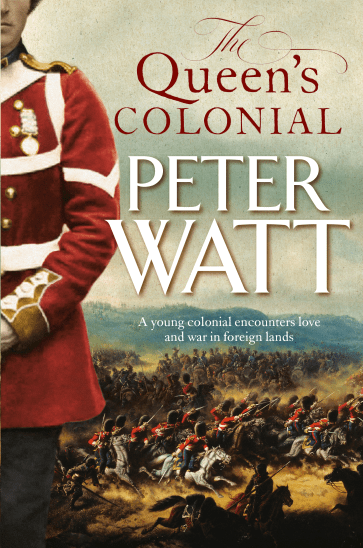
The Queen’s Colonial by Peter Watt

The Queen's Colonial Cover.png

Publisher: Macmillan

Publication Date – 13 November 2018

Amazon     Book Depository

Following the conclusion of his long-running Frontier series, one of Australia’s most intriguing authors, Peter Watt, returns with a brand new adventure that features several intriguing characters involved with unique historical events during the Victorian era.

For as long as he could remember, colonial Ian Steele has always wanted to serve as an officer in the Queen’s army.  However, for a humble blacksmith living just outside of Sydney Town, this seems like an impossibility.  That is until 1852, when he meets Samuel Forbes, a young English aristocrat, poet and former Second Lieutenant in the army, who bears a striking resemblance to Ian.  After prematurely finishing his commission following a terrifying campaign against the Maori warriors in New Zealand, Samuel is living with his uncle in Australia, avoiding returning home to a father who hates him and forced him to join the army against his will.

Samuel presents Ian with an interesting proposition.  In order to receive a massive family inheritance, he needs to complete 10 years’ service in the army, but after his previous combat experiences he has no intention of heading back, preferring to seek adventure in America with the man he loves.  However, wanting to receive the money and spite the father who abandoned him, Samuel has come up with a plan: send Ian in his place and then split the inheritance between them.

After the death of his mother, Ian accepts the offer and journeys to England to take his place as a captain in the Forbes family regiment.  As he successfully integrates himself in the Forbes household, he becomes acquainted with the members of his new family.  While Samuel’s sister and younger brother welcome him with open arms, Ian quickly discovers that Samuel’s father and older brother have no intention of giving up Samuel’s portion of the inheritance.

Ian’s desire to prove himself in battle is soon rewarded, as the regiment departs England for the continent.  Nicknamed “the Queen’s colonial” by his soldiers, he gains a reputation in the fight against the Russians in the Crimean war.  But while the Russians and disease are a constant danger, the greatest threat to Ian may come from his own side.  An Australian fugitive hiding out in the regiment knows who Ian really is and could easily report him, while the devious plots of the Forbes family could strike him down at any time.

Peter Watt is a well-established historical fiction author who has been writing Australian based novels since 2000.  The Queen’s Colonial is Watt’s 19th book, and is the first book he has written since concluding his 12-book Frontier series.

In The Queen’s Colonial, Watt continues with the same distinctive style that made his previous books such a treat to read.  Throughout the book, the reader is shown various sides of the story from multiple point-of-view characters, as both the protagonists and antagonists journey through history’s most intriguing events and wars.  There is also a minor hint of spirituality, although rather than the spirit of a vengeful Indigenous Australian that was such a major character in the Frontier series, The Queen’s Colonial features visions based around old British druids.  Watt is a master of utilising multiple character perspectives to tell a strong and addictive narrative.  While a large portion of the book is focused on the main character of Ian, several of the other characters are given starring roles throughout the book, and their adventures run parallel to the main storyline featuring Ian.  This is a great way to tell a larger narrative, and it is fascinating to see how the actions of one character could impact on a different storyline.  Each of the side storylines are pretty intriguing and allow the author to expand on several fun side characters throughout the course of the novel.  Watt has engineered quite a lot of coincidental connections, which, while a tad unrealistic, is a great way of connecting these character storylines in various intriguing ways.  I was somewhat surprised that Watt did not really show what Samuel Forbes was getting up to.  Despite him being majorly important to the plot, very little is seen of his adventures after the start of the book.  I would have been interested in seeing what he was getting up to, as well as his reactions to the events happening in the other storylines.  Hopefully Watt will explore his subsequent focus on him a little more in any books that follow on from The Queen’s Colonial.

One of the best ways that Watt utilises his multiple perspectives is by showing the villainous actions of two of his main antagonists as they plot and scheme to rid themselves of the protagonist.  These storylines are mostly told from the point of view of the oldest Forbes son Charles, and feature him and his father coming up with ways to kill the man they think is the second Forbes son, Samuel, but is really Ian in disguise.  Watching them come up with several devious plans and commit terrible acts is pretty intense, especially as you watch these plots unfold in the sections of the book told from Ian’s point of view.  It is quite fun for the reader to see Ian react to events that they knew was coming, and works to make an intriguing overall narrative.

I loved Watt’s depiction of the Crimean War, as the author does a fantastic job highlighting the brutality and harsh reality of this war, and the terrible conditions that the British troops had to deal with.  Watt really captures the horrors of battle in his writing, and the reader is constantly brought into the middle of the book’s battle sequences thanks to the author’s detailed descriptions and historical features.  While the battles are harrowing and bloody, quite a number of scenes show the horrifying results of the biggest killer of the British during this war, dysentery and other diseases.  Watt is quite critical of most of the British officers who lead this army, and places most of the blame for the war’s disasters on the backs of inexperienced or incompetent officers.  This is particularly exemplified by the character of Jenkins, who is promoted up through the army thanks to his family’s connections and money, and ends up getting many people killed thanks to his cowardice, incompetence and personal prejudices.  History buffs will enjoy Watt’s focus on this war, which is often overlooked in historical fiction, especially the author’s determination to show the trials and tribulations of an infantry regiment in this war.

Peter Watt’s new book, The Queen’s Colonial, is an excellent piece of historical fiction that takes the reader on a fantastic adventure through time.  Following a 19th century New South Wales colonial into the Crimean War is a great story, and I loved Watt’s great use multiple character perspectives to tell an overarching narrative.  Watt once again shines as one of Australia’s best authors of historical fiction and readers of his latest novel will enjoy a cleverly crafted and captivating story.

My Rating:

Four and a half stars

Amazon     Book Depository

X-Men Red Volume 1: The Hate Machine by Tom Taylor, Mahmud Asrar and Pascal Alixe

X-Men Red Volume 1 Cover.jpg

Publisher: Marvel Comics

Publication Date – 18 September 2018

Amazon     Book Depository

Writer Tom Taylor and his artistic team have created an excellent and thought-provoking new X-Men series that not only follows the reintroduction of one of comics’ most interesting characters to the turbulent Marvel Universe but once again examines the real world problems of hatred and prejudice.

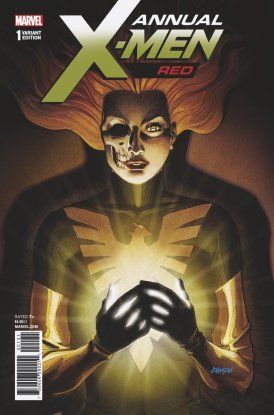
X-Men_Red_Annual_Vol_1_1_Johnson_Variant.jpg

For years, Jean Grey’s fate has always been tied to the universe-ending Phoenix Force, the cosmic entity of rebirth and destruction that is constantly seeking the most powerful host it can find.  However, following her latest resurrection during the events of Phoenix Resurrection: The Return of Jean Grey, Jean has renounced the Phoenix power once and for all and is now determined to live her life on her own terms.  Still one of the most powerful mutants in the entire world, Jean Grey sets out to restore her connections and find her place in a world that has changed dramatically since her last death.

The one thing that hasn’t changed is the fact that mutants are still feared and hated by a world that doesn’t understand them.  Despite all the adventures and endeavours of Charles Xavier and his X-Men, animosity towards mutants has never been higher.  Determined to change the world for the better, the resurrected founding member of the X-Men sets out to achieve her vision for the future and change world opinion about mutants once and for all.  To do that, Jean first attempts to create a mutant nation at the UN.  But when she is framed for the murder of politician, Jean is declared a criminal and mutants are subject to greater hatred from mankind.

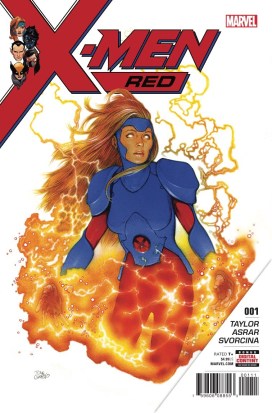
X-Men_Red_Vol_1_1.jpg

Realising that someone must be behind the recent upswing in anti-mutant sentiment and determined to protect those mutants targeted by hatred, Jean forms a new team of X-Men, made up of Nightcrawler, Storm, Namor, Gambit, Gentle, Wolverine (Laura Kinney – X-23), Honey Badger (Wolverine’s adorable clone) and newcomer Trinary.  But even as Jean and her team fight to save those mutants being targeted, more hatred and attacks are occurring around the world.  The sinister Cassandra Nova is determined to wipe mutants out once and for all and views Jean Grey as the greatest threat to this goal.

Following the end of his All-New Wolverine series, Australian author Tom Taylor returns at the head of a brand new X-Men series, X-Men Red, which takes fans back to the basics of the X-Men franchise.  Volume 1 of X-Men Red is made up of issues #1-5 of this new series, as well as Annual #1.  After enjoying Taylor’s work in All-New Wolverine (check out my review here: https://unseenlibrary.com/2018/09/08/all-new-wolverine-volumes-1-6-complete-series-by-tom-taylor/), I was excited to see him continue to work with Marvel, especially as it allows him to expand on characters and story elements he introduced in his previous Marvel series.  Most of the artistic work in this new series has been produced by veteran artist Mahmud Asrar, who has significant work in DC, Image, Marvel and other publishers.  X-Men fans may be familiar with his work on All-New X-Men and Wolverine and the X-Men.  Asrar was the main artist for issues #1-5, while the work on Annual #1, which is placed at the start of the volume, was drawn by Pascal Alixe.

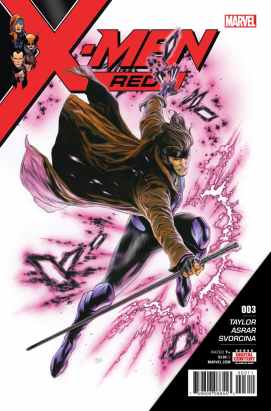
X-Men_Red_Vol_1_2.jpg

It is always fun when starting a new superhero team comic book series made up of established characters to see which heroes the creative team will include in their version of the team.  Taylor has certainly chosen an intriguing and previously unseen mixture of characters for this new X-Men series, and it is interesting to see which characters he focuses on.  The central character of this new team is the newly resurrected Jean Grey, the red in the series title.  This is one of the few times we see Jean step up to lead a team, as she is no longer in the shadow of her mentors or former lovers.  Aside from Jean, the main team members are Nightcrawler, Wolverine and Honey Badger, who are featured in all the issues contained within this first volume.  It was great to see Nightcrawler given such a prominent role in the comic, and it feels like it’s been a while since he’s been such a major character within an X-Men series.  I also liked new character Trinary, who is introduced in this series and is given an interesting set of powers.  Trinary is from India, and has technopathy powers, or the ability to manipulate technology.  Introduced as a new mutant who is attempting to fight the good fight in her own way, Trinary is given a key role in the series understanding the full nature of the technological attacks of the volume’s antagonist, while also taking over a sentinel to use as the team’s new primary source of transportation.  I think this character is given a great introduction, and could have an interesting future in the Marvel universe.  Other characters, Namor, Gentile, Gambit and Storm join the team at various points in the volume, and have a slightly reduced role, appearing for some of the big team ups, with only some short introductory storylines.

I was especially happy to see Taylor transplant the main characters of his previous All-New Wolverine series, Wolverine and Honey Badger, into his next project.  As I mentioned in my previous review, this version of Wolverine, Laura Kinney, also known as X-23, has always been one of my favourite X-Men characters, so I was very happy to see her used again in this series.  She plays a similar role in this team to the original Wolverine, as the silent infiltrator and bodyguard who is loyal to the team’s leader, who in this case is Jean rather than Professor X.  Just like in All-New Wolverine, the heart and soul of this series is definitely Honey Badger, Laura’s clone, who, as well as being a full member of the team, is the series’ comic relief.  Her humorous interactions with all the other characters in the book, especially the stern and serious characters, add a good amount of levity to the book.  Having her refer to Namor as Abs-lantis, or making Gambit hurriedly justify his actions for blowing up Honey Badger by saying it was “for strategic reasons” is particularly amusing and definitely made me smile.  However, the best line in the book has to be given to Wolverine, who casually replies to Jean’s amusement about Laura’s excitement about being in an underwater city with “Being Wolverine doesn’t make me impervious to the wonder of a #$%@%$& mermaid”.

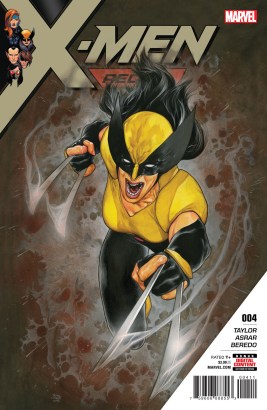
X-Men_Red_Vol_1_3.jpg

One of the most defining things about the start of this new series is how it focused on the evolution of the character of Jean Grey.  Despite being a founding member of the X-Men, Jean’s most significant storylines have usually been about her relationships with Cyclops and Wolverine, or her connection to the Phoenix Force.  Now, after coming back to life, Jean has stepped out of these currently deceased characters’ shadows and starts her own attempt to change the world, as she is no longer content to return to her old life.  Essentially, Taylor is trying to set Jean up as the new Professor X, with her own vision for mutant kind and her determination to change the world for the better and end the current level of hatred and prejudice.  While she has her own unique style and vision, there are a lot of call backs to the original Professor X, including the standard “To me, my X-Men” saying that Professor X and other X-Men leaders utilised throughout X-Men history.  I also enjoyed seeing a Jean Grey that is no longer defined by her relationship with the Phoenix Force, especially as Jean lets it be known that the Phoenix Force was holding her back.

It was also nice to see Jean repair the relationships she previously lost with several prominent X-Men characters, as well as establishing new relationships with characters she’s never had a chance to meet before.  This is particularly prevalent in Annual #1, which starts the volume, as she reunites with her surrogate X-Men family, which is heart-warming, especially as there is a focus on her friendship with Nightcrawler, who spends the volume as her BFF.  I also really enjoyed seeing her think about her relationships with Cyclops and Wolverine.  For the first time in X-Men history, Jean is alive when Cyclops and Wolverine are both dead, and must focus on the world without the two men she’s loved.  As such, she spends time adventuring with the daughters of these two men, Rachel Grey and the new Wolverine, and meeting up with them is one of the first priorities she has returning to the world.  I liked how one of the definitive love triangles of Marvel Comics is acknowledged in this new series, even though two points of the triangle are currently dead, and the focus of Jean’s relationship with the next generation of these characters was a clever idea.  I’ll be very interested to see what relationships are explored in the future, with all sorts of different iterations or offspring of Jean and Cyclops out in the world at the moment.  It will also be very intriguing when the original Wolverine is resurrected to see what role he plays in this series, as the creative team will have to have a look at the relationships that this character has with Jean, the current Wolverine and Honey Badger, a new daughter character he’ll have to interact with.
X-Men_Red_Vol_1_4.jpg

Since its earliest days, X-Men has always been about the fight against prejudice, as the hatred the mutant characters experience has often been seen as an analogy for social issues such as racism, anti-Semitism and homophobia.  Taylor and the creative team behind X-Men Red continue this tradition of using their X-Men series to reflect social issues, in this case focusing on modern issues such as the latest rise of the extreme right-wing, intense nationalism, islamophobia, fear and concern about refugees and migrants, as well as racism.  All of these social issues are reflected in the portrayed hatred of mutants in this volume, with various elements of recent world events shown directed towards the mutant characters.  For example, you have Poland attempting to use their military to round up and detain mutants, similar to how some countries have been using their military to stop or detain refugees.  In another very unconcealed scene, rioters carrying tiki torches start attacking mutants, not considering them people, and even killing one mutant counter protestor, in events that are reminiscent of those of Charlottesville.  There is also a focus on the damage or the impact that social media and the internet can have on these events, as many of the anti-mutant events or rhetoric are contained online.  This will be very familiar to readers, as it is impossible not to see the online hatred that many anonymous people direct towards various groups around the world, and at least the one in the comic may be the result of supervillain plot.  Overall this focus on prejudice is a familiar subject to X-Men readers, and many will appreciate how the creative team have tried to bring in modern issues in this new series.  The creative team do end Volume 1 with a message of hope, with some of these antagonist people given a proper understanding of an opposing viewpoint, momentarily giving up their hatred and prejudice, and is something aspire for in the real world.

The artwork within Volume 1 of X-Men Red is just gorgeous and a real highlight of the book.  As mentioned above, Alixe does the artwork for Annual 1, while Asrar does the artwork for issues #1-5.  Both artists’ works are visually distinctive and give the reader something different when it comes to character design, displays of power and fight sequences.  Asrar in particular does some gorgeous backdrops and landscapes, as the stories he is illustrating see the characters go to all sorts of locations, including India, underwater cities and Wakanda.  There are a lot of well-drawn action scenes throughout this volume, although I found the final pages of issue #1 to be some of the most powerfully drawn in the entire volume.  Not only is there a somewhat graphic scene for a Marvel comic but the final panel shows the look of despair on the main characters as the volume’s antagonist makes her first move.  The artistic team of X-Men Red have outdone themselves in this first volume, creating some superbly drawn artworks that are catch the eye and the imagination.

X-Men_Red_Vol_1_5.jpg

X-Men Red takes this new version of this iconic superhero team back to the sort of storylines that made the X-Men such a smash hit in the first place.  With a resurrected Jean Grey taking the lead, Australian author Tom Taylor and his creative team have cleverly brought current social issues to the forefront of their new series while also doing some superb character work, including redefining one of the original X-Men.  This is a great start to an amazing new comic series and a fantastic read for fans of the X-Men franchise.

My Rating:

Four and a half stars

Amazon     Book Depository

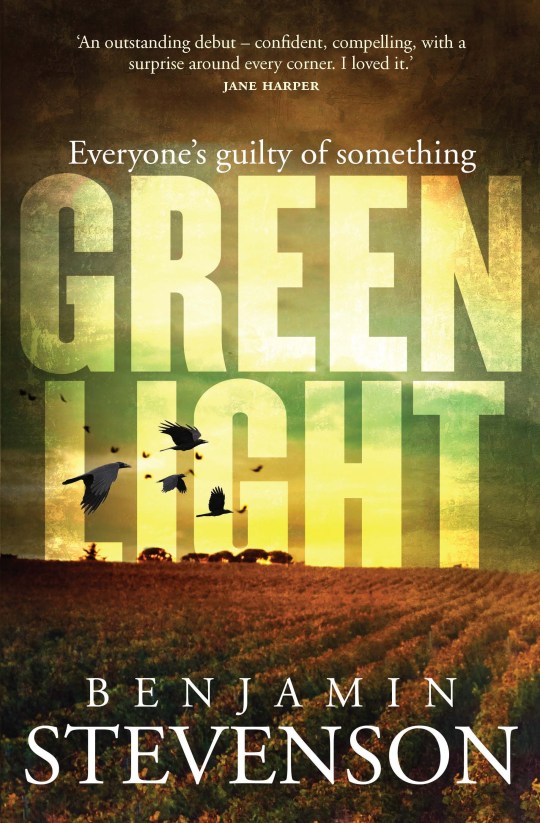
Greenlight by Benjamin Stevenson

Greenlight by Benjamin Stevenson Cover.jpg

Publisher: Michael Joseph

Publication Date – 3 September 2018

Amazon

From debuting Australian author Benjamin Stevenson comes this chilling and intelligent murder mystery that builds a thrilling case with some sensational twists around an intriguing true crime documentary plot device.

Four years ago, in the small Australian country town of Birravale, Curtis Wade was arrested and tried for the murder of young woman Eliza Dacey.  Hated by the entire town and viewed as an outsider, Curtis was quickly found guilty of the crime with very little evidence presented at the trial.  Everyone was convinced of Curtis’ guilt until podcaster and documentarian Jack Quick decided to get involved.

Noting some inconsistencies in the case and sensing an opportunity for fame, Jack decided to make a true crime documentary series, presenting the local police as incompetent and biased.  His series becomes an overnight hit across Australia, and his edited footage convinces many in the country of Curtis’s innocence.  But the night before the finale is due to air, Jack notices a piece of crucial evidence near the murder scene that could prove that Curtis is guilty after all.  Determined not to ruin his series, and convinced that no matter what happens Curtis will never see the light of day again, he disposes of the evidence.  However, thanks to his series, Curtis is released on retrial, and then a second murder is committed, with several grisly details of the first case replicated.  Has Jack just let a murderer go free?

Returning to Birravale, Jack must once again dive into the secrets of a town that hates him for the way his show portrayed them.  As Jack attempts to solve this crime, he must overcome his own past while also dealing with the guilt of the situation.  But did Curtis commit this new crime, or is he being framed by the real killer?  Whoever the murderer is, Jack is wrapped up in their game and for once he needs to reveal the whole truth.

Greenlight is the first novel from Australian comedian and author Benjamin Stevenson and represents a brilliant and exhilarating debut.  This book has an amazing central storyline with a massively intriguing mystery that focuses on the innocence or guilt of the man who has already been both convicted and found innocent of the same murder.  The protagonist must look at whether the person he released from jail committed the murder he was originally convicted of, as well as a second, similar murder that occurred after the suspect has been released.  The reader is constantly left guessing about whether the prime suspect, Curtis, has committed either or both of the crimes, or whether he is actually innocent.  At the same time, the reader is presented with a series of plausible alternative suspects who have motive for either of the murders or, in some cases, the same motive for both of the killings, and this creates some exciting doubt about the original suspect’s guilt.  The final reveals and twists of this case are rather shocking and will definitely provide the readers with some excellent surprises.  Stevenson does a good job providing a lot of hints and foreshadowing in his text, and readers will enjoy seeing how these cleverly scattered clues are brought together in the end.  Overall, this is a hell of a mystery and the author does a fantastic job tying the investigation into the book’s other elements.

One of the most noticeable and outstanding parts of Greenlight is its true crime elements and how this affects both the story and the way that the book is written.  Ever since the dramatic popularity of the 2015 Netflix true crime show, Making a Murderer, various books and shows have attempted to emulate the documentary setting in their works.  What I liked about Stevenson’s book was that, rather than dealing with the creation of the documentary, it is mostly set some months after the television series was released and instead takes a look at the consequences that the show has had.  Not only is a potential murderer released, but various lives and careers have been ruined as a result of the protagonist’s actions.  It is absolutely fascinating to see the various ways that the reaction and follow-up of the true crime television series comes into play through the story.  The protagonist has to deal with a series of characters who are annoyed or angry about their portrayal in the series, which informs the help, assistance or compassion that these characters give.  The success of the series also affects the police response, leaving the protagonist much more open to investigate the crime.  It is also intriguing to see a television show being used as a motive for murder throughout the book, as the second murder could potentially be tied into righting the wrongs that the show caused.  Stevenson covers all these elements incredibly well, and the examination of the consequences and damages of a successful true crime documentary series turns out to be the perfect backdrop for this captivating murder story.

On top of the powerful mystery and the terrific plot focus, Stevenson has also created an interesting central protagonist who serves as the point of view character for most of the book.  The main character, Jack, is the documentarian who makes the show that gets the mystery’s main suspect freed from jail.  Watching the guilt and shame that this character experiences as a result of his various actions, such as the creation of the show, tampering with evidence and editing the videos to tell a specific story, is a great part of this story, and it serves as a perfect motivation for this character’s continued and at times frantic investigation.  Watching the character understand the full extent of his questionable actions, especially after the second murder, is an outstanding part of this book that highlights Stevenson’s strong writing ability.  It is also interesting to see how his experiences creating a documentary have affected his judgement and the way he perceives the world.  The protagonist now sees the slanted way many of the characters talk when it comes to case, and he is constantly trying to determine what role the people who are involved in the case would have in a television show, such as a main character or a supporting cast member.  The author also creates some interesting character background for Jack that works well with this story, as guilt and trauma from his childhood combines with the current extreme blame and he is currently feeling.  Stevenson also produces an accurate and powerful description of an eating disorder that Jack is suffering from, and not only is this description respectful done and informative, but it adds another level to this excellent main character.

A large amount of Greenlight’s plot is set in the fictional small, winegrowing country town of Birravale in the Hunter Valley of New South Wales.  This serves as a great background setting for the murder investigation as the small town secrets and attitudes play a huge role in the overall mystery.  Stevenson does an amazing job portraying a winegrowing community, and provides some interesting details that come into play in a number of ways and often result in a number of potential murder motives.  The small-town setting also works well with the post true crime series plot element, as the protagonist encounters an entire town that has been portrayed in a negative light throughout this series and is viewed in a different way by the rest of the country.  Seeing these resultant attitudes and the impacts his series has had on the town works wonders for the main character and is a great part of this book.

In his debuting novel, Australian author Benjamin Stevenson has created an incredibly captivating mystery storyline.  Greenlight contains a number of outstanding elements, from shocking plot twists and reveals, an excellent central character and an utterly fascinating central plot device, all of which come together into one amazing novel.  This is an exceptional first book from Stevenson which highlights both his fantastic ability and his huge potential as a crime writer.

My Rating:

Four and a half stars

Amazon